WO2023145860A1 - Scf受容体結合ペプチド - Google Patents
Scf受容体結合ペプチド Download PDFInfo
- Publication number
- WO2023145860A1 WO2023145860A1 PCT/JP2023/002590 JP2023002590W WO2023145860A1 WO 2023145860 A1 WO2023145860 A1 WO 2023145860A1 JP 2023002590 W JP2023002590 W JP 2023002590W WO 2023145860 A1 WO2023145860 A1 WO 2023145860A1
- Authority
- WO
- WIPO (PCT)
- Prior art keywords
- seq
- amino acid
- peptide
- formula
- acid sequence
- Prior art date
- Legal status (The legal status is an assumption and is not a legal conclusion. Google has not performed a legal analysis and makes no representation as to the accuracy of the status listed.)
- Ceased
Links
Images



Classifications
-
- A—HUMAN NECESSITIES
- A61—MEDICAL OR VETERINARY SCIENCE; HYGIENE
- A61K—PREPARATIONS FOR MEDICAL, DENTAL OR TOILETRY PURPOSES
- A61K38/00—Medicinal preparations containing peptides
- A61K38/04—Peptides having up to 20 amino acids in a fully defined sequence; Derivatives thereof
- A61K38/12—Cyclic peptides, e.g. bacitracins; Polymyxins; Gramicidins S, C; Tyrocidins A, B or C
-
- A—HUMAN NECESSITIES
- A61—MEDICAL OR VETERINARY SCIENCE; HYGIENE
- A61P—SPECIFIC THERAPEUTIC ACTIVITY OF CHEMICAL COMPOUNDS OR MEDICINAL PREPARATIONS
- A61P35/00—Antineoplastic agents
-
- A—HUMAN NECESSITIES
- A61—MEDICAL OR VETERINARY SCIENCE; HYGIENE
- A61P—SPECIFIC THERAPEUTIC ACTIVITY OF CHEMICAL COMPOUNDS OR MEDICINAL PREPARATIONS
- A61P35/00—Antineoplastic agents
- A61P35/02—Antineoplastic agents specific for leukemia
-
- A—HUMAN NECESSITIES
- A61—MEDICAL OR VETERINARY SCIENCE; HYGIENE
- A61P—SPECIFIC THERAPEUTIC ACTIVITY OF CHEMICAL COMPOUNDS OR MEDICINAL PREPARATIONS
- A61P9/00—Drugs for disorders of the cardiovascular system
-
- C—CHEMISTRY; METALLURGY
- C07—ORGANIC CHEMISTRY
- C07K—PEPTIDES
- C07K7/00—Peptides having 5 to 20 amino acids in a fully defined sequence; Derivatives thereof
- C07K7/04—Linear peptides containing only normal peptide links
- C07K7/06—Linear peptides containing only normal peptide links having 5 to 11 amino acids
-
- C—CHEMISTRY; METALLURGY
- C07—ORGANIC CHEMISTRY
- C07K—PEPTIDES
- C07K7/00—Peptides having 5 to 20 amino acids in a fully defined sequence; Derivatives thereof
- C07K7/04—Linear peptides containing only normal peptide links
- C07K7/08—Linear peptides containing only normal peptide links having 12 to 20 amino acids
-
- C—CHEMISTRY; METALLURGY
- C12—BIOCHEMISTRY; BEER; SPIRITS; WINE; VINEGAR; MICROBIOLOGY; ENZYMOLOGY; MUTATION OR GENETIC ENGINEERING
- C12N—MICROORGANISMS OR ENZYMES; COMPOSITIONS THEREOF; PROPAGATING, PRESERVING, OR MAINTAINING MICROORGANISMS; MUTATION OR GENETIC ENGINEERING; CULTURE MEDIA
- C12N5/00—Undifferentiated human, animal or plant cells, e.g. cell lines; Tissues; Cultivation or maintenance thereof; Culture media therefor
- C12N5/06—Animal cells or tissues; Human cells or tissues
-
- C—CHEMISTRY; METALLURGY
- C40—COMBINATORIAL TECHNOLOGY
- C40B—COMBINATORIAL CHEMISTRY; LIBRARIES, e.g. CHEMICAL LIBRARIES
- C40B40/00—Libraries per se, e.g. arrays, mixtures
- C40B40/04—Libraries containing only organic compounds
- C40B40/10—Libraries containing peptides or polypeptides, or derivatives thereof
Definitions
- the present invention relates to peptides capable of binding to SCF receptors, peptides having agonistic activity to SCF receptors, and the like.
- SCF Stem cell growth factor
- Patent Document 1 International Publication No. 2009/135198 Patent Document 2: US Patent No. 6084066 Patent Document 3: International Publication No. 92/03459
- One aspect of the present invention aims to provide novel peptides capable of binding to the SCF receptor (also known as "c-Kit”). Another object of the present invention is to provide a peptide having agonistic activity to the SCF receptor (c-Kit).
- a peptide having a cyclic structure or a loop structure which is capable of binding to the SCF receptor, and a peptide having agonistic activity to the SCF receptor.
- the present invention may include, for example, the following aspects.
- WX 4-7 (S/T)X ⁇ Formula (1) In the formula, ⁇ represents an amino acid residue selected from W, F, Y, L, V, I and M; Each X independently represents an arbitrary amino acid residue.
- WX 5 (S/T) ⁇ formula (3) (Wherein, ⁇ and X are each as defined in formula (1) described in [1] above, and ⁇ represents an amino acid residue selected from L, V, I and M.) [4] The peptide according to [3] above, wherein the amino acid residue represented by ⁇ is selected from L, V and I. [5] The [1 ] The peptide according to .
- WSHRGSSMI (SEQ ID NO: 1) WESGYSMV (SEQ ID NO: 2) WVSGHNSWV (SEQ ID NO: 3) WEPIDFTYV (SEQ ID NO: 4) WTHIGKSLI (SEQ ID NO: 5) WVFFPQTKTMV (SEQ ID NO: 6) WHPANFSML (SEQ ID NO: 7) WKHVRYTML (SEQ ID NO: 8) WMQKGFSMI (SEQ ID NO: 9) WRARGYSMV (SEQ ID NO: 10) WHHRGASMI (SEQ ID NO: 11) WEARNWSVI (SEQ ID NO: 12) WHDEGYQMTWY (SEQ ID NO: 13) WVEWPTMW (SEQ ID NO: 14) WESLGYSYV (SEQ ID NO: 15) [6] The peptide of [5] above, wherein the amino acid sequence represented by formula (1) is selected from the amino acid sequences represented by SEQ ID NOS: 1-15.
- a peptide having a cyclic structure comprising an amino acid sequence represented by formula (1) according to [1] above, and selected from amino acid sequences represented by SEQ ID NOs: 16 to 30 below
- the peptide according to [1] above which is formed from an amino acid sequence having a sequence identity of 75% or more with any one of the amino acid sequences described in [1].
- CFWHSRGSSMIQHC (SEQ ID NO: 16) CWWWESGYSMVQEC (SEQ ID NO: 17) CWVSGHNSWVKINC (SEQ ID NO: 18) CVWEPIDFTYVQHC (SEQ ID NO: 19) CTWTHIGKSLIIQC (SEQ ID NO: 20) CEWVFFPQTKTMVC (SEQ ID NO: 21) CWHPANFSMLYQC (SEQ ID NO: 22) CWKHVRYTMLQIPC (SEQ ID NO: 23) CKWMQKGFSMIQMC (SEQ ID NO: 24) CVWRARGYSMVQMC (SEQ ID NO: 25) CFWHHRGASMIRMC (SEQ ID NO: 26) CWWEARNWSVIQHC (SEQ ID NO: 27) CWHDEGYQMTWYC (SEQ ID NO: 28) CLWVEWPTMWELRC (SEQ ID NO: 29) CWESLGYSYVIVPC (SEQ ID NO: 30) [8]
- the partial sequence WX 4-7 (S/T) in the amino acid sequence represented by formula (1) has an amino acid sequence represented by the following formula (4), and has agonistic activity to the SCF receptor.
- WX 1-3 (G/P) X 1-3 (S/T) Formula (4) (Wherein, X is as defined in formula (1) described in [1] above, provided that the total number of X in formula (4) is at least three.) [10]
- the above-described [9], wherein the amino acid sequence consisting of the amino acid sequence represented by formula (1) and one amino acid residue on the C-terminal side thereof is an amino acid sequence represented by the following formula (5): peptide.
- WSHRGSS (SEQ ID NO: 31) WESGYS (SEQ ID NO: 32) WVSGHNS (SEQ ID NO: 33) WEPIDFT (SEQ ID NO: 34) WTHIGKS (SEQ ID NO: 35) WVFFPQTKT (SEQ ID NO: 36) WMQKGFS (SEQ ID NO: 37) WESLGYS (SEQ ID NO: 38) WRARGYS (SEQ ID NO: 39)
- WSHRGSSMIQ (SEQ ID NO: 40) WESGYSMVQ (SEQ ID NO: 41) WVSGHNSWVK (SEQ ID NO: 42) WEPIDFTYVQ (SEQ ID NO: 43) WMQKGFSMIQ (SEQ ID NO: 44) WRARGYSMVQ (SEQ ID NO: 45) [18]
- a peptide having a cyclic structure wherein the cyclic structure is an amino acid sequence represented by formula (4) according to [9] above or an amino acid sequence represented by formula (5) according to above [10] and formed from an amino acid sequence having a sequence identity of 75% or more with any one amino acid sequence selected from the amino acid sequences shown in SEQ ID NOS: 16 to 21, 24, 25 and 30 below, The peptide of [9] or [10].
- CFWHSRGSSMIQHC (SEQ ID NO: 16) CWWWESGYSMVQEC (SEQ ID NO: 17) CWVSGHNSWVKINC (SEQ ID NO: 18) CVWEPIDFTYVQHC (SEQ ID NO: 19) CTWTHIGKSLIIQC (SEQ ID NO: 20) CEWVFFPQTKTMVC (SEQ ID NO: 21) CKWMQKGFSMIQMC (SEQ ID NO: 24) CVWRARGYSMVQMC (SEQ ID NO: 25) CWESLGYSYVIVPC (SEQ ID NO: 30) [20] The peptide of [19] above, wherein the cyclic structure is formed from any one of the amino acid sequences shown in SEQ ID NOS: 16-21, 24, 25 and 30.
- a peptide homodimer comprising two molecules of the peptide according to any one of [1] to [20].
- a pharmaceutical composition comprising the peptide, peptide dimer or peptide homodimer of any one of [1] to [22].
- a cell culture medium containing the peptide, peptide dimer or peptide homodimer of any one of [1] to [22].
- a cell culture additive comprising the peptide, peptide dimer or peptide homodimer of any one of [1] to [22].
- a cell differentiation inducer comprising the peptide, peptide dimer or peptide homodimer of any one of [1] to [22] above.
- a cell culture method comprising contacting the peptide, peptide dimer or peptide homodimer of any one of [1] to [22] with a cell.
- a method of inducing cell differentiation which comprises contacting a cell with the peptide, peptide dimer or peptide homodimer of any one of [1] to [22] above.
- novel peptides capable of binding to the SCF receptor can be provided.
- FIG. 2 is a schematic diagram showing the cyclic peptide library site in Example 2.
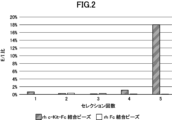
- FIG. 2 is a graph showing the enrichment of peptides that bind to the SCF receptor (c-Kit) by the selection performed in Example 2.
- FIG. The E/I ratio on the vertical axis represents the Elute/Input ratio.
- FIG. 2 is a schematic diagram showing an outline of an experiment to evaluate peptide binding to SCF receptor (c-Kit) performed in Example 3.
- FIG. 2 is a graph showing the results of evaluation of peptide binding to SCF receptor (c-Kit) performed in Example 3.
- FIG. The vertical axis represents the relative absorbance to His-Neg.
- FIG. 2 is a graph showing the results of evaluation of SCF-like activity of SCF receptor (c-Kit)-binding peptides performed in Example 5.
- FIG. The vertical axis represents the relative luminescence intensity considering the difference between the sample addition group and the non-addition group.
- the values of 10, 30, 90, 270, 810 and 2430 refer to the final dilution ratio of each peptide solution to the medium.
- 2 is a graph showing the results of evaluation of SCF-like activity of SCF receptor (c-Kit)-binding peptides performed in Example 5.
- FIG. The vertical axis represents the relative luminescence intensity considering the difference between the sample addition group and the non-addition group.
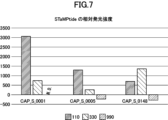
- FIG. 10 is a graph showing the results of evaluation of SCF-like activity of SCF receptor (c-Kit)-binding peptides performed in Example 7.
- the vertical axis represents the relative luminescence intensity considering the difference between the sample addition group and the non-addition group.
- the values of 110, 330 and 990 represent the final dilution ratio of each peptide solution to the medium.
- FIG. 10 is a graph showing the results of evaluation of SCF-like activity of SCF receptor (c-Kit)-binding peptides performed in Example 7.
- FIG. 10 is a graph showing the results of evaluation of SCF-like activity of SCF receptor (c-Kit)-binding peptides performed in Example 7.
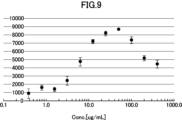
- FIG. 10 is a graph showing the results of evaluation of SCF-like activity of Fc-peptide conjugates conducted in Example 9.
- FIG. 10 represents the relative luminescence intensity considering the difference between the sample addition group and the non-addition group.
- the horizontal axis represents the concentration of each peptide solution relative to the medium.
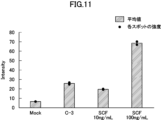
- FIG. 10 shows the results of receptor tyrosine kinase (RTK) specificity evaluation of Fc-peptide conjugates conducted in Example 10.
- FIG. FIG. 11 is a graph showing quantified intensity of the spots represented in FIG. 10; FIG. FIG.
- FIG. 3 shows each array of the Proteome Profiler Human Phospho-RTK Array Kit (R&D Systems).
- FIG. 10 is a graph showing the results of evaluation of SCF-like activity of Fc-peptide conjugates conducted in Example 11.
- FIG. The vertical axis represents the relative luminescence intensity considering the difference between the sample addition group and the non-addition group.
- the horizontal axis represents the concentration of each peptide solution relative to the medium.
- One embodiment described herein is a peptide having a cyclic structure or loop structure, wherein the amino acid sequence of the cyclic structure or the loop structure comprises an amino acid sequence represented by formula (1) described below. , relates to peptides capable of binding to SCF receptors.
- One embodiment described herein is a peptide having a cyclic structure or a loop structure, wherein the amino acid sequence of the cyclic structure or the loop structure comprises an amino acid sequence represented by formula (4) described below. , relates to peptides with agonistic activity towards the SCF receptor.
- each amino acid may be either an L-amino acid or a D-amino acid, and any amino acid may be a natural type or a non-natural type. It may be, for example, an ⁇ -, ⁇ - or ⁇ -amino acid, preferably an ⁇ -amino acid.
- the one-letter or three-letter amino acid designations shown in Table 1 are used herein.
- cyclic structure means a structure cyclized by a covalent bond.
- covalently cyclized include being cyclized with a disulfide bond, a thioether bond, or an amide bond. It is not particularly limited whether it is (cyclized).
- loop structure means a loop-shaped folded structure formed by non-covalent interactions such as electrostatic interactions, hydrophobic interactions, and hydrogen bonds. .
- a method of presenting a cyclic peptide (biologically active portion of a cyclic peptide) on a protein while retaining the structure and activity of the cyclic peptide using a protein having a loop structure as a scaffold is described in International Publication No. 2019/026920. WO 2020/027224, and Mihara, et al., Nature Communications, 12, Article number: 1543 (2021) (the contents of these documents are hereby incorporated by reference). ), and according to these methods, it is possible to insert a cyclic structural portion for exhibiting physiological activity into the loop structure of a protein while maintaining the physiological activity. Also in the peptides described herein, a cyclic structural portion for exhibiting physiological activity can be inserted into a desired loop structure while maintaining the physiological activity based on the above method.
- a peptide capable of binding to an SCF receptor includes those having agonistic activity to SCF receptors, those having antagonistic activity to SCF receptors, those that bind to SCF receptors but mostly or Those that show no activity at all may be included.
- expressions such as “a peptide capable of binding to an SCF receptor” and "a peptide having an agonistic activity to an SCF receptor” mean that the peptide is in a completely unmodified form or in a completely free form. not intend.
- a peptide capable of binding to an SCF receptor and "a peptide having an agonistic activity to an SCF receptor” include the property of being able to bind to an SCF receptor or side chains of amino acid residues are modified, for example, protected and glycosylated, and salt forms known as biologically or pharmaceutically acceptable salts can be included.
- the ability to bind to SCF receptors can be assessed by methods well known to those skilled in the art. For example, a plate on which the peptide to be tested is immobilized or a plate on which the SCF receptor protein is immobilized is prepared, and the ability of the peptide to be tested to bind to the SCF receptor is evaluated by ELISA. be able to.
- Such assessment of binding ability to SCF receptors can be performed using commercially available products and reagents.
- agonistic activity towards SCF receptors can be assessed by methods well known to those skilled in the art.
- agonist activity to SCF receptors can be evaluated using commercially available products that can be used for screening SCF receptor agonists using chemiluminescence or bioluminescence.
- X% or more sequence identity means that up to (100-X)% amino acid substitutions can be tolerated.
- Amino acid substitution means replacement of an amino acid residue in a reference amino acid sequence with a known amino acid residue different from the amino acid residue in question.
- One aspect of amino acid substitution includes, but is not limited to, conservative amino acid substitution.
- a "conservative amino acid substitution” is one in which an amino acid residue is replaced by another amino acid residue having a side chain R group with similar chemical properties (eg, charge or hydrophobicity).
- amino acid groups having side chains with similar chemical properties include glycine, alanine, valine, leucine, and isoleucine with aliphatic side chains, serine and threonine with aliphatic hydroxyl side chains, amide-containing side chains. phenylalanine, tyrosine, and tryptophan with aromatic side chains; lysine, arginine, and histidine with basic side chains; and aspartic acid and glutamic acid with acidic side chains.
- Each amino acid to be introduced by substitution may be an L-amino acid or a D-amino acid, and may be a natural amino acid or a non-natural amino acid. is an amino acid that constitutes
- the amino acid sequence represented by formula (1) is as follows.
- WX 4-7 (S/T)X ⁇ Formula (1) (In the formula, ⁇ represents an amino acid residue selected from W, F, Y, L, V, I and M; Each X independently represents an arbitrary amino acid residue. )
- the notation "(S/T)” means either S or T.
- the notation “X 4-7 ” means that 4 to 7 consecutive Xs (that is, any amino acid residue) are present.
- Each X is independently selected and each X can be the same or different.
- X is not particularly limited, it may be, for example, an amino acid residue listed in Table 1 above.
- X1 S, E, V, T, H, K, M
- R X2 H, S, P, F, Q, A, D
- E X3 R, G, I, F, A, V, K, E, W, L
- X4 G, Y, H, D, P, N
- R X5 S, N, F, K, Q, Y, A, W X6: T, Q X7: K, M X present on the C-terminal side of "(S/T)" is not particularly limited, but may be, for example, an amino acid residue listed in Table 1 above.
- the amino acid sequence represented by formula (1) is the amino acid sequence represented by the following formula (2).
- WX 4-7 (S/T) ⁇ formula (2) (Wherein, ⁇ and X are each as defined in formula (1), and ⁇ is independently selected.)
- the notation “X 4-7 ” and the notation “(S/T)” have the same meanings as those described in formula (1), and the contents described in formula (1) can be applied.
- Each ⁇ in the amino acid sequence represented by formula (2) may be the same or different.
- the amino acid sequence represented by formula (2) is the amino acid sequence represented by the following formula (2-1).
- WX 4-7 (S/T) ⁇ Formula (2-1) (Wherein, ⁇ and X are each as defined in Formula (1), and ⁇ represents an amino acid residue selected from L, V, I and M.)
- the notation “X 4-7 ” and the notation “(S/T)” have the same meanings as those described in formula (1), and the contents described in formula (1) can be applied.
- ⁇ represents an amino acid residue selected from L, V and I in one embodiment.
- the amino acid sequence represented by formula (2) is the amino acid sequence represented by the following formula (2-2).
- WX 5 (S/T) ⁇ formula (2-2) (Wherein, ⁇ and X are each as defined in formula (1), and ⁇ is independently selected.)
- the notation “X 5 ” means that 5 consecutive Xs (that is, arbitrary amino acid residues) are present. Each X is independently selected and each X may be the same or different.
- the notation “(S/T)” has the same meaning as described in formula (1), and the content described in formula (1) can be applied.
- Each ⁇ in the amino acid sequence represented by formula (2-2) may be the same or different.
- the amino acid sequence represented by formula (2) is the amino acid sequence represented by formula (3) below.
- WX 5 (S/T) ⁇ formula (3) (Wherein, ⁇ and X are each as defined in Formula (1), and ⁇ represents an amino acid residue selected from L, V, I and M.)
- the notation “X 5 ” means that 5 consecutive Xs (that is, arbitrary amino acid residues) are present. Each X is independently selected and each X may be the same or different.
- the notation “(S/T)” has the same meaning as described in formula (1), and the content described in formula (1) can be applied.
- ⁇ represents an amino acid residue selected from L, V and I in one embodiment.
- the amino acid sequence represented by formula (1) has 75% or more sequence identity with any one amino acid sequence selected from the amino acid sequences represented by SEQ ID NOs: 1 to 15 below.
- WSHRGSSMI SEQ ID NO: 1 WESGYSMV (SEQ ID NO: 2) WVSGHNSWV (SEQ ID NO: 3) WEPIDFTYV (SEQ ID NO: 4) WTHIGKSLI (SEQ ID NO: 5) WVFFPQTKTMV (SEQ ID NO: 6) WHPANFSML (SEQ ID NO: 7) WKHVRYTML (SEQ ID NO: 8) WMQKGFSMI (SEQ ID NO: 9) WRARGYSMV (SEQ ID NO: 10) WHHRGASMI (SEQ ID NO: 11) WEARNWSVI (SEQ ID NO: 12) WHDEGYQMTWY (SEQ ID NO: 13) WVEWPTMW (SEQ ID NO: 14) WESLGYSYV (SEQ ID NO: 15)
- the amino acid sequence represented by formula (1) has 80% or more or 90% or more sequence identity with any one amino acid sequence selected from the amino acid sequences represented by SEQ ID NOs: 1 to 15. In one aspect, the amino acid sequence represented by formula (1) is selected from the amino acid sequences represented by SEQ ID NOs: 1-15.
- the peptide capable of binding to an SCF receptor has a cyclic structure, the cyclic structure comprising the amino acid sequence represented by formula (1) and represented by SEQ ID NOs: 16 to 30 below. It is formed from an amino acid sequence having a sequence identity of 75% or more with any one amino acid sequence selected from the amino acid sequences listed.
- CFWHSRGSSMIQHC (SEQ ID NO: 16) CWWWESGYSMVQEC (SEQ ID NO: 17) CWVSGHNSWVKINC (SEQ ID NO: 18) CVWEPIDFTYVQHC (SEQ ID NO: 19) CTWTHIGKSLIIQC (SEQ ID NO: 20) CEWVFFPQTKTMVC (SEQ ID NO: 21) CWHPANFSMLYQC (SEQ ID NO: 22) CWKHVRYTMLQIPC (SEQ ID NO: 23) CKWMQKGFSMIQMC (SEQ ID NO: 24) CVWRARGYSMVQMC (SEQ ID NO: 25) CFWHHRGASMIRMC (SEQ ID NO: 26) CWWEARNWSVIQHC (SEQ ID NO: 27) CWHDEGYQMTWYC (SEQ ID NO: 28) CLWVEWPTMWELRC (SEQ ID NO: 29) CWESLGYSYVIVPC (SEQ ID NO: 30)
- the peptide capable of binding to the SCF receptor has a cyclic structure, the cyclic structure comprising the amino acid sequence represented by formula (1) and represented by SEQ ID NOS: 16-30. It is formed from an amino acid sequence having a sequence identity of 80% or more, 85% or more, or 90% or more with any one amino acid sequence selected from the amino acid sequences.
- the peptide capable of binding to the SCF receptor has a cyclic structure, and the cyclic structure is formed from any one of the amino acid sequences shown in SEQ ID NOS: 16-30.
- WX 4-7 (S/T) of the amino acid sequence represented by the following formula (4) relates to a peptide having an agonistic activity to the SCF receptor.
- WX 1-3 (G/P) X 1-3 (S/T) Formula (4) (Wherein, each X independently represents any amino acid residue as defined in formula (1), provided that the total number of Xs in formula (4) is at least three.)
- the notation "(G/P)" means either G or P.
- the notation "(S/T)” means either S or T.
- X 1-3 means that X (ie, any amino acid residue) is 1 or 2 to 3 consecutively present. Each X is independently selected and each X can be the same or different. Although X is not particularly limited, it may be, for example, an amino acid residue listed in Table 1 above.
- Each X in “X 1-3 " present on the N-terminal side of "(G/P)” can correspond to X1, X2, and X3 described with respect to formula (1).
- Each X in “X 1-3 ” present on the C-terminal side of “(G/P)” is X3, X4, and X5; X4, X5, and X6; or X5, X6 and X7. For these exemplary X's, what has been explained in equation (1) is applicable.
- an amino acid sequence consisting of the amino acid sequence represented by formula (1) and one amino acid residue on the C-terminal side thereof is an amino acid sequence represented by the following formula (5).
- WX 1-3 (G/P)X 1-3 (S/T)X(I/V)(Q/K/R) Formula (5) (Wherein, each X independently represents any amino acid residue as defined in formula (1), provided that the total number of Xs in formula (5) is at least three.)
- the notation "(G/P)” means either G or P.
- the notation "(S/T)” means either S or T.
- the notation "(I/V)” means either I or V.
- the notation "(Q/K/R)” means Q, K, or R.
- the notation of “X 1-3 ” is as explained in formula (4).
- the amino acid sequence represented by formula (5) is the amino acid sequence represented by formula (6) below.
- WX 1-3 (G/P)X 1-3 (S/T) ⁇ (I/V)(Q/K/R) Formula (6) (Wherein, ⁇ and X are each as defined in formula (1), ⁇ represents an amino acid residue selected from W, F, Y, L, V, I and M, and X is , each independently represents any amino acid residue, provided that the total number of Xs in formula (6) is at least three.) "(G/P)" notation, “(S/T)” notation, "(I/V)” notation, "(Q/K/R)” notation, and "X 1 " ⁇ 3 ” is as described in formula (4) or (5), respectively. In one embodiment, the total number of X's in the amino acid sequence represented by formula (6) is four.
- the amino acid sequence represented by formula (6) is the amino acid sequence represented by formula (7) below.
- WX3GXS (L/M)(I/V)(Q/R) Equation (7) (Wherein, each X independently represents any amino acid residue as defined in formula (1).)
- the notation "(L/M)” means either L or M.
- the notation "(I/V)” means either I or V.
- the notation “(Q/R)” means either Q or R.
- the notation “X 3 ” means that three consecutive Xs (that is, arbitrary amino acid residues) are present. Each X is independently selected and each X can be the same or different.
- Each X in “X 3 ” can correspond to, but is not limited to, X1, X2, and X3 described with respect to formula (1).
- X present between G and S in the amino acid sequence represented by formula (7) is not particularly limited, but can correspond to X5 described in relation to formula (1), and has the content described in formula (1) is applicable.
- the amino acid sequence represented by formula (7) is the amino acid sequence represented by formula (8) below.
- WX 3 GXSM(I/V)(Q/R) Equation (8) (Wherein, each X independently represents any amino acid residue as defined in formula (1).)
- the notation “(I/V)”, the notation “(Q/R)”, and the notation “X 3 ” have the same meanings as those described in formula (7), and formula (7 ) can be applied.
- X present between G and S in the amino acid sequence represented by formula (8) is not particularly limited, but can correspond to X5 described in relation to formula (1), and has the content described in formula (1) is applicable.
- the amino acid sequence represented by formula (4) has 75% or more sequence identity with any one amino acid sequence selected from the amino acid sequences represented by SEQ ID NOs: 31 to 39 below.
- WSHRGSS (SEQ ID NO: 31) WESGYS (SEQ ID NO: 32) WVSGHNS (SEQ ID NO: 33) WEPIDFT (SEQ ID NO: 34) WTHIGKS (SEQ ID NO: 35) WVFFPQTKT (SEQ ID NO: 36) WMQKGFS (SEQ ID NO: 37) WESLGYS (SEQ ID NO: 38) WRARGYS (SEQ ID NO: 39)
- the amino acid sequence represented by formula (4) has 85% or more sequence identity with any one amino acid sequence selected from the amino acid sequences represented by SEQ ID NOS:31-39. In one aspect, the amino acid sequence represented by formula (4) is selected from the amino acid sequences represented by SEQ ID NOS:31-39.
- the amino acid sequence represented by formula (5) has 75% or more sequence identity with any one amino acid sequence selected from the amino acid sequences represented by SEQ ID NOs: 40 to 45 below.
- WSHRGSSMIQ (SEQ ID NO: 40) WESGYSMVQ (SEQ ID NO: 41) WVSGHNSWVK (SEQ ID NO: 42) WEPIDFTYVQ (SEQ ID NO: 43) WMQKGFSMIQ (SEQ ID NO: 44) WRARGYSMVQ (SEQ ID NO: 45)
- the amino acid sequence represented by formula (5) is any one amino acid sequence selected from the amino acid sequences represented by SEQ ID NOs: 40 to 45 and 80% or more, 85% or more, or 90% or more of the sequence have identity. In one aspect, the amino acid sequence represented by formula (5) is selected from the amino acid sequences represented by SEQ ID NOs:40-45.
- the peptide having agonistic activity against the SCF receptor has a cyclic structure, wherein the cyclic structure comprises an amino acid sequence represented by formula (4) or an amino acid sequence represented by formula (5), It is formed from an amino acid sequence having 75% or more sequence identity with any one amino acid sequence selected from the amino acid sequences shown in SEQ ID NOS: 16-21, 24, 25 and 30 below.
- CFWHSRGSSMIQHC (SEQ ID NO: 16) CWWWESGYSMVQEC (SEQ ID NO: 17) CWVSGHNSWVKINC (SEQ ID NO: 18) CVWEPIDFTYVQHC (SEQ ID NO: 19) CTWTHIGKSLIIQC (SEQ ID NO: 20) CEWVFFPQTKTMVC (SEQ ID NO: 21) CKWMQKGFSMIQMC (SEQ ID NO: 24) CVWRARGYSMVQMC (SEQ ID NO: 25) CWESLGYSYVIVPC (SEQ ID NO: 30)
- the peptide having agonistic activity to the SCF receptor has a cyclic structure, wherein the cyclic structure comprises an amino acid sequence represented by formula (4) or an amino acid sequence represented by formula (5), Formed from an amino acid sequence having 80% or more, 85% or more, or 90% or more sequence identity with any one amino acid sequence selected from the amino acid sequences represented by SEQ ID NOs: 16 to 21, 24, 25 and 30 It is in one aspect, the peptide having agonistic activity to the SCF receptor has a cyclic structure, and the cyclic structure is composed of any one of the amino acid sequences shown in SEQ ID NOS: 16-21, 24, 25 and 30. formed.
- the cyclic structure in the peptides described herein is not particularly limited. It may consist of 25 or fewer, 20 or fewer, or 15 or fewer amino acid residues.
- the loop structure in the peptides described herein is not particularly limited. For example, it may consist of 2 or more, 3 or more, 4 or more, or 5 or more amino acid residues, It may consist of 23 or fewer, 18 or fewer, or 13 or fewer amino acid residues.
- the loop structure is not particularly limited.
- IgV-like domain, anti-GFP single domain antibody, Fc region such as IgG antibody, human growth hormone, serum albumin, retinol binding protein, placental alkaline phosphatase, or VP3 capsid protein sequence from adeno-associated virus serotype 2, or their It can contain subsequences.
- the peptides described herein can be made based on well-known peptide synthesis methods, for example, chemical synthesis techniques or biological techniques can be used to prepare the peptides described herein.
- the peptides described herein may form peptide dimers with two molecules.
- Peptide dimers may be heterodimers or homodimers.
- One embodiment described herein relates to a peptide dimer comprising two molecules of the peptides described herein.
- the peptide dimer is a homodimer.
- the peptide dimer has a structure that connects two peptide chains with a short linker.
- Peptide dimers include, but are not limited to, WO2021/112249, Chen, et al., Adv Drug Deliv Rev., 2013 October 15; 65(10): 1357-1369, Tan, et al., Nature Communications, 2019; 10: 439; Troup, et al., Explor Target Antitumor Ther., 2020; ) can be exemplified by a peptide dimer having a linker as described in .
- Peptide dimers can be prepared by applying known techniques. For example, peptide dimers can be prepared by the methods described in the above documents such as International Publication No. 2021/112249.
- the peptide dimer has a linker site consisting of 49 or less amino acid residues, and at least 90%, at least 95%, or 100% of the amino acid sequence of the linker site is selected from A, P and S. comprising or consisting of amino acid residues
- the peptide dimer has a linker site comprising or consisting of a sequence consisting of G and S (e.g., a sequence comprising repeating amino acid sequences selected from the group consisting of GGGGS, GGGS, GGS, and GS).
- the peptide dimer has a linker site comprising or consisting of repeats of the amino acid sequence shown by EAAAK.
- the above-mentioned peptide dimer can be obtained by linking two peptide molecules described herein with a linker, but the peptides described herein are not limited to peptides, and are desired drugs (e.g., anticancer drugs). or a photosensitizer, or a labeling compound), or a desired functional sequence (e.g., a tag sequence, an enzyme recognition sequence, a target binding sequence, or a sequence useful for enhancing peptide expression, stability, or water solubility); , may be linked via a linker.
- the linker that connects the peptide described herein and the desired drug or functional sequence is not particularly limited.
- linker comprising or consisting of amino acid residues selected from A, P and S, a sequence consisting of G and S (e.g., selected from the group consisting of GGGGS, GGGS, GGS, and GS A linker containing or consisting of repeats of the amino acid sequence represented by EAAAK, or a linker containing or consisting of repeats of the amino acid sequence shown by EAAAK.
- linkers that connect the peptides described herein and the desired drug or functional sequence are described in Tsuchikama and An, Protein & Cell, 2018; 9: 33-46, Poreba, The FEBS Journal, 2020; 287: 1936. -1969, Bargh, Chem. Soc. Rev., 2019; 48(16): 4361-4374, the contents of which are hereby incorporated by reference as being incorporated herein by reference. ).
- sequences for enhancing the stability or water solubility of peptides include JP-T-2013-531480 (herein, the contents of this document are cited by reference as constituting a part of the present specification). and a random coil polypeptide containing an amino acid sequence consisting of at least 50 proline and alanine amino acid residues as described in JP-T-2010-531139 (herein, as a part of this specification, the document (the content of which is incorporated by reference)), but are not limited thereto.
- Sequences for enhancing peptide stability include, for example, the Fc protein.
- Fc proteins are also useful as scaffolds for dimerizing peptides, and the peptides described herein may form peptide dimers using Fc proteins as scaffolds.
- Fc protein and the formation of peptide dimers using Fc protein as a scaffold are described in WO 2017/191817, WO 2019/240287, WO 2022/154116, WO 2022/154127, etc. (The contents of these documents are cited here by reference as constituting a part of the present specification.).
- Specific examples of enzyme identification sequences include, but are not limited to, SortaseA identification signals, Butelase identification signals, Transglutaminase identification signals, and the like.
- tag sequences include, but are not limited to, FLAG tags, PA tags, histidine tags, and the like.
- target-binding sequences include, but are not limited to, low-molecular-weight antibodies such as VHH and scFv.
- the functional sequence can consist of, for example, 3 or more, 6 or more, 10 or more, or 12 or more amino acid residues, 1000 or less, 500 or less, 300 or less, or It can consist of 150 or fewer amino acid residues.
- the peptides described herein may comprise a dimerization domain comprising a cysteine residue and a leucine zipper region and may form peptide dimers via this dimerization domain.
- the dimerization domain is preferably present in a chain-like portion other than the cyclic structure or loop structure.
- the dimerization domain may bind to the peptides described herein via the same linkers described above as linkers capable of connecting two molecules of the peptides described herein.
- the leucine zipper region in the dimerization domain is a region that forms an ⁇ -helix and has a leucine residue every seven residues.
- the leucine zipper region is not particularly limited, but can consist of, for example, 60 or less, 45 or less, 35 or less, or 25 or less amino acid residues.
- the leucine zipper region in the dimerization domain is not particularly limited as long as it forms a dimer. Jun ⁇ hep (M. D. Ballinger et al., Nat. Biotechnol. 17, 1199-1204 (1999), incorporated herein by reference), deficient in heparin-binding ability by replacing the positively charged amino acids in the domain with glutamine.
- the content of the document is cited as a reference.) and the like.
- Specific examples of the leucine zipper region include, but are not limited to, those containing the following amino acid sequences and those consisting of the following amino acid sequences.
- the leucine zipper region in the dimerization domain may have its heparin binding ability removed.
- the pharmaceutical composition is a pharmaceutical composition for treating cancer.
- the pharmaceutical composition is a cancer angiogenesis inhibitor.
- cancer include, but are not limited to, leukemia and KIT (CD117)-positive tumors (KIT (CD117)-positive gastrointestinal stromal tumors, etc.).
- KIT CD117-positive tumors
- the above-mentioned pharmaceutical composition related to cancer therapy and angiogenesis inhibition may contain a peptide having antagonistic activity to the SCF receptor.
- treatment means curing a subject's disease, ameliorating a subject's symptoms, inhibiting disease progression in a subject, or inhibiting exacerbation of symptoms in a subject.
- a "subject” is not particularly limited, but can be, for example, a vertebrate or a mammal. Examples of mammals include humans, cows, horses, goats, sheep, dogs and cats, and in one aspect, humans.
- the pharmaceutical composition comprises a peptide as described herein conjugated to a desired agent via a linker.
- the pharmaceutical composition can be used in applications depending on the drug attached via the linker to the peptides described herein.
- the pharmaceutical composition can be used for cancer treatment.
- the agent attached to the peptides described herein via a linker is a photosensitizer, the pharmaceutical composition is used for treating cancer by photodynamic therapy. be able to.
- the pharmaceutical composition is used for the diagnosis of diseases associated with SCF receptor expression. can do.
- a labeling compound is a compound that can be detected using physical and/or chemical properties, and examples thereof include enzymes, fluorescent substances, luminescent substances, and radioactive isotopes.
- the peptide described herein, which is bound to the desired drug via a linker has antagonistic activity against the SCF receptor, it exerts or enhances the cancer therapeutic effect.
- the peptide portion may be for conferring targeting.
- Anticipated targets for conferring target directivity include, but are not limited to, SCF receptor-expressing cells (T cells, etc.), SCF receptor-bearing proteosomes, and the like.
- the pharmaceutical composition contains pharmaceutically acceptable carriers, solvents, diluents, excipients, stabilizers, buffers, binders, disintegrants, surfactants, colorants, flavoring agents, and the like. It may contain additives that can be used in medicine. As these additives, those known to those skilled in the art can be used.
- the administration route of the pharmaceutical composition is not particularly limited as long as it is a route that is generally adopted, and specific examples include oral, sublingual, nasal, pulmonary, transgastrointestinal, transdermal, and intravenous. Examples include intramuscular injection, subcutaneous injection, and intramuscular injection.
- a therapeutically effective amount or a diagnostically effective amount of a peptide, peptide dimer or peptide homodimer described herein can be administered to a subject by administering the pharmaceutical composition to the subject.
- a “therapeutically effective amount” means an amount that exhibits a therapeutic effect depending on the disease, symptom, and/or administration route, and is determined on a case-by-case basis.
- a “diagnostically effective amount” means an amount required for diagnosis depending on the disease and/or administration route, and is determined individually and specifically.
- a subject in need of treatment for a disease comprises administering a therapeutically effective amount of a peptide, peptide dimer or peptide homodimer described herein, or treatment Methods of treating such diseases are provided comprising administering an effective amount of a pharmaceutical composition comprising a peptide, peptide dimer or peptide homodimer as described herein.
- a pharmaceutical composition comprising a peptide, peptide dimer or peptide homodimer as described herein.
- a subject in need of diagnosis of a disease is administered a diagnostically effective amount of a peptide, peptide dimer or peptide homodimer described herein. or administering a pharmaceutical composition comprising a diagnostically effective amount of a peptide, peptide dimer or peptide homodimer described herein. Any of the matters described above with respect to such diagnostic methods may be applied.
- a peptide, peptide dimer or peptide homodimer as described herein for use in treating disease (eg cancer).
- Cells to be cultured include, but are not limited to, stem cells.
- Stem cells include, but are not limited to, induced pluripotent stem cells (iPS cells), embryonic stem cells (ES cells), mesenchymal stem cells (e.g., adipose tissue-derived stem cells, bone marrow-derived stem cells, cord blood-derived stem cells, placenta-derived stem cells).
- stem cells hematopoietic stem cells, neural stem cells, and the like.
- One embodiment described herein relates to a cell culture additive comprising a peptide, peptide dimer or peptide homodimer as described herein.
- Additives for cell culture may be added directly to cells, may be added to a medium containing cells, may contain components other than the peptides, peptide dimers or peptide homodimers described herein good.
- the medium to which cell culture additives are added those well known to those skilled in the art can be applied, and the medium may contain additives well known to those skilled in the art as appropriate.
- the cells to be cultured can be as described above.
- One embodiment described herein relates to a cell culture method comprising contacting a cell with a peptide, peptide dimer or peptide homodimer described herein.
- the step of contacting the peptide, peptide dimer or peptide homodimer described herein with the cell may be performed by directly adding the peptide, peptide dimer or peptide homodimer described herein to the cell or by adding the peptides, peptide dimers or peptide homodimers described herein to a medium containing As the medium, those well known to those skilled in the art can be applied, and the medium may appropriately contain additives well known to those skilled in the art.
- the cells to be cultured can be as described above.
- a peptide, peptide dimer or peptide homodimer as described herein in the manufacture of a cell culture medium.
- Cells and media may be as described above.
- One embodiment described herein relates to a cell differentiation inducer comprising a peptide, peptide dimer or peptide homodimer described herein.
- the cell differentiation inducer may be added directly to the cells, or may be added to the medium containing the cells, and may contain components other than the peptides, peptide dimers, or peptide homodimers described herein. good.
- the medium to which the cell differentiation inducer is added those well known to those skilled in the art can be applied, and the medium may appropriately contain additives well known to those skilled in the art.
- Cells to be differentiated include, but are not limited to, stem cells.
- Stem cells include, but are not limited to, induced pluripotent stem cells (iPS cells), embryonic stem cells (ES cells), mesenchymal stem cells (e.g., adipose tissue-derived stem cells, bone marrow-derived stem cells, cord blood-derived stem cells, placenta-derived stem cells). stem cells), hematopoietic stem cells, neural stem cells, and the like.
- Cells to induce differentiation are not particularly limited, but examples include bone marrow progenitor cells, megakaryocyte/erythroblast progenitor cells, monocytes, neutrophils, basophils, mast cells, platelet-producing cells, megakaryocytes, erythrocytes, and the like. can.
- One embodiment described herein relates to a method of inducing cell differentiation comprising contacting a cell with a peptide, peptide dimer or peptide homodimer described herein.
- the step of contacting the peptide, peptide dimer or peptide homodimer described herein with the cell may be performed by directly adding the peptide, peptide dimer or peptide homodimer described herein to the cell or by adding the peptides, peptide dimers or peptide homodimers described herein to a medium containing As the medium, those well known to those skilled in the art can be applied, and the medium may appropriately contain additives well known to those skilled in the art.
- Cells that are induced to differentiate can be as described above.
- a peptide, peptide dimer or peptide homodimer as described herein for use in inducing cell differentiation may be as described above.
- use of the peptide, peptide dimer or peptide homodimer described herein in the manufacture of a cell differentiation inducer may be as described above.
- Example 1 Immobilization of c-Kit-Fc and Fc Proteins on Magnetic Beads Dispense 3 ⁇ L slurry of Dynabeads Protein G (Thermo Fisher Scientific) into tubes and add ice-cold 1x TBS-T (pH 7.6, TBS -T tablet (TaKaRa) was dissolved in Milli-Q water) and washed 3 times with 100 ⁇ L.
- Dynabeads Protein G Thermo Fisher Scientific
- Example 2 Selection of c-Kit-binding cyclic peptides by cDNA display is a method described in Biochemical and Biophysical Research Communications, Volume 503, Issue 3, Pages 2054-2060, 2018. was carried out according to The cyclic peptide library site used a mixture of peptides in which random sequences of 9 to 12 amino acids were cyclized by disulfide bonds between two cysteine side chains, as shown in FIG.
- Library mRNA was prepared by transcribing four types of mixed library cDNA.
- a peptide cDNA display library was prepared using 15 pmol of library mRNA per target.
- Peptide cDNA display libraries were prepared by ligation of puromycin linkers to mRNA libraries, cell-free translation using Rabbit Reticulocyte Lysate, ligation of puromycin to the C-terminus, purification on StreptAvidin beads from a cell-free translation system, and on-bead , recovery from beads using RNaseT1, purification of peptide-linked cDNA (cDNA display molecule) using Ni-NTA beads, and buffer exchange to TBS-T. Quantitative PCR confirmed that the peptide cDNA display library contained more than 10 11 molecules per target. From round 2 onward, rhFc-immobilized Protein G beads were added to 500 nM in terms of rhFc, and subtraction was performed once in each round.
- Example 3 Evaluation of binding activity of c-Kit-binding peptide candidate to c-Kit (Example 3-1) Preparation of c-Kit-binding peptide containing His tag From the amino acid sequence of the peptide obtained in Example 2, peptide We extracted the following two motifs that were conserved between the two.
- c-Kit binding motif 1 WX 4-7 (S/T)X ⁇ (Wherein, each symbol is as defined in the above formula (1).
- a more specific motif is the above formula (2), (2-1), (2-2) or (3) (indicated by c-Kit binding motif 2: HGN(I/V) Peptides containing each motif were evaluated by Enzyme-linked immunoSorbent assay (ELISA) to see if they could actually bind to c-Kit.
- ELISA Enzyme-linked immunoSorbent assay
- the following sequences (1) to (16) were designed as c-Kit-linked cyclic peptides having an affinity tag His-tag at the N-terminus.
- His-CAP0208, His-CAP0164, His-CAP0005, His-CAP0378, His-CAP0148, His-CAP0020, His-CAP0325, His-CAP0040, His-CAP0001, His-CAP2006, His-CAP1248, His-CAP0115, His- CAP0242 and His-CAP0008 each contain c-Kit binding motif 1, and His-CAP0083 and His-CAP0140c-Kit each contain binding motif 2.
- His-Neg peptide sequence which is a peptide sequence that does not bind to c-Kit, was designed.
- the peptides designed as above were synthesized by cell-free expression.
- Primer 1 (F25), Primer 2 (UTR) and primer 3 (R23) were synthesized by Eurofins Genomics Japan. These nucleotide sequences are shown in Tables 2 and 3 below.
- the following His-Neg-DNA sequence was synthesized by Eurofins Genomics Japan Co., Ltd. as a DNA for His-Neg expression.
- DNA for cell-free expression was prepared by PCR.
- KOD-plus-ver.2 Toyobo was used for PCR.
- a PCR premix solution was prepared according to the KOD-plus-ver.2 product protocol.
- 50 ⁇ L of PCR premix solution 1 ⁇ L of template DNA solution prepared in advance from the His-peptide nucleotide sequence, 100 ⁇ M Primer 1 0.5 ⁇ L, 50 ⁇ M Primer 1 containing the region encoding each c-Kit binding cyclic peptide sequence ⁇ L was added and amplified by PCR.
- Example 3-2 Evaluation of c-Kit binding of cyclic peptides by ELISA Evaluation of binding of cyclic peptides to c-Kit was performed using ELISA. An outline of the experiment is shown in FIG. Add a mixture of 1 ⁇ L of cell-free synthesis solution of each peptide and 100 ⁇ L of PBS (Nacalai Tesque) to a copper-coated plate (Thermo Fisher Scientific), incubate at 4°C for 30 minutes, and add Peptides were immobilized. The plate was washed 5 times with 200 ⁇ L of TBS-T (Takara Bio Inc.).
- the reaction was stopped by adding 100 ⁇ L of 0.1 M sulfuric acid, and the coloration of the TMB substrate was quantified by measuring the absorbance at 450 nm with a plate reader.
- the relative absorbance to His-Neg was calculated and the results are shown in FIG.
- the wells on which the peptide containing the c-Kit binding motif 1 was immobilized exhibited high absorbance, indicating binding to c-Kit.
- the wells in which the peptide containing the c-Kit binding motif 2 was immobilized showed low absorbance, indicating that it does not bind to c-Kit.
- Example 4 Preparation of template DNA for peptide candidates retaining SCF-like activity , 1 type of sequence (CAP_0400) containing c-Kit binding motif 1 was designed, and a total of 9 types of peptides were selected.
- CAP_0400 1 type of sequence
- 9 types of peptides were selected as peptides having a His-tag, which is an affinity tag at the N-terminus, and a self-dimerization domain between the His-tag and the c-Kit-bound cyclic peptide are shown below.
- 'His-Zipped-peptide' sequences (a) to (i) were designed. Template DNAs for these His-Zipped-peptide constructs were prepared by PCR. KOD-plus-ver.2 (Toyobo) was used for PCR.
- a PCR premix solution was prepared according to the KOD-plus-ver.2 product protocol. For 20 ⁇ L of PCR premix solution, add 5 ⁇ L of pre-prepared DNA sequence (His-Zipped), 0.15 ⁇ L of 100 ⁇ M primer 1, and 0.3 ⁇ L of primer containing region encoding 50 ⁇ M of each c-Kit binding cyclic peptide sequence. In addition, it was amplified by PCR. Next, the PCR product, 0.15 ⁇ L of 100 ⁇ M primer 1 and 0.15 ⁇ L of 100 ⁇ M primer 2 were added to 20 ⁇ L of PCR premix solution and amplified by PCR.
- PCR product 0.15 ⁇ L of 100 ⁇ M primer 1 and 0.15 ⁇ L of 100 ⁇ M primer 3 were added to 20 ⁇ L of PCR premix solution, and amplified by PCR to prepare full-length template DNA.
- the thus-prepared PCR product containing the full-length template DNA was diluted 5-fold with MilliQ water, and an in vitro cell-free translation reaction was performed using PUREfrex 2.0 (Gene Frontier) to obtain each peptide solution.
- Example 5 Evaluation of SCF-like Activity of c-Kit-Binding Peptide and Identification of Activity Motif SCF-like activity was evaluated by eXpress c-KIT Functional Assay.
- the frozen cells were quickly thawed, resuspended in the Cell Plating Reagent provided with the product, seeded in a 384-well plate, and cultured for 20 hours or longer.
- CAP_2006 peptide solution was added to the culture medium so that the final dilution ratio was 110 times, 220 times, 440 times, 880 times or 1760 times, and cultured at room temperature for 3 hours. These were used as a sample addition group.
- a non-addition group was prepared by culturing at room temperature for 3 hours without adding the peptide solution. A premix was prepared with Cell Assay buffer, Substrate reagent 1, and Substrate reagent 2 attached to the product, and the required amount was added to each of the sample addition group and non-addition group. After further incubation for 1 hour at room temperature in a light-shielded environment, luminescence intensity was measured.
- Example 6 Preparation of Template DNA for Cyclic Homodimeric Peptide Retaining SCF-like Activity
- CAP_0001, CAP_0005, CAP_0148, and CAP_2006 Four types of peptides (CAP_0001, CAP_0005, CAP_0148, and CAP_2006) were selected from the sequences whose binding activity was confirmed in Example 3.
- the "STaMPtide" sequences (j) to (o) containing a peptide sequence connecting two of these sequences (the same ones) with a peptide linker mainly composed of alanine and proline residues.
- CAP_S_0001-DNA, CAP_S_0005-DNA, CAP_S_0148-DNA, CAP_S_2006_PA 8-DNA, CAP_S_2006_PA22-DNA, CAP_S_2006_PAS49-DNA was obtained by total gene synthesis at Eurofins Genomics Japan.
- a template DNA required for cell-free translation was prepared from each STaMPtide construct obtained by PCR.
- Example 7 Evaluation of SCF-like activity of c-Kit-binding peptides and identification of activity motifs
- a total of six STaMPtide expression products prepared in Example 6 were evaluated for SCF-like activity by PathHunter (registered trademark) eXpress c-KIT Functional Assay. evaluated.
- the frozen cells were quickly thawed, resuspended in the Cell Plating Reagent provided with the product, seeded in a 384-well plate, and cultured for 20 hours or longer.
- a peptide solution prepared in advance in a dilution series was added in an appropriate amount to the medium so that the final dilution ratio was 110-fold, 330-fold, or 990-fold, and cultured at room temperature for 3 hours.
- the final dilution ratio of the peptide solution prepared in advance against the medium is 110 times, 220 times, 440 times, 880 times, 1760 times, 3520 times, 7040 times, 14080 times, and 28160 times. , or 56320-fold, and cultured at room temperature for 3 hours.
- a suitable amount of the cell-free translation solution to which no template DNA was added was added so as to achieve the above final dilution ratio, and the cells were cultured at room temperature for 3 hours to form a non-addition group.
- a premix was prepared with Cell Assay buffer, Substrate reagent 1, and Substrate reagent 2 attached to the product, and the required amount was added to each of the sample addition group and non-addition group. After further incubation for 1 hour at room temperature in a light-shielded environment, luminescence intensity was measured. The difference between the value of the sample addition group and the non-addition group was calculated, and the activity intensity was evaluated as the relative luminescence intensity.
- FIGS. 7 and 8. The results are shown in FIGS. 7 and 8.
- Activity was observed for CAP_S_2006_PA8 and CAP_S_2006_PA22 at 110-fold, 220-fold and 440-fold dilution ratios.
- CAP_S_2006_PAS49 was found to have higher activity than CAP_S_2006_PA8 and CAP_S_2006_PA22.
- Example 8 Synthesis of Fc protein (Fc)-peptide conjugate having a lysine residue at the N-terminus [Example 8-1] Synthesis of peptide (P-1)
- Example 8-1-1 Solid phase synthesis of peptide 4-azidobenzoic acid-Gly-Ser-Cys-Val-Trp-Arg-Ala-Arg-Gly-Tyr-Ser-Met-Val-Gln-Met-
- a peptide designated Cys-NH 2 (SEQ ID NO: 111) was synthesized by the Fmoc solid-phase synthesis method.
- Liberty Blue (CEM) was used as a peptide synthesizer.
- C-terminally amidated and N-terminally capped with 4-azidobenzoic acid (TCI) were prepared by solid-phase peptide synthesis.
- Example 8-1-2 Formation of intramolecular disulfide bond at Cys of peptide
- the peptide synthesized in Example 8-1-1 was dissolved in DMSO, and 0.1 M Tris-HCl solution (pH 8.0) was added. . Glutathione oxidized form was added to this solution and stirred at room temperature for 20 hours.
- a 2M trifluoroacetic acid aqueous solution was added to the reaction solution to terminate the reaction, which was then dissolved in a 0.05% trifluoroacetic acid aqueous solution and subjected to reversed-phase high-performance liquid chromatography using octadodecyl-bonded silica gel as a packing material.
- Fc protein having a lysine residue at the N-terminus An Fc protein (Fc) represented by SEQ ID NO: 112 was synthesized according to the method described in WO 2017/191817.
- SEQ ID NO: 112 Lys-Thr-His-Thr-Cys-Pro-Pro-Cys-Pro-Ala-Pro-Glu-Leu-Leu-Gly-Gly-Pro-Ser-Val-Phe-Leu-Phe-Pro-Pro-Lys- Pro-Lys-Asp-Thr-Leu-Met-Ile-Ser-Arg-Thr-Pro-Glu-Val-Thr-Cys-Val-Val-Val-Asp-Val-Ser-His-Glu-Asp-Pro- Glu-Val-Lys-Phe-Asn-Trp-Tyr-Val-Asp-Gly-Val-Glu-Val-His-Asn-Ala-Lys-Thr
- Example 8-3 Synthesis of an Fc protein having a lysine residue at the N-terminus having two DBCO groups (Example 8-3-1) Lysine residue at the N-terminus having two thiol groups at Lys27 Synthesis of Fc protein with For the Fc prepared in Example 8-2, using the peptide reagent (P-2) described in the previous report (International Publication No. 2019/240287), according to the method described in the document, from the N-terminus of the Fc protein A thiol group was introduced to the 27th lysine residue (Lys27).
- P-2 is obtained by modifying the side chain amino group of the eighth lysine residue from the N-terminus of the amino acid sequence shown in SEQ ID NO:113.
- Example 8-3-2 Synthesis of Fc protein having two thiol groups at Lys67 and having a lysine residue at the N-terminus
- Fc prepared in Example 8-2, using the peptide reagent (P-3) described in the previous report (International Publication No. 2022/154116), according to the method described in the document, from the N-terminus of the Fc protein A thiol group was introduced to the 67th lysine residue (Lys67).
- ESI-TOFMS analysis was performed according to a previous report (International Publication No. 2019/240287), and peaks were observed at 56346 and 56508, confirming the introduction of two molecules of thiol groups.
- P-3 is obtained by modifying the side chain amino group of the 31st lysine residue from the N-terminus of the amino acid sequence shown in SEQ ID NO:114.
- Example 8-3-3-3 Synthesis of Fc (F-1) having two dibenzocyclooctyne (DBCO) groups
- a DBCO group was introduced according to the description in the literature using the Fc into which the thiol group was introduced prepared in Example 8-3-1 and the reagent (P-4) described in the previous report (International Publication No. 2022/154127).
- ESI-TOFMS analysis was performed according to the previous report (International Publication No. 2019/240287), peaks were observed at 57187 and 57349, and it was confirmed that two molecules of DBCO groups were introduced.
- Example 8-3-6 Synthesis of Fc (F-4) having two molecules of DBCO groups
- Fc introduced with a thiol group prepared in Example 8-3-2 was used instead of the Fc introduced with a thiol group prepared in Example 8-3-1.
- Fc (F-4) introduced with a PEG12-DBCO group was obtained.
- ESI-TOFMS analysis was performed according to the previous report (International Publication No. 2019/240287), peaks were observed at 58400 and 58561, and it was confirmed that two molecules of DBCO groups were introduced.
- Example 8-4 Synthesis of Fc protein (Fc)-peptide conjugate having a lysine residue at the N-terminus (Example 8-4-1) Fc protein (Fc)-peptide having a lysine residue at the N-terminus Synthesis of conjugate (C-1)
- P-1 The cyclic peptide synthesized in Example 8-1 (P-1 ) (6 equivalents to Fc, dimethylformamide (DMF) (8% v/v) solution) was added, and the mixture was shaken at room temperature for 20 hours.
- the reaction solution was purified using a NAP-25 desalting column (manufactured by Cytiva) to obtain Fc (C-1) into which two molecules of peptide reagents had been introduced.
- ESI-TOFMS analysis was performed according to the previous report (International Publication No. 2019/240287), peaks were observed at 61137 and 61299, and it was confirmed that two molecules of P-1 were introduced.
- Example 8-4-2 Synthesis of Fc protein (Fc)-peptide conjugate (C-2) having a lysine residue at the N-terminus
- the reaction and purification were carried out in the same manner as in Example 8-4-1, except that Fc (F-2) having a DBCO group prepared in Example 8-3-4 was used instead of F-1.
- a molecular peptide reagent (P-1) introduced Fc (C-2) was obtained.
- ESI-TOFMS analysis was performed according to the previous report (International Publication No. 2019/240287), peaks were observed at 61646 and 61808, and it was confirmed that two molecules of P-1 were introduced.
- Example 8-4-3 Synthesis of Fc protein (Fc)-peptide conjugate (C-3) having a lysine residue at the N-terminus
- the reaction and purification were carried out in the same manner as in Example 8-4-1, except that Fc (F-3) into which a DBCO group was introduced prepared in Example 8-3-5 was used instead of F-1.
- a molecular peptide reagent (P-1) introduced Fc (C-3) was obtained.
- ESI-TOFMS analysis was performed according to a previous report (International Publication No. 2019/240287), and peaks were observed at 62350 and 62512, confirming the introduction of two molecules of P-1.
- Example 8-4-4 Synthesis of Fc protein (Fc)-peptide conjugate (C-4) having a lysine residue at the N-terminus
- the reaction and purification were carried out in the same manner as in Example 8-4-1, except that Fc (F-4) into which a DBCO group was introduced prepared in Example 8-3-6 was used instead of F-1.
- a molecular peptide reagent (P-1) introduced Fc (C-4) was obtained.
- ESI-TOFMS analysis was performed according to a previous report (International Publication No. 2019/240287), peaks were observed at 62350 and 62512, and it was confirmed that two molecules of P-1 were introduced.
- Example 9 Evaluation of SCF-like activity of Fc-peptide conjugate
- the Fc-peptide conjugate (C-3) synthesized in Example 8 was evaluated for SCF-like activity by PathHunter (registered trademark) eXpress c-KIT Functional Assay. .
- the frozen cells were quickly thawed, resuspended in the Cell Plating Reagent provided with the product, seeded in a 384-well plate, and cultured for 20 hours or longer.
- Fc-peptide conjugate solution was added to the cells at final concentrations of 405.0, 202.5, 101.2, 50.6, 25.3, 12.7, 6.3, 3.2, 1.6, 0.8, 0.4 ⁇ g/mL and incubated at room temperature for 3 hours.
- a non-addition group was prepared by adding only the Cell Plating Reagent and culturing at room temperature for 3 hours. A premix was prepared with Cell Assay buffer, Substrate reagent 1, and Substrate reagent 2 attached to the product, and the required amount was added to each of the sample addition group and non-addition group. After further incubation for 1 hour at room temperature in a light-shielded environment, luminescence intensity was measured. The difference between the value of the sample addition group and the non-addition group was calculated, and the activity intensity was evaluated as the relative luminescence intensity. The results are shown in FIG.
- Example 10 Evaluation of specificity of Fc-peptide conjugate Receptor tyrosine kinase (RTK) specificity of Fc-peptide conjugate (C-3) was evaluated using Proteome Profiler Human Phospho-RTK Array Kit (R&D Systems) bottom.
- Confluent HEL cells were placed in a 10 cm cell culture dish in RPMI-Gluta Max (Thermo Fisher Scientific) medium containing 0.5% FBS (Thermo Fisher Scientific) and penicillin-streptomycin (Nacalai Tesque). The cells were starved by culturing for 24 hours. Starved HEL cells were stimulated with RPMI-Gluta Max medium containing 1000 ng/mL C-3 at 37° C. for 15 minutes.
- FIG. 10 shows the results of quantifying the spot intensity using ImageJ (https://imagej.nih.gov/ij/). The extent of c-Kit phosphorylation by C-3 was higher after stimulation with 10 ng/mL SCF and lower than after stimulation with 100 ng/mL. These results revealed that C-3 performs c-Kit-specific activation.
- FIG. 12 shows each array of Proteome Profiler Human Phospho-RTK Array Kit (R&D Systems).
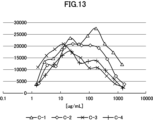
- Example 11 Evaluation of SCF-Like Activity of Fc-Peptide Conjugates The Fc-peptide conjugates synthesized in Example 8 (C-1, C-2, C-3, and C-4) SCF-like activity was evaluated by eXpress c-KIT Functional Assay. The frozen cells were quickly thawed, resuspended in the Cell Plating Reagent provided with the product, seeded in a 384-well plate, and cultured for 20 hours or longer. Each of the C-1, C-2, C-3, and C-4 solutions was added to the cells in an 11-point 2-fold dilution series, and cultured at room temperature for 3 hours to form a sample addition group.
- a non-addition group was prepared by adding only the Cell Plating Reagent and culturing at room temperature for 3 hours.
- a premix was prepared with Cell Assay buffer, Substrate reagent 1, and Substrate reagent 2 attached to the product, and the required amount was added to each of the sample addition group and non-addition group.
- luminescence intensity was measured. The difference between the value of the sample addition group and the non-addition group was calculated, and the activity intensity was evaluated as the relative luminescence intensity. The results are shown in FIG.
Landscapes
- Health & Medical Sciences (AREA)
- Chemical & Material Sciences (AREA)
- Life Sciences & Earth Sciences (AREA)
- Organic Chemistry (AREA)
- Medicinal Chemistry (AREA)
- General Health & Medical Sciences (AREA)
- Engineering & Computer Science (AREA)
- Bioinformatics & Cheminformatics (AREA)
- Pharmacology & Pharmacy (AREA)
- Genetics & Genomics (AREA)
- Animal Behavior & Ethology (AREA)
- Public Health (AREA)
- Veterinary Medicine (AREA)
- Biochemistry (AREA)
- Chemical Kinetics & Catalysis (AREA)
- General Chemical & Material Sciences (AREA)
- Proteomics, Peptides & Aminoacids (AREA)
- Molecular Biology (AREA)
- Biomedical Technology (AREA)
- Nuclear Medicine, Radiotherapy & Molecular Imaging (AREA)
- Biophysics (AREA)
- Biotechnology (AREA)
- Zoology (AREA)
- Wood Science & Technology (AREA)
- Gastroenterology & Hepatology (AREA)
- Epidemiology (AREA)
- Immunology (AREA)
- Hematology (AREA)
- Cardiology (AREA)
- Cell Biology (AREA)
- Microbiology (AREA)
- Heart & Thoracic Surgery (AREA)
- Oncology (AREA)
- General Engineering & Computer Science (AREA)
- Peptides Or Proteins (AREA)
Priority Applications (1)
| Application Number | Priority Date | Filing Date | Title |
|---|---|---|---|
| JP2023577007A JPWO2023145860A1 (https=) | 2022-01-27 | 2023-01-27 |
Applications Claiming Priority (2)
| Application Number | Priority Date | Filing Date | Title |
|---|---|---|---|
| JP2022010622 | 2022-01-27 | ||
| JP2022-010622 | 2022-01-27 |
Publications (1)
| Publication Number | Publication Date |
|---|---|
| WO2023145860A1 true WO2023145860A1 (ja) | 2023-08-03 |
Family
ID=87471604
Family Applications (1)
| Application Number | Title | Priority Date | Filing Date |
|---|---|---|---|
| PCT/JP2023/002590 Ceased WO2023145860A1 (ja) | 2022-01-27 | 2023-01-27 | Scf受容体結合ペプチド |
Country Status (2)
| Country | Link |
|---|---|
| JP (1) | JPWO2023145860A1 (https=) |
| WO (1) | WO2023145860A1 (https=) |
Citations (3)
| Publication number | Priority date | Publication date | Assignee | Title |
|---|---|---|---|---|
| JP2001502915A (ja) * | 1996-10-25 | 2001-03-06 | ジー.ディー.サール アンド カンパニー | 新規な幹細胞因子受容体アゴニストとしての環状に並べ替えたポリペプチド |
| WO2016063969A1 (ja) * | 2014-10-24 | 2016-04-28 | ペプチドリーム株式会社 | ヘマグルチニン結合ペプチド |
| WO2021002265A1 (en) * | 2019-07-03 | 2021-01-07 | Peptidream Inc. | Cd38-binding agents and uses thereof |
-
2023
- 2023-01-27 WO PCT/JP2023/002590 patent/WO2023145860A1/ja not_active Ceased
- 2023-01-27 JP JP2023577007A patent/JPWO2023145860A1/ja active Pending
Patent Citations (3)
| Publication number | Priority date | Publication date | Assignee | Title |
|---|---|---|---|---|
| JP2001502915A (ja) * | 1996-10-25 | 2001-03-06 | ジー.ディー.サール アンド カンパニー | 新規な幹細胞因子受容体アゴニストとしての環状に並べ替えたポリペプチド |
| WO2016063969A1 (ja) * | 2014-10-24 | 2016-04-28 | ペプチドリーム株式会社 | ヘマグルチニン結合ペプチド |
| WO2021002265A1 (en) * | 2019-07-03 | 2021-01-07 | Peptidream Inc. | Cd38-binding agents and uses thereof |
Non-Patent Citations (5)
| Title |
|---|
| DATABASE Protein 10 September 2019 (2019-09-10), ANONYMOUS : "acylphosphatase [Candidatus Accumulibacter phosphatis clade IIA str. UW-1]", XP093080950, retrieved from NCBI Database accession no. ACV37109.1 * |
| DATABASE Protein 15 May 2017 (2017-05-15), ANONYMOUS : "hypothetical protein B9T34_12285 [Acinetobacter sp. ANC 3813]", XP093080952, retrieved from NCBI Database accession no. OTG89439.1 * |
| DATABASE Protein 16 November 2016 (2016-11-16), ANONYMOUS : "hypothetical protein CONLIGDRAFT_318131 [Coniochaeta ligniaria NRRL 30 -Protein -NCBI", XP093080954, retrieved from NCBI Database accession no. OIW31424.1 * |
| SU LIN, KONG YAN, LIU CHANGZHENG, YANG KEGONG, CHEN: "Bio-panning of human stem cell factor mimetic peptides from phage-displayed random peptide library", ACTA ACADEMIAE MEDICINAE SINICAE, vol. 33, no. 4, 1 August 2011 (2011-08-01), pages 351 - 356, XP009547656 * |
| TILAYOV TAL, HINGALY TAL, GREENSHPAN YARIV, COHEN SHIRA, AKABAYOV BARAK, GAZIT ROI, PAPO NIV: "Engineering Stem Cell Factor Ligands with Different c-Kit Agonistic Potencies", MOLECULES, vol. 25, no. 20, 21 October 2020 (2020-10-21), pages 4850, XP093080949, DOI: 10.3390/molecules25204850 * |
Also Published As
| Publication number | Publication date |
|---|---|
| JPWO2023145860A1 (https=) | 2023-08-03 |
Similar Documents
| Publication | Publication Date | Title |
|---|---|---|
| KR101151805B1 (ko) | 바이포달 펩타이드 바인더 | |
| AU2011333665B2 (en) | Designed repeat proteins binding to serum albumin | |
| US10087215B2 (en) | Stabilized SOS1 peptides | |
| JP5677454B2 (ja) | 細胞内ターゲット結合用二座ペプチドバインダー | |
| JP2011231085A (ja) | 環状ペプチド | |
| JP2025113367A (ja) | 生理活性を有するペプチドの製造方法及び短鎖リンカーを含むペプチド | |
| US20220348624A1 (en) | Recombinant interleukin-15 analog | |
| EP2861616A1 (en) | Human fusion proteins comprising single chain tnfalpha and targeting domains | |
| WO2011071279A2 (ko) | Bpb-기반 카르고 운반 시스템 | |
| CN103038248A (zh) | Rhamm结合肽 | |
| WO2023145860A1 (ja) | Scf受容体結合ペプチド | |
| CN116199746A (zh) | 高亲和力靶向Trop2的多元环肽分子框架 | |
| KR20120115022A (ko) | 타겟 친화도가 유지되고 안정성이 개선된 d-앱타이드 | |
| KR20150118252A (ko) | 환형의 β-헤어핀 기반 펩타이드 바인더 및 이의 제조방법 | |
| WO2011132940A2 (ko) | Rtk에 특이적으로 결합하는 rtk-bpb | |
| CN102224162B (zh) | 双齿肽结合物 | |
| KR101443839B1 (ko) | 펩타이드의 타겟 친화도 개선방법 | |
| KR20130103301A (ko) | 전사인자에 특이적으로 결합하는 tf-bpb | |
| EA046193B1 (ru) | Гетеротандемный бициклический пептидный комплекс | |
| Joseph | Poly (Arginine) Derived Cancer-Targeting Peptides for the Development of a Cancer-Targeted Gene Therapy Approach in HepG2 Liver Cancer Cells | |
| WO2011132938A2 (ko) | Gpcr에 특이적으로 결합하는 gpcr-bpb | |
| WO2011132939A2 (ko) | Rtk에 특이적으로 결합하는 rtk-bpb | |
| KR20110116930A (ko) | 이온채널에 특이적으로 결합하는 이온채널―bpb |
Legal Events
| Date | Code | Title | Description |
|---|---|---|---|
| 121 | Ep: the epo has been informed by wipo that ep was designated in this application |
Ref document number: 23747070 Country of ref document: EP Kind code of ref document: A1 |
|
| ENP | Entry into the national phase |
Ref document number: 2023577007 Country of ref document: JP Kind code of ref document: A |
|
| NENP | Non-entry into the national phase |
Ref country code: DE |
|
| 122 | Ep: pct application non-entry in european phase |
Ref document number: 23747070 Country of ref document: EP Kind code of ref document: A1 |