WO2023144882A1 - 無線通信方法、無線通信システム、及び送信装置 - Google Patents
無線通信方法、無線通信システム、及び送信装置 Download PDFInfo
- Publication number
- WO2023144882A1 WO2023144882A1 PCT/JP2022/002664 JP2022002664W WO2023144882A1 WO 2023144882 A1 WO2023144882 A1 WO 2023144882A1 JP 2022002664 W JP2022002664 W JP 2022002664W WO 2023144882 A1 WO2023144882 A1 WO 2023144882A1
- Authority
- WO
- WIPO (PCT)
- Prior art keywords
- phase shift
- transmission data
- precoding
- shift amount
- wireless communication
- Prior art date
- Legal status (The legal status is an assumption and is not a legal conclusion. Google has not performed a legal analysis and makes no representation as to the accuracy of the status listed.)
- Ceased
Links
Images





Classifications
-
- H—ELECTRICITY
- H04—ELECTRIC COMMUNICATION TECHNIQUE
- H04L—TRANSMISSION OF DIGITAL INFORMATION, e.g. TELEGRAPHIC COMMUNICATION
- H04L27/00—Modulated-carrier systems
- H04L27/26—Systems using multi-frequency codes
- H04L27/2601—Multicarrier modulation systems
- H04L27/2614—Peak power aspects
- H04L27/2621—Reduction thereof using phase offsets between subcarriers
-
- H—ELECTRICITY
- H04—ELECTRIC COMMUNICATION TECHNIQUE
- H04L—TRANSMISSION OF DIGITAL INFORMATION, e.g. TELEGRAPHIC COMMUNICATION
- H04L27/00—Modulated-carrier systems
- H04L27/26—Systems using multi-frequency codes
- H04L27/2601—Multicarrier modulation systems
- H04L27/2614—Peak power aspects
-
- H—ELECTRICITY
- H04—ELECTRIC COMMUNICATION TECHNIQUE
- H04B—TRANSMISSION
- H04B7/00—Radio transmission systems, i.e. using radiation field
- H04B7/02—Diversity systems; Multi-antenna system, i.e. transmission or reception using multiple antennas
- H04B7/04—Diversity systems; Multi-antenna system, i.e. transmission or reception using multiple antennas using two or more spaced independent antennas
- H04B7/0413—MIMO systems
- H04B7/0456—Selection of precoding matrices or codebooks, e.g. using matrices antenna weighting
Definitions
- the present invention relates to wireless communication technology.
- the present invention relates to a radio communication technique in which transmission data is precoded on the transmitting side.
- the transmitting side may precode the transmitted data. For example, when performing wideband transmission under a frequency selective fading environment, channel equalization is performed by precoding. As another example, multiple-input multiple-output (MIMO) systems perform stream separation by precoding.
- MIMO multiple-input multiple-output
- PAPR Peak to Average Power Ratio
- a transmission signal is amplified by a power amplifier before being transmitted from an antenna, and if a signal with a high PAPR is input to the power amplifier, it may be affected by the nonlinear characteristics of the power amplifier and cause nonlinear distortion. The occurrence of nonlinear distortion in the transmitted signal may result in erroneous communication.
- Non-Patent Document 1 discloses a technique for reducing PAPR in a wideband single-carrier MIMO system.
- the PAPR increases.
- One object of the present invention is to provide a technique capable of reducing PAPR when the transmission side precodes transmission data in wireless communication.
- a first aspect relates to a wireless communication method for performing wireless communication between a transmitting device and a receiving device.
- the wireless communication method is phase shift amount determination processing for determining a phase shift amount for each stream of transmission data; a modulation process that modulates transmission data and further shifts the phase according to the phase shift amount for each stream; precoding processing for precoding transmission data after modulation processing; and transmission processing for transmitting transmission data after precoding processing from a transmission device to a reception device.
- a plurality of types of phase shift patterns prepared in advance define different phase shift amounts.
- the phase shift amount determination process is Selecting, from among a plurality of types of phase shift patterns, one that minimizes the PAPR of transmission data after precoding processing or one that maximizes the reception quality of transmission data in a receiving device; determining the amount of phase shift for each stream according to the selected phase shift pattern.
- a second aspect relates to wireless communication systems.
- a wireless communication system includes a transmitter and a receiver.
- the transmitting device phase shift amount determination processing for determining a phase shift amount for each stream of transmission data; a modulation process that modulates transmission data and further shifts the phase according to the phase shift amount for each stream; precoding processing for precoding transmission data after modulation processing; and transmission processing for transmitting transmission data after precoding processing to a receiving device.
- a plurality of types of phase shift patterns prepared in advance define different phase shift amounts.
- the phase shift amount determination process is Selecting, from among a plurality of types of phase shift patterns, one that minimizes the PAPR of transmission data after precoding processing or one that maximizes the reception quality of transmission data in a receiving device; determining the amount of phase shift for each stream according to the selected phase shift pattern.
- a third aspect relates to a transmitting device that wirelessly communicates with a receiving device.
- the transmitting device a phase shift amount determination unit that determines a phase shift amount for each stream of transmission data; a modulation unit that modulates transmission data and further shifts the phase according to the phase shift amount for each stream; a precoding unit that precodes transmission data after modulation processing; a transmitting unit configured to transmit transmission data after precoding processing to a receiving device.
- a plurality of types of phase shift patterns prepared in advance define different phase shift amounts.
- the phase shift amount determining unit selects, from among a plurality of types of phase shift patterns, one that minimizes the PAPR of transmission data after precoding processing, or one that maximizes the reception quality of transmission data in a receiving device. select. Then, the phase shift amount determination unit determines the phase shift amount for each stream according to the selected phase shift pattern.
- the present invention it is possible to reduce the PAPR when the transmission side performs precoding on transmission data in wireless communication.
- FIG. 1 is a conceptual diagram schematically showing the configuration of a radio communication system according to an embodiment
- FIG. FIG. 2 is a block diagram showing a basic configuration example of a transmission device that performs precoding
- FIG. 4 is a conceptual diagram for explaining amplification characteristics of an amplifier
- FIG. 4 is a conceptual diagram for explaining distortion of constellation
- FIG. 4 is a conceptual diagram for explaining the basics of phase shift according to the embodiment
- FIG. 4 is a conceptual diagram for explaining an overview of phase shift according to the embodiment
- FIG. 4 is a conceptual diagram for explaining an example of a phase shift pattern according to the embodiment
- FIG. 4 is a conceptual diagram for explaining signal addition processing according to the embodiment
- FIG. 4 is a conceptual diagram for explaining the effect of phase shift according to the embodiment; 4 is a flow chart summarizing processing by a transmitting device according to an embodiment; 1 is a block diagram showing a first configuration example of a transmission device according to an embodiment; FIG. FIG. 10 is a block diagram showing a second configuration example of a transmission device according to an embodiment; 1 is a block diagram showing a configuration example of a receiving device according to an embodiment; FIG.
- FIG. 1 is a conceptual diagram schematically showing the configuration of a radio communication system 1 according to this embodiment.
- a wireless communication system 1 includes a transmitter 100 and a receiver 200 .
- the transmitting device 100 and the receiving device 200 perform wireless communication.
- the radio communication system 1 may be a MIMO (Multiple-Input Multiple-Output) system, a SISO (Single-Input Single-Output) system, or others.
- the radio communication system 1 may perform single-carrier transmission, or may perform multi-carrier transmission based on OFDM (Orthogonal Frequency Division Multiplexing) or the like.
- OFDM Orthogonal Frequency Division Multiplexing
- the transmission device 100 precodes the transmission data. Precoding is a well known technique. For example, when performing wideband transmission under a frequency selective fading environment, channel equalization is performed by precoding. As another example, in MIMO systems, stream separation is performed by precoding.
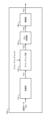
- FIG. 2 is a block diagram showing a basic configuration example of the transmission device 100 that performs precoding.
- Transmitting apparatus 100 includes modulating section 110 , precoding section 120 , D/A converting section 130 and amplifying section 140 .
- the modulation section 110 receives transmission data (transmission signal) TD0 transmitted from the transmission device 100 to the reception device 200 .
- Modulation section 110 performs “modulation processing” for modulating transmission data TD0 using a predetermined modulation scheme. Examples of the predetermined modulation scheme include QAM (Quadrature Amplitude Modulation), QPSK (Quadrature Phase Shift Keying), and the like.
- Modulation section 110 outputs transmission data TD1 after modulation processing.
- the precoding section 120 receives transmission data TD1 after modulation processing.
- the precoding unit 120 performs a “precoding process” for precoding transmission data TD1.
- Various examples are known as precoding weights (precoding matrices) used in precoding processing. In this embodiment, precoding weights are not particularly limited.
- Precoding section 120 outputs transmission data TD2 after precoding processing.
- the D/A converter 130 receives transmission data TD2 after precoding processing.
- D/A converter 130 D/A converts transmission data TD2 and outputs transmission data TD3.
- the amplification unit 140 receives transmission data TD3 after D/A conversion.
- Amplification section 140 includes a power amplifier, and performs “amplification processing” for amplifying transmission data TD3.
- the amplification section 140 performs a "transmission process" for transmitting the amplified transmission data (transmission signal) TD4 to the receiving device 200 via the antenna.
- the amplification unit 140 also functions as a “transmission unit” that performs transmission processing.
- FIG. 3 is a conceptual diagram for explaining the amplification characteristics of the amplification section 140.
- the horizontal axis represents input signal power, and the vertical axis represents output signal power.
- the amplification characteristic includes not only a linear region but also a nonlinear region, and the higher the input signal power, the stronger the influence of the nonlinear characteristic. Even if the average power is in the linear region, an input signal with a high PAPR (Peak to Average Power Ratio) is affected by nonlinear characteristics. As a result, distortion of the constellation of transmitted data may occur.
- PAPR Peak to Average Power Ratio
- FIG. 4 is a conceptual diagram for explaining constellation distortion of transmission data.
- a constellation of transmission data in the case of 64QAM is shown.
- the constellation is distorted in the nonlinear region.
- transmitting apparatus 100 precodes transmission data. Precoding with signal superposition tends to increase PAPR. Therefore, transmission data (transmission signal) with a high PAPR is input to amplification section 140, and may be affected by nonlinear characteristics and generate nonlinear distortion. When nonlinear distortion of transmitted data occurs, there is a risk of error-prone communication.
- the present embodiment provides a technique capable of reducing PAPR when transmitting apparatus 100 precodes transmission data.
- the present embodiment introduces a "phase shift" described below to reduce PAPR.
- FIG. 5 is a conceptual diagram for explaining the basics of the phase shift according to this embodiment.
- the modulation scheme is 64QAM.
- the modulation scheme is not limited to 64QAM.
- the transmission device 100 (modulation section 110) performs modulation processing for modulating transmission data using a predetermined modulation scheme.
- the transmitting apparatus 100 not only modulates the transmission data with a predetermined modulation scheme, but also adds a phase shift to the transmission data.
- the phase shift amount is ⁇ s. That is, in the modulation process, the transmitting apparatus 100 modulates the transmission data using a predetermined modulation method, and further shifts the phase of the transmission data according to the phase shift amount ⁇ s.
- FIG. 6 is a conceptual diagram for explaining the outline of the phase shift according to this embodiment.
- transmitting apparatus 100 transmits transmission data using multiple streams.
- the transmitting apparatus 100 determines the phase shift amount ⁇ s for each stream of transmission data, and performs the phase shift. That is, the phase shift amount ⁇ s is determined separately in the stream direction, and the phase shift is performed according to the phase shift amount ⁇ s for each stream.
- phase shift pattern PAT that defines the phase shift amount ⁇ s for each stream is prepared in advance.
- the phase shift pattern PAT defines the phase shift amount ⁇ s for each stream such that the phase shift amount ⁇ s differs between two or more streams.
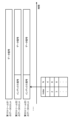
- FIG. 7 is a conceptual diagram for explaining an example of the phase shift pattern PAT according to this embodiment.
- Phase shift processing is performed in predetermined data units (eg, frames, slots).
- the phase shift amount ⁇ s is determined separately for each stream.
- the parameter N is an integer other than 0.
- the phase shift amount ⁇ s sequentially differs by a constant amount ( ⁇ /N) between streams.
- the first stream S1 is the reference stream and no phase shift is performed on the first stream S1.
- a plurality of types of phase shift patterns PAT are prepared in advance.
- a plurality of types of phase shift patterns PAT define different phase shift amounts ⁇ s.
- N e.g. 4, 6, 8, . . .
- a different index is given to each of the plurality of types of phase shift patterns PAT.
- Transmitting device 100 selects one from a plurality of types of phase shift patterns PAT. For example, transmitting apparatus 100 performs modulation processing using each of a plurality of types of phase shift patterns PAT, and further performs subsequent processing. Transmitting apparatus 100 then calculates the PAPR of the transmission data after precoding processing by precoding section 120, and selects one of the phase shift patterns PAT with the smallest PAPR from among the plurality of types of phase shift patterns PAT. As another example, transmitting apparatus 100 obtains information on reception quality (eg, BER (Bit Error Rate)) from receiving apparatus 200, and selects one of the phase shift patterns PAT with the highest reception quality. You can choose from reception quality (eg, BER (Bit Error Rate)) from receiving apparatus 200, and selects one of the phase shift patterns PAT with the highest reception quality. You can choose from reception quality (eg, BER (Bit Error Rate)) from receiving apparatus 200, and selects one of the phase shift patterns PAT with the highest reception quality. You can choose from
- transmitting apparatus 100 determines phase shift amount ⁇ s for each stream of transmission data according to one selected phase shift pattern PAT. Thereafter, transmitting apparatus 100 performs modulation processing according to the determined phase shift amount ⁇ s, and further performs subsequent processing.
- FIG. 8 is a conceptual diagram for explaining "signal addition processing" according to the present embodiment.
- Transmitter 100 adds an index signal (control signal) indicating one selected phase shift pattern PAT to each stream of transmission data. More specifically, transmitting apparatus 100 adds an index signal to the beginning or end of a predetermined data unit (eg, frame, slot). No index signal may be added to the reference stream (the first stream S1 in the examples shown in FIGS. 7 and 8) for which no phase shift is performed.
- a predetermined data unit eg, frame, slot
- the reception device 200 receives the transmission data transmitted from the transmission device 100 as reception data.
- Receiving apparatus 200 can recognize the phase shift pattern PAT applied to a predetermined data unit based on the index signal added to the received data.
- Receiving apparatus 200 demodulates the received data in consideration of the phase shift pattern PAT applied to the data unit. That is, when the receiving apparatus 200 demodulates the received data, the phase is returned by the phase shift amount ⁇ s for each stream included in the received data.
- FIG. 9 is a conceptual diagram for explaining the effect of the phase shift according to this embodiment.
- the distribution of symbol sequences in the constellation approaches a circular shape due to the phase shift. Since the symbol phase that becomes the peak power is shifted, the peak power is reduced when the signal is superimposed by precoding. Furthermore, since zeros are not crossed when transitioning to symbols at point-symmetrical positions, the average power increases compared to the case where no phase shift is performed. In this way, PAPR can be reduced by performing a phase shift during modulation processing of transmission data.
- FIG. 10 is a flow chart that summarizes the processing by transmitting device 100 according to the present embodiment.
- step S110 the transmission device 100 performs "phase shift amount determination processing". That is, the transmitting apparatus 100 determines the phase shift amount ⁇ s for each stream of transmission data. More specifically, transmitting apparatus 100 selects one of a plurality of types of phase shift patterns PAT prepared in advance. For example, transmitting apparatus 100 selects one of a plurality of types of phase shift patterns PAT that minimizes the PAPR of transmission data after precoding processing. As another example, transmitting apparatus 100 may select one of a plurality of types of phase shift patterns PAT that maximizes the reception quality of transmission data in receiving apparatus 200 . Then, transmitting apparatus 100 determines phase shift amount ⁇ s for each stream according to the selected phase shift pattern PAT.
- step S120 the transmission device 100 performs "modulation processing" on the transmission data. More specifically, the transmitting apparatus 100 modulates transmission data using a predetermined modulation scheme, and further shifts the phase of each stream according to the phase shift amount ⁇ s.
- step S130 the transmission device 100 performs "signal addition processing" on the transmission data. More specifically, transmitting apparatus 100 adds an index signal (control signal) indicating one selected phase shift pattern PAT to the stream.
- step S140 the transmission device 100 performs "precoding processing" on the transmission data. More specifically, transmitting apparatus 100 performs precoding on transmission data after modulation processing.
- step S150 the transmission device 100 performs "transmission processing" for transmitting transmission data after precoding processing from the transmission device to the reception device.
- the transmitting apparatus 100 may appropriately update the phase shift pattern PAT during communication. At the time of updating, the transmitting device 100 may reconsider all kinds of phase shift patterns PAT and select one out of all kinds of phase shift patterns PAT. Alternatively, transmitting apparatus 100 may reconsider only a certain number of phase shift patterns PAT that were relatively good last time, and select one of the certain number of phase shift patterns PAT.
- FIG. 11 is a block diagram showing a first configuration example of the transmitting apparatus 100.
- the transmitting apparatus 100 includes a modulating section 110A, a precoding section 120, a D/A converting section 130, an amplifying section 140, a phase shift amount determining section 150, a signal adding section 160, and a PAPR calculating section 170.
- Modulation section 110A has a phase shift function in addition to the function of modulation section 110 shown in FIG.
- the precoding unit 120, the D/A converting unit 130, and the amplifying unit 140 are similar to those shown in FIG.
- the phase shift amount determination unit 150 performs "phase shift amount determination processing". That is, the phase shift amount determination section 150 determines the phase shift amount ⁇ s for each stream of the transmission data TD0.
- the phase shift amount determination unit 150 holds information on a plurality of types of phase shift patterns PAT prepared in advance.
- a plurality of types of phase shift patterns PAT define different phase shift amounts ⁇ s.
- the phase shift amount determination unit 150 provisionally selects a plurality of types of phase shift patterns PAT one by one.
- the phase shift amount determination unit 150 notifies the modulation unit 110A of the phase shift amount ⁇ s for each stream defined by the temporarily selected phase shift pattern PAT.
- the modulation unit 110A receives information on the phase shift amount ⁇ s for each stream from the phase shift amount determination unit 150. In the modulation process, the modulation section 110A modulates the transmission data TD0 with a predetermined modulation method, and further shifts the phase according to the phase shift amount ⁇ s for each stream (see FIG. 7). Modulation section 110A outputs transmission data TD1 after modulation processing.
- the precoding section 120 receives transmission data TD1 after modulation processing. Precoding section 120 precodes transmission data TD1 and outputs transmission data TD2.
- the PAPR calculation unit 170 receives transmission data TD2 after precoding processing.
- PAPR calculation section 170 calculates PAPR of transmission data TD2 in a predetermined data unit according to a predetermined calculation formula.
- PAPR calculation section 170 outputs calculated PAPR information to phase shift amount determination section 150 .
- the phase shift amount determination unit 150 acquires PAPR information for each of a plurality of types of phase shift patterns PAT. Then, the phase shift amount determining section 150 selects one of the phase shift patterns PAT with the minimum PAPR from the plurality of types of phase shift patterns PAT. The phase shift amount determination section 150 determines the phase shift amount ⁇ s for each stream according to one selected phase shift pattern PAT. Then, phase shift amount determination section 150 notifies modulation section 110A of the determined phase shift amount ⁇ s for each stream. Thereafter, the modulation section 110A performs modulation processing using the phase shift amount ⁇ s notified from the phase shift amount determination section 150.
- the signal addition section 160 receives information on one phase shift pattern PAT selected by the phase shift amount determination section 150 . Further, the signal adding section 160 generates an index signal (control signal) indicating one selected phase shift pattern PAT. Then, the signal adding section 160 performs a “signal adding process” for adding the index signal to the stream of the transmission data TD1 (see FIG. 8). More specifically, signal adding section 160 adds an index signal to the beginning or end of a predetermined data unit (eg, frame, slot). Note that the index signal is not phase-shifted.
- a predetermined data unit eg, frame, slot
- FIG. 12 is a block diagram showing a second configuration example of the transmitting apparatus 100. As shown in FIG. Descriptions that overlap with the first configuration example shown in FIG. 11 are omitted as appropriate.
- transmission device 100 includes reception quality information acquisition section 180 instead of PAPR calculation section 170 .
- Reception quality information acquisition section 180 acquires information on reception quality (eg, BER) of transmission data from receiving apparatus 200 .
- Reception quality information acquisition section 180 outputs reception quality information to phase shift amount determination section 150 .
- the phase shift amount determining section 150 acquires reception quality information for each of a plurality of types of phase shift patterns PAT. Then, phase shift amount determining section 150 selects one of the phase shift patterns PAT that provides the highest reception quality. The phase shift amount determination section 150 determines the phase shift amount ⁇ s for each stream according to one selected phase shift pattern PAT. Then, phase shift amount determination section 150 notifies modulation section 110A of the determined phase shift amount ⁇ s for each stream. Thereafter, the modulation section 110A performs modulation processing using the phase shift amount ⁇ s notified from the phase shift amount determination section 150. FIG.
- the transmission device 100 includes one or more processors (hereinafter simply referred to as "processors”) and one or more storage devices (hereinafter simply referred to as “storage devices”).
- processors include a CPU (Central Processing Unit).
- storage devices stores various information necessary for processing by the processor. Examples of storage devices include volatile memory, nonvolatile memory, HDD (Hard Disk Drive), SSD (Solid State Drive), and the like.
- the processor may execute a control program, which is a computer program.
- the control program is stored in the storage device.
- the control program may be recorded on a computer-readable recording medium.
- the functions of the processor are realized by the processor executing the control program.
- phase shift patterns PAT prepared in advance Information on a plurality of types of phase shift patterns PAT prepared in advance is stored in the storage device.
- Functions such as modulation section 110A, precoding section 120, phase shift amount determination section 150, signal addition section 160, PAPR calculation section 170, reception quality information acquisition section 180, etc. are realized through cooperation between the processor and the storage device. .
- FIG. 13 is a block diagram showing a configuration example of the receiving device 200 .
- Receiver 200 includes amplifier 210 , A/D converter 220 , and demodulator 230 .
- the reception device 200 receives the transmission data transmitted from the transmission device 100 as reception data (reception signal) RD0.
- Amplifying section 210 amplifies received data RD0 and outputs received data RD1.
- A/D converter 220 A/D-converts received data RD1 and outputs received data RD2.
- the demodulator 230 performs "demodulation processing" for demodulating the received data RD2. At this time, the demodulator 230 demodulates the received data RD2 in consideration of the phase shift amount ⁇ s.
- demodulation section 230 includes phase shift pattern acquisition section 240 .
- the phase shift pattern acquisition unit 240 holds information on a plurality of types of phase shift patterns PAT prepared in advance.
- An index signal indicating one phase shift pattern PAT applied to transmission data of a predetermined data unit (eg, frame, slot) is added to the reception data RD2.
- phase shift pattern acquisition section 240 Based on the index signal, phase shift pattern acquisition section 240 recognizes phase shift pattern PAT applied to transmission data of a predetermined data unit. Then, the phase shift pattern acquisition unit 240 acquires the phase shift amount ⁇ s for each stream defined by the recognized phase shift pattern PAT.
- the demodulator 230 demodulates the received data RD2 by a predetermined demodulation method, and returns the phase by the phase shift amount ⁇ s for each stream.
- the receiving device 200 includes one or more processors (hereinafter simply referred to as "processors”) and one or more storage devices (hereinafter simply referred to as “storage devices”).
- the processor may execute a control program, which is a computer program.
- the control program is stored in the storage device.
- the control program may be recorded on a computer-readable recording medium.
- the functions of the processor are realized by the processor executing the control program.
- Information on a plurality of types of phase shift patterns PAT prepared in advance is stored in the storage device. Functions such as the demodulation unit 230 and the phase shift pattern acquisition unit 240 are realized through cooperation between the processor and the storage device.
- Radio Communication System 100 Transmitter 110, 110A Modulator 120 Precoder 130 D/A Converter 140 Amplifier 150 Phase Shift Amount Determiner 160 Signal Adder 170 PAPR Calculator 180 Reception Quality Information Acquirer 200 Receiver 210 Amplification Unit 220 A/D converter 230 Demodulator 240 Phase shift pattern acquisition unit PAT Phase shift pattern
Landscapes
- Engineering & Computer Science (AREA)
- Computer Networks & Wireless Communication (AREA)
- Signal Processing (AREA)
- Digital Transmission Methods That Use Modulated Carrier Waves (AREA)
Priority Applications (4)
| Application Number | Priority Date | Filing Date | Title |
|---|---|---|---|
| US18/729,196 US20250112811A1 (en) | 2022-01-25 | 2022-01-25 | Wireless communication method, wireless communication system, and transmission device |
| PCT/JP2022/002664 WO2023144882A1 (ja) | 2022-01-25 | 2022-01-25 | 無線通信方法、無線通信システム、及び送信装置 |
| JP2023576282A JP7679894B2 (ja) | 2022-01-25 | 2022-01-25 | 無線通信方法、無線通信システム、及び送信装置 |
| EP22923751.6A EP4472151A4 (en) | 2022-01-25 | 2022-01-25 | WIRELESS COMMUNICATION METHOD AND SYSTEM AND TRANSMISSION DEVICE |
Applications Claiming Priority (1)
| Application Number | Priority Date | Filing Date | Title |
|---|---|---|---|
| PCT/JP2022/002664 WO2023144882A1 (ja) | 2022-01-25 | 2022-01-25 | 無線通信方法、無線通信システム、及び送信装置 |
Publications (1)
| Publication Number | Publication Date |
|---|---|
| WO2023144882A1 true WO2023144882A1 (ja) | 2023-08-03 |
Family
ID=87471145
Family Applications (1)
| Application Number | Title | Priority Date | Filing Date |
|---|---|---|---|
| PCT/JP2022/002664 Ceased WO2023144882A1 (ja) | 2022-01-25 | 2022-01-25 | 無線通信方法、無線通信システム、及び送信装置 |
Country Status (4)
| Country | Link |
|---|---|
| US (1) | US20250112811A1 (https=) |
| EP (1) | EP4472151A4 (https=) |
| JP (1) | JP7679894B2 (https=) |
| WO (1) | WO2023144882A1 (https=) |
Families Citing this family (1)
| Publication number | Priority date | Publication date | Assignee | Title |
|---|---|---|---|---|
| US20260067146A1 (en) * | 2022-01-25 | 2026-03-05 | Ntt, Inc. | Wireless communication method, wireless communication system, and transmission device |
Citations (1)
| Publication number | Priority date | Publication date | Assignee | Title |
|---|---|---|---|---|
| JP2009194732A (ja) * | 2008-02-15 | 2009-08-27 | Ntt Docomo Inc | 無線通信装置及び無線通信方法 |
-
2022
- 2022-01-25 US US18/729,196 patent/US20250112811A1/en active Pending
- 2022-01-25 JP JP2023576282A patent/JP7679894B2/ja active Active
- 2022-01-25 WO PCT/JP2022/002664 patent/WO2023144882A1/ja not_active Ceased
- 2022-01-25 EP EP22923751.6A patent/EP4472151A4/en active Pending
Patent Citations (1)
| Publication number | Priority date | Publication date | Assignee | Title |
|---|---|---|---|---|
| JP2009194732A (ja) * | 2008-02-15 | 2009-08-27 | Ntt Docomo Inc | 無線通信装置及び無線通信方法 |
Non-Patent Citations (3)
| Title |
|---|
| KURIYAMA ET AL.: "PAPR Reduction on Wideband Single-Carrier MIMO Systems with Variable Tap-Length FIR Beamforming", SOCIETY CONFERENCE OF THE INSTITUTE OF ELECTRONICS, INFORMATION AND COMMUNICATION ENGINEERS, September 2021 (2021-09-01), pages B-5 - 70 |
| See also references of EP4472151A4 |
| YANHUI DUAN ; YINGSHAN LI ; ZHAO LI ; SHUWEI LIU ; CHAO WU: "A New SLM Method with Feedback Searching for Uplink SC-FDMA System", 2012 8TH INTERNATIONAL CONFERENCE ON WIRELESS COMMUNICATIONS, NETWORKING AND MOBILE COMPUTING (WICOM 2012) : SHANGHAI, CHINA, 21 - 23 SEPTEMBER 2012, IEEE, PISCATAWAY, NJ, 21 September 2012 (2012-09-21), Piscataway, NJ , pages 1 - 4, XP032342540, ISBN: 978-1-61284-684-2, DOI: 10.1109/WiCOM.2012.6478319 * |
Also Published As
| Publication number | Publication date |
|---|---|
| JP7679894B2 (ja) | 2025-05-20 |
| JPWO2023144882A1 (https=) | 2023-08-03 |
| US20250112811A1 (en) | 2025-04-03 |
| EP4472151A1 (en) | 2024-12-04 |
| EP4472151A4 (en) | 2025-11-19 |
Similar Documents
| Publication | Publication Date | Title |
|---|---|---|
| JP5377639B2 (ja) | 移動局装置、基地局装置、通信システム、通信方法および制御プログラム | |
| EP2523361B1 (en) | Improved transmit power allocation for adaptive multi-carrier multiplexing MIMO systems | |
| US20150010104A1 (en) | Transmitter and signal transmitting method thereof | |
| JP2008206045A (ja) | 無線通信システム及び無線機 | |
| JP7679894B2 (ja) | 無線通信方法、無線通信システム、及び送信装置 | |
| WO2023144879A1 (ja) | 無線通信方法、無線通信システム、及び送信装置 | |
| WO2023157133A1 (ja) | 無線通信方法、無線通信システム、及び送信装置 | |
| JP7782662B2 (ja) | 無線通信方法、無線通信システム、及び送信装置 | |
| WO2023157132A1 (ja) | 無線通信方法、無線通信システム、及び送信装置 | |
| JP7647900B2 (ja) | 無線通信システム、無線通信方法、および無線通信用送信装置 | |
| JP7720002B2 (ja) | 無線通信方法、無線通信システム、及び送信装置 | |
| US12132544B2 (en) | Downlink signal processing method and apparatus, and base station | |
| WO2023148984A1 (ja) | 無線通信方法、無線通信システムおよび無線送信装置 | |
| WO2023148954A1 (ja) | 無線通信方法、無線通信システムおよび無線送信装置 | |
| WO2011078097A1 (ja) | 複合条件判定ユニット、伝送装置、複合条件判定方法 | |
| JP7563615B2 (ja) | 無線通信システム、無線通信方法、および無線通信用送信装置 | |
| JP7613596B2 (ja) | 無線通信方法、無線通信システム、及び送信装置 | |
| US20220376752A1 (en) | Reception apparatus, signal processing method, and non-transitory computer readable recording medium | |
| JP2023043653A (ja) | 無線通信装置 | |
| KR20100125773A (ko) | 전송 다이버시티 지원 방법 및 장치 | |
| JP2023015780A (ja) | 無線通信システム、及び無線通信方法 | |
| WO2023017564A1 (ja) | 無線通信システム、無線通信方法、及び送信装置 |
Legal Events
| Date | Code | Title | Description |
|---|---|---|---|
| 121 | Ep: the epo has been informed by wipo that ep was designated in this application |
Ref document number: 22923751 Country of ref document: EP Kind code of ref document: A1 |
|
| ENP | Entry into the national phase |
Ref document number: 2023576282 Country of ref document: JP Kind code of ref document: A |
|
| WWE | Wipo information: entry into national phase |
Ref document number: 18729196 Country of ref document: US |
|
| NENP | Non-entry into the national phase |
Ref country code: DE |
|
| ENP | Entry into the national phase |
Ref document number: 2022923751 Country of ref document: EP Effective date: 20240826 |
|
| WWP | Wipo information: published in national office |
Ref document number: 18729196 Country of ref document: US |