WO2023127860A1 - 情報処理システム及びサーバ、情報処理方法、プログラム - Google Patents
情報処理システム及びサーバ、情報処理方法、プログラム Download PDFInfo
- Publication number
- WO2023127860A1 WO2023127860A1 PCT/JP2022/048125 JP2022048125W WO2023127860A1 WO 2023127860 A1 WO2023127860 A1 WO 2023127860A1 JP 2022048125 W JP2022048125 W JP 2022048125W WO 2023127860 A1 WO2023127860 A1 WO 2023127860A1
- Authority
- WO
- WIPO (PCT)
- Prior art keywords
- information
- delivery
- storage
- space
- user
- Prior art date
- Legal status (The legal status is an assumption and is not a legal conclusion. Google has not performed a legal analysis and makes no representation as to the accuracy of the status listed.)
- Ceased
Links
Images





Classifications
-
- B—PERFORMING OPERATIONS; TRANSPORTING
- B65—CONVEYING; PACKING; STORING; HANDLING THIN OR FILAMENTARY MATERIAL
- B65G—TRANSPORT OR STORAGE DEVICES, e.g. CONVEYORS FOR LOADING OR TIPPING, SHOP CONVEYOR SYSTEMS OR PNEUMATIC TUBE CONVEYORS
- B65G61/00—Use of pick-up or transfer devices or of manipulators for stacking or de-stacking articles not otherwise provided for
-
- G—PHYSICS
- G06—COMPUTING OR CALCULATING; COUNTING
- G06Q—INFORMATION AND COMMUNICATION TECHNOLOGY [ICT] SPECIALLY ADAPTED FOR ADMINISTRATIVE, COMMERCIAL, FINANCIAL, MANAGERIAL OR SUPERVISORY PURPOSES; SYSTEMS OR METHODS SPECIALLY ADAPTED FOR ADMINISTRATIVE, COMMERCIAL, FINANCIAL, MANAGERIAL OR SUPERVISORY PURPOSES, NOT OTHERWISE PROVIDED FOR
- G06Q10/00—Administration; Management
- G06Q10/08—Logistics, e.g. warehousing, loading or distribution; Inventory or stock management
- G06Q10/083—Shipping
Definitions
- the present disclosure relates to an information processing system, a server, an information processing method, and a program.
- Patent Literature 1 discloses an EC site management device that extracts recommended products from multiple viewpoints such as customer attributes, access logs, related product information, and presents them to customers.
- Patent Document 1 With the technology disclosed in Patent Document 1 above, it is possible to display customer-specific product information that takes into account various viewpoints on the user terminal, but it does not take into account any viewpoints related to delivery.
- the delivery efficiency is high, the delivery cost (and thus the delivery fee) will be reduced. Therefore, it is desirable for both the service provider and the user to load a large number of packages onto a single mobile unit. Considering , it is difficult to determine how much space is left in the mobile body loading section, and operation with high loading efficiency is desired.
- the main technology of the present disclosure for solving the above problems is a storage container type that indicates the type of storage container for each volume of the storage container for storing the user's purchased product as a delivery based on the purchased product information selected by the user.
- a storage vessel type setting unit that sets information, reference storage space volume information that indicates the volume of a storage space that stores one or more of the storage vessels, and the set storage vessel type information.
- a residual space calculation unit that calculates residual space information indicating a residual space
- a mixed-loading target delivery extraction unit that extracts consolidated-loading target delivery information indicating another user’s delivery that can be mixed with the user’s delivery in the residual space.
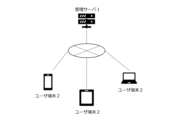
- FIG. 1 is a diagram showing the configuration of an information processing system according to an embodiment of the present disclosure
- FIG. 2 is a block diagram showing the hardware configuration of a management server in FIG. 1
- FIG. 2 is a block diagram showing the hardware configuration of the user terminal in FIG. 1
- FIG. 2 is a block diagram showing functions of a management server in FIG. 1
- FIG. 3 is a block diagram showing the structure of the storage of FIG. 2
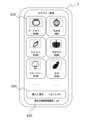
- FIG. It is an example of a display screen according to an embodiment of the present disclosure. It is an example explaining the calculation of the residual space according to the embodiment of the present disclosure.
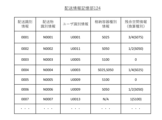
- 6 is a block diagram showing the structure of a delivery information storage unit in FIG. 5
- FIG. 4 is a flowchart of an information processing method according to an embodiment of the present disclosure
- It is an example of a display screen according to an embodiment of the present disclosure.
- An information processing system or the like has the following configuration.
- a storage container type setting unit for setting storage container type information indicating a type of a storage container for each volume of a storage container for storing the product purchased by the user as a delivery item, based on the purchased product information selected by the user; Remaining space information indicating the remaining space in the storage space is calculated based on reference storage space volume information indicating the volume of the storage space for storing one or more of the storage vessels and the set storage vessel type information.
- the storage vessel type information is based on a volume obtained by dividing a predetermined storage space volume by a predetermined number, with a predetermined storage space volume as a reference storage space volume.
- the information processing system is characterized by: [Item 3]
- the residual space information is residual converted containment vessel type information obtained by converting the residual space into a containment vessel type
- the information processing system according to any one of items 1 and 2, characterized by: [Item 4] Further comprising a data management unit that receives the user's selection of estimated delivery time information regarding delivery and updates the delivery information before the user selects the purchased product,
- the information processing system according to any one of items 1 to 3, characterized by: [Item 5] a storage container type setting unit for setting storage container type information indicating a type of a storage container for each volume of a storage container for storing the product purchased by the user as a delivery item, based on the purchased product information selected by the user; Remaining space information indicating the remaining space in the storage space is calculated based on reference storage space volume information indicating the volume of the storage space for storing one or more of the storage vessels and the set storage vessel type information.
- a server characterized by comprising: [Item 6] a step of setting, by a storage container type setting unit, storage container type information indicating a type of a storage container for each volume of a storage container for storing a product purchased by the user as a delivered item, based on the purchased product information selected by the user;
- the residual space calculating unit calculates the residual space indicating the remaining space in the storage space based on the reference storage space volume information indicating the volume of the storage space for storing one or more of the storage vessels and the set storage vessel type information.
- An information processing method characterized by: [Item 7] a step of setting, by a storage container type setting unit, storage container type information indicating a type of a storage container for each volume of a storage container for storing a product purchased by the user as a delivered item, based on the purchased product information selected by the user;
- the residual space calculating unit calculates the residual space indicating the remaining space in the storage space based on the reference storage space volume information indicating the volume of the storage space for storing one or more of the storage vessels and the set storage vessel type information.
- calculating spatial information causing a computer to execute a step of extracting, by a mixed-loading target delivery extracting unit, consolidated-loading target delivery information indicating a delivery of another user who can mix-load the user's delivery item in the remaining space;
- the information processing system has a management server 1 and one or more user terminals 2 .
- the management server 1 and the user terminal 2 are communicably connected to each other via a network.
- the illustrated configuration is an example, and the configuration is not limited to this.
- FIG. 2 is a diagram showing the hardware configuration of the management server 1. As shown in FIG. Note that the illustrated configuration is an example, and other configurations may be employed.
- the management server 1 is connected to a plurality of user terminals 2 and constitutes part of this system.
- the management server 1 may be, for example, a general-purpose computer such as a workstation or personal computer, or may be logically realized by cloud computing.
- the management server 1 includes at least a control unit 10 , a memory 11 , a storage 12 , a transmission/reception unit 13 , an input/output unit 14 and the like, which are electrically connected to each other through a bus 15 .
- the control unit 10 is an arithmetic device that controls the overall operation of the management server 1, controls transmission and reception of data between elements, executes applications, and performs information processing necessary for authentication processing.
- the control unit 10 is a CPU (Central Processing Unit) and/or a GPU (Graphics Processing Unit), and executes programs for this system stored in the storage 12 and developed in the memory 11 to perform each information processing. do.
- CPU Central Processing Unit
- GPU Graphics Processing Unit
- the memory 11 includes a main memory composed of a volatile memory device such as a DRAM (Dynamic Random Access Memory), and an auxiliary memory composed of a non-volatile memory device such as a flash memory or a HDD (Hard Disc Drive). .
- the memory 11 is used as a work area or the like for the processor 10, and stores a BIOS (Basic Input/Output System) executed when the management server 1 is started, various setting information, and the like.
- BIOS Basic Input/Output System
- the storage 12 stores various programs such as application programs.
- a database storing data used for each process may be constructed in the storage 12 .
- the transmission/reception unit 13 connects the management server 1 to the network and the blockchain network.
- the transmitting/receiving unit 13 may include a short-range communication interface of Bluetooth (registered trademark) and BLE (Bluetooth Low Energy).
- the input/output unit 14 is an information input device such as a keyboard and mouse, and an output device such as a display.
- a bus 15 is commonly connected to the above elements and transmits, for example, address signals, data signals and various control signals.
- the user terminal 2 shown in FIG. 3 is an information processing device such as a personal computer, a tablet terminal, a smart phone, a mobile phone, a PHS, a PDA, etc. owned by the user. , a storage 22 , a transmission/reception unit 23 , an input/output unit 24 and the like, which are electrically connected to each other through a bus 25 . Since the main functions of each element can be configured in the same manner as the management server 1 described above, detailed description of each element will be omitted.
- FIG. 4 is a block diagram illustrating functions implemented in the control unit 10 of the management server 1
- FIG. 5 is a block diagram illustrating information stored in the storage 12.
- the control unit 10 of the management server 1 includes an information transmission/reception unit 100, a screen information generation unit 110, a data management unit 120, a merchandise purchase management unit 130, and a delivery management unit 150 as functional units.
- the product purchase management unit 130 includes a container type setting unit 131 .
- the delivery management unit 150 includes a residual space calculation unit 151 and a consolidated delivery extraction unit 152 .
- the storage 12 also includes various databases such as a user information storage unit 121, a product information storage unit 122, a delivery information storage unit 123, and a delivery information storage unit .
- User information stored in the user information storage unit 121 includes, for example, user basic information (user name, user name, e-mail address, address, telephone number, etc.), user identification information, payment information (credit card information, etc.). , external application account information, purchased product information (including purchase cost information), purchase history information, product information you wish to purchase (so-called favorite registered product information and wish list product information, etc.), including the product information described later and some or all the same information may be included), regular purchase product information (described later), etc., but are not limited to these.
- the product information stored in the product information storage unit 122 includes, for example, product identification information, product name information, manufacturer name information, seller name information, product category information (foods, beverages, alcoholic beverages, sweets, household goods, cosmetics, etc.), price information, size information (depth, width, height), weight information, control temperature zone information, top and bottom stacking availability information (stacking availability information or bottom stacking availability information). It is not limited.
- the delivery item information stored in the delivery item information storage unit 123 includes, for example, delivery item identification information, user identification information, container type information, size information (depth, width, height), weight information, and management temperature range information. , top and bottom loading availability information (top loading availability information or bottom loading availability information), mixed loading target delivery information, delivery cost information, etc., but not limited to these.
- the delivery information stored in the delivery information storage unit 124 includes, for example, delivery identification information, user identification information, delivery item identification information, remaining space information, consolidated delivery item information, delivery type information, scheduled delivery time information (delivery start Scheduled time information, scheduled delivery end time information, scheduled delivery time zone information), etc., and may include container type information, weight information, management temperature zone information, delivery cost information, etc. linked to the delivery item identification information. , but not limited to these.
- the information transmission/reception unit 100 transmits various information (including requests) to an external device (for example, the user terminal 2 or the like) that is directly or indirectly connected to the management server 1 at least via a network, or transmits an external It receives various information (including requests) from the device.
- an external device for example, the user terminal 2 or the like
- the information transmission/reception unit 100 transmits various information (including requests) to an external device (for example, the user terminal 2 or the like) that is directly or indirectly connected to the management server 1 at least via a network, or transmits an external It receives various information (including requests) from the device.
- the screen information generation unit 110 generates screen information displayed via the user interface of the user terminal 2 .
- the screen information can be, for example, user interface screen information generated by arranging various images and text based on predetermined layout rules using the image and text data stored in the storage 12 as materials.
- the screen information generation unit 110 may be a functional unit executed by the control unit 20 by an application (including a web browser) stored in each user terminal 2 . That is, information necessary for generating a user interface screen such as image data is transmitted from the management server 1, and the user interface screen is generated based on the necessary information based on a predetermined layout rule by the application of the user terminal 2. can also be displayed on the user terminal 2. Processing related to the screen information generation unit 110 can also be executed by a GPU (Graphics Processing Unit).
- GPU Graphics Processing Unit
- the data management unit 120 performs data management such as transmitting various information received by the information transmitting/receiving unit 100 to various functional units and acquiring various information from various functional units.
- Predetermined processing in the data management unit 120 includes, for example, assigning user identification information to a user in response to a usage registration request and user information received from the user terminal 2, and storing and managing the user information in the user information storage unit 121.
- registration processing; product presentation processing for presenting product list information see FIG.
- Purchasing product information update processing (including processing to update the purchased product confirmation area 620) for updating the purchased product information linked to the user identification information according to the selection operation on the information product display area 610, the user's information based on the purchased product information
- Containment vessel setting processing for setting containment vessel type information that indicates the type of containment vessel volume for storing purchased products (including products to be purchased), criteria indicating the volume of the storage space for storing one or more containment vessels
- Remaining space calculation processing for calculating the remaining space in the storage space based on the storage space volume information and the set storage container type information, Consolidated delivery information indicating other users' deliveries that can be mixed with the user's deliverables in the remaining space
- the product purchase management unit 130 executes predetermined processing related to product purchase and manages predetermined information related to product purchase.
- the product purchase management unit 130 for example, purchase product information (so-called virtual Purchasing processing including predetermined procedural processing is executed based on the product information to be purchased such as a typical shopping cart), and purchase history information (product ID, purchase date, purchase amount, etc.).
- the storage container type setting unit 131 sets storage container type information indicating the type of storage container for each volume of the storage container for storing the purchased product of the user based on the purchased product information linked to the user identification information.
- the shape of the storage container is, for example, a three-dimensional container having a geometric shape, and is preferably a rectangular parallelepiped (including a cube) in consideration of storage in the storage space and stacking.
- the containment vessel may be made of any material, including paper, plastic, metal, etc. In particular, corrugated cardboard made of paper or plastic is recommended for ease of production and weight. desirable from the viewpoint of Here, in the present disclosure, the storage container type information is set so that the type of the storage container for storing the purchased product can be identified.
- the containment vessel type is, for example, a plurality of containment vessels that are set to be mutually identifiable based on the volume obtained by dividing the reference storage space volume by a predetermined number (e.g., an integer), with a predetermined storage space volume as the reference storage space volume.
- Number of multiple containment vessel volumes that are identifiably set for each type of volume may include types (e.g. 1/3, 2/3, 1; 1/4, 1/2, 3/4, 1, etc.);
- a plurality of types of containment vessel volume for example, 1/2, 1 /4, 1/8 .
- volume of the containment vessel more specifically, for example, when the standard containment space volume is divided by 4 (i.e., when 1/4), any of the depth, width, and height of the containment space divided by 4, or two of the depth, width, and height of the storage space divided by two.
- the reference storage space volume may not be the same as the predetermined storage space volume, but may be substantially the same (substantially the same) volume.
- the volume may be obtained by subtracting the excess space (for example, several millimeters or several centimeters), or if a partition is provided inside the containment vessel, the partition (for example, several millimeters or several centimeters) is reduced.
- the containment space may be of substantially the same volume as the reference containment space volume, but larger by a partition).
- the storage space for storing the user's stored items and/or the storage space subject to the reference storage space volume may be any space having a predetermined volume. It is preferable that it is a space, and more specifically, it is an installation that a user uses, such as a storage space for the user, a delivery box with a smart lock installed in a private house, or a common area for an apartment.
- the storage space of the delivery box to be placed (the position of the space may be determined in advance by linking information related to the user, or the position where the package is stored by linking information related to the user by the delivery person) storage space such as a shelf, locker, post office box, and cold storage box without electrical locking/unlocking control.
- the storage space for delivery may be used as a reference, and a delivery storage unit for a mobile object (a mobile object such as a UAV or UGV, especially an autonomously controlled mobile object) for delivering a package, or a delivery storage space. It may also be a movable object such as a carrier (for example, a truck carrier, a rear box of a motorcycle, a box carriage, a basket carriage, etc.) used for delivery by an employee, or a bag for delivery.
- the space having a predetermined volume may be a space whose lengths in the depth direction, width direction, and height direction are fixed as described above.
- the storage space to be stored and the reference storage space may be the same, or the size of the storage space to be stored may be the reference storage space multiplied by a predetermined number (especially an integer).
- the storage container type setting unit 131 first refers to the product information storage unit 122 based on the purchased product information linked to the user identification information, and selects each purchased product (product after purchase processing). , including the product to be purchased), and fill each container with a known cartoning calculation algorithm for storing a given object for a given volume of space.
- a suitable storage container type is selected by virtually storing the purchased product in the container of the type.
- the suitable storage container type referred to here is preferably the minimum size storage container type that can store the purchased product from the viewpoint of storage efficiency in the subsequent storage space.
- the storage container type may be one or two sizes larger than the minimum size that can be stored.
- the selection of the storage vessel type is not limited to the selection of one storage vessel, and may be the selection of a plurality of storage vessels. For example, if the purchased products include products that are strictly prohibited to be stacked, in order to ensure that they are not stacked, the storage container that stores the products that are strictly prohibited to be stacked is separated and set as a storage container that is strictly prohibited to be stacked. It may be made distinguishable so that it is stored above the storage space.
- the delivery management unit 150 updates information such as addition of delivery item identification information and association of user identification information in the delivery item information storage unit 123 in response to requests from the user, for example, before and after product selection and payment. Also, information update such as addition of delivery identification information and association of user identification information in the delivery information storage unit 124 is executed.
- the remaining space calculation unit 151 determines the target storage space based on the reference storage space volume information indicating the volume of the storage space for storing one or more storage vessels and the storage vessel type information set by the storage vessel type setting unit 131.
- a residual space (so-called empty space) in the space is calculated.
- the residual space calculation method calculates the residual space by a known cartoning calculation algorithm for storing a given object for a given volume of space.
- the calculation result of the remaining space especially when the containment vessel type is defined for each predetermined volume with respect to the standard storage space volume according to the predetermined rule as described above, the remaining space is also It can be a volume value that can be easily converted to the type of containment vessel. That is, the residual space information can be residual converted container type information obtained by converting the residual space into the container type, and the conversion facilitates the later-described comparison.
- the containment vessel has a plurality of types of containment vessel volume (for example, 1/ 3, 2/3, and 1).
- user information "U0001" is associated with the virtual storage space associated with delivery identification information "0001".
- delivery item information "N0001” when a delivery item (delivery item information "N0001") stored in a container (container type "S033") having a one-third of the standard storage space volume is virtually stored, the delivery item is not stored.
- the remaining space information is updated to "2/3" by subtracting 1/3 from 1, and the remaining converted containment vessel type information has two "S033" and/or "S066 (reference storage
- the container type indicating a container with two-thirds of the space volume" is updated as information indicating one.
- delivery item information “N0010”) stored in a container (container type “S033”) having a one-third of the standard storage space volume is stored virtually
- the delivery item ( N0001) is further stored in the storage space where 1/3 is subtracted from 2/3 to update the remaining space information to "1/3”
- the remaining converted containment vessel type information "S033" is one. updated as indicated.
- the remaining space is calculated in this way, and can be executed more easily if any of the depth, width, and height of the storage space is divided by a predetermined number, as shown in the example. It should be noted that, as described above, a more sophisticated calculation of the residual space is possible with known packing calculation algorithms.
- the delivery information storage unit 124 First, in the delivery identification information "0001”, the linked delivery item information is "N0001”, the user information is "U0001", and the storage container type information is a container with a quarter of the standard storage space volume. Since it is shown that one "S025" indicating the type is stored, the residual space information is "3/4" (remaining converted containment vessel type information is 3/4 of the standard storage space volume. is calculated as "S075").
- the linked delivery item information is "N0002”
- the user information is "U0011”
- the container type information is half the standard storage space volume. Since it is shown that one “S050” indicating the container type is stored, the residual space information is "1/2" (a container whose residual converted containment vessel type information is half the standard storage space volume). "S050” indicating the type) is calculated.
- the linked delivery item information is "N0003” and the user information is "U0005".
- the remaining space information is calculated as "0" (that is, there is no free space).
- the linked delivery item information is "N0004"
- the user information is "U0003”
- the storage container type information is one "S025" (for example, The information indicates whether or not vertical loading is strictly prohibited), and one "S050” is stored, so the remaining space information is "1/4" It is calculated as "S025", which indicates the type of container with a volume of 1/4.
- the linked delivery item information is "N0005" and “N0006”
- the user information is "U0009”. Since it is shown that one "S100” and one "S050” are stored (for example, when the capacity of the purchased product exceeds the storage space), the remaining space information is “0" and "1 /2”. In this case, the substantial remaining space for this delivery for the user of the user information "U0009” is "1/2" ("S050" indicating the container type whose residual conversion container type information is 1/2 of the standard storage space volume). ).
- the linked delivery item information is "N0007” and the user information is "U0013", but the storage container type information is not linked (for example, the purchased product is selection, etc.), the residual space information remains “1” ("S100” indicating the container type whose residual converted container type information is substantially the same as the reference storage space volume).
- the remaining space calculation unit 151 is based on the reference storage space volume information indicating the volume of the storage space for storing one or more containment vessels and the containment vessel type information set by the containment vessel type setting unit 131. , it is possible to calculate the residual space in the target storage space.
- the containment vessel type information identification information is set so that each containment vessel volume can be identified by dividing a predetermined storage space volume as a reference storage space volume by a predetermined number. Objects can be stored efficiently, and the remaining space volume can be clarified as the remaining conversion container type information. By using this, it is possible to extract the mixed-loading target delivery information indicating the delivery in which the user's delivery item can be mixed-loaded in the remaining space. Details are given below.
- the mixed-loading target delivery extracting unit 152 extracts mixed-loading target delivery information indicating other users' deliveries that can be mixed with the user's delivery items in the remaining space. More specifically, the mixed-loading target delivery extracting unit 152, for example, based on the storage container type information linked to the user identification information and the remaining space information linked to the delivery information of other users, mixes the user's delivery items in the remaining space. Extract consolidated delivery information indicating possible deliveries. In particular, the storage container type information linked to the user identification information is compared with the remaining space information linked to the delivery information of other users (in particular, the residual converted storage container type information), and the storage container type information linked to the user identification information is extracted. Multiple types of residual conversion container type information may be selectable.
- the container type setting unit 131 calculates combination information of residual conversion container type information (for example, A combination that can store two mixed-load objects of a containment vessel type of 1/4, a combination that can store one mixed-load object of a containment vessel type of 1/4 and two mixed-load objects of a containment vessel type of 1/8, For example, a combination that can store four mixed-loaded objects of container type 1/8), extraction of consolidated-loaded delivery information (more specifically, the above-described comparison) may be executed based on the combination information.
- residual conversion container type information for example, A combination that can store two mixed-load objects of a containment vessel type of 1/4, a combination that can store one mixed-load object of a containment vessel type of 1/4 and two mixed-load objects of a containment vessel type of 1/8,
- extraction of consolidated-loaded delivery information may be executed based on the combination information.
- other users are users corresponding to other user identification information associated with user identification information.
- Other user identification information may be, for example, cohabiting user identification information set as a family member or partner, or proxy user identification information set by the user as a proxy receiving user.
- registration processing of the identification information of the other user is executed on the application on the user side, and/or for association with the identification information of the user on the application on the other user side
- a process of selecting whether or not to permit permission may be executed, or the like.
- the user associated with the purchased product may be presented with a list of extracted delivery information for other users on the user terminal 2, and may select one item from the list.
- the extraction by the consolidated delivery extraction unit 152 may be further conditioned in addition to the residual space information. For example, if each piece of delivery information includes delivery type information indicating individual delivery or consolidated delivery, the delivery information indicating individual delivery may be extracted. Alternatively, for example, if each piece of delivery information includes delivery type information indicating whether it is normal delivery or express delivery (delivery that takes a shorter time to complete delivery than normal delivery), the delivery type information indicates normal delivery. Either delivery information or delivery information indicating express delivery may be selected and extracted.
- each delivery information if the weight information associated with another user's delivery exceeds the reference weight information for consolidated delivery, or if the management temperature zone information associated with another user's delivery is higher than the reference temperature zone or the reference If it is at least one of the cases below the temperature range (for example, if hot products or frozen foods are included), it may not be extracted. Conditioning may satisfy at least one of these.
- a mixed-loading permission confirmation may be presented to the other user related to the other-users' shipping information selected by the user, and if the mixed-loading permission is selected by the other user, the delivery is carried out as scheduled. Alternatively, if disapproval is selected, the user may be prompted to select the estimated delivery time information again before or after purchase. Regarding this, it may be possible for other users to set users who need permission confirmation in advance or users who do not need registration and permission confirmation without requiring permission confirmation from associated users (or , require permission confirmation from unassociated users).
- FIG. 9 is a flow chart showing an example of processing of the information processing system of FIG.
- the user accesses the management server 1 using an application (including a web browser) on the user terminal 2, and when using the service for the first time, , You may enter some or all of the above-mentioned user information and perform use registration processing to log in. If you have already acquired a user account, for example, you may enter a predetermined authentication such as entering an ID and password.
- the service may be made available by logging in. Instead of the user account, the service may be made available using a unique application ID associated with the application downloaded to the user terminal 2 as user identification information (ID).
- the scheduled delivery time for example, the scheduled delivery time period.
- This is particularly suitable for immediate delivery, and enables delivery of purchased items more reliably at the user's desired delivery time. That is, when the user designates the estimated delivery time after selecting the purchased product, there may be a case where the estimated delivery time desired by the user is not available. In particular, in the case of immediate delivery, it is highly likely that the user would like to obtain the product in a hurry, and the user's experience is not favorable if the desired scheduled delivery time is not available after selecting the product.
- a list of consolidated delivery information 910 is displayed on the application of the user terminal 2, and the user selects the desired consolidated delivery information.
- the selected mixed-loading target delivery information such as scheduled delivery time information and delivery identification information is transmitted to the management server 1 (step S101).
- Consolidated delivery information 910 displayed on the application can be, for example, scheduled delivery time information, remaining space information, corresponding user information, etc., but is not limited to these, weight information (in particular, information on remaining weight), It may include management temperature zone information and vertical stacking propriety information.
- the mixed-loading target delivery information of the scheduled delivery time information "10:00-10:15" is selected by the user, and a different display from the unselected mixed-loading target delivery information and a different display are illustrated.
- the "estimated delivery time information" referred to here may be the estimated delivery time information that can be included in the delivery information, but the differential estimated delivery time calculated from the difference between the estimated delivery time information and the current time , when the scheduled delivery start time is "10:00" and the current time is "9:30", the differential scheduled delivery time may be "30 minutes later", etc.).
- the mixed-loading target delivery information 910 is displayed.
- a list of available estimated delivery time information is displayed according to the decision operation in the individual delivery time selection area 930, and the delivery schedule is selected in the same manner as above. You may make it determine time.
- the scheduled delivery time is selected at this timing (S101), but it is not limited to this.
- the estimated delivery time may be selected after selecting the purchased product (for example, similar to FIG. 10). "Pre-selection mode" for selecting the estimated delivery time (more specifically, for example, "immediate delivery mode") and "post-selection mode” for selecting the estimated delivery time after selecting the purchased product (more specifically, for example, For example, a preliminary step may be added in which the user selects the "normal delivery mode"), or which of these to select may be set in advance in association with the user identification information.
- selecting the estimated delivery time information particularly, selecting the consolidated delivery information after selecting the purchased product, only the delivery information of other users who have a remaining space that can store the storage container type corresponding to the delivery item may be extracted.
- the data management unit 120 (especially the delivery management unit 150) of the management server 1 selects the mixed-loading target delivery information, based on the mixed-loading target delivery information received from the user terminal 2, If the corresponding delivery information is updated by associating it with the user identification information of the user or the delivery item identification information, and if the scheduled delivery time information is selected individually without selecting the consolidated delivery information, the information will be newly updated. Updates such as storing the generated delivery identification information, user identification information, delivery item identification information, etc. in association with each other are performed (S102). Instead of generating new delivery identification information, for example, delivery identification information may be assigned in advance for each scheduled delivery time information, and data may be managed using this information.
- the user searches for products from the product category or product name, transmits the corresponding product information to the user terminal 2, and displays, for example, a list of product information on the user terminal 2. (step S103).
- the selected product information is transmitted to the management server 1 in response to the purchase product selection operation via the product display area 610 of the product list information on the application of the user terminal 2 (step S104).
- the selection operation to the product display area 610 of the product list information may be the purchase product selection operation, or the purchase product selection operation may be enabled in the product detailed information screen displayed after the product display area 610 is selected. However, it is not limited to these.
- the data management unit 120 (especially the product purchase management unit 130) of the management server 1 updates the purchased product information linked to the user identification information based on the selected product information received from the user terminal 2 (step S105).
- the planned payment total amount information of the purchased product may be displayed in the purchased product confirmation area 620, and in that case, the processing of calculating and updating the planned payment total amount information may be performed according to the selection operation.
- the containment vessel type setting unit 131 sets the current containment vessel type information indicating which type of containment vessel is currently set according to the purchased product information at the time of the selection operation, and sets the current containment vessel type information. It may be displayed in the current containment vessel type information display area 630 .
- the remaining space information calculated by the remaining space calculation unit 151 may be displayed.
- the remaining space information calculated when the remaining space information linked to the other user's delivery information to be mixed-loaded is used as the reference storage space volume information is Display is preferred.
- the configuration may be such that the next purchase processing step (payment processing step) is restricted, and the user does not select part of the purchase product information. If the purchased product information associated with the user identification information is reduced by returning to the state, etc., and it is no longer determined that the storage space is insufficient (that is, if it is determined that the storage space is sufficient), the process proceeds to the next step. You can remove the restrictions.
- non-selection recommended product information indicating products recommended not to be selected in order to release the restriction may be presented to the user.
- the estimated delivery time information selection step illustrated in FIG. 9 is executed again in order to select additional estimated delivery time information. good too.
- the number of deliverable units corresponding to each item of estimated delivery time information is not limited to one. Therefore, if the number of deliverable units is two or more and there is space, the same estimated delivery time information is additionally selected. It is also possible.
- information indicating that it is necessary to select two or more estimated delivery time information in the current purchased product information for example, "Select two estimated delivery time information You need to do it" etc.).
- the data management unit 120 executes purchase processing (for example, payment processing) for purchasing the purchased product corresponding to the purchased product information linked to the user identification information by performing a decision operation on the purchased product confirmation area 620.
- purchase processing for example, payment processing
- purchased product information, delivery information, delivery information, etc. linked to the user identification information are updated (S106).
- the delivery charge indicated by the delivery charge information related to the delivery of the other user is apportioned by the user at a predetermined ratio (for example, divided into two), and the post-proportionation delivery charge information is linked to each of the users and stored. may perform payment processing respectively.
- only the shipping fee for one delivery may be stored in association with either the user or another user, and payment processing may be performed.
- step S107 if it is determined that the delivery is mixed loading, the flow of the electronic commerce service on the application ends.
- the purchased product is stored in the storage container of the corresponding storage container type, the storage container is stored in the storage space related to the other user's delivery corresponding to the scheduled delivery time, and delivered to the other user.
- the remaining space calculation unit 151 calculates the reference storage space volume information indicating the volume of the storage space and the purchased product set by the storage container type setting unit 131.
- the remaining space (so-called empty space) in the target storage space is calculated based on the storage container type information corresponding to Update (including addition) (S108).
- the consolidated delivery extraction unit 152 it becomes possible for the consolidated delivery extraction unit 152 to extract the delivery information for individual deliveries without mixed loading.
- the target of extraction by the consolidated delivery extraction unit 152 is limited to individual delivery, the delivery type information is included in each delivery information, and mixed loading is performed depending on whether the delivery type information indicates individual delivery or consolidated delivery. It may be possible to determine whether or not to be the target of extraction by the target delivery extraction unit 152 . If multiple mixed loads are permitted, the data management unit 120 (especially the delivery management unit 150) in step S108 allows the remaining space information included in the delivery information to be included in the delivery information without going through the above step 107, regardless of the delivery type. may be updated (including added).
Landscapes
- Business, Economics & Management (AREA)
- Engineering & Computer Science (AREA)
- Economics (AREA)
- Quality & Reliability (AREA)
- Entrepreneurship & Innovation (AREA)
- Human Resources & Organizations (AREA)
- Marketing (AREA)
- Operations Research (AREA)
- Development Economics (AREA)
- Strategic Management (AREA)
- Tourism & Hospitality (AREA)
- Physics & Mathematics (AREA)
- General Business, Economics & Management (AREA)
- General Physics & Mathematics (AREA)
- Theoretical Computer Science (AREA)
- Management, Administration, Business Operations System, And Electronic Commerce (AREA)
Applications Claiming Priority (2)
| Application Number | Priority Date | Filing Date | Title |
|---|---|---|---|
| JP2021-212587 | 2021-12-27 | ||
| JP2021212587A JP7659778B2 (ja) | 2021-12-27 | 2021-12-27 | 情報処理システム及びサーバ、情報処理方法、プログラム |
Publications (1)
| Publication Number | Publication Date |
|---|---|
| WO2023127860A1 true WO2023127860A1 (ja) | 2023-07-06 |
Family
ID=86999023
Family Applications (1)
| Application Number | Title | Priority Date | Filing Date |
|---|---|---|---|
| PCT/JP2022/048125 Ceased WO2023127860A1 (ja) | 2021-12-27 | 2022-12-27 | 情報処理システム及びサーバ、情報処理方法、プログラム |
Country Status (2)
| Country | Link |
|---|---|
| JP (1) | JP7659778B2 (https=) |
| WO (1) | WO2023127860A1 (https=) |
Citations (6)
| Publication number | Priority date | Publication date | Assignee | Title |
|---|---|---|---|---|
| JP2004083233A (ja) * | 2002-08-28 | 2004-03-18 | Honda Express Co Ltd | 巡回集荷配送計画策定方法 |
| JP2005029324A (ja) * | 2003-07-10 | 2005-02-03 | Casio Comput Co Ltd | 配車管理システムおよびプログラム |
| JP2019168932A (ja) * | 2018-03-23 | 2019-10-03 | 日本電気株式会社 | 情報処理装置 |
| JP2020080197A (ja) * | 2020-03-05 | 2020-05-28 | パナソニック インテレクチュアル プロパティ コーポレーション オブ アメリカPanasonic Intellectual Property Corporation of America | 情報提示方法及びサーバ |
| JP2020166405A (ja) * | 2019-03-28 | 2020-10-08 | 富士通株式会社 | 発注情報決定プログラム、発注情報決定装置、及び発注情報決定方法 |
| JP2021026516A (ja) * | 2019-08-05 | 2021-02-22 | ソフトバンクロボティクス株式会社 | 配送システム、配送方法、および配送プログラム |
-
2021
- 2021-12-27 JP JP2021212587A patent/JP7659778B2/ja active Active
-
2022
- 2022-12-27 WO PCT/JP2022/048125 patent/WO2023127860A1/ja not_active Ceased
Patent Citations (6)
| Publication number | Priority date | Publication date | Assignee | Title |
|---|---|---|---|---|
| JP2004083233A (ja) * | 2002-08-28 | 2004-03-18 | Honda Express Co Ltd | 巡回集荷配送計画策定方法 |
| JP2005029324A (ja) * | 2003-07-10 | 2005-02-03 | Casio Comput Co Ltd | 配車管理システムおよびプログラム |
| JP2019168932A (ja) * | 2018-03-23 | 2019-10-03 | 日本電気株式会社 | 情報処理装置 |
| JP2020166405A (ja) * | 2019-03-28 | 2020-10-08 | 富士通株式会社 | 発注情報決定プログラム、発注情報決定装置、及び発注情報決定方法 |
| JP2021026516A (ja) * | 2019-08-05 | 2021-02-22 | ソフトバンクロボティクス株式会社 | 配送システム、配送方法、および配送プログラム |
| JP2020080197A (ja) * | 2020-03-05 | 2020-05-28 | パナソニック インテレクチュアル プロパティ コーポレーション オブ アメリカPanasonic Intellectual Property Corporation of America | 情報提示方法及びサーバ |
Also Published As
| Publication number | Publication date |
|---|---|
| JP7659778B2 (ja) | 2025-04-10 |
| JP2023096672A (ja) | 2023-07-07 |
Similar Documents
| Publication | Publication Date | Title |
|---|---|---|
| JP6088100B1 (ja) | 購入支援システム | |
| JP7713206B2 (ja) | 情報処理システム及びサーバ、情報処理方法、プログラム | |
| JP7659781B2 (ja) | 情報処理システム及びサーバ、情報処理方法、プログラム | |
| JP7697169B2 (ja) | 情報処理システム及びサーバ、情報処理方法、プログラム | |
| JP7659778B2 (ja) | 情報処理システム及びサーバ、情報処理方法、プログラム | |
| JP7713686B2 (ja) | 情報処理システム及びサーバ、情報処理方法、プログラム | |
| JP7659779B2 (ja) | 情報処理システム及びサーバ、情報処理方法、プログラム | |
| JP7641580B2 (ja) | 情報処理システム及びサーバ、情報処理方法、プログラム | |
| JP6169296B1 (ja) | 購入支援システム | |
| WO2023127868A1 (ja) | 情報処理システム及びサーバ、情報処理方法、プログラム | |
| JP7659782B2 (ja) | 情報処理システム及びサーバ、情報処理方法、プログラム | |
| JP7641581B2 (ja) | 情報処理システム及びサーバ、情報処理方法、プログラム | |
| HK1255168A1 (en) | Purchase assistance system |
Legal Events
| Date | Code | Title | Description |
|---|---|---|---|
| 121 | Ep: the epo has been informed by wipo that ep was designated in this application |
Ref document number: 22916083 Country of ref document: EP Kind code of ref document: A1 |
|
| NENP | Non-entry into the national phase |
Ref country code: DE |
|
| 122 | Ep: pct application non-entry in european phase |
Ref document number: 22916083 Country of ref document: EP Kind code of ref document: A1 |