WO2023127002A1 - 画像処理装置、画像処理方法、及び、記録媒体 - Google Patents
画像処理装置、画像処理方法、及び、記録媒体 Download PDFInfo
- Publication number
- WO2023127002A1 WO2023127002A1 PCT/JP2021/048531 JP2021048531W WO2023127002A1 WO 2023127002 A1 WO2023127002 A1 WO 2023127002A1 JP 2021048531 W JP2021048531 W JP 2021048531W WO 2023127002 A1 WO2023127002 A1 WO 2023127002A1
- Authority
- WO
- WIPO (PCT)
- Prior art keywords
- image
- mode
- power consumption
- light emitting
- image processing
- Prior art date
- Legal status (The legal status is an assumption and is not a legal conclusion. Google has not performed a legal analysis and makes no representation as to the accuracy of the status listed.)
- Ceased
Links
Images

Classifications
-
- H—ELECTRICITY
- H04—ELECTRIC COMMUNICATION TECHNIQUE
- H04N—PICTORIAL COMMUNICATION, e.g. TELEVISION
- H04N23/00—Cameras or camera modules comprising electronic image sensors; Control thereof
- H04N23/60—Control of cameras or camera modules
- H04N23/65—Control of camera operation in relation to power supply
- H04N23/651—Control of camera operation in relation to power supply for reducing power consumption by affecting camera operations, e.g. sleep mode, hibernation mode or power off of selective parts of the camera
-
- G—PHYSICS
- G06—COMPUTING OR CALCULATING; COUNTING
- G06T—IMAGE DATA PROCESSING OR GENERATION, IN GENERAL
- G06T1/00—General purpose image data processing
- G06T1/0007—Image acquisition
-
- G—PHYSICS
- G06—COMPUTING OR CALCULATING; COUNTING
- G06V—IMAGE OR VIDEO RECOGNITION OR UNDERSTANDING
- G06V40/00—Recognition of biometric, human-related or animal-related patterns in image or video data
- G06V40/10—Human or animal bodies, e.g. vehicle occupants or pedestrians; Body parts, e.g. hands
- G06V40/16—Human faces, e.g. facial parts, sketches or expressions
- G06V40/161—Detection; Localisation; Normalisation
-
- G—PHYSICS
- G07—CHECKING-DEVICES
- G07C—TIME OR ATTENDANCE REGISTERS; REGISTERING OR INDICATING THE WORKING OF MACHINES; GENERATING RANDOM NUMBERS; VOTING OR LOTTERY APPARATUS; ARRANGEMENTS, SYSTEMS OR APPARATUS FOR CHECKING NOT PROVIDED FOR ELSEWHERE
- G07C9/00—Individual registration on entry or exit
- G07C9/00174—Electronically operated locks; Circuits therefor; Nonmechanical keys therefor, e.g. passive or active electrical keys or other data carriers without mechanical keys
- G07C9/00563—Electronically operated locks; Circuits therefor; Nonmechanical keys therefor, e.g. passive or active electrical keys or other data carriers without mechanical keys using personal physical data of the operator, e.g. finger prints, retinal images, voicepatterns
-
- H—ELECTRICITY
- H04—ELECTRIC COMMUNICATION TECHNIQUE
- H04N—PICTORIAL COMMUNICATION, e.g. TELEVISION
- H04N23/00—Cameras or camera modules comprising electronic image sensors; Control thereof
- H04N23/60—Control of cameras or camera modules
- H04N23/61—Control of cameras or camera modules based on recognised objects
- H04N23/611—Control of cameras or camera modules based on recognised objects where the recognised objects include parts of the human body
-
- H—ELECTRICITY
- H04—ELECTRIC COMMUNICATION TECHNIQUE
- H04N—PICTORIAL COMMUNICATION, e.g. TELEVISION
- H04N23/00—Cameras or camera modules comprising electronic image sensors; Control thereof
- H04N23/60—Control of cameras or camera modules
- H04N23/667—Camera operation mode switching, e.g. between still and video, sport and normal or high- and low-resolution modes
-
- H—ELECTRICITY
- H04—ELECTRIC COMMUNICATION TECHNIQUE
- H04N—PICTORIAL COMMUNICATION, e.g. TELEVISION
- H04N7/00—Television systems
- H04N7/18—Closed-circuit television [CCTV] systems, i.e. systems in which the video signal is not broadcast
-
- G—PHYSICS
- G06—COMPUTING OR CALCULATING; COUNTING
- G06F—ELECTRIC DIGITAL DATA PROCESSING
- G06F21/00—Security arrangements for protecting computers, components thereof, programs or data against unauthorised activity
- G06F21/30—Authentication, i.e. establishing the identity or authorisation of security principals
- G06F21/31—User authentication
- G06F21/32—User authentication using biometric data, e.g. fingerprints, iris scans or voiceprints
-
- G—PHYSICS
- G06—COMPUTING OR CALCULATING; COUNTING
- G06V—IMAGE OR VIDEO RECOGNITION OR UNDERSTANDING
- G06V40/00—Recognition of biometric, human-related or animal-related patterns in image or video data
- G06V40/10—Human or animal bodies, e.g. vehicle occupants or pedestrians; Body parts, e.g. hands
- G06V40/16—Human faces, e.g. facial parts, sketches or expressions
-
- Y—GENERAL TAGGING OF NEW TECHNOLOGICAL DEVELOPMENTS; GENERAL TAGGING OF CROSS-SECTIONAL TECHNOLOGIES SPANNING OVER SEVERAL SECTIONS OF THE IPC; TECHNICAL SUBJECTS COVERED BY FORMER USPC CROSS-REFERENCE ART COLLECTIONS [XRACs] AND DIGESTS
- Y02—TECHNOLOGIES OR APPLICATIONS FOR MITIGATION OR ADAPTATION AGAINST CLIMATE CHANGE
- Y02D—CLIMATE CHANGE MITIGATION TECHNOLOGIES IN INFORMATION AND COMMUNICATION TECHNOLOGIES [ICT], I.E. INFORMATION AND COMMUNICATION TECHNOLOGIES AIMING AT THE REDUCTION OF THEIR OWN ENERGY USE
- Y02D10/00—Energy efficient computing, e.g. low power processors, power management or thermal management
Definitions
- This disclosure relates to the technical field of image processing apparatuses, image processing methods, and recording media.
- Patent Document 1 discloses that a repetitive stop process for stopping the repetitive authentication process when the determination result of the authenticity determination process is true is performed to improve security reliability against impersonation and reduce power consumption. Are listed.
- an intruder detection device that monitors with a black-and-white surveillance camera capable of photographing only the part irradiated with infrared rays provided in an intrusion prohibited area having a partially transparent window surface
- the transparent window outside the intrusion prohibited area
- An infrared irradiator that irradiates infrared rays along the vicinity of the surface is installed, and the person irradiated with infrared rays is photographed by a black-and-white surveillance camera.
- 2002-200000 describes determining that the person is an intruder when it is determined that the person is
- feature information is acquired as identification information for security from the image captured by the camera, this feature information is used for area security authentication processing, and area security in the designated area is determined based on the feature information. It is described in Patent Document 3 to do.
- the object of this disclosure is to provide an image processing device, an image processing method, and a recording medium aimed at improving the techniques described in prior art documents.
- One aspect of the image processing apparatus includes image acquisition means for acquiring an image captured so that a light emitting region that emits light in a dark place is included in an angle of view; and a switching means for switching the power consumption mode according to the determination result of the determination means.
- One aspect of the image processing method acquires an image captured so that a light-emitting region that emits light in a dark place is included in an angle of view, and controls power consumption according to the light-emitting state of the light-emitting region included in the image. mode is determined, and the power consumption mode is switched according to the result of the determination.
- a computer acquires an image captured so that a light-emitting region that emits light in a dark place is included in the angle of view, and according to the light-emitting state of the light-emitting region included in the image, A computer program is recorded for determining whether or not to switch a power consumption mode, and executing an image processing method for switching the power consumption mode according to the result of the determination.
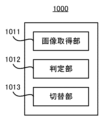
- FIG. 1 is a block diagram showing the configuration of a face authentication device according to the first embodiment.
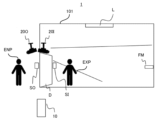
- FIG. 2 is a schematic diagram of an unlocking system in a second embodiment.
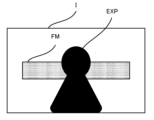
- FIG. 3 is a schematic diagram of an image acquired by a face authentication device according to the second embodiment.
- FIG. 4 is a block diagram showing the configuration of a face authentication device according to the second embodiment.
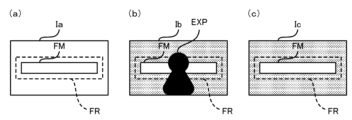
- FIG. 5 is a conceptual diagram of determination operation performed by the face authentication device in the second embodiment.
- FIG. 6 is a flow chart showing the flow of power saving operation and face authentication operation performed by the face authentication device according to the second embodiment.
- a first embodiment of an image processing apparatus, an image processing method, and a recording medium will be described.
- the image processing apparatus, image processing method, and recording medium according to the first embodiment will be described below using an image processing apparatus 1000 to which the image processing apparatus, image processing method, and recording medium according to the first embodiment are applied. .
- FIG. 1 is a block diagram showing the configuration of an image processing apparatus 1000 according to the first embodiment.
- the image processing apparatus 1000 includes an image acquisition section 1011 , a determination section 1012 and a switching section 1013 .
- the image acquisition unit 1011 acquires an image captured so that a light emitting region that emits light in a dark place is included in the angle of view.
- the determination unit 1012 determines whether to switch the power consumption mode according to the light emission state of the light emission region included in the image.
- the switching unit 1013 switches the power consumption mode according to the determination result of the determination unit 1012 .
- the image processing apparatus 1000 switches the power consumption mode according to the light emitting state of the light emitting region included in the image captured so that the light emitting region that emits light in a dark place is included in the angle of view. can be done. That is, the image processing apparatus 1000 can change power consumption by providing a simple mechanism of a light emitting area at the angle of view of the camera.
- Embodiments of an image processing apparatus, an image processing method, and a recording medium will be described below with reference to the drawings. Embodiments of the image processing device, the image processing method, and the recording medium will be described below using the face authentication device 10 as an image processing device to which the embodiments of the image processing device, the image processing method, and the recording medium are applied. do. [2-1: Overview of unlocking system 1]
- FIG. 2 is a schematic diagram of the unlocking system 1 in this embodiment.
- the unlocking system 1 includes a door D, face authentication device 10, outdoor camera 20O, indoor camera 20I, outdoor switch SO, indoor switch SI, lighting L, and fluorescent marker FM.
- the door D is provided at the entrance of the room 101, which is a partitioned space in the building, and by closing the entrance, the room 101 may be isolated from the outside.
- the door D may be locked to isolate the room 101 from the outside when there is no room entry person ENP and no room exit person EXP.
- the face authentication device 10 may control unlocking and locking of the door D.
- An indoor camera 20I for acquiring an image used for face authentication may be provided above the vicinity of the door D on the room 101 side.
- the indoor camera 20I may acquire the facial image of the person EXP who has left the room.
- an outdoor camera 200 for acquiring an image used for face authentication may be provided above the door D outside the room 101 .
- the outdoor camera 20O may acquire the face image of the room occupant ENP.
- the face authentication device 10 may authenticate the person entering the room ENP and the person leaving the room EXP.
- the face authentication device 10 may perform face authentication using face images of the person entering the room ENP and the person leaving the room EXP.
- the face authentication device 10 may perform face authentication using the face image of the person entering the room ENP captured by the outdoor camera 20O or the face image of the person leaving the room EXP captured by the indoor camera 20I.
- the face authentication device 10 acquires an image from the outdoor camera 20O when the person ENP enters the room 101, and acquires an image from the indoor camera 20I when the person EXP leaves the room 101. good.
- the face authentication device 10 performs face authentication processing using the acquired image, unlocks the door D when the face authentication is successful, and allows the person entering the room ENP and the person leaving the room EXP to communicate with the room 101 and the outside. may be allowed to come and go.
- Lighting L may be provided on the ceiling of the room 101 .
- An indoor switch SI may be provided on the wall near the door D in the room 101 .
- an outdoor switch SO may be provided on the wall near the door D outside the room 101 .
- the outdoor switch SO and the indoor switch SI may be an instruction input mechanism for switching the lighting L between the lit state and the extinguished state.
- the person entering the room ENP may turn on the lighting L by operating the outdoor switch SO.
- the person EXP who has left the room may turn off the lighting L by operating the indoor switch SI.
- FIG. 3 shows an image I used for face recognition operation and power saving operation in this embodiment.
- the image I may be an image captured by the indoor camera 20I. If there is a person EXP who is leaving the room 101, the indoor camera 20I may capture the image I so that at least the face of the person EXP who is leaving the room is included.
- the indoor camera 20I captures an image I so that the fluorescent marker FM as a light emitting area that emits light in a dark place is included within the angle of view.
- the horizontal width of the fluorescent marker FM may occupy a predetermined proportion of the horizontal width of the image I or more.
- the fluorescent marker FM may be provided in a certain range such as a wall of the room 101 so as to be within the imaging range of the indoor camera 20I.
- the fluorescent marker FM may be provided by applying a fluorescent paint containing an afterglow fluorescent substance to a region included in the angle of view of the indoor camera 20I.
- the fluorescent marker FM may be provided by attaching a fluorescent seal to a region included in the angle of view of the indoor camera 20I.
- the fluorescent marker FM may be provided so as to be reflected in a horizontal line at a height near the center of the image captured by the indoor camera 20I.
- the fluorescent marker FM may be provided in the angle of view of the indoor camera 20I so that the person leaving the room EXP to be authenticated is reflected in the central portion of the fluorescent marker FM.
- FIG. 3 is a block diagram showing the configuration of the face authentication device 10 according to this embodiment.
- the face authentication device 10 includes an arithmetic device 11 and a storage device 12. Furthermore, the face authentication device 10 may include a communication device 13 , an input device 14 and an output device 15 . However, the face authentication device 10 does not have to include at least one of the communication device 13 , the input device 14 and the output device 15 . Arithmetic device 11 , storage device 12 , communication device 13 , input device 14 , and output device 15 may be connected via data bus 16 .
- the computing device 11 includes, for example, at least one of a CPU (Central Processing Unit), a GPU (Graphics Processing Unit), and an FPGA (Field Programmable Gate Array). Arithmetic device 11 reads a computer program. For example, arithmetic device 11 may read a computer program stored in storage device 12 . For example, the computing device 11 reads a computer program stored in a computer-readable and non-temporary recording medium by a recording medium reading device (not shown) provided in the face authentication device 10 (for example, an input device 14 to be described later). can be read using The arithmetic device 11 may acquire (that is, download) a computer program from a device (not shown) arranged outside the face authentication device 10 via the communication device 13 (or other communication device).
- a recording medium reading device not shown
- the arithmetic device 11 may acquire (that is, download) a computer program from a device (not shown) arranged outside the face authentication device 10 via the communication device 13 (or other communication device).
- Arithmetic device 11 executes the read computer program. As a result, logical functional blocks for executing the operations to be performed by the face authentication device 10 are realized in the arithmetic device 11 . In other words, the arithmetic device 11 can function as a controller for realizing logical functional blocks for executing the operations (in other words, processing) that the face authentication device 10 should perform.
- FIG. 3 shows an example of logical functional blocks implemented within the computing device 11 for performing face authentication operations and power saving operations.
- the computing device 11 includes an image acquisition unit 111 as a specific example of "image acquisition means”, a determination unit 112 as a specific example of “determination means”, and a “switching means”.
- a switching unit 113 which is a specific example of
- an authentication unit 114 which is a specific example of “authentication means”, are implemented.
- the determination unit 112 may include a light emission state determination unit 1121 that determines the light emission state.
- the computing device 11 does not have to include the authentication unit 114 .
- the storage device 12 can store desired data.
- the storage device 12 may temporarily store computer programs executed by the arithmetic device 11 .
- the storage device 12 may temporarily store data temporarily used by the arithmetic device 11 while the arithmetic device 11 is executing a computer program.
- the storage device 12 may store data that the face authentication device 10 saves over a long period of time.
- the storage device 12 may include at least one of RAM (Random Access Memory), ROM (Read Only Memory), hard disk device, magneto-optical disk device, SSD (Solid State Drive), and disk array device. good. That is, storage device 12 may include non-transitory recording media.
- the storage device 12 may store the master image MI used for the authentication operation by the authentication unit 114 .
- the communication device 13 can communicate with devices external to the face authentication device 10 via a communication network (not shown).
- the communication device 13 may be able to communicate with the indoor camera 20I, the outdoor camera 20O, and the door D.
- the input device 14 is a device that accepts input of information to the face authentication device 10 from the outside of the face authentication device 10 .
- the input device 14 may include an operating device (for example, at least one of a keyboard, a mouse, and a touch panel) operable by an operator of the face authentication device 10 .
- the input device 14 may include a reading device capable of reading information recorded as data on a recording medium that can be externally attached to the face authentication device 10 .
- the output device 15 is a device that outputs information to the outside of the face authentication device 10 .
- the output device 15 may output information as an image. That is, the output device 15 may include a display device (so-called display) capable of displaying an image showing information to be output.
- the output device 15 may output information as voice.
- the output device 15 may include an audio device capable of outputting audio (so-called speaker).
- the output device 15 may output information on paper.
- the output device 15 may include a printing device (so-called printer) capable of printing desired information on paper.
- FIG. 5 is an example of an image I used by the determination unit 112 for the determination operation.
- [Table 1] below shows power consumption modes corresponding to the states of the room 101 .
- the determination unit 112 determines whether or not face authentication processing is necessary according to the light emission state of the fluorescent marker FM.
- FIG. 5(a) shows an image Ia when the illumination L is on. Since the illumination L is on and the place is bright, the fluorescent marker FM reflected in the image Ia does not emit light. Therefore, the ratio of the fluorescent marker FM in the fluorescent region FR reflected in the image Ia is 0%.
- a fluorescent region FR is a region containing the fluorescent marker FM in the image Ia.
- the power consumption mode is the first mode. The mode may remain, the frame rate of the camera may be relatively high, and the face authentication operation by the authentication unit 114 may be continued.
- FIG. 5(b) shows the image Ib when the illumination L is turned off. Since the illumination L is turned off and the place is dark, the fluorescent marker FM reflected in the image Ib emits light. Also, the leaving person EXP is leaving the room, and the leaving person EXP is reflected in the image Ib. Therefore, the ratio of the fluorescent markers FM in the fluorescent region FR reflected in the image Ib is less than the first threshold.
- the first threshold may be, for example, 25%.
- the authentication operation of the person leaving the room EXP is required.
- the power consumption mode may remain in the first mode, the frame rate of the camera may be relatively high, and the face authentication operation by the authentication unit 114 may continue.
- FIG. 5(c) shows the image Ic when the illumination L is turned off. Since the illumination L is turned off and the place is dark, the fluorescent marker FM reflected in the image Ic is emitting light. In addition, since there is no exiting person EXP, the exiting person EXP does not appear in the image Ic. Therefore, the ratio of the fluorescent marker FM in the fluorescent region FR captured in the image Ic is equal to or greater than the first threshold.
- the first threshold may be, for example, 25%.
- the power consumption mode may be switched to the second mode, the frame rate of the camera may be switched to a relatively low level, and the face authentication operation by the authentication unit 114 may be stopped.
- the determining unit 112 may determine whether or not the authentication process is necessary based on the area emitting light in the fluorescent area FR.
- the determination unit 112 may determine whether or not authentication processing is necessary according to the ratio of regions brighter than the surroundings included in the fluorescent region FR. For example, when the illumination L is on, the fluorescent region FR is uniformly bright, so the region brighter than the surroundings is 0%. For example, when the illumination L is turned off and there is nothing blocking the space between the indoor camera 20I and the fluorescent marker FM, the area of the fluorescent marker FM included in the fluorescent area FR becomes brighter than the surroundings.
- a portion of the fluorescent marker FM included in the fluorescent region FR is The percentage of the area that is shielded by the exiting person EXP and is brighter than the surroundings is smaller than when there is no exiting person EXP.
- the first threshold for example 25%, can be determined according to the proportion of the fluorescent marker FM hidden when a person stands in front of the indoor camera 20I.
- the first threshold value may be an arbitrary value that is adjusted according to the conditions of the room 101, the range that can be captured within the angle of view by the indoor camera 20I, and the range in which the fluorescent marker FM is provided.
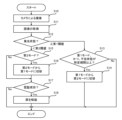
- FIG. 6 is a flow chart showing the flow of power saving operation and authentication operation performed by the face authentication device 10 in this embodiment.
- the flowchart shown in FIG. 6 shows operations performed for each frame.
- an image I is captured so that the fluorescent marker FM is included within the angle of view (step S10).
- the image acquisition unit 111 acquires an image I captured so that the fluorescent marker FM is included in the angle of view (step S11).
- the image acquired by the image acquisition unit 111 may be used by the determination unit 112 to determine whether or not a person is in the room, before face authentication processing is performed by the authentication unit 114 .
- the determination unit 112 determines whether to switch the power consumption mode according to the light emission state of the fluorescent marker FM included in the image I (step S12).
- the luminous state determination unit 1121 may determine whether the size of the fluorescent marker FM included in the image I is greater than or equal to the first threshold or less than the second threshold. Further, the light emitting state determination unit 1121 may determine whether the proportion of the fluorescent markers FM included in the image I is equal to or greater than the first threshold or less than the second threshold. That is, the luminous state determination unit 1121 may determine the luminous state based on the relative size of the fluorescent marker FM with respect to the image I.
- the luminescence state determination unit 1121 may determine whether the number of pixels of the image of the fluorescent marker FM included in the image I is equal to or greater than the first threshold or less than the second threshold. That is, the luminous state determination unit 1121 may determine the luminous state based on the absolute size of the fluorescent marker FM. As shown in FIG. 5, the determination unit 112 may determine whether the ratio of the fluorescent markers FM in the fluorescent region FR included in the image I is equal to or greater than the first threshold or the second threshold. Since the determination processing has a relatively light load compared to the authentication processing, the determination unit 112 may perform the determination processing prior to the face authentication processing by the authentication unit 114 .
- the determination unit 112 may determine whether the person is in the room 101 according to the light emission state of the fluorescent marker FM included in the image I. For example, the determination unit 112 may determine that no person is present in the room 101 when the fluorescent marker FM included in the fluorescent region FR is greater than or equal to the first threshold. Further, the determination unit 112 may determine whether the illumination L is in a lighting state or in a non-lighting state according to the light emission state of the fluorescent marker FM. Further, the determination unit 112 may detect the operation of the indoor switch SI by the person leaving the room EXP or the operation of the outdoor switch SO by the person entering the room ENP, and determine whether the lighting L is on or off. When the ratio of the fluorescent markers FM included in the image I is equal to or greater than the first threshold, the determination unit 112 switches the power consumption mode from the first mode to the second mode in which power consumption is lower than that of the first mode. You can judge.
- the switching unit 113 sets the power consumption mode to the first mode and the ratio of the fluorescent markers FM is equal to or greater than the first threshold. is longer than or equal to a predetermined period (step S13). If the power consumption mode is the first mode and the period during which the ratio of the fluorescent marker FM is equal to or greater than the first threshold is equal to or greater than the predetermined period (step S13: Yes), the switching unit 113 switches the power consumption mode (step S14). The switching unit 113 may switch the power consumption mode from the first mode to the second mode. The switching unit 113 may stop the face authentication operation by the authentication unit 114 in the second mode.
- the determination unit 112 determines that the illumination L is turned off and that the room 101 is empty, the face authentication processing by the authentication unit 114 may be omitted. As a result, since high-load face authentication processing is not performed, power consumption can be suppressed and power saving can be realized. Also, the frame rate of the camera in the second mode may be lower than the frame rate of the camera in the first mode. That is, when the determination unit 112 determines that the lighting L is turned off and that the room 101 is unoccupied, the frame rate of the camera may be lowered. As a result, power consumption in the unlocking system 1 is suppressed, and power saving can be achieved.
- the lower limit of the frame rate may be set based on the angle of view of the camera and the moving speeds of the person ENP who enters the room and the person who leaves the room EXP.
- the lower limit of the frame rate may be set based on the length of the fluorescent marker within the angle of view of the camera and the movement speed of the person ENP who entered the room and the person who left the room EXP. It may be the average moving speed of the person entering the room ENP and the person leaving the room EXP.
- the switching unit 113 determines whether the power consumption mode is the second mode (step S15). If the power consumption mode is the second mode (step S15: Yes), the switching unit 113 switches the power consumption mode (step S16).
- the switching unit 113 may switch the power consumption mode from the second mode to the first mode.
- the frame rate of the camera in the first mode may be higher than the frame rate of the camera in the second mode.
- the frame rate of the camera in the first mode may be a frame rate suitable for face authentication processing.
- the switching unit 113 may cause the authentication unit 114 to start face authentication operation.
- the second threshold may be the same value as the first threshold, or may be a different value, and may be determined according to the environment.
- the second threshold may be 25%, for example.
- the authentication unit 114 performs face authentication using a face image included within the angle of view of image I.
- the authentication unit 114 may perform face detection processing, feature amount extraction processing, and matching processing with the master image MI registered in the storage device 12 . If the authentication by the authentication unit 114 is successful (step S17: Yes), the face authentication device 10 unlocks the door D (step S18).
- the face authentication device 10 may transmit a control signal instructing the door D to unlock the door D via the communication device 13 . Further, the face authentication device 10 may transmit a control signal instructing the door D to lock the door D after a predetermined period of time has elapsed.
- the face authentication device 10 does not unlock the door D, and the door D remains locked.
- the face authentication device 10 in this embodiment may be applied mainly when authenticating a person EXP who leaves the room 101 .
- the process of authenticating the person entering the room ENP may be performed all the time, and the outdoor camera 20O may be always activated.
- the face recognition device 10 detects that the light in the room is turned off, determines that the person does not exist, and determines that the person exists. If not, power consumption of the unlocking system 1 may be suppressed by stopping authentication processing of the face authentication device 10 .
- the face authentication device 10 since the face authentication device 10 turns on the illumination L when the person ENP enters the room, the face authentication processing by the authentication unit 114 may be restarted.
- the light-emitting region may emit light when the illumination L is turned off.
- a fluorescent paint containing an afterglow phosphor and attachment of a fluorescent seal for example, a fluorescent lamp or the like that collects light may be applied.
- the fluorescent marker FM is used to draw a horizontal line on the wall. All you have to do is for example, a plurality of fluorescent stickers may be prepared as the light-emitting area so that at least part of the light-emitting area is hidden when a person is within the angle of view of the camera.
- the determination unit 112 may determine whether the fluorescent marker FM or the fluorescent sticker is hidden by a person based on whether the fluorescent marker FM or the fluorescent sticker is divided. Further, when the horizontal length of the fluorescent marker FM or the fluorescent sticker changes, the determination unit 112 may determine that the person is present because the fluorescent marker FM or the fluorescent sticker is hidden.
- the determination unit 112 may compare the ratio of the light emitting area with a third threshold different from the first threshold, and the power mode may have a third mode. That is, the determination unit 112 determines to switch the power consumption mode from the first mode to the third mode when the ratio of the light emitting region included in the image is equal to or greater than the third threshold. The mode may be switched from the first mode to the third mode.
- the frame rate of the camera in the first mode may be higher than the frame rate of the camera in the second mode, and the face authentication operation by the authentication unit 114 may be stopped in the third mode, or and (2) the frame rate of the camera in the first mode is higher than the frame rate of the camera in the third mode, and the face authentication operation by the authentication unit 114 may be stopped in the second mode. That is, the timing of changing the frame rate of the camera and the timing of stopping the face authentication operation by the authentication unit 114 may be different.
- the face authentication device 10 can switch the power consumption mode according to the light emitting state of the light emitting region included in the image captured so that the light emitting region that emits light in a dark place is included in the angle of view. can. That is, the face authentication device 10 can change the power consumption by providing a simple mechanism of a light emitting area at the angle of view of the camera. Furthermore, the face authentication device 10 according to the present embodiment switches the power consumption mode from the first mode to the second mode in which power consumption is reduced when the ratio of the light emitting area included in the image is equal to or greater than the first threshold. Therefore, power consumption can be suppressed.
- the face authentication device 10 of the present embodiment uses the fluorescent marker FM as the light emitting region, it is relatively inexpensive and easy to install compared to the case of using a human sensor such as an infrared sensor. is also advantageous. When introducing a motion sensor or the like, introduction costs such as the purchase cost of the sensor and the construction cost for installation are incurred.
- introduction costs such as the purchase cost of the sensor and the construction cost for installation are incurred.
- a method of determining the presence or absence of a person in the room 101 if a method of counting the number of people in the room is adopted, such as increasing the count by 1 when entering the room and decreasing the count by 1 when leaving the room, In the event that a person who has been authenticated and another person are tailgating at the same time, it is not possible to accurately grasp the presence of the person in the room.
- the face authentication device 10 of the present embodiment can accurately grasp whether there is a person EXP who wants to leave the room 101 even when there is tailgating.
- Authentication for entering and leaving the room 101 is used both for entering and leaving the room. Even in such a case, authentication processing is always running in many cases. However, at least when there is no person in the room 101, authentication processing inside the room 101 is unnecessary. Therefore, the face authentication device 10 of the present embodiment can stop face authentication processing during a period when no one is in the room 101 and the illumination L is turned off, thereby suppressing power consumption. be able to. Image processing has a lighter processing load than face authentication processing. Therefore, the face authentication device 10 determines the presence of a person who wishes to enter or leave the room 101 by image processing, and stops face authentication processing when it can be determined that the person does not exist.
- Face authentication processing has a heavier processing load than image processing, so stopping the authentication processing can lighten the processing load of the system. That is, it is possible to reduce the power consumed by the unlocking system 1 .
- the frequency of the authentication operation of the leaving person EXP decreases, the frame rate of the camera can be lowered, thereby further reducing power consumption.
- the face authentication operation is started when the face authentication operation becomes necessary, inconvenience to the user can be prevented.
- the power mode is switched when the leaving person EXP does not exist within the angle of view in the light-off state for a predetermined period of time, so the power consumption increases. can be prevented.
- the horizontal width of the light-emitting region employed by the face authentication device 10 of the present embodiment occupies a predetermined proportion or more of the horizontal width of the image, the exiting person EXP enters the angle of view in the off state. can be determined with high accuracy.
- the mechanism for performing the face authentication operation may be provided in a device external to the image processing device. That is, the switching unit 113 may switch the operation mode of a mechanism that performs an external authentication operation via a switching signal via the communication device 13 .
- Appendix 1 an image acquisition means for acquiring an image captured such that a light emitting region that emits light in a dark place is included in an angle of view; determining means for determining whether or not to switch a power consumption mode according to the light emitting state of the light emitting region included in the image; and switching means for switching the power consumption mode according to the determination result of the determination means.
- the determination means switches the mode of power consumption from a first mode to a second mode in which power consumption is lower than that of the first mode when a ratio of the light emitting area included in the image is equal to or greater than a first threshold.
- the image processing apparatus determines to be The image processing apparatus according to appendix 1, wherein the switching unit switches the mode of power consumption from the first mode to the second mode according to a determination result of the determination unit.
- the image acquisition means acquires the image from a camera that generates the image by capturing an image of an imaging target area such that the light emitting area is included in an angle of view;
- the image processing device according to appendix 2, wherein a frame rate of the camera in the first mode is higher than a frame rate of the camera in the second mode.
- Appendix 4 Further comprising authentication means for performing a face authentication operation using a face image included in the image, 4.
- the image processing apparatus according to appendix 2 or 3, wherein the switching unit stops the face authentication operation by the authentication unit in the second mode.
- the determining means determines to switch the mode of power consumption from the second mode to the first mode when the ratio is less than a second threshold;
- the image processing apparatus according to appendix 4, wherein the switching unit causes the authentication unit to start the face authentication operation when switching the power consumption mode to the first mode.
- [Appendix 6] The image according to any one of Supplementary Notes 2 to 5, wherein the determination means determines that the first mode is switched to the second mode when the period in which the ratio is equal to or greater than the first threshold continues for a predetermined period or longer. processing equipment.
- [Appendix 8] Acquiring an image captured so that a light emitting area that emits light in a dark place is included in the angle of view, determining whether to switch a power consumption mode according to the light emitting state of the light emitting region included in the image; An image processing method, wherein the mode of power consumption is switched according to the result of the determination.
- [Appendix 9] to the computer Acquiring an image captured so that a light emitting area that emits light in a dark place is included in the angle of view, determining whether to switch a power consumption mode according to the light emitting state of the light emitting region included in the image;
- a recording medium recording a computer program for executing an image processing method for switching the power consumption mode according to the result of the determination.
- Unlocking system 1000 Image processing device 10 Face authentication devices 1011, 111 Image acquisition units 1012, 112 Determination units 1013, 113 Switching unit 114 Authentication unit ENP Entering person EXP Leaving room 20O Outdoor camera 20I Indoor camera D Door SO Outdoor switch SI Indoor Switch L Lighting 101 Indoor FM Fluorescent marker FR Fluorescent region I Image
Landscapes
- Engineering & Computer Science (AREA)
- Multimedia (AREA)
- Signal Processing (AREA)
- Physics & Mathematics (AREA)
- General Physics & Mathematics (AREA)
- Theoretical Computer Science (AREA)
- Health & Medical Sciences (AREA)
- Human Computer Interaction (AREA)
- Oral & Maxillofacial Surgery (AREA)
- General Health & Medical Sciences (AREA)
- Collating Specific Patterns (AREA)
- Facsimile Scanning Arrangements (AREA)
- Studio Devices (AREA)
Priority Applications (4)
| Application Number | Priority Date | Filing Date | Title |
|---|---|---|---|
| EP21969886.7A EP4460016A4 (en) | 2021-12-27 | 2021-12-27 | IMAGE PROCESSING DEVICE, IMAGE PROCESSING METHOD, AND RECORDING MEDIUM |
| US18/720,713 US12538015B2 (en) | 2021-12-27 | 2021-12-27 | Image processing apparatus, image processing method, and non-transitory recording medium |
| PCT/JP2021/048531 WO2023127002A1 (ja) | 2021-12-27 | 2021-12-27 | 画像処理装置、画像処理方法、及び、記録媒体 |
| JP2023570499A JP7736087B2 (ja) | 2021-12-27 | 2021-12-27 | 画像処理装置、画像処理方法、及び、記録媒体 |
Applications Claiming Priority (1)
| Application Number | Priority Date | Filing Date | Title |
|---|---|---|---|
| PCT/JP2021/048531 WO2023127002A1 (ja) | 2021-12-27 | 2021-12-27 | 画像処理装置、画像処理方法、及び、記録媒体 |
Related Child Applications (2)
| Application Number | Title | Priority Date | Filing Date |
|---|---|---|---|
| US18/720,713 A-371-Of-International US12538015B2 (en) | 2021-12-27 | 2021-12-27 | Image processing apparatus, image processing method, and non-transitory recording medium |
| US19/441,328 Continuation US20260129287A1 (en) | 2026-01-06 | Image processing apparatus, image processing method, and non-transitory recording medium |
Publications (1)
| Publication Number | Publication Date |
|---|---|
| WO2023127002A1 true WO2023127002A1 (ja) | 2023-07-06 |
Family
ID=86998304
Family Applications (1)
| Application Number | Title | Priority Date | Filing Date |
|---|---|---|---|
| PCT/JP2021/048531 Ceased WO2023127002A1 (ja) | 2021-12-27 | 2021-12-27 | 画像処理装置、画像処理方法、及び、記録媒体 |
Country Status (4)
| Country | Link |
|---|---|
| US (1) | US12538015B2 (https=) |
| EP (1) | EP4460016A4 (https=) |
| JP (1) | JP7736087B2 (https=) |
| WO (1) | WO2023127002A1 (https=) |
Families Citing this family (1)
| Publication number | Priority date | Publication date | Assignee | Title |
|---|---|---|---|---|
| US12505683B1 (en) * | 2025-09-02 | 2025-12-23 | DISTANCE TECHNOLOGIES Oy | Hybrid face tracking for vehicles |
Citations (4)
| Publication number | Priority date | Publication date | Assignee | Title |
|---|---|---|---|---|
| JP2006259922A (ja) | 2005-03-15 | 2006-09-28 | Omron Corp | 被写体認証装置、携帯電話、被写体認証方法、及び被写体認証プログラム |
| JP2008310480A (ja) * | 2007-06-13 | 2008-12-25 | Panasonic Corp | 虹彩撮影装置および虹彩認証装置 |
| JP2010198207A (ja) | 2009-02-24 | 2010-09-09 | Toshiba Corp | 監視システム及び監視方法 |
| JP2020008917A (ja) * | 2018-07-03 | 2020-01-16 | 株式会社Eidea | 拡張現実表示システム、拡張現実表示方法、及び、拡張現実表示用コンピュータプログラム |
Family Cites Families (11)
| Publication number | Priority date | Publication date | Assignee | Title |
|---|---|---|---|---|
| JPH1083487A (ja) | 1996-09-06 | 1998-03-31 | Hitachi Building Syst Co Ltd | 侵入者検知装置 |
| US20110103643A1 (en) * | 2009-11-02 | 2011-05-05 | Kenneth Edward Salsman | Imaging system with integrated image preprocessing capabilities |
| JP2013004490A (ja) | 2011-06-22 | 2013-01-07 | Panasonic Corp | 照明システム |
| US10609285B2 (en) * | 2013-01-07 | 2020-03-31 | Ultrahaptics IP Two Limited | Power consumption in motion-capture systems |
| CN105850111A (zh) * | 2013-10-14 | 2016-08-10 | 纳拉提弗股份公司 | 操作穿戴式生活记录设备的方法 |
| US10712446B1 (en) * | 2015-09-25 | 2020-07-14 | Apple Inc. | Remote sensing for detection and ranging of objects |
| CN108431631A (zh) * | 2015-12-21 | 2018-08-21 | 株式会社小糸制作所 | 车辆用图像获取装置、控制装置、包括了车辆用图像获取装置或控制装置的车辆和车辆用图像获取方法 |
| US12146960B2 (en) * | 2016-03-01 | 2024-11-19 | Brightway Vision Ltd. | Gated imaging apparatus, system and method |
| WO2018079390A1 (ja) * | 2016-10-27 | 2018-05-03 | ソニー株式会社 | 映像信号処理装置、撮像装置、撮像装置におけるフリッカ確認方法およびサーバ |
| US11195002B2 (en) * | 2018-08-22 | 2021-12-07 | Ideal Industries Lighting Llc | Method and system for image based occupancy detection |
| US20210103201A1 (en) * | 2019-10-02 | 2021-04-08 | Qualcomm Incorporated | Flash metering for dual camera devices |
-
2021
- 2021-12-27 WO PCT/JP2021/048531 patent/WO2023127002A1/ja not_active Ceased
- 2021-12-27 JP JP2023570499A patent/JP7736087B2/ja active Active
- 2021-12-27 US US18/720,713 patent/US12538015B2/en active Active
- 2021-12-27 EP EP21969886.7A patent/EP4460016A4/en not_active Withdrawn
Patent Citations (4)
| Publication number | Priority date | Publication date | Assignee | Title |
|---|---|---|---|---|
| JP2006259922A (ja) | 2005-03-15 | 2006-09-28 | Omron Corp | 被写体認証装置、携帯電話、被写体認証方法、及び被写体認証プログラム |
| JP2008310480A (ja) * | 2007-06-13 | 2008-12-25 | Panasonic Corp | 虹彩撮影装置および虹彩認証装置 |
| JP2010198207A (ja) | 2009-02-24 | 2010-09-09 | Toshiba Corp | 監視システム及び監視方法 |
| JP2020008917A (ja) * | 2018-07-03 | 2020-01-16 | 株式会社Eidea | 拡張現実表示システム、拡張現実表示方法、及び、拡張現実表示用コンピュータプログラム |
Non-Patent Citations (1)
| Title |
|---|
| See also references of EP4460016A4 |
Also Published As
| Publication number | Publication date |
|---|---|
| JP7736087B2 (ja) | 2025-09-09 |
| EP4460016A1 (en) | 2024-11-06 |
| US12538015B2 (en) | 2026-01-27 |
| EP4460016A4 (en) | 2025-01-22 |
| JPWO2023127002A1 (https=) | 2023-07-06 |
| US20250071414A1 (en) | 2025-02-27 |
Similar Documents
| Publication | Publication Date | Title |
|---|---|---|
| US8983151B2 (en) | Apparatus for recognizing face based on environment adaptation | |
| CN101790487B (zh) | 电梯控制系统以及电梯控制装置 | |
| JP6242966B1 (ja) | エレベータ制御システム | |
| CN105129547B (zh) | 电梯控制方法和系统 | |
| WO2023127002A1 (ja) | 画像処理装置、画像処理方法、及び、記録媒体 | |
| CN114987390B (zh) | 车辆控制装置和车辆控制方法 | |
| EP4083356A1 (en) | Gate device, method for controlling same, and program | |
| KR20120032223A (ko) | 차량 내 운전자 인증 장치 및 그 방법 | |
| US20260129287A1 (en) | Image processing apparatus, image processing method, and non-transitory recording medium | |
| CN114198010B (zh) | 信息处理装置、建筑物以及方法 | |
| JP7135144B1 (ja) | エレベータの利用者検知システム | |
| JP6795266B1 (ja) | エレベータの利用者検知システム | |
| CN111453588B (zh) | 电梯系统 | |
| JP6881853B2 (ja) | エレベータの利用者検知システム | |
| KR102738570B1 (ko) | 음주 측정 시 사용자를 본인 인증하는 사용자 단말, 방법 및 컴퓨터 프로그램 | |
| JP7187629B1 (ja) | エレベータの利用者検知システム | |
| KR102441928B1 (ko) | 차량용 감시 장치 및 차량용 이동 객체 감지 방법 | |
| JP2009277628A (ja) | 照明システム | |
| JP2022036276A (ja) | エレベータの利用者検知システム | |
| CN101777096B (zh) | 自动锁定及自动解除锁定计算机系统的方法及计算机系统 | |
| KR20220119207A (ko) | 차량 승하차 경고 시스템 | |
| JP7852783B1 (ja) | エレベータの出入口の物体検知装置及び物体検知システム | |
| JP6729980B1 (ja) | エレベータの利用者検知システム | |
| KR102637561B1 (ko) | 이미지 분석 장치를 통해 가속 잠금 장치를 제어하여차량의 승하차에 관한 안전 사고를 예방하는 시스템 | |
| US20250080857A1 (en) | Information processing system, information processing method, and non-transitory recording medium |
Legal Events
| Date | Code | Title | Description |
|---|---|---|---|
| WWE | Wipo information: entry into national phase |
Ref document number: 2023570499 Country of ref document: JP |
|
| WWE | Wipo information: entry into national phase |
Ref document number: 18720713 Country of ref document: US |
|
| NENP | Non-entry into the national phase |
Ref country code: DE |
|
| ENP | Entry into the national phase |
Ref document number: 2021969886 Country of ref document: EP Effective date: 20240729 |
|
| WWP | Wipo information: published in national office |
Ref document number: 18720713 Country of ref document: US |
|
| WWW | Wipo information: withdrawn in national office |
Ref document number: 2021969886 Country of ref document: EP |
|
| WWG | Wipo information: grant in national office |
Ref document number: 18720713 Country of ref document: US |