WO2023119643A1 - 認証システム、認証方法、及び記録媒体 - Google Patents
認証システム、認証方法、及び記録媒体 Download PDFInfo
- Publication number
- WO2023119643A1 WO2023119643A1 PCT/JP2021/048291 JP2021048291W WO2023119643A1 WO 2023119643 A1 WO2023119643 A1 WO 2023119643A1 JP 2021048291 W JP2021048291 W JP 2021048291W WO 2023119643 A1 WO2023119643 A1 WO 2023119643A1
- Authority
- WO
- WIPO (PCT)
- Prior art keywords
- authentication
- photography
- normal
- target
- image
- Prior art date
- Legal status (The legal status is an assumption and is not a legal conclusion. Google has not performed a legal analysis and makes no representation as to the accuracy of the status listed.)
- Ceased
Links
Images










Classifications
-
- G—PHYSICS
- G06—COMPUTING OR CALCULATING; COUNTING
- G06F—ELECTRIC DIGITAL DATA PROCESSING
- G06F21/00—Security arrangements for protecting computers, components thereof, programs or data against unauthorised activity
- G06F21/30—Authentication, i.e. establishing the identity or authorisation of security principals
- G06F21/31—User authentication
- G06F21/32—User authentication using biometric data, e.g. fingerprints, iris scans or voiceprints
-
- G—PHYSICS
- G06—COMPUTING OR CALCULATING; COUNTING
- G06T—IMAGE DATA PROCESSING OR GENERATION, IN GENERAL
- G06T1/00—General purpose image data processing
- G06T1/0007—Image acquisition
-
- G—PHYSICS
- G06—COMPUTING OR CALCULATING; COUNTING
- G06V—IMAGE OR VIDEO RECOGNITION OR UNDERSTANDING
- G06V20/00—Scenes; Scene-specific elements
- G06V20/50—Context or environment of the image
- G06V20/52—Surveillance or monitoring of activities, e.g. for recognising suspicious objects
-
- G—PHYSICS
- G06—COMPUTING OR CALCULATING; COUNTING
- G06V—IMAGE OR VIDEO RECOGNITION OR UNDERSTANDING
- G06V40/00—Recognition of biometric, human-related or animal-related patterns in image or video data
- G06V40/10—Human or animal bodies, e.g. vehicle occupants or pedestrians; Body parts, e.g. hands
- G06V40/16—Human faces, e.g. facial parts, sketches or expressions
- G06V40/161—Detection; Localisation; Normalisation
- G06V40/166—Detection; Localisation; Normalisation using acquisition arrangements
-
- G—PHYSICS
- G06—COMPUTING OR CALCULATING; COUNTING
- G06V—IMAGE OR VIDEO RECOGNITION OR UNDERSTANDING
- G06V40/00—Recognition of biometric, human-related or animal-related patterns in image or video data
- G06V40/10—Human or animal bodies, e.g. vehicle occupants or pedestrians; Body parts, e.g. hands
- G06V40/16—Human faces, e.g. facial parts, sketches or expressions
- G06V40/172—Classification, e.g. identification
-
- G—PHYSICS
- G06—COMPUTING OR CALCULATING; COUNTING
- G06V—IMAGE OR VIDEO RECOGNITION OR UNDERSTANDING
- G06V40/00—Recognition of biometric, human-related or animal-related patterns in image or video data
- G06V40/50—Maintenance of biometric data or enrolment thereof
-
- H—ELECTRICITY
- H04—ELECTRIC COMMUNICATION TECHNIQUE
- H04N—PICTORIAL COMMUNICATION, e.g. TELEVISION
- H04N23/00—Cameras or camera modules comprising electronic image sensors; Control thereof
- H04N23/60—Control of cameras or camera modules
-
- H—ELECTRICITY
- H04—ELECTRIC COMMUNICATION TECHNIQUE
- H04N—PICTORIAL COMMUNICATION, e.g. TELEVISION
- H04N23/00—Cameras or camera modules comprising electronic image sensors; Control thereof
- H04N23/60—Control of cameras or camera modules
- H04N23/61—Control of cameras or camera modules based on recognised objects
- H04N23/611—Control of cameras or camera modules based on recognised objects where the recognised objects include parts of the human body
-
- H—ELECTRICITY
- H04—ELECTRIC COMMUNICATION TECHNIQUE
- H04N—PICTORIAL COMMUNICATION, e.g. TELEVISION
- H04N23/00—Cameras or camera modules comprising electronic image sensors; Control thereof
- H04N23/60—Control of cameras or camera modules
- H04N23/667—Camera operation mode switching, e.g. between still and video, sport and normal or high- and low-resolution modes
Definitions
- This disclosure relates to the technical fields of authentication systems, authentication methods, and recording media.
- JP 2008-097379 A Japanese Patent Application Laid-Open No. 2020-140430 Japanese Patent Application Laid-Open No. 2020-154808
- One aspect of the authentication system of this disclosure is based on a photographing means capable of switching between normal photography and blurred photography in which the definition is lower than that of the normal photography, and the blurred image obtained by the blurry photography, a target detecting means for detecting an authentication target; a switching means for switching from the blurred shooting to the normal shooting when the authentication target is detected; and authentication means for executing a target authentication process.
- One aspect of the recording medium of this disclosure is an authentication method using a photographing unit capable of switching between normal photography and blurred photography in which the image is captured with a lower definition than the normal photography, wherein An authentication target is detected based on the blurred image, and when the authentication target is detected, switching from the blur photography to the normal photography is performed, and the authentication target is detected based on the normal image obtained by the normal photography.
- a computer program is recorded for causing at least one computer to perform an authentication method for performing the authentication process of the.
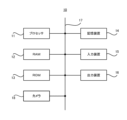
- the output device 16 is a device that outputs information about the authentication system 10 to the outside.
- output device 16 may be a display device (eg, display) capable of displaying information about authentication system 10 .
- the output device 16 may be a speaker or the like capable of outputting information about the authentication system 10 by voice.
- the output device 16 may be configured as a mobile terminal such as a smart phone or a tablet.
- the output device 16 may be a device that outputs information in a format other than an image.
- the output device 16 may be a speaker that outputs information about the authentication system 10 by voice.
- the filter switching unit 22 described above includes a blurring filter and a normal filter, and is configured to be able to switch between imaging modes by switching between them. Specifically, when the filter switching unit 22 switches to a state in which the blurring filter is used, the camera 18 performs blurred photography (that is, photography in a blurred state with low definition). On the other hand, when the filter switching unit 22 switches to the state where the normal filter is used, the camera 18 performs normal photography (that is, photography with high definition and no blurring). It should be noted that the “blurring photography” here may be photography in a state where the definition is low enough to protect the privacy of the subject to be photographed.
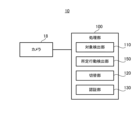
- FIG. 3 is a block diagram showing the functional configuration of the authentication system according to the first embodiment
- the authentication system 10 includes a camera 18 and a processing section 100.
- the processing unit 100 is configured to be able to execute various processes in the authentication system 10 .
- the processing unit 100 includes a target detection unit 110, a switching unit 120, and an authentication unit 130 as components for realizing its functions.
- each of the target detection unit 110, the switching unit 120, and the authentication unit 130 may be a functional block realized by, for example, the above-described processor 11 (see FIG. 1).
- Some or all of the functions of the processing unit 100 described above may be implemented in the camera 18 .
- the switching unit 120 is configured to be able to switch blur photography to normal photography when the object detection unit 110 detects an authentication target.
- the switching unit 120 switches blur photography to normal photography, for example, by controlling the filter switching unit 22 (see FIG. 2) described above.
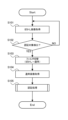
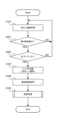
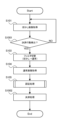
- FIG. 4 is a flow chart showing the operation flow of the authentication system according to the first embodiment.
- the object detection unit 110 acquires a blurred image captured by blurring (step S101). Then, the object detection unit 110 detects the existence of the authentication object based on the obtained blurred image (step S102). Note that if the authentication target is not detected from the blurred image (step S102: NO), the process may start again from step S101.
- step S102 if the authentication target is detected from the blurred image (step S102: YES), the switching unit 120 instructs the filter switching unit 22 to switch the filter, and switches the blur photography to normal photography (step S103). After that, the authentication unit 130 acquires a normal image taken by normal photography (step S104). Then, the authentication unit 130 executes authentication processing for the authentication target based on the obtained normal image (step S105).
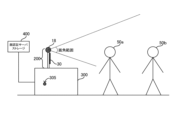
- the authentication system 10 may be configured as a system that executes authentication processing at the walkthrough gate.
- the camera 18 here is configured as one included in the face authentication terminal 200 installed at the gate 300 .
- the camera 18 photographs the face of the authentication target 50 who is about to pass through the gate 300 .
- the image captured by the camera 18 is displayed toward the authentication target 50 on the monitor provided in the face authentication terminal 200 .
- the gate 300 is provided with a passage confirmation sensor 305 for confirming that the object 50 has passed through the gate 300 .
- data such as images acquired by the face authentication terminal 200 is configured to be output to the face authentication server storage 400 .
- the camera 18 performs blurred photography in a standby state (that is, a state in which authentication processing is not performed).
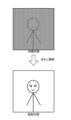
- An image captured by blurring photography is an image in which the presence of an authentication target can be detected, but details such as the face of the target cannot be determined. In other words, the privacy of the target is protected.
- the blurred photography is switched to the normal photography, as already described. Therefore, the normal image captured by the camera 18 is clear (that is, an image on which authentication processing can be performed).
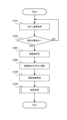
- a specific example of the authentication process here that is, the process of step S105 in FIG. 4 described above) will be described below.
- the authentication unit 130 first determines whether or not the authentication target captured in the normal image is the registered target person (step S151). That is, it is determined whether or not the subject of authentication is registered as a user who may pass through the gate 300 . If the person to be authenticated is not the person to be registered (step S151: NO), the image acquired for authentication (that is, the normal image) is discarded (step S157), and the series of operations may be terminated.
- the authentication unit 130 determines whether the object to be authenticated has reached the unlocking position of the gate 300 (step S152). Whether or not the object to be authenticated has reached the unlocked position may be determined, for example, based on the gap between the object to be authenticated in the normal image. If the object to be authenticated has not reached the unlocked position of gate 300 (step S152: NO), it is determined that the object to be authenticated is the object to be registered until a certain period of time has passed (step S153: NO). ), it is repeatedly determined whether or not the object to be authenticated has reached the unlocked position. On the other hand, if a certain period of time has passed since the authentication target was determined to be the registration target (step S153: YES), the image acquired for authentication is discarded (step S157), and the series of operations ends. may be
- step S152 When the authentication target reaches the unlocking position of the gate 300 (step S152: YES), the authentication unit 130 unlocks the gate 300 (step S154). After that, when it is confirmed by the passage confirmation sensor 305 that the object to be authenticated has passed through the gate 300 (step S155: YES), the authentication unit 130 performs the locking process of the gate 300 (step S156). Note that if the object to be authenticated does not pass through the gate 300 even though the unlocking process has been performed (step S155: NO), the authentication unit 130 determines that the object to be authenticated has turned back halfway, for example, and the image acquired for authentication is discarded (step S158), the gate 300 is locked (step S156).
- blurred photography is performed until the presence of the authentication target is detected, and normal photography is performed when the presence of the authentication target is detected.
- a switch is made to In this way, for example, it is possible to suppress execution of normal photography (that is, photography in a non-blurred state) for a user who does not intend to be authenticated. Processing can be executed properly.
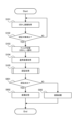
- FIG. 8 is a flow chart showing the operation flow of the authentication system according to the second embodiment.
- the same reference numerals are assigned to the same processes as those shown in FIG.
- the target detection unit 110 first acquires a blurred image captured by blurring (step S101). Then, the target detection unit 110 detects a face from the acquired blurred image (step S201).
- the face detection method is not particularly limited, but the detailed position and shape of the face may not be detected. Face detection may be performed by, for example, skeleton detection. If no face is detected from the blurred image (step S201: NO), the process may start again from step S101.
- step S202 if it is determined that the size of the detected face is larger than the predetermined threshold (step S202: YES), the switching unit 120 instructs the filter switching unit 22 to switch the filter, and switches blur photography to normal photography (step S103). After that, the authentication unit 130 acquires a normal image taken by normal photography (step S104). Then, the authentication unit 130 executes authentication processing for the authentication target based on the obtained normal image (step S105).
- FIG. 9 is a flow chart showing the operation flow of the authentication system according to the third embodiment.
- the same reference numerals are assigned to the same processes as those shown in FIG.
- FIG. 11 is a plan view showing an example of a blurred image and a normal image captured by the authentication system according to the fourth embodiment.
- FIG. 12 An authentication system 10 according to the fifth embodiment will be described with reference to FIGS. 12 and 13.
- FIG. 12 It should be noted that the fifth embodiment differs from the above-described fourth embodiment only in a part of the operation, and other parts may be the same as those of the first to fourth embodiments. Therefore, in the following, portions different from the already described embodiments will be described in detail, and descriptions of other overlapping portions will be omitted as appropriate.
- FIG. 12 is a flow chart showing the operation flow of the authentication system according to the fifth embodiment.
- the same reference numerals are given to the same processes as those shown in FIG.
- the target detection unit 110 selects the face area closest to the camera 18 (step S502).
- the face region closest to camera 18 may be determined, for example, based on the size of the face region in the blurred image.
- the switching unit 120 switches only the selected face region from blur photography to normal photography (step S502). In other words, the user's face area other than the head area is left blurred.
- the authentication unit 130 acquires a normal image taken by normal photography (step S104). Then, the authentication unit 130 executes authentication processing for the authentication target based on the obtained normal image (step S105).
- normal photography is switched to blurred photography when the authentication processing for the authentication target is completed.
- the time during which normal photography is performed can be shortened (the time can be limited only to the timing at which authentication processing is performed), so it is possible to more appropriately protect the privacy of users who are not to be authenticated.
- the predetermined action detection unit 150 is configured to be able to detect a predetermined action by an authentication target.
- the predetermined action may be, for example, a preset gesture. Gestures may include utterances, face directions, stepping, etc., in addition to gestures and gestures.
- the predetermined behavior may include suspicious behavior. Suspicious behavior may be, for example, behavior such as staying in a predetermined area all the time, crouching down, or leaving luggage behind.
- the predetermined behavior detection unit 150 may detect the predetermined behavior from the blurred image, or may detect the predetermined behavior using a separate sensor or another camera. For example, the predetermined behavior detection unit 150 may use a pressure sensor to determine whether the target is walking along specific footprints.
- the object detection means detects the moving object in the blurred image, and the moving object is approaching the photographing means for the authentication. 10.
- the authentication system of claim 1 for detecting as a target.
Landscapes
- Engineering & Computer Science (AREA)
- Theoretical Computer Science (AREA)
- Multimedia (AREA)
- Physics & Mathematics (AREA)
- General Physics & Mathematics (AREA)
- Human Computer Interaction (AREA)
- Signal Processing (AREA)
- Computer Security & Cryptography (AREA)
- General Health & Medical Sciences (AREA)
- Oral & Maxillofacial Surgery (AREA)
- Health & Medical Sciences (AREA)
- Computer Hardware Design (AREA)
- Software Systems (AREA)
- General Engineering & Computer Science (AREA)
- Collating Specific Patterns (AREA)
- Image Processing (AREA)
Priority Applications (4)
| Application Number | Priority Date | Filing Date | Title |
|---|---|---|---|
| JP2023569005A JP7708214B2 (ja) | 2021-12-24 | 2021-12-24 | 認証システム、認証方法、及び記録媒体 |
| US18/722,799 US20250045369A1 (en) | 2021-12-24 | 2021-12-24 | Authentication system, authentication method, and non-transitory recording medium |
| EP21969074.0A EP4455984A4 (en) | 2021-12-24 | 2021-12-24 | AUTHENTICATION SYSTEM AND METHOD, AND RECORDING MEDIUM |
| PCT/JP2021/048291 WO2023119643A1 (ja) | 2021-12-24 | 2021-12-24 | 認証システム、認証方法、及び記録媒体 |
Applications Claiming Priority (1)
| Application Number | Priority Date | Filing Date | Title |
|---|---|---|---|
| PCT/JP2021/048291 WO2023119643A1 (ja) | 2021-12-24 | 2021-12-24 | 認証システム、認証方法、及び記録媒体 |
Publications (1)
| Publication Number | Publication Date |
|---|---|
| WO2023119643A1 true WO2023119643A1 (ja) | 2023-06-29 |
Family
ID=86901926
Family Applications (1)
| Application Number | Title | Priority Date | Filing Date |
|---|---|---|---|
| PCT/JP2021/048291 Ceased WO2023119643A1 (ja) | 2021-12-24 | 2021-12-24 | 認証システム、認証方法、及び記録媒体 |
Country Status (4)
| Country | Link |
|---|---|
| US (1) | US20250045369A1 (https=) |
| EP (1) | EP4455984A4 (https=) |
| JP (1) | JP7708214B2 (https=) |
| WO (1) | WO2023119643A1 (https=) |
Citations (6)
| Publication number | Priority date | Publication date | Assignee | Title |
|---|---|---|---|---|
| JP2008097379A (ja) | 2006-10-12 | 2008-04-24 | Chugoku Electric Power Co Inc:The | 防犯装置および画像提供方法 |
| JP2011182028A (ja) * | 2010-02-26 | 2011-09-15 | Nec Corp | 撮影装置、撮影方法およびプログラム |
| JP2012010256A (ja) * | 2010-06-28 | 2012-01-12 | Nikon Corp | 撮像装置および画像処理プログラム |
| JP2020525868A (ja) * | 2017-09-09 | 2020-08-27 | アップル インコーポレイテッドApple Inc. | 生体認証の実施 |
| JP2020140430A (ja) | 2019-02-28 | 2020-09-03 | レノボ・シンガポール・プライベート・リミテッド | 情報処理装置、制御方法、及びプログラム |
| JP2020154808A (ja) | 2019-03-20 | 2020-09-24 | 株式会社東芝 | 情報処理装置、情報処理システム、情報処理方法、及びプログラム |
Family Cites Families (3)
| Publication number | Priority date | Publication date | Assignee | Title |
|---|---|---|---|---|
| JP2016178348A (ja) * | 2015-03-18 | 2016-10-06 | キヤノン株式会社 | 情報処理装置、情報処理装置の制御方法、及びプログラム |
| JP2018160799A (ja) * | 2017-03-23 | 2018-10-11 | ソニーセミコンダクタソリューションズ株式会社 | 制御装置、制御方法、プログラム、及び、電子機器システム |
| JP7193453B2 (ja) * | 2017-06-27 | 2022-12-20 | ソニーセミコンダクタソリューションズ株式会社 | 撮像装置および車両監視システム |
-
2021
- 2021-12-24 WO PCT/JP2021/048291 patent/WO2023119643A1/ja not_active Ceased
- 2021-12-24 US US18/722,799 patent/US20250045369A1/en active Pending
- 2021-12-24 EP EP21969074.0A patent/EP4455984A4/en active Pending
- 2021-12-24 JP JP2023569005A patent/JP7708214B2/ja active Active
Patent Citations (6)
| Publication number | Priority date | Publication date | Assignee | Title |
|---|---|---|---|---|
| JP2008097379A (ja) | 2006-10-12 | 2008-04-24 | Chugoku Electric Power Co Inc:The | 防犯装置および画像提供方法 |
| JP2011182028A (ja) * | 2010-02-26 | 2011-09-15 | Nec Corp | 撮影装置、撮影方法およびプログラム |
| JP2012010256A (ja) * | 2010-06-28 | 2012-01-12 | Nikon Corp | 撮像装置および画像処理プログラム |
| JP2020525868A (ja) * | 2017-09-09 | 2020-08-27 | アップル インコーポレイテッドApple Inc. | 生体認証の実施 |
| JP2020140430A (ja) | 2019-02-28 | 2020-09-03 | レノボ・シンガポール・プライベート・リミテッド | 情報処理装置、制御方法、及びプログラム |
| JP2020154808A (ja) | 2019-03-20 | 2020-09-24 | 株式会社東芝 | 情報処理装置、情報処理システム、情報処理方法、及びプログラム |
Non-Patent Citations (1)
| Title |
|---|
| See also references of EP4455984A4 |
Also Published As
| Publication number | Publication date |
|---|---|
| JP7708214B2 (ja) | 2025-07-15 |
| US20250045369A1 (en) | 2025-02-06 |
| EP4455984A1 (en) | 2024-10-30 |
| JPWO2023119643A1 (https=) | 2023-06-29 |
| EP4455984A4 (en) | 2025-02-26 |
Similar Documents
| Publication | Publication Date | Title |
|---|---|---|
| US9684819B2 (en) | Apparatus and method for distinguishing whether an image is of a live object or a copy of a photo or moving picture | |
| US10595060B2 (en) | Image generation apparatus, control method therefor, and computer-readable storage medium | |
| US10108793B2 (en) | Systems and methods for secure biometric processing | |
| KR20190040962A (ko) | 라이브 이미지 캡처 중 스푸핑 공격 검출 | |
| CN104978509A (zh) | 信息处理装置及其控制方法 | |
| JP7743897B2 (ja) | 店舗管理システム、店舗管理方法、コンピュータプログラム及び記録媒体 | |
| WO2018179723A1 (ja) | 顔認証処理装置、顔認証処理方法及び顔認証処理システム | |
| CN110738078A (zh) | 一种人脸识别方法及终端设备 | |
| US20240056811A1 (en) | Verification methods and apparatuses for electronic device insurance | |
| US20160125239A1 (en) | Systems And Methods For Secure Iris Imaging | |
| JP7708214B2 (ja) | 認証システム、認証方法、及び記録媒体 | |
| KR101742064B1 (ko) | 금융 서비스 제공을 위한 단말기 및 그 동작 방법, 금융 서비스를 제공하는 서버 및 그 동작 방법 | |
| JP7613566B2 (ja) | 情報処理システム、情報処理方法、及び記録媒体 | |
| JP6899014B1 (ja) | 情報処理装置及び情報処理プログラム | |
| EP4730284A1 (en) | Improved liveness detection | |
| JP2012221002A (ja) | ユーザ検知装置、ユーザ検知方法、およびユーザ検知プログラム | |
| HK40069289A (en) | Face recognition method and device, electronic equipment and storage medium | |
| HK40055837A (en) | Insurance verification method and device for electronic equipment | |
| HK40055837B (en) | Insurance verification method and device for electronic equipment | |
| JP2026061804A (ja) | 情報処理装置、情報処理方法、及びプログラム | |
| WO2025243476A1 (ja) | 情報処理装置、情報処理方法、及び記録媒体 | |
| WO2025203357A1 (ja) | 情報処理装置、情報処理方法、及び記録媒体 | |
| JP2024088429A (ja) | 画像処理装置、画像処理システム、画像処理方法、及びプログラム | |
| WO2025253500A1 (ja) | 情報処理装置、情報処理方法、及び記録媒体 | |
| KR20210001270A (ko) | 블러 추정 방법 및 장치 |
Legal Events
| Date | Code | Title | Description |
|---|---|---|---|
| 121 | Ep: the epo has been informed by wipo that ep was designated in this application |
Ref document number: 21969074 Country of ref document: EP Kind code of ref document: A1 |
|
| WWE | Wipo information: entry into national phase |
Ref document number: 2023569005 Country of ref document: JP |
|
| WWE | Wipo information: entry into national phase |
Ref document number: 18722799 Country of ref document: US |
|
| NENP | Non-entry into the national phase |
Ref country code: DE |
|
| ENP | Entry into the national phase |
Ref document number: 2021969074 Country of ref document: EP Effective date: 20240724 |