WO2023119598A1 - 情報処理システム - Google Patents
情報処理システム Download PDFInfo
- Publication number
- WO2023119598A1 WO2023119598A1 PCT/JP2021/048035 JP2021048035W WO2023119598A1 WO 2023119598 A1 WO2023119598 A1 WO 2023119598A1 JP 2021048035 W JP2021048035 W JP 2021048035W WO 2023119598 A1 WO2023119598 A1 WO 2023119598A1
- Authority
- WO
- WIPO (PCT)
- Prior art keywords
- vector
- series data
- vectors
- component
- embedded
- Prior art date
- Legal status (The legal status is an assumption and is not a legal conclusion. Google has not performed a legal analysis and makes no representation as to the accuracy of the status listed.)
- Ceased
Links
Images




Classifications
-
- G—PHYSICS
- G05—CONTROLLING; REGULATING
- G05B—CONTROL OR REGULATING SYSTEMS IN GENERAL; FUNCTIONAL ELEMENTS OF SUCH SYSTEMS; MONITORING OR TESTING ARRANGEMENTS FOR SUCH SYSTEMS OR ELEMENTS
- G05B23/00—Testing or monitoring of control systems or parts thereof
- G05B23/02—Electric testing or monitoring
- G05B23/0205—Electric testing or monitoring by means of a monitoring system capable of detecting and responding to faults
- G05B23/0259—Electric testing or monitoring by means of a monitoring system capable of detecting and responding to faults characterized by the response to fault detection
- G05B23/0283—Predictive maintenance, e.g. involving the monitoring of a system and, based on the monitoring results, taking decisions on the maintenance schedule of the monitored system; Estimating remaining useful life [RUL]
-
- G—PHYSICS
- G05—CONTROLLING; REGULATING
- G05B—CONTROL OR REGULATING SYSTEMS IN GENERAL; FUNCTIONAL ELEMENTS OF SUCH SYSTEMS; MONITORING OR TESTING ARRANGEMENTS FOR SUCH SYSTEMS OR ELEMENTS
- G05B23/00—Testing or monitoring of control systems or parts thereof
- G05B23/02—Electric testing or monitoring
-
- G—PHYSICS
- G05—CONTROLLING; REGULATING
- G05B—CONTROL OR REGULATING SYSTEMS IN GENERAL; FUNCTIONAL ELEMENTS OF SUCH SYSTEMS; MONITORING OR TESTING ARRANGEMENTS FOR SUCH SYSTEMS OR ELEMENTS
- G05B23/00—Testing or monitoring of control systems or parts thereof
- G05B23/02—Electric testing or monitoring
- G05B23/0205—Electric testing or monitoring by means of a monitoring system capable of detecting and responding to faults
- G05B23/0218—Electric testing or monitoring by means of a monitoring system capable of detecting and responding to faults characterised by the fault detection method dealing with either existing or incipient faults
- G05B23/0224—Process history based detection method, e.g. whereby history implies the availability of large amounts of data
- G05B23/024—Quantitative history assessment, e.g. mathematical relationships between available data; Functions therefor; Principal component analysis [PCA]; Partial least square [PLS]; Statistical classifiers, e.g. Bayesian networks, linear regression or correlation analysis; Neural networks
-
- G—PHYSICS
- G06—COMPUTING OR CALCULATING; COUNTING
- G06N—COMPUTING ARRANGEMENTS BASED ON SPECIFIC COMPUTATIONAL MODELS
- G06N20/00—Machine learning
Definitions
- the present invention relates to an information processing system, an information processing method, and a recording medium for predicting the state of a device from time-series data acquired from the device.
- RUL Remaining Useful Life
- time-series data acquired from a device by a sensor is divided along the time axis into a plurality of partial time-series data, and each partial time-series data is extracted.
- There is a technique of inputting the obtained feature amount into a recursive neural network and predicting the remaining life of the device for example, Patent Document 1).
- Feature values suggesting the remaining lifespan can appear in various forms in the time-series data acquired by the sensor. For example, features that suggest life expectancy can appear as gradual trends over time in time-series data. Moreover, the feature quantity suggesting the remaining lifespan can appear as a short-term change in the time-series data. Therefore, it may be difficult to specify the information necessary for predicting the remaining life. Therefore, the first and second related arts related to the present invention may not be able to predict the remaining life with high accuracy. A similar problem may also occur when predicting states other than the life expectancy of equipment (for example, presence or absence of abnormality, failure diagnosis, deterioration state, etc.).
- An object of the present invention is to provide an information processing system, an information processing method, and a recording medium that solve the above problems.
- An information processing system includes: a learning unit that generates a trained model that predicts the state of the device from time-series data acquired from the device;
- the trained model is extracting permutation-dependent features from each of a plurality of partial time-series data obtained by dividing the time-series data along the time axis; a first component that generates a plurality of first vectors corresponding to one-to-one; a second component that generates a second vector in which the plurality of first vectors are embedded; a third component for extracting permutation dependent features from the plurality of first vectors and generating a third vector in which the extracted features are embedded; a fourth component that generates a fourth vector in which the second vector and the third vector are embedded; and a fifth component that transforms the fourth vector into a first value representing a state of the device.
- An information processing system includes: A prediction unit that uses a trained model to predict the state of the device from time-series data obtained from the device,
- the trained model is extracting permutation-dependent features from each of a plurality of partial time-series data obtained by dividing the time-series data along the time axis; a first component that generates a plurality of first vectors corresponding to one-to-one; a second component that generates a second vector in which the plurality of first vectors are embedded; a third component for extracting permutation dependent features from the plurality of first vectors and generating a third vector in which the extracted features are embedded; a fourth component that generates a fourth vector in which the second vector and the third vector are embedded; and a fifth component that transforms the fourth vector into a first value representing a state of the device.
- An information processing method comprises: Predicting the state of the device from time-series data obtained from the device using the trained model,
- the trained model is extracting permutation-dependent features from each of a plurality of partial time series data obtained by dividing the time series data into a plurality of pieces along the time axis; generating a plurality of first vectors in one-to-one correspondence with the partial time-series data in which the extracted features are embedded; generating a second vector in which the plurality of first vectors are embedded; extracting permutation dependent features from the plurality of first vectors; generating a third vector in which the extracted features are embedded; generating a fourth vector in which the second vector and the third vector are embedded; transforming the fourth vector to a first value representing the state of the device; is configured as
- An information processing method comprises: generating a trained model that predicts the state of the device from time-series data obtained from the device;
- the trained model includes: extracting permutation-dependent features from each of a plurality of partial time series data obtained by dividing the time series data into a plurality of pieces along the time axis; generating a plurality of first vectors in one-to-one correspondence with the partial time-series data in which the extracted features are embedded; generating a second vector in which the plurality of first vectors are embedded; extracting permutation dependent features from the plurality of first vectors; generating a third vector in which the extracted features are embedded; generating a fourth vector in which the second vector and the third vector are embedded; transforming the fourth vector to a first value representing the state of the device; is configured as
- a computer-readable recording medium comprises: A program for causing a computer to perform processing for generating a trained model for predicting the state of the device from time-series data acquired from the device,
- the trained model includes: extracting permutation-dependent features from each of a plurality of partial time series data obtained by dividing the time series data into a plurality of pieces along the time axis; generating a plurality of first vectors in one-to-one correspondence with the partial time-series data in which the extracted features are embedded; generating a second vector in which the plurality of first vectors are embedded; extracting permutation dependent features from the plurality of first vectors; generating a third vector in which the extracted features are embedded; generating a fourth vector in which the second vector and the third vector are embedded; transforming the fourth vector to a first value representing the state of the device; Configured to record programs.
- a computer-readable recording medium comprises: A program for causing a computer to perform a process of predicting the state of the device from time-series data acquired from the device using a trained model,
- the trained model is extracting permutation-dependent features from each of a plurality of partial time series data obtained by dividing the time series data into a plurality of pieces along the time axis; generating a plurality of first vectors in one-to-one correspondence with the partial time-series data in which the extracted features are embedded; generating a second vector in which the plurality of first vectors are embedded; extracting permutation dependent features from the plurality of first vectors; generating a third vector in which the extracted features are embedded; generating a fourth vector in which the second vector and the third vector are embedded; transforming the fourth vector to a first value representing the state of the device; Configured to record programs.
- the present invention can accurately predict the state of the device from the time-series data acquired from the device.
- FIG. 1 is a block diagram of an information processing device according to a first embodiment of the present invention
- FIG. 4 is a flow chart showing an example of operation in a learning phase of the information processing apparatus according to the first embodiment of the present invention
- 4 is a flow chart showing an example of the operation in the prediction phase of the information processing device according to the first embodiment of the present invention
- 1 is a configuration diagram showing an example of a model used in the first embodiment of the present invention
- FIG. FIG. 3 is a diagram showing examples of a function for calculating a weighted sum and a function for giving weights used in the first embodiment of the present invention
- 4 is a flowchart showing details of processing for generating a trained model using multivariate time-series data for learning in the first embodiment of the present invention.
- FIG. 4 is a flow chart showing details of processing for predicting the remaining life of a device using a learned model in the first embodiment of the present invention.
- FIG. 11 is a configuration diagram showing an example of a model used in the second embodiment of the present invention.
- FIG. 12 is a configuration diagram showing an example of a model used in the third embodiment of the present invention;
- FIG. 12 is a block diagram showing an example of a double estimation model used in the fourth embodiment of the present invention;
- FIG. FIG. 14 is a block diagram of an information processing system according to a seventh embodiment of the present invention;
- FIG. 20 is a block diagram of an information processing system according to an eighth embodiment of the present invention;
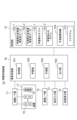
- FIG. 1 is a block diagram of an information processing apparatus 10 according to the first embodiment of the invention.
- This information processing device 10 is a device for predicting the remaining life of a device 17 from a plurality of pieces of time-series data collected from the device 17 .
- the remaining life of the device 17 may be predicted from a single piece of time-series data collected from the device 17 .
- an information processing apparatus 10 includes a device I/F (interface) section 11, a communication I/F section 12, an operation input section 13, a screen display section 14, a storage section 15, and an arithmetic processing section 16. .
- the device I/F unit 11 is connected to the device 17 by wire or wirelessly.
- the device 17 is an industrial device whose remaining life is to be predicted.
- the type of device 17 does not matter.
- the equipment 17 is provided with one or more sensors 18 .
- the type and number of sensors 18 are not limited.
- sensor 18 may be a sensor that measures vibrations generated in response to operation of device 17 .
- sensor 18 may be a sensor that measures the temperature of device 17 .
- sensor 18 may be other types of sensors such as humidity sensors, pressure sensors, flow sensors, acceleration sensors, displacement sensors, power sensors, current sensors, acoustic sensors, and the like. Measurement by the sensor 18 is not limited to constant measurement, and may be measurement at regular time intervals.
- the device I/F unit 11 acquires a time series of measured values that are regularly measured by one or more sensors 18 all the time or at the same timing, and transmits the time series to the arithmetic processing unit 16 .
- the communication I/F unit 12 is composed of a data communication circuit, and performs data communication with an external device (not shown) by wire or wirelessly.
- the operation input unit 13 is composed of an operation input device such as a keyboard and a mouse, detects an operator's operation, and outputs it to the arithmetic processing unit 16 .
- the screen display unit 14 is composed of a screen display device such as an LCD (Liquid Crystal Display), and displays various information such as prediction results in accordance with instructions from the arithmetic processing unit 16 .
- the storage unit 15 is composed of one or more storage devices such as hard disks and memories, and stores processing information and programs 151 necessary for various processes in the arithmetic processing unit 16 .
- the program 151 is a program that realizes various processing units by being read and executed by the arithmetic processing unit 16, and can be read from an external device or recording medium (not shown) via a data input/output function such as the communication I/F unit 12. It is read in advance and stored in the storage unit 15 .
- Main processing information stored in the storage unit 15 includes multivariate time series data for learning 152-1, multivariate time series data for prediction 152-2, pre-learning model 153-1, and trained model. 153-2, and prediction result information 154.
- the multivariate time-series data 152-1 for learning and the multivariate time-series data 152-2 for prediction include time-series data of measured values for each sensor acquired from one or more devices 17.
- the multivariate time-series data shall consist of n pieces of time-series data (where n is a positive integer equal to or greater than 2).
- the multivariate time-series data 152-1 for learning is created in advance based on the data (also called Run-To-Failure data) from the healthy state to the time when a failure occurred in a large number of devices 17.
- the learning multivariate time-series data 152-1 may be data from healthy to unhealthy states in a large number of devices 17, and may be data from immediately after maintenance to immediately before maintenance.
- a large number of multivariate time-series data 152-1 for learning generally exist.
- Each learning multivariate time-series data 152-1 further includes correct data.
- the correct answer data is data indicating the correct answer of the life expectancy prediction result using the learning multivariate time series data 152-1, and is the actual measurement value of the life expectancy.
- the multivariate time-series data 152-2 for prediction is data from the healthy state of the prediction target device 17 to the time of prediction.
- Both the pre-learning model 153-1 and the learned model 153-2 are machine learning models.
- the pre-learning model 153-1 parameters such as weights are learned using multivariate time-series data 152-1 for learning so as to predict the remaining life of the device 17 from the multivariate time-series data.
- the pre-learning model 153-1 is saved as a trained model 153-2 after the parameters are learned.
- the learned model 153-2 is used to predict the remaining life of the prediction target equipment 17 using the prediction multivariate time series data 152-2.
- the prediction result information 154 is information representing the results of prediction from the prediction multivariate time series data 152 using the trained model 153-2.
- the prediction result information 154 includes the life expectancy of the device 17 .
- the remaining life represents the remaining life of the device 17 at the end time of the input multivariate time-series data.
- the arithmetic processing unit 16 has one or more processors such as an MPU and its peripheral circuits, and reads the program 151 from the storage unit 15 and executes it to cooperate with the hardware and the program 151 to perform various processing units.
- Realize Main processing units realized by the arithmetic processing unit 16 include an acquisition unit 161 , a learning unit 162 , a prediction unit 163 and an output unit 164 .
- Acquisition unit 161 acquires time-series data of measured values of a plurality of sensors 18 attached to one or more devices 17 via device I/F unit 11 and/or communication I/F unit 12, It is stored in the storage unit 15 as variable time-series data 152-1 or prediction multivariate time-series data 152-2.
- the learning unit 162 uses the multivariate time-series data 152-1 for learning to cause the model 153-1 before learning to perform machine learning to predict the remaining life of the device from the multivariate time-series data. Then, the learning unit 162 stores the machine-learned model 153-1 in the storage unit 15 as a learned model 153-2. That is, the learning unit 162 generates a trained model 153-2 for predicting the remaining life of the equipment 17 from the prediction multivariate time series data 152-2.
- the prediction unit 163 predicts the remaining life of the device 17 from the prediction multivariate time series data 152-2 acquired from the device 17 using the trained model 153-2.
- the prediction unit 163 stores the prediction result information 154 including the predicted remaining life of the device 17 in the storage unit 15 .
- the output unit 164 reads the prediction result information 154 including the remaining life of the device 17 predicted by the prediction unit 163 from the storage unit 15 and displays it on the screen display unit 14 and/or through the communication I/F unit 12. Send to an external device.
- the operation of the information processing device 10 is roughly divided into a learning phase and a prediction phase.
- the learning phase is a phase in which machine learning is performed on the pre-learning model 153-1 to generate a learned model 153-2.
- the prediction phase is a phase in which the learned model 153-2 is used to predict the remaining life of the device 17 and the result is output.
- FIG. 2 is a flow chart showing an example of the operation of the learning phase.
- the acquisition unit 161 first acquires learning multivariate time-series data 152-1 from an external device, for example, through the communication I/F 12, and stores it in the storage unit 15 (step S1).
- the learning unit 162 machine-learns the pre-learning model 153-1 using the learning multivariate time-series data 152-1 to generate a trained model 153-2 (step S2).
- the learning unit 162 stores the learned model 153-2 in the storage unit 15 (step S3).
- FIG. 3 is a flow chart showing an example of the operation of the prediction phase.
- the prediction unit 163 first reads the trained model 153-2 from the storage unit 15 (step S11).
- the acquisition unit 161 acquires prediction multivariate time-series data 152-2 from the prediction target device 17, for example, through the device I/F unit 11, and stores it in the storage unit 15 (step S12).
- the prediction unit 163 uses the trained model 153-2 to predict the remaining life of the equipment 17 from the prediction multivariate time series data 152-2, and stores the prediction result information 154 including the remaining life. It saves in the unit 15 (step S13).
- the output unit 164 reads the prediction result information 154 from the storage unit 15 and determines whether or not the remaining life has fallen below a preset threshold (step S14). Next, if the remaining life is below the threshold, the output unit 164 displays an alarm and a predetermined coping method on the screen display unit 14 and/or transmits it to an external device through the communication I/F unit 12. (step S15). Examples of the predetermined coping method include instructions for maintenance or replacement of the device 17 .
- the pre-learning model 153-1 and the trained model 153-2 are simply referred to as the model 153 when not distinguished from each other.
- the multivariate time-series data 152-1 for learning and the multivariate time-series data 152-2 for prediction are simply referred to as multivariate time-series data 152 when they are not distinguished from each other.
- the characteristics of the information suggesting the remaining life appearing in the time-series data of the sensor's measured values can be roughly divided into the following two.
- One is a feature that appears as a gradual trend over time in time-series data.
- Such features are referred to herein as long-term features.
- an upward and downward trend in the reading of a particular sensor eg, temperature sensor
- the other is a feature that appears as a short-term change in time-series data.
- This feature is referred to herein as a short-term feature.
- short-term sharp fluctuations in sensor measurement data, or sudden drops or rises in measurement data over a short period of time are examples of short-term features.
- Model 153 is trained to extract such long-term and short-term features separately from the time series data and predict life expectancy based on them.
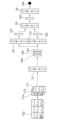
- FIG. 4 is a configuration diagram showing an example of the model 153.
- FIG. The model 153 in this example consists of five components 21-25.
- the component 21 divides the multivariate time series data 152 into m pieces (m is a positive integer equal to or greater than 2) along the time axis, and converts m pieces of partial multivariate time series data 171 to 17m into models. Input from the outside of 153.
- any of the methods exemplified below may be applied.
- a plurality of partial multivariate time series data 171-17m may be extracted from only a portion of the multivariate time series data 152; For example, when dividing into equal intervals for convenience, it is conceivable to discard the remainder.
- Multivariate time-series data 152 that has been padded may be used as a division target. For example, when dividing into equal intervals for convenience, it is conceivable to add preceding or succeeding values before and after the multivariate time-series data 152 before division so as not to generate a remainder.
- a plurality of partial multivariate time-series data 171-17m obtained by dividing in advance may be input.
- the multivariate time series data 152 may be signal processed. For example, not only the time domain information, which is the measured value in the multivariate time series data 152, but also the frequency domain information obtained by Fourier transforming the time domain information, or the quefrency domain obtained by further Fourier transforming the frequency domain information. Each piece of information may be divided.
- the component 21 extracts various features depending on the permutation (order) of the data constituting the partial time-series data from each of the m pieces of partial multivariate time-series data 171 to 17m.
- permutation-dependent features include, but are not limited to, the following.
- Frequency component obtained by Fourier transform, etc. (e) Pattern as waveform
- time series data D1, D2, D3
- permuted time series data D2, D1, D3
- the features extracted by the component 21 are not limited to permutation-dependent features.
- the component 21 may further extract permutation-independent features from each of the m partial multivariate time series data 171-17m. Examples of permutation-independent features include, but are not limited to, the following. (f) Statistics (average, variance, maximum value, minimum value, etc.)
- the features extracted by the component 21 are features extracted from the individual partial multivariate time-series data 171 to 17m obtained by dividing the multivariate time-series data 152 along the time axis into a plurality of pieces. is.
- the same type of short-term features extracted from different partial multivariate time-series data are managed in association with the time information of the original partial multivariate time-series data.
- the component 21 also generates column vectors 181-18m from the extracted short-term features. That is, component 21 generates column vectors 181-18m in which the extracted short-term features are embedded.
- the column vectors 181-18m correspond one-to-one to the partial multivariate time series data 171-17m. For example, the component 21 generates one column vector having individual short-term features extracted from one partial multivariate time series data as individual vector elements.
- the component 21 having the functions described above may be realized by, for example, learning a neural network such as a recurrent neural network (RNN, LSTM, GRU, etc.), CNN, Transformer, or the like.
- the learned component 21 inputs m partial multivariate time series data 171 to 17m that constitute the multivariate time series data 152, and from each partial time series data in each partial multivariate time series data, task Extract short-term features that are effective for (predicting the remaining life in this example).
- the component 21 then generates and outputs column vectors 181-18m in which the extracted short-term features are embedded.
- Neural networks perform nonlinear transformation on input data to extract features. Therefore, it can be said that the component 21 configured by a neural network extracts short-term features by performing permutation-dependent nonlinear transformation on the input time-series data.
- the component 22 receives the column vectors 181 to 18m from the component 21, generates and outputs an intermediate vector 191 in which all of the column vectors 181 to 18m are embedded. For example, component 22 may generate a weighted sum of column vectors 181 - 18 m as intermediate vector 191 .
- Equation 1 An example of the function by which the component 22 calculates the weighted sum v (k) of the column vectors 181-18m is shown in Equation 1 of FIG.
- k is the number of the original time series data 152
- J is the number of input column vectors
- v (k,j) is the column vector
- a (k,j) is the column vector v (k, j) is the weight.
- the weight a (k,j) may be a function whose value depends on the column vector v (k,j) .
- Equation 2 An example of the function that gives the weight a (k,j) is shown in Equation 2 of FIG.
- l k is the number of input column vectors
- * is element-wise multiplication
- sigm( ) is the sigmoid function.
- W, P, and Q are parameters optimized by learning
- W is a vector
- P and Q are matrices.
- the dimensions of W, P, Q are determined to give a scalar value as a (k,j) .
- intermediate vector 191 is not limited to the weighted sum of the column vectors 181-18m.
- Intermediate vector 191 may be the sum, weighted average, average, etc. of column vectors 181-18m.
- the intermediate vector 191 embeds all of the column vectors 181 to 18m.
- each column vector is embedded with short-term features extracted from the corresponding partial multivariate time series data. Therefore, intermediate vectors 191 are embedded with various short-term features extracted from the original multivariate time-series data.
- the weighted sum mentioned above and the like are linear transformations. Therefore, it can be said that the component 22 generates the intermediate vector 191 by applying a permutation-independent linear transformation to the plurality of column vectors 181 to 18m.
- the component 23 receives the column vectors 181 to 18m from the component 21, generates an intermediate vector 192, and outputs it. Specifically, the component 23 rearranges the input column vectors 181-18m according to the acquisition times of the corresponding partial multivariate time-series data 171-17m. Next, component 23 extracts from the permuted column vectors 181-18m features that depend on the permutation (order) of the column vectors. As described above, the column vectors 181 to 18m are embedded with short-term features corresponding to the respective acquisition times. Thus, the features extracted by component 23 become long-term features, features that appear as gradual trends of short-term features over a long period of time.
- the component 23 also generates an intermediate vector 192 from the extracted long-term features. That is, component 23 produces intermediate vectors 192 in which the extracted long-term features are embedded.
- the component 23 having the functions described above may be realized by, for example, learning a neural network such as a recurrent neural network (RNN, LSTM, GRU, etc.), CNN, Transformer, or the like.
- the trained component 23 receives the column vectors 181-18m and extracts from them long-term features that are effective for the task (prediction of remaining life in this example).
- the component 23 then generates and outputs an intermediate vector 192 in which the extracted long-term features are embedded. It can be said that the component 23 composed of a neural network extracts long-term features by applying permutation-dependent nonlinear transformation to the time series of input column vectors.
- the component 24 receives the intermediate vector 191 from the component 22 and inputs the intermediate vector 192 from the component 23 . Then, the component 24 generates and outputs a feature vector 193 in which the intermediate vector 191 and the intermediate vector 192 are embedded. For example, the component 24 may use one vector obtained by concatenating the intermediate vector 191 and the intermediate vector 192 as the feature vector 193 . Alternatively, the component 24 may use the sum of the intermediate vector 191 and the intermediate vector 192 or the weighted sum calculated by the same method as the component 22 as the feature vector 193 .
- the intermediate vector 191 embeds various short-term features extracted from multivariate time-series data.
- intermediate vectors 192 are embedded with various long-term features extracted from multivariate time-series data. Therefore, the feature vector 193 in which the intermediate vectors 191 and 192 are embedded has various short-term and long-term features embedded therein.
- the component 25 inputs the feature vector 193 from the component 24 and outputs a scalar value 194 indicating the remaining life.
- Component 25 may be implemented by training a neural network (eg, multi-layer perceptons) that converts vectors to scalar values.
- the learned component 25 inputs a feature vector 193 and outputs a scalar value 194 indicating remaining life.
- Various short-term and long-term features are embedded in feature vector 193 . As such, component 25 will output a scalar value 194 indicative of remaining life based on various short-term and long-term characteristics.
- step S2 in FIG. 2 executed by the learning unit 162, that is, the details of the process of generating the learned model 153-2 using the learning multivariate time-series data 152-1 will be described.
- FIG. 6 is a flowchart showing an example of detailed processing in step S2.
- the learning unit 162 focuses on one learning multivariate time-series data 152-1 (step S21).
- the learning unit 162 uses the component 21 to extract short-term features from a plurality of partial multivariate time-series data 171 to 17m that constitute the learning multivariate time-series data of interest, and embed the short-term features.
- a plurality of column vectors 181 to 18m are generated (step S22).
- the learning unit 162 uses the component 22 to generate one intermediate vector 191 in which all the short-term features embedded in the multiple column vectors 181 to 18m are embedded (step S23).
- the learning unit 162 uses the component 23 to extract permutation-dependent long-term features from the plurality of column vectors 181 to 18m, and generates one intermediate vector 192 in which the extracted long-term features are embedded (step S24).
- the learning unit 162 uses the component 24 to generate a feature vector 193 in which all of the short-term and long-term features embedded in the two intermediate vectors 191 and 192 are embedded (step S25).
- the learning unit 162 uses the component 25 to convert the feature vector 193 into a scalar value 194 representing the remaining life of the device (step S26).
- the learning unit 162 uses the model 153 to minimize the difference between the predicted value of remaining life and the actual measured value of remaining life given by the correct data included in the learning multivariate time series data 152-1 of interest. parameters are adjusted (step S27).
- the learning unit 162 shifts attention to the next one multivariate time series data for learning 152-1 (steps S28, S29), returns to step S22, and returns to step S22.
- the same processing as described above is repeated.
- the learning unit 162 finishes paying attention to all the learning multivariate time-series data 152-1 Yes in step S29
- the learning unit 162 ends the processing of FIG.
- step S13 in FIG. I will explain the details.
- FIG. 7 is a flowchart showing an example of detailed processing in step S13.
- the prediction unit 163 uses the component 21 to extract short-term features from a plurality of partial multivariate time series data 171 to 17m that constitute the prediction multivariate time series data 152-2, A plurality of column vectors 181-18m in which short-term features are embedded are generated (step S31).
- the prediction unit 163 uses the component 22 to generate one intermediate vector 191 in which all the short-term features embedded in the multiple column vectors 181 to 18m are embedded (step S32).
- the prediction unit 163 uses the component 23 to extract permutation-dependent long-term features from the plurality of column vectors 181 to 18m, and generates one intermediate vector 192 in which the extracted long-term features are embedded (step S33).
- the prediction unit 163 uses the component 24 to generate a feature vector 193 in which all of the short-term and long-term features embedded in the two intermediate vectors 191 and 192 are embedded (step S34).
- the prediction unit 163 uses the component 25 to convert the feature vector 193 into a scalar value 194 representing the remaining life of the device (step S35).
- the information processing apparatus 10 includes the learning unit 162 that generates the trained model 153-2 for predicting the remaining life of the device 17 from the multivariate time-series data acquired from the device 17. It has The trained model 153-2 has components 21-25.
- the component 21 calculates short-term features, which are permutation-dependent features, for each of a plurality of partial multivariate time-series data 171 to 17m obtained by dividing the multivariate time-series data 152 along the time axis. Extract to generate a plurality of column vectors 181-18m in which the short-term features of interest are embedded.
- Component 22 produces one intermediate vector 191 in which all of the short-term features embedded in multiple column vectors 181-18m are embedded.
- the component 23 extracts long-term features, which are permutation-dependent features, from the plurality of column vectors 181-18m, and generates one intermediate vector 192 in which the long-term features are embedded.
- Component 24 produces feature vector 193 in which all the short-term and long-term features embedded in intermediate vector 191 and intermediate vector 192 are embedded.
- the component 25 generates and outputs a scalar value 194 indicating the remaining life of the equipment 17 from the feature vector 193 . Therefore, the information processing apparatus 10 can predict the remaining life of the device 17 with higher accuracy than when using only long-term features or only short-term features.
- the path from the input to the output of the model 153 includes a first path via the component 22 and a second path via the component 23 .
- the first path is when short-term features are important for predicting remaining life.
- the second path is the path where long-term features are important for predicting remaining life.
- This embodiment differs from the first embodiment in the configuration of the model 153, and is otherwise the same as the first embodiment.
- FIG. 8 is a configuration diagram showing an example of the model 153 used in this embodiment.
- the model 153 of this example differs from the model 153 shown in FIG. 4 in that it further comprises components 26 to 28 compared to the model 153 shown in FIG. is the same as
- the component 26 receives the column vectors 181-18m from the component 21, and generates and outputs difference vectors 201-20m corresponding to the column vectors 181-18m one-to-one. Generation of the difference vector is performed as follows. Component 26 first calculates the average vector of all column vectors 181-18m. As described above, the short-term features extracted from the partial multivariate time series data 171-17m are embedded in the column vectors 181-18m. Therefore, the mean vector can be said to be the mean of short-term features. Component 26 then computes, for each column vector, the difference between that column vector and the mean vector to produce a difference vector. Therefore, the difference vector represents the difference from the average of each of the short-term features extracted from the partial multivariate time series data 171-17m.
- the component 27 receives the difference vectors 201 to 20m from the component 26, generates and outputs an intermediate vector 195 in which all of these difference vectors are embedded. For example, component 27 may generate a weighted sum of difference vectors 201 - 20 m as intermediate vector 195 .
- the manner in which component 27 generates the weighted sum of multiple vectors may be the same as the manner in which component 22 generates the weighted sum of multiple vectors.
- the difference vectors 201-20m represent the difference from the mean of each of the short-term features extracted from the partial multivariate time series data 171-17m. Therefore, the intermediate vector 195 embeds the difference from the average of each of the short-term features extracted from the original multivariate time-series data 152 .
- the component 28 receives the difference vectors 201 to 20m from the component 26, generates an intermediate vector 196, and outputs it. Specifically, the component 28 rearranges the input difference vectors 201 to 20m according to the acquisition times of the corresponding partial multivariate time series data 171 to 17m. Next, the component 28 extracts features dependent on the permutation (order) of the difference vectors from the rearranged difference vectors 201-20m. As described above, the difference vectors 201 to 20m embed the differences from the average of the short-term features corresponding to the respective acquisition times. Thus, the features extracted by component 28 will be long-term features, features that appear as a gradual trend over time of the difference from the average of the short-term features.
- Component 28 also generates intermediate vectors 196 from the extracted long-term features. That is, component 28 produces intermediate vectors 196 in which the extracted long-term features are embedded.
- the component 28 having the functions described above may be realized by, for example, learning a neural network such as a recurrent neural network (RNN, LSTM, GRU, etc.), CNN, Transformer, or the like.
- RNN recurrent neural network
- LSTM LSTM
- GRU recurrent neural network
- Transformer or the like.
- the component 24 inputs the intermediate vectors 191, 192, 195, 196 from the components 22, 23, 27, 28.
- the component 24 then generates and outputs a feature vector 193 in which the intermediate vectors 191, 192, 195 and 196 are embedded.
- the component 24 may use one vector obtained by concatenating the intermediate vectors 191 , 192 , 195 and 196 as the feature vector 193 .
- the component 24 may use the feature vector 193 as the sum of the intermediate vectors 191 , 192 , 195 and 196 or a weighted sum calculated in the same manner as the component 22 .
- Component 25 receives feature vector 193 from component 24 and outputs a scalar value 194 indicating remaining life.
- the model 153 in this embodiment is a feature (a kind of short-term feature ) produces a further embedded feature vector 193 .
- the model 153 in this embodiment generates a feature vector 193 further embedded with a feature (a type of long-term feature) that appears as a gradual long-term trend of the short-term feature representing the difference from the average. Therefore, the model 153 in this embodiment has more types of short-term features and long-term features that can be extracted from multivariate time-series data compared to the model 153 in the first embodiment.
- the long-term features generated by component 28 and embedded in intermediate vector 196 become long-term features that appear as progressive trends over time of short-term features that represent the difference from the mean of the short-term features for each iteration of device 17 . Therefore, such long-term characteristics can be acquired as information suggesting the remaining life of the device 17 .
- FIG. 9 is a configuration diagram showing an example of the model 153 used in this embodiment.
- the model 153 of this example differs from the model 153 shown in FIG. 4 in that it further comprises components 29 to 31 as compared with the model 153 shown in FIG. is the same as
- the component 29 receives the column vectors 181-18m from the component 21, and generates and outputs difference vectors 211-21m corresponding to the column vectors 181-18m one-to-one. Generation of the difference vector is performed as follows. , 18m ⁇ 1 and a group of odd-numbered column vectors 181, 183, . Classify into groups of even-numbered column vectors 182, 184, . . . , 18m. Next, for each group, component 29 calculates the mean vector of all column vectors belonging to that group. As described above, the short-term features extracted from the partial multivariate time series data 171-17m are embedded in the column vectors 181-18m. Therefore, the average vector for each group can be said to be the average of the short-term features for each group.
- component 29 calculates the difference between the column vector belonging to that group and the average vector to generate a difference vector for each group.
- 21m ⁇ 1 representing the difference between the column vectors belonging to the odd-numbered groups and the average vector
- the difference vectors 211, 213, . . . Generate difference vectors 212, 214, . . . , 21m representing the differences.
- the component 30 receives the odd-numbered and even-numbered group difference vectors 211 to 21m from the component 29, generates and outputs an intermediate vector 197 in which all of these difference vectors are embedded.
- component 30 may generate a weighted sum of difference vectors 211 - 21 m as intermediate vector 197 .
- the manner in which component 30 generates the weighted sum of the multiple vectors may be the same as the manner in which component 22 generates the weighted sum of the multiple vectors.
- the odd-numbered and even-numbered difference vectors represent the difference from the mean of the odd-numbered and even-numbered short-term features extracted from the odd-numbered and even-numbered partial multivariate time series data 171-17m, respectively. ing. Therefore, the intermediate vector 197 has embedded features (which are also short-term features) representing the difference from the mean of each of the odd-numbered and even-numbered short-term features.
- the component 31 receives the difference vector of each group from the component 29, generates an intermediate vector 198, and outputs it. Specifically, the component 31 rearranges the input difference vectors 211 to 21m according to the acquisition times of the corresponding partial multivariate time series data 171 to 17m for each group. Next, the component 31 extracts features dependent on the permutation (order) of the difference vectors for each group from the rearranged difference vectors. As described above, the difference vector of each group embeds the difference from the average of the short-term features of each group corresponding to the acquisition time. Thus, the features extracted by component 31 will be long-term features, features that appear as a progressive trend over time of the difference from the mean of the short-term features of each group.
- Component 31 also generates intermediate vectors 198 from the long-term features of each extracted group. That is, component 31 produces an intermediate vector 198 in which the long-term features of each extracted group are embedded.
- the component 31 having the functions as described above may be realized by, for example, learning a neural network such as a recurrent neural network (RNN, LSTM, GRU, etc.), CNN, Transformer, or the like.
- RNN recurrent neural network
- LSTM LSTM, GRU, etc.
- CNN recurrent neural network
- Transformer or the like.
- the component 24 inputs the intermediate vectors 191, 192, 197, 198 from the components 22, 23, 30, 31.
- the component 24 then generates and outputs a feature vector 193 in which the intermediate vectors 191, 192, 197 and 198 are embedded.
- the component 24 may use one vector obtained by concatenating the intermediate vectors 191 , 192 , 197 and 198 as the feature vector 193 .
- the component 24 may use the feature vector 193 as the sum of the intermediate vectors 191 , 192 , 197 and 198 or a weighted sum calculated in the same manner as the component 22 .
- Component 25 receives feature vector 193 from component 24 and outputs a scalar value 194 indicating remaining life.
- the model 153 in this embodiment classifies partial multivariate time-series data into odd-numbered and even-numbered groups, and for each group, short-term data extracted from each of the partial multivariate time-series data belonging to the group
- a feature vector 193 is generated in which features (which are a type of short-term feature) that represent the difference from the mean of the features are further embedded.
- the model 153 in this embodiment further includes a feature vector 193 in which a feature (a type of long-term feature) that appears as a gradual trend over a long period of a short-term feature that represents the difference from the average is embedded for each group.
- the model 153 in this embodiment has more types of short-term features and long-term features that can be extracted from multivariate time-series data compared to the model 153 in the first embodiment.
- the model 153 in the present embodiment it is possible to more reliably acquire information suggesting the remaining life of the device, which appears in various forms in the time-series data, and to improve the accuracy of predicting the remaining life of the device.
- the multivariate time-series data 152 in this embodiment are conceivable as in the first embodiment, and are not particularly limited.
- the short-term features generated by component 29 of model 153 and embedded in intermediate vector 197 by component 30 are the first half and second half of each repetitive motion of device 17. Since the short-term features represent the difference from the average of the short-term features, such short-term features can be acquired as information suggesting the remaining life of the device 17 .
- the long-term features generated by component 31 and embedded in the intermediate vector 198 are the progressive trend over the long term of the short-term features representing the difference from the mean of the short-term features of the first and second halves of each iteration of the instrument 17. It becomes a long-term feature that appears, and such a long-term feature can be acquired as information suggesting the remaining life of the device 17 .
- the column vectors 181 to 18m are classified into two groups in the above description, they may be classified into three or more groups. For example, if one cycle of operation of the device 17 consists of four steps, ie, step 1, step 2, step 3, and step 4, the multivariate time-series data 152 obtained from the device 17 corresponds to each step on a one-to-one basis. The data may be divided into partial multivariate time-series data, and the column vectors 181 to 18m may be classified into four groups corresponding to each process.
- the present invention is applied to the dual estimation model that performs RUL estimation described in Patent Document 3 and Non-Patent Document 1.
- FIG. 10 is a block diagram that configures a double estimation model to which the present invention is applied.
- This dual estimation model 300 includes five components 301-305. All components 301 to 305 are used in the learning phase, and components 301 and 302 are used in the prediction phase.
- the component 301 is called Tss2Vec
- the component 302 is called Vec2HI
- the component 303 is called Tss2Mat
- the component 304 is called Mat2HIch
- the component 305 is called HIch2HI.
- X (k) be the k-th example from the K run-to-failure data
- X (k,j) be the j-th observation in that example
- X (k, jk) is the observation at fault.
- j indicates the time index of the data until the occurrence of the failure, and the smaller the value, the older the record.
- lk indicates the length of the time series and the time index at the time of failure.
- X (k,lk) is a vector of length A;
- A indicates the number of attributes such as sensors.
- a partial time series of X (k) can be x.
- x (k,j) be the sub-time series of X (k) starting at the 1st time index and ending at the jth time index
- v (k,j) be its feature representation
- V (k) [ v (k,1) , v (k, 2) , .
- the beginning of x (k,j) may be the beginning of X (k) , but it is not required.
- component 301 Given x (k,j) , component 301 outputs its feature representation v (k,j) , and component 302 calculates the remaining life H 1 at j based on v (k,j). Output (k,j) .
- the component 303 When the k-th execution data X (k) is input, the component 303 outputs V (k) , and the component 304 converts V (k) to the HI (health index) change point H ch (k). Convert to Finally, component 305 outputs the remaining life H 2 (k,j) at j based on H ch (k) .
- Components 301 and 303 are identical except for their inputs and outputs.
- Component 301 inputs a partial time series x (k,j) and outputs a vector v (k,j) .
- Component 303 repeats the process for all j and concatenates all vectors into a matrix.
- components 301, 303 may consist of components 21-24 of FIG.
- components 301, 303 may consist of components 21-24, 26-28 of FIG.
- components 301, 303 may consist of components 21-24, 29-31 of FIG.
- component 302 may be the same as component 25 of FIG.
- Component 304 may consist of any neural network that converts column vectors to scalar values when the data is large. If the data is scarce, component 304 may prefer to use a weighted sum of remaining lifespans using, for example, an attention mechanism.
- the component 305 may comprise a function that calculates the life expectancy H 2 from the health index change point H ch (estimated by the component 304 ) and the correct value of the life expectancy H 1 .
- component 305 may consist of a Leaky Truncated RUL function and a Piece-wise RUL function.
- the dual estimation model 300 receives, at one time, an example of data up to a failure X (k) and its partial time series x (k,j) as input, and two RUL estimates H 1 (k, j) and output H 2 (k,j) . Then, in the learning phase, double estimation is performed so as to minimize the difference between the two RUL estimates H 1 (k,j) and H 2 (k,j) under the condition that the change point of the health index becomes as large as possible. Weights such as parameters for each component of the model 300 are adjusted.
- the dual estimation model 300 receives multivariate time series data for prediction as input and outputs the remaining life at the end of the multivariate time series data.
- the information processing apparatus predicted the remaining life of the device 17 based on the time-series data of the sensor measurement values acquired from the device 17 .
- the information processing device may predict the remaining life of the device based on the history of events such as failure and maintenance (time-series data) instead of or in addition to the time-series data of the measured values of the sensors.
- the type and number of events are not limited.
- an event may be about a failure or about maintenance.
- the time-series data of the failure event includes the event type, the date and time when the failure occurred, and the date and time when the failure was restored.
- time-series data of the maintenance event includes the event type, the date and time when the maintenance was performed, the content of the maintenance, and the like.
- the device I/F unit 11 is configured to read time-series data of one or more events from the storage unit 19 and transmit the data to the arithmetic processing unit 16 .
- the remaining life of the device is predicted.
- the present invention can be applied to two-class classification of equipment abnormality detection, multi-class classification of failure diagnosis and deterioration state estimation (discretized remaining life estimation). good.
- one implementation method is to set the number of components 25 (corresponding to the nodes of the final layer) to the same number as the number of classes, and learn the model so as to minimize the cross entropy as the objective function (loss function). Conceivable.
- feature vectors may be determined by embedding or k-NN in the framework of distance learning. In the case of discretized remaining life estimation, the average value of k-NN or the weighted average value using a kernel may be output.
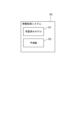
- FIG. 11 is a block diagram of an information processing system according to the seventh embodiment of the invention.
- an information processing system 70 includes a learning unit 72 that generates a trained model 71 that predicts the state of a device from time-series data acquired from the device.
- the trained model 71 extracts permutation-dependent features from each of a plurality of partial time series data obtained by dividing the time series data into a plurality of pieces along the time axis, and embeds the extracted features into partial time series data. It includes a first component that generates a plurality of first vectors that correspond one-to-one to the series data.
- the trained model 71 also includes a second component that generates a second vector in which the plurality of first vectors are embedded.
- the trained model 71 also includes a third component that extracts permutation dependent features from the plurality of first vectors and generates a third vector in which the extracted features are embedded.
- the trained model 71 also includes a fourth component that generates a fourth vector in which the second vector and the third vector are embedded.
- the trained model 71 also includes a fifth component that transforms the fourth vector into a first value representing the state of the device.
- the information processing system 70 configured in this way operates as follows. That is, the learning unit 72 generates a trained model 71 that predicts the state of the device from the time-series data acquired from the device. In this generation, the learning unit 72 causes the trained model 71 to extract permutation-dependent features from each of a plurality of partial time series data obtained by dividing the time series data into a plurality of pieces along the time axis.
- the trained model 71 has paths for efficient learning according to short-term features and long-term features, learning progresses efficiently and features useful for predicting the state of equipment, such as the remaining life of equipment, are efficiently acquired. be able to. As a result, it is possible to improve the prediction accuracy of the state of the device.
- FIG. 12 is a block diagram of an information processing system according to the eighth embodiment of the invention.
- an information processing system 80 includes a prediction unit 82 that uses a trained model 81 to predict the state of a device from time-series data acquired from the device.
- the trained model 81 extracts permutation-dependent features from each of a plurality of partial time series data obtained by dividing the time series data into a plurality of pieces along the time axis, and embeds the extracted features into partial time series data. It includes a first component that generates a plurality of first vectors that correspond one-to-one to the series data.
- the trained model 81 also includes a second component that generates a second vector in which the plurality of first vectors are embedded.
- the trained model 81 also includes a third component that extracts permutation dependent features from the plurality of first vectors and generates a third vector in which the extracted features are embedded.
- the trained model 81 also includes a fourth component that generates a fourth vector in which the second vector and the third vector are embedded.
- the trained model 81 also includes a fifth component that transforms the fourth vector into a first value representing the state of the device.
- the information processing system 80 configured in this manner operates as follows. That is, the prediction unit 82 uses the trained model 81 to predict the state of the device from the time-series data acquired from the device. In the above prediction, the prediction unit 82 causes the trained model 81 to extract permutation-dependent features from each of a plurality of partial time-series data obtained by dividing the time-series data along the time axis.
- the trained model 81 has routes for efficient learning according to short-term features and long-term features, learning progresses efficiently and features useful for predicting the state of equipment, such as the remaining life of equipment, are efficiently acquired. be able to. As a result, it is possible to improve the prediction accuracy of the state of the device.
- the present invention uses time-series data of measured values of sensors acquired from the equipment and time-series data of events recorded in the equipment to determine the remaining life of various equipment such as machine tools, chemical plants, IT equipment, and semiconductor devices. It can be used in all fields where predictions are made based on data and predictive maintenance is performed according to the prediction results.
- [Appendix 1] a learning unit that generates a trained model that predicts the state of the device from time-series data acquired from the device;
- the trained model is extracting permutation-dependent features from each of a plurality of partial time-series data obtained by dividing the time-series data along the time axis; a first component that generates a plurality of first vectors corresponding to one-to-one; a second component that generates a second vector in which the plurality of first vectors are embedded; a third component for extracting permutation dependent features from the plurality of first vectors and generating a third vector in which the extracted features are embedded; a fourth component that generates a fourth vector in which the second vector and the third vector are embedded; and a fifth component that transforms the fourth vector into a first value representing the state of the device.
- the trained model is a sixth component that generates a plurality of fifth vectors obtained by calculating, for each of the plurality of first vectors, a difference between the first vector and an average vector of the plurality of first vectors; a seventh component that generates a sixth vector in which the plurality of fifth vectors are embedded; an eighth component that extracts permutation dependent features from the plurality of fifth vectors and generates a seventh vector in which the extracted features are embedded; The fourth component generates the fourth vector in which the sixth vector and the seventh vector are further embedded.
- the information processing system according to appendix 1.
- the trained model is A plurality of fifth vectors obtained by dividing the plurality of first vectors into a plurality of groups, and calculating, for each group, a difference between the first vector belonging to the group and an average vector of the plurality of first vectors belonging to the group.
- a sixth component that produces a seventh component that generates a sixth vector in which the plurality of fifth vectors are embedded; an eighth component that extracts, for each group, a permutation-dependent feature from the plurality of fifth vectors belonging to the group, and generates a seventh vector in which the extracted feature is embedded;
- the fourth component generates the fourth vector in which the sixth vector and the seventh vector are further embedded.
- the trained model is inputting a plurality of partial time-series data constituting time-series data representing execution data up to an observed state, including the first component, the second component, the third component, and the fourth component; a ninth component that generates and outputs a plurality of the fourth vectors that correspond one-to-one to the input plurality of time-series data; a tenth component that receives the plurality of fourth vectors output from the ninth component and calculates a change point of the health index; an eleventh component that generates and outputs a second value that serves as a teacher for the first value based on the change point of the health index;
- the information processing system according to any one of Appendices 1 to 3.
- the first value is a value representing the remaining life of the device, 5.
- the first value is a value representing the presence or absence of an abnormality, the presence or absence of a failure, or a state of deterioration of the device. 6.
- [Appendix 7] further comprising an output unit that issues an alarm in response to the first value; 7.
- Appendix 8] Further comprising an output unit that implements a predefined coping method for the device according to the first value, 8.
- a prediction unit that uses a trained model to predict the state of the device from time-series data obtained from the device,
- the trained model is extracting permutation-dependent features from each of a plurality of partial time-series data obtained by dividing the time-series data along the time axis; a first component that generates a plurality of first vectors corresponding to one-to-one; a second component that generates a second vector in which the plurality of first vectors are embedded; a third component for extracting permutation dependent features from the plurality of first vectors and generating a third vector in which the extracted features are embedded; a fourth component that generates a fourth vector in which the second vector and the third vector are embedded; and a fifth component that transforms the fourth vector into a first value representing the state of the device.
- [Appendix 10] generating a trained model that predicts the state of the device from time-series data obtained from the device;
- the trained model includes: extracting permutation-dependent features from each of a plurality of partial time series data obtained by dividing the time series data into a plurality of pieces along the time axis; generating a plurality of first vectors in one-to-one correspondence with the partial time-series data in which the extracted features are embedded; generating a second vector in which the plurality of first vectors are embedded; extracting permutation dependent features from the plurality of first vectors; generating a third vector in which the extracted features are embedded; generating a fourth vector in which the second vector and the third vector are embedded; transforming the fourth vector to a first value representing the state of the device; Information processing methods.
- [Appendix 11] Predicting the state of the device from time-series data obtained from the device using the trained model,
- the trained model is extracting permutation-dependent features from each of a plurality of partial time series data obtained by dividing the time series data into a plurality of pieces along the time axis; generating a plurality of first vectors in one-to-one correspondence with the partial time-series data in which the extracted features are embedded; generating a second vector in which the plurality of first vectors are embedded; extracting permutation dependent features from the plurality of first vectors; generating a third vector in which the extracted features are embedded; generating a fourth vector in which the second vector and the third vector are embedded; transforming the fourth vector to a first value representing the state of the device; Information processing methods.
- the trained model includes: extracting permutation-dependent features from each of a plurality of partial time series data obtained by dividing the time series data into a plurality of pieces along the time axis; generating a plurality of first vectors in one-to-one correspondence with the partial time-series data in which the extracted features are embedded; generating a second vector in which the plurality of first vectors are embedded; extracting permutation dependent features from the plurality of first vectors; generating a third vector in which the extracted features are embedded; generating a fourth vector in which the second vector and the third vector are embedded; transforming the fourth vector to a first value representing the state of the device;
- a computer-readable recording medium that records a program.
- [Appendix 13] A program for causing a computer to perform a process of predicting the state of the device from time-series data acquired from the device using a trained model,
- the trained model is extracting permutation-dependent features from each of a plurality of partial time series data obtained by dividing the time series data into a plurality of pieces along the time axis; generating a plurality of first vectors in one-to-one correspondence with the partial time-series data in which the extracted features are embedded; generating a second vector in which the plurality of first vectors are embedded; extracting permutation dependent features from the plurality of first vectors; generating a third vector in which the extracted features are embedded; generating a fourth vector in which the second vector and the third vector are embedded; transforming the fourth vector to a first value representing the state of the device;
- a computer-readable recording medium that records a program.
Landscapes
- Engineering & Computer Science (AREA)
- Physics & Mathematics (AREA)
- General Physics & Mathematics (AREA)
- Automation & Control Theory (AREA)
- Mathematical Physics (AREA)
- Evolutionary Computation (AREA)
- Artificial Intelligence (AREA)
- Software Systems (AREA)
- Theoretical Computer Science (AREA)
- Computer Vision & Pattern Recognition (AREA)
- Data Mining & Analysis (AREA)
- Medical Informatics (AREA)
- Computing Systems (AREA)
- General Engineering & Computer Science (AREA)
- Management, Administration, Business Operations System, And Electronic Commerce (AREA)
Priority Applications (3)
| Application Number | Priority Date | Filing Date | Title |
|---|---|---|---|
| US18/718,516 US20250044785A1 (en) | 2021-12-23 | 2021-12-23 | Information processing system |
| PCT/JP2021/048035 WO2023119598A1 (ja) | 2021-12-23 | 2021-12-23 | 情報処理システム |
| JP2023568969A JP7726298B2 (ja) | 2021-12-23 | 2021-12-23 | 情報処理システム |
Applications Claiming Priority (1)
| Application Number | Priority Date | Filing Date | Title |
|---|---|---|---|
| PCT/JP2021/048035 WO2023119598A1 (ja) | 2021-12-23 | 2021-12-23 | 情報処理システム |
Publications (1)
| Publication Number | Publication Date |
|---|---|
| WO2023119598A1 true WO2023119598A1 (ja) | 2023-06-29 |
Family
ID=86901855
Family Applications (1)
| Application Number | Title | Priority Date | Filing Date |
|---|---|---|---|
| PCT/JP2021/048035 Ceased WO2023119598A1 (ja) | 2021-12-23 | 2021-12-23 | 情報処理システム |
Country Status (3)
| Country | Link |
|---|---|
| US (1) | US20250044785A1 (https=) |
| JP (1) | JP7726298B2 (https=) |
| WO (1) | WO2023119598A1 (https=) |
Families Citing this family (1)
| Publication number | Priority date | Publication date | Assignee | Title |
|---|---|---|---|---|
| JP7689937B2 (ja) * | 2022-05-27 | 2025-06-09 | 株式会社荏原製作所 | 研磨パッド寿命推定方法および研磨装置 |
Citations (1)
| Publication number | Priority date | Publication date | Assignee | Title |
|---|---|---|---|---|
| CN112712166A (zh) * | 2020-12-31 | 2021-04-27 | 深圳前海微众银行股份有限公司 | 一种基于时间序列的预测方法及装置 |
Family Cites Families (1)
| Publication number | Priority date | Publication date | Assignee | Title |
|---|---|---|---|---|
| CN113496312A (zh) * | 2021-07-05 | 2021-10-12 | 山东大学 | 基于多维特征提取融合与长短期记忆网络的刀具剩余寿命预测方法、设备及存储介质 |
-
2021
- 2021-12-23 JP JP2023568969A patent/JP7726298B2/ja active Active
- 2021-12-23 US US18/718,516 patent/US20250044785A1/en active Pending
- 2021-12-23 WO PCT/JP2021/048035 patent/WO2023119598A1/ja not_active Ceased
Patent Citations (1)
| Publication number | Priority date | Publication date | Assignee | Title |
|---|---|---|---|---|
| CN112712166A (zh) * | 2020-12-31 | 2021-04-27 | 深圳前海微众银行股份有限公司 | 一种基于时间序列的预测方法及装置 |
Non-Patent Citations (1)
| Title |
|---|
| FULCHER BEN D: "Feature-Based Time-Series Analysis", ARXIV.ORG, CORNELL UNIVERSITY LIBRARY, ARXIV.ORG, ITHACA, 3 July 2023 (2023-07-03), Ithaca, XP093073422, Retrieved from the Internet <URL:https://arxiv.org/abs/1709.08055v2> [retrieved on 20230814] * |
Also Published As
| Publication number | Publication date |
|---|---|
| JPWO2023119598A1 (https=) | 2023-06-29 |
| JP7726298B2 (ja) | 2025-08-20 |
| US20250044785A1 (en) | 2025-02-06 |
Similar Documents
| Publication | Publication Date | Title |
|---|---|---|
| EP3776113B1 (en) | Apparatus and method for controlling system | |
| US12607995B2 (en) | Automated analysis of non-stationary machine performance | |
| JP6740247B2 (ja) | 異常検出システム、異常検出方法、異常検出プログラム及び学習済モデル生成方法 | |
| US9626600B2 (en) | Event analyzer and computer-readable storage medium | |
| KR20140041766A (ko) | 예측 및 예지를 위한 순차적 커널 회귀 모델링 방법 | |
| CN112272763B (zh) | 异常探测装置、异常探测方法以及计算机可读取的存储介质 | |
| JP6489235B2 (ja) | システム分析方法、システム分析装置、および、プログラム | |
| JP2022534070A (ja) | グラディエントベースのセンサ識別を利用した障害予測 | |
| JP2016033778A (ja) | 異常予兆診断装置及び異常予兆診断方法 | |
| Li et al. | Structural health monitoring data anomaly detection by transformer enhanced densely connected neural networks | |
| CN120297938A (zh) | 一种基于数字孪生的电力设备预测性维护方法 | |
| JP7726298B2 (ja) | 情報処理システム | |
| JP6973445B2 (ja) | 表示方法、表示装置、および、プログラム | |
| Moradi et al. | Constructing explainable health indicators for aircraft engines by developing an interpretable neural network with discretized weights: M. Moradi et al. | |
| Sahinoglu et al. | Discovering Granger causality with convolutional neural networks | |
| CN116910483A (zh) | 一种基于遮蔽卷积注意力残差收缩网络的软测量建模方法 | |
| Husain et al. | Predictive maintenance of single phase ac motor using iot sensor data and machine learning (simple linear regression and multiple linear regression algorithms) | |
| Li et al. | LASS-ODE: Scaling ODE Computations to Connect Foundation Models with Dynamical Physical Systems | |
| Star et al. | Dynamical Variational Autoencoders for Estimating the Remaining Useful Life of Machinery | |
| Mercurio | Towards predictive maintenance using long short-term memory autoencoder and streaming explainability | |
| EP4718194A1 (en) | Controlling of a plant using anomaly detection | |
| Hirt et al. | SSSDAD: Structured State Space Diffusion Anomaly Detection in Industrial Time Series Data | |
| Mohajerzarrinkelk | Multi-Channel Swin Transformer Framework for Rolling Bearing Remaining Useful Life Prediction | |
| Afzal et al. | Development Of ARMA Algorithm For System Identification In Structure Health Monitoring | |
| JP2018120488A (ja) | 事象分類装置、事象分類プログラム、故障・不良判定装置 |
Legal Events
| Date | Code | Title | Description |
|---|---|---|---|
| 121 | Ep: the epo has been informed by wipo that ep was designated in this application |
Ref document number: 21969032 Country of ref document: EP Kind code of ref document: A1 |
|
| WWE | Wipo information: entry into national phase |
Ref document number: 2023568969 Country of ref document: JP |
|
| WWE | Wipo information: entry into national phase |
Ref document number: 18718516 Country of ref document: US |
|
| NENP | Non-entry into the national phase |
Ref country code: DE |
|
| 122 | Ep: pct application non-entry in european phase |
Ref document number: 21969032 Country of ref document: EP Kind code of ref document: A1 |