WO2023105948A1 - シール材、およびシール材を有するsofcまたはsoec - Google Patents
シール材、およびシール材を有するsofcまたはsoec Download PDFInfo
- Publication number
- WO2023105948A1 WO2023105948A1 PCT/JP2022/039321 JP2022039321W WO2023105948A1 WO 2023105948 A1 WO2023105948 A1 WO 2023105948A1 JP 2022039321 W JP2022039321 W JP 2022039321W WO 2023105948 A1 WO2023105948 A1 WO 2023105948A1
- Authority
- WO
- WIPO (PCT)
- Prior art keywords
- sealing material
- glass
- sofc
- soec
- electrolyte layer
- Prior art date
- Legal status (The legal status is an assumption and is not a legal conclusion. Google has not performed a legal analysis and makes no representation as to the accuracy of the status listed.)
- Ceased
Links
Images

Classifications
-
- C—CHEMISTRY; METALLURGY
- C03—GLASS; MINERAL OR SLAG WOOL
- C03C—CHEMICAL COMPOSITION OF GLASSES, GLAZES OR VITREOUS ENAMELS; SURFACE TREATMENT OF GLASS; SURFACE TREATMENT OF FIBRES OR FILAMENTS MADE FROM GLASS, MINERALS OR SLAGS; JOINING GLASS TO GLASS OR OTHER MATERIALS
- C03C10/00—Devitrified glass ceramics, i.e. glass ceramics having a crystalline phase dispersed in a glassy phase and constituting at least 50% by weight of the total composition
-
- C—CHEMISTRY; METALLURGY
- C03—GLASS; MINERAL OR SLAG WOOL
- C03C—CHEMICAL COMPOSITION OF GLASSES, GLAZES OR VITREOUS ENAMELS; SURFACE TREATMENT OF GLASS; SURFACE TREATMENT OF FIBRES OR FILAMENTS MADE FROM GLASS, MINERALS OR SLAGS; JOINING GLASS TO GLASS OR OTHER MATERIALS
- C03C8/00—Enamels; Glazes; Fusion seal compositions being frit compositions having non-frit additions
- C03C8/02—Frit compositions, i.e. in a powdered or comminuted form
-
- C—CHEMISTRY; METALLURGY
- C03—GLASS; MINERAL OR SLAG WOOL
- C03C—CHEMICAL COMPOSITION OF GLASSES, GLAZES OR VITREOUS ENAMELS; SURFACE TREATMENT OF GLASS; SURFACE TREATMENT OF FIBRES OR FILAMENTS MADE FROM GLASS, MINERALS OR SLAGS; JOINING GLASS TO GLASS OR OTHER MATERIALS
- C03C8/00—Enamels; Glazes; Fusion seal compositions being frit compositions having non-frit additions
- C03C8/02—Frit compositions, i.e. in a powdered or comminuted form
- C03C8/04—Frit compositions, i.e. in a powdered or comminuted form containing zinc
-
- C—CHEMISTRY; METALLURGY
- C04—CEMENTS; CONCRETE; ARTIFICIAL STONE; CERAMICS; REFRACTORIES
- C04B—LIME, MAGNESIA; SLAG; CEMENTS; COMPOSITIONS THEREOF, e.g. MORTARS, CONCRETE OR LIKE BUILDING MATERIALS; ARTIFICIAL STONE; CERAMICS; REFRACTORIES; TREATMENT OF NATURAL STONE
- C04B37/00—Joining burned ceramic articles with other burned ceramic articles or other articles by heating
-
- C—CHEMISTRY; METALLURGY
- C25—ELECTROLYTIC OR ELECTROPHORETIC PROCESSES; APPARATUS THEREFOR
- C25B—ELECTROLYTIC OR ELECTROPHORETIC PROCESSES FOR THE PRODUCTION OF COMPOUNDS OR NON-METALS; APPARATUS THEREFOR
- C25B13/00—Diaphragms; Spacing elements
- C25B13/04—Diaphragms; Spacing elements characterised by the material
-
- C—CHEMISTRY; METALLURGY
- C25—ELECTROLYTIC OR ELECTROPHORETIC PROCESSES; APPARATUS THEREFOR
- C25B—ELECTROLYTIC OR ELECTROPHORETIC PROCESSES FOR THE PRODUCTION OF COMPOUNDS OR NON-METALS; APPARATUS THEREFOR
- C25B13/00—Diaphragms; Spacing elements
- C25B13/04—Diaphragms; Spacing elements characterised by the material
- C25B13/05—Diaphragms; Spacing elements characterised by the material based on inorganic materials
- C25B13/07—Diaphragms; Spacing elements characterised by the material based on inorganic materials based on ceramics
-
- C—CHEMISTRY; METALLURGY
- C25—ELECTROLYTIC OR ELECTROPHORETIC PROCESSES; APPARATUS THEREFOR
- C25B—ELECTROLYTIC OR ELECTROPHORETIC PROCESSES FOR THE PRODUCTION OF COMPOUNDS OR NON-METALS; APPARATUS THEREFOR
- C25B9/00—Cells or assemblies of cells; Constructional parts of cells; Assemblies of constructional parts, e.g. electrode-diaphragm assemblies; Process-related cell features
- C25B9/17—Cells comprising dimensionally-stable non-movable electrodes; Assemblies of constructional parts thereof
- C25B9/19—Cells comprising dimensionally-stable non-movable electrodes; Assemblies of constructional parts thereof with diaphragms
- C25B9/23—Cells comprising dimensionally-stable non-movable electrodes; Assemblies of constructional parts thereof with diaphragms comprising ion-exchange membranes in or on which electrode material is embedded
-
- H—ELECTRICITY
- H01—ELECTRIC ELEMENTS
- H01M—PROCESSES OR MEANS, e.g. BATTERIES, FOR THE DIRECT CONVERSION OF CHEMICAL ENERGY INTO ELECTRICAL ENERGY
- H01M8/00—Fuel cells; Manufacture thereof
- H01M8/02—Details
- H01M8/0271—Sealing or supporting means around electrodes, matrices or membranes
- H01M8/028—Sealing means characterised by their material
- H01M8/0282—Inorganic material
-
- H—ELECTRICITY
- H01—ELECTRIC ELEMENTS
- H01M—PROCESSES OR MEANS, e.g. BATTERIES, FOR THE DIRECT CONVERSION OF CHEMICAL ENERGY INTO ELECTRICAL ENERGY
- H01M8/00—Fuel cells; Manufacture thereof
- H01M8/10—Fuel cells with solid electrolytes
- H01M8/12—Fuel cells with solid electrolytes operating at high temperature, e.g. with stabilised ZrO2 electrolyte
-
- H—ELECTRICITY
- H01—ELECTRIC ELEMENTS
- H01M—PROCESSES OR MEANS, e.g. BATTERIES, FOR THE DIRECT CONVERSION OF CHEMICAL ENERGY INTO ELECTRICAL ENERGY
- H01M8/00—Fuel cells; Manufacture thereof
- H01M8/10—Fuel cells with solid electrolytes
- H01M8/12—Fuel cells with solid electrolytes operating at high temperature, e.g. with stabilised ZrO2 electrolyte
- H01M8/124—Fuel cells with solid electrolytes operating at high temperature, e.g. with stabilised ZrO2 electrolyte characterised by the process of manufacturing or by the material of the electrolyte
- H01M8/1246—Fuel cells with solid electrolytes operating at high temperature, e.g. with stabilised ZrO2 electrolyte characterised by the process of manufacturing or by the material of the electrolyte the electrolyte consisting of oxides
-
- Y—GENERAL TAGGING OF NEW TECHNOLOGICAL DEVELOPMENTS; GENERAL TAGGING OF CROSS-SECTIONAL TECHNOLOGIES SPANNING OVER SEVERAL SECTIONS OF THE IPC; TECHNICAL SUBJECTS COVERED BY FORMER USPC CROSS-REFERENCE ART COLLECTIONS [XRACs] AND DIGESTS
- Y02—TECHNOLOGIES OR APPLICATIONS FOR MITIGATION OR ADAPTATION AGAINST CLIMATE CHANGE
- Y02E—REDUCTION OF GREENHOUSE GAS [GHG] EMISSIONS, RELATED TO ENERGY GENERATION, TRANSMISSION OR DISTRIBUTION
- Y02E60/00—Enabling technologies; Technologies with a potential or indirect contribution to GHG emissions mitigation
- Y02E60/30—Hydrogen technology
- Y02E60/50—Fuel cells
Definitions
- the present invention relates to sealing materials, and more particularly to sealing materials used in solid oxide fuel cells or solid oxide electrolysis cells.
- SOFC solid oxide fuel cells
- SOEC solid oxide electrolysis cells
- a cell having two electrodes (an oxygen electrode and a fuel electrode) and a solid electrolyte layer disposed between the two electrodes is a basic unit, and a plurality of cells are stacked to form SOFCs and SOECs. Configured.
- oxide ions generated at the oxygen electrode move through the solid electrolyte layer and are reduced at the fuel electrode.
- oxide ions generated at the fuel electrode move through the solid electrolyte layer and are oxidized to oxygen at the oxygen electrode.
- Both electrodes are supplied with respective gases for the reaction, but each cell is provided with a sealing material to prevent gas leakage from each cell.
- Various glass ceramics have been proposed as such sealing materials (for example, Patent Documents 1 and 2).
- YSZ yttria-stabilized zirconia
- ScSZ scandia-stabilized zirconia
- Non-Patent Document 1 mayenite-type compounds exhibit oxide ion conductivity. Therefore, there is a possibility that mayenite type compounds can be applied as solid electrolyte layers for SOFCs and SOECs.
- conventional sealing materials are designed to match the thermal expansion coefficient of the YSZ-based solid electrolyte layer. Therefore, when a conventional sealing material is provided to an SOFC or SOEC having a mayenite compound as a solid electrolyte layer, thermal stress may occur due to the mismatch of thermal expansion coefficients, and the sealing performance of the sealing material may deteriorate.
- the present invention has been made in view of such a background, and it is an object of the present invention to provide a sealing material that can be properly applied to SOFCs and SOECs having a solid electrolyte layer containing a mayenite compound. aim. Another object of the present invention is to provide an SOFC or SOEC having such a sealing material.
- a sealing material used in a solid oxide fuel cell (SOFC) or a solid oxide electrolysis cell (SOEC) has a coefficient of thermal expansion in the range of 50 ⁇ 10 ⁇ 7 /° C. to 80 ⁇ 10 ⁇ 7 /° C. and comprises a glass ceramic,
- the glass-ceramic contains 35% to 55% SiO 2 , 5% to 30% Al 2 O 3 , 15% to 35% CaO, and greater than 5% MgO, expressed in mole % as oxides.
- a sealing material is provided.
- the solid electrolyte layer contains a mayenite type compound having a representative composition represented by Ca 12 Al 14 O 33 ,
- the SOFC or SOEC has a sealing material that seals the cell, Said sealing material is provided SOFC or SOEC, which is a sealing material having the aforementioned characteristics.
- the present invention can provide a sealing material that can be properly applied to SOFCs and SOECs having a solid electrolyte layer containing a mayenite compound. Also, the present invention can provide an SOFC or SOEC having such a seal.
- FIG. 1 is a diagram schematically showing a structure of an SOFC to which a sealing material according to an embodiment of the present invention is applied;
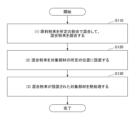
- FIG. 1 is a diagram schematically showing an example flow of a method for manufacturing a sealing material according to an embodiment of the present invention;
- FIG. 1 is a diagram schematically showing an example flow of a method for manufacturing a sealing material according to an embodiment of the present invention;
- the mayenite type compound means a substance having a characteristic crystal structure having a C12A7 structure (Ca 12 Al 14 O 33 ) structure and three-dimensionally connected voids (cages) with a diameter of about 0.4 nm. do.
- a representative composition of the mayenite type compound is represented by 12CaO.7Al 2 O 3 . However, part of the Ca atom, Al atom, and O atom sites may be substituted with other atoms, respectively.
- the skeleton that constitutes the cage of the mayenite-type compound is positively charged and forms 12 cages per unit cell.
- One-sixth of this cage is occupied with oxide ions in order to satisfy the electroneutrality condition of the crystal.
- the caged oxide ions have chemically different properties from the other oxide ions that make up the framework, and for this reason the caged oxide ions are particularly different from the free oxide ions. being called.
- the mayenite type compound is also represented by the composition formula [Ca 24 Al 28 O 64 ] 4+ (O 2 ⁇ ) 2 (Non-Patent Document 2).
- Non-Patent Document 1 it has been reported that mayenite-type compounds may function as oxide ion conductors because they contain free oxide ions in the cage.
- the sealing material has a coefficient of thermal expansion in the range of 50 ⁇ 10 ⁇ 7 /° C. to 80 ⁇ 10 ⁇ 7 /° C. and comprises a glass ceramic,
- the glass-ceramic contains 35% to 55% SiO 2 , 5% to 30% Al 2 O 3 , 15% to 35% CaO, and greater than 5% MgO, expressed in mole % as oxides.
- a sealing material is provided.
- YSZ yttria-stabilized zirconia
- ScSZ scandia-stabilized zirconia
- a sealing material having a coefficient of thermal expansion in the range of 50 ⁇ 10 -7 /°C to 80 ⁇ 10 -7 /°C is provided.
- the coefficient of thermal expansion of the mayenite type compound for the solid electrolyte layer is expected to be in the range of 50 ⁇ 10 -7 /°C to 80 ⁇ 10 -7 /°C.
- the sealing material according to one embodiment of the present invention has a coefficient of thermal expansion that matches that of the mayenite type compound, thus significantly solving the problem that the mismatch of the coefficients of thermal expansion causes thermal stress and degrades the sealing performance of the sealing material. can be suppressed to
- the sealing material according to one embodiment of the present invention has a glass ceramic.
- Glass-ceramic is a material in which fine crystal phases are precipitated in glass, and is also called "crystallized glass”.
- the coefficient of thermal expansion of such glass-ceramics can be adjusted relatively easily by appropriately selecting the crystal phase. Therefore, a glass ceramic having a coefficient of thermal expansion in the range of 50 ⁇ 10 ⁇ 7 /° C. to 80 ⁇ 10 ⁇ 7 /° C. can be produced relatively easily.
- the glass-ceramic included in the sealing material according to one embodiment of the present invention comprises CaO and Al2O3 . These oxides are also contained in the mayenite type compound forming the solid electrolyte layer. Therefore, the sealing material according to one embodiment of the present invention has affinity with the solid electrolyte layer containing the mayenite compound. In other words, the sealing material according to one embodiment of the present invention can significantly suppress the possibility that the sealing performance is deteriorated by firmly bonding the sealing material to the solid electrolyte layer under the usage environment.
- the coefficient of thermal expansion of the glass-ceramic is preferably less than 75 ⁇ 10 ⁇ 7 /°C, more preferably less than 70 ⁇ 10 ⁇ 7 /°C.
- the crystallization temperature of the glass ceramic varies depending on the particle size of the glass frit, but may be in the range of 900°C to 1050°C, for example.
- Crystal phases of glass ceramics include, for example, corundum (Al 2 O 3 ), anorthite (CaO—Al 2 O 3 —5SiO 2 ), galenite (2CaO—Al 2 O 3 —SiO 2 ), diobsite (CaO— MgO--2SiO 2 ), enstatite (MgO--SiO 2 ), forsterite (2MgO--SiO 2 ), and wollastonite (CaSiO 3 ).
- corundum Al 2 O 3
- anorthite CaO—Al 2 O 3 —5SiO 2
- galenite CaO—Al 2 O 3 —SiO 2
- diobsite CaO— MgO--2SiO 2
- enstatite MgO--SiO 2
- forsterite 2MgO--SiO 2
- wollastonite CaSiO 3
- composition of glass-ceramics includes composition of the glass-ceramics included in the sealing material according to one embodiment of the present invention.
- the glass-ceramic is 35% to 55% SiO 2 , 5% to 30% Al 2 O 3 , 15% to 35% CaO, and Contains more than 5% MgO. Also, the glass-ceramic may further comprise up to 15% B 2 O 3 and/or up to 15% ZnO.
- SiO 2 is an essential component in the glass-ceramics used in one embodiment of the invention.
- the content of SiO 2 is in the range of 35% to 55%, preferably in the range of 37% to 54%, more preferably in the range of 40 to 53%.
- SiO 2 is a glass-forming component, and a content of 35% or more can stabilize the glass. Further, by setting the content of SiO 2 to 55% or less, the glass can be easily melted.
- Al 2 O 3 is an essential component in the glass-ceramics used in one embodiment of the present invention.
- the content of Al 2 O 3 is in the range of 5% to 30%, preferably in the range of 6% to 25%, more preferably in the range of 7% to 23%. Chemical durability can be improved by making the content of Al 2 O 3 5% or more. Moreover, when the content of Al 2 O 3 is 30% or more, unmelted matter is generated during glass production, making vitrification difficult.
- CaO is an essential component in the glass-ceramics used in one embodiment of the present invention.
- the content of CaO is in the range of 15% to 35%, preferably in the range of 17% to 31%.
- the content of CaO is in the range of 15% to 35%, preferably in the range of 17% to 31%.
- MgO is an essential component in the glass-ceramics used in one embodiment of the present invention.
- MgO the content of CaO contained in the glass-ceramics can be suppressed. That is, CaO tends to raise the glass transition temperature Tg of the glass-ceramics when added in a large amount.
- MgO which is an oxide of the same alkaline earth metal, instead of CaO, such an increase in the glass transition temperature Tg can be suppressed.
- the content of MgO is more than 5%, preferably in the range of 5.1% to 25%.
- the content of MgO is more than 5%, it is possible to suppress an increase in the glass transition temperature Tg of the glass-ceramics. Further, by setting the content of MgO to 25% or less, the stability of the glass can be improved.
- B 2 O 3 is a component optionally added to the glass-ceramics used in one embodiment of the present invention. However, when B 2 O 3 is added, the glass transition temperature Tg of the glass-ceramics can be lowered.
- B 2 O 3 is a volatile component, and excessive addition may adversely affect other members. Therefore, when added, the content of B 2 O 3 is 15% or less, preferably 10% or less.
- ZnO is a component that is optionally added to the glass-ceramics used in one embodiment of the present invention. However, when ZnO is added, the glass transition temperature Tg of the glass-ceramics can be lowered.
- ZnO is a component that lowers thermophysical properties such as the glass transition temperature, and if too much is added, adverse effects may occur. Therefore, when added, the content of ZnO is 15% or less, preferably 10% or less.
- a sealing material according to an embodiment of the present invention is applicable to SOFCs and SOECs.
- FIG. 1 schematically shows the configuration of an SOFC to which a sealing material according to one embodiment of the present invention is applied.
- this SOFC 100 has an oxygen electrode 110, a fuel electrode 120, and a solid electrolyte layer 130 between both electrodes as a unit unit (single cell 105).
- the SOFC 100 is configured by stacking a plurality of single cells 105 .
- the SOFC 100 also has separators 150 for separating each cell 105 between each cell 105 .
- the separator 150 has channels for supplying reactant gases to the electrodes 110 and 120, respectively.
- the SOFC 100 has a sealing material 160 for preventing leakage of reaction gas within each cell 105 .
- Sealing materials 160 are installed at the ends of both surfaces of the separator 150 so as not to block the channels.
- the following reaction occurs at the oxygen electrode 110, for example: O 2 +4e ⁇ ⁇ 2O 2 ⁇ (1)
- Oxide ions generated at the oxygen electrode 110 pass through the solid electrolyte layer 130 and reach the fuel electrode 120 on the opposite side.
- the following reactions occur: 2H 2 +2O 2 ⁇ ⁇ 2H 2 O+4e ⁇ Equation (2) Therefore, when the SOFC 100 is connected to an external load, the reactions of equations (1) and (2) continue and the external load can be powered.
- the solid electrolyte layer 130 containing a mayenite-type compound may have a thermal expansion coefficient in the range of 50 ⁇ 10 -7 /°C to 80 ⁇ 10 -7 /°C.
- the sealing material according to one embodiment of the present invention is used as the sealing material 160 of the SOFC 100 .
- the thermal expansion behavior of the sealing material 160 can be matched with the thermal expansion coefficient of the solid electrolyte layer 130 . Therefore, in such SOFC 100, it is possible to significantly suppress the deterioration of the sealing performance of the sealing material 160 due to the mismatch of the coefficient of thermal expansion.
- the SOEC usually has the same configuration as the SOFC 100 shown in FIG.
- the sealing material according to one embodiment of the present invention can also be used as a sealing material for SOEC. Also in this case, even if the SOEC contains a mayenite compound as the solid electrolyte layer, the thermal expansion behavior of the sealing material can be matched with the thermal expansion coefficient of the solid electrolyte layer. Therefore, in such an SOEC, it is possible to significantly suppress the deterioration of the sealing performance of the sealing material due to the mismatch of the coefficient of thermal expansion.
- FIG. 2 schematically shows an example flow of a method for manufacturing a sealing material according to an embodiment of the present invention (hereinafter referred to as "first manufacturing method").
- the first manufacturing method includes: (1) A step of mixing raw material powders in a predetermined ratio to prepare a mixed powder (S110); (2) a step of placing the mixed powder at a predetermined position of the target member (S120); (3) a step of heat-treating the target member on which the mixed powder is placed (S130); have
- Step S110 First, a mixed powder is prepared.
- the mixed powder may be prepared by weighing and mixing SiO 2 powder, Al 2 O 3 powder, CaO powder, and MgO powder in a predetermined ratio, for example. Also, the mixed powder may further contain B 2 O 3 powder and/or ZnO powder.
- Step S120 Next, the obtained mixed powder is installed at a predetermined position of the SOFC or SOEC target member.
- the mixed powder is preferably installed in a paste form at a predetermined position.
- pastes may be formulated, for example, by mixing mixed powders, binders, solvents, and the like.
- Step S130 Next, the target member on which the mixed powder is placed is heat-treated.
- the heat treatment conditions change depending on the mixed powder used and the heat resistance temperature of the target member.
- the heat treatment temperature may range from 800.degree. C. to 1000.degree.
- Heat treatment is usually carried out in the atmosphere.
- the mixed powder is vitrified and fluidized, and a crystalline phase is precipitated inside.
- a sealing material made of glass ceramic is formed at a predetermined position of the target member.
- the heat treatment may be locally performed only on the mixed powder, not on the entire target member.
- Such heat treatment can be performed by a method such as laser heating.
- a second heat treatment may be performed after the heat treatment in step S130.
- Example 1 to 9 are working examples
- Example 21 is a comparative example.
- Examples 1 to 9 and 21 Each raw material powder was mixed in a predetermined ratio to prepare a mixed powder.
- the mixed powders prepared in Examples 1 to 9 and 21 are referred to as “mixed powder 1" to “mixed powder 9” and “mixed powder 21", respectively.
- the glass transition temperature (Tg), softening point (Sp), and crystallization start temperature (Tcs) were measured.
- the temperatures were evaluated by calling the first crystallization peak temperature (Tc1), the second crystallization peak temperature (Tc2), etc. from the low temperature side.
- Table 3 summarizes the firing conditions and precipitated crystal phases when producing glass samples.
- An is anorthite (CaO--Al 2 O 3 --5SiO 2 ), Ge is galenite (2CaO--Al 2 O 3 --SiO 2 ), and Di is diobsite (CaO--MgO-- 2SiO 2 ), En represents enstatite (MgO—SiO 2 ), and For represents forsterite (2MgO—SiO 2 ).
- This laminate was held at 1000°C for 3 hours in the atmosphere. After cooling down, the state of the interface between the glass sample and the member was evaluated.
- the glass samples 1 to 9 had thermal expansion coefficients in the range of 50 ⁇ 10 -7 /°C to 80 ⁇ 10 -7 /°C. Also, in the glass sample 21, a reaction occurred with the mayenite compound. On the other hand, in the glass samples 1 to 9, no significant reaction layer was formed, indicating that the reactivity with the mayenite compound is low.
- the present invention can have the following aspects.
- the sealing material has a coefficient of thermal expansion in the range of 50 ⁇ 10 ⁇ 7 /° C. to 80 ⁇ 10 ⁇ 7 /° C. and comprises a glass ceramic,
- the glass-ceramic contains 35% to 55% SiO 2 , 5% to 30% Al 2 O 3 , 15% to 35% CaO, and greater than 5% MgO, expressed in mole % as oxides. , sealing material.
- Crystal phases include corundum (Al 2 O 3 ), anorthite (CaO—Al 2 O 3 —5SiO 2 ), gehlenite (2CaO—Al 2 O 3 —SiO 2 ), and diobsite (CaO—MgO—2SiO 2 ). , enstatite (MgO--SiO 2 ), forsterite (2MgO--SiO 2 ), and wollastonite (CaSiO 3 ). Sealing material as described.
- the solid electrolyte layer contains a mayenite type compound having a representative composition represented by Ca 12 Al 14 O 33 ,
- the SOFC or SOEC has a sealing material that seals the cell,
- the sealing material is SOFC or SOEC, which is the sealing material according to any one of modes 1 to 4.
Landscapes
- Chemical & Material Sciences (AREA)
- Engineering & Computer Science (AREA)
- Chemical Kinetics & Catalysis (AREA)
- Materials Engineering (AREA)
- Organic Chemistry (AREA)
- Life Sciences & Earth Sciences (AREA)
- General Chemical & Material Sciences (AREA)
- Electrochemistry (AREA)
- Ceramic Engineering (AREA)
- Manufacturing & Machinery (AREA)
- Sustainable Development (AREA)
- Sustainable Energy (AREA)
- Geochemistry & Mineralogy (AREA)
- Metallurgy (AREA)
- Inorganic Chemistry (AREA)
- Crystallography & Structural Chemistry (AREA)
- Dispersion Chemistry (AREA)
- Structural Engineering (AREA)
- Fuel Cell (AREA)
Priority Applications (1)
| Application Number | Priority Date | Filing Date | Title |
|---|---|---|---|
| JP2023566136A JPWO2023105948A1 (https=) | 2021-12-08 | 2022-10-21 |
Applications Claiming Priority (2)
| Application Number | Priority Date | Filing Date | Title |
|---|---|---|---|
| JP2021199566 | 2021-12-08 | ||
| JP2021-199566 | 2021-12-08 |
Publications (1)
| Publication Number | Publication Date |
|---|---|
| WO2023105948A1 true WO2023105948A1 (ja) | 2023-06-15 |
Family
ID=86730147
Family Applications (1)
| Application Number | Title | Priority Date | Filing Date |
|---|---|---|---|
| PCT/JP2022/039321 Ceased WO2023105948A1 (ja) | 2021-12-08 | 2022-10-21 | シール材、およびシール材を有するsofcまたはsoec |
Country Status (2)
| Country | Link |
|---|---|
| JP (1) | JPWO2023105948A1 (https=) |
| WO (1) | WO2023105948A1 (https=) |
Citations (4)
| Publication number | Priority date | Publication date | Assignee | Title |
|---|---|---|---|---|
| JP2009533310A (ja) * | 2006-04-11 | 2009-09-17 | コーニング インコーポレイテッド | 固体酸化物燃料電池に使用するためのガラスセラミックシール |
| JP2013220990A (ja) * | 2012-04-17 | 2013-10-28 | Schott Ag | バリウムおよびストロンチウム不含のガラス質もしくはガラスセラミックの接合材料ならびにそれらの使用 |
| JP2014112474A (ja) * | 2012-12-05 | 2014-06-19 | Toyota Central R&D Labs Inc | 固体電解質 |
| JP2015122287A (ja) * | 2013-12-25 | 2015-07-02 | 株式会社ノリタケカンパニーリミテド | 電極材料とその利用 |
-
2022
- 2022-10-21 JP JP2023566136A patent/JPWO2023105948A1/ja active Pending
- 2022-10-21 WO PCT/JP2022/039321 patent/WO2023105948A1/ja not_active Ceased
Patent Citations (4)
| Publication number | Priority date | Publication date | Assignee | Title |
|---|---|---|---|---|
| JP2009533310A (ja) * | 2006-04-11 | 2009-09-17 | コーニング インコーポレイテッド | 固体酸化物燃料電池に使用するためのガラスセラミックシール |
| JP2013220990A (ja) * | 2012-04-17 | 2013-10-28 | Schott Ag | バリウムおよびストロンチウム不含のガラス質もしくはガラスセラミックの接合材料ならびにそれらの使用 |
| JP2014112474A (ja) * | 2012-12-05 | 2014-06-19 | Toyota Central R&D Labs Inc | 固体電解質 |
| JP2015122287A (ja) * | 2013-12-25 | 2015-07-02 | 株式会社ノリタケカンパニーリミテド | 電極材料とその利用 |
Also Published As
| Publication number | Publication date |
|---|---|
| JPWO2023105948A1 (https=) | 2023-06-15 |
Similar Documents
| Publication | Publication Date | Title |
|---|---|---|
| EP2522639B1 (en) | Glass-ceramic seals for use in solid oxide fuel cells | |
| US8691470B2 (en) | Seal compositions, methods, and structures for planar solid oxide fuel cells | |
| CN101682069B (zh) | 密封材料、使用该材料的装置以及装置的制造方法 | |
| EP2301103B1 (en) | Non-contaminating, electro-chemically stable glass frit sealing materials and seals and devices using such sealing materials | |
| EP2519990B1 (en) | Thin, fine grained and fully dense glass-ceramic seal for sofc stack | |
| CN101506117B (zh) | 用于固体氧化物燃料电池的玻璃陶瓷密封物 | |
| DK178886B1 (en) | Glass ceramic joint material and its use | |
| JP5787928B2 (ja) | バリウムおよびストロンチウム不含のガラス質もしくはガラスセラミックの接合材料ならびにそれらの使用 | |
| JP6316337B2 (ja) | ガラス質の又は少なくとも部分的に結晶化した融着材料、接合結合部、遮断層及びこの融着材料を含む層系及びこの部材への組み込み | |
| JP5679657B2 (ja) | 固体酸化物燃料電池に使用するためのガラスセラミックシール | |
| US9309144B2 (en) | Glass compositions for gaskets of apparatuses operating at high temperatures and assembling method using them | |
| CN101589494A (zh) | 解决固体氧化物燃料电池密封失效的方案 | |
| Reis et al. | Designing sealing glasses for solid oxide fuel cells | |
| US10669188B2 (en) | Seal compositions, methods, and structures for planar solid oxide fuel cells | |
| CN108883972B (zh) | 结晶性玻璃组合物 | |
| WO2023105948A1 (ja) | シール材、およびシール材を有するsofcまたはsoec |
Legal Events
| Date | Code | Title | Description |
|---|---|---|---|
| 121 | Ep: the epo has been informed by wipo that ep was designated in this application |
Ref document number: 22903882 Country of ref document: EP Kind code of ref document: A1 |
|
| ENP | Entry into the national phase |
Ref document number: 2023566136 Country of ref document: JP Kind code of ref document: A |
|
| NENP | Non-entry into the national phase |
Ref country code: DE |
|
| 122 | Ep: pct application non-entry in european phase |
Ref document number: 22903882 Country of ref document: EP Kind code of ref document: A1 |