WO2023100367A1 - 無線通信システム、無線通信方法、基地局、及び制御プログラム - Google Patents
無線通信システム、無線通信方法、基地局、及び制御プログラム Download PDFInfo
- Publication number
- WO2023100367A1 WO2023100367A1 PCT/JP2021/044519 JP2021044519W WO2023100367A1 WO 2023100367 A1 WO2023100367 A1 WO 2023100367A1 JP 2021044519 W JP2021044519 W JP 2021044519W WO 2023100367 A1 WO2023100367 A1 WO 2023100367A1
- Authority
- WO
- WIPO (PCT)
- Prior art keywords
- communication method
- base station
- wireless
- communication
- frequency band
- Prior art date
- Legal status (The legal status is an assumption and is not a legal conclusion. Google has not performed a legal analysis and makes no representation as to the accuracy of the status listed.)
- Ceased
Links
Images

Classifications
-
- H—ELECTRICITY
- H04—ELECTRIC COMMUNICATION TECHNIQUE
- H04W—WIRELESS COMMUNICATION NETWORKS
- H04W28/00—Network traffic management; Network resource management
- H04W28/02—Traffic management, e.g. flow control or congestion control
- H04W28/0268—Traffic management, e.g. flow control or congestion control using specific QoS parameters for wireless networks, e.g. QoS class identifier [QCI] or guaranteed bit rate [GBR]
-
- H—ELECTRICITY
- H04—ELECTRIC COMMUNICATION TECHNIQUE
- H04W—WIRELESS COMMUNICATION NETWORKS
- H04W28/00—Network traffic management; Network resource management
- H04W28/02—Traffic management, e.g. flow control or congestion control
- H04W28/08—Load balancing or load distribution
-
- H—ELECTRICITY
- H04—ELECTRIC COMMUNICATION TECHNIQUE
- H04W—WIRELESS COMMUNICATION NETWORKS
- H04W88/00—Devices specially adapted for wireless communication networks, e.g. terminals, base stations or access point devices
- H04W88/02—Terminal devices
- H04W88/06—Terminal devices adapted for operation in multiple networks or having at least two operational modes, e.g. multi-mode terminals
-
- H—ELECTRICITY
- H04—ELECTRIC COMMUNICATION TECHNIQUE
- H04W—WIRELESS COMMUNICATION NETWORKS
- H04W88/00—Devices specially adapted for wireless communication networks, e.g. terminals, base stations or access point devices
- H04W88/08—Access point devices
- H04W88/10—Access point devices adapted for operation in multiple networks, e.g. multi-mode access points
-
- H—ELECTRICITY
- H04—ELECTRIC COMMUNICATION TECHNIQUE
- H04W—WIRELESS COMMUNICATION NETWORKS
- H04W84/00—Network topologies
- H04W84/02—Hierarchically pre-organised networks, e.g. paging networks, cellular networks, WLAN [Wireless Local Area Network] or WLL [Wireless Local Loop]
- H04W84/10—Small scale networks; Flat hierarchical networks
- H04W84/12—WLAN [Wireless Local Area Networks]
Definitions
- the present invention relates to a wireless communication system, wireless communication method, base station, and control program.
- IEEE802.11be wireless LAN
- a single device is equipped with a plurality of different wireless LAN interfaces, and a function of establishing a plurality of transmission paths is adopted.
- Non-Patent Document 1 Also, in IEEE802.11be, use of the 6 GHz band is under consideration.
- the channel occupancy time increases, resulting in a decrease in the communication speed of the entire system, including the high-transmission-rate terminals.
- the communication of the low transmission rate terminal is cut off, the terminal becomes unable to communicate.
- the present invention has been made in view of the above-described problems, and is capable of preventing a decrease in the communication speed of a high frequency band in a multi-device compatible device using a low frequency band and a high frequency band.
- An object is to provide a system, a wireless communication method, a base station, and a control program.
- a wireless communication system is capable of communicating by both a first communication method using a first frequency band and a second communication method using a second frequency band higher than the first frequency band.
- a wireless communication system comprising one or more wireless terminals and a multi-device base station accommodating the wireless terminals, delay determination for determining whether or not the delay in the communication of the second communication method exceeds a predetermined value. and, if the delay determination unit determines that the delay exceeds a predetermined value, the wireless terminal and the base station continue to operate according to the first communication method without using the second communication method until a predetermined time elapses. and a control unit that controls to perform communication.
- a wireless communication method communicates by both a first communication method using a first frequency band and a second communication method using a second frequency band higher than the first frequency band.
- a wireless communication method for controlling one or more possible wireless terminals and a multi-device compatible base station that accommodates the wireless terminals it is determined whether or not the delay in the communication of the second communication method exceeds a predetermined value.
- a delay determining step when it is determined that the delay exceeds a predetermined value, the wireless terminal and the base station communicate by the first communication method without using the second communication method until a predetermined time elapses. and a control step for controlling such that
- the base station can communicate by both a first communication method using a first frequency band and a second communication method using a second frequency band higher than the first frequency band.
- a delay determination unit that determines whether or not the delay in communication of the second communication method exceeds a predetermined value in a multi-device compatible base station that accommodates one or more wireless terminals;
- a control unit for controlling communication between the wireless terminal and the base station by the first communication method without using the second communication method until a predetermined time elapses when the delay determination unit makes a determination; characterized by having
- the present invention it is possible to prevent a decrease in the communication speed of the high frequency band in a device compatible with multiple devices using the low frequency band and the high frequency band.
- FIG. 1 is a diagram illustrating a configuration example of a wireless communication system according to an embodiment
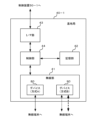
- FIG. FIG. 3 is a diagram showing a specific configuration example of a base station according to one embodiment
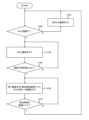
- 4 is a flow chart showing an operation example of a wireless communication system
- FIG. 1 is a diagram showing a configuration example of a wireless communication system 10 according to one embodiment.
- the radio communication system 10 includes, for example, a first radio terminal 20, a second radio terminal 30-1, a third radio terminal 30-2, a base station 40-1, a base station 40-2, a control device 50-1, a control device 50-2, and a terminal device 110, and are connected to the network 100.
- FIG. 1 a first radio terminal 20, a second radio terminal 30-1, a third radio terminal 30-2, a base station 40-1, a base station 40-2, a control device 50-1, a control device 50-2, and a terminal device 110, and are connected to the network 100.
- the control device 50-1 is connected to the network 100, and controls the base station 40-1 so that the base station 40-1 performs radio communication with the first radio terminal 20 and the second radio terminal 30-1. to control.
- the base station 40-1 is a device supporting multiple devices, and has a device 80 serving as a method 1 AP (access point) and a device 90 serving as a method 2 AP. In response, wireless communication is performed with each of the first wireless terminal 20 and the second wireless terminal 30-1.
- Method 1 is, for example, a 5 GHz band wireless communication method in IEEE802.11 (wireless LAN).
- Method 2 is, for example, a 6 GHz band wireless communication method in IEEE802.11 (wireless LAN).
- a device compatible with multiple devices can perform wireless communication using method 1 and method 2 at the same time.
- the base station 40-1 may be configured integrally with the control device 50-1. In other words, the base station 40-1 may have each function that the control device 50-1 has.
- the first wireless terminal 20 is a device 60 and a device 60 compatible with the respective communication schemes (scheme 1 and scheme 2) of the device 80 and the device 90 provided in the multi-device compatible base station 40-1 that supports both the 5 GHz band and the 6 GHz band. It is a multi-device wireless terminal (STA) that includes a device 70 .
- STA multi-device wireless terminal
- the device 60 supports the communication method (method 1) of the device 80 provided in the base station 40-1, and performs wireless communication with the device 80.
- the device 70 supports the communication method (method 2) of the device 90 provided in the base station 40-1, and performs wireless communication with the device 90.
- the second wireless terminal 30-1 is a wireless terminal provided with a device 60 that supports only a part (method 1) of the communication methods (methods 1 and 2) of the devices 80 and 90 provided in the base station 40-1. be.
- the device 60 that supports only the 5 GHz band performs wireless communication with the device 80 of the base station 40-1.
- the control device 50-2 is connected to the terminal device 110, and controls the first wireless terminal 20 so that, for example, the first wireless terminal 20 and the base station 40-1 respectively perform wireless communication.
- the control device 50-2 may have substantially the same configuration as the control device 50-1.
- the terminal device 110 is a computer or the like that controls the control device 50-2.
- the base station 40-2 has a device 90 serving as a method 2 AP, and performs wireless communication with the third wireless terminal 30-2.
- the third wireless terminal 30-2 is a wireless terminal provided with a device 70 compatible only with the communication method (method 2) of the device 90 provided in the base station 40-2.
- the device 70 that supports only the 6 GHz band performs wireless communication with the device 90 of the base station 40-2.
- the wireless communication system 10 can communicate by both the first communication method using the first frequency band (5 GHz) and the second communication method using the second frequency band (6 GHz) higher than the first frequency band. It is a wireless communication system comprising a first wireless terminal 20 and a multi-device base station 40-1 accommodating the first wireless terminal 20 and a second wireless terminal 30-1.
- FIG. 2 is a diagram showing a specific configuration example of the base station 40-1 according to one embodiment.
- the base station 40-1 has a radio section 41, a storage section 42, an interface (I/F) section 43, and a control section 44, for example.
- the wireless unit 41 includes the devices 80 and 90 described above, and performs wireless communication with the first wireless terminal 20 and the second wireless terminal 30-1, respectively.
- the storage unit 42 stores information received by the base station 40-1 via the radio unit 41 or the I/F unit 43.
- the I/F unit 43 is a communication interface that communicates with the control device 50-1.
- the control unit 44 controls each unit that configures the base station 40-1.
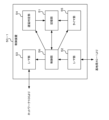
- FIG. 3 is a diagram showing a specific configuration example of the control device 50-1.
- the control device 50-1 includes, for example, a storage unit 51, an interface (I/F) unit 52, an interface (I/F) unit 53, a delay determination unit 54, a timer unit 55, and a control unit 56.
- the storage unit 51 is a storage device that stores data within the control device 50-1.
- the I/F unit 52 is a communication interface for communicating with the base station 40-1.
- the I/F unit 53 is a communication interface that communicates with the network 100 .
- the delay determining unit 54 determines, via the I/F unit 52, whether the delay in the communication of the second communication method using the second frequency band (6 GHz) between the base station 40-1 and the first wireless terminal 20 exceeds a predetermined value. It determines whether or not it has been stored, and outputs the determination result to the storage unit 51 .
- the base station 40-1 or the first wireless terminal 20 measures the time until it receives ACK for the frame it has transmitted. Then, the delay determination unit 54 acquires the time measurement result from the base station 40-1 or the first wireless terminal 20 via the I/F unit 52, and determines whether or not the delay exceeds a predetermined value. .
- the timer unit 55 measures the time required for each process in the control device 50-1 and outputs it to the storage unit 51.
- the control unit 56 controls each unit that constitutes the control device 50-1. For example, when the delay determination unit 54 determines that the delay exceeds a predetermined value, the control unit 56 causes the base station 40-1 and the first wireless terminal 20 to operate in the second frequency band (6 GHz) until a predetermined time elapses. without using the second communication method using the .
- FIG. 4 is a flow chart showing an operation example of the wireless communication system 10 .
- the control device 50-1 determines whether or not the base station 40-1 and the first radio terminal 20 perform MLD communication (S100), and if not perform MLD communication (S100: If No), the process proceeds to S102, and if MLD communication is to be performed (S102: Yes), the process proceeds to S104.
- the base station 40-1 and the first wireless terminal 20 perform non-MLD communication.
- the base station 40-1 and the first wireless terminal 20 perform MLD communication.
- the control device 50-1 determines whether the delay in the communication of the second communication method using the second frequency band (6 GHz) in the MLD communication between the base station 40-1 and the first wireless terminal 20 exceeds a predetermined value. (S106), for example, if it is less than the predetermined value (S106: No), the process returns to S104, and if it is less than the predetermined value (S106: Yes), the process proceeds to S118.
- the base station 40-1 and the first wireless terminal 20 communicate using only the first communication method (existing frequency band link).
- the control device 50-1 determines whether or not a predetermined time has elapsed after the base station 40-1 and the first wireless terminal 20 started communication using only the first communication method. If it is determined that the predetermined time has not passed (S110: No), the process returns to S108, and if it is determined that the predetermined time has passed (S110: Yes), the process returns to S100.
- the wireless communication system 10 regards a wireless terminal whose delay in communication of the second communication scheme exceeds a predetermined value as, for example, a low transmission rate terminal with poor communication conditions, and the predetermined time is Since communication is performed using only the low frequency band without using the high frequency band, a high frequency band (e.g., 6 GHz) in a multi-device compatible device that uses a low frequency band (e.g., 5 GHz) and a high frequency band (e.g., 6 GHz) ), that is, the deterioration of communication quality can be prevented.
- a high frequency band e.g., 6 GHz
- each function of the control device 50-1 may be configured partially or wholly by hardware such as a PLD (Programmable Logic Device) or FPGA (Field Programmable Gate Array), or a processor such as a CPU It may be configured as a program to be executed.
- hardware such as a PLD (Programmable Logic Device) or FPGA (Field Programmable Gate Array), or a processor such as a CPU It may be configured as a program to be executed.
- control device 50-1 can be implemented using a computer and a program, and the program can be recorded on a storage medium or provided through a network.
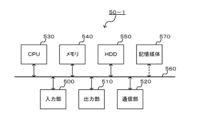
- FIG. 5 is a diagram showing a hardware configuration example of the control device 50-1.
- the control device 50-1 has an input section 500, an output section 510, a communication section 520, a CPU 530, a memory 540, and an HDD 550 connected via a bus 560, and functions as a computer. Also, the control device 50-1 can input/output data to/from a computer-readable storage medium 570.
- FIG. 5 is a diagram showing a hardware configuration example of the control device 50-1.
- the control device 50-1 has an input section 500, an output section 510, a communication section 520, a CPU 530, a memory 540, and an HDD 550 connected via a bus 560, and functions as a computer. Also, the control device 50-1 can input/output data to/from a computer-readable storage medium 570.
- FIG. 5 is a diagram showing a hardware configuration example of the control device 50-1.
- the control device 50-1 has an input section 500, an output section 510,
- the input unit 500 is, for example, a keyboard and a mouse.
- the output unit 510 is, for example, a display device such as a display.
- the communication unit 520 is, for example, a network interface.
- the CPU 530 controls each unit that constitutes the control device 50-1 and performs predetermined processing.
- the memory 540 and HDD 550 are storage units that store data and the like.
- the storage medium 570 can store programs and the like for executing the functions of the control device 50-1. Note that the architecture constituting the control device 50-1 is not limited to the example shown in FIG.
- Radio communication system 20... First radio terminal, 30-1... Second radio terminal, 30-2... Third radio terminal, 40-1, 40-2... Base Station 41... Radio unit 42... Storage unit 43... I/F unit 44... Control unit 50-1, 50-2... Control device 51... Storage Sections 52, 53 I/F section 54 Delay determination section 55 Timer section 56 Control section 60, 70, 80, 90 Device 100 Network 500 Input unit 510 Output unit 520 Communication unit 530 CPU 540 Memory 550 HDD 560 Bus 570 ⁇ storage media
Landscapes
- Engineering & Computer Science (AREA)
- Computer Networks & Wireless Communication (AREA)
- Signal Processing (AREA)
- Mobile Radio Communication Systems (AREA)
Abstract
Description
Claims (7)
- 第1周波数帯を用いる第1通信方式、及び前記第1周波数帯よりも高い第2周波数帯を用いる第2通信方式の両方式により通信可能な1つ以上の無線端末と、前記無線端末を収容するマルチデバイス対応の基地局とを備える無線通信システムにおいて、
前記第2通信方式の通信における遅延が所定値を超えたか否かを判定する遅延判定部と、
遅延が所定値を超えたと前記遅延判定部が判定した場合に、所定時間が経過するまで前記無線端末と前記基地局とが前記第2通信方式を用いることなく前記第1通信方式によって通信を行うように制御する制御部と
を有することを特徴とする無線通信システム。 - 前記第1通信方式及び前記第2通信方式は、無線LANの規格に準拠した無線通信方式であること
を特徴とする請求項1に記載の無線通信システム。 - 第1周波数帯を用いる第1通信方式、及び前記第1周波数帯よりも高い第2周波数帯を用いる第2通信方式の両方式により通信可能な1つ以上の無線端末と、前記無線端末を収容するマルチデバイス対応の基地局を制御する無線通信方法において、
前記第2通信方式の通信における遅延が所定値を超えたか否かを判定する遅延判定工程と、
遅延が所定値を超えたと判定した場合に、所定時間が経過するまで前記無線端末と前記基地局とが前記第2通信方式を用いることなく前記第1通信方式によって通信を行うように制御する制御工程と
を含むことを特徴とする無線通信方法。 - 前記第1通信方式及び前記第2通信方式は、無線LANの規格に準拠した無線通信方式であること
を特徴とする請求項3に記載の無線通信方法。 - 第1周波数帯を用いる第1通信方式、及び前記第1周波数帯よりも高い第2周波数帯を用いる第2通信方式の両方式により通信可能な1つ以上の無線端末を収容するマルチデバイス対応の基地局において、
前記第2通信方式の通信における遅延が所定値を超えたか否かを判定する遅延判定部と、
遅延が所定値を超えたと前記遅延判定部が判定した場合に、所定時間が経過するまで前記無線端末と前記基地局とが前記第2通信方式を用いることなく前記第1通信方式によって通信を行うように制御する制御部と
を有することを特徴とする基地局。 - 前記第1通信方式及び前記第2通信方式は、無線LANの規格に準拠した無線通信方式であること
を特徴とする請求項5に記載の基地局。 - 請求項5又は6に記載の基地局の各部としてコンピュータを機能させるための制御プログラム。
Priority Applications (3)
| Application Number | Priority Date | Filing Date | Title |
|---|---|---|---|
| JP2023564713A JP7683733B2 (ja) | 2021-12-03 | 2021-12-03 | 無線通信システム、無線通信方法、基地局、及び制御プログラム |
| PCT/JP2021/044519 WO2023100367A1 (ja) | 2021-12-03 | 2021-12-03 | 無線通信システム、無線通信方法、基地局、及び制御プログラム |
| US18/713,821 US20250039730A1 (en) | 2021-12-03 | 2021-12-03 | Wireless communication system, wireless communication method, base station, and control program |
Applications Claiming Priority (1)
| Application Number | Priority Date | Filing Date | Title |
|---|---|---|---|
| PCT/JP2021/044519 WO2023100367A1 (ja) | 2021-12-03 | 2021-12-03 | 無線通信システム、無線通信方法、基地局、及び制御プログラム |
Publications (1)
| Publication Number | Publication Date |
|---|---|
| WO2023100367A1 true WO2023100367A1 (ja) | 2023-06-08 |
Family
ID=86611718
Family Applications (1)
| Application Number | Title | Priority Date | Filing Date |
|---|---|---|---|
| PCT/JP2021/044519 Ceased WO2023100367A1 (ja) | 2021-12-03 | 2021-12-03 | 無線通信システム、無線通信方法、基地局、及び制御プログラム |
Country Status (3)
| Country | Link |
|---|---|
| US (1) | US20250039730A1 (ja) |
| JP (1) | JP7683733B2 (ja) |
| WO (1) | WO2023100367A1 (ja) |
Citations (3)
| Publication number | Priority date | Publication date | Assignee | Title |
|---|---|---|---|---|
| JP2005244958A (ja) * | 2004-01-29 | 2005-09-08 | Matsushita Electric Ind Co Ltd | 送受信装置および送受信方法 |
| JP2010109771A (ja) * | 2008-10-30 | 2010-05-13 | Kyocera Corp | 無線通信装置 |
| US20200383156A1 (en) * | 2019-06-03 | 2020-12-03 | Mediatek Singapore Pte. Ltd. | Systems and methods for constrained multi-link operation in a wireless network |
Family Cites Families (5)
| Publication number | Priority date | Publication date | Assignee | Title |
|---|---|---|---|---|
| JP4247994B2 (ja) * | 2004-12-27 | 2009-04-02 | 株式会社カシオ日立モバイルコミュニケーションズ | 移動通信端末、基地局およびレジストレーション制御方法 |
| US20180324801A1 (en) * | 2017-05-02 | 2018-11-08 | Qualcomm Incorporated | Access point managed channel correlation for mu-mimo |
| SG10201807626YA (en) * | 2018-09-05 | 2020-04-29 | Panasonic Ip Corp America | Communication apparatus and communication method for multi-band operation |
| US10575244B1 (en) * | 2018-09-18 | 2020-02-25 | Centurylink Intellectual Property Llc | Method and system for implementing consumer WiFi sharing |
| US11936473B2 (en) * | 2021-04-16 | 2024-03-19 | Qualcomm Incorporated | Station performance enhancement with multi-link operations (MLO) |
-
2021
- 2021-12-03 WO PCT/JP2021/044519 patent/WO2023100367A1/ja not_active Ceased
- 2021-12-03 US US18/713,821 patent/US20250039730A1/en active Pending
- 2021-12-03 JP JP2023564713A patent/JP7683733B2/ja active Active
Patent Citations (3)
| Publication number | Priority date | Publication date | Assignee | Title |
|---|---|---|---|---|
| JP2005244958A (ja) * | 2004-01-29 | 2005-09-08 | Matsushita Electric Ind Co Ltd | 送受信装置および送受信方法 |
| JP2010109771A (ja) * | 2008-10-30 | 2010-05-13 | Kyocera Corp | 無線通信装置 |
| US20200383156A1 (en) * | 2019-06-03 | 2020-12-03 | Mediatek Singapore Pte. Ltd. | Systems and methods for constrained multi-link operation in a wireless network |
Also Published As
| Publication number | Publication date |
|---|---|
| JPWO2023100367A1 (ja) | 2023-06-08 |
| JP7683733B2 (ja) | 2025-05-27 |
| US20250039730A1 (en) | 2025-01-30 |
Similar Documents
| Publication | Publication Date | Title |
|---|---|---|
| JP7169465B2 (ja) | マルチリンクを用いた端末のデータ送受信方法及び端末 | |
| US10129832B2 (en) | Wireless communication control method and wireless network device | |
| US9380508B2 (en) | System, apparatus and method for managing network device connectivity on heterogenous networks | |
| EP3920626B1 (en) | Transmission configuration method and related product | |
| JP2020115654A (ja) | 信頼できる通信のための冗長リンク | |
| US10939356B2 (en) | Access-point discovery of wireless-network topology | |
| JP2022501929A (ja) | データ伝送方法及び装置 | |
| US11490353B2 (en) | Path processing method and apparatus, and terminal | |
| CN108713342B (zh) | 无线通信系统及管理装置 | |
| US11832124B2 (en) | Controlling performance of a wireless device in a heterogeneous network | |
| KR20190005121A (ko) | 웨이크-업 라디오 링크 적응 | |
| WO2025035904A1 (zh) | 天线选择方法、通信模组、电子设备及存储介质 | |
| JP7053846B2 (ja) | 通信制御装置、選択装置、通信制御方法および選択方法 | |
| JP2018182384A (ja) | 無線基地局制御方法 | |
| JP7683733B2 (ja) | 無線通信システム、無線通信方法、基地局、及び制御プログラム | |
| JP7673832B2 (ja) | 無線通信システム、無線通信方法、基地局、及び制御プログラム | |
| WO2023112276A1 (ja) | 無線通信システム、無線通信方法、基地局、及び制御プログラム | |
| US20230007526A1 (en) | Method and device for regulating flow of data transmission in a wireless network | |
| CN116830774A (zh) | 多路径通信方法及装置 | |
| KR20100111256A (ko) | 무선 통신 네트워크에서 통신관리 방법 및 시스템 | |
| WO2023112331A1 (ja) | 無線通信システム、無線通信方法および基地局 | |
| US20200288445A1 (en) | Method for determining bundling size, user equipment and network-side device | |
| WO2023112332A1 (ja) | 無線通信システム、無線通信方法および基地局 | |
| JP2018074394A (ja) | 無線基地局装置、無線通信システム、無線通信制御方法およびプログラム | |
| WO2025150178A1 (ja) | 無線通信システム、通信装置及び無線通信プログラム |
Legal Events
| Date | Code | Title | Description |
|---|---|---|---|
| 121 | Ep: the epo has been informed by wipo that ep was designated in this application |
Ref document number: 21966446 Country of ref document: EP Kind code of ref document: A1 |
|
| ENP | Entry into the national phase |
Ref document number: 2023564713 Country of ref document: JP Kind code of ref document: A |
|
| WWE | Wipo information: entry into national phase |
Ref document number: 18713821 Country of ref document: US |
|
| NENP | Non-entry into the national phase |
Ref country code: DE |
|
| 122 | Ep: pct application non-entry in european phase |
Ref document number: 21966446 Country of ref document: EP Kind code of ref document: A1 |