WO2023095629A1 - 対話管理装置、対話管理システム及び対話管理方法 - Google Patents
対話管理装置、対話管理システム及び対話管理方法 Download PDFInfo
- Publication number
- WO2023095629A1 WO2023095629A1 PCT/JP2022/041906 JP2022041906W WO2023095629A1 WO 2023095629 A1 WO2023095629 A1 WO 2023095629A1 JP 2022041906 W JP2022041906 W JP 2022041906W WO 2023095629 A1 WO2023095629 A1 WO 2023095629A1
- Authority
- WO
- WIPO (PCT)
- Prior art keywords
- topic
- dialogue
- record
- digital
- interface
- Prior art date
- Legal status (The legal status is an assumption and is not a legal conclusion. Google has not performed a legal analysis and makes no representation as to the accuracy of the status listed.)
- Ceased
Links
Images


Classifications
-
- H—ELECTRICITY
- H04—ELECTRIC COMMUNICATION TECHNIQUE
- H04N—PICTORIAL COMMUNICATION, e.g. TELEVISION
- H04N21/00—Selective content distribution, e.g. interactive television or video on demand [VOD]
- H04N21/20—Servers specifically adapted for the distribution of content, e.g. VOD servers; Operations thereof
- H04N21/23—Processing of content or additional data; Elementary server operations; Server middleware
- H04N21/231—Content storage operation, e.g. caching movies for short term storage, replicating data over plural servers, prioritizing data for deletion
-
- G—PHYSICS
- G10—MUSICAL INSTRUMENTS; ACOUSTICS
- G10L—SPEECH ANALYSIS TECHNIQUES OR SPEECH SYNTHESIS; SPEECH RECOGNITION; SPEECH OR VOICE PROCESSING TECHNIQUES; SPEECH OR AUDIO CODING OR DECODING
- G10L15/00—Speech recognition
-
- H—ELECTRICITY
- H04—ELECTRIC COMMUNICATION TECHNIQUE
- H04M—TELEPHONIC COMMUNICATION
- H04M3/00—Automatic or semi-automatic exchanges
- H04M3/42—Systems providing special services or facilities to subscribers
- H04M3/56—Arrangements for connecting several subscribers to a common circuit, i.e. affording conference facilities
-
- H—ELECTRICITY
- H04—ELECTRIC COMMUNICATION TECHNIQUE
- H04N—PICTORIAL COMMUNICATION, e.g. TELEVISION
- H04N7/00—Television systems
- H04N7/14—Systems for two-way working
- H04N7/15—Conference systems
-
- H—ELECTRICITY
- H04—ELECTRIC COMMUNICATION TECHNIQUE
- H04N—PICTORIAL COMMUNICATION, e.g. TELEVISION
- H04N7/00—Television systems
- H04N7/14—Systems for two-way working
- H04N7/15—Conference systems
- H04N7/155—Conference systems involving storage of or access to video conference sessions
Definitions
- the present invention relates to a dialogue management device, a dialogue management system, and a dialogue management method.
- Patent Document 1 Japanese Patent Laying-Open No. 2021-175155 (Patent Document 1) exists as one of the technologies related to the online interview system.
- a mobile phone device smarttphone 100 having an imaging unit and a communication unit functions as an interview unit.
- the communication unit can communicate with other devices via a telephone network and the Internet.
- the interview unit has an interview control unit which, when the telephone number of the person to be interviewed is input, sends connection information for live distribution regarding the interview to the person to be interviewed via the communication unit and the telephone network.
- connection information When there is a connection from the person to be interviewed via the connection information, transmission and reception of voice in live distribution regarding the interview with the person to be interviewed via the communication unit and telephone network is performed using the telephone unit of the mobile phone device.
- An interview control unit controls transmission and reception of images in live distribution regarding an interview with an interview partner via a communication unit and the Internet.
- Patent Document 1 the content of the call is converted to text based on the recorded data of the call in the live distribution related to the interview, and the text data obtained by this is analyzed. Disclosed is a means for determining the atmosphere of a Based on the results of this analysis, the participants can modify their facial expressions, manner of speaking, content of speech, etc. in the next interview, and conduct the interview in a better atmosphere.
- Patent Document 1 it is not assumed that records of dialogues conducted by telephone, online conference system, etc. are organized by topic. In order to obtain a record of the dialogue progressing for each topic, it is conceivable to record the dialogue while conducting it for each topic. , Returning to the original topic from another topic, etc., the topic may be developed in various ways. For this reason, if an attempt is made to organize the contents of the dialogue using a system, it may become difficult to analyze the topics, or different topics may be mixed. As a result, there is a problem that it becomes difficult to quickly specify the part of interest when viewing the dialogue record.
- an object of the present disclosure is to provide a dialogue management means that can quickly identify an interesting part in a dialogue record even when topics are developed in various ways.
- a typical dialogue management device of the present invention provides a dialogue interface for conducting digital dialogue with a plurality of speakers, and obtains a dialogue record of the digital dialogue.
- an interface unit a topic management unit that receives input of topic designation information for designating a topic in the digital dialogue during the digital dialogue, and editing the dialogue record based on the topic designation information, a dialogue editor for generating edited dialogue records organized by topic.
- FIG. 1 is a diagram illustrating a computer system for implementing embodiments of the present disclosure.
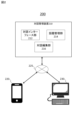
- FIG. 2 is a diagram illustrating an example configuration of a dialogue management system according to an embodiment of the present disclosure.
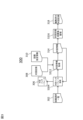
- FIG. 3 is a diagram illustrating an example of the flow of topic-based dialogue record generation processing according to the embodiment of the present disclosure.
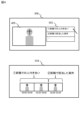
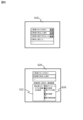
- FIG. 4 is a diagram illustrating an example of a dialog interface and a dialog recording portion for each topic according to an embodiment of the present disclosure.
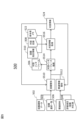
- FIG. 5 is a diagram illustrating an example of the flow of interactive interface drawing processing according to an embodiment of the present disclosure.
- FIG. 6 is a diagram for explaining topic shaping processing and related information shaping processing according to the embodiment of the present disclosure.
- FIG. 7 is a diagram illustrating an example of the flow of dialogue recording timing correction processing according to the embodiment of the present disclosure.
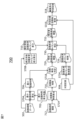
- FIG. 8 is a diagram illustrating an example of the flow of useful topic transition data registration processing according to the embodiment of the present disclosure.
- a menu for selecting the current topic from candidates prepared in advance is displayed on the interface while the dialogue is being carried out, and the topic tag indicating the current topic is displayed.
- topics are developed in various ways, it is possible to quickly identify an interesting part in the dialogue record.
- the mechanisms and apparatus of various embodiments disclosed herein may be applied to any suitable computing system.
- the major components of computer system 100 include one or more processors 102 , memory 104 , terminal interfaces 112 , storage interfaces 113 , I/O (input/output) device interfaces 114 , and network interfaces 115 . These components may be interconnected via memory bus 106 , I/O bus 108 , bus interface unit 109 and I/O bus interface unit 110 .
- Computer system 100 may include one or more general-purpose programmable central processing units (CPUs) 102A and 102B, collectively referred to as processors 102. In some embodiments, computer system 100 may include multiple processors, and in other embodiments, computer system 100 may be a single CPU system. Each processor 102 executes instructions stored in memory 104 and may include an on-board cache.
- CPUs general-purpose programmable central processing units
- memory 104 may include random access semiconductor memory, storage devices, or storage media (either volatile or non-volatile) for storing data and programs. Memory 104 may store all or part of the programs, modules, and data structures that implement the functions described herein. For example, memory 104 may store interaction management application 150 . In some embodiments, interaction management application 150 may include instructions or descriptions that cause processor 102 to perform the functions described below.
- interaction management application 150 may be implemented in semiconductor devices, chips, logic gates, circuits, circuit cards, and/or other physical hardware devices instead of or in addition to processor-based systems. may be implemented in hardware via In some embodiments, interaction management application 150 may include data other than instructions or descriptions. In some embodiments, a camera, sensor, or other data input device (not shown) may be provided in direct communication with bus interface unit 109, processor 102, or other hardware of computer system 100. .
- Computer system 100 may include bus interface unit 109 that provides communication between processor 102 , memory 104 , display system 124 , and I/O bus interface unit 110 .
- I/O bus interface unit 110 may be coupled to I/O bus 108 for transferring data to and from various I/O units.
- I/O bus interface unit 110 connects via I/O bus 108 a plurality of I/O interface units 112, 113, 114, also known as I/O processors (IOPs) or I/O adapters (IOAs); and 115.
- IOPs I/O processors
- IOAs I/O adapters
- the display system 124 may include a display controller, display memory, or both.
- the display controller can provide video, audio, or both data to display device 126 .
- Computer system 100 may also include devices such as one or more sensors configured to collect data and provide such data to processor 102 .
- the computer system 100 may include a biometric sensor that collects heart rate data, stress level data, etc., an environmental sensor that collects humidity data, temperature data, pressure data, etc., and a motion sensor that collects acceleration data, motion data, etc. may include Other types of sensors can also be used.
- the display system 124 may be connected to a display device 126 such as a single display screen, television, tablet, or handheld device.
- the I/O interface unit has the function of communicating with various storage or I/O devices.
- the terminal interface unit 112 may be a user output device such as a video display, speaker television, or user input device such as a keyboard, mouse, keypad, touchpad, trackball, button, light pen, or other pointing device.
- user I/O devices 116 can be attached.
- the user interface uses the user interface, the user inputs input data and instructions to the user I/O device 116 and the computer system 100 by manipulating the user input devices, and receives output data from the computer system 100. good too.
- the user interface may be displayed on a display device, played by speakers, or printed via a printer, for example, via user I/O device 116 .
- Storage interface 113 connects to one or more disk drives or direct access storage devices 117 (typically magnetic disk drive storage devices, but arrays of disk drives or other storage devices configured to appear as a single disk drive). ) can be attached.
- storage device 117 may be implemented as any secondary storage device.
- the contents of memory 104 may be stored in storage device 117 and read from storage device 117 as needed.
- I/O device interface 114 may provide an interface to other I/O devices such as printers, fax machines, and the like.
- Network interface 115 may provide a communication pathway to allow computer system 100 and other devices to communicate with each other. This communication path may be, for example, network 130 .
- computer system 100 is a device that receives requests from other computer systems (clients) that do not have a direct user interface, such as multi-user mainframe computer systems, single-user systems, or server computers. There may be. In other embodiments, computer system 100 may be a desktop computer, handheld computer, laptop, tablet computer, pocket computer, phone, smart phone, or any other suitable electronic device.
- FIG. 2 is a diagram showing an example of the configuration of the dialogue management system 200 according to the embodiment of the present disclosure.
- the dialogue management system 200 according to the embodiment of the present disclosure is a system for generating an edited dialogue record organized by topic regarding digital dialogues between multiple people. As shown in FIG. It is mainly composed of a management device 210 , a first dialogue device 220 and a second dialogue device 230 .
- the dialogue management device 210, the first dialogue device 220, and the second dialogue device 230 are communicably connected to each other via a communication network 225 such as the Internet.
- the dialogue management device 210 provides a platform for digital dialogue between the first dialogue device 220 and the second dialogue device 230, and generates an edited dialogue record organized by topic for the digital dialogue.
- It is a device for Digital interaction means the verbal sharing of information between at least two speakers via telephone, online conferencing system, app, or the like.
- the digital dialogue here may be performed by sharing only audio information, such as by telephone, or may be performed by sharing both audio information and video information, such as by video call.
- “speaker” here means a person who participates in a digital dialogue.
- a digital dialogue performed by two speakers (a first speaker and a second speaker) will be described as an example, but the present disclosure is not limited to this, and the number of speakers can be may be arbitrary.
- the dialogue management device 210 includes a dialogue interface section 212, a topic management section 214, and a dialogue editing section 216.
- the dialogue interface unit 212 is a functional unit that provides a dialogue interface for conducting a digital dialogue between the first speaker and the second speaker and acquires the dialogue record of the digital dialogue.
- the dialogue interface here means a GUI (Graphical User Interface) screen that is displayed on, for example, the displays of the first dialogue device 220 and the second dialogue device 230, which will be described later, and provides information and settings regarding dialogue.
- the dialogue interface may include, for example, images of each speaker captured by a camera, text chat windows, camera and microphone settings, and the like.
- the dialog interface according to the embodiment of the present disclosure may display a menu for selecting the current topic from candidates prepared in advance, or related materials related to the current topic.
- the topic management unit 214 is a functional unit that receives input of topic designation information for designating a topic in the digital dialogue during the digital dialogue. More specifically, the topic management unit 214 displays a topic selection list including a plurality of topic candidates in the dialogue interface generated by the dialogue management device 210, and based on input from the speaker (for example, an interviewer, etc.) Then, the first topic tag selected from the topic selection list, the first start time of the first topic, and the first end time of the first topic may be received as the topic designation information.
- the topic management unit 214 assigns the first topic tag to the first dialogue record portion corresponding to the first start time and the first end time of the received first topic. may be associated.
- the topic management unit 214 accepts input of topic designation information from the speaker until the digital dialogue ends, and associates the designated topic tag with the designated dialogue recording part, thereby creating a label for each topic. You can get the attached dialogue record.
- the dialogue record part here means a part of the dialogue record.
- the dialogue editing unit 216 edits the dialogue record recorded by the dialogue management device 210 based on the topic designation information acquired by the topic management unit 214, thereby creating an edited edited record arranged for each topic. It is a functional part that generates a dialogue record. More specifically, the dialogue editing unit 216 extracts dialogue record portions associated with the same topic tag (for example, the first topic tag) from the dialogue records labeled for each topic, and puts them together. Thus, an edited dialogue record organized by topic may be generated.
- the same topic tag for example, the first topic tag
- the expression ⁇ extracting and summarizing the dialogue recorded parts'' means, for example, extracting the dialogue recorded parts corresponding to each topic tag from the dialogue recordings using existing video or audio editing means, It means combining the dialogue record parts corresponding to the topic tag as one group.
- the dialogue recorded portions in each group may be arranged in chronological order, or may be arranged based on a predetermined priority of topics.
- the term “unit” means, for example, hardware resources implemented by circuits in a broad sense, and software specifically implemented by these hardware resources (for example, the dialog management application 150 shown in FIG. 1). ) combined with information processing.
- various information is handled in the present embodiment, and these information are, for example, physical values of signal values representing voltage and current, and signal values as binary bit aggregates composed of 0 or 1. It is represented by high and low, or quantum superposition (so-called quantum bit), and communication and operation can be performed on a circuit in a broad sense.
- the first dialogue device 220 and the second dialogue device 230 are terminals used by the speakers participating in the digital dialogue and connect to the digital dialogue platform provided by the dialogue manager 210 via the communication network 225 .
- the first dialogue device 220 and the second dialogue device 230 are terminals having functions for acquiring and providing audio information and/or video information transmitted and received in digital dialogue. There may be. More specifically, the first dialogue device 220 and the second dialogue device 230 display the dialogue interface generated by the dialogue interface unit 212 on the screen, and input information (for example, input of topic designation information) from the user. may be configured to accept In FIG. 2, for convenience of explanation, the configuration of the dialogue management system 200 including two dialogue devices is shown as an example. can be determined by
- the dialog management device 210 is an example in which the functions of the dialog interface unit 212, the topic management unit 214, and the dialog editing unit 216 are implemented in the dialog management device 210 accessible via the communication network 225.
- the present disclosure is not limited to this. Implemented configurations are also possible.
- topic-based dialogue record generation processing (hereinafter sometimes referred to as “topic-based dialogue record generation processing") according to the embodiment of the present disclosure will be described.
- FIG. 3 is a diagram showing an example of the flow of topic-based dialogue record generation processing 300 according to the embodiment of the present disclosure.
- the topic-by-topic dialogue record generation process 300 shown in FIG. 3 is a process for generating an edited dialogue record organized by topic. 216.
- the dialogue interface unit 212 acquires the information of the topic selection list 302 and draws the dialogue interface 306 including the acquired topic selection list 302.
- the topic selection list 302 is information containing a plurality of topic candidates, and may be created in advance, for example, by a digital organizer or the like, before conducting a digital interaction.
- the topic candidates included in the topic selection list 302 may be generated, for example, based on agenda information scheduled to be discussed in a particular digital dialogue.
- the topic selection list 302 may include, for example, "friendship at previous job", "project handled at previous job", and the like.
- the dialog interface unit 212 may generate a dialog interface 306 including the acquired topic selection list 302 in addition to the video of each speaker, text chat window, camera and microphone setting items, and the like. As noted above, this dialogue interface 306 may be displayed on the dialogue devices (first dialogue device 220 and second dialogue device 230) of the speakers participating in the digital dialogue.
- step S ⁇ b>312 the dialogue interface unit 212 acquires the dialogue record 308 and the topic management unit 214 acquires topic designation information 310 .
- a set of information including dialogue record 308 and topic designation information 310 is collectively referred to as "dialogue information 314".
- Interaction recording 308 is information recording digital interactions and may include audio information, video information, or both.
- the interaction record 308 may be a recorded record of audio information from the speakers who participated in the digital interaction; , it may be a record obtained by recording/recording audio information and video information from the speaker who participated in the digital dialogue.
- the topic designation information 310 includes a first topic tag selected from the topic selection list 302 displayed on the dialog interface 306, a first start time of the first topic, and a first end time of the first topic. It is information that includes
- the topic management unit 214 selects the first topic tag from the topic selection list 302 based on the input from the speaker (for example, the interviewer) to the topic selection list 302, and the first topic tag of the first topic. 1 start time and the first end time of the first topic may be accepted as the topic designation information. After that, the topic management unit 214 assigns the first topic tag to the first dialogue record portion corresponding to the first start time and the first end time of the received first topic. may be associated. The topic management unit 214 accepts input of topic designation information from the speaker until the digital dialogue ends, and associates the designated topic tag with the designated dialogue recording part, thereby creating a label for each topic. You can get the attached dialogue record. Note that, in the present disclosure, a set of all topic designation information obtained from a particular speaker during a digital dialogue is referred to as a "topic selection history.”
- step S316 the dialogue editing unit 216 generates an edited dialogue record organized by topic based on the dialogue information acquired in step S312.
- the dialogue editing unit 216 edits the dialogue record 308 based on the topic designation information 310 to generate an edited dialogue record organized by topic. More specifically, the dialogue editing unit 216 extracts dialogue record portions associated with the same topic tag (for example, the first topic tag) from the dialogue records labeled for each topic, and puts them together. Thus, an edited dialogue record organized by topic may be generated.
- per-topic dialogue record generation processing 300 it is possible to generate an edited dialogue record organized by topic. It becomes possible to quickly specify a certain portion.
- FIG. 4 is a diagram illustrating an example of an interaction interface 306 and an edited interaction record 318 according to an embodiment of the present disclosure.
- an image 405 of the digital dialogue partner and the topic selection list 302 described above are displayed on the dialogue interface 306 .
- the topic selection list 302 includes topic tags of topic candidates such as "friendship at previous job” and "problem handled at previous job”.
- a speaker e.g., a first speaker participating in a digital dialogue using the dialogue interface 306 responds to a current topic (the first topic) while the digital dialogue is in progress in real time.
- a topic tag (first topic tag) may be selected.
- the selected first topic tag is associated with the current time (the first start time of the first topic) in the dialogue record.
- the speaker may select a new topic tag (second topic tag) from the topic selection list 302 each time the topic changes. Then, the selected second topic tag is associated with the current time (the first end time of the first topic and the first start time of the second topic) in the dialogue record, and the first topic tag is assumed to have terminated. Until the end of the digital dialogue, input of topic designation information from the speaker is accepted, and the designated topic tag is associated with the designated dialogue record part, thereby creating a dialogue record labeled for each topic. Obtainable.
- the dialogue editing unit 216 selects the same topic tag (for example, the first topic tag and the second topic tag) from the dialogue record labeled for each topic. By extracting and putting together the dialogue record parts that are present, the edited dialogue record 318 organized by topic shown in FIG. 4 may be generated.
- the same topic tag for example, the first topic tag and the second topic tag
- the first topic tag "friendship at previous job” corresponds to the first dialogue record portion corresponding to 00:00-02:00 and the first dialogue record portion corresponding to 03:30-04:00.
- the dialogue editing unit 216 edits the dialogue record to link the first dialogue record part and the third dialogue record part associated with the first topic tag based on the time order, and
- the second dialogue record portion associated with the two topic tags may be concatenated behind the third dialogue record portion to generate an edited dialogue record 318 organized by topic.
- the order of the topics in the dialogue record 318 may be, for example, the order in which the topics appear in the digital dialogue, or may be the order based on a predetermined priority.
- FIG. 5 is a diagram showing an example of the flow of interactive interface drawing processing 500 according to the embodiment of the present disclosure.
- the dialog interface drawing process 500 shown in FIG. 5 is a process for generating a dialog interface including the topic selection list 302 and images of the conversation partners. 214.
- the dialogue interface 306 displays the topic selection list 302 for selecting the current topic from candidates prepared in advance while the dialogue is being conducted.
- Topic tags indicating topics and input of topic specifying information specifying the start time and end time of the current topic are accepted from the dialogue participants.
- topic shaping process 500 relates to topic shaping process for highlighting topic candidates highly relevant to the current topic in the topic selection list 302 .
- the speakers who participate in the dialogue may want to evaluate or analyze specific contents of the dialogue.
- the dialogue is a job interview for a company
- the interviewer who is the speaker participating in the dialogue, may want to evaluate the candidate's aptitude, ability, etc. using predetermined evaluation items.
- another aspect of the interactive interface rendering process 500 relates to displaying relevant material (eg, evaluation criteria for evaluation items, etc.) in the interactive interface 306 that is highly relevant to the current topic. As a result, the participants of the dialogue can easily confirm highly relevant materials while conducting the dialogue.
- step S510 the topic management unit 214 inputs the topic transition data 502 and the topic selection list 302, and based on the input topic transition data 502 and topic selection list 302, the current topic is highly relevant. Topic shaping processing for highlighting the topic candidate in the topic selection list 302 is performed. Further, here, the topic management unit 214 may input previously acquired dialogue information 524 in addition to the input information described above.
- the topic transition data 502 here is information relating to the transition from one topic (first topic) to another topic (second topic).
- a transition ID for identifying a transition ID for identifying each topic, a topic ID for identifying each topic, dialogue content indicating the content of the dialogue also referred to as “matching text information” in the present disclosure
- topic start time before correction first start time of first topic
- topic end time before correction first end time of first topic
- topic start time after correction (second start time of first topic)
- the topic end time after correction (the second end time of the first topic) may be included. Since the topic selection list 302 has been described above, its description is omitted here. Details of the topic shaping process for highlighting topic candidates highly relevant to the current topic in the topic selection list 302 will be described later, so description thereof will be omitted here.
- step S512 the topic management unit 214 inputs the related material 506 and the evaluation item/topic correspondence table 508, and based on the input related material 506 and the evaluation item/topic correspondence table 508, the current topic.
- Related information shaping processing for displaying related materials with high relevance on the dialog interface 306 is performed.
- the topic management unit 214 may input previously acquired dialogue information 524 in addition to the input information described above.
- the related materials 506 are materials created prior to the digital dialogue and related to the digital dialogue, and may be, for example, presentation materials related to the topic of the digital dialogue, reference materials, and the like. As an example, if the digital interaction is a job interview, this related material 506 may include responses to questionnaires given to the candidate, the candidate's resume, and the like.
- the evaluation item/topic correspondence table 508 is tabular information indicating the correspondence between topics and evaluation items.
- the evaluation item/topic correspondence table 508 may indicate that the topic of "projects handled in previous job” corresponds to the evaluation item of "work experience.” Since the details of the related information shaping process for displaying related materials highly related to the current topic on the dialog interface 306 will be described later, the description thereof will be omitted here.
- step S514 the dialog interface unit 212 draws the dialog interface 306 based on the information obtained from the topic shaping process of step S510 and the related information shaping process of step S512. As described above, the dialog interface unit 212 highlights topic candidates highly relevant to the current topic in addition to the video of each speaker, the text chat window, camera and microphone setting items, etc.
- An interactive interface 306 may be generated that includes a topic selection list 302 and relevant information that is highly relevant to the current topic. This dialogue interface 306 may be displayed on the dialogue devices (first dialogue device 220 and/or second dialogue device 230) of the speakers participating in the digital dialogue.
- step S516 the dialogue interface unit 212 acquires the dialogue record 308 and the participant memo 522, and the topic management unit 214 acquires the topic designation information 310.
- FIG. The set of information including the interaction record 308 , participant notes 522 and topic designation information 310 is collectively referred to herein as “interaction information” 524 .
- interaction record 308 is information recording a digital interaction and may include audio information, video information, or both.
- the topic designation information 310 includes the first topic tag selected from the topic selection list 302 displayed on the dialog interface 306, the first start time of the first topic, and the first topic tag. It is information including the first end time of the topic.
- Participant notes 522 are notes entered in dialogue interface 306 by speakers participating in the digital dialogue. The information of this participant memo 522 may be recorded for each topic.
- the dialogue information 524 acquired here is fed back to the topic shaping process in step S510 and the related information shaping process in step S512. In this way, by using the dialog information 524, the topic shaping process and the related information shaping process performed thereafter can provide more accurate topic shaping results and related information shaping results.
- FIG. 6 is a diagram for explaining topic shaping processing and related information shaping processing according to the embodiment of the present disclosure.
- FIG. 6 shows an example of a dialog interface 610 created using the topic shaping process and an example of a dialog interface 620 created using the related information shaping process.
- the topic shaping process is a process for highlighting topic candidates highly relevant to the current topic in the topic selection list 302, and is performed by the topic management unit 214.
- the dialog interface unit 212 acquires a first utterance (eg, an utterance made within the last 10 seconds) that satisfies a predetermined proximity criterion (eg, a criterion specifying a predetermined period of time going back from the current time), and
- the first utterance text information is generated by converting the first utterance into text information.
- This first utterance may be an utterance uttered by any of the speakers participating in the digital dialogue.
- existing automatic speech recognition means may be used to convert this first utterance into text information.
- the topic management unit 214 determines the degree of relevance between the first utterance text information and topic candidates included in the topic selection list 302 .
- either of the following two methods may be used as a method of determining the degree of association.
- the topic management unit 214 searches for topic transition data corresponding to the current topic transition from topic transition data collected in advance. After that, the topic management unit 214 compares the matching text information included in the searched topic transition data and associated with each topic candidate in the topic selection list 302 with the first utterance text information. , the relevance of the first utterance to each of the plurality of topic candidates is calculated based on the number of matching words.
- the matching text here is preliminarily prepared text information that is determined to be highly relevant to a specific topic candidate, and is predicted to appear when the topic is spoken. The information it contains.
- the degree of similarity of semantic information determined by natural language processing is used to determine the relationship between the first uttered text information and the topic candidates included in the topic selection list 302. degree can be determined.
- the topic management unit 214 searches for topic transition data corresponding to the current topic transition from the topic transition data collected in advance, and uses the searched topic transition data to A topic candidate corresponding to the designated next transition destination may be output as a topic candidate with a high degree of relevance. In this way, it is possible to determine the relevance between the content of the current dialogue and the topic candidate based on the first utterance text information and the topic transition data.
- the topic management unit 214 determines a topic candidate whose degree of relevance to the first utterance satisfies a predetermined degree of relevance criterion (for example, a candidate with the highest degree of relevance, etc.), and the dialog interface unit 212 determines Topic candidates are highlighted in the topic selection list 302 .
- a predetermined degree of relevance criterion for example, a candidate with the highest degree of relevance, etc.
- the dialog interface unit 212 selects a topic candidate whose degree of relevance to the first utterance satisfies a predetermined degree of relevance standard in the dialogue interface 610 created using the topic reshaping process. , may be highlighted by changing the color, or may be highlighted by adding a character tag such as "recommended", and the method of highlighting is not particularly limited. Further, as shown in the dialog interface 610, the dialog interface unit 212 may display a character tag such as "candidate" for other topic candidates having a certain degree of relevance.
- the related information shaping process is a process for displaying related materials highly related to the current topic on the dialog interface, and is performed by the topic management unit 214 .
- the topic management unit 214 selects a second utterance (for example, uttered within the last 10 seconds) that satisfies a predetermined proximity criterion (for example, a criterion specifying a predetermined period of time going back from the current time).
- Second utterance text information may be generated by acquiring the second utterance and converting the second utterance into text information.
- This second utterance may be an utterance uttered by any of the speakers participating in the digital dialogue.
- existing automatic speech recognition means may be used to convert this second utterance into text information.
- the topic management unit 214 compares the second utterance text information with related materials related to the current digital dialogue to determine the degree of relevance of the second utterance to each of the items included in the related materials. calculate.
- the dialogue interface unit 212 reads the second utterance text information for each item included in the related material. may be calculated based on the number of words that match , or may be calculated based on the similarity of semantic information obtained by natural language processing.
- the topic management unit 214 determines an item of the related material whose degree of relevance to the second utterance satisfies a predetermined degree of relevance standard (for example, the item with the highest degree of relevance), and the dialogue interface unit 212 The determined items are displayed in interactive interface 306 .
- a predetermined degree of relevance standard for example, the item with the highest degree of relevance
- the dialogue interface unit 212 generates related material items 626 whose degree of relevance to the second utterance satisfies a predetermined degree of relevance standard in a dialogue interface 620 created using the related information shaping process. , may display responses to questionnaires conducted in advance. Dialogue interface unit 212 may also display a window in dialogue interface 620 for entering participant notes 522 entered by speakers participating in the digital dialogue.
- the interaction interface component 212 may generate related material items based on the content of the current topic of the digital interaction. 626 may be automatically scrolled.
- the dialogue interface unit 212 converts the utterances uttered within a predetermined period of time going back to the current time into text information, and the number of words that match the text information and the related material item 626 is Scrolling may be performed so that the highest related material item 626 is in an easily visible position.
- topic candidates that are highly relevant to the current topic are selected from the topic selection list. It can be highlighted at 302 .
- the trouble of searching for and selecting a desired topic can be saved, and the dialogue participant who inputs the topic designation information can easily select topic candidates highly relevant to the current topic.
- related materials highly related to the current topic can be displayed on the dialogue interface 306 . As a result, the participants of the dialogue can easily confirm highly relevant materials while conducting the dialogue.
- FIG. 7 is a diagram showing an example of the flow of dialogue recording timing correction processing 700 according to the embodiment of the present disclosure.
- Dialogue recording timing correction processing 700 shown in FIG. This is a process for correcting the start and end times), and is executed by the dialogue editing unit 216 in the dialogue management device 210.
- FIG. 7 is a diagram showing an example of the flow of dialogue recording timing correction processing 700 according to the embodiment of the present disclosure.
- the dialogue interface 306 displays the topic selection list 302 for selecting the current topic from candidates prepared in advance while the dialogue is being conducted.
- Topic tags indicating topics and input of topic specifying information specifying the start time and end time of the current topic are accepted from the dialogue participants.
- the topic designation information is input, the start time and end time of the topic designated by the speaker may deviate from the actual start time and end time of the topic. This may occur, for example, when the speaker erroneously selects the start time of a new topic early, or when the speaker forgets to select the start time of the topic and selects it later.
- one aspect of the dialogue recording timing correction processing 700 relates to correcting the start and end times of the topic specified by the speaker who is a participant in the digital dialogue to more accurate times.
- a more accurate change time of the topic can be determined, for example, by analyzing changes in the speaker's facial expressions, mouth movements, word changes, etc. shown in the dialogue record.
- a more accurately labeled edited interaction record can be generated.
- step S ⁇ b>704 the dialogue editing unit 216 calculates a minimum topic time 706 used for topic invalidity determination, which will be described later, based on the topic transition data 502 and the minimum topic time calculation coefficient 702 .
- the minimum topic time 706 is information indicating a length threshold for distinguishing valid topics and invalid topics in performing timing correction.
- topic time the time from the start time to the end time of a specific topic.
- This minimum topic time 706 may be set in advance by an administrator or the like, or may be calculated from the topic transition data 502 and the minimum topic time calculation coefficient 702. In this case, the dialog editing unit 216 determines the shortest topic time from the topic transition data collected in advance based on the pre-correction and post-correction times included in the topic transition data. The minimum topic time 706 may be calculated by multiplying the short topic time by a preset minimum topic time calculation coefficient 702 .
- step S ⁇ b>708 the dialogue editing unit 216 calculates the topic change timing difference 710 before and after correction based on the topic transition data 502 .
- the dialog recording timing correction processing 700 When the dialog recording timing correction processing 700 is performed, a topic change that has a small difference between the start and end times of the topic specified by the speaker who is a participant in the digital dialog and the start and end time of the topic specified by the speaker It is desirable to correct to the timing candidate. Therefore, here, the dialog editing unit 216 sets the topic change timing candidates before and after correction as a threshold value for excluding topic change timing candidates having a large difference from the start and end times of the topic specified by the speaker. A change timing difference 710 is calculated.
- the dialogue editing unit 216 calculates the topic change timing difference 710 before and after correction as the difference between the topic start time and topic end time before correction in the past topic transition data 502 and the topic start time and topic end time after correction. , and the calculated average value may be used as the topic change timing difference before and after correction 710 (time difference threshold).
- step S714 the dialogue editing unit 216 selects topics for each topic based on the topic selection history 712 of the target dialogue record (that is, information indicating all topic start times and topic end times specified for the dialogue record). Calculate time. As an example, the dialogue editing unit 216 determines that the first topic has a topic time of 3 minutes and 47 seconds, the second topic has a topic time of 27 seconds, and the third topic has a topic time of 8 minutes and 16 seconds. It may be determined that there is, and such information may be output as topic hourly 716 .
- step S718 the dialog editing unit 216 determines whether the topic is invalid based on the minimum topic time 706 calculated in step S704 and the topic hourly 716 calculated in step S714.
- the topic invalidity determination is a determination for distinguishing valid topics and invalid topics in performing timing correction.
- the dialogue editing unit 216 compares the topic time per hour 716 calculated in step S714 with the minimum topic time 706 calculated in step S704 to determine the minimum topic time for each topic included in the dialogue record. It is determined whether or not the topic time 706 is satisfied. Topics that do not satisfy the minimum topic time 706 are excluded as invalid topics, and a valid topic selection history 720 containing only topics that satisfy the minimum topic time 706 is output.
- the dialogue editing unit 216 analyzes the dialogue record 308 to determine the new start and end times of the topic (that is, the start and end times of the topic specified by the speaker who is a participant in the digital dialogue).
- Topic change timing candidates 726 which are candidates for more accurate start and end times, are determined.
- the dialogue editing unit 216 may analyze the dialogue record 308 using predetermined face recognition means or voice analysis means.
- the dialogue editing unit 216 determines the topic change timing candidates 726 by analyzing the speaker's speech, changes in facial expressions, and/or changes in words using analysis means such as speaker separation, speech analysis, and automatic speech recognition. You may
- step S730 the dialogue editing unit 216 generates the topic change timing difference before and after correction 710 calculated in step S708, the effective topic selection history 720 generated in step S718, and the topic change timing candidates 726 calculated in step S724. Based on, the post-correction topic selection history 732 is generated. More specifically, if the effective topic selection history 720 includes a topic start/end time whose difference from the topic change timing candidate 726 is within the topic change timing difference 710 before and after correction, the dialogue editing unit 216 selects the topic start/end time. - Correct the end time to the topic change timing candidate 726 .
- the effective topic selection history 720 includes "01:30" as the start time of the first topic specified by the speaker, and the topic change timing candidates 726 include the start time of the first topic.
- the topic change timing candidates 726 include the start time of the first topic.
- the start and end times of the topic specified by the speaker who is a participant in the digital dialogue can be changed to A post-correction topic selection history 732 corrected to a more accurate time can be generated.
- step S316 the dialogue editing unit 216 edits the dialogue record 308 based on the corrected topic selection history 732 generated in step S730 to Generates an edited dialogue record 318 with topic start and end times corrected to more accurate times and organized by topic.
- the topic specified by the speaker is corrected.
- the topic specified by the speaker is corrected.
- FIG. 8 is a diagram showing an example of the flow of useful topic transition data registration processing 800 according to the embodiment of the present disclosure.
- Useful topic transition data registration processing 800 shown in FIG. 8 is processing for registering useful topic transition data, and is performed by dialogue editing unit 216 in dialogue management device 210 .
- topic transition data 502 indicating information on transition from a certain topic (first topic) to another topic (second topic) is used.
- the topic transition data 502 is used in topic shaping process for highlighting topic candidates highly relevant to the current topic in the topic selection list 302 .
- the topic transition data 502 is used to calculate an appropriate topic change timing difference 710 before and after correction.
- topic transition data 502 with inappropriate topic transitions for example, topic transitions that are logically unnatural
- the useful topic transition data registration process 800 selects useful topic transition data that includes appropriate topic transitions and improves the accuracy of the dialogue interface drawing process 500 and the dialogue recording timing correction process 700. , regarding to register.
- step S802 based on the edited dialogue record 318, the related material 506, the evaluation item/topic correspondence table 508, and the participant memo 522, the dialogue editing unit 216 prepares evaluations, which are dialogue records arranged for each evaluation item.
- a per-item interaction record 804 is generated.
- This dialogue record for each evaluation item 804 differs from the edited dialogue record 318 arranged for each topic in that it is arranged for each evaluation item. More specifically, dialogue editing unit 216 identifies topics that correspond to the same evaluation item based on edited dialogue record 318, related material 506, evaluation item/topic correspondence table 508, and participant memo 522.
- the dialog record for each evaluation item 804 may be generated by collecting the dialog record portions corresponding to the specified topic. In this evaluation item interaction record 804, when multiple different topics correspond to the same evaluation item, these multiple topics may be combined as one "topic group".
- step S806 based on the dialogue record 804 for each evaluation item, the dialog editing unit 216 calculates the confidence for each evaluation item 808, which is the confidence of the topic group for each evaluation item.
- the evaluation item-by-item certainty factor 808 is a scale indicating the usefulness of each topic group in the evaluation-item-by-dialogue record 804 for evaluating a predetermined evaluation item by the topic group.
- the dialog editing unit 216 converts feature amounts (e.g., facial expression features, voice features) from past evaluation item-based dialog records 804 and evaluation results corresponding to the evaluation item-based dialog records 804 into learning data.
- feature amounts e.g., facial expression features, voice features
- a prediction model is learned using xgboost or the like.
- the dialogue record for each evaluation item 804 to be processed is input to the prediction model learned in this way, and the feature amount of the dialogue record for each evaluation item 804 is calculated (identifying facial expressions and voices for each frame, Alternatively, the certainty factor of the prediction model when calculating the number of frames for each speech may be used as the certainty factor 808 for each evaluation item.
- the dialog editing unit 216 uses the prediction model learned as described above to calculate new feature amounts (e.g., facial expression features, voice features) from the evaluation item-specific dialog record 804,
- new feature amounts e.g., facial expression features, voice features
- the evaluation result may be predicted, and the prediction probability of the prediction model may be used as the confidence factor 808 for each evaluation item.
- step S 810 the dialog editing unit 216 calculates a certainty factor for each topic 812 based on the certainty factor for each evaluation item 808 .
- the degree of certainty for each evaluation item 808 is a value indicating the degree of certainty for each topic group that combines a plurality of topics that correspond to each evaluation item. , it is desirable to calculate the degree of certainty for each topic.
- the dialogue editing unit 216 may calculate the topic-specific certainty factor 812 by averaging the certainty factors for each topic group shown in the certainty factor for each evaluation item 808 for each topic.
- the confidence level of the first topic group consisting of the first topic and the third topic is "0.3"
- the second topic and Assume that the certainty factor of the second topic group consisting of the third topic is "0.8".
- the certainty factor is "0.3”.
- the certainty factor is "0.8”.
- the confidence factor is "0.3”. and "0.8", which is "0.55".
- step S816 the dialog editing unit 216 combines the topic-specific confidence factor 812 calculated in step S810, the preset topic-specific confidence factor transition threshold value 814, and the Useful topic transition data 502 is selected based on the corrected topic selection history 732 .
- the dialogue editing unit 216 generates all combinations using the topics for which the topic-specific certainty factors 812 were calculated in step S810, and calculates the average value of the topic-specific certainty factors 812 for each combination as a topic transition indicator. It is the topic transition confidence that indicates the usefulness in the case of
- the first topic transitions to the second topic.
- the topic transition certainty factor indicating the effectiveness in this case is "0.55" which is the average value of "0.3” and "0.8".
- the second topic transitioned to the third topic.
- the topic transition certainty factor indicating the effectiveness of the case is "0.675” which is the average value of "0.8” and "0.55".
- the dialogue editing unit 216 registers, as valid topic transition data 502, combinations of topics having topic transition certainty greater than or equal to the preset per-topic certainty transition threshold 814, and Combinations of topics having topic transition confidences less than the topic-by-topic confidence transition threshold 814 are removed from the dialogue recording timing correction processing 700 .
- the dialog editing unit 216 saves the topic transition data 502 determined to be valid, for example, in a database that can be used in the dialog interface rendering process 500 and the dialog recording timing correction process 700, thereby generating the topic transition data 502. may be registered.
- useful topic transition data registration process 800 it is possible to select and register useful topic transition data that includes appropriate topic transitions and improves the accuracy of the dialogue interface drawing process 500 and dialogue recording timing correction process 700. can.
- the dialogue management means for example, even if the dialogue develops on various topics, it is possible to generate an edited dialogue record that is arranged for each topic. Further, according to one aspect of the embodiments of the present disclosure, topic candidates highly relevant to the current topic can be highlighted in the topic selection list. As a result, the trouble of searching for and selecting a desired topic can be saved, and the dialogue participant who inputs the topic designation information can easily select topic candidates highly relevant to the current topic. In addition, according to one aspect of the embodiments of the present disclosure, related materials that are highly relevant to the current topic (eg, evaluation criteria for evaluation items, etc.) can be displayed in the interactive interface. As a result, the participants of the dialogue can easily confirm highly relevant materials while conducting the dialogue.
- related materials that are highly relevant to the current topic eg, evaluation criteria for evaluation items, etc.
- the start and end times of the topic specified by the speaker who is a participant in the digital dialogue can be adjusted, for example, by changing the expression of the speaker shown in the dialogue record, It can be corrected to a more accurate time determined by movement, word changes, and the like. This allows the generation of edited interaction recordings that are more accurately labeled.
- 200 dialogue management system
- 210 dialogue management device
- 212 dialogue interface unit
- 214 topic management unit
- 216 dialogue editing unit
- 220 first dialogue device
- 225 communication network
- 230 second dialogue device
- 300 dialogue record generation processing for each topic
- 500 dialogue interface drawing processing
- 700 dialogue recording timing correction processing
- 800 useful topic transition data registration processing
Landscapes
- Engineering & Computer Science (AREA)
- Multimedia (AREA)
- Signal Processing (AREA)
- Human Computer Interaction (AREA)
- Health & Medical Sciences (AREA)
- Audiology, Speech & Language Pathology (AREA)
- Computational Linguistics (AREA)
- Physics & Mathematics (AREA)
- Acoustics & Sound (AREA)
- Telephonic Communication Services (AREA)
- Two-Way Televisions, Distribution Of Moving Picture Or The Like (AREA)
- Management, Administration, Business Operations System, And Electronic Commerce (AREA)
- Information Retrieval, Db Structures And Fs Structures Therefor (AREA)
Priority Applications (1)
| Application Number | Priority Date | Filing Date | Title |
|---|---|---|---|
| US18/686,069 US12563145B2 (en) | 2021-11-29 | 2022-11-10 | Dialogue management apparatus, dialogue management system, and dialogue management method |
Applications Claiming Priority (2)
| Application Number | Priority Date | Filing Date | Title |
|---|---|---|---|
| JP2021-192783 | 2021-11-29 | ||
| JP2021192783A JP7627648B2 (ja) | 2021-11-29 | 2021-11-29 | 対話管理装置、対話管理システム及び対話管理方法 |
Publications (1)
| Publication Number | Publication Date |
|---|---|
| WO2023095629A1 true WO2023095629A1 (ja) | 2023-06-01 |
Family
ID=86539492
Family Applications (1)
| Application Number | Title | Priority Date | Filing Date |
|---|---|---|---|
| PCT/JP2022/041906 Ceased WO2023095629A1 (ja) | 2021-11-29 | 2022-11-10 | 対話管理装置、対話管理システム及び対話管理方法 |
Country Status (3)
| Country | Link |
|---|---|
| US (1) | US12563145B2 (cg-RX-API-DMAC7.html) |
| JP (1) | JP7627648B2 (cg-RX-API-DMAC7.html) |
| WO (1) | WO2023095629A1 (cg-RX-API-DMAC7.html) |
Citations (5)
| Publication number | Priority date | Publication date | Assignee | Title |
|---|---|---|---|---|
| JP2000259389A (ja) * | 1999-03-09 | 2000-09-22 | Fuji Xerox Co Ltd | 対話記録システム及び対話記録合成装置 |
| JP2004007561A (ja) * | 2002-04-15 | 2004-01-08 | Sumitomo Electric Ind Ltd | テレビ会議システム、それに含まれる端末装置、及びデータ配信方法 |
| US20190132265A1 (en) * | 2017-11-02 | 2019-05-02 | Google Llc | Automated assistants with conference capabilities |
| JP2019139572A (ja) * | 2018-02-13 | 2019-08-22 | キヤノン株式会社 | 会議システム、要約装置、会議システムの制御方法、要約装置の制御方法、並びにプログラム |
| JP2021117759A (ja) * | 2020-01-27 | 2021-08-10 | 株式会社日立製作所 | テキスト情報編集装置及びテキスト情報編集方法 |
Family Cites Families (21)
| Publication number | Priority date | Publication date | Assignee | Title |
|---|---|---|---|---|
| US5748841A (en) * | 1994-02-25 | 1998-05-05 | Morin; Philippe | Supervised contextual language acquisition system |
| US6950119B2 (en) | 2002-04-15 | 2005-09-27 | Sumitomo Electric Industries, Ltd. | Videoconference system, terminal equipment included therein and data delivery method |
| US20080270905A1 (en) * | 2007-04-25 | 2008-10-30 | Goldman Daniel M | Generation of Media Presentations Conforming to Templates |
| WO2010062691A2 (en) * | 2008-11-03 | 2010-06-03 | References-Online, Inc. | Automated interview systems and methods |
| CA2691326A1 (en) * | 2010-01-28 | 2011-07-28 | Ibm Canada Limited - Ibm Canada Limitee | Integrated automatic user support and assistance |
| WO2012092556A2 (en) * | 2010-12-30 | 2012-07-05 | Kleinbart Kyle | System and method for online communications management |
| US20140236850A1 (en) * | 2013-02-20 | 2014-08-21 | Jody Neal HOLLAND | On-Demand, Web-Based Interactive Video Interviewing |
| CN105659521B (zh) * | 2014-03-12 | 2019-07-16 | 腾讯科技(深圳)有限公司 | 用于通过社交网络平台来控制外围设备的方法和设备 |
| US20150278768A1 (en) * | 2014-04-01 | 2015-10-01 | John Weldon Boring | Interviewing Aid |
| WO2017096473A1 (en) * | 2015-12-07 | 2017-06-15 | Syngrafii Inc. | Systems and methods for an advanced moderated online event |
| US20180005191A1 (en) * | 2016-06-30 | 2018-01-04 | Xerox Corporation | Method and system for ranking questions for job interview |
| US20190164107A1 (en) * | 2017-11-30 | 2019-05-30 | Microsoft Technology Licensing, Llc | Automated distributed screening of job candidates |
| US10904197B2 (en) * | 2017-12-19 | 2021-01-26 | Salesforce.Com, Inc. | Management of members of social network conversations |
| WO2021137848A1 (en) * | 2019-12-30 | 2021-07-08 | Eightfold AI Inc. | System, method, and computer program for scheduling candidate interview |
| US11093901B1 (en) * | 2020-01-29 | 2021-08-17 | Cut-E Assessment Global Holdings Limited | Systems and methods for automatic candidate assessments in an asynchronous video setting |
| US20210334761A1 (en) * | 2020-04-28 | 2021-10-28 | Milind Kishor Thombre | Video-Bot based System and Method for Continually improving the Quality of Candidate Screening Process, Candidate Hiring Process and Internal Organizational Promotion Process, using Artificial Intelligence, Machine Learning Technology and Statistical Inference based Automated Evaluation of responses that employs a scalable Cloud Architecture |
| JP6824457B1 (ja) | 2020-04-30 | 2021-02-03 | ベルフェイス株式会社 | プログラム、携帯電話装置、情報処理システム及び情報処理方法 |
| US11743056B2 (en) * | 2020-05-26 | 2023-08-29 | Indeed, Inc. | Systems and methods for self-contained certificate signing request in delegation scenarios |
| US11816639B2 (en) * | 2021-07-28 | 2023-11-14 | Capital One Services, Llc | Providing an interface for interview sessions |
| US20230109692A1 (en) * | 2021-10-12 | 2023-04-13 | Tata Consultancy Services Limited | Method and system for providing assistance to interviewers |
| US11663397B1 (en) * | 2022-01-24 | 2023-05-30 | My Job Matcher, Inc. | Digital posting match recommendation apparatus and method |
-
2021
- 2021-11-29 JP JP2021192783A patent/JP7627648B2/ja active Active
-
2022
- 2022-11-10 WO PCT/JP2022/041906 patent/WO2023095629A1/ja not_active Ceased
- 2022-11-10 US US18/686,069 patent/US12563145B2/en active Active
Patent Citations (5)
| Publication number | Priority date | Publication date | Assignee | Title |
|---|---|---|---|---|
| JP2000259389A (ja) * | 1999-03-09 | 2000-09-22 | Fuji Xerox Co Ltd | 対話記録システム及び対話記録合成装置 |
| JP2004007561A (ja) * | 2002-04-15 | 2004-01-08 | Sumitomo Electric Ind Ltd | テレビ会議システム、それに含まれる端末装置、及びデータ配信方法 |
| US20190132265A1 (en) * | 2017-11-02 | 2019-05-02 | Google Llc | Automated assistants with conference capabilities |
| JP2019139572A (ja) * | 2018-02-13 | 2019-08-22 | キヤノン株式会社 | 会議システム、要約装置、会議システムの制御方法、要約装置の制御方法、並びにプログラム |
| JP2021117759A (ja) * | 2020-01-27 | 2021-08-10 | 株式会社日立製作所 | テキスト情報編集装置及びテキスト情報編集方法 |
Also Published As
| Publication number | Publication date |
|---|---|
| US12563145B2 (en) | 2026-02-24 |
| US20240357038A1 (en) | 2024-10-24 |
| JP7627648B2 (ja) | 2025-02-06 |
| JP2023079353A (ja) | 2023-06-08 |
Similar Documents
| Publication | Publication Date | Title |
|---|---|---|
| JP7464098B2 (ja) | 電子会議システム | |
| CN116368785B (zh) | 智能查询缓冲机制 | |
| JP6304345B2 (ja) | 電子会議システム | |
| US20230394854A1 (en) | Video-based chapter generation for a communication session | |
| CN112115299A (zh) | 视频搜索方法、装置、推荐方法、电子设备及存储介质 | |
| US20170169822A1 (en) | Dialog text summarization device and method | |
| US12158902B2 (en) | Transition-driven transcript search | |
| US12106056B2 (en) | Natural language processing of structured interactions | |
| US20220172147A1 (en) | System and method for facilitating an interviewing process | |
| CN118355377A (zh) | 建立语用行动项系统 | |
| US11514913B2 (en) | Collaborative content management | |
| US12107699B2 (en) | Systems and methods for creation and application of interaction analytics | |
| JP7496098B1 (ja) | 情報処理システム、情報処理方法及びプログラム | |
| US12519672B2 (en) | Engagement analysis between groups of participants | |
| CN110381367B (zh) | 一种视频处理方法、设备及计算机可读存储介质 | |
| JP7627648B2 (ja) | 対話管理装置、対話管理システム及び対話管理方法 | |
| US20230394860A1 (en) | Video-based search results within a communication session | |
| TW202109388A (zh) | 依據同目標求職者履歷產生履歷修改建議之系統及方法 | |
| US20230230588A1 (en) | Extracting filler words and phrases from a communication session | |
| JP6913995B1 (ja) | 情報処理システム、情報処理方法及びプログラム | |
| JP2023079353A5 (cg-RX-API-DMAC7.html) | ||
| US20230334427A1 (en) | Information processing system | |
| WO2026004687A1 (ja) | ウェブ会議支援システム | |
| JP2026008066A (ja) | 情報処理システム、情報処理装置、情報処理方法、プログラム | |
| CN121388198A (zh) | 基于多模态大模型的影片系列剧智能动态归集方法、装置 |
Legal Events
| Date | Code | Title | Description |
|---|---|---|---|
| 121 | Ep: the epo has been informed by wipo that ep was designated in this application |
Ref document number: 22898413 Country of ref document: EP Kind code of ref document: A1 |
|
| WWE | Wipo information: entry into national phase |
Ref document number: 18686069 Country of ref document: US |
|
| NENP | Non-entry into the national phase |
Ref country code: DE |
|
| 122 | Ep: pct application non-entry in european phase |
Ref document number: 22898413 Country of ref document: EP Kind code of ref document: A1 |
|
| WWG | Wipo information: grant in national office |
Ref document number: 18686069 Country of ref document: US |