WO2023085384A1 - セラミックス構造体を製造するための粉末 - Google Patents
セラミックス構造体を製造するための粉末 Download PDFInfo
- Publication number
- WO2023085384A1 WO2023085384A1 PCT/JP2022/041997 JP2022041997W WO2023085384A1 WO 2023085384 A1 WO2023085384 A1 WO 2023085384A1 JP 2022041997 W JP2022041997 W JP 2022041997W WO 2023085384 A1 WO2023085384 A1 WO 2023085384A1
- Authority
- WO
- WIPO (PCT)
- Prior art keywords
- particles
- powder
- powder according
- absorber
- less
- Prior art date
- Legal status (The legal status is an assumption and is not a legal conclusion. Google has not performed a legal analysis and makes no representation as to the accuracy of the status listed.)
- Ceased
Links
Images


Classifications
-
- C—CHEMISTRY; METALLURGY
- C04—CEMENTS; CONCRETE; ARTIFICIAL STONE; CERAMICS; REFRACTORIES
- C04B—LIME, MAGNESIA; SLAG; CEMENTS; COMPOSITIONS THEREOF, e.g. MORTARS, CONCRETE OR LIKE BUILDING MATERIALS; ARTIFICIAL STONE; CERAMICS; REFRACTORIES; TREATMENT OF NATURAL STONE
- C04B35/00—Shaped ceramic products characterised by their composition; Ceramics compositions; Processing powders of inorganic compounds preparatory to the manufacturing of ceramic products
- C04B35/01—Shaped ceramic products characterised by their composition; Ceramics compositions; Processing powders of inorganic compounds preparatory to the manufacturing of ceramic products based on oxide ceramics
- C04B35/10—Shaped ceramic products characterised by their composition; Ceramics compositions; Processing powders of inorganic compounds preparatory to the manufacturing of ceramic products based on oxide ceramics based on aluminium oxide
-
- B—PERFORMING OPERATIONS; TRANSPORTING
- B33—ADDITIVE MANUFACTURING TECHNOLOGY
- B33Y—ADDITIVE MANUFACTURING, i.e. MANUFACTURING OF THREE-DIMENSIONAL [3D] OBJECTS BY ADDITIVE DEPOSITION, ADDITIVE AGGLOMERATION OR ADDITIVE LAYERING, e.g. BY 3D PRINTING, STEREOLITHOGRAPHY OR SELECTIVE LASER SINTERING
- B33Y70/00—Materials specially adapted for additive manufacturing
- B33Y70/10—Composites of different types of material, e.g. mixtures of ceramics and polymers or mixtures of metals and biomaterials
-
- B—PERFORMING OPERATIONS; TRANSPORTING
- B28—WORKING CEMENT, CLAY, OR STONE
- B28B—SHAPING CLAY OR OTHER CERAMIC COMPOSITIONS; SHAPING SLAG; SHAPING MIXTURES CONTAINING CEMENTITIOUS MATERIAL, e.g. PLASTER
- B28B1/00—Producing shaped prefabricated articles from the material
- B28B1/001—Rapid manufacturing of 3D objects by additive depositing, agglomerating or laminating of material
-
- B—PERFORMING OPERATIONS; TRANSPORTING
- B33—ADDITIVE MANUFACTURING TECHNOLOGY
- B33Y—ADDITIVE MANUFACTURING, i.e. MANUFACTURING OF THREE-DIMENSIONAL [3D] OBJECTS BY ADDITIVE DEPOSITION, ADDITIVE AGGLOMERATION OR ADDITIVE LAYERING, e.g. BY 3D PRINTING, STEREOLITHOGRAPHY OR SELECTIVE LASER SINTERING
- B33Y10/00—Processes of additive manufacturing
-
- B—PERFORMING OPERATIONS; TRANSPORTING
- B33—ADDITIVE MANUFACTURING TECHNOLOGY
- B33Y—ADDITIVE MANUFACTURING, i.e. MANUFACTURING OF THREE-DIMENSIONAL [3D] OBJECTS BY ADDITIVE DEPOSITION, ADDITIVE AGGLOMERATION OR ADDITIVE LAYERING, e.g. BY 3D PRINTING, STEREOLITHOGRAPHY OR SELECTIVE LASER SINTERING
- B33Y70/00—Materials specially adapted for additive manufacturing
-
- C—CHEMISTRY; METALLURGY
- C04—CEMENTS; CONCRETE; ARTIFICIAL STONE; CERAMICS; REFRACTORIES
- C04B—LIME, MAGNESIA; SLAG; CEMENTS; COMPOSITIONS THEREOF, e.g. MORTARS, CONCRETE OR LIKE BUILDING MATERIALS; ARTIFICIAL STONE; CERAMICS; REFRACTORIES; TREATMENT OF NATURAL STONE
- C04B35/00—Shaped ceramic products characterised by their composition; Ceramics compositions; Processing powders of inorganic compounds preparatory to the manufacturing of ceramic products
- C04B35/622—Forming processes; Processing powders of inorganic compounds preparatory to the manufacturing of ceramic products
- C04B35/653—Processes involving a melting step
-
- Y—GENERAL TAGGING OF NEW TECHNOLOGICAL DEVELOPMENTS; GENERAL TAGGING OF CROSS-SECTIONAL TECHNOLOGIES SPANNING OVER SEVERAL SECTIONS OF THE IPC; TECHNICAL SUBJECTS COVERED BY FORMER USPC CROSS-REFERENCE ART COLLECTIONS [XRACs] AND DIGESTS
- Y02—TECHNOLOGIES OR APPLICATIONS FOR MITIGATION OR ADAPTATION AGAINST CLIMATE CHANGE
- Y02P—CLIMATE CHANGE MITIGATION TECHNOLOGIES IN THE PRODUCTION OR PROCESSING OF GOODS
- Y02P10/00—Technologies related to metal processing
- Y02P10/25—Process efficiency
Definitions
- the present invention relates to powders used when forming ceramic structures by laser irradiation.
- Additive manufacturing technology (3D printers) that creates arbitrary shapes based on 3D model shape data is becoming widespread.
- technology has been developed to manufacture high-precision, high-strength ceramic structures using not only resins and metals, which have traditionally been used as modeling materials for 3D printers, but also inorganic compound materials such as metal oxides and metal carbides. is required.
- Patent Document 1 discloses a raw material powder suitable for the powder bed fusion method and the cladding method. Specifically, a powder containing inorganic compound particles with low absorption such as Al 2 O 3 and ZrO 2 , which is the main component of the ceramic structure, has a higher absorption ability for light of the wavelength included in the laser beam than other compositions. Addition of highly absorbent particles. The presence of absorber particles in the raw material powder suppresses the diffusion of laser light in the powder, realizing local heating and melting, making it possible to produce a ceramic structure with high modeling accuracy and high mechanical strength. can.
- Patent Document 2 a powder containing SiO 2 as a main component with absorber particles added thereto is used as a raw material, shaped by a powder bed fusion bonding method, and the obtained shaped product is heat-treated (hereinafter referred to as firing). described) is disclosed.
- firing heat-treated
- Ceramic structures used in the fields of communication, aerospace, and medicine are required to have a low dielectric loss tangent (low dielectric loss tangent) of less than 0.01 at a frequency of 1 MHz.
- the dielectric loss tangent is a numerical value that indicates the degree of electrical energy loss in a dielectric. A dielectric with a lower dielectric loss tangent can accurately transmit a high-frequency electrical signal.
- the dielectric loss tangent tends to increase as the number of small voids with long diameters on the order of several ⁇ m to several tens of ⁇ m increases in the ceramic structure. It is believed that localized discharge (partial discharge) that occurs in the internal voids when a voltage is applied to the ceramic structure is one of the factors that increase the dielectric loss tangent. Therefore, in order to realize a ceramic structure with a low dielectric loss tangent, it is necessary to reduce the internal small voids as much as possible.
- Al 2 O 3 is mixed with ZrO 2 or Gd 2 O 3 that can form a eutectic with Al 2 O 3 to lower the melting point of the raw material powder.
- Particles with different compositions, such as Al 2 O 3 and ZrO 2 or Al 2 O 3 and Gd 2 O 3 have different thermal conductivities. Heat may be difficult to transfer. Therefore, the molten state of each particle tends to be non-uniform and partly remains unmelted, forming voids in the modeled object and increasing the dielectric loss tangent.
- Patent Document 2 the mechanical strength is improved by firing after molding to reduce cracks in the ceramic structure. However, it is unclear whether the small voids can be reduced to the extent that a low dielectric loss tangent can be achieved.
- the powder bed fusion method has made it possible to fabricate ceramic structures with high mechanical strength with high accuracy. not present.
- the present invention provides a raw material powder that enables the production of ceramic structures with high precision and low dielectric loss tangent by the powder bed fusion method.
- the powder according to the present invention is a powder used in an additive manufacturing method in which modeling is performed by irradiating a laser beam, comprising particles A of an inorganic compound, particles B of an inorganic compound having a lower thermal conductivity than the particles A, Absorber particles exhibiting a higher absorption capacity than the particles A and the particles B with respect to the light of the wavelength contained in the laser light, the average particle diameter of the particles A being D (A) ⁇ m, and the particles B
- the average particle diameter of the powder is D (B) ⁇ m
- the mass fraction of the particles A in the powder is W (A) wt %
- the mass fraction of the particles B is W (B) wt %
- the formula ( 1) to (4) are satisfied.
- the powder of the present invention as a raw material powder for additive manufacturing technology, it is possible to manufacture ceramic structures with high accuracy and low dielectric loss tangent.
- the ceramic structure in the present invention is composed of an inorganic compound, and may be in a crystalline state, an amorphous state, or a mixture thereof.
- Inorganic compounds include metal and non-metal oxides, nitrides, carbides, and borides, and the present invention is particularly suitable for producing ceramic structures of metal oxides and non-metal oxides.
- the ceramic structure may be simply referred to as a structure.
- void in ceramic structure In general, a structure manufactured by additive manufacturing technology contains many spaces of various sizes such as voids and cracks.
- a space with a major axis of 1 ⁇ m to 50 ⁇ m is called a “void”, and a space with a major axis of more than 50 ⁇ m is called a “crack”.
- the reason why many voids are included in the structure is considered to be that portions where the powder does not sufficiently melt are formed while the raw material powder is irradiated with the laser beam.
- the modeling by the powder bed fusion method is performed by irradiating the raw material powder while scanning the laser light based on the shape data of the three-dimensional model to be manufactured. From the viewpoint of molding efficiency, a higher scanning speed is preferable, and a raw material powder that melts with laser light irradiation for a short period of time is desired.
- Al 2 O 3 which is widely used as a ceramic material, has a high melting point of about 2072° C. and a low light absorption capability in a wide wavelength range from ultraviolet to infrared. Therefore, in Patent Documents 1 and 2, Al 2 O 3 , a material that forms a eutectic with Al 2 O 3 (eutectic material), and an absorber are mixed, and the melting point of the raw material powder is lowered to perform modeling. ing.
- a difference in thermal conductivity occurs between two types of particles that have different compositions and crystal structures.
- heat is transferred differently depending on the type of particles. may not melt and the melted state of the powder may become uneven. Gaps between particles cannot be filled in portions where melting does not proceed sufficiently, leaving gaps in the structure.
- Patent Documents 1 and 2 describe ZrO 2 , Gd 2 O 3 and SiO 2 as Al 2 O 3 and eutectic materials with Al 2 O 3 .
- Table 1 shows the thermal conductivity, melting point, and specific gravity of Al 2 O 3 and each eutectic material. Both eutectic materials have lower thermal conductivity than Al2O3 .
- SiO2 has a lower melting point than Al2O3 . It is expected that the SiO 2 melts and fills the voids.
- the voids in the structure cannot be sufficiently reduced. A low dielectric loss tangent could not be achieved.
- the ratio of SiO 2 in the raw material powder is increased or the heating temperature is increased by increasing the irradiation power of the laser beam, the structure may melt and lose its shape.
- Patent Documents 1 and 2 use a powder obtained by mixing Al 2 O 3 particles and SiO 2 particles having a larger particle diameter than the Al 2 O 3 particles. Therefore, the inventors made the particle diameter of the particles with the lower thermal conductivity smaller than the particle diameter of the particles with the higher thermal conductivity (smaller particle size), so that the thermal conductivity in the powder was reduced. The different particles were successfully melted evenly. By reducing the particle size of the particles with the lower thermal conductivity, the time required for the particles with the lower thermal conductivity to melt can be brought closer to the time required for the particles with the higher thermal conductivity to melt. can be formed, and the powder in the laser-irradiated portion can be uniformly melted.
- the raw material powder according to the present invention includes particles A of an inorganic compound, particles B of an inorganic compound having a lower thermal conductivity than the particles A, and higher absorption than the particles A and B with respect to the light of the wavelength contained in the laser beam.
- Absorbent particles exhibiting an ability.
- Particles A, particles B, and absorbent particles are of different types.
- the term "different types" as used herein means that the components, chemical compositions, crystallinity, etc. of the particles differ among the plurality of particles.
- Particles A, Particles B, and Absorbent Particles refer to units that exist independently within the powder.
- the secondary particles are called particles A.
- Inorganic compound particles A and B are particles that are the main components of the ceramic structure.
- Particles A and B are particles of a single composition and are composed of metallic or non-metallic oxides or nitrides with low absorption of infrared light.
- the raw material powder can also be expressed as a mixed powder of a powder A composed of a plurality of particles A, a powder B composed of a plurality of particles B, and an absorbent powder composed of a plurality of absorbent particles.
- Particles A and B, which are the main components of the ceramic structure are contained in the raw material powder in an amount of 5.0% by weight or more, and the total amount of these particles is 60% by weight or more in the raw material powder.
- particles A and B Among the particles contained in the raw material powder and serving as the main component of the ceramic structure, particles with relatively high thermal conductivity correspond to particles A, and particles with lower thermal conductivity than particles A correspond to particles B.
- the particles A and B can be selected according to the properties required for the ceramic structure to be produced.
- both the particles A and B are preferably composed of a metal oxide and/or a semi-metal oxide.
- Particles A preferably contain a composition selected from the group consisting of, for example, Al 2 O 3 , ZrO 2 .Y 2 O 3 , Y 2 O 3 and SiO 2 , and particularly preferably contain Al 2 O 3 .
- Al 2 O 3 has a particularly high thermal conductivity among metal oxides and semi-metal oxides, so that the heat emitted from the absorber particles by absorption of laser light is quickly transferred to the entire powder, and the heat is transferred in a short time. Sculpting can be made possible.
- Al 2 O 3 forms a eutectic with many types of inorganic compounds, it can be shaped in combination with various compositions.
- Particle A preferably contains a composition that forms a eutectic with the composition that constitutes particle B.
- the melting point of the raw material powder can be lowered.
- the melting point of the composition contained in the particles A is high, the melting point can be lowered by forming a eutectic with the composition contained in the particles B, making it easier to melt.
- the inorganic particles A and B are melted and mixed together and solidified, crystal phases are mixed between a plurality of compositions to form a complicated interface. Even if stress is applied, cracks are unlikely to occur along the interface, and strength is improved.
- the inorganic particles B can be selected, for example , from the group consisting of SiO2 , ZrO2.Y2O3 , 3Al2O3.2SiO2 , 2MgO.2Al2O3.5SiO2 .
- the melting point of the inorganic particles B which have relatively low thermal conductivity, is preferably lower than the melting point of the inorganic particles A, and more preferably 1900° C. or lower, which can be easily reached by laser light irradiation.
- the heat obtained from the absorber particles during laser irradiation facilitates rapid melting.
- the effect of melting the composition of the inorganic particles B by firing at a relatively low temperature that does not impair the shape of the structure after molding and filling and reducing the voids remaining in the structure can be expected.
- the inorganic particles B are particularly preferably SiO 2 .
- SiO 2 has a low melting point of 1650° C. and can form a eutectic with compositions such as Al 2 O 3 .
- Preferable combinations of particles A and particles B for producing an oxide-based ceramic structure include Al 2 O 3 —Gd 2 O 3 , Al 2 O 3 —GdAlO 3 , and Al 2 O 3 —Y 2 O 3 . , Al 2 O 3 —YAlO 3 , Al 2 O 3 —Y 3 Al 5 O 12 , Al 2 O 3 —ZrO 2 , Al 2 O 3 —SiO 2 and the like.
- D (A) [ ⁇ m] and D (B) [ ⁇ m] are the particle diameters of particles A and B, respectively.
- the particle size of the inorganic particles A is the average particle size of the plurality of inorganic particles A
- the particle size of the inorganic particles B is the average particle size of the plurality of inorganic particles B.
- the average particle diameter of each particle is represented as it is.
- the inorganic particles A and B are produced by aggregating fine particles, the average particle diameter of the inorganic particles after agglomeration is indicated.
- the fine particles constituting the inorganic particles A and inorganic particles B preferably have the same composition, but may contain particles with different compositions.
- the particle size can be calculated by the following method. Powders are measured using a laser diffraction/scattering particle sizer. In the measured powder, the median diameter (also referred to as the median value), which is the particle diameter (D50) at which the cumulative frequency reaches 50%, is taken as the average particle diameter.
- the present invention reduces voids in the resulting ceramic structure when the raw material powder contains particles A and particles B having a lower thermal conductivity than the particles A, which are the main components of the ceramic structure. is.
- the thermal conductivity of particles A is K (A) [W/m K]
- the thermal conductivity of particles B is K (B) [W/m K]
- K (A)/K The effect is remarkable when B) is 2.0 or more and 50.0 or less, and the effect is more remarkable when it is 3.0 or more and 30.0 or less.
- D(A)/D(B) is more preferably 1.4 or more and 150 or less, and still more preferably 1.4 or more and 60 or less.
- the particle diameter D (A) of the particles A is preferably 2.0 [ ⁇ m] or more and 100 [ ⁇ m] or less, more preferably 5.0 [ ⁇ m] or more and 70.0 [ ⁇ m] or less, and 10.0 [ ⁇ m]. 30.0 [ ⁇ m] or less is more preferable.
- the particle diameter D (B) of the inorganic particles B is preferably 0.1 [ ⁇ m] or more and 50.0 [ ⁇ m] or less, more preferably 1.0 [ ⁇ m] or more and 40.0 [ ⁇ m] or less. 0 ⁇ m] or more and 20.0 ⁇ m or less is more preferable.
- W(A) is preferably 8.0 [wt%] or more and 88.0 [wt%] or less, more preferably 18.0 [wt%] or more and 78.0 [wt%] or less.
- W(A) is within the above range, a certain amount of particles A with high thermal conductivity are present, so that the heat emitted from the absorber particles by laser light irradiation can be efficiently transmitted to the entire powder in the irradiated portion. can. As a result, it becomes possible to produce a ceramic structure in a shorter time.
- W(B) is preferably 10.0 [% by weight] or more and 90.0 [% by weight] or less, and is preferably 20.0 [% by weight] or more and 80.0 [% by weight]. % by weight] is more preferable.
- W(B) is within the above range, the melting of the particles B having a low melting point facilitates filling the voids between the particles, facilitating the achievement of a low dielectric loss tangent.
- the processing can be performed at a low temperature corresponding to the melting point of the particles B, which facilitates compatibility with molding accuracy.
- W(A)+W(B) is preferably 80.0 [weight %] or more, more preferably 90.0 [weight % or more].
- Absorber particles are particles that exhibit the highest absorption ability among the plurality of types of particles contained in the raw material powder with respect to the light of the wavelength contained in the laser beam used for modeling.
- the absorbance of the absorber particles is preferably 10% or more, more preferably 40% or more, and even more preferably 60% or more, with respect to the light of the wavelength contained in the laser light used.
- the absorber particles efficiently absorb the laser light used during manufacturing, and the absorber particles themselves become hot.
- the heat generated by the absorber particles is transferred to other particles existing within the area corresponding to the focal size of the laser beam, causing temperature rise and melting, enabling modeling by additive manufacturing techniques.
- the absorber particles enable local heating corresponding to the focal size of the laser beam, thereby improving the modeling accuracy.
- the absorbance of absorber particles can be measured using a general spectrometer. Specifically, the sample dish filled with the absorber alone is placed in an integrating sphere, and the electromagnetic wave spectrum is measured by irradiating the assumed wavelength (near the laser wavelength used in manufacturing), and the value measured without the sample. The absorption rate is calculated from the ratio of the measured value.
- the absorber particles are SiO, TiO, Ti2O3 , ZnO, antimony-doped tin oxide (ATO), indium- doped tin oxide ( ITO), MnO, MnO2 , Mn2O3 , Mn3O4 , FeO. , Fe2O3 , Fe3O4 , Cu2O , CuO , Cr2O3 , CrO3 , NiO, V2O3 , VO2 , V2O5 , V2O4 , Co3O4 , It preferably contains at least one selected from the group consisting of CoO, Tb 4 O 7 , Pr 6 O 11 , ZrN, ZrC, ZrSi and AlN. Since these absorber particles have a high ability to absorb infrared light, they can absorb the laser light and provide the surroundings with the amount of heat necessary to melt the entire powder in the laser light irradiation area.
- ATO antimony-doped tin oxide
- the mass fraction of the absorbent particles contained in the raw material powder is preferably 0.1 [% by weight] or more and 20.0 [% by weight] or less, and is preferably 0.2 [% by weight] or more and 20.0 [% by weight] or less. More preferably, it is 0.5 [wt%] or more and 20.0 [wt%] or less.
- the absorber particles are within the above range, at least one absorber particle can be easily present in a region corresponding to the focal size of the laser beam, so that it is possible to reduce unevenness in shaping depending on the location.
- W (A) + W (B) in formula (3) is preferably less than 99.9 [% by weight], more preferably less than 99.8 [% by weight], and less than 99.5 [% by weight] is more preferred.
- the particle diameter of the absorbent particles is preferably 0.1 [ ⁇ m] or more and 20.0 [ ⁇ m] or less, more preferably 1.0 [ ⁇ m] or more and 10.0 [ ⁇ m] or less, and 1.0 [ ⁇ m] or more. 5.0 [ ⁇ m] or less is more preferable. Within the above range, the particles can be uniformly dispersed in the powder without agglomeration. Regarding the particle diameter of the absorbent particles, as with the inorganic particles A and B, in the case of a single particle, the particle diameter is as it is, and in the case of agglomeration of fine particles, the particle diameter of the particles after agglomeration is indicated. .
- the absorber particles are intended to absorb the laser light, so they may not be necessary components for realizing the desired characteristics of the ceramic structure. many. In such a case, the addition of the absorbent particles increases unnecessary components, making it difficult to control the properties. Therefore, the absorber particles preferably contain the metalloid element or metal element contained in the particles A or B. Since the absorber particles contain the same metalloid element or metal element as the particles A or B, the addition of unnecessary components to the ceramic structure can be suppressed, and material design can be performed to achieve desired characteristics. easier.
- Absorber particles containing SiO are particularly preferred.
- SiO has a low melting point and melts rapidly while generating heat upon laser irradiation, so that a structure having a smooth surface with small unevenness can be obtained.
- SiO remaining in the modeled article during firing reacts with oxygen and changes to SiO 2 . Since the change at this time is accompanied by an increase in volume, it is possible to effectively fill the voids not only by the effect of melting described so far, but also by the effect of increasing the volume, thereby achieving a further low dielectric constant. can.
- the raw material powder may contain particles A, particles B, and particles C other than the absorbent particles.
- the particles C When the mass fraction of the particles C in the raw material powder is 5.0 [% by weight] or more, the particles C also become a main component of the ceramic structure. In such a case, it is preferable that the particle C and the particle A or the particle C and the particle B satisfy the relationship of the present invention.
- the method for producing each particle is not particularly limited. Manufacturing methods such as a dry (fumed) method, a wet method, a gas phase reaction method, and a spray drying method can be used.
- the absorbent particles in the powder are uniformly dispersed, and the degree of dispersion, which will be described later, is preferably 0.80 or less.
- the heat generated from the absorber particles is evenly transferred to the powder in the laser irradiation portion, and the melting speed of the inorganic particles other than the absorber particles can be easily matched.
- a structure with few voids and a low dielectric loss tangent can be obtained.
- the powder is preferably subjected to a mixing process before being used for manufacturing the structure.
- the mixing step is preferably carried out using a mixing device such as a V-type mixer, ball mill, rocking mixer and the like.
- V-type mixer is used. is particularly preferred.
- the powder according to the present invention can be used as a raw material powder for an additive manufacturing method in which heating is performed by irradiating laser light.
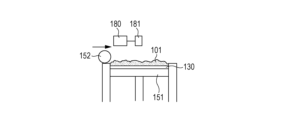
- a manufacturing process of a ceramic structure using the additive manufacturing method includes the following steps (i) and (ii). Steps (i) and (ii) are repeated according to the shape of the ceramic structure to be manufactured. (i) A step of arranging the raw material powder in a laser beam irradiation part (ii) A step of irradiating the raw material powder with a laser beam based on the three-dimensional modeling data
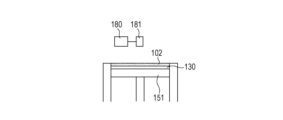
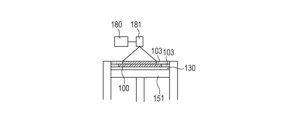
- the raw material powder 101 is placed on the modeling surface of the base 130 installed on the stage 151, and the roller 152 is used to spread it evenly to a predetermined thickness.
- the powder spread evenly with a predetermined thickness is called a powder layer 102 (FIGS. 1A and 1B).
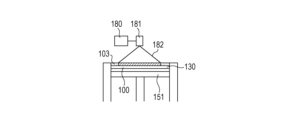
- the surface of the powder layer 102 is irradiated with laser light emitted from the laser light source 180 while being scanned by the scanner unit 181 .
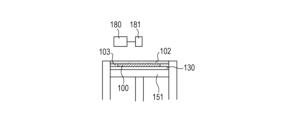
- the powder is sintered or melted and then solidified to form the solidified portion 100 (FIG. 1C).
- the stage 151 is lowered to form a new powder layer 102 on the solidified portion 100 (FIG.
- a newly formed powder layer 102 is irradiated with a laser beam in the same manner as in FIG. 1C to form a solidified portion 100 in the irradiation range.
- the output of the laser beam is adjusted to such an extent that the surface layer of the previously formed solidified portion on the side of the newly formed powder layer 102 melts, the previously formed solidified portion and the subsequently formed solidified portion will melt.
- the solidified portions to be bonded can be joined to each other.
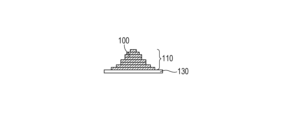
- the solidified portions 100 formed in each layer are bonded together to form a molded object 110 having a desired shape (FIGS. 1E and 1F).
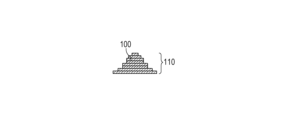
- unsolidified powder 103 is removed, and if necessary, unnecessary parts of the modeled object are removed and the modeled object and base are separated (FIGS. 1G and 1H).
- the manufacturing process of the present invention it is preferable to have a step of performing molding by repeating steps (i) and (ii) a required number of times, and then firing the mixed structure of the produced ceramic.
- the heating means used in the baking process there are no restrictions on the heating means used in the baking process, and a resistance heating system, an induction heating system, an infrared lamp system, a laser system, an electron beam system, or the like can be appropriately selected and used according to the purpose.
- the firing can further reduce voids in the structure and lower the dielectric loss tangent. That is, even if a certain amount of voids remain in the ceramic structure after molding, the voids can be reduced through the firing process. If the voids cannot be sufficiently reduced by firing alone, the firing may be performed after impregnation with a liquid containing a component for repairing the voids.
- the sintering temperature is preferably a temperature below the melting point of the structure and at which crystals do not grow, depending on the main components of the ceramic structure.
- the particles A and B form a eutectic, they are preferably fired within the range of the eutectic temperature +50°C.
- the firing temperature is preferably 1600° C. or higher and 1730° C. or lower, more preferably 1650° C. or higher and 1710° C. or lower. Within this range, it is possible to fill voids by melting SiO 2 without collapsing the shape of the structure.
- the particle diameter of the particles is defined as the median diameter (also referred to as median value), which is the average particle diameter.
- the median size is the particle size (D50) at which the cumulative frequency is 50% in the powder.
- the average particle size can be measured using a laser diffraction/scattering particle size analyzer. If single-particle powder is not available, classify the mixed powder with a multi-divided classifier (e.g. Nittetsu Mining Elbow Jet Classifier), sort each particle type, and measure the average particle size. should be done.
- a multi-divided classifier e.g. Nittetsu Mining Elbow Jet Classifier
- Thermal conductivity is measured by a conductivity measuring device when powder consisting of one kind of particles is available, and 10.0 g of the powder is compressed at 30 MPa to form a cylindrical pellet with a diameter of 3 cm.
- the mixed powder is classified by a multi-division classifier (for example, an elbow jet classifier manufactured by Nittetsu Mining Co., Ltd.), and the particles separated by type are pelletized as described above to conduct heat conduction. Measured by a rate measuring device.
- a multi-division classifier for example, an elbow jet classifier manufactured by Nittetsu Mining Co., Ltd.
- the dispersity was determined by the above procedure for the 5 fields of view that were randomly observed, and the average value was used as the dispersity evaluation index. A smaller dispersibility evaluation index indicates better dispersibility.
- FIG. 2 shows an example of a binarized image.
- a bright portion 202 of the binarized image corresponds to the ceramic structure, and a dark portion 201 corresponds to voids existing in the ceramic structure.
- Sd the area of the dark portion 201 of the binarized image
- Sd ⁇ 100/S is calculated as the porosity.
- a smaller porosity indicates less voids.
- the porosity is evaluated by a method based on R1634, which is a JIS standard for measuring sintered body density and open porosity of fine ceramics. Specifically, for three cylindrical ceramic structures having a diameter of 20.0 mm and a thickness of 1.0 mm, the dry mass of the structure is W1, the underwater mass is W2, and the saturated water mass is W3. Let the value which calculated and averaged them be a porosity. A smaller porosity indicates fewer large pores such as cracks. ⁇ (W3-W1)/(W3-W2) ⁇ 100
- the dry mass (W1) is measured by placing the ceramic structure in a thermo-hygrostat, keeping the temperature at 110°C for 1 hour, and then allowing it to cool.
- the weight in water (W2) is obtained by suspending the sample with a wire and submerging it under the water surface of the boiling tank, boiling it for 3 hours or more, and then allowing it to cool to room temperature. Measured and corrected by adding the mass of the jig.
- the water-saturated mass (W3) is the value obtained by taking out the water-saturated sample from the water, quickly wiping the surface with a wet gauze to remove water droplets, and then measuring it.
- the surface roughness is obtained by measuring the Ra value of the surface of the ceramic structure prepared for dimensional stability evaluation using a laser microscope. A smaller surface roughness value indicates better surface smoothness.
- the bending strength of the structure is evaluated by a three-point bending test based on R1601, which is the JIS standard for bending strength of fine ceramics at room temperature.
- Example 1 ⁇ Powder 1> As shown in Table 2, Al2O3 powder with an average particle size of 24 ⁇ m, SiO2 powder with an average particle size of 10 ⁇ m, and SiO powder with an average particle size of 5 ⁇ m were prepared, and a thermal conductivity measuring device TPS2500 (Hot Disk) was used to measure the thermal conductivity of each powder. As shown in Table 2, the mass fraction of Al2O3 powder is 54.0 wt%, the mass fraction of SiO2 powder is 44.0 wt%, and the mass fraction of SiO powder is 2.0 wt%. A total of 10.0 kg was weighed.
- the weighed powders were put into a V-type mixer (V20, manufactured by Seishin Enterprise Co., Ltd.) and mixed for 15 minutes at 26 rpm to obtain Powder 1.
- Table 1 shows the thermal conductivity of each particle.
- the observation image obtained using a scanning electron microscope "JSM-7800" manufactured by JEOL Ltd. was binarized, and the dispersion of the absorber particles was measured. show.
- ProXDMP 100 (trade name) from 3D SYSTEM, equipped with a 50W fiber laser (beam diameter of 65 ⁇ m).
- the powder 1 was spread evenly on the base 130 made of alumina using a roller to form the first powder layer with a thickness of 20 ⁇ m (FIGS. 1A and 1B).
- the powder layer was irradiated with a scanning laser beam of 47.5 W, and the material powder in a circular region with a diameter of 10 mm was melted and then solidified to form a solidified portion 100 (Fig. 1C).
- the drawing speed at this time was 60 mm/s, and the drawing pitch was 80 ⁇ m.
- a new powder layer with a thickness of 20 ⁇ m is formed so as to cover the surface of the solidified portion 100, and the powder layer is irradiated with scanning laser light to melt and melt the material powder in a circular region with a diameter of 10 mm. It was solidified to form a solidified portion 100 (FIGS. 1D and 1E).
- the laser was scanned in a direction perpendicular to the drawing lines of the first layer to melt and solidify the powder. These steps were repeated until the height of the solidified portion reached 1.0 mm, and three cylindrical structures with a diameter of 10.0 mm and a thickness of 1.0 mm were produced. The three structures were individually used for evaluation of porosity, porosity and dielectric loss tangent.
- the resulting structure was placed in an electric furnace and fired. Specifically, the temperature was raised to 1690° C. in 2 hours and 40 minutes in an air atmosphere, held at 1690° C. for 20 minutes, and then energized and cooled to 200° C. or lower in 5.0 hours. to obtain the structure 1-A.
- the resulting structure was placed in an electric furnace and fired. Specifically, the temperature was raised to 1690° C. in 2 hours and 40 minutes in an air atmosphere, and after holding at 1690° C. for 20 minutes, the energization was terminated and the temperature was lowered to 200° C. or lower in 5.0 hours. to obtain the structure 1-B.
- the porosity of the structure 1-A was calculated according to the evaluation method described above. The evaluation rank was based on the following criteria. A: 9% or less B: 10% or more and 14% or less C: 15% or more and 19% or less D: 20% or more
- the dielectric loss tangent of Structure 1-A was measured using a 4284A Precision LCR meter (manufactured by Hewlett-Packard) according to the evaluation method described above.
- the evaluation rank was defined as follows. A: less than 0.005 B: 0.005 or more and less than 0.008 C: 0.008 or more and less than 0.010 D: 0.010 or more
- Example 2 to 24 ⁇ Powder 2 to 24> As shown in Table 2, as powders for producing structures according to Examples 2 to 24, at least one of the types of particles A, B, and absorbent particles, the amount to be mixed, and the conditions were changed. obtained powders 2 to 24 in the same manner as for powder 1. In each of powders 2 to 24, the sum of the absorbent particles, particles A, and particles B is 100 [% by weight]. Table 3 shows the powder mixing conditions and the dispersion degree of the absorbent particles for powders 2 to 24 in the same manner as for powder 1.
- the ceramics has a porosity of 20% or less and a dielectric loss tangent of 0.01 or less. I was able to get the struct.
- the powder that does not satisfy the formula (4) has a porosity of more than 20% and cannot achieve a low dielectric loss tangent, and the powder 31 with a D (A) / D (B) of more than 400 can be molded. could not.
- REFERENCE SIGNS LIST 100 solidified unit 101 powder 102 powder layer 103 unsolidified powder 110 molded object 130 base 151 stage 152 roller 180 energy beam source 181 scanner unit
Landscapes
- Engineering & Computer Science (AREA)
- Chemical & Material Sciences (AREA)
- Manufacturing & Machinery (AREA)
- Ceramic Engineering (AREA)
- Materials Engineering (AREA)
- Structural Engineering (AREA)
- Organic Chemistry (AREA)
- Inorganic Chemistry (AREA)
- Mechanical Engineering (AREA)
- Civil Engineering (AREA)
- Composite Materials (AREA)
- Compositions Of Oxide Ceramics (AREA)
- Producing Shaped Articles From Materials (AREA)
Priority Applications (3)
| Application Number | Priority Date | Filing Date | Title |
|---|---|---|---|
| DE112022004906.5T DE112022004906T5 (de) | 2021-11-12 | 2022-11-10 | Pulver zur herstellung von keramikstrukturen und verfahren zur herstellung einer keramikstruktur unter verwendung davon |
| CN202280074378.9A CN118215563A (zh) | 2021-11-12 | 2022-11-10 | 用于制造陶瓷结构体的粉末 |
| US18/661,394 US20260022073A1 (en) | 2021-11-12 | 2024-05-10 | Powder for Manufacturing Ceramic Structures and Method for Manufacturing Ceramic Structure Using the same |
Applications Claiming Priority (2)
| Application Number | Priority Date | Filing Date | Title |
|---|---|---|---|
| JP2021184894A JP2023072375A (ja) | 2021-11-12 | 2021-11-12 | セラミックス構造体を製造するための粉末およびそれを用いたセラミックス構造体の製造方法 |
| JP2021-184894 | 2021-11-12 |
Related Child Applications (1)
| Application Number | Title | Priority Date | Filing Date |
|---|---|---|---|
| US18/661,394 Continuation US20260022073A1 (en) | 2021-11-12 | 2024-05-10 | Powder for Manufacturing Ceramic Structures and Method for Manufacturing Ceramic Structure Using the same |
Publications (1)
| Publication Number | Publication Date |
|---|---|
| WO2023085384A1 true WO2023085384A1 (ja) | 2023-05-19 |
Family
ID=86335876
Family Applications (1)
| Application Number | Title | Priority Date | Filing Date |
|---|---|---|---|
| PCT/JP2022/041997 Ceased WO2023085384A1 (ja) | 2021-11-12 | 2022-11-10 | セラミックス構造体を製造するための粉末 |
Country Status (5)
| Country | Link |
|---|---|
| US (1) | US20260022073A1 (cg-RX-API-DMAC7.html) |
| JP (1) | JP2023072375A (cg-RX-API-DMAC7.html) |
| CN (1) | CN118215563A (cg-RX-API-DMAC7.html) |
| DE (1) | DE112022004906T5 (cg-RX-API-DMAC7.html) |
| WO (1) | WO2023085384A1 (cg-RX-API-DMAC7.html) |
Cited By (1)
| Publication number | Priority date | Publication date | Assignee | Title |
|---|---|---|---|---|
| EP4733287A1 (en) * | 2024-10-24 | 2026-04-29 | Canon Kabushiki Kaisha | Powder for ceramic shaping, method of manufacturing ceramic shaped object, ceramic structural body, and equipment |
Citations (6)
| Publication number | Priority date | Publication date | Assignee | Title |
|---|---|---|---|---|
| JP2017113952A (ja) * | 2015-12-22 | 2017-06-29 | 株式会社フジミインコーポレーテッド | 粉末積層造形に用いるための造形用材料 |
| JP2019019051A (ja) * | 2017-07-14 | 2019-02-07 | キヤノン株式会社 | セラミックス造形用粉体、セラミックス造形物、およびその製造方法 |
| JP2019084823A (ja) * | 2017-11-09 | 2019-06-06 | キヤノン株式会社 | 付加造形用の材料粉末、構造物、半導体製造装置部品、および半導体製造装置 |
| WO2020129958A1 (ja) * | 2018-12-21 | 2020-06-25 | キヤノン株式会社 | 無機材料粉末、および構造体の製造方法 |
| JP2021066177A (ja) * | 2019-10-23 | 2021-04-30 | キヤノン株式会社 | セラミックス物品の製造方法、およびセラミックス物品 |
| JP2021516293A (ja) * | 2018-03-20 | 2021-07-01 | ヘレウス アディティブ マニュファクチュアリング ゲーエムベーハー | 粉末ベースの積層造形を使用するバルク金属ガラス複合材料の製造 |
Family Cites Families (1)
| Publication number | Priority date | Publication date | Assignee | Title |
|---|---|---|---|---|
| JP7140171B2 (ja) | 2020-11-12 | 2022-09-21 | 株式会社三洋物産 | 遊技機 |
-
2021
- 2021-11-12 JP JP2021184894A patent/JP2023072375A/ja active Pending
-
2022
- 2022-11-10 DE DE112022004906.5T patent/DE112022004906T5/de active Pending
- 2022-11-10 CN CN202280074378.9A patent/CN118215563A/zh active Pending
- 2022-11-10 WO PCT/JP2022/041997 patent/WO2023085384A1/ja not_active Ceased
-
2024
- 2024-05-10 US US18/661,394 patent/US20260022073A1/en active Pending
Patent Citations (6)
| Publication number | Priority date | Publication date | Assignee | Title |
|---|---|---|---|---|
| JP2017113952A (ja) * | 2015-12-22 | 2017-06-29 | 株式会社フジミインコーポレーテッド | 粉末積層造形に用いるための造形用材料 |
| JP2019019051A (ja) * | 2017-07-14 | 2019-02-07 | キヤノン株式会社 | セラミックス造形用粉体、セラミックス造形物、およびその製造方法 |
| JP2019084823A (ja) * | 2017-11-09 | 2019-06-06 | キヤノン株式会社 | 付加造形用の材料粉末、構造物、半導体製造装置部品、および半導体製造装置 |
| JP2021516293A (ja) * | 2018-03-20 | 2021-07-01 | ヘレウス アディティブ マニュファクチュアリング ゲーエムベーハー | 粉末ベースの積層造形を使用するバルク金属ガラス複合材料の製造 |
| WO2020129958A1 (ja) * | 2018-12-21 | 2020-06-25 | キヤノン株式会社 | 無機材料粉末、および構造体の製造方法 |
| JP2021066177A (ja) * | 2019-10-23 | 2021-04-30 | キヤノン株式会社 | セラミックス物品の製造方法、およびセラミックス物品 |
Cited By (1)
| Publication number | Priority date | Publication date | Assignee | Title |
|---|---|---|---|---|
| EP4733287A1 (en) * | 2024-10-24 | 2026-04-29 | Canon Kabushiki Kaisha | Powder for ceramic shaping, method of manufacturing ceramic shaped object, ceramic structural body, and equipment |
Also Published As
| Publication number | Publication date |
|---|---|
| US20260022073A1 (en) | 2026-01-22 |
| JP2023072375A (ja) | 2023-05-24 |
| DE112022004906T5 (de) | 2024-08-14 |
| CN118215563A (zh) | 2024-06-18 |
Similar Documents
| Publication | Publication Date | Title |
|---|---|---|
| JP7808080B2 (ja) | セラミックス造形用粉体、セラミックス造形物、およびその製造方法 | |
| KR20140134670A (ko) | 유리 세라믹스체, 적층체, 휴대형 전자 기기용 하우징 및 휴대형 전자 기기 | |
| Klocke et al. | Direct laser sintering of borosilicate glass | |
| CN102714259A (zh) | 发光元件搭载用基板及发光装置 | |
| US20220080617A1 (en) | Three-dimensional printing of multilayer ceramic missile radomes by using interlayer transition materials | |
| Ren et al. | 3D printing of cordierite glass-ceramics | |
| JP2023072375A (ja) | セラミックス構造体を製造するための粉末およびそれを用いたセラミックス構造体の製造方法 | |
| JP2021066653A (ja) | セラミックス物品の製造方法、金属成分含有液、セラミックス物品製造用キットおよびセラミックス物品 | |
| JP2011088759A (ja) | アルミナ質耐火物及びその製造方法 | |
| TWI546272B (zh) | 陶瓷粉體與其形成方法及雷射燒結成型方法 | |
| JP6913275B2 (ja) | 立体造形用ガラス粉末 | |
| Lakshminarayan et al. | Microstructural and mechanical properties of Al2O3/P2O5 and Al2O3/B2O3 composties fabricated by selective laser sintering | |
| JP2022162538A (ja) | 付加製造法に用いられる粉末およびそれを用いたセラミックス物品の製造方法 | |
| Hu et al. | Aqueous tape casting and properties of cordierite based glass-ceramics | |
| Tang et al. | Coupling additive manufacturing and low-temperature sintering: a fast processing route of silicate glassy matrix | |
| JP4073221B2 (ja) | セラミック焼成用道具材及びその製造方法 | |
| Arıbuga et al. | Effect of Al2O3 and ZrO2 Filler Material on the Microstructural, Thermal and Dielectric Properties of Borosilicate Glass-Ceramics. Micromachines 2023, 14, 595 | |
| JP5499766B2 (ja) | ガラスセラミックス基板及びその製造方法、並びに配線基板 | |
| WO2022220193A1 (ja) | 付加製造法に用いられる粉末およびそれを用いたセラミックス物品の製造方法 | |
| CN117120229A (zh) | 在增材制备方法中使用的粉末和使用其制备陶瓷制品的方法 | |
| JP2026076919A (ja) | セラミックス造形用粉体、セラミックス造形物の製造方法、およびセラミックス構造体および機器 | |
| JP4707591B2 (ja) | 黒色系セラミック焼結体およびこれを用いた光学分析用セル並びに半導体・液晶製造装置用部材 | |
| Ghosh | Additive manufacturing of ultra low-loss microwave dielectrics for high-frequency applications | |
| An et al. | Controllable additive manufacturing of high performance ceramic cores: tailoring the grain size effect of ceramic powders | |
| Simon et al. | Properties of Al2O3-glass composites |
Legal Events
| Date | Code | Title | Description |
|---|---|---|---|
| 121 | Ep: the epo has been informed by wipo that ep was designated in this application |
Ref document number: 22892882 Country of ref document: EP Kind code of ref document: A1 |
|
| WWE | Wipo information: entry into national phase |
Ref document number: 202280074378.9 Country of ref document: CN |
|
| WWE | Wipo information: entry into national phase |
Ref document number: 112022004906 Country of ref document: DE |
|
| 122 | Ep: pct application non-entry in european phase |
Ref document number: 22892882 Country of ref document: EP Kind code of ref document: A1 |