WO2023074744A1 - ブロックチェーンのノンファンジブルトークンに関連付けられた権利を行使するためのコンピュータ実装方法、コンピュータシステム、ノンファンジブルトークンの製造方法及びノンファンジブルトークン - Google Patents
ブロックチェーンのノンファンジブルトークンに関連付けられた権利を行使するためのコンピュータ実装方法、コンピュータシステム、ノンファンジブルトークンの製造方法及びノンファンジブルトークン Download PDFInfo
- Publication number
- WO2023074744A1 WO2023074744A1 PCT/JP2022/039950 JP2022039950W WO2023074744A1 WO 2023074744 A1 WO2023074744 A1 WO 2023074744A1 JP 2022039950 W JP2022039950 W JP 2022039950W WO 2023074744 A1 WO2023074744 A1 WO 2023074744A1
- Authority
- WO
- WIPO (PCT)
- Prior art keywords
- nft
- display
- fungible token
- owner
- data
- Prior art date
- Legal status (The legal status is an assumption and is not a legal conclusion. Google has not performed a legal analysis and makes no representation as to the accuracy of the status listed.)
- Ceased
Links
Images




Classifications
-
- G—PHYSICS
- G06—COMPUTING OR CALCULATING; COUNTING
- G06F—ELECTRIC DIGITAL DATA PROCESSING
- G06F21/00—Security arrangements for protecting computers, components thereof, programs or data against unauthorised activity
- G06F21/10—Protecting distributed programs or content, e.g. vending or licensing of copyrighted material ; Digital rights management [DRM]
-
- G—PHYSICS
- G06—COMPUTING OR CALCULATING; COUNTING
- G06Q—INFORMATION AND COMMUNICATION TECHNOLOGY [ICT] SPECIALLY ADAPTED FOR ADMINISTRATIVE, COMMERCIAL, FINANCIAL, MANAGERIAL OR SUPERVISORY PURPOSES; SYSTEMS OR METHODS SPECIALLY ADAPTED FOR ADMINISTRATIVE, COMMERCIAL, FINANCIAL, MANAGERIAL OR SUPERVISORY PURPOSES, NOT OTHERWISE PROVIDED FOR
- G06Q50/00—Information and communication technology [ICT] specially adapted for implementation of business processes of specific business sectors, e.g. utilities or tourism
- G06Q50/10—Services
-
- H—ELECTRICITY
- H04—ELECTRIC COMMUNICATION TECHNIQUE
- H04L—TRANSMISSION OF DIGITAL INFORMATION, e.g. TELEGRAPHIC COMMUNICATION
- H04L9/00—Cryptographic mechanisms or cryptographic arrangements for secret or secure communications; Network security protocols
- H04L9/32—Cryptographic mechanisms or cryptographic arrangements for secret or secure communications; Network security protocols including means for verifying the identity or authority of a user of the system or for message authentication, e.g. authorization, entity authentication, data integrity or data verification, non-repudiation, key authentication or verification of credentials
Definitions
- the present disclosure relates to computer-implemented methods, computer systems, methods of manufacturing non-fungible tokens, and non-fungible tokens.
- This application claims priority based on Japanese Application No. 2021-175267 filed on October 27, 2021, and incorporates all the descriptions described in the Japanese Application.
- Non-Fungible Token is a type of token recorded on the blockchain. NFTs are issued, for example, according to the Ethereum Request for Comments (ERC) 721 standard. Patent Literature 1 discloses Ethereum.
- NFTs are generally used to prove ownership of content data such as digital art.
- the inventors have had the idea of associating with the NFT some rights that are exercisable by the owner of the NFT. With the rights associated with the NFT, proof of ownership of the NFT also proves ownership of the rights.
- a method of disclosure is a computer-implemented method, executed by a computer system, for exercising rights associated with a non-fungible token of a blockchain, comprising operating indicia associated with the non-fungible token. , for display on the terminal of the owner of the non-fungible token, the non-fungible token associated with the operational display when the operation of the operational display is executed; performing processing relating to rights associated with the .
- the disclosed system includes: a display providing unit for providing an operation display associated with a non-fungible token to a terminal of an owner of the non-fungible token for screen display; and a rights processing unit configured to execute a process related to a right associated with the non-fungible token associated with the operation display when the operation of is executed.
- the disclosed method of manufacture comprises generating a non-fungible token having data for causing a control indicia to be displayed on a screen, said control indicia being transmitted by a computer system to an owner of said non-fungible token.
- the computer system is configured to be displayed on a terminal, and when an operation of the operation display is executed, the computer system performs processing related to rights associated with the non-fungible token associated with the operation display. configured to run.
- the disclosed non-fungible token comprises data for causing an operational display associated with the non-fungible token to be displayed, said data being transmitted by a computer system to an operation associated with said non-fungible token.
- a non-fungible token associated with the non-fungible token for display on the terminal of the owner of the non-fungible token; Used to perform operations related to rights associated with bulltokens.
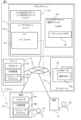
- FIG. 1 is a schematic diagram of a computer system and the like.
- FIG. 2 is a diagram showing how to save NFT data.
- FIG. 3 is a diagram showing how to display NFT data.
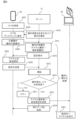
- FIG. 4 is a flow chart showing the procedure of processing related to rights.
- FIG. 5 is an explanatory diagram showing the procedure for exercising rights.
- FIG. 6 is a flow chart showing the verification procedure.
- FIG. 7 is a flow chart showing an example of a product acquisition scenario.
- a method is a computer-implemented method for exercising a right associated with a non-fungible token of a blockchain, executed by a computer system, comprising: providing the operating indication to the terminal for display on the terminal of the owner of the non-fungible token, and when the operation of the operating indication is performed, the operating indication Performing processing relating to rights associated with the non-fungible token associated with the representation.
- the non-fungible token owner's terminal displays an operation display for exercising rights, so the non-fungible token owner can operate the operation display to A computer system can be used to process rights.
- the owner of the non-fungible token may be a person who can be substantially regarded as the owner. That is, the owner may be a user associated with the non-fungible token on the blockchain, as well as the person recorded as the owner on the blockchain. The user may be recorded on the blockchain as being able to fulfill at least some of the roles held by the owner of the non-fungible token. As such, the user may be considered the beneficial owner in some cases.
- Such users, who may be considered beneficial owners are, for example, borrowers in rentable non-fungible tokens. Borrowers can be considered owners because they can use non-fungible tokens in the same way as owners.
- a rentable non-fungible token is, for example, a rental NFT as defined in Ethereum's EIP4907 standard. The EIP 4907 "user" may be considered as the owner.
- said rights include the right to obtain items.
- the owner of the non-fungible token can acquire the item by operating the operation display. Items may be physical items or digital items. Also, the items are preferably preset corresponding to the non-fungible tokens or determined based on the non-fungible tokens.
- the right includes the right to receive service.
- the owner of the non-fungible token can receive the service by operating the operation display.
- the service may be a service provided in the real world or an online service.
- the services are preferably preconfigured for non-fungible tokens or determined based on non-fungible tokens.
- the non-fungible token has the operation display.
- the display for operation can also be displayed on the screen, which is preferable. It should be noted that it is preferable that only the owner of the non-fungible token has the authority to operate the display for operation.
- the operating display is a button selected for exercising the right.
- the method according to the embodiment preferably further comprises verifying whether the manipulation of the manipulation indicia was performed by the owner of the non-fungible token. Verification may be verification whether the operator of the control display is the owner of the non-fungible token.
- the verifying includes transmitting the non-fungible token to a predetermined destination after the operation of the operation display is executed.
- the verifying includes comparing transmission source data of the non-fungible token transmitted to the transmission destination with data indicating an operator of the operation display.
- the verification includes data indicating the owner of the non-fungible token recorded in the blockchain and data indicating the operator of the operation display. Preferably, it further comprises contrasting.
- the method according to the embodiment further comprises transmitting the non-fungible token from the owner to a predetermined destination after the operation of the operation display is executed. It is preferable to have By transmitting the non-fungible token, the owner of the non-fungible token can be made a non-owner, and subsequent use of the non-fungible token by the former owner can be restricted. It is preferable that a limit is set on the number of operations of the operation display, and more preferably, the limited number of operations is one.
- the operating display is not displayed on the terminal of the non-fungible token. In this case, it is possible to prevent a person other than the owner from exercising the right.
- the operation display is displayed on a terminal other than the owner of the non-fungible token in a state in which the operation display is disabled. In this case, it is possible to prevent a person other than the owner from exercising the right.
- the computer system includes a display providing unit that provides an operation display associated with a non-fungible token to the terminal of the owner of the non-fungible token for screen display on the terminal. and a rights processing unit that executes a process related to a right associated with the non-fungible token associated with the operation display when the operation display is operated.
- the computer system according to the embodiment preferably further includes a verification unit that verifies whether or not the operation of the operation display was performed by the owner of the non-fungible token.
- the computer system further comprises a verification unit that verifies whether the exercise of the right is proper.
- a method for manufacturing a non-fungible token may comprise generating a non-fungible token having data for displaying an operating display on the screen.
- the operating display may be configured to be displayed on a terminal of the owner of the non-fungible token by a computer system.
- the computer system may be configured to perform a process relating to rights associated with the non-fungible token associated with the control indicia when manipulation of the control indicia is performed.
- a non-fungible token comprises data for displaying an operation display associated with the non-fungible token, and the data is stored in the non-fungible token by a computer system. for display on the terminal of the owner of the non-fungible token, and when the operation of the operation display is executed, the operation display associated with the operation display is associated with to perform operations relating to rights associated with the non-fungible token that has been acquired.
- FIG. 1 shows an example of a computer system 10 (hereinafter simply referred to as "system 10") according to the embodiment.
- System 10 utilizes non-fungible tokens 101 (NFT101) recorded on blockchain 11 to assist in exercising rights associated with NFT101.
- NFT101 non-fungible tokens 101
- the system 10 provides a service of online intermediary between the exerciser 210 and the exercised person 220 for the exercise of the right. That is, the system 10 of the embodiment supports execution of rights associated with the NFT 101 .
- the person 220 to be exercised may be an administrator of the system 10 .
- the owner 210 of an NFT 101 may exercise rights associated with that NFT 101.
- the owner 210 of the NFT 101 and its changes are recorded on the blockchain 11. That is, the person who can exercise rights associated with NFT 101 is NFT owner 210 recorded on blockchain 11 .
- Transferring NFT 101 also transfers the rights associated with that NFT 101 .
- System 10 treats owner 210 of NFT 101 as a person (right holder) who can exercise rights associated with that NFT 101 .
- transfer (transmission) of the NFT 101 associated with rights may be prohibited.
- the system 10 can identify the owner 210 of the NFT 101, that is, the owner of the rights.
- System 10 may identify rights associated with NFT 101 using data indicating correspondence between NFT 101 and rights associated with NFT 101 .
- system 10 may identify the exerciser 220 associated with NFT 101 using data indicating the correspondence between NFT 101 and the exerciser 220 associated with NFT 101 .
- the NFT 101 is generated by tokenizing digital data.
- An NFT manufacturing method comprises generating an NFT 101 .
- Tokenization is also called NFTization.
- the NFT digital data is recorded on the blockchain 11. Note that the NFT digital data may include data recorded outside the blockchain 11 .
- Digital data converted to NFT is, for example, image data, text data, audio data, other data, or a combination of two or more of these data.
- the digital data may be hypertext.
- Digital data may include data (display data) that appears on the screen when the NFT 101 is displayed on the display.
- NFT data 13A digital data to be tokenized and stored in the database 13 outside the blockchain 11.
- Digital data converted to NFT may include data indicating the content of rights associated with NFT 101, as described later. Since NFT 101 includes data indicating the content of rights, NFT 101 itself can become data indicating correspondence between NFT 101 and rights associated with NFT 101 . Also, the digital data to be NFT'ed may include data indicative of the subject 220 of the rights associated with the NFT 101 . Since NFT 101 includes data indicating rights exercised person 220 , NFT 101 itself can become data indicating correspondence between NFT 101 and rights exercised person 220 associated with NFT 101 . Data indicating these correspondences may be recorded in a computer outside the blockchain 11, such as the server 12 or the like.
- a right associated with the NFT 101 is, for example, a right to demand some action from the third party 220 who receives the exercise of the right.
- a right is, for example, the right to obtain an item or the right to be provided with a service.
- the exercised party 220 is the provider of the item or the provider of the service.
- the person to whom the item or service is provided does not have to be the owner 210 of the NFT 101 and may be designated by the owner 210 of the NFT 101 .
- the owner 210 of the NFT 101 can present the item or service by designating a person other than himself/herself as a recipient of the item or service.
- the NFT 101 of the embodiment has a user interface 13B (UI 13B) for user operations.
- a user interface is, for example, a graphical user interface (GUI).
- the NFT 101 having the UI 13B can be configured, for example, by using the NFT data 13A as source code written in HTML for creating a WEB page or the like.
- the NFT data 13A may include image data.
- the NFT data 13A is displayed on the screen of the user's terminal 30, and user operations such as selection operations can be performed on the terminal 30.
- the data 13A for providing the NFT 101 with the UI 13B may be recorded in the blockchain 11.
- UI 13B is preferably operable only by the owner of NFT 101 .
- the system 10 is configured to execute some processing triggered by the execution of an operation using the UI 13B. Since the UI 13B is provided in the NFT 101, it is possible to limit the person who can operate the UI 13B to the owner of the NFT 10. FIG. Also, since the NFT 101 has the UI 13B, the application program 30C of the terminal 30 that handles the NFT 101 or the application program 12C of the server 12 does not need to have the UI 13B that the NFT 101 has. The process called by the operation using the UI 13B of the NFT 101 may be executed by the server 12, may be executed by the smart contract 130, or may be executed by cooperation between the server 12 and the smart contract 130. good.
- the NFT 101 has data 13A for displaying the operation display 13B associated with the NFT 101 on the screen.
- This data 13A is provided by the system 10 to the terminal 30 to display the operation display 13B on the terminal 30 of the owner 210 of the NFT 101, and when the operation of the operation display 13B is executed, the operation display 13B is displayed. is used to execute processing associated with the NFT 101 associated with.
- the NFT 101 may have a link to the NFT data 13A.
- a link may be composed, for example, by a Unique Resource Identifier (URI).
- URI Unique Resource Identifier
- the data 13A may be configured to allow only the owner of the NFT 101 to refer to the NFT data 13A.
- the database 13 controls external access to stored data. If the access is from the owner of the NFT 101 associated with the NFT data 13A, the database 13 can permit access to the NFT data 13A associated with the NFT 101 owned by that person. Also, if the access is from a person other than the owner of the NFT 101 associated with the NFT data 13A, the access may be denied. That is, the NFT data 13A is displayed on the terminal of the owner of the NFT corresponding to the NFT data 13A, but is not displayed on terminals other than the owner of the NFT corresponding to the NFT data 13A. Note that the database 13 may permit access from a third party other than the owner of the NFT 101 associated with the NFT data 13A.
- the permission may be limited. For example, access to some data included in the data that constitutes the NFT data is permitted, but other access to the data of Further, the NFT data 13A is preferably set so that a third party can refer to it, but cannot operate the user interface displayed by the NFT data 13A.
- the NFT data 13A stored in the database 13 can be displayed on the display of the user's terminal 30.
- the NFT data 13A is configured to display the operation display 13B on the screen. That is, the NFT 101 has an operation display 13B.
- the operation display 13B may be recorded in the blockchain 11.
- the operation display 13B is, for example, a selection button selected for exercising rights associated with the NFT 101.
- operation display 13B can be displayed as part of NFT 101 displayed on the screen.
- the NFT 101 can be displayed on the screen as if it had the operation display 13B as part of it.
- the operation display 13B may be displayed on the screen in an area outside the NFT 101 that is displayed on the screen instead of being displayed on the screen in the area within the NFT 101 that is displayed on the screen. In this case, the NFT 101 and the operation display can be visually recognized as separated.
- the system 10 of the embodiment uses the blockchain 11.
- the blockchain 11 is configured by a P2P (Peer to Peer) computer network system in which a plurality of computers are interconnected.
- P2P Peer to Peer
- a blockchain address indicates, for example, a user account 110 on the blockchain 11 .
- the account 110 has a given blockchain address (user address).
- the user's account 110 is represented by "0x1111" as an example.
- the NFT 101 has a unique identifier that allows it to be distinguished from other NFTs in the blockchain 11 in order to ensure non-fungibility. This identifier is hereinafter referred to as the NFT identifier.
- the NFT identifier may also be denoted as "NFT_ID”.
- NFT_ID NFT identifier
- the association between the NFT data 13A and the NFT 101 is realized, for example, by associating the NFT data 13A with NFT_ID: id01 of the corresponding NFT 101 and storing it in the database 13.
- NFT_ID id01 of the corresponding NFT 101
- one-to-one correspondence between the NFT 101 and the NFT data 13A is realized.
- one NFT data 13A may be associated with NFT_IDs of a plurality of NFTs 101.
- one NFT data 13A may be associated with the NFT_ID of multiple NFTs 101 .
- the owner (and owner history) of the NFT 101 is recorded in the blockchain 11. Therefore, the owner of the NFT 101 does not need centralized management, and management and confirmation of the owner of the NFT 101 are easy. The owner of NFT 101 can be easily proved by the record of blockchain 11.
- proof of being the owner of NFT 101 is also proof of being the owner of the rights associated with NFT 101.
- the record of the owner of the NFT 101 recorded in the blockchain 11 can be used as the record of the right owner, management of the right owner (including management of change of the right owner ) does not need to be performed intensively and is easy to manage.
- the blockchain 11 may comprise a smart contract 130.
- the smart contract 130 is software (computer program) implemented executable in the blockchain, and automatically executes a predetermined protocol.
- Smart contract 130 has a contract address 140, which is a blockchain address.
- Smart contract 130 is stored at contract address 140 .
- the contract address 140 may receive the NFT 101 associated with the exercised right (the exercised NFT 101).
- the NFT 101 owned by the user is recorded in association with the user account 110.
- the user account 110 owns the NFT101. That is, the owner of NFT 101 shown in FIG. 1 is user 210 who has user account 110 . Therefore, the owner of rights associated with NFT 101 is user 210 with user account 110 .
- the blockchain 11 is provided with a collection account 120 for the NFT 101 as necessary.
- Collection account 120 is an account for receiving NFT 101 whose right has been exercised.
- the exercised NFT 101 may be received by the smart contract's contract address 140 as described above, but may also be received by a collection account 120 separate from the contract address 140 .
- the NFT 101 whose right has been exercised is also referred to as an "invalid NFT".
- the collection account 120 has a blockchain address of “0x5555” as an example.
- the collection account 120 is provided as an account for the administrator of the system 10, for example.
- NFTs 101 sent to collection account 120 are not retrieved from collection account 120 . Therefore, NFTs (invalid NFTs) sent to the collection account 120 are virtually non-transactable on the blockchain 11 .
- the NFT 101 received by the contract address 140 can also become an invalid NFT because it is virtually impossible to trade in the block chain 11.
- the system 10 may comprise a server 12 outside the blockchain 11.
- the system 10 may optionally include the aforementioned smart contract 130 as a component thereof. That is, the system 10 may include the server 12 but not the smart contract 130 or may include the smart contract 130 but not the server 12 .
- System 10 may include both server 12 and smart contract 130 . Role sharing between the server 12 and the smart contract 130 can be set as appropriate.
- the server 12 is connected to a network 15 such as the Internet.
- Server 12 is operated, for example, by an administrator of system 10 .
- the server 12 is configured by a computer having a processor 12A and memory 12B (storage device 12B).
- the server 12 may be composed of one computer, or may be composed of a plurality of computers connected via the network 15 .
- server 12 may comprise database 13 .
- Memory 12B is connected to processor 12A.
- the memory 12B includes, for example, a primary storage device and a secondary storage device.
- a primary storage device is, for example, a RAM.
- the secondary storage device is, for example, a hard disk drive (HDD) or solid state drive (SSD).
- Memory 12B contains a computer program 12C that is executed by processor 12A.
- Processor 12A reads and executes computer program 12C stored in memory 12B.
- Computer program 12C has program code representing instructions to be executed by a computer functioning as server 12 .
- the server 12 can function as a display providing unit, a rights processing unit, and a verification unit, which will be described later. That is, the server 12 can have a display providing unit.
- Server 12 may comprise a rights processor.
- Server 12 may comprise a verifier.
- a user 210 who owns the NFT 101 has a user terminal 30 .
- the user terminal 30 is, for example, a mobile device such as a smart phone or tablet.
- a user terminal 30 is connectable to the network 15 .
- the user terminal 30 is configured by a computer having a processor 30A and a memory 30B.
- Memory 30B is connected to processor 30A.
- the memory 30B includes, for example, a primary storage device and a secondary storage device.
- a primary storage device is, for example, a RAM.
- the secondary storage device is, for example, a hard disk drive (HDD) or solid state drive (SSD).
- Memory 30B comprises a computer program 30C executed by processor 30A.
- Processor 30A reads and executes computer program 30C stored in memory 30B.
- Computer program 30C has program code representing instructions to be executed by a computer functioning as user terminal 30 .
- the computer program 30C is, for example, a wallet application program for displaying tokens stored in the user account 110 of the blockchain 11 on the user terminal 30.
- the wallet application program provides functionality that enables user operations for storing tokens, sending tokens, and receiving tokens.
- the computer program 30C also has program code for displaying on the display of the user terminal 30 the token (NFT or fungible token) associated with the user account 110 in the blockchain 11.
- the computer program 30C displays the NFT 101 and the NFT data 13A associated with the NFT 101.
- the NFT data 13A associated with the NFT 101 owned by the user 210 is displayed on the user's terminal 30, but the NFT data associated with the NFT not owned by the user 210 is displayed. preferably not.
- the database 13 allows the NFT data 13A from the owner 210 of the NFT 101 associated with the NFT data 13A access to the NFT data 13A is permitted, and access to the NFT data 13A from anyone other than the owner is not permitted. Note that the database 13 can grasp the owner 210 of the NFT 101 associated with the NFT data 13A by referring to the block chain 11 .
- FIG. 2 shows an example of a method of displaying the NFT data 13A associated with the NFT 101 on the terminal 30 of the user 210 who owns the NFT 101.
- the user 210 signs in to the account of the user 210 on the server 12 via the terminal 30 (step S201). Sign-in is performed by an application program installed in the terminal 30, for example. During this sign-in, the server 12 can obtain the blockchain address 110 (user account 110 in the blockchain) of the user 210 from the user terminal 30 .
- the server 12 having the blockchain address 110 of the user 210 accesses the blockchain 11 (step S202).
- Server 12 refers to record 11B of one or more NFTs owned by blockchain address 110 of user 210 in blockchain 11, and information 120A (e.g., NFT_ID) about one or more NFTs owned by user 210. can be obtained (step S203).
- information 120A e.g., NFT_ID
- the server 12 displays the NFT owned by the user 210 on the user's terminal 30, the server 12 accesses the database 13 to refer to the NFT data 13A stored in the database 13. That is, the server 12 calls the database 13 to refer to the NFT data 13A (step S204).
- the server 12 transmits the blockchain address of the user 210 to the database 13 in order to refer to the NFT data 13A associated with the NFT 101 owned by the user 210.
- the database 13 that has received the block chain address of the user 210 accesses the block chain 11 to refer to the NFT 101 owned by the user 210 indicated by the block chain address 110 (step S205). Through this access, the database 13 acquires the NFT_ID of the NFT owned by the user (step S206).
- the database 13 When receiving a call using the user's blockchain address 110, the database 13 permits access to the NFT data 13A associated with the NFT 101 owned by the user 210 as a response to the call. That is, the database 13 refers to the NFT_ID of the NFT 101 owned by the user 210 in the blockchain 11 (step S205), and among the NFT data stored in the database 13, the NFT_ID of the NFT 101 owned by the user Access to the associated NFT data 13A is permitted.
- the server 12 can acquire the NFT data 13A associated with the NFT 101 with NFT_ID: id01 owned by the user.
- the acquired NFT data 13A is transmitted to the user terminal 30 for display on the user terminal 30 (step S207).
- the association between the NFT 101 and the NFT data 13A may be realized, for example, by having the NFT 101 have a URI (Uniform Resource Identifier) indicating the NFT data 13A. Further, when the server 12 has the NFT data 13A, the server 12 simply determines the NFT data 13A associated with the NFT 101 owned by the user 210, and sends the NFT data 13A to the user terminal 30. should be provided.
- URI Uniform Resource Identifier
- the right to obtain the aforementioned items is, for example, the right to obtain merchandise or the right to obtain a gift.
- the right to obtain a product is, for example, the right to have the purchased product handed over from the product seller or product manufacturer.
- a person who purchases a product acquires the NFT 101 attached with the right to obtain the product in exchange for receiving delivery of the actual product.
- the NFT 101 is provided to the purchaser, for example, by a product seller or product manufacturer. The purchaser can hold onto the physical goods until they need them. If the purchaser needs the actual product, he/she can exercise the right to receive the product.
- the NFT 101 can function as a product exchange ticket.
- the goods associated with the NFT 101 do not need to be circulated from place to place. If the owner of the NFT 101 after being circulated from place to place wishes to obtain the actual product, he/she can obtain the actual product by exercising the right to obtain the product associated with the NFT 101 .
- NFT101 does not exercise the right during the maturation period and asks the seller or manufacturer to store it, and after it is ready to drink, by exercising the right, the product (alcoholic beverage) in a good state of preservation can be obtained.
- the owner of the NFT 101 can sell the NFT 101 together with the rights to a third party. Since rights are attached to NFT 101, they are transferred when NFT 101 is transferred. In this case, it is sufficient to buy and sell the NFT 101, and it is not necessary to deliver the actual product, so the transaction is easy. Also, depending on the product, the quality may be deteriorated if it is circulated for trading, so it is better to avoid circulating the commodities as much as possible. In the embodiment, even if the NFT 101 is circulated from time to time, the physical product does not need to be circulated from time to time, so quality deterioration can be prevented. Furthermore, there is a possibility that products that have been distributed from time to time may be counterfeit products, but in the embodiment, the actual product can be delivered from a reliable product seller or product manufacturer, so there is little concern about counterfeit products. The same applies to items other than merchandise.
- items such as products do not need to actually exist at the time of the initial sale of NFT101.
- items such as merchandise may be scheduled to be manufactured in the future.
- the right to obtain the above-mentioned prize is, for example, the right to receive the prize won by lottery from the prize provider.
- a person who wins a prize can acquire the NFT 101 attached with the right to obtain the prize in exchange for receiving the actual prize.
- the NFT01 can function as a gift voucher.
- Other points are the same as in the case of goods.
- the right to receive services is, for example, the right to have the purchased service provided by the service provider.
- a person who purchases a service acquires the NFT 101 attached with the right to receive the service instead of actually receiving the service.
- the NFT 101 is provided to the purchaser, for example, by the service provider. The purchaser can hold off its right until actual service is required, at which point the purchaser can exercise its right and receive the service. can.
- the NFT 101 can function as a service ticket.
- the service does not have to be the object of trading, and may be, for example, a preferential service such as a discount on the price of a product or service.
- the item to be used by the person receiving the service may be provided to the person receiving the service.
- An item to be used by a person receiving the service is, for example, a ticket for using the service or a discount coupon.
- the right to receive service provision may be the right to obtain a ticket or the like for receiving service provision.
- the digital data converted to NFT may include data indicating the content of rights associated with NFT 101. That is, NFT 101 may have data indicating the content of rights associated with NFT 101 . If NFT 101 has data indicating the content of rights associated with NFT 101 , system 10 can identify the rights associated with NFT 101 by referring to NFT 101 recorded on blockchain 11 . Also, system 10 can identify a person who is subject to exercise of rights associated with NFT 101 by referring to NFT 101 recorded on blockchain 11 .
- the data indicating the details of the right are, for example, the identifier of the item to be provided, the item name, the description of the item, the name of the item provider, the identifier of the item provider, and the item. It may include at least one or more data for the available period (right validity period). If the right is the right to receive a service, the data indicating the details of the right are, for example, the identifier of the service provided, the name of the service, the description of the service, the name of the service provider, the location of the service, and the item provider's name. It can include at least one or more data of an identifier and a service provision period (right validity period).
- the specific items or services do not have to be decided in advance, and may be decided after the right is exercised.
- a right may be the right to enter a drawing to win an item or service.
- a right may also be a right to obtain an item or a right to be provided with a service for which the specific item or service provided is determined at the time the right is exercised.
- the system 10 may perform the process of determining the specific item or service to be provided after the right has been exercised.
- a specific item or service may be randomly determined from item candidates or service candidates preset in association with the NFT 101 in the system 10, or may be determined according to a predetermined rule.
- the item or service may be preconfigured in association with NFT 101 or determined after exercise operation based on NFT 101 .
- the provider of the goods or services shall be determined along with the determination of the specific items or services. obtain.
- FIG. 3 shows, as an example, a state in which the NFT data 13A associated with the NFT 101 owned by the user 210 is displayed on the user terminal 30.
- FIG. it is assumed that the NFT 101 is associated with the right to obtain an item called Junmai Daiginjo, which is a type of sake. That is, the NFT 101 functions as an exchange ticket for Junmai Daiginjo.
- the NFT data 13A has an image 13C showing an item and a user interface 13B for a user to perform an operation to obtain an item.
- the user account 110 of the user 210 owns the NFT 101, and the user 210 who has the account 110 is the owner of the NFT 101.
- the display 31 of the user terminal 30 of the user 210 displays a display 33 showing the NFTs 101 stored in the account 110 of the user 210 .
- the display 33 in FIG. 3 is hereinafter referred to as the NFT display 33 .
- the NFT display 33 has an image 13C indicating an item (an image including the item "Junmai Daiginjo") and an operation display 13B.
- the operation display 13B is, for example, a selection button.
- the NFT data 13A is recorded in the blockchain 11 as the owner of the NFT 101 (NFT_ID: NFT 101 with id01) associated with the NFT data 13A. Saved.
- the user's terminal 30 is configured to display the NFT data 13A of the NFT 101 owned by the user (NFT 101 with NFT_ID: id01) as the NFT display 33 on the screen. Therefore, as shown in FIG. 3, when the user owns the NFT 101, the user's terminal 30 can display the NFT data 13A stored in the database 13 on the screen.
- the terminal 30 can screen-display on the display 31 the NFT display 33 generated from the data held by the NFT data 13A. By displaying the NFT representation 33 on the display 31 , the user can confirm the item or service associated with the NFT 101 .
- the NFT display 33 includes an operation display 13B.
- Server 12 may transmit NFT data 13A to terminal 30 to provide terminal 30 with NFT display 33 including operation display 13B.
- the server 12 can function as a display providing unit that provides the terminal 30 with the operating display 13B associated with the NFT 101 for screen display on the terminal 30 of the owner 210 of the NFT 101 .
- system 10 may comprise a display provider.
- the system 10 By operating the operation display 13B included in the NFT display 33, the user 210 can cause the system 10 to execute processing related to exercising the rights associated with the NFT 101.
- the system 10 provides the terminal 30 with the operation display 13B associated with the NFT 101 for screen display on the terminal 30 .
- the operation display 13B is associated with a right-related process that the system 10 should perform.
- the system 10 executes a right-related process associated with the operation display 13B.
- control display 13B is associated with NFT 101 and NFT 101 is associated with rights
- system 10 can distinguish rights associated with control display 13B from NFTs 101 associated with control display 13B. .
- the server 12 can function as a right processing unit that executes processing related to rights associated with the NFT 101 associated with the operation display 13B when the operation display 13B is operated.
- system 10 may include a rights processor.
- the operation display 13B is not displayed on a terminal other than the owner of the NFT 101, or displayed on a terminal other than the owner of the NFT 101 in a state where the operation display 13B cannot be operated. In this case, operations by persons other than the owner can be prevented. Note that even if the operation display 13B is not displayed on a terminal other than the owner's terminal, the NFT display 33 (NFT data 13A) other than the operation display 13B may be displayed on a terminal other than the owner's terminal. In other words, the NFT data 13A other than the operation display 13B may be accessible to persons other than the owner.
- the NFT data 13A other than the operation display 13B can be referred to by a person other than the owner, for example, when the NFT 101 is resold, a person who wishes to purchase the NFT 101 can use the operation display 13B before purchasing.
- the NFT display 33 not included can be displayed on the screen for reference.
- the display for operation 13B is displayed on the screen in an inoperable state, it is preferable that the NFT display 33 other than the display for operation 13B is also displayed on the screen.
- Figure 4 shows an example of the procedure for exercising the right to obtain items.
- the user 210 receives the NFT 101 using the terminal 30 (step S431). Thereby, the user becomes the owner of the NFT101. In other words, the user 210 has acquired the right to obtain the item.
- the sender of the NFT 101 received by the user 210 is not particularly limited, but the sender is, for example, the seller of the NFT 101.
- the seller of NFT 101 is, for example, the seller or manufacturer of the item.
- the user 210 causes the terminal 30 to display the NFT 101 on the terminal 30, thereby causing the NFT display 33 of the NFT 101 to be displayed on the screen of the terminal 30 (step S432; see FIG. 5).
- a list of the NFTs 101 owned by the user 210 is displayed on the display of the terminal 30 by an application program of the terminal 30 or the server 12.
- the user 210 can perform an operation to select the displayed NFT 101 from the list.
- System 10 provides terminal 30 with NFT representation 33 of selected NFT 101 .
- the user 210 signs in to the server 12 via the terminal 30 before the NFT display 33 is displayed on the screen.
- the blockchain address of user 210 is used.
- Server 12 may identify the signed-in user by its blockchain address.
- the NFT display 33 is provided by the server 12, for example (step S410).
- Server 12 may provide terminal 30 with NFT display 33 having operating display 13B.
- the user When the user desires to obtain the actual item, the user performs an item exchange operation (step S433). As shown in FIG. 5 , the exchange operation is executed by the user tapping with a finger F or clicking with a mouse or the like on an operation display 13B (exchange button 13B) included in the NFT display 33 .
- the operation display 13B When the operation display 13B is operated, the system 10 starts processing rights.
- the operation display 13B has, for example, a link (URI or the like) to the server 12 that executes processing related to rights.
- the terminal 30 uses the link to access the server 12 that executes the right-related process.
- the terminal 30 can transmit information (NFT information) possessed by the NFT 101 corresponding to the operation display 13B to the server 12 when accessing.
- the NFT information here is information recorded in the blockchain 11 or the database 13 as NFT digital data.
- the NFT information can be, for example, at least one of a token identifier (NFT_ID) for identifying the NFT 101 and a rights identifier (item identifier) for identifying rights to be exercised.
- NFT_ID token identifier
- Item identifier rights identifier
- Identifying rights content may include, for example, identifying items or services provided to the user. Also, identifying the content of rights may include identifying the provider of the item or service provided to the user.
- the item or service provided to the user may be identified by the server 12 referring to the blockchain 11, may be preset in the server 12, or may be set in advance by the server 12 after the operation of step S433 is executed. 12 may be determined.
- server 12 refers to the record in blockchain 11 for NFT 101 having operation display 13B operated by user 210.
- the content of the rights can be identified.
- the content of the identified right is, for example, at least one of the provided item identifier, item name, item description, item provider name, item provider identifier, and period during which the item can be obtained (right validity period). That's it.
- the server 12 may, for example, have correspondence data that associates the token identifier of the NFT 101 with data indicating the content of the rights.
- the server 12 acquires the token identifier of the operated NFT 101 from the terminal 30, thereby identifying the contents of the rights associated with the NFT 101.
- the server 12 provides the terminal 30 with the setting display 500 regarding the exercise of the right associated with the operation display 13B (step S412).
- a setting display 500 is displayed on the display of the terminal 30 .
- the user 210 makes settings regarding the exercise of rights (step S434).
- the setting regarding the exercise of rights is, for example, the setting of the delivery destination of the item.
- the user 210 can complete the setting by operating the completion operation display 501 .
- the completion operation display 501 is, for example, a confirmation button.
- the completion operation is executed by the user tapping the completion operation display 501 with a finger F or clicking with a mouse or the like.
- step S435 when the setting by the user is completed, the setting is transmitted from the terminal 30 to the server 12 (step S435) and saved in the server 12.
- the saved settings may be used by server 12 for subsequent processing (such as step S415).
- Settings related to the exercise of rights for example, for general online sales of items, provision of services, reservations for provision of services, or application of discount services at the time of sale, and content set by the user online can be similar.
- the set contents can be transmitted from the server 12 to the terminal 40 of the person 220 to whom the right is exercised (for example, the item or service provider).
- the settings related to exercising the right may include at least one of item delivery settings and item delivery date and time settings.
- Item shipping settings may include setting a shipping name and address.
- Setting the delivery address for the item may include setting a phone number or email address for the delivery address.
- the setting of the delivery destination may be performed by the user 210 manually inputting the name, address, etc., or in the system 10, the user selects from the delivery destination candidates preset in association with the user who exercised the right. It may be done by selection.
- Enforcement settings may include selection of items that the user wishes to obtain.
- the item may be a tangible object or a digital item.
- the settings related to exercising the right may include, for example, the setting of information necessary to receive the service.
- the information necessary for receiving service provision may include, for example, the information of the person receiving service provision.
- the information of the service recipient may include, for example, at least one of the name, address, telephone number, e-mail address, SNS account, sex, and age of the service recipient.
- the information of the recipient of the service may be set by the user 210 manually inputting the name, etc., or in the system 10, among the preset candidates in association with the user who exercised the right. may be performed by the user selecting from Enforcement settings may include selection of services that the user wishes to be provided.
- the service may be a service provided in the real world or a service provided online.
- the setting of the information of the person receiving the service may be, for example, the setting as the destination of items such as tickets to be used by the person receiving the service.
- the setting of the information necessary to receive the service may be, for example, the detailed setting of the service.
- Details about the service may include, for example, at least one of the date and time the service is received, the location of the service, and the type of service. For example, if the service to be provided is the holding of an event, or the transportation of people by means of transportation, setting details regarding the service may include seat assignment.
- the settings for exercising the right may include selection of items or services to which the discount service is applied.
- the settings for exercising rights may not involve user operations (step S434).
- the system 10 already has the information (name, address, etc.) of the user who exercised the right, the system 10 sets the information of the user as the destination of the item or the recipient of the service. be able to. In this case, the user operation (step S434) may be omitted.
- the server 12 may perform verification regarding exercise of rights (step S413).
- the verification in step S413 is verification of whether the exercise of the right is proper, and more specifically, verification of whether the operator of the operation display 13B is the owner of the NFT101. Validation prevents non-owners of NFT 101 from exercising their rights. Unauthorized exercise of rights is, for example, an attack in which a non-owner of the NFT 101 attempts to illegally receive an item or service by sending data indicating the content of settings related to the exercise of rights to the server 12. .
- the operator of the operation display 13B may be referred to as the sender of the data indicating the details of the settings regarding the exercise of rights.
- the verification in step S413 may be performed after step S412 or before step S412.
- step S414 the process branches depending on whether the operator is the owner of the NFT101. If it is determined that the operator is the owner of the NFT 101 as a result of the verification in step S413, the server 12 transmits the settings regarding the exercise of the right to the terminal 40 of the person who is to be exercised the right (step S415). Enforcement settings may include information indicating the item or service to exercise. When it is determined that the operator is not the owner of the NFT 101, the server 12 executes error processing (step S417). If error processing is executed, step S415 is not executed, so the exercise of rights is not realized.
- the server 12 can function as a verification unit that verifies whether the operator of the operation display 13B is the NFT 101 owner. Accordingly, system 10 may include a verifier.
- the person who receives the exercise of rights here is the item provider 220, for example. It should be noted that the person to whom the right is exercised, such as the item provider 220, can be identified in step S411 as one piece of information indicating the details of the right.
- Settings related to exercising rights can include settings for item delivery destinations, as described above.
- a person 220 who has been exercised takes action to realize the exercise of the right according to the settings regarding the exercise of the right.
- the item provider 220 receives from the server 12 a setting for sending an item to a certain delivery destination, the item provider 220 performs procedures for sending the item to the delivery destination (step S441).
- the item is delivered to the delivery destination, for example, by a delivery company.
- the server 12 may provide the user's terminal 30 with a display 600 notifying the exercise of rights (step S416).
- a display 600 indicating a copy is displayed on the display of the terminal 30 .
- the backup data may be a tokenized NFT.
- FIG. 6 shows an example of the verification procedure in step S413.
- the server 12 requests the terminal 30 of the user 210 who has exercised the right to transmit the NFT 101 used for exercising the right to a predetermined destination.
- the user 210 performs an operation to transmit the NFT 101 to the destination designated by the server 12 .
- the NFT 101 is transmitted to the specified destination (step S62).
- the destination is, for example, a management address managed by an administrator of system 10 .
- a management address is a blockchain address that can receive NFTs.
- the management address may be the contract address 140 where the smart contract 130 shown in FIG. 1 is stored, or may be the NFT recovery address 120 .
- the fact that the NFT 101 used for exercising the right has been sent to the predetermined destination is in itself a factor that can be used to determine that the exercise of the right was appropriate. That is, the system 10 can determine that the exercise of the right was proper if the NFT 101 associated with the exercised right was sent to the predetermined destination. Since transmission of NFT 101 is something that the owner of NFT 101 can do and loses ownership, the fact that such transmission has occurred means that the exercise of rights has been made by the owner of NFT 101. can be guaranteed.
- the person who was the owner of the NFT 101 ceases to be the owner and can no longer use the NFT 101. That is, the NFT 101 becomes an invalid NFT and its subsequent use is suspended.
- the exercise of the right associated with NFT 101 can be limited to one time by disabling that NFT 101 . Note that disabling NFT is also called BAN.
- the server 12 uses the data of the sender of the NFT 101 (owner of the NFT 101 before transmission) sent to the management address for verification.
- the server 12 determines whether the transmission source of the NFT 101 and the transmission source of the settings related to exercising rights (for example, setting the delivery destination of the item) match. do it. If both sources match, the server 12 can determine that the setting regarding the exercise of rights (the setting of the delivery destination of the item) is the owner (source) of the NFT 101 and not an attack.
- the server 12 acquires the source data of the NFT 101 transmitted to the management address (step S63). Since the transmission record (transaction record) of the NFT 101 is recorded in the blockchain 11 , the server 12 can acquire the transmission source data of the NFT 101 by referring to the transaction record of the blockchain 11 .
- the source data of NFT 101 is, for example, blockchain address 110 of user 210 who was the owner of NFT 101 .
- the server 12 compares the transmission source of the NFT 101 with the transmission source of the settings for exercising rights (step S64).
- the server 12 can recognize the sender of the settings for exercising rights.
- the source of the settings for exercising rights is, for example, the blockchain address recognized by the server 12 as the account of the user 210 when the user 210 signs in to the server 12 .
- the server 12 sets the settings related to the exercise of rights (setting of the delivery destination of the item) can be determined to be the owner (sender) of the NFT 101 . That is, the server 12 can determine that the operator of the operation display 13B is the owner (transmission source) of the NFT 101 (steps S414, S415).
- step S61 may be omitted.
- the NFT 101 is transmitted to a predetermined destination along with the transmission of the settings.
- the user 210's selection of the confirm button 501 in FIG. In this case, when the confirmation button 501 is operated, under the control of the server 12, the setting is transmitted to the server 12 and the NFT 101 is transmitted to a predetermined destination.
- the NFT 101 does not have to be transmitted to the predetermined destination.
- the server 12 compares the owner of the NFT 101 with the transmission source of the setting regarding the exercise of rights, and if both match, it can be determined that the exercise of rights is proper. In this case, since the user 210 continues to own the NFT 101, it is preferable to set the operation of the operation display 13B to be limited to one time or a predetermined number of times or less. In this case, unlimited exercise of rights can be prevented.
- transmitting the NFT 101 to a predetermined destination may be performed for the purpose of verification or simply to invalidate the NFT 101 .
- Fig. 7 shows an example of the scenario from operating the NFT 101 to obtaining the product.
- the terminal 30 of the user 210 calls the API of the server 12 and transmits data to the server 12 (step S72).
- the user 210 has signed in to the server 12 from the terminal 30 using the user 210 blockchain address (0x1111).
- the data transmitted in step S72 may include, for example, the token identifier (NFT_ID) of the NFT 101 whose button 13B was pressed and the address (contract address) of the NFT 101.
- the address of NFT 101 is the address where NFT 101 is located in block chain 11 .
- the address of NFT 101 is, for example, the contract address of smart contract 130 where NFT 101 is located.
- the data transmitted in step S72 may include product delivery information.
- the product shipping information may include a shipping address for the product.
- the data sent in step S72 may include the email address to which the product is to be delivered.
- the data transmitted in step S72 may include the blockchain address of user 210 who operated button 13B of NFT 101 in step S71.
- the server 12 receives the data transmitted in step S72 and stores the received data in the database of the storage device 12B (step S73).
- step S72 the server 12 notifies the terminal 30 that the data has been saved (step S74). This notification is displayed on the display of terminal 30 (step S75).
- the user 210 calls the smart contract 130 and operates the terminal 30 to transmit the NFT 101 to the smart contract 130 (step S76).
- the smart contract 130 is called by the operation of step S76, and the NFT 101 for which the button 13B is operated is transmitted to the smart contract 130 (step S77A).
- NFT 101 is sent from user 210's blockchain address (0x1111) to smart contract 130 so that user 210 no longer has NFT 101 .
- the smart contract 130 call and the NFT 101 transmission can be executed by the server 12 accessed by the terminal 30 .
- the smart contract 130 receives the NFT 101 transmitted in step S77A. Smart contract 130 verifies whether the received NFT 101 is valid. That is, smart contract 130 verifies whether received NFT 101 is an NFT with associated rights.
- Data indicating the NFT 101 associated with the right is recorded in the smart contract 130.
- NFTs placed in smart contract 130 may be NFTs with associated rights.
- the NFT arranged in the smart contract 130 means that the blockchain address of the NFT is the contract address of the smart contract 130 and not the contract address of another smart contract.
- the smart contract 130 When the received NFT 101 is the NFT arranged in the smart contract 130, the smart contract 130 notifies the computer system 12 to that effect (step S77B).
- the server 12 performs rights-related processing when the received NFT 101 is the NFT placed in the smart contract 130 . However, if it is not an NFT located in the smart contract 130, it will not perform any rights related processing. This can prevent rights-related processing from being performed when an NFT with no rights associated with it is fraudulently transmitted.
- the smart contract 130 invalidates the received NFT 101.
- the server 12 further performs verification (step S413; see FIGS. 4 and 6).
- the verification includes, for example, the following first verification and second verification.
- the first verification is whether the blockchain address of the user who sent the NFT 101 and the blockchain address of the user who operated the button 13B are the same.
- the server 12 can acquire the block chain address of the user who sent the NFT 101 by referring to the transaction record of the NFT 101 recorded in the block chain 11 .
- the blockchain address of the user 210 who operated the NFT 101 in step S71 is stored in the database of the storage device 12B in step S73.
- the second verification is whether the NFT 101 transmitted in step S77A is the same as the NFT 101 manipulated in step S71.
- the server 12 can perform the second verification, for example, by determining whether the token identifier (NFT_ID) of the NFT 101 sent in step S77A is the same as the token identifier (NFT_ID) saved in step S73. .
- the server 12 registers that the NFT 101 has become invalid in the database of the storage device 12B (step S78). The server 12 no longer accepts the operation of the button 13B of the NFT 101 registered as an invalid NFT.
- the server 12 determines that the operation of the button 13B in step S71 is illegal, and performs the processing after step S413. do not have.
- step S79A the server 12 transmits the product delivery information saved in step S73 and the email address of the delivery destination to the product deliverer.
- the server 12 registers in the database of the storage device 12B that the delivery information and the like have been sent to the deliverer (step S79B).
- the transmission of the delivery information and the like is, for example, transmission by e-mail to the delivery person.
- the deliverer who receives the delivery information etc. delivers the product associated with the NFT 101 to the delivery destination indicated by the delivery information.
- the deliverer informs the delivery destination by e-mail addressed to the delivery destination's Email address that the product has been delivered.
- the user 210 can grasp that the product has been delivered.
- the user 210 obtains the delivered product from the delivery person.
Landscapes
- Engineering & Computer Science (AREA)
- Theoretical Computer Science (AREA)
- Computer Security & Cryptography (AREA)
- Software Systems (AREA)
- Physics & Mathematics (AREA)
- Business, Economics & Management (AREA)
- General Physics & Mathematics (AREA)
- Tourism & Hospitality (AREA)
- Multimedia (AREA)
- General Engineering & Computer Science (AREA)
- Computer Hardware Design (AREA)
- Technology Law (AREA)
- Primary Health Care (AREA)
- Economics (AREA)
- General Business, Economics & Management (AREA)
- Health & Medical Sciences (AREA)
- Signal Processing (AREA)
- Strategic Management (AREA)
- Computer Networks & Wireless Communication (AREA)
- General Health & Medical Sciences (AREA)
- Marketing (AREA)
- Human Resources & Organizations (AREA)
- Management, Administration, Business Operations System, And Electronic Commerce (AREA)
Priority Applications (1)
| Application Number | Priority Date | Filing Date | Title |
|---|---|---|---|
| JP2023519456A JP7414245B2 (ja) | 2021-10-27 | 2022-10-26 | ブロックチェーンのノンファンジブルトークンに関連付けられた権利を行使するためのコンピュータ実装方法、コンピュータシステム |
Applications Claiming Priority (2)
| Application Number | Priority Date | Filing Date | Title |
|---|---|---|---|
| JP2021175267 | 2021-10-27 | ||
| JP2021-175267 | 2021-10-27 |
Publications (1)
| Publication Number | Publication Date |
|---|---|
| WO2023074744A1 true WO2023074744A1 (ja) | 2023-05-04 |
Family
ID=86158027
Family Applications (1)
| Application Number | Title | Priority Date | Filing Date |
|---|---|---|---|
| PCT/JP2022/039950 Ceased WO2023074744A1 (ja) | 2021-10-27 | 2022-10-26 | ブロックチェーンのノンファンジブルトークンに関連付けられた権利を行使するためのコンピュータ実装方法、コンピュータシステム、ノンファンジブルトークンの製造方法及びノンファンジブルトークン |
Country Status (2)
| Country | Link |
|---|---|
| JP (1) | JP7414245B2 (https=) |
| WO (1) | WO2023074744A1 (https=) |
Cited By (3)
| Publication number | Priority date | Publication date | Assignee | Title |
|---|---|---|---|---|
| JP7493280B1 (ja) | 2023-08-14 | 2024-05-31 | 株式会社リーフ・パブリケーションズ | 酒類トークン取引支援装置、酒類トークン取引支援方法、酒類トークン取引支援プログラム及び記録媒体 |
| JP7597433B1 (ja) | 2024-05-24 | 2024-12-10 | 株式会社リーフ・パブリケーションズ | ブレンドトークン取引支援装置、ブレンドトークン取引支援方法、ブレンドトークン取引支援プログラム及び記録媒体 |
| JP7626896B1 (ja) | 2024-05-30 | 2025-02-04 | 株式会社コロプラ | プログラム及びシステム |
Families Citing this family (2)
| Publication number | Priority date | Publication date | Assignee | Title |
|---|---|---|---|---|
| JP7591685B1 (ja) | 2024-06-03 | 2024-11-28 | 株式会社コロプラ | プログラムおよび情報処理システム |
| JP7721028B1 (ja) * | 2025-03-21 | 2025-08-08 | 株式会社ロイヤリティマーケティング | 情報処理装置、情報処理方法およびコンピュータプログラム |
Citations (3)
| Publication number | Priority date | Publication date | Assignee | Title |
|---|---|---|---|---|
| JP2020068388A (ja) * | 2018-10-19 | 2020-04-30 | 日本電信電話株式会社 | コンテンツ契約システム、コンテンツ契約方法、権利者端末、譲受人端末、制御端末、コンテンツ蓄積サーバ、権利者プログラム、譲受人プログラム、制御プログラムおよびコンテンツ蓄積プログラム |
| WO2020106991A1 (en) * | 2018-11-21 | 2020-05-28 | Verona Holdings Secz | Unique item creation using a distributed ledger |
| WO2021111653A1 (ja) * | 2019-12-05 | 2021-06-10 | bacoor dApps株式会社 | 対象物を管理する方法、スマートコントラクト、及び管理装置 |
-
2022
- 2022-10-26 JP JP2023519456A patent/JP7414245B2/ja active Active
- 2022-10-26 WO PCT/JP2022/039950 patent/WO2023074744A1/ja not_active Ceased
Patent Citations (3)
| Publication number | Priority date | Publication date | Assignee | Title |
|---|---|---|---|---|
| JP2020068388A (ja) * | 2018-10-19 | 2020-04-30 | 日本電信電話株式会社 | コンテンツ契約システム、コンテンツ契約方法、権利者端末、譲受人端末、制御端末、コンテンツ蓄積サーバ、権利者プログラム、譲受人プログラム、制御プログラムおよびコンテンツ蓄積プログラム |
| WO2020106991A1 (en) * | 2018-11-21 | 2020-05-28 | Verona Holdings Secz | Unique item creation using a distributed ledger |
| WO2021111653A1 (ja) * | 2019-12-05 | 2021-06-10 | bacoor dApps株式会社 | 対象物を管理する方法、スマートコントラクト、及び管理装置 |
Cited By (7)
| Publication number | Priority date | Publication date | Assignee | Title |
|---|---|---|---|---|
| JP7493280B1 (ja) | 2023-08-14 | 2024-05-31 | 株式会社リーフ・パブリケーションズ | 酒類トークン取引支援装置、酒類トークン取引支援方法、酒類トークン取引支援プログラム及び記録媒体 |
| WO2025037539A1 (ja) * | 2023-08-14 | 2025-02-20 | 株式会社リーフ・パブリケーションズ | 酒類nft取引支援装置、酒類nft取引支援方法、酒類nft取引支援プログラム及び記録媒体 |
| JP2025027401A (ja) * | 2023-08-14 | 2025-02-27 | 株式会社リーフ・パブリケーションズ | 酒類トークン取引支援装置、酒類トークン取引支援方法、酒類トークン取引支援プログラム及び記録媒体 |
| JP7597433B1 (ja) | 2024-05-24 | 2024-12-10 | 株式会社リーフ・パブリケーションズ | ブレンドトークン取引支援装置、ブレンドトークン取引支援方法、ブレンドトークン取引支援プログラム及び記録媒体 |
| JP2025177886A (ja) * | 2024-05-24 | 2025-12-05 | 株式会社リーフ・パブリケーションズ | ブレンドトークン取引支援装置、ブレンドトークン取引支援方法、ブレンドトークン取引支援プログラム及び記録媒体 |
| JP7626896B1 (ja) | 2024-05-30 | 2025-02-04 | 株式会社コロプラ | プログラム及びシステム |
| JP2025180662A (ja) * | 2024-05-30 | 2025-12-11 | 株式会社コロプラ | プログラム及びシステム |
Also Published As
| Publication number | Publication date |
|---|---|
| JPWO2023074744A1 (https=) | 2023-05-04 |
| JP7414245B2 (ja) | 2024-01-16 |
Similar Documents
| Publication | Publication Date | Title |
|---|---|---|
| JP7414245B2 (ja) | ブロックチェーンのノンファンジブルトークンに関連付けられた権利を行使するためのコンピュータ実装方法、コンピュータシステム | |
| JP6710401B1 (ja) | 対象物を管理する方法及び管理サーバ | |
| CN114902195B (zh) | 应用程序协作方法、计算机可读存储介质以及应用程序协作系统 | |
| US20240386415A1 (en) | Non-fungible token generation system and non-fungible token generation method | |
| US20110167059A1 (en) | Computer based methods and systems for establishing trust between two or more parties | |
| JP7019737B2 (ja) | Snsの絵記号を利用した顧客サポートシステム、管理サーバ、管理方法 | |
| US20110302096A1 (en) | Authentication service for sales of goods and services | |
| JP6572493B1 (ja) | 情報取引プログラム及び情報処理装置 | |
| JP2001331758A (ja) | 認証ワークフローシステム、認証サーバ装置、決裁に関する認証方法、記録媒体 | |
| US20250014079A1 (en) | System and method | |
| JP2023101735A (ja) | ブロックチェーンのノンファンジブルトークンに関連付けられた権利を行使するためのコンピュータ実装方法、コンピュータシステム、ノンファンジブルトークンの製造方法及びノンファンジブルトークン | |
| US20090177544A1 (en) | Campaign system, campaign method, and campaign service program | |
| JP2024101081A (ja) | コンピュータ実装方法及びコンピュータシステム | |
| WO2023204207A1 (ja) | システム及び方法 | |
| JP6992129B2 (ja) | 景品保護預りシステム、端末装置、景品保護預り方法、およびコンピュータプログラム | |
| JP6830779B2 (ja) | 商品配送支援システム、商品配送支援装置、及び商品配送支援方法 | |
| JP2024018968A (ja) | 情報処理装置及び情報処理方法 | |
| US20090106034A1 (en) | System and method for making third party pickup available to retail customers | |
| KR20110117838A (ko) | 온라인 게임 아이템 거래 중개 시스템 및 그 방법 | |
| JP2011248709A (ja) | 販売システム | |
| JP2025088796A (ja) | 商品交換支援プログラム、商品交換支援装置、商品交換支援端末、及び商品交換支援システム | |
| JP6589304B2 (ja) | 情報管理プログラム、情報管理方法および情報管理システム | |
| JP6767531B2 (ja) | 景品保護預りシステム、電子マネーシステム、端末装置、景品保護預り方法、およびコンピュータプログラム | |
| JP7323231B1 (ja) | システム及び方法 | |
| JP2024082198A (ja) | 取引システム、取引方法及び取引プログラム |
Legal Events
| Date | Code | Title | Description |
|---|---|---|---|
| WWE | Wipo information: entry into national phase |
Ref document number: 2023519456 Country of ref document: JP |
|
| 121 | Ep: the epo has been informed by wipo that ep was designated in this application |
Ref document number: 22887069 Country of ref document: EP Kind code of ref document: A1 |
|
| NENP | Non-entry into the national phase |
Ref country code: DE |
|
| 122 | Ep: pct application non-entry in european phase |
Ref document number: 22887069 Country of ref document: EP Kind code of ref document: A1 |