WO2023063124A1 - 領域価値評価システム - Google Patents
領域価値評価システム Download PDFInfo
- Publication number
- WO2023063124A1 WO2023063124A1 PCT/JP2022/036804 JP2022036804W WO2023063124A1 WO 2023063124 A1 WO2023063124 A1 WO 2023063124A1 JP 2022036804 W JP2022036804 W JP 2022036804W WO 2023063124 A1 WO2023063124 A1 WO 2023063124A1
- Authority
- WO
- WIPO (PCT)
- Prior art keywords
- evaluation
- area
- value
- information
- processing device
- Prior art date
- Legal status (The legal status is an assumption and is not a legal conclusion. Google has not performed a legal analysis and makes no representation as to the accuracy of the status listed.)
- Ceased
Links
Images




Classifications
-
- G—PHYSICS
- G06—COMPUTING OR CALCULATING; COUNTING
- G06Q—INFORMATION AND COMMUNICATION TECHNOLOGY [ICT] SPECIALLY ADAPTED FOR ADMINISTRATIVE, COMMERCIAL, FINANCIAL, MANAGERIAL OR SUPERVISORY PURPOSES; SYSTEMS OR METHODS SPECIALLY ADAPTED FOR ADMINISTRATIVE, COMMERCIAL, FINANCIAL, MANAGERIAL OR SUPERVISORY PURPOSES, NOT OTHERWISE PROVIDED FOR
- G06Q30/00—Commerce
- G06Q30/02—Marketing; Price estimation or determination; Fundraising
- G06Q30/0241—Advertisements
- G06Q30/0242—Determining effectiveness of advertisements
- G06Q30/0243—Comparative campaigns
-
- G—PHYSICS
- G06—COMPUTING OR CALCULATING; COUNTING
- G06Q—INFORMATION AND COMMUNICATION TECHNOLOGY [ICT] SPECIALLY ADAPTED FOR ADMINISTRATIVE, COMMERCIAL, FINANCIAL, MANAGERIAL OR SUPERVISORY PURPOSES; SYSTEMS OR METHODS SPECIALLY ADAPTED FOR ADMINISTRATIVE, COMMERCIAL, FINANCIAL, MANAGERIAL OR SUPERVISORY PURPOSES, NOT OTHERWISE PROVIDED FOR
- G06Q30/00—Commerce
- G06Q30/02—Marketing; Price estimation or determination; Fundraising
- G06Q30/0241—Advertisements
-
- G—PHYSICS
- G06—COMPUTING OR CALCULATING; COUNTING
- G06Q—INFORMATION AND COMMUNICATION TECHNOLOGY [ICT] SPECIALLY ADAPTED FOR ADMINISTRATIVE, COMMERCIAL, FINANCIAL, MANAGERIAL OR SUPERVISORY PURPOSES; SYSTEMS OR METHODS SPECIALLY ADAPTED FOR ADMINISTRATIVE, COMMERCIAL, FINANCIAL, MANAGERIAL OR SUPERVISORY PURPOSES, NOT OTHERWISE PROVIDED FOR
- G06Q50/00—Information and communication technology [ICT] specially adapted for implementation of business processes of specific business sectors, e.g. utilities or tourism
- G06Q50/10—Services
Definitions
- the present invention relates to a region value evaluation system that evaluates the value of regions in virtual space.
- One embodiment of the present invention has been made in view of the above, and provides an area value evaluation system that can appropriately evaluate the value of an area in which display information such as advertisements is presented in a virtual space such as an AR space. intended to provide
- the area value evaluation system is used for display in an information processing apparatus, and display information to be displayed is arranged in a virtual space corresponding in position to the real space.
- a region value evaluation system that evaluates the value of a region that is subject to evaluation information acquisition that acquires evaluation information including position information indicating the position in the real space of an information processing device that performs display using a virtual space and an evaluation unit that performs aggregation based on the evaluation information acquired by the evaluation information acquisition unit and evaluates the value of the area based on the aggregation result.
- the value of a region is evaluated in consideration of the position in the real space of the information processing device performing display using the virtual space.
- the value of the evaluated area can be made according to the advertising effect of the area. Therefore, according to the area value evaluation system according to one embodiment of the present invention, it is possible to appropriately evaluate the value of an area in which display information such as an advertisement is presented in a virtual space such as an AR space.
- FIG. 1 is a diagram showing the configuration of a region-value assessment system according to an embodiment of the present invention
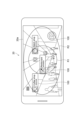
- FIG. FIG. 4 is a diagram showing an example of AR display in an information processing device
- FIG. 10 is a diagram showing area valuation in the area valuation system
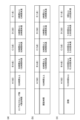
- FIG. 4 is a diagram showing information used for valuation of a region
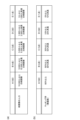
- FIG. 4 is a diagram showing information used for valuation of a region
- 4 is a flow chart showing processing executed by the area-value evaluation system according to the embodiment of the present invention
- It is a figure which shows the hardware constitutions of the area
- FIG. 1 shows the area value evaluation system 10 according to this embodiment.
- the area value evaluation system 10 is a system (apparatus) that evaluates the value of an area in which displayed display information is arranged in a virtual space that is used for display in the information processing device 20 and whose position corresponds to that in the real space.
- the virtual space is used for AR display in the information processing device 20, for example.
- a virtual space used for AR display will be described as an example. Note that the virtual space may be used for displays other than the AR display as long as it is used for display on the information processing apparatus 20 and has a corresponding position to the real space.
- FIG. 2 shows an example of AR display in the information processing device 20.
- the AR space which is a virtual space used for AR display
- content 100 which is display information to be displayed on the information processing device 20
- a position in the AR space corresponds to a position in the real space. Therefore, the area of the AR space in which the content 100 is arranged also corresponds to any position in the physical space.
- the area-value evaluation system 10 the positional correspondence between the AR space and the real space is stored in advance, and the stored positional correspondence is used for the functions of the area-value evaluation system 10, which will be described later.
- the information processing device 20 is a device that is carried and used by a user, and is, for example, a mobile communication terminal such as a smart phone.
- the information processing device 20 may be a device worn by the user, such as AR glasses (in this case, the information processing device 20 is worn on the user's head, specifically on the eyes). good.
- FIG. 2 only one information processing device 20 is illustrated in FIG. 2, there are usually a plurality of information processing devices 20 used by a plurality of users.
- the information processing device 20 includes an imaging device and a display device.
- the imaging device may be an existing one, for example, a camera normally provided in a smartphone or the like.
- the display device may be an existing one, for example, a display normally provided in a smartphone or the like.
- the information processing device 20 displays an image of the physical space captured by the imaging device on the display screen 20a of the display device.
- the information processing device 20 displays the content 100 arranged in the area of the AR space corresponding to the position of the real space shown in the image so as to be superimposed on the image of the real space.
- Content 100 is, for example, an advertisement. That is, the content 100 is used as a virtual signboard in AR display. Note that the content 100 does not need to be an advertisement, and may be anything as long as it is arranged in the AR space and displayed on the information processing device 20 .
- the AR display in the information processing device 20 may be performed in the same manner as in the past.
- AR display is performed by an AR display application installed in the information processing apparatus 20 .
- the information processing apparatus 20 performs AR display by transmitting and receiving information to and from an AR display server using the application.
- the AR display may be performed by a method other than the above.
- functions of the information processing apparatus 20 according to the present embodiment, which will be described later, may be realized by an application for AR display.
- a business operator that causes the information processing device 20 to perform AR display provides a third party with a region where the content 100 in the virtual space is arranged for a fee. can do. That is, a third party can purchase the right to present advertisements in the AR space and present the advertisements in the AR space. Since the position in the AR space corresponds to the position in the real space, there are areas in the AR space that are highly likely to be seen by the user (browsable) and areas that are unlikely to be viewed by the user. It is conceivable to set a high price in areas where the possibility is high and a low price in areas where the possibility is low.
- the content placement usage right for one area is 1,000,000 yen/h
- the content placement usage right for another area is 300,000 yen/h
- the content placement usage right for another area is 500,000 yen/h
- the area value evaluation system 10 evaluates the value of the area where the content 100 is placed in the AR space.
- the value of the area evaluated by the area-value evaluation system 10 may be the price of the area itself as described above, or may be the standard of the price of the area.
- the value of the area of the AR space is increased, for example, when it is easier for the user to browse and the advertising effect is higher.
- the area value evaluation system 10 may evaluate the area value using evaluation criteria other than those described above. Also, the area value evaluation system 10 may evaluate value having a meaning other than price.
- the area value evaluation system 10 is configured by a computer such as a PC (personal computer) or a server device.
- the area-value evaluation system 10 may be composed of a plurality of computers, that is, computer systems.
- the area-value evaluation system 10 and the information processing device 20 each have a communication function, and can exchange information with each other via a communication network.
- the communication function may be an existing one.
- the area value evaluation system 10 receives input of information related to a request for evaluation, and outputs information indicating a price according to the information.
- a person who wishes to present the content 100 in the AR space inputs information relating to an evaluation request in order to know the price of presenting the content 100 .
- the information related to the evaluation request is information indicating the area in the AR space where the content 100 is to be placed, the target attribute of the content 100 (for whom the content 100 is intended), and the time period for which the content 100 is to be distributed (presented).
- the area value evaluation system 10 outputs the price of the area in the AR space according to the input information.
- the area value evaluation system 10 is configured with an evaluation information acquisition unit 11 and an evaluation unit 12 .
- the evaluation information acquisition unit 11 is a functional unit that acquires evaluation information used for evaluating the value of the area of the virtual space.
- the evaluation information acquisition unit 11 acquires evaluation information including position information indicating the position in the real space of the information processing apparatus 20 that is performing display using the virtual space.
- the evaluation information acquisition unit 11 may acquire evaluation information including display status information indicating a display status using the virtual space in the information processing device 20 .
- the evaluation information acquisition unit 11 may acquire evaluation information including display status information indicating a time-series display status using the virtual space in the information processing apparatus 20 .
- the evaluation information acquisition unit 11 acquires an image of the real space captured by an imaging device provided in the information processing device 20, estimates the position of the information processing device 20 based on the acquired image of the real space, Location information may be obtained.
- the evaluation information acquisition unit 11 may acquire evaluation information including an image of the physical space captured by an imaging device provided in the information processing device 20 .
- the evaluation information acquisition unit 11 may acquire evaluation information including time-series images of the real space captured by an imaging device provided in the information processing device 20 .
- the evaluation information acquisition unit 11 may acquire evaluation information according to time.
- the evaluation information acquisition unit 11 may acquire evaluation information including attribute information indicating attributes of the user of the information processing device 20 .
- the evaluation information acquisition unit 11 acquires evaluation information as follows.
- the information processing device 20 transmits to the area value evaluation system 10 the image displayed while the AR display is being performed on the device 20 itself.
- the image displayed when the information processing device 20 performs the AR display that is, the image transmitted from the information processing device 20 to the area value evaluation system 10 is provided in the information processing device 20 as described above.
- the content 100 in the AR space is superimposed on the image in the real space captured by the imaging device.
- the image transmitted from the information processing device 20 to the area-value evaluation system 10 is an image of the real space and display status information indicating the display status using the virtual space.
- the information processing apparatus 20 performs the above transmission using the application.
- the evaluation information acquisition unit 11 receives and acquires the image transmitted from the information processing device 20 .
- the evaluation information acquisition unit 11 estimates the position of the information processing device 20 in the physical space based on the acquired image, and acquires position information indicating the position of the information processing device 20 in the physical space.
- the position information is, for example, information indicating coordinates (eg, latitude and longitude) in real space.
- the position information may be information other than the above as long as it indicates the position of the information processing device 20 in the real space.
- Position estimation from images may be performed by existing techniques.
- the evaluation information acquisition unit 11 associates and stores in advance the information indicating the position and the information related to the image such as the feature points.
- the evaluation information acquisition unit 11 extracts information related to the input image, such as feature points of the acquired image.
- the evaluation information acquisition unit 11 collates the extracted feature points and the like with the stored information related to the image such as the feature points.
- the evaluation information acquisition unit 11 estimates the position of the information processing device 20 from the stored information of the correspondence and the matching result.
- the information processing device 20 periodically transmits images to the area value evaluation system 10 while the AR display application is running on the device 20 itself. That is, the information processing device 20 transmits time-series images to the area-value assessment system 10 . For example, the information processing device 20 may transmit moving images to the area-value assessment system 10 .
- the evaluation information acquisition unit 11 estimates the position each time an image is acquired from the information processing device 20 .
- the evaluation information acquisition unit 11 may acquire the position information of the information processing device 20 by a method other than the above.
- the information processing device 20 performs positioning of the own device 20 and transmits the position information of the own device 20 to the area value evaluation system 10, and the evaluation information acquisition unit 11 receives the position transmitted from the information processing device 20. Information may be received and obtained.
- the evaluation information acquisition unit 11 may use the image itself transmitted from the information processing device 20 as the evaluation information.
- the image is the image of the real space and the display status information indicating the display status using the virtual space.
- the image of the physical space and the display status information may be separate information, for example, separate images.
- the display status information may be an image in which the content 100 is displayed, that is, an image superimposed on the image of the physical space. Also, the display status information does not have to be an image, and may be information indicating the content 100 displayed in the image. Further, the display status information may be information indicating the position of the content 100 in the image (for example, coordinates in the image).
- the evaluation information acquisition unit 11 may acquire evaluation information according to time.
- the information processing device 20 transmits information such as images to the area value evaluation system 10 in real time.
- the evaluation information acquiring unit 11 sets the time when the evaluation information such as the image is received from the information processing device 20 as the time related to the evaluation information such as the image.
- the information processing device 20 adds information indicating time to evaluation information such as an image and transmits the information to the area value evaluation system 10 .
- the time is the time displayed in the information processing device 20 in the case of an image, and the time measured in the information processing device 20 in the case of position information.
- the evaluation information acquisition unit 11 receives and acquires evaluation information such as an image to which information indicating time is added.
- the evaluation information acquisition unit 11 may acquire evaluation information including attribute information indicating attributes of the user of the information processing device 20 .
- User attributes are, for example, the user's gender and age. Also, the user's attribute may be something other than the above (for example, occupation).
- the evaluation information acquisition unit 11 stores information in which the identifier of the information processing device 20 and the attribute information of the user of the information processing device 20 are associated with each other.
- the information processing device 20 adds an identifier of its own device 20 to evaluation information such as an image and transmits the information to the area value evaluation system 10 .
- the evaluation information acquisition unit 11 receives and acquires evaluation information such as an image to which the identifier of the information processing device 20 is added.
- the evaluation information acquisition unit 11 acquires user attribute information stored in association with the acquired identifier.
- the evaluation information acquisition unit 11 acquires a sufficient number of evaluation information for evaluating the value of the area. For example, the evaluation information acquisition unit 11 acquires evaluation information from a plurality of information processing apparatuses 20 performing AR display using an AR display application. The evaluation information acquisition unit 11 outputs the acquired evaluation information to the evaluation unit 12 .
- the evaluation unit 12 is a functional unit that performs aggregation based on the evaluation information acquired by the evaluation information acquisition unit 11 and evaluates the value of the area based on the aggregation result.
- the evaluation unit 12 determines the value of the area based on whether the area is included in the display using the virtual space in the information processing device 20 indicated by the display status information acquired by the evaluation information acquisition unit 11. may be evaluated.
- the evaluation unit 12 may also evaluate the value of the area according to the position of the area in the display using the virtual space in the information processing device 20 .
- the evaluation unit determines the length of time that a preset state continues in the time-series display using the virtual space in the information processing device 20, which is indicated by the display status information acquired by the evaluation information acquisition unit 11.
- the area may be valued accordingly.
- the evaluation unit 12 may also evaluate the value of the area according to whether or not the image of the physical space acquired by the evaluation information acquisition unit 11 includes a portion corresponding to the area.
- the evaluation unit 12 may also evaluate the value of the area in accordance with the position of the area corresponding to the area in the image of the physical space.
- the evaluation unit 12 evaluates the value of the region in accordance with the length of continuous time during which a preset state continues in the time-series images of the real space acquired by the evaluation information acquisition unit 11. You may
- the evaluation unit 12 evaluates the value of the area as follows.
- the evaluation unit 12 evaluates the value of a preset area in the virtual space.
- This area is an area in which the content 100 is arranged as described above. A plurality of areas may be evaluated.
- the evaluation unit 12 receives evaluation information from the evaluation information acquisition unit 11 .
- the evaluation unit 12 counts based on the input evaluation information for each evaluation item set in advance as shown in Table T1 in FIG. There are four evaluation items shown in Table T1 in FIG.
- the evaluation unit 12 evaluates the value of the area based on the total result for each evaluation item.
- the value of the area is, for example, a price per hour, eg, a value in units of yen/hour.
- the evaluation unit 12 determines an evaluation rank for each evaluation item based on the result of totaling evaluation information. There are five evaluation ranks from A (5 points) to E (1 point), each of which is associated with an evaluation point. A higher score indicates a higher evaluation.
- the first evaluation item is the number of users in the area x staying time.
- the evaluation item is a value for each area set in advance in the physical space.
- the area is, for example, a mesh that divides the physical space into rectangles. The higher this value, the higher the value of the area of content 100 that can be seen by users in that area.
- the evaluation unit 12 calculates the above values from the position information, which is one of the evaluation information. For example, the evaluation unit 12 determines in which area each piece of location information is included, and counts the number of pieces of location information for each area. The evaluation unit 12 calculates the value of the number of users in each area ⁇ stay time from the counted value. For example, the counted value is multiplied by the number of location information by a preset coefficient (coefficient corresponding to the time interval of location information) to calculate the value of the number of users ⁇ stay time.
- the second evaluation item is the browsing time/number of times of the content 100 or real object in the area.
- the evaluation item is a value for each evaluation target area in the virtual space. The higher the value, the higher the value of the area. It should be noted that although viewing time and number of times are used, actually viewing by the user of the information processing apparatus 20 is not necessarily required as described below.
- the evaluation unit 12 determines whether an area is included in the AR display on the information processing device 20 based on the evaluation information. For example, it is determined whether or not the content 100 arranged in the area to be evaluated is included (pictured) in the image, which is one of the evaluation information. The said judgment should just be performed by the existing technique. Also, if the evaluation information is information indicating the content 100 displayed in the image, the above determination may be made using that information.
- the evaluation unit 12 takes the time during which the content 100 is included in the image as the value of the browsing time related to the above evaluation items.
- the calculation of the time may be performed in the same manner as the calculation of the time for the first evaluation item.
- the evaluation unit 12 sets the number of times the content 100 is included in the image as the value of the number of views related to the evaluation item. In this case, the time in which the content 100 is continuously included may be counted as one time.
- the evaluation unit 12 captures the image of the real space, which is one of the evaluation information, by the imaging device provided in the information processing apparatus 20, and stores the area in the image. It is determined whether or not a portion (that is, a real object) corresponding to is included (pictured).
- the location included in the image of the physical space is the location where the content 100 is displayed if the content 100 is arranged in the area in the AR space.
- the position of the location in the physical space corresponding to the area in the AR space is the position corresponding to the correspondence relationship between the AR space and the physical space, and is grasped in advance by the area value evaluation system 10 .
- the evaluation unit 12 determines whether or not the above position is included in the image of the physical space. The said judgment should just be performed by the existing technique. For example, a technique of grasping the position of the real space in the image may be used when performing AR display.
- the evaluation unit 12 takes the time during which the above-mentioned portion is included in the image of the physical space as the value of the browsing time related to the above-mentioned evaluation items.
- the calculation of the time may be performed in the same manner as the calculation of the time for the first evaluation item.
- the evaluation unit 12 sets the number of times the above-mentioned portion is included in the image of the physical space as the value of the number of times of browsing related to the above-mentioned evaluation item. In this case, the time in which the above points are continuously included may be counted as one time.
- the evaluation unit 12 may calculate the value of the evaluation item according to the position of the area in the AR display on the information processing device 20 , for example, the position of the content 100 in the image displayed on the information processing device 20 .
- the evaluation unit 12 may also calculate the value of the evaluation item according to the position of the area corresponding to the evaluation target area in the image of the physical space.
- the evaluation item may be used to calculate the value of Alternatively, when an elliptical region R2 (Far) including the circular region R1 is provided, and the content 100 or the evaluation target region is located in the region R1, the content 100 or the evaluation target region is located in the region R2.
- the value of the evaluation item may be calculated with a greater weight than when it is located.
- the third evaluation item is the number of population (number of users) by time zone in the area.
- the evaluation item is a value for each combination of an area and a time period set in advance in the physical space. The higher this value, the higher the value of the area of content 100 that can be seen by users in that area.
- the evaluation unit 12 calculates the above values from the position information, which is one of the evaluation information. For example, the evaluation unit 12 determines in which area each piece of location information is included, and counts the number of users based on the location information for each area and time period.
- the time zone is, for example, a time zone for each hour in a day.
- the time period is not limited to the above, and may be any division of the time axis such as the day of the week.
- the number of users based on location information if there is one or more pieces of location information for a certain user in the same area and time period, that user is counted as 1, and if there is no location information for a certain user, Count 0 for that user.
- the value of this evaluation item may be the value of the number of users ⁇ stay time, as in the case of the first evaluation item.
- the value of the first evaluation item may be the number of users as in the case of this evaluation item.
- the fourth evaluation item is the relationship between user attributes and content in the area.
- the evaluation item is a value for each area set in advance in the physical space.
- the evaluation item is a value corresponding to the information indicating the target attribute of the content 100, which is one of the information related to the evaluation request. This value indicates the degree of matching between the target attribute of the content 100 and the user attribute of the user in the area. The higher this value, the higher the value of the area of content 100 that can be seen by users in that area.
- the evaluation unit 12 calculates the population ratio (users) for each user attribute for each area for calculating the above value from the position information and attribute information, which are information for evaluation. For example, the evaluation unit 12 determines in which area each piece of position information is included, and specifies a user located in the area. In the same area, if there is one or more pieces of location information for a certain user, that user is regarded as a user located in that area, and if there is no location information for a certain user, that user is regarded as a user located in that area. do not. For each area, the evaluation unit 12 refers to the attribute information of the users located in that area, and calculates the population ratio for each user attribute. For example, the evaluation unit 12 calculates the population ratio for each user attribute, such as men in their teens: 40%, men in their twenties: 20%, men in their thirties: 30%, for users in a certain area.
- the evaluation unit 12 determines the length of time that the preset state continues in the time-series display using the AR space in the information processing device 20. may be used to assess the value of the area. Alternatively, the evaluation unit 12 may evaluate the value of the area in accordance with the length of continuous time during which a preset state continues in the time-series images of the real space. Even if AR is displayed on the information processing device 20 , the user is not necessarily viewing the AR display on the information processing device 20 . By considering the length of time that the preset state continues as described above, the value considering the case where there is a high possibility that the user is viewing the AR display on the information processing device 20 Calculations can be made.
- the evaluation unit 12 may calculate the value of the evaluation item using information only when the AR display or the image in the real space does not continuously change for a certain period of time (for example, 3 seconds). Detection that the AR display or the real space image does not change continuously for a certain period of time may be performed by an existing technique using the display status information or the real space image. This is because, if the AR display or the image of the physical space does not continuously change for a certain period of time, it is highly likely that the user is gazing at the display. On the other hand, if the AR display or the image of the real space changes within a certain period of time, there is a possibility that the user is not paying attention to the display, such as simply heading to the destination. is considered to be high.
- the value of the evaluation item may be calculated by assigning a greater weight to the continuous time length of 3 seconds or more than to the continuous time length of less than 3 seconds.
- the evaluation unit 12 may calculate the value of the evaluation item according to the length of continuous time including the position of the evaluation target area in the AR display on the information processing device 20. good.
- the evaluation unit 12 may calculate the value of the evaluation item according to the length of continuous time in which the portion corresponding to the region in the image of the physical space is included. For example, only when the length of the continuous time is 3 seconds or longer, the value is calculated.
- An existing technique may be used to detect whether the AR display includes an area to be evaluated and whether a portion corresponding to the area in the image of the physical space is included.
- the value of the evaluation item may be calculated by assigning a greater weight to the continuous time length of 3 seconds or more than to the continuous time length of less than 3 seconds.
- the evaluation unit 12 outputs information indicating the price, which is the evaluation result, in response to the input of information related to the evaluation request, from the values for each evaluation item, which are the aggregate results based on the evaluation information as described above.
- Information relating to the evaluation request is transmitted to the area value evaluation system 10 from the information processing device of the person who wishes to present the content 100 in the AR space.
- the evaluation unit 12 receives and accepts information related to the transmitted evaluation request.
- the information related to the evaluation request is information indicating the area in the AR space where the content 100 is to be placed, the target attribute of the content 100 (for whom is the content 100 intended?), and the time period for which the content 100 is to be distributed (presented).
- the information indicating the area in the AR space where the content 100 is to be placed is, for example, information indicating the coordinates of the area (for example, the coordinates of the three-dimensional space).
- Information indicating the target attribute of the content 100 is, for example, information indicating gender and age.
- the information may include the main target and the sub-target.
- a specific example of the information is main: information for men in their 30s and sub: information for men in their 20s.
- the information indicating the desired time period for distribution is, for example, information indicating an hourly time period (for example, 8:00 to 9:00) in a day.
- the evaluation unit 12 calculates the price of the area from the information related to the evaluation request and the values for each evaluation item.
- the evaluation unit 12 identifies the area of the real space used for evaluation from the information indicating the area in the AR space where the content 100 is to be placed. For example, based on the stored positional correspondence between the AR space and the real space, an area including the position in the real space corresponding to the area where the content 100 is to be placed is specified as the area in the real space to be used for evaluation. Alternatively, an area in the AR space and an area in which the content 100 placed in the area can be browsed are associated in advance and stored in the evaluation unit 12, and the area associated with the area in the AR space where the content 100 is to be placed. may be specified as the area of the real space used for evaluation.
- the evaluation unit 12 refers to the value of the number of users x stay time (first evaluation item) calculated for the specified area.
- the evaluation unit 12 stores in advance information indicating the correspondence relationship between the evaluation rank shown in FIG. 4A and the number of users ⁇ staying time. Based on the stored correspondence relationship, the evaluation unit 12 determines an evaluation rank from the value of the number of users ⁇ staying time in the specified area. In addition, if there are multiple specified areas, the value for determining the evaluation rank from the value of the number of users in each area x the staying time value) to determine the evaluation rank (the same applies to evaluation items using values for each area).
- the evaluation unit 12 refers to the value of the browsing time/number of times (second evaluation item) of the content 100 or the real object calculated for the area in the AR space where the content 100 is to be placed.
- the evaluation unit 12 stores in advance information indicating the correspondence relationship between the evaluation rank and the browsing time shown in FIG. 4(b).
- the evaluation unit 12 stores in advance information indicating the correspondence relationship between the evaluation rank and the number of views shown in FIG. 4(c).
- the evaluation unit 12 determines an evaluation rank from the calculated browsing time and number of browsing times based on the stored correspondence relationship.
- the evaluation rank may be determined from either the viewing time or the number of times of viewing. Alternatively, the evaluation rank may be determined from both the browsing time and the number of browsing times. In this case, for example, an average of the evaluation rank determined from the browsing time and the evaluation rank determined from the number of times of browsing may be used as the evaluation rank of this evaluation item.
- the evaluation unit 12 refers to the value of the number of population (the number of users) (third evaluation item) for each time period calculated for the specified area and the time period for which distribution (presentation) is desired.
- the evaluation unit 12 stores information indicating the correspondence relationship between the evaluation rank shown in FIG. Based on the stored correspondence relationship, the evaluation unit 12 determines an evaluation rank from the calculated values of the population numbers for each time zone in the area.
- the evaluation unit 12 refers to the population ratio value for each user attribute calculated for the specified area.
- the evaluation unit 12 calculates the matching rate, which is the value of the relationship (fourth evaluation item) between the user attribute and the content in the area, from the population ratio for each user attribute and the target attribute of the content 100 .
- the evaluation unit 12 stores information indicating the correspondence relationship between the evaluation rank and the matching rate shown in FIG. 5(b). The evaluation unit 12 determines an evaluation rank from the calculated matching rate in the area based on the stored correspondence.
- the evaluation unit 12 stores a preset weight value Wi for each evaluation item i.
- the evaluation unit 12 multiplies the evaluation point Pi corresponding to the evaluation rank determined for each evaluation item i by the weight value Wi to calculate the score Pi ⁇ Wi of each evaluation item i.
- the evaluation unit 12 calculates the sum ⁇ Pi ⁇ Wi of these values, and uses it as a total evaluation value for the input information related to the evaluation request.
- the evaluation unit 12 preliminarily stores the correspondence relationship between the comprehensive evaluation value and the price per hour (yen/hour), which is the value of the area, as a price calculation table T2 by comprehensive evaluation value shown in FIG.
- the evaluation unit 12 determines (evaluates) the price of the area in the AR space with respect to the input of the information relating to the evaluation request based on the stored price calculation table T2 by comprehensive evaluation value.
- the evaluation unit 12 outputs information indicating the price of the determined area. For example, the evaluation unit 12 transmits information indicating the price of the determined area to the information processing apparatus of the person who desires to present the content 100 in the AR space, which is the input source of the information related to the request for evaluation.
- the information indicating the evaluation result of the value of the area by the evaluation unit 12 may be output in an output destination and mode other than those described above.
- the evaluation by the evaluation unit 12 was performed in response to the input of information related to the evaluation request, it does not necessarily have to be performed in response to the input.
- the evaluation unit 12 may evaluate the value for all preset areas and all conditions (eg time period).
- the evaluation unit 12 may perform aggregation based on evaluation information including position information indicating the position in the real space of the information processing device 20 performing AR display, and evaluate the value of the area based on the aggregation result.
- evaluation information including position information indicating the position in the real space of the information processing device 20 performing AR display
- the evaluation unit 12 may evaluate the area using evaluation items other than those described above. The above are the functions of the area value evaluation system 10 according to the present embodiment.
- the evaluation information acquisition unit 11 acquires the evaluation information used for the value evaluation of the area of the virtual space (S01).
- the evaluation information includes at least position information indicating the position in the real space of the information processing device 20 that is performing display using the virtual space.
- the evaluation unit 12 performs counting based on the evaluation information acquired by the evaluation information acquisition unit 11 (S02).
- the evaluation unit 12 evaluates the value of the area based on the aggregated result (S03).
- the evaluation unit 12 outputs information indicating the evaluation result of the value of the area (S04).
- the above is the processing executed by the area-value evaluation system 10 according to the present embodiment.
- the position in the real space of the information processing device 20 performing display using the virtual space, such as AR display is considered, and the value of the area of the virtual space is evaluated.
- the value of the evaluated area can be made according to the advertising effect of the area.
- the value of a region can be evaluated in view of the user's viewability of content 100 . Therefore, according to this embodiment, it is possible to appropriately evaluate the value of the area in which the content 100 such as an advertisement is presented in a virtual space such as an AR space.
- by visualizing the value of the area in the AR space as in this embodiment it is possible to promote the trading of the area in the AR space.
- the evaluation of the value of the area may also be performed depending on whether the area is included in the AR display on the information processing device 20 or not. According to this configuration, the value of the area can be evaluated more appropriately according to the actual AR display on the information processing device 20 . Also, in this case, the value of the area may be evaluated according to the position of the area in the AR display. According to this configuration, the value of the area can be evaluated more appropriately according to the position of the area in the AR display.
- the above does not necessarily have to be used to evaluate the value of the territory.
- the evaluation of the value of the area is also based on the length of time that the preset state continues in the time-series display using the AR space in the information processing device 20. may be done. According to this configuration, the value of the area can be evaluated more appropriately according to the AR display situation in the information processing device 20 . However, the above does not necessarily have to be used to evaluate the value of the territory.
- the position information may be acquired by estimating the position of the information processing device 20 based on the image of the real space captured by the imaging device provided in the information processing device 20 .
- the position information may be acquired by a method other than the above.
- the evaluation of the value of a region also depends on whether or not a portion corresponding to the region is included in the image of the real space captured by the imaging device provided in the information processing device 20. may be done. According to this configuration, the value of the area can be evaluated more appropriately according to the image of the real space corresponding to the AR display in the information processing device 20 . In this case, the value of the area may also be evaluated according to the position of the area corresponding to the area in the image of the physical space. According to this configuration, the value of the area can be evaluated more appropriately according to the position of the portion corresponding to the area in the image of the physical space. However, the above does not necessarily have to be used to evaluate the value of the territory.
- the evaluation of the value of a region is performed over a continuous period of time during which a preset state continues in an image of real space captured by an imaging device provided in the information processing device 20. It may also be done according to the length. According to this configuration, the value of the area can be evaluated more appropriately according to the situation of the image in the real space corresponding to the AR display in the information processing device 20 . However, the above does not necessarily have to be used to evaluate the value of the territory.
- the evaluation information corresponding to the time may be used to evaluate the value of the area.
- the value of the area can be evaluated more appropriately.
- the value of the area to be evaluated as described above may be set according to the time. According to this configuration, it is possible to improve the convenience of the value of the area to be evaluated. For example, if it is a position area corresponding to a station area, it is evaluated as having a high value during a busy time period such as a commuting time period (8:00 to 9:00). However, it is not always necessary to consider the time of day when evaluating the value of a region.
- attribute information indicating attributes of the user of the information processing device 20 may be used to evaluate the value of the area.
- the value of the area can be evaluated more appropriately.
- the value of the area to be evaluated as described above may be set according to the attributes of the user. According to this configuration, it is possible to improve the convenience of the value of the area to be evaluated. For example, if the area is located in a location corresponding to an area where young people gather, such as Shibuya, the advertising effect of the content 100 for young people can be expected to be high, so the value is evaluated accordingly. However, it is not always necessary to consider the attributes of the user in evaluating the value of the area.
- the area-value evaluation system 10 may be provided in another device such as the information processing device 20 or the like. In that case, a system including the other device may be used as the area value evaluation system.
- each functional block may be implemented using one device that is physically or logically coupled, or directly or indirectly using two or more devices that are physically or logically separated (e.g. , wired, wireless, etc.) and may be implemented using these multiple devices.
- a functional block may be implemented by combining software in the one device or the plurality of devices.
- Functions include judging, determining, determining, calculating, calculating, processing, deriving, investigating, searching, checking, receiving, transmitting, outputting, accessing, resolving, selecting, choosing, establishing, comparing, assuming, expecting, assuming, Broadcasting, notifying, communicating, forwarding, configuring, reconfiguring, allocating, mapping, assigning, etc. can't
- a functional block (component) responsible for transmission is called a transmitting unit or transmitter.
- the implementation method is not particularly limited.
- the area value evaluation system 10 in one embodiment of the present disclosure may function as a computer that performs the information processing of the present disclosure.
- FIG. 7 is a diagram showing an example of a hardware configuration of the area-value assessment system 10 according to an embodiment of the present disclosure.
- the area-value evaluation system 10 described above may be physically configured as a computer device including a processor 1001, a memory 1002, a storage 1003, a communication device 1004, an input device 1005, an output device 1006, a bus 1007, and the like.
- the hardware configuration of the information processing device 20 may be the one described here.
- the term "apparatus” can be read as a circuit, device, unit, or the like.
- the hardware configuration of the area-value assessment system 10 may be configured to include one or a plurality of each device shown in the figure, or may be configured without some of the devices.
- Each function in the area value evaluation system 10 is performed by the processor 1001 performing calculations by loading predetermined software (programs) onto hardware such as the processor 1001 and memory 1002, controlling communication by the communication device 1004 It is realized by controlling at least one of data reading and writing in the memory 1002 and the storage 1003 .
- the processor 1001 for example, operates an operating system and controls the entire computer.
- the processor 1001 may be configured by a central processing unit (CPU) including an interface with peripheral devices, a control device, an arithmetic device, registers, and the like.
- CPU central processing unit
- each function in the area-value assessment system 10 described above may be implemented by the processor 1001 .
- the processor 1001 reads programs (program codes), software modules, data, etc. from at least one of the storage 1003 and the communication device 1004 to the memory 1002, and executes various processes according to them.
- programs program codes
- software modules software modules
- data etc.
- the program a program that causes a computer to execute at least part of the operations described in the above embodiments is used.
- each function in the area-value assessment system 10 may be implemented by a control program stored in the memory 1002 and running on the processor 1001 .
- FIG. Processor 1001 may be implemented by one or more chips.
- the program may be transmitted from a network via an electric communication line.
- the memory 1002 is a computer-readable recording medium, and is composed of at least one of, for example, ROM (Read Only Memory), EPROM (Erasable Programmable ROM), EEPROM (Electrically Erasable Programmable ROM), RAM (Random Access Memory), etc. may be
- ROM Read Only Memory
- EPROM Erasable Programmable ROM
- EEPROM Electrical Erasable Programmable ROM
- RAM Random Access Memory
- the memory 1002 may also be called a register, cache, main memory (main storage device), or the like.
- the memory 1002 can store executable programs (program code), software modules, etc. for performing information processing according to an embodiment of the present disclosure.
- the storage 1003 is a computer-readable recording medium, for example, an optical disc such as a CD-ROM (Compact Disc ROM), a hard disk drive, a flexible disc, a magneto-optical disc (for example, a compact disc, a digital versatile disc, a Blu-ray disk), smart card, flash memory (eg, card, stick, key drive), floppy disk, magnetic strip, and/or the like.
- Storage 1003 may also be called an auxiliary storage device.
- the storage medium included in the area valuation system 10 may be, for example, a database including at least one of the memory 1002 and the storage 1003, a server, or other suitable medium.
- the communication device 1004 is hardware (transmitting/receiving device) for communicating between computers via at least one of a wired network and a wireless network, and is also called a network device, a network controller, a network card, a communication module, or the like.
- the input device 1005 is an input device (for example, keyboard, mouse, microphone, switch, button, sensor, etc.) that receives input from the outside.
- the output device 1006 is an output device (eg, display, speaker, LED lamp, etc.) that outputs to the outside. Note that the input device 1005 and the output device 1006 may be integrated (for example, a touch panel).
- Each device such as the processor 1001 and the memory 1002 is connected by a bus 1007 for communicating information.
- the bus 1007 may be configured using a single bus, or may be configured using different buses between devices.
- the area value evaluation system 10 includes hardware such as a microprocessor, a digital signal processor (DSP), an ASIC (Application Specific Integrated Circuit), a PLD (Programmable Logic Device), and an FPGA (Field Programmable Gate Array). part or all of each functional block may be implemented by the hardware.
- processor 1001 may be implemented using at least one of these pieces of hardware.
- Input/output information may be stored in a specific location (for example, memory) or managed using a management table. Input/output information and the like can be overwritten, updated, or appended. The output information and the like may be deleted. The entered information and the like may be transmitted to another device.
- the determination may be made by a value represented by one bit (0 or 1), by a true/false value (Boolean: true or false), or by numerical comparison (for example, a predetermined value).
- notification of predetermined information is not limited to being performed explicitly, but may be performed implicitly (for example, not notifying the predetermined information). good too.
- Software whether referred to as software, firmware, middleware, microcode, hardware description language or otherwise, includes instructions, instruction sets, code, code segments, program code, programs, subprograms, and software modules. , applications, software applications, software packages, routines, subroutines, objects, executables, threads of execution, procedures, functions, and the like.
- software, instructions, information, etc. may be transmitted and received via a transmission medium.
- the software uses at least one of wired technology (coaxial cable, fiber optic cable, twisted pair, digital subscriber line (DSL), etc.) and wireless technology (infrared, microwave, etc.) to website, Wired and/or wireless technologies are included within the definition of transmission medium when sent from a server or other remote source.
- wired technology coaxial cable, fiber optic cable, twisted pair, digital subscriber line (DSL), etc.
- wireless technology infrared, microwave, etc.
- system and “network” used in this disclosure are used interchangeably.
- information, parameters, etc. described in the present disclosure may be expressed using absolute values, may be expressed using relative values from a predetermined value, or may be expressed using other corresponding information. may be represented.
- determining and “determining” used in this disclosure may encompass a wide variety of actions.
- “Judgement” and “determination” are, for example, judging, calculating, computing, processing, deriving, investigating, looking up, searching, inquiring (eg, lookup in a table, database, or other data structure), ascertaining as “judged” or “determined”, and the like.
- "judgment” and “determination” are used for receiving (e.g., receiving information), transmitting (e.g., transmitting information), input, output, access (accessing) (for example, accessing data in memory) may include deeming that a "judgment” or “decision” has been made.
- judgment and “decision” are considered to be “judgment” and “decision” by resolving, selecting, choosing, establishing, comparing, etc. can contain.
- judgment and “decision” may include considering that some action is “judgment” and “decision”.
- judgment (decision) may be read as “assuming”, “expecting”, “considering”, or the like.
- connection means any direct or indirect connection or coupling between two or more elements, It can include the presence of one or more intermediate elements between two elements being “connected” or “coupled.” Couplings or connections between elements may be physical, logical, or a combination thereof. For example, “connection” may be read as "access”.
- two elements are in the radio frequency domain using at least one of one or more wires, cables and printed electrical connections, and as some non-limiting and non-exhaustive examples. , electromagnetic energy having wavelengths in the microwave and optical (both visible and invisible) regions, and the like.
- any reference to elements using the "first,” “second,” etc. designations used in this disclosure does not generally limit the quantity or order of those elements. These designations may be used in this disclosure as a convenient method of distinguishing between two or more elements. Thus, reference to a first and second element does not imply that only two elements can be employed or that the first element must precede the second element in any way.
- a and B are different may mean “A and B are different from each other.”
- the term may also mean that "A and B are different from C”.
- Terms such as “separate,” “coupled,” etc. may also be interpreted in the same manner as “different.”
Landscapes
- Business, Economics & Management (AREA)
- Strategic Management (AREA)
- Engineering & Computer Science (AREA)
- Finance (AREA)
- Development Economics (AREA)
- Accounting & Taxation (AREA)
- General Business, Economics & Management (AREA)
- Theoretical Computer Science (AREA)
- Marketing (AREA)
- Physics & Mathematics (AREA)
- Economics (AREA)
- General Physics & Mathematics (AREA)
- Entrepreneurship & Innovation (AREA)
- Game Theory and Decision Science (AREA)
- Tourism & Hospitality (AREA)
- General Health & Medical Sciences (AREA)
- Human Resources & Organizations (AREA)
- Health & Medical Sciences (AREA)
- Primary Health Care (AREA)
- Management, Administration, Business Operations System, And Electronic Commerce (AREA)
- User Interface Of Digital Computer (AREA)
Priority Applications (2)
| Application Number | Priority Date | Filing Date | Title |
|---|---|---|---|
| US18/699,683 US20240428289A1 (en) | 2021-10-11 | 2022-09-30 | Region value evaluation system |
| JP2023554400A JP7679483B2 (ja) | 2021-10-11 | 2022-09-30 | 領域価値評価システム |
Applications Claiming Priority (2)
| Application Number | Priority Date | Filing Date | Title |
|---|---|---|---|
| JP2021166800 | 2021-10-11 | ||
| JP2021-166800 | 2021-10-11 |
Publications (1)
| Publication Number | Publication Date |
|---|---|
| WO2023063124A1 true WO2023063124A1 (ja) | 2023-04-20 |
Family
ID=85988546
Family Applications (1)
| Application Number | Title | Priority Date | Filing Date |
|---|---|---|---|
| PCT/JP2022/036804 Ceased WO2023063124A1 (ja) | 2021-10-11 | 2022-09-30 | 領域価値評価システム |
Country Status (3)
| Country | Link |
|---|---|
| US (1) | US20240428289A1 (https=) |
| JP (1) | JP7679483B2 (https=) |
| WO (1) | WO2023063124A1 (https=) |
Cited By (1)
| Publication number | Priority date | Publication date | Assignee | Title |
|---|---|---|---|---|
| WO2025094384A1 (ja) * | 2023-11-02 | 2025-05-08 | 株式会社Nttドコモ | 仮想空間評価システム |
Citations (3)
| Publication number | Priority date | Publication date | Assignee | Title |
|---|---|---|---|---|
| JP2001331813A (ja) * | 2000-05-22 | 2001-11-30 | Wall:Kk | 三次元都市における看板画像生成装置及び方法 |
| WO2013108549A1 (ja) * | 2012-01-16 | 2013-07-25 | シャープ株式会社 | Ar情報管理装置、ar情報管理方法 |
| WO2020178935A1 (ja) * | 2019-03-04 | 2020-09-10 | ニューラルポケット株式会社 | 情報処理システム、情報処理装置、サーバ装置、プログラム、又は方法 |
Family Cites Families (5)
| Publication number | Priority date | Publication date | Assignee | Title |
|---|---|---|---|---|
| US9451162B2 (en) * | 2013-08-21 | 2016-09-20 | Jaunt Inc. | Camera array including camera modules |
| JP6462059B1 (ja) * | 2017-07-13 | 2019-01-30 | 株式会社コロプラ | 情報処理方法、情報処理プログラム、情報処理システム、および情報処理装置 |
| US11823332B2 (en) * | 2018-03-02 | 2023-11-21 | Comcast Cable Communications, Llc | Overlay placement for virtual reality and augmented reality |
| JP7224894B2 (ja) * | 2018-12-20 | 2023-02-20 | キヤノン株式会社 | 情報処理装置、情報処理方法及びプログラム |
| GB2598927B (en) * | 2020-09-18 | 2024-02-28 | Sony Interactive Entertainment Inc | Apparatus and method for data aggregation |
-
2022
- 2022-09-30 JP JP2023554400A patent/JP7679483B2/ja active Active
- 2022-09-30 WO PCT/JP2022/036804 patent/WO2023063124A1/ja not_active Ceased
- 2022-09-30 US US18/699,683 patent/US20240428289A1/en active Pending
Patent Citations (3)
| Publication number | Priority date | Publication date | Assignee | Title |
|---|---|---|---|---|
| JP2001331813A (ja) * | 2000-05-22 | 2001-11-30 | Wall:Kk | 三次元都市における看板画像生成装置及び方法 |
| WO2013108549A1 (ja) * | 2012-01-16 | 2013-07-25 | シャープ株式会社 | Ar情報管理装置、ar情報管理方法 |
| WO2020178935A1 (ja) * | 2019-03-04 | 2020-09-10 | ニューラルポケット株式会社 | 情報処理システム、情報処理装置、サーバ装置、プログラム、又は方法 |
Cited By (1)
| Publication number | Priority date | Publication date | Assignee | Title |
|---|---|---|---|---|
| WO2025094384A1 (ja) * | 2023-11-02 | 2025-05-08 | 株式会社Nttドコモ | 仮想空間評価システム |
Also Published As
| Publication number | Publication date |
|---|---|
| US20240428289A1 (en) | 2024-12-26 |
| JP7679483B2 (ja) | 2025-05-19 |
| JPWO2023063124A1 (https=) | 2023-04-20 |
Similar Documents
| Publication | Publication Date | Title |
|---|---|---|
| WO2020107868A1 (zh) | 购物分享返利方法、装置、计算机装置和计算机存储介质 | |
| WO2023286895A1 (ko) | 서비스 이용과 관련된 혜택 정보를 제공하는 방법 및 이를 위한 전자 장치 | |
| WO2023033220A1 (ko) | 아이템 그룹의 정보를 제공하는 방법 및 이를 위한 장치 | |
| JP7679483B2 (ja) | 領域価値評価システム | |
| JP7503050B2 (ja) | 需要分散装置 | |
| JP7572809B2 (ja) | 情報提供装置 | |
| WO2024175122A1 (zh) | 一种交互方法、装置、电子设备以及存储介质 | |
| WO2024106051A1 (ja) | アバター管理装置 | |
| JP6930860B2 (ja) | 情報提供システム、及び、情報提供装置 | |
| US20240095814A1 (en) | Commodity display device, commodity display program, and commodity display method | |
| TW202301229A (zh) | 提供廣告內容之電子設備及其方法 | |
| JP7678222B2 (ja) | 変更率探索システム | |
| JP2021144647A (ja) | 情報処理装置 | |
| JP7489255B2 (ja) | 情報提供装置 | |
| WO2025126492A1 (ja) | 情報処理装置 | |
| JP7806327B1 (ja) | プログラム、サーバ、及びメッセージの表示方法 | |
| JP2017174102A (ja) | 情報処理装置、情報処理方法、およびプログラム | |
| JP7554641B2 (ja) | 情報配信装置 | |
| JP2022026687A (ja) | 情報提供装置 | |
| JP7377114B2 (ja) | 情報処理装置 | |
| JP6785716B2 (ja) | 情報処理装置 | |
| JP7809822B2 (ja) | 店舗判定装置 | |
| JP7523276B2 (ja) | メッセージ生成装置 | |
| JP7554574B2 (ja) | 割当装置、及び、割当システム | |
| JP7370292B2 (ja) | 提案装置 |
Legal Events
| Date | Code | Title | Description |
|---|---|---|---|
| 121 | Ep: the epo has been informed by wipo that ep was designated in this application |
Ref document number: 22880820 Country of ref document: EP Kind code of ref document: A1 |
|
| ENP | Entry into the national phase |
Ref document number: 2023554400 Country of ref document: JP Kind code of ref document: A |
|
| WWE | Wipo information: entry into national phase |
Ref document number: 18699683 Country of ref document: US |
|
| NENP | Non-entry into the national phase |
Ref country code: DE |
|
| 122 | Ep: pct application non-entry in european phase |
Ref document number: 22880820 Country of ref document: EP Kind code of ref document: A1 |