WO2023047498A1 - 基板処理装置、半導体装置の製造方法およびプログラム - Google Patents
基板処理装置、半導体装置の製造方法およびプログラム Download PDFInfo
- Publication number
- WO2023047498A1 WO2023047498A1 PCT/JP2021/034902 JP2021034902W WO2023047498A1 WO 2023047498 A1 WO2023047498 A1 WO 2023047498A1 JP 2021034902 W JP2021034902 W JP 2021034902W WO 2023047498 A1 WO2023047498 A1 WO 2023047498A1
- Authority
- WO
- WIPO (PCT)
- Prior art keywords
- gas
- substrate
- reaction tube
- heater
- heat insulating
- Prior art date
- Legal status (The legal status is an assumption and is not a legal conclusion. Google has not performed a legal analysis and makes no representation as to the accuracy of the status listed.)
- Ceased
Links
Images




Classifications
-
- H—ELECTRICITY
- H10—SEMICONDUCTOR DEVICES; ELECTRIC SOLID-STATE DEVICES NOT OTHERWISE PROVIDED FOR
- H10P—GENERIC PROCESSES OR APPARATUS FOR THE MANUFACTURE OR TREATMENT OF DEVICES COVERED BY CLASS H10
- H10P72/00—Handling or holding of wafers, substrates or devices during manufacture or treatment thereof
- H10P72/04—Apparatus for manufacture or treatment
- H10P72/0431—Apparatus for thermal treatment
- H10P72/0434—Apparatus for thermal treatment mainly by convection
-
- C—CHEMISTRY; METALLURGY
- C23—COATING METALLIC MATERIAL; COATING MATERIAL WITH METALLIC MATERIAL; CHEMICAL SURFACE TREATMENT; DIFFUSION TREATMENT OF METALLIC MATERIAL; COATING BY VACUUM EVAPORATION, BY SPUTTERING, BY ION IMPLANTATION OR BY CHEMICAL VAPOUR DEPOSITION, IN GENERAL; INHIBITING CORROSION OF METALLIC MATERIAL OR INCRUSTATION IN GENERAL
- C23C—COATING METALLIC MATERIAL; COATING MATERIAL WITH METALLIC MATERIAL; SURFACE TREATMENT OF METALLIC MATERIAL BY DIFFUSION INTO THE SURFACE, BY CHEMICAL CONVERSION OR SUBSTITUTION; COATING BY VACUUM EVAPORATION, BY SPUTTERING, BY ION IMPLANTATION OR BY CHEMICAL VAPOUR DEPOSITION, IN GENERAL
- C23C16/00—Chemical coating by decomposition of gaseous compounds, without leaving reaction products of surface material in the coating, i.e. chemical vapour deposition [CVD] processes
- C23C16/22—Chemical coating by decomposition of gaseous compounds, without leaving reaction products of surface material in the coating, i.e. chemical vapour deposition [CVD] processes characterised by the deposition of inorganic material, other than metallic material
- C23C16/30—Deposition of compounds, mixtures or solid solutions, e.g. borides, carbides, nitrides
- C23C16/34—Nitrides
- C23C16/345—Silicon nitride
-
- C—CHEMISTRY; METALLURGY
- C23—COATING METALLIC MATERIAL; COATING MATERIAL WITH METALLIC MATERIAL; CHEMICAL SURFACE TREATMENT; DIFFUSION TREATMENT OF METALLIC MATERIAL; COATING BY VACUUM EVAPORATION, BY SPUTTERING, BY ION IMPLANTATION OR BY CHEMICAL VAPOUR DEPOSITION, IN GENERAL; INHIBITING CORROSION OF METALLIC MATERIAL OR INCRUSTATION IN GENERAL
- C23C—COATING METALLIC MATERIAL; COATING MATERIAL WITH METALLIC MATERIAL; SURFACE TREATMENT OF METALLIC MATERIAL BY DIFFUSION INTO THE SURFACE, BY CHEMICAL CONVERSION OR SUBSTITUTION; COATING BY VACUUM EVAPORATION, BY SPUTTERING, BY ION IMPLANTATION OR BY CHEMICAL VAPOUR DEPOSITION, IN GENERAL
- C23C16/00—Chemical coating by decomposition of gaseous compounds, without leaving reaction products of surface material in the coating, i.e. chemical vapour deposition [CVD] processes
- C23C16/44—Chemical coating by decomposition of gaseous compounds, without leaving reaction products of surface material in the coating, i.e. chemical vapour deposition [CVD] processes characterised by the method of coating
- C23C16/448—Chemical coating by decomposition of gaseous compounds, without leaving reaction products of surface material in the coating, i.e. chemical vapour deposition [CVD] processes characterised by the method of coating characterised by the method used for generating reactive gas streams, e.g. by evaporation or sublimation of precursor materials
-
- C—CHEMISTRY; METALLURGY
- C23—COATING METALLIC MATERIAL; COATING MATERIAL WITH METALLIC MATERIAL; CHEMICAL SURFACE TREATMENT; DIFFUSION TREATMENT OF METALLIC MATERIAL; COATING BY VACUUM EVAPORATION, BY SPUTTERING, BY ION IMPLANTATION OR BY CHEMICAL VAPOUR DEPOSITION, IN GENERAL; INHIBITING CORROSION OF METALLIC MATERIAL OR INCRUSTATION IN GENERAL
- C23C—COATING METALLIC MATERIAL; COATING MATERIAL WITH METALLIC MATERIAL; SURFACE TREATMENT OF METALLIC MATERIAL BY DIFFUSION INTO THE SURFACE, BY CHEMICAL CONVERSION OR SUBSTITUTION; COATING BY VACUUM EVAPORATION, BY SPUTTERING, BY ION IMPLANTATION OR BY CHEMICAL VAPOUR DEPOSITION, IN GENERAL
- C23C16/00—Chemical coating by decomposition of gaseous compounds, without leaving reaction products of surface material in the coating, i.e. chemical vapour deposition [CVD] processes
- C23C16/44—Chemical coating by decomposition of gaseous compounds, without leaving reaction products of surface material in the coating, i.e. chemical vapour deposition [CVD] processes characterised by the method of coating
- C23C16/455—Chemical coating by decomposition of gaseous compounds, without leaving reaction products of surface material in the coating, i.e. chemical vapour deposition [CVD] processes characterised by the method of coating characterised by the method used for introducing gases into reaction chamber or for modifying gas flows in reaction chamber
- C23C16/45523—Pulsed gas flow or change of composition over time
- C23C16/45525—Atomic layer deposition [ALD]
- C23C16/45544—Atomic layer deposition [ALD] characterized by the apparatus
- C23C16/45546—Atomic layer deposition [ALD] characterized by the apparatus specially adapted for a substrate stack in the ALD reactor
-
- C—CHEMISTRY; METALLURGY
- C23—COATING METALLIC MATERIAL; COATING MATERIAL WITH METALLIC MATERIAL; CHEMICAL SURFACE TREATMENT; DIFFUSION TREATMENT OF METALLIC MATERIAL; COATING BY VACUUM EVAPORATION, BY SPUTTERING, BY ION IMPLANTATION OR BY CHEMICAL VAPOUR DEPOSITION, IN GENERAL; INHIBITING CORROSION OF METALLIC MATERIAL OR INCRUSTATION IN GENERAL
- C23C—COATING METALLIC MATERIAL; COATING MATERIAL WITH METALLIC MATERIAL; SURFACE TREATMENT OF METALLIC MATERIAL BY DIFFUSION INTO THE SURFACE, BY CHEMICAL CONVERSION OR SUBSTITUTION; COATING BY VACUUM EVAPORATION, BY SPUTTERING, BY ION IMPLANTATION OR BY CHEMICAL VAPOUR DEPOSITION, IN GENERAL
- C23C16/00—Chemical coating by decomposition of gaseous compounds, without leaving reaction products of surface material in the coating, i.e. chemical vapour deposition [CVD] processes
- C23C16/44—Chemical coating by decomposition of gaseous compounds, without leaving reaction products of surface material in the coating, i.e. chemical vapour deposition [CVD] processes characterised by the method of coating
- C23C16/455—Chemical coating by decomposition of gaseous compounds, without leaving reaction products of surface material in the coating, i.e. chemical vapour deposition [CVD] processes characterised by the method of coating characterised by the method used for introducing gases into reaction chamber or for modifying gas flows in reaction chamber
- C23C16/45557—Pulsed pressure or control pressure
-
- C—CHEMISTRY; METALLURGY
- C23—COATING METALLIC MATERIAL; COATING MATERIAL WITH METALLIC MATERIAL; CHEMICAL SURFACE TREATMENT; DIFFUSION TREATMENT OF METALLIC MATERIAL; COATING BY VACUUM EVAPORATION, BY SPUTTERING, BY ION IMPLANTATION OR BY CHEMICAL VAPOUR DEPOSITION, IN GENERAL; INHIBITING CORROSION OF METALLIC MATERIAL OR INCRUSTATION IN GENERAL
- C23C—COATING METALLIC MATERIAL; COATING MATERIAL WITH METALLIC MATERIAL; SURFACE TREATMENT OF METALLIC MATERIAL BY DIFFUSION INTO THE SURFACE, BY CHEMICAL CONVERSION OR SUBSTITUTION; COATING BY VACUUM EVAPORATION, BY SPUTTERING, BY ION IMPLANTATION OR BY CHEMICAL VAPOUR DEPOSITION, IN GENERAL
- C23C16/00—Chemical coating by decomposition of gaseous compounds, without leaving reaction products of surface material in the coating, i.e. chemical vapour deposition [CVD] processes
- C23C16/44—Chemical coating by decomposition of gaseous compounds, without leaving reaction products of surface material in the coating, i.e. chemical vapour deposition [CVD] processes characterised by the method of coating
- C23C16/458—Chemical coating by decomposition of gaseous compounds, without leaving reaction products of surface material in the coating, i.e. chemical vapour deposition [CVD] processes characterised by the method of coating characterised by the method used for supporting substrates in the reaction chamber
- C23C16/4582—Rigid and flat substrates, e.g. plates or discs
- C23C16/4583—Rigid and flat substrates, e.g. plates or discs the substrate being supported substantially horizontally
-
- C—CHEMISTRY; METALLURGY
- C23—COATING METALLIC MATERIAL; COATING MATERIAL WITH METALLIC MATERIAL; CHEMICAL SURFACE TREATMENT; DIFFUSION TREATMENT OF METALLIC MATERIAL; COATING BY VACUUM EVAPORATION, BY SPUTTERING, BY ION IMPLANTATION OR BY CHEMICAL VAPOUR DEPOSITION, IN GENERAL; INHIBITING CORROSION OF METALLIC MATERIAL OR INCRUSTATION IN GENERAL
- C23C—COATING METALLIC MATERIAL; COATING MATERIAL WITH METALLIC MATERIAL; SURFACE TREATMENT OF METALLIC MATERIAL BY DIFFUSION INTO THE SURFACE, BY CHEMICAL CONVERSION OR SUBSTITUTION; COATING BY VACUUM EVAPORATION, BY SPUTTERING, BY ION IMPLANTATION OR BY CHEMICAL VAPOUR DEPOSITION, IN GENERAL
- C23C16/00—Chemical coating by decomposition of gaseous compounds, without leaving reaction products of surface material in the coating, i.e. chemical vapour deposition [CVD] processes
- C23C16/44—Chemical coating by decomposition of gaseous compounds, without leaving reaction products of surface material in the coating, i.e. chemical vapour deposition [CVD] processes characterised by the method of coating
- C23C16/46—Chemical coating by decomposition of gaseous compounds, without leaving reaction products of surface material in the coating, i.e. chemical vapour deposition [CVD] processes characterised by the method of coating characterised by the method used for heating the substrate
-
- C—CHEMISTRY; METALLURGY
- C23—COATING METALLIC MATERIAL; COATING MATERIAL WITH METALLIC MATERIAL; CHEMICAL SURFACE TREATMENT; DIFFUSION TREATMENT OF METALLIC MATERIAL; COATING BY VACUUM EVAPORATION, BY SPUTTERING, BY ION IMPLANTATION OR BY CHEMICAL VAPOUR DEPOSITION, IN GENERAL; INHIBITING CORROSION OF METALLIC MATERIAL OR INCRUSTATION IN GENERAL
- C23C—COATING METALLIC MATERIAL; COATING MATERIAL WITH METALLIC MATERIAL; SURFACE TREATMENT OF METALLIC MATERIAL BY DIFFUSION INTO THE SURFACE, BY CHEMICAL CONVERSION OR SUBSTITUTION; COATING BY VACUUM EVAPORATION, BY SPUTTERING, BY ION IMPLANTATION OR BY CHEMICAL VAPOUR DEPOSITION, IN GENERAL
- C23C16/00—Chemical coating by decomposition of gaseous compounds, without leaving reaction products of surface material in the coating, i.e. chemical vapour deposition [CVD] processes
- C23C16/44—Chemical coating by decomposition of gaseous compounds, without leaving reaction products of surface material in the coating, i.e. chemical vapour deposition [CVD] processes characterised by the method of coating
- C23C16/52—Controlling or regulating the coating process
-
- H—ELECTRICITY
- H10—SEMICONDUCTOR DEVICES; ELECTRIC SOLID-STATE DEVICES NOT OTHERWISE PROVIDED FOR
- H10P—GENERIC PROCESSES OR APPARATUS FOR THE MANUFACTURE OR TREATMENT OF DEVICES COVERED BY CLASS H10
- H10P14/00—Formation of materials, e.g. in the shape of layers or pillars
- H10P14/60—Formation of materials, e.g. in the shape of layers or pillars of insulating materials
-
- H—ELECTRICITY
- H10—SEMICONDUCTOR DEVICES; ELECTRIC SOLID-STATE DEVICES NOT OTHERWISE PROVIDED FOR
- H10P—GENERIC PROCESSES OR APPARATUS FOR THE MANUFACTURE OR TREATMENT OF DEVICES COVERED BY CLASS H10
- H10P14/00—Formation of materials, e.g. in the shape of layers or pillars
- H10P14/60—Formation of materials, e.g. in the shape of layers or pillars of insulating materials
- H10P14/69—Inorganic materials
- H10P14/694—Inorganic materials composed of nitrides
- H10P14/6943—Inorganic materials composed of nitrides containing silicon
- H10P14/69433—Inorganic materials composed of nitrides containing silicon the material being a silicon nitride not containing oxygen, e.g. SixNy or SixByNz
Definitions
- the present disclosure relates to a substrate processing apparatus, a semiconductor device manufacturing method, and a program.
- a vertical substrate processing apparatus For heat treatment of substrates in the manufacturing process of semiconductor devices, for example, vertical substrate processing equipment is used.
- a vertical substrate processing apparatus a plurality of substrates are vertically arranged and held by a substrate holder, and the substrate holder is carried into a processing chamber. After that, a processing gas is introduced into the processing chamber while the processing chamber is heated, and a thin film forming process is performed on the substrate.
- a processing gas is introduced into the processing chamber while the processing chamber is heated, and a thin film forming process is performed on the substrate.
- Patent Document 1 it is described in Patent Document 1.
- the present disclosure provides a technique capable of improving the uniformity of substrate heating.
- a reaction tube for processing a substrate is provided with a projection, a first heating unit for heating the reaction tube, a second heating unit for heating the projection, and a and a heat insulating member provided.
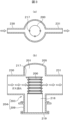
- FIG. 1 is a schematic configuration diagram of a processing furnace of a substrate processing apparatus according to the present disclosure
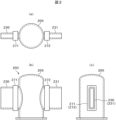
- FIG. (a) is a plan view showing a schematic configuration of a reaction tube provided with a protrusion side wall heater according to the present disclosure.
- (b) is a front view showing a schematic configuration of a reaction tube provided with a protrusion side wall heater according to the present disclosure.
- (c) is a left and right common side view showing a schematic configuration of a reaction tube provided with a protrusion side wall heater according to the present disclosure.
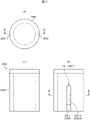
- (a) is a top view showing a schematic configuration of a reaction vessel using a reaction tube in the present disclosure.
- (b) is a cross-sectional view showing a schematic configuration of a reaction vessel using a reaction tube in the present disclosure.
- FIG. 1 is a cross-sectional view of a processing furnace incorporating a reactor tube within a heater in accordance with the present disclosure
- FIG. 2 is a block diagram showing a schematic configuration of a control unit that operates each unit of the substrate processing apparatus according to the present disclosure
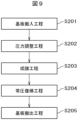
- FIG. It is a figure which shows the flow of the semiconductor device manufacturing process in this indication.
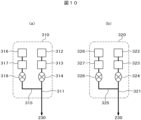
- (a) is a diagram showing a schematic configuration of a first gas supply unit in the present disclosure.
- (b) is a diagram showing a schematic configuration of a second gas supply unit in the present disclosure.
- FIG. 1 A processing furnace of a substrate processing apparatus suitably used in the present disclosure will be described with reference to FIGS. 1 to 7.
- FIG. 1 A processing furnace of a substrate processing apparatus suitably used in the present disclosure will be described with reference to FIGS. 1 to 7.
- FIG. 1 A processing furnace of a substrate processing apparatus suitably used in the present disclosure will be described with reference to FIGS. 1 to 7.
- FIG. 1 A processing furnace of a substrate processing apparatus suitably used in the present disclosure will be described with reference to FIGS. 1 to 7.
- the processing furnace 202 has a heater 206 as a first heating unit (heating device).
- the heater 206 has a cylindrical shape and is vertically installed by being supported by a heater base 251 as a holding plate.
- the heater 206 has a tubular heat insulator 260 .
- An introduction port is formed in the side surface of the heat insulator 260 of the heater 206 so as to avoid the gas introduction pipe 230 as a projecting portion on the gas supply side. Further, the outlet is formed so as to avoid the gas exhaust pipe 231 as the gas exhaust side projecting portion.
- a heater wire 266 is provided inside the heater 206, as will be described later.
- an auxiliary heater 271 for the gas introduction pipe which is a second heating section, is provided between the heat insulator 260 and the gas introduction pipe 230 at the introduction port of the heat insulator 260 .
- the auxiliary heater is also called a second heating section.
- an auxiliary heater 272 for the gas exhaust pipe which is a third heating section, is provided between the heat insulator 260 and the gas exhaust pipe 231 at the outlet port of the heat insulator 260 .
- a heat insulating member 273 is provided in contact with the gas introduction pipe 230
- a heat insulating member 274 is provided in contact with the gas exhaust pipe 231 .
- a reaction tube 203 is arranged concentrically with the heater 206 as a first heating unit.
- the reaction tube 203 is made of a heat-resistant material such as quartz (SiO 2 ) or silicon carbide (SiC), and has a cylindrical shape with a closed upper end and an open lower end.
- a processing chamber 201 is formed in the cylindrical hollow portion of the reaction tube 203, and is configured so that the substrates 200, which are, for example, semiconductor wafers, can be accommodated in a boat 217, which will be described later, in a horizontal posture and vertically aligned in multiple stages. .
- a manifold 209 is arranged concentrically with the reaction tube 203 below the reaction tube 203 .
- the manifold 209 is made of stainless steel, for example, and is formed in a cylindrical shape with open upper and lower ends.
- Manifold 209 engages reaction tube 203 and is provided to support it.
- An O-ring 220a is provided between the manifold 209 and the reaction tube 203 as a sealing member. Since the manifold 209 is supported by the heater base 251, the reaction tube 203 is vertically installed.
- a reaction vessel is formed by the reaction tube 203 and the manifold 209 .
- a gas supply unit 300 is connected to the side surface of the reaction tube 203 .
- the gas supply unit 300 supplies gas to the processing chamber 201 through the gas introduction pipe 230 .
- the gas supply section 300 includes a first gas supply section 310 and a second gas supply section 320 .
- the first gas supply unit 310 includes, in order from the upstream direction of the gas supply pipe 311, a first gas source 312, a mass flow controller (MFC) which is a flow controller (flow control unit). 313, and a valve 314, which is an on-off valve.
- MFC mass flow controller
- the first gas source 312 is a source of a first gas containing a first element (also referred to as a "first element containing gas").
- the first element-containing gas is one of the raw material gases, that is, the process gases.
- the first element is silicon (Si), for example.
- hexachlorodisilane Si 2 Cl 6 , abbreviation: HCDS
- monochlorosilane SiH 3 Cl, abbreviation: MCS
- dichlorosilane SiH 2 Cl 2 , abbreviation: DCS
- trichlorosilane SiHCl 3 , TCS
- tetrachlorosilane SiCl 4 , STC
- octachlorotrisilane Si 3 Cl 8 , OCTS
- a first gas supply unit 310 (also referred to as a silicon-containing gas supply system) is mainly composed of the gas supply pipe 311, the MFC 313, and the valve 314.
- a gas supply pipe 315 is connected to the downstream side of the valve 314 in the gas supply pipe 311 .
- the gas supply pipe 315 is provided with an inert gas source 316, an MFC 317, and a valve 318, which is an on-off valve, in this order from the upstream direction.
- An inert gas such as nitrogen (N 2 ) gas is supplied from the inert gas source 316 .
- a first inert gas supply system is mainly composed of the gas supply pipe 315, the MFC 317, and the valve 318.
- the inert gas supplied from the inert gas source 316 acts as a purge gas for purging the gas remaining inside the reaction tube 203 in the substrate processing process.
- a first inert gas supply system may be added to the first gas supply section 310 .
- the gas supply pipe 321 is provided with a second gas source 322, an MFC 323 as a flow controller (flow controller), and a valve 324 as an on-off valve in this order from the upstream direction. It is
- the second gas source 322 is a source of a second gas containing a second element (hereinafter also referred to as a "second element-containing gas").
- the second element-containing gas is one of processing gases.
- the second element-containing gas may be considered as a reaction gas or a reforming gas.
- the second element-containing gas contains a second element different from the first element.
- the second element is, for example, any one of oxygen (O), nitrogen (N), and carbon (C).
- the second element-containing gas is, for example, a nitrogen-containing gas.
- it is a hydrogen nitride-based gas containing an NH bond, such as ammonia (NH 3 ), diazene (N 2 H 2 ) gas, hydrazine (N 2 H 4 ) gas, N 3 H 8 gas.
- a second gas supply section 320 is mainly composed of the gas supply pipe 321 , the MFC 323 and the valve 324 .
- a gas supply pipe 325 is connected to the downstream side of the valve 324 in the gas supply pipe 321 .
- the gas supply pipe 325 is provided with an inert gas source 326, an MFC 327, and a valve 328, which is an on-off valve, in this order from the upstream direction.
- An inert gas such as nitrogen (N 2 ) gas is supplied from the inert gas source 326 .
- a second inert gas supply system is mainly composed of the gas supply pipe 325, the MFC 327, and the valve 328.
- the inert gas supplied from the inert gas source 326 acts as a purge gas for purging gas remaining in the processing chamber 201 in the substrate processing step.
- a second inert gas supply system may be added to the second gas supply section 320 .
- the first gas supply unit 310 and the second gas supply unit 320 may be collectively called a gas supply system.
- a gas supply system may be collectively called a gas supply system.
- two gas supply systems are used as an example here, one gas supply system or three or more gas supply systems may be used depending on the type of processing.
- a gas exhaust pipe 231 for exhausting the atmosphere in the processing chamber 201 is provided on the side of the reaction tube 203 opposite to the connection side of the gas introduction pipe 230 .
- a gas exhaust line 231a is connected to the downstream side of the gas exhaust pipe 231 opposite to the side connected to the reaction tube 203 via a connection portion having a sealing member.
- a vacuum exhaust device 246 such as a vacuum pump is connected to the gas exhaust line 231a via a pressure sensor 245 and a pressure regulator 242, and the pressure inside the processing chamber 201 is adjusted to a predetermined pressure (degree of vacuum). It is configured so that it can be evacuated.
- the pressure regulating device 242 controls the pressure in the processing chamber 201 to a predetermined pressure at a predetermined timing.
- a gas inlet pipe 230 and a gas exhaust pipe 231 provided in the reaction tube 203 are made of a heat-resistant material such as quartz or silicon carbide, like the reaction tube 203 .
- the gas introduction pipe 230 is configured to supply gas into the processing chamber 201 , it is arranged on the gas supply side when viewed from the processing chamber 201 . Further, the gas exhaust side projecting portion is disposed on the gas exhaust side since it is configured to exhaust the exhaust gas from the processing chamber 201 . Further, in this aspect, the gas supply side protrusion and the gas exhaust side protrusion are collectively referred to as a protrusion, or either of them is also referred to as a protrusion.
- a seal cap 219 is provided below the manifold 209 as a furnace mouth cover capable of airtightly closing the lower end opening of the manifold 209 .
- the seal cap 219 abuts against the lower end of the manifold 209 from below in the vertical direction.
- the seal cap 219 is made of metal such as stainless steel, and is shaped like a disc.
- An O-ring 220 b is provided on the upper surface of the seal cap 219 as a sealing member that contacts the lower end of the manifold 209 .
- a rotating mechanism 254 for rotating the boat is installed on the opposite side of the seal cap 219 from the processing chamber 201 .
- a rotating shaft 255 of the rotating mechanism 254 passes through the seal cap 219 and is connected to a boat 217 which will be described later, and is configured to rotate the substrate 200 by rotating the boat 217 .
- the seal cap 219 is configured to be vertically lifted by a boat elevator 115 as a lifting mechanism provided vertically outside the reaction tube 203, thereby carrying the boat 217 into and out of the processing chamber 201. is possible.
- Rotation mechanism 254 and boat elevator 115 are controlled at predetermined timings to perform predetermined operations.
- a boat 217 as a substrate holder is supported by a rotating shaft 255 via a heat insulating portion 216 .
- the boat 217 includes a plurality of upright pillars 217a, a disk 104 supported by the plurality of pillars 217a at regular intervals, and a substrate support portion 217b supported by the pillars 217a between the disks 104. is configured with By placing the substrates 200 on the substrate supporting portions 217b attached to the columns 217a in the space partitioned by the plurality of discs 104, the boat 217 is horizontally positioned and aligned with the center of each other.
- a plurality of substrates 200 are vertically aligned and supported in multiple stages. There, substrates 200 are arranged at regular intervals.
- the boat 217 is made of a heat-resistant material such as quartz or silicon carbide.
- a substrate holder is composed of the heat insulating portion 216 and the boat 217 .
- the boat 217 is housed inside the reaction tube 203 .
- the boat 217 is configured to be able to support approximately 5 to 50 substrates 200, for example.
- the disk 104 is also called a separator.
- the heat insulating portion 216 has a structure that reduces heat conduction or transmission in the vertical direction. Also, the heat insulating portion 216 may be configured to have a cavity inside. A hole may be formed in the lower surface of the heat insulating portion 216 . By providing this hole, a pressure difference is prevented between the inside and the outside of the heat insulating portion 216, and the wall surface of the heat insulating portion 216 does not have to be thickened. Note that a cap heater may be provided inside the heat insulating portion 216 .
- the reaction tube 203 will be explained in detail using FIG.
- the gas introduction pipe 230 and the gas exhaust pipe 231 may have any cross-sectional shape, but may be, for example, a hollow flat rectangular parallelepiped.
- the gas introduction pipe 230 and the gas exhaust pipe 231 are provided bilaterally symmetrically on the side surface of the body 205 standing vertically with the flat surface facing the horizontal direction.
- the side position of the body 205 where the gas introduction pipe 230 and the gas exhaust pipe 231 are provided is, for example, the center position of the side face of the body 205 and the middle position in the height direction. Alternatively, it is a position facing all or part of the plurality of substrates 200 .
- a gas introduction pipe 230 and a gas exhaust pipe 231 are horizontally connected to the body 205 .
- the gas introduction pipe 230 and the gas exhaust pipe 231 are welded and connected to the body 205 so that both pipe axes are aligned in a straight line.
- An auxiliary heater 271 for the gas introduction pipe is provided in contact with the end of the gas introduction pipe 230 on the side of the body 205 so as to cover the gas introduction pipe 230 (both side surfaces and upper and lower surfaces).
- An auxiliary heater 272 for the gas exhaust pipe is provided in contact with the end of the gas exhaust pipe 231 on the body 205 side so as to cover the gas exhaust pipe 231 (both sides and top and bottom surfaces). Since the upper and lower portions of the gas introduction pipe 230 and the gas exhaust pipe 231 are easily cooled, heat escape can be suppressed by covering at least the upper and lower surfaces with the auxiliary heaters 271 and 272 .
- a reaction vessel 204 is composed of a reaction tube 203 and a manifold 209 .
- the manifold 209 is formed in a cylindrical shape with open upper and lower ends.
- a manifold 209 is engaged with the lower end of the reaction tube 203 and provided to support the reaction tube 203 .
- a processing chamber 201 for processing the substrate 200 is formed inside the reaction container 204 .
- a boat 217 is inserted in the processing chamber 201 as a substrate holder that holds the substrates 200 in multiple stages in the vertical direction.
- a bottom opening of the manifold 209 is airtightly closed by a seal cap 219 supporting a boat 217 inserted into the processing chamber 201 .
- the gas flow in the processing chamber 201 is turned into a side flow as indicated by the white arrow. Accordingly, the processing gas can be horizontally supplied to the substrate 200 and exhausted horizontally, so that the processing gas can be smoothly supplied between the substrates 200 . Therefore, the position of the side surface of the body 205 where the gas introduction pipe 230 and the gas exhaust pipe 231 are provided does not have to be the middle position in the height direction, and it is preferable that it is at least the position facing the entire substrate processing area.
- the product substrate is arranged in the height direction between the upper end and the lower end of the gas introduction pipe 230 .
- the substrate processing area is a substrate processing area in which both the side dummy substrates and the product substrates placed on the upper and lower ends of the boat 217 are processed, only the product substrates are processed. It may also be a processing area.
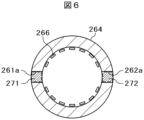
- the heater 206 includes a cylindrical heat insulator 260 with a closed top and an open bottom, an inlet 261 formed in the heat insulator 260 so as to avoid interference or contact with the gas inlet pipe 230, and a side opposite to the inlet 261.
- the heat insulator 260 has an outlet port 262 formed so as to avoid the gas exhaust pipe 231 .
- an inlet 261 formed in the heat insulator 260 so as to avoid the gas introduction pipe 230 is, for example, linearly directed from the lower end of the heat insulator 260 of the gas introduction pipe 230 to the upper part of the gas introduction pipe. It is formed as a groove-shaped notch 261 a having a width wider than the total thickness of the flat rectangular parallelepiped 230 and the thickness of the auxiliary heater 271 .
- an outlet port 262 formed in the heat insulator 260 so as to avoid the gas exhaust pipe 231 is, for example, similar to the inlet port 261, extends linearly from the lower end of the heat insulator 260 to the upper part of the center, and the gas exhaust pipe 231 is formed as a groove-shaped notch 262a having a width wider than the sum of the thickness of the flat rectangular parallelepiped and the thickness of the auxiliary heater 271 .
- a heat insulator 267 is attached to close the introduction port 261 below the gas introduction pipe 230 .
- a heat insulator 268 is attached to block the lower outlet port 262 of the gas exhaust pipe 231 .
- An auxiliary heater may be attached instead of the heat insulators 267 and 268 .
- the width of the cutouts 261 a and 262 a is preferably smaller than the diameter of the reaction tube 203 , more preferably smaller than the diameter of the substrate 200 processed in the reaction tube 203 .
- the width of the gas introduction pipe 230 and the gas exhaust pipe 231 is preferably 1/2 or less of the diameter of the substrate 200 in the horizontal direction with respect to the substrate processing surface, the gas flowing out from the gas introduction pipe 230 is reduced. This is good because it can flow through the center of the substrate 200 and reach the gas exhaust pipe 231 without reducing the flow velocity. More preferably, if the width of the substrate 200 in the horizontal direction with respect to the substrate processing surface is 1/3 or less of the diameter of the substrate 200, the gas flowing out from the gas introduction pipe 230 can pass through the center of the substrate 200 without reducing the flow velocity. It is good because it can flow up to the exhaust pipe 231 .
- the width in the horizontal direction with respect to the substrate processing surface is set to 1/15 or less of the diameter of the substrate 200 in the reaction tube 203, the gas flowing out from the gas introduction tube 230 can more reliably flow without decreasing the flow velocity. This is good because it can flow through the center of the substrate 200 and reach the gas exhaust pipe 231 .
- the widths of the notches 261a and 262a are preferably determined according to the widths of the gas introduction pipe 230 and the gas exhaust pipe 231 .
- the width should be such that it does not adversely affect the outside. .
- the heat insulator 260 of the heater 206 is composed of a cylindrical side wall heat insulating material 264 and a circular ceiling heat insulating material 265 closing the top of the side wall heat insulating material 264 .
- a heater wire 266 is provided inside the heat insulator 260 (on the reaction tube 203 side).
- the heater wire 266 is formed in a zigzag shape in the vertical direction, and is provided annularly along the inner wall of the side wall heat insulating material 264 of each zone divided in the vertical direction (in the illustrated example, it is divided into four) as in the conventional art. be done.
- the auxiliary heater 271 for the gas introduction pipe is provided so as to be wound around the gas introduction pipe 230 between the notch 261 a and the gas introduction pipe 230 .
- An auxiliary heater 271 for the gas introduction pipe is provided along the inner wall of the notch 261a.
- the auxiliary heater 272 for the gas exhaust pipe is provided so as to be wound around the gas exhaust pipe 231 between the notch 262 a and the gas exhaust pipe 231 .
- An auxiliary heater 272 for the gas exhaust pipe is provided along the inner wall of the notch 262a.
- the auxiliary heaters 271, 272 are made of heat insulating cloth.
- the auxiliary heaters 271 and 272 are provided with, for example, a heater wire and a temperature sensor housed in an insulating tube arranged near the heater wire. This temperature sensor is attached at least one place, preferably three places, upper, middle and lower. When temperature sensors are provided at a plurality of locations, it is possible to more accurately measure the temperature of the gas introduction pipe 230 by switching and measuring the temperature, thereby enabling more accurate temperature control.
- auxiliary heaters 271 and 272 are provided across the divided zones of the heater wire 266 .
- a power supply 253 that supplies power to the auxiliary heaters 271 and 272 via the power control circuit 239a is a separate power supply from the power supply 252 that supplies power to the heater wire 266.
- the heat insulating members 273 and 274 will be explained using FIG. After the auxiliary heaters 271 and 272 are attached to the gas introduction pipe 230 and the gas exhaust pipe 231, the reaction tube 203 is covered with the heat insulator 260, and the heat insulators 267 and 268 are further attached, the heat insulation member 273 is wound around the gas introduction pipe 230. At the same time, the heat insulating member 274 is wound around the gas exhaust pipe 231 . Thereby, heat radiation from the gas introduction pipe 230, the gas exhaust pipe 231 and the heater 206 can be suppressed.
- a temperature sensor 207 as a temperature detector is installed vertically with respect to the heater base 251 between the heater 206 and the reaction tube 203 .
- the temperature inside the processing chamber 201 is controlled at a predetermined timing so as to achieve a predetermined temperature distribution.
- the temperature between the outlet of the gas introduction pipe 230 and the substrate 200 is measured along the flow of the gas injected from the gas introduction pipe 230 to the gas exhaust pipe 231.
- a temperature sensor 208 is installed.
- the temperature sensors 208 are preferably arranged at N positions in the vertical direction corresponding to the divided heaters.
- the temperature inside the gas introduction pipe 230 is kept at a predetermined level by adjusting the energization condition of the auxiliary heater 271 for the gas introduction pipe based on the temperature information detected by the temperature sensor in the auxiliary heater 271 for the gas introduction pipe and the temperature sensor 208 .
- the temperature is controlled at a predetermined timing.
- the condition of energization of the auxiliary heater 272 for the gas exhaust pipe is adjusted so that the temperature inside the gas exhaust pipe 231 becomes a predetermined temperature. It is controlled at a predetermined timing.
- the heater wire 266, the auxiliary heater 271 for the gas introduction pipe, and the auxiliary heater 272 for the gas exhaust pipe are controlled by separate systems.
- the substrate 200 is ejected from the jet outlet of the gas introduction pipe 230 at a position away from the heater wire 266 and the auxiliary heaters 271 and 272 and on the extension of the center line of the gas introduction pipe 230 at a position where cold spots are likely to occur.
- cold spots can be eliminated.
- the in-plane deviation amount can be reduced by sufficient preheating.
- the temperature of the inner wall of the exhaust pipe can be increased on the side of the gas exhaust pipe 231, and adhesion of by-products can be prevented.
- Covers 275 and 276 may be provided to block and seal the gaps between the outer wall of the heater 206 and the gas introduction pipe 230 and the gas exhaust pipe 231 from outside air. Further, the space formed by covers 275 and 276, heater 206, gas introduction pipe 230 and gas exhaust pipe 231 is filled with heat insulating members 273 and 274. As shown in FIG. Cover 275 is connected to flange 232 provided on gas introduction pipe 230 and the outer wall of heater 206 . The cover 276 is connected to the flange 233 provided on the gas exhaust pipe 231 and the outer wall of the heater 206 .
- Covers 275 and 276 shield and seal the gaps between the outer wall of heater 206 and gas introduction pipe 230 and gas exhaust pipe 231 from the outside air, thereby suppressing convection with the outside air, thereby suppressing the distorted temperature distribution caused by this convection. can be eliminated.
- the reaction tube 203 is repeatedly attached and detached and the degree of formation of the gap varies, the convection is suppressed, so that it is not affected by the convection.
- the heater 206, the gas introduction pipe 230 and the gas exhaust pipe 231 By filling the space formed by the covers 275 and 276, the heater 206, the gas introduction pipe 230 and the gas exhaust pipe 231 with the heat insulating members 273 and 274, the convection of the gas in the space and the gas introduction pipe 230 , heat radiation from the gas exhaust pipe 231 and the auxiliary heaters 271 and 272 can be suppressed. As a result, the temperature rise of the covers 275 and 276 can be suppressed, airtightness can be maintained, and the temperature control performance of the reaction tube 203 by the auxiliary heaters 271 and 272 can be improved from the adverse effects of thermal disturbance. .
- the auxiliary heaters 271 and 272 are in close contact with the reaction tube 203 together with the temperature sensor used for temperature control even in an environment where the control fluctuations of the heater 206 affect the temperature of the reaction tube 203 which is the object to be heated. Therefore, since the temperature change of the reaction tube 203 is followed with little delay, it is possible to control the temperature with good responsiveness.
- the controller 240 which is a control section (control means), is configured as a computer including a CPU (Central Processing Unit) 240a, a RAM (Random Access Memory) 240b, a storage device 240c, and an I/O port 240d.
- the RAM 240b, storage device 240c, and I/O port 240d are configured to exchange data with the CPU 240a via an internal bus 240e.
- An input/output device 281 configured as a touch panel, for example, and an external storage device 282 are configured to be connectable to the controller 240 .
- the storage device 240c is composed of, for example, a flash memory, a HDD (Hard Disk Drive), or the like.
- the storage device 240c stores readably a control program for controlling the operation of the substrate processing apparatus, a process recipe describing procedures and conditions for substrate processing, which will be described later, and the like.
- the process recipe functions as a program in which the controller 240 executes each procedure in the substrate processing process, which will be described later, so as to obtain a predetermined result.
- the program recipe, the control program, etc. will be collectively referred to simply as a program.
- program when the word "program” is used, it may include only a program recipe alone, or may include only a control program alone, or may include both.
- the RAM 240b is configured as a memory area (work area) in which programs and data read by the CPU 240a are temporarily held.
- connection includes the meaning that each part is connected with a physical cable, but it means that the signal (electronic data) of each part can be directly or indirectly transmitted/received. Also includes For example, equipment for relaying signals or equipment for converting or calculating signals may be provided between the units.
- the CPU 240a is configured to read out and execute a control program from the storage device 240c, and read out a process recipe from the storage device 240c in response to an input of an operation command from the input/output device 281 or the like. Then, the CPU 240a controls the rotating mechanism 254, adjusts the flow rate of various gases by the MFC 241, opens and closes the pressure regulator 242, and controls the pressure regulator 242 based on the pressure sensor 245 so as to follow the content of the read process recipe.
- the controller 240 is not limited to being configured as a dedicated computer, and may be configured as a general-purpose computer.
- an external storage device for example, a magnetic tape, a magnetic disk such as a flexible disk or a hard disk, an optical disk such as a CD or a DVD, a magneto-optical disk such as an MO, a semiconductor memory such as a USB memory or a memory card
- the controller 240 according to this aspect can be configured.
- the means for supplying the program to the computer is not limited to supplying via the external storage device 282 .
- the program may be supplied without using the external storage device 282 by using communication means such as the network 283 (the Internet or a dedicated line).
- the storage device 240c and the external storage device 282 are configured as computer-readable recording media. Hereinafter, these are collectively referred to simply as recording media.
- recording medium when the term “recording medium” is used, it may include only the storage device 240c alone, or may include only the external storage device 282 alone, or may include both.
- an insulating film for example, silicon nitride as a silicon-containing film is formed on the substrate.
- a (Si 3 N 4 ) film An example of forming a (Si 3 N 4 ) film will be described with reference to FIG.
- the controller 240 controls the operation of each component of the substrate processing apparatus.
- Substrate loading step: S201 The board loading operator S201 will be described.
- the boat 217 is loaded with the plurality of substrates 200 (substrate charging)
- the boat 217 holding the plurality of substrates 200 is lifted by the boat elevator 115 to move to the processing chamber 201 as shown in FIG. (boat loading).
- the seal cap 219 seals the lower end of the manifold 209 via the O-ring 220b.
- the pressure adjustment step S202 will be described.
- the inside of the processing chamber 201 is regulated by the evacuation device 246 so as to have a predetermined pressure (degree of vacuum).
- the pressure in the processing chamber 201 is measured by the pressure sensor 245, and the pressure regulator 242 is feedback-controlled based on the measured pressure.
- the heater wire 266 heats the processing chamber 201 based on the temperature information detected by the temperature sensor 207 so that the inside of the processing chamber 201 reaches a predetermined temperature.
- the gas introduction pipe auxiliary heater 271 heats the inside of the gas introduction pipe 230 to a predetermined temperature.
- the gas exhaust pipe 231 is heated by the auxiliary heater 272 for the gas exhaust pipe based on the temperature information detected by the temperature sensor in the auxiliary heater 272 so that the gas exhaust pipe 231 reaches a predetermined temperature.
- the energization state of the heater 206 is feedback-controlled so that the inside of the processing chamber 201 has a predetermined temperature distribution.
- the substrate 200 is rotated by rotating the boat 217 by the rotating mechanism 254 .
- the first gas is supplied from the first gas supply unit 310 to the processing chamber 201
- the second gas is supplied from the second gas supply unit 320 to the processing chamber 201, and the desired gas is supplied. form a film.
- a purge step for exhausting the atmosphere of the processing chamber 201 is provided.
- a Si-containing film for example, is formed on the substrate 200 by performing a combination of the first step, the purge step, and the second step at least once, preferably a plurality of times.
- the processing conditions for processing a substrate in the substrate processing apparatus include, for example, a processing pressure of 10 to 100 Pa, a gas Species are dichlorosilane gas (DCS (SiH 2 Cl 2 )) and ammonia gas (NH 3 ), and gas supply flow rates are 100 to 300 sccm for DCS and 300 to 1000 sccm for NH 3 .
- the processing temperature in the reaction tube 203 heated by the heater wire 266 is 500° C. to 780° C.
- the temperature in the gas introduction pipe 230 heated by the auxiliary heater 271 for the gas introduction pipe is 150° C. to 550° C., which is the processing temperature. C. to 780.degree.
- a substrate processing apparatus includes a projecting portion (gas introduction pipe), a reaction tube for processing a substrate, a first heating portion (heater) for heating the reaction tube, and a second heating portion for heating the projecting portion. a portion (auxiliary heater) and a heat insulating member provided on the projecting portion. Thereby, heat radiation from the projecting portion can be suppressed.
- the projecting portion is provided on the gas supply side for supplying gas. Since the second heating unit heats the protruding portion on the gas supply side that supplies the gas, the gas can be sufficiently preheated to a reaction temperature, and the substrate can be processed efficiently. Moreover, when a liquid source or a source that is easily liquefied at normal temperature and pressure is used as the gas source, liquefaction at the projecting portion can be prevented.
- the reaction tube has a gas exhaust projecting portion (gas exhaust pipe) for exhausting gas, and is provided with a heat insulating member provided on the projecting portion on the gas exhaust side. Since the second heating unit heats the gas exhaust protrusion (gas exhaust pipe) for exhausting the gas, adhesion of by-products to the gas exhaust protrusion can be prevented.
- the heat insulating member is provided in contact with the gas supply side projecting portion. Thereby, heat radiation from the gas supply side projecting portion can be suppressed.
- the heat insulating member is provided in contact with the projecting portion on the gas exhaust side. As a result, heat dissipation from the gas exhaust projecting portion can be suppressed.
- a cover is provided at a position where the heat insulating member is provided. Thereby, heat escape can be suppressed.
- the second heating part is wound around the projecting part. Thereby, heat escape can be suppressed.
- reaction tube 203 heater (first heating unit) 230 gas introduction pipe (projection) 271 auxiliary heater (second heating unit) 273 Thermal insulation
Landscapes
- Chemical & Material Sciences (AREA)
- General Chemical & Material Sciences (AREA)
- Chemical Kinetics & Catalysis (AREA)
- Engineering & Computer Science (AREA)
- Materials Engineering (AREA)
- Mechanical Engineering (AREA)
- Metallurgy (AREA)
- Organic Chemistry (AREA)
- Inorganic Chemistry (AREA)
Priority Applications (6)
| Application Number | Priority Date | Filing Date | Title |
|---|---|---|---|
| PCT/JP2021/034902 WO2023047498A1 (ja) | 2021-09-22 | 2021-09-22 | 基板処理装置、半導体装置の製造方法およびプログラム |
| JP2023549228A JP7712372B2 (ja) | 2021-09-22 | 2021-09-22 | 基板処理装置、半導体装置の製造方法、基板処理方法およびプログラム |
| CN202180101032.9A CN117730401A (zh) | 2021-09-22 | 2021-09-22 | 基板处理装置、半导体装置的制造方法及程序 |
| KR1020247004474A KR20240038983A (ko) | 2021-09-22 | 2021-09-22 | 기판 처리 장치, 기판 처리 방법, 반도체 장치의 제조 방법 및 프로그램 |
| TW111122531A TWI857308B (zh) | 2021-09-22 | 2022-06-17 | 基板處理裝置、半導體裝置之製造方法及程式 |
| US18/436,677 US20240186156A1 (en) | 2021-09-22 | 2024-02-08 | Substrate processing apparatus, substrate processing method, method of manufacturing semiconductor device and non-transitory computer-readable recording medium |
Applications Claiming Priority (1)
| Application Number | Priority Date | Filing Date | Title |
|---|---|---|---|
| PCT/JP2021/034902 WO2023047498A1 (ja) | 2021-09-22 | 2021-09-22 | 基板処理装置、半導体装置の製造方法およびプログラム |
Related Child Applications (1)
| Application Number | Title | Priority Date | Filing Date |
|---|---|---|---|
| US18/436,677 Continuation US20240186156A1 (en) | 2021-09-22 | 2024-02-08 | Substrate processing apparatus, substrate processing method, method of manufacturing semiconductor device and non-transitory computer-readable recording medium |
Publications (1)
| Publication Number | Publication Date |
|---|---|
| WO2023047498A1 true WO2023047498A1 (ja) | 2023-03-30 |
Family
ID=85719344
Family Applications (1)
| Application Number | Title | Priority Date | Filing Date |
|---|---|---|---|
| PCT/JP2021/034902 Ceased WO2023047498A1 (ja) | 2021-09-22 | 2021-09-22 | 基板処理装置、半導体装置の製造方法およびプログラム |
Country Status (6)
| Country | Link |
|---|---|
| US (1) | US20240186156A1 (https=) |
| JP (1) | JP7712372B2 (https=) |
| KR (1) | KR20240038983A (https=) |
| CN (1) | CN117730401A (https=) |
| TW (1) | TWI857308B (https=) |
| WO (1) | WO2023047498A1 (https=) |
Citations (3)
| Publication number | Priority date | Publication date | Assignee | Title |
|---|---|---|---|---|
| JPH09148318A (ja) * | 1995-11-22 | 1997-06-06 | Tokyo Electron Ltd | 酸化処理装置 |
| JP2012099864A (ja) * | 2006-12-12 | 2012-05-24 | Hitachi Kokusai Electric Inc | 基板処理装置、半導体装置の製造方法、および反応管 |
| JP2016181661A (ja) * | 2015-03-25 | 2016-10-13 | 株式会社日立国際電気 | 基板処理装置、加熱部、部材、半導体装置の製造方法および配管の加熱方法 |
Family Cites Families (6)
| Publication number | Priority date | Publication date | Assignee | Title |
|---|---|---|---|---|
| US20080173238A1 (en) * | 2006-12-12 | 2008-07-24 | Hitachi Kokusai Electric Inc. | Substrate processing apparatus, method of manufacturing semiconductor device, and reaction vessel |
| JP4971954B2 (ja) * | 2006-12-12 | 2012-07-11 | 株式会社日立国際電気 | 基板処理装置、半導体装置の製造方法、および加熱装置 |
| JP5645718B2 (ja) * | 2011-03-07 | 2014-12-24 | 東京エレクトロン株式会社 | 熱処理装置 |
| KR101854768B1 (ko) * | 2014-03-26 | 2018-05-04 | 가부시키가이샤 히다치 고쿠사이 덴키 | 기판 처리 장치, 반도체 장치의 제조 방법 |
| JP6703496B2 (ja) * | 2017-03-27 | 2020-06-03 | 株式会社Kokusai Electric | 基板処理装置、半導体装置の製造方法およびプログラム |
| JP7203588B2 (ja) * | 2018-12-17 | 2023-01-13 | 東京エレクトロン株式会社 | 熱処理装置 |
-
2021
- 2021-09-22 WO PCT/JP2021/034902 patent/WO2023047498A1/ja not_active Ceased
- 2021-09-22 JP JP2023549228A patent/JP7712372B2/ja active Active
- 2021-09-22 KR KR1020247004474A patent/KR20240038983A/ko active Pending
- 2021-09-22 CN CN202180101032.9A patent/CN117730401A/zh active Pending
-
2022
- 2022-06-17 TW TW111122531A patent/TWI857308B/zh active
-
2024
- 2024-02-08 US US18/436,677 patent/US20240186156A1/en active Pending
Patent Citations (3)
| Publication number | Priority date | Publication date | Assignee | Title |
|---|---|---|---|---|
| JPH09148318A (ja) * | 1995-11-22 | 1997-06-06 | Tokyo Electron Ltd | 酸化処理装置 |
| JP2012099864A (ja) * | 2006-12-12 | 2012-05-24 | Hitachi Kokusai Electric Inc | 基板処理装置、半導体装置の製造方法、および反応管 |
| JP2016181661A (ja) * | 2015-03-25 | 2016-10-13 | 株式会社日立国際電気 | 基板処理装置、加熱部、部材、半導体装置の製造方法および配管の加熱方法 |
Also Published As
| Publication number | Publication date |
|---|---|
| KR20240038983A (ko) | 2024-03-26 |
| JPWO2023047498A1 (https=) | 2023-03-30 |
| JP7712372B2 (ja) | 2025-07-23 |
| CN117730401A (zh) | 2024-03-19 |
| TW202314858A (zh) | 2023-04-01 |
| TWI857308B (zh) | 2024-10-01 |
| US20240186156A1 (en) | 2024-06-06 |
Similar Documents
| Publication | Publication Date | Title |
|---|---|---|
| US11365482B2 (en) | Substrate processing apparatus and method of manufacturing semiconductor device | |
| US11967490B2 (en) | Plasma generating device, substrate processing apparatus, and method of manufacturing semiconductor device | |
| JP7213859B2 (ja) | 温度センサ、基板処理装置、および半導体装置の製造方法 | |
| US20220277952A1 (en) | Substrate Processing Apparatus, Method of Manufacturing Semiconductor Device and Non-transitory Computer-readable Recording Medium | |
| US20230170212A1 (en) | Method of manufacturing semiconductor device, substrate processing apparatus, and recording medium | |
| JP2009044023A (ja) | 半導体装置の製造方法および基板処理装置 | |
| US20190071777A1 (en) | Substrate processing apparatus | |
| US11952664B2 (en) | Substrate processing apparatus and method of manufacturing semiconductor device | |
| US11542603B2 (en) | Substrate processing apparatus, method of manufacturing semiconductor device and substrate processing method | |
| US20220415652A1 (en) | Method of processing substrate, method of manufacturing semiconductor device, substrate processing apparatus, and recording medium | |
| US20220298642A1 (en) | Substrate Processing Apparatus and Method of Manufacturing Semiconductor Device | |
| JP7712372B2 (ja) | 基板処理装置、半導体装置の製造方法、基板処理方法およびプログラム | |
| US20240141484A1 (en) | Substrate processing apparatus, substrate processing method, method of manufacturing semiconductor device and non-transitory computer-readable recording medium | |
| JP2023159475A (ja) | 基板処理装置、半導体装置の製造方法及びプログラム | |
| US20230395378A1 (en) | Method of processing substrate, method of manufacturing semiconductor device, substrate processing apparatus, and recording medium | |
| US20260092361A1 (en) | Cleaning method, method of manufacturing semiconductor device, non-transitory computer-readable recording medium and substrate processing apparatus | |
| US20250243580A1 (en) | Substrate processing apparatus, exhaust system and method of manufacturing semiconductor device | |
| TW202531425A (zh) | 氣體供給系統、處理裝置、氣體供給方法及半導體裝置的製造方法以及程式 |
Legal Events
| Date | Code | Title | Description |
|---|---|---|---|
| 121 | Ep: the epo has been informed by wipo that ep was designated in this application |
Ref document number: 21958374 Country of ref document: EP Kind code of ref document: A1 |
|
| WWE | Wipo information: entry into national phase |
Ref document number: 202180101032.9 Country of ref document: CN |
|
| ENP | Entry into the national phase |
Ref document number: 20247004474 Country of ref document: KR Kind code of ref document: A |
|
| WWE | Wipo information: entry into national phase |
Ref document number: 2023549228 Country of ref document: JP |
|
| NENP | Non-entry into the national phase |
Ref country code: DE |
|
| 122 | Ep: pct application non-entry in european phase |
Ref document number: 21958374 Country of ref document: EP Kind code of ref document: A1 |