WO2023037508A1 - ゲームプレイヤーモデル利用提供装置 - Google Patents
ゲームプレイヤーモデル利用提供装置 Download PDFInfo
- Publication number
- WO2023037508A1 WO2023037508A1 PCT/JP2021/033374 JP2021033374W WO2023037508A1 WO 2023037508 A1 WO2023037508 A1 WO 2023037508A1 JP 2021033374 W JP2021033374 W JP 2021033374W WO 2023037508 A1 WO2023037508 A1 WO 2023037508A1
- Authority
- WO
- WIPO (PCT)
- Prior art keywords
- game player
- model
- play
- learning
- game
- Prior art date
- Legal status (The legal status is an assumption and is not a legal conclusion. Google has not performed a legal analysis and makes no representation as to the accuracy of the status listed.)
- Ceased
Links
Images






Classifications
-
- A—HUMAN NECESSITIES
- A63—SPORTS; GAMES; AMUSEMENTS
- A63F—CARD, BOARD, OR ROULETTE GAMES; INDOOR GAMES USING SMALL MOVING PLAYING BODIES; VIDEO GAMES; GAMES NOT OTHERWISE PROVIDED FOR
- A63F13/00—Video games, i.e. games using an electronically generated display having two or more dimensions
- A63F13/60—Generating or modifying game content before or while executing the game program, e.g. authoring tools specially adapted for game development or game-integrated level editor
- A63F13/67—Generating or modifying game content before or while executing the game program, e.g. authoring tools specially adapted for game development or game-integrated level editor adaptively or by learning from player actions, e.g. skill level adjustment or by storing successful combat sequences for re-use
-
- A—HUMAN NECESSITIES
- A63—SPORTS; GAMES; AMUSEMENTS
- A63F—CARD, BOARD, OR ROULETTE GAMES; INDOOR GAMES USING SMALL MOVING PLAYING BODIES; VIDEO GAMES; GAMES NOT OTHERWISE PROVIDED FOR
- A63F13/00—Video games, i.e. games using an electronically generated display having two or more dimensions
- A63F13/30—Interconnection arrangements between game servers and game devices; Interconnection arrangements between game devices; Interconnection arrangements between game servers
- A63F13/35—Details of game servers
-
- A—HUMAN NECESSITIES
- A63—SPORTS; GAMES; AMUSEMENTS
- A63F—CARD, BOARD, OR ROULETTE GAMES; INDOOR GAMES USING SMALL MOVING PLAYING BODIES; VIDEO GAMES; GAMES NOT OTHERWISE PROVIDED FOR
- A63F13/00—Video games, i.e. games using an electronically generated display having two or more dimensions
- A63F13/70—Game security or game management aspects
- A63F13/79—Game security or game management aspects involving player-related data, e.g. identities, accounts, preferences or play histories
-
- G—PHYSICS
- G06—COMPUTING OR CALCULATING; COUNTING
- G06N—COMPUTING ARRANGEMENTS BASED ON SPECIFIC COMPUTATIONAL MODELS
- G06N20/00—Machine learning
-
- G—PHYSICS
- G06—COMPUTING OR CALCULATING; COUNTING
- G06N—COMPUTING ARRANGEMENTS BASED ON SPECIFIC COMPUTATIONAL MODELS
- G06N3/00—Computing arrangements based on biological models
- G06N3/02—Neural networks
- G06N3/08—Learning methods
- G06N3/0895—Weakly supervised learning, e.g. semi-supervised or self-supervised learning
-
- G—PHYSICS
- G06—COMPUTING OR CALCULATING; COUNTING
- G06Q—INFORMATION AND COMMUNICATION TECHNOLOGY [ICT] SPECIALLY ADAPTED FOR ADMINISTRATIVE, COMMERCIAL, FINANCIAL, MANAGERIAL OR SUPERVISORY PURPOSES; SYSTEMS OR METHODS SPECIALLY ADAPTED FOR ADMINISTRATIVE, COMMERCIAL, FINANCIAL, MANAGERIAL OR SUPERVISORY PURPOSES, NOT OTHERWISE PROVIDED FOR
- G06Q50/00—Information and communication technology [ICT] specially adapted for implementation of business processes of specific business sectors, e.g. utilities or tourism
- G06Q50/10—Services
Definitions
- the present invention relates to a game player model utilization providing device, a game player model utilization providing method, and a recording medium.
- Patent document 1 is one of the techniques used for such computer control.
- Patent document 1 describes a storage unit for storing various programs and data, and a controller for controlling the movements of a plurality of characters appearing in a fighting game based on the operation state of an input operation unit and the programs stored in the storage unit.
- a fighting game learning device is described comprising: a controller.
- a control unit collects operation data related to a technique performed by a character and screen state data related to screen display in response to an operation of an input operation unit at predetermined timings, and executes a learning program. writes the screen state data collected at predetermined timings to the learning data storage unit. Then, the control unit optimizes the weight of the learning result by performing deep learning calculation processing based on the screen state data stored in the learning data storage unit.
- an object of the present invention is to provide a server device and a model providing method that can solve the problem that it is difficult to provide a model that has undergone learning according to a learning object such as a computer player's operation that is similar to a human operation. , to provide a recording medium.
- a game player model utilization providing device In a second play state based on play data including a first play state in the game, actions taken by the player in the first play state, and a label indicating whether or not it is a learning target a receiving means for receiving a usage instruction for making available the game player model that has learned the action to be learned; output means for outputting model information for using the game player model in accordance with the usage instruction; It has a configuration of
- a method for providing a game player model includes: The information processing device In a second play state based on play data including a first play state in the game, actions taken by the player in the first play state, and a label indicating whether or not it is a learning target Receiving a usage instruction for making available the game player model that has learned the behavior to be learned, Model information for using the game player model is output according to the usage instruction.
- a recording medium that is another aspect of the present disclosure includes: information processing equipment, In a second play state based on play data including a first play state in the game, actions taken by the player in the first play state, and a label indicating whether or not it is a learning target Receiving a usage instruction for making available the game player model that has learned the behavior to be learned, A computer-readable recording medium recording a program for realizing a process of outputting model information for using the game player model according to the use instruction.
- a game player model utilization and providing device capable of providing a suitably learned model such that a computer player's operation is brought closer to a learning object, such as a computer player's operation, is closer to a human operation.
- a provision method and a recording medium can be provided.
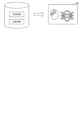
- FIG. 1 is a diagram for explaining a learning device according to a first embodiment of the present disclosure
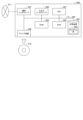
- FIG. 2 is a block diagram showing a configuration example of a learning device
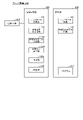
- FIG. 3 is a diagram showing an example of input data shown in FIG. 2
- FIG. FIG. 4 is a diagram for explaining an example of attributes; It is a figure which shows an example of the play data used as collection object. It is a figure which shows another example of play data. It is a figure for demonstrating another example of play data. It is a figure for demonstrating an example of a learning process.
- 4 is a flowchart showing an operation example of the learning device
- FIG. 12 is a block diagram showing another configuration example of the learning device
- FIG. 3 is a diagram for explaining an example of audio information
- FIG. 11 is a diagram illustrating a configuration example of a learning system according to a second embodiment of the present disclosure
- FIG. 11 is a block diagram showing a configuration example of a customer terminal shown in FIG. 10
- FIG. 11 is a block diagram showing a configuration example of the server device shown in FIG. 10
- FIG. FIG. 4 is a diagram for explaining an example of billing processing
- FIG. 10 is a diagram for explaining another example of billing processing
- It is a flowchart which shows the operation example of a server apparatus. It is a flowchart which shows the operation example of a server apparatus.
- FIG. 11 is a block diagram showing a hardware configuration example of a game play operation learning device according to a third embodiment of the present disclosure. It is a block diagram which shows the structural example of a game play operation learning apparatus.
- FIG. 12 is a block diagram showing a configuration example of a game player model utilization providing device according to the fourth embodiment of the present disclosure;
- FIG. 1 is a diagram for explaining the learning device 100.
- FIG. 2 is a block diagram showing a configuration example of the learning device 100.
- FIG. 3 is a diagram showing an example of the input data 121 shown in FIG.
- FIG. 4 is a diagram for explaining an example of attributes.
- 5 and 6 are diagrams showing an example of play data to be collected.
- FIG. 7 is a diagram for explaining another example of play data.
- FIG. 8 is a diagram for explaining an example of the learning process.
- FIG. 9 is a flow chart showing an operation example of the learning device 100 .
- FIG. 10 is a block diagram showing another configuration example of the learning device 100.
- FIG. 11 is a diagram for explaining an example of audio information.
- a learning device 100 (game play operation learning equipment). As shown in FIG. 1, in the case of the learning device 100 of the present embodiment, based on the play data with a label indicating whether or not it is a learning target, an action to be learned is output in response to the input of the play state. Generate a game player model for That is, the learning device 100 performs machine learning using both the play data labeled to indicate that the play data is to be learned and the play data labeled to indicate that the play data are not to be learned. Specifically, for example, play data having an attribute to be learned is given a first label of a successful case, and play data having an attribute different from the learning target is given a label different from the first label. 2 label is assigned. Then, learning device 100 performs machine learning so as to approach play data having an attribute to be learned and move away from play data having attributes different from those to be learned.
- the learning device 100 is an information processing device that performs machine learning based on game play data acquired from an external device or the like. Games may include board games such as Go and Shogi, computer games such as fighting games and shooting games, and any other games.
- the learning device 100 is a server device or the like.
- the learning device 100 may be a single information processing device, or may be implemented on a cloud, for example.
- FIG. 2 shows a configuration example of the learning device 100.
- the learning device 100 has, for example, a communication I/F section 110, a storage section 120, and an arithmetic processing section 130 as main components.
- the communication I/F unit 110 consists of a data communication circuit and the like. Communication I/F section 110 performs data communication with an external device or the like connected via a communication line.
- the storage unit 120 is a storage device such as a hard disk or memory.
- the storage unit 120 stores processing information and programs 123 necessary for various processes in the arithmetic processing unit 130 .
- the program 123 realizes various processing units by being read and executed by the arithmetic processing unit 130 .
- the program 123 is read in advance from an external device or recording medium via a data input/output function such as the communication I/F section 110 and stored in the storage section 120 .
- Main information stored in the storage unit 120 includes, for example, the input data 121 and the neural network 122 .
- the input data 121 includes play data indicating actions taken by the player in the game, the state of the game, and the like. Input data 121 is acquired for learning from an external device or the like via communication I/F section 110 or the like.
- FIG. 3 shows an example of the input data 121.
- the input data 121 includes play data with a predetermined attribute labeled as a successful case, and play data labeled with a failed case and having an attribute different from the predetermined attribute. include.
- the input data 121 includes a plurality of pieces of play data labeled as successful cases and a plurality of pieces of play data labeled as unsuccessful cases.
- attributes refer to information corresponding to the player, such as the type and proficiency level of the player who plays the game, and the characteristics of the player.
- FIG. 4 shows an example of attributes.
- attributes may include, for example, player attributes, skill level attributes, person attributes, specific person attributes, and the like.
- the player attribute indicates the type of player, such as whether the player is human or AI (artificial intelligence).
- the skill level attribute indicates the player's skill level with respect to the game, such as advanced player, intermediate player, beginner, xx rank, and professional.
- the person attribute indicates information corresponding to the player, such as address and gender.
- the specific person attribute indicates that the person is a specific person or individual, such as a professional A or a YouTuber B.
- a specific person attribute may be, for example, an identifier uniquely given to an individual.
- the play data has attributes according to the characteristics of the player who plays the game as exemplified above.
- the attribute may be, instead of the player's characteristics, or in addition to the player's characteristics, an attribute corresponding to the characteristics of the play data, such as frequent specific actions within a predetermined period of time.
- a label indicating whether or not the play data is to be learned is given in advance by an external device, for example.
- play data having an attribute to be learned is given a first label of a successful case
- play data having an attribute different from the attribute to be learned is A label of failure case, which is a second label different from the first label, is assigned.
- a failure case label may be assigned to play data having an attribute that conflicts with the attribute to be learned, instead of simply having a different attribute.
- the play data of an advanced player is labeled as a success story
- the play data of an intermediate player or a beginner that has different attributes from those of an advanced player is labeled as a failure example.
- the play data of an expert player is labeled as a success case
- the play data of a beginner or the like having the opposite attribute from the viewpoint of an advanced player may be labeled as a failure case.
- play data that has a specific person attribute that indicates a specific person such as Pro A
- play data that does not have a specific person attribute that indicates a specific person will be labeled as a failure example.
- a label may be given.
- the label of failure case may be given to play data having a player attribute indicating that the player is an AI that is not a human.
- a failure example label to play data that has player attributes indicating that it is AI, it is possible to perform machine learning processing so as to move away from AI-like, that is, unhuman-like behavior.
- play data that has a specific person attribute that indicates a specific person is labeled as a success case
- play data that has a player attribute that indicates that it is an AI is given a label as a failure case.
- the weight values and the like of the neural network 122 can be updated so as to approach the play data of a specific person and move away from unhuman behavior.
- the attribute to be learned may be specified by any means.
- the learning device 100 is configured to assign a label to the play data based on information indicating an attribute acquired together with the play data or information indicating an attribute to be learned. good too.
- the play data included in the input data 121 indicates the actions taken by the player in the game, the state of the game, etc., as described above.
- the play data includes state information indicating a game state (first play state) in the game, action information indicating actions taken by the player in the above state, and the like.
- FIG. 5 shows an example of play data when a fighting game is played.
- the play data includes information for each object, which is a character to be fought against.
- the status information includes identification information for identifying a character to fight against, character information indicating the character's remaining physical strength, etc., position information indicating the position coordinates indicating the character's position, orientation information indicating the orientation, and so on.
- At least one of movement information indicating movement speed indicating the speed of movement and action information indicating actions during action of the character is included.
- the motion information also includes key information indicating the key input by the player.
- the play data may include information other than those exemplified above.
- FIG. 6 shows an example of play data when playing shogi as a game.
- the play data includes information for two players who play shogi.
- the state information includes at least one of piece position information indicating the position of the piece, pieces in hand indicating the type of piece in hand, remaining time information indicating the remaining time, and the like.
- the movement information includes piece type information indicating the type of piece that was moved, previous position information indicating the position of the moved piece before it was moved, post-position information indicating the position after the piece was moved, and time consumed until the piece was moved. At least one of consumption time information and the like is included.
- the play data may include information other than those exemplified above.
- the input data 121 includes play data corresponding to the game to be learned.
- the input data 121 may include play data for each scene individually, or may include play data as time-series data in which states and actions are linked as shown in FIG. .
- the play data may include a first play state in the game, an action in the first play state, and a third play state that transitions as a result of the action.
- the neural network 122 is subjected to machine learning processing using the input data 121, which is teacher data, so as to output motion information and the like according to the state information and the like when play data including state information is input. ing.
- the neural network 122 is subjected to machine learning processing so as to output a behavior to be learned in response to the input of the second play state.
- the arithmetic processing unit 130 has an arithmetic device such as a CPU (Central Processing Unit) and its peripheral circuits.
- the arithmetic processing unit 130 reads the program 123 from the storage unit 120 and executes it, so that the hardware and the program 123 cooperate to realize various processing units.
- Main processing units realized by the arithmetic processing unit 130 include, for example, an acquisition unit 131, a learning unit 132, an output unit 133, and the like.
- the acquisition unit 131 acquires play data and the like from an external device and the like. For example, the acquisition unit 131 acquires information indicating attributes of the play data together with the play data. The acquisition unit 131 also stores the acquired play data and the like as the input data 121 in the storage unit 120 .
- the acquisition unit 131 can acquire information indicating attributes to be learned.
- the acquisition unit 131 may acquire information indicating an attribute to be learned together with the play data, or may acquire information indicating an attribute to be learned at a timing different from the play data.
- the learning unit 132 outputs behavior to be learned in response to the input of the second play state based on the input data 121 including the play data including the first play state and behavior and the label. Do machine learning. For example, the learning unit 132 inputs input data 121 that is teacher data to the neural network 122 . Then, the learning unit 132 updates the weight values and the like of the neural network 122 so as to move closer to the play data labeled as a successful case and move away from the play data labeled as a failed case. For example, the learning unit 132 repeats the above process using a large amount of teacher data to generate a game player model, which is a created model corresponding to attributes to be learned. Note that the learning unit 132 may perform machine learning processing using known means.
- the learning unit 132 causes an AI that imitates success cases to compete with an AI that identifies success cases, and cooperates with an AI that identifies failure cases to update weight values.
- AI that imitates successful cases may be adjusted by performing imitation learning based on, for example, play data labeled as successful cases included in the input data 121 .
- the AI that identifies successful cases may be adjusted by performing machine learning so as to identify successful cases based on the play data labeled as successful cases included in the input data 121, or the like.
- the AI that identifies failure cases may be adjusted by performing machine learning so as to identify failure cases based on play data that is included in the input data 121 and labeled as failure cases.
- the learning unit 132 gives feedback to each AI based on the result of distinguishing the play data generated by the AI imitating the success case between the AI that distinguishes the success case and the AI that distinguishes the failure case. By doing so, you can adjust each AI.
- the learning unit 132 is configured to perform machine learning based on the input data 121, which is teacher data, by performing imitation learning of a hostile and cooperative generation method using a neural network. You can Specifically, for example, the learning unit 132 may perform machine learning processing using the method described in Non-Patent Document 1.
- the learning method by the learning unit 132 is not limited to the case illustrated above. The learning unit 132 may perform machine learning based on the input data 121 using known methods other than those exemplified above.
- the learning unit 132 may be configured to label the play data based on the information indicating the attributes to be learned acquired by the acquisition unit 131 to generate teacher data. For example, the learning unit 132 assigns a success case label to play data having an attribute to be learned, and assigns a failure case label to play data having an attribute different from the attribute to be learned. can be given. The learning unit 132 may assign a failure case label to play data having an attribute that conflicts with the attribute to be learned, among play data having attributes different from the attribute to be learned. Which attribute conflicts with which attribute may be determined in advance, or may be determined by the learning unit 132 by any means, for example.
- the output unit 133 outputs a game player model, which is the result of learning by the learning unit 132, and the like.
- the output unit 133 can output the game player model and the like to an external device and the like via the communication I/F unit 110 and the like.
- the above is a configuration example of the learning device 100. Next, an operation example of the learning device 100 will be described with reference to FIG.
- FIG. 9 shows an operation example of the learning device 100 .
- the acquisition unit 131 Play data or the like is acquired from an external device or the like (step S101).
- the acquisition unit 131 also stores the acquired play data and the like as the input data 121 in the storage unit 120 .
- the learning unit 132 inputs input data 121, which is teacher data, to the neural network 122. Then, the learning unit 132 updates the weight values and the like of the neural network 122 so as to move closer to the play data labeled as a successful case and move away from the play data labeled as a failed case. For example, the learning unit 132 performs machine learning processing based on the input data 121 as described above (step S102). Note that the processing of step S101 and the processing of step S102 do not necessarily have to be continuous.
- the learning device 100 has the learning unit 132.
- the learning unit 132 can perform machine learning processing based on the input data 121 including play data having a specific attribute to be learned and play data having a different attribute from the learning target. . That is, machine learning processing can be performed using both the play data labeled to indicate that it is a learning target and the play data labeled to indicate that it is not a learning target.
- machine learning based on more play data can be performed as compared with the case where machine learning is simply performed based on play data having a specific attribute to be learned.
- even when it is difficult to sufficiently collect play data having a specific attribute it is possible to appropriately perform learning in order to approach the learning target.
- FIG. 10 shows another configuration example of the learning device 100 .
- the arithmetic processing unit 130 of the learning device 100 can implement the speech information acquiring unit 134 in addition to the configuration illustrated in FIG. 2 by executing the program 123.
- FIG. 10 shows another configuration example of the learning device 100 .
- the arithmetic processing unit 130 of the learning device 100 can implement the speech information acquiring unit 134 in addition to the configuration illustrated in FIG. 2 by executing the program 123.
- the voice information acquisition unit 134 acquires voice information indicating the voice of a specific person. Then, the voice information acquisition unit 134 stores the acquired voice information as the voice information 124 in the storage unit 120 . For example, when the acquisition unit 131 acquires play data, the voice information acquisition unit 134 acquires information indicating voice having the same specific person attribute as the play data. If the information indicating the attribute to be learned is acquired at a timing different from that of the play data, the voice information acquisition unit 134 may acquire the information indicating the voice at the timing of acquiring the information indicating the attribute to be learned. good.
- FIG. 11 shows an example of the voice information 124.
- output status information indicating the status of audio output and audio data are associated with each attribute such as a specific person attribute.
- the voice data of "slowly" is associated with the situation of "thinking long”.
- the output unit 133 when outputting the game player model or the like that is the result of learning by the learning unit 132, outputs the voice information 124 corresponding to the learning target together with the game player model and the like. can be output.
- an external device that receives the audio information 124 can use the result of learning by the learning unit 132 and output audio based on the audio information 124 .
- FIG. FIG. 12 is a diagram showing a configuration example of the learning system 200.
- FIG. 13 is a block diagram showing a configuration example of the customer terminal 300.
- FIG. 14 is a block diagram showing a configuration example of the server device 400.
- FIG. 15 and 16 are diagrams for explaining an example of the billing process.
- 17 and 18 are flowcharts showing an operation example of the server device.
- a learning system 200 including a learning device 500 having the same functions as the learning device 100 described in the first embodiment will be described.
- the learning device 500 uses a method similar to that of the learning device 100 described in the first embodiment, and uses the same method as that of a professional such as an e-sports player, a YouTuber, or a specific person such as an entertainer. Perform machine learning to get closer to the play data.
- FIG. 12 shows a configuration example of the learning system 200.
- the learning system 200 has a plurality of customer terminals 300, a server device 400 as a game player model utilization providing device, and a learning device 500.
- the customer terminal 300 and the server device 400 are connected via a network or the like so that they can communicate with each other.
- Server device 400 and learning device 500 are connected via a network or the like so that they can communicate with each other.
- the customer terminal 300 is an information processing device in which the player plays the game.
- the customer terminal 300 may be any information processing device such as a video game device that executes a video game, a personal computer, or a tablet terminal.
- FIG. 13 shows the configuration of the customer terminal 300 that is characteristic of this embodiment.
- the customer terminal 300 has a play data acquisition section 310, a transmission section 320, and a usage instruction section 330, in addition to components required for executing the game.
- the customer terminal 300 has an arithmetic device such as a CPU and a storage device.
- the customer terminal 300 can realize each of the above-described processing units by having an arithmetic device execute a program stored in a storage device.
- the play data acquisition unit 310 acquires play data indicating actions taken by the player in the game, the state of the game, etc. when the player plays the game.
- the play data acquisition unit 310 may acquire play data at predetermined intervals, or may acquire play data when a predetermined condition is satisfied, such as when the player performs an action. Further, the play data acquisition section 310 may acquire play data as time-series data in which states and actions are linked.
- the play data acquired by the play data acquisition section 310 may be stored in the storage device of the customer terminal 300 .
- the transmission unit 320 transmits the play data acquired by the play data acquisition unit 310 to the server device 400 .
- the transmission unit 320 may transmit information indicating attributes of the player stored in advance in the customer terminal 300 to the server device 400 together with the play data.
- the transmission unit 320 can transmit play data and the like to the server device 400 at arbitrary timing.
- the usage instruction unit 330 instructs the server device 400 to enable the use of a game player model or the like according to the learning result corresponding to the specific person's attribute indicating a specific person.
- the usage instruction unit 330 transmits to the server device 400 a usage instruction requesting transmission of model information necessary for making the game player model available in the customer terminal 300 .
- the usage instruction unit 330 instructs the server device 400 to enable use of the game player model indicated by the input from the player in response to the input from the player operating the customer terminal 300 .
- the server device 400 is an information processing device that accumulates play data and game player models. In addition, the server device 400 accepts a learning instruction and instructs the learning device 500 to perform learning corresponding to a specific person attribute indicating a specific person. Alternatively, model information or the like for using the game player model is transmitted to the customer terminal 300 . Server device 400 may be a single information processing device, or may be implemented on a cloud, for example.
- FIG. 14 shows a configuration example of the server device 400.
- the server apparatus 400 has, for example, a communication I/F section 410, a storage section 420, and an arithmetic processing section 430 as main components.
- the communication I/F unit 410 consists of a data communication circuit and the like. Communication I/F unit 410 performs data communication with an external device or the like connected via a communication line.
- the storage unit 420 is a storage device such as a hard disk or memory.
- the storage unit 420 stores processing information and programs 423 necessary for various processes in the arithmetic processing unit 430 .
- the program 423 realizes various processing units by being read and executed by the arithmetic processing unit 430 .
- the program 423 is read in advance from an external device or recording medium via a data input/output function such as the communication I/F unit 410 and stored in the storage unit 420 .
- Main information stored in the storage unit 420 includes, for example, play data information 421 and created model information 422 .
- the storage unit 420 may include information corresponding to the audio information 124 described in the first embodiment.
- the play data information 421 includes the play data received from the customer terminal 300.
- play data and attributes corresponding to the play data are stored in association with each other. Details of play data and attributes may be the same as in the first embodiment.
- the created model information 422 includes a game player model, which is a created model created by performing machine learning processing in the learning device 500.
- a game player model is associated with information indicating attributes that were learned when the game player model was created.
- the arithmetic processing unit 430 has an arithmetic device such as a CPU and its peripheral circuits.
- the arithmetic processing unit 430 reads the program 423 from the storage unit 420 and executes it, thereby realizing various processing units by cooperating the hardware and the program 423 .
- Main processing units realized by the arithmetic processing unit 430 include, for example, a play data receiving unit 431, a creation instruction transmission/reception unit 432, a created model reception unit 433, a usage instruction reception unit 434, and an output unit 435. , a billing unit 436, and the like.
- the play data receiving unit 431 receives play data and information indicating attributes from the customer terminal 300 . Also, the play data receiving section 431 stores the received information in the storage section 420 as the play data information 421 .
- the creation instruction transmission/reception unit 432 receives an instruction to create a game player model from an external device such as the customer terminal 300 .
- the creation instruction transmitting/receiving unit 432 receives an instruction to create a game player model together with a specific person attribute, which is an attribute to be learned.
- the creation instruction transmission/reception unit 432 upon receiving the creation instruction, refers to the play data information 421 to specify play data having a specific person attribute to be learned.
- the creation instruction transmitting/receiving unit 432 also refers to the play data information 421 to identify the play data to which the failure case label is to be assigned.
- the play data to which the label of the failure case is to be assigned may be the play data having an attribute that conflicts with the play data to which the success case is to be assigned.
- the creation instruction transmission/reception unit 432 transmits the specified play data and an instruction to create a game player model to the learning device 500 .
- the creation instruction transmitting/receiving unit 432 or the learning device 500 may label the successful cases and the unsuccessful cases. Also, the play data may be transmitted to the learning device 500 in advance. In this case, the creation instruction transmitting/receiving unit 432 may omit the play data specification and transmission processing.
- the created model reception unit 433 receives from the learning device 500 a game player model, which is a created model created in accordance with the creation instruction sent by the creation instruction transmission/reception unit 432 . That is, the created model receiving unit 433 receives from the learning device 500 a game player model created based on play data having attributes to be learned and play data having attributes different from those to be learned. For example, the created model receiving unit 433 receives a game player model and information indicating attributes that were learned when creating the game player model. Also, the created model receiving unit 433 stores the received various information in the storage unit 420 as created model information 422 .
- the usage instruction receiving unit 434 receives usage instructions from the customer terminal 300.
- the output section 435 When the usage instruction receiving section 434 receives a usage instruction from the customer terminal 300, the output section 435 refers to the created model information 422 and identifies the game player model corresponding to the usage instruction. Then, the output unit 435 transmits to the customer terminal 300 model information and the like necessary for using the specified game player model. In other words, the output unit 435 is necessary for using a game player model, which is a created model created based on play data having attributes to be learned and play data having attributes different from those to be learned. model information to the customer terminal 300.
- the model information may be the game player model itself, or may be permission information for allowing the customer terminal 300 to access the server device 400 to use the game player model. good.
- the permission information may be, for example, with a predetermined time limit.
- the output unit 435 may be configured to transmit the audio information 124 with matching attributes, or to make the audio information 124 available, along with the game player model or the like.
- the billing unit 436 performs billing processing for the customer terminal 300 and the like.
- FIG. 15 shows an example of billing processing by the billing unit 436.
- the billing unit 436 when receiving an instruction to create a game player model from an external device such as the customer terminal 300, which is a person to be created, the billing unit 436 sends may request a registration fee.
- the creation instruction transmitting/receiving unit 432 can be configured to transmit an instruction to create a game player model or the like to the learning device 500 on condition that the registration fee is received by the billing unit 436 .
- the registration fee may be, for example, a predetermined amount.
- the billing unit 436 can request the customer terminal 300 to pay the model usage fee. I can.
- the billing unit 436 can request the model usage fee from the customer terminal 300 that uses the game player model.
- the output unit 435 can be configured to transmit model information and the like to the customer terminal 300 on condition that the charging unit 436 receives the model usage fee.
- the model usage fee may be, for example, a predetermined amount.
- the billing unit 436 can be configured to pay a model usage fee to an external device such as the customer terminal 300 that has transmitted an instruction to create a game player model, according to the number of available game player models. I can.
- the billing unit 436 may be configured to confirm whether or not a model usage fee is paid by confirming the number of available game player models at predetermined intervals. Note that the model usage fee may vary, for example, within a predetermined upper limit, so that the more the game player model is used, the higher it becomes.
- the charging unit 436 also receives the game player model from the learning device 500 by the created model receiving unit 433 , or when the creation instruction transmitting/receiving unit 432 transmits an instruction to create a game player model to the learning device 500 .
- the model provision fee can be paid to the learning device 500 at the time of the event.
- the model provision fee may be, for example, a predetermined amount.
- the billing unit 436 may pay the learning device 500 additional usage fees according to the number of available game player models, the number of game player model creation instructions, and the like. It should be noted that the additional fee for use may vary, for example, so that it increases as the number of game player models that can be used or the number of game player model creation instructions increases.
- the billing unit 436 pays the contract fee to an external device such as the customer terminal 300 instead of the registration fee, the model usage fee, etc., or together with the registration fee, the model usage fee, etc.
- the billing unit 436 is configured to estimate the number of times the game player model is used, and selectively use the processing illustrated in FIG. 15 and the processing illustrated in FIG. may Specifically, for example, when the billing unit 436 determines that a predetermined condition is satisfied, such as when the estimated number of uses is equal to or greater than a predetermined value, or when it is determined that the name recognition is equal to or greater than a predetermined value, in FIG. It may be determined that the processing illustrated in FIG. 16 is performed instead of the illustrated processing.
- the billing unit 436 charges the registration fee when the external device that is the transmission source of the creation instruction satisfies a predetermined condition, such as when the estimated number of uses is equal to or greater than a predetermined value, or when the popularity is equal to or greater than a predetermined value. It may be configured not to require it. In other words, the billing unit 436 performs registration only when the external device that is the transmission source of the creation instruction satisfies a predetermined condition, such as when the estimated number of uses is less than a predetermined value or when the popularity is less than a predetermined value. demand a fee.
- a predetermined condition such as when the estimated number of uses is equal to or greater than a predetermined value, or when the popularity is equal to or greater than a predetermined value.
- name recognition includes the number of subscribers to the channel corresponding to the person to be created, the number of video views, activity history information such as awards received at competitions, the presence or absence of a professional contract, the number of articles and views in which the person to be created appears, etc. It may be calculated by any means based on any information.
- the above is a configuration example of the server device 400 .
- the server device 400 may be connected to a reinforcement learning device that creates AI by performing reinforcement learning in which learners learn through their own actions. Further, the server device 400 may be configured to receive play data between AIs received from the reinforcement learning device as play data having the player attribute “AI”. In this case, the server device 400 may be configured to always specify play data having the player attribute “AI” as play data to which failure cases are assigned.
- the learning device 500 has the same configuration as the learning device 100 described in the first embodiment. In the case of this embodiment, the learning device 500 mainly performs machine learning so as to approach play data having a specific person attribute. Also, the learning device 500 performs machine learning so as to move away from the play data having the failure example label.
- the above is a configuration example of the learning system 200. Next, an operation example of the server device 400 will be described with reference to FIG. 17 .
- FIG. 17 shows an operation example of the server device 400.
- the creation instruction transmitting/receiving unit 432 receives an instruction to create a game player model from an external device such as the customer terminal 300 (step S201).
- the creation instruction transmitting/receiving unit 432 receives an instruction to create a game player model together with a specific person attribute, which is an attribute to be learned.
- the creation instruction transmitting/receiving unit 432 refers to the play data information 421 to identify play data having a specific person attribute to be learned.
- the creation instruction transmitting/receiving unit 432 also refers to the play data information 421 to identify the play data to which the failure case label is to be assigned.
- the creation instruction transmission/reception unit 432 transmits the specified play data and an instruction to create a game player model to the learning device 500 (step S202).
- the creation instruction transmission/reception unit 432 may be configured to transmit an instruction to create a game player model or the like to the learning device 500 on condition that the registration fee is received by the billing unit 436 .
- the created model reception unit 433 receives from the learning device 500 the game player model, which is a created model created in accordance with the creation instruction sent by the creation instruction transmission/reception unit 432 (step S203). For example, the created model receiving unit 433 receives a game player model and information indicating attributes that were learned when creating the game player model. Also, the created model receiving unit 433 stores the received various information in the storage unit 420 as created model information 422 .
- the usage instruction reception unit 434 receives a usage instruction from the customer terminal 300 (step S301, Yes). Then, the output unit 435 refers to the created model information 422 to identify the game player model corresponding to the instruction. The output unit 435 then transmits the specified game player model to the customer terminal 300 (step S302). Note that the output unit 435 may be configured to transmit the audio information 124 with matching attributes together with the game player model. Also, the output unit 435 may be configured to transmit the game player model to the customer terminal 300 on condition that the charging unit 436 receives the model usage fee.
- the server device 400 is configured to provide a game player model created based on play data having specific attributes and play data having attributes different from the above attributes. According to such a configuration, it is possible to provide the customer with a game experience closer to a specific individual and more natural movements.
- the configuration of the learning system 200 is not limited to the case illustrated in this embodiment.
- the case where play data is accumulated in the server device 400 has been exemplified.
- the play data may be accumulated in a device other than the server device 400 such as the learning device 500 .
- the server device 400 may only output model information without acquiring or accumulating play data.
- the function as the learning device 500 may be provided in the customer terminal 300, the server device 400, or the like. In this way, the learning system 200 may adopt various modifications having similar functions as the whole system.
- FIG. 19 and 20 show a configuration example of the game play operation learning device 600.
- FIG. 19 and 20 show a configuration example of the game play operation learning device 600.
- the game play operation learning device 600 is an information processing device that performs machine learning processing based on play data to which a label indicating whether or not the game is to be learned is given.
- FIG. 19 shows a hardware configuration example of the game play operation learning device 600. As shown in FIG. Referring to FIG. 19, game play operation learning device 600 has the following hardware configuration as an example.
- the game play operation learning device 600 can realize the functions of the acquisition means 621, the learning means 622, and the output means 623 shown in FIG. I can.
- the program group 604 is stored in the storage device 605 or the ROM 602 in advance, for example, and is loaded into the RAM 603 or the like by the CPU 601 as necessary and executed.
- the program group 604 may be supplied to the CPU 601 via the communication network 611 or stored in the recording medium 610 in advance, and the drive device 606 may read the program and supply it to the CPU 601 .
- FIG. 19 shows a hardware configuration example of the game play operation learning device 600 .
- the hardware configuration of game play operation learning device 600 is not limited to the above.
- the game play operation learning device 600 may be configured from some of the configurations described above, such as without the drive device 606 .
- Acquisition means 621 acquires play data including a first play state in the game and actions taken by the player in the first play state, and a label indicating whether or not the game is to be learned.
- the learning means 622 Based on the play data and the label, the learning means 622 generates a game player model for outputting the action to be learned in response to the input of the second play state.
- the output means 623 outputs the game player model.
- the game play operation learning device 600 has learning means 622 .
- the learning means 622 can generate a game player model for outputting a behavior to be learned in response to the input of the second play state based on the play data and the label. That is, the learning means 622 can perform machine learning processing using both the play data labeled to indicate that it is a learning target and the play data labeled to indicate that it is not a learning target.
- the learning means 622 can perform machine learning based on more play data than simply performing machine learning based on play data having a specific attribute to be learned. As a result, even when it is difficult to sufficiently collect play data having a specific attribute, it is possible to appropriately perform learning in order to approach the learning target.
- the game play operation learning device 600 described above can be realized by installing a predetermined program in an information processing device such as the game play operation learning device 600.
- the program which is another embodiment of the present invention, instructs an information processing device such as the game play operation learning device 600 to perform a first play state in the game, actions taken by the player in the first play state, and a label indicating whether or not it is a learning target, and based on the play data and the label, a game for outputting a learning target action in response to the input of the second play state
- the information processing device such as the game play operation learning device 600 learns the first play state in the game and the first game play state. actions taken by the player in the play state of , and a label indicating whether or not it is a learning target, and based on the play data and the label, for the input of the second play state , to generate a game player model for outputting behaviors to be learned.
- FIG. 21 shows a configuration example of the game player model utilization providing device 700 .
- the game player model utilization providing device 700 can have the same hardware configuration as the game play operation learning device 600 described in the third embodiment.
- the game player model utilization providing apparatus 700 can realize the functions of the reception means 721 and the output means 722 shown in FIG. 21 by having the CPU acquire and execute the program group. It should be noted that the game player model utilization providing device 700 may employ various modifications, similar to the game play operation learning device 600 described in the third embodiment.
- the reception means 721 receives a usage instruction from an external device.
- the usage instruction is an instruction for making the game player model, which has learned the action to be learned in the second play state, available to the external device.
- the game player model is based on play data including a first play state in the game and actions taken by the player in the first play state, and a label indicating whether or not it is a learning target. are learned in advance.
- the output means 722 outputs model information for using the game player model indicated by the usage instruction according to the usage instruction received by the reception means 721 .
- the game player model utilization providing device 700 has output means 722 .
- the output means 722 is created by machine learning using both the play data labeled to indicate that it is a learning target and the play data labeled to indicate that it is not a learning target.
- a game player model can be output. As a result, it is possible to provide customers with a game experience that more closely resembles specific individuals, attributes, and more natural movements.
- the above-described game player model utilization providing device 700 can be realized by installing a predetermined program in an information processing device such as the game player model utilization providing device 700 .
- the program which is another aspect of the present invention, causes an information processing device such as the game player model utilization providing device 700 to display a first play state in the game and actions taken by the player in the first play state. and a label indicating whether or not it is a learning target, and a game player model that has learned the behavior of the learning target in the second play state based on the play data.
- a program for realizing a process of outputting model information for using a game player model according to a use instruction causes an information processing device such as the game player model utilization providing device 700 to display a first play state in the game and actions taken by the player in the first play state. and a label indicating whether or not it is a learning target, and a game player model that has learned the behavior of the learning target in the second play state based on the play data.
- the game player model utilization provision method executed by the information processing device such as the game player model utilization provision device 700 described above is such that the information processing device such as the game player model utilization provision device 700 is in the first play state in the game. , actions taken by the player in the first play state, and a label indicating whether or not it is a learning target action.
- a usage instruction for making the model available is received, and model information for using the game player model is output according to the usage instruction.
- (Appendix 1) Acquisition means for acquiring play data including a first play state in the game and actions taken by the player in the first play state, and a label indicating whether or not the game is to be learned; learning means for generating a game player model for outputting the behavior to be learned in response to the input of the second play state based on the play data and the label; output means for outputting the game player model;
- a game play operation learning device comprising: (Appendix 2) The label is a first label given to play data having an attribute to be learned, and a first label different from the first label given to play data having an attribute different from the learning target.
- the game play operation learning device according to appendix 1, wherein the learning means performs machine learning using the play data to which the first label is assigned and the play data to which the second label is assigned.
- the label is a first label given to play data having an attribute to be learned, and a first label given to play data having an attribute that conflicts with the attribute to be learned. with a second label that is different from The game play operation learning device according to appendix 1 or appendix 2, wherein the learning means performs machine learning using the play data to which the first label is assigned and the play data to which the second label is assigned.
- the learning means performs machine learning so as to approach the play data to which the first label is assigned and move away from the play data to which the second label is assigned.
- Game play operation learning device (Appendix 5) the second label is given to the play data having an attribute indicating that the player is an artificial intelligence;
- the learning means performs machine learning using the play data to which the first label is assigned and the play data to which the second label is assigned and has an attribute indicating that the player is an artificial intelligence.
- the game play operation learning device according to any one of appendices 2 to 4.
- the information processing device Acquiring play data including a first play state in the game and actions taken by the player in the first play state, and a label indicating whether or not the game is to be learned;
- a game play operation learning method for generating a game player model for outputting the action to be learned in response to an input of a second play state based on the play data and the label.
- (Appendix 11) In a second play state based on play data including a first play state in the game, actions taken by the player in the first play state, and a label indicating whether or not it is a learning target a receiving means for receiving a usage instruction for making available the game player model that has learned the action to be learned; output means for outputting model information for using the game player model in accordance with the usage instruction;
- a game player model utilization providing device comprising: (Appendix 12) 12.
- (Appendix 13) an instruction means for instructing a learning device to create the game player model in response to an instruction to create the game player model; 13.
- the game player model utilization providing apparatus according to appendix 12, wherein the billing means requests a registration fee from an external device that is a source of the creation instruction when receiving the instruction to create the game player model.
- Appendix 14 14.
- the game player model utilization providing device according to appendix 13, wherein the billing means requests a registration fee when the external device that is the transmission source of the creation instruction satisfies a predetermined condition.
- Appendix 15 15.
- the output means assigns a first label to play data having an attribute to be learned, and assigns a label different from the first label to play data having an attribute opposite to the attribute to be learned. 16.
- the game player model utilization providing device according to any one of appendices 11 to 15, which provides the game player model created with the label No. 2 attached.
- Appendix 17 In the game player model, a first label is given to play data having an attribute indicating that the player is a specific person, and a first label is given to play data having an attribute indicating that the player is an artificial intelligence. 17.
- the game player model utilization providing apparatus according to any one of appendices 11 to 16, wherein the model is generated with the label No. 2 attached.
- the game player model is a model generated by machine learning so as to approach the play data to which the first label is assigned and move away from the play data to which the second label is assigned. 18.
- a game player model utilization providing device according to any one of paragraphs 1 through 17.
- the information processing device In a second play state based on play data including a first play state in the game, actions taken by the player in the first play state, and a label indicating whether or not it is a learning target Receiving a usage instruction for making available the game player model that has learned the behavior to be learned, A game player model utilization providing method for outputting model information for utilizing the game player model in accordance with the utilization instruction.
- (Appendix 20) information processing equipment In a second play state based on play data including a first play state in the game, actions taken by the player in the first play state, and a label indicating whether or not it is a learning target
- Receiving a usage instruction for making available the game player model that has learned the behavior to be learned A computer-readable recording medium recording a program for realizing a process of outputting model information for using the game player model in accordance with the use instruction.
- learning device 110 communication I/F unit 120 storage unit 121 input data 122 neural network 123 program 124 voice information 130 arithmetic processing unit 131 acquisition unit 132 learning unit 133 output unit 134 voice information acquisition unit 200 learning system 300 customer terminal 310 play data Acquisition unit 320 Transmission unit 330 Usage instruction unit 400 Server device 410 Communication I/F unit 420 Storage unit 421 Play data information 422 Created model information 423 Program 430 Operation processing unit 431 Play data reception unit 432 Creation instruction transmission/reception unit 433 Created model receiver 434 usage instruction reception unit 435 output unit 436 billing unit 500 learning device 600 game play operation learning device 601 CPU 602 ROMs 603 RAM 604 Program group 605 Storage device 606 Drive device 607 Communication interface 608 Input/output interface 609 Bus 610 Recording medium 611 Communication network 621 Acquisition means 622 Learning means 623 Output means 700 Game player model utilization providing device 721 Acceptance means 722 Output means
Landscapes
- Engineering & Computer Science (AREA)
- Multimedia (AREA)
- Theoretical Computer Science (AREA)
- Physics & Mathematics (AREA)
- Software Systems (AREA)
- General Physics & Mathematics (AREA)
- Business, Economics & Management (AREA)
- General Health & Medical Sciences (AREA)
- Health & Medical Sciences (AREA)
- Mathematical Physics (AREA)
- Artificial Intelligence (AREA)
- General Engineering & Computer Science (AREA)
- Data Mining & Analysis (AREA)
- Evolutionary Computation (AREA)
- Computing Systems (AREA)
- Molecular Biology (AREA)
- Life Sciences & Earth Sciences (AREA)
- Computational Linguistics (AREA)
- Biophysics (AREA)
- Biomedical Technology (AREA)
- General Business, Economics & Management (AREA)
- Tourism & Hospitality (AREA)
- Medical Informatics (AREA)
- Computer Vision & Pattern Recognition (AREA)
- Computer Security & Cryptography (AREA)
- Economics (AREA)
- Human Resources & Organizations (AREA)
- Marketing (AREA)
- Primary Health Care (AREA)
- Strategic Management (AREA)
- Management, Administration, Business Operations System, And Electronic Commerce (AREA)
Priority Applications (3)
| Application Number | Priority Date | Filing Date | Title |
|---|---|---|---|
| JP2023546680A JP7666613B2 (ja) | 2021-09-10 | 2021-09-10 | ゲームプレイヤーモデル利用提供装置 |
| PCT/JP2021/033374 WO2023037508A1 (ja) | 2021-09-10 | 2021-09-10 | ゲームプレイヤーモデル利用提供装置 |
| US18/687,422 US20240367056A1 (en) | 2021-09-10 | 2021-09-10 | Game player model use provision apparatus |
Applications Claiming Priority (1)
| Application Number | Priority Date | Filing Date | Title |
|---|---|---|---|
| PCT/JP2021/033374 WO2023037508A1 (ja) | 2021-09-10 | 2021-09-10 | ゲームプレイヤーモデル利用提供装置 |
Publications (1)
| Publication Number | Publication Date |
|---|---|
| WO2023037508A1 true WO2023037508A1 (ja) | 2023-03-16 |
Family
ID=85506202
Family Applications (1)
| Application Number | Title | Priority Date | Filing Date |
|---|---|---|---|
| PCT/JP2021/033374 Ceased WO2023037508A1 (ja) | 2021-09-10 | 2021-09-10 | ゲームプレイヤーモデル利用提供装置 |
Country Status (3)
| Country | Link |
|---|---|
| US (1) | US20240367056A1 (https=) |
| JP (1) | JP7666613B2 (https=) |
| WO (1) | WO2023037508A1 (https=) |
Citations (7)
| Publication number | Priority date | Publication date | Assignee | Title |
|---|---|---|---|---|
| JP2019095973A (ja) * | 2017-11-21 | 2019-06-20 | 株式会社 ディー・エヌ・エー | 情報処理装置及び情報処理プログラム |
| JP2019195512A (ja) * | 2018-05-10 | 2019-11-14 | 株式会社Snk | 格闘ゲームの学習装置および学習プログラム |
| WO2020032209A1 (ja) * | 2018-08-09 | 2020-02-13 | 株式会社bitgrit | 学習済モデル提供システム |
| US20200269136A1 (en) * | 2019-02-27 | 2020-08-27 | Nvidia Corporation | Gamer training using neural networks |
| JP2020166528A (ja) * | 2019-03-29 | 2020-10-08 | 株式会社コーエーテクモゲームス | ゲーム操作学習プログラム、ゲームプログラム、ゲームプレイプログラム、及びゲーム操作学習方法 |
| WO2021049254A1 (ja) * | 2019-09-10 | 2021-03-18 | 株式会社Rath | 情報処理方法、情報処理装置及びプログラム |
| JP2021056658A (ja) * | 2019-09-27 | 2021-04-08 | AI inside株式会社 | 情報処理システム、情報処理方法及び情報処理プログラム |
-
2021
- 2021-09-10 JP JP2023546680A patent/JP7666613B2/ja active Active
- 2021-09-10 US US18/687,422 patent/US20240367056A1/en active Pending
- 2021-09-10 WO PCT/JP2021/033374 patent/WO2023037508A1/ja not_active Ceased
Patent Citations (7)
| Publication number | Priority date | Publication date | Assignee | Title |
|---|---|---|---|---|
| JP2019095973A (ja) * | 2017-11-21 | 2019-06-20 | 株式会社 ディー・エヌ・エー | 情報処理装置及び情報処理プログラム |
| JP2019195512A (ja) * | 2018-05-10 | 2019-11-14 | 株式会社Snk | 格闘ゲームの学習装置および学習プログラム |
| WO2020032209A1 (ja) * | 2018-08-09 | 2020-02-13 | 株式会社bitgrit | 学習済モデル提供システム |
| US20200269136A1 (en) * | 2019-02-27 | 2020-08-27 | Nvidia Corporation | Gamer training using neural networks |
| JP2020166528A (ja) * | 2019-03-29 | 2020-10-08 | 株式会社コーエーテクモゲームス | ゲーム操作学習プログラム、ゲームプログラム、ゲームプレイプログラム、及びゲーム操作学習方法 |
| WO2021049254A1 (ja) * | 2019-09-10 | 2021-03-18 | 株式会社Rath | 情報処理方法、情報処理装置及びプログラム |
| JP2021056658A (ja) * | 2019-09-27 | 2021-04-08 | AI inside株式会社 | 情報処理システム、情報処理方法及び情報処理プログラム |
Also Published As
| Publication number | Publication date |
|---|---|
| US20240367056A1 (en) | 2024-11-07 |
| JP7666613B2 (ja) | 2025-04-22 |
| JPWO2023037508A1 (https=) | 2023-03-16 |
Similar Documents
| Publication | Publication Date | Title |
|---|---|---|
| KR102360420B1 (ko) | 비디오 게임에서 플레이어 게임플레이를 모방하기 위한 커스텀 모델 | |
| CN111766950B (zh) | 虚拟角色交互方法、装置、计算机设备和存储介质 | |
| CN109902820B (zh) | Ai模型训练方法、装置、存储介质及设备 | |
| US11305193B2 (en) | Systems and methods for multi-user editing of virtual content | |
| CN118036694B (zh) | 一种训练智能体的方法、装置和设备及计算机存储介质 | |
| CN111450531A (zh) | 虚拟角色控制方法、装置、电子设备以及存储介质 | |
| CN107526682B (zh) | 测试机器人的ai行为树的生成方法、装置及设备 | |
| CN113727762B (zh) | 视频游戏引导系统 | |
| JP2025146881A (ja) | プログラム、及び、システム | |
| CN117138348A (zh) | Ai模型构建方法、智能体控制方法、设备及存储介质 | |
| US11068284B2 (en) | System for managing user experience and method therefor | |
| CN116943204A (zh) | 虚拟对象的控制方法、装置和存储介质及电子设备 | |
| CN102129504A (zh) | 一种网络博弈游戏的实现方法及系统 | |
| JP2020195768A (ja) | 空間二元化を利用してスポーツゲームのプレイヤーキャラクタを育成する方法およびシステム | |
| CN113209640B (zh) | 解说的生成方法、装置、设备及计算机可读存储介质 | |
| CN116011212A (zh) | 战术模拟方法、战术模拟装置、存储介质及电子设备 | |
| WO2023037508A1 (ja) | ゲームプレイヤーモデル利用提供装置 | |
| WO2023037507A1 (ja) | ゲームプレイ操作学習装置 | |
| CN113791724A (zh) | 赛程编辑方法、装置、计算机设备及计算机可读存储介质 | |
| CN105080138A (zh) | 一种信息处理方法和电子设备 | |
| CN118428915A (zh) | 基于数智人的灵活用工平台的技能评估与培训系统 | |
| JP7530496B1 (ja) | プログラム | |
| CN111443806B (zh) | 交互任务的控制方法、装置、电子设备及存储介质 | |
| Kanervisto | Advances in deep learning for playing video games | |
| Salge et al. | Applications of artificial intelligence in live action role-playing games (LARP) |
Legal Events
| Date | Code | Title | Description |
|---|---|---|---|
| 121 | Ep: the epo has been informed by wipo that ep was designated in this application |
Ref document number: 21956805 Country of ref document: EP Kind code of ref document: A1 |
|
| WWE | Wipo information: entry into national phase |
Ref document number: 2023546680 Country of ref document: JP |
|
| NENP | Non-entry into the national phase |
Ref country code: DE |
|
| 122 | Ep: pct application non-entry in european phase |
Ref document number: 21956805 Country of ref document: EP Kind code of ref document: A1 |