WO2023002680A1 - 操作制御装置、操作制御方法およびプログラム - Google Patents
操作制御装置、操作制御方法およびプログラム Download PDFInfo
- Publication number
- WO2023002680A1 WO2023002680A1 PCT/JP2022/010732 JP2022010732W WO2023002680A1 WO 2023002680 A1 WO2023002680 A1 WO 2023002680A1 JP 2022010732 W JP2022010732 W JP 2022010732W WO 2023002680 A1 WO2023002680 A1 WO 2023002680A1
- Authority
- WO
- WIPO (PCT)
- Prior art keywords
- command
- unit
- information
- user
- brain
- Prior art date
- Legal status (The legal status is an assumption and is not a legal conclusion. Google has not performed a legal analysis and makes no representation as to the accuracy of the status listed.)
- Ceased
Links
Images



Classifications
-
- G—PHYSICS
- G06—COMPUTING OR CALCULATING; COUNTING
- G06F—ELECTRIC DIGITAL DATA PROCESSING
- G06F3/00—Input arrangements for transferring data to be processed into a form capable of being handled by the computer; Output arrangements for transferring data from processing unit to output unit, e.g. interface arrangements
- G06F3/01—Input arrangements or combined input and output arrangements for interaction between user and computer
- G06F3/011—Arrangements for interaction with the human body, e.g. for user immersion in virtual reality
- G06F3/015—Input arrangements based on nervous system activity detection, e.g. brain waves [EEG] detection, electromyograms [EMG] detection, electrodermal response detection
-
- G—PHYSICS
- G06—COMPUTING OR CALCULATING; COUNTING
- G06F—ELECTRIC DIGITAL DATA PROCESSING
- G06F3/00—Input arrangements for transferring data to be processed into a form capable of being handled by the computer; Output arrangements for transferring data from processing unit to output unit, e.g. interface arrangements
- G06F3/01—Input arrangements or combined input and output arrangements for interaction between user and computer
- G06F3/048—Interaction techniques based on graphical user interfaces [GUI]
- G06F3/0484—Interaction techniques based on graphical user interfaces [GUI] for the control of specific functions or operations, e.g. selecting or manipulating an object, an image or a displayed text element, setting a parameter value or selecting a range
-
- A—HUMAN NECESSITIES
- A61—MEDICAL OR VETERINARY SCIENCE; HYGIENE
- A61F—FILTERS IMPLANTABLE INTO BLOOD VESSELS; PROSTHESES; DEVICES PROVIDING PATENCY TO, OR PREVENTING COLLAPSING OF, TUBULAR STRUCTURES OF THE BODY, e.g. STENTS; ORTHOPAEDIC, NURSING OR CONTRACEPTIVE DEVICES; FOMENTATION; TREATMENT OR PROTECTION OF EYES OR EARS; BANDAGES, DRESSINGS OR ABSORBENT PADS; FIRST-AID KITS
- A61F4/00—Methods or devices enabling patients or disabled persons to operate an apparatus or a device not forming part of the body
Definitions
- the present disclosure relates to an operation control device, an operation control method and a program.
- the present disclosure has been made in view of the above, and aims to enable appropriate electroencephalogram commands to be executed without being affected by irrelevant stimuli.
- the operation control device includes a brain information acquisition unit that acquires brain information of a user, and two different brain information acquired by the brain information acquisition unit. a determination unit that determines whether or not the brain information corresponds to a first command and a second command; an information presentation unit that presents information that evokes the second command; and the determination unit corresponds to the first command. and an execution unit that executes a process corresponding to the first command when it is determined that the brain information corresponding to the second command and the brain information corresponding to the second command have been acquired.
- An operation control method includes steps of acquiring brain information of a user, determining whether the acquired brain information is brain information corresponding to two different first commands and second commands, presenting information that evokes the second command; and processing corresponding to the first command when it is determined that brain information corresponding to the first command and brain information corresponding to the second command have been acquired. and performing.
- a program includes steps of acquiring brain information of a user, determining whether or not the acquired brain information is brain information corresponding to two different first commands and second commands, presenting information that evokes two commands; and executing processing corresponding to the first command when it is determined that brain information corresponding to the first command and brain information corresponding to the second command have been acquired. cause a computer to perform steps and
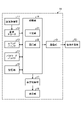
- FIG. 1 is a block diagram showing a configuration example of an operation control device according to this embodiment.
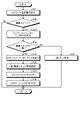
- FIG. 2 is a flow chart showing the flow of overall processing in the operation control device according to this embodiment.
- FIG. 3 is a flow chart showing the flow of indirect execution mode processing in the operation control device according to this embodiment.
- FIG. 4 is a flow chart showing the flow of abstract image processing in the operation control device according to this embodiment.
- FIG. 5 is a flow chart showing the flow of abstract image update processing in the operation control device according to the present embodiment.
- FIG. 1 is a block diagram showing a configuration example of an operation control device according to this embodiment.
- the operation control device 10 controls the operation of the operation object 50 based on the user's brain information.
- the operation control device 10 includes an electroencephalogram acquisition unit (brain information acquisition unit) 11, an electroencephalogram decoder 12, a command buffer 13, a password buffer 14, a storage unit 15, a processing unit 16, a display control unit 17, and a display.
- a unit 18 and a communication unit 19 are provided.
- the operation target 50 is, for example, a robot, but is not limited to robots, and may be any device or the like that operates by communication. Although not shown, the operation target 50 is provided with a driving device, a control device for controlling the driving device, and a communication unit capable of receiving control signals and the like. When the communication unit of the operation target 50 receives the control signal, the control device drives the driving device to operate the robot.
- the electroencephalogram acquisition unit 11 can be worn on the user's head.
- the electroencephalogram decoder 12, the processing unit 16, the display control unit 17, the display unit 18, and the communication unit 19 may be worn by the user, or may be placed at a predetermined position without being worn.
- the electroencephalogram acquisition unit 11, the electroencephalogram decoder 12, the processing unit 16, the display control unit 17, the display unit 18, and the communication unit 19 may be provided integrally or separately.
- the electroencephalogram acquisition unit 11 acquires an electroencephalogram, which is brain information of the user.
- the electroencephalogram acquisition unit 11 has, for example, an electrical sensor (for example, electrodes) that detects electroencephalograms emitted from weak currents flowing in the neural network of the brain.
- the electroencephalogram acquisition unit 11 detects a weak current potential (electrical signal) when the user is externally stimulated or based on the user's thoughts such as thoughts.
- the brain information acquisition unit is not limited to the electroencephalogram acquisition unit 11 .
- the brain information acquisition unit may acquire, for example, the blood flow volume due to brain activity, which is the brain information of the user, by, for example, near-infrared light measurement.
- the electroencephalogram acquisition unit 11 is connected to the electroencephalogram decoder 12 and transmits electroencephalograms, which are brain information acquired from the user, to the electroencephalogram decoder 12 .
- the electroencephalogram decoder 12 restores the user's electroencephalogram electrical signal acquired by the electroencephalogram acquisition unit 11 to the user's thinking information.
- the relationship between a plurality of electrical signals of the user's electroencephalogram and the user's thinking information is linked in advance.
- machine learning such as deep learning is used to link the relationship between the electrical signal of the electroencephalogram and the thinking information of the user.
- the command buffer 13 temporarily stores the first command determined by the determination unit 21 based on the thinking information of the user.
- the first command is a command for operating the operation target 50, and is, for example, a command such as "forward”, “backward”, “stop”, “accelerate”, “decelerate”, “turn right” or “turn left”. In this case, the relationship between the first command and the motion of the operation target 50 is linked in advance.
- the command buffer 13 can transmit and receive various data to and from the processing unit 16 .
- the first command is not limited to the concept indicating the action to be instructed, and may be a value or the like that complements the concept indicating the action to be instructed.
- the electroencephalogram decoder 103 restores the user's thought information based on the electrical signal acquired by the electroencephalogram acquisition unit 11, detects the intensity of the electroencephalogram as a decimal number from 0 to 1, and converts the intensity ( number) may be added to set the first command.
- the numerical value of the first command is the count of the maximum value of the torque output of the driving device provided on the manipulation object 50 .
- the password buffer 14 temporarily stores the password, which is the second command determined by the determination unit 21 based on the user's thought information.
- the password, which is the second command is a command for determining execution of the first command.
- a password is composed of a combination of one or more symbols for constructing a password.
- the password buffer 14 can transmit and receive various data to and from the processing unit 16 .
- the storage unit 15 stores a plurality of first commands and a plurality of second commands.
- the storage unit 15 may store learning data obtained by machine-learning the relationship between the electric signal of the user's electroencephalogram and thought information.
- the second command is composed of a plurality of symbols forming a password.
- the storage unit 15 can transmit and receive various data to and from the processing unit 16 .
- the processing unit 16 sets or updates a password by combining one or more of the plurality of symbols stored in the storage unit 15 .
- the password one common password that is common to different first commands may be set, or a plurality of different individual passwords may be set for different first commands.
- the password, which is the second command is an abstract image. Since a password is composed of one or more symbols combined, symbols are also abstract images. Abstract images are symbols such as “ ⁇ ”, “ ⁇ ”, “ ⁇ ”, colors such as “red”, “blue”, “black”, numbers such as “0”, “1”, “2”, or objects and scenery. is. Therefore, the password, which is the second command, is set to, for example, " ⁇ "+"red”+”9".
- the command buffer 13 and the password buffer 14 are recording units such as semiconductor memory elements such as RAM (Random Access Memory) and flash memory provided in the processing unit 16, for example.
- the storage unit 15 is composed of a memory card, an SSD (Solid State Drive), an external storage device, and the like.
- the processing unit 16 can switch between a direct execution mode and an indirect execution mode.
- the direct execution mode is a mode in which the processing unit 16 executes the first command when the processing unit 16 receives the first command for operating the operation target 50 .
- the indirect execution mode is a mode in which the processing unit 16 executes the first command when the processing unit 16 receives the first command and the second command for operating the operation target 50 .
- the processing unit 16 is, for example, an arithmetic processing device (control device) configured by a CPU (Central Processing Unit).
- the processing unit 16 loads the stored program into memory and executes the instructions contained in the program.
- the processing unit 16 includes an internal memory (not shown), and the internal memory is used for temporary storage of data in the processing unit 16 and the like.
- the processing unit 16 has a determination unit 21 and an execution unit 22 as functions. Also, the processing unit 16 transmits the processing result to the display control unit 17 and the communication unit 19 .
- the determination unit 21 determines whether or not the user's thought information acquired by the electroencephalogram acquisition unit 11 and restored by the electroencephalogram decoder 12 is an electroencephalogram corresponding to two different first commands and second commands (passwords). .
- the determination unit 21 compares the user's thinking information restored by the electroencephalogram decoder 12 with the first command stored in the storage unit 15 . At this time, when the thought information of the user matches the first command, the determination unit 21 determines that the thought information of the user is the first command. At this time, the determination unit 21 stores the command determined to be the first command in the command buffer 13 . On the other hand, when the user's thought information does not match the first command, the determination unit 21 determines that the user's thought information is not the first command. At this time, the determination unit 21 does not store the command determined as not the first command in the command buffer 13 .
- the determination unit 21 determines whether the user's thinking information restored by the electroencephalogram decoder 12 and the first command match, if the user's thinking information can be determined to mean the first command, the user's thinking information is considered to be a match even if it is not a perfect match. to decide.
- the determination unit 21 also compares the user's thought information restored by the electroencephalogram decoder 12 with the password stored in the storage unit 15 . At this time, when the thought information of the user matches the password or the symbols forming the password, the determination unit 21 determines that the thought information of the user is the password or the symbols forming the password. The determination unit 21 stores the password or the symbol in the password buffer 14 when determining that the thought information of the user is the password or the symbol. On the other hand, when the user's thinking information does not match the stored password or the symbols composing the password, the determining unit 21 determines that the user's thinking information is not the password or the symbols composing the password. The determination unit 21 does not store the password or the symbol in the password buffer 14 when determining that the user's thinking information is not the password or the symbol.
- the execution unit 22 executes processing corresponding to the first command. Specifically, when the determination unit 21 determines that the user's thought information acquired first is the first command, and the determination unit 21 determines that the user's thought information acquired next is the password. , executes the process corresponding to the first command.
- the execution unit 22 cancels the acquired first command when a preset waiting time, such as three seconds, elapses after the determination unit 21 determines acquisition of the first command. Further, when the processing unit 16 acquires a cancel command as the user's thought after the determination unit 21 determines acquisition of the first command, the execution unit 22 cancels the acquired first command.
- the cancel command is set in advance, and the relationship between the user's electroencephalogram electrical signal and the user's thought information (cancel command) is linked in advance and stored in the storage unit 15 .
- the execution unit 22 determines whether the second command is input, and the first command is executed. Execute a command.
- the determination unit 21 determines that the user's thought information is the first command when the indirect execution mode is selected. That is, after the determining unit 21 determines that the first thought information of the user is the first command, the execution unit 22 determines that the next user's thought information is the second command (password). Execute the first command.
- the display control unit 17 and the display unit 18 function as an information presentation unit that presents various types of information.
- the display control unit 17 and the display unit 18 present information that evokes the password when the determination unit 21 determines that the electroencephalogram corresponding to the first command has been obtained.
- the information presenting unit presents the user with information that reminds the user of the password using visual information, but the present invention is not limited to this.
- the information presenting unit may present information that reminds the user of the password using voice information.
- the information presentation unit is configured by, for example, an audio output control unit and a speaker.
- the display control unit 17 is connected to the display unit 18 .
- the display control unit 17 transmits the processing result transmitted from the processing unit 16 to the display unit 18 for display.
- the display control unit 17 causes the display unit 18 to display the operation state of the operation control device 10 and the thinking instructions to the user, which are the processing results of the processing unit 16 .
- the processing unit 16 causes the display unit 18 to display necessary information by controlling the display control unit 17 .
- the processing unit 16 controls the display control unit 17 to cause the display unit 18 to display an instruction to remind the user of a password symbol (abstract image) as the second command. Since the symbol is an abstract image, the display unit 18 may display the abstract image itself, or may display an image or language that evokes the abstract image.
- the display unit 18 displays the operating state of the operation control device 10 transmitted from the display control unit 17 and the thinking instruction to the user.
- the display unit 18 presents necessary information to the user.
- the display unit 18 is a display including, for example, a liquid crystal display (LCD) or an organic EL (Organic Electro-Luminescence) display.
- the communication unit 19 is capable of wireless communication with the operation target 50.
- the communication unit 19 transmits the processing information processed by the processing unit 16 to the operation target 50 .
- the determination unit 21 determines that the electroencephalogram corresponding to the first command and the electroencephalogram corresponding to the password have been acquired
- the execution unit 22 generates a control signal corresponding to the processing of the first command, Send to 19.
- the communication unit 19 transmits a control signal corresponding to processing of the first command to the operation target 50 .
- the operation target 50 operates corresponding to the processing of the first command.
- FIG. 2 is a flow chart showing the flow of overall processing in the operation control device according to this embodiment.
- step S11 the processing unit 16 determines whether or not the user's thought information acquired by the electroencephalogram acquisition unit 11 and restored by the electroencephalogram decoder 12 is a mode switching command. . If the processing unit 16 determines that the user's thinking information is a mode switching command (Yes), the processing unit 16 switches the mode in step S12. That is, the processing unit 16 switches to the indirect execution mode if it is currently in the direct execution mode, and switches to the direct execution mode if it is in the indirect execution mode. At this time, the processing unit 16 controls the display control unit 17 to display to the user that the mode has been switched on the display unit 18 .
- the display control unit 17 displays the processing content such as "Switched to the direct execution mode” on the display unit 18, and when switching to the indirect execution mode, the display control unit 17 displays "Indirect execution mode Switched” is displayed on the display unit 18 to inform the user that the mode has been switched. Then, in step S13, the command buffer 13 and the password buffer 14 are cleared, and this routine is exited.
- step S14 determines whether or not the direct execution mode is currently selected.
- the processing unit 16 determines that the direct execution mode is currently selected (Yes)
- step S15 the determination unit 21 acquires the user data acquired by the electroencephalogram acquisition unit 11 and restored by the electroencephalogram decoder 12 is an electroencephalogram corresponding to the first command.
- this routine is exited.
- step S15 when the determination unit 21 determines that the user's thinking information is the first command (Yes) in step S15, the execution unit 22 executes processing corresponding to the first command in step S16. That is, the execution unit 22 transmits a control signal corresponding to the processing of the first command to the operation object 50 through the communication unit 19 to operate the operation object 50 .
- the processing unit 16 controls the display control unit 17 to display to the user that the first command has been executed on the display unit 18 .
- the display control unit 17 displays, on the display unit 18, a message indicating that the first command has been executed, such as "acceleration command executed".
- step S14 when the processing unit 16 determines that the direct execution mode is not currently selected (No), at step S17, the process of the indirect execution mode is executed.
- the processing shown in FIG. 2 is repeatedly executed while the operation of the operation target 50 is controlled by the operation control device 10 .
- FIG. 3 is a flow chart showing the flow of indirect execution mode processing in the operation control device according to this embodiment.
- step S21 the determination unit 21 determines whether or not the user's thought information acquired by the electroencephalogram acquisition unit 11 and restored by the electroencephalogram decoder 12 is an electroencephalogram corresponding to the first command. determine whether Here, when determining that the thought information of the user is the first command (Yes), the determination unit 21 stores the determined first command in the command buffer 13 in step S22. At this time, the processing unit 16 may control the display control unit 17 to display to the user that the first command has been stored on the display unit 18 . The display control unit 17 displays, on the display unit 18, a message storing the first command such as "acceleration command is stored". Then, in step S23, the password buffer 14 is cleared.
- the determination unit 21 determines whether or not the first command is stored in the command buffer 13 in step S24. do. If the determination unit 21 determines that the first command is stored in the command buffer 13 (Yes), the determination unit 21 executes abstract image processing in step S25.
- FIG. 4 is a flow chart showing the flow of abstract image processing in the operation control device according to this embodiment.
- step S31 the processing unit 16 controls the display control unit 17 to display a password symbol (abstract image) as the second command to the display unit 18 for the user.
- display instructions that remind you of
- the display control unit 17 displays, for example, an image corresponding to the abstract image on the display unit 18 .
- step S32 the determination unit 21 determines whether or not the user's thought information acquired by the electroencephalogram acquisition unit 11 and restored by the electroencephalogram decoder 12 is an electroencephalogram corresponding to the password (abstract image).
- the determination unit 21 determines that the user's thought information is not a password (abstract image) (No), this routine is exited.
- the determination unit 21 determines that the user's thinking information is a password symbol (Yes), it stores the determined symbol in the password buffer 14 as one abstract image in step S33. On the other hand, when the determination unit 21 determines that the user's thought information is not a symbol of the password (No), this routine is exited.
- step S34 the determination unit 21 compares the abstract image stored in the password buffer 14 with the password composed of the abstract images stored in the storage unit 15, and determines whether the two match. judge.
- step S39 the processing unit 16 controls the display control unit 17 to display to the user on the display unit 18 that the passwords do not match.
- step S34 if the determination unit 21 determines that the abstract image stored in the password buffer 14 and the password configured by the abstract image stored in the storage unit 15 match (Yes), At step S ⁇ b>35 , the execution unit 22 executes processing corresponding to the first command stored in the command buffer 13 . That is, the execution unit 22 transmits a control signal corresponding to the processing of the first command to the operation object 50 through the communication unit 19 to operate the operation object 50 .
- the processing unit 16 controls the display control unit 17 to display to the user that the first command has been executed on the display unit 18 .
- the display control unit 17 displays, on the display unit 18, a message indicating that the first command has been executed, such as "acceleration command executed".
- step S36 the processing unit 16 executes abstract image update processing for updating the password.
- Abstract image update processing will be described later.
- step S37 the command buffer 13 is cleared, and in step S38, the password buffer 14 is cleared.
- FIG. 5 is a flow chart showing the flow of abstract image update processing in the operation control device according to the present embodiment.
- step S41 the processing unit 16 determines whether or not a predetermined condition set in advance for updating the password is satisfied.
- the processing unit determines that the predetermined condition is not satisfied (No)
- the routine exits.
- the password is updated by adding the necessary abstract image symbol to the current password in step S42.
- the predetermined conditions for updating and changing the password are, for example, that the number of executions of the first command has exceeded a predetermined number of times, or that the intensity of the electroencephalogram processed by the electroencephalogram decoder 12 has exceeded a predetermined amount. and when the process of adding a necessary abstract image is input via an input means such as an electroencephalogram.
- the first command and the second command (password) are detected in chronological order, but the configuration is not limited to this.
- the configuration may be such that the first command and the second command (password) are detected simultaneously. That is, the processing of steps S21 to S23 of FIG. 3 and the processing of steps S31 to S34 of FIG. 4 may be executed in parallel.
- an electroencephalogram acquisition unit (brain information acquisition unit) 11 that acquires brain information of a user, and brain information corresponding to two different first commands and second commands acquired by the electroencephalogram acquisition unit 11 are used.
- a display control unit 17 and a display unit 18 as information presenting units for presenting information reminiscent of the second command; an execution unit 22 that executes processing corresponding to the first command when it is determined that brain information corresponding to the second command has been acquired.
- the operation target 50 is operated by executing the processing corresponding to the first command. That is, even if the brain information corresponding to the first command indicating the content of the operation is acquired, if the brain information corresponding to the second command indicating the intention to execute the content of the operation is not acquired, the processing corresponding to the first command cannot be performed. Not executed. Therefore, the content and execution timing of the first command are safer and more accurate, and an appropriate electroencephalogram command can be executed without being affected by irrelevant stimuli.
- the display control unit 17 and the display unit 18 as the information presenting unit present the information for reminding the user of the second command, so that the user can recall the second command. become. Therefore, the user does not need to memorize the second command, and can appropriately execute the first command.
- the first command is a command representing the operation content for operating the operation target 50
- the second command is an abstract image representing the intention to execute the operation content of the operation target. is. Therefore, by acquiring the brain information corresponding to the second command, the user can confirm the user's intention to execute the operation content of the operation target 50, and can execute an appropriate electroencephalogram command.
- the determination unit 21 can set the second command and can notify the user by the display control unit 17 and the display unit 18 as an information presentation unit, and when a preset update condition is satisfied, the second command can be notified to the user. , the second command can be changed. Therefore, if the same second command is used for a long period of time, the user will memorize the second command. By changing the , it is possible to appropriately confirm the user's intention to execute the operation content.
- Each component of the illustrated operation control device 10 is functionally conceptual and does not necessarily have to be physically configured as illustrated.
- the specific form of each device is not limited to the illustrated one, and all or part of it may be functionally or physically distributed or integrated in arbitrary units according to the processing load and usage conditions of each device.
- the configuration of the operation control device 10 is implemented, for example, as software by a program loaded into the memory.
- functional blocks realized by cooperation of these hardware or software have been described. That is, these functional blocks can be realized in various forms by hardware only, software only, or a combination thereof.
- the operation control device, operation control method, and program of the present disclosure can be applied to, for example, a brain machine interface.
- operation control device 11 electroencephalogram acquisition unit (brain information acquisition unit) 12 electroencephalogram decoder 13 command buffer 14 password buffer 15 storage unit 16 processing unit 17 display control unit (information presentation unit) 18 display unit (information display unit) 19 Communication unit 50 Operation object
Landscapes
- Engineering & Computer Science (AREA)
- General Engineering & Computer Science (AREA)
- Theoretical Computer Science (AREA)
- Human Computer Interaction (AREA)
- Physics & Mathematics (AREA)
- General Physics & Mathematics (AREA)
- Health & Medical Sciences (AREA)
- Biomedical Technology (AREA)
- Dermatology (AREA)
- General Health & Medical Sciences (AREA)
- Neurology (AREA)
- Neurosurgery (AREA)
- User Interface Of Digital Computer (AREA)
- Measurement And Recording Of Electrical Phenomena And Electrical Characteristics Of The Living Body (AREA)
Priority Applications (3)
| Application Number | Priority Date | Filing Date | Title |
|---|---|---|---|
| CN202280050887.8A CN117730297A (zh) | 2021-07-20 | 2022-03-10 | 操作控制装置、操作控制方法以及程序 |
| EP22845620.8A EP4357887B1 (en) | 2021-07-20 | 2022-03-10 | Operation control device, operation control method, and program |
| US18/413,086 US12386422B2 (en) | 2021-07-20 | 2024-01-16 | Operation control device, operation control method, and non-transitory storage medium |
Applications Claiming Priority (2)
| Application Number | Priority Date | Filing Date | Title |
|---|---|---|---|
| JP2021119291A JP7600915B2 (ja) | 2021-07-20 | 2021-07-20 | 操作制御装置、操作制御方法およびプログラム |
| JP2021-119291 | 2021-07-20 |
Related Child Applications (1)
| Application Number | Title | Priority Date | Filing Date |
|---|---|---|---|
| US18/413,086 Continuation US12386422B2 (en) | 2021-07-20 | 2024-01-16 | Operation control device, operation control method, and non-transitory storage medium |
Publications (1)
| Publication Number | Publication Date |
|---|---|
| WO2023002680A1 true WO2023002680A1 (ja) | 2023-01-26 |
Family
ID=84979877
Family Applications (1)
| Application Number | Title | Priority Date | Filing Date |
|---|---|---|---|
| PCT/JP2022/010732 Ceased WO2023002680A1 (ja) | 2021-07-20 | 2022-03-10 | 操作制御装置、操作制御方法およびプログラム |
Country Status (5)
| Country | Link |
|---|---|
| US (1) | US12386422B2 (https=) |
| EP (1) | EP4357887B1 (https=) |
| JP (1) | JP7600915B2 (https=) |
| CN (1) | CN117730297A (https=) |
| WO (1) | WO2023002680A1 (https=) |
Citations (3)
| Publication number | Priority date | Publication date | Assignee | Title |
|---|---|---|---|---|
| JP2013117957A (ja) | 2011-11-30 | 2013-06-13 | Honeywell Internatl Inc | 多数の自由度系の思考可能なハンズフリー制御 |
| JP2018190164A (ja) * | 2017-05-02 | 2018-11-29 | 株式会社ぐるなび | 認証装置、認証方法、及び認証プログラム |
| JP2021089636A (ja) * | 2019-12-05 | 2021-06-10 | 富士フイルムビジネスイノベーション株式会社 | 情報処理装置及びプログラム |
Family Cites Families (4)
| Publication number | Priority date | Publication date | Assignee | Title |
|---|---|---|---|---|
| US9101279B2 (en) * | 2006-02-15 | 2015-08-11 | Virtual Video Reality By Ritchey, Llc | Mobile user borne brain activity data and surrounding environment data correlation system |
| JP2010019708A (ja) * | 2008-07-11 | 2010-01-28 | Hitachi Ltd | 車載装置 |
| JP5608857B2 (ja) | 2009-12-21 | 2014-10-15 | キヤノンマーケティングジャパン株式会社 | 情報処理装置およびその制御方法、プログラム |
| US20150338917A1 (en) * | 2012-12-26 | 2015-11-26 | Sia Technology Ltd. | Device, system, and method of controlling electronic devices via thought |
-
2021
- 2021-07-20 JP JP2021119291A patent/JP7600915B2/ja active Active
-
2022
- 2022-03-10 CN CN202280050887.8A patent/CN117730297A/zh active Pending
- 2022-03-10 EP EP22845620.8A patent/EP4357887B1/en active Active
- 2022-03-10 WO PCT/JP2022/010732 patent/WO2023002680A1/ja not_active Ceased
-
2024
- 2024-01-16 US US18/413,086 patent/US12386422B2/en active Active
Patent Citations (3)
| Publication number | Priority date | Publication date | Assignee | Title |
|---|---|---|---|---|
| JP2013117957A (ja) | 2011-11-30 | 2013-06-13 | Honeywell Internatl Inc | 多数の自由度系の思考可能なハンズフリー制御 |
| JP2018190164A (ja) * | 2017-05-02 | 2018-11-29 | 株式会社ぐるなび | 認証装置、認証方法、及び認証プログラム |
| JP2021089636A (ja) * | 2019-12-05 | 2021-06-10 | 富士フイルムビジネスイノベーション株式会社 | 情報処理装置及びプログラム |
Non-Patent Citations (1)
| Title |
|---|
| See also references of EP4357887A4 |
Also Published As
| Publication number | Publication date |
|---|---|
| EP4357887A4 (en) | 2024-10-30 |
| EP4357887A1 (en) | 2024-04-24 |
| US20240152207A1 (en) | 2024-05-09 |
| JP7600915B2 (ja) | 2024-12-17 |
| US12386422B2 (en) | 2025-08-12 |
| EP4357887B1 (en) | 2025-10-22 |
| CN117730297A (zh) | 2024-03-19 |
| JP2023015487A (ja) | 2023-02-01 |
Similar Documents
| Publication | Publication Date | Title |
|---|---|---|
| EP3149662B1 (en) | Brain-computer interface for facilitating direct selection of multiple-choice answers and the identification of state changes | |
| US20190015751A1 (en) | Systems and methods for biofeedback gameplay | |
| EP3039862A1 (en) | Information processing device, information processing method, and program | |
| US20170027445A1 (en) | Terminal device, non-transitory storage medium having stored thereon terminal control program, and optometry system | |
| GB2604808A (en) | Apparatus and method for controlling a system of resources | |
| WO2023002680A1 (ja) | 操作制御装置、操作制御方法およびプログラム | |
| JP2017138707A (ja) | 表示制御装置、表示制御方法及び表示制御プログラム | |
| WO2023002668A1 (ja) | 操作制御装置、操作制御方法およびプログラム | |
| US11071503B2 (en) | Physiological parameter display methods and systems | |
| JP7757673B2 (ja) | 操作制御装置、操作制御方法およびプログラム | |
| WO2023032411A1 (ja) | 操作制御装置、操作制御方法およびプログラム | |
| WO2023042513A1 (ja) | 操作制御装置、操作制御方法およびプログラム | |
| JP2023042407A (ja) | 操作制御装置、操作制御方法およびプログラム | |
| JP7729134B2 (ja) | 操作制御装置、操作制御方法およびプログラム | |
| JP2023042999A (ja) | 操作制御装置、操作制御方法およびプログラム | |
| WO2023042501A1 (ja) | 操作制御装置、操作制御方法およびプログラム | |
| WO2020259846A1 (en) | Dental patient feedback and notification system | |
| US11657129B2 (en) | Robot operation terminal | |
| WO2022025895A1 (en) | Head-mounted display sensor status | |
| JP2021158475A5 (https=) | ||
| JP2007034544A (ja) | 電子機器及び状況通信装置 | |
| CN105164594A (zh) | 用于提供触觉反馈的呈现的方法,工业机器人系统和便携式操作人员控制设备 | |
| JP2019079332A (ja) | I/oモジュール | |
| JP2019048714A (ja) | 運転支援システム | |
| JP2025158826A (ja) | 遠隔オペレータ端末 |
Legal Events
| Date | Code | Title | Description |
|---|---|---|---|
| 121 | Ep: the epo has been informed by wipo that ep was designated in this application |
Ref document number: 22845620 Country of ref document: EP Kind code of ref document: A1 |
|
| DPE2 | Request for preliminary examination filed before expiration of 19th month from priority date (pct application filed from 20040101) | ||
| WWE | Wipo information: entry into national phase |
Ref document number: 202280050887.8 Country of ref document: CN Ref document number: 2022845620 Country of ref document: EP |
|
| ENP | Entry into the national phase |
Ref document number: 2022845620 Country of ref document: EP Effective date: 20240118 |
|
| NENP | Non-entry into the national phase |
Ref country code: DE |
|
| WWG | Wipo information: grant in national office |
Ref document number: 2022845620 Country of ref document: EP |