WO2022269911A1 - 光ファイバセンサおよび変化検知方法 - Google Patents
光ファイバセンサおよび変化検知方法 Download PDFInfo
- Publication number
- WO2022269911A1 WO2022269911A1 PCT/JP2021/024168 JP2021024168W WO2022269911A1 WO 2022269911 A1 WO2022269911 A1 WO 2022269911A1 JP 2021024168 W JP2021024168 W JP 2021024168W WO 2022269911 A1 WO2022269911 A1 WO 2022269911A1
- Authority
- WO
- WIPO (PCT)
- Prior art keywords
- section
- optical fiber
- light
- amplitude
- evaluation target
- Prior art date
- Legal status (The legal status is an assumption and is not a legal conclusion. Google has not performed a legal analysis and makes no representation as to the accuracy of the status listed.)
- Ceased
Links
Images






Classifications
-
- G—PHYSICS
- G01—MEASURING; TESTING
- G01M—TESTING STATIC OR DYNAMIC BALANCE OF MACHINES OR STRUCTURES; TESTING OF STRUCTURES OR APPARATUS, NOT OTHERWISE PROVIDED FOR
- G01M11/00—Testing of optical apparatus; Testing structures by optical methods not otherwise provided for
- G01M11/30—Testing of optical devices, constituted by fibre optics or optical waveguides
- G01M11/31—Testing of optical devices, constituted by fibre optics or optical waveguides with a light emitter and a light receiver being disposed at the same side of a fibre or waveguide end-face, e.g. reflectometers
- G01M11/3181—Reflectometers dealing with polarisation
-
- G—PHYSICS
- G01—MEASURING; TESTING
- G01D—MEASURING NOT SPECIALLY ADAPTED FOR A SPECIFIC VARIABLE; ARRANGEMENTS FOR MEASURING TWO OR MORE VARIABLES NOT COVERED IN A SINGLE OTHER SUBCLASS; TARIFF METERING APPARATUS; MEASURING OR TESTING NOT OTHERWISE PROVIDED FOR
- G01D5/00—Mechanical means for transferring the output of a sensing member; Means for converting the output of a sensing member to another variable where the form or nature of the sensing member does not constrain the means for converting; Transducers not specially adapted for a specific variable
- G01D5/26—Mechanical means for transferring the output of a sensing member; Means for converting the output of a sensing member to another variable where the form or nature of the sensing member does not constrain the means for converting; Transducers not specially adapted for a specific variable characterised by optical transfer means, i.e. using infrared, visible, or ultraviolet light
- G01D5/32—Mechanical means for transferring the output of a sensing member; Means for converting the output of a sensing member to another variable where the form or nature of the sensing member does not constrain the means for converting; Transducers not specially adapted for a specific variable characterised by optical transfer means, i.e. using infrared, visible, or ultraviolet light with attenuation or whole or partial obturation of beams of light
- G01D5/34—Mechanical means for transferring the output of a sensing member; Means for converting the output of a sensing member to another variable where the form or nature of the sensing member does not constrain the means for converting; Transducers not specially adapted for a specific variable characterised by optical transfer means, i.e. using infrared, visible, or ultraviolet light with attenuation or whole or partial obturation of beams of light the beams of light being detected by photocells
- G01D5/353—Mechanical means for transferring the output of a sensing member; Means for converting the output of a sensing member to another variable where the form or nature of the sensing member does not constrain the means for converting; Transducers not specially adapted for a specific variable characterised by optical transfer means, i.e. using infrared, visible, or ultraviolet light with attenuation or whole or partial obturation of beams of light the beams of light being detected by photocells influencing the transmission properties of an optical fibre
- G01D5/35338—Mechanical means for transferring the output of a sensing member; Means for converting the output of a sensing member to another variable where the form or nature of the sensing member does not constrain the means for converting; Transducers not specially adapted for a specific variable characterised by optical transfer means, i.e. using infrared, visible, or ultraviolet light with attenuation or whole or partial obturation of beams of light the beams of light being detected by photocells influencing the transmission properties of an optical fibre using other arrangements than interferometer arrangements
- G01D5/35354—Sensor working in reflection
- G01D5/35358—Sensor working in reflection using backscattering to detect the measured quantity
-
- G—PHYSICS
- G01—MEASURING; TESTING
- G01D—MEASURING NOT SPECIALLY ADAPTED FOR A SPECIFIC VARIABLE; ARRANGEMENTS FOR MEASURING TWO OR MORE VARIABLES NOT COVERED IN A SINGLE OTHER SUBCLASS; TARIFF METERING APPARATUS; MEASURING OR TESTING NOT OTHERWISE PROVIDED FOR
- G01D5/00—Mechanical means for transferring the output of a sensing member; Means for converting the output of a sensing member to another variable where the form or nature of the sensing member does not constrain the means for converting; Transducers not specially adapted for a specific variable
- G01D5/26—Mechanical means for transferring the output of a sensing member; Means for converting the output of a sensing member to another variable where the form or nature of the sensing member does not constrain the means for converting; Transducers not specially adapted for a specific variable characterised by optical transfer means, i.e. using infrared, visible, or ultraviolet light
- G01D5/32—Mechanical means for transferring the output of a sensing member; Means for converting the output of a sensing member to another variable where the form or nature of the sensing member does not constrain the means for converting; Transducers not specially adapted for a specific variable characterised by optical transfer means, i.e. using infrared, visible, or ultraviolet light with attenuation or whole or partial obturation of beams of light
- G01D5/34—Mechanical means for transferring the output of a sensing member; Means for converting the output of a sensing member to another variable where the form or nature of the sensing member does not constrain the means for converting; Transducers not specially adapted for a specific variable characterised by optical transfer means, i.e. using infrared, visible, or ultraviolet light with attenuation or whole or partial obturation of beams of light the beams of light being detected by photocells
- G01D5/353—Mechanical means for transferring the output of a sensing member; Means for converting the output of a sensing member to another variable where the form or nature of the sensing member does not constrain the means for converting; Transducers not specially adapted for a specific variable characterised by optical transfer means, i.e. using infrared, visible, or ultraviolet light with attenuation or whole or partial obturation of beams of light the beams of light being detected by photocells influencing the transmission properties of an optical fibre
- G01D5/3537—Optical fibre sensor using a particular arrangement of the optical fibre itself
-
- G—PHYSICS
- G01—MEASURING; TESTING
- G01H—MEASUREMENT OF MECHANICAL VIBRATIONS OR ULTRASONIC, SONIC OR INFRASONIC WAVES
- G01H9/00—Measuring mechanical vibrations or ultrasonic, sonic or infrasonic waves by using radiation-sensitive means, e.g. optical means
-
- G—PHYSICS
- G01—MEASURING; TESTING
- G01H—MEASUREMENT OF MECHANICAL VIBRATIONS OR ULTRASONIC, SONIC OR INFRASONIC WAVES
- G01H9/00—Measuring mechanical vibrations or ultrasonic, sonic or infrasonic waves by using radiation-sensitive means, e.g. optical means
- G01H9/004—Measuring mechanical vibrations or ultrasonic, sonic or infrasonic waves by using radiation-sensitive means, e.g. optical means using fibre optic sensors
-
- G—PHYSICS
- G01—MEASURING; TESTING
- G01M—TESTING STATIC OR DYNAMIC BALANCE OF MACHINES OR STRUCTURES; TESTING OF STRUCTURES OR APPARATUS, NOT OTHERWISE PROVIDED FOR
- G01M11/00—Testing of optical apparatus; Testing structures by optical methods not otherwise provided for
- G01M11/02—Testing optical properties
- G01M11/0207—Details of measuring devices
-
- G—PHYSICS
- G01—MEASURING; TESTING
- G01M—TESTING STATIC OR DYNAMIC BALANCE OF MACHINES OR STRUCTURES; TESTING OF STRUCTURES OR APPARATUS, NOT OTHERWISE PROVIDED FOR
- G01M11/00—Testing of optical apparatus; Testing structures by optical methods not otherwise provided for
- G01M11/30—Testing of optical devices, constituted by fibre optics or optical waveguides
- G01M11/31—Testing of optical devices, constituted by fibre optics or optical waveguides with a light emitter and a light receiver being disposed at the same side of a fibre or waveguide end-face, e.g. reflectometers
- G01M11/3109—Reflectometers detecting the back-scattered light in the time-domain, e.g. OTDR
- G01M11/3145—Details of the optoelectronics or data analysis
Definitions
- the present invention relates to an optical fiber sensor and a change detection method using the optical fiber sensor.
- a drone is an example of an object to be monitored by a wide area surveillance system.
- An acoustic sensor such as a microphone to monitor a drone (see Patent Document 1, for example).
- the drone flies while generating acoustic signals peculiar to flight conditions. Therefore, the presence and direction of the drone can be detected by capturing the acoustic signals generated by the drone.
- Patent Document 1 describes identifying a drone based on the result of matching between an acoustic signal of a flying object obtained by an acoustic sensor and voice data obtained in advance.
- an estimation device that estimates the azimuth of a sound source using a plurality of microphones (see Patent Document 2, for example). For example, a microphone array (collection of multiple microphones) is placed at a point. The estimating device estimates the azimuth from the microphone array to the drone using the relative position information of each microphone and the relationship between the acoustic delay times measured from the output of each microphone.
- optical fiber sensing that uses optical fiber sensors that can continuously monitor over long distances is useful from a cost perspective.
- Optical fiber sensing is a technology that uses optical fibers to measure sound, vibration, and the like.
- the optical fiber itself becomes the sensor.
- a system that includes an optical fiber and a detector is referred to herein as a fiber optic sensor.
- An acoustic sensor based on optical fiber sensing is sometimes called an optical fiber microphone.
- a set of a plurality of optical fiber microphones is sometimes called an optical fiber microphone array.
- One type of optical fiber sensor is a distributed optical fiber sensor.
- a distributed optical fiber sensor for example, there is an optical fiber sensor that utilizes scattered light due to Rayleigh scattering (Rayleigh scattered light).
- Rayleigh scattering is the scattering of light by particulates (impurities) in the optical fiber core.
- a detector in an optical fiber sensor that uses Rayleigh scattered light can detect physical changes in the optical fiber caused by sound or vibration based on a signal obtained by detecting backscattered light due to Rayleigh scattering.
- optical fiber sensors can be used as acoustic sensors and vibration sensors.
- the detector When observing changes in the phase of the backscattered light, the detector is configured to evaluate the difference (phase difference) between the phase of the backscattered light at the beginning of the interval and the phase of the backscattered light at the end.
- difference phase difference
- the evaluation interval is called gauge length.
- the evaluation target section may be simply referred to as the section.
- the optical fiber forms one optical fiber microphone.
- the sound pickup performance of the fiber optic microphone is that of a single microphone.
- a problem with a single microphone is that it is difficult to accurately detect the position of the sound source when the level of the acoustic signal is low. In particular, this problem is conspicuous for acoustic signals having an amplitude equal to or smaller than that of background noise.
- Non-Patent Document 1 describes a method of estimating the orientation using the MUSIC (MUltiple SIgnal Classification) method.
- An object of the present invention is to provide an optical fiber sensor and a change detection method that have high detection performance when detecting changes in the surrounding environment using optical fiber sensing.
- the optical fiber sensor is a setting means for setting an evaluation target section set in an optical fiber to either a first section or a plurality of second sections each shorter than the first section. , extracting means for extracting state changes of light from the optical fiber, and detection means for detecting changes in the surrounding environment based on time-series data of light state changes in the evaluation target section.
- a change detection method sets an evaluation target section set in an optical fiber to either a first section or a plurality of second sections each shorter than the first section, and Changes in the state of light from the fiber are extracted, and changes in the surrounding environment are detected based on the time-series data of the state changes of light in the section to be evaluated.
- a change detection program causes a computer to set an evaluation target section set in an optical fiber to either a first section or a plurality of second sections each shorter than the first section. a process of extracting a state change of light from the optical fiber; and a process of detecting a change in the surrounding environment based on the time-series data of the light state change in the evaluation target section.
- detection performance is improved when detecting changes in the surrounding environment using optical fiber sensing.
- FIG. 10 is an explanatory diagram for explaining an evaluation target section in direction estimation mode
- 1 is a block diagram showing a configuration example of an optical fiber sensor according to a first embodiment
- FIG. 4 is a block diagram showing a configuration example of a determination unit in the first embodiment
- FIG. 4 is a block diagram showing a configuration example of a sound source direction estimation unit
- FIG. 4 is a flow chart showing the operation of the optical fiber sensor of the first embodiment
- FIG. 5 is an explanatory diagram for explaining processing for detecting whether or not a sound source of a suspicious object exists based on acoustic amplitude data
- FIG. 10 is an explanatory diagram for explaining an evaluation target section in direction estimation mode
- 1 is a block diagram showing a configuration example of an optical fiber sensor according to a first embodiment
- FIG. 4 is a block diagram showing a configuration example of a determination unit in the first embodiment
- FIG. 4 is a block diagram showing a configuration example of a sound source direction estimation unit
- FIG. 4 is a
- FIG. 11 is a block diagram showing a configuration example of a determination unit in the second embodiment
- FIG. 8 is a flow chart showing the operation of the optical fiber sensor of the second embodiment
- FIG. 12 is a block diagram showing a configuration example of a determination unit in the third embodiment
- FIG. 9 is a flow chart showing the operation of the optical fiber sensor of the third embodiment
- 1 is a block diagram showing an example of a computer having a CPU
- FIG. It is a block diagram which shows the principal part of an optical fiber sensor.
- examples of detection targets for changes in the surrounding environment of the optical fiber sensor are mainly the flying sound of drones and vibrations caused by the approach of suspicious objects.
- the embodiments described below are also applicable to detection of changes in the surrounding environment other than drone flight sounds.
- Other examples of changes in the surrounding environment include changes in temperature and changes in the state of buildings near the location where the optical fiber is laid.
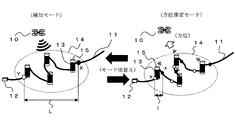
- FIG. 1 is an explanatory diagram for explaining a configuration example of an optical fiber sensor.
- the fiber optic sensor includes an optical fiber 11 , a detector 12 and a fiber optic microphone array 14 including a plurality of fiber optic microphones 13 .
- Four fiber optic microphones 13 are illustrated in FIG.
- the number and installation positions of the optical fiber microphones 13 are arbitrary.
- a plurality of fiber optic microphones 13 may be arranged on one straight line.
- a plurality of optical fiber microphones 13 may be installed at arbitrary positions on one plane.
- a plurality of optical fiber microphones 13 may be installed at arbitrary positions in the three-dimensional space.
- the usage pattern in the detection mode is shown on the left side.
- the usage pattern in the azimuth estimation mode is shown on the right side.
- the detection mode is a mode for detecting sound from a sound source (drone in this embodiment) 10 (for example, flying sound of a drone).
- the azimuth estimation mode is a mode for estimating the position of the sound source 10 . Therefore, in the azimuth estimation mode, the azimuth of the sound source 10 is estimated. Note that the evaluation target section in the direction estimation mode is shorter than the evaluation target section in the detection mode.
- each optical fiber microphone 13 may be formed of the entire length of the optical fiber 11 wound around the resonance medium 15, or may be formed of a portion of the optical fiber 11 wound around the resonance medium 15.
- the optical fiber 11 When the resonance medium 15 is distorted by an acoustic signal (specifically, sound pressure), the optical fiber 11 expands and contracts according to the magnitude of the acoustic signal. Then, the path length of the light passing through the optical fiber 11 changes. As a result, the amplitude and phase of backscattered light due to Rayleigh scattering change.
- the detector 12 can detect changes in the surrounding environment of the fiber optic sensor based on changes in the phase of the backscattered light.
- the optical fiber microphone 13 using the cylindrical resonance medium 15 is disclosed in Patent Document 3, for example.
- L indicates an evaluation target section in detection mode.
- the evaluation target section may be expressed as a measurement section.
- the evaluation target section L (first section) is defined by the total length of the optical fiber 11 between the starting end Y and the terminal end X in the detection mode.
- FIG. 2 is an explanatory diagram for explaining the evaluation target section in the azimuth estimation mode.
- the evaluation target section l (second section) is the portion of the optical fiber 11 between the start point y and the end point x of the portion where the optical fiber 11 is wound around the resonance medium 15. Defined by total length. The interval between the start point y and the end point x is called an interval.
- the evaluation target section l is similarly defined for the other optical fiber microphones 13 included in the optical fiber microphone array 14 .
- FIG. 1 illustrates four evaluation target intervals l.
- portions of the optical fiber 11 corresponding to the resonant medium 15 are used as the respective optical fiber microphones 13 (four optical fiber microphones 13 in the example shown in FIG. 1). there is That is, the evaluation target section is set corresponding to the resonance medium 15 .
- an evaluation target section may be set across two or more resonant media 15, and if l ⁇ L/2 is satisfied, a portion that can be regarded as the optical fiber microphone 13 inside the optical fiber microphone array 14 exists, ensuring that the fiber optic microphone array 14 has orientation estimation capability.
- the section to be evaluated is defined by the detector 12 setting a measurement point (eg, start point y) and a reference point (eg, end point x) separated therefrom by the distance of the measurement section. be.
- the fact that the detector 12 sets the measurement point and the reference point means that the phase information of the backscattered light received from the measurement point and the reference point after the elapse of a predetermined time from the time when the light source contained in the detector 12 is emitted.
- the phase difference signals obtained by the respective optical fiber microphones 13 as the acoustic signals obtained when the respective optical fiber microphones 13 receive the sounds.
- the predetermined time is the time from when the light is emitted from the light source to when the backscattered light from the measurement point and the reference point returns.
- Azimuth detection of the drone is performed based on the acoustic arrival time difference of the acoustic signals acquired by the respective optical fiber microphones 13 .
- the fiber optic sensor In the sensing mode, the fiber optic sensor operates to sense sounds generated around the fiber optic microphone array 14 . In sensing mode, the fiber optic microphone array 14 effectively functions as one omnidirectional microphone. In the direction estimation mode, each of the multiple optical fiber microphones 13 in the optical fiber sensor functions as a microphone.
- the sound detection performance of the optical fiber sensor operating in the detection mode is higher than when each of the plurality of optical fiber microphones 13 is functioning. For example, assume that there are n fiber optic microphones 13 in the fiber optic microphone array 14 . It is also assumed that the noise included in the acoustic signal is white noise following a Gaussian distribution. Based on the principle of synchronous summation, the signal-to-noise ratio for the entire fiber optic microphone array 14 is expected to be ⁇ n times the signal-to-noise ratio for each individual fiber optic microphone 13 .
- FIG. 3 is a block diagram showing a configuration example of the optical fiber sensor of the first embodiment.
- the detector 12 in the optical fiber sensor includes a light source 121, a light receiving section 122, a detection mode signal data collection section 126, an orientation estimation mode signal data collection section 127, a storage section 128 and a determination section 129.
- the light source 121 is, for example, a laser light source that emits laser light.
- the light source 121 emits pulsed laser light (pulse light) to the optical fiber 11 according to an instruction from the determination unit 129, for example. Spatial resolution is defined by the pulse width of the pulsed light.
- the light receiving unit 122 receives backscattered light from the optical fiber 11 due to Rayleigh scattering.
- An optical circulator (not shown in FIG. 1) or the like for separating optical signals is installed between the optical fiber 11 and the light source 121 and the light receiving section 122 .
- the light receiving section 122 includes a photoelectric converter 123 , an AD converter 124 and a phase difference signal extractor 125 .
- the photoelectric converter 123 is, for example, a PD (Photodiode) that converts optical signals into electrical signals.
- the PD-converted electrical signal contains intensity information and phase information.
- phase information is retrieved.
- the AD converter 124 converts the electrical signal, which is an analog signal, into a digital electrical signal.
- Phase difference signal extractor 125 extracts an evaluation target section (hereinafter referred to as , is referred to as an interval) is extracted and used as a phase difference signal. That is, the phase difference signal extractor 125 recognizes whether the evaluation target section is the first section or the second section according to the information from the determination section 129 .
- the phase difference for example, the phase difference at the end point x of the section in FIG. 2 is used.
- the phase difference at the end point x of the section is calculated as follows.
- P(y) be the phase of the backscattered light at the start point y of the section
- P(x) be the phase of the backscattered light at the end point x.
- the reception time of the backscattered light from the end point x is determined by the emission time of the laser light and the distance from the light source 121 to the end point x.
- the reception time of the backscattered light from the starting point y is determined by the emission time of the laser light and the distance from the light source 121 to the starting point y.
- the phase difference signal extractor 125 determines whether the received backscattered light is the backscattered light from the end point x or the backscattered light from the start point y, based on the time when the backscattered light was received. can be determined. As a result, the phase difference signal extractor 125 can calculate the phase difference of the section.
- the phase of the backscattered light at the starting point (starting end Y) of the section is P(Y)
- the phase of the backscattering light at the end point (terminal X) is P(X).
- the phase difference signal extractor 125 supplies the phase difference signal to the detection mode signal data collection unit 126 and the azimuth estimation mode signal data collection unit 127 .
- the output of the phase difference signal extractor 125 is hereinafter referred to as acoustic data.
- the detection mode signal data collection unit 126 collects acoustic data every moment in the detection mode and stores it in the storage unit 128 . Collecting from time to time means taking in acoustic data at a predetermined sampling period.
- the azimuth estimation mode signal data collection unit 127 collects acoustic data every moment in the azimuth estimation mode and stores it in the storage unit 128 .
- the determination unit 129 uses the acoustic data stored in the storage unit 128 (data including information on the phase difference in the section collected from time to time by the detection mode signal data collection unit 126) to detect the optical fiber microphone. A determination is made as to whether or not an abnormal sound has occurred around the array 14 .
- the determination unit 129 uses the acoustic data stored in the storage unit 128 (data including information on the phase difference in the section collected from time to time by the azimuth estimation mode signal data collection unit 127) to determine each time-series data of the phase difference for each section of the optical fiber microphone 13 is generated.
- the determination unit 129 estimates the azimuth of the sound source of the abnormal sound using the time-series data of the phase difference in each section. Note that, in this embodiment and other embodiments, a sound generated by a suspicious object (a drone (sound source 10) in this embodiment and other embodiments) (a flight sound of a drone in this embodiment and other embodiments) ) is called an abnormal sound.
- the determination unit 129 switches the operation mode from the detection mode to the azimuth estimation mode.
- the azimuth estimation mode the azimuth of the sound source of the abnormal sound is estimated. to return to detection mode.
- FIG. 4 is a block diagram showing a configuration example of the determination unit 129.
- determination section 129 includes amplitude calculation section 131 , amplitude comparison section 132 , section amplitude calculation section 141 , section amplitude comparison section 142 , and sound source direction estimation section 145 .
- the amplitude calculator 131 and the amplitude comparator 132 operate in detection mode.
- the interval amplitude calculator 141, the interval amplitude comparator 142, and the sound source azimuth estimator 145 operate in azimuth estimation mode.
- the amplitude calculator 131 calculates the acoustic data stored in the storage unit 128 (the phase difference signal, that is, the data including the phase difference of the section collected every moment by the detection mode signal data collection unit 126). Generate amplitude time series data.
- the time-series data of the amplitude related to the time-series data of the phase difference in the section will be referred to as acoustic amplitude data.
- the amplitude comparison unit 132 detects that there is a characteristic difference in the acoustic amplitude data with respect to the amplitude time-series data when there is no sound-generating object around the optical fiber microphone array 14, It is determined that a suspicious object such as a drone exists around the optical fiber microphone array 14 . If the determination unit 129 determines that a suspicious object exists, it switches the operation mode to the direction estimation mode.
- the time-series data of the amplitude when there is no sound-generating object in the vicinity is also referred to as normal time-series data. It should be noted that the normal time-series data also includes noise around the optical fiber microphone array 14 .
- the section amplitude calculator 141 obtains the acoustic amplitude data of each section from the acoustic data stored in the storage section 128 (data including information on the phase difference of the section collected from time to time by the direction estimation mode signal data collection section 127). to generate When the section amplitude comparison section 142 determines that there is no characteristic difference between the normal time-series data and the normal time-series data in any of the acoustic amplitude data in each section, the determination section 129 switches the operation mode to the detection mode. .
- the determination unit 129 executes processing using the acoustic data stored in the storage unit 128, but the output (acoustic data) may be directly input to execute the process.
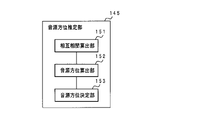
- FIG. 5 is a block diagram showing a configuration example of the sound source direction estimation unit 145.
- sound source direction estimation section 145 includes cross-correlation calculation section 151 , sound source direction calculation section 152 and sound source direction determination section 153 .
- the cross-correlation calculator 151 calculates a cross-correlation function for a plurality of pairs of optical fiber microphones 13 in the optical fiber microphone array 14 (also pairs of a plurality of sections).
- the sound source azimuth calculation unit 152 obtains a candidate for the azimuth of the sound source of the abnormal sound using the cross-correlation function.
- Sound source direction determining section 153 determines an estimated direction from the direction candidates.
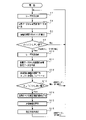
- the light source 121 emits laser light to the optical fiber 11 (step S1).
- the emitted laser light is pulsed light.
- the emission interval (cycle) of the laser light (pulse light) is preferably longer than the time from when the laser light is emitted to when the backscattered light at the end X is received.
- the operation mode is set to the detection mode. Specifically, the determination unit 129 operates in detection mode.
- Acoustic data is stored in storage unit 128 via photoelectric converter 123 , AD converter 124 and detection mode signal data collection unit 126 .
- the amplitude calculation unit 131 extracts the acoustic amplitude data from the acoustic data stored in the storage unit 128 (data including information on the phase difference in the section collected from time to time by the detection mode signal data collection unit 126). Generate (step S2).
- the acoustic amplitude data generated in the process of step S2 is amplitude time-series data for the section from the starting end Y to the terminal end X of the optical fiber 11 .
- the amplitude calculator 131 calculates an amplitude time average A(t) from the acoustic amplitude data (step S3).
- the amplitude time average A(t) is calculated according to the following formula (1).
- T indicates the period for which the time average is calculated.
- indicates acoustic amplitude data.
- the time average of amplitude is used, but the root mean square of amplitude may be used.
- FIG. 7 is an explanatory diagram for explaining processing for detecting whether or not a suspicious object (drone (sound source 10)) exists around the optical fiber microphone array 14 based on acoustic amplitude data. Note that in FIG. 7, the signal is shown in the form of an analog electric signal before AD conversion.
- FIG. 7 an example of acoustic data is shown as a vibration waveform in black at the top.
- an example of the acoustic data after denoising by, for example, the spectral subtraction method is shown as a denoising waveform in light color.
- three high-amplitude intervals due to factors other than noise occur in the portion where the denoising waveform takes a finite value (see the rectangular portion in FIG. 7).
- an example of acoustic amplitude data is shown as an amplitude waveform in black at the bottom.
- An example of the amplitude time average A(t) is also shown as an amplitude average in shading.
- the amplitude time average A(t) is a steady and almost constant value due to steady noise, but suddenly changes according to the occurrence of three high-amplitude sections that are different from noise. Change is happening.
- the amplitude time average A(t) with a predetermined threshold value (see the white straight line at the bottom of FIG. 7), it is possible to detect whether or not a suspicious object, that is, the sound source 10 exists. can.
- the value of the amplitude time average A(t) due to the sound of the suspicious object increases. Therefore, for example, it is possible to determine whether or not a suspicious object is approaching by comparing the value of amplitude time average A(t) with a plurality of threshold values.
- the amplitude comparison unit 132 compares the amplitude time average A(t) with a predetermined threshold value (step S4).
- a threshold value is a value that can distinguish sound from a suspicious object in normal time-series data.
- the optical fiber sensor executes the processing from step S1 again.
- the amplitude comparison unit 132 determines that there is a portion exceeding the threshold value in the amplitude time average A(t)
- the optical fiber sensor performs the processing from step S10 onward.
- step S10 is processing in the azimuth estimation mode. That is, the optical fiber sensor switches the operation mode to the azimuth estimation mode.
- the determination unit 129 provides the phase difference signal extractor 125 with information indicating the azimuth estimation mode.
- step S4 when the amplitude comparison unit 132 determines that there is one or more portions exceeding the threshold value in the amplitude time average A(t), the determination unit 129 switches the operation mode to the azimuth estimation mode. However, when the amplitude comparison unit 132 determines that the amplitude time average A(t) has more than a predetermined number of portions exceeding the threshold value, the determination unit 129 changes the operation mode to the azimuth estimation mode. You can switch.
- step S ⁇ b>10 the light source 121 emits pulsed light to the optical fiber 11 .
- the width of the pulsed light is defined, for example, by the time interval between the rising edge of the pulse signal and the half-value point of the peak power and the falling half-value point.
- Acoustic data is stored in storage section 128 via photoelectric converter 123 , AD converter 124 and direction estimation mode signal data collection section 127 .
- the acoustic amplitude data generated in the process of step S12 is amplitude time-series data for the section from the start point y to the end point x of each optical fiber microphone 13 .
- the section amplitude comparison unit 142 compares each amplitude time average A s (t) with a predetermined threshold value (step S13).
- a threshold value is a value that can distinguish sound from a suspicious object in normal time-series data.
- the optical fiber sensor executes the processing from step S1 again. That is, the optical fiber sensor switches the operation mode from the azimuth estimation mode to the detection mode.
- the determination unit 129 provides the phase difference signal extractor 125 with information indicating the detection mode.
- step S13 when the determination result of the determination unit 129 in the detection mode (in this case, the determination result that a suspicious object exists) is caused by an accidental factor, That is, it is possible to prevent erroneous determination that a suspicious object exists when there is actually no suspicious object.
- the sound source direction estimation unit 145 performs processing for estimating the direction of the sound source .
- the sound source direction estimation unit 145 estimates the direction of the sound source 10 (suspicious object) using a time difference of arrival (TDOA).
- TDOA time difference of arrival
- TDOA is represented by the following formula (2).
- c indicates the speed of sound.
- d indicates the distance between the optical fiber microphones 13;
- ⁇ indicates the azimuth of the sound source 10 (for example, elevation angle from the optical fiber 11).
- the azimuth can be obtained by the following formula (3).
- the cross-correlation calculation unit 151 calculates the cross-correlation function of the acoustic data of the two sections (corresponding to the optical fiber microphone 13) (step S14).
- the cross-correlation calculator 151 calculates cross-correlation functions for all pairs that can be selected from a plurality of sections. In the example shown in FIG. 1, four optical fiber microphones 13 are formed, so the number of pairs is six. Therefore, the cross-correlation calculator 151 calculates six cross-correlation functions.
- the cross-correlation function is expressed as a function of time ⁇ , and TDOA can be estimated from the time ⁇ that maximizes the value of the cross-correlation function.
- Sound source direction calculation section 152 estimates TDOA for each pair. Then, the sound source azimuth calculator 152 uses each TDOA to calculate the azimuth of the sound source 10 for each pair (step S15). Each of the calculated azimuths is used as a candidate for the azimuth of the sound source.
- the sound source direction determination unit 153 determines the most correct sound source direction by, for example, maximum likelihood estimation from among the plurality of sound source direction candidates (step S16).
- the determination unit 129 forms substantially one omnidirectional microphone by enlarging the evaluation target section, and the sound source 10 exists in the one omnidirectional microphone. or not.
- the determination unit 129 estimates the azimuth of the sound source 10 by reducing the evaluation target section, that is, by using the plurality of optical fiber microphones 13 with higher accuracy than the omnidirectional microphone. can do. That is, in this embodiment, detection performance is improved when detecting changes in the surrounding environment.
- the method of estimating the direction of a sound source using a plurality of optical fiber microphones 13 is not limited to the above method.
- a whitened cross-correlation function may be used instead of a cross-correlation function to estimate TDOA.
- a method of estimating without using TDOA such as described in Non-Patent Document 1, may be used.
- Embodiment 2 (Configuration of embodiment)
- the overall configuration of the optical fiber sensor of the second embodiment is similar to that of the first embodiment.
- FIG. 8 is a block diagram showing a configuration example of the determination unit 129 according to the second embodiment.
- the determination section 129 includes a section amplitude calculation section 141 , a sound source direction estimation section 145 , a feature extraction section 231 , a feature amount determination section 232 , a section feature extraction section 241 and a section feature amount determination section 242 .
- the feature extraction unit 231 and the feature amount determination unit 232 operate in detection mode.
- the section amplitude calculator 141, the sound source direction estimator 145, the section feature extractor 241, and the section feature amount determiner 242 operate in the direction estimation mode.
- the feature extraction unit 231 extracts features from the acoustic data. Specifically, the feature extraction unit 231 calculates, for example, an acoustic feature amount (hereinafter referred to as a feature amount) from the acoustic data. The feature amount determination unit 232 determines whether or not the calculated feature amount is based on the sound generated by the suspicious object (drone in this embodiment). The section feature extraction unit 241 extracts the feature amount of each section from the acoustic data. The section feature amount determination unit 242 determines whether or not the calculated feature amount is based on the sound produced by the suspicious object.
- a feature amount acoustic feature amount
- the section amplitude calculator 141 and the sound source direction estimator 145 operate in the same manner as in the first embodiment.
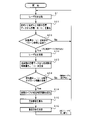
- the light source 121 emits laser light to the optical fiber 11 (step S1).
- the operation mode is set to the detection mode as an initial state.
- the determination unit 129 operates in detection mode.
- backscattered light due to Rayleigh scattering in the optical fiber 11 is received by the light receiving section 122 .
- Acoustic data is stored in storage unit 128 via photoelectric converter 123 , AD converter 124 and detection mode signal data collection unit 126 .
- the determination unit 129 determines whether or not a suspicious object, ie, the sound source 10 exists around the optical fiber microphone array 14 based on the features (that is, feature amounts) extracted from the acoustic data.
- the feature extraction unit 231 calculates the feature amount B(t) from the acoustic data stored in the storage unit 128 (step S21).
- the feature extraction unit 231 When the frequency is used, the feature extraction unit 231 generates acoustic amplitude data from the acoustic data stored in the storage unit 128.
- the acoustic amplitude data is amplitude time-series data for the section from the starting end Y to the terminal end X of the optical fiber 11 .
- the feature extraction unit 231 obtains a frequency spectrum by applying, for example, FFT (Fast Fourier transform) to the acoustic data.
- FFT Fast Fourier transform
- the feature extractor 231 obtains, for example, the envelope of the acoustic data. Note that the frequency spectrum and the duration of the characteristic sound may be used together.
- the feature amount determination unit 232 determines whether or not the calculated feature amount B(t) matches the acoustic feature of the suspicious object (drone) (step S22).
- a classifier is created that has been trained using sounds from suspicious objects that have been actually observed in advance as learning data.
- a classifier is incorporated in the feature amount determination unit 232 .
- the feature amount determination unit 232 inputs the feature amount B(t) to the classifier, and determines from the classifier whether or not the acoustic data exhibiting the feature amount B(t) is acoustic data in the presence of a suspicious object. , that is, a determination result as to whether or not a suspicious object exists is obtained.
- the optical fiber sensor executes the processing from step S1 again. If it is determined that there is a suspicious object, the optical fiber sensor performs steps S10 and steps S23 and subsequent steps.
- the processes after step S10 and step S23 are processes in the azimuth estimation mode. That is, the optical fiber sensor switches the operation mode to the azimuth estimation mode.
- the determination unit 129 provides the phase difference signal extractor 125 with information indicating the azimuth estimation mode.
- the feature amount determination unit 232 may compare the calculated feature amount B(t) with a feature amount as a template based on the sound from the suspicious object actually observed in advance. In that case, the feature amount determination unit 232 determines that a suspicious object exists when the difference between both feature amounts is less than a predetermined threshold value.
- the light source 121 emits laser light to the optical fiber 11 .
- the acoustic data generated in the process of step S23 is time-series data of the phase difference for the section from the start point y to the end point x of each optical fiber microphone 13 .
- the section feature amount determination unit 242 determines whether or not the calculated feature amount B s (t) of each section matches the acoustic feature of the suspicious object (drone) (step S24).
- the determination method of the section feature amount determination unit 242 is the same as the determination method of the feature amount determination unit 232 .
- the optical fiber sensor executes the processing from step S1 again. That is, the optical fiber sensor switches the operation mode from the azimuth estimation mode to the detection mode.
- the determination unit 129 provides the phase difference signal extractor 125 with information indicating the detection mode.
- step S24 when the determination result of the determination unit 129 in the detection mode (in this case, the determination result that a suspicious object exists) is caused by an accidental factor, That is, it is possible to prevent erroneous determination that a suspicious object exists when there is actually no suspicious object.
- steps S14 to S16 is the same as the processing in the first embodiment.
- the determination unit 129 increases the evaluation target section so that substantially one omnidirectional microphone is formed and one nondirectional microphone is formed.
- a directional microphone determines whether or not a sound source 10 exists.
- the determination unit 129 estimates the azimuth of the sound source 10 by reducing the evaluation target section, that is, by using the plurality of optical fiber microphones 13 with higher accuracy than the omnidirectional microphone. can do. That is, in this embodiment, detection performance is improved when detecting changes in the surrounding environment.
- Embodiment 3 In addition to the approach of a suspicious object such as a drone to the optical fiber microphone array 14 (the presence of a suspicious object in the vicinity of the optical fiber microphone array 14), the optical fiber sensor can also Intrusion of a suspicious person or suspicious object can be detected.
- the optical fiber sensor of the third embodiment is an optical fiber sensor that can also detect the intrusion of a suspicious person or suspicious object. A case where an optical fiber sensor is installed in a predetermined facility will be taken as an example below.
- the optical fiber sensor detects vibrations caused by suspicious persons or objects entering the facility. An approaching suspicious object is actually detected as vibration based on sound pressure.
- vibration based on sound pressure is sometimes referred to as non-contact vibration
- vibration caused by an intrusion of a suspicious person or suspicious object is sometimes referred to as contact vibration.
- an acoustic signal caused by contact vibration is locally larger than an acoustic signal caused by non-contact vibration. Therefore, the optical fiber sensor detects the acoustic signal caused by the contact vibration based on the intensity (or amplitude) of the observed acoustic signal and the duration of the period in which the intensity (or amplitude) in the audio signal is high.
- the acoustic amplitude data for the section is also obtained from the acoustic data for the vibration data. It is expressed as to generate.
- FIG. 10 is a block diagram showing a configuration example of the determination unit 129 according to the second embodiment.
- the determination unit 129 includes an amplitude calculation unit 131, an amplitude comparison unit 132, a section amplitude calculation unit 141, a section amplitude comparison unit 142, a sound source direction estimation unit 145, a vibration amplitude calculation unit 161, and a vibration amplitude comparison unit. 162 and a vibration interval identification unit 163 . That is, a vibration amplitude calculator 161, a vibration amplitude comparator 162, and a vibration section identifier 163 are added to the determination unit 129 of the present embodiment in addition to the configuration of the first embodiment.
- the vibration amplitude calculator 161 generates acoustic amplitude data for each section from the acoustic data stored in the storage unit 128 .
- the vibration amplitude comparison unit 162 determines whether or not vibration has occurred in any section based on the acoustic amplitude data.
- the vibration section identification unit 163 uses the determination result of the vibration amplitude comparison unit 162 to identify a section in which a suspicious person or suspicious object has entered.
- the feature extraction unit 231 and the feature quantity determination unit 232 operate in detection mode.
- the section amplitude calculator 141, the sound source direction estimator 145, the section feature extractor 241, and the section feature amount determiner 242 operate in the direction estimation mode.
- the vibration amplitude calculation unit 161, the vibration amplitude comparison unit 162, and the vibration section identification unit 163 include the feature extraction unit 231 and the feature amount determination unit 232 related to the detection mode, or the section feature related to the orientation estimation mode. It operates in parallel with the extraction unit 241 and the section feature amount determination unit 242 .
- the vibration amplitude calculator 161 generates acoustic amplitude data for the section corresponding to each optical fiber microphone 13 from the acoustic data stored in the storage unit 128 (step S31).
- the vibration amplitude calculator 161 also calculates the amplitude time average C q (t) from the acoustic amplitude data (step S32).
- the method of calculating the amplitude time average C q (t) is the same as the method of calculating the amplitude time average A(t) by the amplitude calculator 131 in the first embodiment (see formula (1)).
- T in equation (1) is a period corresponding to the length of the section.
- the acoustic amplitude data generated in the process of step S31 is time-series data of the amplitude of the phase difference signal for the section from the start point y to the end point x of each optical fiber microphone 13 .
- the vibration amplitude comparison unit 162 compares each amplitude time average Cq(t) with a predetermined vibration amplitude threshold value (step S33).
- the vibration amplitude threshold is a value that can distinguish contact vibration from normal time-series data.
- the vibration amplitude threshold is set to a value larger than the threshold with which the section amplitude comparison unit 142 compares the amplitude time average A s (t).
- the vibration amplitude comparison unit 162 determines that all amplitude time averages C q (t) are equal to or less than the vibration amplitude threshold value, the intrusion of a suspicious person or suspicious object into the facility is determined not to exist. In that case, the process ends. For example, when pulsed light is emitted from the light source 121 to the optical fiber 11 next time, the processing after step S31 is executed again.
- the vibration amplitude comparison unit 162 determines that there is a portion exceeding the vibration amplitude threshold value in one or more amplitude time averages C q (t)
- the vibration amplitude calculation unit 161 executes the process of step S34. do.
- step S ⁇ b>34 the light source 121 emits laser light to the optical fiber 11 .
- Backscattered light due to Rayleigh scattering in the optical fiber 11 is received by the light receiving section 122 .
- Acoustic data is stored in the storage unit 128 via the photoelectric converter 123, the AD converter 124 and the third signal data acquisition unit (not shown).
- the third signal data collection unit when the detection mode signal data collection unit 126 is positioned as the first signal data collection unit and the azimuth estimation mode signal data collection unit 127 is positioned as the second signal data collection unit, A different signal data acquisition unit.
- step S35 is performed by the vibration amplitude comparison unit 162.
- the evaluation target section is shortened. For example, if i (i is an integer equal to or greater than 2) resonance media 15 are provided, the number of sections is set to (i/2) when the processes of steps S31 and S32 are executed, and the process of step S35 is executed. , the number of intervals is set to i. When the number of sections is (i/2), one section (evaluation target section) is set across two resonance media 15 .
- the determination unit 129 provides the phase difference signal extractor 125 with information indicating the shortening of the section. The phase difference signal extractor 125 extracts the phase difference information of the shortened section (short section) and uses it as a phase difference signal (acoustic data).
- each section when each section is shortened, it is preferable that the length of each section is as short as possible.
- the length of each section is set to the minimum value within the range not less than the pulse width of the light emitted to the optical fiber 11 .
- the vibration amplitude calculator 161 generates acoustic amplitude data for each section from the acoustic data stored in the storage unit 128 (step S35).
- the vibration amplitude calculator 161 also calculates the amplitude time average C r (t) from the acoustic amplitude data (step S36).
- r is 1 to m (m>n).
- m corresponds to i in the above example.
- n corresponds to (i/2) in the above example.
- the method of calculating the amplitude time average C r (t) is the same as the method of calculating the amplitude time average A(t) by the amplitude calculator 131 in the first embodiment (see formula (1)).
- T in equation (1) is a period corresponding to the length of the section.
- the vibration section identification unit 163 identifies a section corresponding to the maximum amplitude time average C r (t) among the plurality of amplitude time averages C r (t) as a section in which vibration occurs, that is, a suspicious person or suspicious object. It is specified as an intruded section (step S37).
- the section when the processes of steps S1, S21, and S22 are executed, the section is set in the same manner as in the detection mode, but the section is set in the orientation estimation mode. It may be the same as the method of setting the section.
- the vibration amplitude calculation unit 161, the vibration amplitude comparison unit 162, and the vibration section identification unit 163 are added to the determination unit 129 in the first embodiment, but the determination unit 129 in the second embodiment A vibration amplitude calculator 161, a vibration amplitude comparator 162, and a vibration section identifier 163 may be added. That is, the optical fiber sensor of the second embodiment may be added with a function of estimating an intrusion point of a suspicious person or suspicious object.
- optical fiber sensor of this embodiment is configured to execute the processing shown in FIG. 6 in the first embodiment in parallel with the processing shown in FIG.
- the processing and the processing shown in FIG. 6 may be configured to be executed with a time lag.
- the optical fiber sensor of the present embodiment estimates an intrusion point of a suspicious person or a suspicious object based on the amplitude obtained from vibration data (acoustic data stored in the storage unit 128).
- the intrusion point of the suspicious person or suspicious object may be estimated based on the feature amount (the duration of the vibration that deviates from the amplitude of the normal time-series data or the frequency derived from the vibration data).
- the fiber optic sensors of the above embodiments can also use multiple fibers in an optical fiber comprising multiple fibers. Also, for example, when an optical fiber including a plurality of fibers is used, the optical fiber sensor can use any one fiber in sensing mode and the other one in azimuth estimation mode. can also
- optical fiber sensors of the above-described embodiments that selectively use the detection mode and the azimuth estimation mode are optical fiber sensors based on OTDR (Optical Time Domain Reflectometer) using backscattered light due to Rayleigh scattering.
- OTDR Optical Time Domain Reflectometer
- OFDR Optical Frequency Domain Reflectometry
- each of the above embodiments may be applied to an R-OTDR-based optical fiber sensor that uses backscattered light due to Raman scattering for detecting temperature, for example. Further, each of the above embodiments may be applied to a P-OTDR-based optical fiber sensor that detects vibration or the like using changes in the state of polarization (SoP) of backscattered light.
- SoP state of polarization
- the concept of each of the above embodiments can be effectively applied to a system capable of exhibiting high detection performance.
- Each of the above embodiments can be configured by hardware, but can also be realized by a computer program.
- FIG. 12 is a block diagram showing an example of a computer having a CPU (Central Processing Unit).
- a computer is implemented in the detector 12 in the fiber optic sensor of each of the above embodiments.
- the CPU 1000 realizes each function in the above embodiments by executing processing according to programs (software elements: codes) stored in the storage device 1001 . That is, the functions of the detection mode signal data collection unit 126, the direction estimation mode signal data collection unit 127, and the determination unit 129 in the first to third embodiments are realized.
- a GPU Graphics Processing Unit
- a combination of a CPU and a GPU can also be used.
- the storage device 1001 is, for example, a non-transitory computer readable medium.
- Non-transitory computer readable media include various types of tangible storage media. Specific examples of non-transitory computer-readable media include magnetic recording media (e.g., hard disks), magneto-optical recording media (e.g., magneto-optical disks), CD-ROMs (Compact Disc-Read Only Memory), CD-Rs (Compact Disc-Recordable), CD-R/W (Compact Disc-ReWritable), semiconductor memory (eg mask ROM, PROM (Programmable ROM), EPROM (Erasable PROM), flash ROM). Further, when a data-rewritable storage medium is used as the storage device 1001 , the storage device 1001 can be used as the storage unit 128 .
- the program may also be stored on various types of transitory computer readable medium.
- a transitory computer-readable medium is provided with a program, for example, via a wired or wireless communication path, ie, via an electrical, optical or electromagnetic wave.
- the memory 1002 is, for example, RAM (Random Access Memory), and is storage means for temporarily storing data when the CPU 1000 executes processing.
- RAM Random Access Memory
- a mode in which a program held by the storage device 1001 or a temporary computer-readable medium is transferred to the memory 1002 and the CPU 1000 executes processing based on the program in the memory 1002 is also conceivable.
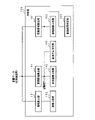
- FIG. 13 is a block diagram showing the main parts of the optical fiber sensor.
- the optical fiber sensor 1 shown in FIG. 13 sets the evaluation target section set in the optical fiber to either a first section or a plurality of second sections each shorter than the first section.
- Setting means (setting unit) 2 in the embodiment, implemented by a phase difference signal extractor 125 and a determination unit 129.
- the phase difference signal extractor 125 determines the evaluation target section according to the information from the determination unit 129.
- the setting means 2 switches the evaluation target section between the first section and the second section when it is determined that the time average of the amplitude of the time-series data of the phase difference in the evaluation target section exceeds a predetermined value. It may be configured as
- the optical fiber sensor 1 is implemented by a feature determination unit (feature determination unit: in the embodiment, a feature extraction unit 231 and a feature amount determination unit 232 that determines a feature of a signal based on a signal including phase difference information. ), and the setting means 2 sets the evaluation target section to between the first section and the second section when it is determined that the feature matches the predetermined acoustic feature of the suspicious object. You may be comprised so that it may switch by.
- feature determination unit in the embodiment, a feature extraction unit 231 and a feature amount determination unit 232 that determines a feature of a signal based on a signal including phase difference information.
- the optical fiber sensor 1 includes second setting means (second setting unit: in the third embodiment, phase difference signal extraction 125 and the determination unit 129.
- the phase difference signal extractor 125 extracts the phase difference signal of the evaluation target section according to the information from the determination unit 129.), and a plurality of identifying means (identifying unit: implemented by the vibration interval identifying unit 163 in the third embodiment. ).
- An optical fiber sensor that detects changes in the surrounding environment of an optical fiber, setting means for setting the evaluation target section set in the optical fiber to either a first section or a plurality of second sections each shorter than the first section; an extraction means for extracting a state change of light from the optical fiber; an optical fiber sensor that detects a change in the surrounding environment based on the time-series data of the state change of the light in the evaluation target section.
- Appendix 2 The optical fiber sensor of Appendix 1, wherein the state change of the light is a phase difference of backscattered light from the optical fiber.
- the setting means divides the evaluation target section into the first section and the first section. 2.
- Appendix 6 The optical fiber sensor according to any one of Appendices 1 to 5, wherein the setting means sets the length of the second section to be shorter than half the length of the first section.
- An optical fiber microphone is formed by the entire length or part of the optical fiber wrapped around a cylindrical resonating medium that resonates with an acoustic signal. fiber optic sensor.
- a change detection method for detecting a change in the surrounding environment of an optical fiber setting the evaluation target section set in the optical fiber to either a first section or a plurality of second sections each shorter than the first section; extracting state changes of light from the optical fiber; A change detection method for detecting a change in the surrounding environment based on the time-series data of the state change of the light in the evaluation target section.
- a computer-readable recording medium storing a change detection program, The change detection program, in a computer, a process of setting the evaluation target section set in the optical fiber to either a first section or a plurality of second sections each shorter than the first section; a process of extracting state changes of light from the optical fiber; A recording medium for executing a process of detecting a change in the surrounding environment based on the time-series data of the state change of the light in the evaluation target section.
- Appendix 14 The recording medium according to Appendix 13, wherein the state change of the light is a phase difference of backscattered light from the optical fiber.
- Appendix 15 to the computer, a process of setting an evaluation target section set in an optical fiber to either a first section or a plurality of second sections each shorter than the first section; a process of extracting state changes of light from the optical fiber; A change detection program for executing a process of detecting a change in the surrounding environment based on the time-series data of the state change of the light in the evaluation target section.
- Appendix 16 The change detection program according to Appendix 15, wherein the state change of light is the phase difference of the backscattered light from the optical fiber.
Landscapes
- Physics & Mathematics (AREA)
- General Physics & Mathematics (AREA)
- Chemical & Material Sciences (AREA)
- Analytical Chemistry (AREA)
- Optics & Photonics (AREA)
- Engineering & Computer Science (AREA)
- Microelectronics & Electronic Packaging (AREA)
- Burglar Alarm Systems (AREA)
- Measurement Of Mechanical Vibrations Or Ultrasonic Waves (AREA)
Priority Applications (3)
| Application Number | Priority Date | Filing Date | Title |
|---|---|---|---|
| JP2023529415A JP7605312B2 (ja) | 2021-06-25 | 2021-06-25 | 光ファイバセンサおよび変化検知方法 |
| US18/572,288 US20240288335A1 (en) | 2021-06-25 | 2021-06-25 | Optical fiber sensor and change detection method |
| PCT/JP2021/024168 WO2022269911A1 (ja) | 2021-06-25 | 2021-06-25 | 光ファイバセンサおよび変化検知方法 |
Applications Claiming Priority (1)
| Application Number | Priority Date | Filing Date | Title |
|---|---|---|---|
| PCT/JP2021/024168 WO2022269911A1 (ja) | 2021-06-25 | 2021-06-25 | 光ファイバセンサおよび変化検知方法 |
Publications (1)
| Publication Number | Publication Date |
|---|---|
| WO2022269911A1 true WO2022269911A1 (ja) | 2022-12-29 |
Family
ID=84544407
Family Applications (1)
| Application Number | Title | Priority Date | Filing Date |
|---|---|---|---|
| PCT/JP2021/024168 Ceased WO2022269911A1 (ja) | 2021-06-25 | 2021-06-25 | 光ファイバセンサおよび変化検知方法 |
Country Status (3)
| Country | Link |
|---|---|
| US (1) | US20240288335A1 (https=) |
| JP (1) | JP7605312B2 (https=) |
| WO (1) | WO2022269911A1 (https=) |
Families Citing this family (1)
| Publication number | Priority date | Publication date | Assignee | Title |
|---|---|---|---|---|
| US12573197B2 (en) * | 2022-05-16 | 2026-03-10 | James P Janniello | Intelligent environmental and video production drone |
Citations (7)
| Publication number | Priority date | Publication date | Assignee | Title |
|---|---|---|---|---|
| JPH04307328A (ja) * | 1990-12-03 | 1992-10-29 | Corning Inc | ファイバオプティック検知ケ−ブル |
| JP2000182158A (ja) * | 1998-10-09 | 2000-06-30 | Furukawa Electric Co Ltd:The | 侵入検知システム |
| WO2008050557A1 (en) * | 2006-09-26 | 2008-05-02 | Sumitomo Electric Industries, Ltd. | Optical fiber distribution type sensor and optical fiber distribution type detection method |
| JP2012068081A (ja) * | 2010-09-22 | 2012-04-05 | Technical Research & Development Institute Ministry Of Defence | 光ファイバセンサアレイ及び光ファイバセンサアレイシステム |
| CN104990620A (zh) * | 2015-07-03 | 2015-10-21 | 南京大学 | 基于布拉格光纤光栅阵列的相敏光时域反射装置及方法 |
| CN108645498A (zh) * | 2018-04-28 | 2018-10-12 | 南京航空航天大学 | 基于相敏光反射和卷积神经网络深度学习的冲击定位方法 |
| JP2021067681A (ja) * | 2019-10-24 | 2021-04-30 | パロ アルト リサーチ センター インコーポレイテッド | グリッドベースのアセットのための光ファイバ感知システム |
-
2021
- 2021-06-25 WO PCT/JP2021/024168 patent/WO2022269911A1/ja not_active Ceased
- 2021-06-25 US US18/572,288 patent/US20240288335A1/en active Pending
- 2021-06-25 JP JP2023529415A patent/JP7605312B2/ja active Active
Patent Citations (7)
| Publication number | Priority date | Publication date | Assignee | Title |
|---|---|---|---|---|
| JPH04307328A (ja) * | 1990-12-03 | 1992-10-29 | Corning Inc | ファイバオプティック検知ケ−ブル |
| JP2000182158A (ja) * | 1998-10-09 | 2000-06-30 | Furukawa Electric Co Ltd:The | 侵入検知システム |
| WO2008050557A1 (en) * | 2006-09-26 | 2008-05-02 | Sumitomo Electric Industries, Ltd. | Optical fiber distribution type sensor and optical fiber distribution type detection method |
| JP2012068081A (ja) * | 2010-09-22 | 2012-04-05 | Technical Research & Development Institute Ministry Of Defence | 光ファイバセンサアレイ及び光ファイバセンサアレイシステム |
| CN104990620A (zh) * | 2015-07-03 | 2015-10-21 | 南京大学 | 基于布拉格光纤光栅阵列的相敏光时域反射装置及方法 |
| CN108645498A (zh) * | 2018-04-28 | 2018-10-12 | 南京航空航天大学 | 基于相敏光反射和卷积神经网络深度学习的冲击定位方法 |
| JP2021067681A (ja) * | 2019-10-24 | 2021-04-30 | パロ アルト リサーチ センター インコーポレイテッド | グリッドベースのアセットのための光ファイバ感知システム |
Also Published As
| Publication number | Publication date |
|---|---|
| JP7605312B2 (ja) | 2024-12-24 |
| JPWO2022269911A1 (https=) | 2022-12-29 |
| US20240288335A1 (en) | 2024-08-29 |
Similar Documents
| Publication | Publication Date | Title |
|---|---|---|
| US12234142B2 (en) | Device, method and computer-readable recording medium for detecting earthquake in mems-based auxiliary seismic observation network | |
| US20170328983A1 (en) | Systems and methods for transient acoustic event detection, classification, and localization | |
| KR101270074B1 (ko) | 소리 기반 공간지도를 이용한 상황인식 장치 및 방법 | |
| JP2023538196A (ja) | 都市規模の音響インパルスの検出と位置特定 | |
| JP7605312B2 (ja) | 光ファイバセンサおよび変化検知方法 | |
| US20230304851A1 (en) | Unconfirmed sound extraction device, unconfirmed sound extraction system, unconfirmed sound extraction method, and recording medium | |
| EP3992939B1 (en) | Vehicle information estimation system, vehicle information estimation method, and computer program | |
| CN116432007B (zh) | 基于空域特征和机器学习的光纤预警模式识别方法 | |
| CN118655522A (zh) | 多声学传感器的储能电池泄压阀打开位置测量方法及系统 | |
| CN114492629A (zh) | 异常检测方法、装置、电子设备及存储介质 | |
| KR20220168863A (ko) | 임의 위치 계측 및 다중 공간분해능 계측이 가능한 분포형 센싱 기법을 활용한 구조물 건전성 모니터링 장치 및 방법 | |
| CN119935298B (zh) | 一种电缆防外破监测系统及方法 | |
| CN105698915A (zh) | 一种光纤振源识别方法及装置、系统 | |
| CN115902551A (zh) | 基于光纤传感阵列的变压器内局部放电定位方法及系统 | |
| CN115359642A (zh) | 利用光缆的防外破预警方法、装置、设备及存储介质 | |
| JP5673921B2 (ja) | 焦電型赤外線センサアレイを用いた測位システム及び測位方法 | |
| Perez et al. | Acoustic event localization on an Arduino-based wireless sensor network | |
| JP5721470B2 (ja) | 歩行者数推定装置および歩行者数推定方法 | |
| JP5780724B2 (ja) | 物音検知装置、物音検知方法および物音検知システム | |
| CN119226871A (zh) | 一种联立相邻传感单元的目标事件定位方法及系统 | |
| Hexeberg et al. | Acoustic detector for multiple vocalizing marine mammal individuals | |
| Ding et al. | Distributed fiber optic sensing for fault localization caused by fallen tree using physics-informed ResNet | |
| KR20190098668A (ko) | 수중 센서 네트워크를 이용한 자기장 기반의 물체 위치 추정 시스템 및 그 방법 | |
| EP3640672B1 (en) | Systems and methods for distance independent acoustical differential signature detection | |
| WO2018127602A1 (en) | A method and system for determining event-parameters of an object |
Legal Events
| Date | Code | Title | Description |
|---|---|---|---|
| 121 | Ep: the epo has been informed by wipo that ep was designated in this application |
Ref document number: 21947193 Country of ref document: EP Kind code of ref document: A1 |
|
| WWE | Wipo information: entry into national phase |
Ref document number: 2023529415 Country of ref document: JP |
|
| WWE | Wipo information: entry into national phase |
Ref document number: 18572288 Country of ref document: US |
|
| NENP | Non-entry into the national phase |
Ref country code: DE |
|
| 122 | Ep: pct application non-entry in european phase |
Ref document number: 21947193 Country of ref document: EP Kind code of ref document: A1 |