WO2022269682A1 - 認証システム、認証方法、及びプログラム - Google Patents
認証システム、認証方法、及びプログラム Download PDFInfo
- Publication number
- WO2022269682A1 WO2022269682A1 PCT/JP2021/023395 JP2021023395W WO2022269682A1 WO 2022269682 A1 WO2022269682 A1 WO 2022269682A1 JP 2021023395 W JP2021023395 W JP 2021023395W WO 2022269682 A1 WO2022269682 A1 WO 2022269682A1
- Authority
- WO
- WIPO (PCT)
- Prior art keywords
- user
- authentication
- location
- check
- place
- Prior art date
- Legal status (The legal status is an assumption and is not a legal conclusion. Google has not performed a legal analysis and makes no representation as to the accuracy of the status listed.)
- Ceased
Links
Images







Classifications
-
- H—ELECTRICITY
- H04—ELECTRIC COMMUNICATION TECHNIQUE
- H04L—TRANSMISSION OF DIGITAL INFORMATION, e.g. TELEGRAPHIC COMMUNICATION
- H04L63/00—Network architectures or network communication protocols for network security
- H04L63/08—Network architectures or network communication protocols for network security for authentication of entities
- H04L63/0861—Network architectures or network communication protocols for network security for authentication of entities using biometrical features, e.g. fingerprint, retina-scan
-
- G—PHYSICS
- G06—COMPUTING OR CALCULATING; COUNTING
- G06F—ELECTRIC DIGITAL DATA PROCESSING
- G06F21/00—Security arrangements for protecting computers, components thereof, programs or data against unauthorised activity
- G06F21/30—Authentication, i.e. establishing the identity or authorisation of security principals
- G06F21/31—User authentication
Definitions
- This disclosure relates to an authentication system, an authentication method, and a program.
- Patent Document 1 biometric information of a user input from a terminal in a facility is stored in a storage unit, and when the user uses a service in the facility, biometric authentication is performed using the biometric information. It describes a system that For example, Patent Literature 2 describes a system that enables biometric authentication using the user's biometric information within the facility when the user checks in to the facility using his/her own terminal.
- Patent Documents 1 and 2 spoofing becomes possible when multiple users with similar biometric information (for example, multiple users with similar faces) are in the same facility. For example, if user A's biometric information is similar to user B's biometric information and user A and user B are in the same facility, user A may be authenticated as user B. Conversely, user B may be authenticated as user A. Therefore, the techniques disclosed in Patent Documents 1 and 2 allow spoofing by a malicious third party, and security is not sufficient. This point is the same when the techniques of Patent Document 1 and Patent Document 2 are applied to authentication other than biometric authentication. Conventional technologies do not provide sufficient security.
- One of the purposes of this disclosure is to enhance security.
- An authentication system includes first authentication means capable of performing first authentication regarding the first user when the first user is at or comes to a first location; based on at least one of: second time information about a second time when a second user who may be authenticated as the first user was or came to a second location; and second location information about said second location. , prediction means for predicting a prediction period during which the second user will not be or will not be at the first location; and performing a first process for the first user based on the first authentication performed during the prediction period. and processing execution means.
- FIG. 3 is a functional block diagram showing an example of functions implemented by the authentication system of the first embodiment;
- FIG. It is a figure which shows the data storage example of a user database.
- FIG. It is a figure which shows the data storage example of a check-in database.
- 4 is a flow chart showing an example of processing executed in the authentication system of the first embodiment;
- FIG. It is a figure which shows an example of the authentication system of 2nd Embodiment.
- FIG. 9 is a functional block diagram showing an example of functions realized by the authentication system of the second embodiment; FIG. It is a figure which shows the data storage example of the check-in database of 2nd Embodiment.
- FIG. 11 is a flow diagram showing an example of processing executed in the authentication system of the second embodiment; FIG. It is a figure which shows an example of the authentication system of 3rd Embodiment.
- FIG. 12 is a functional block diagram showing an example of functions realized by the authentication system of the third embodiment; FIG. It is a figure which shows the data storage example of a schedule information database.
- FIG. 9 is a functional block diagram showing an example of functions realized by the authentication system of the second embodiment; FIG. It is a figure which shows the data storage example of the check-in database of 2nd Embodiment.
- FIG. 11 is a flow diagram showing an example of processing executed in the authentication system of the second embodiment; FIG. It is a figure which shows an example of the authentication system of 3rd Embodiment.
- FIG. 12 is
- FIG. 11 is a flow diagram showing an example of processing executed by the authentication system of the third embodiment; It is an example of a functional block diagram in the modification concerning a 1st embodiment.
- FIG. 10 is a diagram showing an example of an authentication system of modification 1-1;
- FIG. 10 is a diagram showing an example of an authentication system of modification 1-1;
- FIG. 13 is a diagram showing an example of an authentication system of modified example 1-5; It is an example of the functional block diagram in the modification which concerns on 2nd Embodiment.
- FIG. 11 is a diagram showing an example of an authentication system of modified example 2-1;
- FIG. 13 is a diagram showing an example of an authentication system of modification 2-2; It is an example of the functional block diagram in the modification which concerns on 3rd Embodiment.
- FIG. 13 is a diagram illustrating an example of an authentication system of modification 3-2;
- FIG. 12 is a diagram illustrating an example of an authentication system of modification 3-3;
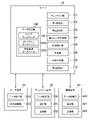
- FIG. 1 is a diagram showing an example of the overall configuration of an authentication system.
- the authentication system S includes a server 10, a user terminal 20, a check-in terminal 30, and an authentication terminal 40.
- Each of the server 10, the user terminal 20, the check-in terminal 30, and the authentication terminal 40 can be connected to a network N such as the Internet.
- Authentication system S may include at least one computer. Computers included in the authentication system S are not limited to the example in FIG.
- each of the server 10, the user terminal 20, the check-in terminal 30, and the authentication terminal 40 may be plural.
- the server 10 is a server computer.
- the server 10 includes a control section 11 , a storage section 12 and a communication section 13 .
- Control unit 11 includes at least one processor.
- the storage unit 12 includes a volatile memory such as RAM and a nonvolatile memory such as a hard disk.
- the communication unit 13 includes at least one of a communication interface for wired communication and a communication interface for wireless communication.
- the user terminal 20 is a computer operated by a user.
- the user terminal 20 is a smartphone, tablet terminal, wearable terminal, or personal computer.
- the user terminal 20 includes a control section 21 , a storage section 22 , a communication section 23 , an operation section 24 , a display section 25 , an imaging section 26 , an IC chip 27 and a GPS reception section 28 .
- Physical configurations of the control unit 21, the storage unit 22, and the communication unit 23 are the same as those of the control unit 11, the storage unit 12, and the communication unit 13, respectively.
- the operation unit 24 is an input device such as a touch panel.
- the display unit 25 is a liquid crystal display or an organic EL display.
- the imaging unit 26 includes at least one camera.
- the IC chip 27 may be a chip of any standard, for example, a FeliCa (registered trademark) chip, or a so-called Type A or Type B chip in the contactless standard.
- GPS receiver 28 includes a receiver that receives signals from satellites. The GPS receiver 28 is used to acquire the current position or current date and time. Note that the user terminal 20 can use any GNSS other than GPS.
- the user terminal 20 may include a receiver corresponding to the GNSS to be used.
- the check-in terminal 30 is a computer located at a predetermined location.
- the check-in terminal 30 is a personal computer, tablet terminal, or smart phone.
- the check-in terminal 30 includes a control section 31 , a storage section 32 , a communication section 33 , an operation section 34 , a display section 35 , an imaging section 36 and a reading section 37 .
- the physical configurations of the control unit 31, the storage unit 32, the communication unit 33, the operation unit 34, the display unit 35, and the photographing unit 36 are the control unit 11, the storage unit 12, the communication unit 13, the operation unit 24, the display unit 25, respectively. , and the imaging unit 26 .
- the reading unit 37 includes a code reader or reader/writer. The photographing unit 36 and the reading unit 37 may be connected to the outside of the check-in terminal 30 .
- the authentication terminal 40 is a computer placed at a predetermined location.
- the authentication terminal 40 is a personal computer, tablet terminal, or smart phone.
- Authentication terminal 40 includes control unit 41 , storage unit 42 , communication unit 43 , operation unit 44 , display unit 45 , photographing unit 46 and reading unit 47 .
- the physical configurations of the control unit 41, the storage unit 42, the communication unit 43, the operation unit 44, the display unit 45, the photographing unit 46, and the reading unit 47 are the same as those of the control unit 11, the storage unit 12, the communication unit 13, and the operation unit 24, respectively.
- the display unit 25 , the photographing unit 26 and the reading unit 37 The photographing unit 46 and the reading unit 47 may be connected to the outside of the authentication terminal 40 .
- At least one of the programs and data stored in each of the server 10, the user terminal 20, the check-in terminal 30, and the authentication terminal 40 may be supplied via the network N.
- each of the server 10, the user terminal 20, the check-in terminal 30, and the authentication terminal 40 has a reading unit (for example, an optical disk drive or a memory card slot) that reads a computer-readable information storage medium, and an external device and data and/or an input/output unit (for example, a USB port) for input/output.
- a reading unit for example, an optical disk drive or a memory card slot
- an input/output unit for example, a USB port
- the authentication system S is applied to a check-in service that detects that a user is at or has arrived at a predetermined place.
- the authentication system S is applicable to various services. Examples of application to other services will be described in modified examples below.
- a user checks in at an office building in which the company where he or she works resides. After checking in at this location, the user enters the room of the company where he/she works.
- this location will be referred to as the first location.
- authentication is performed each time you check in at the first location and when you enter a room.
- Various known methods can be used for the authentication itself.
- biometric authentication knowledge authentication, possession authentication (property authentication), or a combination thereof can be used.
- code authentication using a code displayed on the user terminal 20 is executed at the time of check-in at the first location is taken as an example.
- code authentication is an example of possession authentication.
- Face authentication is an example of biometric authentication.
- FIG. 2 is a diagram showing an example of the check-in service of the first embodiment.
- a security gate G including a plurality of check-in terminals 30 is arranged in the office building at the first location P1.
- the user U has already registered for use of the check-in service.
- information such as the user U's name and face photograph is registered in the server 10 .
- the user can use the check-in service to check in to the office building and pass through the security gate G.
- check-in application An application for using the check-in service (hereinafter referred to as check-in application) is installed on the user terminal 20 of user U.
- the code C for check-in is displayed on the display unit 25 .
- a two-dimensional code is shown as an example of the code C in the example of FIG.
- Code C is available in various types.
- code C may be a barcode or a code that changes over time.
- Code C includes a code ID that can identify user U.
- Code ID is authentication information used in code authentication.
- a code ID is issued by the server 10 .
- a code ID issued by the server 10 is recorded in the user terminal 20 .
- An expiration date is set for the code ID.
- User U can check in using code C before the expiration date of the code ID.
- the server 10 updates the code ID.
- the updated code ID is recorded in the user terminal 20 .
- An expiration date is also set for the updated code ID.
- the user U holds the code C over the reading unit 37 of the check-in terminal 30 .
- the check-in terminal 30 transmits the code ID included in the code C to the server 10 .
- the server 10 transmits the confirmation result to the check-in terminal 30 .
- the check-in terminal 30 opens the security gate G when it receives confirmation that the code ID is valid.
- the check-in terminal 30 cannot open the security gate G when it receives confirmation that the code ID is not valid. In this case, user U updates the code ID and attempts authentication again. User U may attempt other authentications if there are alternative authentications when authentication using code C is not successful.
- the company where user U works has contracted rooms X to Z in an office building at first location P1.
- the doors of rooms X to Z are locked so that outsiders cannot enter.
- An authentication terminal 40 is arranged at the entrance of the rooms X to Z.
- FIG. In order to enter the rooms X to Z, the user U must successfully perform face authentication with the authentication terminal 40 .
- the case where the user U enters the room Y is shown.
- the user U causes the photographing unit 46 of the authentication terminal 40 arranged at the entrance of the room Y to photograph his face.
- the authentication terminal 40 transmits the captured image generated by the imaging unit 46 to the server 10 .
- the server 10 receives the captured image, it calculates the feature amount of the face from the captured image.
- the server 10 performs face authentication based on the calculated facial feature amount and the facial feature amount registered in the server 10 .
- the server 10 transmits the execution result of face authentication to the authentication terminal 40 .
- the authentication terminal 40 unlocks the door of the room Y when receiving the execution result indicating that the face authentication is successful. In this case, user U enters room Y.
- the authentication terminal 40 does not unlock the room Y when receiving the execution result indicating that the face authentication has failed. In this case, user U attempts face authentication again. User U may attempt other authentication if there is another alternative authentication when face authentication is unsuccessful.
- User U can also unlock the doors of other rooms X and Z by facial recognition. However, if there are other users U whose faces are similar to each other, face authentication may not be able to distinguish them from each other. A certain user U may be authenticated as another user U. Therefore, in the first embodiment, when a plurality of users U with similar faces check in at the first location P1 and pass through the security gate G, not only face authentication but also passcode authentication are performed. It's becoming Hereinafter, a first user U1 and a second user U2 will be described as an example of a plurality of users U whose faces resemble each other, but three or more users U may have faces similar to each other.
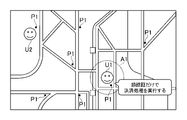
- FIG. 3 is a diagram showing an example when each of the first user U1 and the second user U2 checks in at the first location P1.
- the first user U1 has already checked in at the first place P1 according to the flow described in FIG.
- a second user U2 whose face resembles that of the first user U1 also checks in at the first place P1 in a similar flow.
- the second user U2 works for the same company as the first user U1, but the second user U2 may work for another company located in the same office building.
- the second user U2 may be an outsider who is somehow able to check-in at the first location P1.
- both the first user U1 and the second user U2 who look alike are at the first location P1.
- the server 10 cannot distinguish whether the person in front of the authentication terminal 40 in the room Y is the first user U1 or the second user U2.
- the first user U1 may be authenticated as the second user U2.
- the second user U2 attempts face authentication with the authentication terminal 40, there is a possibility that he/she will be authenticated as the first user U1.
- each of the first user U1 and the second user U2 is requested not only for face authentication but also for passcode authentication when entering rooms X to Z.
- the passcode of the first user U1 and the passcode of the second user U2 are different.
- a third user U3, whose face is not similar to the first user U1 and second user U2, can enter rooms X to Z only by facial recognition if no person who looks similar to him/herself has checked in at the first place P1. I can enter.
- FIG. 3 shows the case where the first user U1 enters the room Y.
- the server 10 uses the authentication terminal 40 placed at the entrance of the room Y to perform face authentication and passcode authentication of the first user U1. Face authentication is performed in a flow similar to that described with reference to FIG.
- Passcode authentication is executed by having the first user U1 enter a passcode from the operation unit 34 of the authentication terminal 40 arranged at the entrance of the room Y.
- the authentication terminal 40 unlocks the door of the room Y when receiving from the server 10 the execution result indicating that the face authentication and the passcode authentication are successful.
- the authentication terminal 40 does not unlock the door of the room Y when receiving an execution result indicating that at least one of face authentication and passcode authentication has failed.
- the second user U2 When the second user U2 enters any of the rooms X to Z, face authentication and passcode authentication are performed in the same flow as the first user U1.
- the first user U1 checks out of the office building, the second user U2 can enter the rooms X to Z only by facial recognition.
- check-out is performed in the same flow as check-in. For example, the first user U1 checks out from the office building by holding the code C displayed on his user terminal 20 over the check-in terminal 30 . Similarly, when the second user U2 checks out of the office building, the first user U1 can again enter the rooms X to Z only by facial recognition.
- the authentication system S of the first embodiment performs face authentication if the first user U1 has checked in at the first place P1 and the second user U2 has not checked in at the first place P1. Permission to enter rooms X to Z only with After the second user U2 checks in at the first place P1, the authentication system S permits the first user U1 to enter the rooms X to Z when the face authentication and passcode authentication are successful. This prevents spoofing and enhances security.
- the authentication system S of the first embodiment performs face authentication if the first user U1 has checked in at the first place P1 and the second user U2 has not checked in at the first place P1. Permission to enter rooms X to Z only with After the second user U2 checks in at the first place P1, the authentication system S permits the first user U1 to enter the rooms X to Z when the face authentication and passcode authentication are successful. This prevents spoofing and enhances security.
- details of the technology of the authentication system S of the first embodiment will be described.
- FIG. 4 is a functional block diagram showing an example of functions realized by the authentication system S of the first embodiment.
- user U When the first user U1 and the second user U2 are not distinguished from each other, they are simply referred to as user U. Even when a person other than the first user U1 and the second user U2 is assumed, the term "user U" is simply used.
- the server 10 implements a data storage unit 100 , a check-in unit 101 , a first authentication unit 102 , a second authentication unit 103 , a second user determination unit 104 and a process execution unit 105 .
- the data storage unit 100 is realized mainly by the storage unit 12 .
- Other functions are realized mainly by the control unit 11 .
- the data storage unit 100 stores data necessary for processing in the authentication system S.
- FIG. the data storage unit 100 stores a user database DB1 and a check-in database DB2.
- FIG. 5 is a diagram showing an example of data storage in the user database DB1.
- the user database DB1 is a database that stores information about users U who have registered to use the check-in service.
- the user database DB1 stores the user ID, password, code ID, expiration date of the code ID, name, face photograph, face feature amount, passcode, and other user U with a similar face.
- a user ID is stored.
- a record corresponding to this user U is created in the user database DB1, and information such as the user ID of this user U is stored.
- a user ID is information that can identify a user U.
- the user U may be identified by information referred to by other names instead of the user ID.
- user U may be identified by a user account or other information such as an email address.
- the password is authentication information for logging into the check-in service.
- the user U can log in to the check-in service from the user terminal 20 and update his/her face photo and passcode.
- a code ID is issued at an arbitrary timing and stored in the user database DB1.
- a known rule can be applied to the code ID issuance rule itself.
- the server 10 issues the code ID so as not to duplicate the code ID of another user U within the expiration date.
- the code ID is updated when an application for displaying the code C is activated on the user terminal 20, when a certain period of time has passed since the code C was displayed, or when the user U performs a predetermined operation. be.
- the validity period of the code ID is set to the time after a predetermined time (for example, about 5 to 30 minutes) after the code ID is generated. The code ID does not have to have an expiration date.
- a facial photograph is an image of the user U's face.
- the user U takes an image of his or her own face with the imaging unit 26 of the user terminal 20 and uploads the photograph of the face to the server 10 .
- the facial photograph may be pre-stored in the user terminal 20 or another computer.
- the facial feature amount is information obtained by digitizing facial features.
- the face feature amount indicates features such as the relative position, size, or shape of facial parts.
- the feature amount of the face indicated by the photograph of the face is calculated in advance, but the feature amount of the face may be calculated on the spot at the time of authentication.
- the feature amount of the face registered in the user database DB1 is authentication information that is correct in face authentication.
- face authentication can use methods such as principal component analysis, linear discriminant analysis, elastic matching, or hidden Markov models.
- the facial feature amount may be calculated by a formula corresponding to these methods.
- facial features are represented by multidimensional vectors.
- the format of face feature amounts is not limited to vectors.
- Facial features may be represented in other forms such as arrays or single numerical values.
- face authentication facial feature amounts of each of a plurality of face photographs may be used.
- so-called 3D face authentication may be used.
- the passcode registered in the user database DB1 is the correct information for passcode authentication.
- the number of digits of the passcode may be the same for all users U, or may be arbitrarily specified by the user U. For example, the passcode may be about 2 to 8 digits.
- the passcode may be specified by the user U, or may be automatically generated by the authentication system S. It is assumed that passcodes are restricted so that users U with similar faces do not have the same passcode. For example, when a certain user A designates a passcode at the time of use registration or at any time thereafter, the server 10 refers to the user database DB1 and registers the same passcode for a user B who looks similar to the user A. determine whether or not
- “Faces are similar” means that the difference in facial features is less than the threshold.
- similarity of facial features corresponds to similarity of faces.
- distances in the vector space correspond to differences in facial features.
- an index indicating similarity between facial feature amounts being less than a threshold corresponds to similarity of faces.
- the server Register the passcode in the user database DB1.
- the server 10 does not register the passcode specified by the user A in the user database DB1 when the passcode specified by the user A and the registered passcode of the user B match. In this case, the server 10 prompts the user A to specify another passcode.
- the user IDs of other users U with similar faces are also stored in each user U record.
- the server 10 based on the facial feature amount of each user U and the facial feature amounts of other users U, at an arbitrary timing such as when the user U is registered for use or when the face photo is updated. identify a combination of users U similar to each other. Based on this identification result, the server 10 stores the user IDs of other users U with similar faces in the user database DB1.
- the user U with the user ID "taro.yamada123” and the user U with the user ID “yoshida111jiro” have similar faces. Therefore, the record with the user ID “taro.yamada123” stores “yoshida111jiro” as the user ID of another user U with a similar face. The record with the user ID “yoshida111jiro” stores "taro.yamada123” as the user ID of another user U with a similar face. The user U with the user ID “hanako999” does not have another user U whose face is similar.
- FIG. 6 is a diagram showing an example of data storage in the check-in database DB2.
- the check-in database DB2 is a database that stores information about users U who have checked in at the first place P1.
- the check-in database DB2 stores user IDs of users U who have already checked in, check-in dates and times, passcode authentication flags, facial features, and passcodes.
- a new record corresponding to the user U is added to the check-in database DB2.
- the user ID, facial features, and passcode stored in this record are the same as those stored in the user database DB1.
- the check-in date and time stores the current date and time when the check-in was executed. These processes are executed by the check-in unit 101, which will be described later.
- the passcode authentication flag is a flag that indicates whether passcode authentication is required.
- passcode authentication is required for user U whose passcode authentication flag is "1".
- a user U whose passcode authentication flag is "0" does not require passcode authentication.
- the passcode authentication flag becomes "1". If this user ID does not exist, or if another user U indicated by this user ID has not checked in, the passcode authentication flag becomes "0".
- the first place P1 is not limited to the place where the office building is located as described in FIGS. 2 and 3, and may be any place.
- the first place P1 may be a place with facilities such as accommodation facilities, tourist facilities, public facilities, event venues, department stores, shopping malls, stadiums, airports, or train stations.
- the first place P1 may be a place without special facilities such as an outdoor space or a bus stop.
- the data stored in the data storage unit 100 is not limited to the above example.
- the data storage unit 100 can store arbitrary data.
- the data storage unit 100 may store terminal IDs that can identify each of the check-in terminal 30 and the authentication terminal 40 .
- terminal IDs that can identify each of the check-in terminal 30 and the authentication terminal 40 .
- the check-in section 101 allows each of the users U to check-in at the first location P1.
- the check-in unit 101 allows the first user U1 to check in to the first place P1 when the first user U1 is at or comes to the first place P1.
- the check-in unit 101 allows the second user U2 to check in to the first place P1 when the second user U2 is at or comes to the first place P1.
- Being at the first place P1 means that a certain amount of time has passed since coming to the first place P1.
- Being at the first place P1 and staying at the first place P1 have the same meaning.
- Arriving at the first place P1 means moving from another place to the first place P1. Coming to the first place P1 and visiting the first place P1 have the same meaning.
- Check-in means detecting that the user U is at or has arrived at the first place P1. Identifying the user U who is at or has come to the first place P1 corresponds to check-in. Identifying the first place P1 where the user U is or came corresponds to check-in. For example, storing information about the user U who is at or has come to the first place P1 in the check-in database DB2 corresponds to check-in. For example, sending information about the user U to the check-in terminal 30 or the authentication terminal 40 at the first place P1 where the user U came from corresponds to check-in.
- the check-in terminal 30 transmits its own terminal ID and the code ID included in the code C to the server 10.
- the check-in section 101 allows the user U identified by this code ID to check in at the first location P1.
- the check-in unit 101 refers to the user database DB1, acquires a combination of the user ID associated with the code ID, the face feature amount, and the passcode, and stores the combination in the check-in database DB2, thereby allowing the user Have U checked into the first location P1.
- the check-in unit 101 sets the passcode authentication flag to "1" if another user U with a similar face has already checked in.
- the check-in unit 101 sets the passcode authentication flag to "0" if there is no other user U with a similar face or if no other user U with a similar face has checked in.
- checkout may be performed in a similar flow.
- the check-in terminal 30 transmits its own terminal ID and the code ID included in the code C to the server 10 .
- the check-in unit 101 checks out the user U identified by this code ID from the office building.
- the check-in unit 101 refers to the user database DB1 and acquires the user ID associated with this code ID.
- the check-in section 101 causes the user U to check out from the first location P1 by deleting the record storing the acquired user ID from the check-in database DB2.
- the check-in unit 101 sets the passcode authentication flag of another user U whose face resembles that of the user U to "0". However, if there is another user U whose face is similar to that of the other user U and they are checking in, the passcode authentication flag does not become "0".
- the first authentication unit 102 can perform face authentication for the first user U1 when the first user U1 is at or comes to the first place P1. Face authentication for the first user U1 is face authentication for identity verification of the first user U1. In the first embodiment, check-in to the first location P1 occurs, so being checked in to the first location P1 corresponds to being at the first location P1. Checking in at the first place P1 corresponds to coming to the first place P1.
- Face authentication is an example of first authentication. Therefore, the description of face authentication can be read as the first authentication. Any authentication method can be used for the first authentication itself.
- the first authentication may be biometric authentication other than face authentication (for example, fingerprint authentication, vein authentication, voiceprint authentication, or iris authentication). Biometric authentication is not limited to those using physical characteristics. Biometric authentication may use behavioral features such as handwriting and walking.
- the first authentication may be knowledge authentication such as passcode authentication or password authentication.
- the first authentication may be possession authentication using user U's property such as the user terminal 20 or an IC card.
- the first authentication unit 102 does not always have to perform face authentication when the first user U1 is at or comes to the first place P1, but performs face authentication at arbitrary timing. Therefore, the first authentication unit 102 only needs to be in a state in which face authentication can be performed when the first user U1 is at or comes to the first place P1.
- the first authentication unit 102 performs face authentication of the first user U1 based on the facial feature amount acquired using the authentication terminal 40 and the facial feature amount registered in the server 10 in advance. . If the difference between these face feature amounts is less than a threshold, face authentication is successful. If the difference between these face feature amounts is greater than or equal to the threshold, face authentication fails.
- the first authentication unit 102 can perform face authentication when the first user U1 is at the checked-in first place P1. is.
- the first user U1 causes the photographing unit 46 of the authentication terminal 40 to photograph his own face.
- the authentication terminal 40 transmits the captured image generated by the imaging unit 46 to the server 10 .
- the first authentication unit 102 calculates the feature amount of the face based on this captured image.
- the first authentication unit 102 refers to the check-in database DB2 and determines whether or not there is a record in which a facial feature amount that differs from the calculated facial feature amount by less than a threshold value is stored. If this record exists, face recognition will succeed. If this record does not exist, face authentication will fail. Face authentication may be performed using the user database DB1, but since there are records of users U who have not checked in in the user database DB1, it is possible to perform face authentication by using the check-in database DB2. It is possible to reduce the amount of facial features to be compared.
- the second authentication unit 103 can perform passcode authentication for the first user U1 when the first user U1 is at or comes to the first place P1. In the first embodiment, check-in to the first location P1 is performed, so the second authentication unit 103 performs passcode authentication when the first user U1 is at the checked-in first location P1. It is possible.
- Passcode authentication is an example of second authentication. Therefore, the description of the passcode authentication can be read as the second authentication. Any authentication method can be used for the second authentication itself.
- the second authentication may utilize other knowledge authentication such as password authentication, password authentication, or authentication to enter personal information such as a phone number.
- the second authentication may be biometric authentication or possession authentication.
- the second authentication may be any type of authentication different from the first authentication.
- the second authentication is an authentication method with a higher authentication rate than the first authentication, but the first authentication may have a higher authentication rate than the second authentication.
- the authentication rate here means the probability that false authentication does not occur.
- authentication such as passcode authentication
- success or failure is determined based on matching of authentication information corresponds to the second authentication.
- the authentication for which the success or failure is determined by the second authentication may correspond to the second authentication.
- the authentication rate is higher than face authentication, which is the first authentication.
- the second authentication may require more time and effort than the first authentication.
- the second authentication unit 103 does not always have to perform passcode authentication when the first user U1 is at or comes to the first place P1, but performs passcode authentication at any timing. Therefore, the second authentication unit 103 only needs to be in a state in which passcode authentication can be executed when the first user U1 is at or comes to the first place P1.
- the second authentication unit 103 performs passcode authentication based on the passcode acquired using the authentication terminal 40 and the passcode registered in the server 10 in advance. If they match, the passcode authentication will succeed. If they do not match, passcode authentication will fail.
- the passcode authentication not only the passcode but also the user ID may be used, but in the first embodiment, only the passcode is used without using the user ID.
- passcode authentication is performed after face authentication
- face authentication may be performed before passcode authentication.
- Both face authentication and passcode authentication may be performed in parallel instead of performing either one of face authentication and passcode authentication first.
- passcode authentication corresponds to additional authentication of face authentication.
- the second authenticating unit 103 refers to the check-in database DB2, and refers to the passcode authentication flag of the record storing the face feature amount for which the face authentication was determined to be successful. The second authentication 103 does not perform passcode authentication if the passcode authentication flag is "0", and performs passcode authentication if the passcode authentication flag is "1".
- the second authentication unit 103 requests the authentication terminal 40 for passcode authentication.
- the authentication terminal 40 transmits the passcode input by the user U to the server 10 .
- the second authentication unit 103 performs passcode authentication based on the passcode acquired from the authentication terminal 40 and the passcode of the record storing the facial feature amount determined to be successful in face authentication. do. If they match, the passcode authentication will succeed. If they do not match, passcode authentication will fail.
- Passcode authentication may be executed using the user database DB1, but the user database DB1 also contains records of users U who have not checked in. It is possible to reduce the number of passcodes to be compared during authentication.
- the second user determination unit 104 determines whether or not the second user U2, who may be authenticated as the first user U1 by face authentication, is at or has come to the first place P1.
- face authentication is used, so that the face resembles that of the first user U1 corresponds to the possibility of being authenticated as the first user U1 by face authentication.
- biometric authentication other than face authentication
- biometric authentication if the biometric information used in biometric authentication is similar to or matches the first user U1, there is a possibility that the first user U1 will be authenticated by biometric authentication. corresponds to The similarity here also means that the difference in biometric information is less than a threshold, as in face recognition. A match here means that the biometric information is the same, although it is unlikely.
- Biometric information can be of a type that corresponds to biometric authentication. For example, in the case of fingerprint authentication, the fingerprint pattern corresponds to biometric information. In iris authentication, the iris pattern corresponds to biometric information.
- a person whose authentication information used in this authentication is similar or identical to the first user U1 may correspond to the second user U2.
- the similarity also means that the difference in authentication information is less than a threshold value, similar to biometric authentication.
- a match here means that the authentication information is the same.
- Authentication information can be of a type corresponding to the authentication. For example, in passcode authentication, the passcode corresponds to the authentication information. In password authentication, the password corresponds to the authentication information.
- the second user determination unit 104 uses at least one of the user terminal 20 of the second user U2 and the check-in terminal 30 or the authentication terminal 40 located at the first place P1 to determine whether the second user U2 1. It is determined whether or not the user is at or has come to the place P1. In the first embodiment, since check-in occurs at the first location P1, the second user determination unit 104 uses the check-in terminal 30 to determine whether the second user U2 is at or has come to the first location P1. A case of determining whether or not is described, but the determination method of the second user determination unit 104 is not limited to the example of the first embodiment. The second user determination unit 104 may use another determination method as in a modified example described later.
- the second user determination unit 104 determines whether the second user U2 is at or has come to the first place P1.
- the second user determination unit 104 determines whether the second user U2 is at or has come to the first place P1 by determining whether the second user U2 has checked in at the first place P1.
- the second user determination unit 104 determines that the second user U2 is at the first place P1 when there is a record corresponding to the second user U2 in the check-in database DB2.
- the second user determination unit 104 determines that the second user U2 has come to the first place P1 when a record corresponding to the second user U2 is added to the check-in database DB2.
- the process executing unit 105 executes a first process regarding the first user U1 based on the first authentication when it is not determined that the second user U2 is at or has come to the first place P1.
- the first process is a process permitted when the first authentication is successful.
- the first process may be a process that is executed using some information regarding the user U who has successfully completed the first authentication.
- the unlocking process for unlocking the doors of rooms X to Z corresponds to the first process. Therefore, the description of the unlocking process can be read as the first process.
- the first process may be any process. Other examples of the first process will be described in modified examples below.
- the first process may be payment processing in an electronic payment service.
- the processing execution unit 105 executes unlock processing based on face authentication when it is not determined that the second user U2 is at or has arrived at the first location P1.
- the processing execution unit 105 executes unlock processing based on face authentication and passcode authentication when it is determined that the second user U2 is in or has come to the office building.
- the processing execution unit 105 executes unlock processing when both face authentication and passcode authentication are successful.
- the process executing unit 105 does not execute the unlocking process when at least one of face authentication and passcode authentication fails.
- the process execution unit 105 determines that the second user U2 is not at or has come to the first place P1. Execute the unlocking process based on the authentication. The process executing unit 105 executes unlocking process based on face authentication when the first user U1 is at the checked-in first place P1. When it is determined that the second user U2 is at or has come to the first place P1, the unlocking process may be executed under conditions other than successful face authentication.
- the user terminal 20 implements a data storage unit 200 and a display control unit 201 .
- the data storage unit 200 is implemented mainly by the storage unit 22 .
- the display control unit 201 is realized mainly by the control unit 21 .
- the data storage unit 200 stores data necessary for check-in.
- the data storage unit 200 stores check-in applications and code IDs.
- the user terminal 20 receives the code ID issued by the server 10 and records it in its own data storage unit 200 .
- the user terminal 20 also receives the expiration date of the code ID, it also records the expiration date in its own data storage unit 200 .
- the display control unit 201 causes the display unit 25 to display Code C.
- the display control unit 201 can display code C including the code ID based on the check-in application.
- the display control unit 201 encodes the code ID stored in the data storage unit 200 and causes the code C to be displayed.
- the check-in terminal 30 implements a data storage unit 300 , a reception unit 301 and a transmission unit 302 .
- Data storage unit 300 is realized mainly by storage unit 32 .
- Other functions are realized mainly by the control unit 31 .
- the data storage unit 300 stores data necessary for check-in.
- the data storage unit 300 stores a terminal ID with which the check-in terminal 30 can be identified and information with which the server 10 can be identified.
- the data storage unit 300 may store information that enables identification of the place where the check-in terminal 30 is arranged.
- the receiving unit 301 receives any operation.
- the details of the operation accepted by the accepting unit 301 are transmitted to the server 10 by the transmitting unit 302 .
- the transmission unit 302 transmits information necessary for check-in to the server 10 .
- the transmission unit 302 transmits the code ID acquired by the check-in terminal 30.
- the code ID is recorded in the data storage unit 200 of the user terminal 20, so the transmitting unit 302 acquires the code ID recorded in the user terminal 20.
- the transmission unit 302 acquires the code ID when the code C is read by the check-in terminal 30 .
- the check-in terminal 30 may be a terminal for acquiring the code ID, and may be any terminal that corresponds to the method of acquiring the code ID.
- the code ID does not have to be acquired optically, and may be acquired through communication.
- a communication device capable of communicating with the user terminal 20 may correspond to the check-in terminal.
- the communication itself can use any protocol, for example, Wi-Fi (registered trademark), Bluetooth (registered trademark), or infrared communication. It may be wireless communication.
- the authentication terminal 40 implements a data storage unit 400 , a reception unit 401 and a transmission unit 402 .
- Data storage unit 400 is realized mainly by storage unit 42 .
- Other functions are realized mainly by the control unit 41 .
- the data storage unit 400 stores data required for authentication.
- the data storage unit 400 stores a terminal ID with which the authentication terminal 40 can be identified and information with which the server 10 can be identified.
- the data storage unit 400 may store information that enables identification of the location where the authentication terminal 40 is arranged.
- the accepting unit 401 accepts input of a passcode.
- the accepting unit 401 can accept other arbitrary operations.
- the content of the operation accepted by the accepting unit 401 is transmitted to the server 10 by the transmitting unit 402 .
- the transmission unit 402 transmits to the server 10 information required for each of face authentication and passcode authentication. For example, the transmission unit 402 transmits a captured image captured by the imaging unit 46 of the authentication terminal 40 to the server 10 .
- the authentication terminal 40 may calculate the facial feature amount instead of the server 10 calculating the facial feature amount. In this case, the transmission unit 402 transmits the facial feature amount calculated by the authentication terminal 40 to the server 10 .
- the transmission unit 402 transmits to the server 10 the passcode whose input is received by the reception unit 401 .
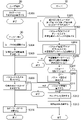
- FIG. 7 is a flow chart showing an example of processing executed in the authentication system S of the first embodiment.
- the processing shown in FIG. 7 is executed by each of control units 11 , 21 , 31 and 41 operating according to a program stored in each of storage units 12 , 22 , 32 and 42 .
- the processing in FIG. 7 is an example of processing executed by the functional blocks in FIG. It is assumed that the user U has already registered for use before the process of FIG. 7 is executed.
- the first user U1 and the second user U2 are simply referred to as user U without distinguishing between them.
- the code C is displayed on the display unit 25 based on the code ID stored in the storage unit 22. This processing is omitted in FIG.
- the check-in terminal 30 acquires the code ID included in the code C read by the reading unit 37 (S100). ).
- the check-in terminal 30 transmits its own terminal ID stored in the storage unit 32 and the code ID acquired in S100 to the server 10 (S101).
- the server 10 Upon receiving the terminal ID and code ID, the server 10 refers to the user database DB1 and executes check-in (S102). At S102, the server 10 confirms the code ID and expiration date. If the code ID is within the expiration date, the server 10 acquires the user ID, facial features, and passcode associated with this code ID, and stores them in the check-in database DB2 together with the check-in date and time and the passcode authentication flag. Store. The server 10 transmits the check-in execution result to the check-in terminal 30 . It should be noted that if the received code ID is not valid, the process ends without performing check-in.
- the check-in terminal 30 Upon receiving the check-in execution result, the check-in terminal 30 executes processing for opening the security gate G (S103). In S103, the check-in terminal 30 executes processing for opening the security gate G when an execution result indicating that check-in has been executed is received. If an execution result indicating that check-in has not been executed is received, the processing for opening the security gate G is not executed. This process is, for example, a process of controlling a motor so that the door of the security gate G is opened.
- the user U will be able to enter the office building at the first location P1 and perform unlock processing by face authentication.
- the authentication terminal 40 sends the server 10 its own terminal ID, the imaging unit 46 is transmitted (S104).
- the server 10 Upon receiving the captured image, the server 10 performs face authentication based on the check-in database DB2 (S105).
- the server 10 calculates the feature amount of the face captured in the captured image.
- the server 10 refers to the check-in database DB2 and acquires the facial feature value associated with the terminal ID of the authentication terminal 40 that has transmitted the captured image.
- the server 10 performs face authentication based on the facial feature amount calculated from the captured image and the facial feature amount acquired from the check-in database DB2.
- the server 10 determines that face authentication has succeeded if even one of these differences is less than the threshold. When users U whose faces are similar to each other are checking in, face authentication will succeed with a plurality of face feature amounts.
- the server 10 requests passcode authentication to the authentication terminal 40 (S106).
- the authentication terminal 40 causes the display unit 45 to display a screen prompting for the passcode input, and accepts the passcode input (S107).
- the authentication terminal 40 transmits its own terminal ID and the passcode input from the operation unit 44 to the server 10 (S108).
- the server 10 Upon receiving the passcode and terminal ID, the server 10 executes passcode authentication (S109).
- the server 10 refers to the check-in database DB2 and acquires the passcode stored in the record for which the face authentication was successful in S105.
- the server 10 determines whether the obtained passcode matches the passcode received from the authentication terminal 40 . If they match, passcode authentication succeeds.
- the server 10 transmits a success notification indicating that the authentication has succeeded to the authentication terminal 40 (S110).
- the authentication terminal 40 executes unlocking processing for unlocking the door (S111), and ends this processing.
- output of a signal for unlocking the electronic lock and the like are executed.
- the user U can enter the room because the face authentication and the passcode authentication are successful.
- a predetermined error message is displayed on the display unit 45 of the authentication terminal 40, and this process ends.
- S105 if the face authentication is successful with only one facial feature amount (S105; 1), that is, the second user U2 has not checked in to the office building and the facial feature amount has been successfully authenticated. is stored, the passcode authentication flag is "0", the process proceeds to S110 without requesting passcode authentication. In this case, the user U can enter the room only by facial recognition.
- S105 if the face authentication is not successful (S105; failure), a predetermined error message is displayed on the display unit 45 of the authentication terminal 40, and this process ends.
- the authentication system S of the first embodiment when it is not determined that the second user U2, who may be authenticated as the first user U1 by face authentication, is at or has come to the first place P1, based on face authentication to execute the unlock process.
- This prevents the first user U1 and the second user U2 from being indistinguishable from each other, and ensures the execution of identity verification, thereby enhancing security.
- the first user U1 can enter the room only by face recognition, which increases the convenience of the first user U1. Also, in this case, since there is no need to perform passcode authentication, the processing load on the authentication system S can be reduced.
- the authentication system S performs face authentication. Execute the unlocking process based on Since the second user U has left the first place P1, the first user U1 and the second user U2 cannot be distinguished from each other even if only face authentication is used. Therefore, the personal identification is surely executed, and the security is enhanced. Since the first user U1 can enter the room only by facial recognition, convenience for the first user U1 is enhanced. Also, in this case, since there is no need to perform passcode authentication, the processing load on the authentication system S can be reduced.
- the authentication system S executes unlock processing based on face authentication and passcode authentication.
- face authentication and passcode authentication even if the first user U1 and the second user U2 cannot be distinguished from each other, identity verification is reliably performed by passcode authentication, and security is enhanced.
- the authentication system S executes unlock processing based on face authentication when the first user U1 is at the checked-in first place P1. This prevents spoofing at the first location P1 where the first user U1 has checked in, and ensures the identity verification at the first location P1, thereby enhancing security.
- the authentication system S determines whether the second user U2 is at or has arrived at the first place P1 by determining whether the second user U2 has checked in at the first place P1. This makes it possible to reliably determine whether or not the second user U2 is at or has come to the first place P1. In addition, spoofing at the first location P1 where the second user U2 has checked in is prevented, and identity verification is reliably performed at the first location P1, thereby enhancing security.
- FIG.8 and FIG.9 is a figure which shows an example of the authentication system S of 2nd Embodiment.
- This company resides in each of a first office building located at a first location P1 and a second office building located at a second location P2.
- a security gate G similar to that of the first embodiment is arranged at each of the first location P1 and the second location P2.
- the first user U1 can check-in at any one of the first location P1 and the second location P2. For example, a first user U1 can move to a second location P2 after checking in at a first location P1.
- a second user U2 can also check-in at any of the first location P1 and the second location P2.
- the second user U2 can move to the first location P1 after checking in at the second location P2.
- the authentication at the time of check-in may be the same as in the first embodiment, but in the second embodiment, the case where face authentication is used as the authentication at the time of check-in will be taken as an example. That is, the case where face authentication is performed at the time of check-in at each of the first place P1 and the second place P2 will be taken as an example. However, since the faces of the first user U1 and the second user U2 are similar to each other, not only the face authentication but also the passcode authentication are performed at check-in in principle.
- the second user U2 tries to check in at the second place P2. and In this case, the authentication system S cannot determine whether the person checking in at the second place P2 is the first user U1 or the second user U2 by face authentication alone. Authentication is also required.
- the second user U2 performs face authentication and passcode authentication from the check-in terminal 30 at the second location P2. If the face authentication and passcode authentication of the second user U2 are successful, the second user U2 checks in at the second location P2. A second user U2 passes through a security gate G at a second location P2. The flow when entering a room in the office building at the second location P2 may be the same as in the first embodiment, but this flow is omitted in the second embodiment.
- the authentication system S can recognize that the second user U2 is at the second location P2. Since there is a certain amount of distance between the first place P1 and the second place P2, when the second user U2 checks in at the second place P2, the second user will wait until a certain amount of time has passed. Cannot move to 1 place P1. Therefore, in the second embodiment, the first user U1 is allowed to check in to the first place P1 only by facial recognition within a period during which it is expected that the second user U2 cannot move to the first place P1. there is Henceforth, this period is described as a prediction period.
- the travel time required to move between the first location P1 and the second location P2 is one hour.
- the second user U2 checks in at the second location P2 at 11:30
- the second user U2 checks in at the first location P1 from 11:30 to 12:30 one hour later. predicted to be unable to move to Therefore, the first user U1 can check-in at the first location P1 only by facial recognition until 12:30.
- the first user U1 checks in at the first location P1 at 12:00 only by facial recognition
- the first user U1 will be at the second location P2 from 12:00 to 13:00 one hour later. Predicted to be immobile. Therefore, even if the second user U2 temporarily leaves the second place P2 for lunch, for example, the second user U2 can check in at the second place P2 only by facial recognition until 13:00.
- checkout from each of the first location P1 and the second location P2 may be performed, checkout is not performed in the second embodiment. Therefore, even if the second user U2 leaves the second place P2, the authentication system S cannot recognize that the second user U2 has left the second place P2. Similarly, even if the first user U1 leaves the first place P1, the authentication system S cannot grasp that the first user U1 has left the first place P1.
- the second user U2 after temporarily leaving the second location P2, the second user U2 tries to check in at the second location P2 at 12:50.
- the second user U2 can check-in at the second place P2 only by facial recognition because it is within the predicted period during which it is predicted that the first user U1 cannot move to the second place P2.
- the second user U2 will leave the second place P2 and come to the first place P1. become unable.
- the first user U1 tries to re-enter the first place P1 at 14:10.
- the first user U1 needs to successfully perform face authentication and passcode authentication in order to check in at the first location P1.
- the second user U2 is the first user only with face authentication from 14:10 to 15:10 one hour later. It becomes possible to check in at two locations P2.
- the second user U2 checks in at the second place P2
- the first user U1 can check-in at the first place P1 only by facial recognition.
- the second user U2 can check in at the second location P2 only by facial recognition.
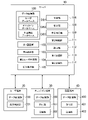
- FIG. 10 is a functional block diagram showing an example of functions realized by the authentication system S of the second embodiment.
- the server 10 implements a data storage unit 100, a check-in unit 101, a first authentication unit 102, a second authentication unit 103, a process execution unit 105, a prediction unit 106, and a first restriction unit 107. be done.
- Each of the prediction unit 106 and the first restriction unit 107 is implemented mainly by the control unit 11 .
- the data storage unit 100 stores substantially the same data as in the first embodiment, but the contents of the check-in database DB2 are different from those in the first embodiment.
- the data storage unit 100 may store a database regarding the first location P1 and the second location P2. It is assumed that this database stores first location information about the first location P1 and second location information about the second location P2. These positions can be specified by arbitrary information, for example, latitude and longitude information, addresses, postal codes, coordinate information, or combinations thereof.
- the first location information is latitude and longitude information of the first location P1 and the second location information is latitude and longitude information of the second location P2.
- FIG. 11 is a diagram showing a data storage example of the check-in database DB2 of the second embodiment.
- the check-in to the first place P1 and the check-in to the second place P2 are managed by one check-in database DB2, but they are separate check-in databases. It may be managed by DB2.
- the check-in database DB2 stores only the place IDs of the first place P1 and the second place P2, the user ID of the user U who has already checked in, the check-in date and time, the prediction period, and the face authentication. The feature amount of the face of the user U who is permitted to check in at is stored.
- the first user U1 indicated by the user ID "taro.yamada123” has checked in at the location ID "p00001" of the first location P1.
- "June 10, 2021, 13:00:41” is set as a predicted period during which the first user U1 can check in only by face authentication. This prediction period is one hour after the latest check-in date and time "June 10, 2021, 12:00:41” when the second user U2 checked in at the second place P2.
- "Feature amount 1" shown in FIG. 11 is the feature amount of the face of the first user U1.
- this "feature amount 1" is the correct face feature amount in face authentication.
- the second user U2 indicated by the user ID "yoshida111jiro” has checked in at the location ID "p00002" of the second location P2.
- "June 10, 2021, 12:30:25” is set as a predicted period during which the second user U2 can check in only by face authentication. This prediction period is one hour after the check-in date and time "11:30:25 on June 10, 2021" when the first user U1 most recently checked in at the first location P1.
- "Feature amount 2" shown in FIG. 11 is the feature amount of the face of the second user U2.
- this "feature amount 2" is the correct face feature amount in face authentication.
- the check-in unit 101, the first authentication unit 102, and the second authentication unit 103 are generally the same as those in the first embodiment, but face authentication by the first authentication unit 102 and passcode authentication by the second authentication unit 103 are performed. , are executed at the time of entering the room in the first embodiment, but are executed at the time of check-in in the second embodiment. Face authentication and passcode authentication itself are as described in the first embodiment.
- the captured image and the passcode are obtained from the authentication terminal 40, but in the second embodiment, the captured image and the passcode are obtained from the check-in terminal 30.
- the check-in unit 101 checks the first user U1 at the first place. Let P1 check in. Also, the check-in section 101 checks in the second user U2 to the second place P2.
- the process execution unit 105 executes the check-in. In the second embodiment, check-in outside the prediction period will be described as processing of the check-in unit 101 , and check-in within the prediction period will be described as processing of the processing execution unit 105 .
- the check-in unit 101 stores the user ID and Stores check-in date and time. Also, the check-in unit 101 stores the prediction period predicted by the prediction unit 106 and the facial feature amount of the first user U1 stored in the user database DB1. The check-in unit 101 may identify the first user U1 whose face is similar to the second user U2 who has checked in at the second place P2 from among all the users U stored in the user database DB1. As described in the first embodiment, it may be stored in advance in the user database DB1 that the second user U2 and the first user U1 have similar faces.
- the prediction unit 106 generates second time information about a second time when the second user U2, who is likely to be authenticated as the first user U1 by face authentication, was at or came to the second place P2, and the second time information about the second place P2.
- a prediction period during which the second user U2 will not or will not be at the first location P1 is predicted based on at least one of the two location information. In the second embodiment, the prediction period is predicted based on both the second time information and the second location information. may be predicted.
- the date and time of check-in at the second location P2 corresponds to the second time.
- the time may mean only the time instead of the date and time, or may mean only the date. Time may also mean a period of time having a certain length.
- the part describing the check-in time to the second location P2 can be read as the second time. If check-in to the second place P2 does not occur, the time when it is detected that the second user U2 was or came to the second place P2 may correspond to the second time. This detection method will be described later in a modified example.
- the prediction unit 106 acquires the distance between the first location P1 and the second location P2 based on the first location information and the second location information regarding the first location P1, and calculates the second time information. and the travel time according to the distance.
- This travel time may be calculated using a known navigation algorithm. For example, a standard moving speed is defined for each mode of transportation such as walking, car, bicycle, train, or bus.
- the prediction unit 106 calculates the travel time based on this travel speed and the distance between the first location P1 and the second location P2.
- the prediction unit 106 predicts, as a prediction period, a period from the second time indicated by the second time information to the travel time later.
- the prediction period may be predicted based on at least one of the second time information and the second location information.
- the prediction unit 106 may predict, as a prediction period, a period from the second time indicated by the second time information to a predetermined time later. In this case, the prediction period is obtained without using the second location information.
- the prediction unit 106 may predict the period associated with the second location information as the prediction period. In this case, the prediction period is obtained without using the second time information.
- the prediction unit 106 when at least one of the second time information and the second location information is updated, the prediction unit 106, based on at least one of the updated second time information and the second location information, Update the forecast period. The only difference is that updated information is used, and the prediction method itself for the prediction period is as described above. In the second embodiment, since check-in to the second place P2 occurs, the prediction unit 106 predicts the prediction period when the second user U2 checks in to the second place P2.
- the first restriction unit 107 restricts execution of check-in based on face authentication when the prediction period has passed.
- check-in to the first location P1 corresponds to the first process. Therefore, the description of check-in to the first location P1 in the second embodiment can be read as the first process.
- the first process of the first embodiment differs from the first process of the second embodiment, the unlocking process described in the first embodiment corresponds to the first process in the second embodiment as well. may As described in the first embodiment, the first process may be any process.
- the first restriction unit 107 requests passcode authentication so that check-in is performed based on face authentication and passcode authentication, so that check-in is performed based on face authentication.
- the limiting method by the first limiting unit 107 is not limited to the example of the second embodiment.
- the first restriction unit 107 may restrict execution of check-in based on face authentication by requesting other authentication without performing face authentication.
- Other authentication may be authentication using the user terminal 20 as described in the first embodiment, or authentication with a higher recognition rate such as fingerprint authentication or iris authentication.
- the first restriction unit 107 may restrict execution of check-in based on face authentication by requesting the manager of the office building to check-in face-to-face.
- the process executing unit 105 executes check-in to the first location P1 based on the face authentication executed during the prediction period.
- the process executing unit 105 executes check-in to the first location P1 when the face authentication executed during the prediction period is successful.
- the process execution unit 105 does not perform check-in to the first place P1 based only on face authentication when the prediction period has passed.
- the check-in in this case is executed by the check-in unit 101, and the check-in requires passcode authentication.
- the check-in processing itself of the processing execution unit 105 is the same as the processing of the check-in unit 101 .
- FIG. 12 is a flowchart showing an example of processing executed by the authentication system S of the second embodiment.
- the processing shown in FIG. 12 is executed by each of control units 11, 21, 31 and 41 operating according to a program stored in storage units 12, 22, 32 and 42, respectively.
- the processing in FIG. 12 is an example of processing executed by the functional blocks in FIG. It is assumed that the user U has already registered for use before the process of FIG. 12 is executed.
- the first user U1 can also check in at the second location P2 without checking in at the first location P1.
- the second user U2 may check in at the first location P1 without checking in at the second location P2. Therefore, in FIG. 12, the first user U1 and the second user U2 are simply referred to as user U without distinction.
- This user U is a person who is going to check in at either the first location P1 or the second location P2.
- the first location P1 and the second location P2 are simply referred to as location P without distinguishing between them.
- This place P is the place where the user U is going to check-in.
- the check-in terminal 30 at this place P takes an image of the user U's face using the imaging unit 36 (S200).
- the check-in terminal 30 transmits to the server 10 its own terminal ID and a photographed image of the face of the user U (S201).
- the server 10 receives the captured image and the terminal ID, the server 10 acquires the feature amount of the face captured in the captured image. It is determined whether or not a facial feature amount similar to the facial feature amount acquired from the captured image is stored (S202).
- the server 10 determines whether facial feature amounts similar to the facial feature amounts acquired in S202 are stored in the user database DB1. It is determined whether or not (S203). If it is not determined that a facial feature amount similar to the facial feature amount acquired in S202 is stored (S203; N), a predetermined error message is displayed on the display unit 35 of the check-in terminal 30, and this process ends. finish.
- the server 10 If it is determined in S203 that a plurality of facial feature quantities similar to the facial feature quantity acquired in S202 are stored (S203; plural), the server 10 prompts the check-in terminal 30 for passcode authentication. request (S204). When the passcode authentication is requested, the check-in terminal 30 causes the display unit 45 to display a screen prompting for the passcode input, and accepts the passcode input (S205). The check-in terminal 30 transmits the passcode input from the operation unit 34 and its own terminal ID to the server 10 (S206).
- the server 10 Upon receiving the passcode and terminal ID, the server 10 executes passcode authentication (S207).
- the server 10 refers to the user database DB1 and acquires the passcode stored in the record for which face authentication was successful in S203.
- the server 10 determines whether or not the acquired passcode matches the passcode received from the check-in terminal 30 . If they match, passcode authentication succeeds.
- the server 10 executes check-in (S208) and transmits a success notification indicating that the authentication has succeeded to the check-in terminal 30 (S209).
- the check-in terminal 30 executes a process for opening the security gate G (S210), and ends this process.
- output of a signal for opening the security gate G and the like are executed.
- the user U can enter the room because the face authentication and the passcode authentication are successful. If the passcode authentication fails (S207; failure), a predetermined error message is displayed on the display section 35 of the check-in terminal 30, and this process ends.
- the server 10 determines whether it is the prediction period (S211). If it is not determined to be the prediction period (S211; N), the process proceeds to S204 and passcode authentication is executed. That is, since the prediction period has passed, passcode authentication is requested. If it is determined that it is the prediction period (S211; Y), the process proceeds to S208 and check-in is executed. That is, check-in is executed only by face recognition.
- At least one of the second time information about the second time when the second user U2 was or came to the second place P2 and the second place information about the second place P2. predicts a predicted period during which the second user U2 will not or will not be at the first location P1 based on and performs check-in at the first location P1 based on the first authentication performed during the predicted period.
- the authentication system S acquires the distance between the first location P1 and the second location P2 based on the first location information and the second location information regarding the first location P1, and obtains the second time information , and the travel time according to the distance, the prediction period can be predicted accurately. By predicting an accurate prediction period, it is possible to more reliably prevent the first user U1 and the second user U2 from being indistinguishable from each other, and to ensure identity verification to increase security.
- the authentication system S updates the prediction period based on at least one of the updated second time information and the second location information. do.
- the prediction period can be re-predicted based on the latest information.
- the predicted period during which the first user U1 can check-in only by face authentication is extended, so convenience for the first user U1 is enhanced.
- the authentication system S restricts check-in to the first place P1 based on face authentication when the prediction period has passed.
- the first user U1 is not allowed to check in only by facial recognition, and the first user U1 and the second user To prevent U2 from being indistinguishable from each other, to surely perform personal identification, and to enhance security. For example, it is possible to prevent the second user U2 from impersonating the first user U1 and checking in. Conversely, it is possible to prevent the first user U1 from impersonating the second user U2 and checking in.
- the authentication system S reliably detects that the second user U2 is at or has come to the second place P2 by predicting the prediction period. and the forecast period can be predicted accurately. By predicting an accurate prediction period, it is possible to more reliably prevent the first user U1 and the second user U2 from being indistinguishable from each other, and to ensure identity verification to increase security.
- FIG. 13 is a diagram showing an example of the authentication system S of the third embodiment.
- a seminar was held at a predetermined date and time in an office building located at the first location P1.
- each of the first user U1 and the second user U2 has reserved a seminar.
- the authentication system S can grasp in advance when each of the first user U1 and the second user U2 will come to the first place P1.
- the first user U1 and the second user U2 have already registered for use of the check-in service, it is possible to know in advance that they have similar faces.
- the authentication system S checks the first user U1 at the first location P1 only by facial recognition. in.
- the second user U2 is checked in at the second location P2 only by facial recognition. For example, assume that the first user U1 has made a reservation for a seminar on June 10, 2021 at 14:00. Assume that a second user U2 has booked a seminar for June 12, 2021 at 11:00. In this case, since each of the first user U1 and the second user U2 visits the first place P1 on different dates and times, they are checked in only by facial recognition.
- first user U1 has made a reservation for a seminar on June 10, 2021 at 14:00.
- second user U2 has also made a reservation for the seminar on June 10, 2021 at 14:00.
- each of the first user U1 and the second user U2 visits the first place P1 on the same or substantially the same date and time, they are not allowed to check in only by face authentication, and passcode authentication is also requested.
- the flow of check-in using face authentication and passcode authentication is as described in the second embodiment.
- the authentication system S of the third embodiment performs face authentication when it is not determined that each of the first user U1 and the second user U2 is at or will be at the first location P1 at the same or substantially the same date and time. check-in at the first location P1 only by This enhances convenience for the first user U1 while enhancing security.
- details of the third embodiment will be described.
- FIG. 14 is a functional block diagram showing an example of functions realized by the authentication system S of the third embodiment.
- the server 10 implements a data storage unit 100 , a first authentication unit 102 , a second authentication unit 103 , a process execution unit 105 , an extraction unit 108 and a schedule determination unit 109 .
- Each of the extraction unit 108 and the schedule determination unit 109 is realized mainly by the control unit 11 .
- the data storage unit stores substantially the same data as in the first and second embodiments, but stores the schedule information database DB3 as other data.
- FIG. 15 is a diagram showing a data storage example of the schedule information database DB3.
- the schedule information database DB3 is a database that stores schedule information regarding a schedule to visit the first place P1.
- the schedule information database DB3 stores the scheduled date or time of the seminar, the user ID of the user U who is scheduled to attend, the name, the passcode authentication flag, the feature amount of the face, and the passcode.
- the passcode authentication flag is as described in the first embodiment.
- the scheduled date or scheduled date and time of the seminar is the scheduled date or scheduled date and time when the user U who has reserved the seminar is at or is scheduled to come to the first location P1. If the seminar is held only once a day, the scheduled date may be a date without the time.
- the server 10 When the server 10 accepts the reservation for the seminar by the user U, it adds a new record to the schedule information database DB3.
- the user U designates the scheduled date or scheduled date and time of the seminar in which the user U participates.
- the server 10 stores the scheduled date or scheduled date and time of the seminar designated by the user U, the user ID, name, passcode authentication flag, facial features, and passcode of the user U.
- the passcode authentication flag becomes "1" including the passcode authentication flag of the other user U if another user U with a similar face has reserved a seminar on the same scheduled date or scheduled date and time. Note that the passcode does not have to be stored in the schedule information database DB3 for the user U whose passcode authentication flag is "0".
- Extraction unit In the second embodiment, on the first scheduled date or the first scheduled date and time, a plurality of users including the first user U1 are or are scheduled to come to the first place P1, and the extraction unit 108 A feature amount of the face is extracted in advance from the user database DB1.
- the extraction unit 108 stores the facial feature amount and the passcode extracted from the user database DB1 in the schedule information database DB3.
- the extracting unit 108 extracts not only the facial features but also the passcode from the user database DB1 and stores it in the schedule information database DB3. good too.
- the first authentication unit 102 and the second authentication unit 103 are generally similar to those of the first and second embodiments. However, in the second embodiment, the first authentication unit 102 performs face authentication for each of the multiple users U based on the authentication information of each of the multiple users U extracted from the user database DB1.
- the first authentication unit 102 may refer to the user database when performing face authentication. Run. Since the schedule information database DB3 stores only the feature amount of the face of the user U who is scheduled to be or will be on the scheduled date or time of the seminar, the feature amount of the face to be compared at the time of face authentication is reduced. can be done.
- the schedule determination unit 109 performs the first authentication on the first scheduled date or the first scheduled date and time when the first user U1 is or will be at the first place P1 based on the schedule information regarding the schedule to visit the first place P1. It is determined whether or not a second user U2 who may be authenticated as one user U1 is or will be at the first location P1. For example, when the first user U1 reserves the seminar after the second user U2, the schedule determination unit 109 selects the first scheduled date or the first scheduled date and time when the first user U1 reserves the seminar. When designated, the schedule information database DB3 is referred to, and it is determined whether or not the second user U2 with a similar face has made a reservation for the same day or date and time.
- the schedule determination unit 109 refers to the schedule information database DB3 when the second user U2 reserves the seminar, and determines whether the second user U2 has a similar face. It is determined whether or not the second user U2 has designated the first scheduled date or the first scheduled date and time reserved by the second user U2. The schedule determination unit 109 determines the value of the passcode authentication flag in the schedule information database DB3 based on these determination results. When it is determined that the second user U2 is at or will come to the first place P1 on the first scheduled date or the first scheduled date and time, the passcode authentication flag becomes "1". If it is not determined that the second user U2 is at or will come to the first location P1 on the first scheduled date or the first scheduled date and time, the passcode authentication flag becomes "0".
- the process execution unit 105 checks in at the first place P1 based on face recognition.
- the process for checking in at the first location P1 is an example of the first process for the first user U1. Therefore, the description of the process for checking in at the first location P1 can be read as the first process.
- the check-in process itself is as described in the first and second embodiments.
- a record corresponding to the checked-in user U is created in the check-in database DB2.
- Information indicating whether check-in has been completed may be stored in the schedule information database DB3. In this case, check-in is performed by updating this information.
- the processing execution unit 105 performs face authentication and passcode authentication. to perform check-in to the first location P1.
- the first authentication is biometric authentication
- the schedule information is information about the check-in schedule at the first place P1.
- the second user U2 is a user U whose biometric information used for biometric authentication is similar to that of the first user U1.
- FIG. 16 is a flowchart showing an example of processing executed by the authentication system S of the third embodiment.
- the processing shown in FIG. 16 is executed by each of control units 11, 21, 31 and 41 operating according to a program stored in storage units 12, 22, 32 and 42, respectively.
- the processing in FIG. 16 is an example of processing executed by the functional blocks in FIG. 14 . It is assumed that the user U has already registered for use before the process of FIG. 16 is executed.
- the user terminal 20 transmits a reservation application for the seminar to the server 10. (S300).
- the user U designates the date or date of the seminar in which the user U will participate as the first scheduled date or the first scheduled date and time, from among a plurality of candidate dates or candidate dates and times.
- the reservation application includes the first scheduled date or the first scheduled date and time designated by the user U.
- the server 10 When the server 10 receives the reservation application, it determines whether or not another user U with a similar face has reserved the seminar on the first scheduled date or the first scheduled date and time based on the schedule information database DB3 ( S301). When it is determined that another user U with a similar face has already reserved a seminar on the first scheduled date or the first scheduled date and time (S301; Y), the server 10 performs passcode authentication based on the user database DB1. The schedule information database is updated so that the flag is turned on (S302). In S302, the server 10 acquires the facial feature values and passcodes of the user U who made the reservation and the other user U who has a similar face. The server 10 stores the facial feature amount and the passcode in the record corresponding to these users U, and turns on the passcode authentication flag.
- the server 10 based on the user database DB1, sets the passcode authentication flag to The schedule information database is updated so that it is turned off (S303).
- the server 10 acquires the facial features of the user U who applied for the reservation.
- the server 10 stores the face feature amount in the record corresponding to this user U, and turns off the passcode authentication flag.
- the reservation for the seminar by user U is completed.
- the user U moves to the first place P1 when the date and time of the seminar reserved by the user U approaches.
- the user U causes the photographing unit 36 of the check-in terminal 30 to photograph his/her own face (S304).
- the subsequent processing of S305 is the same as the processing of S201.
- the server 10 acquires the facial feature amount based on the captured image, and determines whether or not a similar facial feature amount is stored in the schedule information database (S306). .
- schedule information of a seminar with a scheduled date or scheduled date and time close to the current date and time is determined.
- the server 10 refers to the passcode authentication flag of the record in which face authentication was successful based on the schedule information database DB3 (S307 ). If the passcode authentication flag is ON (S307; ON), the subsequent processing of S308 to S314 is the same as the processing of S204 to S210. . If the passcode authentication flag is off (S307; off), the process proceeds to S312. In this case, passcode authentication is not executed, and you can check in only with face authentication.
- the first A process for user U1 to check in at first location P1 is executed. This prevents the first user U1 and the second user U2 from being indistinguishable from each other, and ensures the execution of identity verification, thereby enhancing security. For example, if it is not determined that the second user U2 is at or will come to the first location P1, even if the first user U1 is permitted to check in only by facial recognition, the second user U2 is not at the first location P1 in the first place. Therefore, it is possible to prevent the second user U2 from impersonating the first user U1 and checking in.
- the first user U1 can check in only by facial recognition, which increases convenience for the first user U1. Also, in this case, since there is no need to perform passcode authentication, the processing load on the authentication system S can be reduced.
- the authentication system S performs face authentication and passcode authentication. , performs a process for the first user U1 to check in at the first location P1. As a result, even if the first user U1 and the second user U2 cannot be distinguished from each other, identity verification is reliably performed by passcode authentication, and security is enhanced.
- the authentication system S preliminarily extracts the facial feature amount of each of the plurality of users U from the user database DB1, and extracts from the user database DB1. Face authentication for each of the plurality of users U is performed based on the face feature amounts of each of the plurality of users U obtained. As a result, the number of facial feature amounts to be compared during face authentication is reduced, so the processing load on the server 10 can be reduced. Furthermore, face authentication can be completed quickly.
- the authentication system S is configured such that the second user U2 is a user U whose face feature amount used in face authentication is similar to that of the first user U1. A process is performed, which increases security when checking in to the first location P1.
- FIG. 17 is an example of a functional block diagram in a modification according to the first embodiment.
- a prediction unit 106 in the modification according to the first embodiment, a prediction unit 106, a schedule determination unit 109, and a third authentication unit 110 are realized in addition to the functions of FIG. be.
- Third authentication unit 110 is realized mainly by control unit 11 .
- Each of the prediction unit 106 and the schedule determination unit 109 will be described with respect to points different from the contents described in the second and third embodiments.
- the authentication system S can be applied to any service.
- a case where the authentication system S is applied to an electronic payment service will be taken as an example. This point is the same for the modification according to the second embodiment.
- the electronic payment service is a service that provides electronic payment using user U's payment means. Payment methods available to user U may be of any type, for example, credit cards, debit cards, electronic money, electronic cash, points, bank accounts, wallets, virtual currencies, or combinations thereof. good.
- the user terminal 20 has an electronic payment service application (hereinafter referred to as an electronic payment application) installed.
- the user U activates the electronic payment application of the user terminal 20 and displays the same code C as in the first embodiment.
- Code C for check-in and code C for electronic payment may be different.
- this code C can be used not only for check-in at a predetermined place but also for electronic payment.
- a known method can be used for the settlement method itself using Code C.
- the user database DB1 has registered payment information related to the payment method of the user U, and electronic payment is executed based on the payment information associated with the code ID.
- the payment information may include information corresponding to the payment method, such as credit card number, debit card number, electronic money ID, electronic cash ID, point ID, bank account information, wallet information, or virtual currency ID. .
- Payments using barcodes or two-dimensional codes are sometimes called barcode payments or two-dimensional code payments, and these codes are also one of the means of payment.
- FIG. 18 is a diagram showing an example of the authentication system S of modification 1-1.
- each of first user U1 and second user U2 checks in at a stadium such as a baseball field. It is assumed that each of the first user U1 and the second user U2 has purchased a match ticket in advance.
- Code C is not only for executing electronic payment, but also serves as an electronic ticket. Various known electronic tickets can be used as the electronic ticket itself. It is assumed that the server 10 stores an electronic ticket ID that can identify the electronic ticket, and that the code C also includes the electronic ticket ID.
- a check-in terminal 30 is arranged at the entrance of the stadium.
- the first user U1 holds the code C displayed on the user terminal 20 over the check-in terminal 30 to check-in to the stadium.
- the server 10 can recognize that the first user U1 has checked in, not the second user U2.
- the server 10 updates the check-in database DB2 so that information such as the first user U1's facial features and passcode is stored.
- An authentication terminal 40 is arranged at a shop in the stadium.
- the first user U1 uses electronic payment by face authentication
- the first user U1 causes the photographing unit 46 of the authentication terminal 40 to photograph his/her own face.
- the authentication terminal 40 transmits the captured image to the server 10 .
- the server 10 performs face authentication in the same manner as in the first embodiment. That is, this face authentication refers to the check-in database DB2 instead of the user database DB1.
- the second user U2 has not checked in to the stadium, so there is no possibility that the first user U1 and the second user U2 cannot be distinguished from each other.
- the terminal ID or the like may be used to determine whether or not the payment processing is from a shop in the stadium.
- the server 10 executes payment processing based on the payment information of the first user U1 stored in the user database DB1.
- the settlement process using the settlement information of the first user U1 corresponds to the first process.
- a known process can be used for the settlement process itself. For example, when a credit card is used as a means of payment, credit processing and the like are executed. When electronic money is used as a means of payment, a process of reducing the balance of electronic money is executed. If another payment method is used, the processing corresponding to that payment method may be executed.
- the first user U1 cannot use the electronic payment service with face recognition at stores outside the stadium.
- the first user U1 can use the electronic payment service by facial recognition within the premises of the stadium where he has checked in using the user terminal 20 .
- the first user U1 may use the electronic payment service by using the code C displayed on the user terminal 20 instead of facial recognition in the stadium.
- the first user U1 may use the IC chip 27 of the user terminal 20 to use an electronic payment service.
- the second user U2 displays Code C on his user terminal 20 and holds it over the check-in terminal 30 to check in to the stadium.
- both the first user U1 and the second user U2 are in the stadium, so the server 10 cannot distinguish between the first user U1 and the second user U2. Therefore, the processing execution unit 105 executes payment processing based on face authentication and passcode authentication. The flow of processing when these two authentications are executed is as described in the first embodiment.
- the processing execution unit 105 executes payment processing based on the payment information of the first user U1. .
- the processing execution unit 105 executes payment processing based on the payment information of the second user U2. do.
- the first user U1 When the second user U2 checks out of the stadium, the first user U1 will be able to use the electronic payment service again only by facial recognition.
- the flow of checkout is the same as in the first embodiment, and checkout is executed by holding the code C over the check-in terminal 30 at the entrance of the stadium.
- the second user U2 can use the electronic payment service only by facial recognition.
- the authentication system S can be applied to electronic payment services at arbitrary facilities other than stadiums.
- the authentication system S can be applied to electronic payment services at facilities such as shopping malls, accommodation facilities, amusement parks, tourist facilities, supermarkets, convenience stores, restaurants, hot spring facilities for day trips, event venues, and department stores.
- the authentication system S can also be applied to electronic payment services in places without special facilities, such as outdoor event venues. For example, payment processing by face authentication is not permitted only at one specific first place P1, but payment processing by face authentication is permitted at any first place P1 among a plurality of first places P1. You may do so.
- FIG. 19 is a diagram showing an example of the authentication system S of modification 1-1.
- each of the plurality of first locations P1 has a restaurant, and the authentication system S can also be applied to an event held jointly by these restaurants.
- this event is an event of beer and cherry blossom viewing, and prior reservation is required to participate in this event.
- This reservation may be made in the same manner as the reservation described in the third embodiment.
- the server 10 stores a schedule information database DB3 that stores information about users U who have made reservations for events.
- at least one of the check-in terminal 30 and the authentication terminal 40 is arranged in each shop at the first place P1. These may be the POS terminals of the store.
- the server 10 refers to the schedule information database DB3 and determines whether or not each of the first user U1 and the second user U2 has reserved an event. For example, assume that the first user U1 has booked the event and the second user U2 has not booked the event. In this case, since it is predicted that the second user U2 will not come to the first place P1, the first user U1 can use the electronic payment service only by facial recognition at each store in the first place P1. Even in this case, the first user U1 may use the user terminal 20 to check in to the event when using the electronic payment service for the first time after coming to the event. This check-in may be performed by holding the code C over the check-in terminal 30 or the authentication terminal 40 located at the store at the first place P1 visited by the first user U1, or by another method. may
- the first user U1 has reserved an event and the second user U2 has also reserved an event.
- each of the first user U1 and the second user U2 can use the electronic payment service by face authentication and passcode authentication at each store at the first place P1. Available.
- the electronic payment service may be available only by facial recognition.
- modification 1-1 security is enhanced when payment processing is executed using face authentication. For example, even if each of the first user U1 and the second user U2 checks in at a stadium or at an event, they can be distinguished from each other by passcode authentication, thereby preventing fraudulent payment processing by spoofing. can.
- the processing execution unit 105 may execute payment processing based on passcode authentication instead of face authentication. .
- face authentication may not be performed, or face authentication itself may be performed, but the result of face authentication may not be a condition for whether or not payment processing is to be performed.
- the processing execution unit 105 performs settlement based on passcode authentication using the user ID and passcode, not based on face authentication. Execute the process.
- the authentication terminal 40 inside the stadium accepts input of the user ID and passcode.
- the authentication terminal 40 transmits the entered user ID and passcode to the server 10 .
- the server 10 determines whether or not the combination of the received user ID and passcode exists in the user database DB1. If this combination exists, passcode authentication succeeds. If this combination does not exist, passcode authentication will fail.
- face authentication is an example of first authentication.
- Passcode authentication is an example of second authentication. Any combination of the first authentication and the second authentication may be used.
- the first authentication may be face authentication, and the second authentication may be fingerprint authentication or iris authentication.
- the first authentication may be face authentication, and the second authentication may be authentication using the code C of the user terminal 20 as described in the first embodiment.
- modification 1-2 when it is determined that the second user U2 is at or has arrived at the first location P1, the payment process is executed based on passcode authentication, not based on face authentication.
- passcode authentication not based on face authentication.
- the authentication system S may perform the second A schedule determination unit 109 that determines whether or not the user U2 is scheduled to check in at the first location P1 may be further included.
- the processing of the schedule determination unit 109 is as described in the third embodiment.
- each of the first user U1 and the second user U2 makes a reservation in advance before coming to the first place P1, such as the stadium match described in FIG. 18 and the event described in FIG. shall be
- the schedule information database DB3 stores schedule information indicating whether each of the first user U1 and the second user U2 will come to the first place P1.
- the scheduled date or the scheduled date and time is also included in the schedule information.
- the check-in unit 101 checks the first user U1 for the first time based on face recognition. 1 Check in at location P1.
- the processing of the check-in unit 101 is the same as that of the processing execution unit 105 described in the third embodiment. This process may be executed as the process of the process execution unit 105 in the modification 1-3 as well. In other words, the processing execution unit 105 may include the function of the check-in unit 101 . For example, in the example of FIG.
- the first user U1 checks only by facial recognition at the check-in terminal 30 at the entrance of the stadium.
- the check-in can be done only by facial recognition.
- the modification 1-2 when it is not determined that the second user U2 is scheduled to check in at the first location P1 on the first scheduled date or the first scheduled date and time, the first user U2 Have U1 checked into the first location P1.
- the first user U1 can check in only by facial recognition, which increases convenience for the first user U1. Also, in this case, since there is no need to perform passcode authentication, the processing load on the authentication system S can be reduced.
- the server 10 cannot detect that the first user U1 has entered the stadium. Therefore, the first user U1 cannot use the electronic payment service only with face authentication.
- the server 10 can detect that the first user U1 is in the stadium. In this case, the first user U1 may be able to use the electronic payment service by facial recognition within the stadium.
- the server 10 confirms that the first user U1 is at the store. can be detected.
- the first user U1 may be able to use the electronic payment service with facial recognition at each store where the event is held.
- the authentication system S of Modification 1-4 further includes a third authentication unit 110 capable of performing third authentication on the first user U1 when the first user U1 is at or comes to the first place P1.
- Code authentication using the code C of the user terminal 20 corresponds to the third authentication. Therefore, code authentication can be read as third authentication.
- the third authentication is authentication different from the first authentication and the second authentication.
- the third authentication may be any authentication, but unlike face authentication, which cannot distinguish between the first user U1 and the second user U2, it can distinguish between the first user U1 and the second user U2.
- the third authentication may be fingerprint authentication, iris authentication, password authentication, or secret word authentication.
- the processing execution unit 105 of modification 1-4 executes payment processing based on code authentication.
- the processing execution unit 105 executes settlement processing when the code authentication is successful.
- the process executing unit 105 does not execute the payment process when the code authentication fails.
- the first authentication unit 102 can perform face authentication after the payment processing based on code authentication is performed.
- the second user determination unit 104 determines whether or not the second user U2 is at or has come to the first place P1 after the settlement process based on code authentication is executed.
- the processing execution unit 105 executes payment processing based on face authentication after the payment processing based on code authentication is executed. As shown in FIG. 18, when it is detected that the first user U1 is in the stadium by code authentication payment processing, the processing execution unit 105 executes payment processing based on face authentication. When the check-in of the second user U2 is detected, or when the second user U2 executes payment processing based on code authentication in the stadium, the payment processing is not executed only by face authentication, and passcode authentication is also required. requested. The same applies to the example of FIG. 19. When it is detected that the second user U2 has come to the event, the settlement process is not executed only by face authentication, and passcode authentication is also requested.
- modification 1-4 after the payment processing based on code authentication is executed, it is determined whether or not the second user U2 is at or has come to the first place P1, and the payment processing based on code authentication is executed. After that, the payment processing is executed based on face recognition. As a result, it is possible to reliably detect which first location P1 the first user U1 is at or has come from through the payment processing based on code authentication, and the identity verification can be reliably performed to improve security.
- the user terminal 20 may acquire first location information regarding a first location of the first user U1.
- the first location is the current location of the first user U1.
- the method itself for acquiring the first position information may be any method.
- a method using GNSS such as the GPS receiver 28, a method using a wireless LAN access point, or a method using a communication base station can be used.
- the first location information like the first location information, may be in any format.
- the first location information may be latitude/longitude information, address information, or coordinate information.
- FIG. 20 is a diagram showing an example of the authentication system S of modification 1-5.
- a range within a certain distance from the first position of the first user U1 is denoted by A1.
- the first places P1 included in the range A1 are capable of settlement processing only by face authentication.
- the server 10 can detect that the first user U1 is at the first location P1. That is, it can be detected that the first user U1 is not present at another first place P1.
- the first authentication unit 102 can execute face authentication. good. That is, the first place P1 at the first position or the first place P1 near the first position becomes a place where payment processing can be executed only by face authentication.
- the first position is the first place P1 means that the first position is included in the area of the first place P1.
- the inclusion of the first location within the premises of the store located at the first location P1 corresponds to the first location being the first location P1. That the first location is near the first location P1 means that the distance between the first location and the location of the first location is less than a threshold.
- the range A1 includes the store at the first location P1.
- the second user determination unit 104 determines whether or not the second user U2 is at or has come to the first place P1 when the first position indicated by the first position information is at or near the first place P1. This determination method may be determined by code authentication, and as in Modification 1-7 described later, the second user U2 also obtains a second code obtained using the user terminal 20 of the second user U2. It may be determined based on location information.
- the processing execution unit 105 executes payment processing based on face authentication when the first location indicated by the first location information is the first location P1 or its vicinity. At the other first location P1, the settlement process is not executed only by face authentication. Therefore, even if someone whose face resembles that of the first user U1 or the second user U2 attempts payment processing by face authentication at another first location P1, the payment processing by face authentication is not permitted, so the payment cannot be made. Processing fails. Ultimately, the settlement process based on face authentication succeeds only at the first location indicated by the first location information or at the first location P1 in the vicinity thereof.
- the first location indicated by the first location information is the first location P1 or its vicinity
- payment processing is executed based on face recognition.
- face authentication only at the first place P1 where the first user U1 is certainly present, preventing spoofing at other first places P1 and enhancing security.
- the first user U1 can execute payment processing by face authentication at the first location P1 where he/she is, which increases convenience.
- the processing execution unit 105 may execute settlement processing for the second user U2 when the second user U2 is at or comes to the first place P1.
- the settlement process is an example of the second process. Therefore, the part describing the payment process can be read as the second process.
- the second treatment may be any treatment.
- the second process may be the unlock process or check-in described in the first embodiment.
- the second user determination unit 104 may determine whether or not the second user U2 is at or has come to the first place P1 by determining whether or not payment processing has been executed. For example, in the example of FIG. 18, even if the second user U2 enters the stadium with a paper ticket, when the second user U2 executes the payment processing by code authentication in the stadium, the server 10 It can be detected that the second user U2 is in the stadium.
- the server 10 when the second user U2 executes payment processing by code authentication at one of the plurality of first locations P1, the server 10 sends the second user U2 to the first location P1. It can detect the presence of U2.
- the settlement process may be executed by any method other than code authentication.
- the settlement process may be executed by the IC chip 27 of the user terminal 20 or the IC card owned by the second user U2.
- Modified Example 1-6 it is determined whether the second user U2 is at or has arrived at the first place P1 by determining whether the settlement process by the second user U2 has been executed. As a result, it is possible to reliably detect that the second user U2 is at or has come to the first place P1, and the identification of the first user U1 is reliably performed, thereby enhancing security.
- the second user determination unit 104 determines whether or not the second position indicated by the second position information regarding the second position of the second user U2 is at or near the first place P1. It may be determined whether the user U2 is at or has come to the first location P1. As in the case of the first position information, any method may be used to acquire the second position information.
- the second location is the current location of the second user U2. As shown in FIG. 20, if the location information of the second user U2 can be acquired using the user terminal 20, it can be determined whether or not the second user U2 is at or near the first location P1. It is possible to prevent indistinguishability from two users U2.
- the second user U2 by determining whether the second position indicated by the second position information regarding the second position of the second user U2 is at or near the first place P1, the second user U2 Determine whether U2 is or has arrived at the first location P1. As a result, it is possible to reliably detect that the second user U2 is at or has come to the first place P1, and the identification of the first user U1 is reliably performed, thereby enhancing security.
- the authentication system S A prediction unit 106 may also be included that predicts a prediction period during which the two users U2 will not or will not be at the first location P1.
- the prediction unit 106 is the same as in the second embodiment.
- the processing execution unit 105 executes payment processing based on the first authentication executed during the prediction period. For example, in the example of FIG. 19, when the second user U2 checks in at a certain first place P1 or executes payment processing at a certain first place P1, a prediction period is set for each first place P1. be done. During this prediction period, the first user U1 will be able to perform payment processing only by face recognition.
- the settlement process is executed based on at least one of the second time information about the second time when the second user U2 was at or came to the second place P2 and the second place information about the second place P2 .
- FIG. 21 is an example of a functional block diagram in a modification according to the second embodiment.
- a second user determination unit 104 is implemented in addition to the functions of FIG. 10 described in the second embodiment.
- the second user determination unit 104 will explain the points different from the contents explained in the first embodiment.
- FIG. 22 is a diagram showing an example of an authentication system S of modification 2-1. As shown in FIG. 22, when the authentication system S is applied to the electronic payment service, the payment process using the payment information of the first user U1 corresponds to the first process described in the second embodiment. The payment processing of modification 2-1 is executed when both face authentication and passcode authentication are successful, as in the check-in of the second embodiment.
- the second user U2 executes the payment process at the second place P2 at 11:30 by face authentication and passcode authentication
- the payment process is performed from 11:30 to 12:30 one hour later.
- the payment process can be executed at the second place P2 only by facial recognition until 13:00.
- modification 2-1 security is enhanced when performing payment processing using face authentication. For example, in a predicted period in which the second user U2 is not expected to come to the first place P1, the first user U1 can perform payment processing at the first place P1 only by face recognition, so convenience for the first user U1 increases. After the prediction period has passed, the second user U2 may come to the first location P1, so the passcode authentication is also required, thereby increasing security.
- FIG. 23 is a diagram showing an example of an authentication system S of modification 2-2.
- the prediction unit 106 predicts based on at least one of second time information corresponding to each of the plurality of second users U2 and second location information corresponding to each of the plurality of second users U2. You can predict the period.
- the prediction period is predicted based on both the second time information and the second location information will be described. Time may be predicted.
- FIG. 23 shows a case where there are two second users U2 whose faces are similar to the first user U1. It is also assumed that each of the two second users is at a separate second location P2. For example, it is assumed that the first second user U2 performed a payment process at 11:30 at the second place P2 by face authentication and passcode authentication. It is assumed that it takes one hour to move between the second place P2 and the first place P1. At this point, the location of the second user U2 is still unknown, so the first user U1 will not be able to execute payment processing only by face recognition.
- the second user U2 made a payment at another second place P2 at 11:35. It is assumed that it takes 30 minutes to move between the second place P2 and the first place P1.
- the prediction period during which the first second user U2 is not expected to come to the first place P1 is up to 12:30.
- the prediction period during which the second user U2 is predicted not to come to the first location P1 is until 12:05.
- the first user U1 can execute the payment process at the first location P1 only by face recognition until 12:05, which is the earliest prediction period.
- the prediction unit 106 predicts the prediction period for each second user U2 when there are multiple second users U2.
- the processing execution unit 105 executes payment processing based on the face recognition executed in the earliest prediction period among the prediction periods corresponding to each of the plurality of second users U2. That is, the process execution unit 105 performs the settlement process at the first place P1 by the first user U1 only by face recognition if the prediction period ends earliest among the prediction periods corresponding to each of the plurality of second users U2. allow it to run.
- modification 2-2 based on at least one of the second time information corresponding to each of the plurality of second users U2 and the second location information corresponding to each of the plurality of second users U2, Forecast the forecast period.
- This prevents the first user U1 and the second user U2 from being indistinguishable from each other even if there are a plurality of second users U2 whose faces are similar to that of the first user U1.
- Increased security Since the first user U1 can execute the settlement process only by face recognition within the prediction period, the convenience of the first user U1 is enhanced. Also, in this case, since there is no need to perform passcode authentication, the processing load on the authentication system S can be reduced.
- the settlement process may be executed based on the face authentication executed during the prediction period. That is, the first place P1 may be the place where the first user U1 has checked in. For example, assume that there is a stadium as shown in FIG. 18 described in modified example 1-1 at the first place P1 in FIG. 22 or 23 . In this case, the check-in unit 101 allows the first user U1 to check-in in the same manner as in the modified example 1-1.
- the first authentication unit 102 may be able to perform face authentication when the first user U1 has checked in and is at the first location P1.
- the process executing unit 105 executes the settlement process when the first user U1 has checked in to the first place P1 and is at the first place P1. Also in this case, the prediction period is predicted when the second user U2 performs check-in or payment processing at the second place P2 different from the first place P1 where the stadium is located.
- the processing execution unit 105 executes payment processing based on the face authentication performed during the prediction period. As shown in FIG. 18 described in modification 1-1, when the second user U2 checks in at the stadium at the first place P1, the first user U1 and the second user U2 are at the same place. One user U1 cannot execute payment processing only by face recognition.
- the settlement process is executed when the first user U1 has checked in to the first place P1 and is at the first place P1. Accordingly, the first place P1 where the first user U1 is located can be reliably specified by the check-in by the first user U1. Therefore, it is possible to prevent the settlement processing by face authentication from being permitted at a place where the first user U1 does not visit, and to prevent the settlement processing from being executed by someone with a similar face visiting during the prediction period. is executed reliably to increase security.
- the payment process may be executed based on the face authentication executed during the prediction period. That is, even if the first user U1 succeeds in the passcode authentication and is in a state where it is known with certainty that he/she is in the first place P1, the settlement process is executed based on the face authentication executed during the prediction period. good.
- the second authentication unit 103 can perform passcode authentication when the first user U1 is at or comes to the first location P1.
- This passcode authentication is authentication for inputting a user ID and a passcode.
- the second authentication may be authentication other than passcode authentication.
- code authentication using a code C displayed on the user terminal 20 may be used.
- the processing execution unit 105 executes payment processing based on passcode authentication.
- the first authentication unit 102 can perform face authentication after the settlement process based on passcode authentication is performed.
- the prediction unit 106 predicts the prediction period after the settlement process based on passcode authentication is executed.
- the processing execution unit 105 executes payment processing based on face authentication performed during the prediction period after execution of payment processing based on passcode authentication.
- the payment process is executed based on the face authentication executed during the prediction period. Accordingly, the first place P1 where the first user U1 is located can be reliably specified by the settlement processing based on the passcode authentication by the first user U1. Therefore, it is possible to prevent the settlement processing by face authentication from being permitted at a place where the first user U1 does not visit, and to prevent the settlement processing from being executed by someone with a similar face visiting during the prediction period. is executed reliably to increase security.
- the user terminal 20 may acquire first location information regarding the first location of the first user U1.
- the first authentication unit 102 may be capable of performing face authentication when the first location indicated by the first location information about the first location of the first user U1 is at or near the first location P1.
- payment processing based on face authentication performed during the prediction period is permitted only at the first location P1 within the range A1 including the first location of the first user U1. may be
- the prediction unit 106 predicts the prediction period when the first location indicated by the first location information is at or near the first location P1. That is, even if there are a plurality of first places P1 that the first user U1 can visit, the prediction unit 106 predicts the prediction period only for the first places P1 within the range A1.
- the processing execution unit 105 executes payment processing based on the face authentication performed during the prediction period. Even if the other first place P1 exists, the prediction period is not predicted, so the settlement process cannot be executed for the other first place P1 only by face recognition.
- the settlement process is executed based on the first authentication executed during the prediction period.
- the first user U1 can execute payment processing by face authentication at the first location P1 where he/she is, which increases convenience.
- the prediction period is predicted only for the first location P1 where the first user U1 is, there is no need to calculate an extra prediction period, so the processing load of the authentication system S can be reduced.
- the process execution unit 105 may perform check-in for the second user U2 when the second user U2 is at or comes to the second place P2.
- This check-in is a check-in to the second location P2.
- check-in corresponds to the second process.
- the second process may be any process other than check-in. The second process only needs to be able to somehow detect the presence of the second user U2, and may be a payment process.
- the prediction unit 106 may predict the prediction period when check-in for the second user is performed.
- the second time may be the time when the second location information regarding the second location of the second user U2 is acquired.
- the second location P2 corresponds to the second position.
- the user terminal 20 of the second user U2 acquires second time information when second location information is acquired.
- the second time information may be obtained using the GPS receiver 28, or may be obtained using a real-time clock or the like.
- the second location information indicates the location of the user terminal 20 of the second user U2 instead of indicating the location where the check-in terminal 30 or the authentication terminal 40 at the second location P2 is located.
- the flow of processing using the second position information and the second time information is the same as in the second embodiment.
- the second time is the time when the second location information regarding the second location of the second user U2 is acquired by the second location acquisition unit.
- 2 Location P2 is the second location.
- the authentication system S may further include a second user determination unit 104 that determines whether or not the second user U2 is at or has come to the first location P1.
- the second user determination unit 104 is as described in the first embodiment. For example, it is detected that the second user U2 is at or has arrived at the first place P1 by checking in. Alternatively, for example, it may be determined that the second user U2 is at or has come to the first place P1 when the second user U2 executes payment processing by face authentication and passcode authentication at the first place P1. .
- the processing execution unit 105 executes payment processing based on face recognition performed during the prediction period when it is not determined that the second user U2 is at or has arrived at the first location P1. For example, when it is determined that the second user U2 is at or has come to the first place P1, the processing execution unit 105 performs the payment processing based on the passcode authentication as well as the face authentication performed during the prediction period. Run. In this case, face authentication does not have to be performed, as in modification 1-2.
- the payment process is executed based on the face recognition performed during the prediction period. Since it is more certain that the second user U2 is not at the first location P1 or has not been at the first location P1 during the prediction period, the second user U2 is not at the first location P1 in this case. By executing settlement processing, personal identification is surely executed and security is enhanced.
- FIG. 24 is an example of a functional block diagram in a modification according to the third embodiment. As shown in FIG. 24, in the modification according to the third embodiment, in addition to the functions of FIG. A unit 112, a first transmitter 113, and a second transmitter 114 are implemented. Each of these functions is realized mainly by the control unit 11 .
- the processing execution unit 105 performs passcode authentication without face authentication.
- Check-in may be performed based on In this case, face authentication may not be performed, or face authentication itself may be performed, but the result of face authentication may not be a condition for whether or not check-in is to be performed.
- the passcode authentication of this modified example also uses the user ID. That is, when it is determined that the second user U2 is at or has come to the first place P1, the processing execution unit 105 performs passcode authentication using a user ID and a passcode, not based on face authentication. , perform check-in.
- This passcode authentication is as described in modification 1-1. As described in modification 1-1, any combination of the first authentication and the second authentication may be used.
- passcode authentication is performed without face authentication. Perform check-in based on As a result, even if each of the first user U1 and the second user U2 is at or is scheduled to come to the first place P1 at the same time and the first user U1 and the second user U2 cannot be distinguished from each other, the pass Security is enhanced by reliably performing identity verification through code authentication.
- FIG. 25 is a diagram showing an example of an authentication system S of modification 3-2. As shown in FIG. 25, the authentication system S determines that the second user U2 is at or will come to the first place P1 on the first scheduled date or the first scheduled date and time. A second user determination unit 104 may be further included that determines whether or not the second user U2 is at or has come to the first place P1 before being at or coming to the place P1. The processing of the second user determination unit 104 is generally the same as that of the first embodiment, and it is determined whether or not the second user U2 has checked-in.
- FIG. 25 shows a case where each of the first user U1 and the second user U2 has reserved a seminar for June 10, 2021 at 14:00.
- face authentication and passcode authentication are required in principle.
- the second user determination unit 104 determines that the second user U2 is at or has come to the first place P1 when the second user U2 checks in. In this case, since it is known that the second user U2 is already at the first place P1, as shown in FIG. good too.
- the processing execution unit 105 performs Perform check-in based on facial recognition.
- passcode authentication may not be executed, or passcode authentication itself may be executed, but the execution result of passcode authentication may not be a condition for whether or not to execute check-in. .
- passcode authentication includes Perform check-in based on facial recognition instead of based on.
- the first user U1 can check-in at the first place P1 only by facial recognition, which increases convenience for the first user U1.
- the authentication system S does not perform passcode authentication of the first user U1, the processing load of the authentication system S can be reduced.
- FIG. 26 is a diagram showing an example of an authentication system S of modification 3-3.
- the first user U1 operates the user terminal 20 to apply for a seminar reservation.
- a list of dates and times of seminars is displayed on the user terminal 20 .
- the user U can reserve a seminar by selecting an arbitrary holding date and time.
- the authentication system S designates the second scheduled date or the second scheduled date and time when the second user U2 is or will be at the first location P1 as the first scheduled date or the first scheduled date and time.
- a second restricting unit 111 may be further included.
- the second restriction unit 111 restricts the user terminal 20 from selecting this date and time.
- Methods of this limitation include not displaying the input form for selecting this date and time, invalidating this input form, or not displaying this date and time.
- the second scheduled date or second scheduled date and time when the second user U2 is or will be at the first location P1 is designated as the first scheduled date or first scheduled date and time based on the schedule information. limit This prevents the first user U1 and the second user U2 from coming to the same seminar and making them indistinguishable from each other only by face recognition, and ensures the execution of identity verification to improve security.
- the authentication system S confirms that the second scheduled date or the second scheduled date and time is designated as the first scheduled date or the first scheduled date and time.
- a permitting unit 112 for permitting may be further included.
- the first user U1 selects check-in by other authentication method such as passcode authentication or code authentication using the user terminal 20 instead of face authentication
- the seminar on the same date and time as the second user U2 can be specified.
- the first user U1 reserves a seminar on a screen such as that shown in FIG. 26, it is assumed that the authentication method for that day can be specified. It is assumed that the authentication method specified by the first user U1 is stored in the schedule information database DB3. On the day of the seminar, the first user U1 checks in using the authentication method specified by him/herself. Various known methods can be used for this authentication itself.
- the second scheduled date or the second scheduled date and time is the first scheduled date or the first scheduled date and time Allow to be specified. This prevents the first user U1 and the second user U2 from being indistinguishable from each other, and ensures the execution of identity verification, thereby enhancing security.
- the authentication system S further includes a first transmission unit 113 that transmits a notification prompting the first user U1 not to perform face authentication at the first location P1 when the first user U1 designates another authentication. It's okay.
- This notification can be sent in any way, for example by email, SNS, SMS, or a messaging app. It is assumed that the format of this notification is stored in the data storage unit 100 . This notification will not be sent if the first user U1 has booked a seminar on a date and time different from that of the second user U2. This notification includes a message indicating that face authentication will not be performed at the first location P1.
- the first user U1 uses other authentication methods such as passcode authentication or code authentication.
- modification 3-5 when the first user U1 designates another authentication, a notification is sent to the first user U1 urging not to perform the first authentication at the first location P1. This prevents the first user U1 and the second user U2 from becoming indistinguishable from each other, and ensures the execution of identity verification, thereby enhancing security.
- the second user U2 may be at or will be at the first location P1 at a second scheduled date and time on the same day as the first scheduled date and time. That is, the first user U1 and the second user U2 are scheduled to come to the first place P1 on the same day, but at slightly different times. For example, the time when the first user U1 comes to the first place P1 and the time when the second user U2 comes to the first place P2 are different by several minutes to half a day.
- the authentication system S instructs the first user U1 to perform face authentication at the first location P1 on the first scheduled date and time, and to be at the first location P1 at a different time on the same day as the first scheduled date and time.
- the second transmission unit 114 may further include a second transmission unit 114 that transmits a notification prompting the use of other authentication, if any.
- this notification can be sent in any manner. This notification will not be sent if the first user U1 has booked a seminar on a different day than the second user U2.
- This notification includes a message indicating that face authentication will be performed only at the time the user arrives at the first location P1 or within a predetermined time period from that time. Also, this notification includes a message indicating that if the user comes to the first location P1 outside of this period, authentication other than face authentication will be performed.
- the first user U1 uses other authentication methods such as passcode authentication or code authentication.
- the first user U1 is asked to perform face authentication at the first location P1 on the first scheduled date and time, and to be at the first location P1 at another time on the same day as the first scheduled date and time. Or send a notification prompting to use other authentication if it comes. This prevents the first user U1 and the second user U2 from being indistinguishable from each other, and ensures the execution of identity verification, thereby enhancing security.
- the authentication system S determines whether the second user U2 was at the second place P2 or Prediction for predicting a prediction period during which the second user U2 will not or will not be at the first location P1 based on at least one of second time information about the second time of arrival and second location information about the second location P2.
- a portion 106 may also be included.
- the prediction unit 106 is as described in the second embodiment.
- the prediction unit 106 calculates the distance between the first location P1 and the second location P2 based on the first location information and the second location information regarding the first location P1. and predict the prediction period based on the second time information and the travel time according to the distance.
- the prediction method of the prediction period as described in the second embodiment can be used.
- the processing execution unit 105 When it is determined that the second user U2 is at or will come to the first place P1 on the first scheduled date or the first scheduled date and time, the processing execution unit 105 performs a check based on face authentication performed during the prediction period. run in. In the second embodiment, whether or not the second user U2 is present or will come to the first location P1 on the first scheduled date or the first scheduled date and time is a condition for whether or not to perform check-in. different from Other points of the processing execution unit 105 are as described in the second embodiment.
- the modification 3-7 when it is determined that the second user U2 is at or will come to the first place P1 on the first scheduled date or the first scheduled date and time, based on the face authentication performed during the prediction period to execute the first process.
- This prevents the first user U1 and the second user U2 from being indistinguishable from each other, and ensures the execution of identity verification, thereby enhancing security.
- it is possible to prevent the second user U2 from impersonating the first user U1 and checking in. Since the first user U1 can check in only by facial recognition within the prediction period, the convenience of the first user U1 is enhanced. Also, in this case, since there is no need to perform passcode authentication, the processing load on the authentication system S can be reduced.
- the authentication system S acquires the distance between the first location P1 and the second location P2 based on the first location information and the second location information regarding the first location P1, and obtains the second time information, By predicting the prediction period based on the travel time according to the distance, the prediction period can be accurately predicted. By predicting an accurate prediction period, it is possible to more reliably prevent the first user U1 and the second user U2 from being indistinguishable from each other, and to ensure identity verification to increase security.
- the second location information described in Modification 3-7 may be location information acquired using an application other than the application for accepting reservations for the first location P1.
- the application for accepting reservations is an application for displaying the screen of FIG.
- Another application is an application that can acquire location information using the GPS receiver 28 when activated.
- it is an application such as an electronic payment application.
- a known method can be used as a method itself for acquiring location information when an application is started. Assume that multiple applications are linked and information can be exchanged.
- the second location information is location information acquired using an application different from the application for accepting reservations for the first location P1. Acquiring information accurately increases security.
- what is used as the second authentication may be to enter personal information such as a phone number or email address.
- the personal information is assumed to be stored in the user database DB1.
- the server 10 Based on the user database DB1, the server 10 identifies a portion of personal information that differs between the first user U1 and the second user U2 (for example, the last four digits of a telephone number or a predetermined number of digits of an e-mail address), and identifies this portion. Authentication may be performed by prompting the input of In addition, for example, when the first user U1 and the second user U2 check in at the same first place P1, the server 10 automatically generates an ID for the second authentication, It may be transmitted to each user terminal 20 of U2.
- This ID may be used as the second authentication.
- authentication may be executed by encoding this ID and having the authentication terminal 40 or the like read it, or it may be transmitted to the authentication terminal 40 or the like using short-range wireless communication.
- each of the first user U1 and the second user U2 moves to an intermediate point between the first location P1 where the first user U1 resides and the second location P2 where the second user U2 resides. There are places where you can. For this location, a prediction period may be set in consideration of the movement of each of the first user U1 and the second user U2.
- check-in may be performed by either the user terminal 20 or the check-in terminal 30 alone.
- the user terminal 20 transmits to the server 10 information that can identify this place and the user terminal 20 may be transmitted. In this case, the check-in terminal 30 becomes unnecessary.
- check-in may be performed when the current location detected by the GPS receiver 28 of the user terminal 20 is near the first location P1.
- the check-in terminal 30 becomes unnecessary.
- check-in may be performed by the user reading a physical card or magnetic card with the check-in terminal 30 .
- the user terminal 20 becomes unnecessary.
- the user U may perform check-in by biometric authentication from the check-in terminal 30 .
- the user terminal 20 becomes unnecessary.
- the authentication system S can be applied to any service other than the check-in service and electronic payment service.
- the place of check-in may be a place where applications such as reservations do not occur.
- the location may be a facility such as a shopping mall, supermarket, convenience store, day spa facility, game arcade, or department store.
- User U visits these facilities without making a reservation.
- the user U may perform check-in from the check-in terminal 30 arranged in these facilities according to the same procedure as in the first embodiment, second embodiment, third embodiment, and modifications.
- the functions described as being realized by the server 10 may be shared by multiple computers. Data described as being stored on server 10 may also be stored on an external computer. Each function may be realized by at least one computer.
Landscapes
- Engineering & Computer Science (AREA)
- Computer Security & Cryptography (AREA)
- Computer Hardware Design (AREA)
- General Engineering & Computer Science (AREA)
- Computer Networks & Wireless Communication (AREA)
- General Health & Medical Sciences (AREA)
- Computing Systems (AREA)
- Biomedical Technology (AREA)
- Health & Medical Sciences (AREA)
- Signal Processing (AREA)
- Theoretical Computer Science (AREA)
- Software Systems (AREA)
- Physics & Mathematics (AREA)
- General Physics & Mathematics (AREA)
- Collating Specific Patterns (AREA)
- Management, Administration, Business Operations System, And Electronic Commerce (AREA)
Abstract
Description
本開示に係る認証システムの実施形態の一例である第1実施形態を説明する。
図1は、認証システムの全体構成の一例を示す図である。図1に示すように、認証システムSは、サーバ10、ユーザ端末20、チェックイン端末30、及び認証端末40を含む。サーバ10、ユーザ端末20、チェックイン端末30、及び認証端末40の各々は、インターネット等のネットワークNに接続可能である。認証システムSは、少なくとも1つのコンピュータを含めばよい。認証システムSに含まれるコンピュータは、図1の例に限られない。例えば、サーバ10、ユーザ端末20、チェックイン端末30、及び認証端末40の各々は、複数台あってもよい。
第1実施形態では、ユーザが所定の場所にいる又は来たことを検知するチェックインサービスに、認証システムSを適用する場合を例に挙げる。認証システムSは、種々のサービスに適用可能である。他のサービスへの適用例は、後述の変形例で説明する。例えば、ユーザは、勤務先の企業が入居するオフィスビルがある場所にチェックインする。ユーザは、この場所にチェックインした後に、自身が勤務する企業の部屋に入る。以降、この場所を、第1場所と記載する。
図4は、第1実施形態の認証システムSで実現される機能の一例を示す機能ブロック図である。なお、第1ユーザU1及び第2ユーザU2を区別しない時は、単にユーザUと記載する。第1ユーザU1及び第2ユーザU2以外の者も想定する時も、単にユーザUと記載する。
図4に示すように、サーバ10では、データ記憶部100、チェックイン部101、第1認証部102、第2認証部103、第2ユーザ判定部104、及び処理実行部105が実現される。データ記憶部100は、記憶部12を主として実現される。他の各機能は、制御部11を主として実現される。
データ記憶部100は、認証システムSにおける処理に必要なデータを記憶する。例えば、データ記憶部100は、ユーザデータベースDB1と、チェックインデータベースDB2と、を記憶する。
チェックイン部101は、複数のユーザUの各々を、第1場所P1にチェックインさせる。例えば、チェックイン部101は、第1ユーザU1が第1場所P1にいる又は来た場合に、第1ユーザU1を第1場所P1にチェックインさせる。チェックイン部101は、第2ユーザU2が第1場所P1にいる又は来た場合に、第2ユーザU2を第1場所P1にチェックインさせる。第1場所P1にいるとは、第1場所P1に来てからある程度の時間が経過していることを意味する。第1場所P1にいることと第1場所P1に滞在することは同じ意味である。第1場所P1に来たとは、他の場所から第1場所P1に移動したことを意味する。第1場所P1に来ることと第1場所P1を訪れることは同じ意味である。
第1認証部102は、第1ユーザU1が第1場所P1にいる又は来た場合に、第1ユーザU1に関する顔認証を実行可能である。第1ユーザU1に関する顔認証とは、第1ユーザU1の本人確認のための顔認証である。第1実施形態では、第1場所P1へのチェックインが発生するので、第1場所P1にチェックイン済みであることは、第1場所P1にいることに相当する。第1場所P1にチェックインすることは、第1場所P1に来たことに相当する。
第2認証部103は、第1ユーザU1が第1場所P1にいる又は来た場合に、第1ユーザU1に関するパスコード認証を実行可能である。第1実施形態では、第1場所P1へのチェックインが実行されるので、第2認証部103は、第1ユーザU1がチェックイン済みの第1場所P1にいる場合に、パスコード認証を実行可能である。
第2ユーザ判定部104は、顔認証で第1ユーザU1として認証される可能性がある第2ユーザU2が第1場所P1にいる又は来たか否かを判定する。第1実施形態では、顔認証が利用されるので、第1ユーザU1と顔が似ていることは、顔認証で第1ユーザU1として認証される可能性があることに相当する。
処理実行部105は、第2ユーザU2が第1場所P1にいる又は来たと判定されない場合に、第1認証に基づいて、第1ユーザU1に関する第1処理を実行する。第1処理は、第1認証が成功した場合に許可される処理である。第1処理は、第1認証を成功させたユーザUに関する何らかの情報を利用して実行される処理であってもよい。第1実施形態では、部屋X~Zのドアのロックを解除するロック解除処理が第1処理に相当する場合を説明する。このため、ロック解除処理について説明している箇所は、第1処理と読み替えることができる。第1処理は、任意の処理であってよい。第1処理の他の例は、後述の変形例で説明する。例えば、第1処理は、電子決済サービスにおける決済処理であってもよい。
図4に示すように、ユーザ端末20では、データ記憶部200と、表示制御部201と、が実現される。データ記憶部200は、記憶部22を主として実現される。表示制御部201は、制御部21を主として実現される。
データ記憶部200は、チェックインに必要なデータを記憶する。例えば、データ記憶部200は、チェックインアプリと、コードIDと、を記憶する。ユーザ端末20は、サーバ10により発行されたコードIDを受信して自身のデータ記憶部200に記録する。ユーザ端末20は、コードIDの有効期限も受信した場合には、有効期限も自身のデータ記憶部200に記録する。
表示制御部201は、コードCを表示部25に表示させる。例えば、表示制御部201は、チェックインアプリに基づいて、コードIDを含むコードCを表示可能である。表示制御部201は、データ記憶部200に記憶されたコードIDをコード化し、コードCを表示させる。
図4に示すように、チェックイン端末30では、データ記憶部300、受付部301、及び送信部302が実現される。データ記憶部300は、記憶部32を主として実現される。他の各機能は、制御部31を主として実現される。
データ記憶部300は、チェックインに必要なデータを記憶する。例えば、データ記憶部300は、チェックイン端末30を識別可能な端末IDと、サーバ10を識別可能な情報と、を記憶する。他にも例えば、データ記憶部300は、チェックイン端末30が配置された場所を識別可能な情報を記憶してもよい。
受付部301は、任意の操作を受け付ける。受付部301により受け付けられた操作の内容は、送信部302によりサーバ10に送信される。
送信部302は、サーバ10に、チェックインに必要な情報を送信する。例えば、送信部302は、チェックイン端末30により取得されたコードIDを送信する。第1実施形態では、ユーザ端末20のデータ記憶部200にコードIDが記録されているので、送信部302は、ユーザ端末20に記録されたコードIDを取得する。例えば、第1実施形態では、送信部302は、コードCがチェックイン端末30で読み取られた場合に、コードIDを取得する。チェックイン端末30は、コードIDを取得するための端末であればよく、コードIDの取得方法に応じた端末であればよい。
図4に示すように、認証端末40では、データ記憶部400、受付部401、及び送信部402が実現される。データ記憶部400は、記憶部42を主として実現される。他の各機能は、制御部41を主として実現される。
データ記憶部400は、認証に必要なデータを記憶する。例えば、データ記憶部400は、認証端末40を識別可能な端末IDと、サーバ10を識別可能な情報と、を記憶する。他にも例えば、データ記憶部400は、認証端末40が配置された場所を識別可能な情報を記憶してもよい。
受付部401は、パスコードの入力を受け付ける。受付部401は、他の任意の操作を受付可能である。受付部401により受け付けられた操作の内容は、送信部402によりサーバ10に送信される。
送信部402は、サーバ10に、顔認証及びパスコード認証の各々に必要な情報を送信する。例えば、送信部402は、サーバ10に、認証端末40の撮影部46により撮影された撮影画像を送信する。サーバ10が顔の特徴量を計算するのではなく、認証端末40が顔の特徴量を計算してもよい。この場合、送信部402は、サーバ10に、認証端末40により計算された顔の特徴量を送信する。例えば、送信部402は、サーバ10に、受付部401が入力を受け付けたパスコードを送信する。
図7は、第1実施形態の認証システムSで実行される処理の一例を示すフロー図である。図7に示す処理は、制御部11,21,31,41の各々が記憶部12,22,32,42の各々に記憶されたプログラムに従って動作することによって実行される。図7の処理は、図4の機能ブロックにより実行される処理の一例である。図7の処理が実行されるにあたり、ユーザUは利用登録を済ませているものとする。なお、図7では、第1ユーザU1及び第2ユーザU2を区別せず、単にユーザUと記載する。
次に、認証システムSの第2実施形態を説明する。第1実施形態では、第2ユーザU2が第1ユーザU1と同じ場所にチェックインする場合を例に挙げた。第2実施形態では、第2ユーザU2が第1ユーザU1とは異なる場所にチェックインする場合を例に挙げる。なお、第2実施形態では、第1実施形態と同様の内容は、説明を省略する。
図8及び図9は、第2実施形態の認証システムSの一例を示す図である。第2実施形態では、第2ユーザU2は、第1ユーザU1と同じ企業に勤務するものとする。この企業は、第1場所P1にある第1オフィスビルと、第2場所P2にある第2オフィスビルと、の各々に入居している。第1場所P1及び第2場所P2の各々には、第1実施形態と同様のセキュリティゲートGが配置されている。
図10は、第2実施形態の認証システムSで実現される機能の一例を示す機能ブロック図である。図10に示すように、サーバ10では、データ記憶部100、チェックイン部101、第1認証部102、第2認証部103、処理実行部105、予測部106、及び第1制限部107が実現される。予測部106及び第1制限部107の各々は、制御部11を主として実現される。
データ記憶部100は、第1実施形態と概ね同様のデータを記憶するが、チェックインデータベースDB2の内容が第1実施形態とは異なる。なお、データ記憶部100は、第1場所P1及び第2場所P2に関するデータベースを記憶してもよい。このデータベースには、第1場所P1に関する第1場所情報と、第2場所P2に関する第2場所情報と、が格納されているものとする。これらの位置は、任意の情報によって特定可能であり、例えば、緯度経度情報、住所、郵便番号、座標情報、又はこれらの組み合わせによって特定可能である。第2実施形態では、第1場所情報が第1場所P1の緯度経度情報であり、第2場所情報が第2場所P2の緯度経度情報である場合を説明する。
チェックイン部101、第1認証部102、及び第2認証部103は、第1実施形態と概ね同様であるが、第1認証部102による顔認証と、第2認証部103によるパスコード認証と、の各々は、第1実施形態では部屋の入室時に実行されたが、第2実施形態ではチェックイン時に実行される。顔認証及びパスコード認証自体は、第1実施形態で説明した通りである。第1実施形態では、認証端末40から撮影画像及びパスコードが取得される場合を説明したが、第2実施形態では、チェックイン端末30から撮影画像及びパスコードが取得される。
予測部106は、顔認証で第1ユーザU1として認証される可能性がある第2ユーザU2が第2場所P2にいた又は来た第2時間に関する第2時間情報と、第2場所P2に関する第2場所情報と、の少なくとも一方に基づいて、第2ユーザU2が第1場所P1にいない又は来ない予測期間を予測する。第2実施形態では、第2時間情報及び第2場所情報の両方に基づいて予測期間が予測される場合を説明するが、第2時間情報又は第2場所情報の何れか一方に基づいて予測期間が予測されてもよい。
第1制限部107は、予測期間が経過した場合には、顔認証に基づいてチェックインが実行されることを制限する。第2実施形態では、第1場所P1へのチェックインが第1処理に相当する。このため、第2実施形態で第1場所P1へのチェックインについて説明している箇所は、第1処理と読み替えることができる。第1実施形態の第1処理と、第2実施形態の第1処理と、は処理内容が異なるが、第2実施形態でも、第1実施形態で説明したロック解除処理が第1処理に相当してもよい。第1処理が任意の処理であってよい点は、第1実施形態で説明した通りである。
処理実行部105は、予測期間に実行された顔認証に基づいて、第1場所P1へのチェックインを実行する。処理実行部105は、予測期間に実行された顔認証が成功した場合に、第1場所P1へのチェックインを実行する。処理実行部105は、予測期間が経過した場合には、顔認証だけに基づいては、第1場所P1へのチェックインは実行しない。この場合のチェックインは、チェックイン部101により実行されるものであり、パスコード認証も要求されるチェックインである。処理実行部105のチェックインの処理自体は、チェックイン部101の処理と同様である。
図12は、第2実施形態の認証システムSで実行される処理の一例を示すフロー図である。図12に示す処理は、制御部11,21,31,41の各々が記憶部12,22,32,42の各々に記憶されたプログラムに従って動作することによって実行される。図12の処理は、図10の機能ブロックにより実行される処理の一例である。図12の処理が実行されるにあたり、ユーザUは利用登録を済ませているものとする。
次に、認証システムSの第3実施形態を説明する。第1実施形態及び第2実施形態では、第2ユーザU2のチェックインによって、第2ユーザU2が第1場所P1又は第2場所P2に来たことが検知される場合を説明したが、第1ユーザU1及び第2ユーザU2の各々が何らかの予約等をすれば、いつどこにいる又は来るか事前に分かっていることがある。このため、第3実施形態では、第1ユーザU1が第1場所P1にチェックインする予定日又は予定日時に、第2ユーザU2が第1場所P1にチェックインしないことが事前に分かっていれば、第1ユーザU1を顔認証だけで第1場所P1にチェックインさせる場合を説明する。なお、第3実施形態では、第1実施形態及び第2実施形態と同様の内容は、説明を省略する。
図13は、第3実施形態の認証システムSの一例を示す図である。第3実施形態では、第1場所P1にあるオフィスビルにおいて、所定の日時にセミナーが開催されていたとする。更に、第1ユーザU1及び第2ユーザU2の各々は、セミナーを予約した者だったとする。この場合、認証システムSは、第1ユーザU1及び第2ユーザU2の各々がいつ第1場所P1に来るかを事前に把握できる。更に、第1ユーザU1及び第2ユーザU2がチェックインサービスの利用登録を済ませていれば、互いに顔が似ていることも事前に把握できる。
図14は、第3実施形態の認証システムSで実現される機能の一例を示す機能ブロック図である。図14に示すように、サーバ10では、データ記憶部100、第1認証部102、第2認証部103、処理実行部105、抽出部108、及び予定判定部109が実現される。抽出部108及び予定判定部109の各々は、制御部11を主として実現される。
データ記憶部は、第1実施形態及び第2実施形態と概ね同様のデータを記憶するが、他のデータとして、予定情報データベースDB3を記憶する。図15は、予定情報データベースDB3のデータ格納例を示す図である。図15に示すように、予定情報データベースDB3は、第1場所P1への来訪予定に関する予定情報が格納されたデータベースである。例えば、予定情報データベースDB3には、セミナーの予定日又は予定日時、出席予定のユーザUのユーザID、氏名、パスコード認証フラグ、顔の特徴量、及びパスコードが格納される。パスコード認証フラグは、第1実施形態で説明した通りである。第3実施形態では、セミナーの予定日又は予定日時は、このセミナーを予約したユーザUが第1場所P1にいる又は来る予定の予定日又は予定日時である。1日に1回だけ開催されるセミナーであれば、時刻を含まない日付だけの予定日であってよい。
第2実施形態では、第1予定日又は第1予定日時は、第1ユーザU1を含む複数のユーザが第1場所P1にいる又は来る予定であり、抽出部108は、複数のユーザの各々の顔の特徴量を予めユーザデータベースDB1から抽出する。抽出部108は、ユーザデータベースDB1から抽出された顔の特徴量及びパスコードを、予定情報データベースDB3に格納する。第2実施形態では、抽出部108は、顔の特徴量だけでなく、パスコードもユーザデータベースDB1から抽出して予定情報データベースDB3に格納する場合を説明するが、パスコードは特に抽出しなくてもよい。
第1認証部102及び第2認証部103は、第1実施形態及び第2実施形態と概ね同様である。ただし、第2実施形態では、第1認証部102は、ユーザデータベースDB1から抽出された複数のユーザUの各々の認証情報に基づいて、複数のユーザUの各々に関する顔認証を実行する。第1認証部102は、顔認証を実行する際に、ユーザベータベースを参照してもよいが、比較対象となる顔の特徴量が多くなるため、予定情報データベースDB3を参照して顔認証を実行する。予定情報データベースDB3には、セミナーの予定日又は予定日時にいる又は来る予定のユーザUの顔の特徴量だけが格納されているので、顔認証時の比較対象となる顔の特徴量を減らすことができる。
予定判定部109は、第1場所P1への来訪予定に関する予定情報に基づいて、第1ユーザU1が第1場所P1にいる又は来る第1予定日又は第1予定日時に、第1認証で第1ユーザU1として認証される可能性がある第2ユーザU2が第1場所P1にいる又は来るか否かを判定する。例えば、第1ユーザU1が第2ユーザU2よりも後にセミナーの予約をする場合には、予定判定部109は、第1ユーザU1がセミナーを予約する際に第1予定日又は第1予定日時を指定した場合に、予定情報データベースDB3を参照し、顔が似た第2ユーザU2が同じ日又は日時に予約済みであるか否かを判定する。
処理実行部105は、第1予定日又は第1予定日時に、第2ユーザU2が第1場所P1にいる又は来ると判定されない場合に、顔認証に基づいて、第1場所P1にチェックインするための処理を実行する。第3実施形態では、第1場所P1にチェックインするための処理が、第1ユーザU1に関する第1処理の一例である。このため、第1場所P1にチェックインするための処理について説明している箇所は、第1処理と読み替えることができる。チェックインの処理自体は、第1実施形態及び第2実施形態で説明した通りである。チェックインデータベースDB2には、チェックインしたユーザUに対応するレコードが作成される。チェックイン済みか否かを示す情報は、予定情報データベースDB3に格納されていてもよい。この場合、この情報が更新されることによってチェックインが実行される。
図16は、第3実施形態の認証システムSで実行される処理の一例を示すフロー図である。図16に示す処理は、制御部11,21,31,41の各々が記憶部12,22,32,42の各々に記憶されたプログラムに従って動作することによって実行される。図16の処理は、図14の機能ブロックにより実行される処理の一例である。図16の処理が実行されるにあたり、ユーザUは利用登録を済ませているものとする。
なお、本開示は、以上に説明した実施の形態に限定されるものではない。本開示の趣旨を逸脱しない範囲で、適宜変更可能である。
第1実施形態に係る変形例を説明する。図17は、第1実施形態に係る変形例における機能ブロック図の一例である。図17に示すように、第1実施形態に係る変形例では、第1実施形態で説明した図4の機能の他に、予測部106、予定判定部109、及び第3認証部110が実現される。第3認証部110は、制御部11を主として実現される。予測部106及び予定判定部109の各々は、第2実施形態及び第3実施形態で説明した内容と異なる点を説明する。
例えば、認証システムSは、任意のサービスに適用可能である。以降説明する第1実施形態に係る変形例では、電子決済サービスに認証システムSを適用した場合を例に挙げる。この点は、第2実施形態に係る変形例についても同様である。電子決済サービスは、ユーザUの決済手段を利用して電子決済を提供するサービスである。ユーザUが利用可能な決済手段は、任意の種類であってよく、例えば、クレジットカード、デビットカード、電子マネー、電子キャッシュ、ポイント、銀行口座、ウォレット、仮想通貨、又はこれらの組み合わせであってもよい。
例えば、処理実行部105は、第2ユーザU2が第1場所P1にいる又は来たと判定された場合に、顔認証には基づかずにパスコード認証に基づいて、決済処理を実行してもよい。この場合、顔認証は実行されないようにしてもよいし、顔認証自体は実行されるが、顔認証の実行結果が決済処理を実行するか否かの条件にならないようにしてもよい。ただし、顔が似ていないユーザU同士でパスコードが同じ場合もあるので、変形例1-2のパスコード認証は、ユーザIDも利用されるものとする。処理実行部105は、第2ユーザU2が第1場所P1にいる又は来たと判定された場合に、顔認証には基づかずに、ユーザID及びパスコードを利用したパスコード認証に基づいて、決済処理を実行する。
例えば、認証システムSは、第1場所P1へのチェックインの予定に関する予定情報に基づいて、第1ユーザU1が第1場所P1にチェックインする第1予定日又は第1予定日時に、第2ユーザU2が第1場所P1にチェックインする予定であるか否かを判定する予定判定部109を更に含んでもよい。予定判定部109の処理は、第3実施形態で説明した通りである。例えば、図18で説明したスタジアムの試合や図19で説明したイベントのように、第1ユーザU1及び第2ユーザU2の各々は、第1場所P1に来る前に、事前に予約をしているものとする。予定情報データベースDB3には、第1ユーザU1及び第2ユーザU2の各々が第1場所P1に来るか否かを示す予定情報が格納されている。第1場所P1に来る予定の場合には、その予定日又は予定日時も予定情報に含まれている。
例えば、第1実施形態では、第1ユーザU1がチェックインした場所が第1場所P1に相当する場合を説明したが、第1ユーザU1が電子決済サービスを利用した場所が第1場所P1に相当してもよい。
例えば、ユーザ端末20は、第1ユーザU1の第1位置に関する第1位置情報を取得してもよい。第1位置は、第1ユーザU1の現在位置である。第1位置情報を取得する方法自体は、任意の方法であってよい。例えば、GPS受信部28等のGNSSを利用した方法、無線LANのアクセスポイントを利用した方法、又は通信基地局を利用した方法を利用可能である。第1位置情報は、第1場所情報と同様、任意の形式であってよい。例えば、第1位置情報は、緯度経度情報、住所情報、又は座標情報であってよい。
例えば、処理実行部105は、第2ユーザU2が第1場所P1にいる又は来た場合に、第2ユーザU2に関する決済処理を実行してもよい。決済処理は、第2処理の一例である。このため、決済処理について説明している箇所は、第2処理と読み替えることができる。第2処理は、任意の処理であってよい。例えば、第2処理は、第1実施形態で説明したロック解除処理又はチェックインであってもよい。
例えば、第2ユーザ判定部104は、第2ユーザU2の第2位置に関する第2位置情報が示す当該第2位置が第1場所P1又はその付近であるか否かを判定することによって、第2ユーザU2が第1場所P1にいる又は来たか否かを判定してもよい。第2位置情報を取得する方法自体が任意の方法であってよい点は、第1位置情報と同様である。第2位置は、第2ユーザU2の現在位置である。図20に示すように、ユーザ端末20を利用して第2ユーザU2の位置情報を取得できるのであれば、第2ユーザU2が第1場所P1又はその付近にいるか否かを判定できるので、第2ユーザU2と区別できないといったことを防止できる。
例えば、認証システムSは、第2ユーザU2が第2場所P2にいた又は来た第2時間に関する第2時間情報と、第2場所P2に関する第2場所情報と、の少なくとも一方に基づいて、第2ユーザU2が第1場所P1にいない又は来ない予測期間を予測する予測部106を更に含んでもよい。予測部106は、第2実施形態と同様である。処理実行部105は、予測期間に実行された第1認証に基づいて、決済処理を実行する。例えば、図19の例において、第2ユーザU2が、ある第1場所P1にチェックインした又はある第1場所P1で決済処理を実行させた場合に、個々の第1場所P1に予測期間が設定される。第1ユーザU1は、この予測期間であれば、顔認証だけで決済処理を実行できるようになる。
第2実施形態に係る変形例を説明する。図21は、第2実施形態に係る変形例における機能ブロック図の一例である。図21に示すように、第2実施形態に係る変形例では、第2実施形態で説明した図10の機能の他に、第2ユーザ判定部104が実現される。第2ユーザ判定部104は、第1実施形態で説明した内容と異なる点を説明する。
図22は、変形例2-1の認証システムSの一例を示す図である。図22に示すように、認証システムSを電子決済サービスに適用した場合、第1ユーザU1の決済情報を利用した決済処理が、第2実施形態で説明した第1処理に相当する。変形例2-1の決済処理は、第2実施形態のチェックインと同様に、最初は顔認証及びパスコード認証の両方を成功させた場合に実行される。
図23は、変形例2-2の認証システムSの一例を示す図である。図23に示すように、第1ユーザU1と顔が似た第2ユーザU2は、複数人存在することがある。この場合、予測部106は、複数の第2ユーザU2の各々に対応する第2時間情報と、複数の第2ユーザU2の各々に対応する第2場所情報と、の少なくとも一方に基づいて、予測期間を予測してもよい。第2実施形態と同様に、第2時間情報及び第2場所情報の両方に基づいて予測期間が予測される場合を説明するが、第2時間情報又は第2場所情報の何れかに基づいて予測時間が予測されてもよい。
例えば、第1ユーザU1を第1場所P1にチェックインさせたうえで、予測期間に実行された顔認証に基づいて決済処理が実行されるようにしてもよい。即ち、第1場所P1は、第1ユーザU1がチェックインした場所であってもよい。例えば、図22又は図23の第1場所P1に、変形例1-1で説明した図18のようなスタジアムがあったとする。この場合、チェックイン部101は、変形例1-1と同様にして、第1ユーザU1をチェックインさせる。
例えば、第1ユーザU1が第1場所P1でパスコード認証により決済処理を実行させた後に、予測期間に実行された顔認証に基づいて決済処理が実行されるようにしてもよい。即ち、第1ユーザU1がパスコード認証を成功させて、第1場所P1にいることが確実に分かる状態で、予測期間に実行された顔認証に基づいて決済処理が実行されるようにしてもよい。
例えば、変形例1-5と同様に、ユーザ端末20は、第1ユーザU1の第1位置に関する第1位置情報を取得してもよい。第1認証部102は、第1ユーザU1の第1位置に関する第1位置情報が示す当該第1位置が第1場所P1又はその付近である場合に、顔認証を実行可能であってもよい。例えば、変形例1-5の図20で説明したように、第1ユーザU1の第1位置を含む範囲A1にある第1場所P1だけで、予測期間に実行された顔認証による決済処理が許可されてもよい。
例えば、処理実行部105は、第2ユーザU2が第2場所P2にいる又は来た場合に、第2ユーザU2に関するチェックインを実行してもよい。このチェックインは、第2場所P2へのチェックインである。変形例2-6では、チェックインが第2処理に相当する。第2処理は、チェックイン以外の任意の処理であってよい。第2処理は、第2ユーザU2がいることを何らか検知できればよく、決済処理であってもよい。
例えば、第2時間は、第2ユーザU2の第2位置に関する第2位置情報が取得された時間であってもよい。変形例2-7では、第2場所P2は、第2位置に相当する。例えば、第2ユーザU2のユーザ端末20は、第2位置情報が取得された場合に、第2時間情報を取得する。第2時間情報は、GPS受信部28を利用して取得されてもよいし、リアルタイムクロック等を利用して取得されてもよい。第2位置情報が第2場所P2のチェックイン端末30又は認証端末40が配置された場所を示すのではなく、第2ユーザU2のユーザ端末20の位置を示す点で第2実施形態と異なるだけであり、第2位置情報及び第2時間情報を利用した処理の流れは、第2実施形態と同様である。
例えば、認証システムSは、第2ユーザU2が第1場所P1にいる又は来たか否かを判定する第2ユーザ判定部104を更に含んでもよい。第2ユーザ判定部104は、第1実施形態で説明した通りであり、例えば、第2ユーザU2によるチェックインによって第1場所P1にいる又は来たことが検知される。他にも例えば、第2ユーザU2が第1場所P1で顔認証及びパスコード認証により決済処理を実行させた場合に、第2ユーザU2が第1場所P1にいる又は来たと判定されてもよい。
第3実施形態に係る変形例を説明する。図24は、第3実施形態に係る変形例における機能ブロック図の一例である。図24に示すように、第3実施形態に係る変形例では、第3実施形態で説明した図14の機能の他に、第2ユーザ判定部104、予測部106、第2制限部111、許可部112、第1送信部113、及び第2送信部114が実現される。これらの各機能は、制御部11を主として実現される。
例えば、処理実行部105は、第1予定日又は第1予定日時に、第2ユーザU2が第1場所P1にいる又は来ると判定された場合に、顔認証には基づかずにパスコード認証に基づいて、チェックインを実行してもよい。この場合、顔認証は実行されないようにしてもよいし、顔認証自体は実行されるが、顔認証の実行結果がチェックインを実行するか否かの条件にならないようにしてもよい。
図25は、変形例3-2の認証システムSの一例を示す図である。図25に示すように、認証システムSは、第1予定日又は第1予定日時に、第2ユーザU2が第1場所P1にいる又は来ると判定された場合に、第1ユーザU1が第1場所P1にいる又は来る前に、第2ユーザU2が第1場所P1にいる又は来たか否かを判定する第2ユーザ判定部104を更に含んでもよい。第2ユーザ判定部104の処理は、概ね第1実施形態と同様であり、第2ユーザU2のチェックインの有無が判定される。
図26は、変形例3-3の認証システムSの一例を示す図である。図26に示すように、第1ユーザU1は、ユーザ端末20を操作して、セミナーの予約申込を行う。ユーザ端末20には、セミナーの開催日時の一覧が表示される。ユーザUは、任意の開催日時を選択してセミナーを予約できる。この場合、認証システムSは、予定情報に基づいて、第2ユーザU2が第1場所P1にいる又は来る第2予定日又は第2予定日時が第1予定日又は第1予定日時として指定されることを制限する第2制限部111を更に含んでもよい。
認証システムSは、第1ユーザU1が顔認証とは異なる他の認証を指定した場合には、第2予定日又は第2予定日時が第1予定日又は第1予定日時として指定されることを許可する許可部112を更に含んでもよい。例えば、第1ユーザU1が顔認証ではなく、パスコード認証又はユーザ端末20を利用したコード認証といった他の認証方法でチェックインすることを選択した場合には、第2ユーザU2と同じ日時のセミナーを指定できるようにしてもよい。例えば、第1ユーザU1は、図26のような画面でセミナーを予約する場合に、当日の認証方法を指定できるものとする。第1ユーザU1が指定した認証方法は、予定情報データベースDB3に格納されるものとする。第1ユーザU1は、セミナーの当日に、自身が指定した認証方法でチェックインする。この認証自体は、公知の種々の方法を利用可能である。
認証システムSは、第1ユーザU1が他の認証を指定した場合に、第1ユーザU1に、第1場所P1で顔認証を実行しないことを促す通知を送信する第1送信部113を更に含んでもよい。この通知は、任意の方法で送信可能であり、例えば、電子メール、SNS、SMS、又はメッセージアプリによって送信可能である。この通知のフォーマットは、データ記憶部100に記憶されているものとする。この通知は、第1ユーザU1が第2ユーザU2とは異なる日時のセミナーを予約した場合には送信されない。この通知は、第1場所P1で顔認証を実行しないことを示すメッセージを含む。第1ユーザU1は、パスコード認証又はコード認証といった他の認証方法を利用する。
例えば、第2ユーザU2は、第1予定日時と同じ日における第2予定日時に、第1場所P1にいる又は来る予定であってもよい。即ち、第1ユーザU1と第2ユーザU2は、同じ日に第1場所P1に来る予定であるが、時間は多少異なっているものとする。例えば、第1ユーザU1が第1場所P1に来る時間と、第2ユーザU2が第1場所P2に来る時間とは、数分~半日程度は異なる。
例えば、認証システムSは、第1予定日又は第1予定日時に、第2ユーザU2が第1場所P1にいる又は来ると判定された場合に、第2ユーザU2が第2場所P2にいた又は来た第2時間に関する第2時間情報と、第2場所P2に関する第2場所情報と、の少なくとも一方に基づいて、第2ユーザU2が第1場所P1にいない又は来ない予測期間を予測する予測部106を更に含んでもよい。予測部106は、第2実施形態で説明した通りである。例えば、第2実施形態で説明したように、予測部106は、第1場所P1に関する第1場所情報と、第2場所情報と、に基づいて、第1場所P1と第2場所P2との距離を取得し、第2時間情報と、距離に応じた移動時間と、に基づいて、予測期間を予測してもよい。他にも例えば、第2実施形態で説明したような予測期間の予測方法を利用可能である。
変形例3-7で説明した第2場所情報は、第1場所P1に関する予約を受け付けるためのアプリケーションとは異なる他のアプリケーションを利用して取得された位置に関する情報であってもよい。予約を受け付けるためのアプリケーションは、図26の画面を表示させるためのアプリケーションである。他のアプリケーションは、起動した時にGPS受信部28を利用して位置情報を取得できるアプリケーションである。例えば、電子決済アプリ等のアプリケーションである。アプリケーションの起動時に位置情報を取得する方法自体は、公知の方法を利用可能である。複数のアプリケーション間で連携しており、情報のやり取りが可能であるものとする。
例えば、上記説明した変形例を組み合わせてもよい。
Claims (15)
- 第1ユーザが第1場所にいる又は来た場合に、前記第1ユーザに関する第1認証を実行可能な第1認証手段と、
前記第1認証で前記第1ユーザとして認証される可能性がある第2ユーザが第2場所にいた又は来た第2時間に関する第2時間情報と、前記第2場所に関する第2場所情報と、の少なくとも一方に基づいて、前記第2ユーザが前記第1場所にいない又は来ない予測期間を予測する予測手段と、
前記予測期間に実行された前記第1認証に基づいて、前記第1ユーザに関する第1処理を実行する処理実行手段と、
を含む認証システム。 - 前記予測手段は、
前記第1場所に関する第1場所情報と、前記第2場所情報と、に基づいて、前記第1場所と前記第2場所との間の距離を取得し、
前記第2時間情報と、前記距離に応じた移動時間と、に基づいて、前記予測期間を予測する、
請求項1に記載の認証システム。 - 前記予測手段は、前記第2時間情報及び前記第2場所情報の少なくとも一方が更新された場合に、当該更新された前記第2時間情報及び前記第2場所情報の少なくとも一方に基づいて、前記予測期間を更新する、
請求項1又は2に記載の認証システム。 - 前記予測手段は、複数の前記第2ユーザの各々に対応する前記第2時間情報と、前記複数の第2ユーザの各々に対応する前記第2場所情報と、の少なくとも一方に基づいて、前記予測期間を予測する、
請求項1~3の何れかに記載の認証システム。 - 前記認証システムは、前記予測期間が経過した場合には、前記第1認証に基づいて前記第1処理が実行されることを制限する制限手段、
を更に含む請求項1~4の何れかに記載の認証システム。 - 前記認証システムは、前記第1ユーザを前記第1場所にチェックインさせるチェックイン手段を更に含み、
前記第1認証手段は、前記第1ユーザが前記第1場所にチェックインして前記第1場所にいる場合に、前記第1認証を実行可能であり、
前記処理実行手段は、前記第1ユーザが前記第1場所にチェックインして前記第1場所にいる場合に、前記第1処理を実行する、
請求項1~5の何れかに記載の認証システム。 - 前記認証システムは、前記第1ユーザが前記第1場所にいる又は来た場合に、前記第1ユーザに関する第2認証を実行可能な第2認証手段を更に含み、
前記処理実行手段は、前記第2認証に基づいて、前記第1処理を実行し、
前記第1認証手段は、前記第2認証に基づく前記第1処理が実行された後に、前記第1認証を実行可能であり、
前記予測手段は、前記第2認証に基づく前記第1処理が実行された後に、前記予測期間を予測し、
前記処理実行手段は、前記第2認証に基づく前記第1処理が実行された後に、前記予測期間に実行された前記第1認証に基づいて、前記第1処理を実行する、
請求項1~6の何れかに記載の認証システム。 - 前記第1認証手段は、前記第1ユーザの第1位置に関する第1位置情報が示す当該第1位置が前記第1場所又はその付近である場合に、前記第1認証を実行可能であり、
前記予測手段は、前記第1位置情報が示す第1位置が前記第1場所又はその付近である場合に、前記予測期間を予測し、
前記処理実行手段は、前記第1位置情報が示す位置が前記第1場所又はその付近である場合に、前記予測期間に実行された前記第1認証に基づいて、前記第1処理を実行する、
請求項1~7の何れかに記載の認証システム。 - 前記認証システムは、前記第2ユーザを前記第2場所にチェックインさせるチェックイン手段を更に含み、
前記予測手段は、前記第2ユーザが前記第2場所にチェックインした場合に、前記予測期間を予測する、
請求項1~8の何れかに記載の認証システム。 - 前記処理実行手段は、前記第2ユーザが前記第2場所にいる又は来た場合に、前記第2ユーザに関する第2処理を実行し、
前記予測手段は、前記第2処理が実行された場合に、前記予測期間を予測する、
請求項1~9の何れかに記載の認証システム。 - 前記第2時間は、前記第2ユーザの第2位置に関する第2位置情報が取得された時間であり、
前記第2場所は、前記第2位置である、
請求項1~10の何れかに記載の認証システム。 - 前記認証システムは、前記第2ユーザが前記第1場所にいる又は来たか否かを判定する第2ユーザ判定手段を更に含み、
前記処理実行手段は、前記第2ユーザが前記第1場所にいる又は来たと判定されない場合に、前記予測期間に実行された前記第1認証に基づいて、前記第1処理を実行する、
請求項1~11の何れかに記載の認証システム。 - 前記第1認証は、生体認証であり、
前記第2ユーザは、前記生体認証で利用される生体情報が前記第1ユーザと類似するユーザであり、
前記第1処理は、前記第1ユーザの決済情報を利用した決済処理である、
請求項1~12の何れかに記載の認証システム。 - 第1ユーザが第1場所にいる又は来た場合に、前記第1ユーザに関する第1認証を実行可能な第1認証ステップと、
前記第1認証で前記第1ユーザとして認証される可能性がある第2ユーザが第2場所にいた又は来た第2時間に関する第2時間情報と、前記第2場所に関する第2場所情報と、の少なくとも一方に基づいて、前記第2ユーザが前記第1場所にいない又は来ない予測期間を予測する予測ステップと、
前記予測期間に実行された前記第1認証に基づいて、前記第1ユーザに関する第1処理を実行する処理実行ステップと、
を含む認証方法。 - 第1ユーザが第1場所にいる又は来た場合に、前記第1ユーザに関する第1認証を実行可能な第1認証手段、
前記第1認証で前記第1ユーザとして認証される可能性がある第2ユーザが第2場所にいた又は来た第2時間に関する第2時間情報と、前記第2場所に関する第2場所情報と、の少なくとも一方に基づいて、前記第2ユーザが前記第1場所にいない又は来ない予測期間を予測する予測手段、
前記予測期間に実行された前記第1認証に基づいて、前記第1ユーザに関する第1処理を実行する処理実行手段、
としてコンピュータを機能させるためのプログラム。
Priority Applications (4)
| Application Number | Priority Date | Filing Date | Title |
|---|---|---|---|
| JP2022548044A JP7345067B2 (ja) | 2021-06-21 | 2021-06-21 | 認証システム、認証方法、及びプログラム |
| US17/911,759 US12407683B2 (en) | 2021-06-21 | 2021-06-21 | Authentication system, authentication method and program |
| PCT/JP2021/023395 WO2022269682A1 (ja) | 2021-06-21 | 2021-06-21 | 認証システム、認証方法、及びプログラム |
| TW111119999A TWI837684B (zh) | 2021-06-21 | 2022-05-30 | 認證系統、認證方法及程式產品 |
Applications Claiming Priority (1)
| Application Number | Priority Date | Filing Date | Title |
|---|---|---|---|
| PCT/JP2021/023395 WO2022269682A1 (ja) | 2021-06-21 | 2021-06-21 | 認証システム、認証方法、及びプログラム |
Publications (1)
| Publication Number | Publication Date |
|---|---|
| WO2022269682A1 true WO2022269682A1 (ja) | 2022-12-29 |
Family
ID=84544298
Family Applications (1)
| Application Number | Title | Priority Date | Filing Date |
|---|---|---|---|
| PCT/JP2021/023395 Ceased WO2022269682A1 (ja) | 2021-06-21 | 2021-06-21 | 認証システム、認証方法、及びプログラム |
Country Status (4)
| Country | Link |
|---|---|
| US (1) | US12407683B2 (ja) |
| JP (1) | JP7345067B2 (ja) |
| TW (1) | TWI837684B (ja) |
| WO (1) | WO2022269682A1 (ja) |
Families Citing this family (1)
| Publication number | Priority date | Publication date | Assignee | Title |
|---|---|---|---|---|
| EP4572232A1 (en) * | 2023-12-11 | 2025-06-18 | Nxp B.V. | Authentication hardware token ensuring control of user data |
Citations (3)
| Publication number | Priority date | Publication date | Assignee | Title |
|---|---|---|---|---|
| JP2008176493A (ja) * | 2007-01-17 | 2008-07-31 | Dainippon Printing Co Ltd | 機器アクセス管理システム |
| JP2009093512A (ja) * | 2007-10-11 | 2009-04-30 | Nec Corp | ログイン情報処理システムおよびログイン情報処理方法 |
| JP6409929B1 (ja) * | 2017-09-19 | 2018-10-24 | 日本電気株式会社 | 照合システム |
Family Cites Families (13)
| Publication number | Priority date | Publication date | Assignee | Title |
|---|---|---|---|---|
| JP2004227134A (ja) | 2003-01-21 | 2004-08-12 | Matsushita Electric Ind Co Ltd | 本人認証決済システムおよび本人認証決済装置 |
| WO2007089503A2 (en) | 2006-01-26 | 2007-08-09 | Imprivata, Inc. | Systems and methods for multi-factor authentication |
| JP4544363B1 (ja) * | 2009-03-13 | 2010-09-15 | オムロン株式会社 | 顔認証装置、人物画像検索システム、顔認証装置制御プログラム、コンピュータ読み取り可能な記録媒体、および顔認証装置の制御方法 |
| TWI604419B (zh) * | 2016-06-28 | 2017-11-01 | 南臺科技大學 | 會議簽到暨管理系統 |
| CN206331491U (zh) * | 2016-11-18 | 2017-07-14 | 五邑大学 | 基于蓝牙和人脸双认证的签到系统 |
| TWI621074B (zh) * | 2017-07-25 | 2018-04-11 | 亞東技術學院 | 巡邏簽到系統及其方法 |
| JP6992376B2 (ja) | 2017-09-29 | 2022-01-13 | 株式会社セガ | 生体認証装置 |
| US10339733B2 (en) | 2017-12-04 | 2019-07-02 | Saudi Arabian Oil Company | Mobile device attendance verification |
| US10735411B1 (en) | 2018-01-31 | 2020-08-04 | Amazon Technologies, Inc. | Multi-factor location-based authentication |
| US10762185B2 (en) * | 2018-11-05 | 2020-09-01 | International Business Machines Corporation | Internet of things (IoT) based proximity verification for unauthorized transaction prevention |
| US12118067B2 (en) | 2019-04-10 | 2024-10-15 | Rakuten Group, Inc. | Authentication system, authentication terminal, user terminal, authentication method, and program |
| US20200372743A1 (en) | 2019-05-20 | 2020-11-26 | Popid, Inc. | Face based door entry |
| TWM613163U (zh) * | 2021-01-29 | 2021-06-11 | 南山產物保險股份有限公司 | 教育訓練簽到之系統 |
-
2021
- 2021-06-21 JP JP2022548044A patent/JP7345067B2/ja active Active
- 2021-06-21 US US17/911,759 patent/US12407683B2/en active Active
- 2021-06-21 WO PCT/JP2021/023395 patent/WO2022269682A1/ja not_active Ceased
-
2022
- 2022-05-30 TW TW111119999A patent/TWI837684B/zh active
Patent Citations (3)
| Publication number | Priority date | Publication date | Assignee | Title |
|---|---|---|---|---|
| JP2008176493A (ja) * | 2007-01-17 | 2008-07-31 | Dainippon Printing Co Ltd | 機器アクセス管理システム |
| JP2009093512A (ja) * | 2007-10-11 | 2009-04-30 | Nec Corp | ログイン情報処理システムおよびログイン情報処理方法 |
| JP6409929B1 (ja) * | 2017-09-19 | 2018-10-24 | 日本電気株式会社 | 照合システム |
Also Published As
| Publication number | Publication date |
|---|---|
| TWI837684B (zh) | 2024-04-01 |
| JP7345067B2 (ja) | 2023-09-14 |
| US20240223555A1 (en) | 2024-07-04 |
| US12407683B2 (en) | 2025-09-02 |
| JPWO2022269682A1 (ja) | 2022-12-29 |
| TW202324156A (zh) | 2023-06-16 |
Similar Documents
| Publication | Publication Date | Title |
|---|---|---|
| US12174930B2 (en) | Biometric ticketing | |
| JP7215566B2 (ja) | 情報処理装置、サーバ装置、情報処理方法及びプログラム | |
| JP2017182326A (ja) | モバイル端末を用いた資格認証システム、資格認証用ツール、及び、資格認証方法 | |
| TWI745891B (zh) | 認證系統、認證終端、使用者終端、認證方法、及程式產品 | |
| CN109711847A (zh) | 近场信息认证的方法、装置、电子设备和计算机存储介质 | |
| TWI795822B (zh) | 認證系統、認證方法、及程式產品 | |
| US12536538B2 (en) | Method and system for payment device-based access | |
| TWI837556B (zh) | 不正檢測系統、不正檢測裝置、不正檢測方法及程式產品 | |
| JP7794420B2 (ja) | 処理管理システム、処理管理装置、処理管理方法、及びコンピュータプログラム | |
| JP7345067B2 (ja) | 認証システム、認証方法、及びプログラム | |
| JP7335456B2 (ja) | 認証システム、認証方法、及びプログラム | |
| JP7190082B1 (ja) | 認証システム、認証方法、及びプログラム | |
| JP2022157339A (ja) | 電子決済システム、電子決済方法、及びプログラム | |
| US12579241B2 (en) | Server-based biometric authentication system for partner businesses, server device, authentication terminal, control method of server device, and storage medium | |
| JP2020038684A (ja) | モバイル端末を用いた資格認証システム、資格認証用ツール、及び、資格認証方法 | |
| US12493832B2 (en) | Check-in system, check-in method and program | |
| JP7622752B2 (ja) | 施設利用管理システム、施設利用管理方法及びプログラム | |
| JP2024038977A (ja) | 宿泊支援装置、システム及び方法、並びに、コンピュータ可読媒体 | |
| JP2024000712A (ja) | 認証用データ作成装置、認証用データ作成方法、および認証用データ作成プログラム | |
| JP2025081000A (ja) | 情報処理システム、情報処理システムの制御方法、及びプログラム |
Legal Events
| Date | Code | Title | Description |
|---|---|---|---|
| ENP | Entry into the national phase |
Ref document number: 2022548044 Country of ref document: JP Kind code of ref document: A |
|
| WWE | Wipo information: entry into national phase |
Ref document number: 17911759 Country of ref document: US |
|
| 121 | Ep: the epo has been informed by wipo that ep was designated in this application |
Ref document number: 21946973 Country of ref document: EP Kind code of ref document: A1 |
|
| NENP | Non-entry into the national phase |
Ref country code: DE |
|
| 122 | Ep: pct application non-entry in european phase |
Ref document number: 21946973 Country of ref document: EP Kind code of ref document: A1 |
|
| WWG | Wipo information: grant in national office |
Ref document number: 17911759 Country of ref document: US |