WO2022239765A1 - アミロイドβの凝集抑制剤、アミロイドβ凝集疾患用医薬組成物、およびその用途 - Google Patents
アミロイドβの凝集抑制剤、アミロイドβ凝集疾患用医薬組成物、およびその用途 Download PDFInfo
- Publication number
- WO2022239765A1 WO2022239765A1 PCT/JP2022/019786 JP2022019786W WO2022239765A1 WO 2022239765 A1 WO2022239765 A1 WO 2022239765A1 JP 2022019786 W JP2022019786 W JP 2022019786W WO 2022239765 A1 WO2022239765 A1 WO 2022239765A1
- Authority
- WO
- WIPO (PCT)
- Prior art keywords
- peptide
- amino acid
- aggregation
- amyloid
- seq
- Prior art date
- Legal status (The legal status is an assumption and is not a legal conclusion. Google has not performed a legal analysis and makes no representation as to the accuracy of the status listed.)
- Ceased
Links
Images




Classifications
-
- A—HUMAN NECESSITIES
- A61—MEDICAL OR VETERINARY SCIENCE; HYGIENE
- A61K—PREPARATIONS FOR MEDICAL, DENTAL OR TOILETRY PURPOSES
- A61K38/00—Medicinal preparations containing peptides
- A61K38/02—Peptides of undefined number of amino acids; Derivatives thereof
-
- A—HUMAN NECESSITIES
- A61—MEDICAL OR VETERINARY SCIENCE; HYGIENE
- A61K—PREPARATIONS FOR MEDICAL, DENTAL OR TOILETRY PURPOSES
- A61K38/00—Medicinal preparations containing peptides
- A61K38/04—Peptides having up to 20 amino acids in a fully defined sequence; Derivatives thereof
-
- A—HUMAN NECESSITIES
- A61—MEDICAL OR VETERINARY SCIENCE; HYGIENE
- A61K—PREPARATIONS FOR MEDICAL, DENTAL OR TOILETRY PURPOSES
- A61K38/00—Medicinal preparations containing peptides
- A61K38/04—Peptides having up to 20 amino acids in a fully defined sequence; Derivatives thereof
- A61K38/08—Peptides having 5 to 11 amino acids
-
- A—HUMAN NECESSITIES
- A61—MEDICAL OR VETERINARY SCIENCE; HYGIENE
- A61K—PREPARATIONS FOR MEDICAL, DENTAL OR TOILETRY PURPOSES
- A61K38/00—Medicinal preparations containing peptides
- A61K38/04—Peptides having up to 20 amino acids in a fully defined sequence; Derivatives thereof
- A61K38/10—Peptides having 12 to 20 amino acids
-
- A—HUMAN NECESSITIES
- A61—MEDICAL OR VETERINARY SCIENCE; HYGIENE
- A61K—PREPARATIONS FOR MEDICAL, DENTAL OR TOILETRY PURPOSES
- A61K38/00—Medicinal preparations containing peptides
- A61K38/16—Peptides having more than 20 amino acids; Gastrins; Somatostatins; Melanotropins; Derivatives thereof
-
- A—HUMAN NECESSITIES
- A61—MEDICAL OR VETERINARY SCIENCE; HYGIENE
- A61P—SPECIFIC THERAPEUTIC ACTIVITY OF CHEMICAL COMPOUNDS OR MEDICINAL PREPARATIONS
- A61P25/00—Drugs for disorders of the nervous system
- A61P25/28—Drugs for disorders of the nervous system for treating neurodegenerative disorders of the central nervous system, e.g. nootropic agents, cognition enhancers, drugs for treating Alzheimer's disease or other forms of dementia
-
- C—CHEMISTRY; METALLURGY
- C07—ORGANIC CHEMISTRY
- C07K—PEPTIDES
- C07K7/00—Peptides having 5 to 20 amino acids in a fully defined sequence; Derivatives thereof
- C07K7/04—Linear peptides containing only normal peptide links
- C07K7/06—Linear peptides containing only normal peptide links having 5 to 11 amino acids
-
- C—CHEMISTRY; METALLURGY
- C07—ORGANIC CHEMISTRY
- C07K—PEPTIDES
- C07K7/00—Peptides having 5 to 20 amino acids in a fully defined sequence; Derivatives thereof
- C07K7/04—Linear peptides containing only normal peptide links
- C07K7/08—Linear peptides containing only normal peptide links having 12 to 20 amino acids
-
- A—HUMAN NECESSITIES
- A61—MEDICAL OR VETERINARY SCIENCE; HYGIENE
- A61K—PREPARATIONS FOR MEDICAL, DENTAL OR TOILETRY PURPOSES
- A61K38/00—Medicinal preparations containing peptides
Definitions
- the present invention relates to an amyloid ⁇ aggregation inhibitor, a pharmaceutical composition for amyloid ⁇ aggregation disease, and uses thereof.
- Alzheimer's disease which often occurs in the elderly, has become a serious problem due to the increase in the proportion of elderly people in the population accompanying the increase in average life expectancy.
- Alzheimer's disease is a progressive central nervous system degenerative disease that results in cognitive impairment and memory loss.
- the cause is considered to be fibrous aggregates (amyloid fibrils) produced by aggregation of amyloid ⁇ through intermolecular association in the brain.
- clinically effective drugs have not been put into practical use, and further search for candidate drugs is required. This is not limited to Alzheimer's disease, but is a similar problem in general diseases caused by amyloid fibres.
- the object of the present invention is to provide a new drug that suppresses aggregation of amyloid ⁇ , which causes Alzheimer's disease and the like.
- the amyloid ⁇ aggregation inhibitor of the present invention is characterized by containing the following peptide (A1) or (A2).
- A2 A peptide consisting of an amino acid sequence in which 1 to 2 amino acids are deleted, substituted or added in the amino acid sequence of (A1)
- the pharmaceutical composition for amyloid ⁇ aggregation disease of the present invention is characterized by containing the peptide (A1) or (A2).
- the method for inhibiting amyloid ⁇ aggregation of the present invention is characterized by adding the amyloid ⁇ aggregation inhibitor of the present invention to a subject.
- the method of treating an amyloid ⁇ aggregation disease of the present invention is characterized by administering the amyloid ⁇ aggregation inhibitor of the present invention to a subject.
- amyloid ⁇ aggregation inhibitor of the present invention aggregation due to intermolecular association of amyloid ⁇ can be suppressed. Therefore, for example, it becomes possible to treat, for example, prevent, inhibit progression of, or improve amyloid aggregation diseases such as Alzheimer's disease caused by aggregation of amyloid ⁇ .
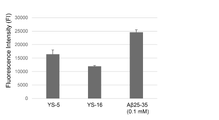
- FIG. 1 is a graph showing the fluorescence intensity of a reaction solution in which peptide YS was added to A ⁇ 25-35 before agglutination reaction.
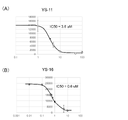
- FIG. 2 is a graph showing the inhibition IC50 of peptide YS against aggregation of A ⁇ 25-35.
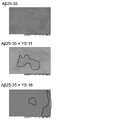
- FIG. 3 is an electron micrograph showing the extent of aggregation in a reaction solution in which peptide YS was added to A ⁇ 25-35 before aggregation reaction.
- FIG. 4 is a graph showing the fluorescence intensity of a reaction solution in which peptide YS was added to A ⁇ 25-35 aggregates.
- FIG. 1 is a graph showing the fluorescence intensity of a reaction solution in which peptide YS was added to A ⁇ 25-35 before agglutination reaction.
- FIG. 2 is a graph showing the inhibition IC50 of peptide YS against aggregation of A ⁇ 25-35.
- FIG. 3 is an electron micrograph showing the extent
- FIG. 5 is a graph showing the fluorescence intensity of the reaction solution in which the peptide YS was added to the A ⁇ 25-35 aggregate, (A) is the result of YS-11, and (B) is the result of YS-16.
- FIG. 6 is an electron micrograph showing the degree of aggregation in a reaction solution in which peptide YS was added to A ⁇ 25-35 aggregates.
- FIG. 7 is a graph showing the alternation behavior rate of the mouse group, FIG. 7(A) is the result of co-administration of A ⁇ 25-35 and peptide YS, and FIG. 7(B) is the administration of A ⁇ 25-35. This is the result of administration of peptide YS after .
- the amyloid ⁇ aggregation inhibitor of the present invention is characterized by containing the following peptide (A1) or (A2).
- the peptide (A1) or (A2) is also collectively referred to as the peptide (A), peptide YS, or aggregation-inhibiting peptide YS.
- the aggregation inhibitor of the present invention is characterized by containing the peptide YS, and other configurations and conditions are not particularly limited.
- A1 Peptide YKNMRETLVYLTHLDYDDTE (SEQ ID NO: 1) consisting of an amino acid sequence of 5 or more consecutive amino acid residues in the amino acid sequence of SEQ ID NO: 1
- A2 A peptide consisting of an amino acid sequence in which 1 to 2 amino acids are deleted, substituted or added in the amino acid sequence of (A1)
- the length of the peptide YS of (A1) should be 5 amino acid residues or more, for example, 5 to 16 amino acid residues.
- the peptide YS of (A1) includes, for example, at least one of the 5th amino acid residue R (underlined R in Table 1) and the 15th amino acid residue D (underlined R in Table 1) in SEQ ID NO: 1.
- a peptide consisting of an amino acid sequence of 5 or more consecutive amino acid residues preferably both the 5th amino acid residue R (underlined) and the 15th amino acid residue D (underlined) in SEQ ID NO: 1
- Examples of such peptide YS include peptides consisting of the amino acid sequences of SEQ ID NO: 2, 3, 4, or 5 shown in Table 1.
- the (A2) peptide is an amino acid sequence in which one or two amino acids are deleted, substituted, or added to the amino acid sequence of the (A1) peptide.
- the peptide (A1) is the peptide YS-5, YS-11, YS-15, or YS-16
- the peptide (A2) is, for example, the peptide YS-5, YS-11, YS-15 , or an amino acid sequence in which one or two amino acids are deleted, substituted or added with respect to the amino acid sequence of YS-16.
- the peptide YS may, for example, contain only the D-form, only the L-form, or both of the constituent amino acid residues.
- the peptide YS may be, for example, a chemically modified peptide isostere.
- the chemical modification may be, for example, all amino acid residues or part of the amino acid residues.
- the type of chemical modification is not particularly limited. Examples include cyclization, modification of carboxyl groups and/or amino groups, amidation of terminal carboxyl groups, and the like.
- the aggregation inhibitor of the present invention may contain, as the peptide YS, any one of YS-5, YS-11, YS-15, and YS-16, or any two or more of them. It may contain, or may contain three or more types.
- aggregation of amyloid ⁇ is, for example, aggregation of amyloid ⁇ or its fragment peptide.
- the aggregation of A ⁇ also includes the aggregation of the fragment peptide unless otherwise specified.
- aggregation of A ⁇ or its fragment peptide (hereinafter also referred to as A ⁇ fragment) can be suppressed.
- inhibition of aggregation is, for example, inhibition of aggregation of A ⁇ or A ⁇ fragments, or inhibition by dissociation of already aggregated A ⁇ aggregates or dissociation of A ⁇ fragment aggregates.
- Peptide YS in the present invention can, for example, dissociate A ⁇ aggregates or A ⁇ fragment aggregates, and can suppress aggregation itself.
- the dissociation of the A ⁇ aggregate means, for example, dissociating the aggregate into single A ⁇
- the dissociation of the A ⁇ fragment aggregate means, for example, dissociating the aggregate into a single A ⁇ fragment. It means solving.
- the aggregation inhibitor of the present invention can also be said to be, for example, an aggregation dissociation agent.
- a ⁇ aggregates can be read as, for example, A ⁇ fragment aggregates.
- the origin of the A ⁇ or A ⁇ fragment whose aggregation is suppressed by the peptide YS is not particularly limited, and examples thereof include humans and non-human animals described later, preferably humans.
- the full-length amino acid sequence of human A ⁇ is, for example, 40-42 amino acid residues long.
- the length of the full-length amino acid sequence of human amyloid- ⁇ varies, for example, depending on the enzymatic cleavage site from amyloid precursor (APP).
- Human amyloid ⁇ of 42 amino acid residues is registered in a database (PubChem) with accession number CID: 57339251, for example, and represented by SEQ ID NO:6.
- 40 amino acid residue human amyloid ⁇ is a sequence from the N-terminal first amino acid residue (D) to the 40th amino acid residue (V) in SEQ ID NO: 6, and the 40th amino acid residue is It is C-terminal.
- the aggregation inhibitor of the present invention can be used, for example, to treat diseases caused by A ⁇ aggregation (hereinafter also referred to as A ⁇ aggregation diseases).
- treatment includes, for example, prevention, suppression of progression, and amelioration (alleviation).
- Said prevention also includes, for example, the prevention of recurrence.
- the aggregation inhibitor of the present invention for example, can suppress the formation of the aggregate itself, so it is useful for prevention and suppression of progress, and because it can dissociate the aggregate, it suppresses progression and improves ( mitigation) is also useful.
- the amyloid ⁇ aggregation disease is not particularly limited, and is a disease caused by aggregation of the amyloid ⁇ , and specific examples thereof include memory impairment, cognitive dysfunction, Alzheimer's disease, and cerebral amyloid angiopathy.
- the aggregation inhibitor of the present invention can, for example, suppress neuronal cell death caused by A ⁇ aggregation.
- Cell death of nerve cells is known to be involved in the development of pathological conditions such as Alzheimer's disease. Therefore, according to the aggregation inhibitor of the present invention, for example, by inhibiting A ⁇ aggregation, cell death of nerve cells can be suppressed, thereby exhibiting a therapeutic effect on A ⁇ aggregation diseases such as Alzheimer's disease.
- the aggregation inhibitor of the present invention is also referred to as the aggregation inhibitor composition of the present invention.
- the aggregation inhibitor of the present invention contains the peptide YS as an active ingredient.
- the active ingredient contained in the aggregation-inhibiting agent of the present invention may be the peptide YS alone, or may further contain other substances exhibiting an aggregation-inhibiting effect.
- the aggregation inhibitor of the present invention may be, for example, a composition consisting only of the active ingredient, or a composition containing the active ingredient and other additive ingredients.
- the additive component is not particularly limited, and examples thereof include pharmacologically acceptable components. With regard to the additive component, for example, the description of the pharmaceutical composition described later can be used.
- the aggregation inhibitor of the present invention can be used, for example, in an environment in which A ⁇ or A ⁇ fragments are present, or are assumed to be present.
- the aggregation inhibitor of the present invention can be added to a subject, for example.
- the subject may be, for example, a non-biological subject that does not contain cells or the like, or a biological subject such as cells such as brain cells, tissues such as brain, or a living body.
- said addition can be performed, for example, in vivo or in vitro.
- the cells and tissues may be, for example, human-derived or non-human animal-derived, and the living body may be, for example, human or non-human animal. Examples of non-human animals include mammals such as mice, rats, rabbits, horses, sheep, cows and camels.
- the aggregation inhibitor of the present invention may have, for example, an additional peptide in addition to the peptide YS.
- the additional peptide include a form in which it is bound to the peptide YS.
- the additional peptide include those having DDS ability to sites where A ⁇ , A ⁇ fragments, A ⁇ aggregates, or A ⁇ fragment aggregates are present.
- the additional peptide may be, for example, a signal peptide or the like that is bound to the peptide YS at the time of administration into the living body, and that is cleaved off from the peptide YS by an enzyme or the like in the body after being administered into the body.
- the aggregation inhibitor of the present invention can also be used, for example, as the later-described neuronal cell death inhibitor of the present invention or a pharmaceutical composition for A ⁇ aggregation diseases.
- the agent for suppressing aggregation of the present invention can be used, for example, in the method for suppressing A ⁇ aggregation, the method for suppressing neuronal cell death, the method for treating A ⁇ aggregation diseases, and the like, which will be described later.
- the anti-aggregation agent of the present invention is described later in the neuronal death inhibitor, pharmaceutical composition for A ⁇ aggregation disease, method for suppressing aggregation of A, method for suppressing neuron death, and treatment method for amyloid ⁇ -aggregation disease of the present invention. can be used.
- the nerve cell death inhibitor of the present invention is characterized by containing the peptide (A) (the peptide YS), that is, the peptide (A1) or (A2).
- the nerve cell death inhibitor of the present invention is characterized by containing the peptide YS, and other constitutions and conditions are not particularly limited, and the description of the A ⁇ aggregation inhibitor of the present invention can be cited.
- the peptide YS of the present invention can suppress neuronal cell death. Specifically, for example, neuronal cell death caused by A ⁇ aggregation can be suppressed. As described above, neuronal cell death is known to be involved in the progression of pathologies such as Alzheimer's disease. Therefore, according to the agent for suppressing neuronal cell death of the present invention, for example, neuronal cell death induced by A ⁇ aggregation can be suppressed by suppressing A ⁇ aggregation. By being suppressed, it is also possible to exhibit a therapeutic effect on A ⁇ aggregation diseases (amyloid ⁇ aggregation diseases) such as Alzheimer's disease.
- a ⁇ aggregation diseases amyloid ⁇ aggregation diseases
- the pharmaceutical composition for amyloid ⁇ -aggregation disease of the present invention (hereinafter also referred to as a pharmaceutical composition) comprises the peptide (A) (the peptide YS), that is, the peptide (A1) or (A2), as described above. It is characterized by containing a peptide.
- the pharmaceutical composition of the present invention is characterized by containing the peptide YS, and other configurations and conditions are not particularly limited, and the description of the A ⁇ aggregation inhibitor and nerve cell death inhibitor of the present invention can be referred to. .
- the pharmaceutical composition of the present invention contains the peptide YS as an active ingredient.
- the active ingredient contained in the pharmaceutical composition of the present invention may be the peptide YS alone, or may further include other active ingredients against the A ⁇ aggregation disease.
- the other active ingredient may be, for example, an active ingredient that suppresses the formation of the aggregates, an active ingredient that dissociates the aggregates that have been produced, or an active ingredient that decomposes the aggregates.
- Decomposition of the aggregates includes, for example, decomposition by cutting the aggregates by hydrolytic activity or the like.
- the pharmaceutical composition of the present invention may be, for example, a composition consisting only of the active ingredient, or a composition containing the active ingredient and other additive ingredients.
- the additive component is not particularly limited, and examples thereof include pharmacologically acceptable components.
- the above-mentioned additive components can be appropriately set according to, for example, the administration method, administration site, and dosage form of the pharmaceutical composition of the present invention.
- the administration method of the pharmaceutical composition of the present invention is not particularly limited, and includes parenteral administration, oral administration, and the like.
- parenteral administration methods include affected area administration, intravenous administration, subcutaneous administration, intradermal administration, nasal administration, and transdermal administration.
- administration site may be, for example, direct administration to the treatment site or indirect administration to the treatment site. In the latter case, for example, it is the site that can deliver the active ingredient of the pharmaceutical composition of the present invention to the treatment site.
- a ⁇ aggregation diseases are often caused by the occurrence of A ⁇ aggregates in the brain, such as memory impairment, cognitive dysfunction, Alzheimer's disease, and the like described above. Therefore, the site to be treated is, for example, the brain, and the method of administration thereof is preferably direct administration to the brain by injection or the like, intranasal administration, or the like.
- the dosage form of the pharmaceutical composition of the present invention is not particularly limited, and can be appropriately set depending on the administration method.
- the dosage form for administration of the pharmaceutical composition of the present invention is, for example, liquid, cream, gel, powder, and the like.
- the dosage form before administration of the pharmaceutical composition of the present invention, specifically the dosage form in the distribution process may be the same as or different from the dosage form at the time of administration. , it may be in a dosage form that can be prepared by a pharmacist, a nurse, a doctor, or the like.
- Examples of the dosage form before administration include solids such as powders and granules, and concentrated liquids.
- the additive component can be appropriately set according to the administration method, dosage form, etc., as described above, and examples thereof include solvents, diluents, excipients, carriers, and the like.
- the solvent include aqueous solvents such as water, physiological saline, isotonic solutions, and buffer solutions, oil solvents such as soybean oil, and emulsifying solvents that are mixtures of the aqueous solvent and the oil solvent.
- the pharmaceutical composition of the present invention may contain, for example, alcohol, polyalcohol, surfactant, etc. as the additive component.
- the pharmaceutical composition of the present invention may also contain, for example, a DDS agent for effectively delivering the active ingredient to the treatment site.
- the pharmaceutical composition of the present invention may be, for example, in a form containing a carrier encapsulating the active ingredient.
- the carrier include nanoparticles such as polymers.
- the pharmaceutical composition of the present invention is preferably used for administration by intravenous injection or the like.
- the administration target (subject) of the pharmaceutical composition of the present invention includes, for example, humans and non-human animals.
- the administration conditions of the pharmaceutical composition of the present invention are not particularly limited, and can be appropriately determined according to species, age, body weight, sex, presence or absence of A ⁇ aggregation disease, progress of disease, and the like.
- the administration conditions of the pharmaceutical composition of the present invention are, for example, the amount of peptide YS per administration is 0.002 to 400 mg, and the administration frequency is 1 to 3 per day. doses, with intervals of 1 to 10 days.
- treatment includes, for example, prevention, suppression of progression, and amelioration (mitigation), as described above.
- the pharmaceutical composition of the present invention may be used for any one purpose, or may be used for two or more purposes, for example.
- the method for inhibiting amyloid ⁇ aggregation of the present invention is characterized by adding the A ⁇ aggregation inhibitor of the present invention (that is, the peptide YS as an active ingredient) to a subject.
- the suppression method of the present invention is characterized by using the aggregation inhibitor of the present invention, and other steps and conditions are not limited at all.
- the method for inhibiting aggregation of the present invention preferably further includes an incubation step after the addition step of adding the aggregation inhibitor of the present invention to the subject, for example.
- the incubation temperature is room temperature to 37° C.
- the incubation time is 4-72 hours
- the pH is 6.5-8.
- the incubation temperature is room temperature to 37° C.
- the incubation time is 1 to 7 days
- the pH is 6.5 to 8.
- the method for suppressing neuronal cell death of the present invention is characterized by adding the neuronal death inhibitor of the present invention (that is, the peptide YS as an active ingredient) to a subject.
- the method for suppressing neuronal cell death of the present invention is characterized by using the agent for suppressing neuronal cell death of the present invention, and other steps and conditions are not limited at all.
- the method for suppressing neuronal cell death of the present invention preferably further includes an incubation step after the adding step of adding the neuronal death inhibitor of the present invention to the subject, for example.
- the incubation temperature is room temperature to 37° C.
- the incubation time is 4-72 hours
- the pH is 6.5-8.
- the incubation temperature is room temperature to 37° C.
- the incubation time is 1 to 7 days
- the pH is 6.5 to 8.
- the method for treating amyloid ⁇ aggregation disease of the present invention comprises administering the A ⁇ aggregation inhibitor of the present invention or the pharmaceutical composition of the present invention (that is, the peptide YS as an active ingredient) to a subject.
- the therapeutic method of the present invention is characterized by using the A ⁇ aggregation inhibitor of the present invention or the pharmaceutical composition of the present invention (that is, peptide YS as an active ingredient), and other steps, conditions, etc. No restrictions.
- the subject (subject) to which the amyloid ⁇ aggregation inhibitor of the present invention is administered includes humans and non-human animals, preferably humans.
- the description of the aggregation inhibitor and pharmaceutical composition of the present invention can be cited.
- the peptide of the present invention is the peptide YS, ie, the peptide (A1) or (A2) for use in suppressing A ⁇ aggregation or nerve cell death. Also, the peptide of the present invention is peptide YS, ie, the peptide (A1) or (A2), for use in treating A ⁇ aggregation diseases caused by A ⁇ aggregation.
- the peptide of the present invention is peptide YS, ie, the peptide (A1) or (A2), for use in producing an A ⁇ aggregation inhibitor or neuronal cell death inhibitor.
- the peptide of the present invention is peptide YS, ie, the peptide (A1) or (A2), for use in the production of a drug for A ⁇ aggregation diseases caused by A ⁇ aggregation.
- Example 1 The ability of aggregation-inhibiting peptide YS to suppress A ⁇ aggregation was confirmed.
- a ⁇ -derived fragment peptides were used for A ⁇ aggregation.
- a ⁇ 25-35 which has a high aggregation property, was selected as the fragment peptide.
- the A ⁇ 25-35 is a peptide (SEQ ID NO: 7: GSNKGAIIGLM) of 11 amino acid residues at positions 25 to 35 in the full-length sequence of human-derived A ⁇ (SEQ ID NO: 6).
- a ⁇ 25-35 was dissolved in MilliQ water to prepare a 1 mmol/L A ⁇ 25-35 solution.
- ThT Thioflavin T binds to aggregates and emits strong fluorescence upon binding, so it is possible to determine whether aggregation is increased or suppressed by measuring fluorescence intensity. Therefore, using ThT, inhibition of A ⁇ 25-35 aggregation by each peptide YS was confirmed.
- FIG. 1 is a graph showing fluorescence intensity of a reaction solution to which peptide YS was added, (A) is the result after 0 hours of incubation, and (B) is the result after 4 hours of incubation.
- the vertical axis is the fluorescence intensity, and the unit is Fluorescence Intensity (FI).
- FI Fluorescence Intensity
- FIG. 1(B) after 4 hours of incubation, peptides YS-11, YS-15, and YS-16 were all significantly more fluorescent than the control (Ab25-35) to which peptide YS was not added. The intensity showed a significantly lower value. Among them, YS-11 and YS-16 showed significantly low values. From these results, it was found that peptide YS can suppress A ⁇ aggregation (formation of A ⁇ aggregates).
- ex ex
- em fluorescence wavelength
- (A) is the result of YS-11
- (B) is the result of YS-16.
- the IC50 of YS-11 was 3.6 ⁇ mol/L
- the IC50 of YS-16 was 0.6 ⁇ mol/L.
- reaction solution having the following composition was prepared in a 1.5 mL tube (manufactured by Eppendorf). After incubating the reaction solution at 37° C. for 4 hours, centrifugation (12,000 rpm, 10 minutes) was performed to collect the precipitate. 200 ⁇ L of MilliQ water was added to the collected precipitate, and the precipitate was again centrifuged (12,000 rpm, 10 minutes) for washing. This washing treatment was performed three times.
- FIG. 3 the upper figure shows the results without addition of the peptide YS, the middle figure shows the results with the addition of the peptide YS-11, and the lower figure shows the results with the addition of the peptide YS-16 (800 magnification).
- the frame indicated by the line indicates the area where the fiber was confirmed, the thickness of the line corresponds to the amount of fiber in that area, and the more fiber, the thicker the line.
- a large amount of aggregated fibers could be confirmed in the entire visual field.
- FIG. 4 is a graph showing the fluorescence intensity of the reaction solution to which the peptide YS was added.
- the vertical axis is the fluorescence intensity, and the unit is Fluorescence Intensity (FI).
- FI Fluorescence Intensity
- the addition of the peptide YS decreased the fluorescence intensity compared to the control (A ⁇ 25-35) to which the peptide YS was not added.
- the peptide YS-16 was used, a significant reduction in fluorescence intensity was confirmed, which was 50% of that in the control (A ⁇ 25-35). From these results, it can be confirmed that the peptide YS dissociates A ⁇ aggregates, that is, can suppress A ⁇ aggregation.
- YS-16 dissociates 50% of control aggregates It can be said that it was done.
- reaction solution having the following composition is prepared, dispensed into wells so that 200 ⁇ L of the reaction solution per well, and incubated at 37° C. for 18 hours. By doing so, A ⁇ 25-35 was aggregated in the reaction solution. Further, 100 ⁇ L of Xmmol/L peptide YS solution (YS-11 or YS-16) was added to this reaction solution and incubated at 37° C. for 5 days.
- the peptide YS concentrations (Xmmol/L) of the peptide YS solutions were 0.01, 0.05, 0.1, 0.5 and 1 mmol/Lmmol/L.
- FIG. 5 is a graph showing the fluorescence intensity of the reaction solution to which the peptide YS was added, where (A) is the result for YS-11 and (B) is the result for YS-16.
- the vertical axis is the fluorescence intensity, and the unit is Fluorescence Intensity (FI).
- the peptide YS-11 showed excellent dissociation ability in the final concentration range of 0.005 to 0.1 mmol/L in the reaction solution.
- the peptide YS-16 showed excellent dissociation ability in a concentration-dependent manner in the final concentration range of 0.01 to 0.1 mmol/L in the reaction solution.
- control A ⁇ 25-35
- a reaction solution having the following composition is prepared in a 1.5 mL tube (manufactured by Eppendorf) and incubated at 37° C. for 18 hours to aggregate the A ⁇ 25-35. let me Then, 100 ⁇ L of a peptide YS solution having a predetermined concentration was added to the reaction solution, and the mixture was further incubated at 37° C. for 5 days.
- the peptide YS solution used 0.05 mmol/L YS-11 solution, 1 mmol/L YS-16 solution, and 1 mmol/L YS-6 solution, and the control used MilliQ water instead of the peptide YS solution. . After incubation, centrifugation (12,000 rpm, 10 minutes) was performed to collect the precipitate. This precipitate was treated in the same manner as in Example 1(3) and observed with a scanning electron microscope.
- FIG. 6 the upper figure shows the results without addition of the peptide YS, the middle figure shows the results with the addition of the peptide YS-11, and the lower figure shows the results with the peptide YS-16 (200x magnification).
- a ⁇ 25-35 was aggregated in advance, and dissociation of the aggregate by the peptide YS was confirmed.
- a large amount of aggregated fibers could be confirmed in the entire visual field.
- Example 3 The aggregation-inhibiting peptide was further administered to the mice to which the A ⁇ 25-35 had been administered, and the effect thereof was confirmed.
- a 3 mmol/L A ⁇ 25-35 solution was prepared by dissolving the A ⁇ 25-35 in physiological saline.
- a ⁇ 25-35 and YS-11 were dissolved in physiological saline to prepare a mixed solution containing 3 mmol/L of A ⁇ 25-35 and 3 mmol/L of YS-11.
- the YS-11 was dissolved in physiological saline to prepare a 10 mg/mL YS-11 solution.
- Physiological saline (Saline) was used as a control.
- the administration schedule was intracerebroventricular administration on Day 1 and intranasal administration on Day 14, Day 17, Day 20 and Day 23.
- a microsyringe was used for intracerebroventricular administration, and a Pipetman was used for intranasal administration.
- each administration group was administered as follows.
- control administration group (Saline) Day 1: 3 ⁇ L of Saline Day 14: 3 ⁇ L of Saline Day 17: 3 ⁇ L of Saline Day 20: 3 ⁇ L of Saline Day 23: 3 ⁇ L of Saline
- Mixed solution administration group Day1: 3 ⁇ L of the mixed solution (A ⁇ 25-35 9 nmol, YS-11 9 nmol) Day 14: 3 ⁇ L of Saline Day 17: 3 ⁇ L of Saline Day 20: 3 ⁇ L of Saline Day 23: 3 ⁇ L of Saline
- Peptide YS administration group Day1: 3 ⁇ L of A ⁇ 25-35 solution (A ⁇ 25-35 9 nmol) Day14: 10 ⁇ L YS-11 solution (YS-11 74 nmol) Day17: 10 ⁇ L YS-11 solution (Y
- Y-maze test was performed by a general method under the following conditions. That is, the mouse was placed so that the nose tip was directed to the end wall of one specific arm among the three arms. Then, they were allowed to act freely for 10 minutes, their behavior was photographed on the monitor of an analysis device (trade name Time YM1, manufactured by Ohara Medical Sangyo), and the alternation rate (%) was calculated.
- a relatively high alternation behavior rate means that short-term memory is excellent, and a relatively low one means that short-term memory is poor.
- FIG. 7 shows the results of the alternation rate (%) calculated by Y-maze.
- FIG. 7 (A) shows the results of comparing the A ⁇ 25-35 administration group (A ⁇ 25-35), the control administration group (Control), and the mixed solution administration group (Mixed solution), and FIG. It is the result of comparing the A ⁇ 25-35 administration group (A ⁇ 25-35), the control administration group (Control), and the peptide YS administration group (YS-11).
- the vertical axis indicates the shift behavior rate (%).
- the mixed solution administration group in which A ⁇ 25-35 and YS-11 were administered simultaneously was the A ⁇ 25-35 administration group in which only A ⁇ 25-35 was administered on Day 14 ( A ⁇ 25-35) and the same degree of alternation behavior rate as the control group to which A ⁇ 25-35 was not administered.
- the mixed solution administration group since A ⁇ 25-35 and YS-11 were administered simultaneously, the formation of A ⁇ 25-35 aggregates was suppressed, thereby altering behavior caused by A ⁇ 25-35 aggregation. It is understood that the decrease in the rate was suppressed.
- a ⁇ 25-35 was intracerebroventricularly administered on Day1, and short-term memory evaluation by Y-maze was performed on Day14.
- the results were similar to those of the A ⁇ 25-35 administration group (A ⁇ 25-35). That is, on Day 14, the peptide YS-administered group (YS-11) had a lower alternation behavior rate than the control group (Control) (not shown). Thereafter, the peptide YS-11 was intranasally administered four times on Day 14, Day 17, Day 20, and Day 23, and on Day 28, short-term memory was evaluated again by Y-maze. The results are shown in FIG. 7(B).
- the alternation behavior rate was lower than that of the control group by intracerebroventricular administration of A ⁇ 25-35 on Day 14, but as shown in FIG. , the alternation behavior rate was higher than that of the A ⁇ 25-35 administration group (A ⁇ 25-35) administered with A ⁇ 25-35 alone, and was comparable to that of the control group not administered A ⁇ 25-35, and the alternation behavior rate was recovered. .
- YS-11 was administered after administration of A ⁇ 25-35. It is considered that the decrease in the alternation behavior rate caused by the aggregation of 35 could be suppressed.
- a ⁇ 25-35 As described above, administration of A ⁇ 25-35 to the brain of mice causes aggregation of A ⁇ 25-35, which causes short-term cognitive decline, which is a symptom of Alzheimer's disease. It was found that functional deterioration can be suppressed.
- amyloid ⁇ aggregation inhibitor of the present invention aggregation due to intermolecular association of amyloid ⁇ can be suppressed. Therefore, for example, it becomes possible to treat, for example, prevent, inhibit progression of, or improve amyloid aggregation diseases such as Alzheimer's disease caused by aggregation of amyloid ⁇ .
Landscapes
- Health & Medical Sciences (AREA)
- Life Sciences & Earth Sciences (AREA)
- Chemical & Material Sciences (AREA)
- Engineering & Computer Science (AREA)
- Bioinformatics & Cheminformatics (AREA)
- Medicinal Chemistry (AREA)
- General Health & Medical Sciences (AREA)
- Veterinary Medicine (AREA)
- Public Health (AREA)
- Pharmacology & Pharmacy (AREA)
- Animal Behavior & Ethology (AREA)
- Proteomics, Peptides & Aminoacids (AREA)
- Organic Chemistry (AREA)
- Immunology (AREA)
- Epidemiology (AREA)
- Gastroenterology & Hepatology (AREA)
- Biomedical Technology (AREA)
- Neurology (AREA)
- Neurosurgery (AREA)
- General Chemical & Material Sciences (AREA)
- Chemical Kinetics & Catalysis (AREA)
- Psychiatry (AREA)
- Nuclear Medicine, Radiotherapy & Molecular Imaging (AREA)
- Hospice & Palliative Care (AREA)
- Biochemistry (AREA)
- Biophysics (AREA)
- Genetics & Genomics (AREA)
- Molecular Biology (AREA)
- Medicines That Contain Protein Lipid Enzymes And Other Medicines (AREA)
- Peptides Or Proteins (AREA)
Priority Applications (4)
| Application Number | Priority Date | Filing Date | Title |
|---|---|---|---|
| US18/559,482 US20240238365A1 (en) | 2021-05-11 | 2022-05-10 | AMYLOID-Beta AGGREGATION INHIBITOR, PHARMACEUTICAL COMPOSITION FOR AMYLOID-Beta AGGREGATION DISEASES, AND USE APPLICATION OF SAME |
| CN202280034441.6A CN117295511A (zh) | 2021-05-11 | 2022-05-10 | β淀粉样蛋白聚集抑制剂、β淀粉样蛋白聚集疾病用药物组合物及其用途 |
| EP22807465.4A EP4338748A4 (en) | 2021-05-11 | 2022-05-10 | AMYLOID-BETA AGGREGATION INHIBITOR, PHARMACEUTICAL COMPOSITION FOR AMYLOID-BETA AGGREGATION DISEASES AND USE THEREOF |
| JP2023521204A JPWO2022239765A1 (https=) | 2021-05-11 | 2022-05-10 |
Applications Claiming Priority (2)
| Application Number | Priority Date | Filing Date | Title |
|---|---|---|---|
| JP2021-080513 | 2021-05-11 | ||
| JP2021080513 | 2021-05-11 |
Publications (1)
| Publication Number | Publication Date |
|---|---|
| WO2022239765A1 true WO2022239765A1 (ja) | 2022-11-17 |
Family
ID=84029643
Family Applications (1)
| Application Number | Title | Priority Date | Filing Date |
|---|---|---|---|
| PCT/JP2022/019786 Ceased WO2022239765A1 (ja) | 2021-05-11 | 2022-05-10 | アミロイドβの凝集抑制剤、アミロイドβ凝集疾患用医薬組成物、およびその用途 |
Country Status (5)
| Country | Link |
|---|---|
| US (1) | US20240238365A1 (https=) |
| EP (1) | EP4338748A4 (https=) |
| JP (1) | JPWO2022239765A1 (https=) |
| CN (1) | CN117295511A (https=) |
| WO (1) | WO2022239765A1 (https=) |
Cited By (1)
| Publication number | Priority date | Publication date | Assignee | Title |
|---|---|---|---|---|
| EP4338747A4 (en) * | 2021-05-11 | 2025-09-17 | O Force Co Ltd | ALPHA-SYNUCLEIN AGGREGATION INHIBITOR, PHARMACEUTICAL COMPOSITION FOR ALPHA-SYNUCLEIN-RELATED DISEASE AND USE THEREOF |
Citations (2)
| Publication number | Priority date | Publication date | Assignee | Title |
|---|---|---|---|---|
| WO2017119511A1 (ja) * | 2016-01-06 | 2017-07-13 | 学校法人沖縄科学技術大学院大学学園 | 加水分解活性を示す新規ペプチドおよびその用途 |
| JP2021080513A (ja) | 2019-11-18 | 2021-05-27 | 奥野製薬工業株式会社 | 無電解ニッケルめっき皮膜及び該無電解ニッケルめっき皮膜形成のための前処理方法 |
Family Cites Families (5)
| Publication number | Priority date | Publication date | Assignee | Title |
|---|---|---|---|---|
| US20070021345A1 (en) * | 2003-06-30 | 2007-01-25 | Ehud Gazit | Peptides antibodies directed thereagainst and methods using same for diagnosing and treating amyloid-associated diseases |
| US7314974B2 (en) * | 2002-02-21 | 2008-01-01 | Monsanto Technology, Llc | Expression of microbial proteins in plants for production of plants with improved properties |
| US20040162236A1 (en) * | 2002-04-01 | 2004-08-19 | John Alsobrook | Therapeutic polypeptides, nucleic acids encoding same, and methods of use |
| AU2017254477A1 (en) * | 2016-04-18 | 2018-11-01 | Jennifer G. ABELIN | Improved HLA epitope prediction |
| EP3773625A4 (en) * | 2018-03-29 | 2021-05-19 | Mayo Foundation for Medical Education and Research | METHODS AND MATERIALS FOR TREATMENT OF CANCER |
-
2022
- 2022-05-10 EP EP22807465.4A patent/EP4338748A4/en active Pending
- 2022-05-10 CN CN202280034441.6A patent/CN117295511A/zh active Pending
- 2022-05-10 US US18/559,482 patent/US20240238365A1/en active Pending
- 2022-05-10 JP JP2023521204A patent/JPWO2022239765A1/ja active Pending
- 2022-05-10 WO PCT/JP2022/019786 patent/WO2022239765A1/ja not_active Ceased
Patent Citations (2)
| Publication number | Priority date | Publication date | Assignee | Title |
|---|---|---|---|---|
| WO2017119511A1 (ja) * | 2016-01-06 | 2017-07-13 | 学校法人沖縄科学技術大学院大学学園 | 加水分解活性を示す新規ペプチドおよびその用途 |
| JP2021080513A (ja) | 2019-11-18 | 2021-05-27 | 奥野製薬工業株式会社 | 無電解ニッケルめっき皮膜及び該無電解ニッケルめっき皮膜形成のための前処理方法 |
Non-Patent Citations (2)
| Title |
|---|
| HATAKAWA YUSUKE, NAKAMURA RINA, KONISHI MOTOMI, SAKANE TOSHIYASU, SAITO MOTOAKI, AKIZAWA TOSHIFUMI: "Catalytides derived from the Box A region in the ANA/BTG3 protein cleave amyloid-β fragment peptide", HELIYON, ELSEVIER LTD, GB, vol. 5, no. 9, 1 September 2019 (2019-09-01), GB , pages e02454, XP093003677, ISSN: 2405-8440, DOI: 10.1016/j.heliyon.2019.e02454 * |
| See also references of EP4338748A4 |
Cited By (1)
| Publication number | Priority date | Publication date | Assignee | Title |
|---|---|---|---|---|
| EP4338747A4 (en) * | 2021-05-11 | 2025-09-17 | O Force Co Ltd | ALPHA-SYNUCLEIN AGGREGATION INHIBITOR, PHARMACEUTICAL COMPOSITION FOR ALPHA-SYNUCLEIN-RELATED DISEASE AND USE THEREOF |
Also Published As
| Publication number | Publication date |
|---|---|
| CN117295511A (zh) | 2023-12-26 |
| EP4338748A4 (en) | 2025-06-11 |
| US20240238365A1 (en) | 2024-07-18 |
| EP4338748A1 (en) | 2024-03-20 |
| JPWO2022239765A1 (https=) | 2022-11-17 |
Similar Documents
| Publication | Publication Date | Title |
|---|---|---|
| AU2018260893B2 (en) | Neurodegenerative disorders | |
| JP7301741B2 (ja) | 補体活性のモジュレータ | |
| JP6403240B2 (ja) | シータデフェンシンによる炎症性プロテアーゼの遮断 | |
| JP2021505565A (ja) | 補体活性のモジュレータ | |
| Kumar et al. | Antibacterial, antibiofilm, and anti-inflammatory effects of a novel thrombin-derived peptide in sepsis models: insights into underlying mechanisms | |
| WO2022239765A1 (ja) | アミロイドβの凝集抑制剤、アミロイドβ凝集疾患用医薬組成物、およびその用途 | |
| US20260109744A1 (en) | Amyloid peptide variants | |
| JP6073230B2 (ja) | Nd2ペプチドおよび神経疾患の治療方法 | |
| JP7629182B2 (ja) | アミロイドβの凝集抑制剤、アミロイドβ凝集疾患用医薬組成物、およびその用途 | |
| US20240238366A1 (en) | alpha-SYNUCLEIN AGGREGATION INHIBITOR, PHARMACEUTICAL COMPOSITION FOR alpha-SYNUCLEIN DISEASE, AND USE THEREOF | |
| JP6455983B2 (ja) | アミロイド分解能を有する人工ペプチドおよびその利用 | |
| JP4760378B2 (ja) | GPR103−like受容体蛋白質に対するリガンドの新規用途 | |
| JP2022112968A (ja) | アミロイドβの凝集抑制剤、アミロイドβ凝集疾患用医薬組成物、およびその用途 | |
| EP4252750A1 (en) | Pharmaceutical preservation of creb activation in the treatment of alzheimer's disease | |
| JP4760377B2 (ja) | GPR103−like受容体蛋白質に対するリガンドの新規用途 | |
| Liu et al. | 3-n-Butylphthalide exerts mitochondria-mediated retinal ganglion cell protection and modulates eye–brain axis-related emotional disturbances in glaucoma | |
| WO2025049979A1 (en) | Hydrophobically interspaced charged peptides for preventing or treating apoe and/or amyloid beta pathologic interaction in alzheimer's disease and related dementias | |
| WO2026056985A1 (zh) | 抑郁症的治疗方法和药物组合物 | |
| WO2019043382A1 (en) | DERIVED LEPTIN PEPTIDES AND THEIR USE FOR THE TREATMENT OF NEUROLOGICAL DISORDERS | |
| JP2019500358A (ja) | 酵素阻害剤の新しい治療的使用 |
Legal Events
| Date | Code | Title | Description |
|---|---|---|---|
| 121 | Ep: the epo has been informed by wipo that ep was designated in this application |
Ref document number: 22807465 Country of ref document: EP Kind code of ref document: A1 |
|
| WWE | Wipo information: entry into national phase |
Ref document number: 18559482 Country of ref document: US Ref document number: 2023521204 Country of ref document: JP |
|
| WWE | Wipo information: entry into national phase |
Ref document number: 202280034441.6 Country of ref document: CN |
|
| WWE | Wipo information: entry into national phase |
Ref document number: 2022807465 Country of ref document: EP |
|
| NENP | Non-entry into the national phase |
Ref country code: DE |
|
| ENP | Entry into the national phase |
Ref document number: 2022807465 Country of ref document: EP Effective date: 20231211 |