WO2022224643A1 - アクリル系粘着剤組成物、アクリル系粘着剤、粘着フィルム、および、フレキシブルデバイス - Google Patents
アクリル系粘着剤組成物、アクリル系粘着剤、粘着フィルム、および、フレキシブルデバイス Download PDFInfo
- Publication number
- WO2022224643A1 WO2022224643A1 PCT/JP2022/011868 JP2022011868W WO2022224643A1 WO 2022224643 A1 WO2022224643 A1 WO 2022224643A1 JP 2022011868 W JP2022011868 W JP 2022011868W WO 2022224643 A1 WO2022224643 A1 WO 2022224643A1
- Authority
- WO
- WIPO (PCT)
- Prior art keywords
- mass
- meth
- acrylate
- sensitive adhesive
- cation
- Prior art date
- Legal status (The legal status is an assumption and is not a legal conclusion. Google has not performed a legal analysis and makes no representation as to the accuracy of the status listed.)
- Ceased
Links
Images


Classifications
-
- C—CHEMISTRY; METALLURGY
- C09—DYES; PAINTS; POLISHES; NATURAL RESINS; ADHESIVES; COMPOSITIONS NOT OTHERWISE PROVIDED FOR; APPLICATIONS OF MATERIALS NOT OTHERWISE PROVIDED FOR
- C09J—ADHESIVES; NON-MECHANICAL ASPECTS OF ADHESIVE PROCESSES IN GENERAL; ADHESIVE PROCESSES NOT PROVIDED FOR ELSEWHERE; USE OF MATERIALS AS ADHESIVES
- C09J133/00—Adhesives based on homopolymers or copolymers of compounds having one or more unsaturated aliphatic radicals, each having only one carbon-to-carbon double bond, and at least one being terminated by only one carboxyl radical, or of salts, anhydrides, esters, amides, imides, or nitriles thereof; Adhesives based on derivatives of such polymers
- C09J133/04—Homopolymers or copolymers of esters
- C09J133/06—Homopolymers or copolymers of esters of esters containing only carbon, hydrogen and oxygen, the oxygen atom being present only as part of the carboxyl radical
- C09J133/062—Copolymers with monomers not covered by C09J133/06
- C09J133/066—Copolymers with monomers not covered by C09J133/06 containing -OH groups
-
- C—CHEMISTRY; METALLURGY
- C09—DYES; PAINTS; POLISHES; NATURAL RESINS; ADHESIVES; COMPOSITIONS NOT OTHERWISE PROVIDED FOR; APPLICATIONS OF MATERIALS NOT OTHERWISE PROVIDED FOR
- C09J—ADHESIVES; NON-MECHANICAL ASPECTS OF ADHESIVE PROCESSES IN GENERAL; ADHESIVE PROCESSES NOT PROVIDED FOR ELSEWHERE; USE OF MATERIALS AS ADHESIVES
- C09J133/00—Adhesives based on homopolymers or copolymers of compounds having one or more unsaturated aliphatic radicals, each having only one carbon-to-carbon double bond, and at least one being terminated by only one carboxyl radical, or of salts, anhydrides, esters, amides, imides, or nitriles thereof; Adhesives based on derivatives of such polymers
- C09J133/04—Homopolymers or copolymers of esters
- C09J133/06—Homopolymers or copolymers of esters of esters containing only carbon, hydrogen and oxygen, the oxygen atom being present only as part of the carboxyl radical
- C09J133/10—Homopolymers or copolymers of methacrylic acid esters
-
- C—CHEMISTRY; METALLURGY
- C09—DYES; PAINTS; POLISHES; NATURAL RESINS; ADHESIVES; COMPOSITIONS NOT OTHERWISE PROVIDED FOR; APPLICATIONS OF MATERIALS NOT OTHERWISE PROVIDED FOR
- C09J—ADHESIVES; NON-MECHANICAL ASPECTS OF ADHESIVE PROCESSES IN GENERAL; ADHESIVE PROCESSES NOT PROVIDED FOR ELSEWHERE; USE OF MATERIALS AS ADHESIVES
- C09J7/00—Adhesives in the form of films or foils
- C09J7/30—Adhesives in the form of films or foils characterised by the adhesive composition
- C09J7/38—Pressure-sensitive adhesives [PSA]
-
- C—CHEMISTRY; METALLURGY
- C09—DYES; PAINTS; POLISHES; NATURAL RESINS; ADHESIVES; COMPOSITIONS NOT OTHERWISE PROVIDED FOR; APPLICATIONS OF MATERIALS NOT OTHERWISE PROVIDED FOR
- C09J—ADHESIVES; NON-MECHANICAL ASPECTS OF ADHESIVE PROCESSES IN GENERAL; ADHESIVE PROCESSES NOT PROVIDED FOR ELSEWHERE; USE OF MATERIALS AS ADHESIVES
- C09J7/00—Adhesives in the form of films or foils
- C09J7/30—Adhesives in the form of films or foils characterised by the adhesive composition
- C09J7/38—Pressure-sensitive adhesives [PSA]
- C09J7/381—Pressure-sensitive adhesives [PSA] based on macromolecular compounds obtained by reactions involving only carbon-to-carbon unsaturated bonds
- C09J7/385—Acrylic polymers
-
- H—ELECTRICITY
- H05—ELECTRIC TECHNIQUES NOT OTHERWISE PROVIDED FOR
- H05K—PRINTED CIRCUITS; CASINGS OR CONSTRUCTIONAL DETAILS OF ELECTRIC APPARATUS; MANUFACTURE OF ASSEMBLAGES OF ELECTRICAL COMPONENTS
- H05K1/00—Printed circuits
- H05K1/02—Details
- H05K1/03—Use of materials for the substrate
Definitions
- the present invention relates to acrylic pressure-sensitive adhesive compositions, acrylic pressure-sensitive adhesives, pressure-sensitive adhesive films, and flexible devices.
- Adhesive films are used to reinforce and protect the surfaces of members of various shapes.
- thermocompression bonding is usually performed using an anisotropic conductive film (ACF).
- ACF anisotropic conductive film
- an adhesive film may be adhered to the back side of the substrate of the semiconductor element in advance to reinforce the substrate (for example, Patent Document 1).
- a release layer and a flexible film substrate are formed on a support substrate such as glass, A TFT substrate is formed on the film substrate, and an organic EL layer is formed thereon. Then, the support substrate is peeled off to manufacture the flexible device.
- the flexible display layer is very thin, the device may be defective due to handling or the like. Therefore, in some cases, an adhesive film is adhered to the back side for reinforcement (for example, Patent Document 2).
- Semiconductor element substrates and flexible devices may be repeatedly bent, and if the adhesive film laminated to the substrate, etc., has poor bending properties, the recovery after bending will deteriorate, and in the worst case, it will break due to repeated bending. It can be relaxing. Specifically, when an adhesive film is attached to a bent portion (for example, a movable bent portion of a folding member), when the adhesive film is bent at an angle, a compressive stress acts on the bent inner diameter side, Tensile stress acts on the bent outer diameter side, and stress distortion occurs in the bent portion and its surroundings, which poses a problem of damage to the substrate of the semiconductor element and the flexible device.
- a bent portion for example, a movable bent portion of a folding member
- the storage elastic modulus G' is known as an index indicating the softness of the adhesive, and the elastic modulus change based on the storage elastic modulus G' (-20) at -20°C and the storage elastic modulus G' (40) at 40°C.
- Patent Documents 3 and 4 cannot achieve sufficient flexibility to withstand repeated flexing in a wide temperature range from a low temperature of -20°C to a high temperature of 200°C. .
- An object of the present invention is to provide an acrylic pressure-sensitive adhesive composition capable of forming an acrylic pressure-sensitive adhesive that exhibits excellent flexibility enough to withstand repeated flexing in a wide temperature range and excellent bonding resistance. Also provided are an acrylic pressure-sensitive adhesive formed from such an acrylic pressure-sensitive adhesive composition, a pressure-sensitive adhesive film having a pressure-sensitive adhesive layer composed of the acrylic pressure-sensitive adhesive, and a flexible device comprising the pressure-sensitive adhesive film. It is in.
- the acrylic pressure-sensitive adhesive composition is An acrylic pressure-sensitive adhesive composition containing an acrylic polymer (P) and a cross-linking agent,
- the acrylic polymer (P) is obtained by polymerizing the monomer component (M),
- the monomer component (M) contains an alkyl (meth)acrylate (M1) and a polar group-containing monomer (M2),
- the alkyl (meth)acrylate (M1) comprises an alkyl (meth)acrylate (m1) whose homopolymer has a glass transition temperature Tg in the range of -80°C to -60°C,
- the content of the alkyl (meth)acrylate (m1) in the monomer component (M) is 50% by mass or more
- the content of the polar group-containing monomer (M2) in the acrylic pressure-sensitive adhesive composition is A mass%
- the content of the cross-linking agent in the acrylic pressure-sensitive adhesive composition is B mass%
- A/ B is 40-150.
- A/B is 40-140.
- the A/B is 40-95.
- the content of the alkyl (meth)acrylate (m1) in the monomer component (M) is 75% by mass or more.
- the content of the alkyl (meth)acrylate (m1) in the alkyl (meth)acrylate (M1) is 95% by mass or more.
- the acrylic pressure-sensitive adhesive according to the embodiment of the invention is formed from the acrylic pressure-sensitive adhesive composition according to the embodiment of the invention.
- the ratio of the storage modulus G'(-20) at -20°C to the storage modulus G'(200) at 200°C is 20 or less.
- the ratio (G'(-20)/G'(200)) is 10 or less.
- the adhesive film according to the embodiment of the invention has an adhesive layer composed of the acrylic adhesive according to the embodiment of the invention.
- a flexible device according to an embodiment of the present invention comprises an adhesive film according to an embodiment of the present invention.
- an acrylic pressure-sensitive adhesive composition capable of forming an acrylic pressure-sensitive adhesive capable of exhibiting excellent flexibility enough to withstand repeated bending in a wide temperature range and excellent bonding resistance.
- an acrylic pressure-sensitive adhesive formed from such an acrylic pressure-sensitive adhesive composition, a pressure-sensitive adhesive film having a pressure-sensitive adhesive layer composed of the acrylic pressure-sensitive adhesive, and a flexible device comprising the pressure-sensitive adhesive film. can be done.
- FIG. 1 is a schematic cross-sectional view showing one embodiment of the flexible device of the present invention, showing one usage pattern of the adhesive film according to the embodiment of the present invention.
- FIG. 2 is a schematic cross-sectional view explaining a method of thermocompression bonding a test piece in a thermocompression bonding test.
- (meth) acrylic when used in this specification, it means “acrylic and/or methacrylic", and when the expression “(meth) acrylate” is used, “acrylate and/or methacrylate ", and the expression “(meth)allyl” means “allyl and/or methallyl”, and the expression “(meth)acrolein” means “acrolein and/or methacrolein”. means rain.
- the expression “acid (salt)” in this specification means “acid and/or its salt”. Examples of salts include alkali metal salts and alkaline earth metal salts, and specific examples include sodium salts and potassium salts.
- An acrylic pressure-sensitive adhesive composition contains an acrylic polymer (P) and a cross-linking agent.
- ⁇ Acrylic polymer (P)>> Only one type of acrylic polymer (P) may be used, or two or more types may be used.
- the weight-average molecular weight Mw of the acrylic polymer (P) can adopt any appropriate weight-average molecular weight Mw as long as it does not impair the effects of the present invention. is preferably from 500,000 to 3,000,000, more preferably from 600,000 to 2,500,000, still more preferably from 700,000 to 2,000,000, particularly preferably from 850,000 to 1,500,000. , and most preferably from 900,000 to 1,350,000.
- the content of the acrylic polymer (P) in the acrylic pressure-sensitive adhesive composition according to the embodiment of the present invention is preferably 50% by mass or more in terms of solid content, in order to further express the effects of the present invention. , more preferably 70% by mass or more, still more preferably 90% by mass or more, particularly preferably 95% by mass or more, and most preferably 97% by mass or more.
- the upper limit of the content ratio is preferably 99.9% by mass or less.
- the acrylic polymer (P) is obtained by polymerizing the monomer component (M).
- the monomer component (M) referred to here does not include the cross-linking agent in the acrylic pressure-sensitive adhesive composition according to the embodiment of the present invention.
- the acrylic polymer (P) can thus be defined as one obtained by polymerizing the monomer component (M). This is because the acrylic polymer (P) becomes the acrylic polymer (P) by causing a polymerization reaction of the monomer component (M), and it is impossible to directly specify the acrylic polymer (P) by its structure. , In addition, due to the existence of circumstances that are almost impractical ("impossible / impractical circumstances"), the acrylic polymer (P) is defined as "obtained by polymerizing the monomer component (M)" is properly identified as a "thing".
- the monomer component (M) contains an alkyl (meth)acrylate (M1) and a polar group-containing monomer (M2).
- Alkyl (meth)acrylates (M1) may be of only one type, or may be of two or more types.
- the alkyl group in the ester portion of the alkyl (meth)acrylate (M1) (hereinafter sometimes referred to as "the alkyl group in the ester portion") includes an alkyl group containing a hydroxyl group and an alkyl group containing a polar group other than the hydroxyl group. Not included. Therefore, the alkyl (meth)acrylate (M1) is clearly distinguished from the polar group-containing monomer (M2).
- the content of the alkyl (meth)acrylate (M1) in the monomer component (M) is preferably 50% by mass to 99% by mass, more preferably 70% by mass, from the viewpoint that the effects of the present invention can be further expressed.
- 99 mass % more preferably 80 mass % to 99 mass %, particularly preferably 85 mass % to 99 mass %, and most preferably 90 mass % to 99 mass %.
- the alkyl group of the ester moiety is preferably an alkyl group having 1 to 20 carbon atoms, more preferably an alkyl group having 1 to 16 carbon atoms, and still more preferably, from the viewpoint that the effects of the present invention can be exhibited more effectively.
- the alkyl group of the ester moiety is preferably a chain alkyl group in that the effects of the present invention can be exhibited more effectively.
- chain as used herein means a straight-chain or branched chain.
- alkyl (meth)acrylates in which the alkyl group of the ester portion is a chain alkyl group having 1 to 20 carbon atoms include methyl (meth)acrylate, ethyl (meth)acrylate, propyl (meth)acrylate, and isopropyl (meth)acrylate.
- the alkyl (meth)acrylate (M1) that can be contained in the monomer component (M) preferably has a homopolymer glass transition temperature Tg of -10, from the point of view that the effect of the present invention can be more expressed. ° C. or lower, more preferably -12 °C or lower, still more preferably -15 °C or lower, particularly preferably -18 °C or lower, and most preferably -20 °C or lower.
- the lower limit of the glass transition temperature Tg is preferably -80°C or higher.
- the glass transition temperature Tg of the homopolymer (homopolymer) of the alkyl (meth)acrylate (M1) that can be contained in the monomer component (M) can affect the adhesive properties and bending properties of the acrylic polymer (P).
- an alkyl (meth)acrylate whose homopolymer (homopolymer) has a glass transition temperature Tg within the above range as the alkyl (meth)acrylate (M1) that can be contained in the monomer component (M) acrylic Adhesiveness and elasticity of the system polymer (P) can be appropriately adjusted, and the effects of the present invention can be exhibited more.
- the glass transition temperature Tg of the homopolymer (homopolymer) of the alkyl (meth)acrylate (M1) that can be contained in the monomer component (M) a value described in a known document can be adopted.
- Polymer Handbook (3rd edition, John Wiley & Sons, Inc., 1989).
- the conventional value is adopted.
- alkyl (meth)acrylates not listed in the above “Polymer Handbook” the catalog values of monomer manufacturing companies are used.
- the Tg of the alkyl (meth)acrylate homopolymer which is not described in the above "Polymer Handbook” and is not provided with the catalog value of the monomer manufacturing company, is the value obtained by the measurement method described in JP-A-2007-51271. shall be used.
- Typical examples of the glass transition temperature Tg of the homopolymer (homopolymer) of the alkyl (meth)acrylate (M1) that can be contained in the monomer component (M) are as follows. 2-ethylhexyl acrylate (2EHA): -70°C Lauryl acrylate (LA): -23°C n-butyl acrylate (BA): -55°C
- the alkyl (meth)acrylate (M1) preferably contains an alkyl (meth)acrylate (m1) whose homopolymer (homopolymer) has a glass transition temperature Tg in the range of -80°C to -60°C.
- Tg glass transition temperature
- the content of the alkyl (meth)acrylate (m1) in the alkyl (meth)acrylate (M1) is preferably 60% by mass or more, and more preferably 70% by mass, from the viewpoint that the effects of the present invention can be further expressed. more preferably 80% by mass or more, particularly preferably 90% by mass or more, and most preferably 95% by mass or more.
- the upper limit of the content of the alkyl (meth)acrylate (m1) in the alkyl (meth)acrylate (M1) is preferably 100% by mass. As described above, when the alkyl (meth)acrylate (M1) contains a large amount of the alkyl (meth)acrylate (m1), the effect of the present invention can be further exhibited.
- the content of 2EHA corresponding to the alkyl (meth)acrylate (m1) in the embodiment of the present invention in the alkyl (meth)acrylate described in the examples of Patent Documents 3 and 4 is 45% by mass to 50% by mass, and the level of the content of the alkyl (meth)acrylate (m1) in the alkyl (meth)acrylate (M1) in the acrylic pressure-sensitive adhesive composition according to the embodiment of the present invention is , 4.
- the content of the alkyl (meth)acrylate (m1) in the monomer component (M) is preferably 50% by mass or more, and more preferably 70% by mass or more, from the viewpoint that the effects of the present invention can be further exhibited. , more preferably 75% by mass or more, particularly preferably 80% by mass or more, and most preferably 85% by mass or more.
- the upper limit of the content of the alkyl (meth)acrylate (m1) in the monomer component (M) is preferably 99% by mass or less, more preferably 98% by mass or less, and still more preferably 97% by mass or less. .
- the monomer component (M) contains a large amount of the alkyl (meth)acrylate (m1)
- the content of 2EHA which corresponds to the alkyl (meth)acrylate (m1) in the embodiment of the present invention, in all the monomer components described in the examples of Patent Documents 3 and 4 described above is 45% by mass to 48% by mass. %, and the level of the content of the alkyl (meth)acrylate (m1) in the monomer component (M) in the acrylic pressure-sensitive adhesive composition according to the embodiment of the present invention is high.
- the monomer component (M) is an alkyl (meth)acrylate (M1) having a glass transition temperature Tg of its homopolymer (homopolymer) in the range of more than -60°C and less than -40°C.
- Acrylate (m2) may be included.
- the content of the alkyl (meth)acrylate (m2) in the alkyl (meth)acrylate (M1) is preferably 40% by mass or less, and more preferably 30% by mass, from the viewpoint that the effects of the present invention can be further expressed. or less, more preferably 20% by mass or less, particularly preferably 10% by mass or less, and most preferably 5% by mass or less.
- the content of the alkyl (meth)acrylate (m2) in the monomer component (M) is preferably 50% by mass or less, and more preferably 30% by mass or less, from the viewpoint that the effects of the present invention can be further exhibited. , more preferably 25% by mass or less, particularly preferably 20% by mass or less, and most preferably 15% by mass or less.
- alkyl (meth)acrylate (m2) examples include n-butyl acrylate (BA) (the glass transition temperature Tg of its homopolymer (homopolymer) is -55°C).
- the monomer component (M) is an alkyl (meth)acrylate (M1), and an alkyl (meth)acrylate (m3 ) may be included.
- the content of the alkyl (meth)acrylate (m3) in the alkyl (meth)acrylate (M1) is preferably 40% by mass or less, more preferably 30% by mass, from the viewpoint that the effects of the present invention can be further expressed. or less, more preferably 20% by mass or less, particularly preferably 10% by mass or less, and most preferably 5% by mass or less.
- the content of the alkyl (meth)acrylate (m3) in the monomer component (M) is preferably 50% by mass or less, and more preferably 30% by mass or less, from the viewpoint that the effects of the present invention can be exhibited more effectively. , more preferably 25% by mass or less, particularly preferably 20% by mass or less, and most preferably 15% by mass or less.
- LA lauryl acrylate
- M2 Only one type of polar group-containing monomer (M2) may be used, or two or more types may be used.
- the polar group-containing monomer (M2) is preferably at least one monomer selected from the group consisting of a hydroxyl group-containing monomer (m4) and a monomer (m5) having a polar group other than a hydroxyl group, from the viewpoint that the effects of the present invention can be more expressed. It contains seeds, more preferably both a hydroxyl-containing monomer (m4) and a monomer having a polar group other than a hydroxyl group (m5).
- the content of the polar group-containing monomer (M2) in the monomer component (M) is preferably 0.01% by mass to 50% by mass, more preferably 0.01% by mass to 50% by mass, from the viewpoint that the effects of the present invention can be further exhibited.
- 1% by mass to 40% by mass, more preferably 0.3% by mass to 30% by mass, particularly preferably 0.6% by mass to 20% by mass, most preferably 1% by mass to 15% by mass is.
- the number of hydroxyl group-containing monomers (m4) may be one, or two or more.
- the hydroxyl group-containing monomer (m4) has a homopolymer glass transition temperature Tg of preferably ⁇ 10° C. or less, more preferably ⁇ 15° C. below, more preferably -20°C or less, particularly preferably -25°C or less, and most preferably -30°C or less.
- the lower limit of the glass transition temperature Tg is preferably -80°C or higher.
- the glass transition temperature Tg of the homopolymer (homopolymer) of the hydroxyl group-containing monomer (m4) can affect the adhesiveness and elasticity of the acrylic polymer (P).
- the glass transition temperature Tg of the homopolymer (homopolymer) of the hydroxyl group-containing monomer (m4) a value described in a known document can be adopted. , Inc., 1989) can be used. In addition, when multiple numerical values are described in the above "Polymer Handbook", the conventional value is adopted. For the hydroxyl group-containing monomer (m4) not listed in the “Polymer Handbook” above, the catalog value of the monomer manufacturing company is used. The Tg of the homopolymer of the hydroxyl group-containing monomer (m4), which is not described in the above "Polymer Handbook” and is not provided by the catalog value of the monomer manufacturing company, is obtained by the measurement method described in JP-A-2007-51271. values shall be used.
- glass transition temperature Tg of the homopolymer of the hydroxyl group-containing monomer (m4) are as follows. 2-hydroxyethyl acrylate: -15°C 4-hydroxybutyl acrylate: -40°C
- the content ratio of the hydroxyl group-containing monomer (m4) in the polar group-containing monomer (M2) is preferably 30% by mass to 100% by mass, and more preferably 35% by mass, in order to further express the effects of the present invention.
- the content ratio of the hydroxyl group-containing monomer (m4) in the monomer component (M) is preferably 0.05% by mass to 30% by mass, more preferably 0.1%, from the viewpoint that the effects of the present invention can be further expressed. % to 20% by mass, more preferably 0.3% to 15% by mass, particularly preferably 0.5% to 15% by mass, most preferably 0.5% to 10% by mass %.
- hydroxyl group-containing monomers (m4) examples include 2-hydroxyethyl (meth) acrylate, 2-hydroxypropyl (meth) acrylate, 3-hydroxypropyl (meth) acrylate, 2-hydroxybutyl (meth) acrylate, 4-hydroxy hydroxyalkyl (meth)acrylates such as butyl (meth)acrylate; polypropylene glycol mono(meth)acrylate; N-hydroxyethyl (meth)acrylamide;
- the hydroxyl group-containing monomer (m4) is preferably a hydroxyalkyl (meth)acrylate, and more preferably, the alkyl group portion of the hydroxyalkyl group has 2 to 2 carbon atoms, in that the effect of the present invention can be more expressed.
- hydroxyalkyl (meth)acrylates which are linear alkyl groups of 4, more preferably 2-hydroxyethyl acrylate (HEA) and 4-hydroxybutyl acrylate (4HBA), particularly preferably 4- Hydroxybutyl acrylate.
- the monomer (m5) having a polar group other than a hydroxyl group has a homopolymer glass transition temperature Tg of preferably 100° C. or less, more preferably. is 95° C. or less, more preferably 90° C. or less.
- the lower limit of the glass transition temperature Tg is preferably -30°C or higher, more preferably -10°C or higher.
- the monomer (m5) having a polar group other than a hydroxyl group by adopting a monomer having a polar group other than a hydroxyl group whose homopolymer has a glass transition temperature Tg within the above range, an acrylic polymer ( The tackiness and elasticity of P) can be adjusted appropriately, and the effects of the present invention can be further expressed.
- the monomer (m5) having a polar group other than a hydroxyl group is preferably a hydroxyl group whose homopolymer has a glass transition temperature Tg of 50° C. to 100° C. from the viewpoint that the effects of the present invention can be further exhibited.
- a monomer having a polar group other than The glass transition temperature Tg of a homopolymer (homopolymer) of this monomer is preferably 60°C to 95°C, more preferably 70°C to 90°C.
- the glass transition temperature Tg of the homopolymer (homopolymer) in the monomer (m5) having a polar group other than a hydroxyl group is 50 ° C. to 100 ° C. (preferably 60 ° C. to 95 ° C., more preferably 70 ° C. to 90 ° C. ) is preferably 30% by mass to 100% by mass, more preferably 50% by mass to 100% by mass, from the viewpoint that the effect of the present invention can be further expressed. more preferably 70% by mass to 100% by mass, particularly preferably 90% by mass to 100% by mass, and most preferably 95% by mass to 100% by mass.
- the glass transition temperature Tg of the homopolymer (m5) of the monomer (m5) having a polar group other than a hydroxyl group a value described in a known document can be adopted. , John Wiley & Sons, Inc., 1989) can be used. In addition, when multiple numerical values are described in the above "Polymer Handbook", the conventional value is adopted. For the monomer (m5) having a polar group other than a hydroxyl group that is not described in the "Polymer Handbook" above, the catalog value of the monomer manufacturing company is used.
- the Tg of the alkyl (meth)acrylate homopolymer which is not described in the above "Polymer Handbook” and is not provided with the catalog value of the monomer manufacturing company, is the value obtained by the measurement method described in JP-A-2007-51271. shall be used.
- the content ratio of the monomer (m5) having a polar group other than a hydroxyl group in the polar group-containing monomer (M2) is preferably 1% by mass to 70% by mass, and more It is preferably 3% to 65% by mass, more preferably 5% to 60% by mass, particularly preferably 10% to 55% by mass, and most preferably 10% to 50% by mass. .
- the content ratio of the monomer (m5) having a polar group other than a hydroxyl group in the monomer component (M) is preferably 0.1% by mass to 10% by mass, and more It is preferably 0.2% by mass to 8% by mass, more preferably 0.3% by mass to 6% by mass, particularly preferably 0.4% by mass to 5% by mass, most preferably 0.4% by mass. % to 3% by mass.
- the monomer (m5) having a polar group other than a hydroxyl group preferably includes at least one selected from the group consisting of monomer (1) represented by general formula (1) and N-vinyl-2-pyrrolidone.
- R 1 is an alkyl group having 1 to 10 carbon atoms
- R 2 is a hydrogen atom, an alkyl group having 1 to 10 carbon atoms, or a —COOR group
- R is a carbon It is an alkyl group of numbers 1 to 10.
- the number of monomers (1) represented by general formula (1) may be one, or two or more.
- the monomer (1) represented by the general formula (1) has two polymerizable double bonds at its terminals and a structure (C—CH 2 —O— CH 2 —C) and further having an alkyl ester group (COOR 1 group) on at least one of the carbon atoms second from the end of the two terminal polymerizable double bonds, thereby promoting cyclization polymerization , it is possible to introduce an alkyl ester group into the structure constructed by cyclopolymerization, and these characteristics give the obtained acrylic pressure-sensitive adhesive better flexibility against bending motion and better Both resilience can be expressed.
- R 1 is an alkyl group having 1 to 10 carbon atoms. an alkyl group having 1 to 8 carbon atoms, more preferably an alkyl group having 1 to 6 carbon atoms, more preferably an alkyl group having 1 to 3 carbon atoms, particularly preferably a methyl group or an ethyl group, most preferably is a methyl group.
- R 2 is a hydrogen atom, an alkyl group having 1 to 10 carbon atoms, or a -COOR group.
- R 2 is preferably an alkyl group having 1 to 8 carbon atoms, more preferably 1 to 1 carbon atoms, in that the effects of the present invention can be more exhibited.
- 6 alkyl group more preferably an alkyl group having 1 to 3 carbon atoms.
- R is preferably an alkyl group having 1 to 10 carbon atoms, and from the viewpoint that the effects of the present invention can be more expressed, R is preferably an alkyl group having 1 to 8 carbon atoms.
- R 2 is preferably a hydrogen atom in that the effects of the present invention can be expressed more effectively.
- the content of at least one selected from the group consisting of the monomer (1) represented by the general formula (1) and N-vinyl-2-pyrrolidone in the monomer component (M) enhances the effects of the present invention.
- the content of at least one selected from the group consisting of the monomer (1) represented by the general formula (1) and N-vinyl-2-pyrrolidone in the monomer component (M) enhances the effects of the present invention.
- It is preferably 0.3% to 10% by mass, particularly preferably 0.4% to 8.0% by mass, and most preferably 0.5% to 6.0% by mass.
- the content of the monomer (1) represented by the general formula (1) in the monomer component (M) is It is preferably 0.01% by mass to 20% by mass, more preferably 0.1% by mass to 10% by mass, and still more preferably 0.2% by mass to 5% by mass, in order to further express the effects of the invention.
- the content of N-vinyl-2-pyrrolidone in the monomer component (M) is preferable in that the effect of the present invention can be exhibited more. is 0.01% by mass to 30% by mass, more preferably 0.1% by mass to 20% by mass, still more preferably 0.2% by mass to 15% by mass, still more preferably 0.3% by mass % to 10% by mass, particularly preferably 0.4% to 8.0% by mass, most preferably 0.5% to 6.0% by mass.
- the monomer (m5) having a polar group other than a hydroxyl group in addition to the monomer (1) represented by the general formula (1) and N-vinyl-2-pyrrolidone, for example, a carboxy group-containing monomer, N-vinyl-2 - Nitrogen-containing monomers other than pyrrolidone, sulfonic acid group-containing monomers, phosphoric acid group-containing monomers, cyano group-containing monomers, acid anhydride group-containing monomers, vinyl esters (e.g., vinyl acetate (VAc), vinyl propionate, lauric acid vinyl), aromatic vinyl compounds, amide group-containing monomers, epoxy group-containing monomers, (meth)acryloylmorpholine, and vinyl ethers.
- a carboxy group-containing monomer for example, a carboxy group-containing monomer, N-vinyl-2 - Nitrogen-containing monomers other than pyrrolidone, sulfonic acid group-containing monomers, phosphoric acid group-
- carboxy group-containing monomers examples include acrylic acid (AA), methacrylic acid (MAA), carboxyethyl (meth)acrylate, carboxypentyl (meth)acrylate, itaconic acid, maleic acid, fumaric acid, crotonic acid, and isocrotonic acid. mentioned.
- Nitrogen-containing monomers other than N-vinyl-2-pyrrolidone include, for example, methylvinylpyrrolidone, vinylpyridine, vinylpiperidone, vinylpyrimidine, vinylpiperazine, vinylpyrazine, vinylpyrrole, vinylimidazole, vinyloxazole, vinylmorpholine, (meth) Nitrogen-containing vinyl monomers such as acryloylmorpholine, N-vinylcarboxylic acid amides and N-vinylcaprolactam; cyano group-containing acrylic monomers such as acrylonitrile and methacrylonitrile;
- the monomer component (M) preferably includes an alkyl (meth)acrylate (m1), a hydroxyl group-containing monomer (m4), and a monomer having a polar group other than a hydroxyl group (m5 ), more preferably an alkyl (meth)acrylate (m1), a hydroxyl group-containing monomer (m4), and a monomer having a polar group other than a hydroxyl group (m5).
- the monomer component (M) is typically preferably at least one selected from the group consisting of 2-ethylhexyl acrylate, lauryl acrylate, and n-butyl acrylate.
- the content ratio of the total amount with at least one selected from the group is preferably 60% by mass to 100% by mass, more preferably 70% by mass to 100% by mass, and still more preferably 80% by mass to 100% by mass. % by mass, particularly preferably 90% to 100% by mass, most preferably 95% to 100% by mass.
- the monomer component (M) may contain other monomers that are neither alkyl (meth)acrylates (M1) nor polar group-containing monomers (M2).
- Other monomers can be used, for example, for the purpose of adjusting the glass transition temperature (Tg) of the acrylic polymer (P), adjusting the adhesion performance, and the like. Only one kind of other monomer may be used, or two or more kinds thereof may be used.
- the content of other monomers in the monomer component (M) is preferably 20% by mass or less, more preferably 10% by mass or less, still more preferably 5% by mass or less, and particularly preferably 3% by mass or less. and most preferably 1% by mass or less.
- acrylic polymer (P) As a method for obtaining the acrylic polymer (P), various polymerization methods known as methods for synthesizing acrylic polymers, such as solution polymerization method, emulsion polymerization method, bulk polymerization method, suspension polymerization method, etc., are appropriately used. can be adopted. Among these polymerization methods, the solution polymerization method can be preferably used. As a method of supplying the monomer during solution polymerization, a batch charging method, a continuous supply (dropping) method, a divided supply (dropping) method, or the like, in which the entire amount of the monomer component is supplied at once, can be appropriately adopted.
- a batch charging method As a method of supplying the monomer during solution polymerization, a batch charging method, a continuous supply (dropping) method, a divided supply (dropping) method, or the like, in which the entire amount of the monomer component is supplied at once, can be appropriately adopted.
- the polymerization temperature can be appropriately selected depending on the type of monomer and solvent used, the type of polymerization initiator, etc., and is preferably 20°C or higher, more preferably 30°C or higher, and even more preferably 40°C. above, preferably 170° C. or lower, more preferably 160° C. or lower, and even more preferably 140° C. or lower.
- Methods for obtaining acrylic polymers include photopolymerization by irradiating with light such as UV (typically carried out in the presence of a photopolymerization initiator), and irradiation with radiation such as ⁇ rays and ⁇ rays. Active energy ray irradiation polymerization such as radiation polymerization carried out using a method may also be employed.
- the solvent (polymerization solvent) used for solution polymerization can be appropriately selected from any suitable organic solvent.
- suitable organic solvent examples include aromatic compounds such as toluene (typically aromatic hydrocarbons), acetic esters such as ethyl acetate, and aliphatic or alicyclic hydrocarbons such as hexane and cyclohexane.
- the initiator (polymerization initiator) used for polymerization can be appropriately selected from any suitable polymerization initiator depending on the type of polymerization method. Only one polymerization initiator may be used, or two or more polymerization initiators may be used.
- polymerization initiators examples include 2,2'-azobisisobutyronitrile (AIBN), 2,2'-azobis-2-methylbutyronitrile, 2,2'-azobis(2-methylpropionic acid) dimethyl, 4,4'-azobis-4-cyanovaleric acid, azobisisovaleronitrile, 2,2'-azobis(2-amidinopropane) dihydrochloride, 2,2'-azobis[2-(5-methyl- 2-imidazolin-2-yl)propane]dihydrochloride, 2,2′-azobis(2-methylpropionamidine) disulfate, 2,2′-azobis(N,N′-dimethyleneisobutyramidine), 2, Azo initiators such as 2′-azobis[N-(2-carboxyethyl)-2-methylpropionamidine]hydrate (VA-057, manufactured by Wako Pure Chemical Industries, Ltd.); potassium persulfate, ammonium persulfate, etc.
- AIBN 2,2'
- Peroxide-based initiators redox-based initiators combining peroxides and reducing agents, such as combinations of persulfate and sodium bisulfite, and combinations of peroxides and sodium ascorbate; substituted ethanes, such as phenyl-substituted ethanes system initiators; aromatic carbonyl compounds;
- the amount of the polymerization initiator used is preferably 0.005 to 1 part by mass, more preferably 0.01 to 1 part by mass, relative to 100 parts by mass of the monomer component (M).
- Any other suitable additive may be included in the polymerization as long as it does not impair the effects of the present invention.
- the number of cross-linking agents may be one, or two or more.
- the cross-linking agent may be included in the acrylic pressure-sensitive adhesive in a form after cross-linking reaction, a form before cross-linking reaction, a form in which partial cross-linking reaction has occurred, an intermediate or composite form thereof, and the like.
- the cross-linking agent is typically contained in the acrylic pressure-sensitive adhesive in the form after the cross-linking reaction.
- the content ratio of the cross-linking agent in the acrylic pressure-sensitive adhesive composition is preferably 0.005 parts by mass to 10 parts by mass with respect to 100 parts by mass of the acrylic polymer (P) in order to further express the effects of the present invention.
- parts more preferably 0.01 to 5 parts by mass, still more preferably 0.01 to 3 parts by mass, still more preferably 0.01 to 1 part by mass, especially It is preferably 0.01 to 0.5 parts by mass, most preferably 0.01 to 0.2 parts by mass.
- cross-linking agents examples include isocyanate-based cross-linking agents, epoxy-based cross-linking agents, silicone-based cross-linking agents, oxazoline-based cross-linking agents, aziridine-based cross-linking agents, silane-based cross-linking agents, alkyl-etherified melamine-based cross-linking agents, and metal chelate-based cross-linking agents. , peroxides and the like, preferably isocyanate-based cross-linking agents and epoxy-based cross-linking agents, more preferably isocyanate-based cross-linking agents, in that the effects of the present invention can be more expressed.
- isocyanate-based cross-linking agent a compound having two or more isocyanate groups (including an isocyanate-regenerating polar group temporarily protected by a blocking agent or by quantification of the isocyanate group) in one molecule can be used.
- isocyanate-based cross-linking agents include aromatic isocyanates such as tolylene diisocyanate and xylene diisocyanate; alicyclic isocyanates such as isophorone diisocyanate; and aliphatic isocyanates such as hexamethylene diisocyanate.
- isocyanate-based cross-linking agents include lower aliphatic polyisocyanates such as butylene diisocyanate and hexamethylene diisocyanate; alicyclic isocyanates such as cyclopentylene diisocyanate, cyclohexylene diisocyanate and isophorone diisocyanate; 2,4-tolylene diisocyanate , 4,4′-diphenylmethane diisocyanate, xylylene diisocyanate, aromatic diisocyanates such as polymethylene polyphenyl isocyanate; trimethylolpropane/tolylene diisocyanate trimer adduct (for example, manufactured by Tosoh Corporation, trade name Coronate L), Trimethylolpropane/hexamethylene diisocyanate trimer adduct (for example, manufactured by Tosoh Corporation, trade name: Coronate HL), isocyanurate of hexamethylene diisocyanate (for example
- trimethylolpropane adduct of xylylene diisocyanate e.g., Mitsui Chemicals, trade name: Takenate D110N
- xylylene diisocyanate trimethylolpropane adduct e.g., Mitsui Chemicals, trade name: Takenate D120N
- Trimethylolpropane adduct of isophorone diisocyanate e.g., Mitsui Chemicals, trade name: Takenate D140N
- hexamethylene diisocyanate trimethylolpropane adduct e.g., Mitsui Chemicals, trade name: Takenate D160N
- polyisocyanates polyfunctionalized with isocyanurate bonds, biuret bonds, allophanate bonds, and the like.
- epoxy-based cross-linking agent a polyfunctional epoxy compound having two or more epoxy groups in one molecule can be used.
- epoxy-based cross-linking agents include N,N,N',N'-tetraglycidyl-m-xylenediamine, diglycidylaniline, 1,3-bis(N,N-diglycidylaminomethyl)cyclohexane, 1, 6-hexanediol diglycidyl ether, neopentyl glycol diglycidyl ether, ethylene glycol diglycidyl ether, propylene glycol diglycidyl ether, polyethylene glycol diglycidyl ether, polypropylene glycol diglycidyl ether, sorbitol polyglycidyl ether, glycerol polyglycidyl ether, penta erythritol polyglycidyl ether, polyglycerol polyglycidyl ether, sorbitan polyg
- the content of the polar group-containing monomer (M2) in the acrylic pressure-sensitive adhesive composition is A% by mass, and the cross-linking agent in the acrylic pressure-sensitive adhesive composition
- A/B is preferably 40 to 150, more preferably 40 to 140, still more preferably 40 to 120, and particularly preferably 40 to 100. , most preferably 40-95. If the ratio of A/B is within the above range, the effects of the present invention can be exhibited more effectively.
- the acrylic pressure-sensitive adhesive composition according to the embodiment of the present invention may contain a tackifying resin in order to adjust adhesive properties and bending properties. Only one kind of tackifying resin may be used, or two or more kinds thereof may be used.
- tackifying resins include rosin-based tackifying resins, terpene-based tackifying resins, hydrocarbon-based tackifying resins, epoxy-based tackifying resins, polyamide-based tackifying resins, elastomer-based tackifying resins, and phenol-based tackifying resins. , and ketone-based tackifying resins.
- the amount of the tackifying resin used is preferably 70 parts by mass or less, more preferably 5 parts by mass to 70 parts by mass with respect to 100 parts by mass of the acrylic polymer (P), in order to further express the effects of the present invention. 10 parts by mass to 60 parts by mass, more preferably 15 parts by mass to 50 parts by mass, particularly preferably 20 parts by mass to 45 parts by mass, and most preferably 25 parts by mass. ⁇ 40 parts by mass.
- the tackifying resin preferably contains a tackifying resin TL having a softening point of less than 105°C, in order to achieve the effects of the present invention.
- the tackifying resin TL can effectively contribute to improving the deformability of the pressure-sensitive adhesive layer in the plane direction (shearing direction).
- the softening point of the tackifier resin used as the tackifier resin TL is preferably 50° C. to 103° C., more preferably 60° C. to 100° C., and still more preferably 65°C to 95°C, particularly preferably 70°C to 90°C, most preferably 75°C to 85°C.
- the softening point of the tackifying resin is defined as a value measured based on the softening point test method (ring and ball method) specified in JIS K5902 and JIS K2207. Specifically, the sample is melted as quickly as possible at the lowest possible temperature and carefully filled into a ring placed on a flat metal plate to avoid the formation of bubbles. After it cools down, cut off the raised part from the plane including the top of the ring with a slightly heated knife. Next, a supporter (ring base) is placed in a glass container (heating bath) having a diameter of 85 mm or more and a height of 127 mm or more, and glycerin is poured to a depth of 90 mm or more.
- the steel ball (diameter 9.5 mm, mass 3.5 g) and the ring filled with the sample are immersed in glycerin without contacting each other, and the temperature of the glycerin is kept at 20° C. ⁇ 5° C. for 15 minutes. .
- a steel ball is then centered on the surface of the sample in the ring and placed in position on the support.
- the distance from the upper end of the ring to the glycerin surface is kept at 50 mm, a thermometer is placed, the center of the mercury ball of the thermometer is set at the same height as the center of the ring, and the container is heated.
- the Bunsen burner flame used for heating is directed halfway between the center and the rim of the bottom of the vessel to ensure even heating.
- the rate at which the bath temperature rises after reaching 40° C. from the start of heating must be 5.0 ⁇ 0.5° C. per minute.
- the temperature at which the sample gradually softens and flows down the ring and finally touches the bottom plate is read and taken as the softening point. Two or more softening points are measured at the same time, and the average value is adopted.
- the amount of the tackifying resin TL used is preferably 50 parts by mass or less, more preferably 5 parts by mass, with respect to 100 parts by mass of the acrylic polymer (P), in order to further express the effects of the present invention. to 50 parts by mass, more preferably 10 to 45 parts by mass, particularly preferably 15 to 40 parts by mass, and most preferably 20 to 35 parts by mass.
- tackifier resin TL one or more selected from among the tackifier resins exemplified above having a softening point of less than 105°C may be employed.
- the tackifying resin TL preferably contains a rosin-based resin.
- Rosin-based resins that can be preferably employed as the tackifying resin TL include, for example, rosin esters such as unmodified rosin esters and modified rosin esters.
- Modified rosin esters include, for example, hydrogenated rosin esters.
- the tackifying resin TL preferably contains a hydrogenated rosin ester in that it can further express the effects of the present invention.
- the hydrogenated rosin ester preferably has a softening point of less than 105°C, more preferably 50°C to 100°C, and even more preferably 60°C to 90°C, in order to further exhibit the effects of the present invention. , particularly preferably 70°C to 85°C, most preferably 75°C to 85°C.
- the tackifying resin TL may contain a non-hydrogenated rosin ester.
- the non-hydrogenated rosin ester is a concept that comprehensively refers to those other than the hydrogenated rosin ester among the rosin esters described above.
- Non-hydrogenated rosin esters include unmodified rosin esters, disproportionated rosin esters and polymerized rosin esters.
- the non-hydrogenated rosin ester preferably has a softening point of less than 105° C., more preferably 50° C. to 100° C., and even more preferably 60° C. to 90° C., from the viewpoint that the effect of the present invention can be exhibited more effectively.
- °C particularly preferably 70°C to 85°C, most preferably 75°C to 85°C.
- the tackifier resin TL may contain other tackifier resins in addition to the rosin-based resin.
- the other tackifying resin one or more selected from those having a softening point of less than 105° C. among the tackifying resins exemplified above can be employed.
- the tackifying resin TL may contain, for example, a rosin-based resin and a terpene resin.
- the content of the rosin-based resin in the entire tackifier resin TL is preferably more than 50% by mass, more preferably 55% by mass to 100% by mass, and still more preferably, from the viewpoint that the effects of the present invention can be further expressed. is 60% to 99% by weight, particularly preferably 65% to 97% by weight, most preferably 75% to 97% by weight.
- the tackifying resin may contain a combination of a tackifying resin TL and a tackifying resin TH having a softening point of 105° C. or higher (preferably 105° C. to 170° C.) in order to further express the effects of the present invention. good.
- the tackifying resin TH may contain at least one selected from rosin-based tackifying resins (eg, rosin esters) and terpene-based tackifying resins (eg, terpene phenolic resins).
- rosin-based tackifying resins eg, rosin esters
- terpene-based tackifying resins eg, terpene phenolic resins
- the acrylic pressure-sensitive adhesive composition according to the embodiment of the invention may contain an oligomer. Only one type of oligomer may be used, or two or more types may be used. By including an oligomer in the acrylic pressure-sensitive adhesive composition according to the embodiment of the present invention, the effects of the present invention can be exhibited more.
- the weight average molecular weight Mw of the oligomer is preferably 1,000 to 30,000, more preferably 1,500 to 10,000, even more preferably 2,000 to 8,000, and particularly preferably 2,000 to 5,000.
- Acrylic oligomers are preferable as oligomers because they are easily compatible with acrylic polymers.
- the glass transition temperature Tg of the acrylic oligomer is preferably 20°C or higher, more preferably 40°C or higher, still more preferably 60°C or higher, particularly preferably 80°C or higher, and most preferably 100°C. That's it.
- the upper limit of the glass transition temperature Tg of the acrylic oligomer is preferably 200° C. or lower, more preferably 180° C. or lower, and still more preferably 160° C. or lower.
- the glass transition temperature Tg of the acrylic oligomer is calculated from Fox's formula based on the Tg of the homopolymer of each constituent monomer (homopolymer) and the mass fraction (mass-based copolymerization ratio) of the monomer. It means the desired value.
- Tg is the glass transition temperature of the copolymer (unit: K)
- Wi is the mass fraction of the monomer i in the copolymer (mass-based copolymerization ratio)
- Tgi is the homopolymer of the monomer i. represents the glass transition temperature (unit: K).
- Tg of the homopolymer the values described in known materials can be adopted, for example, the values described in "Polymer Handbook” (3rd edition, John Wiley & Sons, Inc., 1989) can be used. . If multiple numerical values are listed in the above "Polymer Handbook", the conventional value is adopted. For monomers not listed in the above “Polymer Handbook", the catalog values of the monomer manufacturing companies are used.
- Acrylic oligomers contain alicyclic alkyl (meth)acrylates as the main constituent monomer components. Only one kind of alicyclic alkyl (meth)acrylate may be used, or two or more kinds thereof may be used.
- alicyclic alkyl (meth)acrylates include cycloalkyl (meth)acrylates such as cyclopentyl (meth)acrylate, cyclohexyl (meth)acrylate, cycloheptyl (meth)acrylate, cyclooctyl (meth)acrylate; ) acrylates and other bicyclic aliphatic hydrocarbon ring-containing (meth)acrylic acid esters; dicyclopentanyl (meth)acrylate, dicyclopentanyloxyethyl (meth)acrylate, tricyclopentanyl (meth) (Meth) acrylic having a tricyclic or higher aliphatic hydrocarbon ring such as acrylate, 1-adamantyl (meth) acrylate, 2-methyl-2-adamantyl (meth) acrylate, 2-ethyl-2-adamantyl (meth) acrylate acid esters.
- cycloalkyl (meth)acrylates such as cycl
- alicyclic alkyl (meth)acrylate dicyclopentanyl acrylate, dicyclopentanyl methacrylate, cyclohexyl acrylate, and cyclohexyl methacrylate are preferable in that the effects of the present invention can be further expressed.
- the content of the alicyclic alkyl (meth)acrylate with respect to the total amount of the constituent monomer components of the acrylic oligomer is preferably 10% by mass to 99% by mass, and more preferably 30% by mass, in order to further express the effects of the present invention. % to 98% by mass, more preferably 40% to 97% by mass, particularly preferably 50% to 96% by mass.
- the acrylic oligomer may contain a chain alkyl (meth)acrylate having a chain alkyl group as a constituent monomer component. Only one type of chain alkyl (meth)acrylate having a chain alkyl group may be used, or two or more types may be used.
- chain as used herein means a straight-chain or branched chain.
- the chain alkyl (meth)acrylate is preferably a chain alkyl (meth)acrylate having a chain alkyl group having 1 to 20 carbon atoms, such as methyl (meth)acrylate, ethyl (meth)acrylate, propyl (Meth)acrylate, isopropyl (meth)acrylate, n-butyl (meth)acrylate, isobutyl (meth)acrylate, s-butyl (meth)acrylate, pentyl (meth)acrylate, isopentyl (meth)acrylate, hexyl (meth)acrylate , heptyl (meth)acrylate, 2-ethylhexyl (meth)acrylate, octyl (meth)acrylate, isooctyl (meth)acrylate, nonyl (meth)acrylate, isononyl (meth)acrylate, decyl (meth)acrylate, isodec
- methyl methacrylate is preferable in that the effects of the present invention can be exhibited more effectively.
- the content of the chain alkyl (meth)acrylate with respect to the total amount of the constituent monomer components of the acrylic oligomer is preferably 10% by mass to 90% by mass, and more preferably 20% by mass, in order to further express the effects of the present invention. % to 80% by mass, more preferably 30% to 70% by mass.
- the acrylic oligomer may contain (meth)acrylic acid as a constituent monomer component. Only one type of (meth)acrylic acid may be used, or two or more types may be used.
- acrylic acid is preferable in that the effects of the present invention can be expressed more.
- the content of (meth)acrylic acid with respect to the total amount of the constituent monomer components of the acrylic oligomer is preferably 0.1% by mass to 20% by mass, more preferably 1% by mass, from the viewpoint that the effects of the present invention can be further expressed. % to 10% by mass, more preferably 3% to 7% by mass.
- Oligomers are obtained by polymerizing constituent monomer components by various polymerization methods. Any appropriate additive may be used in the polymerization of the oligomer as long as the effects of the present invention are not impaired. Examples of such additives include polymerization initiators and chain transfer agents.
- the content of the oligomer in the acrylic pressure-sensitive adhesive composition is preferably 6.0 parts by mass or less with respect to 100 masses of the acrylic polymer (P) in that the effects of the present invention can be more expressed. It is preferably 5.0 parts by mass or less, more preferably 4.0 parts by mass or less, particularly preferably 3.0 parts by mass or less, and most preferably 2.0 parts by mass or less.
- the acrylic pressure-sensitive adhesive composition according to the embodiment of the present invention may optionally contain a catalyst, a solvent, a leveling agent, a cross-linking aid, a plasticizer, a softening agent, a filler, an antistatic agent, an anti-aging agent, and an ultraviolet absorber. , antioxidants, light stabilizers, and other additives commonly used in the field of pressure-sensitive adhesives. As for such various additives, conventionally known ones can be used in a conventional manner.
- the acrylic pressure-sensitive adhesive composition according to the embodiment of the present invention contains an antistatic agent as the other component.
- the content of the antistatic agent is preferably 0.01 parts by mass to 10 parts by mass, more preferably 0.05 parts by mass to 5 parts by mass with respect to 100 parts by mass of the acrylic polymer (P), It is more preferably 0.07 to 3 parts by mass, and particularly preferably 0.1 to 1 part by mass.
- antistatic agents examples include ionic compounds.
- the ionic compound any suitable ionic compound can be adopted as long as the effects of the present invention are not impaired.
- the ionic compound is preferably at least one selected from alkali metal salts and ionic liquids in terms of imparting excellent antistatic properties and peeling electrification properties.
- Alkali metal salts are preferred because they have high ion dissociation properties and exhibit excellent antistatic performance even when added in a very small amount.
- alkali metal salts include any one of cations selected from Li + , Na + and K + , Cl ⁇ , Br ⁇ , I ⁇ , AlCl 4 ⁇ , Al 2 Cl 7 ⁇ , BF 4 ⁇ , PF 6 ⁇ , SCN ⁇ , ClO 4 ⁇ , NO 3 ⁇ , CH 3 COO ⁇ , C 9 H 19 COO ⁇ , CF 3 COO ⁇ , C 3 F 7 COO ⁇ , CH 3 SO 3 ⁇ , CF 3 SO 3 ⁇ , C 4 F 9 SO 3 ⁇ , C 2 H 5 OSO 3 ⁇ , C 6 H 13 OSO 3 ⁇ , C 8 H 17 OSO 3 ⁇ , (CF 3 SO 2 ) 2 N ⁇ , (C 2 F 5 SO 2 ) 2N- , ( C3
- LiBr, LiI, LiBF 4 , LiPF 6 , LiSCN, LiClO 4 , LiCF 3 SO 3 , Li(CF 3 SO 2 ) 2 N, Li(C 2 F 5 SO 2 ) 2 are more preferable as the alkali metal salt.
- Lithium salts such as N, Li( FSO2 )2N , Li( CF3SO2 ) 3C , and more preferably LiCF3SO3 , Li ( CF3SO2 )2N, Li ( C2 F5SO2 )2N, Li ( C3F7SO2 ) 2N , Li ( C4F9SO2 ) 2N , Li ( FSO2 ) 2N , Li ( CF3SO2 ) 3C mentioned.
- Alkali metal salts may be used alone or in combination of two or more.
- an ionic liquid composed of an organic cation component represented by the following formulas (A) to (D) and an anion component is preferable.
- ionic liquids having a melting point of 100° C. or less are more preferable in terms of excellent antistatic performance.
- R a in formula (A) represents a hydrocarbon group having 4 to 20 carbon atoms, and a portion of the hydrocarbon group may be a functional group substituted with a hetero atom, and R b and R c may be the same or different and represent hydrogen or a hydrocarbon group having 1 to 16 carbon atoms, and may be a functional group in which a part of the hydrocarbon group is substituted with a hetero atom.
- Rc when the nitrogen atom in formula (A) contains a double bond, there is no Rc .
- R d in formula (B) represents a hydrocarbon group having 2 to 20 carbon atoms, and a part of the hydrocarbon group may be a functional group substituted with a hetero atom, and R e , R f , and R g may be the same or different and represent hydrogen or a hydrocarbon group having 1 to 16 carbon atoms, and a functional group in which a portion of the hydrocarbon group is substituted with a hetero atom.
- R h in formula (C) represents a hydrocarbon group having 2 to 20 carbon atoms, and may be a functional group in which a part of the hydrocarbon group is substituted with a hetero atom
- R i , R j , and R k may be the same or different and represent hydrogen or a hydrocarbon group having 1 to 16 carbon atoms, and may be a functional group in which a portion of the hydrocarbon group is substituted with a hetero atom.
- Z in formula (D) represents a nitrogen, sulfur, or phosphorus atom
- R l , R m , R n , and R o are the same or different and represent a hydrocarbon group having 1 to 20 carbon atoms. , a functional group in which a part of the hydrocarbon group is substituted with a hetero atom.
- Z is a sulfur atom, there is no Ro .
- Examples of cations represented by formula (A) include pyridinium cations, piperidinium cations, pyrrolidinium cations, cations having a pyrroline skeleton, cations having a pyrrole skeleton, and morpholinium cations.
- cation represented by formula (A) include, for example, 1-ethylpyridinium cation, 1-butylpyridinium cation, 1-hexylpyridinium cation, 1-butyl-3-methylpyridinium cation, 1-butyl- 4-methylpyridinium cation, 1-hexyl-3-methylpyridinium cation, 1-butyl-3,4-dimethylpyridinium cation, 1,1-dimethylpyrrolidinium cation, 1-ethyl-1-methylpyrrolidinium cation , 1-methyl-1-propylpyrrolidinium cation, 1-methyl-1-butylpyrrolidinium cation, 1-methyl-1-pentylpyrrolidinium cation, 1-methyl-1-hexylpyrrolidinium cation, 1-methyl-1-heptylpyrrolidinium cation, 1-ethyl-1-propylpyrrolidinium cation
- Examples of cations represented by formula (B) include imidazolium cations, tetrahydropyrimidinium cations, and dihydropyrimidinium cations.
- cation represented by formula (B) include, for example, 1,3-dimethylimidazolium cation, 1,3-diethylimidazolium cation, 1-ethyl-3-methylimidazolium cation, 1-butyl- 3-methylimidazolium cation, 1-hexyl-3-methylimidazolium cation, 1-octyl-3-methylimidazolium cation, 1-decyl-3-methylimidazolium cation, 1-dodecyl-3-methylimidazolium cation Cation, 1-tetradecyl-3-methylimidazolium cation, 1,2-dimethyl-3-propylimidazolium cation, 1-ethyl-2,3-dimethylimidazolium cation, 1-butyl-2,3-dimethylimidazolium Cation, 1-hexyl-2,3-dimethylimidazolium cation, 1-
- Examples of cations represented by formula (C) include pyrazolium cations and pyrazolinium cations.
- cation represented by formula (C) include, for example, 1-methylpyrazolium cation, 3-methylpyrazolium cation, 1-ethyl-2-methylpyrazolinium cation, 1-ethyl-2 , 3,5-trimethylpyrazolium cation, 1-propyl-2,3,5-trimethylpyrazolium cation, 1-butyl-2,3,5-trimethylpyrazolium cation, 1-ethyl-2,3 ,5-trimethylpyrazolinium cation, 1-propyl-2,3,5-trimethylpyrazolinium cation, and 1-butyl-2,3,5-trimethylpyrazolinium cation.
- Examples of cations represented by formula (D) include ammonium cations, sulfonium cations, and phosphonium cations.
- cation represented by formula (D) include tetraalkylammonium cations such as tetramethylammonium cation, tetraethylammonium cation, tetrabutylammonium cation, tetrapentylammonium cation, tetrahexylammonium cation, and tetraheptylammonium cation.
- tetraalkylammonium cations such as tetramethylammonium cation, tetraethylammonium cation, tetrabutylammonium cation, tetrapentylammonium cation, tetrahexylammonium cation, and tetraheptylammonium cation.
- anion component constituting the ionic liquid as long as it becomes an ionic liquid.
- anion components include Cl ⁇ , Br ⁇ , I ⁇ , AlCl 4 ⁇ , Al 2 Cl 7 ⁇ , BF 4 ⁇ , PF 6 ⁇ , SCN ⁇ , ClO 4 ⁇ , NO 3 ⁇ , CH 3 COO ⁇ , CF 3 COO ⁇ , CH 3 SO 3 ⁇ , CF 3 SO 3 ⁇ , C 4 F 9 SO 3 ⁇ , (CF 3 SO 2 ) 2 N ⁇ , (C 2 F 5 SO 2 ) 2 N ⁇ , (C 3 F 7 SO 2 ) 2 N ⁇ , (C 4 F 9 SO 2 ) 2 N ⁇ , (CF 3 SO 2 ) 3 C ⁇ , AsF 6 ⁇ , SbF 6 ⁇ , NbF 6 ⁇ , TaF 6 ⁇ , F(HF)n ⁇
- the ionic liquid may be used alone, or two or more types may be mixed and used.
- An acrylic pressure-sensitive adhesive according to an embodiment of the invention is formed from an acrylic pressure-sensitive adhesive composition according to an embodiment of the invention.
- the acrylic pressure-sensitive adhesive according to the embodiment of the present invention may be of any shape.
- the acrylic pressure-sensitive adhesive according to the embodiment of the present invention is a sheet-like acrylic pressure-sensitive adhesive.
- the sheet-like acrylic pressure-sensitive adhesive may be, for example, one that can be handled independently as an acrylic pressure-sensitive adhesive sheet, or it is recognized as one of the constituent members like an acrylic pressure-sensitive adhesive layer. can be anything.
- the acrylic pressure-sensitive adhesive according to the embodiment of the present invention can thus be defined as being formed from the acrylic pressure-sensitive adhesive composition. This is because the acrylic pressure-sensitive adhesive becomes an acrylic pressure-sensitive adhesive when the acrylic pressure-sensitive adhesive composition causes a cross-linking reaction or the like by heating or ultraviolet irradiation, so that the acrylic pressure-sensitive adhesive can be directly specified by its structure. Due to the fact that it is impossible and almost impractical (“impossible / impractical circumstances”), the definition of “things formed from acrylic pressure-sensitive adhesive compositions” does not apply to acrylic It is a valid specification of the system adhesive as a "thing”.
- any appropriate method can be adopted as the method for forming the acrylic pressure-sensitive adhesive according to the embodiment of the present invention as long as the effects of the present invention are not impaired.
- a method for forming such an acrylic pressure-sensitive adhesive for example, an acrylic pressure-sensitive adhesive composition is applied onto any appropriate base material, heated and dried as necessary, and cured as necessary. and a method of forming an acrylic pressure-sensitive adhesive into a sheet on the base material. Any appropriate means can be adopted as such means for coating as long as the effects of the present invention are not impaired.
- coating means examples include a gravure roll coater, a reverse roll coater, a kiss roll coater, a dip roll coater, a bar coater, a knife coater, an air knife coater, a spray coater, a comma coater, a direct coater, and a roll brush coater. mentioned.
- Any appropriate means can be employed for heating and drying the acrylic pressure-sensitive adhesive composition as long as the effects of the present invention are not impaired.
- heating/drying means for example, heating at about 60° C. to 180° C. can be mentioned.
- Any appropriate means can be employed for curing the acrylic pressure-sensitive adhesive composition as long as the effects of the present invention are not impaired.
- curing means examples include ultraviolet irradiation, laser beam irradiation, ⁇ -ray irradiation, ⁇ -ray irradiation, ⁇ -ray irradiation, X-ray irradiation, and electron beam irradiation.
- the acrylic pressure-sensitive adhesive according to the embodiment of the present invention preferably has an adhesive strength to a polyimide film of 4.0 N/25 mm or more at a peel speed of 300 mm/min and a peel angle of 180 degrees at 23° C., more preferably It is 5.0 N/25 mm or more, more preferably 6.0 N/25 mm or more, particularly preferably 7.0 N/25 mm or more, and most preferably 8.0 N/25 mm or more.
- the upper limit of the adhesive strength is preferably as high as possible, but considering the balance with other adhesive properties, etc., it is preferably 30 N/25 mm or less.
- the acrylic pressure-sensitive adhesive according to the embodiment of the present invention preferably has an adhesive strength of 0.5 N/25 mm or more to a polyimide film at a peel speed of 300 mm/min and a peel angle of 180 degrees after heating at 200 ° C. for 15 seconds. more preferably 1.0 N/25 mm or more, still more preferably 1.5 N/25 mm or more, particularly preferably 1.8 N/25 mm or more, and most preferably 2.0 N/25 mm or more.
- the upper limit of the adhesive strength is preferably as high as possible, but it is preferably 30 N/25 mm or less in consideration of the balance with other adhesive properties. By adjusting the adhesive strength within the above range, sufficient adhesiveness to various adherends such as flexible devices such as foldable devices and rollable devices can be exhibited. The measurement of the adhesive force will be described later.
- the acrylic pressure-sensitive adhesive according to the embodiment of the present invention has a storage modulus G'(-20) at -20°C of preferably 300 kPa or less, more preferably 250 kPa or less, still more preferably 200 kPa or less, Particularly preferably, it is 170 kPa or less, and most preferably 150 kPa or less.
- the lower limit of the storage modulus G'(-20) is preferably 50 kPa or more, more preferably 70 kPa or more, in consideration of the balance with other adhesive properties.
- the acrylic pressure-sensitive adhesive according to the embodiment of the present invention has a storage modulus G'(40) at 40°C of preferably 200 kPa or less, more preferably 150 kPa or less, still more preferably 100 kPa or less, and particularly preferably is 50 kPa or less, most preferably 30 kPa or less.
- the lower limit of the storage modulus G'(40) is preferably 5 kPa or more, more preferably 10 kPa or more, in consideration of the balance with other adhesive properties.
- the acrylic pressure-sensitive adhesive according to the embodiment of the present invention has a storage modulus G'(200) at 200°C of preferably 150 kPa or less, more preferably 100 kPa or less, still more preferably 50 kPa or less, and particularly preferably is 40 kPa or less, most preferably 30 kPa or less.
- the lower limit of the storage modulus G'(200) is preferably 1 kPa or more, more preferably 5 kPa or more, in consideration of the balance with other adhesive properties.
- the acrylic pressure-sensitive adhesive according to the embodiment of the present invention has a ratio of the storage elastic modulus G'(-20) at -20°C and the storage elastic modulus G'(200) at 200°C (G'(-20)/G' (200)) is preferably 20 or less, more preferably 17 or less, still more preferably 13 or less, particularly preferably 10 or less, and most preferably 8 or less.
- the lower limit of the ratio (G'(-20)/G'(200)) is preferably 1. If the ratio (G'(-20)/G'(200)) is within the above range, the acrylic pressure-sensitive adhesive according to the embodiment of the present invention is excellent enough to withstand repeated bending in a wide temperature range. Flexibility and excellent bonding resistance can be expressed more.
- An adhesive film according to an embodiment of the invention has an adhesive layer composed of an acrylic adhesive according to an embodiment of the invention.
- the adhesive film according to the embodiment of the present invention may be a substrate-less film consisting only of an adhesive layer, or may be a substrate-attached film having a substrate layer and an adhesive layer.
- the pressure-sensitive adhesive film of the present invention may have any appropriate other layer in addition to the substrate layer and the pressure-sensitive adhesive layer as long as the effects of the present invention are not impaired.
- the base material layer may be one layer, or may be two or more layers.
- the substrate layer is preferably a single layer in that the effect of the present invention can be exhibited more effectively.
- the adhesive layer may be one layer, or two or more layers.
- the pressure-sensitive adhesive layer is preferably a single layer in that the effects of the present invention can be exhibited more effectively.
- the pressure-sensitive adhesive film according to the embodiment of the present invention may be provided with any appropriate release liner on the surface of the pressure-sensitive adhesive layer opposite to the base layer for protection before use.
- the release liner includes, for example, a release liner in which the surface of a base material (liner base material) such as paper or plastic film is treated with silicone, or a base material (liner base material) such as paper or plastic film whose surface is coated with a polyolefin resin.
- a base material such as paper or plastic film
- a base material such as paper or plastic film whose surface is coated with a polyolefin resin.
- Examples include laminated release liners.
- plastic films as liner substrates include polyethylene film, polypropylene film, polybutene film, polybutadiene film, polymethylpentene film, polyvinyl chloride film, vinyl chloride copolymer film, polyethylene terephthalate film, polybutylene terephthalate film, Polyurethane films, ethylene-vinyl acetate copolymer films and the like are included.
- the thickness of the release liner is preferably 1 ⁇ m to 500 ⁇ m, more preferably 3 ⁇ m to 450 ⁇ m, even more preferably 5 ⁇ m to 400 ⁇ m, and particularly preferably 10 ⁇ m to 300 ⁇ m.
- the thickness of the adhesive film according to the embodiment of the present invention is preferably 1 ⁇ m to 500 ⁇ m, more preferably 5 ⁇ m to 200 ⁇ m, even more preferably 10 ⁇ m to 150 ⁇ m, particularly preferably 20 ⁇ m to 100 ⁇ m, most preferably 30 ⁇ m to 80 ⁇ m. If the thickness of the pressure-sensitive adhesive film according to the embodiment of the present invention is within the above range, the effects of the present invention can be exhibited more effectively.
- the adhesive film according to the embodiment of the present invention preferably has a total light transmittance of 20% or more, more preferably 30% or more, still more preferably 40% or more, and particularly preferably 50% or more. , most preferably 60% or more. If the total light transmittance of the pressure-sensitive adhesive film of the present invention is within the above range, excellent transparency can be exhibited.
- the haze of the adhesive film according to the embodiment of the present invention is preferably 15% or less, more preferably 13% or less, still more preferably 10% or less, particularly preferably 8% or less, and most preferably is 6% or less. If the haze of the pressure-sensitive adhesive film of the present invention is within the above range, more excellent transparency can be exhibited.
- the adhesive film according to the embodiment of the present invention can achieve both excellent adhesiveness and excellent elasticity, it can preferably be employed in flexible devices such as foldable devices and rollable devices.
- the thickness of the substrate layer is preferably 1 ⁇ m to 500 ⁇ m, more preferably 5 ⁇ m to 300 ⁇ m, still more preferably 10 ⁇ m to 100 ⁇ m, particularly preferably 15 ⁇ m to 80 ⁇ m, most preferably 20 ⁇ m to 60 ⁇ m. . If the thickness of the base material layer is within the above range, the effects of the present invention can be exhibited more effectively.
- the base layer preferably has a Young's modulus at 23° C. of 6.0 ⁇ 10 7 Pa or more, more preferably 1.0 ⁇ 10 8 Pa or more, and still more preferably 5.0 ⁇ 10 8 Pa or more. , particularly preferably 8.0 ⁇ 10 8 Pa or more, and most preferably 1.0 ⁇ 10 9 Pa or more.
- the upper limit of Young's modulus of the substrate layer at 23° C. is typically preferably 1.0 ⁇ 10 11 Pa or less. If the Young's modulus of the base material layer at 23° C. is within the above range, the effects of the present invention can be exhibited more effectively. If the Young's modulus of the base layer at 23° C.
- the pressure-sensitive adhesive film is bent at an angle, the tension on the outer diameter side may not be sufficiently maintained against the compression on the inner diameter side, and the thickness will change. It becomes easier, and there is a possibility that lifting from the adherend may easily occur. If the Young's modulus of the substrate layer at 23° C. is too high, the adhesive film may not be easily deformable. A method for measuring Young's modulus will be described in detail later.
- any appropriate material can be adopted as the material of the base material layer as long as it does not impair the effects of the present invention.
- a typical example of the material for such a base material layer is a resin material.
- resin materials for the substrate layer include polyimide (PI), polyetheretherketone (PEEK), polyethylene terephthalate (PET), polyethylene naphthalate (PEN), polybutylene terephthalate (PBT), and polymethyl methacrylate.
- PI polyimide
- PEEK polyetheretherketone
- PET polyethylene terephthalate
- PEN polyethylene naphthalate
- PBT polybutylene terephthalate
- polymethyl methacrylate examples include polymethyl methacrylate.
- PMMA polycarbonate, triacetyl cellulose (TAC), polysulfone, polyarylate, polyethylene (PE), polypropylene (PP), ethylene-propylene copolymer, ethylene-vinyl acetate copolymer (EVA) , polyamide (nylon), wholly aromatic polyamide (aramid), polyvinyl chloride (PVC), polyvinyl acetate, polyphenylene sulfide (PPS), fluorine resin, and cyclic olefin polymer.
- TAC triacetyl cellulose
- PES ethylene-propylene copolymer
- EVA ethylene-vinyl acetate copolymer
- nylon nylon
- nylon wholly aromatic polyamide
- PVC polyvinyl chloride
- PPS polyphenylene sulfide
- fluorine resin and cyclic olefin polymer.
- the pressure-sensitive adhesive layer of the pressure-sensitive adhesive film according to the embodiment of the present invention preferably has a thickness of 1 ⁇ m to 250 ⁇ m, more preferably 2 ⁇ m to 150 ⁇ m, still more preferably 3 ⁇ m to 100 ⁇ m, and particularly preferably 5 ⁇ m to 50 ⁇ m, most preferably between 10 ⁇ m and 35 ⁇ m.
- the adhesive layer is one form of acrylic adhesive.
- any appropriate forming method can be adopted as long as the effects of the present invention are not impaired.
- an acrylic pressure-sensitive adhesive composition is applied onto any appropriate substrate, heated and dried as necessary, cured as necessary, and coated on the substrate.
- a method of forming an acrylic pressure-sensitive adhesive layer in Any appropriate means can be adopted as such means for coating as long as the effects of the present invention are not impaired.
- coating means examples include a gravure roll coater, a reverse roll coater, a kiss roll coater, a dip roll coater, a bar coater, a knife coater, an air knife coater, a spray coater, a comma coater, a direct coater, and a roll brush coater. mentioned.
- Any appropriate means can be employed for heating and drying the acrylic pressure-sensitive adhesive composition as long as the effects of the present invention are not impaired.
- heating/drying means for example, heating at about 60° C. to 180° C. can be mentioned.
- Any appropriate means can be employed for curing the acrylic pressure-sensitive adhesive composition as long as the effects of the present invention are not impaired.
- curing means examples include ultraviolet irradiation, laser beam irradiation, ⁇ -ray irradiation, ⁇ -ray irradiation, ⁇ -ray irradiation, X-ray irradiation, and electron beam irradiation.
- the pressure-sensitive adhesive film of the present invention can achieve both excellent adhesiveness and excellent elasticity, it can be used as a bendable device (a device that can be bent), a foldable device (a device that can be folded), or a rollable device that has a movable bending portion. Flexible devices such as devices (rollable devices) can be conveniently provided.
- the flexible device according to the embodiment of the present invention includes the adhesive film according to the embodiment of the present invention.
- a flexible device of the present invention comprises an adhesive film according to embodiments of the present invention.
- a foldable device of the present invention may include any suitable other member as long as it comprises an adhesive film according to embodiments of the present invention.
- FIG. 1 is a schematic cross-sectional view showing one embodiment of the flexible device of the present invention as a representative example of one usage pattern of the adhesive film according to the embodiment of the present invention.
- a foldable device 1000 according to an embodiment of the present invention includes a cover film 10, an adhesive layer 20, a polarizing plate 30, an adhesive layer 40, a touch sensor 50, an adhesive layer 60, an OLED 70, and an embodiment of the present invention.
- the pressure-sensitive adhesive film 100 is provided by The adhesive film 100 according to the embodiment of the present invention is composed of an adhesive layer 80 and a substrate layer 90 in FIG.
- the adhesive layer 20, the adhesive layer 40, and the adhesive layer 60 may be adhesive layers containing an adhesive having the same composition as the adhesive layer 80 constituting the adhesive film 100 according to the embodiment of the present invention, or may be different. It may be a pressure-sensitive adhesive layer containing a pressure-sensitive adhesive of the composition.
- R 1 is a methyl group and R 2 is a hydrogen atom.
- R 2 is a hydrogen atom.
- (Glass transition of its homopolymer (homopolymer) temperature Tg about 80°C)
- AIBN 2,2'-azobisisobutyronitrile
- C/HX Coronate HX (manufactured by Tosoh Corporation, isocyanate cross-linking agent)
- Nasem ferric iron iron catalyst (manufactured by Nippon Kagaku Sangyo Co., Ltd.)
- Irganox 1010 antioxidant (manufactured by BASF)
- ⁇ Creep value> Only the adhesive layer was taken out from the adhesive film, laminated to a thickness of about 1 mm, and punched out to a diameter of 9 mm to prepare a cylindrical pellet, which was used as a measurement sample. Using a dynamic viscoelasticity measuring device (manufactured by Rheometrics Co., Ltd., ARES), the obtained measurement sample was fixed to a ⁇ 8 mm parallel plate jig. At 60 ° C., the deformation strain (%) after applying a deformation stress of 2 KPa and holding for 600 seconds is the A value, and the deformation strain after holding the deformation stress for 600 seconds at 0 is the B value, and the A value is 60. It was taken as a creep value at °C.
- the storage elastic modulus G' corresponds to the portion stored as elastic energy when the material is deformed, and is an index representing the degree of hardness. Only the adhesive layer was taken out from the adhesive film, laminated to a thickness of about 1 mm, and punched out to a diameter of 9 mm to prepare a cylindrical pellet, which was used as a measurement sample. Using a dynamic viscoelasticity measuring device (manufactured by Rheometrics Co., Ltd., ARES), the obtained measurement sample was fixed to a ⁇ 8 mm parallel plate jig, and the storage elastic modulus G′ was calculated. The measurement conditions are as follows. Measurement: Shear mode Temperature range: -30°C to 210°C Heating rate: 5°C/min Frequency: 1Hz
- the obtained evaluation sample was stored at room temperature (23° C.) for 30 minutes, and then measured with a tensile tester.
- a tensile tester a trade name "Autograph AG-Xplus HS 6000 mm/min high speed model (AG-50NX plus)" manufactured by Shimadzu Corporation was used.
- the tensile test was started. The conditions of the tensile test were a peeling angle of 180 degrees and a peeling speed (pulling speed) of 300 mm/min.
- the load when the adhesive film was peeled off from the polyimide film (Upilex 50S) was measured, and the average load at that time was taken as the adhesive strength.
- the obtained evaluation sample was stored at room temperature (23° C.) for 30 minutes, heated at 200° C. for 15 seconds, and measured with a tensile tester within 30 seconds.
- a tensile tester a trade name "Autograph AG-Xplus HS 6000 mm/min high speed model (AG-50NX plus)" manufactured by Shimadzu Corporation was used.
- the tensile test was started. The conditions of the tensile test were a peeling angle of 180 degrees and a peeling speed (pulling speed) of 300 mm/min.
- the load when the adhesive film was peeled off from the polyimide film (Upilex 50S) was measured, and the average load at that time was taken as the adhesive force.
- thermocompression bonding resistance was evaluated according to the following criteria.
- ⁇ There were no air bubbles in the crimped portion and no paste was squeezed out from the edge of the test piece.
- ⁇ (bubbles) Bubbles were mixed in the adhesion interface.
- ⁇ (paste protruding) The paste protruded from the end of the test piece.
- a bending jig is attached to the short side of the test piece, and the polarizing plate side of the test piece is placed inside in a -20 ° C constant temperature bath.
- a repeated bending test was performed under the following conditions. (Test conditions) Bending radius: 3mm Bend angle: 180° Bending speed: 1 second/cycle Number of times of bending: 200,000 times After the repeated bending test (-20°C), the test piece was visually observed, and the bending durability was evaluated according to the following criteria. Good: No peeling of the polyimide film from the adhesive film, and no inclusion of air bubbles in the adhesive interface. x: Air bubbles were mixed in the adhesion interface.
- a weight average molecular weight was measured by a gel permeation chromatography (GPC) method. Specifically, using “Agilent 1260 Infinity” (manufactured by Agilent Technologies, Inc.) as a GPC measurement device, and considering the polymer concentration of the sample, it was prepared as a tetrahydrofuran solution containing 0.1% by mass of an amine-based component. After allowing to stand for hours and filtering through a 0.45 ⁇ m membrane filter, the filtrate was subjected to GPC measurement. It was measured under the following conditions and calculated from standard polystyrene conversion values.
- GPC gel permeation chromatography
- Example concentration 0.1% by mass (tetrahydrofuran solution with amine component added)
- sample injection volume 100 ⁇ L
- Eluent tetrahydrofuran with amine-based component
- Flow rate 0.5 mL/min
- Detector Differential refractometer (RI)
- Column temperature (measurement temperature): 40°C ⁇ Standard sample: polystyrene (PS)
- Acrylic polymer (1) 100 parts by mass, C / HX as a cross-linking agent: 0.1 parts by mass, Irganox 1010 as an antioxidant: 0.3 parts by mass, Nasem ferric iron as a catalyst: 0.01 parts by mass and thoroughly stirred, and diluted with ethyl acetate and acetylacetone in an amount of 2% by weight of the solvent content so that the total solid content is 28% by weight, to obtain an acrylic pressure-sensitive adhesive composition (1). was obtained.
- the resulting coating solution of the acrylic pressure-sensitive adhesive composition (1) was applied to the silicone-treated surface of a 50 ⁇ m-thick release sheet made of polyester resin (product name: MRV50T100J, manufactured by Mitsubishi Chemical Corporation) in which one surface was silicone-treated. , and dried at a drying temperature of 130°C for a drying time of 1 minute.
- the silicone-treated surface of a release sheet (product name: MRQ75T100J, manufactured by Mitsubishi Chemical Co., Ltd.) made of a polyester resin having a thickness of 75 ⁇ m and having one surface silicone-treated was brought into contact with the surface of the obtained pressure-sensitive adhesive layer. They were laminated to obtain an adhesive film (1). This was aged at 50° C. for 1 day and various evaluations were made. Table 2 shows the results.
- Examples 2 to 6 Except for changing the raw material composition as shown in Table 2, the same procedure as in Example 1 was performed to obtain the coating solutions of the acrylic pressure-sensitive adhesive compositions (2) to (6) and the pressure-sensitive adhesive films (2) to (6). . This was aged at 50° C. for 1 day and various evaluations were made. Table 2 shows the results.
- Acrylic polymer (1) 0.15 parts by mass of C/HX as a cross-linking agent, 0.3 parts by mass of Irganox 1010 as an antioxidant, and Nasem ferric iron as a catalyst: 0.15 parts by mass with respect to 100 parts by mass of acrylic polymer (1).
- Example 9 A coating solution of the acrylic pressure-sensitive adhesive composition (9) and a pressure-sensitive adhesive film (9) were obtained in the same manner as in Example 7 except that the oligomer (1) was not used. This was aged at 50° C. for 1 day and various evaluations were made. Table 2 shows the results.
- Acrylic polymer (1) 0.15 parts by mass of C/HX as a cross-linking agent, 0.3 parts by mass of Irganox 1010 as an antioxidant, and Nasem ferric iron as a catalyst: 0.15 parts by mass with respect to 100 parts by mass of acrylic polymer (1). 01 parts by mass, and lithium bis (trifluoromethanesulfonyl) imide (LiTFSI, manufactured by Mitsubishi Materials Corporation), which is an ionic compound as an antistatic agent: 0.25 parts by mass (in terms of solid content), except that mixed with Example 1.
- LiTFSI lithium bis (trifluoromethanesulfonyl) imide
- a coating solution of acrylic pressure-sensitive adhesive composition (10) and a pressure-sensitive adhesive film (10) were obtained in the same manner. This was aged at 50° C. for 1 day and various evaluations were made. Table 2 shows the results.
- the acrylic pressure-sensitive adhesive sheet and the like according to the embodiment of the present invention can be used for so-called flexible devices such as foldable devices and rollable devices.
- Adhesive layer 100 foldable device 100 adhesive film 10 cover film 20 adhesive layer 30 polarizing plate 40 adhesive layer 50 touch sensor 60 adhesive layer 70 OLED 80 Adhesive layer 90 Base layer 1 Adhesive 2 25 ⁇ m thick polyimide film 3 50 ⁇ m thick polyimide film 4 Test piece 5 Metal (SUS) block 6 Teflon (registered trademark) piece 7 Polyimide film 8 Cushion sheet
Landscapes
- Chemical & Material Sciences (AREA)
- Organic Chemistry (AREA)
- Engineering & Computer Science (AREA)
- Microelectronics & Electronic Packaging (AREA)
- Chemical Kinetics & Catalysis (AREA)
- Adhesives Or Adhesive Processes (AREA)
- Addition Polymer Or Copolymer, Post-Treatments, Or Chemical Modifications (AREA)
Abstract
Description
アクリル系ポリマー(P)と架橋剤を含むアクリル系粘着剤組成物であって、
該アクリル系ポリマー(P)は、モノマー成分(M)を重合して得られ、
該モノマー成分(M)は、アルキル(メタ)アクリレート(M1)と極性基含有モノマー(M2)を含み、
該アルキル(メタ)アクリレート(M1)は、その単独重合体のガラス転移温度Tgが-80℃~-60℃の範囲内にあるアルキル(メタ)アクリレート(m1)を含み、
該モノマー成分(M)中の該アルキル(メタ)アクリレート(m1)の含有割合が50質量%以上であり、
該アクリル系粘着剤組成物中の該極性基含有モノマー(M2)の含有割合をA質量%、該アクリル系粘着剤組成物中の該架橋剤の含有割合をB質量%としたとき、A/Bが40~150である。
本発明の実施形態によるアクリル系粘着剤組成物は、アクリル系ポリマー(P)と架橋剤を含む。
アクリル系ポリマー(P)は、1種のみであってもよいし、2種以上であってもよい。
2-エチルヘキシルアクリレート(2EHA):-70℃
ラウリルアクリレート(LA): -23℃
n-ブチルアクリレート(BA): -55℃
2-ヒドロキシエチルアクリレート: -15℃
4-ヒドロキシブチルアクリレート: -40℃

架橋剤は、1種のみであってもよいし、2種以上であってもよい。
本発明の実施形態によるアクリル系粘着剤組成物は、粘着特性や屈曲特性を調整する等のために、粘着付与樹脂を含んでいてもよい。粘着付与樹脂は、1種のみであってもよいし、2種以上であってもよい。
本発明の実施形態によるアクリル系粘着剤組成物は、オリゴマーを含んでいてもよい。オリゴマーは、1種のみであってもよいし、2種以上であってもよい。本発明の実施形態によるアクリル系粘着剤組成物がオリゴマーを含むことにより、本発明の効果がより発現し得る。
1/Tg=Σ(Wi/Tgi)
本発明の実施形態によるアクリル系粘着剤組成物は、必要に応じて、触媒、溶剤、レベリング剤、架橋助剤、可塑剤、軟化剤、充填剤、帯電防止剤、老化防止剤、紫外線吸収剤、酸化防止剤、光安定剤等の、粘着剤の分野において一般的な各種の添加剤を含有してもよい。このような各種添加剤については、従来公知のものを常法により使用することができる。
本発明の実施形態によるアクリル系粘着剤組成物が上記その他成分として帯電防止剤を含むことは、本発明の好ましい実施形態の一つである。
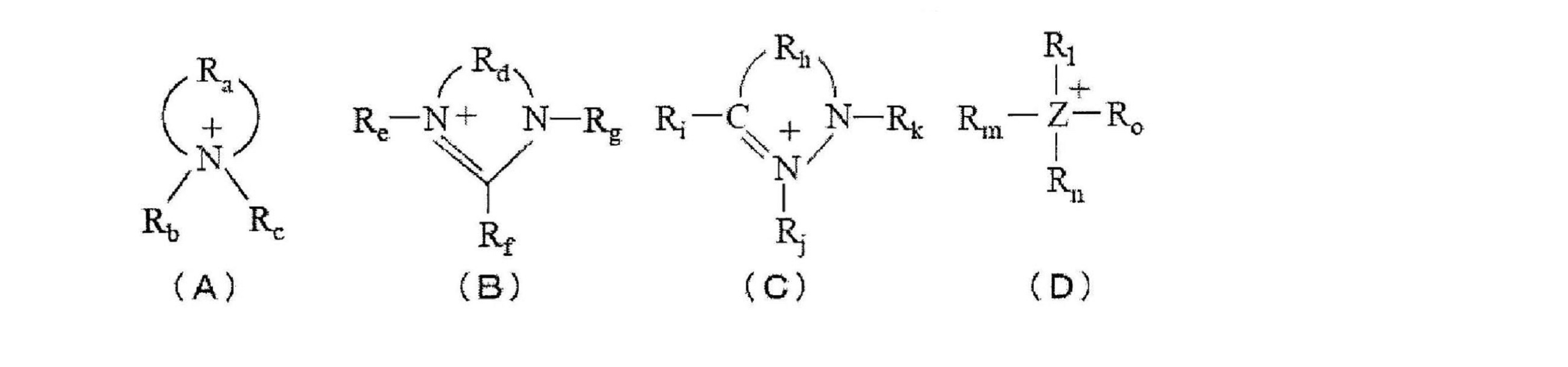
本発明の実施形態によるアクリル系粘着剤は、本発明の実施形態によるアクリル系粘着剤組成物から形成される。
本発明の実施形態による粘着フィルムは、本発明の実施形態によるアクリル系粘着剤から構成される粘着剤層を有する。
基材層の厚みは、好ましくは1μm~500μmであり、より好ましくは5μm~300μmであり、さらに好ましくは10μm~100μmであり、特に好ましくは15μm~80μmであり、最も好ましくは20μm~60μmである。基材層の厚みが上記範囲内にあれば、本発明の効果がより発現し得る。
本発明の実施形態による粘着フィルムが有する粘着剤層は、その厚みが、好ましくは1μm~250μmであり、より好ましくは2μm~150μmであり、さらに好ましくは3μm~100μmであり、特に好ましくは5μm~50μmであり、最も好ましくは10μm~35μmである。
本発明の粘着フィルムは、優れた粘着性と優れた弾性を両立できるので、可動屈曲部を有するベンダブルデバイス(曲げることが可能なデバイス)やフォルダブルデバイス(折りたたむことが可能なデバイス)やローラブルデバイス(丸めることが可能なデバイス)などのフレキシブルデバイスに好適に備えられ得る。
2EHA:アクリル酸2-エチルヘキシル(その単独重合体(ホモポリマー)のガラス転移温度Tg=-70℃)
LA:アクリル酸ラウリル(その単独重合体(ホモポリマー)のガラス転移温度Tg=-23℃)
BA:アクリル酸n-ブチル(その単独重合体(ホモポリマー)のガラス転移温度Tg=-55℃)
4HBA:アクリル酸4-ヒドロキシブチル(その単独重合体(ホモポリマー)のガラス転移温度Tg=-32℃)
NVP:N-ビニル-2-ピロリドン(その単独重合体(ホモポリマー)のガラス転移温度Tg=約80℃)
AOMA(登録商標):株式会社日本触媒製の環化重合性モノマー(一般式(1)において、R1がメチル基、R2が水素原子。)(その単独重合体(ホモポリマー)のガラス転移温度Tg=約80℃)
AIBN:2,2’-アゾビスイソブチロニトリル
C/HX:コロネートHX(東ソー株式会社製、イソシアネート系架橋剤)
ナーセム第二鉄:鉄触媒(日本化学産業株式会社製)
イルガノックス1010:酸化防止剤(BASF製)
粘着フィルムから粘着剤層のみを取り出し、積層して約1mmの厚みとし、これをφ9mmに打ち抜き、円柱状のペレットを作製して測定用サンプルとした。
動的粘弾性測定装置(レオメトリックス社製、ARES)を用い、得られた測定サンプルをφ8mmパラレルプレートの治具に固定した。60℃において、2KPaの変形応力を加えて600秒間保持した後の変形歪み(%)をA値、さらに変形応力を0にして600秒間保持した後の変形歪みをB値とし、A値を60℃におけるクリープ値とした。
貯蔵弾性率G’は、材料が変形する際に弾性エネルギーとして貯蔵される部分に相当し、硬さの程度を表す指標である。
粘着フィルムから粘着剤層のみを取り出し、積層して約1mmの厚みとし、これをφ9mmに打ち抜き、円柱状のペレットを作製して測定用サンプルとした。
動的粘弾性測定装置(レオメトリックス社製、ARES)を用い、得られた測定サンプルをφ8mmパラレルプレートの治具に固定し、貯蔵弾性率G’を算出した。測定条件は下記の通りである。
測定:せん断モード
温度範囲:-30℃~210℃
昇温速度:5℃/分
周波数:1Hz
基材レス粘着フィルムのセパレーターのうち、剥離力の小さいセパレーター(MRQ50T100J)を剥がしたのち、厚さ25μmのポリイミド基材(商品名「ユーピレックス25RN」、宇部興産株式会社製)を貼り合わせ、ポリイミド基材付き粘着フィルムを作製した。ポリイミド基材付き粘着フィルムを幅25mm×長さ100mmにカットし、セパレーター(JT-50Wa)を剥がして粘着剤を露出させ、ポリイミドフィルム(商品名「ユーピレックス50S」、宇部興産社製)へ2kgハンドローラー1往復にて貼着し、評価用試料を得た。
得られた評価用試料を、室温(23℃)で30分間保管後、引っ張り試験機にて測定した。引っ張り試験機としては、島津製作所社製の商品名「オートグラフAG-Xplus HS 6000mm/min高速モデル(AG-50NX plus)」を用いた。引っ張り試験機に評価用試料をセットした後、引っ張り試験を開始した。引っ張り試験の条件は、剥離角度:180度、剥離速度(引っ張り速度):300mm/分とした。上記ポリイミドフィルム(ユーピレックス50S)から粘着フィルムを剥離した時の荷重を測定し、その際の平均荷重を粘着力とした。
基材レス粘着フィルムのセパレーターのうち、剥離力の小さいセパレーター(MRQ50T100J)を剥がしたのち、厚さ25μmのポリイミド基材(商品名「ユーピレックス25RN」、宇部興産株式会社製)を貼り合わせ、ポリイミド基材付き粘着フィルムを作製した。ポリイミド基材付き粘着フィルムを幅25mm×長さ100mmにカットし、セパレーター(JT-50Wa)を剥がして粘着剤を露出させ、ポリイミドフィルム(商品名「ユーピレックス50S」、宇部興産社製)へ2kgハンドローラー1往復にて貼着し、評価用試料を得た。
得られた評価用試料を、室温(23℃)で30分間保管後、200℃で15秒間加熱し、30秒以内に引っ張り試験機にて測定した。引っ張り試験機としては、島津製作所社製の商品名「オートグラフAG-Xplus HS 6000mm/min高速モデル(AG-50NX plus)」を用いた。引っ張り試験機に評価用試料をセットした後、引っ張り試験を開始した。引っ張り試験の条件は、剥離角度:180度、剥離速度(引っ張り速度):300mm/分とした。上記ポリイミドフィルム(ユーピレックス50S)から粘着フィルムを剥離した時の荷重を測定し、その際の平均荷重を粘着力とした。
基材レス粘着フィルムから一方の面の離型フィルムを剥離して、厚み50μmのポリイミドフィルムを貼り合わせ、他方の面の離型フィルムを剥離し、厚み25μmのポリイミドフィルムに粘着フィルムを貼り合わせ、ハンドローラーで圧着した。この積層体(厚み25μmのポリイミドフィルム2、粘着剤1、厚み50μmのポリイミドフィルム3の積層体)を50mm×50mmのサイズに切り出し、35℃、0.35MPaで15分間オートクレーブ処理を実施して試験片4を得た。
小型プレス機を用い、試験片4を熱圧着させた。図2に示すように、試験片4の上に2mm×30mm×0.5mmtのメタル(SUS)ブロック5を設置し、その上に4mm×40mmのテフロン(登録商標)片6を設置した。その上下に125μmのポリイミドフィルム7、クッションシート8を被せ、プレス機に設置した。
プレス機の上下ステージは200℃に加熱した状態にしておいた。熱された上ステージを下降させ、試験片を50MPaの圧力で5秒熱圧着させた。
熱圧着試験後の試験片(ブロック設置部分)を目視で確認し、下記の基準に従って熱圧着耐性を評価した。
〇:圧着部分に気泡や試験片端部からの糊のはみ出しが無かった。
×(気泡):接着界面に気泡が混入していた。
×(糊はみだし):試験片端部から糊がはみ出していた。
基材レス粘着シートから一方の面の離型フィルムを剥離して、厚み50μmのポリイミドフィルムを貼り合わせ、他方の面の離型フィルムを剥離し、厚み25μmのポリイミドフィルムに粘着シートを貼り合わせ、ハンドローラーで圧着した。この積層体を25mm×100mmのサイズに切り出し、35℃、0.35MPaで15分間オートクレーブ処理を実施して試験片を得た。面状体無負荷U字伸縮試験機(ユアサシステム機器製)を用い、試験片の短辺に屈曲冶具を取り付け、-20℃の恒温槽中で、試験片の偏光板側の面を内側として、以下の条件により繰り返し屈曲試験を行った。
(試験条件)
曲げ半径:3mm
曲げ角度:180°
曲げ速度:1秒/回
曲げ回数:20万回
繰り返し屈曲試験(-20℃)後の試験片を目視で確認し、下記の基準に従って屈曲耐久性を評価した。
〇:粘着フィルムからのポリイミドフィルムの剥離がなく、接着界面への気泡の混入がみられなかった。
×:接着界面に気泡が混入していた。
重量平均分子量は、ゲルパーミエーションクロマトグラフ(GPC)法により測定した。具体的には、GPC測定装置として「Agilent 1260 Infinity」(アジレントテクノロジー株式会社製)を用い、試料のポリマー濃度を考慮し、0.1質量%のアミン系成分添加テトラヒドロフラン溶液に調製して、20時間放置し、0.45μmメンブランフィルターにてろ過後、ろ液についてGPC測定を行った。
下記の条件にて測定し、標準ポリスチレン換算値により算出した。
(分子量測定条件)
・サンプル濃度:0.1質量%(アミン系成分添加テトラヒドロフラン溶液)
・サンプル注入量:100μL
・カラム:商品名「TSKgel GMH-H(S)」(東ソー株式会社製)
・溶離液:アミン系成分添加テトラヒドロフラン
・流速:0.5mL/min
・検出器:示差屈折計(RI)
・カラム温度(測定温度):40℃
・標準試料:ポリスチレン(PS)
攪拌羽根、温度計、窒素ガス導入管、冷却器を備えた四つ口フラスコに、2EHA:89.3質量部、4HBA:8.9質量部、NVP:1.8質量部、重合開始剤としてAIBN:0.2質量部を入れ、これらの合計の濃度が40質量%となるように酢酸エチルを仕込み、緩やかに攪拌しながら1時間かけて系内を窒素置換し、フラスコ内の液温を60℃付近に保って6時間重合反応を行い、反応終了後、酢酸エチルを加えて、ポリマー濃度が35質量%となるように調整し、アクリル系ポリマー(1)の溶液を得た。アクリル系ポリマー(1)の重量平均分子量Mwは120万であった。結果を表1に示した。
モノマー組成を、2EHA:94.6質量部、4HBA:4.5質量部、およびNVP:0.9重量部に変更した以外は、製造例1と同様に行い、アクリル系ポリマー(2)の溶液を得た。アクリル系ポリマー(2)の重量平均分子量Mwは120万であった。結果を表1に示した。
モノマー組成を、2EHA:70質量部、LA:8質量部、BA:20質量部、4HBA:1質量部、およびNVP:1重量部に変更した以外は、製造例1と同様に行い、アクリル系ポリマー(3)の溶液を得た。アクリル系ポリマー(3)の重量平均分子量Mwは115万であった。結果を表1に示した。
モノマー組成を、2EHA:68.0質量部、LA:19.4質量部、BA:7.8質量部、4HBA:3.9質量部、およびAOMA(登録商標):1重量部に変更した以外は、製造例1と同様に行い、アクリル系ポリマー(4)の溶液を得た。クリル系ポリマー(4)の重量平均分子量Mwは115万であった。結果を表1に示した。
モノマー組成を、2EHA:45質量部、BA:45質量部、4HBA:5質量部、およびNVP:5重量部に変更した以外は、製造例1と同様に行い、アクリル系ポリマー(5)の溶液を得た。クリル系ポリマー(5)の重量平均分子量Mwは130万であった。結果を表1に示した。
温度計、攪拌機、還流冷却管および窒素ガス導入管を備えた反応容器に、モノマーとして、メタクリル酸ジシクロペンタニル(DCPMA):62重量部およびメタクリル酸メチル(MMA):38重量部、連鎖移動剤としてチオグリコール酸メチル:3.5重量部、熱重合開始剤としてアゾビスイソブチロニトリル(AIBN):0.2重量部、ならびに溶媒としてトルエン:100重量部を投入し、窒素ガスを流し、攪拌しながら約1時間窒素置換を行った。その後、70℃に加熱し、2時間反応させ、続いて80℃で4時間反応させた後に、90℃で1時間反応させ、重量平均分子量4000のオリゴマー(1)の溶液を得た。
温度計、攪拌機、還流冷却管および窒素ガス導入管を備えた反応容器に、モノマーとして、メタクリル酸シクロヘキシル(CHMA):96重量部およびアクリル酸(AA):4重量部、連鎖移動剤として2-メルカプトエタノール:3重量部、熱重合開始剤としてアゾビスイソブチロニトリル(AIBN):0.2重量部、ならびに溶媒としてトルエン:103.2重量部を投入し、窒素ガスを流し、攪拌しながら約1時間窒素置換を行った。その後、70℃に加熱し、3時間反応させ、さらに、75℃で2時間反応させて、重量平均分子量4000のオリゴマー(2)の溶液を得た。
アクリル系ポリマー(1):100質量部、架橋剤としてC/HX:0.1質量部、酸化防止剤としてイルガノックス1010:0.3質量部、触媒としてナーセム第二鉄:0.01質量部を混合し、十分に撹拌して、全体の固形分が28質量%となるように酢酸エチルおよび溶剤分の2質量%量となるアセチルアセトンで希釈することにより、アクリル系粘着剤組成物(1)の塗布溶液を得た。得られたアクリル系粘着剤組成物(1)の塗布溶液を、一方の面にシリコーン処理を施した厚さ50μmのポリエステル樹脂からなる剥離シート(品名:MRV50T100J、三菱ケミカル社製)のシリコーン処理面に、乾燥後の厚みが25μmとなるよう塗布し、乾燥温度130℃、乾燥時間1分の条件で乾燥した。次いで、得られた粘着剤層の表面に、一方の面にシリコーン処理を施した厚さ75μmのポリエステル樹脂からなる剥離シート(品名:MRQ75T100J、三菱ケミカル社製)のシリコーン処理面が接触するように貼合せて、粘着フィルム(1)を得た。これを50℃で1日間エージングを行い、各種評価を行った。結果を表2に示した。
原料組成を表2のように変更した以外は、実施例1と同様に行い、アクリル系粘着剤組成物(2)~(6)の塗布溶液、粘着フィルム(2)~(6)を得た。これを50℃で1日間エージングを行い、各種評価を行った。結果を表2に示した。
アクリル系ポリマー(1):100質量部に対して、架橋剤としてC/HX:0.15質量部、酸化防止剤としてイルガノックス1010:0.3質量部、触媒としてナーセム第二鉄:0.01質量部、帯電防止剤としてイオン性化合物である「CIL-312」(1-ブチル-3-メチルピリジニウムビス(トリフルオロメタンスルホニル)イミド、日本カーリット社製):0.25質量部(固形分換算)、オリゴマー(1):3質量部を混合した以外は、実施例1と同様に行い、アクリル系粘着剤組成物(7)の塗布溶液、粘着フィルム(7)を得た。これを50℃で1日間エージングを行い、各種評価を行った。結果を表2に示した。
オリゴマー(1):3質量部に代えてオリゴマー(2):3質量部を用いた以外は、実施例7と同様に行い、アクリル系粘着剤組成物(8)の塗布溶液、粘着フィルム(8)を得た。これを50℃で1日間エージングを行い、各種評価を行った。結果を表2に示した。
オリゴマー(1)を用いなかった以外は、実施例7と同様に行い、アクリル系粘着剤組成物(9)の塗布溶液、粘着フィルム(9)を得た。これを50℃で1日間エージングを行い、各種評価を行った。結果を表2に示した。
アクリル系ポリマー(1):100質量部に対して、架橋剤としてC/HX:0.15質量部、酸化防止剤としてイルガノックス1010:0.3質量部、触媒としてナーセム第二鉄:0.01質量部、帯電防止剤としてイオン性化合物であるリチウムビス(トリフルオロメタンスルホニル)イミド(LiTFSI、三菱マテリアル社製):0.25質量部(固形分換算)を混合した以外は、実施例1と同様に行い、アクリル系粘着剤組成物(10)の塗布溶液、粘着フィルム(10)を得た。これを50℃で1日間エージングを行い、各種評価を行った。結果を表2に示した。
原料組成を表2のように変更した以外は、実施例1と同様に行い、アクリル系粘着剤組成物(C1)~(C3)の塗布溶液、粘着フィルム(C1)~(C3)を得た。これを50℃で1日間エージングを行い、各種評価を行った。結果を表2に示した。
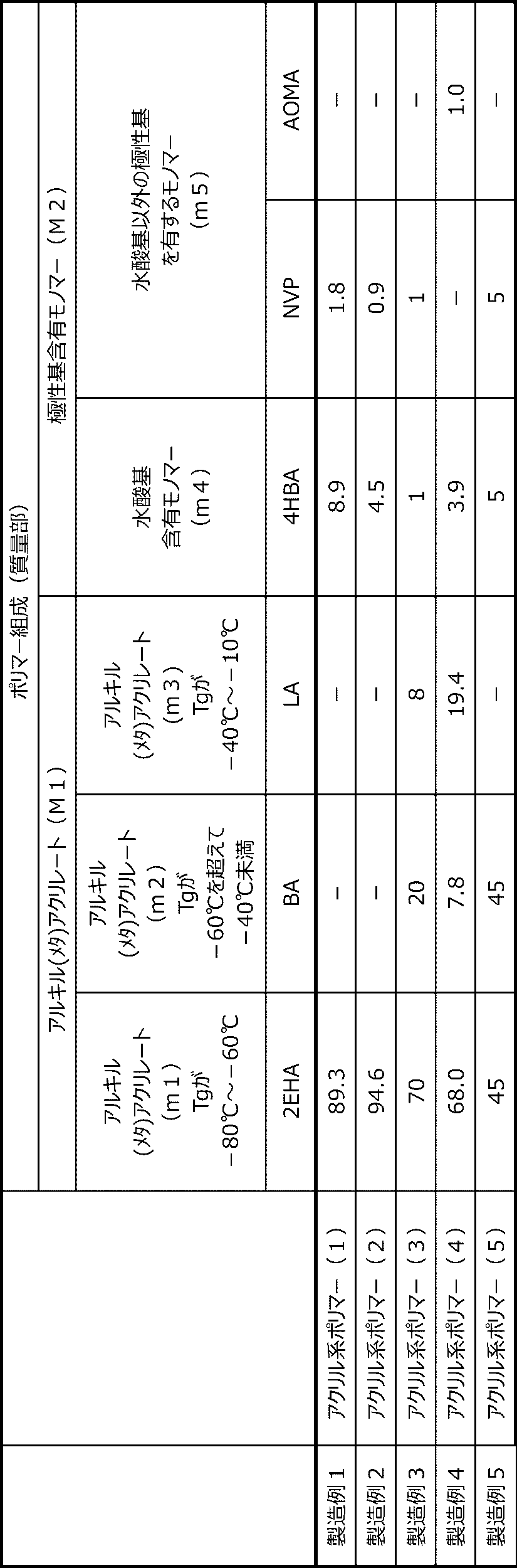

100 粘着フィルム
10 カバーフィルム
20 粘着剤層
30 偏光板
40 粘着剤層
50 タッチセンサー
60 粘着剤層
70 OLED
80 粘着剤層
90 基材層
1 粘着剤
2 厚み25μmのポリイミドフィルム
3 厚み50μmのポリイミドフィルム
4 試験片
5 メタル(SUS)ブロック
6 テフロン(登録商標)片
7 ポリイミドフィルム
8 クッションシート
Claims (10)
- アクリル系ポリマー(P)と架橋剤を含むアクリル系粘着剤組成物であって、
該アクリル系ポリマー(P)は、モノマー成分(M)を重合して得られ、
該モノマー成分(M)は、アルキル(メタ)アクリレート(M1)と極性基含有モノマー(M2)を含み、
該アルキル(メタ)アクリレート(M1)は、その単独重合体のガラス転移温度Tgが-80℃~-60℃の範囲内にあるアルキル(メタ)アクリレート(m1)を含み、
該モノマー成分(M)中の該アルキル(メタ)アクリレート(m1)の含有割合が50質量%以上であり、
該アクリル系粘着剤組成物中の該極性基含有モノマー(M2)の含有割合をA質量%、該アクリル系粘着剤組成物中の該架橋剤の含有割合をB質量%としたとき、A/Bが40~150である、
アクリル系粘着剤組成物。 - 前記A/Bが40~140である、請求項1に記載のアクリル系粘着剤組成物。
- 前記A/Bが40~95である、請求項2に記載のアクリル系粘着剤組成物。
- 前記モノマー成分(M)中の前記アルキル(メタ)アクリレート(m1)の含有割合が75質量%以上である、請求項1から3までのいずれかに記載のアクリル系粘着剤組成物。
- 前記アルキル(メタ)アクリレート(M1)中の前記アルキル(メタ)アクリレート(m1)の含有割合が95質量%以上である、請求項1から4までのいずれかに記載のアクリル系粘着剤組成物。
- 請求項1から5までのいずれかに記載のアクリル系粘着剤組成物から形成される、アクリル系粘着剤。
- -20℃における貯蔵弾性率G’(-20)と200℃における貯蔵弾性率G’(200)との比率(G’(-20)/G’(200))が20以下である、請求項6に記載のアクリル系粘着剤。
- 前記比率(G’(-20)/G’(200))が10以下である、請求項7に記載のアクリル系粘着剤。
- 請求項6から8までのいずれかに記載のアクリル系粘着剤から構成される粘着剤層を有する、粘着フィルム。
- 請求項9に記載の粘着フィルムを備える、フレキシブルデバイス。
Priority Applications (3)
| Application Number | Priority Date | Filing Date | Title |
|---|---|---|---|
| KR1020237039158A KR20230169340A (ko) | 2021-04-19 | 2022-03-16 | 아크릴계 점착제 조성물, 아크릴계 점착제, 점착 필름, 및 플렉시블 디바이스 |
| JP2023516343A JPWO2022224643A1 (ja) | 2021-04-19 | 2022-03-16 | |
| CN202280043237.0A CN117561314A (zh) | 2021-04-19 | 2022-03-16 | 丙烯酸系粘合剂组合物、丙烯酸系粘合剂、粘合薄膜、及挠性器件 |
Applications Claiming Priority (2)
| Application Number | Priority Date | Filing Date | Title |
|---|---|---|---|
| JP2021-070292 | 2021-04-19 | ||
| JP2021070292 | 2021-04-19 |
Publications (1)
| Publication Number | Publication Date |
|---|---|
| WO2022224643A1 true WO2022224643A1 (ja) | 2022-10-27 |
Family
ID=83722872
Family Applications (1)
| Application Number | Title | Priority Date | Filing Date |
|---|---|---|---|
| PCT/JP2022/011868 Ceased WO2022224643A1 (ja) | 2021-04-19 | 2022-03-16 | アクリル系粘着剤組成物、アクリル系粘着剤、粘着フィルム、および、フレキシブルデバイス |
Country Status (5)
| Country | Link |
|---|---|
| JP (1) | JPWO2022224643A1 (ja) |
| KR (1) | KR20230169340A (ja) |
| CN (1) | CN117561314A (ja) |
| TW (1) | TW202309227A (ja) |
| WO (1) | WO2022224643A1 (ja) |
Cited By (3)
| Publication number | Priority date | Publication date | Assignee | Title |
|---|---|---|---|---|
| WO2024122185A1 (ja) * | 2022-12-07 | 2024-06-13 | 日東電工株式会社 | 粘着シート |
| WO2024225390A1 (ja) * | 2023-04-28 | 2024-10-31 | 恵和株式会社 | 構造物用シート |
| WO2024262340A1 (ja) * | 2023-06-19 | 2024-12-26 | 日東電工株式会社 | 水剥離性光学粘着シート |
Citations (14)
| Publication number | Priority date | Publication date | Assignee | Title |
|---|---|---|---|---|
| JP2018045213A (ja) * | 2016-09-16 | 2018-03-22 | リンテック株式会社 | フレキシブルディスプレイ用粘着剤、粘着シート、フレキシブル積層部材およびフレキシブルディスプレイ |
| JP2019108500A (ja) * | 2017-12-19 | 2019-07-04 | リンテック株式会社 | 繰り返し屈曲デバイス用粘着剤、粘着シート、繰り返し屈曲積層部材および繰り返し屈曲デバイス |
| JP2019108498A (ja) * | 2017-12-19 | 2019-07-04 | リンテック株式会社 | 繰り返し屈曲デバイス用粘着剤、粘着シート、繰り返し屈曲積層部材および繰り返し屈曲デバイス |
| JP2019108502A (ja) * | 2017-12-19 | 2019-07-04 | リンテック株式会社 | 繰り返し屈曲デバイス用粘着剤、粘着シート、繰り返し屈曲積層部材および繰り返し屈曲デバイス |
| JP2019108501A (ja) * | 2017-12-19 | 2019-07-04 | リンテック株式会社 | 繰り返し屈曲デバイス用粘着剤、粘着シート、繰り返し屈曲積層部材および繰り返し屈曲デバイス |
| JP2019108499A (ja) * | 2017-12-19 | 2019-07-04 | リンテック株式会社 | 繰り返し屈曲デバイス用粘着剤、粘着シート、繰り返し屈曲積層部材および繰り返し屈曲デバイス |
| JP2019123826A (ja) * | 2018-01-18 | 2019-07-25 | リンテック株式会社 | 繰り返し屈曲デバイス用粘着剤、粘着シート、繰り返し屈曲積層部材および繰り返し屈曲デバイス |
| JP2019172932A (ja) * | 2018-03-29 | 2019-10-10 | リンテック株式会社 | 繰り返し屈曲デバイス、その製造方法および屈曲跡の抑制方法 |
| JP2020139037A (ja) * | 2019-02-27 | 2020-09-03 | リンテック株式会社 | 繰り返し屈曲デバイス用粘着剤、粘着シート、繰り返し屈曲積層部材および繰り返し屈曲デバイス |
| JP2020139038A (ja) * | 2019-02-27 | 2020-09-03 | リンテック株式会社 | 繰り返し屈曲デバイス用粘着剤、粘着シート、繰り返し屈曲積層部材および繰り返し屈曲デバイス |
| JP2020139034A (ja) * | 2019-02-27 | 2020-09-03 | リンテック株式会社 | 繰り返し屈曲デバイス用粘着剤、粘着シート、繰り返し屈曲積層部材および繰り返し屈曲デバイス |
| JP2020200388A (ja) * | 2019-06-10 | 2020-12-17 | リンテック株式会社 | 粘着シートおよび積層体 |
| JP2020200387A (ja) * | 2019-06-10 | 2020-12-17 | リンテック株式会社 | 粘着シートおよび積層体 |
| WO2021235078A1 (ja) * | 2020-05-20 | 2021-11-25 | 日東電工株式会社 | 保護フィルム、フォルダブルデバイス、および、ローラブルデバイス |
Family Cites Families (2)
| Publication number | Priority date | Publication date | Assignee | Title |
|---|---|---|---|---|
| JP5600039B2 (ja) | 2010-07-05 | 2014-10-01 | 帝人デュポンフィルム株式会社 | フレキシブルプリント回路基板補強用フィルム、それからなるフレキシブルプリント回路補強板、およびそれらからなるフレキシブルプリント回路基板積層体 |
| JP6376271B1 (ja) | 2017-12-08 | 2018-08-22 | 東洋インキScホールディングス株式会社 | フレキシブルデバイス用積層体の製造方法 |
-
2022
- 2022-03-16 JP JP2023516343A patent/JPWO2022224643A1/ja active Pending
- 2022-03-16 WO PCT/JP2022/011868 patent/WO2022224643A1/ja not_active Ceased
- 2022-03-16 KR KR1020237039158A patent/KR20230169340A/ko active Pending
- 2022-03-16 CN CN202280043237.0A patent/CN117561314A/zh active Pending
- 2022-03-29 TW TW111111986A patent/TW202309227A/zh unknown
Patent Citations (14)
| Publication number | Priority date | Publication date | Assignee | Title |
|---|---|---|---|---|
| JP2018045213A (ja) * | 2016-09-16 | 2018-03-22 | リンテック株式会社 | フレキシブルディスプレイ用粘着剤、粘着シート、フレキシブル積層部材およびフレキシブルディスプレイ |
| JP2019108500A (ja) * | 2017-12-19 | 2019-07-04 | リンテック株式会社 | 繰り返し屈曲デバイス用粘着剤、粘着シート、繰り返し屈曲積層部材および繰り返し屈曲デバイス |
| JP2019108498A (ja) * | 2017-12-19 | 2019-07-04 | リンテック株式会社 | 繰り返し屈曲デバイス用粘着剤、粘着シート、繰り返し屈曲積層部材および繰り返し屈曲デバイス |
| JP2019108502A (ja) * | 2017-12-19 | 2019-07-04 | リンテック株式会社 | 繰り返し屈曲デバイス用粘着剤、粘着シート、繰り返し屈曲積層部材および繰り返し屈曲デバイス |
| JP2019108501A (ja) * | 2017-12-19 | 2019-07-04 | リンテック株式会社 | 繰り返し屈曲デバイス用粘着剤、粘着シート、繰り返し屈曲積層部材および繰り返し屈曲デバイス |
| JP2019108499A (ja) * | 2017-12-19 | 2019-07-04 | リンテック株式会社 | 繰り返し屈曲デバイス用粘着剤、粘着シート、繰り返し屈曲積層部材および繰り返し屈曲デバイス |
| JP2019123826A (ja) * | 2018-01-18 | 2019-07-25 | リンテック株式会社 | 繰り返し屈曲デバイス用粘着剤、粘着シート、繰り返し屈曲積層部材および繰り返し屈曲デバイス |
| JP2019172932A (ja) * | 2018-03-29 | 2019-10-10 | リンテック株式会社 | 繰り返し屈曲デバイス、その製造方法および屈曲跡の抑制方法 |
| JP2020139037A (ja) * | 2019-02-27 | 2020-09-03 | リンテック株式会社 | 繰り返し屈曲デバイス用粘着剤、粘着シート、繰り返し屈曲積層部材および繰り返し屈曲デバイス |
| JP2020139038A (ja) * | 2019-02-27 | 2020-09-03 | リンテック株式会社 | 繰り返し屈曲デバイス用粘着剤、粘着シート、繰り返し屈曲積層部材および繰り返し屈曲デバイス |
| JP2020139034A (ja) * | 2019-02-27 | 2020-09-03 | リンテック株式会社 | 繰り返し屈曲デバイス用粘着剤、粘着シート、繰り返し屈曲積層部材および繰り返し屈曲デバイス |
| JP2020200388A (ja) * | 2019-06-10 | 2020-12-17 | リンテック株式会社 | 粘着シートおよび積層体 |
| JP2020200387A (ja) * | 2019-06-10 | 2020-12-17 | リンテック株式会社 | 粘着シートおよび積層体 |
| WO2021235078A1 (ja) * | 2020-05-20 | 2021-11-25 | 日東電工株式会社 | 保護フィルム、フォルダブルデバイス、および、ローラブルデバイス |
Cited By (3)
| Publication number | Priority date | Publication date | Assignee | Title |
|---|---|---|---|---|
| WO2024122185A1 (ja) * | 2022-12-07 | 2024-06-13 | 日東電工株式会社 | 粘着シート |
| WO2024225390A1 (ja) * | 2023-04-28 | 2024-10-31 | 恵和株式会社 | 構造物用シート |
| WO2024262340A1 (ja) * | 2023-06-19 | 2024-12-26 | 日東電工株式会社 | 水剥離性光学粘着シート |
Also Published As
| Publication number | Publication date |
|---|---|
| JPWO2022224643A1 (ja) | 2022-10-27 |
| CN117561314A (zh) | 2024-02-13 |
| KR20230169340A (ko) | 2023-12-15 |
| TW202309227A (zh) | 2023-03-01 |
Similar Documents
| Publication | Publication Date | Title |
|---|---|---|
| EP2215173B1 (en) | Adhesive composition, and optical member, surface protective sheet | |
| JP5697639B2 (ja) | 粘着剤組成物、粘着シートおよび表面保護フィルム | |
| TWI849050B (zh) | 黏著片材 | |
| CN109181561B (zh) | 应力分散膜、光学构件、及电子构件 | |
| US20120301716A1 (en) | Thermally-conductive double-sided adhesive sheet | |
| WO2022224643A1 (ja) | アクリル系粘着剤組成物、アクリル系粘着剤、粘着フィルム、および、フレキシブルデバイス | |
| CN104231959B (zh) | 带隔离件的粘合剂层、其制造方法以及带有带隔离件的粘合剂层的光学膜 | |
| CN116769409A (zh) | 粘合片 | |
| CN116769408A (zh) | 粘合片 | |
| JP7629034B2 (ja) | アクリル系粘着剤シート、アクリル系粘着剤組成物、粘着フィルム、及び、フレキシブルデバイス | |
| KR102742053B1 (ko) | 표면 보호 필름 | |
| JP5242020B2 (ja) | 粘着剤組成物、粘着シートおよび表面保護フィルム | |
| CN117580709A (zh) | 带有覆盖膜的光学膜 | |
| JP7629033B2 (ja) | アクリル系粘着剤、アクリル系粘着剤組成物、粘着フィルム、及び、フレキシブルデバイス | |
| KR20190080500A (ko) | 점착 테이프 또는 시트 | |
| JP7805822B2 (ja) | 補強フィルム | |
| KR102952816B1 (ko) | 보강 필름 | |
| JP7805823B2 (ja) | 補強フィルム | |
| KR102849877B1 (ko) | 보강용 필름, 광학 부재 및 전자 부재 | |
| TW202523799A (zh) | 黏著膜、丙烯酸系黏著劑組合物及可撓性裝置 | |
| JP2026031664A (ja) | 補強フィルム | |
| CN120718558A (zh) | 粘合片和柔性器件 | |
| JP2024073942A (ja) | 光学積層体及び画像表示装置 |
Legal Events
| Date | Code | Title | Description |
|---|---|---|---|
| 121 | Ep: the epo has been informed by wipo that ep was designated in this application |
Ref document number: 22791423 Country of ref document: EP Kind code of ref document: A1 |
|
| WWE | Wipo information: entry into national phase |
Ref document number: 2023516343 Country of ref document: JP |
|
| ENP | Entry into the national phase |
Ref document number: 20237039158 Country of ref document: KR Kind code of ref document: A |
|
| WWE | Wipo information: entry into national phase |
Ref document number: 1020237039158 Country of ref document: KR |
|
| NENP | Non-entry into the national phase |
Ref country code: DE |
|
| WWE | Wipo information: entry into national phase |
Ref document number: 202280043237.0 Country of ref document: CN |
|
| 122 | Ep: pct application non-entry in european phase |
Ref document number: 22791423 Country of ref document: EP Kind code of ref document: A1 |