WO2022190872A1 - プラスチックフィルム層を有する積層体の分離回収方法、及び当該方法により回収したプラスチック破砕物を用いた再生プラスチックペレットの製造方法 - Google Patents
プラスチックフィルム層を有する積層体の分離回収方法、及び当該方法により回収したプラスチック破砕物を用いた再生プラスチックペレットの製造方法 Download PDFInfo
- Publication number
- WO2022190872A1 WO2022190872A1 PCT/JP2022/007445 JP2022007445W WO2022190872A1 WO 2022190872 A1 WO2022190872 A1 WO 2022190872A1 JP 2022007445 W JP2022007445 W JP 2022007445W WO 2022190872 A1 WO2022190872 A1 WO 2022190872A1
- Authority
- WO
- WIPO (PCT)
- Prior art keywords
- laminate
- plastic
- layer
- water
- separating
- Prior art date
- Legal status (The legal status is an assumption and is not a legal conclusion. Google has not performed a legal analysis and makes no representation as to the accuracy of the status listed.)
- Ceased
Links
Classifications
-
- B—PERFORMING OPERATIONS; TRANSPORTING
- B29—WORKING OF PLASTICS; WORKING OF SUBSTANCES IN A PLASTIC STATE IN GENERAL
- B29B—PREPARATION OR PRETREATMENT OF THE MATERIAL TO BE SHAPED; MAKING GRANULES OR PREFORMS; RECOVERY OF PLASTICS OR OTHER CONSTITUENTS OF WASTE MATERIAL CONTAINING PLASTICS
- B29B17/00—Recovery of plastics or other constituents of waste material containing plastics
- B29B17/02—Separating plastics from other materials
-
- B—PERFORMING OPERATIONS; TRANSPORTING
- B29—WORKING OF PLASTICS; WORKING OF SUBSTANCES IN A PLASTIC STATE IN GENERAL
- B29B—PREPARATION OR PRETREATMENT OF THE MATERIAL TO BE SHAPED; MAKING GRANULES OR PREFORMS; RECOVERY OF PLASTICS OR OTHER CONSTITUENTS OF WASTE MATERIAL CONTAINING PLASTICS
- B29B17/00—Recovery of plastics or other constituents of waste material containing plastics
- B29B17/04—Disintegrating plastics, e.g. by milling
-
- C—CHEMISTRY; METALLURGY
- C09—DYES; PAINTS; POLISHES; NATURAL RESINS; ADHESIVES; COMPOSITIONS NOT OTHERWISE PROVIDED FOR; APPLICATIONS OF MATERIALS NOT OTHERWISE PROVIDED FOR
- C09D—COATING COMPOSITIONS, e.g. PAINTS, VARNISHES OR LACQUERS; FILLING PASTES; CHEMICAL PAINT OR INK REMOVERS; INKS; CORRECTING FLUIDS; WOODSTAINS; PASTES OR SOLIDS FOR COLOURING OR PRINTING; USE OF MATERIALS THEREFOR
- C09D9/00—Chemical paint or ink removers
-
- C—CHEMISTRY; METALLURGY
- C09—DYES; PAINTS; POLISHES; NATURAL RESINS; ADHESIVES; COMPOSITIONS NOT OTHERWISE PROVIDED FOR; APPLICATIONS OF MATERIALS NOT OTHERWISE PROVIDED FOR
- C09D—COATING COMPOSITIONS, e.g. PAINTS, VARNISHES OR LACQUERS; FILLING PASTES; CHEMICAL PAINT OR INK REMOVERS; INKS; CORRECTING FLUIDS; WOODSTAINS; PASTES OR SOLIDS FOR COLOURING OR PRINTING; USE OF MATERIALS THEREFOR
- C09D9/00—Chemical paint or ink removers
- C09D9/04—Chemical paint or ink removers with surface-active agents
-
- Y—GENERAL TAGGING OF NEW TECHNOLOGICAL DEVELOPMENTS; GENERAL TAGGING OF CROSS-SECTIONAL TECHNOLOGIES SPANNING OVER SEVERAL SECTIONS OF THE IPC; TECHNICAL SUBJECTS COVERED BY FORMER USPC CROSS-REFERENCE ART COLLECTIONS [XRACs] AND DIGESTS
- Y02—TECHNOLOGIES OR APPLICATIONS FOR MITIGATION OR ADAPTATION AGAINST CLIMATE CHANGE
- Y02W—CLIMATE CHANGE MITIGATION TECHNOLOGIES RELATED TO WASTEWATER TREATMENT OR WASTE MANAGEMENT
- Y02W30/00—Technologies for solid waste management
- Y02W30/50—Reuse, recycling or recovery technologies
- Y02W30/62—Plastics recycling; Rubber recycling
Definitions
- the present invention relates to a method for separating and collecting a laminate having a plastic film layer, and a method for producing recycled plastic pellets using crushed plastic collected by the method.
- Non-Patent Document 1 One of the reasons why the recycling rate continues to be so low is the difficulty of the separate collection system.
- PE polyethylene
- PP polypropylene
- many plastic products such as laminated films are laminated with different types of plastic materials adhered to each other, making it difficult to separate and collect each material. Therefore, construction of a recycling system capable of easily separating and recovering waste plastics is strongly desired.
- Patent Document 1 discloses that after dissolving an aluminum layer from a crushed multilayer film with an alkali, the multilayer film is separated by the difference in specific gravity, and then selectively melted in a solvent.
- a recycling method is proposed by separating the components, and Patent Document 2 proposes processes of crushing the printed film, removing the ink, rinsing, and drying, but all the processes are long and complicated.
- Patent Document 3 discloses a method of removing ink from a printed film in a roll state using a solvent and a non-abrasive cloth
- Patent Document 4 discloses a method of removing ink from a printed film in a roll state using a solvent, a brush, and a wiper. Although it provides a method of removing ink using a blade, it only produces a non-printed film by removing ink from a roll of film.
- the ink removal or separation process is carried out after the process of dry crushing the laminated film, and the process is common, and the process is long and complicated.
- the problem to be solved by the present invention is to provide a method for easily separating and recovering a laminate having a plastic film layer, and a method for producing high-quality recycled plastic pellets using crushed plastics recovered by the method. to provide.
- the present inventors have made intensive studies to solve the above-mentioned problems, and as a result, after the step of crushing the laminated film under wet conditions, the crushed laminate is heated and stirred in a cleaning liquid. As a result, the inventors have found an easy method for regenerating a plastic laminate into a high-quality recycled raw material.
- the present invention is a method for separating and recovering a laminate having at least a plastic film layer and a layer selected from a plastic film layer, a deposited film layer and a metal foil layer, A step 1 of crushing the laminate in water or a washing liquid; Step 2 of separating the laminate into single layers by heating and stirring the crushed laminate in a release agent to provide a method for separating and recovering a laminate characterized by having
- the present invention also provides a method for producing recycled plastic pellets, comprising recovering each single layer of the crushed plastic material separated into single layers by the method for separating and recovering a laminate described above, and molding the recovered material with a molding machine after melting it. .
- a plastic laminate can be separated into single layers, and crushed single-layer films can be easily collected, sorted, and reused.
- the method of the present invention not only a laminated film in which a printed layer is exposed on the film surface (surface printing), but also a laminated film in which a printed layer is provided between a plurality of films (reverse printing). Even in plastic laminates having various configurations, the plastic laminate can be separated into single layers, and the ink layer can be easily peeled off.
- the film can be separated into single layers and the ink layer can be easily peeled off, so that the method for separating and recovering the plastic laminate can be facilitated, and , the collected plastic can be reused as a high-quality recycled plastic raw material.
- the method for separating and recovering a laminate of the present invention has a step 1 of crushing the laminate in water or a washing liquid.
- the method of pulverizing the laminate in water or a washing liquid is not particularly limited, and any known method can be used. Among them, it is preferable to use a wet crusher capable of carrying out crushing and pumping at the same time in water or washing liquid. When using a wet crusher, the laminate can be efficiently crushed and the laminated laminate can be separated into individual layers.
- step 1 By crushing the laminate in step 1, the laminate can be easily peeled off completely into single layers in step 2, which will be described later.
- the laminate may be crushed, and the crushed laminate may be in a state in which at least a part such as an end portion is partially peeled, or each layer may be completely peeled. Also, each layer does not have to be peeled off.
- wet crusher One example of a wet crusher preferably used in step 1 is a wet crusher capable of simultaneously crushing, dispersing, mixing and pumping solids in a liquid. Specifically, a crusher having a mechanism for crushing solid matter in a liquid by shearing force and/or frictional force and having a mechanism for crushing and pumping a plastic laminate is preferred. Examples of such wet crushers include wet crushing pumps, colloid mills, grinders, and the like.
- the wet crushing pump preferably has a mechanism for crushing the solids with a fixed blade and a rotating blade while pumping the solids in the liquid.
- a more preferred mechanism is a cutting blade, crushing impeller, shroud ring, and grid. It is a mechanism that crushes in three stages by combining four parts.
- the wet crushing pump crushes the plastic laminate in three stages.
- the plastic laminate is roughly cut by the fixed blade cutting edge and the inlet edge of the rotary blade crushing impeller, and then stirred and pumped by the axial crushing impeller, and some plastic laminate is cut into the fixed blade shroud It hits the cutting edge of the ring and is cut.
- the laminated film that has passed through the crushing impeller is further finely crushed and stirred between the grids, passed through the grid and pressurized by the pressure impeller, and then pumped to the next step.
- the pumping speed is not particularly limited, it is preferably 0.03 m 3 /min or more in consideration of the peeling of the ink layer and the peeling and separation efficiency when separating the plastic laminate into layers.
- the upper limit of the pumping speed is not particularly limited, and the standard operating speed of the apparatus, for example, 1.4 m 3 /min, is sufficient to separate the ink and separate the plastic laminate into single layers.
- the grid shape is not particularly limited. Since the grid diameter is related to the size of the laminated film after crushing, the grid diameter is preferably 0.1 to 50 mm, and more preferably 1 to 20 mm considering the crushing efficiency and the size of the laminated film after crushing. .
- wet crushing pumps include Husqvarna Zenoah's KD series, Nikuni's Sancutter series, Furukawa Sanki Systems' Disintegrator series, Aikawa Iron Works Inc.'s Incrusher series, and Sanwa Hydrotech's Scatter. can be exemplified.
- a colloid mill as used in the present invention is a machine used to reduce particle size in dispersed systems where the particles are suspended in a liquid.
- a colloid mill consists of a rotor-stator combination, where the rotor rotates at high speed relative to the fixed stator. High speed rotation is used to reduce particle size in liquids due to the high levels of shear produced.
- the crushing part of the colloid mill consists of a combination of a truncated cone-shaped rotor with teeth and a stator, and the rotor and stator have a tapered shape that narrows as it approaches the discharge port.
- the laminated film is repeatedly subjected to strong shearing, compression, and impact in a ring-shaped gap that narrows as it approaches the discharge port, and is crushed.
- a specific colloid mill is not particularly limited as long as it is a dispersing machine generally called a colloid mill.
- An example can be Cavitron of the company.
- the grinder preferably has a mechanism for crushing the solid matter put between the stone mills by shearing or friction while rotating a set of upper and lower stone mills in the liquid. Those that can be pulverized to
- the size of the crushed material can be adjusted by adjusting the distance between the upper and lower set of millstones, and is usually finely pulverized to 500 ⁇ m or less, preferably 300 ⁇ m or less, more preferably 200 ⁇ m or less.
- each layer of the laminate is separated into a single layer, and the space for storing the crushed material can be reduced, facilitating inventory management.
- the process can be simplified because the material can be put into a kneader without going through a compressor or the like.
- the lower limit of the size of the crushed material is preferably 10 ⁇ m or more, preferably 30 ⁇ m or more, and more preferably 50 ⁇ m or more, in order to facilitate recovery.
- the rotation speed and water flow speed are not particularly limited.
- a specific grinding machine is Masuko Sangyo Co., Ltd.'s Super Mascolloider.
- a part or all of the plastic laminate can be separated into single-layer films or plastic substrates by crushing in water or a washing liquid using the wet crusher.
- most plastic laminates are provided with a printing ink layer for displaying the product name and the like and for adding decoration.
- Printing machines, offset printers, inkjet printers, etc. are often used and printed with organic solvent-based printing inks, water-based or active energy ray-curable inks.
- the plastic laminate may be crushed in a cleaning liquid containing water containing a cleaning component or a stripping component. good.
- the ink layer provided on the plastic laminate can be peeled off and the plastic laminate can be separated into single layers at the same time.
- gravure inks and flexographic inks are most commonly used for plastic laminated films, including those for food packaging.
- the printed ink layer can also be peeled off. Therefore, it is efficient.
- the laminated film is laminated with a metal foil or vapor deposition film such as aluminum. In the present invention, the metal foil or vapor deposition film can also be peeled off or dissolved.
- each layer constituting the laminate may be separated into a single layer by crushing in water, or a part of the crushed laminate may be partially separated.
- the ink layer provided on the plastic laminate need not be completely removed from the plastic film in step 1, and may be partially adhered or not removed from the ink layer. .
- crushing may be performed using water as it is, or crushing may be performed using a cleaning liquid containing water containing a cleaning or peeling component such as an inorganic base or a surfactant, or other components.
- a cleaning or peeling component such as an inorganic base or a surfactant, or other components.
- the washing solution one or more of the following components can be used in combination with water.
- inorganic base As an aqueous washing solution that can be used in step 1, water containing an inorganic base can be used.
- inorganic bases include sodium hydroxide and potassium hydroxide. These inorganic bases are contained at a concentration of 0.1 to 10% by weight, more preferably 0.1 to 5% by weight, based on the total amount of the aqueous cleaning solution. Further, the pH is preferably 10 or higher.
- surfactant As the aqueous cleaning solution that can be used in step 1, water containing a surfactant can be used.
- surfactants are not particularly limited, and known surfactants can be used. Examples include anionic surfactants, nonionic surfactants, amphoteric surfactants, and cationic surfactants. .
- Nonionic surfactants generally include, for example, polyoxyalkylene alkyl ethers, polyoxyethylene alkyl ethers, polyoxyethylene alkylphenyl ethers, polyoxyethylene fatty acid esters, sorbitan fatty acid esters, polyoxyethylene sorbitan fatty acid esters, Polyoxyethylene sorbitol fatty acid ester, glycerin fatty acid ester, polyoxyethylene glycerin fatty acid ester, polyglycerin fatty acid ester, sucrose fatty acid ester, polyoxyethylene alkylamine, polyoxyethylene fatty acid amide, fatty acid alkylolamide, alkylalkanolamide, acetylene glycols, oxyethylene adducts of acetylene glycol, polyethylene glycol polypropylene glycol block copolymers, among others, polyoxyethylene nonylphenyl ether, polyoxyethylene octylphenyl ether, polyoxyethylene dodecylphen
- a polyoxyalkylene alkyl ether surfactant containing at least one compound represented by the general formula (1) It is preferably an aqueous cleaning liquid containing.
- R 1 represents a linear or branched alkyl group, alkenyl group or octylphenol group, n 1 represents the average number of added moles, and X 1 represents hydrogen or a short-chain alkyl group.
- a linear or branched alkyl group or alkenyl group having 10 or more carbon atoms represented by R 1 in general formula (1) is preferred.
- the specific number of carbon atoms is a decyl group with 10 carbon atoms, a lauryl group with 12 carbon atoms, a tridecyl group with 13 carbon atoms, a myristyl group with 14 carbon atoms, a cetyl group with 16 carbon atoms, and a carbon atom.
- Oleyl group and stearyl group of number 18 can be mentioned.
- Specific products include Noigen series, DSK NL-Dash series, and DKS-NL series manufactured by Daiichi Kogyo Seiyaku Co., Ltd., Nonion series manufactured by NOF Corporation, Emulgen series manufactured by Kao Corporation, and Leox manufactured by Lion Corporation.
- nonionic surfactants represented by the general formula (1) among the series, the Leocol series, the Lionol series, etc. if the number of carbon atoms represented by R 1 is 10 or more, it is applicable, but is limited to these. not a thing
- the HLB value of the polyoxyalkylene alkyl ether-based surfactant represented by the general formula (1) is not particularly limited.
- a specific surfactant having 10 or more carbon atoms represented by R 1 and an HLB value of less than 12.5 is Daiichi Kogyo
- R represents a linear or branched alkyl group or alkenyl group having 10 or more carbon atoms and an HLB value of 12.5 or more.
- R1 in general formula ( 1 ) is an octylphenol group
- octylphenol ethoxylate is preferred.
- Specific products include, but are not limited to, Dow Chemical Company's TRITON (registered trademark) series, Rhodia's Igepal CA series, Shell Chemicals' Nonidet P series, and Nikko Chemicals' Nikkol OP series. is not.
- amphoteric surfactant is preferably a betaine-type double-sided active agent, for example, an amphoteric interface of an alkylcarboxybetaine skeleton or an alkylamidocarboxybetaine skeleton containing at least one compound represented by the general formula (2a). It is more preferred to contain an active agent.
- R1 preferably represents a hydrogen atom.
- the compound represented by general formula (2a) is preferably an amphoteric surfactant having an alkylcarboxybetaine skeleton represented by general formula (2a-1).
- n represents the average number of added moles.
- n is preferably 8 or more, preferably 10 or more, and preferably 11 or more.
- Specific products corresponding to general formula (2a) include Nissan Anon BDF (registered trademark)-R, Nissan Anon BDF (registered trademark)-SF, Nissan Anon BDC-SF, and Nissan Anon BDL manufactured by NOF Corporation.
- -SF Amogen CB-H and Amogen HB-C manufactured by Daiichi Kogyo Seiyaku Co., Ltd.; Obazolin ISAB and the like.
- Amogen S, Amogen SH, and Amogen K manufactured by Daiichi Kogyo Seiyaku Co., Ltd. and Amphitol 20BS, Ambitol 24B, and Ambitol manufactured by Kao Corporation.
- Examples include, but are not limited to, ovazoline LB, ovazoline LB-SF, and the like.
- the betaine-type amphoteric surfactant may also have an imidazolinium betaine skeleton.
- Specific examples of such products include NISSAN ANON GLM-R and NISSAN ANON GLM-R-LV manufactured by NOF Corporation. , Amphithol 20Y-B manufactured by Kao Corporation, but not limited to these.
- amphoteric surfactant may be a surfactant represented by the following general formula (2b).
- R4-( NHC2H4 ) nb -N(R5)2 2b
- R4 represents a linear or branched alkyl group or alkenyl group
- nb represents an integer of 0 to 5
- R5 represents hydrogen, —CH 2 COONa, or —CH 2 COOH.
- two R5s present may be the same or different, and at least one R5 represents —CH 2 COONa.
- R4 preferably represents a linear alkyl group, and the number of carbon atoms in R4 is preferably 8 or more, preferably 10 or more, and preferably 12 or more.
- Specific products that fall under the general formula (2b) include Nissan Anon LG-R and Nissan Anon LA manufactured by NOF Corporation, but are not limited to these.
- amphoteric surfactant may also be an amine oxide type surfactant represented by the following general formula (2c).
- R6-N + (CH 3 ) 2 O - (2c) (In general formula (2c), R6 represents a linear or branched alkyl group or alkenyl group.) In general formula (2c), R6 preferably represents a linear alkyl group in general formula (2b), and the number of carbon atoms in R4 is preferably 8 or more, preferably 10 or more. , 12 or more.
- Specific products corresponding to general formula (2c) include Amogen AOL manufactured by Daiichi Kogyo Seiyaku Co., Ltd., and Amphitol 20N manufactured by Kao Corporation, but are not limited to these.
- the cationic surfactant is preferably a cationic surfactant having a quaternary ammonium skeleton, for example, a cationic surfactant having a quaternary ammonium skeleton containing at least one compound represented by the general formula (3a). It is more preferred to contain an active agent.
- R1 is preferably a long-chain alkyl group or alkenyl group, specifically an al
- alkyl group having 10 to 25 carbon atoms is preferably an alkyl group having 10 to 25 carbon atoms, more preferably an alkyl group or alkenyl group having 12 to 22 carbon atoms.
- the alkyl group or alkenyl group may be linear or branched, preferably linear, more preferably linear alkyl.
- R2 and R3 preferably represent a straight-chain or branched-chain alkyl group or a straight-chain or branched-chain alkenyl group, and preferably represent a straight-chain or branched-chain alkyl group. Among them, it preferably represents a linear alkyl group having 1 to 3 carbon atoms, and more preferably represents a methyl group.
- R4 preferably represents a linear or branched alkyl group, a linear or branched alkenyl group or a phenyl group, more preferably a linear or branched alkyl group. Also, the terminal —CH 3 in the alkyl group or alkenyl group is preferably substituted with a carboxy group or a phenyl group.
- the number of carbon atoms in R4 is preferably 1 to 8, preferably 1 to 5, preferably 1 to 3, more preferably 1 or 2.
- R4 represents a methyl group
- R2 and R3 also preferably represent a methyl group
- general formula (3a) preferably represents an alkyltrimethylammonium skeleton.
- R4 represents an ethyl group
- the compound represented by general formula (3a) is preferably a cationic surfactant having a quaternary ammonium skeleton represented by general formula (3a-1).
- n represents the average number of added moles, and R4 has the same meaning as R4 in general formula (3a) according to claim 3.
- the number of carbon atoms represented by n is preferably 8 or more. The more the number of carbon atoms exceeds 8, the better the ink releasability.
- the specific number of carbon atoms is 8 octyl group with 9 carbon atoms, nonyl group with 10 carbon atoms, undecyl group with 11 carbon atoms, lauryl group with 12 carbon atoms, tridecyl group with 13 carbon atoms, myristyl with 14 carbon atoms C15 pentadecyl group, C16 cetyl group, C18 oleyl group, and stearyl group.
- Preferred groups for R4 are the same as in general formula (3a).
- These cationic surfactants having a quaternary ammonium skeleton are preferably of the quaternary ammonium skeleton salt type in which a salt is formed with a halogen, preferably form a salt with Cl- , more preferably with Br-. It is preferred to form a salt, more preferably with I ⁇ .
- a quaternary ammonium skeletal salt formed by forming a salt with a halogen accelerates the hydrolysis of the ink film by the nucleophilic action of the halogen, and is therefore considered to improve the releasability of the ink.
- alkyltrimethylammonium chloride-type dialkyldimethylammonium chloride-type, and alkylbenzalkonium chloride-type compounds are preferable.
- Specific products corresponding to general formula (3a) or (3a-1) include Nissan Cation MA, Nissan Cation SA, Nissan Cation BB, Nissan Cation FB, Nissan Cation PB-300, Nissan Cation ABT2-500, Nissan Cation AB, Nissan Cation AB-600, Nissan Cation VB-M Flake, Nissan Cation VB-F, Nissan Cation 2-DB-500E, Nissan Cation 2-DB-800E, Nissan Cation 2ABT, Nissan Cation 2-OLR, Nissan cation F 2 -50R, Nissan cation M 2 -100R, and Daiichi Kogyo Co., Ltd.
- cation TML manufactures cation TML, cation TMP, cation TMS, cation DDM-PG, cation BC-50, and cation TBB.
- Kotamine 24P, Kotamine 86P Conc, Kotamine 60W, Kotamine 86W, Sanizol C, and Sanizol B-50 are available from Kao Corporation, and Lipoguard C-50, Lipoguard T-28, and Lipoguard T-30 from Lion Corporation.
- the cationic surfactant preferably contains at least one compound represented by a primary to secondary alkanolamine skeleton, and contains at least one compound represented by a monoalkanolamine skeleton.
- the primary monoalkanolamine is preferably a lower alkanol having 1 to 4 carbon atoms, and specific examples thereof include monoethanolamine, 2-aminoisobutanol, and the like. Examples include N-methylethanolamine, 2-ethylaminoethanol, isopropanolamine and the like, but substances other than those exemplified can also be used as appropriate.
- these monoalkanolamine compounds can be used singly or in combination of two or more, and can also be used by mixing with water.
- These cationic surfactants having a monoalkanolamine skeleton are preferably in the form of monoalkanolamine salts forming salts with halogens, and preferably forming salts with Cl.sub.2.sup.-.
- the amount added is preferably 5% by weight or less, preferably 2% by weight or less, relative to the total amount of the aqueous cleaning solution.
- the lower limit of the surfactant is not particularly limited, and may be 0% by mass, but when a surfactant is contained, it is preferably 0.1% by mass or more.
- Alkylene glycol alkyl ether solvent As the aqueous cleaning solution that can be used in step 1, water containing an alkylene glycol alkyl ether solvent can be used. Preferably, it is an aqueous cleaning liquid containing 20% by weight or more of a solvent having an alkylene glycol alkyl ether skeleton represented by general formula (4).
- R 1 -O-[CH 2 -CH(X)-O]n 1 -R 2 (4) (In the general formula (4), R 1 is an alkyl group having 1 or more carbon atoms, R 2 is an alkyl group having 1 or more carbon atoms or hydrogen, n 1 is an integer of 1 to 3, X is hydrogen or indicates a methyl group.)
- alkylene glycol alkyl ethers represented by formula (4) water-soluble alkylene glycol alkyl ethers are more preferred.
- Examples of water-soluble alkylene glycol alkyl ethers represented by general formula (4) include ethylene glycol monomethyl ether, ethylene glycol monoethyl ether, ethylene glycol monopropyl ether, ethylene glycol monobutyl ether, ethylene glycol dimethyl ether, and ethylene glycol diethyl ether.
- ethylene glycol dipropyl ether ethylene glycol methyl ethyl ether, ethylene glycol methyl propyl ether, ethylene glycol ethyl propyl ether, ethylene glycol monobutyl ether, ethylene glycol-tert-butyl ether, diethylene glycol monomethyl ether, diethylene glycol monoethyl ether, diethylene glycol monopropyl ether , diethylene glycol monobutyl ether, diethylene glycol dimethyl ether, diethylene glycol diethyl ether, diethylene glycol dipropyl ether, diethylene glycol methyl ethyl ether, diethylene glycol methyl propyl ether, diethylene glycol ethyl propyl ether, triethylene glycol monobutyl ether, propylene glycol monomethyl ether, propylene glycol monoethyl ether, propylene Glycol monopropyl ether, propylene glycol monobutyl ether, propylene
- alkylene glycol alkyl ethers can be used singly or in combination of two or more, and can also be used by mixing with water. There is no particular problem if the content of the alkylene glycol alkyl ether is 20% by weight or more, but when water is the medium, it is preferably 30% by weight or more, and most preferably 40% by weight or more. On the other hand, although the upper limit may be 100% by weight, it is preferable to use water as a medium from the viewpoint of environmental impact and safety.
- alkylene glycol alkyl ethers represented by general formula (4) More preferred are alkylene glycol monoalkyl ethers represented by general formula (5).
- R 2 O—[CH 2 —CH(X)—O]n 2 —H (5)
- R 2 represents an alkyl group having 1 or more carbon atoms
- n 2 represents an integer of 1 to 3
- X represents hydrogen or a methyl group.
- water-soluble alkylene glycol alkyl ethers represented by general formula (5) include ethylene glycol monomethyl ether, ethylene glycol monoethyl ether, ethylene glycol monopropyl ether, ethylene glycol monobutyl ether, ethylene glycol monobutyl ether, and ethylene glycol-tert.
- R 2 is an alkyl group having 3 or more carbon atoms
- n 2 is 1 to 3
- X 2 is preferably hydrogen or a methyl group.
- ethylene glycol monopropyl ether ethylene glycol monobutyl ether, ethylene glycol-tert-butyl ether, diethylene glycol monopropyl ether, diethylene glycol monobutyl ether, triethylene glycol monobutyl ether, propylene glycol monopropyl ether, propylene glycol monobutyl ether, etc.
- alkylene glycol alkyl ethers can be used singly or in combination of two or more, and can also be used by mixing with water.
- diethylene glycol monobutyl ether diethylene glycol monobutyl ether, ethylene glycol mono-tert-butyl ether, and propylene glycol monopropyl ether are particularly preferable in terms of environmental properties, flammability, and antifoaming properties.
- the water used in step 1 may contain an antifoaming agent.
- an antifoaming agent In step 1, a large amount of bubbles may be generated in the stirring and crushing steps, and if bubbles remain, they may overflow in the plastic film recovery step. In addition, in the process of crushing a plastic film, if a large amount of bubbles are involved in the cleaning liquid, the plastic substrate may not be crushed to a desired size.
- silicone compounds are particularly preferred in terms of their high antifoaming ability. .
- emulsion-type and self-emulsification-type silicone compounds are preferable.
- Specific antifoaming agents include X-50-1176, KS-530 and KS-537 manufactured by Shin-Etsu Chemical Co., Ltd. as self-emulsifying type, and KM-7750D and KM manufactured by Shin-Etsu Chemical Co., Ltd. as emulsion-type antifoaming agents. -7752, KM-98, FS Antifoam 025, FS Antifoam 80, FS Antifoam 92, FS Antifoam 93, DKQ1-1183, DKQ1-1247 manufactured by Nagase Chemspec, but not limited thereto.
- the liquid temperature of the water or cleaning liquid used in step 1 is not particularly limited as long as it can be maintained in a liquid state, but it is usually preferred that the liquid temperature is 15 to 90°C.
- the liquid temperature is 15 to 90°C.
- the optimum temperature for excellent cleaning effect varies depending on the type of surfactant, for example, 40° C. or higher is preferable, 65° C. or higher is preferable, and 85° C. or higher is preferable.
- the liquid temperature is not too high. It is preferably 20°C or less. Since the smaller the size of the laminate after crushing, the larger the cross-sectional area, the layers constituting the laminate are easily separated into single layers in step 2, and the separation and colorlessness of the ink layer are facilitated.
- the laminate separation and recovery method of the present invention has step 2 of heating and stirring the laminate crushed in step 1 in a release agent. By performing the step 2 after crushing the laminate in the step 1, each layer constituting the laminate can be easily peeled off.
- step 1 the laminate structure of the laminate is peeled off into a single layer, or a base is formed to facilitate the peeling of the laminate structure, and in step 2, the laminate is completely peeled off into a single layer.
- the ink layer can be peeled off in step 2 to make the plastic film colorless.
- the laminate has an ink layer, it is difficult to make the plastic colorless depending on the type of ink and the structure of the laminate.
- a base that makes it easy to peel is prepared, and in step 2, the laminate is separated into single layers and the ink layer is peeled off, so the ink layer can be easily peeled off regardless of the type of ink or the structure of the laminate. can.
- the plastic film from which the ink layer has been peeled off can be used for collection, sorting and recycling, and high-quality recycled plastic can be obtained because the ink has been removed.
- the release agent used in step 2 can be one that promotes separation of the laminate into single layers and facilitates easy separation of the ink layer from the plastic film having the ink layer.
- a release agent it is preferable to use one containing (a) a water-soluble solvent and (b) an inorganic base.
- the water-soluble solvent preferably contains one or more water-soluble alcohols or water-soluble solvents having a flash point of 21° C. or higher.
- a water-soluble solvent for the stripping agent By using a water-soluble solvent for the stripping agent, the hydroxide ions generated from the inorganic base contained in the stripping agent are less likely to be hydrated, so the nucleophilicity of the hydroxide ions increases. Since the ink layer peeling reaction can be advanced, it is effective for peeling the ink film.
- the water-soluble solvent having a flash point of 21° C. or higher is preferably a water-soluble solvent among the organic solvents that fall under the second petroleum class and the third petroleum class specified in the Fire Defense Law.
- water-soluble alcohols alcohols specified in the Fire Defense Law can be mentioned. Specific examples of these include 3-methoxy-3-methyl-1-butanol, diethylene glycol monobutyl ether, ethanol and the like, and these may be used alone or in combination.
- the release agent preferably contains a water-soluble solvent in the range of 20% by mass or more. If the content of the water-soluble solvent is less than 20% by mass, it becomes difficult to obtain sufficient effects such as peeling off the ink layer. From the viewpoint of the releasability of the ink layer, it is preferable that the release agent contains a large amount of water-soluble solvent. preferably 50% by mass or more, preferably 60% by mass or more, preferably 70% by mass or more, preferably 80% by mass or more, preferably 90% by mass or more, It is preferably at least 95% by mass.
- the inorganic base specifically includes sodium hydroxide and potassium hydroxide, and it is preferable to use potassium hydroxide. These inorganic bases are preferably contained in a concentration of 0.1 to 10% by weight, more preferably 0.1 to 5% by weight, based on the total amount of the ink remover.
- the pH is preferably 10 or higher, preferably 11 or higher, and more preferably 12 or higher.
- the release agent in step 2 may contain (c) water.
- water By including water in the release agent in step 2, work stability and environmental stability in step 2 can be improved.
- the content of water is preferably 80% by mass or less relative to the release agent. If the water content exceeds 80% by mass, it becomes difficult to obtain sufficient effects in separating the laminate into single layers and peeling off the ink layers.
- the ratio of the water-soluble solvent and water can be appropriately adjusted from the viewpoint of the peeling effect and safety of the plastic film and ink layer, but the weight ratio of the water-soluble solvent:water is in the range of 20:80 to 100:0. It is preferable to use in
- the lower limit of the ratio of the water-soluble solvent in the total amount of the water-soluble solvent and water is preferably 20% by mass, preferably 30% by mass, preferably 50% by mass, and 70% by mass. is preferably 80% by mass, preferably 90% by mass, and preferably 100% by mass.
- the release agent of step 2 may contain (d) a surfactant.
- Surfactants are not particularly limited, and known surfactants can be used. Examples include anionic surfactants, nonionic surfactants, amphoteric surfactants, and cationic surfactants. . As specific types of these surfactants, the same surfactants as those described as surfactants that can be contained in water in Step 1 can be used.
- the surfactant can be used alone or in combination of two or more.
- the amount added is preferably 5% by weight or less, preferably 2% by weight or less, relative to the total amount of the release agent.
- the lower limit of the surfactant is not particularly limited, and may be 0% by mass, but when a surfactant is contained, it is preferably 0.01% by mass or more.
- the temperature at which the washing liquid is stirred that is, the liquid temperature is not particularly limited. Since the cleaning effect of the release agent is higher when the liquid temperature is high, the temperature is preferably 40° C. or higher, preferably 50° C. or higher, and more preferably 60° C. or higher. The upper limit of the liquid temperature is not particularly limited as long as the liquid state can be maintained, but usually 90° C. or less is preferable.
- the equipment and method for stirring the crushed laminate in the cleaning liquid are not particularly limited, and known methods can be used. Specific examples include a device equipped with a motor equipped with a stirring blade that can stir the cleaning solution in the container, a device equipped with a device that generates ultrasonic waves, a device that can shake the entire container, a wet crusher, and the like. be done. A wet crusher similar to the crusher described in step 1 can be used. Strong stirring can be applied by using a wet crusher in step 2, so if part of the laminate cannot be completely separated into a single layer in step 1, it can be separated into a single layer in step 2. can be done.
- the crushed plastic material separated into monolayers in step 2 can be recovered for each monolayer.
- Equipment and methods for collecting crushed plastics are not particularly limited. can.
- the plastic laminate separated and recovered in Steps 1 and 2 is a laminate having at least a plastic film layer and a layer selected from a plastic film layer, a deposited film layer and a metal foil layer, and more specifically, , a laminate in which a plurality of layers such as an ink layer, an adhesive layer, and another plastic film are laminated on a plastic film.
- laminates include, without particular limitation, laminate films laminated and bonded with reactive adhesives used in food packaging and household goods, but of course non-reactive adhesives such as thermoplastic resins.
- a laminated film laminated with an adhesive and a laminated film obtained by heat-sealing by an extrusion lamination method can also be separated and recovered into individual single-layer films by the separating and recovering method of the present invention.
- a sheet-shaped or container-shaped laminate may be used.
- plastic laminates having various types of resin layers that have been discarded by recycling can be processed together without the need for re-separation.
- containers such as PET bottles, for example, use shrink labels, which are laminated films formed in a cylindrical shape, in order to display product names and provide decorativeness, and the shrink labels are consumed during recycling.
- shrink labels which are laminated films formed in a cylindrical shape, in order to display product names and provide decorativeness, and the shrink labels are consumed during recycling.
- the PET bottle main body and the shrink label are separated and discarded separately by an operator.
- the labels can be separated and the shrink labels can be separated into individual monolayer films.
- Laminated films laminated and bonded with a reactive adhesive often have an adhesive layer made of the reactive adhesive between at least two resin film layers, metal foil layers, or deposited film layers.
- the resin film layer is expressed as (F)
- the metal foil layer of the metal foil or vapor deposition film layer is expressed as (M)
- the adhesive layer such as the reactive adhesive is expressed as (M).
- AD the following configuration can be considered as a specific mode of the laminated film, but of course it is not limited to this.
- the laminated film which is the object of this separation and recovery method, may further have a paper layer, an oxygen absorbing layer, an anchor coat layer, an ink layer, a detachment primer layer provided to facilitate the detachment of the ink, etc. be.
- the ink layer is, for example, a printing ink printed with an organic solvent-based printing ink, water-based or active energy ray-curable ink using a gravure printing machine, a flexo printing machine, an offset printing machine, an inkjet printing machine, or the like. It may be an ink layer for multi-color printing using a plurality of ink types. In the present invention, the ink layer can be peeled off regardless of the type of ink by going through steps 1 and 2.
- the ink layer may be provided on the outermost layer of the laminated film, or may be provided between the resin film layer (F) and the adhesive layer (AD).
- the ink layer and the adhesive layer are bonded more firmly, making it more difficult to separate the ink layer.
- the ink layer can be effectively peeled off even in the configuration of reverse printing.
- the ink layer is present between the layers that make up the laminate, and the ink layer and the adhesive layer are more strongly bonded, so it is difficult to separate them into single layers and remove the ink layer.
- the film of F2 is partly peeled off in step 1, or if F2 is crushed in a state where it is easy to peel off, in step 2, the remaining layer structure can be easily peeled off and the ink layer can be removed. is.
- the resin film layer (F) functions as a base film layer (F1) or as a sealant layer (F2) that becomes a heat-sealed portion when forming a packaging material, when classified according to the required role.
- the resin film that serves as the base film layer (F1) includes polyolefin films such as low-density polyethylene, high-density polyethylene, linear low-density polyethylene, OPP (biaxially oriented polypropylene), and CPP (non-oriented polypropylene).
- polyolefin films such as low-density polyethylene, high-density polyethylene, linear low-density polyethylene, OPP (biaxially oriented polypropylene), and CPP (non-oriented polypropylene).
- polyester films such as polyethylene terephthalate (PET) and polybutylene terephthalate; polyamide films such as nylon 6, nylon 6,6 and metaxylene adipamide (N-MXD6); biodegradable films such as polylactic acid; Acrylonitrile-based film; Poly(meth)acrylic-based film; Polystyrene-based film; Polycarbonate-based film; Ethylene-vinyl acetate copolymer saponified product (EVOH)-based film; Films containing these pigments are included.
- a transparent vapor-deposited film obtained by vapor-depositing alumina, silica, or the like on these films may also be used.
- the surface of the film material may be subjected to various surface treatments such as flame treatment, corona discharge treatment, or chemical treatment such as primer.
- Flexible polymer films that serve as the sealant layer (F2) include polyethylene films, polypropylene films, polyolefin films such as ethylene-vinyl acetate copolymers, ionomer resins, EAA resins, EMAA resins, EMA resins, EMMA resins, raw A film of decomposed resin is preferred.
- CPP unstretched polypropylene
- VMCPP aluminum-deposited unstretched polypropylene film
- LLDPE linear low-density polyethylene
- LDPE low-density polyethylene
- HDPE high-density polyethylene
- VMLDPE aluminum-deposited Non-low-density polyethylene film
- Examples of the metal foil layer (M) include foils of metals with excellent ductility such as gold, silver, copper, zinc, iron, lead, tin and alloys thereof, steel, stainless steel and aluminum.
- the paper layer examples include natural paper and synthetic paper.
- the first and second sealant layers may be formed of materials similar to the sealant layers described above.
- Other layers may contain known additives and stabilizers, such as antistatic agents, non-reactive adhesive layers, easy-adhesion coating agents, plasticizers, lubricants, and antioxidants.
- Plastic laminate crushing process First, the plastic film laminate is sequentially put into a wet crusher filled with water or a washing liquid to obtain crushed plastics. At this time, the plastic film laminate may be cut into plastic pieces having a size of about 30 cm square, for example, and the pieces may be put into a wet crusher. Through the cutting process, the crushing in the wet crusher in the next process can be performed more efficiently.
- a known crusher can be used, and examples thereof include impact crushers such as hammer crushers and rotary crushers, shredders, and cutters.
- the size and shape of the cut plastic laminate piece are not particularly limited, but the maximum length of the plastic piece is preferably 50 cm or less, preferably 30 cm or less, preferably 20 cm or less, and preferably 10 cm or less.
- a laminate film obtained by cutting a laminate film roll into a size of about 30 cm square is pulled into a crushing unit by suction of a wet crusher, crushed to about 5 to 20 mm, and pumped to the next step at 0.03 m 3 /min.
- at least part of each layer constituting the laminated film is likely to be separated into single layers due to the high shear received when the film is crushed.
- the laminated film is provided with an ink layer, the ink layer is also easily peeled off and removed from the film by high shear caused by crushing, and it is preferable that at least a part of the ink layer is peeled off.
- the laminate When the laminate is pulverized into powder using a grinder as a wet crusher, it is preferable to use a laminate film roll that has been cut into small pieces of about 5 mm square.
- the laminate crushed by the grinder is pulverized to about 10 to 500 ⁇ m.
- the number of crushing steps in step 1 may be performed once or in several steps. For example, when multiple wet crushing steps are performed in step 1, each washing liquid may be changed. Further, between these steps or after step 1, known steps such as water washing, draining, dehydration, and drying may be added as appropriate.
- step 2 Step of agitating crushed plastics in cleaning liquid (step 2)
- the crushed plastic material crushed in step 1 is stirred in a release agent using a known stirring device such as a homodisper or a wet crusher similar to step 1, thereby making the laminate into a single layer.
- a stirring device such as a homodisper or a wet crusher similar to step 1, thereby making the laminate into a single layer.
- the ink layer is peeled off from the plastic film if it has an ink layer.
- the liquid temperature and stirring time when stirring in the release agent are not particularly limited, and can be appropriately adjusted according to various conditions such as the material of the cleaning liquid used and the structure of the laminate.
- the number of stirring steps in the release agent in step 2 may be performed once or in several steps. For example, when step 2 is performed multiple times, each release agent may be changed. Further, between these steps or after step 2, known steps such as water washing, draining, dehydration, and drying may be added as appropriate.
- step 3 Recovery step of crushed mixture of separated monolayers
- the water or cleaning liquid in step 1 and the release agent in step 2 contain the separated single-layer film of each layer, an adhesive and a printing. Residues such as ink and metal foil are floating or dissolved. After these are removed from the washing liquid, they are separated and collected.
- plastics with a light specific gravity such as polyolefins such as polypropylene and polyethylene (floating matter), polyesters with a higher specific gravity than polyolefins, condensation synthetic films such as nylon, or metal Heavy objects such as foils are sorted out, and the heavy objects are removed.
- plastics with a light specific gravity such as polyolefins such as polypropylene and polyethylene (floating matter), polyesters with a higher specific gravity than polyolefins, condensation synthetic films such as nylon, or metal Heavy objects such as foils are sorted out, and the heavy objects are removed.
- the plastic collected in the washing and dehydrating process is washed and dehydrated, and the plastics with different specific gravities are separated by centrifugal separation.
- separated plastics containing vinyl chloride resin, polyethylene terephthalate, etc., having a specific gravity of 1 or more that sink in water, and separated plastics containing olefinic resins such as polyethylene and polypropylene, which do not contain vinyl chloride resin, can be separated. Further fractionation is possible by changing the specific gravity by appropriately changing the blending ratio of the liquid used in the floating fractionation, such as water and the organic solvent or salt.
- advanced sorting may be performed using electrostatic separation that utilizes the inherent charging characteristics of plastics.
- An example of a specific method is to separate a pre-charged plastic mixture by dropping it between parallel plate electrodes to which a voltage is applied.
- a combination of plastics with a small specific gravity difference, which is difficult to separate by specific gravity separation, can also be separated.
- step 4 Recovery and reuse of washing solution (step 4)
- the water, washing liquid, or stripping agent used in steps 1 and 2 are supplied to any one or more recycling machines selected from a filter, a centrifuge, and an ultrafiltration machine to recover the solids. Reused after removal. While the wet crushing step and the gravity separation step are performed in steps 1 and 2, the water, washing liquid or stripping agent recycling step may be operated continuously to separate the solid matter from the water, washing liquid or stripping agent. can.
- step 5 Drying of plastic separation (step 5)
- the laminate separated and recovered in step 3 is dried by any one or more methods selected from reduced pressure heat drying, hot air drying, and pressure compression drying to remove residual moisture.
- pressurization such as a pellet mill (manufactured by Miike Iron Works) or Stella (manufactured by Elcom Co., Ltd., briquette machine) is performed after or during drying of the collected film pieces.
- the briquette may be produced by using a compactor.
- the pressure compression step can be omitted.
- the density varies depending on the material that constitutes the pulverized product, but the higher the density, the easier it is to handle in the kneader, so it is preferable.Specifically, It is preferably 0.03 kg or more, more preferably 0.05 kg or more, more preferably 0.2 kg or more, and even more preferably 0.3 kg or more in a dry state.
- step 6 Production of recycled pellets (step 6)
- the film pieces or briquettes dried in step 5 are fed into single-screw and twin-screw molding machines to produce recycled pellets.
- the kneader conditions are not particularly limited, but it is preferable to operate at 180 to 280° C. so as not to greatly deteriorate the resin performance before recycling.
- OPP Biaxially oriented polypropylene film 20um
- VMCPP aluminum deposition unstretched polypropylene film 25um
- CPP unstretched polypropylene film 35um (printing ink)
- INK1 Finart R507 primary color indigo (manufactured by DIC Graphics Co., Ltd.)
- INK2 Two-liquid curable ink (reactive adhesive) consisting of Finart R794 White G3 (manufactured by DIC Graphics Co., Ltd.) and curing agent CVL Hardener #10 (manufactured by DIC Co., Ltd.)
- AD1 solvent-based adhesive Dick Dry LX-470EL and SP-60 two-component adhesive (ether-based adhesive) (manufactured by DIC Corporation)
- AD2 Solvent-free adhesive Dick Dry 2K-SF-400A and HA-400B two-component adhesive (ester adhesive) (manufactured by DIC Corporation) (Method for manufacturing laminate
- Test specimens were obtained by cutting the laminated films "LAM1" and “LAM2" into a size of 2 cm x 6 cm.
- Step 1 PRO11: A colloid mill WCM manufactured by Iwaki was used and stirred at 20000 rpm for 10 minutes.
- PRO12 Sancutta C125H manufactured by Nikuni was used and pumped at 0.1 m3/min.
- PRO13 Using Homo Disper, the mixture was stirred at 200 rpm for 10 minutes while maintaining the liquid temperature at 70°C.
- PRO14 Using a masscolloider manufactured by Masuko Sangyo Co., Ltd., pulverize at 1500 rpm until the pulverization size reaches about 100 ⁇ m.
- Table 2 shows the materials blended as the cleaning solution in step 1. 2% by weight of sodium hydroxide is indicated as ⁇ in Table 2 when it is added. M2-100R (cationic surfactant, NOF CORPORATION) is indicated as ⁇ in Table 4 when 0.3% by weight is blended. When it was not blended, "-" was described. In the detergent composition of Table 2, water was added to make up for the shortfall of 100% by weight when added in the vertical direction.
- Step 2 PRO21: Using Homo Disper, the mixture was stirred at 200 rpm for 10 minutes while maintaining the liquid temperature at 70°C.
- PRO22 Using Sancutta C125H manufactured by Nikuni, the liquid was stirred while being pumped at 0.1 m3/min while maintaining the liquid temperature at 70°C.
- Water and 2% by weight of potassium hydroxide are indicated as ⁇ in Table 5 when they are mixed. 0.3% by weight of the surfactant is listed in Table 5 when it is used.
- the type is described in the upper row, and the blending weight % is described in the lower row. When it was not blended, "-" was described.
- the release agent composition in Table 5 was added in the vertical direction and water was added to make up for the shortfall of 100% by weight.
- Result 1 in Tables 6 to 8 shows the state of ink removal from the laminated film.
Landscapes
- Engineering & Computer Science (AREA)
- Chemical & Material Sciences (AREA)
- Wood Science & Technology (AREA)
- Life Sciences & Earth Sciences (AREA)
- General Chemical & Material Sciences (AREA)
- Materials Engineering (AREA)
- Chemical Kinetics & Catalysis (AREA)
- Organic Chemistry (AREA)
- Environmental & Geological Engineering (AREA)
- Mechanical Engineering (AREA)
- Separation, Recovery Or Treatment Of Waste Materials Containing Plastics (AREA)
- Paints Or Removers (AREA)
- Detergent Compositions (AREA)
Abstract
本発明は、プラスチックフィルム層と、プラスチックフィルム層、蒸着膜層及び金属箔層から選ばれる層と、を少なくとも有する積層体の分離回収方法であって、前記積層体を水又は洗浄液中で破砕する工程1と、破砕した前記積層体を剥離剤中で攪拌することにより、前記積層体を単層に分離する工程2を有することを特徴とする積層体の分離回収方法である。本発明により、プラスチックフィルム層を有する積層体を容易に分離回収する方法、及び当該方法により回収したプラスチック破砕物を用いて高品質な再生プラスチックペレットを製造する方法を提供することができる。
Description
本発明は、プラスチックフィルム層を有する積層体の分離回収方法、及び当該方法により回収したプラスチック破砕物を用いた再生プラスチックペレットの製造方法に関する。
現在、プラスチックごみの分別回収しているリサイクル率は、世界全体でみると製造されたプラスチックの9%である。ゴミとなった91%のプラスチックのうち、焼却処分されたものは12%であり、79%は埋め立て処分されたか、もしくは環境中に漏れ出ている(非特許文献1)。このようにリサイクル率が低い状態が続いている理由の一つに、分別回収システムの困難性があげられる。プラスチックをリサイクルするためには、ポリエチレン(PE)、ポリプロピレン(PP)等の異種のプラスチック材料が一体化された廃プラスチックを、材料ごとに分離して回収する必要がある。しかし、積層フィルムをはじめとするプラスチック製品の多くは、異種プラスチック材料が接着して積層されていることから、材料ごとに分離・回収することが困難な状況である。そのため、廃プラスチックを簡易に分離・回収可能なリサイクルシステムの構築が強く求められている。
また、リサイクルされたプラスチック製品は、コストの観点から同じ製品に戻ることは難しく、基本的にはリサイクルするたびに劣化するため、品質が落ちた製品に生まれ変わらざるを得ない。リサイクルプラスチックの品質が落ちる理由としては、プラスチックにインキや顔料が不純物として混在していることがあげられる。しかし、多くのプラスチック製品はその表面に印刷加工が施されているため、リサイクル工程で脱色することが難しく、結果として再生プラスチック製品は着色している。このような顔料やインキなどを含んだ再生プラスチックは、着色のため商品価値が著しく低いだけではなく、不純物が起点となって物性的に劣化したプラスチックにしかならないのが実情であり、良品質の再生プラスチックを生み出すリサイクル方法も求められている。
このような課題に対して、特許文献1は、破砕した多層フィルムからアルミニウム層をアルカリで溶解したのち、複層のフィルムを比重差で分離し、更に溶剤中で選択的に溶融させることで有価成分を分離してリサイクル方法を提案し、特許文献2は、印刷済みフィルムを破砕、インク除去、リンス、乾燥の工程を提案しているが、いずれも工程が長く煩雑である。
また、特許文献3は、印刷済みのロール状態にあるフィルムを溶剤と非研磨布を使用しインキを除去する方法を、特許文献4は、印刷済みのロール状態にあるフィルムを溶剤とブラシとワイパーブレードを使用しインキを除去する方法を提供しているが、ロール状態にあるフィルムからインクを除去した無印刷のフィルムを作製しているだけに留まっている。
特に近年は包装材の多様化に伴い、包装材の高機能性、インキ膜のプラスチック基材への密着性の向上、印刷物の高意匠性がより一層求められていることから、包装材やインキの種類の多様化が進み、それと同時に、インキ層の剥離はより困難となる状況である。例えば、複数のフィルムを積層した積層フィルム、あるいはフィルム上に印刷層を設けた後、接着剤層を介して他のフィルム等を重ね合わせてラミネートした積層体において、印刷層が複数のフィルムの間に設けられている(裏刷り)積層フィルムの場合、印刷層を除去するには複数のフィルムの分離が必要となるため、インキ層の剥離はより困難となる。それらの多様な構成のプラスチックフィルムに対してインキ膜を剥離できる方法が望まれている。
Science Advances 19 Jul 2017:Vol. 3, no. 7, e1700782
従来技術における積層フィルムの分離は、いずれも積層フィルムを乾式で破砕する工程ののちに、インキ除去又は分離工程を実施しており、その工程は一般的であり、工程が長く煩雑である。また、従来技術の方法では、多種多様な構成の積層フィルムのリサイクルは困難であることから、リサイクルプラスチックの品質や商品価値を低下させている。
そこで、本発明が解決しようとする課題は、プラスチックフィルム層を有する積層体を容易に分離回収する方法、及び当該方法により回収したプラスチック破砕物を用いて高品質な再生プラスチックペレットを製造する方法を提供することにある。
本発明者らは、前記した課題を解決するために鋭意研究を重ねた結果、湿式条件にて積層フィルムを破砕する工程の後に、破砕した前記積層体を洗浄液中で加熱及び攪拌する工程を行うことにより、プラスチック積層体を高品質なリサイクル原料に再生できる容易な方法を見出した。
即ち本発明は、プラスチックフィルム層と、プラスチックフィルム層、蒸着膜層及び金属箔層から選ばれる層と、を少なくとも有する積層体の分離回収方法であって、
積層体を水又は洗浄液中で破砕する工程1と、
破砕した前記積層体を剥離剤中で加熱及び攪拌することにより、前記積層体を単層に分離する工程2
を有することを特徴とする積層体の分離回収方法を提供する。
積層体を水又は洗浄液中で破砕する工程1と、
破砕した前記積層体を剥離剤中で加熱及び攪拌することにより、前記積層体を単層に分離する工程2
を有することを特徴とする積層体の分離回収方法を提供する。
また本発明は、上記の積層体の分離回収方法により単層に分離されたプラスチック破砕物を単層ごとに回収し、回収物を溶融後に成形機により成形する再生プラスチックペレットの製造方法を提供する。
本発明により、プラスチック積層体を単層に分離することができ、破砕された単層フィルムを容易に回収分別再利用することができる。本発明の方法によると、フィルム面に印刷層がむき出しに設けられている(表刷り)積層フィルムのみならず、印刷層が複数のフィルムの間に設けられている(裏刷り)積層フィルムのような多様な構成のプラスチック積層体においても、プラスチック積層体を単層に分離することができ、且つインキ層を容易に剥離することができる。つまり、プラスチック積層体の種類を問わず、フィルムを単層に分離可能であり、且つインキ層を容易に剥離することができることから、プラスチック積層体の分離回収方法を容易にすることができ、且つ、回収したプラスチックを高品質なリサイクルプラスチック原料に再利用することができる。
<工程1について>
本発明の積層体の分離回収方法は、積層体を水又は洗浄液中で破砕する工程1を有する。工程1において、積層体を水又は洗浄液中で破砕する方法は特に限定されず、公知の方法で行うことができる。中でも、水又は洗浄液中で破砕と同時に圧送を行うことができる湿式破砕機を使用することが好ましい。湿式破砕機を使用した場合、積層体を効率的に破砕することができ、また、ラミネートされた積層体を各層に剥がすことができる。
本発明の積層体の分離回収方法は、積層体を水又は洗浄液中で破砕する工程1を有する。工程1において、積層体を水又は洗浄液中で破砕する方法は特に限定されず、公知の方法で行うことができる。中でも、水又は洗浄液中で破砕と同時に圧送を行うことができる湿式破砕機を使用することが好ましい。湿式破砕機を使用した場合、積層体を効率的に破砕することができ、また、ラミネートされた積層体を各層に剥がすことができる。
工程1において積層体が破砕されることにより、後述する工程2において積層体を完全に単層に剥離しやすくできる。工程1では、積層体は破砕されていればよく、破砕された積層体は端部等の少なくとも一部が部分的に剥離した状態であってもよいし、各層が完全に剥離されていてもいいし、各層が剥離していなくてもよい。
(湿式破砕機)
工程1において好ましく用いられる湿式破砕機の例の1つは、液体中の固形物を破砕・分散・混合・圧送を同時に行うことが出来る湿式破砕機である。具体的には剪断力及び/又は摩擦力より液体中の固形物を破砕する機構を有するものが好ましく、且つプラスチック積層体を破砕して圧送できる機構を有する破砕機が好ましい。このような湿式破砕機としては、湿式破砕ポンプや、コロイドミル、磨砕機等が挙げられる。
工程1において好ましく用いられる湿式破砕機の例の1つは、液体中の固形物を破砕・分散・混合・圧送を同時に行うことが出来る湿式破砕機である。具体的には剪断力及び/又は摩擦力より液体中の固形物を破砕する機構を有するものが好ましく、且つプラスチック積層体を破砕して圧送できる機構を有する破砕機が好ましい。このような湿式破砕機としては、湿式破砕ポンプや、コロイドミル、磨砕機等が挙げられる。
(湿式破砕ポンプ)
湿式破砕ポンプは、液中で固形物を圧送しながら、固形物を固定刃と回転刃により破砕する機構を有することが好ましく、より好ましい機構は、切刃、破砕羽根車、シュラウドリング、グリッドの4点部品の組み合わせにより、3段階に破砕される機構である。
湿式破砕ポンプは、液中で固形物を圧送しながら、固形物を固定刃と回転刃により破砕する機構を有することが好ましく、より好ましい機構は、切刃、破砕羽根車、シュラウドリング、グリッドの4点部品の組み合わせにより、3段階に破砕される機構である。
湿式破砕ポンプにより、プラスチック積層体は3段階で破砕される。プラスチック積層体は、固定刃の切刃と回転刃の破砕羽根車の入り口のエッジによって荒切りされ、次いで軸流型の破砕羽根車によって攪拌圧送され、一部のプラスチック積層体は固定刃のシュラウドリングの刃部に当たって切断される。破砕羽根車を通った積層フィルムは格子との間でさらに細かく破砕攪拌され、グリッドを通って加圧羽根車により加圧され、次工程に圧送される。
圧送速度は特に限定されるものではないが、インキ層の剥離やプラスチック積層体を各層に分離する際の剥離と分離効率を考慮すると、0.03m3/min以上が好ましい。圧送速度の上限は特に限定されなく、装置の標準的な運転速度、例えば1.4m3/minでも十分に、インキの剥離とプラスチック積層体の単層への分離をすることが出来る。
グリッド形状は特に限定されない。グリッド口径は積層フィルムの破砕後の大きさに関与するため、グリッド口径は0.1~50mmが好ましく、破砕効率や破砕後の積層フィルムの大きさを考慮すると、より好ましくは1~20mmである。
具体的な湿式破砕ポンプとしては、ハスクバーナ・ゼノア社のKDシリーズ、ニクニ社のサンカッタシリーズ、古河産機システムズ社のディスインテグレータシリーズ、相川鉄工社のインクラッシャーシリーズ、三和ハイドロテック社のスキャッターなどが例示できる。
(コロイドミル)
本発明で使用するコロイドミルは、粒子が液体中を浮遊している分散系において粒子サイズを低減するために使用される機械である。コロイドミルは、ロータとステータの組み合わせからなり、固定されたステータに対してロータは高速で回転する。高速回転により、生じる高レベルの剪断により液中の粒子サイズを小さくするために使用される。
本発明で使用するコロイドミルは、粒子が液体中を浮遊している分散系において粒子サイズを低減するために使用される機械である。コロイドミルは、ロータとステータの組み合わせからなり、固定されたステータに対してロータは高速で回転する。高速回転により、生じる高レベルの剪断により液中の粒子サイズを小さくするために使用される。
コロイドミルの破砕部は、歯形状をした円錐台形状のロータと、ステータの組み合わせからなり、ロータとステータは吐出口に近づくにつれて狭くなるようなテーパ形状となっている。積層フィルムは、吐出口に近づくにつれて狭くなるリング状の間隙で、強力な剪断、圧縮、衝撃を繰り返し与えられ破砕される。
具体的なコロイドミルは、一般的にコロイドミルと呼称される分散機であれば特に限定されないが、IKA社のコロイドミルMKシリーズ、イワキ社のWCMシリーズ、マウンテック社のPUCコロイドミルシリーズ、ユーロテック社のキャビトロンなどが例示できる。
(磨砕機)
磨砕機は、液中で上下一組の石臼を回転させながら、石臼の間に投入された固形物をせん断や摩擦により破砕する機構を有することが好ましく、水を流しながら固形物を微粉体状まで粉砕できるものが好ましい。
磨砕機は、液中で上下一組の石臼を回転させながら、石臼の間に投入された固形物をせん断や摩擦により破砕する機構を有することが好ましく、水を流しながら固形物を微粉体状まで粉砕できるものが好ましい。
上下一組の石臼の間隔を調整することにより破砕物のサイズを調整可能であるが、通常500μm以下、好ましくは300μm以下、より好ましくは200μm以下に微粉砕される。このように破砕物のサイズを小さくすることにより、積層体の各層が単層に分離した状態となり、また、破砕物の保存場所を小さくすることができ、在庫管理が容易となる。また、破砕物から再生プラスチックを作製する際、圧縮機等を経由せずに混錬機へ投入できるため、工程を簡略化できる。一方、破砕物のサイズの下限は、回収を容易にするために、10μm以上であることが好ましく、30μm以上であることが好ましく、50μm以上であることがより好ましい。
回転速度や、水流速度は特に制限されるものではない。
具体的な磨砕機械としては、増幸産業株式会社製のスーパーマスコロイダー等が例示できる。
前記湿式破砕機を用いて水又は洗浄液中で破砕することにより、プラスチック積層体の一部又は全部を単層のフィルムやプラスチック基板に分離することができる。また、プラスチック積層体には、接着剤の他、商品名等の表示や装飾性を付与するための印刷インキ層を設けている場合が殆どであるが、印刷層は、グラビア印刷機、フレキソ印刷機、オフセット印刷機、インクジェット印刷機等を使用し、有機溶剤型印刷インキ、水性型又は活性エネルギー線硬化型インキを印刷されている場合が多い。このようなインキ層が設けられたプラスチック積層体においては、インキ層をより効率的に剥離除去するために、水に洗浄成分や剥離成分を含有させた洗浄液中でプラスチック積層体を破砕してもよい。水に洗浄成分や剥離成分を含有させた洗浄液中でプラスチック積層体を破砕することにより、プラスチック積層体に設けられたインキ層の剥離除去とプラスチック積層体の単層分離とを同時に行うことができる。例えば、食品包装用をはじめとしたプラスチック積層フィルムに最も多く使用されているインキはグラビアインキやフレキソインキであるが、洗浄液を用いた湿式破砕工程においては、該印刷インキ層も剥離させることができるため、効率的である。また、積層フィルムにはアルミニウム等の金属の箔や蒸着膜が積層している場合もあるが、本発明においては金属の箔や蒸着膜も剥離あるいは溶解させることができる。なお、既に前述したとおり、水中での破砕により、積層体を構成する各層が単層に剥離されてもいいし、破砕された積層体の一部が部分的に剥離した状態であってもよい。また、プラスチック積層体に設けられたインキ層は、工程1においてプラスチックフィルムから完全に除去される必要はなく、部分的に付着されていてもよいし、あるいは、インキ層から除去されなくてもよい。
工程1において、水をそのまま用いて破砕を行ってもよいし、水に無機塩基や界面活性剤等の洗浄あるいは剥離成分、又はその他の成分を含有させた洗浄液を用いて破砕を行ってもよい。洗浄液は、以下にあげる成分を1種または2種以上を適宜に組合せて水に含有させたものを使用できる。
(無機塩基)
工程1において使用可能な水性洗浄液として、水に無機塩基を含有させたものを用いることができる。無機塩基としては、具体的には水酸化ナトリウムや水酸化カリウムが挙げられる。これらの無機塩基は、水性洗浄液全量に対して0.1~10重量%の濃度で含有するが、0.1重量%~5重量%の濃度がより好ましい。またpHは10以上が好ましい。
工程1において使用可能な水性洗浄液として、水に無機塩基を含有させたものを用いることができる。無機塩基としては、具体的には水酸化ナトリウムや水酸化カリウムが挙げられる。これらの無機塩基は、水性洗浄液全量に対して0.1~10重量%の濃度で含有するが、0.1重量%~5重量%の濃度がより好ましい。またpHは10以上が好ましい。
(界面活性剤)
工程1において使用可能な水性洗浄液として、水に界面活性剤を含有させたものを用いることができる。界面活性剤は特に限定されるものではなく、公知の界面活性剤を使用できるが、例えば、アニオン系界面活性剤、ノニオン系界面活性剤、両性界面活性剤、カチオン系界面活性剤などが挙げられる。
工程1において使用可能な水性洗浄液として、水に界面活性剤を含有させたものを用いることができる。界面活性剤は特に限定されるものではなく、公知の界面活性剤を使用できるが、例えば、アニオン系界面活性剤、ノニオン系界面活性剤、両性界面活性剤、カチオン系界面活性剤などが挙げられる。
ノニオン性界面活性剤としては一般的には、例えば、ポリオキシアルキレンアルキルエーテル、ポリオキシエチレンアルキルエーテル、ポリオキシエチレンアルキルフェニルエーテル、ポリオキシエチレン脂肪酸エステル、ソルビタン脂肪酸エステル、ポリオキシエチレンソルビタン脂肪酸エステル、ポリオキシエチレンソルビトール脂肪酸エステル、グリセリン脂肪酸エステル、ポリオキシエチレングリセリン脂肪酸エステル、ポリグリセリン脂肪酸エステル、ショ糖脂肪酸エステル、ポリオキシエチレンアルキルアミン、ポリオキシエチレン脂肪酸アミド、脂肪酸アルキロールアミド、アルキルアルカノールアミド、アセチレングリコール、アセチレングリコールのオキシエチレン付加物、ポリエチレングリコールポリプロピレングリコールブロックコポリマー、などをあげることができ、これらの中では、ポリオキシエチレンノニルフェニルエーテル、ポリオキシエチレンオクチルフェニルエーテル、ポリオキシエチレンドデシルフェニルエーテル、ポリオキシエチレンアルキルエーテル、ポリオキシエチレン脂肪酸エステル、ソルビタン脂肪酸エステル、ポリオキシエチレンソルビタン脂肪酸エステル、脂肪酸アルキロールアミド、アセチレングリコール、アセチレングリコールのオキシエチレン付加物、ポリエチレングリコールポリプロピレングリコールブロックコポリマーがあげられる。
本発明においては、50重量%以上の水、及び、一般式(1)で表される少なくとも1種の化合物を含有するポリオキシアルキレンアルキルエーテル系界面活性剤を0.01重量%~5重量%含有する水性洗浄液であることが好ましい。
R1-O-[CH2-CH(X1)-O]n1-H (1)
一般式(1)中、R1は直鎖又は分岐鎖のアルキル基、アルケニル基又はオクチルフェノール基を表し、n1は平均付加モル数を表し、X1は水素又は短鎖アルキル基を示す。
一般式(1)中、R1は直鎖又は分岐鎖のアルキル基、アルケニル基又はオクチルフェノール基を表し、n1は平均付加モル数を表し、X1は水素又は短鎖アルキル基を示す。
さらに好ましくは、一般式(1)のうちR1が示す炭素原子数が10以上の直鎖又は分岐鎖のアルキル基又はアルケニル基が好ましい。炭素原子数は、10を超えて多いほどインキ剥離性がよく好ましい。具体的な炭素原子数は、炭素原子数10のデシル基、炭素原子数12のラウリル基、炭素原子数13のトリデシル基、炭素原子数14のミリスチル基、炭素原子数16のセチル基、炭素原子数18のオレイル基、ステアリル基があげられる。
具体的な製品としては、第一工業製薬社製のノイゲンシリーズ,DSK NL-Dashシリーズ,DKS-NLシリーズ、日油社製のノニオンシリーズ、花王の社製エマルゲンシリーズ、ライオン社製のレオックスシリーズ,レオコールシリーズ,ライオノールシリーズなどのうち、一般式(1)であらわされるノニオン系界面活性剤のうちR1が示す炭素原子数が10以上であれば該当するが、これに限定されるものではない。
前記一般式(1)で表されるポリオキシアルキレンアルキルエーテル系界面活性剤におけるHLB値は特に限定されるものではない。なお、ここでいうHLB値とは、界面活性剤の水と油(水に不溶性の有機化合物)への親和性の程度を表す値であり、グリフィン法(HLB値=20×親水部の式量の総和/分子量)で定義されるものである。
前記一般式(1)で表されるノニオン系界面活性剤のうち、R1が示す炭素原子数が10以上でかつ、HLB値が12.5未満の具体的な界面活性剤は、第一工業製薬社では、ノイゲンXL-41、ノイゲンLF-40X、ノイゲンTDS-30、ノイゲンTDS-50、ノイゲンTDS-70、ノイゲンTDX-50、ノイゲンSD-30、ノイゲンSD-60、DKS NL-15、DKS NL-30、DKS NL-40、DKS NL-50、DKS NL-60、DKS NL-70、ノイゲンET-83、ノイゲンET-102、DSK Dash400、DSK Dash403、DSK Dash404、DSK Dash408、ノイゲンLP-55ノイゲンLP-70、ノイゲンET-65、ノイゲンET-95、ノイゲンET-115、ノイゲンET-69、ノイゲンET-89、ノイゲンET-109、ノイゲンET-129、ノイゲンET-149、日油社製では、ノニオンK-204、パーソフトNK-60、ノニオンP-208、ノニオンP-210、ノニオンE-202、ノニオンE-202S、ノニオンE-205、ノニオンE-205S、ノニオンS-202、ノニオンS-207、ノニオンEH-204、ノニオンID-203、ノニオンHT-505、ノニオンHT-507、ノニオンHT-510、ノニオンHT-512、花王社製では、エマルゲン102KG、エマルゲン103、エマルゲン104P、エマルゲン105、エマルゲン106、エマルゲン108、エマルゲン210P、エマルゲン404、エマルゲン408、エマルゲン409PV、エマルゲン705、エマルゲン707、ライオン社製では、レオックスCL-30、レオックスCL-40、レオックスCL-50、レオックスCL-60、レオコールNL-30C、レオコールTD-50、レオコールTD-70、レオコールSC-50、レオコールSC-70などが例示できるが、これに限定されるものではない。
また、一般式(1)で表されるノニオン系界面活性剤のうち、R1の炭素原子数が10以上の直鎖又は分岐鎖のアルキル基又はアルケニル基を示し、かつHLB値が12.5以上の具体的な界面活性剤は、第一工業製薬社では、ノイゲンXL-61、ノイゲンXL-6190、ノイゲンXL-70、ノイゲンXL-80、ノイゲンXL-100、ノイゲンXL-140、ノイゲンXL-160、XL-400D、ノイゲンXL-1000、ノイゲンLF-60X、ノイゲンLF-80X、ノイゲンLF-100X、ノイゲンTDS-80、ノイゲンTDS-100、ノイゲンTDS-120、ノイゲンTDS-200D、ノイゲンTDS-500F、ノイゲンTDX-80、ノイゲンTDX-80D、ノイゲンTDX-100D、ノイゲンTDX-120D、ノイゲンSD-70、ノイゲンSD-80、ノイゲンSD-110、ノイゲンSD-150、DKS NL-80、DKS NL-90、DKS NL-100、DKS NL-110、DKS NL-180、DKS NL-250、DKS NL-450F、DKS NL-600F、ノイゲンET-160,ノイゲンET-170,ノイゲンET-190,DSK Dash410,ノイゲンLP-80、ノイゲンLP-100、ノイゲンLP-180、ノイゲンET-135、ノイゲンET-165、ノイゲンET-159、ノイゲンET-189、日油社製では、ノニオンK-220,ノニオンK-230,ノニオンK-2100W,パーソフトNH-90C、パーソフトNK-100、パーソフトNK-100C、ノニオンP-210、ノニオンP-213、ノニオンE-212、ノニオンE-215、ノニオンE-230、ノニオンS-215、ノニオンS-220、ノニオンB-250、ノニオンID-206、ノニオンID-209、ディスパノールTOC、ノニオンHT-515、ノニオンHT-518、花王社製では、エマルゲン109P、エマルゲン120、エマルゲン123P、エマルゲン130K、エマルゲン147、エマルゲン150、エマルゲン220、エマルゲン320P、エマルゲン350、エマルゲン420、エマルゲン430、エマルゲン709、エマルゲン1108、エマルゲン1118S-70,エマルゲン1135S-70,エマルゲン1150S-60,エマルゲン4085,エマルゲン2020G-HA,エマルゲン2025G、ライオン社製では、レオックスCL-90、レオックスCL-230、レオコールTD-90、レオコールTD-90D、レオコールTDA-90-25、レオコールTDN-90-80、レオコールTD-120、レオコールTD-200、レオコールTDA-400-75、レオコールSC-80、レオコールSC-90、レオコールSC-120、レオコールSC-150、レオコールSC-200、レオコールSC-300、レオコールSC-400などが例示できるが、これに限定されるものではない。
一般式(1)のうちR1がオクチルフェノール基のとき、オクチルフェノールエトキシレートが好ましい。
具体的な製品としては、ダウケミカル社TRITON(登録商標)シリーズ、ローディア社のIgepal CAシリーズ、シェルケミカルズ社のNonidet Pシリーズ、日光ケミカルズ社のNikkol OPシリーズがあげられるが、これに限定されるものではない。
両性界面活性剤として具体的には、ベタイン型の両面活性剤が好ましく、例えば一般式(2a)で表される少なくとも1種の化合物を含有するアルキルカルボキシベタイン骨格又はアルキルアミドカルボキシベタイン骨格の両性界面活性剤を含有することがより好ましい。
R1-R2-N+(CH3)2CH2COO- (2a)
(一般式(2a)中、R1は水素又はC(=O)R3-NH-(R3は直鎖又は分岐鎖のアルキル基又はアルケニル基を示す)を示し、R2はアルキレン基、アルケニレン基を示す。)
一般式(2a)中、R1は水素原子を表すことが好ましい。
一般式(2a)で表される化合物は、一般式(2a-1)で表されるアルキルカルボキシベタイン骨格である両性界面活性剤であることが好ましい。
(一般式(2a)中、R1は水素又はC(=O)R3-NH-(R3は直鎖又は分岐鎖のアルキル基又はアルケニル基を示す)を示し、R2はアルキレン基、アルケニレン基を示す。)
一般式(2a)中、R1は水素原子を表すことが好ましい。
一般式(2a)で表される化合物は、一般式(2a-1)で表されるアルキルカルボキシベタイン骨格である両性界面活性剤であることが好ましい。
CnH2n+1N+(CH3)2CH2COO- (2a-1)
(一般式(2a-1)中、nは平均付加モル数を示す。)
一般式(2a-1)において、nは8以上であることが好ましく、10以上であることが好ましく、11以上であることが好ましい。
(一般式(2a-1)中、nは平均付加モル数を示す。)
一般式(2a-1)において、nは8以上であることが好ましく、10以上であることが好ましく、11以上であることが好ましい。
一般式(2a)に該当する具体的な製品としては、日油社製では、ニッサンアノンBDF(登録商標)-R、ニッサンアノンBDF(登録商標)-SF、ニッサンアノンBDC-SF、ニッサンアノンBDL-SF、第一工業製薬社製では、アモーゲンCB-H、アモーゲンHB-C、新日本理化社製では、リカビオンB-200、リカビオンB-300、東邦化学工業社製では、オバゾリンCAB-30、オバゾリンISABなどがあげられる。また、一般式(1a-1)に該当する具体的な製品としては、第一工業製薬社製では、アモーゲンS、アモーゲンS-H、アモーゲンK、花王社製では、アンヒトール20BS、アンヒトール24B、アンヒトール86B、日油社製では、ニッサンアノンBF、ニッサンアノンBL、ニッサンアノンBL-SF、新日本理化社製では、リカビオンA-100、リカビオンA-200、リカビオンA-700、東邦化学社製では、オバゾリンLB、オバゾリンLB-SF、などがあげられるが、これらに限定されるものではない。
また、ベタイン型の両性界面活性剤としては、イミダゾリニウムベタイン骨格を有するものでもよく、該当する具体的な製品としては日油社製では、ニッサンアノンGLM-R、ニッサンアノンGLM-R-LV、花王社製ではアンヒトール20Y-Bなどがあげられるが、これらに限定されるものではない。
また、両性界面活性剤としては、以下の一般式(2b)で表される界面活性剤であってもよい。
R4-(NHC2H4)nb-N(R5)2 (2b)
(一般式(2b)中、R4は直鎖又は分岐鎖のアルキル基又はアルケニル基を示し、nbは0~5の整数を表し、R5は水素、-CH2COONa又は-CH2COOHを示すが、2つ存在するR5は同一であっても異なってもよく、少なくとも一つのR5は-CH2COONaを示す。)
一般式(2b)中、R4は直鎖のアルキル基を表すことが好ましく、R4の炭素原子数は8以上であることが好ましく、10以上であることが好ましく、12以上であることが好ましい。
(一般式(2b)中、R4は直鎖又は分岐鎖のアルキル基又はアルケニル基を示し、nbは0~5の整数を表し、R5は水素、-CH2COONa又は-CH2COOHを示すが、2つ存在するR5は同一であっても異なってもよく、少なくとも一つのR5は-CH2COONaを示す。)
一般式(2b)中、R4は直鎖のアルキル基を表すことが好ましく、R4の炭素原子数は8以上であることが好ましく、10以上であることが好ましく、12以上であることが好ましい。
一般式(2b)に該当する具体的な製品としては、日油社製では、ニッサンアノンLG-R、ニッサンアノンLAなどがあげられるが、これらに限定されるものではない。
また、両性界面活性剤としては、以下の一般式(2c)で表されるアミンオキサイド型の界面活性剤であってもよい。
R6-N+(CH3)2O- (2c)
(一般式(2c)中、R6は直鎖又は分岐鎖のアルキル基又はアルケニル基を示す。)
一般式(2c)中、 R6は一般式(2b)中、R4は直鎖のアルキル基を表すことが好ましく、R4の炭素原子数は8以上であることが好ましく、10以上であることが好ましく、12以上であることが好ましい。
(一般式(2c)中、R6は直鎖又は分岐鎖のアルキル基又はアルケニル基を示す。)
一般式(2c)中、 R6は一般式(2b)中、R4は直鎖のアルキル基を表すことが好ましく、R4の炭素原子数は8以上であることが好ましく、10以上であることが好ましく、12以上であることが好ましい。
一般式(2c)に該当する具体的な製品としては、第一工業製薬社製では、アモーゲンAOL、花王社製ではアンヒトール20Nなどがあげられるが、これらに限定されるものではない。
カチオン性界面活性剤として具体的には、4級アンモニウム骨格のカチオン性面活性剤が好ましく、例えば一般式(3a)で表される少なくとも1種の化合物を含有する4級アンモニウム骨格のカチオン性界面活性剤を含有することがより好ましい。
R1-N+(R2R3)-R4 (3a)
(一般式(3a)中、R1は直鎖あるいは分岐鎖のアルキル基、又は直鎖あるいは分岐鎖のアルケニル基を示し、該アルキル基又はアルケニル基中の-CH2-は-C(=O)-、-NH-又は-C(=O)-NH-で置換されてもよく、R2及びR3は水素原子、直鎖あるいは分岐鎖のアルキル基又は直鎖あるいは分岐鎖のアルケニル基を示し、R4は水素原子、直鎖あるいは分岐鎖のアルキル基、直鎖あるいは分岐鎖のアルケニル基又はフェニル基を示し、該アルキル基又はアルケニル基中の末端の-CH3は、カルボキシ基、又はフェニル基で置換されてもよい。)
一般式(3a)中、R1は、インキの剥離性をより高めるために、長鎖のアルキル基又はアルケニル基であることが好ましく、具体的には炭素素原子数8~30のアルキル基又はアルケニル基であることが好ましく、炭素原子数10~25のアルキル基であることが好ましく、炭素原子数12~22のアルキル基又はアルケニル基であることが好ましい。アルキル基又はアルケニル基は直鎖であっても分岐していてもよいが、直鎖であることが好ましく、直鎖のアルキル基であることがより好ましい。
(一般式(3a)中、R1は直鎖あるいは分岐鎖のアルキル基、又は直鎖あるいは分岐鎖のアルケニル基を示し、該アルキル基又はアルケニル基中の-CH2-は-C(=O)-、-NH-又は-C(=O)-NH-で置換されてもよく、R2及びR3は水素原子、直鎖あるいは分岐鎖のアルキル基又は直鎖あるいは分岐鎖のアルケニル基を示し、R4は水素原子、直鎖あるいは分岐鎖のアルキル基、直鎖あるいは分岐鎖のアルケニル基又はフェニル基を示し、該アルキル基又はアルケニル基中の末端の-CH3は、カルボキシ基、又はフェニル基で置換されてもよい。)
一般式(3a)中、R1は、インキの剥離性をより高めるために、長鎖のアルキル基又はアルケニル基であることが好ましく、具体的には炭素素原子数8~30のアルキル基又はアルケニル基であることが好ましく、炭素原子数10~25のアルキル基であることが好ましく、炭素原子数12~22のアルキル基又はアルケニル基であることが好ましい。アルキル基又はアルケニル基は直鎖であっても分岐していてもよいが、直鎖であることが好ましく、直鎖のアルキル基であることがより好ましい。
R1は、アルキル基又はアルケニル基中の少なくとも一つ以上の-CH2-が-C(=O)-、-NH-又は-C(=O)-NH-で置換されてもよい。中でも、アルキル基又はアルケニル基中の少なくとも一つ以上の-CH2-が-C(=O)-NH-又は-NH-C(=O)で置換されていることが好ましく、アルキル基中の一つの-CH2-が-C(=O)-NH-又は-NH-C(=O)で置換されていることが好ましく、R1中にアミドプロピル骨格を有することがより好ましい。
R2及びR3は直鎖あるいは分岐鎖のアルキル基又は直鎖あるいは分岐鎖のアルケニル基を示すことが好ましく、直鎖あるいは分岐鎖のアルキル基を表すことが好ましい。中でも、炭素原子数1~3直鎖のアルキル基を表すことが好ましく、メチル基を表すことがより好ましい。
R4は、直鎖あるいは分岐鎖のアルキル基、直鎖あるいは分岐鎖のアルケニル基又はフェニル基を示すことが好ましく、直鎖あるいは分岐鎖のアルキル基を表すことがより好ましい。また、アルキル基又はアルケニル基中の末端の-CH3は、カルボキシ基、又はフェニル基で置換されていることが好ましい。
R4の炭素原子数1~8であることが好ましく、1~5であることが好ましく、1~3であることが好ましく、1又は2を表すことがより好ましい。
R4がメチル基を表す場合は、R2及びR3もメチル基を表し、一般式(3a)がアルキルトリメチルアンモニウム骨格を示すことが好ましい。
また、R4がエチル基を表す場合は、エチル基中の末端の-CH3は、カルボキシ基、又はフェニル基で置換されていることが好ましい。つまり、R4が-CH2-(C(=O)OHを表すか、若しくは、ベンジル基を表すことが好ましい。
一般式(3a)で表される化合物は、一般式(3a-1)で表される4級アンモニウム骨格のカチオン性界面活性剤が好ましい。
一般式(3a)で表される化合物は、一般式(3a-1)で表される4級アンモニウム骨格のカチオン性界面活性剤が好ましい。
CnH2n+1N+(CH3)2R4 (3a-1)
(一般式(3a-1)中、nは平均付加モル数を示し、R4は請求項3に記載の一般式(3a)中のR4と同じ意味を示す。)
一般式(3a-1aにおいて、nが示す炭素原子数は8以上が好ましい。炭素原子数は、8を超えて多いほどインキ剥離性がよく好ましい。具体的な炭素原子数は、炭素原子数8のオクチル基、炭素原子数9のノニル基、炭素原子数10のデシル基、炭素原子数11のウンデシル基、炭素原子数12のラウリル基、炭素原子数13のトリデシル基、炭素原子数14のミリスチル基、炭素数15のペンタデシル基本、炭素原子数16のセチル基、炭素原子数18のオレイル基、ステアリル基があげられる。
(一般式(3a-1)中、nは平均付加モル数を示し、R4は請求項3に記載の一般式(3a)中のR4と同じ意味を示す。)
一般式(3a-1aにおいて、nが示す炭素原子数は8以上が好ましい。炭素原子数は、8を超えて多いほどインキ剥離性がよく好ましい。具体的な炭素原子数は、炭素原子数8のオクチル基、炭素原子数9のノニル基、炭素原子数10のデシル基、炭素原子数11のウンデシル基、炭素原子数12のラウリル基、炭素原子数13のトリデシル基、炭素原子数14のミリスチル基、炭素数15のペンタデシル基本、炭素原子数16のセチル基、炭素原子数18のオレイル基、ステアリル基があげられる。
R4の好ましい基は、一般式(3a)と同様である。
これらの4級アンモニウム骨格のカチオン性面活性剤は、ハロゲンと塩を形成した4級アンモニウム骨格塩型であることが好ましく、Cl-と塩を形成することが好ましいく、より好ましくはBr-と塩を形成することが好ましく、更に好ましくは、I-と塩を形成することが好ましい。ハロゲンと塩を形成した4級アンモニウム骨格塩は、ハロゲンの求核作用によりインキ膜の加水分解を促進することから、インキの剥離性を向上させると考えられる。
これらの4級アンモニウム骨格のカチオン性面活性剤は、ハロゲンと塩を形成した4級アンモニウム骨格塩型であることが好ましく、Cl-と塩を形成することが好ましいく、より好ましくはBr-と塩を形成することが好ましく、更に好ましくは、I-と塩を形成することが好ましい。ハロゲンと塩を形成した4級アンモニウム骨格塩は、ハロゲンの求核作用によりインキ膜の加水分解を促進することから、インキの剥離性を向上させると考えられる。
中でも、塩化アルキルトリメチルアンモニウム型、塩化ジアルキルジメチルアンモニウム型、塩化アルキルベンザルコニウム型の化合物が好ましい。
一般式(3a)あるいは(3a-1)に該当する具体的な製品としては、日油社製では、ニッサンカチオンMA、ニッサンカチオンSA、ニッサンカチオンBB、ニッサンカチオンFB、ニッサンカチオンPB-300、ニッサンカチオンABT2-500、ニッサンカチオンAB、ニッサンカチオンAB-600、ニッサンカチオンVB-Mフレーク、ニッサンカチオンVB-F、ニッサンカチオン2-DB-500E、ニッサンカチオン2-DB-800E、ニッサンカチオン2ABT、ニッサンカチオン2-OLR、ニッサンカチオンF2-50R、ニッサンカチオンM2-100Rがあげられ、第一工業社製では、カチオーゲンTML、カチオーゲンTMP、カチオーゲンTMS、カチオーゲンDDM-PG、カチオーゲンBC-50、カチオーゲンTBBがあげられ、花王社では、コータミン24P、コータミン86Pコンク、コータミン60W、コータミン86W、サニゾールC、サニゾールB-50があげられ、ライオン社製では、リポガードC-50、リポガードT-28、リポガードT-30、リポガードT-50、リポガードT-800、リポガード16-29、リポガード16-50E、リポガード18-63、リポガード22-80、リポガードCB-50、リポガード210-80E、リポガード2C-75、リポガード2HP-75、リポガード2HPフレーク、リポガード2HT-75、リポガード2HTフレーク、リポガード20-75l、リポガード41-50、TMAC-50、TPAH-40、TBAB-50A、TBAB-100A、TBAH-40、リポガードPH-100、BTMAC-50、BTMAC-100A、BTEAC-50、BTEAC-100A、BTBAC-50A、などがあげられるが、これらに限定されるものではない。
また、カチオン性界面活性剤は、1級~2級のアルカノールアミン骨格で表される少なくとも1種の化合物を含有することが好ましく、モノアルカノールアミン骨格で表される少なくとも1種の化合物を含有することが好ましい。
1級のモノアルカノールアミンとしては、炭素原子数1~4の低級アルカノールであることが好ましく、具体的には、モノエタノールアミン、2-アミノイソブタノールなどがあげられ、2級のモノアルカノールアミンとしては、N-メチルエタノールアミン、2-エチルアミノエタノール、イソプロパノールアミンなどがあげられるが、例示以外の物質も適宜使用することができる。また、これらモノアルカノールアミン系化合物は1種を単独でまたは2種以上を適宜に組合せて使用でき、水に混合して使用することもできる。
これらのモノアルカノールアミン骨格のカチオン性面活性剤は、ハロゲンと塩を形成したモノアルカノールアミン塩型であることが好ましく、Cl-と塩を形成することが好ましい。
1級のモノアルカノールアミンとしては、炭素原子数1~4の低級アルカノールであることが好ましく、具体的には、モノエタノールアミン、2-アミノイソブタノールなどがあげられ、2級のモノアルカノールアミンとしては、N-メチルエタノールアミン、2-エチルアミノエタノール、イソプロパノールアミンなどがあげられるが、例示以外の物質も適宜使用することができる。また、これらモノアルカノールアミン系化合物は1種を単独でまたは2種以上を適宜に組合せて使用でき、水に混合して使用することもできる。
これらのモノアルカノールアミン骨格のカチオン性面活性剤は、ハロゲンと塩を形成したモノアルカノールアミン塩型であることが好ましく、Cl-と塩を形成することが好ましい。
これらの界面活性剤は、単独で用いることもでき、又2種類以上を混合して用いることもできる。その添加量は水性洗浄液全量に対し5重量%以下の範囲が好ましく、2質量%以下であることが好ましい。界面活性剤の下限値は特に限定されず、0質量%でもよいが、界面活性剤を含有する場合は0.1質量%以上であることが好ましい。
(アルキレングリコールアルキルエーテル溶剤)
工程1において使用可能な水性洗浄液として、水にアルキレングリコールアルキルエーテル溶剤を含有させたものを用いることができる。好ましくは、一般式(4)で表されるアルキレングリコールアルキルエーテル骨格を有する溶剤を20重量%以上含有する水性洗浄液であることが好ましい。
工程1において使用可能な水性洗浄液として、水にアルキレングリコールアルキルエーテル溶剤を含有させたものを用いることができる。好ましくは、一般式(4)で表されるアルキレングリコールアルキルエーテル骨格を有する溶剤を20重量%以上含有する水性洗浄液であることが好ましい。
R1-O-[CH2-CH(X)-O]n1-R2 (4)
(一般式(4)中、R1は炭素原子数1以上のアルキル基を、R2は炭素原子数1以上のアルキル基または水素を、n1は1~3の整数を、Xは水素又はメチル基を示す。)
一般式(4)で表されるアルキレングリコールアルキルエーテルの中でさらに好ましくは、水溶性のアルキレングリコールアルキルエーテルである。
(一般式(4)中、R1は炭素原子数1以上のアルキル基を、R2は炭素原子数1以上のアルキル基または水素を、n1は1~3の整数を、Xは水素又はメチル基を示す。)
一般式(4)で表されるアルキレングリコールアルキルエーテルの中でさらに好ましくは、水溶性のアルキレングリコールアルキルエーテルである。
一般式(4)で表される水溶性のアルキレングリコールアルキルエーテルとしては、例えばエチレングリコールモノメチルエーテル、エチレングリコールモノエチルエーテル、エチレングリコールモノプロピルエーテル、エチレングリコールモノブチルエーテル、エチレングリコールジメチルエーテル、エチレングリコールジエチルエーテル、エチレングリコールジプロピルエーテル、エチレングリコールメチルエチルエーテル、エチレングリコールメチルプロピルエーテル、エチレングリコールエチルプロピルエーテル、エチレングリコールモノブチルエーテル、エチレングリコール-tert-ブチルエーテル、ジエチレングリコールモノメチルエーテル、ジエチレングリコールモノエチルエーテル、ジエチレングリコールモノプロピルエーテル、ジエチレングリコールモノブチルエーテル、ジエチレングリコールジメチルエーテル、ジエチレングリコールジエチルエーテル、ジエチレングリコールジプロピルエーテル、ジエチレングリコールメチルエチルエーテル、ジエチレングリコールメチルプロピルエーテル、ジエチレングリコールエチルプロピルエーテル、トリエチレングリコールモノブチルエーテル、プロピレングリコールモノメチルエーテル、プロピレングリコールモノエチルエーテル、プロピレングリコールモノプロピルエーテル、プロピレングリコールモノブチルエーテル、プロピレングリコールジメチルエーテル、プロピレングリコールジエチルエーテルなどが例示できる。
これらアルキレングリコールアルキルエーテルは1種を単独でまたは2種以上を適宜に組合せて使用でき、水に混合して使用することもできる。アルキレングリコールアルキルエーテルの含有量は20重量%以上であれば特に問題はないが、水が媒体の場合は30重量%以上が好ましく、40重量%以上が最も好ましい。一方、上限は100重量%でもよいが、環境への影響や安全性の観点から水を媒体とする方が好ましい。
これらアルキレングリコールアルキルエーテルは1種を単独でまたは2種以上を適宜に組合せて使用でき、水に混合して使用することもできる。アルキレングリコールアルキルエーテルの含有量は20重量%以上であれば特に問題はないが、水が媒体の場合は30重量%以上が好ましく、40重量%以上が最も好ましい。一方、上限は100重量%でもよいが、環境への影響や安全性の観点から水を媒体とする方が好ましい。
一般式(4)で表される水溶性のアルキレングリコールアルキルエーテルのうち、さらに好ましいのは一般式(5)で表されるアルキレングリコールモノアルキルエーテルである。
R2-O-[CH2-CH(X)-O]n2-H (5)
(一般式(5)中、R2は炭素原子数1以上のアルキル基を、n2は1~3の整数を、Xは水素又はメチル基を示す。)
一般式(5)で表される水溶性のアルキレングリコールアルキルエーテルとしては、エチレングリコールモノメチルエーテル、エチレングリコールモノエチルエーテル、エチレングリコールモノプロピルエーテル、エチレングリコールモノブチルエーテル、エチレングリコールモノブチルエーテル、エチレングリコール-tert-ブチルエーテル、ジエチレングリコールモノメチルエーテル、ジエチレングリコールモノエチルエーテル、ジエチレングリコールモノプロピルエーテル、ジエチレングリコールモノブチルエーテル、ジエチレングリコールモノブチルエーテル、トリエチレングリコールモノブチルエーテル、プロピレングリコールモノメチルエーテル、プロピレングリコールモノエチルエーテル、プロピレングリコールモノプロピルエーテル、プロピレングリコールモノブチルエーテルなどが例示できる。
(一般式(5)中、R2は炭素原子数1以上のアルキル基を、n2は1~3の整数を、Xは水素又はメチル基を示す。)
一般式(5)で表される水溶性のアルキレングリコールアルキルエーテルとしては、エチレングリコールモノメチルエーテル、エチレングリコールモノエチルエーテル、エチレングリコールモノプロピルエーテル、エチレングリコールモノブチルエーテル、エチレングリコールモノブチルエーテル、エチレングリコール-tert-ブチルエーテル、ジエチレングリコールモノメチルエーテル、ジエチレングリコールモノエチルエーテル、ジエチレングリコールモノプロピルエーテル、ジエチレングリコールモノブチルエーテル、ジエチレングリコールモノブチルエーテル、トリエチレングリコールモノブチルエーテル、プロピレングリコールモノメチルエーテル、プロピレングリコールモノエチルエーテル、プロピレングリコールモノプロピルエーテル、プロピレングリコールモノブチルエーテルなどが例示できる。
さらに、一般式(5)で表される水溶性のアルキレングリコールアルキルエーテルを含有する水性洗浄液において、水の含有割合が、50重量%を大きく超えて配合される組成でも剥離性を維持できる点では、R2は炭素原子数3以上のアルキル基、n2は1~3、X2は水素又はメチル基であるものが好ましい。
具体的には、エチレングリコールモノプロピルエーテル、エチレングリコールモノブチルエーテル、エチレングリコール-tert-ブチルエーテル、ジエチレングリコールモノプロピルエーテル、ジエチレングリコールモノブチルエーテル、トリエチレングリコールモノブチルエーテル、プロピレングリコールモノプロピルエーテル、プロピレングリコールモノブチルエーテルなどが例示できる。これらアルキレングリコールアルキルエーテルは1種を単独でまたは2種以上を適宜に組合せて使用でき、水に混合して使用することもできる。
さらに、これらの中でも環境特性、引火性、消泡性の点から、ジエチレングリコールモノブチルエーテル、エチレングリコールモノ-tert-ブチルエーテル、プロピレングリコールモノプロピルエーテルが特に好ましい。
(消泡剤)
工程1において使用する水は、消泡剤を含んでいてもよい。工程1において、攪拌や破砕工程において多量の泡が発生する場合があり、泡が残るとプラスチックフィルムの回収工程において泡があふれ出すことがある。また、プラスチックフィルムの破砕工程においては、洗浄液中に泡を多量に巻き込んだ場合に、プラスチック基材が所望のサイズに破砕されない場合がある。
工程1において使用する水は、消泡剤を含んでいてもよい。工程1において、攪拌や破砕工程において多量の泡が発生する場合があり、泡が残るとプラスチックフィルムの回収工程において泡があふれ出すことがある。また、プラスチックフィルムの破砕工程においては、洗浄液中に泡を多量に巻き込んだ場合に、プラスチック基材が所望のサイズに破砕されない場合がある。
消泡剤として一般的に用いられる化合物として、水溶性の有機溶剤やHLB値の低いノニオン性界面活性剤が使われるが、消泡能力が高いという点で特に好ましい化合物としてはシリコーン系化合物である。中でもエマルジョン型や自己乳化型のシリコーン化合物が好ましい。
具体的な消泡剤として、自己乳化型としては、信越化学社製、X-50-1176、KS-530、KS-537があげられ、エマルジョン型としては、信越化学社製KM-7750D、KM-7752、KM-98、ナガセケムスペック社製FS Antifoam 025、FS Antifoam 80、FS Antifoam 92、FS Antifoam 93、DKQ1-1183、DKQ1-1247などが例示できるが、これに限定されるものではない。
(液温)
工程1に使用する水又は洗浄液の液温は、液体状態が保てれば特段限定されないが、通常は液温が15~90℃で行うことが好ましい。水に界面活性剤等を添加した水性洗浄液を利用する場合、界面活性剤の種類に応じて液温を調節することが好ましい。洗浄効果に優れる最適な温度は界面活性剤の種類によって異なるが、例えば40℃以上が好ましく、65℃以上が好ましく、85℃以上が好ましい。
一方、プラスチック積層体の破砕性を高めたい場合、すなわちプラスチック積層体をより細かく破砕するためには、液温が高すぎないことが好ましいことから、40℃以下が好ましく、30℃以下が好ましく、20℃以下であることが好ましい。破砕後の積層体のサイズが小さいほど断面積が増えるため、工程2において積層体を構成する各層が単層に分離しやすくなり、且つ、インキ層の剥離及び無色化が容易になる。
工程1に使用する水又は洗浄液の液温は、液体状態が保てれば特段限定されないが、通常は液温が15~90℃で行うことが好ましい。水に界面活性剤等を添加した水性洗浄液を利用する場合、界面活性剤の種類に応じて液温を調節することが好ましい。洗浄効果に優れる最適な温度は界面活性剤の種類によって異なるが、例えば40℃以上が好ましく、65℃以上が好ましく、85℃以上が好ましい。
一方、プラスチック積層体の破砕性を高めたい場合、すなわちプラスチック積層体をより細かく破砕するためには、液温が高すぎないことが好ましいことから、40℃以下が好ましく、30℃以下が好ましく、20℃以下であることが好ましい。破砕後の積層体のサイズが小さいほど断面積が増えるため、工程2において積層体を構成する各層が単層に分離しやすくなり、且つ、インキ層の剥離及び無色化が容易になる。
<工程2について>
本発明の積層体の分離回収方法は、工程1において破砕した積層体を剥離剤中で加熱及び攪拌する工程2を有する。工程1において積層体を破砕した後に工程2を行うことにより、積層体を構成する各層を容易に剥離することができる。
本発明の積層体の分離回収方法は、工程1において破砕した積層体を剥離剤中で加熱及び攪拌する工程2を有する。工程1において積層体を破砕した後に工程2を行うことにより、積層体を構成する各層を容易に剥離することができる。
すなわち本発明は、工程1において積層体のラミネート構成を単層に剥がすか、若しくはラミネート構成を剥離させやすくための下地を作り、工程2において積層体を完全に単層に剥離する。また、積層体がインキ層を有する場合、工程2においてインキ層を剥離して、プラスチックフィルムの無色化を行うことができる。特に、積層体がインキ層を有する場合、インキの種類や積層体の構成によってはプラスチックの無色化は困難であるが、本発明では、工程1において積層体の各層の少なくとも一部を剥離させる、あるいは剥離しやすくする下地を作り、工程2において積層体を単層に分離、及びインキ層の剥離を行うので、インキの種類や積層体の構成を問わず、容易にインキ層を剥離することができる。工程2において、インキ層が剥離されたプラスチックフィルムは回収分別再利用するために用いることができ、インキが除去されていることから高品質なリサイクルプラスチックを得られる。
(剥離剤)
工程2で使用する剥離剤は、積層体を単層に分離することを促進し、また、インキ層を有するプラスチックフィルムからインキ層を容易に剥離することを促進するものを用いることができる。このような剥離剤として、(a)水溶性溶剤、及び(b)無機塩基を含有するものを用いることが好ましい。
工程2で使用する剥離剤は、積層体を単層に分離することを促進し、また、インキ層を有するプラスチックフィルムからインキ層を容易に剥離することを促進するものを用いることができる。このような剥離剤として、(a)水溶性溶剤、及び(b)無機塩基を含有するものを用いることが好ましい。
(a)水溶性溶剤は、水溶性のアルコール類もしくは、引火点が21℃以上の水溶性溶剤を1種又は2種以上含有することが好ましい。剥離剤に水溶性溶剤を用いることにより、剥離剤中に含有する無機塩基から生じる水酸化物イオンが水和されにくいため、水酸化物イオンの求核性が高くなり、また、疎水場環境においてインキ層剥離の反応を進行させることができることから、インキ膜の剥離に効果的である。
引火点が21℃以上の水溶性溶剤は、消防法に定める第二石油類及び第三石油類に該当する有機溶媒のうち水溶性の溶剤が好ましい。また、水溶性のアルコール類としては消防法に定めるアルコールが挙げられる。これらとして具体的には、3-メトキシ-3-メチル-1-ブタノール、ジエチレングリコールモノブチルエーテル、エタノール等が挙げられ、これらを単独で用いても混合して用いてもよい。
引火点が21℃以上の水溶性溶剤は、消防法に定める第二石油類及び第三石油類に該当する有機溶媒のうち水溶性の溶剤が好ましい。また、水溶性のアルコール類としては消防法に定めるアルコールが挙げられる。これらとして具体的には、3-メトキシ-3-メチル-1-ブタノール、ジエチレングリコールモノブチルエーテル、エタノール等が挙げられ、これらを単独で用いても混合して用いてもよい。
剥離剤において、水溶性溶剤は、20質量%以上の範囲で含有することが好ましい。水溶性溶剤の含有量が20質量%未満であると、インキ層を剥離したりする上で十分な効果を得ることが難しくなる。インキ層の剥離性の観点からは剥離剤中に水溶性溶剤を多く含有することが好ましく、具体的には、水溶性溶剤は30質量%以上が好ましく、40質量%以上であることが好ましく、50質量%以上であることが好ましく、60質量%以上であることが好ましく、70質量%以上であることが好ましく、80質量%以上であることが好ましく、90質量%以上であることが好ましく、95質量%以上であることが好ましい。
(b)無機塩基は、具体的には水酸化ナトリウムや水酸化カリウムが挙げられ、水酸化カリウムを用いることが好ましい。これらの無機塩基は、インキ剥離剤全量に対して0.1~10重量%の濃度で含有することが好ましく、0.1重量%~5重量%の濃度がより好ましい。またpHは10以上が好ましく、11以上が好ましく、12以上がより好ましい。
工程2の剥離剤は、(c)水を含有してもよい。工程2の剥離剤中に水を含有することにより、工程2における作業安定性や環境安定性を向上させることができる。水の含有量は、剥離剤に対し80質量%以下で含有することが好ましい。水の含有量が80質量%を超えると、積層体を単層に分離したりインキ層を剥離したりする上で十分な効果を得ることが難しくなる。
水溶性溶剤と水との割合は、プラスチックフィルムやインキ層の剥離効果と安全性の観点から適宜調整可能であるが、質量比で、水溶性溶剤:水=20:80~100:0の範囲で用いることが好ましい。水溶性溶剤と水の総量において水溶性溶剤の割合の下限値は20質量%であることが好ましく、30質量%であることが好ましく、50質量%であることが好ましく、70質量%であることが好ましく、80質量%であることが好ましく、90質量%であることが好ましく、100質量%であることが好ましい。
工程2の剥離剤は、(d)界面活性剤を含有してもよい。界面活性剤は特に限定されるものではなく、公知の界面活性剤を使用できるが、例えば、アニオン系界面活性剤、ノニオン系界面活性剤、両性界面活性剤、カチオン系界面活性剤などが挙げられる。これらの界面活性剤の具体的な種類は、工程1において水に含有可能な界面活性剤として記載したものと同様のものを用いることができる。
工程2の剥離剤において、界面活性剤は、単独で用いることもでき、又2種類以上を混合して用いることもできる。その添加量は剥離剤全量に対し5重量%以下の範囲が好ましく、2質量%以下であることが好ましい。界面活性剤の下限値は特に限定されず、0質量%でもよいが、界面活性剤を含有する場合は0.01質量%以上であることが好ましい。
工程2の剥離剤において、界面活性剤は、単独で用いることもでき、又2種類以上を混合して用いることもできる。その添加量は剥離剤全量に対し5重量%以下の範囲が好ましく、2質量%以下であることが好ましい。界面活性剤の下限値は特に限定されず、0質量%でもよいが、界面活性剤を含有する場合は0.01質量%以上であることが好ましい。
(温度)
工程2において、洗浄液を攪拌するときの温度即ち液温は特に限定されるものではない。剥離剤としての洗浄効果がより高いのは液温が高い方であることから、40℃以上が好ましく、50℃以上が好ましく、60℃以上が好ましい。液温の上限は、液体状態が保てれば特段限定されないが、通常は90℃以下が好ましい。
工程2において、洗浄液を攪拌するときの温度即ち液温は特に限定されるものではない。剥離剤としての洗浄効果がより高いのは液温が高い方であることから、40℃以上が好ましく、50℃以上が好ましく、60℃以上が好ましい。液温の上限は、液体状態が保てれば特段限定されないが、通常は90℃以下が好ましい。
(攪拌)
工程2において、破砕した積層体を洗浄液中で攪拌する設備や方法は特に限定されるものではなく、公知の方法を利用できる。具体的には、容器内で洗浄液を攪拌することができる攪拌翼付きモータを具備した装置、超音波を発生させる装置を具備した装置、容器ごと振盪することができる装置、湿式破砕機などがあげられる。湿式破砕機は、工程1において記載した破砕機と同様のものを用いることができる。工程2において湿式破砕機を用いることにより強攪拌を施すことができることから、工程1において積層体の一部が完全に単層に剥離しきれなかった場合に、工程2において単層に剥離することができる。
工程2において、破砕した積層体を洗浄液中で攪拌する設備や方法は特に限定されるものではなく、公知の方法を利用できる。具体的には、容器内で洗浄液を攪拌することができる攪拌翼付きモータを具備した装置、超音波を発生させる装置を具備した装置、容器ごと振盪することができる装置、湿式破砕機などがあげられる。湿式破砕機は、工程1において記載した破砕機と同様のものを用いることができる。工程2において湿式破砕機を用いることにより強攪拌を施すことができることから、工程1において積層体の一部が完全に単層に剥離しきれなかった場合に、工程2において単層に剥離することができる。
(回収設備)
工程2において単層に分離されたプラスチック破砕物は、単層ごとに回収することができる。プラスチック破砕物を回収する設備や方法は特に限定されるものではないが、例えば、濾過機、遠心分離機、自動掻上げバー・スクリーン、傾斜式ワイヤ・スクリーン、回転ドラム式スクリーンなどを用いることができる。
工程2において単層に分離されたプラスチック破砕物は、単層ごとに回収することができる。プラスチック破砕物を回収する設備や方法は特に限定されるものではないが、例えば、濾過機、遠心分離機、自動掻上げバー・スクリーン、傾斜式ワイヤ・スクリーン、回転ドラム式スクリーンなどを用いることができる。
(プラスチック積層体)
工程1及び工程2により分離回収されるプラスチック積層体は、プラスチックフィルム層と、プラスチックフィルム層、蒸着膜層及び金属箔層から選ばれる層と、を少なくとも有する積層体であり、より具体的には、プラスチックフィルム上に、インキ層、接着剤層、他のプラスチックフィルム等の複数の層がラミネートされた積層体である。このような積層体としては、特に限定なく食品包装用や生活用品に使用されている反応性接着剤でラミネート接着された積層フィルムがあげられるが、もちろん非反応性の接着剤、例えば熱可塑性樹脂接着剤でラミネート接着された積層フィルムや、押し出し積層法で熱融着して得られた積層フィルムも、本発明の分離回収方法で各々の単層フィルムに分離回収することができる。また、シート状や容器形状の積層体であってもよい。
工程1及び工程2により分離回収されるプラスチック積層体は、プラスチックフィルム層と、プラスチックフィルム層、蒸着膜層及び金属箔層から選ばれる層と、を少なくとも有する積層体であり、より具体的には、プラスチックフィルム上に、インキ層、接着剤層、他のプラスチックフィルム等の複数の層がラミネートされた積層体である。このような積層体としては、特に限定なく食品包装用や生活用品に使用されている反応性接着剤でラミネート接着された積層フィルムがあげられるが、もちろん非反応性の接着剤、例えば熱可塑性樹脂接着剤でラミネート接着された積層フィルムや、押し出し積層法で熱融着して得られた積層フィルムも、本発明の分離回収方法で各々の単層フィルムに分離回収することができる。また、シート状や容器形状の積層体であってもよい。
即ちリサイクルによって廃棄された様々な種類の樹脂層を有するプラスチック積層体を、特に再分別する必要はなく、一緒に処理できることが本発明の特徴である。
また、例えばペットボトルなどの容器には、商品名等の表示や装飾性を付与するために、筒状に形成された積層フィルムであるシュリンクラベルが用いられており、リサイクル時には該シュリンクラベルを消費者がはがして、ペットボトル本体とシュリンクラベルとを別々に廃棄することが多いが、本発明の分離回収方法では、ペットボトル本体とシュリンクラベルとが一体となった状態でも、ペットボトル本体からシュリンクラベルを分離し、且つシュリンクラベルを各々の単層フィルムに分離することができる。
反応性接着剤でラミネート接着された積層フィルムは、少なくとも2つの樹脂フィルム層または金属箔や蒸着膜層の間に前記反応性接着剤からなる接着剤層を積層されていることが多い。具体的には、該積層フィルムにおいて、樹脂フィルム層を(F)と表現し、金属箔や蒸着膜層の金属箔層を(M)と表現し、前記反応性接着剤等の接着剤層を(AD)と表現すると、積層フィルムの具体的態様として以下の構成が考えられるが、もちろんこれに限定されることはない。
(F)/(AD)/(F)、
(F)/(AD)/(F)/(AD)/(F)、
(F)/(AD)/(M)/(AD)/(F)、
(F)/(AD)/(M)、
(F)/(AD)/(M)/(F)、
(F)/(AD)/(F)/(AD)/(M)/(AD)/(F)、
(F)/(AD)/(M)/(AD)/(F)/(AD)/(F)、
(M)/(AD)/(F)/(AD)/(M)、
(AD)/(F)/(AD)/(M)、
(AD)/(F)/(AD)/(F)/(AD)、等。
(F)/(AD)/(F)、
(F)/(AD)/(F)/(AD)/(F)、
(F)/(AD)/(M)/(AD)/(F)、
(F)/(AD)/(M)、
(F)/(AD)/(M)/(F)、
(F)/(AD)/(F)/(AD)/(M)/(AD)/(F)、
(F)/(AD)/(M)/(AD)/(F)/(AD)/(F)、
(M)/(AD)/(F)/(AD)/(M)、
(AD)/(F)/(AD)/(M)、
(AD)/(F)/(AD)/(F)/(AD)、等。
本分離回収方法の対象である積層フィルムは、さらに、紙層、酸素吸収層、アンカーコート層、インキ層、インキの剥離を容易にするために設けられた脱離用プライマー層等を有することもある。
インキ層は、例えば、グラビア印刷機、フレキソ印刷機、オフセット印刷機、インクジェット印刷機等を使用し、有機溶剤型印刷インキ、水性型又は活性エネルギー線硬化型インキを印刷された印刷インキである。複数のインキ種を用いる多色印刷のインキ層であってもよい。本発明では工程1及び工程2を経ることにより、インキの種類を問わずインキ層を剥離できる。
インキ層の設けられる場所は特に限定されない。例えば、インキ層は積層フィルムの最外層に設けられていてもよいし、樹脂フィルム層(F)と接着剤層(AD)の間であってもよい。樹脂フィルム層(F)と接着剤層(AD)の間にインキ層を有する場合は(裏刷り)、インキ層と接着剤層がより強固に結合することからインキ層の剥離がより困難となるが、本発明の方法により裏刷り印刷の構成においてもインキ層を効果的に剥離することができる。
例えば、積層体の構成が(F1)/INK/(AD)/(M)/(F2)や、(F1)/INK/(AD)/(F2)の構成である場合のように、インキ層が積層体を構成する層間に存在し、且つ、インキ層と接着剤層がより強固に結合することから、これらを単層に分離し、インキ層を除去することは難しい積層体の構成であるが、工程1においてF2のフィルムを一部剥がす、またはF2が剥がれやすい状態の破砕物にしておけば、工程2において、残りの層構成を容易に剥離でき、且つインキ層を除去することが可能である。
樹脂フィルム層(F)は、求められる役割で分類すると、基材フィルム層(F1)や包装材料を形成する際にヒートシール部位となるシーラント層(F2)などとして機能する。
例えば基材フィルム層(F1)となる樹脂フィルムとしては、例えば、低密度ポリエチレン、高密度ポリエチレン、直線状低密度ポリエチレン、OPP(2軸延伸ポリプロピレン)、CPP(無延伸ポリプロピレン)などのポリオレフィン系フィルム;ポリエチレンテレフタレート(PET)、ポリブチレンテレフタレートなどのポリエステル系フィルム;ナイロン6、ナイロン6,6、メタキシレンアジパミド(N-MXD6)などのポリアミド系フィルム;ポリ乳酸などの生分解性フィルム;ポリアクリロニトリル系フィルム;ポリ(メタ)アクリル系フィルム;ポリスチレン系フィルム;ポリカーボネート系フィルム;エチレン-酢酸ビニル共重合体鹸化物(EVOH)系フィルム;ポリビニルアルコール系フィルム;ポリ塩化ビニリデン、等のKコート等、これらの顔料を含むフィルムが挙げられる。これらフィルムにアルミナ、またはシリカ等の蒸着した透明蒸着フィルムも使用してよい。
また前記フィルム材料の表面に火炎処理、コロナ放電処理、またはプライマー等のケミカル処理などの各種表面処理が実施されていることもある。
シーラント層(F2)となる可撓性ポリマーフィルムとしては、ポリエチレンフィルム、ポリプロピレンフィルム、エチレン-酢酸ビニル共重合体などのポリオレフィン系フィルム、イオノマー樹脂、EAA樹脂、EMAA樹脂、EMA樹脂、EMMA樹脂、生分解樹脂のフィルムなどが好ましい。汎用名では、CPP(無延伸ポリプロピレン)フィルム、VMCPP(アルミ蒸着無延伸ポリプロピレンフィルム)、LLDPE(直鎖状低密度ポリエチレン)、LDPE(低密度ポリエチレン)、HDPE(高密度ポリエチレン)、VMLDPE(アルミ蒸着無低密度ポリエチレンフィルム)フィルム、これらの顔料を含むフィルム等が挙げられる。フィルムの表面には火炎処理、コロナ放電処理、またはプライマー等のケミカル処理などの各種表面処理が実施されていてもよい。
金属箔層(M)としては、例えば金、銀、銅、亜鉛、鉄、鉛、錫及びこれらの合金、スチール、ステンレス、アルミニウム等の、展延性に優れた金属の箔があげられる。
紙層としては、天然紙や合成紙などが挙げられる。第1および第2のシーラント層は、上述のシーラント層と同様の材料で形成されていることもある。
他の層には、公知の添加剤や安定剤、例えば帯電防止剤、非反応性接着剤層、易接着コート剤、可塑剤、滑剤、酸化防止剤などを含んでいる場合もある。
本発明の積層体の分離回収方法について、具体的態様の一例を説明する。
(1)プラスチック積層体の破砕工程(工程1)
まず、プラスチックフィルム積層体を、水又は洗浄液に満たされた湿式破砕機に順次投入して、プラスチック破砕物とする。このとき、プラスチックフィルム積層体を、例えば30cm四方サイズ程度の大きさのプラスチック片に裁断したものを、湿式破砕機に投入してもよい。当該裁断工程を経ることにより、次工程における湿式破砕機における破砕をより効率的に行うことができる。裁断は公知の破砕機を利用することができ、例えば、ハンマークラッシャー、ロータリークラッシャー等の衝撃式破砕機、シュレッダー、カッター等があげられる。裁断されたプラスチック積層体片のサイズや形状も特に限定されるものではないが、プラスチック片の最大長は例えば50cm以下が好ましく、30cm以下が好ましく、20cm以下が好ましく、10cm以下が好ましい。
例えば、積層フィルムロールを30cm四方サイズ程度に裁断した積層フィルムは、湿式破砕機の吸引により破砕部に引き込まれ5~20mm程度に破砕され、次工程へ0.03m3/minで圧送される。このとき、投入されたフィルムは、破砕されるときに受ける高剪断により、積層フィルムを構成する各層の少なくとも一部が単層分離されやすくなる。積層フィルムにインキ層が設けられている場合は、破砕による高剪断によりインキ層もフィルムから剥離・除去されやすくなり、インキ層の少なくとも一部が剥離されていることが好ましい。
まず、プラスチックフィルム積層体を、水又は洗浄液に満たされた湿式破砕機に順次投入して、プラスチック破砕物とする。このとき、プラスチックフィルム積層体を、例えば30cm四方サイズ程度の大きさのプラスチック片に裁断したものを、湿式破砕機に投入してもよい。当該裁断工程を経ることにより、次工程における湿式破砕機における破砕をより効率的に行うことができる。裁断は公知の破砕機を利用することができ、例えば、ハンマークラッシャー、ロータリークラッシャー等の衝撃式破砕機、シュレッダー、カッター等があげられる。裁断されたプラスチック積層体片のサイズや形状も特に限定されるものではないが、プラスチック片の最大長は例えば50cm以下が好ましく、30cm以下が好ましく、20cm以下が好ましく、10cm以下が好ましい。
例えば、積層フィルムロールを30cm四方サイズ程度に裁断した積層フィルムは、湿式破砕機の吸引により破砕部に引き込まれ5~20mm程度に破砕され、次工程へ0.03m3/minで圧送される。このとき、投入されたフィルムは、破砕されるときに受ける高剪断により、積層フィルムを構成する各層の少なくとも一部が単層分離されやすくなる。積層フィルムにインキ層が設けられている場合は、破砕による高剪断によりインキ層もフィルムから剥離・除去されやすくなり、インキ層の少なくとも一部が剥離されていることが好ましい。
湿式破砕対象が積層フィルムロールではなく、市場から回収されてきた個別のフィルム袋であっても、湿式破砕機には、回収されてきたままの状態でそのまま投入することができる。
湿式破砕機として磨砕機を用いて積層体を粉体状に粉砕する場合は、積層フィルムロールを5mm四方サイズ程度に小さく裁断したものを用いることが好ましい。磨砕機により破砕された積層体は、10~500μm程度に粉砕される。
前記工程1における破砕工程の回数は、1回でも数回に分けて行ってもよい。例えば、工程1において複数湿式破砕工程を行う場合は、それぞれの洗浄液を変更してもよい。また該工程の間、あるいは工程1の後に、水洗や水切り、脱水、乾燥等、公知の工程を適宜加えてもよい。
(2)プラスチック破砕物を洗浄液中で攪拌する工程(工程2)
工程2では、工程1において破砕したプラスチック破砕物を、剥離剤中でホモディスパー等の公知の撹拌装置や工程1と同様の湿式破砕機を使用して攪拌することにより、積層体を単層に分離すると共に、インキ層を有する場合はインキ層をプラスチックフィルムから剥離する。
工程2では、工程1において破砕したプラスチック破砕物を、剥離剤中でホモディスパー等の公知の撹拌装置や工程1と同様の湿式破砕機を使用して攪拌することにより、積層体を単層に分離すると共に、インキ層を有する場合はインキ層をプラスチックフィルムから剥離する。
剥離剤中で攪拌するときの液温及び攪拌時間は特に限定されるものではなく、用いた洗浄液の材料、積層体の構成等の各種条件から適宜調整可能である。
工程2における剥離剤中での攪拌工程の回数は、1回でも数回に分けて行ってもよい。例えば、工程2を複数回行う場合は、それぞれの剥離剤を変更してもよい。また該工程の間、あるいは工程2の後に、水洗や水切り、脱水、乾燥等、公知の工程を適宜加えてもよい。
(3)分離した各単層の破砕混合物の回収工程(工程3)
積層体を工程1及び工程2によりプラスチック破砕物として単層に分離した場合、工程1における水又は洗浄液、及び工程2における剥離剤中には、分離した各層の単層フィルムと、接着剤や印刷インキ、金属箔等の残渣が浮遊あるいは溶解している状態となっている。これらを洗浄液から取り出した後、分別して回収する。
積層体を工程1及び工程2によりプラスチック破砕物として単層に分離した場合、工程1における水又は洗浄液、及び工程2における剥離剤中には、分離した各層の単層フィルムと、接着剤や印刷インキ、金属箔等の残渣が浮遊あるいは溶解している状態となっている。これらを洗浄液から取り出した後、分別して回収する。
具体的な方法の一例としては、例えば、浮上選別において、ポリプロピレン、ポリエチレン等のポリオレフィン等の比重の軽いプラスチックと(浮物)、ポリオレフィンより比重の重いポリエステル、ナイロン等の縮合合成系フィルム、もしくは金属箔等の重量物を選別し、重量物を取り除き、次に、洗浄脱水工程で回収したプラスチックを洗浄・脱水し、遠心分離で比重の異なるプラスチックを分別する。例えば水に沈む比重1以上の塩化ビニル樹脂やポリエチレンテレフタレート等を含むプラスチック分離物と、塩化ビニル樹脂を含まないポリエチレンやポリプロピレン等のオレフィン系樹脂を含むプラスチック分離物に分けることができる。さらなる分別は、浮遊分別で使用する液体、例えば水と有機溶剤や塩との配合比率を適宜変更することにより比重を変化させることで可能である。
比重分離で荒い分別回収したのちに、プラスチックの固有帯電特性を利用した静電分離などを用いて高度な分別をしても良い。
具体的な方法の一例としては、あらかじめ帯電したプラスチック混合物を電圧の印加された平行平板電極間に落下することで分離する方法である。比重分離では分離困難な比重差の小さいプラスチックの組合せも分別することができる。
(4)洗浄溶液の回収、再利用(工程4)
工程1~2で使用した水、洗浄液又は剥離剤は、これらを回収するために濾過機、遠心分離機、限外濾過機から選ばれるいずれか1つ以上のリサイクル機に供給し、固形物を取り除いたのちに再利用される。工程1~2において湿式破砕工程、比重分離工程を行いながら、その一方で水、洗浄液又は剥離剤の再利用工程を連続的に運転し、固形物を水、洗浄液又は剥離剤から分離することもできる。
工程1~2で使用した水、洗浄液又は剥離剤は、これらを回収するために濾過機、遠心分離機、限外濾過機から選ばれるいずれか1つ以上のリサイクル機に供給し、固形物を取り除いたのちに再利用される。工程1~2において湿式破砕工程、比重分離工程を行いながら、その一方で水、洗浄液又は剥離剤の再利用工程を連続的に運転し、固形物を水、洗浄液又は剥離剤から分離することもできる。
(5)プラスチック分離物の乾燥(工程5)
工程3において分離・回収した積層体の回収物を、残留水分を除去するために減圧加熱乾燥、熱風乾燥、加圧圧縮乾燥から選ばれるいずれか1つ以上の方法により、フィルム片の乾燥を行う。工程5でのリサイクルペレットを作製する事前処理として、回収物であるフィルム片の乾燥後もしくは乾燥中に、ペレットミル(御池鐡工所製)やステラ(エルコム社製、ブリケットマシンのような加圧圧縮機を用いてブリケットを作製してもよい。湿式破砕機として磨砕機を用いて積層体を粉体状に粉砕した場合は、破砕物が10~500μm程度に粉砕され、破砕物の密度が高いことから、加圧圧縮工程を省略することができる。密度は、粉砕物を構成する材料によって異なるが、混錬機にかけるためには密度が大きいほど扱いやすいため好ましい。具体的には、乾燥状態で0.03kg以上が好ましく、0.05kg以上がより好ましく、0.2kg以上がより好ましく、0.3kg以上が更に好ましい。
工程3において分離・回収した積層体の回収物を、残留水分を除去するために減圧加熱乾燥、熱風乾燥、加圧圧縮乾燥から選ばれるいずれか1つ以上の方法により、フィルム片の乾燥を行う。工程5でのリサイクルペレットを作製する事前処理として、回収物であるフィルム片の乾燥後もしくは乾燥中に、ペレットミル(御池鐡工所製)やステラ(エルコム社製、ブリケットマシンのような加圧圧縮機を用いてブリケットを作製してもよい。湿式破砕機として磨砕機を用いて積層体を粉体状に粉砕した場合は、破砕物が10~500μm程度に粉砕され、破砕物の密度が高いことから、加圧圧縮工程を省略することができる。密度は、粉砕物を構成する材料によって異なるが、混錬機にかけるためには密度が大きいほど扱いやすいため好ましい。具体的には、乾燥状態で0.03kg以上が好ましく、0.05kg以上がより好ましく、0.2kg以上がより好ましく、0.3kg以上が更に好ましい。
(6)リサイクルペレットの作製(工程6)
工程5で乾燥されたフィルム片もしくはブリケットを1軸および2軸の成形機に投入し、リサイクルペレットを作製する。混錬機条件は特に限定されないが、リサイクル前の樹脂性能を大きく劣化させないために、180~280℃で運転することが好ましい。
工程5で乾燥されたフィルム片もしくはブリケットを1軸および2軸の成形機に投入し、リサイクルペレットを作製する。混錬機条件は特に限定されないが、リサイクル前の樹脂性能を大きく劣化させないために、180~280℃で運転することが好ましい。
以下に、本発明の内容および効果を実施例により更に詳細に説明する。また、各実施例及び比較例で原料として用いたフィルム、印刷インキ、反応性接着剤、有機溶剤を以下に示す。
(積層フィルムに使用するフィルム)
OPP:2軸延伸ポリプロピレンフィルム 20um
VMCPP:アルミ蒸着無延伸ポリプロピレンフィルム 25um
CPP:無延伸ポリプロピレンフィルム 35um
(印刷インキ)
INK1:フィナート R507原色藍(DICグラフィックス(株)社製)
INK2:フィナート R794白 G3(DICグラフィックス(株)社製)と硬化剤 CVLハードナー#10(DIC(株)社製)との2液硬化型インキ
(反応性接着剤)
AD1:溶剤型接着剤 ディックドライ LX-470ELとSP-60との2液型接着剤(エーテル系接着剤)(DIC(株)社製)
AD2:無溶剤接着剤 ディックドライ 2K-SF-400AとHA-400Bとの2液型接着剤(エステル系接着剤)(DIC(株)社製)
(積層フィルムの製造方法)
積層フィルムは、下記印刷方法により対象とするフィルムに印刷後、下記ラミネート方法により対象とするフィルムを貼りあわせて作成した。フィルムの層構成や反応性接着剤、印刷インキの種類は表1の組み合わせにより行った。
OPP:2軸延伸ポリプロピレンフィルム 20um
VMCPP:アルミ蒸着無延伸ポリプロピレンフィルム 25um
CPP:無延伸ポリプロピレンフィルム 35um
(印刷インキ)
INK1:フィナート R507原色藍(DICグラフィックス(株)社製)
INK2:フィナート R794白 G3(DICグラフィックス(株)社製)と硬化剤 CVLハードナー#10(DIC(株)社製)との2液硬化型インキ
(反応性接着剤)
AD1:溶剤型接着剤 ディックドライ LX-470ELとSP-60との2液型接着剤(エーテル系接着剤)(DIC(株)社製)
AD2:無溶剤接着剤 ディックドライ 2K-SF-400AとHA-400Bとの2液型接着剤(エステル系接着剤)(DIC(株)社製)
(積層フィルムの製造方法)
積層フィルムは、下記印刷方法により対象とするフィルムに印刷後、下記ラミネート方法により対象とするフィルムを貼りあわせて作成した。フィルムの層構成や反応性接着剤、印刷インキの種類は表1の組み合わせにより行った。
(印刷方法)
印刷インキであるグラビアインキやフレキソインキは、プルーファーを用いて各インキをフィルム「Film1」に展色した。
印刷インキであるグラビアインキやフレキソインキは、プルーファーを用いて各インキをフィルム「Film1」に展色した。
(ラミネート方法)
印刷インキを展色したフィルム「Film1」の印刷インキの展色面に、反応性接着剤「AD」をラミネーターで固形分2g/m2の塗膜量になるように塗布し、フィルム「Film2」と貼り合わせた。貼り合わせた積層フィルムは、40℃で72時間エージング反応させた。表1に示す積層フィルム「LAM1」~「LAM2」を得た。
印刷インキを展色したフィルム「Film1」の印刷インキの展色面に、反応性接着剤「AD」をラミネーターで固形分2g/m2の塗膜量になるように塗布し、フィルム「Film2」と貼り合わせた。貼り合わせた積層フィルムは、40℃で72時間エージング反応させた。表1に示す積層フィルム「LAM1」~「LAM2」を得た。

積層フィルム「LAM1」及び「LAM2」を2cm×6cmのサイズにカットし試験片を得た。
(工程1)
PRO11:イワキ製 コロイドミル WCM を使用し、20000rpmで10分間攪拌した。
PRO12:ニクニ製 サンカッタ C125H を使用し、0.1m3/minで圧送した。
PRO13:ホモディスパーを使用し、液温を70℃に保ちながら、200rpmで10分間攪拌した。
PRO14:増幸産業株式会社製 マスコロイダーを使用し、1500rpmで粉砕サイズが100um程度になるまで粉砕した。
PRO11:イワキ製 コロイドミル WCM を使用し、20000rpmで10分間攪拌した。
PRO12:ニクニ製 サンカッタ C125H を使用し、0.1m3/minで圧送した。
PRO13:ホモディスパーを使用し、液温を70℃に保ちながら、200rpmで10分間攪拌した。
PRO14:増幸産業株式会社製 マスコロイダーを使用し、1500rpmで粉砕サイズが100um程度になるまで粉砕した。
工程1における洗浄液として配合した材料を表2に示した。水酸化ナトリウム2重量%は、配合した場合は表2に〇と記載した。
M2-100R(カチオン性界面活性剤、日油株式会社)は、0.3重量%を配合した場合は表4に〇と記載した。
配合しなかった場合は、「-」を記載した。
表2の洗浄剤組成において、縦方向に加算し100重量%となるように不足分は水を加えた。
M2-100R(カチオン性界面活性剤、日油株式会社)は、0.3重量%を配合した場合は表4に〇と記載した。
配合しなかった場合は、「-」を記載した。
表2の洗浄剤組成において、縦方向に加算し100重量%となるように不足分は水を加えた。
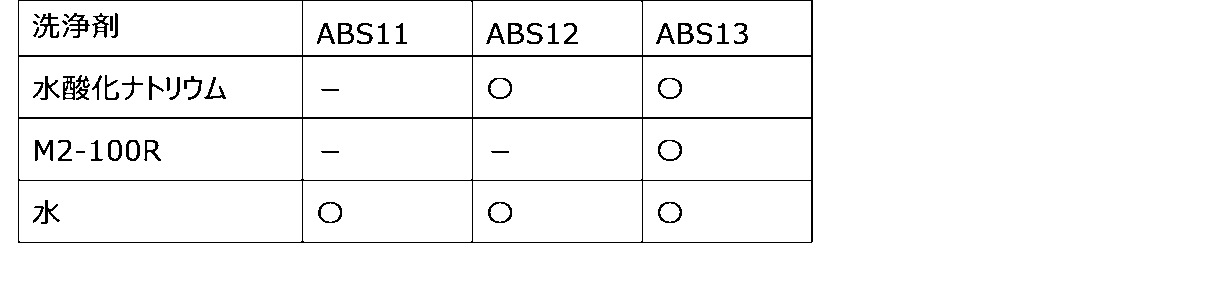
(工程2)
PRO21:ホモディスパーを使用し、液温を70℃に保ちながら、200rpmで10分間攪拌した。
PRO22:ニクニ製 サンカッタ C125H を使用し、液温を70℃に保ちながら、0.1m3/minで圧送しながら攪拌した。
PRO21:ホモディスパーを使用し、液温を70℃に保ちながら、200rpmで10分間攪拌した。
PRO22:ニクニ製 サンカッタ C125H を使用し、液温を70℃に保ちながら、0.1m3/minで圧送しながら攪拌した。
工程2における洗浄液として水と、表3に示す界面活性剤0.3重量%と、表4に示す水溶性溶剤と、水酸化カリウムを2重量%とを混合して、表5に示す洗浄液を調整した。
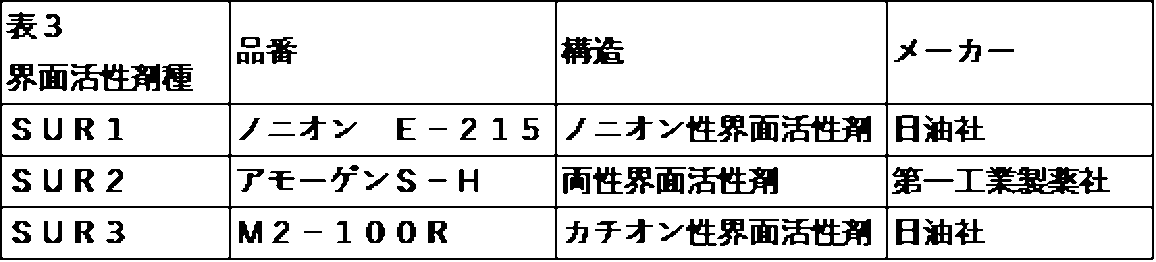
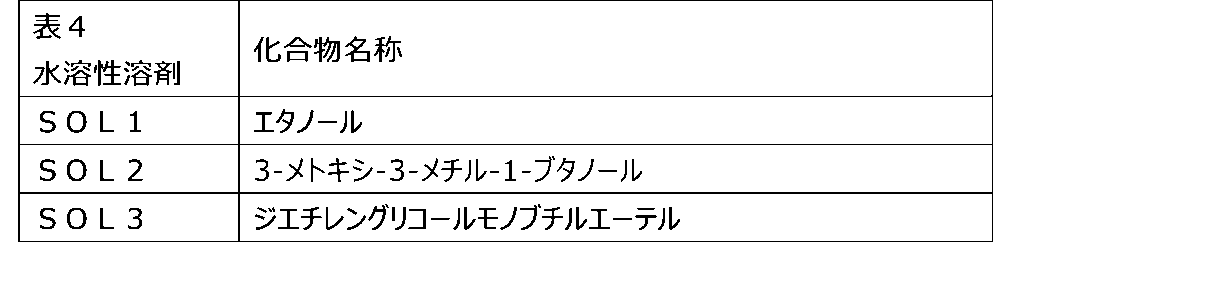
水と、水酸化カリウム2重量%は、混合した場合は表5に〇と記載した。
界面活性剤0.3重量%は、配合した場合は表5に品名を記載した。
水溶性溶剤は、混合した場合は上段に種類を、下段に配合重量%を記載した。
配合しなかった場合は、「-」を記載した。
界面活性剤0.3重量%は、配合した場合は表5に品名を記載した。
水溶性溶剤は、混合した場合は上段に種類を、下段に配合重量%を記載した。
配合しなかった場合は、「-」を記載した。
表5の剥離剤組成は、縦方向に加算し100重量%となるように不足分は水を加えた。
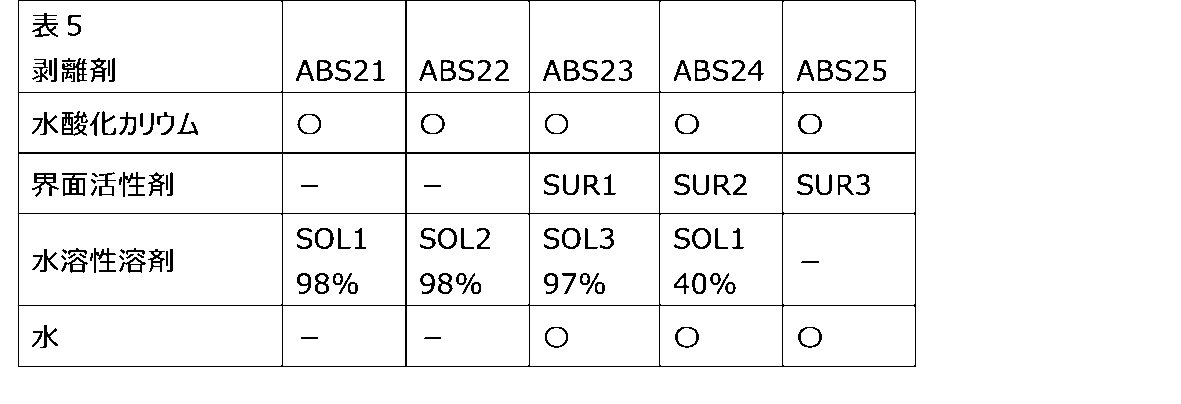
(積層フィルムからのインキ除去性)
表6~8の結果1は、積層フィルムからのインキ除去状態を示している。各洗浄工程で積層フィルムを洗浄し、乾燥したのちに、印刷部のインキ除去性について、光学顕微鏡を用いて撮影された写真の画像処理にて面積を算出し、以下式を用いてインキ除去率を求めることで判定した。
インキ除去率(%)=(1-洗浄後のインキ付着面積/洗浄前のインキ付着面積)×100
◎:印刷部の100%が除去。
〇:印刷部の75%以上100%未満が除去。
〇△:印刷部もしくは積層部の50%以上75%未満が除去。
× :全く剥離しない~50%未満が除去。
なお、◎、○、〇△は実用上問題がない範囲である。
表6~8の結果1は、積層フィルムからのインキ除去状態を示している。各洗浄工程で積層フィルムを洗浄し、乾燥したのちに、印刷部のインキ除去性について、光学顕微鏡を用いて撮影された写真の画像処理にて面積を算出し、以下式を用いてインキ除去率を求めることで判定した。
インキ除去率(%)=(1-洗浄後のインキ付着面積/洗浄前のインキ付着面積)×100
◎:印刷部の100%が除去。
〇:印刷部の75%以上100%未満が除去。
〇△:印刷部もしくは積層部の50%以上75%未満が除去。
× :全く剥離しない~50%未満が除去。
なお、◎、○、〇△は実用上問題がない範囲である。

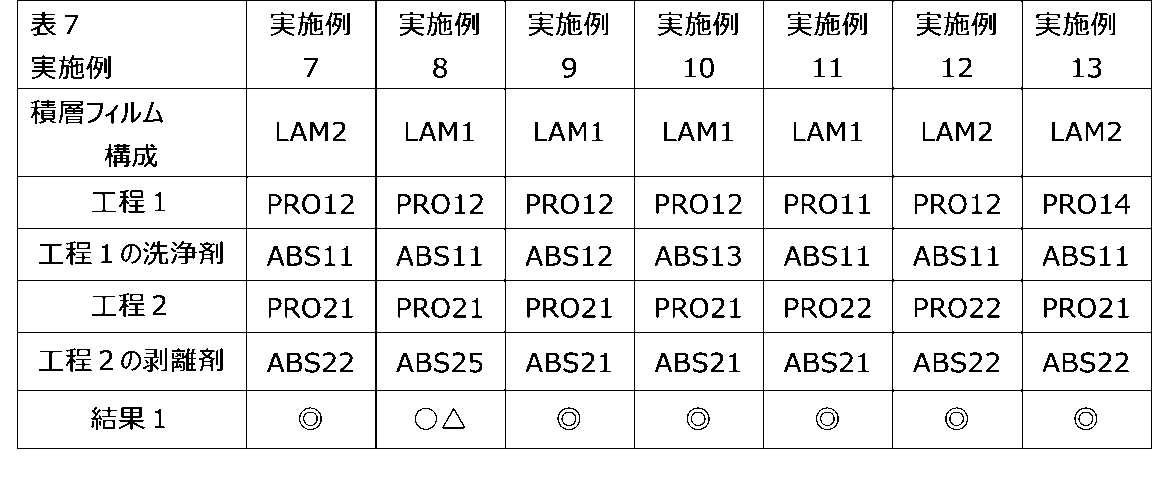
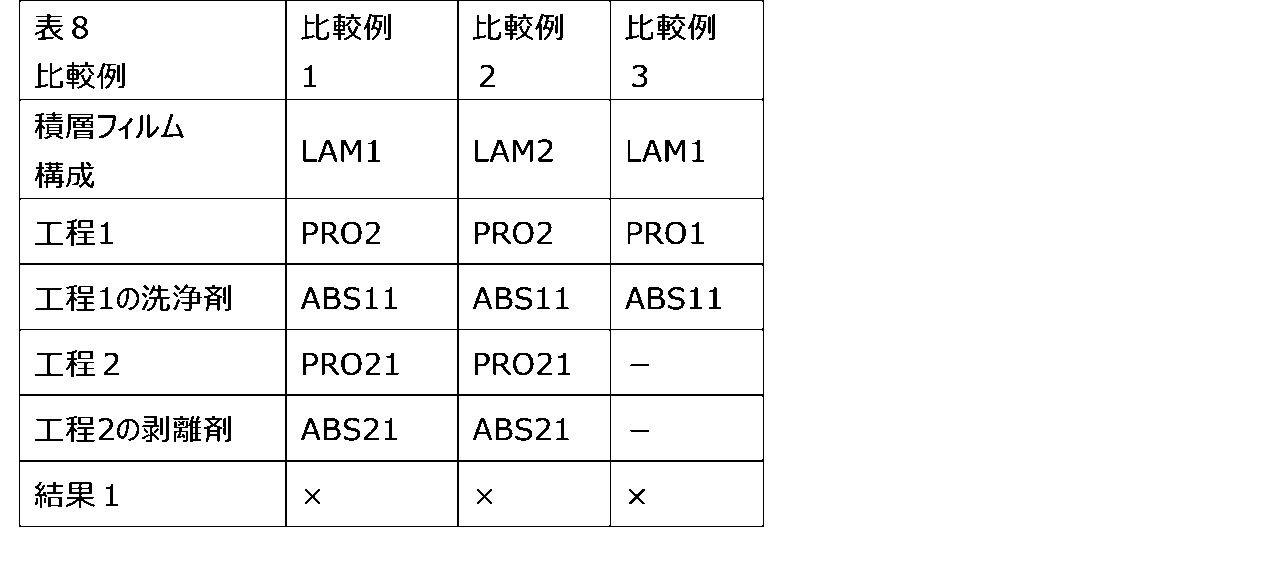
この結果より、工程1及び工程2を組み合わせた実施例は、プラスチックフィルムの積層体の剥離を行うことができ、積層体の層間に存在するインキ層の剥離も行うことができた。
Claims (10)
- プラスチックフィルム層と、プラスチックフィルム層、蒸着膜層及び金属箔層から選ばれる層と、を少なくとも有する積層体の分離回収方法であって、
前記積層体を水又は洗浄液中で破砕する工程1と、
破砕した前記積層体を剥離剤中で攪拌することにより、前記積層体を単層に分離する工程2
を有することを特徴とする積層体の分離回収方法。 - 前記剥離剤が、(a)水溶性溶剤、及び(b)無機塩基を含有する請求項1に記載の積層体の分離回収方法。
- 前記水溶性溶剤が、水溶性のアルコール類もしくは、引火点が21℃以上の水溶性溶剤である請求項2に記載の積層体の分離回収方法。
- 前記剥離剤が(c)又は(d)の少なくともいずれかを更に含有する請求項3に記載の積層体の分離回収方法。
(c)水を前記インキ剥離剤全量に対し80質量%以下含有する。
(d)界面活性剤を前記インキ剥離剤全量に対し5質量%以下含有する。 - 前記積層体が、少なくとも一つのプラスチックフィルム上にインキ層を有する積層体である、請求項1~4のいずれか一項に記載の積層体の分離回収方法。
- プラスチックフィルム層、金属箔層又は蒸着膜層から選択される少なくとも2以上の層の間に前記インキ層を有する請求項5に記載の積層体の分離回収方法。
- 前記工程2において、プラスチックフィルムからインキ層を剥離する請求項5又は6に記載の積層体の分離回収方法。
- 前記工程2において温度40℃以上に加熱する請求項1~7のいずれか一項に記載の積層体の分離回収方法。
- 単層に分離されたプラスチック破砕物を単層ごとに回収する請求項1~8のいずれか一項に記載の積層体の分離回収方法。
- 請求項1~9のいずれか一項に記載の方法により単層に分離されたプラスチック破砕物を単層ごとに回収し、回収物を溶融後に成形機により成形する再生プラスチックペレットの製造方法。
Priority Applications (1)
| Application Number | Priority Date | Filing Date | Title |
|---|---|---|---|
| JP2022547721A JP7239070B2 (ja) | 2021-03-11 | 2022-02-24 | プラスチックフィルム層を有する積層体の分離回収方法、及び当該方法により回収したプラスチック破砕物を用いた再生プラスチックペレットの製造方法 |
Applications Claiming Priority (2)
| Application Number | Priority Date | Filing Date | Title |
|---|---|---|---|
| JP2021039115 | 2021-03-11 | ||
| JP2021-039115 | 2021-03-11 |
Publications (1)
| Publication Number | Publication Date |
|---|---|
| WO2022190872A1 true WO2022190872A1 (ja) | 2022-09-15 |
Family
ID=83227734
Family Applications (1)
| Application Number | Title | Priority Date | Filing Date |
|---|---|---|---|
| PCT/JP2022/007445 Ceased WO2022190872A1 (ja) | 2021-03-11 | 2022-02-24 | プラスチックフィルム層を有する積層体の分離回収方法、及び当該方法により回収したプラスチック破砕物を用いた再生プラスチックペレットの製造方法 |
Country Status (2)
| Country | Link |
|---|---|
| JP (1) | JP7239070B2 (ja) |
| WO (1) | WO2022190872A1 (ja) |
Cited By (1)
| Publication number | Priority date | Publication date | Assignee | Title |
|---|---|---|---|---|
| JP2024066537A (ja) * | 2022-11-02 | 2024-05-16 | artience株式会社 | プラスチック基材の分離回収方法 |
Citations (8)
| Publication number | Priority date | Publication date | Assignee | Title |
|---|---|---|---|---|
| JPH06220245A (ja) * | 1993-01-25 | 1994-08-09 | Toyota Central Res & Dev Lab Inc | ポリウレタン発泡複合体の剥離方法 |
| JPH08164524A (ja) * | 1994-04-20 | 1996-06-25 | Teijin Ltd | 光磁気記録ディスク廃棄物の処理方法 |
| JPH10292138A (ja) * | 1997-04-18 | 1998-11-04 | Izumiya Yakuhin Kk | 塗膜剥離用組成物 |
| JP2004043649A (ja) * | 2002-07-12 | 2004-02-12 | Matsushita Ecotechnology Center:Kk | 廃プラスチック材の分離方法、廃プラスチック材の分離装置 |
| JP2004042461A (ja) * | 2002-07-12 | 2004-02-12 | Matsushita Ecotechnology Center:Kk | 廃プラスチック材の分離方法、廃プラスチック材の分離装置 |
| CN101318361A (zh) * | 2008-07-22 | 2008-12-10 | 中国科学院过程工程研究所 | 废弃光盘中的基片回收方法 |
| JP2010241074A (ja) * | 2009-04-09 | 2010-10-28 | Tokuyama Corp | 樹脂シートの回収方法 |
| JP2016153176A (ja) * | 2015-02-20 | 2016-08-25 | 東洋製罐株式会社 | ポリエチレンテレフタレートフレークの製造方法 |
Family Cites Families (4)
| Publication number | Priority date | Publication date | Assignee | Title |
|---|---|---|---|---|
| JP3270037B2 (ja) * | 2000-02-22 | 2002-04-02 | パナック工業株式会社 | 合成樹脂基材等の回収方法 |
| JP2006051732A (ja) * | 2004-08-13 | 2006-02-23 | Panakku Kogyo Kk | 成形品から熱可塑性樹脂を回収する方法及び成形品 |
| JP2010280122A (ja) * | 2009-06-04 | 2010-12-16 | Dic Corp | プラスチックフィルム積層体及びその製造方法 |
| JP6777263B2 (ja) * | 2018-09-25 | 2020-10-28 | Dic株式会社 | 積層フィルムの分離回収方法 |
-
2022
- 2022-02-24 WO PCT/JP2022/007445 patent/WO2022190872A1/ja not_active Ceased
- 2022-02-24 JP JP2022547721A patent/JP7239070B2/ja active Active
Patent Citations (8)
| Publication number | Priority date | Publication date | Assignee | Title |
|---|---|---|---|---|
| JPH06220245A (ja) * | 1993-01-25 | 1994-08-09 | Toyota Central Res & Dev Lab Inc | ポリウレタン発泡複合体の剥離方法 |
| JPH08164524A (ja) * | 1994-04-20 | 1996-06-25 | Teijin Ltd | 光磁気記録ディスク廃棄物の処理方法 |
| JPH10292138A (ja) * | 1997-04-18 | 1998-11-04 | Izumiya Yakuhin Kk | 塗膜剥離用組成物 |
| JP2004043649A (ja) * | 2002-07-12 | 2004-02-12 | Matsushita Ecotechnology Center:Kk | 廃プラスチック材の分離方法、廃プラスチック材の分離装置 |
| JP2004042461A (ja) * | 2002-07-12 | 2004-02-12 | Matsushita Ecotechnology Center:Kk | 廃プラスチック材の分離方法、廃プラスチック材の分離装置 |
| CN101318361A (zh) * | 2008-07-22 | 2008-12-10 | 中国科学院过程工程研究所 | 废弃光盘中的基片回收方法 |
| JP2010241074A (ja) * | 2009-04-09 | 2010-10-28 | Tokuyama Corp | 樹脂シートの回収方法 |
| JP2016153176A (ja) * | 2015-02-20 | 2016-08-25 | 東洋製罐株式会社 | ポリエチレンテレフタレートフレークの製造方法 |
Cited By (2)
| Publication number | Priority date | Publication date | Assignee | Title |
|---|---|---|---|---|
| JP2024066537A (ja) * | 2022-11-02 | 2024-05-16 | artience株式会社 | プラスチック基材の分離回収方法 |
| JP7679343B2 (ja) | 2022-11-02 | 2025-05-19 | artience株式会社 | プラスチック基材の分離回収方法 |
Also Published As
| Publication number | Publication date |
|---|---|
| JPWO2022190872A1 (ja) | 2022-09-15 |
| JP7239070B2 (ja) | 2023-03-14 |
Similar Documents
| Publication | Publication Date | Title |
|---|---|---|
| JP7722207B2 (ja) | プラスチック積層体をリサイクル原料に再生するためのリサイクルシステム、リサイクル方法、及び積層体の分離回収方法 | |
| JP7416227B2 (ja) | プラスチック積層体をリサイクル原料に再生するために用いるインキ洗浄剤、インキ膜剥離方法、及び剥離したインキ膜の分離回収方法 | |
| JP7004124B1 (ja) | プラスチック積層体をリサイクル原料に再生するために用いるインキ洗浄剤、インキ膜剥離/除去方法、及び剥離又は除去されたインキ膜の分離回収方法 | |
| JP7302755B2 (ja) | 再生プラスチックペレットの製造方法及び再生プラスチックペレット | |
| JP2023032031A (ja) | プラスチックフィルム積層体のリサイクル方法、プラスチックフィルム積層体を用いたリサイクルプラスチックの加工用材料及びその製造方法 | |
| JPWO2020059516A1 (ja) | 積層フィルムの分離回収方法 | |
| JP7392210B1 (ja) | プラスチックフィルムの分離回収方法、及び再生プラスチックペレットの製造方法 | |
| EP3554834A2 (en) | Method and apparatus for recycling packaging material | |
| CN103370366A (zh) | 用于分离多层系统的分离介质、方法和设备 | |
| JP7239070B2 (ja) | プラスチックフィルム層を有する積層体の分離回収方法、及び当該方法により回収したプラスチック破砕物を用いた再生プラスチックペレットの製造方法 | |
| JP7211568B1 (ja) | インキ剥離方法、該インキ剥離方法に使用するインキ剥離剤、及びこれらを利用したプラスチック基材回収方法 | |
| JP7666768B1 (ja) | プラスチックフィルムの分離回収方法、及び再生プラスチックペレットの製造方法 | |
| JP2024047532A (ja) | 積層体の分離回収方法 | |
| JP2023170419A (ja) | 成形用又は成型用材料及びその製造方法 | |
| US20170114206A1 (en) | Recycling of Pressure-Sensitive Adhesive Laminates | |
| WO2024053245A1 (ja) | プラスチックフィルムの分離回収方法、及び再生プラスチックペレットの製造方法 | |
| EP4438634A1 (en) | Method for separation and recovery of laminate | |
| JP7732608B1 (ja) | プラスチックフィルム片から機能層を除去する方法、及び、再生プラスチックペレットの製造方法 | |
| WO2010111714A2 (en) | Reduced-environmental-impact magnetic sheet systems | |
| JP2025086529A (ja) | プラスチックフィルムの分離回収方法、及び再生プラスチックペレットの製造方法 | |
| JP7277659B1 (ja) | 再生プラスチック基材の製造方法 | |
| JP2023051162A (ja) | インキ層の除去方法、ラベルのリサイクル方法およびプラスチック製品の製造方法 | |
| JP2025151926A (ja) | リサイクル材料の製造方法 | |
| WO2026048465A1 (ja) | 脱離用プライマー組成物、印刷物及びリサイクル方法 |
Legal Events
| Date | Code | Title | Description |
|---|---|---|---|
| ENP | Entry into the national phase |
Ref document number: 2022547721 Country of ref document: JP Kind code of ref document: A |
|
| 121 | Ep: the epo has been informed by wipo that ep was designated in this application |
Ref document number: 22766832 Country of ref document: EP Kind code of ref document: A1 |
|
| NENP | Non-entry into the national phase |
Ref country code: DE |
|
| 122 | Ep: pct application non-entry in european phase |
Ref document number: 22766832 Country of ref document: EP Kind code of ref document: A1 |