WO2022168172A1 - マーケティング装置、マーケティングシステム、マーケティング方法、及びプログラム - Google Patents
マーケティング装置、マーケティングシステム、マーケティング方法、及びプログラム Download PDFInfo
- Publication number
- WO2022168172A1 WO2022168172A1 PCT/JP2021/003775 JP2021003775W WO2022168172A1 WO 2022168172 A1 WO2022168172 A1 WO 2022168172A1 JP 2021003775 W JP2021003775 W JP 2021003775W WO 2022168172 A1 WO2022168172 A1 WO 2022168172A1
- Authority
- WO
- WIPO (PCT)
- Prior art keywords
- name
- drug
- medical
- facility
- database
- Prior art date
- Legal status (The legal status is an assumption and is not a legal conclusion. Google has not performed a legal analysis and makes no representation as to the accuracy of the status listed.)
- Ceased
Links
Images











Classifications
-
- G—PHYSICS
- G06—COMPUTING OR CALCULATING; COUNTING
- G06Q—INFORMATION AND COMMUNICATION TECHNOLOGY [ICT] SPECIALLY ADAPTED FOR ADMINISTRATIVE, COMMERCIAL, FINANCIAL, MANAGERIAL OR SUPERVISORY PURPOSES; SYSTEMS OR METHODS SPECIALLY ADAPTED FOR ADMINISTRATIVE, COMMERCIAL, FINANCIAL, MANAGERIAL OR SUPERVISORY PURPOSES, NOT OTHERWISE PROVIDED FOR
- G06Q30/00—Commerce
- G06Q30/02—Marketing; Price estimation or determination; Fundraising
-
- G—PHYSICS
- G16—INFORMATION AND COMMUNICATION TECHNOLOGY [ICT] SPECIALLY ADAPTED FOR SPECIFIC APPLICATION FIELDS
- G16H—HEALTHCARE INFORMATICS, i.e. INFORMATION AND COMMUNICATION TECHNOLOGY [ICT] SPECIALLY ADAPTED FOR THE HANDLING OR PROCESSING OF MEDICAL OR HEALTHCARE DATA
- G16H20/00—ICT specially adapted for therapies or health-improving plans, e.g. for handling prescriptions, for steering therapy or for monitoring patient compliance
- G16H20/10—ICT specially adapted for therapies or health-improving plans, e.g. for handling prescriptions, for steering therapy or for monitoring patient compliance relating to drugs or medications, e.g. for ensuring correct administration to patients
Definitions
- the present invention relates to marketing devices, marketing systems, marketing methods, and programs.
- Receipts medical bills refer to medical bills issued when billing the facility for medical treatment performed on a patient other than the amount borne by the patient at the reception desk. This is the compiled data.
- personal information such as the patient's name, age, gender, address, contact information, medical history, symptoms, doctor's findings and definitive diagnosis regarding the patient, and Names, names of medical facilities, clinical departments, etc. are associated with prescribed medicines, and this information can be managed in an integrated manner.
- the data handled by such a medical information system is stored in a medical database as electronic medical record data associated with the patient's personal information, so it is necessary to protect the patient's personal information and to comply with strict legal requirements. Due to restrictions, it was not available to third parties other than physicians and medical facilities involved in diagnosing patients.
- a technique has been proposed for constructing a database that excludes patient's personal information and providing the database to a third party.
- a first database system and a second database system are known.
- data such as electronic medical charts and receipts for patients who have undergone medical examinations at specific cooperating medical facilities can be used for surveys and research on drug safety measures and the like.
- the patient's name, address, and patient number have been deleted from the data available to users of the first database system, and processing has been carried out to uniformly shift the date of birth, date of examination, etc.
- a table corresponding to the date of birth, the date of medical examination, etc. with the database is not created, so the individual patient cannot be identified.
- a computer provided in a medical facility executes a program for collecting data, and at the end of the day's work at the medical facility, the electronic medical record data is registered and retained.
- a system has been disclosed in which data of a given item, excluding information identifying an individual patient, is read from a database and stored in a summary database (see, for example, Patent Document 1).
- doctors and medical institutions browse a list of drugs corresponding to a patient's definitive diagnosis through a medical information system such as an ordering system and an electronic medical record system, and select a drug to be prescribed from the list. and provide detailed information on the use of pharmaceuticals to pharmaceutical companies, etc., which are third parties other than doctors and medical institutions, in an environment that fully considers the protection of personal information.
- pharmaceutical companies which are third parties other than doctors and medical institutions, there is an environment in which sufficient consideration is given to the protection of personal information for drugs selected by doctors from the drug list and/or drugs prescribed by doctors. , which aims to provide a drug use information providing system that can use detailed information on drug use.
- a medical institution terminal installed in a medical institution and a server device that can be connected to the medical institution terminal via a communication line are provided, and the medical institution terminal includes patient attributes and definitive diagnoses.
- medical information receiving means for receiving input of medical information; drug list display means for displaying a list of drugs corresponding to the input definitive diagnosis on a display screen; and drug selection from the drug list displayed by the drug list display means Transmits to the server device the drug selection receiving means for receiving the drug selection, the drug received by the drug selection receiving means, and the selected drug information related to the patient's attributes and definitive diagnosis corresponding to the drug received by the medical information receiving means.
- the server device comprises selected drug information receiving means for receiving the selected drug information transmitted from the medical institution terminal, and selection for storing the selected drug information received by the selected drug information receiving means.
- a drug utilization information providing system comprising drug information storage means is disclosed.
- Patent Document 1 through a medical information system such as an ordering system or an electronic medical record system, a doctor uses a medical institution terminal to browse a list of drugs corresponding to a confirmed diagnosis of a patient, and from the drug list For medicines selected and/or prescribed by doctors, by storing information on the use of medicines that is not linked to the personal information of patients in the server device, pharmaceutical companies, etc., which are third parties other than doctors and medical institutions Information on the use of medicines is available.
- the database was constructed based on data such as electronic medical records and receipts issued by a specific medical institution for general outpatients, etc.
- One embodiment of the present invention has been made in view of the above, and the object thereof is to obtain medical facility names corresponding to drug names from a database collected about drugs ordered by medical professionals to administer to patients, To extract and provide the quantity of drug and the name of applicable disease.
- the invention according to claim 1 is a marketing device that receives order data for each patient related to drugs from medical staff terminals via a communication network and stores it in a database.
- a calendar screen data generation unit for generating calendar screen data for each patient in which a plurality of date areas are arranged in a calendar screen data generation unit for delivering the calendar screen data for each patient to the medical staff terminal;
- a first communication unit that receives from the medical staff terminal the medical facility name, drug name, drug quantity, and applicable disease name specified in the medical facility name, drug name, and drug received from the medical staff terminal
- a storage control unit that associates a combination of the quantity of the drug and the name of the applicable disease with each patient and stores the combination in the database, and the database is searched using the drug name as a key, and the medical facility name and drug quantity corresponding to the drug name are searched.
- a search unit for outputting the name of the applicable disease.
- FIG. 1 is a block diagram showing the configuration of a marketing system according to one embodiment of the present invention
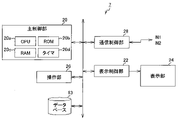
- FIG. 1 is a block diagram showing the hardware configuration of an order management device according to one embodiment of the present invention
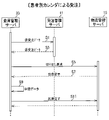
- FIG. 10 is a sequence diagram for explaining the operation of an order management server according to an embodiment of the present invention to receive an order using a calendar for each patient
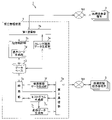
- 1 is a functional block diagram for explaining functions of an order management device according to an embodiment of the present invention
- FIG. It is a figure which shows the patient list screen which concerns on one Embodiment of this invention.
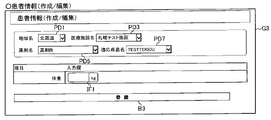
- FIG. 4 is a diagram showing a new patient information registration screen displayed on the medical staff terminal according to one embodiment of the present invention.
- FIG. 4 is a flow chart showing the operation of a patient code generator according to one embodiment of the present invention
- 4 is a flow chart showing the operation of a storage control unit according to one embodiment of the present invention
- FIG. 10 is a diagram showing a patient-by-patient calendar screen in a state where there is no medication schedule on the medical staff terminal according to one embodiment of the present invention.
- FIG. 10 is a diagram showing a screen of a calendar for each patient with medication scheduled on the medical staff terminal according to one embodiment of the present invention.
- FIG. 4 is a sequence diagram showing communication between a medical staff terminal and a calendar screen data generator according to an embodiment of the present invention; (a) to (g) are ER diagrams used in the order management device according to one embodiment of the present invention.
- FIG. 4 is a diagram showing a calendar screen for each medical facility displayed on the medical staff terminal according to one embodiment of the present invention.
- FIG. 4 is a diagram showing a search screen and a patient information list screen displayed on the medical staff terminal according to one embodiment of the present invention;
- FIG. 2 is a sequence diagram (Part 1) showing the contents of communication from the medical information staff terminal to the database according to one embodiment of the present invention.
- FIG. 2 is a sequence diagram (part 2) showing the contents of communication from the medical information staff terminal to the database according to one embodiment of the present invention.
- FIG. 3 is a sequence diagram (Part 3) showing the contents of communication from the medical information staff terminal to the database according to one embodiment of the present invention.
- FIG. 1 shows the contents of communication from the medical information staff terminal to the database according to one embodiment of the present invention.
- FIG. 2 is a sequence diagram (part 2) showing the contents of communication from the medical information staff terminal to the database according to one embodiment of the present invention.
- FIG. 3 is a sequence diagram (Part 3)
- FIG. 4 is a sequence diagram (part 4) showing the contents of communication from the medical information staff terminal to the database according to one embodiment of the present invention.
- 4 is a flow chart showing the operation of a search unit according to one embodiment of the present invention;
- FIG. 4 is a diagram showing a display screen (No. 1) generated by a display data generation unit according to an embodiment of the present invention;
- FIG. 10 is a diagram showing a display screen (No. 2) generated by the display data generation unit according to the embodiment of the present invention;
- FIG. 10 is a diagram showing a display screen (No. 3) generated by the display data generation unit according to the embodiment of the present invention;
- FIG. 10 is a diagram showing a display screen (part 4) generated by the display data generation unit according to the embodiment of the present invention;
- FIG. 10 is a diagram showing a display screen (No. 5) generated by the display data generation unit according to the embodiment of the present invention
- FIG. 10 is a diagram showing a display screen (No. 6) generated by the display data generation unit according to the embodiment of the present invention
- FIG. 10 is a diagram showing a display screen (No. 7) generated by the display data generation unit according to the embodiment of the present invention
- FIG. 10 is a diagram showing a display screen (No. 8) generated by a display data generation unit according to an embodiment of the present invention
- FIG. 10 is a diagram showing a display screen (No. 9) generated by the display data generation unit according to the embodiment of the present invention
- FIG. 10 is a diagram showing a display screen (No. 10) generated by a display data generation unit according to an embodiment of the present invention
- the marketing device of the present invention is a marketing device that receives order data for each patient related to drugs from medical staff terminals via a communication network and stores the data in a database, wherein a plurality of date areas are arranged for each month.
- a calendar screen data generation unit for generating calendar screen data for each patient; and delivering the calendar screen data for each patient to medical staff terminals, and medical facility names and drug names specified in the calendar screen data for each patient.
- the first communication unit that receives the quantity of drug and the name of the applicable disease from the medical staff terminal, and the combination of the medical facility name, the name of the drug, the quantity of the drug, and the name of the applicable disease received from the medical staff terminal for each patient
- a memory control unit that associates and stores in a database, and a search unit that searches the database using the drug name as a key and outputs the medical facility name, drug quantity, and applicable disease name corresponding to the drug name. It is characterized by With the above configuration, the medical facility name corresponding to the name of the drug, the quantity of the drug, and the name of the applicable disease are extracted and provided from the database of the drugs ordered by the medical staff to administer to the patient. be able to.
- FIG. 1 is a block diagram showing the configuration of a marketing system according to one embodiment of the present invention.
- the marketing system 1 includes a medical staff terminal (medical facility) 3, a medical information staff terminal 5, communication networks N1 and N2, an order management device (marketing device) 7, and a distribution management server (distributor) 15.
- the order management device 7 includes a front end server 9 , an order management server 11 and a database 13 .
- a plurality of medical staff terminals 3 and medical information staff terminals 5 are provided, but a single terminal may be provided.
- the communication networks are separated from N1 and N2, they may be configured with the same communication network.
- the front-end server 9 receives data from the medical staff terminal 3 and the medical staff terminal 5 via the communication network N1, and provides a direct access service to the medical staff terminal 3 and the medical staff terminal 5. and change the display format.
- the medical staff terminal 3 is a terminal that can be operated by medical staff such as doctors and nurses of medical facilities.
- the medical information staff terminal 5 is a terminal that can be operated by a pharmaceutical manufacturer's marketing staff.
- the order management server 11 transmits data to the physical distribution management server 15 via the communication network N2 to perform physical distribution management.
- the physical distribution management server 15 is arranged for each warehouse that stores each drug, or for each warehouse that stores a plurality of drugs. facility).
- FIG. 2 is a block diagram showing the hardware configuration of the order management device according to one embodiment of the present invention.
- the order management device 7 is a computer located at a delivery company, and includes a main control section 20 , a display control section 22 , a display section 24 , an operation section 26 , a communication control section 28 and a database 13 .
- the main control unit 20 internally includes a CPU (central processing unit) 20a, a ROM (read only memory) 20b, a RAM (random access memory) 20c, and a timer 20d.
- the CPU 20a reads the operating system OS from the ROM 20b, expands it on the RAM 20c, starts the OS, reads application software programs (processing modules) from the ROM 20b, and executes various processes under the control of the OS.
- the display control unit 22 draws an image input from the main control unit 20 on the VRAM and causes the display unit 24 to display the image.
- the display unit 24 displays an image drawn on the VRAM by the display control unit 22 .
- the operating unit 26 includes a keyboard, a mouse, and the like.
- the communication control unit 28 is connected to the medical staff terminal 3, the medical information staff terminal 5, and the physical distribution management server 15 via communication networks N1 and N2.
- a database 13 is a database stored on a hard disk.
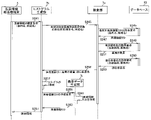
- FIG. 3 is a sequence diagram for explaining the operation of the order management server according to the embodiment of the present invention for receiving an order based on the calendar for each patient.
- the warehouse management server 33, the order management server 11, and the physical distribution management server 15 are arranged in this order from the left, and the flow of each data is indicated by arrows.
- the same constituent elements are given the same reference numerals for explanation.
- the warehouse management server 33 is a server that manages drugs for each warehouse that stores each drug. Although not shown in FIG. 1, it is connected to the order management server 11 and the physical distribution management server 15 .
- step S1 the warehouse management server 33 sends provisional order data to the order management server 11, and in step S3, the order management server 11 returns the provisional order data.
- step S3 the order management server 11 returns the provisional order data.
- the order is confirmed in the process every morning to create order (confirmed) data.
- step S ⁇ b>5 the warehouse management server 33 transmits to the physical distribution management server 15 a cutout request to the effect that an order is placed based on the provisional order data.
- step S7 if the physical distribution management server 15 is satisfied with the content, a delivery instruction is sent to the warehouse management server 33.
- step S9 the warehouse management server 33 confirms the intermediate data, and in step S11, transmits data indicating completion of delivery to the physical distribution management server 15.
- FIG. 4 is a functional block diagram for explaining the functions of the order management device according to one embodiment of the present invention.
- the order management device 7 is a marketing device that receives patient-specific order data related to drugs from the medical staff terminal 3 via the communication network N1 and stores it in the database 13.
- the calendar screen data generation unit 7a, the first A communication unit 7b, a storage control unit 7c, and a search unit 7e are provided.
- the calendar screen data generation unit 7a generates calendar screen data for each patient in which a plurality of date areas are arranged for each month.
- the first communication unit 7b distributes the calendar screen data for each patient to the medical staff terminal 3, and also distributes the medical facility name, drug name, quantity (or quantity) of medicine, and indication specified in the calendar screen data for each patient.
- a disease name is received from the medical staff terminal 3 .
- the memory control unit 7c stores the combination of the medical facility name, drug name, drug quantity, and applicable disease name received from the medical staff terminal 3 in the database in association with each patient.
- the search unit 7e searches the database using the drug name as a key, and outputs the medical facility name, drug quantity, and applicable disease name corresponding to the drug name.
- the memory controller 7c has a patient code generator 7d.
- the patient code generation unit 7d generates a patient code based on the medical facility name, drug name, and applicable disease name received from the medical staff terminal 3.
- the storage control unit 7c associates the medical facility name, drug name, and drug quantity with the patient code and stores them in the database.
- the storage control unit 7c stores the medical facility name and the location of the medical facility in the database in association with each other, and retrieves the location of the medical facility from the database 13 based on the medical facility name received from the medical staff terminal 3.
- the searched address is stored in the database 13 in association with the medical facility name, drug name, quantity of drug, and patient code.
- the number of medicines includes the actual number of medicines administered and the planned number of medicines to be administered in the future.
- the search unit 7e searches the database using the drug name as a key, and outputs the quantity of drug, the number of patients, and at least one or more applicable disease names.
- the database 13 may associate and store the location and the area name as the address.
- the search unit 7e searches the database using the drug name and region name as keys, and outputs the name of the medical institution, the quantity of drug, the number of patients, and the name of the applicable disease corresponding to the drug name and region name.
- the storage control unit 7c distributes the patient code generated by the patient code generation unit 7d to the medical staff terminal 3 via the first communication unit 7b, and displays the calendar screen for each patient displayed on the medical staff terminal 3. Display the patient code in the
- the order management device 7 includes a search screen data generation section 7f and a second communication section 7g.
- the search screen data generation unit 7f generates search screen data that allows input by designating a drug name.
- the second communication unit 7g distributes the search screen data to the terminal of the person in charge of medical information and receives the drug name specified from the terminal of the person in charge of medical information.
- the search unit 7e searches the database using the drug name received from the medical information staff terminal as a key.
- the search screen data generation unit 7f generates search screen data that can be input by designating a medicine name and a region name.
- the second communication unit 7g distributes the search screen data to the terminal of the person in charge of medical information, and receives the specified drug name and the name of the area from the terminal of the person in charge of medical information.
- the search unit 7e searches the database using the drug name and region name received from the medical information staff terminal as keys.
- the order management device 7 includes a histogram generation section 7h and a second communication section 7g.
- the histogram generation unit 7h generates a histogram of drug quantity (or quantity) for each region corresponding to the drug name based on the search results output by the search unit 7e.
- the second communication unit 7g distributes the histogram generated by the histogram generation unit to the medical information staff terminal.
- the histogram generation unit 7h generates histograms of the number of patients currently undergoing treatment and the number of patients who have completed medication for each facility for the specified drug name and area name. It should be noted that the completion of administration means that the administration of drugs for treating a certain disease of a certain patient has been completed.
- the histogram generation unit 7h generates histograms of the total number of medications and the total number of patients for each facility for the specified drug name and region name.
- the total number of medications is the sum of the actual number of medications and the planned number of medications.
- the histogram generation unit 7h generates histograms of the actual number of medications and the planned number of medications for each facility for the specified drug name and area name.
- the histogram generation unit 7h generates histograms of the actual number of medications and the planned number of medications for each facility for the specified drug name and area name.
- the histogram generation unit 7h generates a histogram of the number of medications for each disease for each facility for the specified drug name and area name.
- the histogram generation unit 7h generates a histogram of the number of breakdowns for each disease in the total number of medications for each facility for the specified drug name and region name.
- the histogram generation unit 7h generates histograms of the number of actual medications and the number of planned medications for each facility for the specified drug name and area name.
- the histogram generation unit 7h generates a histogram of the percentage of patients in the total number of medications for each facility for the specified drug name and region name.
- the histogram generation unit 7h generates histograms of drug administration records and planned numbers for each facility with respect to the specified drug name and area name.
- the histogram generation unit 7h generates histograms of the actual number of medications and the planned number of medications for each disease for each facility for the specified drug name and area name.
- the order management device 7 includes a display data generator 7i.
- the display data generator 7i generates display data in which the histograms are superimposed on the respective areas on the map data.
- the second communication unit 7g distributes the display data generated by the display data generation unit 7i to the medical information staff terminal.
- the first communication unit 7 b receives the patient code and the medication completion date associated with the drug name from the medical staff terminal 3 .
- the storage control unit 7c associates the patient code and drug name already received from the medical staff terminal 3 with the medication completion date and stores them in the database.
- the search unit 7e searches the database using the drug name as a key, and outputs the number of patients who have completed treatment using the drug name so far, or outputs the number of patients who are undergoing treatment using the drug name. do.
- the marketing system 1 includes a marketing device, a medical staff terminal 3, and a medical information staff terminal 5.
- FIG. 5 is a diagram showing a patient list screen according to one embodiment of the present invention.
- a patient list icon is displayed as one of many options, and when the medical staff selects the patient list icon, patient information (list) A screen G1 is displayed.
- a patient information (list) screen G1 displayed on the medical staff terminal 3 displays an area name pull-down button PD1, a medical facility name pull-down button PD3, a drug name pull-down button PD5, and an applicable disease name pull-down button PD7.
- a new registration button B1 is displayed on the patient information (list) screen G1.
- the new registration button B1 is pressed, the screen changes to the new registration screen G3 shown in FIG.
- FIG. 6 is a diagram showing a new patient information registration screen displayed on the medical staff terminal according to one embodiment of the present invention.
- an area name pull-down button PD1 On the new registration screen G3 displayed on the medical staff terminal 3, an area name pull-down button PD1, a medical facility name pull-down button PD3, a drug name pull-down button PD5, and an applicable disease name pull-down button PD7 are displayed.
- the down arrow ⁇ displayed on each pull-down button is pressed, a plurality of options for the medical facility name, drug name, and applicable disease name are displayed, one of which is selected, and the weight is entered in the weight input field IF1
- the registration button B3 When the entry is made and the registration button B3 is pressed, a patient code is generated.
- FIG. 7 is a flow chart showing the operation of the patient code generator according to one embodiment of the present invention.
- the patient code generation unit 7d determines whether the received medical facility name exists among a plurality of medical facility names registered in advance in the database 13 for the medical facility name received from the medical staff terminal 3. Determine whether or not, and perform a validity check. If the received medical facility name is valid, the patient code generation unit 7d proceeds to step S23. On the other hand, the patient code generation unit 7d terminates the process when the received medical facility name is not valid.
- step S23 the patient code generation unit 7d determines whether the received drug name is among the multiple drug names registered in advance in the database 13 for the drug name received from the medical staff terminal 3. Make a decision and perform a plausibility check. If the received drug name is valid, the patient code generation unit 7d proceeds to step S25. On the other hand, the patient code generation unit 7d terminates the process when the received drug name is not valid.
- step S25 the patient code generation unit 7d determines whether the received applicable disease name is among the plurality of applicable disease names registered in advance in the database 13 for the applicable disease name received from the medical staff terminal 3. Determine whether or not, and perform a validity check. The patient code generation unit 7d proceeds to step S27 when the received applicable disease name is valid. On the other hand, the patient code generation unit 7d terminates the process when the received applicable disease name is not valid.
- step S27 the patient code generator 7d issues a unique serial number.
- step S29 the patient code generation unit 7d stores the medical facility name, drug name, and applicable disease name, which are received data, in the database 13.
- FIG. the patient code generator 7d stores the unique serial number in the database 13 as a patient code. At this time, the patient code is associated with the medical facility name, drug name, and applicable disease name and stored in the database 13 .
- FIG. 8 is a flow chart showing the operation of the storage control unit according to one embodiment of the present invention.
- the storage control unit 7c acquires a drug code from the drug master using the drug name as a key.
- the memory control unit 7c acquires a medical facility code from the medical facility master using the medical facility name as a key.
- the memory control unit 7c registers the scheduled drug administration date, drug code, medical facility code, and patient code in the calendar file. The scheduled dosing date will be described later.
- FIG. 9 is a diagram showing a patient-by-patient calendar screen with no medication scheduled on the medical staff terminal according to one embodiment of the present invention.
- the name of the drug is displayed as "medicine A”
- the name of the medical facility is "XX hospital”
- the name of the patient is displayed as "00000070”.
- the initial screen of the medical staff terminal 3 displays a patient-by-patient calendar screen G5 as shown in FIG.
- FIG. 10 is a diagram showing a screen of a calendar for each patient with medication scheduled on a medical staff terminal according to an embodiment of the present invention.
- the drug name is "Drug A” displayed in the frame
- the drug code is "46927098” displayed in the frame
- the medical facility name is "XX Hospital” displayed in the frame
- the The medical facility code is "3" displayed in the frame
- the patient name is "00000070” displayed in the frame.
- the order management server 11 displays various marks on the corresponding day by the calendar screen data generation unit 7a for each patient.
- a mark 47 representing "delivery date related to medication” is displayed on October 12, 2016.
- FIG. The circle number of this mark indicates that the delivery date is the first time.
- a mark 49 representing "scheduled medication date related to medication” is displayed on October 13, 2016.
- FIG. The circle number of this mark indicates that the number of administrations is the first.
- a mark 51 representing “collection date related to medication” is displayed on October 14, 2016.
- FIG. The circle number of this mark indicates that the number of times of collection by the delivery unit used for delivering and collecting medicines and containers is the first time.
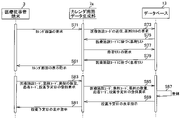
- FIG. 11 is a sequence diagram showing communication contents between a medical staff terminal and a calendar screen data generator according to one embodiment of the present invention.
- the medical staff terminal 3 transmits a calendar screen request to the calendar screen data generator 7a provided in the order management device 7 via the communication network N1.
- the calendar screen data generation unit 7a receives a request for a calendar screen from the medical staff terminal 3, it transmits a medical facility code and a request for a drug list to the database 13 in step S73.
- the database 13 acquires the drug list linked to the medical facility code from the database 13 and transmits it to the calendar screen data generator 7a in step S75.
- the calendar screen data generation unit 7a When the calendar screen data generation unit 7a receives the drug list linked to the medical facility code, it transmits a request for the patient list to the database 13 in step S77. When receiving the request for the patient list, the database 13 acquires the patient list linked to the medical facility code from the database 13 and transmits it to the calendar screen data generator 7a in step S79. When the calendar screen data generation unit 7a receives the patient list associated with the medical facility code, it transmits a calendar screen display instruction to the medical staff terminal 3 in step S81.
- step S83 the medical staff terminal 3 sends a request for registration of the medical facility code, drug code, quantity of drug, patient code, scheduled drug administration date, etc. to the calendar screen provided in the order management device 7 via the communication network N1. It is transmitted to the data generator 7a.
- the calendar screen data generation unit 7a receives a registration request for the medical facility code, the drug code, the quantity of drugs, the patient code, the scheduled medication date, etc. from the medical staff terminal 3, in step S85, the medical facility code, the drug A request for registration of the code, quantity of medicine, patient code, scheduled date of administration, etc. is sent to the database 13 .
- step S87 When the database 13 receives a registration request for the medical facility code, drug code, drug quantity, patient code, scheduled medication date, etc., in step S87, in response to the registration request, the medical facility code, the drug code, and the drug quantity are registered. , patient code, scheduled date of medication, etc. are registered in the database 13 .
- step S89 the database 13 transmits an instruction to display the scheduled drug administration date to the calendar screen data generator 7a.
- the calendar screen data generation unit 7a When receiving the display instruction of the scheduled medication date, the calendar screen data generation unit 7a transmits the display instruction of the scheduled medication date to the medical staff terminal 3 in step S91.
- FIGS. 12(a) to 12(g) are ER diagrams used in the order management system according to one embodiment of the present invention.
- FIG. 12(a) is an ER diagram showing the calendar file 71. Drug code, medical facility code, patient code, and number of medications are used as keys, and the scheduled medication date, delivery date, and planned collection date are stored in the database 13. there is The calendar file 71 is data that is the basis for displaying the calendar screen.
- FIG. 12(b) is an ER diagram showing the patient master 73, in which the applicable disease code, applicable disease name, and medication completion date are stored in the database 13 using the medical facility code, patient code, and drug code as keys. The patient master 73 associates the patient code with which medical facility code, which drug code, and which applicable disease code, and is used to determine whether the patient (code) has completed medication. The date is stored in the database 13.
- FIG. 12(c) is an ER diagram showing the medical facility medication history file 75, in which the database 13 stores the patient code, medication category, and medication date and time using the medical facility code, drug code, and serial number as keys.
- the medical facility medication history file 75 stores in the database 13 which medical facility, which serial number of which drug was administered to which patient, and when.
- FIG. 12(d) is an ER diagram showing the drug master by medical facility 77, which is stored in the database 13 using the medical facility code and the drug code as keys.
- the drug master by medical facility 77 stores in the database 13 which medical facility handles which drug.
- FIG. 12(e) is an ER diagram showing the drug master 79, in which drug names and manufacturer codes of drug manufacturers are stored in the database 13 using drug codes as keys.
- the drug master 79 stores in the database 13 information linking drug names and manufacturer codes.
- FIG. 12(f) is an ER diagram showing the medical facility master 81, which stores the medical facility name, postal code, and address using the medical facility code as a key.
- the medical facility master 81 stores information on medical facilities in the database 13 to be referred to when displaying histograms on the map.
- FIG. 12(g) is an ER diagram showing the user master 83, in which the database 13 stores user categories, pharmaceutical manufacturer codes and medical facility codes as user codes and keys.
- the user master 83 stores information in the database 13 for obtaining a target drug list and medical facility list when accessing the calendar screen and the search screen.
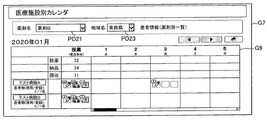
- FIG. 13 is a diagram showing a calendar screen for each medical facility displayed on the medical staff terminal according to one embodiment of the present invention.
- a drug name pull-down button PD21 for selecting a drug name
- a region name pull-down button PD23 for selecting the region name of the medical facility are displayed.
- a calendar screen G9 is displayed below the medical facility calendar screen G7.
- Medications and dates are arranged in the horizontal direction of the calendar screen G9.
- the number of medications, the number of deliveries, and the number of collections are arranged in the vertical direction of the calendar screen G9.
- the calendar screen G9 the number of patients (used/registered) related to test hospital A is displayed as 3/7. is added, and the number of collected vehicles is added to the collected vehicle mark and displayed.
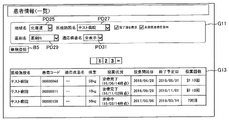
- FIG. 14 is a diagram showing a search screen and a patient information list screen displayed on the medical staff terminal according to one embodiment of the present invention.
- the search screen G11 includes an area name pull-down button PD25 for selecting the area name of the medical facility, a medical facility name pull-down button PD27 for selecting the medical facility name, and a drug name pull-down button for selecting the drug name.
- a button PD29 and an applicable disease name pull-down button PD31 for selecting an applicable disease name are displayed.
- the selection operation to each pull-down button is completed for the search screen G11, and the search result screen G13 is displayed.
- the new registration button B5 is pressed, the screen transitions to the screen G3 shown in FIG.
- search result screen G13 items such as medical facility name, patient code, applicable disease name, body weight, medication status, medication start date, scheduled end date, number of medications, etc. are arranged in the horizontal direction, and the search results are arranged in the vertical direction. to be displayed.
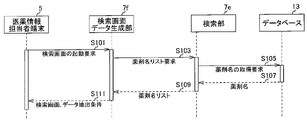
- FIG. 15 is a sequence diagram (part 1) showing the contents of communication from the medical information staff terminal to the database according to one embodiment of the present invention.
- the medical information staff terminal 5 transmits a search screen activation request (including the manufacturer code) to the search screen data generator 7f provided in the order management device 7 via the communication network N1.
- the search screen data generation unit 7f receives an activation request (including the manufacturer code) from the medical information staff terminal 5, in step S103, the search screen data generation unit 7f transmits a drug name list request to the search unit 7e.
- the search unit 7e receives a drug name list acquisition request from the search screen data generation unit 7f, the search unit 7e transmits a drug name acquisition request to the database 13 in step S105.
- the database 13 transmits the drug name to the search unit 7e in step S107.
- the search unit 7e transmits the drug name list to the search screen data generation unit 7f in step S109.
- the search screen data generation unit 7f transmits the search screen and the data extraction conditions to the medical information staff terminal 5 in step S111.
- FIG. 16 is a sequence diagram (part 2) showing the contents of communication from the medical information staff terminal to the database according to one embodiment of the present invention.
- the medical information staff terminal 5 transmits a medical information search request (including manufacturer code and drug name) to the histogram generator 7h provided in the order management device 7 via the communication network N1.
- the histogram generation unit 7h receives a medical information search request (including the manufacturer code and drug name) from the medical information staff terminal 5, in step S123, the specified drug handling medical information acquisition request (including the drug name ) to the search unit 7e.
- the search unit 7e receives a request to acquire the specified drug handling medical information from the histogram generation unit 7h, the search unit 7e transmits a request to acquire the drug-specific medical facility list (including the drug name) to the database 13 in step S125.
- the database 13 When the database 13 receives a drug-specific medical facility list acquisition request from the search unit 7e, the database 13 transmits the medical facility list to the search unit 7e in step S127.
- the search unit 7e transmits an acquisition request for the number of used drugs (medical facility, drug name) to the database 13 in step S129.
- the database 13 receives the acquisition request for the number of used drugs from the search unit 7e, in step S131, the database 13 transmits the quantity of drugs to the search unit 7e.
- the search unit 7e Upon receiving the drug quantity from the database 13, the search unit 7e transmits an acquisition request for the applicable disease name (medical facility, drug name) to the database 13 in step S133.
- the database 13 When the database 13 receives an acquisition request for the name of the applicable disease from the search unit 7e, the database 13 transmits the name of the applicable disease to the search unit 7e in step S135.
- the search unit 7e retrieves the medical facility list received from the database 13, the quantity of drugs (medical facility and drug name may be used), and the applicable disease name (medical facility and drug name may be used). It is transmitted to the histogram generator 7h.
- step S137 the histogram generation unit 7h generates the medical facility list received from the search unit 7e, the quantity of drugs (medical facility and drug name may be used), the applicable disease name (medical facility and drug name may be ) to create (generate) a histogram.
- step S139 the histogram generator 7h transmits a medical information list creation request to the display data generator 7i.
- the display data generation unit 7i receives a medical information list generation request from the histogram generation unit 7h
- the display data generation unit 7i generates a medical information list in step S141.
- step S143 the display data generator 7i transmits the medical information list table to the histogram generator 7h.
- the histogram generating unit 7h transmits the medical information to the medical information staff terminal 5 in step S147.
- FIG. 17 is a sequence diagram (part 3) showing the contents of communication from the medical information staff terminal to the database according to one embodiment of the present invention.
- the medical information staff terminal 5 transmits a search screen activation request (including the manufacturer code) to the search screen data generator 7f provided in the order management device 7 via the communication network N1.
- the search screen data generation unit 7f receives a search screen activation request (including the manufacturer code) from the medical information staff terminal 5, in step S203, the search screen data generation unit 7f transmits a drug name list acquisition request to the search unit 7e.
- the search unit 7e receives a drug name list acquisition request from the search screen data generation unit 7f, the search unit 7e transmits a drug name acquisition request to the database 13 in step S205.
- the database 13 When receiving a drug name acquisition request from the search unit 7e, the database 13 transmits the drug name to the search unit 7e in step S207.
- the search unit 7e transmits the drug name list to the search screen data generation unit 7f in step S209.
- the search screen data generation unit 7f transmits a region name list acquisition request to the search unit 7e.
- the search unit 7e receives a region name list acquisition request from the search screen data generation unit 7f
- the search unit 7e transmits a region name acquisition request to the database 13 in step S213.
- the database 13 receives a region name acquisition request from the search unit 7e
- the database 13 transmits the region name to the search unit 7e in step S215.
- the search unit 7e receives the area names from the database 13, in step S217
- the search unit 7e transmits the area name list to the search screen data generation unit 7f.
- the search screen data generation unit 7f receives the region name list from the search unit 7e, it transmits the search screen and the data extraction conditions (including the region name) to the medical information staff terminal 5 in step S219.
- FIG. 18 is a sequence diagram (part 4) from the medical information staff terminal to the database according to one embodiment of the present invention.
- the medical information staff terminal 5 transmits a medical information search request (including the manufacturer code, drug name, and area name) to the histogram generator 7h provided in the order management device 7 via the communication network N1. do.
- the histogram generation unit 7h receives a medical information search request (including manufacturer code, drug name, and region name) from the terminal 5 of the person in charge of medical information
- the acquisition request for medical information handling designated drugs by region is received. (including drug name and area name) is sent to the search unit 7e.
- the searching unit 7e When the searching unit 7e receives a request to acquire the medical information handling designated drugs by region from the histogram generating unit 7h, in step S245, the search unit 7e sends a request to acquire a list of medical facilities by drug (including drug name and region name) to the database 13. Send to
- the database 13 When the database 13 receives a drug-specific medical facility list acquisition request from the search unit 7e, the database 13 transmits the medical facility list to the search unit 7e in step S247.
- the search unit 7e transmits an acquisition request for the number of used drugs (medical facility, drug name) to the database 13 in step S249.
- the database 13 receives an acquisition request for the number of used drugs from the search unit 7e, in step S251, the database 13 transmits the quantity of drugs to the search unit 7e.
- the search unit 7e Upon receiving the drug quantity from the database 13, the search unit 7e transmits an acquisition request for the applicable disease name (medical facility, drug name) to the database 13 in step S253.
- the database 13 When the database 13 receives an acquisition request for the name of the applicable disease from the search unit 7e, the database 13 transmits the name of the applicable disease to the search unit 7e in step S255.
- the search unit 7e retrieves the list of medical facilities received from the database 13, the quantity of drugs (medical facility and drug name may be used), and the applicable disease name (medical facility and drug name may be used). It is transmitted to the histogram generator 7h.
- step S257 the histogram generation unit 7h generates the list of medical facilities received from the search unit 7e, the quantity of drugs (medical facility and drug name may be used), the applicable disease name (medical facility and drug name may be ) to create (generate) a histogram.
- step S259 the histogram generator 7h transmits a medical information list creation request to the display data generator 7i.
- the display data generation unit 7i receives a medical information list creation request from the histogram generation unit 7h, it creates a medical information list in step S261.
- step S263 the display data generator 7i transmits the medical information list to the histogram generator 7h.
- the histogram generator 7h receives the medical information list from the display data generator 7i, the histogram generator 7h transmits the medical information to the medical information staff terminal 5 in step S267.
- FIG. 19 is a flow chart showing the operation of the search unit according to one embodiment of the present invention.
- the search unit 7e acquires the names of a plurality of medical facilities that handle the drug from the database 13, using the drug name as a key.
- the search unit 7e acquires the number of drugs to be used and the name of the applicable disease from the database 13, using the k-th medical facility name and drug name as keys.
- the search unit 7e acquires the scheduled drug administration date and applicable disease name from the database 13 using the k-th medical facility name and drug name as keys.
- FIG. 20 is a diagram showing a display screen (No. 1) generated by the display data generation unit according to the embodiment of the present invention. Specifically, FIG. 20 shows the number of medical facilities and the number of patients under treatment by region.
- a display screen G15 displayed on the medical staff terminal 3 is provided with a drug name pull-down button PD33 for selecting a drug name and a region name pull-down button PD35 for selecting a region name. This indicates that, for example, "medicine ***" is selected for PD33, and "display all" is selected for area name pull-down button PD35.
- a histogram for each region corresponding to the selected "medicine ***" and "all display” is displayed. For example, the display screen G15 displays 25 facilities in Tokyo and 20/77 active patients. The number of active patients indicates that 20 out of the total number of patients are under treatment.
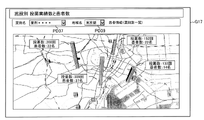
- FIG. 21 is a diagram showing a display screen (No. 2) generated by the display data generation unit according to the embodiment of the present invention. Specifically, FIG. 21 shows the number of medications and the number of patients by institution.
- a display screen G17 displayed on the medical staff terminal 3 is provided with a drug name pull-down button PD37 for selecting a drug name and a region name pull-down button PD39 for selecting a region name. For example, "medicine ***" is selected in PD37, and "Tokyo" is selected in area name pull-down button PD39.
- a histogram for each region corresponding to the selected "medicine ***" and "Tokyo” is displayed.
- the number of medications: 229 and the number of patients: 37 are displayed as part of the display screen G17. It shows that the drug was administered.
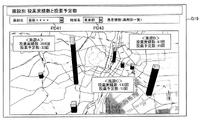
- FIG. 22 is a diagram showing a display screen (No. 3) generated by the display data generation unit according to the embodiment of the present invention. Specifically, FIG. 22 shows the actual number of medications and the planned number of medications by facility.
- a display screen G19 displayed on the medical staff terminal 3 is provided with a drug name pull-down button PD41 for selecting a drug name and a region name pull-down button PD43 for selecting a region name. This indicates that, for example, "medicine ***" has been selected in PD41, and "Tokyo" has been selected in the region name pull-down button PD43.
- a histogram for each region corresponding to the selected "medicine ***" and "Tokyo” is displayed.
- ⁇ facility A> the number of medications actually administered: 208 times
- the number of medications scheduled to be administered 32 times are displayed. 208 times of administration, indicating that 32 times of administration are scheduled in the future.
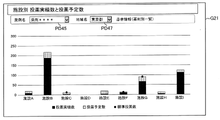
- FIG. 23 is a diagram showing a display screen (No. 4) generated by the display data generation unit according to the embodiment of the present invention. Specifically, FIG. 23 shows the actual number of medications and the planned number of medications by facility.
- a display screen G21 displayed on the medical staff terminal 3 is provided with a drug name pull-down button PD45 for selecting a drug name and a region name pull-down button PD47 for selecting a region name. For example, "medicine ***" is selected in PD45, and "Tokyo" is selected in area name pull-down button PD47.
- a stacked bar graph for each facility corresponding to the selected "medicine ***" and "Tokyo" is displayed.
- a stacked bar graph of facility A, facility B, facility C, facility D, facility E, facility F, facility G, facility H, and facility I is displayed on the display screen G21.
- the number of actual medications, the number of scheduled medications, and the number of standard medications are vertically stacked to form one bar graph.
- FIG. 24 is a diagram showing a display screen (No. 5) generated by the display data generation unit according to the embodiment of the present invention. Specifically, FIG. 24 shows the number of drug administration records for each patient by institution.
- a display screen G23 displayed on the medical staff terminal 3 is provided with a drug name pull-down button PD49 for selecting a drug name and a region name pull-down button PD51 for selecting a region name. For example, "medicine ***" is selected for PD49, and "Tokyo" is selected for area name pull-down button PD51.
- a bar graph for each facility and for each patient corresponding to the selected "drug ***" and "Tokyo" is displayed.
- one bar graph is formed for the number of actual medications.
- ⁇ facility A>, disease A: 88 times, disease B: 64 times, and disease C: 56 times are displayed as part of the display screen G23.
- FIG. 25 is a diagram showing a display screen (No. 6) generated by the display data generation unit according to the embodiment of the present invention. Specifically, FIG. 25 shows the percentage of diseases in the number of actual medications by facility.
- a display screen G25 displayed on the medical staff terminal 3 has a drug name pull-down button PD53 for selecting a drug name and a region name pull-down button PD55 for selecting a region name. This indicates that, for example, "medicine ***" has been selected in PD53, and "Tokyo" has been selected in area name pull-down button PD55.
- a stacked bar graph for each facility corresponding to the selected "medicine ***" and “Tokyo” is displayed on the display screen G25.
- a stacked bar graph of facility A, facility B, facility C, facility D, facility E, facility F, facility G, facility H, and facility I is displayed on the display screen G25.
- the number of medications for disease A, the number of medications for disease B, and the number of medications for disease C are stacked horizontally to form one bar graph.
- FIG. 26 is a diagram showing a display screen (No. 7) generated by the display data generation unit according to the embodiment of the present invention. Specifically, FIG. 26 shows the actual number of medications and the planned number of medications for each disease by facility.
- a display screen G27 displayed on the medical staff terminal 3 is provided with a drug name pull-down button PD57 for selecting a drug name and a region name pull-down button PD59 for selecting a region name. This indicates that, for example, "medicine ***" has been selected in PD57, and "Tokyo" has been selected in area name pull-down button PD59.
- a stacked bar graph for each facility corresponding to the selected "medicine ***" and “Tokyo” is displayed on the display screen G27.
- a stacked bar graph of facility A, facility B, facility C, facility D, facility E, facility F, facility G, facility H, and facility I is displayed on the display screen G27.
- bar graphs for patient A, patient B, and patient C are formed. formed.
- FIG. 27 is a diagram showing a display screen (No. 8) generated by the display data generation unit according to the embodiment of the present invention. Specifically, FIG. 27 shows the actual number of medications and the planned number of medications for each year for each facility.
- a display screen G29 displayed on the medical staff terminal 3 has a drug name pull-down button PD61 for selecting a drug name and a region name pull-down button PD63 for selecting a region name. This indicates that, for example, "medicine ***" has been selected in PD61, and "Tokyo" has been selected in the region name pull-down button PD63.
- a stacked bar graph for each facility corresponding to the selected "medicine ***" and "Tokyo” is displayed.
- a stacked bar graph of facility A, facility B, facility C pediatrics, facility C hematology, and facility D is displayed.
- the number of actual medications in 2018, the number of actual medications in 2019, the number of actual medications in 2020, and the planned number of medications (current year) are stacked horizontally to form one bar graph. formed.
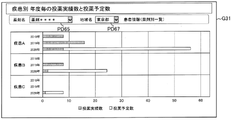
- FIG. 28 is a diagram showing a display screen (No. 9) generated by the display data generation unit according to the embodiment of the present invention. Specifically, FIG. 28 shows the actual number of medications and the planned number of medications for each disease for each year.
- a display screen G31 displayed on the medical staff terminal 3 is provided with a drug name pull-down button PD65 for selecting a drug name and a region name pull-down button PD67 for selecting a region name. For example, "medicine ***" is selected for PD65, and "Tokyo" is selected for area name pull-down button PD67.
- stacked bar graphs corresponding to the selected "medicine ***" and "Tokyo" are displayed.
- stacked bar graphs of disease A, disease B, and disease C are displayed on the display screen G31.
- the actual number of medications in 2018, the number of actual medications in 2019, the number of actual medications in 2020, and the planned number of medications (current year) are stacked horizontally to form one bar graph. formed.
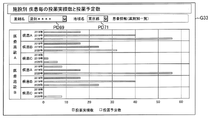
- FIG. 29 is a diagram showing a display screen (No. 10) generated by the display data generation unit according to the embodiment of the present invention. Specifically, FIG. 29 shows the actual number of medications and the planned number of medications for each disease by facility.
- a display screen G33 displayed on the medical staff terminal 3 has a drug name pull-down button PD69 for selecting a drug name and a region name pull-down button PD71 for selecting a region name. For example, "medicine ***" is selected for PD69, and "Tokyo" is selected for area name pull-down button PD71.
- stacked bar graphs corresponding to the selected "medicine ***" and "Tokyo" are displayed.
- stacked bar graphs of disease A, disease B, and disease C in medical facility A are displayed.
- the number of medications performed in 2018, the number of medications performed in 2019, the number of medications performed in 2020, and the number of medication plans (current year) are stacked horizontally to form one line.
- a bar graph is formed.
- the order management device 7 (marketing device) of the present embodiment retrieves the medical facility name corresponding to the drug name and the drug Quantity and applicable disease names can be extracted and provided. Therefore, it is possible to meet the demands of pharmaceutical manufacturers to increase the productivity of each medical representative (MR).
- the order management device 7 (marketing device) of this embodiment receives order data for each patient related to drugs from the medical staff terminal 3 via the communication network N1 and stores the received order data in the database 13 (marketing device).
- a calendar screen data generation unit 7a for generating calendar screen data for each patient in which a plurality of date areas are arranged for each month, and delivering the calendar screen data for each patient to the medical staff terminal 3,
- a first communication unit 7b that receives from the medical staff terminal 3 the medical facility name, drug name, drug quantity, and applicable disease name specified in another calendar screen data, and the medical facility received from the medical staff terminal 3
- a storage control unit 7c that associates a combination of a patient's name, drug name, drug quantity, and applicable disease name with each patient and stores them in the database 13, and searches the database 13 using the drug name as a key, and stores information corresponding to the drug name.
- a search unit 7e for outputting the medical facility name, the quantity of the drug, and the name of the applicable disease.
- the memory control unit 7c of this aspect includes a patient code generation unit 7d that generates a patient code based on the medical facility name, drug name, and applicable disease name received from the medical staff terminal 3, and the memory control unit 7c It is characterized by storing in the database 13 the patient code associated with the name of the medical facility, the name of the drug, and the quantity of the drug.
- the database 13 can be associated with a unique patient code by associating the medical facility name, drug name, and drug quantity with the patient code and storing them in the database 13 .
- the storage control unit 7c of this aspect stores the medical facility name and the location of the medical facility in the database 13 in association with each other. It is characterized by searching for the location of the facility, and storing the searched location in the database 13 in association with the name of the medical facility, the name of the drug, the quantity of the drug, and the patient code. According to this aspect, since the medical facility name and the location of the medical facility are stored in the database 13 in association with each other, the location of the medical facility corresponding to the medical facility name can be searched.
- the patient code can be associated with the name of the medical facility, the name of the medicine, the quantity of the medicine, and stored in the database 13 .
- the search unit 7e of this embodiment is characterized by searching the database 13 using the drug name as a key and outputting the quantity of drug, the number of patients, and at least one or more applicable disease names. According to this aspect, it is possible to output the drug quantity, the number of patients, and at least one or more applicable disease names corresponding to the drug name.
- the database 13 of this embodiment stores location and region name in association with each other. It is characterized by outputting facility name, quantity of drug, number of patients, and applicable disease name. According to this aspect, it is possible to output the drug name, medical facility name corresponding to the region name, drug quantity, number of patients, and applicable disease name.
- the storage control unit 7c of this aspect distributes the patient code generated by the patient code generation unit 7d to the medical staff terminal 3 via the first communication unit 7b, and characterized in that the patient code is displayed in the calendar screen.
- the patient code can be displayed in the calendar screen for each patient displayed on the medical staff terminal 3 .
- the order management device 7 (marketing device) of this aspect has a search screen data generation unit 7f that generates search screen data that enables input by designating a drug name, and distributes the search screen data to the terminal 5 of the person in charge of medical information. and a second communication unit 7g for receiving the drug name specified from the medical information staff terminal 5.
- the searching unit 7e searches the database 13 using the drug name received from the medical information staff terminal 5 as a key. It is characterized by searching.
- the database 13 is stored using the drug name designated from the terminal 5 of the person in charge of medical information as a key. can be searched. This will allow medical representatives to provide data for medical facilities and all patients nationwide.
- the order management device 7 (marketing device) of this aspect includes a search screen data generation unit 7f that generates search screen data that enables input by designating a drug name and a region name, and a medical information staff terminal that generates the search screen data. 5, and a second communication unit 7g that receives the drug name and region name specified from the medical information staff terminal 5, and the search unit 7e receives the drug It is characterized by searching the database 13 by using the name and area name as keys.
- the search screen data that allows the user to specify and input the drug name and region name is distributed to the terminal 5 for the person in charge of medical information, and the name of the drug and the region specified by the terminal 5 for the person in charge of medical information
- the database 13 can be searched using the first name as a key.
- the order management device 7 (marketing device) of this aspect includes a histogram generation unit 7h that generates a histogram of the drug quantity for each region corresponding to the drug name based on the search results output by the search unit 7e.
- the second communication unit 7g is characterized by distributing the histogram generated by the histogram generation unit 7h to the terminal 5 of the person in charge of medical information. According to this aspect, it is possible to generate a histogram of the drug quantity for each region corresponding to the drug name and distribute the histogram to the medical information staff terminal 5 .
- the histogram generation unit 7h of this embodiment is characterized by generating histograms of the number of patients currently undergoing treatment and the number of patients who have completed medication for each facility with respect to the specified drug name and area name. According to this aspect, the number of patients currently undergoing treatment and the number of patients for whom medication has been completed can be generated as a histogram for each facility with respect to the specified drug name and area name.
- the histogram generation unit 7h of this aspect is characterized by generating histograms of the total number of medications and the total number of patients for each facility with respect to the specified drug name and area name. According to this aspect, the total number of medications and the total number of patients for each facility can be generated as a histogram for the specified drug name and area name.
- the histogram generation unit 7h of this aspect is characterized in that it generates histograms of the actual number of medications and the planned number of medications for each facility with respect to the specified drug name and area name. According to this aspect, it is possible to generate a histogram of the actual number of medications and the planned number of medications for each facility with respect to the specified drug name and area name.
- the histogram generation unit 7h of this aspect is characterized in that it generates histograms of the actual number of medications and the planned number of medications for each facility with respect to the specified drug name and area name. According to this aspect, it is possible to generate a histogram of the actual number of medications and the planned number of medications for each facility with respect to the specified drug name and area name.
- the histogram generation unit 7h of this aspect is characterized by generating a histogram of the number of medications for each disease for each facility with respect to the specified drug name and area name. According to this aspect, the number of medications for each disease for each facility can be generated as a histogram for the specified drug name and region name.
- the histogram generation unit 7h of this embodiment is characterized by generating a histogram of the number of breakdowns for each disease in the total number of medications for each facility with respect to the specified drug name and area name. According to this aspect, it is possible to generate a histogram of the number of breakdowns for each disease in the total number of medications for each facility with respect to the specified drug name and region name.
- the histogram generation unit 7h of this aspect is characterized in that it generates histograms of the actual number of medications and the planned number of medications for each facility with respect to the specified drug name and area name. According to this aspect, it is possible to generate a histogram of the actual number of medications and the number of medications for each facility with respect to the specified drug name and area name.
- the histogram generation unit 7h of this embodiment is characterized by generating a histogram of the percentage of patients in the total number of medications for each facility with respect to the specified drug name and area name. According to this aspect, it is possible to generate a histogram of the percentage of patients in the total number of medications for each facility with respect to the specified drug name and region name.
- the histogram generation unit 7h of this aspect is characterized in that it generates a histogram of the drug administration record and the planned number for each facility with respect to the specified drug name and region name. According to this aspect, it is possible to generate a histogram of the drug administration record and the planned number for each facility with respect to the specified drug name and area name.
- the histogram generation unit generates histograms of the actual number of medications and the planned number of medications for each disease for each facility with respect to the specified drug name and area name. Characterized by According to this aspect, it is possible to generate histograms of the actual number of medications and the planned number of medications for each disease for each facility with respect to the specified drug name and area name.
- the order management device 7 (marketing device) of this aspect includes a display data generation unit 7i that generates display data in which histograms are superimposed on respective regions on the map data, and the second communication unit 7g generates display data. It is characterized by distributing the display data generated by the unit 7i to the terminal 5 of the person in charge of medical information. According to this aspect, the display data in which the histograms are superimposed on the respective regions on the map data can be distributed to the medical information staff terminal 5 .
- the first communication unit 7b receives the patient code and the medication completion date associated with the drug name from the medical staff terminal 3, and the storage control unit 7c receives the medical
- the patient code and drug name already received from the worker terminal 3 are stored in the database 13 in association with the medication completion date. It is characterized by outputting the number of patients who have completed treatment using the drug name, or outputting the number of patients who are undergoing treatment using the drug name.
- the patient code and the medication completion date associated with the drug name are received from the medical staff terminal 3, and the already received patient code and drug name are associated with the medication completion date and stored in the database 13.
- the marketing system 1 of this aspect includes the order management device 7 (marketing device) according to any one of the first aspect to the twenty-first aspect, the medical staff terminal 3, and the medical information staff terminal 5. It is characterized by According to this aspect, the marketing system 1 including the order management device 7 (marketing device), the medical staff terminal 3, and the medical information staff terminal 5 can be provided.
- the marketing method of this embodiment is a marketing method using an order management device 7 (marketing device) that receives order data for each patient related to drugs from the medical staff terminal 3 via the communication network N1 and stores the data in the database 13.
- a calendar screen data generating step for generating patient-specific calendar screen data in which a plurality of date areas are arranged for each month;
- the program of this aspect causes a processor to execute each step in the marketing method of the twenty-third aspect.
- each step in the marketing method can be executed by a processor. Therefore, it is possible to extract and provide medical facility names, drug quantities, and applicable disease names corresponding to drug names from a database of drugs ordered by medical staff to administer to patients.
Landscapes
- Engineering & Computer Science (AREA)
- Business, Economics & Management (AREA)
- Strategic Management (AREA)
- Finance (AREA)
- Development Economics (AREA)
- Accounting & Taxation (AREA)
- Health & Medical Sciences (AREA)
- General Health & Medical Sciences (AREA)
- Chemical & Material Sciences (AREA)
- Public Health (AREA)
- Medical Informatics (AREA)
- Epidemiology (AREA)
- Medicinal Chemistry (AREA)
- Entrepreneurship & Innovation (AREA)
- Bioinformatics & Cheminformatics (AREA)
- Game Theory and Decision Science (AREA)
- Primary Health Care (AREA)
- Economics (AREA)
- Marketing (AREA)
- Physics & Mathematics (AREA)
- General Business, Economics & Management (AREA)
- General Physics & Mathematics (AREA)
- Theoretical Computer Science (AREA)
- Medical Treatment And Welfare Office Work (AREA)
- Management, Administration, Business Operations System, And Electronic Commerce (AREA)
Priority Applications (2)
| Application Number | Priority Date | Filing Date | Title |
|---|---|---|---|
| JP2022579191A JP7538262B2 (ja) | 2021-02-02 | 2021-02-02 | マーケティング装置、マーケティングシステム、マーケティング方法、及びプログラム |
| PCT/JP2021/003775 WO2022168172A1 (ja) | 2021-02-02 | 2021-02-02 | マーケティング装置、マーケティングシステム、マーケティング方法、及びプログラム |
Applications Claiming Priority (1)
| Application Number | Priority Date | Filing Date | Title |
|---|---|---|---|
| PCT/JP2021/003775 WO2022168172A1 (ja) | 2021-02-02 | 2021-02-02 | マーケティング装置、マーケティングシステム、マーケティング方法、及びプログラム |
Publications (1)
| Publication Number | Publication Date |
|---|---|
| WO2022168172A1 true WO2022168172A1 (ja) | 2022-08-11 |
Family
ID=82741229
Family Applications (1)
| Application Number | Title | Priority Date | Filing Date |
|---|---|---|---|
| PCT/JP2021/003775 Ceased WO2022168172A1 (ja) | 2021-02-02 | 2021-02-02 | マーケティング装置、マーケティングシステム、マーケティング方法、及びプログラム |
Country Status (2)
| Country | Link |
|---|---|
| JP (1) | JP7538262B2 (https=) |
| WO (1) | WO2022168172A1 (https=) |
Citations (2)
| Publication number | Priority date | Publication date | Assignee | Title |
|---|---|---|---|---|
| JP2006155070A (ja) * | 2004-11-26 | 2006-06-15 | Toshiba Sumiden Medical Information Systems Corp | 電子カルテ薬物療法指示実施システム |
| JP2018081529A (ja) * | 2016-11-17 | 2018-05-24 | きりんカルテシステム株式会社 | 検索サーバ及び検索システム |
-
2021
- 2021-02-02 JP JP2022579191A patent/JP7538262B2/ja active Active
- 2021-02-02 WO PCT/JP2021/003775 patent/WO2022168172A1/ja not_active Ceased
Patent Citations (2)
| Publication number | Priority date | Publication date | Assignee | Title |
|---|---|---|---|---|
| JP2006155070A (ja) * | 2004-11-26 | 2006-06-15 | Toshiba Sumiden Medical Information Systems Corp | 電子カルテ薬物療法指示実施システム |
| JP2018081529A (ja) * | 2016-11-17 | 2018-05-24 | きりんカルテシステム株式会社 | 検索サーバ及び検索システム |
Also Published As
| Publication number | Publication date |
|---|---|
| JPWO2022168172A1 (https=) | 2022-08-11 |
| JP7538262B2 (ja) | 2024-08-21 |
Similar Documents
| Publication | Publication Date | Title |
|---|---|---|
| EP1381995B1 (en) | Improvements relating to information management systems | |
| CA2288226A1 (en) | Method and system for the tracking and profiling of supply usage in a health care environment | |
| US20040122717A1 (en) | Claim submission system and method | |
| JP2001043279A (ja) | 薬局システム | |
| JP5725261B2 (ja) | 調剤情報管理システム、調剤情報管理方法、調剤情報管理プログラム、記録媒体 | |
| CN112002397A (zh) | 一种临床决策支持和临床成本管理系统 | |
| US20030225728A1 (en) | Pharmacy system and method | |
| JP2002073808A (ja) | 医療情報管理装置および医療情報管理システム若しくはそれらのプログラム記録媒体 | |
| JPH0857021A (ja) | 配合禁忌チェック方式 | |
| JP4759296B2 (ja) | 医療用事務処理装置 | |
| JP2015052847A (ja) | 電子レセプトデータ変換システム及び電子レセプトデータ変換プログラム | |
| JP7538262B2 (ja) | マーケティング装置、マーケティングシステム、マーケティング方法、及びプログラム | |
| JPH08263562A (ja) | 診療支援システム | |
| CN114420240A (zh) | 基于人工智能、大数据和区块链的处方管理系统 | |
| Clause et al. | Conforming to HIPAA regulations and compilation of research data | |
| JP5036123B2 (ja) | 医療用事務処理装置 | |
| JP2004118351A (ja) | 医薬品検索情報提供システム | |
| WO2002052483A2 (en) | System and method for integration of health care records, and for a seamless user interface, for an integrated electronic health care information system | |
| Eggert et al. | A Computer‐Based Record System for A Hospital Transfusion Service | |
| JPS61128362A (ja) | オ−ダリング方式 | |
| JP2005174143A (ja) | 医療用事務処理装置 | |
| JP2005222176A (ja) | レセプト点検支援方法及びレセプト点検支援プログラム | |
| JP2019149211A (ja) | 進捗状況管理システム及びプログラム | |
| Roziqin et al. | Design and Development of An Electronic Medical Record System For Maternal and Child Health and Dental Clinics at Camar Mandiri Primary Clinic, Jember | |
| JP2007018292A (ja) | 医療情報処理プログラム、医療情報処理システムおよび医療情報処理方法 |
Legal Events
| Date | Code | Title | Description |
|---|---|---|---|
| 121 | Ep: the epo has been informed by wipo that ep was designated in this application |
Ref document number: 21924569 Country of ref document: EP Kind code of ref document: A1 |
|
| ENP | Entry into the national phase |
Ref document number: 2022579191 Country of ref document: JP Kind code of ref document: A |
|
| NENP | Non-entry into the national phase |
Ref country code: DE |
|
| 122 | Ep: pct application non-entry in european phase |
Ref document number: 21924569 Country of ref document: EP Kind code of ref document: A1 |