WO2022131198A1 - 腎がんを治療するための併用医薬及びチロシンキナーゼ阻害薬の治療効果増強剤 - Google Patents
腎がんを治療するための併用医薬及びチロシンキナーゼ阻害薬の治療効果増強剤 Download PDFInfo
- Publication number
- WO2022131198A1 WO2022131198A1 PCT/JP2021/045772 JP2021045772W WO2022131198A1 WO 2022131198 A1 WO2022131198 A1 WO 2022131198A1 JP 2021045772 W JP2021045772 W JP 2021045772W WO 2022131198 A1 WO2022131198 A1 WO 2022131198A1
- Authority
- WO
- WIPO (PCT)
- Prior art keywords
- tyrosine kinase
- kinase inhibitor
- cells
- dpp4
- achn
- Prior art date
- Legal status (The legal status is an assumption and is not a legal conclusion. Google has not performed a legal analysis and makes no representation as to the accuracy of the status listed.)
- Ceased
Links
Images






















Classifications
-
- A—HUMAN NECESSITIES
- A61—MEDICAL OR VETERINARY SCIENCE; HYGIENE
- A61P—SPECIFIC THERAPEUTIC ACTIVITY OF CHEMICAL COMPOUNDS OR MEDICINAL PREPARATIONS
- A61P35/00—Antineoplastic agents
-
- A—HUMAN NECESSITIES
- A61—MEDICAL OR VETERINARY SCIENCE; HYGIENE
- A61K—PREPARATIONS FOR MEDICAL, DENTAL OR TOILETRY PURPOSES
- A61K31/00—Medicinal preparations containing organic active ingredients
- A61K31/33—Heterocyclic compounds
- A61K31/395—Heterocyclic compounds having nitrogen as a ring hetero atom, e.g. guanethidine or rifamycins
- A61K31/40—Heterocyclic compounds having nitrogen as a ring hetero atom, e.g. guanethidine or rifamycins having five-membered rings with one nitrogen as the only ring hetero atom, e.g. sulpiride, succinimide, tolmetin, buflomedil
-
- A—HUMAN NECESSITIES
- A61—MEDICAL OR VETERINARY SCIENCE; HYGIENE
- A61K—PREPARATIONS FOR MEDICAL, DENTAL OR TOILETRY PURPOSES
- A61K31/00—Medicinal preparations containing organic active ingredients
- A61K31/33—Heterocyclic compounds
- A61K31/395—Heterocyclic compounds having nitrogen as a ring hetero atom, e.g. guanethidine or rifamycins
- A61K31/40—Heterocyclic compounds having nitrogen as a ring hetero atom, e.g. guanethidine or rifamycins having five-membered rings with one nitrogen as the only ring hetero atom, e.g. sulpiride, succinimide, tolmetin, buflomedil
- A61K31/403—Heterocyclic compounds having nitrogen as a ring hetero atom, e.g. guanethidine or rifamycins having five-membered rings with one nitrogen as the only ring hetero atom, e.g. sulpiride, succinimide, tolmetin, buflomedil condensed with carbocyclic rings, e.g. carbazole
-
- A—HUMAN NECESSITIES
- A61—MEDICAL OR VETERINARY SCIENCE; HYGIENE
- A61K—PREPARATIONS FOR MEDICAL, DENTAL OR TOILETRY PURPOSES
- A61K31/00—Medicinal preparations containing organic active ingredients
- A61K31/33—Heterocyclic compounds
- A61K31/395—Heterocyclic compounds having nitrogen as a ring hetero atom, e.g. guanethidine or rifamycins
- A61K31/40—Heterocyclic compounds having nitrogen as a ring hetero atom, e.g. guanethidine or rifamycins having five-membered rings with one nitrogen as the only ring hetero atom, e.g. sulpiride, succinimide, tolmetin, buflomedil
- A61K31/403—Heterocyclic compounds having nitrogen as a ring hetero atom, e.g. guanethidine or rifamycins having five-membered rings with one nitrogen as the only ring hetero atom, e.g. sulpiride, succinimide, tolmetin, buflomedil condensed with carbocyclic rings, e.g. carbazole
- A61K31/404—Indoles, e.g. pindolol
-
- A—HUMAN NECESSITIES
- A61—MEDICAL OR VETERINARY SCIENCE; HYGIENE
- A61K—PREPARATIONS FOR MEDICAL, DENTAL OR TOILETRY PURPOSES
- A61K31/00—Medicinal preparations containing organic active ingredients
- A61K31/33—Heterocyclic compounds
- A61K31/395—Heterocyclic compounds having nitrogen as a ring hetero atom, e.g. guanethidine or rifamycins
- A61K31/41—Heterocyclic compounds having nitrogen as a ring hetero atom, e.g. guanethidine or rifamycins having five-membered rings with two or more ring hetero atoms, at least one of which being nitrogen, e.g. tetrazole
- A61K31/415—1,2-Diazoles
- A61K31/4162—1,2-Diazoles condensed with heterocyclic ring systems
-
- A—HUMAN NECESSITIES
- A61—MEDICAL OR VETERINARY SCIENCE; HYGIENE
- A61K—PREPARATIONS FOR MEDICAL, DENTAL OR TOILETRY PURPOSES
- A61K31/00—Medicinal preparations containing organic active ingredients
- A61K31/33—Heterocyclic compounds
- A61K31/395—Heterocyclic compounds having nitrogen as a ring hetero atom, e.g. guanethidine or rifamycins
- A61K31/435—Heterocyclic compounds having nitrogen as a ring hetero atom, e.g. guanethidine or rifamycins having six-membered rings with one nitrogen as the only ring hetero atom
- A61K31/44—Non condensed pyridines; Hydrogenated derivatives thereof
-
- A—HUMAN NECESSITIES
- A61—MEDICAL OR VETERINARY SCIENCE; HYGIENE
- A61K—PREPARATIONS FOR MEDICAL, DENTAL OR TOILETRY PURPOSES
- A61K31/00—Medicinal preparations containing organic active ingredients
- A61K31/33—Heterocyclic compounds
- A61K31/395—Heterocyclic compounds having nitrogen as a ring hetero atom, e.g. guanethidine or rifamycins
- A61K31/435—Heterocyclic compounds having nitrogen as a ring hetero atom, e.g. guanethidine or rifamycins having six-membered rings with one nitrogen as the only ring hetero atom
- A61K31/44—Non condensed pyridines; Hydrogenated derivatives thereof
- A61K31/4427—Non condensed pyridines; Hydrogenated derivatives thereof containing further heterocyclic ring systems
- A61K31/4439—Non condensed pyridines; Hydrogenated derivatives thereof containing further heterocyclic ring systems containing a five-membered ring with nitrogen as a ring hetero atom, e.g. omeprazole
-
- A—HUMAN NECESSITIES
- A61—MEDICAL OR VETERINARY SCIENCE; HYGIENE
- A61K—PREPARATIONS FOR MEDICAL, DENTAL OR TOILETRY PURPOSES
- A61K31/00—Medicinal preparations containing organic active ingredients
- A61K31/33—Heterocyclic compounds
- A61K31/395—Heterocyclic compounds having nitrogen as a ring hetero atom, e.g. guanethidine or rifamycins
- A61K31/435—Heterocyclic compounds having nitrogen as a ring hetero atom, e.g. guanethidine or rifamycins having six-membered rings with one nitrogen as the only ring hetero atom
- A61K31/47—Quinolines; Isoquinolines
-
- A—HUMAN NECESSITIES
- A61—MEDICAL OR VETERINARY SCIENCE; HYGIENE
- A61K—PREPARATIONS FOR MEDICAL, DENTAL OR TOILETRY PURPOSES
- A61K31/00—Medicinal preparations containing organic active ingredients
- A61K31/33—Heterocyclic compounds
- A61K31/395—Heterocyclic compounds having nitrogen as a ring hetero atom, e.g. guanethidine or rifamycins
- A61K31/495—Heterocyclic compounds having nitrogen as a ring hetero atom, e.g. guanethidine or rifamycins having six-membered rings with two or more nitrogen atoms as the only ring heteroatoms, e.g. piperazine or tetrazines
-
- A—HUMAN NECESSITIES
- A61—MEDICAL OR VETERINARY SCIENCE; HYGIENE
- A61K—PREPARATIONS FOR MEDICAL, DENTAL OR TOILETRY PURPOSES
- A61K31/00—Medicinal preparations containing organic active ingredients
- A61K31/33—Heterocyclic compounds
- A61K31/395—Heterocyclic compounds having nitrogen as a ring hetero atom, e.g. guanethidine or rifamycins
- A61K31/495—Heterocyclic compounds having nitrogen as a ring hetero atom, e.g. guanethidine or rifamycins having six-membered rings with two or more nitrogen atoms as the only ring heteroatoms, e.g. piperazine or tetrazines
- A61K31/496—Non-condensed piperazines containing further heterocyclic rings, e.g. rifampin, thiothixene or sparfloxacin
-
- A—HUMAN NECESSITIES
- A61—MEDICAL OR VETERINARY SCIENCE; HYGIENE
- A61K—PREPARATIONS FOR MEDICAL, DENTAL OR TOILETRY PURPOSES
- A61K31/00—Medicinal preparations containing organic active ingredients
- A61K31/33—Heterocyclic compounds
- A61K31/395—Heterocyclic compounds having nitrogen as a ring hetero atom, e.g. guanethidine or rifamycins
- A61K31/495—Heterocyclic compounds having nitrogen as a ring hetero atom, e.g. guanethidine or rifamycins having six-membered rings with two or more nitrogen atoms as the only ring heteroatoms, e.g. piperazine or tetrazines
- A61K31/4985—Pyrazines or piperazines ortho- or peri-condensed with heterocyclic ring systems
-
- A—HUMAN NECESSITIES
- A61—MEDICAL OR VETERINARY SCIENCE; HYGIENE
- A61K—PREPARATIONS FOR MEDICAL, DENTAL OR TOILETRY PURPOSES
- A61K31/00—Medicinal preparations containing organic active ingredients
- A61K31/33—Heterocyclic compounds
- A61K31/395—Heterocyclic compounds having nitrogen as a ring hetero atom, e.g. guanethidine or rifamycins
- A61K31/495—Heterocyclic compounds having nitrogen as a ring hetero atom, e.g. guanethidine or rifamycins having six-membered rings with two or more nitrogen atoms as the only ring heteroatoms, e.g. piperazine or tetrazines
- A61K31/505—Pyrimidines; Hydrogenated pyrimidines, e.g. trimethoprim
- A61K31/506—Pyrimidines; Hydrogenated pyrimidines, e.g. trimethoprim not condensed and containing further heterocyclic rings
-
- A—HUMAN NECESSITIES
- A61—MEDICAL OR VETERINARY SCIENCE; HYGIENE
- A61K—PREPARATIONS FOR MEDICAL, DENTAL OR TOILETRY PURPOSES
- A61K31/00—Medicinal preparations containing organic active ingredients
- A61K31/33—Heterocyclic compounds
- A61K31/395—Heterocyclic compounds having nitrogen as a ring hetero atom, e.g. guanethidine or rifamycins
- A61K31/495—Heterocyclic compounds having nitrogen as a ring hetero atom, e.g. guanethidine or rifamycins having six-membered rings with two or more nitrogen atoms as the only ring heteroatoms, e.g. piperazine or tetrazines
- A61K31/505—Pyrimidines; Hydrogenated pyrimidines, e.g. trimethoprim
- A61K31/513—Pyrimidines; Hydrogenated pyrimidines, e.g. trimethoprim having oxo groups directly attached to the heterocyclic ring, e.g. cytosine
-
- A—HUMAN NECESSITIES
- A61—MEDICAL OR VETERINARY SCIENCE; HYGIENE
- A61K—PREPARATIONS FOR MEDICAL, DENTAL OR TOILETRY PURPOSES
- A61K31/00—Medicinal preparations containing organic active ingredients
- A61K31/33—Heterocyclic compounds
- A61K31/395—Heterocyclic compounds having nitrogen as a ring hetero atom, e.g. guanethidine or rifamycins
- A61K31/495—Heterocyclic compounds having nitrogen as a ring hetero atom, e.g. guanethidine or rifamycins having six-membered rings with two or more nitrogen atoms as the only ring heteroatoms, e.g. piperazine or tetrazines
- A61K31/505—Pyrimidines; Hydrogenated pyrimidines, e.g. trimethoprim
- A61K31/519—Pyrimidines; Hydrogenated pyrimidines, e.g. trimethoprim ortho- or peri-condensed with heterocyclic rings
-
- A—HUMAN NECESSITIES
- A61—MEDICAL OR VETERINARY SCIENCE; HYGIENE
- A61K—PREPARATIONS FOR MEDICAL, DENTAL OR TOILETRY PURPOSES
- A61K31/00—Medicinal preparations containing organic active ingredients
- A61K31/33—Heterocyclic compounds
- A61K31/395—Heterocyclic compounds having nitrogen as a ring hetero atom, e.g. guanethidine or rifamycins
- A61K31/495—Heterocyclic compounds having nitrogen as a ring hetero atom, e.g. guanethidine or rifamycins having six-membered rings with two or more nitrogen atoms as the only ring heteroatoms, e.g. piperazine or tetrazines
- A61K31/505—Pyrimidines; Hydrogenated pyrimidines, e.g. trimethoprim
- A61K31/519—Pyrimidines; Hydrogenated pyrimidines, e.g. trimethoprim ortho- or peri-condensed with heterocyclic rings
- A61K31/52—Purines, e.g. adenine
- A61K31/522—Purines, e.g. adenine having oxo groups directly attached to the heterocyclic ring, e.g. hypoxanthine, guanine, acyclovir
-
- A—HUMAN NECESSITIES
- A61—MEDICAL OR VETERINARY SCIENCE; HYGIENE
- A61K—PREPARATIONS FOR MEDICAL, DENTAL OR TOILETRY PURPOSES
- A61K31/00—Medicinal preparations containing organic active ingredients
- A61K31/70—Carbohydrates; Sugars; Derivatives thereof
- A61K31/7088—Compounds having three or more nucleosides or nucleotides
- A61K31/713—Double-stranded nucleic acids or oligonucleotides
-
- A—HUMAN NECESSITIES
- A61—MEDICAL OR VETERINARY SCIENCE; HYGIENE
- A61K—PREPARATIONS FOR MEDICAL, DENTAL OR TOILETRY PURPOSES
- A61K45/00—Medicinal preparations containing active ingredients not provided for in groups A61K31/00 - A61K41/00
- A61K45/06—Mixtures of active ingredients without chemical characterisation, e.g. antiphlogistics and cardiaca
-
- A—HUMAN NECESSITIES
- A61—MEDICAL OR VETERINARY SCIENCE; HYGIENE
- A61P—SPECIFIC THERAPEUTIC ACTIVITY OF CHEMICAL COMPOUNDS OR MEDICINAL PREPARATIONS
- A61P13/00—Drugs for disorders of the urinary system
- A61P13/12—Drugs for disorders of the urinary system of the kidneys
-
- C—CHEMISTRY; METALLURGY
- C12—BIOCHEMISTRY; BEER; SPIRITS; WINE; VINEGAR; MICROBIOLOGY; ENZYMOLOGY; MUTATION OR GENETIC ENGINEERING
- C12N—MICROORGANISMS OR ENZYMES; COMPOSITIONS THEREOF; PROPAGATING, PRESERVING, OR MAINTAINING MICROORGANISMS; MUTATION OR GENETIC ENGINEERING; CULTURE MEDIA
- C12N9/00—Enzymes; Proenzymes; Compositions thereof; Processes for preparing, activating, inhibiting, separating or purifying enzymes
- C12N9/99—Enzyme inactivation by chemical treatment
-
- C—CHEMISTRY; METALLURGY
- C12—BIOCHEMISTRY; BEER; SPIRITS; WINE; VINEGAR; MICROBIOLOGY; ENZYMOLOGY; MUTATION OR GENETIC ENGINEERING
- C12N—MICROORGANISMS OR ENZYMES; COMPOSITIONS THEREOF; PROPAGATING, PRESERVING, OR MAINTAINING MICROORGANISMS; MUTATION OR GENETIC ENGINEERING; CULTURE MEDIA
- C12N15/00—Mutation or genetic engineering; DNA or RNA concerning genetic engineering, vectors, e.g. plasmids, or their isolation, preparation or purification; Use of hosts therefor
- C12N15/09—Recombinant DNA-technology
- C12N15/11—DNA or RNA fragments; Modified forms thereof; Non-coding nucleic acids having a biological activity
- C12N15/113—Non-coding nucleic acids modulating the expression of genes, e.g. antisense oligonucleotides; Antisense DNA or RNA; Triplex- forming oligonucleotides; Catalytic nucleic acids, e.g. ribozymes; Nucleic acids used in co-suppression or gene silencing
- C12N15/1137—Non-coding nucleic acids modulating the expression of genes, e.g. antisense oligonucleotides; Antisense DNA or RNA; Triplex- forming oligonucleotides; Catalytic nucleic acids, e.g. ribozymes; Nucleic acids used in co-suppression or gene silencing against enzymes
-
- C—CHEMISTRY; METALLURGY
- C12—BIOCHEMISTRY; BEER; SPIRITS; WINE; VINEGAR; MICROBIOLOGY; ENZYMOLOGY; MUTATION OR GENETIC ENGINEERING
- C12N—MICROORGANISMS OR ENZYMES; COMPOSITIONS THEREOF; PROPAGATING, PRESERVING, OR MAINTAINING MICROORGANISMS; MUTATION OR GENETIC ENGINEERING; CULTURE MEDIA
- C12N2310/00—Structure or type of the nucleic acid
- C12N2310/10—Type of nucleic acid
- C12N2310/14—Type of nucleic acid interfering nucleic acids [NA]
-
- C—CHEMISTRY; METALLURGY
- C12—BIOCHEMISTRY; BEER; SPIRITS; WINE; VINEGAR; MICROBIOLOGY; ENZYMOLOGY; MUTATION OR GENETIC ENGINEERING
- C12N—MICROORGANISMS OR ENZYMES; COMPOSITIONS THEREOF; PROPAGATING, PRESERVING, OR MAINTAINING MICROORGANISMS; MUTATION OR GENETIC ENGINEERING; CULTURE MEDIA
- C12N2320/00—Applications; Uses
- C12N2320/30—Special therapeutic applications
- C12N2320/31—Combination therapy
-
- C—CHEMISTRY; METALLURGY
- C12—BIOCHEMISTRY; BEER; SPIRITS; WINE; VINEGAR; MICROBIOLOGY; ENZYMOLOGY; MUTATION OR GENETIC ENGINEERING
- C12Y—ENZYMES
- C12Y304/00—Hydrolases acting on peptide bonds, i.e. peptidases (3.4)
- C12Y304/14—Dipeptidyl-peptidases and tripeptidyl-peptidases (3.4.14)
- C12Y304/14005—Dipeptidyl-peptidase IV (3.4.14.5)
Definitions
- the present invention relates to a concomitant drug for treating renal cancer and a therapeutic effect enhancer for a tyrosine kinase inhibitor that enhances the therapeutic effect of a tyrosine kinase inhibitor for renal cancer.
- Renal cell carcinoma is the most common tumor among adult renal cancers, and its incidence currently exceeds 400,000 cases worldwide (see Non-Patent Documents 1 and 2). ).
- the 5-year survival rate of radically resectable RCC patients is usually as good as 90% or more, whereas the 5-year survival rate of metastatic RCC patients is 10 to 20% (see Non-Patent Document 3).
- molecular-targeted drugs including immune checkpoint inhibitors and tyrosine kinase inhibitors (tyrosine kinase inhibitors, TKI) have been used, but further improvement of therapeutic effect is required to increase the average survival time of RCC patients. It has been demanded.
- cancer stem cells cancer stem-like cells, CSC
- CSC cancer stem-like cells
- CSC expresses cancer stem cell-related genes such as CD44, CD133, OCT3 / 4, aldehyde dehydrogenase 1 (aldehydehydrogenase 1, ALDH1), and CXC-chemokine receptor 4 (CXC-chemokine receptor 4, CXCR4). These are often associated with tumor progression and cancer treatment resistance.
- Interleukin-6 is a hyperactive cytokine that can induce IL6 secretion and activation of the AKT-mammalian target of rapamycin (mTOR) pathway by tyrosine kinase inhibitor (TKI) treatment.
- mTOR AKT-mammalian target of rapamycin
- TKI tyrosine kinase inhibitor
- Dipeptidyl peptidase IV (DPP4) / CD26 is an endogenous membrane glycoprotein and serine exopeptidase, which has recently been shown as a protein associated with cancer stem cell formation in solid tumors including multiple myeloma. There is.
- the present invention relates to a concomitant drug for treating renal cancer having an excellent therapeutic effect on renal cancer, and a tyrosine kinase inhibitor capable of enhancing the therapeutic effect of a tyrosine kinase inhibitor to renal cancer. It is an object of the present invention to provide a therapeutic effect enhancer.
- the present inventors have combined a dipeptidylpeptidase 4 inhibitor with a tyrosine kinase inhibitor to treat renal cancer including a tyrosine kinase inhibitor-resistant renal cancer.
- a dipeptidylpeptidase 4 inhibitor with a tyrosine kinase inhibitor to treat renal cancer including a tyrosine kinase inhibitor-resistant renal cancer.
- a concomitant drug for treating renal cancer which is a concomitant drug characterized by a combination of a tyrosine kinase inhibitor and a dipeptidyl peptidase 4 inhibitor.
- a method for treating renal cancer which comprises administering the concomitant drug according to the above ⁇ 1> to an individual.
- ⁇ 4> A method for enhancing the therapeutic effect of a tyrosine kinase inhibitor on renal cancer, which comprises administering to an individual the therapeutic effect enhancing agent of the tyrosine kinase inhibitor according to ⁇ 3>.
- the conventional problems can be solved, a concomitant drug for treating renal cancer having an excellent therapeutic effect on renal cancer, and a therapeutic effect of a tyrosine kinase inhibitor on renal cancer. It is possible to provide a therapeutic effect enhancer of a tyrosine kinase inhibitor capable of enhancing.
- FIG. 1a is a diagram showing the results of correlation analysis of the expression level of DPP4 and a cancer stem cell-related gene (CD44) in RCC patient-derived spheroids (co-expression of DPP4 and cancer stem cell-related gene in patient-derived RCC spheroids).
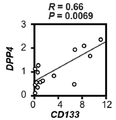
- FIG. 1b is a diagram showing the results of correlation analysis of the expression level of DPP4 and a cancer stem cell-related gene (CD133) in RCC patient-derived spheroids (co-expression of DPP4 and cancer stem cell-related gene in patient-derived RCC spheroids). be.
- FIG. 1a is a diagram showing the results of correlation analysis of the expression level of DPP4 and a cancer stem cell-related gene (CD44) in RCC patient-derived spheroids (co-expression of DPP4 and cancer stem cell-related gene in patient-derived RCC spheroids).
- FIG. 1c shows the results of correlation analysis of the expression level of DPP4 and cancer stem cell-related gene (OCT3 / 4) in RCC patient-derived spheroids (co-expression of DPP4 and cancer stem cell-related gene in patient-derived RCC spheroids). It is a figure.
- FIG. 1d is a diagram showing the results of correlation analysis of the expression level of DPP4 and cancer stem cell-related gene (CXCR4) in RCC patient-derived spheroids (co-expression of DPP4 and cancer stem cell-related gene in patient-derived RCC spheroids). be.
- FIG. 1c shows the results of correlation analysis of the expression level of DPP4 and cancer stem cell-related gene (OCT3 / 4) in RCC patient-derived spheroids (co-expression of DPP4 and cancer stem cell-related gene in patient-derived RCC spheroids). It is a figure.
- FIG. 1d is a diagram showing the results of correlation analysis of the expression level of D
- FIG. 1e is a diagram showing the results of correlation analysis of the expression level of DPP4 and cancer stem cell-related gene (ALDH1A1) in RCC patient-derived spheroids (co-expression of DPP4 and cancer stem cell-related gene in patient-derived RCC spheroids).
- FIG. 1f is a diagram showing the results of correlation analysis of the expression level of DPP4 and cancer stem cell-related gene (ALDH1A2) in RCC patient-derived spheroids (co-expression of DPP4 and cancer stem cell-related gene in patient-derived RCC spheroids). be.
- FIG. 1e is a diagram showing the results of correlation analysis of the expression level of DPP4 and cancer stem cell-related gene (ALDH1A1) in RCC patient-derived spheroids (co-expression of DPP4 and cancer stem cell-related gene in patient-derived RCC spheroids).
- FIG. 1g is a diagram showing the results of correlation analysis of the expression level of DPP4 and cancer stem cell-related gene (ALDH1A3) in RCC patient-derived spheroids (co-expression of DPP4 and cancer stem cell-related gene in patient-derived RCC spheroids). be.
- FIG. 1h is a diagram showing the results of correlation analysis of the expression level of DPP4 and cancer stem cell-related gene (IL6) in RCC patient-derived spheroids (co-expression of DPP4 and cancer stem cell-related gene in patient-derived RCC spheroids). be.
- FIG. 1g is a diagram showing the results of correlation analysis of the expression level of DPP4 and cancer stem cell-related gene (ALDH1A3) in RCC patient-derived spheroids (co-expression of DPP4 and cancer stem cell-related gene in patient-derived RCC spheroids). be.
- FIG. 1h is a diagram showing the results of correlation analysis of the expression level of DPP4 and cancer stem cell
- FIG. 2a shows typical morphological features in primary RCC tumors and their spheroids in RCC-A and RCC-B patients with high DPP4 expression, results of hematoxylin and eosin (H / E) staining, and DPP4 immunohistochemical staining. It is a figure which shows. All panels are 1x and the scale bar is 50 ⁇ m.
- FIG. 2b is a diagram showing the results of examining the combined effect of SUN and the DPP4 inhibitor SITA on the cell viability of RCC-A spheroids.
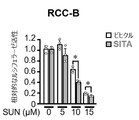
- FIG. 2c is a diagram showing the results of examining the combined effect of SUN and the DPP4 inhibitor SITA on the cell viability of RCC-B spheroids.
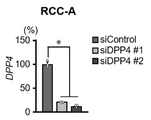
- FIG. 2d is a diagram showing the results of examining the DPP4 expression level in RCC-A spheroids treated with control siRNA (siControl) or DPP4-specific siRNA (siDPP4 # 1 or # 2).
- FIG. 2e is a diagram showing the results of examining the DPP4 expression level in RCC-B spheroids treated with control siRNA (siControl) or DPP4-specific siRNA (siDPP4 # 1 or # 2).
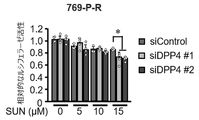
- FIG. 2f is a diagram showing the results of examining the effect of DPP4-specific siRNA on the cell viability of RCC-A spheroids treated with SUN.
- FIG. 2g is a diagram showing the results of examining the effect of DPP4-specific siRNA on the cell viability of RCC-B spheroids treated with SUN.
- FIG. 3a is a diagram showing the results of comparing the mRNA expression levels of DPP4 in ACHN-R cells and their parent strain (ACHN cells).
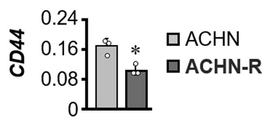
- FIG. 3b is a diagram showing the results of comparing the mRNA expression levels of the CSC-related gene (CD44) in ACHN-R cells and its parent strain (ACHN cells).
- FIG. 3c is a diagram showing the results of comparing the mRNA expression levels of the CSC-related gene (CD133) in ACHN-R cells and its parent strain (ACHN cells).
- FIG. 3d is a diagram showing the results of comparing the mRNA expression levels of the CSC-related gene (OCT3 / 4) in ACHN-R cells and its parent strain (ACHN cells).
- FIG. 3e is a diagram showing the results of comparing the mRNA expression levels of the CSC-related gene (ALDH1A1) in ACHN-R cells and its parent strain (ACHN cells).
- FIG. 3f is a diagram showing the results of comparing the mRNA expression levels of the CSC-related gene (ALDH1A2) in ACHN-R cells and its parent strain (ACHN cells).
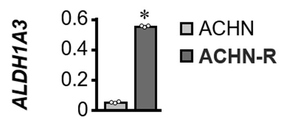
- FIG. 3g is a diagram showing the results of comparing the mRNA expression levels of the CSC-related gene (ALDH1A3) in ACHN-R cells and its parent strain (ACHN cells).
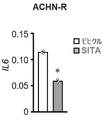
- FIG. 3h is a diagram showing the results of comparing the mRNA expression levels of the CSC-related gene (IL6) in ACHN-R cells and its parent strain (ACHN cells).
- FIG. 3i is a diagram showing the results of comparing the mRNA expression levels of DPP4 in 769-P-R cells and its parent strain (769-P cells).
- FIG. 3j is a diagram showing the results of comparing the mRNA expression levels of the CSC-related gene (CD44) in 769-P-R cells and its parent strain (769-P cells).
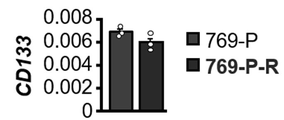
- 3k is a diagram showing the results of comparing the mRNA expression levels of the CSC-related gene (CD133) in 769-P-R cells and its parent strain (769-P cells).
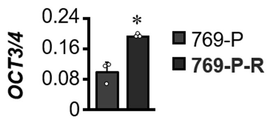
- FIG. 3l is a diagram showing the results of comparing the mRNA expression levels of the CSC-related gene (OCT3 / 4) in 769-P-R cells and its parent strain (769-P cells).
- FIG. 3m is a diagram showing the results of comparing the mRNA expression levels of the CSC-related gene (ALDH1A1) in 769-P-R cells and its parent strain (769-P cells).
- FIG. 3n is a diagram showing the results of comparing the mRNA expression levels of the CSC-related gene (ALDH1A2) in 769-P-R cells and its parent strain (769-P cells).
- FIG. 3o is a diagram showing the results of comparing the mRNA expression levels of the CSC-related gene (ALDH1A3) in 769-P-R cells and its parent strain (769-P cells).
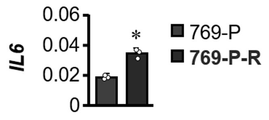
- FIG. 3p is a diagram showing the results of comparing the mRNA expression levels of the CSC-related gene (IL6) in 769-P-R cells and its parent strain (769-P cells).
- FIG. 4a is a diagram showing the results of examining the dose-response effect of sitagliptin (SITA) on three-dimensional spheroid proliferation in ACHN-R cells and their parent strains.
- FIG. 4b is a diagram showing the results of examining the dose-response effect of sitagliptin (SITA) on three-dimensional spheroid proliferation in 769-PR cells and their parent strains.
- FIG. 4c is a diagram showing the results of examining the combined effect of SITA and SUN in a three-dimensional culture of ACHN cells.
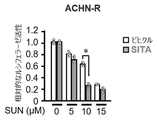
- FIG. 4d is a diagram showing the results of examining the combined effect of SITA and SUN in a three-dimensional culture of ACHN-R cells.
- FIG. 4e is a diagram showing the results of examining the combined effect of SITA and SUN in a three-dimensional culture of 769-P cells.
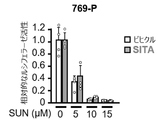
- FIG. 4f is a diagram showing the results of examining the combined effect of SITA and SUN in a three-dimensional culture of 769-PR cells.
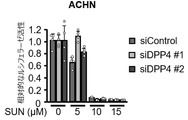
- FIG. 4g is a diagram showing the results of investigating the effect of DPP4 knockdown by siRNA on the therapeutic effect of SUN in a three-dimensional culture of ACHN cells.
- FIG. 4h is a diagram showing the results of investigating the effect of DPP4 knockdown by siRNA on the therapeutic effect of SUN in a three-dimensional culture of ACHN-R cells.
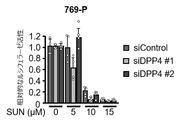
- FIG. 4i is a diagram showing the results of investigating the effect of DPP4 knockdown by siRNA on the therapeutic effect of SUN in a three-dimensional culture of 769-P cells.
- FIG. 4j is a diagram showing the results of investigating the effect of DPP4 knockdown by siRNA on the therapeutic effect of SUN in a three-dimensional culture of 769-PR cells.
- FIG. 4k is a diagram showing the results of investigating the effect of SITA treatment on IL6 mRNA levels in three-dimensional culture of ACHN-R cells.
- FIG. 4l is a diagram showing the results of investigating the effect of SITA treatment on IL6 mRNA levels in three-dimensional culture of 769-PR cells.
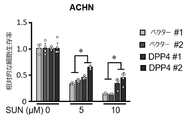
- FIG. 4m is a diagram showing the results of investigating the effect of DPP4 overexpression on the cell viability of RCC spheroids (ACHN) by SUN.
- FIG. 4n is a diagram showing the results of investigating the effect of DPP4 overexpression on the cell viability of RCC spheroids (769-P) by SUN.
- FIG. 5a is a diagram showing the results of investigating the effect of RA supplementation on ACHN-R cells on the suppression of DPP4 by the ALDH1 inhibitor disulfiram.
- FIG. 5b is a diagram showing the results of investigating the effect of RA supplementation on 769-PR cells on the suppression of DPP4 by the ALDH1 inhibitor disulfiram.
- FIG. 5c is a schematic diagram illustrating the location of a functional retinoic acid responsive element (RARE) and reference region near the DPP4 locus on chromosome 2q24.
- FIG. 5d is a diagram showing the results of confirming the recruitment of retinoic acid receptor ⁇ (RAR ⁇ ) to RARE in the DPP4 promoter of ACHN-R cells.
- FIG. 5e is a diagram showing the results of confirming the recruitment of retinoic acid receptor ⁇ (RAR ⁇ ) to RARE in the DPP4 promoter of 769-PR cells.
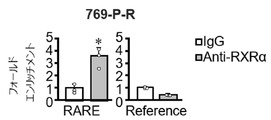
- FIG. 5f is a diagram showing the results of confirming the recruitment of retinoid X receptor ⁇ (RXR ⁇ ) to RARE in the DPP4 promoter of ACHN-R cells.
- FIG. 5g is a diagram showing the results of confirming the recruitment of retinoid X receptor ⁇ (RXR ⁇ ) to RARE in the DPP4 promoter of 769-PR cells.
- FIG. 5h is a diagram showing the results of examining the effect of RA treatment on the RARE sequence in 293T cells.
- FIG. 6a is a diagram showing the growth curves of tumors in the ACHN / SUN group, ACHN-R / SUN group, and ACHN-R / SUN + SITA group.
- FIG. 6b is a diagram showing the results of measuring the tumor body weights of the ACHN / SUN group, the ACHN-R / SUN group, and the ACHN-R / SUN + SITA group.
- FIG. 6c is a diagram showing the results of measuring the body weights of the ACHN / SUN group, the ACHN-R / SUN group, and the ACHN-R / SUN + SITA group.
- FIG. 6d is a diagram showing a representative photograph of xenografted nude mice on the 13th day of the ACHN / SUN group.
- FIG. 6e is a diagram showing a representative photograph of xenografted nude mice on the 13th day of the ACHN-R / SUN group.
- FIG. 6f is a diagram showing representative photographs of xenografted nude mice on the 13th day of the ACHN-R / SUN + SITA group.
- FIG. 6g shows the results of Ki67 immunohistochemical staining of resected tumors in the ACHN / SUN group, ACHN-R / SUN group, and ACHN-R / SUN + SITA group to determine the proportion of Ki67-positive cells (Ki67 index). It is a figure.
- FIG. 6h is a diagram showing the results of examining the mRNA levels of DPP4 in the ACHN / SUN group, ACHN-R / SUN group, and ACHN-R / SUN + SITA group.
- FIG. 6i is a diagram showing the results of examining the mRNA levels of IL6 in the ACHN / SUN group, ACHN-R / SUN group, and ACHN-R / SUN + SITA group.
- FIG. 7a shows Kaplan-Meier 10-year overall survival (OS) from the first visit of 73 patients who received TKI treatment stratified by the presence or absence of type 2 diabetes (T2DM) and the presence or absence of DPP4 inhibitor (DPP4i). It is a figure which shows the result of having investigated).
- FIG. 7b is a diagram showing the results of a waterfall plot analysis of the maximum tumor change rate in 73 RCC patients who received TKI treatment stratified according to the presence or absence of T2DM and the presence or absence of DPP4i.
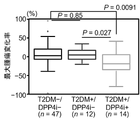
- FIG. 7c is a diagram showing the results of a box plot analysis of the maximum tumor change rate in 73 RCC patients who received TKI treatment stratified by the presence or absence of T2DM and the presence or absence of DPP4i administration.
- FIG. 7d is a diagram showing the results of Kaplan-Meier analysis for 10-year overall survival regarding the relationship between DPP4 expression and prognosis.
- FIG. 7e is a diagram showing the results of Kaplan-Meier analysis focusing on 31 non-T2DM cases for 10-year overall survival regarding the relationship between DPP4 expression and prognosis.
- FIG. 7c is a diagram showing the results of a box plot analysis of the maximum tumor change rate in 73 RCC patients who received TKI treatment stratified by the presence or absence of T2DM and the presence or absence of DPP4i administration.
- FIG. 7d is a diagram showing the results of Kaplan-Meier analysis for 10-year overall survival regarding the relationship between DPP4 expression and prognosis.
- FIG. 7e is
- FIG. 7f is a diagram showing the results of Kaplan-Meier analysis focusing on 18 cases of T2DM for 10-year overall survival regarding the relationship between the expression of DPP4 and the prognosis.
- FIG. 7g is a schematic diagram of ALDH1 / retinoic acid / DPP4 system (axis) in DPP4 high-expressing renal cancer stem cell-like cells.
- the concomitant drug of the present invention is a concomitant drug for treating renal cancer, in which a tyrosine kinase inhibitor and a dipeptidyl peptidase 4 inhibitor are used in combination, and further contains other components as necessary.
- the treatment refers to curing, relieving, or preventing the progression of cancer symptoms.
- the renal cancer is not particularly limited and may be appropriately selected depending on the intended purpose. Examples thereof include renal cell carcinoma and renal pelvis carcinoma.
- the renal cancer may be metastatic renal cancer or non-metastatic renal cancer.
- the renal cancer may be a renal cancer having resistance to a tyrosine kinase inhibitor (hereinafter, may be referred to as “resistance”), or a kidney not resistant to a tyrosine kinase inhibitor.
- resistance a tyrosine kinase inhibitor
- the concomitant drug of the present invention can be suitably used for renal cancer resistant to a tyrosine kinase inhibitor.
- the tyrosine kinase inhibitor is not particularly limited as long as it can inhibit the enzymatic activity of tyrosine kinase or suppress the expression of tyrosine kinase, and can be appropriately selected depending on the intended purpose. Examples include sorafenib, kinasenib, pazopanib, cabozantinib, lenvatinib and the like. These may be used alone or in combination of two or more. As the tyrosine kinase inhibitor, a commercially available product or a synthesized product may be used.
- the dipeptidyl peptidase 4 inhibitor is not particularly limited as long as it can inhibit the enzymatic activity of dipeptidyl peptidase 4 or suppress the expression of dipeptidyl peptidase 4, and may be appropriately selected depending on the intended purpose. Examples thereof include sitagliptin, linagliptin, alogliptin, tenerigliptin, anagliptin, vildagliptin, saxagliptin, toleragliptin, omaligliptin, gemigliptin, evogliptin, gosogliptin, dipeptidyl peptidase 4 expression inhibitor and the like. These may be used alone or in combination of two or more. As the dipeptidyl peptidase 4 inhibitor, a commercially available product may be used, or a synthetic product may be used.
- Dipeptidyl peptidase 4 expression inhibitor is not particularly limited as long as it can suppress the expression of dipeptidylpeptidase 4, and can be appropriately selected depending on the intended purpose. For example, expression of the dipeptidylpeptidase 4 gene.
- a double-stranded nucleic acid molecule (hereinafter, may be referred to as “double-stranded nucleic acid molecule”) for suppressing the above-mentioned double-stranded nucleic acid molecule, and a DNA containing a base sequence encoding the double-stranded nucleic acid molecule (hereinafter, referred to as “DNA”). ),
- a vector containing the DNA hereinafter, may be referred to as a “vector”), and the like. These may be used alone or in combination of two or more.
- the double-stranded nucleic acid molecule is not particularly limited as long as it can suppress the expression of the dipeptidylpeptidase 4 gene, and can be appropriately selected depending on the intended purpose.
- Examples thereof include a double-stranded nucleic acid molecule containing an antisense strand containing a specific base sequence. These may be used alone or in combination of two or more.
- the "double-stranded nucleic acid molecule” refers to a double-stranded nucleic acid molecule obtained by hybridizing a sense strand and an antisense strand.
- the dipeptidylpeptidase 4 gene is the target of the double-stranded nucleic acid molecule, and its expression is suppressed by the double-stranded nucleic acid molecule. Therefore, the dipeptidylpeptidase in the present specification.
- the four genes may be referred to as "target genes" of the double-stranded nucleic acid molecule.
- the double-stranded nucleic acid molecule includes (a) a sense strand containing a base sequence corresponding to a target sequence consisting of a base sequence represented by either SEQ ID NO: 1 or SEQ ID NO: 4, and (b) the above-mentioned (b). It is preferable to include the sense strand of a) and an antisense strand containing a base sequence complementary to the sense strand forming the double strand.
- the sense strand and the antisense strand may be an RNA strand or an RNA-DNA chimeric strand.
- the sense strand and the antisense strand can hybridize with each other to form the double-stranded nucleic acid molecule.
- the sense strand in the double-stranded nucleic acid molecule may contain a base sequence corresponding to the target sequence, may contain other base sequences, and consists only of the base sequence corresponding to the target sequence. It may be a thing.
- the antisense strand in the double-stranded nucleic acid molecule may contain a base sequence complementary to the extent that it can hybridize with the sense strand, and may contain other base sequences.
- the base sequence complementary to the sense strand is preferably contained in an amount of 70% or more, more preferably 80% or more, further preferably 90% or more, and particularly preferably 95% or more.
- double-stranded nucleic acid molecule is not particularly limited and may be appropriately selected depending on the intended purpose.
- double-stranded RNA dsRNA
- double-stranded RNA-DNA chimera etc.
- double-stranded RNA refers to a double-stranded nucleic acid molecule in which both the sense strand and the antisense strand are composed of RNA sequences
- double-stranded RNA-DNA chimera refers to sense.
- a double-stranded nucleic acid molecule in which both the strand and the antisense strand are composed of a chimeric sequence of RNA and DNA.
- the double-stranded RNA and double-stranded RNA-DNA chimera are preferably siRNA (small interfering RNA) or chimeric siRNA, and more preferably siRNA.
- the siRNA is a small molecule double-stranded RNA having a length of 18 bases to 29 bases, and the target RNA having a sequence complementary to the antisense strand (guide strand) of the siRNA is cleaved to obtain the target RNA. It has a function of suppressing expression.
- the terminal structure thereof is not particularly limited and may be appropriately selected according to the purpose.
- the siRNA may have a blunt end or a protruding end (overhang).
- the siRNA preferably has a structure in which the 3'end of each strand protrudes by 2 to 6 bases, and more preferably has a structure in which the 3'end of each strand protrudes by 2 bases.
- the chimeric siRNA refers to a small molecule double-stranded RNA-DNA chimera having a length of 18 bases to 29 bases in which a part of the RNA sequence of siRNA is converted into DNA.
- a small molecule double strand with a length of 21 to 23 bases in which the bases within 8 bases on the 3'side of the sense strand of siRNA and within 6 bases on the 5'side of the antisense strand are converted into DNA. It is preferably an RNA-DNA chimera.
- the chimeric siRNA has a function of suppressing the expression of a target gene, similarly to the siRNA.
- the chimeric siRNA also includes an embodiment in which a part of the sequence converted into DNA is converted into RNA again.
- the terminal structure of the chimeric siRNA is not particularly limited as in the case of the siRNA, and can be appropriately selected depending on the intended purpose. For example, it may have a blunt end or a protruding end (overhang). It may have.
- siRNA examples include the following.
- siRNA whose target sequence is the base sequence represented by the SEQ ID NO: 1
- siRNA in which the target sequence is the base sequence represented by the SEQ ID NO: 4 examples include siRNA composed of the following sense strand of SEQ ID NO: 5 and an antisense strand of SEQ ID NO: 6. Be done. -Sense strand 5'-CAGUCGCAAAACUUACACUCU-3'(SEQ ID NO: 5) -Antisense chain 5'-AGUGUAAGUUUGCGACUGUC-3'(SEQ ID NO: 6)
- the double-stranded RNA may be shRNA (short hairpin RNA).
- shRNA short hairpin RNA
- the shRNA is a single-stranded RNA containing a dsRNA region of about 18 to 29 bases and a loop region of about 3 to 9 bases. Is formed into a hairpin-shaped double-stranded RNA.
- the shRNA is cleaved by Dicer (RNase III enzyme) to become siRNA, which can function to suppress the expression of the target RNA.
- Dicer RNase III enzyme
- the terminal structure of the shRNA is not particularly limited as in the siRNA and the double-stranded RNA-DNA chimera, and can be appropriately selected depending on the intended purpose. For example, it may have a blunt end. It may have a protruding end (overhang).
- the double-stranded nucleic acid molecule may have appropriate modifications depending on the purpose.
- the double-stranded nucleic acid molecule is modified with 2'O-methyl or phosphorothioated for the purpose of imparting resistance to a nucleic acid-degrading enzyme (nuclease) and improving stability in a culture solution or in a living body.
- S conversion nucleic acid-degrading enzyme
- LNA Longed Nucleic Acid
- the 5'end or 3'end of the sense strand of the double-stranded nucleic acid molecule is modified with nanoparticles, cholesterol, a cell membrane-passing peptide or the like. You can also.
- the method for applying such a modification to the double-stranded nucleic acid molecule is not particularly limited, and a conventionally known method can be appropriately used.
- the method for obtaining the double-stranded nucleic acid molecule is not particularly limited, and each can be produced based on a conventionally known method.
- the siRNA chemically synthesizes a single-stranded RNA having a length of 18 to 29 bases corresponding to a desired sense strand and an antisense strand, respectively, using an existing automatic DNA / RNA synthesizer or the like. And can be made by annealing them.
- a commercially available double-stranded siRNA that has been annealed can be obtained, or it can be obtained by requesting synthesis from a siRNA synthesis contractor.
- siRNA can be produced by utilizing the intracellular reaction.
- the chimeric siRNA can be produced, for example, by chemically synthesizing a sense strand and an antisense strand, which are chimeric nucleic acid molecules, and annealing them.
- the DNA is not particularly limited as long as it is a DNA containing a base sequence encoding the double-stranded nucleic acid molecule, and can be appropriately selected depending on the intended purpose.
- the base sequence encoding the double-stranded nucleic acid molecule can be selected as appropriate.
- a promoter sequence for controlling the transcription of the double-stranded nucleic acid molecule is linked to the upstream (5'side) of the double-stranded nucleic acid molecule.
- the promoter sequence is not particularly limited and may be appropriately selected depending on the intended purpose. Examples thereof include a pol II promoter such as a CMV promoter, a pol III promoter such as an H1 promoter and a U6 promoter, and the like.
- the terminator sequence for terminating the transcription of the double-stranded nucleic acid molecule is linked downstream (3'side) of the base sequence encoding the double-stranded nucleic acid molecule.
- the terminator sequence is not particularly limited and may be appropriately selected depending on the intended purpose.
- a transcription unit comprising the promoter sequence, the base sequence encoding the double-stranded nucleic acid molecule, and the terminator sequence is a preferred embodiment in the DNA.
- the transfer unit can be constructed by using a conventionally known method.
- the vector is not particularly limited as long as it contains the DNA, and can be appropriately selected depending on the intended purpose. Examples thereof include a plasmid vector and a virus vector.
- the vector is preferably an expression vector capable of expressing the double-stranded nucleic acid molecule.
- the expression mode of the double-stranded nucleic acid molecule is not particularly limited and may be appropriately selected depending on the intended purpose. For example, as a method for expressing siRNA as a double-stranded nucleic acid molecule, two short single-stranded RNAs are used. Examples thereof include a method for expressing (tandem type), a method for expressing a single-stranded RNA as shRNA (hairpin type), and the like.
- the tandem-type siRNA expression vector contains a DNA sequence encoding a sense strand constituting the siRNA and a DNA sequence encoding an antisense strand, and is upstream (5'side) of the DNA sequence encoding each strand.
- the promoter sequence is ligated to each, and the terminator sequence is ligated downstream (3'side) of the DNA sequence encoding each strand.
- the DNA sequence encoding the sense strand constituting the siRNA and the DNA sequence encoding the antisense strand are arranged in opposite directions, and the sense strand DNA sequence and the antisense strand DNA are arranged in opposite directions.
- sequences are connected via loop sequences, and contain DNA to which the promoter sequence is linked upstream (5'side) and the terminator sequence is linked downstream (3'side).
- Each of the vectors can be constructed by using a conventionally known method, for example, by ligating the DNA to a cleavage site of a vector previously cut with a restriction enzyme.
- the promoter By introducing (transfecting) the DNA or the vector into a cell, the promoter can be activated and the double-stranded nucleic acid molecule can be produced.
- the DNA is transcribed intracellularly to generate a sense strand and an antisense strand, and hybridizing them produces siRNA.
- the DNA is transcribed intracellularly to generate hairpin-type RNA (SHRNA), and then processing by a dicer produces siRNA.
- SHRNA hairpin-type RNA
- the other ingredients in the concomitant drug are not particularly limited as long as the effects of the present invention are not impaired, and can be appropriately selected from among pharmacologically acceptable carriers according to the purpose, for example, additives. , Auxiliary agents, water, etc. These may be used alone or in combination of two or more.
- the additive or the auxiliary agent is not particularly limited and may be appropriately selected depending on the intended purpose.
- a bactericidal agent for example, a bactericidal agent, a preservative, a binder, a thickener, a fixing agent, a binder and a coloring agent.
- Stabilizers for example, a bactericidal agent, a preservative, a binder, a thickener, a fixing agent, a binder and a coloring agent.
- Stabilizers pH regulators, buffers, tonicity agents, solvents, antioxidants, UV inhibitors, crystal precipitation inhibitors, defoamers, physical property improvers, preservatives and the like.
- the amount of other ingredients in the concomitant drug is not particularly limited and can be appropriately selected according to the purpose.
- the concomitant drug may be used only in combination with the tyrosine kinase inhibitor and the dipeptidyl peptidase 4 inhibitor, or may be used in combination with a drug containing another ingredient as an active ingredient. May be good.
- the concomitant drug may be used in a state of being blended in a drug containing another ingredient as an active ingredient.
- the tyrosine kinase inhibitor and the dipeptidyl peptidase 4 inhibitor may be used as separate preparations, or both may be used as one preparation (combination).
- the dosage form of the concomitant drug is not particularly limited and may be appropriately selected depending on the desired administration method.
- an oral solid preparation tablette, coated tablet, granule, powder, capsule, etc.
- oral preparation etc.
- Liquids internal liquids, syrups, elixirs, etc.
- injections solutions, suspensions, solids for dissolving errands, etc.
- ointments patches, gels, creams, external powders, sprays, inhalation powders And so on.
- the dosage form is not particularly limited and can be appropriately selected depending on the intended purpose. , Both may have the same dosage form or may have different dosage forms.
- an excipient and, if necessary, an additive such as a binder, a disintegrant, a lubricant, a colorant, a flavoring / flavoring agent, etc. are added to the active ingredient, and a conventional method is used.
- an additive such as a binder, a disintegrant, a lubricant, a colorant, a flavoring / flavoring agent, etc.
- Can be manufactured by Examples of the excipient include lactose, sucrose, sodium chloride, glucose, starch, calcium carbonate, kaolin, microcrystalline cellulose, silicic acid and the like.
- binder examples include water, ethanol, propanol, simple syrup, glucose solution, starch solution, gelatin solution, carboxymethyl cellulose, hydroxypropyl cellulose, hydroxypropyl starch, methyl cellulose, ethyl cellulose, shelac, calcium phosphate, polyvinylpyrrolidone and the like. Be done.
- disintegrant examples include dried starch, sodium alginate, canten powder, sodium hydrogencarbonate, calcium carbonate, sodium lauryl sulfate, stearic acid monoglyceride, lactose and the like.
- lubricant examples include purified talc, stearate, borax, polyethylene glycol and the like.
- colorant examples of the flavoring / flavoring agent include sucrose, orange peel, citric acid, tartaric acid and the like.
- the oral solution can be produced by a conventional method, for example, by adding an additive such as a taste-masking agent, a buffering agent, or a stabilizer to the active ingredient.
- an additive such as a taste-masking agent, a buffering agent, or a stabilizer to the active ingredient.
- the flavoring / flavoring agent include sucrose, orange peel, citric acid, tartaric acid and the like.
- the buffer include sodium citrate and the like.
- the stabilizer include tragant, gum arabic, gelatin and the like.
- a pH adjuster, a buffer, a stabilizer, an tonicity agent, a local anesthetic, etc. are added to the active ingredient, and the injection is subcutaneously, intramuscularly, or intravenously used by a conventional method. Etc. can be produced.
- the pH adjuster and the buffer include sodium citrate, sodium acetate, sodium phosphate and the like.
- the stabilizer include sodium metabisulfite, EDTA, thioglycolic acid, thiolactic acid and the like.
- the tonicity agent include sodium chloride, glucose and the like.
- the local anesthetic include procaine hydrochloride, lidocaine hydrochloride and the like.
- a known base, stabilizer, wetting agent, preservative and the like can be blended with the active ingredient and mixed by a conventional method to produce the ointment.
- the base include liquid paraffin, white petrolatum, bleached beeswax, octyldodecyl alcohol, paraffin and the like.
- the preservative include methyl paraoxybenzoate, ethyl paraoxybenzoate, propyl paraoxybenzoate and the like.
- a cream, a gel, a paste, or the like as the ointment can be applied to a known support by a conventional method to produce the patch.
- the support include cotton, rayon, woven fabric made of chemical fibers, non-woven fabric, soft vinyl chloride, polyethylene, polyurethane and other films, foam sheets and the like.
- the administration method, dose, administration timing, and administration target of the concomitant drug are not particularly limited and may be appropriately selected according to the purpose.
- the method for administering the concomitant drug is not particularly limited, and for example, either local administration or systemic administration can be selected depending on the dosage form of the concomitant drug, the condition of the patient, and the like.
- the active ingredient of the concomitant drug can be administered by directly injecting it into a desired site (for example, a tumor site).
- a conventionally known method such as injection can be appropriately used.
- systemic administration for example, oral administration, intraperitoneal administration, administration into blood, etc.
- the active ingredient of the concomitant drug is stably and efficiently delivered to a desired site (for example, tumor site).
- the administration method may be the same or different. It may be an administration method.
- the dose is not particularly limited, and is appropriately selected in consideration of various factors such as the age, body weight, constitution, symptoms of the individual to be administered, and the presence or absence of administration of drugs or drugs containing other ingredients as active ingredients. be able to.
- the dose ratio of the tyrosine kinase inhibitor and the dipeptidyl peptidase 4 inhibitor in the concomitant drug is not particularly limited and may be appropriately selected depending on the intended purpose.
- the number of administrations is not particularly limited, and is appropriately selected in consideration of various factors such as the age, body weight, constitution, symptoms of the individual to be administered, and the presence or absence of administration of drugs or drugs containing other ingredients as active ingredients. can do.
- the administration time is not particularly limited and may be appropriately selected depending on the intended purpose.
- the concomitant drug may administer the tyrosine kinase inhibitor and the dipeptidyl peptidase 4 inhibitor at the same time or at different times.
- the administration order of both is not particularly limited and may be appropriately selected depending on the intended purpose.
- the administration interval when the tyrosine kinase inhibitor and the dipeptidyl peptidase 4 inhibitor are administered at different times is not particularly limited and may be appropriately selected depending on the intended purpose.
- the administration target is not particularly limited and may be appropriately selected depending on the intended purpose. Examples thereof include humans, monkeys, pigs, cows, sheep, goats, dogs, cats, mice, rats and birds. Among these, it can be suitably used for humans.
- the concomitant drug may enhance the tumor growth inhibitory effect (enhance the therapeutic effect) of the tyrosine kinase inhibitor when used in combination with the dipeptidyl peptidase 4 inhibitor.
- the present invention also relates to a method for treating renal cancer, which comprises administering the concomitant drug of the present invention to an individual.
- the renal cancer is not particularly limited, and examples thereof include the same as those described in the item of renal cancer of the above-mentioned concomitant drug.
- other renal cancer therapeutic agents may be further acted on.
- the therapeutic effect enhancer of the tyrosine kinase inhibitor of the present invention contains at least a dipeptidyl peptidase 4 inhibitor, and further contains other components as necessary.
- the therapeutic effect enhancer of the tyrosine kinase inhibitor can enhance the therapeutic effect of the tyrosine kinase inhibitor on renal cancer.
- "enhancing the therapeutic effect” means enhancing the tumor growth inhibitory effect and restoring the therapeutic effect of the tyrosine kinase inhibitor to a tumor having resistance to the tyrosine kinase inhibitor (resistance). Overcome).
- ⁇ Kidney cancer> examples of the renal cancer include those described in the item of renal cancer of the above-mentioned concomitant drug.
- dipeptidyl peptidase 4 inhibitor examples include those similar to those described in the above-mentioned concomitant drug dipeptidyl peptidase 4 inhibitor section.
- the content of the dipeptidyl peptidase 4 inhibitor in the therapeutic effect enhancer of the tyrosine kinase inhibitor is not particularly limited and may be appropriately selected depending on the intended purpose.
- the therapeutic effect enhancer of the tyrosine kinase inhibitor may consist only of the dipeptidyl peptidase 4 inhibitor.
- the other components of the therapeutic effect enhancer of the tyrosine kinase inhibitor are not particularly limited and can be appropriately selected from pharmacologically acceptable carriers according to the purpose.
- the above-mentioned concomitant drug The same as those described in the item of other components of. These may be used alone or in combination of two or more.
- the content of the other components in the therapeutic effect enhancer of the tyrosine kinase inhibitor is not particularly limited and may be appropriately selected depending on the intended purpose.
- tyrosine kinase inhibitor targeted by the therapeutic effect enhancer of the tyrosine kinase inhibitor examples include those similar to those described in the item of tyrosine kinase inhibitor of the above-mentioned concomitant drug.
- the therapeutic effect enhancer of the tyrosine kinase inhibitor may be used in combination with a tyrosine kinase inhibitor alone, or may be used in combination with a tyrosine kinase inhibitor and a drug containing another ingredient as an active ingredient. good. Further, the therapeutic effect enhancer of the tyrosine kinase inhibitor may be used in a state of being blended in a drug containing a tyrosine kinase inhibitor or another ingredient as an active ingredient.
- the dosage form of the therapeutic effect enhancer of the tyrosine kinase inhibitor is not particularly limited and may be appropriately selected depending on the intended purpose.
- the administration method, dose, administration timing, and administration target of the therapeutic effect enhancer of the tyrosine kinase inhibitor are not particularly limited and can be appropriately selected according to the purpose.
- administration of the above-mentioned concomitant drug The same as those described in the item of.
- the therapeutic effect enhancer of the tyrosine kinase inhibitor can enhance the tumor growth inhibitory effect of the tyrosine kinase inhibitor, as shown in the item of Examples described later. Therefore, the present invention also relates to a method for enhancing the therapeutic effect of a tyrosine kinase inhibitor on renal cancer, which comprises administering to an individual the therapeutic effect enhancing agent of the tyrosine kinase inhibitor of the present invention.
- the renal cancer is not particularly limited and may be appropriately selected depending on the intended purpose. Examples thereof include the same as those described in the item of renal cancer of the above-mentioned concomitant drug.
- the tyrosine kinase inhibitor to be administered together with the administration of the therapeutic effect enhancer of the tyrosine kinase inhibitor is not particularly limited and may be appropriately selected depending on the intended purpose.
- tyrosine of the above-mentioned concomitant drug The same as those described in the item of kinase inhibitor can be mentioned.
- the method for enhancing the therapeutic effect of a tyrosine kinase inhibitor on renal cancer may further cause the action of other therapeutic agents for renal cancer.
- test examples of the present invention will be described below, but the present invention is not limited to these test examples.
- Test Example 1 ⁇ Materials and methods> ⁇ Collection of clinical data and selection of patients >> Retrospective analysis of 73 patients with renal cell carcinoma (RCC) treated with a tyrosine kinase inhibitor (TKI) at the Saitama Medical Center, Saitama Medical University between 2008 and 2019. did. Overall survival of the patient from the first visit and Response Evaluation Criteria in Solid Tumors (RECIST version 1.1) (Eisenhauer, E. A. et al. ). Eur. J. Cancer 45, 228-247 (2009)) evaluated the maximum tumor shrinkage rate. Only the earliest TKI treatment that could be evaluated was evaluated for maximum tumor shrinkage.
- RCC cell line used for preparation of patient-derived cells and experiments >> After obtaining informed consent at Saitama Medical Center General Medical Center, patient-derived cells (PDC) were prepared from resected tumors of RCC patients. Treatment of tumor samples is performed according to the literature (Namekawa, T, et al. ALDH1A1 inpatient-developed bladder cancer spheroids activates retinoic acid acid signaling leding to gone. The protocol for this study has been approved by the Institutional Review Board of Saitama Medical University Saitama Medical Center (No. 1363-IV).
- the human RCC cell lines ACHN and 769-P were obtained from the American Type Culture Collection (ATCC) and certified by BEX for short tandem repeat (STR) analysis.
- ACHN and 769-P cells are cultured in DMEM and RPMI medium (Nakalitesk) supplemented with 10% FBS, 100 U / mL penicillin, and 100 ⁇ g / mL streptomycin, respectively, in a 5% CO 2 incubator at 37 ° C. did.
- SUN resistant sometimes referred to as "resistant”
- RCC cell lines ACHN-R and 769-P by exposing ACHN and 769-P cells to sunitinib (SUN) up to 10 ⁇ M for 6 months or longer. -R was prepared.
- siRNA transfection >> SiRNA (siDPP4 # 1 and # 2) targeting dipeptidyl peptidase 4 (DPP4) and control siRNA (siControl) were purchased from RNAi and used with RNAiMAX reagent (Thermo Fisher Scientific) according to the manufacturer's instructions. Introduced into cells. The sequence of each siRNA is shown below.
- [SiDPP4 # 1] Target sequence- 5'-GGAGGGTACGTACTCTATG-3'(SEQ ID NO: 1) -Sequence of double-stranded nucleic acid molecule (siRNA)- -Sense strand 5'-GGAGGGUAACCUCUCAUG-3'(SEQ ID NO: 2) -Antisense chain 5'-UGAGGUUCGUACCCUCCAU-3'(SEQ ID NO: 3)
- the primers used for qRT-PCR are as follows.
- Immunohistochemical staining >> The formalin fixative was embedded in paraffin and sectioned.
- a Histofine kit (Nichirei Corporation) using a streptavidin-biotin amplification method was used. Ki67 (dilution 1: 100; MIB1) and DPP4 (dilution 1: 100; AF1180-SP) were used as the primary antibody, and the secondary antibody was purchased from Agilent Technologies and R & D Systems, respectively.
- the evaluation of immunostaining was performed by a specialized pathologist.
- Chromatin immunoprecipitation method >> ⁇ (chromatin immunoprecipitation ⁇ ChIP) ⁇ Namekawa, T, et al. ALDH1A1 in patient-derived bladder cancer spheroids activates retinoic acid signaling leading to TUBB3 overexpression and tumor progression. Int. J. Cancer 146, 1099-1113 (2019) ”.
- the sequence of primers used in the chromatin immunoprecipitation PCR method is as follows.
- Luciferase Assay >> JASPAR (Wasserman W. W. & Sandelin A. Applied bioinformatics for the oligonucleotide of regaturory elements. Nat. Rev. Rev. ) And its mutant oligonucleotides or RARE direct repeats (DR5) (Bulens, F. et al. Retinoic acid index of human tissue-type plexminogen activate traits) J. Biol. Chem. 270, 7167-7175 (1995)) was generated by annealing the corresponding oligonucleotide (see sequence of primers below) and inserted into the pGL3 promoter (Promega). The luciferase signal was used as an internal standard and luciferase activity was analyzed using the Dual-Luciferase Reporter Assay System (Promega). The sequence of primers used in the luciferase assay is as follows.
- the mRNA expression level of DPP4 was significantly correlated with the mRNA expression levels of CD133, aldehyde dehydrogenase 1 (ALDH1) A2, ALDH1A3, and IL6, respectively.
- HE hematoxylin eosin
- DPP4 inhibition enhances the tumor growth inhibitory effect of sunitinib on RCC cells
- SUN multi-target receptor tyrosine kinase inhibitor sunitinib
- FIGS. 2b-2c The results of treatment of RCC-A and RCC-B spheroids with SITA (100 ⁇ M) and SUN are shown in FIGS. 2b-2c. Data are shown as mean ⁇ SD of relative luciferase activity in each spheroid analyzed in an ATP-based luciferase assay. A two-sided student's t-test was performed by comparing the solvent and SITA with P ⁇ 0.05 as the significance level. The two bar graphs of each item on the horizontal axis of FIGS. 2b to 2c show the results of processing with a vehicle and processing with SITA in order from the left side. Further, in FIGS. 2b to 2c, "*" represents P ⁇ 0.05. As shown in FIGS.
- FIGS. 2d to 2e show the results of processing with siControl, processing with siDPP4 # 1, and processing with siDPP4 # 2, in order from the left side. Further, in FIGS. 2d to 2e, "*" represents P ⁇ 0.05. As shown in FIGS. 2d to 2e, it was confirmed that siDPP4 suppressed DPP4 expression.
- Data are shown as mean ⁇ SD of relative luciferase activity in each spheroid culture analyzed by ATP-based luciferase assay.
- SiControl and siDPP4 were compared under each condition, and a two-sided student's t-test was performed with P ⁇ 0.05 as the significance level.
- FIGS. 2f to 2g show the results of processing with siControl, processing with siDPP4 # 1, and processing with siDPP4 # 2, in order from the left side. Further, in FIGS. 2f to 2g, "*" represents P ⁇ 0.05. As shown in FIGS. 2f to 2g, when the expression of DPP4 was suppressed by siDPP4, the growth inhibitory effect of SUN was similarly enhanced.
- ACHN-R cells and 769-P-R cells which are SUN-resistant RCC cell lines
- ACHN-R cells and 769 were prepared.
- -In P-R cells the expression levels of DPP4 and CSC-related genes were compared with their respective parent strains.
- the results of qRT-PCR evaluation of the expression levels of DPP4 and CSC-related genes in three-dimensional cultures of ACHN cells and ACHN-R cells are shown in FIGS.
- FIGS. 3i to 3p The results of evaluating the expression levels of DPP4 and CSC-related genes in culture by qRT-PCR are shown in FIGS. 3i to 3p.
- FIGS. 3a to 3p show the results of the parent strain and the resistant strain in order from the left side. Further, in FIGS. 3a to 3j and 3l to 3p, "*" represents P ⁇ 0.05. As shown in FIGS. 3a to 3p, the mRNA expression levels of DPP4, Oct3 / 4, ALDH1A1, ALDH1A3, and IL6 were all increased in the resistant strains.
- SITA and siDPP4 were used in combination with SUN using ACHN-R cells and 769-PR cells, and the effect on spheroid proliferation was evaluated.
- ns represents "no significant difference”.
- SITA alone administration did not affect spheroid proliferation of ACHN cells, ACHN-R cells, 769-P cells, and 769-P-R cells.
- FIGS. 4c-4f show SITA and SUN in a three-dimensional culture of ACHN cells (FIG. 4c), ACHN-R cells (FIG. 4d), 769-P cells (FIG. 4e), and 769-PR cells (FIG. 4f). It is a figure which shows the result of having investigated the combination effect.
- the SITA concentration used was 100 ⁇ M.
- the two bar graphs of each item on the horizontal axis of FIGS. 4c to 4f show the results of processing with SITA and processing with SITA in order from the left side. Further, in FIGS. 4c, 4d, and 4f, "*" represents P ⁇ 0.05.
- FIGS. 4c-4f the combined administration of SUN and SITA suppressed the spheroid proliferation of ACHN-R cells and 769-PR cells.
- DPP4 knockdown by siRNA is 3 of ACHN cells (FIG. 4g), ACHN-R cells (FIG. 4h), 769-P cells (FIG. 4i), and 769-PR cells (FIG. 4j).
- ACHN cells FIGS. 4g to 4j
- n 3 of relative luciferase activity in each spheroid.
- the three bar graphs of each item on the horizontal axis of FIGS. 4g to 4j show the results of processing with siControl, processing with siDPP4 # 1, and processing with siDPP4 # 2, in order from the left side. Further, in FIGS.
- FIGS. 4m-4n are diagrams showing the results of investigating the effect of DPP4 overexpression on the cell viability of RCC spheroids by SUN.
- ACHN cells FIG. 4 m
- 769-P cells FIG. 4n
- stably express the control vector vector # 1 or # 2
- DPP4 DPP4 # 1 or # 2
- a two-sided student's t-test was performed with P ⁇ 0.05 as the significance level.
- 4m to 4n are, in order from the left side, in the case of vector # 1, the vector # 2, the DPP4 # 1, and the DPP4 # 2. The result when processed is shown. Further, in FIGS. 4m to 4n, "*" represents P ⁇ 0.05. As shown in FIGS. 4m-4n, in ACHN cells and 769-P cells in which DPP4 was stably overexpressed, cell viability under SUN administration was improved, and DPP4 overexpression was caused by SUN-induced RCC spheroids. It was confirmed that the cell viability was restored.
- ⁇ DPP4 expression is regulated by retinoic acid signal in SUN-resistant RCC cells
- ALDH1 correlates with the expression level of DPP4, it was hypothesized that the function of ALDH1 may be related to the expression of DPP4.
- ALDH1 is an enzyme involved in retinol metabolism, converts retinoic acid to retinoic acid (RA), and acts as a ligand for RA receptors such as retinoic acid receptor ⁇ (retinoic acid receptor alpha, RAR ⁇ ).
- FIG. 5a-5b show snitinib (SUN) resistant RCC cells to suppression of DPP4 by disulfiram (DSF), one of the FDA-approved ALDH inhibitors used in the treatment of alcoholism (FIG. 5a).
- SUN snitinib
- DSF disulfiram
- FIG. 5b 769-PR cells
- ACHN-R cells were treated with vehicle only, 15 ⁇ M DSF, or 15 ⁇ M DSF and 1 ⁇ M RA
- FIGS. 5a to 5b show the results of the vehicle treatment, the DSF treatment, and the DSF and RA treatment in order from the left side. Further, in FIGS. 5a to 5b, "*" represents P ⁇ 0.05.
- DSF disulfiram
- FIGS. 5a-5b the addition of disulfiram (DSF) suppresses the expression of DPP4 in both ACHN-R cells and 769-PR cells, and this effect is restored by the administration of RA. I found. This indicates that RA signals regulate DPP4 expression in RCC cells.
- the promoter region of DPP4 searched from the hg19 human genome data set was subjected to the open access transcription factor binding profile database JASPAR (http://jaspar.genereg.net/).
- JASPAR open access transcription factor binding profile database
- RARE candidate was identified in the DPP4 promoter region at positions -1619bp to -1647bp from the transcription start site (TSS) where the relative profile score threshold of the JASPAR algorithm exceeds 85% (FIG. 5c). ..
- FIGS. 5d-5e The results of confirming the recruitment of retinoic acid receptor ⁇ (RAR ⁇ ) to RARE in the DPP4 promoter of SUN-resistant RCC cells are shown in FIGS. 5d-5e, and the retinoid X receptor ⁇ to RARE in the DPP4 promoter of SUN-resistant RCC cells ( The results of confirming the recruitment of retinoic X receptor alpha (RXR ⁇ ) are shown in FIGS. 5f to 5g. Chromatin immunoprecipitation was performed on ACHN-R cells and 769-PR cells using anti-RAR ⁇ antibody (Fig. 5d-5e) or anti-RXR ⁇ antibody (Fig. 5f-5g) and control IgG, and quantified by PCR method. ..
- the left side shows the results in the case of RARE
- the right side shows the results in the case of the reference region
- the horizontal axis of each graph in FIGS. 5d to 5e shows the results when IgG is used in order from the left side.
- the results when the antibody is used are shown
- the horizontal axis of each graph of FIGS. 5f to 5g shows the results when IgG is used in order from the left side and when the RXR ⁇ antibody is used.
- "*" represents P ⁇ 0.05. As shown in FIGS.
- Luciferase reporter assay was performed to determine if RA modifies DPP4 promoter activity.
- Luciferase reporters containing wild-type (WT) and mutant (Mut) RARE were used.
- WT wild-type
- Mot mutant
- RARE direct repeat 5
- DR5 direct repeat 5
- SITA inhibits the growth of SUN-resistant RCC xenograft tumors
- the combined effect of SITA on the growth of SUN-resistant RCC tumors was examined using a xenograft tumor model. When the volume of the ACHN or ACHN-R nude mouse xenograft tumor reached 180 mm 3 , oral administration of SUN or SUN and SITA was started.
- the tumor weight on the 13th day (endpoint) in each group was shown in FIG.
- the weight of the eyes (endpoints) is shown in FIG. 6c.
- FIGS. 6b to 6c show the results of the ACHN / SUN group, the ACHN-R / SUN group, and the ACHN-R / SUN + SITA group in order from the left side. Further, in FIGS. 6a and 6b, "*" represents P ⁇ 0.05.
- representative photographs of xenograft nude mice on the 13th day of each group are shown in FIGS. 6d to 6f.
- the scale bar is 10 mm.
- ACHN-R xenograft tumors showed resistance to SUN compared to ACHN xenograft tumors, but by using SUN and SITA in combination, they were as good as ACHN xenograft tumors. Tumor growth was suppressed.
- Ki67 index The results of Ki67 immunohistochemical staining of the resected tumors in each group to determine the proportion of Ki67-positive cells (Ki67 index) are shown in FIG. 6g.
- the scale bar is 50 ⁇ m.
- the horizontal axis of FIG. 6g shows the results of the ACHN / SUN group, the ACHN-R / SUN group, and the ACHN-R / SUN + SITA group in order from the left side. Further, in FIG. 6g, "*" represents P ⁇ 0.05.
- the combined use of SITA and SUN reduced the Ki67 index, a marker of cell proliferation, in ACHN-R xenograft tumors.
- FIGS. 6h and 6i The results of examining the mRNA levels of DPP4 and IL6 in each group in each group are shown in FIGS. 6h (DPP4) and 6i (IL6).
- the expression level was evaluated by qRT-PCR.
- the horizontal axes of FIGS. 6h to 6i show the results of the ACHN / SUN group, the ACHN-R / SUN group, and the ACHN-R / SUN + SITA group in order from the left side. Further, in FIGS. 6h to 6i, "*" represents P ⁇ 0.05. As shown in FIGS.
- the expression of DPP4 and IL6 was increased in the ACHN-R tumor as compared with the ACHN tumor, and the expression of IL6 was decreased in the SITA-combined ACHN-R xenograft tumor.
- DPP4 inhibitors contribute to a good prognosis in RCC patients treated with TKI
- TKI serum-derived neuropeptide
- T2DM- / DPP4i- did not have T2DM and did not take DPP4i (citagliptin, linagliptin, allogliptin, teneriglyctin, anagliptin, or vildagliptin), and had T2DM but did not take DPP4i.
- DPP4i citagliptin, linagliptin, allogliptin, teneriglyctin, anagliptin, or vildagliptin
- FIG. 7a shows the results of Kaplan-Meier analysis for 10-year overall survival regarding whether or not the presence or absence of DPP4i contributed to the prognosis for these three groups.
- the P value was evaluated by the logrank test.
- the Holm method was used as a post-hook test for multiple comparisons.
- taking DPP4i was a good prognostic factor in T2DM patients. It was confirmed that the DPP4 inhibitor (DPP4i) contributes to the prognosis and maximum tumor shrinkage rate of RCC patients treated with TKI.
- FIG. 7b shows the results of waterfall plot analysis of the maximum tumor change rate in 73 RCC patients who received TKI treatment stratified according to the presence or absence of T2DM and the presence or absence of DPP4i. Partial response rates were compared between each group by Fisher's exact test. Taking DPP4i increased the partial response rate under TKI treatment (see Table 1 below).
- FIG. 7c is a diagram showing the results of a box plot analysis of the maximum tumor change rate in 73 RCC patients who received TKI treatment stratified by the presence or absence of T2DM and the presence or absence of DPP4i administration. The P value was evaluated by the Mann-Whitney U test. As shown in FIG. 7c, the enhancement of the tumor shrinkage effect by DPP4i was observed.
- a concomitant drug for treating renal cancer which is a concomitant drug characterized by a combination of a tyrosine kinase inhibitor and a dipeptidyl peptidase 4 inhibitor.
- tyrosine kinase inhibitor is at least one selected from the group consisting of sunitinib, sorafenib, axitinib, pazopanib, cabozantinib, and lenvatinib. be.
- a dipeptidyl peptidase 4 inhibitor is selected from sitagliptin, linagliptin, alogliptin, teneligliptin, anagliptin, vildagliptin, saxagliptin, toleragliptin, omaligliptin, gemiglyctin, evogliptin, gosogliptin, and dipeptidyl peptidylpe.
- the concomitant drug according to any one of ⁇ 1> to ⁇ 3>, which is at least one.
- the dipeptidylpeptidase 4 expression inhibitor comprises a double-stranded nucleic acid molecule for suppressing the expression of the dipeptidylpeptidase 4 gene, a DNA containing a base sequence encoding the double-stranded nucleic acid molecule, and the DNA.
- the concomitant drug according to ⁇ 4> which is at least one selected from the group consisting of vectors.
- a double-stranded nucleic acid molecule for suppressing the expression of the dipeptidyl peptidase 4 gene is (A) A sense strand containing a base sequence corresponding to a target sequence consisting of a base sequence represented by either SEQ ID NO: 1 or SEQ ID NO: 4.
- the concomitant drug according to ⁇ 5> which comprises the sense strand of (a) and an antisense strand containing a base sequence complementary to the sense strand forming the double strand.
- ⁇ 7> The concomitant drug according to any one of ⁇ 5> to ⁇ 6>, wherein the double-stranded nucleic acid molecule is either double-stranded RNA or double-stranded RNA-DNA chimera.
- ⁇ 8> The concomitant drug according to any one of ⁇ 5> to ⁇ 7>, wherein the double-stranded nucleic acid molecule is either siRNA or chimeric siRNA.
- ⁇ 9> The concomitant drug according to any one of ⁇ 5> to ⁇ 8>, wherein the double-stranded nucleic acid molecule is siRNA.
- a method for treating renal cancer which comprises administering to an individual the concomitant drug according to any one of ⁇ 1> to ⁇ 9>.
- a tyrosine kinase inhibitor therapeutic effect enhancer which comprises a dipeptidylpeptidase 4 inhibitor and is characterized by enhancing the therapeutic effect of a tyrosine kinase inhibitor on renal cancer.
- ⁇ 12> The therapeutic effect enhancer of the tyrosine kinase inhibitor according to ⁇ 11> above, wherein the renal cancer is a renal cancer resistant to a tyrosine kinase inhibitor.
- ⁇ 13> The tyrosine kinase inhibitor according to any one of ⁇ 11> to ⁇ 12> above, wherein the tyrosine kinase inhibitor is at least one selected from the group consisting of sunitinib, sorafenib, axitinib, pazopanib, cabozantinib, and lenvatinib. It is a therapeutic effect enhancer of the drug.
- a dipeptidyl peptidase 4 inhibitor is selected from sitagliptin, linagliptin, alogliptin, teneligliptin, anagliptin, vildagliptin, kinase, trelagliptin, omaligliptin, gemigliptin, evogliptin, gosogliptin, and dipeptidyl peptidylpe. It is an agent for enhancing the therapeutic effect of the tyrosine kinase inhibitor according to any one of the above ⁇ 11> to ⁇ 13>, which is at least one.
- the dipeptidylpeptidase 4 expression inhibitor comprises a double-stranded nucleic acid molecule for suppressing the expression of the dipeptidylpeptidase 4 gene, a DNA containing a base sequence encoding the double-stranded nucleic acid molecule, and the DNA.
- the tyrosine kinase inhibitor according to ⁇ 14> which is at least one selected from the group consisting of vectors, is a therapeutic effect enhancer.
- a double-stranded nucleic acid molecule for suppressing the expression of the dipeptidyl peptidase 4 gene is (A) A sense strand containing a base sequence corresponding to a target sequence consisting of a base sequence represented by either SEQ ID NO: 1 or SEQ ID NO: 4. (B) The therapeutic effect enhancer of the tyrosine kinase inhibitor according to ⁇ 15>, which comprises the sense strand of (a) and an antisense strand containing a base sequence complementary to the sense strand forming the double strand. Is.
- the double-stranded nucleic acid molecule is an agent for enhancing the therapeutic effect of the tyrosine kinase inhibitor according to any one of ⁇ 15> to ⁇ 17>, which is either siRNA or chimeric siRNA.
- the double-stranded nucleic acid molecule is a siRNA, which is an agent for enhancing the therapeutic effect of the tyrosine kinase inhibitor according to any one of ⁇ 15> to ⁇ 18>.
- ⁇ 20> Enhance the therapeutic effect of a tyrosine kinase inhibitor on renal cancer, which comprises administering to an individual the therapeutic effect enhancer of the tyrosine kinase inhibitor according to any one of ⁇ 11> to ⁇ 19>. How to do it.
Landscapes
- Health & Medical Sciences (AREA)
- Chemical & Material Sciences (AREA)
- Life Sciences & Earth Sciences (AREA)
- Medicinal Chemistry (AREA)
- General Health & Medical Sciences (AREA)
- Public Health (AREA)
- Veterinary Medicine (AREA)
- Pharmacology & Pharmacy (AREA)
- Animal Behavior & Ethology (AREA)
- Epidemiology (AREA)
- Organic Chemistry (AREA)
- Engineering & Computer Science (AREA)
- General Chemical & Material Sciences (AREA)
- Bioinformatics & Cheminformatics (AREA)
- Genetics & Genomics (AREA)
- Zoology (AREA)
- Wood Science & Technology (AREA)
- Chemical Kinetics & Catalysis (AREA)
- Molecular Biology (AREA)
- Biochemistry (AREA)
- Nuclear Medicine, Radiotherapy & Molecular Imaging (AREA)
- Biotechnology (AREA)
- Microbiology (AREA)
- Biomedical Technology (AREA)
- General Engineering & Computer Science (AREA)
- Urology & Nephrology (AREA)
- Pharmaceuticals Containing Other Organic And Inorganic Compounds (AREA)
- Medicines That Contain Protein Lipid Enzymes And Other Medicines (AREA)
Priority Applications (3)
| Application Number | Priority Date | Filing Date | Title |
|---|---|---|---|
| JP2022569975A JPWO2022131198A1 (https=) | 2020-12-14 | 2021-12-13 | |
| US18/257,140 US20240148736A1 (en) | 2020-12-14 | 2021-12-13 | Combination drug for treating renal cancer and potentiator for therapeutic effects of tyrosine kinase inhibitor |
| EP21906560.4A EP4260873A4 (en) | 2020-12-14 | 2021-12-13 | Combination drug for treating kidney cancer and therapeutic effect enhancer for tyrosine kinase inhibitor |
Applications Claiming Priority (2)
| Application Number | Priority Date | Filing Date | Title |
|---|---|---|---|
| JP2020206499 | 2020-12-14 | ||
| JP2020-206499 | 2020-12-14 |
Publications (1)
| Publication Number | Publication Date |
|---|---|
| WO2022131198A1 true WO2022131198A1 (ja) | 2022-06-23 |
Family
ID=82057787
Family Applications (1)
| Application Number | Title | Priority Date | Filing Date |
|---|---|---|---|
| PCT/JP2021/045772 Ceased WO2022131198A1 (ja) | 2020-12-14 | 2021-12-13 | 腎がんを治療するための併用医薬及びチロシンキナーゼ阻害薬の治療効果増強剤 |
Country Status (4)
| Country | Link |
|---|---|
| US (1) | US20240148736A1 (https=) |
| EP (1) | EP4260873A4 (https=) |
| JP (1) | JPWO2022131198A1 (https=) |
| WO (1) | WO2022131198A1 (https=) |
Citations (1)
| Publication number | Priority date | Publication date | Assignee | Title |
|---|---|---|---|---|
| JP2019530671A (ja) * | 2016-09-07 | 2019-10-24 | トラスティーズ オブ タフツ カレッジ | イムノdash阻害剤及びpge2アンタゴニストを用いた併用療法 |
-
2021
- 2021-12-13 US US18/257,140 patent/US20240148736A1/en active Pending
- 2021-12-13 JP JP2022569975A patent/JPWO2022131198A1/ja active Pending
- 2021-12-13 EP EP21906560.4A patent/EP4260873A4/en active Pending
- 2021-12-13 WO PCT/JP2021/045772 patent/WO2022131198A1/ja not_active Ceased
Patent Citations (1)
| Publication number | Priority date | Publication date | Assignee | Title |
|---|---|---|---|---|
| JP2019530671A (ja) * | 2016-09-07 | 2019-10-24 | トラスティーズ オブ タフツ カレッジ | イムノdash阻害剤及びpge2アンタゴニストを用いた併用療法 |
Non-Patent Citations (14)
| Title |
|---|
| ALMAGTHALI ALAA G.; ALKHALDI EMAN H.; ALZAHRANI AFNAN S.; ALGHAMDI AMEERA K.; ALGHAMDI WALEED Y.; KABEL AHMED M.: "Dipeptidyl peptidase-4 inhibitors: Anti-diabetic drugs with potential effects on cancer", DIABETES & METABOLIC SYNDROME: CLINICAL RESEARCH & REVIEWS, ELSEVIER, AMSTERDAM, NL, vol. 13, no. 1, 10 August 2018 (2018-08-10), AMSTERDAM, NL , pages 36 - 39, XP085577582, ISSN: 1871-4021, DOI: 10.1016/j.dsx.2018.08.012 * |
| BRAY, F: "Global cancer statistics 2018: GLOBOCAN estimates of incidence and mortality worldwide for 36 cancers in 185 countries", CA CANCER J. CLIN, vol. 68, 2018, pages 394 - 424 |
| BULENS, F ET AL.: "Retinoic acid induction of human tissue-type plasminogen activator gene expression via a direct repeat element (DR5) located at -7 kilobases", J. BIOL. CHEM., vol. 270, 1995, pages 7167 - 7175 |
| CLEVERS, H: "The cancer stem cell: premises, promises and challenges", NAT. MED, vol. 17, 2011, pages 313 - 319, XP055125544, DOI: 10.1038/nm.2304 |
| EISENHAUER, E. A ET AL.: "New response evaluation criteria in solid tumours: revised RECIST guideline (version 1.1", EUR. J. CANCER, vol. 45, 2009, pages 228 - 247, XP025841550, DOI: 10.1016/j.ejca.2008.10.026 |
| GHATALIA, PZIBELMAN, MGEYNISMAN, D. M.PLIMACK, E. R: "Checkpoint Inhibitors for the Treatment of Renal Cell Carcinoma", CURRENT TREATMENT OPTIONS IN ONCOLOGY, vol. 18, no. 7, 2017 |
| ISHIBASHI, K ET AL.: "Overriding TKI resistance of renal cell carcinoma by combination therapy with IL-6 receptor blockade", ONCOTARGET, vol. 8, 2017, pages 55230 - 55245 |
| KAMADA SHUHEI; NAMEKAWA TAKESHI; IKEDA KAZUHIRO; SUZUKI TAKASHI; KAGAWA MAKOTO; TAKESHITA HIDEKI; YANO AKIHIRO; OKAMOTO KOJI; ICHI: "Functional inhibition of cancer stemness-related protein DPP4 rescues tyrosine kinase inhibitor resistance in renal cell carcinoma", ONCOGENE, NATURE PUBLISHING GROUP UK, LONDON, vol. 40, no. 22, 10 May 2021 (2021-05-10), London , pages 3899 - 3913, XP037472659, ISSN: 0950-9232, DOI: 10.1038/s41388-021-01822-5 * |
| LI YANG-LING; WU LIN-WEN; ZENG LING-HUI; ZHANG ZUO-YAN; WANG WEI; ZHANG CHONG; LIN NENG-MING: "ApoC1 promotes the metastasis of clear cell renal cell carcinoma via activation of STAT3", ONCOGENE, NATURE PUBLISHING GROUP UK, LONDON, vol. 39, no. 39, 21 August 2020 (2020-08-21), London , pages 6203 - 6217, XP037255023, ISSN: 0950-9232, DOI: 10.1038/s41388-020-01428-3 * |
| NAMEKAWA, T ET AL.: "ALDH1A1 in patient-derived bladder cancer spheroids activates retinoic acid signaling leading to TUBB3 overexpression and tumor progression", INT. J. CANCER, vol. 146, 2019, pages 1099 - 1113 |
| OYA, MOTOTSUGU: "Practice of treatment with small molecule inhibitors-4. Sorafenib, sunitinib pharmacological action and treatment practice", JOURNAL OF PRACTICAL PHARMACY, vol. 61, no. 2, 1 January 2010 (2010-01-01), JP , pages 73 - 80, XP009537618, ISSN: 0044-0035 * |
| See also references of EP4260873A4 |
| SIEGEL, R. L.MILLER, K. DJEMAL, A, CANCER STATISTICS, 2018 |
| WASSERMAN W. WSANDELIN A.: "Applied bioinformatics for the identification of regulatory elements", NAT. REV. GENET, vol. 5, 2004, pages 276 - 287, XP055219260, DOI: 10.1038/nrg1315 |
Also Published As
| Publication number | Publication date |
|---|---|
| US20240148736A1 (en) | 2024-05-09 |
| EP4260873A4 (en) | 2024-10-23 |
| EP4260873A1 (en) | 2023-10-18 |
| JPWO2022131198A1 (https=) | 2022-06-23 |
Similar Documents
| Publication | Publication Date | Title |
|---|---|---|
| US9241991B2 (en) | Agents, compositions, and methods for treating pruritus and related skin conditions | |
| US10894989B2 (en) | Treatment of angiogenesis disorders | |
| Kim et al. | A system-level approach identifies HIF-2α as a critical regulator of chondrosarcoma progression | |
| JP2020534354A (ja) | トリプルネガティブ乳癌の治療方法 | |
| Li et al. | Peroxisome proliferator-activated receptor-α-mediated transcription of miR-199a2 attenuates endothelin-1 expression via hypoxia-inducible factor-1α | |
| Ciccone et al. | ALDH1A1 overexpression in melanoma cells promotes tumor angiogenesis by activating the IL-8/Notch signaling cascade | |
| JP6503289B2 (ja) | 脂漏性角化症を治療および予防するための薬剤および方法 | |
| Fan et al. | Identification of a SNAI1 enhancer RNA that drives cancer cell plasticity | |
| Mao et al. | Pharmacological targeting of type phosphodiesterase 4 inhibits the development of acute myeloid leukemia by impairing mitochondrial function through the Wnt/β-catenin pathway | |
| Chu et al. | Promoter methylation and downregulation of SLC22A18 are associated with the development and progression of human glioma | |
| US9284557B2 (en) | Double-stranded nucleic acid molecule, cancer cell proliferation inhibitor and pharmaceutical agent suitable for prevention or treatment of cancer | |
| WO2022131198A1 (ja) | 腎がんを治療するための併用医薬及びチロシンキナーゼ阻害薬の治療効果増強剤 | |
| CN114574580B (zh) | 靶向a2br联合化疗在三阴性乳腺癌治疗中的应用 | |
| Ou et al. | Hsa_circ_0069094 positively regulates the expression of oncogenic ZNF217 by competitively targeting miR-758–3p to promote the development of breast cancer | |
| KR102944302B1 (ko) | Ednra 억제제를 유효성분으로 포함하는 대장암의 예방 또는 치료용 약학적 조성물 | |
| CN114908164A (zh) | Ilt5在结直肠癌诊治中的应用 | |
| JP7804918B2 (ja) | siRNA、DNA、ベクター、女性がん細胞増殖抑制剤、女性がんの腫瘍形成抑制剤、医薬、及び長鎖非コードRNAの利用 | |
| EP2184352A1 (en) | Double-stranded nucleic acid molecule, cancer cell proliferation inhibitor and pharmaceutical agent suitable for prevention or treatment of uterine cancer, breast cancer and bladder cancer | |
| Fan et al. | Kri ger | |
| JP7191301B2 (ja) | 予後不良のがん細胞の増殖抑制剤 | |
| Carpenter et al. | MicroRNA Mimics Based on the miR-15/107 Consensus Sequence Sensitise NSCLC Cells to Targeted Therapy | |
| JP7137183B2 (ja) | がんの治療又は予防用医薬および癌のバイオマーカー | |
| Wan et al. | TRAF6 inhibition suppresses vasculogenic mimicry in oral squamous cell carcinoma via targeting IL-33/ST2L-induced EMT | |
| CN121130079A (zh) | Ctsd抑制剂在提高结直肠癌免疫治疗敏感性中的应用 | |
| Cui et al. | Identification of CDKL3 as a Critical Promoter in Development of Glioma Through Regulation of RRM2 and JNK Signaling Pathway |
Legal Events
| Date | Code | Title | Description |
|---|---|---|---|
| 121 | Ep: the epo has been informed by wipo that ep was designated in this application |
Ref document number: 21906560 Country of ref document: EP Kind code of ref document: A1 |
|
| ENP | Entry into the national phase |
Ref document number: 2022569975 Country of ref document: JP Kind code of ref document: A |
|
| WWE | Wipo information: entry into national phase |
Ref document number: 18257140 Country of ref document: US |
|
| NENP | Non-entry into the national phase |
Ref country code: DE |
|
| ENP | Entry into the national phase |
Ref document number: 2021906560 Country of ref document: EP Effective date: 20230714 |