WO2022114163A1 - Her2標的化剤 - Google Patents
Her2標的化剤 Download PDFInfo
- Publication number
- WO2022114163A1 WO2022114163A1 PCT/JP2021/043538 JP2021043538W WO2022114163A1 WO 2022114163 A1 WO2022114163 A1 WO 2022114163A1 JP 2021043538 W JP2021043538 W JP 2021043538W WO 2022114163 A1 WO2022114163 A1 WO 2022114163A1
- Authority
- WO
- WIPO (PCT)
- Prior art keywords
- antibody
- amino acid
- seq
- acid sequence
- antigen
- Prior art date
- Legal status (The legal status is an assumption and is not a legal conclusion. Google has not performed a legal analysis and makes no representation as to the accuracy of the status listed.)
- Ceased
Links
Images










Classifications
-
- C—CHEMISTRY; METALLURGY
- C07—ORGANIC CHEMISTRY
- C07K—PEPTIDES
- C07K16/00—Immunoglobulins [IG], e.g. monoclonal or polyclonal antibodies
- C07K16/18—Immunoglobulins [IG], e.g. monoclonal or polyclonal antibodies against material from animals or humans
- C07K16/32—Immunoglobulins [IG], e.g. monoclonal or polyclonal antibodies against material from animals or humans against translation products of oncogenes
-
- A—HUMAN NECESSITIES
- A61—MEDICAL OR VETERINARY SCIENCE; HYGIENE
- A61K—PREPARATIONS FOR MEDICAL, DENTAL OR TOILETRY PURPOSES
- A61K39/00—Medicinal preparations containing antigens or antibodies
- A61K39/395—Antibodies; Immunoglobulins; Immune serum, e.g. antilymphocytic serum
-
- A—HUMAN NECESSITIES
- A61—MEDICAL OR VETERINARY SCIENCE; HYGIENE
- A61K—PREPARATIONS FOR MEDICAL, DENTAL OR TOILETRY PURPOSES
- A61K47/00—Medicinal preparations characterised by the non-active ingredients used, e.g. carriers or inert additives; Targeting or modifying agents chemically bound to the active ingredient
- A61K47/50—Medicinal preparations characterised by the non-active ingredients used, e.g. carriers or inert additives; Targeting or modifying agents chemically bound to the active ingredient the non-active ingredient being chemically bound to the active ingredient, e.g. polymer-drug conjugates
- A61K47/51—Medicinal preparations characterised by the non-active ingredients used, e.g. carriers or inert additives; Targeting or modifying agents chemically bound to the active ingredient the non-active ingredient being chemically bound to the active ingredient, e.g. polymer-drug conjugates the non-active ingredient being a modifying agent
- A61K47/68—Medicinal preparations characterised by the non-active ingredients used, e.g. carriers or inert additives; Targeting or modifying agents chemically bound to the active ingredient the non-active ingredient being chemically bound to the active ingredient, e.g. polymer-drug conjugates the non-active ingredient being a modifying agent the modifying agent being an antibody, an immunoglobulin or a fragment thereof, e.g. an Fc-fragment
-
- A—HUMAN NECESSITIES
- A61—MEDICAL OR VETERINARY SCIENCE; HYGIENE
- A61P—SPECIFIC THERAPEUTIC ACTIVITY OF CHEMICAL COMPOUNDS OR MEDICINAL PREPARATIONS
- A61P35/00—Antineoplastic agents
-
- C—CHEMISTRY; METALLURGY
- C07—ORGANIC CHEMISTRY
- C07K—PEPTIDES
- C07K16/00—Immunoglobulins [IG], e.g. monoclonal or polyclonal antibodies
-
- C—CHEMISTRY; METALLURGY
- C07—ORGANIC CHEMISTRY
- C07K—PEPTIDES
- C07K16/00—Immunoglobulins [IG], e.g. monoclonal or polyclonal antibodies
- C07K16/18—Immunoglobulins [IG], e.g. monoclonal or polyclonal antibodies against material from animals or humans
- C07K16/28—Immunoglobulins [IG], e.g. monoclonal or polyclonal antibodies against material from animals or humans against receptors, cell surface antigens or cell surface determinants
- C07K16/30—Immunoglobulins [IG], e.g. monoclonal or polyclonal antibodies against material from animals or humans against receptors, cell surface antigens or cell surface determinants from tumour cells
-
- G—PHYSICS
- G01—MEASURING; TESTING
- G01N—INVESTIGATING OR ANALYSING MATERIALS BY DETERMINING THEIR CHEMICAL OR PHYSICAL PROPERTIES
- G01N33/00—Investigating or analysing materials by specific methods not covered by groups G01N1/00 - G01N31/00
- G01N33/48—Biological material, e.g. blood, urine; Haemocytometers
- G01N33/50—Chemical analysis of biological material, e.g. blood, urine; Testing involving biospecific ligand binding methods; Immunological testing
- G01N33/53—Immunoassay; Biospecific binding assay; Materials therefor
- G01N33/575—Immunoassay; Biospecific binding assay; Materials therefor for cancer
- G01N33/57515—Immunoassay; Biospecific binding assay; Materials therefor for cancer of the breast
-
- A—HUMAN NECESSITIES
- A61—MEDICAL OR VETERINARY SCIENCE; HYGIENE
- A61K—PREPARATIONS FOR MEDICAL, DENTAL OR TOILETRY PURPOSES
- A61K39/00—Medicinal preparations containing antigens or antibodies
- A61K2039/505—Medicinal preparations containing antigens or antibodies comprising antibodies
-
- C—CHEMISTRY; METALLURGY
- C07—ORGANIC CHEMISTRY
- C07K—PEPTIDES
- C07K2317/00—Immunoglobulins specific features
- C07K2317/10—Immunoglobulins specific features characterized by their source of isolation or production
- C07K2317/14—Specific host cells or culture conditions, e.g. components, pH or temperature
-
- C—CHEMISTRY; METALLURGY
- C07—ORGANIC CHEMISTRY
- C07K—PEPTIDES
- C07K2317/00—Immunoglobulins specific features
- C07K2317/30—Immunoglobulins specific features characterized by aspects of specificity or valency
- C07K2317/32—Immunoglobulins specific features characterized by aspects of specificity or valency specific for a neo-epitope on a complex, e.g. antibody-antigen or ligand-receptor
-
- C—CHEMISTRY; METALLURGY
- C07—ORGANIC CHEMISTRY
- C07K—PEPTIDES
- C07K2317/00—Immunoglobulins specific features
- C07K2317/30—Immunoglobulins specific features characterized by aspects of specificity or valency
- C07K2317/33—Crossreactivity, e.g. for species or epitope, or lack of said crossreactivity
-
- C—CHEMISTRY; METALLURGY
- C07—ORGANIC CHEMISTRY
- C07K—PEPTIDES
- C07K2317/00—Immunoglobulins specific features
- C07K2317/30—Immunoglobulins specific features characterized by aspects of specificity or valency
- C07K2317/34—Identification of a linear epitope shorter than 20 amino acid residues or of a conformational epitope defined by amino acid residues
-
- C—CHEMISTRY; METALLURGY
- C07—ORGANIC CHEMISTRY
- C07K—PEPTIDES
- C07K2317/00—Immunoglobulins specific features
- C07K2317/50—Immunoglobulins specific features characterized by immunoglobulin fragments
- C07K2317/56—Immunoglobulins specific features characterized by immunoglobulin fragments variable (Fv) region, i.e. VH and/or VL
- C07K2317/565—Complementarity determining region [CDR]
-
- C—CHEMISTRY; METALLURGY
- C07—ORGANIC CHEMISTRY
- C07K—PEPTIDES
- C07K2317/00—Immunoglobulins specific features
- C07K2317/60—Immunoglobulins specific features characterized by non-natural combinations of immunoglobulin fragments
- C07K2317/62—Immunoglobulins specific features characterized by non-natural combinations of immunoglobulin fragments comprising only variable region components
- C07K2317/622—Single chain antibody (scFv)
-
- C—CHEMISTRY; METALLURGY
- C07—ORGANIC CHEMISTRY
- C07K—PEPTIDES
- C07K2317/00—Immunoglobulins specific features
- C07K2317/70—Immunoglobulins specific features characterized by effect upon binding to a cell or to an antigen
- C07K2317/76—Antagonist effect on antigen, e.g. neutralization or inhibition of binding
-
- C—CHEMISTRY; METALLURGY
- C07—ORGANIC CHEMISTRY
- C07K—PEPTIDES
- C07K2317/00—Immunoglobulins specific features
- C07K2317/90—Immunoglobulins specific features characterized by (pharmaco)kinetic aspects or by stability of the immunoglobulin
- C07K2317/92—Affinity (KD), association rate (Ka), dissociation rate (Kd) or EC50 value
Definitions
- the present invention relates to a HER2 targeting agent.
- HER2 is a receptor tyrosine kinase, has a structure similar to the epidermal growth factor receptor (EGFR), and is also called EGFR2, ERBB2, CD340, or NEU.
- the HER2 protein is also expressed in normal cells and is involved in the regulation of cell proliferation and differentiation, but the amplification and / or mutation of the HER2 gene causes the cells to become malignant due to the loss of control of cell proliferation. It is known that HER2 is expressed in many cancers such as salivary adenocarcinoma, gastric cancer, breast cancer, and ovarian cancer.
- Trastuzumab is an antibody drug that specifically binds to HER2 expressed on the surface of cancer cells. Trastuzumab can suppress the signal that stimulates the growth of cancer cells by binding to HER2 on the cancer cells, or induce the function of immunity to destroy the cancer cells.
- the CasMab method has been developed as a technique for producing an antibody specific to cancer cells (Non-Patent Documents 1 to 3).
- an antibody is produced using an antigen protein expressed in LN229 cells of a glioblastoma cell line having a specific sugar chain profile as an immunogen.
- the present invention provides an antibody that binds to HER2 or an antigen-binding fragment thereof.
- the present invention preferably provides an antibody that specifically binds to HER2 or an antigen-binding fragment thereof.
- the present invention provides an antibody having a binding affinity for HER2 expressed on cancer cells or an antigen-binding fragment thereof.
- the present invention more preferably provides an antibody or antigen-binding fragment thereof that may have a stronger binding affinity for HER2 expressed on cancer cells than for HER2 expressed on non-cancer cells. ..
- the present invention is more preferably an antibody or an antigen-binding fragment thereof that does not significantly react to HER2 expressed on non-cancer cells and can specifically react to HER2 expressed on cancer cells. I will provide a.
- the present invention also provides a method for treating cancer in a patient using the antibody that binds to HER2 or an antigen-binding fragment thereof. Further, the present invention is a method comprising contacting a patient with an antibody that binds to HER2 or an antigen-binding fragment thereof with a cancer sample obtained from the patient, and detects HER2-positive cancer cells. Provide a method. Furthermore, the invention provides a method of determining whether a patient is responsive to HER2 targeted therapy with an antibody that binds to HER2 or an antigen-binding fragment thereof.
- the present inventors have created an antibody that specifically recognizes HER2 expressed in cancer cells.
- the present inventors also found that HER2 expressed in normal cells and HER2 expressed in cancer cells can be distinguished by an antibody, and created an antibody capable of distinguishing them.
- the present invention is an invention based on such findings.
- SEQ ID NO: 3 More than a peptide having a point mutation consisting of W614A or a peptide having a point mutation consisting of K615A or F616A in the peptide consisting of a part of the extracellular domain of HER2 (region of amino acid numbers 603 to 622) described in 2.
- Part of the extracellular domain of HER2 may be the region of amino acid numbers 613-622 of the amino acid sequence set forth in SEQ ID NO: 2. ⁇ .
- [6] A peptide produced by LN229 cells of a glioblastoma cell line, which binds to a peptide consisting of the extracellular domain of HER2 set forth in SEQ ID NO: 3, [0] and [1] above. ] To the antibody or antigen-binding fragment thereof according to any one of [5]. [7] The cancer cells are SK-BR-3 cells of a breast cancer cell line, and the non-cancer cells are HaCaT cells of a normal human epidermal keratinized cell line. The antibody or antigen-binding fragment thereof according to any one of [6].
- a pharmaceutical composition comprising a HER2 targeting agent having the antibody according to any one of [0] and [1] to [7] above or an antigen-binding fragment thereof as an active ingredient.
- a pharmaceutical composition comprising the antibody according to the above [9] or an antigen-binding fragment thereof as an active ingredient.
- a cancer treatment agent comprising the antibody according to any one of the above [0] and [1] to [7] or an antigen-binding fragment thereof as an active ingredient.
- Heavy chain CDR1 having an amino acid sequence of SEQ ID NO: 18.
- a heavy chain variable region having a heavy chain CDR2 having an amino acid sequence of SEQ ID NO: 19 and a heavy chain CDR3 having an amino acid sequence of SEQ ID NO: 20, and a light chain CDR1 having an amino acid sequence of SEQ ID NO: 21.
- An antibody or antigen-binding fragment thereof that specifically binds to an epitope of the extracellular domain of HER2 having at least one substitution, addition or deletion in.
- An antibody or an antigen-binding fragment thereof that does not significantly react to HER2 expressed on non-cancer cells and can specifically react to HER2 expressed on cancer cells.
- a method for producing, selecting or identifying an antibody or an antigen-binding fragment of an antibody From the antibody group that binds to HER2 or its fragment or the antigen-binding fragment group of the antibody, it does not significantly react to HER2 expressed on non-cancer cells and is specific to HER2 expressed on cancer cells.
- a method comprising producing, selecting or identifying an antibody or antigen-binding fragment of an antibody capable of reacting with.
- a method for producing, selecting or identifying an antibody or an antigen-binding fragment of an antibody is derived from the antibody group that binds to HER2 or its fragment or the antigen-binding fragment group of the antibody. From the antibody group that binds to HER2 or its fragment or the antigen-binding fragment group of the antibody, it does not significantly react to HER2 expressed on non-cancer cells and is specific to HER2 expressed on cancer cells.
- a method comprising producing, selecting or identifying an antibody or antigen-binding fragment of an antibody capable of reacting with.
- An antibody or an antigen-binding fragment of an antibody satisfying at least one selected from the group consisting of the following (i) to (iii) from the antibody group that binds to HER2 or a fragment thereof or the antigen-binding fragment group of the antibody is produced and selected. Or a method that involves identifying.
- Binds to a peptide comprising any amino acid sequence selected from the group consisting of amino acid sequences of SEQ ID NO: 31-37 (eg, amino acid sequences of SEQ ID NO: 31-36); and (ii) SEQ ID NO: : Extracellular of HER2 having one or more amino acid mutations selected from the group consisting of W614A, K615A, and F616A in the peptide consisting of a part of the extracellular domain of HER2 (region of amino acid numbers 603 to 622) according to 2.
- the cell of HER2 set forth in SEQ ID NO: 2 has a stronger binding affinity (or reactivity) for the peptide consisting of the extracellular domain of HER2 set forth in SEQ ID NO: 3 than for a variant of the domain.
- HER2 according to SEQ ID NO: 3 rather than a peptide having a point mutation consisting of W614A or a peptide having a point mutation consisting of K615A or F616A in a peptide consisting of a part of an outer domain (region of amino acid numbers 603 to 622).
- a method for producing, selecting or identifying an antibody or an antigen-binding fragment of an antibody An antibody that binds to HER2 or a fragment thereof or an antigen-binding fragment thereof is produced and selected from an antibody group that satisfies at least one selected from the group consisting of the following (i) to (ii) or an antigen-binding fragment group of the antibody. Or a method that involves identifying.
- SEQ ID NO: 31-37 Binds to a peptide comprising any amino acid sequence selected from the group consisting of the amino acid sequences of SEQ ID NO: 31-37 (eg, the amino acid sequences of SEQ ID NOs: 31-36); and (ii) SEQ ID NO: : More than a peptide having one or more amino acid mutations selected from the group consisting of W614A, K615A, and F616A in the peptide consisting of a part of the extracellular domain of HER2 (region of amino acid numbers 603 to 622) according to 2.
- SEQ ID NO: 3 has a strong reactivity with the peptide consisting of the extracellular domain of HER2.
- HER2 expressed on non-cancer cells from an antibody group having 10 (eg, 1, 2, 3, 4, 5, 6, etc.) or an antigen-binding fragment group of an antibody.
- a method comprising the production, selection or identification of an antibody or antigen-binding fragment of an antibody that does not react with and can specifically react to HER2 expressed on cancer cells.
- Heavy chain CDR1 having the amino acid sequence set forth in SEQ ID NO: 81
- a light chain having the amino acid sequence set forth in SEQ ID NO: 84 having the amino acid sequence set forth in SEQ ID NO: 84.
- Chain CDR1 It has a light chain variable region having a light chain CDR2 having the amino acid sequence set forth in SEQ ID NO: 85 and a light chain CDR3 having the amino acid sequence set forth in SEQ ID NO: 86; Heavy chain CDR1, having the amino acid sequence set forth in SEQ ID NO: 87, A heavy chain variable region having a heavy chain CDR2 having the amino acid sequence set forth in SEQ ID NO: 88 and a heavy chain CDR3 having the amino acid sequence set forth in SEQ ID NO: 89, and a light chain having the amino acid sequence set forth in SEQ ID NO: 90.
- Chain CDR1 It has a light chain variable region having a light chain CDR2 having the amino acid sequence set forth in SEQ ID NO: 91 and a light chain CDR3 having the amino acid sequence set forth in SEQ ID NO: 92; Heavy chain CDR1, having the amino acid sequence set forth in SEQ ID NO: 93, A heavy chain variable region having a heavy chain CDR2 having the amino acid sequence set forth in SEQ ID NO: 94 and a heavy chain CDR3 having the amino acid sequence set forth in SEQ ID NO: 95, and a light chain having the amino acid sequence set forth in SEQ ID NO: 96.
- Chain CDR1 It has a light chain variable region having a light chain CDR2 having the amino acid sequence set forth in SEQ ID NO: 97 and a light chain CDR3 having the amino acid sequence set forth in SEQ ID NO: 98; Heavy chain CDR1, having the amino acid sequence set forth in SEQ ID NO: 99, A heavy chain variable region having a heavy chain CDR2 having the amino acid sequence set forth in SEQ ID NO: 100 and a heavy chain CDR3 having the amino acid sequence set forth in SEQ ID NO: 101, and a light chain having the amino acid sequence set forth in SEQ ID NO: 102.
- Chain CDR1 It has a light chain variable region having a light chain CDR2 having the amino acid sequence set forth in SEQ ID NO: 103 and a light chain CDR3 having the amino acid sequence set forth in SEQ ID NO: 104; Heavy chain CDR1, having the amino acid sequence set forth in SEQ ID NO: 105, A heavy chain variable region having a heavy chain CDR2 having the amino acid sequence set forth in SEQ ID NO: 106 and a heavy chain CDR3 having the amino acid sequence set forth in SEQ ID NO: 107, and a light chain having the amino acid sequence set forth in SEQ ID NO: 108.
- Chain CDR1 It has a light chain variable region having a light chain CDR2 having the amino acid sequence set forth in SEQ ID NO: 109 and a light chain CDR3 having the amino acid sequence set forth in SEQ ID NO: 110; Heavy chain CDR1, having the amino acid sequence set forth in SEQ ID NO: 111, A heavy chain variable region having a heavy chain CDR2 having the amino acid sequence set forth in SEQ ID NO: 112 and a heavy chain CDR3 having the amino acid sequence set forth in SEQ ID NO: 113, and a light chain having the amino acid sequence set forth in SEQ ID NO: 114.
- Chain CDR1 It has a light chain variable region having a light chain CDR2 having the amino acid sequence set forth in SEQ ID NO: 115 and a light chain CDR3 having the amino acid sequence set forth in SEQ ID NO: 116; Heavy chain CDR1, having the amino acid sequence set forth in SEQ ID NO: 117, A heavy chain variable region having a heavy chain CDR2 having the amino acid sequence set forth in SEQ ID NO: 118 and a heavy chain CDR3 having the amino acid sequence set forth in SEQ ID NO: 119, and a light chain having the amino acid sequence set forth in SEQ ID NO: 120.
- Chain CDR1 It has a light chain variable region having a light chain CDR2 having the amino acid sequence set forth in SEQ ID NO: 121 and a light chain CDR3 having the amino acid sequence set forth in SEQ ID NO: 122; Heavy chain CDR1, having the amino acid sequence set forth in SEQ ID NO: 123, A heavy chain variable region having a heavy chain CDR2 having the amino acid sequence set forth in SEQ ID NO: 124, and a heavy chain CDR3 having the amino acid sequence set forth in SEQ ID NO: 125, and a light chain having the amino acid sequence set forth in SEQ ID NO: 126.
- Chain CDR1 It has a light chain variable region having a light chain CDR2 having the amino acid sequence set forth in SEQ ID NO: 127 and a light chain CDR3 having the amino acid sequence set forth in SEQ ID NO: 128; Heavy chain CDR1, having the amino acid sequence set forth in SEQ ID NO: 129, A heavy chain variable region having a heavy chain CDR2 having the amino acid sequence set forth in SEQ ID NO: 130 and a heavy chain CDR3 having the amino acid sequence set forth in SEQ ID NO: 131, and a light chain having the amino acid sequence set forth in SEQ ID NO: 132.
- Chain CDR1 It has a light chain variable region having a light chain CDR2 having the amino acid sequence set forth in SEQ ID NO: 133 and a light chain CDR3 having the amino acid sequence set forth in SEQ ID NO: 134; Heavy chain CDR1, having the amino acid sequence set forth in SEQ ID NO: 135, A heavy chain variable region having a heavy chain CDR2 having the amino acid sequence set forth in SEQ ID NO: 136 and a heavy chain CDR3 having the amino acid sequence set forth in SEQ ID NO: 137, and a light chain having the amino acid sequence set forth in SEQ ID NO: 138.
- Chain CDR1 It has a light chain variable region having a light chain CDR2 having the amino acid sequence set forth in SEQ ID NO: 139 and a light chain CDR3 having the amino acid sequence set forth in SEQ ID NO: 140; Heavy chain CDR1, having the amino acid sequence set forth in SEQ ID NO: 141, A heavy chain variable region having a heavy chain CDR2 having the amino acid sequence set forth in SEQ ID NO: 142 and a heavy chain CDR3 having the amino acid sequence set forth in SEQ ID NO: 143, and a light chain having the amino acid sequence set forth in SEQ ID NO: 144.
- Chain CDR1 It has a light chain variable region having a light chain CDR2 having the amino acid sequence set forth in SEQ ID NO: 145 and a light chain CDR3 having the amino acid sequence set forth in SEQ ID NO: 146; Heavy chain CDR1, having the amino acid sequence set forth in SEQ ID NO: 147, A heavy chain variable region having a heavy chain CDR2 having the amino acid sequence set forth in SEQ ID NO: 148 and a heavy chain CDR3 having the amino acid sequence set forth in SEQ ID NO: 149, and a light chain having the amino acid sequence set forth in SEQ ID NO: 150.
- Chain CDR1 It has a light chain variable region having a light chain CDR2 having the amino acid sequence set forth in SEQ ID NO: 151 and a light chain CDR3 having the amino acid sequence set forth in SEQ ID NO: 152; Heavy chain CDR1, having the amino acid sequence set forth in SEQ ID NO: 153, A heavy chain variable region having a heavy chain CDR2 having the amino acid sequence set forth in SEQ ID NO: 154 and a heavy chain CDR3 having the amino acid sequence set forth in SEQ ID NO: 155, and a light chain having the amino acid sequence set forth in SEQ ID NO: 156.
- Chain CDR1 It has a light chain variable region having a light chain CDR2 having the amino acid sequence set forth in SEQ ID NO: 157 and a light chain CDR3 having the amino acid sequence set forth in SEQ ID NO: 158; Heavy chain CDR1, having the amino acid sequence set forth in SEQ ID NO: 159, A heavy chain variable region having a heavy chain CDR2 having the amino acid sequence set forth in SEQ ID NO: 160 and a heavy chain CDR3 having the amino acid sequence set forth in SEQ ID NO: 161 and a light chain having the amino acid sequence set forth in SEQ ID NO: 162.
- Chain CDR1 It has a light chain variable region having a light chain CDR2 having the amino acid sequence set forth in SEQ ID NO: 163 and a light chain CDR3 having the amino acid sequence set forth in SEQ ID NO: 164; Heavy chain CDR1, having the amino acid sequence set forth in SEQ ID NO: 165, A heavy chain variable region having a heavy chain CDR2 having the amino acid sequence set forth in SEQ ID NO: 166 and a heavy chain CDR3 having the amino acid sequence set forth in SEQ ID NO: 167, and a light chain having the amino acid sequence set forth in SEQ ID NO: 168.
- Chain CDR1 It has a light chain variable region having a light chain CDR2 having the amino acid sequence set forth in SEQ ID NO: 169 and a light chain CDR3 having the amino acid sequence set forth in SEQ ID NO: 170; Heavy chain CDR1, having the amino acid sequence set forth in SEQ ID NO: 171.
- Chain CDR1 It has a light chain variable region having a light chain CDR2 having the amino acid sequence set forth in SEQ ID NO: 175 and a light chain CDR3 having the amino acid sequence set forth in SEQ ID NO: 176; Heavy chain CDR1, having the amino acid sequence set forth in SEQ ID NO: 177, A heavy chain variable region having a heavy chain CDR2 having the amino acid sequence set forth in SEQ ID NO: 178 and a heavy chain CDR3 having the amino acid sequence set forth in SEQ ID NO: 179, and a light chain having the amino acid sequence set forth in SEQ ID NO: 180.
- Chain CDR1 It has a light chain variable region having a light chain CDR2 having the amino acid sequence set forth in SEQ ID NO: 181 and a light chain CDR3 having the amino acid sequence set forth in SEQ ID NO: 182; Heavy chain CDR1, having the amino acid sequence set forth in SEQ ID NO: 183, A heavy chain variable region having a heavy chain CDR2 having the amino acid sequence set forth in SEQ ID NO: 184 and a heavy chain CDR3 having the amino acid sequence set forth in SEQ ID NO: 185, and a light chain having the amino acid sequence set forth in SEQ ID NO: 186.
- Chain CDR1 It has a light chain variable region having a light chain CDR2 having the amino acid sequence set forth in SEQ ID NO: 187 and a light chain CDR3 having the amino acid sequence set forth in SEQ ID NO: 188; Heavy chain CDR1, having the amino acid sequence set forth in SEQ ID NO: 189, A heavy chain variable region having a heavy chain CDR2 having the amino acid sequence set forth in SEQ ID NO: 190 and a heavy chain CDR3 having the amino acid sequence set forth in SEQ ID NO: 191 and a light chain having the amino acid sequence set forth in SEQ ID NO: 192.
- Chain CDR1 It has a light chain variable region having a light chain CDR2 having the amino acid sequence set forth in SEQ ID NO: 193 and a light chain CDR3 having the amino acid sequence set forth in SEQ ID NO: 194; Heavy chain CDR1, having the amino acid sequence set forth in SEQ ID NO: 195, A heavy chain variable region having a heavy chain CDR2 having the amino acid sequence set forth in SEQ ID NO: 196 and a heavy chain CDR3 having the amino acid sequence set forth in SEQ ID NO: 197, and a light chain having the amino acid sequence set forth in SEQ ID NO: 198.
- Chain CDR1 It has a light chain variable region having a light chain CDR2 having the amino acid sequence set forth in SEQ ID NO: 199 and a light chain CDR3 having the amino acid sequence set forth in SEQ ID NO: 200; Heavy chain CDR1, having the amino acid sequence set forth in SEQ ID NO: 201, A heavy chain variable region having a heavy chain CDR2 having the amino acid sequence set forth in SEQ ID NO: 202 and a heavy chain CDR3 having the amino acid sequence set forth in SEQ ID NO: 203, and a light chain having the amino acid sequence set forth in SEQ ID NO: 204.
- Chain CDR1 An antibody or antigen-binding fragment thereof having a light chain variable region having a light chain CDR2 having the amino acid sequence set forth in SEQ ID NO: 205 and a light chain CDR3 having the amino acid sequence set forth in SEQ ID NO: 206.
- [3] the antibody according to any one of [101] and [102], or an antigen-binding fragment thereof.
- a method for producing, selecting or identifying an antibody or a binding fragment thereof of an antibody A method comprising producing, selecting or identifying an antibody or antigen-binding fragment thereof that satisfies the following (xi) from a group of antibodies that bind to HER2 or a fragment thereof or a group of antigen-binding fragments thereof.
- a method comprising producing, selecting or identifying an antibody or antigen-binding fragment thereof that satisfies the following (xii) from a group of antibodies that bind to HER2 or a fragment thereof or a group of antigen-binding fragments thereof.
- a method for producing, selecting or identifying an antibody or an antigen-binding fragment thereof A method comprising producing, selecting or identifying an antibody or antigen-binding fragment thereof that satisfies the following (xiii) from a group of antibodies that bind to HER2 or a fragment thereof or a group of antigen-binding fragments thereof.
- a method comprising producing, selecting or identifying an antibody or antigen-binding fragment thereof that satisfies the following (xiv) from a group of antibodies that bind to HER2 or a fragment thereof or a group of antigen-binding fragments thereof.
- a fragment of HER2 is a peptide consisting of any amino acid sequence selected from the group consisting of the amino acid sequences set forth in SEQ ID NOs: 31 to 37 (for example, the amino acid sequences set forth in SEQ ID NOs: 31 to 36).
- the antibody of the present invention or an antigen-binding fragment thereof can be used as a HER2 targeting agent. According to the present invention, the antibody of the present invention or an antigen-binding fragment thereof can be used, for example, for detection of cancer cells and / or treatment of cancer.
- FIG. 1A is a vector map of pCAG / PA-HER2-RAP-MAP used in the examples.
- FIG. 1B is a vector map of pCAG / PA-HER2ec-RAP-MAP used in the examples.
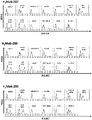
- FIG. 2 shows an example of an antibody of the invention (H 2 Mab-214 and H 2 Mab-250) that binds to HER2 expressed on a breast cancer cell line (SK-BR-3 cells) while normal human epidermis. It is shown that it does not react at all to HER2 expressed on the keratinized cell line (HaCaT cell).
- FIG. 1A is a vector map of pCAG / PA-HER2-RAP-MAP used in the examples.
- FIG. 1B is a vector map of pCAG / PA-HER2ec-RAP-MAP used in the examples.
- FIG. 2 shows an example of an antibody of the invention (H 2 Mab-214 and H 2 Mab-250) that binds to
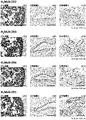
- FIG. 3 shows an example of an antibody of the present invention (H2 Mab - 214 and H2 Mab- 250 ) staining a cancer cell diagnosed as HER2 negative by a conventional diagnostic agent for examining the HER2 expression status of the cancer cell.
- IHC immunohistochemical staining
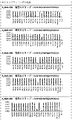
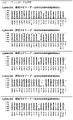
- FIG. 4 shows the binding of H 2 Mab-214 and H 2 Mab-250 to various HER2 partial peptides.
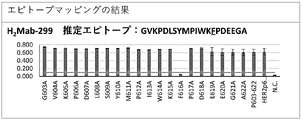
- FIG. 5 shows CHO-K1 cells expressing various HER2 alanine-substituted variants (W614A, K615A, F616A), using antibodies against PA tags (NZ-1), H2 Mab - 214 antibody, and H, respectively.
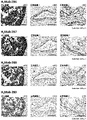
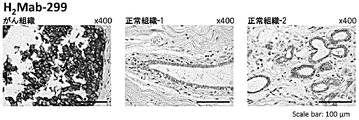
- FIGS. 8A to 8F show the results of immunohistochemical staining (IHC) in cancer cells and normal cells of the antibody group obtained in Example 6.
- a "subject” can be a mammal, preferably a "patient” of interest to a human. More preferably, it may be a "cancer patient” who has or is at risk of having a tumor or cancer.
- the term "antibody” means an immunoglobulin, which is a protein having a structure in which two heavy chains (H chains) stabilized by disulfide bonds and two light chains (L chains) are associated with each other.
- the heavy chain consists of a heavy chain variable region VH, a heavy chain constant region CH1, CH2, CH3, and a hinge region located between CH1 and CH2, and the light chain includes a light chain variable region VL and a light chain constant region CL. Consists of.
- the variable region fragment (Fv) composed of VH and VL is a region that is directly involved in antigen binding and imparts diversity to the antibody.
- the antigen-binding region consisting of VL, CL, VH, and CH1 is referred to as a Fab region, and the region consisting of a hinge region, CH2, and CH3 is referred to as an Fc region.
- the regions that come into direct contact with the antigen have particularly large changes and are called complementarity-determining regions (CDRs).
- CDRs complementarity-determining regions
- the part other than the CDR with relatively few mutations is called a framework (FR).
- FR framework
- the antibody may be a recombinant protein (recombinant antibody) and can be produced in animal cells such as Chinese hamster ovary cells (CHO cells).
- the origin of the antibody is not particularly limited, and examples thereof include non-human animal antibodies, non-human mammalian antibodies (eg, mouse antibodies, rat antibodies, camel antibodies), and human antibodies.
- the antibody may also be a chimeric antibody, a humanized antibody, and a fully human antibody.
- the antibody may be a polyclonal antibody or a monoclonal antibody, preferably a monoclonal antibody.
- a "chimeric antibody” is an antibody in which a heavy chain variable region and a light chain variable region are linked to a heavy chain constant region and a light chain constant region of different species, respectively.
- a humanized antibody is an amino acid sequence characteristic of a non-human-derived antibody, and means an antibody in which the corresponding position of the human antibody is substituted.
- all other regions having light chain CDRs 1-3, including four framework regions (FRs) for each of the heavy and light chains are derived from human antibodies.
- Such antibodies are sometimes referred to as CDR-transplanted antibodies.
- the "humanized antibody” may also include a human chimeric antibody.
- a "human chimeric antibody” is an antibody of non-human origin in which the constant region of the non-human-derived antibody is replaced with the constant region of a human antibody.
- the subtype of the human antibody used in the constant region can be IgG1.
- “Completely human antibody” means an antibody derived from a human antibody in both the variable region and the constant region consisting of FR and CDR.
- the antibody can also be in the form of an antibody-drug conjugate for the purpose of enhancing the cytotoxicity of the antibody.
- the antibody may be a multispecific antibody, for example, a bispecific antibody or a trispecific antibody.
- the antibody can be an isolated antibody or a purified antibody.
- the term "antigen-binding fragment” means a portion of an antibody that maintains its binding property to an antigen.
- the antigen-binding fragment may contain a heavy chain variable region, a light chain variable region, or both of the antibodies of the present invention.
- the antigen-binding fragment may be chimeric or humanized. Examples of the antigen-binding fragment include Fab, Fab', F (ab') 2 , and Fv.
- antibody-binding fragments include recombinantly produced conjugates or functional equivalents (eg, scFv (single chain Fv), diabody, scDb, tandem scFv, leucine zipper type, sc (Fv) 2 ( It may contain some of the other antibodies) having the form of a single chain (Fv) 2 ) etc.).
- the antigen-binding fragment of such an antibody is not particularly limited, and can be obtained, for example, by treating the antibody with an enzyme. For example, digesting an antibody with papain can give Fab. Alternatively, digestion of the antibody with pepsin can give F (ab') 2 , and further reduction can give Fab'.
- VL and VH can be linked with an artificial polypeptide linker to maintain the same antigen specificity as the original antibody.
- VL and VH can be linked in the order of VH and VL or VL and VH from the N-terminal side.
- the linker has a length of about 10 to 25 amino acids, is rich in glycine, and may contain amino acids such as serine and threonine for the purpose of increasing water solubility.
- the "bond rate constant” (ka) and the “dissociation rate constant” (kd) are rate constants in the bond dissociation reaction of two molecules.
- ka and kd are constants well known to those skilled in the art and can be appropriately determined using well known techniques such as surface plasmon resonance methods.
- the antibody binding dissociation constant ( KD ) is determined by kd / ka.
- the antibody is KD with respect to the target molecule, for example, 10-7 M or less, 10-8 M or less, 10-9 M or less, 10-10 M or less, 10-11 M or less, or 10-12 M or less. May have a value.
- strong (or high) binding affinity means strong binding to an antigen, for example, a relatively small KD value.
- Weak (or low) binding affinity means weak binding to an antigen, and high or low binding affinity means, for example, when the binding partner is a cell, a label bound to the cell by flow cytometry. The amount of antibody labeled can be high or low.
- an antibody that binds to HER2 can be an antibody that specifically binds to HER2 (or a fragment thereof). Specificity is defined here rather than the binding affinity for binding to other molecules (other types of molecules, variants, other modified or unmodified molecules). It means that the binding affinity when binding to a molecule (for example, HER2) is strong.
- Antibodies that specifically bind to HER2 are, for example, 10-7 M or less, 10-8 M or less, 10-9 M or less, 10-10 M or less, 10-11 M or less, or 10-12 M or less. Can have a KD value of.
- the binding affinity for HER2 is 2 times or more, 3 times or more, 4 times or more, 5 times or more, 6 times or more, 7 times or more, 8 times or more, 9 in KD value. It can be fold or more, 10 times or more, 100 times or more, 1,000 times or more, 10,000 times or more, or 100,000 times or more, stronger than the binding affinity for any of the variants specified below. ..
- the strength of the binding affinity can be a statistically significant difference (eg, p ⁇ 0.05, p ⁇ 0.01, p ⁇ 0.005, or p ⁇ 0.0001).
- antibody-drug conjugate means a substance in which an antibody and a drug are linked.
- ADC antibody-drug conjugate
- a monoclonal antibody or an antigen-binding fragment thereof can be advantageously used as the antibody.
- monoclonal antibodies and drugs can be linked via appropriate linkers.
- the ADC binds to a membrane component on the cell membrane (for example, a transmembrane protein such as a receptor), is taken up into the cell by endocytosis or internalization, is separated from the antibody, and is released into the cell.
- cleaving linker between the antibody and the drug in the cell By introducing a cleaving linker between the antibody and the drug in the cell, it is possible to cleave the linker in the cell, for example, in the endosome, dissociate the drug from the antibody, and release it into the cytoplasm.
- a cytotoxic agent When a cytotoxic agent is used as a drug, it is possible to kill the cells to which the drug is delivered.
- Chemotherapeutic agents, radioisotopes, and toxins can be used as cell damage agents.
- HER2 targeting agent refers to a molecule that binds to HER2 or a fragment thereof (for example, an antibody that binds to HER2 or a fragment thereof or a fusion protein containing an antigen-binding fragment thereof or an antigen-binding fragment thereof). Including, it means a drug that produces its medicinal effect by targeting HER2.
- the HER2 targeting agent include an antibody that binds to HER2 or a fragment thereof, an antigen-binding fragment thereof, or an agent containing any of these.
- the agent can be the antibody itself with ADCC activity.
- the agent can be, for example, a cytotoxic agent.
- the agent can also be cells with cytotoxic activity (eg, immune cells (eg, T cells, NK cells, etc.)).
- nucleic acid means a polymer in which nucleotides such as ribonucleic acid (RNA) and deoxyribonucleic acid (DNA) are linked.
- the protein is encoded by DNA and translated from mRNA.
- the DNA encoding the protein can be operably linked to a control sequence (eg, a promoter).
- the DNA encoding the protein operably linked to the control sequence may be incorporated into a gene expression vector.
- the DNA encoding the protein may be a cDNA produced by reverse transcription from mRNA.
- the mRNA encoding the protein may have an m7G cap at the 5'end and may have a poly (A) chain at the 3'end. Ribosomes bind to the mRNA that encodes the protein, and the protein is translated from the mRNA.
- cancer is a disease characterized by uncontrolled proliferation of cells. Cancer cells may spread locally or throughout the body through the bloodstream or lymphatic system. Non-limiting examples of cancer include, for example, solid tumors. Non-limiting examples of cancer include, for example, hematopoietic tumors. Examples of solid tumors include lung cancer, pancreatic cancer, head and neck cancer, prostate cancer, bladder cancer, breast cancer, esophageal cancer, stomach cancer, colon cancer, uterine cancer, ovarian cancer, and skin cancer.
- Thyroid cancer thoracic adenocarcinoma, kidney cancer, testis cancer, penis cancer, liver cancer, biliary tract cancer, brain tumor, bone soft tumor, retroperitoneal tumor, vascular / lymphangioma, and their metastatic Cancer (eg, metastatic solid tumor) may be mentioned.
- Hematopoietic tumors include leukemia, acute leukemia, chronic leukemia, true erythrocytosis, lymphoma, Hodgkin's disease, non-Hodgkin's lymphoma (symptomatic and high-grade), multiple myelodysplastic syndrome, and Waldenstrom macroglobulin.
- Acute leukemias include, for example, acute lymphocytic leukemia, acute myeloid acute leukemia, acute myeloid leukemia, myeloblastic, promyelocytic, myelomonocyte, monocytic leukemia and red leukemia.
- Examples of chronic leukemia include chronic myelogenous (granulocytic) leukemia, chronic myelogenous leukemia and chronic lymphocytic leukemia.
- Cancer can be, in particular, HER2-positive cancer. Those skilled in the art can appropriately determine whether or not they are HER2 positive by using a well-known method.
- the antibody of the present invention or an antigen-binding fragment thereof may be used to determine whether or not HER2 is positive.
- treatment includes prophylactic and therapeutic treatments, alleviating or eliminating the cause of a disease, delaying or stopping its progression, and alleviating its symptoms in a patient with the disease. , Alleviating, ameliorating or eliminating, and / or suppressing the exacerbation of its symptoms, including suppressing the metastasis of cancer if the disease is "cancer".
- HER2 can be, for example, human HER2.
- Human HER2 can be encoded by, for example, the base sequence (SEQ ID NO: 1) registered in Genebank accession number: X03363. Human HER2 may also have an amino acid sequence (SEQ ID NO: 2) registered with UniprotKB ID: P04626.
- SEQ ID NO: 2 registered with UniprotKB ID: P04626.
- the amino acid region of amino acid numbers 1 to 22 is a signal peptide
- amino acid region of amino acid numbers 23 to 652 has an extracellular domain (amino acid sequence of SEQ ID NO: 3).
- the amino acid region of amino acid numbers 653 to 675 is the transmembrane domain, and the amino acid region of amino acid numbers 676 to 1255 is the cytoplasmic domain.
- HER2 may include naturally found variants of HER2. Since HER2 is a target, its function may be diminished or lost, but it may retain or enhance its function.
- the HER2 that can be recognized as an epitope can be, for example, one having an amino acid region (MPIWKFPD: SEQ ID NO: 34) of amino acids 611 to 618 of the amino acid sequence of SEQ ID NO: 2.
- HER2 that can be recognized as an epitope, for example, it may have an amino acid region (PIWKFPD: SEQ ID NO: 35) of amino acids 612 to 618 of the amino acid sequence of SEQ ID NO: 2.
- PIWKFPD amino acid region of amino acids 612 to 618 of the amino acid sequence of SEQ ID NO: 2.
- HER2ec a peptide consisting of the amino acid region of amino acid numbers 23 to 652 (SEQ ID NO: 3) of the amino acid sequence of SEQ ID NO: 2 is referred to as "HER2ec".
- HER2 can be tested for its expression or gene amplification by immunohistochemistry (IHC) or fluorescence in situ hybridization (FISH).
- the IHC method can score expression levels based on the 2018 ASCO / CAP guidelines (see Wolff AC, et al: J Clin Oncol 36 (20), 2018: 2105-2122).
- the 2018 ASCO / CAP guidelines show strong, full-circumferential membrane staining in tumor cells with HER2 expression levels above 3+: 10%. 2+: More than 10% of tumor cells show weak to moderate circumferential membrane staining, 1+: Over 10% of tumor cells have faint / barely recognizable incomplete membrane staining, 0: No staining image, or incomplete faint / barely recognizable membrane staining in less than 10% of tumor cells.
- FISH can evaluate the degree of gene amplification based on the 2007 ASCO / CAP guidelines.
- the HER2 gene is located on chromosome 17, and therefore the degree of gene amplification can be assessed by measuring the ratio of the HER2 gene to the number of centromeres on chromosome 17.
- the HER2 test can be performed using a commercially available kit.
- amino acid sequence corresponding to means the amino acid sequence corresponding to the alignment.
- the Clustal W algorithm can be used to align two or more amino acid sequences with default parameters. Alignment algorithms can use fast and slow, or slow.
- the default parameters are, for example, one or more or all parameters selected from the group consisting of GAP OPEN: 10, GAP EXTENSION: 0.1, KTUP: 1, WINDOW LENGTH: 5, TOPDIAG: 5, and PAIRGAP: 3. Can be. This makes it possible to identify the corresponding amino acid sequence. This also allows the identity of the amino acid sequence to be determined.
- antibody compete for binding to HER2 means that both antibodies simultaneously have binding sites (epitope) on HER2 overlapping and competing for the binding site of HER2. It means that it cannot bind to HER2. Whether or not an antibody competes for binding to HER2 can be determined by competing testing of the antibody.
- epitope means a site on the surface of a target molecule to which an antibody binds.
- the antibody of the present invention or an antigen-binding fragment thereof is an antibody or an antigen-binding fragment thereof that binds to HER2 or a fragment thereof.
- Antibodies or antigen-binding fragments thereof of the present invention may include antibodies or antigen-binding fragments thereof having mutations selected from the group consisting of insertions, deletions, additions and substitutions of one to several amino acids.
- An antibody or antigen-binding fragment thereof comprising at least three or more CDRs.
- at least two, three, four, five, or six CDRs in an antibody of the invention or an antigen-binding fragment thereof, or derived from an antibody of the invention or an antigen-binding fragment thereof. Includes antibodies having at least 2, 3, 4, 5, or 6 CDRs that are substantially identical to.
- at least one, two, or three CDRs in an antibody or antigen-binding fragment thereof of the invention and at least about 85%, 86%, 87%, 88%, 89%, 90%, 95. %, 96%, 97%, 98%, or 99% includes at least one, two, three, four, five, or six CDRs that are identical.
- At least one, two, three, four, five, or six CDRs are in an antibody of the invention or an antigen-binding fragment thereof, or an antibody of the invention or an antigen-binding fragment thereof. Includes at least one insertion, deletion, addition or substitution in at least one, two, three, four, five, or six CDRs derived from.
- the antibody of the present invention or an antigen-binding fragment thereof has an amino acid sequence identity of 80% or more, 85% or more, 90% or more, or 95% or more, and has antigen specificity of the antibody or an antigen thereof. Bundling fragments may be included.
- the antibody or antigen-binding fragment thereof of the present invention is selected from the group consisting of insertion, deletion, addition and substitution of one to several amino acids in the framework (FR) region of the heavy chain variable region or the light chain variable region. Antibodies or antigen-binding fragments thereof having the mutations to be made may be included.
- the antibody of the present invention or an antigen-binding fragment thereof can be preferably an antibody that specifically binds to HER2.
- the antibody of the present invention or an antigen-binding fragment thereof has a binding affinity (or reactivity) for HER2 expressed on cancer cells. Therefore, it can be used for targeting to cancer cells.
- the antibody or antigen-binding fragment thereof of the present invention more preferably has a stronger binding affinity (or reactivity) for HER2 expressed on cancer cells than for HER2 expressed on non-cancer cells. Can have. Therefore, it can be used for specific targeting to cancer cells.
- the antibodies of the invention or antigen-binding fragments thereof are even more preferably not significantly responsive to HER2 expressed on non-cancer cells (eg, no or no substantial responsiveness). It may react specifically to HER2 expressed on cancer cells. Therefore, it can be used for targeting to cancer cells (particularly specific targeting).
- the antibody of the present invention or an antigen-binding fragment thereof can be preferably a monoclonal antibody from the viewpoint of being used as a pharmaceutical component.
- the antibody of the present invention or an antigen-binding fragment thereof is preferably an isolated monoclonal antibody or an antigen-binding fragment of an isolated monoclonal antibody from the viewpoint of being used as a pharmaceutical component.
- INDUSTRIAL APPLICABILITY According to the present invention, a pharmaceutical composition comprising an isolated monoclonal antibody or an antigen-binding fragment of an isolated monoclonal antibody and a pharmaceutically acceptable additive can be provided.
- the antibody or antigen-binding fragment thereof of the present invention is any amino acid sequence selected from the group consisting of (i) the amino acid sequence of SEQ ID NO: 31 to 37 (for example, the amino acid sequence of SEQ ID NO: 31 to 36).
- Part of the above may be the region of amino acid numbers 613 to 622 of the amino acid sequence set forth in SEQ ID NO: 2. ⁇ .
- W614A means that the amino acid residue corresponding to tryptophan (W) of amino acid number 614 is replaced with alanine (A) in the amino acid sequence of HER2 set forth in SEQ ID NO: 2
- K615A is a sequence. It means that the amino acid residue corresponding to the lysine (K) of amino acid number 615 is replaced with alanine (A) in the amino acid sequence of HER2 shown in No. 2
- F616A is the amino acid residue of HER2 shown in SEQ ID NO: 2. It means that the amino acid residue corresponding to phenylalanine (F) of amino acid number 616 in the amino acid sequence is replaced with alanine (A).
- the peptide can be a synthetic polypeptide. The peptide is not sugar chain modified in certain preferred embodiments.
- the binding reactivity to HER2 can also be evaluated by an enzyme-linked immunosorbent assay (ELISA).
- ELISA enzyme-linked immunosorbent assay
- the presence or amount of an enzyme ligated to an antibody can be assessed by the amount of substrate reaction to that enzyme.
- HRP horseradish peroxidase
- TMB 3,3', 5,5'-tetramethylbenzidine
- TMB is oxidized to a blue color with maximum absorption at 370 nm and 652 nm. Color develops. Further contact with a reaction terminator containing sulfuric acid develops a yellow color with maximum absorption at 450 nm.
- the amount of the reacted antibody can be estimated, and the reactivity of the antibody with respect to the antigen can be evaluated based on the amount of the reacted antibody. Then, it can be evaluated that the larger the amount of the reacted antibody, the higher the reactivity of the antibody with the antigen.
- binding reactivity 1.5 times or more, 2 times or more, 3 times or more, 4 times or more, 5 times or more, 6 times or more, 7 times or more, 8 times or more, 9 times or more.
- the strength of the binding reactivity can be a statistically significant difference (eg, p ⁇ 0.05, p ⁇ 0.01, p ⁇ 0.005, or p ⁇ 0.0001).
- Both the antibodies of the invention or antigen-binding fragments thereof bind to HER2 expressed on cancer cells (eg, LN229 cells).
- the antibody of the present invention or an antigen-binding fragment thereof preferably has a stronger binding reaction to HER2 expressed on cancer cells than to HER2 expressed on non-cancer cells.
- the antibodies of the invention or antigen-binding fragments thereof bind to HER2 expressed on cancer cells (eg, LN229 cells) and to HER2 expressed on non-cancer cells (eg, normal cells). More preferably does not show significant binding.
- the antibody of the present invention or an antigen-binding fragment thereof is (I) An antibody or antigen-binding property thereof that binds to a peptide containing any amino acid sequence selected from the group consisting of the amino acid sequences of SEQ ID NOs: 31 to 37 (for example, the amino acid sequences of SEQ ID NOs: 31 to 36). Can be a fragment.
- a peptide containing any of the amino acid sequences selected from the group consisting of the amino acid sequences of SEQ ID NO: 31 to 37 (for example, the amino acid sequences of SEQ ID NO: 31 to 36) is a partial peptide of the amino acid sequence of SEQ ID NO: 2. could be.
- a peptide containing any of the amino acid sequences selected from the group consisting of the amino acid sequences of SEQ ID NO: 31 to 37 is a partial peptide of the amino acid sequence of SEQ ID NO: 2. It can be 10-20 amino acids long, 11-19 amino acids long, 12-18 amino acids long, 13-17 amino acids long, 14-16 amino acids long, or about 15 amino acids long.
- a peptide comprising any of the amino acid sequences selected from the group consisting of the amino acid sequences of SEQ ID NO: 31-37 (eg, the amino acid sequence of SEQ ID NO: 31-36) is the amino acid sequence of SEQ ID NO: 31-37 (eg, the amino acid sequence of SEQ ID NO: 31-37).
- Amino acid sequence of SEQ ID NO: 31-36 This region is believed to have an accessible configuration for antibodies in HER2 expressed on the cancer cell membrane, and therefore antibodies targeting this region are more resistant to cancer cells than to non-cancer cells. It can bind with a strong binding affinity (or reactivity).
- the antibody targeting this region does not significantly react to HER2 expressed on non-cancer cells, but may react specifically to HER2 expressed on cancer cells.
- the peptide itself does not have to have a sugar chain modification, and the peptide does not have to have a sugar chain modification.
- the peptide is not particularly limited, but may be preferably a synthetic peptide.
- the antibody of the present invention or an antigen-binding fragment thereof is (Ii) One or more amino acid mutations selected from the group consisting of W614A, K615A, and F616A in the peptide consisting of a part of the extracellular domain of HER2 (region of amino acid numbers 603 to 622) set forth in SEQ ID NO: 2.
- the extracellular domain of HER2 that may be an antigen-binding fragment thereof or has a point mutation consisting of K615A in a peptide consisting of a portion of the extracellular domain of HER2 set forth in SEQ ID NO: 2 (regions of amino acids 603 to 622). Or a variant peptide of the extracellular domain of HER2 having a point mutation consisting of F616A, or a variant peptide of the extracellular domain of HER2 having a mutation consisting of two point mutations W614A and F616A. It can be an antibody or an antigen-binding fragment thereof having a strong binding affinity (or reactivity) for the peptide consisting of the extracellular domain of HER2 set forth in SEQ ID NO: 3.
- Antibodies that bind to or around this region may bind to cancer cells with a stronger binding affinity (or reactivity) than to non-cancer cells.
- a part of the extracellular domain of HER2 may be a region of amino acid numbers 613 to 622 of the amino acid sequence set forth in SEQ ID NO: 2.
- the extracellular domain may be a non-cancer cell or a peptide expressed in a cancer cell or a synthetic peptide.
- the extracellular domain can preferably be a synthetic peptide.
- these antibodies may compete with each other for binding to a peptide consisting of a portion of the extracellular domain of HER2 (region of amino acid numbers 603 to 622). These antibodies may also compete with each other for binding to HER2 expressed on cancer cells (eg, LN229 cells).
- the antibody of the present invention or an antigen-binding fragment thereof is (Iii) Heavy chain CDR1, having the amino acid sequence of SEQ ID NO: 18.
- Heavy chain CDR1 with the amino acid sequence of SEQ ID NO: 24, A heavy chain variable region having a heavy chain CDR2 having an amino acid sequence of SEQ ID NO: 25 and a heavy chain CDR3 having an amino acid sequence of SEQ ID NO: 26, and a light chain CDR1 having an amino acid sequence of SEQ ID NO: 27,
- the antibodies of the invention or antigen-binding fragments thereof are also at least one selected from the group consisting of substitutions, additions, insertions, and deletions in at least one CDR of (iii) or (iv) above (eg, for example. It can be an antibody of the invention or an antigen-binding fragment thereof having mutations in several amino acids (eg, 2, 3, 4, or 5). These antibodies or antigen-binding fragments thereof may bind to cancer cells with a stronger binding affinity than to non-cancer cells. These antibodies or antigen-binding fragments thereof preferably do not significantly react to HER2 expressed on non-cancer cells, but may specifically react to HER2 expressed on cancer cells.
- the antibody of the present invention or an antigen-binding fragment thereof can be a non-human animal antibody or an antigen-binding fragment thereof.
- the non-human animal can be, for example, a rodent, eg, a mouse.
- the antibody of the invention or an antigen-binding fragment thereof can also be preferably a chimeric antibody or a human chimeric antibody.
- the antibody of the present invention or an antigen-binding fragment thereof can be more preferably a humanized antibody or an antigen-binding fragment of a humanized antibody.
- the antibody of the present invention or an antigen-binding fragment thereof is (Vii) An antibody or an antigen-binding fragment thereof having a heavy chain variable region having an amino acid sequence of a heavy chain variable region of SEQ ID NO: 14 and a light chain variable region having an amino acid sequence of a light chain variable region of SEQ ID NO: 15. ; (Viii) An antibody having a heavy chain variable region having an amino acid sequence of a heavy chain variable region of SEQ ID NO: 16 and an antibody having a light chain variable region having an amino acid sequence of a light chain variable region of SEQ ID NO: 17 or an antigen-binding fragment thereof.
- (Ix) An antibody that competes for binding to the antibody of (vii) above and HER2 ⁇ for example, a peptide consisting of a part of the extracellular domain of HER2 (region of amino acid numbers 603 to 622), or HER2 expressed in LN229 cells ⁇ . Or an antigen-binding fragment thereof; or (x) a peptide consisting of the antibody of (viii) above and HER2 ⁇ for example, a part of the extracellular domain of HER2 (region of amino acid numbers 603 to 622), or HER2 expressed in LN229 cells.
- ⁇ Can be an antibody competing for binding to or an antigen-binding fragment thereof.
- the antibodies of the invention or antigen-binding fragments thereof are also at least one selected from the group consisting of at least one substitution, addition, insertion, and deletion in each variable region of (vii) or (viii) above (eg, at least one). , Several) amino acid mutations of the invention or antigen-binding fragments thereof. In some embodiments, mutations in at least one (eg, several) amino acids selected from the group consisting of substitutions, additions, insertions, and deletions in each variable region can be mutations other than CDRs.
- the antibody of the present invention or an antigen-binding fragment thereof is (Xi) An antibody or antigen-binding fragment thereof that binds to a peptide containing the amino acid sequence of SEQ ID NO: 37.
- the antibody of the present invention or an antigen-binding fragment thereof is (Xii) Heavy chain CDR1, having the amino acid sequence set forth in SEQ ID NO: 81, A heavy chain variable region having a heavy chain CDR2 having the amino acid sequence set forth in SEQ ID NO: 82 and a heavy chain CDR3 having the amino acid sequence set forth in SEQ ID NO: 83, and a light chain having the amino acid sequence set forth in SEQ ID NO: 84.
- Chain CDR1 It has a light chain variable region having a light chain CDR2 having the amino acid sequence set forth in SEQ ID NO: 85 and a light chain CDR3 having the amino acid sequence set forth in SEQ ID NO: 86; Heavy chain CDR1, having the amino acid sequence set forth in SEQ ID NO: 87, A heavy chain variable region having a heavy chain CDR2 having the amino acid sequence set forth in SEQ ID NO: 88 and a heavy chain CDR3 having the amino acid sequence set forth in SEQ ID NO: 89, and a light chain having the amino acid sequence set forth in SEQ ID NO: 90.
- Chain CDR1 It has a light chain variable region having a light chain CDR2 having the amino acid sequence set forth in SEQ ID NO: 91 and a light chain CDR3 having the amino acid sequence set forth in SEQ ID NO: 92; Heavy chain CDR1, having the amino acid sequence set forth in SEQ ID NO: 93, A heavy chain variable region having a heavy chain CDR2 having the amino acid sequence set forth in SEQ ID NO: 94 and a heavy chain CDR3 having the amino acid sequence set forth in SEQ ID NO: 95, and a light chain having the amino acid sequence set forth in SEQ ID NO: 96.
- Chain CDR1 It has a light chain variable region having a light chain CDR2 having the amino acid sequence set forth in SEQ ID NO: 97 and a light chain CDR3 having the amino acid sequence set forth in SEQ ID NO: 98; Heavy chain CDR1, having the amino acid sequence set forth in SEQ ID NO: 99, A heavy chain variable region having a heavy chain CDR2 having the amino acid sequence set forth in SEQ ID NO: 100 and a heavy chain CDR3 having the amino acid sequence set forth in SEQ ID NO: 101, and a light chain having the amino acid sequence set forth in SEQ ID NO: 102.
- Chain CDR1 It has a light chain variable region having a light chain CDR2 having the amino acid sequence set forth in SEQ ID NO: 103 and a light chain CDR3 having the amino acid sequence set forth in SEQ ID NO: 104; Heavy chain CDR1, having the amino acid sequence set forth in SEQ ID NO: 105, A heavy chain variable region having a heavy chain CDR2 having the amino acid sequence set forth in SEQ ID NO: 106 and a heavy chain CDR3 having the amino acid sequence set forth in SEQ ID NO: 107, and a light chain having the amino acid sequence set forth in SEQ ID NO: 108.
- Chain CDR1 It has a light chain variable region having a light chain CDR2 having the amino acid sequence set forth in SEQ ID NO: 109 and a light chain CDR3 having the amino acid sequence set forth in SEQ ID NO: 110; Heavy chain CDR1, having the amino acid sequence set forth in SEQ ID NO: 111, A heavy chain variable region having a heavy chain CDR2 having the amino acid sequence set forth in SEQ ID NO: 112 and a heavy chain CDR3 having the amino acid sequence set forth in SEQ ID NO: 113, and a light chain having the amino acid sequence set forth in SEQ ID NO: 114.
- Chain CDR1 It has a light chain variable region having a light chain CDR2 having the amino acid sequence set forth in SEQ ID NO: 115 and a light chain CDR3 having the amino acid sequence set forth in SEQ ID NO: 116; Heavy chain CDR1, having the amino acid sequence set forth in SEQ ID NO: 117, A heavy chain variable region having a heavy chain CDR2 having the amino acid sequence set forth in SEQ ID NO: 118 and a heavy chain CDR3 having the amino acid sequence set forth in SEQ ID NO: 119, and a light chain having the amino acid sequence set forth in SEQ ID NO: 120.
- Chain CDR1 It has a light chain variable region having a light chain CDR2 having the amino acid sequence set forth in SEQ ID NO: 121 and a light chain CDR3 having the amino acid sequence set forth in SEQ ID NO: 122; Heavy chain CDR1, having the amino acid sequence set forth in SEQ ID NO: 123, A heavy chain variable region having a heavy chain CDR2 having the amino acid sequence set forth in SEQ ID NO: 124, and a heavy chain CDR3 having the amino acid sequence set forth in SEQ ID NO: 125, and a light chain having the amino acid sequence set forth in SEQ ID NO: 126.
- Chain CDR1 It has a light chain variable region having a light chain CDR2 having the amino acid sequence set forth in SEQ ID NO: 127 and a light chain CDR3 having the amino acid sequence set forth in SEQ ID NO: 128; Heavy chain CDR1, having the amino acid sequence set forth in SEQ ID NO: 129, A heavy chain variable region having a heavy chain CDR2 having the amino acid sequence set forth in SEQ ID NO: 130 and a heavy chain CDR3 having the amino acid sequence set forth in SEQ ID NO: 131, and a light chain having the amino acid sequence set forth in SEQ ID NO: 132.
- Chain CDR1 It has a light chain variable region having a light chain CDR2 having the amino acid sequence set forth in SEQ ID NO: 133 and a light chain CDR3 having the amino acid sequence set forth in SEQ ID NO: 134; Heavy chain CDR1, having the amino acid sequence set forth in SEQ ID NO: 135, A heavy chain variable region having a heavy chain CDR2 having the amino acid sequence set forth in SEQ ID NO: 136 and a heavy chain CDR3 having the amino acid sequence set forth in SEQ ID NO: 137, and a light chain having the amino acid sequence set forth in SEQ ID NO: 138.
- Chain CDR1 It has a light chain variable region having a light chain CDR2 having the amino acid sequence set forth in SEQ ID NO: 139 and a light chain CDR3 having the amino acid sequence set forth in SEQ ID NO: 140; Heavy chain CDR1, having the amino acid sequence set forth in SEQ ID NO: 141, A heavy chain variable region having a heavy chain CDR2 having the amino acid sequence set forth in SEQ ID NO: 142 and a heavy chain CDR3 having the amino acid sequence set forth in SEQ ID NO: 143, and a light chain having the amino acid sequence set forth in SEQ ID NO: 144.
- Chain CDR1 It has a light chain variable region having a light chain CDR2 having the amino acid sequence set forth in SEQ ID NO: 145 and a light chain CDR3 having the amino acid sequence set forth in SEQ ID NO: 146; Heavy chain CDR1, having the amino acid sequence set forth in SEQ ID NO: 147, A heavy chain variable region having a heavy chain CDR2 having the amino acid sequence set forth in SEQ ID NO: 148 and a heavy chain CDR3 having the amino acid sequence set forth in SEQ ID NO: 149, and a light chain having the amino acid sequence set forth in SEQ ID NO: 150.
- Chain CDR1 It has a light chain variable region having a light chain CDR2 having the amino acid sequence set forth in SEQ ID NO: 151 and a light chain CDR3 having the amino acid sequence set forth in SEQ ID NO: 152; Heavy chain CDR1, having the amino acid sequence set forth in SEQ ID NO: 153, A heavy chain variable region having a heavy chain CDR2 having the amino acid sequence set forth in SEQ ID NO: 154 and a heavy chain CDR3 having the amino acid sequence set forth in SEQ ID NO: 155, and a light chain having the amino acid sequence set forth in SEQ ID NO: 156.
- Chain CDR1 It has a light chain variable region having a light chain CDR2 having the amino acid sequence set forth in SEQ ID NO: 157 and a light chain CDR3 having the amino acid sequence set forth in SEQ ID NO: 158; Heavy chain CDR1, having the amino acid sequence set forth in SEQ ID NO: 159, A heavy chain variable region having a heavy chain CDR2 having the amino acid sequence set forth in SEQ ID NO: 160 and a heavy chain CDR3 having the amino acid sequence set forth in SEQ ID NO: 161 and a light chain having the amino acid sequence set forth in SEQ ID NO: 162.
- Chain CDR1 It has a light chain variable region having a light chain CDR2 having the amino acid sequence set forth in SEQ ID NO: 163 and a light chain CDR3 having the amino acid sequence set forth in SEQ ID NO: 164; Heavy chain CDR1, having the amino acid sequence set forth in SEQ ID NO: 165, A heavy chain variable region having a heavy chain CDR2 having the amino acid sequence set forth in SEQ ID NO: 166 and a heavy chain CDR3 having the amino acid sequence set forth in SEQ ID NO: 167, and a light chain having the amino acid sequence set forth in SEQ ID NO: 168.
- Chain CDR1 It has a light chain variable region having a light chain CDR2 having the amino acid sequence set forth in SEQ ID NO: 169 and a light chain CDR3 having the amino acid sequence set forth in SEQ ID NO: 170; Heavy chain CDR1, having the amino acid sequence set forth in SEQ ID NO: 171.
- Chain CDR1 It has a light chain variable region having a light chain CDR2 having the amino acid sequence set forth in SEQ ID NO: 175 and a light chain CDR3 having the amino acid sequence set forth in SEQ ID NO: 176; Heavy chain CDR1, having the amino acid sequence set forth in SEQ ID NO: 177, A heavy chain variable region having a heavy chain CDR2 having the amino acid sequence set forth in SEQ ID NO: 178 and a heavy chain CDR3 having the amino acid sequence set forth in SEQ ID NO: 179, and a light chain having the amino acid sequence set forth in SEQ ID NO: 180.
- Chain CDR1 It has a light chain variable region having a light chain CDR2 having the amino acid sequence set forth in SEQ ID NO: 181 and a light chain CDR3 having the amino acid sequence set forth in SEQ ID NO: 182; Heavy chain CDR1, having the amino acid sequence set forth in SEQ ID NO: 183, A heavy chain variable region having a heavy chain CDR2 having the amino acid sequence set forth in SEQ ID NO: 184 and a heavy chain CDR3 having the amino acid sequence set forth in SEQ ID NO: 185, and a light chain having the amino acid sequence set forth in SEQ ID NO: 186.
- Chain CDR1 It has a light chain variable region having a light chain CDR2 having the amino acid sequence set forth in SEQ ID NO: 187 and a light chain CDR3 having the amino acid sequence set forth in SEQ ID NO: 188; Heavy chain CDR1, having the amino acid sequence set forth in SEQ ID NO: 189, A heavy chain variable region having a heavy chain CDR2 having the amino acid sequence set forth in SEQ ID NO: 190 and a heavy chain CDR3 having the amino acid sequence set forth in SEQ ID NO: 191 and a light chain having the amino acid sequence set forth in SEQ ID NO: 192.
- Chain CDR1 It has a light chain variable region having a light chain CDR2 having the amino acid sequence set forth in SEQ ID NO: 193 and a light chain CDR3 having the amino acid sequence set forth in SEQ ID NO: 194; Heavy chain CDR1, having the amino acid sequence set forth in SEQ ID NO: 195, A heavy chain variable region having a heavy chain CDR2 having the amino acid sequence set forth in SEQ ID NO: 196 and a heavy chain CDR3 having the amino acid sequence set forth in SEQ ID NO: 197, and a light chain having the amino acid sequence set forth in SEQ ID NO: 198.
- Chain CDR1 It has a light chain variable region having a light chain CDR2 having the amino acid sequence set forth in SEQ ID NO: 199 and a light chain CDR3 having the amino acid sequence set forth in SEQ ID NO: 200; Heavy chain CDR1, having the amino acid sequence set forth in SEQ ID NO: 201, A heavy chain variable region having a heavy chain CDR2 having the amino acid sequence set forth in SEQ ID NO: 202 and a heavy chain CDR3 having the amino acid sequence set forth in SEQ ID NO: 203, and a light chain having the amino acid sequence set forth in SEQ ID NO: 204.
- Chain CDR1 It can be an antibody or antigen-binding fragment thereof having a light chain variable region having a light chain CDR2 having the amino acid sequence set forth in SEQ ID NO: 205 and a light chain CDR3 having the amino acid sequence set forth in SEQ ID NO: 206.
- the antibody of the present invention or an antigen-binding fragment thereof is (Xiii) (a) An antibody or an antigen thereof having a heavy chain variable region having an amino acid sequence of a heavy chain variable region of SEQ ID NO: 39 and a light chain variable region having an amino acid sequence of a light chain variable region of SEQ ID NO: 40.
- Binding fragment (B) An antibody or an antigen-binding fragment thereof having a heavy chain variable region having an amino acid sequence of the heavy chain variable region of SEQ ID NO: 41 and a light chain variable region having an amino acid sequence of the light chain variable region of SEQ ID NO: 42. ; (C) An antibody or an antigen-binding fragment thereof having a heavy chain variable region having an amino acid sequence of the heavy chain variable region of SEQ ID NO: 43 and a light chain variable region having an amino acid sequence of the light chain variable region of SEQ ID NO: 44.
- An isolated antibody or antigen-binding fragment thereof of the present invention has a stronger binding affinity (or reactivity) for HER2 expressed on cancer cells than for HER2 expressed on non-cancer cells.
- a monoclonal antibody or an antigen-binding fragment of an antibody more preferably, it does not significantly react to HER2 expressed on non-cancer cells and is specific for HER2 expressed on cancer cells.
- An isolated monoclonal antibody or antigen-binding fragment of an antibody capable of reacting with It may be an antibody or an antigen-binding fragment thereof satisfying any one or more of the above (i) to (xiv).
- the antibody of the present invention or an antigen-binding fragment thereof may have a profile of any one or more of (i) and (ii) above.
- the antibody or antigen-binding fragment thereof of the present invention is derived from the above (v), (vi), (ix), (x), (xi), (xii), (xiii), and (xiv).
- the antibody or antigen-binding fragment thereof of the present invention is derived from the above (v), (vi), (ix), (x), (xi), (xii), (xiii), and (xiv).
- the antibody or antigen-binding fragment thereof of the present invention is derived from the above (v), (vi), (ix), (x), (xi), (xii), (xiii), and (xiv).
- One or more selected from the group and the above (i) and (ii) can be satisfied.
- These antibodies or antigen-binding fragments thereof may bind to cancer cells with a stronger binding affinity (or reactivity) than to non-cancer cells.
- These antibodies or antigen-binding fragments thereof preferably do not significantly react to HER2 expressed on non-cancer cells, but may specifically react to HER2 expressed on cancer cells.
- the antibody of the present invention or an antigen-binding fragment thereof can be an antibody or an antigen-binding fragment thereof satisfying any one or more of (i) to (xiv) above.
- the antibody of the present invention or an antigen-binding fragment thereof may have a profile of any one or more of (i) and (ii) above. Further, specifically, it may have the above-mentioned (i) only, the above-mentioned (ii) only, or the above-mentioned (i) and (ii) profiles.
- These antibodies or antigen-binding fragments thereof may bind to cancer cells with a stronger binding affinity (or reactivity) than to non-cancer cells.
- antibodies or antigen-binding fragments thereof preferably do not significantly react to HER2 expressed on non-cancer cells, but may specifically react to HER2 expressed on cancer cells.
- the antibody or antigen-binding fragment thereof of the present invention is derived from the above (v), (vi), (ix), (x), (xi), (xii), (xiii), and (xiv). One or more selected from the group and the above (i) can be satisfied.
- the antibody or antigen-binding fragment thereof of the present invention is derived from the above (v), (vi), (ix), (x), (xi), (xii), (xiii), and (xiv). One or more selected from the group and the above (ii) can be satisfied.
- the antibody or antigen-binding fragment thereof of the present invention is derived from the above (v), (vi), (ix), (x), (xi), (xii), (xiii), and (xiv).
- One or more selected from the group and the above (i) and (ii) can be satisfied.
- the antibodies of the invention may have antibody-dependent cellular cytotoxicity (ADCC) activity and / or complement-dependent cellular cytotoxicity (CDC) activity.
- ADCC activity means that when the antibody of the present invention binds to the cell surface antigen of a target cell, Fc ⁇ receptor-carrying cells (effector cells) bind to the Fc portion via the Fc ⁇ receptor and damage the target cell. Means activity.
- ADCC activity is evaluated by mixing target cells expressing HER2 (cancer cells such as LN229 cells and SK-BR-3 cells), effector cells and the antibody of the present invention, and measuring the degree of ADCC. can do.
- As the effector cells for example, mouse splenocytes, monocyte nuclei isolated from human peripheral blood or bone marrow can be used.
- the target cell for example, HER2-positive breast cancer cells can be used.
- the target cells are labeled with 51 Cr or the like in advance, the antibody of the present invention is added thereto for incubation, and then effector cells (effector cells may be activated) having an appropriate ratio to the target cells are added. Incubate. After incubation, the supernatant is collected and can be measured by counting the above-mentioned labels in the supernatant.
- CDC activity means cytotoxic activity by the complement system. CDC activity can be measured by using complement instead of effector cells in the ADCC activity test.
- the antibody of the present invention may be an antibody in which one or more N-linked sugar chains are bound to the Fc region and fucose is not bound to N-acetylglucosamine at the reducing end of the N-linked sugar chains. ..
- N-linked sugar chain refers to a sugar chain that binds to Asn in the Asn-X-Ser / Thr sequence and has a common structure, Man3GlcNAc2-Asn.
- Fucose can bind to N-acetylglucosamine (GlcNAc) at the reducing end of the N-linked sugar chain, but when this fucose is not bound, ADCC activity is significantly increased as compared with the case where it is bound. It is known. This is described, for example, in International Publication No. 2002/031140, the disclosure of which is incorporated herein by reference in its entirety.
- the ADCC activity is remarkably improved, the dose can be reduced when the antibody is used as a medicine, so that side effects can be reduced and the treatment cost can be reduced.
- the subtype of human antibody used in the constant region of the antibody can be IgG1.
- a complex (antibody-drug conjugate; ADC) of the antibody of the present invention or an antigen-binding fragment thereof and a drug is provided.
- an antibody or an antigen-binding fragment thereof and a drug for example, a component having a cell-damaging property, for example, a cytotoxic agent
- the cytotoxic agent includes a chemotherapeutic agent (for example, an anticancer agent such as a commercially available anticancer agent, for example, auristatin (auristatin E, auristatin F phenylenediamine (AFP), monomethyl).
- Auristatin E monomethyl auristatin F and their derivatives
- maytancinoids DM1 and DM4 and their derivatives maytancinoids DM1 and DM4 and their derivatives
- camptothecin SN-38, topotecan and exotecane and their derivatives
- DNA accessory groove binding agents Enejiin, Lexi) Tropsin, duocalmycin and their derivatives
- taxanes pacritaxel and docetaxels and their derivatives
- polyketide diiscodelmolide and its derivatives
- anthracinone mitoxanthron and its derivatives
- benzodiazepine pyrrolobenzodiazepine, India) Linobenzodiazepine and oxazolidinobenzodiazepine and their derivatives
- vinca alkaloids vincristin, binblastin, bindesin, and binorelbin and their derivatives
- doxorubicins doxorubicin, morpholino-doxor
- the antibody is preferably an antibody that internalizes in cancer cells, but an antibody that does not internalize can also be used. This is because the cancer can be killed by the bystander effect as long as the anticancer drug is delivered to the tissues surrounding the cancer.
- the linker can be a non-cleavable linker or a cleavable linker.
- the binding between the antibody and the linker can be linked to, for example, the sulfhydryl group of the antibody via a maleimide group.
- the linker may contain a polyethylene glycol block, if desired.
- cleaving linkers include peptide linkers such as valine-citrulline (Val-Cit) and phenylalanine-lysine (Phe-lys) linkers, and pH-dependent cleavage hydrazone linkers.
- Cleaving linkers also include linkers containing carbamate or ester bonds, which can be enzymatically degraded intracellularly. These linkers may be used in combination.
- the antibody and cytotoxic agent can be linked by the maleimide group-PEG-Val-Cit.
- the linker used in the examples of the present application eg, maleimide group-PEG-Val-Cit-PABA-cytotoxic agent
- a spacer may be interposed between the linker and the cytotoxic agent.
- the antibody of the present invention immunizes a peptide containing any one or more amino acid sequences selected from the group consisting of (i) the amino acid sequence of SEQ ID NO: 31 to 37 (for example, the amino acid sequence of SEQ ID NO: 31 to 36). It can be obtained by administering to an animal as a source. In some embodiments, the antibody of the invention can be obtained by administering to an animal a peptide consisting of the amino acid sequence of SEQ ID NO: 31 as an immunogen. In some embodiments, the antibodies of the invention can be obtained by administering to an animal a peptide consisting of the amino acid sequence of SEQ ID NO: 32 as an immunogen.
- the antibodies of the invention can be obtained by administering to an animal a peptide consisting of the amino acid sequence of SEQ ID NO: 33 as an immunogen. In some embodiments, the antibodies of the invention can be obtained by administering to an animal a peptide consisting of the amino acid sequence of SEQ ID NO: 34 as an immunogen. In some embodiments, the antibodies of the invention can be obtained by administering to an animal a peptide consisting of the amino acid sequence of SEQ ID NO: 35 as an immunogen. In some embodiments, the antibodies of the invention can be obtained by administering to an animal a peptide consisting of the amino acid sequence of SEQ ID NO: 36 as an immunogen. Furthermore, the antibody of the present invention can be obtained by administering a peptide consisting of the amino acid sequence of SEQ ID NO: 37 to an animal as an immunogen.
- the peptide can be a synthetic peptide.
- the antibody of the present invention can also be obtained by administering to an animal an extracellular domain portion of HER2 such as HER2ec as an immunogen.
- the antibody of the present invention can also be obtained by a method well known to those skilled in the art such as phage display.
- the extracellular domain portion of HER2 can be a synthetic peptide.
- the extracellular domain portion of HER2 can be expressed on a cell, eg, a non-cancer cell or a cancer cell, eg, a cancer cell line (eg, LN229 cell).
- Immunogen immunization to animals can be performed by a method well known to those skilled in the art. Whether or not an antibody against HER2 or a partial peptide thereof has been produced can be confirmed using, for example, body fluid (eg, blood, plasma, or serum) or immune cells (eg, spleen cells) obtained from an immunized animal. ..
- Monoclonal antibodies can be produced by those skilled in the art by well-known methods such as the hybridoma method. Hybridomas can be made by methods well known to those of skill in the art. After preparation, the hybridoma is cloned into a single clone by the ultradilution method. Monoclonal antibodies can be secreted into hybridoma supernatants. Whether or not the monoclonal antibody has the desired binding properties can be confirmed by a person skilled in the art by a binding assay (binding test).
- the test may preferably be an in vitro test.
- a cancer cell line can be used as the cancer cell, particularly a HER2-positive cancer cell line (for example, SK-BR-3 cell).
- the test can also use, for example, non-cancer cell lines or normal cell lines, particularly HER2-positive non-cancer or normal cell lines (eg, HaCaT cells) as non-cancer cells.
- the binding reactivity (reacted antibody amount) to HER2-expressing cancer cells is 1.5 times or more, 2 times or more, 3 times or more, 4 times or more, 5 times or more, 6 times or more, 7 times or more. 8 times or more, 9 times or more, 10 times or more, 100 times or more, 1,000 times or more, 10,000 times or more, or 100,000 times or more, stronger than the binding reactivity to normal cells expressing HER2. could be.
- the strength of the binding reactivity can be a statistically significant difference (eg, p ⁇ 0.05, p ⁇ 0.01, p ⁇ 0.005, or p ⁇ 0.0001).
- the binding reactivity to cancer cells can be evaluated using, for example, flow cytometry. When determining the binding affinity and reactivity by flow cytometry, for example, peak values can be compared.
- the fact that the antibody does not show significant binding to non-cancer cells means that the antibody does not show significant binding to non-cancer cell lines (eg, normal cell lines, especially HER2-positive non-cancer cell lines or normal cells). It can be determined by testing whether it exhibits significant binding to a strain (eg, HaCaT cells).
- the antibody of the present invention or an antigen-binding fragment thereof satisfies the above (i) is determined by the hybriddoma supernatant and the amino acid sequence of SEQ ID NO: 31 to 37 (for example, the amino acid sequence of SEQ ID NO: 31 to 36).
- the assay can be tested for binding to each of the peptides containing any of the amino acid sequences selected from the group consisting of.
- the peptide is immobilized by a conventional method, and whether or not the antibody in the hybridoma supernatant binds to the peptide is assayed, and the antibody produced by the hybridoma is detected using a labeled secondary antibody that specifically reacts with the peptide. Can be done.
- Peptides with one or more amino acid mutations selected from the group consisting of W614A, K615A, and F616A in peptides consisting of regions 603 to 622 eg, variants of the extracellular domain of HER2 having point mutations consisting of W614A; Alternatively, a variant of the extracellular domain of HER2 having a mutation consisting of two point mutations of K615A and F616A; or a variant of the extracellular domain of HER2 having a point mutation consisting of K615A, or a variant of HER2 having a point mutation consisting of F616A.
- Whether it binds to a mutant of the extracellular domain or a mutant of the extracellular domain of HER2 having a mutation consisting of two point mutations of W614A and F616A by an assay, and with an antibody in the hybrid doma supernatant.
- Whether it binds to the peptide consisting of the extracellular domain of HER2 set forth in SEQ ID NO: 3 can be determined by testing by an assay. For example, when surface plasmon resonance (SPR) is used, the binding dissociation constant ( KD ) can be obtained, and it can be easily determined whether or not the above (ii) is satisfied by using the magnitude of KD as an index.
- SPR surface plasmon resonance
- an antibody or an antigen-binding fragment thereof which is a group of antibodies or antigen-binding fragments thereof, for example, an antibody that binds to HER2 or a fragment thereof or an antigen-binding fragment thereof.
- a method can be provided that comprises selecting or identifying an antibody or antigen-binding fragment thereof that satisfies the above (i) from the group.
- a method comprises selecting or identifying an antibody or antigen-binding fragment thereof that satisfies the above (ii). These methods have a stronger binding response to HER2 expressed on cancer cells than to HER2 expressed on non-cancer cells from the antibodies selected or identified by these methods or their antigen-binding fragments.
- An antibody having sex or an antigen-binding fragment thereof that is, an antibody or an antibody capable of specifically reacting with HER2 expressed on cancer cells without significantly reacting with HER2 expressed on non-cancer cells. It may include further selection or identification of the antigen-binding fragment.
- HER2 when a part of the extracellular domain of HER2 is a region of amino acid numbers 603 to 622 of the amino acid sequence set forth in SEQ ID NO: 2, a mutant having the above point mutation in the peptide is used. Antibodies or antigen-binding fragments thereof can be tested by similar assays.
- Antibodies that compete for binding of an antibody to an antigen can be obtained by competing assays well known to those of skill in the art. In a competitive assay, for example, at least 20%, preferably at least 20-50%, even more preferably at least 50%, more preferably 60%, more preferably 70%, more preferably 80%, particularly preferably 90% or more. If it is possible to block the binding of the desired antibody, it can be an antibody that competes for binding to the same antigen.
- Competing antibodies can be identified by cross-blocking assay, flow cytometry, fluorescence energy transfer assay (FRET) or fluorescence trace measurement (FMAT®), preferably a competing ELISA assay.
- FRET fluorescence energy transfer assay
- FMAT® fluorescence trace measurement
- the antigen is coated, for example, on a microtiter plate, to which the presence of a candidate competing antibody is added and incubated to form a bond between the antigen and the candidate antibody. Then, after labeling the desired antibody, the antibody can be further added to the well, incubated, washed, and the amount of the desired antibody bound can be quantified to determine whether or not the antibody has competed. In case of competition, less label should remain in the wells.
- antibody A dissociates the binding between antibody B and the antigen does not mean that antibody B dissociates the binding between antibody A and the antigen.
- antibody B dissociates the binding between antibody A and the antigen.
- the method is provided. This method has a stronger binding response to HER2 expressed on cancer cells than to HER2 expressed on non-cancer cells from the antibodies selected or identified by these methods or their antigen-binding fragments. May include further selection or identification of an antibody or antigen-binding fragment thereof having.
- a peptide containing any amino acid sequence selected from the group consisting of the amino acid sequence of SEQ ID NO: 31 to 37 (for example, the amino acid sequence of SEQ ID NO: 31 to 36) can be used.
- HER2ec can be used.
- HER2 expressed on the LN229 cell membrane can be used.
- the antibody of the present invention or an antigen-binding fragment thereof can be obtained in this way.
- a monoclonal antibody having the binding characteristics of the antibody of the present invention can be selected and obtained.
- the amino acid sequence of the obtained monoclonal antibody can be determined after obtaining the antibody. For example, by extracting RNA from a hybridoma that produces a monoclonal antibody, synthesizing the cDNA, and sequencing the cDNA that encodes the immunoglobulin, the base sequence of the gene that encodes the obtained monoclonal antibody can be determined. Can be done. From the base sequence, the amino acid sequence of the monoclonal antibody can be determined. From the amino acid sequence of the monoclonal antibody, the amino acid sequence of the heavy chain CDR1 to 3 and the amino acid sequence of the light chain CDR1 to 3 can be deduced.
- CDR for example, Kabat's numbering system (Kabat EA et al., (1991) Sequences of products of aluminum optical interiors. NIH Publication 91-3242), Chila. (1997) J. Mol. Biol. 273: 927-948), Aho, IMGT, CCG, etc., or a combination of these methods. It is also a well-known fact that the estimated CDR regions can change depending on the numbering system. In this way, an antibody having an amino acid sequence of heavy chain CDR1 to 3 and an amino acid sequence of light chain CDR1 to 3 can be designed or prepared.
- Antigen-binding fragments of an antibody can be prepared by methods well known to those skilled in the art.
- Fab fragments can be made by digesting the antibody with papain.
- F (ab') 2 can be made by digesting the antibody with pepsin.
- Fab' can be made by treating F (ab') 2 with a reducing agent.
- scFv can be constructed in various ways.
- the C-terminus of the heavy chain variable region can be linked to the N-terminus of the light chain variable region.
- a linker eg, (GGGGS) 4 , SEQ ID NO: 38
- the order in which the chains can be linked can be reversed and the C-terminus of the light chain variable region can be linked to the N-terminus of the heavy chain variable region.
- Tags that facilitate the detection or purification of scFv eg, Myc tag, His tag or FLAG tag
- Myc tag e.g. Myc tag, His tag or FLAG tag
- the production method of the present invention comprises a HER2 peptide (eg, a peptide consisting of any of the amino acid sequences of SEQ ID NOs: 31-37, for example, a peptide consisting of the amino acid sequences of SEQ ID NOs: 31-36, for example, SEQ ID NO: 31.
- the peptide consisting of the amino acid sequence set forth in the above for example, the peptide consisting of the amino acid sequence set forth in SEQ ID NO: 32, for example, the peptide consisting of the amino acid sequence set forth in SEQ ID NO: 33, for example, the amino acid sequence set forth in SEQ ID NO: 34.
- the production method of the present invention may also include testing (or confirming) that the resulting antibody is an antibody of the invention (having the binding properties of the antibody of the invention).
- the obtained antibody shows stronger reactivity to HER2 expressed in cancer cells than HER2 expressed in non-cancer cells, and significantly reacts to HER2 expressed on non-cancer cells.
- the antibody is selected. can do.
- the antibody can be produced using recombinant antibody-producing cells (eg, CHO cells, etc.) containing the nucleic acid encoding the antibody. In the production method of the present invention, the produced antibody can be purified, if necessary.
- an antibody or an antigen-binding fragment of an antibody which is a peptide consisting of HER2 (for example, HER2 expressed in LN229 cells, amino acid sequence of SEQ ID NO: 31-37).
- HER2 for example, HER2 expressed in LN229 cells, amino acid sequence of SEQ ID NO: 31-37.
- a peptide consisting of the amino acid sequences of SEQ ID NOs: 31 to 36 does not significantly react to HER2 expressed on non-cancer cells from a group of antibodies or antigen-binding fragments thereof, and cancer.
- Methods are provided that include selecting or identifying an antibody or antigen-binding fragment thereof that has specific reactivity for HER2 expressed on cells.
- an antibody that binds to HER2 or a fragment thereof or a group of antigen-binding fragments thereof can bind to the HER2ec protein produced by LN229 cells.
- the antibody that binds to HER2 or a fragment thereof or a group of antigen-binding fragments thereof is a peptide consisting of any of the amino acid sequences of SEQ ID NO: 31-37 (eg, the amino acid sequence of SEQ ID NO: 31-36). Can be combined.
- a method for selecting or identifying an antibody or an antigen-binding fragment of an antibody wherein HER2 expressed on a non-cancer cell from any of the above antibodies or an antigen-binding fragment of an antibody
- Methods comprising selecting or identifying an antibody or antigen-binding fragment of an antibody that does not react significantly and has a specific reactivity to HER2 expressed on a cancer cell line (eg, LN229 cells).
- a cancer cell line eg, LN229 cells.
- a method for selecting or identifying an antibody or an antigen-binding fragment of an antibody from a group of antibodies capable of binding to the HER2ec protein produced by LN229 cells or a group of antigen-binding fragments thereof.
- an antibody or antigen-binding fragment thereof that does not significantly react to HER2 expressed on non-cancer cells and has a specific reactivity to HER2 expressed on cancer cells.
- Methods are provided that include.
- Methods include selecting or identifying an antibody or antigen-binding fragment thereof that has specific reactivity for HER2 expressed on cancer cells.
- Part of the extracellular domain of HER2 set forth in SEQ ID NO: 2 rather than to a variant of the extracellular domain of HER2 having one or more amino acid mutations selected from the group consisting of W614A, K615A, and F616A in the peptide.
- HER2 expressed on non-cancer cells from a group of antibodies or antigen-binding fragments thereof having a strong binding affinity (or reactivity) for a peptide consisting of (the region of amino acid numbers 603 to 622).
- methods comprising selecting or identifying an antibody or antigen-binding fragment thereof that does not react with and has specific reactivity for HER2 expressed on cancer cells.
- there is also a method for selecting or identifying an antibody or an antigen-binding fragment of an antibody which is a part of the extracellular domain of HER2 set forth in SEQ ID NO: 2 (region of amino acid numbers 603 to 622).
- HER2 Part of the extracellular domain of HER2 set forth in SEQ ID NO: 2 (amino acids 603 to 622), rather than for a peptide consisting of a point mutation consisting of W614A or a peptide consisting of a point mutation consisting of K615A or F616A. From the antibody group having strong reactivity to the peptide consisting of the region) or the antigen-binding fragment group thereof, HER2 expressed on non-cancer cells does not significantly react and HER2 is expressed on cancer cells. Methods are provided that include selecting or identifying an antibody or antigen-binding fragment thereof that has a specific reactivity with respect to.
- an antibody or an antigen-binding fragment of an antibody which is a part of the extracellular domain of HER2 set forth in SEQ ID NO: 2 (region of amino acid numbers 603 to 622).
- the extracellular domain of HER2 set forth in SEQ ID NO: 2 rather than a variant of the extracellular domain of HER2 having a point mutation consisting of F616A in a peptide consisting of, and a peptide having a mutation consisting of two point mutations W614A and F616A.
- methods that include selecting or identifying an antibody or antigen-binding fragment thereof that has specific reactivity for HER2 expressed on cancer cells.
- the antibody of the present invention or an antigen-binding fragment thereof is selected from the group consisting of substitution, addition, insertion, and deletion in at least one CDR with any one of (iii), (iv), and (xii) described above.
- Antibodies with at least one (eg, several) amino acid mutations or antigen-binding fragments thereof do not significantly respond to HER2 expressed on non-cancer cells and are present on cancer cells. It can be obtained by selecting an antibody or an antigen-binding fragment thereof having a specific reactivity with the expressed HER2.
- a method for selecting or identifying an antibody or an antigen-binding fragment thereof which is substituted or added in at least one CDR with any one of (iii), (iv), and (xii).
- Significant for HER2 expressed on non-cancer cells from a group of antibodies or antigen-binding fragments thereof having mutations in at least one (eg, several) amino acids selected from the group consisting of, insertions, and deletions.
- methods comprising selecting or identifying an antibody or antigen-binding fragment thereof that does not react with and has a specific reactivity to HER2 expressed on cancer cells.
- the antibody of the present invention or an antigen-binding fragment thereof is composed of a group consisting of substitutions, additions, insertions, and deletions in at least one variable region of any one of (vii), (viii), and (xiii) described above.
- Antibodies with mutations in at least one (eg, several) amino acids selected or antigen-binding fragments thereof do not significantly respond to HER2 expressed on non-cancer cells and are on cancer cells. It can be obtained by selecting an antibody or an antigen-binding fragment thereof having a specific reactivity with HER2 expressed in.
- a group of antibodies or antigen-binding fragments thereof having at least one (eg, several) amino acid mutations selected from the group consisting of additions, insertions, and deletions HER2 expressed on non-cancer cells
- Methods include selecting or identifying an antibody or antigen-binding fragment thereof that does not react significantly and has a specific reactivity for HER2 expressed on cancer cells.
- the antibody of the present invention or the antigen-binding fragment of the antibody can be selected or identified.
- the genes encoding them are introduced into antibody-producing cells (eg, CHO cells, etc.) and from the antibody-producing cells to these antibodies or antibodies.
- the antigen-binding fragment can be recovered.
- the antibodies of the invention or antigen-binding fragments of antibodies can be humanized as needed.
- Antibodies of the invention or antigen-binding fragments of antibodies can be isolated and isolated, for example, using a Protein A or G column. Furthermore, the isolated antibody of the invention or antigen-binding fragment of the antibody can be mixed with a pharmaceutically acceptable excipient.
- the isolated antibody of the invention or antigen-binding fragment of the antibody can be conjugated to a drug (eg, a cytotoxic agent).
- a drug eg, a cytotoxic agent
- HER2 HER2 expressed in LN229 cells
- Methods may be provided that include selecting or identifying an antibody or antigen-binding fragment of an antibody that has specific reactivity for HER2 expressed on cancer cells.
- an antibody or an antigen-binding fragment of an antibody there is also a method for selecting or identifying an antibody or an antigen-binding fragment of an antibody.
- Binds to a peptide comprising any amino acid sequence selected from the group consisting of the amino acid sequences of SEQ ID NO: 31-37 (eg, the amino acid sequences of SEQ ID NOs: 31-36); or (ii) SEQ ID NO: : Extracellular of HER2 having one or more amino acid mutations selected from the group consisting of W614A, K615A, and F616A in the peptide consisting of a part of the extracellular domain of HER2 (region of amino acid numbers 603 to 622) according to 2.
- HER2 according to SEQ ID NO: 3 rather than a peptide having a point mutation consisting of W614A or a peptide having a point mutation consisting of K615A or F616A in a peptide consisting of a part of a domain (region of amino acid numbers 603 to 622). It has a strong reactivity with peptides consisting of extracellular domains.
- an antibody or an antigen-binding fragment of an antibody there is a method for selecting or identifying an antibody or an antigen-binding fragment of an antibody. To select or identify an antibody that binds to HER2 or a fragment thereof or an antigen-binding fragment thereof from a group of antibodies that satisfy at least one selected from the above (i) or (ii) or a group of antigen-binding fragments thereof.
- Binds to a peptide comprising any amino acid sequence selected from the group consisting of the amino acid sequences of SEQ ID NO: 31-37 (eg, the amino acid sequences of SEQ ID NOs: 31-36); or (ii) SEQ ID NO: : Extracellular of HER2 having one or more amino acid mutations selected from the group consisting of W614A, K615A, and F616A in the peptide consisting of a part of the extracellular domain of HER2 (region of amino acid numbers 603 to 622) according to 2.
- HER2 according to SEQ ID NO: 3 rather than a peptide having a point mutation consisting of W614A or a peptide having a point mutation consisting of K615A or F616A in a peptide consisting of a part of a domain (region of amino acid numbers 603 to 622). It has a strong reactivity with peptides consisting of extracellular domains.
- the present invention from the obtained antibody or antigen-binding fragment group of the antibody to HER2 expressed on cancer cells without significantly reacting to HER2 expressed on non-cancer cells. It may further include selecting or identifying an antibody or antigen-binding fragment of the antibody that has a specific reactivity to the antibody.
- a method of selecting or identifying an antibody or an antigen-binding fragment of an antibody Antigen binding property of an antibody group or antibody having a mutation of at least one amino acid selected from the group consisting of substitution, addition, insertion, and deletion in at least one CDR with either (iii) or (iv) above. From the fragment group, select an antibody or an antigen-binding fragment of an antibody that does not significantly react to HER2 expressed on non-cancer cells and has a specific reactivity to HER2 expressed on cancer cells.
- methods are provided, including identification.
- a method of selecting or identifying an antibody or an antigen-binding fragment of an antibody An antibody group or antigen binding of an antibody having a mutation in at least one amino acid selected from the group consisting of substitution, addition, insertion, and deletion in at least one variable region with either (vii) or (viii). From the sex fragment group, an antibody or an antigen-binding fragment of an antibody that does not significantly react to HER2 expressed on non-cancer cells and has a specific reactivity to HER2 expressed on cancer cells. Methods are provided, including selection or identification.
- a method of selecting or identifying an antibody or an antigen-binding fragment of an antibody An antibody group or antibody having a mutation in at least one amino acid selected from the group consisting of substitution, addition, insertion, and deletion in at least one CDR or variable region with either (xii) or (xiii). From the antigen-binding fragment group, an antibody or antibody antigen-binding property that does not significantly react to HER2 expressed on non-cancer cells and has specific reactivity to HER2 expressed on cancer cells. Methods are provided that include selecting or identifying fragments.
- the method for selecting or identifying an antibody or an antigen-binding fragment of an antibody of the present invention is a method for selecting or identifying a humanized antibody or an antigen-binding fragment of an antibody, or a human antibody or an antibody-binding fragment of a human antibody. There may be.
- the method for selecting or identifying an antibody or antigen-binding fragment of an antibody of the present invention may be a method for selecting or identifying an antigen-binding fragment of an isolated and / or purified antibody or antibody.
- an antibody or an antigen-binding fragment of an antibody which comprises selecting or identifying the above-mentioned antibody or antigen-binding fragment of the antibody of the present invention.
- an antibody or an antigen-binding fragment of an antibody can be produced from an antibody-producing cell by introducing a gene encoding the antibody into the antibody-producing cell.
- Antibodies or antigen-binding fragments of antibodies can also be humanized into humanized antibodies or antigen-binding fragments of humanized antibodies.
- the antibody or antigen binding of the antibody can be isolated and / or purified and used for application.
- an antibody or an antigen-binding fragment of an antibody may be mixed with a pharmaceutically acceptable excipient to form a pharmaceutical composition.
- a pharmaceutical composition containing the antibody of the present invention or an antigen-binding fragment thereof is provided.
- the pharmaceutical composition of the present invention may contain a pharmaceutically acceptable carrier or additive with the antibody of the present invention or an antigen-binding fragment thereof.
- carriers and additives include pharmaceutically acceptable organic solvents such as water, saline, phosphate buffer, dextrose, glycerol, ethanol, collagen, polyvinyl alcohol, polyvinylpyrrolidone, carboxyvinyl polymer, sodium carboxymethyl cellulose, etc.
- a pharmaceutical composition containing a HER2 targeting agent (also referred to as a HER2 targeting therapeutic agent) containing the antibody of the present invention or an antigen-binding fragment thereof can be provided.
- the pharmaceutical composition of the present invention can be used to treat cancer.
- a targeting agent containing the antibody of the present invention or an antigen-binding fragment thereof, and a pharmaceutical composition containing the targeting agent are provided.
- a pharmaceutical composition comprising an antibody drug conjugate (ADC) of the antibody of the present invention or an antigen-binding fragment thereof and a drug (for example, a cytotoxic agent).
- ADC antibody drug conjugate
- the pharmaceutical composition of the present invention can be used to treat cancer.
- the present invention is a method for detecting HER2-positive cancer cells in a cancer sample obtained from a subject, in which the cancer sample is brought into contact with the antibody or antibody of the present invention or an antigen-binding fragment thereof. Methods are provided, including letting. In this method, it can be determined that HER2-positive cancer cells have been detected when HER2 in a biological sample forms a complex with an anti-HER2 antibody or an antigen-binding fragment thereof. According to the present invention, there is also a method for determining the efficacy of HER2 targeting therapy by a HER2 targeting agent containing the antibody of the present invention or an antibody thereof or an antigen-binding fragment thereof, which is anti-biological sample obtained from a subject.
- HER2 antibody or an antigen-binding fragment thereof preferably an antibody of the present invention or an antigen-binding fragment thereof
- HER2 in a biological sample and an anti-HER2 antibody or an antigen-binding fragment thereof form a complex.
- methods may be provided that include determining that HER2 targeted therapy is effective for the subject.
- a HER2 antibody or an antigen-binding fragment thereof preferably an antibody of the present invention or an antigen-binding fragment thereof
- the detection of the complex comprises the detection of the complex, and the detection of the complex provides a method showing that the HER2 targeting therapy is effective for the subject.
- complex formation can be detected based on the fact that the biological sample is bound to the biopsy sample when the biological sample is a biopsy, and when the biological sample is a liquid sample, a person skilled in the art such as ELISA can be detected. It can be determined by a method well known to those skilled in the art. In this aspect, the method can be an in vitro method.
- the method is an industrially available method.
- the method may not include a diagnostic step.
- a diagnostic agent or a diagnostic kit containing the HER2 antibody of the present invention or an antigen-binding fragment thereof for use in this method can be provided.
- the HER2 antibody of the present invention or an antigen-binding fragment thereof may be labeled to detect the HER2 antibody of the present invention or an antigen-binding fragment thereof, or the HER2 antibody of the present invention or an antigen-binding fragment thereof may be detected.
- the HER2 antibody of the present invention or an antigen-binding fragment thereof may be detected by the labeled secondary antibody to be recognized.
- the diagnostic kit may further include a labeled secondary antibody that recognizes the HER2 antibody of the invention or an antigen-binding fragment thereof.
- the label can be a label used in an enzyme labeling method such as alkaline phosphatase or horseradish peroxidase, and the presence of the label can be detected by using a coloring substrate for these. Therefore, the diagnostic kit may further include a chromogenic substrate.
- a HER2 targeting agent comprising an antibody of the present invention or an antigen-binding fragment thereof for use in treating cancer in a subject for which HER2 targeting therapy has been determined to be effective by the above method.
- a pharmaceutical composition comprising the above can be provided.
- the antibody of the present invention or an antigen-binding thereof is also used for treating cancer in a subject having a HER2-positive tumor which is reactive with the antibody or antibody of the present invention or an antigen-binding fragment thereof.
- Pharmaceutical compositions comprising a HER2 targeting agent comprising a sex fragment may be provided.
- the HER2 targeting agent of the present invention can be used in combination with other anticancer agents and the like.
- a method of treating cancer in a subject comprising administering to the subject a therapeutically effective amount of a HER2 targeting agent comprising the antibody of the invention or an antigen-binding fragment thereof.
- the present invention also provides a HER2 targeting agent comprising an antibody of the invention or an antigen-binding fragment thereof for use in a method of treating cancer in a subject.
- the invention further provides the use of a HER2 targeting agent comprising an antibody of the invention or an antigen-binding fragment thereof to the subject in the manufacture of a pharmaceutical for use in a method of treating cancer in the subject.
- the subject may be the subject for whom HER2 targeting therapy has been determined to be effective by the method described above.
- the subject can also be a subject having a HER2-positive tumor that is reactive with the antibody of the invention or antibody or antigen-binding fragment thereof.
- a therapeutically effective amount is the amount of a pharmaceutical ingredient that provides medically significant benefits.
- a method for binding an antibody or an antigen-binding fragment thereof to a cancer cell in a subject having a HER2-positive cancer wherein the antibody of the present invention or the antigen-binding fragment thereof is effective in the subject.
- Methods are provided that include administering the amount.
- a method of binding a HER2 targeting agent containing an antibody or an antigen-binding fragment thereof to a subject having a HER2-positive cancer wherein the subject is bound to the antibody of the present invention or the antibody of the present invention.
- Methods are provided that include administering an effective amount of a HER2 targeting agent comprising the antigen-binding fragment.
- Example 1 Production of CasMab anti-HER2 antibody
- Cell Human glioblastoma cell line LN229, human breast cancer cell line SK-BR-3, Chinese hamster ovary (CHO) -K1, and mouse myeloma cell line P3U1 are American. Purchased from type culture collection (ATCC). The normal human epidermal keratinized cell line HaCaT was purchased from Cosmo Bio.
- HER2 human HER2 having an amino acid sequence of SEQ ID NO: 2 was used.
- HER2ec an extracellular domain of human HER2 (secretory HER2) having an amino acid sequence of SEQ ID NO: 3 was used.
- An expression plasmid (pCAG / PA-HER2-) of HER2ec PA-HER2ec-RAP-MAP; the above-mentioned Fujii et al., 2016; see FIG. 1B) having a PA tag at the end, a RAP tag at the C end, and a MAP tag.
- RAP-MAP or pCAG / PA-HER2ec-RAP-MAP were introduced respectively.
- a stable expression cell line LN229 / HER2 was prepared under drug selection.
- HER2ec For cell lines with high expression of HER2ec, the culture supernatant was screened by sandwich ELISA of antibody against RAP tag (PMab-2) and antibody against PA tag (NZ-1), and LN229 / HER2ec (secretory type).
- CHO-K1 CHO / HER2 and P3U1
- RPMI 1640 medium Nacalai Tesque Co., Ltd.
- LN229, LN229 / HER2ec, LN229 / HER2, SK-BR-3 and HaCaT Dulbecco's modified Eagle's medium (Nacalai Tesque Co., Ltd.) was used as the basal medium.
- HER2ec protein purified from LN229 / HER2ec was intraperitoneally administered weekly. Then, 2 days before splenectomy, 100 ⁇ g of HER2ec was administered as final immunity.
- Spleen cells prepared from the excised spleen were fused with P3U1 using PEG1500 (Roche Diagnostics). After cell fusion, the cells were cultured in RPMI 1640 supplemented with hypoxanthine, aminopterin, and thymidine (Thermo Fisher Scientific, Inc.), and the primary screening of the culture supernatant was performed using HER2ec by the ELISA method described later.
- Hybridomas that were positive in the primary screening were cloned by the limiting dilution method.
- a hybridoma supernatant cultured in a serum-free medium (Hybridoma-SFM; Thermo Fisher Scientific, Inc.) was used, and Protein G Sepharose 4 Fast Flow (GE Healthcare UK) was used. Then, as described later, flow cytometry, Western blotting, and immunohistochemical staining were performed. As a result, about 250 clones containing the control antibody H2 Mab - 119 antibody are considered to recognize cancer-specific HER2 through flow cytometry, Western blotting, and immunohistochemical staining. Multiple clones of specific antibodies were obtained.
- H2 Mab-214 and H2 Mab- 250 (hereinafter, collectively referred to as the antibody of the present invention), respectively.
- the antibodies obtained from the clone are referred to as H2 Mab-214 antibody and H2 Mab - 250 antibody, respectively.
- ELISA HER2ec (diluted with phosphate buffered saline (PBS)) was immobilized on 96-well plates at a concentration of 1 ⁇ g / ml at 37 ° C. for 30 minutes. 1% bovine serum albumin (BSA) / 0.05% Tween 20 in PBS (PBST) was reacted at 37 ° C. for 30 minutes for blocking. Then, the culture supernatant was reacted at 37 ° C. for 30 minutes, and then washed three times with 0.05% PBST. In addition, a secondary antibody (1/2000 dilution; Agilent Technologies, Inc.) was reacted at 37 ° C. for 30 minutes and washed 3 times with 0.05% PBST. Finally, the color was developed by 1-Step Ultra TMB-ELISA (Thermo Fisher Scientific, Inc.), and the absorbance was measured at OD655 nm of a microplate reader.
- BSA bovine serum albumin
- PBST
- Example 2 Determination of CasMab anti-HER2 antibody sequence (1) Determination of amino acid sequence and base sequence of H2 Mab - 214 antibody and H2 Mab - 250 antibody H2 Mab-214 hybridoma cells and H2 Mab- 250 hybridoma Total RNA was extracted from cells 1 ⁇ 10 6 using the RNeasy Plus mini kit (QIAGEN). CDNA synthesis was performed from 5 ⁇ g of total RNA using SuperScript IV cDNA Synthesis System (Thermo Fisher Scientific, Inc.). The cDNA was used as a template in the following experiments. The following primers were used to amplify the heavy chain (H chain). InF. HindIII-H2-214H (SEQ ID NO: 4) InF. HindIII-H2-250H (SEQ ID NO: 5) InFr. IgG1terNotI (SEQ ID NO: 6)
- HotStar HiFidelity DNA polymerase (QIAGEN) was used for the PCR reaction.
- the temperature conditions were first 95 ° C. for 5 minutes, then 94 ° C. for 15 seconds, 50 ° C. for 1 minute, 72 ° C. for 1 minute for 35 cycles, and finally 72 ° C. for 10 minutes.
- the amplified PCR product was purified by FastGene Gel / PCR Extraction (Nippon Genetics Co., Ltd.).
- the PCR product of the H2 Mab - 214 antibody H chain was treated with restriction enzymes HindIII and NotI at 37 ° C. for 1 hour and purified by FastGene Gel / PCR Execution kit (Nippon Genetics Co., Ltd.) in Infusion-HD. Subcloning was performed using a cloning kit (Takara Bio Co., Ltd.), and the base sequence was confirmed from the vector primer.
- the PCR product of the H2 Mab- 250 antibody H chain was treated with restriction enzymes HindIII and NotI at 37 ° C. for 1 hour and purified by FastGene Gel / PCR Execution kit (Nippon Genetics Co., Ltd.) in Infusion-HD. Subcloning was performed using a cloning kit (Takara Bio Co., Ltd.), and the base sequence was confirmed from the vector primer.
- HotStar HiFidelity DNA polymerase (QIAGEN) was used for the PCR reaction.
- the temperature conditions were first 95 ° C. for 5 minutes, then 94 ° C. for 15 seconds, 50 ° C. for 1 minute, 72 ° C. for 1 minute for 35 cycles, and finally 72 ° C. for 10 minutes.
- the amplified PCR product was purified by FastGene Gel / PCR Extraction (Nippon Genetics Co., Ltd.).
- the PCR product of the H2 Mab - 214 antibody L chain was treated with restriction enzymes HindIII and NotI at 37 ° C. for 1 hour and purified by FastGene Gel / PCR Execution kit (Nippon Genetics Co., Ltd.) in Infusion-HD. Subcloning was performed using a cloning kit (Takara Bio Co., Ltd.), and the base sequence was confirmed from the vector primer.
- the PCR product of the H2 Mab- 250 antibody L chain was treated with restriction enzymes HindIII and NotI at 37 ° C. for 1 hour and purified by FastGene Gel / PCR Execution kit (Nippon Genetics Co., Ltd.) in Infusion-HD. Subcloning was performed using a cloning kit (Takara Bio Co., Ltd.), and the base sequence was confirmed from the vector primer.
- SEQ ID NO: 10 the base sequence of the DNA encoding the H chain of the H 2 Mab-214 antibody
- the base sequence of the DNA encoding the L chain of the H 2 Mab-214 antibody is shown in SEQ ID NO: 11. Met.
- the base sequence of the DNA encoding the H chain of the H2 Mab- 250 antibody is shown in SEQ ID NO: 12, and the base sequence of the DNA encoding the L chain of the H2 Mab- 250 antibody is shown in SEQ ID NO: 13. Met.
- the amino acid sequence was predicted from each base sequence of the H2 Mab - 214 antibody.
- the H chain amino acid sequence of the H2 Mab - 214 antibody was shown in SEQ ID NO: 14, and the L chain amino acid sequence of the H2 Mab - 214 antibody was shown in SEQ ID NO: 15.
- the amino acid sequence was predicted from each base sequence of the H2 Mab- 250 antibody.
- the H chain amino acid sequence of the H2 Mab- 250 antibody was as shown in SEQ ID NO: 16, and the L chain amino acid sequence of the H2 Mab- 250 antibody was as shown in SEQ ID NO: 17.
- amino acid sequences of the heavy chain CDR1 to 3 and the light chain CDR1 to 3 of the H2 Mab - 214 antibody were identified as shown in SEQ ID NOs: 18 to 20 and SEQ ID NOs: 21 to 23, respectively.
- amino acid sequences of heavy chain CDR1-3 and light chain CDR1-3 of the H2 Mab- 250 antibody were identified as set forth in SEQ ID NOs: 24-26 and SEQ ID NOs: 27-29, respectively.
- Example 3 Evaluation of CasMab anti-HER2 antibody (1) Flow cytometry Flow cytometry against normal human epidermal keratinized cell line HaCaT (Cosmobio) and breast cancer cell line SK-BR-3 (ATCC) by the following method. Cytometric analysis was performed. Various adherent cells were collected using 0.25% trypsin / 1 mM EDTA (Nakalitesk Co., Ltd.), washed with 0.1% BSA / PBS, and then various anti-HER2 monoclonal antibodies (control antibody (H 2 )) at 4 ° C. Mab-119 antibody; Monoclon. Antib. Immunodiagn. Immunother., Vol.
- tissue microarray (catalog number: B904111) of HER2-negative breast cancer obtained from BioChain was subjected to immunohistochemical staining by the following method. Tissue sections were deparaffinized and dehydrated with xylene, immersed in citrate buffer (pH 6.0; Agilent Technologies, Inc.) and autoclaved for 20 minutes. Then, the antibody of the present invention (1 ⁇ g / mL) was reacted at room temperature for 1 hour, and then treated with Envision + kit (Agilent Technologies, Inc.) for 30 minutes.
- the control antibody H2 Mab - 119 antibody
- IHC immunohistochemical staining
- Example 4 Epitope analysis of CasMab anti-HER2 antibody (1)
- the antibody of the present invention is a deletion variant (WT-dN23 (a variant in which the region from the N-terminal of human HER2 (SEQ ID NO: 2) to amino acid number 22 is deleted), dN200 (human HER2) prepared by a conventional method. (Variant in which the region from the N-terminal to amino acid number 199 of SEQ ID NO: 2) was deleted), dN300 (the region from the N-terminal to amino acid number 299 of human HER2 (SEQ ID NO: 2) was deleted.
- dN400 variant in which the region from the N-terminal of human HER2 (SEQ ID NO: 2) to amino acid number 399 is deleted
- dN500 N-terminal to amino acid number 499 of human HER2 (SEQ ID NO: 2) Since it reacted with all of dN600 (a variant in which the region from the N-terminal of human HER2 (SEQ ID NO: 2) to amino acid number 599 was deleted)) It was expected to recognize the amino acid sequence (SEQ ID NO: 30) of amino acid numbers 600-652 of HER2 (SEQ ID NO: 2).
- control antibody H2 Mab - 119 antibody
- WT-dN23 did not react with dN200, dN300, dN400, dN500 and dN600. It was expected to be aware of the area.
- the amino acid numbers in this example and subsequent examples are shown as the positions of amino acids in the amino acid sequence of SEQ ID NO: 2.
- 1% BSA / 0.05% PBST was reacted at 37 ° C. for 30 minutes for blocking. Then, 10 ⁇ g / ml of the antibody of the present invention was reacted at 37 ° C. for 30 minutes, and then washed three times using 0.05% PBST. Further, a secondary antibody (1/2000 dilution; Agilent Technologies, Inc.) was reacted at 37 ° C. for 30 minutes, and washed three times using 0.05% PBST. Finally, the color was developed by 1-Step Ultra TMB-ELISA (Thermo Fisher Scientific, Inc.) for 15 minutes, and the absorbance was measured at OD655 nm of a microplate reader (Bio-Rad).
- the epitope of the antibody of the present invention is the amino acid region of 603-622 of human HER2.
- SEQ ID NO: 31 was considered to be the amino acid region of 613 to 632 of human HER2 (SEQ ID NO: 32), particularly the amino acid region of 613 to 622 (SEQ ID NO: 33).
- the reactivity with the K615A peptide and the F616A peptide in which K615 and F616 were replaced with alanine in the amino acids 603 to 622 of human HER2 was wild-type HER2 peptide (603 to 622 of human HER2). Since it was weaker than the reactivity with amino acids), it was found that the two amino acids K615 and F616 and their surroundings are epitopes of the H2 Mab-214 antibody.
- the H2 Mab- 250 antibody the reactivity of human HER2 with W614 replaced with alanine was weaker than that of wild-type HER2 peptide. Therefore, the amino acid of W614 and its surroundings were H2 Mab- . It was found to be an epitope of 250 antibodies.
- the epitopes of the H2 Mab - 214 antibody and the H2 Mab- 250 antibody were investigated in more detail. 614-618, 614-620, 614-621, 614-622, 613-618, 613-619, 613-620, 613-621, 613-622, 612-618, 612-618, 612-620, 612- 621, 612-622, 611-618, 611-618, 611-620, 611-621, 611-622, 610-618, 610-618, 610-620, 610-621, 610-622, 609-618,
- the reactivity of the antibody of the present invention with a synthetic peptide (various peptides) consisting of the amino acid regions of human HER2 of 609-619, 609-620, 609-621, and 609-622 was confirmed by the ELISA method (here, the above amino acids).
- the number indicates the amino acid number in the amino acid sequence of SEQ ID NO: 2).
- ELISA was performed in the same manner as above.
- the primary antibody the antibody of the present invention was used at 50 ⁇ L / well, respectively, and as the secondary antibody, rabbit anti-mouse IgG / HRP (Agilent Technologies, Inc., 1% BSA / PBS-T, 1 / 2,000 diluted) was used. , 50 ⁇ L / well).
- an ELISA POD substrate TMB kit Nacalai Tesque, Inc.
- the absorbance at OD655 nm was measured using an iMark Microplate Reader. The results were as shown in FIG. In FIG. 4, "p" is added in front of the amino acid number.
- P.I. C Shows a positive control
- N. C Shows a negative control.
- the H2 Mab-214 antibody exhibits strong reactivity with a peptide consisting of the amino acid region of 612 to 618 (SEQ ID NO: 35) and contains the amino acid region of 612 to 618. It showed the same reactivity as the longer peptide. Further, as shown in FIG. 4, the H2 Mab- 250 antibody showed strong reactivity with the peptide consisting of the amino acid region of 611 to 618 (SEQ ID NO: 34), and the amino acid region of 611 to 618. Reactivity was comparable to longer peptides containing.
- both the H2 Mab-214 antibody and the H2 Mab- 250 antibody have amino acids 613 to 619. It showed reactivity with a peptide consisting of a region (SEQ ID NO: 36). However, the reactivity is weaker than the reactivity with the peptide consisting of the amino acid region of 612 to 618 (SEQ ID NO: 35) and the peptide consisting of the amino acid region of 611 to 618 (SEQ ID NO: 34). It was revealed that the reactivity of the antibody of the present invention with the partial peptide of HER2 is strongly influenced by the 612th amino acid (and / or the 611th amino acid).
- Example 5 Epitope analysis of CasMab anti-HER2 antibody (2) (1) Flow Cytometry Epitope analysis of H2 Mab-214 antibody or H2 Mab - 250 antibody was performed by flow cytometry (FACS) analysis using an alanine-substituted variant.
- the HER2 human HER2 having the amino acid sequence of SEQ ID NO: 2
- the HER2 is prepared using a QuikChange Lighting Site-Directed Mutagenesis Kit (Agient Techniques, Inc.) and a base. The introduction of the mutation was confirmed by the decision of.
- the HER2 gene containing the desired alanine substitution mutation was incorporated into an expression vector by adding a PA tag to the N-terminal and a RAP tag and a MAP tag to the C-terminal, as in the wild-type HER2 gene (see Example 1).
- This plasmid was gene-introduced into CHO-K1 cells using the Neon Transfection system (Thermo Fisher Scientific, Inc.), cell sorting with anti-PA antibody (Cell Sorter SA3800, Sony Corp.), and then zeosin (0.5 mg).
- a stable expression cell line was established by drug selection by (/ mL, InVivogen).
- CHO-K1 cells in which the HER2 gene in which the amino acid at the target position was replaced with alanine was forcibly and stably expressed was collected from a culture dish using a 0.25% trypsin / 1 mM EDTA solution (Nakalitesk Co., Ltd.). The cells were washed with 0.1% BSA (Nakalitesk Co., Ltd.) / PBS. The primary antibody (H2 Mab - 214 antibody or H2 Mab- 250 antibody) was adjusted to 10 ⁇ g / mL with 0.1% BSA / PBS, added to the collected cells, mixed, and reacted on ice for 30 minutes. rice field. Then, it was washed with 0.1% BSA / PBS.
- a fluorescently labeled secondary antibody (diluted 1/1000, anti-Mouse IgG Alexa Fluor 488, Thermo Fisher Scientific, Inc.) was prepared with 0.1% BSA / PBS and reacted on ice for 30 minutes. It was washed again with 0.1% BSA / PBS. The reactivity of the antibody was detected by the cell analyzer EC800 (Sony Corp.).
- FIG. 5 shows the results of flow cytometry (FACS analysis) of an antibody against PA tag (NZ-1), H2 Mab - 214 antibody, H2 Mab- 250 antibody, and positive control antibody (trastuzumab).
- H2 Mab-214 showed no significant binding to HER2-K615A and HER2-F616A
- H2 Mab- 250 showed no significant binding to HER2-W614A. No significant binding was shown.
- the antibody of the present invention that recognizes the epitope (W614, K615, F616) does not react at all with HER2 expressed on non-cancer cells, and is specific to HER2 expressed on cancer cells. It was suggested that it could react positively.
- trastuzumab showed significant binding to any point mutant.
- trastuzumab is an antibody that recognizes domain IV of HER2 like the antibody of the present invention, the epitopes (W614, K615, F616) recognized by the antibody of the present invention among the domain IVs. ) Is not recognized. Therefore, unlike trastuzumab, it is clear that the property of recognizing the epitope (W614, K615, F616) is involved in the specific recognition of HER2 on cancer cells.
- the peptide is the amino acid sequence 603 to 622 of human HER2 (p603-622), one amino acid of p603-622 is replaced with alanine (G603A, V604A, K605A, P606A, D607A, L608A, S609A, Y610A, M611A, P612A.
- Each of the above peptides was diluted with H 2 Mab-214 antibody or H 2 Mab-250 antibody with acetate buffer (pH 4.0) and immobilized on a CM5 chip by an amine coupling method.
- the unreacted NHS ester was blocked with ethanolamine.
- Interactions were measured by adding various peptides to a CM5 chip immobilized with H2 Mab - 214 antibody or H2 Mab- 250 antibody.
- the running buffer is PBS containing 0.005% (v / v) Tween 20 or the PBS containing 0.005% (v / v) Tween 20 and 1.19% DMSO, and the regeneration buffer is glycine-HCl (pH 1.5). ) was used.
- Example 6 Further antibody group
- Mice 6-week-old BALB / c mice were purchased from Claire Japan.
- Immunogen As an immunogen, 20 amino acids (HER2_604-622C; NH2 -VKPDLSYMPIWKFPDEEGAC- COOH ; SEQ ID NO: 37) obtained by adding Cys to the C terminal of HER2's 604-622 amino acids (19 amino acids) were synthesized (Eurofin). KLH was added by method. The purification purity of the peptide was 90% or more.
- Hybridoma culture Hybridomas were seeded in 96 well plates using 10% FBS (Thermo Fisher Scientific, Inc.) containing HAT (Thermo Fisher Scientific, Inc.) in RPMI (Nakalitesk Co., Ltd.).
- ELISA was carried out as follows. HER2p604-622C was dissolved in DMSO at 10 mg / mL and then diluted with PBS (1 ⁇ g / ml). For peptide immobilization, HER2p604-622C was added to the plate at 50 ng / well (50 ⁇ L / well) and incubated for 30 minutes at 37 ° C. For blocking, 1% BSA / PBS-Tween (0.05%) was added at 100 ⁇ L / well and incubated for 30 minutes at 37 ° C. 50 ⁇ l of the hybridoma culture supernatant was added and incubated for 30 minutes at 37 ° C.
- Single-cell cloning For positive wells, single-cell cloning was performed. The clone was visually confirmed, and a positive clone was established by ELISA. The clone name was named H2 Mab - 279-299.
- the subclass was determined by a conventional method (similar to H2 Mab-214, 250 ).
- Example 1 Each antibody was purified according to Example 1 (1).
- Ab-Capture TM Protenova was used as the purification column.
- Purified antibodies were subjected to epitope analysis, FACS, and immunohistochemical staining.
- FACS was performed as described in Example 1 (4), and immunohistochemical staining was performed as described in Example 1 (6).
- Epitope analysis was performed by the ELISA method as described in Example 4.
- the amino acid converted to alanine was determined to be the putative epitope of the antibody.
- the results of the epitope analysis were as shown in FIGS. 6A-6E.
- the estimated epitopes are underlined.
- the putative epitopes of the antibody clones were all found in the regions W614, K615, and F616.
- FIGS. 8A-8F The results of immunohistochemical staining were as shown in FIGS. 8A-8F. As shown in FIGS. 8A to 8F, all antibody clones using the amino acid of SEQ ID NO: 37 as an immunogen reacted strongly with cancer tissues, but almost no reaction was observed with normal tissues.
- Antibody gene cloning As described in Example 2, antibody gene cloning, heavy chain variable region and light chain variable region estimation, and CDR estimation were performed. The activity of the recombinant antibody was confirmed by FACS.
- the deduced CDR sequences are shown in SEQ ID NOs: 81-206, respectively.
- SEQ ID NO: 1 Human c-erb-B-2 (HER2) base sequence (Genebank accession number: X03363)
- SEQ ID NO: 2 Human c-erb-B-2 (HER2) amino acid sequence (UniprotKB ID: P04626)
- SEQ ID NO: 3 Human c-erb-B-2 (HER2) ec (extracellular domain secretory type) amino acid sequence (23-652aa)
- SEQ ID NO: 6 Primer (InFr.IgG1terNotI)
- SEQ ID NO: 7 Primer (InF.
- Example SEQ ID NO: 39 H - chain amino acid sequence of H2 Mab - 279 antibody
- SEQ ID NO: 40 L-chain amino acid sequence of H2 Mab-279 antibody
- SEQ ID NO: 41 H - chain amino acid sequence of H2 Mab-280 antibody
- SEQ ID NO: 42 H 2 Mab-280 antibody L chain amino acid sequence No. 43: H 2 Mab-281 antibody
- H chain amino acid sequence No. 44 H 2 Mab-281 antibody L chain amino acid sequence No.
- H 2 Mab- H chain amino acid sequence of 282 antibody SEQ ID NO: 46: L chain amino acid sequence of H2 Mab - 282 antibody SEQ ID NO: 47: H chain amino acid sequence of H2 Mab - 283 antibody SEQ ID NO: 48: L chain of H2 Mab - 283 antibody Amino Acid SEQ ID NO: 49: H - chain amino acid sequence of H2 Mab-284 antibody SEQ ID NO: 50: L-chain amino acid sequence of H2 Mab-284 antibody SEQ ID NO: 51: H - chain amino acid sequence of H2 Mab - 285 antibody : H 2 Mab-285 antibody L chain amino acid sequence No. 53: H 2 Mab-286 antibody H chain amino acid sequence No.
- H 2 H-chain amino acid sequence of Mab-296 antibody SEQ ID NO: 74: H 2 L-chain amino acid sequence of Mab-296 antibody SEQ ID NO: 75: H 2 H-chain amino acid sequence of Mab-297 antibody
- H chain CDR2 of Mab-287 antibody H 2 Amino acid sequence No. 132: H 2 M of H chain CDR3 of Mab-287 antibody Amino acid sequence of L-chain CDR1 of ab-287 antibody
- SEQ ID NO: 135 H 2 Amino acid sequence of H-chain CDR1 of Mab-288 antibody
- H chain CDR3 of H2 Mab- 299 antibody Amino acid sequence of L-chain CDR1 of H2 Mab- 299 antibody
- SEQ ID NO: 205 Amino acid sequence of L-chain CDR2 of H2 Mab- 299 antibody
- SEQ ID NO: 206 Amino acid sequence of L-chain CDR3 of H2 Mab- 299 antibody
- the antibody of the present invention or an antigen-binding fragment thereof is useful for the detection and / or treatment of cancer.
Landscapes
- Health & Medical Sciences (AREA)
- Chemical & Material Sciences (AREA)
- Life Sciences & Earth Sciences (AREA)
- Organic Chemistry (AREA)
- Medicinal Chemistry (AREA)
- Immunology (AREA)
- General Health & Medical Sciences (AREA)
- Molecular Biology (AREA)
- Biochemistry (AREA)
- Engineering & Computer Science (AREA)
- Genetics & Genomics (AREA)
- Proteomics, Peptides & Aminoacids (AREA)
- Biophysics (AREA)
- Pharmacology & Pharmacy (AREA)
- Animal Behavior & Ethology (AREA)
- Public Health (AREA)
- Veterinary Medicine (AREA)
- Oncology (AREA)
- Epidemiology (AREA)
- Bioinformatics & Cheminformatics (AREA)
- Nuclear Medicine, Radiotherapy & Molecular Imaging (AREA)
- General Chemical & Material Sciences (AREA)
- Chemical Kinetics & Catalysis (AREA)
- Biomedical Technology (AREA)
- Urology & Nephrology (AREA)
- Microbiology (AREA)
- Cell Biology (AREA)
- Hematology (AREA)
- Biotechnology (AREA)
- Mycology (AREA)
- General Physics & Mathematics (AREA)
- Food Science & Technology (AREA)
- Physics & Mathematics (AREA)
- Analytical Chemistry (AREA)
- Pathology (AREA)
- Peptides Or Proteins (AREA)
- Medicines Containing Antibodies Or Antigens For Use As Internal Diagnostic Agents (AREA)
- Preparation Of Compounds By Using Micro-Organisms (AREA)
- Medicinal Preparation (AREA)
- Medicines That Contain Protein Lipid Enzymes And Other Medicines (AREA)
Priority Applications (11)
| Application Number | Priority Date | Filing Date | Title |
|---|---|---|---|
| IL303154A IL303154A (en) | 2020-11-30 | 2021-11-29 | Factor against human epidermal growth factor receptor 2 |
| CA3199473A CA3199473A1 (en) | 2020-11-30 | 2021-11-29 | Her2 targeting agent |
| MX2023005864A MX2023005864A (es) | 2020-11-30 | 2021-11-29 | Agente dirigido al receptor 2 del factor de crecimiento epidermico humano (her2). |
| JP2022565479A JP7393774B2 (ja) | 2020-11-30 | 2021-11-29 | Her2標的化剤 |
| EP21898135.5A EP4253420A4 (en) | 2020-11-30 | 2021-11-29 | HER2 TARGETING AGENT |
| US18/038,185 US20240002531A1 (en) | 2020-11-30 | 2021-11-29 | Her2 targeting agent |
| AU2021387127A AU2021387127A1 (en) | 2020-11-30 | 2021-11-29 | Her2 targeting agent |
| CN202180078342.3A CN116615239A (zh) | 2020-11-30 | 2021-11-29 | Her2靶向剂 |
| KR1020237017469A KR20230114747A (ko) | 2020-11-30 | 2021-11-29 | Her2 표적화제 |
| US18/365,828 US11981747B1 (en) | 2020-11-30 | 2023-08-04 | HER2 targeting agent |
| JP2023195187A JP2024020436A (ja) | 2020-11-30 | 2023-11-16 | Her2標的化剤 |
Applications Claiming Priority (4)
| Application Number | Priority Date | Filing Date | Title |
|---|---|---|---|
| JP2020198044 | 2020-11-30 | ||
| JP2020-198044 | 2020-11-30 | ||
| JP2021-110912 | 2021-07-02 | ||
| JP2021110912 | 2021-07-02 |
Related Child Applications (2)
| Application Number | Title | Priority Date | Filing Date |
|---|---|---|---|
| US18/038,185 A-371-Of-International US20240002531A1 (en) | 2020-11-30 | 2021-11-29 | Her2 targeting agent |
| US18/365,828 Continuation US11981747B1 (en) | 2020-11-30 | 2023-08-04 | HER2 targeting agent |
Publications (1)
| Publication Number | Publication Date |
|---|---|
| WO2022114163A1 true WO2022114163A1 (ja) | 2022-06-02 |
Family
ID=81754499
Family Applications (1)
| Application Number | Title | Priority Date | Filing Date |
|---|---|---|---|
| PCT/JP2021/043538 Ceased WO2022114163A1 (ja) | 2020-11-30 | 2021-11-29 | Her2標的化剤 |
Country Status (10)
| Country | Link |
|---|---|
| US (2) | US20240002531A1 (https=) |
| EP (1) | EP4253420A4 (https=) |
| JP (2) | JP7393774B2 (https=) |
| KR (1) | KR20230114747A (https=) |
| AU (1) | AU2021387127A1 (https=) |
| CA (1) | CA3199473A1 (https=) |
| IL (1) | IL303154A (https=) |
| MX (1) | MX2023005864A (https=) |
| TW (2) | TW202546008A (https=) |
| WO (1) | WO2022114163A1 (https=) |
Cited By (2)
| Publication number | Priority date | Publication date | Assignee | Title |
|---|---|---|---|---|
| JP2024515920A (ja) * | 2022-04-08 | 2024-04-11 | フェイト セラピューティクス,インコーポレイティド | 固形腫瘍標的化骨格を有する細胞及びその使用 |
| US12122846B2 (en) | 2022-04-08 | 2024-10-22 | Fate Therapeutics, Inc. | Chimeric antigen receptor for tumor targeting |
Citations (2)
| Publication number | Priority date | Publication date | Assignee | Title |
|---|---|---|---|---|
| WO2002031140A1 (en) | 2000-10-06 | 2002-04-18 | Kyowa Hakko Kogyo Co., Ltd. | Cells producing antibody compositions |
| JP2011121943A (ja) * | 2009-12-07 | 2011-06-23 | Fundacio Privada Inst Catalana De Recerca I Estudis Avancats | Her2末端切断型変異体ctf−611に対する抗体 |
Family Cites Families (3)
| Publication number | Priority date | Publication date | Assignee | Title |
|---|---|---|---|---|
| US9243057B2 (en) * | 2010-08-31 | 2016-01-26 | The Regents Of The University Of California | Antibodies for botulinum neurotoxins |
| US11851479B2 (en) * | 2018-06-18 | 2023-12-26 | Dxdiscovery, Inc. | Methods and compositions for pertussis diagnosis |
| US20250222029A1 (en) * | 2022-04-08 | 2025-07-10 | Fate Therapeutics, Inc. | Chimeric antigen receptor for tumor targeting |
-
2021
- 2021-11-29 TW TW114129312A patent/TW202546008A/zh unknown
- 2021-11-29 JP JP2022565479A patent/JP7393774B2/ja active Active
- 2021-11-29 CA CA3199473A patent/CA3199473A1/en active Pending
- 2021-11-29 TW TW110144472A patent/TW202229359A/zh unknown
- 2021-11-29 KR KR1020237017469A patent/KR20230114747A/ko active Pending
- 2021-11-29 AU AU2021387127A patent/AU2021387127A1/en active Pending
- 2021-11-29 EP EP21898135.5A patent/EP4253420A4/en active Pending
- 2021-11-29 IL IL303154A patent/IL303154A/en unknown
- 2021-11-29 MX MX2023005864A patent/MX2023005864A/es unknown
- 2021-11-29 US US18/038,185 patent/US20240002531A1/en active Pending
- 2021-11-29 WO PCT/JP2021/043538 patent/WO2022114163A1/ja not_active Ceased
-
2023
- 2023-08-04 US US18/365,828 patent/US11981747B1/en active Active
- 2023-11-16 JP JP2023195187A patent/JP2024020436A/ja active Pending
Patent Citations (2)
| Publication number | Priority date | Publication date | Assignee | Title |
|---|---|---|---|---|
| WO2002031140A1 (en) | 2000-10-06 | 2002-04-18 | Kyowa Hakko Kogyo Co., Ltd. | Cells producing antibody compositions |
| JP2011121943A (ja) * | 2009-12-07 | 2011-06-23 | Fundacio Privada Inst Catalana De Recerca I Estudis Avancats | Her2末端切断型変異体ctf−611に対する抗体 |
Non-Patent Citations (12)
| Title |
|---|
| "UniprotKB ID", Database accession no. P04626 |
| CRONE STEVEN A ET AL: "ErbB2 is essential in the prevention of dilated cardiomyopathy", NATURE MEDICINE, NATURE PUBLISHING GROUP US, NEW YORK, vol. 8, no. 5, 1 May 2002 (2002-05-01), New York, pages 459 - 465, XP002531515, ISSN: 1078-8956, DOI: 10.1038/nm0502-459 * |
| FUJII ET AL., MONOCLON. ANTIB. IMMUNODIAGN. IMMUNOTHER, vol. 36, no. 2, 2017, pages 68 - 71 |
| FUJII ET AL., MONOCLON. ANTIB. IMMUNODIAGN. IMMUNOTHER., vol. 35, no. 6, 2016, pages 293 - 299 |
| KANEKO ET AL., BIOCHEM. BIOPHYS. REP., vol. 24, 2020, pages 100826 |
| KANEKO MIKA K., OHISHI TOMOKAZU, KAWADA MANABU, KATO YUKINARI: "A cancer-specific anti-podocalyxin monoclonal antibody (60-mG2a-f) exerts antitumor effects in mouse xenograft models of pancreatic carcinoma", BIOCHEMISTRY AND BIOPHYSICS REPORTS, ELSEVIER, vol. 24, 1 December 2020 (2020-12-01), pages 100826, XP055935109, ISSN: 2405-5808, DOI: 10.1016/j.bbrep.2020.100826 * |
| MONOCLON. ANTIB. IMMUNODIAGN. IMMUNOTHER., vol. 36, no. 6, 2017, pages 287 - 290 |
| PROTEIN EXPR PURIF., vol. 95, 2014, pages 240 - 247 |
| See also references of EP4253420A4 |
| WOLFF AC ET AL., J CLIN ONCOL, vol. 36, no. 20, 2018, pages 2105 - 2122 |
| YAMADA SHINJI, ITAI SHUNSUKE, NAKAMURA TAKURO, CHANG YAO-WEN, HARADA HIROYUKI, SUZUKI HIROYOSHI, KANEKO MIKA K., KATO YUKINARI: "Establishment of H 2 Mab-119, an Anti-Human Epidermal Growth Factor Receptor 2 Monoclonal Antibody, Against Pancreatic Cancer", MONOCLONAL ANTIBODIES IN IMMUNODIAGNOSIS AND IMMUNOTHERAPY, vol. 36, no. 6, 1 December 2017 (2017-12-01), pages 287 - 290, XP055935098, DOI: 10.1089/mab.2017.0050 * |
| YUKINARI KATO, MIKA KATO KANEKO: "A Cancer-specific Monoclonal Antibody Recognizes the Aberrantly Glycosylated Podoplanin", SCIENTIFIC REPORTS, vol. 4, no. 1, 1 May 2015 (2015-05-01), XP055458668, DOI: 10.1038/srep05924 * |
Cited By (4)
| Publication number | Priority date | Publication date | Assignee | Title |
|---|---|---|---|---|
| JP2024515920A (ja) * | 2022-04-08 | 2024-04-11 | フェイト セラピューティクス,インコーポレイティド | 固形腫瘍標的化骨格を有する細胞及びその使用 |
| US12122846B2 (en) | 2022-04-08 | 2024-10-22 | Fate Therapeutics, Inc. | Chimeric antigen receptor for tumor targeting |
| US12203098B2 (en) | 2022-04-08 | 2025-01-21 | Fate Therapeutics, Inc. | Cells having solid tumor targeting backbone and use thereof |
| JP7701453B2 (ja) | 2022-04-08 | 2025-07-01 | フェイト セラピューティクス,インコーポレイティド | 固形腫瘍標的化骨格を有する細胞及びその使用 |
Also Published As
| Publication number | Publication date |
|---|---|
| JPWO2022114163A1 (https=) | 2022-06-02 |
| CA3199473A1 (en) | 2022-06-02 |
| US20240002531A1 (en) | 2024-01-04 |
| EP4253420A4 (en) | 2024-11-06 |
| EP4253420A1 (en) | 2023-10-04 |
| TW202229359A (zh) | 2022-08-01 |
| US11981747B1 (en) | 2024-05-14 |
| MX2023005864A (es) | 2023-06-05 |
| JP7393774B2 (ja) | 2023-12-07 |
| AU2021387127A1 (en) | 2023-06-22 |
| JP2024020436A (ja) | 2024-02-14 |
| KR20230114747A (ko) | 2023-08-01 |
| TW202546008A (zh) | 2025-12-01 |
| IL303154A (en) | 2023-07-01 |
Similar Documents
| Publication | Publication Date | Title |
|---|---|---|
| JP7502549B2 (ja) | 抗体-薬物コンジュゲートの薬物部位を認識する蛋白質 | |
| CN119350498A (zh) | 一种抗体及其用途 | |
| CN112154157A (zh) | 抗ror1抗体及其用途 | |
| KR102029248B1 (ko) | 암세포 특이적 항체, 항암제 및 암 검사 방법 | |
| WO2016171242A1 (ja) | Epha2の検出 | |
| CN110139874B (zh) | 抗ceacam6抗体及其使用方法 | |
| US20230365676A1 (en) | Cd33 antibodies | |
| US11981747B1 (en) | HER2 targeting agent | |
| CN115505043A (zh) | 特异性结合糖基化ceacam5的抗体 | |
| CA3113306A1 (en) | Her2-binding tetrameric polypeptides | |
| TW202309099A (zh) | 結合於heg1蛋白質之人源化抗體 | |
| TW201840588A (zh) | 抗gpr20抗體 | |
| JP2019050737A (ja) | Cd44陽性tmem−180陽性のがん細胞由来微粒子、これを用いた抗tmem−180抗体療法が有効ながん患者の選別方法、選別された患者に対する抗tmem−180抗体を含む抗がん剤、および前記方法に用いるキット | |
| US20210395396A1 (en) | Her2-binding tetrameric polypeptides | |
| US11124579B2 (en) | Anti oligosaccharide antibody | |
| WO2024131846A1 (en) | Antibody, antigen-binding fragment thereof, and pharmaceutical use thereof | |
| CN116615239A (zh) | Her2靶向剂 | |
| HK40091222A (zh) | Her2靶向剂 | |
| WO2025117639A9 (en) | Antibodies and methods for ptk7 detection | |
| CN121464158A (zh) | 抗Claudin18.2抗体及其制备和使用方法 | |
| CN120271715A (zh) | 抗体及其药物偶联物和用途 | |
| HK40040192A (en) | Antibody binding to human her2 and preparation method and use thereof | |
| HK40051469A (en) | Her2-binding tetrameric polypeptides |
Legal Events
| Date | Code | Title | Description |
|---|---|---|---|
| 121 | Ep: the epo has been informed by wipo that ep was designated in this application |
Ref document number: 21898135 Country of ref document: EP Kind code of ref document: A1 |
|
| ENP | Entry into the national phase |
Ref document number: 2022565479 Country of ref document: JP Kind code of ref document: A |
|
| ENP | Entry into the national phase |
Ref document number: 3199473 Country of ref document: CA |
|
| WWE | Wipo information: entry into national phase |
Ref document number: 18038185 Country of ref document: US Ref document number: 202180078342.3 Country of ref document: CN |
|
| WWE | Wipo information: entry into national phase |
Ref document number: 202317035597 Country of ref document: IN |
|
| REG | Reference to national code |
Ref country code: BR Ref legal event code: B01A Ref document number: 112023010012 Country of ref document: BR |
|
| ENP | Entry into the national phase |
Ref document number: 112023010012 Country of ref document: BR Kind code of ref document: A2 Effective date: 20230523 |
|
| ENP | Entry into the national phase |
Ref document number: 2021387127 Country of ref document: AU Date of ref document: 20211129 Kind code of ref document: A |
|
| NENP | Non-entry into the national phase |
Ref country code: DE |
|
| ENP | Entry into the national phase |
Ref document number: 2021898135 Country of ref document: EP Effective date: 20230630 |