WO2022113313A1 - 商品販売システム、管理サーバ、および、注文管理方法 - Google Patents
商品販売システム、管理サーバ、および、注文管理方法 Download PDFInfo
- Publication number
- WO2022113313A1 WO2022113313A1 PCT/JP2020/044393 JP2020044393W WO2022113313A1 WO 2022113313 A1 WO2022113313 A1 WO 2022113313A1 JP 2020044393 W JP2020044393 W JP 2020044393W WO 2022113313 A1 WO2022113313 A1 WO 2022113313A1
- Authority
- WO
- WIPO (PCT)
- Prior art keywords
- delivery
- information
- unit
- order
- product
- Prior art date
- Legal status (The legal status is an assumption and is not a legal conclusion. Google has not performed a legal analysis and makes no representation as to the accuracy of the status listed.)
- Ceased
Links
Images







Classifications
-
- G—PHYSICS
- G06—COMPUTING OR CALCULATING; COUNTING
- G06Q—INFORMATION AND COMMUNICATION TECHNOLOGY [ICT] SPECIALLY ADAPTED FOR ADMINISTRATIVE, COMMERCIAL, FINANCIAL, MANAGERIAL OR SUPERVISORY PURPOSES; SYSTEMS OR METHODS SPECIALLY ADAPTED FOR ADMINISTRATIVE, COMMERCIAL, FINANCIAL, MANAGERIAL OR SUPERVISORY PURPOSES, NOT OTHERWISE PROVIDED FOR
- G06Q30/00—Commerce
- G06Q30/06—Buying, selling or leasing transactions
Definitions
- This disclosure relates to a product sales system, a management server, and an order management method for delivering a product ordered at a virtual store opened on the Internet to a user.
- a product sales system in which a user places an order for a product at a virtual store opened on the Internet and goes to a store that actually handles the product (hereinafter referred to as a "handling store") to receive the ordered product.
- the term "handling store” as used herein is not limited to a building for selling products, but broadly includes a building designated as a place for delivering products to users.
- Patent Document 1 when an orderer orders a product at a virtual shopping mall on the Internet and accepts the order, the orderer is notified of the date when the product can be picked up, and the pick-up date or later is preferred.
- a system for delivering products at the product delivery center is disclosed to an orderer who goes to the product delivery center at the right time.
- the product is delivered in the handling store, and the user handles the product at any time after the pick-up date in order to pick it up. Go to the store. Therefore, when the product is delivered to the user, the delivery of the product to a plurality of users overlaps, and there is a problem that the handling store may be congested and people may be crowded.
- This disclosure was made in order to solve the above-mentioned problems, and for the delivery of products to users in a product sales system that delivers products ordered at virtual stores opened on the Internet to users.
- the purpose is to prevent crowding of people due to congestion in the handling stores.
- the product sales system is a product sales system that delivers ordered products to users at virtual stores opened on the Internet, and has an order information reception unit that receives order information regarding the ordered products and an order. Based on the order information received by the information reception department, the order processing department that sets the delivery date and time when the product can be delivered to the user, and the arrival information that the user has arrived at the store that handles the product after the delivery date and time. When the product is received, the product can be identified when the visit management department that outputs the visit notification information notifying the arrival of the user and the delivery completion notification that the delivery is completed at the designated delivery place around the handling store are received.
- the delivery status management department that updates the order status of the delivered product to the status indicating the completion of delivery, and the visit notification information are output from the visit management department. Then, when the delivery instruction unit that outputs the delivery instruction information instructing the delivery at the delivery location and the information that the delivery is completed after outputting the delivery instruction information are received, the delivery completion notification is sent to the delivery status management department. It is equipped with a delivery status report unit that outputs.
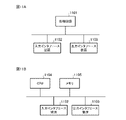
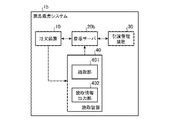
- FIG. It is a figure which shows the structural example of the product sales system which concerns on Embodiment 1.
- FIG. It is a figure which shows the configuration example of the ordering apparatus which concerns on Embodiment 1.
- FIG. It is a figure which shows the configuration example of the management server which concerns on Embodiment 1.
- FIG. It is a figure which shows the structural example of the delivery management apparatus which concerns on Embodiment 1.
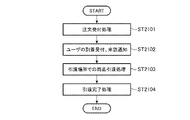
- FIG. It is a flowchart for demonstrating operation of the product sales system which concerns on Embodiment 1.
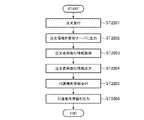
- It is a flowchart for demonstrating the detailed operation of the ordering apparatus which concerns on Embodiment 1.
- FIG. It is a flowchart for demonstrating the detailed operation of the management server which concerns on Embodiment 1.
- Embodiment 1 It is a flowchart for demonstrating the operation of the order processing part in step ST702 of FIG. 7 in more detail. It is a flowchart for demonstrating operation of the delivery management apparatus which concerns on Embodiment 1.
- Embodiment 1 it is a sequence diagram for demonstrating the flow from ordering a product to delivery of the product to the user, including the actions of the user and the store staff.
- 11A and 11B are diagrams showing an example of the hardware configuration of the management server according to the first embodiment. It is a figure which shows the structural example of the product sales system which concerns on Embodiment 2. It is a figure which shows the configuration example of the management server which concerns on Embodiment 2. It is a flowchart for demonstrating the operation of the product sales system which concerns on Embodiment 2.
- Embodiment 2 It is a flowchart for demonstrating the detailed operation of the ordering apparatus which concerns on Embodiment 2. It is a flowchart for demonstrating the detailed operation of the management server which concerns on Embodiment 2. 16 is a flowchart for explaining the operation of the order processing unit in step ST1602 of FIG. 16 in more detail.
- Embodiment 2 it is a sequence diagram for demonstrating the flow from ordering a product to delivery of the product to the user, including the actions of the user and the store staff. It is a figure which shows the structural example of the product sales system which concerns on Embodiment 3. It is a figure which shows the configuration example of the management server which concerns on Embodiment 3. It is a flowchart for demonstrating the operation of the product sales system which concerns on Embodiment 3.
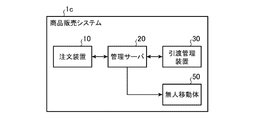
- Embodiment 3 it is a sequence diagram for demonstrating the flow from ordering a product to delivery of the product to the user, including the actions of the user and the store staff. It is a figure which shows the configuration example of the product sales system provided with the unmanned moving body.
- Embodiment 1 Recently, mail-order sales using the Internet are increasing. Conventionally, as mail-order sales using the Internet, mail-order sales in which the product is delivered to the location specified by the user when the user places an order for the product at a virtual store on the Internet, or the user is a virtual store on the Internet. It is known that mail-order sales are in the form of ordering products at the store and then going to the store that handles the products to receive the ordered products.
- the term "handling store” as used herein is not limited to a building for selling products, but broadly includes a building designated as a place for delivering products to users.
- the handling store For example, after the evening of a weekday, or during a time zone such as a holiday when there are generally many shoppers, many users may go to the handling store to pick up the product. Then, the handling store where the product is delivered is crowded with users who come to pick up the product, and people are crowded. Further, for example, when a large number of orders are placed by the user, it may take time for the staff of the handling store to search for the product. The user has to wait in the meantime.
- the product sales system according to the first embodiment prevents the crowding of people due to the congestion in the handling store due to the delivery of the product to the user in response to the above-mentioned problem.
- the product sales system according to the first embodiment delivers the product to the user at a designated place (hereinafter referred to as "delivery place") around the handling store, not in the handling store. Let me.
- the delivery place is, for example, a parking position in a parking lot.
- the user does not have to enter the handling store to receive the product.
- the product sales system avoids crowding of people due to congestion in the handling store due to delivery of the product to the user.
- the user goes to a store handling the product by car. Delivery of goods to the user shall be performed at the parking position in the parking lot where the user parked the car. That is, in the product sales system according to the first embodiment, the delivery place is the parking position where the user parks the car in the parking lot. The user will specify the delivery location.
- FIG. 1 is a diagram showing a configuration example of the product sales system 1 according to the first embodiment.
- the product sales system 1 is a system for delivering an ordered product to a user in a virtual store opened on the Internet, and includes an ordering device 10, a management server 20, and a delivery management device 30.
- the ordering device 10 is mounted on a terminal (hereinafter referred to as "user terminal") 100 (see FIG. 2 described later) owned and operated by the user.
- the user terminal 100 is, for example, a PC (Personal Computer), a smartphone, or a tablet terminal.
- the ordering device 10 is equipped with a web browser and communicates with the management server 20 via the Internet.
- the ordering device 10 may be equipped with software dedicated to the product sales system 1 instead of the web browser.
- the ordering device 10 orders products at a virtual store opened on the Internet according to a user's operation. In FIG. 1, one ordering device 10 is shown, but this is only an example.
- the ordering device 10 may be mounted on a plurality of user terminals 100, such as a personal computer owned by the user at home and a smartphone carried by the user. The details of the ordering device 10 will be described later.
- the management server 20 communicates with the ordering device 10 and the delivery management device 30 via the Internet. Communication between the management server 20 and the delivery management device 30 may be performed via the intranet.
- the management server 20 receives information about an order placed by the ordering device 10 and manages the order. Further, the management server 20 manages the status after the order of the product ordered by the ordering device 10 (hereinafter referred to as “order status”). For example, the management server 20 manages the delivery status of whether or not the product has been delivered to the user.
- the delivery management device 30 manages the delivery of the product to the user. The details of the management server 20 will be described later.
- the delivery management device 30 is mounted on a terminal (hereinafter referred to as “store terminal”) 300 (see FIG. 4 described later) that is viewed or operated by the store staff of the handling store.
- the store terminal 300 is, for example, a PC installed in the handling store, a smartphone carried by the store staff, or a tablet terminal carried by the store staff.
- the store terminal 300 may be a dedicated terminal for the product sales system 1.
- the delivery management device 30 is equipped with a web browser and communicates with the management server 20 via the Internet.
- the delivery management device 30 may be equipped with software dedicated to the product sales system 1 instead of the web browser.
- the delivery management device 30 manages the delivery of the product to the user based on the information output from the management server 20. In FIG. 1, one delivery management device 30 is shown, but this is only an example.
- the delivery management device 30 may be mounted on each of a plurality of store terminals 300, for example. Details of the delivery management device 30 will be described later.
- FIG. 2 is a diagram showing a configuration example of the ordering device 10 according to the first embodiment.
- the ordering device 10 includes an order receiving unit 11, an order information output unit 12, an orderer transaction information acquisition unit 13, an orderer transaction information output unit 14, an arrival information reception unit 15, and an arrival information output unit 16.
- the order receiving unit 11 accepts an order for a product in a virtual store opened on the Internet.
- the user operates the user terminal 100, accesses the homepage of the virtual store from a web browser, and orders the product to be purchased.
- the user terminal 100 is provided with a touch panel type display, and the user places an order for a product by touch-operating the display.
- the user orders a product by operating an input device (not shown) such as a mouse or a keyboard included in the user terminal 100. Since the method of purchasing a product by accessing the homepage of a virtual store from a web browser and ordering the product is a general method of purchasing a product via the Internet, detailed description thereof will be omitted.
- any product purchasing method may be applied.
- the homepage of the virtual store is opened on the management server 20, but the server on which the homepage of the virtual store is opened and the management server 20 do not necessarily have to be the same. do not have.
- the order receiving unit 11 accepts an order placed by the user as described above.
- the order receiving unit 11 outputs information regarding the received order (hereinafter referred to as "order information") to the order information output unit 12.
- the order information includes at least information that can identify the product and information on the store that handles the product.
- the order information may include information about the user's contact information, such as a telephone number or email address. In this case, for example, the user enters information about the contact at the time of ordering.
- the order information output unit 12 outputs the order information output from the order reception unit 11 to the management server 20.
- the orderer transaction information acquisition unit 13 acquires the orderer transaction information output from the management server 20.
- the transaction information for the orderer includes transaction ID given for each order and information on the date and time when the product can be delivered to the user (hereinafter referred to as "delivery possible date and time").
- the orderer transaction information may include an ordered product list.
- the transaction ID and the delivery date and time are set on the management server 20.
- the ordered product list is created on the management server 20. Details of the transaction ID, the delivery date and time, and the ordered product list will be described later.
- the orderer transaction information output unit 14 outputs the orderer transaction information acquired by the orderer transaction information acquisition unit 13. Specifically, the orderer transaction information output unit 14 displays the orderer transaction information on, for example, a display provided in the user terminal 100. By confirming the displayed transaction information for the orderer, the user grasps the transaction ID given to the ordered product and the delivery date and time. When the delivery date and time arrives, the user goes to the store to pick up the product.
- the orderer transaction information output unit 14 may store the orderer transaction information in a storage unit (not shown).
- the arrival information reception unit 15 receives information that the user has arrived at the handling store (hereinafter referred to as "arrival information").
- arrival information information that the user has arrived at the handling store
- the user notifies the management server 20 that the product has arrived at the handling store.
- the user operates the user terminal 100 to call a screen for inputting that the user has arrived at the handling store on the display provided in the user terminal 100, and the information indicating that the user has arrived at the handling store. , Enter the transaction ID and information about the place where you want to receive the delivery of the product (hereinafter referred to as "delivery place”) (hereinafter referred to as "delivery place information").
- delivery location information is information that can specify the location of the delivery location. The user can appropriately specify the delivery location. However, the user shall specify the location around the handling store as the delivery location.
- the arrival notification input unit, the transaction ID input unit, and the delivery location input unit are displayed on the screen called by the user, and the user inputs information indicating that the user has arrived at the arrival notification input unit. Then, the transaction ID is input to the transaction ID input unit, and the delivery place information is input to the delivery place input unit.
- the transaction ID is a transaction ID included in the orderer's transaction information acquired by the orderer's transaction information acquisition unit 13 at the time of ordering.
- the delivery place information shall be information that can specify the location of the delivery place.
- the user goes to the handling store by car and designates the parking position of the own vehicle in the parking lot around the handling store as the delivery place.
- the delivery location information includes information that can identify the location of the parking lot and information on the number assigned to each parking lot in the parking lot.
- the information that can specify the location of the parking lot and the information of the number assigned to each parking lot in the parking lot are collectively referred to as parking position information.
- the user inputs the information indicating that the vehicle has arrived at the handling store, the transaction ID, the delivery location information, in other words, the parking position information, at the delivery location without entering the handling store. That is, in the first embodiment, when the user parks at the parking position in the parking lot around the handling store, the user inputs the information that the user has arrived at the handling store, the transaction ID, and the parking position information.
- the arrival information reception unit 15 receives the information input by the user to the effect that the store has arrived, the transaction ID, and the delivery location information as arrival information.
- the arrival information reception unit 15 outputs the received arrival information to the arrival information output unit 16.
- the arrival information output unit 16 outputs the arrival information received by the arrival information reception unit 15 to the management server 20.
- FIG. 3 is a diagram showing a configuration example of the management server 20 according to the first embodiment.
- the management server 20 includes an order management unit 21, a visit management unit 22, a delivery status management unit 23, and a storage unit 24.
- the order management unit 21 includes an order information receiving unit 211, an order processing unit 212, and a transaction information output unit 213.
- the order processing unit 212 includes an ID issuing unit 2121, an order list creating unit 2122, and a delivery date / time setting unit 2123.
- the visit management unit 22 includes an arrival information reception unit 221 and a visit notification unit 222.
- the delivery status management unit 23 includes a delivery completion notification receiving unit 231 and a delivery completion processing unit 232.
- the order management unit 21 manages the order.
- the order information receiving unit 211 of the order management unit 21 receives the order information output from the ordering device 10.
- the order information receiving unit 211 outputs the received order information to the order processing unit 212.
- the order processing unit 212 processes the order based on the received order information. Specifically, the order processing unit 212 issues a transaction ID, creates an ordered product list, and sets a delivery date and time.
- the ID issuing unit 2121 of the order processing unit 212 issues a transaction ID.
- the transaction ID is a unique ID set for each order placed.
- the order list creation unit 2122 of the order processing unit 212 creates an order product list, which is a list of ordered products.
- the ordered product list is, for example, a list in which the transaction ID, the order date and time, and information that can identify the ordered product are posted for each transaction ID.
- the ordered product list may contain information about the contact information of the user who placed the order.
- the order list creation unit 2122 may acquire the transaction ID information from the ID issuing unit 2121.
- the information on the order date and time may be included in the order information, or may be information on the date and time when the order information receiving unit 211 receives the order information.
- the delivery possible date and time setting unit 2123 of the order processing unit 212 sets the delivery possible date and time when the product preparation is completed on the handling store side and the product can be delivered to the user.
- the deliverable date and time setting unit 2123 sets, for example, the date and time after the lapse of a preset time after the product is ordered as the deliverable date and time.
- the delivery possible date and time setting unit 2123 may be used, for example, for the first user who placed an order with the handling store on the same day at 10:00 on the month x day, and for the second user at 10:05 on the month x day.
- the delivery date and time may be set by shifting the order of orders placed at the same store on the same day by a preset time.
- the deliverable date / time setting unit 2123 may set the date and time later than the date and time after the lapse of the preset time as the deliverable date and time. Further, when setting the deliverable date and time, the deliverable date and time setting unit 2123 may set the time zone in which the handling store is vacant as the recommended time zone for visiting the store. The time zone when the handling store is vacant is input in advance by the store staff or the like and stored in the storage unit 24. For example, the store staff of the handling store operates so as to grant a privilege when the user comes to pick up the product during the recommended time zone for visiting the store.
- the product sales system 1 can guide the delivery of the product to the user during the time zone when the handling store is vacant. As a result, the store staff can effectively utilize the work resources of the store staff. Further, when setting the deliverable date and time, the deliverable date and time setting unit 2123 may also set the delivery deadline. In the product sales system 1, an order for which the product has not been delivered even after the delivery deadline is canceled.
- the order processing unit 212 outputs information about the transaction ID issued by the ID issuing unit 2121, the ordered product list created by the order list creating unit 2122, and the delivery possible date and time set by the delivery possible date and time setting unit 2123. Output to 213. Further, the order processing unit 212 also outputs the order information output from the order information receiving unit 211 to the transaction information output unit 213.
- the transaction information output unit 213 creates transaction information for the orderer and transaction information for delivery based on the transaction ID, the order product list, and the information regarding the delivery date and time output from the order processing unit 212.
- the transaction information for the orderer includes the transaction ID and the information regarding the delivery date and time.
- the orderer transaction information may further include an ordered merchandise list.
- the delivery transaction information includes information regarding the ordered product list and the delivery date and time.
- the delivery transaction information may further include information about the user's contact information.
- the transaction information output unit 213 outputs the created transaction information for the orderer to the ordering device 10. Further, the transaction information output unit 213 outputs the created transaction information for delivery to the delivery management device 30.
- the transaction information output unit 213 creates information in which the information that can identify the product and the order status of the product are associated with each other (hereinafter referred to as "order status information"), and stores the order status information in the storage unit 24. do.
- the information that can identify the product is, for example, a transaction ID.
- the transaction information output unit 213 sets the order status to indicate that the order has been accepted and the delivery has not yet been performed, for example, "ordered”.
- the transaction information output unit 213 associates the order status information with, for example, the transaction ID and the order status, as well as the delivery date and time, the ordered product list, and the order information.
- the order processing unit 212 may create the order status information.
- the visit management unit 22 When the visit management unit 22 receives the arrival information indicating that the user has arrived at the handling store, the visit management unit 22 outputs the visit notification information notifying the arrival of the user.
- the arrival information reception unit 221 of the visit management unit 22 receives arrival information. As described above, when the delivery date and time arrives, the user goes to the handling store by car to pick up the product, and when parking in the parking lot around the handling store, the information that the user has arrived at the handling store from the user terminal 100. , Transaction ID and delivery place information, in other words, parking position information is input. Then, the ordering device 10 accepts the information input by the user to the effect that the store has arrived, the transaction ID, and the delivery place information as arrival information, and outputs the information to the management server 20. The arrival information reception unit 221 receives the arrival information output from the ordering device 10. The arrival information reception unit 221 outputs the received arrival information to the visit notification unit 222.
- the visit notification unit 222 When the arrival information is output from the arrival information reception unit 221, the visit notification unit 222 creates visit notification information for notifying the arrival of the user based on the arrival information.
- the visit notification information includes the transaction ID and the delivery location information.
- the visit notification information may further include information about the user's contact information.
- the visit notification unit 222 can specify information regarding the user's contact information by referring to the order status information stored in the storage unit 24, for example.
- the visit notification unit 222 outputs the created visit notification information to the delivery management device 30.
- the delivery completion notification receiving unit 231 of the delivery status management unit 23 receives the delivery completion notification output from the delivery management device 30. Details of the delivery management device 30 will be described later.
- the delivery completion notification receiving unit 231 Upon receiving the delivery completion notification, the delivery completion notification receiving unit 231 outputs the received delivery completion notification to the delivery completion processing unit 232.
- the delivery completion notification includes at least the transaction ID.
- the delivery completion processing unit 232 When the delivery completion notification is output from the delivery completion notification reception unit 231, the delivery completion processing unit 232 indicates the order status of the delivered product in the order status information stored in the storage unit 24 to indicate the delivery completion. Update to the situation.
- the delivery completion processing unit 232 can identify the order status of the delivered product by, for example, matching the transaction ID included in the delivery completion notification with the transaction ID in the order status information.
- the delivery completion processing unit 232 updates the order status in the order status information to the delivery completion, so that the status of whether the delivery of the product is completed or not is managed based on the order status information. Further, based on the order status information, it is possible to identify a product that has not been delivered even after the delivery date and time and a user who has ordered the product.
- the delivery completion processing unit 232 updates the order status in the order status information as appropriate. For example, when the delivery possible date and time setting unit 2123 sets the delivery deadline, the delivery completion processing unit 232 changes the order status to a status indicating cancellation in the order status information regarding the order whose delivery deadline has been exceeded. Update.
- the storage unit 24 stores order status information.
- the storage unit 24 is provided in the management server 20, but this is only an example.
- the storage unit 24 may be provided in a place outside the management server 20 where the management server 20 can refer to.
- FIG. 4 is a diagram showing a configuration example of the delivery management device 30 according to the first embodiment.
- the delivery management device 30 includes a delivery transaction information receiving unit 31, a delivery transaction information output unit 32, a delivery instruction unit 33, and a delivery status reporting unit 34.
- the delivery instruction unit 33 includes a visit notification reception unit 331 and a delivery instruction information output unit 332.
- the delivery status report unit 34 includes a delivery information reception unit 341 and a delivery completion notification unit 342.
- the delivery transaction information receiving unit 31 receives the delivery transaction information output from the management server 20.
- the delivery transaction information reception unit 31 outputs the received delivery transaction information to the delivery transaction information output unit 32.
- the delivery transaction information output unit 32 outputs the delivery transaction information output from the delivery transaction information reception unit 31. Specifically, for example, the delivery transaction information output unit 32 displays an ordered product list based on the delivery transaction information on a display (not shown) included in the store terminal 300.
- the delivery transaction information output unit 32 stores, for example, the delivery transaction information in a storage unit (not shown) included in the delivery management device 30, and is based on the delivery transaction information on the display at a preset timing.
- the ordered product list may be displayed.
- the store staff confirms the ordered product list output by the delivery transaction information output unit 32, and prepares the products listed in the ordered product list.
- the delivery instruction unit 33 When the visit notification information is output from the management server 20, the delivery instruction unit 33 outputs information instructing delivery of the product at the delivery location (hereinafter referred to as “delivery instruction information”).
- the visit notification reception unit 331 of the delivery instruction unit 33 receives the visit notification information output from the management server 20.
- the visit notification reception unit 331 outputs the received visit notification information to the delivery instruction information output unit 332 of the delivery instruction unit 33.
- the delivery instruction information output unit 332 outputs the delivery instruction information when the visit notification information is output from the visit notification reception unit 331. Specifically, the delivery instruction information output unit 332 displays the delivery instruction information on the display of the store terminal 300, for example.
- the delivery instruction information includes a transaction ID and delivery location information. As described above, since the visit notification information includes the transaction ID and the delivery location information, the delivery instruction information output unit 332 delivers the transaction ID and the delivery location information included in the visit notification information. Instruction information should be created and output.
- the delivery instruction information output unit 332 may also output a buzzer sound from an audio output device such as a speaker provided in the store terminal 300, for example. The store staff knows that the user has come to pick up the product by checking the delivery instruction information displayed on the display, for example.
- the store staff takes the product ordered by the user and heads to the delivery place where the user waits.
- the store staff takes the product ordered by the user and heads for the parking position of the parking lot where the user is parked.
- the store staff can identify the product ordered by the user by matching the transaction ID included in the delivery instruction information with the transaction ID listed in the ordered product list.
- the delivery transaction information is output from the delivery transaction information output unit 32
- the store staff prepares the product in advance by the delivery date and time.
- the store staff prints out the ordered product list when preparing the product.
- the delivery instruction information output unit 332 refers to the delivery transaction information stored in the storage unit when outputting the delivery instruction information, and outputs the ordered product list together with the delivery instruction information. You may.
- the store staff confirms the output delivery instruction information
- the store staff can also confirm the ordered product list and identify the product ordered by the user.
- the store staff delivers the product to the user.
- the user receives the ordered product at the delivery place, in other words, at the parking position of the own vehicle.
- the user confirms that the received product is not damaged or damaged. If the received product is damaged or damaged, the user may refuse the receipt and request replacement or cancellation.
- the delivery of the goods to the user is completed.
- the payment method of the product does not matter. The payment may be made in cash at the time of delivery of the product, or may be completed in advance using a credit card when the user orders the product.
- the delivery status report unit 34 When the delivery status report unit 34 receives the information that the delivery of the product to the user is completed (hereinafter referred to as "delivery information"), the delivery status report unit 34 outputs the delivery completion notification to the management server 20.
- the delivery information reception unit 341 of the delivery status report unit 34 receives the delivery information. For example, as described above, when the store staff completes the delivery of the product to the user at the delivery location, the store staff operates the store terminal 300 to obtain the transaction ID of the product for which the delivery has been completed and the information that the delivery has been completed. Enter.
- the display provided in the store terminal 300 may be a touch panel type, and the store staff may perform the above input operation by touch-operating the display, and the store staff may perform the above input operation by touching the display, and the store staff may perform the above input operation, such as a mouse or a keyboard provided in the store terminal 300.
- the above input operation may be performed by operating (not shown).
- the delivery information reception unit 341 receives the transaction ID input by the store staff and the information indicating that the delivery has been completed as delivery information.
- the delivery information receiving unit 341 receives the transaction ID and the exchange or cancellation information as the delivery information.
- the delivery information reception unit 341 outputs the received delivery information to the delivery completion notification unit 342.
- the delivery completion notification unit 342 of the delivery status report unit 34 outputs the delivery completion notification to the management server 20.
- the delivery status management unit 23 updates the order status in the order status information to the status indicating the completion of delivery for the product for which delivery has been completed.
- the delivery completion notification unit 342 for example, when the delivery information to the effect that the exchange or cancellation is output is output from the delivery information reception unit 341, the exchange required notification to notify that the exchange is necessary or the cancellation is canceled.
- a cancellation notice for notifying the fact is output to the management server 20.
- the delivery status management unit 23 of the management server 20 receives the exchange required notification
- the order status in the order status information is updated to the status indicating the exchange required for the product that needs to be exchanged.
- the order status in the order status information of the canceled product is updated to the status indicating the cancellation.
- the management server 20 cooperates with the delivery management device 30 to manage the status of the ordered products such as whether or not the products are actually delivered.
- the store staff of the handling store can inquire about the order status from the store terminal 300.
- the store staff can identify a user who has ordered a product that has not been delivered by inquiring about the order status from the store terminal 300.
- the inquiry receiving unit (not shown) of the delivery management device 30 accepts the inquiry, and the inquiry unit (not shown) inquires about the order status information stored in the storage unit 24 of the management server 20. ..
- the inquiry result output unit (not shown) of the delivery management device 30 displays the inquiry result on, for example, a display (not shown) included in the store terminal 300.
- the store staff grasps the inquiry result by checking the display. Then, the store staff can also contact the user who ordered the product that has not been delivered.
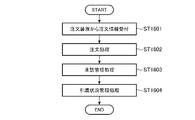
- FIG. 5 is a flowchart for explaining the operation of the product sales system 1 according to the first embodiment.
- the order acceptance process is performed (step ST501). Specifically, the ordering device 10 orders a product at a virtual store opened on the Internet according to a user's operation. Then, the ordering device 10 outputs the order information to the management server 20.
- the order information receiving unit 211 of the management server 20 receives order information from the ordering device 10.
- the order management unit 21 sets a delivery date and time when the product can be delivered to the user based on the received order information.
- the user goes to the handling store to pick up the product, and notifies the handling store from the user terminal 100 at the delivery place, in other words, the parking position where the car is parked.
- the product sales system 1 receives arrival information indicating that the user has arrived at the handling store, and gives a visit notification notifying the arrival of the user (step ST502).
- the ordering device 10 outputs the arrival information to the management server 20.
- the visit management unit 22 of the management server 20 receives the arrival information from the ordering device 10
- the visit management unit 22 outputs the visit notification information notifying the arrival of the user to the delivery management device 30.
- the product sales system 1 Upon receiving the visit notification, the product sales system 1 performs the product delivery process at the delivery location (step ST503). Specifically, when the visit notification information is output from the visit management unit 22 in step ST502, the delivery instruction unit 33 of the delivery management device 30 outputs the delivery instruction information instructing the delivery of the product at the delivery place. By checking the output delivery instruction information, the store staff grasps that the user has come to pick up the product, takes the product ordered by the user, and heads to the delivery place where the user waits. Then, the store staff delivers the product to the user at the delivery location.
- the product sales system 1 performs the delivery completion process (step ST504). Specifically, when the delivery status report unit 34 of the delivery management device 30 receives the delivery completion information indicating that the delivery of the product has been completed and receives the delivery completion information, the delivery completion notification is sent to the delivery status of the management server 20. Output to the management unit 23. When the delivery status management unit 23 receives the delivery completion notification, the delivery status management unit 23 updates the order status of the delivered product in the order status information to the status indicating the delivery completion.
- the product sales system 1 the products ordered at the virtual stores opened on the Internet are delivered to the delivery locations around the handling stores, in other words, after the delivery date and time set by the management server 20. It is held at the stop position of the car in the parking lot. The user does not have to enter the handling store to pick up the product. Therefore, the product sales system 1 can prevent crowding of people due to congestion in the handling store due to delivery of the product to the user.
- FIG. 6 is a flowchart for explaining the detailed operation of the ordering apparatus 10 according to the first embodiment.
- the order receiving unit 11 accepts an order for a product in a virtual store opened on the Internet (step ST601).
- the order receiving unit 11 outputs the order information regarding the received order to the order information output unit 12.
- the order information output unit 12 outputs the order information received by the order reception unit 11 in step ST601 to the management server 20 (step ST602).
- the orderer transaction information acquisition unit 13 acquires the orderer transaction information output from the management server 20 (step ST603).
- the orderer transaction information output unit 14 outputs the orderer transaction information acquired by the orderer transaction information acquisition unit 13 in step ST603 (step ST604). Specifically, the orderer transaction information output unit 14 displays the orderer transaction information on, for example, a display provided in the user terminal 100. By confirming the displayed transaction information for the orderer, the user grasps the transaction ID given to the ordered product and the delivery date and time. When the delivery date and time arrives, the user goes to pick up the product.
- steps ST601 to ST604 correspond to the operations of step ST501 in FIG.
- the ordering apparatus 10 operates the above-mentioned steps ST601 to ST604.
- the arrival information reception unit 15 receives arrival information indicating that the user has arrived at the handling store (step ST605).
- the arrival information reception unit 15 outputs the received arrival information to the arrival information output unit 16.
- the arrival information output unit 16 outputs the arrival information received by the arrival information reception unit 15 in step ST605 to the management server 20 (step ST606).
- steps ST605 to ST606 correspond to the operations of step ST502 in FIG.
- the ordering apparatus 10 operates the above-mentioned steps ST605 to ST606.
- FIG. 7 is a flowchart for explaining the detailed operation of the management server 20 according to the first embodiment.
- the order information receiving unit 211 of the order management unit 21 receives the order information output from the ordering device 10 (step ST701).
- the order information receiving unit 211 outputs the received order information to the order processing unit 212.
- the order processing unit 212 performs order processing based on the order information received by the order information receiving unit 211 in step ST701 (step ST702).
- the order processing unit 212 sets a delivery date and time when the product can be delivered to the user based on the order information received by the order information reception unit 211 in the order processing. A more detailed description of the order processing will be described later.
- steps ST701 to ST702 correspond to the operations of step ST501 in FIG.
- the management server 20 operates the above-mentioned steps ST701 to ST702.
- the visit management unit 22 performs the visit management process (step ST703). Specifically, when the visit management unit 22 receives the arrival information indicating that the user has arrived at the handling store, the visit management unit 22 outputs the visit notification information notifying the arrival of the user. More specifically, the arrival information reception unit 221 of the visit management unit 22 receives the arrival information and outputs the received arrival information to the visit notification unit 222. When the arrival information is output from the arrival information reception unit 221, the visit notification unit 222 creates visit notification information for notifying the arrival of the user based on the arrival information. Then, the visit notification unit 222 outputs the created visit notification information to the delivery management device 30.
- step ST703 described above is an operation corresponding to step ST502 of FIG.
- the management server 20 performs the operation of step ST703 described above.
- the delivery status management unit 23 performs a delivery status management process (step ST704). Specifically, when the delivery status management unit 23 receives a delivery completion notification to the effect that the delivery of the product to the user has been completed at the designated delivery location around the handling store, the delivery in the order status information is completed. Update the order status of the ordered product to the status indicating the completion of delivery. More specifically, when the delivery completion notification receiving unit 231 of the delivery status management unit 23 receives the delivery completion notification output from the delivery management device 30, the received delivery completion notification is output to the delivery completion processing unit 232. .. When the delivery completion notification is output from the delivery completion notification reception unit 231, the delivery completion processing unit 232 updates the order status of the delivered product in the order status information stored in the storage unit 24 to the delivery completion. ..
- step ST704 described above is an operation corresponding to step ST504 of FIG.
- the management server 20 performs the operation of step ST704 described above.
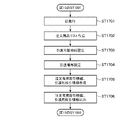
- FIG. 8 is a flowchart for explaining the operation of the order processing unit 212 in step ST702 of FIG. 7 in more detail.
- the ID issuing unit 2121 of the order processing unit 212 issues a transaction ID (step ST801).
- the order list creation unit 2122 of the order processing unit 212 creates an order product list (step ST802).
- the deliverable date and time setting unit 2123 of the order processing unit 212 sets the deliverable date and time (step ST803).
- the order processing unit 212 can be delivered together with the transaction ID issued by the ID issuing unit 2121 in step ST801 and the ordered product list created by the order list creating unit 2122 in step ST802.
- Information about the date and time is output to the transaction information output unit 213. Further, the order processing unit 212 also outputs the order information output from the order information receiving unit 211 to the transaction information output unit 213.
- the transaction information output unit 213 creates transaction information for the orderer and transaction information for delivery based on the transaction ID, the order product list, and the information regarding the delivery date and time output from the order processing unit 212 in step ST803. (Step ST804).
- the transaction information for the orderer includes the transaction ID and the information regarding the delivery date and time.
- the orderer transaction information may further include an ordered merchandise list.
- the delivery transaction information includes information regarding the ordered product list and the delivery date and time.
- the delivery transaction information may further include information about the user's contact information.
- the transaction information output unit 213 outputs the created transaction information for the orderer to the ordering device 10. Further, the transaction information output unit 213 outputs the created transaction information for delivery to the delivery management device 30 (step ST805). Further, the transaction information output unit 213 creates order status information and stores the order status information in the storage unit 24. The operation may be performed in parallel with the operation of steps ST804 to ST805. Further, the operation may be performed by the order processing unit 212.
- FIG. 9 is a flowchart for explaining the operation of the delivery management device 30 according to the first embodiment.
- the delivery transaction information receiving unit 31 receives the delivery transaction information output from the management server 20 (step ST901).
- the delivery transaction information reception unit 31 outputs the received delivery transaction information to the delivery transaction information output unit 32.
- the delivery transaction information output unit 32 outputs the delivery transaction information output from the delivery transaction information reception unit 31 in step ST901 (step ST902). Specifically, for example, the delivery transaction information output unit 32 displays an ordered product list based on the delivery transaction information on the display provided in the store terminal 300. The store staff confirms the ordered product list output by the delivery transaction information output unit 32, and prepares the products listed in the ordered product list.
- steps ST901 to ST902 correspond to the operations of step ST501 in FIG.
- the delivery management device 30 performs the operations of steps ST901 to ST902 described above.
- the delivery instruction unit 33 When the visit notification information is output from the management server 20, the delivery instruction unit 33 outputs the delivery instruction information instructing the delivery of the product at the delivery location (step ST903). Specifically, the visit notification reception unit 331 of the delivery instruction unit 33 receives the visit notification information output from the management server 20. The visit notification reception unit 331 outputs the received visit notification information to the delivery instruction information output unit 332. Then, the delivery instruction information output unit 332 outputs the delivery instruction information when the visit notification information is output from the visit notification reception unit 331.
- step ST903 described above is an operation corresponding to step ST503 of FIG.
- the delivery management device 30 performs the operation of step ST903 described above.
- the delivery status report unit 34 When the delivery status report unit 34 receives the delivery completion information indicating that the delivery of the product to the user has been completed, the delivery status report unit 34 outputs the delivery completion notification to the management server 20 (step ST904). Specifically, the delivery information receiving unit 341 of the delivery status reporting unit 34 receives the delivery information indicating that the delivery of the product to the user has been completed. The delivery information reception unit 341 outputs the received delivery information to the delivery completion notification unit 342. Then, the delivery completion notification unit 342 of the delivery status report unit 34 outputs the delivery completion notification to the management server 20 when the delivery completion information indicating that the delivery of the product is completed is output from the delivery information reception unit 341.
- step ST904 described above is an operation corresponding to step ST504 of FIG.
- the delivery management device 30 performs the operation of step ST904 described above.
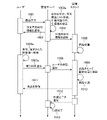
- FIG. 10 is a sequence diagram for explaining the flow from ordering a product to delivery of the product to the user, including the actions of the user and the store staff in the first embodiment.
- the operation shown as "user” in FIG. 10 is mainly a user's operation, and includes an operation performed by some users using the user terminal 100.
- the operation shown as "store staff” in FIG. 10 is mainly an operation of the store staff, and includes an operation performed by some store staff using the store terminal 300. Note that, in FIG. 10, the flow from 1001 to 1005 in FIG. 10 corresponds to step ST501 in FIG. 5, which has already been explained.
- the flow from 1006 to 1008 in FIG. 10 corresponds to step ST502 in FIG.
- the flow from 1009 to 1011 in FIG. 10 corresponds to step ST503 in FIG.
- the flow from 1011 to 1012 in FIG. 10 corresponds to step ST504 in FIG.
- the user places an order for a product (1001 in FIG. 10).
- the management server 20 issues a transaction ID.
- the management server 20 creates an ordered product list.
- the management server 20 sets a delivery date and time (1002 in FIG. 10).
- the management server 20 gives necessary notifications to the user terminal 100 and the store terminal 300.
- the management server 20 outputs transaction information for orderers to the ordering device 10 mounted on the user terminal 100 (1003 in FIG. 10).
- the management server 20 outputs the delivery transaction information to the delivery management device 30 mounted on the store terminal 300 (1004 in FIG. 10).
- the store staff grasps the delivery transaction content information via the store terminal 300. Then, the store staff prepares the products listed in the ordered product list included in the delivery transaction information (1005 in FIG. 10).
- the user drives to the handling store and parks in the parking lot of the handling store (1006 in FIG. 10). At this time, the user uses the user terminal 100 to notify the transaction ID and the parking position information (1007 in FIG. 10).
- the management server 20 receives the transaction ID and the parking position information from the ordering device 10. After that, the management server 20 gives a visit notification to the delivery management device 30 to notify that the user has visited (1008 in FIG. 10).
- the store staff After confirming the delivery instruction information output from the store terminal 300, the store staff takes the product to be delivered to the user and heads for the parking position where the user waits (1009 in FIG. 10). Then, at the parking position, the store staff delivers the product to the user (1010, 1011 in FIG. 10).
- the store staff After delivering the product to the user, the store staff inputs the information that the delivery is completed and notifies that the delivery is completed (1012 in FIG. 10). A delivery completion notification is output to the management server 20.
- the management server 20 that has received the delivery completion notification sets the order status in the order status information as the order status indicating the delivery completion (1013 in FIG. 10).
- the user orders the product and delivers the product to the user.
- FIG. 11A and 11B are diagrams showing an example of the hardware configuration of the management server 20 according to the first embodiment.
- the functions of the order management unit 21, the visit management unit 22, and the delivery status management unit 23 are realized by the processing circuit 1101. That is, the management server 20 includes a processing circuit 1101 for managing orders placed by the user in a virtual store on the Internet and managing the delivery status of the ordered products to the user.
- the processing circuit 1101 may be dedicated hardware as shown in FIG. 11A, or may be a CPU (Central Processing Unit) 1104 that executes a program stored in the memory 1105 as shown in FIG. 11B.
- CPU Central Processing Unit
- the processing circuit 1101 may be, for example, a single circuit, a composite circuit, a programmed processor, a parallel programmed processor, an ASIC (Application Specific Integrated Circuit), or an FPGA (Field-Programmable). Gate Array) or a combination of these is applicable.
- the processing circuit 1101 When the processing circuit 1101 is the CPU 1104, the functions of the order management unit 21, the visit management unit 22, and the delivery status management unit 23 are realized by software, firmware, or a combination of software and firmware.
- the software or firmware is written as a program and stored in memory 1105.
- the processing circuit 1101 executes the functions of the order management unit 21, the visit management unit 22, and the delivery status management unit 23 by reading and executing the program stored in the memory 1105. That is, the management server 20 includes a memory 1105 for storing a program in which steps ST701 to ST704 of FIG. 7 described above will be executed as a result when executed by the processing circuit 1101.
- the program stored in the memory 1105 causes the computer to execute the procedure or method of the order management unit 21, the visit management unit 22, and the delivery status management unit 23.
- the memory 1105 is, for example, a RAM, a ROM (Read Only Memory), a flash memory, an EPROM (Erasable Programmable Read Only Memory), an EPROM (Electrically Erasable Polymery), or an EEPROM (Electrically Erasable volatile) volatile Read.
- a semiconductor memory, a magnetic disk, a flexible disk, an optical disk, a compact disk, a mini disk, a DVD (Digital Versaille Disc), or the like is applicable.
- the functions of the order management unit 21, the visit management unit 22, and the delivery status management unit 23 may be partially realized by dedicated hardware and partly realized by software or firmware.
- the function is realized by the processing circuit 1101 as dedicated hardware, and for the order management unit 21 and the delivery status management unit 23, the processing circuit 1101 reads the program stored in the memory 1105. It is possible to realize the function by executing it.
- the storage unit 24 uses the memory 1105. It should be noted that this is an example, and the storage unit 24 may be configured by an HDD, an SSD (Solid State Drive), a DVD, or the like.
- the management server 20 includes a device such as an ordering device 10 or a delivery management device 30, and an input interface device 1102 and an output interface device 1103 that perform wired communication or wireless communication.
- the delivery management device 30 has a hardware configuration as shown in FIGS. 11A and 11B, like the management server 20.
- the functions of the delivery transaction information receiving unit 31, the delivery transaction information output unit 32, the delivery instruction unit 33, and the delivery status reporting unit 34 are realized by the processing circuit 1101. That is, the delivery management device 30 includes a processing circuit 1101 for managing the delivery work of the product to the user.
- the processing circuit 1101 may be dedicated hardware as shown in FIG. 11A, or may be a CPU (Central Processing Unit) 1104 that executes a program stored in the memory 1105 as shown in FIG. 11B.
- CPU Central Processing Unit
- the processing circuit 1101 may be, for example, a single circuit, a composite circuit, a programmed processor, a parallel programmed processor, an ASIC (Application Specific Integrated Circuit), or an FPGA (Field-Programmable). Gate Array) or a combination of these is applicable.
- the functions of the delivery transaction information receiving unit 31, the delivery transaction information output unit 32, the delivery instruction unit 33, and the delivery status report unit 34 are software, firmware, or software and firmware. It is realized by the combination with.
- the software or firmware is written as a program and stored in memory 1105.
- the processing circuit 1101 of the delivery transaction information receiving unit 31, the delivery transaction information output unit 32, the delivery instruction unit 33, and the delivery status reporting unit 34 Perform the function. That is, the delivery management device 30 includes a memory 1105 for storing a program in which the above-mentioned steps ST901 to ST904 of FIG. 9 are executed as a result when the processing circuit 1101 executes the program.
- the program stored in the memory 1105 causes the computer to execute the procedures or methods of the delivery transaction information reception unit 31, the delivery transaction information output unit 32, the delivery instruction unit 33, and the delivery status report unit 34. It can also be said that.
- the memory 1105 is, for example, a RAM, a ROM (Read Only Memory), a flash memory, an EPROM (Erasable Programmable Read Only Memory), an EPROM (Electrically Erasable Polymery), or an EEPROM (Electrically Erasable volatile) volatile Read.
- a semiconductor memory, a magnetic disk, a flexible disk, an optical disk, a compact disk, a mini disk, a DVD (Digital Versaille Disc), or the like is applicable.
- the functions of the delivery transaction information reception unit 31, the delivery transaction information output unit 32, the delivery instruction unit 33, and the delivery status report unit 34 are partially realized by dedicated hardware and partly by software. Alternatively, it may be realized by firmware.
- the delivery transaction information reception unit 31 and the delivery transaction information output unit 32 are realized by the processing circuit 1101 as dedicated hardware, and the delivery instruction unit 33 and the delivery status report unit 34 are processed.
- the function can be realized by the circuit 1101 reading and executing the program stored in the memory 1105.
- the delivery management device 30 includes a device such as a store terminal 300 or a management server 20, and an input interface device 1102 and an output interface device 1103 that perform wired communication or wireless communication.
- the ordering device 10 has a hardware configuration as shown in FIGS. 11A and 11B, like the management server 20.
- the 16 functions are realized by the processing circuit 1101. That is, the ordering device 10 includes a processing circuit 1101 for ordering a product in a virtual store on the Internet by a user.
- the processing circuit 1101 may be dedicated hardware as shown in FIG. 11A, or may be a CPU (Central Processing Unit) 1104 that executes a program stored in the memory 1105 as shown in FIG. 11B.
- CPU Central Processing Unit
- the processing circuit 1101 may be, for example, a single circuit, a composite circuit, a programmed processor, a parallel programmed processor, an ASIC (Application Specific Integrated Circuit), or an FPGA (Field-Programmable). Gate Array) or a combination of these is applicable.
- the processing circuit 1101 When the processing circuit 1101 is the CPU 1104, the order reception unit 11, the order information output unit 12, the orderer transaction information acquisition unit 13, the orderer transaction information output unit 14, the arrival information reception unit 15, and the arrival information
- the function of the output unit 16 is realized by software, firmware, or a combination of software and firmware.
- the software or firmware is written as a program and stored in memory 1105.
- the processing circuit 1101 reads and executes the order receiving unit 11, the order information output unit 12, the orderer transaction information acquisition unit 13, and the orderer transaction information output unit.
- the functions of 14, the arrival information receiving unit 15, and the arrival information output unit 16 are executed. That is, the ordering apparatus 10 includes a memory 1105 for storing a program in which steps ST601 to ST606 of FIG.
- the programs stored in the memory 1105 include an order receiving unit 11, an order information output unit 12, an orderer transaction information acquisition unit 13, an orderer transaction information output unit 14, and an arrival information reception unit 15. , It can be said that the procedure or method of the arrival information output unit 16 is executed by the computer.
- the memory 1105 is, for example, a RAM, a ROM (Read Only Memory), a flash memory, an EPROM (Erasable Programmable Read Only Memory), an EPROM (Electrically Erasable Polymery), or an EEPROM (Electrically Erasable volatile) volatile Read.
- a semiconductor memory, a magnetic disk, a flexible disk, an optical disk, a compact disk, a mini disk, a DVD (Digital Versaille Disc), or the like is applicable.
- the order receiving unit 11 includes a device such as a user terminal 100 or a management server 20, and an input interface device 1102 and an output interface device 1103 that perform wired communication or wireless communication.
- the management server 20 may be provided in a data center outside the handling store, or may be installed side by side with the delivery management device 30 in the store terminal 300.
- the management server 20 may be a virtual server using a cloud service.
- the delivery management device 30 may be provided with the functions of the management server 20, or the management server 20 may be provided with the functions of the delivery management device 30. That is, for example, the order management unit 21, the visit management unit 22, or the delivery status management unit 23 may be provided in the delivery management device 30, the delivery transaction information reception unit 31, and the delivery transaction information output unit. 32, the delivery instruction unit 33, or the delivery status report unit 34 may be provided in the management server 20.
- the user when the delivery date and time arrives, the user goes to the store handling the product by car in order to pick up the product, but this is only an example.
- the user may go to the handling store by bus or bicycle, or may go to the handling store on foot.
- the handling store by bicycle for example, the bicycle parking position in the bicycle parking lot of the handling store becomes the delivery place.
- the handling store by bus for example, the position of the bus stop closest to the handling store is the delivery place.
- the user goes to the handling store on foot, for example, an intersection around the handling store becomes the delivery place.
- the product sales system 1 it is sufficient that the product is delivered to the user at the delivery place around the handling store without the user entering the handling store.
- the product sales system 1 is provided with the ordering device 10, but the product sales system 1 is not required to be provided with the ordering device 10.
- the product sales system 1 is a product to the user based on the order information receiving unit 211 that receives the order information regarding the ordered product and the order information received by the order information receiving unit 211.
- the order processing unit 212 that sets the delivery date and time that can be delivered and the arrival information that the user has arrived at the store that handles the product after the delivery date and time is received
- the visit notification information that notifies the arrival of the user is output.
- the order status that associates the information that can identify the product with the order status of the product.
- the delivery instructing the delivery at the delivery location is performed.
- Embodiment 2 In the first embodiment, the user specifies the delivery place. In the second embodiment, the embodiment in which the management server sets the delivery place when the order is received will be described.
- FIG. 12 is a diagram showing a configuration example of the product sales system 1a according to the second embodiment.
- the configuration of the product sales system 1a according to the second embodiment is different from the configuration of the product sales system 1 described with reference to FIG. 1 in the first embodiment in the specific configuration of the management server 20a.
- the configuration example of the ordering device 10 and the delivery management device 30 is the same as the configuration example of the ordering device 10 and the delivery management device 30 according to the first embodiment, and therefore duplicate description will be omitted.
- FIG. 13 is a diagram showing a configuration example of the management server 20a according to the second embodiment.
- the same components as those of the management server 20 according to the first embodiment, which have been described with reference to FIG. 3 in the first embodiment, are designated by the same reference numerals and duplicated description will be omitted.
- the management server 20a according to the second embodiment is different from the management server 20 according to the first embodiment in that the order processing unit 212a of the order management unit 21a includes a delivery place setting unit 2124.
- the delivery place setting unit 2124 of the order processing unit 212a sets the delivery place.
- the delivery place setting unit 2124 sets, for example, a number assigned to each parking lot of the parking lot around the handling store as the delivery place. Since the parking lot needs to be available at the time of delivery, it is desirable that a parking area dedicated to the handling store used in the product sales system 1a is provided. By providing a parking area dedicated to the handling store used in the product sales system 1a, the range in which the store staff can bring the product for delivery is narrowed, and the delivery work by the store staff can be saved. Further, by providing the store terminal 300 or the warehouse in which the handling store stocks the products near the parking area dedicated to the handling store, the delivery work by the store staff can be saved.
- the order processing unit 212a has the transaction ID issued by the ID issuing unit 2121, the ordered product list created by the order list creating unit 2122, and the information regarding the delivery possible date and time set by the delivery possible date and time setting unit 2123, as well as the delivery location setting unit 2124.
- Information about the delivery place set by (hereinafter referred to as "delivery place information") is output to the transaction information output unit 213. Further, the order processing unit 212a also outputs the order information output from the order information receiving unit 211 to the transaction information output unit 213.
- the transaction information output unit 213 performs the transaction information for the orderer and the delivery based on the transaction ID, the order product list, the information regarding the delivery date and time, and the delivery place information output from the order processing unit 212a.
- the transaction information for the orderer includes information on the transaction ID, the delivery date and time, and the delivery location information.
- the orderer transaction information may further include an ordered merchandise list.
- the delivery transaction information includes information regarding the ordered product list and the delivery date and time.
- the delivery transaction information may further include information about the user's contact information or delivery location information.
- the transaction information output unit 213 outputs the created transaction information for the orderer to the ordering device 10. Further, the transaction information output unit 213 outputs the created transaction information for delivery to the delivery management device 30. Further, the transaction information output unit 213 creates order status information and stores the order status information in the storage unit 24.
- the order processing unit 212a may create the order status information.
- the transaction information for the orderer output from the management server 20a to the ordering device 10 includes the delivery place information. Therefore, when the orderer's transaction information output unit 14 outputs the orderer's transaction information in the ordering device 10, the user confirms the orderer's transaction information, and the transaction ID and delivery given to the ordered product. In addition to the possible date and time, the delivery location set by the management server 20 is grasped. When the delivery date and time arrives, the user goes to the store to pick up the product. Upon arriving at the dealer, the user parks the car at the delivery location set at the time of ordering. Even in the second embodiment, the user is assumed to go to the handling store by car.
- the user notifies that he / she has arrived at the handling store at the parking position. At that time, the user is not required to enter the delivery location information.
- the user only needs to input the transaction ID. Therefore, the arrival information received by the arrival information receiving unit 15 of the ordering device 10 and output to the management server 20 by the arrival information output unit 16 may not include the delivery location information.
- the visit management unit 22 refers to the storage unit 24 to specify the delivery location, and the delivery location information is used as the visit notification information. Make sure to include it.
- FIG. 14 is a flowchart for explaining the operation of the product sales system 1a according to the second embodiment.
- the order acceptance process is performed (step ST1401).
- the specific operation of the ordering device 10 in step ST1401 is the same as the specific operation of the ordering device 10 in step ST501 of FIG. 5, which has been described in the first embodiment.
- the order information receiving unit 211 of the management server 20a receives order information from the ordering device 10. Then, in the management server 20a, the order management unit 21a sets the delivery possible date and time when the product can be delivered to the user and sets the delivery place based on the received order information.
- the user goes to the store to pick up the product and parks the car at the delivery location, in other words, the parking position specified at the time of ordering.
- the user notifies from the user terminal 100 that the car has arrived at the handling store at the parking position where the car is parked.
- the product sales system 1a receives arrival information indicating that the user has arrived at the handling store, and gives a visit notification notifying the arrival of the user (step ST1402).
- the ordering device 10 outputs arrival information to the management server 20a. It is not essential that the arrival information output from the ordering device 10 includes the delivery location information.
- the visit management unit 22 of the management server 20a When the visit management unit 22 of the management server 20a receives the arrival information from the ordering device 10, the visit management unit 22 outputs the visit notification information notifying the arrival of the user to the delivery management device 30.
- the visit management unit 22 includes, for example, the delivery location information in the visit notification information.
- step ST1403 When the product sales system 1a gives a visit notification, the product is delivered at the delivery location (step ST1403). Since the specific operation of step ST1403 is the same as the specific operation of step ST503 of FIG. 5 described in the first embodiment, duplicate description will be omitted.
- step ST1404 When the store staff delivers the product to the user, the product sales system 1a performs the delivery completion process (step ST1404). Since the specific operation of step ST1404 is the same as the specific operation of step ST504 of FIG. 5 described in the first embodiment, duplicate description will be omitted.
- the product sales system 1a the products ordered in the virtual store opened on the Internet are handled, which are set in the management server 20a after the delivery date and time set in the management server 20a. It is done at the delivery place around the store, in other words, at the parking position in the parking lot. The user does not have to enter the handling store to pick up the product. Therefore, the product sales system 1a can prevent crowding of people due to congestion in the handling store due to delivery of the product to the user. Further, in the product sales system 1a, since the management server 20a sets the delivery place, it is possible to prevent the delivery place received by the ordering device 10 from being erroneous. This is because the user does not erroneously enter the delivery location. Further, when the parking area dedicated to the handling store used in the product sales system 1a is provided, the range in which the store staff brings the product for delivery is narrowed, and the delivery work by the store staff can be saved.
- FIG. 15 is a flowchart for explaining the detailed operation of the ordering apparatus 10 according to the second embodiment. Since the specific operations of steps ST1501 to ST1502 of FIG. 15 are the same as the specific operations of steps ST601 to ST602 of FIG. 6 described in the first embodiment, duplicate description will be omitted.
- the orderer transaction information acquisition unit 13 acquires the orderer transaction information output from the management server 20a (step ST1503).
- the transaction information for the orderer acquired by the transaction information acquisition unit 13 for the orderer includes the delivery place information.
- the orderer transaction information output unit 14 outputs the orderer transaction information acquired by the orderer transaction information acquisition unit 13 in step ST1503 (step ST1504). Specifically, the orderer transaction information output unit 14 displays the orderer transaction information on, for example, a display provided in the user terminal 100. By confirming the displayed transaction information for the orderer, the user grasps the transaction ID given to the ordered product, the delivery date and time, and the designated delivery place. When the delivery date and time arrives, the user goes to pick up the product. Then, when the user arrives at the handling store, the user parks at the delivery place.
- steps ST1501 to ST1504 correspond to the operations of step ST1401 in FIG.
- the ordering apparatus 10 operates the above-mentioned steps ST1501 to ST1504.
- the arrival information reception unit 15 receives arrival information indicating that the user has arrived at the handling store (step ST1505).
- the specific operation of the step ST1505 is the same as the specific operation of the step ST605 of FIG. 6 described in the first embodiment. However, in the second embodiment, it is not essential that the arrival information includes the delivery place information.
- the arrival information reception unit 15 outputs the received arrival information to the arrival information output unit 16.
- the arrival information output unit 16 outputs the arrival information received by the arrival information reception unit 15 in step ST1505 to the management server 20a (step ST1506).
- the specific operation of step ST1506 is the same as the specific operation of step ST606 of FIG. 6 described in the first embodiment.
- steps ST1505 to ST1506 correspond to the operations of step ST1402 in FIG.
- the ordering apparatus 10 operates the above-mentioned steps ST1505 to ST1506.
- FIG. 16 is a flowchart for explaining the detailed operation of the management server 20a according to the second embodiment. Since the specific operations of step ST1601 and step ST1604 of FIG. 16 are the same as the specific operations of step ST701 and step ST704 of FIG. 7, respectively, which have been described in the first embodiment, duplicate explanations will be given. Omit.
- the order processing unit 212a performs order processing based on the order information received by the order information receiving unit 211 in step ST1601 (step ST1602).
- the order processing unit 212a sets a delivery date and time at which the product can be delivered to the user based on the order information received by the order information reception unit 211 in the order processing. Further, the order processing unit 212a sets a delivery place in the order processing. A more detailed description of the order processing will be described later.
- steps ST1601 to ST1602 correspond to the operations of step ST1401 in FIG.
- the management server 20a operates the above-mentioned steps ST1601 to ST1602.
- the visit management unit 22 performs the visit management process (step ST1603). Specifically, when the visit management unit 22 receives the arrival information indicating that the user has arrived at the handling store, the visit management unit 22 outputs the visit notification information notifying the arrival of the user. More specifically, the arrival information reception unit 221 of the visit management unit 22 receives the arrival information and outputs the received arrival information to the visit notification unit 222. When the arrival information is output from the arrival information reception unit 221, the visit notification unit 222 creates visit notification information for notifying the arrival of the user based on the arrival information. The visit notification unit 222, for example, refers to the storage unit 24 to specify the delivery location and include it in the visit notification information. Then, the visit notification unit 222 outputs the created visit notification information to the delivery management device 30.
- step ST1603 is an operation corresponding to step ST1402 of FIG.
- the management server 20a performs the operation of step ST1603 described above.
- step ST1604 corresponds to step ST1404 of FIG.
- FIG. 17 is a flowchart for explaining the operation of the order processing unit 212a in step ST1602 of FIG. 16 in more detail.
- the specific operations of steps ST1701 to ST1703 and step ST1706 are the same as the specific operations of steps ST801 to ST803 and step ST805 of FIG. 8, respectively, which have been described in the first embodiment. Therefore, duplicate explanations will be omitted.
- the delivery location setting unit 2124 of the order processing unit 212a sets the delivery location (step ST1704).
- the order processing unit 212a has a transaction ID issued by the ID issuing unit 2121 in step ST1701, an ordered product list created by the order list creating unit 2122 in step ST1702, and a delivery set by the delivery date / time setting unit 2123 in step ST1703.
- the delivery location information is output to the transaction information output unit 213 together with the information regarding the possible date and time. Further, the order processing unit 212a also outputs the order information output from the order information receiving unit 211 to the transaction information output unit 213.
- the transaction information output unit 213 has the transaction ID for the orderer and the transaction for delivery based on the transaction ID, the order product list, the information on the delivery date and time, and the delivery place information output from the order processing unit 212a in step ST1704.
- Create information (step ST1705).
- the transaction information for the orderer includes the transaction ID, the information regarding the delivery date and time, and the delivery place information.
- the orderer transaction information may further include an ordered merchandise list.
- FIG. 18 is a sequence diagram for explaining the flow from ordering a product to delivery of the product to the user, including the actions of the user and the store staff in the second embodiment.
- the operation shown as "user” in FIG. 18 is mainly a user's operation, and includes an operation performed by some users using the user terminal 100.
- the operation shown as "store staff” in FIG. 18 is mainly an operation of the store staff, and includes an operation performed by some store staff using the store terminal 300. Note that, in FIG. 18, the flow from 1001 to 1005 in FIG. 18 corresponds to step ST1401 in FIG. 14, which has already been explained.
- the flow from 1006 to 1008 in FIG. 18 corresponds to step ST1402 in FIG.
- the flow from 1009 to 1011 in FIG. 18 corresponds to step ST1403 in FIG.
- the flow from 1011 to 1012 in FIG. 18 corresponds to step ST1404 in FIG.
- the specific operations shown in 1001, 1003 to 1005, and 1008 to 1013 in FIG. 18 are the specific operations shown in 1001, 1003 to 1005, and 1008 to 1013 in FIG. 10, which have been described in the first embodiment. Since they are the same, the same reference numerals are given and duplicate explanations are omitted.
- the management server 20a When the product order by the user is completed, the management server 20a issues a transaction ID. Further, the management server 20a creates an ordered product list. Further, the management server 20a sets a delivery date and time. In addition, the management server 20a sets the delivery location (1002a in FIG. 18).
- the user drives to the handling store and parks in the delivery place set by the management server 20a at the time of ordering, in other words, in the designated section of the parking lot of the handling store (FIG. 18). 1006a).
- the user notifies the transaction ID using the user terminal 100 (1007a in FIG. 18). As a result, the transaction ID is notified to the management server 20a.
- the hardware configuration of the management server 20a according to the second embodiment is the same as the hardware configuration described with reference to FIGS. 11A and 11B in the first embodiment, the illustration is omitted.
- the functions of the order management unit 21a, the visit management unit 22, and the delivery status management unit 23 are realized by the processing circuit 1101. That is, the management server 20a includes a processing circuit 1101 for managing orders placed by the user in a virtual store on the Internet and managing the delivery status of the ordered products to the user.
- the processing circuit 1101 executes the functions of the order management unit 21a, the visit management unit 22, and the delivery status management unit 23 by reading and executing the program stored in the memory 1105.
- the management server 20a includes a memory 1105 for storing a program in which steps ST1601 to ST1604 of FIG. 16 described above will be executed as a result when executed by the processing circuit 1101. Further, it can be said that the program stored in the memory 1105 causes the computer to execute the procedure or method of the order management unit 21a, the visit management unit 22, and the delivery status management unit 23.
- the management server 20a includes a device such as an ordering device 10 or a delivery management device 30, and an input interface device 1102 and an output interface device 1103 that perform wired communication or wireless communication.
- the hardware configurations of the ordering device 10 and the delivery management device 30 according to the second embodiment are the same as the hardware configurations of the ordering device 10 and the delivery management device 30 described with reference to FIGS. 11A and 11B in the first embodiment, respectively. Since they are the same, duplicate explanations will be omitted.
- the management server 20a may be provided in a data center outside the handling store, or may be installed side by side with the delivery management device 30 in the store terminal 300.
- the management server 20a may be a virtual server using a cloud service.
- the delivery management device 30 may be provided with the function of the management server 20a, or the management server 20a may be provided with the function of the delivery management device 30. That is, for example, the order management unit 21a, the visit management unit 22, or the delivery status management unit 23 may be provided in the delivery management device 30, the delivery transaction information reception unit 31, and the delivery transaction information output.
- the unit 32, the delivery instruction unit 33, or the delivery status report unit 34 may be provided in the management server 20a.
- the user when the delivery date and time arrives, the user goes to the store handling the product by car in order to pick up the product, but this is only an example.
- the user may go to the handling store by bus or bicycle, or may go to the handling store on foot.
- the product sales system 1a it is sufficient that the product is delivered to the user at the delivery place around the handling store without the user entering the handling store.
- the product sales system 1a is provided with the ordering device 10, but the product sales system 1a is not required to be provided with the ordering device 10.
- the delivery place setting unit 2124 for setting the delivery place and the delivery place setting unit 2124 for the user when the order information receiving unit 211 receives the order information, the delivery place setting unit 2124 for setting the delivery place and the delivery place setting unit 2124 for the user. It is configured to include a transaction information output unit 213 for outputting delivery place information for notifying the delivery place set by. Therefore, the product sales system 1a is a product sales system that delivers the ordered product to the user in a virtual store opened on the Internet, and the handling store is crowded due to the delivery of the product to the user. It can prevent crowding.
- the management server 20a sets the delivery place, when the ordering device 10 receives the arrival information, it is possible to prevent the delivery place received by the ordering device 10 from being erroneous. Further, when the parking area dedicated to the handling store used in the product sales system 1a is provided, the range in which the store staff brings the product for delivery is narrowed, and the delivery work by the store staff can be saved.
- Embodiment 3 when the user arrives at the handling store, the ordering device receives the arrival information input by the user from the user terminal at the delivery place and outputs the arrival information to the management server to notify the arrival. rice field.
- a reading device is provided that reads the code input by the user in a non-contact manner when arriving at the handling store and notifies the management server of the arrival.
- FIG. 19 is a diagram showing a configuration example of the product sales system 1b according to the third embodiment.
- the configuration of the product sales system 1b according to the third embodiment is different from the configuration of the product sales system 1 described with reference to FIG. 1 in the first embodiment in that it includes a reading device 40. Further, the configuration of the product sales system 1b according to the third embodiment is different from the configuration of the product sales system 1 described with reference to FIG. 1 in the first embodiment in the specific configuration of the management server 20b.
- the configuration example of the ordering device 10 and the delivery management device 30 is the same as the configuration example of the ordering device 10 and the delivery management device 30 according to the first embodiment, and therefore duplicate description will be omitted.
- the reading device 40 is a device having a function of reading a code related to an order placed by a user in a non-contact manner.
- the reading device 40 includes a reading unit 401 and a reading information output unit 402.
- the reading unit 401 reads the code in a non-contact manner.
- the code is information unique to each order and is issued by the management server 20b.
- the management server 20b will be described later.
- the reading unit 401 outputs the contents of the QR code, that is, information regarding the order of the product based on the read QR code (hereinafter referred to as "reading information") to the reading information output unit 402.
- the reading information output unit 402 outputs the reading information output from the reading unit 401 to the management server 20b.
- the reader 40 assumes a QR (Quick Response) code reader. That is, the code read by the reading device 40 is a QR code (registered trademark; the description thereof is omitted below).
- the reading device 40 is installed in the vicinity of the handling store, for example, at the entrance of the parking lot of the handling store.
- the QR code reader is installed at the entrance of the parking lot of the handling store. Even in the third embodiment, the user is assumed to go to the handling store by car.
- FIG. 20 is a diagram showing a configuration example of the management server 20b according to the third embodiment.
- the management server 20b according to the third embodiment is different from the management server 20 according to the first embodiment in that the order processing unit 212b of the order management unit 21b includes a code issuing unit 2125.
- the management server 20b is different from the management server 20 according to the first embodiment in that the visit management unit 22a includes a delivery place setting unit 223.
- the code issuing unit 2125 of the order processing unit 212b issues a code related to the ordered product based on the order information received by the order information receiving unit 211. Specifically, the code issuing unit 2125 issues a QR code for the ordered product.
- the code issuing unit 2125 in addition to the transaction ID issued by the ID issuing unit 2121, the ordered product list created by the order list creating unit 2122, and the information regarding the deliverable date and time set by the deliverable date and time setting unit 2123, the code issuing unit 2125 The issued QR code is output to the transaction information output unit 213. Further, the order processing unit 212b also outputs the order information output from the order information receiving unit 211 to the transaction information output unit 213.
- the transaction information output unit 213 is used for orderer transaction information and delivery based on the transaction ID, the order product list, the information on the delivery date and time, and the QR code output from the order processing unit 212b.
- Create transaction information The transaction information for the orderer includes information regarding the transaction ID, the delivery date and time, and the QR code.
- the orderer transaction information may further include an ordered merchandise list.
- the delivery transaction information includes information regarding the ordered product list and the delivery date and time.
- the content of the delivery transaction information is the same as the content of the delivery transaction information described in the first embodiment.
- the transaction information output unit 213 outputs the created transaction information for the orderer to the ordering device 10. Further, the transaction information output unit 213 outputs the created transaction information for delivery to the delivery management device 30. Further, the transaction information output unit 213 creates order status information and stores the order status information in the storage unit 24.
- the order processing unit 212b may create the order status information.
- the QR code is included in the transaction information for the orderer output from the management server 20b to the ordering device 10. Therefore, when the orderer's transaction information output unit 14 outputs the orderer's transaction information in the ordering device 10, the user confirms the orderer's transaction information, and the transaction ID and delivery given to the ordered product. It is possible to grasp the possible date and time and obtain the QR code. When the delivery date and time arrives, the user goes to the store to pick up the product. Then, when the user arrives at the handling store, the user notifies that the handling store has arrived.
- the user can notify from the reading device 40 at the entrance of the parking lot that he / she has arrived at the handling store.
- the user can display the QR code on the display (not shown) of the user terminal 100 and hold the QR code over the reading device 40 to notify the arrival.
- the reading unit 401 of the reading device 40 reads the QR code and outputs the reading information to the reading information output unit 402.
- the reading information output unit 402 outputs the reading information output from the reading unit 401 to the management server 20b as arrival information.
- the read information includes at least the transaction ID.
- the arrival information receiving unit 221 of the management server 20b receives the arrival information output from the reading device 40, in other words, the reading information based on the QR code.
- the delivery place setting unit 223 of the visit management unit 22a sets the delivery place when the arrival information reception unit 221 receives the arrival information. Since the specific method for setting the delivery location by the delivery location setting unit 223 is the same as the specific method for setting the delivery location by the delivery location setting unit 2124 described in the second embodiment, it is duplicated. The explanation is omitted.
- the delivery place setting unit 223 outputs the delivery place information regarding the set delivery place to the delivery place notification unit 224 and the visit notification unit 222.
- the delivery place notification unit 224 outputs the delivery place information output from the delivery place setting unit 223 to the ordering device 10.
- the orderer transaction information acquisition unit 13 of the ordering device 10 receives the output delivery place information and outputs the orderer transaction information.
- the unit 14 outputs the delivery place information.
- the user grasps the delivery place, in other words, the designated parking position. Then, the user parks at the designated parking position.
- the visit notification unit 222 of the visit management unit 22a outputs the visit notification information to the delivery management device 30.
- the visit notification unit 222 includes the delivery location information regarding the delivery location set by the delivery location setting unit 223 in the visit notification information.
- FIG. 21 is a flowchart for explaining the operation of the product sales system 1b according to the third embodiment.
- the order acceptance process is performed (step ST2101).
- the specific operation of the ordering device 10 in step ST2101 is the same as the specific operation of the ordering device 10 in step ST501 of FIG. 5, which has been described in the first embodiment.
- the order information receiving unit 211 of the management server 20b receives order information from the ordering device 10. Then, in the management server 20b, the order management unit 21b sets the delivery possible date and time when the product can be delivered to the user based on the received order information, and issues a QR code.
- the user goes to the store to pick up the product.
- the product sales system 1b receives arrival information indicating that the user has arrived at the handling store, and gives a visit notification notifying the arrival of the user (step ST2102).
- the reading unit 401 of the reading device 40 reads the QR code and outputs the reading information based on the read QR code to the reading information output unit 402.
- the read information output unit 402 outputs the read information as arrival information to the management server 20b.
- the arrival information receiving unit 221 of the management server 20b receives the arrival information output from the reading device 40.
- the delivery place setting unit 223 of the visit management unit 22a sets the delivery place when the arrival information reception unit 221 receives the arrival information.
- the delivery place notification unit 224 outputs the delivery place information output from the delivery place setting unit 223 to the ordering device 10.
- the ordering device 10 receives the output delivery place information and outputs the delivery place information.
- the visit notification unit 222 of the visit management unit 22a outputs the visit notification information to the delivery management device 30.
- step ST2103 When the product sales system 1b gives a visit notification, the product is delivered at the delivery location (step ST2103). Since the specific operation of step ST2103 is the same as the specific operation of step ST503 of FIG. 5 described in the first embodiment, duplicate description will be omitted.
- step ST2104 When the store staff delivers the product to the user, the product sales system 1b performs the delivery completion process (step ST2104). Since the specific operation of step ST2104 is the same as the specific operation of step ST504 of FIG. 5 described in the first embodiment, duplicate description will be omitted.
- the management server 20b issues a QR code related to the order, which is unique to each order, based on the received order information, and reads the QR code. Then, when the QR code is read on the delivery date and time, the product sales system 1b accepts the read information as arrival information. Since the user notifies the arrival at the entrance of the parking lot of the handling store, the store staff can grasp the visit of the user when the user arrives at the entrance of the parking lot or the like. The store staff can carry the product to the delivery place after the user visits, in other words, before moving to the parking position, and can depart for the delivery place.
- the product sales system 1b can prevent crowding of people due to congestion in the handling store due to delivery of the product to the user, and can shorten the waiting time until the user receives the product. .. Further, in the product sales system 1b, since the management server 20b sets the delivery place, it is possible to prevent the delivery place received by the management server 20b from being erroneous as compared with the case where the user notifies the delivery place. That is, it is possible to prevent the delivery location grasped by the store staff from being incorrect.
- FIG. 22 is a flowchart for explaining the detailed operation of the ordering apparatus 10 according to the third embodiment.
- FIG. 22 is a flowchart for explaining the detailed operation of the ordering device 10 when the user gives a notification that the user has arrived at the handling store by holding the QR code over the reading device 40.
- the user can also notify the user terminal 100 that he / she has arrived at the handling store from the user terminal 100.
- the detailed operation of the ordering device 10 in this case is the operation shown in the flowchart of FIG. 6 described in the first embodiment. Since the specific operations of steps ST2201 to ST2204 of FIG. 22 are the same as the specific operations of steps ST601 to ST604 of FIG. 6 described in the first embodiment, duplicate description will be omitted.
- the orderer transaction information acquisition unit 13 acquires the output delivery location information (step ST2205).
- the orderer transaction information acquisition unit 13 outputs the received delivery location information to the orderer transaction information output unit 14.
- the orderer transaction information output unit 14 outputs the delivery location information acquired by the orderer transaction information acquisition unit 13 in step ST2205 (step ST2206). By confirming the output delivery place information, the user grasps the delivery place, in other words, the designated parking position. Then, the user parks at the designated parking position.
- steps ST2201 to ST2206 correspond to the operations of step ST2102 in FIG.
- the ordering apparatus 10 operates from step ST2205 to step ST2206.
- FIG. 23 is a flowchart for explaining the detailed operation of the management server 20b according to the third embodiment. Since the specific operations of step ST2301 and step ST2304 of FIG. 23 are the same as the specific operations of step ST701 and step ST704 of FIG. 7, respectively, which have been described in the first embodiment, duplicate explanations will be given. Omit.
- the order processing unit 212b performs order processing based on the order information received by the order information receiving unit 211 in step ST2301 (step ST2302).
- the order processing unit 212b sets a delivery date and time when the product can be delivered to the user based on the order information received by the order information reception unit 211 in the order processing. Further, the order processing unit 212b issues a QR code based on the order information received by the order information receiving unit 211 in the order processing. A more detailed description of the order processing will be described later.
- steps ST2301 to ST2302 correspond to the operations of step ST2101 in FIG.
- the management server 20b operates from step ST2301 to step ST2302.
- the visit management unit 22a performs the visit management process (step ST2303). Specifically, the delivery place setting unit 223 of the visit management unit 22a sets the delivery place when the arrival information reception unit 221 receives the arrival information. The delivery place setting unit 223 outputs the delivery place information regarding the set delivery place to the delivery place notification unit 224 and the visit notification unit 222. The delivery place notification unit 224 outputs the delivery place information output from the delivery place setting unit 223 to the ordering device 10. Further, the visit notification unit 222 of the visit management unit 22a outputs the visit notification information to the delivery management device 30.
- step ST2303 corresponds to the operation of step ST2102 in FIG.
- the management server 20b performs the operation of step ST2302.
- FIG. 24 is a flowchart for explaining the operation of the order processing unit 212b in step ST2302 of FIG. 23 in more detail.
- the specific operations of steps ST2401 to ST2403 and step ST2406 are the same as the specific operations of steps ST801 to ST803 and step ST805 of FIG. 8, respectively, which have been described in the first embodiment. Therefore, duplicate explanations will be omitted.
- the code issuing unit 2125 of the order processing unit 212b issues a QR code based on the order information received by the order information receiving unit 211 (step ST2404).
- the code issuing unit 2125 in addition to the transaction ID issued by the ID issuing unit 2121, the ordered product list created by the order list creating unit 2122, and the information regarding the deliverable date and time set by the deliverable date and time setting unit 2123, the code issuing unit 2125
- the issued QR code is output to the transaction information output unit 213. Further, the order processing unit 212b also outputs the order information output from the order information receiving unit 211 to the transaction information output unit 213.
- the transaction information output unit 213 is the transaction ID for the orderer and the transaction information for delivery based on the transaction ID, the order product list, the information on the delivery date and time, and the QR code output from the order processing unit 212b in step ST2404. Is created (step ST2405).
- the transaction information for the orderer includes the transaction ID, the information regarding the delivery date and time, and the QR code.
- the orderer transaction information may further include an ordered merchandise list.
- FIG. 25 is a sequence diagram for explaining the flow from ordering a product to delivery of the product to the user, including the actions of the user and the store staff in the third embodiment.
- the sequence diagram of FIG. 25 is a flow when the user holds the QR code over the QR code reader to notify that the user has arrived at the handling store.
- the operation shown as "user” in FIG. 25 is mainly a user's operation, and includes an operation performed by some users using the user terminal 100.
- the operation shown as "store staff” in FIG. 25 is mainly an operation of the store staff, and includes an operation performed by some store staff using the store terminal 300.
- FIG. 25 is a sequence diagram for explaining the flow from ordering a product to delivery of the product to the user, including the actions of the user and the store staff in the third embodiment.
- the sequence diagram of FIG. 25 is a flow when the user holds the QR code over the QR code reader to notify that the user has arrived at the handling store.
- the operation shown as "user” in FIG. 25 is mainly a user'
- the flow from 1001 to 1005 in FIG. 25 corresponds to step ST2101 in FIG. 21.
- the flow from 2501 to 2503 and 1008 in FIG. 25 corresponds to step ST2102 in FIG.
- the flow from 2504, 1009 to 1011 in FIG. 25 corresponds to step ST2103 in FIG.
- the flow from 1011 to 1012 in FIG. 25 corresponds to step ST2104 in FIG.
- the specific operations shown in 1001, 1003 to 1005, and 1008 to 1013 in FIG. 25 are the specific operations shown in 1001, 1003 to 1005, and 1008 to 1013 in FIG. 10, which have been described in the first embodiment. Since they are the same, the same reference numerals are given and duplicate explanations are omitted.
- the management server 20b When the product order by the user is completed, the management server 20b issues a transaction ID. Further, the management server 20b creates an ordered product list. Further, the management server 20b sets a delivery date and time. Further, the management server 20b issues a QR code (1002b in FIG. 25).
- the user goes to the store to pick up the product.
- the user holds the QR code over the QR code reader to notify that the user has arrived at the handling store (2501 in FIG. 25).
- the QR code reader accepts the QR code and outputs the information based on the QR code to the management server 20b as arrival information.
- the management server 20b receives the information based on the QR code output from the QR code reader. (2502 in FIG. 25).
- the management server 20b sets a delivery place, in other words, a parking position, and outputs the information to the ordering device 10 (2503 in FIG. 25). Further, the management server 20b outputs the visit notification information to the delivery management device 30 (1008 in FIG. 25).
- the user grasps the delivery place, in other words, the designated parking position. Then, the user moves to the designated parking position and parks (2504 in FIG. 25). In parallel with 2504 in FIG. 25, 1009 in FIG. 25 is performed. Therefore, the store staff can carry the product to the delivery place after the user visits, that is, before moving to the parking position.
- the hardware configuration of the management server 20b according to the third embodiment is the same as the hardware configuration described with reference to FIGS. 11A and 11B in the first embodiment, the illustration is omitted.
- the functions of the order management unit 21b, the visit management unit 22a, and the delivery status management unit 23 are realized by the processing circuit 1101. That is, the management server 20b includes a processing circuit 1101 for managing orders placed by the user in a virtual store on the Internet and managing the delivery status of the ordered products to the user.
- the processing circuit 1101 executes the functions of the order management unit 21b, the visit management unit 22a, and the delivery status management unit 23 by reading and executing the program stored in the memory 1105.
- the management server 20b includes a memory 1105 for storing a program to which the above-mentioned steps ST2301 to ST2304 of FIG. 23 are executed as a result when executed by the processing circuit 1101. Further, it can be said that the program stored in the memory 1105 causes the computer to execute the procedure or method of the order management unit 21b, the visit management unit 22b, and the delivery status management unit 23.
- the management server 20b includes a device such as an ordering device 10, a delivery management device 30, or a reading device 40, and an input interface device 1102 and an output interface device 1103 that perform wired communication or wireless communication.
- the hardware configuration of the reading device 40 according to the third embodiment is the same as the hardware configuration shown in FIGS. 11A and 11B in the first embodiment.
- the functions of the reading unit 401 and the reading information output unit 402 are realized by the processing circuit 1101. That is, the reading device 40 includes a processing circuit 1101 for reading the code in a non-contact manner and outputting the reading information based on the read QR code to the management server 20b as arrival information.
- the processing circuit 1101 executes the functions of the reading unit 401 and the reading information output unit 402 by reading and executing the program stored in the memory 1105.
- the reading device 40 stores a program in which, when executed by the processing circuit 1101, a step of reading a code and outputting reading information based on the code as arrival information is executed as a result.
- a memory 1105 is provided. Further, it can be said that the program stored in the memory 1105 causes the computer to execute the procedure or method of the reading unit 401 and the reading information output unit 402.
- the reading device 40 includes an ordering device 10, a device such as a management server 20b, and an input interface device 1102 and an output interface device 1103 that perform wired communication or wireless communication.
- the hardware configurations of the ordering device 10 and the delivery management device 30 according to the third embodiment are the same as the hardware configurations of the ordering device 10 and the delivery management device 30 described with reference to FIGS. 11A and 11B in the first embodiment, respectively. Since they are the same, duplicate explanations will be omitted.
- the user may notify that the store has arrived by holding the QR code over the reading device 40 or by inputting arrival information from the user terminal 100.
- the user may notify the arrival only by holding the QR code over the user.
- the ordering device 10 may be configured not to include the arrival information receiving unit 15 and the arrival information output unit 16.
- the reading device 40 is a QR code reader
- the management server 20b issues a QR code that can be read by the QR code reader as reading information.
- the reading device 40 may be, for example, a barcode reader.
- the management server 20b issues the barcode as reading information.
- a reading device 40 capable of reading a code in a non-contact manner is installed at the entrance of a store handling the product, and the management server 20b is configured to issue a code readable by the reading device 40. Just do it.
- the management server 20b may be provided in a data center outside the handling store, or may be installed side by side with the delivery management device 30 in the store terminal 300. ..
- the management server 20b may be a virtual server using a cloud service.
- the delivery management device 30 may have a part or all of the functions of the management server 20b, or the management server may have a part or all of the functions of the delivery management device 30.
- 20b may be provided. That is, for example, the order management unit 21b, the visit management unit 22a, or the delivery status management unit 23 may be provided in the delivery management device 30, the delivery transaction information reception unit 31, and the delivery transaction information output.
- the unit 32, the delivery instruction unit 33, or the delivery status report unit 34 may be provided in the management server 20b.
- the management server 20b may have a part or all of the functions of the reading device 40. That is, for example, the reading unit 401 and the reading information output unit 402 may be provided in the management server 20b.
- the user when the delivery date and time arrives, the user goes to the store handling the product by car in order to pick up the product, but this is only an example.
- the user may go to the handling store by bus or bicycle, or may go to the handling store on foot.
- the product sales system 1b it is sufficient that the product is delivered to the user at the delivery place around the handling store without the user entering the handling store.
- the product sales system 1b is provided with the ordering device 10, but the product sales system 1b is not required to be provided with the ordering device 10.
- the above embodiment 3 may be applied to the second embodiment. That is, in the product sales system, when the management server has a function of setting a delivery place when an order is received and a user holds a code to notify that the user has arrived at the handling store, and the notification is made.
- the management server may have a function of setting a delivery location.
- the visit notification information includes the delivery place information regarding the delivery place set when the user arrives at the handling store. The delivery of the product to the user is performed at the delivery place set when the user arrives at the handling store.
- the order processing unit 212b issues a code related to the order, which is unique to each order, based on the order information received by the order information reception unit 211.
- a reading unit 401 that reads the code in a non-contact manner is provided, and the visit management unit 22a is configured to receive the reading information as arrival information when the reading unit 401 reads the code on the delivery date and time. Since the user notifies the arrival at the entrance of the parking lot of the handling store, the store staff can grasp the visit of the user when the user arrives at the entrance of the parking lot or the like. The store staff can take the product and leave for the delivery place after the user visits, before moving to the delivery place, in other words, the parking position. Therefore, the product sales system 1b can prevent crowding of people due to congestion in the handling store due to delivery of the product to the user, and can shorten the waiting time until the user receives the product. ..
- the product sales system 1 according to the first embodiment, the product sales system 1a according to the second embodiment, or the product sales system 1b according to the third embodiment includes an unmanned mobile body, and the unmanned mobile body is a delivery place.
- the product may be delivered to the user at.
- the unmanned moving vehicle is, for example, a robot, a drone, or an automatic guided vehicle.
- FIG. 26 is a diagram showing a configuration example of a product sales system 1c provided with an unmanned moving body 50.
- the management server 20 outputs the visit notification information to the unmanned mobile body 50.
- the unmanned moving object 50 autonomously travels to the delivery place based on the delivery place information included in the visit notification information.
- the unmanned moving object delivers the product to the user, the user can avoid direct contact with the person.
- the product sales system related to this disclosure is configured to prevent crowding of people due to congestion in the handling store due to delivery of the product to the user, so orders are placed at virtual stores opened on the Internet. It can be applied to a product sales system that delivers the finished product to the user.
- 1,1a, 1b product sales system 10 ordering device, 11 order receiving unit, 12 order information output unit, 13 orderer transaction information acquisition unit, 14 orderer transaction information output unit, 100 user terminal, 20, 20a, 20b Management server 21,21a, 21b Order management department, 211 Order information reception department, 212,212a,212b Order processing department, 2121 ID issuing department, 2122 Order list creation department, 2123 Delivery date and time setting department, 2124 Delivery location setting Department, 2125 Code issuing department, 213 Transaction information output department, 22, 22a Visit management department, 221 Arrival information reception department, 222 Visit notification department, 223 Delivery location setting department, 224 Delivery location notification department, 23 Delivery status management department, 231 Delivery completion notification reception unit, 232 delivery completion processing unit, 24 storage unit, 30 delivery management device, 31 delivery transaction information reception unit, 32 delivery transaction information output unit, 33 delivery instruction unit, 331 visit notification reception unit, 332 delivery Instruction information output unit, 34 delivery status report unit, 341 delivery information reception unit, 342 delivery completion notification unit, 300 store terminal, 40 reading device, 401
Landscapes
- Business, Economics & Management (AREA)
- Accounting & Taxation (AREA)
- Finance (AREA)
- Development Economics (AREA)
- Economics (AREA)
- Marketing (AREA)
- Strategic Management (AREA)
- Physics & Mathematics (AREA)
- General Business, Economics & Management (AREA)
- General Physics & Mathematics (AREA)
- Engineering & Computer Science (AREA)
- Theoretical Computer Science (AREA)
- Management, Administration, Business Operations System, And Electronic Commerce (AREA)
Priority Applications (2)
| Application Number | Priority Date | Filing Date | Title |
|---|---|---|---|
| JP2022564973A JP7626375B2 (ja) | 2020-11-27 | 2020-11-27 | 商品販売システム、管理サーバ、および、注文管理方法 |
| PCT/JP2020/044393 WO2022113313A1 (ja) | 2020-11-27 | 2020-11-27 | 商品販売システム、管理サーバ、および、注文管理方法 |
Applications Claiming Priority (1)
| Application Number | Priority Date | Filing Date | Title |
|---|---|---|---|
| PCT/JP2020/044393 WO2022113313A1 (ja) | 2020-11-27 | 2020-11-27 | 商品販売システム、管理サーバ、および、注文管理方法 |
Publications (1)
| Publication Number | Publication Date |
|---|---|
| WO2022113313A1 true WO2022113313A1 (ja) | 2022-06-02 |
Family
ID=81755451
Family Applications (1)
| Application Number | Title | Priority Date | Filing Date |
|---|---|---|---|
| PCT/JP2020/044393 Ceased WO2022113313A1 (ja) | 2020-11-27 | 2020-11-27 | 商品販売システム、管理サーバ、および、注文管理方法 |
Country Status (2)
| Country | Link |
|---|---|
| JP (1) | JP7626375B2 (https=) |
| WO (1) | WO2022113313A1 (https=) |
Citations (6)
| Publication number | Priority date | Publication date | Assignee | Title |
|---|---|---|---|---|
| JP2003067461A (ja) * | 2001-08-22 | 2003-03-07 | J Mode Enterprise Kk | 販売管理システム |
| JP2004178282A (ja) * | 2002-11-27 | 2004-06-24 | Bikku:Kk | クリーニングサービスの無人受け渡しシステム |
| JP2019074926A (ja) * | 2017-10-16 | 2019-05-16 | 株式会社野村総合研究所 | コンピュータプログラム、管理装置、無人運転装置およびサーバ |
| JP2019086831A (ja) * | 2017-11-01 | 2019-06-06 | 和則 藤沢 | 購入商品受渡しシステム |
| WO2019202846A1 (ja) * | 2018-04-20 | 2019-10-24 | パナソニックIpマネジメント株式会社 | 食品管理システム |
| JP2020007148A (ja) * | 2018-07-12 | 2020-01-16 | 株式会社Zmp | 無人配送車両による無人配送システム |
Family Cites Families (2)
| Publication number | Priority date | Publication date | Assignee | Title |
|---|---|---|---|---|
| JP3833501B2 (ja) * | 2001-06-29 | 2006-10-11 | 菊水化学工業株式会社 | 着色液の生産出荷システム |
| JP7209348B2 (ja) * | 2019-03-29 | 2023-01-20 | パナソニックIpマネジメント株式会社 | 車両管理装置、車両管理方法及び車両 |
-
2020
- 2020-11-27 WO PCT/JP2020/044393 patent/WO2022113313A1/ja not_active Ceased
- 2020-11-27 JP JP2022564973A patent/JP7626375B2/ja active Active
Patent Citations (6)
| Publication number | Priority date | Publication date | Assignee | Title |
|---|---|---|---|---|
| JP2003067461A (ja) * | 2001-08-22 | 2003-03-07 | J Mode Enterprise Kk | 販売管理システム |
| JP2004178282A (ja) * | 2002-11-27 | 2004-06-24 | Bikku:Kk | クリーニングサービスの無人受け渡しシステム |
| JP2019074926A (ja) * | 2017-10-16 | 2019-05-16 | 株式会社野村総合研究所 | コンピュータプログラム、管理装置、無人運転装置およびサーバ |
| JP2019086831A (ja) * | 2017-11-01 | 2019-06-06 | 和則 藤沢 | 購入商品受渡しシステム |
| WO2019202846A1 (ja) * | 2018-04-20 | 2019-10-24 | パナソニックIpマネジメント株式会社 | 食品管理システム |
| JP2020007148A (ja) * | 2018-07-12 | 2020-01-16 | 株式会社Zmp | 無人配送車両による無人配送システム |
Also Published As
| Publication number | Publication date |
|---|---|
| JP7626375B2 (ja) | 2025-02-07 |
| JPWO2022113313A1 (https=) | 2022-06-02 |
Similar Documents
| Publication | Publication Date | Title |
|---|---|---|
| KR102476482B1 (ko) | 전자상거래 풀필먼트를 위한 효율적인 루트 선정의 시스템, 장치 및 방법 | |
| KR102359069B1 (ko) | 애플리케이션 프로그래밍 인터페이스 정보를 관리하기 위한 시스템 및 방법 | |
| JP6286072B2 (ja) | 無人宅配ボックスを用いるお気に入り商品先行配送サービス提供装置およびその方法、そしてコンピュータプログラムが記録された記録媒体 | |
| WO2011148874A1 (ja) | 仮想マネーの決済及び送金処理方法、決済及び送金処理システム及び決済及び送金処理プログラム | |
| TWI905150B (zh) | 用於管理配送中心輸出之電子設備及其控制方法 | |
| TWI810441B (zh) | 追蹤使用者的時間的電腦實施裝置、方法及系統 | |
| TWI907318B (zh) | 將請求路由至動態地快取映射的電腦實施系統及電腦實施方法 | |
| JP2017211857A (ja) | 課題管理システム | |
| US12217301B1 (en) | System and method for coordinated online ordering at a drive-thru restaurant at a quick service restaurant facility | |
| JP2024097969A (ja) | 取引処理システム、携帯端末及び情報処理プログラム | |
| US20180053162A1 (en) | On-line payment system | |
| JP2023138598A (ja) | コンピュータプログラム、管理装置、無人運転装置およびサーバ | |
| KR20220071144A (ko) | 작업 흐름 편집을 위한 시스템 및 방법 | |
| CN112785790A (zh) | 交易处理系统 | |
| US11526897B2 (en) | Systems and methods for processing exception event request to identify defective product | |
| JP2017220223A (ja) | 決済を処理する方法およびシステム | |
| US20140156537A1 (en) | Post-transaction service using mobile device | |
| US20210365914A1 (en) | Information processing apparatus and information processing method | |
| US20210090168A1 (en) | Computer implemented systems and methods for exchanging deliverables | |
| WO2022113313A1 (ja) | 商品販売システム、管理サーバ、および、注文管理方法 | |
| KR20250114467A (ko) | 센터의 아이템을 관리하는 방법 및 이를 위한 장치 | |
| JP2022139573A (ja) | 商品販売処理システム | |
| TWI859047B (zh) | 透過至少一處理器執行的用於賣方資訊消除衝突的電腦實施方法電腦實施系統 | |
| KR102833012B1 (ko) | 거래 처리 장치, 거래 처리 방법 및 프로그램 기록 매체 | |
| JP2002203096A (ja) | 販売支援システムおよび方法 |
Legal Events
| Date | Code | Title | Description |
|---|---|---|---|
| 121 | Ep: the epo has been informed by wipo that ep was designated in this application |
Ref document number: 20963577 Country of ref document: EP Kind code of ref document: A1 |
|
| ENP | Entry into the national phase |
Ref document number: 2022564973 Country of ref document: JP Kind code of ref document: A |
|
| NENP | Non-entry into the national phase |
Ref country code: DE |
|
| 122 | Ep: pct application non-entry in european phase |
Ref document number: 20963577 Country of ref document: EP Kind code of ref document: A1 |