WO2022092295A1 - βストランド型架橋ペプチド - Google Patents
βストランド型架橋ペプチド Download PDFInfo
- Publication number
- WO2022092295A1 WO2022092295A1 PCT/JP2021/040138 JP2021040138W WO2022092295A1 WO 2022092295 A1 WO2022092295 A1 WO 2022092295A1 JP 2021040138 W JP2021040138 W JP 2021040138W WO 2022092295 A1 WO2022092295 A1 WO 2022092295A1
- Authority
- WO
- WIPO (PCT)
- Prior art keywords
- substituted
- optionally substituted
- group
- peptide
- alkyl
- Prior art date
- Legal status (The legal status is an assumption and is not a legal conclusion. Google has not performed a legal analysis and makes no representation as to the accuracy of the status listed.)
- Ceased
Links
Images





Classifications
-
- C—CHEMISTRY; METALLURGY
- C07—ORGANIC CHEMISTRY
- C07K—PEPTIDES
- C07K7/00—Peptides having 5 to 20 amino acids in a fully defined sequence; Derivatives thereof
- C07K7/04—Linear peptides containing only normal peptide links
- C07K7/06—Linear peptides containing only normal peptide links having 5 to 11 amino acids
-
- C—CHEMISTRY; METALLURGY
- C07—ORGANIC CHEMISTRY
- C07K—PEPTIDES
- C07K4/00—Peptides having up to 20 amino acids in an undefined or only partially defined sequence; Derivatives thereof
-
- A—HUMAN NECESSITIES
- A61—MEDICAL OR VETERINARY SCIENCE; HYGIENE
- A61K—PREPARATIONS FOR MEDICAL, DENTAL OR TOILETRY PURPOSES
- A61K38/00—Medicinal preparations containing peptides
- A61K38/02—Peptides of undefined number of amino acids; Derivatives thereof
-
- Y—GENERAL TAGGING OF NEW TECHNOLOGICAL DEVELOPMENTS; GENERAL TAGGING OF CROSS-SECTIONAL TECHNOLOGIES SPANNING OVER SEVERAL SECTIONS OF THE IPC; TECHNICAL SUBJECTS COVERED BY FORMER USPC CROSS-REFERENCE ART COLLECTIONS [XRACs] AND DIGESTS
- Y02—TECHNOLOGIES OR APPLICATIONS FOR MITIGATION OR ADAPTATION AGAINST CLIMATE CHANGE
- Y02P—CLIMATE CHANGE MITIGATION TECHNOLOGIES IN THE PRODUCTION OR PROCESSING OF GOODS
- Y02P20/00—Technologies relating to chemical industry
- Y02P20/50—Improvements relating to the production of bulk chemicals
- Y02P20/55—Design of synthesis routes, e.g. reducing the use of auxiliary or protecting groups
Definitions
- This disclosure relates to chemical biology, more specifically peptide chemistry.
- the biologically active structure of peptides is such that secondary structures such as ⁇ -helices, ⁇ -sheets, ⁇ -strands, turns, and loops play an important role.
- secondary structures such as ⁇ -helices, ⁇ -sheets, ⁇ -strands, turns, and loops play an important role.
- Various techniques have been proposed to stabilize the secondary structure of peptides.
- the present disclosure provides a novel crosslinked peptide.
- a peptide having no hydrogen bond for inducing or maintaining a secondary structure for example, a crosslinked peptide obtained by stably cross-linking a peptide having a ⁇ -strand structure is provided.
- the disclosure includes: (Item 1) A crosslinked peptide containing a crosslinked moiety and a peptide moiety, wherein the ⁇ -position is tertiary or quaternary when the carbon bonded to the peptide is the ⁇ -position. peptide. (Item 2) The crosslinked peptide according to item 1, wherein the peptide does not have a hydrogen bond for inducing or maintaining a secondary structure. (Item 3) The crosslinked peptide according to any one of the above items, wherein the peptide contains a ⁇ -strand structure.
- the ⁇ -strand structure is a single substance or a combination of ⁇ -structure with other secondary structures such as ⁇ -hairpin, ⁇ -sheet, ⁇ -helix, 310 - helix, ⁇ - ⁇ - ⁇ structure or ⁇ - ⁇ - ⁇ structure.
- the crosslinked peptide according to any one of the above items, wherein the ⁇ -position is quaternary.
- the crosslinked peptide according to any one of the above items, wherein the ⁇ -position contains a functional group having at least one substituent having a size of a methyl group or more.
- the functional group bonded to the ⁇ -position is a) Is the van der Waals volume 7.24 ⁇ 3 ? b) Is the van der Waals radius 1.2 ⁇ ?
- At least one of the functional groups bonded to the ⁇ -position is a) Van der Waals volume is 21.6 ⁇ 3 or more. b) Is the van der Waals radius greater than or equal to 2.00 ⁇ ?
- the crosslinked peptide according to any one of the above items, wherein the A-value is 1.74 (kcal / mol) or more.
- the ⁇ -position substituent may be hydrogen, substituted alkyl, alken, alkyne, substituted heteroalkyl, imine, nitrile, or substituted, respectively.
- Secondary amines optionally substituted tertiary amines, optionally substituted quaternary ammonium, sulfones (SO 2 ), sulfoxides, or carbon atom substituents, or two substituents.
- the crosslinked peptide according to any one of the above items, which may form a good heteroaryl, provided that the two substituents are not both hydrogen.
- the ⁇ -position substituents are independently substituted alkyl, substituted alkyne, substituted alkyne, optionally substituted heteroalkyl, imine, nitrile, optionally substituted secondary amine, and the like.
- It may be a substituted tertiary amine, optionally substituted quaternary ammonium, sulfone (SO 2 ), sulfoxide, or carbon atom substituent, or the two substituents may be bonded.
- the crosslinked peptide according to any one of the above items, which may be formed, but the two substituents are not both hydrogen.
- the ⁇ -position substituents are independently substituted with hydrogen, methyl, methoxy, methoxymethyl, methyl or Boc, a secondary amine, and a tertiary amine (substituted with methyl).
- Methyl-substituted quaternary ammonium, halogen-substituted methyl, or the two substituents, together with the attached carbon atom, are unsubstituted saturated C 3-12 non-aromatic.
- the carbocycle or optionally substituted saturated 3- to 12-membered non-aromatic heterocycles may be formed, provided that the two substituents are not both hydrogen, according to any one of the above items.
- Cross-linked peptide may be formed, provided that the two substituents are not both hydrogen, according to any one of the above items.
- the ⁇ -position substituent is independently substituted with a secondary amine substituted with methoxy, methoxymethyl, methyl or Boc, a tertiary amine (substituted with methyl), and methyl, respectively.
- Is quaternary ammonium, a halogen-substituted methyl, or the two substituents, together with the attached carbon atom, are unsubstituted saturated C 3-12 non-aromatic carbocycles or substituted.
- the crosslinked peptide according to any one of the above items, wherein a saturated 3- to 12-membered non-aromatic heterocycle may be formed, wherein the two substituents are not both hydrogen.
- the cross-linked peptide has a cross-linking formed by a cross-linking method selected from the group consisting of olefin metathesis, alkyne metathesis, click chemistry, reductive amination, Michael addition, and carbamate formation.
- the crosslinked peptide according to item 1. (Item 14)
- the cross-linked peptide has a cross-linking formed by a cross-linking method selected from the group consisting of olefin metathesis, alkyne metathesis, reductive amination, Michael addition, and carbamate formation, according to any one of the above items.
- the cross-linked peptide of the description The cross-linked peptide of the description.
- (Item 15) The crosslinked peptide according to any one of the above items, wherein the ⁇ -position is hydrogen or halogen.
- (Item 15A) The crosslinked peptide according to any one of items 1 to 15, further comprising one or more features according to any one or more of the above or the following items.
- (Item 16) A step of providing a crosslinked peptide having a ⁇ -strand structure or a raw material thereof, and ⁇ in the crosslinked peptide or the raw material when the carbon at which the crosslinked portion of the crosslinked peptide binds to the peptide is at the ⁇ -position.
- a method comprising a step of introducing a treatment or substituent having a tertiary and / or quaternary position and, if necessary, a step of producing the crosslinked peptide using the raw material.
- the method according to item 16A further comprising one or more features according to any one or more of the above or the following items.
- (Item 17) A compound moiety for cross-linking a peptide moiety containing a ⁇ -strand structure, wherein the compound moiety has an amino acid structure, and the ⁇ -position in the amino acid structure has a tertiary or quaternary structure. Compound part.
- (Item 17A) The compound portion according to item 17, further comprising one or more features according to any one or more of the above or the following items.
- (Item 18) A cross-linked peptide containing a compound moiety for cross-linking a peptide moiety containing a ⁇ -strand structure, wherein the compound moiety has an amino acid structure, and the ⁇ -position in the amino acid structure is grade 3 or quaternary.
- (Item 18A) The crosslinked peptide according to item 18, further comprising one or more features according to any one or more of the above or the following items.
- Heteroaliphatic groups optionally substituted carbocyclyls, optionally substituted heterocyclyls, optionally substituted aryls, optionally substituted heteroaryls, optionally substituted acyls, or hydroxyls.
- R 1a and R 1b together to form an optionally substituted non-aromatic heterocycle or an optionally substituted heteroaryl ring.
- R 2 and R 4 are independently hydrogen, an aliphatic group which may be substituted, a heteroaliphatic group which may be substituted, a carbocyclyl which may be substituted, and a heterocyclyl which may be substituted.
- RX11 , RX12 , RX21 , and RX22 are independently hydrogen, optionally substituted alkyl, optionally substituted alkene, optionally substituted alkyne, and optionally substituted, respectively.
- RX21 and RX22 may be substituted non-aromatic carbon rings, optionally substituted non-aromatic heterocycles, even substituted.
- Good aryls or optionally substituted heteroaryls may be formed, provided that RX11 and RX12 are not both hydrogen and RX21 and RX22 are both hydrogen.
- RX31 and RX32 are independently hydrogen or halogen, respectively.
- R 6 is -RB, -OR B, -N (RB) 2, or -SR B , where RB is an independently hydrogenated, optionally substituted aliphatic group.
- LA is independently each of-( C 0-k alkylene which may be substituted)-[alkylene which may be substituted, alkenylene which may be substituted, alkynylene which may be substituted, alkynylene which may be substituted, and substitution.
- y and z are independently integers of 0 to 100 (preferably 0 to 10), respectively.
- ( XAA ) y is a peptide composed of y amino acids selected from the group consisting of natural amino acids, unnatural amino acids and their derivatives, and y amino acids are different even if they are the same as each other.
- May be ( XAA ) z is a peptide composed of z amino acids selected from the group consisting of natural amino acids, unnatural amino acids and their derivatives, and the z amino acids are different even if they are the same as each other.
- May be n is an integer, preferably n is 1).
- p is an integer of 1 to 100 (preferably 1 to 10). A compound or a stereoisomer thereof, or a salt or solvate thereof.
- R 1a and R 1b are independently hydrogen, an aliphatic group which may be substituted, and an aliphatic group thereof, which may be substituted. Heteroaliphatic groups, optionally substituted carbocyclyls, optionally substituted heterocyclyls, optionally substituted aryls, optionally substituted heteroaryls, optionally substituted acyls, or hydroxyls. , Or R 1a and R 1b together to form an optionally substituted non-aromatic heterocycle or an optionally substituted heteroaryl ring.
- R 2 and R 4 are independently hydrogen, an aliphatic group which may be substituted, a heteroaliphatic group which may be substituted, a carbocyclyl which may be substituted, and a heterocyclyl which may be substituted. , An aryl optionally substituted, a heteroaryl optionally substituted, or an acyl optionally substituted, or a nitrogen-protecting group.
- RX11 , RX12 , RX21 , and RX22 are independently substituted with hydrogen, methyl, methoxy, methoxymethyl, methyl or Boc, secondary amines (substituted with methyl), tertiary.
- RX11 and RX12 are unsaturated saturated C 3-10 non-aromatic carbon rings or optionally substituted saturated 3-10 member non-aromatic heterocycles.
- RX21 and RX22 together with the carbon atoms to which they are attached, are unsaturated saturated C 3-10 non-aromatic carbocycles or optionally substituted saturated 3-10 member non-aromatic heterocycles.
- RX 11 and RX 12 are not both hydrogen
- RX 21 and RX 22 are not both hydrogen
- RX31 and RX32 are independently hydrogen or halogen, respectively.
- R 6 is -RB, -OR B, -N (RB) 2, or -SR B , where RB is an independently hydrogenated, optionally substituted aliphatic group. , May be substituted heteroaliphatic group, optionally substituted carbocyclyl, optionally substituted heterocyclyl, optionally substituted aryl, optionally substituted heteroaryl, or substituted It may be an acyl, a hydroxyl, or the two RB groups together to form an optionally substituted non - aromatic heterocycle or an optionally substituted heteroaryl ring.
- LA is independently each of-( C 0-k alkylene which may be substituted)-[alkylene which may be substituted, alkenylene which may be substituted, alkynylene which may be substituted, alkynylene which may be substituted, and substitution. Cycloalkylene which may be substituted, cycloalkenylene which may be substituted, cycloalkynylene which may be substituted, heteroalkylene which may be substituted, heteroalkenylene which may be substituted, and heteroalkenylene which may be substituted.
- XAA z is a peptide composed of z amino acids selected from the group consisting of natural amino acids, unnatural amino acids and their derivatives, and the z amino acids are different even if they are the same as each other.
- n is 1
- p is an integer from 1 to 10.
- RX11 , RX12 , RX21 , and RX22 are independently substituted alkyl, substituted alkene, substituted alkyne, optionally substituted heteroalkyl, imine, nitrile, even if substituted.
- a good secondary amine, a optionally substituted tertiary amine, an optionally substituted quaternary ammonium, a sulfone (SO 2 ), a sulfoxide, or a carbon atom substituent, or RX11 and RX12 , together with the carbon atom to which they are attached, may be substituted non-aromatic carbon rings, optionally substituted non-aromatic heterocycles, even substituted. It may form a good aryl or a heteroaryl which may be substituted, RX21 and RX22 , together with the carbon atom to which they are attached, may be substituted non-aromatic carbon rings, optionally substituted non-aromatic heterocycles, even substituted.
- RX11 and RX12 are not both hydrogen and RX21 and RX22 are not both hydrogen.
- RX11 , RX12 , RX21 , and RX22 are independently substituted with methoxy, methoxymethyl, methyl, or Boc, a secondary amine, and a tertiary (substituted with methyl).
- RX11 and RX12 are unsaturated saturated C 3-10 non-aromatic carbon rings or optionally substituted saturated 3-10 member non-aromatic heterocycles.
- RX21 and RX22 together with the carbon atoms to which they are attached, are unsaturated saturated C 3-10 non-aromatic carbocycles or optionally substituted saturated 3-10 member non-aromatic heterocycles.
- RX11 , RX12 , RX21 , and RX22 are each independently methyl, methyl substituted with methyl, -OMe, methoxymethyl, t-butoxy, saturated C 3-12 carbocyclyl,-.
- RX11 , RX12 , RX21 , and RX22 are independently halogen-substituted methyl, -OMe, methoxymethyl, t-butoxy, saturated C 3-12 carbocyclyl, -N ( Me) 2 , -CH 2 -N (Me) 2 , -N (Me)-(Boc), -CH 2 -N (Me)-(Boc), -N (t-butyl) 2 , -N + ( Me) 3 , -CH 2 -N + (Me) 3 , -S + (Me) 2 , -S + (t-butyl) 2 , -S + (3,5-di-t-butylphenyl) 2 , -S + (3,5-di-trifluoromethylphenyl) 2 , -S + (2,6-dimethyl-4-t-butylphenyl) 2 , -Si
- RX11 , RX12 , RX21 , and RX22 are independently methyl, monofluoromethyl, difluoromethyl, trifluoromethyl, or RX11 and RX12 are bound to them.
- RX21 and RX22 together with the carbon atoms to which they are attached, are cyclopropane, cyclobutane, cyclopentane, cyclohexane, 1-methyl substituted azetidine, 1-methyl substituted pyrrolidine, 1-methyl substituted piperidine, oxetane, tetrahydrofuran, or tetrahydropyran.
- RX21 and RX22 together with the carbon atoms to which they are attached, are cyclopropane, cyclobutane, cyclopentane, cyclohexane, 1-methyl substituted azetidine, 1-methyl substituted pyrrolidine, 1-methyl substituted.
- the salt or solvate (Item 32) The compound according to any one of the above items, a stereoisomer thereof, or a stereoisomer thereof, wherein RX11 , RX12 , RX21 , and RX22 are independently fluorine-substituted alkyls. Salt or solvate. (Item 33) The compound according to any one of the above items, or a stereoisomer thereof, or a salt or solvate thereof, wherein RX11 , RX12 , RX21 , and RX22 are trifluoromethyl.
- each LA is-(may be substituted C0 - kalkylene )-[alkenylene which may be substituted, alkinylene which may be substituted, alkinylene which may be substituted, even if it is substituted.
- LA is independently substituted -optionally C0- kalkylene -substituted C0 -kalkylene- optionally substituted C0 - kalkylene-,-substituted.
- C0-kalkylene-HC CH - may be substituted C0 - kalkylene-,-may be substituted C0 - kalkylene-C ⁇ C-may be substituted C 0- kalkylene-,-optionally C0 - kalkylene- (optionally substituted 5-membered heteroarylene)-optionally substituted C0 - kalkylene-,-substituted May be C0 - kalkylene-N (alkyl) -may be substituted C0 - kalkylene-,-may be substituted C0 - kalkylene-N + (H) (alkyl) -substituted C0 - kalkylene-which may be, or C0 - kalkylene-N + (alkyl) (alky
- At least one of R 1a , R 1b , R 2 , R 4 , R 6 , RX 11 , RX 12 , RX 22 , RX 21 , RX 31 , RX 32 , and LA is -P + (replacement).
- Alkyl may be substituted, heteroalkyl may be substituted, aryl which may be substituted or heteroaryl which may be substituted) 3 , -S + (alkyl which may be substituted, substituted.
- -P + optionally substituted alkyl, optionally substituted aryl or optionally substituted heteroaryl
- -S + optionally substituted alkyl, substituted).
- DM4, DM6, and FITC are abbreviations for DiMethyl4, DiMethyl6, and FluoresceinIsoThioCyanate, respectively), the compound according to any one of the above items, or a stereoisomer thereof, or a salt or solvent thereof.
- Japanese product. (Item 42) The crosslinked peptide according to any one of the above items, the composition according to any one of the above items, the compound moiety according to any one of the above items, the above item.
- a composition comprising the compound according to any one of the above items or a stereoisomer thereof, or a salt or solvate thereof, for forming an aggregate of peptides and proteins or for use as an aggregation initiator. ..
- (Item 46) The crosslinked peptide according to any one of the above items, the composition according to any one of the above items, the compound moiety according to any one of the above items, the above item.
- a composition for use as a peptide mimetic which comprises the compound according to any one of the above items, a stereoisomer thereof, or a salt or a solvate thereof.
- (Item 46A) The composition according to any one of items 42 to 46, further comprising one or more features according to any one or more of the above or the following items.
- (Item 47) An amino acid or a stereoisomer thereof selected from the artificial amino acid X described in paragraph [0305] (from [Chemical 226] to [Chemical 305]) and other artificial amino acids described herein.
- (Item 48A) An amino acid having a structure selected from the group consisting of artificial amino acids X described in paragraph [0305] (from [Chemical 226] to [Chemical 305]), a stereoisomer thereof, or a salt or solvate thereof.
- the cross-linked peptide is the cross-linked peptide, compound, or stereoisomer thereof, or a salt or solvate thereof according to any one of the above items, according to any one of the above items.
- Composition An amino acid having a structure selected from the group consisting of the compounds of the artificial amino acid X described in paragraph [0305] ([Chemical 226] to [Chemical 305]).
- (Item 52) As a raw material for producing a crosslinked peptide containing an amino acid having a structure selected from the group consisting of artificial amino acids X described in paragraph [0305] (from [Chemical formula 226] to [Chemical formula 305]).
- Composition for use Composition for use.
- composition according to any one of the above items, wherein the crosslinked peptide has a ⁇ -position of tertiary or quaternary.
- the cross-linked peptide is the cross-linked peptide, compound, or stereoisomer thereof, or a salt or solvate thereof according to any one of the above items, according to any one of the above items.
- Composition (Item A1) A method for cross-linking a peptide moiety containing a ⁇ -strand structure, which is a material containing an amino acid structure or forming an amino acid structure after synthesis, and the ⁇ -position in the amino acid structure is grade 3.
- a method comprising a step of producing a crosslinked peptide using a crosslinked peptide material having a quaternary structure.
- (Item A2) A method for producing an aggregate of a peptide or protein or using it as an aggregation initiator, the crosslinked peptide according to any one of the above items, or any one of the above items.
- a method comprising the steps of making agglomerates of peptides and proteins using, or making agglomeration pairs using as an initiator.
- (Item A3A) A method for inhibiting an interaction with a biopolymer that can be inhibited by a ⁇ -strand structure, the crosslinked peptide according to any one of the above items, or any one of the above items.
- a method comprising contacting an object inhibited by a ⁇ -strand structure with an effective amount of a Japanese product.
- the method according to any one of the above items, wherein the interaction with respect to the biopolymer comprises a protein-protein interaction (PPI).
- PPI protein-protein interaction
- (Item A4) The crosslinked peptide according to any one of the above items, the composition according to any one of the above items, the compound moiety according to any one of the above items, the above item.
- a composition for permeation of a cell membrane which comprises the compound according to any one of the above items, a stereoisomer thereof, or a salt or a solvate thereof.
- (Item A5) The crosslinked peptide according to any one of the above items, the composition according to any one of the above items, the compound moiety according to any one of the above items, the above item.
- (Item A7) The method according to any one of items A1 to A6, further comprising one or more features according to any one or more of the above or the following items.
- (Item B1) A material that contains an amino acid structure or forms an amino acid structure after synthesis, and crosslinks a peptide portion containing a ⁇ -strand structure of a crosslinked peptide material in which the ⁇ -position in the amino acid structure has a tertiary or quaternary structure. Use for manufacturing pharmaceuticals for.
- (Item B2) The crosslinked peptide according to any one of the above items, the composition according to any one of the above items, the compound moiety according to any one of the above items, the above item.
- a pharmaceutical by forming an aggregate of a peptide and a protein of the compound according to any one of the above items or a stereoisomer thereof, or a salt or a solvate thereof, or by using the compound as an aggregation initiator. Used for manufacturing.
- (Item B3A) The crosslinked peptide according to any one of the above items, the composition according to any one of the above items, the compound moiety according to any one of the above items, the above item.
- the pharmaceutical by inhibiting the interaction of the compound according to any one of the above items, the stereoisomer thereof, or the salt or solvate thereof with respect to the biopolymer that can be inhibited by the ⁇ -strand structure. Use for manufacturing.
- (Item B3B) The use according to any one of the above items, wherein the interaction with the biopolymer comprises a protein-protein interaction (PPI).
- (Item B4) The crosslinked peptide according to any one of the above items, the composition according to any one of the above items, the compound moiety according to any one of the above items, the above item. Use of the compound according to any one of the above items, a stereoisomer thereof, or a salt or solvate thereof in the production of a pharmaceutical substance that permeates the cell membrane.
- (Item B5) The crosslinked peptide according to any one of the above items, the composition according to any one of the above items, the compound moiety according to any one of the above items, the above item.
- (Item C1) A cross-linked peptide that contains an amino acid structure or forms an amino acid structure after synthesis for cross-linking a peptide moiety containing a ⁇ -strand structure, and the ⁇ -position in the amino acid structure has a tertiary or quaternary structure. material.
- (Item C2) The crosslinked peptide according to any one of the above items, any one of the above items, for forming aggregates of peptides and proteins or for use as an aggregation initiator.
- (Item C3) The crosslinked peptide according to any one of the above items, any one of the above items, for inhibiting an interaction with a biopolymer that can be inhibited by a ⁇ -strand structure.
- (Item C3A) The compound according to any one of the above items or a steric isomer thereof, wherein the interaction with respect to the biopolymer includes a protein-protein interaction (PPI). , Or a salt or solvate thereof.
- PPI protein-protein interaction
- (Item C6) The crosslinked peptide according to any one of the above items, the composition according to any one of the above items, or any one of the above items for use as a peptide mimetic.
- (Item C7) A crosslinked peptide, composition, compound moiety, compound or stereoisomer thereof of items C1 to C6, further comprising one or more of the features according to any one or more of the above or the following items, or a stereoisomer thereof. Salt or solvate.
- Peptides that can stabilize the ⁇ -strand structure of a polypeptide and that the ⁇ -strand structure can play an important role in important biological functions eg, interaction with membranes, agglutination formation, and initiation of agglutination).
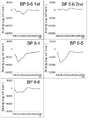
- FIG. 1-1 shows the measurement results of the CD spectrum of the crosslinked peptide of the present disclosure.
- WT shows the wild type
- BP is an abbreviation for Bridge peptide
- BP4-5 is a crosslinked peptide by ⁇ -DM4 (N-terminal side) and ⁇ -DM5 (C-terminal side)
- BP4-6 1st is.
- BP4-6 2nd is ⁇ -DM4 (N-terminal side) and ⁇ .
- BP5-4 is a cross-linked peptide by ⁇ -DM5 (N-terminal side) and ⁇ -DM4 (C-terminal side).
- BP5-5 shows a cross-linked peptide by ⁇ -DM5 (N-terminal side) and ⁇ -DM5 (C-terminal side).
- FIG. 1-2 shows the measurement results of the CD spectrum of the crosslinked peptide of the present disclosure.
- BP is an abbreviation for Bridge peptide, indicating a crosslinked peptide
- BP5-6 1st is a crosslinked peptide with ⁇ -DM5 (N-terminal side) and ⁇ -DM6 (C-terminal side), and is the first isomer fractionated by purification by HPLC.
- BP5-6 2nd is a cross-linked peptide with ⁇ -DM5 (N-terminal side) and ⁇ -DM6 (C-terminal side), and is the second isomer separated by purification by HPLC.
- BP6-4 is ⁇ -DM6. (N-terminal side) and ⁇ -DM4 (C-terminal side) cross-linked peptide
- BP6-5 is ⁇ -DM6 (N-terminal side) and ⁇ -DM5 (C-terminal side) cross-linked peptide
- BP6-6 is ⁇ -Shows a crosslinked peptide by DM6 (N-terminal side) and ⁇ -DM6 (C-terminal side).
- FIG. 2 shows the measurement results of the CD spectrum of the crosslinked peptide of the present disclosure.
- WT shows the wild type
- BP4-6 1st is a cross-linked peptide by ⁇ -DM4 (N-terminal side) and ⁇ -DM6 (C-terminal side)
- the isomer first fractionated by purification by HPLC is BP5-6.
- the 1st is a cross-linked peptide with ⁇ -DM5 (N-terminal side) and ⁇ -DM6 (C-terminal side), and the isomer first fractionated by purification by HPLC
- BP6-6 is ⁇ -DM6 (N-terminal side).
- the cross-linked peptide by ⁇ -DM6 (C-terminal side) is shown.
- FIG. 3 shows the results of an experiment for evaluating the stability of the crosslinked peptide of the present disclosure to heat denaturation.
- the measured VCD spectra (top) and theoretical VCD spectra (bottom) of ⁇ DTFM4_1st_peak and ⁇ DTFM4_2nd_peak are shown.
- FIG. 5 shows the peptide sequence in BP 4-6Z_Ala and the result of Ramachandran plot analysis.
- FIG. 6 shows the peptide sequence in BP 4-6E_Ala and the result of Ramachandran plot analysis.
- FIG. 7 shows the three-dimensional structure of the result of one structural optimization calculation of a crosslinked peptide containing an olefin in the crosslinked moiety.
- base means a monovalent group unless otherwise specified.
- non-monovalent groups include alkylene groups (divalent) and the like.
- group may be omitted in the following description of substituents and the like.
- the number of substituents as defined as “may be substituted” or “substituted” is not particularly limited, and is not particularly limited as long as it can be substituted. There are multiple. Unless otherwise specified, the description of each substituent also applies when the substituent is a part of another substituent or a substituent. "May be replaced” is used interchangeably with “non-replacement or replacement”.
- a group When a group may be substituted, the group may be substituted with a monovalent substituent or a divalent substituent.
- monovalent substituents include aliphatic groups such as alkyl, alkenyl and alkynyl, carbocyclyls such as cycloalkyl, cycloalkenyl and cycloalkynyl, heterocyclyls, aryls, heteroaryls, hydroxys, aminos and cyanos.
- thiocyano From the group consisting of thiocyano, nitro, halogen (F, Cl, Br, I, etc.), carboxy, sulfonyl, alkylsulfonyl, arylsulfonyl, heteroarylsulfonyl, carbamoyl, -trisubstituted Si (eg, alkyl, aryl, and heteroaryl). (Substituted with three selected substituents), hydroxy-protecting groups, amino-protecting groups, carbon atom substituents, monovalent groups described herein, and the like, but not limited to these.
- the compounds, amino acids, and polypeptides described herein can contain one or more asymmetric centers and can therefore exist as various isomer forms such as enantiomers and / or diastereomers.
- the compounds, amino acids, and polypeptides described herein can be in the form of individual enantiomers, diastereomers, or geometric isomers, or in the form of mixtures of stereoisomers (racemic mixtures and). Containing a mixture enriched with one or more stereoisomers).
- the isomers can be isolated from the mixture by methods known to those of skill in the art, including chiral high performance liquid chromatography (HPLC) and the formation and crystallization of chiral salts.
- HPLC high performance liquid chromatography
- preferred isomers can be prepared by asymmetric synthesis.
- Jacques et al. Enantiomers, Racemates and Resolutions (Wiley Interscience, New York, 1981), Wilen et al., Tetrahedron 33: 2725 (1977); Eliel, E.L. ), And Wilen, S.H. Tables of Resolving Agents and Optical Resolutions p. 268 (E.L. Eliel, Ed., Univ. Of Notre Dame Press, Notre Dame, IN 1972).
- the present disclosure also includes the compounds, amino acids, and polypeptides described herein as a mixture of individual isomers that are substantially free of other isomers and instead various isomers. ..
- C 1-6 alkyl is C 1 , C 2 , C 3 , C 4 , C 5 , C 6 , C 1-6 , C 1-5 , C 1-4 , C 1-3 , C 1 -2 , C 2-6 , C 2-5 , C 2-4 , C 2-3 , C 3-6 , C 3-5 , C 3-4 , C 4-6 , C 4-5 , and C It is intended to include 5-6 alkyl.
- substituent names ending in the suffix "en” refer to biradicals derived from the removal of additional hydrogen atoms from the monoradical groups defined herein.
- the monoradical alkyl defined herein becomes a biradical alkylene by the removal of additional hydrogen atoms.
- alkenyl is alkenylene
- alkynyl is alkynylene
- heteroalkyl is heteroalkylene
- heteroalkenyl is heteroalkenylene
- heteroalkynyl is heteroalkynylene
- carbocyclyl is carbocyclylene
- heterocyclyl is heterocyclyl
- Cyclylene, aryl is allylen, and heteroaryl is heteroallylen.
- C0- kalkylene means an alkylene having 0 to k carbons.
- C0 alkylene means a single bond.
- k is an integer of 1 or more, 2 or more, 3 or more, 4 or more, 5 or more, or 6 or more. In certain embodiments, k is 1, 2, 3, 4, 5, 6, 7, 8, 9, 10, 11, 12, 13, 14, 15, 16, 17, 18, 19, or 20, or It is an integer larger than that.
- aliphatic as used herein includes non-aromatic and acyclic, saturated and unsaturated, linear (ie, non-branched) and branched hydrocarbons.
- aliphatic group refers to a group produced by removing one hydrogen from the aliphatic hydrocarbon. In some embodiments, the aliphatic group may be substituted with one or more substituents and / or functional groups. As a matter of course to those skilled in the art, “aliphatic” is intended to include alkyl, alkenyl, alkynyl herein.
- heteroaliphatic refers to an aliphatic moiety containing one or more oxygen, sulfur, nitrogen, phosphorus, or silicon atoms in place of, for example, a carbon atom. ..
- the heteroaliphatic moiety may be branched or non-branched, but is non-aromatic and acyclic.
- heteroaliphatic group refers to a group produced by removing one hydrogen from the heteroaliphatic.
- the heteroalithyl group may be independently substituted with one or more substituents, wherein the substituents are an aliphatic group, a heteroalitty group, carbocyclyl, heterocyclyl.
- Each of R xa independently includes, but is not limited to, an aliphatic group, a heteroaliphatic group, a carbocyclyl, a heterocyclyl, an aryl, a heteroaryl, an arylalkyl, or a heteroarylalkyl.
- the aliphatic substituents, heteroaliphatic substituents, arylalkyl substituents, carbocyclyl substituents, heterocyclyl substituents, and heteroarylalkyl substituents described above and herein may be further substituted.
- the aryl and heteroaryl substituents above and described herein may be substituted or unsubstituted. Additional examples of generally applicable substituents are exemplified by the specific embodiments shown in the examples described herein.
- alkyl refers to a radical of a linear or branched saturated hydrocarbon group having 1-30 carbon atoms (“C 1-30 alkyl”). In some embodiments, the alkyl group has 1 to 20 carbon atoms (“C 1-20 alkyl”). In some embodiments, the alkyl group has 1-10 carbon atoms (“C 1-10 alkyl”). In some embodiments, the alkyl group has 1-9 carbon atoms (“C 1-9 alkyl”). In some embodiments, the alkyl group has 1-8 carbon atoms (“C 1-8 alkyl”). In some embodiments, the alkyl group has 1-7 carbon atoms (“C 1-7 alkyl”).
- the alkyl group has 1 to 6 carbon atoms (“C 1-6 alkyl”). In some embodiments, the alkyl group has 1-5 carbon atoms (“C 1-5 alkyl”). In some embodiments, the alkyl group has 1 to 4 carbon atoms (“C 1-4 alkyl”). In some embodiments, the alkyl group has 1 to 3 carbon atoms (“C 1-3 alkyl”). In some embodiments, the alkyl group has one or two carbon atoms (“C 1-2 alkyl”). In some embodiments, the alkyl group has one carbon atom (“C1 alkyl”). In some embodiments, the alkyl group has 2-6 carbon atoms (“C 2-6 alkyl”).
- C 1-6 alkyl groups are methyl (C 1 ), ethyl, (C 2 ), n-propyl (C 3 ), isopropyl (C 3 ), n-butyl (C 4 ), tert-butyl (C). 4 ), sec-butyl (C 4 ), isobutyl (C 4 ), n-pentyl (C 5 ), 3-pentanyl (C 5 ), amyl (C 5 ), neopentyl (C 5 ), 3-methyl-2.
- alkyl groups include n-heptyl (C 7 ), n-octyl (C 8 ) and the like. Unless otherwise specified, each of the alkyl groups is independently unsubstituted (“unsubstituted alkyl”) or substituted with one or more substituents (“substituted alkyl”). .. In certain embodiments, the alkyl group is an unsubstituted C 1-10 alkyl (eg — CH 3 ). In certain embodiments, the alkyl group is substituted C 1-10 alkyl.
- Perhaloalkyl is a substituted alkyl group as defined herein in which all hydrogen atoms are independently replaced by halogens such as fluoro, bromo, chloro, or iodine.
- the alkyl moiety has 1 to 8 carbon atoms (“C 1-8 perhaloalkyl”).
- the alkyl moiety has 1 to 6 carbon atoms (“C 1-6 perhaloalkyl”).
- the alkyl moiety has 1 to 4 carbon atoms (“C 1-4 perhaloalkyl”).
- the alkyl moiety has 1 to 3 carbon atoms (“C 1-3 perhaloalkyl”).
- the alkyl moiety has one or two carbon atoms (“C 1-2 perhaloalkyl”).
- C 1-2 perhaloalkyl all of the hydrogen atoms are replaced by fluoro.
- all of the hydrogen atoms are replaced by chloro.
- perhaloalkyl groups include -CF 3 , -CF 2 CF 3 , -CF 2 CF 2 CF 3 , -CCl 3 , -CFCl 2 , -CF 2 Cl, and the like.
- a “heteroalkyl” has 1 to 30 carbon atoms and is selected independently of oxygen, nitrogen, and sulfur contained in the main chain from 1 to 10 heteros. Refers to a radical of a linear or branched saturated hydrocarbon group, further comprising an atom (“C 1-30 heteroalkyl”). In some embodiments, the heteroalkyl group has 1-20 carbon atoms and 1-10 heteroatoms (“C 1-20 heteroalkyl”). In some embodiments, the heteroalkyl group has 1-10 carbon atoms and 1-10 heteroatoms (“C 1-10 heteroalkyl”). In some embodiments, the heteroalkyl group has 1-9 carbon atoms and 1-6 heteroatoms (“C 1-9 heteroalkyl”).
- the heteroalkyl group has 1-8 carbon atoms and 1-5 heteroatoms (“C 1-8 heteroalkyl”). In some embodiments, the heteroalkyl group has 1 to 7 carbon atoms and 1 to 4 heteroatoms (“C 1-7 heteroalkyl”). In some embodiments, the heteroalkyl group has 1 to 6 carbon atoms and 1 to 3 heteroatoms (“C 1-6 heteroalkyl”). In some embodiments, the heteroalkyl group has 1-5 carbon atoms and 1-2 heteroatoms (“C 1-5 heteroalkyl”). In some embodiments, the heteroalkyl group has 1 to 4 carbon atoms and 1 to 2 heteroatoms (“C 1-4 heteroalkyl”).
- the heteroalkyl group has 1 to 3 carbon atoms and 1 to 2 heteroatoms (“C 1-3 heteroalkyl”). In some embodiments, the heteroalkyl group has one or two carbon atoms and one heteroatom (“C 1-2 heteroalkyl”). In some embodiments, the heteroalkyl group has one carbon atom and one heteroatom (“C1 heteroalkyl”). In some embodiments, the heteroalkyl group has 2 to 6 carbon atoms and 1 to 3 heteroatoms (“C 2-6 heteroalkyl”). Unless otherwise specified, each of the heteroalkyl groups is independently unsubstituted (“unsubstituted heteroalkyl”) or “substituted heteroalkyl” substituted with one or more substituents. "). In certain embodiments, the heteroalkyl group is unsubstituted C 1-10 alkyl. In certain embodiments, the heteroalkyl group is substituted C 1-10 heteroalkyl.
- alkenyl is a straight or branched hydrocarbon having 2 to 30 carbon atoms, one or more carbon-carbon double bonds and no triple bond. Refers to the radical of the group (“C 2-30 alkenyl”). In some embodiments, the alkenyl group has 2 to 20 carbon atoms (“C 2-20 alkenyl”). In some embodiments, the alkenyl group has 2-10 carbon atoms (“C 2-10 alkenyl”). In some embodiments, the alkenyl group has 2-9 carbon atoms (“C 2-9 alkenyl”). In some embodiments, the alkenyl group has 2-8 carbon atoms (“C 2-8 alkenyl”).
- the alkenyl group has 2-7 carbon atoms (“C 2-7 alkenyl”). In some embodiments, the alkenyl group has 2-6 carbon atoms (“C 2-6 alkenyl”). In some embodiments, the alkenyl group has 2-5 carbon atoms (“C 2-5 alkenyl”). In some embodiments, the alkenyl group has 2-4 carbon atoms (“C 2-4 alkenyl”). In some embodiments, the alkenyl group has 2-3 carbon atoms (“C 2-3 alkenyl”). In some embodiments, the alkenyl group has two carbon atoms (“C 2 alkenyl”). One or more carbon-carbon double bonds can be internal (eg in 2-butenyl) or terminal (eg in 3-butenyl).
- Examples of C2-4 alkenyl groups are ethenyl (C 2 ), 1-propenyl (C 3 ), 2-propenyl (C 3 ), 1-butenyl (C 4 ), 2-butenyl (C 4 ), 3- Includes butenyl (C 4 ), butadienyl (C 4 ), and the like.
- Examples of C 2-6 alkenyl groups include the aforementioned C 2-4 alkenyl groups, as well as pentenyl (C 5 ), pentadienyl (C 5 ), hexenyl (C 6 ), and the like.
- alkenyl examples include heptenyl (C 7 ), octenyl (C 8 ), octatrienyl (C 8 ), and the like.
- each of the alkenyl groups is independently unsubstituted (“unsubstituted alkenyl”) or substituted with one or more substituents (“substituted alkenyl”). ..
- the alkenyl group is unsubstituted C 2-10 alkenyl.
- the alkenyl group is substituted C 2-10 alkenyl.
- heteroalkenyl has 2 to 30 carbon atoms, one or more carbon-carbon double bonds, no triple bonds, and in the main chain. Refers to a radical of a linear or branched hydrocarbon group further comprising 1-10 heteroatoms independently selected from the contained oxygen, nitrogen and sulfur (“C 2-30 heteroalkenyl”). In some embodiments, the heteroalkenyl group has 2-20 carbon atoms and 1-10 heteroatoms (“C 2-20 heteroalkenyl”). In some embodiments, the heteroalkenyl group has 2-10 carbon atoms and 1-10 heteroatoms (“C 2-10 heteroalkenyl”). In some embodiments, the heteroalkenyl group has 2-9 carbon atoms and 1-6 heteroatoms (“C 2-9 heteroalkenyl”).
- the heteroalkenyl group has 2-8 carbon atoms and 1-5 heteroatoms (“C 2-8 heteroalkenyl”). In some embodiments, the heteroalkenyl group has 2-7 carbon atoms and 1-4 heteroatoms (“C 2-7 heteroalkenyl”). In some embodiments, the heteroalkenyl group has 2 to 6 carbon atoms and 1 to 3 heteroatoms (“C 2-6 heteroalkenyl”). In some embodiments, the heteroalkenyl group has 2-5 carbon atoms and 1-2 heteroatoms (“C 2-5 heteroalkenyl”). In some embodiments, the heteroalkenyl group has 2-4 carbon atoms and 1-2 heteroatoms (“C 2-4 heteroalkenyl”).
- the heteroalkenyl group has 2-3 carbon atoms and 1-2 heteroatoms (“C2-3 heteroalkenyl”). In some embodiments, the heteroalkenyl group has two carbon atoms and one heteroatom (“C 2 heteroalkenyl”). In some embodiments, the heteroalkenyl group has 2 to 6 carbon atoms and 1 to 3 heteroatoms (“C 2-6 heteroalkenyl”). Unless otherwise specified, each of the heteroalkenyl groups is independently unsubstituted (“unsubstituted heteroalkenyl”) or substituted with one or more substituents (“substituted hetero”). Alkenyl "). In certain embodiments, the heteroalkenyl group is an unsubstituted C 2-10 heteroalkenyl. In certain embodiments, the heteroalkenyl group is a substituted C 2-10 heteroalkenyl.
- alkynyl has 2 to 30 carbon atoms, one or more carbon-carbon triple bonds, and optionally one or more double bonds. Refers to a linear or branched hydrocarbon group having a radical (“C 2-30 alkynyl”). In some embodiments, the alkynyl group has 2 to 20 carbon atoms (“C 2-20 alkynyl”). In some embodiments, the alkynyl group has 2-10 carbon atoms (“C 2-10 alkynyl”). In some embodiments, the alkynyl group has 2-9 carbon atoms (“C 2-9 alkynyl”). In some embodiments, the alkynyl group has 2-8 carbon atoms (“C 2-8 alkynyl”).
- the alkynyl group has 2-7 carbon atoms (“C 2-7 alkynyl”). In some embodiments, the alkynyl group has 2-6 carbon atoms (“C 2-6 alkynyl”). In some embodiments, the alkynyl group has 2-5 carbon atoms (“C 2-5 alkynyl”). In some embodiments, the alkynyl group has 2-4 carbon atoms ("C 2-4 alkynyl"). In some embodiments, the alkynyl group has 2-3 carbon atoms (“C2-3 alkynyl”). In some embodiments, the alkynyl group has two carbon atoms (“C 2 alkynyl”).
- One or more carbon-carbon triple bonds can be internal (eg in 2-butynyl) or terminal (eg in 3-butynyl).
- Examples of C 2-4 alkynyl groups are, without limitation, ethynyl (C 2 ), 1-propynyl (C 3 ), 2-propynyl (C 3 ), 1-butynyl (C 4 ), 2-butynyl (C 4 ). , And similar.
- Examples of C 2-6 alkynyl groups include the aforementioned C 2-4 alkynyl groups, as well as pentynyl (C 5 ), hexynyl (C 6 ), and the like.
- alkynyl examples include heptynyl (C 7 ), octynyl (C 8 ), and the like. Unless otherwise specified, each of the alkynyl groups is independently unsubstituted (“unsubstituted alkynyl”) or substituted with one or more substituents (“substituted alkynyl”). .. In certain embodiments, the alkynyl group is unsubstituted C 2-10 alkynyl. In certain embodiments, the alkynyl group is substituted C 2-10 alkynyl.
- heteroalkynyl has 2 to 30 carbon atoms, one or more carbon-carbon triple bonds, and optionally one or more double bonds. Refers to a radical of a linear or branched hydrocarbon group, further comprising 1-10 heteroatoms independently selected from oxygen, nitrogen, and sulfur contained in the main chain (“C 2-30 ”). Heteroalkynyl "). In some embodiments, the heteroalkynyl group has 2-20 carbon atoms and 1-10 heteroatoms (“C 2-20 heteroalkynyl”). In some embodiments, the heteroalkynyl group has 2-10 carbon atoms and 1-10 heteroatoms (“C 2-10 heteroalkynyl”).
- the heteroalkynyl group has 2-9 carbon atoms and 1-6 heteroatoms (“C 2-9 heteroalkynyl”). In some embodiments, the heteroalkynyl group has 2-8 carbon atoms and 1-5 heteroatoms (“C 2-8 heteroalkynyl”). In some embodiments, the heteroalkynyl group has 2-7 carbon atoms and 1-4 heteroatoms (“C 2-7 heteroalkynyl”). In some embodiments, the heteroalkynyl group has 2 to 6 carbon atoms and 1 to 3 heteroatoms (“C 2-6 heteroalkynyl”). In some embodiments, the heteroalkynyl group has 2-5 carbon atoms and 1-2 heteroatoms (“C 2-5 heteroalkynyl”).
- the heteroalkynyl group has 2-4 carbon atoms and 1-2 heteroatoms (“C 2-4 heteroalkynyl”). In some embodiments, the heteroalkynyl group has 2-3 carbon atoms and 1-2 heteroatoms (“C2-3 heteroalkynyl”). In some embodiments, the heteroalkynyl group has two carbon atoms and one heteroatom (“ C2 heteroalkynyl”). In some embodiments, the heteroalkynyl group has 2 to 6 carbon atoms and 1 to 3 heteroatoms (“C 2-6 heteroalkynyl”).
- each of the heteroalkynyl groups is independently unsubstituted (“unsubstituted heteroalkynyl”) or substituted with one or more substituents (“substituted hetero”). Alkyne ").
- the heteroalkynyl group is an unsubstituted C 2-10 heteroalkynyl. In certain embodiments, the heteroalkynyl group is a substituted C 2-10 heteroalkynyl.
- a "carbocyclyl” or “cyclic” is a non-aromatic ring having three or more ring carbon atoms and zero heteroatoms in a non-aromatic ring system.
- Formula Refers to the radical of a hydrocarbon group.
- the carbocyclyl group has 3-10 ring carbon atoms (“C 3-10 carbocyclyl”).
- the carbocyclyl group has 3-8 ring carbon atoms (“C 3-8 carbocyclyl”).
- the carbocyclyl group has 3-6 ring carbon atoms (“C 3-6 carbocyclyl”).
- the carbocyclyl group has 3-6 ring carbon atoms (“C 3-6 carbocyclyl”). In some embodiments, the carbocyclyl group has 5-10 ring carbon atoms (“C 5-10 carbocyclyl”).
- Exemplary C 3-6 carbocyclyl groups are, without limitation, cyclopropyl (C 3 ), cyclopropenyl (C 3 ), cyclobutyl (C 4 ), cyclobutenyl (C 4 ), cyclopentyl (C 5 ), cyclopentenyl (C). 5 ), cyclohexyl (C 6 ), cyclohexenyl (C 6 ), cyclohexadienyl (C 6 ), and the like.
- Exemplary C 3-8 carbocyclyl groups include, without limitation, the aforementioned C 3-6 carbocyclyl groups, as well as cycloheptyl (C 7 ), cycloheptenyl (C 7 ), cycloheptadienyl (C 7 ), cycloheptatri. Enyl (C 7 ), cyclooctyl (C 8 ), cyclooctenyl (C 8 ), bicyclo [2.2.1] heptanyl (C 7 ), bicyclo [2.2.2] octanyl (C 8 ), and similar. Including things.
- Exemplary C 3-10 carbocyclyl groups include, without limitation, the aforementioned C 3-8 carbocyclyl groups, as well as cyclononyl (C 9 ), cyclononenyl (C 9 ), cyclodecyl (C 10 ), cyclodecenyl (C 10 ), octahydro. Includes -1H-indenyl (C 9 ), decahydronaphthalenyl (C 10 ), spiro [4.5] decanyl (C 10 ), and the like.
- the carbocyclyl group comprises a monocyclic (“monocyclic carbocyclyl”) or polycyclic (eg, condensation, cross-linking, or spirocyclic system, eg, bicyclic).
- a system (“bicyclic carbocyclyl”) or tricyclic system (“tricyclic carbocyclyl”)) that can be saturated or contains one or more carbon-carbon double or triple bonds.
- Carbocyclyl also includes a ring system in which the carbocyclyl ring as defined above is fused with one or more aryl or heteroaryl groups and the binding point is on the carbocyclyl ring.
- the carbon number continuously specifies the carbon number in the carbocyclic ring system.
- each of the carbocyclyl groups is independently unsubstituted (“unsubstituted carbocyclyl”) or substituted with one or more substituents (“substituted carbocyclyl”). ..
- the carbocyclyl group is an unsubstituted C 3-10 carbocyclyl. In certain embodiments, the carbocyclyl group is a substituted C 3-10 carbocyclyl.
- “carbocyclyl” is a monocyclic saturated carbocyclyl group having 3-10 ring carbon atoms (“C 3-10 cycloalkyl”).
- the cycloalkyl group has 3-8 ring carbon atoms (“C 3-8 cycloalkyl”).
- the cycloalkyl group has 3-6 ring carbon atoms (“C 3-6 cycloalkyl”).
- the cycloalkyl group has 5-6 ring carbon atoms (“C 5-6 cycloalkyl”).
- the cycloalkyl group has 5-10 ring carbon atoms (“C 5-10 cycloalkyl”).
- C 5-6 cycloalkyl groups include cyclopentyl (C 5 ) and cyclohexyl (C 5 ).
- Examples of C 3-6 cycloalkyl groups include the aforementioned C 5-6 cycloalkyl groups, as well as cyclopropyl (C 3 ) and cyclobutyl (C 4 ).
- Examples of C 3-8 cycloalkyl groups include the aforementioned C 3-6 cycloalkyl groups, as well as cycloheptyl (C 7 ) and cyclooctyl (C 8 ).
- each of the cycloalkyl groups is independently unsubstituted (“unsubstituted cycloalkyl”) or substituted with one or more substituents (“substituted cyclo”). Alkyl "). In certain embodiments, the cycloalkyl group is unsubstituted C 3-10 cycloalkyl. In certain embodiments, the cycloalkyl group is substituted C 3-10 cycloalkyl.
- non-aromatic carbon ring refers to a non-aromatic ring having three or more ring carbon atoms and zero heteroatoms in the ring system and is exemplified as a carbonicryl. Includes the cyclic structure of ring radicals.
- two substituents eg, a combination of RX11 and RX12 , or RX21 and RX22 ) combine with the carbon atom to which they are attached to form a non-aromatic carbon ring.
- examples of its cyclic structure include cyclopropane, cyclopropene, cyclobutane, cyclobutene, cyclopentane, cyclopentene, cyclohexane, cyclohexene, cyclohexadiene, cycloheptane, cycloheptene, cycloheptadiene, cycloheptatriene, cyclooctane, Cyclooctene, bicyclo [2.2.1] heptane, bicyclo [2.2.2] octane, cyclononane, cyclononane, cyclodecane, cyclodecene, octahydro-1H-inden, decahydronaphthalene, spiro [4.5] decane, etc. However, but not limited to these.
- heterocyclyl or “heterocyclic” refers to radicals of a 3- to 14-membered non-aromatic ring system having a ring carbon atom and 1 to 4 ring heteroatoms. Pointing, each heteroatom is independently selected from nitrogen, oxygen, and sulfur (“3-14 member heterocyclyl”). In a heterocyclyl group containing one or more nitrogen atoms, the bond can be a carbon or nitrogen atom as long as the valence allows.
- Heterocyclyl groups are monocyclic (“monocyclic heterocyclyl”) or polycyclic (eg, fused, crosslinked, or spirocyclic, eg bicyclic (“bicyclic heterocyclyl”) or tricyclic (“bicyclic heterocyclyl”). It can be a tricyclic heterocyclyl ”)), saturated, or contain one or more carbon-carbon double or triple bonds.
- Heterocyclyl polycyclic ring systems may contain one or more heteroatoms in one or both rings.
- heterocyclyl is a ring system in which the heterocyclyl ring defined above is fused with one or more carbocyclyl groups and the bonding point is on the carbocyclyl or heterocyclyl ring, or the heterocyclyl ring defined above. Also included is a ring system that is fused with one or more aryl or heteroaryl groups and has a binding point on the heterocyclyl ring. In such a case, the number of ring members continuously specifies the number of ring members in the heterocyclyl ring system.
- each of the heterocyclyls is independently unsubstituted (“unsubstituted heterocyclyl”) or substituted with one or more substituents (“substituted heterocyclyl”).
- the heterocyclyl group is an unsubstituted 3- to 14-membered heterocyclyl. In certain embodiments, the heterocyclyl group is a substituted 3--14 member heterocyclyl.
- the heterocyclyl group is a 5- to 10-membered non-aromatic ring system with a ring carbon atom and 1 to 4 ring heteroatoms, each heteroatom independently selected from nitrogen, oxygen, and sulfur.
- the heterocyclyl group is a 5- to 8-membered non-aromatic ring system with a ring carbon atom and 1 to 4 ring heteroatoms, each heteroatom independently selected from nitrogen, oxygen, and sulfur.
- 5-8 member heterocyclyl is a 5- to 10-membered non-aromatic ring system with a ring carbon atom and 1 to 4 ring heteroatoms, each heteroatom independently selected from nitrogen, oxygen, and sulfur.
- the heterocyclyl group is a 5- to 6-membered non-aromatic ring system with a ring carbon atom and 1 to 4 ring heteroatoms, each heteroatom independently selected from nitrogen, oxygen, and sulfur.
- the 5- to 6-membered heterocyclyl has 1 to 3 ring heteroatoms selected from nitrogen, oxygen, and sulfur.
- the 5- to 6-membered heterocyclyl has one or two ring heteroatoms selected from nitrogen, oxygen, and sulfur.
- the 5- to 6-membered heterocyclyl has one ring heteroatom selected from nitrogen, oxygen, and sulfur.
- An exemplary 3-membered heterocyclyl group containing one heteroatom comprises, without limitation, aziridinyl, oxylanyl, and tiylanyl.
- Exemplary 4-membered heterocyclyl groups containing one heteroatom include, without limitation, azetidineyl, oxetanyl, and thietanyl.
- Exemplary 5-membered heterocyclyl groups containing one heteroatom include, without limitation, tetrahydrofuranyl, dihydrofuranyl, tetrahydrothiophenyl, dihydrothiophenyl, pyrrolidinyl, dihydropyrrolyl, and pyrrolyl-2,5-dione. ..
- An exemplary 5-membered heterocyclyl group containing two heteroatoms comprises, without limitation, dioxolanyl, oxathiolanyl, and dithiolanyl.
- Exemplary 5-membered heterocyclyl groups containing 3 heteroatoms include, without limitation, triazolinyl, oxadiazolinyl, and thiadiazolinyl.
- Exemplary 6-membered heterocyclyl groups containing one heteroatom include, without limitation, piperidinyl, tetrahydropyranyl, dihydropyridinyl, and thianyl.
- Exemplary 6-membered heterocyclyl groups containing two heteroatoms include, without limitation, piperazinyl, morpholinyl, dithianyl, and dioxanyl.
- An exemplary 6-membered heterocyclyl group containing two heteroatoms comprises, without limitation, triazinanyl.
- Exemplary 7-membered heterocyclyl groups containing one heteroatom include, without limitation, azepanyl, oxepanyl, and thiepanyl.
- An exemplary 8-membered heterocyclyl group containing one heteroatom comprises, without limitation, azocanyl, oxecanyl, and thiocanyl.
- Exemplary bicyclic heterocyclyl groups are, without limitation, indolinyl, isoindolinyl, dihydrobenzofranyl, dihydrobenzodiazepine, tetrahydrobenzodiazepine, tetrahydrobenzofranyl, tetrahydroindrill, tetrahydroquinolinyl, tetrahydroisoquinolinyl.
- RX11 and RX12 contain one nitrogen atom substituted with two methyl groups, together with the carbon atom to which they are attached.
- the nitrogen atom is quaternary.
- non-aromatic heterocycle refers to a non-aromatic ring having a ring carbon atom and 1 to 4 ring heteroatoms, the cyclic structure of the heterocyclic radical exemplified as a heterocyclyl. Include. In some embodiments, two substituents (eg, a combination of RX11 and RX12 , or RX21 and RX22 ) combine with the carbon atom to which they are attached to form a non-aromatic heterocycle.
- examples of its cyclic structure include aziridine, oxylan, thiirane, azetidine, oxetane, thietan, tetrahydrofuran, dihydrofuran, tetrahydrothiophene, dihydrothiophene, pyrrolidine, dihydro-1H-pyrrole, 1H-pyrrole-2,5.
- aryl is a monocyclic or polycyclic (eg, bicyclic) having 6-14 ring carbon atoms and 0 heteroatoms provided in an aromatic ring system.
- tricyclic refers to radicals in a 4n + 2 aromatic ring system (eg, having 6, 10, or 14 ⁇ electrons shared by a cyclic sequence) (“C 6-14 aryl”).
- the aryl group has 6 ring carbon atoms (“C 6 aryl”, eg phenyl).
- the aryl group has 10 ring carbon atoms (“C 10 aryl”, eg naphthyls such as 1-naphthyl and 2-naphthyl).
- the aryl group has 14 ring carbon atoms (“C 14 aryl”, eg anthrasenyl).
- Aryl also includes a ring system in which the aryl ring as defined above is fused with one or more carbocyclyl or heterocyclyl groups and the radical or bonding point is on the aryl ring. In such a case, the number of carbon atoms continuously specifies the number of carbon atoms in the aryl ring system.
- each of the aryl groups is independently unsubstituted (“unsubstituted aryl”) or substituted with one or more substituents (“substituted aryl”). ..
- the aryl group is an unsubstituted C 6-14 aryl group. In certain embodiments, the aryl group is a substituted C 6-14 aryl group.
- Alkyl is a subset of “alkyl” and refers to an alkyl group as defined herein substituted with an aryl group as defined herein, with the binding point on the alkyl moiety.
- a “heteroaryl” is a 5- to 14-membered monocyclic or polycyclic (eg,) having a ring carbon atom and 1 to 4 ring heteroatoms provided in an aromatic ring system.
- Bicyclic or tricyclic refers to radicals in a 4n + 2 aromatic ring system (eg, having 6, 10, or 14 ⁇ electrons shared by a cyclic sequence), where each heteroatom is independently nitrogen. It is selected from oxygen and sulfur (“5-14 member heteroaryl”).
- the bond can be a carbon or nitrogen atom as long as the valence allows.
- a heteroaryl polycyclic ring system may contain one or more heteroatoms in one or both rings.
- a “heteroaryl” comprises a ring system in which the heteroaryl ring defined above is fused with one or more carbocyclyl or heterocyclyl groups and the bonding point is on the heteroaryl ring. In such cases, the number of ring members continues to specify the number of ring members in the heteroaryl ring system.
- a “heteroaryl” also includes a ring system in which the heteroaryl ring defined above is fused with one or more aryl groups and the bonding point is on an aryl or heteroaryl ring. In such cases, the number of ring members specifies the number of ring members in the condensed polycyclic (aryl / heteroaryl) ring system.
- a polycyclic heteroaryl group in which one ring does not contain a heteroatom has a bond at which ring, i.e. a ring having a heteroatom (eg 2-indrill) or hetero. It can also be on an atom-free ring (eg 5-indrill).
- the heteroaryl group is a 5-10 membered aromatic ring system having a ring carbon atom and 1 to 4 ring heteroatoms provided in the aromatic ring system, each heteroatom being independent. It is selected from nitrogen, oxygen, and sulfur (“5-10 member heteroaryl”).
- the heteroaryl group is a 5- to 8-membered aromatic ring system having a ring carbon atom and 1 to 4 ring heteroatoms provided in the aromatic ring system, where each heteroatom is independent. It is selected from nitrogen, oxygen, and sulfur (“5-8 member heteroaryl”).
- the heteroaryl group is a 5- to 6-membered aromatic ring system having a ring carbon atom and 1 to 4 ring heteroatoms provided in the aromatic ring system, where each heteroatom is independent. It is selected from nitrogen, oxygen, and sulfur (“5-6 member heteroaryl”).
- the 5- to 6-membered heteroaryl has 1 to 3 ring heteroatoms selected from nitrogen, oxygen, and sulfur.
- the 5- to 6-membered heteroaryl has one or two ring heteroatoms selected from nitrogen, oxygen, and sulfur.
- the 5- to 6-membered heteroaryl has one ring heteroatom selected from nitrogen, oxygen, and sulfur.
- each of the heteroaryl groups is independently unsubstituted (“unsubstituted heteroaryl”) or substituted with one or more substituents (“substituted hetero”).
- Aryl ").
- the heteroaryl group is an unsubstituted 5- to 14-membered heteroaryl.
- the heteroaryl group is a substituted 5- to 14-membered heteroaryl.
- An exemplary 5-membered heteroaryl group containing one heteroatom comprises, without limitation, pyrrolyl, furanyl, and thiophenyl.
- Exemplary 5-membered heteroaryl groups containing two heteroatoms include, without limitation, imidazolyl, pyrazolyl, oxazolyl, isooxazolyl, thiazolyl, and isothiazolyl.
- Exemplary 5-membered heteroaryl groups containing three heteroatoms include, without limitation, triazolyl, oxadiazolyl, and thiadiazolyl.
- An exemplary 5-membered heteroaryl group containing 4 heteroatoms comprises tetrazolyl without limitation.
- An exemplary 6-membered heteroaryl group containing one heteroatom comprises, without limitation, pyridinyl.
- Exemplary 6-membered heteroaryl groups containing two heteroatoms include, without limitation, pyridadinyl, pyrimidinyl, and pyrazinyl.
- Exemplary 6-membered heteroaryl groups containing 3 or 4 heteroatoms include, without limitation, triazineyl and tetradinyl, respectively.
- Exemplary 7-membered heteroaryl groups containing one heteroatom include, without limitation, azepinyl, oxepynyl, and thiepinyl.
- Exemplary 5,6-bicyclic heteroaryl groups are, without limitation, indolyl, isoindrill, indazolyl, benzotriazolyl, benzothiophenyl, isobenzothiophenyl, benzofuranyl, benzoisofuranyl, benzoimidazolyl, benzoxazolyl. , Benzoisoxazolyl, benzoxadiazolyl, benzothiazolyl, benzoisothiazolyl, benzothiadiazolyl, indridinyl, and prynyl.
- Exemplary 6,6-bicyclic heteroaryl groups include, without limitation, naphthyldinyl, pteridinyl, quinolinyl, isoquinolinyl, cinnolinyl, quinoxalinyl, phthalazinyl, and quinazolinyl.
- Exemplary tricyclic heteroaryl groups include, without limitation, phenanthridinyl, dibenzofuranyl, carbazolyl, acridinyl, phenothiazine, phenoxadinyl, and phenazinyl.
- Heteroaralkyl is a subset of “alkyl” and refers to an alkyl group defined herein substituted with a heteroaryl group as defined herein, with the binding point on the alkyl moiety.
- partially unsaturated refers to a group containing at least one double or triple bond.
- the term “partially unsaturated” is intended to include rings with multiple unsaturated sites, but is intended to include aromatic groups (eg, aryl or heteroaryl moieties) as defined herein. It has not been.
- saturated refers to a group that does not contain double or triple bonds, i.e. all contain single bonds.
- alkyl, alkenyl, alkynyl, carbocyclyl, heterocyclyl, aryl, and heteroaryl groups as defined herein may be substituted or unsubstituted (eg, "substituted” or "unsubstituted”).
- substitution allows at least one hydrogen present on a group (eg, a carbon or nitrogen atom), with or without the term “as needed”.
- a substituent for example, a substituent that results in a stable compound by substitution (eg, a compound that does not spontaneously undergo conversion by rearrangement, cyclization, elimination, or other reaction).
- a "substituted" group has a substituent at one or more substitutable positions of the group, with more than one position in any given structure being replaced. When so, the substituents are the same or different at each position.
- substitution is believed to include substitutions by any of the all acceptable substituents of the organic compound, the substituents described herein that result in the formation of stable compounds. The present disclosure considers any and all such combinations in order to reach stable compounds.
- a heteroatom such as nitrogen, is a hydrogen substituent that satisfies the valence of the heteroatom and results in the formation of a stable moiety and / or any suitable substituent described herein. May have.
- Each alkyl, alkenyl, alkynyl, carbocyclyl, heterocyclyl, aryl, and heteroaryl is independently substituted with 0, 1, 2, 3, 4, or 5 R dd groups.
- Each of R aa is independently C 1-10 alkyl, C 1-10 perhaloalkyl, C 2-10 alkenyl, C 2-10 alkynyl, C 3-10 carbocyclyl, 3-14 member heterocyclyl, C 6-14 aryl. , And 5-14 membered heteroaryls, or two Raa groups linked together to form a 3-14 membered heterocyclyl or a 5-14 membered heteroaryl ring, each alkyl, alkenyl, alkynyl, carbocyclyl, Heterocyclyls, aryls, and heteroaryls are independently substituted with 0, 1, 2, 3, 4, or 5 R dd groups.
- R bb groups are linked to form a 3- to 14-membered heterocyclyl or 5- to 14-membered heteroaryl ring, with each alkyl, alkenyl, alkynyl, carbocyclyl, heterocyclyl, aryl, and heteroaryl independently 0, 1, 2, Substituted by 3, 4, or 5 R dd groups.
- Each of R cc is independently hydrogen, C 1-10 alkyl, C 1-10 perhaloalkyl, C 2-10 alkenyl, C 2-10 alkynyl, C 3-10 carbocyclyl, 3-14 member heterocyclyl, C 6- It is selected from 14 aryls and 5-14 membered heteroaryls, or two Rcc groups are linked to form a 3-14 membered heterocyclyl or a 5-14 membered heteroaryl ring.
- Each alkyl, alkenyl, alkynyl, carbocyclyl, heterocyclyl, aryl, and heteroaryl is independently substituted with 0, 1, 2, 3, 4, or 5 R dd groups.
- Each of R dd is independently halogen, -CN, -NO 2 , -N 3 , -SO 2 H, -SO 3 H, -OH, -OR ee , -ON (R ff ) 2 , -N (R).
- Each alkyl, alkenyl, alkynyl, carbocyclyl, heterocyclyl, aryl, and heteroaryl is independently substituted with 0, 1, 2, 3, 4, or 5 Rgg groups.
- Each of Ree independently has C 1-6 alkyl, C 1-6 perhaloalkyl, C 2-6 alkenyl, C 2-6 alkynyl, C 3-10 carbocyclyl, C 6-10 aryl, 3-10 member heterocyclyl. , And 3-10 membered heteroaryls.
- Each alkyl, alkenyl, alkynyl, carbocyclyl, heterocyclyl, aryl, and heteroaryl is independently substituted with 0, 1, 2, 3, 4, or 5 R gg groups.
- Each of R ff is independently hydrogen, C 1-6 alkyl, C 1-6 perhaloalkyl, C 2-6 alkenyl, C 2-6 alkynyl, C 3-10 carbocyclyl, 3-10 member heterocyclyl, C 6- It is selected from 10 aryls and 5-10 membered heteroaryls, or two Rff groups are linked to form a 3-14 membered heterocyclyl or a 5-14 membered heteroaryl ring.
- Each alkyl, alkenyl, alkynyl, carbocyclyl, heterocyclyl, aryl, and heteroaryl is independently substituted with 0, 1, 2, 3, 4, or 5 R gg groups.
- R gg is independently halogen, -CN, -NO 2 , -N 3 , -SO 2 H, -SO 3 H, -OH, -OC 1-6 alkyl, -ON (C 1-6 alkyl).
- hydroxyl refers to the -OH group.
- substituted hydroxyl or “substituted hydroxyl” further refers to a hydroxyl group in which the oxygen atom directly attached to the parent molecule is substituted with a group other than hydrogen, -OR aa , -ON (R bb ).
- thiol refers to the -SH group.
- R aa and R cc are as defined herein.
- amino refers to two -NH groups.
- substituted amino further refers to mono-substituted amino, di-substituted amino, or tri-substituted amino as defined herein.
- the term "monosubstituted amino” refers to an amino group in which the nitrogen atom directly attached to the parent molecule is substituted with one hydrogen and one other group than hydrogen, -NH.
- R aa , R bb , and R cc are as defined herein, and the -NH (R bb ) group R bb is not hydrogen.
- R aa , R bb , and R cc are as defined herein, except that the nitrogen atom directly attached to the parent molecule is not replaced by hydrogen.
- trisubstituted amino or "quaternary amino salt” or “quaternary salt” are covalently attached to four groups such that nitrogen is cationic.
- nitrogen is cationic.
- anionic pair ions eg , groups of formula -N (R bb ) 3 + X- and -N (R bb ) 2 + -X-
- R bb anionic pair ions
- a "counterion” or “anionic counterion” is a loaded electric group coupled with a cationic quaternary amino group to maintain electronic neutrality.
- exemplary counterions are halide ions (eg F-, Cl- , Br- , I- ) , NO 3- , ClO 4- , OH- , H 2 PO 4- , HSO 4- , sulfonic acid ions (eg, F-, Cl-, Br-, I-).
- methanesulfonic acid trifluoromethanesulfonic acid, p-toluenesulfonic acid, benzenesulfonic acid, 10-campersulfonic acid, naphthalene-2-sulfonic acid, naphthalene-1-sulfonic acid-5-sulfonic acid, ethane-1- Sulfonic acid-2-sulfonic acid (and similar), and carboxylic acid ions (eg, acetic acid, ethaneic acid, propanoic acid, benzoic acid, glyceric acid, lactic acid, tartrate acid, glycolic acid, and the like).
- carboxylic acid ions eg, acetic acid, ethaneic acid, propanoic acid, benzoic acid, glyceric acid, lactic acid, tartrate acid, glycolic acid, and the like.
- sulfonyl refers to a group selected from -SO 2 N (R bb ) 2 , -SO 2 R aa , and -SO 2 OR aa , where R aa and R bb are the present. As defined in the specification.
- acyl refers to a group in which carbon directly attached to the parent molecule is sp2 mixed and substituted with an oxygen, nitrogen, or sulfur atom, such as a ketone (-C).
- cyano refers to the group of formula-CN.
- isocyano refers to the group of formula-NC.
- nitro refers to the group of formula-NO 2 .
- halo refers to fluorine (fluoro, -F), chlorine (chloro, -Cl), bromine (bromo, -Br), or iodine (iodine, -I). Point to.
- sil refers to three -Si (R aa ) units, where R aa is as defined herein.
- Nitrogen atoms may be substituted or unsubstituted as long as the valence allows, and include primary, secondary, tertiary, and quaternary nitrogen atoms.
- Rcc groups attached to a nitrogen atom are linked to form a 3- to 14-membered heterocyclyl or a 5- to 14-membered heteroaryl ring.
- Each alkyl, alkenyl, alkynyl, carbocyclyl, heterocyclyl, aryl, and heteroaryl is independently substituted with 0, 1, 2, 3, 4, or 5 R dd groups.
- R aa , R bb , R cc , and R dd are as defined above.
- the substituent present on the nitrogen atom is an amino protecting group (also referred to herein as a "nitrogen protecting group").
- Each alkyl, alkenyl, alkynyl, carbocyclyl, heterocyclyl, aralkyl, aryl, and heteroaryl are independently substituted with 0, 1, 2, 3, 4, or 5 R dd groups.
- R aa , R bb , R cc , and R dd are as defined herein.
- Amino protecting groups are well known in the art and include those described in detail in Protecting Groups in Organic Synthesis, T.W. Greene and P.G.M. Wuts, 3rd edition, John Wiley & Sons, 1999, incorporated herein by reference. ..
- amino protective groups include phenothiazine- (10) -acyl derivative, N'-p-toluenesulfonylaminoacyl derivative, N'-phenylaminothioacyl derivative, N-benzoylphenylalanyl derivative, N-acetylmethionine derivative, 4,5-Diphenyl-3-oxazoline-2-one, N-phthalimide, N-dithiasuccinimide (Dts), N-2,3-diphenylmaleimide, N-2,5-dimethylpyrrole, N-1,1 , 4,4-Tetramethyldisilyl azacyclopentane adduct (STABASE), 5-substituted 1,3-dimethyl-1,3,5-triazacyclohexane-2-one, 5-substituted 1,3-dibenzyl- 1,3,5-Triazacyclohexane-2-one, 1-substituted 3,5-dinitro-4-pyr
- the substituent present on the oxygen atom is a hydroxyl protecting group (also referred to herein as an "oxygen protecting group").
- R aa , R bb , and R cc are as defined herein.
- Hydroxy protecting groups are well known in the art and include those described in detail in Protecting Groups in Organic Synthesis, T.W. Greene and P.G.M. Wuts, 3rd edition, John Wiley & Sons, 1999, incorporated herein by reference. ..
- oxygen protective groups are methyl, methoxymethyl (MOM), methylthiomethyl (MTM), t-butylthiomethyl, (phenyldimethylsilyl) methoxymethyl (SMOM), benzyloxymethyl (BOM), p-methoxybenzyl.
- Triphenylmethoxyacetic acid Triphenylmethoxyacetic acid, phenoxyacetic acid, p-chlorophenoxyacetic acid, 3-phenylpropionic acid, 4-oxopentanoate (Rebrinate), 4,4- (ethylenedithio) pentanoate (Rebrinoyldithioacetal), Pivalate, Adamantate, Crotonic acid, 4-methoxycrotonic acid, benzoic acid, p-phenylbenzoic acid, 2,4,6-trimethylbenzoic acid (mesitoic acid), methylcarbonate, 9-fluorenylmethylcarbonate (Fmoc) , Ethyl carbonate, 2,2,2-trichloroethyl carbonate (Troc), 2- (trimethylsilyl) ethyl carbonate (TMSEC), 2- (phenylsulfonyl) ethyl carbonate (Psec), 2- (triphenylphosphonio) ethyl carbon
- Thiol protecting groups are well known in the art and are incorporated herein by reference in the Protection Groups in Organic Synthesis, T.W.Greene and P.G.M.Wuts, 3rd edition, John Wiley & Sons, 1999. Including those described in detail in. Examples of protected thiol groups further include, but are not limited to, thioesters, allyl sulfonic acid thioethers, thio ethers, silyl thio ethers, alkyl thio ethers, aryl alkyl thio ethers, and alkyl oxyalkyl thio ethers.
- ester groups include carbonate esters, formic acid esters, acetate esters, propionates, valeric acid esters, crotonic acid esters, and benzoic acid esters.
- Specific examples of ester groups include formic acid ester, formic acid benzoyl, chloroacetic acid ester, trifluoroacetic acid ester, methoxyacetic acid ester, triphenylmethoxyacetic acid ester, p-chlorophenoxyacetic acid ester, 3-phenylpropionic acid ester, 4-.
- Oxopentanoate, 4,4- (ethylenedithio) pentanoate, pivalate (trimethylacetate ester), crotonic acid ester, 4-methoxy-crotonic acid ester, benzoic acid ester, p-benyl benzoic acid ester, 2,4 , 6-trimethylbenzoic acid ester is included.
- carbonic acid esters include 9-fluorenylmethyl, ethyl, 2,2,2-trichloroethyl, 2- (trimethylsilyl) ethyl, 2- (phenylsulfonyl) ethyl, vinyl, allyl, and p-nitrobenzyl carbonate.
- silyl groups include trimethylsilyl, triethylsilyl, t-butyldimethylsilyl, t-butyldiphenylsilyl, triisopropylsilyl ether, and other trialkylsilyl ethers.
- alkyl groups include methyl, benzyl, p-methoxybenzyl, 3,4-dimethoxybenzyl, trityl, t-butyl, and allyl ether, or derivatives thereof.
- arylalkyl groups are benzyl, p-methoxybenzyl (MPM), 3,4-dimethoxybenzyl, O-nitrobenzyl, p-nitrobenzyl, p-halobenzyl, 2,6-dichlorobenzyl, p-cyanobenzyl, Contains 2- and 4-picoryl ethers.
- amino acid refers to a molecule that contains both an amino group and a carboxyl group.
- Amino acids include, as non-limiting examples, ⁇ -amino acids, ⁇ -amino acids, ⁇ -amino acids, ⁇ amino acids, etc. (various names are available depending on the position of the amino group, all of which may be the subject of this disclosure).
- Examples of the structures of ⁇ -amino acid, ⁇ -amino acid, and ⁇ -amino acid, which include both D-amino acid and L-amino acid are as follows.
- the amino acid is an ⁇ -amino acid.
- the amino acid is an LD-amino acid.
- the amino acid is a natural amino acid. In certain embodiments, the amino acid is an unnatural amino acid. In certain embodiments, the amino acid is an artificial amino acid. Artificial amino acids are a type of unnatural amino acid and can be used as a synonym in relation to natural amino acids.
- the position of the carbon atom in the side chain of the amino acid is referred to as, for example, The carbon atom to which the carbon atom (or carbon chain) to which the carboxyl group and the amino group are bonded and the group of the side chain are bonded is called the ⁇ -position, and the carbon atom from which the carbon atom is bonded toward the end of the side chain is called.
- ⁇ -position In order, they are called ⁇ -position, ⁇ -position, and ⁇ -position (hereinafter, they are also named based on the common technical knowledge in the field). In the present specification, they may be referred to as side chain ⁇ -position, side chain ⁇ -position, side chain ⁇ -position, side chain ⁇ -position, and the like.
- Exemplary amino acids are, without limitation, natural ⁇ -amino acids, such as the D and L isomers of the 20 common naturally occurring ⁇ -amino acids found in peptides, unnatural ⁇ -amino acids, artificial ⁇ -amino acids, Includes natural ⁇ -amino acids (eg ⁇ -alanine), unnatural ⁇ -amino acids, as well as artificial ⁇ -amino acids.
- the amino acids used in the construction of the peptides of the present disclosure can be prepared by organic synthesis or obtained by other pathways, such as decomposition of natural sources or isolation from them. Amino acids can be commercially available or synth
- a "peptide” or “polypeptide” comprises a polymer of amino acid residues linked together by a peptide (amide) bond.
- the term (s), as used herein, refers to proteins, polypeptides, and peptides of any size, structure, or function.
- the term (s), as used herein, includes crosslinked and non-crosslinked polypeptites.
- the peptide or polypeptide is at least 3 amino acids long.
- a peptide or polypeptide can refer to an individual protein or a set of proteins.
- the proteins of the present disclosure preferably contain only natural amino acids, but unnatural amino acids known in the art (ie, compounds that do not occur naturally but can be incorporated into the polypeptide chain) and / or amino acid analogs thereof. Can be used instead.
- One or more of the amino acids in a peptide or polypeptide may be, for example, a chemical entity such as a carbohydrate group, a hydroxyl group, a phosphate group, a farnesyl group, an isofarnesyl group, a fatty acid group, a complex, a functionalization, or It can be modified by the addition of a linker for other modifications.
- the peptide or polypeptide can also be a single molecule or a multimolecular complex, eg a protein.
- a peptide or polypeptide can be just a fragment of a naturally occurring protein or peptide.
- Peptides or polypeptides can be naturally occurring, recombinant, synthetic, or a combination thereof.
- a peptide or polypeptide can be crosslinked by a side chain of amino acids in the peptide or polypeptide.
- a cross-linked peptide or a cross-linked polypeptide refers to a peptide or polypeptide in which side chains of amino acids in the peptide or polypeptide are cross-linked by metathesis reaction, click chemistry, reductive amination and the like.
- crosslinked peptide refers to a peptide that has at least a partially crosslinked moiety within the peptide.
- Cross-linking can be achieved by any cross-linking reaction in the art, such cross-linking can be any known in the art such as olefin metathesis, alkyne metathesis, reductive amination, click chemistry, Michael addition, carbamate formation and the like. It is achieved by using techniques and they are exemplified herein.
- cross-linking a peptide refers to cross-linking the side chains of a polypeptide chain by covalently linking the olefin moieties with each other using an olefin metathesis reaction.
- Cross-linking the peptide destabilizes the non- ⁇ -strand structure of the polypeptide.
- the present disclosure provides a crosslinked polypeptide having a crosslink connecting the ⁇ carbons of two amino acids in a ⁇ strand.
- the present disclosure further provides a pharmaceutical composition of a crosslinked polypeptide, a method of preparing a crosslinked peptide of the present disclosure, and further a method of using the crosslinked peptide of the present disclosure.
- the present disclosure also provides click chemistry and reductive amination as a means for stabilizing the structure of a polypeptide.
- bridging moiety refers to any chemical entity that binds amino acids at least at different positions in the peptide, "bridging". Also referred to, it includes the entire cross-linking of one ⁇ -amino acid, ⁇ -amino acid or other amino acid bound to a second ⁇ -amino acid, ⁇ -amino acid or other amino acid, but the ⁇ carbon of each amino acid and them. Exclude polypeptide chains that are part of.
- the cross-linked moiety can be a structure produced by any cross-linking technique in the art, or any structure that can be modified or derived from the structure without destroying the desired structure (eg, ⁇ -strand structure, etc.).
- any method known in the art can be adopted, and as the modification reaction after cross-linking, for example, a reduction reaction from a triple bond to a double bond (E or Z selection). (Including target reduction); Reduction reaction from double bond to single bond (Schafmeister CE et al., "An All-Hydrocarbon Cross-Linking System for Enhancing the Helicity and Metabolic Stability of Peptides” J. Am. Chem. Soc. 2000, 122, 5891-5892;), etc., 1. Pd / C, H2, 2. 2,4,6-triisopropyl benzenesulphonyl hydrazide and reaction using piperidin are exemplified.
- Examples of olefin reduction include the following reactions: (Material and quantity) Resin 30 ⁇ mol 2,4,6-triisopropylbenzenesulfonyl hydrazide 90 mg (300 ⁇ mol) Piperidine 59 ⁇ l (600 ⁇ mol) NMP 430 ⁇ l Set 2,4,6-triisopropylbenzenesulfonyl hydrazide to 0.7 M. (procedure) Mix 2,4,6-triisopropylbenzenesulfonyl hydrazide, Piperidine and NMP and add to Resin. Heat at 47 ° C for 2 hours. Repeat this 4 times. Is exemplified.
- salt or "pharmaceutically acceptable salt” is suitable for use in contact with human and lower animal tissues, within the scope of correct medical judgment. Refers to a salt that is free of excessive toxicity, irritation, allergic response, and the like, and is commensurate with the appropriate effect / risk ratio.
- Pharmaceutically acceptable salts are well known in the art. For example, Berge et al. Describes pharmaceutically acceptable salts in detail in J. Pharmaceutical Sciences (1977) 66: 1-19.
- Pharmaceutically acceptable salts of the compounds, amino acids, and polypeptides of the present disclosure include those derived from suitable inorganic and organic acids and bases.
- non-toxic acid addition salts are amino group salts, with inorganic acids such as hydrochloride, hydrobromic acid, phosphoric acid, sulfuric acid, and perchloric acid, or organic acids. It is formed, for example, by acetic acid, oxalic acid, maleic acid, tartaric acid, citric acid, succinic acid, or malonic acid, or by using other methods used in the art, such as ion exchange.
- Other pharmaceutically acceptable salts are adipate, alginate, ascorbate, asparagate, benzenesulfonate, benzoate, bicarbonate, borate, butyrate, ginger acid.
- Salts derived from suitable bases include alkali metals, alkaline earth metals, ammonium, and N + (C 1-4 alkyl) 4 salts.
- Typical alkaline or alkaline earth metal salts include sodium, lithium, potassium, calcium, magnesium, and the like.
- Further pharmaceutically acceptable salts include, when appropriate, quaternary ammonium salts, such as trisubstituted amino groups as defined herein.
- ⁇ -position when the carbon at which the cross-linked moiety binds to the peptide is the ⁇ -position refers to the carbon atom whose cross-linked moiety in the cross-linked peptide binds to the polypeptide of the main chain. According to the definition of amino acids used in the field, it refers to the ⁇ -position (C ⁇ ) when the ⁇ -position (C ⁇ ) is used.
- no hydrogen bond to induce or maintain a secondary structure means that the polypeptide or portion of the peptide has no hydrogen bond to induce or maintain a secondary bond. , Means that no intramolecular hydrogen bond occurs. It is known that the ⁇ -hairpin structure and the like have hydrogen bonds for inducing or maintaining a secondary structure, whereas the ⁇ -strand structure does not have such hydrogen bonds.
- ⁇ -strand structure is used interchangeably as it is commonly used in the art and refers to the secondary structure of a protein, usually in a protein, polypeptide or peptide structure. It usually exists in the length of 5-10 residues and has an almost fully extended conformation. Therefore, the amide group in the main chain refers to a structure that cannot form a hydrogen bond with a neighboring residue.
- tertiary means a state in which an atom is bonded to one hydrogen and three atoms other than hydrogen.
- the central carbon atom is tertiary. be.
- the term "fourth class" means a state in which an atom is bonded to four atoms other than hydrogen.
- the central carbon atom is quaternary.
- a quaternary ammonium cation is typically quaternary, such as alkyl or aryl.
- Van der Waals radius is one of the measures for expressing the size of an atom. It is calculated by dividing the distance between adjacent atoms by 2 for the element that forms a single crystal by van der Waals force. The distance between atoms is measured by using X-ray diffraction or the like.
- van der Waals volume refers to the volume occupied by the atoms that make up a protein, and refers to the volume calculated based on the van der Waals radius. Any numerical value can be calculated by a method known in the art.
- a Value is a general expression of steric bulk as well as the numerical value used to determine the most stable orientation of an atom in a molecule. It refers to the change (difference) in Gibbs free energy of equilibrium between eq-substituted cyclohexane and ax-substituted cyclohexane in monosubstituted cyclohexane reported by Winstein and Holness in 1955.
- the A value can also be calculated by a method known in the art.
- the term "functional group larger than or equal to a methyl group” refers to any functional group greater than or equal to a methyl group and is compared by van der Waals radius, van der Waals volume and / or A Value. Can be determined by. (Explanation of Preferred Embodiment)
- preferred embodiments of the present disclosure will be described. It is understood that the embodiments provided below are provided for a better understanding of the present disclosure and the scope of the present disclosure should not be limited to the following description. Therefore, it is clear that a person skilled in the art can make appropriate modifications within the scope of the present disclosure in consideration of the description in the present specification. It is also understood that the following embodiments of the present disclosure may be used alone or in combination.
- the present disclosure provides compounds or crosslinked peptides containing one or more ⁇ -strand structures.
- at least one of a compound or a crosslinked peptide contains a tertiary or quaternary substituent at the ⁇ -position when the carbon at which the crosslinked moiety binds to the peptide is at the ⁇ -position based on the amino acid nomenclature. ..
- the presence of tertiary or quaternary substituents at the ⁇ -position in the cross-linked peptide helps to destabilize non- ⁇ -strand conformations of the polypeptide while at the same time inducing a ⁇ -strand structure for cross-linking. ..
- the disclosure also provides pharmaceutical compositions comprising the crosslinked polypeptides of the present disclosure, as well as methods of preparing and using the crosslinked peptides of the present disclosure.
- the ⁇ -strand type crosslinked peptide achieved by the technique of the present disclosure is a technique for inducing ⁇ -strand.
- the present disclosure can be applied not only to ⁇ -strands alone, but also to ⁇ -strands contained in ⁇ -hairpins, ⁇ -sheets, ⁇ - ⁇ - ⁇ structures, etc., and one ⁇ -strand can be induced for each crosslink. .. In another embodiment, it may be preferable that the ⁇ -position contains a secondary substituent.
- the crosslinked polypeptides of the present disclosure described herein may be useful, for example, as therapeutic agents, biological probes, or drug delivery agents in all cases where the secondary structure motifs of interest in the present disclosure are advantageous.
- the bridged polypeptides of the present disclosure include interactions between biopolymers such as protein-protein, protein-ligand, protein-gene, protein-mRNA interactions, cell-cell, or protein-receptor binding interactions. It can function as a modulator of interactions with biopolymers.
- the "interaction with respect to a biopolymer” is an arbitrary interaction between two or more entities (entity), and at least the biopolymer (eg, peptide, lipid, polysaccharide, etc.) is included in at least the entity.
- the cross-linking polypeptides are such disorders of interest (eg, proliferative disorders, nervous system disorders, immune system disorders, endocrine disorders, cardiovascular disorders, hematological disorders, inflammatory disorders, and premature or premature disorders. It is useful in the treatment of disorders selected from the group consisting of disorders characterized by unwanted cell death).
- disorders of interest eg, proliferative disorders, nervous system disorders, immune system disorders, endocrine disorders, cardiovascular disorders, hematological disorders, inflammatory disorders, and premature or premature disorders. It is useful in the treatment of disorders selected from the group consisting of disorders characterized by unwanted cell death).
- the disclosure also contemplates the use of the crosslinked dopolypeptides of the present disclosure as research tools, eg, in cellular or biochemical studies.
- the cross-linked polypeptide of the present disclosure described in the present specification contains a stabilized ⁇ -strand structure, it is possible to realize what cannot be achieved with an ⁇ -helix or difficult with an ⁇ -helix. It makes it possible to realize what was not possible or substantially difficult with cross-linked peptides or other peptides.
- the crosslinked peptides of the present disclosure described herein are capable of achieving agglomerates of peptides and proteins.
- ⁇ -strand aggregation such as ⁇ -amyloid involved in Alzheimer's disease and TDP-43 and prions involved in amyotrophic lateral sclerosis (ALS).
- the crosslinked peptides of the present disclosure described herein can be used as an aggregation initiator.
- prions and TDP-43 are known to aggregate by changing their structure from ⁇ -helices to ⁇ -strands. Therefore, it may be contemplated to utilize the ⁇ -strand crosslinked peptide of the present disclosure as an aggregation initiator that induces this structural change. In this way, it can be used for research in the field of proteins, pathological research, and thus treatment, diagnosis, or prevention of diseases.
- the crosslinked peptides of the present disclosure described herein can be used to control the size of aggregates.
- the crosslinked peptide of the present disclosure for example, by mixing the ⁇ -strand crosslinked peptide with the wild-type ⁇ -amyloid peptide, it is possible to control the size of the aggregate. Therefore, it is envisioned that ⁇ -strand cross-linked peptides will be used for the purpose of preparing aggregates of different sizes depending on various cross-linking sites.
- the bridged peptides of the present disclosure described herein interact with biopolymers associated with the body, such as those present in cells that can only be inhibited by ⁇ -strands rather than ⁇ -helices. , for example, it can be used to inhibit biopolymer interactions such as Protein-Protein Interaction (PPI).
- PPI Protein-Protein Interaction
- Such interactions with biopolymers such as PPI are various biological phenomena. And diseases, and by this inhibition, it can be used for bioregulation and treatment or prevention of diseases.
- the present disclosure is a crosslinked peptide containing a crosslinked moiety and a peptide moiety, wherein the ⁇ -position when the carbon bound to the peptide by the crosslinked moiety is the ⁇ -position is tertiary or third.
- a quaternary, cross-linked peptide is provided.
- As the conventional cross-linked peptide a peptide having no bulkiness (no substituent) at the ⁇ -position is used.
- secondary structures such as ⁇ -helices have been fixed by reducing the bulkiness, but in this disclosure, surprisingly, the introduction of bulkiness does not stabilize the secondary structure. It was found that the structure could be stabilized.
- the crosslinked peptides of the present disclosure are high in atomic number efficiency for binding to a target due to their linear molecules. It can be said that it can be strongly bonded to the target with a theoretically smaller number of atoms, that is, a smaller molecular weight than the ⁇ -helix or ⁇ -sheet. Further, without wishing to be bound by theory, the crosslinked peptides of the present disclosure do not have a hydrogen bond in the amide group of the main chain, so that the amide group of the main chain can also be used for binding to the target. It can be said that it can theoretically bind more strongly to the target than the ⁇ -helix or the like. Therefore, it may have an advantageous effect in terms of biological activity and the like.
- the crosslinked peptides of the present disclosure are linear molecules, so many atoms can be used in one plane, and the number of atoms is highly efficient for binding to the target. And since the amide group of the main chain is not hydrogen-bonded, these amide groups can also be used for binding to the target. In other words, it can be said that it can bond strongly with the target with a theoretically smaller number of atoms, that is, a smaller molecular weight than ⁇ -helices and ⁇ -sheets. Therefore, it may have an advantageous effect in terms of biological activity and the like.
- artificial amino acids having a ⁇ -position of tertiary or quaternary had no general synthetic method so far, and it was considered difficult to study using them.
- the olefin moieties of the artificial amino acids provided in the present disclosure can be structurally converted to, for example, terminal azides and alkynes suitable for click chemistry, and can also be structurally converted to alkynes suitable for alkyne metathesis.
- the ⁇ -strand structure of the crosslinked peptides of the present disclosure does not have intramolecular hydrogen bonds that induce or maintain secondary structure, unlike ⁇ -helices and the like. Therefore, it is difficult to achieve by fixing the conformation, which is the strategy of the conventional cross-linked peptide, and there is no precedent for the conventional cross-linked peptide.
- the crosslinked peptides of the present disclosure provide applications for creating aggregates of peptides and proteins.
- the crosslinked peptides of the present disclosure can be used as pharmaceuticals.
- the crosslinked peptides of the present disclosure can be used as aggregation initiators that induce structural changes in prions and TDP-43. It is known in the art that prions and TDP-43 aggregate by changing their structure from ⁇ -helices to ⁇ -strands.
- the crosslinked peptide of the present disclosure can be used as an aggregation initiator that induces structural changes in prions and TDP-43.
- the crosslinked peptides of the present disclosure can be used to control the size of aggregates of ⁇ -amyloid and TDP-43.
- ⁇ -amyloid and TDP-43 may be more toxic in smaller aggregates than in larger aggregates.
- controlling the size of aggregates is currently technically difficult. For example, it is expected that the size of aggregates can be controlled by mixing the ⁇ -strand cross-linked peptide with the wild-type ⁇ -amyloid peptide.
- the ⁇ -strand crosslinked peptides of the present disclosure can be used for the purpose of preparing aggregates of different sizes depending on various crosslinked sites.
- the peptide in the present disclosure comprises a peptide moiety without hydrogen bonds to induce or maintain secondary structure.
- the peptide in the present disclosure comprises a ⁇ -strand structure.
- the ⁇ -position is quaternary. By being quaternary, bulkiness can be ensured, and ⁇ -strands can be stabilized by destabilizing conformations other than ⁇ -strands of the molecule.
- the ⁇ -position comprises a functional group in which at least one substituent is greater than or equal to a methyl group.
- the ⁇ -position contains a functional group having a size equal to or larger than the methyl group in which the two substituents are independently selected. This is because it is possible to more efficiently realize destabilization of conformations other than ⁇ -strands.
- the functional group attached to the ⁇ -position is a) van der Waals volume of 7.24 ⁇ 3 or more, or b) van der Waals radius of 1.2 ⁇ or more. ..
- At least one of the functional groups attached to the ⁇ -position is a) van der Waals volume of 21.6 ⁇ 3 or more, b) van der Waals radius of 2.00 ⁇ or more, or c) A.
- -Value is 1.74 (kcal / mol) or more.
- the ⁇ -position substituents are independently hydrogen, optionally substituted alkyl, alkene, alkyne, optionally substituted heteroalkyl, imine, nitrile, substituted, respectively.
- It may be a secondary amine, a tertiary amine which may be substituted, a quaternary ammonium which may be substituted, a sulfone (SO 2 ), a sulfoxide, or a carbon atom substituent, or two.
- Substituents, together with the attached carbon atom may be substituted non-aromatic carbocycles, optionally substituted non-aromatic heterocycles, optionally substituted aryls or substituted. It may form a heteroaryl which may be present, provided that the two substituents are not both hydrogen.
- the ⁇ -position substituents may be independently substituted alkyl, substituted alkyne, substituted alkyne, optionally substituted heteroalkyl, imine, nitrile, or substituted.
- a non-aromatic carbocycle which may be substituted, a non-aromatic heterocycle which may be substituted, an aryl which may be substituted or an aryl which may be substituted, together with the attached carbon atom.
- a good heteroaryl may be formed, provided that the two substituents are not both hydrogen.
- each independently is substituted with a secondary amine substituted with hydrogen, methyl, methoxy, methoxymethyl, methyl or Boc, a tertiary amine (substituted with methyl), a fourth substituted with methyl.
- Methyl is substituted with a secondary ammonium, a halogen, or the two substituents, together with the attached carbon atom, are unsubstituted saturated C 3-12 non-aromatic carbocycles or substituted. May form a saturated 3- to 12-membered non-aromatic heterocycle, although the two substituents are not both hydrogen.
- Methyl substituted with, or the two substituents, together with the attached carbon atom is an unsubstituted saturated C 3-12 non-aromatic carbocycle or a saturated 3 which may be substituted.
- a to 12-membered non-aromatic heterocycle may be formed, but the two substituents are not both hydrogen.
- the cross-linked peptide has cross-linking formed by a cross-linking method selected from the group consisting of olefin metathesis, alkyne metathesis, click chemistry, reductive amination, Michael addition, or carbamate formation. In one embodiment, the cross-linked peptide has a cross-linking formed by a cross-linking method selected from the group consisting of olefin metathesis, alkyne metathesis, reductive amination, Michael addition, or carbamate formation.
- the ⁇ -position substituent of the present disclosure may be a non-aromatic carbocycle, a non-aromatic heterocycle, or the like, although there is no upper limit as long as it is bulky, it can usually be a 3 to 10-membered ring, preferably 3 to 3 to. It can be an 8-membered ring. It can be more preferably a 3- to 7-membered ring, and even more preferably a 3- to 6-membered ring.
- the crosslinked peptide of the present disclosure may preferably be formed by olefin metathesis.
- the cross-linked peptide is useful because it preferably has high cross-linking cell membrane permeability and, when the cross-linked peptide is given orally, passive diffusion is usually selected as a strategy. possible.
- the ⁇ -position is hydrogen or halogen (eg, fluorine).
- a novel use of the crosslinked peptide of the present disclosure is provided.
- the crosslinked peptides of the present disclosure can be used as pharmaceuticals.
- the crosslinked peptides of the present disclosure provide the use of creating aggregates of peptides and proteins.
- the crosslinked peptides of the present disclosure can be used as pharmaceuticals.
- the crosslinked peptides of the present disclosure can be used as aggregation initiators that induce structural changes in prions and TDP-43. It is known in the art that prions and TDP-43 aggregate by changing their structure from ⁇ -helices to ⁇ -strands. Therefore, the crosslinked peptide of the present disclosure can be used as an aggregation initiator that induces structural changes in prions and TDP-43.
- the crosslinked peptides of the present disclosure can be used to control the size of aggregates of ⁇ -amyloid and TDP-43.
- ⁇ -amyloid and TDP-43 may be more toxic in smaller aggregates than in larger aggregates.
- controlling the size of aggregates is currently technically difficult.
- the size of aggregates can be controlled by mixing the ⁇ -strand cross-linked peptide with the wild-type ⁇ -amyloid peptide. Therefore, the ⁇ -strand crosslinked peptides of the present disclosure can be used for the purpose of preparing aggregates of different sizes depending on various crosslinked sites.
- the present disclosure provides a composition for cell membrane permeation, comprising the crosslinked peptides of the present disclosure.
- the present disclosure comprises the step of providing a cross-linked peptide or raw material thereof having a ⁇ -strand structure, and in the cross-linked peptide or raw material thereof, the carbon to which the cross-linked portion of the cross-linked peptide binds to the peptide is ⁇ .
- a method comprising a step of introducing a treatment or a substituent in which the ⁇ -position at the position is tertiary and / or quaternary, and, if necessary, a step of producing the crosslinked peptide using the raw material. I will provide a.
- the present disclosure is a compound moiety for cross-linking a peptide moiety containing a ⁇ -strand structure, wherein the compound moiety has an amino acid structure and the ⁇ -position in the amino acid structure is tertiary or Provided are compound moieties having a quaternary structure, as well as compounds or combinations thereof that provide such compound moieties.
- a compound moiety may be a moiety contained in the cross-linked peptide of the present disclosure, and the compound or combination thereof providing such a compound moiety may include a raw material or a combination thereof of the cross-linked peptide of the present disclosure.
- the present disclosure is a cross-linked peptide comprising a compound moiety for cross-linking a peptide moiety containing a ⁇ -strand structure, wherein the compound moiety has an amino acid structure and the ⁇ -position in the amino acid structure is.
- crosslinked peptides having a tertiary or quaternary structure.
- Such a compound moiety may be a moiety contained in the cross-linked peptide of the present disclosure, and the compound or combination thereof providing such a compound moiety may include a raw material or a combination thereof of the cross-linked peptide of the present disclosure.
- the present disclosure comprises a composition comprising a crosslinked peptide material for cross-linking a peptide moiety comprising a ⁇ -strand structure, wherein the crosslinked peptide material comprises an amino acid structure or forms an amino acid structure after synthesis.
- Such a compound moiety may be a moiety contained in the cross-linked peptide of the present disclosure, and the compound or combination thereof providing such a compound moiety may include a raw material or a combination thereof of the cross-linked peptide of the present disclosure.
- the present disclosure provides a crosslinked polypeptide having the characteristics represented by the following formula in at least one crosslink.
- the present disclosure is a polypeptide of formula (I), Or its pharmaceutically acceptable salt or its stereoisomer, in the formula, R 1a and R 1b are independently hydrogen, an aliphatic group which may be substituted, a hetero-aliphatic group which may be substituted, a carbocyclyl which may be substituted, and a heterocyclyl which may be substituted. , May be substituted aryl, optionally substituted heteroaryl, optionally substituted acyl, or hydroxyl, or R 1a and R 1b may be substituted together.
- R 2 and R 4 are independently hydrogen, an aliphatic group which may be substituted, a heteroaliphatic group which may be substituted, a carbocyclyl which may be substituted, and a heterocyclyl which may be substituted.
- RX11 , RX12 , RX21 , and RX22 are independently hydrogen, optionally substituted alkyl, optionally substituted alkene, optionally substituted alkyne, and optionally substituted, respectively.
- RX21 and RX22 may be substituted non-aromatic carbon rings, optionally substituted non-aromatic heterocycles, even substituted. It may form a good aryl or a heteroaryl which may be substituted, However, both RX11 and RX12 are not hydrogen, and neither RX21 nor RX22 are hydrogen. RX31 and RX32 are independently hydrogen or halogen, respectively.
- R 6 is -RB, -OR B, -N (RB) 2, or -SR B , where RB is an independently hydrogenated, optionally substituted aliphatic group.
- LA is independently each of-( C 0-k alkylene which may be substituted)-[alkylene which may be substituted, alkenylene which may be substituted, alkynylene which may be substituted, alkynylene which may be substituted, and substitution.
- y and z are independently integers of 0 to 100 (preferably 0 to 10), respectively.
- ( XAA ) y is a peptide composed of y amino acids selected from the group consisting of natural amino acids, unnatural amino acids and their derivatives, and y amino acids are different even if they are the same as each other.
- May be ( XAA ) z is a peptide composed of z amino acids selected from the group consisting of natural amino acids, unnatural amino acids and their derivatives, and the z amino acids are different even if they are the same as each other.
- May be n is an integer, preferably n is 1).
- p is an integer of 1 to 100 (preferably 1 to 10).
- the present disclosure provides a crosslinked polypeptide having the characteristics represented by the following formula in at least one crosslink.
- the present disclosure is a polypeptide of formula (I), Or a pharmaceutically acceptable salt thereof or a steric isomer thereof, wherein in the formula, R 1a and R 1b are independently hydrogen, optionally substituted aliphatic group, substituted thereof. With a good heteroaliphatic group, optionally substituted carbocyclyl, optionally substituted heterocyclyl, optionally substituted aryl, optionally substituted heteroaryl, optionally substituted acyl, or hydroxyl. Yes, or R 1a and R 1b together to form an optionally substituted non-aromatic heterocycle or an optionally substituted heteroaryl ring.
- R 2 and R 4 are independently hydrogen, an aliphatic group which may be substituted, a heteroaliphatic group which may be substituted, a carbocyclyl which may be substituted, and a heterocyclyl which may be substituted. , An aryl optionally substituted, a heteroaryl optionally substituted, or an acyl optionally substituted, or a nitrogen-protecting group.
- RX11 , RX12 , RX21 , and RX22 are independently substituted with hydrogen, methyl, methoxy, methoxymethyl, methyl or Boc, secondary amines (substituted with methyl), tertiary.
- RX11 and RX12 are unsaturated saturated C 3-10 non-aromatic carbon rings or optionally substituted saturated 3-10 member non-aromatic heterocycles.
- RX21 and RX22 together with the carbon atoms to which they are attached, are unsaturated saturated C 3-10 non-aromatic carbon rings or optionally substituted saturated 3-10 member non-aromatic heterocycles.
- RX 11 and RX 12 are not both hydrogen
- RX 21 and RX 22 are not both hydrogen
- RX31 and RX32 are independently hydrogen or halogen, respectively.
- R 6 is -RB, -OR B, -N (RB) 2, or -SR B , where RB is an independently hydrogenated, optionally substituted aliphatic group. , May be substituted heteroaliphatic group, optionally substituted carbocyclyl, optionally substituted heterocyclyl, optionally substituted aryl, optionally substituted heteroaryl, or substituted It may be an acyl, a hydroxyl, or the two RB groups together to form an optionally substituted non - aromatic heterocycle or an optionally substituted heteroaryl ring.
- LA is independently each of-( C 0-k alkylene which may be substituted)-[alkylene which may be substituted, alkenylene which may be substituted, alkynylene which may be substituted, alkynylene which may be substituted, and substitution. Cycloalkylene which may be substituted, cycloalkenylene which may be substituted, cycloalkynylene which may be substituted, heteroalkylene which may be substituted, heteroalkenylene which may be substituted, and heteroalkenylene which may be substituted.
- May be ( XAA ) z is a peptide composed of z amino acids selected from the group consisting of natural amino acids, unnatural amino acids and their derivatives, and the z amino acids are different even if they are the same as each other.
- the present disclosure is a polypeptide of formula (I), Or its pharmaceutically acceptable salt or its stereoisomer, in the formula, R 1a and R 1b are independently hydrogen, an aliphatic group which may be substituted, a hetero-aliphatic group which may be substituted, a carbocyclyl which may be substituted, and a heterocyclyl which may be substituted. , May be substituted aryl, optionally substituted heteroaryl, optionally substituted acyl, or hydroxyl, or R 1a and R 1b may be substituted together.
- R 2 and R 4 are independently hydrogen, an aliphatic group which may be substituted, a heteroaliphatic group which may be substituted, a carbocyclyl which may be substituted, and a heterocyclyl which may be substituted.
- RX11 , RX12 , RX21 , and RX22 are independently hydrogen, methyl, methoxy, methoxymethyl, methyl or Boc-substituted secondary amines, methyl or Boc-substituted tertiary amines, respectively.
- Quaternary ammonium substituted with methyl, or methyl substituted with halogen, preferably methyl substituted with hydrogen, methyl, or halogen, or RX11 and RX12 , together with the carbon atoms to which they are attached, are unsaturated saturated C 3-10 non-aromatic carbon rings or optionally substituted saturated 3-10 member non-aromatic heterocycles.
- RX21 and RX22 together with the carbon atoms to which they are attached, are unsaturated saturated C 3-10 non-aromatic carbon rings or optionally substituted saturated 3-10 member non-aromatic heterocycles.
- both RX11 and RX12 are not hydrogen, and neither RX21 nor RX22 are hydrogen.
- RX31 and RX32 are independently hydrogen or halogen, respectively.
- R 6 is -RB, -OR B, -N (RB) 2, or -SR B , where RB is an independently hydrogenated, optionally substituted aliphatic group. , May be substituted heteroaliphatic group, optionally substituted carbocyclyl, optionally substituted heterocyclyl, optionally substituted aryl, optionally substituted heteroaryl, or substituted It may be an acyl, a hydroxyl, or the two RB groups together to form an optionally substituted non - aromatic heterocycle or an optionally substituted heteroaryl ring.
- LA is independently each of-( C 0-k alkylene which may be substituted)-[alkylene which may be substituted, alkenylene which may be substituted, alkynylene which may be substituted, alkynylene which may be substituted, and substitution. Cycloalkylene which may be substituted, cycloalkenylene which may be substituted, cycloalkynylene which may be substituted, heteroalkylene which may be substituted, heteroalkenylene which may be substituted, and heteroalkenylene which may be substituted.
- May be ( XAA ) z is a peptide composed of z amino acids selected from the group consisting of natural amino acids, unnatural amino acids and their derivatives, and the z amino acids are different even if they are the same as each other.
- May be n is an integer, preferably n is 1.
- p is an integer from 1 to 10.
- LA may be free of substituents formed by click chemistry.
- RX11 , RX12 , RX21 , and RX22 are independently C2 or higher or halogen-substituted alkyls, or RX11 and RX12 , together with the carbon atoms to which they are attached, are unsaturated saturated C 3-10 non-aromatic carbon rings or optionally substituted saturated 3-10 member non-aromatic heterocycles. May form, RX21 and RX22 , together with the carbon atoms to which they are attached, are unsaturated saturated C 3-10 non-aromatic carbon rings or optionally substituted saturated 3-10 member non-aromatic heterocycles. May be formed.
- the present disclosure provides a cross-linked polypeptide having at least one cross-link having the characteristics shown as the following structure.
- the present disclosure is a polypeptide of formula (II), Or a pharmaceutically acceptable salt thereof or a steric isomer thereof, wherein in the formula, R 1a and R 1b are independently hydrogen, optionally substituted aliphatic group, substituted thereof. With a good heteroaliphatic group, optionally substituted carbocyclyl, optionally substituted heterocyclyl, optionally substituted aryl, optionally substituted heteroaryl, optionally substituted acyl, or hydroxyl. Yes, or R 1a and R 1b together to form an optionally substituted non-aromatic heterocycle or an optionally substituted heteroaryl ring.
- R 2 and R 4 are independently hydrogen, an aliphatic group which may be substituted, a heteroaliphatic group which may be substituted, a carbocyclyl which may be substituted, and a heterocyclyl which may be substituted. , An aryl optionally substituted, a heteroaryl optionally substituted, or an acyl optionally substituted, or a nitrogen-protecting group.
- RX11 , RX12 , RX21 , and RX22 are independently hydrogen, optionally substituted alkyl, optionally substituted alkene, optionally substituted alkyne, and optionally substituted, respectively.
- RX21 and RX22 may be substituted non-aromatic carbon rings, optionally substituted non-aromatic heterocycles, even substituted.
- Good aryls or optionally substituted heteroaryls may be formed, provided that RX11 and RX12 are not both hydrogen and RX21 and RX22 are both hydrogen.
- RX31 and RX32 are independently hydrogen or halogen, respectively.
- R 6 is -RB, -OR B, -N (RB) 2, or -SR B , where RB is an independently hydrogenated, optionally substituted aliphatic group.
- L 1 and L 3 are C 0-k alkylenes which may be substituted independently, k is an integer of 6 or more, and L 2 is an alkylene which may be substituted.
- May be substituted heteroalkenylene, optionally substituted heteroalkynylene, optionally substituted heterocycloalkylene, optionally substituted heterocycloalkenylene, optionally substituted heterocycloalkynylene May be substituted arylene, or optionally substituted heteroarylene
- y and z are independently integers of 0 to 100 (preferably 0 to 10), respectively.
- ( XAA ) y is a peptide composed of y amino acids selected from the group consisting of natural amino acids, unnatural amino acids and their derivatives, and y amino acids are different even if they are the same as each other.
- May be ( XAA ) z is a peptide composed of z amino acids selected from the group consisting of natural amino acids, unnatural amino acids and their derivatives, and the z amino acids are different even if they are the same as each other.
- May be n is an integer, preferably n is 1).
- p is an integer of 1 to 100 (preferably 1 to 10).
- the present disclosure is a polypeptide of formula (II), Or a pharmaceutically acceptable salt thereof or a steric isomer thereof, wherein in the formula, R 1a and R 1b are independently hydrogen, an aliphatic group which may be substituted, and an aliphatic group which may be substituted. With a good heteroaliphatic group, optionally substituted carbocyclyl, optionally substituted heterocyclyl, optionally substituted aryl, optionally substituted heteroaryl, optionally substituted acyl, or hydroxyl. Yes, or R 1a and R 1b together to form an optionally substituted non-aromatic heterocycle or an optionally substituted heteroaryl ring.
- R 2 and R 4 are independently hydrogen, an aliphatic group which may be substituted, a heteroaliphatic group which may be substituted, a carbocyclyl which may be substituted, and a heterocyclyl which may be substituted. , An aryl optionally substituted, a heteroaryl optionally substituted, or an acyl optionally substituted, or a nitrogen-protecting group.
- RX11 , RX12 , RX21 , and RX22 are independently substituted alkyl, optionally substituted alkene, optionally substituted alkyne, optionally substituted heteroalkyl, imine, nitrile, respectively.
- Substituted secondary amines optionally substituted tertiary amines, optionally substituted quaternary ammonium, sulfones (SO 2 ), Sulfoxide, or carbon atom substituent, or RX11 and RX12 , together with the carbon atom to which they are attached, may be substituted non-aromatic carbon rings, optionally substituted non-aromatic heterocycles, even substituted. It may form a good aryl or a heteroaryl which may be substituted, RX21 and RX22 , together with the carbon atom to which they are attached, may be substituted non-aromatic carbon rings, optionally substituted non-aromatic heterocycles, even substituted.
- RX11 and RX12 are not both hydrogen and RX21 and RX22 are both hydrogen.
- RX31 and RX32 are independently hydrogen or halogen, respectively.
- R 6 is -RB, -OR B, -N (RB) 2, or -SR B , where RB is an independently hydrogenated, optionally substituted aliphatic group.
- L 1 and L 3 are C 0-k alkylenes which may be substituted independently, k is an integer of 6 or more, and L 2 is an alkylene which may be substituted.
- May be substituted heteroalkenylene, optionally substituted heteroalkynylene, optionally substituted heterocycloalkylene, optionally substituted heterocycloalkenylene, optionally substituted heterocycloalkynylene May be substituted arylene, or optionally substituted heteroarylene
- y and z are independently integers of 0 to 100 (preferably 0 to 10), respectively.
- ( XAA ) y is a peptide composed of y amino acids selected from the group consisting of natural amino acids, unnatural amino acids and their derivatives, and y amino acids are different even if they are the same as each other.
- May be ( XAA ) z is a peptide composed of z amino acids selected from the group consisting of natural amino acids, unnatural amino acids and their derivatives, and the z amino acids are different even if they are the same as each other.
- May be n is an integer, preferably n is 1).
- p is an integer of 1 to 100 (preferably 1 to 10).
- the present disclosure is a polypeptide of formula (II), Or a pharmaceutically acceptable salt thereof or a steric isomer thereof, wherein in the formula, R 1a and R 1b are independently hydrogen, optionally substituted aliphatic group, substituted thereof. With a good heteroaliphatic group, optionally substituted carbocyclyl, optionally substituted heterocyclyl, optionally substituted aryl, optionally substituted heteroaryl, optionally substituted acyl, or hydroxyl. Yes, or R 1a and R 1b together to form an optionally substituted non-aromatic heterocycle or an optionally substituted heteroaryl ring.
- R 2 and R 4 are independently hydrogen, an aliphatic group which may be substituted, a heteroaliphatic group which may be substituted, a carbocyclyl which may be substituted, and a heterocyclyl which may be substituted. , An aryl optionally substituted, a heteroaryl optionally substituted, or an acyl optionally substituted, or a nitrogen-protecting group.
- RX11 , RX12 , RX21 , and RX22 are independently substituted with hydrogen, methyl, methoxy, methoxymethyl, methyl or Boc, secondary amines (substituted with methyl), tertiary.
- RX11 and RX12 are unsaturated saturated C 3-10 non-aromatic carbon rings or optionally substituted saturated 3-10 member non-aromatic heterocycles.
- RX21 and RX22 together with the carbon atoms to which they are attached, are unsaturated saturated C 3-10 non-aromatic carbon rings or optionally substituted saturated 3-10 member non-aromatic heterocycles.
- RX 11 and RX 12 are not both hydrogen
- RX 21 and RX 22 are not both hydrogen
- RX31 and RX32 are independently hydrogen or halogen, respectively.
- R 6 is -RB, -OR B, -N (RB) 2, or -SR B , where RB is an independently hydrogenated, optionally substituted aliphatic group. , May be substituted heteroaliphatic group, optionally substituted carbocyclyl, optionally substituted heterocyclyl, optionally substituted aryl, optionally substituted heteroaryl, or substituted It may be an acyl, a hydroxyl, or the two RB groups together to form an optionally substituted non - aromatic heterocycle or an optionally substituted heteroaryl ring.
- L 1 and L 3 are C 0-k alkylenes which may be substituted independently, k is an integer of 6 or more, and L 2 is an alkylene which may be substituted.
- May be substituted heteroalkenylene, optionally substituted heteroalkynylene, optionally substituted heterocycloalkylene, optionally substituted heterocycloalkenylene, optionally substituted heterocycloalkynylene May be substituted arylene, or optionally substituted heteroarylene
- y and z are independently integers from 0 to 10, respectively.
- ( XAA ) y is a peptide composed of y amino acids selected from the group consisting of natural amino acids, unnatural amino acids and their derivatives, and y amino acids are different even if they are the same as each other.
- May be ( XAA ) z is a peptide composed of z amino acids selected from the group consisting of natural amino acids, unnatural amino acids and their derivatives, and the z amino acids are different even if they are the same as each other.
- May be n is 1 p is an integer from 1 to 10.
- the present disclosure is a polypeptide of formula (II), Or a pharmaceutically acceptable salt thereof or a steric isomer thereof, wherein in the formula, R 1a and R 1b are independently hydrogen, an aliphatic group which may be substituted, and an aliphatic group which may be substituted. With a good heteroaliphatic group, optionally substituted carbocyclyl, optionally substituted heterocyclyl, optionally substituted aryl, optionally substituted heteroaryl, optionally substituted acyl, or hydroxyl. Yes, or R 1a and R 1b together to form an optionally substituted non-aromatic heterocycle or an optionally substituted heteroaryl ring.
- R 2 and R 4 are independently hydrogen, an aliphatic group which may be substituted, a heteroaliphatic group which may be substituted, a carbocyclyl which may be substituted, and a heterocyclyl which may be substituted. , An aryl optionally substituted, a heteroaryl optionally substituted, or an acyl optionally substituted, or a nitrogen-protecting group.
- RX11 , RX12 , RX21 , and RX22 are independently methoxy, methoxymethyl, methyl or Boc-substituted secondary amines, (methyl-substituted) tertiary amines, and methyl, respectively.
- Substituted quaternary ammonium, halogen substituted methyl, or RX11 and RX12 , together with the carbon atoms to which they are attached, are unsaturated saturated C 3-10 non-aromatic carbon rings or optionally substituted saturated 3-10 member non-aromatic heterocycles.
- RX21 and RX22 together with the carbon atoms to which they are attached, are unsaturated saturated C 3-10 non-aromatic carbocycles or optionally substituted saturated 3-10 member non-aromatic heterocycles.
- RX 11 and RX 12 are not both hydrogen
- RX 21 and RX 22 are not both hydrogen.
- RX31 and RX32 are independently hydrogen or halogen, respectively.
- R 6 is -RB, -OR B, -N (RB) 2, or -SR B , where RB is an independently hydrogenated, optionally substituted aliphatic group. , May be substituted heteroaliphatic group, optionally substituted carbocyclyl, optionally substituted heterocyclyl, optionally substituted aryl, optionally substituted heteroaryl, or substituted It may be an acyl, a hydroxyl, or the two RB groups together to form an optionally substituted non - aromatic heterocycle or an optionally substituted heteroaryl ring.
- L 1 and L 3 are C 0-k alkylenes which may be substituted independently, k is an integer of 6 or more, and L 2 is an alkylene which may be substituted.
- May be substituted heteroalkenylene, optionally substituted heteroalkynylene, optionally substituted heterocycloalkylene, optionally substituted heterocycloalkenylene, optionally substituted heterocycloalkynylene May be substituted arylene, or optionally substituted heteroarylene
- y and z are independently integers from 0 to 10, respectively.
- ( XAA ) y is a peptide composed of y amino acids selected from the group consisting of natural amino acids, unnatural amino acids and their derivatives, and y amino acids are different even if they are the same as each other.
- ( XAA ) z is a peptide composed of z amino acids selected from the group consisting of natural amino acids, unnatural amino acids and their derivatives, and the z amino acids are different even if they are the same as each other.
- May be n is 1 p is an integer from 1 to 10.
- the present disclosure provides a cross-linked polypeptide having at least one cross-link having the characteristics shown as the following structure.
- the present disclosure is a polypeptide of formula (II), Or its pharmaceutically acceptable salt or its stereoisomer, in the formula, R 1a and R 1b are independently hydrogen, an aliphatic group which may be substituted, a hetero aliphatic group which may be substituted, a carbocyclyl which may be substituted, and a heterocyclyl which may be substituted.
- Aryl may be substituted, heteroaryl which may be substituted, or acyl, hydroxyl which may be substituted, or R 1a and R 1b may be substituted together.
- R2 and R4 are independently hydrogen, optionally substituted aliphatic groups, optionally substituted heterolipids, respectively.
- Group group optionally substituted carbocyclyl, optionally substituted heterocyclyl, optionally substituted aryl, optionally substituted heteroaryl, or optionally substituted acyl, or nitrogen protected.
- RX11 , RX12 , RX21 , and RX22 are independently hydrogen, optionally substituted alkyl, alkene, alkyne, optionally substituted heteroalkyl, imine, nitrile, substituted, respectively.
- RX11 and RX12 are a non-aromatic carbocycle that may be substituted, a non-aromatic carbocycle that may be substituted, together with a carbon atom that is bonded, and a carbon atom that is bonded.
- Aromatic heterocycles, optionally substituted aryls or optionally substituted heteroaryls may be formed.
- RX21 and RX22 are a non-aromatic carbon ring that may be substituted, a non-aromatic carbon ring that may be substituted, together with a carbon atom that is bonded, and a carbon atom that is bonded.
- Aromatic heterocycles optionally substituted aryls or optionally substituted heteroaryls, may be formed, provided that both RX11 and RX12 are not hydrogen and RX21 and RX22 are. Both are not hydrogen, RX31 and RX32 are independently hydrogen or halogen, respectively.
- R 6 is -RB, -OR B, -N (RB) 2, or -SR B , where RB is an independently hydrogenated, optionally substituted aliphatic group.
- L 1 and L 3 are C 0-k alkylenes which may be substituted independently, k is an integer of 6 or more, and L 2 is an alkylene which may be substituted.
- May be substituted heteroalkenylene, optionally substituted heteroalkynylene, optionally substituted heterocycloalkylene, optionally substituted heterocycloalkenylene, optionally substituted heterocycloalkynylene May be substituted arylene, or optionally substituted heteroarylene
- y and z are independently integers from 0 to 100, respectively.
- ( XAA ) y is a peptide composed of y amino acids selected from the group consisting of natural amino acids, unnatural amino acids and their derivatives, and y amino acids are different even if they are the same as each other.
- May be ( XAA ) z is a peptide composed of z amino acids selected from the group consisting of natural amino acids, unnatural amino acids and their derivatives, and the z amino acids are different even if they are the same as each other.
- May be n is 1 p is an integer from 1 to 10.
- Each variable of formula (II) can be any combination of variables of formula (I) and L 1 can be any variable of the central substituent of LA .
- the present disclosure is based on the following equation: A polypeptide represented by the above, a pharmaceutically acceptable salt thereof, or a steric isomer thereof, wherein in the formula, R 1a and R 1b are independently hydrogenated and optionally substituted aliphatic groups. , May be substituted heteroaliphatic group, optionally substituted carbocyclyl, optionally substituted heterocyclyl, optionally substituted aryl, optionally substituted heteroaryl, optionally substituted A good acyl, or hydroxyl, or R 1a and R 1b together form a non-aromatic heterocycle that may be substituted or a heteroaryl ring that may be substituted.
- R 2 and R 4 are independently hydrogen, an aliphatic group which may be substituted, a heteroaliphatic group which may be substituted, a carbocyclyl which may be substituted, and a heterocyclyl which may be substituted. , An aryl optionally substituted, a heteroaryl optionally substituted, or an acyl optionally substituted, or a nitrogen-protecting group.
- RX11 , RX12 , RX21 , and RX22 are independently substituted with hydrogen, methyl, methoxy, methoxymethyl, methyl or Boc, secondary amines (substituted with methyl), tertiary.
- RX11 and RX12 are unsaturated saturated C 3-10 non-aromatic carbon rings or optionally substituted saturated 3-10 member non-aromatic heterocycles.
- RX21 and RX22 together with the carbon atoms to which they are attached, are unsaturated saturated C 3-10 non-aromatic carbon rings or optionally substituted saturated 3-10 member non-aromatic heterocycles.
- RX11 and RX12 are not hydrogen, and neither RX21 nor RX22 are hydrogen.
- RX31 and RX32 are independently hydrogen or halogen, respectively.
- R 6 is -RB, -OR B, -N (RB) 2, or -SR B , where RB is an independently hydrogenated, optionally substituted aliphatic group. , May be substituted heteroaliphatic group, optionally substituted carbocyclyl, optionally substituted heterocyclyl, optionally substituted aryl, optionally substituted heteroaryl, or substituted It may be an acyl, a hydroxyl, or the two RB groups together to form an optionally substituted non - aromatic heterocycle or an optionally substituted heteroaryl ring.
- L 1 and L 3 are C 0-k alkylenes which may be substituted independently, k is an integer of 6 or more, and L 2 is an alkylene which may be substituted.
- May be substituted heteroalkenylene, optionally substituted heteroalkynylene, optionally substituted heterocycloalkylene, optionally substituted heterocycloalkenylene, optionally substituted heterocycloalkynylene May be substituted arylene, or optionally substituted heteroarylene
- y and z are independently integers from 0 to 10, respectively.
- ( XAA ) y is a peptide composed of y amino acids selected from the group consisting of natural amino acids, unnatural amino acids and their derivatives, and y amino acids are different even if they are the same as each other.
- May be ( XAA ) z is a peptide composed of z amino acids selected from the group consisting of natural amino acids, unnatural amino acids and their derivatives, and the z amino acids are different even if they are the same as each other.
- May be n is 1 p is an integer from 1 to 10.
- L 2 is substituted alkylene, substituted alkenylene, optionally substituted alkynylene, optionally substituted cycloalkylene, optionally substituted cyclo.
- the present disclosure is a polypeptide of formula (II), Or a pharmaceutically acceptable salt thereof or a steric isomer thereof, wherein in the formula, R 1a and R 1b are independently hydrogen, optionally substituted aliphatic group, substituted or substituted. With a good heteroaliphatic group, optionally substituted carbocyclyl, optionally substituted heterocyclyl, optionally substituted aryl, optionally substituted heteroaryl, or optionally substituted acyl, hydroxyl. Yes, or R 1a and R 1b together form a optionally substituted non-aromatic heterocycle or an optionally substituted heteroaryl ring, where R 2 and R 4 are independent of each other.
- RX11 , RX12 , RX21 , and RX22 were independently substituted with hydrogen, methyl, methoxy, methoxymethyl, a secondary amine, methyl or Boc, which may be substituted (eg, Boc substitution), respectively.
- Tertiary amines, quaternary ammonium substituted with methyl, methyl substituted with halogen, preferably methyl substituted with hydrogen, methyl, halogen, or RX11 and RX12 together with the attached carbon atoms form an unsubstituted saturated C 3-10 non-aromatic carbocycle or a optionally substituted saturated 3-10 member non-aromatic heterocycle.
- an unsubstituted C 3-6 non-aromatic carbocycle or a optionally substituted 4- to 6-membered non-aromatic heterocycle may be formed.
- RX21 and RX22 together with the attached carbon atoms form an unsubstituted saturated C 3-10 non-aromatic carbocycle or a optionally substituted saturated 3-10 member non-aromatic heterocycle.
- an unsubstituted C 3-6 non-aromatic carbocycle or a optionally substituted 4- to 6-membered non-aromatic heterocycle may be formed, provided that RX11 and RX12 are present.
- RX31 and RX32 are independently hydrogen or halogen, respectively.
- R 6 is -RB, -OR B, -N (RB) 2, or -SR B , where RB is an independently hydrogenated, optionally substituted aliphatic group.
- L 1 and L 3 are C 0-k alkylenes which may be substituted independently, k is an integer of 6 or more, and L 2 is an alkylene which may be substituted.
- May be substituted heteroalkenylene, optionally substituted heteroalkynylene, optionally substituted heterocycloalkylene, optionally substituted heterocycloalkenylene, optionally substituted heterocycloalkynylene May be substituted arylene, or optionally substituted heteroarylene
- y and z are independently integers from 0 to 100, respectively.
- ( XAA ) y is a peptide composed of y amino acids selected from the group consisting of natural amino acids, unnatural amino acids and their derivatives, and y amino acids are different even if they are the same as each other.
- May be ( XAA ) z is a peptide composed of z amino acids selected from the group consisting of natural amino acids, unnatural amino acids and their derivatives, and the z amino acids are different even if they are the same as each other.
- May be n is 1 p is an integer from 1 to 10.
- L 2 is substituted alkylene, substituted alkenylene, optionally substituted alkynylene, optionally substituted cycloalkylene, optionally substituted cyclo.
- the present disclosure provides crosslinked polypeptides having double or triple bonds in at least one crosslink.
- the present disclosure is a polypeptide of formula (III), Or provide its pharmaceutically acceptable salt, Each case independently represents a single bond, double bond, or triple bond, where R 1a and R 1b are independently hydrogen, optionally substituted aliphatic groups, and substituted. With a good heteroaliphatic group, optionally substituted carbocyclyl, optionally substituted heterocyclyl, optionally substituted aryl, optionally substituted heteroaryl, optionally substituted acyl, or hydroxyl. Yes, or R 1a and R 1b together to form an optionally substituted non-aromatic heterocycle or an optionally substituted heteroaryl ring.
- R 2 and R 4 are independently hydrogen, an aliphatic group which may be substituted, a heteroaliphatic group which may be substituted, a carbocyclyl which may be substituted, and a heterocyclyl which may be substituted. , An aryl optionally substituted, a heteroaryl optionally substituted, or an acyl optionally substituted, or a nitrogen-protecting group.
- RX11 , RX12 , RX21 , and RX22 are independently hydrogen, optionally substituted alkyl, optionally substituted alkene, optionally substituted alkyne, and optionally substituted, respectively.
- RX21 and RX22 may be substituted non-aromatic carbon rings, optionally substituted non-aromatic heterocycles, even substituted.
- Good aryls or optionally substituted heteroaryls may be formed, provided that RX11 and RX12 are not both hydrogen and RX21 and RX22 are both hydrogen.
- RX31 and RX32 are independently hydrogen or halogen, respectively.
- R 6 is -RB, -OR B, -N (RB) 2, or -SR B , where RB is an independently hydrogenated, optionally substituted aliphatic group.
- heteroaliphatic group optionally substituted carbocyclyl, optionally substituted heterocyclyl, optionally substituted aryl, optionally substituted heteroaryl, or substituted It may be an acyl, a hydroxyl, or a non - aromatic carbon ring in which two RB groups may be substituted together, an optionally substituted non-aromatic heterocycle, even if substituted.
- Each of RL1 , RL1A and RL2 may be independently substituted C 1-1 . It is 0 alkylene and y and z are independently integers of 0 to 100 (preferably 0 to 10), respectively.
- ( XAA ) y is a peptide composed of y amino acids selected from the group consisting of natural amino acids, unnatural amino acids and their derivatives, and y amino acids are different even if they are the same as each other.
- May be ( XAA ) z is a peptide composed of z amino acids selected from the group consisting of natural amino acids, unnatural amino acids and their derivatives, and the z amino acids are different even if they are the same as each other.
- May be n is an integer, preferably n is 1).
- p is an integer of 1 to 100 (preferably 1 to 10).
- y and z are independently integers of 0 to 100 (preferably 0 to 10), respectively.
- ( XAA ) y is a peptide composed of y amino acids selected from the group consisting of natural amino acids, unnatural amino acids and their derivatives, and y amino acids are different even if they are the same as each other.
- May be ( XAA ) z is a peptide composed of z amino acids selected from the group consisting of natural amino acids, unnatural amino acids and their derivatives, and the z amino acids are different even if they are the same as each other.
- May be n is an integer, preferably n is 1).
- p is an integer of 1 to 100 (preferably 1 to 10).
- the present disclosure provides crosslinked polypeptides having double or triple bonds in at least one crosslink.
- the present disclosure is a polypeptide of formula (III), Or provide its pharmaceutically acceptable salt, Each case independently represents a single bond, double bond, or triple bond, where R 1a and R 1b are independently hydrogen, optionally substituted aliphatic groups, and substituted. With a good heteroaliphatic group, optionally substituted carbocyclyl, optionally substituted heterocyclyl, optionally substituted aryl, optionally substituted heteroaryl, optionally substituted acyl, or hydroxyl. Yes, or R 1a and R 1b together to form an optionally substituted non-aromatic heterocycle or an optionally substituted heteroaryl ring.
- R 2 and R 4 are independently hydrogen, an aliphatic group which may be substituted, a heteroaliphatic group which may be substituted, a carbocyclyl which may be substituted, and a heterocyclyl which may be substituted. , An aryl optionally substituted, a heteroaryl optionally substituted, or an acyl optionally substituted, or a nitrogen-protecting group.
- RX11 , RX12 , RX21 , and RX22 are independently substituted alkyl, optionally substituted alkene, optionally substituted alkyne, optionally substituted heteroalkyl, imine, nitrile, respectively.
- a secondary amine which may be substituted a tertiary amine which may be substituted, a quaternary ammonium which may be substituted, a sulfone (SO 2 ), a sulfoxide, or a carbon atom substituent.
- RX11 and RX12 together with the carbon atom to which they are attached, may be substituted non-aromatic carbon rings, optionally substituted non-aromatic heterocycles, even substituted.
- RX21 and RX22 may be substituted non-aromatic carbon rings, optionally substituted non-aromatic heterocycles, even substituted. It may form a good aryl or a heteroaryl which may be substituted, However, both RX11 and RX12 are not hydrogen, and neither RX21 nor RX22 are hydrogen. RX31 and RX32 are independently hydrogen or halogen, respectively.
- R 6 is -RB, -OR B, -N (RB) 2, or -SR B , where RB is an independently hydrogenated, optionally substituted aliphatic group.
- heteroaliphatic group optionally substituted carbocyclyl, optionally substituted heterocyclyl, optionally substituted aryl, optionally substituted heteroaryl, or substituted It may be an acyl, a hydroxyl, or a non - aromatic carbon ring in which two RB groups may be substituted together, an optionally substituted non-aromatic heterocycle, even if substituted.
- Each of RL1 , RL1A and RL2 may be independently substituted C 1-1 . It is 0 alkylene and y and z are independently integers of 0 to 100 (preferably 0 to 10), respectively.
- ( XAA ) y is a peptide composed of y amino acids selected from the group consisting of natural amino acids, unnatural amino acids and their derivatives, and y amino acids are different even if they are the same as each other.
- May be ( XAA ) z is a peptide composed of z amino acids selected from the group consisting of natural amino acids, unnatural amino acids and their derivatives, and the z amino acids are different even if they are the same as each other.
- May be n is an integer, preferably n is 1).
- p is an integer of 1 to 100 (preferably 1 to 10).
- y and z are independently integers of 0 to 100 (preferably 0 to 10), respectively.
- ( XAA ) y is a peptide composed of y amino acids selected from the group consisting of natural amino acids, unnatural amino acids and their derivatives, and y amino acids are different even if they are the same as each other.
- May be ( XAA ) z is a peptide composed of z amino acids selected from the group consisting of natural amino acids, unnatural amino acids and their derivatives, and the z amino acids are different even if they are the same as each other.
- May be n is an integer, preferably n is 1).
- p is an integer of 1 to 100 (preferably 1 to 10).
- the present disclosure provides crosslinked polypeptides having double or triple bonds in at least one crosslink.
- the present disclosure is a polypeptide of formula (III), Or provide its pharmaceutically acceptable salt, Each case independently represents a single bond, double bond, or triple bond,
- Each of R 2 and R 4 is an independently hydrogen, acyl, optionally substituted C 1-6 alkyl, or amino protecting group.
- Each of R x31 and R x32 is independently hydrogen or halogen and is RX11 , RX12 , RX21 , and RX22 are independently hydrogen, optionally substituted alkyl, alkene, alkyne, optionally substituted heteroalkyl, imine, nitrile, substituted, respectively.
- Methyl substituted with a good secondary amine, tertiary amine, quaternary ammonium, sulfone (SO 2 ), or sulfoxide, RX11 and RX12 , together with the attached carbon atom, may be substituted non-aromatic carbon rings, optionally substituted non-aromatic heterocycles, optionally substituted aryls.
- a heteroaryl which may be substituted may be formed.
- RX21 and RX22 together with the attached carbon atom, may be substituted non-aromatic carbon rings, optionally substituted non-aromatic heterocycles, optionally substituted aryls.
- Each of RL1 , RL1A and RL2 may be independently substituted C 1-1 . It is 0 alkylene and R 1a and R 1b are independently -RB, -OR B, -N (RB) 2, or -SR B, where R B is independently hydrogen , branched or or, respectively.
- R 6 is -RB, -OR B, -N (RB) 2, or -SR B , where RB is an independently hydrogenated, optionally substituted aliphatic group.
- y is a peptide composed of y amino acids selected from the group consisting of natural amino acids, unnatural amino acids and their derivatives, and y amino acids are different even if they are the same as each other.
- May be ( XAA ) z is a peptide composed of z amino acids selected from the group consisting of natural amino acids, unnatural amino acids and their derivatives, and the z amino acids are different even if they are the same as each other.
- May be n is 1 p is an integer from 1 to 10.
- the present disclosure is a polypeptide of formula (III), Or provide its pharmaceutically acceptable salt, Each case independently represents a single bond, double bond, or triple bond,
- Each of R 2 and R 4 is an independently hydrogen, acyl, optionally substituted C 1-6 alkyl, or amino protecting group.
- R x31 and R x32 is independently hydrogen or halogen and is RX11 , RX12 , RX21 , and RX22 are independently substituted with hydrogen, methyl, methoxy, methoxymethyl, or secondary amines (such as methyl or Boc), methyl or Boc, respectively.
- RX11 and RX12 together with the attached carbon atoms form an unsubstituted saturated C 3-10 non-aromatic carbocycle or a optionally substituted saturated 3-10 member non-aromatic heterocycle.
- an unsubstituted C 3-6 non-aromatic carbocycle or a optionally substituted 4- to 6-membered non-aromatic heterocycle may be formed.
- RX21 and RX22 together with the attached carbon atoms form an unsubstituted saturated C 3-10 non-aromatic carbocycle or a optionally substituted saturated 3-10 member non-aromatic heterocycle. It may form an unsubstituted C 3-6 non-aromatic carbocycle or a optionally substituted 4- to 6-membered non-aromatic heterocycle, provided that both RX11 and RX12 are hydrogenated. None, neither RX21 nor RX22 are hydrogen.
- Each of RL1 and RL2 is a C 1-10 alkylene that may be substituted independently.
- R 1a and R 1b are independently -RB, -OR B, -N (RB) 2, or -SR B, where R B is independently hydrogen , branched or or, respectively.
- R 6 is -RB, -OR B, -N (RB) 2, or -SR B , where RB is an independently hydrogenated, optionally substituted aliphatic group.
- y is a peptide composed of y amino acids selected from the group consisting of natural amino acids, unnatural amino acids and their derivatives, and y amino acids are different even if they are the same as each other.
- May be ( XAA ) z is a peptide composed of z amino acids selected from the group consisting of natural amino acids, unnatural amino acids and their derivatives, and the z amino acids are different even if they are the same as each other.
- SR L1- Yes, RL1 and RL1A are C 1-10 alkylenes which may be substituted independently of each other.
- L 1 is a optionally substituted C 1-10 alkylene.
- L 1 is a substituted C 1-10 alkylene.
- L 1 is ⁇ (CH 2 ) g ⁇ , where g is 0 or an integer from 1 to 10. In some embodiments g is 0 and L 1 is a bond. In some embodiments g is 1. In some embodiments g is 2. In some embodiments g is 3. In some embodiments g is 4. In some embodiments g is 5. In some embodiments g is 6. In some embodiments g is 7. In some embodiments g is 8. In some embodiments g is 9. In some embodiments g is 10. In certain embodiments, RL1 is a substituted C 1-10 alkylene. In certain embodiments, RL1 is ⁇ (CH 2 ) g1 ⁇ , where g1 is an integer of 1-10. In some embodiments g1 is 1.
- g1 is 2. In some embodiments g1 is 3. In some embodiments g1 is 4. In some embodiments g1 is 5. In some embodiments g1 is 6. In some embodiments g1 is 7. In some embodiments g1 is 8. In some embodiments g1 is 9. In some embodiments g1 is 10.
- h is 6. In some embodiments, h is 7. In some embodiments, h is 8. In some embodiments, h is 9. In some embodiments, h is 10.
- RL 2 is a substituted C 1-10 alkylene. In certain embodiments, RL3 is ⁇ (CH 2 ) h1 ⁇ , where h1 is an integer of 1-10. In some embodiments h1 is 1. In some embodiments h1 is 2. In some embodiments h1 is 3. In some embodiments h1 is 4. In some embodiments h1 is 5. In some embodiments h1 is 6. In some embodiments, h1 is 7. In some embodiments, h1 is 8. In some embodiments, h1 is 9. In some embodiments, h1 is 10.
- p is 1. In one embodiment p is 2. In one embodiment p is 3. In one embodiment p is 4. In one embodiment p is 5. In one embodiment p is 6. In one embodiment p is 7. In one embodiment p is 8. In one embodiment p is 9. In one embodiment p is 10.
- each of R and R' is independently hydrogen or a suitable amino acid side chain as defined herein, with R 1a and R 1b as defined herein.
- Suitable amino acid side chains include, but are not limited to, both natural and unnatural amino acid side chains provided in Tables 1-3 and described herein.
- each of XAAs is an ⁇ -amino acid.
- each of the XAAs is the native L-amino acid provided in Table 1.
- each of the XAAs is a native L-amino acid provided independently in Table 1 or an unnatural D-amino acid provided in Table 2.
- each of the XAAs is a natural amino acid. In certain embodiments, each of XAAs is an ⁇ -amino acid. In certain embodiments, each of the XAAs is a natural L-amino acid provided in Table 1. In certain embodiments, each of the XAAs is a native L-amino acid independently provided in Table 1 or an unnatural amino acid provided in Tables 2, 3, and / or 4.
- unnatural amino acids are 4-hydroxyproline, desmosin, ⁇ -aminobutyric acid, ⁇ -cyanoalanine, norvaline, 4- (E) -butenyl-4 (R) -methyl-N-methyl- L-threonine, N-methyl-L-leucine, 1-amino-cyclopropanecarboxylic acid, 1-amino-2-phenyl-cyclopropanecarboxylic acid, 1-amino-cyclobutanecarboxylic acid, 4-amino-cyclopentenecarboxylic acid, 3-Amino-cyclohexanecarboxylic acid, 4-piperidylacetic acid, 4-amino-1-methylpyrrole-2-carboxylic acid, 2,4-diaminobutyric acid, 2,3-diaminopropionic acid, 2,4-diaminobutyric acid, 2 -Aminoheptan diic acid, 4- (aminomethyl) benzoic acid
- amino acids for use in the present disclosure may be derivatized and include hydroxylated, phosphorylated, sulfonated, acylated, alkylated, farnesylated, geranylated, and / or glycosylated amino acid residues. ..
- R 1a and R 1b correspond to the N-terminus of the polypeptide.
- -[ XAA ]- is the formula Corresponding to the ⁇ -amino acid of, as a result, in certain embodiments, R 1a ⁇ ( XAA ) y ⁇ is of the formula.
- R 1a and R 1b are independently -RB, -OR B, -N (RB) 2, or -SR B, where R B is independently hydrogen , branched or or, respectively.
- Non-branched aliphatic groups branched or non-branched heteroaliphatic groups, carbocyclyls, heterocyclyls, aryls, heteroaryls, acyls, resins, or hydroxyl, amino, or thiol protecting groups.
- R 1a and R 1b are independent, optionally linked labels, wherein the linker may be substituted, cyclic or acyclic, branched or unbranched.
- the group R 6 corresponds to the C -terminus of the peptide chain and corresponds to the variables -RB , -OR B , -N (RB) 2 , or -SR B , RB.
- -[ XAA ]- is the formula (Here, R 9 is synonymous with R 2. )
- R 9 is synonymous with R 2.
- - [ XAA ] z -R 6 is of the formula.
- hydrogen optionally substituted aliphatic group, optionally substituted heteroaliphatic group, optionally substituted carbocyclyl, optionally substituted.
- Heterocyclyl optionally substituted aryl, optionally substituted heteroaryl, or optionally substituted acyl, hydroxyl, or even if the two RB groups are substituted together.
- a good non-aromatic heterocycle or an optionally substituted heteroaryl ring can be formed.
- R 6 is —OR B , where R B is independently hydrogen, an aliphatic group that may be substituted, a hetero aliphatic group that may be substituted, or even if substituted.
- R B is independently hydrogen, an aliphatic group that may be substituted, a hetero aliphatic group that may be substituted, or even if substituted.
- the RB is ⁇ SRB , where the RBs are independently hydrogen, optionally substituted aliphatic groups, optionally substituted heterolipid group, and substituted. Good carbocyclyls, optionally substituted heterocyclyls, optionally substituted aryls, optionally substituted heteroaryls, or optionally substituted acyls, hydroxyls.
- the RB is ⁇ N ( RB ) 2
- the RBs are independently hydrogen, optionally substituted aliphatic group, optionally substituted heteroaliphatic group, substituted, respectively.
- the B groups together form an optionally substituted non-aromatic heterocycle or an optionally substituted heteroaryl ring.
- label refers to a moiety having at least one element, isotope, or functional group incorporated into a moiety that allows detection of the crosslinked peptide of the present disclosure to which the label is attached.
- Labels include moieties that are directly (ie, by binding) attached to the polypeptide or moieties that are attached to the polypeptide by a linking group.
- the label can be attached to the polypeptide at any position that does not interfere with the biological activity or characteristics of the crosslinked peptide of the present disclosure to be detected.
- the label may belong to any one (or more than one) of the five types.
- Isotope moiety which can be radioactive or heavy isotope, 2 H, 3 H, 13 C, 14 C, 15 N, 18 F, 31 P, 32 P, 35 S, 67 Ga, 99 mTc ( Tc-99m), 111 In, 123 I, 125 I, 169 Yb, and 186 Re, including but not limited to labels, b) immune moieties (which can be antibodies or antigens, enzymes (which can be antibodies or antigens).
- Labels containing) that can be bound to eg, horseradish peroxidase, etc.
- c) colored, luminescent, phosphorescent, or labels that are fluorescent moieties eg, fluorescently labeled FITC, etc.
- d) one or more photoaffinities e.g., label with moieties, as well as e) labels with ligand moieties having one or more known binding partners (eg, biotin-streptavidin, FK506-FKBP). Any of those types of labels above may also be referred to as "diagnostic agents" as defined herein.
- Exemplary labels include, but are not limited to, FITC, 5-carboxyfluorescein (FAM), and biotin.
- the label is attached directly (ie, by binding) to the crosslinked peptide of the present disclosure. In certain embodiments, the label is bound indirectly (ie, by a linker) to the crosslinked peptide of the present disclosure.
- the linker is a cyclic or acyclic branched or non-branched alkylene that may be substituted. In certain embodiments, the linker is a cyclic or acyclic branched or unbranched alkenylene that may be substituted. In certain embodiments, the linker is a cyclic or acyclic branched or unbranched alkynylene that may be substituted.
- the linker is a cyclic or acyclic branched or non-branched heteroalkylene that may be substituted. In certain embodiments, the linker is a cyclic or acyclic branched or non-branched heteroalkenylene that may be substituted. In certain embodiments, the linker is a cyclic or acyclic branched or non-branched heteroalkynylene that may be substituted. In certain embodiments, the linker is an arylene which may be substituted. In certain embodiments, the linker is a heteroarylene that may be substituted. In certain embodiments, the linker is an acylene which may be substituted.
- it is a ⁇ -alanine ( ⁇ -Ala) linker that is linked.
- it is the PEG linker that is linked.
- the PEG linker is Fmoc-NH- (PEG) -COOH or Fmoc-NH- (PEG) 2 -COOH.
- diagnostic agent refers to an imaging agent.
- imaging agents are those used for positron emission tomography (PET), computer tomography (CAT), single photon emission tomography, x-ray, fluorescence fluoroscopy, and magnetic resonance imaging (MRI), as well as contrast imaging. Including, but not limited to, agents.
- the label comprises an isotope that emits a radioactive isotope, preferably a detectable particle (eg, a ⁇ particle).
- the label comprises one or more photoaffinity moieties for the direct elucidation of intramolecular interactions in a biological system.
- photoreactive groups can be used, primarily relying on diazo compounds, azides, or photoconversions of diazirine to nitrene or carbene (all of which are incorporated herein by reference, Bayley, H.,. See Photogenerated Compounds in Biochemistry and Molecular Biology (1983), Elsevier, Amsterdam).
- the photoaffinity label used is o-, m-, and p-azidobenzoyl substituted with one or more halogen moieties and 4-azido-2,3. Includes, but is not limited to, 5,6-tetrafluorobenzoic acid.
- the label comprises one or more fluorescent moieties.
- the label is a fluorescent label FITC.
- the label comprises a ligand moiety having one or more known binding partners.
- the label comprises a ligand partial biotin.
- solid carrier includes, but is not limited to, the insoluble surface of the solid to which the polypeptide is attached.
- Solid carriers include, but are not limited to, glass plates, glass beads, resins, and the like.
- reaction refers to a substance that is useful for solid phase synthesis and to which a polypeptide is attached.
- Solid-phase synthesis is a well-known synthetic technique. In general, Atherton, E., Sheppard, RC Solid Phase Peptide Synthesis: A Practical Approach, IRL Press, Oxford, England, 1989 and Stewart JM, Young, J.D. Solid Phase Peptide Synthesis, 2nd edition, Pierce Chemical Company, Rockford, See 1984. The entire contents of each of them are incorporated herein by reference.
- Exemplary resins that can be used in the present disclosure are alkenyl resins, amine functionalized resins, benzhydrylamine (BHA) resins, Br functionalized resins, chloromethyl resins, CHO functionalized resins, Cl functionalized resins, CO 2H .
- Functionalized resin Hypo-Gel resin, I functionalized resin, MBHA resin, OH functionalized resin, oxime resin, PEG resin, Boc-Blz peptide synthetic resin, Fmoc-tBu peptide synthetic resin, thiol functionalized resin, and Wang resin. , But not limited to them.
- Exemplary alkenyl resins include, but are not limited to, REM resins, vinyl sulfone polymer bonded resins, and vinyl-polystyrene resins.
- Exemplary amine functionalized resins include amidine resins, N- (4-benzyloxybenzyl) hydroxylamine (polymer bonded), (aminomethyl) polystyrene, polymer bonded (R)-(+)- ⁇ -methylbenzylamine, 2-Chlorotrityl Knorr resin, 2-N-Fmoc-amino-dibenzocyclohepta-1,4-diene (polymer-binding resin), 4- [4- (1-Fmoc-aminoethyl) -2-methoxy-5- Nitrophenoxy] Butylamide methyl-polystyrene resin, 4-benzyloxybenzylamine (polymer bond), 4-carboxybenzenesulfonamide (polymer bond), bis (tert-butoxycarbonyl) thioisourea (polymer bond), dimethylaminomethyl- Polystyrene, Fmoc-3-amino-3- (2-nitrophenyl
- Exemplary benzhydrylamine (BHA) resins are 2-chlorobenzhydryl chloride (polymer bond), HMPB-benzhydrylamine (polymer bond), 4-m (polymer bond), benzhydryl chloride (polymer bond). , And, but are not limited to, benzhydrylamine polymer binding resins.
- Exemplary PEG resins include, but are not limited to, ethylene glycol polymer bonded resins.
- bridging is synonymous with “bridging moiety", where one ⁇ -amino acid, ⁇ -amino acid, ⁇ -amino acid or other amino acid is referred to as a second ⁇ -amino acid, ⁇ -amino acid. , ⁇ -Amino acids or other amino acids attached to the entire bridge, but excludes the ⁇ -carbon of each amino acid and the polypeptide chains in which they are part.
- the two amino acids in the cross-linking are related by (i, i + 2), from ⁇ -carbon to ⁇ -carbon of the cross-linking provided in the cross-linked peptide of the present disclosure (excluding both ends), 15 as an example.
- the following (eg, 1, 2, 3, 4, 5, 6, 7, 8, 9, 10, 11, 12, 13, 14, 15) consecutively bonded atoms are included. Alternatively, it may contain more than 15 carbons.
- each of y and z is an independent integer from 0 or 1-100.
- y is 0 or an integer from 1 to 100. In certain embodiments, y is 0. In certain embodiments, y is an integer from 1 to 100. In certain embodiments, y is an integer from 75 to 100. In certain embodiments, y is an integer from 50 to 100. In certain embodiments, y is an integer from 25 to 100. In certain embodiments, y is an integer from 15 to 100. In certain embodiments, y is an integer from 10 to 100. In certain embodiments, y is an integer from 5 to 100. In certain embodiments, y is an integer from 10 to 75. In certain embodiments, y is an integer of 25-50. In certain embodiments, y is an integer from 1 to 10. In certain embodiments, y is an integer of 3-6.
- z is 0 or an integer from 1 to 100. In certain embodiments, z is zero. In certain embodiments, z is an integer from 1 to 100. In certain embodiments, z is an integer from 75 to 100. In certain embodiments, z is an integer from 50 to 100. In certain embodiments, z is an integer from 25 to 100. In certain embodiments, z is an integer from 15 to 100. In certain embodiments, z is an integer from 10 to 100. In certain embodiments, z is an integer from 5 to 100. In certain embodiments, z is an integer from 10 to 75. In certain embodiments, z is an integer of 25-50. In certain embodiments, z is an integer from 1 to 10. In certain embodiments, z is an integer of 1-5.
- p is an integer from 1 to 10. In certain embodiments, p is an integer of 1-9. In certain embodiments, p is an integer of 1-8. In certain embodiments, p is an integer from 1 to 7. In certain embodiments, p is an integer of 1-6. In certain embodiments, p is an integer of 1-5. In certain embodiments, p is an integer from 1 to 4. In certain embodiments, p is an integer of 1 to 3. In certain embodiments, p is an integer of 1-2. In one embodiment p is 10. In one embodiment p is 9. In one embodiment p is 8. In one embodiment p is 7. In one embodiment p is 6. In one embodiment p is 5. In one embodiment p is 4. In one embodiment p is 3. In one embodiment p is 2. In certain embodiments, p is 1.
- n is an arbitrary integer (eg, 1 or more, 2 or more, etc.), and n is preferably 1.
- the polypeptide has a crosslink with one tertiary amine. In certain embodiments, the polypeptide has a crosslink with two tertiary amines. In certain embodiments, the polypeptide has a crosslink with one carbamate. In certain embodiments, the polypeptide has a crosslink with two carbamate. In certain embodiments, the polypeptide comprises both crosslinks with E and Z configurations. In certain embodiments, the crosslink has a double bond with an E configuration. In certain embodiments, the crosslink has a double bond with a Z configuration.
- y is an integer from 1 to 10. In one embodiment y is 10. In one embodiment y is 9. In one embodiment y is 8. In one embodiment y is 7. In one embodiment y is 6. In one embodiment y is 5. In one embodiment y is 4. In one embodiment y is 3. In one embodiment y is 2. In certain embodiments, y is 1.
- z is an integer from 1 to 10. In one embodiment z is 10. In one embodiment z is 9. In one embodiment z is 8. In one embodiment z is 7. In one embodiment z is 6. In one embodiment z is 5. In one embodiment z is 4. In one embodiment z is 3. In one embodiment z is 2. In certain embodiments, z is 1.
- y is 1 and z is 1.
- Exemplary secondary structure motifs of polypeptides and proteins can be secondary structures that do not form intramolecular hydrogen bonds between the amide groups of the backbone, including, but not limited to, ⁇ -strands.
- the main secondary structural motif of the crosslinked peptide of the present disclosure is ⁇ -strand.
- the polypeptide of the above formulas (I)-(III) or a subset thereof is a ⁇ -strand polypeptide. In certain embodiments, the polypeptide of formulas (I)-(III) above or a subset thereof is substantially a ⁇ -strand polypeptide. ⁇ -strands do not form intramolecular hydrogen bonds between main chain amide groups (like ⁇ -helices and ⁇ -sheets). A polypeptide that has a ⁇ -strand structure at least one of the amino acids provided in the polypeptide chain. There may be a plurality of ⁇ -strand structures (for example, 2 or more, 3 or more, 4 or more, 5 or more, 10 or more, 20 or more, 50 or more, 100 or more).
- the crosslinked peptides of the present disclosure are homologous to known ⁇ -strand polypeptides in the amino acid sequence of the portion of the peptide chain. In certain embodiments, the crosslinked peptides of the present disclosure have an amino acid sequence in part of the peptide chain that is at least 80%, 85%, 90%, or 95% homologous to a known ⁇ -strand polypeptide.
- the cross-linking is from the exemplary amino acids shown herein (eg, ⁇ -DM3, ⁇ -DM4, ⁇ -DM5, and ⁇ -DM6 as described in the examples). Prepared using two selected amino acids.
- the amino acid used is an analog of one of the exemplary amino acids shown herein.
- the compound of the present disclosure is not limited to these, but can be produced, for example, by the production method described below. These production methods can be appropriately improved based on the knowledge of those who are proficient in synthetic organic chemistry. In the following production method, the compounds used as raw materials may use salts thereof as long as they do not interfere with the reaction.
- the target compound can be obtained by protecting other than the reaction site as necessary and deprotecting after the reaction is completed or after a series of reactions are carried out.
- Protecting groups used in these processes are described in the literature (T. W. Greene and P. G. M. Wuts, “Protective Group in Organic Synthesis”, 3rd Ed ., John Wiley and Sons, Inc., New York (1999)). Ordinary protecting groups can be used.
- the protecting group can be introduced and removed by a method commonly used in synthetic organic chemistry (for example, the method described in the above document) or a method similar thereto.
- the starting materials and intermediates in the following production methods can be purchased as commercial products, or can be obtained by synthesizing them from a known document or a known compound according to a known method.
- salts of these starting materials and intermediates may be used as long as they do not interfere with the reaction.
- the intermediates and target compounds in the production method of the present disclosure can also be converted into other compounds contained in the present disclosure by appropriately converting their functional groups.
- the conversion of functional groups at that time is described in the methods commonly used in synthetic organic chemistry (eg, R. C. Larock, “Comprehensive Organic Transformations”, 2nd Ed ., John Wiley and Sons, Inc., New York (1999)). It can be done by the method described above) or a method similar to them.
- the inert solvent in the following production method is a solvent that does not react with the raw materials, reagents, bases, acids, catalysts, ligands, etc. used in the reaction (hereinafter, may be referred to as "raw materials used in the reaction"). means. Further, even when the solvent used in each step reacts with the raw material or the like used in the reaction, it can be used as an inert solvent as long as the target reaction proceeds and the target compound is obtained.
- the present disclosure also relates to a method for preparing a polypeptide of formula (I) and a salt thereof.
- the present disclosure also provides intermediates in the synthesis of the crosslinked peptides of the present disclosure.
- examples of synthetic schemes include the olefin metathesis reaction schematically shown below.
- the olefin metathesis reaction is a catalytic reaction in which binding recombination occurs between two types of olefins.
- Two olefins in the molecule react with a carbene complex by the following mechanism to give a volatile alkene together with a cyclic alkene.
- Synthesis typically comprises preparing non-crosslinked polypeptide precursors of formulas (i) to (v) or salts thereof, as shown below.
- Equation (i) R 1 , R 2 , R 4 , R 6 , R X31 , R X11 , R X12 , R X32 , R X21 , R X22 , L 1 , L 3 , p, n, y, z, and XAA are equations ( As defined in III).
- the non-crosslinked polypeptide precursor is then treated with an olefin metathesis catalyst to provide the crosslinked polypeptide of the present disclosure of formula (II).
- Equation (ii) R 1 , R 6 , R 2 , R 4 , R X31 , R X11 , R X12 , R X32 , R X21 , R X22 , L 1 , L 3 , p, n, y, z, and XAA are equations ( As defined in III).
- the non-crosslinked polypeptide precursor is then treated with an alkyne metathesis catalyst to provide the crosslinked polypeptide of the present disclosure of formula (II).
- click chemistry is a [3 + 2] type cycloaddition reaction by the reaction of an alkyne with an azide compound.
- click chemistry of Cu (I) and Ru (II) known in the art can be used in the present disclosure.
- Equation (v) R 1 , R 6 , R 2 , R 4 , R X31 , R X11 , R X12 , R X32 , R X21 , R X22 , L 1 , L 3 , p, n, y, z, and XAA are equations ( As defined in III).
- R 4 1 and R 42 are combinations of functional groups that undergo reductive amination, and those skilled in the art will readily understand such combinations.
- R 41 is a group containing a ketone group or an aldehyde group
- R 42 is a group containing an amine group.
- the non-crosslinked polypeptide precursor is then treated with a reductive amination catalyst to provide the crosslinked polypeptide of the present disclosure of formula (II) (eg, https://en.wikipedia.org/wiki/).
- A2% E3% 83% 9F% E3% 83% 8E% E5% 8C% 96 can be referenced).
- reductive amination is a general term for chemical reactions that convert aldehydes or ketones into amines. The reaction can be divided into the following two stages.
- the carbonyl group reacts with the amine to produce an imine (or an iminium cation when a secondary amine is used).
- the amine is obtained by a reducing agent such as sodium cyanoborohydride.
- Reducing agents include, but are not limited to, formic acid, a boron borohydride reagent, sodium cyanoborohydride (NaBH 3 CN), and sodium borohydride triacetoxyborohydride (NaBH (OAc) 3 ).
- non-crosslinked polypeptides of the present disclosure first comprises the selection of the desired sequence and number of amino acids and amino acid analogs.
- the number of amino acid structures (natural or non-natural) selected, the steric chemistry, and the type are the size of the polypeptide to be prepared, the specific amino acid is the desired structural motif (eg, for example).
- the desired structural motif eg, for example.
- the synthesis of the non-crosslinked polypeptides of the present disclosure can be accomplished using standard deprotection and coupling reactions.
- Peptide bond formation and polypeptide synthesis are techniques well known to those of skill in the art and include both solid phase and solution phase methods.
- Bodanszky and Bodanszky The Practice of Peptide Synthesis, Springer-Verlag, Berlin, 1984, Atherton and Sheppard, Solid Phase Peptide Synthesis: A Practical Approach, IRL Press at Oxford University Press Oxford, England, 1989, and Stewart and See Young, Solid Phase Peptide Synthesis, 2nd edition, Pierce Chemical Company, Rockford, 1984. The entire contents of each of them are incorporated herein by reference.
- the method is disclosed herein by ligating to another polypeptide or protein according to the strategy described in International Application No. PCT / US2010 / 001952, also incorporated herein by reference. Includes binding cross-linked peptides.
- the method for synthesizing a polypeptide comprises solution phase synthesis of the non-crosslinked polypeptide precursor of formula (i).
- the solution phase synthesis described above is a well-known technique for the construction of polypeptides.
- An exemplary solution phase synthesis is (1) providing an amino acid whose N-terminal is protected by an amino-protecting group, (2) providing an amino acid whose C-terminal is protected by an oxygen-protecting group, (3) N.
- the step of coupling the protected amino acid to the C-protected amino acid (4) the step of deprotecting the product of the coupling reaction at the N-terminal or the C-terminal, and (5) the step until the desired polypeptide is obtained.
- At least two of the amino acids coupled in any of the above steps contain an artificial amino acid, and the artificial amino acid is a terminal unsaturated amino acid side chain, a terminal azide.
- the artificial amino acid is a terminal unsaturated amino acid side chain, a terminal azide.
- At least one selected from the group consisting of unsaturated amino acid side chains, terminal alkin-containing amino acid side chains, and (reducing amination amine groups and other functional groups used in any of the cross-linking methods described herein).
- various parameters including, but not limited to, the amino acid arrangement of the artificial amino acid, the stereochemistry of the amino acid, the length and functionality of the artificial amino acid side chain, and the amino acid residues used) are changed. Can be.
- the method comprises solid phase synthesis of the non-crosslinked polypeptide precursor of formula (i) or (ii).
- the solid phase synthesis described above is a well-known technique for the construction of polypeptides.
- Exemplary solid phase synthesis is (1) providing a resin-bound amino acid, (2) deprotecting the resin-bound amino acid, (3) coupling the amino acid to the deprotected resin-bound amino acid, (4). ) Including the step of repeating step (3) until the desired peptide is obtained, at least two of the amino acids coupled in any of the above steps are at least two of the amino acids coupled in any of the above steps.
- various parameters including, but not limited to, the amino acid arrangement of the artificial amino acid, the stereochemistry of the amino acid, the length and functionality of the artificial amino acid side chain, and the amino acid residues used) are changed. Can be.
- the polypeptides of formulas (i) to (V) are contacted with a specific catalyst to promote cross-linking and provide the polypeptides of formulas (I) to (III). do.
- the resin-bound polypeptide can be contacted with the catalyst to promote cross-linking, or it can first be cleaved from the resin and then contacted with the catalyst to promote cross-linking.
- amino acids containing terminal unsaturated amino acid side chains, terminal azido group-containing amino acid side chains, or (reducing amino acid ketone groups or aldehyde groups and other functional groups used in any of the cross-linking methods described herein) can be used.
- Those side chains can be in the same plane or on the same side of the polypeptide chain in any given conformation of the polypeptide.
- their proximal side chains react with each other by cross-linking to provide a conformationally stabilized polypeptide.
- the proximal side chains are arranged such that the resulting crosslinks do not interfere with the biological / therapeutic activity of the crosslinked polypeptides of the present disclosure.
- the method may further comprise additional synthetic modifications (s). Any chemical or biological modification can be made to the crosslinked polypeptide.
- the intermediate and the target compound in the above production method are simply subjected to a purification method commonly used in synthetic organic chemistry (for example, neutralization, filtration, extraction, washing, drying, concentration, recrystallization, various chromatographies, etc.). It can be de-purified. Further, each intermediate can be subjected to the next reaction without any particular purification.
- a purification method commonly used in synthetic organic chemistry for example, neutralization, filtration, extraction, washing, drying, concentration, recrystallization, various chromatographies, etc.
- An optically active compound of the compound of the present disclosure can be produced by using an optically active starting material or an intermediate, or by optically resolving an intermediate or a racemic mixture of a final product.
- the method of optical resolution is not limited to these, and examples thereof include a separation method using an optically active column and a separation method such as a fractional crystallization method.
- the diastereomers of the compounds of the present disclosure are not limited to these, but can be produced by, for example, a separation method such as column chromatography or a fractional crystallization method.
- the pharmaceutically acceptable salts of the crosslinked peptides or compounds provided in the present disclosure are not limited thereto, but in the present disclosure, for example, in a solvent such as water, methanol, ethanol, 2-propanol, ethyl acetate, acetone and the like. It can be produced by mixing the crosslinked peptide or compound provided in the above with a pharmaceutically acceptable acid or base.
- additional modifications of the crosslinked peptide include reduction, oxidation, and nucleophilic or electrophilic addition to the double bond provided by the metathesis reaction to provide a synthetically modified polypeptide.
- Other modifications include somewhere in the cross-linked polypeptide skeleton, such as the N-terminal of the cross-linked polypeptide, the C-terminal of the cross-linked polypeptide, the amino acid side chain of the cross-linked polypeptide, or one or more modified or unmodified. It may include complexing the cross-linked polypeptide with a therapeutically active agent, labeling, or diagnostic agent or synthetically modifying the cross-linked polypeptide, such as at the cross-linking site of. Such modifications may be useful for delivery of peptides or therapeutically active agents to cells, tissues, or organs. Such modifications may, in certain embodiments, allow targeting of a specific type of cell or tissue.
- the coupling step comprises the use of a coupling reagent.
- exemplary coupling reagents are benzotriazole-1-yloxy-tris (dimethylamino) -phosphonium hexafluorophosphate (BOP), benzotriazole-1-yl-oxy-tris-pyrrolidino-phosphonium hexafluorophosphate.
- the coupling step comprises a base.
- bases are potassium carbonate, potassium hydroxide, sodium hydroxide, tetrabutylammonium hydroxide, benzyltrimethylammonium hydroxide, triethylbenzylammonium hydroxide, 1,1,3,3-tetramethylguanidine, 1,8.
- DBU Undeca-7-ene
- DIPEA diisopropylethylamine
- TEDA tetramethylethylenediamine
- pyridine Py
- 1,4-diazabicyclo [2.2] .2] Includes, but is not limited to, octane (DABCO), ⁇ , ⁇ -dimethylaminopyridine (DMAP), or triethylamine (NEt 3 ).
- the coupling step is performed in the medium.
- the medium is a solvent or solvent mixture, and in combination with the combined reaction partners and reagents, facilitates the progress of the reaction between them.
- the solvent may solubilize one or more of the reaction components, or instead, the solvent may facilitate the suspension of one or more of the reaction components.
- Solvents include ethers, halogenated hydrocarbons, aromatic solvents, aprotic polar solvents, or mixtures thereof.
- the solvent is diethyl ether, dioxane, tetrahydrofuran (THF), dichloromethane (DCM), dichloroethane (DCE), acetonitrile (ACN), chloroform, toluene, benzene, dimethylformamide (DMF), dimethylacetamide (DMA). , Dimethyl sulfoxide (DMSO), N-methylpyrrolidinone (NMP), or a mixture thereof.
- the coupling step is performed at a temperature of about 0 ° C to about 100 ° C.
- the coupling step comprises a coupling reagent, a base, and a medium and is performed at a temperature of about 0 ° C to about 100 ° C.
- the method is The polypeptide of formula (i) or (ii) is treated with an olefin metathesis catalyst or an alkyne metathesis catalyst to form a polypeptide of formula (III-i). Or further include the step of providing the salt.
- the olefin metathesis catalyst is a tungsten (W), molybdenum (Mo), or ruthenium (Ru) catalyst.
- the olefin metathesis catalyst is a ruthenium catalyst.
- suitable olefin grubbs catalysts are Schlock catalysts, 1st generation Grubbs catalysts or benzylidene-bis (tricyclohexylphosphine) dichlororuthenium, 2nd generation Grubbs catalysts or benzylidene [1,3-bis (2,4,6--).
- Olefin metathesis catalysts that can be used by the above synthetic methods are Grubbs et al., Acc. Chem. Res. 1995, 28, 446-452, US Pat. No. 5,811,515, Schrock et al., Organometallics (1982).
- the present disclosure also includes third generation Grubbs catalysts, as well as cationic catalysts. Those found in Aldrich's Grubbs catalyst can also be used (see, for example, https://www.sigmaaldrich.com/japan/chemistry/chemical-synthesis/technology-spotlights/metathesis.html).
- the alkyne metathesis catalyst is a tungsten (W) catalyst, a molybdenum (Mo) catalyst, or the like. In certain embodiments, the alkyne metathesis catalyst is a molybdenum (Mo) catalyst.
- suitable alkyne metathesis catalysts include, but are not limited to, alkyne metathesis catalysts.
- the alkyne metathesis catalysts that can be used by the above synthesis method are Cromm, P.M. et al. Orthogonal ring-closing alkyne and olefin metathesis for the synthesis of small GTPase-targeting bicyclic peptides. Nat. Communi. 7: 11300 doi.
- the click chemistry catalyst is a copper (I) (Cu (I)) or ruthenium (II) (Ru (II)) catalyst.
- suitable click chemistry catalysts include, but are not limited to, Cp * RuCl (PPh 3 ) 2 or Cp * RuCl (cod).
- the reducing amination catalysts are NaBH 3 CN, NaBH (OAc) 3 , nickel (Ni) catalysts, copper (II) (Cu (II)) catalysts, palladium (Pd) catalysts, platinum (Pt).
- suitable reductive amination catalysts include NaBH 3 CN, NaBH (OAc) 3 , Raney Ni, Cu (OAc) 2 , Pd / C, Pt / C or RuCl 2 (PPh 3 ) 3, Rh. , Not limited to them. These are incorporated herein by reference in their entirety.
- the metathesis catalyst, click chemistry catalyst, or reductive amination catalyst can be provided in any suitable form that allows it to promote polymerization.
- the catalyst can be combined with a suitable carrier material, such as a solvent or perhaps a solid, to form a tablet.
- a suitable carrier material such as a solvent or perhaps a solid.
- any such carrier material should be compatible with the other components of the curing system.
- olefin metathesis catalysts In addition to olefin metathesis catalysts, alkyne metathesis catalysts, click chemistry catalysts and reductive amination catalysts, other reagents capable of promoting the formation of carbon-carbon or carbon-heteroatomic bonds can also be used.
- other reactions that can be used are palladium coupling reactions, transition metal-catalyzed cross-coupling reactions, pinacol couplings (terminal aldehydes), hydrozirconations (terminal alkynes), nucleophilic addition reactions, and NHK (. Nozaki-Hiyama-Kishi (Furstner et al., J. Am. Chem. Soc.
- the cross-linking step results in one cross-linking product as the preferred product.
- "favorable product” refers to one structural isomer present as a major component in a mixture of isomers. In certain embodiments, the "favorable product” is at least about 50%, 55%, 60%, 65%, 70%, 75%, 80%, 85%, 90%, 95%, 98 of the mixture of isomers. %, Or one structural isomer present as a 99% component.
- the method modifies the double bond of the polypeptide of formula (vii) formula (I-x) to modify the polypeptide of formula (I-y), the polypeptide of formula (I-y).
- R 1a , R 1b , R 2 , R 4 , R 6 , R X 31 , R X 11 , R X 12 , R X 32 , R X 21 , R X 22 , L 1 , L 3 , p, n, y, z, and XAA are as defined above, and each of R 1Y is independently substituted with hydrogen, halogen, hydroxyl, nitro, alkoxy, -N (R 2 ) 2 . It is an aliphatic group which may be used, and v is 0, 1, or 2.
- the reactants are, for example, hydrogenation, osmilation, hydroxylation (mono or di), amination, halogenation, cyclization addition (eg, cyclopropanation, aziridine formation, epoxidation), oxymercuration. , And / or by hydroboration reaction, it is possible to react with the double bond to provide a functionalized crosslinked structure.
- those above conversions will introduce functional groups that are compatible with the specific stabilized structure and desired biological interactions.
- the hydrophilicity of the stabilized structure can be increased by the introduction of hydroxyl moieties.
- those synthetic modifications will be selected to introduce a specific stabilized structure and a functionality that is compatible with the desired biological interaction.
- the crosslinking method can be any one of those listed in Figure X.
- the above method activates the crosslinked peptide of the present disclosure of formula (I), then complexes with the therapeutically active agent and then complexed with the therapeutically active agent. It further comprises providing the polypeptide of formula (I).
- the above method comprises treating a polypeptide of formula (I) with a label to provide a polypeptide of formula (I) complexed with the label. Further included.
- the above method comprises treating a polypeptide of formula (I) with a diagnostic agent to provide a polypeptide of formula (I) complexed with the diagnostic agent. Further included.
- the bond is covalent. In other embodiments, the bonds are non-covalent. Non-covalent interactions include hydrogen bonds, van der Waals interactions, hydrophobic interactions, magnetic interactions, and electrostatic interactions. Indirect covalent interactions are when the two entities are covalently linked by a linker group as needed.
- Agents eg, labels, diagnostic agents, therapeutically active agents
- the agent can be covalently complexed directly or indirectly with the polypeptide at the cross-linking site or with the N- or C-terminus of the polypeptide chain.
- the agent can be complexed directly or indirectly with the polypeptide at the cross-linking site, or with the N-terminus or C-terminus of the polypeptide chain, in a non-covalent manner.
- Indirect covalent complexing is by one or more covalent bonds.
- Indirect non-covalent complexing is by one or more non-covalent bonds.
- Complexization also gains from non-covalent and covalent force / bond combinations.
- Agents can also be complexed by covalent or non-covalent linking groups.
- Either binding can be used to complex therapeutically active agents, labels, and / or diagnostic agents with the crosslinked peptides of the present disclosure.
- bonds include amide bonds, ester bonds, disulfide bonds, carbon-carbon bonds, carbamate, carbonates, ureas, hydrazides, and the like.
- the bond is cleavable under physiological disorders (eg, enzymatically cleavable, high or low pH, heat, light, ultrasound, x-rays). However, in some embodiments the bond is not cleavable.
- the present disclosure provides a method of treating a disorder of a subject in need thereof, which comprises administering to the subject an effective amount of a polypeptide of formulas (I)-(III) or a salt thereof.
- the present disclosure provides a method of treating a disorder of a subject in need thereof, which comprises instructing the subject to take an effective amount of a polypeptide of formulas (I)-(III) or a salt thereof.
- the present disclosure also provides polypeptides of formulas (I)-(III) or salts thereof for use in treating disorders.
- the "subjects” that may be administered are humans (ie, men or women of any age group, eg, pediatric subjects (eg, infants, children, adolescents) or adults (eg, young adults, middle-aged). Adults or older adults)) and / or other non-human animals such as mammals (eg primates (eg cynomolgus monkeys, lizard monkeys)), commercially related mammals such as cows, pigs, horses, sheep, goats, cats , And / or dogs) and birds (eg, commercially related birds such as chickens, duck, geese, and / or turkeys), reptiles, amphibians, and fish.
- the non-human animal is a mammal.
- Non-human animals can be male or female at any time of development.
- Non-human animals can be transgenic animals.
- the terms “treat,” “treat,” and “treatment” occur while the subject is suffering from a disorder and the severity of the disorder.
- the act of reducing or slowing or slowing the progression of the disorder (“therapeutic treatment”), which occurs before the subject begins to suffer from the disorder and inhibits or reduces the severity of the disorder. (“Preventive treatment”) is also considered.
- the "effective amount" of a compound refers to an amount sufficient to elicit the desired biological response, i.e., to treat the disorder.
- effective amounts of the compounds of the present disclosure may include the desired biological endpoint, pharmacokinetics of the compound, the disorder to be treated, mode of administration, and age, health, and subject. Can vary depending on the factors of. Effective amounts include therapeutic and prophylactic treatment.
- a "therapeutic effective amount" of a compound provides a therapeutic effect in the treatment of a disorder or is associated with one or more symptoms. Refers to an amount sufficient to delay or minimize.
- a therapeutically effective amount of a compound means the amount of therapeutic agent that provides a therapeutic effect in the treatment of a disorder, alone or in combination with other therapies.
- the term "therapeutically effective amount” may include an amount that improves the overall therapy, reduces or prevents the symptoms or causes of the disorder, or enhances the therapeutic efficacy of another therapeutic agent.
- a “preventive effective amount” of a compound prevents, or relapses, the disorder or one or more symptoms associated with the disorder. Is a sufficient amount.
- a prophylactically effective amount of a compound means the amount of a therapeutic agent that provides a prophylactic effect in the prevention of disorders, alone or in combination with other agents.
- the term "preventive effective amount” may include an amount that improves general prophylaxis or enhances the prophylactic efficacy of another prophylactic agent.
- Exemplary disorders include proliferative disorders, nervous system disorders, immune system disorders, endocrine disorders, cardiovascular disorders, blood system disorders, inflammatory disorders, and disorders characterized by premature or unwanted cell death. Including, but not limited to them.
- proliferative disorders include cancer, neoplastic disorders of the hematopoietic system, proliferative mammary disorders, lung proliferative disorders, colonic proliferative disorders, liver proliferative disorders, and ovarian proliferation. Including, but not limited to, sexual disorders.
- Exemplary cancers are cancer, sarcoma or metastatic disorder, breast cancer, ovarian cancer, colon cancer, lung cancer, fibrosarcoma, myoma, liposarcoma, chondrosarcoma, osteosarcoma, spondyloma, angiosarcoma, endothelial sarcoma, lymphatic vessels.
- Tumor lymphatic endothelial sarcoma, synovial tumor, mesopharyngeal tumor, Ewing tumor, smooth muscle tumor, rhabdomyomyoma, gastric cancer, esophageal cancer, rectal cancer, pancreatic cancer, ovarian cancer, prostate cancer, uterine cancer, head and neck Partial cancer, skin cancer, brain cancer, squamous epithelial cancer, sebaceous adenocarcinoma, papillary cancer, papillary adenocarcinoma, cystic adenocarcinoma, medullary cancer, bronchiogenic cancer, renal cell carcinoma, hepatoma, bile duct cancer, Villous cancer, seminoma, embryonic tumor, Wilms tumor, cervical cancer, testis cancer, small cell lung cancer, non-small cell lung cancer, bladder cancer, epithelial cancer, glioma, stellate cell tumor, myeloma, cranial pharyngoma,
- Exemplary neoplastic disorders of the hematopoietic system include disorders involving hyperplastic / neoplastic cells of origin of the hematopoietic system, eg, bone marrow, lymphocytes, or erythrocyte system, or precursor cells thereof. Not limited.
- the disorder results from poorly differentiated acute leukemia, such as erythroblastic leukemia and acute megakaryoblastic leukemia.
- Additional exemplary bone marrow disorders include, but are not limited to, acute promyelocytic leukemia (APML), acute myelogenous leukemia (AML), and chronic myelogenous leukemia (CML).
- APML acute promyelocytic leukemia
- AML acute myelogenous leukemia
- CML chronic myelogenous leukemia
- Malignant tumors of the lymph system include acute lymphoblastic leukemia (ALL) including B-type ALL and T-type ALL, chronic lymphocytic leukemia (CLL), prolymphocytic leukemia (PLL), and hairy cell leukemia (HLL). ), And Waldenström-type macroglobulinemia (WM), but not limited to these.
- Additional forms of malignant lymphoma include non-Hodgkin's lymphoma and its subtypes, peripheral T-cell lymphoma, adult T-cell leukemia / lymphoma (ATL), cutaneous T-cell lymphoma (CTCL), large granular lymphocytic leukemia (LGF), and Hodgkin. Diseases, as well as, but not limited to, Reed-Sternberg's disease.
- Exemplary proliferative breast diseases are epithelial hyperplasia, sclerosing adenopathy, and small duct papilloma, tumors (eg, interstitial tumors (eg, breast fibrous adenomas, foliar tumors, and carcinomas)) and epithelial tumors (eg, sarcoma).
- tumors eg, interstitial tumors (eg, breast fibrous adenomas, foliar tumors, and carcinomas)
- epithelial tumors eg, sarcoma
- in situ (non-invasive) carcinoma including non-invasive ductal carcinoma (including Paget's disease) and non-invasive lobular carcinoma, and invasive (invasive) carcinoma (invasive).
- neoplasms Includes, but is not limited to, sexual ductal carcinoma, invasive lobular carcinoma, medullary carcinoma, mucinous cancer, tubular carcinoma, and invasive papillary carcinoma), and other malignant neoplasms. Including, but not limited to them.
- Disorders of the male breast include, but are not limited to, gynecomastia and carcinoma.
- Exemplary proliferative disorders of the lung are bronchogenic cancers (including mesothelioma syndrome, bronchial alveolar epithelial cancer, neuroendocrine tumors such as bronchial cartinoids, other tumors, and metastatic tumors), pleural lesions.
- pleural lesions Includes, but is not limited to, inflammatory pleural, non-inflammatory pleural, pneumolar, and pleural tumors, including, but not limited to, solitary fibrous tumors (pleural fibroma) and malignant mesothelioma.
- Exemplary proliferative disorders of the colon include, but are not limited to, non-neoplastic polyps, adenomas, familial syndromes, colorectal cancer, colorectal cancer, and cartinoid tumors.
- Exemplary proliferative disorders of the liver include, but are not limited to, nodular hyperplasia, adenomas, and malignancies, including, but not limited to, primary and metastatic tumors of the liver.
- Exemplary proliferative disorders of the ovary include ovarian tumors such as body cavity epithelial tumors, serous tumors, mucinous tumors, endometrial ulcers, clear cell adenocarcinomas, cystic adenomytic tumors, Brenner tumors, superficial epithelial tumors.
- ovarian tumors such as body cavity epithelial tumors, serous tumors, mucinous tumors, endometrial ulcers, clear cell adenocarcinomas, cystic adenomytic tumors, Brenner tumors, superficial epithelial tumors.
- Embryonic cell tumors such as mature (beneficial) malformations, monoblastic malformations, immature malignant malformations, undifferentiated embryocytomas, endometrial sinus tumors, chorionic villi cancers, sex cord interstitial tumors, eg granules. Includes, but is not limited to, membrane and pod cell tumors, pod cell tumor fibro
- the crosslinked peptides described herein can also be used to treat, prevent, or diagnose disorders characterized by cell death due to overactive cell death or physiological injury.
- disorders characterized by premature or unwanted cell death, or instead unwanted or excessive cell proliferation are hypocellular / hypoplastic, acellular / aplastic, or hypercellular. Includes, but is not limited to, sex / hyperplasia disorders. Such disorders include, but are not limited to, Fanconi anemia, aplastic anemia, thalassemia, congenital neutropenia, and myelodysplastic syndrome.
- the cross-linked peptides of the present disclosure that act to reduce apoptosis can be used to treat disorders associated with undesired levels of cell death. Therefore, the anti-apoptotic peptides of the present disclosure can be used to treat disorders such as those that result in cell death associated with viral infections, such as infections associated with infection with the human immunodeficiency virus (HIV).
- HIV human immunodeficiency virus
- Various nervous system diseases are characterized by a gradual decrease in a specific set of neurons, and anti-apoptotic peptides can be used to treat those disorders.
- disorders include various forms of Alzheimer's disease, Parkinson's disease, amyotrophic lateral sclerosis (ALS), retinitis pigmentosa, spinal muscular atrophy, and cerebellar degeneration. Cell depletion in those disorders does not induce an inflammatory response, and apoptosis appears to be the mechanism of cell death.
- a number of blood system disorders are associated with a reduced production of blood cells. These disorders include anemia associated with chronic disease, aplastic anemia, chronic neutropenia, and myelodysplastic syndrome.
- Impaired blood cell production such as myelodysplastic syndrome and some forms of aplastic anemia, are associated with increased apoptotic cell death in the bone marrow. These disorders can result from the activation of genes that promote apoptosis, the acquired deficiency of stromal cell or hematopoietic survival factors, or the direct effects of mediators of toxins and immune responses.
- Two common disorders associated with cell death are myocardial infarction and stroke. In both disorders, cells within the central region of ischemia, which is produced in the event of an acute decrease in blood flow, appear to die rapidly as a result of necrosis. However, outside the central ischemic region, cells die over a longer period of time and appear morphologically to die by apoptosis.
- the anti-apoptotic peptides of the present disclosure can be used to treat all such disorders associated with unwanted cell death.
- Some examples of neurological disorders that can be treated with the cross-linking peptides described herein are Alzheimer's disease, Down's disease, Dutch hereditary amyloid cerebral hemorrhage, reactive amyloidosis, urticaria and familial amyloid nephropathy with hearing loss.
- McCull Wells Syndrome Idiopathic myeloma, Macroglobulinemia myeloma, Familial amyloid polyneuropathy, Familial amyloid myopathy, Localized cardiac amyloid, Systemic senile amyloidosis, Adult-onset diabetes, Insulinoma, Localized sexual atrial amyloid, medullary cancer of the thyroid gland, familial amyloidosis, hereditary cerebral hemorrhage with amyloidosis, familial amyloid polyneuropathy, scrapy, thoroughfeld-Jakob disease, Gerstmann-Stroisler-Scheinker syndrome, bovine spongy encephalopathy, prion Includes, but is not limited to, mediated diseases, Huntington's disease, Pick's disease, amyloid amyloidosis (ALS), Parkinson's disease, and Levy's body disease.
- mediated diseases Huntington's disease, Pick's disease, amyloid amyloidosis (ALS), Parkinson
- Some examples of endocrine disorders that can be treated with the cross-linking peptides described herein include diabetes, hypothyroidism, hypopititarism, hypoparathyroidism, hypogonadism, reproductive disorders. However, it is not limited to them.
- immune system disorders that can be treated with the cross-linking peptides described herein include organ transplant rejection, arthritis, cysts, inflammatory bowel disease (IBD), Crohn's disease, asthma, multiple sclerosis, diabetes. , Includes, but is not limited to, implant-to-host disease, autoimmune disease, psoriasis, rheumatoid arthritis.
- cardiovascular disorders that can be treated or prevented by the cross-linked peptides described herein are atherosclerosis, myocardial infarction, stroke, thrombosis, aneurysms, heart failure, ischemic heart disease, angina, acute.
- hypertensive heart disease e.g, arteriosclerosis, small blood vessel disease, nephropathy, hypertriglyceridemia, hypercholesterolemia, hyperlipidemia, chlorosis, asthma, hypertension, pulmonary emphysema , And chronic lung disease
- cardiovascular conditions associated with interventional procedures such as angioplasty, shunts, stents, synthetic or natural implants, indwelling catheters, valves, etc. Or including, but not limited to, re-stenosis after placement of other implant devices.
- crosslinked peptides of the present disclosure may be useful in the field of materials science.
- Molecules such as lipids and other polymer molecules can be attached to the peptide and thus give rise to biomaterials.
- crosslinked peptides of the present disclosure can be used as ligands for transition metals capable of mimicking critical biological environments, or for specific purposes, for the study of bioinorganic chemistry or catalytic reactions. It can be used by coordinating with a transition metal catalyst to achieve the desired chemical reaction.
- the present disclosure further provides a method of modifying an intracellular biological pathway, which comprises treating the cell with the crosslinked peptide of the present disclosure or a salt thereof.
- Such methods include in vitro or in vivo methods.
- the crosslinked peptides of the present disclosure may be useful as research tools, for example for cell testing.
- compositions comprising the crosslinked peptide of the present disclosure or a salt thereof, and a pharmaceutically acceptable additive.
- Pharmaceutical compositions include compositions for therapeutic use, as well as cosmetological compositions. Such compositions may optionally include one or more additional therapeutically active agents.
- a method of administering a pharmaceutical composition comprising the composition of the present disclosure to a subject in need thereof is provided.
- the compositions of the present disclosure are administered to humans.
- active ingredient generally refers to the crosslinked peptides or compounds described herein and the like.
- compositions for administration to humans primarily relate to pharmaceutical compositions for administration to humans, of course to those of skill in the art, such compositions are generally referred to as all types of animals. Suitable for administration to. Modifications of pharmaceutical compositions for administration to various animals are well understood and ordinary veterinary scholars may design and / or carry out such modifications by mere conventional experimentation at best.
- compositions described herein can be prepared by any method known in the field of pharmacology or developed in the future. In general, such preparation methods combine the active ingredient with additives and / or one or more other co-ingredients and then desired the product if necessary and / or if desired. Includes the steps of shaping and / or packaging into single or multiple dose units.
- compositions of the present disclosure may be prepared, packaged, and / or sold in bulk as a single unit dose and / or as multiple single unit doses.
- a "unit dose" is an individual amount of a pharmaceutical composition comprising a predetermined amount of the active ingredient.
- the amount of active ingredient is generally equal to the dose of active ingredient that will be administered to the subject and / or a convenient fraction of such dose (eg 1/2 or 1/3 of such dose). ..
- the relative amount of active ingredient, pharmaceutically acceptable additive, and / or any additional ingredient in the pharmaceutical compositions of the present disclosure depends on the identity, size, and / or disorder of the subject being treated. It will vary depending on the route to which the composition is administered. For example, the composition may contain from 0.1% to 100% (w / w) of active ingredient.
- pharmaceutically acceptable additives include any and all solvents, dispersion media, diluents, or other liquid bases, dispersion or suspension aids, surfactants, etc.
- Tensioning agents, thickening or emulsifying agents, preservatives, solid binders, lubricants, and the like are included to suit the desired specific dosage form.
- Remington's The Science and Practice of Pharmacy, 21 st Edition, A. R. Gennaro, (Lippincott, Williams & Wilkins, Baltimore, MD, 2006) is a variety of additives used to formulate pharmaceutical compositions and for their preparation. The known technology is disclosed.
- Any conventional carrier medium is incompatible with a substance or derivative thereof (eg, producing any undesired biological effect, or otherwise any other component of a pharmaceutical composition (eg, any other component of a pharmaceutical composition). Its use is considered to be within the scope of this disclosure, except (due to its harmful interaction with one or more).
- the pharmaceutically acceptable additive is at least 95%, 96%, 97%, 98%, 99%, or 100% pure.
- the additive is licensed for human and veterinary use.
- the additive is approved by the US Food and Drug Administration.
- the additive is pharmaceutical grade.
- the additive meets the standards of the United States Pharmacopeia (USP), European Pharmacopoeia (EP), British Pharmacopoeia, and / or the International Pharmacopoeia.
- additives used in the manufacture of pharmaceutical compositions are inert diluents, dispersions and / or granules, surfactants and / or emulsifiers, disintegrants, binders, preservatives, buffers. Includes, but is not limited to, agents, lubricants, and / or oils. Such additives may be included in the formulations of the present disclosure as needed. Additives such as cocoa butter and suppository waxes, colorants, coatings, sweeteners, flavors, and fragrances may be present in the composition at the discretion of the formulator.
- Exemplary diluents are calcium carbonate, sodium carbonate, calcium phosphate, dicalcium phosphate, calcium sulfate, calcium hydrogen phosphate, sodium phosphate, lactose, sucrose, cellulose, microcrystalline cellulose, kaolin, mannitol, sorbitol, inositol. , Sodium chloride, dried starch, corn starch, powdered sugar, and combinations thereof, but not limited to them.
- Exemplary granulation and / or dispersants are horse bell starch, corn starch, tapioca starch, sodium starch glycolate, clay, alginic acid, guar gum, citrus pulp, agar, bentonite, cellulose and wood products, natural sponge, cation exchange resin.
- Exemplary surfactants and / or emulsifiers are natural emulsifiers (eg, acacia, agar, alginic acid, sodium alginate, tragacanth, cholesterol, xanthan, pectin, gelatin, egg yolk, casein, wool fat, cholesterol, wax, and lecithin).
- natural emulsifiers eg, acacia, agar, alginic acid, sodium alginate, tragacanth, cholesterol, xanthan, pectin, gelatin, egg yolk, casein, wool fat, cholesterol, wax, and lecithin.
- Colloidal clay eg bentnite [aluminum silicate] and bee gum [aluminum silicate]
- long chain amino acid derivatives eg bentnite [aluminum silicate] and bee gum [aluminum silicate]
- high molecular weight alcohols eg stearyl alcohol, cetyl alcohol, oleyl alcohol, triacetin monostearate, ethylene glycol distearate, Glyceryl monostearate, and propylene glycol monostearate, polyvinyl alcohol
- carbomer eg, carboxypolymethylene, polyacrylic acid, acrylic acid polymers, and carboxyvinyl polymers
- carrageenan cellulose derivatives (eg, sodium carboxymethyl cellulose, powdered cellulose, etc.) Hydroxymethylcellulose, hydroxypropylcellulose, hydroxypropylmethylcellulose, methylcellulose), sorbitan fatty acid esters (eg polyoxyethylene sorbitan monolaurate [Tween-20], polyoxyethylene
- Fatty acid esters eg cremophore
- polyoxyethylene ethers eg polyoxyethylene lauryl ether [Brij-30]
- polyvinylpyrrolidone diethylene glycol monolaurate, triethanolamine oleate, sodium oleate, potassium oleate, ethyl oleate , Oleic Acid, Ethyl Laurate, Sodium Lauryl Sulfate, Pluronic® F68, Poloxamar 188, Setri Bromide Includes, but is not limited to, monium, cetylpyridinium chloride, benzalkonium chloride, sodium doxart, and / or combinations thereof.
- binders are starch (eg corn starch and starch paste), gelatin, sugar (eg sucrose, glucose, glucose, dextrin, molaces, lactose, lactitol, mannitol), natural and synthetic gums (eg acacia, sodium alginate, etc.).
- starch eg corn starch and starch paste
- sugar eg sucrose, glucose, glucose, dextrin, molaces, lactose, lactitol, mannitol
- natural and synthetic gums eg acacia, sodium alginate, etc.
- Exemplary preservatives may include antioxidants, chelating agents, antimicrobial preservatives, antifungal preservatives, alcohol preservatives, acidic preservatives, and other preservatives.
- Exemplary antioxidants are ⁇ -tocopherol, ascorbic acid, ascorbic palmitate, butylated hydroxyanisole, butylated hydroxytoluene, monothioglycerol, potassium pyrosulfite, propionic acid, propyl ascorbic acid, sodium ascorbate, sodium hydrogen sulfite. , Sodium pyrosulfite, and sodium bisulfite, but not limited to them.
- Exemplary chelating agents are ethylenediaminetetraacetic acid (EDTA), citrate monohydrate, disodium edetate, dipotassium edetate, edetic acid, fumaric acid, malic acid, phosphoric acid, sodium edetate, tartrate, and. Contains trisodium edetate.
- Exemplary antimicrobial preservatives are benzalkonium chloride, benzethonium chloride, benzyl alcohol, bronopol, cetrimid, cetylpyridinium chloride, chlorhexidine, chlorobutanol, chlorocresol, chloroxylenol, cresol, ethyl alcohol, glycerin, hexetidine, imideurea.
- Phenol Phenol, phenoxyethanol, phenylethyl alcohol, phenylmercuric nitrate, propylene glycol, and timerosal, but not limited to them.
- Exemplary antifungal preservatives include butylparaben, methylparaben, ethylparaben, propylparaben, benzoic acid, hydroxybenzoic acid, potassium benzoate, potassium sorbate, sodium benzoate, sodium propionate, and sorbic acid.
- Exemplary alcohol preservatives include, but are not limited to, ethanol, polyethylene glycol, phenol, phenolic compounds, bisphenols, chlorobutanol, hydroxybenzoic acid, and phenylethyl alcohol.
- Exemplary acidic preservatives include, but are not limited to, vitamin A, vitamin C, vitamin E, ⁇ -carotene, citric acid, acetic acid, dehydroacetic acid, ascorbic acid, sorbic acid, and phytic acid.
- preservatives include tocopherol, tocopherol acetate, cetrimid, butylated hydroxytoluene (BHA), butylated hydroxytoluene (BHT), ethylenediamine, sodium lauryl sulfate (SLS), sodium lauryl ether sulfate (SLES), sodium hydrogen sulfite, Includes, but is not limited to, sodium pyrosulfite, potassium metabisulfite, potassium pyrosulfite, Glydant Plus, Phenonip, methylparaben, Germall 115, Germaben II, Neolone, Kathon, and Euxyl.
- the preservative is an antioxidant.
- the preservative is a chelating agent.
- Exemplary buffers are citrate buffer, acetate buffer, phosphate buffer, ammonium chloride, calcium carbonate, calcium chloride, calcium citrate, calcium grubionate, calcium glucoheptate, calcium gluconate, D-gluconic acid.
- Exemplary lubricants are magnesium stearate, calcium stearate, stearic acid, silica, talc, malt, glyceryl behenate, hydrogenated vegetable oil, polyethylene glycol, sodium benzoate, sodium acetate, sodium chloride, leucine, magnesium lauryl sulfate, lauryl. Includes, but is not limited to, sodium sulfate and combinations thereof.
- oils are almond, apricot kernel, avocado, babas, bergamot, crosgly seeds, rurigisa, cade, chamomile, canola, caraway, carnauba, sunflower, cinnamon, coco avatar, coconut, cod liver, coffee, corn, cotton.
- oils include butyl stearate, caprylic acid triglyceride, capric acid triglyceride, cyclomethicone, diethyl sebacate, dimethicone 360, isopropyl myristate, mineral oil, octyldodecanol, oleyl alcohol, silicone oil, and combinations thereof. However, it is not limited to them.
- Liquid dosage forms for oral and parenteral administration include, but are not limited to, pharmaceutically acceptable emulsions, microemulsions, solutions, suspensions, syrups, and elixirs.
- the liquid dosage form is an inert diluent commonly used in the art, such as water or other solvents, solubilizers and emulsifiers such as ethyl alcohol, isopropyl alcohol, ethyl carbonate, ethyl acetate, Benzyl alcohol, benzyl benzoate, propylene glycol, 1,3-butylene glycol, dimethylformamide, oil (especially cottonseed, peanut, corn, germ, olive, castor, and sesame oil), glycerol, tetrahydrofurfuryl alcohol, polyethylene glycol, And sorbitan fatty acid esters, as well as mixtures thereof and the like.
- the oral composition may include adjuvants such as wetting agents, emulsifying and suspending agents, sweeteners, flavors, and fragrances.
- adjuvants such as wetting agents, emulsifying and suspending agents, sweeteners, flavors, and fragrances.
- the complex of the present disclosure is mixed with solubilizers such as cremofol, alcohols, oils, modified oils, glycols, polysorbates, cyclodextrins, polymers, and combinations thereof.
- Injectable preparations such as sterile aqueous or oily suspensions for injection, can be formulated according to known techniques using dispersions or wetting agents and suspending agents.
- Sterile injectable preparations can be sterile injectable solutions, suspensions, or emulsions in non-toxic parenterally acceptable diluents or solvents, such as solutions in 1,3-butanediol. .. Acceptable bases and solvents that can be used include water, Ringer's solution (USP), and isotonic sodium chloride solution.
- sterile non-volatile oils have traditionally been used as solvents or suspension media. Any non-irritating non-volatile oil can be used for this purpose, including synthetic mono or diglycerides.
- fatty acids such as oleic acid are used in the preparation of injections.
- the injectable formulation is, for example, by filtration through a bacterial retainer filter, or the sterile agent in the form of a sterile solid composition, which can be dissolved or dispersed in sterile water or other sterile injectable medium prior to use. By incorporating, it can be sterilized.
- compositions for rectal or intravaginal administration are typically suppositories, and the complex of the present disclosure is mixed with a non-irritating additive or carrier (eg, cocoa butter, polyethylene glycol, or suppository wax).
- a non-irritating additive or carrier eg, cocoa butter, polyethylene glycol, or suppository wax.
- Can be prepared by They are solid at room temperature but liquid at body temperature and therefore melt in the rectum or vaginal cavity to release the active ingredient.
- Solid dosage forms for oral administration include capsules, tablets, pills, powders, and granules.
- the active ingredient is mixed with at least one inert pharmaceutically acceptable additive or carrier.
- inert pharmaceutically acceptable additive or carrier are, for example, sodium citrate or dicalcium phosphate, and / or (a) fillers or bulking agents such as starch, lactose, sucrose, glucose, mannitol, and silicic acid, (b) binders such as carboxymethyl cellulose.
- (C) Moisturizers such as glycerol
- disintegrants such as agar, calcium carbonate, horse bell or tapioca starch, alginic acid, certain silicates, and sodium carbonate, such as alginic acid, gelatin, polyvinylpyrrolidinone, sucrose, and acacia.
- (f) Absorption enhancers such as quaternary ammonium compounds
- (g) Wetting agents such as cetyl alcohol and glycerol monostearate
- Adsorbents such as kaolin.
- the dosage form may include a buffer.
- Solid dosage forms of tablets, sugar coatings, capsules, pills, and granules can be prepared by coatings and shells, such as enteric coatings and other coatings well known in the pharmaceutical formulation field. They may optionally contain opalescent agents and may be compositions that release the active ingredient (s) exclusively or preferentially at a site in the intestinal tract in a delayed manner as needed. Examples of embedding compositions that can be used include polymeric substances and waxes. Similar types of solid compositions can be used as fillers in soft and hard filled gelatin capsules, with additives such as lactose or lactose, as well as high molecular weight polyethylene glycols and the like.
- the active ingredient can be in microencapsulated form with one or more of the above additives.
- Solid dosage forms of tablets, sugar coatings, capsules, pills, and granules can be prepared by coatings and shells, such as enteric coatings, release control coatings, and other coatings known in the pharmaceutical formulation field.
- the active ingredient can be mixed with at least one inert diluent such as sucrose, lactose, or starch.
- Such dosage forms may, as a normal practice, include other additional substances than the inert diluent, such as tableting lubricants and other tableting aids, such magnesium stearate and microcrystalline cellulose.
- the dosage form may include a buffer.
- opalescent agents may optionally contain opalescent agents and may be compositions that release the active ingredient (s) exclusively or preferentially at a site in the intestinal tract in a delayed manner as needed.
- embedding compositions include polymeric substances and waxes.
- Dosage forms for external and / or transdermal administration of the complexes of the present disclosure may include ointments, pastes, creams, lotions, gels, powders, solutions, sprays, inhalants, and / or patches.
- the active ingredient may be mixed as required with a pharmaceutically acceptable carrier and / or any required preservative and / or buffer in sterile disorders.
- the present disclosure also considers the use of transdermal patches, which often have the additional advantage of providing controlled delivery of the active ingredient to the body.
- Such dosage forms can be prepared, for example, by dissolving and / or formulating the active ingredient in a suitable medium.
- the rate can be controlled by providing a rate control membrane and / or by dispersing the active ingredient in the polymer matrix and / or gel.
- Suitable devices for use in delivering the intradermal pharmaceutical compositions described herein are described in US Pat. Nos. 4,886,499, 5,190,521, 5,328,483, 5,527,288, 4,270,537, 5,015,235, 5,141,496, and 5,417,662. Including things.
- the intradermal composition can be administered by a device that limits the effective penetration length of the needle into the skin, such as those described in PCT Publication WO 99/34850 and their functional equivalents. Injection devices include, for example, U.S.
- conventional syringes can be used in the classical Mantu method of intradermal administration.
- Formulations for external administration include liquid and / or semi-liquid preparations such as liniments, lotions, oils in water and / or water emulsions in oils such as creams, ointments, and / or pastes, and / or solutions and /. Or include, but is not limited to, suspensions.
- the pharmaceutical product that can be administered externally may contain, for example, about 1% to about 10% (w / w) of the active ingredient, but the concentration of the active ingredient may be as high as the solubility limit of the active ingredient in the solvent.
- Formulations for external administration may further comprise one or more of the additional components described herein.
- compositions of the present disclosure may be prepared, packaged, and / or sold as a formulation for oral pulmonary administration.
- Such formulations may contain dry particles containing the active ingredient and having a diameter in the range of about 0.5 to about 7 nanometers or about 1 to about 6 nanometers.
- Such compositions conveniently use a device comprising a dry powder leather bath, which can be guided by a flow of propellant to disperse the powder, and / or a self-propelling solvent / powder dispenser container (eg, a closed container).
- a device containing an active ingredient dissolved and / or suspended in a low boiling point propellant in is in the form of a dry powder for administration.
- Such powders include particles in which at least 98% of the particles by weight have a diameter greater than 0.5 nanometers and at least 95% of the particles by number have a diameter less than 7 nanometers. Instead, at least 95% of the particles by weight have a diameter greater than 1 nanometer, and at least 90% of the particles by number have a diameter less than 6 nanometers.
- the dry powder composition may contain a solid fine powder diluent such as sugar and is conveniently provided in unit dosage form.
- Low boiling point propellants generally include liquid propellants having a boiling point of less than 65 degrees Fahrenheit at atmospheric pressure.
- the propellant can make up 50-99.9% (w / w) of the composition and the active ingredient can make up 0.1-20% (w / w) of the composition.
- the propellant further comprises additional components such as liquid nonionic and / or solid anionic surfactants and / or solid diluents, which may have a particle size of the same order as the particles containing the active component. Can include.
- compositions of the present disclosure formulated for transpulmonary delivery may provide the active ingredient in the form of droplets of a solution and / or suspension.
- Such formulations may be prepared, packaged, and / or sold as sterile solutions and / or suspensions as needed, aqueous and / or dilute alcoholic containing the active ingredient, conveniently either nev. It can be administered using a formation and / or atomization device.
- Such formulations may further comprise one or more additional components, which include fragrances such as sodium saccharin, volatile oils, buffers, surfactants and / or preservatives such as methylhydroxybenzoic acid. Not limited to them.
- the droplets provided by this route of administration can have an average diameter in the range of about 0.1 to about 200 nanometers.
- formulations described herein as useful for transpulmonary delivery are useful for intranasal delivery of the pharmaceutical compositions of the present disclosure.
- Another formulation for intranasal administration is a coarse-grained powder, which contains the active ingredient and has an average particle size of about 0.2-500 micrometers.
- Such formulations are administered in a manner in which snuffs are inhaled, i.e. by rapid inhalation by the nasal cavity from a container of powder held near the nostrils.
- a formulation for nasal administration may contain, for example, as little as about 0.1% (w / w) to as much as 100% (w / w) more active ingredient and is one of the additional ingredients described herein. Or it may include two or more.
- the pharmaceutical compositions of the present disclosure may be prepared, packaged and / or sold as a formulation for oral administration. Such formulations can be, for example, in the form of tablets and / or lozenges made using conventional methods, eg 0.1-20% (w / w) of active ingredient, with the balance being oral. It comprises a soluble and / or degradable composition and, optionally, one or more of the additional components described herein.
- the formulation for oral administration may include powders and / or aerosolized and / or atomized solutions and / or suspensions containing the active ingredient.
- Such powdered, aerosolized and / or aerosolized formulations may have an average particle size and / or droplet size in the range of about 0.1 to about 200 nanometers when dispersed and are described herein. It may further contain one or more of the additional components of.
- the pharmaceutical composition of the present disclosure may be prepared, packaged, and / or sold as a formulation for intraocular administration.
- Such formulations can be, for example, in the form of eye drops and include, for example, a 0.1 / 1.0% (w / w) solution and / or suspension of the active ingredient in an aqueous or oily liquid carrier.
- Such drops may further comprise a buffer, a salt, and / or one or more of the additional components described herein.
- Other useful intraocularly administrable formulations include those containing the active ingredient in microcrystalline form and / or in liposome preparations. Ear drops and / or eye drops are considered to be within the scope of this disclosure.
- the crosslinked peptides of the present disclosure provided herein are typically formulated in dosage unit form for ease of administration and dosage uniformity. However, of course, the total daily use of the compositions of the present disclosure will be determined by the attending physician within the scope of correct medical judgment.
- the specific therapeutically effective dose level for any specific subject will depend on various factors. They are the disease to be treated, the disorder, or the severity of the disorder, the activity of the specific active ingredient used, the age, weight, general health, gender, and diet of the subject, the specific used. Includes time of administration of the active ingredient, route of administration and rate of excretion, length of treatment, drugs used in combination with or in combination with the specific active ingredient used, and similar factors well known in the medical arts.
- polypeptides of formulas (I)-(III), salts thereof, or pharmaceutical compositions thereof can be administered by any of the routes.
- the polypeptide of formula (I), a salt thereof, or a pharmaceutical composition thereof has various routes (oral, intravenous, intramuscular, intraarterial, intramedullary, intraspinal, subcutaneous, intraventricular, Percutaneous, intradermal, rectal, intravaginal, intraperitoneal, external (eg, by powder, ointment, cream, and / or drop), mucosa, nasal cavity, buccal, transintestinal, sublingual, intratracheal drip, intrabronchial Administered by infusion and / or by inhalation and / or by oral spray, nasal spray, and / or as aerosol).
- Specific possible routes are systemic intravenous injection, local administration by blood transfusion and / or lymphatic infusion, and / or direct administration to the affected area.
- the most appropriate route of administration will depend on a variety of factors. They include the nature of the agent (eg, its stability in the gastrointestinal environment) and / or the subject's disorder (eg, whether the subject is able to tolerate oral administration).
- oral and / or nasal spray and / or aerosol routes are most commonly used to deliver therapeutic agents directly to the lungs and / or respiratory system.
- this disclosure takes into account possible advances in the science of drug delivery and includes delivery of the pharmaceutical compositions of the present disclosure by any suitable route.
- the polypeptide of formula (I), a salt thereof, or a pharmaceutical composition thereof is about 0.001 mg / kg to about 100 mg / kg, about 0.01 mg / kg to about 50 mg / kg, about 0. 1 mg / kg to about 40 mg / kg, about 0.5 mg / kg to about 30 mg / kg, about 0.01 mg / kg to about 10 mg / kg, about 0.1 mg / kg to about 10 mg / kg, or about 1 mg / kg ⁇
- Approximately 25 mg / kg body weight / day may be delivered one or more times daily and administered at a dose level sufficient to obtain the desired therapeutic effect.
- the desired dose may be delivered 3 times a day, 2 times a day, once a day, every 2 days, every 3 days, every week, every 2 weeks, every 3 weeks, or every 4 weeks.
- the desired dose is a plurality of doses (eg, 2, 3, 4, 5, 6, 7, 8, 9, 10, 11, 12, 13, 14, or 15 or more doses). Can be delivered using.
- the dose ranges described herein provide guidance for adult administration of the pharmaceutical compositions provided.
- the amount administered to a child or adolescent may be determined by a healthcare professional or one of ordinary skill in the art and may be lower or the same as that administered to an adult.
- the exact amount of the cross-linked peptide of the present disclosure required to achieve an effective amount is, for example, the species of interest, age, and general disability, side effects or severity of disability, specific compound (s). It varies from subject to subject depending on the nature of the drug, the mode of administration, and the like.
- the present disclosure includes a "therapeutic cocktail" comprising the crosslinked peptides of the present disclosure.
- the crosslinked peptides of the present disclosure comprise a single species capable of binding to multiple targets.
- different cross-linked peptides of the present disclosure comprise different targeting subsets, all of which may bind to the same target.
- the different cross-linked peptides of the present disclosure contain different targeting subsets, all of which may bind to different targets.
- such different targets may be associated with the same cell type.
- such different targets may be associated with different cell types.
- the crosslinked peptide of the present disclosure and the pharmaceutical composition of the present disclosure can be used for combination therapy.
- the specific combination of therapies (therapeutic agents or treatments) for use in the combination regimen will take into account the suitability of the desired therapeutic agent and / or treatment and the desired therapeutic effect to be achieved.
- the therapies used have the desired effect for the same purpose (eg, the complex of the present disclosure useful for detecting a tumor can be administered simultaneously with another agent useful for detecting a tumor). Can be achieved, or they can achieve different effects (eg, control of any side effect).
- compositions of the present disclosure can be administered alone or in combination with one or more therapeutically active agents. It is not intended by "in combination with” that the agents must be formulated for simultaneous administration and / or co-delivery, but those methods of delivery are within the scope of the present disclosure. ..
- the composition may be administered simultaneously, prior to, or subsequent to one or more other desired therapeutic agents or medical treatments. In general, each agent may be administered at a determined dose and / or on a time schedule for that agent.
- the present disclosure is an agent capable of improving their bioavailability, reducing their metabolism and / or altering them, inhibiting their excretion, and / or altering their distribution in the body. Includes delivery of the pharmaceutical compositions of the present disclosure in combination with. Further, of course, the therapeutically active agents used in this combination and the crosslinked peptides of the present disclosure can be administered together as a single composition or separately as different compositions.
- the specific combination used in the combination regimen will take into account the compatibility of the therapeutically active agent and / or treatment with the crosslinked peptides of the present disclosure and / or the desired therapeutic effect to be achieved.
- the combinations used can achieve the desired effect for the same disorder (eg, the crosslinked peptides of the present disclosure can be administered simultaneously with another therapeutically active agent used to treat the same disorder). And / or they may achieve different effects (eg, control of any side effect).
- therapeutic activator refers to any substance used as a pharmaceutical for the treatment, prevention, delay, reduction, or remission of a disorder, for therapy including prophylactic and therapeutic treatment. Refers to a useful substance. Therapeutic activators also include compounds that increase the efficacy or efficacy of another compound, for example by enhancing the effect of the compound of formula (I) or reducing side effects.
- the therapeutically active agent is an anticancer agent, an antibiotic, an antiviral agent, an antiHIV agent, an antiparasitic agent, an antigenic insect agent, an anesthetic agent, an anticoagulant, an enzyme inhibitor, a steroid agent, a steroidal agent or Non-steroidal anti-inflammatory drug, anti-histamine drug, immunosuppressant, anti-tumor agent, antigen, vaccine, antibody, decongestant, sedative, opioid, analgesic, antipyretic, contraceptive, hormone, prostaglandin, progesterone action Drugs, anti-green disorder drugs, ophthalmic drugs, anticholinergic drugs, painkillers, antidepressants, antipsychotics, neurotoxins, sleeping pills, tranquilizers, antispasmodics, muscle relaxants, anti-Parkinson drugs, anti-convulsants, Muscle contraction agents, channel blockers, pupil shrinkage agents, antisecretory agents, antithrombotic agents, anticoagulants, anticholinergic agents,
- the pharmaceutical compositions of the present disclosure treat, alleviate, ameliorate, alleviate, delay the onset of cancer, inhibit the progression of cancer, reduce the severity of cancer.
- any therapeutically active agent or treatment eg, surgery, radiation therapy
- any therapeutically active agent or treatment eg, surgery, radiation therapy
- Kits The present disclosure also provides various kits comprising one or more of the crosslinked peptides of the present disclosure.
- the present disclosure provides a kit comprising the crosslinked peptides of the present disclosure and instructions for use.
- the kit may contain several different polypeptides.
- the kit may contain any combination of some additional ingredients or reagents. Although not all of the various combinations are expressly shown, each combination is within the scope of the present disclosure.
- the kit may include, for example, (i) one or more cross-linked peptides of the present disclosure to be delivered and, optionally, one or more specific therapeutically active agents. (Ii) may include instructions for administration to the subject in need thereof.
- Kits typically include instructions, which may include, for example, a protocol and / or the production of a cross-linked peptide of the present disclosure, administration of the cross-linked peptide of the present disclosure to a subject in need thereof, new cross-linking of the present disclosure.
- Disorders for peptide design may be described.
- Kits typically include one or more vessels or containers, and some or all of the individual components and reagents may be contained separately.
- the kit may also include a means for relatively tightly grouping the individual containers for commercial use, such as a plastic box. It may contain instructions, packaging materials, such as Styrofoam®.
- Identifiers such as barcodes, radio frequency identification (ID) tags, etc. may be present in or on the surface of the kit, or on one or more of the vessels or containers included in the kit.
- the identifier can be used to uniquely identify the kit, for example for quality control, inventory control, tracking, or transfer between workstations.
- reagents, agents and the like that can be used in the examples can be any reagents that can be obtained from reagent distributors such as Aldrich and Wako Pure Chemical Industries.
- Example 1 Synthesis of artificial amino acids
- Example 2 Synthesis of artificial amino acids
- Example 2 Synthesis of (S) - ⁇ DM3)
- the starting material (S) -2-((tert-butoxycarbonyl) amino) -3,3-dimethylpenta-4-enoic acid has been reported in the literature (Paul A. Bartlett et al., J. Org). It was synthesized according to .Chem., 1982, 47, 3933-3941).
- Nuclear magnetic resonance spectrum (NMR) was measured using ECX-400 (400 MHz) manufactured by JEOL. 1 H-NMR used tetramethylsilane (0.00 ppm) as an internal standard.
- the crude product is dissolved in 10% aqueous sodium carbonate solution (7 mL), and tetrahydrofuran (7 mL) and N- (9H-fluoren-9-ylmethoxycarbonyloxy) succinimide (306 mg, 0.91 mmol) are sequentially added at 0 ° C. In addition, it was stirred at room temperature for 12 hours. Tetrahydrofuran was distilled off, the aqueous layer was cooled to 0 ° C., and the pH was adjusted to 3 with 3% hydrochloric acid. The mixture was extracted with chloroform, washed with saturated brine, dried over anhydrous sodium sulfate, and filtered.
- Steps 3-1 to 3-2 Synthesis of tert-butyl (S) -2,2-dimethyl-4- (2-methylbut-3-en-2-yl) oxazolidine-3-carboxylate (Step 3-1) ) (S) -2-((tert-butoxycarbonyl) amino) -3,3-dimethylpenta-4-enoic acid (2.2 g, 9.0 mmol) was dissolved in anhydrous tetrahydrofuran (92 mL) and N-methylmorpholine ( 1.2 mL, 10.9 mmol) and ethyl chlorostate (1.02 mL, 10.7 mmol) were added sequentially at -10 ° C and stirred at -10 ° C for 30 minutes.
- Step 3-2 Toluene (130 mL), acetone (59 mL) and 2,2-dimethoxypropane (164 mL, 1.34 mol) were dried over anhydrous sodium sulfate and filtered.
- Steps 3-3 to 3-5 Synthesis of tert-butyl (S) -2,2-dimethyl-4- (2-methylpenta-4-en-2-yl) oxazolidine-3-carboxylate (Steps 3-3) ) Dissolve tert-butyl (S) -2,2-dimethyl-4- (2-methylbuta-3-en-2-yl) oxazolidine-3-carboxylate (3.8 g, 14.0 mmol) in anhydrous tetrahydrofuran (117 mL).
- Dess-Martin peryodinane (9.0 g, 21.1 mmol) and sodium hydrogen carbonate (15.7 g, 187 mmol) were added at 0 ° C., and the mixture was stirred for 3 hours.
- Saturated aqueous sodium hydrogen carbonate solution and saturated aqueous sodium thiosulfate solution were added at 0 ° C., and the mixture was stirred at room temperature for 10 minutes.
- the mixture was extracted with chloroform, washed with saturated brine, dried over anhydrous sodium sulfate, and filtered.
- Steps 3-6 to 3-10 Synthesis of (S) -2-((((9H-fluorene-9-yl) methoxy) carbonyl) amino) -3,3-dimethylhex-5-enoic acid (step 3) -6) Dissolve tert-butyl (S) -2,2-dimethyl-4- (2-methylpenta-4-en-2-yl) oxazolidine-3-carboxylate (283 mg, 1.0 mmol) in methanol (10 mL). , P-Toluenesulfonic acid monohydrate (20 mg, 0.105 mmol) was added, and the mixture was stirred at room temperature for 2.5 hours.
- Steps 3-7 to 3-10) tert-butyl (S)-(1-hydroxy-3,3-dimethylhex-5-en-2-yl) carbamate (211 mg, 0.87 mmol) was dissolved in dichloromethane (7.7 mL) and Dess-Martin peryodinane (1-hydroxy-3,3-dimethylhex-5-en-2-yl) was dissolved in dichloromethane (7.7 mL). 624 mg (1.46 mmol) and sodium hydrogen carbonate (1.09 g, 13 mmol) were added at 0 ° C. and the mixture was stirred for 3 hours.
- the crude product is dissolved in acetonitrile (16 mL) and sodium dihydrogen phosphate (215 mg, 1.79 mmol), 30% sodium hydrogen phosphate (6.8 mL) and sodium chlorite (125 mg, 1.38 mmol) are 0.
- the mixture was sequentially added at ° C. and stirred at room temperature for 35 minutes.
- Sodium sulfite 125 mg, 0.99 mmol was added and the mixture was stirred at room temperature for 1 hour.
- a saturated aqueous sodium hydrogen carbonate solution was added to the residue obtained by distilling off acetonitrile, washed twice with ether, the aqueous layer was cooled to 0 ° C., and the pH was adjusted to 2 with 3% hydrochloric acid.
- the mixture was extracted with chloroform, washed with saturated brine, dried over anhydrous sodium sulfate, and filtered.
- the crude product was dissolved in dichloromethane (18 mL), trifluoroacetic acid (15.6 mL) and triethylsilane (1.0 mL) were added sequentially at 0 ° C., and the mixture was stirred at room temperature for 3 hours.
- Step 4-1 to 4-3 tert-butyl (S) -2,2-dimethyl-4- (2-methylhexa-5-en-2-yl) oxazolidine-3-carboxylate (step 4-1) Dissolve tert-butyl (S) -2,2-dimethyl-4- (2-methylpenta-4-en-2-yl) oxazolidine-3-carboxylate (2.4 g, 8.43 mmol) in anhydrous tetrahydrofuran (71 mL).
- Steps 4-2 to 4-3 Dissolve tert-butyl (S) -4- (5-hydroxy-2-methylpentane-2-yl) -2,2-dimethyloxazolidin-3-carboxylate (1.3 g, 4.2 mmol) in dichloromethane (37 mL) Then, Dess-Martin peryodinane (3.0 g, 7.0 mmol) and sodium hydrogen carbonate (5.2 g, 62 mmol) were added at 0 ° C., and the mixture was stirred for 3 hours. Saturated aqueous sodium hydrogen carbonate solution and saturated aqueous sodium thiosulfate solution were added at 0 ° C., and the mixture was stirred at room temperature for 10 minutes.
- the mixture was extracted with chloroform, washed with saturated brine, dried over anhydrous sodium sulfate, and filtered.
- Toluene solution of potassium bis (trimethylsilyl) amide (KHMDS) (0.5 M, 17 mL) was added to a mixture of methyltriphenylphosphonium bromide (3.3 g, 9.2 mmol) and anhydrous tetrahydrofuran (50 mL) at 0 ° C, and the mixture was stirred for 1 hour. bottom.
- a solution of ylide (57 mL) prepared in a crude product containing an aldehyde derivative dissolved in anhydrous tetrahydrofuran (6 mL) was added at ⁇ 78 ° C., and the mixture was stirred at room temperature for 2 hours.
- Steps 4-4 to 4-8 (S) -2-((((9H-fluorene-9-yl) methoxy) carbonyl) amino) -3,3-dimethylhepta-6-enoic acid (steps 4-4) ) Dissolve tert-butyl (S) -2,2-dimethyl-4- (2-methylhex-5-en-2-yl) oxazolidine-3-carboxylate (288 mg, 0.97 mmol) in methanol (10 mL). , P-Toluenesulfonic acid monohydrate (20 mg, 0.105 mmol) was added, and the mixture was stirred at room temperature for 2.5 hours.
- the crude product is dissolved in acetonitrile (17 mL) and sodium dihydrogen phosphate (229 mg, 1.91 mmol), 30% sodium hydrogen phosphate (7.3 mL) and sodium chlorite (133 mg, 1.47 mmol) are 0.
- the mixture was sequentially added at ° C. and stirred at room temperature for 35 minutes.
- Sodium sulfite (133 mg, 1.05 mmol) was added and the mixture was stirred at room temperature for 1 hour.
- a saturated aqueous sodium hydrogen carbonate solution was added to the residue obtained by distilling off acetonitrile, washed twice with ether, the aqueous layer was cooled to 0 ° C., and the pH was adjusted to 2 with 3% hydrochloric acid.
- the mixture was extracted with chloroform, washed with saturated brine, dried over anhydrous sodium sulfate, and filtered.
- the crude product was dissolved in dichloromethane (24 mL), trifluoroacetic acid (21.0 mL) and triethylsilane (1.32 mL) were added sequentially at 0 ° C., and the mixture was stirred at room temperature for 3 hours.
- Steps 5-1 to 5-3 Synthesis of tert-butyl (S) -2,2-dimethyl-4- (2-methylhepta-6-en-2-yl) oxazolidine-3-carboxylate (Step 5-1) ) Dissolve tert-butyl (S) -2,2-dimethyl-4- (2-methylhex-5-en-2-yl) oxazolidine-3-carboxylate (547 mg, 1.84 mmol) in anhydrous tetrahydrofuran (16 mL).
- Steps 5-2 to 5-3 Dissolve tert-butyl (S) -4- (6-hydroxy-2-methylhexane-2-yl) -2,2-dimethyloxazolidin-3-carboxylate (360 mg, 1.1 mmol) in dichloromethane (10 mL) Then, Dess-Martin peryodinane (1.24 g, 2.9 mmol) and sodium hydrogen carbonate (2.2 g, 26 mmol) were added at 0 ° C., and the mixture was stirred for 3 hours. Saturated aqueous sodium hydrogen carbonate solution and saturated aqueous sodium thiosulfate solution were added at 0 ° C., and the mixture was stirred at room temperature for 10 minutes.
- the mixture was extracted with chloroform, washed with saturated brine, dried over anhydrous sodium sulfate, and filtered.
- Toluene solution of potassium bis (trimethylsilyl) amide (KHMDS) (0.5 M, 4.6 mL) was added to a mixture of methyltriphenylphosphonium bromide (0.91 g, 2.54 mmol) and anhydrous tetrahydrofuran (14 mL) at 0 ° C, and the mixture was stirred for 1 hour. bottom.
- a solution of ylide (15.7 mL) prepared in a crude product containing an aldehyde derivative dissolved in anhydrous tetrahydrofuran (1.7 mL) was added at ⁇ 78 ° C., and the mixture was stirred at room temperature for 2 hours.
- Steps 5-4 to 5-8 Synthesis of (S) -2-((((9H-fluorene-9-yl) methoxy) carbonyl) amino) -3,3-dimethylocta-7-enoic acid (step 5) -4) Dissolve tert-butyl (S) -2,2-dimethyl-4- (2-methylhex-5-en-2-yl) oxazolidine-3-carboxylate (230 mg, 0.74 mmol) in methanol (8 mL). , P-Toluenesulfonic acid monohydrate (16 mg, 0.084 mmol) was added, and the mixture was stirred at room temperature for 2.5 hours.
- Steps 5-5 to 5-8 tert-butyl (S)-(1-hydroxy-3,3-dimethylocta-7-en-2-yl) carbamate (195 mg, 0.72 mmol) was dissolved in dichloromethane (6.5 mL) and Dess-Martin peryodinane (1-hydroxy-3,3-dimethylocta-7-en-2-yl) was dissolved in dichloromethane (6.5 mL). 800 mg, 1.87 mmol) and sodium hydrogen carbonate (1.43 g, 17.0 mmol) were added at 0 ° C. and the mixture was stirred for 3 hours.
- the crude product is dissolved in acetonitrile (14 mL) and sodium dihydrogen phosphate (183 mg, 1.53 mmol), 30% sodium hydrogen phosphate (5.84 mL) and sodium chlorite (106 mg, 1.17 mmol) are 0.
- the mixture was sequentially added at ° C. and stirred at room temperature for 35 minutes.
- Sodium sulfite (106 mg, 0.84 mmol) was added and the mixture was stirred at room temperature for 1 hour.
- a saturated aqueous sodium hydrogen carbonate solution was added to the residue obtained by distilling off acetonitrile, washed twice with ether, the aqueous layer was cooled to 0 ° C., and the pH was adjusted to 2 with 3% hydrochloric acid.
- the mixture was extracted with chloroform, washed with saturated brine, dried over anhydrous sodium sulfate, and filtered.
- the crude product was dissolved in dichloromethane (19 mL), trifluoroacetic acid (16.5 mL) and triethylsilane (1.0 mL) were added sequentially at 0 ° C., and the mixture was stirred at room temperature for 3 hours.
- Example 6 Synthesis of (S) - ⁇ DTFM4, (R) - ⁇ DTFM4, (S) - ⁇ DTFM6 and (R) - ⁇ DTFM6)
- NMR nuclear magnetic resonance spectrum
- Step 6-1A Cinnamyl alcohol (30 g, 223.6 mmol) and pyridine (120.00 g, 1.52 mol) are dissolved in dichloromethane (300 mL), and methyl chloroformate (51.2 g, 542.2 mmol) is slowly added at 0 ° C. After the temperature was brought to room temperature (15 ° C.), the mixture was heated under reflux for 15 hours. 6% hydrochloric acid (200 mL) was added at 0 ° C., the mixture was extracted with dichloromethane, washed with saturated brine, dried over anhydrous sodium sulfate, and filtered.
- Step 6-1B 2-Dicyclolohexylphosphino-2', 4', 6'-triisopropylbiphenyl (XPhos) (6.25 g, 13.1 mmol) and Pd (dba) 2 (2.51 g, 4.4 mmol) in tetrahydrofuran ( It was dissolved in 200 mL) and stirred in a nitrogen atmosphere for 30 minutes.
- Step 6-1C to Step 6-1E 2-Methyl-N-((1E, 4E) -5-Phenyl-2,2-bis (trifluoromethyl) penta-4-en-1-iriden) Propane-2 -Sulfinamide synthesis
- Step 6-1C Methyl (E) -5-phenyl-2,2-bis (tri) dissolved in tetrahydrofuran (300 mL) in a suspension of lithium aluminum hydride (LAH) (3.56 g, 93.8 mmol) in tetrahydrofuran (300 mL). Fluoromethyl) penta-4-enoate (30.6 g, 93.8 mmol) was added slowly in a nitrogen atmosphere, stirred at 0 ° C. for 30 minutes and at room temperature for an additional 30 minutes.
- LAH lithium aluminum hydride
- Step 6-1D (E) -5-Phenyl-2,2-bis (trifluoromethyl) penta-4-en-1-ol (25.2 g, 84.5 mmol) was dissolved in dichloromethane (200 mL), and Dess-Martin perioji was dissolved. Nan (53.8 g, 126.8 mmol) and sodium hydrogen carbonate (32.5 g, 387.1 mmol) were added, and the mixture was stirred for 1.5 hours.
- Step 6-1E (E) -5-Phenyl-2,2-bis (trifluoromethyl) penta-4-enal (10.0 g, 33.8 mmol) and 2-methylpropan-2-sulfinamide (7.0 g, 57.4 mmol). ) was dissolved in tetrahydrofuran (100 mL), Ti (OEt) 4 (12.3 g, 54.0 mmol, 11.2 mL) was added, and the mixture was stirred at 60 ° C. for 8 hours. The reaction was stopped with water (50 mL) and Rochelle salt (18 g), diluted with ethyl acetate (150 mL) and stirred vigorously for 2 hours.
- Step 6-1F to Step 6-1J tert-butyl (E) -2,2-dimethyl-4- (1,1,1-trifluoro-5-phenyl-2- (trifluoromethyl) penta-4-) En-2-yl) Synthesis of oxazolidine-3-carboxylate
- Step 6-1F Benzyloxymethyl (tributyl) stannane (2.0 g, 4.9 mmol) is dissolved in tetrahydrofuran (20 mL) and n-butyllithium (2.5 M, 1.95 mL) is slowly added at ⁇ 78 ° C. in a nitrogen atmosphere and 10 Stirred for minutes. 2-Methyl-N-((1E, 4E) -5-Phenyl-2,2-bis (trifluoromethyl) penta-4-en-1-iriden) propane-2-sulfin dissolved in tetrahydrofuran (5 mL) Amide (1.5 g, 3.76 mmol) was added slowly and stirred at ⁇ 78 ° C.
- the crude product obtained by distilling off the solvent was immediately used for the next reaction.
- the obtained crude product was dissolved in dichloromethane (40 mL), BCl 3 (1 M, 17.7 mL) was added at ⁇ 70 ° C., the mixture was stirred for 30 minutes, and the mixture was stirred at room temperature for 1.5 hours.
- the reaction was stopped with saturated aqueous sodium hydrogen carbonate solution (30 mL), extracted with dichloromethane, washed with saturated brine, dried over anhydrous sodium sulfate, and filtered.
- Step 6-1I (E) -2-Amino-6-Phenyl-3,3-bis (trifluoromethyl) hexa-5-en-1-ol (1.2 g, 3.7 mmol) with dioxane (20 mL) and water (20 mL) Sodium carbonate (800 mg, 7.6 mmol) and Boc 2 O (1.60 g, 7.3 mmol) were added at 0 ° C., and the mixture was stirred for 36 hours.
- Step 6-1J tert-Butyl (E)-(1-hydroxy-6-phenyl-3,3-bis (trifluoromethyl) hexa-5-en-2-yl) carbamate (850 mg, 1.99 mmol) to toluene (8 mL) Dissolve, add 2,2-dimethoxypropane (3.61 g, 34.7 mmol, 4.25 mL) and p-toluenesulfonic acid H2O (85.0 mg, 446.9 ⁇ mol) in sequence, and add at 84 ° C. for 12 hours. It was stirred. The reaction was stopped with saturated aqueous sodium hydrogen carbonate solution (5 mL), extracted with chloroform, and the solvent was distilled off.
- Step 6-1K to Step 6-1P 2-((((9H-fluorene-9-yl) methoxy) carbonyl) amino) -3,3-bis (trifluoromethyl) hexa-5-enoic acid ( ⁇ DTFM4)
- Steps 6-1O and P Dissolve (9H-fluoren-9-yl) methyl (1-hydroxy-3,3-bis (trifluoromethyl) hexa-5-en-2-yl) carbamate (360 mg, 760.4 ⁇ mol) in dichloromethane (20 mL). Then, Dess-Martin peryodinane (806.3 mg, 1.90 mmol) and sodium hydrogen carbonate (575.0 mg, 6.8 mmol) were added, and the mixture was stirred for 4 hours.
- a saturated aqueous sodium hydrogen carbonate solution (20 mL) and a saturated aqueous solution of sodium thiosulfate (20 mL) were added at 0 ° C., and the mixture was stirred at room temperature for 10 minutes.
- the mixture was extracted with dichloromethane, washed with saturated brine, dried over anhydrous sodium sulfate, and filtered.
- the crude product obtained by distilling off the solvent was immediately used for the next reaction.
- the crude product was dissolved in acetonitrile (20 mL) and 2-methylbut-2-ene (2.6 g, 37.1 mmol, 3.9 mL) was added.
- the crude product is supercritical fluid chromatography (SFC) (column: DAICEL CHIRALPAK IC (250 mm * 30 mm, 10 ⁇ m); mobile phase: [0.1% NH3.H2O IPA]; B%: 15% -15%, 4 After .8 min), ⁇ DTFM4_1st_peak (80 mg, 44% yield) and ⁇ DTFM4_2nd_peak (92 mg, 50% yield) were obtained.
- SFC supercritical fluid chromatography
- Step 6-2A tert-Butyl 2,2-dimethyl-4- (1,1,1-trifluoro-4-oxo-2- (trifluoromethyl) butane-2-yl) oxazolidine-3-carboxylate (100 mg, 254.3 ⁇ mol) ) Is dissolved in acetonitrile (3 mL), 2- (diethoxyphosphinyl) ethyl acetate (68.4 mg, 305.1 ⁇ mol, 60.5 ⁇ L), DBU (54.2 mg, 355.9 ⁇ mol, 53.7 ⁇ L),. LiCl (15.1 mg, 355.9 ⁇ mol) was added and stirred for 3 hours.
- the crude product (99 mg) was dissolved in dichloromethane (6 mL), des-Martin peryodinane (247.9 mg, 584.6 ⁇ mol) and sodium hydrogen carbonate (180 mg, 2.1 mmol) were added, and the mixture was stirred for 30 minutes. The reaction was stopped with saturated aqueous sodium hydrogen carbonate solution (3 mL) and extracted with dichloromethane. The crude product (95 mg) obtained by distilling off the solvent was immediately used for the next reaction.
- Methyltriphenylphosphonium bromide (199.8 mg, 559.2 ⁇ mol) was dissolved in tetrahydrofuran (5 mL) under a nitrogen atmosphere, tBuOK (1 Min THF, 699 ⁇ L) was added at 0 ° C., and the mixture was stirred at room temperature for 30 minutes.
- the crude product (95 mg) dissolved in tetrahydrofuran (5 mL) was added and stirred for 2 hours. The reaction was stopped with saturated aqueous ammonium chloride solution (5 mL), extracted with dichloromethane, dried over anhydrous sodium sulfate, and filtered.
- Step 6-2F to Step 6-2I 2-((((9H-fluorene-9-yl) methoxy) carbonyl) amino) -3,3-bis (trifluoromethyl) octa-7-enoic acid ( ⁇ DTFM6)
- Step 6-2F and G tert-butyl 2,2-dimethyl-4- (1,1,1-trifluoro-2- (trifluoromethyl) hepta-6-en-2-yl) oxazolidine-3-carboxylate (65 mg, 155 ⁇ mol) It was dissolved in methanol (1 mL), 4M HCl / dioxane (2 mL) was added at room temperature, and the mixture was stirred for 3 hours. The crude product (48 mg) obtained by distilling off the solvent was immediately used for the next reaction.
- Steps 6-2H and I Dissolve (9H-fluoren-9-yl) methyl (1-hydroxy-3,3-bis (trifluoromethyl) octa-7-en-2-yl) carbamate (35 mg, 69.8 ⁇ mol) in dichloromethane (4 mL). Then, Dess-Martin peryodinane (45 mg, 0.11 mmol) and sodium hydrogen carbonate (40 mg, 0.48 mmol) were added, and the mixture was stirred for 4 hours. Saturated aqueous sodium hydrogen carbonate solution (10 mL) was added at 0 ° C. and stirred at room temperature for 10 minutes.
- the crude product (38 mg) obtained by extracting with dichloromethane and distilling off the solvent was immediately used for the next reaction.
- the crude product (38 mg) was dissolved in acetonitrile (6 mL) and 2-methylbuta-2-ene (0.28 g, 4.0 mmol, 0.42 mL) was added.
- Sodium dihydrogen phosphate (96.1 mg, 0.8 mmol) dissolved in water (3 mL) and sodium chlorite (22 mg, 0.24 mmol) were slowly added at 0 ° C. and stirred at room temperature for 1 hour.
- Saturated aqueous sodium sulfite solution (5 mL) was added, and the pH was adjusted to 3 or less with 6% hydrochloric acid.
- Example 6-3 Separation of optical isomers of ⁇ DTFM4 and ⁇ DTFM6 and determination of absolute configuration
- Separation of optical isomers by supercritical fluid chromatography (SFC) was performed using SHIMADZU LC-30AD.
- VCD vibrational circular dichroism
- Conformations are generated by GMMX calculation (Force field: MMFF94), and structural optimization and theoretical VCD spectrum calculation are performed in DMSO by B3LYP / 6-311G (d, p), which is a density functional theory (DFT). rice field.
- B3LYP / 6-311G d, p
- DFT density functional theory
- ⁇ DTFM4_1st_peak and ⁇ DTFM4_2nd_peak will be described, but the absolute configuration of ⁇ DTFM6 was determined by the same method.
- ⁇ DTFM4_1st_peak was determined to be S-form
- ⁇ DTFM4_2nd_peak was determined to be R-form.
- the following CF 3 with a crosslink length of 3-6 can be synthesized in the same manner.
- artificial amino acid X The scheme of another synthetic example of the artificial amino acid (in the present specification, the whole thereof is referred to as artificial amino acid X) is described below.
- X and Y can be any substituents contained at the ⁇ -position of the crosslinked peptide of the present disclosure.
- artificial amino acids can be synthesized by the following scheme.
- X and Y can be any substituents contained in the ⁇ -position of the crosslinked peptide of the present disclosure.
- the artificial amino acid X is shown below.
- Example 8 Cross-linking construction example
- a cross-linking reaction example is shown.
- Olefin geometry: E or Z isomer Add bis (tricyclohexylphosphin) benziliden ruthenium (IV) dichloride (Grubbs catalyst, 1st generation) (8 mg, 9.7 ⁇ mol) dissolved in 1,2-dichloromethane (DCE) (0.6 mL) to the resin to create a nitrogen atmosphere. After reacting underneath for 2 hours, it was washed 3 times with dichloromethane. This operation was repeated until all the starting materials were exhausted.
- DCE 1,2-dichloromethane
- R1 to R4 represent arbitrary substituents contained in an arbitrary ⁇ -position, and n and n'are arbitrary integers.
- R5 and R6 represent arbitrary substituents used in olefin metathesis, in which embodiments of this experiment R1 to R4 are methyl, R5 and R6 are hydrogen, and n and n'are independently 3 to n', respectively. 6 is shown. In this embodiment, those in which R1 to R4 are CF 3 are also carried out.
- the manufacturing method is the same as above.
- R1 to R4 represent arbitrary substituents contained in an arbitrary ⁇ -position, and n and n'are arbitrary integers.
- R1 to R4 are methyl, and n and n'independently indicate 3 to 6, respectively.
- Ru (II) catalyst reaction ⁇ br /> Dimethylformamide (0.5 mL) and Cp * RuCl (COD) (2.3 mg, 6 ⁇ mol) were added to the resin, and the mixture was reacted at 60 ° C for 5 hours, followed by methanol and 0.5% diethyl. Wash with sodium dithiocarbamate dimethylformamide solution, dimethylformamide, and dichloromethane three times each.
- cross-linking can also be performed by the following Michael addition and reaction with a carbamate catalyst, and this example provides this production example.
- Example 9 Peptide synthesis example The peptide synthesis example is shown below. (1) ⁇ -strand cross-linked peptide
- Peptides are prepared using Fmoc chemistry, eg, with one of the following resins: 2-Chlorotrityl chloride resin, Methyl Indole AM resin, (3-formyl indrill) acetamide methyl polystyrene, Rink-PEG-PS resin (PEG: polyethylene glycol, PS: polystyrene), Rink Amide MBHA, Rink Amide MBHA Low Loading, PAL-NovaSyn TG, NovaPEG Rink Amide resin, or NovaPEG Rink Amide Low Loading resin.
- the dry resin is typically swollen in dichloromethane and then in N-methyl-2-pyrrolidone (NMP) prior to use. Fmoc protecting groups are removed with 25% (v / v) piperidine in NMP (4 x 5 min).
- the natural amino acid is typically 4 equivalents of Fmoc-protected amino acid for 60 minutes, 4 equivalents of (1-cyano-2-ethoxy-2-oxoethylideneaminooxy) dimethylamino-morpholino-carbenium hexa as a coupling reagent.
- DIPEA diisopropylethylamine
- Unnatural amino acids are typically 3 equivalents of Fmoc-protected amino acids for 120 minutes, 3 equivalents as a coupling reagent (1-cyano-2-ethoxy-2--2-cyano-2-ethoxy-2- Coupling with oxoethylideneaminooxy) dimethylamino-morpholino-carbenium hexafluorophosphate (COMU) and 6 equivalents of N, N-diisopropylethylamine (DIPEA) as a base. Using NMP, the resin (5 x 1 min) is washed between each coupling and deprotection step.
- NMP N-diisopropylethylamine
- the peptide is simultaneously cleaved from the resin using the following procedure, excluding the side chain protecting group.
- the dry resin is treated with a solution of trifluoroacetic acid: triisopropylsilane: water (95: 2.5: 2.5) for 3 hours. After completion of the incubation, the volume of the solution is reduced by evaporation under the flow of N 2 (gas) and the resulting residue is treated with cold diethyl ether.
- the precipitated peptide is pelleted by centrifugation, the supernatant is decanted, and the pellet is air dried.
- the crude peptide is typically dissolved in a 1: 2 solution of acetonitrile: water, followed by reverse phase HPLC with acetonitrile containing 0.1% (v / v) trifluoroacetic acid and 0.1% (v / v /. v) Purify using water containing trifluoroacetic acid as a component of the mobile phase.
- the purity of the HPLC fraction is evaluated by LC / MS, clean fractions are collected and concentrated by speedvac.
- the peptide is then lyophilized to a dry state. By this procedure, a ⁇ -strand crosslinked peptide is obtained.
- Example 11 Detection / confirmation of having a ⁇ -sheet structure
- detection / confirmation of having a ⁇ -strand structure in the crosslinked peptide of the present disclosure was performed.
- the crosslinked peptide of the present disclosure has a ⁇ -strand structure by CD.
- NMR and molecular dynamics calculations that the crosslinked peptides of the present disclosure have a ⁇ -strand structure.
- Circular dichroism (CD) analysis A JASCO J-820 spectrophotometer was used to analyze a peptide (concentration: 40-100 ⁇ M) by circular dichroism (CD) under the following measurement conditions. The ⁇ strand content is calculated from the experimentally obtained CD spectrum.
- FIGS. 1-1 and 1-2 show the measurement results of the CD spectrum of the crosslinked peptide of the present disclosure. Effect of crosslink length on ⁇ -strand Measurement conditions Wavelength: 190 --260 nm Temperature: 20 ° C 50 mM sodium phosphate buffer, pH 7.4
- FIG. 2 shows the measurement results of the CD spectrum of the crosslinked peptide of the present disclosure.
- Example 11 Assay
- a stability test against heat denaturation was performed.
- the crosslinked peptide (BP4-6 1st) synthesized in the above example was subjected to a stability test against heat denaturation under the following conditions.
- Stability evaluation experiment for thermal denaturation Measurement conditions Wavelength: 217 nm
- FIG. 3 shows the results of an experiment for evaluating the stability of the crosslinked peptide of the present disclosure to heat denaturation.
- Example 13 Stability to proteolytic enzyme Peptide is dissolved in trypsin digestion buffer (0.1 M ammonium hydrogen carbonate, pH 8.0). After washing the trypsin immobilized on agarose three times with trypsin digestion buffer using a centrifuge, the trypsin digestion buffer is added, and this mixture is added to the peptide dissolved in the trypsin digestion buffer.
- trypsin digestion buffer 0.1 M ammonium hydrogen carbonate, pH 8.0
- the stability to the degrading enzyme is evaluated by tracking the time course of the reaction using a centrifuge and quantitatively analyzing the starting material and the decomposition product by HPLC or LC / MS.
- Example 14 Cell membrane permeability assay HeLa cells are grown in DMEM containing 10% fetal bovine serum and penicillin / streptomycin, treated with trypsin, washed twice with medium using a centrifuge, and placed in a multi-well plate. It was sown and incubated overnight. Peptides labeled with FITC were added to HeLa cells and incubated at 37 ° C. Washed twice with medium and twice with PBS and trypsinized at 37 ° C. HeLa cells were harvested and washed twice with medium and twice with PBS using a centrifuge, and PBS containing propidium iodide was added. Cell membrane permeability was quantitatively analyzed by FACS. (Peptide sequence and identification by mass spectrometry) (Evaluation of cell membrane permeability by FACS)
- Example 15 Molecular dynamics calculation A replica exchange molecular dynamics (REMD) simulation implemented in Gromacs was performed, and the conformation of the crosslinked peptide was sampled. The free energy landscape is obtained from the conformation distribution, and the free energy of ⁇ -strand formation and the appearance ratio of ⁇ -strands are quantitatively analyzed.
- REMD replica exchange molecular dynamics
- the stabilizing effect was evaluated by determining the energy difference between the ⁇ -strand structure bound condition and the unbound condition with alanine.
- the three-dimensional structure of the result of the structural optimization calculation of one of the crosslinked peptides crosslinked with olefin is shown in FIG.
- Example 17 Evaluation of various secondary structures at ⁇ -position by quantum chemistry calculation Since the ⁇ -helix structure does not have a sufficient length of cross-linking, it depends on the cross-linking site in the ⁇ -strand, 310 helix, and polyproline II helix structure. The stabilizing effect was evaluated by Gaussian16. Structural optimization and vibration analysis calculations were performed by the density functional theory (DFT) M06-2X / 6-31G (d, p), and one-point energy calculations were performed by M06-2X / 6-311G (2d, p). ..
- DFT density functional theory
- This disclosure is useful in the field of pharmaceuticals and other biofunctional products.
Landscapes
- Chemical & Material Sciences (AREA)
- Health & Medical Sciences (AREA)
- Organic Chemistry (AREA)
- Life Sciences & Earth Sciences (AREA)
- General Health & Medical Sciences (AREA)
- Medicinal Chemistry (AREA)
- Proteomics, Peptides & Aminoacids (AREA)
- Biophysics (AREA)
- Genetics & Genomics (AREA)
- Molecular Biology (AREA)
- Biochemistry (AREA)
- Immunology (AREA)
- Bioinformatics & Cheminformatics (AREA)
- Engineering & Computer Science (AREA)
- Pharmacology & Pharmacy (AREA)
- Epidemiology (AREA)
- Animal Behavior & Ethology (AREA)
- Public Health (AREA)
- Veterinary Medicine (AREA)
- Peptides Or Proteins (AREA)
- Pharmaceuticals Containing Other Organic And Inorganic Compounds (AREA)
Priority Applications (4)
| Application Number | Priority Date | Filing Date | Title |
|---|---|---|---|
| CN202180088755.XA CN116710116A (zh) | 2020-10-30 | 2021-10-29 | β折叠股桥肽 |
| JP2022559278A JPWO2022092295A1 (https=) | 2020-10-30 | 2021-10-29 | |
| EP21886412.2A EP4238979A4 (en) | 2020-10-30 | 2021-10-29 | BETA-STRAND CROSS-LINKED PEPTIDE |
| US17/616,146 US20230174576A1 (en) | 2020-10-30 | 2021-10-29 | Beta-strand bridge peptide |
Applications Claiming Priority (2)
| Application Number | Priority Date | Filing Date | Title |
|---|---|---|---|
| JP2020183344 | 2020-10-30 | ||
| JP2020-183344 | 2020-10-30 |
Publications (1)
| Publication Number | Publication Date |
|---|---|
| WO2022092295A1 true WO2022092295A1 (ja) | 2022-05-05 |
Family
ID=81382626
Family Applications (1)
| Application Number | Title | Priority Date | Filing Date |
|---|---|---|---|
| PCT/JP2021/040138 Ceased WO2022092295A1 (ja) | 2020-10-30 | 2021-10-29 | βストランド型架橋ペプチド |
Country Status (5)
| Country | Link |
|---|---|
| US (1) | US20230174576A1 (https=) |
| EP (1) | EP4238979A4 (https=) |
| JP (1) | JPWO2022092295A1 (https=) |
| CN (1) | CN116710116A (https=) |
| WO (1) | WO2022092295A1 (https=) |
Cited By (1)
| Publication number | Priority date | Publication date | Assignee | Title |
|---|---|---|---|---|
| CN116903552A (zh) * | 2023-06-07 | 2023-10-20 | 上海大学 | 一种手性α-氨基醇类化合物及其制备方法和应用 |
Citations (30)
| Publication number | Priority date | Publication date | Assignee | Title |
|---|---|---|---|---|
| US4270537A (en) | 1979-11-19 | 1981-06-02 | Romaine Richard A | Automatic hypodermic syringe |
| US4596556A (en) | 1985-03-25 | 1986-06-24 | Bioject, Inc. | Hypodermic injection apparatus |
| US4790824A (en) | 1987-06-19 | 1988-12-13 | Bioject, Inc. | Non-invasive hypodermic injection device |
| US4886499A (en) | 1986-12-18 | 1989-12-12 | Hoffmann-La Roche Inc. | Portable injection appliance |
| US4940460A (en) | 1987-06-19 | 1990-07-10 | Bioject, Inc. | Patient-fillable and non-invasive hypodermic injection device assembly |
| US4941880A (en) | 1987-06-19 | 1990-07-17 | Bioject, Inc. | Pre-filled ampule and non-invasive hypodermic injection device assembly |
| US5015235A (en) | 1987-02-20 | 1991-05-14 | National Carpet Equipment, Inc. | Syringe needle combination |
| US5064413A (en) | 1989-11-09 | 1991-11-12 | Bioject, Inc. | Needleless hypodermic injection device |
| US5141496A (en) | 1988-11-03 | 1992-08-25 | Tino Dalto | Spring impelled syringe guide with skin penetration depth adjustment |
| US5190521A (en) | 1990-08-22 | 1993-03-02 | Tecnol Medical Products, Inc. | Apparatus and method for raising a skin wheal and anesthetizing skin |
| US5312335A (en) | 1989-11-09 | 1994-05-17 | Bioject Inc. | Needleless hypodermic injection device |
| US5328483A (en) | 1992-02-27 | 1994-07-12 | Jacoby Richard M | Intradermal injection device with medication and needle guard |
| US5334144A (en) | 1992-10-30 | 1994-08-02 | Becton, Dickinson And Company | Single use disposable needleless injector |
| US5339163A (en) | 1988-03-16 | 1994-08-16 | Canon Kabushiki Kaisha | Automatic exposure control device using plural image plane detection areas |
| US5383851A (en) | 1992-07-24 | 1995-01-24 | Bioject Inc. | Needleless hypodermic injection device |
| US5417662A (en) | 1991-09-13 | 1995-05-23 | Pharmacia Ab | Injection needle arrangement |
| US5466220A (en) | 1994-03-08 | 1995-11-14 | Bioject, Inc. | Drug vial mixing and transfer device |
| US5480381A (en) | 1991-08-23 | 1996-01-02 | Weston Medical Limited | Needle-less injector |
| US5527288A (en) | 1990-12-13 | 1996-06-18 | Elan Medical Technologies Limited | Intradermal drug delivery device and method for intradermal delivery of drugs |
| US5569189A (en) | 1992-09-28 | 1996-10-29 | Equidyne Systems, Inc. | hypodermic jet injector |
| US5599302A (en) | 1995-01-09 | 1997-02-04 | Medi-Ject Corporation | Medical injection system and method, gas spring thereof and launching device using gas spring |
| WO1997013537A1 (en) | 1995-10-10 | 1997-04-17 | Visionary Medical Products Corporation | Gas pressured needle-less injection device |
| US5649912A (en) | 1994-03-07 | 1997-07-22 | Bioject, Inc. | Ampule filling device |
| WO1997037705A1 (en) | 1996-04-11 | 1997-10-16 | Weston Medical Limited | Spring-powered dispensing device for medical purposes |
| US5811515A (en) | 1995-06-12 | 1998-09-22 | California Institute Of Technology | Synthesis of conformationally restricted amino acids, peptides, and peptidomimetics by catalytic ring closing metathesis |
| US5893397A (en) | 1996-01-12 | 1999-04-13 | Bioject Inc. | Medication vial/syringe liquid-transfer apparatus |
| WO1999034850A1 (en) | 1998-01-08 | 1999-07-15 | Fiderm S.R.L. | Device for controlling the penetration depth of a needle, for application to an injection syringe |
| US5993412A (en) | 1997-05-19 | 1999-11-30 | Bioject, Inc. | Injection apparatus |
| JP2016523241A (ja) * | 2013-06-14 | 2016-08-08 | プレジデント アンド フェローズ オブ ハーバード カレッジ | 安定化されたポリペプチドインスリン受容体調節剤 |
| JP2017503749A (ja) * | 2013-10-01 | 2017-02-02 | プレジデント アンド フェローズ オブ ハーバード カレッジ | 安定化されたポリペプチドおよびその使用 |
Family Cites Families (2)
| Publication number | Priority date | Publication date | Assignee | Title |
|---|---|---|---|---|
| CN102596894B (zh) * | 2009-10-28 | 2015-05-20 | 埃克斯利亚制药有限公司 | 2-氨基-3-甲基-己-5-烯酸及其在制备肽如杆菌肽中的应用 |
| US11396535B2 (en) * | 2019-03-01 | 2022-07-26 | Provincial Health Services Authority | Cyclic peptide analogs of melanocortin and amanitin and methods of making such |
-
2021
- 2021-10-29 EP EP21886412.2A patent/EP4238979A4/en active Pending
- 2021-10-29 JP JP2022559278A patent/JPWO2022092295A1/ja active Pending
- 2021-10-29 CN CN202180088755.XA patent/CN116710116A/zh active Pending
- 2021-10-29 US US17/616,146 patent/US20230174576A1/en active Pending
- 2021-10-29 WO PCT/JP2021/040138 patent/WO2022092295A1/ja not_active Ceased
Patent Citations (33)
| Publication number | Priority date | Publication date | Assignee | Title |
|---|---|---|---|---|
| US4270537A (en) | 1979-11-19 | 1981-06-02 | Romaine Richard A | Automatic hypodermic syringe |
| US4596556A (en) | 1985-03-25 | 1986-06-24 | Bioject, Inc. | Hypodermic injection apparatus |
| US4886499A (en) | 1986-12-18 | 1989-12-12 | Hoffmann-La Roche Inc. | Portable injection appliance |
| US5015235A (en) | 1987-02-20 | 1991-05-14 | National Carpet Equipment, Inc. | Syringe needle combination |
| US4790824A (en) | 1987-06-19 | 1988-12-13 | Bioject, Inc. | Non-invasive hypodermic injection device |
| US4940460A (en) | 1987-06-19 | 1990-07-10 | Bioject, Inc. | Patient-fillable and non-invasive hypodermic injection device assembly |
| US4941880A (en) | 1987-06-19 | 1990-07-17 | Bioject, Inc. | Pre-filled ampule and non-invasive hypodermic injection device assembly |
| US5339163A (en) | 1988-03-16 | 1994-08-16 | Canon Kabushiki Kaisha | Automatic exposure control device using plural image plane detection areas |
| US5141496A (en) | 1988-11-03 | 1992-08-25 | Tino Dalto | Spring impelled syringe guide with skin penetration depth adjustment |
| US5312335A (en) | 1989-11-09 | 1994-05-17 | Bioject Inc. | Needleless hypodermic injection device |
| US5064413A (en) | 1989-11-09 | 1991-11-12 | Bioject, Inc. | Needleless hypodermic injection device |
| US5503627A (en) | 1989-11-09 | 1996-04-02 | Bioject, Inc. | Ampule for needleless injection |
| US5190521A (en) | 1990-08-22 | 1993-03-02 | Tecnol Medical Products, Inc. | Apparatus and method for raising a skin wheal and anesthetizing skin |
| US5527288A (en) | 1990-12-13 | 1996-06-18 | Elan Medical Technologies Limited | Intradermal drug delivery device and method for intradermal delivery of drugs |
| US5480381A (en) | 1991-08-23 | 1996-01-02 | Weston Medical Limited | Needle-less injector |
| US5417662A (en) | 1991-09-13 | 1995-05-23 | Pharmacia Ab | Injection needle arrangement |
| US5328483A (en) | 1992-02-27 | 1994-07-12 | Jacoby Richard M | Intradermal injection device with medication and needle guard |
| US5383851A (en) | 1992-07-24 | 1995-01-24 | Bioject Inc. | Needleless hypodermic injection device |
| US5520639A (en) | 1992-07-24 | 1996-05-28 | Bioject, Inc. | Needleless hypodermic injection methods and device |
| US5704911A (en) | 1992-09-28 | 1998-01-06 | Equidyne Systems, Inc. | Needleless hypodermic jet injector |
| US5569189A (en) | 1992-09-28 | 1996-10-29 | Equidyne Systems, Inc. | hypodermic jet injector |
| US5334144A (en) | 1992-10-30 | 1994-08-02 | Becton, Dickinson And Company | Single use disposable needleless injector |
| US5649912A (en) | 1994-03-07 | 1997-07-22 | Bioject, Inc. | Ampule filling device |
| US5466220A (en) | 1994-03-08 | 1995-11-14 | Bioject, Inc. | Drug vial mixing and transfer device |
| US5599302A (en) | 1995-01-09 | 1997-02-04 | Medi-Ject Corporation | Medical injection system and method, gas spring thereof and launching device using gas spring |
| US5811515A (en) | 1995-06-12 | 1998-09-22 | California Institute Of Technology | Synthesis of conformationally restricted amino acids, peptides, and peptidomimetics by catalytic ring closing metathesis |
| WO1997013537A1 (en) | 1995-10-10 | 1997-04-17 | Visionary Medical Products Corporation | Gas pressured needle-less injection device |
| US5893397A (en) | 1996-01-12 | 1999-04-13 | Bioject Inc. | Medication vial/syringe liquid-transfer apparatus |
| WO1997037705A1 (en) | 1996-04-11 | 1997-10-16 | Weston Medical Limited | Spring-powered dispensing device for medical purposes |
| US5993412A (en) | 1997-05-19 | 1999-11-30 | Bioject, Inc. | Injection apparatus |
| WO1999034850A1 (en) | 1998-01-08 | 1999-07-15 | Fiderm S.R.L. | Device for controlling the penetration depth of a needle, for application to an injection syringe |
| JP2016523241A (ja) * | 2013-06-14 | 2016-08-08 | プレジデント アンド フェローズ オブ ハーバード カレッジ | 安定化されたポリペプチドインスリン受容体調節剤 |
| JP2017503749A (ja) * | 2013-10-01 | 2017-02-02 | プレジデント アンド フェローズ オブ ハーバード カレッジ | 安定化されたポリペプチドおよびその使用 |
Non-Patent Citations (29)
| Title |
|---|
| "Remington: The Science and Practice of Pharmacy", 2005, LIPPINCOTT WILLIAMS WILKINS |
| A. R. GENNARO: "Remington's The Science and Practice of Pharmacy,", 2006, LIPPINCOTT, WILLIAMS & WILKINS |
| ATHERTON, E.SHEPPARD, R. C.: "Solid Phase Peptide Synthesis: A Practical Approach", 1989, IRL PRESS AT OXFORD UNIVERSITY PRESS OXFORD |
| BAYLEY, H.: "Photogenerated Reagents in Biochemistry and Molecular Biology", 1983, ELSEVIER |
| BERGE ET AL., J. PHARMACEUTICAL SCIENCES, vol. 66, 1977, pages 1 - 19 |
| CAREYSUNDBERG: "Advance Organic Chemistry, Part B: Reactions and Synthesis", 1993, PLENUM PRESS |
| CARRUTHERS: "Some Modern Methods of Organic Synthesis", 1987, CAMBRIDGE UNIVERSITY PRESS |
| CHEM. EUR. J., vol. 7, 2001, pages 5299 |
| CROMM, P. M. ET AL.: "Orthogonal ring-closing alkyne and olefinmetathesis for the synthesis of small GTPase-targeting bicyclic peptides", NAT. COMMUN., vol. 7, 2016, pages 11300 |
| ELIEL, E.L.: "Stereochemistry of Carbon Compounds", 1962, MCGRAW-HILL |
| FISHER BF, J., AM. CHEM. SOC., vol. 138, 2016, pages 10766 - 10769 |
| FURSTNER ET AL., J. AM. CHEM. SOC., vol. 118, 1996, pages 12349 |
| FURSTNER ET AL., J. AM. CHEM. SOC., vol. 121, 1999, pages 9453 |
| GALLIVAN ET AL., TETRAHEDRON LETTERS, vol. 46, 2005, pages 2577 - 2580 |
| GRUBBS ET AL., ACC. CHEM. RES., vol. 28, 1995, pages 446 - 452 |
| HECHT: "Bioorganic chemistry: Peptides and Proteins", 1998, OXFORD UNIVERSITY PRESS |
| HEPPEKAUSEN J ET AL.: "Chem. Eur. J.", vol. 18, 2012, pages: 10281 - 10299 |
| JACQUES ET AL.: "Enantiomers, Racemates and Resolutions", 1981, WILEY INTERSCIENCE |
| LOUGHLIN WENDY A., TYNDALL JOEL D. A., GLENN MATTHEW P., FAIRLIE DAVID P.: "Update 1 of: beta-strand mimetics", CHEMICAL REVIEWS, vol. 110, 1 January 2010 (2010-01-01), pages PR32 - PR69, XP055925782, DOI: 10.1021/cr900395y * |
| M. B. SMITHJ. MARCH: "March's Advanced Organic Chemistry: Reactions, Mechanisms, and Structure", 2001, JOHN WILEY SONS |
| PAUL A. BARTLETT ET AL., J. ORG. CHEM., vol. 47, 1982, pages 393303941 |
| S. HUNT: "The Non-Protein Amino Acids: In Chemistry and Biochemistry of the Amino Acids", 1985, CHAPMAN AND HALL |
| SCHAFMEISTER CE ET AL.: "An All-Hydrocarbon Cross-Linking System for Enhancing the Helicity and Metabolic Stability of Peptides", J. AM. CHEM. SOC., vol. 122, 2000, pages 5891 - 5892 |
| SCHROCK ET AL., ORGANOMETALLICS, vol. 1, 1982, pages 1645 |
| See also references of EP4238979A4 |
| STEWART J. M.YOUNG, J. D.: "The Practice of Peptide Synthesis", 1984, PIERCE CHEMICAL COMPANY |
| TANAKA FUMIYA, SHIBATA KANA, MONOBE YOKO, AKAGI KEN-ICHI, MASUDA YUICHI: "Design and synthesis of β-strand-fixed peptides inhibiting aggregation of amyloid β-protein", BIOORGANIC, vol. 28, no. 18, 1 September 2020 (2020-09-01), AMSTERDAM, NL, pages 1 - 10, XP055925769, ISSN: 0968-0896, DOI: 10.1016/j.bmc.2020.115676 * |
| WILEN ET AL.: "33", TETRAHEDRON, 1977, pages 2725 |
| WILEN, S. H.: "Tables of Resolving Agents and Optical Resolutions", 1972, UNIV. OF NOTRE DAME PRESS, pages: 268 |
Cited By (1)
| Publication number | Priority date | Publication date | Assignee | Title |
|---|---|---|---|---|
| CN116903552A (zh) * | 2023-06-07 | 2023-10-20 | 上海大学 | 一种手性α-氨基醇类化合物及其制备方法和应用 |
Also Published As
| Publication number | Publication date |
|---|---|
| EP4238979A1 (en) | 2023-09-06 |
| JPWO2022092295A1 (https=) | 2022-05-05 |
| EP4238979A4 (en) | 2024-09-25 |
| CN116710116A (zh) | 2023-09-05 |
| US20230174576A1 (en) | 2023-06-08 |
Similar Documents
| Publication | Publication Date | Title |
|---|---|---|
| JP7216414B2 (ja) | ステープルドおよびステッチドポリペプチドならびにその使用 | |
| JP7448966B2 (ja) | プロリンロックドステープルドペプチドおよびその用途 | |
| JP6363122B2 (ja) | ステッチングされたポリペプチド | |
| KR20240031957A (ko) | 스테이플화된 펩티드 및 이의 방법 | |
| WO2024015958A1 (en) | Cyclic peptide inhibitors of il-23 | |
| WO2022092295A1 (ja) | βストランド型架橋ペプチド | |
| JP2023518413A (ja) | ヘリックス状ステープルペプチドおよびその使用 | |
| HK40099575A (zh) | β折叠股桥肽 | |
| HK40047860A (en) | Stapled and stitched polypeptides and uses thereof | |
| BR122020012710B1 (pt) | Aminoácido | |
| HK1262748A1 (en) | Stapled and stitched polypeptides and uses thereof |
Legal Events
| Date | Code | Title | Description |
|---|---|---|---|
| 121 | Ep: the epo has been informed by wipo that ep was designated in this application |
Ref document number: 21886412 Country of ref document: EP Kind code of ref document: A1 |
|
| ENP | Entry into the national phase |
Ref document number: 2022559278 Country of ref document: JP Kind code of ref document: A |
|
| NENP | Non-entry into the national phase |
Ref country code: DE |
|
| ENP | Entry into the national phase |
Ref document number: 2021886412 Country of ref document: EP Effective date: 20230530 |
|
| WWE | Wipo information: entry into national phase |
Ref document number: 202180088755.X Country of ref document: CN |