WO2022065328A1 - 細胞集団の製造方法 - Google Patents
細胞集団の製造方法 Download PDFInfo
- Publication number
- WO2022065328A1 WO2022065328A1 PCT/JP2021/034677 JP2021034677W WO2022065328A1 WO 2022065328 A1 WO2022065328 A1 WO 2022065328A1 JP 2021034677 W JP2021034677 W JP 2021034677W WO 2022065328 A1 WO2022065328 A1 WO 2022065328A1
- Authority
- WO
- WIPO (PCT)
- Prior art keywords
- cell population
- cells
- tissue
- cell
- cultured
- Prior art date
- Legal status (The legal status is an assumption and is not a legal conclusion. Google has not performed a legal analysis and makes no representation as to the accuracy of the status listed.)
- Ceased
Links
Images






Classifications
-
- C—CHEMISTRY; METALLURGY
- C12—BIOCHEMISTRY; BEER; SPIRITS; WINE; VINEGAR; MICROBIOLOGY; ENZYMOLOGY; MUTATION OR GENETIC ENGINEERING
- C12N—MICROORGANISMS OR ENZYMES; COMPOSITIONS THEREOF; PROPAGATING, PRESERVING, OR MAINTAINING MICROORGANISMS; MUTATION OR GENETIC ENGINEERING; CULTURE MEDIA
- C12N5/00—Undifferentiated human, animal or plant cells, e.g. cell lines; Tissues; Cultivation or maintenance thereof; Culture media therefor
- C12N5/06—Animal cells or tissues; Human cells or tissues
- C12N5/0602—Vertebrate cells
- C12N5/0652—Cells of skeletal and connective tissues; Mesenchyme
- C12N5/0655—Chondrocytes; Cartilage
-
- C—CHEMISTRY; METALLURGY
- C12—BIOCHEMISTRY; BEER; SPIRITS; WINE; VINEGAR; MICROBIOLOGY; ENZYMOLOGY; MUTATION OR GENETIC ENGINEERING
- C12N—MICROORGANISMS OR ENZYMES; COMPOSITIONS THEREOF; PROPAGATING, PRESERVING, OR MAINTAINING MICROORGANISMS; MUTATION OR GENETIC ENGINEERING; CULTURE MEDIA
- C12N11/00—Carrier-bound or immobilised enzymes; Carrier-bound or immobilised microbial cells; Preparation thereof
- C12N11/02—Enzymes or microbial cells immobilised on or in an organic carrier
- C12N11/08—Enzymes or microbial cells immobilised on or in an organic carrier the carrier being a synthetic polymer
-
- A—HUMAN NECESSITIES
- A61—MEDICAL OR VETERINARY SCIENCE; HYGIENE
- A61L—METHODS OR APPARATUS FOR STERILISING MATERIALS OR OBJECTS IN GENERAL; DISINFECTION, STERILISATION OR DEODORISATION OF AIR; CHEMICAL ASPECTS OF BANDAGES, DRESSINGS, ABSORBENT PADS OR SURGICAL ARTICLES; MATERIALS FOR BANDAGES, DRESSINGS, ABSORBENT PADS OR SURGICAL ARTICLES
- A61L27/00—Materials for grafts or prostheses or for coating grafts or prostheses
- A61L27/36—Materials for grafts or prostheses or for coating grafts or prostheses containing ingredients of undetermined constitution or reaction products thereof, e.g. transplant tissue, natural bone, extracellular matrix
- A61L27/38—Materials for grafts or prostheses or for coating grafts or prostheses containing ingredients of undetermined constitution or reaction products thereof, e.g. transplant tissue, natural bone, extracellular matrix containing added animal cells
-
- C—CHEMISTRY; METALLURGY
- C12—BIOCHEMISTRY; BEER; SPIRITS; WINE; VINEGAR; MICROBIOLOGY; ENZYMOLOGY; MUTATION OR GENETIC ENGINEERING
- C12N—MICROORGANISMS OR ENZYMES; COMPOSITIONS THEREOF; PROPAGATING, PRESERVING, OR MAINTAINING MICROORGANISMS; MUTATION OR GENETIC ENGINEERING; CULTURE MEDIA
- C12N2513/00—3D culture
-
- C—CHEMISTRY; METALLURGY
- C12—BIOCHEMISTRY; BEER; SPIRITS; WINE; VINEGAR; MICROBIOLOGY; ENZYMOLOGY; MUTATION OR GENETIC ENGINEERING
- C12N—MICROORGANISMS OR ENZYMES; COMPOSITIONS THEREOF; PROPAGATING, PRESERVING, OR MAINTAINING MICROORGANISMS; MUTATION OR GENETIC ENGINEERING; CULTURE MEDIA
- C12N2533/00—Supports or coatings for cell culture, characterised by material
- C12N2533/30—Synthetic polymers
-
- C—CHEMISTRY; METALLURGY
- C12—BIOCHEMISTRY; BEER; SPIRITS; WINE; VINEGAR; MICROBIOLOGY; ENZYMOLOGY; MUTATION OR GENETIC ENGINEERING
- C12N—MICROORGANISMS OR ENZYMES; COMPOSITIONS THEREOF; PROPAGATING, PRESERVING, OR MAINTAINING MICROORGANISMS; MUTATION OR GENETIC ENGINEERING; CULTURE MEDIA
- C12N2533/00—Supports or coatings for cell culture, characterised by material
- C12N2533/50—Proteins
- C12N2533/54—Collagen; Gelatin
-
- C—CHEMISTRY; METALLURGY
- C12—BIOCHEMISTRY; BEER; SPIRITS; WINE; VINEGAR; MICROBIOLOGY; ENZYMOLOGY; MUTATION OR GENETIC ENGINEERING
- C12N—MICROORGANISMS OR ENZYMES; COMPOSITIONS THEREOF; PROPAGATING, PRESERVING, OR MAINTAINING MICROORGANISMS; MUTATION OR GENETIC ENGINEERING; CULTURE MEDIA
- C12N2539/00—Supports and/or coatings for cell culture characterised by properties
- C12N2539/10—Coating allowing for selective detachment of cells, e.g. thermoreactive coating
Definitions
- the present invention relates to a method for enhancing the tissue regeneration ability of a cell population, a method for producing a cell population including the method, a cell population produced by the method, and the like.
- Patent Document 1 discusses the treatment of liver disease using a bioprinted liver-derived cell population.
- Patent Document 2 examines the treatment of heart disease by a cell population using induced pluripotent stem cells.
- the cell populations used in these treatments there is a problem that cells having a desired phenotype cannot be constantly supplied to the application site, or the living tissue cannot be repaired and maintained for a long period of time. rice field.
- An object of the present invention is to provide a method for enhancing the tissue regeneration ability of a cell population, a method for producing a cell population including the method, and a cell population produced by the method.
- tissue regeneration ability of a cell population can be enhanced by incubating the cell population in a gel-like thermoreversible polymer solution. , Completed the invention.
- a method for enhancing the tissue regeneration ability of a cell population comprising the step of incubating the cell population in a gelled thermoreversible polymer solution.
- Methods for enhancing the tissue regeneration ability of a cell population include a method for removing aging cells in the cell population, a method for maintaining the morphology of cells constituting the cell population, and a method for maintaining stem cells and / or differentiating ability in the cell population.
- One or more methods selected from the group consisting of methods for maintaining or increasing the content of somatic stem cells and methods for maintaining or increasing the expression of one or more genes expressed in the biological tissue from which the cell population is derived. The method according to [1].
- Cell morphology is represented by one or more indicators selected from the group consisting of cell shape, nuclear localization, and cell and nucleus size ratios that make up the cell population, [2] or [ 3].
- the content of stem cells in the cell population is the amount of ⁇ 1-2 fucose of the cells constituting the cell population, and the content of somatic stem cells with high differentiation potential is the ⁇ 2-6 sialic acid of the cells constituting the cell population.
- thermoreversible polymer is polypropylene oxide or a copolymer of propylene oxide with another alkylene oxide, a poly N-substituted acrylamide derivative, a poly N-substituted acrylamide derivative, an N-substituted acrylamide derivative or an N-substituted meth.
- a plurality of blocks having a cloud point selected from the group consisting of a copolymer with an acrylamide derivative, polyvinyl methyl ether, and polyvinyl alcohol partial vinegar and a hydrophilic block are bonded.
- a method for producing a cell population which comprises the method according to [1] to [8].
- the method of the present invention By the method of the present invention, aging cells in a cell population are removed, the morphology of the cells constituting the cell population is maintained, and the content of stem cells and / or highly differentiable somatic stem cells in the cell population is maintained or Increasing it makes it possible to maintain or increase the expression of one or more genes expressed in the biological tissue from which the cell population is derived. Therefore, the method of the present invention can provide a high-quality cell population having high replication ability, differentiation ability, normal gene expression ability and the like. Therefore, the cell population obtained by the method of the present invention has a high tissue regeneration ability and has a long-lasting therapeutic effect when applied to a subject.
- cell populations collected from different subjects differ in the degree of cell senescence and the content of stem cells and the like, and can be regulated by the method of the present invention, so that the therapeutic effect between the subjects is stable. Further, since the method of the present invention is inexpensive and simple, it is possible to economically provide high-quality cell therapy.
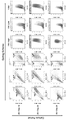
- FIG. 1 shows a cell population (2D / Day25) that was 2D-cultured for 14 days (2D / Day14) and 25 days, and a cell population (3D / Day25) that was 2D-cultured for 14 days and then 3D-cultured for 11 days using a TGP gel.
- FIG. 2 shows SA of a cell population (2D Day 25) that was 2D cultured for 14 days (2D Day 14) and 25 days, and a cell population (3D Day 25) that was 2D cultured for 14 days and then 3D cultured for 11 days using a TGP gel.
- FIG. 3 shows the average telomere length of a cell population 2D cultured for 25 days (Day25-2D) and a cell population 3D cultured with TGP gel (Day25-3D).
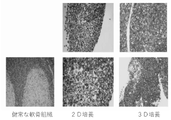
- FIG. 4 shows the tissue image of the sample obtained by 2D culture and 3D culture using TGP gel.
- FIG. 5 shows an immunostaining image of CD44 of a cell population obtained by 2D culture and 3D culture using TGP gel.
- FIG. 6 shows changes in the amount of ⁇ 2-6 sialic acid in response to SNA present on the cell membrane of cells constituting a cell population cultured in 3D using TGP gel.
- FIG. 7 shows changes in the amount of ⁇ 2-6 sialic acid in response to SSA present on the cell membrane of cells constituting a cell population cultured in 3D using TGP gel.
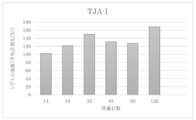
- FIG. 8 shows changes in the amount of ⁇ 2-6 sialic acid in response to TJA-1 present on the cell membrane of cells constituting a cell population cultured in 3D using TGP gel.
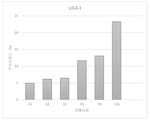
- FIG. 9 shows changes in the amount of ⁇ 1-3 fucose in response to UEA-1 present on the cell membrane of cells constituting a cell population cultured in 3D using TGP gel.
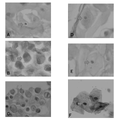
- FIG. 10 shows a cell population 2D cultured in DMEM (A and B) and CNTPR (C), a cell population 3D cultured using TGP gel lysed in DMEM (D and E), and immediately after separation from the living body. The morphology of the cell population (F) is shown. The arrow points to the nucleus.
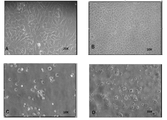
- FIG. 11 shows 7 days and 10 days (A and B) of the cartilage tissue-derived cell population cultured in 2D, and 7 days and 10 days (C and D) of the cartilage tissue-derived cell population cultured in 3D with TGP gel.
- FIG. 12 shows the morphology of a cell population derived from liver tissue obtained by 3D culture using Matrigel (A) and TGP gel (B).
- FIG. 13 shows the morphology of the cell population of HELA cells obtained by 3D culture using TGP gel.
- FIG. 14 is a graph showing the expression of markers p16 and p21 in a cell population (C8R1181) cultured in 2D or 3D.
- the present invention is a method for enhancing the tissue regeneration ability of a cell population, and includes a method including a step of incubating the cell population in a gel-like thermoreversible polymer solution.
- the "cell population” in the present disclosure is not limited as long as it is a population including cells having proliferative ability, and may include primary cells or cell lines.
- the primary cell may be a primary cell immediately after separation from a living body or a primary cell cultured and proliferated for a plurality of generations. From the viewpoint of containing various stem cells, primary cells immediately after separation from the living body are preferable.
- the cell line the cell immediately after the cell line is preferable from the viewpoint of having a stable trait.
- the cell population is not limited to a cell population isolated from living tissue, but is not limited to cartilage tissue, epithelial tissue, adipose tissue, thoracic gland tissue, thyroid tissue, skeletal muscle tissue, tracheal tissue, vascular tissue, and lung.
- Tissue Tissue, liver tissue, bile tissue, kidney tissue, urinary tract tissue, pit tissue, bladder tissue, urinary tract tissue, testicle tissue, uterine tissue, ovarian tissue, digestive tissue (stomach tissue, small intestine tissue or large intestine tissue, etc.), heart tissue , Esophageal tissue, diaphragmatic tissue, spleen tissue, pancreatic tissue, brain tissue, spinal tissue, peripheral limb tissue, retinal tissue, skin tissue, oral mucosal tissue, corneal tissue, limbal tissue, dental pulp tissue, vascular tissue, gastrointestinal tissue, It includes those obtained from omental tissue, skin tissue, liver tissue, sheep membrane, blood, lymph, bone marrow, etc., and is preferably obtained from cartilage tissue from the viewpoint of stably enhancing tissue regeneration ability.
- Such cell populations are not limited to chondrocytes, synovial cells, osteoclasty cells, hepatocytes, sinus endothelial cells, pancreatic islet ⁇ cells, nerves, glia, coat cells, retinal cells, corneal endothelial cells, heart cells, etc.
- Somatic cells such as endocrine cells, white, brown or beige fat cells, fibroblasts, muscle satellite cells, epithelial cells, endothelial cells, salivary gland cells, blood cells, lymphocytes, and stem cells (precursors of the somatic cells).
- Tissue stem cells such as cells, epithelial stem cells, satellite cells, intestinal stem cells, endothelial stem cells, olfactory mucosal stem cells, hair follicle stem cells, breast stem cells, nerve stem cells, hematopoietic stem cells, heart stem cells, mesenchymal stem cells, embryonic stem cells, egg matrix cells , Egg blastomere, endocellular mass cells, embryonic germ cells, embryonic body cells, mulberry embryo-derived cells, malformed tumor (mimorphic carcinoma) cells, and pluripotent partial differentiation from late embryonic development Embryonic stem cells, pluripotent cells such as iPS cells, etc.) can be contained, and those containing chondrocytes, chondrogenic precursor cells, mesenchymal stem cells are preferable from the viewpoint of stably enhancing the tissue regeneration ability.
- the cell population is not limited to known cell populations, such as epithelial cells (Vero cells, MDCK cells, CHO cells, HEK293 cells, COS cells, HMLU cells, etc.), tumor cells (Hela cells, etc.). , VACO cells, etc.), endothelial cells (HUVEC cells, DBAE cells, etc.), leukocytes (HIT-T15 cells, etc.), fibroblasts (WI38 cells, BHK21 cells, SFME cells, etc.), muscle cells (HL1 cells, C2C12 cells, etc.), etc. ), Nerve / endocrine gland cells (ROC-1 cells, IMR-32 cells, etc.) and the like.
- the cell population includes, for example, a cell population obtained by genetically modifying the above-mentioned cells.
- the cell population can be derived from any organism. Such organisms are not limited to, for example, humans, non-human primates, dogs, cats, pigs, horses, goats, sheep, rodents (eg, mice, rats, hamsters, guinea pigs, etc.), rabbits and the like. Is included.
- the cell population obtained by the method of the present invention has higher tissue regeneration ability than the cell population cultured by the method not including the step of incubating the cell population in the heat-reversible polymer solution in a gel state.
- Tissue regeneration ability means the ability to regenerate in the tissue to which the cell population is applied. Tissue regeneration ability applies a cell population to a target tissue, and after a lapse of a predetermined time after application, the state of the tissue at the application site, for example, the microstructure of the tissue, the size of the tissue, the size of the damaged tissue and the normal tissue. It can be quantified by observing the ratio, tissue function, etc. and quantifying them.
- the cell population obtained by the method of the present invention is a cell population incubated by a method that does not include the step of incubating the cell population in a gelled thermoreversible polymer solution (referred to herein as "control cell population").
- control cell population a gelled thermoreversible polymer solution
- the tissue regeneration ability is high.
- the method for enhancing the tissue regeneration ability of a cell population is a method for removing aging cells in the cell population, a method for maintaining the morphology of cells constituting the cell population, stem cells and / or the ability to differentiate in the cell population.
- the method of the present invention may be a method of removing senescent cells in a cell population.
- "removal of senescent cells” means that the expression level of the senescent marker in the cell population or the number of cells positive for the senescent marker is reduced.
- the aging marker known ones can be used, and examples thereof include ⁇ -galactosidase (SA ⁇ -Gal), p16, p21, p53, ⁇ -H2Ax, 53BP1 and the like.
- the expression level of SA ⁇ -Gal increases with cell aging, and when the cell population is incubated by the method of the present invention, the expression level of SA ⁇ -Gal in the cell population or SA ⁇ -Gal positive is compared with that of the control cell population. The number of cells decreases.
- the cell population obtained by the method of the present invention is not limited to the control cell population, and the expression level of the aging marker in the cell population or the aging marker positive cells is 99% or less, 95% or less, 90% or less. , 70% or less, 60% or less, 50% or less, 30% or less, 20% or less, 10% or less, 5% or less or 1% or less, 0.5% or less, 0.2% or less.
- the cell population from which the senescent cells have been removed by the method of the present invention is 101% or more, 102% or more, 105% or more, 110% or more, 130, without limitation, based on the control cell population. % Or more, 150% or more, 170% or more, 190% or more, 200% or more, and the average telomere length is long. Therefore, it is possible to suppress cell aging such as irreversible replication and / or arrest of differentiation of cells constituting the cell population, particularly a phenomenon caused by shortening of telomere length.
- the cell population obtained by the method of the present invention has a high tissue regeneration ability. Further, by continuing the incubation of the cell population by the method of the present invention, it is possible to proliferate the cell population while suppressing the development of the senescent cells after the removal of the senescent cells. Therefore, it is possible to produce a cell population that functions normally for a long period of time.
- the method of the present invention may be a method of maintaining the morphology of cells constituting a cell population.
- "Maintaining the morphology of the cells that make up the cell population” is a parameter (index) for one or more cell morphology selected from the shape, nuclear localization, and size ratio of the cells and nuclei that make up the cell population. )
- index for one or more cell morphology selected from the shape, nuclear localization, and size ratio of the cells and nuclei that make up the cell population.
- the shape of cells is classified into spherical, polygonal, elongated, etc. in the art, and in normal living tissue from which a cell population is derived, for example, by visual inspection under a microscope or by using known image software. Those classified as having the same shape as the cells of the cell can be regarded as having similar cell shapes.
- Nuclear localization is normal by measuring whether the nucleus of the cell in the normal biological tissue from which the cell population is derived and the nucleus of the cell constituting the cell population are located near the margin or the center of the cytoplasm. Those localized in the same manner as cells in a living tissue can be said to have similar nuclear localization.
- the size ratio of cells and nuclei (also referred to herein as "C: N ratio”) refers, for example, the diameter ratio, area ratio or volume ratio of cells and nuclei, cells in normal living tissue from which the cell population is derived.
- the average size ratio of cells and nuclei of cells constituting the cell population is not limited to 30% or more, 40% or more, 60% or more, 80% or more, 90% or more, and 95% similar.
- each parameter of the cell morphology can be measured by a conventional method in the art. Since cells whose morphology is maintained in this way can normally control and express signals, when applied to a cell population, cells expressing the desired phenotype can be constantly supplied to the application site for a long period of time. It is possible to repair and maintain normal living tissue.
- the method of the invention may be a method of maintaining or increasing the content of stem cells and / or somatic stem cells with high differentiation potential in a cell population. Maintaining or increasing the content of stem cells may be maintaining or increasing the amount or proportion of stem cells in the cell population per unit amount.
- the "stem cell” is not limited as long as it is a cell having differentiation potential, and is an arbitrary precursor cell, a somatic stem cell such as a mesenchymal stem cell, or a pluripotency such as an ES cell, an iPS cell, or an ntES cell. Includes stem cells.
- the cell population obtained by the method of the present invention has a high content of stem cells and / or a low content of terminally differentiated cells in the cell population as compared with the control cell population. Therefore, in one embodiment, the method of the present invention is a method of selecting or concentrating stem cells in a cell population, and in another embodiment, a method of diversifying the degree of differentiation of the cell population.
- “Differentiation ability” refers to the ability of a cell to change into another type of cell such as a predetermined progenitor cell or somatic cell when placed in an appropriate differentiation-inducing state.
- somatic stem cells In general, long-term culture of somatic stem cells tends to reduce proliferative and differentiating abilities. Since somatic stem cells with reduced differentiation potential cannot be transformed into other types of cells such as progenitor cells and somatic cells, even though they have somatic stem cell markers on the cell surface, such somatic stem cells have the ability to regenerate tissues. Is low.
- the method of the present invention can maintain or increase the content of highly differentiating somatic stem cells. Maintaining or increasing the content of highly differentiating somatic stem cells may be maintaining or increasing the amount or proportion of highly differentiating somatic stem cells in the cell population per unit amount.
- the somatic stem cell is not limited as long as it is a somatic stem cell capable of differentiating into a terminally differentiated cell, and may be, for example, an arbitrary progenitor cell such as a cartilage progenitor cell, a muscle satellite cell, or a corneal progenitor cell, or a mesenchymal stem cell. It's okay.
- the content of stem cells or somatic stem cells with high differentiation potential can be measured by known methods and is not limited to ⁇ 1-that reacts with lectins such as UEA-1 present on the cell membrane of cells constituting the cell population. 2 Measuring the amount of ⁇ 2-6 sialic acid that reacts with fucose or lectins such as SNA, SSA, TJA-I, or correlates with changes in the amount of ⁇ 1-2 fucose or ⁇ 2-6 sialic acid. It can be quantified by measuring other cell surface markers, gene expression, or the like.
- the level of ⁇ 1-2 fucose present in the cell membrane of cells contained in the cell population is high, many pluripotent stem cells are present, and if the level of ⁇ 2-6 sialic acid is high, the somaticity is high in differentiation potential. It means that there are many stem cells (see Wang et al, Cell Res. 2011 Nov; 21 (11): 1551-63, Tateno et al, Glycobiology. 2016 Dec; 26 (12): 13281-1337, WO2016006712A1. ).
- the cell population obtained by the method of the present invention contains more stem cells and / or somatic stem cells with higher differentiation potential than the control cell population.
- the inclusion of a large amount of stem cells or somatic stem cells having high differentiation potential is not limited to 101% or more, 105% or more, 110% or more, 130% or more, 140% or more based on the control cell population. , 150% or more, 160% or more, 170% or more, 180% or more, 190% or more or 200% or more, the content of cells having ⁇ 1-2 fucose or ⁇ 2-6 sialic acid, or a cell surface marker that correlates with these. It means that the gene expression is high.
- stem cells differentiated from cells with high differentiation potential can be constantly supplied to the application site, and thus normal for a long period of time. Can repair and maintain a variety of living tissues.
- the stem cell or somatic stem cell having high differentiation potential is a mesenchymal stem cell, it has a high ability to normalize damaged living tissue such as for anti-inflammatory and anti-fibrotic purposes, and has a high ability to recover from damage. The therapeutic effect can be maintained for a long period of time. Therefore, the cell population obtained by the method of the present invention has a high tissue regeneration ability.
- the method of the invention is capable of maintaining or increasing the ability of a cell population to express one or more genes expressed in a living tissue from which the cell population is derived.
- the method of the invention can maintain or increase the expression of a gene identical to one or more genes expressed in the biological tissue from which the cell population is derived.
- the biological tissue from which the cell population is derived is preferably a normal biological tissue.
- cartilage tissue such gene may be selected from SOX9, COL2A1, miR140, miR21 without limitation.
- SOX9 (also referred to as CMD1, CMPD1, SRA1, SRXX2, SRXY10) is a gene encoding SRY-box transcription factor 9, and the gene sequence of human SOX9 is registered as accession number NM_000346 or the like.
- the sequence is shown as SEQ ID NO: 1.
- COL2A1 (also referred to as ANFH, AOM, COL11A3, SEDC, STL1) is a gene encoding a collagen type II alpha 1 chain, and the gene sequence of human COL2A1 is registered as accession number NM_001844.5 or the like.
- the sequence is shown as SEQ ID NO: 2.
- mir-140 is registered as miRbase ID: Stem-loop sequence hsa-mir-140, miRbase accession number. MI0000456, the sequence of which is shown as SEQ ID NO: 3.
- miR140-3p is registered as miRbase ID: Mature sequence hsa-miR-140-3p, miRbase accession number. MIMAT0004597, the sequence of which is the RNA sequence "uaccacaggguagaaccacgg" and is shown as SEQ ID NO: 4. Is done.
- miR140-5p is registered as miRbase ID: Mature sequence hsa-miR-140-5p, miRbase accession number.MIMAT0000431, the sequence of which is the RNA sequence "cagugguuuuacccuaugguag” and is shown as SEQ ID NO: 5. Is done.
- mir-21 is registered as miRbase ID: Stem-loop sequence hsa-mir-21, miRbase accession number .MI0000077, the sequence of which is shown as SEQ ID NO: 6.
- miR21-3p is registered as miRbase ID: Mature sequence hsa-miR-21-3p, miRbase accession number.MIMAT0004494, the sequence of which is the RNA sequence "caacaccagucgaugggcugu" and is shown as SEQ ID NO: 7. Is done.
- miR21-5p is registered as miRbase ID: Mature sequence hsa-miR-21-5p, miRbase accession number.MIMAT0000076, the sequence of which is the RNA sequence "uagcuuaucagacugauguuga” and is shown as SEQ ID NO: 8. Is done.
- the cell population obtained by the method of the present invention has a higher expression level of one or more genes expressed in living tissue than the control cell population.
- the high gene expression level is not limited to 101% or more, 105% or more, 110% or more, 130% or more, 140% or more, 150% or more, 160% or more based on the control cell population. , 170% or more, 180% or more, 190% or more or 200% or more, which means that the expression level of a predetermined gene is high.
- a method for measuring the gene expression level a conventional method in the art can be used.
- the cell population obtained by the method of the present invention has a high tissue regeneration ability.
- miR140 in cartilage tissue results in increased miR140-3p or 5p derived from miR140 in cartilage tissue, resulting in decreased expression or secretion of ECM degrading enzymes such as MMP-13 and ADAMTS-5, IL1B, Cartilage tissue through decreased expression or secretion of inflammatory mediators such as IL6 and IL8, and promotion of expression of proteins involved in ECM synthesis such as SOX9, ACAN and chondroitin sulfate N-acetylgalactosaminyl transferase 1 (CSGALNACT1).
- ECM degrading enzymes such as MMP-13 and ADAMTS-5, IL1B
- Cartilage tissue through decreased expression or secretion of inflammatory mediators such as IL6 and IL8, and promotion of expression of proteins involved in ECM synthesis such as SOX9, ACAN and chondroitin sulfate N-acetylgalactosaminyl transferase 1 (CSGALNACT1).
- a cell population derived from cartilage tissue is applied to the cartilage tissue of a subject having osteoarthritis, not only the normal cartilage tissue is repaired at the application site, but also the cartilage around the application site is repaired. Since the degenerated state of the tissue can be normalized, the therapeutic effect can be maintained for a long period of time.
- miR21-5p derived from miR21 increases in cartilage tissue, and as a result, the expression or secretion of ECM-degrading enzymes such as MMP-13 and ADAMTS-5 is decreased without limitation.
- COL2A1 and other proteins involved in ECM synthesis are promoted to normalize the degenerated state of cartilage tissue. Therefore, like the miR140, the therapeutic effect can be maintained for a long period of time.
- the method of the present invention can impart tissueogenic ability to a cell population.
- tissue-forming ability is the ability to form a living tissue from which a cell population is derived in vitro.
- cartilage tissue it is the ability to form in vitro a tissue having the same tissue structure as the healthy cartilage tissue filled with the cell gaps of the cell population by ECM.
- the method of the invention can enhance the microRNA (miRNA) retention capacity of a cell population.
- the ability to retain miRNA retention is the ability of a cell population to retain miRNA in the cell population without secreting it during culture. By retaining miRNA in the cell population during culturing, when the cell population is applied to a subject, it is possible to obtain a cell population capable of secreting miRNA at a high concentration at the application site and around the application site.
- microRNA is transcribed as an RNA precursor having a hairpin-like structure, cleaved by dsRNA-cleaving enzyme having RNaseIII-cleaving activity, and incorporated into a protein complex called RISC to suppress the translation of mRNA. Intended use is the 10-25 base RNA involved.
- miRNA includes miRNAs and precursors of “miRNAs” (pre-miRNAs, tri-miRNAs), and miRNAs having biological functions equivalent to those of the miRNAs encoded by them, such as homologues (ie, homologues). , Homolog), variants such as gene polymorphisms, and "miRNAs” encoding derivatives.
- the "miRNA” encoding such a precursor, homologue, variant or derivative can be identified by miRBase and has a base sequence that hybridizes to the complementary sequence of the specific base sequence under stringent conditions.
- miRNA can be mentioned.
- the miRNA includes, without limitation, when the cell population is derived from cartilage tissue, miR140, miR21, miR-125b, Has-miR-15a, miR-30a, miR-199a, miR-210, miR-221-3p. , MiR-92a-3p, miR-142-3p, miR-27a, miR-27b, miR26a-5p, miR-26a, miR-26b, miR-373, miR-127-5p, miR-320, miR-9 , MiR-634, miR-221-3p, miR-370miR-145, miR-130A, miR-145, miR-562-5p (Zhang.et al. J Arthritis. 2017 Apr; 6 (2).
- Pii 239.
- High miRNA retention is not limited to 101% or more, 105% or more, 110% or more, 130% or more, 140% or more, 150% or more, 160% or more, 170, based on the control cell population. It means that miRNA is present in the cell population at the time of culturing at a high concentration of% or more, 180% or more, 190% or more or 200% or more.
- thermoreversible polymer (also referred to as “TGP” in the present specification) is obtained by thermally reversibly forming a crosslinked structure or a network structure in water, and based on the structure, the inside thereof.
- the hydrogel refers to a gel containing a crosslinked or network structure composed of a polymer and water supported or retained in the structure (the TGP solution in a gel state is also referred to as "TGP gel" in the present specification).
- thermoreversible polymer can be any polymer as long as it is a thermoreversible polymer because an environment similar to that of a living body is formed in water by a crosslinked structure or a network structure peculiar to the thermoreversible polymer. It can be used in the method of the present invention.
- Measuring equipment (trade name): Stress-controlled leometer AR500, TA Instrument's sample solution (or separation solution) concentration (however, as the concentration of "hydrogel-forming polymer with sol-gel transition temperature") : 10 (weight)% Amount of sample solution: Approximately 0.8 g Measurement cell shape / dimensions: Acrylic parallel disk (diameter 4.0 cm), gap 600 ⁇ m Measurement frequency: 1Hz Applied stress: within the linear region
- the sol-gel transition temperature is preferably higher than 0 ° C. and preferably 37 ° C. or lower, and further preferably higher than 5 ° C. and 35 ° C. or lower (particularly 10 ° C. or higher and 33 ° C. or lower).
- a TGP having such a suitable sol-gel transition temperature in water can be easily selected from specific compounds as described below according to the above-mentioned screening method (sol-gel transition temperature measurement method). ..
- the TGP of the present invention is not particularly limited as long as it exhibits a thermoreversible sol-gel transition as described above (that is, has a sol-gel transition temperature).
- Specific examples of the polymer in which the aqueous solution has a sol-gel transition temperature and reversibly exhibits a sol state at a temperature lower than the transition temperature are typified by, for example, a block copolymer of polypropylene oxide and polyethylene oxide.
- Polyalkylene oxide block copolymers; etherified cellulose such as methyl cellulose and hydroxypropyl cellulose; chitosan derivatives (KRHolme.et al. Macromolecules, 24,3828 (1991)) and the like are known.
- the hydrogel-forming polymer using a hydrophobic bond for cross-linking which can be suitably used as the TGP of the present invention, is a cloud point from the viewpoint that the TGP and the medium do not separate and the surroundings of the cell population can be stably maintained. It is preferable that a plurality of blocks having the above and a hydrophilic block are combined.
- the hydrophilic block is preferably present because the hydrogel becomes water soluble at a temperature lower than the sol-gel transition temperature, and the plurality of blocks having cloud points are such that the hydrogel has a sol-gel transition temperature. It is preferably present because it changes to a gel state at higher temperatures.
- a block with a cloud point dissolves in water at a temperature lower than the cloud point and becomes insoluble in water at a temperature higher than the cloud point, so that the block is gelled at a temperature higher than the cloud point.
- It serves as a cross-linking point consisting of hydrophobic bonds for formation. That is, the cloud point derived from the hydrophobic bond corresponds to the sol-gel transition temperature of the hydrogel.
- the cloud point and the sol-gel transition temperature do not necessarily have to match. This is because the cloud point of the above-mentioned "block having a cloud point" is generally affected by the binding between the block and the hydrophilic block.
- the hydrogel used in the present invention utilizes the property that the hydrophobic bond not only becomes stronger with increasing temperature but also the change is reversible with respect to temperature.
- TGP has a cloud point" from the viewpoint that multiple cross-linking points are formed in one molecule, a gel having excellent stability is formed, and the cell population can proliferate stably against a reversible temperature change. It is preferable to have a plurality of "blocks".
- the hydrophilic block in the TGP has a function of changing the TGP to water-soluble at a temperature lower than the sol-gel transition temperature, and has a hydrophobic binding force at a temperature higher than the transition temperature. It has a function of forming a state of a hydrogel while preventing the hydrogel from coagulating and settling due to an excessive increase in temperature.
- the TGP used in the present invention is decomposed and absorbed in vivo from the viewpoint of using the cell population of the present invention in cell therapy. That is, it is preferable that the TGP of the present invention is decomposed in a living body by a hydrolysis reaction or an enzymatic reaction to become a low molecular weight substance harmless to the living body, and is absorbed and excreted.
- the TGP of the present invention is a combination of a plurality of blocks having a cloud point and a hydrophilic block, at least one of the block having a cloud point and the hydrophilic block, preferably both of them are in vivo. It is preferable that it is decomposed and absorbed by.
- the block having a cloud point is preferably a block of a polymer having a negative solubility in water-temperature coefficient, and more specifically, a polypropylene oxide, a copolymer of propylene oxide and another alkylene oxide, and the like.
- a poly N-substituted acrylamide derivative is preferable.
- a polypeptide consisting of a hydrophobic amino acid and a hydrophilic amino acid.
- a polyester-type biodegradable polymer such as polylactic acid or polyglycolic acid can be used as a block having a cloud point that is decomposed and absorbed in a living body.
- the cloud point of the above polymer (block having a cloud point) is higher than 4 ° C and 40 ° C or less is a compound in which a plurality of blocks having a cloud point and a hydrophilic block are bonded to each other. ) Is preferable because the sol-gel transition temperature is higher than 0 ° C. and 37 ° C. or lower.
- the cloud point is measured, for example, by cooling an aqueous solution of about 1% by mass of the above polymer (block having a cloud point) to obtain a transparent uniform solution, and then gradually raising the temperature (heating rate of about 1). It can be carried out by setting the cloud point at which the solution becomes cloudy for the first time at ° C./min).
- poly-N-substituted acrylamide derivative and the poly-N-substituted metaacrylamide derivative that can be used in the present invention are listed below.
- Poly-N-isopropylacrylamide is preferred from the viewpoint of stable incubation of cell populations.
- the polymer may be a homopolymer or a copolymer of a monomer constituting the polymer and another monomer.
- a hydrophilic monomer or a hydrophobic monomer can be used as the other monomer constituting such a copolymer.
- copolymerization with a hydrophilic monomer raises the cloud point of the product, and copolymerization with a hydrophobic monomer lowers the cloud point of the product. Therefore, by selecting these monomers to be copolymerized, it is possible to obtain a polymer having a desired cloud point (for example, a cloud point higher than 4 ° C and 40 ° C or lower).
- hydrophilic monomer examples include N-vinylpyrrolidone, vinylpyridine, acrylamide, metaacrylamide, N-methylacrylamide, hydroxyethyl methacrylate, hydroxyethyl acrylate, hydroxymethyl methacrylate, hydroxymethyl acrylate, and acrylic having an acidic group. Acids, methacrylic acids and salts thereof, vinyl sulfonic acids, styrene sulfonic acids, etc., as well as N, N-dimethylaminoethyl methacrylate, N, N-diethylaminoethyl methacrylate, N, N-dimethylaminopropyl having basic groups. Examples include, but are not limited to, acrylamide and salts thereof.
- the hydrophobic monomers include acrylate derivatives and methacrylate derivatives such as ethyl acrylate, methyl methacrylate and glycidyl methacrylate, N-substituted alkyl metaacrylamide derivatives such as Nn-butyl metaacrylamide, vinyl chloride, acrylonitrile and styrene. , Vinyl acetate and the like, but are not limited thereto.
- hydrophilic block On the other hand, specific examples of the hydrophilic block to be bound to the above-mentioned block having a cloud point include methyl cellulose, dextran, polyethylene oxide, polyvinyl alcohol, poly N-vinylpyrrolidone, polyvinyl pyridine, polyacrylamide, and polymethacrylamide.
- PolyN-methylacrylamide polyhydroxymethylacrylate, polyacrylic acid, polymethacrylic acid, polyvinylsulfonic acid, polystyrene sulfonic acid and salts thereof; polyN, N-dimethylaminoethylmethacrylate, polyN, N-diethylaminoethylmethacrylate.
- Poly N, N-dimethylaminopropyl acrylamide and salts thereof and the like are used as a plurality of blocks having cloud points of a thermoreversible gel, an environment similar to the in vivo environment is formed, so that the cell population can be differentiated and replicated.
- Polyethylene oxide is preferred as the hydrophilic block that binds to the acrylamide because of its high potency.
- hydrophilic block is decomposed, metabolized and excreted in the living body, and a hydrophilic biopolymer such as a protein such as albumin and gelatin and a polysaccharide such as hyaluronic acid, heparin, chitin and chitosan is preferably used. ..
- the method for binding the block having a cloud point to the above-mentioned hydrophilic block is not particularly limited, but for example, a polymerizable functional group (for example, an acryloyl group) is introduced into any of the above blocks to give the other block. This can be done by copolymerizing the monomers. Further, the conjugate of the block having a cloud point and the above-mentioned hydrophilic block can also be obtained by block copolymerization of a monomer giving a block having a cloud point and a monomer giving a hydrophilic block. It is possible.
- a polymerizable functional group for example, an acryloyl group
- a functional group for example, a hydroxyl group, an amino group, a carboxyl group, an isocyanate group, etc.
- a chemical reaction it can also be done by.
- the bond between the polypropylene oxide having a cloud point and the hydrophilic block is, for example, anionic polymerization or cationic polymerization, in which the propylene oxide and the monomer constituting the "other hydrophilic block" (for example, polyethylene oxide) are repeatedly and sequentially obtained.
- anionic polymerization or cationic polymerization in which the propylene oxide and the monomer constituting the "other hydrophilic block" (for example, polyethylene oxide) are repeatedly and sequentially obtained.
- Such a block copolymer can also be obtained by introducing a polymerizable group (for example, an acryloyl group) at the end of polypropylene oxide and then copolymerizing the monomers constituting the hydrophilic block. Further, the polymer used in the present invention can also be obtained by introducing a functional group capable of binding reaction with a functional group (for example, a hydroxyl group) at the terminal of polypropylene oxide into a hydrophilic block and reacting both of them. ..
- the TGP used in the present invention can also be obtained by connecting a material such as Pluronic (registered trademark) F-127 (trade name, manufactured by Asahi Denka Kogyo Co., Ltd.) in which polyethylene glycol is bonded to both ends of polypropylene glycol. be able to.
- Pluronic registered trademark
- F-127 trade name, manufactured by Asahi Denka Kogyo Co., Ltd.
- the above-mentioned "block having a cloud point” existing in the molecule is water-soluble together with the hydrophilic block at a temperature lower than the cloud point. It is completely dissolved in water and shows a sol state.
- the temperature of the aqueous solution of this polymer is heated to a temperature higher than the above-mentioned cloud point, the "block having a cloud point” existing in the molecule becomes hydrophobic, and the "blocks having a cloud point” become hydrophobic and are associated between different molecules by hydrophobic interaction. do.
- the polymer of the present invention since the hydrophilic block is water-soluble even at this time (when heated to a temperature higher than the cloud point), the polymer of the present invention has a hydrophobic association between blocks having a cloud point in water.
- a hydrogel having a three-dimensional network structure with the above as a cross-linking point is produced.
- the temperature of this hydrogel is cooled again to a temperature lower than the cloud point of the "block having a cloud point" existing in the molecule, the block having the cloud point becomes water-soluble, and the cross-linking point due to the hydrophobic association is released. ,
- the hydrogel structure disappears and the TGP of the present invention becomes a complete aqueous solution again.
- the sol-gel transition of the polymer of the present invention in a preferred embodiment is based on a reversible change in hydrophilicity and hydrophobicity at the cloud point of the block having a cloud point existing in the molecule. Therefore, it has complete reversibility in response to temperature changes. According to the studies by the present inventors, it is considered that the above-mentioned delicate hydrophilic-hydrophobic balance of TGP in water contributes to the stability of cells during cryopreservation.
- the hydrogel-forming polymer of the present invention containing at least a polymer having a sol-gel transition temperature in an aqueous solution is substantially water-insoluble at a temperature (d ° C.) higher than the sol-gel transition temperature. It shows water solubility reversibly at a temperature (e ° C.) lower than the sol-gel transition temperature.
- the above-mentioned high temperature (d ° C.) is preferably 1 ° C. or higher than the sol-gel transition temperature, and more preferably 2 ° C. or higher (particularly 5 ° C. or higher).
- the above-mentioned "substantially water-insoluble" means that the amount of the above-mentioned polymer dissolved in 100 ml (liter) of water at the above-mentioned temperature (d ° C.) is 5.0 g or less (further, 0.5 g or less, particularly 0). .1 g or less) is preferable.
- the above-mentioned low temperature (e ° C.) is preferably 1 ° C. or higher (absolute value) lower than the sol-gel transition temperature, and further preferably 2 ° C. or higher (particularly 5 ° C. or higher) lower. preferable.
- the above-mentioned "water-soluble" means that the amount of the above-mentioned polymer dissolved in 100 ml (liter) of water at the above-mentioned temperature (e ° C.) is preferably 0.5 g or more (further, 1.0 g or more). ..
- reversibly water-soluble means that even after the above-mentioned TGP aqueous solution is once gelled (at a temperature higher than the sol-gel transition temperature), at a temperature lower than the sol-gel transition temperature, the temperature is lower than the sol-gel transition temperature. It means to show the above-mentioned water solubility.
- the 10% aqueous solution of the polymer exhibits a viscosity of 10 to 3,000 cmpoise (further, 50 to 1,000 cmpoise) at 5 ° C.
- Viscosity is preferably measured under the following measurement conditions, for example.
- Viscometer Stress-controlled leometer (model name: AR500, manufactured by TA Instruments) Rotor diameter: 60mm Rotor shape: Parallel flat plate
- the aqueous solution of TGP of the present invention is gelled at a temperature higher than the sol-gel transition temperature and then immersed in a large amount of water, the gel does not substantially dissolve.
- the above-mentioned characteristics of the hydrogel formed by the above-mentioned TGP can be confirmed, for example, as follows. That is, 0.15 g of TGP is dissolved in 1.35 g of distilled water at a temperature lower than the sol-gel transition temperature (for example, under ice cooling) to prepare a 10 wt% aqueous solution, and the aqueous solution is used as a plastic petri dish having a diameter of 35 mm.
- a gel having a thickness of about 1.5 mm is formed in the petri dish by injecting it into the dish and heating it to 37 ° C., and then the weight (fgram) of the entire petri dish containing the gel is measured. Then, the entire petri dish containing the gel was allowed to stand in 250 ml (liter) of water at 37 ° C. for 10 hours, and then the weight (ggram) of the entire petri dish containing the gel was measured to measure the gel from the gel surface. Evaluate the presence or absence of dissolution.
- the weight reduction rate of the gel that is, (fg) / f is preferably 5.0% or less, and further 1.0%. It is preferably less than or equal to (particularly 0.1% or less).
- the TGP aqueous solution of the present invention is gelled at a temperature higher than the sol-gel transition temperature, and then immersed in a large amount of water (about 0.1 to 100 times the gel in volume ratio) for a long period of time.
- the gel does not dissolve over time.
- Such properties of the polymer used in the present invention are achieved, for example, by the presence of two or more (plurality) blocks having cloud points in the polymer.
- Pluronic (registered trademark) F-127 in which polyethylene oxide was bonded to both ends of polypropylene oxide, the gel was completely left to stand for several hours. We have found that it dissolves in water.
- the concentration with respect to water that is, ⁇ (polymer) / (polymer + water) ⁇ x 100 (%), is 20% or less (further 15%).
- TGP capable of gelation at a concentration of 10% or less).
- the molecular weight of the TGP used in the present invention is preferably 30,000 or more and 30 million or less, more preferably 100,000 or more and 10 million or less, and further preferably 500,000 or more and 5 million or less.
- the step of incubating may be to embed the cell population in the TGP solution in the sol state, and incubate the TGP solution in the gel state at a temperature higher than the sol-gel transition temperature.
- the incubating step may be performed in vivo or in vitro.
- the TGP solution can be gelled and incubated at a temperature higher than the sol-gel transition temperature by applying to the subject in the sol state.
- the TGP solution can be gelled at a temperature higher than the sol-gel transition temperature in an incubator, and then a medium such as a culture solution can be added for incubation.
- a medium such as a culture solution
- In vitro incubation conditions can be carried out under the usual conditions.
- typical incubation conditions are 37 ° C., 5% CO 2 .
- Other temperature conditions during incubation are 25 ° C. to 42 ° C., preferably 30 ° C. to 40 ° C., more preferably 33 ° C. to 39 ° C., and particularly preferably 35 ° C. to 38 ° C.
- the incubation period is not limited as long as the cell population does not die, and is 1 day or more, 4 days or more, 8 days or more, 16 days or more, 21 days or more, 24 days or more, 32 days or more, 48 days or more, 64.
- It may be 1 day or more, 72 days or more, 90 days or more, 102 days or more, 114 days or more, 126 days or more, 140 days or more, 160 days or more, 180 days or more, 250 days or more, and senescent cells in a cell population. From the viewpoint of sufficient removal, 4 days or more is preferable, from the viewpoint of sufficient stem cell proliferation, 21 days or more is preferable, and from the viewpoint of sufficient tissue formation, 24 days or more is preferable.
- Incubation can be performed in a container of any size and shape.
- the medium for dissolving the TGP and the medium for adding to the gelled TGP are not particularly limited as long as they can maintain the survival of cells, and amino acids and vitamins are used. Kinds and those containing electrolyte as the main component can be used.
- the medium for dissolving TGP and the medium for adding to the gelled TGP may be common or different.
- the medium for dissolving TGP and the medium to be added to the gelled TGP may be based on a basal medium for cell culture.
- a basal medium for cell culture is not limited to, for example, DMEM, MEM, F12, DME, RPMI1640, MCDB (MCDB102, 104, 107, 120, 131, 153, 199, etc.), L15, SkBM, RITC80-7, CnT. -PR etc. are included.
- Many of these basal media are commercially available and their compositions are also known.
- the basal medium may be used as it has a standard composition (for example, as it is on the market), or the composition may be appropriately changed depending on the cell type and cell conditions. Therefore, the basal medium used in the present invention is not limited to those having a known composition, and includes those in which one or more components are added, removed, increased or decreased.
- the medium may contain one or more additives such as serum, growth factors (for example, FGF-2, TGF-b1, etc.), steroid component, selenium component and the like.
- serum for example, FGF-2, TGF-b1, etc.
- the medium does not contain a growth factor other than the growth factor contained in the autologous serum.
- concentration of serum is not particularly limited and may be contained in the medium added to TGP at 3%, 5%, 10% and 20%. It is preferably 10%.
- the medium for dissolving TGP and the medium for adding to gelled TGP may consist of common components.
- the medium can contain various additional ingredients, such as pharmaceutically acceptable carriers, additional active ingredients such as other senescent cell removers, and the like. Any known additional ingredient can be used, and those skilled in the art are familiar with these additional ingredients.
- the invention further comprises a cell population produced by the method of the invention.
- the invention further comprises a method of treating a disease in a subject, comprising applying an effective amount of the cell population obtained in the invention to a subject in need thereof.
- the disease is not limited as long as it is a disease having an abnormality in a living tissue.
- the diseases include osteoarthritis, rheumatoid arthritis, osteosarcoma, femoral head necrosis, acetabular dysplasia, meniscus tear, traumatic arthritis, Includes physical cartilage loss or damage due to sports or accidents.
- the method of application to the subject may be transplantation of a cell population.
- Implantation includes subcutaneous injection, intralymphatic injection, intravenous injection, intraarterial injection, intraperitoneal injection, intrathoracic injection or local direct injection, direct transplantation and the like.
- thermoreversible polymer (TGP) was obtained by the following method. 42.0 g of N-isopropylacrylamide and 4.0 g of n-butylmethacrylate were dissolved in 592 g of ethanol. An aqueous solution prepared by dissolving 11.5 g of polyethylene glycol dimethacrylate (PD E6000, manufactured by NOF CORPORATION) in 65.1 g of water was added thereto, and the mixture was heated to 70 ° C. under a nitrogen stream. While maintaining 70 ° C.
- PD E6000 polyethylene glycol dimethacrylate
- Example 1 [Cell population aging assay] A part of the cartilage tissue of the unloaded part of the human knee joint was collected and antibiotics (gentamicin (50 ⁇ g / ml), amphotericin (0.25 ⁇ g / ml), penicillin (100 Units / ml) / streptomycin (100 ⁇ g / ml)). ) Soaked in the contained PBS for 30 minutes. Each piece of tissue was cut into small pieces of 1 mm 2 or less with a scalpel. It was sequentially digested with Trypsin-EDTA solution and collagenase II solution. The cells were washed with DMEM, filtered through a filter, and centrifuged.
- antibiotics gentamicin (50 ⁇ g / ml), amphotericin (0.25 ⁇ g / ml), penicillin (100 Units / ml) / streptomycin (100 ⁇ g / ml)
- the cell population thus obtained was counted on the cell calculation board.
- the number of cells was 2.1 ⁇ 105 .
- Cell populations were cultured in 2D in 25 cm 2 flasks with DMEM containing 10% FBS. The culture medium was changed weekly and 2D culture was performed for 14 days.
- This cell population was divided into two groups, one was cultured in 2D by the method described above, and the other was embedded in the TGP prepared in Production Example 1 and cultured in 3D. In each case, the cells were cultured for 25 days after collection (11 days after being divided into two groups).
- the cell population was embedded in TGP and 3D culture was performed by the following method. 0.5 g of TGP prepared in Production Example 1 was dissolved in 5 ml of DMEM containing 10% FBS under ice cooling to prepare a TGP solution in a low temperature sol state, and the cell population was dispersed in the solution and gelled at 37 ° C. Buried. The DMEM 5 ml was layered on the gelled TGP solution and cultured until the 25th day after collection.
- a cell population (2D / Day25) that was 2D-cultured for 14 days (2D / Day14) and 25 days, and a cell population (3D / Day25) that was 3D-cultured for 11 days using a TGP gel after 2D culture for 14 days were collected.
- Cellular senescence was measured by measuring ⁇ -galactosidase (SA- ⁇ Gal) activity associated with cellular senescence.
- SA- ⁇ Gal ⁇ -galactosidase activity associated with cellular senescence.
- SPiDER- ⁇ Gal manufactured by Dojin Kagaku Co., Ltd.
- the cells were cultured and stained in DMEM containing 10% FBS.
- the stained cell population was measured with FACSVia (BD Biosciences) and evaluated with FLowJo analysis software (BD Biosciences). Specifically, FSC-AvsFSC-H plots and SSC-AvsSSC-H plots were created, single cells were separated, and the fluorescence intensity was measured by fractionating by FSC values (FSC-High and FSC-Low). ..
- Figure 1 shows the results of flow cytometry represented by a dot plot. Further, the SA- ⁇ Gal intensity of all single cells (Total) based on the results of flow cytometry and the SA- ⁇ Gal intensity of all single cells fractionated by FSC-High and FSC-Low are shown in FIG.
- the SA- ⁇ Gal intensity was higher than that of the cell population cultured in 2D for 14 days (2D Day 14), whereas the SA- ⁇ Gal intensity was higher in 3D using TGP. It was revealed that the strength of SA- ⁇ Gal in all single cells decreased when cultured to the day (3D Day 25).
- FSC-High contains a large amount of terminally differentiated cells
- FSC-Low contains a large amount of stem cells.
- both FSC-High and FSC-Low were cultured in 2D for 14 days (2D). Since it was lower than that of Day14), it was found that 3D culture using TGP could remove senescent cells in the final differentiated cells and stem cells.
- telomere length of the cell population collected on the 25th day of the 2D culture and the 3D culture was measured. The results are shown in FIG. Since the average telomere length of the cell population in the 3D culture was longer than that in the 2D culture, it can be seen that the 3D culture removes senescent cells having a short telomere length.
- Example 2 ⁇ Structural and functional analysis of cell population> Cell populations obtained from cartilage tissue samples derived from the subjects listed in Table 1 were obtained in the same manner as in Example 1 and cultured in 2D and 3D for 20 weeks in the same manner as in Example 1.
- a cartilage tissue-like cell population with a size of 200 to 300 ⁇ m was confirmed on the 3rd to 5th days of culture, and after 21 days, the cells grew to a size of 500 ⁇ m to 1000 ⁇ m in diameter, and all samples were used for 20 weeks. Growth was maintained during the culture period.
- RNAlater registered trademark
- Stabilization Solution Invitrogen, CatNo.AM7020
- Small RNA RNA of 200 bases or less
- NucleoSpin® miRNA kit TeKaRa, U0971
- primers of SEQ ID NOs: 9 to 12 and mRQ3'Primer U6 U6, miR-21 by Thermal Cycler Dice (registered trademark) Real Time System Lite (TP700, TaKaRa) using Forward Primer and U6 Reverse Primer (Mir-X (trademark) miRNA qRT-PCR TB Green Kit (TaKaRa, Z8314N))
- QPCRs of -3p, miR-21-5p, miR-140-3p and miR-140-5p were performed. Quantitative values of each miRNA were normalized with the expression level of U6 as 1.
- the expression levels of miR-21 and miR-140 were increased in the 3D-cultured cell population as compared with the 2D-cultured cell population, and miR21-5p and miR-140 were increased. It was found that -3p and miR-140-5p increased significantly. It was also found that in any of the 1059 and 1068 cell populations in which the expression level of SOX9 was measured, the expression level of SOX9 was significantly increased in the cell population cultured in 3D as compared with the cell population cultured in 2D. It was also found that the expression level of 1068, in which COL2A1 was measured, was increased by 3D culture as compared with the cell population cultured in 2D. Since it is known that the expression of miR21, miR-140, SOX9 and COL2A1 is increased during the formation of healthy cartilage tissue, 3D culture of a cell population can form cartilage tissue having a healthy function. I understood.
- RNA of 200 bases or less was purified from some of these samples using the NucleoSpin® miRNA kit (TaKaRa, U0971), and the primer of SEQ ID NO: 3 and mRQ 3'Primer (Mir-X (Mir-X) Using the (trademark) miRNA qRT-PCR TB Green (registered trademark) Kit (TaKaRa, Z8314N)), qPCR of miR-140-3p was performed by Thermal Cycler Dice (registered trademark) Real Time System Lite (TP700, TaKaRa). The results are shown in Table 6.
- the average Ct value is the number of cycles until the predetermined Threshold is reached, and the lower the average Ct value, the more miR-140-3p is present in the liquid medium.
- SNP is collected, centrifuged and filtered, and then stored, and "SNF” is stored without such treatment.
- Example 1 Glycan analysis of cell surface of cells constituting the cultured cell population
- the cell population cultured in Example 1 was collected between 14 to 126 days from the culture, and each TGP gel was cooled to 4 ° C. It was collected in a sol state.
- the sample was dispersed in cells with Trypsin-EDTA (0.25%) solution, and the cells were collected. Then, it was centrifuged in DMEM 3 times at 4 ° C. (1800 rpm, 15 minutes), and each sample was cryopreserved.
- the sample was commissioned and analyzed by the Glycan Profiling Analysis Service by Glyco Technica Ltd.
- the cell membrane protein was extracted from the thawed sample, and the protein concentration was measured by the BCA method (TaKaRa BCA Protein Assay Kit). Based on the measured protein concentration, PBSTx was added to dilute the protein concentration to 10 ⁇ g / mL. A 100 ⁇ L sample (concentration of 10 ⁇ g / mL) was added to a tube containing 100 ⁇ g of Cy3 Mono-reactive Dye Pack (GE healthcare, catalog number: PA23011), mixed with a pipette, and spun down. The tube was placed in a light-shielding bag and incubated at room temperature (25 ° C.) for 1 hour.
- BCA method TaKaRa BCA Protein Assay Kit
- the Desert Spin Columns TM 0.5 ml (25 columns) (Thermo, Catalog No .: 89882) spin columns were then placed in 2 mL tubes and centrifuged at 1500 xg at 4 ° C. for 1 minute to remove free Cy3. 300 ⁇ L of TBS was added to the column and centrifuged at 1500 xg at 4 ° C. for 1 minute and this process was repeated 3 times. The column was placed in a new 1.5 mL tube, a labeled sample (100 ⁇ L) was added to the column and centrifuged at 1500 xg at 4 ° C. for 2 minutes.
- the sample was collected and 405 ⁇ L of Probing Solution (Glyco Technica) was added to obtain a sample volume of 500 ⁇ L at a concentration of 2 ⁇ g / mL. All samples were diluted using Probing Solution to concentrations ranging from 2 ⁇ g / mL to 15.625 ng / mL. Then, LecChip Ver.1.0 (trademark, Glycotechnica) was washed 3 times with Probing Solution, and then the sample was added to LecChip at 60 ⁇ L / well. The sample on the LecChip was reacted at 20 ° C. for about 13 hours.
- the fluorescence pattern of LecChip was measured four times cumulatively by GlycoLite2200 (trademark), exposure time, 1996, 2995, 3991, 4992, 6988, 9984 (milliseconds), and the camera gain was measured at a fixed value.
- the obtained 45-lectin signal was measured by GlycoStaion (registered trademark) ToolsPro Suite 1.5 (GlycoStaion (trademark) ToolsPro Suite 1.5.), And was measured by A. Kuno et al., J. of Proteomics & Bioinformatics, Vol.1, May 2008. , P.68., Divided by the average intensity of 45 lectins, multiplied by 100 and average normalized. Table 7 and FIGS.
- 6 to 9 show the results of signal intensities for SNA, SSA and TJA-I, UEA-1 on the cell surface of the cells constituting the cell population obtained by the above method.
- the numbers 14 to 126 at the top of the table indicate the number of days of culture of the collected sample.
- Example 3 ⁇ Morphological analysis of cell population> Living tissue (buccal mucosal tissue (3 mm 3 )) was collected from the oral cavity of a healthy human. The cells were digested with Dispase I (1000 PU / mL) at 37 ° C. for 60 minutes and centrifuged to recover the cell population. This cell population is cultured in 2D with 10% FBS-containing DMEM (2D-DMEM) and 10% FBS-containing CNTPR (2D-CNTPR) for 15 days and 3D-cultured with 10% FBS-containing DMEM (3D) to form a cell population. The morphology of the cells was observed.
- 2D-DMEM 10% FBS-containing DMEM
- 2D-CNTPR 10% FBS-containing CNTPR
- the cells were polygonal, the nucleus was located near the center, and the C: N ratio (area ratio) was 32.70.
- the 2D-cultured ones are elongated or spherical, the nuclei are located near the margin, and the C: N ratio (area ratio) is about 1/7 to 1/1 compared to the cells of living tissue. It was eight. From this, it can be seen that the 2D cultured product has an abnormal morphology as compared with the living tissue.
- the 3D-cultured one has the same polygon as the living tissue, the nucleus is located near the center, and the C: Nratio is also high.
- FIG. 10 shows the morphology of the cell population 2D cultured in DMEM (A and B) and CNTPR (C), the cell population 3D cultured in DMEM (D and E), and the cell population (F) immediately after separation from the living body. show. Arrows indicate the location of the nucleus.
- Example 2 Similar to Example 1, a cell population derived from cartilage tissue was cultured in 2D and 3D for 10 days, and morphological observation was performed.
- the cells were spherical, the nucleus was located near the center, and had a high C: N ratio, but the 2D cultured one was an elongated form, and the nucleus was marginal. Located in the vicinity, C: N ratio was extremely low compared to the cell population derived from cartilage tissue before culture.
- the 3D-cultured one had the same spherical shape as the living tissue, the nucleus was located near the center, and the C: N-nitroo was also high.
- FIG. 11 shows photographs of cell populations derived from 2D-cultured cartilage tissue after 7 days and 10 days (A and B) and after 7 days and 10 days (C and D) of cell populations derived from 3D-cultured cartilage tissue.
- FIG. 12 shows photographs of the liver tissue-derived cell population (A) 3D-cultured with Matrigel and the liver tissue-derived cell population (B) 3D-cultured using the TGP gel 7 days after culturing.
- FIG. 13 shows HELA cells cultured in 3D using TGP gel.
- Example 4 QRT-PCR was performed to confirm the expression of p16 and p21 known as aging markers in a cell population (C8R1181) cultured in 2D or 3D for 28 days.
- C8R1181 is a cell derived from human cartilage tissue.
- Total RNA was isolated from the cell population and RT using the One Step TB Green PrimeScript PLUS RT-PCR kit (Perfect Real Time; Takara, Japan) and Thermal Cycler Dice® Real Time System Lite (TP700, TaKaRa). -PCR was performed.
- the primers used were as follows. Primer for p16 p16 Fwd: GGCACCAGAGGCAGTAACCA (SEQ ID NO: 17) p16 Rev: CCTACGCATGCCTGCTTCTACA (SEQ ID NO: 18) Primer for p21 p21 Fwd: GCGATGGAACTTCGACTTTGT (SEQ ID NO: 19) p 21 Rev: GGGCTTCCTCTTGGAGAAGAT (SEQ ID NO: 20)
- the delta delta Ct method was used for the quantification of mRNA.
- the Delta Delta Ct method is an approximation that measures the relative level of mRNA between two samples by comparing it to a second RNA that acts as a normalization standard. GADPH was used as the normalization standard. The results are shown in Table 9 and FIG.
Landscapes
- Health & Medical Sciences (AREA)
- Engineering & Computer Science (AREA)
- Life Sciences & Earth Sciences (AREA)
- Biomedical Technology (AREA)
- Wood Science & Technology (AREA)
- Organic Chemistry (AREA)
- Genetics & Genomics (AREA)
- Chemical & Material Sciences (AREA)
- Bioinformatics & Cheminformatics (AREA)
- Zoology (AREA)
- Biotechnology (AREA)
- Rheumatology (AREA)
- Microbiology (AREA)
- Biochemistry (AREA)
- General Engineering & Computer Science (AREA)
- General Health & Medical Sciences (AREA)
- Cell Biology (AREA)
- Micro-Organisms Or Cultivation Processes Thereof (AREA)
Priority Applications (2)
| Application Number | Priority Date | Filing Date | Title |
|---|---|---|---|
| JP2022552010A JPWO2022065328A1 (https=) | 2020-09-23 | 2021-09-22 | |
| US18/027,892 US20230365934A1 (en) | 2020-09-23 | 2021-09-22 | Cell population production method |
Applications Claiming Priority (4)
| Application Number | Priority Date | Filing Date | Title |
|---|---|---|---|
| JP2020-158938 | 2020-09-23 | ||
| JP2020158938 | 2020-09-23 | ||
| JP2021-069260 | 2021-04-15 | ||
| JP2021069260 | 2021-04-15 |
Publications (1)
| Publication Number | Publication Date |
|---|---|
| WO2022065328A1 true WO2022065328A1 (ja) | 2022-03-31 |
Family
ID=80845529
Family Applications (1)
| Application Number | Title | Priority Date | Filing Date |
|---|---|---|---|
| PCT/JP2021/034677 Ceased WO2022065328A1 (ja) | 2020-09-23 | 2021-09-22 | 細胞集団の製造方法 |
Country Status (3)
| Country | Link |
|---|---|
| US (1) | US20230365934A1 (https=) |
| JP (1) | JPWO2022065328A1 (https=) |
| WO (1) | WO2022065328A1 (https=) |
Citations (4)
| Publication number | Priority date | Publication date | Assignee | Title |
|---|---|---|---|---|
| JPH06141851A (ja) * | 1992-10-30 | 1994-05-24 | Yamato Kubota | 動物組織培養用担体およびこれを用いる動物組織培養方法 |
| WO2003006635A1 (en) * | 2001-07-13 | 2003-01-23 | Mebiol Inc. | Support for cell/tissue culture and culture mehtod |
| JP2009508596A (ja) * | 2005-09-19 | 2009-03-05 | ヒストジェニックス コーポレイション | 細胞支持基材及びその調製方法 |
| WO2020209316A1 (ja) * | 2019-04-08 | 2020-10-15 | 有限会社ジーエヌコーポレーション | 組織再生能が高い軟骨細胞培養物 |
-
2021
- 2021-09-22 JP JP2022552010A patent/JPWO2022065328A1/ja active Pending
- 2021-09-22 WO PCT/JP2021/034677 patent/WO2022065328A1/ja not_active Ceased
- 2021-09-22 US US18/027,892 patent/US20230365934A1/en active Pending
Patent Citations (4)
| Publication number | Priority date | Publication date | Assignee | Title |
|---|---|---|---|---|
| JPH06141851A (ja) * | 1992-10-30 | 1994-05-24 | Yamato Kubota | 動物組織培養用担体およびこれを用いる動物組織培養方法 |
| WO2003006635A1 (en) * | 2001-07-13 | 2003-01-23 | Mebiol Inc. | Support for cell/tissue culture and culture mehtod |
| JP2009508596A (ja) * | 2005-09-19 | 2009-03-05 | ヒストジェニックス コーポレイション | 細胞支持基材及びその調製方法 |
| WO2020209316A1 (ja) * | 2019-04-08 | 2020-10-15 | 有限会社ジーエヌコーポレーション | 組織再生能が高い軟骨細胞培養物 |
Also Published As
| Publication number | Publication date |
|---|---|
| US20230365934A1 (en) | 2023-11-16 |
| JPWO2022065328A1 (https=) | 2022-03-31 |
Similar Documents
| Publication | Publication Date | Title |
|---|---|---|
| JP7027484B2 (ja) | 瘻の治療における脂肪組織由来間質幹細胞の使用 | |
| CN111065731B (zh) | 血管类器官、产生和使用所述类器官的方法 | |
| KR20040016984A (ko) | 세포·조직 배양용 담체 및 배양방법 | |
| JP2010529858A (ja) | 幹細胞のためのペプチド結合細胞マトリックスおよびその使用法 | |
| JP2020525003A (ja) | 腎臓病治療のための免疫特権を有する生物活性腎細胞 | |
| KR102718235B1 (ko) | 세포괴, 세포구조체 및 입체조직체 | |
| Agrawal et al. | Enhanced chondrogenic differentiation of human mesenchymal stem cells in silk fibroin/chitosan/glycosaminoglycan scaffolds under dynamic culture condition | |
| AU2019333048A1 (en) | Compositions comprising cell-derived vesicles and uses thereof | |
| Tee et al. | Improved zonal chondrocyte production protocol integrating size-based inertial spiral microchannel separation and dynamic microcarrier culture for clinical application | |
| JP2019030336A (ja) | 胞子様細胞の亜集団およびその用途 | |
| JP2024546359A (ja) | インターロッキング多孔性ハイドロゲルブロック | |
| US10221389B2 (en) | Method of producing cell population with high target cell purity | |
| CN111263807A (zh) | 人工脂肪组织及其制造方法、人工皮肤的制造方法以及脂肪细胞的培养试剂 | |
| KR20240154093A (ko) | 세포괴, 세포구조체 및 입체조직체 | |
| US20090117655A1 (en) | Culture Matrix for Forming a Cell Spheroid, and Method of Culturing the Same | |
| US20230174912A1 (en) | System, device, and method for single-cell encapsulation and culture | |
| JP7578958B2 (ja) | 組織再生能が高い軟骨細胞培養物 | |
| WO2022065328A1 (ja) | 細胞集団の製造方法 | |
| US20240307591A1 (en) | Accelerated Development of Functional Three-Dimensional Tissue Moduli | |
| JP7724548B2 (ja) | 上皮組織由来の細胞の培養方法および該培養方法で培養された細胞を含む組成物 | |
| Hou et al. | Aerogel library with varying porous structures and mechanics regulates motor neuron progenitor differentiation for spinal cord injury repair | |
| WO2025023216A1 (ja) | 立体的細胞組織の製造方法及び立体的細胞組織 | |
| CN107812237A (zh) | 一种可再生毛囊的皮肤再生材料及其制备方法 | |
| HK40029180A (en) | Blood vessel organoid, methods of producing and using said organoids | |
| Dinescu et al. | Research Article Perilipin Expression Reveals Adipogenic Potential of hADSCs inside Superporous Polymeric Cellular Delivery Systems |
Legal Events
| Date | Code | Title | Description |
|---|---|---|---|
| 121 | Ep: the epo has been informed by wipo that ep was designated in this application |
Ref document number: 21872457 Country of ref document: EP Kind code of ref document: A1 |
|
| DPE1 | Request for preliminary examination filed after expiration of 19th month from priority date (pct application filed from 20040101) | ||
| ENP | Entry into the national phase |
Ref document number: 2022552010 Country of ref document: JP Kind code of ref document: A |
|
| NENP | Non-entry into the national phase |
Ref country code: DE |
|
| 122 | Ep: pct application non-entry in european phase |
Ref document number: 21872457 Country of ref document: EP Kind code of ref document: A1 |