WO2022065282A1 - 情報処理装置、システム、情報処理方法、および記録媒体 - Google Patents
情報処理装置、システム、情報処理方法、および記録媒体 Download PDFInfo
- Publication number
- WO2022065282A1 WO2022065282A1 PCT/JP2021/034516 JP2021034516W WO2022065282A1 WO 2022065282 A1 WO2022065282 A1 WO 2022065282A1 JP 2021034516 W JP2021034516 W JP 2021034516W WO 2022065282 A1 WO2022065282 A1 WO 2022065282A1
- Authority
- WO
- WIPO (PCT)
- Prior art keywords
- change
- product
- display state
- information processing
- clerk
- Prior art date
- Legal status (The legal status is an assumption and is not a legal conclusion. Google has not performed a legal analysis and makes no representation as to the accuracy of the status listed.)
- Ceased
Links
Images




Classifications
-
- G—PHYSICS
- G06—COMPUTING OR CALCULATING; COUNTING
- G06Q—INFORMATION AND COMMUNICATION TECHNOLOGY [ICT] SPECIALLY ADAPTED FOR ADMINISTRATIVE, COMMERCIAL, FINANCIAL, MANAGERIAL OR SUPERVISORY PURPOSES; SYSTEMS OR METHODS SPECIALLY ADAPTED FOR ADMINISTRATIVE, COMMERCIAL, FINANCIAL, MANAGERIAL OR SUPERVISORY PURPOSES, NOT OTHERWISE PROVIDED FOR
- G06Q10/00—Administration; Management
- G06Q10/08—Logistics, e.g. warehousing, loading or distribution; Inventory or stock management
- G06Q10/087—Inventory or stock management, e.g. order filling, procurement or balancing against orders
-
- A—HUMAN NECESSITIES
- A47—FURNITURE; DOMESTIC ARTICLES OR APPLIANCES; COFFEE MILLS; SPICE MILLS; SUCTION CLEANERS IN GENERAL
- A47F—SPECIAL FURNITURE, FITTINGS, OR ACCESSORIES FOR SHOPS, STOREHOUSES, BARS, RESTAURANTS OR THE LIKE; PAYING COUNTERS
- A47F5/00—Show stands, hangers, or shelves characterised by their constructional features
-
- G—PHYSICS
- G06—COMPUTING OR CALCULATING; COUNTING
- G06Q—INFORMATION AND COMMUNICATION TECHNOLOGY [ICT] SPECIALLY ADAPTED FOR ADMINISTRATIVE, COMMERCIAL, FINANCIAL, MANAGERIAL OR SUPERVISORY PURPOSES; SYSTEMS OR METHODS SPECIALLY ADAPTED FOR ADMINISTRATIVE, COMMERCIAL, FINANCIAL, MANAGERIAL OR SUPERVISORY PURPOSES, NOT OTHERWISE PROVIDED FOR
- G06Q30/00—Commerce
- G06Q30/06—Buying, selling or leasing transactions
-
- G—PHYSICS
- G06—COMPUTING OR CALCULATING; COUNTING
- G06Q—INFORMATION AND COMMUNICATION TECHNOLOGY [ICT] SPECIALLY ADAPTED FOR ADMINISTRATIVE, COMMERCIAL, FINANCIAL, MANAGERIAL OR SUPERVISORY PURPOSES; SYSTEMS OR METHODS SPECIALLY ADAPTED FOR ADMINISTRATIVE, COMMERCIAL, FINANCIAL, MANAGERIAL OR SUPERVISORY PURPOSES, NOT OTHERWISE PROVIDED FOR
- G06Q50/00—Information and communication technology [ICT] specially adapted for implementation of business processes of specific business sectors, e.g. utilities or tourism
- G06Q50/10—Services
Definitions
- This disclosure relates to information processing devices and the like.
- shelf allocation information for products displayed on product shelves.
- shelving allocation information is created based on images obtained by capturing images of a plurality of products.
- Patent Document 2 when a product is sold using an unmanned product sales shelf fixture, the product is taken out from the shelf board based on the weight change detected by the shelf and the captured image. Specify the product type and the number of products.
- An example of the purpose of this disclosure is to provide an information processing device for improving the accuracy of shelving allocation information.
- the information processing apparatus includes a determination means for determining whether or not a change in the display state of a product on a product shelf is changed by a store clerk when a change in the display state of the product is detected, and the display state.
- a generation means for generating shelving allocation information when the change is a change due to the store clerk is provided.
- the system in one aspect of the present disclosure includes a detection means for detecting a change in the display state of a product on a product shelf, and a change in the display state by a clerk when the change in the display state is detected by the detection means. It is provided with a determination means for determining whether or not the display state is changed, and a generation means for generating shelf allocation information when the change in the display state is a change due to the store clerk.
- the recording medium determines whether or not the change in the display state is due to a clerk when the computer detects a change in the display state of the product on the product shelf, and the change in the display state. Is a change by the store clerk, a program for executing a process for generating shelf allocation information is recorded non-temporarily.
- FIG. 1 is a block diagram showing a configuration example of an information processing apparatus according to the first embodiment.
- FIG. 2 is a flowchart showing an operation example of the information processing apparatus according to the first embodiment.
- FIG. 3 is an explanatory diagram showing an example of a configuration of the system according to the second embodiment.
- FIG. 4 is a block diagram showing a configuration example of the system according to the second embodiment.
- FIG. 5 is an explanatory diagram showing an example of a change in the display state of the product shelves.
- FIG. 6 is a sequence diagram relating to an operation example of the system according to the second embodiment.
- FIG. 7 is a sequence diagram showing an example of determination processing using an image.
- FIG. 8 is a sequence diagram showing an example of a determination process using a change in weight.
- FIG. 1 is a block diagram showing a configuration example of an information processing apparatus according to the first embodiment.
- FIG. 2 is a flowchart showing an operation example of the information processing apparatus according to the first embodiment.
- FIG. 9 is a sequence diagram showing an example of the shelving allocation information generation process.
- FIG. 10 is a block diagram showing a configuration example of the system according to the third embodiment.
- FIG. 11 is a sequence diagram of an example of the shelving allocation information generation processing according to the third embodiment.
- FIG. 12 is a block diagram showing a configuration example of the system according to the fourth embodiment.
- FIG. 13 is an explanatory diagram showing an example of a change in the display state in the container.
- FIG. 14 shows an example of hardware configuration of the system.
- FIG. 1 is a block diagram showing a configuration example of an information processing apparatus according to the first embodiment.
- the information processing device 10 generates shelf allocation information for product shelves used for display in a store.
- the information processing device 10 can communicate with an image pickup device that captures an image used to generate shelving allocation information.
- the information processing device 10 can access a storage unit that stores an image captured by the image pickup device.
- the type and form of the store are not particularly limited.
- a product shelf is, for example, an item on which products can be displayed.
- the characteristics of the product shelves such as the shape, color, and material of the product shelves are not particularly limited.
- a desk, a container, or the like may be a product shelf as long as the product can be displayed.
- the product shelves can detect changes in the display state of products on the product shelves. Then, the information processing device 10 and the product shelf can communicate with each other. When the change in the display state is detected by the detection unit, the product shelf notifies the information processing apparatus 10 to that effect. As a result, the information processing apparatus 10 can recognize when a change in the display state is detected.
- the product shelf has, for example, a detection unit that detects a change in the display state.
- a detection unit that detects a change in the display state.
- specific examples of the detection unit include a weight sensor, a pressure sensor, a distance sensor, or a combination thereof.
- the weight sensor detects the change in the display state by detecting the change in the weight on the product shelf. For example, if a product is newly placed on a product shelf, a weight sensor detects an increase in weight. Once the goods have been removed from the shelves, the weight sensor detects a weight loss. Further, for example, the weight sensor may be able to detect the amount of change in weight such as the amount of increase or decrease. For example, in the case of generating shelf allocation information when a product is newly displayed on a product shelf, the weight sensor uses the increase in weight as a change in the display state when an increase in weight is detected. May be notified to.
- the pressure sensor detects a change in the display state by detecting a change in pressure on the product shelf.
- a pressure sensor may detect a change in pressure on a shelf of a product shelf.
- the pressure sensor may be able to detect the amount of change in pressure.
- the distance sensor detects a change in the display state by detecting a change in the distance from the displayed product on the product shelf. For example, if a new product is placed, the distance sensor can detect the distance between the product and the distance sensor. If the goods are removed from the shelves, the distance sensor will not be able to detect the distance between the goods and the distance sensor.
- the information processing apparatus 10 has a determination unit 101 and a generation unit 102.
- the determination unit 101 determines whether the change in the display state is due to the clerk.
- the change in the display state may be a change in weight. Further, the change in weight may be an increase in weight.
- the determination unit 101 receives, for example, a notification of a change in the display state from the product shelf. Then, the determination unit 101 determines, for example, whether the change in the display state is due to the clerk. This notification may include, for example, the amount of change.
- Various methods can be mentioned as the determination method. This determination method is not particularly limited. Examples of the determination method include a method using an image, a method using a change in weight on a product shelf, and a method using a beacon device. The method using the change in weight on the product shelf is carried out when the weight sensor is provided on the product shelf. Details of each determination method will be described later in the second embodiment.
- the generation unit 102 generates shelving allocation information when the change in the display state is a change due to a store clerk.
- the method of generating the shelving allocation information existing technology may be used.
- the method of generating the shelving allocation information is not particularly limited.
- the specific database structure and stored contents of the shelving allocation information are not particularly limited.
- a product name, a product identifier such as a product code, a position of the product on the product shelf, a face surface of the product, and the like are registered for each product.
- the position of the product on the product shelf may be indicated by, for example, a stage number or a slot number of the shelf board.
- the stage number of the shelf board is a number indicating, for example, the number of stages from the top of the product shelf.
- the slot number is a number when the product placement position on a certain shelf board is 1, 2, 3, or the like in order from the left. It is assumed that one product is arranged in one slot. For example, when the stage number of the shelf board is 1 and the slot number is 2, the second product from the left of the top shelf board is shown on the product shelf.
- the face surface of a product is, for example, the orientation of the product.
- the face surface of the product is, for example, information such as which side of the product is visible in an image of the product shelf viewed from the front.
- the face surface of the product is information such as whether the surface of the product is visible in an image of the product shelf viewed from the front, for example.
- the number of displayed products may be registered in the shelf allocation information.
- the state of the product or the like may be registered in the shelf allocation information.
- the state of the product may be the state of the contents of the product.
- the state of the contents of the product includes, for example, the expiration date of the product.
- the state of the product may be the state of the appearance of the product. Examples of the appearance of the product include whether or not the product box is crushed, whether or not the product box is dirty, and the like.
- the generation unit 102 identifies this information from the captured image. As a result, the generation unit 102 outputs the identification result as shelving allocation information.
- the image here is, for example, an image of a product shelf.
- the image of the product shelf is, for example, an image in which the display state of the product shelf can be discriminated.
- an image of a product shelf is an image including the entire product shelf when the product shelf is viewed from the front.
- the image of the product shelf is not particularly limited as long as the shelf allocation information can be generated.
- FIG. 2 is a flowchart showing an operation example of the information processing apparatus 10 according to the first embodiment.
- the processing result of each step by the information processing apparatus 10 in FIG. 2 is stored in a storage unit accessible to the information processing apparatus 10, such as a storage unit.
- the information processing apparatus 10 determines whether the change in the display state is due to the clerk (step S101). As described above, the determination method is not particularly limited. When the change in the display state is a change by the store clerk (step S101: Yes), the information processing apparatus 10 generates the shelf allocation information (step S102). Then, following step S102, the information processing apparatus 10 ends the flow operation. When the change in the display state is not a change by the store clerk (step S101: No), the information processing apparatus 10 ends the flow operation.
- the shelving allocation information is used for checking the display status, creating a shelving allocation proposal, analyzing and forecasting sales, and the like.
- a store does not have a fixed product registration device (register)
- the shelving allocation information is automatically generated, the shelving allocation information in a state where the product is not in the correct position may be generated depending on the generation timing. For example, the display state on the product shelves may change depending on the clerk or the customer. The clerk displays, for example, a new product on the product shelf.
- the clerk removes the product from the product shelf.
- the products to be removed are, for example, products whose expiration date has expired and products whose boxes and the like are damaged.
- a customer purchases a product he / she brings the product from the product shelf.
- the customer confirms the product he / she brings the product from the product shelf.
- the customer may return the product once taken away to the product shelf.
- the customer does not always return to the position of the product shelf that was originally displayed.
- the display state may be disturbed.
- the information processing apparatus 10 generates shelving allocation information when the change in the display state of the products on the product shelves is a change by the clerk. As a result, the information processing apparatus 10 can generate the shelf allocation information in which the products are more correctly displayed on the product shelves. Therefore, the information processing apparatus 10 can improve the accuracy of the shelving allocation information.
- the change in the display state on the product shelves is the change in the weight on the product shelves.
- changes in the display state of the product can be detected with high accuracy.
- the information processing apparatus 10 can improve the accuracy of the shelving allocation information.
- the change in weight includes an increase in weight and a decrease in weight.
- increased weight new items may have been displayed.
- the information processing apparatus 10 determines whether the increase in weight is due to a clerk. As a result, the information processing apparatus 10 can generate the shelf allocation information when it is presumed that the product is newly displayed on the product shelf by the store clerk.
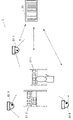
- FIG. 3 is an explanatory diagram showing an example of a configuration of the system according to the second embodiment.
- the system 2 has a product shelf 21, an information processing device 20, and an image pickup device 22. Products are displayed on the product shelves 21.
- the image pickup device 22 is a device capable of capturing an image or a moving image.
- the information processing device 20 generates shelving allocation information.
- the product shelf 21, the image pickup device 22, and the information processing device 20 can be connected via a communication network or the like.
- a plurality of image pickup devices 22 may be provided, such as the image pickup devices 22-1 to 22-3.
- a plurality of product shelves 21 may be provided as in the product shelves 21-1 to 21-2.
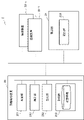
- FIG. 4 is a block diagram showing a configuration example of the system 2 according to the second embodiment.
- the system 2 includes an information processing device 20, a product shelf 21, and an image pickup device 22.
- the image pickup device 22 captures an image.
- the product shelf 21 has a detection unit 220.
- the detection unit 220 is a weight sensor, a distance sensor, and a pressure sensor.
- a plurality of detection units 220 may be provided. Further, as described above, for example, the detection unit 220 may be a combination of at least two sensors of a weight sensor, a distance sensor, and a pressure sensor.
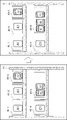
- FIG. 5 is an explanatory diagram showing an example of a change in the display state of the product shelf 21.
- Two products "A1” are displayed on the product shelf 21. After that, the product "A1” is newly arranged on the product shelf 21. Therefore, a total of three products “A1” are displayed on the product shelves 21.
- the detection unit 220 detects, for example, that the product "A1” is newly placed on the product shelf 21 as a change in the display state. Then, the detection unit 220 notifies the information processing apparatus 20 of the change in the display state via the communication network.
- the weight sensor detects a change in weight on the product shelf 21.
- an increase in the weight of one product “A1” is detected.
- the detection unit 220 notifies the change in weight via the communication network.
- the detection unit 220 may notify the information processing apparatus 20 of the change in weight and the amount of change in weight via the communication network.
- the detection unit 220 may notify with a shelf identifier, an identifier of the detection unit 220, or the like.
- the information processing apparatus 20 can identify which product shelf 21 the display state is changed to.
- the information processing apparatus 20 can identify which detection unit 220 is the change in the display state.
- the detection unit 220 may detect an increase in weight or a decrease in weight. In the case of increased weight, it is likely that the item has been newly displayed. Therefore, when the increase in weight is detected, the detection unit 220 may notify the information processing apparatus 20 of the increase and the amount of increase in weight via the communication network. For example, in FIG. 5, the detection unit 220 detects an increase in weight of the newly displayed product “A1”. Then, the detection unit 220 notifies the information processing apparatus 20 of the increase in weight and the amount of increase (corresponding to the weight of the product “A1”).
- the detection unit 220 may notify the information processing apparatus 20 of the increase by the weight of the product when the increase by the predetermined weight (weight of the product) is detected.
- the weight sensor may notify the information processing apparatus 20 when an increase in weight based on the weight of the product and a predetermined number is detected.
- the predetermined number may be preset by a store clerk or a user of the information processing apparatus 20.
- the detection unit 220 may notify the information processing apparatus 20 of the increase in weight, for example, when the amount of increase in weight exceeds the threshold value.
- the information processing apparatus 20 has, for example, a determination unit 201, an identification unit 203, a generation unit 202, and a storage unit 210.
- the information processing apparatus 20 according to the second embodiment has an identification unit 203 and a storage unit 210 added to the information processing apparatus 10 according to the first embodiment.
- the determination unit 201 has the function of the determination unit 101 according to the first embodiment.
- the generation unit 202 has the function of the generation unit 102 according to the first embodiment.
- the storage unit 210 stores the processing results of each function of the information processing device 20. Further, the storage unit 210 stores data used for processing of each unit. In FIG. 4, the storage unit 210 stores the shelf allocation information as the storage content.
- the storage content of the storage unit 210 in FIG. 4 is an example.
- the shelving allocation information may be stored in a storage unit of another device such as a storage device connected via a communication network or the like.
- the information processing apparatus 20 may be able to access various data. Therefore, as with the shelving allocation information, various data may be stored in a storage device or the like that can be accessed by the information processing device 20 via the communication network. As will be described in detail with reference to the hardware configuration example shown in FIG. 14, the information processing apparatus 20 loads and executes a program including various instructions for realizing each functional unit in the storage unit 210. Examples of the storage unit 210 include a ROM (Read Only Memory), a RAM (Random Access Memory), a semiconductor memory, an HDD (Hard Disk Drive), an SSD (Solid State Drive), and the like. Further, the storage unit 210 may be a combination of these.
- the determination unit 201 determines whether the change in the display state is due to the clerk. For example, if the detection unit 220 is a weight sensor when generating shelving allocation information when a new product is displayed, the determination unit 201 displays when an increase in weight on the product shelf 21 is detected. It may be determined whether the change in the state is due to the clerk. Thereby, as described in the first embodiment, the information processing apparatus 20 can generate the shelf allocation information when there is a high possibility that the products are newly displayed on the product shelves. Further, the determination unit 201 may determine whether the change in the display state is due to the clerk when the increase in the weight of the product on the product shelf 21 is detected.
- the detection unit 220 may compare the amount of increase in weight with the weight of the product or the like. Alternatively, the information processing apparatus 20 may determine whether or not the increase by the weight of the product is detected by comparing the weight increase amount notified from the detection unit 220 with the weight of the product.
- various methods can be mentioned as a method of determining whether or not the change is caused by the clerk by the determination unit 201.
- This determination method is not particularly limited. Examples of the determination method include a method using an image, a method using a change in weight on the product shelf 21, a method using a beacon device, and the like. The method using the change in weight on the product shelf 21 is performed when the product shelf 21 is provided with a weight sensor.
- the determination unit 201 determines that the change in the display state is a change due to the clerk by discriminating the clerk from the captured image.
- the image is captured by, for example, the image pickup device 22.
- the image is captured by the image pickup device 22 in the vicinity of the product shelf 21 or in front of the product shelf 21.
- the image may be an image of a person in the vicinity of the product shelf 21 and a part or all of the product shelf 21. Therefore, the image may be an image used for generating the shelving allocation information.
- the timing of imaging by the imaging device 22 is not particularly limited.
- the image pickup apparatus 22 may constantly capture a moving image.
- the image pickup device 22 may capture an image when the information processing device 20 notifies the image pickup instruction.
- the image pickup device 22 stores the image captured in the storage unit 210 accessible to the storage unit 210 and the information processing device 20.
- the image pickup apparatus 22 may send an image to the determination unit 201.
- the vicinity of the product shelf 21 is, for example, the vicinity of the front side where products can be displayed on the product shelf.
- biometric authentication is authentication using the characteristics of the living body that can be identified from the image.
- biometric authentication include face authentication.
- the determination unit 201 determines whether the person is a clerk by identifying the face of the person from the captured image. Specifically, for example, the face data of the clerk is stored in advance in the storage unit 210 or the like. Then, the determination unit 201 may determine whether it is a clerk by matching the face data extracted from the image with the stored face data. If the store clerk, the determination unit 201 determines that the change in the display state is the change in the display state by the store clerk.
- the target of image matching may be one possessed or worn by a clerk and can be identified from the image. For example, this includes uniforms, name tags, clerk IDs, and the like.
- a uniform is taken as an example.
- the determination unit 201 identifies the uniform from the captured image. If the uniform is identified, the determination unit 201 determines that the change in the display state is a change in the display state by the clerk.
- the determination unit 201 is a person who was in the vicinity of the product shelf 21 when a change in the display state was detected from a system (here, referred to as a flow line specifying system) or a device for specifying the flow line of each person. Determines if is a clerk.
- the system 2 may have a function of a flow line specifying system or device for specifying the flow line of each person.
- a flow line specifying system for example, an image or a moving image is used to specify the flow line of each person.
- a mass passing through the entrance is treated as a person.
- the determination unit 201 determines whether the person in the vicinity of the product shelf 21 is a clerk when the change in the display state on the product shelf 21 is detected based on the flow line of each person. For example, if the store clerk, the determination unit 201 determines that the change in the display state is the change in the display state by the store clerk.
- the determination unit 201 determines that the change in weight is due to the clerk based on a series of changes in weight on the product shelf 21 within a predetermined time from the time when the change in weight on the product shelf 21 is detected.
- the predetermined time is a time designated by a store clerk, a user of the information processing apparatus 20, or the like. Alternatively, the predetermined time may be the time learned from the experience value or the like.
- a series of weight changes is a time-series weight change.
- the series of changes in weight may be, for example, changes in the amount of change in weight over time.
- the series of weight changes is presumed to have a characteristic pattern that can occur due to changes by the clerk. For example, in display work such as product delivery by a clerk, products that have expired may be displayed after the products that have expired are removed from the product shelf 21. For example, a case where two products are taken and three identical products are newly placed within a short time (predetermined time) is taken as an example. In this case, as a series of changes in weight, for example, the weight of two products is reduced and the weight of three products is increased within a predetermined time.
- one or a plurality of patterns presumed to be changes in the display state by the clerk may be prepared in advance. Then, when the series of changes in weight match the pattern, the determination unit 201 determines that the change in the display state is a change due to the clerk.
- the determination unit 201 determines that the change in weight is due to the clerk based on the cumulative change in weight on the product shelf 21 within a predetermined time from the time when the change in weight on the product shelf 21 is detected. For example, in display work such as product delivery by a clerk, products may be arranged on the product shelf 21 in units of several to several tens. On the other hand, the customer is unlikely to return a large number of products such as several tens to the product shelf 21. Therefore, the determination unit 201 determines that the change in the display state is the change in the display state by the clerk when the cumulative change amount is a predetermined weight.
- the predetermined weight may be a weight specified by a store clerk, a user of the information processing apparatus 20, or the like.
- the predetermined weight may be a multiple of the weight of the product or a weight including an error in the multiple.
- a multiple of the weight of the goods may be obtained, for example, by the product of the weight of the goods and a predetermined number.
- the predetermined number is a number designated by a store clerk, a user of the information processing apparatus 20, and the like.
- There may be a plurality of predetermined weights.
- a plurality of predetermined weights may be prepared by preparing a plurality of predetermined numbers.
- the determination unit 201 may determine that the change in the display state is a change in the display state by the clerk when the cumulative change amount is equal to or more than a predetermined weight.
- the determination unit 201 may determine whether the change in weight is due to the clerk depending on whether the amount of change in weight on the product shelf 21 is within a predetermined range.
- the predetermined range may be determined by a store clerk or a user of the information processing apparatus 20.
- the predetermined range may be determined by the weight of the products displayed on the product shelves 21. For example, when canned beverages are displayed on the product shelf 21 for each individual, if the amount of change in weight is outside the range estimated to be the weight of one can, the product display may be incorrect. high. For example, in a product shelf 21 in which cans of about 350 ml to 500 ml are displayed, if the amount of change in weight is 5 kilograms, it is highly possible that the customer placed the product on the wrong product shelf 21.
- the determination unit 201 determines that the change in weight is not due to the clerk when the amount of change in weight on the product shelf 21 is not within a predetermined range. Further, the determination unit 201 determines that the change in weight is due to the clerk when the amount of change in weight on the product shelf 21 is within a predetermined range. Alternatively, when the amount of change in weight on the product shelf 21 is within a predetermined range, the determination unit 201 may further determine whether the change is due to a clerk by another determination method.
- the determination unit 201 determines whether the change in the display state is due to the clerk depending on whether the device wirelessly communicated with the beacon device is the clerk's device. ..
- the beacon device is provided on the product shelf 21. It is not particularly limited whether the beacon device or the clerk's device transmits the beacon signal.
- the beacon device and the information processing device 20 can communicate with each other via a network or the like. The beacon device and the information processing device 20 may be the same device.
- a beacon signal is transmitted from a store clerk's device.
- the determination unit 201 determines that the change in the display state is due to the clerk's change. Judge that there is. If the beacon device does not receive the beacon signal when the change in the display state on the product shelf 21 is detected, the determination unit 201 determines that the change in the display state is not a change due to the clerk.
- the determination method may be carried out individually or in combination. For example, when it is determined by a plurality of determination methods that the change is due to the clerk, the determination unit 201 may determine that the change in the display state is due to the clerk. Further, the determination unit 201 may switch various determination methods. For example, when the determination cannot be made by one of the plurality of determination methods, the determination unit 201 may determine whether the change in the display state is due to the clerk by the other determination method.
- the generation unit 202 has the function of the generation unit 102 described in the first embodiment.
- the identification unit 203 is a functional unit newly added in the second embodiment.
- the description will be made on the premise that only the same products are displayed for each product shelf 21 or the shelf board of the product shelf 21. Even a clerk may mistakenly display a product. Therefore, the information processing apparatus 20 generates shelving allocation information based on the identity of the products displayed on the product shelves 21.
- the identification unit 203 identifies the products displayed on the product shelf 21 based on the image of the display state.
- existing technology may be used.
- the identification unit 203 identifies the shape of the product, the name of the product, the color of the product, the barcode of the product, the product code, and the like from the image in the displayed state.
- the product "A1” and the product "A2" are of the same type (the contents are the same), if the taste and quantity are different, the product "A1" and the product “A2” are regarded as different products. ..
- 180 ml of melon-flavored juice and 180 ml of strawberry-flavored juice manufactured by the same manufacturer are different products.
- 350 ml canned beer and 500 ml canned beer having the same contents manufactured by the same manufacturer are regarded as different products.
- the difference between these products is identified by, for example, the shape of the product, the name of the product, and the product code described above.
- the same product may be defined as being identifiable by, for example, the name of the product or the product code.
- the generation unit 202 generates the shelving allocation information.
- the generated shelving allocation information is stored in a storage unit 210, a storage unit of another device accessible via a communication network, or the like.
- the generation unit 202 will be described with reference to a plurality of generation examples.
- the generation unit 202 generates shelving allocation information regarding the displayed products when the products identified by the identification unit 203 are the same. On the other hand, the generation unit 202 does not generate the shelving allocation information regarding the displayed products when the products identified by the identification unit 203 are different. Take, for example, a product shelf 21 on which melon-flavored juice is displayed. When three melon-flavored juices are identified from the image of the display state on the product shelf 21, the generation unit 202 generates the shelf allocation information regarding the melon-flavored juice. On the other hand, for example, when two melon-flavored juices and one strawberry-flavored juice are identified from the image of the display state on the product shelf 21, the generation unit 202 does not generate the shelf allocation information. .. As a result, the information processing apparatus 20 can generate the shelf allocation information when the store clerk correctly displays the product shelves 21.
- the generation unit 302 may generate shelving allocation information for the same product when the products of a plurality of individuals are the same among the displayed products acquired by the identification unit 303. A case where two melon-flavored juices are identified and one strawberry-flavored juice is identified will be described.
- the generation unit 202 generates shelving allocation information regarding melon-flavored juice.
- the generation unit 202 does not generate the shelving allocation information regarding the strawberry-flavored juice.
- the information processing apparatus 20 can generate shelving allocation information regarding the products, assuming that the products are in the correct display state.
- the generation unit 202 may not generate the shelving allocation information for the products that do not have the same product among the products identified by the identification unit 203.
- the information processing apparatus 20 can prevent the generation of shelving allocation information regarding products that may have been erroneously displayed.
- the identification unit 203 uses, for example, a predetermined product from an image of the display state. To identify. Then, the generation unit 202 generates the shelving allocation information regarding the predetermined product. The case where it is determined that the melon-flavored juice is displayed on the product shelf 21 will be described as an example.
- the identification unit 203 identifies two melon-flavored juices from the displayed image. Then, the generation unit 202 generates shelving allocation information regarding the two melon-flavored juices. Thereby, when it is determined in advance which product is to be displayed on the product shelf 21, the information processing apparatus 20 can generate the shelf allocation information regarding this product.
- the information processing apparatus 30 may perform the same processing as each of the above-mentioned generation examples.
- Various categories can be changed. For example, the same amount of juice from the same manufacturer may be in the same category. Alternatively, beer cans may be in the same category regardless of the manufacturer or quantity. In addition, a large group of beverages may be in the same category.
- the generation unit 202 generates shelving allocation information regarding the displayed products when the categories of the products identified by the identification unit 203 are the same. Further, for example, the information processing apparatus 30 does not generate the shelving allocation information when the categories of the products identified by the identification unit 203 are not the same. This is the end of the explanation of the generation example.
- FIG. 6 is a sequence diagram relating to an operation example of the system 2 according to the second embodiment.
- the product shelf 21 detects a change in the display state by the detection unit 220 (step S201). Then, the product shelf 21 notifies the information processing apparatus 20 of the change in the display state (step S202). In step S202, the product shelf 21 may also notify the amount of change and the like. For example, when the detection unit 220 is a weight sensor, the product shelf 21 may notify the amount of change in weight.
- the information processing apparatus 20 receives a notification of a change in the display state. Then, the information processing apparatus 20 performs a determination process (step S203). As the determination process, various determination methods described above can be mentioned.
- the information processing apparatus 20 determines whether the change in the display state is a change due to a store clerk (step S204). Although step S204 is a part of the determination process, step S204 is set as a separate step from step S203 for the sake of facilitation of explanation and understanding.
- step S205 the process of generating the shelf allocation information also includes the process of identifying the product by the identification unit 203.
- the information processing apparatus 20 ends the flow operation.
- step S204: No the information processing apparatus 20 ends the flow operation.
- FIG. 7 describes a determination process using an image.
- FIG. 8 describes a determination process using the cumulative change in weight.
- an example of the generation process (step S205) shown in FIG. 6 will be described with reference to FIG.
- FIG. 7 is a sequence diagram showing an example of determination processing using an image.
- the information processing device 20 notifies the image pickup device 22 of the image pickup instruction (step S2001).
- the image pickup apparatus 22 captures an image including the product shelf 21 and a person in front of the product shelf 21 (step S2002).
- the image pickup apparatus 22 may capture an image from a plurality of angles.
- an image in a display state is used to generate shelf allocation information. Therefore, in step S2002, the image pickup apparatus 22 may capture an image of the display state and an image including the periphery of the peripheral shelves.
- the information processing apparatus 20 transmits the captured image (step S2003). Then, the information processing apparatus 20 acquires an image (step S2004). Next, the information processing apparatus 20 determines the store clerk from the image (step S2005). The information processing apparatus 20 returns to the original flow after step S2005. Specifically, the information processing apparatus 20 shifts to the next step S204 of the determination process (step S203) of FIG.
- the step S2005 and the step S204 shown in FIG. 6 may be one step. Further, as the determination method using an image in step S2005, as described above, biometric authentication, flow lines, matching of uniforms, and the like can be mentioned.
- FIG. 8 is a sequence diagram showing an example of a determination process using a change in weight.
- the information processing apparatus 20 determines whether or not a predetermined time has elapsed from the time when the change in the display state is detected (step S2011). If the predetermined time has not elapsed (step S2011: No), the information processing apparatus 20 returns to step S2011. As a result, a series of changes in the display state can be obtained within a predetermined time from the time when the change in the display state is detected.
- the information processing apparatus 20 calculates a predetermined weight based on the predetermined number and the weight of the product (step S2012).
- step S2012 may be a step of acquiring a predetermined weight calculated in advance from the storage unit 210 or the like. Then, the information processing apparatus 20 calculates the cumulative change amount based on the series of weight changes (step S2013). For example, in step S2013, the information processing apparatus 20 can calculate the cumulative change amount by summing up the series of weight changes. Then, the information processing apparatus 20 compares the cumulative change amount with the predetermined weight (step S2014). The information processing apparatus 20 returns to the original flow after step S2014. Specifically, the information processing apparatus 20 proceeds to step S204 following step S203 in FIG.
- FIG. 9 is a sequence diagram showing an example of the shelving allocation information generation process.
- the information processing device 20 notifies the image pickup device 22 of the image pickup instruction (step S2101).
- the image pickup device 22 captures an image of the display state of the product shelf 21 (step S2102).
- the information processing apparatus 20 transmits the captured image (step S2103).
- the information processing apparatus 20 acquires an image (step S2104).
- the information processing apparatus 20 identifies the products displayed on the product shelves 21 from the images (step S2105). Then, the information processing apparatus 20 determines whether different products are displayed (step S2106).
- step S2106 When different products are displayed (step S2106: Yes), the information processing apparatus 20 ends the flow operation. For example, when two melon-flavored juices are displayed and one strawberry-flavored juice is displayed, the shelving allocation information is not generated. As a result, when different products are displayed on the product shelf 21, the shelf allocation information is not generated. Since there is no next step after step S205 in FIG. 6, in the case of Yes in step S2106, the information processing apparatus 20 ends the flow operation.
- step S2106 When different products are not displayed (step S2106: No), the information processing apparatus 20 generates shelving allocation information (step S2107). Then, following step S2107, the information processing apparatus 20 ends the flow operation. For example, when three melon-flavored juices are displayed, shelving allocation information regarding the melon-flavored juice is generated.
- steps S2101 to S2104 in FIG. 9 may be steps S2001 to S2004 shown in FIG. 7, respectively.
- the information processing apparatus 20 may start the flow from S2105 in the generation process (step S205).
- the information processing apparatus 20 Similar to the first embodiment, the information processing apparatus 20 generates shelving allocation information when the change in the display state of the product on the product shelf is a change by the store clerk. As a result, the information processing apparatus 20 can generate the shelf allocation information in which the products are more correctly displayed on the product shelves. Further, the information processing apparatus 20 can suppress the generation of shelving allocation information at a timing when the display is not correctly displayed. Therefore, the information processing apparatus 20 can improve the accuracy of the shelving allocation information. First, the description will be omitted in the first embodiment, and the effect of each determination method described in the second embodiment will be described.
- the information processing apparatus 20 determines whether the change in the display state is due to the clerk by discriminating the clerk from the image.
- existing technologies such as biometric authentication, uniform image matching, and flow lines can be used.
- the information processing apparatus 20 can accurately determine whether or not the display state is changed by the store clerk.
- the information processing device 20 acquires an image from the image pickup device 22 when the shelf allocation information is generated. Therefore, the information processing apparatus 20 does not need to add a new component or the like for the determination by making the determination using the image.
- the information processing apparatus 20 determines whether the change in the display state is due to the clerk based on the series of changes in weight within a predetermined time from the time when the change in the display state is detected. As a result, it is possible to accurately determine whether or not the display state is changed by the clerk according to the characteristics of the display work of the clerk. Further, when the change in the display state is detected by the weight sensor, the information processing apparatus 20 does not need to add a new component or the like for the determination.
- the information processing apparatus 20 generates shelving allocation information regarding the displayed products when the products identified from the displayed images are the same. As a result, for example, when three melon-flavored juices are identified from the image of the display state of the product shelf 21, shelving allocation information regarding the melon-flavored juice is generated. Therefore, the information processing apparatus 20 can generate the shelf allocation information when the store clerk correctly displays the product shelves 21. As a result, the information processing apparatus 20 can generate more accurate shelving allocation information.
- FIG. 10 is a block diagram showing a configuration example of the system 3 according to the third embodiment.
- the system 3 corresponds to the system 2 according to the second embodiment.
- the system 3 includes an information processing device 30, a product shelf 31, and an image pickup device 32.
- the product shelf 31 has a detection unit 320.
- the product shelf 31 is the same as the product shelf 21 according to the second embodiment. Therefore, the description of the product shelf 31 will be omitted.
- the image pickup device 32 is the same as the image pickup device 22 according to the second embodiment. The description of the image pickup apparatus 32 will be omitted.
- the information processing device 30 corresponds to the information processing devices 10 and 20 according to the first and second embodiments.
- the information processing device 30 includes a determination unit 301, an identification unit 303, an output unit 304, a generation unit 302, and a storage unit 310.
- the information processing apparatus 30 newly has an output unit 304.
- the determination unit 301 has the functions of the determination units 101 and 201 according to the first and second embodiments.
- the generation unit 302 has the functions of the generation units 102 and 202 according to the first and second embodiments.
- the identification unit 303 has the function of the identification unit 203 according to the second embodiment.
- the storage unit 310 may be, for example, the same as the storage unit 210 according to the second embodiment.
- the third embodiment will explain the differences from the second embodiment.
- the generation example 1 is carried out on the premise that only the same products are displayed on the product shelves 31.
- the third embodiment in this case, if a different product is displayed on the product shelf 31, the store clerk is notified to that effect.
- the output unit 304 When the plurality of products acquired by the identification unit 303 are different, the output unit 304 notifies the clerk to that effect.
- the method of notifying the clerk is not particularly limited. Examples of the notification method include sending an e-mail or an electronic message, and outputting to an output device.
- the output unit 304 outputs, for example, different information to the output device of the information processing device 30. Alternatively, for example, the output unit 304 may notify the store clerk's device that it is different.
- the store clerk's device is a store management terminal device or a store clerk's terminal device. Alternatively, for example, the output unit 304 may notify the output device or the like provided on the product shelf 31 that the product is different.
- the output unit 304 notifies the clerk to that effect.
- the information processing apparatus 30 can inform the store clerk that the display of the product shelf 31 by the store clerk may not be accurate.
- the output unit 304 does not notify the clerk.
- the third embodiment can be changed in various ways.
- the second embodiment and the third embodiment may be implemented in combination.
- the generation example 1 and the notification of the clerk by the output unit 304 may be performed in combination.
- the information processing device 30 notifies the clerk.
- the information processing apparatus 30 generates shelving allocation information regarding the identified products.
- An example of the combination is shown in the flowchart of FIG.
- the output unit 304 tells the clerk when products of different categories are identified from the image. You may notify the fact.
- the output unit 304 may notify the clerk to that effect. In this way, even when an abnormal display state is detected, the output unit 304 may notify the store clerk to that effect.
- a candidate for shelving allocation information regarding the same product may be generated and notified to the clerk. Then, the clerk may decide whether to adopt the candidate for the shelf allocation information. Further, the clerk may check the product shelf 31 by looking at the candidate for the shelf allocation information. In addition, the clerk may correct the candidate for the shelf allocation information. Specifically, the generation unit 302 generates a candidate for shelving allocation information regarding the same product when the products of a plurality of individuals are the same among the displayed products acquired by the identification unit 303. Then, the output unit 304 notifies the clerk of the candidate of the generated shelf allocation information.
- the notification method here is not particularly limited.
- the information processing apparatus 30 may accept from the store clerk whether or not to adopt the candidate for the shelf allocation information. For example, when it is accepted that the candidate for the shelf allocation information is adopted, the storage unit 310 stores the candidate for the shelf allocation information as the shelf allocation information. If it is accepted that the candidate for shelving allocation information is not adopted, the candidate for shelving allocation information may be discarded. In addition, the candidate for the shelf allocation information may be corrected by the clerk. For example, the storage unit 310 stores the modified candidate for the shelf allocation information as the shelf allocation information. In order to realize such a function, although not shown, the information processing apparatus 30 may further have a functional unit such as a selection unit and a reception unit.
- a functional unit such as a selection unit and a reception unit.
- the generation unit 302 when two melon-flavored juices are identified and one strawberry-flavored juice is identified from the displayed image, the generation unit 302 generates a candidate for shelving allocation information regarding the melon-flavored juice. .. On the other hand, the generation unit 202 does not generate a candidate for shelving allocation information regarding strawberry-flavored juice. Then, the output unit 304 notifies the clerk of the candidate for the shelf allocation information regarding the melon-flavored juice.
- FIG. 11 is a sequence diagram of an example of the shelving allocation information generation process according to the third embodiment.
- FIG. 11 shows an example in which the generation example 1 described in the second embodiment and the function of the output unit 304 are combined.
- the shelf allocation information generation process (step S205) shown in FIG. 6 may be replaced with the shelf allocation information generation process (step S305) shown in FIG.
- steps S3101 to S3106 are the same as steps S2101 to S2106 shown in FIG. 9, respectively.
- steps S3101 to S3105 will be omitted.
- step S3105 the information processing apparatus 30 determines whether different products are displayed (step S3106). When different products are displayed (step S3106: Yes), the information processing apparatus 30 notifies the clerk that the different products are displayed (step S3107). Following step S3107, the information processing apparatus 30 ends the flow operation. On the other hand, when different products are not displayed (step S3106: No), the information processing apparatus 30 generates shelving allocation information (step S3108). Following step S3108, the information processing apparatus 30 ends the flow operation.
- the information processing device 30 notifies the clerk that the product is different.
- the information processing device 30 can urge the clerk to display the products more correctly on the product shelves 31.
- the clerk can confirm the display state of the product by this notification.
- the clerk can redo the display.
- the information processing apparatus 30 can improve the accuracy of the shelving allocation information.
- the information processing device 30 when the products of a plurality of individuals are the same among the products identified from the image in the display state, the information processing device 30 generates a candidate for shelving allocation information regarding the same product and notifies the clerk. As a result, if a plurality of the same products are displayed, the information processing apparatus 30 can generate candidates for shelving allocation information regarding the products, assuming that the products are likely to be in the correct display state. Then, the information processing apparatus 30 notifies the clerk of the candidate for the shelf allocation information. As a result, the information processing apparatus 30 can inform the candidate of the shelf allocation information that the store clerk should pay attention to. As a result, the information processing apparatus 30 can improve the accuracy of the shelving allocation information. Further, the information processing apparatus 30 can prevent the generation of shelving allocation information regarding products that may be erroneously displayed.
- Embodiment 4 An example in which a product shelf is divided into a plurality of areas will be described.
- the plurality of areas may be separated in any way.
- the plurality of areas are defined by, for example, a plate or a container.
- a board In the case of a board, there is an area where products can be placed on the board and one area.
- the area of one container is one area.
- a plurality of areas are separated by a plurality of containers.
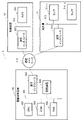
- FIG. 12 is a block diagram showing a configuration example of the system according to the fourth embodiment.
- the system 4 according to the fourth embodiment includes an information processing device 40, a product shelf 41, and an image pickup device 42.
- the product shelf 41 has a plurality of containers 43-1 to 43-m.
- the detection units 420-1 to 420-p are provided separately for the container 43.
- m is an integer of 2 or more.
- p is an integer of 1 or more.
- m and p may be the same. Values different from m and p may be used.
- the detection unit 420 may not be provided for all the containers 43.
- a plurality of detection units 420 may be provided for some of the containers 43.
- the detection unit 420 has the same function as the above-mentioned detection units 220 and 320. Then, the detection unit 420 detects a change in the display state in the container 43.
- the image pickup device 42 is the same as the above-mentioned image pickup devices 22 and 32.
- the information processing device 40 corresponds to the information processing devices 10, 20, and 30 according to the first to third embodiments.
- the information processing apparatus 40 has no change in each component from the information processing apparatus 30 according to the third embodiment.
- Each component of the information processing device 40 has a function of a component of the corresponding information processing device 30.
- the generation unit 402 generates shelving allocation information in the container 43 (region) in which a change in the display state is detected among the plurality of containers 43 (plural areas). A specific example will be described with reference to FIG.
- FIG. 13 is an explanatory diagram showing an example of a change in the display state of the container 43.
- the product shelf 41 is divided into a plurality of stages by a plurality of boards.
- the product shelf 41 can arrange products on each plate. Further, each plate is provided with a container 43. In this way, the product shelves 41 are separated by a plurality of containers 43.
- the product "B" is newly displayed in the container 43-5.
- the detection unit 420-5 detects a change in the display state in the container 43-5.
- the determination unit 401 determines whether the change in the display state is due to the clerk.
- the generation unit 402 generates the shelving allocation information in the container 43-5 when the change in the display state in the container 43-5 is a change by the clerk.
- processing by the identification unit 403 and the generation unit 402 of the third embodiment may be performed for each product shelf 41.
- Each production example described in the second embodiment may be carried out in units of 43 containers.
- the identification unit 403 identifies the products displayed in the container 43-5 based on the image of the displayed state.
- the image in the display state may be an image of the entire product shelf 41. Further, the image of the display state may be an image of a part of the product shelf 41 including the container 43-5.
- the generation unit 402 generates shelving allocation information regarding the product "B1" displayed in the container 43-5 when the displayed products acquired by the identification unit 403 are the same. On the other hand, when a product different from the product "B1" is displayed in the container 43-5, the generation unit 402 does not generate the shelf allocation information.
- the notification to the clerk described in the third embodiment may be carried out in units of 43 containers.
- the output unit 404 is a clerk when a different product is identified in the container 43 in which the change in the display state is detected from the image of the display state. To that effect.
- the information processing apparatus 40 generates shelving allocation information in the container 43 (region) in which a change in the display state is detected among the plurality of containers 43 (plural areas). In this way, the information processing apparatus 40 can generate the shelf allocation information not for the entire product shelf 41 but for each small container 43 (area) that divides the product shelf 41. As a result, the information processing apparatus 40 can generate the shelving allocation information with higher accuracy.
- each container 43 may be arranged in any way on the product shelf 41. As shown in FIG. 13, one or more containers 43 may be arranged on each plate of the product shelf 41. For example, the container 43 may be attached so as to be hooked on the product shelf 41.
- Embodiments 1 to 4 may be combined. Further, the information processing devices 10, 20, 30, and 40 according to the first to fourth embodiments may be combined with existing techniques.
- FIG. 14 shows an example of the hardware configuration of the system.
- the system 5 includes, for example, an information processing device 50, a product shelf 51, and an image pickup device 52.
- the information processing device 50 is, for example, an example in which the information processing devices 10, 20, 30, and 40 are realized by a computer.
- the information processing device 50 includes a CPU (Central Processing Unit) 501, a ROM 502, a RAM 503, a storage device 504, and a communication interface 505. Each component is connected via a bus 506.
- CPU Central Processing Unit
- the CPU 501 controls the entire information processing device 50.
- the CPU 501 may operate an OS (Operating System) to control the entire information processing apparatus 50.
- the CPU 501 may have a plurality of cores.
- the information processing device 50 has a ROM 502, a RAM 503, a storage device 504, and the like as storage units.
- the storage device 504 include semiconductor memories such as flash memories, HDDs, SSDs, and the like.
- the storage device 504 stores various programs such as an OS program, an application program, and a program according to the first to fourth embodiments.
- the ROM 502 stores the application program.
- the ROM 502 may store the programs according to the first to fourth embodiments.
- the RAM 503 is used as a work area of the CPU 501.
- the CPU 501 loads the program stored in the storage device 504, the ROM 502, or the like. Then, the CPU 501 executes each process coded in the program. Further, the CPU 501 may download various programs via the communication network 510. Further, the CPU 501 functions as a part or all of the information processing apparatus 50. Then, the CPU 501 may execute the process or the instruction in the illustrated flowchart based on the program.
- the communication interface 505 is connected to a communication network 510 such as LAN (Local Area Network) or WAN (Wide Area Network) through a wireless or wired communication line.
- a communication network 510 such as LAN (Local Area Network) or WAN (Wide Area Network)
- the information processing device 50 is connected to an external device or an external computer via the communication network 510.
- the communication interface 505 controls the interface between the communication network 510 and the inside of the information processing device 50.
- the communication interface 505 controls the input / output of data from an external device or an external computer.
- the information processing device 50 may have a drive device or the like. Then, the CPU 501 may read a program or data from a recording medium mounted on a drive device or the like to the RAM 503. Examples of the recording medium include an optical disk, a flexible disk, a magnetic optical disk, a USB (Universal Serial Bus) memory, and the like. Further, for example, the information processing device 50 may have an input device such as a keyboard or a mouse. The information processing device 50 may have an output device such as a display.
- the product shelf 51 has, for example, a sensor 511 (detection unit) and a communication interface 512.
- the communication interface 512 and each sensor 511 are connected via the bus 513.
- the sensor can be variously changed such as a weight sensor, a distance sensor, a pressure sensor, and a motion sensor.
- the communication interface 512 is connected to a communication network 510 such as a LAN or WAN through a wireless or wired communication line.
- the product shelf 51 may have a plurality of sensors 511.
- the number and type of sensors 511 are not particularly limited.
- the number and types of sensors 511 can be variously changed, for example, depending on the embodiment and the determination method.
- the product shelf 51 may have a microcomputer, a processor, or the like. As a result, the information processing apparatus 50 may cause the product shelf 51 to perform simple calculations and the like. Further, the product shelf 51 may have an output device, an input device, and the like. Further, the communication interface 512, the sensor 511 and the like may be built in the product shelf 51. Alternatively, the communication interface 512, the sensor 511, and the like may be externally attached to the product shelf 51. If it is externally attached, each embodiment can be realized even with the existing product shelf 51. Further, these do not have to be in direct physical contact with the product shelf 51.
- the image pickup apparatus 52 includes a camera 521 and a communication interface 522. Each component is connected by a bus 523.
- the communication interface 522 is connected to a communication network 510 such as a LAN or WAN through, for example, a wireless or wired communication line.
- the image pickup apparatus 52 has a function of being able to capture an image. Further, the image pickup device 52 may be capable of capturing a moving image. Further, as described above, a plurality of image pickup devices 52 may be provided.
- the information processing devices 10, 20, 30, and 40 are realized by the computer hardware shown in FIG. Further, the information processing devices 10, 20, 30, and 40 are realized by one physically connected device. Alternatively, the information processing devices 10, 20, 30, and 40 may be realized by connecting two or more physically separated devices by wire or wirelessly.
- An example is given when a system having a determination unit 201, a generation unit 202, and a detection unit 220 is realized.
- the product shelf 21 has a detection unit 220.
- the information processing apparatus 20 has a determination unit 201 and a generation unit 202. Alternatively, for example, the information processing apparatus 20 has a determination unit 201. Then, a device different from the information processing device 20 may have a generation unit 202.
- the product shelf 31 has a detection unit 320.
- the information processing device 30 has a determination unit 301.
- a device different from the information processing device 30 may have an identification unit 303, an output unit 304, and a generation unit 302.
- each device may be realized by any combination of a computer and a program, which are different for each component.
- a plurality of components included in each device may be realized by any combination of one computer and a program.
- each component of the information processing apparatus 10, 20, 30, 40 may be realized by a circuit for a specific application. Further, a part or all of the information processing apparatus 10, 20, 30, 40 may be realized by a general-purpose circuit including a processor such as an FPGA (Field Programmable Gate Array). Further, a part or all of the information processing devices 10, 20, 30, 40 may be realized by a combination of a circuit for a specific application, a general-purpose circuit, or the like. Further, these circuits may be a single integrated circuit. Alternatively, these circuits may be divided into a plurality of integrated circuits. Then, a plurality of integrated circuits may be configured by being connected via a bus or the like.
- each component of each device when a part or all of each component of each device is realized by a plurality of computers and circuits, the plurality of computers and circuits may be centrally arranged or distributed.
- the information processing method described in each embodiment is realized by executing the information processing devices 10, 20, 30, and 40. Further, the information processing method is realized by executing a program prepared in advance by a computer such as the information processing apparatus 10, 20, 30, 40.
- the program described in each embodiment is recorded on a computer-readable recording medium such as an HDD, SSD, flexible disk, optical disk, flexible disk, magnetic disk disk, or USB memory. Then, this program is executed by being read from the recording medium by a computer.
- the program may also be distributed via the communication network 510.
- each component may be realized by a computer device or firmware based on program control.
- the present disclosure has been described above with reference to each embodiment, the present disclosure is not limited to the above-described embodiment.
- the structure and details of the present disclosure may include embodiments to which various modifications that can be grasped by those skilled in the art within the scope of the present disclosure are applied.
- the present disclosure may include embodiments in which the matters described herein are appropriately combined or replaced as appropriate.
- the matters described using a particular embodiment may be applied to other embodiments as long as they do not cause inconsistency.
- a plurality of operations are described in order in the form of a flowchart, the order of description does not limit the order in which the plurality of operations are executed. Therefore, when each embodiment is implemented, the order of the plurality of operations can be changed within a range that does not hinder the content.
- the determination means determines that the change in the display state is a change due to the clerk by discriminating the clerk from the captured image.
- the information processing apparatus according to any one of Supplementary note 1 to 3.
- the determination means determines that the change in weight is due to the clerk based on a series of changes in the weight in the product shelf within a predetermined time from the time when the change in the weight in the product shelf is detected. , The information processing apparatus according to Appendix 2 or 3.
- the determination means determines that the change in weight is due to the clerk based on the cumulative change in weight in the product shelf within a predetermined time from the time when the change in weight in the product shelf is detected. , The information processing apparatus according to Appendix 5.
- the product shelves are divided into a plurality of areas, and the product shelves are divided into a plurality of areas.
- the generation means generates shelving allocation information in a region in which a change in the display state is detected among the plurality of regions.
- the information processing apparatus according to any one of Supplementary note 1 to 9.
- a detection means for detecting changes in the display state of products on the product shelves When the change in the display state is detected by the detection means, a determination means for determining whether or not the change in the display state is a change by a clerk, and When the change in the display state is a change due to the store clerk, a generation means for generating shelving allocation information and A system equipped with.
Landscapes
- Business, Economics & Management (AREA)
- Economics (AREA)
- Engineering & Computer Science (AREA)
- General Physics & Mathematics (AREA)
- Tourism & Hospitality (AREA)
- Finance (AREA)
- Theoretical Computer Science (AREA)
- Accounting & Taxation (AREA)
- Marketing (AREA)
- General Business, Economics & Management (AREA)
- Physics & Mathematics (AREA)
- Strategic Management (AREA)
- Development Economics (AREA)
- Human Resources & Organizations (AREA)
- Quality & Reliability (AREA)
- Operations Research (AREA)
- Entrepreneurship & Innovation (AREA)
- Health & Medical Sciences (AREA)
- General Health & Medical Sciences (AREA)
- Primary Health Care (AREA)
- Management, Administration, Business Operations System, And Electronic Commerce (AREA)
Priority Applications (2)
| Application Number | Priority Date | Filing Date | Title |
|---|---|---|---|
| US18/021,742 US20240029017A1 (en) | 2020-09-28 | 2021-09-21 | Information processing device, information processing method, and recording medium |
| JP2022551983A JP7670064B2 (ja) | 2020-09-28 | 2021-09-21 | 情報処理装置、方法、およびプログラム |
Applications Claiming Priority (2)
| Application Number | Priority Date | Filing Date | Title |
|---|---|---|---|
| JP2020161649 | 2020-09-28 | ||
| JP2020-161649 | 2020-09-28 |
Publications (1)
| Publication Number | Publication Date |
|---|---|
| WO2022065282A1 true WO2022065282A1 (ja) | 2022-03-31 |
Family
ID=80846607
Family Applications (1)
| Application Number | Title | Priority Date | Filing Date |
|---|---|---|---|
| PCT/JP2021/034516 Ceased WO2022065282A1 (ja) | 2020-09-28 | 2021-09-21 | 情報処理装置、システム、情報処理方法、および記録媒体 |
Country Status (3)
| Country | Link |
|---|---|
| US (1) | US20240029017A1 (https=) |
| JP (1) | JP7670064B2 (https=) |
| WO (1) | WO2022065282A1 (https=) |
Cited By (1)
| Publication number | Priority date | Publication date | Assignee | Title |
|---|---|---|---|---|
| JPWO2024057387A1 (https=) * | 2022-09-13 | 2024-03-21 |
Citations (4)
| Publication number | Priority date | Publication date | Assignee | Title |
|---|---|---|---|---|
| WO2016117600A1 (ja) * | 2015-01-22 | 2016-07-28 | 日本電気株式会社 | 商品棚割管理装置及び商品棚割管理方法 |
| JP2019219853A (ja) * | 2018-06-19 | 2019-12-26 | 東芝テック株式会社 | 画像処理装置 |
| JP2020057164A (ja) * | 2018-10-01 | 2020-04-09 | 株式会社野村総合研究所 | 解析装置 |
| WO2020179480A1 (ja) * | 2019-03-01 | 2020-09-10 | 日本電気株式会社 | 物品推定装置、物品推定方法、及びプログラム |
Family Cites Families (7)
| Publication number | Priority date | Publication date | Assignee | Title |
|---|---|---|---|---|
| JP2003323539A (ja) * | 2002-04-30 | 2003-11-14 | Fujitsu Ltd | 店舗棚割管理システム及び情報処理装置 |
| US8189926B2 (en) * | 2006-12-30 | 2012-05-29 | Videomining Corporation | Method and system for automatically analyzing categories in a physical space based on the visual characterization of people |
| US7762458B2 (en) * | 2007-03-25 | 2010-07-27 | Media Cart Holdings, Inc. | Media enabled shopping system user interface |
| US10438084B2 (en) * | 2013-03-04 | 2019-10-08 | Nec Corporation | Article management system, information processing apparatus, and control method and control program of information processing apparatus |
| US10282698B2 (en) * | 2014-12-30 | 2019-05-07 | Ebay Inc. | Smart shelves |
| US10643059B2 (en) * | 2018-01-10 | 2020-05-05 | Trax Technology Solutions Pte Ltd. | Inspecting store shelf capacity |
| CN113544753A (zh) * | 2019-03-25 | 2021-10-22 | 日本电气株式会社 | 销售管理服务器、销售管理系统、销售管理方法和记录介质 |
-
2021
- 2021-09-21 WO PCT/JP2021/034516 patent/WO2022065282A1/ja not_active Ceased
- 2021-09-21 US US18/021,742 patent/US20240029017A1/en active Pending
- 2021-09-21 JP JP2022551983A patent/JP7670064B2/ja active Active
Patent Citations (4)
| Publication number | Priority date | Publication date | Assignee | Title |
|---|---|---|---|---|
| WO2016117600A1 (ja) * | 2015-01-22 | 2016-07-28 | 日本電気株式会社 | 商品棚割管理装置及び商品棚割管理方法 |
| JP2019219853A (ja) * | 2018-06-19 | 2019-12-26 | 東芝テック株式会社 | 画像処理装置 |
| JP2020057164A (ja) * | 2018-10-01 | 2020-04-09 | 株式会社野村総合研究所 | 解析装置 |
| WO2020179480A1 (ja) * | 2019-03-01 | 2020-09-10 | 日本電気株式会社 | 物品推定装置、物品推定方法、及びプログラム |
Cited By (3)
| Publication number | Priority date | Publication date | Assignee | Title |
|---|---|---|---|---|
| JPWO2024057387A1 (https=) * | 2022-09-13 | 2024-03-21 | ||
| WO2024057387A1 (ja) * | 2022-09-13 | 2024-03-21 | 日本電気株式会社 | 棚割りデータ生成装置、棚割りデータ生成システム、棚割りデータ生成方法および記憶媒体 |
| JP7798202B2 (ja) | 2022-09-13 | 2026-01-14 | 日本電気株式会社 | 棚割りデータ生成装置、棚割りデータ生成システム、棚割りデータ生成方法およびプログラム |
Also Published As
| Publication number | Publication date |
|---|---|
| US20240029017A1 (en) | 2024-01-25 |
| JP7670064B2 (ja) | 2025-04-30 |
| JPWO2022065282A1 (https=) | 2022-03-31 |
Similar Documents
| Publication | Publication Date | Title |
|---|---|---|
| US11638490B2 (en) | Method and device for identifying product purchased by user and intelligent shelf system | |
| US10055626B2 (en) | Data reading system and method with user feedback for improved exception handling and item modeling | |
| CN108460908A (zh) | 自动售货方法和系统以及自动售货装置和自动贩售机 | |
| WO2019165892A1 (zh) | 自动售货方法、装置和计算机可读存储介质 | |
| US20170068945A1 (en) | Pos terminal apparatus, pos system, commodity recognition method, and non-transitory computer readable medium storing program | |
| CN108629591A (zh) | 销售数据处理装置及控制方法、终端设备 | |
| CN107992779A (zh) | 一种顾客行为监督方法、系统及无人商店 | |
| US10509990B2 (en) | Radio-frequency identification-based shelf level inventory counting | |
| JP2024040297A (ja) | 物品推定装置、物品推定方法、及びプログラム | |
| US20160063519A1 (en) | Data analysis apparatus, data analysis system, commodity exchange forecasting apparatus, commodity exchange forecasting system, data analysis method, commodity exchange forecasting method, and computer-readable medium | |
| AU2023285914B2 (en) | Counting gaming chips | |
| KR20190096975A (ko) | 자동 상점 내 등록 시스템 | |
| CN107833403B (zh) | 商品登记装置及商品登记方法、终端设备 | |
| CN110998592A (zh) | 用于零售系统的非规范扫描 | |
| JP5865316B2 (ja) | 商品登録装置およびプログラム | |
| US20180308084A1 (en) | Commodity information reading device and commodity information reading method | |
| US20170309113A1 (en) | Vending machine recognition apparatus, vending machine recognition method, and recording medium | |
| CN111046889A (zh) | 压制茶信息处理的方法、装置及电子设备 | |
| JP2025074363A (ja) | データ処理装置及びその制御プログラム | |
| CN109522947B (zh) | 识别方法和设备 | |
| WO2022065282A1 (ja) | 情報処理装置、システム、情報処理方法、および記録媒体 | |
| JP6908491B2 (ja) | 商品情報読取装置およびプログラム | |
| JP2020135422A (ja) | セルフposシステム、制御方法及び制御プログラム | |
| CN110647783A (zh) | 一种无人货架付款检测方法、装置和系统 | |
| JP2021080087A (ja) | 情報処理システムと情報処理装置と情報処理プログラムと情報処理方法 |
Legal Events
| Date | Code | Title | Description |
|---|---|---|---|
| 121 | Ep: the epo has been informed by wipo that ep was designated in this application |
Ref document number: 21872411 Country of ref document: EP Kind code of ref document: A1 |
|
| ENP | Entry into the national phase |
Ref document number: 2022551983 Country of ref document: JP Kind code of ref document: A |
|
| WWE | Wipo information: entry into national phase |
Ref document number: 18021742 Country of ref document: US |
|
| NENP | Non-entry into the national phase |
Ref country code: DE |
|
| 122 | Ep: pct application non-entry in european phase |
Ref document number: 21872411 Country of ref document: EP Kind code of ref document: A1 |