WO2022045009A1 - 流体を追跡するための組成物及び流体の追跡方法 - Google Patents
流体を追跡するための組成物及び流体の追跡方法 Download PDFInfo
- Publication number
- WO2022045009A1 WO2022045009A1 PCT/JP2021/030610 JP2021030610W WO2022045009A1 WO 2022045009 A1 WO2022045009 A1 WO 2022045009A1 JP 2021030610 W JP2021030610 W JP 2021030610W WO 2022045009 A1 WO2022045009 A1 WO 2022045009A1
- Authority
- WO
- WIPO (PCT)
- Prior art keywords
- nucleic acid
- acid molecule
- fluid
- composition
- liposome
- Prior art date
- Legal status (The legal status is an assumption and is not a legal conclusion. Google has not performed a legal analysis and makes no representation as to the accuracy of the status listed.)
- Ceased
Links
Images


Classifications
-
- C—CHEMISTRY; METALLURGY
- C12—BIOCHEMISTRY; BEER; SPIRITS; WINE; VINEGAR; MICROBIOLOGY; ENZYMOLOGY; MUTATION OR GENETIC ENGINEERING
- C12Q—MEASURING OR TESTING PROCESSES INVOLVING ENZYMES, NUCLEIC ACIDS OR MICROORGANISMS; COMPOSITIONS OR TEST PAPERS THEREFOR; PROCESSES OF PREPARING SUCH COMPOSITIONS; CONDITION-RESPONSIVE CONTROL IN MICROBIOLOGICAL OR ENZYMOLOGICAL PROCESSES
- C12Q1/00—Measuring or testing processes involving enzymes, nucleic acids or microorganisms; Compositions therefor; Processes of preparing such compositions
- C12Q1/68—Measuring or testing processes involving enzymes, nucleic acids or microorganisms; Compositions therefor; Processes of preparing such compositions involving nucleic acids
- C12Q1/6844—Nucleic acid amplification reactions
- C12Q1/6851—Quantitative amplification
-
- C—CHEMISTRY; METALLURGY
- C12—BIOCHEMISTRY; BEER; SPIRITS; WINE; VINEGAR; MICROBIOLOGY; ENZYMOLOGY; MUTATION OR GENETIC ENGINEERING
- C12Q—MEASURING OR TESTING PROCESSES INVOLVING ENZYMES, NUCLEIC ACIDS OR MICROORGANISMS; COMPOSITIONS OR TEST PAPERS THEREFOR; PROCESSES OF PREPARING SUCH COMPOSITIONS; CONDITION-RESPONSIVE CONTROL IN MICROBIOLOGICAL OR ENZYMOLOGICAL PROCESSES
- C12Q1/00—Measuring or testing processes involving enzymes, nucleic acids or microorganisms; Compositions therefor; Processes of preparing such compositions
- C12Q1/68—Measuring or testing processes involving enzymes, nucleic acids or microorganisms; Compositions therefor; Processes of preparing such compositions involving nucleic acids
- C12Q1/6844—Nucleic acid amplification reactions
- C12Q1/686—Polymerase chain reaction [PCR]
Definitions
- the present invention relates to a composition for tracking a fluid and a method for tracking a fluid. More specifically, the present invention is a composition for tracking a fluid containing a tracker containing a nucleic acid molecule and a carrier as a component, and tracking of a fluid using a tracker containing a nucleic acid molecule and a carrier as a component. Regarding the method.
- Fluid tracking for groundwater and surface water is carried out in surveys of environmental pollution and groundwater resources, and evaluation of ground and land use.
- a common method for measuring water source areas such as groundwater, recharge volume, flow path, flow direction, flow velocity, etc. is to insert a tracker that can be distinguished from groundwater into a vertical hole excavated in the ground and use it as an observation point.
- the tracker contained in the groundwater pumped from the excavated hole is measured by a hydraulic test device. The observed distribution and behavior of trackers are useful for visualizing fluid flow.
- Patent Document 1 discloses sodium chloride used for investigating a leak in a reservoir
- Patent Document 2 discloses a fluorescent dye such as uranin used for examining groundwater flow characteristics.
- the use of these substances may have an adverse effect on the environment.
- Patent Document 3 discloses a DNA tracer including a hairpin structure and a dangle ring terminal used for determining the presence of a fluid.
- a hairpin structure or a hairpin structure can be used to withstand the ultrahigh pressure.
- a complex DNA structure called the dungling end was essential.
- no particular device was taken to efficiently recover the DNA tracer from the fluid.
- Non-Patent Document 1 discloses a method of encapsulating DNA as a tracer in silica.
- silica is easy to make canned stones, and there is a problem that there is a concern about the influence on the deterioration of water quality and distillation efficiency of the treatment apparatus in water treatment.
- the DNA tracer does not contain fluorescent paint or sodium chloride, it has little adverse effect on the environment.
- the DNA tracer has problems such as low stability as a tracker for moving a fluid and poor DNA recovery efficiency. Therefore, it is desired to develop a composition for tracking a fluid in which the stability and recovery efficiency of the tracker itself are improved in tracking the fluid. Therefore, it is an object of the present invention to provide a composition for tracking a fluid containing a tracker with less adverse effect on the environment and improved stability and recovery efficiency.
- the present inventor has improved the stability of the nucleic acid molecule and improved the recovery efficiency of the nucleic acid molecule in the measurement sample by holding the nucleic acid molecule which is an organic compound in the retainer.
- the present invention has been completed by finding that it can be used as a composition for tracking.
- a composition for tracking a fluid which comprises a tracker containing a nucleic acid molecule and a retainer holding the nucleic acid molecule as a constituent component.
- the nucleic acid molecule is at least one selected from the group consisting of a DNA molecule, an RNA molecule, and a chimeric nucleic acid molecule of DNA and RNA.
- the carrier is a liposome.
- nucleic acid molecule contains the base sequence shown in any one of SEQ ID NOs: 1 to 3.
- the composition according to any one of the above [1] to [6], wherein the fluid is groundwater, surface water, sewage or rainwater.
- the composition according to any one of the above [1] to [7] which contains a fluid obtained from a source into which the composition is charged.
- Step B of charging the composition into a fluid source (3)
- Step D of measuring the nucleic acid molecule contained in the fluid sample A method for tracking a fluid, which comprises the process of. [10]
- the tracking method according to the above [9], wherein the measurement of the nucleic acid molecule in the step D uses a PCR method.
- Another aspect of the present invention is a method for producing a composition for tracking a fluid, wherein the composition containing a nucleic acid molecule and a tracer containing a liposome holding the nucleic acid molecule as a constituent is 15 ° C.
- the above method is characterized by standing or stirring for 2 hours or more.
- the environment is highly stable in tracking the fluid, the recovery efficiency is improved, and the environment does not contain fluorescent paint or sodium chloride. It is possible to provide a composition containing a tracker having less adverse effect on. Further, by using the composition, it is possible to provide a method for tracking a fluid having less adverse effect on the environment.
- FIG. 1 is a diagram showing the stability of the amount of DNA contained in liposomes.
- A It shows the stability of DNA in purified water.
- B It shows the stability of DNA in groundwater.
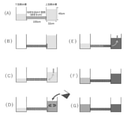
- FIG. 2 is a schematic explanatory view of a channel test for confirming the movement of a composition for tracking a fluid.
- A The test equipment used in the waterway test is shown.
- B The process of filling the upstream water tank with a fluid is shown.
- C Shows a state in which the pipeline is filled with a fluid.
- D The process of putting the composition for tracking a fluid into the upstream water tank is shown.
- FIG. 3 is a diagram showing a change over time in the amount of DNA in the downstream water tank.
- Nucleic acid molecules that have not been liposomalized are used.
- B Liposomes containing nucleic acid molecules are used.
- C Nucleic acid molecule-containing liposomes were prepared and then allowed to stand at 20 ° C. for about 4 hours.
- composition for tracking a fluid according to the present invention
- following method a method for tracking a fluid using the composition
- the term "fluid” means a liquid, a gas, or a mixture of a liquid and a gas, which is a continuum in which shear stress does not occur in a stationary state.
- fluids include inland water such as groundwater, rivers, lakes and springs, and sewage such as sewage flowing down a sewage pipeline, rainwater such as rainwater flowing down a pipeline, and the atmosphere. Does not contain oil.
- source means the source of fluid movement.
- nucleotide means a compound containing a sugar deoxyribose, ribose, a base, and a phosphate group.
- the "base” includes purine bases containing natural compounds such as adenine, guanine and inosine, and pyrimidine bases containing thymine, cytosine and uracil.
- composition for tracking fluid The composition is for tracking a fluid characterized by containing a nucleic acid molecule which is an organic compound and a tracker containing a retainer for the nucleic acid molecule as a constituent component. This can improve the stability or recovery efficiency of nucleic acid molecules and provide a traceable composition without polluting the environment.
- each component constituting the composition will be described in detail. Unless otherwise specified, the content of each component is shown in the composition.
- Nucleic acid molecules are organic macromolecular compounds in which nucleotides are linked by phosphodiester bonds.
- the nucleic acid molecule is not particularly limited as long as it is detectable.
- Examples of the nucleic acid molecule include a single-stranded DNA molecule, a single-stranded RNA molecule, a double-stranded DNA molecule, a double-stranded RNA molecule, a chimeric nucleic acid molecule of DNA and RNA, a locked nucleic acid, and a modified product thereof. Be done.
- the nucleic acid molecule may be a natural type or a non-natural type. Further, it may be linear or cyclic.
- a preferred nucleic acid molecule is a double-stranded DNA molecule synthesized from the viewpoint of stability. Further, the nucleic acid molecule may contain a nucleic acid to be measured and a nucleic acid to be non-measured. Examples of the nucleic acid to be non-measured include a plasmid vector and a viral vector.
- Modification of the nucleic acid molecule is not particularly limited. Modifications of nucleic acid molecules include, for example, modification of sugars or phosphate skeletons constituting nucleotides. Specific examples of modification of the sugar portion of the nucleotide include, for example, 2'-O-methyl RNA, 2'-O- (2-methoxy) ethyl RNA, 2'-deoxy-2'-fluoroarabinonucleic acid, and bridged type. Nucleic acid (LNA / BNA) and the like can be mentioned.
- nucleic acid skeleton includes a phosphorothioate form and a phosphorodithioate form.
- nucleic acid molecules may be used alone or in combination of two or more. These nucleic acid molecules may be appropriately set from known ones according to the properties of the fluid and the like.
- the base length of the nucleic acid molecule is not particularly limited.
- the base length of the nucleic acid molecule is, for example, 60 bases or more and 5000 bases or less.
- the lower limit may be 70 bases or more, 80 bases or more, 90 bases or more, 100 bases or more, 300 bases or more, 500 bases or more, and 1000 bases or more.
- the upper limit value is 4000 bases or less and 3000 bases or less.
- the base length of the nucleic acid to be measured by the PCR method that is, the nucleic acid amplified by the PCR method can be 30 bases or more and 1000 bases or less, which is a lower limit value. It may be 70 bases or more, 80 bases or more, and 90 bases or more.
- the upper limit may be 500 bases or less, 300 bases or less, 150 bases or less, 130 bases or less, 110 bases or less.
- the nucleic acid to be measured by the PCR method may be repeatedly arranged twice or more. Further, nucleic acids other than those to be measured by the PCR method may be placed at the 5'end and / or 3'end of the nucleic acid to be measured by the PCR method. By arranging such a nucleic acid, it becomes possible to easily prevent the nucleic acid to be measured by the PCR method from being decomposed even if the nucleic acid to be measured by the PCR method is decomposed in the fluid by some influence. As the lower limit of the nucleic acid length other than the measurement target by the above PCR method, 30 bases or more, 50 bases or more, 100 bases or more, 500 bases or more, 1000 bases or more, and 2000 bases or more can be mentioned. When the nucleic acid to be measured by the PCR method is amplified and prepared by a microorganism such as Escherichia coli using a vector, the nucleic acid molecule constituting the vector may be contained.
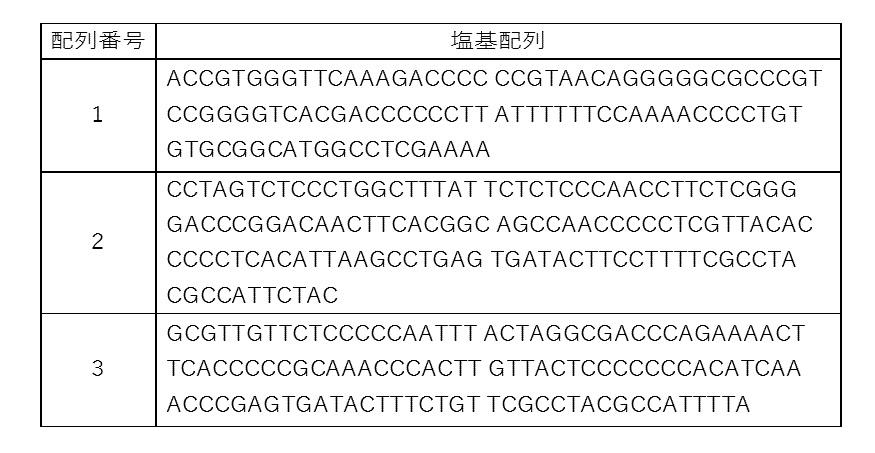
- nucleic acid to be measured examples include the ITS1 region of the nuclear DNA of fish or the cytochrome b region of the mitochondrial DNA, and specifically, the ITS1 (Internal Transcribed Spacer1) region of the nuclear DNA of Cyprinus carpio.
- the base sequence shown by SEQ ID NO: 1 in Table 1 the base sequence shown by SEQ ID NO: 2 in Table 1 in the cytochrome b region of mitochondrial DNA of Ayu (Plecoglossus artivelis), and the cytochrome b region of mitochondrial DNA of Zenitanago (Acheilognathius typeus).
- examples thereof include a nucleic acid consisting of the base sequence shown by SEQ ID NO: 3 in Table 1.
- a retainer is a substance that encapsulates, encloses, binds to, or adsorbs a nucleic acid molecule.
- the carrier is not particularly limited as long as it can hold a nucleic acid molecule.
- examples of the carrier include liposomes, micelles, microcapsules, virus particles, inorganic particles, soil and the like.
- Preferred carriers are liposomes from the viewpoint of stability and recovery efficiency of nucleic acid molecules. Further, these carriers may be used alone or in combination of two or more. These retainers may be appropriately set from known ones according to the properties and fluidity of the fluid.
- the sealing includes a state in which the entire nucleic acid molecule is present inside the retainer, or a state in which a part of the nucleic acid molecule is present inside the retainer. That is, when a part of the nucleic acid molecule is present inside the retainer, the rest of the nucleic acid molecule is present outside the retainer through the retainer or through a gap.
- the particle size of the retainer is not particularly limited and can be appropriately adjusted according to the type of the retainer.
- the particle size of the retainer is, for example, 10 nm or more and 700 ⁇ m or less.
- the lower limit is more preferably 200 nm or more, further preferably 500 nm or more, particularly preferably 1 ⁇ m or more, still more preferably 5 ⁇ m or more.
- the upper limit value is more preferably 500 ⁇ m or less, further preferably 300 ⁇ m or less, and particularly preferably 100 ⁇ m or less.
- the average particle size of the retainer is not particularly limited and can be appropriately adjusted according to the type of retainer.
- the average particle size of the retainer is, for example, 50 nm or more and 200 ⁇ m or less.
- the lower limit is more preferably 500 nm or more, further preferably 1 ⁇ m or more, and particularly preferably 10 ⁇ m or more.
- the upper limit value is more preferably 100 ⁇ m or less, further preferably 80 ⁇ m or less, and particularly preferably 60 ⁇ m or less.
- the retainer By setting the particle size or average particle size of the retainer in the above range, the movement similar to that of a fluid can be exhibited, the retention ability for nucleic acid molecules can be enhanced, and the nucleic acid molecules can be easily recovered or concentrated as a measurement sample.
- the retainer may have a single particle diameter, but may be a mixture of retainers having a distribution of particle diameters having a predetermined width. Such a mixture makes it possible to track the retainer even in an underground environment with a wide distribution of gap widths.
- the lower limit of the width in the particle size distribution of the retainer is 1 ⁇ m or more, 10 ⁇ m or more, or 30 ⁇ m or more, and the upper limit can be 100 ⁇ m or less, 70 ⁇ m or less, and 50 ⁇ m or less.
- Liposomes are spherical vesicles with a lipid bilayer membrane.
- the liposome is not particularly limited as long as it can retain a nucleic acid molecule.
- Examples of the liposome include giant monolayer liposomes (GUV: Giant Unilamellar Vesicle), small monolayer liposomes, multilamellar liposomes, and the like, and giant monolayer liposomes having a large particle size are preferable.
- the method for producing a liposome encapsulating, enclosing, binding, or adsorbing a nucleic acid molecule may be performed by a method known to those skilled in the art in the presence of the nucleic acid molecule, and is not particularly limited.
- Examples of the method for producing liposomes include an ultrasonic treatment method, a reverse phase evaporation method, a freeze-thaw method, a lipid dissolution method, and a spray drying method. Further, the liposome may be adjusted to a particle size in a specific range by passing it through a filter having a small pore size using an extruder or the like, or the variation in the particle size may not be adjusted.
- the constituents of the liposome are not particularly limited as long as they can form vesicles having a lipid bilayer membrane.
- Examples of the constituent components of the liposome include phospholipids, cationic lipids, cholesterols and the like. Further, these lipids and cholesterol may be modified with polyethylene glycol, modified with sugar chains, hydrogenated or the like.
- phospholipids include, for example, phosphatidylcholines such as 1,2-dioreoil-sn-glycero-3-phosphocholine (DOPC), dipalmitoylphosphatidylcholine, and dipalmitoylphosphatidylcholine, dipalmitoylphosphatidylethanolamine, and distearoylphosphatidylethanolamine.
- DOPC 1,2-dioreoil-sn-glycero-3-phosphocholine
- DOPC 1,2-dioreoil-sn-glycero-3-phosphocholine
- dipalmitoylphosphatidylcholine dipalmitoylphosphatidylcholine
- dipalmitoylphosphatidylethanolamine dipalmitoylphosphatidylethanolamine
- distearoylphosphatidylethanolamine distearoylphosphatidylethanolamine
- Phosphatidylethanolamines such as dipalmitoylphosphatidylserine, phosphatidylserine such as dipalmitoylphosphatidylserine, phosphatidylic acids such as dipalmitoylphosphatidylic acid, distearoylphosphatidylic acid, dipalmitoylphosphatidylinositol, distearoylphosphatidylinositol, etc.
- Egg yolk lecithin, soy lecithin, natural phospholipids such as lysolecithin and the like.
- cationic lipids include, for example, 1,2-dioleoyloxy-3-trimethylammonium propane (DOTAP), dioctadecyldimethylammonium chloride, N-2,3-diorailoxypropyl-N, N, N, -trimethylammonium, didodecylammonium bromide, 1,2-dimyristyloxypropyl 1-3-dimethylhydroxyethylammonium, 2,3-dioleoyloxy-N- [2 (S permincarboxamide) ethyl] -N , N-dimethyl-1-propanamium trifluoroacetate and the like.
- DOTAP 1,2-dioleoyloxy-3-trimethylammonium propane
- DOTAP dioctadecyldimethylammonium chloride
- N-2,3-diorailoxypropyl-N N, N, -trimethylammonium
- cholesterol examples include cholesterol, 3 ⁇ - [N- (dimethylaminoethane) carbamoyl] cholesterol, N-trimethylammonioethylcarbamoyl cholesterol and the like.
- the molecular weight of the polyethylene glycol that modifies the lipid is not particularly limited, and examples thereof include 1000 Da, 2000 Da, 5000 Da, 10000 Da, 20000 Da, 30000 Da, and 40,000 Da.
- these liposome constituents may be used alone or in combination of two or more. These liposome constituents may be appropriately set from known ones according to the properties of the nucleic acid molecule and the fluid.
- the content of phospholipids, cationic lipids, and cholesterol in liposomes is not particularly limited.
- the content of the phospholipid is, for example, 10 parts by mass or more and 100 parts by mass or less, assuming that the entire liposome is 100 parts by mass.
- the lower limit is more preferably 30 parts by mass or more, further preferably 50 parts by mass or more, and particularly preferably 70 parts by mass or more.
- the upper limit value is more preferably 95 parts by mass or less, further preferably 92 parts by mass or less, and particularly preferably 90 parts by mass or less.
- the content of the cationic lipid is, for example, 0 parts by mass or more and 80 parts by mass or less, assuming that the entire liposome is 100 parts by mass.
- the lower limit is more preferably 10 parts by mass or more, further preferably 20 parts by mass or more, and particularly preferably 30 parts by mass or more.
- the upper limit value is more preferably 70 parts by mass or less, further preferably 60 parts by mass or less, and particularly preferably 50 parts by mass or less.
- the content of cholesterol is, for example, 0 parts by mass or more and 50 parts by mass or less, assuming that the entire liposome is 100 parts by mass.
- the lower limit is more preferably 5 parts by mass or more, further preferably 8 parts by mass or more, and particularly preferably 10 parts by mass or more.
- the upper limit value is more preferably 40 parts by mass or less, further preferably 30 parts by mass or less, and particularly preferably 20 parts by mass or less.
- Micelle is a spherical molecular assembly in which amphipathic substances are associated, and is not particularly limited as long as it is acceptable in technical fields such as environment, medicine, pharmaceuticals, and foods.
- the method for producing micelles may be a method known to those skilled in the art in the presence of nucleic acid molecules, and is not particularly limited.
- amphipathic substances include the co-weight of hydrophilic blocks such as polyalkylene glycol, polyvinyl alcohol, polyvinylpyrrolidone, and polyacrylamide, and hydrophobic blocks such as polyester, polyanhydride, polyamino acid, polyorthoester, and polyphosphazene. Coalescence etc. can be mentioned.
- amphoteric substance examples include, for example, polyethylene glycol-polyaspartic acid, polyethylene glycol-polyglutamic acid, polyethylene glycol-poly (5-aminopentyl-aspartic acid), polyethylene glycol-polylysine, polyethylene glycol-polyarginine. , Polyethylene Glycol-Polyester, Polyethylene Glycol-Polyethylene, Polyethylene Glycol-Polyacryllate, Polyethylene Glycol-Polymethacrylate and the like. Further, these amphipathic substances may be used alone or in combination of two or more. These amphipathic substances may be appropriately set from known substances according to the properties of the fluid and the nucleic acid molecule.
- the molecular weight of the hydrophilic block is not particularly limited.
- the molecular weight of the hydrophilic block is, for example, 200 Da or more and 50,000 Da or less.
- the lower limit value is more preferably 500 Da or more, further preferably 800 Da or more, and particularly preferably 1000 Da or more.
- the upper limit value is more preferably 20000 Da or less, further preferably 10000 Da or less, and particularly preferably 5000 Da or less.
- the molecular weight of the hydrophobic block is not particularly limited.
- the molecular weight of the hydrophobic block is, for example, 50 Da or more and 50,000 Da or less.
- the lower limit value is more preferably 200 Da or more, further preferably 500 Da or more, and particularly preferably 1000 Da or more.
- the upper limit value is more preferably 20000 Da or less, further preferably 10000 Da or less, and particularly preferably 5000 Da or less.
- microcapsules are those in which a polymer compound forms a spherical film, and are not particularly limited as long as they are acceptable in technical fields such as environment, medicine, pharmaceuticals, and foods.
- the method for producing microcapsules may be a method known to those skilled in the art in the presence of nucleic acid molecules, and is not particularly limited. For example, an interfacial polymerization method, a core selvation method, an interfacial precipitation method, or in a liquid. The drying method and the like can be mentioned.
- polymer compound examples include ethyl cellulose, polyvinyl alcohol, polyvinyl pyrrolidone, polylactic acid, polyvinyl pyridine, polymethacrylic acid, polyN-isopropylacrylamide, polystyrene sulfonate, polyallylamine, polyacrylic acid, polyethyleneimine, and polydiallyldimethyl.
- these polymer compounds may be used alone or in combination of two or more. These polymer compounds may be appropriately set from known compounds according to the properties of the fluid and the nucleic acid molecule.
- the virus particle is a particle composed of a virus capsid containing a nucleic acid molecule, and is not particularly limited as long as it is non-pathogenic and acceptable in technical fields such as environment, medical treatment, pharmaceuticals, and foods. ..
- virus particles include adeno-associated virus, lentivirus particles, adenovirus particles, baculovirus particles, parvovirus particles, herpesvirus particles, poxvirus particles, Sindobis virus particles, semuliki forest virus particles, vaccinia virus particles, and retro. Viruses and the like can be mentioned. Further, these virus particles may be used alone or in combination of two or more. These virus particles may be appropriately set from known ones according to the properties of the fluid and nucleic acid molecules.
- the inorganic particles are particles of an inorganic compound having a retention ability for nucleic acid molecules, and are not particularly limited as long as they are acceptable in technical fields such as environment, medicine, pharmaceuticals, and foods.
- examples of the inorganic particles include glass particles, hydroxyapatite particles, zeolite particles, activated carbon particles and the like. Further, these inorganic particles may be used alone or in combination of two or more. These inorganic particles may be appropriately set from known ones according to the properties of the fluid and nucleic acid molecules.
- the soil is not particularly limited as long as it is soil such as volcanic ash soil having an ability to adsorb nucleic acid molecules.
- Examples of the components contained in the soil include minerals of natural origin such as Andosols, bentonite, and allophane, which have little adverse effect on the environment.
- the tracker may further contain amino acids, proteins, sugars, inorganic compounds, polymer compounds, magnetic substances and the like.
- the composition When liposomes are used as the retainer, the composition may be used immediately after production, but from the viewpoint of stable retention of nucleic acid molecules in the liposomes, it is used after standing or stirring under certain conditions. You may.
- the time for allowing the liposome holding the nucleic acid molecule to stand or stir is not particularly limited.
- the time for allowing the liposome holding the nucleic acid molecule to stand or stir is, for example, 2 hours or more.
- the lower limit is more preferably 3 hours or more, still more preferably 4 hours or more, and particularly preferably 5 hours or more.
- the temperature at which the liposome holding the nucleic acid molecule is allowed to stand or stirred is not particularly limited.
- the temperature at which the liposome holding the nucleic acid molecule is allowed to stand or stirred can be appropriately adjusted according to the air temperature at the time of carrying out the present invention and the temperature of the fluid, and is, for example, 15 ° C. or higher and 30 ° C. or lower. ..
- the lower limit may be 16 ° C. or higher, 17 ° C. or higher, 18 ° C. or higher, 19 ° C. or higher, 20 ° C. or higher, 21 ° C. or higher, 22 ° C. or higher.
- the upper limit may be 27 ° C. or lower and 25 ° C. or lower.
- composition containing the liposome in which the nucleic acid is retained after being allowed to stand or stir under the above-mentioned constant conditions is extremely complicated, and it is technically impossible or technically impossible to analyze the structure. Performing the task of identifying its structure requires significantly excessive financial expenditure and time. Therefore, in the description of the present composition, it is so-called “impossible / non-impossible” to describe that "the liposome is left to stand or stirred at 20 ° C. or higher for 2 hours or longer after the fabrication of the liposome holding the nucleic acid molecule". There is a "practical situation”.
- the liposomes carrying the nucleic acid molecules are allowed to stand or stir in an aqueous solution such as a phosphate buffer solution, a Triss hydrochloride buffer solution, groundwater, surface water, sewage, rainwater, water, distilled water, or a mixture thereof. You may go.
- a buffer solution pH 4 to 9, preferably pH 6 to 8, and more preferably pH 7 to 7.7 can be mentioned.
- Liposomes holding the nucleic acid molecules that have been left to stand or agitated may then be left to stand or stored at 15 ° C. or lower, if necessary.
- the composition may be refrigerated or cryopreserved until use.
- the composition may contain an aqueous solution of groundwater, surface water, sewage, rainwater, water, distilled water, or a mixture thereof, or may be dispersed in such an aqueous solution.
- groundwater groundwater in the environment of the fluid source can be preferably mentioned.
- the composition contains a nucleic acid molecule having a small adverse effect on the environment and a tracer containing a retainer for the nucleic acid molecule as a constituent component, thereby improving the stability and recovery efficiency of the nucleic acid molecule and improving the recovery efficiency. It is possible to obtain a composition containing a tracer having less adverse effect on the environment.
- the fluid tracking method of the present invention includes (1) step A for preparing a composition for tracking the fluid according to the present invention, (2) step B for charging the composition into a fluid source, and (3).
- the method is characterized by having a step C of preparing a fluid sample at an observation point different from the source, and (4) a step D of measuring a nucleic acid molecule contained in the fluid sample. This can improve the stability of fluid tracking and the recovery efficiency of nucleic acid molecules, and can provide a method that can be safely tracked without polluting the environment. First, each step constituting the tracking method will be described in detail.
- Step A is a step for preparing a composition for tracking the fluid. This makes it possible to prepare a composition capable of tracing the fluid used in the fluid tracking method.
- the composition for tracking the fluid is not particularly limited, and may be, for example, any composition that satisfies the above description in the section [Composition for tracking the fluid].
- Step B is a step of charging the prepared fluid with a composition for tracking the prepared fluid into the fluid source.
- the method of injecting a composition for tracking a fluid into a fluid source is not particularly limited and is used in technical fields such as environmental resource surveys, environmental pollution surveys, construction, civil engineering and its basic research fields. Ordinary means can be used.
- the source of the fluid is not particularly limited as long as the composition for tracking the fluid can be charged. Examples of the fluid supply source include groundwater, surface water, sewage, rainwater, well water, spring water, and water leakage in artificial structures existing in holes excavated in the ground.
- Step C is a step for preparing a fluid sample at an observation point different from the source. This makes it possible to secure a sample for measuring nucleic acid molecules contained in the fluid at the observation point.
- the method of preparing a fluid sample at the observation point is not particularly limited, and ordinary means used in technical fields such as environmental resource surveys, environmental pollution surveys, construction, civil engineering and its basic research fields are used. be able to.
- the method for recovering the fluid at the observation point is not particularly limited as long as it can store the nucleic acid molecule of the present invention. Examples of the method for recovering the fluid include pumping the fluid, collecting sediment, and extracting the fluid from the soil.
- the nucleic acid molecule may be recovered or concentrated by treating the measurement sample with a filter or the like before the measurement. Since the tracer contained in the composition is larger than the nucleic acid molecule, the recovery efficiency is high and effective concentration treatment can be performed.
- a filter is used for recovery or concentration of nucleic acid molecules, it can be appropriately adjusted according to the average particle size of the carrier used, but the pore size is 0.2 to 2.0 ⁇ m, specifically 0.5 ⁇ m, 0. Those with a diameter of 0.7 ⁇ m and 1.0 ⁇ m are preferable.
- Step D is a step for measuring the nucleic acid molecule contained in the fluid sample at the observation point. This makes it possible to confirm the existence of the composition at the observation point.
- the method for measuring a nucleic acid molecule is not particularly limited, and ordinary means used in technical fields such as environment, medicine, pharmaceuticals, and foods and its basic research field can be used. Examples of methods for measuring nucleic acid molecules include PCR (Polymerase Chain Reaction) method for amplifying the number of nucleic acids, electrophoresis method, absorption spectrometry method, fluorescence analysis method, high performance liquid chromatography isotope diluted mass spectrometry method, and inductively coupled plasma emission spectrometry.
- PCR Polymerase Chain Reaction
- nucleic acid molecules examples include a method using an analysis method, an inductively coupled plasma mass spectrometry method, and the like.
- these nucleic acid molecules may be measured alone or in combination of two or more.
- the method for measuring these nucleic acid molecules may be appropriately set from known ones according to the properties of the nucleic acid molecules and the like.
- the Tracking Method uses a nucleic acid molecule that has a small adverse effect on the environment and a tracker that contains a retainer for the nucleic acid molecule as a constituent component, thereby improving the stability and recovery efficiency of the nucleic acid molecule and the environment. It is possible to provide a traceable method without contaminating the nucleic acid.
- Example 1 nucleic acid molecule-encapsulated liposomes used in the waterway test of Example 2 described later were prepared. In addition, the characteristics of the prepared nucleic acid molecule-encapsulated liposomes were analyzed.
- Samples containing nucleic acid molecule-encapsulated liposomes include nucleic acid molecules and 20 mL of 20 mM phospholipids (1,2-dioleoyl-sn-glycero-3-phosphocholine (DOPC): 1,2-dioleoyloxy-3- (trimethylammonium)).
- DOPC 1,2-dioleoyloxy-3- (trimethylammonium)
- Propane (DOTAP) 2: 1 (molar ratio)
- phosphate buffer pH 7.2
- the nucleic acid molecule is a nucleic acid consisting of the base sequence shown by SEQ ID NO: 1 in Table 2 in the ITS1 (Internal Tranceribed Spacer1) region of 3.8 ng of Cyprinus carpio nuclear DNA (synthesized by Eurofin Genomics Co., Ltd.).
- ITS1 Internal Tranceribed Spacer1
- the encapsulation rate of nucleic acid molecules in liposomes is measured by measuring the absorbance of the dialed sample and the pre-dialysis sample at 260 nm with a spectrophotometer (U-2800A, Hitachi High-Tech Science) (measured by Hashimoto Electronics Co., Ltd.) as follows. It was calculated as a percentage from Equation 1 of.
- the collected analytical sample was filtered through a glass filter (GF / F 47 mm, Global Life Science Technologies Japan, Inc.) with a particle retention diameter of 0.7 ⁇ m (GF / F) and treated with 5 ⁇ l of a 10% benzalconium aqueous solution. ..
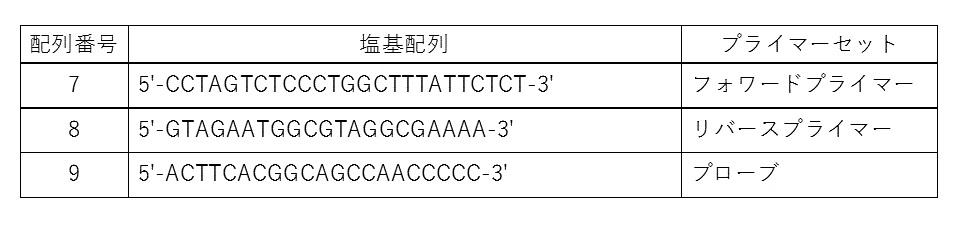
- the amount of DNA contained in the sample for analysis was determined by amplifying the ITS1 region of Koi's nuclear DNA by the PCR method using the primer set in Table 3 and then using a DNA detector (Piko Real Real-Time PCR System, Thermo Fisher Scientific). Measured at.
- the conditions of the PCR method are as follows: after treating at 50 ° C. for 2 minutes and 95 ° C. for 10 minutes, 55 cycles of treatment at 95 ° C.
- a probe in which the fluorescent substance FAM was linked to the 5'end of the nucleic acid having the base sequence shown in SEQ ID NO: 6 and the quenching substance TAMRA was linked to the 3'end was used.
- FIG. 1 shows the stability of the amount of DNA contained in liposomes in purified water or groundwater.
- FIG. 1 (A) it was shown that the nucleic acid molecule-encapsulated liposomes added to the purified water stably retained the nucleic acid molecules for 96 hours.
- FIG. 1 (B) it was shown that the nucleic acid molecule-encapsulated liposome added to the groundwater stably retains the nucleic acid molecule as in the purified water shown in FIG. 1 (A). rice field. From this, it was confirmed that the nucleic acid molecule-encapsulated liposome of the present invention exhibits sufficient stability regardless of whether it is purified water or groundwater containing impurities.
- nucleic acid molecule-encapsulated liposome of the present invention has stability.
- Example 2 In Example 2, it was examined whether the nucleic acid molecule-encapsulated liposome prepared in Example 1 could follow the fluid.
- the test equipment consists of an acrylic resin upstream water tank that corresponds to the fluid supply source and an acrylic resin downstream water tank that corresponds to the observation point connected by an acrylic resin pipeline with an inner diameter of 8 cm and a length of 100 cm. Is.
- the pipeline was filled with 6.9 kg of silica sand having a particle size of 2 to 3 mm.
- the porosity of the pipeline is 52.7%.
- the size of each water tank is 32 cm ⁇ 37 cm ⁇ 45 cm.
- tap water was poured into the upstream water tank with the lid on the upstream end of the pipeline removed (Fig.
- the sample for analysis is 0 minutes, 5 minutes, 10 minutes, 15 minutes, 20 minutes, 30 minutes, 40 minutes, 50 minutes, 60 minutes, 120 minutes, 180 minutes, 240 minutes after removing the lid at the upstream end of the conduit.
- 100 mL of each of the three samples of the test water in the downstream water tank was sampled.
- the sample for analysis collected was treated with 0.1 mL of a 10% aqueous solution of benzalkonium.
- the waterway test was conducted in an environment of 10 ° C or 20 ° C. In addition, the water levels of the upstream water tank and the downstream water tank became uniform between 120 minutes and 180 minutes.
- the method for measuring the amount of DNA contained in the sample for analysis is the same as that described in the section (Stability test of nucleic acid molecule-encapsulated liposome) in Example 1.
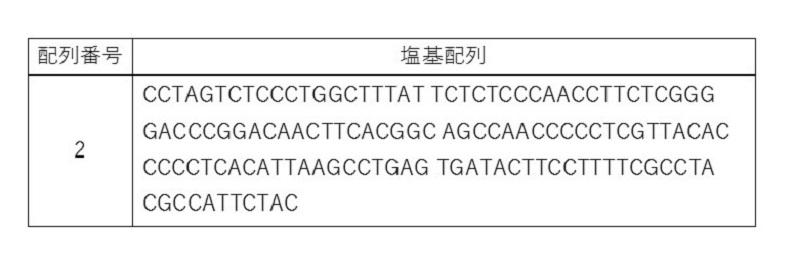
- the nucleic acid molecule used as a control group was a nucleic acid (synthesized by Eurofin Genomics Co., Ltd.) consisting of the nucleotide sequence shown in SEQ ID NO: 2 in Table 4 in the cytochrome b region of mitochondrial DNA of Ayu (Plecoglossus artivelis) pMD-21.
- a nucleic acid molecule consisting of linear DNA was used, which was incorporated into a vector, transformed into Escherichia coli JM109, cultured, and then the vector was recovered from Escherichia coli and treated with the restriction enzyme BamHI.
- the method for measuring the amount of DNA in the control group is the same as that described in the section of Example 1 (Stability test of nucleic acid molecule-encapsulated liposome) except that the primer set shown in Table 5 was used.
- the probe a probe in which the fluorescent substance FAM was linked to the 5'end of the base sequence shown in SEQ ID NO: 9 and the quenching substance TAMRA was linked to the 3'end was used.
- FIG. 3 shows the change over time in the amount of DNA in the downstream water tank.
- FIGS. 3A and 3B when the nucleic acid molecule not encapsulated in the liposome and the nucleic acid molecule-encapsulated liposome are compared, the nucleic acid molecule is encapsulated in the liposome, and the amount of DNA detected in the downstream water tank is large. At the same time, it was shown that stable detection was possible.
- the liposome-containing solution is further diluted with water in the upstream water tank in which the liposome-containing solution is previously stored, and allowed to stand at room temperature (20 ° C.) for 4 hours. It is the result of the waterway test when the placed one was used. As shown in FIGS.
- nucleic acid molecule-encapsulated liposome when the nucleic acid molecule-encapsulated liposome is compared with the untreated nucleic acid molecule-encapsulated liposome after the preparation of the nucleic acid molecule-encapsulated liposome, the nucleic acid molecule-encapsulated liposome is statically treated. It was shown that the amount of DNA detected in the downstream water tank increased.
- nucleic acid molecule-encapsulated liposome of the present invention has significantly improved tracking ability for fluid as compared with the non-liposomal nucleic acid molecule.
- composition for tracking a fluid and the method for tracking a fluid of the present invention can improve the tracking ability and environmental safety in a fluid tracking survey.
- investigation of environmental pollution, evaluation of ground and land use, leak test of artificial structures, measurement of flow range and flow time of pipelines (sewage pipelines and rainwater pipelines) and groundwater, ventilation status and efficiency Can be effectively evaluated.
Landscapes
- Chemical & Material Sciences (AREA)
- Organic Chemistry (AREA)
- Life Sciences & Earth Sciences (AREA)
- Zoology (AREA)
- Wood Science & Technology (AREA)
- Proteomics, Peptides & Aminoacids (AREA)
- Health & Medical Sciences (AREA)
- Engineering & Computer Science (AREA)
- Chemical Kinetics & Catalysis (AREA)
- Biophysics (AREA)
- Immunology (AREA)
- Microbiology (AREA)
- Molecular Biology (AREA)
- Biotechnology (AREA)
- Analytical Chemistry (AREA)
- Physics & Mathematics (AREA)
- Biochemistry (AREA)
- Bioinformatics & Cheminformatics (AREA)
- General Engineering & Computer Science (AREA)
- General Health & Medical Sciences (AREA)
- Genetics & Genomics (AREA)
- Measuring Or Testing Involving Enzymes Or Micro-Organisms (AREA)
Abstract
本発明の課題は、環境への悪影響が少なく、安定性及び回収効率が向上した追跡子を含有する流体を追跡するための組成物を提供することである。 解決手段としては、核酸分子と前記核酸分子を保持する保持体を構成成分として含む追跡子を含有することを特徴とする流体を追跡するための組成物及び前記組成物を用いた流体の追跡方法を提供する。
Description
本発明は、流体を追跡するための組成物及び流体の追跡方法に関する。より詳しくは、本発明は、核酸分子及び保持体を構成成分として含む追跡子を含有する流体を追跡するための組成物、核酸分子及び保持体を構成成分として含む追跡子を用いた流体の追跡方法に関する。
地下水や地表水などを対象とした流体追跡は、環境汚染や地下水資源の調査、地盤や土地利用の評価などにおいて実施される。地下水などの水源域、涵養量、流動経路、流向、流速などを測定する一般的な方法は、地面に掘削した垂直方向の孔に地下水と識別可能な追跡子を投入し、観測地点である他の掘削した孔から揚水した地下水中に含まれる追跡子を水理試験装置で計測するものである。観測された追跡子の分布や挙動は、流体の流動を可視化するうえで有効である。
追跡子は、流体に影響を与えずに流体と同様の動きを示し、安定で容易に検出できるものが望ましい。追跡子としては、例えば、特許文献1には溜池漏水調査に用いる塩化ナトリウム、特許文献2には地下水流動特性の検討に用いるウラニンなどの蛍光染料が開示されている。しかしながら、これらの物質を用いることは環境面への悪影響が懸念される。
また、特許文献3には、流体の存在を判定するため使用するヘアピン構造とダングリング末端を含むDNAトレーサーが開示されている。しかしながら、特許文献3に記載の発明は地下の岩体に超高圧の水を注入して亀裂を生じさせる水圧破壊による地下水の汚染のトレースが目的であるため、超高圧に耐えるためにヘアピン構造やダングリング末端という複雑なDNA構造を必須としていた。また、流体からDNAトレーサーを効率よく回収するための工夫は特にされていなかった。
さらに、非特許文献1には、シリカにトレーサーとしてDNAを内包させる方法が開示されている。しかしながら、シリカは缶石を作りやすく、水処理において処理装置の水質低下や蒸留効率の低下への影響が懸念されるという問題があった。
Gediminas Mikutis et al., Environ. Sci. Technol 2018, 52, 12142-12152
DNAトレーサーは、蛍光塗料や塩化ナトリウムなどを含まないので環境への悪影響が少ない。しかしながら、DNAトレーサーは、流体を移動する追跡子として安定性が低いことや、DNAの回収効率が悪いという問題がある。そのため、流体を追跡するうえで追跡子自体の安定性及び回収効率が改善された流体を追跡するための組成物の開発が望まれている。
したがって、本発明の課題は、環境への悪影響が少なく、安定性及び回収効率が向上した追跡子を含有する流体を追跡するための組成物を提供することである。
したがって、本発明の課題は、環境への悪影響が少なく、安定性及び回収効率が向上した追跡子を含有する流体を追跡するための組成物を提供することである。
本発明者は、上記課題について鋭意検討した結果、有機化合物である核酸分子を保持体で保持することにより、核酸分子の安定性が改善するとともに、測定試料における核酸分子の回収効率が向上した流体を追跡するための組成物とすることができることを見出し、本発明を完成した。
すなわち、本発明は、以下の[1]~[10]を提供する。
〔1〕核酸分子と前記核酸分子を保持する保持体を構成成分として含む追跡子を含有することを特徴とする流体を追跡するための組成物。
〔2〕前記核酸分子は、DNA分子、RNA分子、DNA及びRNAのキメラ核酸分子からなる群から選択される少なくとも一つであることを特徴とする上記〔1〕に記載の組成物。
〔3〕前記保持体は、リポソームであることを特徴とする上記〔1〕又は〔2〕に記載の組成物。
〔4〕前記リポソームの平均粒子径が1μm以上であることを特徴とする上記〔3〕に記載の組成物。
〔5〕前記核酸分子を保持する前記リポソームの製造後、15℃以上で2時間以上静置又は攪拌されたものであることを特徴とする上記〔3〕又は〔4〕に記載の組成物。
〔6〕前記核酸分子は、配列番号1~3のいずれかに示される塩基配列を含むことを特徴とする上記〔1〕~〔5〕のいずれか一項に記載の組成物。
〔7〕前記流体は、地下水、地表水、下水又は雨水であることを特徴とする上記〔1〕~〔6〕のいずれか一項に記載の組成物。
〔8〕前記組成物を投入する供給源から得られた流体を含有することを特徴とする上記〔1〕~〔7〕のいずれか一項に記載の組成物。
〔9〕(1)上記〔1〕~〔8〕のいずれか一項に記載の組成物を準備する工程A、
(2)前記組成物を流体の供給源に投入する工程B、
(3)前記供給源と異なる観測地点における流体の試料を準備する工程C、
(4)前記流体の試料に含まれる核酸分子を測定する工程D、
の工程を有することを特徴とする流体の追跡方法。
〔10〕前記工程Dにおける核酸分子の測定は、PCR法を用いることを特徴とする上記〔9〕に記載の追跡方法。
〔1〕核酸分子と前記核酸分子を保持する保持体を構成成分として含む追跡子を含有することを特徴とする流体を追跡するための組成物。
〔2〕前記核酸分子は、DNA分子、RNA分子、DNA及びRNAのキメラ核酸分子からなる群から選択される少なくとも一つであることを特徴とする上記〔1〕に記載の組成物。
〔3〕前記保持体は、リポソームであることを特徴とする上記〔1〕又は〔2〕に記載の組成物。
〔4〕前記リポソームの平均粒子径が1μm以上であることを特徴とする上記〔3〕に記載の組成物。
〔5〕前記核酸分子を保持する前記リポソームの製造後、15℃以上で2時間以上静置又は攪拌されたものであることを特徴とする上記〔3〕又は〔4〕に記載の組成物。
〔6〕前記核酸分子は、配列番号1~3のいずれかに示される塩基配列を含むことを特徴とする上記〔1〕~〔5〕のいずれか一項に記載の組成物。
〔7〕前記流体は、地下水、地表水、下水又は雨水であることを特徴とする上記〔1〕~〔6〕のいずれか一項に記載の組成物。
〔8〕前記組成物を投入する供給源から得られた流体を含有することを特徴とする上記〔1〕~〔7〕のいずれか一項に記載の組成物。
〔9〕(1)上記〔1〕~〔8〕のいずれか一項に記載の組成物を準備する工程A、
(2)前記組成物を流体の供給源に投入する工程B、
(3)前記供給源と異なる観測地点における流体の試料を準備する工程C、
(4)前記流体の試料に含まれる核酸分子を測定する工程D、
の工程を有することを特徴とする流体の追跡方法。
〔10〕前記工程Dにおける核酸分子の測定は、PCR法を用いることを特徴とする上記〔9〕に記載の追跡方法。
また、本発明の他の態様としては、流体を追跡するための組成物の製造方法であって、核酸分子と前記核酸分子を保持するリポソームを構成成分として含む追跡子を含む組成物を15℃以上で2時間以上静置又は攪拌することを特徴とする前記方法である。
本発明によれば、核酸分子と保持体を追跡のための構成成分としているため、流体を追跡するうえで安定性が高く、回収効率が向上し、かつ蛍光塗料や塩化ナトリウムなどを含まない環境への悪影響が少ない追跡子を含有する組成物を提供することができる。また、前記組成物を用いることにより、環境への悪影響が少ない流体の追跡方法を提供することができる。
以下、本発明に係る流体を追跡するための組成物(以下、「本件組成物」ともいう)及び当該組成物を用いた流体の追跡方法(以下、「本件追跡方法」ともいう)の実施形態を詳細に説明する。
なお、実施形態に記載する本件組成物及び本件追跡方法については、本発明を説明するために例示したに過ぎず、これに制限されるものではない。
なお、実施形態に記載する本件組成物及び本件追跡方法については、本発明を説明するために例示したに過ぎず、これに制限されるものではない。
[定義]
本明細書中において、「流体」とは、静止状態においてせん断応力が発生しない連続体である液体、気体、液体と気体の混合物を意味する。流体の具体例としては、地下水、河川、湖沼若しくは湧き水などの地表水などの陸水、下水管路を流下する下水などの下水、管路を流下する雨水などの雨水、大気などが挙げられ、油は含まれない。
本明細書中において、「供給源」とは、流体の移動元を意味する。
本明細書中において、「ヌクレオチド」とは、糖デオキシリボース、リボース、塩基、及びリン酸基を含む化合物を意味する。「塩基」には、天然化合物であるアデニンやグアニン、イノシンを含むプリン塩基、チミンやシトシン、ウラシルを含むピリミジン塩基が包含される。
本明細書中において、「流体」とは、静止状態においてせん断応力が発生しない連続体である液体、気体、液体と気体の混合物を意味する。流体の具体例としては、地下水、河川、湖沼若しくは湧き水などの地表水などの陸水、下水管路を流下する下水などの下水、管路を流下する雨水などの雨水、大気などが挙げられ、油は含まれない。
本明細書中において、「供給源」とは、流体の移動元を意味する。
本明細書中において、「ヌクレオチド」とは、糖デオキシリボース、リボース、塩基、及びリン酸基を含む化合物を意味する。「塩基」には、天然化合物であるアデニンやグアニン、イノシンを含むプリン塩基、チミンやシトシン、ウラシルを含むピリミジン塩基が包含される。
[流体を追跡するための組成物]
本件組成物は、有機化合物である核酸分子と核酸分子に対する保持体を構成成分として含む追跡子を含有することを特徴とする流体を追跡するためのものである。これにより、核酸分子の安定性又は回収効率が向上するとともに、環境を汚染することなく追跡可能な組成物を提供することができる。
まず、組成物を構成する各成分について、詳細に説明する。なお、各成分の含有量について、特に断りがない場合は組成物における含有量を示す。
本件組成物は、有機化合物である核酸分子と核酸分子に対する保持体を構成成分として含む追跡子を含有することを特徴とする流体を追跡するためのものである。これにより、核酸分子の安定性又は回収効率が向上するとともに、環境を汚染することなく追跡可能な組成物を提供することができる。
まず、組成物を構成する各成分について、詳細に説明する。なお、各成分の含有量について、特に断りがない場合は組成物における含有量を示す。
(核酸分子)
核酸分子は、ヌクレオチドがホスホジエステル結合で連なった有機高分子化合物である。核酸分子は、検出可能なものであれば、特に制限されるものではない。核酸分子としては、例えば、一本鎖DNA分子、一本鎖RNA分子、二本鎖DNA分子、二本鎖RNA分子、DNA及びRNAのキメラ核酸分子、ロックド核酸、及びそれらの修飾体などが挙げられる。また、核酸分子は、天然型でも非天然型でもよい。さらに、直鎖状でも環状でもよい。好ましい核酸分子としては、安定性の観点から合成した二本鎖DNA分子である。また、核酸分子は測定対象の核酸と非測定対象の核酸を含有してもよい。非測定対象の核酸としては、プラスミドベクター、ウイルスベクターなどを挙げることができる。
核酸分子は、ヌクレオチドがホスホジエステル結合で連なった有機高分子化合物である。核酸分子は、検出可能なものであれば、特に制限されるものではない。核酸分子としては、例えば、一本鎖DNA分子、一本鎖RNA分子、二本鎖DNA分子、二本鎖RNA分子、DNA及びRNAのキメラ核酸分子、ロックド核酸、及びそれらの修飾体などが挙げられる。また、核酸分子は、天然型でも非天然型でもよい。さらに、直鎖状でも環状でもよい。好ましい核酸分子としては、安定性の観点から合成した二本鎖DNA分子である。また、核酸分子は測定対象の核酸と非測定対象の核酸を含有してもよい。非測定対象の核酸としては、プラスミドベクター、ウイルスベクターなどを挙げることができる。
核酸分子の修飾は、特に制限されるものではない。核酸分子の修飾としては、例えば、ヌクレオチドを構成している糖又はリン酸骨格などの修飾が挙げられる。
ヌクレオチドの糖部の修飾の具体例としては、例えば、2’-O-メチルRNA、2’-O-(2-メトキシ)エチルRNA、2’-デオキシ-2’-フルオロアラビノ核酸、架橋型核酸(LNA/BNA)などが挙げられる。また、ヌクレオチドの糖部をペプチドに置換したペプチド核酸、モルフォリノに置き換えたモルフォリノ核酸なども包含する。
リン酸骨格の修飾の具体例としては、例えば、ホスホロチオエート体、ホスホロジチオエート体などが挙げられる。
また、これらの核酸分子は、単独で用いてもよいし、二種以上を組み合わせて用いてもよい。これらの核酸分子については、流体の性質などに応じて公知のものから適宜設定すればよい。
ヌクレオチドの糖部の修飾の具体例としては、例えば、2’-O-メチルRNA、2’-O-(2-メトキシ)エチルRNA、2’-デオキシ-2’-フルオロアラビノ核酸、架橋型核酸(LNA/BNA)などが挙げられる。また、ヌクレオチドの糖部をペプチドに置換したペプチド核酸、モルフォリノに置き換えたモルフォリノ核酸なども包含する。
リン酸骨格の修飾の具体例としては、例えば、ホスホロチオエート体、ホスホロジチオエート体などが挙げられる。
また、これらの核酸分子は、単独で用いてもよいし、二種以上を組み合わせて用いてもよい。これらの核酸分子については、流体の性質などに応じて公知のものから適宜設定すればよい。
核酸分子の塩基長は、特に制限されるものではない。核酸分子の塩基長としては、例えば、60塩基以上5000塩基以下である。下限値としては、70塩基以上、80塩基以上、90塩基以上、100塩基以上、300塩基以上、500塩基以上、1000塩基以上であってもよい。一方、上限値としては、4000塩基以下、3000塩基以下である。また、核酸分子をPCR法によって測定する場合には、PCR法による測定対象の核酸、すなわちPCR法によって増幅される核酸の塩基長としては、30塩基以上1000塩基以下を挙げることができ、下限値としては、70塩基以上、80塩基以上、90塩基以上であってもよい。一方、上限値としては、500塩基以下、300塩基以下、150塩基以下、130塩基以下、110塩基以下であってもよい。
また、PCR法による測定対象の核酸が2回以上繰り返し配置されてもよい。さらに、PCR法による測定対象の核酸の5’末端及び/又は3’末端に、上記PCR法による測定対象以外の核酸を配置してもよい。かかる核酸を配置することによって、PCR法による測定対象の核酸が流体中に何らかの影響で分解されてもPCR法による測定対象の核酸の分解を防ぎやすくすることが可能となる。上記PCR法による測定対象以外の核酸長としては下限としては30塩基以上、50塩基以上、100塩基以上、500塩基以上、1000塩基以上、2000塩基以上を挙げることができる。また、PCR法による測定対象の核酸を、ベクターを用いて大腸菌などの微生物によって増幅して調製した場合には、核酸分子として上記ベクターを構成する核酸を含有してもよい。
測定対象の核酸としては、例えば、魚類の核DNAのITS1領域、又はミトコンドリアDNAのシトクロムb領域を挙げることができ、具体的にはコイ(Cyprinus carpio)の核DNAのITS1(Internal Transcribed Spacer1)領域における表1の配列番号1で示される塩基配列、アユ(Plecoglossus altivelis)のミトコンドリアDNAのシトクロムb領域における表1の配列番号2で示される塩基配列、ゼニタナゴ(Acheilognathus typus)のミトコンドリアDNAのシトクロムb領域における表1の配列番号3で示される塩基配列からなる核酸などが挙げられる。
(保持体)
保持体は、核酸分子を封入、内封、結合、吸着する物質である。保持体は、核酸分子を保持できるものであれば、特に制限されるものではない。保持体としては、例えば、リポソーム、ミセル、マイクロカプセル、ウイルス粒子、無機物粒子、土壌などが挙げられる。好ましい保持体としては、核酸分子の安定性や回収効率の観点から、リポソームである。
また、これらの保持体は、単独で用いてもよいし、二種以上を組み合わせて用いてもよい。これらの保持体については、流体の性質や流動性などに応じて公知のものから適宜設定すればよい。
なお、内封とは、核酸分子全体が保持体内部に存在している状態、又は核酸分子の一部が保持体内部に存在している状態を包含する。つまり、保持体内部に核酸分子の一部が存在する場合、核酸分子の残りの部分は、保持体を貫通又は隙間を介して保持体外部に存在することになる。
保持体は、核酸分子を封入、内封、結合、吸着する物質である。保持体は、核酸分子を保持できるものであれば、特に制限されるものではない。保持体としては、例えば、リポソーム、ミセル、マイクロカプセル、ウイルス粒子、無機物粒子、土壌などが挙げられる。好ましい保持体としては、核酸分子の安定性や回収効率の観点から、リポソームである。
また、これらの保持体は、単独で用いてもよいし、二種以上を組み合わせて用いてもよい。これらの保持体については、流体の性質や流動性などに応じて公知のものから適宜設定すればよい。
なお、内封とは、核酸分子全体が保持体内部に存在している状態、又は核酸分子の一部が保持体内部に存在している状態を包含する。つまり、保持体内部に核酸分子の一部が存在する場合、核酸分子の残りの部分は、保持体を貫通又は隙間を介して保持体外部に存在することになる。
保持体の粒子径は、特に制限されるものではなく、保持体の種類に応じて適宜調整可能である。保持体の粒子径としては、例えば、10nm以上700μm以下である。下限値としては、より好ましくは200nm以上、更に好ましくは500nm以上、特に好ましくは1μm以上、更に好ましくは5μm以上である。一方、上限値としては、より好ましくは500μm以下、更に好ましくは300μm以下、特に好ましくは100μm以下である。保持体の粒子径を10nm以上とすることにより、核酸分子を測定試料として回収又は濃縮し易くすることができる。また、保持体の粒子径を700μm以下とすることにより、孔隙が狭い環境においても流体と同様の動きを示すことができる。
保持体の平均粒子径は、特に制限されるものではなく、保持体の種類に応じて適宜調整可能である。保持体の平均粒子径としては、例えば、50nm以上200μm以下である。下限値としては、より好ましくは500nm以上、更に好ましくは1μm以上、特に好ましくは10μm以上である。一方、上限値としては、より好ましくは100μm以下、更に好ましくは80μm以下、特に好ましくは60μm以下である。
保持体の粒子径又は平均粒子径を上記範囲とすることにより、流体と同様の動きを示すとともに、核酸分子に対する保持能を高めることができるほか、核酸分子を測定試料として回収又は濃縮が容易となる。また、例えば流体が地下水の場合には、保持体は単一の粒子径のものでもよいが、所定の幅の粒子径の分布をもつ保持体の混合物としてもよい。かかる混合物とすることで、幅広い分布の間隙幅を有する地下環境においても保持体の追跡がより可能となる。具体的には、例えば保持体の粒子径の分布における幅の下限が1μm以上、10μm以上、又は30μm以上であり、上限が100μm以下、70μm以下、50μm以下を挙げることができる。
リポソームは、脂質二重膜を有する球状の小胞である。リポソームは、核酸分子を保持できるものであれば、特に制限されるものではない。リポソームとしては、例えば、巨大単層リポソーム(GUV:Giant Unilamellar Vesicle)、小型単層リポソーム、多重層リポソームなどが挙げられ、粒子径の大きい巨大単層リポソームであることが好ましい。
核酸分子を封入、内封、結合、又は吸着したリポソームの製造方法は、核酸分子存在下で当業者に公知の方法で行えばよく、特に制限されるものではない。リポソームの製造方法としては、例えば、超音波処理法、逆相蒸発法、凍結融解法、脂質溶解法、噴霧乾燥法などが挙げられる。また、リポソームは、エクストルーダーなどを用いて孔径の小さいフィルターを通過させることで、特定範囲の粒子径に調節してもよいし、粒子径のばらつきを調整しなくてもよい。
核酸分子を封入、内封、結合、又は吸着したリポソームの製造方法は、核酸分子存在下で当業者に公知の方法で行えばよく、特に制限されるものではない。リポソームの製造方法としては、例えば、超音波処理法、逆相蒸発法、凍結融解法、脂質溶解法、噴霧乾燥法などが挙げられる。また、リポソームは、エクストルーダーなどを用いて孔径の小さいフィルターを通過させることで、特定範囲の粒子径に調節してもよいし、粒子径のばらつきを調整しなくてもよい。
リポソームの構成成分は、脂質二重膜を有する小胞を形成することができれば、特に制限されるものではない。リポソームの構成成分としては、例えば、リン脂質、カチオン性脂質、コレステロール類などが挙げられる。また、これらの脂質やコレステロール類は、ポリエチレングリコール修飾、糖鎖修飾、水素添加などされていてもよい。
リン脂質の具体例としては、例えば、1,2-ジオレオイル-sn-グリセロ-3-ホスホコリン(DOPC)、ジパルミトイルホスファチジルコリン、ジステアロイルホスファチジルコリンなどのホスファチジルコリン類、ジパルミトイルホスファチジルエタノールアミン、ジステアロイルホスファチジルエタノールアミンなどのホスファチジルエタノールアミン類、ジパルミトイルホスファチジルセリン、ジステアロイルホスファチジルセリンなどのホスファチジルセリン類、ジパルミトイルホスファチジン酸、ジステアロイルホスファチジン酸などのホスファチジン酸類、ジパルミトイルホスファチジルイノシトール、ジステアロイルホスファチジルイノシトールなどのホスファチジルイノシトール類、卵黄レシチン、大豆レシチン、リゾレシチンなどの天然リン脂質などが挙げられる。
カチオン性脂質の具体例としては、例えば、1,2-ジオレオイルオキシ-3-トリメチルアンモニウムプロパン(DOTAP)、ジオクタデシルジメチルアンモニウムクロリド、N-2,3-ジオレイルオキシプロピル-N,N,N,-トリメチルアンモニウム、ジドデシルアンモニウムブロミド、1,2-ジミリストイルオキシプロピル1-3-ジメチルヒドロキシエチルアンモニウム、2,3-ジオレオイルオキシ-N-[2(Sペルミンカルボキサミド)エチル]-N,N-ジメチル-1-プロパナミウムトリフルオロアセテイトなどが挙げられる。
コレステロール類の具体例としては、例えば、コレステロール、3β-[N-(ジメチルアミノエタン)カルバモイル]コレステロール、N-トリメチルアンモニオエチルカルバモイルコレステロールなどが挙げられる。
脂質に修飾するポリエチレングリコールの分子量は、特に制限されるものではなく、例えば、1000Da、2000Da、5000Da、10000Da、20000Da、30000Da、40000Daなどが挙げられる。
また、これらのリポソーム構成成分は、単独で用いてもよいし、二種以上を組み合わせて用いてもよい。これらのリポソーム構成成分については、核酸分子や流体の性質などに応じて公知のものから適宜設定すればよい。
脂質に修飾するポリエチレングリコールの分子量は、特に制限されるものではなく、例えば、1000Da、2000Da、5000Da、10000Da、20000Da、30000Da、40000Daなどが挙げられる。
また、これらのリポソーム構成成分は、単独で用いてもよいし、二種以上を組み合わせて用いてもよい。これらのリポソーム構成成分については、核酸分子や流体の性質などに応じて公知のものから適宜設定すればよい。
リポソームにおけるリン脂質、カチオン性脂質、コレステロール類の含有量は、特に制限されるものではない。リン脂質の含有量としては、例えば、リポソーム全体を100質量部として、10質量部以上100質量部以下である。下限値としては、より好ましくは30質量部以上、更に好ましくは50質量部以上、特に好ましくは70質量部以上である。一方、上限値としては、より好ましくは95質量部以下、更に好ましくは92質量部以下、特に好ましくは90質量部以下である。カチオン性脂質の含有量としては、例えば、リポソーム全体を100質量部として、0質量部以上80質量部以下である。下限値としては、より好ましくは10質量部以上、更に好ましくは20質量部以上、特に好ましくは30質量部以上である。一方、上限値としては、より好ましくは70質量部以下、更に好ましくは60質量部以下、特に好ましくは50質量部以下である。コレステロール類の含有量としては、例えば、リポソーム全体を100質量部として、0質量部以上50質量部以下である。下限値としては、より好ましくは5質量部以上、更に好ましくは8質量部以上、特に好ましくは10質量部以上である。一方、上限値としては、より好ましくは40質量部以下、更に好ましくは30質量部以下、特に好ましくは20質量部以下である。
ミセルは、両親媒性物質が会合した球状の分子集合体であり、環境、医療、医薬品、食品などの技術分野において許容されるものであれば、特に制限されるものではない。また、ミセルの製造方法は、核酸分子存在下で当業者に公知の方法で行えばよく、特に制限されるものではない。
両親媒性物質としては、例えば、ポリアルキレングリコールやポリビニルアルコール、ポリビニルピロリドン、ポリアクリルアミドなどの親水性ブロック及びポリエステルやポリ無水物、ポリアミノ酸、ポリオルトエステル及びポリホスファゼンなどの疎水性ブロックの共重合体などが挙げられる。
両親媒性物質の具体例としては、例えば、ポリエチレングリコール-ポリアスパラギン酸、ポリエチレングリコール-ポリグルタミン酸、およびポリエチレングリコール-ポリ(5-アミノペンチル-アスパラギン酸)、ポリエチレングリコール-ポリリジン、ポリエチレングリコール-ポリアルギニン、ポリエチレングリコール-ポリエステル、ポリエチレングリコール-ポリウレタン、ポリエチレングリコール-ポリアクリラート、ポリエチレングリコール-ポリメタクリラートなどの両親媒性ブロック共重合体が挙げられる。
また、これらの両親媒性物質は、単独で用いてもよいし、二種以上を組み合わせて用いてもよい。これらの両親媒性物質については、流体や核酸分子の性質などに応じて公知のものから適宜設定すればよい。
両親媒性物質としては、例えば、ポリアルキレングリコールやポリビニルアルコール、ポリビニルピロリドン、ポリアクリルアミドなどの親水性ブロック及びポリエステルやポリ無水物、ポリアミノ酸、ポリオルトエステル及びポリホスファゼンなどの疎水性ブロックの共重合体などが挙げられる。
両親媒性物質の具体例としては、例えば、ポリエチレングリコール-ポリアスパラギン酸、ポリエチレングリコール-ポリグルタミン酸、およびポリエチレングリコール-ポリ(5-アミノペンチル-アスパラギン酸)、ポリエチレングリコール-ポリリジン、ポリエチレングリコール-ポリアルギニン、ポリエチレングリコール-ポリエステル、ポリエチレングリコール-ポリウレタン、ポリエチレングリコール-ポリアクリラート、ポリエチレングリコール-ポリメタクリラートなどの両親媒性ブロック共重合体が挙げられる。
また、これらの両親媒性物質は、単独で用いてもよいし、二種以上を組み合わせて用いてもよい。これらの両親媒性物質については、流体や核酸分子の性質などに応じて公知のものから適宜設定すればよい。
親水性ブロックの分子量は、特に制限されるものではない。親水性ブロックの分子量としては、例えば、200Da以上50000Da以下である。下限値としては、より好ましくは500Da以上、更に好ましくは800Da以上、特に好ましくは1000Da以上である。一方、上限値としては、より好ましくは20000Da以下、更に好ましくは10000Da以下、特に好ましくは5000Da以下である。
疎水性ブロックの分子量は、特に制限されるものではない。疎水性ブロックの分子量としては、例えば、50Da以上50000Da以下である。下限値としては、より好ましくは200Da以上、更に好ましくは500Da以上、特に好ましくは1000Da以上である。一方、上限値としては、より好ましくは20000Da以下、更に好ましくは10000Da以下、特に好ましくは5000Da以下である。
疎水性ブロックの分子量は、特に制限されるものではない。疎水性ブロックの分子量としては、例えば、50Da以上50000Da以下である。下限値としては、より好ましくは200Da以上、更に好ましくは500Da以上、特に好ましくは1000Da以上である。一方、上限値としては、より好ましくは20000Da以下、更に好ましくは10000Da以下、特に好ましくは5000Da以下である。
マイクロカプセルは、高分子化合物が球状の膜を形成したものであり、環境、医療、医薬品、食品などの技術分野において許容されるものであれば、特に制限されるものではない。また、マイクロカプセルの製造方法は、核酸分子存在下で当業者に公知の方法で行えばよく、特に制限されるものではなく、例えば、界面重合法、コアセルベーション法、界面沈澱法、液中乾燥法などが挙げられる。
高分子化合物としては、例えば、エチルセルロース、ポリビニルアルコール、ポリビニルピロリドン、ポリ乳酸、ポリビニルピリジン、ポリメタクリル酸、ポリN-イソプロピルアクリルアミド、ポリスチレンスルホン酸塩、ポリアリルアミン、ポリアクリル酸、ポリエチレンイミン、ポリジアリルジメチル-塩化アンモニウム、ポリピロール、ポリメタクリル酸メチル、ポリスチレン、ポリテトラヒドロフラン、ポリフタルアルデヒド、ポリヘキシルビオローゲン、ポリL-リジン、ポリL-アルギニン、ポリ乳酸-グリコール酸共重合体(PLGA)などが挙げられる。
また、これらの高分子化合物は、単独で用いてもよいし、二種以上を組み合わせて用いてもよい。これらの高分子化合物については、流体や核酸分子の性質などに応じて公知のものから適宜設定すればよい。
高分子化合物としては、例えば、エチルセルロース、ポリビニルアルコール、ポリビニルピロリドン、ポリ乳酸、ポリビニルピリジン、ポリメタクリル酸、ポリN-イソプロピルアクリルアミド、ポリスチレンスルホン酸塩、ポリアリルアミン、ポリアクリル酸、ポリエチレンイミン、ポリジアリルジメチル-塩化アンモニウム、ポリピロール、ポリメタクリル酸メチル、ポリスチレン、ポリテトラヒドロフラン、ポリフタルアルデヒド、ポリヘキシルビオローゲン、ポリL-リジン、ポリL-アルギニン、ポリ乳酸-グリコール酸共重合体(PLGA)などが挙げられる。
また、これらの高分子化合物は、単独で用いてもよいし、二種以上を組み合わせて用いてもよい。これらの高分子化合物については、流体や核酸分子の性質などに応じて公知のものから適宜設定すればよい。
ウイルス粒子は、核酸分子を内封するウイルスカプシドからなる粒子であり、病原性がなく、環境、医療、医薬品、食品などの技術分野において許容されるものであれば、特に制限されるものではない。ウイルス粒子としては、例えば、アデノ随伴ウイルス、レンチウイルス粒子、アデノウイルス粒子、バキュロウイルス粒子、パルボウイルス粒子、ヘルペスウイルス粒子、ポックスウイルス粒子、シンドビスウイルス粒子、セムリキ森林ウイルス粒子、ワクシニアウイルス粒子、レトロウイルスなどが挙げられる。
また、これらのウイルス粒子は、単独で用いてもよいし、二種以上を組み合わせて用いてもよい。これらのウイルス粒子については、流体や核酸分子の性質などに応じて公知のものから適宜設定すればよい。
また、これらのウイルス粒子は、単独で用いてもよいし、二種以上を組み合わせて用いてもよい。これらのウイルス粒子については、流体や核酸分子の性質などに応じて公知のものから適宜設定すればよい。
無機物粒子は、核酸分子に対する保持能を有する無機化合物の粒子であり、環境、医療、医薬品、食品などの技術分野において許容されるものであれば、特に制限されるものではない。無機物粒子としては、例えば、ガラス粒子、ハイドロキシアパタイト粒子、ゼオライト粒子、活性炭粒子などが挙げられる。
また、これらの無機物粒子は、単独で用いてもよいし、二種以上を組み合わせて用いてもよい。これらの無機物粒子については、流体や核酸分子の性質などに応じて公知のものから適宜設定すればよい。
また、これらの無機物粒子は、単独で用いてもよいし、二種以上を組み合わせて用いてもよい。これらの無機物粒子については、流体や核酸分子の性質などに応じて公知のものから適宜設定すればよい。
土壌は、核酸分子に対する吸着能を有する火山灰土などの土壌であれば、特に制限されるものではない。土壌に含まれる成分としては、例えば、黒ボク土、ベントナイト、アロフェンなどの自然由来で環境への悪影響が少ない鉱物が挙げられる。
追跡子は、さらに、アミノ酸、タンパク質、糖、無機化合物、高分子化合物、磁性体などを含有しても良い。
保持体としてリポソームを用いる場合には、本件組成物を製造後に直ちに使用してもよいが、核酸分子がリポソームに安定的に保持される観点から、一定の条件で静置又は攪拌した後に使用してもよい。
核酸分子を保持したリポソームの静置又は攪拌する際の時間は、特に制限されるものではない。核酸分子を保持したリポソームの静置又は攪拌する際の時間としては、例えば、2時間以上である。下限値としては、より好ましくは3時間以上、更に好ましくは4時間以上、特に好ましくは5時間以上である。
核酸分子を保持したリポソームを静置又は攪拌する際の温度は、特に制限されるものではない。核酸分子を保持したリポソームを静置又は攪拌する際の温度としては、本発明を実施する際の気温や流体の温度に応じて適宜調整可能であるが、例えば、15℃以上30℃以下である。下限値としては、16℃以上、17℃以上、18℃以上、19℃以上、20℃以上、21℃以上、22℃以上であってもよい。上限値としては、27℃以下、25℃以下であってもよい。核酸分子を保持したリポソームの静置又は攪拌する時間、温度を上記範囲とすることにより、リポソームにおける核酸分子に対する保持能を安定化することができる。
一定の条件で静置又は攪拌における時間及び温度条件の具体例としては、20℃以上で2時間、20℃以上で3時間、又は20℃以上で4時間を挙げることができる。なお、上記一定の条件で静置又は攪拌した後の核酸が保持されたリポソームを含む組成物の構造は極めて複雑であり、その構造を解析することは技術的に不可能であるか、又は、その構造を特定する作業を行うことに著しく過大な経済的支出や時間を要する。そのため、本件組成物の説明において「核酸分子を保持する前記リポソームの製造後、20℃以上で2時間以上静置又は攪拌されたものである」と記載することには、いわゆる「不可能・非実際的事情」が存在する。
核酸分子を保持したリポソームを静置又は攪拌する際の温度は、特に制限されるものではない。核酸分子を保持したリポソームを静置又は攪拌する際の温度としては、本発明を実施する際の気温や流体の温度に応じて適宜調整可能であるが、例えば、15℃以上30℃以下である。下限値としては、16℃以上、17℃以上、18℃以上、19℃以上、20℃以上、21℃以上、22℃以上であってもよい。上限値としては、27℃以下、25℃以下であってもよい。核酸分子を保持したリポソームの静置又は攪拌する時間、温度を上記範囲とすることにより、リポソームにおける核酸分子に対する保持能を安定化することができる。
一定の条件で静置又は攪拌における時間及び温度条件の具体例としては、20℃以上で2時間、20℃以上で3時間、又は20℃以上で4時間を挙げることができる。なお、上記一定の条件で静置又は攪拌した後の核酸が保持されたリポソームを含む組成物の構造は極めて複雑であり、その構造を解析することは技術的に不可能であるか、又は、その構造を特定する作業を行うことに著しく過大な経済的支出や時間を要する。そのため、本件組成物の説明において「核酸分子を保持する前記リポソームの製造後、20℃以上で2時間以上静置又は攪拌されたものである」と記載することには、いわゆる「不可能・非実際的事情」が存在する。
核酸分子を保持したリポソームの静置又は攪拌は、リン酸緩衝液、トリス塩酸緩衝液などの緩衝液、地下水、地表水、下水、雨水、水、蒸留水、又はこれらの混合物等の水溶液中で行ってもよい。緩衝液を用いる場合には、pH4~9、好ましくはpH6~8、より好ましくはpH7~7.7を挙げることができる。
静置又は攪拌した核酸分子を保持したリポソームは、その後必要に応じて15℃以下で静置又は保存して用いてもよい。また、本件組成物は、使用時まで冷蔵保存又は凍結保存してもよい。
(その他の成分)
(その他の成分)
本件組成物は、地下水、地表水、下水、雨水、水、蒸留水、又はこれらの混合物等の水溶液を含んでもよく、また、かかる水溶液中に分散されていてもよい。地下水としては、流体の供給源の環境における地下水を好適に挙げることができる。
以上の特徴により、本件組成物は、環境への悪影響が小さい核酸分子と核酸分子に対する保持体を構成成分として含む追跡子を含有することにより、核酸分子の安定性や回収効率が向上し、かつ環境への悪影響が少ない追跡子を含有する組成物とすることが可能である。
[流体の追跡方法]
本発明の流体の追跡方法は、(1)本発明である流体を追跡するための組成物を準備する工程A、(2)前記組成物を流体の供給源に投入する工程B、(3)前記供給源と異なる観測地点における流体の試料を準備する工程C、(4)前記流体の試料に含まれる核酸分子を測定する工程Dの工程を有することを特徴とする方法である。これにより、流体の追跡に対するうえでの安定性及び核酸分子の回収効率が向上するとともに、環境を汚染することなく安全に追跡可能な方法を提供することができる。
まず、本件追跡方法を構成する各工程について、詳細に説明する。
本発明の流体の追跡方法は、(1)本発明である流体を追跡するための組成物を準備する工程A、(2)前記組成物を流体の供給源に投入する工程B、(3)前記供給源と異なる観測地点における流体の試料を準備する工程C、(4)前記流体の試料に含まれる核酸分子を測定する工程Dの工程を有することを特徴とする方法である。これにより、流体の追跡に対するうえでの安定性及び核酸分子の回収効率が向上するとともに、環境を汚染することなく安全に追跡可能な方法を提供することができる。
まず、本件追跡方法を構成する各工程について、詳細に説明する。
(流体を追跡するための組成物の準備)
工程Aは、流体を追跡するための組成物を準備するための工程である。これにより、流体の追跡方法で用いる流体を追跡可能な組成物を準備することができる。
流体を追跡するための組成物は、特に制限されるものではなく、例えば、上記[流体を追跡するための組成物]の項の説明を充足するものであればよい。
工程Aは、流体を追跡するための組成物を準備するための工程である。これにより、流体の追跡方法で用いる流体を追跡可能な組成物を準備することができる。
流体を追跡するための組成物は、特に制限されるものではなく、例えば、上記[流体を追跡するための組成物]の項の説明を充足するものであればよい。
(流体を追跡するための組成物の投入)
工程Bは、準備した流体を追跡するための組成物を流体の供給源に投入するための工程である。
流体を追跡するための組成物を流体の供給源に投入する方法は、特に制限されるものではなく、環境資源調査、環境汚染調査、建築、土木などの技術分野及びその基礎研究分野において使用されている通常の手段を用いることができる。
流体の供給源は、流体を追跡するための組成物を投入できれば、特に制限されるものではない。流体の供給源としては、例えば、地面に掘削した孔に存在する地下水、地表水、下水、雨水、井戸水、湧き水、人工構造物における漏水などが挙げられる。
工程Bは、準備した流体を追跡するための組成物を流体の供給源に投入するための工程である。
流体を追跡するための組成物を流体の供給源に投入する方法は、特に制限されるものではなく、環境資源調査、環境汚染調査、建築、土木などの技術分野及びその基礎研究分野において使用されている通常の手段を用いることができる。
流体の供給源は、流体を追跡するための組成物を投入できれば、特に制限されるものではない。流体の供給源としては、例えば、地面に掘削した孔に存在する地下水、地表水、下水、雨水、井戸水、湧き水、人工構造物における漏水などが挙げられる。
(観測地点における流体試料の準備)
工程Cは、供給源と異なる観測地点における流体の試料を準備するための工程である。これにより、観測地点の流体に含まれる核酸分子を測定するための試料を確保することができる。
観測地点における流体の試料を準備する方法は、特に制限されるものではなく、環境資源調査、環境汚染調査、建築、土木などの技術分野及びその基礎研究分野において使用されている通常の手段を用いることができる。
観測地点における流体の回収方法は、本発明の核酸分子を保存できるものであれば、特に制限されるものではない。流体の回収方法としては、例えば、流体の揚水、堆積物の採取、土壌からの流体の抽出などが挙げられる。
なお、核酸分子の検出感度を向上するために、測定前に測定試料をフィルターなどで処理することにより、核酸分子の回収又は濃縮などを行ってもよい。本件組成物に含有する追跡子は、核酸分子よりも大きいため回収効率が高く、効果的な濃縮処理を行うことができる。
核酸分子の回収又は濃縮にフィルターを用いる場合は、用いる保持体の平均粒子径に応じて適宜調整可能であるが、孔径が0.2~2.0μm、具体的には、0.5μm、0.7μm、1.0μmのものが好ましい。
工程Cは、供給源と異なる観測地点における流体の試料を準備するための工程である。これにより、観測地点の流体に含まれる核酸分子を測定するための試料を確保することができる。
観測地点における流体の試料を準備する方法は、特に制限されるものではなく、環境資源調査、環境汚染調査、建築、土木などの技術分野及びその基礎研究分野において使用されている通常の手段を用いることができる。
観測地点における流体の回収方法は、本発明の核酸分子を保存できるものであれば、特に制限されるものではない。流体の回収方法としては、例えば、流体の揚水、堆積物の採取、土壌からの流体の抽出などが挙げられる。
なお、核酸分子の検出感度を向上するために、測定前に測定試料をフィルターなどで処理することにより、核酸分子の回収又は濃縮などを行ってもよい。本件組成物に含有する追跡子は、核酸分子よりも大きいため回収効率が高く、効果的な濃縮処理を行うことができる。
核酸分子の回収又は濃縮にフィルターを用いる場合は、用いる保持体の平均粒子径に応じて適宜調整可能であるが、孔径が0.2~2.0μm、具体的には、0.5μm、0.7μm、1.0μmのものが好ましい。
(核酸分子の測定)
工程Dは、観測地点における流体の試料に含まれる核酸分子を測定するための工程である。これにより、観測地点における本件組成物の存在を確認することができる。
核酸分子の測定方法は、特に制限されるものではなく、環境、医療、医薬品、食品などの技術分野及びその基礎研究分野において使用されている通常の手段を用いることができる。
核酸分子の測定方法としては、例えば、核酸数を増幅するPCR(Polymerase Chain Reaction)法、電気泳動法、吸光分析法、蛍光分析法、高速液体クロマトグラフィー同位体希釈質量分析法、誘導結合プラズマ発光分析法、誘導結合プラズマ質量分析法などを利用する方法が挙げられる。
また、これらの核酸分子の測定方法は、単独で用いてもよいし、二種以上を組み合わせて用いてもよい。これらの核酸分子の測定方法については、核酸分子の性質などに応じて公知のものから適宜設定すればよい。
工程Dは、観測地点における流体の試料に含まれる核酸分子を測定するための工程である。これにより、観測地点における本件組成物の存在を確認することができる。
核酸分子の測定方法は、特に制限されるものではなく、環境、医療、医薬品、食品などの技術分野及びその基礎研究分野において使用されている通常の手段を用いることができる。
核酸分子の測定方法としては、例えば、核酸数を増幅するPCR(Polymerase Chain Reaction)法、電気泳動法、吸光分析法、蛍光分析法、高速液体クロマトグラフィー同位体希釈質量分析法、誘導結合プラズマ発光分析法、誘導結合プラズマ質量分析法などを利用する方法が挙げられる。
また、これらの核酸分子の測定方法は、単独で用いてもよいし、二種以上を組み合わせて用いてもよい。これらの核酸分子の測定方法については、核酸分子の性質などに応じて公知のものから適宜設定すればよい。
以上の特徴により、本件追跡方法は、環境への悪影響が小さい核酸分子と核酸分子に対する保持体を構成成分として含む追跡子を用いることにより、核酸分子の安定性や回収効率が向上し、かつ環境を汚染することなく追跡可能な方法を提供することが可能である。
以下、本発明の実施例について述べるが、本発明はこれらの実施例のみに制限されるものではなく、本発明の技術的思想内において様々な変形が可能である。
[実施例1]
実施例1では、後述の実施例2の水路試験で用いる核酸分子封入リポソームを作製した。また、作製した核酸分子封入リポソームの特性を解析した。
実施例1では、後述の実施例2の水路試験で用いる核酸分子封入リポソームを作製した。また、作製した核酸分子封入リポソームの特性を解析した。
(核酸分子封入リポソームの作製)
核酸分子封入リポソームを含有する試料は、核酸分子及び20mLの20mMリン脂質(1,2-ジオレオイル-sn-グリセロ-3-ホスホコリン(DOPC):1,2-ジオレオイルオキシ-3-(トリメチルアンモニウム)プロパン(DOTAP)=2:1(モル比))含有リン酸緩衝液(pH7.2)を原料として核酸分子封入リポソームを作製した(橋本電子工業株式会社に作製依頼)。上記核酸分子は、3.8ngのコイ(Cyprinus carpio)の核DNAのITS1(Internal Transcribed Spacer1)領域における表2の配列番号1で示される塩基配列からなる核酸(ユーロフィンジェノミクス株式会社にて合成)をpMD-21ベクターに組み込み、大腸菌JM109に形質転換して培養した後に大腸菌からベクターを回収し、かかる回収したベクターを制限酵素BamHIで処理して直鎖状DNAとしたものを用いた。
なお、作製した核酸分子封入リポソームは巨大単層リポソーム(GUV)であり、製造後のろ過により粒子径は、1μmから35μmの範囲に分布したものを用いた。
核酸分子封入リポソームを含有する試料は、核酸分子及び20mLの20mMリン脂質(1,2-ジオレオイル-sn-グリセロ-3-ホスホコリン(DOPC):1,2-ジオレオイルオキシ-3-(トリメチルアンモニウム)プロパン(DOTAP)=2:1(モル比))含有リン酸緩衝液(pH7.2)を原料として核酸分子封入リポソームを作製した(橋本電子工業株式会社に作製依頼)。上記核酸分子は、3.8ngのコイ(Cyprinus carpio)の核DNAのITS1(Internal Transcribed Spacer1)領域における表2の配列番号1で示される塩基配列からなる核酸(ユーロフィンジェノミクス株式会社にて合成)をpMD-21ベクターに組み込み、大腸菌JM109に形質転換して培養した後に大腸菌からベクターを回収し、かかる回収したベクターを制限酵素BamHIで処理して直鎖状DNAとしたものを用いた。
なお、作製した核酸分子封入リポソームは巨大単層リポソーム(GUV)であり、製造後のろ過により粒子径は、1μmから35μmの範囲に分布したものを用いた。

(核酸分子封入リポソームにおける核酸封入率の測定)
作製した核酸分子封入リポソームを含有する試料を透析チューブ(Float-A-Lyzer G2、MWCO:1000kD、P/N:G235037、SPECTRUM LABORATORIES,INC.)を用いて48時間透析し、未封入の核酸分子を取り除いた。リポソームにおける核酸分子の封入率は、透析した試料と透析前の試料の260nmにおける吸光度を分光光度計(U-2800A、日立ハイテクサイエンス)で測定(橋本電子工業株式会社にて測定)して、下記の式1より百分率として算出した。
作製した核酸分子封入リポソームを含有する試料を透析チューブ(Float-A-Lyzer G2、MWCO:1000kD、P/N:G235037、SPECTRUM LABORATORIES,INC.)を用いて48時間透析し、未封入の核酸分子を取り除いた。リポソームにおける核酸分子の封入率は、透析した試料と透析前の試料の260nmにおける吸光度を分光光度計(U-2800A、日立ハイテクサイエンス)で測定(橋本電子工業株式会社にて測定)して、下記の式1より百分率として算出した。

(核酸分子封入リポソームの安定性試験)
試験水は、精製水又は地下水(日本工営株式会社中央研究所内の井戸より採水)に、核酸分子封入リポソームを含有する試料を添加して、核酸分子濃度が2.0×10⁶コピー/μlとなるように調整して500mLとした。分析用試料は、10℃環境下に保管した各試験水から、0時間、0.5時間、1時間、2時間、3時間、6時間、12時間、24時間、48時間、72時間、96時間経過時に3検体5mLずつ採水した。採水した分析用試料は、粒子保持径0.7μm(GF/F)のガラスフィルター(GF/F47mm、グローバルライフサイエンステクノロジーズジャパン社)でろ過して、5μlの10%ベンザルコニウム水溶液で処理した。
分析用試料に含まれるDNA量は、表3のプライマーセットを用いたPCR法によりコイの核DNAのITS1領域を増幅した後に、DNA検出装置(Piko Real Real-Time PCR System、Thermo Fisher Scientific社)で測定した。PCR法の条件は、50℃で2分、95℃で10分処理した後に、95℃で15秒と60℃で1分での処理を55サイクルし、50℃で1分、30℃で30秒処理した。
なお、プローブは配列番号6に示される塩基配列からなる核酸の5’末端に蛍光物質FAM、3’末端に消光物質であるTAMRAが連結したプローブを用いた。
試験水は、精製水又は地下水(日本工営株式会社中央研究所内の井戸より採水)に、核酸分子封入リポソームを含有する試料を添加して、核酸分子濃度が2.0×10⁶コピー/μlとなるように調整して500mLとした。分析用試料は、10℃環境下に保管した各試験水から、0時間、0.5時間、1時間、2時間、3時間、6時間、12時間、24時間、48時間、72時間、96時間経過時に3検体5mLずつ採水した。採水した分析用試料は、粒子保持径0.7μm(GF/F)のガラスフィルター(GF/F47mm、グローバルライフサイエンステクノロジーズジャパン社)でろ過して、5μlの10%ベンザルコニウム水溶液で処理した。
分析用試料に含まれるDNA量は、表3のプライマーセットを用いたPCR法によりコイの核DNAのITS1領域を増幅した後に、DNA検出装置(Piko Real Real-Time PCR System、Thermo Fisher Scientific社)で測定した。PCR法の条件は、50℃で2分、95℃で10分処理した後に、95℃で15秒と60℃で1分での処理を55サイクルし、50℃で1分、30℃で30秒処理した。
なお、プローブは配列番号6に示される塩基配列からなる核酸の5’末端に蛍光物質FAM、3’末端に消光物質であるTAMRAが連結したプローブを用いた。

(結果1:核酸分子封入リポソームにおける核酸封入率)
核酸分子封入リポソームを含有する試料において、核酸分子の封入率を3回測定した結果、核酸分子の84.6%が、リポソームに封入されたことが示された。つまり、3.8ngの核酸分子のうち3.2ngがリポソームに封入されたことが確認できた。
核酸分子封入リポソームを含有する試料において、核酸分子の封入率を3回測定した結果、核酸分子の84.6%が、リポソームに封入されたことが示された。つまり、3.8ngの核酸分子のうち3.2ngがリポソームに封入されたことが確認できた。
(結果2:核酸分子封入リポソームの安定性)
図1は、精製水又は地下水中におけるリポソームに含有するDNA量の安定性について示したものである。
図1(A)に示すように、精製水中に添加した核酸分子封入リポソームは、96時間にわたり安定して核酸分子を保持していることが示された。また、図1(B)に示すように、地下水中に添加した核酸分子封入リポソームは、図1(A)に示した精製水中と同様に安定して核酸分子を保持していることが示された。このことから、本発明の核酸分子封入リポソームは、精製水であっても、不純物が含まれている地下水であっても十分な安定性を発揮することが認められた。
図1は、精製水又は地下水中におけるリポソームに含有するDNA量の安定性について示したものである。
図1(A)に示すように、精製水中に添加した核酸分子封入リポソームは、96時間にわたり安定して核酸分子を保持していることが示された。また、図1(B)に示すように、地下水中に添加した核酸分子封入リポソームは、図1(A)に示した精製水中と同様に安定して核酸分子を保持していることが示された。このことから、本発明の核酸分子封入リポソームは、精製水であっても、不純物が含まれている地下水であっても十分な安定性を発揮することが認められた。
以上の結果から、本発明の核酸分子封入リポソームは、安定性を有することが明らかとなった。
[実施例2]
実施例2では、実施例1で作製した核酸分子封入リポソームが、流体を追跡できるか検討した。
実施例2では、実施例1で作製した核酸分子封入リポソームが、流体を追跡できるか検討した。
(水路試験)
水路試験は、図2(A)に示す試験装置を用いた。試験装置は、流体の供給源に相当するアクリル樹脂製の上流側水槽と、観測地点に相当するアクリル樹脂製の下流側水槽を内径8cm、長さ100cmのアクリル樹脂製の管路で連結したものである。管路には、粒径2~3mmの珪砂を6.9kg詰めた。管路の間隙率は52.7%である。各水槽の大きさは、32cm×37cm×45cmである。
試験装置の準備として、管路上流端の蓋を外した状態で、上流側水槽へ水道水を注水し(図2(B))、管路下流端が浸水する水位で管路上流端に蓋をした(図2(C))。次に、上流側水槽に実施例1で作製した核酸分子封入リポソームを含有する試料を添加して、核酸分子濃度が1.0×10⁶コピー/μlとなるように調整した(図2(D))。
水路試験は、管路上流端の蓋を外し、上流側水槽から下流側水槽に流体を流動させた(図2(E)~(G))。分析用試料は、管路上流端の蓋を外してから0分、5分、10分、15分、20分、30分、40分、50分、60分、120分、180分、240分、300分、360分、420分経過時に、下流側水槽の試験水を3検体100mLずつ採水した。採水した分析用試料は、0.1mLの10%ベンザルコニウム水溶液で処理した。なお、水路試験は、10℃又は20℃の環境下で行った。また、上流側水槽と下流側水槽の水位は、120分から180分の間に均等となった。
分析用試料に含まれるDNA量の測定方法は、実施例1の(核酸分子封入リポソームの安定性試験)の項の説明と同様である。
水路試験は、図2(A)に示す試験装置を用いた。試験装置は、流体の供給源に相当するアクリル樹脂製の上流側水槽と、観測地点に相当するアクリル樹脂製の下流側水槽を内径8cm、長さ100cmのアクリル樹脂製の管路で連結したものである。管路には、粒径2~3mmの珪砂を6.9kg詰めた。管路の間隙率は52.7%である。各水槽の大きさは、32cm×37cm×45cmである。
試験装置の準備として、管路上流端の蓋を外した状態で、上流側水槽へ水道水を注水し(図2(B))、管路下流端が浸水する水位で管路上流端に蓋をした(図2(C))。次に、上流側水槽に実施例1で作製した核酸分子封入リポソームを含有する試料を添加して、核酸分子濃度が1.0×10⁶コピー/μlとなるように調整した(図2(D))。
水路試験は、管路上流端の蓋を外し、上流側水槽から下流側水槽に流体を流動させた(図2(E)~(G))。分析用試料は、管路上流端の蓋を外してから0分、5分、10分、15分、20分、30分、40分、50分、60分、120分、180分、240分、300分、360分、420分経過時に、下流側水槽の試験水を3検体100mLずつ採水した。採水した分析用試料は、0.1mLの10%ベンザルコニウム水溶液で処理した。なお、水路試験は、10℃又は20℃の環境下で行った。また、上流側水槽と下流側水槽の水位は、120分から180分の間に均等となった。
分析用試料に含まれるDNA量の測定方法は、実施例1の(核酸分子封入リポソームの安定性試験)の項の説明と同様である。
対照群は、リポソームに封入しない核酸分子を含有する試料を、核酸分子濃度が1.0×10⁶コピー/μlとなるように上流側水槽へ添加して、上記と同様に水路試験を行った。
対照群として使用した核酸分子は、アユ(Plecoglossus altivelis)のミトコンドリアDNAのシトクロムb領域における表4の配列番号2で示される塩基配列からなる核酸(ユーロフィンジェノミクス株式会社にて合成)をpMD-21ベクターに組み込み、大腸菌JM109に形質転換して培養した後に大腸菌からベクターを回収して制限酵素BamHIで処理した直鎖状DNAからなる核酸分子を用いた。また、対照群のDNA量の測定方法について、表5のプライマーセットを用いたこと以外は、実施例1の(核酸分子封入リポソームの安定性試験)の項の説明と同様である。なお、プローブは配列番号9に示される塩基配列の5’末端に蛍光物質FAM、3’末端に消光物質であるTAMRAが連結したプローブを用いた。
対照群として使用した核酸分子は、アユ(Plecoglossus altivelis)のミトコンドリアDNAのシトクロムb領域における表4の配列番号2で示される塩基配列からなる核酸(ユーロフィンジェノミクス株式会社にて合成)をpMD-21ベクターに組み込み、大腸菌JM109に形質転換して培養した後に大腸菌からベクターを回収して制限酵素BamHIで処理した直鎖状DNAからなる核酸分子を用いた。また、対照群のDNA量の測定方法について、表5のプライマーセットを用いたこと以外は、実施例1の(核酸分子封入リポソームの安定性試験)の項の説明と同様である。なお、プローブは配列番号9に示される塩基配列の5’末端に蛍光物質FAM、3’末端に消光物質であるTAMRAが連結したプローブを用いた。
(結果)
図3は、下流側水槽におけるDNA量の経時変化を示したものである。
図3(A)、(B)に示すように、リポソームに封入しない核酸分子と核酸分子封入リポソームを比較すると、核酸分子はリポソームに封入することにより、下流側水槽で検出されるDNA量が多くなるとともに、安定して検出できることが示された。
図3は、下流側水槽におけるDNA量の経時変化を示したものである。
図3(A)、(B)に示すように、リポソームに封入しない核酸分子と核酸分子封入リポソームを比較すると、核酸分子はリポソームに封入することにより、下流側水槽で検出されるDNA量が多くなるとともに、安定して検出できることが示された。
また、図3(C)は、核酸分子封入リポソームとして、核酸分子封入リポソームの作製後、更にリポソーム含有溶液を予めくみ置きした上流側水槽の水で希釈し、室温(20℃)で4時間静置したものを用いた際の水路試験の結果である。
図3(B)、(C)に示すように、核酸分子封入リポソームの作製後に静置処理をしたものと、未処理の核酸分子封入リポソームを比較すると、核酸分子封入リポソームを静置処理することにより、下流側水槽で検出されるDNA量が上昇することが示された。
図3(B)、(C)に示すように、核酸分子封入リポソームの作製後に静置処理をしたものと、未処理の核酸分子封入リポソームを比較すると、核酸分子封入リポソームを静置処理することにより、下流側水槽で検出されるDNA量が上昇することが示された。
以上の結果から、本発明の核酸分子封入リポソームは、リポソーム化されていない核酸分子に比して、流体に対する追跡能が顕著に向上することが明らかとなった。
本発明の流体を追跡するための組成物及び流体の追跡方法によって、流体の追跡調査における追跡能及び環境に対する安全性を向上することができる。これにより、環境汚染の調査、地盤や土地利用の評価、人工構造物の漏水試験、管路(下水管路及び雨水管路)や地下水等の流達範囲や流達時間の測定、換気状況や効率の評価などを効果的に実施することができる。
Claims (10)
- 核酸分子と前記核酸分子を保持する保持体を構成成分として含む追跡子を含有することを特徴とする流体を追跡するための組成物。
- 前記核酸分子は、DNA分子、RNA分子、DNA及びRNAのキメラ核酸分子からなる群から選択される少なくとも一つであることを特徴とする請求項1に記載の組成物。
- 前記保持体は、リポソームであることを特徴とする請求項1又は2に記載の組成物。
- 前記リポソームの平均粒子径が1μm以上であることを特徴とする請求項3に記載の組成物。
- 前記核酸分子を保持する前記リポソームの製造後、15℃以上で2時間以上静置又は攪拌されたものであることを特徴とする請求項3又は4に記載の組成物。
- 前記核酸分子は、配列番号1~3のいずれかに示される塩基配列を含むことを特徴とする請求項1~5のいずれか一項に記載の組成物。
- 前記流体は、地下水、地表水、下水又は雨水であることを特徴とする請求項1~6のいずれか一項に記載の組成物。
- 前記組成物を投入する供給源から得られた流体を含有することを特徴とする請求項1~7のいずれか一項に記載の組成物。
- (1)請求項1~8のいずれか一項に記載の組成物を準備する工程A、
(2)前記組成物を流体の供給源に投入する工程B、
(3)前記供給源と異なる観測地点における流体の試料を準備する工程C、
(4)前記流体の試料に含まれる核酸分子を測定する工程D、
の工程を有することを特徴とする流体の追跡方法。 - 前記工程Dにおける核酸分子の測定は、PCR法を用いることを特徴とする請求項9に記載の追跡方法。
Priority Applications (1)
| Application Number | Priority Date | Filing Date | Title |
|---|---|---|---|
| JP2022544549A JPWO2022045009A1 (ja) | 2020-08-24 | 2021-08-20 |
Applications Claiming Priority (2)
| Application Number | Priority Date | Filing Date | Title |
|---|---|---|---|
| JP2020141283 | 2020-08-24 | ||
| JP2020-141283 | 2020-08-24 |
Publications (1)
| Publication Number | Publication Date |
|---|---|
| WO2022045009A1 true WO2022045009A1 (ja) | 2022-03-03 |
Family
ID=80355145
Family Applications (1)
| Application Number | Title | Priority Date | Filing Date |
|---|---|---|---|
| PCT/JP2021/030610 Ceased WO2022045009A1 (ja) | 2020-08-24 | 2021-08-20 | 流体を追跡するための組成物及び流体の追跡方法 |
Country Status (2)
| Country | Link |
|---|---|
| JP (1) | JPWO2022045009A1 (ja) |
| WO (1) | WO2022045009A1 (ja) |
Citations (4)
| Publication number | Priority date | Publication date | Assignee | Title |
|---|---|---|---|---|
| JP2002538096A (ja) * | 1999-03-02 | 2002-11-12 | ザ リポソーム カンパニー、インコーポレーテッド | 生理活性複合体のリポソームへのカプセル化 |
| JP2003535832A (ja) * | 2000-06-09 | 2003-12-02 | ブリカス,テニ | ポリヌクレオチドおよび薬物の標的化リポソームへのカプセル化 |
| JP2004513624A (ja) * | 2000-08-30 | 2004-05-13 | ナショナルテ フォールケヘルセ インスティトゥット | 使用 |
| JP2008531481A (ja) * | 2005-02-08 | 2008-08-14 | ボード オブ リージェンツ, ザ ユニバーシティ オブ テキサス システム | 癌の治療のための、mda−7を含む組成物および方法 |
Family Cites Families (1)
| Publication number | Priority date | Publication date | Assignee | Title |
|---|---|---|---|---|
| US5939262A (en) * | 1996-07-03 | 1999-08-17 | Ambion, Inc. | Ribonuclease resistant RNA preparation and utilization |
-
2021
- 2021-08-20 JP JP2022544549A patent/JPWO2022045009A1/ja active Pending
- 2021-08-20 WO PCT/JP2021/030610 patent/WO2022045009A1/ja not_active Ceased
Patent Citations (4)
| Publication number | Priority date | Publication date | Assignee | Title |
|---|---|---|---|---|
| JP2002538096A (ja) * | 1999-03-02 | 2002-11-12 | ザ リポソーム カンパニー、インコーポレーテッド | 生理活性複合体のリポソームへのカプセル化 |
| JP2003535832A (ja) * | 2000-06-09 | 2003-12-02 | ブリカス,テニ | ポリヌクレオチドおよび薬物の標的化リポソームへのカプセル化 |
| JP2004513624A (ja) * | 2000-08-30 | 2004-05-13 | ナショナルテ フォールケヘルセ インスティトゥット | 使用 |
| JP2008531481A (ja) * | 2005-02-08 | 2008-08-14 | ボード オブ リージェンツ, ザ ユニバーシティ オブ テキサス システム | 癌の治療のための、mda−7を含む組成物および方法 |
Non-Patent Citations (3)
| Title |
|---|
| LIAO RENKUAN, YANG PEILING, WU WENYONG, LUO DAN, YANG DAYONG: "A DNA Tracer System for Hydrological Environment Investigations", ENVIRONMENTAL SCIENCE & TECHNOLOGY, vol. 52, no. 4, 20 February 2018 (2018-02-20), US , pages 1695 - 1703, XP055904088, ISSN: 0013-936X, DOI: 10.1021/acs.est.7b02928 * |
| LIAO RENKUAN, ZHANG JIAOJIAO, LI TAOTAO, LUO DAN, YANG DAYONG: "Biopolymer/plasmid DNA microspheres as tracers for multiplexed hydrological investigation", CHEMICAL ENGENEERING JOURNAL, vol. 401, 1 December 2020 (2020-12-01), AMSTERDAM, NL , pages 126035, XP055904083, ISSN: 1385-8947, DOI: 10.1016/j.cej.2020.126035 * |
| PANG LIPING; ABEYSEKERA GAYAN; HANNING KYRIN; PREMARATNE ARUNI; ROBSON BETH; ABRAHAM PHILLIP; SUTTON RICHARD; HANSON CARL; HADFIEL: "Water tracking in surface water, groundwater and soils using free and alginate-chitosan encapsulated synthetic DNA tracers", WATER RESEARCH, vol. 184, 16 July 2020 (2020-07-16), AMSTERDAM, NL, XP086317742, ISSN: 0043-1354, DOI: 10.1016/j.watres.2020.116192 * |
Also Published As
| Publication number | Publication date |
|---|---|
| JPWO2022045009A1 (ja) | 2022-03-03 |
Similar Documents
| Publication | Publication Date | Title |
|---|---|---|
| RU2573409C2 (ru) | Содержащие нуклеиновые кислоты липидные частицы и относящиеся к ним способы | |
| Jia et al. | Rapid RNA exchange in aqueous two-phase system and coacervate droplets | |
| Lopez-Gomollon et al. | Purification of DNA oligos by denaturing polyacrylamide gel electrophoresis (PAGE) | |
| Walsby et al. | The minor cyanobacterial gas vesicle protein, GVPc, is attached to the outer surface of the gas vesicle | |
| EP3575408B1 (en) | Transmembrane nucleic acid unwinding nanopore, construction method therefor, and use thereof | |
| Nicol et al. | Effect of cholesterol and charge on pore formation in bilayer vesicles by a pH-sensitive peptide | |
| JP2020172492A (ja) | 治療薬プレスクリーニングのための組成物および方法 | |
| PT988307E (pt) | Isolamento de acidos nucleicos em fase solida | |
| Jiang et al. | Facile one-pot synthesis of a aptamer-based organic–silica hybrid monolithic capillary column by “thiol–ene” click chemistry for detection of enantiomers of chemotherapeutic anthracyclines | |
| Sinha et al. | Analysis and purification of synthetic nucleic acids using HPLC | |
| Khanal et al. | DNA retention on depth filters | |
| CN113710811B (zh) | T细胞基因表达的非病毒修饰 | |
| Liautard et al. | Comparison of proteins bound to the different functional classes of messenger RNA | |
| KR100502116B1 (ko) | 약제성 플라스미드 디엔에이의 정제 | |
| JP2024536117A (ja) | グアニンリッチオリゴヌクレオチドの分子種の分離方法 | |
| WO2022045009A1 (ja) | 流体を追跡するための組成物及び流体の追跡方法 | |
| Nixon et al. | Affinity labeling of Escherichia coli B deoxyribonucleic acid dependent ribonucleic acid polymerase | |
| Lau et al. | Morphological characterization of self-assembled peptide nucleic acid amphiphiles | |
| Wiener et al. | Influence of the peripheral matrix protein of vesicular stomatitis virus on the membrane dynamics of mixed phospholipid vesicles: fluorescence studies | |
| Janas et al. | Selection of bifunctional RNAs with specificity for arginine and lipid membranes | |
| CN103501871A (zh) | 质粒dna亚型和拓扑异构体的液相分离 | |
| Ghose et al. | Affinity adsorption of plasmid DNA | |
| WO2023023541A1 (en) | Anion-exchange chromatography methods for purification of recombinant adeno-associated viruses | |
| Buszewski et al. | Analysis of oligonucleotides by liquid chromatography with alkylamide stationary phase | |
| JP2004510441A (ja) | 標的に対して高い親和性で結合する核酸を選択する方法 |
Legal Events
| Date | Code | Title | Description |
|---|---|---|---|
| 121 | Ep: the epo has been informed by wipo that ep was designated in this application |
Ref document number: 21861436 Country of ref document: EP Kind code of ref document: A1 |
|
| ENP | Entry into the national phase |
Ref document number: 2022544549 Country of ref document: JP Kind code of ref document: A |
|
| NENP | Non-entry into the national phase |
Ref country code: DE |
|
| 122 | Ep: pct application non-entry in european phase |
Ref document number: 21861436 Country of ref document: EP Kind code of ref document: A1 |