WO2022024693A1 - シヌクレイノパチーを予防又は治療するために使用されるペプチド - Google Patents
シヌクレイノパチーを予防又は治療するために使用されるペプチド Download PDFInfo
- Publication number
- WO2022024693A1 WO2022024693A1 PCT/JP2021/025577 JP2021025577W WO2022024693A1 WO 2022024693 A1 WO2022024693 A1 WO 2022024693A1 JP 2021025577 W JP2021025577 W JP 2021025577W WO 2022024693 A1 WO2022024693 A1 WO 2022024693A1
- Authority
- WO
- WIPO (PCT)
- Prior art keywords
- peptide
- synuclein
- fabp3
- amino acid
- tyrosine
- Prior art date
- Legal status (The legal status is an assumption and is not a legal conclusion. Google has not performed a legal analysis and makes no representation as to the accuracy of the status listed.)
- Ceased
Links
Images





Classifications
-
- C—CHEMISTRY; METALLURGY
- C07—ORGANIC CHEMISTRY
- C07K—PEPTIDES
- C07K14/00—Peptides having more than 20 amino acids; Gastrins; Somatostatins; Melanotropins; Derivatives thereof
- C07K14/435—Peptides having more than 20 amino acids; Gastrins; Somatostatins; Melanotropins; Derivatives thereof from animals; from humans
- C07K14/46—Peptides having more than 20 amino acids; Gastrins; Somatostatins; Melanotropins; Derivatives thereof from animals; from humans from vertebrates
- C07K14/47—Peptides having more than 20 amino acids; Gastrins; Somatostatins; Melanotropins; Derivatives thereof from animals; from humans from vertebrates from mammals
-
- A—HUMAN NECESSITIES
- A61—MEDICAL OR VETERINARY SCIENCE; HYGIENE
- A61P—SPECIFIC THERAPEUTIC ACTIVITY OF CHEMICAL COMPOUNDS OR MEDICINAL PREPARATIONS
- A61P25/00—Drugs for disorders of the nervous system
-
- A—HUMAN NECESSITIES
- A61—MEDICAL OR VETERINARY SCIENCE; HYGIENE
- A61P—SPECIFIC THERAPEUTIC ACTIVITY OF CHEMICAL COMPOUNDS OR MEDICINAL PREPARATIONS
- A61P25/00—Drugs for disorders of the nervous system
- A61P25/14—Drugs for disorders of the nervous system for treating abnormal movements, e.g. chorea, dyskinesia
- A61P25/16—Anti-Parkinson drugs
-
- A—HUMAN NECESSITIES
- A61—MEDICAL OR VETERINARY SCIENCE; HYGIENE
- A61P—SPECIFIC THERAPEUTIC ACTIVITY OF CHEMICAL COMPOUNDS OR MEDICINAL PREPARATIONS
- A61P25/00—Drugs for disorders of the nervous system
- A61P25/28—Drugs for disorders of the nervous system for treating neurodegenerative disorders of the central nervous system, e.g. nootropic agents, cognition enhancers, drugs for treating Alzheimer's disease or other forms of dementia
-
- A—HUMAN NECESSITIES
- A61—MEDICAL OR VETERINARY SCIENCE; HYGIENE
- A61P—SPECIFIC THERAPEUTIC ACTIVITY OF CHEMICAL COMPOUNDS OR MEDICINAL PREPARATIONS
- A61P43/00—Drugs for specific purposes, not provided for in groups A61P1/00-A61P41/00
-
- C—CHEMISTRY; METALLURGY
- C07—ORGANIC CHEMISTRY
- C07K—PEPTIDES
- C07K16/00—Immunoglobulins [IG], e.g. monoclonal or polyclonal antibodies
- C07K16/18—Immunoglobulins [IG], e.g. monoclonal or polyclonal antibodies against material from animals or humans
-
- A—HUMAN NECESSITIES
- A61—MEDICAL OR VETERINARY SCIENCE; HYGIENE
- A61K—PREPARATIONS FOR MEDICAL, DENTAL OR TOILETRY PURPOSES
- A61K38/00—Medicinal preparations containing peptides
-
- C—CHEMISTRY; METALLURGY
- C07—ORGANIC CHEMISTRY
- C07K—PEPTIDES
- C07K2317/00—Immunoglobulins specific features
- C07K2317/30—Immunoglobulins specific features characterized by aspects of specificity or valency
- C07K2317/34—Identification of a linear epitope shorter than 20 amino acid residues or of a conformational epitope defined by amino acid residues
-
- C—CHEMISTRY; METALLURGY
- C07—ORGANIC CHEMISTRY
- C07K—PEPTIDES
- C07K2317/00—Immunoglobulins specific features
- C07K2317/70—Immunoglobulins specific features characterized by effect upon binding to a cell or to an antigen
- C07K2317/76—Antagonist effect on antigen, e.g. neutralization or inhibition of binding
-
- C—CHEMISTRY; METALLURGY
- C07—ORGANIC CHEMISTRY
- C07K—PEPTIDES
- C07K2317/00—Immunoglobulins specific features
- C07K2317/90—Immunoglobulins specific features characterized by (pharmaco)kinetic aspects or by stability of the immunoglobulin
- C07K2317/92—Affinity (KD), association rate (Ka), dissociation rate (Kd) or EC50 value
Definitions
- the present invention relates to peptides used to prevent or treat synucleinopathy.
- Alpha-synuclein is said to be the causative protein of synucleinopathy (Parkinson's disease, Lewy body dementias, multiple system atrophy), and synucleinopathy is characterized by the aggregation of ⁇ -synuclein in nerve cells and glial cells.
- characteristic damage including abnormal aggregation of ⁇ -synuclein, can be detected in nerve cells, nerve fibers or glial cells. It is known that when ⁇ -sinucrane propagates between nerve cells or glial cells and aggregates and accumulates, it causes necrosis of nerve cells or glial cells throughout the brain, causing motor dysfunction, cognitive dysfunction, sleep disorder, and autonomic neuropathy. Has been done.
- ⁇ -synuclein is underway, but due to the problem of side effects, it has not yet reached a radical treatment.
- Patent Document 1 discloses an antibody that specifically binds to human ⁇ -synuclein and a pharmaceutical preparation that inhibits cytotoxicity including such an antibody.
- Patent Document 2 discloses a pharmaceutical composition for the prevention and / or treatment of synucleinopathy, which comprises a peptide consisting of 9 amino acids, which comprises an amino acid sequence considered to be a mimotope of an epitope of ⁇ -synuclein. There is.
- Non-Patent Document 1 describes that FABP3 enhances the diffusion of ⁇ -synuclein after injection of pre-formed fibrils of ⁇ -synuclein and mediates ⁇ -synuclein toxicity in the synucleopathy state in the mouse brain. It also discloses that the FABP3 ligand MF1 is an attractive therapeutic candidate for alpha-synuclein disease.
- Non-Patent Document 2 is a review relating to cleavage and disease of ⁇ -synuclein, and N-terminal region (1-60 residues), NAC region (61-95 residues) and C-terminal region (96-140 residues) of ⁇ -synuclein. The basis) is defined. It has been described that cleavage of ⁇ -synuclein on the C-terminal side increases the aggregation rate of the cleaved ⁇ -synuclein.
- Non-Patent Document 3 describes the development of an amide-bridged nucleic acid-modified antisense oligonucleotide (AmNA-ASO) that suppresses the accumulation of ⁇ -synuclein protein, and the improvement of the symptoms of Parkinson's disease in an animal model. Is disclosed.
- AmNA-ASO amide-bridged nucleic acid-modified antisense oligonucleotide
- the problem to be solved by the present invention is a prophylactic or therapeutic agent for the prevention or treatment of sineculinopathies containing peptides, antibodies, peptides or antibodies used for the prevention or treatment of sineculinopathies, and peptides.
- the present inventors focused on the formation of a complex by ⁇ -synuclein and FABP3, and used a peptide derived from the C-terminal region of ⁇ -synuclein. We have found that the uptake of ⁇ -synuclein into nerves and glial cells and / or the propagation of ⁇ -synuclein between nerves and glial cells can be suppressed, and have completed the present invention.
- the present invention includes the embodiments described below.
- Item 2 The peptide according to Item 1, which binds to FABP3 through the interaction between the phenyl group of the amino acids X1 and X2 and the phenyl group of the 16th phenylalanine in the amino acid sequence of the native FABP3 protein.
- Item 3 An antibody against the peptide according to Item 1 or 2.
- Item 4 A prophylactic or therapeutic agent for the prevention or treatment of synucleinopathy containing the peptide according to Item 1 or 2 or the antibody according to Item 3 as an active ingredient.
- Item 5. The prophylactic or therapeutic agent according to Item 4, wherein the synucleinopathy is selected from the group consisting of Parkinson's disease, Lewy body disease, and multiple system atrophy.
- Item 6 A pharmaceutical composition comprising the peptide according to Item 1 or 2 or the antibody according to Item 3 for the prevention or treatment of synucleinopathy.
- FIG. 1A Three-dimensional structure and binding site of ⁇ -synuclein and FABP3.
- A Schematic diagram illustrating the interaction between ⁇ -synuclein and FABP3.
- B An enlarged view of the C-terminal of ⁇ -synuclein in the portion surrounded by the square in FIG. 1A.
- C Schematic diagram of the binding mode between ⁇ -synuclein and FABP3, which have an intrinsically disordered structure.
- the 133rd and 136th tyrosine residues of ⁇ -synuclein are involved, and in particular, the 133rd tyrosine residue strongly interacts with the phenyl group of 16th phenylalanine located in the fatty acid binding pocket of FABP3 to form ⁇ -synuclein and FABP3.
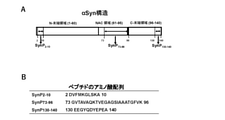
- A Schematic diagram showing the structure of the N-terminal, NAC-terminal, and C-terminal of ⁇ -synuclein.
- B Amino acid sequence of the peptide in each region of FIG. 2 (A).
- Binding analysis of FABP3 and ⁇ -synuclein by domain (A) Time-dependent binding of FABP3 and full-length ⁇ -synuclein. (B) Time-dependent binding of FABP3 and SynP 2-10 . (C) Time-dependent binding of FABP3 and SynP 73-96 . (D) Time-dependent binding of FABP3 and SynP 130-140 . Binding analysis of ABP3 and various mutant ⁇ -synucleins. (A) A peptide in which the 133rd tyrosine of SynP 130-140 is replaced with phenylalanine (Y133F).
- FIG. 1 Schematic diagram showing the positions of the 20aa peptide and the 10aa peptide in the ⁇ -synuclein C-terminal region. Inhibition of ⁇ -synuclein monomer uptake into FABP-expressing neurons by C-terminal deficient peptide of ⁇ -synuclein.
- ⁇ S (WT) wild-type ⁇ -synuclein monomer
- ⁇ S ( ⁇ 130-140) peptide lacking amino acids 130-140 in the wild-type ⁇ -synuclein sequence.
- FIG. 1 Schematic diagram showing the sequence of ⁇ S ( ⁇ 130-140) peptide.
- AA Arachidonic acid.
- FABP3 F16S A protein in which the 16th phenylalanine of wild-type FABP3 is replaced with serine.
- ⁇ -synuclein is fibrotic and aggregated in the brain from monomers to oligomers and multimers such as protofibrils, but recent studies have shown that oligomer formation of ⁇ -synuclein is transmitted between neurons or glial cells. It is believed to be involved and exert cell toxicity.
- the inventor of the present application recently reported that when ⁇ -synuclein forms an oligomer, fatty acid-binding protein 3 (FABP3) also produces an oligomer with ⁇ -synuclein (Kawahata, I. et al., Int. J. Mol. Sci. 2019, 20, (21)).
- oligomerized ⁇ -synuclein propagates between nerve cells and is taken up by nerve cells at the point of transmission, causing cell death.
- FABP3 is involved in the uptake of ⁇ -synuclein into these nerves and glial cells.
- oligomer formation by FABP3 and ⁇ -synuclein is considered to be involved in both propagation and uptake of ⁇ -synuclein, and if the interaction between FABP3 and ⁇ -synuclein can be inhibited or suppressed, synucleinopathy can be prevented or treated. It is useful.
- the inventors of the present application have applied the human ⁇ -sinucrane protein (140 amino acids, SEQ ID NO: 1, UniPlot: P37840) to the N-terminal region (region consisting of the 2nd to 10th amino acids from the N-terminal, SEQ ID NO: 2) and NAC region.
- Peptides corresponding to region consisting of amino acids 73 to 96, SEQ ID NO: 3
- C-terminal region region consisting of amino acids 130 to 140, SEQ ID NO: 4
- FIGS. 1A-C are schematic diagrams of 1: 1 complex formation of ⁇ -synuclein and FABP3.
- the C-terminal region of ⁇ -synuclein shown by a single curve binds to the fatty acid binding site of FABP3.
- the 16th Phe of FABP3 and the 133rd Tyr of the C-terminal region of ⁇ -synuclein are largely involved in the binding.
- the 133rd peptide of ⁇ -synuclein is set to Phe, a stronger bond is obtained.
- the C-terminal of ⁇ -synuclein it is considered that it is bound to the surface of FABP3 via a charge or the like.
- the peptide represented by the following (i) or (ii) is provided: (I) A peptide having an amino acid sequence represented by EEG (X1) QD (X2) EPEA (SEQ ID NO: 5). (In the formula, X1 and X2 are the same or different, tyrosine (Y), phenylalanine (F) or tryptophan (W)) (Ii) A peptide having an amino acid sequence in which one or several are deleted, substituted or added at amino acid sites other than X1 and X2 of the amino acid sequence of (i) above, and having an activity of binding to the FABP3 protein.
- amino acid symbols herein follow the IUPAC Amino Acid Abbreviations.
- a one-character code, a three-character code, and an amino acid are represented.
- A Ala Alanine M, Met Methionine C, Cys Cysteine N, Asn Asparagine D, Asp Aspartate P, Pro Proline E, Glu Glutamic Acid Q, Gln Glutamine F, Phe Phenylalanine R, Arg Arginine G, Gly Glycine S, Ser Serine H, His Histidine T, Thr Threonine I, Ile Isoleucine V, Val Valine K, Lys Lysine W, Trp Tryptophan L, Leu Leucine Y, Tyr Tyrosine
- peptide of the first aspect of the present invention not only the peptide represented by (i) or (ii) in which each amino acid is unmodified, but also one or more amino acids are modified while maintaining the type of amino acid. , (I) or (ii) is also included. Such modifications include oxidation, phosphorylation, N-acetylation, S-cysteine formation and the like due to the binding of oxygen atoms.
- the peptides of the invention bind FABP3 through the interaction of the phenyl groups of the amino acids X1 and X2 with the phenyl group of the 16th phenylalanine in the amino acid sequence of the native FABP3 protein.
- the peptide of the present invention is the peptide represented by (i) above, where X1 is tyrosine and X2 is tyrosine, phenylalanine, or tryptophan.
- the peptide of the present invention is the peptide represented by (i) above, where X1 is phenylalanine and X2 is tyrosine, phenylalanine, or tryptophan.
- X1 is phenylalanine
- the binding affinity with the FABP3 protein is higher than when X1 is tyrosine.
- the peptide of the present invention is the peptide represented by (i) above, where X1 is tryptophan and X2 is tyrosine, phenylalanine, or tryptophan.
- the peptide of the invention is the peptide represented by (ii) above, having an amino acid sequence in which one or two are deleted, substituted or added at the amino acid site, and the FABP3 protein. It is a peptide having an activity to bind. Where one or two are substituted or added at the amino acid site, such substituted or added amino acids may be natural amino acids or non-natural amino acids (ie, 20 classics). It may be an amino acid (not an amino acid).
- the peptide of the invention is the peptide represented by (ii) above, which has an amino acid sequence in which one is deleted, substituted or added at the amino acid site, and is bound to the FABP3 protein. It is a peptide that has the activity of
- the peptide of the present invention is the peptide represented by (ii) above, which has an amino acid sequence in which one is deleted, substituted or added at the amino acid site, and binds to the FABP3 protein.
- X1 is tyrosine and X2 is tyrosine, phenylalanine, or tryptophan
- X1 is phenylalanine and X2 is tyrosine, phenylalanine, or tryptophan
- X1 is tryptophan.
- X2 is tyrosine, phenylalanine, or tryptophan.
- the peptide of the present invention is the peptide represented by (i) or (ii) above, and the amino acid length is 7 to 30, preferably 8 to 20, more preferably 9. -20, and even more preferably 10-20, such as 9, 10, 11, 12, 13, 14, 15, or 16.
- the peptide of the first aspect of the present invention can bind to FABP3, it can compete with ⁇ -synuclein and inhibit or suppress the interaction between FABP3 and ⁇ -synuclein.
- the inhibitory or inhibitory effect of the peptide of the first aspect of the present invention on the interaction between ⁇ -synuclein and FABP3 can be confirmed by an in vitro inhibition assay.
- the peptide of the first aspect of the present invention is considered to be useful for the prevention or treatment of synucleinopathy.
- the peptide of the first aspect of the present invention can be produced as a peptide isolated by a chemical synthesis method well known to those skilled in the art, or can be produced as a part of other peptides.
- an antibody against the peptide of the first aspect of the present invention is provided.
- Such an antibody is specific for the peptide of the first aspect and recognizes a part or all of the peptide of the first aspect of the present invention as an epitope, and thus inhibits or suppresses the interaction between ⁇ -synuclein and FABP3. Therefore, the antibody of the second aspect of the present invention is also considered to be useful for the prevention or treatment of synucleinopathy.
- the antibody of the second aspect of the present invention can be produced by a well-known immunological method in which the peptide of the first aspect of the present invention is produced by a chemical synthesis method well known to those skilled in the art and the peptide is used as an antigen. ..
- the antibody of the second aspect of the present invention may be either a polyclonal antibody or a monoclonal antibody. Further, the antibody includes not only a complete antibody molecule but also a fragment thereof, and may be, for example, Fab, F (ab') 2, ScFv or the like.
- the peptide of the first aspect of the present invention is derived from a partial sequence of ⁇ -synuclein, the peptide of the first aspect and the antibody of the second aspect of the present invention inhibit the uptake of ⁇ -synuclein into FABP3-expressing neurons.
- side effects can be avoided.
- peptides and antibodies that are stable in vivo and have good transferability into the brain can be designed.
- a method for inhibiting the interaction between ⁇ -synuclein and FABP3 which comprises exposing ⁇ -synuclein to the peptide of the first aspect or the antibody of the second aspect of the present invention.
- the above inhibition method may be an in vivo method or an in vitro method.
- a method for inhibiting the uptake of ⁇ -synuclein into FABP3-expressing cells which comprises exposing ⁇ -synuclein to the peptide of the first aspect or the antibody of the second aspect of the present invention. ..
- the above inhibition method may be an in vivo method or an in vitro method.
- Examples of FABP3-expressing cells include, but are not limited to, dopaminergic neurons and glial cells.
- a kit for inhibiting the interaction between ⁇ -synuclein and FABP3, which comprises the peptide of the first aspect of the present invention or the antibody of the second aspect, is provided.
- the kit may include free ⁇ -synuclein or other reagents and / or instruments for measuring the aggregation of ⁇ -synuclein and FABP, negative controls and positive controls for expression level measurement, and the like.
- a prophylactic or therapeutic agent for the prevention or treatment of synucleinopathy containing the peptide of the first aspect or the antibody of the second aspect as an active ingredient.
- a pharmaceutical composition containing the peptide of the first aspect or the antibody of the second aspect for the prevention or treatment of synucleinopathy.
- Synucleinopathy can be selected from the group consisting of Parkinson's disease (PD), Lewy body disease (LBD), and multiple system atrophy (MSA).
- PD Parkinson's disease
- LBD Lewy body disease
- MSA multiple system atrophy
- PDD Parkinson's disease with dementia
- DLB dementia with dementia
- various administration forms can be adopted, and for example, any of an injection, an oral preparation, a nasal preparation and the like may be adopted, and an injection preparation is preferable.
- an injection preparation is preferable.
- Intravenous, subcutaneous, intradermal, intraspinal cavity, etc. are adopted.
- Each of these dosage forms can be produced by a conventional formulation method known to those skilled in the art.
- the subject of administration of the prophylactic or therapeutic agent of the sixth aspect and the pharmaceutical composition of the seventh aspect is a mammal, preferably a mouse, a rat, a hamster, a ferret, a dog, a cat, a monkey or a human, and more preferably. It is a human.
- a pharmaceutical carrier can be added to the preventive or therapeutic agent of the sixth aspect and the pharmaceutical composition of the seventh aspect, if necessary.
- the pharmaceutical carrier various organic or inorganic carrier substances commonly used as pharmaceutical materials are used, and excipients, binders, disintegrants, lubricants, coating agents, solvents, solubilizing agents, suspending agents, etc. Examples thereof include a tensioning agent, a pH adjusting agent, a buffering agent, and a micelle agent.
- pharmaceutical additives such as preservatives, antioxidants, colorants, flavoring / flavoring agents, stabilizers and the like are added as necessary. It can also be used.
- the amount of the peptide of the first aspect to be blended in each of the above-mentioned dosage unit forms is not constant depending on the symptom of the patient to which the peptide is applied, the dosage form thereof, etc., but is generally 0. It is 1 ng to 1000 mg, preferably 10 ng to 10 mg.
- the daily dose of the peptide of the first aspect having the above-mentioned dosage form varies depending on the patient's symptoms, body weight, age, gender, etc. and cannot be unconditionally determined, but is usually 0.1 ng per day for an adult (body weight 50 kg). It is preferable to administer to 1000 mg, preferably 10 ng to 10 mg once a day or 2 to 3 times daily, in units of 1 week, every other week, 4 weeks (January), or every other month.
- the amount of the antibody of the second aspect to be blended in each of the above-mentioned dosage unit forms is not constant depending on the symptom of the patient to which the antibody is applied, the dosage form thereof, etc., but is generally 0. It is 1 ng to 1000 mg, preferably 10 ng to 10 mg.
- the daily dose of the antibody of the second aspect having the above-mentioned administration form varies depending on the patient's symptoms, body weight, age, gender, etc. and cannot be unconditionally determined, but is usually 0.1 ng per day for an adult (body weight 50 kg). It is preferable to administer to 1000 mg, preferably 10 ng to 10 mg once a day or about 2 to 3 times in 1-week units, bi-weekly units, 4-week (January) units, or bi-monthly units.
- FIGS. 2A and 2B explain the region corresponding to the structure of the natural protein ⁇ -synuclein, and FIG. 2A shows the peptides (SynP2-10, SynP73-96, and SynP130-140) used in this example. The region sites are shown, and FIG. 2B shows the amino acid sequences of these peptides (SEQ ID NO: 2, SEQ ID NO: 3, SEQ ID NO: 4).
- Quartz crystal microbalance (QCM measuring device (AffinixQN ⁇ , Initium) method using FABP3 and wild-type ⁇ -synuclein (Syn) or peptide having a part of the amino acid sequence of wild-type ⁇ -synuclein (SynP2-10, SynP73-96, And the interaction with SynP130-140) was measured.
- the Ni-NTA method was used to immobilize FABP3 on the crystal substrate. Specifically, 1% SDS and Piranha solution (H 2 SO 4 :).
- FIGS. 3A-D are graphs showing the interaction between FABP3 and ⁇ -synuclein full length (Syn) (A), SynP2-10 peptide (B), SynP73-96 peptide (C), and SynP130-140 peptide (D), respectively. be.
- Syn ⁇ -synuclein full length
- B SynP2-10 peptide
- C SynP73-96 peptide
- D SynP130-140 peptide
- the SynP130-140 peptide is a peptide corresponding to the very C-terminal part of the C-terminal region (100-140) of ⁇ -synuclein.
- Tyrosine at position 133 and tyrosine at position 136 are both converted to phenylalanine (Y133F / Y136F), tyrosine at position 133 is converted to phenylalanine, and tyrosine at position 136 is converted to tryptophan (Y133F /).
- Y136W a variant (Y136F / Y136W) in which tyrosine at position 133 and tyrosine at position 136 were both converted to tryptophan was prepared.
- Interactions between FABP3 and various mutants of the peptide SynP130-140 were performed in the same manner as in Example 1. The measurement was carried out by adding each peptide to an arbitrary concentration with respect to the immobilized FABP3.
- Example 3 Suppression of amyloid fibril formation by addition of FABP3 to ⁇ -synuclein and promotion of aggregation by addition of peptide (method)
- the morphology of the amyloid fibrils at the time point was measured with an electron microscope (TEM).
- ARVO X4 Perkin Elmer was used to measure the fluorescence value over time and shake during the fibrosis process of Syn.
- the measurement sample was ⁇ -synuclein, FABP3, peptide (SynP130-140, SynP130-140 Y133F, Y136F, Y136W, Y133F / Y136F, Y133F / Y136W) in 50 mM Tris-HCl pH 7.4, 150 mM NaCl, 20 ⁇ M Thio-T 500 ⁇ l. , Y133W / Y136W) were added so as to be 69 ⁇ M respectively.
- the 1800-minute sample obtained after the measurement was measured with a transmission electron microscope (TEM) (JEOL JEM-1400 Plus).
- FIG. 5A is a fluorescence observation of amyloid fibril formation over time
- FIG. 5B is a photomicrograph showing synuclein aggregation when the same mutant peptide as used in Example 2 was used.
- the aggregation of synuclein was completely suppressed ( ⁇ in the graph).
- Example 4 Concentration-dependent of SynP130-140 Y133F peptide in amyloid fiber aggregation formation
- ⁇ -synuclein (Syn) A mutant peptide (SynP130-140 Y133F) in which tyrosine at position 133 of SynP130-140 was mutated to phenylalanine 1
- Amyloid fibril formation of ⁇ -synuclein was observed by fluorescence with thioflavin T (Thio-T) in a 1: 1 molar ratio, or the morphology of amyloid fibrils at the final stage thereof was measured with an electron microscope (TEM). Thio-T measurement and TEM measurement were carried out in the same manner as in Example 3.
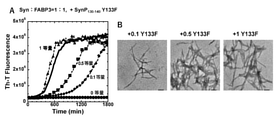
- SynP130-140 Y133F was added so as to be 0.1 equal amount (6.9 ⁇ M), 0.5 equal amount (34.5 ⁇ M), and 1 equal amount (69 ⁇ M) with respect to ⁇ -synuclein 69 ⁇ M and FABP3 69 ⁇ M. The measurement was performed by doing.
- FIG. 6A is a fluorescence observation of amyloid fibril formation over time
- FIG. 6B is a photomicrograph showing synuclein aggregation when SynP130-140 Y133F peptide was used at various concentrations. Addition of this mole of FABP3 to ⁇ -synuclein completely suppressed amyloid fiber aggregation of ⁇ -synuclein.
- the Y133F peptide preferentially bound to FABP3 in a volume-dependent manner, and ⁇ -synuclein that could not be bound.
- the 0-equal graph of the black circle shows amyloid fiber aggregation formation in the presence of only FABP3 and ⁇ -synuclein.
- Example 5 Effect of Addition Time of SynP130-140 Peptide on Amyloid Fiber Aggregation Formation Amyloid fibril formation of free ⁇ -synuclein when SynP130-140 peptide was later added to the complex of ⁇ -synuclein and FABP3. was observed by fluorescence or TEM observation at the final time thereof. Thio-T measurement and TEM measurement were carried out in the same manner as in Example 3. In the Thio-T measurement, SynP130-140 was added from the beginning (0 hours), 3 hours, 8 hours, and 24 hours later.
- FIG. 7A is a fluorescence observation of amyloid fibrosis formation at each addition time
- FIG. 6B is a micrograph showing synuclein aggregation when the SynP130-140 Y133F peptide is added at each addition time. Addition of this mole of FABP3 to ⁇ -synuclein (Syn) forms a 1: 1 Syn-FABP3 complex.
- P130-140 C-terminal peptide
- P130-140 has a stronger affinity for FABP3
- Syn is dissociated from FABP3 and SynP130-140 is released.
- Example 6 Uptake of ⁇ -synuclein in dopamine neurons and uptake antagonistic action by C-terminal peptide (method) Cultured dopaminergic nerves were prepared according to the method described above (Kawahata et al. 2019). Specifically, the uterus was aseptically removed from C57BL6N mice on the 15.5th day of pregnancy by abdominal midline incision under deep isoflurane anesthesia, and under a stereomicroscope under ice-cold Hanks balanced salt solution (HBSS), the fetal midbrain.
- HBSS Hanks balanced salt solution
- the tissue was dispersed by treatment with a nerve cell dispersion (Sumitomo Bakelite) at 37 ° C for 30 minutes, centrifuged at 1000 rpm for 5 minutes, the supernatant was discarded, and the cell pellet was dispersed, and then the removal solution (Sumitomo Bakelite). After centrifuging at 900 rpm for 5 minutes, the supernatant was removed, the pellet was suspended in Eagle's minimal essential medium (EMEM) and seeded on a poly-L-lysine coated chamber plate (Iwaki).
- EMEM Eagle's minimal essential medium
- the antagonism of the peptide uptake of ⁇ -synuclein into the dopaminergic nerve was evaluated by quantitative analysis of the intracellular fluorescence intensity of ATTO-550-labeled ⁇ -synuclein (NIH Image J software). The numerical values were average soil SEM (n> 20), and one-way ANOVA with Tukey test was performed for all groups.
- the peptide conceptual diagram of the synthesized ⁇ -synuclein is shown in C.
- Example 7 Intracellular uptake characteristics (method) of wild-type ⁇ -synuclein and C-terminal deficient mutants in dopamine neurons
- the cultured dopaminerve was prepared in the same manner as in the above (Example 6).
- Monomers were added to the medium and their uptake into nerve cells was examined.
- FIG. 9C shows a conceptual diagram of the synthesized C-terminal 130-140 residue-deficient ⁇ -synuclein.
- Example 8 Binding experiment (method) between FABP and ⁇ -synuclein peptide Quantitative values of the affinity between FABP3 and various peptides or ⁇ -synuclein were determined using a QCM measuring device. The detailed experimental method is as described in the method of Example 1.
- the binding results of FABP3 and various peptides are as shown in FIG.
- the binding of FABP3 to ⁇ -synuclein involves the C-terminal 130-140 residues of ⁇ -synuclein, and from the results of the FABP3 mutation and the ⁇ -synuclein C-terminal peptide mutation, the 16th amino acid sequence of the FABP3 protein. It was shown that the phenyl group of phenylalanine interacts with the phenyl group at position 133, tyrosine or tryptophan at position ⁇ -synuclein and / or the phenyl group at position 136, tyrosine or tryptophan.
Landscapes
- Health & Medical Sciences (AREA)
- Chemical & Material Sciences (AREA)
- Organic Chemistry (AREA)
- Life Sciences & Earth Sciences (AREA)
- General Health & Medical Sciences (AREA)
- Medicinal Chemistry (AREA)
- Bioinformatics & Cheminformatics (AREA)
- Engineering & Computer Science (AREA)
- Biomedical Technology (AREA)
- Neurosurgery (AREA)
- Neurology (AREA)
- Nuclear Medicine, Radiotherapy & Molecular Imaging (AREA)
- General Chemical & Material Sciences (AREA)
- Pharmacology & Pharmacy (AREA)
- Chemical Kinetics & Catalysis (AREA)
- Veterinary Medicine (AREA)
- Animal Behavior & Ethology (AREA)
- Public Health (AREA)
- Proteomics, Peptides & Aminoacids (AREA)
- Genetics & Genomics (AREA)
- Biochemistry (AREA)
- Molecular Biology (AREA)
- Biophysics (AREA)
- Zoology (AREA)
- Toxicology (AREA)
- Gastroenterology & Hepatology (AREA)
- Immunology (AREA)
- Psychology (AREA)
- Hospice & Palliative Care (AREA)
- Psychiatry (AREA)
- Peptides Or Proteins (AREA)
- Medicines That Contain Protein Lipid Enzymes And Other Medicines (AREA)
- Medicines Containing Antibodies Or Antigens For Use As Internal Diagnostic Agents (AREA)
Priority Applications (3)
| Application Number | Priority Date | Filing Date | Title |
|---|---|---|---|
| EP21850367.0A EP4190797A4 (en) | 2020-07-29 | 2021-07-07 | PEPTIDE USED TO PREVENT OR TREAT SYNUCLEINOPATHY |
| US17/924,461 US20230242601A1 (en) | 2020-07-29 | 2021-07-07 | Peptide used to prevent or treat synucleinopathy |
| CN202180036867.0A CN115667281A (zh) | 2020-07-29 | 2021-07-07 | 用于预防或治疗共核蛋白病的肽 |
Applications Claiming Priority (2)
| Application Number | Priority Date | Filing Date | Title |
|---|---|---|---|
| JP2020127958 | 2020-07-29 | ||
| JP2020-127958 | 2020-07-29 |
Publications (1)
| Publication Number | Publication Date |
|---|---|
| WO2022024693A1 true WO2022024693A1 (ja) | 2022-02-03 |
Family
ID=80036234
Family Applications (1)
| Application Number | Title | Priority Date | Filing Date |
|---|---|---|---|
| PCT/JP2021/025577 Ceased WO2022024693A1 (ja) | 2020-07-29 | 2021-07-07 | シヌクレイノパチーを予防又は治療するために使用されるペプチド |
Country Status (5)
| Country | Link |
|---|---|
| US (1) | US20230242601A1 (https=) |
| EP (1) | EP4190797A4 (https=) |
| JP (1) | JP7849854B2 (https=) |
| CN (1) | CN115667281A (https=) |
| WO (1) | WO2022024693A1 (https=) |
Families Citing this family (1)
| Publication number | Priority date | Publication date | Assignee | Title |
|---|---|---|---|---|
| WO2025192147A1 (ja) * | 2024-03-15 | 2025-09-18 | 公益財団法人東京都医学総合研究所 | αシヌクレインの蓄積抑制用の組成物、及びその利用 |
Citations (4)
| Publication number | Priority date | Publication date | Assignee | Title |
|---|---|---|---|---|
| JP2005517389A (ja) * | 2001-11-20 | 2005-06-16 | アトゲン カンパニー リミティッド | 環境ストレス耐性を有する新規のペプチド及びこれを含む融合蛋白質 |
| JP2015038078A (ja) * | 2009-08-21 | 2015-02-26 | アフィリス・アクチェンゲゼルシャフトAffiris Ag | アルファシヌクレイン・エピトープのミモトープのレヴィ小体病治療への使用 |
| US20180134775A1 (en) * | 2016-11-17 | 2018-05-17 | United Arab Emirates University | Alpha-Synuclein Antibodies (7A11) |
| JP2020073565A (ja) | 2013-11-21 | 2020-05-14 | エフ.ホフマン−ラ ロシュ アーゲーF. Hoffmann−La Roche Aktiengesellschaft | 抗アルファ−シヌクレイン抗体及び使用方法 |
Family Cites Families (10)
| Publication number | Priority date | Publication date | Assignee | Title |
|---|---|---|---|---|
| TW200509968A (en) * | 2002-11-01 | 2005-03-16 | Elan Pharm Inc | Prevention and treatment of synucleinopathic disease |
| US8506959B2 (en) * | 2002-11-01 | 2013-08-13 | Neotope Biosciences Limited | Prevention and treatment of synucleinopathic and amyloidogenic disease |
| US20050203010A1 (en) * | 2003-11-14 | 2005-09-15 | Atgen Co., Ltd. | Novel peptides conferring environmental stress resistance and fusion proteins including said peptides |
| ZA200701531B (en) * | 2004-08-09 | 2009-03-25 | Elan Pharm Inc | Prevention and treatment of synucleinopathic and amyloidogenic disease |
| PL2583978T3 (pl) * | 2007-02-23 | 2016-07-29 | Prothena Biosciences Ltd Co | Profilaktyka i leczenie chorób synukleinopatycznych i amyloidogennych |
| GB201008682D0 (en) * | 2010-05-25 | 2010-07-07 | Vib Vzw | Epitope tag for affinity based applications |
| KR20120093002A (ko) * | 2011-02-14 | 2012-08-22 | (주)에이티젠 | Nk 세포의 활성 측정을 이용한 암 진단 방법 및 진단 키트 |
| CA3051839A1 (en) * | 2017-02-17 | 2018-08-23 | Bristol-Myers Squibb Company | Antibodies to alpha-synuclein and uses thereof |
| WO2018226590A1 (en) * | 2017-06-05 | 2018-12-13 | The Trustees Of Columbia University In The City Of New York | Peptides as biomarkers in the diagnosis, confirmation and treatment of a neurological disorder and immunoprofiling in neurodegenerative disease |
| WO2020181273A1 (en) * | 2019-03-06 | 2020-09-10 | Cue Biopharma, Inc. | Antigen-presenting polypeptides with chemical conjugation sites and methods of use thereof |
-
2021
- 2021-07-07 CN CN202180036867.0A patent/CN115667281A/zh active Pending
- 2021-07-07 JP JP2021112822A patent/JP7849854B2/ja active Active
- 2021-07-07 WO PCT/JP2021/025577 patent/WO2022024693A1/ja not_active Ceased
- 2021-07-07 EP EP21850367.0A patent/EP4190797A4/en active Pending
- 2021-07-07 US US17/924,461 patent/US20230242601A1/en active Pending
Patent Citations (5)
| Publication number | Priority date | Publication date | Assignee | Title |
|---|---|---|---|---|
| JP2005517389A (ja) * | 2001-11-20 | 2005-06-16 | アトゲン カンパニー リミティッド | 環境ストレス耐性を有する新規のペプチド及びこれを含む融合蛋白質 |
| JP2015038078A (ja) * | 2009-08-21 | 2015-02-26 | アフィリス・アクチェンゲゼルシャフトAffiris Ag | アルファシヌクレイン・エピトープのミモトープのレヴィ小体病治療への使用 |
| JP5901714B2 (ja) | 2009-08-21 | 2016-04-13 | アフィリス・アクチェンゲゼルシャフトAffiris Ag | アルファシヌクレイン・エピトープのミモトープのレヴィ小体病治療への使用 |
| JP2020073565A (ja) | 2013-11-21 | 2020-05-14 | エフ.ホフマン−ラ ロシュ アーゲーF. Hoffmann−La Roche Aktiengesellschaft | 抗アルファ−シヌクレイン抗体及び使用方法 |
| US20180134775A1 (en) * | 2016-11-17 | 2018-05-17 | United Arab Emirates University | Alpha-Synuclein Antibodies (7A11) |
Non-Patent Citations (8)
| Title |
|---|
| "JBC Papers", vol. REV120, 18 May 2020, PRESS, pages: 011743 |
| FUKUI NAOYA, YAMAMOTO HANAE, MIYABE MOE, AOYAMA YUKI, HONGO KUNIHIRO, MIZOBATA TOMOHIRO, KAWAHATA ICHIRO, YABUKI YASUSHI, SHINODA : "An α-synuclein decoy peptide prevents cytotoxic α-synuclein aggregation caused by fatty acid binding protein 3", JOURNAL OF BIOLOGICAL CHEMISTRY, AMERICAN SOCIETY FOR BIOCHEMISTRY AND MOLECULAR BIOLOGY, US, vol. 296, 1 January 2021 (2021-01-01), US , pages 100663, XP055903830, ISSN: 0021-9258, DOI: 10.1016/j.jbc.2021.100663 * |
| INT. J. MOL. SCI., vol. 21, no. 6, 23 March 2020 (2020-03-23), pages 2230 |
| IZAWA YASUTAKA, TATENO HIRONOBU, KAMEDA HIROSHI, HIRAKAWA KAZUYA, HATO KEIKO, YAGI HISASHI, HONGO KUNIHIRO, MIZOBATA TOMOHIRO, KAW: "‐terminal negative charges and tyrosine residues in fibril formation of α‐synuclein", BRAIN AND BEHAVIOR, vol. 2, no. 5, 1 September 2012 (2012-09-01), pages 595 - 605, XP055903833, ISSN: 2162-3279, DOI: 10.1002/brb3.86 * |
| KAWAHATA ICHIRO, LUC BOUSSET, RONALD MELKI, KOHJI FUKUNAGA: "Fatty Acid-Binding Protein 3 is Critical for α-Synuclein Uptake and MPP+-Induced Mitochondrial Dysfunction in Cultured Dopaminergic Neurons", INT. J. MOL. SCI., vol. 20, no. 21, 28 October 2019 (2019-10-28), pages 5358, XP055903841 * |
| KAWAHATA, I. ET AL., INT. J. MOL. SCI., vol. 20, no. 21, 2019 |
| See also references of EP4190797A4 |
| SORRENTINO ZACHARY A., GIASSON BENOIT I.: "The emerging role of α-synuclein truncation in aggregation and disease", JOURNAL OF BIOLOGICAL CHEMISTRY, AMERICAN SOCIETY FOR BIOCHEMISTRY AND MOLECULAR BIOLOGY, US, vol. 295, no. 30, 1 July 2020 (2020-07-01), US , pages 10224 - 10244, XP055903838, ISSN: 0021-9258, DOI: 10.1074/jbc.REV120.011743 * |
Also Published As
| Publication number | Publication date |
|---|---|
| JP2022027513A (ja) | 2022-02-10 |
| EP4190797A4 (en) | 2024-09-04 |
| JP7849854B2 (ja) | 2026-04-22 |
| US20230242601A1 (en) | 2023-08-03 |
| EP4190797A1 (en) | 2023-06-07 |
| CN115667281A (zh) | 2023-01-31 |
Similar Documents
| Publication | Publication Date | Title |
|---|---|---|
| US6780971B2 (en) | Compositions for inhibiting the aggregation pathway of α-synuclein | |
| CN104147591B (zh) | Jnk信号转导通路的细胞可渗透性肽抑制剂用于治疗各种疾病的应用 | |
| JP7204235B2 (ja) | 活性型α-シヌクレインに結合する抗体 | |
| JP6446443B2 (ja) | タウオパチーの処置方法 | |
| CA2442909A1 (en) | Multimerization of hiv-1 vif protein as a therapeutic target | |
| JP2000505068A (ja) | 補体活性化を阻害する新規ペプチド類 | |
| JP2001520639A (ja) | 種々に修飾されたプロテグリン類 | |
| CN118903472A (zh) | 经修饰的配体门控的离子通道及使用方法 | |
| CN105175493B (zh) | 一种具有抑制Aβ聚集活性的多肽及其用途 | |
| JP2012514011A (ja) | Napを用いる併用治療の方法 | |
| JP2014210784A (ja) | 痛みの処置方法および鎮痛化合物のスクリーニング方法 | |
| JP2021514990A (ja) | 治療方法 | |
| CN113966224A (zh) | 采用补体抑制剂的炎性疾病治疗 | |
| US20140329758A1 (en) | Peptide inhibitors for mediating stress responses | |
| JP7849854B2 (ja) | シヌクレイノパチーを予防又は治療するために使用されるペプチド | |
| JP2008540339A (ja) | Nogoレセプター機能モチーフおよびそれに関するペプチド模倣物、ならびにそれらを使用する方法 | |
| KR20220155367A (ko) | MS 치료를 위한 카파 오피오이드 수용체(kappa opioid receptor) 리간드와 조합된 사이클로타이드(cyclotide) | |
| CN101531703B (zh) | 用于预防和/或治疗阿尔茨海默病的β片层阻断肽 | |
| CN105936646A (zh) | 迷你蛋白及其应用 | |
| EP1301534B1 (fr) | PF-4 MUTE, SES FRAGMENTS ET PEPTIDES DE FUSION MUTES, LEURS ANALOGUES, LES SEQUENCES D'ADN, ADNc ET ARNm CORRESPONDANTES, ET LEUR UTILISATION DANS L'INHIBITION DE L'ANGIOGENESE | |
| AU2006247631A1 (en) | Treatment of inflammatory bowel disease (IBD) with anti-angiogenic compounds | |
| JP2021534826A (ja) | がんの処置のためのペプチド治療薬およびその使用 | |
| TW201736393A (zh) | 澱粉球蛋白(aspd)結合阻礙肽、與評估及篩選方法 |
Legal Events
| Date | Code | Title | Description |
|---|---|---|---|
| 121 | Ep: the epo has been informed by wipo that ep was designated in this application |
Ref document number: 21850367 Country of ref document: EP Kind code of ref document: A1 |
|
| WWE | Wipo information: entry into national phase |
Ref document number: 2021850367 Country of ref document: EP |
|
| ENP | Entry into the national phase |
Ref document number: 2021850367 Country of ref document: EP Effective date: 20230228 |
|
| NENP | Non-entry into the national phase |
Ref country code: DE |