WO2022024316A1 - 認証システム、認証装置、認証方法、及びコンピュータプログラム - Google Patents
認証システム、認証装置、認証方法、及びコンピュータプログラム Download PDFInfo
- Publication number
- WO2022024316A1 WO2022024316A1 PCT/JP2020/029307 JP2020029307W WO2022024316A1 WO 2022024316 A1 WO2022024316 A1 WO 2022024316A1 JP 2020029307 W JP2020029307 W JP 2020029307W WO 2022024316 A1 WO2022024316 A1 WO 2022024316A1
- Authority
- WO
- WIPO (PCT)
- Prior art keywords
- face
- target
- gate
- authentication
- authentication system
- Prior art date
- Legal status (The legal status is an assumption and is not a legal conclusion. Google has not performed a legal analysis and makes no representation as to the accuracy of the status listed.)
- Ceased
Links
Images






Classifications
-
- G—PHYSICS
- G06—COMPUTING OR CALCULATING; COUNTING
- G06F—ELECTRIC DIGITAL DATA PROCESSING
- G06F21/00—Security arrangements for protecting computers, components thereof, programs or data against unauthorised activity
- G06F21/30—Authentication, i.e. establishing the identity or authorisation of security principals
- G06F21/31—User authentication
- G06F21/32—User authentication using biometric data, e.g. fingerprints, iris scans or voiceprints
-
- G—PHYSICS
- G06—COMPUTING OR CALCULATING; COUNTING
- G06F—ELECTRIC DIGITAL DATA PROCESSING
- G06F21/00—Security arrangements for protecting computers, components thereof, programs or data against unauthorised activity
- G06F21/30—Authentication, i.e. establishing the identity or authorisation of security principals
- G06F21/31—User authentication
-
- G—PHYSICS
- G07—CHECKING-DEVICES
- G07C—TIME OR ATTENDANCE REGISTERS; REGISTERING OR INDICATING THE WORKING OF MACHINES; GENERATING RANDOM NUMBERS; VOTING OR LOTTERY APPARATUS; ARRANGEMENTS, SYSTEMS OR APPARATUS FOR CHECKING NOT PROVIDED FOR ELSEWHERE
- G07C9/00—Individual registration on entry or exit
- G07C9/30—Individual registration on entry or exit not involving the use of a pass
- G07C9/32—Individual registration on entry or exit not involving the use of a pass in combination with an identity check
- G07C9/37—Individual registration on entry or exit not involving the use of a pass in combination with an identity check using biometric data, e.g. fingerprints, iris scans or voice recognition
-
- H—ELECTRICITY
- H04—ELECTRIC COMMUNICATION TECHNIQUE
- H04L—TRANSMISSION OF DIGITAL INFORMATION, e.g. TELEGRAPHIC COMMUNICATION
- H04L63/00—Network architectures or network communication protocols for network security
- H04L63/08—Network architectures or network communication protocols for network security for authentication of entities
- H04L63/0861—Network architectures or network communication protocols for network security for authentication of entities using biometrical features, e.g. fingerprint, retina-scan
Definitions
- This disclosure relates to the technical fields of authentication systems, authentication devices, authentication methods, and computer programs for persons passing through the gate.
- Patent Document 1 discloses a technique of extracting a feature amount from a face image, obtaining the similarity of the feature amount, and determining a registered person.
- Patent Document 2 discloses a technique for executing a recognition process using the average likelihood of accumulated facial images.
- Patent Document 3 discloses a technique for executing the present certification after narrowing down the targets to be collated by the pre-certification.
- One aspect of the authentication system of this disclosure is to collate an acquisition means for acquiring a face image of a target passing through a gate, information obtained from the face image of the target, and information on a plurality of faces to be registered. Based on the face recognition means for performing face recognition whether or not the target is the registration target and the number of successful authentications when the face recognition is executed a plurality of times, it is determined whether or not the target can pass through the gate. It is provided with a determination means.
- One aspect of the authentication device of the present disclosure is to collate an acquisition means for acquiring a face image of a target passing through a gate, information obtained from the face image of the target, and information on a plurality of faces to be registered. Based on the face recognition means for performing face recognition whether or not the target is the registration target and the number of successful authentications when the face recognition is executed a plurality of times, it is determined whether or not the target can pass through the gate. It is provided with a determination means.
- One aspect of the authentication method of this disclosure is to acquire a face image of a target passing through a gate, collate the information obtained from the face image of the target with information about a plurality of faces to be registered, and then perform the target. Performs face authentication as to whether or not the target is the registration target, and determines whether or not the target can pass through the gate based on the number of successful authentications when the face authentication is executed a plurality of times.
- One aspect of the computer program of the present disclosure is to acquire a face image of a target passing through a gate, collate the information obtained from the face image of the target with information about a plurality of faces to be registered, and then perform the target. Performs face recognition to determine whether or not the target is a registration target, and operates a computer to determine whether or not the target can pass through the gate based on the number of successful authentications when the face recognition is executed a plurality of times.
- FIG. 1 It is a conceptual diagram which shows the movement mode of the camera in the authentication system which concerns on 4th Embodiment. It is a figure which shows two face images used in the authentication system which concerns on 5th Embodiment. It is a figure (the 1) which shows the display example by the authentication system which concerns on 6th Embodiment. It is a figure (the 2) which shows the display example by the authentication system which concerns on 6th Embodiment. It is a block diagram which shows the functional structure of the authentication system which concerns on 7th Embodiment. It is a flowchart which shows the flow of operation of the authentication system which concerns on 7th Embodiment. It is a figure which shows the display example by the authentication system which concerns on 7th Embodiment.
- the 2 which shows the display example by the authentication system which concerns on 8th Embodiment.
- FIG. 1 is a block diagram showing a hardware configuration of the authentication system according to the first embodiment.
- the authentication system 10 includes a processor 11, a RAM (Random Access Memory) 12, a ROM (Read Only Memory) 13, and a storage device 14.
- the authentication system 10 may further include an input device 15 and an output device 16.
- the processor 11, the RAM 12, the ROM 13, the storage device 14, the input device 15, and the output device 16 are connected via the data bus 17.
- Processor 11 reads a computer program.
- the processor 11 is configured to read a computer program stored in at least one of the RAM 12, the ROM 13, and the storage device 14.
- the processor 11 may read a computer program stored in a computer-readable recording medium using a recording medium reading device (not shown).
- the processor 11 may acquire (ie, read) a computer program from a device (not shown) located outside the authentication system 10 via a network interface.
- the processor 11 controls the RAM 12, the storage device 14, the input device 15, and the output device 16 by executing the read computer program.
- a functional block for determining whether or not the target gate can pass is realized in the processor 11.
- processor 11 a CPU (Central Processing Unit), a GPU (Graphics Processing Unit), an FPGA (field-programmable get array), a DSP (Demand-Side Platform), and an ASIC (Application) are used. Alternatively, a plurality of them may be used in parallel.
- CPU Central Processing Unit
- GPU Graphics Processing Unit
- FPGA field-programmable get array
- DSP Demand-Side Platform
- ASIC Application Specific integrated circuit
- the RAM 12 temporarily stores the computer program executed by the processor 11.
- the RAM 12 temporarily stores data temporarily used by the processor 11 while the processor 11 is executing a computer program.
- the RAM 12 may be, for example, a D-RAM (Dynamic RAM).
- the ROM 13 stores a computer program executed by the processor 11.
- the ROM 13 may also store fixed data.
- the ROM 13 may be, for example, a P-ROM (Programmable ROM).
- the storage device 14 stores data stored for a long period of time by the authentication system 10.
- the storage device 14 may operate as a temporary storage device of the processor 11.
- the storage device 14 may include, for example, at least one of a hard disk device, a magneto-optical disk device, an SSD (Solid State Drive), and a disk array device.
- the input device 15 is a device that receives an input instruction from the user of the authentication system 10.
- the input device 15 may include, for example, at least one of a keyboard, a mouse and a touch panel.
- the output device 16 is a device that outputs information about the authentication system 10 to the outside.
- the output device 16 may be a display device (for example, a display) capable of displaying information about the authentication system 10.
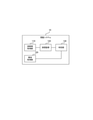
- FIG. 2 is a block diagram showing a functional configuration of the authentication system according to the first embodiment.
- the authentication system 10 is configured as a system for determining whether or not a target gate can pass through, for example, at a boarding gate such as an airport.
- a target gate such as an airport
- the authentication system 10 includes a face image acquisition unit 110, a face authentication unit 120, and a determination unit 130 as a processing block for realizing the function or as a physical processing circuit.
- the face image acquisition unit 110, the face authentication unit 120, and the determination unit 130 can be realized by, for example, the above-mentioned processor 11 (see FIG. 1).
- the face image acquisition unit 110 acquires a face image of a target person who is about to pass through the gate, for example, from a camera installed around the gate.
- the camera may be installed directly at the gate, or may be installed at a place other than the gate around the gate.
- the face image acquisition unit 110 controls the camera so as to capture the face image at the timing when the subject reaches a predetermined position (for example, a position approaching the gate to some extent), and the image of the subject captured by the camera.
- a predetermined position for example, a position approaching the gate to some extent
- the criteria for determining whether or not the subject has arrived at a predetermined position is a method of analyzing the image captured by the camera (determining that the subject has arrived at a predetermined position when the distance between the eyes of the target is equal to or greater than the threshold value).
- the face image acquisition unit 110 may be configured to acquire the face image of the target person from one camera, or may be configured to acquire the face image of the target person from each of the plurality of cameras.
- the information about the image acquired by the face image acquisition unit 110 is output to the face authentication unit 120.
- the face recognition unit 120 is configured to be able to execute face recognition using the face image of the target person acquired by the face image acquisition unit 110. Specifically, the face recognition unit 120 collates the face image of the target person with the face images of a plurality of registrants and executes face authentication (that is, executes the authentication process of 1: N). As a specific method of face recognition, an existing technique can be appropriately adopted, and for example, a method of extracting a feature amount from a face image and comparing the feature amount can be mentioned as an example.
- the face recognition unit 120 may be provided with a function related to the authentication process outside the system.
- the face recognition unit 120 may be configured to send information about the face image of the target person to an external server, cloud, or the like, and receive and output the result of the authentication process executed at the destination. ..
- the authentication result by the face recognition unit 120 is output to the determination unit 130.
- the determination unit 130 is configured to be able to determine whether or not the target person can pass through the gate based on the authentication result of the face recognition unit 120. More specifically, the determination unit 130 is configured to be able to determine whether or not the subject can pass through the gate based on the number of successful face authentications performed by the face authentication unit 120.
- the "number of successes" here means the number of times that the authentication is determined to be successful when the face authentication is performed a plurality of times.
- the determination unit 130 may control the gate so that the target person can pass through the gate.
- the determination unit 130 may control the gate so that the target person cannot pass through the gate.
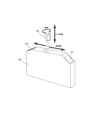
- FIG. 3 is a perspective view showing the configuration of the gate device according to the first embodiment.
- the explanation will be given by taking the gate device installed at the boarding gate of the airport as an example.
- the gate device 200 includes a reading device 210, a display 220 for personnel, an image pickup display device 230, and an opening / closing bar 240.
- the reading device 210 is installed on the entrance side of the gate device 200 (that is, the side where the passenger enters).
- the reading device 210 is configured to be able to read, for example, passport information and ticket information.
- the reading unit 210 may not be installed when determining whether or not to pass through the gate based only on the result of face authentication by the face authentication unit 120 (that is, without confirming a passport, a ticket, or the like).
- the display 220 for staff is installed on the exit side of the gate device 200 (that is, the side where the passenger leaves).
- the display 220 for staff members is configured to be able to display information on passengers passing through the gate toward staff members (for example, ground staff members at an airport) who guide passengers on the exit side of the gate device 200.
- the display 220 for personnel may be configured to be able to read passport information and ticket information, such as the reading device 210.
- the display 220 for clerk may display the determination result of the determination unit 130 (that is, whether or not the passenger can pass through the gate).
- the image pickup display device 230 is installed above the gate device 200.
- the image pickup display device 230 includes a camera that captures a face image of a passenger (that is, a target person) passing through the gate, and a display that can display various information toward the passenger.
- the face image of the subject captured by the camera of the image pickup display device 230 is output to the face image acquisition unit 110.
- two or more cameras may be installed in the image pickup display device 230 to capture the facial image of the subject, or in a place other than the image pickup display device 230. It may be installed.
- a camera may be installed on the wall or ceiling around the gate.
- the display of the image pickup display device 230 may display the determination result of the determination unit 130 (that is, whether or not the passenger can pass through the gate).
- the opening / closing bar 240 is installed between the two gate devices 200.
- the opening / closing bar 240 is normally closed, and may be configured to open when the determination unit 130 determines that the gate can pass through.
- the open / close bar 240 may be configured to be normally open and closed when the determination unit 130 determines that the gate cannot pass through.
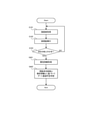
- FIG. 4 is a flowchart showing the operation flow of the authentication system according to the first embodiment.
- the face image acquisition unit 110 first acquires the face image of the target person passing through the gate (step S101). Then, the face recognition unit 120 executes face recognition using the information obtained from the face image of the target person (step S102).
- the authentication system 10 determines whether or not the number of face authentications by the face authentication unit 120 is equal to or greater than a predetermined value (step S103).
- the "predetermined value” here is a value preset as the number of times the face authentication is executed, and a value of at least "2" or more is set.
- the predetermined value may be set to the same value as the number of successful face recognitions in which the determination unit 130 determines that the target person can pass through the gate.
- step S103 NO
- the process is repeated from step S101.
- the face recognition by the face recognition unit 120 is executed a plurality of times.
- step S103 determines that the number of face authentications by the face recognition unit 120 is based on the number of successful face authentications by the face recognition unit 120. It is determined whether or not the subject can pass through the gate (step S104). As described above, since the face recognition by the face recognition unit 120 is executed a plurality of times, if all the face recognitions are successful, the number of successful face recognitions is also a plurality of times.
- the determination unit 130 determines, for example, that it is possible to pass through the gate when the number of successful face authentications is a plurality of times, and determines that it is not possible to pass through the gate when the number of successful face authentications is not a plurality of times. You may.
- two people may perform face recognition at the same time, or only one of them (for example,). , Adults only) Face recognition may be performed.
- face recognition is performed on only one of them, face recognition by a staff member or the like may be manually performed on the other (for example, a small child) for which face recognition cannot be performed.
- the target person who can pass through the gate or cannot pass through the gate on the display 220 for staff members. By displaying the face of the target person), only the target person who cannot pass through the gate may be instructed to perform face recognition again.
- face authentication is executed a plurality of times, and whether or not the gate can pass is determined based on the number of successful face authentications at that time. By doing so, it is possible to more appropriately determine whether or not the subject can pass through the gate, as compared with the case where face recognition is performed only once. In other words, it is possible to determine with high accuracy whether or not the target person is a registered passenger. In addition, at boarding gates and the like at airports, it is required to accurately execute authentication processing for many target persons. In such a situation, the authentication system 10 according to the present embodiment exerts an extremely useful effect.
- the authentication system 10 according to the second embodiment will be described with reference to FIG.
- the second embodiment is different from the first embodiment described above in that a part of the operation (specifically, a process of determining whether or not the number of successful face recognition is equal to or more than a predetermined number of times is executed). Only, the configuration of the system and the gate may be the same as that of the first embodiment (see FIGS. 1 to 3). Therefore, in the following, the parts different from the first embodiment will be described in detail, and the description of other overlapping parts will be omitted as appropriate.
- FIG. 5 is a flowchart showing the operation flow of the authentication system according to the second embodiment.
- the same reference numerals are given to the same processes as those shown in FIG.
- the face image acquisition unit 110 first acquires the face image of the target person passing through the gate (step S101). Then, the face recognition unit 120 executes face recognition using the information obtained from the face image of the target person (step S102).
- the authentication system 10 determines whether or not the number of face authentications by the face authentication unit 120 is equal to or greater than a predetermined value (step S103). When it is determined that the number of face recognitions by the face recognition unit 120 is not equal to or more than a predetermined value (step S103: NO), the process is repeated from step S101.
- the determination unit 130 determines that the number of successful face authentications by the face authentication unit 120 is a predetermined number of times. It is determined whether or not the above is achieved (step S201).
- the "predetermined number of times" here is a threshold value for determining whether or not the target person can pass through the gate, and is set in advance. The predetermined number of times can be set as an arbitrary value, but it is required to be set as a value equal to or less than the predetermined value (that is, the number of times of face recognition execution) in step S103.
- step S201: YES When it is determined that the number of successful face authentications by the face recognition unit 120 is equal to or greater than the predetermined number of times (step S201: YES), the determination unit 130 determines that the target person can pass through the gate (step S202). On the other hand, when it is determined that the number of successful face authentications by the face recognition unit 120 is not more than a predetermined number (step S201: NO), the determination unit 130 determines that the target person cannot pass through the gate (step S203). ..
- step S201 may be executed in parallel during the process loop of steps S101 to S103 (that is, it may be executed before the number of times of face recognition reaches a predetermined value). In this case, even if the number of face recognition executions has not reached the predetermined value, it is determined that the target person can pass through the gate when the number of successful face recognitions exceeds the predetermined number. You may do it. For example, assuming that the predetermined value in step S103 is "5" and the predetermined number of times in step S201 is "2", if both of the first two face recognitions are successful, the face recognition is performed at that time (that is, face recognition is 5). It may be determined that the subject can pass through the gate (without executing it once).
- the predetermined number of times in step S201 may be set as a value corresponding to the number of consecutive successes. In this case, even if the cumulative number of successes is the predetermined number or more, if the number of consecutive successes is not the predetermined number or more, the subject is determined to be unable to pass through the gate. For example, as in the case described above, if the predetermined value in step S103 is "5" and the predetermined number of times in step S201 is "2", the result of face recognition is " ⁇ , ⁇ , ⁇ , ⁇ , ⁇ " in order. If ( ⁇ is successful, ⁇ is unsuccessful), it is determined that the subject cannot pass through the gate. This is because the cumulative number of successes is three, while the number of consecutive successes is only one.
- the predetermined number of times (that is, the cumulative number of successful times) and the number of consecutive successes may be set as separate values. For example, if the predetermined number of times is set to "3" and the number of consecutive successes is set to "2", and the result of face recognition is " ⁇ , ⁇ , ⁇ , ⁇ , ⁇ " in order, the target person is the gate. It is judged that it cannot pass. This is because the cumulative number of successes is only two and the number of consecutive successes is only one. On the other hand, if the result of face recognition is " ⁇ , ⁇ , ⁇ , ⁇ , ⁇ " in order, it is determined that the subject can pass through the gate. This is because the cumulative number of successes is three, although the number of consecutive successes is only one. Further, when the result of face recognition is " ⁇ , ⁇ , ⁇ , ⁇ , ⁇ " in order, it is determined that the subject can pass through the gate. This is because the cumulative number of successes is only two, but the number of consecutive successes is two.
- the predetermined number of times and the number of consecutive successes described above may be set for each camera.
- the number of successful face recognitions is counted for each camera, and whether or not the gate can be passed is determined for each camera.
- the predetermined number of times is set to "3" and the number of consecutive successes is set to "2”
- the predetermined number of times is set to "5" and the number of consecutive successes is set to "3". do.
- the cumulative number of successful face recognitions using the image of the first camera is four, even if the cumulative number of successful face recognitions using the image of the second camera is only one. The subject is determined to be able to pass through the gate. Further, even if the number of consecutive successes of face recognition using the image of the first camera is one, if the cumulative number of successful face recognitions using the image of the second camera is three times, the target person is It is determined that it is possible to pass through the gate.
- the predetermined number of times is set to a relatively small value (for example, "2"), it is determined that the target person who should be passed by mistake is not allowed to pass while accurately collating the target person by face recognition multiple times. It is possible to prevent it from happening.
- the predetermined number of times is set to a relatively large value (for example, "5"), it is possible to prevent the target person who should not be able to pass from being mistakenly determined to be able to pass.
- the authentication system 10 according to the third embodiment will be described with reference to FIGS. 6 and 7.
- the third embodiment differs from the first and second embodiments described above only in a part of the configuration and operation, and the hardware configuration and the gate configuration thereof are the same as those of the first embodiment (FIGS. 1 and 3). See). Therefore, in the following, the parts different from the parts already described will be described in detail, and the description of other overlapping parts will be omitted as appropriate.
- FIG. 6 is a block diagram showing a functional configuration of the authentication system according to the third embodiment.
- the same reference numerals are given to the same components as those shown in FIG. 2.
- the authentication system 10 has a face image acquisition unit 110, a face authentication unit 120, and a determination unit 130 as a processing block for realizing the function or as a physical processing circuit.
- the face image storage unit 140 is provided.
- the face image storage unit 140 can be realized by, for example, the above-mentioned storage device 14 (see FIG. 1).
- the face image storage unit 140 is configured to be able to store the face image acquired by the face image acquisition unit 110 (that is, the face image of the subject captured by the camera).
- the face image storage unit 140 stores, for example, about 10 face images of the subject passing through the gate.
- the face image storage unit 140 may delete the face image accumulated by the subject.
- the face image of the subject stored in the face image storage unit 140 is appropriately output to the face recognition unit 120.
- the face recognition unit 120 is configured to be capable of performing face recognition by selecting an image suitable for face recognition from the face images of the target person stored in the face image storage unit 140. ..
- an image in which the subject is facing the front an image in which the distance between the eyes of the face image is above a certain level, an image in which a part of the subject's face is not missing, or the subject's face is blurred.
- An image that does not have a face, an image in which the subject's face is not blurred, an image whose resolution is larger than a predetermined value (when using a plurality of cameras having different resolutions), and the like may be selected as images suitable for face recognition.
- FIG. 7 is a flowchart showing the operation flow of the authentication system according to the third embodiment.
- the same reference numerals are given to the same processes as those shown in FIGS. 4 and 5.
- the face image acquisition unit 110 first acquires the face image of the target person passing through the gate (step S101).
- the face image storage unit 140 accumulates the face image of the subject acquired by the face image acquisition unit 110 (step S301).
- the accumulation of face images by the face image storage unit 140 is continuous until, for example, the number of accumulated face images reaches a predetermined number or a predetermined period elapses. It is done. That is, the processes of steps S101 and S103 are executed so as to loop a plurality of times.
- the face recognition unit 120 selects a face image suitable for face recognition from a plurality of face images stored in the face image storage unit 140 (step S302). Then, the face recognition unit 120 executes face recognition using the information obtained from the selected face image (step S102).
- the authentication system 10 determines whether or not the number of face authentications by the face authentication unit 120 is equal to or greater than a predetermined value (step S103).
- step S103: NO the process is repeated from step S101.
- step S103: YES the determination unit 130 determines that the number of successful face authentications by the face recognition unit 120 is based on the number of successful face authentications by the face recognition unit 120. It is determined whether or not the subject can pass through the gate (step S104).
- face images of the target person are accumulated, and face authentication is executed using the face image selected from them.
- face recognition can be performed with an image suitable for face recognition, so that the accuracy of face recognition can be improved.
- a predetermined interval is set between requesting one process and requesting the next process, or executing one process and executing the next process so that the process is not saturated.
- the condition of leaving (for example, 250 ms) may be imposed.
- the face image storage unit 140 accumulates the face image in a period corresponding to the predetermined interval described above, the face recognition can be executed without reducing the throughput.
- Such a technical effect is remarkably exhibited when it is required to execute the authentication process of many subjects in a short time, for example, such as a boarding gate of an airplane.
- the authentication system 10 according to the fourth embodiment will be described with reference to FIG. It should be noted that the fourth embodiment differs from each of the above-described embodiments only in the part related to camera control, and other configurations and operation flows may be the same as those of the embodiments already described. Therefore, in the following, the parts different from the parts already described will be described in detail, and the description of other overlapping parts will be omitted as appropriate.
- FIG. 8 is a conceptual diagram showing a movement mode of the camera in the authentication system according to the fourth embodiment.
- the same reference numerals are given to the same configurations as those shown in FIG.
- the authentication system 10 is configured to be able to change the position of the camera that captures the facial image of the target person.
- the image pickup display unit 230 having a camera is configured to be movable on the gate device.
- the movement of the image pickup display unit 230 will be specifically described, but when a camera is provided in addition to the image pickup display unit 230, the position of the camera may be changed in the same manner.
- the image pickup display unit 230 may be movable up and down so that its height changes.
- the image pickup display unit 230 may be configured to move up and down, for example, by expanding and contracting the support column.
- the image pickup display unit 230 is moved up and down so that the camera is at the height of the subject's face, for example. In this case, the position of the subject's face may be detected by a sensor or the like, and the image pickup display unit 230 may be moved up and down according to the height.
- the image pickup display unit 230 may be movable laterally so that its horizontal position changes.
- the image pickup display unit 230 may be configured to move laterally by, for example, moving horizontally on the gate device 200.
- the image pickup display unit 230 is laterally moved so that the camera follows, for example, a target person passing through the gate. In this case, the position of the target person may be detected by a sensor or the like, and the image pickup display unit 230 may be moved laterally according to the traveling direction thereof.
- the image pickup display unit 230 may be rotatable so that its horizontal orientation changes.
- the image pickup display unit 230 may be configured to rotate together with the rotation of the support column, for example.
- the image pickup display unit 230 is rotated so that the camera follows, for example, a target person passing through the gate. In this case, the position of the target person may be detected by a sensor or the like, and the image pickup display unit 230 may be rotated in the traveling direction thereof.
- the image pickup display unit 230 may be configured to be feasible by combining the above-mentioned vertical movement, horizontal movement, and rotation.
- the above-mentioned movement mode is merely an example, and the image pickup display unit 230 may be configured to be movable in other directions.
- the shutter speed may be increased.
- the image becomes dark, so the subject may be illuminated or the intensity of the illumination may be changed.
- moving the camera may make it difficult to know where to point.
- the position of the camera may be notified to the target person by displaying the image currently being captured on the image pickup display unit 230.
- a speaker may be provided in the image pickup display unit 230, and a sound may be produced according to the movement of the camera or the image pickup timing so that the camera faces the direction of the camera.
- the speaker may be installed at a location other than the image pickup display unit 230 (for example, near the gate or the gate device 200 itself) as long as the sound can reach the target person.
- the passability of the gate is determined after the face authentication is executed a plurality of times. Therefore, even if another person is reflected in the image, it is possible to suppress the occurrence of erroneous authentication as compared with the case where face authentication is executed only once.
- the position of the camera can be moved in the authentication system 10 according to the fourth embodiment.
- This makes it possible to more appropriately capture the facial image of the subject. For example, it is possible to take an image so that the face of the subject is surely included in the image pickup area. In addition, it becomes possible to image the subject from different angles. As a result, it becomes possible to appropriately perform face recognition using the face image of the subject.
- the authentication system 10 according to the fifth embodiment will be described with reference to FIG. It should be noted that the fifth embodiment differs from each of the above-described embodiments only in some operations (particularly, operations related to face recognition). For example, the system configuration and the overall operation flow are described above. May be the same as. Therefore, in the following, the parts different from the parts already described will be described in detail, and the description of other overlapping parts will be omitted as appropriate.
- FIG. 9 is a diagram showing two facial images used in the authentication system according to the fifth embodiment.
- the authentication system 10 uses an image obtained by capturing the subject 500 from the front for the first face authentication. Then, an image of the profile of the subject 500 is used for the second face recognition. That is, in the face recognition of the fifth embodiment, the face images of the subject 500 captured from different angles are used in each of the plurality of face recognitions. In this case, it is preferable that the registered image used for face recognition is also a plurality of images captured at different angles. Alternatively, information representing the face in three dimensions, such as a 3D model, may be used instead of the registered image.
- the "front" and "profile” shown in the figure are merely examples, and facial images taken from other angles may be used.
- Face images with different angles can be captured by moving the position of the camera, for example, as described in the fourth embodiment. For example, if the camera is pointed toward the entrance of the gate at the timing when the subject 500 approaches the gate, the face image in front of the subject 500 can be captured. Further, if the camera is directed toward the inside of the gate at the timing when the subject 500 passes through the gate, the profile of the subject 500 can be imaged.
- the face image can be captured from different angles without moving the position of the camera.
- the relative position between the camera and the target person 500 inevitably changes. Therefore, if a plurality of facial images are captured at different timings while the subject 500 is moving, the facial images of the subject 500 can be captured from different angles.
- a plurality of cameras it is possible to capture a face image from different angles. For example, if the subject 500 is imaged by the camera installed in the gate device 200 and the camera installed on the wall or ceiling around the gate, the face image of the subject 500 can be imaged from different angles. ..
- face authentication is executed using face images captured from different angles.
- face image captured from a plurality of angles can be used, it is possible to improve the accuracy of face recognition as compared with the case where only the face image captured from one direction is used.
- the authentication system 10 according to the sixth embodiment will be described with reference to FIGS. 10 and 11.
- the sixth embodiment explains a specific display example in the image pickup display unit 230, and the configuration and operation flow thereof may be the same as those of the above-described embodiment. Therefore, in the following, the parts different from the parts already described will be described in detail, and the description of other overlapping parts will be omitted as appropriate.
- FIG. 10 is a diagram (No. 1) showing a display example by the authentication system according to the sixth embodiment.
- FIG. 11 is a diagram (No. 2) showing a display example by the authentication system according to the sixth embodiment.
- the authentication system 10 As shown in FIG. 10A, in the authentication system 10 according to the sixth embodiment, how many times the face authentication process being executed is performed together with the face image of the target person 500 (that is, the image used for face authentication). Information indicating that may be displayed. In the example shown in the figure, the text “In the first authentication " is displayed on the face image of the subject 500. This indicates that the face recognition currently performed is the first of the face recognition performed multiple times.
- the authentication system 10 along with the face image of the target person 500, information indicating how many times the face authentication process is being executed, and face recognition so far.
- Information indicating the number of successful times may be displayed.
- the texts "under authentication for the third time " and "number of successes twice" are displayed on the face image of the subject 500. This is because the face recognition currently performed is the third of the face recognition performed multiple times, and two of the past two face recognitions have been successful (in other words, both times). It shows that it has not failed).
- the number of successes and the number of failures may be displayed as an icon, an image, or the like instead of text. For example, if the face recognition is successful, " ⁇ " may be displayed, and if it fails, "x" may be displayed. In this case, when the first and second times fail and the third and fourth times succeed, it may be displayed as "XXXXX".
- information indicating the determination result of whether or not to pass through the gate may be displayed together with the face image of the target person 500.
- the texts “authentication successful” and “can pass through the gate” are displayed on the face image of the subject 500. This indicates that the face recognition was successful more than a predetermined number of times, and it was determined that the subject 500 could pass through the gate.
- the texts "authentication failure” and “cannot pass through the gate” are displayed on the face image of the subject 500. This indicates that the face recognition did not succeed more than a predetermined number of times, and the subject 500 was determined not to pass through the gate.
- the above-mentioned display example is only an example, and other information handled by the authentication system 10 may be displayed in addition to or in place of the above information. Further, although the above-mentioned display example is assumed to be displayed on the display of the image pickup display device 230, it may be displayed by a display means other than the image pickup display device 230 (for example, a display 220 for staff).
- the image used for face recognition and various information related to face recognition are displayed on the display of the image pickup display device 230. By doing so, it is possible to appropriately present the progress status of face recognition and the determination result to the target person 500 and the like.
- the authentication system 10 according to the seventh embodiment will be described with reference to FIGS. 12 to 15. It should be noted that the seventh embodiment differs from each of the above-described embodiments only in a part of the configuration and operation, and the hardware configuration and the gate configuration may be the same as those of the above-described embodiment. Therefore, in the following, the parts different from the parts already described will be described in detail, and the description of other overlapping parts will be omitted as appropriate.
- FIG. 12 is a block diagram showing a functional configuration of the authentication system according to the seventh embodiment.
- the same reference numerals are given to the same components as the components shown in FIGS. 2 and 6.
- the authentication system 10 according to the seventh embodiment includes a face image acquisition unit 110, a face authentication unit 120, and a face image acquisition unit 110 as a processing block for realizing the function or as a physical processing circuit. It includes a determination unit 130 and an attribute acquisition unit 150. That is, the authentication system 10 according to the seventh embodiment is configured to further include an attribute acquisition unit 150 in addition to the components of the first embodiment (see FIG. 2).
- the attribute acquisition unit 150 may be realized by, for example, the processor 11 (see FIG. 1) described above.
- the attribute acquisition unit 150 is configured to be able to acquire information regarding the attributes of the target person 500 passing through the gate (hereinafter, appropriately referred to as “attribute information").
- the "attribute information” here is information belonging to the individual subject, and examples thereof include information related to boarding in addition to name, age, gender, occupation, and the like. Examples of boarding information include information on boarding gate numbers, flight numbers, seats to board, status ranks of the airlines to board, and the like. Further, the attribute information may include information about the companion of the target person instead of the target person himself / herself.
- the attribute acquisition unit 50 may acquire attribute information from the registration information associated with the passport or ticket of the target person 500. Alternatively, the attribute acquisition unit 50 may acquire the attribute information from the registration information associated as a result of the face authentication of the face authentication unit 120. The attribute acquisition unit 50 may estimate and acquire attribute information (for example, by estimating gender, age, etc.) from the face image of the target person 500. The attribute information acquired by the attribute acquisition unit 150 is output to the determination unit 130.
- FIG. 13 is a flowchart showing the operation flow of the authentication system according to the seventh embodiment.
- the same reference numerals are given to the same processes as those shown in FIGS. 4, 5, and 7.
- the face image acquisition unit 110 first acquires the face image of the target person passing through the gate (step S101). Then, the face recognition unit 120 executes face recognition using the information obtained from the face image of the target person (step S102).
- the authentication system 10 determines whether or not the number of face authentications by the face authentication unit 120 is equal to or greater than a predetermined value (step S103). When it is determined that the number of face recognitions by the face recognition unit 120 is not equal to or more than a predetermined value (step S103: NO), the process is repeated from step S101.
- the attribute acquisition unit 150 acquires the attribute information of the target person 500 (step S401). ..
- the attribute acquisition unit 150 may acquire attribute information in parallel with the processing of steps S101 to S103 described above.
- the determination unit 130 determines whether or not the target person 500 can pass through the gate based on the number of successful face authentications by the face authentication unit 120 and the attribute information of the target person 500 (step S402). For example, the determination unit 130 may determine that the target person 500 can pass through the gate when the condition regarding the attribute information is satisfied in addition to the condition regarding the number of successful face recognitions. The determination unit 130 may determine that the target person 500 cannot pass through the gate when either the condition regarding the number of successful face recognitions or the condition regarding the attribute information is not satisfied.
- the determination unit 130 may change the condition regarding the number of successful face recognitions (for example, the predetermined number of times in step S201 of FIG. 5) based on the attribute information. For example, when the predetermined number of times is changed according to the attribute information, the target person 500 is likely to be determined that the gate cannot be passed. On the other hand, when the predetermined number of times is changed according to the attribute information, the target person 500 is likely to be determined to be able to pass through the gate.
- FIG. 14 is a diagram showing a display example by the authentication system according to the seventh embodiment.
- FIG. 15 is a perspective view showing an example of a gate device in which a dedicated gate is set.
- the display example of FIG. 14 is displayed, for example, on the display of the image pickup display device 230.
- the attribute information is "airline status rank" or "boarding seat rank” will be described as an example.
- the airline may give the passenger a special status, for example, depending on the past boarding record.
- Passengers with status for example called elite members, can receive special services when using the airline's flights.
- elite members and first class and business class passengers can take advantage of priority boarding when boarding an airplane (specifically, they can board earlier than regular passengers). ..
- priority boarding may be prioritized according to the rank. For example, the highest-ranked elite member may be able to board the plane at the earliest timing, while the lower-ranked elite member may only be able to board after the higher-ranked elite member has finished boarding.
- first class passengers may be able to board the plane at the earliest time, while business class passengers may only be able to board after the first class passengers have finished boarding.
- the passability determination of the gate according to the above-mentioned rank (that is, attribute information) may be performed. ..
- priority lanes are often relatively vacant due to the limited number of passengers available. Therefore, even if there is a long line in the normal lane, you may be able to board without waiting if you use the priority lane. Similar to priority boarding, priority lanes may also have usage qualifications according to rank. For example, while there are priority lanes that can be used by any elite member, there are also priority lanes that can only be used by the highest ranked elite members. Similarly, while there are priority lanes available to First Class and Business Class passengers, there are also priority lanes available only to First Class passengers (ie, not available to Business Class passengers).
- the passability determination of the gate according to the rank described above may be performed.
- the attribute information (that is, the status and the rank of the seat) of the target person 500 does not meet the qualification for using the gate, it is not possible to pass through the gate. It may be displayed together with the reason. Specifically, as shown in the figure, the text "You cannot use this gate. Please use another gate” may be displayed.
- the display of the image pickup display unit 230 corresponding to the priority lane may display information indicating that the lane is the priority lane. Further, the display of the image pickup display unit 230 corresponding to the priority lane may display information regarding the attributes that can use the priority lane.
- the display of the image pickup display unit 230 corresponding to the normal lane may display information indicating that the lane is a normal lane. Further, the display of the image pickup display unit 230 corresponding to the normal lane may display information indicating that all users can use it. Further, the information regarding the priority lane and the normal lane may be displayed by a display other than the display of the image pickup display unit 230. For example, information may be projected and displayed on the floor following each gate.
- elite members and first class and business class passengers measures may be taken to relax the conditions for face recognition in the determination unit 130.
- elite members and first class and business class passengers may be determined to be able to pass through the gate with fewer successes than regular passengers. That is, the predetermined number of times used for determining whether or not to pass through the gate may be changed according to the status and the rank of the seat. In addition, the predetermined number of times may be changed step by step according to the status and the rank of the seat.
- the attribute information of the target person 500 includes information on the flight number to be boarded
- the information of the registrant to be collated by the face recognition unit 120 can be narrowed down to only the passengers of that flight.
- the attribute information of the target person 500 includes information about the airline boarding
- the information of the registrant to be collated by the face recognition unit 120 can be narrowed down to only the passengers of the flight of that airline company.
- the attribute information of the target person 500 includes information on the departure time of the airplane to be boarded
- the information of the registrant to be collated by the face recognition unit 120 is narrowed down to only the passengers of the flight departing in that time zone. be able to.
- the accuracy of face recognition can be effectively improved.
- the attribute information of the target person 500 is used when determining whether or not the gate can pass through. By doing so, it is possible to more appropriately determine whether or not the gate can pass through, as compared with the case where only the number of successful face recognitions is considered.
- the authentication system 10 according to the eighth embodiment will be described with reference to FIGS. 16 to 20. It should be noted that the eighth embodiment differs from each of the above-described embodiments only in a part of the configuration and operation, and the hardware configuration and the gate configuration may be the same as the embodiments already described. Therefore, in the following, the parts different from the parts already described will be described in detail, and the description of other overlapping parts will be omitted as appropriate.
- FIG. 16 is a block diagram showing a functional configuration of the authentication system according to the eighth embodiment.
- the same reference numerals are given to the same components as the components shown in FIGS. 2, 6, and 12.
- the authentication system 10 includes a face image acquisition unit 110, a face authentication unit 120, and a face image acquisition unit 110 as a processing block for realizing the function or as a physical processing circuit. It includes a determination unit 130 and a body temperature acquisition unit 160. That is, the authentication system 10 according to the eighth embodiment is configured to further include a body temperature acquisition unit 160 in addition to the components of the first embodiment (see FIG. 2).
- the body temperature acquisition unit 160 may be realized by, for example, the processor 11 (see FIG. 1) described above.
- the body temperature acquisition unit 160 is configured to be able to acquire information on the body temperature of the subject 500 passing through the gate (hereinafter, appropriately referred to as "body temperature information").
- the body temperature may be, for example, the surface temperature of the subject.
- the body temperature information may indicate a specific body temperature (that is, a numerical value), or may be information indicating whether the body temperature is higher or lower than the normal body temperature.
- the body temperature acquisition unit 160 may acquire body temperature information from, for example, a thermography camera. In this case, the body temperature acquisition unit 160 may acquire the body temperature information a plurality of times in accordance with the timing when the face image acquisition unit 110 acquires the face image of the subject 500. When the body temperature acquisition unit 160 acquires the body temperature information a plurality of times, the body temperature acquisition unit 160 may acquire the body temperature from different places. For example, the body temperature acquisition unit 160 may acquire body temperature information from the lacrimal gland the first time, from the tip of the nose the second time, and from the forehead the third time. The body temperature information acquired by the body temperature acquisition unit 160 is output to the determination unit 130.
- FIG. 17 is a flowchart showing the operation flow of the authentication system according to the eighth embodiment.
- the same reference numerals are given to the same processes as those shown in FIGS. 4, 5, 7, and 13.
- the face image acquisition unit 110 first acquires the face image of the target person passing through the gate (step S101). Then, the face recognition unit 120 executes face recognition using the information obtained from the face image of the target person (step S102).
- the authentication system 10 determines whether or not the number of face authentications by the face authentication unit 120 is equal to or greater than a predetermined value (step S103). When it is determined that the number of face recognitions by the face recognition unit 120 is not equal to or more than a predetermined value (step S103: NO), the process is repeated from step S101.
- the body temperature acquisition unit 150 acquires the body temperature information of the subject 500 (step S501). ..
- the body temperature acquisition unit 150 may acquire body temperature information in parallel with the processing of steps S101 to S103 described above.
- the determination unit 130 determines whether or not the subject 500 can pass through the gate based on the number of successful face authentications by the face authentication unit 120 and the body temperature information of the subject 500 (step S502). For example, the determination unit 130 may determine that the subject 500 can pass through the gate when the condition regarding the body temperature information is satisfied in addition to the condition regarding the number of successful face recognitions. The determination unit 130 may determine that the subject 500 cannot pass through the gate when either the condition regarding the number of successful face recognitions or the condition regarding the body temperature information is not satisfied.
- Conditions related to body temperature information may be set in consideration of, for example, the possibility of being infected with an infectious disease. For example, if the body temperature of the subject 500 is normal, it may be determined that the possibility of being infected with an infectious disease is low, and it may be determined that the subject can pass through the gate. On the other hand, if the subject's body temperature is higher than normal fever, it may be determined that there is a high possibility of being infected with an infectious disease, and it may be determined that the subject cannot pass through the gate. In addition, when body temperature is acquired from a plurality of target locations (for example, lacrimal glands, forehead, etc.), if normal fever is high in any of the locations, it may be determined that the gate cannot pass.
- target locations for example, lacrimal glands, forehead, etc.
- the body temperature of each portion may be comprehensively determined to determine whether or not the gate can pass through. For example, the average value of the body temperature acquired from a plurality of places may be calculated. Further, the body temperature obtained from the lacrimal gland may be given a high slope, while the body temperature obtained from the forehead may be given a low slope to calculate the index related to the body temperature.
- FIG. 18 is a flowchart showing the flow of the determination process of the authentication system according to the eighth embodiment. Each process shown in FIG. 18 is a process executed in step S502 of FIG.
- the determination unit 130 first determines whether or not the condition regarding the number of successful face authentications is satisfied (step S601). For example, the determination unit 130 determines whether or not the number of successful face recognitions is equal to or greater than a predetermined number of times.
- step S601 When the condition regarding the number of successful face recognitions is satisfied (step S601: YES), the determination unit 130 uses the body temperature information acquired by the body temperature acquisition unit 160, and the body temperature of the subject 500 is 37 degrees or higher. Whether or not it is determined (step S602). When it is determined that the body temperature of the subject 500 is not 37 degrees or higher (step S602: NO), the determination unit 130 determines that the subject 300 can board (that is, can pass through the gate) (step S603). ..
- the determination unit 130 uses the body temperature information acquired by the body temperature acquisition unit 160 to raise the body temperature of the subject 500. It is determined whether or not the temperature is 37.5 degrees or higher (step S604). When it is determined that the body temperature of the subject 500 is not 37.5 degrees or higher (step S604: NO), the determination unit 130 allows the subject 300 to board (that is, pass through the gate), but suffers from an infectious disease. Since there is a suspicion of being infected, it is determined that the seat should be changed to a predetermined seating area (step S605).
- the "predetermined seating area” here is, for example, an area installed at the front or rear of an airplane, and is an area where passengers suspected of being infected with an infectious disease are gathered.
- a vinyl sheet, a partition, or the like may be installed in the predetermined seating area, for example, in order to prevent droplet infection.
- step S604 When it is determined that the body temperature of the subject 500 is 37.5 degrees or higher (step S604: YES), the determination unit 130 cannot board because the subject 300 is likely to have an infectious disease (step S604: YES). That is, it is determined that the gate cannot be passed through (step S606). Even when the condition regarding the number of successful face recognitions is not satisfied (step S601: NO), the determination unit 130 determines that the subject 300 cannot board (that is, cannot pass through the gate) (step). S606).
- a plurality of threshold values for the body temperature may be set, and different measures may be taken depending on the height of the body temperature.
- the above-mentioned threshold values that is, 37 degrees and 37.5 degrees
- three or more threshold values may be set for the body temperature.
- FIG. 19 is a diagram (No. 1) showing a display example by the authentication system according to the eighth embodiment.
- FIG. 20 is a diagram (No. 2) showing a display example by the authentication system according to the eighth embodiment.
- the display examples of FIGS. 19 and 20 are displayed, for example, on the display of the image pickup display device 230, the display 220 for staff, and the like.
- body temperature information and information indicating whether or not the gate can be passed may be displayed. ..
- FIG. 19A when the body temperature of the subject 500 is normal temperature (36.5 degrees), the text "boarding is possible” is displayed together with the body temperature. That is, since it is unlikely that the person is infected with an infectious disease, information indicating that the person can pass through the gate is displayed.
- FIG. 19B when the body temperature of the subject 500 is high (37.8 degrees), the text "Cannot board” is displayed together with the body temperature. That is, since there is a high possibility of being infected with an infectious disease, information indicating that the gate cannot be passed is displayed.
- the display example shown in FIG. 19 may be displayed in combination with, for example, the display example described in the sixth embodiment (see FIGS. 10 and 11). That is, in addition to the body temperature information, the number of currently executed face authentication, the number of successful face authentication, the determination result of whether or not the gate can be passed based on the face authentication, and the like may be displayed.
- the display of the image pickup display device 230 may display information indicating that the seat has been changed.
- the display 220 for the staff may display information for notifying the staff that there is a passenger whose seat has been changed.
- a photograph of the face of the subject 500 whose seat has been changed and various information regarding the subject 500 are displayed. It may be displayed. If there is a companion in the subject 500 whose seat has been changed, various information about the companion (for example, name, relationship with the subject 500 whose seat has been changed, seat before the change, and after the change). The seat, measured body temperature, etc.) may be displayed.
- the body temperature information of the subject 500 can also be used for liveness determination (that is, biological determination). Specifically, if the body temperature indicated by the body temperature information acquired from the subject 500 is close to normal temperature, it can be determined that the imaged subject 500 is a living body. On the other hand, when the body temperature indicated by the body temperature information acquired from the subject 500 is low, it can be determined that the imaged subject is not a living body (for example, a photograph or the like).
- thermography used when acquiring body temperature information can also be used to determine the distance of the subject 500. For example, if the applicable range of thermography is set to a relatively short distance (for example, 1 m), the subject 500 approaching the gate can be detected. More specifically, when a plurality of people are present in the imaging range, it is possible to determine which person is the target person 500 for which it is necessary to determine whether or not the gate can pass through. If the target person 500 can be detected in this way, it can also be used to control the timing of capturing the facial image of the target person 500. In addition to thermography, it is also possible to determine the target distance in cooperation with various devices such as camera image analysis results and proximity sensor information.
- the threshold value for body temperature may be changed according to the attribute information. For example, first class and business class, which have higher seat ranks, have a wider distance between passengers than economy class. Therefore, it is unlikely that the infection will spread among passengers. Therefore, for passengers with a high seat rank, the threshold value of the body temperature at which boarding is prohibited may be changed to a higher value.
- the body temperature information of the subject 500 is used when determining whether or not the gate can pass through. By doing so, it is possible to more appropriately determine whether or not the gate can pass through, as compared with the case where only the number of successful face recognitions is considered.
- Appendix 1 The authentication system according to Appendix 1 collates the acquisition means for acquiring the face image of the target passing through the gate, the information obtained from the face image of the target, and the information regarding the faces of a plurality of registration targets, and the above-mentioned.
- the determination means is at least one of the cases where the number of successful authentications is a predetermined number of times or more and the case where the face authentication is continuously successful a predetermined number of times or more.
- the subject is the authentication system according to Appendix 1, wherein it is determined that the gate can be passed through.
- the authentication system according to Appendix 3 further includes a storage means for accumulating a plurality of the target face images, and the face recognition means is used for the face authentication from a plurality of the target face images stored in the storage means.
- Appendix 4 In the authentication system described in Appendix 4, the acquisition means moves at least one of the positions, heights, and angles of the camera that images the face of the target, and a plurality of images taken from different angles.
- the authentication system according to any one of Supplementary note 1 to 3, wherein the face image of the above is acquired.
- the face authentication means is imaged from a face authentication using the target face image captured from the first direction and a second direction different from the first direction.
- the authentication system according to Appendix 6 further provides display means for displaying at least one of information on the number of times the face authentication is executed, information on the number of times the face authentication has been successfully authenticated, and information on whether or not the gate can be passed.
- the authentication system according to any one of Supplementary note 1 to 5, wherein the authentication system is provided.
- Appendix 7 The authentication system described in Appendix 7 further includes an attribute acquisition means for acquiring information on the attribute of the target, and the determination means includes the number of successful authentications when the face recognition is executed a plurality of times and the information on the attribute.
- the authentication system according to any one of Supplementary note 1 to 6, wherein the passability of the gate of the target is determined based on the above.
- the authentication system according to Appendix 8 further includes a body temperature acquisition means for acquiring information on the body temperature of the target, and the determination means includes the number of successful authentications when the face recognition is executed a plurality of times and the information on the body temperature.
- the authentication device collates the acquisition means for acquiring the face image of the target passing through the gate, the information obtained from the face image of the target, and the information regarding the faces of the plurality of registration targets, and the above-mentioned.
- the authentication method according to Appendix 10 acquires a face image of a target passing through a gate, collates the information obtained from the face image of the target with information on a plurality of faces to be registered, and the target is the target. It is an authentication method characterized by performing face authentication as to whether or not it is a registration target, and determining whether or not the target can pass through the gate based on the number of successful authentications when the face authentication is executed a plurality of times. ..
- Appendix 11 The computer program according to Appendix 11 acquires a face image of a target passing through a gate, collates the information obtained from the face image of the target with information on a plurality of faces to be registered, and the target is the target. It is characterized by performing face recognition as to whether or not it is a registration target, and operating a computer to determine whether or not the target can pass through the gate based on the number of successful authentications when the face recognition is executed a plurality of times. It is a computer program.
- Appendix 12 The recording medium described in Appendix 12 is a recording medium characterized in that the computer program described in Appendix 11 is recorded.
- Authentication system 11 Processor 110 Face image acquisition unit 120 Face authentication unit 130 Judgment unit 140 Face image storage unit 150 Attribute acquisition unit 160 Body temperature acquisition unit 200 Gate device 210 Reading unit 220 Staff display 230 Imaging display device 240 Open / close bar 500 Target person
Landscapes
- Engineering & Computer Science (AREA)
- Computer Security & Cryptography (AREA)
- Theoretical Computer Science (AREA)
- General Physics & Mathematics (AREA)
- Physics & Mathematics (AREA)
- Computer Hardware Design (AREA)
- General Engineering & Computer Science (AREA)
- Software Systems (AREA)
- Human Computer Interaction (AREA)
- Health & Medical Sciences (AREA)
- Biomedical Technology (AREA)
- General Health & Medical Sciences (AREA)
- Computing Systems (AREA)
- Computer Networks & Wireless Communication (AREA)
- Signal Processing (AREA)
- Collating Specific Patterns (AREA)
Priority Applications (3)
| Application Number | Priority Date | Filing Date | Title |
|---|---|---|---|
| PCT/JP2020/029307 WO2022024316A1 (ja) | 2020-07-30 | 2020-07-30 | 認証システム、認証装置、認証方法、及びコンピュータプログラム |
| JP2022539916A JP7711964B2 (ja) | 2020-07-30 | 2020-07-30 | 認証システム、認証装置、認証方法、及びコンピュータプログラム |
| US17/637,185 US12223023B2 (en) | 2020-07-30 | 2020-07-30 | Authentication system, authentication apparatus, authentication method and computer program |
Applications Claiming Priority (1)
| Application Number | Priority Date | Filing Date | Title |
|---|---|---|---|
| PCT/JP2020/029307 WO2022024316A1 (ja) | 2020-07-30 | 2020-07-30 | 認証システム、認証装置、認証方法、及びコンピュータプログラム |
Publications (1)
| Publication Number | Publication Date |
|---|---|
| WO2022024316A1 true WO2022024316A1 (ja) | 2022-02-03 |
Family
ID=80037853
Family Applications (1)
| Application Number | Title | Priority Date | Filing Date |
|---|---|---|---|
| PCT/JP2020/029307 Ceased WO2022024316A1 (ja) | 2020-07-30 | 2020-07-30 | 認証システム、認証装置、認証方法、及びコンピュータプログラム |
Country Status (3)
| Country | Link |
|---|---|
| US (1) | US12223023B2 (https=) |
| JP (1) | JP7711964B2 (https=) |
| WO (1) | WO2022024316A1 (https=) |
Cited By (2)
| Publication number | Priority date | Publication date | Assignee | Title |
|---|---|---|---|---|
| JP2024130576A (ja) * | 2023-03-15 | 2024-09-30 | Necプラットフォームズ株式会社 | 顔認識装置、顔認識システム、方法及びプログラム |
| WO2025243475A1 (ja) * | 2024-05-23 | 2025-11-27 | 日本電気株式会社 | 情報処理装置、情報処理方法、及び記録媒体 |
Families Citing this family (2)
| Publication number | Priority date | Publication date | Assignee | Title |
|---|---|---|---|---|
| US20210326787A1 (en) * | 2018-06-29 | 2021-10-21 | Health Solutions Research, Inc. | Methods and systems of predictive assessment of flight safety and real-time risk mitigation |
| JP7194901B2 (ja) * | 2021-05-25 | 2022-12-23 | パナソニックIpマネジメント株式会社 | 認証装置、認証方法、認証システムおよびプログラム |
Citations (10)
| Publication number | Priority date | Publication date | Assignee | Title |
|---|---|---|---|---|
| JP2007249317A (ja) * | 2006-03-14 | 2007-09-27 | Dotcity Inc | ドットシティにおける生体認証システムとその認証手段 |
| JP2008108243A (ja) * | 2006-09-28 | 2008-05-08 | Toshiba Corp | 人物認識装置および人物認識方法 |
| JP2010067008A (ja) * | 2008-09-10 | 2010-03-25 | Oki Electric Ind Co Ltd | 撮像管理システム、撮像管理方法、認証システム及び認証方法 |
| JP2010217999A (ja) * | 2009-03-13 | 2010-09-30 | Shimizu Corp | 入退場管理システム |
| JP2012226598A (ja) * | 2011-04-20 | 2012-11-15 | Canon Inc | 個人認証装置、個人認証方法及びプログラム |
| JP2016184197A (ja) * | 2015-03-25 | 2016-10-20 | 株式会社 日立産業制御ソリューションズ | 管理システム及び管理方法 |
| WO2017146161A1 (ja) * | 2016-02-26 | 2017-08-31 | 日本電気株式会社 | 顔照合システム、顔照合装置、顔照合方法、及び記録媒体 |
| US20170258335A1 (en) * | 2011-11-04 | 2017-09-14 | Alan C. Heller | Systems for real time febrility detection and notification |
| JP2020038545A (ja) * | 2018-09-05 | 2020-03-12 | パナソニックIpマネジメント株式会社 | 顔認証ゲートおよび顔認証システム |
| JP2020089592A (ja) * | 2018-12-06 | 2020-06-11 | 大日本印刷株式会社 | 熱中症監視装置及び熱中症監視システム |
Family Cites Families (23)
| Publication number | Priority date | Publication date | Assignee | Title |
|---|---|---|---|---|
| JP2007206898A (ja) | 2006-01-31 | 2007-08-16 | Toshiba Corp | 顔認証装置および入退場管理装置 |
| JP4690264B2 (ja) * | 2006-08-03 | 2011-06-01 | 株式会社三菱東京Ufj銀行 | 認証装置及びプログラム |
| US20080080748A1 (en) | 2006-09-28 | 2008-04-03 | Kabushiki Kaisha Toshiba | Person recognition apparatus and person recognition method |
| JP5230501B2 (ja) * | 2009-03-26 | 2013-07-10 | 富士フイルム株式会社 | 認証装置及び認証方法 |
| JP5397479B2 (ja) * | 2009-12-08 | 2014-01-22 | 富士通株式会社 | 生体認証システム及び生体認証方法 |
| JP2013003817A (ja) | 2011-06-16 | 2013-01-07 | V-Sync Co Ltd | 顔認識による環境理解型制御方式 |
| US20170372541A1 (en) * | 2016-06-22 | 2017-12-28 | Michael J Attar | Method and System for Implementing User Biometrics as a Boarding Pass for Public Transportation |
| JP5718973B2 (ja) | 2013-05-21 | 2015-05-13 | 富士ソフト株式会社 | 顔認識装置、顔認識方法、およびコンピュータプログラム |
| EP3118810A4 (en) * | 2014-03-14 | 2017-11-08 | Kabushiki Kaisha Toshiba | Information processing method and information processing system |
| US10275587B2 (en) * | 2015-05-14 | 2019-04-30 | Alclear, Llc | Biometric ticketing |
| JP6679291B2 (ja) | 2015-12-01 | 2020-04-15 | 庄司 渉 | 申請者認証装置、及び認証方法、並びにその方法を用いたセキュリティ認証システム |
| US20190035042A1 (en) * | 2016-06-22 | 2019-01-31 | Michael J. Attar | Method and System for Implementing User Biometrics as a Boarding Pass for Public Transportation |
| JP6993124B2 (ja) * | 2016-12-28 | 2022-01-13 | グローリー株式会社 | 顔照合装置及び顔照合方法 |
| US10540489B2 (en) * | 2017-07-19 | 2020-01-21 | Sony Corporation | Authentication using multiple images of user from different angles |
| US11072311B2 (en) * | 2017-09-05 | 2021-07-27 | Future Mobility Corporation Limited | Methods and systems for user recognition and expression for an automobile |
| WO2019064743A1 (ja) * | 2017-09-28 | 2019-04-04 | パナソニックIpマネジメント株式会社 | 認証装置、認証システム、認証方法、及びプログラム |
| CN111279356A (zh) * | 2017-12-12 | 2020-06-12 | 株式会社东海理化电机制作所 | 生物体信息认证装置 |
| JP6525072B1 (ja) * | 2018-01-12 | 2019-06-05 | 日本電気株式会社 | 顔認証装置 |
| US10956546B2 (en) * | 2018-06-05 | 2021-03-23 | Cirrus Logic, Inc. | Methods, apparatus and computer-readable mediums related to biometric authentication |
| FR3083895B1 (fr) * | 2018-07-13 | 2021-11-26 | Idemia Identity & Security France | Procede de reconnaissance biometrique |
| JP7114407B2 (ja) * | 2018-08-30 | 2022-08-08 | 株式会社東芝 | 照合システム |
| JP7310112B2 (ja) | 2018-10-02 | 2023-07-19 | 日本電気株式会社 | 情報処理装置、情報処理システム、情報処理方法及びプログラム |
| GB201905180D0 (en) * | 2019-04-11 | 2019-05-29 | Sita Advanced Travel Solutions Ltd | Identity management system and method |
-
2020
- 2020-07-30 JP JP2022539916A patent/JP7711964B2/ja active Active
- 2020-07-30 US US17/637,185 patent/US12223023B2/en active Active
- 2020-07-30 WO PCT/JP2020/029307 patent/WO2022024316A1/ja not_active Ceased
Patent Citations (10)
| Publication number | Priority date | Publication date | Assignee | Title |
|---|---|---|---|---|
| JP2007249317A (ja) * | 2006-03-14 | 2007-09-27 | Dotcity Inc | ドットシティにおける生体認証システムとその認証手段 |
| JP2008108243A (ja) * | 2006-09-28 | 2008-05-08 | Toshiba Corp | 人物認識装置および人物認識方法 |
| JP2010067008A (ja) * | 2008-09-10 | 2010-03-25 | Oki Electric Ind Co Ltd | 撮像管理システム、撮像管理方法、認証システム及び認証方法 |
| JP2010217999A (ja) * | 2009-03-13 | 2010-09-30 | Shimizu Corp | 入退場管理システム |
| JP2012226598A (ja) * | 2011-04-20 | 2012-11-15 | Canon Inc | 個人認証装置、個人認証方法及びプログラム |
| US20170258335A1 (en) * | 2011-11-04 | 2017-09-14 | Alan C. Heller | Systems for real time febrility detection and notification |
| JP2016184197A (ja) * | 2015-03-25 | 2016-10-20 | 株式会社 日立産業制御ソリューションズ | 管理システム及び管理方法 |
| WO2017146161A1 (ja) * | 2016-02-26 | 2017-08-31 | 日本電気株式会社 | 顔照合システム、顔照合装置、顔照合方法、及び記録媒体 |
| JP2020038545A (ja) * | 2018-09-05 | 2020-03-12 | パナソニックIpマネジメント株式会社 | 顔認証ゲートおよび顔認証システム |
| JP2020089592A (ja) * | 2018-12-06 | 2020-06-11 | 大日本印刷株式会社 | 熱中症監視装置及び熱中症監視システム |
Cited By (3)
| Publication number | Priority date | Publication date | Assignee | Title |
|---|---|---|---|---|
| JP2024130576A (ja) * | 2023-03-15 | 2024-09-30 | Necプラットフォームズ株式会社 | 顔認識装置、顔認識システム、方法及びプログラム |
| JP7758359B2 (ja) | 2023-03-15 | 2025-10-22 | Necプラットフォームズ株式会社 | 顔認識装置、顔認識システム、方法及びプログラム |
| WO2025243475A1 (ja) * | 2024-05-23 | 2025-11-27 | 日本電気株式会社 | 情報処理装置、情報処理方法、及び記録媒体 |
Also Published As
| Publication number | Publication date |
|---|---|
| JP7711964B2 (ja) | 2025-07-23 |
| US12223023B2 (en) | 2025-02-11 |
| US20220327188A1 (en) | 2022-10-13 |
| JPWO2022024316A1 (https=) | 2022-02-03 |
Similar Documents
| Publication | Publication Date | Title |
|---|---|---|
| WO2022024316A1 (ja) | 認証システム、認証装置、認証方法、及びコンピュータプログラム | |
| US20180061161A1 (en) | Information processing apparatus, information processing method, and storage medium | |
| US9990540B2 (en) | Operation estimation apparatus, robot, and operation estimation method | |
| JP6859364B2 (ja) | 未搭乗者捜索装置、未搭乗者捜索方法、及びプログラム | |
| JP7772021B2 (ja) | 管理システム | |
| JP6610695B2 (ja) | 情報取得装置及びサーバ | |
| JP2023501861A (ja) | 高齢者介護のための複数人存在時の非接触識別 | |
| JP7779337B2 (ja) | 表示制御装置、表示制御方法、及び、コンピュータプログラム | |
| US20230062630A1 (en) | Touch recognition method and device having lidar sensor | |
| JP2026016517A (ja) | 情報処理装置、情報処理制御方法及び記録媒体 | |
| JP6889183B2 (ja) | 搭乗予定者誘導装置、搭乗予定者誘導方法、及びコンピュータプログラム | |
| JP7744989B2 (ja) | 不規則的な生体認証搭乗 | |
| JP7593442B2 (ja) | 情報処理装置、情報処理方法、及び、プログラム | |
| JP6883345B2 (ja) | 客数計測方法及び客数計測装置 | |
| WO2022059223A1 (ja) | 映像解析システムおよび映像解析方法 | |
| EP4607913A1 (en) | Information processing device, information processing system, information processing method, and recording medium | |
| WO2021260803A1 (ja) | サーバ装置、システム、サーバ装置の制御方法及び記憶媒体 | |
| JP7647884B2 (ja) | 混雑度特定装置、制御方法、及びプログラム | |
| JP7444236B2 (ja) | 情報処理装置、情報処理方法、及び、プログラム | |
| JP2022008340A (ja) | 入場管理装置、入場管理方法、及びコンピュータプログラム | |
| WO2022107232A1 (ja) | サーバ装置、システム、サーバ装置の制御方法及び記憶媒体 | |
| Ono et al. | Real-Time Passenger Detection and Counting Using Edge AI Camera | |
| JP7407677B2 (ja) | 迷子検知装置、迷子検知方法、およびプログラム | |
| CN116323455B (zh) | 电梯等候时间推算装置和电梯等候时间推算方法 | |
| Lipat et al. | Sparse: A Reservation and Computer Vision-Based Room Occupancy System for Malayan Colleges Laguna's Center for Learning and Information Resources |
Legal Events
| Date | Code | Title | Description |
|---|---|---|---|
| 121 | Ep: the epo has been informed by wipo that ep was designated in this application |
Ref document number: 20947190 Country of ref document: EP Kind code of ref document: A1 |
|
| ENP | Entry into the national phase |
Ref document number: 2022539916 Country of ref document: JP Kind code of ref document: A |
|
| NENP | Non-entry into the national phase |
Ref country code: DE |
|
| 122 | Ep: pct application non-entry in european phase |
Ref document number: 20947190 Country of ref document: EP Kind code of ref document: A1 |