WO2022018473A1 - 燃料電池システム - Google Patents
燃料電池システム Download PDFInfo
- Publication number
- WO2022018473A1 WO2022018473A1 PCT/IB2020/000625 IB2020000625W WO2022018473A1 WO 2022018473 A1 WO2022018473 A1 WO 2022018473A1 IB 2020000625 W IB2020000625 W IB 2020000625W WO 2022018473 A1 WO2022018473 A1 WO 2022018473A1
- Authority
- WO
- WIPO (PCT)
- Prior art keywords
- fuel cell
- temperature
- fuel
- gas
- cell stack
- Prior art date
- Legal status (The legal status is an assumption and is not a legal conclusion. Google has not performed a legal analysis and makes no representation as to the accuracy of the status listed.)
- Ceased
Links
Images


Classifications
-
- H—ELECTRICITY
- H01—ELECTRIC ELEMENTS
- H01M—PROCESSES OR MEANS, e.g. BATTERIES, FOR THE DIRECT CONVERSION OF CHEMICAL ENERGY INTO ELECTRICAL ENERGY
- H01M8/00—Fuel cells; Manufacture thereof
- H01M8/04—Auxiliary arrangements, e.g. for control of pressure or for circulation of fluids
- H01M8/04298—Processes for controlling fuel cells or fuel cell systems
- H01M8/04694—Processes for controlling fuel cells or fuel cell systems characterised by variables to be controlled
- H01M8/04701—Temperature
-
- H—ELECTRICITY
- H01—ELECTRIC ELEMENTS
- H01M—PROCESSES OR MEANS, e.g. BATTERIES, FOR THE DIRECT CONVERSION OF CHEMICAL ENERGY INTO ELECTRICAL ENERGY
- H01M8/00—Fuel cells; Manufacture thereof
- H01M8/04—Auxiliary arrangements, e.g. for control of pressure or for circulation of fluids
- H01M8/04298—Processes for controlling fuel cells or fuel cell systems
- H01M8/04694—Processes for controlling fuel cells or fuel cell systems characterised by variables to be controlled
- H01M8/04701—Temperature
- H01M8/04708—Temperature of fuel cell reactants
-
- H—ELECTRICITY
- H01—ELECTRIC ELEMENTS
- H01M—PROCESSES OR MEANS, e.g. BATTERIES, FOR THE DIRECT CONVERSION OF CHEMICAL ENERGY INTO ELECTRICAL ENERGY
- H01M8/00—Fuel cells; Manufacture thereof
- H01M8/04—Auxiliary arrangements, e.g. for control of pressure or for circulation of fluids
-
- H—ELECTRICITY
- H01—ELECTRIC ELEMENTS
- H01M—PROCESSES OR MEANS, e.g. BATTERIES, FOR THE DIRECT CONVERSION OF CHEMICAL ENERGY INTO ELECTRICAL ENERGY
- H01M8/00—Fuel cells; Manufacture thereof
- H01M8/04—Auxiliary arrangements, e.g. for control of pressure or for circulation of fluids
- H01M8/04007—Auxiliary arrangements, e.g. for control of pressure or for circulation of fluids related to heat exchange
- H01M8/04014—Heat exchange using gaseous fluids; Heat exchange by combustion of reactants
-
- H—ELECTRICITY
- H01—ELECTRIC ELEMENTS
- H01M—PROCESSES OR MEANS, e.g. BATTERIES, FOR THE DIRECT CONVERSION OF CHEMICAL ENERGY INTO ELECTRICAL ENERGY
- H01M8/00—Fuel cells; Manufacture thereof
- H01M8/04—Auxiliary arrangements, e.g. for control of pressure or for circulation of fluids
- H01M8/04007—Auxiliary arrangements, e.g. for control of pressure or for circulation of fluids related to heat exchange
- H01M8/04014—Heat exchange using gaseous fluids; Heat exchange by combustion of reactants
- H01M8/04022—Heating by combustion
-
- H—ELECTRICITY
- H01—ELECTRIC ELEMENTS
- H01M—PROCESSES OR MEANS, e.g. BATTERIES, FOR THE DIRECT CONVERSION OF CHEMICAL ENERGY INTO ELECTRICAL ENERGY
- H01M8/00—Fuel cells; Manufacture thereof
- H01M8/04—Auxiliary arrangements, e.g. for control of pressure or for circulation of fluids
- H01M8/04007—Auxiliary arrangements, e.g. for control of pressure or for circulation of fluids related to heat exchange
- H01M8/04067—Heat exchange or temperature measuring elements, thermal insulation, e.g. heat pipes, heat pumps, fins
-
- H—ELECTRICITY
- H01—ELECTRIC ELEMENTS
- H01M—PROCESSES OR MEANS, e.g. BATTERIES, FOR THE DIRECT CONVERSION OF CHEMICAL ENERGY INTO ELECTRICAL ENERGY
- H01M8/00—Fuel cells; Manufacture thereof
- H01M8/04—Auxiliary arrangements, e.g. for control of pressure or for circulation of fluids
- H01M8/04223—Auxiliary arrangements, e.g. for control of pressure or for circulation of fluids during start-up or shut-down; Depolarisation or activation, e.g. purging; Means for short-circuiting defective fuel cells
- H01M8/04225—Auxiliary arrangements, e.g. for control of pressure or for circulation of fluids during start-up or shut-down; Depolarisation or activation, e.g. purging; Means for short-circuiting defective fuel cells during start-up
-
- H—ELECTRICITY
- H01—ELECTRIC ELEMENTS
- H01M—PROCESSES OR MEANS, e.g. BATTERIES, FOR THE DIRECT CONVERSION OF CHEMICAL ENERGY INTO ELECTRICAL ENERGY
- H01M8/00—Fuel cells; Manufacture thereof
- H01M8/04—Auxiliary arrangements, e.g. for control of pressure or for circulation of fluids
- H01M8/04223—Auxiliary arrangements, e.g. for control of pressure or for circulation of fluids during start-up or shut-down; Depolarisation or activation, e.g. purging; Means for short-circuiting defective fuel cells
- H01M8/04268—Heating of fuel cells during the start-up of the fuel cells
-
- H—ELECTRICITY
- H01—ELECTRIC ELEMENTS
- H01M—PROCESSES OR MEANS, e.g. BATTERIES, FOR THE DIRECT CONVERSION OF CHEMICAL ENERGY INTO ELECTRICAL ENERGY
- H01M8/00—Fuel cells; Manufacture thereof
- H01M8/04—Auxiliary arrangements, e.g. for control of pressure or for circulation of fluids
- H01M8/04298—Processes for controlling fuel cells or fuel cell systems
- H01M8/04313—Processes for controlling fuel cells or fuel cell systems characterised by the detection or assessment of variables; characterised by the detection or assessment of failure or abnormal function
- H01M8/0432—Temperature; Ambient temperature
-
- H—ELECTRICITY
- H01—ELECTRIC ELEMENTS
- H01M—PROCESSES OR MEANS, e.g. BATTERIES, FOR THE DIRECT CONVERSION OF CHEMICAL ENERGY INTO ELECTRICAL ENERGY
- H01M8/00—Fuel cells; Manufacture thereof
- H01M8/04—Auxiliary arrangements, e.g. for control of pressure or for circulation of fluids
- H01M8/04298—Processes for controlling fuel cells or fuel cell systems
- H01M8/04313—Processes for controlling fuel cells or fuel cell systems characterised by the detection or assessment of variables; characterised by the detection or assessment of failure or abnormal function
- H01M8/0432—Temperature; Ambient temperature
- H01M8/04365—Temperature; Ambient temperature of other components of a fuel cell or fuel cell stacks
-
- H—ELECTRICITY
- H01—ELECTRIC ELEMENTS
- H01M—PROCESSES OR MEANS, e.g. BATTERIES, FOR THE DIRECT CONVERSION OF CHEMICAL ENERGY INTO ELECTRICAL ENERGY
- H01M8/00—Fuel cells; Manufacture thereof
- H01M8/04—Auxiliary arrangements, e.g. for control of pressure or for circulation of fluids
- H01M8/04298—Processes for controlling fuel cells or fuel cell systems
- H01M8/04313—Processes for controlling fuel cells or fuel cell systems characterised by the detection or assessment of variables; characterised by the detection or assessment of failure or abnormal function
- H01M8/0432—Temperature; Ambient temperature
- H01M8/04373—Temperature; Ambient temperature of auxiliary devices, e.g. reformers, compressors, burners
-
- H—ELECTRICITY
- H01—ELECTRIC ELEMENTS
- H01M—PROCESSES OR MEANS, e.g. BATTERIES, FOR THE DIRECT CONVERSION OF CHEMICAL ENERGY INTO ELECTRICAL ENERGY
- H01M8/00—Fuel cells; Manufacture thereof
- H01M8/04—Auxiliary arrangements, e.g. for control of pressure or for circulation of fluids
- H01M8/04298—Processes for controlling fuel cells or fuel cell systems
- H01M8/04694—Processes for controlling fuel cells or fuel cell systems characterised by variables to be controlled
- H01M8/04746—Pressure; Flow
- H01M8/04753—Pressure; Flow of fuel cell reactants
-
- H—ELECTRICITY
- H01—ELECTRIC ELEMENTS
- H01M—PROCESSES OR MEANS, e.g. BATTERIES, FOR THE DIRECT CONVERSION OF CHEMICAL ENERGY INTO ELECTRICAL ENERGY
- H01M8/00—Fuel cells; Manufacture thereof
- H01M8/04—Auxiliary arrangements, e.g. for control of pressure or for circulation of fluids
- H01M8/04298—Processes for controlling fuel cells or fuel cell systems
- H01M8/04694—Processes for controlling fuel cells or fuel cell systems characterised by variables to be controlled
- H01M8/04746—Pressure; Flow
- H01M8/04776—Pressure; Flow at auxiliary devices, e.g. reformer, compressor, burner
-
- H—ELECTRICITY
- H01—ELECTRIC ELEMENTS
- H01M—PROCESSES OR MEANS, e.g. BATTERIES, FOR THE DIRECT CONVERSION OF CHEMICAL ENERGY INTO ELECTRICAL ENERGY
- H01M8/00—Fuel cells; Manufacture thereof
- H01M8/06—Combination of fuel cells with means for production of reactants or for treatment of residues
- H01M8/0606—Combination of fuel cells with means for production of reactants or for treatment of residues with means for production of gaseous reactants
- H01M8/0612—Combination of fuel cells with means for production of reactants or for treatment of residues with means for production of gaseous reactants from carbon-containing material
- H01M8/0618—Reforming processes, e.g. autothermal, partial oxidation or steam reforming
-
- H—ELECTRICITY
- H01—ELECTRIC ELEMENTS
- H01M—PROCESSES OR MEANS, e.g. BATTERIES, FOR THE DIRECT CONVERSION OF CHEMICAL ENERGY INTO ELECTRICAL ENERGY
- H01M8/00—Fuel cells; Manufacture thereof
- H01M8/10—Fuel cells with solid electrolytes
- H01M8/12—Fuel cells with solid electrolytes operating at high temperature, e.g. with stabilised ZrO2 electrolyte
-
- H—ELECTRICITY
- H01—ELECTRIC ELEMENTS
- H01M—PROCESSES OR MEANS, e.g. BATTERIES, FOR THE DIRECT CONVERSION OF CHEMICAL ENERGY INTO ELECTRICAL ENERGY
- H01M8/00—Fuel cells; Manufacture thereof
- H01M8/24—Grouping of fuel cells, e.g. stacking of fuel cells
- H01M8/249—Grouping of fuel cells, e.g. stacking of fuel cells comprising two or more groupings of fuel cells, e.g. modular assemblies
-
- H—ELECTRICITY
- H01—ELECTRIC ELEMENTS
- H01M—PROCESSES OR MEANS, e.g. BATTERIES, FOR THE DIRECT CONVERSION OF CHEMICAL ENERGY INTO ELECTRICAL ENERGY
- H01M8/00—Fuel cells; Manufacture thereof
- H01M8/10—Fuel cells with solid electrolytes
- H01M8/12—Fuel cells with solid electrolytes operating at high temperature, e.g. with stabilised ZrO2 electrolyte
- H01M2008/1293—Fuel cells with solid oxide electrolytes
-
- H—ELECTRICITY
- H01—ELECTRIC ELEMENTS
- H01M—PROCESSES OR MEANS, e.g. BATTERIES, FOR THE DIRECT CONVERSION OF CHEMICAL ENERGY INTO ELECTRICAL ENERGY
- H01M8/00—Fuel cells; Manufacture thereof
- H01M8/24—Grouping of fuel cells, e.g. stacking of fuel cells
- H01M8/241—Grouping of fuel cells, e.g. stacking of fuel cells with solid or matrix-supported electrolytes
- H01M8/2418—Grouping by arranging unit cells in a plane
-
- Y—GENERAL TAGGING OF NEW TECHNOLOGICAL DEVELOPMENTS; GENERAL TAGGING OF CROSS-SECTIONAL TECHNOLOGIES SPANNING OVER SEVERAL SECTIONS OF THE IPC; TECHNICAL SUBJECTS COVERED BY FORMER USPC CROSS-REFERENCE ART COLLECTIONS [XRACs] AND DIGESTS
- Y02—TECHNOLOGIES OR APPLICATIONS FOR MITIGATION OR ADAPTATION AGAINST CLIMATE CHANGE
- Y02E—REDUCTION OF GREENHOUSE GAS [GHG] EMISSIONS, RELATED TO ENERGY GENERATION, TRANSMISSION OR DISTRIBUTION
- Y02E60/00—Enabling technologies; Technologies with a potential or indirect contribution to GHG emissions mitigation
- Y02E60/30—Hydrogen technology
- Y02E60/50—Fuel cells
Definitions
- the present invention relates to a fuel cell system.
- the US2012 / 0034538A is a fuel cell system including a first fuel cell and a second fuel cell arranged in series.
- the amount of air supplied to the cathode is increased to increase the flow rate of the first fuel cell.
- the air flow rate supplied to the cathode is increased, or the air flow rate in the bypass flow path connected to the first fuel cell by bypassing the second fuel cell is increased to increase the air flow rate of the first fuel cell and the first fuel cell. 2
- the configuration for adjusting the temperature of the fuel cell is disclosed.
- an object of the present invention is to provide a fuel cell system including fuel cells arranged in series, in which the temperature of the fuel cell can be adjusted with a simple configuration.
- the first fuel cell and the second fuel cell arranged in series are included, and the flow direction of the fuel gas is the direction from the first fuel cell to the second fuel cell.
- a temperature control means that sets a target temperature of the oxidant gas to be supplied to the fuel cell module and controls the oxidant gas temperature adjusting device based on the target temperature, and the temperature control means sets the target temperature to T and an upper limit.
- the target temperature T Tmax ⁇ .
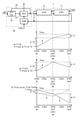
- FIG. 1 is a block diagram for briefly explaining the present invention and a diagram showing a temperature distribution in a fuel cell stack.
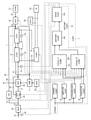
- FIG. 2 is a block diagram showing a main configuration of the fuel cell system of the present embodiment.
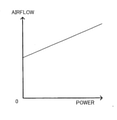
- FIG. 3 is a map showing the relationship between the target air flow rate and the target extraction power.
- FIG. 4 is a map showing the relationship between the target fuel flow rate and the target extraction power.
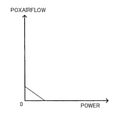
- FIG. 5 is a map showing the relationship between the target partial oxidation reaction air flow rate and the target extraction power.
- FIG. 6 is a control flow diagram of the air temperature control unit.
- FIG. 1 is a block diagram for briefly explaining the present invention and a diagram showing a temperature distribution in a fuel cell stack.
- the fuel cell system of the present invention has two fuel cell stacks, that is, a first fuel cell stack 11 (first fuel cell, STK1) and a second fuel cell stack 12 (second fuel cell, STK2). ) Are arranged in series with respect to the gas flow path, the anode gas (fuel gas) is configured to flow from the first fuel cell stack 11 to the second fuel cell stack 12, and the cathode gas (oxidizer gas) is the first. 2
- the fuel cell module 1 configured to flow from the fuel cell stack 12 to the first fuel cell stack 11 is provided. That is, in the fuel cell module 1, the flow direction of the anode gas and the flow direction of the cathode gas between the two stacks, the first fuel cell stack 11 and the second fuel cell stack 12, are opposite to each other.
- the inlet of the anode of the first fuel cell stack 11 is the inlet of the anode gas
- the inlet of the cathode of the second fuel cell stack 12 is the inlet of the cathode gas.
- the outlet of the anode of the first fuel cell stack 11 and the inlet of the anode of the second fuel cell stack 12 are connected to each other, and the outlet of the cathode of the second fuel cell stack 12 and the inlet of the cathode of the first fuel cell stack 11 are connected to each other. Connected to each other.
- the fuel cell system of the present invention includes a temperature adjusting device 38 (oxidizing agent gas temperature adjusting device) for adjusting the temperature of the cathode gas supplied to the fuel cell module 1, the details of which will be described later.
- a temperature adjusting device 38 oxidizing agent gas temperature adjusting device
- a catalyst capable of reforming fuel gas is arranged in the first fuel cell stack 11 (and the second fuel cell stack 12).
- the first fuel cell stack 11 reforms the fuel gas into an anode gas (reformed fuel) containing hydrogen, and generates power by the reformed anode gas and the cathode gas supplied from the second fuel cell stack 12.
- the surplus anode gas is supplied to the second fuel cell stack 12.
- the cathode gas used for the power generation reaction is discharged to the combustor 4 constituting the temperature control device 38 as the cathode off gas.
- the second fuel cell stack 12 generates electricity from the anode gas supplied from the first fuel cell stack 11 and the cathode gas supplied from the temperature control device 38. Then, the second fuel cell stack 12 supplies the cathode gas used for power generation to the first fuel cell stack 11, and supplies the anode gas used for power generation to the combustor 4 as the anode off gas.
- the power generation efficiency of the first fuel cell stack 11 and the second fuel cell stack 12 improves as the temperature rises.
- the upper limit temperature (for example, 800 ° C.) is set in the first fuel cell stack 11 and the second fuel cell stack 12 for reasons such as heat resistance.
- the temperature of the first fuel cell stack 11 (the outlet temperature of the cathode of the first fuel cell stack 11) and the temperature of the second fuel cell stack 12 (the outlet temperature of the cathode of the second fuel cell stack 12) are the upper limits. It is necessary to adjust the temperature of the cathode gas so that the temperature does not exceed the temperature and the power generation reaction can be sufficiently performed.
- the inlet temperature of the cathode of the second fuel cell stack 12 (the temperature of the cathode gas at the inlet of the cathode) is set as the target temperature, and the first fuel cell stack 11 and the second fuel cell stack 12 are set according to the target temperature.
- the temperature adjusting device 38 is controlled so that the temperature of the above temperature does not exceed the upper limit temperature.
- the number of temperature detecting means (temperature sensor 51 in FIG. 2) can be reduced and the system can be miniaturized.
- the target temperature is calculated by the target temperature calculation unit 753 (FIG. 2), which will be described later.
- the power generation reaction generated in the first fuel cell stack 11 and the second fuel cell stack 12 is an exothermic reaction, but the reforming reaction generated in the first fuel cell stack 11 is an endothermic reaction.
- the cathode gas is heated by the temperature adjusting device 38, when it is heated in the first fuel cell stack 11 and the second fuel cell stack 12 due to the magnitude of the power generation reaction, the reforming reaction, and the like. Not only that, it may be cooled. Therefore, as shown in FIG. 1, the temperature distribution of the cathode gas may be as shown in AD as follows.
- the load (power generation amount) on the first fuel cell stack 11 and the second fuel cell stack 12 is large, and the calorific value due to the power generation reaction is sufficient in the first fuel cell stack 11 rather than the heat absorption amount due to the reforming reaction.
- the temperature of the first fuel cell stack 11 and the second fuel cell stack 12 (the outlet temperature of the cathode) is higher than the temperature of the cathode gas supplied from the temperature control device 38. .. In this case, the temperature of the cathode gas supplied from the temperature control device 38 rises toward the downstream in the flow path of the cathode gas, and becomes the highest temperature at the outlet of the cathode of the first fuel cell stack 11.
- the outlet temperature of the cathode of the battery stack 11 can be set to the upper limit temperature Tmax.
- the load (power generation amount) on the first fuel cell stack 11 and the second fuel cell stack 12 is smaller than in the case of A, for example, the heat absorption amount and power generation by the reforming reaction in the first fuel cell stack 11. This is the case when the calorific value due to the reaction is about the same.
- the temperature of the second fuel cell stack 12 is higher than the temperature of the cathode gas supplied from the temperature regulator 38, but the temperature of the first fuel cell stack 11 is discharged from the second fuel cell stack 12. It will be below the temperature of the cathode gas. Therefore, the temperature of the cathode gas is the highest temperature at the outlet of the cathode of the second fuel cell stack 12. In this case, ⁇ T1 ⁇ 0 and T2> 0.
- the inlet temperature of the cathode of the battery stack 11) can be set to the upper limit temperature Tmax.
- the load (power generation amount) on the first fuel cell stack 11 and the second fuel cell stack 12 is sharply reduced, and the temperature of the second fuel cell stack 12 is the temperature of the cathode gas supplied from the temperature regulator 38. When it becomes lower than.
- ⁇ T1 includes the case where ⁇ T1 ⁇ 0, or the case where ⁇ T1> 0 and its absolute value is smaller than ⁇ T2. In this case, the temperature of the cathode gas is the highest at the inlet of the cathode of the second fuel cell stack 12.
- D is the same scene as C, but occurs when, for example, the heat capacity of the first fuel cell stack 11 is larger than the heat capacity of the second fuel cell stack 12 and the temperature drop of the first fuel cell stack 11 is small.
- ⁇ T2 ⁇ 0 a temperature distribution in which ⁇ T1 + ⁇ T2 ⁇ 0 occurs.
- the outlet temperature of the cathode of the first fuel cell stack 11 is the highest temperature.
- ⁇ T1 and ⁇ T2 can be calculated. Therefore, which position is the highest temperature in the first fuel cell stack 11 and the second fuel cell stack 12 by calculating ⁇ T1 and ⁇ T2 according to the load on the first fuel cell stack 11 and the second fuel cell stack 12 and the like. It is determined whether the fuel is at a position, and the calculation formula of the target temperature T is switched so that the temperature at the position can be set to the upper limit temperature Tmax. As a result, it is possible to prevent the first fuel cell stack 11 and the second fuel cell stack 12 from overheating and to increase the temperature.
- the target temperature calculation unit 753 (FIG. 2) can calculate the target temperature T by dividing it into cases as shown in the following mathematical formula 1.
- the target temperature calculation unit 753 (FIG. 2) can calculate the target temperature T by case according to the following mathematical formula 2, referring to FIG.
- FIG. 2 is a block diagram showing a main configuration of the fuel cell system of the present embodiment.
- the fuel cell system of the present embodiment is discharged from a fuel supply system that supplies an anode gas to the fuel cell module 1, an air supply system that supplies air (cathode gas) to the fuel cell module 1, and a fuel cell module 1. It is mainly composed of a combustion system that burns an anode off gas (anodic gas) and a cathode off gas (cathode gas), a drive system that obtains power by extracting power from the fuel cell module 1, and a control system that controls the entire system. It is installed in vehicles (electric vehicles).
- the fuel supply system includes a tank 21 (TANK), an injector 23 (INJ1), and an injector 24 (INJ2).
- the air supply system includes a blower 32 (BLW), a bypass valve 33 (BYPVAL), a heat exchanger 35 (HEX), and a variable valve 37 (VAL).
- the combustion system includes a combustor 4 (CMB).
- a bypass valve 33, a heat exchanger 35, a combustor 4, and an injector 24 constitute a temperature control device 38.
- the drive system includes a DC / DC converter 61 (COMV), a battery 62 (BATT), and a drive motor 63 (M).
- the control system includes a control unit 7 (CONT) that controls the entire system.
- the first fuel cell stack 11 and the second fuel cell stack 12 constituting the fuel cell module 1 are solid oxide fuel cells (SOFC: Solid Oxide Fuel Cell), and are made of a solid oxide such as ceramic.
- SOFC Solid Oxide Fuel Cell
- a cell provided with an electrolyte layer and sandwiched between an anode (fuel electrode) to which an anode gas (reforming gas) is supplied and a cathode (air electrode) to which air containing oxygen as a cathode gas (oxidizer gas) is supplied. It is a stack of.
- the reforming fuel supplied from the injector 23 side is used as an anode gas containing hydrogen (fuel gas after reforming).
- a catalyst for reforming is arranged in.
- the first fuel cell stack 11 generates power by reacting hydrogen contained in the anode gas with oxygen in the cathode gas, and supplies excess anode gas to the second fuel cell stack 12 to burn the cathode off gas. Discharge to vessel 4.
- the second fuel cell stack 12 generates power by reacting the anode gas supplied from the first fuel cell stack 11 with the cathode gas supplied from the blower 32 via the temperature control device 38, and also generates a surplus.
- the cathode gas is supplied to the first fuel cell stack 11 and the anode off gas is discharged to the combustor 4.
- the anode means not only the anode electrode but also the internal flow path for supplying the anode gas to the anode electrode in the first fuel cell stack 11 and the second fuel cell stack 12, and the anode off gas after the reaction at the anode electrode. It shall also include the internal flow path to be discharged.
- the cathode refers to not only the cathode electrode but also the internal flow path for supplying the cathode gas to the cathode electrode and the cathode off gas after the reaction at the cathode electrode. It shall also include the internal flow path to be discharged.
- the tank 21 stores, for example, methane or a fuel (gas) made of natural gas containing methane as a main component at a high pressure, and supplies the fuel to the injector 23 as a reforming fuel. Fuel is supplied to the injector 24 as additional fuel for combustion.
- the fuel supply system has a fuel flow path 22 (main flow path) that supplies reforming fuel from the tank 21 to the anode of the first fuel cell stack 11 via the injector 23.
- a sub-flow path (not shown) is branched from the fuel flow path 22, and the sub-flow path is connected to the injector 24.
- the injectors 23 and 24 include a nozzle body (not shown) into which fuel is press-fitted, a plunger rod (not shown) urged to close a fuel injection hole (not shown) at the tip of the nozzle body, and a plunger rod (not shown). It is equipped with a solenoid (not shown) that moves the rod in the direction opposite to the direction of the urging.
- a command signal (current) is applied to the solenoid to drive the solenoid to move the plunger rod in the opposite direction, whereby the plunger rod opens the fuel injection hole and injects fuel. .. Further, by stopping the command signal (current), the drive of the solenoid is stopped, and the plunger rod moves by the urging force to close the fuel injection hole and stop the fuel injection.
- the duty ratio for opening / closing the fuel injection hole depends on the duty ratio for turning on / off the command signal (current). Therefore, the injectors 23 and 24 can adjust the flow rate of the fuel to be injected by adjusting the duty ratio of the command signal (current).
- the air supply system has an air flow path 31 that supplies cathode gas (air) to the cathode of the second fuel cell stack 12.
- a blower 32, a bypass valve 33, and a heat exchanger 35 are arranged in the air flow path 31 from the upstream.
- the blower 32 (oxidizing agent gas supply source) takes in outside air and supplies air (cathode gas) to the air flow path 31 and the like.
- the heat exchanger 35 communicates with the cathode of the second fuel cell stack 12 via the air flow path 31, and heat exchanges (heats) the cathode gas with the combustion gas discharged from the combustor 4, and the second fuel. It is supplied to the cathode of the battery stack 12. The combustion gas after heat exchange is discharged to the outside.
- the bypass valve 33 (flow rate adjusting means) is arranged at a position upstream of the heat exchanger 35 in the air flow path 31.
- the bypass valve 33 is connected to the blower 32 on the upstream side and connected to the air flow path 31 (heat exchanger 35) and the bypass flow path 34 on the downstream side, and the air flow path 31 and the bypass flow path are adjusted by adjusting the opening degree.
- the ratio of the flow rate of the cathode gas (air) in 34 is adjusted.
- the bypass flow path 34 bypasses the heat exchanger 35 and joins the air flow path 31 at a position between the heat exchanger 35 and the cathode of the second fuel cell stack 12 in the air flow path 31.
- the supply path 36 branches from a position upstream of the bypass valve 33 of the air flow path 31, and the supply path 36 is a fuel at a position between the first fuel cell stack 11 and the injector 23 in the fuel flow path 22. It joins the flow path 22.
- the variable valve 37 is arranged in the supply path 36 and adjusts the flow rate of the air (oxygen) flowing through the supply path 36.
- air (oxygen) is supplied to the anode of the first fuel cell stack 11, a partial oxidation reaction is carried out with the anode gas and oxygen via a catalyst arranged in the first fuel cell stack 11 (which may be the same as the catalyst for reforming reaction).
- a catalyst arranged in the first fuel cell stack 11 which may be the same as the catalyst for reforming reaction.
- Anaode reaction can be generated to raise the temperature of the first fuel cell stack 11.
- the air flow rate control unit 73 for the partial oxidation reaction which will be described later, can avoid lowering the temperature of the first fuel cell stack 11 below the lower limit of the temperature at which the reforming reaction is possible.
- the blower 32 functions as an oxygen supply source.
- the supply path 36 may be further connected to the inlet of the anode of the second fuel cell stack 12 so that the second fuel cell stack 12 can also perform a partial oxidation reaction. Further, in the first fuel cell stack 11 and the second fuel cell stack 12, when the partial oxidation reaction is unnecessary, the supply path 36 and the variable valve 37 (and the air flow control unit 73 for the partial oxidation reaction described later) are omitted. You may.
- the combustor 4 communicates with the outlet of the anode of the first fuel cell stack 11 and the outlet of the cathode of the second fuel cell stack 12.
- a mixed gas of the anode off gas and the cathode off gas is introduced into the combustor 4.
- the combustor 4 produces combustion gas by catalytically burning the mixed gas.
- the combustor 4 includes a catalyst (not shown) for performing the catalyst combustion and a heater (not shown) that raises the temperature of the catalyst (not shown) until the fuel reaches a combustible temperature. Further, additional fuel is supplied to the combustor 4 from the injector 24. Therefore, the combustor 4 can further increase the temperature of the combustion gas by burning the mixed gas and burning the combustion gas while burning the additional fuel.
- the temperature control device 38 (bypass valve 33, heat exchanger 35, combustor 4, injector 24), additional fuel is supplied to the combustor 4 to raise the temperature of the combustion gas, thereby passing through the heat exchanger 35.
- additional fuel is supplied to the combustor 4 to raise the temperature of the combustion gas, thereby passing through the heat exchanger 35.
- the temperature sensor 51 detects the inlet temperature of the cathode of the second fuel cell stack 12.
- the temperature sensor 51 may be arranged at the outlet of the cathode of the first fuel cell stack 11.
- the flow rate sensor 52 detects the flow rate of the air (cathode gas) taken in by the blower 32.
- the first voltage sensor 53 detects the output voltage of the first fuel cell stack 11.
- the second voltage sensor 54 detects the output voltage of the second fuel cell stack 12.
- first fuel cell stack 11 and the second fuel cell stack 12 are electrically connected in series.
- the current sensor 55 detects the output current flowing between the first fuel cell stack 11 and the second fuel cell stack 12 connected in series and the DC / DC converter 61.
- the DC / DC converter 61 is connected to the series circuit of the first fuel cell stack 11 and the second fuel cell stack 12, and boosts the output voltage of the series circuit to supply power to the battery 62 or the drive motor 63. be.
- two DC / DC converters 61 are prepared, one DC / DC converter 61 is connected to the first fuel cell stack 11, and the other DC / DC converter 61 is connected to the second fuel cell stack 12. Further, two DC / DC converters 61 can be configured to be connected to the battery 62 and the drive motor 63.
- the battery 62 can charge the electric power supplied from the DC / DC converter 61 and also supply the electric power to the drive motor 63.
- the drive motor 63 is connected to the battery 62 and the DC / DC converter 61 via an inverter (not shown) and serves as a power source for the vehicle. Further, the drive motor 63 generates regenerative electric power when the vehicle is decelerated, and the battery 62 can be charged with the regenerative electric power.
- the control unit 7 is composed of a general-purpose electronic circuit including a microcomputer, a microprocessor, and a CPU, and peripheral devices, and executes a process for controlling the fuel cell system by executing a specific program.
- the control unit 7 includes a take-out power control unit 71 (POWERCONT), an air flow rate control unit 72 (AIRFLOWCONT), an air flow rate control unit 73 for partial oxidation reaction (POXAIRFLOWCONT), a fuel flow rate control unit 74 (FUELFLOWCONT), and an air temperature control unit 75. (AIRTEMPCONT) is included. Further, the control unit 7 includes a calculation unit (not shown) that calculates a target take-out power (POWER) based on the charge rate (SOC) of the battery 62 and the drive request (accelerator opening degree) of the driver.
- the control unit 7 can perform start control and stop control of the fuel cell system, but since these controls are conventional techniques, the description thereof will be omitted.
- the take-out power control unit 71 When the information of the target take-out power is input, the take-out power control unit 71 outputs a command signal to the DC / DC converter 61 so that the power taken out from the fuel cell module 1 becomes the target take-out power.
- the electric power taken out from the fuel cell module 1 is supplied to the battery 62 or the drive motor 63.
- FIG. 3 is a map showing the relationship between the target air flow rate and the target extraction power.
- FIG. 4 is a map showing the relationship between the target fuel flow rate and the target extraction power.
- FIG. 5 is a map showing the relationship between the target partial oxidation reaction air flow rate and the target extraction power.
- the air flow rate control unit 72 When the information of the target extraction power is input, the air flow rate control unit 72 outputs a command signal for achieving the target air flow rate to the blower 32.
- the target air flow rate is the amount of oxygen required for the fuel cell module 1 to generate the target extraction power and the amount of oxygen required for the combustor 4 to burn the anode off gas discharged from the fuel cell module 1. It is an air flow rate that can secure.
- the air flow rate control unit 72 can include a map in which the target take-out power (POWER) is used as an input value and the target air flow rate (AIRFLOW) is used as an output value. As a result, the air flow rate control unit 72 can determine the target air flow rate corresponding to the target extraction power.
- POWER target take-out power
- AIRFLOW target air flow rate
- the fuel flow rate control unit 74 When the information on the target extraction power is input, the fuel flow rate control unit 74 outputs a command signal for achieving the target fuel flow rate to the injector 23.
- the target fuel flow rate is a fuel flow rate that secures a fuel utilization rate that enables stable power generation in the fuel cell module 1 in order to generate the target extraction power.
- the fuel flow rate control unit 74 can include a map in which the target take-out power (POWER) is used as an input value and the target fuel flow rate (FUELFLOW) is used as an output value. As a result, the fuel flow rate control unit 74 can determine the target fuel flow rate corresponding to the target extraction power.
- POWER target take-out power
- FLOW target fuel flow rate
- the air flow rate control unit 73 for the partial oxidation reaction When the information of the target extraction power is input, the air flow rate control unit 73 for the partial oxidation reaction outputs a command signal to the variable valve 37, which is the opening degree of the variable valve 37 that achieves the target partial oxidation reaction air flow rate.
- the target partial oxidation reaction air flow rate is based on the target extraction power so that the temperature of the first fuel cell stack 11 does not become too low (for example, so as not to be lower than the lower limit temperature at which the reforming reaction by the catalyst is possible). This is the flow rate of air supplied to the first fuel cell stack 11.
- the partial oxidation reaction air flow rate control unit 73 includes a map in which the target extraction power (POWER) is used as the input value and the target partial oxidation reaction air flow rate (POXAIRFLOW) is used as the output value, as shown in FIG. Can be done.
- the partial oxidation reaction air flow rate control unit 73 can determine the target partial oxidation reaction air flow rate corresponding to the target extraction power.
- the air temperature control unit 75 includes a first temperature difference calculation unit 751 (STK1 ⁇ T1COMP), a second temperature difference calculation unit 752 (STK2 ⁇ T2COMP), a target temperature calculation unit 753 (AIRTEMPCOM), and a drive control unit 754 (DRIVECONT). including.
- the first temperature difference calculation unit 751 has a target fuel flow rate, a target partial oxidation reaction air flow rate, an air flow rate detected by the flow rate sensor 52, a voltage detected by the first voltage sensor 53, and a voltage detected by the second voltage sensor 54.
- the difference ⁇ T1 obtained by subtracting the inlet temperature from the outlet temperature of the cathode of the first fuel cell stack 11 is calculated by the following equation 3.
- Pp1 [W] is the calorific value generated by the power generation of the first fuel cell stack 11.
- Pp1 is calculated by using the calorific value corresponding to the generated power of the first fuel cell stack 11 obtained in advance by an experiment or a desk study (a map in which the generated amount is an input value and the calorific value is an output value). ..
- the amount of power generated by the first fuel cell stack 11 is the voltage detected by the first voltage sensor 53 (more strictly, the amount of decrease from the open circuit voltage of the first fuel cell stack 11) and the current detected by the current sensor 55. Obtained by multiplying.
- Pr1 [W] is the amount of heat absorbed by the reforming reaction generated in the first fuel cell stack 11.
- the reaction formula of the reforming reaction is CH 4 + 2H 2 O ⁇ 4H 2 + CO 2 -165 [kJ / mol], which is proportional to the flow rate [mol / s] of CH 4.
- 2 mol of CH 4 is consumed for 1 mol of oxygen. Therefore, the flow rate of CH 4 after the partial oxidation reaction is twice the flow rate of oxygen in the target partial oxidation air flow rate from the flow rate of CH 4 before the partial oxidation reaction (of CH 4 consumed in the partial oxidation reaction). It is the difference obtained by subtracting the flow rate).
- the first temperature difference calculation unit 751 sets Pr1 to, for example, (heat absorption amount of reforming reaction per mol of reforming fuel (165 [kJ])) ⁇ (target fuel flow rate [mol / s] ⁇ . It is calculated by the flow rate of oxygen in the target partial oxidation air flow rate [mol / s] ⁇ 2). The oxygen flow rate is calculated because it is 21% of the air flow rate.
- Pr may be corrected by detecting them, or the anodes of the anodes of the first fuel cell stack 11 and the anodes at the outlets may be corrected.
- the composition of the gas may be detected and the Pr may be corrected accordingly.
- Pd1 [W] is a fixed amount of heat released to the outside from other than the anode gas and the cathode gas in the first fuel cell stack 11, and is calculated using the amount obtained in advance by experiments and desk studies.
- Po1 is the calorific value when a partial oxidation reaction is generated in the first fuel cell stack 11.
- the reaction formula of the partial oxidation reaction is 2CH 4 + O 2 ⁇ CO + 4H 2 +70 [kJ / mol], which is proportional to the oxygen flow rate [mol / s]. Therefore, the first temperature difference calculation unit 751 sets Po1 as, for example, (calorific value of partial oxidation reaction per mol of oxygen consumed (70 [kJ])) ⁇ (oxygen in the target partial oxidation reaction air flow rate). It is calculated by the flow rate [mol / s]).
- ⁇ [kg / m 3 ] is the density of air
- c [kJ / kg ⁇ ° C] is the specific heat of air.
- Q [m 3 / s] is the flow rate of the air taken in by the blower 32, and the value detected by the flow rate sensor 52 is used.
- the first temperature difference calculation unit 751 calculates ⁇ T1 and outputs this to the target temperature calculation unit 753.
- the second temperature difference calculation unit 752 calculates the difference ⁇ T2 obtained by subtracting the inlet temperature from the outlet temperature of the cathode of the second fuel cell stack 12 in the same manner as ⁇ T1. It is calculated as in the following formula 4.
- Pp2 [W] is the calorific value generated by the power generation of the second fuel cell stack 12, and is calculated by the same method as Pp1.
- Pd2 [W] is a fixed amount of heat released to the outside from other than the anode gas and the cathode gas in the second fuel cell stack 12, and is calculated by the same method as Pd1.
- the second temperature difference calculation unit 752 calculates ⁇ T2 and outputs this to the target temperature calculation unit 753.
- the first temperature difference calculation unit 751 may include a map in which the target extraction power is used as an input value and ⁇ T1 is used as an output value, whereby ⁇ T1 corresponding to the target extraction power may be calculated.
- the second temperature difference calculation unit 752 may include a map in which the target extraction power is used as an input value and ⁇ T2 is used as an output value, whereby ⁇ T2 corresponding to the target extraction power may be calculated.
- the target temperature calculation unit 753 calculates the target temperature T of air (cathode gas) according to the above formula 1 (or formula 2), and outputs this to the drive control unit 754. do.
- the drive control unit 754 outputs a command signal to the injector 24 and the bypass valve 33 so that the temperature of the cathode gas becomes the target temperature T by, for example, PI control, using the difference obtained by subtracting the detection temperature from the target temperature T. ..
- a command for increasing the amount of additional fuel (to increase the duty ratio) to the injector 24 (additional fuel supply means) in order to raise the temperature of the cathode gas Output a signal.
- the opening degree is controlled with respect to the bypass valve 33 in order to increase the flow rate of the cathode gas bypassing the heat exchanger 35 and lower the temperature of the cathode gas.
- the command signal to the injector 24 and the command signal to the bypass valve 33 may output only one of them or both of them at the same time.
- FIG. 6 is a control flow diagram of the air temperature control unit 75. Next, the control flow in the air temperature control unit 75 will be described.
- step S1 the first temperature difference calculation unit 751 calculates the difference ⁇ T1 obtained by subtracting the inlet temperature from the outlet temperature of the cathode of the first fuel cell stack 11.
- step S2 the second temperature difference calculation unit 752 calculates the difference ⁇ T2 obtained by subtracting the inlet temperature from the outlet temperature of the cathode of the second fuel cell stack 12.
- the steps S1 and S2 may be performed in the reverse order, or may be performed at the same time.
- step S3 the target temperature calculation unit 753 determines whether or not ⁇ T2 ⁇ 0 and ⁇ T1 + ⁇ T2 ⁇ 0, and if YES, the process proceeds to step S4, and if NO, the process proceeds to step S5.
- step S5 the target temperature calculation unit 753 determines whether or not ⁇ T1> 0, and if YES, the process proceeds to step S6, and if NO, the process proceeds to step S7.
- the air temperature control unit 75 repeats the above steps S1-S7 as long as the fuel cell module 1 continues to generate electricity.
- the temperature sensor 51 is arranged at the outlet of the cathode of the first fuel cell stack 11, and the target temperature is calculated by the same control flow as described above even when the outlet temperature of the cathode is set as the target temperature. Can be done.
- the target temperature calculation unit 753 calculates the target temperature according to Equation 2.
- the first fuel cell (first fuel cell stack 11) and the second fuel cell (second fuel cell stack 12) arranged in series are included, and the fuel cell system is included.
- the flow direction of the fuel gas (anodic gas) is from the first fuel cell to the second fuel cell
- the flow direction of the oxidant gas (cathode gas) is from the second fuel cell (second fuel cell stack 12) to the second.
- Oxidating agent gas temperature adjusting device for adjusting the temperature of the fuel cell module 1 heading toward the fuel cell (first fuel cell stack 11) and the oxidizing agent gas (cathode gas) supplied to the fuel cell module 1 (catalyst gas).
- a target temperature of the oxidizing agent gas (cathode gas) supplied to the fuel cell module 1 is set so that the temperature of the stack 11) and the temperature of the second fuel cell (second fuel cell stack 12) do not exceed a predetermined upper limit temperature.
- the temperature control means (air temperature control unit 75) including the temperature control means (air temperature control unit 75) for controlling the oxidant gas temperature control device (temperature control device 38) based on the target temperature is included, and the temperature control means (air temperature control unit 75) includes the target temperature.
- the upper limit temperature is Tmax
- the difference obtained by subtracting the inlet temperature from the outlet temperature of the first fuel cell (first fuel cell stack 11) is ⁇ T1
- the inlet is from the outlet temperature of the second fuel cell (second fuel cell stack 12).
- the target temperature T Tmax ⁇ T1- ⁇ T2 ( ⁇ T1> 0)
- T Tmax ⁇ T2 ( ⁇ T1 ⁇ 0)
- T Tmax ( ⁇ T2 ⁇ 0, and ⁇ T1 + ⁇ T2 ⁇ Calculate as 0).
- the position where the maximum temperature is reached in the fuel cell module 1 is the outlet of the cathode of the first fuel cell (first fuel cell stack 11) or the outlet of the cathode of the second fuel cell (second fuel cell stack 12). Even in this case, the position where the maximum temperature is reached can be specified by calculating ⁇ T1 and ⁇ T2, and the target temperature T can be calculated correspondingly. Therefore, even in the fuel cell module 1 including at least the first fuel cell (first fuel cell stack 11) in which the reforming reaction occurs, it is possible to control the power generation in a state where the upper limit temperature is not exceeded and the high temperature is maintained. It can be realized with a simple configuration.
- ⁇ T1 and ⁇ T2 can be calculated. It is possible to specify that the position where the maximum temperature is reached is the inlet, and calculate the target temperature T corresponding to this. Therefore, even in the fuel cell module 1 including at least the first fuel cell (first fuel cell stack 11) in which the reforming reaction occurs, it is possible to control the power generation in a state where the upper limit temperature is not exceeded and the high temperature is maintained. It can be realized with a simple configuration.
- the temperature control means uses ⁇ T1 for the calorific value associated with the power generation of the first fuel cell (first fuel cell stack 11) and the first fuel cell (first fuel cell stack).
- ⁇ T1 for the calorific value associated with the power generation of the first fuel cell (first fuel cell stack 11) and the first fuel cell (first fuel cell stack). The amount of heat absorbed by the reforming reaction of the fuel gas (anodious gas) supplied to 11), the amount of heat radiated to the outside of the first fuel cell (first fuel cell stack 11), and the first fuel cell (first).
- ⁇ T2 is the calorific value associated with the power generation of the second fuel cell (second fuel cell stack 12) and the second 2 Calculated based on the amount of heat released to the outside of the fuel cell (second fuel cell stack 12) and the flow rate of the oxidizing agent gas (cathode gas) supplied to the second fuel cell (second fuel cell stack 12).
- ⁇ T1 and ⁇ T2 can be calculated without actually detecting the temperature.
- the oxygen supply source (blower 32) for supplying oxygen to the anode of the first fuel cell (first fuel cell stack 11) is provided, and at least the first fuel cell (first fuel cell stack 11) is oxygen. It is possible to generate a partial oxidation reaction with the fuel gas (anodic gas), and the temperature control means (air temperature control unit 75) uses ⁇ T1 as the calorific value associated with the power generation of the first fuel cell (first fuel cell stack 11). , The calorific value due to the partial oxidation reaction and the flow rate of the fuel gas (anodious gas) lost due to the partial oxidation reaction from the flow rate of the fuel gas (anodious gas) supplied to the first fuel cell (first fuel cell stack 11).
- ⁇ T2 is the calorific value associated with the power generation of the second fuel cell (second fuel cell stack 12) and the second fuel cell (second fuel cell stack 12).
- ⁇ T1 and ⁇ T2 can be calculated without actually detecting the temperature.
- the oxidant gas temperature adjusting device (temperature adjusting device 38) is a combustor 4 that mixes and burns the fuel off gas (anode off gas) and the oxidant off gas (cathode off gas) discharged from the fuel cell module 1.
- a heat exchanger 35 that exchanges heat between the combustion gas discharged from the combustor 4 and the oxidizing agent gas (cathode gas) supplied to the fuel cell module 1, and an additional fuel supply that supplies additional fuel to the combustor 4.
- the means (injector 24) is provided, and the temperature control means (air temperature control unit 75) controls the additional fuel supply means (injector 24) so that the oxidizing agent gas (cathode gas) reaches the target temperature.
- the temperature of the air taken in from the outside is equivalent to the outside air temperature, and it is so low that it interferes with power generation in order to supply it to the fuel cell module 1 (SOFC) as it is, so heating is required.
- the oxidant gas temperature adjusting device (temperature adjusting device 38) was obtained by burning the high-temperature air (cathode-off gas) discharged from the fuel cell module 1 and the surplus fuel (anodic-off gas) in the combustor 4.
- the high-heat combustion gas is heat-exchanged with the air (cathode gas) supplied to the fuel cell module 1.
- the oxidant gas temperature adjusting device (temperature adjusting device 38) supplies the air (cathode gas) heated by the heat exchange to the fuel cell module 1 to obtain a highly efficient fuel cell system.
- the oxidant gas supply source (blower 32) for supplying the oxidant gas (cathode gas) to the fuel cell module 1 is included, and the oxidant gas temperature adjusting device (temperature adjusting device 38) is the fuel cell module 1.
- a combustor 4 that mixes and burns fuel off gas (anodeal off gas) and oxidant off gas (cathode off gas) discharged from the fuel, an oxidant gas supply source (blower 32), and a fuel cell module 1 are connected and a combustor.
- the heat exchanger 35 that exchanges heat between the combustion gas discharged from 4 and the oxidant gas (cathode gas) supplied to the fuel cell module 1 and the heat exchanger 35 are bypassed from the oxidant gas supply source (blower 32).
- (Bypass valve 33) and additional fuel supply means (injector 24) for supplying additional fuel to the combustor 4 are provided, and the temperature control means (air temperature control unit 75) is targeted at an oxidizing agent gas (cathode gas).
- the flow rate adjusting means (bypass valve 33) and / or the additional fuel supply means (injector 24) are controlled so as to have a temperature.
- the flow rate of the air flowing through the bypass flow path 34 is increased and the amount of heat exchange with the heat exchanger 35 is reduced.
- the temperature of the air (cathode gas) can be quickly lowered to the target temperature.
- the temperature of the heated air (cathode gas) is lower than the target temperature, the flow rate of the air flowing through the bypass flow path 34 is reduced to increase the amount of heat exchange with the heat exchanger 35.
- the temperature of air (cathode gas) can be quickly raised to the target temperature.
Landscapes
- Engineering & Computer Science (AREA)
- Chemical & Material Sciences (AREA)
- Life Sciences & Earth Sciences (AREA)
- Manufacturing & Machinery (AREA)
- Sustainable Development (AREA)
- Sustainable Energy (AREA)
- Chemical Kinetics & Catalysis (AREA)
- Electrochemistry (AREA)
- General Chemical & Material Sciences (AREA)
- Combustion & Propulsion (AREA)
- Fuel Cell (AREA)
Priority Applications (5)
| Application Number | Priority Date | Filing Date | Title |
|---|---|---|---|
| PCT/IB2020/000625 WO2022018473A1 (ja) | 2020-07-21 | 2020-07-21 | 燃料電池システム |
| US18/002,671 US12431517B2 (en) | 2020-07-21 | 2020-07-21 | Fuel cell system |
| EP20945942.9A EP4187656B1 (en) | 2020-07-21 | 2020-07-21 | Fuel cell system |
| CN202080102867.1A CN116034501B (zh) | 2020-07-21 | 2020-07-21 | 燃料电池系统 |
| JP2022538483A JP7345066B2 (ja) | 2020-07-21 | 2020-07-21 | 燃料電池システム |
Applications Claiming Priority (1)
| Application Number | Priority Date | Filing Date | Title |
|---|---|---|---|
| PCT/IB2020/000625 WO2022018473A1 (ja) | 2020-07-21 | 2020-07-21 | 燃料電池システム |
Publications (1)
| Publication Number | Publication Date |
|---|---|
| WO2022018473A1 true WO2022018473A1 (ja) | 2022-01-27 |
Family
ID=79728532
Family Applications (1)
| Application Number | Title | Priority Date | Filing Date |
|---|---|---|---|
| PCT/IB2020/000625 Ceased WO2022018473A1 (ja) | 2020-07-21 | 2020-07-21 | 燃料電池システム |
Country Status (5)
| Country | Link |
|---|---|
| US (1) | US12431517B2 (https=) |
| EP (1) | EP4187656B1 (https=) |
| JP (1) | JP7345066B2 (https=) |
| CN (1) | CN116034501B (https=) |
| WO (1) | WO2022018473A1 (https=) |
Citations (3)
| Publication number | Priority date | Publication date | Assignee | Title |
|---|---|---|---|---|
| JP2004031135A (ja) * | 2002-06-26 | 2004-01-29 | Honda Motor Co Ltd | 燃料電池およびその制御方法 |
| US20120034538A1 (en) | 2008-08-19 | 2012-02-09 | Jahnke Fred C | High-efficiency dual-stack molten carbonate fuel cell system |
| JP2013161602A (ja) * | 2012-02-03 | 2013-08-19 | Nissan Motor Co Ltd | 燃料電池システム |
Family Cites Families (7)
| Publication number | Priority date | Publication date | Assignee | Title |
|---|---|---|---|---|
| US20120021314A1 (en) * | 2010-07-26 | 2012-01-26 | Adaptive Materials, Inc. | Solid oxide fuel cell with internal reforming member |
| US8669014B2 (en) * | 2011-08-12 | 2014-03-11 | Mcalister Technologies, Llc | Fuel-cell systems operable in multiple modes for variable processing of feedstock materials and associated devices, systems, and methods |
| US9478819B2 (en) * | 2014-12-19 | 2016-10-25 | Fuelcell Energy, Inc. | High-efficiency molten carbonate fuel cell system and method |
| CN107925100B (zh) * | 2015-09-04 | 2019-11-19 | 日产自动车株式会社 | 燃料电池系统以及燃料电池控制方法 |
| JP6488270B2 (ja) * | 2016-11-24 | 2019-03-20 | 東京瓦斯株式会社 | 燃料電池システム |
| JP6974205B2 (ja) * | 2018-02-09 | 2021-12-01 | 株式会社Soken | 燃料電池システム |
| JP7110859B2 (ja) * | 2018-09-18 | 2022-08-02 | 日産自動車株式会社 | 燃料電池システムおよび燃料電池システムの運転方法 |
-
2020
- 2020-07-21 WO PCT/IB2020/000625 patent/WO2022018473A1/ja not_active Ceased
- 2020-07-21 US US18/002,671 patent/US12431517B2/en active Active
- 2020-07-21 EP EP20945942.9A patent/EP4187656B1/en active Active
- 2020-07-21 CN CN202080102867.1A patent/CN116034501B/zh active Active
- 2020-07-21 JP JP2022538483A patent/JP7345066B2/ja active Active
Patent Citations (3)
| Publication number | Priority date | Publication date | Assignee | Title |
|---|---|---|---|---|
| JP2004031135A (ja) * | 2002-06-26 | 2004-01-29 | Honda Motor Co Ltd | 燃料電池およびその制御方法 |
| US20120034538A1 (en) | 2008-08-19 | 2012-02-09 | Jahnke Fred C | High-efficiency dual-stack molten carbonate fuel cell system |
| JP2013161602A (ja) * | 2012-02-03 | 2013-08-19 | Nissan Motor Co Ltd | 燃料電池システム |
Non-Patent Citations (1)
| Title |
|---|
| See also references of EP4187656A4 |
Also Published As
| Publication number | Publication date |
|---|---|
| CN116034501B (zh) | 2025-04-08 |
| US20230299322A1 (en) | 2023-09-21 |
| EP4187656A4 (en) | 2024-10-16 |
| JPWO2022018473A1 (https=) | 2022-01-27 |
| CN116034501A (zh) | 2023-04-28 |
| EP4187656A1 (en) | 2023-05-31 |
| JP7345066B2 (ja) | 2023-09-14 |
| US12431517B2 (en) | 2025-09-30 |
| EP4187656B1 (en) | 2025-08-13 |
Similar Documents
| Publication | Publication Date | Title |
|---|---|---|
| US20180375135A1 (en) | Fuel cell system and method for controlling fuel cell system | |
| US8795915B2 (en) | Fuel cell system | |
| JP4656539B2 (ja) | 燃料電池システム | |
| CA3008772C (en) | Fuel cell system and control method for fuel cell system | |
| US10547068B2 (en) | Solid oxide fuel cell system and method of controlling the same | |
| CN105609831B (zh) | 燃料电池系统及燃料电池系统的运转控制方法 | |
| CN101578732A (zh) | 燃料电池系统 | |
| CN108432015B (zh) | 燃料电池系统和燃料电池系统的控制方法 | |
| CN113725465A (zh) | 燃料电池系统 | |
| CN108370050B (zh) | 燃料电池系统的控制方法以及燃料电池系统 | |
| EP3691009B1 (en) | Fuel cell system and fuel cell system control method | |
| JP3698101B2 (ja) | 燃料改質型燃料電池システムの制御装置 | |
| JP7345066B2 (ja) | 燃料電池システム | |
| JP7156546B2 (ja) | 燃料電池システム、及び燃料電池システムの制御方法 | |
| JP7110859B2 (ja) | 燃料電池システムおよび燃料電池システムの運転方法 | |
| JP2003331891A (ja) | 燃料電池システム及び燃料電池システムの起動方法 | |
| WO2021116725A1 (ja) | 燃料電池システムの制御方法、及び燃料電池システム | |
| JPWO2020105190A1 (ja) | 燃焼システムおよび燃焼システムの制御方法 |
Legal Events
| Date | Code | Title | Description |
|---|---|---|---|
| 121 | Ep: the epo has been informed by wipo that ep was designated in this application |
Ref document number: 20945942 Country of ref document: EP Kind code of ref document: A1 |
|
| ENP | Entry into the national phase |
Ref document number: 2022538483 Country of ref document: JP Kind code of ref document: A |
|
| NENP | Non-entry into the national phase |
Ref country code: DE |
|
| ENP | Entry into the national phase |
Ref document number: 2020945942 Country of ref document: EP Effective date: 20230221 |
|
| WWG | Wipo information: grant in national office |
Ref document number: 202080102867.1 Country of ref document: CN |
|
| WWG | Wipo information: grant in national office |
Ref document number: 2020945942 Country of ref document: EP |
|
| WWG | Wipo information: grant in national office |
Ref document number: 18002671 Country of ref document: US |