WO2022014040A1 - 移設容易性判断装置および移設容易性判断方法 - Google Patents
移設容易性判断装置および移設容易性判断方法 Download PDFInfo
- Publication number
- WO2022014040A1 WO2022014040A1 PCT/JP2020/027837 JP2020027837W WO2022014040A1 WO 2022014040 A1 WO2022014040 A1 WO 2022014040A1 JP 2020027837 W JP2020027837 W JP 2020027837W WO 2022014040 A1 WO2022014040 A1 WO 2022014040A1
- Authority
- WO
- WIPO (PCT)
- Prior art keywords
- relocation
- ease
- factory
- layout data
- equipment
- Prior art date
- Legal status (The legal status is an assumption and is not a legal conclusion. Google has not performed a legal analysis and makes no representation as to the accuracy of the status listed.)
- Ceased
Links
Images



Classifications
-
- G—PHYSICS
- G06—COMPUTING OR CALCULATING; COUNTING
- G06F—ELECTRIC DIGITAL DATA PROCESSING
- G06F30/00—Computer-aided design [CAD]
- G06F30/10—Geometric CAD
-
- G—PHYSICS
- G06—COMPUTING OR CALCULATING; COUNTING
- G06Q—INFORMATION AND COMMUNICATION TECHNOLOGY [ICT] SPECIALLY ADAPTED FOR ADMINISTRATIVE, COMMERCIAL, FINANCIAL, MANAGERIAL OR SUPERVISORY PURPOSES; SYSTEMS OR METHODS SPECIALLY ADAPTED FOR ADMINISTRATIVE, COMMERCIAL, FINANCIAL, MANAGERIAL OR SUPERVISORY PURPOSES, NOT OTHERWISE PROVIDED FOR
- G06Q50/00—Information and communication technology [ICT] specially adapted for implementation of business processes of specific business sectors, e.g. utilities or tourism
- G06Q50/04—Manufacturing
-
- Y—GENERAL TAGGING OF NEW TECHNOLOGICAL DEVELOPMENTS; GENERAL TAGGING OF CROSS-SECTIONAL TECHNOLOGIES SPANNING OVER SEVERAL SECTIONS OF THE IPC; TECHNICAL SUBJECTS COVERED BY FORMER USPC CROSS-REFERENCE ART COLLECTIONS [XRACs] AND DIGESTS
- Y02—TECHNOLOGIES OR APPLICATIONS FOR MITIGATION OR ADAPTATION AGAINST CLIMATE CHANGE
- Y02P—CLIMATE CHANGE MITIGATION TECHNOLOGIES IN THE PRODUCTION OR PROCESSING OF GOODS
- Y02P90/00—Enabling technologies with a potential contribution to greenhouse gas [GHG] emissions mitigation
- Y02P90/30—Computing systems specially adapted for manufacturing
Definitions
- This disclosure relates to a relocation ease determination device and a relocation ease determination method for determining the ease of relocation of production equipment.
- the equipment arrangement position determining device of Patent Document 1 promptly determines the optimum position of the equipment to be arranged in the production equipment when the type of the product mainly manufactured or the product having a high priority changes in the production line which is the production equipment. I'm verifying.
- this equipment arrangement position determining device acquires line information including information on products manufactured in the production equipment and information on the equipment arranged in the production equipment.
- the equipment placement position determining device simulates the progress of the product based on the current equipment placement position and the line information in the simulation process.
- the equipment placement position determining device evaluates the current equipment placement position in the equipment placement position evaluation process based on the simulation result in the simulation process.
- the equipment placement position determining device temporarily arranges the equipment in the production equipment and sets the temporary equipment placement position, and the simulation process and the equipment placement position are set with respect to the temporary equipment placement position. Perform the evaluation process.
- the equipment placement position determining device selects the equipment placement position with the highest evaluation among the current and temporary equipment placement positions as the equipment placement position in the production equipment.
- the present disclosure has been made in view of the above, and an object of the present disclosure is to obtain a relocation ease determination device capable of accurately determining the ease of relocation of production equipment.
- the relocation ease determination device of the present disclosure is applied to the factory based on the factory layout data which is the layout data of the factory and the equipment layout data which is the layout data of the production equipment. It is equipped with an arrangement unit that generates arrangement layout data, which is layout data in which production equipment is arranged. Further, the relocation ease determination device of the present disclosure includes a relocation ease calculation unit that calculates a relocation ease value indicating the ease of relocation of the production equipment to the factory based on the layout layout data.
- the layout layout data includes factory layout data and equipment layout data
- the equipment layout data is infrastructure equipment information which is information on the arrangement position in the production equipment of the infrastructure equipment arranged in the production equipment and used for the operation of the production equipment.
- the factory layout data includes constraints on spatial information in the factory when the infrastructure equipment is relocated to the factory.
- the relocation ease calculation unit calculates the relocation cost required for relocation when the infrastructure equipment is relocated to the factory based on the constraint conditions and the infrastructure equipment information, and calculates the relocation ease value based on the relocation cost.
- the relocation ease determination device has the effect of being able to accurately determine the ease of relocation of production equipment.
- the figure which shows the structure of the relocation ease determination apparatus which concerns on embodiment The figure for demonstrating the example of the factory design data used by the relocation easiness determination apparatus which concerns on embodiment, when deciding the relocation easiness.
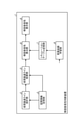
- FIG. 1 is a diagram showing a configuration of a relocation ease determination device according to an embodiment.
- the relocation ease determination device 1 is a computer that determines the relocation ease with respect to the production equipment in the factory.
- the relocation ease determination device 1 is realized by mounting software for determining relocation ease in an information processing device such as a PC (Personal Computer).
- the production equipment is a production line
- the production equipment may be equipment other than the production line.
- a factory in which a production line has already been installed may be referred to as a factory X.
- the factory where the production line is relocated from the X factory may be referred to as the A factory.
- the factory where the production line is relocated from the A factory to the next may be referred to as the B factory.
- the relocation ease determination device 1 determines the relocation ease when the production line is relocated from the X factory to the A factory. Further, the relocation ease determination device 1 determines the relocation easiness that occurs when the production line is relocated from the A factory to the B factory when the production line is relocated to the A factory.
- the relocation ease determination device 1 may determine the relocation ease when the installed production line is relocated to a new position, or may determine the relocation ease when the production line is installed at a specific position to the next position. You may judge the ease of relocation. That is, the relocation ease determination device 1 may determine the relocation ease when the production line is relocated from the X factory to the A factory, or the relocation ease when the production line is relocated from the A factory to the B factory. May be judged.
- the difficulty of relocation varies depending on the equipment environment such as power supply, water, gas, empty space, and the positional relationship of other equipment. That is, the ease of relocation of the production line varies depending on the infrastructure equipment and the like arranged on the production line and used for the operation of the production line main body.
- the relocation easiness determination device 1 of the present embodiment parameterizes the relocation easiness of the production line for each item of the infrastructure equipment based on the infrastructure equipment which is the equipment environment, and simulates the relocation of the production line.
- Judge the ease of relocation Ease of relocation is the ease of relocating a production line installed in a factory to another location. That is, the ease of relocation includes the total work time, which is the total work time required when the production line installed in the factory is relocated to another place, and the total work cost, which is the total work cost. In other words, the ease of relocation corresponds to the relocation cost associated with the relocation, including the total working time and the total working cost.
- relocation ease refers to the cost of converting work time into work cost or opportunity loss due to the time required for relocation, work cost, and relocation cost including the cost required to execute the alternative method described later. It corresponds to.
- the relocation ease determination device 1 of the present embodiment determines the relocation ease when the production line installed in the factory is relocated to another place.
- the relocation ease determination device 1 determines the relocation ease by converting the items of the infrastructure equipment into information such as objective numerical values based on the conditions related to the relocation in the factory.
- the conditions for relocation in the factory include the work cost required for the relocation of the infrastructure equipment, the working time, and the constraint conditions related to the arrangement of the infrastructure equipment.
- the working time is the unit working time required for the relocation of the members to be relocated (connecting elements described later) per unit distance.
- the work cost is a unit work cost required for relocation per unit distance.
- the relocation ease determination device 1 may calculate a relocation ease value indicating the ease of relocation, or may calculate a relocation difficulty value indicating the difficulty of relocation. In the following description, a case where the relocation ease determination device 1 calculates the relocation difficulty value will be described.
- the relocation ease determination device 1 is configured to have the functional unit shown in FIG. That is, the relocation ease determination device 1 includes a virtual production line design unit 2, a spatial information storage unit 3, a virtual production line arrangement unit 5, a relocation ease calculation unit 6, a simulation table storage unit 7, and easy relocation. It includes a sex display unit 8 and an estimated amount learning unit 9 which is a learning unit.
- the virtual production line design department 2 uses CAD (Computer Aided Design, CAD, computer design support) to design equipment such as a production line for producing products.
- CAD Computer Aided Design
- the virtual production line design unit 2 designs the equipment configuration of the production line when the equipment constituting the current production line is arranged at the relocation destination.
- the virtual production line design unit 2 designs the layout configuration of the equipment constituting the production line at the relocation destination.
- the layout data of the production line designed by the virtual production line design unit 2 is referred to as production line design data.
- the equipment layout data which is the layout data of the production equipment, is the production line design data.
- the production line design data is the layout data of the production line at the design stage, which is virtually designed.
- the production line designed by the virtual production line design unit 2 is a virtual production line
- the production line design data designed by the virtual production line design unit 2 is virtual layout data.
- the actual production line is manufactured according to the confirmed production line after the production line design data is confirmed.
- the relocation ease determination device 1 of the present embodiment determines the relocation ease with respect to the virtual production line designed by the virtual production line design unit 2.
- the production line on which the relocation ease determination device 1 determines the relocation ease is referred to as a virtual production line.
- the virtual production line design unit 2 designs the virtual production line according to the instructions from the designer who designs the virtual production line.
- An example of a virtual production line designed by the virtual production line design unit 2 is a virtual production line arranged in a factory.
- the virtual production line design unit 2 is connected to the spatial information storage unit 3 and designs the virtual production line using the factory layout data which is the factory layout data stored in the spatial information storage unit 3.
- the virtual production line design unit 2 may be arranged outside the relocation ease determination device 1. That is, the virtual production line may be designed by another device different from the virtual production line design unit 2.
- the spatial information storage unit 3 is a memory for storing layout data of a factory where a virtual production line is arranged.
- the factory layout data is referred to as factory design data.
- the virtual production line arrangement unit 5 which is an arrangement unit of the virtual production line, arranges the virtual production line in the factory floor based on the production line design data (equipment layout data) and the factory design data. That is, the virtual production line arrangement unit 5 creates factory design data of the factory in which the virtual production line is arranged based on the production line design data and the factory design data.
- the virtual production line arrangement unit 5 creates arrangement layout data, which is factory design data of the factory in which the virtual production line is arranged, according to an instruction from the designer who designs the factory.
- the simulation table storage unit 7 which is a table storage unit, is a memory for storing a simulation table or the like.
- the simulation table is a table that stores information used when a relocation difficulty value indicating the difficulty of relocation is calculated.
- the difficult relocation value is a value indicating that the smaller the value, the easier the relocation, and the larger the value, the more difficult the relocation. The details of the simulation table will be described later.
- the relocation ease calculation unit 6 calculates the relocation difficulty value based on the factory design data of the factory where the virtual production line is arranged and the simulation table.
- the relocation ease display unit 8 is a device that displays a relocation difficulty value.
- An example of the relocation ease display unit 8 is a liquid crystal monitor.
- the relocation ease display unit 8 may be arranged outside the relocation ease determination device 1.
- the estimated amount learning unit 9 is a machine learning device, and provides information (estimated values and estimation conditions described later) used when estimating the cost of relocation based on the difference between the estimated amount of relocation and the actual amount of relocation. learn.
- the simulation table includes an estimated value and an estimated condition, and the estimated amount learning unit 9 reflects the learned estimated value and the estimated condition in the simulation table.
- the virtual production line design unit 2 is the CAD data of the virtual production line designed and held.
- the production line design data is transmitted to the virtual production line arrangement unit 5.
- the production line design data of the virtual production line includes information on the infrastructure equipment required for the operation of the virtual production line (hereinafter referred to as infrastructure equipment information).
- infrastructure equipment are power supply equipment, gas equipment, water supply equipment, and communication equipment.
- An example of infrastructure equipment information is information on the location of infrastructure equipment in a virtual production line.
- the power supply equipment included in the virtual production line is a power supply intake port for taking in power.
- the gas facility is a gas intake port for taking in gas
- the water supply facility is a water intake port for taking in water.
- a power cable is connected to the power intake port, a gas pipe is connected to the gas intake port, and a water pipe is connected to the water intake port.
- the virtual production line arrangement unit 5 acquires the production line design data, it acquires the factory design data of the factory from the spatial information storage unit 3.
- the factory design data includes information on a fixed space that has real information that is the actual space information of the factory.
- the fixed space information includes information on the layout of the factory floor.
- the fixed space information includes constraints when relocating infrastructure equipment. That is, the factory design data includes constraints on the spatial information of the factory.
- the constraint conditions that are the constraint information of the space of the factory are, for example, the shape and area of the first floor of the factory A, the arrangement of windows, the position of the power outlet, the position of the gas pipe outlet, and the water pipe outlet. Information such as the position, the position of the communication cable insertion port, the position of the Wi-Fi (registered trademark) (Wi-Fi) radio station, and the like.
- the factory design data is data in which these constraints are described, and means the data of the layout design drawing of the building in the factory.
- the power outlet is the position where the power cable is inserted, and the power cable and the external power supply are connected via the power outlet.
- the position of the gas pipe insertion port is the position where the gas pipe is inserted, and the gas pipe and the external gas supply source are connected via the gas pipe insertion port.
- the position of the water pipe outlet is the position where the water pipe is inserted, and the water pipe and the external water supply source are connected via the water pipe outlet.
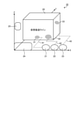
- FIG. 2 is a diagram for explaining an example of factory design data used when the relocation easiness determination device according to the embodiment determines the relocation easiness.
- two axes orthogonal to each other in the floor surface of the factory 10 are illustrated as X-axis and Y-axis.
- the Z axis is an axis orthogonal to the X axis and the Y axis.
- the Z-axis direction is the direction of the ceiling of the factory 10.
- the virtual production line arrangement unit 5 arranges the virtual production line 20 in the factory 10. That is, the virtual production line arrangement unit 5 creates layout data in which production line design data and factory design data are combined. In other words, the virtual production line arrangement unit 5 creates factory design data in which the virtual production line 20 is arranged in the factory 10, that is, arrangement layout data.
- the factory 10 has a power outlet 21, a gas pipe outlet 22, a water pipe outlet 23, an empty space 24 that needs to be secured for specific reasons such as safety, and a ventilation window 25 that is a ventilation window. Etc. are arranged.
- the virtual production line 20 includes a power supply intake port 31, a gas intake port 32, a water intake port 33, and the like.
- the power cable 41 is a cable having one end connected to the power intake port 31 and the other end connected to the power supply port 21.
- the gas pipe 42 is a pipe having one end connected to the gas intake port 32 and the other end connected to the gas pipe insertion port 22.
- the water pipe 43 is a pipe having one end connected to the water intake port 33 and the other end connected to the water pipe insertion port 23.
- the virtual production line arrangement unit 5 When the virtual production line 20 is arranged in the factory 10, the virtual production line arrangement unit 5 notifies the relocation ease calculation unit 6 that the arrangement is completed. Further, the virtual production line arrangement unit 5 sends the factory design data of the factory 10 in which the virtual production line 20 is arranged to the relocation ease calculation unit 6.
- the relocation ease calculation unit 6 Upon receiving the notification that the arrangement is completed, the relocation ease calculation unit 6 reads out the simulation table from the simulation table storage unit 7.
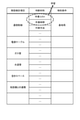
- FIG. 3 is a diagram for explaining an example of a simulation table used when the relocation easiness determination device according to the embodiment determines the relocation easiness.
- the simulation table is a judgment table showing the judgment criteria of the difficulty of relocation.
- the judgment material used for calculating the ease of relocation and the constraint conditions for relocation are associated with each relocation study item.
- the items to be considered for relocation are the items to be considered for relocation.
- Examples of relocation study items are communication wiring, power cable 41, gas pipe 42, water pipe 43, empty space 24, and cooperation with other equipment.
- the communication wiring, the power cable 41, the gas pipe 42, and the water pipe 43 are the connection elements between the virtual production line 20 and the factory 10.
- the connecting element between the virtual production line 20 and the factory 10 is connected to the intake port of the infrastructure equipment.
- the communication wiring is information related to the communication connection between the conductor, LAN (Local Area Network, run) and the virtual production line 20.
- the power cable 41 is an item related to the connection between the power intake port 31 and the power supply port 21.
- the gas pipe 42 is an item related to the connection between the gas intake port 32 and the gas pipe insertion port 22.
- the water pipe 43 is an item related to the connection between the water intake port 33 and the water pipe insertion port 23.
- the empty space 24 is an item related to the empty space 24 in which the virtual production line 20 can be arranged in the factory 10.
- Cooperation with other equipment is an item related to the cooperation of the positional relationship with other equipment in the factory 10.
- the relocation examination item is associated with a judgment material which is a material for judging whether or not the relocation is easy.
- judgment materials are work cost, work time, and alternative methods.
- the judgment materials that are the judgment materials for relocation are information indicating the ease of relocation of the connection elements per unit distance when the infrastructure equipment is relocated to the factory 10.
- the work cost is the cost of the work estimated as the cost required for the work per unit distance.
- Working time is the cost of time estimated as the time required to work per unit distance.
- Information including working cost and working time is estimated cost information. The working cost and working time are learned and updated by the estimated amount learning unit 9. The learning process of the working cost and the working time by the estimated amount learning unit 9 will be described later.
- the alternative method is an alternative method for relocation. There may be no alternative method.
- An example of an alternative method that is an alternative measure for relocation is a method in which the connection destination of the gas pipe 42 is a gas cylinder. That is, when an alternative method in which the connection destination of the gas pipe 42 is a gas cylinder is registered, the connection destination of the gas pipe 42 may be changed from the gas pipe insertion port 22 to the gas cylinder.
- other examples of the alternative method include a change in the installation location of the virtual production line 20, a change in the arrangement of infrastructure equipment of the virtual production line 20, a change in materials, a change in the relocation method, and the like.
- An example of wiring constraints is information on the location of a base station.
- the relocation easiness calculation unit 6 simulates the relocation easiness based on the relocation examination items of the simulation table.
- FIG. 4 is a flowchart showing a relocation ease determination processing procedure determined by the relocation ease determination device according to the embodiment.
- the relocation ease calculation unit 6 receives the factory design data in which the virtual production line 20 is arranged in the factory 10 from the virtual production line arrangement unit 5.
- This factory design data includes infrastructure equipment information of the virtual production line 20 and constraint conditions of spatial information in the factory 10. Further, the relocation ease calculation unit 6 reads out the simulation table from the simulation table storage unit 7.
- the relocation ease calculation unit 6 is based on the infrastructure equipment information of the virtual production line 20 and the constraint conditions of the spatial information in the factory 10, from the base point of the infrastructure equipment to the space limitation which is the base point of the equipment in the factory 10. Calculate the distance (step S10).
- the base points of the infrastructure equipment are the power supply intake port 31, the gas intake port 32, the water intake port 33, and the like.
- the base points of the equipment in the factory 10 are a power supply outlet 21, a gas pipe outlet 22, a water pipe outlet 23, and the like. That is, the base point of the infrastructure equipment is the intake port of the infrastructure equipment, and the base point of the equipment in the factory 10 is the outlet of the infrastructure equipment.
- the intake port of the infrastructure equipment and the outlet of the infrastructure equipment are connected by a connection element such as a power cable 41. Therefore, the distance from the intake port of the infrastructure equipment to the outlet corresponds to the distance of the connecting element.
- the base point of the infrastructure equipment is the starting point when measuring the distance
- the base point of the equipment in the factory 10 is the ending point when measuring the distance.
- the distance calculated by the relocation ease calculation unit 6 is the distance between the power supply inlet 31 and the power supply outlet 21, the distance between the gas intake port 32 and the gas pipe outlet 22, and the water intake.
- the relocation ease calculation unit 6 calculates the relocation difficulty value based on the calculated distance (step S20). Specifically, the relocation ease calculation unit 6 calculates the relocation difficulty value by integrating the work cost and the work time with the calculated distance. As a result, the relocation ease calculation unit 6 calculates the relocation difficulty value corresponding to the position where the virtual production line 20 is installed.
- the difficult relocation value may be a value indicating the difficulty of relocation when the installed virtual production line 20 is relocated to a new position, or the following when the virtual production line 20 is installed at a specific position. It may be a value indicating the difficulty of relocation to a position. That is, the difficult relocation value is a value indicating how difficult the next relocation would be if the virtual production line 20 designed with the current specifications were to be relocated to a specific next location as it is. May be good.
- the relocation ease determination device 1 calculates the relocation difficulty value based on the factory design data of the factory B and the virtual production line 20 designed according to the current specifications. In the following description, the case where the relocation difficulty value is a value indicating the relocation difficulty when the virtual production line 20 is relocated from the X factory to the A factory will be described.
- the relocation ease calculation unit 6 calculates the relocation difficulty value, and then sets an alternative method for relocation (step S30). Specifically, the relocation ease calculation unit 6 sets the alternative method registered in the simulation table as the relocation examination item.
- the relocation ease calculation unit 6 calculates the relocation difficulty value when the set relocation alternative method is used (step S40).
- the relocation easiness calculation unit 6 calculates the relocation difficulty value when the set alternative method is used by the same processing as the processing executed in steps S10 and S20.
- the relocation ease display unit 8 displays the relocation difficulty value when the relocation ease calculation unit 6 completes the calculation of the relocation difficulty value by simulation (step S50). Specifically, the relocation ease display unit 8 displays the relocation difficulty value in the initial setting method and the relocation difficulty value in the case of using the alternative method which is an alternative case as the examination result. As a result, the relocation ease determination device 1 can provide the user with information indicating the ease of installation and relocation of the virtual production line 20 under consideration by the user.
- merit indexes such as productivity in the virtual production line 20 and yield in the virtual production line 20 may be added as criteria for determining the ease of relocation.
- the relocation ease calculation unit 6 calculates the merit value for the merit index and the relocation difficulty value for the demerit index.
- the merit value is a value indicating the magnitude of the merit of the merit index.
- the relocation ease display unit 8 displays the merit value and the relocation difficulty value. As a result, the user can determine the ease of relocation in consideration of the comparison between the merit value and the relocation difficulty value with respect to the demerit index.
- the relocation ease calculation unit 6 may calculate the relocation difficulty value based on the merit index and the demerit index.
- the estimated amount learning unit 9 learns the estimated amount of relocation by utilizing AI (Artificial Intelligence).
- AI Artificial Intelligence
- the estimated amount learning unit 9 relocates by learning the estimated value and the estimated condition based on the difference between the working cost and the working time used when calculating the relocation difficult value and the actual working cost and the working time. Learn the estimated amount of money.
- the estimated value is the estimated cost information including the estimated work cost and the estimated working time
- the estimated condition is the condition of the relocation corresponding to the estimated cost information.
- the estimated amount learning unit 9 learns the estimated amount of money in which the difference between the estimated amount of money and the actual relocation amount becomes small by learning the estimated value and the estimated condition in which the difference between the actual work cost and the working time becomes small.
- the estimated value is a value used when the estimated amount is calculated, and includes information on the work cost and information on the work time.
- the estimated value is a material for determining the cost and time required for relocating the power cable 41, the gas pipe 42, and the like.
- the estimated values are the work unit price per unit distance required for relocation (yen / m) and the work time per unit distance required for relocation (hours / m).
- the information on the work unit price per unit distance includes the work unit price per unit distance (yen / m) required for the work itself when relocating the power cable 41, gas pipe 42, etc., and the work unit price per unit distance (worker unit price per unit distance).
- the work unit price required for the work itself includes the cost of machinery, fuel, etc. required for the work.
- Estimated conditions are conditions for calculating the estimated amount.
- the estimation condition is the construction method of the relocation work of the gas pipe 42 or the like or the material of the gas pipe 42.
- the estimated value depends on the estimation conditions.
- the estimated amount learning unit 9 learns the estimated value and the estimated condition when the default method is used, and the estimated value and the estimated condition when the alternative method is used.
- the estimated amount learning unit 9 reflects the estimated value for each learned estimation condition in the judgment material of the simulation table stored in the simulation table storage unit 7. That is, the estimated amount learning unit 9 reflects the estimated value for each learned estimation condition in the work cost and the work time of the judgment material.
- the estimated amount learning unit 9 improves the calculation accuracy of the estimated amount by learning the estimated value and the estimated condition based on the difference between the estimated amount of the past relocation and the actual amount of the past relocation.
- the estimated amount of money learning unit 9 can learn the material for determining the ease of relocation. Learning the material for determining the ease of relocation is learning to improve the accuracy of work cost, the accuracy of work time, and the reliability of whether or not the adoption of alternative methods is appropriate.
- the estimated amount of money when the alternative method is used is lower than the estimated amount of money when the default method is used, it is judged that the adoption of the alternative method is appropriate.
- the relocation ease calculation unit 6 calculates the estimated amount of money based on the work cost and work time stored in the learned judgment material, and calculates the relocation difficulty value using the estimated amount of money. As a result, the relocation ease determination device 1 can improve the calculation accuracy of the relocation difficulty value indicating the relocation ease. Further, since the relocation ease determination device 1 can calculate the relocation difficulty value when the virtual production line 20 is designed, it determines the difficulty of relocation of equipment such as the virtual production line 20 at the design stage. be able to.
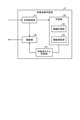
- FIG. 5 is a diagram showing a configuration of an estimated amount of money learning unit included in the relocation ease determination device according to the embodiment.
- the estimated amount learning unit 9 includes a state observation unit 51, a learning unit 52, a learned model storage unit 55, and an inference unit 56.
- the state observation unit 51 receives the arrangement layout data, the relocation judgment material (including the estimated value and the estimated condition), the actual value, and the actual condition. Further, the state observation unit 51 receives the arrangement layout data when inferring the estimated value and the estimated condition. First, the case of learning the estimated value and the estimated condition will be described.
- the state observation unit 51 calculates the difference between the estimated value and the actual value which is the value actually used when the estimated amount was calculated.
- the actual value includes the work cost information and the work time information as well as the estimated value. That is, the actual value is actual cost information which is the actual cost and time required for the work per unit distance when the connection element such as the power cable 41 is relocated. In this way, the actual value includes the actual work cost and the actual work time.
- Examples of actual values are the work unit price per unit distance (yen / m) when relocating the power cable 41, gas pipe 42, etc., the work unit price of the worker per unit distance (yen / m), and the work unit price per unit distance.
- the working time hours / m
- the material cost per unit distance of the material required for the relocation work yen / m
- the number of materials required for the relocation work per unit distance pieces / m
- the state observation unit 51 calculates the difference between the estimation condition and the actual condition which is the condition actually used.
- the actual condition is a condition for calculating the actual amount.
- Actual conditions correspond to estimated cost information. For example, when the actual value is the work unit price of the gas pipe 42 or the like, the actual condition is the construction method of the relocation work of the gas pipe 42 or the like or the material of the gas pipe 42.
- the relocation easiness calculation unit 6 calculates the estimated amount of money based on the estimated value and the estimation condition.
- the relocation ease calculation unit 6 calculates the actual amount of money based on the actual value and the actual condition.
- the actual value and the actual condition are input to the simulation table storage unit 7 by the user.
- the relocation ease calculation unit 6 reads out the actual value and the actual condition stored in the simulation table storage unit 7 and calculates the actual amount.
- the state observation unit 51 observes the difference information including the first difference, which is the difference between the estimated value and the actual value, and the second difference, which is the difference between the estimated condition and the actual condition, as a state variable.
- the difference information includes a second difference between the estimation condition and the actual condition when the estimation condition is added. That is, when the estimation condition is added, the state observation unit 51 observes the difference information including the added estimation condition.
- the learning unit 52 learns the estimated value and the estimated condition according to the data set created based on the difference information which is a state variable.
- the estimated value learned by the learning unit 52 is an estimated value for updating the simulation table.
- the learning unit 52 has an estimated value in which the first difference, which is the difference between the estimated value and the actual value, becomes smaller, and a second, which is the difference between the estimated condition and the actual condition, according to the data set created based on the state variable. Learn the estimation conditions that make the difference between.
- any learning algorithm may be used as the learning algorithm used by the learning unit 52.
- Reinforcement learning is that an agent (behavior) in a certain environment observes the current state and decides the action to be taken. Agents get rewards from the environment by choosing actions and learn how to get the most rewards through a series of actions.
- Q-learning, TD-learning, and the like are known as typical methods of reinforcement learning.
- the behavior value table which is a general update formula of the behavior value function Q (s, a), is represented by the following formula (1).
- s t represents the environment at time t
- a t represents the behavior in time t.
- the environment is changed to s t + 1.
- r t + 1 represents the reward received by the change of the environment
- ⁇ represents the discount rate
- ⁇ represents the learning coefficient. If you apply the Q-learning, the next estimate is the action a t.
- the estimated values and conditions correspond to the behavior
- the first difference and the second difference correspond to the environment.
- the action value of the best action a at time t + 1 is larger than the action value Q of the action a executed at time t, the action value Q is increased, and vice versa. In that case, the action value Q is reduced.
- the action value function Q (s, a) is updated so that the action value Q of the action a at time t approaches the best action value at time t + 1.
- the best behavioral value in a certain environment is sequentially propagated to the behavioral value in the previous environment.
- the learning unit 52 includes a reward calculation unit 53 and a function update unit 54.
- the reward calculation unit 53 calculates the reward based on the state variable.
- the reward calculation unit 53 calculates the reward r based on the margin of error between the estimated amount and the actual amount. For example, if the error between the estimated amount and the actual amount is smaller than the margin of error, the reward r is increased (for example, the reward of "1" is given). On the other hand, if the error of the difference information is larger than the margin of error, the reward r is reduced (for example, the reward of "-1" is given).
- the reward calculation unit 53 may give a larger reward as the difference between the estimated amount and the actual amount is smaller, and may give a smaller reward as the difference is larger. When the difference between the estimated amount and the actual amount is "0", the reward calculation unit 53 sets the maximum reward.
- the function update unit 54 updates the trained model represented by the function for determining the estimated value and the estimated condition according to the reward calculated by the reward calculation unit 53.
- Q learning function updating unit 54 is used as a function for action value represented by the formula (1) function Q (s t, a t) to determine the next estimated values and estimate conditions.
- the learning unit 52 determines an estimated value and an estimated condition in which the reward is maximized, that is, the difference between the estimated amount and the actual amount is “0”.
- the estimated value and the estimated condition determined by the learning unit 52 are the estimated value and the estimated condition to be used when the relocation difficulty value is calculated next time.
- the trained model storage unit 55 is a memory for storing the function updated by the function update unit 54.
- the state observation unit 51 used the arrangement layout data, the relocation judgment material (including the estimated value and the estimated condition), and the actual result, which were used for calculating the easy relocation value. Observe values and performance conditions. Then, the learning unit 52 calculates the reward based on the difference information including the first difference which is the difference between the estimated value and the actual value and the second difference which is the difference between the estimated condition and the actual condition. , Learn the optimal estimate and estimation conditions for the placement layout data.
- the state observation unit 51 When the state observation unit 51 infers the estimated value and the estimation condition, the state observation unit 51 sends the arrangement layout data to the inference unit 56.
- the inference unit 56 infers the estimated value and the estimation condition using the trained model in the trained model storage unit 55.
- the inference unit 56 infers the optimum estimated value and the estimated condition based on the trained model when the arrangement layout data is newly input. Output to the simulation table storage unit 7. As a result, the estimated values and estimation conditions in the simulation table are updated.
- the estimated amount of money learning unit 9 can also apply supervised learning, unsupervised learning, semi-supervised learning, or the like to the learning algorithm in addition to reinforcement learning.
- the estimated amount learning unit 9 can also use deep learning for learning the extraction of the feature amount itself as the learning algorithm described above.
- the estimated amount learning unit 9 may perform machine learning according to other known methods such as neural networks, genetic programming, functional logic programming, support vector machines, and the like.
- the estimated amount learning unit 9 is used to learn the estimated value and the estimated condition used by the relocation easiness determination device 1.
- the relocation unit 9 is connected to the relocation easiness determination device 1 via a network. It may be a device separate from the ease determination device 1. Further, the estimated amount learning unit 9 may exist on the cloud server.
- the estimated amount learning unit 9 may learn the estimated value and the estimated condition according to the data set created for the plurality of relocation ease determination devices 1.
- the estimated amount learning unit 9 may acquire a data set from a plurality of relocation easiness determination devices 1 used at the same site, or a plurality of relocation easiness that operate independently at different sites.
- the estimated value and the estimated condition may be learned by using the data set collected from the determination device 1. Further, it is also possible to add the relocation ease determination device 1 for collecting the data set to the target on the way, or to remove it from the target on the contrary.
- the estimated amount learning unit 9 that has learned the estimated value and the estimation condition for one relocation easiness determination device 1 is attached to another relocation easiness determination device 1, and estimates are made for the other relocation easiness determination device 1.
- the values and estimation conditions may be relearned and updated.
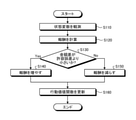
- FIG. 6 is a flowchart showing a learning processing procedure of the estimated value and the estimated condition by the relocation ease determination device according to the embodiment.
- the state observation unit 51 included in the estimated amount learning unit 9 of the relocation ease determination device 1 observes the state variables (step S110). Specifically, the state observation unit 51 uses the difference information including the first difference, which is the difference between the estimated value and the estimated actual value, and the second difference, which is the difference between the estimated condition and the actual condition, as the state variable. Observe as.
- the reward calculation unit 53 calculates the reward based on the state variable (step S120). Specifically, the reward calculation unit 53 calculates the reward based on the margin of error between the estimated amount and the actual amount. The reward calculation unit 53 determines whether or not the difference between the estimated amount and the actual amount is larger than the margin of error. That is, the reward calculation unit 53 determines whether or not the amount difference, which is the difference between the estimated amount and the actual amount, is smaller than the margin of error (step S130).
- the reward calculation unit 53 determines that the amount difference is smaller than the margin of error (step S130, Yes).
- the reward is increased (step S140).
- the reward calculation unit 53 determines that the amount difference is equal to or greater than the margin of error (step S130, No)
- the reward calculation unit 53 reduces the reward (step S150).
- the reward calculation unit 53 may give a reward of "0" when it is determined that the amount difference is the same as the margin of error.
- the function update unit 54 updates the action value function Q (s, a) so that the difference between the estimated amount and the actual amount becomes small (step S160).
- FIG. 7 is a flowchart showing the inference processing procedure of the estimated value and the estimated condition by the relocation ease determination device according to the embodiment.
- the state observation unit 51 included in the estimated amount learning unit 9 of the relocation ease determination device 1 acquires data for inferring the estimated value and the estimated condition (step S210). Specifically, the state observation unit 51 acquires the newly created layout layout data. The state observation unit 51 sends the acquired layout layout data to the inference unit 56.
- the inference unit 56 reads out the action value function, which is a trained model, from the trained model storage unit 55. When the placement layout data is input, the inference unit 56 inputs the placement layout data to the action value function (step S220).
- the inference unit 56 infers an appropriate estimated value and estimated condition by inputting the arrangement layout data into the action value function.
- the inference unit 56 outputs the inferred estimated value and the estimated condition to the simulation table storage unit 7 (step S230).
- the relocation ease determination device 1 is used from the intake port of the infrastructure equipment based on the constraint conditions when relocating the infrastructure equipment and the information of the arrangement position in the virtual production line 20 of the infrastructure equipment. The distance to the outlet is calculated. Then, the relocation ease determination device 1 calculates the relocation difficulty value based on the calculated distance, the work cost per unit distance, and the work time per unit distance. As a result, the relocation ease determination device 1 can determine the ease of relocation of the virtual production line 20 in consideration of the difficulty of relocation of the infrastructure equipment, so that the ease of relocation of the virtual production line 20 can be accurately determined. It becomes possible to do.
- the relocation ease determination device 1 calculates the relocation difficulty value based on the cooperation of the positional relationship between the virtual production line 20 and other equipment other than the virtual production line 20 in the factory 10. As a result, the relocation ease determination device 1 can determine accurate relocation ease based on the coordination of the positional relationship with other production equipment.
- FIG. 8 is a diagram showing a hardware configuration example that realizes the relocation ease determination device according to the embodiment.
- the relocation ease determination device 1 can be realized by a processor 100, a memory 200, an input device 300, and a display device 400.
- An example of the processor 100 is a CPU (Central Processing Unit, central processing unit, processing unit, arithmetic unit, microprocessor, microcomputer, DSP (Digital Signal Processor)) or system LSI (Large Scale Integration).
- Examples of the memory 200 are RAM (Random Access Memory) and ROM (Read Only Memory).
- the relocation ease determination device 1 is realized by the processor 100 reading and executing a determination program that can be executed by a computer for executing the operation of the relocation ease determination device 1 stored in the memory 200. To. It can also be said that the determination program, which is a program for executing the operation of the relocation ease determination device 1, causes the computer to execute the procedure or method of the relocation ease determination device 1.
- the determination program executed by the relocation ease determination device 1 has a modular configuration including a virtual production line design unit 2, a virtual production line arrangement unit 5, a relocation ease calculation unit 6, and an estimated amount learning unit 9. These are loaded onto the main storage and they are generated on the main storage.
- the input device 300 receives an instruction from the user and sends it to the processor 100.
- the memory 200 is used as a temporary memory when the processor 100 executes various processes. Further, the memory 200 stores spatial information, a simulation table, and the like.
- the display device 400 displays the relocation difficulty value.
- the judgment program is a file in an installable format or an executable format, and may be stored in a computer-readable storage medium and provided as a computer program product. Further, the determination program may be provided to the relocation ease determination device 1 via a network such as the Internet. It should be noted that some of the functions of the relocation ease determination device 1 may be realized by dedicated hardware such as a dedicated circuit, and some may be realized by software or firmware.
- the configuration shown in the above embodiment is an example, and can be combined with another known technique, or a part of the configuration may be omitted or changed without departing from the gist. It is possible.
- 1 Relocation ease judgment device 2 Virtual production line design unit, 3 Spatial information storage unit, 5 Virtual production line placement unit, 6 Relocation ease calculation unit, 7 Simulation table storage unit, 8 Relocation ease display unit, 9 Estimated amount Learning department, 10 factories, 20 virtual production lines, 21 power supply outlets, 22 gas pipe outlets, 23 water pipe outlets, 24 empty spaces, 25 ventilation windows, 31 power supply inlets, 32 gas inlets. , 33 water intake, 41 power cable, 42 gas pipe, 43 water pipe, 51 state observation part, 52 learning part, 53 reward calculation part, 54 function update part, 55 learned model storage part, 56 reasoning part, 100 Processor, 200 memory, 300 input device, 400 display device.
Landscapes
- Engineering & Computer Science (AREA)
- Physics & Mathematics (AREA)
- Theoretical Computer Science (AREA)
- General Physics & Mathematics (AREA)
- Geometry (AREA)
- Business, Economics & Management (AREA)
- General Business, Economics & Management (AREA)
- Computational Mathematics (AREA)
- Primary Health Care (AREA)
- Strategic Management (AREA)
- Tourism & Hospitality (AREA)
- Human Resources & Organizations (AREA)
- General Health & Medical Sciences (AREA)
- Economics (AREA)
- Health & Medical Sciences (AREA)
- Marketing (AREA)
- Manufacturing & Machinery (AREA)
- Mathematical Analysis (AREA)
- Mathematical Optimization (AREA)
- Pure & Applied Mathematics (AREA)
- Computer Hardware Design (AREA)
- Evolutionary Computation (AREA)
- General Engineering & Computer Science (AREA)
- Management, Administration, Business Operations System, And Electronic Commerce (AREA)
Abstract
移設容易性判断装置(1)が、工場に生産設備を配置した配置レイアウトデータを生成する仮想製造ライン配置部(5)と、生産設備の工場への移設の容易性を示す移設容易値を算出する移設容易性算出部(6)と、を備え、設備レイアウトデータは、生産設備に配置されて生産設備の稼働に用いられるインフラ設備の生産設備内での配置位置の情報であるインフラ設備情報を含み、工場レイアウトデータは、工場における空間情報の制約条件を含み、移設容易性算出部(6)は、制約条件およびインフラ設備情報に基づいてインフラ設備を工場へ移設する場合の移設に要する移設コストを算出し、移設コストに基づいて移設容易値を算出する。
Description
本開示は、生産設備の移設の容易性を判断する移設容易性判断装置および移設容易性判断方法に関する。
第5世代移動通信システムである5G(5th Generation)の普及によって通信ケーブルの無線化が容易になり、これに伴って生産設備の移設が容易になることが予想される。また、今後のマスカスタマイゼーションの進展により、生産設備の移設の機会が増えるものと考えられ、移設を前提とした生産設備の設計が必要になることが予想される。このため、設計段階から生産設備の移設の容易さを考慮にいれて生産設備の設計を検討する必要がある。
特許文献1の設備配置位置決定装置は、生産設備である製造ラインにおいて主として製造する製品または優先度の高い製品の種類が変化した場合に、生産設備に配置される設備の最適な位置を速やかに検証している。この設備配置位置決定装置は、ライン情報取得工程において、生産設備で製造される製品の情報および生産設備に配置される設備の情報よりなるライン情報を取得する。次に、設備配置位置決定装置は、シミュレーション工程において、現在の設備配置位置とライン情報とに基づいて製品の進捗をシミュレーションする。次に、設備配置位置決定装置は、設備配置位置評価工程において、現在の設備配置位置を、シミュレーション工程におけるシミュレーション結果に基づいて評価する。次に、設備配置位置決定装置は、設備仮配置工程において、生産設備に設備を仮に配置して仮の設備配置位置を設定し、この仮の設備配置位置に対して、シミュレーション工程および設備配置位置評価工程を行なう。設備配置位置決定装置は、現在および仮の設備配置位置のうち最も高い評価を得た設備配置位置を生産設備における設備の配置位置として選択する。
しかしながら、上記特許文献1の技術では、生産設備本体の移動費用およびリードタイムといった生産設備本体の移設困難性に基づいて設備配置位置を評価しているものの、生産設備本体の稼働に要するインフラ(インフラストラクチャ)設備の移設の困難性は考慮していない。インフラ設備は、例えば、生産設備本体にガスを供給するガス管、水を供給する水道管など生産に必要な材料を供給する設備であり、移設には困難性が伴う。特許文献1の技術では、インフラ設備の移設の困難性を考慮していないので、生産設備に対し正確な移設の容易性を判断することができないという問題があった。
本開示は、上記に鑑みてなされたものであって、生産設備の移設の容易性を正確に判断することができる移設容易性判断装置を得ることを目的とする。
上述した課題を解決し、目的を達成するために、本開示の移設容易性判断装置は、工場のレイアウトデータである工場レイアウトデータおよび生産設備のレイアウトデータである設備レイアウトデータに基づいて、工場に生産設備を配置したレイアウトデータである配置レイアウトデータを生成する配置部を備えている。また、本開示の移設容易性判断装置は、配置レイアウトデータに基づいて、生産設備の工場への移設の容易性を示す移設容易値を算出する移設容易性算出部を備えている。配置レイアウトデータは、工場レイアウトデータおよび設備レイアウトデータを含み、設備レイアウトデータは、生産設備に配置されて生産設備の稼働に用いられるインフラ設備の生産設備内での配置位置の情報であるインフラ設備情報を含み、工場レイアウトデータは、インフラ設備を工場に移設する場合の工場における空間情報の制約条件を含んでいる。移設容易性算出部は、制約条件およびインフラ設備情報に基づいてインフラ設備を工場へ移設する場合の移設に要する移設コストを算出し、移設コストに基づいて移設容易値を算出する。
本開示にかかる移設容易性判断装置は、生産設備の移設の容易性を正確に判断することができるという効果を奏する。
以下に、本開示の実施の形態にかかる移設容易性判断装置および移設容易性判断方法を図面に基づいて詳細に説明する。
実施の形態.
図1は、実施の形態にかかる移設容易性判断装置の構成を示す図である。移設容易性判断装置1は、工場内の生産設備に対する移設容易性を判断するコンピュータである。移設容易性判断装置1は、移設容易性を判断するソフトウェアがPC(Personal Computer)等の情報処理装置に搭載されることで実現される。
図1は、実施の形態にかかる移設容易性判断装置の構成を示す図である。移設容易性判断装置1は、工場内の生産設備に対する移設容易性を判断するコンピュータである。移設容易性判断装置1は、移設容易性を判断するソフトウェアがPC(Personal Computer)等の情報処理装置に搭載されることで実現される。
なお、本実施の形態では、生産設備が製造ラインである場合について説明するが、生産設備は、製造ライン以外の設備であってもよい。以下の説明では、製造ラインを設置済みの工場をX工場という場合がある。また、製造ラインをX工場から移設させる工場をA工場という場合がある。また、製造ラインをA工場から次に移設させる工場をB工場という場合がある。移設容易性判断装置1は、製造ラインをX工場からA工場に移設させる場合の移設容易性を判断する。また、移設容易性判断装置1は、製造ラインをA工場に移設すると、製造ラインをA工場からB工場に移設させる場合に発生する移設容易性を判断する。
移設容易性判断装置1は、設置済みの製造ラインを新たな位置に移設する場合の移設容易性を判断してもよいし、製造ラインを特定の位置に設置した場合の、次の位置への移設容易性を判断してもよい。すなわち、移設容易性判断装置1は、製造ラインをX工場からA工場に移設する際の移設容易性を判断してもよいし、製造ラインをA工場からB工場に移設する際の移設容易性を判断してもよい。
工場内の製造ラインが移設される場合、電源、水、ガス、空きスペース、他の設備の位置関係といった設備環境によって移設の難しさが変動する。すなわち、製造ラインの移設容易性は、製造ラインに配置されて製造ライン本体の稼働に用いられるインフラ設備等によって変動する。
そこで、本実施の形態の移設容易性判断装置1は、設備環境であるインフラ設備に基づいて、製造ラインの移設容易性をインフラ設備の項目毎にパラメータ化し、製造ラインの移設をシミュレーションすることによって、移設容易性を判断する。移設容易性は、工場内に設置した製造ラインを他の場所に移設する際の容易性である。すなわち、移設容易性は、工場内に設置した製造ラインを他の場所に移設する場合に要するトータルの作業時間であるトータル作業時間およびトータルの作業コストであるトータル作業コストを含んでいる。換言すると、移設容易性は、トータル作業時間およびトータル作業コストを含んだ移設に関する移設コストに対応している。具体的には、移設容易性は、作業時間を作業コストまたは移設時間を要することによる機会損失に変換したコスト、作業コスト、後述する代替方法を実行するために必要なコストなどを含んだ移設コストに対応している。工場内に設置した製造ラインを他の場所に移設する際のトータル作業時間が短いほど、またトータル作業コストが小さいほど移設容易性が高くなる。インフラ設備を考慮せず単に設置環境に合わせて製造ラインを設計する場合、製造ラインを移設する際にインフラ設備の移設にトータルで多くの作業時間およびトータルで大きな作業コストを要することとなり、移設に大きな困難が伴う。本実施の形態の移設容易性判断装置1は、工場内に設置した製造ラインを他の場所に移設する場合の移設容易性を判断する。
移設容易性判断装置1は、工場内の移設に関する条件に基づいてインフラ設備の項目を客観的な数値等の情報に変換することで、移設容易性を判断する。工場内の移設に関する条件は、インフラ設備の移設に要する作業コスト、作業時間、インフラ設備の配置に関連する制約条件などである。作業時間は、移設する部材(後述する接続要素)の単位距離当たりの移設に要する単位作業時間である。また、作業コストは、単位距離当たりの移設に要する単位作業コストである。
なお、移設容易性判断装置1は、移設の容易性を示す移設容易値を算出してもよいし、移設の困難性を示す移設困難値を算出してもよい。以下の説明では、移設容易性判断装置1が、移設困難値を算出する場合について説明する。
移設容易性判断装置1は、図1に示す機能部を有して構成されている。すなわち、移設容易性判断装置1は、仮想製造ライン設計部2と、空間情報記憶部3と、仮想製造ライン配置部5と、移設容易性算出部6と、シミュレーションテーブル記憶部7と、移設容易性表示部8と、学習部である見積金額学習部9とを備えている。
仮想製造ライン設計部2は、CAD(Computer Aided Design、キャド、コンピュータ設計支援)を用いて、製品を生産するための製造ラインといった設備の設計を行う。具体的には、仮想製造ライン設計部2は、現在の製造ラインを構成する設備を、移設先に配置した場合の製造ラインの設備構成を設計する。換言すると、仮想製造ライン設計部2は、製造ラインを移設した場合、移設先での、製造ラインを構成する設備の配置構成の設計を行う。以下、仮想製造ライン設計部2が設計した製造ラインのレイアウトデータを製造ライン設計データという。生産設備のレイアウトデータである設備レイアウトデータが、製造ライン設計データである。製造ライン設計データは、仮想的に設計された設計段階の製造ラインのレイアウトデータである。換言すると、仮想製造ライン設計部2が設計する製造ラインは、仮想の製造ラインであり、仮想製造ライン設計部2が設計する製造ライン設計データは、仮想のレイアウトデータである。実際の製造ラインは、製造ライン設計データが確定した後に、確定した製造ラインに従って作製される。
本実施の形態の移設容易性判断装置1は、仮想製造ライン設計部2が設計した仮想の製造ラインに対して移設容易性を判断する。以下の説明では、移設容易性判断装置1が、移設容易性を判断する製造ラインを仮想製造ラインという。
仮想製造ライン設計部2は、仮想製造ラインを設計する設計者からの指示に従って、仮想製造ラインの設計を行う。仮想製造ライン設計部2が設計する仮想製造ラインの例は、工場に配置される仮想製造ラインである。仮想製造ライン設計部2は、空間情報記憶部3に接続されており、空間情報記憶部3に格納されている、工場のレイアウトデータである工場レイアウトデータを用いて仮想製造ラインの設計を行う。
なお、仮想製造ライン設計部2は、移設容易性判断装置1の外部に配置されてもよい。すなわち、仮想製造ラインは、仮想製造ライン設計部2とは異なる別の装置によって設計されてもよい。
空間情報記憶部3は、仮想製造ラインが配置される工場のレイアウトデータを記憶するメモリなどである。以下の説明では、工場のレイアウトデータを工場設計データと呼ぶ。
仮想製造ラインの配置部である仮想製造ライン配置部5は、製造ライン設計データ(設備レイアウトデータ)、および工場設計データに基づいて、工場フロア内に仮想製造ラインを配置する。すなわち、仮想製造ライン配置部5は、製造ライン設計データおよび工場設計データに基づいて、仮想製造ラインが配置された工場の工場設計データを作成する。仮想製造ライン配置部5は、工場を設計する設計者からの指示に従って、仮想製造ラインが配置された工場の工場設計データである配置レイアウトデータを作成する。
テーブル記憶部であるシミュレーションテーブル記憶部7は、シミュレーション用テーブルを記憶するメモリなどである。シミュレーション用テーブルは、移設の困難性を示す移設困難値が算出される際に用いられる情報を格納するテーブルである。移設困難値は、小さいほど移設が容易であり、大きいほど移設が困難であることを示す値である。シミュレーション用テーブルの詳細については、後述する。
移設容易性算出部6は、仮想製造ラインが配置された工場の工場設計データと、シミュレーション用テーブルとに基づいて、移設困難値を算出する。移設容易性表示部8は、移設困難値を表示する装置である。移設容易性表示部8の例は液晶モニタである。なお、移設容易性表示部8は、移設容易性判断装置1の外部に配置されていてもよい。
見積金額学習部9は、機械学習装置であり、移設の見積もり金額と、移設の実際の金額との差に基づいて、移設の費用を見積もる際に用いる情報(後述する見積値および見積条件)を学習する。シミュレーション用テーブルには、見積値および見積条件が含まれており、見積金額学習部9は、学習した見積値および見積条件をシミュレーション用テーブルに反映する。
以下、仮想製造ライン設計部2、空間情報記憶部3、仮想製造ライン配置部5、移設容易性算出部6、シミュレーションテーブル記憶部7、移設容易性表示部8、および見積金額学習部9の詳細について説明する。
移設容易性判断装置1は、仮想製造ライン設計部2が設計した製造ラインの移設容易性を判断する場合、仮想製造ライン設計部2は、設計し保持している仮想製造ラインのCADデータである製造ライン設計データを、仮想製造ライン配置部5に送信する。
仮想製造ラインの製造ライン設計データには、仮想製造ラインの稼働に要するインフラ設備の情報(以下、インフラ設備情報という)が含まれている。インフラ設備の例は、電源設備、ガス設備、水道設備、および通信設備である。インフラ設備情報の例は、インフラ設備の仮想製造ライン内における配置位置の情報である。
例えば、仮想製造ラインに含まれる電源設備は、電源を取込むための電源取込口である。ガス設備は、ガスを取込むためのガス取込口であり、水道設備は、水道を取込むための水道取込口である。電源取込口には、電源ケーブルが接続され、ガス取込口にはガス管が接続され、水道取込口には水道管が接続される。
仮想製造ライン配置部5は、製造ライン設計データを取得すると、空間情報記憶部3から工場の工場設計データを取得する。
工場設計データには、工場の実際の空間情報であるリアル情報を有する固定空間の情報が含まれている。固定空間の情報には、工場フロアのレイアウトの情報が含まれている。また、固定空間の情報には、インフラ設備を移設する際の制約条件が含まれている。すなわち、工場設計データには、工場の空間情報に対する制約条件が含まれている。
工場の空間の制約情報である制約条件は、例えば、A工場の1階フロアの形状、面積、窓の配置、電源差込口の位置、ガス管差込口の位置、水道管差込口の位置、通信ケーブル差込口の位置、Wi-Fi(登録商標)(ワイファイ)無線局の位置等の情報である。工場設計データは、これらの制約条件が記載されたデータであり、工場内建屋のレイアウト設計図のデータを意味する。
電源差込口は、電源ケーブルが差し込まれる位置であり、電源差込口を介して電源ケーブルと外部電源とが接続される。ガス管差込口の位置は、ガス管が差し込まれる位置であり、ガス管差込口を介してガス管と外部ガス供給源とが接続される。水道管差込口の位置は、水道管が差し込まれる位置であり、水道管差込口を介して水道管と外部水道供給源とが接続される。
図2は、実施の形態にかかる移設容易性判断装置が、移設容易性を判断する際に用いる工場設計データの例を説明するための図である。図2では、工場10の床面内で互いに直交する2つの軸をX軸およびY軸として図示している。Z軸は、X軸およびY軸に直交する軸である。Z軸方向が工場10の天井の方向である。
仮想製造ライン配置部5は、図2に示すように、工場10内に仮想製造ライン20を配置する。すなわち、仮想製造ライン配置部5は、製造ライン設計データおよび工場設計データを合成したレイアウトデータを作成する。換言すると、仮想製造ライン配置部5は、工場10内に仮想製造ライン20が配置された工場設計データ、すなわち配置レイアウトデータを作成する。
工場10には、電源差込口21、ガス管差込口22、水道管差込口23、安全のためといった特定の理由で確保が必要な空きスペース24、換気用の窓である換気窓25などが配置されている。
仮想製造ライン20には、電源取込口31、ガス取込口32、水道取込口33などが配置されている。電源ケーブル41は、一端が電源取込口31に接続され、他端が電源差込口21に接続されるケーブルである。ガス管42は、一端がガス取込口32に接続され、他端がガス管差込口22に接続される管である。水道管43は、一端が水道取込口33に接続され、他端が水道管差込口23に接続される管である。
仮想製造ライン配置部5は、工場10内に仮想製造ライン20を配置すると、配置が完了した旨を移設容易性算出部6に通知する。また、仮想製造ライン配置部5は、仮想製造ライン20を配置した工場10の工場設計データを移設容易性算出部6に送る。
移設容易性算出部6は、配置が完了した旨の通知を受けると、シミュレーション用テーブルをシミュレーションテーブル記憶部7から読み出す。
図3は、実施の形態にかかる移設容易性判断装置が、移設容易性を判断する際に用いるシミュレーション用テーブルの例を説明するための図である。シミュレーション用テーブルは、移設の困難性の判断基準を示す判断テーブルである。シミュレーション用テーブルでは、移設検討項目毎に、移設容易性の算出に用いられる判断材料と、移設の制約条件とが対応付けされている。
移設検討項目は、移設で検討すべき項目である。移設検討項目の例は、通信配線、電源ケーブル41、ガス管42、水道管43、空きスペース24、および他設備との連携である。移設検討項目のうち、通信配線、電源ケーブル41、ガス管42、および水道管43が、仮想製造ライン20と工場10との間の接続要素である。仮想製造ライン20と工場10との間の接続要素は、インフラ設備の取込口に接続される。
通信配線は、導線、LAN(Local Area Network、ラン)と、仮想製造ライン20との間の通信接続に関連する情報である。電源ケーブル41は、電源取込口31と電源差込口21との間の接続に関連する項目である。ガス管42は、ガス取込口32とガス管差込口22との間の接続に関連する項目である。水道管43は、水道取込口33と水道管差込口23との間の接続に関連する項目である。空きスペース24は、工場10で仮想製造ライン20を配置可能な空きスペース24に関連する項目である。他設備との連携は、工場10における他の設備との間の位置関係の連携性に関連する項目である。
図3に示すように、シミュレーション用テーブルでは、移設検討項目に、移設が容易か否かを判断するための材料である判断材料が対応付けされている。判断材料の例は、作業コスト、作業時間、代替方法である。移設判断材料である判断材料のうち、作業コストおよび作業時間は、インフラ設備を工場10へ移設する場合の接続要素の単位距離当たりの移設の容易性を示す情報である。
作業コストは、単位距離当たりの作業に要する費用として見積もられた作業のコストである。作業時間は、単位距離当たりの作業に要する時間として見積もられた時間のコストである。作業コストおよび作業時間を含んだ情報が見積コスト情報である。作業コストおよび作業時間は、見積金額学習部9によって学習され、更新される。見積金額学習部9による作業コストおよび作業時間の学習処理については後述する。
代替方法は、移設の代替方法である。なお、代替方法は無い場合もある。移設の代替措置である代替方法の例は、ガス管42の接続先をガスボンベとする方法である。すなわち、ガス管42の接続先をガスボンベとする代替方法が登録されている場合には、ガス管42の接続先は、ガス管差込口22からガスボンベに変更されてもよい。また、代替方法の他の例には、仮想製造ライン20の設置場所の変更、仮想製造ライン20のインフラ設備の配置の変更、材料の変更、移設方法の変更などがある。配線の制約条件の例は、基地局の位置の情報である。
移設容易性算出部6は、シミュレーション用テーブルの移設検討項目に基づいて移設容易性をシミュレーションする。
ここで、移設容易性判断装置1の移設容易性算出部6が、工場10内に移設する仮想製造ライン20の移設容易性を、シミュレーション用テーブルを用いて判断する手順について説明する。
図4は、実施の形態にかかる移設容易性判断装置が判断する移設容易性の判断処理手順を示すフローチャートである。移設容易性算出部6は、仮想製造ライン配置部5から、工場10に仮想製造ライン20が配置された工場設計データを受け付ける。この工場設計データには、仮想製造ライン20のインフラ設備情報と、工場10内の空間情報の制約条件とが含まれている。また、移設容易性算出部6は、シミュレーションテーブル記憶部7からシミュレーション用テーブルを読み出す。
移設容易性算出部6は、仮想製造ライン20のインフラ設備情報と、工場10内の空間情報の制約条件とに基づいて、インフラ設備の基点から、工場10における設備の基点である空間制限までの距離を算出する(ステップS10)。
インフラ設備の基点は、電源取込口31、ガス取込口32、水道取込口33などである。工場10における設備の基点は、電源差込口21、ガス管差込口22、水道管差込口23などである。すなわち、インフラ設備の基点は、インフラ設備の取込口であり、工場10における設備の基点は、インフラ設備の差込口である。工場10では、インフラ設備の取込口と、インフラ設備の差込口とが、電源ケーブル41といった接続要素で接続される。したがって、インフラ設備の取込口から差込口までの距離が、接続要素の距離に対応している。
インフラ設備の基点が、距離を測る際の始点であり、工場10における設備の基点が、距離を測る際の終点である。移設容易性算出部6が算出する距離は、電源取込口31と電源差込口21との間の距離、ガス取込口32とガス管差込口22との間の距離、水道取込口33と水道管差込口23との間の距離などである。
つぎに、移設容易性算出部6は、算出した距離に基づいて、移設困難値を算出する(ステップS20)。具体的には、移設容易性算出部6は、算出した距離に、作業コストおよび作業時間を積算することで、移設困難値を算出する。これにより、移設容易性算出部6は、仮想製造ライン20が設置された位置に対応する移設困難値を算出する。
移設困難値は、設置済みの仮想製造ライン20を新たな位置に移設する場合の移設困難性を示す値であってもよいし、仮想製造ライン20を特定の位置に設置した場合の、次の位置への移設困難性を示す値であってもよい。すなわち、移設困難値は、現状の仕様で設計されている仮想製造ライン20を、そのまま特定の次の場所に移設するとしたら、当該次の移設がどれくらい大変になるかの度合いを示す値であってもよい。この場合、移設容易性判断装置1は、B工場の工場設計データと、現状の仕様で設計されている仮想製造ライン20とに基づいて、移設困難値を算出する。以下の説明では、移設困難値が、仮想製造ライン20をX工場からA工場に移設する際の移設困難性を示す値である場合について説明する。
移設容易性算出部6は、移設困難値を算出した後、移設の代替方法を設定する(ステップS30)。具体的には、移設容易性算出部6は、シミュレーション用テーブルに登録されている代替方法を移設検討項目に設定する。
移設容易性算出部6は、設定した移設の代替方法を用いた場合の移設困難値を算出する(ステップS40)。移設容易性算出部6は、ステップS10,S20で実行した処理と同様の処理によって、設定した代替方法を用いた場合の移設困難値を算出する。
移設容易性表示部8は、移設容易性算出部6がシミュレーションによる移設困難値の算出を完了すると、移設困難値を表示する(ステップS50)。具体的には、移設容易性表示部8は、初期設定の方法での移設困難値と、代替ケースである代替方法を用いた場合の移設困難値とを、検討結果として表示する。これにより、移設容易性判断装置1は、ユーザが検討中の仮想製造ライン20の設置および移設の容易さを示す情報をユーザに提供することが可能となる。
なお、移設容易性の判断基準として、作業コスト、作業時間等のデメリット指標に加え、仮想製造ライン20における生産性、仮想製造ライン20における歩留まり等のメリット指標が追加されてもよい。この場合、移設容易性算出部6は、メリット指標に対するメリット値と、デメリット指標に対する移設困難値とを算出する。メリット値は、メリット指標のメリットの大きさを示す値である。
移設容易性表示部8は、メリット値と、移設困難値とを表示する。これにより、ユーザは、メリット値と、デメリット指標に対する移設困難値との対比を考慮して、移設容易性を判断することが可能となる。なお、移設容易性算出部6は、メリット指標およびデメリット指標に基づいて、移設困難値を算出してもよい。
また、本実施の形態では、見積金額学習部9が、AI(Artificial Intelligence、人工知能)を活用して移設の見積金額を学習する。見積金額学習部9は、移設困難値を算出する際に用いた作業コストおよび作業時間と、実際の作業コストおよび作業時間との差に基づいて、見積値および見積条件を学習することで、移設の見積金額を学習する。
見積値は、見積もられた作業コストおよび見積もられた作業時間を含んだ見積コスト情報であり、見積条件は、見積コスト情報に対応する移設の条件である。見積金額学習部9は、実際の作業コストおよび作業時間との差が小さくなる見積値および見積条件を学習することで、見積金額と実際の移設金額との差が小さくなる見積金額を学習する。
見積値は、見積金額が算出される際に用いられる値であり、作業コストの情報および作業時間の情報を含んでいる。見積値は、電源ケーブル41、ガス管42などを移設する場合に要する費用および時間の判断材料である。具体的には、見積値は、移設に要する単位距離当たりの作業単価(円/m)、および移設に要する単位距離当たりの作業時間(時間/m)である。単位距離当たりの作業単価の情報には、電源ケーブル41、ガス管42などを移設する際の作業自体に要する単位距離当たりの作業単価(円/m)、単位距離当たりの作業者の作業単価(円/m)、単位距離当たりの材料代(円/m)、材料の単位距離当たりの個数(個/m)などが含まれている。作業自体に要する作業単価には、作業に要する機械、燃料などの費用が含まれている。
見積条件は、見積金額を算出するための条件である。例えば、見積値が、ガス管42等の作業単価である場合、見積条件は、ガス管42等の移設作業の工法またはガス管42の材料である。見積値は、見積条件によって異なる。
見積金額学習部9は、初期設定されている方法を用いた場合の見積値および見積条件と、代替方法を用いた場合の見積値および見積条件を学習する。
見積金額学習部9は、学習した見積条件毎の見積値を、シミュレーションテーブル記憶部7が記憶しているシミュレーション用テーブルの判断材料に反映する。すなわち、見積金額学習部9は、学習した見積条件毎の見積値を、判断材料の作業コストおよび作業時間に反映させる。
見積金額学習部9は、過去の移設の見積金額と、過去の移設の実績金額との差に基づいて、見積値および見積条件を学習することで、見積金額の算出精度を高める。これにより、見積金額学習部9は、移設容易性の判断材料を学習することができる。移設容易性の判断材料を学習することは、作業コストの精度、作業時間の精度、代替方法の採用が適切であるか否かの信頼度を向上させるための学習である。代替方法を用いた場合の見積金額が初期設定されている方法を用いた場合の見積金額よりも低い場合に、代替方法の採用が適切であると判断される。
移設容易性算出部6は、学習された判断材料に格納されている作業コストおよび作業時間に基づいて、見積金額を算出し、見積金額を用いて移設困難値を算出する。これにより、移設容易性判断装置1は、移設容易性を示す移設困難値の算出精度を向上させることができる。また、移設容易性判断装置1は、仮想製造ライン20が設計された時点で、移設困難値を算出することができるので、設計段階で、仮想製造ライン20といった設備の移設の困難性を判断することができる。
つぎに、見積金額学習部9が、見積値および見積条件を学習する方法、および見積値および見積条件を推論する方法について説明する。図5は、実施の形態にかかる移設容易性判断装置が備える見積金額学習部の構成を示す図である。見積金額学習部9は、状態観測部51と、学習部52と、学習済モデル記憶部55と、推論部56とを備えている。
状態観測部51は、見積値および見積条件を学習する場合には、配置レイアウトデータ、移設判断材料(見積値、見積条件を含む)、実績値、および実績条件を受け付ける。また、状態観測部51は、見積値および見積条件を推論する場合には、配置レイアウトデータを受け付ける。まず、見積値および見積条件を学習する場合について説明する。
状態観測部51は、見積値と、見積金額が算出された際に実際に用いられた値である実績値との差を算出する。実績値は、見積値と同様に、作業コストの情報および作業時間の情報を含んでいる。すなわち、実績値は、電源ケーブル41といった接続要素が移設された際の単位距離当たりの作業に要した実際の費用および時間である実績コスト情報である。このように、実績値は、実績の作業コストおよび実績の作業時間を含んでいる。
実績値の例は、電源ケーブル41、ガス管42などを移設する際の単位距離当たりの作業単価(円/m)、単位距離当たりの作業者の作業単価(円/m)、単位距離当たりの作業時間(時間/m)、移設作業に要する材料の単位距離当たりの作業の材料代(円/m)、移設作業に要する材料の単位距離当たりの個数(個/m)などである。
また、状態観測部51は、見積条件と、実際に用いられた条件である実績条件との差を算出する。実績条件は、実績金額を算出するための条件である。実績条件は、見積コスト情報に対応している。例えば、実績値が、ガス管42等の作業単価である場合、実績条件は、ガス管42等の移設作業の工法またはガス管42の材料である。移設容易性判断装置1では、移設容易性算出部6が、見積値および見積条件に基づいて、見積金額を算出する。また、移設容易性判断装置1では、移設容易性算出部6が、実績値および実績条件に基づいて、実績金額を算出する。実績値および実績条件は、ユーザによって、シミュレーションテーブル記憶部7に入力されている。移設容易性算出部6は、シミュレーションテーブル記憶部7が記憶しておく実績値および実績条件を読み出して、実績金額を算出する。
状態観測部51は、見積値と実績値との差である第1の差と、見積条件と実績条件との差である第2の差とを含んだ差異情報を状態変数として観測する。差異情報には、見積条件が追加された場合の、見積条件と実績条件との第2の差が含まれている。すなわち、状態観測部51は、見積条件が追加された場合には、追加された見積条件を含んだ差異情報を観測する。
学習部52は、状態変数である差異情報に基づいて作成されるデータセットに従って、見積値および見積条件を学習する。学習部52が学習する見積値は、シミュレーション用テーブルを更新するための見積値である。学習部52は、状態変数に基づいて作成されるデータセットに従って、見積値と実績値との差である第1の差が小さくなる見積値、および見積条件と実績条件との差である第2の差が小さくなる見積条件を学習する。
学習部52が用いる学習アルゴリズムはどのようなものが用いられてもよい。一例として、学習部52が強化学習(Reinforcement Learning)を適用した場合について説明する。強化学習は、ある環境内におけるエージェント(行動主体)が、現在の状態を観測し、取るべき行動を決定する、というものである。エージェントは行動を選択することで環境から報酬を得て、一連の行動を通じて報酬が最も多く得られるような方策を学習する。強化学習の代表的な手法として、Q学習(Q‐learning)、TD学習(TD‐learning)などが知られている。例えば、Q学習の場合、行動価値関数Q(s,a)の一般的な更新式である行動価値テーブルは、以下の式(1)で表される。

式(1)において、stは時刻tにおける環境を表し、atは時刻tにおける行動を表す。行動atにより、環境はst+1に変わる。rt+1はその環境の変化によってもらえる報酬を表し、γは割引率を表し、αは学習係数を表す。Q学習を適用した場合、次回の見積値が行動atとなる。ここでは、見積値および見積条件が行動に対応し、第1の差および第2の差が環境に対応する。
式(1)で表される更新式は、時刻t+1における最良の行動aの行動価値が、時刻tにおいて実行された行動aの行動価値Qよりも大きければ、行動価値Qを大きくし、逆の場合は、行動価値Qを小さくする。換言すれば、時刻tにおける行動aの行動価値Qを、時刻t+1における最良の行動価値に近づけるように、行動価値関数Q(s,a)を更新する。それにより、或る環境における最良の行動価値が、それ以前の環境における行動価値に順次伝播していくようになる。
学習部52は、報酬計算部53と、関数更新部54とを備えている。報酬計算部53は、状態変数に基づいて報酬を計算する。報酬計算部53は、見積金額と実績金額との許容誤差に基づいて、報酬rを計算する。例えば、見積金額と実績金額との誤差が許容誤差より小さい場合には報酬rを増大させる(例えば「1」の報酬を与える。)。他方、差異情報の誤差が許容誤差より大きい場合には報酬rを低減する(例えば「-1」の報酬を与える。)。
報酬計算部53は、見積金額と実績金額との差が小さいほど大きな報酬を与え、差が大きいほど小さな報酬を与えてもよい。報酬計算部53は、見積金額と実績金額との差が「0」のときは、最大報酬とする。
関数更新部54は、報酬計算部53によって計算される報酬に従って、見積値および見積条件を決定するための関数で示される学習済モデルを更新する。例えばQ学習の場合、関数更新部54は、式(1)で表される行動価値関数Q(st,at)を次回の見積値および見積条件を決定するための関数として用いる。例えば、学習部52は、報酬が最大となる、すなわち見積金額と実績金額との差が「0」となる、見積値および見積条件を決定する。学習部52が決定する見積値および見積条件が、次回、移設困難値が算出される際に用いられる見積値および見積条件である。
関数更新部54は、学習済モデルである関数を更新すると更新後の関数を学習済モデル記憶部55に格納する。学習済モデル記憶部55は、関数更新部54が更新した関数を記憶するメモリなどである。
このように、見積値および見積条件を学習する学習フェーズでは、状態観測部51が、移設容易値の算出に使用された、配置レイアウトデータ、移設判断材料(見積値、見積条件を含む)、実績値、および実績条件を観測する。そして、学習部52が、見積値と実績値との差である第1の差と、見積条件と実績条件との差である第2の差とを含んだ差異情報に基づいて報酬を計算し、配置レイアウトデータに対する最適な見積値および見積条件を学習する。
状態観測部51は、見積値および見積条件を推論する場合には、配置レイアウトデータを推論部56に送る。推論部56は、学習済モデル記憶部55内の学習済モデルを用いて、見積値および見積条件を推論する。
このように、見積値および見積条件を推論する活用フェーズでは、推論部56が、新たに配置レイアウトデータが入力されると、学習済モデルに基づいて、最適な見積値および見積条件を推論してシミュレーションテーブル記憶部7に出力する。これにより、シミュレーション用テーブルの見積値および見積条件が更新される。
なお、本実施の形態では、学習部52が用いる学習アルゴリズムに強化学習を適用した場合について説明したが、学習アルゴリズムは強化学習に限られるものではない。見積金額学習部9は、学習アルゴリズムについては、強化学習以外にも、教師あり学習、教師なし学習、または半教師あり学習等を適用することも可能である。
また、見積金額学習部9は、上述した学習アルゴリズムとしては、特徴量そのものの抽出を学習する深層学習(Deep Learning)を用いることもできる。見積金額学習部9は、他の公知の方法、例えばニューラルネットワーク、遺伝的プログラミング、機能論理プログラミング、サポートベクターマシンなどに従って機械学習を実行してもよい。
なお、見積金額学習部9は、移設容易性判断装置1が用いる見積値および見積条件を学習するために使用されるが、例えば、ネットワークを介して移設容易性判断装置1に接続された、移設容易性判断装置1とは別個の装置であってもよい。さらに、見積金額学習部9は、クラウドサーバ上に存在していてもよい。
また、見積金額学習部9は、複数の移設容易性判断装置1に対して作成されるデータセットに従って、見積値および見積条件を学習するようにしてもよい。なお、見積金額学習部9は、同一の現場で使用される複数の移設容易性判断装置1からデータセットを取得してもよいし、或いは、異なる現場で独立して稼働する複数の移設容易性判断装置1から収集されるデータセットを利用して見積値および見積条件を学習してもよい。さらに、データセットを収集する移設容易性判断装置1を途中で対象に追加し、或いは、逆に対象から除去することも可能である。さらに、ある移設容易性判断装置1に関して見積値および見積条件を学習した見積金額学習部9を、これとは別の移設容易性判断装置1に取り付け、当該別の移設容易性判断装置1に関して見積値および見積条件を再学習して更新するようにしてもよい。
図6は、実施の形態にかかる移設容易性判断装置による見積値および見積条件の学習処理手順を示すフローチャートである。移設容易性判断装置1の見積金額学習部9が備える状態観測部51は、状態変数を観測する(ステップS110)。具体的には、状態観測部51は、見積値と見積実績との差である第1の差と、見積条件と実績条件との差である第2の差とを含んだ差異情報を状態変数として観測する。
報酬計算部53は、状態変数に基づいて報酬を計算する(ステップS120)。具体的には、報酬計算部53は、見積金額と実績金額との許容誤差に基づいて、報酬を計算する。報酬計算部53は、見積金額と実績金額との差が許容誤差よりも大きいか否かを判定する。すなわち、報酬計算部53は、見積金額と実績金額との差である金額差が許容誤差よりも小さいか否かを判定する(ステップS130)。
報酬計算部53は、金額差が許容誤差よりも小さいと判定した場合(ステップS130、Yes)、報酬を増やす(ステップS140)。報酬計算部53は、金額差が許容誤差以上であると判定した場合(ステップS130、No)、報酬を減らす(ステップS150)。なお、報酬計算部53は、金額差が許容誤差と同じであると判定した場合に、「0」の報酬を与えてもよい。
関数更新部54は、見積金額と実績金額との金額差が小さくなるよう行動価値関数Q(s,a)を更新する(ステップS160)。
図7は、実施の形態にかかる移設容易性判断装置による見積値および見積条件の推論処理手順を示すフローチャートである。移設容易性判断装置1の見積金額学習部9が備える状態観測部51は、見積値および見積条件を推論するためのデータを取得する(ステップS210)。具体的には、状態観測部51は、新たに作成された配置レイアウトデータを取得する。状態観測部51は、取得した配置レイアウトデータを推論部56に送る。
推論部56は、学習済モデル記憶部55内から学習済モデルである行動価値関数を読み出す。推論部56は、配置レイアウトデータが入力されると、行動価値関数に配置レイアウトデータを入力する(ステップS220)。
推論部56は、行動価値関数に配置レイアウトデータを入力することで、適切な見積値および見積条件を推論する。推論部56は、推論した、見積値および見積条件をシミュレーションテーブル記憶部7に出力する(ステップS230)。
このように実施の形態では、移設容易性判断装置1が、インフラ設備を移設する際の制約条件およびインフラ設備の仮想製造ライン20内における配置位置の情報に基づいて、インフラ設備の取込口から差込口までの距離を算出している。そして、移設容易性判断装置1は、算出した距離、単位距離当たりの作業コスト、および単位距離当たりの作業時間に基づいて移設困難値を算出している。これにより、移設容易性判断装置1は、インフラ設備の移設の困難性を考慮して、仮想製造ライン20の移設の容易性を判断できるので、仮想製造ライン20の移設の容易性を正確に判断することが可能となる。
また、移設容易性判断装置1は、工場10における仮想製造ライン20以外の他の設備と、仮想製造ライン20との間の位置関係の連携性に基づいて、移設困難値を算出している。これにより、移設容易性判断装置1は、他の生産設備との間の位置関係の連携性に基づいた正確な移設容易性を判断できる。
ここで、移設容易性判断装置1のハードウェア構成について説明する。図8は、実施の形態にかかる移設容易性判断装置を実現するハードウェア構成例を示す図である。
移設容易性判断装置1は、プロセッサ100、メモリ200、入力装置300、および表示装置400により実現することができる。プロセッサ100の例は、CPU(Central Processing Unit、中央処理装置、処理装置、演算装置、マイクロプロセッサ、マイクロコンピュータ、DSP(Digital Signal Processor)ともいう)またはシステムLSI(Large Scale Integration)である。メモリ200の例は、RAM(Random Access Memory)、ROM(Read Only Memory)である。
移設容易性判断装置1は、プロセッサ100が、メモリ200で記憶されている移設容易性判断装置1の動作を実行するための、コンピュータで実行可能な、判断プログラムを読み出して実行することにより実現される。移設容易性判断装置1の動作を実行するためのプログラムである判断プログラムは、移設容易性判断装置1の手順または方法をコンピュータに実行させるものであるともいえる。
移設容易性判断装置1で実行される判断プログラムは、仮想製造ライン設計部2、仮想製造ライン配置部5、移設容易性算出部6、および見積金額学習部9を含むモジュール構成となっており、これらが主記憶装置上にロードされ、これらが主記憶装置上に生成される。
入力装置300は、ユーザからの指示を受付けてプロセッサ100に送る。メモリ200は、プロセッサ100が各種処理を実行する際の一時メモリに使用される。また、メモリ200は、空間情報、シミュレーション用テーブルなどを記憶する。表示装置400は、移設困難値を表示する。
判断プログラムは、インストール可能な形式または実行可能な形式のファイルで、コンピュータが読み取り可能な記憶媒体に記憶されてコンピュータプログラムプロダクトとして提供されてもよい。また、判断プログラムは、インターネットなどのネットワーク経由で移設容易性判断装置1に提供されてもよい。なお、移設容易性判断装置1の機能について、一部を専用回路などの専用のハードウェアで実現し、一部をソフトウェアまたはファームウェアで実現するようにしてもよい。
以上の実施の形態に示した構成は、一例を示すものであり、別の公知の技術と組み合わせることも可能であるし、要旨を逸脱しない範囲で、構成の一部を省略、変更することも可能である。
1 移設容易性判断装置、2 仮想製造ライン設計部、3 空間情報記憶部、5 仮想製造ライン配置部、6 移設容易性算出部、7 シミュレーションテーブル記憶部、8 移設容易性表示部、9 見積金額学習部、10 工場、20 仮想製造ライン、21 電源差込口、22 ガス管差込口、23 水道管差込口、24 空きスペース、25 換気窓、31 電源取込口、32 ガス取込口、33 水道取込口、41 電源ケーブル、42 ガス管、43 水道管、51 状態観測部、52 学習部、53 報酬計算部、54 関数更新部、55 学習済モデル記憶部、56 推論部、100 プロセッサ、200 メモリ、300 入力装置、400 表示装置。
Claims (9)
- 工場のレイアウトデータである工場レイアウトデータおよび生産設備のレイアウトデータである設備レイアウトデータに基づいて、前記工場に前記生産設備を配置したレイアウトデータである配置レイアウトデータを生成する配置部と、
前記配置レイアウトデータに基づいて、前記生産設備の前記工場への移設の容易性を示す移設容易値を算出する移設容易性算出部と、
を備え、
前記配置レイアウトデータは、前記工場レイアウトデータおよび前記設備レイアウトデータを含み、
前記設備レイアウトデータは、前記生産設備に配置されて前記生産設備の稼働に用いられるインフラ設備の前記生産設備内での配置位置の情報であるインフラ設備情報を含み、
前記工場レイアウトデータは、前記インフラ設備を前記工場に移設する場合の前記工場における空間情報の制約条件を含み、
前記移設容易性算出部は、
前記制約条件および前記インフラ設備情報に基づいて前記インフラ設備を前記工場へ移設する場合の移設に要する移設コストを算出し、前記移設コストに基づいて前記移設容易値を算出する、
ことを特徴とする移設容易性判断装置。 - 前記インフラ設備の取込口に接続される接続要素と、前記インフラ設備を前記工場へ移設する場合の前記接続要素の単位距離当たりの移設の容易性である移設判断材料とが対応付けされた判断テーブルを記憶するテーブル記憶部をさらに備え、
前記移設容易性算出部は、
前記制約条件および前記インフラ設備情報に基づいて前記取込口から前記工場で前記接続要素が差し込まれる差込口までの距離を算出し、前記距離および前記移設判断材料に基づいて前記移設コストを算出し、前記移設コストに基づいて前記移設容易値を算出する、
ことを特徴とする請求項1に記載の移設容易性判断装置。 - 前記接続要素は、通信配線、電源ケーブル、ガス管、および水道管の少なくとも1つを含み、
前記移設判断材料は、前記接続要素の単位距離当たりの移設に要する費用として見積もられた単位作業コストと、前記接続要素の単位距離当たりの移設に要する時間として見積もられた単位作業時間とを有した見積コスト情報を含み、
前記移設容易性算出部は、前記距離および前記見積コスト情報に基づいて、前記移設容易値を算出する、
ことを特徴とする請求項2に記載の移設容易性判断装置。 - 前記移設容易性算出部は、前記距離に前記単位作業コストおよび前記単位作業時間を積算することで前記移設容易値を算出する、
ことを特徴とする請求項3に記載の移設容易性判断装置。 - 前記移設容易性算出部は、前記インフラ設備の前記工場への移設方法の代替方法がある場合には、前記代替方法を用いた場合の前記移設容易値を算出する、
ことを特徴とする請求項1から4の何れか1つに記載の移設容易性判断装置。 - 前記判断テーブルは、前記単位作業コストの実績および前記単位作業時間の実績に基づいて更新される、
ことを特徴とする請求項3または4に記載の移設容易性判断装置。 - 前記移設判断材料は、前記見積コスト情報に対応する移設の条件である見積条件を含み
前記接続要素の単位距離当たりの実際の移設に要した費用および時間を示す実績コスト情報と前記見積コスト情報との差である第1の差、および前記見積条件と前記実績コスト情報に対応する移設の条件である実績条件との差である第2の差を含んだ差異情報と、前記配置レイアウトデータとを、状態変数として観測する状態観測部と、
前記状態変数に基づいて作成されるデータセットに従って、前記第1の差が小さくなる前記見積コスト情報、および前記第2の差が小さくなる前記見積条件を推論する学習済モデルを生成する学習部と、
を備えることを特徴とする請求項3または4に記載の移設容易性判断装置。 - 前記状態観測部が前記配置レイアウトデータを新たに受け付けると、新たな前記配置レイアウトデータを前記学習済モデルに入力することで、前記第1の差が小さくなる前記見積コスト情報、および前記第2の差が小さくなる前記見積条件を推論して前記テーブル記憶部に出力する推論部を備えることを特徴とする請求項7に記載の移設容易性判断装置。
- 工場のレイアウトデータである工場レイアウトデータおよび生産設備のレイアウトデータである設備レイアウトデータに基づいて、前記工場に前記生産設備を配置したレイアウトデータである配置レイアウトデータを生成する配置ステップと、
前記配置レイアウトデータに基づいて、前記生産設備の前記工場への移設の容易性を示す移設容易値を算出する移設容易性算出ステップと、
を含み、
前記配置レイアウトデータは、前記工場レイアウトデータおよび前記設備レイアウトデータを含み、
前記設備レイアウトデータは、前記生産設備に配置されて前記生産設備の稼働に用いられるインフラ設備の前記生産設備内での配置位置の情報であるインフラ設備情報を含み、
前記工場レイアウトデータは、前記インフラ設備を前記工場に移設する場合の前記工場における空間情報の制約条件を含み、
前記移設容易性算出ステップでは、
前記制約条件および前記インフラ設備情報に基づいて前記インフラ設備を前記工場へ移設する場合の移設に要する移設コストを算出し、前記移設コストに基づいて前記移設容易値を算出する、
ことを特徴とする移設容易性判断方法。
Priority Applications (2)
| Application Number | Priority Date | Filing Date | Title |
|---|---|---|---|
| JP2020564498A JP6851560B1 (ja) | 2020-07-17 | 2020-07-17 | 移設容易性判断装置および移設容易性判断方法 |
| PCT/JP2020/027837 WO2022014040A1 (ja) | 2020-07-17 | 2020-07-17 | 移設容易性判断装置および移設容易性判断方法 |
Applications Claiming Priority (1)
| Application Number | Priority Date | Filing Date | Title |
|---|---|---|---|
| PCT/JP2020/027837 WO2022014040A1 (ja) | 2020-07-17 | 2020-07-17 | 移設容易性判断装置および移設容易性判断方法 |
Publications (1)
| Publication Number | Publication Date |
|---|---|
| WO2022014040A1 true WO2022014040A1 (ja) | 2022-01-20 |
Family
ID=75154763
Family Applications (1)
| Application Number | Title | Priority Date | Filing Date |
|---|---|---|---|
| PCT/JP2020/027837 Ceased WO2022014040A1 (ja) | 2020-07-17 | 2020-07-17 | 移設容易性判断装置および移設容易性判断方法 |
Country Status (2)
| Country | Link |
|---|---|
| JP (1) | JP6851560B1 (ja) |
| WO (1) | WO2022014040A1 (ja) |
Citations (3)
| Publication number | Priority date | Publication date | Assignee | Title |
|---|---|---|---|---|
| JP2006048482A (ja) * | 2004-08-06 | 2006-02-16 | Dainippon Printing Co Ltd | レイアウト支援システム、レイアウト支援方法およびプログラム |
| JP2010122788A (ja) * | 2008-11-18 | 2010-06-03 | Toyota Motor Corp | 生産ラインレイアウト作成支援方法および生産ラインレイアウト作成方法 |
| JP2020077212A (ja) * | 2018-11-08 | 2020-05-21 | 株式会社日立製作所 | エリア利用計画システム、エリア利用計画方法、及びエリア利用計画装置 |
-
2020
- 2020-07-17 WO PCT/JP2020/027837 patent/WO2022014040A1/ja not_active Ceased
- 2020-07-17 JP JP2020564498A patent/JP6851560B1/ja not_active Expired - Fee Related
Patent Citations (3)
| Publication number | Priority date | Publication date | Assignee | Title |
|---|---|---|---|---|
| JP2006048482A (ja) * | 2004-08-06 | 2006-02-16 | Dainippon Printing Co Ltd | レイアウト支援システム、レイアウト支援方法およびプログラム |
| JP2010122788A (ja) * | 2008-11-18 | 2010-06-03 | Toyota Motor Corp | 生産ラインレイアウト作成支援方法および生産ラインレイアウト作成方法 |
| JP2020077212A (ja) * | 2018-11-08 | 2020-05-21 | 株式会社日立製作所 | エリア利用計画システム、エリア利用計画方法、及びエリア利用計画装置 |
Also Published As
| Publication number | Publication date |
|---|---|
| JPWO2022014040A1 (ja) | 2022-01-20 |
| JP6851560B1 (ja) | 2021-03-31 |
Similar Documents
| Publication | Publication Date | Title |
|---|---|---|
| JP6059375B1 (ja) | 生産制御システムおよび統合生産制御システム | |
| Kebriaei et al. | Model-based and learning-based decision making in incomplete information cournot games: a state estimation approach | |
| JP6273125B2 (ja) | 漏水調査計画立案装置、漏水調査計画立案システム、及び漏水調査計画立案方法 | |
| CN113656879A (zh) | 基于bim的幕墙工程精细化施工方法、系统、终端、介质 | |
| JP2013242761A (ja) | マルコフ決定過程システム環境下における方策パラメータを更新するための方法、並びに、その制御器及び制御プログラム | |
| JP2008154418A (ja) | 配電系統の状態推定装置、状態推定方法及びそのプログラム | |
| Chang | A comment on the calculation of the total-factor energy efficiency (TFEE) index | |
| US20160253440A1 (en) | Method, system, and program storage device for automating prognostics for physical assets | |
| JP2019046422A (ja) | 学習制御システム及び学習制御方法 | |
| JP4148208B2 (ja) | 配電系統の状態推定装置,方法及びプログラム | |
| JP6894724B2 (ja) | 電力設備計画方法、電力設備製造方法、電力設備計画装置およびプログラム | |
| CN113569457A (zh) | 一种基于数字孪生的需求功能模型构建方法及系统 | |
| CN112780285B (zh) | 一种地铁车站高边墙开挖施工动态调整的方法及装置 | |
| CN113632024A (zh) | 上级机器平台上的虚拟传感器 | |
| CN109063295A (zh) | 基于cae模型的节点信息优化处理方法和装置 | |
| CN116720438A (zh) | 基于多源矿山数据的数字孪生矿山生产系统及构建方法 | |
| Zhang et al. | Quantifying Schedule Delay Risk in Construction Projects: A Data‐Driven Approach with BIM and Probabilistic Reliability Analysis | |
| CN116050040A (zh) | 一种基于管线排布空间特征的智能排布方法及系统 | |
| JP2008518359A (ja) | 最適化問題の解決方法及びそのシステム | |
| de Paula Garcia et al. | An enhanced surrogate-assisted differential evolution for constrained optimization problems: R. de Paula Garcia et al. | |
| JP6851560B1 (ja) | 移設容易性判断装置および移設容易性判断方法 | |
| EP3701679B1 (en) | Network resource allocation | |
| Zhang et al. | An effective solution approach to fuzzy programming with application to project scheduling | |
| JP2006171824A (ja) | 作業プロセス割り当て方法及びその装置 | |
| Krale et al. | Robust active measuring under model uncertainty |
Legal Events
| Date | Code | Title | Description |
|---|---|---|---|
| ENP | Entry into the national phase |
Ref document number: 2020564498 Country of ref document: JP Kind code of ref document: A |
|
| 121 | Ep: the epo has been informed by wipo that ep was designated in this application |
Ref document number: 20945263 Country of ref document: EP Kind code of ref document: A1 |
|
| NENP | Non-entry into the national phase |
Ref country code: DE |
|
| 122 | Ep: pct application non-entry in european phase |
Ref document number: 20945263 Country of ref document: EP Kind code of ref document: A1 |