WO2022014030A1 - 処理装置、通信装置、通信システム、制御回路、記憶媒体および情報共有方法 - Google Patents
処理装置、通信装置、通信システム、制御回路、記憶媒体および情報共有方法 Download PDFInfo
- Publication number
- WO2022014030A1 WO2022014030A1 PCT/JP2020/027785 JP2020027785W WO2022014030A1 WO 2022014030 A1 WO2022014030 A1 WO 2022014030A1 JP 2020027785 W JP2020027785 W JP 2020027785W WO 2022014030 A1 WO2022014030 A1 WO 2022014030A1
- Authority
- WO
- WIPO (PCT)
- Prior art keywords
- request
- information
- edge computer
- unit
- response
- Prior art date
- Legal status (The legal status is an assumption and is not a legal conclusion. Google has not performed a legal analysis and makes no representation as to the accuracy of the status listed.)
- Ceased
Links
Images









Classifications
-
- H—ELECTRICITY
- H04—ELECTRIC COMMUNICATION TECHNIQUE
- H04W—WIRELESS COMMUNICATION NETWORKS
- H04W8/00—Network data management
- H04W8/02—Processing of mobility data, e.g. registration information at HLR [Home Location Register] or VLR [Visitor Location Register]; Transfer of mobility data, e.g. between HLR, VLR or external networks
- H04W8/08—Mobility data transfer
- H04W8/14—Mobility data transfer between corresponding nodes
-
- H—ELECTRICITY
- H04—ELECTRIC COMMUNICATION TECHNIQUE
- H04W—WIRELESS COMMUNICATION NETWORKS
- H04W48/00—Access restriction; Network selection; Access point selection
- H04W48/08—Access restriction or access information delivery, e.g. discovery data delivery
- H04W48/14—Access restriction or access information delivery, e.g. discovery data delivery using user query or user detection
-
- H—ELECTRICITY
- H04—ELECTRIC COMMUNICATION TECHNIQUE
- H04L—TRANSMISSION OF DIGITAL INFORMATION, e.g. TELEGRAPHIC COMMUNICATION
- H04L5/00—Arrangements affording multiple use of the transmission path
- H04L5/003—Arrangements for allocating sub-channels of the transmission path
- H04L5/0048—Allocation of pilot signals, i.e. of signals known to the receiver
-
- H—ELECTRICITY
- H04—ELECTRIC COMMUNICATION TECHNIQUE
- H04L—TRANSMISSION OF DIGITAL INFORMATION, e.g. TELEGRAPHIC COMMUNICATION
- H04L69/00—Network arrangements, protocols or services independent of the application payload and not provided for in the other groups of this subclass
- H04L69/22—Parsing or analysis of headers
-
- H—ELECTRICITY
- H04—ELECTRIC COMMUNICATION TECHNIQUE
- H04W—WIRELESS COMMUNICATION NETWORKS
- H04W4/00—Services specially adapted for wireless communication networks; Facilities therefor
- H04W4/30—Services specially adapted for particular environments, situations or purposes
- H04W4/40—Services specially adapted for particular environments, situations or purposes for vehicles, e.g. vehicle-to-pedestrians [V2P]
-
- H—ELECTRICITY
- H04—ELECTRIC COMMUNICATION TECHNIQUE
- H04W—WIRELESS COMMUNICATION NETWORKS
- H04W4/00—Services specially adapted for wireless communication networks; Facilities therefor
- H04W4/90—Services for handling of emergency or hazardous situations, e.g. earthquake and tsunami warning systems [ETWS]
-
- H—ELECTRICITY
- H04—ELECTRIC COMMUNICATION TECHNIQUE
- H04W—WIRELESS COMMUNICATION NETWORKS
- H04W92/00—Interfaces specially adapted for wireless communication networks
- H04W92/04—Interfaces between hierarchically different network devices
- H04W92/12—Interfaces between hierarchically different network devices between access points and access point controllers
-
- H—ELECTRICITY
- H04—ELECTRIC COMMUNICATION TECHNIQUE
- H04L—TRANSMISSION OF DIGITAL INFORMATION, e.g. TELEGRAPHIC COMMUNICATION
- H04L12/00—Data switching networks
- H04L12/02—Details
- H04L12/14—Charging, metering or billing arrangements specially adapted for data communications, e.g. authentication, authorisation and accounting [AAA] framework
- H04L12/1442—Charging, metering or billing arrangements specially adapted for data communications, e.g. authentication, authorisation and accounting [AAA] framework at network operator level
- H04L12/1446—Charging, metering or billing arrangements specially adapted for data communications, e.g. authentication, authorisation and accounting [AAA] framework at network operator level inter-operator billing
-
- H—ELECTRICITY
- H04—ELECTRIC COMMUNICATION TECHNIQUE
- H04L—TRANSMISSION OF DIGITAL INFORMATION, e.g. TELEGRAPHIC COMMUNICATION
- H04L67/00—Network arrangements or protocols for supporting network services or applications
- H04L67/01—Protocols
- H04L67/10—Protocols in which an application is distributed across nodes in the network
- H04L67/1001—Protocols in which an application is distributed across nodes in the network for accessing one among a plurality of replicated servers
- H04L67/1004—Server selection for load balancing
- H04L67/1014—Server selection for load balancing based on the content of a request
-
- H—ELECTRICITY
- H04—ELECTRIC COMMUNICATION TECHNIQUE
- H04L—TRANSMISSION OF DIGITAL INFORMATION, e.g. TELEGRAPHIC COMMUNICATION
- H04L67/00—Network arrangements or protocols for supporting network services or applications
- H04L67/50—Network services
- H04L67/60—Scheduling or organising the servicing of application requests, e.g. requests for application data transmissions using the analysis and optimisation of the required network resources
- H04L67/63—Routing a service request depending on the request content or context
-
- H—ELECTRICITY
- H04—ELECTRIC COMMUNICATION TECHNIQUE
- H04L—TRANSMISSION OF DIGITAL INFORMATION, e.g. TELEGRAPHIC COMMUNICATION
- H04L69/00—Network arrangements, protocols or services independent of the application payload and not provided for in the other groups of this subclass
- H04L69/08—Protocols for interworking; Protocol conversion
-
- H—ELECTRICITY
- H04—ELECTRIC COMMUNICATION TECHNIQUE
- H04W—WIRELESS COMMUNICATION NETWORKS
- H04W60/00—Affiliation to network, e.g. registration; Terminating affiliation with the network, e.g. de-registration
- H04W60/04—Affiliation to network, e.g. registration; Terminating affiliation with the network, e.g. de-registration using triggered events
-
- H—ELECTRICITY
- H04—ELECTRIC COMMUNICATION TECHNIQUE
- H04W—WIRELESS COMMUNICATION NETWORKS
- H04W68/00—User notification, e.g. alerting and paging, for incoming communication, change of service or the like
- H04W68/12—Inter-network notification
Definitions
- the present disclosure relates to a processing device, a communication device, a communication system, a control circuit, a storage medium, and an information sharing method used in a communication system that distributes information to a vehicle.
- Information provision services include, for example, VICS (registered trademark) (Vehicle Information and Communication System) service provided in Japan, ARIB-STD (Association of Radio Industries and Businesses-STANDARD) T. There are Short Range Communications), ETC (Electronic Toll Collection) 2.0, and the like.
- Wireless communication will be used in moving vehicles for communication that provides information.
- a cellular communication standard that is being standardized by 3GPP (3rd Generation Protocol Project) or that has been standardized by 3GPP.
- 3GPP 3rd Generation Protocol Project
- an edge computer that performs part or all of the application processing that was conventionally performed outside the telecommunications carrier network within the telecommunications carrier network that is close to the vehicle in terms of communication path is about to reduce the delay. ..
- Patent Document 1 indicates a preset roadside machine identifier, a preset management area identifier, and the position coordinates or address of the roadside machine in the distribution of information from a base station, a roadside machine, or a server to a communication terminal.
- a technique for determining at least one of a communication path, a communication method, a geographical area to be distributed, a logical area to be distributed, and the like by using position-related information including at least one of the position information is disclosed. ..
- the geographical area is represented by, for example, a combination of location information, a cell, a tracking area, a V2X (Vehicle to Everything) service area, and information on a physical control range by a roadside machine or a base station.
- the device described in Patent Document 1 determines a communication path in a communication core network of a telecommunications carrier and a cell according to a service area, a physical control range by a roadside unit or a base station, and the like.
- a running vehicle can generally contract with a specific telecommunications carrier and communicate with the base station of the specific telecommunications carrier, including roaming communication.
- a moving vehicle cannot communicate with a carrier that does not have a contract. Therefore, when a vehicle recognizes emergency information that should be disseminated to other vehicles, the vehicle that recognizes the emergency information transmits the emergency information to the base station of the first carrier with which the contract is made, and the first It is possible to transmit emergency information to other vehicles contracted with the telecommunications carrier.
- the vehicle that recognizes the emergency information uses the emergency information first in order to transmit the emergency information to the vehicle that has a contract with the second communication carrier that the vehicle that recognizes the emergency information does not have a contract with.
- the second telecommunications carrier analyzes the location information included in the emergency information regarding the emergency information transmitted from the application server, and determines from which base station the emergency information is transmitted in correspondence with the service area of each base station. It is necessary to make a decision and transmit it within the telecommunications carrier network.
- Patent Document 1 when information to be distributed between different telecommunications carriers is shared, the telecommunications carrier requesting information sharing shares information in a state where the service area configuration of the telecommunications carrier of the information provider is unknown. No disclosure or suggestion has been made regarding the required method.
- the present disclosure has been made in view of the above, and obtains a processing device capable of sharing information to be distributed to a vehicle between different telecommunications carriers without using information on the network configuration of another telecommunications carrier.
- the purpose is.
- the present disclosure is a processing device connected to a base station capable of communicating with a vehicle in the service area.
- the processing device generates a first request, which is a request including a range from the location information and the location information that specifies an area for which information sharing is requested, and an identifier that can identify the request source that requests information sharing.
- a generation unit, a reception request holding unit that holds a second request when shared information about an area can be sent to a second request that is a request based on an information sharing request from another processing device, and a reception request holding unit.
- the cognitive event and the sharing including the identifier held in the reception request holding unit are included. It is characterized by including a request inquiry unit for generating information.
- the processing device has an effect that information to be distributed to a vehicle can be shared between different telecommunications carriers without using information on the network configuration of other telecommunications carriers.
- the first figure which shows the configuration example of the communication system which concerns on Embodiment 1.
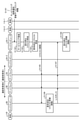
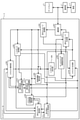
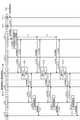
- Block diagram showing a configuration example of the gateway according to the first embodiment A sequence diagram showing an operation of requesting information sharing between edge computers in the communication system according to the first embodiment.
- the second figure which shows the configuration example of the communication system which concerns on Embodiment 1.
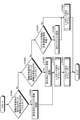
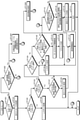
- Block diagram showing a configuration example of the gateway according to the second embodiment A flowchart showing the operation of the gateway based on the program executed by the gateway according to the second embodiment.
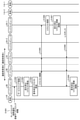
- a sequence diagram showing an operation of updating the service area of the communication carrier A in the communication system according to the third embodiment A block diagram showing a configuration example of an edge computer according to the third embodiment.
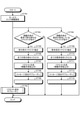
- Block diagram showing a configuration example of the gateway according to the third embodiment A flowchart showing the operation of the edge computer based on the program executed by the edge computer according to the third embodiment.
- a sequence diagram showing an operation of periodically transmitting shared information between edge computers using a periodic transmission interval time in the communication system according to the fourth embodiment A block diagram showing a configuration example of an edge computer according to the fourth embodiment.
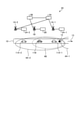
- FIG. 1 is a first diagram showing a configuration example of the communication system 20 according to the first embodiment.
- the communication system 20 includes base stations 1A-1, 1A-2, 1B, edge computers 2A-1, 2A-2, 2B, gateways 3A, 3B, and vehicles 11A-1, 11A-2, 11B. Be prepared.
- the base stations 1A-1, 1A-2, 1B are installed along the roadway 10 on which the vehicles 11A-1, 11A-2, 11B travel.
- the base station 1A-1 provides a service in the area of the service area 4A-1 and can communicate with the vehicle 11A-1 in the service area 4A-1.
- the base station 1A-2 provides a service in the area of the service area 4A-2 and can communicate with the vehicle 11A-2 in the service area 4A-2.
- the base station 1B provides a service in the area of the service area 4B and can communicate with the vehicle 11B in the service area 4B.
- the service area is also referred to as a cell, a serving cell, or the like.
- the base station 1A-1 and the edge computer 2A-1 are connected, the base station 1A-2 and the edge computer 2A-2 are connected, and the base station 1B and the edge computer 2B are connected. ..
- the base stations 1A-1 and 1A-2 are connected to the gateway 3A, and the base station 1B is connected to the gateway 3B.
- the base stations 1A-1, 1A-2, the edge computers 2A-1, 2A-2, and the gateway 3A are operated by the same carrier A, and the base stations 1B, the edge computer 2B, and the gateway 3B are operated. It is assumed that the same carrier B is operating. Carrier A and carrier B are different carriers.
- the edge computer 2A-1 can communicate with the gateway 3A via the base station 1A-1.
- the edge computer 2A-2 can communicate with the gateway 3A via the base station 1A-2.
- the edge computer 2B can communicate with the gateway 3B via the base station 1B.
- the base stations 1A-1, 1A-2, 1B have the same configuration
- the edge computers 2A-1, 2A-2, 2B have the same configuration
- the gateways 3A, 3B have the same configuration. Suppose there is.
- base stations 1A-1, 1A-2, 1B when the base stations 1A-1, 1A-2, 1B are not distinguished, they are referred to as base stations 1, and when the edge computers 2A-1,2A-2,2B are not distinguished, they are referred to as edge computers 2, and the gateway is referred to.
- gateway 3 when 3A and 3B are not distinguished, it is called gateway 3, when service areas 4A-1, 4A-2 and 4B are not distinguished, it is called service area 4, and when vehicles 11A-1, 11A-2 and 11B are not distinguished, it is called. It may be referred to as a vehicle 11.
- the base stations 1A-1 and 1A-2 are not distinguished, they are referred to as base stations 1A, and when the edge computers 2A-1 and 2A-2 are not distinguished, they are referred to as edge computers 2A, and the service areas 4A-1, 4A- When 2 is not distinguished, it may be referred to as a service area 4A, and when vehicles 11A-1 and 11A-2 are not distinguished, it may be referred to as a vehicle 11A.
- the edge computer 2 may be referred to as a processing device
- the gateway 3 may be referred to as a communication device
- the edge computer 2 and the gateway 3 may be simply referred to as a device.
- the communication method, communication standard, etc. of each base station 1 constituting the service area 4 are not particularly limited.
- UMTS Universal Mobile Telecommunications System
- LTE Long Term Evolution
- LTE-Advanced CDMA (Code Division Multiple Access) Division Multiple Access
- 5G Fifth Generation
- Wi-Fi Registered Trademark
- IEEE Registered Trademark
- the gateway 3 and the edge computer 2 are connected via the base station 1 in the example of FIG. 1, but may be directly connected. Further, in the example of FIG. 1, in the network configuration of the telecommunications carrier A, the gateway 3A and the base stations 1A-1 and 1A-2 are directly connected, and the gateway 3A and the base stations 1A-1 and 1A-2 are connected. When the communication between the two is wired communication, if the number of base stations 1 increases, it becomes a star-type network. In the network configuration of the telecommunications carrier A, each of the gateway 3A and the base stations 1A-1 and 1A-2 may be one node of the ring-type network as another wired connection configuration, or a mesh-like connection. It may be.
- the network configuration in the case of a ring-type network, a redundant configuration in which two or more ring-shaped networks may be present may be used.
- the connection between the gateway 3A and the base stations 1A-1 and 1A-2 may be wireless communication.
- the network configuration of the communication operator B in the communication system 20 shown in FIG. 1, the network configuration of the communication operator B may be such that the connection between the gateway 3B and the base station 1B may be wired communication or wireless communication.
- Each vehicle 11 is equipped with a communication terminal (not shown).
- the vehicle 11A can communicate with the base station 1A of the communication carrier A using the communication terminal, and the vehicle 11B communicates with the base station 1B of the communication carrier B using the communication terminal. Can be done.
- the description of the communication terminal will be omitted for the sake of brevity. If the vehicle 11 and the base station 1 can communicate with each other, roaming is included, and the same applies to the following.
- the base stations 1A-1, 1A-2, and 1B do not have to have the same communication method and the same communication standard, and may be a combination of the communication methods and communication standards exemplified above.
- the traveling direction of the vehicle 11 is from the left to the right in the figure as shown by the arrow 13.
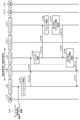
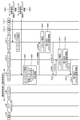
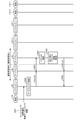
- FIG. 1 is a sequence diagram showing an operation in which the edge computer 2B of the telecommunications carrier B requests the telecommunications carrier A to share information in the communication system 20 according to the first embodiment.
- the edge computer 2B receives the service area update notification and the update service area information from the server that manages the service area 4 (not shown in FIGS. 1 and 2) (step S101).
- the service area update notification is a notification that triggers the generation of a request message or the like on the received device.
- the update service area information is information including host information of the edge computer 2 connected to the base station 1 that provides the service area 4, area information of the service area 4 to be provided, and the like.
- the service area update notification and the update service area information are sent from the above-mentioned server that manages the service area 4 not only when the service area 4 is changed but also when the service area 4 is newly established.
- the edge computer 2B may receive the service area update notification not only from the above-mentioned server that manages the service area 4, but also by an operation from an operator (not shown in FIGS. 1 and 2).
- the edge computer 2B processes the service area registration for the received service area update notification and update service area information (step S102).
- the edge computer 2B sends a request message with the service area update notification and the reception of the update service area information as a trigger (step S103).
- the trigger of the request message hereinafter referred to as request (S103)
- the above-mentioned operator selectively manually operates the edge computer 2B to input the trigger. You may.
- the gateway 3B receives the request (S103) transmitted from the edge computer 2B via the base station 1B (not shown in FIG. 2) and transfers the request (S103) to the gateway 3A.
- the gateway 3A receives the request (S103) forwarded from the gateway 3B.
- the part of the base station 1B will be omitted for the sake of brevity.
- the request (S103) is a request for new information sharing.
- the request (S103) includes location information, a range from location information, and an identifier.
- the area indicated by the position information and the range from the position information is an area where the edge computer 2B requests information sharing, and in the example of FIG. 1, it is an area corresponding to the service area 4B including the point 12.
- the position information is point information, and can be expressed by, for example, latitude and longitude, coordinate point and distance and direction from the coordinate point.
- the coordinate point may be the center of the intersection, the defined position of the roadway 10, the center of the service area 4, or the center of gravity. Further, the coordinate point may be designated by an ID, for example, by determining an ID (Identifier) for each position such as a specific latitude and longitude point or an intersection. It is desirable that the ID of the coordinate point is uniquely determined, but the same ID may be used by dividing each area.
- the ID of the coordinate point may be provided for each traveling direction of the roadway 10, for example, in the direction from south to north when the roadway 10 is in the north-south direction, and in the direction from north to south.
- the ID of the coordinate point may be provided for each lane, for example, when there are a plurality of lanes on the roadway 10.
- the distance and direction from the coordinate point are the distance along the lane or the road 10 and the vehicle 11 actually travels, or the linear distance from the coordinate point, so that the circle is separated from the coordinate point by a specified distance. It is also conceivable to specify a point on a circle that is separated from the coordinate point by a specified distance depending on the direction seen from the coordinate point. As for the expression of the direction seen from the coordinate point, for example, it is conceivable to express it at an angle of 360 degrees with respect to the north. When there are a plurality of lanes on the lane 10, lane information that can specify which lane is used or the traveling direction of the lane 10 may be added to the position information. The traveling direction is, for example, one or both of the south-to-north direction and the north-south direction when there is a roadway 10 in the north-south direction.
- the position information may include height information such as altitude, sea level, and height in a geodetic system such as the world geodetic system. By including the height information in the position information, it is possible to distinguish the roadway 10 in the vertical direction such as an elevated road or an underpass.
- the height information may be the height information of the position that is the starting point of the range, or the average height information of the range.
- the location information may include a road ID determined for each roadway 10. It is desirable that the road ID is uniquely determined, but the same ID may be used by dividing each area. By using the road ID, it is possible to distinguish between elevated roads, underpasses, and the like. The position information does not have to be on the roadway 10.
- the distance from the coordinate point can be omitted. good. Further, if the position information is determined in advance so that the coordinate point and the position information match, it is not necessary to include the distance from the coordinate point in the format.
- the range from the position information can be considered to be the distance from the reference point, that is, the radius of the circle centered on the reference point, or the diagonal vertex of the rectangle having the reference point as one vertex. Further, by designating another coordinate point, that is, an additionally designated coordinate point in addition to the position information, the roadway 10 between the point of the position information and the additionally designated coordinate point can be used as an area for requesting information sharing. good. Further, the range from the position information may include height information such as altitude, sea level, height in a geodetic system such as the world geodetic system, as in the above-mentioned position information.
- the area of the service area 4B of the base station 1B to which the edge computer 2B, which is usually the source of the requested message, is connected is included.
- the location information and the range from the location information may completely match the service area 4B, or only a part of the service area 4B may match.
- the location information and the range from the location information may include an area other than the service area 4B.
- the identifier can identify the request source of the request and the message to be requested.
- a unique ID given by a server may be used, or a sufficiently long hash value or a value may be randomly determined from a range of sufficiently large values and used.
- the request source of the request is the same as the sender of the request.
- the URL (Uniform URL) composed of host information and a path is used as an identifier.
- the http protocol or the https protocol is simply referred to as the http protocol
- the URI or URL is simply referred to as the URL.
- the host information is the host name or IP (Internet Protocol) address of the request source
- the path is the path corresponding to the requested message.
- the identifier can be used as a so-called callback URL.
- the path may be the same if the location information and the range from the location information are the same. At this time, when a request is sent to a plurality of telecommunications carriers, the same URL is sent to the plurality of telecommunications carriers as an identifier.
- the path may be different for each request, for example, when making a request to a communication carrier C (not shown).
- the path may include location information and a range from location information.
- the edge computer 2 is based on a plurality of position information and a plurality of position information when a plurality of intersections are included in one service area 4 or when a range from the position information and the position information is specified for each intersection.
- the range may be included in the request.
- the edge computer 2 may perform processing according to MEC (Multi-access Edge Computing), which is being standardized by the European Telecommunications Standards Institute (ETSI: European Telecommunications Standards Institute), or it may define its own interface. It may be a computer or server that performs processing.
- MEC Multi-access Edge Computing
- ETSI European Telecommunications Standards Institute
- the gateway 3A performs a request analysis process for the received request (S103) (step S104).
- the gateway 3A compares the service area area information of the communication carrier A with the location information included in the request (S103) and the region designated by the range from the location information.
- the gateway 3A determines whether or not the location information included in the request (S103) and the area specified by the range from the location information are included in the service area 4A of the communication carrier A.
- the gateway 3A has the location information and the location information included in the request (S103).
- the edge computer 2A-1 connected to the base station 1A-1 that provides the service area 4A-1 corresponding to the area specified in the range from is determined as the final request destination.
- the gateway 3A is partially included in the determination of whether or not the location information included in the request (S103) and the area specified by the range from the location information are included in the service area 4A of the telecommunications carrier A. It may be determined that the case is also included.
- the gateway 3A newly sends a request message to the edge computer 2A-1 determined by the request analysis as the edge computer 2A in charge of the network of the communication carrier A to which the gateway 3A belongs, that is, within the network (the gateway 3A).
- Step S105 The gateway 3A includes the location information, the range from the location information, and the identifier in the message of the request transmitted in step S105 (hereinafter, referred to as a request (S105)).
- the edge computer 2A-1 receives the request (S105) sent from the gateway 3A via the base station 1A-1 (not shown in FIG. 2).
- the part of base station 1A-1 will be omitted.
- the identifier included in the request (S103) will be referred to as identifier # 1 and the identifier included in the request (S105) will be referred to as an identifier. Called # 2.
- Identifier # 1 and identifier # 2 may be the same or different.
- the request source of each request is different, so that the identifier # 1 and the identifier # 2 are different identifiers.
- the range from the location information and the location information included in the request (S105) may be the same as the range from the location information and the location information included in the request (S103), or the edge is processed by the request analysis process of the gateway 3A. It may be limited to the service area 4A-1 provided by the computer 2A-1.
- the edge computer 2A-1 performs a request analysis process for the received request (S105) (step S106). As a process of request analysis, the edge computer 2A-1 determines whether or not the location information included in the request (S105) and the area specified in the range from the location information are included in the service area 4A-1. When the service area 4A-1 includes the location information included in the request (S105) and the area specified by the range from the location information, the edge computer 2A-1 processes the received request update (step S107). .. Specifically, the edge computer 2A-1 performs a process of registering the information included in the request (S105). The edge computer 2A-1 is partially included in the determination of whether or not the location information included in the request (S105) and the area specified by the range from the location information are included in the service area 4A-1. It may be determined that the case is also included.
- the edge computer 2A-1 sends a response message to the request (S105) to the gateway 3A that sent the request (S105) (step S108).
- the gateway 3A receives the response message (hereinafter referred to as response (S108)) sent from the edge computer 2A-1 in step S108.
- response (S108) is a response of a successful request
- the gateway 3A processes the received request update for the request (S103) (step S109). Specifically, the gateway 3A performs a process of registering the information included in the request (S103).
- the gateway 3A sends a response message to the request (S103) (step S110).
- the gateway 3B transfers the response message (hereinafter referred to as the response (S110)) sent from the gateway 3A in step S110 to the edge computer 2B.
- the edge computer 2B receives the response (S110) transferred from the gateway 3B.
- the edge computer 2B specifies a plurality of position information and a range from the position information, so that a plurality of request messages corresponding to the request (S103) are sent to the communication carrier A as a destination. It may be sent out once.
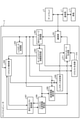
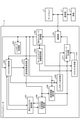
- FIG. 3 is a block diagram showing a configuration example of the edge computer 2 according to the first embodiment.
- the edge computer 2 includes a communication unit 201, a reception message processing unit 202, a service area information holding unit 203, a request analysis unit 204, a response processing unit 205, a request position information inquiry unit 206, and a reception request holding unit 207.
- a delivery information integration unit 208, a response determination unit 209, a request generation unit 210, and a transmission message generation unit 211 are provided.
- FIG. 4 is a block diagram showing a configuration example of the gateway 3 according to the first embodiment.
- the gateway 3 includes a communication unit 301, a transfer determination unit 302, a reception message processing unit 303, a service area information holding unit 304, a request analysis unit 305, a response processing unit 306, a request identifier inquiry unit 307, and reception. It includes a request holding unit 308, a service area update unit 309, a response determination unit 310, an in-network request generation unit 311 and a transmission message generation unit 312.
- the edge computer 2B receives the service area update notification and the update service area information from the above-mentioned server that manages the service area 4 in step S101 of the sequence diagram shown in FIG.
- the communication unit 201 receives the service area update notification and the update service area information.
- the communication unit 201 outputs the received service area update notification and update service area information to the reception message processing unit 202.
- the reception message processing unit 202 unencapsulates the data included in the update service area information by TCP (Transmission Control Protocol) / IP protocol, UDP (User Datagram Protocol) / IP protocol, etc., and performs the body and header of the http message. Data is fetched from the above, and the fetched data is output to the service area information holding unit 203.
- reception message processing unit 202 unencapsulates the data included in the service area update notification by the TCP / IP protocol, UDP / IP protocol, etc., and extracts the data from the body, header, etc. of the http message.
- the extracted data is output to the request generation unit 210.
- the reception message processing unit 202 actually outputs the data extracted from the message to the subsequent configuration, but in the following description, in order to simplify the description, the reception message processing unit 202 is an update service. It is described that the area information is output to the service area information holding unit 203, and the reception message processing unit 202 outputs the service area update notification to the request generation unit 210.
- the service area information holding unit 203 acquires the updated service area information from the reception message processing unit 202.
- the request generation unit 210 acquires a service area update notification from the reception message processing unit 202.
- the service area information holding unit 203 holds the updated service area information. Further, when the content of the newly acquired update service area information is different from the content of the held update service area information, the service area information holding unit 203 updates the held update service area information.
- the service area information holding unit 203 outputs the service area area information and the host information.
- the service area area information is the area information of the service area 4B.
- the host information is the information included in the update service area information.
- the service area information holding unit 203 is realized by, for example, a database such as a list type table or a relational database.
- the request generation unit 210 determines the area for requesting information sharing and the identifier # 1 based on the service area area information acquired from the service area information holding unit 203, triggered by the service area update notification.
- the request generation unit 210 converts the area for requesting information sharing into the location information and the range from the location information.
- the request generation unit 210 outputs the location information obtained by the conversion, the range from the location information, the determined identifier # 1, and the host information acquired from the service area information holding unit 203.
- the service area area information acquired from the service area information holding unit 203 and the area for which information sharing is requested may be matched or may be a partial match.
- the request generation unit 210 generates a request including the location information that specifies the area for requesting information sharing, the range from the location information, and the identifier that can identify the request source that requests information sharing. Output.
- the request generated by the internal request generation unit 210 may be referred to as a first request.
- the area requesting information sharing may be determined in advance by the input from the operator described above, or may be input from an external server (not shown).
- the service area information holding unit 203 does not need to be inside the edge computer 2B, and the external server takes on the function of the service area information holding unit 203, and the edge computer 2B makes an inquiry to the external server.
- the gateway 3B also includes a service area information holding unit 304. Therefore, the gateway 3B may take the function of the external server.
- the sending message generation unit 211 converts the acquired position information, the range from the position information, and the identifier # 1, that is, the request into a format that can be sent, and generates the request message.
- the outgoing message generation unit 211 generates data encapsulated in a frame by a stack such as TCP / IP protocol and UDP / IP protocol.
- the transmission message generation unit 211 also generates an http message, for example, a POST method, a PUT method, or the like.
- the data sent in the http message here the location information and the range from the location information, may be referred to as a resource representation, that is, Resource Representation.
- the transmission message generation unit 211 may describe the range from the location information and the location information by JSON (Javascript (registered trademark)) Object Notification), XML (Extensible Markup Language), or the like as the data format.
- the transmission message generation unit 211 includes the request source, that is, the host information of the edge computer 2B in the request message.
- the host information of the request source is, for example, an IP address, a host name, an ID unique to each carrier, an edge computer ID unique within the carrier, and the like.
- the outgoing message generation unit 211 uses the http protocol and a URL is used as the identifier, as described above, if the identifier # 1 is a callback URL, the transmission message generation unit 211 requests the message to be output as information different from the identifier # 1. It does not have to contain the original host information.
- the transmission message generation unit 211 uses the TCP / IP protocol, UDP / IP protocol, or the like, the IP header includes the host information of the request source, so that the message to be output is output as information different from the identifier # 1. It is not necessary to include the host information of the request source. The same applies to the host information of the request source in the outgoing message generation unit 211.
- the transmission message generation unit 211 outputs the request message to the communication unit 201.
- the edge computer 2B holds the destination of the request message fixedly. In this case, it is assumed that the destination of the request message is agreed between the communication carrier A and the communication carrier B. In the example of the sequence diagram shown in FIG. 2, the destination of the request message from the telecommunications carrier B to the telecommunications carrier A is the gateway 3A. Further, the edge computer 2B may make an inquiry to a DNS (Domain Name System) server (not shown) to determine the destination of the request message. The edge computer 2B may have the function of the DSN server.
- DNS Domain Name System
- the communication unit 201 sends the request message acquired from the transmission message generation unit 211 from the edge computer 2B to the base station 1B via the communication medium.
- the communication medium if it is a wired communication, Ethernet (registered trademark), ATM (Asynchronous Transfer Mode) and the like can be considered, but wireless communication may also be used.
- Base station 1B sends a request message to gateway 3. In the following description, the description of the communication medium and the base station 1 will be omitted for the sake of brevity.
- the message of the request sent from the edge computer 2B is the request (S103) shown in the sequence diagram of FIG.
- the gateway 3B is on the route from the edge computer 2B to the gateway 3A.
- the communication unit 301 receives the request (S103) sent from the edge computer 2B.
- the communication unit 301 outputs the received request (S103) to the transfer determination unit 302.
- the transfer determination unit 302 determines whether the gateway 3B should process or transfer the request (S103) received by the communication unit 301.
- the transfer determination unit 302 determines that the request (S103) is to be transferred.
- the transfer determination unit 302 outputs the request (S103) to the communication unit 301.
- the transfer determination unit 302 of the gateway 3B is a request sent from the edge computer 2 operated by the same first telecommunications carrier, and is based on the location information and the location information that specify the area for which information sharing is requested. It is determined to forward the first request including the range of the above and the identifier that can identify the request source requesting information sharing to the gateway 3A operated by the second telecommunications carrier.
- the first carrier is the carrier B and the second carrier is the carrier A.
- the first request is a request sent from the edge computer 2B operated by the telecommunications carrier B, which is the same first telecommunications carrier.
- the communication unit 301 sends, that is, transfers the request (S103) acquired from the transfer determination unit 302 to the gateway 3A.
- the function of the communication unit 301 is the same as the function of the communication unit 201 of the edge computer 2 shown in FIG.
- the communication unit 301 receives the request (S103) transferred from the gateway 3B and outputs it to the transfer determination unit 302.
- the transfer determination unit 302 determines whether the gateway 3A should process or transfer the request (S103) received by the communication unit 301.
- the transfer determination unit 302 determines that the request (S103) should be processed by the gateway 3A.
- the transfer determination unit 302 outputs the request (S103) to the reception message processing unit 303.
- the reception message processing unit 303 unencapsulates the data included in the request (S103) by the TCP / IP protocol, UDP / IP protocol, etc., extracts the data from the body, header, etc. of the http message, and performs the location information. , The range from the position information, and the identifier # 1, that is, the request (S103) is output to the request analysis unit 305.
- the reception message processing unit 303 also outputs the request source, here the host information of the edge computer 2B, to the request analysis unit 305. Since the reception message processing unit 303 performs the same processing as the reception message processing unit 202 of the edge computer 2 described above, it will be described in a concise manner as in the reception message processing unit 202.
- the request analysis unit 305 is within the range of the service area area information of the communication carrier A acquired from the service area information holding unit 304, and the location information and location information included in the request (S103) acquired from the reception message processing unit 303. Compare with the specified area. The request analysis unit 305 determines whether or not the location information included in the request (S103) and the area designated by the range from the location information are included in the service area 4A of the telecommunications carrier A. The request analysis unit 305 partially determines whether or not the location information included in the request (S103) and the area specified by the range from the location information are included in the service area 4A of the telecommunications carrier A. It may be determined that it is included even if it is included.
- the request analysis unit 305 determines that the location information included in the request (S103) and the area specified by the range from the location information are included in the service area 4A of the carrier A, the identifier # 1 or the location information And, it is confirmed whether or not the record matching the range from the position information, that is, the request (S103) is registered in the reception request holding unit 308.
- the request analysis unit 305 outputs the position information, the range from the position information, and the identifier # 1 to the reception request holding unit 308 in order to confirm whether or not the request (S103) has been registered in the reception request holding unit 308.
- the request analysis unit 305 When the request analysis unit 305 does not use the identifier # 1 as the callback URL in the http protocol, the request analysis unit 305 also receives the host information of the request source in the confirmation of whether the request (S103) has been registered in the reception request holding unit 308. Output to 308.
- the request analysis unit 305 determines that the location information included in the request (S103) and the area specified by the range from the location information are not included in the service area 4A of the carrier A, an error indicating that the area is not included is not included. Is output to the response determination unit 310. If the request (S103) is already registered in the reception request holding unit 308, the request analysis unit 305 causes an error in the request by the request (S103), and the output content to the response determination unit 310 may be either success or failure. However, in the case of no, it is desirable that the output from the response determination unit 310 includes information indicating that the reason for the error has already been registered. In the case of a request error, the gateway 3A does not send the request (S105) shown in FIG. 2, but sends a response (S110) by the processing of the response determination unit 310, the transmission message generation unit 312, and the communication unit 301, and the request result is obtained. Make a notification.
- the location information included in the request (S103) and the area specified by the range from the location information are included in the service area 4A of the telecommunications carrier A, and the request (S103) is sent to the reception request holding unit 308. If not registered, the location information, the range from the location information, and the host information of the edge computer 2A-1 connected to the base station 1A-1 that provides the corresponding service area 4A-1 are generated as an in-network request. Output to unit 311.
- the request analysis unit 305 When the location information included in the request (S103) and the area specified by the range from the location information are not included in the service area 4A of the telecommunications carrier A, the request analysis unit 305 generates an in-network request as a request error. None is output to unit 311. When the request (S103) is registered in the reception request holding unit 308, the request analysis unit 305 does not output anything to the in-network request generation unit 311. In this way, the request analysis unit 305 analyzes the second request, which is a request for information sharing from the edge computer 2B operated by the second telecommunications carrier, and the area specified by the second request is It is determined whether or not it is included in the service area of the first telecommunications carrier. For the gateway 3A, the first carrier is the carrier A and the second carrier is the carrier B. Further, for the gateway 3A, the second request is a request sent from the edge computer 2B operated by the communication carrier B, which is another second communication carrier.
- the request generation unit 311 for internal use determines the identifier # 2, and sends the identifier # 2, the acquired position information, the range from the position information, and the host information of the destination edge computer to the transmission message generation unit 312 as a request message. Output. Further, the request generation unit 311 for the network also outputs the identifier # 2 to the response processing unit 306.
- the in-network request generation unit 311 of the gateway 3A is the first telecommunications carrier when the area specified by the second request is included in the service area of the first telecommunications carrier.
- a request is generated for one or more edge computers 2A operated by the person A, including location information, a range from the location information, and an identifier that can identify the gateway 3A.
- the sending message generation unit 312 converts the host information of the edge computer 2, here the edge computer 2A-1, into a format that can be sent, with the acquired identifier # 2, the acquired position information, and the range from the position information as the destination. And generate a message for the request.
- the transmission message generation unit 312 outputs the generated request message to the communication unit 301.
- the function itself for generating a message is the transmission of the transmission message generation unit 312 of the gateway 3 and the edge computer 2. The same applies to the message generation unit 211.
- the communication unit 301 sends the request message acquired from the transmission message generation unit 312 to the edge computer 2A-1 as a destination.
- the message of the request sent from the gateway 3A is the request (S105) shown in the sequence diagram of FIG.
- the functions itself for transmitting and receiving the message is the same in the communication unit 301 of the gateway 3 and the communication unit 201 of the edge computer 2. ..
- the communication unit 201 receives the request (S105) sent from the gateway 3A.
- the communication unit 201 outputs the received request (S105) to the reception message processing unit 202.
- the reception message processing unit 202 outputs the position information included in the request (S105), the range from the position information, and the identifier # 2, that is, the request (S105) to the request analysis unit 204.
- the reception message processing unit 202 does not use the identifier # 2 as the callback URL in the http protocol, the reception message processing unit 202 also outputs the host information of the request source, here the gateway 3A, to the request analysis unit 204.
- the request analysis unit 204 performs the same processing as the request analysis unit 305 of the gateway 3, although the information output destination is different.
- the request analysis unit 204 is a position included in the service area area information of the base station 1A-1 acquired from the service area information holding unit 203, that is, the service area 4A-1 and the request (S105) acquired from the reception message processing unit 202. Compare with the area specified in the range from information and location information.
- the request analysis unit 204 determines whether or not the location information included in the request (S105) and the area specified by the range from the location information are included in the service area 4A-1. In addition, the request analysis unit 204 determines that the area specified by the location information and the range from the location information is included in the service area 4A-1 even if it is partially included. May be good.
- the request analysis unit 204 determines that the area specified by the location information and the range from the location information included in the request (S105) is included in the service area 4A-1, the identifier # 2 or the location information and the location information It is confirmed whether or not the record matching the range from, that is, the request (S105) is registered in the reception request holding unit 207.
- the request analysis unit 204 outputs the position information, the range from the position information, and the identifier # 2 to the reception request holding unit 207 in order to confirm whether or not the request (S105) has been registered in the reception request holding unit 207.
- the request analysis unit 204 When the request analysis unit 204 does not use the identifier # 2 as the callback URL in the http protocol, the request analysis unit 204 also receives the host information of the request source in the confirmation of whether or not the request (S105) has been registered in the reception request holding unit 207. Output to 207.
- the request analysis unit 204 outputs to the response determination unit 209 the determination result of whether or not the location information included in the request (S105) and the area specified by the range from the location information are included in the service area 4A-1.
- the request analysis unit 204 may either succeed or fail in the output content to the response determination unit 209. However, in the case of no, it is desirable that the output from the response determination unit 209 contains information indicating that the reason for the error has already been registered.
- the request analysis unit 204 determines whether or not the location information included in the request (S105) and the area specified by the range from the location information are included in the service area 4A-1 as a result of the determination by the gateway 3A. Since the request (S105) has been sent to the computer 2A-1, it may be omitted.
- the reception request holding unit 207 does not register the request (S105) of the identifier # 2, so that the position information acquired from the request analysis unit 204, the range from the position information, and the identifier # 2 are registered. do.
- the reception request holding unit 207 also registers the host information of the request source when the identifier # 2 is not used as the callback URL in the http protocol. These operations in the reception request holding unit 207 correspond to operations that are also called resource generation when the http protocol is used.
- the reception request holding unit 207 responds to the request based on the information sharing request from the other edge computer 2 with respect to the location information included in the request and the shared information about the area specified in the range from the location information. Hold the request if it can be sent.
- the request based on the information sharing request from the other edge computer 2 is the request (S105) sent by the gateway 3A in response to the request (S103) from the edge computer 2B.
- a request generated by another device may be referred to as a second request.
- the request analysis unit 204 analyzes the content of the second request, and if the shared information can be sent to the second request, the request analysis unit 204 holds the second request in the reception request holding unit 207.
- the identifier held in the reception request holding unit 207 is installed on the communication path between the edge computer 2A-1 and the edge computer 2B, and is operated by the same communication carrier A as the edge computer 2A-1. It is an identifier # 2 given by the gateway 3A which is a communication device.
- the response determination unit 209 determines whether or not the service area 4A-1 includes the location information included in the request (S105) and the area specified by the range from the location information acquired from the request analysis unit 204. As a response, it is output to the transmission message generation unit 211.
- the response determination unit 209 uses the http protocol, and when the location information included in the request (S105) and the area specified by the range from the location information are included in the service area 4A-1, the request (S105) becomes successful. Therefore, a message in the 200s status code is output.
- the messages in the 200s of the status code are, for example, messages such as the status 200 OK, the status code 201 Created, the status code 202 Attached, and the status code 204 No Content if the processing of the reception request holding unit 207 is considered to be resource generation.
- the response determination unit 209 uses the http protocol, and if the location information included in the request (S105) and the area specified by the range from the location information are not included in the service area 4A-1, the request (S105) fails. That is, since an error occurs, a message in the status code 500 series or the status code 400 series is output.
- the messages in the status code 500 series are, for example, messages such as status code 500 International Server Error, status code 503 Service Unableable, status code 507 Insufficient Story, and status code 509 Bandwidth Limited Exceeded.
- the messages in the 400s of the status code are, for example, messages such as status code 400 Bad Request, status code 403 Forbidden, status code 404 Not Found, status code 422 Unprocessable Entry, and status code 429 Too Many Requests.
- the response determination unit 209 uses the http protocol
- the location information registered in the reception request holding unit 207 and the URL corresponding to the range from the location information may be included in the location unit of the http response header.
- the edge computer 2 updates the position information and the range from the position information by using the PUT method, the PATCH method, the UPDATE method, etc. of the http protocol by including the URL in the http response body, and requests information sharing by the DELETE method. It becomes easy to cancel. In this way, the response determination unit 209 generates a response to the second request based on the analysis result of the request analysis unit 204.
- the transmission message generation unit 211 and the communication unit 201 handle different information and messages, but transmit a response message to the request (S105) by the same processing as the transmission message generation unit 312 and the communication unit 301 of the gateway 3A described above. ..
- the response message sent from the edge computer 2A-1 is the response (S108) shown in the sequence diagram of FIG.
- the communication unit 301 receives the response (S108) sent from the edge computer 2A-1 and outputs it to the transfer determination unit 302.
- the transfer determination unit 302 determines whether the gateway 3A should process or transfer the response (S108).
- the transfer determination unit 302 determines that the gateway 3A should process the response (S108).
- the transfer determination unit 302 outputs the response (S108) to the reception message processing unit 303.
- the reception message processing unit 303 outputs the response (S108) to the response processing unit 306.
- the response processing unit 306 Since the response processing unit 306 sends a response message to the request (S103), the response determination unit 310 is informed of whether or not the edge computer 2A-1 included in the response (S108) has accepted the request (S105). Output. Further, when the result of the response (S108) is a successful request, the response processing unit 306 uses the position information and the position information included in the request (S103) acquired from the request analysis unit 305 as the processing for the request (S103). The range, the identifier # 1, the request source, and here the host information of the edge computer 2B are output to the reception request holding unit 308. The response processing unit 306 also outputs the identifier # 2 acquired from the in-network request generation unit 311 to the reception request holding unit 308. If the result of the response (S108) is a request error, the response processing unit 306 does not output anything to the reception request holding unit 308.
- the gateway 3A needs to determine which request the response (S108) corresponds to when a plurality of requests are made in parallel. For example, when using http, TCP, UDP, or the like, the gateway 3A needs to determine which request corresponds to. It can be determined by a commonly used method such as session management or connection management, or by including identifier # 2 in the response (S108).
- the reception request holding unit 308 registers the location information included in the request (S103), the range from the location information, the identifier # 1, the identifier # 2, and the host information of the edge computer 2A-1 which is the request destination.
- the reception request holding unit 308 also registers the host information of the edge computer 2B as the request source when the identifier # 1 is not used as the callback URL in the http protocol.
- the response determination unit 310 outputs the result of whether the request (S103) was successful or an error as a response to the transmission message generation unit 312.
- the response determination unit 310 outputs the request success as a response to the transmission message generation unit 312.
- the request (S103) is an error, that is, the response (S108) is a request error
- the response determination unit 310 outputs the request error as a response to the transmission message generation unit 312.
- the location information included in the request (S103) in the request analysis unit 305 and the area designated by the range from the location information are partially included in the service area area information of the telecommunications carrier A.
- the request error is output as a response to the transmission message generation unit 312.
- the response determination unit 310 generates a response to the second request.
- the second request is a request sent from the edge computer 2B operated by the telecommunications carrier B, which is another second telecommunications carrier.
- the information handled by the response determination unit 310 of the gateway 3 and the response determination unit 209 of the edge computer 2 is different, the functions themselves are the same in the response determination unit 310 of the gateway 3 and the response determination unit 209 of the edge computer 2. ..
- the transmission message generation unit 312 targets the request source of the request (S103), here the edge computer 2B, and converts the result of the request acquired from the response determination unit 310, that is, the response into a sendable format, and makes the request (S103).
- a response message to the above is generated and output to the communication unit 301.
- the communication unit 301 sends a response message acquired from the transmission message generation unit 312 to the edge computer 2B as a destination.
- the response message sent from the gateway 3A is the response (S110) shown in the sequence diagram of FIG.
- the communication unit 201 receives the response (S110) sent from the gateway 3A and outputs it to the reception message processing unit 202.
- the reception message processing unit 202 outputs the response (S110) to the response processing unit 205.
- the response processing unit 205 ends a series of processing for the request (S103). It is conceivable that the response processing unit 205 performs some processing depending on the transmission or the success or failure of the request, for example, the processing of transmitting the request (S103) again in the case of a transmission failure, but the response processing unit 205 is particularly processed for the response (S110). Do not do.
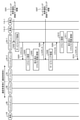
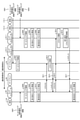
- FIG. 5 is a sequence diagram showing an operation of requesting information sharing between the edge computers 2A-1 and 2A-2 in the communication system 20 according to the first embodiment.
- the edge computer 2A-1 receives the service area update notification and the update service area information from the above-mentioned server that manages the service area 4 (not shown in FIGS. 1 and 5) (step S201).
- the edge computer 2A-1 processes the service area registration for the received service area update notification and update service area information (step S202).
- the edge computer 2A-1 sends a request message by the same process as the edge computer 2B shown in the sequence diagram of FIG. 2, triggered by the service area update notification and the input of the update service area information (step S203).
- the edge computer 2A-2 receives the request message (hereinafter referred to as a request (S203)) sent from the edge computer 2A-1 in step S203.
- the edge computer 2A-2 performs a request analysis process (step S204) and a received request update process (step S205) for the received request (S203).
- the edge computer 2A-2 performs a process of registering the information included in the request (S203).
- the edge computer 2A-2 sends a response message to the request (S203) to the edge computer 2A-1 that sent the request (S203) (step S206).
- the edge computer 2A-1 receives the response message (hereinafter referred to as response (S206)) sent from the edge computer 2A-2 in step S206.
- response (S206) the response message sent from the edge computer 2A-2 in step S206.
- the edge computer 2A-2 receives the service area update notification and the update service area information from the above-mentioned server that manages the service area 4 (not shown in FIGS. 1 and 5) (step S207).
- the edge computer 2A-2 processes the service area registration for the received service area update notification and update service area information (step S208).
- the edge computer 2A-2 sends a request message by the same process as the above-mentioned edge computer 2A-1 with the input of the service area update notification and the update service area information as a trigger (step S209).
- the edge computer 2A-1 receives the request message (hereinafter referred to as a request (S209)) sent from the edge computer 2A-2 in step S209.
- the edge computer 2A-1 performs a request analysis process (step S210) and a received request update process (step S211) for the received request (S209).
- the edge computer 2A-1 performs a process of registering the information included in the request (S209).
- the edge computer 2A-1 sends a response message to the request (S209) to the edge computer 2A-2 that sent the request (S209) (step S212).
- the edge computer 2A-2 receives the response message (hereinafter referred to as response (S212)) sent from the edge computer 2A-1 in step S212.
- response (S212) the response message sent from the edge computer 2A-1 in step S212.
- each configuration in the edge computers 2A-1 and 2A-2 is the same as the operation of the edge computer 2B described above except for the destination of each message. Therefore, a detailed description using the configuration of each device will be omitted.
- the identifier included in the request (S203) sent from the edge computer 2A-1 is referred to as identifier # 3
- the identifier included in the request (S209) sent from the edge computer 2A-2 is referred to as identifier # 3. It is called identifier # 4.
- the edge computers 2A-1 and 2A-2 send out a request in the operation of the sequence diagram shown in FIG.
- edge computers 2A-1 and 2A-2 know the configuration of the service area 4 if they are the same telecommunications carrier, it is possible to specify the edge computer 2 that requests information sharing, that is, the destination. It is possible.
- the edge computers 2A-1 and 2A-2 shall send a request similar to the request (S103) to the specified edge computer 2.
- the edge computer 2A-1 corresponding to the base station 1A-1 and the service area 4A-1 designates the service area 4A-2 as the designated area for information sharing. Further, it is assumed that the edge computer 2A-2 corresponding to the base station 1A-2 and the service area 4A-2 designates the service area 4A-1 as the designated area for information sharing.
- the communication system 20 may perform either the operation of the sequence diagram shown in FIG. 2 or the operation of the sequence diagram shown in FIG. 5 first or in parallel. Further, in the operation of the sequence diagram shown in FIG. 5, the communication system 20 may reverse the execution order of the request (S203) and the request (S209).
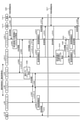
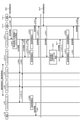
- FIG. 6 is a sequence diagram showing an operation of transmitting shared information between the edge computers 2 in the communication system 20 according to the first embodiment. Specifically, FIG. 6 shows that the edge computer 2A-1 of the telecommunications carrier A sends shared information to the edge computer 2B of the telecommunications carrier B, and the edge computer 2A-1 of the telecommunications carrier A is the same telecommunications carrier.
- the vehicle 11A-1 When the vehicle 11A-1 recognizes the emergency information (step S301), the vehicle 11A-1 notifies the edge computer 2A-1 of the cognitive event indicating the recognized event of the emergency information via the base station 1A-1 (not shown in FIG. 6). (Step S302).
- the cognitive event is, for example, a traffic accident, a falling object, a road collapse, a freeze, etc., but it may be a content that an event to be notified urgently has occurred rather than specific information.
- the vehicle 11A-1 includes the position information in which the emergency information is generated, that is, the information of the point 12, in the cognitive event (hereinafter referred to as the cognitive event (S302)) notified in step S302.
- the location information in which the emergency information is generated is basically the same as the location information of the request (S103) shown in the sequence diagram of FIG. 2, but it does not have to be in the same data format as the request (S103) and includes the same information. No need.
- the edge computer 2A-1 uses the cognitive event (S302) to process an inquiry between the position information of the cognitive event and the request (step S303). .. Does the edge computer 2A-1 include the position information included in the cognitive event (S302) in the area indicated by the already accepted request as the processing of the inquiry between the position information of the cognitive event and the already accepted request? Inquire whether or not.
- the position information included in the cognitive event (S302) is included, that is, there is a matching request.
- the request matched by the edge computer 2A-1 is the request (S105).
- the edge computer 2A-1 sends the cognitive event (S302) as a shared information message to the gateway 3A, which is the request source of the request (S105), together with the identifier # 2 (step S304). ).
- the edge computer 2A-1 uses the http protocol and the identifier # 2 is used as the callback URL
- the callback URL of the identifier # 2 is a shared information message sent in step S304 (hereinafter, shared information (S304). ) Is the URL of the http message.
- the gateway 3A sends a response message (hereinafter referred to as a response (S305)) to the shared information (S304) to the edge computer 2A-1 that has sent the shared information (S304) (step S305).
- the gateway 3A uses the identifier # 2 included in the shared information (S304) to process an inquiry between the identifier and the request (step S306). Since the gateway 3A receives the request (S103) from the edge computer 2B and registers it, the corresponding record is searched from the database using the identifier # 2 included in the shared information (S304) as a key, and the request (S103) is performed. ) Identifier # 1 and the request source can be easily searched.
- the gateway 3A by transmitting the request (S105) to which the identifier # 2 is assigned and the information sharing (S304) to which the identifier # 2 is assigned, the gateway 3A can be used with the area requested by the request (S103). It is possible to eliminate the need for comparison, and it is possible to easily associate the identifier # 2 with the information sharing source of the communication carrier B. That is, when the gateway 3A needs to process a large number of cognitive events such as a vast area requested by the request (S103), it is possible to avoid a dramatic increase in the processing load.
- the gateway 3A sends a message of shared information including a cognitive event to the edge computer 2B which is the request source of the request (S103) based on the search result (step S307).
- the gateway 3A includes the identifier # 1 in the shared information message (hereinafter referred to as shared information (S307)) transmitted in step S307. ..
- shared information S307
- the edge computer 2B can easily respond to the request (S103), and when generating the distribution information to the vehicle 11B, the distribution information is scrutinized in the service area 4B, or the distribution information is divided into areas. It will be easier to provide detailed services.
- the callback URL of the identifier # 1 becomes the URL of the http message of the shared information (S307).
- the gateway 3A may or may not include the identifier # 1 in the shared information (S307) unless the http protocol is used in the transmission of the shared information (S307) and there are a plurality of information sharing requests. You may.
- the gateway 3B transfers the shared information (S307) transmitted from the gateway 3A to the destination edge computer 2B.
- the edge computer 2B receives the shared information (S307) transferred from the gateway 3B.
- the edge computer 2B sends a response message to the shared information (S307) to the gateway 3A that has sent the shared information (S307) (step S308).
- the gateway 3B transfers the response message (hereinafter referred to as response (S308)) sent from the edge computer 2B in step S308 to the gateway 3A which is the destination.
- the gateway 3A receives the response (S308) transferred from the gateway 3B.
- the edge computer 2B performs a distribution information integration process for integrating the emergency information acquired by the shared information (S307) into the distribution information distributed from the edge computer 2B (step S309).
- the distribution information integration process is a process in which the edge computer 2B integrates the emergency information acquired by the shared information (S307) with information other than the emergency information, past emergency information, and the like.
- the edge computer 2B distributes the integrated distribution information to the vehicle 11B via the base station 1B (step S310).
- Information sharing from the edge computer 2A-1 to the edge computer 2A-2 between the same communication carriers A can be performed in the same manner as information sharing from the edge computer 2A-1 to the gateway 3A.
- the edge computer 2A-1 sends the cognitive event (S302) as a shared information message to the edge computer 2A-2, which is the request source of the request (S209), together with the identifier # 4 (step). S311).
- the edge computer 2A-2 receives the shared information message (hereinafter referred to as shared information (S311)) transmitted from the edge computer 2A-1 in step S311.
- the edge computer 2A-2 sends a response message (hereinafter, referred to as a response (S312)) to the shared information (S311) (step S312).
- the edge computer 2A-1 performs a distribution information integration process for integrating the emergency information acquired by the cognitive event (S302) into the distribution information distributed from the edge computer 2A-1 (step S313).
- the edge computer 2A-2 performs a distribution information integration process for integrating the emergency information acquired by the shared information (S311) into the distribution information distributed from the edge computer 2A-2 (step S314).
- the edge computer 2A-1 distributes the integrated distribution information to the vehicle 11A-1 via the base station 1A-1 (step S315).
- the edge computer 2A-2 distributes the integrated distribution information to the vehicle 11A-2 via the base station 1A-2 (step S316).
- step S310 distribution of distribution information by the edge computer 2B
- step S315 distribution of distribution information by the edge computer 2A-1
- step S316 distribution of distribution information by the edge computer 2A-2
- the telecommunications carrier A does not send the shared information to the telecommunications carrier B in the area where the telecommunications carrier B has not requested the telecommunications carrier A to share the information.
- the edge computer 2A-2 which is the same carrier A
- the edge computer 2A-1 For example, assume that the vehicle 11A-2 recognizes the emergency information and the traveling direction is opposite to that in FIG. 1, that is, the distribution information is distributed to the vehicle 11 traveling from the right to the left in the figure.
- the point where the emergency information is generated is a point in the service area 4A-2 that does not overlap with the service area 4B and the service area 4A-1. Further, it is assumed that the information sharing request is completed between the edge computer 2A-1 and the edge computer 2A-2 by the operation of the sequence diagram shown in FIG.
- step S317 When the vehicle 11A-2 recognizes the emergency information (step S317), the vehicle 11A-2 notifies the edge computer 2A-2 of the cognitive event indicating the recognized event of the emergency information via the base station 1A-2 (not shown in FIG. 6). (Step S318).
- the edge computer 2A-2 receives the cognitive event (hereinafter referred to as cognitive event (S318)) notified in step S318 from the vehicle 11A-2 (step S318)
- the edge computer 2A-2 uses the cognitive event (S318).
- Process the inquiry between the position information and the request step S319).
- the process of step S319 of the edge computer 2A-2 is the same as the process of the above-mentioned step S303 of the edge computer 2A-1.
- the edge computer 2A-2 sends out the cognitive event (S318) as a shared information message to the edge computer 2A-1 which is the request source of the request (S203) together with the identifier # 3 (step). S320).
- the edge computer 2A-1 receives the shared information message (hereinafter referred to as shared information (S320)) transmitted from the edge computer 2A-2 in step S320.
- the edge computer 2A-1 sends a response message (hereinafter, referred to as a response (S321)) to the shared information (S320) (step S321).
- the edge computer 2A-2 performs a distribution information integration process for integrating the emergency information acquired by the cognitive event (S318) into the distribution information distributed from the edge computer 2A-2 (step S322).
- the edge computer 2A-1 performs a distribution information integration process for integrating the emergency information acquired by the shared information (S320) into the distribution information distributed from the edge computer 2A-1 (step S323).
- the edge computer 2A-2 distributes the integrated distribution information to the vehicle 11A-2 via the base station 1A-2 (step S324).
- the edge computer 2A-1 distributes the integrated distribution information to the vehicle 11A-1 via the base station 1A-1 (step S325).
- the order and synchronism of the distribution of the distribution information by the edge computer 2A-2 (step S324) and the distribution of the distribution information by the edge computer 2A-1 (step S325) are not limited here.
- the telecommunications carrier A has not been requested by the telecommunications carrier B to share information with respect to the area including the service area 4A-2 provided by the base station 1A-2 connected to the edge computer 2A-2. Therefore, the shared information based on the cognitive event notified in the cognitive event (S318) is not sent to the telecommunications carrier B.
- the communication unit 201 receives and receives the cognitive event (S302) notified from the vehicle 11A-1 in step S302 of the sequence diagram shown in FIG. 6 via the base station 1A-1. Output to the message processing unit 202.
- the reception message processing unit 202 outputs the cognitive event (S302) to the request position information inquiry unit 206 and the distribution information integration unit 208.
- the request position information inquiry unit 206 determines whether or not the position information included in the cognitive event (S302) is included in the position information registered in the reception request holding unit 207 and the area specified in the range from the position information. In order to make an inquiry, a query using the position information of the cognitive event (S302) as a key is output to the reception request holding unit 207.
- the request position information inquiry unit 206 may be simply referred to as a request inquiry unit.
- the cognitive event (S302) may include information on the accuracy of position information, for example, DOP (Diltion Of Precision) of GPS (Global Positioning System).
- DOP Deformation Of Precision
- GPS Global Positioning System
- the reception request holding unit 207 When the reception request holding unit 207 does not use the identifier # 2 as the callback URL in the http protocol, the host information of the request source is also registered, so that the host information of the gateway 3A which is the request source is also the request position information inquiry unit. Output to 206.
- the reception request holding unit 207 is included as a query result when it is not included in the area specified by the holding position information and the range from the position information for the query acquired from the request position information inquiry unit 206. Output to the request position information inquiry unit 206 that there is no such thing.
- the reception request holding unit 207 is realized by, for example, a database such as a list type table or a relational database.
- the query result acquired from the reception request holding unit 207 is within the range of the position information and the position information in which the position information included in the cognitive event (S302) is registered in the reception request holding unit 207. If it is included in the specified area, the cognitive event (S302) acquired from the reception message processing unit 202 and the identifier # 2 acquired from the reception request holding unit 207 are collectively output to the transmission message generation unit 211. do.
- the request position information inquiry unit 206 does not use the identifier # 2 as the callback URL in the http protocol, the request position information inquiry unit 206 also outputs the host information of the gateway 3A, which is the request source, to the transmission message generation unit 211.
- the query result acquired from the reception request holding unit 207 is within the range of the position information and the position information in which the position information included in the cognitive event (S302) is registered in the reception request holding unit 207. If it is not included in the specified area, the output to the transmission message generation unit 211 is not performed.
- the request position information inquiry unit 206 includes the position information indicating the occurrence point of the cognitive event acquired from the vehicle 11 via the base station 1 in the area designated by the second request, the cognitive event, And, the shared information including the identifier held in the reception request holding unit 207 is generated.
- the request position information inquiry unit 206 performs the same processing in the case of shared information (S311), that is, when the host information of the request source is the edge computer 2A-2, which will be described later. First, the portion of the output to the transmission message generation unit 211 regarding the gateway 3A will be described.
- the transmission message generation unit 211 converts the cognitive event (S302) and the identifier # 2, that is, the shared information acquired from the request position information inquiry unit 206, into a format that can be transmitted, and generates a message of the shared information. do.
- the transmission message generation unit 211 outputs the generated shared information message to the communication unit 201.
- identifier # 2 is used as a callback URL using the http protocol
- identifier # 2 is the URL of the http method.
- the request source host information in this case, the gateway 3A, is the destination in order to acquire the request source host information.
- the communication unit 201 transmits the shared information message generated by the transmission message generation unit 211 as the shared information (S304) to the gateway 3A as a destination.
- notifying the request source of the cognitive event as an event at the timing when the cognitive event occurs in response to the request is called push notification.
- the communication unit 301 receives the shared information (S304) transmitted from the edge computer 2A-1 in step S304 shown in the sequence diagram of FIG. 6 and outputs the shared information (S304) to the transfer determination unit 302. Since the destination of the shared information (S304) is the gateway 3A, the transfer determination unit 302 outputs the shared information (S304) to the reception message processing unit 303.
- the reception message processing unit 303 outputs the shared information (S304) to the request identifier inquiry unit 307 and the response determination unit 310.
- the request is successful and the shared information can be sent from the carrier A to the carrier B is shown, and it is assumed that the identifier included in the shared information (S304) is the identifier # 2. ..
- the identifier included in the information (S304) is referred to as an identifier X.
- the response determination unit 310 outputs the success or failure of reception of the shared information (S304) as a response to the transmission message generation unit 312.
- the response determination unit 310 outputs the http status code when the http protocol is used.
- the transmission message generation unit 312 converts the information acquired from the response determination unit 310 into a format that can be transmitted, generates a response message addressed to the edge computer 2A-1 that has transmitted the shared information (S304), and generates a communication unit. Output to 301.
- the communication unit 301 sends out the message generated by the transmission message generation unit 312 as a response (S305) to the edge computer 2A-1 as a destination.
- the request identifier inquiry unit 307 Does the request identifier inquiry unit 307 have an identifier X included in the shared information (S304) that matches the identifier of the request (S105) at the gateway 3A, that is, the network request registered in the reception request holding unit 308? In order to inquire whether or not, a query using the identifier X included in the shared information (S304) as a key is output to the reception request holding unit 308.
- the reception request holding unit 308 searches for the identifier of the internal request held in the network to see if there is an identifier that matches the identifier X for the query acquired from the request identifier inquiry unit 307.
- the reception request holding unit 308 outputs the identifier # 1 to the request identifier inquiry unit 307 as a query result when there is an identifier of the retained network request that matches the identifier X.
- the reception request holding unit 308 does not use the identifier # 1 as the callback URL using the http protocol, the host information of the request source is also registered, so that the host information of the edge computer 2B which is the request source is also inquired about the request identifier. Output to unit 307.
- reception request holding unit 308 If the reception request holding unit 308 does not match the identifier X in the holding network request, the reception request holding unit 308 outputs to the request identifier inquiry unit 307 that the identifier does not match as a query result.
- the reception request holding unit 308 is realized by, for example, a database such as a list type table or a relational database.
- the query result acquired from the reception request holding unit 308 matches the identifier X included in the shared information (S304) with the request identifier registered in the reception request holding unit 308.
- the shared information (S304) acquired from the reception message processing unit 303 and the identifier # 1 acquired from the reception request holding unit 308 are collectively output to the transmission message generation unit 312.
- the request identifier inquiry unit 307 does not use the identifier # 1 as the callback URL in the http protocol, the request identifier inquiry unit 307 also outputs the host information of the edge computer 2B, which is the request source, to the transmission message generation unit 312.
- the query result acquired from the reception request holding unit 308 does not match the identifier X included in the shared information (S304) with the request identifier registered in the reception request holding unit 308. In this case, the output to the transmission message generation unit 312 is not performed.
- the request identifier inquiry unit 307 may be simply referred to as a request inquiry unit.
- the transmission message generation unit 312 converts the information acquired from the request identifier inquiry unit 307 into a format that can be transmitted, includes the shared information (S304) and the identifier # 1, and uses the request source host information, that is, the edge computer 2B as the destination. Generates a message of shared information to be shared and outputs it to the communication unit 301.
- the communication unit 301 transmits the message of the shared information generated by the transmission message generation unit 312 as the shared information (S307) to the edge computer 2B as a destination.
- the communication unit 301 receives the shared information (S307) and outputs it to the transfer determination unit 302. Since the destination of the shared information (S307) is the edge computer 2B, the transfer determination unit 302 outputs the shared information (S307) to the communication unit 301. The communication unit 301 transfers the shared information (S307) to the edge computer 2B.
- the communication unit 201 receives the shared information (S307) transferred from the gateway 3B and outputs it to the reception message processing unit 202.
- the reception message processing unit 202 outputs the shared information (S307) to the distribution information integration unit 208 and the response determination unit 209.
- the response determination unit 209 outputs the success or failure of reception of the shared information (S307) as a response to the transmission message generation unit 211.
- the response determination unit 209 outputs the http status code when the http protocol is used.
- the processing of the response determination unit 209 is the same as the processing for the shared information (S304) of the gateway 3A.
- the transmission message generation unit 211 converts the information acquired from the response determination unit 209, that is, the response into a format that can be transmitted, generates a response message addressed to the gateway 3A that has transmitted the shared information (S307), and generates a communication unit. Output to 201.
- the communication unit 201 sends the message generated by the transmission message generation unit 211 as a response (S308) to the gateway 3A as a destination.
- the communication unit 301 receives the response (S308) and outputs it to the transfer determination unit 302. Since the destination of the response (S308) is the gateway 3A, the transfer determination unit 302 outputs the response (S308) to the communication unit 301. The communication unit 301 transfers the response (S308) to the gateway 3A.
- the communication unit 301 receives the response (S308) and outputs it to the transfer determination unit 302. Since the destination of the response (S308) is the gateway 3A, the transfer determination unit 302 outputs to the reception message processing unit 303.
- the reception message processing unit 303 outputs the response (S308) to the response processing unit 306.
- the response processing unit 306 may perform processing based on the success or failure of transmission, request, etc., for example, processing such as transmission again in the case of failure, but here, special processing is performed for the response (S308). Not performed.
- the cognitive event acquired by the distribution information integration unit 208 by the shared information is the emergency information recognized by the vehicle 11A-1 and provided by the telecommunications carrier A.
- the distribution information integration unit 208 converts the cognitive event into a format that can be distributed to the vehicle 11B, adds information on the temporal change of the cognitive event, and distributes the cognitive event and the distribution originally scheduled to be distributed by the edge computer 2B. Integrate with information.
- the distribution information originally scheduled to be distributed by the edge computer 2B is, for example, an event recognized by the vehicle 11B, or information at a point 12 previously recognized by the preceding vehicle of the vehicle 11A-1 (not shown) and already shared. Is.
- the distribution information integration unit 208 performs an update process including overwriting. Since it is possible that the shared information (S307), that is, the time when the emergency information is recognized is included in the shared information (S307), the distribution information integration unit 208 performs a process of updating the recognition time to the latest time. Further, the distribution information integration unit 208 performs statistical processing on the occurrence point of the emergency information when a plurality of vehicles 11 (not shown) recognize the same emergency information and a plurality of vehicles 11 notify the cognitive event. For example, processing such as averaging may be performed. The distribution information integration unit 208 outputs the integrated distribution information to the transmission message generation unit 211.
- the transmission message generation unit 211 converts the distribution information acquired from the distribution information integration unit 208 into a format that can be transmitted, and outputs it to the communication unit 201.
- the communication unit 201 sends the distribution information to the base station 1B (not shown in FIG. 6).
- the base station 1B distributes the distribution information to the vehicle 11B in the service area 4B. As a result, the vehicle 11B existing in the service area 4B can receive the distribution information.
- the emergency information recognized by the vehicle 11A-1 is transmitted from the edge computer 2A-1 to the edge computer 2B via the gateway 3A and the like, and the distribution information integration unit 208 of the edge computer 2B distributes the emergency information.
- Information is processed in, but it is not limited to this.
- the edge computer 2A-1 may process the information for distribution before transmitting it as the shared information (S304).
- the information processing is, for example, among the processes performed by the distribution information integration unit 208 of the edge computer 2B, the processes that can be performed by the edge computer 2A-1, for example, information addition of temporal change, update including overwriting, edge computer.
- the edge computer 2A-1 transmits the shared information (S311) to the edge computer 2A-2 by the same method as the transmission of the shared information (S304). However, in the edge computer 2A-1, the identifier held by the reception request holding unit 207 is the identifier # 4, and the destination of the shared information (S311) is the edge computer 2A-2.
- the edge computer 2A-2 sends out the response (S312) by the same method as the method in which the edge computer 2B sends out the response (S308).
- the edge computers 2A-1 and 2A-2 perform distribution information integration processing (step S313, step S314) and distribute distribution information (step S315, step S316) by the same method as the edge computer 2B.
- the edge computer 2A-2 processes the inquiry of the position information of the cognitive event and the request for the cognitive event (S318) notified from the vehicle 11A-2 by the same method as the edge computer 2A-1 ().
- Step S319) the shared information (S320) is transmitted to the edge computer 2A-1.
- the identifier held by the reception request holding unit 207 is the identifier # 3
- the destination of the shared information (S320) is the edge computer 2A-1.
- the edge computer 2A-1 sends out the response (S321) by the same method as the method in which the edge computer 2B sends out the response (S308).
- the edge computers 2A-2 and 2A-1 perform distribution information integration processing (step S322, step S323) and distribute distribution information (step S324, step S325) by the same method as the edge computer 2B.
- the edge computer 2A-2 Since the edge computer 2A-2 has not made a request based on the information sharing request from the communication carrier B, unlike the edge computer 2A-1, the shared information such as the shared information (S304) is sent to the gateway 3A. Is not sent.
- each message when switching the output destination of each message such as request, push notification of shared information, cognitive event from vehicle 11, response, update service area information, service area update notification, etc.
- the discrimination method will be described.
- the reception message processing unit 202 can be easily discriminated by a method such as adding a discrimination flag to the message received by the communication unit 201 or using a dedicated message. ..
- the reception message processing unit 202 can easily distinguish between the response and the message other than the response because the http method differs between the http request message and the http response message.
- the reception message processing unit 202 can determine messages other than the response by determining the URL path of the http message. The URL path of the http message is determined respectively.
- the request message is accepted by the path lower than the specific path dedicated to the request, and the push notification such as the shared information (S307) requests the path dedicated to the push notification. It is accepted by a path lower than the specific path different from the specific path of, and the same applies to the update service area information, service area update notification, and the like.
- the reception message processing unit 202 may use a specific http method for the information sharing request, and may use a different http method for the push notification than the information sharing request.
- FIG. 7 is a second diagram showing a configuration example of the communication system 20 according to the first embodiment.
- the vehicle 11A-1 can communicate with the base station 1A-2.
- the edge computer 2B cancels the information sharing with the edge computer 2A-1 corresponding to the service area 4A-1 and newly corresponds to the service area 4A-2.
- FIG. 8 is a sequence diagram showing an operation of updating the service areas 4A-1 and 4A-2 of the communication carrier A in the communication system 20 according to the first embodiment.
- the edge computer 2A-1 When the edge computer 2A-1 receives the service area update notification and the update service area information (step S401), the edge computer 2A-1 performs the service area registration process by the same process as the above-mentioned edge computer 2B (step S402). Further, when the gateway 3A receives the service area update notification and the update service area information (step S403), the gateway 3A performs the service area registration process by the same process as the edge computer 2B described above (step S404).
- the gateway 3A processes the correspondence investigation between the updated service area 4A and the received request (step S405), and determines whether or not the information sharing request has been received for the updated service area 4A.
- the gateway 3A sends a request to the edge computer 2A-1 (step S406).
- the request message (hereinafter referred to as request (S406)) sent in step S406 updates the request (S105) registered by the gateway 3A in the edge computer 2A-1 corresponding to the service area 4A-1. , Specifically for deletion.
- the edge computer 2A-1 has received the request (S105), so that the gateway 3A cancels the information sharing with the edge computer 2A-1.
- Sends a request (S406) which is a message that can determine the cancellation of information sharing.
- the gateway 3A gives a flag to the request (S406) so that the update of the registered request can be determined when http is not used, or a negative value that cannot be in the range from the location information as an area.
- the gateway 3A uses the http method for the request (S406), it uses the http method different from the request (S103), for example, the DELETE method is used, or the range from the location information is a negative value that cannot be used as an area. Performs processing such as using the PUT method, UPDATE method, and PATCH method.
- the gateway 3A includes the identifier # 2 in the request (S406).
- the gateway 3A uses the http protocol, and when the URL of the resource of the edge computer 2A-1 is included in the Location field of the response (S108), it is not necessary to include the identifier # 2 in the request (S406), and the request (S406)
- the destination URL of the http message may be the URL of the Protocol field.
- the edge computer 2A-1 receives the request (S406), processes the request analysis in the same manner as the request (S105) (step S407), and processes the received request update (step S408). Specifically, since the identifier # 2 has already been registered for the service area 4A-1 in the edge computer 2A-1, the service area 4A-1 is requested according to the request (S406) for canceling the information sharing. The registration is deleted, and a response message (hereinafter referred to as a response (S409)) is sent (step S409).
- a response message hereinafter referred to as a response (S409)
- the gateway 3A newly sends a request for information sharing to the edge computer 2A-2 (step S410).
- the gateway 3A may have the same or different identifier as the identifier of the request (S105) with respect to the identifier given to the message of the request to be transmitted in step S410 (hereinafter, referred to as the request (S410)).
- the request (S410) uses the http protocol and the URL is used as the identifier
- the identifier of the request (S410) and the identifier of the request (S105) are different when the path includes the location information and the range from the location information. It becomes a thing.
- the edge computer 2A-2 performs a request analysis process (step S411) and a received request update process (step S412) by the same process as when the edge computer 2A-1 receives the request (S105). , Send a response message (step S413).
- the gateway 3A receives a response message (hereinafter referred to as a response (S413)) sent from the edge computer 2A-2 in step S413, and responds to the request (S105) in the process of updating the received request.
- the record is updated with a new record corresponding to the request (S410) (step S414).
- the communication system 20 has the shared information (S304) shown in the sequence diagram of FIG. 6 even when the service areas 4A-1 and 4A-2 of the carrier A are updated by the operation of the sequence diagram shown in FIG.
- Information can be shared from the telecommunications carrier A to the telecommunications carrier B by sending the shared information from a source different from that of the telecommunications carrier A.
- the request (S406) sent from the gateway 3A was for canceling information sharing, but when updating the location information and the range from the location information, the location information to be updated. It is also possible to use the request (S406) and response (S409) messages that are in the range from the location information.
- the communication unit 301 receives the service area update notification and the update service area information, and outputs the service area update notification and the update service area information to the transfer determination unit 302.
- the transfer determination unit 302 outputs the service area update notification and the update service area information to the reception message processing unit 303, assuming that the destination of the service area update notification and the update service area information is the gateway 3A.
- the reception message processing unit 303 outputs the update service area information to the service area information holding unit 304, and outputs the service area update notification to the service area update unit 309.
- the service area update unit 309 confirms whether or not the record corresponding to the updated service area 4A is registered in the reception request holding unit 308 by matching the host information.
- the process of the service area update unit 309 corresponds to the process of the correspondence investigation between the service area 4A updated in the sequence diagram shown in FIG. 8 and the received request.
- the service area update unit 309 outputs the host information of the edge computer 2A-1 to the in-network request generation unit 311 in order to cancel the information sharing.
- the service area update unit 309 includes the identifier # 2 corresponding to the request (S105) acquired from the reception request holding unit 308.
- the information output from the service area update unit 309 leads to the transmission of the request (S406) from the gateway 3A, but as described above, since the cancellation of information sharing is a determinable message, the location information and the information The range from the position information, the flag, etc. may be included.
- the in-network request generation unit 311 generates a request requesting the cancellation of information sharing with the service area 4A-1 and outputs the request to the transmission message generation unit 312.
- the transmission message generation unit 312 converts the request acquired from the network request generation unit 311 into a format that can be transmitted, generates a request message, and outputs the request message to the communication unit 301.
- the communication unit 301 sends out the request message acquired from the transmission message generation unit 312 as a request (S406) to the edge computer 2A-1 as a destination.
- the identifier included in the request (S406) is the identifier # 2 output from the service area update unit 309.
- the edge computer 2A-1 performs the same processing as the processing for the request (S105) in response to the request (S406), and sends a response (S409).
- the request analysis unit 204 instructs the reception request holding unit 207 to delete the record of the identifier # 2 in accordance with the cancellation of the information sharing by the request (S406).
- the reception request holding unit 207 deletes the record of the identifier # 2 according to the instruction to delete the record of the identifier # 2 from the request analysis unit 204.
- the communication unit 301 receives the response (S409) and outputs it to the transfer determination unit 302. Since the destination of the response (S409) is the gateway 3A, the transfer determination unit 302 outputs to the reception message processing unit 303.
- the reception message processing unit 303 outputs the response (S409) to the response processing unit 306.
- the response processing unit 306 When the response processing unit 306 acquires the response (S409), the response processing unit 306 outputs the record deletion instruction of the request registered in the request (S105) to the reception request holding unit 308. The response processing unit 306 instructs the reception request holding unit 308 to delete, for example, using the identifier # 2 for the network as a key. Further, when the response (S409) is a response to the update of the request, the response processing unit 306 determines whether or not it is necessary to send a new information sharing request. The response processing unit 306 determines, for example, whether or not the host information of the new request transmission destination is acquired from the in-network request generation unit 311.
- the response processing unit 306 determines that it is necessary to send a new information sharing request
- the position information acquired from the in-network request generation unit 311 and the range from the position information, and the edge computer 2A to which the new request is sent are sent.
- the host information of -2 is output to the request generation unit 311 for the network.
- the in-network request generation unit 311 generates a request (S410) by the same method as the request (S105) in order to make a new in-network request.
- the identifier # 2 included in the request (S410) may be the same as the identifier # 2 in the request (S105), or may be newly determined.
- the response processing unit 306 acquires the response (S413) and outputs it to the reception request holding unit 308, as in the case of the response (S108).
- the reception request holding unit 308 deletes the request information corresponding to the registered request (S105) based on the data included in the response (S409) acquired from the response processing unit 306.
- the reception request holding unit 308 registers a record corresponding to a new request based on the response (S413) acquired from the response processing unit 306.
- Other operations of the gateway 3A and the edge computers 2A-1, 2A-2 are similar to those of the gateway 3A and the edge computer 2A-1 in the sequence diagram shown in FIG.
- the configuration of the service area 4B of the telecommunications carrier B is changed.
- a new service area 4 (not shown) is constructed in the configuration of the service area 4B of the telecommunications carrier B
- information sharing can be realized by a request from the edge computer 2B in charge of the newly constructed service area 4B. ..
- the gateway 3B making a request to delete as an update of the request (S105) as in the request (S406).
- the gateway 3B can be realized by making a request with the range from the location information and the location information as the range from the new location information and the location information. ..
- the communication unit 201 is a communication device.
- the configuration other than the communication unit 201 is realized by the processing circuit.
- the communication unit 301 is a communication device.
- the configuration other than the communication unit 301 is realized by the processing circuit.
- the processing circuit may be a processor and a memory for executing a program stored in the memory, or may be dedicated hardware. The processing circuit is also called a control circuit.
- FIG. 9 is a diagram showing a configuration example in which the processing circuit 500 included in the edge computer 2 or the gateway 3 according to the first embodiment is realized by the processor 501 and the memory 502.
- the edge computer 2 and the gateway 3 are composed of a processing circuit 500 and a communication device 503.
- the processing circuit 500 shown in FIG. 9 is a control circuit and includes a processor 501 and a memory 502.
- each function of the processing circuit 500 is realized by software, firmware, or a combination of software and firmware.
- the software or firmware is written as a program and stored in memory 502.
- each function is realized by the processor 501 reading and executing the program stored in the memory 502.
- the processing circuit 500 includes a memory 502 for storing a program in which the processing of the edge computer 2 or the gateway 3 is to be executed as a result. It can be said that this program is a program for causing the edge computer 2 or the gateway 3 to execute each function realized by the processing circuit 500.
- This program may be provided by a storage medium in which the program is stored, or may be provided by other means such as a communication medium.
- the program for controlling the edge computer 2 is a request including a position information specifying an area for which information sharing is requested, a range from the position information, and an identifier that can identify the request source for which information sharing is requested.
- the second is when the shared information based on the information sharing request for the area can be sent to the second request which is the request based on the information sharing request from the other edge computer 2 by generating the request of 1.
- the request is held, and when the position information indicating the occurrence point of the cognitive event acquired from the vehicle 11 via the base station 1 is included in the area specified by the second request, the cognitive event and the reception request holding unit 207 hold the request. It can also be said that it is a program that causes the edge computer 2 to generate shared information including the identifier.
- the program for controlling the gateway 3 is a request sent from the edge computer 2 and identifies the position information specifying the area for requesting information sharing and the range from the position information and the request source for requesting information sharing.
- the second request which is the request of the above, is analyzed, and it is determined whether or not the area specified by the second request is included in the service area 4A of the first telecommunications carrier. It can be said that it is a program that causes the gateway 3 to generate a response to a request.
- the processor 501 is, for example, a CPU (Central Processing Unit), a processing device, an arithmetic unit, a microprocessor, a microcomputer, a DSP (Digital Signal Processor), or the like.
- the memory 502 is, for example, non-volatile or volatile such as RAM (Random Access Memory), ROM (Read Only Memory), flash memory, EPROM (Erasable Project ROM), EEPROM (registered trademark) (Electricular EPROM). This includes semiconductor memory, magnetic disk, flexible disk, optical disk, compact disk, mini disk, DVD (Digital Versaille Disc), and the like.
- FIG. 10 is a diagram showing a configuration example in the case where the processing circuit 504 included in the edge computer 2 or the gateway 3 according to the first embodiment is configured with dedicated hardware.
- the processing circuit 504 shown in FIG. 10 is, for example, a single circuit, a composite circuit, a programmed processor, a parallel programmed processor, an ASIC (Application Specific Integrated Circuit), an FPGA (Field Programmable Gate Array), or a combination thereof. The thing is applicable.
- the processing circuit a part may be realized by dedicated hardware and a part may be realized by software or firmware.
- the processing circuit can realize each of the above-mentioned functions by the dedicated hardware, software, firmware, or a combination thereof.
- FIG. 11 is a flowchart showing the operation of the edge computer 2 based on the program executed by the edge computer 2 according to the first embodiment.
- the processes of steps ST101 to ST105 are the processes of the reception message processing unit 202.
- the processing of the reception message in step ST101 is the processing such as the above-mentioned unencapsulation in the reception message processing unit 202.
- the processing from step ST102 to step ST105 corresponds to the above-mentioned output destination switching processing in the reception message processing unit 202.
- the edge computer 2 determines whether or not the received message is a response, and if it is a response message (step ST102: Yes), performs the process of step ST106.
- the edge computer 2 determines in step ST103 whether or not the received message is a request as described above.
- step ST103: Yes When the received message is a request message (step ST103: Yes), the edge computer 2 performs the process of step ST107.
- step ST104: Yes the edge computer 2 determines in step ST104 whether or not the received message is a push notification as described above.
- step ST104: Yes the edge computer 2 performs the process of step ST109.
- step ST105: No the edge computer 2 determines in step ST105 whether or not the received message is the service area update notification and the update service area information as described above. judge.
- the edge computer 2 performs the process of step ST113.
- step ST102 Yes
- the response message is the case where the edge computer 2 receives the response message.
- the process of step ST106 is a process when the received message is a response, and as described above, in the first embodiment, the edge computer 2 ends the process without performing any special process.
- step ST103: Yes is the case where the edge computer 2 receives the request message.
- the process of step ST107 is a process when the received message is, for example, a request (S105), and the edge computer 2 makes an inquiry from the request analysis unit 204 to the reception request holding unit 207, and makes the requested request. Determine if it is possible to accept.
- the edge computer 2 determines that the shared information can be provided to the requested area, that is, the requested position information and the area indicated by the range from the position information (step ST107: Yes).
- step ST107: Yes the edge computer 2 performs a process of holding a reception request so that the reception request holding unit 207 holds the request contents (step ST108).
- step ST107 determines that the shared information cannot be provided to the requested area, that is, the requested position information and the area indicated by the range from the position information (step ST107: No). In the case of step ST107: No, or after the processing of step ST108, the edge computer 2 performs the response determination processing of step ST109, which corresponds to the processing of the response determination unit 209 described above.
- the process of generating the transmission message in step ST110 and the process of outputting the output in step ST111 correspond to the process of the above-mentioned transmission message generation unit 211.
- the transmission message generation unit 211 performs processing such as encapsulation.
- the transmission message generation unit 211 performs a process of outputting a message to the communication unit 201.
- the transmission message generation unit 211 outputs a message to the memory area of the communication unit 201 or the like in order to send a response (S108) in response to the request (S105), for example.
- the edge computer 2 also performs processing in the flow of step ST103: Yes, step ST107: Yes, step ST108, step ST109, step ST110, and step ST111 even when updating the position information of information sharing and the range from the position information. be able to.
- step ST104: Yes is the case where the edge computer 2 receives the push notification message.
- the process of step ST112 is a process when the received message is a push notification, and corresponds to the process of integrating the distribution information in the above-mentioned distribution information integration unit 208.
- the edge computer 2 After the processing of step ST112, the edge computer 2 performs the processing of step ST110 and step ST111 in order to distribute the distribution information to the vehicle 11 in step S310, and outputs the output to the memory area of the communication unit 201 or the like. ..
- the edge computer 2 further processes steps ST109, ST110, and ST111.
- step ST111 the edge computer 2 outputs, for example, to the memory area of the communication unit 201 in order to send a response (S308) to the push notification of the shared information (S307).
- the service area update notification and the update service area information message (step ST105: Yes) is the case where the edge computer 2 receives the service area update notification and the update service area information message.
- the process of step ST113 corresponds to the process of the service area information holding unit 203 described above, and the service area information holding unit 203 holds the updated service area information.
- the process of step ST114 corresponds to the process of the request generation unit 210 described above, and the request generation unit 210 generates a request for requesting information sharing by, for example, a request (S103).
- the edge computer 2 performs the processes of step ST110 and step ST111, and for example, in order to send a request (S103), the edge computer 2 outputs to the memory area of the communication unit 201 or the like.
- Step ST105 In the case of No, it is a process when the vehicle 11 recognizes the emergency information and notifies the cognitive event (S302), and the edge computer 2 receives the message of the cognitive event (S302) from the vehicle 11. ..
- the branch immediately after step ST105: No is for the case where the distribution information is distributed within the service area 4 corresponding to the edge computer 2 and for the transmission of the shared information to be performed for another telecommunications carrier.
- the edge computer 2 performs the process of step ST112 in order to distribute the distribution information within the corresponding service area 4.
- the process of step ST112 is the process of the distribution information integration unit 208.
- the edge computer 2 performs the processing of step ST110 and step ST111 after the processing of step ST112, and outputs the output to the memory area of the communication unit 201 or the like.
- the edge computer 2 performs the process of step ST115 in order to send the shared information to another telecommunications carrier.
- step ST115 and step ST116 is the processing in the request position information inquiry unit 206.
- the processing of step ST115 is the processing of a query from the request position information inquiry unit 206 to the reception request holding unit 207, and conditional branching is performed depending on the result of the query.
- the request position information inquiry unit 206 performs the process of step ST116.
- the request position information inquiry unit 206 collects a part of the request held by the reception request holding unit 207, for example, the identifier # 2 and the cognitive event, as described above.
- the request position information inquiry unit 206 collects the necessary information of the requested request and the cognitive event. For example, in order to send the shared information (S304), the edge computer 2 further performs the processes of step ST110 and step ST111, and outputs the output to the memory area of the communication unit 201 and the like. As a result of the query, if there is no request corresponding to the position of the cognitive event, that is, it has not been accepted (step ST115: No), the edge computer 2 ends the process.
- FIG. 12 is a flowchart showing the operation of the gateway 3 based on the program executed by the gateway 3 according to the first embodiment.
- step ST201 is the process of the transfer determination unit 302.
- the transfer determination unit 302 outputs the transfer data message to the memory area of the communication unit 301 or the like by the determination process as described above. (Step ST202).
- step ST203 The processing from step ST203 to step ST206 is the processing in the reception message processing unit 303.
- the process of step ST203 is the above-mentioned unencapsulation process in the reception message processing unit 303.
- the process of step ST203 is the same as the process of step ST101 described above in the edge computer 2.
- the processing from step ST204 to step ST206 corresponds to the above-mentioned output destination switching processing in the reception message processing unit 303.
- the gateway 3 determines whether or not the received message is a push notification as described above, and if it is a push notification (step ST204: Yes), performs the processes of steps ST207 and ST209. ..
- step ST207 is the same as the process of step ST109 described above in the edge computer 2.
- the gateway 3 determines in the process of step ST205 whether or not the received message is a request as described above.
- the gateway 3 performs the process of step ST211.
- the process of step ST205 is the same as the process of step ST103 described above in the edge computer 2.
- the gateway 3 determines whether or not the received message is a response in the process of step ST206 as described above.
- step ST206: Yes the gateway 3 performs the process of step ST213.
- the process of step ST206 is the same as the process of step ST102 described above in the edge computer 2.
- step ST204: Yes The case of the push notification message (step ST204: Yes) is the case where the gateway 3 receives the push notification message.
- the gateway 3 performs the response determination process of step ST207, which corresponds to the response determination unit 310 described above.
- the processing of step ST208 and step ST202 following the processing of step ST207 corresponds to the processing of the above-mentioned transmission message generation unit 312.
- the gateway 3 can send a response (S110), for example.
- the process of step ST207 is the same as the process of step ST109 described above in the edge computer 2.
- the process of step ST208 is the same as the process of step ST110 described above in the edge computer 2.
- the process of step ST202 is the same as the process of step ST111 described above in the edge computer 2.
- the process of step ST202 corresponds to a subroutine common to the transfer determination unit 302 and the transmission message generation unit 312.
- step ST204: Yes the gateway 3 is conditional branched by the processing of step ST209, which is the query processing from the request identifier inquiry unit 307 to the reception request holding unit 308.
- step ST209 the query processing from the request identifier inquiry unit 307 to the reception request holding unit 308.
- the gateway 3 performs the process of step ST210.
- the request identifier inquiry unit 307 collects a part of the request held by the reception request holding unit 308, for example, the identifier # 1 and the cognitive event.
- the request identifier inquiry unit 307 collects the necessary information of the requested request and the cognitive event. For example, in order to send the shared information (S307), the gateway 3 further performs the processes of step ST208 and step ST202, and outputs the output to the memory area of the communication unit 301 or the like. As a result of the query, if there is no record having the same identifier as the push notification identifier, that is, if the request has not been accepted for the position indicated by the push notification (step ST209: No), the gateway 3 ends the process.
- step ST205: Yes is the case where the gateway 3 receives the request message.
- the gateway 3 performs the process of step ST211 which corresponds to the process of the request analysis unit 305 described above.
- the request analysis unit 305 makes an inquiry to the reception request holding unit 308, and determines whether or not the requested request can be received. If the request analysis unit 305 has already received the request, the request analysis unit 305 determines No (step ST211: No).
- the gateway 3 performs the process of generating the request for the network. (Step ST212).
- the gateway 3 performs the process of step ST207 in the case of step ST211: No or in the case of step ST211: Yes.
- the network request generation unit 311 performs the network request generation process as described above in the process of step ST212.
- the gateway 3 subsequently performs the processes of step ST208 and step ST202, and for example, in order to send a request (S105), the gateway 3 outputs to the memory area of the communication unit 301 or the like.
- the response message (step ST206: Yes) is the case where the gateway 3 receives the response message.
- the gateway 3 performs the process of step ST213, which corresponds to the process of the response processing unit 306 described above.
- the process of step ST213 is the process in the case of the response (S308) to the shared information (S307) in the response processing unit 306.
- the gateway 3 ends the process.
- the gateway 3 conditional branches depending on whether or not it is necessary to send a new information sharing request in the response to the request update in the process of step ST214.
- the gateway 3 performs the process of step ST212 when it is necessary to send a new information sharing request in response to the request update (step ST214: Yes). This is the case when the gateway 3 receives the response (S409).
- the gateway 3 processes step ST212, step ST208, and step ST202, and outputs the output to the memory area of the communication unit 301 or the like.
- the gateway 3 performs further conditional branching in the process of step ST215 when it is not necessary to send a new information sharing request instead of a response to the request update (step ST214: No).
- step ST215 Yes
- steps ST207, ST208, and ST202 and sends a response corresponding to the response (S108).
- S108 Output to the memory area of the communication unit 301 and the like.
- the gateway 3 performs the process of step ST216 regardless of the case of step ST215: Yes or the case of returning a response to a request from another telecommunications carrier (step ST215: No).
- step ST216: Yes the gateway 3 performs a process of holding a received request, specifically, a process of updating a received request in the process of step ST217.
- the processing of step ST217 is the processing of the received request update after receiving the above-mentioned response (S108), and the request originally registered in the reception request holding unit 308 after receiving the response (S413) for the request update (the request). Regarding S103), this corresponds to the processing of the received request update for updating the response to the request (S410) for the edge computer 2A-2.
- the gateway 3 ends the process when the response is not successful (step ST216: No) or after the process of step ST217.
- the processing from step ST213 to step ST216 corresponds to the processing in the response processing unit 306.
- the process of step ST217 corresponds to the process of the reception request holding unit 308.
- Step ST206 In the case of No, it is a process when the gateway 3 receives the service area update notification and the update service area information, and holds the updated service area information (step ST218). The gateway 3 subsequently determines whether or not the request has been accepted in the updated service area 4 (step ST219).
- the process of step ST219 corresponds to the process of investigating the correspondence between the updated service area 4 and the received request in the sequence diagram shown in FIG.
- the gateway 3 sends a request (S406), so that the service area update process (step ST220), step ST212, step ST208, and step ST202 Is performed, and output to the memory area of the communication unit 301 or the like is performed.
- step ST219 and step ST220 corresponds to the processing of the service area update unit 309, and includes a query from the service area update unit 309 to the reception request holding unit 308.
- the gateway 3 ends the process (step ST219: No).
- the gateway 3 is divided into the gateway 3A of the telecommunications carrier A and the gateway 3B of the telecommunications carrier B, but a system configuration that combines the functions of the gateway 3A and the gateway 3B may be used. Further, in the configuration of the communication system 20 shown in FIG. 1, the gateway 3 and the edge computer 2 are separated, but the edge computer 2 may have the function of the gateway 3. If the edge computer 2 having the function of the gateway 3 is provided with the communication unit 301 capable of communicating with other edge computers 2 in the network, the edge computer 2 having the function of the gateway 3 is with another communication carrier. Information may be shared. When the edge computer 2 having the function of the gateway 3 communicates with other edge computers 2 in the network, it may communicate directly, or may go through a relay, a bridge, a routing, or the like.
- the description has been made based on the system configuration in which the edge computer 2 and the base station 1 are connected on a one-to-one basis, but two or more base stations 1 may be connected to the edge computer 2. ..
- the edge computer 2 may hold the service area information for each base station 1 in the service area information holding unit 203 and request information sharing for the area corresponding to each base station 1. In this case, the edge computer 2 does not need to request information sharing for all of the plurality of connected base stations 1.
- the edge computer 2 has a system configuration in which it is directly connected to the gateway 3 and has a two-layer structure of the gateway 3 and the edge computer 2. It may be a system configuration consisting of two or more layers in a tree-like configuration. For example, it may be a system configuration such as an edge computer 2 for a wide area and an edge computer 2 in charge of a narrower area, or a local data type such as a traffic accident, a falling object, a road collapse, or freezing. The edge computer 2 may be divided according to various circumstances, traffic jams, and the like.
- the communication unit 201 performs transmission and reception with one interface when viewed from the edge computer 2, but transmission and reception may be different interfaces.
- the edge computer 2 may include two or more communication units 201. Further, the edge computer 2 may be provided with different communication units 201 for the telecommunications carrier network to which the edge computer 2 belongs and for other telecommunications carrier networks. Although the communication unit 201 of the edge computer 2 has been described, the same applies to the communication unit 301 of the gateway 3.
- the edge computer 2B of the carrier B sends a request for information sharing including location information, a range from the location information, and an identifier.
- the gateway 3A of the telecommunications carrier A which is different from the telecommunications carrier B, determines the edge computer 2A capable of transmitting the shared information in response to the request from the edge computer 2B.
- the edge computer 2A receives the emergency information recognized by the vehicle 11A capable of communicating with the communication carrier A, sends the shared information including the emergency information to the edge computer 2B, and the edge computer 2B can communicate with the communication carrier B. Shared information is sent to the vehicle 11B.
- information such as emergency information recognized by the vehicle 11A capable of communicating with the communication carrier A, which is emergency information not recognized by the vehicle 11B capable of communicating with the communication carrier B is information. Since the communication carrier A can send the information from the communication carrier A to the communication carrier B based on the sharing request, the vehicle 11B capable of communicating with the communication carrier B is the emergency information recognized by the vehicle 11A that cannot communicate with the communication carrier B. You can also get about. That is, the communication system 20 shares information such as emergency information recognized by one or more vehicles 11 among different telecommunications carriers without each telecommunications carrier using information on the network configuration of another telecommunications carrier. Then, it can be delivered to the vehicle 11 capable of communicating with the base station 1 of each telecommunications carrier. In the communication system 20, the gateway 3 connecting between the telecommunications carrier networks can transmit the shared information without selecting the base station 1 to be transmitted from the position information included in the shared information.
- Embodiment 2 In the first embodiment, when the edge computer 2B requests the gateway 3A to share information, the gateway 3A terminates the information sharing request from the edge computer 2B and selects the edge computer 2A-1 requesting the information sharing. However, the edge computer 2A-1 requested by the gateway 3A was the source of the shared information. In the second embodiment, when the edge computer 2B requests the gateway 3A to share information, the gateway 3A terminates the information sharing request from the edge computer 2B and shares the information with all the edge computers 2A in the network. A case of requesting and selecting the shared information transmitted from all the edge computers 2A will be described. In the second embodiment, the configuration of the communication system 20 is the same as the configuration of the communication system 20 in the first embodiment shown in FIG.
- FIG. 13 is a sequence diagram showing an operation in which the edge computer 2B of the telecommunications carrier B requests the telecommunications carrier A to share information in the communication system 20 according to the second embodiment.
- the processes of steps S501 to S503 of the edge computer 2B are the same as the processes of steps S101 to S103 shown in the sequence diagram of FIG.
- the transfer process by the gateway 3B and the reception process by the gateway 3A are the same as the processes of the gateway 3B and the gateway 3A in the sequence diagram shown in FIG.
- the request message hereinafter referred to as a request (S503)
- S503 the request message sent from the edge computer 2B in step S503
- the request (S103) sent from the edge computer 2B in the sequence diagram shown in FIG. ) Is the same.
- Gateway 3A processes the request analysis of the request (S503) (step S504).
- the gateway 3A determines whether or not the location information included in the request (S503) and the area specified by the range from the location information are included in the service area 4 of the telecommunications carrier A.
- the gateway 3A processes the received request update (step S505).
- the response message (hereinafter referred to as response (S506)) sent from the gateway 3A in step S506 is the same as the response (S110) sent from the gateway 3A in the first embodiment.
- the gateway 3B transfers the response (S506) to the edge computer 2B.
- the edge computer 2B receives the response (S506) transferred from the gateway 3B.
- FIG. 14 is a sequence diagram showing an operation of a request for information sharing within the communication carrier A in the communication system 20 according to the second embodiment.
- the edge computer 2A-1 receives the service area update notification and the update service area information (step S601)
- the edge computer 2A-1 processes the service area registration (step S602).
- the edge computer 2A-2 receives the service area update notification and the update service area information (step S603)
- the edge computer 2A-2 processes the service area registration (step S604).
- the gateway 3A receives the service area update notification and the update service area information (step S605)
- the gateway 3A processes the service area registration (step S606).
- the gateway 3A sends an information sharing request to all the edge computers 2A in the network, triggered by the service area update notification and the update service area information.
- the gateway 3A sends a request message requesting information sharing to the edge computer 2A-1 in the network (step S607).
- the area indicated by the location information and the range from the location information included in the request message (hereinafter referred to as request (S607)) sent from the gateway 3A in step S607 is the edge computer 2A that receives the request (S607). It shall be the same as the service area 4A-1 provided by the base station 1A-1 connected to -1.
- the edge computer 2A-1 receives the request (S607) and processes the request analysis for the request (S607) (step S608).
- the edge computer 2A-1 provides a region indicated by the position information included in the request (S607) and a range from the position information in the process of request analysis, and the base station 1A-1 connected to the edge computer 2A-1. It is compared with the service area 4A-1 to determine whether or not the shared information can be provided.
- the sequence diagram shown in FIG. 14 shows the case where the request (S607) succeeds.
- the edge computer 2A-1 processes the received request update (step S609), and sends out a response message (hereinafter, referred to as a response (S610)) (step S610).
- the gateway 3A sends a request message requesting information sharing to the edge computer 2A-2 in the network (step S611).
- the area indicated by the location information and the range from the location information included in the request message (hereinafter referred to as request (S611)) sent from the gateway 3A in step S611 is the edge computer 2A that receives the request (S611). It shall be consistent with the service area 4A-2 provided by the base station 1A-2 connected to -2.
- the edge computer 2A-2 receives the request (S611) and processes the request analysis for the request (S611) (step S612).
- the edge computer 2A-2 is provided by the base station 1A-2 connected to the edge computer 2A-2 and the area indicated by the position information included in the request (S611) and the range from the position information in the request analysis process. It is compared with the service area 4A-2 to determine whether or not the shared information can be provided.
- the sequence diagram shown in FIG. 14 shows the case where the request (S611) succeeds.
- the edge computer 2A-2 processes the received request update (step S613) and sends a response (step S614).
- step S608, step S612 the area where the edge computer 2A can accept the position information and the range from the position information included in the request sent by the gateway 3A. If so, it may be omitted.
- the gateway 3A since the gateway 3A did not make a request to the edge computers 2A-1, 2A-2 in the network, it makes a request to the edge computers 2A-1, 2A-2.
- the gateway 3A may omit the request to the edge computer 2A that has already been requested.
- the gateway 3A requests all edge computers 2A in the network to share information, and the shared information transmitted from all edge computers 2A is selected according to the request from the edge computer 2A for communication. Cognitive events such as emergency information can be sent from the carrier A to the carrier B.
- the operation of requesting information sharing between the edge computers 2A-1 and 2A-2 can be performed by the sequence diagram shown in FIG. 5, as in the case of the first embodiment.
- the edge computers 2A-1, 2A-2 also perform the operation of the sequence diagram shown in FIG.
- the order of operations shown in the sequence diagrams of FIGS. 13, 14, and 5 is in no particular order.
- the request for information sharing in which the cognitive event notification is sent from the edge computer 2A of all the telecommunications carriers A to the gateway 3A as shared information is successful by the operation of the sequence diagram shown in FIG. 14, and the sequence diagram shown in FIG. 13 is shown.
- the request for information sharing to send the shared information from the telecommunications carrier A to the telecommunications carrier B succeeds depending on the operation, and the operation of the sequence diagram shown in FIG. 5 causes the edge computers 2A-1 and 2A-2 in the telecommunications carrier A to succeed. It is assumed that the request for information sharing by both parties has been fulfilled.
- FIG. 15 is a sequence diagram showing an operation of transmitting shared information between the edge computers 2 in the communication system 20 according to the second embodiment.
- the vehicle 11A-1 recognizes the emergency information (step S701)
- the vehicle 11A-1 notifies the edge computer 2A-1 of the cognitive event indicating the recognized event of the emergency information via the base station 1A-1 (not shown in FIG. 15).
- the cognitive event hereinafter referred to as cognitive event (S702)
- the cognitive event (S702)) notified from the vehicle 11A-1 in step S702 is the same as the cognitive event (S302) of the first embodiment shown in the sequence diagram of FIG.
- the edge computer 2A-1 When the edge computer 2A-1 receives the cognitive event (S702) notified from the vehicle 11A-1 as in the case of the first embodiment, the edge computer 2A-1 uses the cognitive event (S702) to obtain the position information and the request of the cognitive event. The inquiry is processed (step S703). The edge computer 2A-1 sends the cognitive event (S702) as a shared information message to the gateway 3A, which is the request source of the matching request (S607), as a destination (step S704).
- the gateway 3A sends a response to the shared information message (hereinafter referred to as shared information (S704)) sent from the edge computer 2A-1 in step S704 (step S705).
- the response message (hereinafter referred to as response (S705)) sent from the gateway 3A in step S705 is the same as the response (S305) of the first embodiment shown in the sequence diagram of FIG.
- the gateway 3A inquires about the location information included in the shared information (S704) and the request sent from the communication carrier B (step S706). Specifically, the gateway 3A determines whether or not there is a request sent from the communication carrier B, which corresponds to the location information of the shared information (S704).
- step S707 The shared information message (hereinafter referred to as shared information (S707)) transmitted from the gateway 3A in step S707 is the same as the shared information (S307) of the first embodiment shown in the sequence diagram of FIG.
- the gateway 3A inquires about the shared information (S704) whether or not there is a request corresponding to the location information, but responds to the request (S607), the request (S611), and the request (S503). You may attach it. If the gateway 3A also sends the identifier # 2 together with the shared information (S704) as in the first embodiment, the processing of the inquiry after receiving the shared information (S704) is not for the location information, but for the location information. This is possible with simpler identifier matching. In this case, the shared information (S704) is the same as the shared information (S304) of the first embodiment shown in the sequence diagram of FIG.
- the gateway 3B transfers the shared information (S707) to the edge computer 2B.
- the edge computer 2B receives the shared information (S707) and sends out a response message as in the first embodiment (step S708).
- the response message (hereinafter referred to as response (S708)) sent from the edge computer 2B in step S708 is the same as the response (S308) of the first embodiment shown in the sequence diagram of FIG.
- the edge computer 2B performs a distribution information integration process for integrating the emergency information acquired by the shared information (S707) into the distribution information distributed from the edge computer 2B (step S709).
- the process of step S709 is the same as the process of step S309 of the first embodiment shown in the sequence diagram of FIG.
- the edge computer 2B distributes the integrated distribution information to the vehicle 11B via the base station 1B (step S710).
- the distribution information distributed in step S710 is the same as the distribution information distributed in step S310 of the first embodiment shown in the sequence diagram of FIG.
- the edge computer 2A-1 sends a cognitive event (S702) as a shared information message to the edge computer 2A-2 (step S711).
- the edge computer 2A-2 receives the shared information message (hereinafter referred to as shared information (S711)) transmitted from the edge computer 2A-1 in step S711.
- the edge computer 2A-2 sends a response message (hereinafter, referred to as a response (S712)) to the shared information (S711) (step S712).
- the edge computer 2A-1 performs a distribution information integration process for integrating the emergency information notified by the cognitive event (S702) into the distribution information distributed from the edge computer 2A-1 (step S713).
- the edge computer 2A-2 performs a distribution information integration process for integrating the emergency information acquired by the shared information (S711) into the distribution information distributed from the edge computer 2A-2 (step S714).
- the edge computer 2A-1 distributes the integrated distribution information to the vehicle 11A-1 via the base station 1A-1 (step S715).
- the edge computer 2A-2 distributes the integrated distribution information to the vehicle 11A-2 via the base station 1A-2 (step S716).
- the vehicle 11A-2 When the vehicle 11A-2 recognizes the emergency information (step S717), the vehicle 11A-2 notifies the edge computer 2A-2 of the cognitive event indicating the recognized event of the emergency information via the base station 1A-2 (step S718).
- the cognitive event hereinafter referred to as cognitive event (S718)
- the cognitive event (S718)) notified from the vehicle 11A-2 in step S718 is the same as the cognitive event (S318) of the first embodiment shown in the sequence diagram of FIG.
- the edge computer 2A-2 receives the cognitive event (S718) as in the case of the first embodiment, the edge computer 2A-2 processes the inquiry of the position information of the cognitive event and the request using the cognitive event (S718) (step S719). ).
- the edge computer 2A-2 sends out the cognitive event (S718) as a shared information message to the gateway 3A which is the request source of the matching request (S611) (step S720).
- the shared information message (hereinafter referred to as shared information (S720)) transmitted from the edge computer 2A-2 in step S720 is the same as the shared information (S320) of the first embodiment shown in the sequence diagram of FIG. be. However, when each shared information includes an identifier, the identifier of the shared information (S320) and the identifier of the shared information (S720) are different.
- Gateway 3A sends a response message to the shared information (S720) (step S721).
- the response message (hereinafter referred to as response (S721)) sent from the gateway 3A in step S721 is the same as the above-mentioned response (S305), response (S705), and the like.
- the gateway 3A inquires about the location information included in the shared information (S720) and the request sent from the communication carrier B (step S722). Gateway 3A does nothing because there is no matching request as a result of the inquiry.
- the edge computer 2A-2 sends a cognitive event (S718) as a shared information message to the edge computer 2A-1 (step S723).
- the edge computer 2A-1 receives the shared information message (hereinafter referred to as shared information (S723)) transmitted from the edge computer 2A-2 in step S723.
- the edge computer 2A-1 sends a response message (hereinafter, referred to as a response (S724)) to the shared information (S723) (step S724).
- the edge computer 2A-2 performs a distribution information integration process for integrating the emergency information notified by the cognitive event (S718) into the distribution information distributed from the edge computer 2A-2 (step S725).
- the edge computer 2A-1 performs a distribution information integration process for integrating the emergency information acquired by the shared information (S723) into the distribution information distributed from the edge computer 2A-1 (step S726).
- the edge computer 2A-2 distributes the integrated distribution information to the vehicle 11A-2 via the base station 1A-2 (step S727).
- the edge computer 2A-1 distributes the integrated distribution information to the vehicle 11A-1 via the base station 1A-1 (step S728).
- FIG. 16 is a block diagram showing a configuration example of the gateway 3 according to the second embodiment.
- the gateway 3 includes a communication unit 301, a transfer determination unit 302, a reception message processing unit 303, a service area information holding unit 304, a request analysis unit 305, a response processing unit 306, a reception request holding unit 308, and a response. It includes a determination unit 310, a request generation unit 311 for internal use, a transmission message generation unit 312, and a request position information inquiry unit 313.
- the edge computer 2B receives the service area update notification and the update service area information in the process of step S501 of the sequence diagram shown in FIG.
- the service area information holding unit 203 acquires and holds the updated service area information via the communication unit 201 and the reception message processing unit 202.
- the request generation unit 210 acquires the service area update notification via the communication unit 201 and the reception message processing unit 202.
- the request generation unit 210 determines and outputs an area for requesting information sharing and an identifier # 1 based on the service area area information acquired from the service area information holding unit 203, using the service area update notification as a trigger.
- the edge computer 2B transmits the message of the request (S503) via the transmission message generation unit 211 and the communication unit 201.
- the gateway 3B determines the transfer in response to the request (S503) by the transfer determination unit 302, and transfers the request (S503) via the communication unit 301.
- the request analysis unit 305 acquires the request (S503) data via the communication unit 301, the transfer determination unit 302, and the reception message processing unit 303, as in the case of the first embodiment.
- the request analysis unit 305 determines whether or not the location information included in the request (S503) and the area specified by the range from the location information are included in the service area 4A of the telecommunications carrier A acquired from the service area information holding unit 304. Is determined. When the area specified by the location information and the range from the location information included in the request (S503) is included in the service area 4A of the carrier A, the request analysis unit 305 uses the identifier # 1 or the location information and the location information. It is confirmed whether or not the record matching the range from is registered in the reception request holding unit 308.
- the request analysis unit 305 outputs the position information, the range from the position information, and the identifier # 1 to the reception request holding unit 308 in order to confirm whether or not the registration has been made in the reception request holding unit 308.
- the request analysis unit 305 outputs the determination result to the response determination unit 310. Further, the request analysis unit 305 outputs an error to the effect that the area specified by the location information and the range from the location information is not included in the service area 4A of the communication carrier A to the response determination unit 310. ..
- the request analysis unit 305 may output to the response determination unit 310 with either success or failure. However, in the case of no, it is desirable that the output from the response determination unit 310 includes that the reason for the error has already been registered. Unlike the case of the first embodiment, the request analysis unit 305 does not output to the in-network request generation unit 311.
- the response determination unit 310 generates a response (S506) for the request (S503) and outputs the response (S506) to the transmission message generation unit 312, as in the case of the first embodiment.
- the transmission message generation unit 312 converts the response (S506) into a format that can be transmitted, and outputs the response (S506) to the communication unit 301.
- the communication unit 301 sends a response (S506).
- the gateway 3B transfers the response (S506) to the edge computer 2B by the processing of the communication unit 301 and the transfer determination unit 302, as in the case of the first embodiment.
- the response processing unit 205 acquires the response (S506) data via the communication unit 201 and the reception message processing unit 202, as in the case of the first embodiment.
- the gateway 3A Upon receiving the service area update notification and the update service area information, the gateway 3A holds the service area area information in the service area information holding unit 304.
- the in-network request generation unit 311 outputs a request (S607) and a request (S611) to the transmission message generation unit 312 based on the area information acquired from the service area information holding unit 304, triggered by the service area update notification. ..
- the transmission message generation unit 312 converts the request (S607) and the request (S611) into a format that can be transmitted, and outputs the request (S607) to the communication unit 301.
- the communication unit 301 sends out a request (S607) and a request (S611).
- the in-network request generation unit 311 sends a request only to the edge computer 2A that requires a request according to the output from the request analysis unit 305, but in the second embodiment, the service area.
- a request is sent to all edge computers 2A based on the service area area information acquired from the information holding unit 304.
- the in-network request generation unit 311 may send a request only to the necessary edge computer 2A when the service area 4A is updated.
- the edge computer 2A-1 sends a response (S610) to the request (S607) as in the case of the first embodiment.
- the edge computer 2A-2 sends a response (S614) to the request (S611) by the same processing as the edge computer 2A-1.
- the response processing unit 306 acquires the response (S610) and the response (S614) via the communication unit 301, the transfer determination unit 302, and the reception message processing unit 303, and ends the processing of the request in the network. do.
- the edge computers 2A-1, 2A-2 perform the same processing as in the first embodiment.
- the request position information inquiry unit 313 acquires the shared information (S704) via the communication unit 301, the transfer determination unit 302, and the reception message processing unit 303.
- the request position information inquiry unit 313 performs the same processing as the request position information inquiry unit 206 of the edge computer 2 of the first embodiment.
- the request position information inquiry unit 313 inquires whether or not the position information of the cognitive event (S702) is included in the area specified by the position information registered in the reception request holding unit 308 and the range from the position information. Therefore, a query using the position information of the cognitive event (S702) as a key is output to the reception request holding unit 308.
- the reception request holding unit 308 uses the identifier # 2 as the request position information when the query acquired from the request position information inquiry unit 313 includes the holding position information and the area specified in the range from the position information. Output to the inquiry unit 313.
- the reception request holding unit 308 of the gateway 3A of the second embodiment is the same as the reception request holding unit 207 of the edge computer 2 of the first embodiment.
- the query result acquired from the reception request holding unit 308 is within the range of the position information and the position information in which the position information included in the cognitive event (S702) is registered in the reception request holding unit 308. If it is included in the specified area, the cognitive event (S702) acquired from the reception message processing unit 303 and the identifier # 2 acquired from the reception request holding unit 308 are collectively output to the transmission message generation unit 312. do.
- the query result acquired from the reception request holding unit 308 is within the range of the position information and the position information in which the position information included in the cognitive event (S702) is registered in the reception request holding unit 308. If it is not included in the specified area, it is not output to the outgoing message generation unit 312.
- the request position information inquiry unit 313 may be simply referred to as a request inquiry unit.
- the transmission message generation unit 312 and the communication unit 301 perform the same processing as in the first embodiment, and transmit the shared information (S707) to the edge computer 2B.
- the communication unit 301 and the transfer determination unit 302 perform the same processing as in the first embodiment, and transfer the shared information (S707) to the edge computer 2B.
- the edge computer 2B performs the same processing as in the first embodiment with respect to the shared information (S707), and sends a response (S708). Further, in the edge computer 2B, the distribution information integration unit 208 acquires the shared information (S707), converts the cognitive event into a format that can be distributed to the vehicle 11B, and adds information on the temporal change of the cognitive event. , Cognitive events and distribution information originally scheduled to be distributed by Edge Computer 2B are integrated. The distribution information integration unit 208 outputs the integrated distribution information to the transmission message generation unit 211. The transmission message generation unit 211 and the communication unit 201 perform the same processing as in the first embodiment, and distribute distribution information to the vehicle 11B in the service area 4B via the base station 1B.
- the communication unit 301 and the transfer determination unit 302 perform the same processing as in the first embodiment, and transfer the response (S708) to the gateway 3A.
- the processing of the edge computers 2A-1, 2A-2 from step S711 to step S716 is the same as the processing of the edge computers 2A-1, 2A-2 from steps S311 to S316 shown in the sequence diagram of FIG. Further, the processing of the edge computer 2A-2 and the gateway 3A from step S717 to step S721 is the same as the processing of the edge computer 2A-1 and the gateway 3A from step S701 to step S705 described above.
- the request position information inquiry unit 313 acquires the shared information (S720) via the communication unit 301, the transfer determination unit 302, and the reception message processing unit 303.
- the request position information inquiry unit 313 inquires whether or not the position information of the cognitive event (S718) is included in the position information registered in the reception request holding unit 308 and the area specified in the range from the position information. Therefore, a query using the position information of the cognitive event (S718) as a key is output to the reception request holding unit 308.
- the query result acquired from the reception request holding unit 308 is within the range of the position information and the position information in which the position information included in the cognitive event (S718) is registered in the reception request holding unit 308.
- the gateway 3A does not send the record to the communication carrier B because the position information included in the shared information (S720) does not match the record held by the reception request holding unit 308.
- step S723 to step S728 is the same as the processing from step S711 to step S716, although the starting point is different between the edge computers 2A-1 and 2A-2.
- each device can correspond to the changed service area 4 by performing the operation of the sequence diagram shown in FIGS. 13 and 14.
- FIG. 17 is a flowchart showing the operation of the gateway 3 based on the program executed by the gateway 3 according to the second embodiment.
- step ST301 is the process of the transfer determination unit 302.
- the transfer determination unit 302 outputs the transfer data message to the memory area of the communication unit 301 or the like by the determination process as described above.
- Step ST302 The processing of step ST301 and step ST302 is the same as the processing of step ST201 and step ST202 of the first embodiment shown in the flowchart of FIG.
- step ST303 to step ST306 is the processing in the reception message processing unit 303.
- the process of step ST303 is a process such as the above-mentioned unencapsulation in the reception message processing unit 303.
- the process of step ST303 is the same as that of step ST203 of the first embodiment.
- the processing from step ST304 to step ST306 corresponds to the above-mentioned output destination switching processing in the reception message processing unit 303.
- the process of step ST304 is the same process as step ST204 of the first embodiment
- the process of step ST305 is the same process as step ST205 of embodiment 1
- the process of step ST306 is the same as step ST206 of embodiment 1. It is a process.
- step ST304 the gateway 3 determines whether or not the received message is a push notification as described above, and if the received message is a push notification (step ST304: Yes), steps ST307 and ST309. Process.
- step ST304: No the gateway 3 determines whether or not the received message is a request in the process of step ST305 as described above.
- step ST305: Yes the gateway 3 performs the process of step ST311.
- step ST305: No the gateway 3 determines whether or not the received message is a response in the process of step ST306 as described above.
- step ST306: Yes the gateway 3 performs the process of step ST313.
- step ST304: Yes The case of the push notification message (step ST304: Yes) is the case where the gateway 3 receives the push notification message.
- the gateway 3 performs the response determination process of step ST307, which corresponds to the response determination unit 310 described above.
- the gateway 3 performs a process of generating a transmission message after the process of step ST307 (step ST308).
- the processing of step ST308 and step ST302 following the processing of step ST307 corresponds to the processing of the above-mentioned transmission message generation unit 312.
- the gateway 3 can send a response (S705), for example.
- the process of step ST307 is the same as the process of step ST207 of the first embodiment.
- step ST304: Yes the gateway 3 conditional branches by the processing of step ST309, which corresponds to the query processing from the request position information inquiry unit 313 to the reception request holding unit 308.
- step ST309 the gateway 3 performs the process of step ST310.
- the processing of step ST309 and step ST310 is the processing of the request position information inquiry unit 313.
- the request position information inquiry unit 313 collects a part of the request held by the reception request holding unit 308, for example, the identifier # 1 and the cognitive event.
- the gateway 3 in order to send the shared information (S707), the gateway 3 further performs the processes of step ST308 and step ST302, and outputs the output to the memory area of the communication unit 301 or the like.
- the gateway 3 ends the process.
- the process of step ST309 is the same as the process of step ST115 in the edge computer 2 of the first embodiment
- the process of step ST310 is the same as the process of step ST116 in the edge computer 2 of the first embodiment.
- step ST305: Yes is the case where the gateway 3 receives the request message.
- the gateway 3 performs the process of step ST311 which corresponds to the process of the request analysis unit 305 described above.
- the request analysis unit 305 makes an inquiry to the reception request holding unit 308, and determines whether or not the requested request can be received. If the request analysis unit 305 has already received the request, the request analysis unit 305 determines No (step ST311: No). When it is determined that the shared information can be provided in the requested location information and the range from the location information (step ST311: Yes), the gateway 3 holds the request in the process of step ST312 and ends the process.
- the gateway 3 performs a response determination process in step ST307, for example, in order to send a response (S506) to the request (S503) regardless of step ST311: No or step ST311: Yes.
- the gateway 3 subsequently performs the processes of step ST308 and step ST302, and for example, in order to send a response (S506), it outputs to the memory area of the communication unit 301 or the like.
- the process of step ST311 is the same as the process of step ST211 of the first embodiment, and the process of step ST312 is the same as the process of step ST217 of the first embodiment.
- the response message (step ST306: Yes) is the case where the gateway 3 receives the response message.
- the gateway 3 performs the process of step ST313, which corresponds to the process of the response processing unit 306 described above.
- the process of step ST313 is, for example, the response process in the case of the response (S708) to the shared information (S707) in the response processing unit 306. Similar to the edge computer 2 of the first embodiment, the gateway 3 does not perform any special processing as the response processing, and ends the processing.
- Step ST306 In the case of No, it is a process when the gateway 3 receives the service area update notification and the update service area information, and holds the updated service area information (step ST314).
- the gateway 3 holds the service area information updated in the process of step ST314, for example, in order to send a request (S607), the gateway 3 performs the processes of step ST315, step ST308, and step ST302, and has the communication unit 301. Output to the memory area, etc.
- the process of step ST314 is the same process as step ST218 of the first embodiment, and the process of step ST315 is the same process as the process of step ST212 of the first embodiment.
- the gateway 3 sends a request to all the service areas 4 output by the service area information holding unit 304 by the processing of step ST315, step ST308, and step ST302.
- the edge computer 2B of the carrier B sends a request for information sharing including location information, a range from the location information, and an identifier.
- the gateway 3A of the telecommunications carrier A which is different from the telecommunications carrier B, requests all the edge computers 2A of the same telecommunications carrier A to share information in response to the request from the edge computer 2B, and the same telecommunications carrier A
- the shared information is acquired from all the edge computers 2A and sent to the edge computer 2B.
- the edge computer 2B sends the shared information to the vehicle 11B capable of communicating with the communication carrier B.
- the communication system 20 uses information such as emergency information recognized by one or more vehicles 11 by each telecommunications carrier and information on the network configuration of another telecommunications carrier, as in the first embodiment. Can be shared between different carriers.
- the gateway 3A acquires the shared information from all the edge computers 2A of the same carrier A without specifying the edge computer 2A that sends the shared information, and the edge computer 2B. Can be sent to.
- the edge computer 2B of the communication carrier B does not request information sharing again, and the communication system B does not request information sharing again.
- the vehicle 11B capable of communicating with the vehicle 11B can continuously obtain the shared information.
- Embodiment 3 In the first embodiment and the second embodiment, the gateway 3A receives a request for information sharing from the edge computer 2B. In the third embodiment, a case where the edge computer 2A accepts a request for information sharing from the edge computer 2B will be described. In the third embodiment, the configuration of the communication system 20 is the same as the configuration of the communication system 20 in the first embodiment shown in FIG.
- FIG. 18 is a sequence diagram showing an operation in which the edge computer 2B of the telecommunications carrier B requests the telecommunications carrier A to share information in the communication system 20 according to the third embodiment.
- the gateway 3A receives the service area update notification and the update service area information (step S801), and processes the service area registration (step S802).
- the edge computer 2A-1 receives the service area update notification and the update service area information (step S803), and processes the service area registration (step S804).
- the edge computer 2A-1 processes the received request inquiry (step S805) and processes the request success request inquiry (step S806).
- the edge computer 2B receives the service area update notification and the update service area information (step S807), and processes the service area registration (step S808).
- the edge computer 2B processes the received request inquiry (step S809) and processes the request success request inquiry (step S810).
- step S805 The processing of the received request inquiry of the edge computer 2A-1 (step S805) and the processing of the request success request inquiry (step S806), and the processing of the received request inquiry of the edge computer 2B (step S809) and the request success request.
- step S810 A detailed description of the inquiry process (step S810) will be given in the service area update section described later.
- the edge computer 2B sends a request message to the default destination gateway 3A, triggered by the service area update notification, in order to request the communication carrier A to share information (step S811).
- the request message (hereinafter referred to as a request (S811)) sent from the edge computer 2B in step S811 includes the position information and the range from the position information.
- the gateway 3B forwards the request (S811) to the gateway 3A.
- the gateway 3A When the gateway 3A receives the request (S811), it processes the request analysis for the request (S811) (step S812). In the request analysis process, the gateway 3A determines whether or not the location information included in the request (S811) and the area specified by the range from the location information are included in the service area 4A of the telecommunications carrier A.
- the gateway 3A is a base that provides the corresponding service area 4A-1 when the location information included in the request (S811) and the area specified by the range from the location information are included in the service area 4A of the telecommunications carrier A.
- the edge computer 2A-1 connected to the station 1A-1 is determined as the request destination. It should be noted that the gateway 3A determines that the area specified by the location information and the range from the location information is partially included in the determination of whether or not the service area 4A of the telecommunications carrier A is included. You may.
- the gateway 3A sends a response message to the edge computer 2B, which is the request source of the request (S811), including the edge computer 2A-1 which is the request destination determined in the request analysis process (step S813). ..
- the response message (hereinafter referred to as response (S813)) sent from the gateway 3 in step S813 is an http response.
- the gateway 3 sends out the request destination determined in the request analysis process by using the 300 series which is the http status code of the redirect in the http response.
- the gateway 3 can include the request destination determined in the process of request analysis in the Location field of the http response header.
- the default destination is assumed to be predetermined between the communication carrier B and the communication carrier A.
- the process from step S811 to step S813 is a process in which the edge computer 2B inquires of the gateway 3A, which is the default destination, for the edge computer 2A requesting information sharing.
- the default destination to which the edge computer 2B makes an inquiry is not limited to the gateway 3A, and may be any of the edge computer 2A.
- the gateway 3B transfers the response (S813) sent from the gateway 3A to the edge computer 2B.
- the edge computer 2B When the edge computer 2B receives the response (S813), the edge computer 2B sends a request message to the request destination included in the response (S813), that is, the edge computer 2A-1 (step S814).
- the request message (hereinafter referred to as a request (S814)) sent from the edge computer 2B in step S814 includes location information, a range from the location information, and an identifier.
- the identifier included in the request (S814) is referred to as identifier # 1 in the third embodiment.
- the request (S814) is the same as the request of the first embodiment (S105), the request of the second embodiment (S607), and the like.
- Gateway 3B forwards the request (S814) to gateway 3A.
- the gateway 3A forwards the request (S814) to the destination edge computer 2A-1.
- the edge computer 2A-1 performs a request analysis process for the request (S814) in the same manner as the process for the request (S105) of the first embodiment and the request (S607) of the second embodiment (step S815). , Performs the process of updating the received request (step S816).
- the edge computer 2A-1 sends a response message to the edge computer 2B as a destination (step S817).
- the gateway 3A transfers the response message (hereinafter referred to as the response (S817)) sent from the edge computer 2A-1 in step S817 to the gateway 3B.
- the gateway 3B transfers the response (S817) transferred from the gateway 3A to the edge computer 2B.
- the edge computer 2B receives the response (S817), and if the request (S814) is successful, processes the request success request update (step S818).
- a detailed description of the request success request update process (step S818) of the edge computer 2B will be described in the service area update section described later.
- the edge computer 2B does not know the network configuration of the carrier A, specifically the configurations of the gateway 3 and the edge computer 2, and does not know whether the default destination is the gateway 3A or the edge computer 2A. .. Therefore, the edge computer 2B includes the identifier # 1 in the request (S811) in order to cope with the case where the default destination is the edge computer 2A, that is, to avoid the situation where the response to accept the request cannot be received. May be good. If the edge computer 2B includes the identifier # 1 in the request (S811), the request (S811) and the request (S814) have the same message format, so that the amount of calculation required for message generation can be reduced. According to the sequence diagram shown in FIG. 18, the request for information sharing from the edge computer 2B to the communication carrier A is completed, and the communication company A, in the example of FIG. 18, the edge computer 2A-1 can push the shared information. Become.
- the edge computers 2A-1, 2A-2 perform the same operation as in the first embodiment.
- the order of execution of the sequence diagram shown in FIG. 18 and the sequence diagram shown in FIG. 5 is in no particular order, but here, the sequence diagram shown in FIG. 5 is performed after the operation of the sequence diagram shown in FIG. 18 is performed. It is assumed that the operation of is performed.
- FIG. 19 is a sequence diagram showing an operation of transmitting shared information between the edge computers 2 in the communication system 20 according to the third embodiment.
- the vehicle 11A-1 recognizes the emergency information (step S901)
- the vehicle 11A-1 notifies the edge computer 2A-1 of the cognitive event indicating the recognized event of the emergency information via the base station 1A-1 (not shown in FIG. 19).
- the cognitive event hereinafter referred to as cognitive event (S902)
- the cognitive event (S902)) notified from the vehicle 11A-1 in step S902 is the cognitive event (S302) of the first embodiment shown in the sequence diagram of FIG. 6, and the sequence diagram of FIG. It is the same as the cognitive event (S702) of the second embodiment shown in the above.
- the edge computer 2A-1 When the edge computer 2A-1 acquires the cognitive event (S902) notified from the vehicle 11A-1 as in the first and second embodiments (step S902), the edge computer 2A-1 uses the cognitive event (S902). , Processing the inquiry of the position information of the cognitive event and the request (step S903).
- the edge computer 2A-1 sends out a cognitive event (S902) as a shared information message (hereinafter referred to as shared information (S904)) to the edge computer 2B which is the request source of the matching request (S814). (Step S904).
- the edge computer 2A-1 when the edge computer 2B makes a request for sharing a plurality of information, the edge computer 2A-1 includes the identifier # 1 in the shared information (S904), so that the request (S811) is included. ) Can be easily taken.
- the edge computer 2B can facilitate detailed services such as scrutinizing the distribution information in the service area 4 or dividing the distribution information into areas in the generation of the distribution information to the vehicle 11B.
- the callback URL of the identifier # 1 becomes the URL of the http message of the shared information (S904).
- the edge computer 2A-1 When the http protocol is not used in transmitting the shared information (S904), the edge computer 2A-1 includes the identifier # 1 in the shared information (S904), except when the edge computer 2B requests a plurality of information sharing. It may or may not be included.
- the gateway 3A transfers the shared information (S904) transmitted from the edge computer 2A-1 to the gateway 3B.
- the gateway 3B transfers the shared information (S904) transferred from the gateway 3A to the edge computer 2B.
- the edge computer 2B receives the shared information (S904) and sends a response message as in the first and second embodiments (step S905).
- the response message (hereinafter referred to as response (S905)) sent from the edge computer 2B in step S905 is shown in the response (S308) of the first embodiment shown in the sequence diagram of FIG. 6 and the sequence diagram of FIG. It is the same as the response (S708) of the second embodiment.
- the gateway 3B transfers the response (S905) sent from the edge computer 2B to the gateway 3A.
- the gateway 3A transfers the response (S905) transferred from the gateway 3B to the edge computer 2A-1.
- the edge computer 2A-1 receives the response (S905) transferred from the gateway 3A.
- the edge computer 2B performs a distribution information integration process for integrating the emergency information acquired by the shared information (S904) into the distribution information distributed from the edge computer 2B (step S906).
- the process of step S906 is the same as step S309 of the first embodiment shown in the sequence diagram of FIG. 6, step S709 of the second embodiment shown in the sequence diagram of FIG.
- the edge computer 2B distributes the integrated distribution information to the vehicle 11B via the base station 1B (step S907).
- the edge computer 2A-1 sends a cognitive event (S902) as a shared information message to the edge computer 2A-2 (step S908).
- the edge computer 2A-2 receives the shared information message (hereinafter referred to as shared information (S908)) transmitted from the edge computer 2A-1 in step S908.
- the edge computer 2A-2 sends a response message (hereinafter, referred to as a response (S909)) to the shared information (S908) (step S909).
- the edge computer 2A-1 performs a distribution information integration process for integrating the emergency information acquired by the cognitive event (S902) into the distribution information distributed from the edge computer 2A-1 (step S910).
- the edge computer 2A-2 performs a distribution information integration process for integrating the emergency information acquired by the shared information (S908) into the distribution information distributed from the edge computer 2A-2 (step S911).
- the edge computer 2A-1 distributes the integrated distribution information to the vehicle 11A-1 via the base station 1A-1 (step S912).
- the edge computer 2A-2 distributes the integrated distribution information to the vehicle 11A-2 via the base station 1A-2 (step S913).
- the vehicle 11A-2 When the vehicle 11A-2 recognizes the emergency information (step S914), the vehicle 11A-2 notifies the edge computer 2A-2 of the cognitive event indicating the recognized event of the emergency information via the base station 1A-2 (step S915).
- the cognitive event (hereinafter referred to as cognitive event (S915)) notified from the vehicle 11A-2 in step S915 is the cognitive event (S318) of the first embodiment shown in the sequence diagram of FIG. 6, and the sequence diagram of FIG. It is the same as the cognitive event (S718) of the second embodiment shown in the above.
- the edge computer 2A-2 acquires the cognitive event (S915) as in the first and second embodiments, the edge computer 2A-2 uses the cognitive event (S915) to query the position information of the cognitive event and the request.
- the edge computer 2A-2 sends out the cognitive event (S915) as a shared information message to the edge computer 2A-1 which is the request source of the matching request (S203) (step S917).
- the edge computer 2A-1 receives the shared information message (hereinafter referred to as shared information (S917)) transmitted from the edge computer 2A-2 in step S917.
- the edge computer 2A-1 sends a response message (hereinafter referred to as a response (S918)) to the shared information (S917) (step S918).
- the edge computer 2A-2 performs a distribution information integration process for integrating the emergency information acquired by the cognitive event (S915) into the distribution information distributed from the edge computer 2A-2 (step S919).
- the edge computer 2A-1 performs a distribution information integration process for integrating the emergency information acquired by the shared information (S917) into the distribution information distributed from the edge computer 2A-1 (step S920).
- the edge computer 2A-2 distributes the integrated distribution information to the vehicle 11A-2 via the base station 1A-2 (step S921).
- the edge computer 2A-1 distributes the integrated distribution information to the vehicle 11A-1 via the base station 1A-1 (step S922). Since the edge computer 2A-2 is not requested to share information by the telecommunications carrier B, specifically, the edge computer 2B, as a result of processing the location information of the cognitive event (S915) and the inquiry of the request, the telecommunications business The cognitive event (S915) is not sent to the person B as the shared information.
- FIG. 20 is a sequence diagram showing an operation of updating the service area 4B of the communication carrier B in the communication system 20 according to the third embodiment.
- the service area 4B of the base station 1B corresponding to the edge computer 2B is changed, and information is transmitted from the edge computer 2B of the communication carrier B, which is the request source, to the edge computer 2A-1 of the communication carrier A, which is the request destination. It shows the operation of updating the sharing request.
- the execution order of the operations it is assumed that the operation of the sequence diagram shown in FIG. 20 is performed following the operation of the sequence diagram shown in FIG. 18, and the operation of the sequence diagram shown in FIG. 5 is not performed. ..
- step S818 the process of updating the request success request in FIG. 18 (step S818) will be briefly described.
- the edge computer 2B receives the request (S814) as the request success request update process (step S818).
- the request destination host information and the identifier # 1 sent in the request (S814) are retained.
- the edge computer 2B receives the service area update notification and the update service area information (step S1001), and processes the service area registration (step S1002).
- the edge computer 2B processes the received request inquiry (step S1003) and processes the request success request inquiry (step S1004). If there is a record held in the request success request update process (step S818) in the request success request inquiry process (step S1004), the edge computer 2B temporarily cancels the already completed information sharing request, that is, A request message is sent for deletion (step S1005).
- the message of the request sent from the edge computer 2B in step S1005 (hereinafter referred to as a request (S1005)) is the same as the request (S406) sent to cancel the information sharing in the first embodiment. It is a message that can be determined to cancel.
- the edge computer 2B sends the request (S1005) to the host information of the request destination held in the process of updating the request success request, including the identifier # 1.
- the gateway 3B transfers the request (S1005) sent from the edge computer 2B to the gateway 3A.
- the gateway 3A transfers the request (S1005) transferred from the gateway 3B to the destination edge computer 2A-1.
- the edge computer 2A-1 performs a request analysis process (step S1006) and a received request update process (step S1007) in the same manner as the request (S814). Since the record of the identifier # 1 is registered in the edge computer 2A-1 as a request for information sharing, the edge computer 2A-1 has the identifier # 1 of the request (S1005) in the request analysis process (step S1006). To identify the information sharing request that is held. The edge computer 2A-1 deletes the registration of the specified record according to the cancellation of the information sharing of the request (S1005), and sends a response (step S1008). Here, it is assumed that the registration deletion is successful in the edge computer 2A-1.
- the gateway 3A transfers a response message (hereinafter referred to as a response (S1008)) sent from the edge computer 2A-1 to the gateway 3B.
- the gateway 3B transfers the response (S1008) transferred from the gateway 3A to the destination edge computer 2B.
- the edge computer 2B When the edge computer 2B receives the response (S1008), it deletes the record of the identifier # 1 of the request (S1005) held by the request success request update process (step S1009).
- the information sharing request completed by the operation of the sequence diagram shown in FIG. 18 is deleted from the edge computer 2B and the edge computer 2A-1.
- the communication system 20 again makes an information sharing request based on the updated service area 4, thereby making an information sharing request corresponding to the updated service area 4. It can be carried out.
- the edge computer 2B In the request success request inquiry process (step S810) of the sequence diagram shown in FIG. 18, the edge computer 2B does not send a request for canceling information sharing because there is no record held in the request success request update process.
- FIG. 21 is a sequence diagram showing an operation of updating the service area 4A-1 of the communication carrier A in the communication system 20 according to the third embodiment.
- the service area 4A-1 corresponding to the edge computer 2A-1 is changed, and information is transmitted from the edge computer 2A-1 of the communication carrier A, which is the request destination, to the edge computer 2B of the communication carrier B, which is the request source. It shows the operation of updating the sharing request.
- the execution order of the operations it is assumed that the operation of the sequence diagram shown in FIG. 21 is performed following the operation of the sequence diagram shown in FIG. 18, and the operation of the sequence diagram shown in FIG. 5 is not performed. ..
- the edge computer 2A-1 receives the service area update notification and the update service area information (step S1101), and processes the service area registration (step S1102). After the service area registration process (step S1102), the edge computer 2A-1 processes the accepted request inquiry (step S1103) and processes the request success request inquiry as the process of the information sharing reception side (step S1102). Step S1104).
- the edge computer 2A-1 confirms whether or not there is a received information sharing request in the request success request inquiry process (step S1104), and if there is a received information sharing request, the information sharing request.
- a request message including the identifier # 1 is sent to the request source in order to cancel the request (step S1105).
- the gateway 3A transfers the message of the request sent from the edge computer 2A-1 in step S1105 (hereinafter, referred to as a request (S1105)) to the gateway 3B.
- the gateway 3B transfers the request (S1105) transferred from the gateway 3A to the destination edge computer 2B.
- the edge computer 2B which is the request source for information sharing, performs a request success request update process (step S1106) in response to the request (S1105), and deletes the retained record of the identifier # 1.
- the edge computer 2B sends a message of response to the request (S1105) (step S1107).
- the gateway 3B transfers the response message (hereinafter referred to as the response (S1107)) sent from the edge computer 2B in step S1107 to the gateway 3A.
- the gateway 3A transfers the response (S1107) transferred from the gateway 3B to the destination edge computer 2A-1.
- the edge computer 2A-1 Upon receiving the response (S1107), the edge computer 2A-1 processes the received request update (step S1108), and records corresponding to the information sharing request specified in the request (S1105), specifically, the identifier #. Delete the record containing 1.
- the information sharing request completed by the operation of the sequence diagram shown in FIG. 18 is deleted from the edge computer 2B and the edge computer 2A-1.
- the communication system 20 may make a request for information sharing corresponding to the updated service area 4 by making the request for information sharing shown in the sequence diagram of FIG. 18 again based on the updated area of the service area 4. can.
- the edge computer 2A-1 Since the edge computer 2A-1 does not have a record held in the process of updating the request success request in the process of updating the received request in the sequence diagram shown in FIG. 18 (step S816), the edge computer 2A-1 sends a request to cancel the information sharing. do not do.
- FIG. 22 is a block diagram showing a configuration example of the edge computer 2 according to the third embodiment.
- the edge computer 2 of the third embodiment includes the received request inquiry unit 212, the request success request inquiry unit 213, and the request success request holding unit 214 in the configuration of the edge computer 2 of the first embodiment shown in FIG. Is added.
- FIG. 23 is a block diagram showing a configuration example of the gateway 3 according to the third embodiment.
- the gateway 3 of the third embodiment includes a communication unit 301, a transfer determination unit 302, a reception message processing unit 303, a service area information holding unit 304, a request analysis unit 305, a response determination unit 310, and a transmission message generation.
- a unit 312 is provided.
- the edge computer 2B receives the service area update notification and the update service area information.
- the service area information holding unit 203 acquires the updated service area information via the communication unit 201 and the reception message processing unit 202.
- the request generation unit 210 acquires the service area update notification via the communication unit 201 and the reception message processing unit 202.
- the request generation unit 210 determines the area for requesting information sharing and the identifier # 1 based on the service area area information acquired from the service area information holding unit 203, triggered by the service area update notification.
- the request generation unit 210 converts the area for requesting information sharing into the location information and the range from the location information.
- the request generation unit 210 outputs the location information obtained by the conversion, the range from the location information, the determined identifier # 1, and the host information acquired from the service area information holding unit 203 as a request (S811).
- the transmission message generation unit 211 converts the acquired request (S811) into a format that can be transmitted and outputs it to the communication unit 201.
- the communication unit 201 transmits the message of the request (S811) acquired from the transmission message generation unit 211 from the edge computer 2B.
- the destination of the request (S811) is the gateway 3A, which is the default destination as described above.
- the request generation unit 210 outputs the position information, the range from the position information, and the identifier # 1 to the response processing unit 205 because the redirect destination is specified in the response (S813) to the transmitted request (S811).
- the request generation unit 210 also outputs the host information of the request destination, that is, the destination, as one element for holding the request for which the request was successful.
- the communication unit 301 receives the request (S811) sent from the edge computer 2B and outputs it to the transfer determination unit 302. Since the destination is the gateway 3A, the transfer determination unit 302 outputs the request (S811) to the communication unit 301. The communication unit 301 forwards the request (S811) to the gateway 3A.
- the communication unit 301 receives the request (S811) transferred from the gateway 3B and outputs it to the transfer determination unit 302. Since the destination is the gateway 3A, the transfer determination unit 302 outputs the request (S811) to the reception message processing unit 303. The reception message processing unit 303 outputs the request (S811) to the request analysis unit 305.
- the request analysis unit 305 collates each service area information in the network held by the service area information holding unit 304 with the location information included in the request (S811) and the area specified in the range from the location information, and provides information.
- the edge computer 2A-1 corresponding to the shareable service area 4 is determined.
- the request analysis unit 305 outputs the edge computer 2A-1 corresponding to the determined information sharing service area 4 to the response determination unit 310.
- the response determination unit 310 sends a response (S813) to the request (S811), and outputs the request success / failure as a response to the transmission message generation unit 312.
- the http protocol is not used, it does not matter whether the request is successful or unsuccessful, but here, since the gateway 3A is not a host capable of sharing information but a host with a different request destination, the edge determined by the request analysis unit 305 is determined. It is assumed that the error includes the host information of the computer 2A.
- the http protocol is used, as described above, the 300 series which is the http status code of the redirect is used in the http response, and the URL of the redirect destination is included in the Location field of the http response header.
- the transmission message generation unit 312 converts the response (S813) acquired from the response determination unit 310 into a format that can be transmitted, and outputs the response (S813) to the communication unit 301.
- the communication unit 301 sends the response (S813) acquired from the transmission message generation unit 312 from the gateway 3A to the edge computer 2B which is the request source of the request (S811).
- the request analysis unit 305 determines the edge computer 2A connected to the base station 1A that provides the service area including the area specified by the second request.
- the response determination unit 310 generates a response that specifies the edge computer 2A determined by the request analysis unit 305.
- the communication unit 301 receives the response (S813) sent from the gateway 3A and outputs it to the transfer determination unit 302. Since the destination is the edge computer 2B, the transfer determination unit 302 outputs the response (S813) to the communication unit 301. The communication unit 301 transfers the response (S813) to the edge computer 2B.
- the communication unit 201 receives the response (S813) and outputs it to the reception message processing unit 202.
- the reception message processing unit 202 outputs the response (S813) to the response processing unit 205.
- the response processing unit 205 determines whether or not a request whose destination has been changed, that is, a redirect is required, is sent based on the response result indicated by the response (S813).
- the response processing unit 205 determines whether or not the response (S813) includes the redirect destination host information.
- the response processing unit 205 can determine by the http status code of the response (S813).
- the response processing unit 205 When a redirect is required, the response processing unit 205 outputs new destination host information, location information output from the request generation unit 210, a range from the location information, and an identifier # 1 to the request generation unit 210.
- the new destination host information is, for example, a URL when using the http protocol.
- the request generation unit 210 generates a request (S814) from the location information, the range from the location information, the determined identifier # 1, and the redirect destination host information included in the response (S813), and sends a message generation unit. Output to 211.
- the redirect destination host information included in the response (S813) is the edge computer 2A-1, and when the http protocol is used, it is a URL. When using the http protocol, the URL of the redirect destination is specified, so identifier # 1 shall be changed to the specified URL.
- the transmission message generation unit 211 converts the acquired request (S814) into a format that can be transmitted and outputs it to the communication unit 201.
- the communication unit 201 transmits the request (S814) acquired from the transmission message generation unit 211 from the edge computer 2B.
- the gateway 3B transfers the request (S814) to the gateway 3A as in the case of the request (S811).
- the gateway 3A transfers the request (S814) to the edge computer 2A-1 by the same processing as the gateway 3B.
- the communication unit 201 receives the request (S814) and outputs it to the reception message processing unit 202.
- the reception message processing unit 202 outputs the request (S814) to the request analysis unit 204.
- the location information included in the request (S814) and the area specified by the range from the location information are included in the service area 4A-1 of the base station 1A-1 output by the service area information holding unit 203. It is determined whether or not it is possible.
- the request analysis unit 204 may determine that the area specified by the location information and the range from the location information is included in the service area 4A-1 even if it is partially included. ..
- the location information included in the request (S814) and the area specified by the range from the location information are included in the service area 4A-1 of the base station 1A-1 acquired from the service area information holding unit 203. If so, it is confirmed whether or not the record matching the identifier # 1 or the position information and the range from the position information is registered in the reception request holding unit 207 described later.
- the request analysis unit 204 outputs the position information, the range from the position information, and the identifier # 1 to the reception request holding unit 207 in order to confirm whether or not the registration has been made in the reception request holding unit 207.
- the request analysis unit 204 When the identifier # 1 is not used as the callback URL in the http protocol, the request analysis unit 204 also outputs the host information of the request source in the confirmation of whether or not the request (S814) is registered in the reception request holding unit 207 described later. .. Further, when the request has already been registered in the reception request holding unit 207, the request analysis unit 204 may be successful or unsuccessful in the output content to the response determination unit 209. However, in the case of no, it is desirable to include that the reason for the error has already been registered in the output of the response determination unit 310 described later.
- the edge computer 2A-1 is redirected by the gateway 3A to determine whether or not the location information and the area specified by the range from the location information are included in the service area 4A-1. Since the request (S814) has been sent to, it may be omitted.
- the reception request holding unit 207 does not register the request with the identifier # 1, so the position information output by the request analysis unit 204, the range from the position information, and the identifier # 1 are registered.
- the reception request holding unit 207 also registers the host information of the request source when the identifier # 1 is not used as the callback URL in the http protocol.
- the identifier held in the reception request holding unit 207 is the identifier # 1 given by the edge computer 2B which is another processing device.
- the response determination unit 209 generates a response (S817) regarding whether or not the service area 4A-1 includes the location information and the area specified by the range from the location information, and outputs the response (S817) to the transmission message generation unit 211.
- the transmission message generation unit 211 converts the response (S817) into a format that can be transmitted, and outputs the response (S817) to the communication unit 201.
- the communication unit 201 transmits the response (S817) acquired from the transmission message generation unit 211 to the edge computer 2B as a destination.
- the gateway 3A transfers the response (S817) sent from the edge computer 2A-1 to the gateway 3B.
- the gateway 3B transfers the response (S817) transferred from the gateway 3A to the edge computer 2B.
- the communication unit 201 receives the response (S817) and outputs it to the reception message processing unit 202.
- the reception message processing unit 202 outputs the response (S817) to the response processing unit 205.
- the response processing unit 205 sets the range from the request destination host information, location information, and location information acquired from the request generation unit 210.
- Request success Output to the request holding unit 214.
- the operation of the request success request holding unit 214 will be described in the update portion of the service area 4.
- the description of the operation of the information sharing request shown in FIG. 18 is as described above.
- the communication unit 201 receives the cognitive event (S902) notified from the vehicle 11A-1 via the base station 1A-1 and outputs it to the reception message processing unit 202.
- the reception message processing unit 202 outputs the cognitive event (S902) to the request position information inquiry unit 206 and the distribution information integration unit 208.
- the processing of the distribution information integration unit 208 in the edge computer 2A-1 will be described later because it is after receiving the response (S909).
- the request position information inquiry unit 206 is included in the cognitive event (S902) in the area designated by the position information and the range from the position information registered in the reception request holding unit 207, as in the case of the first embodiment. In order to inquire whether or not the position information is included, a query using the position information of the cognitive event (S902) as a key is output to the reception request holding unit 207.
- the identifier # 1 is used as the query result. Is output to the request position information inquiry unit 206.
- the query result acquired from the reception request holding unit 207 is within the range of the position information and the position information in which the position information included in the cognitive event (S902) is registered in the reception request holding unit 207. If it is included in the designated area, the cognitive event (S902) acquired from the reception message processing unit 202 and the identifier # 1 acquired from the reception request holding unit 207 are collectively sent as shared information (S904). Output to the message generation unit 211.
- the query result acquired from the reception request holding unit 207 is within the range of the position information and the position information in which the position information included in the cognitive event (S902) is registered in the reception request holding unit 207.
- the processing of the position information of the cognitive event and the inquiry of the request in the sequence diagram of FIG. 19 corresponds to the processing of the request position information inquiry unit 206 and the reception request holding unit 207.
- the transmission message generation unit 211 converts the shared information (S904) into a format that can be transmitted and sends it to the communication unit 201.
- the identifier # 1 is used as the callback URL using the http protocol
- the identifier # 1 is the URL of the http method.
- the communication unit 201 transmits the shared information (S904) acquired from the transmission message generation unit 211 to the edge computer 2B as a destination.
- the process up to the transmission of the shared information (S904) in the edge computer 2A-1 is the same as the process up to the transmission of the shared information (S304) in the edge computer 2A-1 of the first embodiment shown in the sequence diagram of FIG. ..
- the gateway 3A transfers the shared information (S904) transmitted from the edge computer 2A-1 to the gateway 3B.
- the gateway 3B transfers the shared information (S904) transferred from the gateway 3A to the edge computer 2B.
- the communication unit 201 receives the shared information (S904) and outputs it to the reception message processing unit 202.
- the reception message processing unit 202 outputs the shared information (S904) to the distribution information integration unit 208 and the response determination unit 209.
- the response determination unit 209 generates a response (S905) addressed to the edge computer 2A-1 that has sent the shared information (S904) regarding the success or failure of reception of the shared information (S904), and outputs the response (S905) to the transmission message generation unit 211. ..
- the response determination unit 209 outputs the http status code when the http protocol is used. This is the same as the operation of the response determination unit 209 in the edge computer 2B of the first embodiment.
- the transmission message generation unit 211 converts the response (S905) into a format that can be transmitted, and outputs the response (S905) to the communication unit 201.
- the communication unit 201 sends a response (S905) acquired from the transmission message generation unit 211 to the edge computer 2A-1 as a destination.
- the gateway 3B transfers the response (S905) sent from the edge computer 2B to the gateway 3A.
- the gateway 3A transfers the response (S905) transferred from the gateway 3B to the edge computer 2A-1.
- the distribution information integration unit 208 performs the same processing as the distribution information integration unit 208 of the edge computer 2B of the first embodiment.
- the distribution information integration unit 208 integrates with other distribution information based on the shared information (S904), and outputs the integrated distribution information to the transmission message generation unit 211.
- the transmission message generation unit 211 converts the distribution information acquired from the distribution information integration unit 208 into a format that can be transmitted, and outputs the distribution information to the communication unit 201.
- the communication unit 201 transmits the distribution information acquired from the transmission message generation unit 211 to the base station 1B.
- the base station 1B distributes the distribution information to the vehicle 11B in the service area 4B.
- the communication unit 201 receives the response (S905) and outputs it to the reception message processing unit 202.
- the reception message processing unit 202 outputs the response (S905) to the response processing unit 205.
- the response processing unit 205 does not perform any special processing on the response (S905).
- the processes up to the edge computer 2A-1 transmitting the shared information (S908) (step S908) and the edge computer 2A-1 distributing the distribution information (step S922) are performed in the first embodiment.
- the process is the same as the process up to the edge computer 2A-1 transmitting the shared information (S311) (step S311) and the edge computer 2A-1 distributing the distribution information (step S325).
- the edge computer 2B receives the service area update notification and the update service area information
- the service area information holding unit 203 acquires the update service area information via the communication unit 201 and the reception message processing unit 202, and the service area area information.
- the request success request inquiry unit 213 acquires the service area update notification via the communication unit 201 and the reception message processing unit 202.
- the request success request inquiry unit 213 reads the record held in the request success request holding unit 214, triggered by the service area update notification. If there is no record held in the request success request holding unit 214, the request success request inquiry unit 213 ends the process. If there is a record held in the request success request holding unit 214, the request success request inquiry unit 213 cancels the information sharing request, so that the request destination output from the request success request holding unit 214 to the request generation unit 210 is canceled. Output host information and identifier # 1. In addition, in the output to the request generation unit 210, the request success request inquiry unit 213 makes a message that can determine the cancellation of information sharing, as in the case of the request (S406) of the first embodiment, so that the position information and the position can be determined.
- the range from information, flags, etc. may be included.
- the request for example, when the DELETE method of the http protocol is used, since the cancellation of information sharing can be determined on the receiving side if the identifier # 1 is present, the location information, the range from the location information, the flag, etc. are unnecessary. Is.
- the request generation unit 210 generates a request (S1005) based on the output from the request success request inquiry unit 213 and outputs it to the transmission message generation unit 211.
- the transmission message generation unit 211 converts the request (S1005) into a format that can be transmitted, and outputs the request (S1005) to the communication unit 201.
- the communication unit 201 sends a request (S1005) acquired from the transmission message generation unit 211 to the edge computer 2A-1 as a destination.
- the request (S1005) is a message on which the receiving side can determine whether to cancel the information sharing.
- the gateway 3B transfers the request (S1005) sent from the edge computer 2B to the gateway 3A.
- the gateway 3A transfers the request (S1005) transferred from the gateway 3B to the edge computer 2A-1.
- the edge computer 2A-1 When the edge computer 2A-1 receives the request (S1005), the edge computer 2A-1 deletes the record of the identifier # 1 of the reception request holding unit 207 by the same processing as when the request (S406) is received in the first embodiment. , Send a response (S1008).
- the gateway 3A transfers the response (S1008) sent from the edge computer 2A-1 to the gateway 3B.
- the gateway 3B transfers the response (S1008) transferred from the gateway 3A to the edge computer 2B.
- the communication unit 201 receives the response (S1008) and outputs it to the reception message processing unit 202.
- the reception message processing unit 202 outputs the data of the response (S1008) to the response processing unit 205.
- the response processing unit 205 instructs the request success request holding unit 214 to delete the record for which information sharing is requested to be canceled in the request (S1005).
- the request success request holding unit 214 deletes the corresponding record according to the deletion instruction.
- the record registered in the request success request holding unit 214 of the edge computer 2B is only the record for the request (S814).
- the edge computer 2B may send a plurality of messages corresponding to the request (S1005).
- the operations of the response processing unit 205 and the request success request holding unit 214 correspond to the processing of updating (deleting) the request success request in the sequence diagram shown in FIG. 20.
- the telecommunications carrier B here the edge computer 2B
- the edge computer 2B can correspond to the updated service area 4B by newly performing the operation shown in the sequence diagram of FIG. 18 and requesting information sharing based on the updated service area 4B.
- the edge computer 2A-1 receives the service area update notification and the update service area information
- the service area information holding unit 203 acquires the update service area information via the communication unit 201 and the reception message processing unit 202, and the service area Holds area information.
- the received request inquiry unit 212 acquires the service area update notification via the communication unit 201 and the reception message processing unit 202.
- the received request inquiry unit 212 reads the record held in the reception request holding unit 207 by using the service area update notification as a trigger. If the received request inquiry unit 212 has not received the information sharing request, the process is terminated because there is no retained record.
- the received request inquiry unit 212 accepts the information sharing request and there is a record that is held, the host of the edge computer 2B that is the request source acquired from the reception request holding unit 207 in order to cancel the information sharing request.
- the information and the identifier # 1 are output to the request generation unit 210.
- the received request inquiry unit 212 makes a message that can determine the cancellation of information sharing, as in the case of the request (S406) of the first embodiment, so that the position information and the position can be determined.
- the range from information, flags, etc. may be included.
- the request (S1105) for example, when the DELETE method of the http protocol is used, since the cancellation of information sharing can be determined on the receiving side if the identifier # 1 is present, the location information, the range from the location information, the flag, etc. are unnecessary. Is.
- the request generation unit 210 generates a request (S1105) based on the output from the request success request inquiry unit 213 and outputs it to the transmission message generation unit 211.
- the transmission message generation unit 211 converts the request (S1105) into a format that can be transmitted and outputs the request (S1105) to the communication unit 201.
- the communication unit 201 transmits the request (S1105) acquired from the transmission message generation unit 211 to the edge computer 2B as a destination.
- the request (S1105) is a message on which the receiving side can determine whether to cancel the information sharing.
- the gateway 3A transfers the request (S1105) sent from the edge computer 2A-1 to the gateway 3B.
- the gateway 3B transfers the request (S1105) transferred from the gateway 3A to the edge computer 2B.
- the communication unit 201 receives the request (S1105) and outputs it to the reception message processing unit 202.
- the reception message processing unit 202 outputs the data of the request (S1105) to the request analysis unit 204.
- the request analysis unit 204 determines whether or not the request is for the cancellation of information sharing, and if the request is for the cancellation of information sharing, the identifier included in the request (S1105) is sent to the request success request holding unit 214. Instruct to delete the record of # 1.
- the request success request holding unit 214 deletes the record including the identifier # 1 according to the deletion instruction from the request analysis unit 204, and outputs the deletion result to the request analysis unit 204.
- the request analysis unit 204 In order to send the response (S1107), the request analysis unit 204 outputs the status of the deletion result in the request success request holding unit 214 to the response determination unit 209.
- the response determination unit 209 outputs the deletion result of the request success request holding unit 214 as a response (S1107) to the transmission message generation unit 211.
- the transmission message generation unit 211 converts the response (S1107) into a format that can be transmitted, and outputs the response (S1107) to the communication unit 201.
- the communication unit 201 sends a response (S1107) acquired from the transmission message generation unit 211 to the edge computer 2A-1 as a destination.
- the gateway 3B transfers the response (S1107) sent from the edge computer 2B to the gateway 3A.
- the gateway 3A transfers the response (S1107) transferred from the gateway 3B to the edge computer 2A-1.
- the communication unit 201 receives the response (S1107) and outputs it to the reception message processing unit 202.
- the reception message processing unit 202 outputs the response (S1107) to the response processing unit 205.
- the response processing unit 205 determines whether or not the response is to the request for canceling the information sharing.
- the response processing unit 205 instructs the reception request holding unit 207 to delete the record of the identifier # 1 included in the request (S1105).
- the reception request holding unit 207 deletes the record of the identifier # 1 according to the deletion instruction from the response processing unit 205.
- the operation of the response processing unit 205 and the reception request holding unit 207 corresponds to the processing of the received request update (deletion) of the sequence diagram shown in FIG. 21.
- the telecommunications carrier A here the edge computer 2A-1
- the edge computer 2B can correspond to the updated service area 4A-1 by newly performing the operation shown in the sequence diagram of FIG. 18 and requesting information sharing based on the updated service area 4A-1. can.
- FIG. 24 is a flowchart showing the operation of the edge computer 2 based on the program executed by the edge computer 2 according to the third embodiment.
- the processes of steps ST401 to ST405 are the processes of the reception message processing unit 202.
- the process of step ST401 is a process such as unencapsulation in the reception message processing unit 202, similar to the process of step ST101 of the first embodiment.
- the processing from step ST402 to step ST405 corresponds to the above-mentioned output destination switching processing in the reception message processing unit 202.
- the edge computer 2 determines whether or not the received message is a response, and if the received message is a response (step ST402: Yes), the edge computer 2 performs the process of step ST406.
- step ST402 determines whether or not the received message is a response in the process of step ST403.
- step ST403: Yes the edge computer 2 performs the process of step ST407.
- step ST404: Yes the edge computer 2 determines whether or not the received message is a push notification in the process of step ST404.
- step ST404: Yes the edge computer 2 performs the processes of steps ST408 and ST409.
- the edge computer 2 determines whether or not the received message is a service area update notification and update service area information in the process of step ST405.
- the edge computer 2 performs the process of step ST410.
- the edge computer 2 receives the cognitive event from the vehicle 11 when the received message is not the service area update notification and the update service area information (step ST405: No), and performs the processes of steps ST411 and ST412. ..
- steps ST406 to ST411 in FIG. 24 will be described later using another flowchart.
- the processing of step ST412 and step ST413 is the same as the processing of step ST115 and step ST116 of the edge computer 2 of the first embodiment shown in FIG. Is omitted.
- the process of step ST414 in FIG. 24 will be described later using another flowchart.
- FIG. 25 is a flowchart showing the response subroutine of step ST406 of the flowchart shown in FIG. 24 in the operation of the edge computer 2 according to the third embodiment.
- the edge computer 2 terminates the subroutine when it is a response to the shared information in the process of step ST501 (step S501: Yes). If the response to the shared information is not (step S5011: No), the edge computer 2 performs the process of step ST502. In the process of step ST502, when the response includes the host information of the redirect destination (step ST502: Yes), the edge computer 2 performs the process of step ST503 in order to send the request to another destination.
- step ST503 the request analysis unit 204, the request generation unit 210, the transmission message generation unit 211, and the communication unit 201 when the edge computer 2B receives the response (S813) and sends the request (S814). It is a process by. The process of step ST503 will be described later using another flowchart.
- the edge computer 2 performs the process of step ST504 when the response does not include the host information of the redirect destination (step ST502: No).
- step ST504 the edge computer 2 performs the process of step ST505 when the response is the cancellation of information sharing performed by the information sharing receptionist (step ST504: Yes).
- the case of step ST504: Yes is specifically a case where the edge computer 2A-1 receives the response (S1107).
- the process of step ST505 corresponds to the process of updating (deleted) the received request performed by the edge computer 2A-1 receiving the response (S1107) in FIG. 21, and the response processing unit 205 and the reception request holding unit 207 hold the reception request. This is a process of deleting the record of the received request from the unit 207.
- the edge computer 2 performs the process of step ST506 when it is not the response of the cancellation of information sharing performed by the information sharing receptionist (step ST504: No).
- the edge computer 2 performs the process of step ST507 when it is the response of the information sharing cancellation requested by the information sharing requester (step ST506: Yes).
- the case of step ST506: Yes is specifically a case where the edge computer 2B receives the response (S1008).
- the processing of step ST507 corresponds to the processing of request success request update (deletion) performed by the edge computer 2B receiving the response (S1008) in FIG. 20, and the response processing unit 205 and the request success request holding unit 214 hold the request success request.
- step ST508 This is a process of deleting the record of request success request update from unit 214.
- the process of step ST508 performed after the process of step ST507 is a process of sending a request message for requesting information sharing for newly sharing information for the portion for which the edge computer 2 has stopped sharing information.
- the process of step ST508 will be described later using another flowchart.
- the edge computer 2 performs the process of step ST509 when it is not the response of the information sharing cancellation requested by the information sharing requester (step ST506: No).
- the process of step ST509 is a process when the edge computer 2 receives the response (S817).
- the edge computer 2 performs the process of step ST510.
- the process of step T510 corresponds to the process of updating the request success request performed after receiving the response (S817) in the sequence diagram shown in FIG. 18, and the edge computer 2B is included in the request (S814) in the request success request holding unit 214. Hold information. If the request is not successful (step ST509: No), the edge computer 2 ends the subroutine shown in FIG. 25.
- FIG. 26 is a flowchart showing the request subroutine of step ST407 of the flowchart shown in FIG. 24 in the operation of the edge computer 2 according to the third embodiment.
- the edge computer 2 performs the process of step ST602.
- the case of step ST6011: Yes is specifically a case where the edge computer 2B receives the request (S1105).
- the process of step ST602 is the same as the process of step ST507 shown in FIG. Specifically, in FIG.
- step ST602 corresponds to the processing of request success request update (deletion) performed by the edge computer 2B in response to the request (S1105), and the request analysis unit 204 and the request success request holding unit.
- step 214 it is a process of deleting the record of the request specified in the request (S1105) from the request success request holding unit 214.
- the edge computer 2 performs the process of step ST603 as the process for sending the response (S1107) following the process of step ST602.
- the process of step ST603 performed after the process of step ST602 is a process of sending a request message for requesting information sharing for newly sharing information for the portion for which information sharing is canceled.
- the processing of step ST603 and step ST604 will be described later using another flowchart.
- the edge computer 2 performs the process of step ST605 when the received message is not the request for canceling the information sharing made by the receptionist of the information sharing (step ST601: No).
- the edge computer 2 performs the process of step ST606.
- Step ST605: Yes is specifically a case where the edge computer 2A-1 receives the request (S1005).
- the process of step ST606 is the same as the process of step ST505 shown in FIG.
- the process of step ST606 is the process of updating (deleted) the received request performed by the edge computer 2A-1 in FIG.
- the edge computer 2 performs the processing of step ST603 and step ST604 following the processing of step ST606, and ends the subroutine of the request.
- step ST607 the edge computer 2 receives the message of the information sharing request, that is, the requested location information and the case where the shared information can be provided to the area indicated by the range from the location information.
- Step ST607: Yes the process of step ST608 is performed.
- the case of step ST607: Yes is specifically a case where the edge computer 2A-1 receives the request (S814).
- the process of step ST608 is the same process as step ST108 of the first embodiment shown in FIG.
- step ST607 When the edge computer 2 cannot provide the requested location information and the shared information to the area indicated by the range from the location information (step ST607: No), or after performing the process of step ST608, the edge computer 2 responds to the request (S814). In order to send the response (S817), the process of step ST609 is performed. The process of step ST609 will be described later using another flowchart.
- FIG. 27 is a flowchart showing the service area update subroutine of step ST410 of the flowchart shown in FIG. 24 in the operation of the edge computer 2 according to the third embodiment.
- the process of step ST701 corresponds to the process of service area registration after the edge computer 2B has acquired the service area update notification and the update service area information in FIG.
- the process of step ST701 is the same as that of step ST113 shown in FIG.
- the edge computer 2 performs the processes of steps ST702 to ST704 after the process of holding the service area information (step ST701).
- the process of step ST702 is a process of sending a request (S811) after the edge computer 2B acquires the service area update notification and the update service area information in FIG. 18.
- the process of step ST702 will be described later using another flowchart.
- step ST703 corresponds to the process of the accepted request inquiry unit 212 after the edge computer 2B has acquired the service area update notification and the update service area information in FIG. 21.
- the accepted request inquiry unit 212 ends the process when there is no accepted request in the information sharing request (step ST703: No).
- step ST703: Yes the received request inquiry unit 212 processes from step ST705 to step ST708.
- the process from step ST705 to step ST708 is a process in which the edge computer 2A-1 sends a request (S1105) in FIG. 21. Since the edge computer 2A-1 has received one request in FIG. 21, it sends one request (S1105).
- step ST705 the received request inquiry unit 212 extracts all the received requests from the reception request holding unit 207, and for the request for which each request for information sharing is satisfied, in step ST706. Send a request to cancel information sharing in the processing loop.
- step ST707 is the process of the received request inquiry unit 212 regarding the generation of the request for canceling the information sharing.
- step ST708 will be described later using another flowchart.
- step ST704 corresponds to the process of the request success request inquiry unit 213 after the edge computer 2B receives the service area update notification and the update service area information in FIG. 18. Further, the process of step ST704 corresponds to the process of the request success request inquiry unit 213 after the edge computer 2B has acquired the service area update notification and the update service area information in FIG. 20.
- the request success request inquiry unit 213 ends the process when there is no request for which the information sharing request is successful (step ST704: No).
- Request success The request inquiry unit 213 processes from step ST709 to step ST712 when there is a request for which the information sharing request is successful (step ST704: Yes).
- step ST709 The process from step ST709 to step ST712 is a process in which the edge computer 2B sends a request (S1005) in FIG. 20.
- the edge computer 2B sends one request (S1005) because there is only one request for which the information sharing request is satisfied.
- the request success request inquiry unit 213 extracts all the request success requests from the request success request holding unit 214, and for the request for which each information sharing request is satisfied, step ST710.
- the process of step ST711 is the process of the request success request inquiry unit 213 for generating the request for canceling the information sharing.
- the process of step ST712 will be described later using another flowchart.
- step ST503 and step ST508 of the flowchart shown in FIG. 25 show a request sending subroutine of step ST503 and step ST508 of the flowchart shown in FIG. 25, step ST604 of the flowchart shown in FIG. 26, and step ST702 of the flowchart shown in FIG. 27 in the operation of the edge computer 2 according to the third embodiment.
- the process of step ST801 corresponds to the process of request generation in the request generation unit 210.
- the process of step ST802 will be described later using another flowchart.
- FIG. 29 is a flowchart showing the response transmission subroutines of steps ST603 and ST609 of the flowchart shown in FIG. 26 in the operation of the edge computer 2 according to the third embodiment.
- the process of step ST901 corresponds to the process of response determination in the response determination unit 209.
- the process of step ST902 will be described later using another flowchart.
- FIG. 30 is a flowchart showing the distribution transmission subroutines of steps ST409 and ST411 of the flowchart shown in FIG. 24 in the operation of the edge computer 2 according to the third embodiment.
- the process of step ST1001 corresponds to the process of integrating the distribution information in the distribution information integration unit 208.
- the process of step ST1002 will be described later using another flowchart.
- It is a flowchart which shows the message sending subroutine of step ST902 of the flowchart, and step ST1002 of the flowchart shown in FIG.
- the process of step ST1101 corresponds to the process of generating a send message in the send message generation unit 211.
- the transmission message generation unit 211 outputs to the memory area of the communication unit 201 or the like.
- FIG. 32 is a flowchart showing the operation of the gateway 3 based on the program executed by the gateway 3 according to the third embodiment.
- the processes of steps ST1201 and ST1202 correspond to the processes of the transfer determination unit 302.
- the transfer determination unit 302 determines whether or not the received message is a message to be transferred, and if it is a message to be transferred (step ST1201: Yes), the communication unit 301 has in the process of step ST1202. Output to a memory area, etc.
- the gateway 3 performs the process of step ST1203 when it is not a message to be transferred (step ST1201: No).
- the process of step ST1203 is the reception message process, and the gateway 3 determines whether or not the received message is a request. When the received message is a request (step ST1203: Yes), the gateway 3 performs the process of step ST1204.
- step ST1204 the gateway 3 determines whether or not it is possible to provide the shared information according to the area specified by the request based on the service area area information from the service area information holding unit 304.
- step ST1204: Yes the gateway 3 determines the redirect destination in the process of step ST1205.
- the processing of step ST1204 and step ST1205 corresponds to the processing corresponding to the request analysis unit 305.
- the gateway 3 performs the process of step ST1206 after the process of step ST1205 or the case where the shared information cannot be provided (step ST1204: No).
- step ST1206 which is the process of the response determination unit 310, the gateway 3 determines the redirect destination, the determination result, etc., and sends the response as a response. Output to the memory area of the unit 301 or the like.
- step ST1203 When the received message is not a request (step ST1203: No), the gateway 3 receives the service area update notification and the update service area information, and performs the process of step ST1208 which corresponds to the storage in the service area information holding unit 304. conduct.
- the difference between the first embodiment and the second embodiment has been mainly described, but the http protocol described in the first embodiment and the second embodiment can also be applied.
- the edge computer 2B of the communication carrier B sends a request for information sharing including location information, a range from the location information, and an identifier.
- the gateway 3A of the communication carrier A which is different from the communication carrier B, determines the edge computer 2A capable of transmitting the shared information in response to the request from the edge computer 2B, and sends a response to the edge computer 2B.
- the edge computer 2B sends a request for information sharing to the edge computer 2A specified in the received response, receives the shared information from the edge computer 2A, and shares it with the vehicle 11B capable of communicating with the communication carrier B. Send information.
- information such as emergency information recognized by one or more vehicles 11 is transmitted by each telecommunications carrier to the network configuration of the other telecommunications carrier. It can be shared between different carriers without using information.
- the edge computer 2 of each telecommunications carrier since the edge computer 2 of each telecommunications carrier directly requests and responds to information sharing, the processing load of the gateway 3 is reduced and the configuration of the gateway 3 is simplified. Can be done.
- the reception message processing unit 303 when the reception message processing unit 303 is equipped with a proxy function and the gateway 3 that has received the message is designated as the proxy server in the message, the reception message processing unit 303 sends a payload to the transmission message generation unit 312. Is output, and the transmission message generation unit 312 may perform TCP encapsulation of the payload or the like.
- the transfer determination unit 302 does not perform the transfer process when the gateway 3 for processing the message is designated as the proxy server.
- the communication system 20 can separate the network configuration of the message transmission source from the transmission destination network and conceal it between different communication carriers, as in the case of a general proxy server.
- Embodiment 4 a modification of the first embodiment will be described.
- the configuration of the communication system 20 is the same as the configuration of the communication system 20 in the first embodiment shown in FIG.
- the edge computer 2B When the edge computer 2B sends a request (S103) in the operation of the sequence diagram shown in FIG. 2, the edge computer 2B adds a periodic transmission interval time ⁇ T to the request (S103) in addition to the information described in the first embodiment of the gateway.
- Send to 3A That is, the request (S103) includes the periodic transmission interval time ⁇ T that specifies the transmission interval of the shared information at the reception destination of the shared information.
- the gateway 3A adds a periodic transmission interval time ⁇ T to the request (S105) and transmits the request (S105) to the edge computer 2A-1.
- the edge computer 2A-1 receives a request (S105) to which the periodic transmission interval time ⁇ T is added.
- the description of the sequence diagram shown in FIG. 5 will be omitted.
- FIG. 33 is a sequence diagram showing an operation of periodically transmitting shared information between the edge computers 2 in the communication system 20 according to the fourth embodiment using the periodic transmission interval time ⁇ T.
- the processing from step S301 to step S310 is the same as the processing from step S301 to step S310 in the sequence diagram shown in FIG.
- the edge computer 2A-1 transmits the shared information after the periodic transmission interval time ⁇ T specified in the request (S105) has elapsed from the transmission of the shared information (S304) (step S1201). Subsequent processing of each device from step S1202 to step S1207 is the same as processing of each device from step S305 to step S310 in the sequence diagram shown in FIG.
- the edge computer 2A-1 further transmits the shared information (hereinafter referred to as shared information (S1201)) in step S1201 and then transfers the shared information after the periodic transmission interval time ⁇ T specified in the request (S105) has elapsed. Send (step S1208). Subsequent processing of each device from step S1209 to step S1214 is the same as processing of each device from step S305 to step S310 in the sequence diagram shown in FIG.
- the edge computer 2A-1 may have the same contents of the shared information (S304), the shared information (S1201), and the shared information transmitted in step S1208 (hereinafter, referred to as shared information (S1208)). good.
- the shared information (S304), the shared information (S1201), and the shared information (S1208) include the elapsed time from the cognitive event (S302), the elapsed time information is different in each shared information. ..
- the edge computer 2A-1 is notified by a plurality of vehicles 11 as a process in the distribution information integration unit 208.
- the shared information is transmitted by performing statistical processing or the like, the content of the transmitted shared information may be changed depending on the content of the cognitive event notified from the plurality of vehicles 11.
- FIG. 34 is a block diagram showing a configuration example of the edge computer 2 according to the fourth embodiment.
- the edge computer 2 of the fourth embodiment shown in FIG. 34 is obtained by adding the cognitive event holding unit 215 to the edge computer 2 of the first embodiment shown in FIG.
- the request analysis unit 204 analyzes the request for information sharing, and outputs the periodic transmission interval time ⁇ T to the cognitive event holding unit 215 when the shared information can be provided.
- the communication unit 201 receives the cognitive event (S302), it outputs it to the reception message processing unit 202.
- the reception message processing unit 202 outputs the cognitive event (S302) to the cognitive event holding unit 215.
- the cognitive event holding unit 215 holds the cognitive event (S302) and outputs the cognitive event (S302) to the distribution information integration unit 208 and the request position information inquiry unit 206.
- the cognitive event holding unit 215 outputs the cognitive event (S302) to the distribution information integration unit 208 and the request position information inquiry unit 206, and after the periodic transmission interval time ⁇ T elapses, the cognitive event (S302) held is distributed again. It is output to the information integration unit 208 and the request position information inquiry unit 206.
- the cognitive event holding unit 215 repeatedly performs the above processing at intervals of the periodic transmission interval time ⁇ T.
- the edge computer 2 can periodically send out shared information such as shared information (S1201) and shared information (S1208).
- the request position information inquiry unit 206 generates shared information every time the periodic transmission interval time ⁇ T elapses.
- the hardware configurations of the edge computer 2 and the gateway 3 are the same as those in the first embodiment.
- the flowchart showing the operation of the gateway 3 based on the program executed by the gateway 3 according to the fourth embodiment is the same as the flowchart of the first embodiment shown in FIG.
- FIG. 35 is a flowchart showing the operation of the edge computer 2 based on the program executed by the edge computer 2 according to the fourth embodiment.
- the processing from step ST101 to step ST116 is the same as the processing from step ST101 to step ST116 in the flowchart of the first embodiment shown in FIG. Therefore, here, only the difference from the first embodiment will be described.
- the edge computer 2 determines in step ST1301 whether or not a message has been received, and if the message is received (step ST1301: Yes), performs step ST101. When the message is not received (step ST1301: No), the edge computer 2 determines whether or not the cognitive event is held by the cognitive event holding unit 215 in step ST1302. When the cognitive event is not held in the cognitive event holding unit 215 (step ST1302: No), the edge computer 2 ends the process. When the cognitive event is held in the cognitive event holding unit 215 (step ST1302: Yes), the edge computer 2 outputs the cognitive event and performs steps ST112 and ST115.
- step ST112 and step ST115 After performing step ST112 and step ST115, the edge computer 2 counts the periodic transmission interval time ⁇ T in step ST1303, and after the periodic transmission interval time ⁇ T elapses, the cognitive event holding unit 215 outputs a cognitive event (step ST1303). Step ST112 and step ST115 are performed again.
- the edge computer 2 outputs a cognitive event every time the periodic transmission interval time ⁇ T elapses, that is, repeats the process of step ST1303. In the case of step ST105: No, the edge computer 2 receives the cognitive event, so the edge computer 2 holds the cognitive event in step ST1304.
- the request for information sharing by assigning the periodic transmission interval time ⁇ T is also applied to the second and third embodiments. It is possible. Further, in the sequence diagram shown in FIG. 33, in the communication system 20, the state of information sharing within the communication carrier A is omitted, but the information sharing within the communication carrier A can also be applied. In other words, in the edge computer 2 or the gateway 3, it is applicable if the request source and the request destination of information sharing correspond to each other.
- the edge computer 2A that has received the cognitive event periodically distributes the shared information in the cases of the first to the third embodiments. Can be sent out.
- the communication carrier B in the first embodiment it is safe for the information receiving side, the communication carrier B in the first embodiment, to arbitrarily determine that the information has not been updated and distribute the same information to the vehicle 11B in the service area 4B of the base station 1B. May be damaged. In such a case, the safety can be improved by periodically transmitting the shared information from the communication carrier A side as in the present embodiment.
- the periodic transmission interval time ⁇ T may be combined with the method of updating the position information of the information sharing request described in the first embodiment or the like.
- the telecommunications carrier B sets the periodic transmission interval time ⁇ T when there are many vehicles 11B under the control of the base station 1B, such as during traffic jams, and the distribution cycle may be lengthened, or when there is a large amount of communication traffic and the distribution cycle is desired to be lengthened. By lengthening the length, unnecessary communication traffic can be suppressed and efficient traffic control can be performed.
- the configuration shown in the above embodiments is an example, and can be combined with another known technique, can be combined with each other, and does not deviate from the gist. It is also possible to omit or change a part of the configuration.
Landscapes
- Engineering & Computer Science (AREA)
- Signal Processing (AREA)
- Computer Networks & Wireless Communication (AREA)
- Computer Security & Cryptography (AREA)
- Databases & Information Systems (AREA)
- Business, Economics & Management (AREA)
- Health & Medical Sciences (AREA)
- Emergency Management (AREA)
- Environmental & Geological Engineering (AREA)
- Public Health (AREA)
- Mobile Radio Communication Systems (AREA)
Abstract
Description
図1は、実施の形態1に係る通信システム20の構成例を示す第1の図である。通信システム20は、基地局1A-1,1A-2,1Bと、エッジコンピュータ2A-1,2A-2,2Bと、ゲートウェイ3A,3Bと、車両11A-1,11A-2,11Bと、を備える。基地局1A-1,1A-2,1Bは、車両11A-1,11A-2,11Bが走行する車道10に沿って設置されている。基地局1A-1は、サービスエリア4A-1の領域でサービスを提供し、サービスエリア4A-1内の車両11A-1と通信可能である。基地局1A-2は、サービスエリア4A-2の領域でサービスを提供し、サービスエリア4A-2内の車両11A-2と通信可能である。基地局1Bは、サービスエリア4Bの領域でサービスを提供し、サービスエリア4B内の車両11Bと通信可能である。サービスエリアは、セル、サービングセルなどとも称される。通信システム20において、基地局1A-1とエッジコンピュータ2A-1とが接続され、基地局1A-2とエッジコンピュータ2A-2とが接続され、基地局1Bとエッジコンピュータ2Bとが接続されている。また、通信システム20において、基地局1A-1,1A-2はゲートウェイ3Aに接続され、基地局1Bはゲートウェイ3Bに接続されている。
実施の形態1では、エッジコンピュータ2Bからゲートウェイ3Aへ情報共有の要求をした場合、ゲートウェイ3Aは、エッジコンピュータ2Bからの情報共有の要求を終端し、情報共有を要求するエッジコンピュータ2A-1を選択し、ゲートウェイ3Aから要求されたエッジコンピュータ2A-1が、共有情報の送出元になっていた。実施の形態2では、エッジコンピュータ2Bからゲートウェイ3Aへ情報共有の要求をした場合、ゲートウェイ3Aは、エッジコンピュータ2Bからの情報共有の要求を終端し、網内の全てのエッジコンピュータ2Aに情報共有を要求し、全てのエッジコンピュータ2Aから送出される共有情報を取捨選択する場合について説明する。なお、実施の形態2において、通信システム20の構成は、図1に示す実施の形態1のときの通信システム20の構成と同じである。
実施の形態1および実施の形態2では、ゲートウェイ3Aが、エッジコンピュータ2Bからの情報共有の要求を受け付けていた。実施の形態3では、エッジコンピュータ2Aが、エッジコンピュータ2Bからの情報共有の要求を受け付ける場合について説明する。なお、実施の形態3において、通信システム20の構成は、図1に示す実施の形態1のときの通信システム20の構成と同じである。
実施の形態4では、実施の形態1の変形例について説明する。なお、実施の形態4において、通信システム20の構成は、図1に示す実施の形態1のときの通信システム20の構成と同じである。
Claims (16)
- サービスエリア内の車両と通信可能な基地局に接続される処理装置であって、
情報共有を要求する領域を指定する位置情報および位置情報からの範囲と、前記情報共有を要求する要求元を識別可能な識別子と、を含むリクエストである第1のリクエストを生成するリクエスト生成部と、
他の処理装置からの情報共有の要求に基づくリクエストである第2のリクエストに対して前記領域についての共有情報を送出可能な場合に前記第2のリクエストを保持する受付リクエスト保持部と、
前記基地局を介して前記車両から取得した認知事象の発生地点を示す位置情報が前記第2のリクエストで指定される領域に含まれる場合、前記認知事象、および前記受付リクエスト保持部に保持されている識別子を含む前記共有情報を生成するリクエスト照会部と、
を備えることを特徴とする処理装置。 - 前記位置情報および前記位置情報からの範囲には、高さ情報が含まれる、
ことを特徴とする請求項1に記載の処理装置。 - 前記リクエストには、前記共有情報の送信間隔を指定する定期送信インターバル時間が含まれ、
前記リクエスト照会部は、前記定期送信インターバル時間が経過するごとに前記共有情報を生成する、
ことを特徴とする請求項1または2に記載の処理装置。 - 前記第2のリクエストの内容を解析し、前記第2のリクエストに対して前記共有情報を送出可能な場合、前記第2のリクエストを前記受付リクエスト保持部に保持させるリクエスト解析部と、
前記リクエスト解析部の解析結果に基づいて、前記第2のリクエストに対するレスポンスを生成するレスポンス決定部と、
ことを特徴とする請求項1から3のいずれか1つに記載の処理装置。 - 前記受付リクエスト保持部に保持されている識別子は、前記処理装置と前記他の処理装置との通信路上に設置され、前記処理装置と同じ通信事業者が運営する通信装置で付与された識別子である、
ことを特徴とする請求項1から4のいずれか1つに記載の処理装置。 - 前記受付リクエスト保持部に保持されている識別子は、前記他の処理装置で付与された識別子である、
ことを特徴とする請求項1から4のいずれか1つに記載の処理装置。 - サービスエリア内の車両と通信可能な基地局に接続される処理装置と同じ第1の通信事業者が運営し、前記処理装置と通信可能な通信装置であって、
前記処理装置から送出されたリクエストであって、情報共有を要求する領域を指定する位置情報および位置情報からの範囲と、前記情報共有を要求する要求元を識別可能な識別子と、を含む第1のリクエストを第2の通信事業者が運営する他の通信装置に転送する判定をする転送判定部と、
前記第2の通信事業者が運営する処理装置からの情報共有の要求のリクエストである第2のリクエストを解析し、前記第2のリクエストで指定される領域が前記第1の通信事業者のサービスエリアに含まれるか否かを判定するリクエスト解析部と、
前記第2のリクエストに対するレスポンスを生成するレスポンス決定部と、
を備えることを特徴とする通信装置。 - 前記第2のリクエストで指定される領域が前記第1の通信事業者のサービスエリアに含まれる場合、前記第1の通信事業者が運営する1つ以上の前記処理装置に対して、前記位置情報、前記位置情報からの範囲、および前記通信装置を識別可能な識別子と、を含むリクエストを生成する網内用リクエスト生成部、
を備えることを特徴とする請求項7に記載の通信装置。 - 前記リクエスト解析部は、前記第2のリクエストで指定される領域を含むサービスエリアを提供する基地局に接続される前記処理装置を決定し、
前記レスポンス決定部は、前記リクエスト解析部で決定された前記処理装置を指定する前記レスポンスを生成する、
ことを特徴とする請求項7または8に記載の通信装置。 - 請求項1に記載の処理装置と、
請求項7に記載の通信装置と、
を備えることを特徴とする通信システム。 - サービスエリア内の車両と通信可能な基地局に接続される処理装置を制御するための制御回路であって、
情報共有を要求する領域を指定する位置情報および位置情報からの範囲と、前記情報共有を要求する要求元を識別可能な識別子と、を含むリクエストである第1のリクエストを生成、
他の処理装置からの情報共有の要求に基づくリクエストである第2のリクエストに対して前記領域についての共有情報を送出可能な場合に前記第2のリクエストを保持、
前記基地局を介して前記車両から取得した認知事象の発生地点を示す位置情報が前記第2のリクエストで指定される領域に含まれる場合、前記認知事象、および保持されている識別子を含む前記共有情報を生成、
を前記処理装置に実施させることを特徴とする制御回路。 - サービスエリア内の車両と通信可能な基地局に接続される処理装置と同じ第1の通信事業者が運営し、前記処理装置と通信可能な通信装置を制御するための制御回路であって、
前記処理装置から送出されたリクエストであって、情報共有を要求する領域を指定する位置情報および位置情報からの範囲と、前記情報共有を要求する要求元を識別可能な識別子と、を含む第1のリクエストを第2の通信事業者が運営する他の通信装置に転送する判定、
前記第2の通信事業者が運営する他の処理装置からの情報共有の要求のリクエストである第2のリクエストを解析し、前記第2のリクエストで指定される領域が前記第1の通信事業者のサービスエリアに含まれるか否かを判定、
解析結果に基づいて、前記第2のリクエストに対するレスポンスを生成、
を前記通信装置に実施させることを特徴とする制御回路。 - サービスエリア内の車両と通信可能な基地局に接続される処理装置を制御するためのプログラムを記憶した記憶媒体であって、
前記プログラムは、
情報共有を要求する領域を指定する位置情報および位置情報からの範囲と、前記情報共有を要求する要求元を識別可能な識別子と、を含むリクエストである第1のリクエストを生成、
他の処理装置からの情報共有の要求に基づくリクエストである第2のリクエストに対して前記領域についての共有情報を送出可能な場合に前記第2のリクエストを保持、
前記基地局を介して前記車両から取得した認知事象の発生地点を示す位置情報が前記第2のリクエストで指定される領域に含まれる場合、前記認知事象、および保持されている識別子を含む前記共有情報を生成、
を前記処理装置に実施させることを特徴とする記憶媒体。 - サービスエリア内の車両と通信可能な基地局に接続される処理装置と同じ第1の通信事業者が運営し、前記処理装置と通信可能な通信装置を制御するためのプログラムを記憶した記憶媒体であって、
前記プログラムは、
前記処理装置から送出されたリクエストであって、情報共有を要求する領域を指定する位置情報および位置情報からの範囲と、前記情報共有を要求する要求元を識別可能な識別子と、を含む第1のリクエストを第2の通信事業者が運営する他の通信装置に転送する判定、
前記第2の通信事業者が運営する他の処理装置からの情報共有の要求のリクエストである第2のリクエストを解析し、前記第2のリクエストで指定される領域が前記第1の通信事業者のサービスエリアに含まれるか否かを判定、
解析結果に基づいて、前記第2のリクエストに対するレスポンスを生成、
を前記通信装置に実施させることを特徴とする記憶媒体。 - サービスエリア内の車両と通信可能な基地局に接続される処理装置の情報共有方法であって、
リクエスト生成部が、情報共有を要求する領域を指定する位置情報および位置情報からの範囲と、前記情報共有を要求する要求元を識別可能な識別子と、を含むリクエストである第1のリクエストを生成するリクエスト生成ステップと、
受付リクエスト保持部が、他の処理装置からの情報共有の要求に基づくリクエストである第2のリクエストに対して前記領域についての共有情報を送出可能な場合に前記第2のリクエストを保持する受付リクエスト保持ステップと、
リクエスト照会部が、前記基地局を介して前記車両から取得した認知事象の発生地点を示す位置情報が前記第2のリクエストで指定される領域に含まれる場合、前記認知事象、および前記受付リクエスト保持部に保持されている識別子を含む前記共有情報を生成するリクエスト照会ステップと、
を含むことを特徴とする情報共有方法。 - サービスエリア内の車両と通信可能な基地局に接続される処理装置と同じ第1の通信事業者が運営し、前記処理装置と通信可能な通信装置の情報共有方法であって、
転送判定部が、前記処理装置から送出されたリクエストであって、情報共有を要求する領域を指定する位置情報および位置情報からの範囲と、前記情報共有を要求する要求元を識別可能な識別子と、を含む第1のリクエストを第2の通信事業者が運営する他の通信装置に転送する判定をする転送判定ステップと、
リクエスト解析部が、前記第2の通信事業者が運営する他の処理装置からの情報共有の要求のリクエストである第2のリクエストを解析し、前記第2のリクエストで指定される領域が前記第1の通信事業者のサービスエリアに含まれるか否かを判定するリクエスト解析ステップと、
レスポンス決定部が、前記リクエスト解析部の解析結果に基づいて、前記第2のリクエストに対するレスポンスを生成するレスポンス決定ステップと、
を含むことを特徴とする情報共有方法。
Priority Applications (5)
| Application Number | Priority Date | Filing Date | Title |
|---|---|---|---|
| CN202080102982.9A CN115868245B (zh) | 2020-07-17 | 2020-07-17 | 处理装置、通信装置、通信系统、控制电路、存储介质以及信息共享方法 |
| PCT/JP2020/027785 WO2022014030A1 (ja) | 2020-07-17 | 2020-07-17 | 処理装置、通信装置、通信システム、制御回路、記憶媒体および情報共有方法 |
| JP2022522978A JP7130171B2 (ja) | 2020-07-17 | 2020-07-17 | 処理装置、通信装置、通信システム、制御回路、記憶媒体および情報共有方法 |
| DE112020007202.9T DE112020007202T5 (de) | 2020-07-17 | 2020-07-17 | Verarbeitungseinrichtung, Kommunikationseinrichtung, Kommunikationssystem, Steuerschaltung, Speichermedium und Verfahren zum Teilen von Informationen |
| US17/994,738 US12382373B2 (en) | 2020-07-17 | 2022-11-28 | Processing device, communication device, communication system, control circuit, storage medium, and information sharing method |
Applications Claiming Priority (1)
| Application Number | Priority Date | Filing Date | Title |
|---|---|---|---|
| PCT/JP2020/027785 WO2022014030A1 (ja) | 2020-07-17 | 2020-07-17 | 処理装置、通信装置、通信システム、制御回路、記憶媒体および情報共有方法 |
Related Child Applications (1)
| Application Number | Title | Priority Date | Filing Date |
|---|---|---|---|
| US17/994,738 Continuation US12382373B2 (en) | 2020-07-17 | 2022-11-28 | Processing device, communication device, communication system, control circuit, storage medium, and information sharing method |
Publications (1)
| Publication Number | Publication Date |
|---|---|
| WO2022014030A1 true WO2022014030A1 (ja) | 2022-01-20 |
Family
ID=79554558
Family Applications (1)
| Application Number | Title | Priority Date | Filing Date |
|---|---|---|---|
| PCT/JP2020/027785 Ceased WO2022014030A1 (ja) | 2020-07-17 | 2020-07-17 | 処理装置、通信装置、通信システム、制御回路、記憶媒体および情報共有方法 |
Country Status (5)
| Country | Link |
|---|---|
| US (1) | US12382373B2 (ja) |
| JP (1) | JP7130171B2 (ja) |
| CN (1) | CN115868245B (ja) |
| DE (1) | DE112020007202T5 (ja) |
| WO (1) | WO2022014030A1 (ja) |
Citations (4)
| Publication number | Priority date | Publication date | Assignee | Title |
|---|---|---|---|---|
| JP2013214905A (ja) * | 2012-04-03 | 2013-10-17 | National Institute Of Information & Communication Technology | 地域情報マップと個人idを利用した情報通信システム |
| JP2014158229A (ja) * | 2013-02-18 | 2014-08-28 | Softbank Mobile Corp | 配信システム及び配信方法 |
| JP2017049893A (ja) * | 2015-09-03 | 2017-03-09 | 西日本電信電話株式会社 | 情報提供サーバ、アクセスポイント、情報提供システム、情報提供方法、情報共有方法、情報提供プログラム及び情報共有プログラム |
| JP2018147094A (ja) * | 2017-03-02 | 2018-09-20 | 株式会社デンソー | 位置情報共有システム |
Family Cites Families (12)
| Publication number | Priority date | Publication date | Assignee | Title |
|---|---|---|---|---|
| JP4498262B2 (ja) * | 2005-11-08 | 2010-07-07 | 株式会社日立製作所 | 分散システムにおける情報共有方法 |
| JP6812979B2 (ja) | 2015-09-18 | 2021-01-13 | 日本電気株式会社 | Rsu装置、制御ノード、及びこれらの方法 |
| JP6562844B2 (ja) * | 2016-01-08 | 2019-08-21 | 三菱電機株式会社 | 車載端末、情報サービスセンタシステム、および車載端末の接続先選択方法 |
| WO2017176329A1 (en) * | 2016-04-05 | 2017-10-12 | Intel IP Corporation | Devices and methods for mec v2x |
| CN109673003B (zh) * | 2017-10-17 | 2021-10-26 | 华为技术有限公司 | 一种切换的方法、移动性管理网元和通信系统 |
| US10681607B2 (en) * | 2018-06-22 | 2020-06-09 | Intel Corporation | Receive-side scaling for wireless communication devices |
| CN111182591B (zh) * | 2018-11-12 | 2021-07-16 | 华为技术有限公司 | 网络切换的方法和装置 |
| FR3096799B1 (fr) * | 2019-05-29 | 2021-11-05 | Amadeus | Agrégation et mise à jour d’objets de donnée hétérogènes |
| CN113271635B (zh) * | 2020-02-14 | 2024-06-25 | 华为技术有限公司 | 系统间切换方法和通信装置 |
| US12604284B2 (en) * | 2020-05-29 | 2026-04-14 | Nokia Technologies Oy | Sidelink synchronization in telecommunication systems |
| US11910479B2 (en) * | 2021-09-07 | 2024-02-20 | Qualcomm Incorporated | Management of Default Data Subscription (DDS) in multi-subscriber identity module devices |
| CN117812106A (zh) * | 2023-12-28 | 2024-04-02 | 东软睿驰汽车技术(沈阳)有限公司 | 车载通信方法、装置及电子设备 |
-
2020
- 2020-07-17 CN CN202080102982.9A patent/CN115868245B/zh active Active
- 2020-07-17 WO PCT/JP2020/027785 patent/WO2022014030A1/ja not_active Ceased
- 2020-07-17 DE DE112020007202.9T patent/DE112020007202T5/de active Pending
- 2020-07-17 JP JP2022522978A patent/JP7130171B2/ja active Active
-
2022
- 2022-11-28 US US17/994,738 patent/US12382373B2/en active Active
Patent Citations (4)
| Publication number | Priority date | Publication date | Assignee | Title |
|---|---|---|---|---|
| JP2013214905A (ja) * | 2012-04-03 | 2013-10-17 | National Institute Of Information & Communication Technology | 地域情報マップと個人idを利用した情報通信システム |
| JP2014158229A (ja) * | 2013-02-18 | 2014-08-28 | Softbank Mobile Corp | 配信システム及び配信方法 |
| JP2017049893A (ja) * | 2015-09-03 | 2017-03-09 | 西日本電信電話株式会社 | 情報提供サーバ、アクセスポイント、情報提供システム、情報提供方法、情報共有方法、情報提供プログラム及び情報共有プログラム |
| JP2018147094A (ja) * | 2017-03-02 | 2018-09-20 | 株式会社デンソー | 位置情報共有システム |
Also Published As
| Publication number | Publication date |
|---|---|
| JP7130171B2 (ja) | 2022-09-02 |
| US12382373B2 (en) | 2025-08-05 |
| CN115868245A (zh) | 2023-03-28 |
| DE112020007202T5 (de) | 2023-04-27 |
| CN115868245B (zh) | 2025-03-11 |
| JPWO2022014030A1 (ja) | 2022-01-20 |
| US20230092604A1 (en) | 2023-03-23 |
Similar Documents
| Publication | Publication Date | Title |
|---|---|---|
| CN103125127B (zh) | 使用wlan/wpan通信的位置和状态信息提供/查询系统、日志信息提供/查询系统和方法、业务服务器和客户终端、位置和状态提供/查询方法 | |
| JP5977818B2 (ja) | センサーネットワークのための基幹ネットワークを制御する装置及びその方法 | |
| US6898515B2 (en) | Navigation system using a paging channel and a method for providing traffic information | |
| US9574887B2 (en) | Method of calculating route, and method or device for obtaining route | |
| EP2957869B1 (en) | Method and apparatus for determining reachable area based on road network | |
| JP2011512720A (ja) | 位置決定機能およびWi−Fi機能の統合 | |
| EP1460869B1 (en) | Location manager for receiving registration information sent by a mobile router | |
| US7994942B2 (en) | Method and apparatus for delivering data based on sensor network | |
| JP2020052836A (ja) | 配送経路作成装置 | |
| US20040092269A1 (en) | Determining location information in cellular network | |
| US20170251450A1 (en) | Method for cooperating between smart devices and cloud server thereof | |
| JP2000331284A (ja) | グループ位置表示装置 | |
| JP7130171B2 (ja) | 処理装置、通信装置、通信システム、制御回路、記憶媒体および情報共有方法 | |
| JP2017004177A (ja) | センサデータ収集システムおよび方法 | |
| CN115766758A (zh) | 通信装置、信息处理装置、递送系统、控制方法以及存储介质 | |
| KR20140005699A (ko) | 그룹 차량 운행정보 제공 시스템 및 방법 | |
| KR101135255B1 (ko) | 개인 교통정보 제공 방법 및 그 시스템 | |
| JP5359577B2 (ja) | 情報管理センタ及び車載端末 | |
| US9510265B2 (en) | Routing method and a unit for communication between vehicles | |
| JP2003317189A (ja) | 目的地関連情報収集方法および目的地関連情報提供システム | |
| JP4806994B2 (ja) | 位置情報通知方式及び位置情報通知方法 | |
| KR100970134B1 (ko) | 경로 안내 시스템, 경로 안내 방법 및 방법 프로그램을기록한 저장매체 | |
| CN101000717A (zh) | 具有地理位置数据的基于道路的交通控制信息的集成访问 | |
| KR20040009512A (ko) | 시간정보를 포함하는 이동경로 제공 방법 및 시스템 | |
| JP3741700B2 (ja) | 無線端末交信方法 |
Legal Events
| Date | Code | Title | Description |
|---|---|---|---|
| 121 | Ep: the epo has been informed by wipo that ep was designated in this application |
Ref document number: 20945052 Country of ref document: EP Kind code of ref document: A1 |
|
| ENP | Entry into the national phase |
Ref document number: 2022522978 Country of ref document: JP Kind code of ref document: A |
|
| 122 | Ep: pct application non-entry in european phase |
Ref document number: 20945052 Country of ref document: EP Kind code of ref document: A1 |
|
| WWG | Wipo information: grant in national office |
Ref document number: 202080102982.9 Country of ref document: CN |