WO2022013928A1 - エレベーターの停止予測システム - Google Patents
エレベーターの停止予測システム Download PDFInfo
- Publication number
- WO2022013928A1 WO2022013928A1 PCT/JP2020/027297 JP2020027297W WO2022013928A1 WO 2022013928 A1 WO2022013928 A1 WO 2022013928A1 JP 2020027297 W JP2020027297 W JP 2020027297W WO 2022013928 A1 WO2022013928 A1 WO 2022013928A1
- Authority
- WO
- WIPO (PCT)
- Prior art keywords
- elevator
- stop
- information
- building
- center device
- Prior art date
- Legal status (The legal status is an assumption and is not a legal conclusion. Google has not performed a legal analysis and makes no representation as to the accuracy of the status listed.)
- Ceased
Links
Images





Classifications
-
- B—PERFORMING OPERATIONS; TRANSPORTING
- B66—HOISTING; LIFTING; HAULING
- B66B—ELEVATORS; ESCALATORS OR MOVING WALKWAYS
- B66B5/00—Applications of checking, fault-correcting, or safety devices in elevators
- B66B5/02—Applications of checking, fault-correcting, or safety devices in elevators responsive to abnormal operating conditions
Definitions
- This disclosure relates to an elevator stop prediction system.
- Patent Document 1 discloses an elevator stop prediction system. According to the stop prediction system, it is possible to predict whether or not the elevator is stopped in the event of an earthquake.
- An object of the present disclosure is to provide an elevator stop prediction system capable of accurately predicting an elevator stop probability.
- the elevator stop prediction system is estimated by an estimation unit that estimates the gal value of a building provided with an elevator based on the gal value of an observation point provided from the outside at the time of an earthquake, and the estimation unit. It is equipped with a prediction unit that predicts the stop probability of the elevator provided in the building based on the gull value of the building.
- the information center device predicts the elevator stop probability based on the gal value estimated for the building. Therefore, the stop probability of the elevator can be predicted with high accuracy.
- FIG. 3 is a block diagram of an information center device as an elevator stop prediction system according to the first embodiment. It is a figure for demonstrating the learning method of the parameter of the model of the stop prediction curve by the information center apparatus as the stop prediction system of an elevator in Embodiment 1.
- FIG. It is a figure which shows the parameter learned by the information center apparatus as the stop prediction system of an elevator in Embodiment 1.
- FIG. It is a figure which shows the earthquake information used by the information center apparatus as the stop prediction system of an elevator in Embodiment 1.
- FIG. It is a figure for demonstrating the method of predicting the stop probability of an elevator by the information center apparatus as the stop prediction system of an elevator in Embodiment 1.
- FIG. It is a flowchart for demonstrating the outline of the learning process of the information center apparatus as the stop prediction system of an elevator in Embodiment 1.
- FIG. It is a flowchart for demonstrating the outline of the stop prediction processing of the information center apparatus as the stop prediction system of an elevator in Embodiment 1.
- FIG. It is a hardware block diagram of the information center apparatus as the stop prediction system of an elevator in Embodiment 1.
- FIG. 1 is a diagram for explaining an outline of an elevator stop prediction system according to the first embodiment.
- the building is equipped with an elevator 1 (not shown).
- the information center device 2 is provided at a place away from the building where the elevator 1 is provided.
- the information center device 2 is provided in the maintenance company of the elevator 1.
- the information center device 2 is provided so that the state of the elevator 1 can be grasped based on the information from the elevator 1.
- Information center device 2 stores elevator information.
- the elevator information is information in which "elevator NO" information, "latitude” information, and "longitude” information are associated with each other.
- the "elevator NO” information is information indicating a number unique to the elevator 1.
- the "latitude” information is information indicating the latitude at the position of the building in which the elevator 1 is provided.
- the "longitude” information is information indicating the longitude at the position of the building in which the elevator 1 is provided.
- Each of the multiple seismographs 3 is installed at observation points all over the country.
- the seismograph 3 on the left side is provided at a point a distance from the building in which the elevator 1 is provided.
- the upper seismograph 3 is provided at a point b away from the building where the elevator 1 is provided.
- the seismograph 3 on the right side is installed at a point c away from the building where the elevator 1 is installed.
- each of the plurality of seismographs 3 measures the gal value at the time of observation as the observed value at the time of the earthquake.
- the information center device 2 estimates the gal value of the building provided with the elevator 1 based on the gal value of the observation point provided from the outside and the elevator information. For example, the information center device 2 estimates the gal value of the building based on the positions of the three observation points closest to the building provided with the elevator 1, the gal value, and the position of the building.
- the information center device 2 estimates the gal value Ge of the building by using the following equation (1).
- the information center device 2 predicts the stop probability of the elevator 1 provided in the building based on the gal value Ge of the building.
- FIG. 2 is a block diagram of an information center device as an elevator stop prediction system according to the first embodiment.
- the information center device 2 includes a storage unit 2a, a learning unit 2b, an estimation unit 2c, a prediction unit 2d, and an output unit 2e.
- the storage unit 2a stores various information related to the plurality of elevators 1.
- the storage unit 2a stores elevator information.
- the storage unit 2a stores stop information at the time of an earthquake for each of the plurality of elevators 1.
- the storage unit 2a stores the parameter information of the model of the stop prediction curve for each of the plurality of elevators 1.
- the learning unit 2b learns the parameters of the model of the stop prediction curve for each of the plurality of elevators 1 based on the stop information at the time of the earthquake of the storage unit 2a.
- the estimation unit 2c estimates the gal value of the building provided with each of the plurality of elevators 1 based on the gal value of the observation point provided from the outside at the time of the earthquake. For example, the estimation unit 2c estimates the gal value of the building provided with each of the plurality of elevators 1 based on the gal value of the observation point provided by the earthquake information distribution service 4.
- the prediction unit 2d predicts the stop probability of each of the plurality of elevators 1 based on the gal value of the building estimated by the estimation unit 2c.
- the output unit 2e outputs various information according to the stop probabilities of each of the plurality of elevators 1 predicted by the prediction unit 2d.
- FIG. 3 is a diagram for explaining a method of learning parameters of a model of a stop prediction curve by an information center device as an elevator stop prediction system according to the first embodiment.
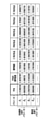
- FIG. 4 is a diagram showing parameters learned by the information center device as the elevator stop prediction system in the first embodiment.
- the stop information at the time of an earthquake is the information in which the information of "elevator NO", the information of "gal value” and the information of "stop record” are associated with each other.
- the "elevator NO” information is information indicating a number unique to the elevator 1.
- the "gal value” information is information indicating the gal value at the time of an earthquake at the position of the building where the elevator 1 is provided.
- the "stop record” information is information indicating whether or not the elevator 1 has stopped at the time of an earthquake.
- the information center device 2 learns the parameters of the model of the stop prediction curve of the elevator 1 by using the stop information at the time of an earthquake in the learning unit 2b.
- the information center device 2 has a parameter representing the overall tendency of each group and a parameter representing the individual difference of the elevator 1 for a plurality of elevators 1 grouped according to the set value of the gal when the elevator 1 is stopped. learn.
- the information center device 2 constructs a stop prediction curve for each elevator 1 by reflecting the overall tendency of each group for a plurality of elevators 1 in the stop record of each elevator 1 as prior information.
- the information center device 2 learns a parameter representing the overall tendency of each group for a plurality of elevators 1 and a parameter representing an individual difference of the elevator 1 using the following equation (2). ..
- i is an elevator NO for identifying the elevator 1.
- j is an earthquake code for identifying an earthquake.
- ⁇ 1 and ⁇ 2 are parameters representing the overall tendency of the gal value and the stop probability at the set value k of the gal at the time of stopping.
- ⁇ 3 and i are parameters representing individual differences obtained from the stop record of the elevator 1i.
- Gal i and j are estimated values of gal in the earthquake j of the elevator 1i.
- q i and j are predicted values of the stop probability of the elevator 1i in the earthquake j.
- the information center device 2 inputs the gull value of the earthquake at each elevator 1 and the stop record of each elevator 1 at that time, and uses the hierarchical Bayesian modeling and the Markov chain Monte Carlo method as parameters ( ⁇ 1). , ⁇ 2 , ⁇ 3, i ).
- the information center device 2 stores information on parameters ( ⁇ 1 , ⁇ 2 , ⁇ 3, i ).
- the information center device 2 stores information on the average value of the parameters ( ⁇ 1 , ⁇ 2 , ⁇ 3, i ) as the information on the parameters ( ⁇ 1 , ⁇ 2 , ⁇ 3, i).
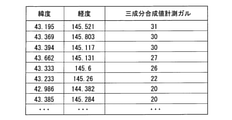
- FIG. 5 is a diagram showing earthquake information used by an information center device as an elevator stop prediction system according to the first embodiment.
- the earthquake information is information in which "latitude” information, "longitude” information, and "three-component composite value measurement gal” information are associated with each other.
- the "latitude” information is information indicating the latitude of the point where the seismograph 3 is provided.
- the "longitude” information is information indicating the longitude of the point where the seismograph 3 is provided.
- the information of the "three-component composite value measurement gull" is a diagram showing the gull value which is the sum of the three components of the shaking in the earthquake at the point where the seismograph 3 is provided.
- the information center device 2 estimates the gal value of the building provided with the elevator 1 using the earthquake information.
- FIG. 6 is a diagram for explaining a method of predicting an elevator stop probability by an information center device as an elevator stop prediction system according to the first embodiment.
- the information center device 2 predicts and calculates the stop probability of each elevator 1 by inputting the estimated gull value for each building into the trained model.
- FIG. 7 is a flowchart for explaining the outline of the learning process of the information center device as the stop prediction system of the elevator in the first embodiment.
- step S1 the information center device 2 learns the parameters of the model of the stop prediction curve for each elevator 1. After that, the information center device 2 performs the process of step S2. In step S2, the information center device 2 stores the parameter information of the model of the stop prediction curve. After that, the information center device 2 ends the process.
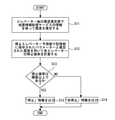
- FIG. 8 is a flowchart for explaining an outline of the stop prediction process of the information center device as the stop prediction system of the elevator in the first embodiment.
- step S11 the information center device 2 estimates the gal value of the building provided with the elevator 1 based on the earthquake information from the earthquake information distribution service 4. After that, the information center device 2 performs the process of step S12. In step S12, the information center device 2 calculates the stop probability of the elevator 1 based on the learned parameters and the estimated gull value.
- step S13 the information center device 2 determines whether or not the stop probability is equal to or higher than a preset threshold value.
- the information center device 2 If the stop probability is not equal to or higher than the preset threshold value in step S13, the information center device 2 outputs "non-stop" information. After that, the information center device 2 ends the process.
- the information center device 2 When the stop probability is equal to or higher than the preset threshold value in step S13, the information center device 2 outputs "stop" information. After that, the information center device 2 ends the process.
- the information center device 2 predicts the stop probability of the elevator 1 based on the gal value estimated for the building. Therefore, the stop probability of the elevator 1 can be predicted with high accuracy.
- the information center device 2 estimates the gal value of the building based on the positions of the three observation points, the gal value, and the position of the building. Therefore, the gal value of the building can be estimated accurately.
- the information center device 2 inputs the gal value of the building and predicts the stop probability of the elevator 1 provided in the building based on the model of the stop prediction curve of the elevator 1. Therefore, the stop probability of the elevator 1 can be predicted with high accuracy.
- the information center device 2 has a parameter representing the overall tendency of each group and a parameter representing the individual difference of the elevator 1 for a plurality of elevators 1 grouped according to the set value of the gal when the elevator 1 is stopped. learn. Therefore, the stop probability of the elevator 1 can be predicted with high accuracy.
- Delaunay triangulation, kriging, etc. may be used when estimating the gal value of a building in the information center device 2.
- a list may be created in descending order of the stop probability of each elevator 1.
- the information in the list may be transmitted to the mobile terminal of the maintenance staff of the elevator 1.
- the maintenance staff can confirm whether or not the elevator 1 is actually stopped in order from the elevator 1 having a high probability of being stopped. As a result, it is possible to efficiently inspect a plurality of elevators 1 after an earthquake occurs.
- the information center device 2 can predict the stop probability even for the elevator 1 that has never stopped due to an earthquake in the past. Further, the information center device 2 predicts the stop probability of the elevator 1 even if the stop information from the monitoring device of the elevator 1 is not received due to a communication failure. Therefore, it is possible to accurately predict the stop probability of the elevator 1 even for elevators in various situations.
- the stop probability of the elevator 1 can be predicted with high accuracy.
- FIG. 9 is a hardware configuration diagram of an information center device as an elevator stop prediction system according to the first embodiment.
- Each function of the information center device 2 can be realized by a processing circuit.
- the processing circuit comprises at least one processor 100a and at least one memory 100b.
- the processing circuit comprises at least one dedicated hardware 200.
- each function of the information center device 2 is realized by software, firmware, or a combination of software and firmware. At least one of the software and firmware is written as a program. At least one of the software and firmware is stored in at least one memory 100b. At least one processor 100a realizes each function of the information center device 2 by reading and executing a program stored in at least one memory 100b. At least one processor 100a is also referred to as a central processing unit, a processing unit, an arithmetic unit, a microprocessor, a microcomputer, and a DSP.
- At least one memory 100b is a non-volatile or volatile semiconductor memory such as RAM, ROM, flash memory, EPROM, EEPROM, a magnetic disk, a flexible disk, an optical disk, a compact disk, a mini disk, a DVD, or the like.
- the processing circuit comprises at least one dedicated hardware 200
- the processing circuit may be implemented, for example, as a single circuit, a composite circuit, a programmed processor, a parallel programmed processor, an ASIC, an FPGA, or a combination thereof.
- each function of the information center device 2 is realized by a processing circuit.
- each function of the information center device 2 is collectively realized by a processing circuit.
- a part may be realized by the dedicated hardware 200, and the other part may be realized by software or firmware.
- the function of the control unit 9b is realized by a processing circuit as dedicated hardware 200, and for the functions other than the function of the control unit 9b, at least one processor 100a reads a program stored in at least one memory 100b. It may be realized by executing the above.
- the processing circuit realizes each function of the information center device 2 by hardware 200, software, firmware, or a combination thereof.
- the elevator stop prediction system disclosed in the present disclosure can be used for the elevator system.
- 1 elevator 2 information center device, 2a storage unit, 2b learning unit, 2c estimation unit, 2d prediction unit, 2e output unit, 3 seismograph, 4 earthquake information distribution service, 100a processor, 100b memory, 200 hardware
Landscapes
- Maintenance And Inspection Apparatuses For Elevators (AREA)
- Geophysics And Detection Of Objects (AREA)
Abstract
エレベーターの停止確率を精度良く予測することができるエレベーターの停止予測システムを提供する。エレベーターの停止予測システムは、地震発生時において外部から提供される観測地点のガル値に基づいてエレベーターが設けられた建築物のガル値を推定する推定部と、前記推定部により推定された建築物のガル値に基づいて、当該建築物に設けられたエレベーターの停止確率を予測する予測部と、を備えた。
Description
本開示は、エレベーターの停止予測システムに関する。
特許文献1は、エレベーターの停止予測システムを開示する。当該停止予測システムによれば、地震時において、エレベーターが停止しているか否かを予測し得る。
しかしながら、特許文献1に記載の停止予測システムは、震度情報に基づいて、エレベーターが停止しているか否かを予測する。このため、エレベーターの停止確率を精度良く予測することができない。
本開示は、上述の課題を解決するためになされた。本開示の目的は、エレベーターの停止確率を精度良く予測することができるエレベーターの停止予測システムを提供することである。
本開示に係るエレベーターの停止予測システムは、地震発生時において外部から提供される観測地点のガル値に基づいてエレベーターが設けられた建築物のガル値を推定する推定部と、前記推定部により推定された建築物のガル値に基づいて、当該建築物に設けられたエレベーターの停止確率を予測する予測部と、を備えた。
本開示によれば、情報センター装置は、建築物に対して推定されたガル値に基づいて、エレベーターの停止確率を予測する。このため、エレベーターの停止確率を精度良く予測することができる。
実施の形態について添付の図面に従って説明する。なお、各図中、同一または相当する部分には同一の符号が付される。当該部分の重複説明は適宜に簡略化ないし省略する。
実施の形態1.
図1は実施の形態1におけるエレベーターの停止予測システムの概要を説明するための図である。
図1は実施の形態1におけるエレベーターの停止予測システムの概要を説明するための図である。
図1において、建築物は、図示されないエレベーター1を備える。
情報センター装置2は、エレベーター1が設けられた建築物から離れた場所に設けられる。例えば、情報センター装置2は、エレベーター1の保守会社に設けられる。情報センター装置2は、エレベーター1からの情報に基づいてエレベーター1の状態を把握し得るように設けられる。
情報センター装置2は、エレベーター情報を記憶する。エレベーター情報は、「エレベーターNO」の情報と「緯度」の情報と「経度」の情報とを対応付けた情報である。
「エレベーターNO」の情報は、当該エレベーター1に固有の番号を示す情報である。「緯度」の情報は、当該エレベーター1が設けられた建築物の位置における緯度を示す情報である。「経度」の情報は、当該エレベーター1が設けられた建築物の位置における経度を示す情報である。
複数の地震計3の各々は、全国各地の観測地点に設けられる。例えば、図1において、左側の地震計3は、エレベーター1が設けられた建築物からaだけ離れた地点に設けられる。上側の地震計3は、エレベーター1が設けられた建築物からbだけ離れた地点に設けられる。右側の地震計3は、エレベーター1が設けられた建築物からcだけ離れた地点に設けられる。
地震発生時において、複数の地震計3の各々は、地震発生時に観測時点のガル値を観測値として計測する。
この際、情報センター装置2は、外部から提供される観測地点のガル値とエレベーター情報とに基づいてエレベーター1が設けられた建築物のガル値を推定する。例えば、情報センター装置2は、エレベーター1が設けられた建築物に最も近い3つの観測地点の位置とガル値と当該建築物の位置とに基づいて当該建築物のガル値を推定する。
図1においては、情報センター装置2は、次の(1)式を用いて、当該建築物のガル値Geを推定する。

情報センター装置2は、当該建築物のガル値Geに基づいて、当該建築物に設けられたエレベーター1の停止確率を予測する。
次に、図2を用いて、情報センター装置2を説明する。
図2は実施の形態1におけるエレベーターの停止予測システムとしての情報センター装置のブロック図である。
図2は実施の形態1におけるエレベーターの停止予測システムとしての情報センター装置のブロック図である。
図2に示されるように、情報センター装置2は、記憶部2aと学習部2bと推定部2cと予測部2dと出力部2eとを備える。
記憶部2aは、複数のエレベーター1に関する各種情報を記憶する。例えば、記憶部2aは、エレベーター情報を記憶する。例えば、記憶部2aは、複数のエレベーター1の各々についての地震時に停止情報を記憶する。例えば、記憶部2aは、複数のエレベーター1の各々についての停止予測曲線のモデルのパラメータ情報を記憶する。
学習部2bは、記憶部2aの地震時の停止情報に基づいて複数のエレベーター1の各々についての停止予測曲線のモデルのパラメータを学習する。
推定部2cは、地震発生時において外部から提供される観測地点のガル値に基づいて複数のエレベーター1の各々が設けられた建築物のガル値を推定する。例えば、推定部2cは、地震情報配信サービス4から提供される観測地点のガル値に基づいて複数のエレベーター1の各々が設けられた建築物のガル値を推定する。
予測部2dは、推定部2cにより推定された建築物のガル値に基づいて、複数のエレベーター1の各々の停止確率を予測する。
出力部2eは、予測部2dに予測された複数のエレベーター1の各々の停止確率に応じて各種情報を出力する。
次に、図3と図4とを用いて、停止予測曲線のモデルのパラメータの学習方法を説明する。
図3は実施の形態1におけるエレベーターの停止予測システムとしての情報センター装置による停止予測曲線のモデルのパラメータの学習方法を説明するための図である。図4は実施の形態1におけるエレベーターの停止予測システムとしての情報センター装置により学習されたパラメータを示す図である。
図3は実施の形態1におけるエレベーターの停止予測システムとしての情報センター装置による停止予測曲線のモデルのパラメータの学習方法を説明するための図である。図4は実施の形態1におけるエレベーターの停止予測システムとしての情報センター装置により学習されたパラメータを示す図である。
図3の上段に示されるように、地震時の停止情報は、「エレベーターNO」の情報と「ガル値」の情報と「停止実績」の情報とを対応付けた情報である。
「エレベーターNO」の情報は、当該エレベーター1に固有の番号を示す情報である。「ガル値」の情報は、当該エレベーター1が設けられた建築物の位置における地震時のガル値を示す情報である。「停止実績」の情報は、地震時において当該エレベーター1が停止したか否かを示す情報である。
図3の下段に示されるように、情報センター装置2は、学習部2bにおいて、地震時の停止情報を用いて、当該エレベーター1の停止予測曲線のモデルのパラメータを学習する。例えば、情報センター装置2は、停止する際のガルの設定値に応じてグループ分けされた複数のエレベーター1に対してグループ毎の全体傾向を表すパラメータと当該エレベーター1の個体差を表すパラメータとを学習する。例えば、情報センター装置2は、事前情報として、複数のエレベーター1に対してグループ毎の全体傾向を各エレベーター1の停止実績に反映させて各エレベーター1の停止予測曲線を構築する。具体的には、情報センター装置2は、次の(2)式を用いて、複数のエレベーター1に対してグループ毎の全体傾向を表すパラメータと当該エレベーター1の個体差を表すパラメータとを学習する。

ただし、(2)式において、iは、エレベーター1を識別するためのエレベーターNOである。jは、地震を識別するための地震コードである。β1とβ2とは、停止する際のガルの設定値kにおけるガル値と停止確率との全体傾向を表すパラメータである。β3、iは、エレベーター1iの停止実績から求まる個体差を表すパラメータである。Gali、jは、エレベーター1iの地震jにおけるガルの推定値である。qi、jは、エレベーター1iの地震jにおける停止確率の予測値である。
具体的には、情報センター装置2は、各エレベーター1での地震のガル値とその際の各エレベーター1の停止実績とを入力として、階層ベイズモデリングとマルコフ連鎖モンテカルロ法と用いてパラメータ(β1、β2、β3、i)を学習する。
図4に示されるように、情報センター装置2は、パラメータ(β1、β2、β3、i)の情報を記憶する。例えば、情報センター装置2は、パラメータ(β1、β2、β3、i)の情報としてパラメータ(β1、β2、β3、i)の平均の値の情報を記憶する。
次に、図5を用いて、地震情報配信サービス4から提供される地震情報を説明する。
図5は実施の形態1におけるエレベーターの停止予測システムとしての情報センター装置が利用する地震情報を示す図である。
図5は実施の形態1におけるエレベーターの停止予測システムとしての情報センター装置が利用する地震情報を示す図である。
図5に示されるように、地震情報は、「緯度」の情報と「経度」の情報と「三成分合成値計測ガル」の情報とを対応付けた情報である。
「緯度」の情報は、地震計3が設けられた地点の緯度を示す情報である。「経度」の情報は、地震計3が設けられた地点の経度を示す情報である。「三成分合成値計測ガル」の情報は、地震計3が設けられた地点での地震における揺れの三成分を合計したガル値を示す図である。
情報センター装置2は、当該地震情報を用いてエレベーター1が設けられた建築物のガル値を推定する。
次に、図6を用いて、エレベーター1の停止確率の予測方法を説明する。
図6は実施の形態1におけるエレベーターの停止予測システムとしての情報センター装置によるエレベーターの停止確率の予測方法を説明するための図である。
図6は実施の形態1におけるエレベーターの停止予測システムとしての情報センター装置によるエレベーターの停止確率の予測方法を説明するための図である。
図6に示されるように、情報センター装置2は、各建築物に対して推定されたガル値を学習済みのモデルに入力することで各エレベーター1の停止確率を予測計算する。
次に、図7を用いて、情報センター装置2の学習処理の概要を説明する。
図7は実施の形態1におけるエレベーターの停止予測システムとしての情報センター装置の学習処理の概要を説明するためのフローチャートである。
図7は実施の形態1におけるエレベーターの停止予測システムとしての情報センター装置の学習処理の概要を説明するためのフローチャートである。
ステップS1では、情報センター装置2は、各エレベーター1に対して、停止予測曲線のモデルのパラメータを学習する。その後、情報センター装置2は、ステップS2の処理を行う。ステップS2では、情報センター装置2は、停止予測曲線のモデルのパラメータの情報を記憶する。その後、情報センター装置2は、処理を終了する。
次に、図8を用いて、情報センター装置2の停止予測処理の概要を説明する。
図8は実施の形態1におけるエレベーターの停止予測システムとしての情報センター装置の停止予測処理の概要を説明するためのフローチャートである。
図8は実施の形態1におけるエレベーターの停止予測システムとしての情報センター装置の停止予測処理の概要を説明するためのフローチャートである。
ステップS11では、情報センター装置2は、地震情報配信サービス4からの地震情報に基づいてエレベーター1が設けられた建築物のガル値を推定する。その後、情報センター装置2は、ステップS12の処理を行う。ステップS12では、情報センター装置2は、学習されたパラメータと推定されたガル値に基づいてエレベーター1の停止確率を計算する。
その後、情報センター装置2は、ステップS13の処理を行う。ステップS13では、情報センター装置2は、当該停止確率が予め設定された閾値以上であるか否かを判定する。
ステップS13で当該停止確率が予め設定された閾値以上でない場合、情報センター装置2は、「非停止」情報を出力する。その後、情報センター装置2は、処理を終了する。
ステップS13で当該停止確率が予め設定された閾値以上である場合、情報センター装置2は、「停止」情報を出力する。その後、情報センター装置2は、処理を終了する。
以上で説明した実施の形態1によれば、情報センター装置2は、建築物に対して推定されたガル値に基づいて、エレベーター1の停止確率を予測する。このため、エレベーター1の停止確率を精度良く予測することができる。
また、情報センター装置2は、3つの観測地点の位置とガル値と建築物の位置とに基づいて当該建築物のガル値を推定する。このため、当該建築物のガル値を精度良く推定することができる。
また、情報センター装置2は、建築物のガル値を入力して、当該エレベーター1の停止予測曲線のモデルに基づいて当該建築物に設けられたエレベーター1の停止確率を予測する。このため、エレベーター1の停止確率を精度良く予測することができる。
また、情報センター装置2は、停止する際のガルの設定値に応じてグループ分けされた複数のエレベーター1に対してグループ毎の全体傾向を表すパラメータと当該エレベーター1の個体差を表すパラメータとを学習する。このため、エレベーター1の停止確率を精度良く予測することができる。
なお、情報センター装置2において建築物のガル値を推定する際に、ドロネー三角形分割、クリギング等を用いてもよい。
また、情報センター装置2において各エレベーター1の停止確率の高い順にリストを作成してもよい。当該リストの情報をエレベーター1の保守員の携帯端末に送信してもよい。この場合、保守員は、停止している確率が高いエレベーター1から順番に実際に停止しているか否かを確認することができる。その結果、地震発生後において、複数のエレベーター1の点検を効率よく行うことができる。
また、情報センター装置2は、過去に地震で停止したことがないエレベーター1に対しても、停止確率を予測することができる。さらに、情報センター装置2は、通信不良によりエレベーター1の監視装置からの停止情報を受信でいない場合でも当該エレベーター1の停止確率を予測する。このため、様々な状況のエレベーターに対してもエレベーター1の停止確率を精度良く予測することができる。
また、情報センター装置2の機能の一部または全部を他の装置にもたせてもよい。このため、エレベーター1の停止確率を精度良く予測することができる。
次に、図9を用いて、情報センター装置2の例を説明する。
図9は実施の形態1におけるエレベーターの停止予測システムとしての情報センター装置のハードウェア構成図である。
図9は実施の形態1におけるエレベーターの停止予測システムとしての情報センター装置のハードウェア構成図である。
情報センター装置2の各機能は、処理回路により実現し得る。例えば、処理回路は、少なくとも1つのプロセッサ100aと少なくとも1つのメモリ100bとを備える。例えば、処理回路は、少なくとも1つの専用のハードウェア200を備える。
処理回路が少なくとも1つのプロセッサ100aと少なくとも1つのメモリ100bとを備える場合、情報センター装置2の各機能は、ソフトウェア、ファームウェア、またはソフトウェアとファームウェアとの組み合わせで実現される。ソフトウェアおよびファームウェアの少なくとも一方は、プログラムとして記述される。ソフトウェアおよびファームウェアの少なくとも一方は、少なくとも1つのメモリ100bに格納される。少なくとも1つのプロセッサ100aは、少なくとも1つのメモリ100bに記憶されたプログラムを読み出して実行することにより、情報センター装置2の各機能を実現する。少なくとも1つのプロセッサ100aは、中央処理装置、処理装置、演算装置、マイクロプロセッサ、マイクロコンピュータ、DSPともいう。例えば、少なくとも1つのメモリ100bは、RAM、ROM、フラッシュメモリ、EPROM、EEPROM等の、不揮発性または揮発性の半導体メモリ、磁気ディスク、フレキシブルディスク、光ディスク、コンパクトディスク、ミニディスク、DVD等である。
処理回路が少なくとも1つの専用のハードウェア200を備える場合、処理回路は、例えば、単一回路、複合回路、プログラム化したプロセッサ、並列プログラム化したプロセッサ、ASIC、FPGA、またはこれらの組み合わせで実現される。例えば、情報センター装置2の各機能は、それぞれ処理回路で実現される。例えば、情報センター装置2の各機能は、まとめて処理回路で実現される。
情報センター装置2の各機能について、一部を専用のハードウェア200で実現し、他部をソフトウェアまたはファームウェアで実現してもよい。例えば、制御部9bの機能については専用のハードウェア200としての処理回路で実現し、制御部9bの機能以外の機能については少なくとも1つのプロセッサ100aが少なくとも1つのメモリ100bに格納されたプログラムを読み出して実行することにより実現してもよい。
このように、処理回路は、ハードウェア200、ソフトウェア、ファームウェア、またはこれらの組み合わせで情報センター装置2の各機能を実現する。
以上のように、本開示のエレベーターの停止予測システムは、エレベーターシステムに利用できる。
1 エレベーター、 2 情報センター装置、 2a 記憶部、 2b 学習部、 2c 推定部、 2d 予測部、 2e 出力部、 3 地震計、 4 地震情報配信サービス、 100a プロセッサ、 100b メモリ、 200 ハードウェア
Claims (4)
- 地震発生時において外部から提供される観測地点のガル値に基づいてエレベーターが設けられた建築物のガル値を推定する推定部と、
前記推定部により推定された建築物のガル値に基づいて、当該建築物に設けられたエレベーターの停止確率を予測する予測部と、
を備えたエレベーターの停止予測システム。 - 前記推定部は、3つの観測地点の位置とガル値と建築物の位置とに基づいて当該建築物のガル値を推定する請求項1に記載のエレベーターの停止予測システム。
- 前記予測部は、前記推定部により推定された建築物のガル値を入力して、当該エレベーターの停止予測曲線のモデルに基づいて当該建築物に設けられたエレベーターの停止確率を予測する請求項1または請求項2に記載のエレベーターの停止予測システム。
- 当該エレベーターの停止予測曲線のモデルのパラメータとして、停止する際のガルの設定値に応じてグループ分けされた複数のエレベーター1に対してグループ毎の全体傾向を表すパラメータと当該エレベーターの個体差を表すパラメータとを学習する学習部、
を備えた請求項3に記載のエレベーターの停止予測システム。
Priority Applications (4)
| Application Number | Priority Date | Filing Date | Title |
|---|---|---|---|
| JP2022524044A JP7107469B2 (ja) | 2020-07-13 | 2020-07-13 | エレベーターの停止予測システム |
| CN202080101925.9A CN115916680B (zh) | 2020-07-13 | 2020-07-13 | 电梯的停止预测系统 |
| PCT/JP2020/027297 WO2022013928A1 (ja) | 2020-07-13 | 2020-07-13 | エレベーターの停止予測システム |
| TW110122695A TWI868373B (zh) | 2020-07-13 | 2021-06-22 | 電梯停止預測系統 |
Applications Claiming Priority (1)
| Application Number | Priority Date | Filing Date | Title |
|---|---|---|---|
| PCT/JP2020/027297 WO2022013928A1 (ja) | 2020-07-13 | 2020-07-13 | エレベーターの停止予測システム |
Publications (1)
| Publication Number | Publication Date |
|---|---|
| WO2022013928A1 true WO2022013928A1 (ja) | 2022-01-20 |
Family
ID=79555338
Family Applications (1)
| Application Number | Title | Priority Date | Filing Date |
|---|---|---|---|
| PCT/JP2020/027297 Ceased WO2022013928A1 (ja) | 2020-07-13 | 2020-07-13 | エレベーターの停止予測システム |
Country Status (4)
| Country | Link |
|---|---|
| JP (1) | JP7107469B2 (ja) |
| CN (1) | CN115916680B (ja) |
| TW (1) | TWI868373B (ja) |
| WO (1) | WO2022013928A1 (ja) |
Cited By (1)
| Publication number | Priority date | Publication date | Assignee | Title |
|---|---|---|---|---|
| JP2023135940A (ja) * | 2022-03-16 | 2023-09-29 | 三菱電機ビルソリューションズ株式会社 | 管理装置および管理方法 |
Citations (7)
| Publication number | Priority date | Publication date | Assignee | Title |
|---|---|---|---|---|
| JPH11231064A (ja) * | 1998-02-12 | 1999-08-27 | Osaka Gas Co Ltd | 地震動推定方法 |
| JPH11314865A (ja) * | 1998-05-07 | 1999-11-16 | Hitachi Ltd | エレベータの復旧支援システムと地震感知器の動作予測方法、及び被害分析システムと地震時管制運転制御装置 |
| JP2000266859A (ja) * | 1999-03-19 | 2000-09-29 | Osaka Gas Co Ltd | 地震動推定方法 |
| JP2007017152A (ja) * | 2005-07-05 | 2007-01-25 | Hitachi Ltd | 地震情報提供装置 |
| JP2008201575A (ja) * | 2007-02-23 | 2008-09-04 | Hitachi Ltd | エレベーターの遠隔監視システム |
| JP2009166918A (ja) * | 2008-01-11 | 2009-07-30 | Mitsubishi Electric Corp | エレベータの地震被害予測装置 |
| JP2015131728A (ja) * | 2014-01-15 | 2015-07-23 | 株式会社日立ビルシステム | エレベーターの広域災害復旧支援システム |
Family Cites Families (11)
| Publication number | Priority date | Publication date | Assignee | Title |
|---|---|---|---|---|
| JP3984748B2 (ja) * | 1999-03-17 | 2007-10-03 | 株式会社日立製作所 | 化学分析装置と化学分析システム |
| JP2004224469A (ja) * | 2003-01-21 | 2004-08-12 | Toshiba Elevator Co Ltd | エレベータ地震時管制運転システム |
| JP2004284758A (ja) * | 2003-03-24 | 2004-10-14 | Toshiba Elevator Co Ltd | エレベータ地震管制運転システム |
| TWI287489B (en) * | 2004-12-21 | 2007-10-01 | Kabo Tool Co | An improved structure of shape-changed clamping part of wrench |
| JP5014623B2 (ja) * | 2005-12-12 | 2012-08-29 | 三菱電機株式会社 | エレベーターの地震管制運転システム及びエレベーターの地震管制運転方法 |
| JP5041727B2 (ja) * | 2006-04-28 | 2012-10-03 | 東芝エレベータ株式会社 | エレベータの地震監視制御装置及びその地震監視制御システム |
| JP4973014B2 (ja) * | 2006-06-01 | 2012-07-11 | 三菱電機ビルテクノサービス株式会社 | エレベータの地震管制運転システム |
| JP2008114944A (ja) * | 2006-11-01 | 2008-05-22 | Hitachi Ltd | エレベーター装置 |
| JP5183185B2 (ja) * | 2007-12-14 | 2013-04-17 | 株式会社日立製作所 | エレベーター装置及びエレベーターの管制運転方法 |
| JP4597211B2 (ja) * | 2008-04-25 | 2010-12-15 | 株式会社日立製作所 | エレベーターの地震防災システム |
| JP5973929B2 (ja) * | 2013-02-07 | 2016-08-23 | 株式会社日立製作所 | エレベータの管制運転装置およびその方法 |
-
2020
- 2020-07-13 JP JP2022524044A patent/JP7107469B2/ja not_active Expired - Fee Related
- 2020-07-13 CN CN202080101925.9A patent/CN115916680B/zh active Active
- 2020-07-13 WO PCT/JP2020/027297 patent/WO2022013928A1/ja not_active Ceased
-
2021
- 2021-06-22 TW TW110122695A patent/TWI868373B/zh active
Patent Citations (7)
| Publication number | Priority date | Publication date | Assignee | Title |
|---|---|---|---|---|
| JPH11231064A (ja) * | 1998-02-12 | 1999-08-27 | Osaka Gas Co Ltd | 地震動推定方法 |
| JPH11314865A (ja) * | 1998-05-07 | 1999-11-16 | Hitachi Ltd | エレベータの復旧支援システムと地震感知器の動作予測方法、及び被害分析システムと地震時管制運転制御装置 |
| JP2000266859A (ja) * | 1999-03-19 | 2000-09-29 | Osaka Gas Co Ltd | 地震動推定方法 |
| JP2007017152A (ja) * | 2005-07-05 | 2007-01-25 | Hitachi Ltd | 地震情報提供装置 |
| JP2008201575A (ja) * | 2007-02-23 | 2008-09-04 | Hitachi Ltd | エレベーターの遠隔監視システム |
| JP2009166918A (ja) * | 2008-01-11 | 2009-07-30 | Mitsubishi Electric Corp | エレベータの地震被害予測装置 |
| JP2015131728A (ja) * | 2014-01-15 | 2015-07-23 | 株式会社日立ビルシステム | エレベーターの広域災害復旧支援システム |
Cited By (2)
| Publication number | Priority date | Publication date | Assignee | Title |
|---|---|---|---|---|
| JP2023135940A (ja) * | 2022-03-16 | 2023-09-29 | 三菱電機ビルソリューションズ株式会社 | 管理装置および管理方法 |
| JP7843622B2 (ja) | 2022-03-16 | 2026-04-10 | 三菱電機ビルソリューションズ株式会社 | 管理装置および管理方法 |
Also Published As
| Publication number | Publication date |
|---|---|
| JP7107469B2 (ja) | 2022-07-27 |
| CN115916680A (zh) | 2023-04-04 |
| JPWO2022013928A1 (ja) | 2022-01-20 |
| CN115916680B (zh) | 2024-04-16 |
| TW202216574A (zh) | 2022-05-01 |
| TWI868373B (zh) | 2025-01-01 |
Similar Documents
| Publication | Publication Date | Title |
|---|---|---|
| US9530256B2 (en) | Generating cumulative wear-based indicators for vehicular components | |
| CN107679683B (zh) | 软件开发进度预警方法和装置 | |
| US20180365089A1 (en) | Abnormality detection system, abnormality detection method, abnormality detection program, and method for generating learned model | |
| Erkut et al. | Computational comparison of five maximal covering models for locating ambulances | |
| CN107786369A (zh) | 基于irt层次分析和lstm的电力通信网络安全态势感知和预测方法 | |
| CN104076809B (zh) | 数据处理装置以及数据处理方法 | |
| CN110852499A (zh) | 回收故障车辆的方法和装置 | |
| US20200272906A1 (en) | Discriminant model generation device, discriminant model generation method, and discriminant model generation program | |
| US20200319631A1 (en) | Method and system for accelerating convergence of recurrent neural network for machine failure prediction | |
| CN116858766A (zh) | 基于多源摩擦信息回归的摩擦系数预测方法及系统 | |
| US20150019298A1 (en) | Estimating path information in business process instances when path information influences decision | |
| CN119397429A (zh) | 异常事件的应急处理方法、装置、电子设备及存储介质 | |
| CN120067591A (zh) | 一种多数据分析的设备状态监测与寿命预测方法和相关装置 | |
| JP2017084268A (ja) | 事故発生予報システム、および事故発生予報方法 | |
| JP7107469B2 (ja) | エレベーターの停止予測システム | |
| Zheng et al. | Adaptation in structured populations and fuzzy boundaries between hard and soft sweeps | |
| US20220253767A1 (en) | Computerized system and method for dynamic task management and execution | |
| US20170177755A1 (en) | System and method for dynamically adjusting an emergency coordination simulation system | |
| JP7251048B2 (ja) | 渋滞予測装置 | |
| CN121073443A (zh) | 一种基于人工智能的管道风险监测方法及系统 | |
| CN115567406A (zh) | 一种管理网络节点的方法、装置和系统 | |
| KR20050061358A (ko) | 네트워크 진단 방법, 네트워크 진단을 수행하는 코드를포함하는 컴퓨터 판독 가능 매체 및 시스템 | |
| Kamariotis et al. | Optimal maintenance decisions supported by SHM: A benchmark study | |
| CN119873547A (zh) | 一种基于lstm的电梯按需维保时序预测方法和系统 | |
| Tertilt et al. | Generic performance prediction for ERP and SOA applications |
Legal Events
| Date | Code | Title | Description |
|---|---|---|---|
| 121 | Ep: the epo has been informed by wipo that ep was designated in this application |
Ref document number: 20945626 Country of ref document: EP Kind code of ref document: A1 |
|
| ENP | Entry into the national phase |
Ref document number: 2022524044 Country of ref document: JP Kind code of ref document: A |
|
| NENP | Non-entry into the national phase |
Ref country code: DE |
|
| 122 | Ep: pct application non-entry in european phase |
Ref document number: 20945626 Country of ref document: EP Kind code of ref document: A1 |