WO2021234943A1 - 制御装置及び制御方法 - Google Patents
制御装置及び制御方法 Download PDFInfo
- Publication number
- WO2021234943A1 WO2021234943A1 PCT/JP2020/020287 JP2020020287W WO2021234943A1 WO 2021234943 A1 WO2021234943 A1 WO 2021234943A1 JP 2020020287 W JP2020020287 W JP 2020020287W WO 2021234943 A1 WO2021234943 A1 WO 2021234943A1
- Authority
- WO
- WIPO (PCT)
- Prior art keywords
- power consumption
- air conditioner
- time
- room
- correlation function
- Prior art date
- Legal status (The legal status is an assumption and is not a legal conclusion. Google has not performed a legal analysis and makes no representation as to the accuracy of the status listed.)
- Ceased
Links
Images





Classifications
-
- F—MECHANICAL ENGINEERING; LIGHTING; HEATING; WEAPONS; BLASTING
- F24—HEATING; RANGES; VENTILATING
- F24F—AIR-CONDITIONING; AIR-HUMIDIFICATION; VENTILATION; USE OF AIR CURRENTS FOR SCREENING
- F24F11/00—Control or safety arrangements
- F24F11/30—Control or safety arrangements for purposes related to the operation of the system, e.g. for safety or monitoring
- F24F11/46—Improving electric energy efficiency or saving
-
- F—MECHANICAL ENGINEERING; LIGHTING; HEATING; WEAPONS; BLASTING
- F24—HEATING; RANGES; VENTILATING
- F24F—AIR-CONDITIONING; AIR-HUMIDIFICATION; VENTILATION; USE OF AIR CURRENTS FOR SCREENING
- F24F11/00—Control or safety arrangements
- F24F11/50—Control or safety arrangements characterised by user interfaces or communication
- F24F11/61—Control or safety arrangements characterised by user interfaces or communication using timers
-
- F—MECHANICAL ENGINEERING; LIGHTING; HEATING; WEAPONS; BLASTING
- F24—HEATING; RANGES; VENTILATING
- F24F—AIR-CONDITIONING; AIR-HUMIDIFICATION; VENTILATION; USE OF AIR CURRENTS FOR SCREENING
- F24F11/00—Control or safety arrangements
- F24F11/62—Control or safety arrangements characterised by the type of control or by internal processing, e.g. using fuzzy logic, adaptive control or estimation of values
- F24F11/63—Electronic processing
-
- F—MECHANICAL ENGINEERING; LIGHTING; HEATING; WEAPONS; BLASTING
- F24—HEATING; RANGES; VENTILATING
- F24F—AIR-CONDITIONING; AIR-HUMIDIFICATION; VENTILATION; USE OF AIR CURRENTS FOR SCREENING
- F24F11/00—Control or safety arrangements
- F24F11/62—Control or safety arrangements characterised by the type of control or by internal processing, e.g. using fuzzy logic, adaptive control or estimation of values
- F24F11/63—Electronic processing
- F24F11/64—Electronic processing using pre-stored data
-
- F—MECHANICAL ENGINEERING; LIGHTING; HEATING; WEAPONS; BLASTING
- F24—HEATING; RANGES; VENTILATING
- F24F—AIR-CONDITIONING; AIR-HUMIDIFICATION; VENTILATION; USE OF AIR CURRENTS FOR SCREENING
- F24F11/00—Control or safety arrangements
- F24F11/62—Control or safety arrangements characterised by the type of control or by internal processing, e.g. using fuzzy logic, adaptive control or estimation of values
- F24F11/63—Electronic processing
- F24F11/65—Electronic processing for selecting an operating mode
-
- G—PHYSICS
- G05—CONTROLLING; REGULATING
- G05B—CONTROL OR REGULATING SYSTEMS IN GENERAL; FUNCTIONAL ELEMENTS OF SUCH SYSTEMS; MONITORING OR TESTING ARRANGEMENTS FOR SUCH SYSTEMS OR ELEMENTS
- G05B19/00—Program-control systems
- G05B19/02—Program-control systems electric
- G05B19/04—Program control other than numerical control, i.e. in sequence controllers or logic controllers
- G05B19/042—Program control other than numerical control, i.e. in sequence controllers or logic controllers using digital processors
-
- G—PHYSICS
- G06—COMPUTING OR CALCULATING; COUNTING
- G06Q—INFORMATION AND COMMUNICATION TECHNOLOGY [ICT] SPECIALLY ADAPTED FOR ADMINISTRATIVE, COMMERCIAL, FINANCIAL, MANAGERIAL OR SUPERVISORY PURPOSES; SYSTEMS OR METHODS SPECIALLY ADAPTED FOR ADMINISTRATIVE, COMMERCIAL, FINANCIAL, MANAGERIAL OR SUPERVISORY PURPOSES, NOT OTHERWISE PROVIDED FOR
- G06Q10/00—Administration; Management
- G06Q10/04—Forecasting or optimisation specially adapted for administrative or management purposes, e.g. linear programming or "cutting stock problem"
-
- G—PHYSICS
- G06—COMPUTING OR CALCULATING; COUNTING
- G06Q—INFORMATION AND COMMUNICATION TECHNOLOGY [ICT] SPECIALLY ADAPTED FOR ADMINISTRATIVE, COMMERCIAL, FINANCIAL, MANAGERIAL OR SUPERVISORY PURPOSES; SYSTEMS OR METHODS SPECIALLY ADAPTED FOR ADMINISTRATIVE, COMMERCIAL, FINANCIAL, MANAGERIAL OR SUPERVISORY PURPOSES, NOT OTHERWISE PROVIDED FOR
- G06Q10/00—Administration; Management
- G06Q10/06—Resources, workflows, human or project management; Enterprise or organisation planning; Enterprise or organisation modelling
- G06Q10/063—Operations research, analysis or management
- G06Q10/0631—Resource planning, allocation, distributing or scheduling for enterprises or organisations
-
- G—PHYSICS
- G06—COMPUTING OR CALCULATING; COUNTING
- G06Q—INFORMATION AND COMMUNICATION TECHNOLOGY [ICT] SPECIALLY ADAPTED FOR ADMINISTRATIVE, COMMERCIAL, FINANCIAL, MANAGERIAL OR SUPERVISORY PURPOSES; SYSTEMS OR METHODS SPECIALLY ADAPTED FOR ADMINISTRATIVE, COMMERCIAL, FINANCIAL, MANAGERIAL OR SUPERVISORY PURPOSES, NOT OTHERWISE PROVIDED FOR
- G06Q50/00—Information and communication technology [ICT] specially adapted for implementation of business processes of specific business sectors, e.g. utilities or tourism
- G06Q50/06—Energy or water supply
-
- F—MECHANICAL ENGINEERING; LIGHTING; HEATING; WEAPONS; BLASTING
- F24—HEATING; RANGES; VENTILATING
- F24F—AIR-CONDITIONING; AIR-HUMIDIFICATION; VENTILATION; USE OF AIR CURRENTS FOR SCREENING
- F24F2110/00—Control inputs relating to air properties
- F24F2110/10—Temperature
-
- F—MECHANICAL ENGINEERING; LIGHTING; HEATING; WEAPONS; BLASTING
- F24—HEATING; RANGES; VENTILATING
- F24F—AIR-CONDITIONING; AIR-HUMIDIFICATION; VENTILATION; USE OF AIR CURRENTS FOR SCREENING
- F24F2110/00—Control inputs relating to air properties
- F24F2110/10—Temperature
- F24F2110/12—Temperature of the outside air
-
- F—MECHANICAL ENGINEERING; LIGHTING; HEATING; WEAPONS; BLASTING
- F24—HEATING; RANGES; VENTILATING
- F24F—AIR-CONDITIONING; AIR-HUMIDIFICATION; VENTILATION; USE OF AIR CURRENTS FOR SCREENING
- F24F2120/00—Control inputs relating to users or occupants
- F24F2120/10—Occupancy
-
- F—MECHANICAL ENGINEERING; LIGHTING; HEATING; WEAPONS; BLASTING
- F24—HEATING; RANGES; VENTILATING
- F24F—AIR-CONDITIONING; AIR-HUMIDIFICATION; VENTILATION; USE OF AIR CURRENTS FOR SCREENING
- F24F2140/00—Control inputs relating to system states
- F24F2140/50—Load
-
- F—MECHANICAL ENGINEERING; LIGHTING; HEATING; WEAPONS; BLASTING
- F24—HEATING; RANGES; VENTILATING
- F24F—AIR-CONDITIONING; AIR-HUMIDIFICATION; VENTILATION; USE OF AIR CURRENTS FOR SCREENING
- F24F2140/00—Control inputs relating to system states
- F24F2140/60—Energy consumption
-
- G—PHYSICS
- G05—CONTROLLING; REGULATING
- G05B—CONTROL OR REGULATING SYSTEMS IN GENERAL; FUNCTIONAL ELEMENTS OF SUCH SYSTEMS; MONITORING OR TESTING ARRANGEMENTS FOR SUCH SYSTEMS OR ELEMENTS
- G05B2219/00—Program-control systems
- G05B2219/20—Pc systems
- G05B2219/26—Pc applications
- G05B2219/2614—HVAC, heating, ventillation, climate control
Definitions
- This disclosure relates to the control of an air conditioner.
- the air conditioner in order to reduce the power consumption of the air conditioner, the air conditioner should be operated while the classroom is not in use (while a person is absent from the classroom) according to the timetable entered in advance. There is a technique for stopping (for example, Patent Document 1).
- the cumulative power consumption can be suppressed by continuing the operation of the air conditioner rather than stopping the operation of the air conditioner. be. If the difference between the room temperature and the set temperature when the operation of the air conditioner is restarted is large, a large amount of electric power is consumed. In such a case, it is better to continue the operation of the air conditioner and maintain the room temperature to suppress the power consumption.
- the power consumption when the air conditioner is stopped and then restarted, and the power consumption when the air conditioner is continued to operate are the length of the unused period of the room and the outside of that period. It changes due to changes in air conditioning load such as changes in temperature and changes in internal calorific value.
- the operation of the air conditioner is stopped even if the power consumption can be suppressed by continuing the operation of the air conditioner. Therefore, the technique of Patent Document 1 has a problem that the suppression of the power consumption of the air conditioner cannot be sufficiently measured.
- One of the main purposes of this disclosure is to solve the above problems. Specifically, the main purpose of the present disclosure is to effectively suppress the power consumption of the air conditioner.
- the control device is The operation of the air conditioner is stopped at the timing when the room in which the air conditioner is installed is no longer used, and the operation of the air conditioner is operated so that the temperature of the room becomes the set temperature at the timing when the room is used.
- the power consumption generated in the first operation mode to be restarted is estimated as the first power consumption amount, and the power consumption generated in the second operation mode in which the operation of the air conditioner is continued even when the room is not used.
- the power consumption estimation unit that estimates the amount as the second power consumption, and It has a determination unit that compares the first power consumption amount with the second power consumption amount and determines whether to stop or continue the operation of the air conditioner at the timing when the room is no longer used.
- the power consumption of the air conditioner can be effectively suppressed.
- the figure which shows the structural example of the control apparatus which concerns on Embodiment 1. The figure which shows the example of the 1st power consumption which concerns on Embodiment 1.
- FIG. 1 shows a configuration example of an air conditioning system according to the present embodiment.
- a classroom will be used as an example of a room for explanation.
- the air conditioning system according to the present embodiment can be applied to a room other than the classroom as long as the air conditioner is installed and the time zone in which the air conditioner is used and the time zone in which the air conditioner is not used are distinguished.
- the air conditioning system according to the present embodiment can be applied to a conference room, a rental space, a rental conference room, or the like of a company or the like.
- the air conditioning system includes an outdoor unit 10, an indoor unit 20, a remote controller 30, a centralized controller 40, a room temperature detecting means 50, an outside air temperature detecting means 60, and a control device 100.
- the indoor unit 20 and the remote controller 30 are installed in each classroom.
- the remote controller 30 can operate the corresponding indoor unit 20.
- the outdoor unit 10 and the indoor unit 20 have a one-to-one correspondence.
- the outdoor unit 10 and the indoor unit 20 are collectively called an air conditioner.
- the centralized controller 40 can operate the plurality of outdoor units 10 and the plurality of indoor units 20.
- the room temperature detecting means 50 is arranged in each classroom and detects the room temperature in the classroom.
- the room temperature detecting means 50 may be arranged in the indoor unit 20.
- the outside air temperature detecting means 60 is arranged outdoors and detects the outside air temperature.
- the outside air temperature detecting means 60 may be arranged in the outdoor unit 10.
- the control device 100 is a computer.
- the operation procedure of the control device 100 corresponds to the control method.
- the control device 100 controls the operation of the air conditioner for each classroom via the centralized controller 40. More specifically, the control device 100 stops the operation of the air conditioner when the classroom is not used, and restarts the operation of the air conditioner immediately before the classroom is used (hereinafter, "first". It is determined which of the operation mode (hereinafter referred to as “operation mode”) and the operation mode (hereinafter referred to as “second operation mode”) in which the operation of the air conditioner is continued even when the classroom is not used has the lower power consumption. When the power consumption of the first operation mode is low, the control device 100 stops the operation of the air conditioner at the timing when the classroom is no longer used, and restarts the operation of the air conditioner immediately before the time when the classroom is used. Let me. On the other hand, when the power consumption of the second operation mode is small, the control device 100 continues the operation of the air conditioner.
- the control device 100 can decide to stop / continue the operation of the air conditioner based on the lesson frame division.
- FIG. 2 shows an example of usage schedule information displayed on the remote controller 30.
- the remote controller 30 is provided with an input field corresponding to a preset frame division of the lesson.
- the classroom manager for example, a teacher
- the usage schedule information illustrated in FIG. 2 is generated.
- the lesson frame allocation information is input from the remote controller 30 or the centralized controller 40.
- the frame division information is input as follows. 1st period: 8: 50-9: 35 2nd period: 9: 40-10: 25 Break time: 10:25 to 10:45 3rd period: 10: 45-11: 30 4th period: 11: 35-12: 20 Break time: 12: 20-14: 00 5th period: 14: 00-14: 45 6th period: 14: 50-13: 35
- the usage schedule information to be displayed on the remote controller 30 illustrated in FIG. 2 is generated.
- FIG. 3 shows a configuration example of the control device 100.
- the control device 100 includes a communication device 110, a processor 120, and a storage device 130 as a hardware configuration.
- the communication device 110 communicates with the centralized controller 40.
- the communication device 110 can communicate with the outdoor unit 10 via the centralized controller 40. Further, the communication device 110 can communicate with the indoor unit 20 via the centralized controller 40 and the outdoor unit 10. Further, the communication device 110 can communicate with the remote controller 30 and the room temperature detecting means 50 via the centralized controller 40, the outdoor unit 10 and the indoor unit 20. Further, the communication device 110 can communicate with the outside air temperature detecting means 60.
- the communication path shown in FIG. 3 is an example.
- the communication device 110 may directly communicate with each of the centralized controller 40, the outdoor unit 10, the indoor unit 20, the remote controller 30, and the room temperature detecting means 50. Further, the communication device 110 may communicate with the outside air temperature detecting means 60 via another device.
- the control device 100 includes a parameter estimation unit 121, a first power consumption estimation unit 122, a second power consumption estimation unit 123, and a determination unit 124 as functional configurations.
- the storage device 130 stores a program that realizes the functions of the parameter estimation unit 121, the first power consumption estimation unit 122, the second power consumption estimation unit 123, and the determination unit 124.
- the processor 120 executes these programs to operate the parameter estimation unit 121, the first power consumption estimation unit 122, the second power consumption estimation unit 123, and the determination unit 124, which will be described later.
- FIG. 3 schematically shows a state in which the processor 120 is executing a program that realizes the functions of the parameter estimation unit 121, the first power consumption estimation unit 122, the second power consumption estimation unit 123, and the determination unit 124. It is represented by.
- the parameter estimation unit 121 estimates the parameters used for the operation control of the air conditioner.
- the parameter estimation unit 121 estimates, for example, the time during which the classroom is not used (hereinafter referred to as “non-use time”) as a parameter used for operating control of the air conditioner.
- the parameter estimation unit 121 estimates the air conditioning load as a parameter used for the operation control of the air conditioner.
- the parameter estimation unit 121 estimates, for example, the difference between the outside air temperature and the room temperature and the amount of heat generated inside the classroom as the air conditioning load.
- the first power consumption estimation unit 122 estimates the first power consumption.
- the first power consumption amount is the power consumption amount generated in the first operation mode.
- the operation of the air conditioner is stopped when the classroom in which the air conditioner is installed is no longer used, and the temperature of the classroom is set at the timing when the classroom is used. This is an operation mode in which the operation of the air conditioner is restarted so as to become.
- the timing at which the classroom is no longer used may be the time when the classroom is no longer used (for example, the end time of the lesson) or the time after a specified time (for example, 1 minute) has elapsed from the time when the classroom is no longer used.
- the timing at which the classroom is used may be the time when the classroom is used (for example, the start time of the lesson) or the time before the specified time (for example, 1 minute) from the time when the classroom is used.
- the first power consumption estimation unit 122, together with the second power consumption estimation unit 123, corresponds to the power consumption estimation unit.
- the second power consumption estimation unit 123 estimates the second power consumption.
- the second power consumption is the power consumption generated in the second operation mode.
- the second operation mode is, as outlined, an operation mode in which the air conditioner is continued even when the classroom is not used.
- the second power consumption estimation unit 123, together with the first power consumption estimation unit 122, corresponds to the power consumption estimation unit.
- the determination unit 124 compares the first power consumption amount with the second power consumption amount, and determines whether to stop or continue the operation of the air conditioner at the timing when the classroom is no longer used. When it is decided to stop the operation of the air conditioner at the timing when the classroom is no longer used, the determination unit 124 instructs the central controller 40 to stop the operation of the air conditioner at the timing when the classroom is no longer used. Further, the determination unit 124 instructs the centralized controller 40 to restart the operation of the air conditioner at the timing of restarting the operation of the air conditioner.
- the timing for restarting the operation of the air conditioner is the time obtained by subtracting the start-up time described later from the timing when the classroom is used (for example, the start time of the lesson).
- the control device 100 stops the operation of the air conditioner or operates the air conditioner at the timing when the classroom is no longer used according to the classroom usage schedule information and the frame allocation information set by the remote controller 30 or the centralized controller 40. Determine whether to continue.
- the parameter estimation unit 121 specifies the non-use time by using the usage schedule information and the frame division information.
- the control device 100 specifies the time from the end time of the time period before the time period when the classroom is not used to the start time of the time period next to the time period when the classroom is not used as the non-use time.
- the classroom is not used during the third period on Monday.
- the end time of the second period is "10:25”
- the start time of the fourth period is "11:35”. Therefore, the parameter estimation unit 121 specifies "10:25 to 11:35" as the unused time.
- the classroom is not used in the 3rd and 4th periods on Wednesday.
- the end time of the second period is "10:25", and the start time of the fifth period is "14:00". Therefore, the control device 100 specifies "10:25 to 14:00" as the non-use time.
- the control device 100 includes "break time: 12:20 to 14:00" as the non-use time, but when the student has lunch in the classroom during the break time, the parameter estimation unit 121 May exclude “rest time: 12:20 to 14:00" from the non-use time. In this case, the parameter estimation unit 121 specifies "10:25 to 12:20” as the unused time. Further, when the classroom is not used in the sixth period, it is not necessary to determine whether the air conditioner is stopped or continued, so that the parameter estimation unit 121 does not specify the unused time.
- the parameter estimation unit 121 estimates the air conditioning load during the non-use time.
- the parameter estimation unit 121 estimates the difference between the outside air temperature and the room temperature during non-use time, for example, as an air conditioning load.
- the parameter estimation unit 121 estimates the difference between the outside air temperature and the room temperature during the non-use time by using the room temperature and the outside air temperature acquired by the room temperature detecting means 50 and the outside air temperature detecting means 60.
- the parameter estimation unit 121 may estimate the air conditioning load by predicting the fluctuation of the outside air temperature during the non-use time. By doing so, the parameter estimation unit 121 can improve the accuracy of the air conditioning load.
- the first power consumption estimation unit 122 estimates the start-up time.
- the start-up time is the time from when the air conditioner resumes operation in the first operation mode until the temperature of the classroom reaches the set temperature. Then, the first power consumption estimation unit 122 estimates the power consumption (first power consumption) generated in the first operation mode based on the air harmonized load and the start-up time.
- FIG. 4 shows an example of the first power consumption generated in the first operation mode.
- the operation stop time is the time obtained by subtracting the start time from the unused time.
- the first power consumption is the power consumption that occurs during non-use time, but since power consumption does not occur during the downtime, the power consumption that is substantially generated during the start-up time becomes the first power consumption. Equivalent to.
- the first power consumption estimation unit 122 estimates the start-up time using the air-harmonic load and the start-up time correlation function generated in advance.
- the start-up time correlation function is a correlation function between the start-up time and the air-conditioned load.
- the first power consumption estimation unit 122 estimates the first power consumption using the start-up time, the air harmonized load, and the first correlation function generated in advance.
- the first correlation function is a correlation function between the air harmonized load and the amount of power consumption in a unit time.
- the second power consumption estimation unit 123 estimates the power consumption (second power consumption) generated in the second operation mode based on the non-use time and the air harmonized load. In the second operation mode, the operation of the air conditioner continues during the non-use time. Therefore, the second power consumption estimation unit 123 estimates the power consumption generated during the non-use time as the second power consumption.
- FIG. 5 shows an example of the second power consumption generated in the second operation mode.
- the second power consumption is the power consumption generated during non-use time.
- the second power consumption is simply proportional to the non-use time.
- the second power consumption estimation unit 123 estimates the second power consumption using the unused time, the air harmonized load, and the second correlation function generated in advance.
- the second correlation function is a correlation function between the air harmonized load and the amount of power consumption in a unit time.
- the second correlation function may be the same correlation function as the first correlation function, or may be a different correlation function.
- the determination unit 124 compares the first power consumption amount with the second power consumption amount. Then, if the first power consumption is smaller than the second power consumption, the determination unit 124 stops the operation of the air conditioner. On the other hand, if the second power consumption is equal to or less than the first power consumption, the determination unit 124 continues the operation of the air conditioner.
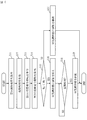
- FIG. 6 shows an operation example of the control device 100 according to the present embodiment.
- the parameter estimation unit 121 specifies the non-use time by the above-mentioned procedure.
- the parameter estimation unit 121 specifies the unused time of the day before the start time.
- step S11 the parameter estimation unit 121 calculates the air conditioning load.
- step S12 the first power consumption estimation unit 122 calculates the start-up time using the air harmonized load and the start-up time correlation function.
- the first power consumption estimation unit 122 calculates the first power consumption Wa by using the air conditioning load, the start-up time, and the first correlation function.
- step S14 the second power consumption estimation unit 123 calculates the second power consumption Wb using the air harmonized load and the second correlation function.
- step S15 the determination unit 124 compares the first power consumption amount Wa with the second power consumption amount Wb.
- the determination unit 124 stops the operation of the air conditioner in step S16.
- the determination unit 124 outputs a command to the centralized controller 40 to stop the operation of the outdoor unit 10 and the indoor unit 20.
- the determination unit 124 continues the operation of the air conditioner in step S17.
- the determination unit 124 determines in step S18 whether or not the start time has arrived.
- the start-up time is the start time of the start-up time shown in FIG.
- the determination unit 124 starts the air conditioner in step S19. That is, the determination unit 124 restarts the operation of the air conditioner.
- the determination unit 124 outputs a command to the centralized controller 40 to start the operation of the outdoor unit 10 and the indoor unit 20.
- step S15 and S16 it is determined whether to stop or continue the operation of the air conditioner by comparing the first power consumption amount and the second power consumption amount. .. Instead of this, even if the determination unit 124 decides to continue the operation of the air conditioner when the room temperature detecting means 50 detects that a person is present in the classroom at the start time of the non-use time. good. In this case, steps S11 to S15 may be omitted.
- the first power consumption estimation unit 122 may calculate the start time and the first power consumption by using the start correlation function and the first correlation function generated in advance by the simulation.
- the second power consumption estimation unit 123 may calculate the second power consumption using the second correlation function generated in advance by the simulation.
- the start-up time and the first power consumption may be calculated by using the start-up correlation function and the first correlation function generated in advance based on the actually measured values. That is, the first power consumption estimation unit 122 analyzes the air-conditioning load measured during the non-use time of the classroom and the start-up time actually required when the air-conditioning machine is operated in the first operation mode. The start-up time correlation function generated in the above can be used.
- the first power consumption estimation unit 122 actually generates the first power consumption when the air conditioning load measured during the non-use time of the classroom and the air conditioning machine are operated in the first operation mode.
- the first correlation function generated by analyzing the quantity can be used.
- the first power consumption in this case may be a value measured by a wattmeter or the like, or may be a value calculated from data such as the compressor frequency of the air conditioner.
- the second power consumption estimation unit 123 may calculate the second power consumption using the second correlation function generated based on the actually measured value. That is, the second power consumption estimation unit 123 actually generates the second power consumption when the air conditioning load measured during the non-use time of the classroom and the air conditioning machine are operated in the second operating mode.
- a second correlation function generated by analyzing the quantity can be used.
- the second power consumption in this case may be a value measured by a wattmeter or the like, or may be a value calculated from data such as the compressor frequency of the air conditioner.
- the correlation function may be corrected based on the difference between the predicted value obtained by the correlation function and the actual value. Such correction improves the estimation accuracy of the correlation function.
- the measured values used to generate the start-up time correlation function, the first correlation function, and the second correlation function need to be measured values obtained in a situation where there are no people in the classroom.
- the measured value obtained in the situation where there is a person in the classroom is inappropriate as a value for generating and correcting the correlation function because the air conditioning load changes due to the influence of heat generated by the human body.
- the presence / absence of a person in the classroom may be determined based on the usage schedule information and the frame division information, or may be determined by a person detection means such as an infrared sensor.
- step S18, step S19 in which the determination unit 124 starts the air conditioner at the start time has been described.
- the determination unit 124 may start the air conditioner at a time other than the start time.
- the determination unit 124 may activate the air conditioner at the start time of the next time limit.
- the first power consumption estimation unit 122 may calculate the first power consumption using a fixed time as the start time without calculating the start time.
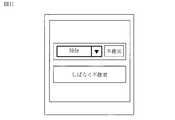
- step S17 when it is decided in step S17 to continue the operation of the air conditioner, if the operation of the air conditioner is continued during the non-use time, it is mistakenly misunderstood that the operation of the air conditioner is continued. There is a possibility. Therefore, when the determination unit 124 decides to continue the operation of the air conditioner in step S17, the determination unit 124 outputs the message illustrated in FIG. 7 to a device in the classroom, for example, the remote controller 30. Further, the determination unit 124 may notify a message that the operation of the air conditioner is continuing for energy saving by turning on the lamp of the indoor unit 20 or the lamp of the remote controller 30.
- the air conditioning is performed by selecting the operation mode in which the power consumption is smaller from the operation mode in which the operation of the air conditioner is stopped and the operation mode in which the operation of the air conditioner is continued.
- the power consumption of the machine can be effectively suppressed.
- Embodiment 2 In this embodiment, the difference from the first embodiment will be mainly described. The matters not described below are the same as those in the first embodiment.
- the first power consumption estimation unit 122 is a room temperature change amount when the operation is stopped, which is a room temperature change amount when the operation of the air conditioner is stopped according to the air conditioning load (hereinafter, simply room temperature). Estimate the amount of change). That is, the first power consumption estimation unit 122 estimates the temperature difference between the temperature of the classroom at the timing when the air conditioner stops the operation and the temperature of the classroom at the timing when the air conditioner restarts the operation. ..
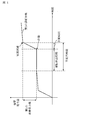
- FIG. 8 shows an example of the transition of the room temperature when the operation of the air conditioner is stopped in the case of cooling operation.
- the amount of change in room temperature when the operation is stopped is the temperature difference between the temperature of the classroom at the start time of the operation stop time and the temperature of the classroom at the start time (start time) of the start time.
- the first power consumption estimation unit 122 estimates the room temperature change amount (temperature difference) by using, for example, a temperature difference correlation function generated in advance, an air harmonized load, and an operation stop time.
- the temperature difference correlation function is a correlation function between the air conditioning load and the amount of change in room temperature (temperature difference) per unit time.
- the first power consumption estimation unit 122 estimates the start-up time using the estimated room temperature change amount (temperature difference). Further, the first power consumption estimation unit 122 estimates the first power consumption using the estimated room temperature change amount (temperature difference) and the estimated start-up time.
- the first power consumption estimation unit 122 estimates the start-up time using a start-up time correlation function which is a correlation function between the amount of change in room temperature and the start-up time. Further, the first power consumption estimation unit 122 estimates the first power consumption using the first correlation function, which is a correlation function between the amount of change in room temperature and the amount of power consumption in a unit time, and the start-up time. do.
- FIG. 9 shows an operation example of the control device 100 according to the present embodiment.
- an operation example of the control device 100 will be described based on the flowchart of FIG.
- step S11 is the same as that shown in FIG. 6, the description thereof will be omitted.
- step S21 the first power consumption estimation unit 122 calculates the room temperature change amount by using the air harmonized load, the temperature difference correlation function, and the operation stop time.
- step S22 the first power consumption estimation unit 122 calculates the start-up time using the room temperature change amount and the start-up time correlation function.
- step S23 the first power consumption estimation unit 122 calculates the first power consumption Wa by using the air conditioning load, the start-up time, and the first correlation function.
- steps S14 to S19 are the same as those shown in FIG. 6, the description thereof will be omitted.
- the first power consumption estimation unit 122 uses the temperature difference correlation function, the start-up time correlation function, and the first correlation function generated in advance by the simulation to determine the room temperature change amount, the start-up time, and the first power consumption amount. It may be calculated. Further, the room temperature change amount, the start-up time, and the first power consumption amount may be calculated by using the temperature difference correlation function, the start-up correlation function, and the first correlation function generated in advance based on the actually measured values. Further, the correlation function may be corrected based on the difference between the predicted value obtained by the correlation function and the actual value. Such correction improves the estimation accuracy of the correlation function.
- the air conditioner can be operated by selecting the operation mode in which the power consumption is smaller from the operation mode in which the operation of the air conditioner is stopped and the operation mode in which the operation of the air conditioner is continued.
- the power consumption of the air conditioner can be effectively suppressed.
- the start-up time and the first power consumption can be calculated with higher accuracy than in the first embodiment. That is, in the first embodiment, when the start-up time correlation function is generated based on the measured value, the start-up time can be measured only when the operation of the air conditioner is stopped and then the operation of the air conditioner is restarted. .. Similarly, in the first embodiment, when the first correlation function is generated based on the actually measured value, the power consumption is actually measured only when the operation of the air conditioner is stopped and then the operation of the air conditioner is restarted. be able to.
- the measured room temperature change amount and the case where the operation of the air conditioner is not restarted after the operation of the air conditioner is stopped.
- Any of the room temperature changes measured in 1 can be used to generate the temperature difference correlation function. That is, in the present embodiment, regardless of whether or not the operation of the air conditioner is restarted, the room temperature at the time when the operation of the air conditioner is stopped and the room temperature after the predetermined time has elapsed from the time when the operation of the air conditioner is stopped.
- Embodiment 3 In this embodiment, the difference from the first embodiment will be mainly described. The matters not described below are the same as those in the first embodiment.
- the first power consumption estimation unit 122 and the second power consumption estimation unit 123 have the first power consumption amount and the second power consumption amount based on the usage schedule of the classroom designated in advance. Estimates the power consumption of. In the present embodiment, the first power consumption estimation unit 122 and the second power consumption estimation unit 123 use the first power consumption amount and the second consumption amount based on the usage schedule of the classroom designated at any time. Estimate the amount of power. In the present embodiment, for example, the classroom manager can input the non-use time of the classroom with the remote controller 30 at any time. Then, the parameter estimation unit 121 notifies the first power consumption estimation unit 122 and the second power consumption estimation unit 123 of the unused time designated at any time by the classroom manager.
- the remote controller 30 is provided with buttons such as "one frame not used", “two frames not used”, and “not used for a while”.
- the classroom administrator specifies the non-use time of the classroom by pressing these buttons.
- the control device 100 performs the same processing as that of the first embodiment or the second embodiment.
- the determination unit 124 operates the air conditioner without determining whether to stop the operation of the air conditioner or continue the operation of the air conditioner. Stop.
- the classroom manager may be able to input the unused time.
- the operation of the control device 100 when the unused time is input by the classroom manager is the same as that of the first embodiment or the second embodiment.
- first to third embodiments have been described above, two or more of these embodiments may be combined and carried out. Alternatively, one of these embodiments may be partially implemented. Alternatively, two or more of these embodiments may be partially combined and carried out. In addition, the configurations and procedures described in these embodiments may be changed as necessary.
- the processor 120 shown in FIG. 3 is an IC (Integrated Circuit) that performs processing.
- the processor 120 is a CPU (Central Processing Unit), a DSP (Digital Signal Processor), or the like.
- the storage device 130 shown in FIG. 3 is a RAM (Random Access Memory), a ROM (Read Only Memory), a flash memory, an HDD (Hard Disk Drive), or the like.
- the communication device 110 shown in FIG. 3 is an electronic circuit that executes data communication processing.
- the communication device 110 is, for example, a communication chip or a NIC (Network Interface Card).
- An OS (Operating System) is also stored in the storage device 130. Then, at least a part of the OS is executed by the processor 120.
- the processor 120 executes a program that realizes the functions of the parameter estimation unit 121, the first power consumption estimation unit 122, the second power consumption estimation unit 123, and the determination unit 124 while executing at least a part of the OS. ..
- the processor 120 executes the OS, task management, memory management, file management, communication control, and the like are performed.
- At least one of the information, data, signal value, and variable value indicating the processing result of the parameter estimation unit 121, the first power consumption estimation unit 122, the second power consumption estimation unit 123, and the determination unit 124 Stored in at least one of the registers and cache memory in the storage device 130, processor 120.
- a program that realizes the functions of the parameter estimation unit 121, the first power consumption estimation unit 122, the second power consumption estimation unit 123, and the determination unit 124 is a magnetic disk, a flexible disk, an optical disk, a compact disk, or a Blu-ray. (Registered trademark) It may be stored in a portable recording medium such as an optical disc or a DVD. Then, a portable recording medium containing a program that realizes the functions of the parameter estimation unit 121, the first power consumption estimation unit 122, the second power consumption estimation unit 123, and the determination unit 124 may be distributed. ..
- the "units" of the parameter estimation unit 121, the first power consumption estimation unit 122, the second power consumption estimation unit 123, and the determination unit 124 are “circuits” or “processes” or “procedures” or “processes”. May be read as “.
- the control device 100 may be realized by a processing circuit.
- the processing circuit is, for example, a logic IC (Integrated Circuit), a GA (Gate Array), an ASIC (Application Specific Integrated Circuit), or an FPGA (Field-Programmable Gate Array).
- the superordinate concept of the processor and the processing circuit is referred to as "processing circuit Lee". That is, the processor and the processing circuit are specific examples of the "processing circuit Lee", respectively.
Landscapes
- Engineering & Computer Science (AREA)
- Business, Economics & Management (AREA)
- Signal Processing (AREA)
- Physics & Mathematics (AREA)
- Combustion & Propulsion (AREA)
- Mechanical Engineering (AREA)
- General Engineering & Computer Science (AREA)
- Chemical & Material Sciences (AREA)
- Human Resources & Organizations (AREA)
- Economics (AREA)
- Strategic Management (AREA)
- Mathematical Physics (AREA)
- Fuzzy Systems (AREA)
- General Physics & Mathematics (AREA)
- Marketing (AREA)
- Tourism & Hospitality (AREA)
- Entrepreneurship & Innovation (AREA)
- Theoretical Computer Science (AREA)
- General Business, Economics & Management (AREA)
- Operations Research (AREA)
- Health & Medical Sciences (AREA)
- Development Economics (AREA)
- Game Theory and Decision Science (AREA)
- Quality & Reliability (AREA)
- Automation & Control Theory (AREA)
- Water Supply & Treatment (AREA)
- Primary Health Care (AREA)
- Public Health (AREA)
- Human Computer Interaction (AREA)
- General Health & Medical Sciences (AREA)
- Educational Administration (AREA)
- Air Conditioning Control Device (AREA)
Priority Applications (5)
| Application Number | Priority Date | Filing Date | Title |
|---|---|---|---|
| US17/921,759 US20230167994A1 (en) | 2020-05-22 | 2020-05-22 | Control device and control method |
| JP2022524832A JP7317230B2 (ja) | 2020-05-22 | 2020-05-22 | 制御装置及び制御方法 |
| PCT/JP2020/020287 WO2021234943A1 (ja) | 2020-05-22 | 2020-05-22 | 制御装置及び制御方法 |
| EP20936153.4A EP4155615A4 (en) | 2020-05-22 | 2020-05-22 | CONTROL DEVICE AND CONTROL METHOD |
| CN202080100756.7A CN115516253A (zh) | 2020-05-22 | 2020-05-22 | 控制装置以及控制方法 |
Applications Claiming Priority (1)
| Application Number | Priority Date | Filing Date | Title |
|---|---|---|---|
| PCT/JP2020/020287 WO2021234943A1 (ja) | 2020-05-22 | 2020-05-22 | 制御装置及び制御方法 |
Publications (1)
| Publication Number | Publication Date |
|---|---|
| WO2021234943A1 true WO2021234943A1 (ja) | 2021-11-25 |
Family
ID=78708344
Family Applications (1)
| Application Number | Title | Priority Date | Filing Date |
|---|---|---|---|
| PCT/JP2020/020287 Ceased WO2021234943A1 (ja) | 2020-05-22 | 2020-05-22 | 制御装置及び制御方法 |
Country Status (5)
| Country | Link |
|---|---|
| US (1) | US20230167994A1 (https=) |
| EP (1) | EP4155615A4 (https=) |
| JP (1) | JP7317230B2 (https=) |
| CN (1) | CN115516253A (https=) |
| WO (1) | WO2021234943A1 (https=) |
Families Citing this family (1)
| Publication number | Priority date | Publication date | Assignee | Title |
|---|---|---|---|---|
| CN113240550B (zh) * | 2021-04-26 | 2024-03-29 | 广东美的暖通设备有限公司 | 基于空调系统的空间推荐方法、装置、系统及存储介质 |
Citations (7)
| Publication number | Priority date | Publication date | Assignee | Title |
|---|---|---|---|---|
| JPH0580812A (ja) * | 1991-09-20 | 1993-04-02 | Hitachi Ltd | 室内の快適空調環境制御装置 |
| JP2004251509A (ja) | 2003-02-19 | 2004-09-09 | Daikin Ind Ltd | 設備機器の運転制御システム、運転制御プログラムおよび運転制御方法 |
| JP2010181043A (ja) * | 2009-02-03 | 2010-08-19 | Daikin Ind Ltd | 空調システム |
| WO2013190911A1 (ja) * | 2012-06-22 | 2013-12-27 | 三菱電機株式会社 | 空気調和システム |
| JP2014215728A (ja) * | 2013-04-24 | 2014-11-17 | シャープ株式会社 | 情報処理装置及び情報処理方法 |
| JP2015178917A (ja) * | 2014-03-19 | 2015-10-08 | 株式会社富士通ゼネラル | 空気調和機 |
| JP2017161196A (ja) * | 2016-03-11 | 2017-09-14 | 株式会社富士通ゼネラル | 空気調和機 |
Family Cites Families (16)
| Publication number | Priority date | Publication date | Assignee | Title |
|---|---|---|---|---|
| US5640646A (en) * | 1993-09-17 | 1997-06-17 | Fujitsu Limited | Image forming apparatus capable of controlling heating units under optimum driving mode and a method for controlling the same |
| JP3549710B2 (ja) * | 1997-06-25 | 2004-08-04 | 松下電器産業株式会社 | 空気調和機の制御装置 |
| JP2002372280A (ja) * | 2001-06-12 | 2002-12-26 | Sanki Eng Co Ltd | 機器運転方法 |
| KR100565486B1 (ko) * | 2003-06-11 | 2006-03-30 | 엘지전자 주식회사 | 에어컨의 중앙제어 시스템 및 그 동작방법 |
| JP4703546B2 (ja) * | 2006-11-22 | 2011-06-15 | 三菱電機ビルテクノサービス株式会社 | 学校内教室設備の簡易省エネシステム |
| JP2011043256A (ja) * | 2009-08-19 | 2011-03-03 | Daikin Industries Ltd | 空気調和システム |
| JP6025833B2 (ja) * | 2012-05-14 | 2016-11-16 | 三菱電機株式会社 | 空調装置および空気調和システム |
| JP2014066457A (ja) * | 2012-09-26 | 2014-04-17 | Daikin Ind Ltd | 熱負荷処理システムの制御装置 |
| JP2014142099A (ja) * | 2013-01-23 | 2014-08-07 | Hitachi Appliances Inc | 空気調和機 |
| WO2014128901A1 (ja) * | 2013-02-22 | 2014-08-28 | 日立アプライアンス株式会社 | 電源制御案内装置、電源制御案内方法、電源制御案内プログラム |
| JP6125040B2 (ja) * | 2013-11-26 | 2017-05-10 | 三菱電機株式会社 | 空調制御装置 |
| JP6558921B2 (ja) * | 2015-03-20 | 2019-08-14 | 三菱電機株式会社 | 空調制御装置 |
| US10760809B2 (en) * | 2015-09-11 | 2020-09-01 | Johnson Controls Technology Company | Thermostat with mode settings for multiple zones |
| US20170075510A1 (en) * | 2015-09-11 | 2017-03-16 | Johnson Controls Technology Company | Thermostat with occupant identity determination features |
| JP6735492B2 (ja) * | 2018-08-01 | 2020-08-05 | パナソニックIpマネジメント株式会社 | 空気調和機のレコメンド処理を実行するサーバおよびレコメンド処理システム |
| JP7079700B2 (ja) * | 2018-08-31 | 2022-06-02 | シャープ株式会社 | 通信端末装置、プログラム、および記録媒体 |
-
2020
- 2020-05-22 EP EP20936153.4A patent/EP4155615A4/en not_active Withdrawn
- 2020-05-22 US US17/921,759 patent/US20230167994A1/en not_active Abandoned
- 2020-05-22 CN CN202080100756.7A patent/CN115516253A/zh active Pending
- 2020-05-22 JP JP2022524832A patent/JP7317230B2/ja active Active
- 2020-05-22 WO PCT/JP2020/020287 patent/WO2021234943A1/ja not_active Ceased
Patent Citations (7)
| Publication number | Priority date | Publication date | Assignee | Title |
|---|---|---|---|---|
| JPH0580812A (ja) * | 1991-09-20 | 1993-04-02 | Hitachi Ltd | 室内の快適空調環境制御装置 |
| JP2004251509A (ja) | 2003-02-19 | 2004-09-09 | Daikin Ind Ltd | 設備機器の運転制御システム、運転制御プログラムおよび運転制御方法 |
| JP2010181043A (ja) * | 2009-02-03 | 2010-08-19 | Daikin Ind Ltd | 空調システム |
| WO2013190911A1 (ja) * | 2012-06-22 | 2013-12-27 | 三菱電機株式会社 | 空気調和システム |
| JP2014215728A (ja) * | 2013-04-24 | 2014-11-17 | シャープ株式会社 | 情報処理装置及び情報処理方法 |
| JP2015178917A (ja) * | 2014-03-19 | 2015-10-08 | 株式会社富士通ゼネラル | 空気調和機 |
| JP2017161196A (ja) * | 2016-03-11 | 2017-09-14 | 株式会社富士通ゼネラル | 空気調和機 |
Non-Patent Citations (1)
| Title |
|---|
| See also references of EP4155615A4 |
Also Published As
| Publication number | Publication date |
|---|---|
| US20230167994A1 (en) | 2023-06-01 |
| EP4155615A4 (en) | 2023-06-21 |
| JP7317230B2 (ja) | 2023-07-28 |
| CN115516253A (zh) | 2022-12-23 |
| EP4155615A1 (en) | 2023-03-29 |
| JPWO2021234943A1 (https=) | 2021-11-25 |
Similar Documents
| Publication | Publication Date | Title |
|---|---|---|
| US7275170B2 (en) | Performance controller of electronic device, performance controlling method and computer program product | |
| US7596705B2 (en) | Automatically controlling processor mode of multi-core processor | |
| US7131016B2 (en) | Method and apparatus for adjusting clock throttle rate based on usage of CPU | |
| CN110637271B (zh) | 用于对便携式计算设备中的沉浸式多媒体工作负载的智能调整的系统和方法 | |
| US20030226047A1 (en) | Portable terminal with enhanced power management function and method for managing power of the same | |
| EP2746787A1 (en) | Energy management device and program | |
| CN110332140B (zh) | 一种电子设备的风扇控制方法及电子设备 | |
| WO2012138655A1 (en) | Method and system for dynamically controlling power to multiple cores in a multicore processor of a portable computing device | |
| US20120079357A1 (en) | Systems and Methods For Measuring the Effectiveness of a Workload Predictor on a Mobile Device | |
| CN107388503B (zh) | 空调及其控制方法和控制装置 | |
| KR20060086854A (ko) | 지능형 정보처리시스템 프로젝터 냉각시스템 및 방법 | |
| CN109323419A (zh) | 用电高峰控制空调的方法和装置及空调系统和设备 | |
| CN117109152A (zh) | 空调运行方法、装置、电子设备及计算机可读存储介质 | |
| WO2021234943A1 (ja) | 制御装置及び制御方法 | |
| CN111023466A (zh) | 一种空调耗电量的控制方法、系统、存储介质及空调器 | |
| WO2014115247A1 (ja) | システムコントローラ、設備管理システム、デマンド制御方法及びプログラム | |
| CN112556300A (zh) | 确定变频冰箱漏氟的方法及变频冰箱 | |
| CN113465109B (zh) | 多联机的低能耗待机控制方法及装置、介质 | |
| CN107575989A (zh) | 空调线控器、空调系统和空调除湿控制方法 | |
| JP2005321162A (ja) | 計算機システム用空調設備及びその温度制御方法 | |
| EP4549832A1 (en) | Method for controlling air conditioner, and air conditioner and storage medium | |
| JP2017161196A (ja) | 空気調和機 | |
| JP7507399B2 (ja) | 施設保守管理システム、施設保守管理方法、及びプログラム | |
| JP2007034669A (ja) | 消費電力モニタリングシステム及びその方法ならびにプログラム | |
| CN118836542A (zh) | 空调器控制方法、装置、电子设备及存储介质 |
Legal Events
| Date | Code | Title | Description |
|---|---|---|---|
| 121 | Ep: the epo has been informed by wipo that ep was designated in this application |
Ref document number: 20936153 Country of ref document: EP Kind code of ref document: A1 |
|
| ENP | Entry into the national phase |
Ref document number: 2022524832 Country of ref document: JP Kind code of ref document: A |
|
| ENP | Entry into the national phase |
Ref document number: 2020936153 Country of ref document: EP Effective date: 20221222 |
|
| NENP | Non-entry into the national phase |
Ref country code: DE |