WO2021220775A1 - 材料の特性値を推定するシステム - Google Patents
材料の特性値を推定するシステム Download PDFInfo
- Publication number
- WO2021220775A1 WO2021220775A1 PCT/JP2021/015043 JP2021015043W WO2021220775A1 WO 2021220775 A1 WO2021220775 A1 WO 2021220775A1 JP 2021015043 W JP2021015043 W JP 2021015043W WO 2021220775 A1 WO2021220775 A1 WO 2021220775A1
- Authority
- WO
- WIPO (PCT)
- Prior art keywords
- simulation
- estimation model
- estimation
- value
- material property
- Prior art date
- Legal status (The legal status is an assumption and is not a legal conclusion. Google has not performed a legal analysis and makes no representation as to the accuracy of the status listed.)
- Ceased
Links
Images



Classifications
-
- G—PHYSICS
- G16—INFORMATION AND COMMUNICATION TECHNOLOGY [ICT] SPECIALLY ADAPTED FOR SPECIFIC APPLICATION FIELDS
- G16C—COMPUTATIONAL CHEMISTRY; CHEMOINFORMATICS; COMPUTATIONAL MATERIALS SCIENCE
- G16C60/00—Computational materials science, i.e. ICT specially adapted for investigating the physical or chemical properties of materials or phenomena associated with their design, synthesis, processing, characterisation or utilisation
-
- G—PHYSICS
- G06—COMPUTING OR CALCULATING; COUNTING
- G06F—ELECTRIC DIGITAL DATA PROCESSING
- G06F30/00—Computer-aided design [CAD]
- G06F30/20—Design optimisation, verification or simulation
- G06F30/27—Design optimisation, verification or simulation using machine learning, e.g. artificial intelligence, neural networks, support vector machines [SVM] or training a model
-
- G—PHYSICS
- G06—COMPUTING OR CALCULATING; COUNTING
- G06N—COMPUTING ARRANGEMENTS BASED ON SPECIFIC COMPUTATIONAL MODELS
- G06N20/00—Machine learning
-
- G—PHYSICS
- G16—INFORMATION AND COMMUNICATION TECHNOLOGY [ICT] SPECIALLY ADAPTED FOR SPECIFIC APPLICATION FIELDS
- G16C—COMPUTATIONAL CHEMISTRY; CHEMOINFORMATICS; COMPUTATIONAL MATERIALS SCIENCE
- G16C20/00—Chemoinformatics, i.e. ICT specially adapted for the handling of physicochemical or structural data of chemical particles, elements, compounds or mixtures
- G16C20/30—Prediction of properties of chemical compounds, compositions or mixtures
-
- G—PHYSICS
- G16—INFORMATION AND COMMUNICATION TECHNOLOGY [ICT] SPECIALLY ADAPTED FOR SPECIFIC APPLICATION FIELDS
- G16C—COMPUTATIONAL CHEMISTRY; CHEMOINFORMATICS; COMPUTATIONAL MATERIALS SCIENCE
- G16C20/00—Chemoinformatics, i.e. ICT specially adapted for the handling of physicochemical or structural data of chemical particles, elements, compounds or mixtures
- G16C20/70—Machine learning, data mining or chemometrics
Definitions
- the present invention relates to a system for estimating material property values.
- Material property evaluation by numerical simulation is performed as a method different from the experimental material property evaluation method.
- a simulator is constructed based on the laws of physics, and a material descriptor is input to the numerical simulator to obtain a material property value as a simulation result.
- material informatics estimates the characteristic values of a material using a machine learning model that considers only the response relationship between the characteristics of the material and the characteristic values, and selects the target of experimental / numerical simulation. This makes it possible to optimize those times.
- Non-Patent Document 1 discloses a technique for estimating material properties by a machine learning model by using numerical simulation results of materials as learning data for machine learning.
- Patent Document 1 discloses a technique for improving the generalization performance of a machine learning model by creating a 3D model from image data, performing a physical simulation of the model, and generating a large amount of new learning image data. There is.
- One aspect of the present invention is a system for estimating the characteristic value of a material, which includes one or more processors and one or more storage devices.
- the one or more storage devices store the material property estimation model.
- the material property estimation model estimates the characteristic value of the simulation result of the material from the descriptor of the material.
- the characteristic value of the material is estimated from the simulation estimation model, the estimation result of the simulation estimation model, and the descriptor of the material. Includes a material property value estimation model and.
- the one or more processors input the descriptor of the first material into the simulation estimation model, acquire the first simulation estimation result of the characteristic value of the first material, and obtain the first simulation estimation result and the first simulation estimation result.
- the material descriptor and the material descriptor are input to the material property value estimation model to obtain the property property estimation value of the first material.
- material property values can be estimated with high accuracy and efficiency by a machine learning model.
- a material property estimation model that can replace the numerical simulator according to the embodiment of the present specification is schematically shown.
- a logical configuration example of the material property estimation device according to the embodiment of the present specification is schematically shown.
- An example of the hardware configuration of the material property estimation device is shown.
- An example of the configuration of the experimental material database is shown.
- An example of the configuration of the unexperimental material database is shown.
- Not yet A configuration example of the descriptor list output by the descriptor calculation unit is shown.
- a flowchart of an example of the overall processing of the material property estimation device is shown. The distribution of materials in a two-dimensional space is schematically shown.
- the detailed flowchart of the training of the simulation estimation model is shown.
- a detailed flowchart of learning of the material property value estimation model is shown.
- An image example of the material property estimation result displayed by the material property estimation result display unit on the monitor is shown.
- This system may be a physical computer system (one or more physical computers) or a system built on a group of computer resources (multiple computer resources) such as a cloud platform.
- a computer system or computational resource group includes one or more interface devices (including, for example, communication devices and input / output devices), one or more storage devices (including, for example, memory (main storage) and auxiliary storage devices), and one or more. Includes the processor.
- the process described with the function as the subject may be a process performed by a processor or a system having the processor.
- the program may be installed from the program source.
- the program source may be, for example, a program distribution computer or a computer-readable storage medium (eg, a computer-readable non-transient storage medium).
- the description of each function is an example, and a plurality of functions may be combined into one function, or one function may be divided into a plurality of functions.
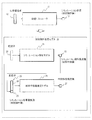
- FIG. 1 schematically shows a material property estimation model 20 that can replace the numerical simulator 11 in the examples of the present specification.
- the numerical simulator 11 outputs the simulation result 13 of the predetermined characteristic value of the material from the input chemical structural formula 12 of the material.
- the numerical simulator 11 accepts the chemical structural formula as an input and outputs one kind of material property value, but in another example, the numerical simulator 11 accepts the descriptor of the chemical structural formula as an input. Often, a plurality of types of material property values may be output. again,
- the material property estimation model 20 includes a simulation estimation model 21 that estimates the simulation result of the numerical simulator 11 and a material property value estimation model 25.
- the simulation estimation model 21 accepts the material descriptor 22 (vector) as an input and estimates the simulation result (material property value) of the numerical simulator 11.
- a descriptor is a vector that represents the characteristics of a material in multiple variables.
- the descriptor is composed of a plurality of elements (features), and each element represents a corresponding feature, for example, a molecular weight or an element mixture ratio.
- the simulation estimation model 21 outputs one kind of material property value, but may output a plurality of kinds of material property value including the simulation result of the numerical simulator 11.
- the simulation estimation model 21 is optimized (trained) by an error between the simulation result 13 of the numerical simulator 11 and the estimation result 23 of the simulation estimation model 21.
- the material property value estimation model 25 estimates one or a plurality of types of material property values that are the same as the material property values estimated by the simulation estimation model 21. In the example of FIG. 1, the material property value estimation model 25 estimates one specific type of material property value.
- the material property value estimation model 25 receives a vector 26 as an input, which is a combination of the material descriptor 24 and the simulation result estimation value 23 of the material property estimation model 20.
- the descriptor 24 may be the same as or different from the descriptor 22 input to the simulation estimation model 21.
- the vector 26 is an extension of the material descriptor 22.
- the material property value estimation model 25 estimates a predetermined material property value from the extended descriptor 26 and outputs the material property property estimation value 27.
- the material property estimation value 27 is an estimation value of the material property by the material property estimation model 20.
- the material characteristic value estimation model 25 estimates the characteristic value of the material based on the estimation result of the simulation estimation model 21 that estimates the simulation result of the numerical simulator 11 and the descriptor of the material. As a result, the material property value can be estimated with high accuracy by the machine learning model that can perform the calculation more efficiently than the simulator.
- the regression algorithms used by the simulation estimation model 21 and the material property value estimation model 25 are arbitrary, and these algorithms may be the same or different.
- any algorithm can be selected from various regression algorithms including random forest, support vector machine, Gaussian process regression, and neural network.
- the material property estimation model 20 is applicable to both organic-inorganic compounds and inorganic compounds. Descriptors can be generated from chemical formulas, that is, both structural and compositional formulas. Hereinafter, a more specific configuration of the embodiments of the present specification will be described.
- FIG. 2 schematically shows a logical configuration example of the material property estimation device according to the embodiment of the present specification.
- the material property estimation device 100 stores an experimented material database 102, an unexperimented material database 103, and a simulation result database 110.
- the material property estimation device 100 includes a descriptor calculation unit 104, a simulation execution target selection unit 105, a material characteristic value estimation model learning unit 106, a simulation execution unit 107, a simulation estimation unit 108, a simulation estimation model learning unit 109, and a material characteristic value estimation unit.
- a unit 111 and a material property estimation result display unit 112 are stored. These are programs, and one or more processors of the material property estimation device 100 can operate as functional units corresponding to the respective programs by executing these programs. Any function of the material property estimation device 100 can be implemented in any program.
- the descriptor calculation unit 104 generates a descriptor from the chemical formula by a predetermined method.
- the descriptor represents the characteristics of the material represented by the chemical formula.
- the descriptor is represented by a vector composed of a plurality of elements (features). Each element represents a corresponding feature, such as molecular weight or elemental mixing ratio.
- features Each element represents a corresponding feature, such as molecular weight or elemental mixing ratio.
- the organic compound material represented by the chemical structural formula will be described as an example of the material to be estimated.
- the examples of the present specification are also applicable to, for example, an inorganic compound material represented by a composition formula.
- the simulation execution target selection unit 105 selects the material to be simulated by the numerical simulator 11 in order to generate learning data for learning (training) of the material property estimation model 20.
- the simulation execution unit 107 executes the simulation by the numerical simulator 11.
- the simulation estimation model learning unit 109 learns (trains) the simulation estimation model 21 that estimates the simulation result.
- the simulation estimation unit 108 calculates the simulation result estimated value of the material property by the learned simulation estimation model 21.
- the material property value estimation model learning unit 106 learns (trains) the material property value estimation model 25 for estimating the material property value.
- the material property value estimation unit 111 calculates the estimated value of the material property value by the learned material property value estimation model 25.
- the material property estimation result display unit 112 presents the material property estimation result by the material property value estimation unit 111 to the user.
- the experimented material database 102 stores the experimental results of predetermined material property values of various materials.
- the unexperimented material database 103 stores data of materials for which the experiment of material property values has not been performed.
- the simulation result database 110 stores the simulation result by the numerical simulator 11.
- FIG. 3 shows an example of the hardware configuration of the material property estimation device 100.
- the material property estimation device 100 includes a processor 151 having a computer configuration and computing performance, and a DRAM 152 providing a volatile temporary storage area for storing programs and data executed by the processor 151.
- the material property estimation device 100 further includes a communication device 153 that performs data communication with another device, and an auxiliary storage device 154 that provides a permanent information storage area using an HDD (Hard Disk Drive), a flash memory, or the like. include.
- HDD Hard Disk Drive
- the auxiliary storage device 154 includes a descriptor calculation unit 104, a simulation execution target selection unit 105, a material characteristic value estimation model learning unit 106, a simulation execution unit 107, a simulation estimation unit 108, a simulation estimation model learning unit 109, and a material characteristic value. It stores programs such as the estimation unit 111 and the material property estimation result display unit 112.
- the auxiliary storage device 154 further stores various data such as the experimented material database 102, the unexperimented material database 103, and the simulation result database 110.
- the program executed by the processor 151 and the data to be processed are loaded from the auxiliary storage device 154 into the DRAM 152.
- the material property estimation device 100 includes an input device 155 that accepts an operation from the user and a monitor 156 (an example of the output device) that presents the output result in each process to the user.
- the function of the material property estimation device 100 may be implemented separately in a plurality of devices.
- the material property estimation device 100 includes one or more storage devices and one or more processors.
- FIG. 4 shows a configuration example of the experimental material database 102.
- the experimented material database 102 correlates the material with the experimental result of the property value of the material.
- the experimental material database 102 includes a number column 301, a structural formula (SMILES) column 302, and a material property measurement value column 303.
- SILES structural formula
- the number column 301 identifies each record in the experimental material database 102.
- Structural formula (SMILES) column 302 represents the chemical structural formula of the material. In the example of FIG. 4, the chemical structural formula is expressed according to the SMILES (Simplified Molecular Input Line Entry System) notation. Any representational form of the chemical structural formula that can generate a descriptor can be used.
- the material property measurement value column 303 shows the experimental results of predetermined property values of each chemical structural formula.
- FIG. 5 shows a configuration example of the unexperimental material database 103.
- the unexperimental material database 103 stores the chemical structural formulas of materials for which material property values have not been tested.
- the property value of the material selected from the unexperimental material database 103 is estimated by the material property estimation model 20.
- the unexperimental material database 103 includes a number column 401 and a structural formula (SMILES) column 402.
- Number column 401 identifies each record in the unexperimental material database 103.
- Structural formula (SMILES) column 402 represents the SMILES representation of the chemical structural formula of the material.
- FIG. 6 shows a configuration example of the descriptor list 500 output by the descriptor calculation unit 104.
- the descriptor calculation unit 104 generates a descriptor from the chemical structural formula of the SMILES expression acquired from the experimented material database 102 or the unexperimented material database 103, and generates the descriptor list 500.
- the descriptor list 500 includes columns 501 for each of the number columns 501 and each of the descriptor elements.
- the descriptor is composed of 1000 descriptive elements, and the columns of the four descriptor elements are indicated by reference numerals 502 to 505 as an example.
- the value of number column 501 corresponds to the value of number column in the database from which the chemical structural formula that generated the descriptor list was obtained.
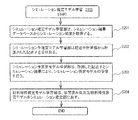
- FIG. 7 shows a flowchart of an example of the overall processing of the material property estimation device 100.
- the descriptor calculation unit 104 acquires the chemical structural formula of the material from the experimented material database 102 and the unexperimented material database 103, and calculates the descriptor of each material.
- the descriptor calculation unit 104 generates a descriptor list for each of the tested material database 102 and the unexperimented material database 103.
- step S102 the simulation execution target selection unit 105 receives the descriptors of the materials of the two databases 102 and 103 from the descriptor calculation unit 104, and selects the material to execute the simulation based on those descriptors.
- the simulation results are used for training the material property estimation model 20.
- the simulation execution target selection unit 105 determines the priority order of the numerical simulation candidates so as to satisfy the above requests 1 and 2, and selects the upper material as the simulation target.
- the simulation execution target selection unit 105 determines the simulation execution target based on the similarity between the materials.
- the similarity between materials can be calculated, for example, from the descriptor or the distance between the vectors obtained from the descriptor.
- the simulation execution target selection unit 105 reduces the dimension of the descriptor of the candidate material and analyzes the distribution of the material in a low-dimensional space.
- a dimensionality reduction algorithm such as t-SNE (t-distributed Stochastic Neighbor Embedding) can be used.
- a low-dimensional space may be constructed by extracting a predetermined element of the descriptor. Dimensionality reduction reduces the amount of subsequent calculations.
- FIG. 8 schematically shows the distribution of materials in a two-dimensional space. Circles indicate unexperimented material and stars indicate experimental material.
- the simulation execution target selection unit 105 clusters materials according to their similarity in the material space. Each cluster is made up of similar materials. In the example of FIG. 8, three clusters 601 to 603 are configured.
- the simulation execution target selection unit 105 selects the material to be simulated, for example, according to the following priority order. (1) Materials that have been tested and are close to the center of the cluster, (2) Materials in the cluster that do not contain any tested materials, (3) Materials that have not been tested and are close to the center of the cluster, (4) ) Experimented materials that do not meet the above conditions, (5) Unexperimented materials that do not meet the above conditions.
- the simulation execution target selection unit 105 searches for materials that satisfy the conditions in the order of the above conditions (1) to (5), for example.
- the material close to the cluster center is, for example, a material within a predetermined distance from the cluster center. For example, when the total number of found materials or the number of experimental materials reaches a predetermined number, the simulation execution target selection unit 105 ends the search. In this way, the found material is determined to be the simulation execution target and included in the material list.
- the simulation execution unit 107 receives the material list from the simulation execution target selection unit 105, executes the simulation of the materials in the material list, and calculates the material property value.
- the material list may indicate, for example, a database identifier, a number in the database, and a descriptor.
- the simulation execution unit 107 acquires the chemical structural formulas of the materials shown in the material list from the experimented material database 102 and the unexperimented material database 103, and executes simulations thereof. When a descriptor is required for the simulation, the simulation execution unit 107 requests the descriptor calculation unit 104 to calculate the descriptor.
- the simulation execution unit 107 stores the simulation result in the simulation result database 110.
- the simulation result database 110 includes, for example, a number column, a structural formula (SMILES) column, and a column of simulation results of material property values.
- the number column identifies, for example, a record in the simulation result database 110.
- the simulation result database 110 may indicate the presence or absence of experimental results of the material.
- step S105 the simulation estimation model learning unit 109 learns the simulation estimation model 21 that estimates the simulation result from the descriptor.
- FIG. 9 shows a detailed flowchart of learning (S105) of the simulation estimation model 21.
- step S201 the simulation estimation model learning unit 109 acquires the simulation result from the simulation result database 110.
- step S202 the simulation estimation model learning unit 109 receives the descriptor calculated from the descriptor calculation unit 104. Specifically, the simulation estimation model learning unit 109 passes the chemical structural formula of the simulation to the descriptor calculation unit 104 and acquires those descriptors.
- step S203 the simulation estimation model learning unit 109 learns the simulation estimation model based on the acquired descriptor and the material property value indicated by the simulation result.
- the simulation estimation model learning unit 109 holds information on the initial configuration of the simulation estimation model 21 in advance, and configures the simulation estimation model according to the information. Any kind of machine learning model can be used as the simulation estimation model 21.
- the simulation estimation model learning unit 109 sequentially inputs descriptors to the simulation estimation model 21 and acquires the output simulation result estimation value (material property value).
- the simulation estimation model learning unit 109 optimizes the simulation estimation model 21 by updating the parameters of the simulation estimation model 21 based on the error between the simulation result estimation value and the material characteristic value of the acquired simulation result.
- the simulation estimation model learning unit 109 passes the learned simulation estimation model 21 to the simulation estimation unit 108.
- step S106 the simulation estimation unit 108 receives the trained simulation estimation model 21 from the simulation estimation model learning unit 109.
- the simulation estimation unit 108 further receives a descriptor of the material that has not been simulated from the descriptor calculation unit 104. Specifically, the simulation estimation unit 108 selects a chemical structural formula of a material stored in the unexperimental material database 103 and not stored in the simulation result database 110, and the descriptor calculation unit 104 calculates the descriptor. Ask.
- simulation estimation unit 108 sequentially inputs the descriptor acquired from the descriptor calculation unit 104 into the trained simulation estimation model 21, and calculates the estimated value of the simulation result.
- step S107 the material property value estimation model learning unit 106 learns the material property value estimation model 25.
- FIG. 10 shows a detailed flowchart of learning (S107) of the material property value estimation model 25.
- step S301 the material property value estimation model learning unit 106 acquires the simulation result of the experimental material from the simulation result database 110.
- the material property value estimation model learning unit 106 can identify the experimented material by referring to the experimented material database 102, for example.
- the simulation result database 110 may indicate the presence or absence of an experiment.
- step S302 the material property value estimation model learning unit 106 receives the descriptor calculated from the descriptor calculation unit 104. Specifically, the material property value estimation model learning unit 106 passes the chemical structural formula of the simulation result acquired in step S301 to the descriptor calculation unit 104, and acquires those descriptors.
- step S303 the material property value estimation model learning unit 106 acquires the experimental result of the material property value from the experimented material database 102. Specifically, the material property value estimation model learning unit 106 acquires the material property value of the simulation result acquired in step S301 from the experimented material database 102.
- step S304 the material property value estimation model learning unit 106 learns the material property value estimation model 25 based on the acquired simulation result, the acquired descriptor, and the experimental result of the material property value.
- the simulation estimation model learning unit 109 holds information on the initial configuration of the material characteristic value estimation model 25 in advance, and configures the material characteristic value estimation model 25 according to the information. Any kind of machine learning model can be used as the material property value estimation model 25.
- the material property value estimation model learning unit 106 sequentially inputs an extended descriptor (vector) that combines the descriptor and the simulation result of the material property value into the material property value estimation model 25, and acquires the output material property value estimation value. do.
- the material property value estimation model learning unit 106 updates the parameters of the material property value estimation model 25 based on the error between the material property estimation value and the material property value of the obtained experimental result, thereby updating the material property value estimation model 25. Optimize.
- the material property value estimation model learning unit 106 passes the learned material property value estimation model 25 to the material property value estimation unit 111.
- the learning of the material property value estimation model 25 uses the simulation result by the numerical simulator. Thereby, a more appropriate material property value estimation model 25 can be constructed. In another example, the learning of the material property value estimation model 25 may use the estimation result of the trained simulation estimation model 21.
- the material property value estimation unit 111 calculates the estimated value of the material property value of the unexperimented material by the learned material property value estimation model 25. Specifically, the material property value estimation unit 111 receives the trained material property value estimation model 25 from the material property value estimation model learning unit 106.
- the material property value estimation unit 111 receives the descriptor of the unexperimental material from the descriptor calculation unit 104. For example, the material property value estimation unit 111 acquires chemical structural formulas from the unexperimental material database 103 and requests the descriptor calculation unit 104 to generate a descriptor together with them.
- the material characteristic value estimation unit 111 receives the simulation result estimation value of the unexperimental material calculated in step S106 from the simulation estimation unit 108.
- the material property value estimation unit 111 acquires the simulation result of the unexperimental material from the simulation result database 110.
- the material property value estimation unit 111 combines the descriptor with the simulation result estimation value (material property value) or the simulation result (material property value) and inputs it to the material property value estimation model 25.
- the material property value estimation model 25 calculates an estimated value of the property value of the unexperimental material represented by the input descriptor.
- the material property estimation result display unit 112 receives the chemical structural formula of the unexperimental material and the material property estimation result from the material property value estimation unit 111.
- the material property estimation result display unit 112 presents the chemical structural formula and the material property estimation result to the user.
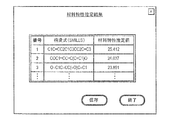
- FIG. 11 shows an image example of the material property estimation result displayed on the monitor 156 by the material property estimation result display unit 112.
- the image shows the chemical structural formulas of the selected materials and their corresponding estimated material property values.
- the user can determine the chemical structural formula to actually execute the experiment or simulation with reference to the displayed chemical structural formula and material property value.
- the save button saves the estimation result.
- the present invention is not limited to the above-described embodiment, and includes various modifications.
- the above-described embodiment has been described in detail in order to explain the present invention in an easy-to-understand manner, and is not necessarily limited to those having all the described configurations.
- it is possible to replace a part of the configuration of one embodiment with the configuration of another embodiment and it is also possible to add the configuration of another embodiment to the configuration of one embodiment.
- each of the above-mentioned configurations, functions, processing units, etc. may be realized by hardware, for example, by designing a part or all of them with an integrated circuit.
- each of the above configurations, functions, and the like may be realized by software by the processor interpreting and executing a program that realizes each function.
- Information such as programs, tables, and files that realize each function can be placed in a memory, a hard disk, a recording device such as an SSD (Solid State Drive), or a recording medium such as an IC card or an SD card.
- control lines and information lines indicate what is considered necessary for explanation, and not all control lines and information lines are necessarily shown on the product. In practice, it can be considered that almost all configurations are interconnected.
Landscapes
- Engineering & Computer Science (AREA)
- Theoretical Computer Science (AREA)
- Physics & Mathematics (AREA)
- Evolutionary Computation (AREA)
- Computing Systems (AREA)
- Medical Informatics (AREA)
- Software Systems (AREA)
- Computer Hardware Design (AREA)
- Geometry (AREA)
- General Engineering & Computer Science (AREA)
- General Physics & Mathematics (AREA)
- Computer Vision & Pattern Recognition (AREA)
- Artificial Intelligence (AREA)
- Life Sciences & Earth Sciences (AREA)
- Bioinformatics & Cheminformatics (AREA)
- Bioinformatics & Computational Biology (AREA)
- Management, Administration, Business Operations System, And Electronic Commerce (AREA)
Priority Applications (2)
| Application Number | Priority Date | Filing Date | Title |
|---|---|---|---|
| EP21796302.4A EP4145327A4 (en) | 2020-04-28 | 2021-04-09 | SYSTEM FOR ESTIMATING THE CHARACTERISTIC VALUE OF A MATERIAL |
| US17/917,009 US20230153491A1 (en) | 2020-04-28 | 2021-04-09 | System for estimating feature value of material |
Applications Claiming Priority (2)
| Application Number | Priority Date | Filing Date | Title |
|---|---|---|---|
| JP2020-079791 | 2020-04-28 | ||
| JP2020079791A JP7339923B2 (ja) | 2020-04-28 | 2020-04-28 | 材料の特性値を推定するシステム |
Publications (1)
| Publication Number | Publication Date |
|---|---|
| WO2021220775A1 true WO2021220775A1 (ja) | 2021-11-04 |
Family
ID=78279721
Family Applications (1)
| Application Number | Title | Priority Date | Filing Date |
|---|---|---|---|
| PCT/JP2021/015043 Ceased WO2021220775A1 (ja) | 2020-04-28 | 2021-04-09 | 材料の特性値を推定するシステム |
Country Status (4)
| Country | Link |
|---|---|
| US (1) | US20230153491A1 (https=) |
| EP (1) | EP4145327A4 (https=) |
| JP (1) | JP7339923B2 (https=) |
| WO (1) | WO2021220775A1 (https=) |
Cited By (1)
| Publication number | Priority date | Publication date | Assignee | Title |
|---|---|---|---|---|
| US20240077393A1 (en) * | 2022-09-02 | 2024-03-07 | Proterial, Ltd. | Resin composition physical property estimation device and resin composition physical property estimation method |
Families Citing this family (6)
| Publication number | Priority date | Publication date | Assignee | Title |
|---|---|---|---|---|
| JP7543129B2 (ja) * | 2020-12-28 | 2024-09-02 | 株式会社日立製作所 | 材料の加工方法並びにプロセス設計計算機及びそのプログラム |
| EP4375915A4 (en) * | 2021-07-21 | 2025-07-16 | Resonac Corp | MATERIAL DESIGN ASSISTANCE DEVICE, MATERIAL DESIGN ASSISTANCE METHOD, AND PROGRAM |
| US12587274B2 (en) | 2023-03-28 | 2026-03-24 | Quantum Generative Materials Llc | Satellite optimization management system based on natural language input and artificial intelligence |
| JP7406664B1 (ja) | 2023-03-31 | 2023-12-27 | 住友化学株式会社 | 学習モデルの生成方法、情報処理装置、コンピュータプログラム、物質の選別方法及び模擬実験値の生成方法 |
| US12368503B2 (en) | 2023-12-27 | 2025-07-22 | Quantum Generative Materials Llc | Intent-based satellite transmit management based on preexisting historical location and machine learning |
| US12603701B2 (en) | 2023-12-27 | 2026-04-14 | Quantum Generative Materials Llc | Distributed satellite constellation management and control system |
Citations (5)
| Publication number | Priority date | Publication date | Assignee | Title |
|---|---|---|---|---|
| WO2018098588A1 (en) * | 2016-12-02 | 2018-06-07 | Lumiant Corporation | Computer systems for and methods of identifying non-elemental materials based on atomistic properties |
| WO2019060268A1 (en) * | 2017-09-19 | 2019-03-28 | Covestro Llc | CUSTOM DESIGN TECHNIQUES FOR PRODUCTS |
| WO2020031671A1 (ja) * | 2018-08-08 | 2020-02-13 | パナソニックIpマネジメント株式会社 | 材料記述子生成方法、材料記述子生成装置、材料記述子生成プログラム、予測モデル構築方法、予測モデル構築装置及び予測モデル構築プログラム |
| WO2020075573A1 (ja) * | 2018-10-10 | 2020-04-16 | 国立研究開発法人物質・材料研究機構 | 予測管理システム、予測管理方法、データ構造、予測管理装置及び予測実行装置 |
| JP2020079791A (ja) | 2014-02-17 | 2020-05-28 | サントル ナショナル ドゥ ラ ルシェルシュ シアンティフィック | 電気化学デバイスおよび装置ならびにこのような装置を実施する方法 |
Family Cites Families (1)
| Publication number | Priority date | Publication date | Assignee | Title |
|---|---|---|---|---|
| KR102523472B1 (ko) * | 2016-08-01 | 2023-04-18 | 삼성전자주식회사 | 신규 물질의 구조 생성 방법 및 장치 |
-
2020
- 2020-04-28 JP JP2020079791A patent/JP7339923B2/ja active Active
-
2021
- 2021-04-09 US US17/917,009 patent/US20230153491A1/en active Pending
- 2021-04-09 WO PCT/JP2021/015043 patent/WO2021220775A1/ja not_active Ceased
- 2021-04-09 EP EP21796302.4A patent/EP4145327A4/en active Pending
Patent Citations (5)
| Publication number | Priority date | Publication date | Assignee | Title |
|---|---|---|---|---|
| JP2020079791A (ja) | 2014-02-17 | 2020-05-28 | サントル ナショナル ドゥ ラ ルシェルシュ シアンティフィック | 電気化学デバイスおよび装置ならびにこのような装置を実施する方法 |
| WO2018098588A1 (en) * | 2016-12-02 | 2018-06-07 | Lumiant Corporation | Computer systems for and methods of identifying non-elemental materials based on atomistic properties |
| WO2019060268A1 (en) * | 2017-09-19 | 2019-03-28 | Covestro Llc | CUSTOM DESIGN TECHNIQUES FOR PRODUCTS |
| WO2020031671A1 (ja) * | 2018-08-08 | 2020-02-13 | パナソニックIpマネジメント株式会社 | 材料記述子生成方法、材料記述子生成装置、材料記述子生成プログラム、予測モデル構築方法、予測モデル構築装置及び予測モデル構築プログラム |
| WO2020075573A1 (ja) * | 2018-10-10 | 2020-04-16 | 国立研究開発法人物質・材料研究機構 | 予測管理システム、予測管理方法、データ構造、予測管理装置及び予測実行装置 |
Non-Patent Citations (3)
| Title |
|---|
| G. R. SCHLEDER ET AL.: "From DFT to machine learning: recent approaches to materials science-a review", J. PHYS.: MATER., vol. 2, 2019, pages 032001 |
| MORIKAWA KOJI: "Application of materials informatics to inorganic compounds", JOURNAL OF THE JAPANESE SOCIETY FOR ARTIFICIAL INTELLIGENCE, vol. 34, no. 3, 1 May 2019 (2019-05-01), pages 364 - 369, XP055868753 * |
| See also references of EP4145327A4 |
Cited By (2)
| Publication number | Priority date | Publication date | Assignee | Title |
|---|---|---|---|---|
| US20240077393A1 (en) * | 2022-09-02 | 2024-03-07 | Proterial, Ltd. | Resin composition physical property estimation device and resin composition physical property estimation method |
| US12535392B2 (en) * | 2022-09-02 | 2026-01-27 | Proterial, Ltd. | Resin composition physical property estimation device and resin composition physical property estimation method |
Also Published As
| Publication number | Publication date |
|---|---|
| EP4145327A1 (en) | 2023-03-08 |
| EP4145327A4 (en) | 2024-07-03 |
| US20230153491A1 (en) | 2023-05-18 |
| JP7339923B2 (ja) | 2023-09-06 |
| JP2021174402A (ja) | 2021-11-01 |
Similar Documents
| Publication | Publication Date | Title |
|---|---|---|
| JP7339923B2 (ja) | 材料の特性値を推定するシステム | |
| TWI444844B (zh) | 模擬參數校正技術 | |
| Esteves et al. | Competitive k-means, a new accurate and distributed k-means algorithm for large datasets | |
| CN114207729B (zh) | 材料特性预测系统以及材料特性预测方法 | |
| CN109313720A (zh) | 具有稀疏访问的外部存储器的增强神经网络 | |
| WO2021220776A1 (ja) | 材料の特性値を推定するシステム | |
| Polyzou et al. | Grade prediction with course and student specific models | |
| Thompson et al. | Exploiting domain knowledge in system-level MPSoC design space exploration | |
| CN113918807B (zh) | 数据推荐方法、装置、计算设备及计算机可读存储介质 | |
| Tashkova et al. | Parameter estimation with bio-inspired meta-heuristic optimization: modeling the dynamics of endocytosis | |
| JP6331756B2 (ja) | テストケース生成プログラム、テストケース生成方法、及びテストケース生成装置 | |
| CN116578239A (zh) | 用于对内存进行分区的方法、电子设备及存储介质 | |
| EP4348442A1 (en) | Graph embeddings via node-property-aware fast random projection | |
| CN117813602A (zh) | 主成分分析 | |
| JPWO2013105404A1 (ja) | 信頼度計算装置、信頼度計算方法、及びプログラム | |
| Banushkina et al. | Fep1d: a script for the analysis of reaction coordinates | |
| JP7452648B2 (ja) | 学習方法、学習装置及びプログラム | |
| JP2024108021A (ja) | 情報処理装置、情報処理方法、及び情報処理プログラム | |
| Cerqueira et al. | Constructive aggregation and its application to forecasting with dynamic ensembles | |
| JP6577922B2 (ja) | 検索装置、方法、及びプログラム | |
| WO2021033515A1 (ja) | 情報処理装置、方法及びプログラム | |
| JPWO2014168199A1 (ja) | 論理演算方法および情報処理装置 | |
| CN119476068B (zh) | 流体模型的状态参数生成方法、装置、设备和存储介质 | |
| JP7207423B2 (ja) | 作業集合選択装置、作業集合選択方法および作業集合選択プログラム | |
| Zou et al. | Sparse logistic regression with logical features |
Legal Events
| Date | Code | Title | Description |
|---|---|---|---|
| 121 | Ep: the epo has been informed by wipo that ep was designated in this application |
Ref document number: 21796302 Country of ref document: EP Kind code of ref document: A1 |
|
| NENP | Non-entry into the national phase |
Ref country code: DE |
|
| ENP | Entry into the national phase |
Ref document number: 2021796302 Country of ref document: EP Effective date: 20221128 |