WO2021214962A1 - 振動キャンセル方法、装置及びプログラム - Google Patents
振動キャンセル方法、装置及びプログラム Download PDFInfo
- Publication number
- WO2021214962A1 WO2021214962A1 PCT/JP2020/017605 JP2020017605W WO2021214962A1 WO 2021214962 A1 WO2021214962 A1 WO 2021214962A1 JP 2020017605 W JP2020017605 W JP 2020017605W WO 2021214962 A1 WO2021214962 A1 WO 2021214962A1
- Authority
- WO
- WIPO (PCT)
- Prior art keywords
- vibration
- seat
- canceling
- error
- user
- Prior art date
- Legal status (The legal status is an assumption and is not a legal conclusion. Google has not performed a legal analysis and makes no representation as to the accuracy of the status listed.)
- Ceased
Links
Images


Classifications
-
- F—MECHANICAL ENGINEERING; LIGHTING; HEATING; WEAPONS; BLASTING
- F16—ENGINEERING ELEMENTS AND UNITS; GENERAL MEASURES FOR PRODUCING AND MAINTAINING EFFECTIVE FUNCTIONING OF MACHINES OR INSTALLATIONS; THERMAL INSULATION IN GENERAL
- F16F—SPRINGS; SHOCK-ABSORBERS; MEANS FOR DAMPING VIBRATION
- F16F15/00—Suppression of vibrations in systems; Means or arrangements for avoiding or reducing out-of-balance forces, e.g. due to motion
- F16F15/002—Suppression of vibrations in systems; Means or arrangements for avoiding or reducing out-of-balance forces, e.g. due to motion characterised by the control method or circuitry
-
- F—MECHANICAL ENGINEERING; LIGHTING; HEATING; WEAPONS; BLASTING
- F16—ENGINEERING ELEMENTS AND UNITS; GENERAL MEASURES FOR PRODUCING AND MAINTAINING EFFECTIVE FUNCTIONING OF MACHINES OR INSTALLATIONS; THERMAL INSULATION IN GENERAL
- F16F—SPRINGS; SHOCK-ABSORBERS; MEANS FOR DAMPING VIBRATION
- F16F15/00—Suppression of vibrations in systems; Means or arrangements for avoiding or reducing out-of-balance forces, e.g. due to motion
- F16F15/02—Suppression of vibrations of non-rotating, e.g. reciprocating systems; Suppression of vibrations of rotating systems by use of members not moving with the rotating systems
-
- G—PHYSICS
- G10—MUSICAL INSTRUMENTS; ACOUSTICS
- G10K—SOUND-PRODUCING DEVICES; METHODS OR DEVICES FOR PROTECTING AGAINST, OR FOR DAMPING, NOISE OR OTHER ACOUSTIC WAVES IN GENERAL; ACOUSTICS NOT OTHERWISE PROVIDED FOR
- G10K11/00—Methods or devices for transmitting, conducting or directing sound in general; Methods or devices for protecting against, or for damping, noise or other acoustic waves in general
- G10K11/16—Methods or devices for protecting against, or for damping, noise or other acoustic waves in general
- G10K11/175—Methods or devices for protecting against, or for damping, noise or other acoustic waves in general using interference effects; Masking sound
- G10K11/178—Methods or devices for protecting against, or for damping, noise or other acoustic waves in general using interference effects; Masking sound by electro-acoustically regenerating the original acoustic waves in anti-phase
- G10K11/1781—Methods or devices for protecting against, or for damping, noise or other acoustic waves in general using interference effects; Masking sound by electro-acoustically regenerating the original acoustic waves in anti-phase characterised by the analysis of input or output signals, e.g. frequency range, modes, transfer functions
- G10K11/17821—Methods or devices for protecting against, or for damping, noise or other acoustic waves in general using interference effects; Masking sound by electro-acoustically regenerating the original acoustic waves in anti-phase characterised by the analysis of input or output signals, e.g. frequency range, modes, transfer functions characterised by the analysis of the input signals only
- G10K11/17823—Reference signals, e.g. ambient acoustic environment
-
- G—PHYSICS
- G10—MUSICAL INSTRUMENTS; ACOUSTICS
- G10K—SOUND-PRODUCING DEVICES; METHODS OR DEVICES FOR PROTECTING AGAINST, OR FOR DAMPING, NOISE OR OTHER ACOUSTIC WAVES IN GENERAL; ACOUSTICS NOT OTHERWISE PROVIDED FOR
- G10K11/00—Methods or devices for transmitting, conducting or directing sound in general; Methods or devices for protecting against, or for damping, noise or other acoustic waves in general
- G10K11/16—Methods or devices for protecting against, or for damping, noise or other acoustic waves in general
- G10K11/175—Methods or devices for protecting against, or for damping, noise or other acoustic waves in general using interference effects; Masking sound
- G10K11/178—Methods or devices for protecting against, or for damping, noise or other acoustic waves in general using interference effects; Masking sound by electro-acoustically regenerating the original acoustic waves in anti-phase
- G10K11/1781—Methods or devices for protecting against, or for damping, noise or other acoustic waves in general using interference effects; Masking sound by electro-acoustically regenerating the original acoustic waves in anti-phase characterised by the analysis of input or output signals, e.g. frequency range, modes, transfer functions
- G10K11/17821—Methods or devices for protecting against, or for damping, noise or other acoustic waves in general using interference effects; Masking sound by electro-acoustically regenerating the original acoustic waves in anti-phase characterised by the analysis of input or output signals, e.g. frequency range, modes, transfer functions characterised by the analysis of the input signals only
- G10K11/17825—Error signals
-
- G—PHYSICS
- G10—MUSICAL INSTRUMENTS; ACOUSTICS
- G10K—SOUND-PRODUCING DEVICES; METHODS OR DEVICES FOR PROTECTING AGAINST, OR FOR DAMPING, NOISE OR OTHER ACOUSTIC WAVES IN GENERAL; ACOUSTICS NOT OTHERWISE PROVIDED FOR
- G10K11/00—Methods or devices for transmitting, conducting or directing sound in general; Methods or devices for protecting against, or for damping, noise or other acoustic waves in general
- G10K11/16—Methods or devices for protecting against, or for damping, noise or other acoustic waves in general
- G10K11/175—Methods or devices for protecting against, or for damping, noise or other acoustic waves in general using interference effects; Masking sound
- G10K11/178—Methods or devices for protecting against, or for damping, noise or other acoustic waves in general using interference effects; Masking sound by electro-acoustically regenerating the original acoustic waves in anti-phase
- G10K11/1787—General system configurations
- G10K11/17879—General system configurations using both a reference signal and an error signal
- G10K11/17881—General system configurations using both a reference signal and an error signal the reference signal being an acoustic signal, e.g. recorded with a microphone
-
- G—PHYSICS
- G10—MUSICAL INSTRUMENTS; ACOUSTICS
- G10K—SOUND-PRODUCING DEVICES; METHODS OR DEVICES FOR PROTECTING AGAINST, OR FOR DAMPING, NOISE OR OTHER ACOUSTIC WAVES IN GENERAL; ACOUSTICS NOT OTHERWISE PROVIDED FOR
- G10K11/00—Methods or devices for transmitting, conducting or directing sound in general; Methods or devices for protecting against, or for damping, noise or other acoustic waves in general
- G10K11/16—Methods or devices for protecting against, or for damping, noise or other acoustic waves in general
- G10K11/175—Methods or devices for protecting against, or for damping, noise or other acoustic waves in general using interference effects; Masking sound
- G10K11/178—Methods or devices for protecting against, or for damping, noise or other acoustic waves in general using interference effects; Masking sound by electro-acoustically regenerating the original acoustic waves in anti-phase
- G10K11/1781—Methods or devices for protecting against, or for damping, noise or other acoustic waves in general using interference effects; Masking sound by electro-acoustically regenerating the original acoustic waves in anti-phase characterised by the analysis of input or output signals, e.g. frequency range, modes, transfer functions
- G10K11/17813—Methods or devices for protecting against, or for damping, noise or other acoustic waves in general using interference effects; Masking sound by electro-acoustically regenerating the original acoustic waves in anti-phase characterised by the analysis of input or output signals, e.g. frequency range, modes, transfer functions characterised by the analysis of the acoustic paths, e.g. estimating, calibrating or testing of transfer functions or cross-terms
- G10K11/17817—Methods or devices for protecting against, or for damping, noise or other acoustic waves in general using interference effects; Masking sound by electro-acoustically regenerating the original acoustic waves in anti-phase characterised by the analysis of input or output signals, e.g. frequency range, modes, transfer functions characterised by the analysis of the acoustic paths, e.g. estimating, calibrating or testing of transfer functions or cross-terms between the output signals and the error signals, i.e. secondary path
-
- G—PHYSICS
- G10—MUSICAL INSTRUMENTS; ACOUSTICS
- G10K—SOUND-PRODUCING DEVICES; METHODS OR DEVICES FOR PROTECTING AGAINST, OR FOR DAMPING, NOISE OR OTHER ACOUSTIC WAVES IN GENERAL; ACOUSTICS NOT OTHERWISE PROVIDED FOR
- G10K2210/00—Details of active noise control [ANC] covered by G10K11/178 but not provided for in any of its subgroups
- G10K2210/30—Means
- G10K2210/301—Computational
- G10K2210/3012—Algorithms
-
- G—PHYSICS
- G10—MUSICAL INSTRUMENTS; ACOUSTICS
- G10K—SOUND-PRODUCING DEVICES; METHODS OR DEVICES FOR PROTECTING AGAINST, OR FOR DAMPING, NOISE OR OTHER ACOUSTIC WAVES IN GENERAL; ACOUSTICS NOT OTHERWISE PROVIDED FOR
- G10K2210/00—Details of active noise control [ANC] covered by G10K11/178 but not provided for in any of its subgroups
- G10K2210/30—Means
- G10K2210/301—Computational
- G10K2210/3026—Feedback
-
- G—PHYSICS
- G10—MUSICAL INSTRUMENTS; ACOUSTICS
- G10K—SOUND-PRODUCING DEVICES; METHODS OR DEVICES FOR PROTECTING AGAINST, OR FOR DAMPING, NOISE OR OTHER ACOUSTIC WAVES IN GENERAL; ACOUSTICS NOT OTHERWISE PROVIDED FOR
- G10K2210/00—Details of active noise control [ANC] covered by G10K11/178 but not provided for in any of its subgroups
- G10K2210/30—Means
- G10K2210/301—Computational
- G10K2210/3027—Feedforward
-
- G—PHYSICS
- G10—MUSICAL INSTRUMENTS; ACOUSTICS
- G10K—SOUND-PRODUCING DEVICES; METHODS OR DEVICES FOR PROTECTING AGAINST, OR FOR DAMPING, NOISE OR OTHER ACOUSTIC WAVES IN GENERAL; ACOUSTICS NOT OTHERWISE PROVIDED FOR
- G10K2210/00—Details of active noise control [ANC] covered by G10K11/178 but not provided for in any of its subgroups
- G10K2210/30—Means
- G10K2210/301—Computational
- G10K2210/3028—Filtering, e.g. Kalman filters or special analogue or digital filters
-
- G—PHYSICS
- G10—MUSICAL INSTRUMENTS; ACOUSTICS
- G10K—SOUND-PRODUCING DEVICES; METHODS OR DEVICES FOR PROTECTING AGAINST, OR FOR DAMPING, NOISE OR OTHER ACOUSTIC WAVES IN GENERAL; ACOUSTICS NOT OTHERWISE PROVIDED FOR
- G10K2210/00—Details of active noise control [ANC] covered by G10K11/178 but not provided for in any of its subgroups
- G10K2210/30—Means
- G10K2210/301—Computational
- G10K2210/3044—Phase shift, e.g. complex envelope processing
-
- G—PHYSICS
- G10—MUSICAL INSTRUMENTS; ACOUSTICS
- G10K—SOUND-PRODUCING DEVICES; METHODS OR DEVICES FOR PROTECTING AGAINST, OR FOR DAMPING, NOISE OR OTHER ACOUSTIC WAVES IN GENERAL; ACOUSTICS NOT OTHERWISE PROVIDED FOR
- G10K2210/00—Details of active noise control [ANC] covered by G10K11/178 but not provided for in any of its subgroups
- G10K2210/30—Means
- G10K2210/321—Physical
- G10K2210/3221—Headrests, seats or the like, for personal ANC systems
Definitions
- the present invention relates to an active vibration canceling technique that suppresses vibration generated in a vehicle seat of an aircraft, a railroad, a ship, a vehicle, a bed in a building, or the like by using an actuator, an exciter, or the like.
- FIG. 8 is a configuration of the prior art disclosed in Non-Patent Document 1.
- a reference microphone 102 for observing the noise in the space and an error microphone 103 installed around the position where you want to make a quiet space, and the noise is canceled at the position of the error microphone 103 and the sound of the opposite phase is output.
- a sound canceling unit 104 which is a secondary sound source, is installed.
- the cancel filter unit 108 filters the signal x 2 (t) picked up by the reference microphone 102 to obtain the input signal d 2 '(t) to the sound canceling unit 104.
- the estimation secondary path filter unit 105 filters the signal x 2 (t) picked up by the reference microphone 102 to generate the reference signal x 2 '(t) output to the adaptive algorithm unit 107.
- the adaptive algorithm unit 101 uses the LMS, NLMS, projection algorithm, RLS algorithm, etc. from the reference signal x 2 '(t) and the error signal e (t) picked up by the error microphone 103 to filter the cancel filter. Find the coefficients one by one. The obtained cancel filter coefficient is set in the cancel filter unit 108.
- the noise propagating in the air can be reduced by the method described in the background technology, the vibration transmitted through the housing cannot be reduced. In the case of sleeping seats and beds, such as aircraft seats, this vibration interferes with a good night's sleep.
- An object of the present invention is to provide a vibration canceling method, an apparatus and a program for canceling the vibration of a seat such as a seat or a bed.
- the vibration canceling method is a vibration canceling method that cancels the vibration that arrives at the seat from the outside of the seat, which is transmitted to the user seated in the seat.
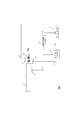
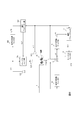
- FIG. 1 is a diagram showing an example of a functional configuration of the vibration canceling device of the first embodiment.
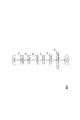
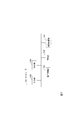
- FIG. 2 is a diagram showing an example of a processing procedure of the cancellation method.
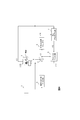
- FIG. 3 is a diagram showing an example of the functional configuration of the vibration canceling device of the second embodiment.
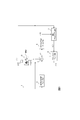
- FIG. 4 is a diagram showing an example of the functional configuration of the vibration canceling device of the third embodiment.
- FIG. 5 is a diagram showing an example of the functional configuration of the vibration canceling device of the fourth embodiment.
- FIG. 6 is a diagram showing an example of the functional configuration of the vibration canceling device according to the fifth embodiment.
- FIG. 7 is a diagram showing an example of a functional configuration of a computer.
- FIG. 8 is a diagram showing an example of the functional configuration of the vibration canceling device of the background technology.
- FIG. 1 is a block diagram of an example of the vibration canceling device of the first embodiment.
- the vibration canceling device of the first embodiment includes, for example, a vibration sensor 2, an error vibration sensor 3, a vibration canceling unit 4, an estimated secondary path filter unit 5, an adaptive algorithm unit 7, and a canceling filter unit 8.
- the vibration canceling device of the first embodiment the vibration sensor 2 is used for acquiring the reference signal, and the error vibration sensor 3 is used for acquiring the error signal.
- the vibration sensor 2 and the error vibration sensor 3 are, for example, a vibration pickup or an acceleration sensor.
- a vibration canceling unit 4 which is a vibration actuator or an exciter is used.
- the vibration sensor 2 that acquires the reference signal is installed in the frame of the seat 1.
- the vibration sensor 2 may be installed on the front surface or the back surface of cloth or leather which is the exterior of the seat 1. Since it is better to install the vibration sensor 2 at a position close to the vibration source, the vibration sensor 2 is installed at a position close to the external vibration source of the seat 1, for example, the foot of the seat 1 or the back portion of the seat 1.
- the seat 1 is a seat or a bed.
- the error vibration sensor 3 that acquires the error signal is installed in the frame of the seat 1 in the same manner as the vibration sensor 2.
- the error vibration sensor 3 may be installed on the front surface or the back surface of cloth or leather which is the exterior of the seat 1. Since it is better to install the error vibration sensor 3 at a position close to the user's head, the error vibration sensor 3 is installed at a position close to the position where the head is placed when the user is seated, for example, near the headrest 11 of the seat 1.
- the vibration canceling unit 4 that generates the canceling vibration is installed on the frame of the seat 1 in the same manner as the vibration sensor 2.
- the vibration canceling unit 4 may be installed on the front surface or the back surface of cloth or leather which is the exterior of the seat 1. Since it is better to install the vibration canceling unit 4 at a position close to the user's head, the vibration canceling unit 4 is installed at a position close to the position where the head is placed when the user is seated, for example, near the headrest 11 of the seat 1.
- the vibration sensor 2 acquires the reference signal x (t) (step S1). t is an index representing the time.
- the acquired reference signal x (t) is output to the estimated secondary route filter unit 5 and the cancel filter unit 8.
- the error vibration sensor 3 acquires the error signal e (t) (step S2).
- the acquired error signal e (t) is output to the adaptive algorithm unit 7.
- the estimated secondary route filter unit 5 filters the input reference signal x (t) to generate the reference signal x'(t) of the adaptive algorithm (step S3).
- the generated reference signal x'(t) of the adaptive algorithm is output to the adaptive algorithm unit 7.
- the transmission path from the vibration canceling unit 4 which is the secondary sound source to the error vibration sensor 3 is defined as the secondary path.
- the adaptive algorithm unit 7 uses an adaptive algorithm such as an LMS, NLMS, projection algorithm, or RLS algorithm from the input reference signal x'(t) of the adaptive algorithm and the input error signal e (t).
- the filter coefficient h (t) of the cancel filter is sequentially obtained (step S4). See reference 1 for details on the adaptive algorithm.
- Non-Patent Document 1 Tsutomu Nakanishi, "Chapter 3 Adaptive Signal Processing", [online], Institute of Electronics, Information and Communication Engineers, "Knowledge Forest” Group 1-9, Chapter 3, [Search March 31, 2nd year of Reiwa ], Internet ⁇ URL: http://www.ieice-hbkb.org/files/01/01gun_09hen_03m.pdf>
- the adaptive algorithm unit 7 obtains, for example, the filter coefficient so that the squared average error of the error signal e (t) is minimized.
- the obtained filter coefficient h (t) is output to the cancel filter unit 8.
- ⁇ is a parameter called a step size parameter that adjusts the convergence speed and estimation accuracy of the adaptive motion, and is a predetermined number of 0 ⁇ ⁇ 2.
- the adaptive algorithm unit 7 sets the filter coefficient h (t) based on, for example, h (t-1), e (t-1), x'(t-1) one hour ago. Ask.
- the cancel filter unit 8 generates a cancel signal d'(t) by filtering the input reference signal x (t) using the input filter coefficient h (t) (step S5).
- the generated cancellation signal d'(t) is output to the vibration canceling unit 4.
- the cancel signal can also be said to be a secondary sound source drive signal.
- the vibration canceling unit 4 generates a canceling vibration based on the input cancel signal d'(t) (step S6).
- the cancel vibration can suppress the vibration near the head of the seat 1.
- the vibration canceling device of the second embodiment has a configuration in which a microphone is used as the error vibration sensor 3.
- the other parts of the second embodiment are the same as those of the first embodiment.
- the error vibration sensor 3 which is a microphone is attached to the space around the head of the seat 1 or to the seat. Thereby, the vibration of the air generated from the vibration of the seat 1 can be minimized.
- the vibration canceling device of the third embodiment has the vibration sensor 2 and the error signal sensor 3 as the same sensor in the vibration canceling device of the first embodiment.
- the vibration sensor 2 and the error signal sensor 3 are shared by the same sensor. As a result, the number of vibration pickup sensors can be reduced by one.
- the vibration canceling device does not include a single vibration sensor 2, but a reference signal x (t) is obtained based on the error signal e (t) acquired from the error signal sensor 3 as described later. Be done. Therefore, it can be said that the error vibration sensor 3 is the same sensor as the vibration sensor 2.
- the vibration canceling device of the third embodiment further includes an estimated secondary path filter unit 6 and a subtraction unit 9.
- the cancel signal d'(t) generated by the cancel filter unit 8 is input to the estimated secondary route filter unit 6.
- the estimated secondary route filter unit 6 filters the cancel signal d'(t) and generates a cancel signal after filtering.
- the cancel signal after filtering is input to the subtraction unit 9.
- An error signal e (t) is further input to the subtraction unit 9.
- the subtraction unit 9 uses a signal obtained by subtracting the cancel signal after filtering from the error signal e (t) as the reference signal x (t).
- the generated reference signal x (t) is output to the estimated secondary route filter unit 5 and the cancel filter unit 8.
- the signal obtained by filtering the estimated secondary path filter on the cancel signal d'(t), which is the secondary sound source drive signal, is equivalent to the cancel signal at the position of the error vibration sensor 3. Therefore, the vibration of the error vibration sensor 3 before cancellation can be reproduced by these processes.
- the vibration canceling device of the fourth embodiment has a configuration in which a microphone is used as the error vibration sensor 3 in the vibration canceling device of the third embodiment.
- the other parts of the fourth embodiment are the same as those of the third embodiment.
- the error vibration sensor 3 which is a microphone is attached to the space around the head of the seat 1 or to the seat. Thereby, the vibration of the air generated from the vibration of the seat 1 can be minimized.
- the vibration canceling device of the fifth embodiment has a configuration in which the vibration canceling device of the second embodiment or the fourth embodiment is combined with the noise canceling of the background technology.
- the other parts of the fifth embodiment are the same as those of the second embodiment or the fourth embodiment.
- FIG. 6 shows a configuration in which the vibration canceling device of the fourth embodiment is combined with the noise canceling of the background technology as an example of the vibration canceling device of the fifth embodiment.
- the processing of the vibration sensor 2, the error vibration sensor 3, the vibration canceling unit 4, the estimated secondary path filter unit 5, the estimated secondary path filter unit 6, the adaptive algorithm unit 7, the canceling filter unit 8, and the subtraction unit 9 is performed in the fourth embodiment. Since it is the same as the form, the description thereof will be omitted.
- the processing of the reference microphone 102, the sound canceling unit 104, the estimated secondary path filter unit 105, the adaptive algorithm unit 107, and the canceling filter unit 108 will be described.
- x (t) is x 2 (t) and x'(t) is x.
- the reference microphone 102 is arranged at a position close to the position where the head is placed when the user is seated.
- the reference microphone 102 acquires the reference signal x 2 (t) (step S101).
- the acquired reference signal x 2 (t) is output to the estimated secondary route filter unit 105 and the cancel filter unit 108.
- the error signal e (t) acquired by the error vibration sensor 3 is further output to the adaptive algorithm unit 107 as well as the adaptive algorithm unit 7 and the subtraction unit 9.
- Estimated secondary path filter 105 filters the reference signal x 2 that is input (t), and generates a reference signal x 2 of the adaptive algorithm '(t) (step S103).
- the generated reference signal x 2 '(t) of the adaptive algorithm is output to the adaptive algorithm unit 107.
- the adaptive algorithm unit 107 uses an adaptive algorithm such as an LMS, NLMS, projection algorithm, or RLS algorithm from the input reference signal x 2'(t) of the adaptive algorithm and the input error signal e (t). ,
- the filter coefficient h 2 (t) of the cancel filter is sequentially obtained (step S104).
- the obtained filter coefficient h 2 (t) is output to the cancel filter unit 108.
- the cancel filter unit 108 generates a cancel signal d 2 '(t) by filtering the input reference signal x 2 (t) using the input filter coefficient h 2 (t) (step S105). ).
- the generated cancellation signal d 2 '(t) is output to the sound canceling unit 104.
- the sound canceling unit 104 which is a speaker, generates a sound based on the input cancel signal d 2 '(t) (step S106).
- the normalization when NLMS is used is the sum of the powers of the reference signal for vibration control and the reference signal for noise control.
- the vibration canceling device of the sixth embodiment is a device in which the vibration sensor 2, the error vibration sensor 3, and the reference microphone 102 are each a plurality of sensors or a plurality of microphones in the first to fifth embodiments.
- Performance can be improved by multi-channel processing.
- data may be exchanged directly between the constituent units of the canceling device, or may be performed via a storage unit (not shown).
- the program that describes this processing content can be recorded on a computer-readable recording medium.
- the computer-readable recording medium is, for example, a non-temporary recording medium, specifically, a magnetic recording device, an optical disk, or the like.
- the distribution of this program is carried out, for example, by selling, transferring, or renting a portable recording medium such as a DVD or CD-ROM on which the program is recorded.
- the program may be stored in the storage device of the server computer, and the program may be distributed by transferring the program from the server computer to another computer via the network.
- a computer that executes such a program first transfers the program recorded on the portable recording medium or the program transferred from the server computer to the auxiliary recording unit 1050, which is its own non-temporary storage device. Store. Then, at the time of executing the process, the computer reads the program stored in the auxiliary recording unit 1050, which is its own non-temporary storage device, into the storage unit 1020, and executes the process according to the read program. Further, as another execution form of this program, the computer may read the program directly from the portable recording medium into the storage unit 1020 and execute the processing according to the program, and further, the program from the server computer to this computer may be executed. Each time the is transferred, the processing according to the received program may be executed sequentially.
- ASP Application Service Provider
- the program in this embodiment includes information to be used for processing by a computer and equivalent to the program (data that is not a direct command to the computer but has a property of defining the processing of the computer, etc.).
- the present device is configured by executing a predetermined program on the computer, but at least a part of these processing contents may be realized by hardware.
Landscapes
- Engineering & Computer Science (AREA)
- Physics & Mathematics (AREA)
- Acoustics & Sound (AREA)
- Multimedia (AREA)
- General Engineering & Computer Science (AREA)
- Aviation & Aerospace Engineering (AREA)
- Mechanical Engineering (AREA)
- Soundproofing, Sound Blocking, And Sound Damping (AREA)
- Vibration Prevention Devices (AREA)
- Fittings On The Vehicle Exterior For Carrying Loads, And Devices For Holding Or Mounting Articles (AREA)
Priority Applications (3)
| Application Number | Priority Date | Filing Date | Title |
|---|---|---|---|
| US17/919,695 US20230160454A1 (en) | 2020-04-24 | 2020-04-24 | Vibration canceling method, apparatus and program |
| PCT/JP2020/017605 WO2021214962A1 (ja) | 2020-04-24 | 2020-04-24 | 振動キャンセル方法、装置及びプログラム |
| JP2022516782A JP7439915B2 (ja) | 2020-04-24 | 2020-04-24 | 振動キャンセル方法、装置及びプログラム |
Applications Claiming Priority (1)
| Application Number | Priority Date | Filing Date | Title |
|---|---|---|---|
| PCT/JP2020/017605 WO2021214962A1 (ja) | 2020-04-24 | 2020-04-24 | 振動キャンセル方法、装置及びプログラム |
Publications (1)
| Publication Number | Publication Date |
|---|---|
| WO2021214962A1 true WO2021214962A1 (ja) | 2021-10-28 |
Family
ID=78270694
Family Applications (1)
| Application Number | Title | Priority Date | Filing Date |
|---|---|---|---|
| PCT/JP2020/017605 Ceased WO2021214962A1 (ja) | 2020-04-24 | 2020-04-24 | 振動キャンセル方法、装置及びプログラム |
Country Status (3)
| Country | Link |
|---|---|
| US (1) | US20230160454A1 (cg-RX-API-DMAC7.html) |
| JP (1) | JP7439915B2 (cg-RX-API-DMAC7.html) |
| WO (1) | WO2021214962A1 (cg-RX-API-DMAC7.html) |
Cited By (1)
| Publication number | Priority date | Publication date | Assignee | Title |
|---|---|---|---|---|
| WO2025099791A1 (ja) * | 2023-11-06 | 2025-05-15 | 日本電信電話株式会社 | 生成装置、生成方法、およびプログラム |
Families Citing this family (1)
| Publication number | Priority date | Publication date | Assignee | Title |
|---|---|---|---|---|
| DE102022118018A1 (de) * | 2022-07-19 | 2024-01-25 | recalm GmbH | Geräuschreduzierungssystem, Verfahren zum Betreiben des Systems und Verwendung des Systems |
Citations (6)
| Publication number | Priority date | Publication date | Assignee | Title |
|---|---|---|---|---|
| JPH0374648A (ja) * | 1989-08-11 | 1991-03-29 | Bridgestone Corp | 振動制御装置 |
| JPH05281982A (ja) * | 1992-03-31 | 1993-10-29 | Mazda Motor Corp | 振動低減装置 |
| JPH0736468A (ja) * | 1993-07-20 | 1995-02-07 | Nissan Motor Co Ltd | 適応制御装置 |
| JPH07186803A (ja) * | 1993-12-24 | 1995-07-25 | Mazda Motor Corp | 車両のシ−ト制御装置 |
| JPH09281975A (ja) * | 1996-04-09 | 1997-10-31 | Mitsubishi Motors Corp | 振動騒音制御装置 |
| JP2007331557A (ja) * | 2006-06-15 | 2007-12-27 | Clarion Co Ltd | 音響システム |
Family Cites Families (7)
| Publication number | Priority date | Publication date | Assignee | Title |
|---|---|---|---|---|
| FR2732807B1 (fr) * | 1995-04-04 | 1997-05-16 | Technofirst | Procede et dispositif personnels d'attenuation acoustique active, siege equipe du dispositif correspondant, et espace a attenuation acoustique active obtenu |
| EP2119628B1 (en) * | 2007-12-14 | 2021-04-14 | Panasonic Corporation | Noise reduction method |
| JP2013148891A (ja) * | 2011-12-22 | 2013-08-01 | Panasonic Corp | 騒音低減装置 |
| JP6594456B2 (ja) * | 2016-02-05 | 2019-10-23 | 本田技研工業株式会社 | 能動型振動騒音制御装置及び能動型振動騒音制御回路 |
| KR102358968B1 (ko) * | 2016-10-17 | 2022-02-08 | 소니그룹주식회사 | 신호 처리 장치, 방법 및 프로그램 |
| EP3349211B1 (en) * | 2017-01-17 | 2020-03-11 | Flexound Systems OY | Active control of sound and vibration |
| US10347236B1 (en) * | 2018-02-28 | 2019-07-09 | Harman International Industries, Incorporated | Method and apparatus for continuously optimized road noise cancellation |
-
2020
- 2020-04-24 US US17/919,695 patent/US20230160454A1/en not_active Abandoned
- 2020-04-24 WO PCT/JP2020/017605 patent/WO2021214962A1/ja not_active Ceased
- 2020-04-24 JP JP2022516782A patent/JP7439915B2/ja active Active
Patent Citations (6)
| Publication number | Priority date | Publication date | Assignee | Title |
|---|---|---|---|---|
| JPH0374648A (ja) * | 1989-08-11 | 1991-03-29 | Bridgestone Corp | 振動制御装置 |
| JPH05281982A (ja) * | 1992-03-31 | 1993-10-29 | Mazda Motor Corp | 振動低減装置 |
| JPH0736468A (ja) * | 1993-07-20 | 1995-02-07 | Nissan Motor Co Ltd | 適応制御装置 |
| JPH07186803A (ja) * | 1993-12-24 | 1995-07-25 | Mazda Motor Corp | 車両のシ−ト制御装置 |
| JPH09281975A (ja) * | 1996-04-09 | 1997-10-31 | Mitsubishi Motors Corp | 振動騒音制御装置 |
| JP2007331557A (ja) * | 2006-06-15 | 2007-12-27 | Clarion Co Ltd | 音響システム |
Cited By (1)
| Publication number | Priority date | Publication date | Assignee | Title |
|---|---|---|---|---|
| WO2025099791A1 (ja) * | 2023-11-06 | 2025-05-15 | 日本電信電話株式会社 | 生成装置、生成方法、およびプログラム |
Also Published As
| Publication number | Publication date |
|---|---|
| US20230160454A1 (en) | 2023-05-25 |
| JPWO2021214962A1 (cg-RX-API-DMAC7.html) | 2021-10-28 |
| JP7439915B2 (ja) | 2024-02-28 |
Similar Documents
| Publication | Publication Date | Title |
|---|---|---|
| Kajikawa et al. | Recent advances on active noise control: open issues and innovative applications | |
| JP6685087B2 (ja) | ロバスト性が改善された適応ノイズコントロールシステム | |
| JP6616768B2 (ja) | アクティブ・ノイズ・コントロール・システム | |
| CN108140377B (zh) | 道路和发动机噪声控制 | |
| US9478209B2 (en) | Tunable active noise control | |
| KR20190126069A (ko) | 신호 처리 장치 및 방법, 그리고 프로그램 | |
| JP7439915B2 (ja) | 振動キャンセル方法、装置及びプログラム | |
| KR20240163317A (ko) | 차량의 능동소음제어를 위한 2차경로 모델링 방법 및 장치 | |
| Behera et al. | Head movement immune active noise control with head mounted moving microphones | |
| CN113242491A (zh) | 降噪处理方法、装置、设备、存储介质及程序 | |
| Kar et al. | Improved active noise cancellation using variable step-size combined Fx-LMS algorithm | |
| Ryu et al. | Active control of engine sound quality in a passenger car using a virtual error microphone | |
| JP7378038B2 (ja) | 能動騒音低減装置、移動体装置、及び、能動騒音低減方法 | |
| CN111436014B (zh) | 主动降噪耳机的滤波装置、滤波方法以及主动降噪耳机 | |
| JP7782706B2 (ja) | 能動騒音制御方法、能動騒音制御装置、およびプログラム | |
| JP2023121933A (ja) | 生成装置、生成方法、およびプログラム | |
| WO2023139754A1 (ja) | 騒音抑圧装置、騒音抑圧システム、騒音抑圧方法、およびプログラム | |
| KR20240155572A (ko) | 헤드 트래킹을 기반으로 한 능동 소음 제어 방법 및 장치 | |
| Millitzer et al. | Development, system integration and experimental investigation of an active HVAC noise control system for a passenger car | |
| Holzmüller | Improvements in virtual sensing and perceptual performance of active noise control systems | |
| Akhtar | A normalized Filtered-x generalized fractional lower order moment adaptive algorithm for impulsive ANC systems | |
| JPH08123437A (ja) | 騒音制御装置 | |
| KR20240129650A (ko) | 헤드 트래킹을 기반으로 한 능동 소음 제어 방법 및 장치 | |
| Michalczyk | Residual error shaping in active noise control-a case study | |
| WO2023139753A1 (ja) | 騒音抑圧装置、騒音抑圧方法、およびプログラム |
Legal Events
| Date | Code | Title | Description |
|---|---|---|---|
| 121 | Ep: the epo has been informed by wipo that ep was designated in this application |
Ref document number: 20931827 Country of ref document: EP Kind code of ref document: A1 |
|
| ENP | Entry into the national phase |
Ref document number: 2022516782 Country of ref document: JP Kind code of ref document: A |
|
| NENP | Non-entry into the national phase |
Ref country code: DE |
|
| 122 | Ep: pct application non-entry in european phase |
Ref document number: 20931827 Country of ref document: EP Kind code of ref document: A1 |