WO2021206078A1 - 腫瘍細胞を死滅させるための医薬 - Google Patents
腫瘍細胞を死滅させるための医薬 Download PDFInfo
- Publication number
- WO2021206078A1 WO2021206078A1 PCT/JP2021/014588 JP2021014588W WO2021206078A1 WO 2021206078 A1 WO2021206078 A1 WO 2021206078A1 JP 2021014588 W JP2021014588 W JP 2021014588W WO 2021206078 A1 WO2021206078 A1 WO 2021206078A1
- Authority
- WO
- WIPO (PCT)
- Prior art keywords
- cancer
- tumor
- tumor cells
- cell
- substance
- Prior art date
- Legal status (The legal status is an assumption and is not a legal conclusion. Google has not performed a legal analysis and makes no representation as to the accuracy of the status listed.)
- Ceased
Links
Images

Classifications
-
- C—CHEMISTRY; METALLURGY
- C07—ORGANIC CHEMISTRY
- C07K—PEPTIDES
- C07K16/00—Immunoglobulins [IG], e.g. monoclonal or polyclonal antibodies
- C07K16/18—Immunoglobulins [IG], e.g. monoclonal or polyclonal antibodies against material from animals or humans
- C07K16/28—Immunoglobulins [IG], e.g. monoclonal or polyclonal antibodies against material from animals or humans against receptors, cell surface antigens or cell surface determinants
- C07K16/2863—Immunoglobulins [IG], e.g. monoclonal or polyclonal antibodies against material from animals or humans against receptors, cell surface antigens or cell surface determinants against receptors for growth factors, growth regulators
-
- A—HUMAN NECESSITIES
- A61—MEDICAL OR VETERINARY SCIENCE; HYGIENE
- A61K—PREPARATIONS FOR MEDICAL, DENTAL OR TOILETRY PURPOSES
- A61K31/00—Medicinal preparations containing organic active ingredients
- A61K31/33—Heterocyclic compounds
- A61K31/395—Heterocyclic compounds having nitrogen as a ring hetero atom, e.g. guanethidine or rifamycins
- A61K31/40—Heterocyclic compounds having nitrogen as a ring hetero atom, e.g. guanethidine or rifamycins having five-membered rings with one nitrogen as the only ring hetero atom, e.g. sulpiride, succinimide, tolmetin, buflomedil
-
- A—HUMAN NECESSITIES
- A61—MEDICAL OR VETERINARY SCIENCE; HYGIENE
- A61K—PREPARATIONS FOR MEDICAL, DENTAL OR TOILETRY PURPOSES
- A61K31/00—Medicinal preparations containing organic active ingredients
- A61K31/33—Heterocyclic compounds
- A61K31/395—Heterocyclic compounds having nitrogen as a ring hetero atom, e.g. guanethidine or rifamycins
- A61K31/40—Heterocyclic compounds having nitrogen as a ring hetero atom, e.g. guanethidine or rifamycins having five-membered rings with one nitrogen as the only ring hetero atom, e.g. sulpiride, succinimide, tolmetin, buflomedil
- A61K31/409—Heterocyclic compounds having nitrogen as a ring hetero atom, e.g. guanethidine or rifamycins having five-membered rings with one nitrogen as the only ring hetero atom, e.g. sulpiride, succinimide, tolmetin, buflomedil having four such rings, e.g. porphine derivatives, bilirubin, biliverdine
-
- A—HUMAN NECESSITIES
- A61—MEDICAL OR VETERINARY SCIENCE; HYGIENE
- A61K—PREPARATIONS FOR MEDICAL, DENTAL OR TOILETRY PURPOSES
- A61K38/00—Medicinal preparations containing peptides
- A61K38/16—Peptides having more than 20 amino acids; Gastrins; Somatostatins; Melanotropins; Derivatives thereof
-
- A—HUMAN NECESSITIES
- A61—MEDICAL OR VETERINARY SCIENCE; HYGIENE
- A61K—PREPARATIONS FOR MEDICAL, DENTAL OR TOILETRY PURPOSES
- A61K38/00—Medicinal preparations containing peptides
- A61K38/16—Peptides having more than 20 amino acids; Gastrins; Somatostatins; Melanotropins; Derivatives thereof
- A61K38/43—Enzymes; Proenzymes; Derivatives thereof
- A61K38/45—Transferases (2)
-
- A—HUMAN NECESSITIES
- A61—MEDICAL OR VETERINARY SCIENCE; HYGIENE
- A61K—PREPARATIONS FOR MEDICAL, DENTAL OR TOILETRY PURPOSES
- A61K38/00—Medicinal preparations containing peptides
- A61K38/16—Peptides having more than 20 amino acids; Gastrins; Somatostatins; Melanotropins; Derivatives thereof
- A61K38/43—Enzymes; Proenzymes; Derivatives thereof
- A61K38/46—Hydrolases (3)
- A61K38/47—Hydrolases (3) acting on glycosyl compounds (3.2), e.g. cellulases, lactases
-
- A—HUMAN NECESSITIES
- A61—MEDICAL OR VETERINARY SCIENCE; HYGIENE
- A61K—PREPARATIONS FOR MEDICAL, DENTAL OR TOILETRY PURPOSES
- A61K41/00—Medicinal preparations obtained by treating materials with wave energy or particle radiation ; Therapies using these preparations
- A61K41/0057—Photodynamic therapy with a photosensitizer, i.e. agent able to produce reactive oxygen species upon exposure to light or radiation, e.g. UV or visible light; photocleavage of nucleic acids with an agent
-
- A—HUMAN NECESSITIES
- A61—MEDICAL OR VETERINARY SCIENCE; HYGIENE
- A61K—PREPARATIONS FOR MEDICAL, DENTAL OR TOILETRY PURPOSES
- A61K41/00—Medicinal preparations obtained by treating materials with wave energy or particle radiation ; Therapies using these preparations
- A61K41/0057—Photodynamic therapy with a photosensitizer, i.e. agent able to produce reactive oxygen species upon exposure to light or radiation, e.g. UV or visible light; photocleavage of nucleic acids with an agent
- A61K41/0071—PDT with porphyrins having exactly 20 ring atoms, i.e. based on the non-expanded tetrapyrrolic ring system, e.g. bacteriochlorin, chlorin-e6, or phthalocyanines
-
- A—HUMAN NECESSITIES
- A61—MEDICAL OR VETERINARY SCIENCE; HYGIENE
- A61K—PREPARATIONS FOR MEDICAL, DENTAL OR TOILETRY PURPOSES
- A61K45/00—Medicinal preparations containing active ingredients not provided for in groups A61K31/00 - A61K41/00
- A61K45/06—Mixtures of active ingredients without chemical characterisation, e.g. antiphlogistics and cardiaca
-
- A—HUMAN NECESSITIES
- A61—MEDICAL OR VETERINARY SCIENCE; HYGIENE
- A61K—PREPARATIONS FOR MEDICAL, DENTAL OR TOILETRY PURPOSES
- A61K47/00—Medicinal preparations characterised by the non-active ingredients used, e.g. carriers or inert additives; Targeting or modifying agents chemically bound to the active ingredient
- A61K47/50—Medicinal preparations characterised by the non-active ingredients used, e.g. carriers or inert additives; Targeting or modifying agents chemically bound to the active ingredient the non-active ingredient being chemically bound to the active ingredient, e.g. polymer-drug conjugates
- A61K47/51—Medicinal preparations characterised by the non-active ingredients used, e.g. carriers or inert additives; Targeting or modifying agents chemically bound to the active ingredient the non-active ingredient being chemically bound to the active ingredient, e.g. polymer-drug conjugates the non-active ingredient being a modifying agent
- A61K47/68—Medicinal preparations characterised by the non-active ingredients used, e.g. carriers or inert additives; Targeting or modifying agents chemically bound to the active ingredient the non-active ingredient being chemically bound to the active ingredient, e.g. polymer-drug conjugates the non-active ingredient being a modifying agent the modifying agent being an antibody, an immunoglobulin or a fragment thereof, e.g. an Fc-fragment
- A61K47/6801—Drug-antibody or immunoglobulin conjugates defined by the pharmacologically or therapeutically active agent
- A61K47/6803—Drugs conjugated to an antibody or immunoglobulin, e.g. cisplatin-antibody conjugates
- A61K47/6811—Drugs conjugated to an antibody or immunoglobulin, e.g. cisplatin-antibody conjugates the drug being a protein or peptide, e.g. transferrin or bleomycin
- A61K47/6817—Toxins
- A61K47/6819—Plant toxins
- A61K47/6825—Ribosomal inhibitory proteins, i.e. RIP-I or RIP-II, e.g. Pap, gelonin or dianthin
-
- A—HUMAN NECESSITIES
- A61—MEDICAL OR VETERINARY SCIENCE; HYGIENE
- A61K—PREPARATIONS FOR MEDICAL, DENTAL OR TOILETRY PURPOSES
- A61K47/00—Medicinal preparations characterised by the non-active ingredients used, e.g. carriers or inert additives; Targeting or modifying agents chemically bound to the active ingredient
- A61K47/50—Medicinal preparations characterised by the non-active ingredients used, e.g. carriers or inert additives; Targeting or modifying agents chemically bound to the active ingredient the non-active ingredient being chemically bound to the active ingredient, e.g. polymer-drug conjugates
- A61K47/51—Medicinal preparations characterised by the non-active ingredients used, e.g. carriers or inert additives; Targeting or modifying agents chemically bound to the active ingredient the non-active ingredient being chemically bound to the active ingredient, e.g. polymer-drug conjugates the non-active ingredient being a modifying agent
- A61K47/68—Medicinal preparations characterised by the non-active ingredients used, e.g. carriers or inert additives; Targeting or modifying agents chemically bound to the active ingredient the non-active ingredient being chemically bound to the active ingredient, e.g. polymer-drug conjugates the non-active ingredient being a modifying agent the modifying agent being an antibody, an immunoglobulin or a fragment thereof, e.g. an Fc-fragment
- A61K47/6801—Drug-antibody or immunoglobulin conjugates defined by the pharmacologically or therapeutically active agent
- A61K47/6803—Drugs conjugated to an antibody or immunoglobulin, e.g. cisplatin-antibody conjugates
- A61K47/6811—Drugs conjugated to an antibody or immunoglobulin, e.g. cisplatin-antibody conjugates the drug being a protein or peptide, e.g. transferrin or bleomycin
- A61K47/6817—Toxins
- A61K47/6829—Bacterial toxins, e.g. diphteria toxins or Pseudomonas exotoxin A
-
- A—HUMAN NECESSITIES
- A61—MEDICAL OR VETERINARY SCIENCE; HYGIENE
- A61K—PREPARATIONS FOR MEDICAL, DENTAL OR TOILETRY PURPOSES
- A61K47/00—Medicinal preparations characterised by the non-active ingredients used, e.g. carriers or inert additives; Targeting or modifying agents chemically bound to the active ingredient
- A61K47/50—Medicinal preparations characterised by the non-active ingredients used, e.g. carriers or inert additives; Targeting or modifying agents chemically bound to the active ingredient the non-active ingredient being chemically bound to the active ingredient, e.g. polymer-drug conjugates
- A61K47/51—Medicinal preparations characterised by the non-active ingredients used, e.g. carriers or inert additives; Targeting or modifying agents chemically bound to the active ingredient the non-active ingredient being chemically bound to the active ingredient, e.g. polymer-drug conjugates the non-active ingredient being a modifying agent
- A61K47/68—Medicinal preparations characterised by the non-active ingredients used, e.g. carriers or inert additives; Targeting or modifying agents chemically bound to the active ingredient the non-active ingredient being chemically bound to the active ingredient, e.g. polymer-drug conjugates the non-active ingredient being a modifying agent the modifying agent being an antibody, an immunoglobulin or a fragment thereof, e.g. an Fc-fragment
- A61K47/6835—Medicinal preparations characterised by the non-active ingredients used, e.g. carriers or inert additives; Targeting or modifying agents chemically bound to the active ingredient the non-active ingredient being chemically bound to the active ingredient, e.g. polymer-drug conjugates the non-active ingredient being a modifying agent the modifying agent being an antibody, an immunoglobulin or a fragment thereof, e.g. an Fc-fragment the modifying agent being an antibody or an immunoglobulin bearing at least one antigen-binding site
- A61K47/6851—Medicinal preparations characterised by the non-active ingredients used, e.g. carriers or inert additives; Targeting or modifying agents chemically bound to the active ingredient the non-active ingredient being chemically bound to the active ingredient, e.g. polymer-drug conjugates the non-active ingredient being a modifying agent the modifying agent being an antibody, an immunoglobulin or a fragment thereof, e.g. an Fc-fragment the modifying agent being an antibody or an immunoglobulin bearing at least one antigen-binding site the antibody targeting a determinant of a tumour cell
- A61K47/6863—Medicinal preparations characterised by the non-active ingredients used, e.g. carriers or inert additives; Targeting or modifying agents chemically bound to the active ingredient the non-active ingredient being chemically bound to the active ingredient, e.g. polymer-drug conjugates the non-active ingredient being a modifying agent the modifying agent being an antibody, an immunoglobulin or a fragment thereof, e.g. an Fc-fragment the modifying agent being an antibody or an immunoglobulin bearing at least one antigen-binding site the antibody targeting a determinant of a tumour cell the tumour determinant being from stomach or intestines cancer cell
-
- A—HUMAN NECESSITIES
- A61—MEDICAL OR VETERINARY SCIENCE; HYGIENE
- A61P—SPECIFIC THERAPEUTIC ACTIVITY OF CHEMICAL COMPOUNDS OR MEDICINAL PREPARATIONS
- A61P11/00—Drugs for disorders of the respiratory system
-
- A—HUMAN NECESSITIES
- A61—MEDICAL OR VETERINARY SCIENCE; HYGIENE
- A61P—SPECIFIC THERAPEUTIC ACTIVITY OF CHEMICAL COMPOUNDS OR MEDICINAL PREPARATIONS
- A61P35/00—Antineoplastic agents
-
- G—PHYSICS
- G01—MEASURING; TESTING
- G01N—INVESTIGATING OR ANALYSING MATERIALS BY DETERMINING THEIR CHEMICAL OR PHYSICAL PROPERTIES
- G01N33/00—Investigating or analysing materials by specific methods not covered by groups G01N1/00 - G01N31/00
- G01N33/48—Biological material, e.g. blood, urine; Haemocytometers
- G01N33/50—Chemical analysis of biological material, e.g. blood, urine; Testing involving biospecific ligand binding methods; Immunological testing
- G01N33/5005—Chemical analysis of biological material, e.g. blood, urine; Testing involving biospecific ligand binding methods; Immunological testing involving human or animal cells
- G01N33/5008—Chemical analysis of biological material, e.g. blood, urine; Testing involving biospecific ligand binding methods; Immunological testing involving human or animal cells for testing or evaluating the effect of chemical or biological compounds, e.g. drugs, cosmetics
- G01N33/5011—Chemical analysis of biological material, e.g. blood, urine; Testing involving biospecific ligand binding methods; Immunological testing involving human or animal cells for testing or evaluating the effect of chemical or biological compounds, e.g. drugs, cosmetics for testing antineoplastic activity
-
- C—CHEMISTRY; METALLURGY
- C07—ORGANIC CHEMISTRY
- C07K—PEPTIDES
- C07K2317/00—Immunoglobulins specific features
- C07K2317/20—Immunoglobulins specific features characterized by taxonomic origin
- C07K2317/24—Immunoglobulins specific features characterized by taxonomic origin containing regions, domains or residues from different species, e.g. chimeric, humanized or veneered
-
- C—CHEMISTRY; METALLURGY
- C07—ORGANIC CHEMISTRY
- C07K—PEPTIDES
- C07K2317/00—Immunoglobulins specific features
- C07K2317/70—Immunoglobulins specific features characterized by effect upon binding to a cell or to an antigen
- C07K2317/73—Inducing cell death, e.g. apoptosis, necrosis or inhibition of cell proliferation
Definitions
- the present invention is a medicament for killing tumor cells in which the expression level of the target substance on the cell surface is low, including a conjugate of a substance that binds to the target substance on the surface of the tumor cell and a cytotoxic substance, and a photosensitizing dye. Regarding.
- low-molecular-weight anticancer drugs cancer chemotherapy
- cancer chemotherapy low-molecular-weight anticancer drugs
- antibody drugs can reduce the strong side effects of small molecule anticancer drugs and are becoming widely used, but they are still effective for solid tumors.
- ADCs antibody drug conjugates
- ADCs antibody drug conjugates
- immunotherapeutic antibodies which are new antibody drugs, have strong efficacy against a wide range of cancer types by a new mechanism, but there are not always many patients who are effective, and in some cases death may occur. It has been found to show severe side effects.
- antibody drugs containing ADC have another essential drawback that they are ineffective unless the number of expression of the tumor cell surface antigen to which the antibody binds is high, and usually the target substance to which the antibody binds is 1. It is thought that the expected medicinal effect cannot be exhibited unless there are about 100,000 molecules per cell.
- the expression level of the target antigen in the tumor tissue is not always uniform among the tumor cells, and the effect cannot be exerted on the tumor cells having a low expression level.
- the expression number of the target differs depending on the patient, and only some patients with a high expression level can exert the effect.
- the photosensitizer is incorporated into endosomes by irradiating the photosensitizer with light by combining a photosensitizer and immunotoxin that easily localize to the endosome membrane.
- Methods have also been devised to destroy tumor cells by releasing the released immunotoxin (or fragments thereof) into the cytoplasm.
- the target on the surface of the tumor cell to which immunotoxin binds is highly expressed.
- the tumor cell surface target is EGFR
- Non-Patent Document 1 only examples of drug efficacy expressed in cell lines in which the target is highly expressed have been reported (Non-Patent Document 1). It is considered to have no effect on tumor cells in which the expression level of the tumor cell surface target is low as in the case of ordinary antibody drugs.
- the target substance when an antibody is used to kill a tumor cell, it is an essential requirement that the target substance is highly expressed on the tumor cell.
- the expression level of the target substance on the surface of the tumor cell is often non-uniform between patients, within the patient (primary site and metastatic site), and even within the cancer tissue, and as a result, the effect of treatment is achieved. It caused a problem that the range of output was narrowed.
- An object to be solved by the present invention is to provide a drug for killing a tumor cell having few side effects for a tumor cell having a low expression level of a target antigen.
- the expression level of the target antigen when considering a drug for tumor cells in which the expression level of the target antigen is low, we considered a method of irradiating the tumor site with light to cause the drug effect in order to localize the range of the drug effect.
- the low expression level of the target antigen in the present invention is assumed to indicate the expression of 20,000 or less molecules per cell, which is difficult for ordinary antibody drugs (including ADC) to exert their medicinal effects.
- a method of destroying tumor cells which is a combination of a photosensitizer and immunotoxin that easily localizes to endosome membranes, has also been devised.
- a photosensitizing dye is accumulated on the endosome membrane and irradiated with light to destroy the endosome membrane, thereby releasing the immunotoxin (or a fragment thereof) incorporated in the endosome membrane into the cytoplasm. It is a method believed to destroy endosome cells. Specific effects are expected due to local light irradiation and the specificity of immunotoxin that binds to tumor cells.
- ⁇ 1> A combination of a substance that binds to a target substance on the surface of a tumor cell and a cytotoxic substance; and a photosensitizer; A drug for killing tumor cells in which the expression level of the target substance is low, including.
- ⁇ 2> The medicament according to ⁇ 1>, wherein the expression level of the target antigen is 20,000 molecules or less per cell.
- ⁇ 3> The drug according to ⁇ 1> or ⁇ 2>, which is a drug for killing a tumor cell group containing a tumor cell having an expression level of a target substance of 20,000 molecules or less per cell.
- ⁇ 4> The medicament according to any one of ⁇ 1> to ⁇ 3>, wherein the substance that binds to the target substance on the surface of the tumor cell is an antibody, an antibody fragment, a ligand, or a peptide.
- ⁇ 5> The medicament according to any one of ⁇ 1> to ⁇ 4>, wherein the cytotoxicity is saporin, gelonin, or Pseudomonas aeruginosa exotoxin.
- ⁇ 6> The medicament according to any one of ⁇ 1> to ⁇ 5>, wherein the photosensitizer is talaporfin sodium, porphimer sodium, AlPcS2a or TPCS2a.
- EGFR Epidermal Growth Factor Receptor
- EphA2 Ephrin type-A receptor 2
- Glypican3 Glypican3
- CDH17 Cadherin17
- Tumor cells are head and neck cancer, lung cancer, liver cancer, colon cancer, skin cancer, esophageal cancer, gastric cancer, cervical cervical cancer, endometrial cancer, mesenteric tumor, brain tumor, malignant melanoma , Breast cancer, bile duct cancer, pancreatic cancer, ovarian cancer, renal cancer, bladder cancer, prostate cancer or malignant lymphoma, or osteosarcoma, ⁇ 1> to ⁇ 7> The medicine described in any one.
- ⁇ 10> (1) A step of bringing the conjugate and the photosensitizer into contact with the tumor cell, and (2) then irradiating the tumor cell with a wavelength effective for activating the photosensitizer.
- ⁇ B> A step of bringing a substance that binds to a target substance on the surface of a tumor cell having a low expression level, a conjugate of a cytotoxic substance, and a photosensitizing dye into contact with the tumor cell. (2) After that, the tumor cells having a low expression level of the target substance are killed, including the step of killing the tumor cells by irradiating the tumor cells with a wavelength effective for activating the photosensitizing dye.
- FIG. 1 shows the cell viability in a cytotoxicity test using aluminum phthalocyanine for MCF7 cells.
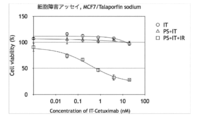
- FIG. 2 shows the cell viability in a cytotoxicity test using talaporfin sodium for MCF7 cells.
- photosensitizers such as sodium taraporphyrin and AlPcS2a and "combinations of substances that bind to target substances on the surface of tumor cells and cytotoxicity" such as immunotoxin have been described.
- cytotoxicity such as immunotoxin
- the conjugate of the substance that binds to the target substance on the surface of the tumor cell and the cytotoxic substance is encapsulated in the endosome after binding to the tumor.
- the photosensitizer dye added separately (or at the same time) is irradiated with light to release immunotoxin (or its decomposition product) and the like in endosomes into the cytoplasm. We believe that tumor cells can be killed.
- the low expression level of the target antigen on the tumor cells means that the expression level per cell is 20,000 molecules or less.
- the expression level per cell can be measured by a usual method such as FACS or ELISA.
- methods such as immunostaining and MS proteomics analysis can be considered.
- the present invention is characterized in that it can exert an effect even on a tumor cell having a low expression level of a target antigen, but it is self-evident that it is also effective on a tumor cell having a higher expression level than this. ..
- the effect can be expected for tumor cell groups having different expression levels.
- the methods for killing tumor cells include (1) a combination of a substance that binds to a target substance on the surface of the tumor cell and a cytotoxic substance, (2) and (3) in the coexistence of a photosensitizer. ) There is a form of irradiating light having a wavelength that activates the photosensitizer.
- a substance that binds to a target substance on the surface of tumor cells and a conjugate of a cytotoxic substance are administered, then (2) a photosensitizer is administered, and then (3) a photosensitizer. It can also be achieved by irradiating light with a wavelength that activates.
- a photosensitizing dye is administered, then (2) a substance that binds to a target substance on the surface of tumor cells and a conjugate of a cytotoxic substance are administered, and then (3) photosensitization is performed. It can also be achieved by irradiating light with a wavelength that activates the dye.
- a substance that binds to a target substance on the surface of tumor cells, a conjugate of a cytotoxic substance, and (2) a photosensitizer are simultaneously administered, and then (3) a photosensitizer. It can also be achieved by irradiating light with a wavelength that activates.
- the photosensitizer used in the present invention is a sensitizer that induces photochemical intracellular translocation by activation by light, and preferably one that generates singlet oxygen by activation by light.
- Examples of photosensitizers used in the present invention are proposed or used in PCI (Photochemical Internalization) and PDT (Photodynamic Therapy). It is possible to raise the photosensitizing pigment.
- photosensitizer used in the present invention include talaporfin sodium (Rezaphyrin (registered trademark)), porphimer sodium (photophyllin (registered trademark)), and 5-aminolevulinic acid (Levulan (registered trademark)). Registered trademark)), 5-aminolevulinic methyl ester (Metvix®) can be mentioned.
- Yet another embodiment includes tetraphenylchlorin disulphonic acid (TPCS2a) and a salt thereof, disulfonized aluminum phthalocyanine (AlPcS2, AlPcS2a) and a salt thereof.
- sulfonized tetraphenylporphyrins eg, TPPS 2a , TPPS 4 , TPPS 1 and TPPS 2o , Nile blue, chlorin derivatives, bacteriophage chlorin, ketochlorin, natural and synthetic porphyrins.
- protoporphyrin IX foscan, chlorin, uroporphyrin I, uroporphyrin III, heptacarboxyporphyrin I, heptacarboxyporphyrin III, hexacarboxyporphyrin I, hexacarboxyporphyrin III, pentacarboxyporphyrin I, Pentacarboxyporphyrin III, Coproporphyrin I, Coproporphyrin III, Isocoproporphyrin, Halderoporphyrin, Isohalderoporphyrin, Hematoporphyrin, Mesoporphyrin, Ethioporphyrin, Pyroporphyrin, Duteroporphyrin IX, Pentporphyrin, ATXs-10 5, Aminorepric acid derivative and the like can be mentioned.
- the photosensitizer used in the present invention may be activated by absorbing visible light, but it is also preferable to absorb long-wavelength visible light or near-infrared light.
- Examples of such a sensitizer include silicon phthalocyanine, zinc phthalocyanine and their derivatives. Further specific examples include IR700® and its derivatives.
- Substances that bind to target substances on the surface of tumor cells include, but are not limited to, an antibody, a ligand, a peptide, and the like.
- the target substance on the surface of a tumor cell for example, Epidermal Growth Factor Receptor (EGFR, ERBB1, ERBB2, ERBB3, ERBB4), Mesothelin, Ephrin type
- EGFR Epidermal Growth Factor Receptor
- ERBB1, ERBB2, ERBB3, ERBB4 Mesothelin
- Ephrin type Ephrin type
- EGFR Epidermal Growth Factor Receptor
- GPC3 Glypican3
- Cadhelin17 CDH17
- Cadherin3 CDH3
- Roundabout homolog 1 Robot1
- the type of antibody used in the present invention is not particularly limited, and is artificially used for the purpose of reducing heterologous antigenicity to humans, mouse antibody, human antibody, rat antibody, rabbit antibody, sheep antibody, camel antibody, triantibody, etc.
- Any of the recombinantly modified antibody for example, a chimeric antibody, a humanized antibody, or the like may be used.
- the recombinant antibody can be produced using a known method.
- a chimeric antibody is an antibody consisting of a heavy chain of a mouse antibody, a variable region of a light chain, and a heavy chain of a human antibody, a constant region of a light chain, and a DNA encoding the variable region of a mouse antibody.
- Humanized antibodies are obtained by transplanting the complementarity determining regions (CDRs) of non-human mammals, for example, mouse antibodies into the complementarity determining regions of human antibodies, and their general gene recombination methods are also known. .. Specifically, several oligos prepared so as to have an overlapping portion at the end of a DNA sequence designed to link the CDR of a mouse antibody and the framework region (FR) of a human antibody. It is synthesized from nucleotides by the PCR method. It is obtained by ligating the obtained DNA to the DNA encoding the human antibody constant region, then incorporating it into an expression vector, introducing it into a host and producing it (EP 239400, WO96 / 02576, etc.). ).
- a method for obtaining human antibodies is known.
- a human lymphocyte is sensitized in vitro with a desired antigen or a cell expressing the desired antigen, and the sensitized lymphocyte is fused with a human myeloma cell such as U266 to have a desired human antibody having an antigen-binding activity.
- a desired human antibody can be obtained by immunizing a transgenic animal having the entire repertoire of human antibody genes with a desired antigen (WO93 / 12227, WO92 / 03918, WO94 / 02602, WO94 / 25585, See WO96 / 34096, WO96 / 33735).
- a technique for obtaining a human antibody by panning using a human antibody library is also known.
- a phage that binds to an antigen can be selected by expressing the variable region of a human antibody as a single-chain antibody (scFv) on the surface of the phage by the phage display method.
- scFv single-chain antibody
- the DNA sequence encoding the variable region of the human antibody that binds to the antigen can be determined.
- an appropriate expression vector can be prepared for the sequence to obtain a human antibody.
- Antibodies that bind to tumor cells are preferably humanized or human antibodies, but are not limited thereto.
- these antibodies are low-molecular-weight antibodies such as antibody fragments or antibody modifications, as long as they do not lose the property of recognizing the entire length or part of the protein encoded by the antigen gene on the surface of the tumor cell.
- An antibody fragment is a portion of an antibody that retains its ability to bind to ROBO1. Specific examples of the antibody fragment include Fab, Fab', F (ab') 2, Fv, Diabody, and a single chain antibody fragment (scFv).
- a gene encoding these antibody fragments may be constructed, introduced into an expression vector, and then expressed in an appropriate host cell.
- an antibody bound to various molecules such as polyethylene glycol (PEG) can also be used.
- the DNA encoding the monoclonal antibody is easily isolated and sequenced by conventional methods (eg, using an oligonucleotide probe capable of specifically binding to the genes encoding the heavy and light chains of the monoclonal antibody). can. Hybridoma cells are a preferred starting material for such DNA. Once isolated, the DNA was inserted into the expression vector and E. coli. Monoclonal antibodies can be produced from recombinant host cells, such as colli cells, COS cells, CHO cells, or myeloma cells that do not produce immunoglobulin unless transformed.
- Ligand can be used as a substance that binds to the target substance on the surface of the tumor cell.
- a receptor such as Epidermal Growth Factor Receptor (EGFR, ERBB1, ERBB2, ERBB3, ERBB4), Mesothelin, Ephrin type-A receptor 2 (EphA2)
- EGFR Epidermal Growth Factor Receptor
- EphA2 Ephrin type-A receptor 2
- Peptides can also be used as substances that bind to target substances on the surface of tumor cells. Peptides that bind to target substances on the surface of tumor cells can be designed and manufactured by those skilled in the art.
- the cytotoxic substance is preferably a protein having cytotoxicity, but is not limited to this, and may be a compound having a synthetic / natural anticancer activity such as bleomycin, or a compound used in ADC.
- Preferred embodiments of cytotoxic proteins include saporins, geronins, ciguatoxins, ricin A chains, glycated chain ricin A chains, ribosome inactivating proteins, alphasalcin, aspergillin, restrictocin, ribonuclease, etc. Examples thereof include epodophilotoxin, diphtheriatoxin, ciguatoxin and its variants, and gene recombinants.
- an anticancer drug that is difficult to transfer from the endosome into the cytoplasm can also be used.
- a combination of a substance that binds to a target substance on the surface of a tumor cell and a cytotoxic substance The substance that binds to the target substance on the surface of the tumor cell and the cytotoxic must be directly or indirectly bound.
- an antibody or fragment thereof is used as a substance that binds to a target substance on the surface of a tumor cell
- the method of directly chemically binding this to a cytotoxic substance is used in a known ADC (Antibody Drug Conjugate). You can use the binding method that is used. It is also possible to use a bifunctional cross-linking agent when the cytotoxicity is a protein.
- immunotoxin can be produced by genetically modifying a toxin and an antibody or a fragment thereof to form a protein.
- a method of indirectly binding an antibody or a fragment thereof with a cytotoxic agent using a second binding pair.
- avidin-biotin, antibody-hapten and the like can be used as an example of the second binding pair.
- a peptide or ligand that binds to a target substance on the surface of a tumor cell and a conjugate of the toxin can be used.
- the administration method when the medicament of the present invention is administered to a subject having a tumor is not particularly limited.
- the conjugate of the substance that binds to the target substance on the surface of the tumor cell and the cytotoxic substance shall be administered, for example, by intravenous administration, arterial administration, intramuscular administration, subcutaneous administration, intradermal administration, intraperitoneal administration, or oral administration. Can be done.
- the photosensitizer can be administered, for example, by intravenous administration, arterial administration, intramuscular administration, subcutaneous administration, intradermal administration, intraperitoneal administration, or oral administration.
- the dose of the binding between the substance that binds to the target substance on the surface of the tumor cell and the cytotoxic substance is not particularly limited, but is, for example, 1 ⁇ g / kg body weight to 100 mg / body weight kg, preferably 10 ⁇ g / kg body weight to 10 mg / kg body weight. It can be administered.
- the dose of talaporfin sodium or porphimer sodium is not particularly limited, but can be administered, for example, at 1 ⁇ g / kg body weight to 100 mg / kg body weight, preferably 10 ⁇ g / kg body weight to 10 mg / kg body weight.
- the number of administrations is not particularly limited, and can be administered once or more and multiple times (1 to 20 times, preferably 1 to 10 times), for example, every 2 to 4 weeks, or every 1 to 2 months. be able to. Further, the number of times of light irradiation is not particularly limited, and the light irradiation can be performed once or more times.
- the tumors to which the medicament of the present invention is administered are Epidermal Growth Factor Receptor (EGFR, ERBB1, ERBB2, ERBB3, ERBB4), Mesothelin, Ephrin type-A receptor 2 (EphA2), Glypican3 (GPC3), Cadhelin17 (CDH17). , Cadhelin3 (CDH3), or Roundabout homolog 1 (Robo1), CD20, etc. are expressed on the surface of the tumor.
- EGFR Epidermal Growth Factor Receptor
- EphA2 Ephrin type-A receptor 2
- Glypican3 Glypican3
- Cadhelin17 CDH17
- Cadhelin3 (CDH3) Cadhelin3
- Roundabout homolog 1 (Robo1), CD20, etc. are expressed on the surface of the tumor.
- head and neck cancer lung cancer, liver cancer, colon cancer, skin cancer, esophageal cancer, gastric cancer, cervical cancer, endometrial cancer, mesenteric tumor, brain tumor, malignant melanoma, breast cancer, Cancers such as bile duct cancer, pancreatic cancer, ovarian cancer, renal cancer, bladder cancer, prostate cancer or malignant lymphoma, and osteosarcoma can be mentioned.
- the tumor cell line MCF7 which has an EGFR expression level of about 15,000 molecules per cell, has the same effect as the tumor cell line A431, which has an EGFR expression of about 300,000 molecules per cell. This is demonstrating the present invention.
- Example 1 Cytotoxicity test using aluminum phthalocyanine for MCF7 cells ⁇ Obtaining materials> MCF7 (human breast cancer cells) was obtained from KAC Co., Ltd. (Kyoto, Japan) as a strain expressing low EGFR.
- AlPcS2a aluminum phthalocyanine purchased from Frontier Scientific (Utah) was used. I purchased an anti-EGFR antibody Cetuximab, an LED lamp (54 W) with a peak wavelength at 650 nm from King Do Way (18PCS E27, Amazon.co.jp).
- MCF7 was cultured in Eagle's Medium Minimal Essential Medium (EMEM) with 10% fetal bovine serum and non-essential amino acids added under the conditions of 37 ° C and 5% CO2 concentration.
- EMEM Eagle's Medium Minimal Essential Medium
- Cetuximab dissolved in PBS (-) and EZ-LINK sulfo-NHS-LC-biotinylated reagent (Thermo Fisher Scientific, Massachusetts) dissolved in ultrapure water are mixed so as to have a molar ratio of 1:40. After reaction, it was purified using PD SpinTrap G-25 (GE Healthcare Life Sciences, England). The obtained biotinylated Cetuximab and streptavidin-saporin (Biotin-Z Internalization Kit [KIT-27-Z], Advanced Targeting Systems, California) were mixed in equal amounts and reacted at room temperature for 30 minutes to bind the saporin-bound Cetuximab (Cetuximab). IT-Cetuximab) was obtained.
- IT-Cetuximab and AlPcS2a were added according to each condition, and after 16 hours, the cells were washed once with PBS (-), and a new drug-free medium was added. After another 4 hours, the cell group under condition 2 was irradiated with light at 650 nm so as to be 18.8 m J / cm 2.
- Example 2 Cytotoxicity test using talaporfin sodium in MCF7 cells ⁇ Obtaining materials> MCF7 (human breast cancer cells) was obtained from KAC Co., Ltd. (Kyoto, Japan) as a strain expressing low EGFR.
- the anti-EGFR antibody Cetuximab, the photosensitizer talaporfin sodium, and the LED lamp having a peak wavelength at 650 nm were the same as those used in Comparative Example 1.
- Condition 1 Add only IT-Cetuximab at a concentration of 0.032-20 nM
- Condition 2 Add IT-Cetuximab at a concentration of 0.032-20 nM and Talaporfin sodium at a concentration of 20 ⁇ M
- Condition 3 IT-Cetuximab at a concentration of 0.032-20 nM And after adding 20 ⁇ M Talaporfin sodium, light irradiation (650 nm, 37.6 m J / cm 2 )
- IT-Cetuximab and Talaporfin sodium were added according to each condition, and after 16 hours, the cells were washed once with PBS (-), and a new drug-free medium was added. After another 4 hours, the cell group under condition 3 was irradiated with light at 650 nm so as to be 37.6 mJ / cm 2.
- Non-Patent Document 2 Antibody-dependent cellular cytotoxicity mediated by cetuximab against lung cancer cell lines., Kurai J, Chikumi H, Hashimoto K, Yamaguchi K, Yamasaki A, Sako T, Touge H, Makino H, Takata M, Miyata M, Nakamoto M, Burioka N, Shimizu E. Clin Cancer Res 2007, 13 (5), 1552-61.
- Non-Patent Document 3 ear infrared fluorescence imaging of EGFR expression in vivo using IRDye800CW-nimotuzumab., Bernhard W1, El-Sayed A1, Barreto K1, Gonzalez C1, Hill W1, Parada AC2, Fonge H3,4,5, Geyer CR1. , Oncotarget, 2018, 9 (5), 6213-6227
- MCF7 had low EGFR expression, and no cytotoxic effect was obtained even when Cetuximab bound with immunotoxin was added at a concentration of 20 nM.
Landscapes
- Health & Medical Sciences (AREA)
- Life Sciences & Earth Sciences (AREA)
- Chemical & Material Sciences (AREA)
- Engineering & Computer Science (AREA)
- Medicinal Chemistry (AREA)
- General Health & Medical Sciences (AREA)
- Bioinformatics & Cheminformatics (AREA)
- Animal Behavior & Ethology (AREA)
- Veterinary Medicine (AREA)
- Pharmacology & Pharmacy (AREA)
- Public Health (AREA)
- Immunology (AREA)
- Epidemiology (AREA)
- Molecular Biology (AREA)
- Organic Chemistry (AREA)
- Toxicology (AREA)
- Biochemistry (AREA)
- Proteomics, Peptides & Aminoacids (AREA)
- Gastroenterology & Hepatology (AREA)
- Biomedical Technology (AREA)
- Nuclear Medicine, Radiotherapy & Molecular Imaging (AREA)
- General Chemical & Material Sciences (AREA)
- Chemical Kinetics & Catalysis (AREA)
- Cell Biology (AREA)
- Urology & Nephrology (AREA)
- Hematology (AREA)
- Biophysics (AREA)
- Genetics & Genomics (AREA)
- Physics & Mathematics (AREA)
- Food Science & Technology (AREA)
- Analytical Chemistry (AREA)
- General Physics & Mathematics (AREA)
- Pathology (AREA)
- Botany (AREA)
- Pulmonology (AREA)
- Tropical Medicine & Parasitology (AREA)
- Biotechnology (AREA)
- Microbiology (AREA)
- Oncology (AREA)
- Medicines That Contain Protein Lipid Enzymes And Other Medicines (AREA)
Priority Applications (4)
| Application Number | Priority Date | Filing Date | Title |
|---|---|---|---|
| CN202180026473.7A CN115379858A (zh) | 2020-04-06 | 2021-04-06 | 用于杀死肿瘤细胞的医药品 |
| EP21785654.1A EP4134099A4 (en) | 2020-04-06 | 2021-04-06 | Medicine for killing tumor cells |
| JP2022514079A JP7769386B2 (ja) | 2020-04-06 | 2021-04-06 | 腫瘍細胞を死滅させるための医薬 |
| US17/916,642 US20230149555A1 (en) | 2020-04-06 | 2021-04-06 | Medicament for killing tumor cells |
Applications Claiming Priority (2)
| Application Number | Priority Date | Filing Date | Title |
|---|---|---|---|
| JP2020068071 | 2020-04-06 | ||
| JP2020-068071 | 2020-04-06 |
Publications (1)
| Publication Number | Publication Date |
|---|---|
| WO2021206078A1 true WO2021206078A1 (ja) | 2021-10-14 |
Family
ID=78023655
Family Applications (1)
| Application Number | Title | Priority Date | Filing Date |
|---|---|---|---|
| PCT/JP2021/014588 Ceased WO2021206078A1 (ja) | 2020-04-06 | 2021-04-06 | 腫瘍細胞を死滅させるための医薬 |
Country Status (5)
| Country | Link |
|---|---|
| US (1) | US20230149555A1 (https=) |
| EP (1) | EP4134099A4 (https=) |
| JP (1) | JP7769386B2 (https=) |
| CN (1) | CN115379858A (https=) |
| WO (1) | WO2021206078A1 (https=) |
Families Citing this family (1)
| Publication number | Priority date | Publication date | Assignee | Title |
|---|---|---|---|---|
| US20230135752A1 (en) * | 2020-03-27 | 2023-05-04 | PhotoQ3 Inc. | Medicament for killing tumor cells |
Citations (16)
| Publication number | Priority date | Publication date | Assignee | Title |
|---|---|---|---|---|
| EP0239400A2 (en) | 1986-03-27 | 1987-09-30 | Medical Research Council | Recombinant antibodies and methods for their production |
| JPH0159878B2 (https=) | 1982-05-21 | 1989-12-20 | Yunibaashitei Obu Karifuorunia | |
| WO1992001047A1 (en) | 1990-07-10 | 1992-01-23 | Cambridge Antibody Technology Limited | Methods for producing members of specific binding pairs |
| WO1992003918A1 (en) | 1990-08-29 | 1992-03-19 | Genpharm International, Inc. | Transgenic non-human animals capable of producing heterologous antibodies |
| WO1992020791A1 (en) | 1990-07-10 | 1992-11-26 | Cambridge Antibody Technology Limited | Methods for producing members of specific binding pairs |
| WO1993006213A1 (en) | 1991-09-23 | 1993-04-01 | Medical Research Council | Production of chimeric antibodies - a combinatorial approach |
| WO1993011236A1 (en) | 1991-12-02 | 1993-06-10 | Medical Research Council | Production of anti-self antibodies from antibody segment repertoires and displayed on phage |
| WO1993012227A1 (en) | 1991-12-17 | 1993-06-24 | Genpharm International, Inc. | Transgenic non-human animals capable of producing heterologous antibodies |
| WO1993019172A1 (en) | 1992-03-24 | 1993-09-30 | Cambridge Antibody Technology Limited | Methods for producing members of specific binding pairs |
| WO1994002602A1 (en) | 1992-07-24 | 1994-02-03 | Cell Genesys, Inc. | Generation of xenogeneic antibodies |
| WO1994025585A1 (en) | 1993-04-26 | 1994-11-10 | Genpharm International, Inc. | Transgenic non-human animals capable of producing heterologous antibodies |
| WO1995001438A1 (en) | 1993-06-30 | 1995-01-12 | Medical Research Council | Sbp members with a chemical moiety covalently bound within the binding site; production and selection thereof |
| WO1995015388A1 (en) | 1993-12-03 | 1995-06-08 | Medical Research Council | Recombinant binding proteins and peptides |
| WO1996002576A1 (en) | 1994-07-13 | 1996-02-01 | Chugai Seiyaku Kabushiki Kaisha | Reconstituted human antibody against human interleukin-8 |
| WO1996033735A1 (en) | 1995-04-27 | 1996-10-31 | Abgenix, Inc. | Human antibodies derived from immunized xenomice |
| WO1996034096A1 (en) | 1995-04-28 | 1996-10-31 | Abgenix, Inc. | Human antibodies derived from immunized xenomice |
Family Cites Families (3)
| Publication number | Priority date | Publication date | Assignee | Title |
|---|---|---|---|---|
| CN106606784B (zh) * | 2015-10-19 | 2020-01-21 | 泰州迈博太科药业有限公司 | 一种靶向表达egfr肿瘤细胞的前抗体偶联药物及其应用 |
| US20200147233A1 (en) * | 2018-10-09 | 2020-05-14 | PhotoQ3 Inc. | Method for killing tumor cells and composition used therefor |
| US20230135752A1 (en) | 2020-03-27 | 2023-05-04 | PhotoQ3 Inc. | Medicament for killing tumor cells |
-
2021
- 2021-04-06 JP JP2022514079A patent/JP7769386B2/ja active Active
- 2021-04-06 CN CN202180026473.7A patent/CN115379858A/zh active Pending
- 2021-04-06 WO PCT/JP2021/014588 patent/WO2021206078A1/ja not_active Ceased
- 2021-04-06 EP EP21785654.1A patent/EP4134099A4/en active Pending
- 2021-04-06 US US17/916,642 patent/US20230149555A1/en active Pending
Patent Citations (16)
| Publication number | Priority date | Publication date | Assignee | Title |
|---|---|---|---|---|
| JPH0159878B2 (https=) | 1982-05-21 | 1989-12-20 | Yunibaashitei Obu Karifuorunia | |
| EP0239400A2 (en) | 1986-03-27 | 1987-09-30 | Medical Research Council | Recombinant antibodies and methods for their production |
| WO1992001047A1 (en) | 1990-07-10 | 1992-01-23 | Cambridge Antibody Technology Limited | Methods for producing members of specific binding pairs |
| WO1992020791A1 (en) | 1990-07-10 | 1992-11-26 | Cambridge Antibody Technology Limited | Methods for producing members of specific binding pairs |
| WO1992003918A1 (en) | 1990-08-29 | 1992-03-19 | Genpharm International, Inc. | Transgenic non-human animals capable of producing heterologous antibodies |
| WO1993006213A1 (en) | 1991-09-23 | 1993-04-01 | Medical Research Council | Production of chimeric antibodies - a combinatorial approach |
| WO1993011236A1 (en) | 1991-12-02 | 1993-06-10 | Medical Research Council | Production of anti-self antibodies from antibody segment repertoires and displayed on phage |
| WO1993012227A1 (en) | 1991-12-17 | 1993-06-24 | Genpharm International, Inc. | Transgenic non-human animals capable of producing heterologous antibodies |
| WO1993019172A1 (en) | 1992-03-24 | 1993-09-30 | Cambridge Antibody Technology Limited | Methods for producing members of specific binding pairs |
| WO1994002602A1 (en) | 1992-07-24 | 1994-02-03 | Cell Genesys, Inc. | Generation of xenogeneic antibodies |
| WO1994025585A1 (en) | 1993-04-26 | 1994-11-10 | Genpharm International, Inc. | Transgenic non-human animals capable of producing heterologous antibodies |
| WO1995001438A1 (en) | 1993-06-30 | 1995-01-12 | Medical Research Council | Sbp members with a chemical moiety covalently bound within the binding site; production and selection thereof |
| WO1995015388A1 (en) | 1993-12-03 | 1995-06-08 | Medical Research Council | Recombinant binding proteins and peptides |
| WO1996002576A1 (en) | 1994-07-13 | 1996-02-01 | Chugai Seiyaku Kabushiki Kaisha | Reconstituted human antibody against human interleukin-8 |
| WO1996033735A1 (en) | 1995-04-27 | 1996-10-31 | Abgenix, Inc. | Human antibodies derived from immunized xenomice |
| WO1996034096A1 (en) | 1995-04-28 | 1996-10-31 | Abgenix, Inc. | Human antibodies derived from immunized xenomice |
Non-Patent Citations (6)
| Title |
|---|
| BERNHARD W1EL-SAYEDALBARRETO KLGONZALEZ CLHILL WLPARADAAC2FONGE HGEYER CRL: "ear infrared fluorescence imaging of EGFR expression in vivo using IRDye800CW-nimotuzumab", ONCOTARGET, vol. 9, no. 5, 2018, pages 6213 - 6227 |
| KURAI J, CHIKUMI H, HASHIMOTO K, YAMAGUCHI K, YAMASAKI A, SAKO T, TOUGE H, MAKINO H, TAKATA M, MIYATA M, NAKAMOTO M, BURIOKA N, SH: "Antibody-dependent cellular cytotoxicity mediated by cetuximab against lung cancer cell lines", CLIN CANCER RES, vol. 13, no. 5, 2007, pages 1552 - 61, XP002770438, DOI: 10.1158/1078-0432.CCR-06-1726 |
| OLSEN CATHRINE ELISABETH, CHEUNG LAWRENCE H., WEYERGANG ANETTE, BERG KRISTIAN, VALLERA DANIEL A., ROSENBLUM MICHAEL G., SELBO PÅL : "Design, Characterization, and Evaluation of scFvCD133/rGelonin: A CD133-Targeting Recombinant Immunotoxin for Use in Combination with Photochemical Internalization", JOURNAL OF CLINICAL MEDICINE, vol. 9, no. 1, pages 68, XP055864658, DOI: 10.3390/jcm9010068 * |
| See also references of EP4134099A4 |
| WAI LAM YIPANETTE WEYERGANGKRISTIAN SERGHANNE H. TONNESENPAL K. SELBO: "Targeted Delivery and Enhanced Cytotoxicity of Cetuximab-Saporin by Photochemical Internalization in EGFR-Positive Cancer Cells", MOLECULAR PHARMACEUTICS, vol. 4, no. 2, 2007, pages 241 - 251, XP055864663, DOI: 10.1021/mp060105u |
| YIP WAI LAM, WEYERGANG ANETTE, BERG KRISTIAN, TØNNESEN HANNE H., SELBO PÅL K.: "Targeted Delivery and Enhanced Cytotoxicity of Cetuximab−Saporin by Photochemical Internalization in EGFR-Positive Cancer Cells", MOLECULAR PHARMACEUTICS, vol. 4, no. 2, 1 April 2007 (2007-04-01), US , pages 241 - 251, XP055864663, ISSN: 1543-8384, DOI: 10.1021/mp060105u * |
Also Published As
| Publication number | Publication date |
|---|---|
| JP7769386B2 (ja) | 2025-11-13 |
| EP4134099A4 (en) | 2024-05-29 |
| US20230149555A1 (en) | 2023-05-18 |
| CN115379858A (zh) | 2022-11-22 |
| JPWO2021206078A1 (https=) | 2021-10-14 |
| EP4134099A1 (en) | 2023-02-15 |
Similar Documents
| Publication | Publication Date | Title |
|---|---|---|
| US12312417B2 (en) | Binding proteins 1 | |
| Fernandes et al. | Photoimmunoconjugates: novel synthetic strategies to target and treat cancer by photodynamic therapy | |
| Bhatti et al. | Targeted photodynamic therapy with multiply‐loaded recombinant antibody fragments | |
| Hudson et al. | The development and characterisation of porphyrin isothiocyanate–monoclonal antibody conjugates for photoimmunotherapy | |
| Yip et al. | Targeted delivery and enhanced cytotoxicity of cetuximab− saporin by photochemical internalization in EGFR-positive cancer cells | |
| CN108136015A (zh) | 抗dll3抗体药物缀合物以及使用方法 | |
| US12600734B2 (en) | Photosensitizing dye | |
| JP7473474B2 (ja) | 抗体-薬物コンジュゲート投与による転移性脳腫瘍の治療 | |
| JP7769386B2 (ja) | 腫瘍細胞を死滅させるための医薬 | |
| JP7329288B2 (ja) | 腫瘍細胞を死滅させるための医薬 | |
| US20250000998A1 (en) | Medicament for killing tumor cells | |
| TW202207993A (zh) | 位點特異性her2抗體-藥物共軛物之治療 | |
| HK40084443A (en) | Medicine for killing tumor cells | |
| HK40085768A (en) | Medicine for killing tumor cells | |
| WO2023048233A1 (ja) | 腫瘍細胞を死滅させるための医薬 | |
| HK40081045A (en) | Pharmaceutical drug for destroying tumor cells | |
| HK40110461A (zh) | 用於杀死肿瘤细胞的医药品 | |
| HK40085994A (en) | Pharmaceutical drug for destroying tumor cells | |
| Berstad | Photochemical internalization of recombinant toxins targeting EGFR and HER2 for treatment of aggressive and resistant cancers | |
| WO2026060187A1 (en) | Multispecific antibody-drug conjugates (adc) targeting cdh17-expressing tumors and method of making and using thereof | |
| Wikstrand et al. | EGFRvIII: an oncogene deletion mutant cell surface receptor target expressed by multiple tumour types |
Legal Events
| Date | Code | Title | Description |
|---|---|---|---|
| 121 | Ep: the epo has been informed by wipo that ep was designated in this application |
Ref document number: 21785654 Country of ref document: EP Kind code of ref document: A1 |
|
| ENP | Entry into the national phase |
Ref document number: 2022514079 Country of ref document: JP Kind code of ref document: A |
|
| NENP | Non-entry into the national phase |
Ref country code: DE |
|
| ENP | Entry into the national phase |
Ref document number: 2021785654 Country of ref document: EP Effective date: 20221107 |