WO2021193128A1 - 光吸収材料、それを用いた記録媒体、情報の記録方法及び情報の読出方法 - Google Patents
光吸収材料、それを用いた記録媒体、情報の記録方法及び情報の読出方法 Download PDFInfo
- Publication number
- WO2021193128A1 WO2021193128A1 PCT/JP2021/009974 JP2021009974W WO2021193128A1 WO 2021193128 A1 WO2021193128 A1 WO 2021193128A1 JP 2021009974 W JP2021009974 W JP 2021009974W WO 2021193128 A1 WO2021193128 A1 WO 2021193128A1
- Authority
- WO
- WIPO (PCT)
- Prior art keywords
- group
- compound
- formula
- absorbing material
- represented
- Prior art date
- Legal status (The legal status is an assumption and is not a legal conclusion. Google has not performed a legal analysis and makes no representation as to the accuracy of the status listed.)
- Ceased
Links
- 0 CCC(CC)C(C(C1*)O*)=C(*)C(*)=C1C#CC Chemical compound CCC(CC)C(C(C1*)O*)=C(*)C(*)=C1C#CC 0.000 description 7
Images





Classifications
-
- C—CHEMISTRY; METALLURGY
- C07—ORGANIC CHEMISTRY
- C07C—ACYCLIC OR CARBOCYCLIC COMPOUNDS
- C07C15/00—Cyclic hydrocarbons containing only six-membered aromatic rings as cyclic parts
- C07C15/40—Cyclic hydrocarbons containing only six-membered aromatic rings as cyclic parts substituted by unsaturated carbon radicals
- C07C15/42—Cyclic hydrocarbons containing only six-membered aromatic rings as cyclic parts substituted by unsaturated carbon radicals monocyclic
- C07C15/44—Cyclic hydrocarbons containing only six-membered aromatic rings as cyclic parts substituted by unsaturated carbon radicals monocyclic the hydrocarbon substituent containing a carbon-to-carbon double bond
-
- G—PHYSICS
- G11—INFORMATION STORAGE
- G11B—INFORMATION STORAGE BASED ON RELATIVE MOVEMENT BETWEEN RECORD CARRIER AND TRANSDUCER
- G11B7/00—Recording or reproducing by optical means, e.g. recording using a thermal beam of optical radiation by modifying optical properties or the physical structure, reproducing using an optical beam at lower power by sensing optical properties; Record carriers therefor
- G11B7/004—Recording, reproducing or erasing methods; Read, write or erase circuits therefor
-
- C—CHEMISTRY; METALLURGY
- C07—ORGANIC CHEMISTRY
- C07C—ACYCLIC OR CARBOCYCLIC COMPOUNDS
- C07C205/00—Compounds containing nitro groups bound to a carbon skeleton
- C07C205/06—Compounds containing nitro groups bound to a carbon skeleton having nitro groups bound to carbon atoms of six-membered aromatic rings
-
- C—CHEMISTRY; METALLURGY
- C07—ORGANIC CHEMISTRY
- C07C—ACYCLIC OR CARBOCYCLIC COMPOUNDS
- C07C211/00—Compounds containing amino groups bound to a carbon skeleton
- C07C211/43—Compounds containing amino groups bound to a carbon skeleton having amino groups bound to carbon atoms of six-membered aromatic rings of the carbon skeleton
- C07C211/44—Compounds containing amino groups bound to a carbon skeleton having amino groups bound to carbon atoms of six-membered aromatic rings of the carbon skeleton having amino groups bound to only one six-membered aromatic ring
- C07C211/49—Compounds containing amino groups bound to a carbon skeleton having amino groups bound to carbon atoms of six-membered aromatic rings of the carbon skeleton having amino groups bound to only one six-membered aromatic ring having at least two amino groups bound to the carbon skeleton
- C07C211/50—Compounds containing amino groups bound to a carbon skeleton having amino groups bound to carbon atoms of six-membered aromatic rings of the carbon skeleton having amino groups bound to only one six-membered aromatic ring having at least two amino groups bound to the carbon skeleton with at least two amino groups bound to carbon atoms of six-membered aromatic rings of the carbon skeleton
-
- C—CHEMISTRY; METALLURGY
- C07—ORGANIC CHEMISTRY
- C07C—ACYCLIC OR CARBOCYCLIC COMPOUNDS
- C07C22/00—Cyclic compounds containing halogen atoms bound to an acyclic carbon atom
- C07C22/02—Cyclic compounds containing halogen atoms bound to an acyclic carbon atom having unsaturation in the rings
- C07C22/04—Cyclic compounds containing halogen atoms bound to an acyclic carbon atom having unsaturation in the rings containing six-membered aromatic rings
- C07C22/08—Cyclic compounds containing halogen atoms bound to an acyclic carbon atom having unsaturation in the rings containing six-membered aromatic rings containing fluorine
-
- C—CHEMISTRY; METALLURGY
- C07—ORGANIC CHEMISTRY
- C07C—ACYCLIC OR CARBOCYCLIC COMPOUNDS
- C07C233/00—Carboxylic acid amides
- C07C233/64—Carboxylic acid amides having carbon atoms of carboxamide groups bound to carbon atoms of six-membered aromatic rings
- C07C233/65—Carboxylic acid amides having carbon atoms of carboxamide groups bound to carbon atoms of six-membered aromatic rings having the nitrogen atoms of the carboxamide groups bound to hydrogen atoms or to carbon atoms of unsubstituted hydrocarbon radicals
-
- C—CHEMISTRY; METALLURGY
- C07—ORGANIC CHEMISTRY
- C07C—ACYCLIC OR CARBOCYCLIC COMPOUNDS
- C07C25/00—Compounds containing at least one halogen atom bound to a six-membered aromatic ring
- C07C25/24—Halogenated aromatic hydrocarbons with unsaturated side chains
-
- C—CHEMISTRY; METALLURGY
- C07—ORGANIC CHEMISTRY
- C07C—ACYCLIC OR CARBOCYCLIC COMPOUNDS
- C07C255/00—Carboxylic acid nitriles
- C07C255/49—Carboxylic acid nitriles having cyano groups bound to carbon atoms of six-membered aromatic rings of a carbon skeleton
- C07C255/50—Carboxylic acid nitriles having cyano groups bound to carbon atoms of six-membered aromatic rings of a carbon skeleton to carbon atoms of non-condensed six-membered aromatic rings
-
- C—CHEMISTRY; METALLURGY
- C07—ORGANIC CHEMISTRY
- C07C—ACYCLIC OR CARBOCYCLIC COMPOUNDS
- C07C309/00—Sulfonic acids; Halides, esters, or anhydrides thereof
- C07C309/01—Sulfonic acids
- C07C309/28—Sulfonic acids having sulfo groups bound to carbon atoms of six-membered aromatic rings of a carbon skeleton
- C07C309/29—Sulfonic acids having sulfo groups bound to carbon atoms of six-membered aromatic rings of a carbon skeleton of non-condensed six-membered aromatic rings
-
- C—CHEMISTRY; METALLURGY
- C07—ORGANIC CHEMISTRY
- C07C—ACYCLIC OR CARBOCYCLIC COMPOUNDS
- C07C311/00—Amides of sulfonic acids, i.e. compounds having singly-bound oxygen atoms of sulfo groups replaced by nitrogen atoms, not being part of nitro or nitroso groups
- C07C311/15—Sulfonamides having sulfur atoms of sulfonamide groups bound to carbon atoms of six-membered aromatic rings
- C07C311/16—Sulfonamides having sulfur atoms of sulfonamide groups bound to carbon atoms of six-membered aromatic rings having the nitrogen atom of at least one of the sulfonamide groups bound to hydrogen atoms or to an acyclic carbon atom
-
- C—CHEMISTRY; METALLURGY
- C07—ORGANIC CHEMISTRY
- C07C—ACYCLIC OR CARBOCYCLIC COMPOUNDS
- C07C317/00—Sulfones; Sulfoxides
- C07C317/14—Sulfones; Sulfoxides having sulfone or sulfoxide groups bound to carbon atoms of six-membered aromatic rings
-
- C—CHEMISTRY; METALLURGY
- C07—ORGANIC CHEMISTRY
- C07C—ACYCLIC OR CARBOCYCLIC COMPOUNDS
- C07C321/00—Thiols, sulfides, hydropolysulfides or polysulfides
- C07C321/24—Thiols, sulfides, hydropolysulfides, or polysulfides having thio groups bound to carbon atoms of six-membered aromatic rings
- C07C321/26—Thiols
-
- C—CHEMISTRY; METALLURGY
- C07—ORGANIC CHEMISTRY
- C07C—ACYCLIC OR CARBOCYCLIC COMPOUNDS
- C07C327/00—Thiocarboxylic acids
- C07C327/02—Monothiocarboxylic acids
- C07C327/04—Monothiocarboxylic acids having carbon atoms of thiocarboxyl groups bound to hydrogen atoms or to acyclic carbon atoms
- C07C327/06—Monothiocarboxylic acids having carbon atoms of thiocarboxyl groups bound to hydrogen atoms or to acyclic carbon atoms to hydrogen atoms or to carbon atoms of an acyclic saturated carbon skeleton
-
- C—CHEMISTRY; METALLURGY
- C07—ORGANIC CHEMISTRY
- C07C—ACYCLIC OR CARBOCYCLIC COMPOUNDS
- C07C39/00—Compounds having at least one hydroxy or O-metal group bound to a carbon atom of a six-membered aromatic ring
- C07C39/205—Compounds having at least one hydroxy or O-metal group bound to a carbon atom of a six-membered aromatic ring polycyclic, containing only six-membered aromatic rings as cyclic parts with unsaturation outside the rings
- C07C39/21—Compounds having at least one hydroxy or O-metal group bound to a carbon atom of a six-membered aromatic ring polycyclic, containing only six-membered aromatic rings as cyclic parts with unsaturation outside the rings with at least one hydroxy group on a non-condensed ring
-
- C—CHEMISTRY; METALLURGY
- C07—ORGANIC CHEMISTRY
- C07C—ACYCLIC OR CARBOCYCLIC COMPOUNDS
- C07C43/00—Ethers; Compounds having groups, groups or groups
- C07C43/02—Ethers
- C07C43/20—Ethers having an ether-oxygen atom bound to a carbon atom of a six-membered aromatic ring
- C07C43/215—Ethers having an ether-oxygen atom bound to a carbon atom of a six-membered aromatic ring having unsaturation outside the six-membered aromatic rings
-
- C—CHEMISTRY; METALLURGY
- C07—ORGANIC CHEMISTRY
- C07C—ACYCLIC OR CARBOCYCLIC COMPOUNDS
- C07C49/00—Ketones; Ketenes; Dimeric ketenes; Ketonic chelates
- C07C49/76—Ketones containing a keto group bound to a six-membered aromatic ring
- C07C49/794—Ketones containing a keto group bound to a six-membered aromatic ring having unsaturation outside an aromatic ring
- C07C49/796—Ketones containing a keto group bound to a six-membered aromatic ring having unsaturation outside an aromatic ring polycyclic
-
- C—CHEMISTRY; METALLURGY
- C07—ORGANIC CHEMISTRY
- C07C—ACYCLIC OR CARBOCYCLIC COMPOUNDS
- C07C63/00—Compounds having carboxyl groups bound to a carbon atoms of six-membered aromatic rings
- C07C63/66—Polycyclic acids with unsaturation outside the aromatic rings
-
- C—CHEMISTRY; METALLURGY
- C07—ORGANIC CHEMISTRY
- C07C—ACYCLIC OR CARBOCYCLIC COMPOUNDS
- C07C69/00—Esters of carboxylic acids; Esters of carbonic or haloformic acids
- C07C69/02—Esters of acyclic saturated monocarboxylic acids having the carboxyl group bound to an acyclic carbon atom or to hydrogen
- C07C69/12—Acetic acid esters
- C07C69/18—Acetic acid esters of trihydroxylic compounds
-
- C—CHEMISTRY; METALLURGY
- C07—ORGANIC CHEMISTRY
- C07C—ACYCLIC OR CARBOCYCLIC COMPOUNDS
- C07C69/00—Esters of carboxylic acids; Esters of carbonic or haloformic acids
- C07C69/02—Esters of acyclic saturated monocarboxylic acids having the carboxyl group bound to an acyclic carbon atom or to hydrogen
- C07C69/12—Acetic acid esters
- C07C69/21—Acetic acid esters of hydroxy compounds with more than three hydroxy groups
-
- C—CHEMISTRY; METALLURGY
- C07—ORGANIC CHEMISTRY
- C07C—ACYCLIC OR CARBOCYCLIC COMPOUNDS
- C07C69/00—Esters of carboxylic acids; Esters of carbonic or haloformic acids
- C07C69/76—Esters of carboxylic acids having a carboxyl group bound to a carbon atom of a six-membered aromatic ring
-
- C—CHEMISTRY; METALLURGY
- C09—DYES; PAINTS; POLISHES; NATURAL RESINS; ADHESIVES; COMPOSITIONS NOT OTHERWISE PROVIDED FOR; APPLICATIONS OF MATERIALS NOT OTHERWISE PROVIDED FOR
- C09K—MATERIALS FOR MISCELLANEOUS APPLICATIONS, NOT PROVIDED FOR ELSEWHERE
- C09K3/00—Materials not provided for elsewhere
-
- G—PHYSICS
- G11—INFORMATION STORAGE
- G11B—INFORMATION STORAGE BASED ON RELATIVE MOVEMENT BETWEEN RECORD CARRIER AND TRANSDUCER
- G11B7/00—Recording or reproducing by optical means, e.g. recording using a thermal beam of optical radiation by modifying optical properties or the physical structure, reproducing using an optical beam at lower power by sensing optical properties; Record carriers therefor
- G11B7/24—Record carriers characterised by shape, structure or physical properties, or by the selection of the material
- G11B7/241—Record carriers characterised by shape, structure or physical properties, or by the selection of the material characterised by the selection of the material
- G11B7/242—Record carriers characterised by shape, structure or physical properties, or by the selection of the material characterised by the selection of the material of recording layers
- G11B7/244—Record carriers characterised by shape, structure or physical properties, or by the selection of the material characterised by the selection of the material of recording layers comprising organic materials only
-
- Y—GENERAL TAGGING OF NEW TECHNOLOGICAL DEVELOPMENTS; GENERAL TAGGING OF CROSS-SECTIONAL TECHNOLOGIES SPANNING OVER SEVERAL SECTIONS OF THE IPC; TECHNICAL SUBJECTS COVERED BY FORMER USPC CROSS-REFERENCE ART COLLECTIONS [XRACs] AND DIGESTS
- Y02—TECHNOLOGIES OR APPLICATIONS FOR MITIGATION OR ADAPTATION AGAINST CLIMATE CHANGE
- Y02E—REDUCTION OF GREENHOUSE GAS [GHG] EMISSIONS, RELATED TO ENERGY GENERATION, TRANSMISSION OR DISTRIBUTION
- Y02E10/00—Energy generation through renewable energy sources
- Y02E10/50—Photovoltaic [PV] energy
- Y02E10/549—Organic PV cells
Definitions
- This disclosure relates to a light absorbing material, a recording medium using the light absorbing material, a method of recording information, and a method of reading information.
- non-linear optical materials materials having a non-linear optical effect are called non-linear optical materials.
- the nonlinear optical effect means that when a substance is irradiated with strong light such as laser light, an optical phenomenon proportional to the square or the square of the electric field of the irradiation light occurs in the substance.
- Optical phenomena include absorption, reflection, scattering, and light emission.
- the second-order nonlinear optical effect proportional to the square of the electric field of the irradiation light include the second harmonic generation (SHG), the Pockels effect, and the parametric effect.
- the third-order nonlinear optical effect proportional to the cube of the electric field of the irradiation light include two-photon absorption, multiphoton absorption, third harmonic generation (THG), and the Kerr effect.
- nonlinear optical materials As a nonlinear optical material, an inorganic material capable of easily preparing a single crystal has been developed. In recent years, the development of nonlinear optical materials made of organic materials is expected. Organic materials not only have a high degree of freedom in design compared to inorganic materials, but also have a large nonlinear optical constant. Moreover, in organic materials, the non-linear response is fast. In the present specification, a non-linear optical material including an organic material may be referred to as an organic non-linear optical material.
- the light absorbing material in one aspect of the present disclosure is It contains a compound represented by the following formula (1).
- R 1 to R 15 contain at least one atom selected from the group consisting of H, C, N, O, F, P, S, Cl, I and Br independently of each other.
- L 1 to L 3 are independently represented by the following equations (2) or (3).
- R 16 to R 19 contain at least one atom selected from the group consisting of H, C, N, O, F, P, S, Cl, I and Br independently of each other.
- N are integers from 1 to 3
- R 20 to R 23 are independent of each other, H, C, N, O, F, P, S, Cl, I and Br. It contains at least one atom selected from the group consisting of, and m is an integer from 1 to 3.
- At least one selected from the group consisting of R 1 , R 6 and R 11 is a halogen atom, an alkyl group, an alkyl halide group, or an unsaturated hydrocarbon.
- the present disclosure provides a light absorbing material having a two-photon absorption characteristic showing high non-linearity with respect to light having a wavelength in a short wavelength range.
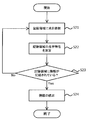
- FIG. 1A is a flowchart relating to a method of recording information using a recording medium provided with a light absorbing material according to an embodiment of the present disclosure.
- FIG. 1B is a flowchart relating to a method of reading information using a recording medium provided with a light absorbing material according to an embodiment of the present disclosure.
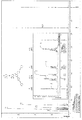
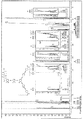
- FIG. 2 is a graph showing a 1 H-NMR spectrum of compound (12) -1.
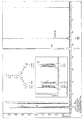
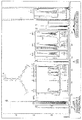
- FIG. 3 is a graph showing the 1 H-NMR spectrum of compound (12) -7.
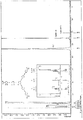
- FIG. 4 is a graph showing the 1 H-NMR spectrum of compound (12) -9.
- FIG. 5 is a graph showing the 1 H-NMR spectrum of compound (12) -10.
- FIG. 6 is a graph showing the 1 H-NMR spectrum of compound (13) -7.
- FIG. 7 is a graph showing the 1 H-NMR spectrum of compound (13) -10.
- FIG. 8 is a graph showing the 1 H-NMR spectrum of compound (8) -5.
- FIG. 9 is a graph showing the 1 1 H-NMR spectrum of compound (8) -7.
- FIG. 10 is a graph showing the 1 H-NMR spectrum of compound (8) -9.
- FIG. 11 is a graph showing the 1 H-NMR spectrum of compound (8) -10.
- FIG. 12 is a graph showing the 1 H-NMR spectrum of compound (9) -7.
- FIG. 13 is a graph showing the 1 H-NMR spectrum of compound (10) -9.
- Two-photon absorption means a phenomenon in which a compound absorbs two photons almost at the same time and transitions to an excited state.
- Two-photon absorption in the wavelength range where there is no single-photon absorption band is called non-resonant two-photon absorption.
- two-photon absorption in which a compound absorbs the first photon, then further absorbs the second photon, and transitions to a higher-order excited state is called resonance two-photon absorption.
- resonance two-photon absorption In resonant two-photon absorption, the compound absorbs two photons sequentially.
- the amount of light absorbed by the compound is usually proportional to the square of the irradiation light intensity and exhibits non-linearity.
- the amount of light absorbed can be used as an index of the efficiency of two-photon absorption.
- the amount of light absorbed by the compound exhibits non-linearity, for example, light absorption by the compound can occur only near the focal point of a laser having a high electric field strength. That is, in a sample containing a two-photon absorbing material, the compound can be excited only at a desired position.
- the compound that causes non-resonant two-photon absorption brings extremely high spatial resolution, its application to applications such as a recording layer of a three-dimensional optical memory and a photocurable resin composition for stereolithography is being studied. ..
- the two-photon absorbing material has further fluorescence characteristics, the two-photon absorbing material can also be applied to a fluorescent dye material used in a two-photon fluorescence microscope or the like. If this two-photon absorbing material is used for a three-dimensional optical memory, there is a possibility that a method of reading the ON / OFF state of the recording layer based on the change in fluorescence from the two-photon absorbing material can be adopted.
- the two-photon absorption cross section is an index showing the efficiency of two-photon absorption.
- the unit of the two-photon absorption cross-sectional area is GM (10 -50 cm 4 ⁇ s ⁇ molecule -1 ⁇ photon -1 ).
- GM 10 -50 cm 4 ⁇ s ⁇ molecule -1 ⁇ photon -1 .
- the two-photon absorption cross section is measured using laser light with wavelengths longer than 600 nm. In particular, near infrared rays having a wavelength longer than 750 nm may be used as the laser light.
- a material having a large two-photon absorption cross section is required when irradiated with a laser beam having a shorter wavelength.
- laser light having a short wavelength realizes finer focused spots, so that the recording density of the three-dimensional optical memory can be improved.
- laser light having a short wavelength can realize modeling with higher resolution.
- the Blu-ray® disc standard uses laser light with a center wavelength of 405 nm. Therefore, if a compound having a large two-photon absorption cross section is developed for light in the same wavelength range as the laser light, it can greatly contribute to the development of industry.
- Patent Documents 1 and 2 disclose compounds having a large two-photon absorption cross section with respect to light having a wavelength of around 405 nm.
- Patent Documents 3 and 4 disclose compounds contained in an optical information recording medium that can shorten the writing time when laser light having a wavelength of about 405 nm is used.
- Patent Document 1 describes a benzene derivative having a structure in which the ⁇ -electron conjugated system is expanded.
- this benzene derivative the two-photon absorption cross-sectional area increases due to the expansion of the ⁇ -electron conjugated system, while the one-photon absorption peak shifts to the long wavelength region.
- the wavelength of the excitation light is, for example, 405 nm defined by the Blu-ray® standard.
- Patent Document 2 describes a benzophenone derivative having a ⁇ -electron conjugated system showing high flatness.
- the quantum yield of intersystem crossing is almost 100%. Since the benzophenone derivative rapidly transitions from the singlet excited state to the triplet excited state, it emits almost no fluorescence.
- the present inventors have that the compound represented by the formula (1) described later has excellent two-photon absorption characteristics and low single-photon absorption characteristics with respect to light having a wavelength in the short wavelength region.
- the short wavelength region means a wavelength region including 405 nm, for example, a wavelength region of 390 nm or more and 420 nm or less.
- the compound represented by the formula (1) has a large two-photon absorption cross section with respect to light having a wavelength of around 405 nm. Further, this compound has a small absorbance at one photon with respect to light having a wavelength of around 405 nm. In other words, this compound has a two-photon absorption property that exhibits high non-linearity with respect to light having a wavelength of around 405 nm.
- the compounds also tend to have high quantum yields for fluorescence.
- the light absorbing material according to the first aspect of the present disclosure is It contains a compound represented by the following formula (1).
- R 1 to R 15 contain at least one atom selected from the group consisting of H, C, N, O, F, P, S, Cl, I and Br independently of each other.
- L 1 to L 3 are independently represented by the following equations (2) or (3).
- R 16 to R 19 contain at least one atom selected from the group consisting of H, C, N, O, F, P, S, Cl, I and Br independently of each other.
- N are integers from 1 to 3
- R 20 to R 23 are independent of each other, H, C, N, O, F, P, S, Cl, I and Br. It contains at least one atom selected from the group consisting of, and m is an integer from 1 to 3.
- At least one selected from the group consisting of R 1 , R 6 and R 11 is a halogen atom, an alkyl group, an alkyl halide group, or an unsaturated hydrocarbon.
- the light absorbing material has excellent two-photon absorption characteristics and low one-photon absorption characteristics with respect to light having a wavelength in the short wavelength range. That is, the light absorbing material has a two-photon absorption characteristic that exhibits high non-linearity with respect to light having a wavelength in the short wavelength range. Light absorbing materials also tend to have high quantum yields for fluorescence.
- the compound when the compound is represented by the following formula (5), at least selected from the group consisting of R 1 , R 6 and R 11.
- One is a halogen atom, an alkyl group having 2 or more carbon atoms, an alkyl halide group, a vinyl group, a hydroxyl group, a carboxyl group, an alkoxycarbonyl group, an acyl group, an amide group, an acyloxy group, an alkylthio group, a sulfonic acid group, and an acylthio.
- the compound may be a group, an alkylsulfonyl group, a sulfonamide group, a primary amino group or a secondary amino group.
- the compound is represented by the following formula (17), at least selected from the group consisting of R 1 , R 6 and R 11.
- One is a halogen atom, an alkyl group having 2 or more carbon atoms, an alkyl halide group, a vinyl group, a hydroxyl group, a carboxyl group, an alkoxycarbonyl group, an acyl group, an amide group, an acyloxy group, an alkylthio group, a sulfonic acid group, and an acylthio. It may be a group, an alkylsulfonyl group, a sulfonamide group, a silyl group, a primary amino group or a secondary amino group.
- each of the L 1 to the L 3 may be represented by the formula (2) in the compound.
- the compound in the fifth aspect of the present disclosure, for example, in the light absorbing material according to the fourth aspect, the compound may be represented by the following formula (5).
- R 24 to R 35 contain at least one atom selected from the group consisting of H, C, N, O, F, P, S, Cl, I and Br independently of each other. ..
- each of the L 1 to the L 3 may be represented by the formula (3) in the compound.
- the compound in the seventh aspect of the present disclosure, for example, in the light absorbing material according to the sixth aspect, the compound may be represented by the following formula (6).
- R 36 to R 59 contain at least one atom selected from the group consisting of H, C, N, O, F, P, S, Cl, I and Br independently of each other. ..
- the compound in the light absorbing material according to the sixth aspect, may be represented by the following formula (7).
- R 60 to R 71 contain at least one atom selected from the group consisting of H, C, N, O, F, P, S, Cl, I and Br independently of each other. ..
- the R 1 to the R 15 are independent of each other, a hydrogen atom, a halogen atom, and an alkyl group.
- Alkyl halide group unsaturated hydrocarbon group, hydroxyl group, carboxyl group, alkoxycarbonyl group, acyl group, amide group, nitrile group, alkoxy group, acyloxy group, thiol group, alkylthio group, sulfonic acid group, acylthio group, It may be an alkylsulfonyl group, a sulfonamide group, a primary amino group, a secondary amino group, a tertiary amino group or a nitro group.
- the light absorbing material has a two-photon absorption characteristic showing high non-linearity with respect to light having a wavelength in a short wavelength range.
- At least one selected from the group consisting of R 13 may be an electron donating group or an electron attracting group.
- the electron-withdrawing group may be a carboxyl group or an alkoxycarbonyl group.
- the electron-withdrawing group is -COO (CH 2 ) 3 CH 3 or -COO (CH 2 ) 7 CH 3. You may.
- the light absorbing material has better two-photon absorption characteristics with respect to light having a wavelength in the short wavelength range.
- the light absorbing material according to the thirteenth aspect of the present disclosure is A light absorbing material used for devices that utilize light having a wavelength of 390 nm or more and 420 nm or less. It contains a compound represented by the following formula (1).
- R 1 to R 15 contain at least one atom selected from the group consisting of H, C, N, O, F, P, S, Cl, I and Br independently of each other.
- L 1 to L 3 are independently represented by the following equations (2) or (3).
- R 16 to R 19 contain at least one atom selected from the group consisting of H, C, N, O, F, P, S, Cl, I and Br independently of each other.
- N are integers from 1 to 3
- R 20 to R 23 are independent of each other, H, C, N, O, F, P, S, Cl, I and Br. It contains at least one atom selected from the group consisting of, and m is an integer from 1 to 3.
- the light absorbing material has excellent two-photon absorption characteristics and low one-photon absorption characteristics with respect to light having a wavelength in the short wavelength range. That is, the light absorbing material has a two-photon absorption characteristic that exhibits high non-linearity with respect to light having a wavelength in the short wavelength range. Light absorbing materials also tend to have high quantum yields for fluorescence.
- the recording medium according to the 14th aspect of the present disclosure is A recording film containing a light absorbing material containing a compound represented by the following formula (1) is provided.
- R 1 to R 15 contain at least one atom selected from the group consisting of H, C, N, O, F, P, S, Cl, I and Br independently of each other.
- L 1 to L 3 are independently represented by the following equations (2) or (3).
- R 16 to R 19 contain at least one atom selected from the group consisting of H, C, N, O, F, P, S, Cl, I and Br independently of each other.
- N are integers from 1 to 3
- R 20 to R 23 are independent of each other, H, C, N, O, F, P, S, Cl, I and Br. It contains at least one atom selected from the group consisting of, and m is an integer from 1 to 3.
- the light absorbing material has excellent two-photon absorption characteristics and low one-photon absorption characteristics with respect to light having a wavelength in the short wavelength range. That is, the light absorbing material has a two-photon absorption characteristic that exhibits high non-linearity with respect to light having a wavelength in the short wavelength range. Light absorbing materials also tend to have high quantum yields for fluorescence.
- a recording medium provided with a recording film containing such a light absorbing material is suitable for a recording medium for recording information or reading information.
- the method for recording information according to the fifteenth aspect of the present disclosure is as follows. Preparing a light source that emits light having a wavelength of 390 nm or more and 420 nm or less, The light from the light source is focused by a lens and irradiated to a recording region in a recording medium including a recording film containing a light absorbing material containing a compound represented by the following formula (1). including.
- R 1 to R 15 contain at least one atom selected from the group consisting of H, C, N, O, F, P, S, Cl, I and Br independently of each other.
- L 1 to L 3 are independently represented by the following equations (2) or (3).
- R 16 to R 19 contain at least one atom selected from the group consisting of H, C, N, O, F, P, S, Cl, I and Br independently of each other.
- N are integers from 1 to 3
- R 20 to R 23 are independent of each other, H, C, N, O, F, P, S, Cl, I and Br. It contains at least one atom selected from the group consisting of, and m is an integer from 1 to 3.
- the light absorbing material has excellent two-photon absorption characteristics and low one-photon absorption characteristics with respect to light having a wavelength in the short wavelength range. That is, the light absorbing material has a two-photon absorption characteristic that exhibits high non-linearity with respect to light having a wavelength in the short wavelength range. According to the information recording method using a recording medium provided with such a light absorbing material, information can be recorded with a high recording density.
- the method for reading information according to the 16th aspect of the present disclosure is, for example, a method for reading information recorded by the recording method according to the 15th aspect.
- the reading method is By irradiating the recording area on the recording medium with light, the optical characteristics of the recording area can be measured. Determining whether or not information is recorded in the recording area based on the optical characteristics, including.
- the optical characteristic may be the intensity of fluorescence emitted from the recording region.
- the 16th or 17th aspect it is possible to suppress the occurrence of crosstalk based on other recording areas when reading information.
- the light absorbing material of the present embodiment contains compound A represented by the following formula (1).
- R 1 to R 15 contain at least one atom selected from the group consisting of H, C, N, O, F, P, S, Cl, I and Br independently of each other.
- R 1 to R 15 are independent of each other, hydrogen atom, halogen atom, alkyl group, alkyl halide group, unsaturated hydrocarbon group, hydroxyl group, carboxyl group, alkoxycarbonyl group, acyl group, amide group, nitrile group.
- R 1 to R 15 are independent of each other, and have a hydrogen atom, a halogen atom, an alkyl group, an alkyl halide group, an unsaturated hydrocarbon group, a hydroxyl group, an alkoxycarbonyl group, an acyl group, an amide group, and a nitrile group.
- It may be an alkoxy group, an acyloxy group, a thiol group, an alkylthio group, a sulfonic acid group, an acylthio group, an alkylsulfonyl group, a sulfonamide group, a primary amino group, a secondary amino group, a tertiary amino group or a nitro group.
- halogen atom examples include F, Cl, Br, I and the like.
- a halogen atom may be referred to as a halogen group.
- the number of carbon atoms of the alkyl group is not particularly limited, and is, for example, 1 or more and 20 or less.
- the number of carbon atoms of the alkyl group may be 1 or more and 10 or less, or 1 or more and 5 or less, from the viewpoint that compound A can be easily synthesized.
- the alkyl group may be linear, branched or cyclic, or cyclic.
- At least one hydrogen atom contained in the alkyl group may be substituted with a group containing at least one atom selected from the group consisting of N, O, P and S.
- the alkyl group includes a methyl group, an ethyl group, a propyl group, a butyl group, a 2-methylbutyl group, a pentyl group, a hexyl group, a 2,3-dimethylhexyl group, a heptyl group, an octyl group, a nonyl group, a decyl group and an undecyl group.
- Dodecyl group tridecyl group, tetradecyl group, pentadecyl group, hexadecyl group, heptadecyl group, octadecyl group, nonadecil group, eicosyl group, 2-methoxybutyl group, 6-methoxyhexyl group and the like.
- the alkyl halide group means a group in which at least one hydrogen atom contained in the alkyl group is substituted with a halogen atom.
- the alkyl halide group may be a group in which all hydrogen atoms contained in the alkyl group are substituted with halogen atoms. Examples of the alkyl group include those described above.
- a specific example of an alkyl halide group is -CF 3 .
- Unsaturated hydrocarbon groups include unsaturated bonds such as carbon-carbon double bonds and carbon-carbon triple bonds.
- the number of unsaturated bonds contained in the unsaturated hydrocarbon group is, for example, 1 or more and 5 or less.
- the number of carbon atoms of the unsaturated hydrocarbon group is not particularly limited, and may be, for example, 2 or more and 20 or less, 2 or more and 10 or less, or 2 or more and 5 or less.
- the unsaturated hydrocarbon group may be linear, branched or cyclic.
- At least one hydrogen atom contained in the unsaturated hydrocarbon group may be substituted with a group containing at least one atom selected from the group consisting of N, O, P and S.
- Examples of the unsaturated hydrocarbon group include a vinyl group and an ethynyl group.
- the hydroxyl group is represented by -OH.
- the carboxyl group is represented by -COOH.
- the alkoxycarbonyl group is represented by -COOR a.
- the acyl group is represented by -COR b.
- the amide group is represented by -CONR c R d.
- the nitrile group is represented by -CN.
- the alkoxy group is represented by ⁇ OR e.
- the acyloxy group is represented by -OCOR f.
- the thiol group is represented by -SH.
- the alkylthio group is represented by -SR g.
- a sulfonic acid group is represented by -SO 3 H.
- the acylthio group is represented by -SCOR h.
- Alkylsulfonyl group is represented by -SO 2 R i.
- the sulfonamide group is represented by -SO 2 NR j R k.
- the primary amino group is represented by -NH 2.
- the secondary amino group is represented by -NHR l.
- the tertiary amino group is represented by ⁇ NR m R n.
- the nitro group is represented by -NO 2.
- R a to R n are alkyl groups independent of each other. Examples of the alkyl group include those described above. However, the amide groups R c and R d and the sulfonamide groups R j and R k may be hydrogen atoms independently of each other.
- alkoxycarbonyl group examples are -COOCH 3 , -COO (CH 2 ) 3 CH 3 and -COO (CH 2 ) 7 CH 3 .
- a specific example of an acyl group is -COCH 3 .
- a specific example of an amide group is -CONH 2 .
- Specific examples of the alkoxy group include methoxy group, ethoxy group, 2-methoxyethoxy group, butoxy group, 2-methylbutoxy group, 2-methoxybutoxy group, 4-ethylthiobutoxy group, pentyloxy group, hexyloxy group and heptyl.
- a specific example of an acyloxy group is -OCOCH 3 .
- a specific example of an acylthio group is -SCOCH 3 .
- a specific example of an alkylsulfonyl group is -SO 2 CH 3 .
- a specific example of a sulfonamide group is -SO 2 NH 2 .
- a specific example of a tertiary amino group is -N (CH 3 ) 2 .
- At least one selected from the group consisting of R 1 to R 3 , R 6 to R 8 , and R 11 to R 13 may be an electron donating group or an electron attracting group.
- R 1 to R 3 , R 6 to R 8 , and R 11 to R 13 the greater the electron donating property or the electron attracting property, the larger the electron bias in the compound A.
- the electron bias in the compound A is large, the electrons tend to move significantly in the compound A when the compound A is excited.
- Such compound A tends to have better two-photon absorption properties.
- compound A absorbs large two-photons when at least one selected from the group consisting of R 1 to R 3 , R 6 to R 8 and R 11 to R 13 is an electron donating group or an electron attracting group. Tends to have a cross section.
- the electron-withdrawing group means, for example, a substituent having a positive ⁇ p value, which is a substituent constant in the Hammett equation.
- the electron-withdrawing group includes a halogen atom, a carboxyl group, a nitro group, a thiol group, a sulfonic acid group, an acyloxy group, an alkylthio group, an alkylsulfonyl group, a sulfonamide group, an acyl group, an acylthio group, an alkoxycarbonyl group and an alkyl halide group. And so on.
- the electron-withdrawing group may be a carboxyl group or an alkoxycarbonyl group, and may be -COO (CH 2 ) 3 CH 3 or -COO (CH 2 ) 7 CH 3 .
- the electron donating group means, for example, a substituent in which the above-mentioned ⁇ p value is a negative value.
- Examples of the electron donating group include an alkyl group, an alkoxy group, a hydroxyl group and an amino group.
- Each of R 4 , R 5 , R 9 , R 10 , R 14 and R 15 may have a small volume. At this time, steric hindrance is unlikely to occur in R 4 , R 5 , R 9 , R 10 , R 14 and R 15. Therefore, in compound A, the flatness of the ⁇ -electron conjugated system tends to be improved. When the ⁇ -electron conjugated system of compound A has high flatness, compound A tends to have a large two-photon absorption cross section.
- Each of R 4 , R 5 , R 9 , R 10 , R 14 and R 15 may be a hydrogen atom.
- L 1 to L 3 are independently represented by the following formula (2) or (3).
- R 16 to R 19 contain at least one atom selected from the group consisting of H, C, N, O, F, P, S, Cl, I and Br independently of each other.
- R 16 to R 19 may be hydrogen atoms or the substituents described above in R 1 to R 15 independently of each other.
- Each of R 16 to R 19 may have a small volume. At this time, steric hindrance is unlikely to occur in R 16 to R 19. Therefore, in compound A, the flatness of the ⁇ -electron conjugated system is improved, so that compound A tends to have a large two-photon absorption cross section.
- Each of R 16 to R 19 may be a hydrogen atom.
- n is an integer from 1 to 3.
- n may be 1 or 2 or 1.
- R 20 to R 23 contain at least one atom selected from the group consisting of H, C, N, O, F, P, S, Cl, I and Br independently of each other.
- R 20 to R 23 may be hydrogen atoms or the substituents described above in R 1 to R 15 independently of each other.
- Each of R 20 to R 23 may have a small volume. At this time, steric hindrance is unlikely to occur in R 20 to R 23. Therefore, in compound A, the flatness of the ⁇ -electron conjugated system is improved, so that compound A tends to have a large two-photon absorption cross section.
- Each of R 20 to R 23 may be a hydrogen atom.
- m is an integer from 1 to 3. The larger the value of m, the larger the ⁇ -electron conjugated system tends to be, and the more the two-photon absorption cross section of compound A tends to increase. Considering the solubility of compound A, m may be 1 or 2.
- Each of L 1 to L 3 may be the same as or different from each other.
- each of L 1 to L 3 may be represented by the equation (2).
- Compound A may be, for example, compound B represented by the following formula (5).
- R 24 to R 35 contain at least one atom selected from the group consisting of H, C, N, O, F, P, S, Cl, I and Br, independent of each other. Each of R 24 to R 35 corresponds to any of R 16 to R 19 described above.
- compound B examples include compound C represented by the following formula (8) and compound D represented by the following formula (9).
- the plurality of Z's are the same as each other.
- the plurality of Zs correspond to R 1 , R 6 and R 11 of the equation (5), respectively.
- the plurality of Zs may be hydrogen atoms or substituents shown in Table 1 below.
- the plurality of Zs may be -COOH, -COOC 4 H 9 or -COOC 8 H 17.
- the plurality of Z's are the same as each other.
- the plurality of Zs correspond to R 2 , R 3 , R 7 , R 8 , R 12 and R 13 , respectively, in the formula (5).
- the plurality of Zs may be hydrogen atoms or substituents shown in Table 1 above.
- the plurality of Zs may be -COOH, -COOC 4 H 9 or -COOC 8 H 17.
- R 1 , R 6 and R 11 is a halogen atom, an alkyl group having 2 or more carbon atoms, and an alkyl halide group.
- R 1 , R 6 and R 11 is a halogen atom, an alkyl group having 2 or more carbon atoms, and an alkyl halide group.
- At least one selected from the group consisting of R 1 , R 6 and R 11 is a halogen atom, an alkyl group having 2 or more carbon atoms, and an alkyl halide group.
- R 1 , R 6 and R 11 is a halogen atom, an alkyl group having 2 or more carbon atoms, and an alkyl halide group.
- Each of L 1 to L 3 of the formula (1) may be represented by the formula (3).
- Compound A may be, for example, compound E represented by the following formula (6).
- R 36 to R 59 contain at least one atom selected from the group consisting of H, C, N, O, F, P, S, Cl, I and Br independently of each other.
- Each of R 36 to R 59 corresponds to any of R 20 to R 23 described above.
- compound E include compound F represented by the following formula (10) and compound G represented by the following formula (11).
- the plurality of Z's are the same as each other.
- the plurality of Zs correspond to R 1 , R 6 and R 11 of the equation (6), respectively.
- the plurality of Zs may be hydrogen atoms or substituents shown in Table 1 above.
- the plurality of Zs may be -COOH, -COOC 4 H 9 or -COOC 8 H 17.
- the plurality of Z's are the same as each other.
- the plurality of Zs correspond to R 2 , R 3 , R 7 , R 8 , R 12 and R 13 , respectively, in the formula (6).
- the plurality of Zs may be hydrogen atoms or substituents shown in Table 1 above.
- Compound A may be, for example, compound H represented by the following formula (7).
- R 60 to R 71 contain at least one atom selected from the group consisting of H, C, N, O, F, P, S, Cl, I and Br independently of each other. Each of R 60 to R 71 corresponds to any of R 20 to R 23 described above.
- R 1 , R 6 and R 11 are a halogen atom, an alkyl group, an alkyl halide group, and the like.
- At least one selected from the group consisting of R 1 , R 6 and R 11 is a halogen atom, an alkyl group, an alkyl halide group, an unsaturated hydrocarbon group, a hydroxyl group, an alkoxycarbonyl group, an acyl group, It may be an amide group, an acyloxy group, a thiol group, an alkylthio group, a sulfonic acid group, an acylthio group, an alkylsulfonyl group, a sulfonamide group, a primary amino group or a secondary amino group.
- each of R 1 , R 6 and R 11 of the formula (4) may be a hydrogen atom or a substituent other than the above-mentioned substituent.
- the plurality of Z's are the same as each other.
- the plurality of Zs correspond to R 1 , R 6 and R 11 of the equation (4), respectively.
- the plurality of Zs may be at least one selected from the substituents 2 to 12 and 15 to 21 shown in Table 1 above. However, in some cases, the plurality of Zs may be a hydrogen atom, a substituent 13, a substituent 14, a substituent 22, or a substituent 23 shown in Table 1.
- the plurality of Zs may be -COOH, -COOC 4 H 9 or -COOC 8 H 17.
- the plurality of Z's are the same as each other.
- the plurality of Zs correspond to R 2 , R 3 , R 7 , R 8 , R 12 and R 13 , respectively, in the formula (7).
- the plurality of Zs may be hydrogen atoms or substituents shown in Table 1 above.
- the plurality of Zs may be -COOH, -COOC 4 H 9 or -COOC 8 H 17.
- the method for synthesizing the compound F represented by the formula (10), the compound G represented by the formula (11), the compound J represented by the formula (12) and the compound K represented by the formula (13) is particularly limited. Not done. Compounds F, G, J and K can be synthesized, for example, by the following methods. First, the compound L represented by the following formula (14) is prepared.
- X a to X c are substituents that are independent of each other and have reactivity with the coupling reaction.
- a typical example of such a substituent is a halogen group.
- X a to X c may be ethynyl groups.
- compound F, G, J or K can be synthesized by performing a coupling reaction with compound L and compound M having an appropriate structure.
- the structure of compound M is determined according to the structure of the target compound.
- the conditions of the coupling reaction can be appropriately adjusted according to the structures of the compounds L and M, for example.
- the method for synthesizing the compound C represented by the formula (8) and the compound D represented by the formula (9) is not particularly limited.
- Compounds C and D can be synthesized, for example, by the following methods.
- compound C or D can be synthesized by performing a coupling reaction with compound N and compound O having an appropriate structure.
- the structure of compound O is determined according to the structure of the target compound.
- Compound O contains, for example, a substituent that is reactive with the coupling reaction.
- a typical example of such a substituent is a halogen group.
- the conditions of the coupling reaction can be appropriately adjusted according to the structures of the compounds N and O, for example.
- Compound A represented by the formula (1) has excellent two-photon absorption characteristics and low single-photon absorption characteristics with respect to light having a wavelength in the short wavelength range.
- the short wavelength region means a wavelength region including 405 nm, for example, a wavelength region of 390 nm or more and 420 nm or less.
- two-photon absorption may occur in compound A, while monophoton absorption may hardly occur.
- the two-photon absorption cross section of compound A with respect to light having a wavelength of 405 nm may exceed 500 GM, may be 1000 GM or more, may be 1500 GM or more, or may be 2000 GM or more.
- the upper limit of the two-photon absorption cross section of compound A is not particularly limited, and is, for example, 5000 GM.
- the two-photon absorption cross section can be measured by, for example, the Z scan method described in J. Opt. Soc. Am. B, 2003, Vol. 20, p. 529. The Z-scan method is widely used as a method for measuring nonlinear optical constants.
- the measurement sample In the Z scan method, the measurement sample is moved along the irradiation direction of the beam in the vicinity of the focal point where the laser beam is focused. At this time, the change in the amount of light transmitted through the measurement sample is recorded.
- the power density of the incident light changes depending on the position of the measurement sample. Therefore, when the measurement sample performs non-linear absorption, the amount of transmitted light is attenuated when the measurement sample is located near the focal point of the laser beam.
- the two-photon absorption cross-sectional area can be calculated by fitting the change in the amount of transmitted light to the theoretical curve predicted from the intensity of the incident light, the thickness of the measurement sample, the concentration of compound A in the measurement sample, and the like. ..
- the two-photon absorption cross section may be a value calculated by computational chemistry.
- Several methods have been proposed for estimating the two-photon absorption cross section by computational chemistry.
- the calculated value of the two-photon absorption cross section can be calculated based on the quadratic nonlinear response theory described in J. Chem. Theory Comput. 2018, Vol. 14, p. 807.
- the molar extinction coefficient of compound A with respect to light having a wavelength of 405 nm may be 650 L / (mol ⁇ cm) or less, 500 L / (mol ⁇ cm) or less, or 250 L / (mol ⁇ cm). It may be less than or equal to 100 L / (mol ⁇ cm) or less.
- the lower limit of the molar extinction coefficient of compound A is not particularly limited, and is, for example, 0.01 L / (mol ⁇ cm).
- the molar extinction coefficient can be measured, for example, by a method conforming to the provisions of Japanese Industrial Standards (JIS) K0115: 2004.
- a light source that irradiates light having a photon density at which the two-photon absorption by the compound A hardly occurs is used.
- the molar extinction coefficient can be used as an index of monophoton absorption.
- the molar extinction coefficient may be a value calculated by a quantum chemistry calculation program.
- the quantum chemistry calculation program for example, Gaussian16 (manufactured by Gaussian) can be used.
- compound A absorbs about twice as much energy as the light irradiated to compound A.
- the wavelength of light having about twice the energy of light having a wavelength of 405 nm is, for example, 200 nm. That is, when the compound A is irradiated with light having a wavelength of about 200 nm, monophoton absorption may occur in the compound A. Further, in compound A, one-photon absorption may occur for light having a wavelength near the wavelength range in which two-photon absorption occurs.
- Quantum yield specifically means internal quantum yield.
- the wavelength of the fluorescent light emitted by the compound A may be 405 nm or more and 660 nm or less, and in some cases, 350 nm or more and 650 nm or less.
- the quantum yield of fluorescence in compound A may be 35% or more, 40% or more, or 50% or more.
- the upper limit of the quantum yield of fluorescence in compound A is not particularly limited, and is, for example, 99%.
- the quantum yield of fluorescence can be measured by, for example, a commercially available absolute PL quantum yield measuring device.
- the light absorbing material of the present embodiment may contain compound A represented by the formula (1) as a main component.
- the "main component” means the component contained most in the light absorbing material in terms of weight ratio.
- the light absorbing material is, for example, substantially composed of compound A. By “substantially consisting of” is meant eliminating other components that alter the essential characteristics of the mentioned material. However, the light absorbing material may contain impurities in addition to compound A.
- the light absorbing material of this embodiment functions as a multiphoton absorbing material such as a two-photon absorbing material.
- the light absorbing material of the present embodiment contains the compound A represented by the formula (1), it has a two-photon absorption characteristic showing high non-linearity with respect to light having a wavelength in a short wavelength range.
- the light absorbing material of the present embodiment is used, for example, in a device that utilizes light having a wavelength in a short wavelength range.
- a device that utilizes light having a wavelength in a short wavelength range.
- Examples of such a device include a recording medium, a modeling machine, a fluorescence microscope, and the like.
- the recording medium include a three-dimensional optical memory.
- a specific example of a three-dimensional optical memory is a three-dimensional optical disc.
- Examples of the molding machine include an optical modeling machine such as a 3D printer.
- Examples of the fluorescence microscope include a two-photon fluorescence microscope. The light utilized in these devices has a high photon density, for example, near its focal point.
- the power density near the focal point of the light used in the device is, for example, 0.1 W / cm 2 or more and 1.0 ⁇ 10 20 W / cm 2 or less. Power density near the focal point of the light may also be 1.0 W / cm 2 or more, may also be 1.0 ⁇ 10 2 W / cm 2 or more, 1.0 ⁇ 10 5 W / cm It may be 2 or more.
- a femtosecond laser such as a titanium sapphire laser can be used as the light source of the device.
- the present disclosure is a light absorption material used for a device using light having a wavelength of 390 nm or more and 420 nm or less from another aspect thereof, and includes a compound represented by the following formula (1).
- R 1 to R 15 contain at least one atom selected from the group consisting of H, C, N, O, F, P, S, Cl, I and Br independently of each other.
- L 1 to L 3 are independently represented by the following equations (2) or (3).
- R 16 to R 19 contain at least one atom selected from the group consisting of H, C, N, O, F, P, S, Cl, I and Br independently of each other.
- n is an integer from 1 to 3.
- R 20 to R 23 contain at least one atom selected from the group consisting of H, C, N, O, F, P, S, Cl, I and Br independently of each other.
- m is an integer from 1 to 3.
- the recording medium includes, for example, a thin film called a recording layer or a recording film.
- information is recorded on the recording layer or the recording film.
- a recording layer or a thin film as a recording film comprises the light absorbing material of the present embodiment.
- R 1 to R 15 contain at least one atom selected from the group consisting of H, C, N, O, F, P, S, Cl, I and Br independently of each other.
- L 1 to L 3 are independently represented by the following equations (2) or (3).
- R 16 to R 19 contain at least one atom selected from the group consisting of H, C, N, O, F, P, S, Cl, I and Br independently of each other.
- n is an integer from 1 to 3.
- R 20 to R 23 contain at least one atom selected from the group consisting of H, C, N, O, F, P, S, Cl, I and Br independently of each other.
- m is an integer from 1 to 3.
- the recording medium may include a dielectric layer in addition to the recording layer.
- the recording medium includes, for example, a plurality of recording layers and a plurality of dielectric layers. In the recording medium, a plurality of recording layers and a plurality of dielectric layers may be alternately laminated.
- FIG. 1A is a flowchart relating to a method of recording information using the above-mentioned recording medium.
- a light source that emits light having a wavelength of 390 nm or more and 420 nm or less is prepared.
- the light source for example, a femtosecond laser such as a titanium sapphire laser can be used.
- step S12 the light from the light source is focused by the lens and irradiated to the recording area on the recording medium.
- the power density near the focal point of this light is, for example, 0.1 W / cm 2 or more and 1.0 ⁇ 10 20 W / cm 2 or less.
- Power density near the focal point of the light may also be 1.0 W / cm 2 or more, may also be 1.0 ⁇ 10 2 W / cm 2 or more, 1.0 ⁇ 10 5 W / cm It may be 2 or more.
- the recording area means a spot that exists in the recording layer and can record information by being irradiated with light.
- the recording area irradiated with the above light a physical change or a chemical change occurs, and the optical characteristics of the recording area change. For example, the intensity of fluorescent light emitted from the recording area is reduced. As a result, information can be recorded in the recording area (step S13).
- the present disclosure is based on yet another aspect.
- Preparing a light source that emits light having a wavelength of 390 nm or more and 420 nm or less The light from the light source is focused by a lens and irradiated to a recording region in a recording medium containing a light absorbing material containing a compound represented by the following formula (1).
- R 1 to R 15 contain at least one atom selected from the group consisting of H, C, N, O, F, P, S, Cl, I and Br, independent of each other.
- L 1 to L 3 are independently represented by the following equations (2) or (3).
- R 16 to R 19 contain at least one atom selected from the group consisting of H, C, N, O, F, P, S, Cl, I and Br independently of each other.
- n is an integer from 1 to 3.
- R 20 to R 23 contain at least one atom selected from the group consisting of H, C, N, O, F, P, S, Cl, I and Br independently of each other.
- m is an integer from 1 to 3.
- FIG. 1B is a flowchart relating to a method of reading information using the above-mentioned recording medium.
- step S21 the recording area on the recording medium is irradiated with light.
- the light used in step S21 may be the same as the light used for recording information on the recording medium, or may be different.
- step S22 the optical characteristics of the recording region are measured. In step S22, for example, the intensity of the fluorescent light emitted from the recording area is measured.
- step S23 it is determined whether or not information is recorded in the recording area based on the optical characteristics of the recording area. For example, when the intensity of the fluorescent light emitted from the recording area is equal to or less than a specific value, it is determined that the information is recorded in the recording area. On the other hand, when the intensity of the fluorescent light exceeds a specific value, it is determined that no information is recorded in the recording area. If it is determined that no information is recorded in the recording area, the process returns to step S21, and the same operation is performed for the other recording area. If it is determined that the information is recorded in the recording area, the information is read out in step S24.
- the information recording method and reading method using the above-mentioned recording medium can be performed by, for example, a known recording device.
- the recording device includes, for example, a light source that irradiates a recording area on a recording medium with light, a measuring device that measures the optical characteristics of the recording area, and a controller that controls the light source and the measuring device.
- the modeling machine performs modeling by, for example, irradiating a photocurable resin composition with light and curing the resin composition.
- a photocurable resin composition for stereolithography includes the light absorbing material of the present embodiment.
- the photocurable resin composition usually contains a polymerizable compound and a polymerization initiator in addition to the light absorbing material.
- the photocurable resin composition may further contain an additive such as a binder resin.
- the photocurable resin composition may contain an epoxy resin.
- a biological sample containing a fluorescent dye material can be irradiated with light, and the fluorescence emitted from the dye material can be observed.
- the fluorescent dye material to be added to the biological sample comprises the light absorbing material of the present embodiment.
- the compound used in the examples is referred to as "Compound (X) -Y".
- X means the structural formula of the compound.
- Y means the type of Z in the formula (X).
- the compound (12) -7 means a compound represented by the formula (12) and in which Z is the substituent 7 (-COOH) shown in Table 1.
- FIG. 2 is a graph showing a 1 H-NMR spectrum of compound (12) -1.
- the 1 1 H-NMR spectrum of compound (12) -1 was as follows.
- FIG. 3 is a graph showing the 1 H-NMR spectrum of compound (12) -7.
- FIG. 4 is a graph showing the 1 H-NMR spectrum of compound (12) -9.
- FIG. 5 is a graph showing the 1 H-NMR spectrum of compound (12) -10.
- the precursor A of compound (8) -5 and tetrabutylammonium fluoride were dissolved in tetrahydrofuran. The solution was then stirred for 3 hours. Saturated aqueous sodium hydrogen carbonate was added to the obtained reaction solution. Next, the reaction solution was extracted with ethyl acetate. The obtained extract was washed with saturated brine. As a result, the precursor B of compound (8) -5 was obtained.
- the precursor B of compound (8) -5 and 1,3,5-tribromobenzene were dissolved in a mixed solution of diisopropylamine and 1,4-dioxane.
- Catalytic amounts of 2-dicyclohexylphosphino-2', 4', 6'-triisopropylbiphenyl, bis (acetonitrile) palladium (II) dichloride and copper (I) iodide were further added to the resulting solution.
- the solution was then stirred at 80 ° C. for 20 hours. Hydrochloric acid was added to the obtained reaction solution for neutralization.
- the reaction solution was extracted with ethyl acetate.
- FIG. 8 is a graph showing the 1 H-NMR spectrum of compound (8) -5.
- FIG. 9 is a graph showing the 1 1 H-NMR spectrum of compound (8) -7.
- FIG. 10 is a graph showing the 1 H-NMR spectrum of compound (8) -9.
- FIG. 11 is a graph showing the 1 H-NMR spectrum of compound (8) -10.
- FIG. 12 is a graph showing the 1 H-NMR spectrum of compound (9) -7.
- the 1 1 H-NMR spectrum of compound (9) -7 was as follows.
- FIG. 13 is a graph showing the 1 H-NMR spectrum of compound (10) -9.
- the two-photon absorption cross section of the synthesized compound was measured for light having a wavelength of 405 nm.
- the two-photon absorption cross section was measured using the Z scan method described in J. Opt. Soc. Am. B, 2003, Vol. 20, p. 529.
- a titanium sapphire pulsed laser was used as a light source for measuring the two-photon absorption cross-sectional area.
- the sample was irradiated with a second high frequency of a titanium sapphire pulsed laser.
- the pulse width of the laser was 80 fs.
- the laser repetition frequency was 1 kHz.
- the average power of the laser was varied in the range of 0.01 mW or more and 0.08 mW or less.
- the light from the laser was light with a wavelength of 405 nm.
- the light from the laser had a central wavelength of 402 nm or more and 404 nm or less.
- the full width at half maximum of the light from the laser was 4 nm.
- the two-photon absorption cross section for light having a wavelength of 405 nm was predicted.
- the two-photon absorption cross section was calculated by the density functional theory (DFT) calculation based on the second-order nonlinear response theory described in J. Chem. Theory Comput. 2018, Vol. 14, p. 807. ..
- DFT density functional theory
- Turbomole version 7.3.1 manufactured by COSMOlogic
- def2-TZVP was used as a basis function.
- B3LYP was used as a functional.
- the internal quantum yield of fluorescence was measured for the synthesized compound.
- the measurement sample was prepared by dissolving the compound in a dimethyl sulfoxide (DMSO) solvent.
- An absolute PL quantum yield measuring device (C9920-02 manufactured by Hamamatsu Photonics Co., Ltd.) was used for the measurement.
- the excitation wavelength was set to 325 nm.
- the measurement wavelength was adjusted in the range of 350 nm or more and 650 nm or less.
- a DMSO solvent was used as a reference.
- the molar extinction coefficient of the synthesized compound was measured by a method according to JIS K0115: 2004. Specifically, first, the absorption spectrum of the measurement sample was measured. From the obtained spectrum, the absorbance at a wavelength of 405 nm was read. The molar extinction coefficient was calculated based on the concentration of the compound in the measurement sample and the optical path length of the cell used for the measurement.
- ⁇ Prediction of molar extinction coefficient> The molar extinction coefficient of the synthesized compound was predicted. DFT calculation was used to predict the molar extinction coefficient. Specifically, first, the excited state of the compound was calculated using Gaussian16 (manufactured by Gaussian), which is a quantum chemistry calculation program. In the excited state calculation, 6-31 ++ G (d, p) was used as the basis function. As a functional, CAM-B3LYP was used. By calculating the excited state, the energy for exciting the compound and the transition probability to the excited state were calculated. Further, from these calculation results, the absorption wavelength and the oscillator strength f (Oscillator strength) at each absorption wavelength were calculated.
- Gaussian16 manufactured by Gaussian
- the oscillator strength correlates with the molar extinction coefficient.
- the absorption spectrum was assumed to be Gaussian, and the half width was defined. Specifically, the half width was defined as 0.4 eV, and the absorption spectrum was drawn based on the absorption wavelength and the oscillator strength. The absorbance at a wavelength of 405 nm was read from the obtained absorption spectrum. This absorbance was regarded as the calculated value of the molar extinction coefficient.
- Tables 2 to 4 show the measured and calculated values of the two-photon absorption cross section obtained by the above method, the quantum yield of fluorescence, and the measured and calculated values of the molar extinction coefficient.
- "No Data" means that no data has been acquired.
- the two-photon absorption cross section for light having a wavelength of 405 nm exceeded 500 GM. ..
- the molar extinction coefficient with respect to light having a wavelength of 405 nm was 650 L / (mol ⁇ cm) or less. From this result, it can be seen that the compounds of Examples 1 to 45 have a two-photon absorption characteristic showing high non-linearity with respect to light having a wavelength in the short wavelength region.
- Compound A represented by the formula (1) is a trisubstituted benzene and has an expanded ⁇ -electron conjugated system. Due to such a structure, compound A is presumed to have a two-photon absorption property showing high non-linearity.
- the quantum yield of fluorescence was 35% or more. From this, it can be seen that the compound A represented by the formula (1) tends to have a high quantum yield with respect to fluorescence.
- the light absorbing material of the present disclosure can be used, for example, as a recording layer of a three-dimensional optical memory, a photocurable resin composition for stereolithography, and the like.
- the light absorbing material of the present disclosure has a two-photon absorption characteristic showing high non-linearity with respect to light having a wavelength in a short wavelength range. Therefore, the light absorbing material of the present disclosure can realize extremely high spatial resolution in applications such as a three-dimensional optical memory and a modeling machine. Further, the light absorbing material of the present disclosure tends to have a high quantum yield of fluorescence.
- the light absorbing material is used for the recording layer of the three-dimensional optical memory, a method of reading the ON / OFF state of the recording layer based on the change in fluorescence from the light absorbing material can be adopted.
- the light absorbing material of the present disclosure can also be used as a fluorescent dye material used in a two-photon fluorescence microscope or the like.
Landscapes
- Chemical & Material Sciences (AREA)
- Organic Chemistry (AREA)
- Engineering & Computer Science (AREA)
- Materials Engineering (AREA)
- Optical Record Carriers And Manufacture Thereof (AREA)
Priority Applications (3)
| Application Number | Priority Date | Filing Date | Title |
|---|---|---|---|
| CN202180016730.9A CN115210336B (zh) | 2020-03-27 | 2021-03-12 | 光吸收材料、使用了该光吸收材料的记录介质、信息的记录方法及信息的读出方法 |
| JP2022509919A JPWO2021193128A1 (https=) | 2020-03-27 | 2021-03-12 | |
| US17/929,301 US20230028064A1 (en) | 2020-03-27 | 2022-09-01 | Light-absorbing material, recording medium using the same, information recording method and information reading method |
Applications Claiming Priority (2)
| Application Number | Priority Date | Filing Date | Title |
|---|---|---|---|
| JP2020059077 | 2020-03-27 | ||
| JP2020-059077 | 2020-03-27 |
Related Child Applications (1)
| Application Number | Title | Priority Date | Filing Date |
|---|---|---|---|
| US17/929,301 Continuation US20230028064A1 (en) | 2020-03-27 | 2022-09-01 | Light-absorbing material, recording medium using the same, information recording method and information reading method |
Publications (1)
| Publication Number | Publication Date |
|---|---|
| WO2021193128A1 true WO2021193128A1 (ja) | 2021-09-30 |
Family
ID=77891938
Family Applications (1)
| Application Number | Title | Priority Date | Filing Date |
|---|---|---|---|
| PCT/JP2021/009974 Ceased WO2021193128A1 (ja) | 2020-03-27 | 2021-03-12 | 光吸収材料、それを用いた記録媒体、情報の記録方法及び情報の読出方法 |
Country Status (4)
| Country | Link |
|---|---|
| US (1) | US20230028064A1 (https=) |
| JP (1) | JPWO2021193128A1 (https=) |
| CN (1) | CN115210336B (https=) |
| WO (1) | WO2021193128A1 (https=) |
Cited By (1)
| Publication number | Priority date | Publication date | Assignee | Title |
|---|---|---|---|---|
| CN116731330A (zh) * | 2022-03-02 | 2023-09-12 | 西北工业大学 | 一种基于酰胺化合物的氢键有机框架纳米片的制备方法及其应用 |
Families Citing this family (2)
| Publication number | Priority date | Publication date | Assignee | Title |
|---|---|---|---|---|
| JP7390676B1 (ja) * | 2022-05-17 | 2023-12-04 | パナソニックIpマネジメント株式会社 | 非線形光吸収材料、記録媒体、情報の記録方法及び情報の読出方法 |
| WO2023223673A1 (ja) * | 2022-05-17 | 2023-11-23 | パナソニックIpマネジメント株式会社 | 光記録媒体、情報の記録方法及び情報の読出方法 |
Citations (2)
| Publication number | Priority date | Publication date | Assignee | Title |
|---|---|---|---|---|
| WO2004077424A1 (ja) * | 2003-02-25 | 2004-09-10 | Matsushita Electric Industrial Co., Ltd. | 光情報記録担体 |
| WO2006057181A1 (ja) * | 2004-11-24 | 2006-06-01 | Matsushita Electric Industrial Co., Ltd. | 光情報記録担体 |
Family Cites Families (3)
| Publication number | Priority date | Publication date | Assignee | Title |
|---|---|---|---|---|
| JP2000033775A (ja) * | 1998-07-17 | 2000-02-02 | Taiyo Yuden Co Ltd | 光情報記録媒体 |
| JP6377334B2 (ja) * | 2013-10-25 | 2018-08-22 | 東洋鋼鈑株式会社 | 非線形光学色素、フォトリフラクティブ材料組成物、フォトリフラクティブ基材およびホログラム記録媒体 |
| CN104710481B (zh) * | 2013-12-17 | 2017-06-20 | 北京化工大学 | 含二苯乙炔基环戊二烯铁盐类双光子吸收材料及制备方法 |
-
2021
- 2021-03-12 CN CN202180016730.9A patent/CN115210336B/zh active Active
- 2021-03-12 WO PCT/JP2021/009974 patent/WO2021193128A1/ja not_active Ceased
- 2021-03-12 JP JP2022509919A patent/JPWO2021193128A1/ja active Pending
-
2022
- 2022-09-01 US US17/929,301 patent/US20230028064A1/en not_active Abandoned
Patent Citations (2)
| Publication number | Priority date | Publication date | Assignee | Title |
|---|---|---|---|---|
| WO2004077424A1 (ja) * | 2003-02-25 | 2004-09-10 | Matsushita Electric Industrial Co., Ltd. | 光情報記録担体 |
| WO2006057181A1 (ja) * | 2004-11-24 | 2006-06-01 | Matsushita Electric Industrial Co., Ltd. | 光情報記録担体 |
Non-Patent Citations (2)
| Title |
|---|
| SCHWICH TORSTEN, BARLOW ADAM, CIFUENTES MARIE P., SZEREMETA JANUSZ, SAMOC MAREK, HUMPHREY MARK G.: "Stellar Multi‐Photon Absorption Materials: Beyond the Telecommunication Wavelength Band", CHEMISTRY - A EUROPEAN JOURNAL, JOHN WILEY & SONS, INC, vol. 23, no. 35, 22 June 2017 (2017-06-22), pages 8395 - 8399, XP055861526, ISSN: 0947-6539, DOI: 10.1002/chem.201702039 * |
| STREATFIELD SUZY L., PRADELS CLAIRE, NDIMBA ALPHONSINE NGO, RICHY NICOLAS, AMAR ANISSA, BOUCEKKINE ABDOU, CIFUENTES MARIE P., HUMP: "Electronic Absorption, Emission and Two‐Photon Absorption Properties of Some Functional 1,3,5‐Triphenylbenzenes", CHEMISTRYSELECT, WILEY - V C H VERLAG GMBH & CO. KGAA, DE, vol. 2, no. 26, 11 September 2017 (2017-09-11), DE , pages 8080 - 8085, XP055861522, ISSN: 2365-6549, DOI: 10.1002/slct.201701653 * |
Cited By (1)
| Publication number | Priority date | Publication date | Assignee | Title |
|---|---|---|---|---|
| CN116731330A (zh) * | 2022-03-02 | 2023-09-12 | 西北工业大学 | 一种基于酰胺化合物的氢键有机框架纳米片的制备方法及其应用 |
Also Published As
| Publication number | Publication date |
|---|---|
| US20230028064A1 (en) | 2023-01-26 |
| CN115210336A (zh) | 2022-10-18 |
| CN115210336B (zh) | 2024-05-03 |
| JPWO2021193128A1 (https=) | 2021-09-30 |
Similar Documents
| Publication | Publication Date | Title |
|---|---|---|
| US20230028064A1 (en) | Light-absorbing material, recording medium using the same, information recording method and information reading method | |
| US20230109287A1 (en) | Compound, non-linear optical material, recording medium, method for recording information, and method for reading information | |
| JP6994667B1 (ja) | 非線形光学材料、光吸収材料、記録媒体、情報の記録方法及び情報の読出方法 | |
| JP6994666B1 (ja) | 非線形光学材料、光吸収材料、記録媒体、情報の記録方法及び情報の読出方法 | |
| JP7766286B2 (ja) | 非線形光吸収材料、記録媒体、情報の記録方法及び情報の読出方法 | |
| JP7738280B2 (ja) | 化合物、光吸収材料、非線形光吸収材料、記録媒体、情報の記録方法及び情報の読出方法 | |
| JP2022177737A (ja) | 非線形吸収材料、記録媒体、情報の記録方法及び情報の読出方法 | |
| CN117296096B (en) | Nonlinear light absorbing material, recording medium, information recording method, and information reading method | |
| JP7759582B2 (ja) | 光吸収材料、記録媒体、情報の記録方法及び情報の読出方法 | |
| WO2022149462A1 (ja) | 光吸収材料、記録媒体、情報の記録方法及び情報の読出方法 | |
| JP7390676B1 (ja) | 非線形光吸収材料、記録媒体、情報の記録方法及び情報の読出方法 | |
| WO2022149461A1 (ja) | 非線形光吸収材料、記録媒体、情報の記録方法及び情報の読出方法 | |
| US20250054515A1 (en) | Recording medium, method for recording information, and method for reading information | |
| WO2022149459A1 (ja) | 非線形光吸収材料、記録媒体、情報の記録方法及び情報の読出方法 | |
| JP7738279B2 (ja) | 非線形光吸収材料、記録媒体、情報の記録方法及び情報の読出方法 | |
| WO2022149460A1 (ja) | 光吸収材料、記録媒体、情報の記録方法及び情報の読出方法 | |
| JP7766275B2 (ja) | 記録媒体、情報の記録方法、情報の読出方法、及び記録層を作製するための組成物 | |
| CN103059834A (zh) | 多光子激光材料 | |
| WO2022244430A1 (ja) | 非線形光吸収材料、記録媒体、情報の記録方法及び情報の読出方法 |
Legal Events
| Date | Code | Title | Description |
|---|---|---|---|
| 121 | Ep: the epo has been informed by wipo that ep was designated in this application |
Ref document number: 21775787 Country of ref document: EP Kind code of ref document: A1 |
|
| ENP | Entry into the national phase |
Ref document number: 2022509919 Country of ref document: JP Kind code of ref document: A |
|
| NENP | Non-entry into the national phase |
Ref country code: DE |
|
| 122 | Ep: pct application non-entry in european phase |
Ref document number: 21775787 Country of ref document: EP Kind code of ref document: A1 |