WO2021182507A1 - メンテナンスハッチの除去を特定するためのシステム及び使用方法 - Google Patents
メンテナンスハッチの除去を特定するためのシステム及び使用方法 Download PDFInfo
- Publication number
- WO2021182507A1 WO2021182507A1 PCT/JP2021/009513 JP2021009513W WO2021182507A1 WO 2021182507 A1 WO2021182507 A1 WO 2021182507A1 JP 2021009513 W JP2021009513 W JP 2021009513W WO 2021182507 A1 WO2021182507 A1 WO 2021182507A1
- Authority
- WO
- WIPO (PCT)
- Prior art keywords
- optical fiber
- maintenance hatch
- determining
- backscattered light
- maintenance
- Prior art date
- Legal status (The legal status is an assumption and is not a legal conclusion. Google has not performed a legal analysis and makes no representation as to the accuracy of the status listed.)
- Ceased
Links
Images






Classifications
-
- G—PHYSICS
- G01—MEASURING; TESTING
- G01D—MEASURING NOT SPECIALLY ADAPTED FOR A SPECIFIC VARIABLE; ARRANGEMENTS FOR MEASURING TWO OR MORE VARIABLES NOT COVERED IN A SINGLE OTHER SUBCLASS; TARIFF METERING APPARATUS; MEASURING OR TESTING NOT OTHERWISE PROVIDED FOR
- G01D5/00—Mechanical means for transferring the output of a sensing member; Means for converting the output of a sensing member to another variable where the form or nature of the sensing member does not constrain the means for converting; Transducers not specially adapted for a specific variable
- G01D5/26—Mechanical means for transferring the output of a sensing member; Means for converting the output of a sensing member to another variable where the form or nature of the sensing member does not constrain the means for converting; Transducers not specially adapted for a specific variable characterised by optical transfer means, i.e. using infrared, visible, or ultraviolet light
- G01D5/268—Mechanical means for transferring the output of a sensing member; Means for converting the output of a sensing member to another variable where the form or nature of the sensing member does not constrain the means for converting; Transducers not specially adapted for a specific variable characterised by optical transfer means, i.e. using infrared, visible, or ultraviolet light using optical fibres
-
- G—PHYSICS
- G01—MEASURING; TESTING
- G01D—MEASURING NOT SPECIALLY ADAPTED FOR A SPECIFIC VARIABLE; ARRANGEMENTS FOR MEASURING TWO OR MORE VARIABLES NOT COVERED IN A SINGLE OTHER SUBCLASS; TARIFF METERING APPARATUS; MEASURING OR TESTING NOT OTHERWISE PROVIDED FOR
- G01D5/00—Mechanical means for transferring the output of a sensing member; Means for converting the output of a sensing member to another variable where the form or nature of the sensing member does not constrain the means for converting; Transducers not specially adapted for a specific variable
- G01D5/26—Mechanical means for transferring the output of a sensing member; Means for converting the output of a sensing member to another variable where the form or nature of the sensing member does not constrain the means for converting; Transducers not specially adapted for a specific variable characterised by optical transfer means, i.e. using infrared, visible, or ultraviolet light
- G01D5/32—Mechanical means for transferring the output of a sensing member; Means for converting the output of a sensing member to another variable where the form or nature of the sensing member does not constrain the means for converting; Transducers not specially adapted for a specific variable characterised by optical transfer means, i.e. using infrared, visible, or ultraviolet light with attenuation or whole or partial obturation of beams of light
- G01D5/34—Mechanical means for transferring the output of a sensing member; Means for converting the output of a sensing member to another variable where the form or nature of the sensing member does not constrain the means for converting; Transducers not specially adapted for a specific variable characterised by optical transfer means, i.e. using infrared, visible, or ultraviolet light with attenuation or whole or partial obturation of beams of light the beams of light being detected by photocells
- G01D5/353—Mechanical means for transferring the output of a sensing member; Means for converting the output of a sensing member to another variable where the form or nature of the sensing member does not constrain the means for converting; Transducers not specially adapted for a specific variable characterised by optical transfer means, i.e. using infrared, visible, or ultraviolet light with attenuation or whole or partial obturation of beams of light the beams of light being detected by photocells influencing the transmission properties of an optical fibre
- G01D5/35338—Mechanical means for transferring the output of a sensing member; Means for converting the output of a sensing member to another variable where the form or nature of the sensing member does not constrain the means for converting; Transducers not specially adapted for a specific variable characterised by optical transfer means, i.e. using infrared, visible, or ultraviolet light with attenuation or whole or partial obturation of beams of light the beams of light being detected by photocells influencing the transmission properties of an optical fibre using other arrangements than interferometer arrangements
- G01D5/35354—Sensor working in reflection
- G01D5/35358—Sensor working in reflection using backscattering to detect the measured quantity
-
- G—PHYSICS
- G01—MEASURING; TESTING
- G01K—MEASURING TEMPERATURE; MEASURING QUANTITY OF HEAT; THERMALLY-SENSITIVE ELEMENTS NOT OTHERWISE PROVIDED FOR
- G01K11/00—Measuring temperature based upon physical or chemical changes not covered by groups G01K3/00, G01K5/00, G01K7/00 or G01K9/00
- G01K11/32—Measuring temperature based upon physical or chemical changes not covered by groups G01K3/00, G01K5/00, G01K7/00 or G01K9/00 using changes in transmittance, scattering or luminescence in optical fibres
-
- G—PHYSICS
- G01—MEASURING; TESTING
- G01M—TESTING STATIC OR DYNAMIC BALANCE OF MACHINES OR STRUCTURES; TESTING OF STRUCTURES OR APPARATUS, NOT OTHERWISE PROVIDED FOR
- G01M11/00—Testing of optical apparatus; Testing structures by optical methods not otherwise provided for
- G01M11/08—Testing mechanical properties
- G01M11/083—Testing mechanical properties by using an optical fiber in contact with the device under test [DUT]
- G01M11/086—Details about the embedment of the optical fiber within the DUT
-
- G—PHYSICS
- G01—MEASURING; TESTING
- G01M—TESTING STATIC OR DYNAMIC BALANCE OF MACHINES OR STRUCTURES; TESTING OF STRUCTURES OR APPARATUS, NOT OTHERWISE PROVIDED FOR
- G01M11/00—Testing of optical apparatus; Testing structures by optical methods not otherwise provided for
- G01M11/30—Testing of optical devices, constituted by fibre optics or optical waveguides
- G01M11/31—Testing of optical devices, constituted by fibre optics or optical waveguides with a light emitter and a light receiver being disposed at the same side of a fibre or waveguide end-face, e.g. reflectometers
- G01M11/3109—Reflectometers detecting the back-scattered light in the time-domain, e.g. OTDR
-
- G—PHYSICS
- G08—SIGNALLING
- G08B—SIGNALLING SYSTEMS, e.g. PERSONAL CALLING SYSTEMS; ORDER TELEGRAPHS; ALARM SYSTEMS
- G08B13/00—Burglar, theft or intruder alarms
- G08B13/02—Mechanical actuation
- G08B13/14—Mechanical actuation by lifting or attempted removal of hand-portable articles
- G08B13/1481—Mechanical actuation by lifting or attempted removal of hand-portable articles with optical detection
-
- G—PHYSICS
- G08—SIGNALLING
- G08B—SIGNALLING SYSTEMS, e.g. PERSONAL CALLING SYSTEMS; ORDER TELEGRAPHS; ALARM SYSTEMS
- G08B21/00—Alarms responsive to a single specified undesired or abnormal condition and not otherwise provided for
- G08B21/18—Status alarms
-
- G—PHYSICS
- G01—MEASURING; TESTING
- G01K—MEASURING TEMPERATURE; MEASURING QUANTITY OF HEAT; THERMALLY-SENSITIVE ELEMENTS NOT OTHERWISE PROVIDED FOR
- G01K13/00—Thermometers specially adapted for specific purposes
- G01K13/12—Thermometers specially adapted for specific purposes combined with sampling devices for measuring temperatures of samples of materials
Definitions
- This disclosure relates to a system and usage for identifying the removal of maintenance hatches.
- the method according to the first embodiment is a method of detecting the removal of the maintenance hatch, which is a step of transmitting an optical pulse along the optical fiber, in which the first portion of the optical fiber is attached to the maintenance hatch.
- the first step of the optical fiber is based on a close step, a step of detecting backward scattered light from the optical fiber using a sensor, and a comparison of the detected backward scattered light with a trained model. Includes a step of determining information related to part 1 and a step of identifying whether the maintenance hatch has been removed based on the determined information.
- the system according to the second embodiment is a system for detecting the removal of the maintenance hatch, which detects a computer-readable recording medium configured to store instructions and backscattered light data from the optical fiber.
- a sensor configured to: The detected backscattered light data is received, and the information related to the first part of the optical fiber is determined based on the comparison between the detected backscattered light data and the trained model. It comprises a processor that is configured to execute the instructions for identifying whether the maintenance hatch has been removed based on the determined information.
- the computer-readable recording medium is a computer-readable recording medium configured to store instructions, the instructions to the processor when executed by the processor.
- the backscattered light data is received based on the backscattered light detected from the optical fiber having the first part close to the maintenance hatch, and based on the comparison between the received backscattered light data and the trained model.
- the information related to the first portion of the optical fiber is determined, and based on the determined information, it is determined whether or not the maintenance hatch has been removed.
- FIG. 5 is a schematic diagram of a system for monitoring the removal of maintenance hatches according to some embodiments. It is a flowchart of the method of specifying the removal of the maintenance hatch which concerns on some embodiments. It is a graph of the detected backscattered light data which concerns on some embodiments. It is a graph of frequency vs. amplitude based on the detected backscattered light data which concerns on some embodiments. It is a graph of frequency vs. amplitude based on the detected backscattered light data which concerns on some embodiments. It is a graph of frequency vs. amplitude based on the detected backscattered light data which concerns on some embodiments. It is a graph of frequency vs. amplitude based on the detected backscattered light data which concerns on some embodiments.
- FIG. 6 is a graph of intensity vs. distance provided by the arrangement of FIG. 6A according to some embodiments.
- FIG. 5 is a layout of an upper opening of an optical fiber without a maintenance hatch (maintenance cover) according to some embodiments.
- FIG. 5 is a graph of intensity vs. distance provided by the arrangement of FIG. 7A according to some embodiments.
- FIG. 5 is a layout of an embedded optical fiber including an opening covered by a maintenance hatch according to some embodiments.
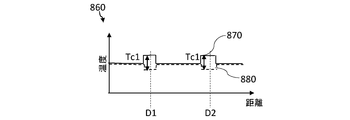
- FIG. 5 is a graph of temperature vs. distance provided by the arrangement of FIG. 8A according to some embodiments.
- FIG. 5 is a layout of an embedded optical fiber including an opening without a maintenance hatch according to some embodiments.
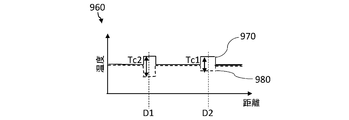
- 9 is a graph of temperature vs. distance provided by the arrangement of FIG. 9A according to some embodiments.
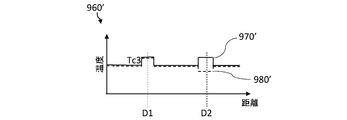
- 9 is a graph of temperature vs. distance provided by the arrangement of FIG. 9A according to some embodiments.
- 9 is a graph of temperature vs. distance provided by the arrangement of FIG. 9A according to some embodiments.
- FIG. 5 is a schematic diagram of a system for identifying the removal of maintenance hatches according to some embodiments.
- first and second features are formed in direct contact. It may also include embodiments in which additional features may be formed between the first and second features so that the first and second features do not come into direct contact.
- present disclosure may repeat reference numbers and / or letters in various examples. This repetition is for brevity and clarity and does not, by itself, define the relationships between the various embodiments and / or forms discussed.
- Identifying when the maintenance hatch, such as the manhole cover, was removed helps to quickly replace the maintenance hatch and reduces the risk of public facilities covered by the maintenance hatch. Rapid identification of maintenance hatch removal also helps increase the likelihood of identifying whether a maintenance hatch has been stolen and, if so, who stolen it.
- the present disclosure provides a system for identifying whether a maintenance hatch has been removed based on measurements of backscattered light data from an optical fiber.
- Fiber optics are used for communication between different pieces of equipment and are often already present near maintenance hatches. As a result, the cost of monitoring the removal of maintenance hatches is significantly reduced.
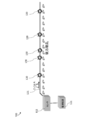
- FIG. 1 is a schematic view of a sensor system (sometimes referred to simply as a system) 100 according to some embodiments.
- the sensor system 100 includes a monitoring device 111 that communicates with the sensor 112.
- the sensor 112 includes an optical time domain reflectometer (OTDR) or other suitable sensor.
- the sensor system 100 further includes an optical fiber 121 connected to the sensor 112.
- the sensor 112 receives backscattered light from the optical fiber 121, and the backscattered light is photoelectrically converted into a signal called backscattered light data used in the subsequent analysis.
- the optical fiber 121 can be used for information transmitted between communication facilities.
- the optical fiber 121 is arranged near the maintenance hatch 130.
- Optical pulses are transmitted along the optical fiber 121.
- Backscattered light is generated as the light pulse propagates along the optical fiber 121.
- the sensor 112 is configured to detect the backscattered light and transmit a signal based on the detected backscattered light to the monitoring device 111.
- the maintenance hatch 130 is on the sidewalk. In some embodiments, the maintenance hatch 130 is on the road. In some embodiments, the maintenance hatch 130 is on the ground. In some embodiments, the optical fiber 121 is covered by a maintenance hatch 130. In some embodiments, the fiber optic 121 is offset from the maintenance hatch 130, but is sufficiently close to the maintenance hatch 130 that it is affected by vibrations associated with the removal of the maintenance hatch 130.
- the backscattered light from the optical fiber 121 is affected by the environment in the vicinity of the optical fiber 121.
- ground vibrations affect backscattered light produced by light pulses.
- the vibration is caused by the pedestrian walking near the optical fiber 121, the vehicle passing near the optical fiber 121, and the removal of the maintenance hatch near the optical fiber 121.
- the sound waves incident on the optical fiber 121 also affect the backscattered light generated during the propagation of the optical pulse.
- the temperature of the optical fiber 121 also affects the backscattered light.
- the monitoring device 111 can also detect an abnormality in the environment surrounding the optical fiber 121 by detecting backscattered light and applying a trained (learned) analysis model.
- optical pulses assists in the analysis of backscattered light to determine at which point along the optical fiber 121 the anomaly occurred. Based on the velocity of the light pulse moving along the optical fiber and the timing of the detected backscattered light, the distance traveled by the light pulse before the backscattering of the light can be determined. This helps the monitoring device 111 determine both the location of the anomaly and the timing of the anomaly.
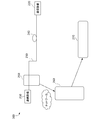
- FIG. 2 is a schematic diagram of a system 200 for monitoring the removal of maintenance hatches according to some embodiments.
- the system 200 includes a first communication facility 210 and a second communication facility 220.
- the optical fiber 230 connects the first communication equipment 210 with the second communication equipment 220.
- the maintenance hatch 240 is located close to the optical fiber 230.
- the optical fiber 230 is covered by a maintenance hatch 240.
- the fiber optic 230 is offset from the maintenance hatch 240.
- the sensor 250 is connected to the optical fiber 230.
- the sensor 250 is configured to receive backscattered light data from the optical fiber 230.
- the data analysis device 260 is communicating with the sensor 250.
- the monitoring device 270 is communicating with the data analysis device 260.
- the optical fiber 230 is configured to transmit an information signal between the first communication equipment 210 and the second communication equipment 220.
- the optical fiber 230 is a multimode optical fiber.
- the optical fiber 230 is a single mode optical fiber.
- the optical fiber 230 is at least partially embedded in the ground.
- the optical fiber 230 is in a conduit.
- the optical fiber 230 is in a sewer pipe or in another public facility passage.
- the maintenance hatch 240 covers the access point to public facilities.
- the maintenance hatch 240 includes a manhole cover.
- the maintenance hatch 240 includes a grid, a cleanout cover, a drain cover, or other cover suitable for public facilities.
- the maintenance hatch 240 is sufficiently close to the optical fiber 230 so that the removal of the maintenance hatch 240 affects the surrounding environment in the vicinity of the optical fiber 230.
- the ambient environment in the vicinity of the optical fiber 230 is affected by the vibrations caused by removing the maintenance hatch 240.
- the ambient environment in the vicinity of the optical fiber 230 is affected by varying the ability of sound waves incident on the optical fiber 230.
- the ambient environment in the vicinity of the fiber optic 230 is affected by allowing greater temperature variation in the fiber optic 230. In some embodiments, the ambient environment in the vicinity of the optical fiber 230 is affected by allowing moisture to come into contact with the optical fiber 230.
- FIG. 2 includes a single maintenance hatch 240 for simplicity. In some embodiments, the system comprises a plurality of maintenance hatches 240.
- the sensor 250 is configured to receive backscattered light data from the optical fiber 230, including backscattered light data associated with changes in the ambient environment near the optical fiber related to the presence or absence of the maintenance hatch 240.
- the sensor 250 is configured to detect backscattered light data relating to light propagating from the first communication facility 210 to the second communication facility 220.
- the sensor is configured to detect backscattered light data about light propagating from the second communication facility 220 to the first communication facility 210.
- the system 200 is configured to receive backscattered light data about light propagating from the second communication facility 220 to the first communication facility 210 (not shown). )including.
- the sensor 250 comprises an OTDR or other suitable sensor.
- the senor 250 is housed in a first communication facility 210. In some embodiments, the sensor 250 is separate from the first communication facility 210. In some embodiments, the sensor 250 is housed in a second communication facility 220. In some embodiments, the sensor 250 is similar to the sensor 112 (FIG. 1).
- the data analysis device 260 is configured to receive backscattered light data from the sensor 250.
- the data analysis device 260 includes at least a processor for performing the functions of the data analysis device 260.
- the data analysis device 260 is configured to analyze the backscattered light data to determine if the backscattered light data shows any anomalies.
- the data analysis device 260 communicates with the sensor 250 via a wireless network. In some embodiments, a wired connection exists between the data analysis device 260 and the sensor 250.
- the data analysis device 260 is configured to receive backscattered light data from all sensors.
- the data analysis device 260 is configured to receive backscattered light data from all fewer sensors.
- the data analysis device 260 is similar to the monitoring device 111 (FIG. 1).
- the data analysis device 260 uses a trained model (trained model) to analyze backscattered light data.
- the trained model is provided to the data analysis device 260 by an external device.
- the trained model is built by the data analysis device 260.
- the trained model is built using teaching data.
- the teacher data includes information on the normal and abnormal states of the backscattered light data.
- the normal state includes backscattered light data of a sample showing the state of the optical fiber 230 when the maintenance hatch 240 is properly positioned.
- the anomalous condition includes sample backscattered light data showing the condition of the optical fiber 230 when the maintenance hatch 240 is removed.
- the state of the fiber optic 230 is associated with at least one of vibrations of the fiber optic 230, sound waves incident on the fiber optic 230, or temperature fluctuations of the fiber optic 230.
- the teacher data includes predictive data or computer-generated data.
- the teacher data includes empirical data.
- the teacher data includes a combination of predictive or computer-generated data and empirical data.
- the data analysis device 260 compares the actual data received from the sensor 250 with the trained model to determine whether the state of the optical fiber 230 is normal or abnormal.
- the data analysis device 260 is configured to receive meteorological data from an external device to assist in determining the anomalous state of the optical fiber 230.
- the comparison results are transferred to the monitoring device 270.
- the monitoring device 270 is configured to receive the analysis result by the data analysis device 260 and provide the result to the user.
- the surveillance device 270 includes at least a display and a processor. In some embodiments, the surveillance device 270 communicates wirelessly with the data analysis device 260. In some embodiments, the surveillance device 270 has a wired connection to the data analysis device 260.
- the monitoring device 270 displays a warning according to the analysis (analysis result) from the data analysis device 260 indicating the abnormal state of the optical fiber 230.
- the warning includes text, voice, or graphic (image) data.
- the warning includes information related to the location of the anomalous state of the optical fiber 230.
- the warning includes the timing of the start of an abnormal state of the optical fiber 230.
- the monitoring device 270 displays the normal state according to the analysis (analysis result) from the data analysis device 260 indicating the normal state of the optical fiber 230.
- the surveillance device 270 is connected to at least one local imaging device for taking an image of the area including the maintenance hatch 240. In some embodiments, the surveillance device 270 captures an image from a local imaging device associated with the maintenance hatch 240 in response to receiving data indicating an abnormal condition of the optical fiber 230 at the location of the maintenance hatch 240. indicate. In some embodiments, the surveillance device 270 selects an image received from the local imaging device based on the determined start timing of the anomalous state of the optical fiber 230 for display to the user.
- the monitoring device 270 is omitted.
- the comparison result is sent to the user in response to the determination of the abnormal state of the optical fiber 230.
- the alert is sent to a mobile device accessible by the user.
- the warning includes text, voice, or graphic (image) data.
- the ability to accurately and instantly detect the timing and position of the abnormal state of the optical fiber 230 allows the system 200 to quickly determine if the maintenance hatch 240 has been removed. This facilitates quick replacement of the maintenance hatch 240 and reduces the risk of damage to public facilities. Furthermore, the combination of the detected anomalous condition of the fiber optic 230 with the imaging of the maintenance hatch 240 enhances the ability to identify the theft of the maintenance hatch 240, which can lead to the capture of thieves and the deterrence of future theft. .. Combining the detected abnormal state of the optical fiber 230 with the imaging of the maintenance hatch 240 is also useful for identifying false positives in the abnormal detection data. These false positives can be fed back to the trained model used by the data analysis device 260 to improve the accuracy of the trained model. Even in some embodiments that do not include the monitoring device 270, if the inspection of the maintenance hatch 240 following the display of the abnormal condition of the optical fiber 230 indicates that the maintenance hatch 240 remains in place, the information is trained. You can feed back to the finished model.
- the data analysis device 260 or the monitoring device 270 can cross-reference the scheduled maintenance with the detected anomalous state of the optical fiber 230. By cross-referencing the scheduled maintenance with the detected anomalous condition of the fiber optic 230, unnecessary warnings to the user regarding the removal of the maintenance hatch 240 are reduced or avoided.
- FIG. 3 is a flowchart of the method 300 for specifying the removal of the maintenance hatch according to some embodiments.
- an optical pulse is transmitted along the optical fiber, for example, the optical fiber 121 (FIG. 1) or the optical fiber 230 (FIG. 2).
- the optical fiber comprises a multimode optical fiber.
- the optical fiber comprises a single mode optical fiber.
- the optical fiber is covered by a maintenance hatch.
- the optical fiber is offset from the maintenance hatch. Since the optical fiber is close enough to the maintenance hatch, removal of the maintenance hatch will affect the surrounding environment near a portion of the optical fiber.
- backscattered light data is detected from the optical fiber.
- Backscattered light data is the result of reflections within the optical fiber, such as Rayleigh reflections. When the state near the optical fiber changes, the difference in backscattered light data can be detected.
- backscattered light data is detected using an OTDR.
- backscattered light data is detected using sensor 112 (FIG. 1) or sensor 250 (FIG. 2).
- the backscattered light data is analyzed to determine whether or not an abnormal state exists in the vicinity of the optical fiber.
- the anomalous condition is detectable due to vibration of the optical fiber, sound waves incident on the optical fiber, or at least one of temperature fluctuations in the optical fiber.
- the backscattered light data is analyzed using a comparison of the backscattered light data with the trained model.
- backscattered light data is analyzed using monitoring device 111 (FIG. 1).
- backscattered light data is analyzed using a data analysis device 260 (FIG. 2).
- method 300 proceeds to any step 320, depending on the determination that no abnormal condition is detected.
- the user is informed that it is in a normal state.
- the normal state is reported to the user by a monitoring terminal, such as the monitoring device 270.
- normal conditions are reported to the user using a mobile device accessible by the user.
- normal conditions are reported using text, voice, or graphic (image) information.
- the optional step 320 is omitted.
- the optional step 320 is omitted in situations where the user is primarily involved in identifying maintenance hatch removal. If any step 320 is omitted, the normal state is not reported to the user.
- the method 300 proceeds to step 325 according to the determination that the abnormal state has been detected.
- step 325 the position of the abnormal state along the optical fiber is determined.
- the location of the anomaly along the optical fiber is based on the timing of the backscattered light data detected for the corresponding transmit pulse from step 305.
- the position of the maintenance hatch that is presumed to be the cause of the abnormal state is identified.
- the location of the anomaly is determined using the processor.
- the location of the abnormal condition is determined by monitoring device 111 (FIG. 1).
- the location of the anomalous state is determined by the sensor 250 (FIG. 2).
- the maintenance hatch can be quickly replaced to reduce the risk of damage to the underlying public facilities.
- the timing of starting an abnormal state along the optical fiber is determined.
- the timing of the onset of anomalous conditions along the optical fiber is based on when the detected backscattered light data was received.
- the timing of the start of the abnormal condition By determining the timing of the start of the abnormal condition, the time when the maintenance hatch is removed is specified.
- the timing of the start of an abnormal condition is determined using the processor.
- the timing of the start of the abnormal state is determined by the monitoring device 111 (FIG. 1).
- the timing of the start of the abnormal condition is determined by the sensor 250 (FIG. 2). Detecting the timing of the onset of anomalous conditions increases the chances of identifying potential thieves.
- any step 330 is omitted.
- optional step 330 is omitted.
- the detection of the abnormal state may be significantly delayed. This is because the detection of anomalous conditions is based on temperature differences (or expected temperature differences) that, in some cases, do not occur over the hours following removal of the maintenance hatch.
- the sound wave source is removed a considerable amount of time after the maintenance hatch is first removed. There is a high possibility that it will pass through the maintenance hatch. Omission of any step 330 helps reduce the processing load for analysis when the timing of the start of the abnormal state is unlikely to be useful information.
- a warning of an abnormal state is transmitted to the user.
- the warning includes information about the location and / or timing of the abnormal condition.
- the warning includes text, voice, or graphic (image) data.
- the warning is combined with an image of the area containing the maintenance hatch associated with the detected anomaly.
- the warning is communicated using the surveillance device 270 (FIG. 2).
- the alert is transmitted to a mobile device accessible by the user.
- the warning is communicated with information related to the scheduled maintenance associated with the maintenance hatch to mitigate or avoid unnecessary concerns about the removal of the maintenance hatch.
- a further step is included in method 300.
- false positives are fed back to the trained model to improve the accuracy of the trained model.
- at least one step is omitted.
- any step 330 is omitted as described above.
- the process sequence of method 300 is modified.
- any step 320 is performed prior to step 315 such that the normal state is reported until an abnormal state is detected.
- Method 300 is useful for enhancing the ability to accurately and quickly detect the timing and / or position of an abnormal state of an optical fiber. This facilitates quick replacement of maintenance hatches and reduces the risk of damage to public facilities.
- FIG. 4 is a graph 400 of detected backscattered light data according to some embodiments.
- Graph 400 includes amplitudes at specific detected frequencies over time for backscattered light data from optical fibers.
- the graph 400 includes an increase in the amplitude of the detected frequencies in the time range of about 15 seconds to about 60 seconds as compared to the rest of the graph 400.
- This type of data can be used, for example, to determine the occurrence of vibrations in the ambient environment surrounding an optical fiber.
- FIG. 5A is a graph 500 of frequency vs. amplitude based on detected backscattered light data according to some embodiments.
- the graph 500 is generated by using a Fourier transform on the information collected in the backscattered light data.
- Graph 500 includes plot 510. Small changes in plot 510 indicate small vibrational changes at different frequencies.
- the first frequency F1 is a frequency at which the vehicle is likely to cause vibration of the optical fiber. In some embodiments, the first frequency F1 is at about 50 hertz (Hz).
- the second frequency F2 is a frequency at which the removal of the maintenance hatch is likely to cause vibration of the optical fiber. In some embodiments, the second frequency F2 is at about 70 Hz.
- removal of different maintenance hatches results in the generation of different frequencies.
- the frequency produced by the removal of the maintenance hatch depends on the material of the maintenance hatch, the type of installation of the maintenance hatch in the opening, the size of the maintenance hatch, and the shape of the maintenance hatch.
- the use of the trained model in combination with information related to the type of maintenance hatch at different locations along the fiber optics improves the accuracy of detection of maintenance hatch removal.
- Plot 510 does not contain significant peaks in either the first frequency F1 or the second frequency F2. This indicates a normal state.
- the monitoring device 111 (FIG. 1) or the data analysis device 260 (FIG. 2) determines that the optical fiber is in a normal state, depending on the generation of the plot, such as plot 510.
- FIG. 5B is a graph 500'of frequency vs. amplitude based on detected backscattered light data according to some embodiments.
- the graph 500' is generated by using the Fourier transform on the information collected in the backscattered light data.
- Graph 500' includes plot 510'.
- plot 510' contains a peak at the first frequency F1.
- the peak at the first frequency F1 indicates the passage of the vehicle.
- the peak at the first frequency does not indicate the removal of the maintenance hatch. Therefore, plot 510'will indicate a normal state.
- the monitoring device 111 (FIG. 1) or the data analysis device 260 (FIG. 2) determines that the optical fiber is in a normal state.
- FIG. 5C is a graph 500 "of frequency vs. amplitude based on detected backscattered light data according to some embodiments.
- the graph 500 was collected with backscattered light data. Generated by using a Fourier transform on the information.
- Graph 500 “includes plot 510".
- plot 510 "contains a peak at the second frequency F2.
- the peak at the second frequency F2 indicates the removal of the maintenance hatch. Therefore, plot 510" indicates an abnormal condition. Will show.
- the monitoring device 111 (FIG. 1) or the data analysis device 260 (FIG. 2) determines that the optical fiber is in an abnormal state, depending on the generation of the plot, such as plot 510 ".
- timing backscattered light data such as Graph 400 (FIG. 4)
- anomalous condition detection such as Plot 510 ”(FIG. 5C)
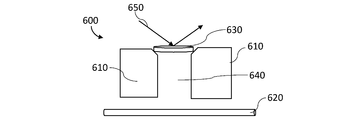
- FIG. 6A is a diagram of an arrangement 600 of the maintenance hatch 630 covering the upper opening 640 of the optical fiber 620 according to some embodiments.
- Arrangement 600 includes a maintenance hatch 630 that covers the opening 640 of the ground 610.
- the opening 640 is in a sewer pipe or other public facility conduit.
- the optical fiber 620 is below the maintenance hatch 630 and is protected by the maintenance hatch 630 from the environment on the opposite side of the maintenance hatch 630. Sound waves 650 from the environment opposite the maintenance hatch are generated by a sound source (not shown).
- the maintenance hatch 630 reflects or diverts a significant portion of the sound wave 650, as can be seen from the arrangement 600. As a result, a small amount of sound wave 650 is incident on (or not at all) the optical fiber 620.
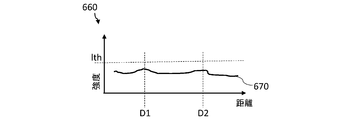
- FIG. 6B is an intensity vs. distance graph 660 provided by the arrangement of FIG. 6A according to some embodiments.
- Graph 660 includes plot 670.
- Plot 670 shows a slight change in the intensity of sound waves incident along the optical fiber 620. All changes in the intensity of the sound wave along the optical fiber 620 are below the intensity threshold Is.
- the intensity of the sound wave incident on the optical fiber 620 is determined by the depth of the optical fiber 620, the size of the opening 640, the material of the ground 610, and the shape and orientation of the opening 640. In some embodiments, the user utilizes these factors to set the intensity threshold Is.
- the processor eg, monitoring device 111 (FIG. 1) or data analysis device 260 (FIG.
- Graph 660 includes a first distance D1 indicating the position of the maintenance hatch 630 along the optical fiber 620.
- Graph 660 further includes a second distance D2 indicating the location of a second maintenance hatch (not shown) along the optical fiber 620.
- the distances D1 and D2 are distances from a sensor, for example, sensor 112 (FIG. 1) or sensor 250 (FIG. 2).
- Plot 670 shows that both the maintenance hatch 630 at distance D1 and the second maintenance hatch at distance D2 are in normal condition.
- FIG. 7A is a diagram of the arrangement 700 of the upper opening 740 of the optical fiber 720 without the maintenance hatch according to some embodiments.
- arrangement 700 does not include a maintenance hatch, i.e., the maintenance hatch is removed from above the opening 740 of the ground 710.
- the opening 740 is in a sewer pipe or other public facility conduit.
- the fiber optic 720 is below the position where the maintenance hatch should be located, but is exposed to the environment outside the opening 740. Sound waves 750 from the environment outside the aperture can propagate through the aperture 740 and enter the optical fiber 720.
- FIG. 7B is a graph 760 of intensity vs. distance provided by the arrangement of FIG. 7A according to some embodiments.
- Graph 760 includes plot 770.
- plot 770 includes an intensity spike at distance D1 indicating that the sound wave 750 is not blocked by the maintenance hatch.
- the intensity peak at the distance D1 exceeds the intensity threshold Is. Therefore, plot 770 shows that the maintenance hatch at distance D1 has been removed.
- plot 770 does not include peaks at distance D2. Therefore, plot 770 shows that the maintenance hatch at distance D2 remains above the fiber optic 720.
- Plot 770 shows that the maintenance hatch at distance D1 is in an abnormal state and the maintenance hatch at distance D2 is in a normal state.
- FIG. 8A is a diagram of an arrangement 800 of an embedded optical fiber 820 including an opening 840 covered by a maintenance hatch 830 according to some embodiments.
- Arrangement 800 includes a maintenance hatch 830 that covers the opening 840 of the ground 810.
- the opening 840 is in a sewer pipe or other public facility conduit.
- the optical fiber 820 is located below the maintenance hatch 830 and is protected by the maintenance hatch 830 from the environment on the opposite side of the maintenance hatch 830.
- the portion of the optical fiber 820 embedded in the ground 810 or embedded in the conduit embedded in the ground 810 has a substantially uniform temperature both during the day and at night because the temperature of the ground 810 is substantially uniform.
- the portion of the optical fiber 820 in the opening 840 shows a change in temperature due to a change in air temperature.
- daytime temperatures are generally higher than nighttime temperatures. Therefore, the portion of the optical fiber 820 within the opening 840 is expected to exhibit temperature fluctuations from day to night.
- the maintenance hatch 830 covers the opening 840, heat is reflected by the maintenance hatch 830 during the day and the maintenance hatch 830 insulates the opening 840 at night, so that the temperature of the portion of the optical fiber 820 in the opening 840 The magnitude of the variation is reduced compared to when the optical fiber is exposed.
- FIG. 8B is a graph 860 of temperature vs. intensity provided by the arrangement of FIG. 8A according to some embodiments.
- Graph 860 includes a plot 870 for temperatures measured during the day and a plot 880 for temperatures measured at night. Both plot 870 and plot 880 show that the portion of fiber optic 820 embedded in the ground 810 maintains a substantially uniform temperature during both daytime and nighttime.
- Graph 860 includes a first distance D1 indicating the position of the maintenance hatch 830 along the optical fiber 820.
- Graph 860 further includes a second distance D2 indicating the location of a second maintenance hatch (not shown) along the optical fiber 820.
- the distances D1 and D2 are distances from a sensor, for example, sensor 112 (FIG.
- Plot 870 shows fiber optic 820 in which both the portion of fiber optic 820 under the maintenance hatch 630 at distance D1 and the portion of fiber optic 820 under the second maintenance hatch at distance D2 are embedded in the ground 810 during the day. Indicates that it has a higher temperature than the portion of.
- plot 880 both the portion of fiber optic 820 under the maintenance hatch 630 at distance D1 and the portion of fiber optic 820 under the second maintenance hatch at distance D2 are of fiber optic 820 embedded in the ground 810 at night. Indicates that it has a lower temperature than the portion.
- the temperature change between plot 870 and plot 880 at both the first distance D1 and the second distance D2 is the first temperature change Tc1.
- the temperature change of the optical fiber 620 is determined by the depth of the optical fiber 820, the size of the opening 840, the material of the ground 810, and the shape and orientation of the opening 840.
- the user utilizes these factors to determine a temperature change threshold range to determine if the temperature change is within the expected range.
- the processor eg, monitoring device 111 (FIG. 1) or data analysis device 260 (FIG. 2), utilizes these factors to determine if the temperature change is within the expected range.
- recorded weather conditions weather conditions from external devices are used to determine the temperature change threshold range. That is, the temperature change threshold range changes in some embodiments depending on the recorded weather conditions at the position of the maintenance hatch 830.
- the temperature change Tc1 indicates a normal state in the maintenance hatch 830.
- FIG. 9A is a diagram of an arrangement 900 of an embedded optical fiber 920 including an opening 940 without a maintenance hatch according to some embodiments.
- arrangement 900 does not include a maintenance hatch, i.e., the maintenance hatch is removed from the opening 940 of the ground 910.
- the opening 940 is in a sewer pipe or other public facility conduit.
- the fiber optic 920 is below the position where the maintenance hatch should be located, but is exposed to the environment outside the opening 940.
- the portion of the optical fiber 920 in the opening 940 is exposed to the external environment. There is no heat reflection by the maintenance hatch or heat insulation of the optical fiber 920 by the maintenance hatch.
- the temperature fluctuation of the optical fiber 920 in the opening is different from the situation where the maintenance hatch covers the opening 940 as in the case of the arrangement 800.
- the temperature change from daytime to nighttime may in some cases have a higher magnitude compared to arrangement 800.
- the portion of the optical fiber 920 in the opening 940 is covered with water, the temperature of the portion of the optical fiber 920 is reduced because the water maintains a substantially constant temperature due to the ambient ground temperature. This indicates that that portion of the optical fiber 920 is exposed to rain due to the removal of the maintenance hatch.
- the temperature change of that portion of the optical fiber 920 is also reduced due to the snow or ice. This indicates that that portion of the optical fiber 920 is exposed to snow due to the removal of the maintenance hatch.
- FIG. 9B is a temperature vs. distance graph 960 provided by the arrangement of FIG. 9A according to some embodiments.
- Graph 960 shows a situation where the opening 940 is dry.
- Graph 960 includes a plot 970 for temperatures measured during the day and a plot 980 for temperatures measured at night. Both plots 970 and 980 show that the portion of fiber optic 920 embedded in the ground 910 maintains a substantially uniform temperature during both daytime and nighttime.
- graph 960 includes a second temperature change Tc2 that is greater than the first temperature change Tc1 at distance D1 and the second temperature change Tc2 has a portion of the optical fiber 920 due to a maintenance hatch. Indicates that it is not protected.
- the second temperature change Tc2 at the distance D1 is outside the temperature change threshold range. Therefore, graph 960 shows that the maintenance hatch at distance D1 has been removed. Similar to graph 860, graph 960 has a first temperature change Tc1 at distance D2. Therefore, graph 960 shows that the maintenance hatch at distance D2 remains above the optical fiber 920. Graph 960 shows that the maintenance hatch at the distance D1 is in the abnormal state and the maintenance hatch at the distance D2 is in the normal state.
- FIG. 9C is a temperature vs. distance graph 960'provided by the arrangement of FIG. 9A according to some embodiments.
- Graph 960' shows a situation in which the portion of the optical fiber 920 in the opening 940 is covered with water.
- Both Plot 970'and Plot 980 show that the portion of fiber optic 920 embedded in the ground 910 maintains a substantially uniform temperature during both daytime and nighttime.
- the third temperature change Tc3 at the distance D1 is outside the temperature change threshold range. Therefore, graph 960'shows that the maintenance hatch at distance D1 has been removed. Similar to graph 860, graph 960'has a first temperature change Tc1 at distance D2. Therefore, graph 960'shows that the maintenance hatch at distance D2 remains above the optical fiber 920.
- FIG. 9D is a graph 960 "of temperature vs. distance provided by the arrangement of FIG. 9A according to some embodiments.
- Graph 960 shows a portion of the optical fiber 920 in the opening 940 covered with snow or ice. Shows the situation.
- Graph 960 “includes plot 970” for temperature measured during the day and plot 980 "for temperature measured at night.
- Plot 970” and plot 980 both are light embedded in the ground 910. It is shown that the portion of the fiber 920 maintains a substantially uniform temperature during both daytime and nighttime.
- graph 960 is smaller than the first temperature change Tc1 at distance D1.
- the fourth temperature change Tc4 includes the temperature change Tc4 of 4, which indicates that the portion of the optical fiber 920 is not protected by the maintenance hatch and that snow or ice covers the optical fiber 920.
- the fourth temperature change Tc4 at the distance D1 is outside the temperature change threshold range. Therefore, graph 960 "shows that the maintenance hatch at distance D1 has been removed. Similar to graph 860, graph 960" has a first temperature change Tc1 at distance D2. Therefore, graph 960 "shows that the maintenance hatch at distance D2 remains above the optical fiber 920.
- Graph 960" shows that the maintenance hatch at distance D1 is in an abnormal state and the maintenance hatch at distance D2 is in a normal state. Indicates that there is.
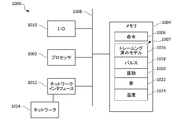
- FIG. 10 is a block diagram of the system 1000 for determining whether maintenance hatches according to some embodiments have been removed.
- the monitoring device 111 FIG. 1
- the data analysis device 260
- the system 1000 includes a hardware processor 1002 and a computer program code (program) 1006, i.e., a non-temporary computer-readable recording medium 1004 encoded with a set of executable instructions, i.e., storing the set. include.
- the computer program code 1006 is shown as an "instruction" in FIG.
- the computer-readable recording medium 1004 is shown as "memory" in FIG. Further, the computer-readable recording medium 1004 is encoded by the instruction 1007 for interfacing with an external device.
- Processor 1002 is electrically coupled to a computer-readable recording medium 1004 via bus 1008. Also, the processor 1002 is electrically coupled to the I / O interface 1010 by bus 1008. The I / O interface 1010 is shown as "I / O" in FIG.
- the network interface 1012 is also electrically connected to the processor 1002 via the bus 1008. The network interface 1012 is connected to the network 1014, whereby the processor 1002 and the computer-readable recording medium 1004 can be connected to external elements via the network 1014.
- Processor 1002 uses computer program code 1006 encoded on a computer-readable recording medium 1004 to make system 100 available for performing some or all of the steps as described in Method 300. It is configured to run.
- the processor 1002 is a central processing unit (CPU), a multiprocessor, a distributed processing system (DPS), an application specific integrated circuit (ASIC), and / or a suitable processing unit.
- CPU central processing unit
- DPS distributed processing system
- ASIC application specific integrated circuit
- the computer-readable recording medium 1004 is an electronic, magnetic, optical, electromagnetic, infrared, and / or semiconductor system (or device or device).
- the computer-readable recording medium 1004 includes a semiconductor or solid-state memory, a magnetic tape, a removable computer disk (floppy disk), a random access memory (RAM), a read-only memory (ROM), and a rigid magnetic disk. ) And / or include optical discs.
- the computer-readable recording medium 1004 includes a compact disc read-only memory (CD-ROM), a compact disc read / write (CD-R / W (CD-RW)), and a compact disc read / write (CD-RW).
- CD-ROM compact disc read-only memory
- CD-R / W compact disc read / write
- CD-RW compact disc read / write
- DVD digital video disc
- the recording medium 1004 stores computer program code 1006 that is configured to cause system 1000 to perform method 300.
- the recording medium 1004 provides information necessary to perform method 300, as well as trained model parameters 1016, pulse parameters 1018, vibration parameters 1020, sound parameters 1022, temperature parameters 1024, and / or. Also stores information generated during execution of method 300, such as a set of executable instructions for performing the steps of method 300.
- the recording medium 1004 stores instruction 1007 for interfacing with an external device.
- Instruction 1007 allows processor 1002 to generate instructions readable by an external device in order to effectively implement method 300.
- the I / O interface 1010 is coupled to an external circuit.
- the I / O interface 1010 includes a keyboard, keypad, mouse, trackball, trackpad, and / or cursor arrow keys for communicating information and commands to processor 1002.
- the system 1000 also includes a network interface 1012 coupled to the processor 1002.
- the network interface 1012 allows the system 100 to communicate with the network 1014 to which one or more other computer systems are connected.
- the network interface 1012 includes a wireless network interface such as BLUETOOTH, WIFI, WIMAX, GPRS, or WCDMA, or a wired network interface such as ETHERNET, USB, IEEE-1394.
- method 300 is implemented in two or more systems 1000, and information such as sensor data is exchanged between different systems 1000 via network 1014.
- System 1000 is configured to receive information related to the trained model via I / O interface 1010 or network interface 1012.
- the trained model is transferred to processor 1002 via bus 1008 and then stored on a computer-readable recording medium 1004 as trained model parameter 1016.
- the system 100 is configured to receive information related to pulse information via the I / O interface 1010 or network interface 1012.
- processor 1002 is configured to store information as pulse parameter 1018 on a computer-readable recording medium 1004.
- the pulse parameter 1018 is shown as a "pulse" in FIG.
- the system 1000 is configured to receive vibration-related information detected via the I / O interface 1010 or network interface 1012.
- processor 1002 is configured to generate vibration-related information based on backscattered light data received from a sensor, eg, sensor 112 (FIG. 1) or sensor 250 (FIG. 2). Has been done.
- the vibration information is stored in the computer-readable recording medium 1004 as the vibration parameter 1020.
- the vibration parameter 1020 is shown as "vibration" in FIG.
- the system 1000 is configured to receive sound-related information detected via the I / O interface 1010 or the network interface 1012.
- processor 1002 is configured to generate sound-related information based on backscattered light data received from a sensor, eg, sensor 112 (FIG. 1) or sensor 250 (FIG. 2). Has been done.
- the sound information is stored in a computer-readable recording medium 1004 as sound parameter 1022.
- the sound parameter 1022 is shown as "sound" in FIG.
- the system 1000 is configured to receive temperature-related information detected via the I / O interface 1010 or network interface 1012.
- processor 1002 is configured to generate temperature-related information based on backscattered light data received from a sensor, eg, sensor 112 (FIG. 1) or sensor 250 (FIG. 2). Has been done.
- the temperature information is stored in a computer-readable recording medium 1004 as a temperature parameter 1024.
- the temperature parameter 1024 is shown as "temperature” in FIG.
- a method of detecting the removal of a maintenance hatch is the step of transmitting an optical pulse along the optical fiber, using a step and a sensor in which the first portion of the optical fiber is in close proximity to the maintenance hatch.
- a method comprising the step of identifying whether the maintenance hatch has been removed based on the determined information.
- the method further comprises determining the distance of the first portion from the sensor based on the detected backscattered light.
- the step of determining the information includes determining whether the vibration frequency of the first portion has a peak at a selected frequency.
- the method further comprises the step of determining the selected frequency based on the material of the maintenance hatch.
- the step of determining the information includes determining the intensity of sound waves incident on the first portion of the optical fiber.
- the step of determining the information includes the step of determining the temperature of the first portion of the optical fiber.
- the method further determines the timing of removal of the maintenance hatch in response to the determined information indicating that the first portion of the optical fiber is in an abnormal state. include.
- the method further includes a step of warning the user that the maintenance hatch has been removed in response to the determined information indicating that the first portion of the optical fiber is in an abnormal state.
- the step of alerting the user includes displaying an image of a region containing the position of the first portion of the optical fiber.
- the method further comprises reporting the normal state to the user in response to the determined information indicating that the first portion of the optical fiber is in a normal state.
- the method comprises the location of the first portion of the optical fiber in response to the determined information indicating that the first portion of the optical fiber is in an abnormal state. It further includes a step of inspecting the area and a step of reporting a false positive in response to the determination that the maintenance hatch is in close proximity to the first portion of the optical fiber.
- the method is a step of determining second information relating to a second portion of the optical fiber based on the detected backscattered light, the first of the optical fibers. It further includes a step in which the second portion is in close proximity to the second maintenance hatch and a step of identifying whether the second maintenance hatch has been removed based on the determined second information.
- the system that detects the removal of the maintenance hatch is a computer-readable recording medium that is configured to store instructions and a sensor that is configured to detect backscattered light data from the fiber optics.
- a processor connected to a sensor and a computer-readable recording medium in which a first portion of the optical fiber is in close proximity to the maintenance hatch to capture the detected backscattered light data.
- the detected backscattered light data is compared with the trained model to determine information related to the first portion of the optical fiber, and the maintenance hatch is based on the determined information.
- It comprises a processor, which is configured to execute the instruction to identify whether it has been removed.
- the processor is configured to execute the instruction to determine the distance of the first portion from the sensor based on the detected backscattered light data.
- the processor is configured to execute the instruction to determine the information by determining whether the vibration frequency of the first portion has a peak at a selected frequency. Has been done.
- the processor is configured to execute the instruction to determine the selected frequency based on the material of the maintenance hatch.
- the processor is configured to execute the instructions for determining the information by determining the intensity of sound waves incident on the first portion of the optical fiber.
- the processor is configured to execute the instructions for determining the information by determining the temperature of the first portion of the optical fiber.
- the processor executes the instruction to determine the timing of removal of the maintenance hatch in response to the comparison indicating that the first portion of the optical fiber is in an abnormal state. It is configured to do.
- a computer-readable recording medium is a computer-readable recording medium that is configured to store instructions (programs) that, when executed by the processor, provide the processor with a maintenance hatch.
- the backscattered light data is received based on the backscattered light detected from the optical fiber having the first portion in close proximity, and the received backscattered light data is compared with the trained model of the optical fiber.
- the information related to the first part is determined, and based on the determined information, it is determined whether or not the maintenance hatch has been removed.
Landscapes
- Physics & Mathematics (AREA)
- General Physics & Mathematics (AREA)
- Chemical & Material Sciences (AREA)
- Analytical Chemistry (AREA)
- Business, Economics & Management (AREA)
- Emergency Management (AREA)
- Optics & Photonics (AREA)
- Measuring Temperature Or Quantity Of Heat (AREA)
- Burglar Alarm Systems (AREA)
Priority Applications (1)
| Application Number | Priority Date | Filing Date | Title |
|---|---|---|---|
| JP2022507243A JP7343037B2 (ja) | 2020-03-13 | 2021-03-10 | メンテナンスハッチの除去を特定するための方法、特定システム、特定装置及びプログラム |
Applications Claiming Priority (2)
| Application Number | Priority Date | Filing Date | Title |
|---|---|---|---|
| US16/818,184 | 2020-03-13 | ||
| US16/818,184 US11519758B2 (en) | 2020-03-13 | 2020-03-13 | System for identifying removal of maintenance hatch and method of using |
Publications (1)
| Publication Number | Publication Date |
|---|---|
| WO2021182507A1 true WO2021182507A1 (ja) | 2021-09-16 |
Family
ID=77664652
Family Applications (1)
| Application Number | Title | Priority Date | Filing Date |
|---|---|---|---|
| PCT/JP2021/009513 Ceased WO2021182507A1 (ja) | 2020-03-13 | 2021-03-10 | メンテナンスハッチの除去を特定するためのシステム及び使用方法 |
Country Status (3)
| Country | Link |
|---|---|
| US (1) | US11519758B2 (https=) |
| JP (1) | JP7343037B2 (https=) |
| WO (1) | WO2021182507A1 (https=) |
Cited By (3)
| Publication number | Priority date | Publication date | Assignee | Title |
|---|---|---|---|---|
| JPWO2023073914A1 (https=) * | 2021-10-29 | 2023-05-04 | ||
| WO2024053069A1 (ja) * | 2022-09-08 | 2024-03-14 | 日本電信電話株式会社 | 堆積物推定システム及び堆積物推定方法 |
| MA67909A1 (fr) * | 2024-05-02 | 2025-11-28 | Lwf Uk Limited | Améliorations apportées ou liées à l'utilisation de la surveillance de l'état des tuyaux de fluide |
Families Citing this family (2)
| Publication number | Priority date | Publication date | Assignee | Title |
|---|---|---|---|---|
| WO2020259843A1 (en) * | 2019-06-27 | 2020-12-30 | Telefonaktiebolaget Lm Ericsson (Publ) | A security system |
| CN113726426B (zh) | 2021-10-19 | 2022-07-01 | 国网新疆电力有限公司电力科学研究院 | 一种具有告警功能的光缆监测系统 |
Citations (3)
| Publication number | Priority date | Publication date | Assignee | Title |
|---|---|---|---|---|
| JP2006214844A (ja) * | 2005-02-03 | 2006-08-17 | Fujikura Ltd | 光ファイバを用いた可動体変位検知装置 |
| WO2019189192A1 (ja) * | 2018-03-27 | 2019-10-03 | 日本電気株式会社 | 光ファイバセンサ及び解析方法 |
| WO2020044660A1 (ja) * | 2018-08-30 | 2020-03-05 | 日本電気株式会社 | 状態特定システム、状態特定装置、状態特定方法、及び非一時的なコンピュータ可読媒体 |
Family Cites Families (8)
| Publication number | Priority date | Publication date | Assignee | Title |
|---|---|---|---|---|
| US20080210852A1 (en) | 2003-03-21 | 2008-09-04 | Browning Thomas E | Fiber optic security system for sensing the intrusion of secured locations |
| EP1620835A4 (en) * | 2003-05-03 | 2010-02-17 | Woven Electronics Corp A South | FIBER OPTIC SECURITY SYSTEM FOR DETECTING IMPROVEMENT IN SECURED LOCATIONS |
| US20060071770A1 (en) | 2004-10-04 | 2006-04-06 | Frank Giotto | Fiber optic cable sensor for movable objects |
| US20110186203A1 (en) | 2011-04-08 | 2011-08-04 | Richard Lindner | Method and apparatus for determining proper curing of pipe liners using distributed temperature sensing |
| ITGE20120014U1 (it) | 2012-02-23 | 2013-08-24 | Def Di R Doni S P A | Dispositivo antifurto per cavi, in particolare cavi elettrici e nei cavidotti o simili |
| CN106908090A (zh) | 2013-06-06 | 2017-06-30 | 泰科电子(上海)有限公司 | 光传感器、光传感器组件和监测装置 |
| EP3474462B1 (en) | 2017-10-17 | 2020-01-29 | ADVA Optical Networking SE | Remote sensing system |
| CN109243123A (zh) * | 2018-08-31 | 2019-01-18 | 北京百世通管道科技有限公司 | 一种井盖状态实时监测预警系统和方法 |
-
2020
- 2020-03-13 US US16/818,184 patent/US11519758B2/en active Active
-
2021
- 2021-03-10 WO PCT/JP2021/009513 patent/WO2021182507A1/ja not_active Ceased
- 2021-03-10 JP JP2022507243A patent/JP7343037B2/ja active Active
Patent Citations (3)
| Publication number | Priority date | Publication date | Assignee | Title |
|---|---|---|---|---|
| JP2006214844A (ja) * | 2005-02-03 | 2006-08-17 | Fujikura Ltd | 光ファイバを用いた可動体変位検知装置 |
| WO2019189192A1 (ja) * | 2018-03-27 | 2019-10-03 | 日本電気株式会社 | 光ファイバセンサ及び解析方法 |
| WO2020044660A1 (ja) * | 2018-08-30 | 2020-03-05 | 日本電気株式会社 | 状態特定システム、状態特定装置、状態特定方法、及び非一時的なコンピュータ可読媒体 |
Cited By (5)
| Publication number | Priority date | Publication date | Assignee | Title |
|---|---|---|---|---|
| JPWO2023073914A1 (https=) * | 2021-10-29 | 2023-05-04 | ||
| WO2023073914A1 (ja) * | 2021-10-29 | 2023-05-04 | 日本電気株式会社 | 光ファイバセンシングシステム、光ファイバセンシング機器、及び光ファイバセンシング方法 |
| JP7718501B2 (ja) | 2021-10-29 | 2025-08-05 | 日本電気株式会社 | 光ファイバセンシングシステム、光ファイバセンシング機器、及び光ファイバセンシング方法 |
| WO2024053069A1 (ja) * | 2022-09-08 | 2024-03-14 | 日本電信電話株式会社 | 堆積物推定システム及び堆積物推定方法 |
| MA67909A1 (fr) * | 2024-05-02 | 2025-11-28 | Lwf Uk Limited | Améliorations apportées ou liées à l'utilisation de la surveillance de l'état des tuyaux de fluide |
Also Published As
| Publication number | Publication date |
|---|---|
| JPWO2021182507A1 (https=) | 2021-09-16 |
| US20210285798A1 (en) | 2021-09-16 |
| JP7343037B2 (ja) | 2023-09-12 |
| US11519758B2 (en) | 2022-12-06 |
Similar Documents
| Publication | Publication Date | Title |
|---|---|---|
| JP7343037B2 (ja) | メンテナンスハッチの除去を特定するための方法、特定システム、特定装置及びプログラム | |
| Fouda et al. | Pattern recognition of optical fiber vibration signal of the submarine cable for its safety | |
| US11867541B2 (en) | Distributed fibre optic sensing | |
| RU2518978C2 (ru) | Волоконно-оптическое акустическое измерение | |
| US10641681B2 (en) | Structure abnormality detection system, structure abnormality detection method, and storage medium | |
| US10697861B2 (en) | Structure abnormality detection device, structure abnormality detection method, storage medium, and structure abnormality detection system | |
| US20120230629A1 (en) | Fibre Optic Distributed Sensing | |
| US20120067126A1 (en) | Monitoring of the position of a pipe inspection tool in a pipeline | |
| AU2016344513A1 (en) | Monitoring traffic flow | |
| WO2012152575A1 (en) | A method for railway monitoring based on fiber optics | |
| Van Herwijnen et al. | Forecasting snow avalanches using avalanche activity data obtained through seismic monitoring | |
| JP7667308B2 (ja) | 分散型音響センシング信号からの電柱表現の対照学習 | |
| CN114997249B (zh) | 一种桥梁伸缩缝装置的监控方法及系统 | |
| US20230258494A1 (en) | Protection monitoring system for long infrastructure element, protection monitoring device, protection monitoring method, and storage medium for storing protection monitoring program | |
| CN118182574B (zh) | 列车定位与隧道安全实时监控方法及系统、存储介质 | |
| Li et al. | Structural damage identification based on short-time temporal coherence using free-vibration response signals | |
| JPWO2021182507A5 (ja) | メンテナンスハッチの除去を特定するための方法、特定システム、特定装置及びプログラム | |
| WO2024046216A1 (zh) | 用于监控管道沿线安全的方法、装置及存储介质 | |
| CN116015432A (zh) | 基于光感和遥感的光缆监控方法、装置、设备及存储介质 | |
| CN106646670A (zh) | 一种输电线路分布式微气象监测方法 | |
| CN120160090A (zh) | 一种供水管道泄露检测方法、装置、电子设备及存储介质 | |
| KR100710662B1 (ko) | 구조물의 피로 강도 모니터링 시스템 | |
| JP3288045B2 (ja) | 構造物における強化材の連続監視 | |
| JP7694652B2 (ja) | データ収集装置、データ収集方法及びプログラム | |
| CN119533777A (zh) | 一种埋地管道泄漏光纤复合检测方法及装置 |
Legal Events
| Date | Code | Title | Description |
|---|---|---|---|
| 121 | Ep: the epo has been informed by wipo that ep was designated in this application |
Ref document number: 21768848 Country of ref document: EP Kind code of ref document: A1 |
|
| ENP | Entry into the national phase |
Ref document number: 2022507243 Country of ref document: JP Kind code of ref document: A |
|
| NENP | Non-entry into the national phase |
Ref country code: DE |
|
| 122 | Ep: pct application non-entry in european phase |
Ref document number: 21768848 Country of ref document: EP Kind code of ref document: A1 |