WO2021124553A1 - イベント検出装置 - Google Patents
イベント検出装置 Download PDFInfo
- Publication number
- WO2021124553A1 WO2021124553A1 PCT/JP2019/050114 JP2019050114W WO2021124553A1 WO 2021124553 A1 WO2021124553 A1 WO 2021124553A1 JP 2019050114 W JP2019050114 W JP 2019050114W WO 2021124553 A1 WO2021124553 A1 WO 2021124553A1
- Authority
- WO
- WIPO (PCT)
- Prior art keywords
- person
- image
- detected
- images
- same
- Prior art date
- Legal status (The legal status is an assumption and is not a legal conclusion. Google has not performed a legal analysis and makes no representation as to the accuracy of the status listed.)
- Ceased
Links
Images






Classifications
-
- G—PHYSICS
- G06—COMPUTING OR CALCULATING; COUNTING
- G06V—IMAGE OR VIDEO RECOGNITION OR UNDERSTANDING
- G06V20/00—Scenes; Scene-specific elements
- G06V20/50—Context or environment of the image
- G06V20/52—Surveillance or monitoring of activities, e.g. for recognising suspicious objects
-
- G—PHYSICS
- G06—COMPUTING OR CALCULATING; COUNTING
- G06T—IMAGE DATA PROCESSING OR GENERATION, IN GENERAL
- G06T7/00—Image analysis
- G06T7/70—Determining position or orientation of objects or cameras
-
- G—PHYSICS
- G06—COMPUTING OR CALCULATING; COUNTING
- G06T—IMAGE DATA PROCESSING OR GENERATION, IN GENERAL
- G06T7/00—Image analysis
- G06T7/20—Analysis of motion
-
- G—PHYSICS
- G06—COMPUTING OR CALCULATING; COUNTING
- G06T—IMAGE DATA PROCESSING OR GENERATION, IN GENERAL
- G06T7/00—Image analysis
- G06T7/30—Determination of transform parameters for the alignment of images, i.e. image registration
- G06T7/38—Registration of image sequences
-
- G—PHYSICS
- G06—COMPUTING OR CALCULATING; COUNTING
- G06V—IMAGE OR VIDEO RECOGNITION OR UNDERSTANDING
- G06V10/00—Arrangements for image or video recognition or understanding
- G06V10/20—Image preprocessing
- G06V10/25—Determination of region of interest [ROI] or a volume of interest [VOI]
-
- G—PHYSICS
- G06—COMPUTING OR CALCULATING; COUNTING
- G06V—IMAGE OR VIDEO RECOGNITION OR UNDERSTANDING
- G06V40/00—Recognition of biometric, human-related or animal-related patterns in image or video data
- G06V40/10—Human or animal bodies, e.g. vehicle occupants or pedestrians; Body parts, e.g. hands
- G06V40/103—Static body considered as a whole, e.g. static pedestrian or occupant recognition
-
- G—PHYSICS
- G06—COMPUTING OR CALCULATING; COUNTING
- G06V—IMAGE OR VIDEO RECOGNITION OR UNDERSTANDING
- G06V40/00—Recognition of biometric, human-related or animal-related patterns in image or video data
- G06V40/10—Human or animal bodies, e.g. vehicle occupants or pedestrians; Body parts, e.g. hands
- G06V40/16—Human faces, e.g. facial parts, sketches or expressions
-
- G—PHYSICS
- G06—COMPUTING OR CALCULATING; COUNTING
- G06V—IMAGE OR VIDEO RECOGNITION OR UNDERSTANDING
- G06V40/00—Recognition of biometric, human-related or animal-related patterns in image or video data
- G06V40/10—Human or animal bodies, e.g. vehicle occupants or pedestrians; Body parts, e.g. hands
- G06V40/16—Human faces, e.g. facial parts, sketches or expressions
- G06V40/161—Detection; Localisation; Normalisation
-
- G—PHYSICS
- G06—COMPUTING OR CALCULATING; COUNTING
- G06V—IMAGE OR VIDEO RECOGNITION OR UNDERSTANDING
- G06V40/00—Recognition of biometric, human-related or animal-related patterns in image or video data
- G06V40/10—Human or animal bodies, e.g. vehicle occupants or pedestrians; Body parts, e.g. hands
- G06V40/16—Human faces, e.g. facial parts, sketches or expressions
- G06V40/172—Classification, e.g. identification
-
- G—PHYSICS
- G06—COMPUTING OR CALCULATING; COUNTING
- G06V—IMAGE OR VIDEO RECOGNITION OR UNDERSTANDING
- G06V2201/00—Indexing scheme relating to image or video recognition or understanding
- G06V2201/07—Target detection
Definitions
- the present invention relates to an event detection device, an event detection method, and a recording medium.
- Patent Document 1 an image monitoring device that determines that a change in the presence or absence of belongings has occurred in the person from an image taken by the person, and detection of delivery of belongings between the persons based on the determination.
- An image monitoring device has been proposed.
- Patent Document 2 crime prevention support is provided in which it is determined from an image taken by a person whether or not the person possesses an object, and an image that can be visually recognized by the person possessing the object is displayed.
- the system has been proposed.
- Patent Document 1 a difference region having a size equal to or larger than a reference value between a first person image and a second person image relating to the same person extracted from two images taken at different times. If is present, it is determined that the person has a change in the presence or absence of belongings. Further, in Patent Document 2, it is determined whether or not a person has picked up some object by detecting a change in the area of the person. Therefore, in Patent Document 1 and Patent Document 2, the change in the presence or absence of the possession relationship between the person and the object, that is, the change from the possession state of the person to the non-possession state of the possession, and conversely, the non-possession state of the possession. Although it is possible to detect a change from to possession, it is not possible to detect a change in the possession relationship between a person and an object, that is, a person's possession has changed from one possession to another.
- An object of the present invention is to provide an event detection device that solves the above-mentioned problem, that is, it is difficult to detect a change in the possession relationship between a person and an object.
- the event detection device is An image acquisition means for acquiring a plurality of images taken in a shooting area at different times, and A person detecting means for detecting a person from each of the images, and An object detection means for detecting an object other than a person from each of the images, Possession determination means for determining the presence or absence of possession relationship between a person and an object detected from the same image, The same person determining means for determining whether or not the person detected from any one of the plurality of images and the person detected from any one of the other images are the same person. The same object determination means for determining whether or not the object detected from any one of the plurality of images and the object detected from any one of the other images are the same object. Based on the determination results of the possession determination means, the same person determination means, and the same object determination means, it is determined whether or not the possession relationship has changed between the person and the object, and the event determination to output the determination result. Means and Is configured to include.
- the event detection method is described. Acquire multiple images taken in the shooting area at different times, A person is detected from each of the above images, An object other than a person is detected from each of the above images, Determine if there is a relationship between the person and the object detected from the same image, It is determined whether or not the person detected from any one of the plurality of images and the person detected from any one of the other images are the same person. It is determined whether or not the object detected from any one of the plurality of images and the object detected from any one of the other images are the same object. Based on the determination results of the possession determination means, the same person determination means, and the same object determination means, it is determined whether or not the possession relationship has changed between the person and the object, and the determination result is output. It is configured as follows.
- the computer-readable recording medium is On the computer The process of acquiring multiple images taken at different times in the shooting area, and The process of detecting a person from each of the images and The process of detecting an object other than a person from each of the images, The process of determining whether or not there is a possession relationship between a person and an object detected from the same image, A process of determining whether or not a person detected from any one of the plurality of images and a person detected from any one of the other images are the same person. A process of determining whether or not an object detected from any one of the plurality of images and an object detected from any one of the other images are the same object. Based on the determination results of the possession determination means, the same person determination means, and the same object determination means, it is determined whether or not the possession relationship has changed between the person and the object, and the determination result is output. When, It is configured to record a program to do this.
- the present invention has the above-described configuration, so that it is possible to detect whether or not a change in the possession relationship has occurred between a person and an object.
- FIG. 1 is a block diagram of an event detection device according to the first embodiment of the present invention.
- the event detection device 100 includes a camera I / F (interface) unit 110, a communication I / F unit 120, an operation input unit 130, a screen display unit 140, a storage unit 150, and an arithmetic processing unit 160. It is composed of.
- the camera I / F unit 110 is connected to the image server 170 by wire or wirelessly, and is configured to transmit / receive data between the image server 170 and the arithmetic processing unit 160.
- the image server 170 is connected to the camera 171 by wire or wirelessly, and is configured to accumulate moving image data composed of a plurality of time-series images taken by the camera 171 for a certain period of time in the past.
- the camera 171 may be, for example, a color camera including a CCD (Charge-Coupled Device) image sensor or a CMOS (Complementary MOS) image sensor having a pixel capacity of about several million pixels.
- the camera 171 may be a camera installed on the street, indoors, or the like where many people and objects come and go for the purpose of crime prevention / surveillance. Further, the camera 171 may be a camera that shoots the same or different shooting areas from a fixed place in a fixed shooting direction. Alternatively, the camera 171 may be a camera mounted on a moving body such as a car to shoot the same or different shooting areas while moving.
- the communication I / F unit 120 is composed of a data communication circuit, and is configured to perform data communication with an external device (not shown) by wire or wirelessly.
- the operation input unit 130 is composed of an operation input device such as a keyboard and a mouse, and is configured to detect an operator's operation and output it to the arithmetic processing unit 160.
- the screen display unit 140 is composed of a screen display device such as an LCD (Liquid Crystal Display), and is configured to display various information on the screen in response to an instruction from the arithmetic processing unit 160.
- the storage unit 150 is composed of a storage device such as a hard disk or a memory, and is configured to store processing information and a program 1501 required for various processes in the arithmetic processing unit 160.
- the program 1501 is a program that realizes various processing units by being read and executed by the arithmetic processing unit 160, and is transmitted from an external device or recording medium (not shown) via a data input / output function such as the communication I / F unit 120. It is read in advance and stored in the storage unit 150.
- the main processing information stored in the storage unit 150 includes time-series image 1502, person detection information 1503, object detection information 1504, possession determination information 1505, same person determination information 1506, same object determination information 1507, and tracking information 1508. is there.
- the time-series image 1502 is a time-series image taken by the camera 171.
- the time-series image 1502 may be a frame image constituting a moving image taken by the camera 171.
- the time-series image 1502 may be a frame image obtained by downsampling the frame rate of the moving image taken by the camera 171.
- a shooting time is added to the time-series image 1502. The shooting time of the time-series image 1502 differs for each time-series image.
- the person detection information 1503 is information related to the person detected from the time series image 1502.
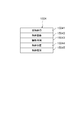
- FIG. 2 shows an example of the format of the person detection information.
- the person detection information 1503 of this example is composed of each item of a temporary person ID 15031, a person image 15032, a shooting time 15033, and a person position 15034.
- the temporary person ID 15031 is an identification number assigned to the person detected from the time-series image 1502.
- the temporary person ID 15031 is an ID that uniquely identifies one or more persons detected from the same time-series image 1502.
- the person image 15032 is an image of a person detected from the time series image 1502.
- the person image 15032 is, for example, an image inside the circumscribed rectangle of the image of a person.
- the shooting time 15033 is the shooting time of the time-series image 1502 in which the person is detected.
- the person position 15034 is the position of the person image 15032 on the time series image 1502.
- the person position 15034 can be, for example, the center of gravity of the person image 15032, but is not limited to this, and can be the four vertices of the circumscribed rectangle of the person image.
- the object detection information 1504 is information related to the object detected from the time series image 1502.
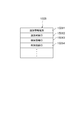
- FIG. 3 shows an example of the format of the object detection information.
- the object detection information 1504 of this example is composed of each item of the temporary object ID 15041, the object image 15042, the shooting time 15043, the object position 15044, and the object type 15045.
- the temporary object ID 15041 is an identification number assigned to the object detected from the time series image 1502.
- the temporary object ID 15041 is an ID that uniquely identifies one or more objects detected from the same time-series image 1502.
- the object image 15042 is an image of an object detected from the time series image 1502.
- the object image 15042 is, for example, an image inside the circumscribed rectangle of the image of the object.
- the shooting time 15043 is the shooting time of the time-series image 1502 in which the object is detected.
- the object position 15044 is the position of the object image 15042 on the time series image 1502.
- the object position 15044 can be, for example, the center of gravity of the object image 15042, but is not limited to this, and can be four vertices of the circumscribed rectangle of the object image.
- the object type 15045 is a type (class) of an object such as a bag, a backpack, a book, or an umbrella.
- the possession determination information 1505 is information representing the determination result of the presence or absence of the possession relationship between the person and the object detected from the time series image 1502.
- FIG. 4 shows a format example of possession determination information 1505.
- the possession determination information 1505 in this example is composed of a shooting time 15051 and a matrix 15052.
- the shooting time 15051 is the shooting time of the time-series image 1502.
- the matrix 15052 is configured to arrange the temporary person ID 15053 in the vertical direction (column direction), arrange the temporary object ID 15054 in the horizontal direction (row direction), and record information on the presence or absence of possession relationship at the intersection 15055 of the row and the column. ing.
- the number of rows in the matrix 15052 is equal to the number of people detected in the time series image 1502.
- the number of columns in the matrix 15052 is equal to the number of objects detected in the time series image 1502.
- a circle is described at the intersection of the temporary person ID1 and the temporary object ID1. This is because the person specified by the temporary person ID1 and the object specified by the temporary object ID1 have a possession relationship, that is, the person specified by the temporary person ID1 possesses the object specified by the temporary object ID1. Indicates that you are.
- a cross is described at the intersection of the temporary person ID1 and the temporary object ID2. This is because the person specified by the temporary person ID1 and the object specified by the temporary object ID2 have no possession relationship, that is, the person specified by the temporary person ID1 possesses the object specified by the temporary object ID1. Indicates that there is no such thing.
- the person image detected from one time-series image and the person image detected from the other time-series image are related to the same person. This is information representing the result of determining whether or not the image is an image.
- FIG. 5 shows a format example of the same person determination information 1506.
- the same person determination information 1506 in this example is composed of a matrix 15064.
- the temporary person ID 15061 that identifies the person image detected from the time-series image 1502 at the shooting time t on the future side is arranged in the vertical direction (column direction) in the past.
- Temporary person ID 15062 that identifies the person image detected from the time-series image 1502 at the shooting time tun on the side is arranged in the horizontal direction (row direction), and indicates whether or not the person is the same person at the intersection 15063 of the row and the column. It is configured to record information.
- the number of rows in the matrix 15064 is equal to the number of people detected in the future time series image 1502. Further, the number of columns in the matrix 15064 is equal to the number of persons detected from the time series image 1502 on the past side. For example, in the matrix 15064 shown in FIG. 5, a circle is described at the intersection of the temporary person ID 1 at the shooting time t and the temporary person ID 1 at the shooting time tun.
- the person image specified by the temporary person ID1 at the shooting time t and the person image specified by the temporary person ID1 at the shooting time nt are images related to the same person. Further, in the matrix 15064 shown in FIG. 5, a cross is described at the intersection of the temporary person ID 1 at the shooting time t and the temporary person ID 2 at the shooting time nt. This means that the person image specified by the temporary person ID 1 at the shooting time t and the person image specified by the temporary person ID 2 at the shooting time tn are not the same person image.
- the same object determination information 1507 is an object in which the object image detected from one time-series image and the object image detected from the other time-series image are the same object among two time-series images 1502 having different shooting times. This is information representing the result of determining whether or not the image is an image.
- FIG. 6 shows a format example of the same object determination information 1507.
- the same object determination information 1507 of this example is composed of a matrix 15074.
- the temporary object ID 15071 that identifies the object image detected from the time-series image 1502 at the shooting time t on the future side is arranged in the vertical direction (column direction) in the past.
- Temporary object ID 15072 that identifies the object image detected from the time-series image 1502 at the shooting time tun on the side is arranged in the horizontal direction (row direction), and indicates whether or not they are the same object at the intersection 15073 of the row and the column. It is configured to record information.
- the number of rows in the matrix 15074 is equal to the number of objects detected in the future time series image 1502. Further, the number of columns in the matrix 15074 is equal to the number of objects detected from the time series image 1502 on the past side. For example, in the matrix 15074 shown in FIG. 6, a cross is described at the intersection of the temporary object ID1 at the shooting time t and the temporary object ID1 at the shooting time tun.
- the object image specified by the temporary object ID1 at the shooting time t and the object image specified by the temporary object ID1 at the shooting time nt are not images related to the same object.
- a circle is described at the intersection of the temporary object ID1 at the shooting time t and the temporary object ID2 at the shooting time nt. This means that the object image specified by the temporary object ID 1 at the shooting time t and the object image specified by the temporary object ID 2 at the shooting time tun are images of the same object.
- the tracking information 1508 is information in which person detection information related to the same person or object detection information related to the same object is associated with each shooting time and linked with a management number or the like.
- FIG. 7 shows a format example of tracking information 1508.
- the tracking information 1508 of this example is composed of each item of tracking information type 15081, tracking target ID 15082, detection information ID 15083, and possession relationship ID 15084.
- the tracking information type 15081 is information indicating whether the tracking information 1508 is the person tracking information associated with the object detection information related to the same person or the object tracking information associated with the object detection information related to the same object.
- the tracking target ID 15082 is a person ID or object ID assigned to the person or object to be tracked. Unlike the temporary person ID and the temporary object ID described above, the tracking target ID 15082 is an ID that is unique over a plurality of shooting times.
- detection information ID 15083 and possession relationship ID 15084 there are as many pairs of detection information ID 15083 and possession relationship ID 15084 as there are person detection information related to the same person or object detection information related to the same object.
- One set of detection information ID 15083 is information for identifying one person detection information or object detection information related to the same person or the same object.
- the detection information ID 15083 may be a combination of the temporary person ID 15031 of the person detection information 1503 and the shooting time 15033, or a combination of the temporary object ID 15041 of the object detection information 1504 and the shooting time 15043.
- the possession relationship ID 15084 determines whether or not the object detection information or the person detection information having a possession relationship with the person detection information or the object detection information specified by the same set of detection information ID 15083 is detected, and if so, the possession relationship.
- Information representing an ID that identifies certain object detection information or person detection information for example, a combination of the temporary object ID 15041 of the object detection information 1504 and the shooting time 15043, or a combination of the temporary person ID 15031 of the person detection information 1503 and the shooting time 15033). Is.
- the arithmetic processing unit 160 has a processor such as an MPU and its peripheral circuits, and by reading and executing the program 1501 from the storage unit 150, the hardware and the program 1501 cooperate with each other to realize various processing units. It is configured as follows.
- the main processing units realized by the arithmetic processing unit 160 are the image acquisition unit 1601, the person detection unit 1602, the object detection unit 1603, the possession determination unit 1604, the same person determination unit 1605, the same object determination unit 1606, and the event determination. There is part 1607.
- the image acquisition unit 1601 acquires a plurality of time-series images taken by the camera 171 or a time-series image obtained by downsampling the time-series images from the image server 170 through the camera I / F unit 110, and stores the time-series image 1502 as the storage unit 150. It is configured to be remembered in.
- the person detection unit 1602 is configured to read the latest time-series image 1502 from the storage unit 150 and detect the person image from the time-series image 1502. For example, the person detection unit 1602 inputs a time-series image 1502 into a trained learning model that has been machine-learned to estimate a person image from a camera image, thereby displaying a person image existing in the time-series image 1502. It is configured to be obtained from the learning model.
- the learning model can be generated in advance by machine learning using a machine learning algorithm such as a neural network, for example, using various camera images and various person images in the camera images as teacher data.
- the method of detecting a person image from the time series image 1502 is not limited to the above, and a method such as pattern matching may be used.
- the person detection unit 1602 is configured to calculate a temporary person ID, a shooting time, and a person position for each detected person image, and collectively store them as person detection information 1503 in the storage unit 150. ..
- the object detection unit 1603 is configured to read the latest time-series image 1502 from the storage unit 150 and detect the object image from the time-series image 1502.
- the object detection unit 1603 exists in the time-series image 1502 by inputting the time-series image 1502 into the trained learning model that has been machine-learned to estimate the object image and the object type from the camera image, for example. It is configured to acquire an object image and its object type from the learning model.
- the learning model can be generated in advance by machine learning using a machine learning algorithm such as a neural network, for example, using various camera images and various types of object images in the camera images as teacher data.
- the method of detecting the object image and the object type from the time series image 1502 is not limited to the above, and a method such as pattern matching may be used.
- the object detection unit 1603 calculates the temporary object ID, the shooting time, and the object position for each set of the detected object image and the object type, and collectively stores them in the storage unit 150 as the object detection information 1504. It is configured in.
- the possession determination unit 1604 reads the person detection information 1503 and the object detection information 1504 detected from the latest time-series image 1502 from the storage unit 150, and relates to the person and the object image related to the person image detected from the time-series image 1502. It is configured to determine the presence or absence of a possession relationship with an object and store the determination result as possession determination information 1505 in the storage unit 150. For example, the possession determination unit 1604 pays attention to one of the person detection information 1503 detected from the latest time-series image 1502, and detects the person of interest among the object detection information 1504 detected from the latest time-series image 1502.
- the object detection information 1504 having the object position 15044 whose distance in the image from the person position 15034 of the information 1503 is equal to or less than a predetermined distance has a possession relationship with the person related to the person detection information of interest.
- the object detection information 1504 whose distance exceeds a predetermined distance has no possession relationship with the person related to the person detection information of interest.
- the possession determination unit 1604 performs the same processing on the remaining person detection information 1503. Next, the possession determination unit 1604 expresses the result of the above determination in the format of the matrix 15052 shown in FIG. 4, adds the shooting time 15051 of the time series image 1502, generates the possession determination information 1505, and stores it. Store in part 150.
- the same person determination unit 1605 has at least one temporally predetermined relationship with the person detection information (hereinafter referred to as the latest person detection information) 1503 detected from the latest time series image 1502 and the latest time series image 1502.
- the person detection information (hereinafter referred to as the past person detection information) 1503 detected from the two past time series images 1502 is read out from the storage unit 150, and the person image related to the latest person detection information 1503 and at least one past person. It is configured to determine whether or not the person image according to the detection information 1503 is a person image related to the same person.
- At least one past time-series image having a predetermined time-determined relationship with the latest time-series image 1502 may be the time-series image 1502 immediately preceding the latest time-series image 1502.
- at least one past time-series image having a predetermined relationship with the latest time-series image 1502 in time is the time-series image 1502 immediately before the latest time-series image 1502 and the time-series image 1502 two before. It may be.
- one or two past time-series images are used, but there may be three or more past time-series images having a predetermined time relationship with the latest time-series image 1502.
- the same person determination unit 1605 has, for example, a person image of the latest person detection information 1503 in a trained learning model in which machine learning is performed to estimate whether or not two person images are person images related to the same person.
- a trained learning model in which machine learning is performed to estimate whether or not two person images are person images related to the same person.
- the learning model can be generated in advance by machine learning using a machine learning algorithm such as a neural network, for example, using a person image pair related to various same persons and a person image pair related to various different persons as teacher data. ..
- the method of determining whether or not two person images are person images related to the same person is not limited to the above, and it is determined whether or not the distance of the feature vectors extracted from the two person images is equal to or less than a predetermined distance.
- Other methods, such as the method, may be used.
- the same person determination unit 1605 shows a determination result of whether or not the person image related to the latest person detection information 1503 and the person image related to the past person detection information 1503 are the person images related to the same person. It is configured to be expressed in the format of the matrix 15064 and stored in the storage unit 150.
- the same object determination unit 1606 has at least one temporally predetermined relationship with the object detection information (hereinafter referred to as the latest object detection information) 1504 detected from the latest time series image 1502 and the latest time series image 1502.
- the object detection information (hereinafter referred to as the past object detection information) 1504 detected from the two past time series images 1502 is read out from the storage unit 150, and the object image and the past object detection information 1504 related to the latest object detection information 1504 are read. It is configured to determine whether or not the object image according to the above is an object image related to the same object.
- the same object determination unit 1606 uses, for example, an object image of the latest object detection information 1504 in a trained learning model in which machine learning is performed to estimate whether or not two object images are object images related to the same object.
- a trained learning model in which machine learning is performed to estimate whether or not two object images are object images related to the same object.
- the learning model can be generated in advance by machine learning using a machine learning algorithm such as a neural network, for example, using object image pairs related to various identical objects and object image pairs related to various different objects as training data. ..
- the method of determining whether or not two object images are object images related to the same object is not limited to the above method, and it is determined whether or not the distance of the feature vectors extracted from the two object images is equal to or less than a predetermined distance. Other methods may be used, such as. Further, the object image related to the latest object detection information 1504 and the object image related to the past object detection information 1504 are compared with each other, and if the object types 15045 are not the same, both are related to the same object. If it is determined that the image is not an object image and the object types 15045 are the same, the same object determination by the learning model or the same object determination by the feature vector may be performed to determine whether or not they are the same.
- the same object determination unit 1606 shows a determination result of whether or not the object image related to the latest object detection information 1504 and the object image related to the past object detection information 1504 are object images related to the same object. It is configured to be expressed in the form of such a matrix 15074 and stored in the storage unit 150.
- the event determination unit 1607 is used every time the processing of the person detection unit 1602, the object detection unit 1603, the possession determination unit 1604, the same person determination unit 1605, and the same object determination unit 1606 for the latest time-series image 1502 is completed.
- the latest possession determination information 1505, the same person determination information 1506, and the same object determination information 1507 are read from the storage unit 150, and tracking information 1508 related to the same person and the same object is appropriately generated or updated based on the information. It is configured as follows.
- the event determination unit 1607 is configured to detect a change in the possession relationship between a person and an object by analyzing the generated or updated tracking information 1508. Further, the event determination unit 1607 outputs (transmits) text, voice, an image, etc.
- the event determination unit 1607 sets the circumscribed rectangle of the person image and the circumscribed circle of the object image in which the change in the possession relationship is detected with respect to the time series image at the time when the change in the possession relationship is detected between the person and the object.
- An image in which rectangles are combined may be output.
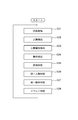
- FIG. 8 is a flowchart showing an example of the operation of the event detection device 100 according to the present embodiment.
- the image acquisition unit 1601 acquires a plurality of time-series images taken by the camera 171 or a time-series image obtained by downsampling the plurality of time-series images taken by the camera 171 from the image server 170 through the camera I / F unit 110. It is stored in the storage unit 150 as a time-series image 1502 (step S1).
- the person detection unit 1602 reads the latest time-series image 1502 from the storage unit 150, detects the person image from the time-series image 1502, and for each detected person image, the temporary person ID, the shooting time, and the person position.
- the object detection unit 1603 reads the latest time-series image 1502 from the storage unit 150, detects the object image and the type of the object represented by the object image from the time-series image 1502, and sets the detected object image and the object type. Each time, the temporary object ID, the shooting time, and the object position are calculated, and these are collectively stored in the storage unit 150 as the object detection information 1504 (step S3).
- the possession determination unit 1604 reads the person detection information 1503 and the object detection information 1504 detected from the latest time series image 1502 from the storage unit 150, and the person and object image related to the person image detected from the time series image 1502.
- the same person determination unit 1605 has at least one past having a predetermined time relationship with the person detection information (latest person detection information) 1503 detected from the latest time series image 1502 and the latest time series image 1502.
- the person detection information (past person detection information) 1503 detected from the time-series image 1502 of the above is read from the storage unit 150, and the person image related to the latest person detection information 1503 and the person image related to the past person detection information 1503 are displayed.
- the same object determination unit 1606 has at least one past having a predetermined time relationship with the object detection information (latest object detection information) 1504 detected from the latest time series image 1502 and the latest time series image 1502.
- the object detection information (past object detection information) 1504 detected from the time series image 1502 of the above is read out from the storage unit 150, and the object image related to the latest object detection information 1504 and the object image related to the past object detection information 1504 are displayed. It is determined whether or not the object image is related to the same object, and the same object determination information 1507 is stored in the storage unit 150 (step S6).
- the event determination unit 1607 reads the latest possession determination information 1505, the same person determination information 1506, and the same object determination information 1507 from the storage unit 150, and based on the information, possesses between the person and the object. It is determined whether or not the relationship has changed, and the determination result is transmitted to the external device through the communication I / F unit 120 and / or displayed on the screen display unit 140 (step S7). After that, the event detection device 100 returns to step S1 and repeats the same operation as the above-described operation.
- FIG. 9 is a flowchart showing the details of step S7 executed by the event determination unit 1607.
- the event determination unit 1607 uses the latest possession determination information 1505, the same person determination information 1506, and the same object determination information 1507 for each same person, and the tracking information 1508 related to the same person. Is generated / updated (step S11).
- the event determination unit 1607 is determined by the same person determination unit 1605 that none of the persons detected from the latest time series image 1502 is the same as any person detected from the past time series image. For a person, that is, a person first detected in the latest time-series image 1502, tracking information 1508 related to the person is newly generated. At that time, the event determination unit 1607 detects the type indicating the person in the tracking information type 15081 shown in FIG. 7, the person ID assigned to the person as the tracking target ID, and the detection information ID 15083 from the latest time series image 1502. If the possession determination unit 1604 determines that the person does not possess the object, the possession relationship ID 15084 determines that the person has the shooting time and the temporary person ID of the person detection information 1503 of the person. If it is determined, information for identifying the possessed object (for example, the shooting time for specifying the object detection information 1504 and the temporary object ID) is set respectively.
- the event determination unit 1607 is determined by the same person determination unit 1605 to be the same as any person detected from the past time series image among the persons detected from the latest time series image 1502.
- the pair of the latest detection information ID 15083 and the possession relationship ID 15084 is added to the tracking information 1508 that has already been created for that person. That is, the event determination unit 1607 sets the shooting time and the temporary person ID of the person detection information 1503 of the person detected from the latest time-series image 1502, and the detection information ID 15083 and the person in the latest time-series image 1502. If the object is not possessed, the NUML value is added, and if the object is possessed, the information for identifying the possessed object is added, and the possession relationship ID 15084 set for each is added.
- the event determination unit 1607 generates and updates tracking information 1508 for the same object for each same object based on the latest possession determination information 1505, the same person determination information 1506, and the same object determination information 1507. (Step S12).
- step S12 the event determination unit 1607 is determined by the same object determination unit 1606 that among the objects detected from the latest time series image 1502, none of the objects detected from the past time series image is the same.
- tracking information 1508 related to the object is newly generated.
- the event determination unit 1607 detects the type indicating the object in the tracking information type 15081 shown in FIG. 7, the object ID assigned to the object as the tracking target ID, and the detection information ID 15083 from the latest time series image 1502. If the possession determination unit 1604 determines that the possession relationship ID 15084 does not possess the object, the shooting time and the temporary object ID of the object detection information 1504 of the object are possessed. If it is determined that the object is, the information for identifying the owner (for example, the shooting time for specifying the person detection information 1503 and the temporary person ID) is set respectively.
- the event determination unit 1607 is determined by the same object determination unit 1606 to be the same as any of the objects detected from the latest time series image 1502 among the objects detected from the past time series image.
- the latest detection information ID 15083 and the possession relationship ID 15084 pair are added to the tracking information 1508 related to the object. That is, the event determination unit 1607 sets the shooting time and temporary object ID of the object detection information 1504 of the object detected from the latest time-series image 1502, and the detection information ID 15083 and the object in the latest time-series image 1502.
- Possession relationship ID 15084 that sets the NUML value if it is not possessed by any person, and the information that identifies the owner's person if it is possessed (for example, the shooting time and temporary person ID of the person detection information 1503).
- the event determination unit 1607 determines whether or not the possession relationship has changed between the person and the object for each tracking information 1508 related to the same person updated in step S11 (step S13). Specifically, the event determination unit 1607 determines whether or not the person has changed from possession state to non-possession state of possession, or conversely, whether or not the person has changed from non-possession state to possession state of possession. Or, determine if the inventory has changed from one inventory to another. For example, when the event determination unit 1607 determines that the person has changed from the possessed state to the non-possessed state, the change type indicating that the person has changed from the possessed state to the non-possessed state, the person ID of the person, and the person ID of the person.
- Judgment information composed of the changed time and the object ID of the object possessed before the change is generated. Further, when the event determination unit 1607 determines that the person has changed from the non-possessed state to the possessed state, the change type indicating that the person has changed from the non-possessed state to the possessed state, the person ID of the person, and the person ID of the person. Judgment information composed of the changed time and the object ID of the object possessed after the change is generated. Further, when the event determination unit 1607 determines that the possession of the person has changed from one possession to another, the change type indicating that the possession has changed, the person ID of the person, and the person ID of the person. Judgment information composed of the changed time, the object ID of the object possessed before the change, and the object ID of the object possessed after the change is generated.
- the event determination unit 1607 determines whether or not the possession relationship has changed between the object and the person for each tracking information 1508 related to the same object updated in step S12 (step S14). Specifically, the event determination unit 1607 determines whether or not the object has changed from the possessed state with the owner to the non-possessed state without the owner, or conversely, from the non-possessed state without the owner to the owner. It is determined whether or not the possession state has changed, or whether or not the owner has changed from one person to another. For example, when the event determination unit 1607 determines that the object has changed from the possessed state with the owner to the non-possessed state without the owner, the change type indicating that the object has changed from the possessed state to the non-possessed state and the object.
- Judgment information composed of the object ID of the above, the time of change, and the person ID of the person who is the owner before the change is generated. Further, when the event determination unit 1607 determines that the object has changed from the non-possessed state without the owner to the possessed state with the owner, the change type indicating that the object has changed from the non-possessed state to the possessed state and the object. Judgment information composed of the object ID of the above, the time of change, and the person ID of the person who is the owner after the change is generated. Further, when the event determination unit 1607 determines that the owner of the object has changed from one person to another, the change type indicating that the owner has changed and the object ID of the object have changed. Judgment information composed of the time, the person ID of the person who is the owner before the change, and the person ID of the person who is the owner after the change is generated.
- the event determination unit 1607 comprehensively determines the determination result based on the tracking information related to the same person in step S13 and the determination result based on the tracking information related to the same object in step S14, and between the person and the object. Finally, it is determined whether or not the possession relationship has changed (step S15).
- the event determination unit 1607 may use the result of simply collecting the determination result based on the tracking information related to the same person in step S13 and the determination result based on the tracking information related to the same object in step S14 as the final determination result.
- the event determination unit 1607 may use the result of simply collecting the determination result based on the tracking information related to the same person in step S13 and the determination result based on the tracking information related to the same object in step S14 as the final determination result.
- the event determination unit 1607 may use the result of simply collecting the determination result based on the tracking information related to the same person in step S13 and the determination result based on the tracking information related to the same object in step S14 as the final determination result.
- the event determination unit 1607 collates the determination result based on the tracking information related to the same person in step S13 with the determination result based on the tracking information related to the same object in step S14, and has logically the same possession between the person and the object.
- the changes in the relationship may be combined into one. For example, a determination result based on tracking information relating to the same person that the person A changed from the possession state of the object X to the non-possession state at time t1, and the possession state of the object X from the possession state of the possessor A at time t1.
- the event determination unit 1607 collates the determination result based on the tracking information related to a certain person in step S13 with the determination result based on the tracking information related to another person, and the related possession relationship between the plurality of persons and the object.
- the changes in the above may be combined into one. For example, a determination result that the person A changed from the possession state of the object X to the non-possession state at time t1 and a determination result that the person B changed from the non-possession state to the possession state of the object X at a time near the time t1. May be combined into one to generate a determination result that the object X has been delivered from the person A to the person B at a time near the time t1.
- the judgment result is combined into one, and the object X possessed by the person A and the object Y possessed by the person B are replaced between the person A and the person B at a time near the time t1.
- the judgment result may be generated.
- the event determination unit 1607 collates the determination result based on the tracking information related to a certain object in step S14 with the determination result based on the tracking information related to another object, and the related possession relationship between the plurality of persons and the object.
- the changes in the above may be combined into one.
- the determination result that the object X has changed from the state of being possessed by the person A to the non-possessed state at time t1 and the state of the object X being possessed by the person B from the non-possessed state at a time near the time t1.
- the determination result that the object X has been passed may be combined into one to generate the determination result that the object X is delivered from the person A to the person B at a time near the time t1.
- a determination result that the X and the object Y possessed by the person B have been replaced may be generated.
- the event detection device 100 it is possible to detect a change in the possession relationship between a person and an object, and a change in the possession relationship between the person and the object, that is, , It is possible to detect that a person's belongings have changed from one to another.
- the reason is that the image acquisition unit 1601 that acquires a plurality of time-series images 1502 shot in the shooting area at different times, the person detection unit 1602 that detects a person from each time-series image 1502, and the person from each time-series image 1502.
- An object detection unit 1603 that detects an object other than the above, a possession determination unit 1604 that determines whether or not there is a possession relationship between a person and an object detected from the same time-series image 1502, and any one of a plurality of time-series images 1502.
- the same person determination unit 1605 that determines whether or not the person detected from one time-series image and the person detected from any one of the other time-series images are the same person, and the plurality of time-series images 1502.
- the same object determination unit 1606 that determines whether or not the object detected from any one of the time-series images and the object detected from any one of the other time-series images are the same object, and the possession determination. It is provided with an event determination unit 1607 that determines whether or not a change in the possession relationship has occurred between the person and the object based on the determination results of the unit 1604, the same person determination unit 1605, and the same object determination unit 1606. Because.
- FIG. 10 is a block diagram of the event detection device 200 according to the second embodiment of the present invention.
- the event detection device 200 includes a camera I / F unit 210, a communication I / F unit 220, an operation input unit 230, a screen display unit 240, a storage unit 250, and an arithmetic processing unit 260.
- Is configured to include.
- the camera I / F unit 210, the communication I / F unit 220, the operation input unit 230, and the screen display unit 240 communicate with the camera I / F unit 110 of the event detection device 100 according to the first embodiment. It has the same configuration as the I / F unit 120, the operation input unit 130, and the screen display unit 140.
- the storage unit 250 is composed of a storage device such as a hard disk or a memory, and is configured to store processing information and a program 2501 required for various processes in the arithmetic processing unit 260.
- the program 2501 is a program that realizes various processing units by being read and executed by the arithmetic processing unit 260, and is transmitted from an external device or recording medium (not shown) via a data input / output function such as a communication I / F unit 220. It is read in advance and stored in the storage unit 250.
- the main processing information stored in the storage unit 250 includes time-series image 2502, person detection information 2503, object detection information 2504, possession determination information 2505, same person determination information 2506, same object determination information 2507, and tracking information 2508. And there is personal attribute information 2509.
- the time-series image 2502, the person detection information 2503, the object detection information 2504, the possession determination information 2505, the same person determination information 2506, the same object determination information 2507, and the tracking information 2508 relate to the first embodiment. It is the same as the time-series image 1502, the person detection information 1503, the object detection information 1504, the possession determination information 1505, the same person determination information 1506, the same object determination information 1507, and the tracking information 1508 in the event detection device 100.
- the person attribute information 2509 is an attribute value of a person detected from the time series image 1502.
- the attribute value of a person is, for example, a value of one or more predetermined attributes such as gender, age group, hairstyle, presence / absence of glasses, and clothing style.
- FIG. 11 shows a format example of the person attribute information 2509.
- the person attribute information 2509 of this example is composed of each item of a temporary person ID 25091, a shooting time 25092, and an attribute value 25093 of 1 or more.
- the temporary person ID 25091 and the shooting time 25092 are information that uniquely identifies the person image detected from the time-series image 1502, and are the same as the temporary person ID 15031 and the shooting time 15033 in the person detection information 2503 shown in FIG.
- the attribute value 25093 of 1 or more is a value representing the above-mentioned gender, age group, hairstyle, presence / absence of glasses, clothing style, and the like.
- the arithmetic processing unit 260 has a processor such as an MPU and its peripheral circuits, and by reading and executing the program 2501 from the storage unit 250, the hardware and the program 2501 cooperate with each other to realize various processing units. It is configured as follows.
- the main processing units realized by the arithmetic processing unit 260 are the image acquisition unit 2601, the person detection unit 2602, the object detection unit 2603, the possession determination unit 2604, the same person determination unit 2605, the same object determination unit 2606, and the event determination unit 2607. , And there is a person attribute detection unit 2608.
- the image acquisition unit 2601, the person detection unit 2602, the object detection unit 2603, the possession determination unit 2604, the same person determination unit 2605, the same object determination unit 2606, and the event determination unit 2607 are the events shown in FIG. It is configured in the same manner as the image acquisition unit 1601, the person detection unit 1602, the object detection unit 1603, the possession determination unit 1604, the same person determination unit 105, the same object determination unit 1606, and the event determination unit 1607 of the detection device 100.
- the person attribute detection unit 2608 is configured to detect the attribute value of a person from the person image 15032 detected from the time series image 2502 by the person detection unit 2602. For example, the person attribute detection unit 2608 inputs the person image 15032 into the learned learning model in which machine learning for estimating the person attribute value from the person image is performed, and the person attribute value is obtained from the learning model. It is configured to get.
- the learning model can be generated in advance by machine learning using a machine learning algorithm such as a neural network, for example, using various person images and various attribute values as teacher data.
- the method of detecting the attribute value of a person from the person image 15032 is not limited to the above, and a method such as pattern matching may be used.
- the person attribute detection unit 2608 is configured to store the attribute value of the detected person, the temporary person ID set in the detection source person image 15032, and the shooting time together as the person attribute information 2509 in the storage unit 250. Has been done.
- the operation of the event detection device 200 is the same as the operation of the event detection device 100 according to the first embodiment, except that the operation related to the person attribute detection unit 2608 is added.
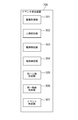
- FIG. 12 is a flowchart showing an example of the operation of the event detection device 200 according to the present embodiment, and steps S21, S22, and S24 to S28 are the same as steps S1 to S7 in FIG.
- the person attribute detection unit 2608 detects the person attribute value from the person image 15032 detected by the person detection unit 2602. Then, the detected attribute value of the person, the temporary person ID, and the shooting time are collectively stored in the storage unit 250 as the person attribute information 2509 (step S23).
- the possession determination unit 2604, the same person determination unit 2605, the same object determination unit 2606, and the event determination unit 2607 perform the operations of steps S24 to S28.
- the event determination unit 2607 when the event determination unit 2607 outputs moving image data composed of time-series images before and after the change in the possession relationship between the person and the object is detected, the change in the possession relationship is detected.
- the attribute value of the person is acquired from the person attribute information 2509, and for example, the text of the attribute value is synthesized and displayed in the vicinity of the person image of the person. As a result, it is possible to inform the observer and the like of the characteristics of the person who has performed suspicious behavior.
- the attribute value may be output by voice or the like.
- the same effect as that of the first embodiment can be obtained, and the attribute value of the person in which the change in the possession relationship is detected is notified to the observer or the like. can do.
- the person attribute detection unit 2608 is configured to be provided independently of the person detection unit 2602 and the same person determination unit 2605.
- the person attribute detection unit 2608 may be incorporated into the person detection unit 2602 and the same person determination unit 2605. That is, the person detection unit 2602 may be configured to detect an image related to a person from the time-series image 2502 and also detect an attribute value of the detected person. Further, the same person determination unit 2605 determines whether or not the person image detected from a certain time-series image and the person image detected from another time-series image are the person images related to the same person. It may be configured to detect the attribute value of the person related to the person image of.
- FIG. 13 is a block diagram of the event detection device according to the present embodiment. In this embodiment, the outline of the above-mentioned event detection device will be described.
- the event detection device 300 includes an image acquisition unit 301, a person detection unit 302, an object detection unit 303, a possession determination unit 304, the same person determination unit 305, the same object determination unit 306, and an event. It is provided with a determination unit 307.
- the image acquisition unit 301 is configured to acquire a plurality of images taken in the shooting area at different times.
- the image acquisition unit 301 can be configured in the same manner as, for example, the image acquisition unit 1601 in FIG. 1, but is not limited thereto.
- the person detection unit 302 is configured to detect a person from each image acquired by the image acquisition unit 301.
- the person detection unit 302 can be configured in the same manner as, for example, the person detection unit 1602 in FIG. 1, but is not limited thereto.
- the object detection unit 303 is configured to detect an object other than a person from each image acquired by the image acquisition unit 301.
- the object detection unit 303 can be configured in the same manner as, for example, the object detection unit 1603 in FIG. 1, but is not limited thereto.
- the possession determination unit 304 is configured to determine whether or not there is a possession relationship between a person and an object detected from the same image.
- the possession determination unit 304 can be configured in the same manner as, for example, the possession determination unit 1604 in FIG. 1, but is not limited thereto.
- the same person determination unit 305 determines whether or not the person detected from any one of the plurality of images and the person detected from any one of the other images are the same person. It is configured.
- the same person determination unit 305 can be configured in the same manner as, for example, the same person determination unit 1605 in FIG. 1, but is not limited thereto.
- the same object determination unit 306 determines whether or not the object detected from any one of the plurality of images and the object detected from any one of the other images are the same object. It is configured.
- the same object determination unit 306 can be configured in the same manner as, for example, the same object determination unit 1606 in FIG. 1, but is not limited thereto.
- the event determination unit 307 determines whether or not the possession relationship has changed between the person and the object based on the determination results of the possession determination unit 304, the same person determination unit 305, and the same object determination unit 306. It is configured to output the judgment result.
- the event determination unit 307 can be configured in the same manner as, for example, the event determination unit 1607 of FIG. 1, but is not limited thereto.
- the event detection device 300 configured in this way functions as follows. That is, first, the image acquisition unit 301 acquires a plurality of images captured in the photographing area at different times. Next, the person detection unit 302 detects a person from each image acquired by the image acquisition unit 301, and the object detection unit 303 detects an object other than the person from each image acquired by the image acquisition unit 301. Next, the possession determination unit 304 determines whether or not there is a possession relationship between the person and the object detected from the same image, and the same person determination unit 305 determines the presence or absence of the possession relationship between the person and the object detected from the same image.
- the same object determination unit 306 determines whether or not the person detected from any one of the images is the same person as the object detected from any one of the plurality of images. It is determined whether or not the object detected from one image is the same object.
- the event determination unit 307 determines whether or not the possession relationship has changed between the person and the object based on the determination results of the possession determination unit 304, the same person determination unit 305, and the same object determination unit 306. And output the judgment result.
- the event detection device 300 configured and operating as described above, it is possible to detect a change in the possession relationship between a person and an object, and a change in the possession relationship between the person and the object, that is, or It is possible to detect that a person's belongings have changed from one to another.
- the reason is that the image acquisition unit 301 that acquires a plurality of images taken in the shooting area at different times, the person detection unit 302 that detects a person from each image, and the object detection unit that detects an object other than the person from each image.
- a possession determination unit 304 that determines whether or not there is a possession relationship between a person and an object detected from the same image, a person detected from any one image among a plurality of images, and any one image of the other.
- the same person determination unit 305 that determines whether or not the person detected from is the same person, and the object detected from any one of the plurality of images and detected from any one of the other images.
- the same person determination unit 306 determines whether or not the created object is the same object, and the possession determination unit, the same person determination unit, and the same object determination unit. This is because the event determination unit 307 that determines whether or not the possession relationship has changed and outputs the determination result is provided.
- the image acquisition unit may be configured to acquire time-series images from a plurality of cameras that capture the same shooting area or different shooting areas.
- the present invention can be used in a technique for detecting an event such as a person leaving, taking away, replacing, or detecting shoplifting.
- the event determination means is a person tracking information in which information indicating whether or not an object is possessed and, if so, object detection information of an object possessed by the same person are associated with each shooting time. Is configured to generate and make the determination based on the person tracking information.
- the event detection device according to Appendix 1.
- the event determination means generates object tracking information for each of the same objects, in which information indicating the presence or absence of the owner and, if the owner exists, the person detection information of the person who is the owner is associated with each shooting time. , It is configured to make the determination based on the object tracking information.
- the event detection device according to Appendix 1 or 2.
- the event determination means is an image obtained by synthesizing a circumscribed rectangle of a person image in which a change in possession relationship is detected and a circumscribed rectangle of an object image in a time-series image at the time when a change in possession relationship is detected between a person and an object. Is configured to be output as the judgment result,
- the event detection device according to any one of Supplementary note 1 to 3.
- the event detection device according to Appendix 4.
- [Appendix 6] Acquire multiple images taken in the shooting area at different times, A person is detected from each of the above images, An object other than a person is detected from each of the above images, Determine if there is a relationship between the person and the object detected from the same image, It is determined whether or not the person detected from any one of the plurality of images and the person detected from any one of the other images are the same person.
Landscapes
- Engineering & Computer Science (AREA)
- Physics & Mathematics (AREA)
- General Physics & Mathematics (AREA)
- Theoretical Computer Science (AREA)
- Multimedia (AREA)
- Human Computer Interaction (AREA)
- Computer Vision & Pattern Recognition (AREA)
- Health & Medical Sciences (AREA)
- General Health & Medical Sciences (AREA)
- Oral & Maxillofacial Surgery (AREA)
- Image Analysis (AREA)
- Closed-Circuit Television Systems (AREA)
- Alarm Systems (AREA)
Priority Applications (3)
| Application Number | Priority Date | Filing Date | Title |
|---|---|---|---|
| PCT/JP2019/050114 WO2021124553A1 (ja) | 2019-12-20 | 2019-12-20 | イベント検出装置 |
| US17/782,922 US20230017333A1 (en) | 2019-12-20 | 2019-12-20 | Event detection device |
| JP2021565289A JP7355116B2 (ja) | 2019-12-20 | 2019-12-20 | イベント検出装置 |
Applications Claiming Priority (1)
| Application Number | Priority Date | Filing Date | Title |
|---|---|---|---|
| PCT/JP2019/050114 WO2021124553A1 (ja) | 2019-12-20 | 2019-12-20 | イベント検出装置 |
Publications (1)
| Publication Number | Publication Date |
|---|---|
| WO2021124553A1 true WO2021124553A1 (ja) | 2021-06-24 |
Family
ID=76478383
Family Applications (1)
| Application Number | Title | Priority Date | Filing Date |
|---|---|---|---|
| PCT/JP2019/050114 Ceased WO2021124553A1 (ja) | 2019-12-20 | 2019-12-20 | イベント検出装置 |
Country Status (3)
| Country | Link |
|---|---|
| US (1) | US20230017333A1 (https=) |
| JP (1) | JP7355116B2 (https=) |
| WO (1) | WO2021124553A1 (https=) |
Cited By (2)
| Publication number | Priority date | Publication date | Assignee | Title |
|---|---|---|---|---|
| CN115063846A (zh) * | 2021-09-10 | 2022-09-16 | 厦门熵基科技有限公司 | 一种人员关系网生成方法、装置、电子设备及存储介质 |
| JP7625057B1 (ja) | 2023-11-07 | 2025-01-31 | 三菱電機Itソリューションズ株式会社 | 監視装置、監視方法及び監視プログラム |
Families Citing this family (1)
| Publication number | Priority date | Publication date | Assignee | Title |
|---|---|---|---|---|
| CN117593748B (zh) * | 2023-11-21 | 2025-04-25 | 中航信移动科技有限公司 | 一种基于麒麟操作系统的异常识别方法、存储介质及设备 |
Citations (3)
| Publication number | Priority date | Publication date | Assignee | Title |
|---|---|---|---|---|
| WO2008029724A1 (en) * | 2006-09-04 | 2008-03-13 | Panasonic Corporation | Danger judging device, danger judging method, danger reporting device, and danger judging program |
| JP2017028561A (ja) * | 2015-07-24 | 2017-02-02 | セコム株式会社 | 画像監視システム |
| JP2017046196A (ja) * | 2015-08-27 | 2017-03-02 | キヤノン株式会社 | 画像情報生成装置、画像情報生成方法、画像処理システム及びプログラム |
Family Cites Families (3)
| Publication number | Priority date | Publication date | Assignee | Title |
|---|---|---|---|---|
| US10423924B2 (en) * | 2017-11-16 | 2019-09-24 | Symbol Technologies, Llc | Detection of misplaced objects and association with qualified target in venue for object return |
| US10824868B2 (en) * | 2018-09-27 | 2020-11-03 | Ncr Corporation | Image processing for determining relationships between tracked objects |
| US11275947B2 (en) * | 2018-12-19 | 2022-03-15 | Hitachi Kokusai Electric Inc. | Image processing system, image processing method, and image processing program |
-
2019
- 2019-12-20 WO PCT/JP2019/050114 patent/WO2021124553A1/ja not_active Ceased
- 2019-12-20 US US17/782,922 patent/US20230017333A1/en not_active Abandoned
- 2019-12-20 JP JP2021565289A patent/JP7355116B2/ja active Active
Patent Citations (3)
| Publication number | Priority date | Publication date | Assignee | Title |
|---|---|---|---|---|
| WO2008029724A1 (en) * | 2006-09-04 | 2008-03-13 | Panasonic Corporation | Danger judging device, danger judging method, danger reporting device, and danger judging program |
| JP2017028561A (ja) * | 2015-07-24 | 2017-02-02 | セコム株式会社 | 画像監視システム |
| JP2017046196A (ja) * | 2015-08-27 | 2017-03-02 | キヤノン株式会社 | 画像情報生成装置、画像情報生成方法、画像処理システム及びプログラム |
Cited By (3)
| Publication number | Priority date | Publication date | Assignee | Title |
|---|---|---|---|---|
| CN115063846A (zh) * | 2021-09-10 | 2022-09-16 | 厦门熵基科技有限公司 | 一种人员关系网生成方法、装置、电子设备及存储介质 |
| JP7625057B1 (ja) | 2023-11-07 | 2025-01-31 | 三菱電機Itソリューションズ株式会社 | 監視装置、監視方法及び監視プログラム |
| JP2025077820A (ja) * | 2023-11-07 | 2025-05-19 | 三菱電機Itソリューションズ株式会社 | 監視装置、監視方法及び監視プログラム |
Also Published As
| Publication number | Publication date |
|---|---|
| JP7355116B2 (ja) | 2023-10-03 |
| US20230017333A1 (en) | 2023-01-19 |
| JPWO2021124553A1 (https=) | 2021-06-24 |
Similar Documents
| Publication | Publication Date | Title |
|---|---|---|
| JP5962916B2 (ja) | 映像監視システム | |
| JP6172551B1 (ja) | 画像検索装置、画像検索システム及び画像検索方法 | |
| JP6402219B1 (ja) | 防犯システム、防犯方法、及びロボット | |
| JP7416165B2 (ja) | 情報処理装置 | |
| WO2019171573A1 (ja) | セルフレジシステム、購入商品管理方法および購入商品管理プログラム | |
| JP6185517B2 (ja) | 画像監視装置 | |
| JP2011248836A (ja) | 滞留検出システム及びプログラム | |
| JP7355116B2 (ja) | イベント検出装置 | |
| US20170193309A1 (en) | Moving information analyzing system and moving information analyzing method | |
| JP2011029737A (ja) | 監視映像検索装置及び監視システム | |
| US10515457B2 (en) | Image collation system and image collation method | |
| JP2018018150A (ja) | 防犯システム、防犯方法、及びロボット | |
| JP6336935B2 (ja) | 移動物体追跡装置 | |
| JP2021196741A (ja) | 画像処理装置、画像処理方法、及びプログラム | |
| JP6393377B1 (ja) | ロボット、情報提供方法及び情報提供システム | |
| JP7605298B2 (ja) | 画像処理装置 | |
| JP7327458B2 (ja) | セルフレジシステム、購入商品管理方法および購入商品管理プログラム | |
| JP6597838B1 (ja) | 動線分析装置、動線分析方法、および動線分析システム | |
| JP6555481B2 (ja) | 映像監視システム | |
| WO2015005102A1 (ja) | 画像処理装置、画像処理方法、および画像処理プログラム | |
| JP7521592B2 (ja) | 画像処理装置 | |
| JPWO2020022362A1 (ja) | 動き検出装置、特性検出装置、流体検出装置、動き検出システム、動き検出方法、プログラム、および、記録媒体 | |
| JP2020095651A (ja) | 生産性評価システム、生産性評価装置、生産性評価方法、及びプログラム | |
| JP2006165729A (ja) | 撮影プログラム、撮影方法及び撮影システム | |
| JP5624813B2 (ja) | 動線処理装置、方法及びプログラム |
Legal Events
| Date | Code | Title | Description |
|---|---|---|---|
| 121 | Ep: the epo has been informed by wipo that ep was designated in this application |
Ref document number: 19956941 Country of ref document: EP Kind code of ref document: A1 |
|
| ENP | Entry into the national phase |
Ref document number: 2021565289 Country of ref document: JP Kind code of ref document: A |
|
| NENP | Non-entry into the national phase |
Ref country code: DE |
|
| 122 | Ep: pct application non-entry in european phase |
Ref document number: 19956941 Country of ref document: EP Kind code of ref document: A1 |