WO2021111694A1 - ダイヤ作成システム、及びダイヤ作成方法 - Google Patents
ダイヤ作成システム、及びダイヤ作成方法 Download PDFInfo
- Publication number
- WO2021111694A1 WO2021111694A1 PCT/JP2020/034246 JP2020034246W WO2021111694A1 WO 2021111694 A1 WO2021111694 A1 WO 2021111694A1 JP 2020034246 W JP2020034246 W JP 2020034246W WO 2021111694 A1 WO2021111694 A1 WO 2021111694A1
- Authority
- WO
- WIPO (PCT)
- Prior art keywords
- timetable
- diamond
- information
- partial
- train
- Prior art date
- Legal status (The legal status is an assumption and is not a legal conclusion. Google has not performed a legal analysis and makes no representation as to the accuracy of the status listed.)
- Ceased
Links
Images








Classifications
-
- G—PHYSICS
- G06—COMPUTING OR CALCULATING; COUNTING
- G06Q—INFORMATION AND COMMUNICATION TECHNOLOGY [ICT] SPECIALLY ADAPTED FOR ADMINISTRATIVE, COMMERCIAL, FINANCIAL, MANAGERIAL OR SUPERVISORY PURPOSES; SYSTEMS OR METHODS SPECIALLY ADAPTED FOR ADMINISTRATIVE, COMMERCIAL, FINANCIAL, MANAGERIAL OR SUPERVISORY PURPOSES, NOT OTHERWISE PROVIDED FOR
- G06Q10/00—Administration; Management
- G06Q10/04—Forecasting or optimisation specially adapted for administrative or management purposes, e.g. linear programming or "cutting stock problem"
- G06Q10/047—Optimisation of routes or paths, e.g. travelling salesman problem
-
- B—PERFORMING OPERATIONS; TRANSPORTING
- B61—RAILWAYS
- B61L—GUIDING RAILWAY TRAFFIC; ENSURING THE SAFETY OF RAILWAY TRAFFIC
- B61L27/00—Central railway traffic control systems; Trackside control; Communication systems specially adapted therefor
- B61L27/10—Operations, e.g. scheduling or time tables
- B61L27/12—Preparing schedules
-
- B—PERFORMING OPERATIONS; TRANSPORTING
- B61—RAILWAYS
- B61L—GUIDING RAILWAY TRAFFIC; ENSURING THE SAFETY OF RAILWAY TRAFFIC
- B61L27/00—Central railway traffic control systems; Trackside control; Communication systems specially adapted therefor
- B61L27/10—Operations, e.g. scheduling or time tables
- B61L27/16—Trackside optimisation of vehicle or train operation
-
- G—PHYSICS
- G06—COMPUTING OR CALCULATING; COUNTING
- G06Q—INFORMATION AND COMMUNICATION TECHNOLOGY [ICT] SPECIALLY ADAPTED FOR ADMINISTRATIVE, COMMERCIAL, FINANCIAL, MANAGERIAL OR SUPERVISORY PURPOSES; SYSTEMS OR METHODS SPECIALLY ADAPTED FOR ADMINISTRATIVE, COMMERCIAL, FINANCIAL, MANAGERIAL OR SUPERVISORY PURPOSES, NOT OTHERWISE PROVIDED FOR
- G06Q10/00—Administration; Management
- G06Q10/06—Resources, workflows, human or project management; Enterprise or organisation planning; Enterprise or organisation modelling
- G06Q10/063—Operations research, analysis or management
-
- G—PHYSICS
- G06—COMPUTING OR CALCULATING; COUNTING
- G06Q—INFORMATION AND COMMUNICATION TECHNOLOGY [ICT] SPECIALLY ADAPTED FOR ADMINISTRATIVE, COMMERCIAL, FINANCIAL, MANAGERIAL OR SUPERVISORY PURPOSES; SYSTEMS OR METHODS SPECIALLY ADAPTED FOR ADMINISTRATIVE, COMMERCIAL, FINANCIAL, MANAGERIAL OR SUPERVISORY PURPOSES, NOT OTHERWISE PROVIDED FOR
- G06Q10/00—Administration; Management
- G06Q10/06—Resources, workflows, human or project management; Enterprise or organisation planning; Enterprise or organisation modelling
- G06Q10/063—Operations research, analysis or management
- G06Q10/0631—Resource planning, allocation, distributing or scheduling for enterprises or organisations
- G06Q10/06313—Resource planning in a project environment
-
- G—PHYSICS
- G06—COMPUTING OR CALCULATING; COUNTING
- G06Q—INFORMATION AND COMMUNICATION TECHNOLOGY [ICT] SPECIALLY ADAPTED FOR ADMINISTRATIVE, COMMERCIAL, FINANCIAL, MANAGERIAL OR SUPERVISORY PURPOSES; SYSTEMS OR METHODS SPECIALLY ADAPTED FOR ADMINISTRATIVE, COMMERCIAL, FINANCIAL, MANAGERIAL OR SUPERVISORY PURPOSES, NOT OTHERWISE PROVIDED FOR
- G06Q10/00—Administration; Management
- G06Q10/10—Office automation; Time management
-
- G—PHYSICS
- G06—COMPUTING OR CALCULATING; COUNTING
- G06Q—INFORMATION AND COMMUNICATION TECHNOLOGY [ICT] SPECIALLY ADAPTED FOR ADMINISTRATIVE, COMMERCIAL, FINANCIAL, MANAGERIAL OR SUPERVISORY PURPOSES; SYSTEMS OR METHODS SPECIALLY ADAPTED FOR ADMINISTRATIVE, COMMERCIAL, FINANCIAL, MANAGERIAL OR SUPERVISORY PURPOSES, NOT OTHERWISE PROVIDED FOR
- G06Q50/00—Information and communication technology [ICT] specially adapted for implementation of business processes of specific business sectors, e.g. utilities or tourism
- G06Q50/40—Business processes related to the transportation industry
-
- Y—GENERAL TAGGING OF NEW TECHNOLOGICAL DEVELOPMENTS; GENERAL TAGGING OF CROSS-SECTIONAL TECHNOLOGIES SPANNING OVER SEVERAL SECTIONS OF THE IPC; TECHNICAL SUBJECTS COVERED BY FORMER USPC CROSS-REFERENCE ART COLLECTIONS [XRACs] AND DIGESTS
- Y02—TECHNOLOGIES OR APPLICATIONS FOR MITIGATION OR ADAPTATION AGAINST CLIMATE CHANGE
- Y02T—CLIMATE CHANGE MITIGATION TECHNOLOGIES RELATED TO TRANSPORTATION
- Y02T10/00—Road transport of goods or passengers
- Y02T10/10—Internal combustion engine [ICE] based vehicles
- Y02T10/40—Engine management systems
Definitions
- the present invention relates to a diamond making system and a diamond making method.
- Patent Document 1 a passenger flow simulator is made to calculate the number of passengers for a diamond, the inefficiency portion obtained as a result is judged under a given judgment condition, and a given timetable is changed. After that, it is disclosed that the schedule will be updated only if the sum of passenger cost and operating cost is improved.
- Patent Document 1 it is necessary to prepare in advance a database of inefficient parts (for example, passenger dissatisfaction conditions) and changes in the operation schedule for improving the inefficient parts. Moreover, since the operation schedule consists of various components (number of trains, station stop time, etc.), there are various patterns of change in the operation schedule, and it is difficult to comprehensively grasp the changes. Furthermore, even if the change contents of the operation schedule are specified, there is no mechanism for guaranteeing the quality of the operation schedule created by the change.
- the present invention has been made in view of such a current situation, and an object of the present invention is a diamond making system capable of creating a high-quality operation timetable even when it is composed of complicated components, and a timetable making. To provide a method.
- One of the present inventions for solving the above-mentioned problems is an evaluation that memorizes the relationship between the change of each component of the operation schedule and the change in quality of the operation schedule from each viewpoint due to the change of the component.
- a storage device that stores index improvement degree information, a change timetable element selection process that selects a component of the operation timetable that most improves the quality of the operation timetable based on the evaluation index improvement degree information, and the operation timetable.
- the optimization model selection process that selects the diamond creation model that improves the quality of the entire operation schedule most by changing the selected component, and the selected diamond creation model.
- the system is a timetable creation system equipped with a calculation device that executes a timetable optimization process for creating a new operation timetable.
- the information processing apparatus memorized the relationship between the change of each component of the operation schedule and the change in quality of the operation schedule from each viewpoint due to the change of the component. It is possible to store the evaluation index improvement degree information and, based on the evaluation index improvement degree information, perform a change timetable element selection process for selecting a component of the operation timetable that most improves the quality of the operation timetable, and create the operation timetable. Based on the optimization model selection process that selects the diamond creation model that improves the quality of the entire operation schedule most by changing the selected component among the plurality of diamond creation models, and the newly selected diamond creation model. It is a timetable creation method that executes the timetable optimization process to create a good operation timetable.
- FIG. 1 is a diagram showing an example of the configuration of the diamond creating system according to the present embodiment.
- FIG. 2 is a diagram illustrating an example of hardware and functions included in the diamond creating device.
- FIG. 3 is a diagram showing an example of the timetable information before revision.
- FIG. 4 is an example of a diagram of a train diagram.
- FIG. 5 is a diagram showing an example of passenger OD information.
- FIG. 6 is a diagram showing an example of evaluation index information.
- FIG. 7 is a diagram showing an example of evaluation index improvement degree information.
- FIG. 8 is a diagram showing an example of optimization model information.
- FIG. 9 is a flow chart illustrating an example of the train schedule creation process.
- FIG. 10 is a diagram showing an example of an evaluation index target setting input screen.
- FIG. 10 is a diagram showing an example of an evaluation index target setting input screen.
- FIG. 11 is a diagram showing an example of evaluation index target setting information.
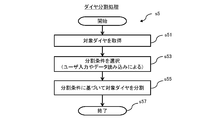
- FIG. 12 is a flow chart illustrating an example of the diamond division process.
- FIG. 13 is a diagram showing an example of a diamond division condition screen.
- FIG. 14 is a flow chart illustrating an example of the diamond evaluation process.
- FIG. 15 is a diagram showing an example of evaluation index deviation degree temporary information.
- FIG. 16 is a diagram for explaining an example of calculating the evaluation value and the degree of deviation.
- FIG. 17 is a flow chart illustrating an example of the changed partial timetable selection process.
- FIG. 18 is a diagram showing an example of optimization execution status information.
- FIG. 19 is a diagram showing an example of a method of selecting a change target partial diamond in the change partial diamond selection process.
- FIG. 19 is a diagram showing an example of a method of selecting a change target partial diamond in the change partial diamond selection process.
- FIG. 20 is a flow chart illustrating an example of the change diamond element selection process.
- FIG. 21 is a diagram illustrating an example of a method of selecting a diamond element to be changed.
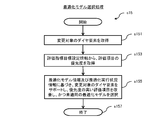
- FIG. 22 is a flow chart illustrating an example of the optimization model selection process.
- FIG. 23 is a flow chart illustrating an example of the diamond optimization process.
- FIG. 1 is a diagram showing an example of the configuration of the diamond creating system 1 according to the present embodiment.
- the diamond creation system 1 includes a diamond creation device 10, an operation control system 20, a vehicle 30, equipment 40, and an OD data acquisition system 50.
- the diamond creation device 10 is an information processing device that creates an operation schedule for each vehicle 30. Further, the diamond creating device 10 acquires OD data, which will be described later, from the OD data acquisition system 50.
- the diamond making device 10 is a device for making a train diamond. That is, it is assumed that the vehicle 30 is a train or the like, and the equipment 40 is a signal, a railroad track, a point, a sign or the like.
- the operation control system 20 executes a control process for controlling each vehicle 30 and each equipment 40 related to train operation based on the train timetable created by the timetable creation device 10.
- the OD data acquisition system 50 is an information processing system including one or a plurality of information processing devices that acquires OD data from, for example, a ticket gate system of each station, a vehicle 30, equipment 40, or various sensors (not shown). ..
- LAN Local Area Network
- WAN Wide Area Network
- Internet dedicated line, etc. are connected between each of the timetable creation device 10, operation control system 20, vehicle 30, equipment 40, and OD data acquisition system 50. It is connected so as to be communicable by the wireless communication network 5.
- FIG. 2 is a diagram illustrating an example of hardware and functions included in the diamond creating device 10.
- the diamond creation device 10 includes a computing device 11 such as a CPU (Central Processing Unit), a memory 12 such as a RAM (Random Access Memory) and a ROM (Read Only Memory), an HDD (Hard Disk Drive), and an SSD (Solid State Drive). ), Etc., a display device 14 such as a display or a touch panel, an input device 15 such as a keyboard, a mouse, or a touch panel, and a communication device 16 that communicates with another information processing device.
- the other information processing devices in the diagram creation system 1 also have the same configuration.
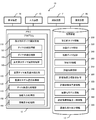
- the timetable creation device 10 includes pre-revision timetable information 200, target timetable information 220, result timetable information 240, passenger OD information 260, evaluation index information 280, evaluation index target setting information 300, evaluation index improvement degree information 320, and optimization model information. It has a function of storing each information of 340, evaluation index deviation degree temporary information 360, and optimization execution status information 380.
- the pre-revision schedule information 200 is information on one or more train schedules currently in operation.
- the target timetable information 220 is information on the train timetable that is the source of the train timetable newly created by the timetable creation device 10 in the timetable information 200 before the revision.
- the result timetable information 240 is information on a new train timetable (result timetable) created by the timetable creation device 10.
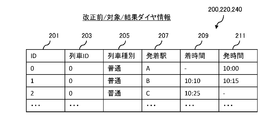
- FIG. 3 is a diagram showing an example of the timetable information 200 before revision.
- the pre-revision diamond information 200 includes a diamond ID item 201 in which a diamond identifier (diamond ID) is set, a train ID item 203 in which a train identifier (train ID) on the diamond related to the diamond ID item 201 is set, and a train ID.
- Train type item 205 where the train type (train type such as ordinary train, honor train, etc.) indicated by item 203 is set, departure / arrival station item 207 where information on the station where the train arrives / departs indicated by train ID item 203 is set, departure / arrival
- the arrival time item 209 which sets the time when the train indicated by the train ID item 203 arrives at the station indicated by the station item 207, and the time when the train indicated by the train ID item 203 departs from the station indicated by the departure / arrival station item 207 are set. It is a database composed of one or more records having each item of the departure time item 211.
- the target timetable information 220 and the result timetable information 240 also have the same configuration.
- Fig. 4 is an example of a diagram of the train schedule. As shown in the figure, this train schedule includes a regular train 213 that stops at each station of A, B, and C, and an excellent train 215 that departs from and arrives at stations A and C and passes through station B. ..
- the passenger OD information 260 stores OD data.
- the OD data is, for example, data such as the number of passengers getting on and off the vehicle 30 or the time zone at each station. Further, the passenger OD information 260 stores information on the cost related to the operation of the vehicle 30.
- the operating cost information is, for example, information such as a fare from each station to each station or a distance between stations.
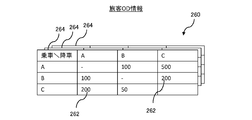
- FIG. 5 is a diagram showing an example of passenger OD information 260.
- the passenger OD information 260 is composed of a plurality of boarding / alighting tables 264 that store 262 passengers getting on or off each station, and each boarding / alighting table 264 is created at predetermined time intervals (for example, every 5 minutes).
- the evaluation index information 280 is information on the calculation method of each evaluation index, which is a parameter representing the quality from each viewpoint of the train model.
- FIG. 6 is a diagram showing an example of evaluation index information 280.
- the evaluation index information 280 includes an ID item 282 in which the ID (item ID) of the evaluation index item (evaluation item or viewpoint) is set, a name item 284 in which the name of the evaluation item related to the ID item 282 is set, and an ID. It is composed of one or more records having each item of the calculation formula item 286 in which the method of calculating the evaluation value of the evaluation item according to the item 282 is set.
- the evaluation items are, for example, the train congestion rate and the train operation cost, and these evaluation values are expressed by the calculation formulas of "number of passengers / number of trains" and "mileage x number of vehicles x cost", respectively.
- the evaluation items and their calculation formulas are not limited to these.
- the evaluation index information 280 is set in advance by the user, for example.
- the evaluation index target setting information 300 is set for each evaluation index, and is a priority that is a parameter indicating the target value of the evaluation value of the evaluation index and the importance of the evaluation index. It is the information that memorized. The details of the evaluation index target setting information 300 will be described later.
- the evaluation index improvement degree information 320 is obtained by changing each component (diamond element) of the operation timetable (train timetable) and improving the quality from each viewpoint of the operation timetable by changing the component (improvement degree in each evaluation item.
- the degree is a parameter indicating the improvement of the quality of the operation schedule from each viewpoint. The details are described below.) It is the information that memorizes the relationship.
- FIG. 7 is a diagram showing an example of the evaluation index improvement degree information 320.
- the evaluation index improvement degree information 320 is information that stores the improvement degree 326 of each evaluation item 324 in the train diamond when each diamond element 322 changes by a unit amount.
- the diamond element 322 is, for example, the number of trains, the stop time, and the vehicle change.
- Each evaluation item 324 in the train schedule is, for example, a train congestion rate and a train operating cost.
- the evaluation index improvement degree information 320 is set in advance by the user according to, for example, the actual situation of the business.
- the combination of the diamond element 322, the evaluation item 324, and the degree of improvement 326 is not limited to the one shown in the figure.
- the evaluation index improvement degree information 320 is created in advance by the user, for example.
- the unit amount is, for example, a constant amount of change in the parameters that characterize the diamond element. That is, the unit amount is, for example, a unit amount such as increasing the number of trains by one, lengthening the stop time by one minute, and increasing the number of vehicles used by one.
- the optimization model information 340 is information that stores the features of each diamond creation model.
- the diamond creation model (hereinafter, also referred to as an optimization model) can create a new train model in which at least one or more diamond elements are improved.
- the evaluation index deviation degree temporary information 360 and the optimization execution status information 380 will be described later.
- FIG. 8 is a diagram showing an example of the optimization model information 340.
- the optimization model information 340 is the optimization related to the ID item 342 in which the identifier of the optimization model is set, the modification target item 344 in which the diamond element that can be optimized by the optimization model related to the ID item 342 is set, and the ID item 342.
- One or more having each item of the improvement evaluation index item 346 in which the evaluation item of the train schedule that can be improved by the conversion model is set, and the optimization model item 348 in which the name of the optimization model related to the ID item 342 is set. Consists of records.
- the optimization model information 340 is created by the user in advance, for example.
- the diamond creation device 10 includes a partial train diamond selection processing unit 110, a change diamond element selection processing unit 120, an optimization model selection processing unit 130, a diamond optimization processing unit 140, and information input processing.
- a function unit of unit 150 and information display processing unit 160 is provided.
- the partial train timetable selection processing unit 110 divides the train timetable (target timetable information 220) into a plurality of partial train timetables based on predetermined conditions, and selects one of the divided partial train timetables.
- the partial train diamond selection processing unit 110 includes a diamond division processing unit 111, a diamond evaluation processing unit 113, and a modified partial diamond selection processing unit 115.
- the timetable division processing unit 111 divides the operation timetable into a plurality of partial operation timetables (partial train timetables) based on predetermined division conditions (for example, time zone, station section, etc.).
- the diamond evaluation processing unit 113 calculates each evaluation value of the divided plurality of partial train diamonds based on a predetermined evaluation standard (here, a calculation formula). For example, the timetable evaluation processing unit 113 uses a calculation formula for calculating the evaluation value of each evaluation index (for example, congestion rate and operating cost) of the train timetable.
- a predetermined evaluation standard here, a calculation formula.
- the timetable evaluation processing unit 113 uses a calculation formula for calculating the evaluation value of each evaluation index (for example, congestion rate and operating cost) of the train timetable.
- the changed partial diamond selection processing unit 115 selects the partial train diamond based on the evaluation value calculated by the diamond evaluation processing unit 113 and the priority associated with the evaluation standard. For example, the changed partial timetable selection processing unit 115 uses the priority set as the evaluation index, and has an evaluation value related to the evaluation index having a high priority and a large deviation from a predetermined target value. Select the partial train schedule that you are doing. The selected partial train schedule is hereinafter referred to as a partial train schedule to be changed.
- the change diamond element selection processing unit 120 selects a component of the train diamond (hereinafter, referred to as a change target diamond element) that most improves the quality of the train diamond, based on the evaluation index improvement degree information 320 that stores the improvement degree.
- the optimization model selection processing unit 130 has the highest overall quality of the train diamond due to the change of the component (diamond element to be changed) selected by the change diamond element selection processing unit 120 among the plurality of diamond creation models capable of creating the train diamond. Select a diamond creation model that improves.
- the optimization model selection processing unit 130 selects the timetable creation model, the quality of the entire train timetable is the highest when the timetable component is changed in the partial operation timetable divided by the timetable division processing unit 111. Select a diamond creation model to improve.
- the diamond optimization processing unit 140 creates a new train diamond (result diamond information 240) based on the diamond creation model selected by the optimization model selection processing unit 130.
- the information input processing unit 150 receives input of target information (target value) indicating improvement in the quality of the operation schedule associated with each viewpoint (train congestion rate, train operation cost, etc.) of the operation schedule from the user. To execute.
- the information display processing unit 160 displays information on the evaluation value of the partial train schedule calculated by the partial train schedule selection processing unit 110.
- Each function of the diamond making device 10 described above is performed by the hardware of the diamond making device 10 or by the arithmetic unit 11 of the diamond making device 10 reading each program stored in the memory 12 or the storage device 13. It is realized by executing.
- These programs are, for example, secondary storage devices, non-volatile semiconductor memories, hard disk drives, storage devices such as SSDs, or non-temporary data that can be read by the diamond creation device 10 such as IC cards, SD cards, and DVDs. It is stored in the storage medium.
- FIG. 9 is a flow chart illustrating an example of a train schedule creation process for creating a new train schedule by optimizing the current train schedule based on the evaluation index improvement degree information 320 and the like.
- the train diamond creation process is started, for example, when a predetermined user input is made to the diamond creation device 10.
- the diamond division processing unit 111 of the diamond creation device 10 refers to the pre-revision timetable information 200, extracts the train timetable (target timetable) to be revised, and stores it as the target timetable information 220 ( s1).
- the timetable division processing unit 111 causes the user to select a target timetable by displaying a list screen of the timetable information 200 before revision.
- the timetable division processing unit 111 sets the target value of the evaluation value of each evaluation item in the train timetable to be newly created from the target timetable (s3). Specifically, for example, the information input processing unit 150 displays the target value input screen (evaluation index target setting input screen) of each evaluation item by reading the evaluation index information 280, and the user relates to each evaluation item. The input of the target value is accepted, and the input information is set in the evaluation index target setting information 300.
- evaluation index target setting input screen and the evaluation index target setting information 300 will be described.
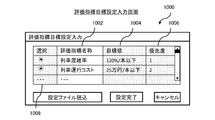
- FIG. 10 is a diagram showing an example of an evaluation index target setting input screen.
- the evaluation index target setting input screen 1000 accepts the evaluation index display field 1002 in which the name of each evaluation item is displayed, the target value input field 1004 that accepts the input of the target value for each evaluation item, and the priority input of each evaluation item. It includes a priority input field 1006 and an evaluation index selection field 1008 that accepts selection of each evaluation item. The user can select an evaluation item as a reference when creating a new train schedule (result diamond) by selecting the evaluation index selection field 1008 of any evaluation item.
- FIG. 11 is a diagram showing an example of the evaluation index target setting information 300.
- the evaluation index target setting information 300 includes an ID item 302 in which an evaluation item identifier (index ID) is set, and a name item 304 in which the name of the evaluation item related to the ID item 302 is set (name item 284 of the evaluation index information 280).
- the calculation formula of the evaluation value of the evaluation item related to the ID item 302 (corresponding to the calculation formula item 286 of the evaluation index information 280) is set.
- the target value of the evaluation item related to the calculation formula item 306 and the ID item 302 is set. It is composed of one or more records having each item of the target value item 308 to be set and the priority item 310 in which the priority of the evaluation item according to the ID item 302 is set.
- the diamond division processing unit 111 executes a diamond division process for dividing the train diamond (target diamond) acquired in s1 into a plurality of partial train diamonds. The details of the diamond division process will be described later.
- the diamond evaluation processing unit 113 executes a diamond evaluation process for calculating the evaluation value of the target diamond and the evaluation value of each partial train diamond created in s5 (s7). Details of the diamond evaluation process will be described later.
- the changed partial diamond selection processing unit 115 executes the changed partial diamond selection process for selecting the partial train diamond (change target partial train diamond) to be corrected among the target diamonds based on each evaluation value calculated in s7 (s9). The details of the changed partial timetable selection process will be described later.
- the changed partial timetable selection processing unit 115 If the changed partial timetable selection processing unit 115 cannot select the changed part train timetable by s9 (s11: no), it displays a predetermined warning message or the like and ends the train timetable creation process (s19). On the other hand, when the changed partial diamond selection processing unit 115 can select the changed partial train diamond by s9 (s11: yes), the changed partial diamond element selection processing unit 120 executes the following process.
- the change diamond element selection processing unit 120 executes the change diamond element selection process for selecting the diamond element to be changed (change target diamond element) among the change target partial train diamond diamond elements selected in s9 (s13). ..
- the details of the change diamond element selection process will be described later.
- the optimization model selection processing unit 130 selects an optimization model to be used for creating a new train diamond (result diamond) based on the evaluation item for which the target value is set in s3 and the diamond element selected in s13.
- the optimization diamond selection process is executed (s15). The details of the optimization diamond selection process will be described later.
- the timetable optimization processing unit 140 executes the timetable optimization processing for creating a new train timetable (revised timetable) based on the optimization model selected in s15 (s17). The details of the diamond optimization process will be described later. After that, the processing after s7 is repeated.
- FIG. 12 is a flow chart illustrating an example of the diamond division process.
- the diamond division processing unit 111 acquires the target diamond (s51) and determines a reference (division condition) for dividing the target diamond into partial train diamonds (s53). Specifically, for example, the diamond division processing unit 111 may read the information of the division condition stored in advance, or may display a predetermined input screen (diamond division condition screen) and specify the division condition from the user. May be accepted.
- the diamond division processing unit 111 divides the target diamond into a plurality of parts (partial train diamonds) according to the division conditions determined in s53. This completes the diamond division process (s57).
- FIG. 13 is a diagram showing an example of a diamond division condition screen.
- the diamond division condition screen 1100 has a division condition name input field 1101 that accepts the input of the name of each division condition from the user, a division condition input field 1103 that accepts the input of the contents of each division condition from the user, and each division condition from the user.
- a division condition selection field 1105 for accepting selection is provided.
- the division conditions the division according to the time zone of the vehicle 30 and the division according to the section of each station are shown, but other divisions, for example, the division for each line and the train type (ordinary train, honor train, etc.) ) May be input.
- FIG. 14 is a flow chart illustrating an example of the diamond evaluation process.
- the timetable evaluation processing unit 113 acquires the target timetable and each partial train timetable created by the timetable division processing (s71). Further, the diamond evaluation processing unit 113 acquires the evaluation index target setting information 300 created in s3 (s73).
- the timetable evaluation processing unit 113 selects evaluation items for evaluating the quality of each train timetable (target timetable and each partial train timetable) acquired in s71 based on the evaluation index target setting information 300 acquired in s73 (s75). ). Specifically, for example, the diamond evaluation processing unit 113 displays the content of the evaluation index target setting information 300 on a predetermined screen, and accepts the selection of the evaluation item to be used from the user. The diamond evaluation processing unit 113 may select all the evaluation items registered in the evaluation index target setting information 300.
- the timetable evaluation processing unit 113 calculates the evaluation value of each train timetable (target timetable and each partial train timetable) acquired in s71 for each evaluation item selected in s75 (s77).
- the diamond evaluation processing unit 113 calculates the degree of deviation for each evaluation value calculated in s77 (s79).
- the degree of divergence is the degree of divergence between the target value and the evaluation value in the present embodiment. That is, the diamond evaluation processing unit 113 acquires the target value set for each evaluation item from the evaluation index target setting information 300. Then, the diamond evaluation processing unit 113 calculates the difference (deviation value) between the evaluation value of each evaluation item for the target diamond and each partial train diamond calculated in s77 and the acquired target value of the evaluation item as the degree of deviation. To do.
- the degree of deviation may be 0. Further, as the degree of deviation, a predetermined standard value (for example, (target value-deviation value) / target value) may be adopted instead of the deviation value.
- the diamond evaluation processing unit 113 stores each evaluation value calculated in s77 and each degree of deviation calculated in s79 (s81). For example, the diamond evaluation processing unit 113 stores each calculated deviation degree in the evaluation index deviation degree temporary information 360.
- FIG. 15 is a diagram showing an example of the evaluation index deviation degree temporary information 360.
- the evaluation index deviation degree temporary information 360 stores information on the deviation degree 368 of each evaluation index 366 with respect to the entire target timetable 362 and each partial train timetable 364.
- FIG. 16 is a diagram for explaining an example of calculating the evaluation value and the degree of deviation.
- the timetable evaluation processing unit 113 applies the contents of the target timetable 501 and each partial train timetable 503 to the calculation formula of each evaluation index indicated by the evaluation index target setting information 300, so that the target timetable 501 and each part train timetable 503 can be set.
- the evaluation value 505 of each evaluation index is calculated.
- the diamond evaluation processing unit 113 calculates the deviation degree 507 corresponding to each calculated evaluation value 505 and stores it in the evaluation index deviation degree temporary information 360.
- the information display processing unit 160 may display the calculated evaluation value 505 of each evaluation index or the deviation degree 507 of each evaluation index on predetermined screens 1300 and 1400, respectively.
- FIG. 17 is a flow chart for explaining an example of the changed partial timetable selection process.
- the changed partial diamond selection processing unit 115 acquires all the partial train diamonds created by the diamond division processing (s91).
- the changed partial timetable selection processing unit 115 acquires the degree of deviation of each evaluation index of each acquired partial train timetable (s93). Specifically, for example, the changed part diamond selection processing unit 115 acquires the evaluation index deviation degree temporary information 360 created in the diamond evaluation process.
- the changed part timetable selection processing unit 115 acquires the target value and priority of each evaluation index. Specifically, for example, the change part timetable selection processing unit 115 acquires the evaluation index target setting information 300.
- the changed partial timetable selection processing unit 115 determines whether or not there is a discrepancy between the evaluation value and the target value for each part train timetable (s97). Specifically, for example, the modified partial timetable selection processing unit 115 determines for each partial train timetable whether or not the degree of deviation of each evaluation index acquired in s91 and s93 exceeds 0.
- the changed partial schedule selection process ends (s109). On the other hand, if there is a partial train schedule in which the evaluation value and the target value deviate from each other (s97: No), the changed partial schedule selection processing unit 115 selects all the partial train schedules and performs the following processing. Execute.
- the changed partial timetable selection processing unit 115 estimates the degree of necessity of optimizing the partial train timetable by calculating the weighted sum of the degree of deviation for each selected part train timetable (s99). Specifically, for example, the modified partial timetable selection processing unit 115 executes the following calculation with respect to the partial train timetable i.
- the changed partial timetable selection processing unit 115 selects the partial train timetable to be changed based on each weighted sum calculated in s99 (s101). Specifically, for example, the changed partial diamond selection processing unit 115 selects the partial train diamond having the largest weighted sum of the degree of deviation as the partial train diamond to be changed (change target partial diamond). If non-selectable information is set in the record related to the partial train timetable of the optimization execution status information 380 described later, the changed partial timetable selection processing unit 115 cannot select the record.
- the changed partial diamond selection processing unit 115 determines whether or not the changed partial diamond could be selected by the processing of s101 (s103). If the change target partial diamond cannot be selected (s103: No), the change partial diamond selection process ends (s109). If the change target partial diamond can be selected (s103: yes), the change partial diamond selection processing unit 115 determines whether or not all the optimization models have been applied to the change target partial diamond (s105). ). Specifically, the changed partial timetable selection processing unit 115 determines by referring to the selectability item 383, the model application status item 387, and the like of the optimization execution status information 380, which will be described later.
- the change partial diamond selection processing unit 115 sets the change target partial diamond to the non-selectable state (s111). Specifically, for example, the change partial timetable selection processing unit 115 sets the optimization execution status information 380, which will be described later, with non-selectable information for the partial train timetable to be changed. On the other hand, if there is an optimization model that has not been applied to the change target partial diamond (s105: No), the change partial diamond selection processing unit 115 executes the process of s107 described later.
- optimization execution status information 380 will be described.
- FIG. 18 is a diagram showing an example of the optimization execution status information 380.
- the optimization execution status information 380 includes a target timetable item 381 in which an identifier of the partial train timetable is set, a selectability item 383 in which information indicating whether or not the partial train timetable related to the target timetable item 381 can be selected is set, and a target.
- the number of times the optimization model is applied to the partial train diamond related to the timetable item 381 is set.
- the change partial diamond selection processing unit 115 determines whether or not the optimization model is applied to the change target partial diamond a total of a predetermined number of times or more. Specifically, for example, the change partial timetable selection processing unit 115 refers to the optimization processing number 385 and the model application status item 387 of the record related to the change target partial timetable in the optimization execution status information 380.
- the change partial diamond selection processing unit 115 executes the above-mentioned process of s111. On the other hand, if the optimization model has not been applied to the change target partial diamond more than a total of a predetermined number of times (s107: No), the change partial diamond selection processing unit 115 ends the change partial diamond selection process (s109). ..
- FIG. 19 is a diagram showing an example of a method of selecting a change target partial diamond in the change partial diamond selection process.
- the changed partial timetable selection processing unit 115 sets the weighted sum of the degree of deviation in the "partial train timetable 1" and the “partial train timetable 2" to 0 and 20, respectively, based on the evaluation index deviation degree temporary information 360 and the evaluation index target setting information 300. Of these partial train diamonds, only the "partial train diamond 2" whose weighted sum is larger than 0 is extracted (reference numeral 511).
- the changed partial timetable selection processing unit 115 refers to the optimization execution status information 380, confirms that the optimization processing number item 385 of the record 513 of the "partial train timetable 2" is less than the predetermined number of times, and this is the final. Is selected as the partial timetable to be changed.
- FIG. 20 is a flow chart illustrating an example of the change diamond element selection process.
- the change diamond element selection processing unit 120 acquires the change target partial train diamond (change target partial diamond) selected in the change partial diamond selection process (s131). Further, the change diamond element selection processing unit 120 acquires the target value, the evaluation value, and the degree of deviation of each evaluation item in the acquired partial diamond to be changed from the evaluation index target setting information 300, the evaluation index deviation degree temporary information 360, and the like. (S133).
- the changed diamond element selection processing unit 120 calculates the weighted sum of the degree of deviation in the changed partial diamond in the changed partial diamond selection process by using the priority of each evaluation item (s135).
- the change diamond element selection processing unit 120 acquires the evaluation index improvement degree information 320 (s137). Then, the change diamond element selection processing unit 120 calculates the weighted sum of the degree of improvement for each diamond element of the change target partial diamond (s139). Specifically, for example, the change diamond element selection processing unit 120 calculates the weighted sum of the improvement degree regarding the diamond element i based on the evaluation index improvement degree information 320 by the following formula, and stores each of the calculated weighted sums. ..
- [Weighted sum of improvement in diamond element i] ⁇ j (improvement in evaluation item j in diamond element i) * 10 ⁇ (-(priority -1))
- the change diamond element selection processing unit 120 identifies the diamond element having the smallest absolute difference between the absolute value of the weighted sum of the degree of improvement calculated in s139 and the weighted sum of the degree of deviation calculated in s135. Then, this is selected as the diamond element to be changed (diamond element to be changed) (s141).
- FIG. 21 is a diagram illustrating an example of a method of selecting a diamond element to be changed.
- the change diamond element selection processing unit 120 has a weighted sum 521 (weighted sum "20") of the degree of deviation related to the partial diamond to be changed and a weighted sum of the degree of improvement of each diamond element (-90: number of trains, -19: stop. Compare with hour and minute, -45: vehicle change), and select stop hour and minute 523 from each diamond element.
- FIG. 22 is a flow chart illustrating an example of the optimization model selection process.
- the optimization model selection processing unit 130 acquires the diamond element to be changed (diamond element to be changed) selected in the change diamond element selection process (s151). Further, the optimization model selection processing unit 130 acquires information on the priority of each evaluation item from the evaluation index target setting information 300 (s153).
- the optimization model selection processing unit 130 selects an evaluation item having a high priority.
- the optimization model selection processing unit 130 may have the evaluation item recognized as having a high priority selected by user input, or automatically select the information of the evaluation item having the highest priority. May be good.
- the optimization model selection processing unit 130 refers to the optimization model information 340, selects a diamond creation model to be applied based on the usage status and priority of each diamond creation model (s155), and performs the optimization model selection process. Finish (s157). Specifically, for example, in the optimization model selection processing unit 130, the change target diamond element acquired in s151 is set in the change target item 344 in the optimization model information 340, and the improvement evaluation index item 346 has a high priority. The information (optimization model information) of the optimization model item 348 of the record in which the information of the evaluation item is set is acquired.
- the optimization model selection processing unit 130 refers to the model application status item 387 of the optimization execution status information 380, and confirms that "not executed" is set in the previously acquired optimization model item. By doing so, the optimization model is selected as the diamond creation model to be applied.
- FIG. 23 is a flow chart for explaining an example of the diamond optimization process.
- the diamond optimization processing unit 140 includes information on the entire target diamond, information on the partial train diamond (change target partial diamond) selected in the change partial diamond selection process, change target diamond element selected in the change diamond element selection process, and the change target diamond element. Acquire each diamond element of the train diamond (s171). Further, the diamond optimization processing unit 140 acquires an optimization model (hereinafter referred to as a selection model) selected in the optimization model selection process (s173).
- a selection model an optimization model selected in the optimization model selection process
- the diamond optimization processing unit 140 sets the target diamond "whole” as the range of formulation by the selection model (s175).
- the diamond optimization processing unit 140 sets the objective function of the selection model as an evaluation function for calculating the evaluation value of the evaluation item for evaluating the change target diamond element in the target diamond "whole". To do. For example, when the change target timetable element is "stop time", the timetable optimization processing unit 140 uses the objective function F (x) as a calculation formula for the "train congestion degree" of the target timetable "whole".
- the diamond optimization processing unit 140 obtains the optimum solution of the objective function by applying the selection model (s177). As a result, the optimization model creates a train schedule that minimizes the objective function, that is, a new train schedule that maximizes the evaluation value of the evaluation index in the entire target diamond.
- the timetable optimization processing unit 140 stores the created train timetable as a new train timetable (result timetable information 240) (s179). Further, the diamond optimization processing unit 140 stores the processing performed in the optimization model selection processing (s179). For example, the timetable optimization processing unit 140 increments the value of the optimization processing number item 385 of the record related to the partial train timetable in the optimization execution status information 380 by 1, and acquires it in s153 among the items possessed by the model application status item 387. Set the value of the item of the optimized model to "Executed".
- the timetable creation device 10 updates the pre-amendment timetable information 200 with the timetable information 240 as a result of the creation.
- the operation control system 20 receives the result timetable information 240 and controls the vehicle 30 and the equipment 40 based on the received information. As a result, the operation of a new train schedule indicated by the received information is realized.
- the change of each diamond element of the train diamond and the change in quality from each viewpoint of the train diamond due to the change of the diamond element (the degree of improvement in each evaluation item).
- the evaluation index improvement degree information 320 that memorizes the relationship with (change)
- the diamond element that improves the quality of the train diamond most is selected, and the quality of the entire train diamond is improved most by changing this diamond element.
- a diamond creation model is selected from a plurality of diamond creation models, and a new train diamond is created based on the selected diamond creation model.
- the timetable creation system 1 of the present embodiment evaluates the degree of improvement of the timetable elements (number of trains, stop time, etc.) necessary for improving the quality of a new train timetable. The selection is made based on the index improvement degree information 320, and further, the optimization model in which the quality of the train diamond is most improved by this diamond element is selected. Since the structure of operation schedules such as train schedules is complicated or large, whether or not the quality is effectively improved (or the degree of improvement) may differ depending on the nature of each element of the schedule. Therefore, according to the diamond making device 10 of the present embodiment, it is possible to surely select a diamond element that is expected to improve the quality of such a diamond, and to create an operation schedule based on the diamond element. That is, according to the timetable creation system 1 of the present embodiment, it is possible to create a high-quality operation timetable even when it is composed of complicated components.
- the quality of the operation timetable composed of complicated components can be surely improved.
- labor saving and automation of the timetable creation work by business workers is planned, and there are a wide variety of objects that can be revised in the operation timetable (number of trains, stop time, passage classification, destination change, etc.).
- objects that can be revised in the operation timetable (number of trains, stop time, passage classification, destination change, etc.).
- a vehicle based on this will create an operation schedule with a high improvement effect, taking into consideration the viewpoint of the operator such as operating costs and the viewpoint of users such as vehicle congestion, regardless of the experience and intuition of business workers. It can be operated.
- the train is adopted as the vehicle 30, but it may be another means of transportation such as a bus or a monorail that is operated based on a predetermined operation schedule.
- the database stored in the timetable creation device 10 may be stored in an external information processing device (server or the like), and the timetable creation device 10 may access these information processing devices to acquire information.
- the diamond creation system 1 of the present embodiment divides the train diamond into a plurality of partial train diamonds based on predetermined conditions, and executes a partial train diamond selection process for selecting one of the divided partial train diamonds.
- the diamond creation model is selected in the optimization model selection process, the diamond creation model in which the quality of the entire train diamond is most improved when the change of the component in the divided partial train diamond is performed. May be selected.
- the diamond creation model when selecting the diamond creation model, select the diamond creation model that improves the quality of the entire train diamond most when the diamond element is changed for the selected partial train diamond divided from the train diamond. By doing so, the optimum train schedule can be efficiently created. That is, since an operation schedule such as a train schedule has a complicated structure, the processing load becomes large when the processing for changing the diamond element in the whole is performed. Therefore, it is possible to create a more optimal train schedule in a short time by considering only the case where the diamond element is changed for the train schedule divided in this way.
- each evaluation value of the divided plurality of partial train diamonds is calculated based on a predetermined evaluation standard, and the calculated evaluation value and the evaluation are obtained.
- the partial train schedule may be selected based on the priority associated with the criterion.
- the optimum evaluation values of the divided partial train schedules are calculated based on the predetermined evaluation criteria, and the partial train schedules are selected based on these evaluation values and the priority corresponding to the evaluation criteria. Partial train schedules required to create train schedules can be reliably created.
- diagram creation system 1 of the present embodiment may execute an information input process for receiving input of target information related to improvement of the quality of the train diagram associated with each viewpoint of the train diagram from the user.
- timetable creation system 1 of the present embodiment may execute a control process for controlling a vehicle or equipment related to operation based on the new operation timetable created above.
- the vehicle 30 or the equipment 40 By controlling the vehicle 30 or the equipment 40 based on the operation schedule created as described above, the vehicle 30 or the equipment 40 can be properly operated.
Landscapes
- Business, Economics & Management (AREA)
- Engineering & Computer Science (AREA)
- Human Resources & Organizations (AREA)
- Strategic Management (AREA)
- Economics (AREA)
- Entrepreneurship & Innovation (AREA)
- Physics & Mathematics (AREA)
- General Physics & Mathematics (AREA)
- Theoretical Computer Science (AREA)
- General Business, Economics & Management (AREA)
- Marketing (AREA)
- Tourism & Hospitality (AREA)
- Operations Research (AREA)
- Quality & Reliability (AREA)
- Development Economics (AREA)
- Game Theory and Decision Science (AREA)
- Educational Administration (AREA)
- Mechanical Engineering (AREA)
- Health & Medical Sciences (AREA)
- General Health & Medical Sciences (AREA)
- Primary Health Care (AREA)
- Data Mining & Analysis (AREA)
- Life Sciences & Earth Sciences (AREA)
- Biodiversity & Conservation Biology (AREA)
- Train Traffic Observation, Control, And Security (AREA)
- Management, Administration, Business Operations System, And Electronic Commerce (AREA)
Priority Applications (3)
| Application Number | Priority Date | Filing Date | Title |
|---|---|---|---|
| EP20895964.3A EP4071029B1 (en) | 2019-12-02 | 2020-09-10 | Scheduling system and scheduling method |
| US17/642,893 US12307395B2 (en) | 2019-12-02 | 2020-09-10 | Timetable planning system and timetable generating method |
| AU2020396167A AU2020396167B2 (en) | 2019-12-02 | 2020-09-10 | Scheduling system and scheduling method |
Applications Claiming Priority (2)
| Application Number | Priority Date | Filing Date | Title |
|---|---|---|---|
| JP2019217816A JP7200085B2 (ja) | 2019-12-02 | 2019-12-02 | ダイヤ作成システム、及びダイヤ作成方法 |
| JP2019-217816 | 2019-12-02 |
Publications (1)
| Publication Number | Publication Date |
|---|---|
| WO2021111694A1 true WO2021111694A1 (ja) | 2021-06-10 |
Family
ID=76219078
Family Applications (1)
| Application Number | Title | Priority Date | Filing Date |
|---|---|---|---|
| PCT/JP2020/034246 Ceased WO2021111694A1 (ja) | 2019-12-02 | 2020-09-10 | ダイヤ作成システム、及びダイヤ作成方法 |
Country Status (5)
| Country | Link |
|---|---|
| US (1) | US12307395B2 (https=) |
| EP (1) | EP4071029B1 (https=) |
| JP (1) | JP7200085B2 (https=) |
| AU (1) | AU2020396167B2 (https=) |
| WO (1) | WO2021111694A1 (https=) |
Families Citing this family (6)
| Publication number | Priority date | Publication date | Assignee | Title |
|---|---|---|---|---|
| CN113928380B (zh) * | 2021-09-07 | 2022-11-22 | 中车唐山机车车辆有限公司 | 列车全天候运行方法、装置、电子设备及存储介质 |
| JP7799421B2 (ja) * | 2021-10-04 | 2026-01-15 | 株式会社日立製作所 | 計画整理案立案装置、計画整理案立案装置による計画整理案立案方法及びコンピュータプログラム |
| US20240359716A1 (en) * | 2021-11-11 | 2024-10-31 | Mitsubishi Electric Corporation | Automatic train operation assistance device, automatic train operation assistance system, and automatic train operation assistance method |
| JP7677879B2 (ja) * | 2021-12-02 | 2025-05-15 | 株式会社日立製作所 | 運行計画作成システム、運行計画作成方法、運行計画作成プログラム、及び輸送計画システム |
| WO2024048075A1 (ja) * | 2022-08-31 | 2024-03-07 | 株式会社日立製作所 | 列車制御システム |
| JP2025079167A (ja) * | 2023-11-09 | 2025-05-21 | 株式会社日立製作所 | 計画作成支援装置、計画作成支援システム、及び計画作成支援方法 |
Citations (4)
| Publication number | Priority date | Publication date | Assignee | Title |
|---|---|---|---|---|
| JP4727459B2 (ja) | 2006-03-09 | 2011-07-20 | 公益財団法人鉄道総合技術研究所 | プログラム及び列車ダイヤ作成装置 |
| JP2014210530A (ja) * | 2013-04-19 | 2014-11-13 | 株式会社日立製作所 | ダイヤ修正案生成システム、ダイヤ修正案生成方法、およびダイヤ修正案生成プログラム |
| WO2019078025A1 (ja) * | 2017-10-16 | 2019-04-25 | 株式会社日立製作所 | ダイヤ作成装置および自動列車制御システム |
| JP2019217816A (ja) | 2018-06-15 | 2019-12-26 | 東亜建設工業株式会社 | 水中作業の安全管理システム |
Family Cites Families (6)
| Publication number | Priority date | Publication date | Assignee | Title |
|---|---|---|---|---|
| JP2001005846A (ja) | 1999-06-21 | 2001-01-12 | Hitachi Ltd | 巡回系列スケジューリング方法 |
| JP4701090B2 (ja) * | 2006-01-12 | 2011-06-15 | 財団法人鉄道総合技術研究所 | プログラム及び乗務行路計画装置 |
| JP5718742B2 (ja) * | 2011-06-28 | 2015-05-13 | 株式会社エヌ・ティ・ティ・データ・セキスイシステムズ | 乗務員運用計画作成システム |
| JP6320529B2 (ja) * | 2014-07-08 | 2018-05-09 | 株式会社東芝 | 乗務員行路仕業作成システム及び乗務員行路仕業作成方法 |
| US20180032964A1 (en) | 2016-08-01 | 2018-02-01 | Nec Europe Ltd. | Transportation system and method for allocating frequencies of transit services therein |
| CN108090668B (zh) * | 2017-12-14 | 2021-12-28 | 兰州交通大学 | 时变客流驱动的城市轨道交通客流匹配与时刻表调整方法 |
-
2019
- 2019-12-02 JP JP2019217816A patent/JP7200085B2/ja active Active
-
2020
- 2020-09-10 US US17/642,893 patent/US12307395B2/en active Active
- 2020-09-10 EP EP20895964.3A patent/EP4071029B1/en active Active
- 2020-09-10 WO PCT/JP2020/034246 patent/WO2021111694A1/ja not_active Ceased
- 2020-09-10 AU AU2020396167A patent/AU2020396167B2/en active Active
Patent Citations (4)
| Publication number | Priority date | Publication date | Assignee | Title |
|---|---|---|---|---|
| JP4727459B2 (ja) | 2006-03-09 | 2011-07-20 | 公益財団法人鉄道総合技術研究所 | プログラム及び列車ダイヤ作成装置 |
| JP2014210530A (ja) * | 2013-04-19 | 2014-11-13 | 株式会社日立製作所 | ダイヤ修正案生成システム、ダイヤ修正案生成方法、およびダイヤ修正案生成プログラム |
| WO2019078025A1 (ja) * | 2017-10-16 | 2019-04-25 | 株式会社日立製作所 | ダイヤ作成装置および自動列車制御システム |
| JP2019217816A (ja) | 2018-06-15 | 2019-12-26 | 東亜建設工業株式会社 | 水中作業の安全管理システム |
Non-Patent Citations (1)
| Title |
|---|
| See also references of EP4071029A4 |
Also Published As
| Publication number | Publication date |
|---|---|
| JP2021088205A (ja) | 2021-06-10 |
| AU2020396167B2 (en) | 2023-05-18 |
| US12307395B2 (en) | 2025-05-20 |
| US20220358422A1 (en) | 2022-11-10 |
| JP7200085B2 (ja) | 2023-01-06 |
| EP4071029B1 (en) | 2026-04-15 |
| AU2020396167A1 (en) | 2022-03-31 |
| EP4071029A1 (en) | 2022-10-12 |
| EP4071029A4 (en) | 2024-01-10 |
Similar Documents
| Publication | Publication Date | Title |
|---|---|---|
| JP7200085B2 (ja) | ダイヤ作成システム、及びダイヤ作成方法 | |
| JP2021088205A5 (https=) | ||
| Hsu et al. | Risk-averse supply chain for modular construction projects | |
| Pellerin et al. | A review of methods, techniques and tools for project planning and control | |
| Upadhyay et al. | Simulation and optimization approach for uncertainty-based short-term planning in open pit mines | |
| Kohl et al. | Airline disruption management—perspectives, experiences and outlook | |
| Kim et al. | Value analysis of location-enabled radio-frequency identification information on delivery chain performance | |
| JP7273524B2 (ja) | 運行管理システム | |
| Jurczyk-Bunkowska | Tactical manufacturing capacity planning based on discrete event simulation and throughput accounting: A case study of medium sized production enterprise | |
| Jeon et al. | Design considerations and architecture for cooperative smart factory: MAPE/BD approach | |
| Korchagin et al. | Methodology for aviation MRO system management decision-making | |
| WO2023286425A1 (ja) | 運行計画変更支援装置、運行計画変更支援方法、及び列車運行管理システム | |
| Thompson et al. | Florida DOT project-level bridge management models | |
| US11836657B2 (en) | Resource management planning support device, resource management planning support method, and programs | |
| Burduk | Stability analysis of the production system using simulation models | |
| REYES | The factory physics for the scheduling: application to footwear industry | |
| JP2021075161A5 (https=) | ||
| JP2018163436A (ja) | 計画評価システム、計画評価方法、計画更新方法及びプログラム | |
| Åhrén | Maintenance performance indicators (MPIs) for railway infrastructure: identification and analysis for improvement | |
| Hamilton | Cost management | |
| US20240383514A1 (en) | Timetable plan creation system, timetable plan creation method, timetable plan creation program, and transportation plan system | |
| KR102863686B1 (ko) | 건설 공정 스케줄 기반의 건설 현장 자재 및 인력 관리 시스템 | |
| US20260111012A1 (en) | Apparatus for providing digital production plan information, method thereof, and computationally implementable storage medium for storing a software for providing digital production plan information | |
| Sharma et al. | Modelling, Simulation and Optimization of Product Flow in a Multi-products Manufacturing Unit: A Case Study | |
| Dave et al. | A lean systems approach to improving maintenance output and configuration management |
Legal Events
| Date | Code | Title | Description |
|---|---|---|---|
| 121 | Ep: the epo has been informed by wipo that ep was designated in this application |
Ref document number: 20895964 Country of ref document: EP Kind code of ref document: A1 |
|
| ENP | Entry into the national phase |
Ref document number: 2020396167 Country of ref document: AU Date of ref document: 20200910 Kind code of ref document: A |
|
| NENP | Non-entry into the national phase |
Ref country code: DE |
|
| ENP | Entry into the national phase |
Ref document number: 2020895964 Country of ref document: EP Effective date: 20220704 |
|
| WWG | Wipo information: grant in national office |
Ref document number: 17642893 Country of ref document: US |
|
| WWG | Wipo information: grant in national office |
Ref document number: 2020895964 Country of ref document: EP |