WO2021090898A1 - 水溶性多糖類の製造方法 - Google Patents
水溶性多糖類の製造方法 Download PDFInfo
- Publication number
- WO2021090898A1 WO2021090898A1 PCT/JP2020/041429 JP2020041429W WO2021090898A1 WO 2021090898 A1 WO2021090898 A1 WO 2021090898A1 JP 2020041429 W JP2020041429 W JP 2020041429W WO 2021090898 A1 WO2021090898 A1 WO 2021090898A1
- Authority
- WO
- WIPO (PCT)
- Prior art keywords
- water
- soluble polysaccharide
- molecular weight
- superheated steam
- pulp
- Prior art date
- Legal status (The legal status is an assumption and is not a legal conclusion. Google has not performed a legal analysis and makes no representation as to the accuracy of the status listed.)
- Ceased
Links
Images



Classifications
-
- C—CHEMISTRY; METALLURGY
- C08—ORGANIC MACROMOLECULAR COMPOUNDS; THEIR PREPARATION OR CHEMICAL WORKING-UP; COMPOSITIONS BASED THEREON
- C08B—POLYSACCHARIDES; DERIVATIVES THEREOF
- C08B37/00—Preparation of polysaccharides not provided for in groups C08B1/00 - C08B35/00; Derivatives thereof
- C08B37/0006—Homoglycans, i.e. polysaccharides having a main chain consisting of one single sugar, e.g. colominic acid
- C08B37/0045—Homoglycans, i.e. polysaccharides having a main chain consisting of one single sugar, e.g. colominic acid alpha-D-Galacturonans, e.g. methyl ester of (alpha-1,4)-linked D-galacturonic acid units, i.e. pectin, or hydrolysis product of methyl ester of alpha-1,4-linked D-galacturonic acid units, i.e. pectinic acid; Derivatives thereof
- C08B37/0048—Processes of extraction from organic materials
-
- A—HUMAN NECESSITIES
- A23—FOODS OR FOODSTUFFS; TREATMENT THEREOF, NOT COVERED BY OTHER CLASSES
- A23L—FOODS, FOODSTUFFS OR NON-ALCOHOLIC BEVERAGES, NOT OTHERWISE PROVIDED FOR; PREPARATION OR TREATMENT THEREOF
- A23L19/00—Products from fruits or vegetables; Preparation or treatment thereof
- A23L19/01—Instant products; Powders; Flakes; Granules
-
- A—HUMAN NECESSITIES
- A23—FOODS OR FOODSTUFFS; TREATMENT THEREOF, NOT COVERED BY OTHER CLASSES
- A23L—FOODS, FOODSTUFFS OR NON-ALCOHOLIC BEVERAGES, NOT OTHERWISE PROVIDED FOR; PREPARATION OR TREATMENT THEREOF
- A23L21/00—Marmalades, jams, jellies or the like; Products from apiculture; Preparation or treatment thereof
- A23L21/10—Marmalades; Jams; Jellies; Other similar fruit or vegetable compositions; Simulated fruit products
-
- A—HUMAN NECESSITIES
- A23—FOODS OR FOODSTUFFS; TREATMENT THEREOF, NOT COVERED BY OTHER CLASSES
- A23L—FOODS, FOODSTUFFS OR NON-ALCOHOLIC BEVERAGES, NOT OTHERWISE PROVIDED FOR; PREPARATION OR TREATMENT THEREOF
- A23L29/00—Foods or foodstuffs containing additives; Preparation or treatment thereof
- A23L29/20—Foods or foodstuffs containing additives; Preparation or treatment thereof containing gelling or thickening agents
- A23L29/206—Foods or foodstuffs containing additives; Preparation or treatment thereof containing gelling or thickening agents of vegetable origin
- A23L29/231—Pectin; Derivatives thereof
-
- A—HUMAN NECESSITIES
- A23—FOODS OR FOODSTUFFS; TREATMENT THEREOF, NOT COVERED BY OTHER CLASSES
- A23L—FOODS, FOODSTUFFS OR NON-ALCOHOLIC BEVERAGES, NOT OTHERWISE PROVIDED FOR; PREPARATION OR TREATMENT THEREOF
- A23L5/00—Preparation or treatment of foods or foodstuffs, in general; Food or foodstuffs obtained thereby; Materials therefor
- A23L5/20—Removal of unwanted matter, e.g. deodorisation or detoxification
- A23L5/23—Removal of unwanted matter, e.g. deodorisation or detoxification by extraction with solvents
-
- A—HUMAN NECESSITIES
- A23—FOODS OR FOODSTUFFS; TREATMENT THEREOF, NOT COVERED BY OTHER CLASSES
- A23V—INDEXING SCHEME RELATING TO FOODS, FOODSTUFFS OR NON-ALCOHOLIC BEVERAGES AND LACTIC OR PROPIONIC ACID BACTERIA USED IN FOODSTUFFS OR FOOD PREPARATION
- A23V2002/00—Food compositions, function of food ingredients or processes for food or foodstuffs
Definitions
- the present invention relates to a method for producing a water-soluble polysaccharide, particularly a method for extracting pectin.
- the raw material of beet pulp which is the residue after extracting sugar from sugar beet (also known as sugar beet, sugar beet, or simply beet) is pre-dried with superheated steam (superheated steam-dried pulp).
- superheated steam superheated steam-dried pulp.
- This is a method for extracting water-soluble polysaccharides (containing pectin as a main component) in high yield from this superheated steam-dried pulp by a simple method, and this water-soluble polysaccharide has a relative molecular weight of 10,000. It is characterized by being rich in ⁇ 100,000 molecules.
- the present invention relates to a method for extracting a water-soluble polysaccharide, which is characterized in that a water-soluble polysaccharide having a high degree of acidification and abundantly containing a neutral sugar mainly arabinose as a constituent sugar can be obtained.
- Pectin is ubiquitous in the cell walls and middle lobe tissues of all higher plants, but its quantity and quality differ significantly depending on the type and site of each plant.
- citrus peel having a high pectin content, apple pomace, beet pulp and the like have been used as a raw material for extracting pectin.
- beet pulp contains about 20% acidic sugar (mainly galacturonic acid), about 20% arabinose, and about 5% galactose as constituent sugars of pectin, and about 2 as modifying groups of acidic sugar. Contains% methyl ester group and about 4% acetyl group. It also contains about 1% ferulic acid that binds to arabinose and galactose. Therefore, about 50% of beet pulp is a component of pectin (Non-Patent Document 1).
- the basic structure of pectin in plants is homogalacturonic acid, which is an ⁇ -1,4 glycoside bond of D-galacturonic acid, as the main clavicle.
- ramnogalacturonan in which D-galacturonic acid and L-rhamnose are alternately bound is partially present.
- a side chain consisting of the neutral sugar L-arabinose, D-galactose, and D-xylose is bound to the rhamnose residue in this main chain.
- the 6th carbon and 3rd carbon (partially the 2nd carbon) of galacturonic acid in the main chain are partially methyl esterified and acetylated, respectively.
- pectin has different gelation characteristics depending on the methyl ester (methoxyl) content.
- the ratio of galacturonic acid methyl ester to total galacturonic acid (total carboxyl group) is called esterification or methyl esterification degree (DE).
- HM pectin has a DE higher than 50%
- LM has a DE of 50% or less.
- Gelation characteristics differ depending on the DE, such as the need for sugar and acid for gelation of the HM pectin aqueous solution, and the addition of a divalent cation such as a calcium salt is essential for the gelation of LM pectin.
- Pectin in beet root belongs to HM pectin, but its gelling property is low even if sugar or acid is added. It is believed that this is because beet pectin has a higher acetyl group content and side chain ratio than other pectins such as citrus fruits. Another structural feature of beet pectin is that ferulic acid is bound to the neutral sugar side chain.
- Plants used as raw materials for extracting pectin are used for juice production and sugar production while the plants are fresh after being harvested in the field, so the residue (citrus peels, apples) Citrus and beet pulp) are generated all at once.
- residues since these residues are easily putrefactive, they are usually dried so that they can be stored and transported for a long period of time.
- a method for extracting pectin from citrus peel, apple pomace, and beet pulp a method of heating under acidic conditions using water as an extraction solvent is common.
- acid extraction conditions it is common to add mineral acids such as hydrochloric acid, nitric acid, and sulfuric acid to adjust the pH to 1.0 or more and less than 3.0, and heat-treat at 50 to 90 ° C. for 3 to 12 hours.
- Pectin is eluted from the plant tissue by this step, and the insoluble residue is removed by solid-liquid separation to obtain a pectin-containing aqueous solution.
- the alcohol precipitation method is generally used as a method for purifying pectin, and the pectin is precipitated and recovered to remove small molecules contained in the raw material in advance or small molecules generated during extraction for purification.
- a large amount of acid is required to suspend the plant body, which is a raw material for pectin, in water and add acid to adjust the pH to a predetermined value.
- adjusting the beet pulp suspension to pH 2.0 requires about 3% by weight of concentrated sulfuric acid per dry weight of beet pulp, and adjusting to pH 1.5 requires about 5% by weight of concentrated sulfuric acid. You will need it.
- the pectin acid extraction method has a simple device, but the pectin yield is limited, quality is restricted in that a part of pectin is decomposed, and a large amount of acid and alkali are required. There are technical challenges to the cost and environment.
- Patent Document 1 discloses a technique for extracting hot water from undried beet pulp at 90 ° C. for 1 hour.
- Patent Document 2 discloses a method for extracting from dried beet pulp on the condition that a cationic surfactant such as benzyltrimethylammonium chloride is added to water for the purpose of improving the pectin yield.
- a cationic surfactant such as benzyltrimethylammonium chloride
- the raw apple squeezed lees are pre-extracted (extraction) and then acid-extracted, or the treatment of applying an ultrasonic pulse at the time of acid extraction reduces the decomposition of pectin, increases the pectin yield, and extracts. It has been proposed as a way to save time. Further, it has been reported that as a heating method at the time of extraction, a heating method using microwaves or a flash extraction method using steam injection heating has a favorable effect on the yield and quality of pectin. However, since all of them require special equipment, the initial cost of introducing the equipment increases, and the maintenance cost of the equipment becomes a continuous burden.
- the present invention in extracting a water-soluble polysaccharide (containing pectin as a main component) from beet pulp, it is possible to achieve a high yield in spite of the extraction conditions of mild temperature and pH. As a result, it is an object of the present invention to provide a new pectin extraction method in which demethylesterification and deacetylation of pectin are suppressed, and hyperdegradation of the neutral sugar side chain is suppressed. Since mild extraction conditions that have not been used in the past due to poor extraction efficiency and impracticality can be adopted, the composition of pectin is unique and has special functional and physical properties. It is expected.
- the present inventors have focused on the importance of raw materials as a result of studies from various fields, and as a result of further diligent research, the residue after sugar extraction from pectin is squeezed (dehydrated). ) Pulp (pressed pulp) dried by superheated steam under certain conditions is further pulverized and then used as an extraction raw material, so that the pectin extraction step does not use acid and is at a high temperature. Even if this is not the case, pectin can be extracted in a relatively short time in a high yield, and the pectin obtained by this method has a high degree of methyl esterification and acetylation, and is neutral mainly containing arabinose as a constituent sugar.
- pectin extract which is rich in sugar and rich in molecules having a relative molecular weight of 10,000 to 100,000 can be obtained.
- an extract having a high purity of water-soluble polysaccharide per solid content can be obtained without special purification, and that both high yield and high purity can be achieved, and the present invention has been completed.
- an example of the embodiment of the present invention is as follows.
- a method for producing a water-soluble polysaccharide which comprises using dried beet pulp obtained by superheated steam drying as a raw material and extracting it at 60 to 140 ° C.
- the method for producing a water-soluble polysaccharide according to any one of (7) to (8) (10) Regarding the obtained water-soluble polysaccharide, 40% of the solids having a relative molecular weight of 10,000 to 100,000 among the solids having a relative molecular weight of 2,000 or more measured by gel filtration HPLC using pullulan as a standard substance.
- the method for producing a water-soluble polysaccharide according to any one of (7) to (8) which is characterized by the above.
- (11) The method for producing a water-soluble polysaccharide according to any one of (7) to (8), wherein the obtained water-soluble polysaccharide has a methyl esterification degree of 60% or more and an acetylation degree of 50% or more. ..
- the neutral sugar / acidic sugar ratio (w / w) of the constituent sugars of the obtained water-soluble polysaccharides obtained by dialysis treatment with a molecular weight cut-off of 10,000 to 20,000 to remove small molecules was 0.
- (13) Using beet pulp dried with superheated steam at 110 to 200 ° C. and 0.12 to 0.40 MPa as a raw material, it is pulverized to a particle size that passes through a sieve having a mesh size of 0.84 to 2.0 mm, and 60 to 60 to A method for producing a water-soluble polysaccharide, which comprises extracting under the conditions of 140 ° C.
- a method for producing a water-soluble polysaccharide which comprises pulverizing to a particle size that passes through a sieve and extracting under the conditions of 60 to 140 ° C. and pH 3.0 to 5.0.
- a method for producing a water-soluble polysaccharide which comprises the following steps A to C. Step A: A step of drying beet pulp with superheated steam at 110 ° C. to 200 ° C. and 0.12 to 0.40 MPa.
- Step B A step of pulverizing the beet pulp obtained in Step A to a particle size that passes through a sieve having a mesh size of 0.84 to 2.0 mm.
- Step C A step of extracting the beet pulp obtained in the B step under the conditions of 60 to 140 ° C. and pH 3.0 to 5.0.
- (16) Using dried beet pulp obtained by superheated steam drying as a raw material, it is characterized by extraction with hot water exceeding 100 ° C., and the reaction is controlled using the reaction severity represented by the following formula (1) as an index.
- Reaction severity reaction time [min] x exp ⁇ (reaction temperature [° C.] -100) /14.75 ⁇ ... Equation (1) (17) Using dried beet pulp obtained by superheated steam drying as a raw material, extraction is performed with hot water at 140 ° C. or lower, and extraction is performed within a range in which the reaction severity does not exceed 150. The method according to (16). (18) The solid content having a relative molecular weight of 2,000 or more measured by gel filtration HPLC using pullulan as a standard substance is 65% or more of the total solid content, and at least the following requirements (a) to (c) are required. A water-soluble polysaccharide derived from beet, which is characterized by satisfying 1.
- the solid content having a relative molecular weight of 2,000 or more measured by gel filtration HPLC using pullulan as a standard substance is 65% or more of the total solid content, and satisfies the following requirements (a) to (c).
- the pH at the time of extraction is mild at 3.0 to 5.0, the degree of methyl esterification and the degree of acetylation are high, and pectin is the main constituent sugar, which is rich in neutral sugars such as arabinose. It is possible to obtain water-soluble polysaccharides. Furthermore, since the overdecomposition of pectin during extraction is suppressed, an extract having a high water-soluble polysaccharide purity per solid content can be obtained without special purification, and both high yield and high purity can be achieved. Due to the mild extraction conditions, the equipment can be simplified, which greatly contributes to cost reduction. Eliminating the need to handle mineral acids has the advantage of increasing safety and security in the working environment and natural environment.
- the composition of the water-soluble polysaccharide obtained in the present invention is unique, and new physiological activity (food processing characteristics) is also expected. According to the present invention, it is also a remarkable effect that this can be obtained.
- the solid content yield (% by weight) with a molecular weight of 2,000 or more per dry raw material when extracted at various temperatures and times without pH adjustment (pH 4 to 5) is classified by molecular weight (% by weight). It is a graph shown for every 2,000 to 10,000, 10,000 to 100,000, and 100,000 or more). In addition, it is a graph which showed the solid content ratio of a molecular weight of 2,000 or more to the extracted total solid content, the molecular weight classification (10,000 to 100,000) ratio to the solid content of a molecular weight of 2,000 or more, and the color value.
- the molar ratio of bound acetic acid to acidic sugar (degree of acetylation) and the molar ratio of bound methanol to acidic sugar (degree of methyl esterification) are shown. It is a graph comparing the pulp volume (settled volume in water) swollen in water due to the difference in the raw material particle size of the crushed superheated steam-dried pulp. It is a graph comparing the time course of the solid content yield when extracted at 90 ° C. using superheated steam-dried pulp crushed to various particle sizes as a raw material. It is a graph which showed the time-dependent change of the yield of a water-soluble polysaccharide when the superheated steam-dried pulp was extracted at various temperatures and times.
- Water-soluble polysaccharides are the sum of constituent sugars excluding sucrose and free monosaccharides, bound acetic acid, bound methanol and ferulic acid.
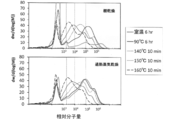
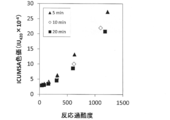
- the molecular weight distribution of each extract under extraction conditions of 90 ° C., 6 hours or 160 ° C. for 10 minutes is shown, and the detection intensity is determined by two types of detectors (RI detector and UV detection). It is a graph measured using a vessel (325 nm)). It is a graph which showed the change of the yield of the water-soluble polysaccharide with respect to the reaction harshness at the time of extraction for 5 minutes, 10 minutes or 20 minutes in a temperature range over 100 ° C.
- Water-soluble polysaccharides are the sum of constituent sugars excluding sucrose and free monosaccharides, bound acetic acid, bound methanol and ferulic acid. It is a graph which showed the change of the weight average molecular weight of the extract with respect to the reaction severity at the time of extraction for 5 minutes, 10 minutes or 20 minutes in a temperature range over 100 ° C. using superheated steam-dried pulp as a raw material. It is a graph which showed the change of the color value of the extract with respect to the reaction harshness at the time of extraction for 5 minutes, 10 minutes or 20 minutes in a temperature range over 100 ° C. using superheated steam dried pulp as a raw material.
- the present invention is characterized in that it has specified suitable conditions for extracting a water-soluble polysaccharide containing pectin as a main component at a liquid temperature of 140 ° C. or lower using superheated steam-dried pulp as a raw material.
- the technical features are a) selection of raw materials and b) identification of suitable extraction conditions, and as a result of their organic combination, the pH is milder than that of the conventionally adopted acid extraction method. Despite the fact that it is (3.0 to 5.0), the extraction efficiency is unexpectedly good, and the neutral sugar side chain of the extracted pectin is over-decomposed, and demethylesterification and deacetylation occur. It is in the point of being suppressed.
- an extract having high water-soluble polysaccharide purity per solid content can be obtained without special purification, and both high yield and high purity can be achieved.
- the obtained water-soluble polysaccharide is characterized by containing abundant molecules having a relative molecular weight of 10,000 to 100,000. That is, it is characterized by having both the technical effect of improving the extraction efficiency of pectin and obtaining a water-soluble polysaccharide having a specific composition.
- the present invention has a great significance in focusing on a) superheated steam-dried pulp which is a special raw material, and b) when general beet pulp (drum-dried pulp) or undried pressed pulp is used as a raw material.
- the yield of water-soluble polysaccharides mainly containing pectin increased without the need for addition of acid and despite mild extraction conditions, overdecomposition of the neutral sugar side chain of pectin, and demethyl esterification. It has a remarkable effect such as suppression of esterification and deacetylation.
- the present inventors have aimed to obtain a water-soluble polysaccharide containing pectin in a high yield by a simple method without adding mineral acid, which is a burden on the cost and the environment, and conventional acid heating extraction.
- the steam pressure is 0.12 to 0.4 MPa, preferably 0.25 to 0.25 MPa
- the steam temperature is 110 to 200 ° C., preferably 130 to 185 ° C., more preferably 150 to 150 to
- the pressed pulp is dried by superheated steam at 180 ° C. (in the present application, the dried beet pulp obtained by this method is referred to as "superheated steam dried pulp"), and the amount of pulp water at the outlet of the superheated steam dryer is 17. It is preferable to dry to% or less, preferably 15% or less, and more preferably 12% or less.
- the superheated steam-dried pulp discharged from the dryer outlet naturally releases moisture in the atmosphere even if some moisture remains. Equilibrate to a water content of about 5%. Therefore, it is usually not desirable in terms of energy cost to dry the pulp almost completely to 5%, but in the present invention, the pulp water content at the outlet of the superheated steam dryer is 0 to 17%, preferably 5 to 15%. More preferably, 8-12% superheated steam-dried pulp can be used.
- the effect of the present application can be obtained only with dried beet pulp by the superheated steam drying method. Pulp made by other drying methods, such as undried pressed pulp and drum-dried pulp, is pectin under the intended mild pH (pH 3.0-5.0) and temperature conditions (100 ° C or less). Can not be achieved efficiently.
- a drum dryer is a method of drying with a high-temperature combustion gas, and is composed of a combustion furnace and a cylindrical drying drum.
- the fuel burns together with the primary air in the combustion furnace, and the generated combustion gas at 650 to 1,000 ° C. is sent into the drying drum.
- the pressed pulp is put into a slowly rotating drying drum, and is dried by a high-temperature combustion gas while being sent to the outlet side by a special mechanism.
- the dried pulp is separated from the exhaust gas by the cyclone at the outlet.
- the basic concept of a superheated steam dryer is to dry pressed pulp with superheated steam in a pressure-sealed container.
- Belt type drying (Belt drivers) type, Svensk Energyteknik type, and fluidized bed drying type have been developed and put into practical use.
- the belt type dryer is a method in which the squeezed pulp on the belt in the pressure vessel is transported and dried by superheated steam.
- the Swedish Energy technique type is one in which pressed pulp is put into a tube in which superheated steam circulates and dried while moving in the tube (reference: Sugar technology: Beet and cane sugar manufacture, Berlin Berlin). Hen, Bartens, 1998, Berlin.).
- the fluidized bed drying type is the most popular dryer.
- a fluidized bed divided into chambers (cells) is arranged in the pressure vessel of the dryer, and the superheated steam circulated upward by the impeller comes into contact with the pulp in the fluidized bed to dry it.
- the moist pressed pulp containing water is supplied to the screw conveyor by a rotary valve and carried to the first cell in the pressure vessel, and moves and is dried while flowing by the flow of superheated steam. When it reaches the last cell, it is discharged as dry pulp having a water content of about 10% through a screw conveyor and a rotary valve.
- the excess steam generated from the water contained in the beet pulp is taken out from the pressure vessel and used as a heat source for concentrating the sugar solution (utility can) in the sugar making process, which contributes to energy saving in the sugar manufacturing factory (taken out).
- the vapor pressure in the dryer is controlled by the effect can condenser for concentrating the sugar solution).
- a part of the steam in the dryer is reheated through a heat exchanger and circulated in the dryer as superheated steam at a predetermined temperature to promote the drying of beet pulp.
- the fluidized bed dryer since the pulp being dried is constantly agitated in the fluidized bed, it is characterized in that drying proceeds uniformly even if the particle size of the pulp varies. (Reference: Sugar industry 142, 693-698 (2017)).
- the present invention has newly found a principle that extraction of water-soluble polysaccharides mainly containing pectin is facilitated by superheated steam drying of beet pulp, and based on this new principle, superheated steam dried pulp is newly used as a raw material. By using it, it is possible to extract water-soluble polysaccharides in high yield regardless of mild pH and temperature conditions. Further, the water-soluble polysaccharide thus obtained is characterized by containing abundant molecules having a relative molecular weight of 10,000 to 100,000. It is not necessary to add mineral acid or heat to a high temperature at the time of extraction, and it provides an extraction technology with low cost and low environmental load.
- the present invention newly uses superheated steam-dried pulp as a raw material to obtain pectin in a high yield in spite of mild conditions, and the methyl ester group, acetyl group, and neutrality in the pectin molecule. It is characterized in that it can be extracted and obtained with high purity by suppressing hydrolysis of the sugar side chain, and such technical features have not been known so far, and the present invention is the first.
- the superheated steam drying method and the drum drying method differ greatly in the drying temperature conditions and principles.
- Methods for extracting water-soluble polysaccharides from beet pulp are widely known as shown in the literature below, but these literature techniques do not indicate a drying method for dried beet pulp used for extraction. The comparison with the prior art is described below.
- Patent Document 1 Patent No. 254462
- pressed pulp is used as a raw material instead of superheated steam-dried pulp, and this is extracted under mild conditions.
- the solid content yield is about 15%, and since most of this is sucrose remaining in the pulp, the yield of water-soluble polysaccharide is only about several%. It is presumed that there is no such thing.
- the yield of water-soluble polysaccharides at room temperature exceeds 20% (Table 3 etc.), which is extremely remarkable, as will be described later. The effect is being played.
- Patent Document 2 Japanese Patent Publication No. 63-9521
- a dried beet pulp product is used for extraction treatment at 80 ° C.
- it is essential to add a specific cationic surfactant. It is different.
- yield when the acidic sugar yield (components constituting the main chain of pectin) is compared, it is 9.0 to 15.0% by weight in the present invention (Table 5 etc.), whereas the literature technology is Only about half of that. Therefore, although the objectives of the invention of improving yield are the same, they are completely different in terms of extraction method and effect.
- Patent Document 3 Patent No. 5900792 describes a technique for producing a ferulic acid-bound sugar constituting pectin using beet fiber, which is a pulverized product of dried beet pulp, as a raw material. This technique heats a liquid-tight beet fiber suspension in a closed container at 160 ° C or higher, and a catalytic reaction of water in a liquid state with a pressure equal to or higher than the saturated vapor pressure (called hydrothermal reaction). This is a technique for decomposing pectin and obtaining oligosaccharides, which are free ferulic acid-bound sugars, and the target products are different. It can be said that the purpose and technical significance of the invention are completely different from those of the present invention, which can obtain a water-soluble polysaccharide containing pectin as a main component under mild extraction conditions.
- Patent Document 4 Patent No. 5805390 describes a technique for superdegrading beet fiber, which is a pulverized product of dried beet pulp, to arabinose by heat-treating it with superheated steam at about 180 ° C. for 1 hour. Under such harsh conditions, pectin is over-decomposed, so pectin cannot be obtained in the first place.
- wet beet pulp is treated with superheated steam to dry it, and pectin is solubilized while suppressing overdecomposition in the drying process. Is clear. That is, the literature technology does not mention the finding that the extraction of water-soluble polysaccharides including pectin is facilitated by superheated steam drying of beet pulp.
- the superheated steam-dried pulp is used as a raw material.
- the superheated steam-dried pulp has a temperature of 110 to 200 ° C., preferably 130 to 185 ° C., more preferably 150 to 180 ° C., and a pressure of 0.12 to 0.4 MPa. It is preferably obtained by drying the pressed pulp with superheated steam of 0.25 to 0.25 MPa.
- the water content of the superheated steam-dried pulp it is preferable that the water content of the pulp at the outlet of the superheated steam dryer is 17% or less, preferably 15% or less, more preferably 12% or less, thereby causing the beet pulp to rot.
- the superheated steam-dried pulp discharged from the dryer outlet naturally releases moisture in the atmosphere even if some water remains, and equilibrates to a water content of about 5%. Therefore, the superheated steam dryer of the present invention
- the water content of the pulp at the outlet is 0 to 17%, preferably 5 to 15%, and more preferably 8 to 12%.
- the drying capacity (moisture evaporation per hour) of a superheated steam dryer is affected by the type of dryer, but the steam pressure supplied from the factory boiler to the dryer and the pressure inside the dryer container (pressure is the concentration used for sugar production). It is controlled and determined by the condenser of the utility can) and is determined by the size of the dryer.
- the drying treatment time cannot be set unconditionally because the supply amount of the pressed pulp with respect to the drying capacity and the condition of the pressed pulp (particle size, water content, etc.) are interrelated, but it is usually 45 minutes. Within, preferably within a range of 1 to 15 minutes.
- the effect of the present invention is not affected by the superheated steam drying time of beet pulp, but the drying time is in the range of 30 seconds to 45 minutes, preferably 45 seconds to 30 minutes, and more preferably 1 to 15 minutes. Is.
- this pulp When extracting water-soluble polysaccharides containing pectin as the main component using superheated steam-dried pulp, this pulp has extremely high water absorption, and if the fluidity becomes poor, the extraction treatment work becomes difficult, so the amount of water added. Need to be increased. As a result, the extract becomes thin, which is disadvantageous in the subsequent concentration process.
- the larger the particle size of this pulp the easier it is to absorb water and swell, and the lower the fluidity. Even if sufficient fluidity is given, if the particle size is large, extraction takes time and efficiency is poor. Therefore, it is preferable to adjust the particle size of the pulp used for extraction. For example, it is preferable to pass through a sieve having a mesh size of 2.0 mm (preferably 0.84 mm), in other words, to have a particle size of 9 mesh passes (preferably 20 mesh passes).
- the dried pulp whose particle size is adjusted in this way is subjected to extraction treatment, and the amount of water added at that time may be determined with the target of the minimum amount at which the fluidity of the pulp suspension can be obtained, and the solid content concentration is 3 to 3. It will be about 15% by weight.
- the extraction temperature is 60 to 140 ° C, preferably 70 to 100 ° C, and more preferably 80 to 90 ° C.
- a high-yielding pectin extract can be obtained in a relatively short time (for example, 6 hours or less) even under mild conditions of 100 ° C. or less without adding any special acid.
- demethylesterification, deacetylation, and overdecomposition of the neutral sugar side chain of pectin (mainly arabinose) can be suppressed.
- reaction severity an index in which the history of heat and time received by the beet pulp suspension (slurry) is converted into an energy value. Can be done.
- the extraction (reaction) pH is preferably 2.0 or higher, and is pH 3.0 in order to suppress demethylesterification and deacetylation and to suppress overdecomposition of the neutral sugar side chain mainly composed of arabinose. It is preferable to perform the extraction as described above. Further, since pectin generally becomes unstable when the pH exceeds 5.0, it is more preferable to carry out the pectin at a pH of 3.0 to 5.0.
- the pH of the suspension is usually 3.0 to. Since it is in the range of 5.0, no special pH adjustment is required.
- beet pulp suspension is weakly acidic (pH 3.0 to 5.0) is that the pectin main chain galacturonic acid itself is acidic and one of the acetyl groups that modify galacturonic acid. This is because the portion is deesterified and acetic acid is liberated, and further, it is due to the organic acid contained in the raw pulp itself.
- reaction time There is no particular limitation on the extraction (reaction) time, and the reaction may be continued until a high yield of pectin is obtained.
- the reaction time varies depending on the reaction temperature, pH conditions, etc., but is usually 5 minutes to 24 hours, preferably 1 to 6 hours.
- an extraction temperature of 100 ° C. or higher is selected for short-time extraction, it is necessary to precisely control the reaction severity to be 300 or less, preferably 150 or less.
- the extraction can be performed at normal pressure, and it is one of the important features of the present invention that the extraction can be performed under such conditions.
- the pressure is set to atmospheric pressure or higher.
- the solid content yield per raw material dry matter is 30 to 60% by weight, and the yield of water-soluble polysaccharide is 20 to 45% by weight.
- Yield of acidic sugar per raw material dry matter is 9.0 to 15.0% by weight.
- Yield of neutral sugar excluding free monosaccharide and sucrose per raw material dry matter is 10 to 25.0% by weight.
- Combined acetic acid yield per raw material dry matter 1.0 to 5.0% by weight
- Yield of bound methanol per raw material dry matter 1.0 to 3.0% by weight
- Ferulic acid yield per raw material dry matter 0.2 to 1.0% by weight
- the water-soluble polysaccharide obtained by this method depends on the extraction conditions, but is as follows.
- the solid content having a relative molecular weight of 2,000 or more measured by gel filtration HPLC using pullulan as a standard substance is 65% or more with respect to the total solid content.
- Relative measured by gel filtration HPLC using pullulan as a standard substance is 40% or more.
- 40 to 50% of the constituent sugars (excluding free monosaccharides and sucrose) are acidic.
- the neutral sugar / acidic sugar ratio (w / w) of the constituent sugars is 0.6 to 1.5 (5) acetylation degree of 50% or more, methyl esterification degree of 60% or more (6) per water-soluble polysaccharide.
- Ferrulic acid content 0.5-1.5% by weight
- Example 2 Comparison of solid content yield by molecular weight when each dried pulp is used as an extraction raw material
- Demineralized water was added to each dry pulp (final solid content concentration 6%), and the pulp was extracted by shaking at room temperature (20 to 25 ° C.) or 90 ° C. for 6 hours.
- demineralized water was added to each dry pulp (final solid concentration 12%), and 140, 150, or 160 was used in a screw cap type stainless steel tube (35 mL volume) into which a K thermocouple connected to a data logger was inserted.
- the reaction was heated in an oil bath at ° C. for about 10 minutes until the reaction severity reached 150, 300, or 600, respectively, and immediately cooled with water.
- the pH was not particularly adjusted in any of the extractions, and the pH of each suspension before extraction was 4.0 to 5.0.
- the solid content having a molecular weight of 2,000 or more shown in the stacked graph of FIG. 1 is mainly composed of water-soluble polysaccharides.
- reaction severity 150 the yield of solid content having a molecular weight of 2,000 or more was high in superheated steam-dried pulp.
- the difference depending on the method of drying the raw materials was remarkable.
- the molecular weight is 140 ° C. for 10 minutes (reaction severity 150) or more, and when the polysaccharide steam-dried pulp is used as the raw material, the molecular weight is 2,000 or more as shown in the line graph in FIG.
- the ratio of the medium (10,000 to 100,000) molecular weight classification to the solid content of the above was high by more than 40%, and a characteristic water-soluble polysaccharide rich in the polysaccharide of the medium molecular weight was obtained. It was found that when superheated steam-dried pulp was used as a raw material, this water-soluble polysaccharide having a characteristic molecular weight distribution could be obtained in high yield under mild temperature conditions.
- a water-soluble polysaccharide having a molecular weight of 2,000 or more is available at 140 ° C. for 10 minutes (reaction severity 150) or less as compared with other dried pulp. It was found that the saccharides were obtained in high yield without over-decomposition, and the coloring of the extract was suppressed. Further, the obtained water-soluble polysaccharide having a molecular weight of 2,000 or more was characterized in that it contained abundant molecules having a molecular weight of 10,000 to 100,000.
- Example 3 Comparison of yield by component when each dried pulp is used as an extraction raw material
- the constituent sugar yields, free monosaccharide yields, bound or free acetic acid and methanol yields, ferulic acid yields, and sucrose yields of the water-soluble polysaccharides of the extract obtained in Experiment 2 were measured by the following methods.
- -Acid sugar yield Measured by the 3,5-dimethylphenol method using galacturonic acid as a standard substance.
- Yields of constituent sugars other than acidic sugars and yields of free monosaccharides Yields of sugars released after hydrolysis at 100 ° C.
- Example 1 Comparison of solid content yield, weight average molecular weight, and color value of extracts when each dried pulp is used as a raw material and the pH at the time of extraction is changed
- Demineralized water and 10% sulfuric acid were added to each dry pulp of Example 1 and Experiment 1 to adjust to each pH (final solid content concentration 6%), and the pulp was extracted by shaking at 90 ° C. for 2 hours or 6 hours.
- Each of the above was filtered through diatomaceous earth to recover the entire supernatant.
- the solid content content, the molecular weight distribution of the solid content, and the ICUMSA color value in the collected filtrate were measured by the same methods as in Example 1 and Experiment 2. However, the added solid content derived from sulfuric acid was subtracted for correction, and the peak derived from sulfuric acid was also removed from the molecular weight distribution.
- the extract obtained under acidic conditions by adding sulfuric acid has a large ratio of molecular weight of 100,000 or more, and has a molecular weight of 2.
- the ratio of medium (10,000 to 100,000) molecular weight classifications to 1,000 or more solids was less than 40%.
- the extract of superheated steam-dried pulp pH unadjusted or pH 3
- the molecular weight distribution of the extract obtained by extracting the shelf-dried pulp under acidic conditions of pH 1.5 has a distribution peak at a molecular weight of 100,000 or more, which is close to that of commercially available beet pectin (manufactured by CPKelco, brand: BETA BI-J). Was. These were significantly different from the molecular weight distribution of water-soluble polysaccharides extracted from superheated steam-dried pulp without pH adjustment (pH 4 to 5).
- Example 2 Comparison of yields by constituent sugars when acid extracts prepared from each dry raw material were dialyzed and polysaccharide components were recovered
- the extract of Example 2 and Experiment 1 was sealed in a regenerated cellulose dialysis membrane (molecular weight cut off of 14,000), and the dialysis treatment was carried out for several days while regularly exchanging the external solution as desalted water. The entire amount of the internal solution after dialysis was recovered, freeze-dried, and the constituent sugar content was measured by the same method as in Example 1 and Experiment 3.
- Example 3 Comparison of the degree of methyl esterification and the degree of acetylation when the acid extract prepared from each dry raw material is dialyzed and the polysaccharide component is recovered.
- Example 1 Solid content yield by molecular weight, weight average molecular weight, ICUMSA color value when superheated steam-dried pulp is used as a raw material
- Demineralized water was added to crushed superheated steam-dried pulp (100 mesh pass: opening: 0.15 mm) (final solid content concentration 12%) and extracted by shaking at 90 ° C. or lower, or
- Example 1 and Experiment 2 Similarly, the mixture heated at 140 ° C., 150 or 160 ° C. for about 10 minutes in a screw cap type stainless steel tube into which a K thermocouple was inserted was filtered through diatomaceous earth to recover the entire supernatant.
- Example 2 Yield by component when superheated steam-dried pulp is used as a raw material, constituent sugar composition of water-soluble polysaccharide, acetylation degree, methyl esterification degree and ferulic acid content
- the yield and sucrose yield were measured by the methods of Example 1 and Experiment 3.
- the results are shown in Table 5.
- the yields of water-soluble polysaccharides extracted from Table 5 are shown in FIG.
- 70 ° C. or higher, more preferably 80 ° C. or higher, still more preferably 90 ° C. or higher was required.
- acidic sugars are over-decomposed, and the yield of water-soluble polysaccharides apparently increases beyond the yield of solids having a molecular weight of 2,000 or more.
- Table 4 under harsh conditions of 150 ° C.
- Table 6 shows the results of calculating the constituent sugar composition (% by weight) and the neutral sugar / acidic sugar ratio of the water-soluble polysaccharide based on each yield in Table 5.
- the neutral sugar / acidic sugar ratio apparently increases under harsh conditions of 150 ° C. for 10 minutes or more (reaction severity of 300 or more), but the acidic sugar is over-decomposed at 150 ° C. for 10 minutes or more. This is not the result of recovering and measuring only the polysaccharide component by dialysis, but it is considered that this is because oligosaccharides other than the water-soluble polysaccharide are also contained in the constituent sugars.
- the composition of the water-soluble polysaccharide mainly composed of pectin obtained by the present invention has a very large arabinose content as a constituent sugar and is a neutral sugar. / The acid sugar ratio is also high, and it is extremely peculiar.
- Example 3 Confirmation of ferulic acid bond state of water-soluble polysaccharide extracted from superheated steam-dried pulp
- the molecular weight distribution of the filtrate collected in Example 4 and Experiment 2 was measured under the gel filtration HPLC conditions (detector: RI and UV325 nm) described in Example 1 and Experiment 2.
- Example 4 Relationship between reaction severity when superheated steam-dried pulp is extracted at 100 ° C. or higher, water-soluble polysaccharide yield, weight average molecular weight, and ICUMSA color value
- the reaction time was constant for about 5 minutes, 10 minutes or 20 minutes as shown in Table 1, and the reaction temperature was changed to extract at a predetermined reaction severity. Then, the yield of the water-soluble polysaccharide, the weight average molecular weight, and the ICUMSA color value were measured by the methods of Example 1, Experiment 2, and Experiment 3.
- a simple method (requires a special drug or device) with milder extraction conditions (temperature, pH) than the conventional methods such as acid treatment, hydrothermal treatment, and high temperature and high pressure treatment.
- milder extraction conditions temperature, pH
- water-soluble polysaccharides mainly pectin
- the characteristics of the water-soluble polysaccharide obtained by the present invention are that hyperdecomposition of the neutral sugar side chain mainly composed of arabinose contained as a constituent sugar is suppressed, and demethylesterification and deacetylation are suppressed.
- the present invention can be summarized as follows.
- pectin when extracting a water-soluble polysaccharide (mainly pectin) from beet pulp, pectin is extracted under mild extraction conditions (temperature, pH conditions) without using a special drug or device.
- the purpose is to obtain a main water-soluble polysaccharide in a high yield and in a state where a large amount of arabinose-based neutral sugar is contained as a constituent sugar, and with a high degree of methyl esterification and a high degree of acetylation. And.
- the water-soluble polysaccharide containing pectin desired under the above mild extraction conditions is relatively short.
- a production method for extracting in high yield in time is provided.
- water-soluble polysaccharides mainly pectin
- water-soluble polysaccharides can be obtained in high yield under mild extraction conditions (temperature, pH) and without the use of special chemicals or equipment, and decomposition of polysaccharides can be obtained.
- the purpose is to suppress (low molecular weight, deesterification) and coloration of the extract.
- the particle size of the pulp dried by superheated steam is adjusted and used as a raw material to obtain water-soluble polysaccharides (mainly pectin) under mild extraction conditions. It can be obtained in a high yield in a short time, and it is possible to reduce the molecular weight of the water-soluble polysaccharide and suppress the coloring of the extract.
- water-soluble polysaccharides mainly pectin
Landscapes
- Chemical & Material Sciences (AREA)
- Life Sciences & Earth Sciences (AREA)
- Health & Medical Sciences (AREA)
- Engineering & Computer Science (AREA)
- Polymers & Plastics (AREA)
- Nutrition Science (AREA)
- Food Science & Technology (AREA)
- Dispersion Chemistry (AREA)
- Biochemistry (AREA)
- Materials Engineering (AREA)
- Chemical Kinetics & Catalysis (AREA)
- Medicinal Chemistry (AREA)
- Molecular Biology (AREA)
- Organic Chemistry (AREA)
- General Health & Medical Sciences (AREA)
- Polysaccharides And Polysaccharide Derivatives (AREA)
Priority Applications (3)
| Application Number | Priority Date | Filing Date | Title |
|---|---|---|---|
| JP2021555114A JP7425083B2 (ja) | 2019-11-08 | 2020-11-05 | 水溶性多糖類の製造方法 |
| EP20884428.2A EP4056048A4 (en) | 2019-11-08 | 2020-11-05 | Method for producing water-soluble polysaccharides |
| US17/774,786 US20220396642A1 (en) | 2019-11-08 | 2020-11-05 | Method for producing water-soluble polysaccharides |
Applications Claiming Priority (4)
| Application Number | Priority Date | Filing Date | Title |
|---|---|---|---|
| JP2019-203572 | 2019-11-08 | ||
| JP2019203572 | 2019-11-08 | ||
| JP2019-211881 | 2019-11-22 | ||
| JP2019211881 | 2019-11-22 |
Publications (1)
| Publication Number | Publication Date |
|---|---|
| WO2021090898A1 true WO2021090898A1 (ja) | 2021-05-14 |
Family
ID=75848459
Family Applications (1)
| Application Number | Title | Priority Date | Filing Date |
|---|---|---|---|
| PCT/JP2020/041429 Ceased WO2021090898A1 (ja) | 2019-11-08 | 2020-11-05 | 水溶性多糖類の製造方法 |
Country Status (4)
| Country | Link |
|---|---|
| US (1) | US20220396642A1 (https=) |
| EP (1) | EP4056048A4 (https=) |
| JP (1) | JP7425083B2 (https=) |
| WO (1) | WO2021090898A1 (https=) |
Families Citing this family (1)
| Publication number | Priority date | Publication date | Assignee | Title |
|---|---|---|---|---|
| CN118126207B (zh) * | 2024-03-15 | 2025-01-28 | 广东海洋大学 | 一种甜菜多糖的制备方法及用途 |
Citations (8)
| Publication number | Priority date | Publication date | Assignee | Title |
|---|---|---|---|---|
| JPS585390B2 (ja) | 1973-07-02 | 1983-01-31 | セイコーエプソン株式会社 | デンシシキウデドケイ |
| JPS59792B2 (ja) | 1981-04-09 | 1984-01-09 | 株式会社東芝 | 送受信装置 |
| JPS639521B2 (https=) | 1983-01-02 | 1988-02-29 | Hikaru Konishi | |
| JP2542462B2 (ja) | 1989-03-31 | 1996-10-09 | ブリティシュ シュガー ピーエルシー | 可溶性繊維を含む糖組成物 |
| JP2005241239A (ja) * | 2004-01-26 | 2005-09-08 | Minoru Morita | 過熱水蒸気による乾燥装置 |
| JP2011225745A (ja) * | 2010-04-21 | 2011-11-10 | Asukii:Kk | ペクチン改質方法 |
| CN103483465A (zh) * | 2013-08-28 | 2014-01-01 | 华南理工大学 | 一种甜菜果胶的绿色制备方法 |
| US20140325869A1 (en) * | 2013-05-06 | 2014-11-06 | ASJ-IPR ApS | Method and system for drying particulate material |
Family Cites Families (5)
| Publication number | Priority date | Publication date | Assignee | Title |
|---|---|---|---|---|
| SE442023B (sv) * | 1981-02-11 | 1985-11-25 | Svensk Exergiteknik Ab | Forfarande for upparbetning av betmassa fran sockerbetor och anordning for genomforandet av forfarandet |
| US6365732B1 (en) * | 2000-07-10 | 2002-04-02 | Sweet Beet Incorporated | Process for obtaining stereoisomers from biomass |
| RU2202621C1 (ru) * | 2001-08-22 | 2003-04-20 | Северо-Кавказский научно-исследовательский институт сахарной свеклы и сахара | Способ производства пектинового концентрата из свекловичного жома |
| US20060099302A1 (en) * | 2002-09-02 | 2006-05-11 | Cp Kelco Aps | Process for treating pectin containing plant material |
| CN106087507B (zh) * | 2016-06-02 | 2018-04-20 | 华南理工大学 | 甜菜粕纤维素纳米纤及其制备方法 |
-
2020
- 2020-11-05 EP EP20884428.2A patent/EP4056048A4/en active Pending
- 2020-11-05 US US17/774,786 patent/US20220396642A1/en not_active Abandoned
- 2020-11-05 WO PCT/JP2020/041429 patent/WO2021090898A1/ja not_active Ceased
- 2020-11-05 JP JP2021555114A patent/JP7425083B2/ja active Active
Patent Citations (8)
| Publication number | Priority date | Publication date | Assignee | Title |
|---|---|---|---|---|
| JPS585390B2 (ja) | 1973-07-02 | 1983-01-31 | セイコーエプソン株式会社 | デンシシキウデドケイ |
| JPS59792B2 (ja) | 1981-04-09 | 1984-01-09 | 株式会社東芝 | 送受信装置 |
| JPS639521B2 (https=) | 1983-01-02 | 1988-02-29 | Hikaru Konishi | |
| JP2542462B2 (ja) | 1989-03-31 | 1996-10-09 | ブリティシュ シュガー ピーエルシー | 可溶性繊維を含む糖組成物 |
| JP2005241239A (ja) * | 2004-01-26 | 2005-09-08 | Minoru Morita | 過熱水蒸気による乾燥装置 |
| JP2011225745A (ja) * | 2010-04-21 | 2011-11-10 | Asukii:Kk | ペクチン改質方法 |
| US20140325869A1 (en) * | 2013-05-06 | 2014-11-06 | ASJ-IPR ApS | Method and system for drying particulate material |
| CN103483465A (zh) * | 2013-08-28 | 2014-01-01 | 华南理工大学 | 一种甜菜果胶的绿色制备方法 |
Non-Patent Citations (8)
| Title |
|---|
| CHEN HAI-MING, FU XIONG, LUO ZHI-GANG: "Properties and extraction of pectin-enriched materials from sugar beet pulp by ultrasonic-assisted treatment combined with subcritical water.", FOOD CHEMISTRY, vol. 168, no. 1, 24 July 2014 (2014-07-24), pages 302 - 310, XP055821710, DOI: 10.1016/j.foodchern. 2014.07.07 8 * |
| F. MICHEL ET AL.: "Extraction and characterization of pectins from sugar BEET PULP", J. FOOD SCI., vol. 50, 1985, pages 1499 - 1500 |
| HUANG, XIN ET AL.: "Effect of particle size of sugar beet pulp on the extraction and property of pectin.", J OURNAL OF FOOD ENGINEERING, vol. 218, 2018, pages 44 - 49, XP085214812, DOI: 10.1016/j.jfoodeng. 2017.09.00 1 * |
| KARIMI, F.: "Applications of superheated steam for the drying of food products.", INTERNATIONAL AGROPHYSICS, vol. 24, no. 2, 2010, pages 195 - 204, XP055821715, Retrieved from the Internet <URL:http://www.international-agrophysics.org/Applications-of-superheated-steam-for-the-drying-of-food-products,106372,0,2.html> * |
| L. SAULNIERJ. F. THIBAULT, J. SCI. FOOD AND AGRIC., vol. 79, 1999, pages 396 - 402 |
| R. SUN ET AL.: "Extraction and physico-chemical characterization of pectins from sugar BEET PULP", POLYMER JOURNAL, vol. 30, no. 8, 1998, pages 971 - 977 |
| See also references of EP4056048A4 |
| Z. TANG, S. CENKOWSKI, W. E. MUIR: "Dehydration of sugar-beet pulp in superheated steam and hot air", TRANSACTIONS OF THE ASAE, vol. 43, no. 3, 1 January 2000 (2000-01-01), US , pages 685 - 689, XP009536643, ISSN: 0001-2351, DOI: 10.13031/2013.2750 * |
Also Published As
| Publication number | Publication date |
|---|---|
| EP4056048A4 (en) | 2023-11-08 |
| US20220396642A1 (en) | 2022-12-15 |
| JPWO2021090898A1 (https=) | 2021-05-14 |
| JP7425083B2 (ja) | 2024-01-30 |
| EP4056048A1 (en) | 2022-09-14 |
Similar Documents
| Publication | Publication Date | Title |
|---|---|---|
| Chen et al. | Characterization of physicochemical properties and antioxidant activity of polysaccharides from shoot residues of bamboo (Chimonobambusa quadrangularis): Effect of drying procedures | |
| Xu et al. | Fine structure, physicochemical and antioxidant properties of LM-pectins from okra pods dried under different techniques | |
| Cui et al. | Effect of ultrasound on structural and physicochemical properties of sweetpotato and wheat flours | |
| Ring et al. | Isolation and analysis of cell wall material from beeswing wheat bran (Triticum aestivum) | |
| CA2123602C (en) | Gel production from plant matter | |
| Lorbeer et al. | Kinetics of conventional and microwave-assisted fucoidan extractions from the brown alga, Ecklonia radiata | |
| Benkő et al. | Heat extraction of corn fiber hemicellulose | |
| CA2840961A1 (en) | Process of extraction of hemicellulose from corn fiber | |
| TR201815670T4 (tr) | Polisakkaritlerin izole edilmesi için yöntem. | |
| Wang et al. | Dietary fiber extraction from defatted corn hull by hot-compressed water | |
| Zhou et al. | Enhancive effect of instant controlled pressure drop (DIC) pre-treatment on pectin extractability from peach pomace | |
| Karadag et al. | Optimisation of green tea polysaccharides by ultrasound-assisted extraction and their in vitro antidiabetic activities | |
| US6033712A (en) | Gel production from plant matter | |
| JP7425083B2 (ja) | 水溶性多糖類の製造方法 | |
| Robert et al. | Use of a Plackett− Burman experimental design to examine the impact of extraction parameters on yields and compositions of pectins extracted from chicory roots (Chicorium intybus L.) | |
| WO1993010158A1 (en) | Gel production from plant matter | |
| CN100497397C (zh) | 制备含纤维果胶的方法及其产品和应用 | |
| WO2011075431A1 (en) | Coffee treatment method | |
| Yang et al. | Compound enzyme treatment depolymerizes cell wall polysaccharides and improves pulp quality of Goji Berry (Lycium barbarum L.) | |
| KR100887699B1 (ko) | 초고압을 이용한 하이드록시프로필화 전분의 제조방법 | |
| KR100893568B1 (ko) | 초고압을 이용한 초산전분의 제조방법 | |
| CA2988828C (en) | Enzymatic-assisted hydrothermal extraction of hemicelluloses | |
| KR101246078B1 (ko) | 리그노셀룰로오스계 바이오매스로부터의 저분자량 수용성 식이섬유의 추출방법 | |
| JPWO2021090898A5 (https=) | ||
| Kumoro et al. | Effect of catalyst concentration and reaction time on the extraction of glucomannan from porang (Amorphophallus oncophyllus) flour via acid hydrolysis |
Legal Events
| Date | Code | Title | Description |
|---|---|---|---|
| 121 | Ep: the epo has been informed by wipo that ep was designated in this application |
Ref document number: 20884428 Country of ref document: EP Kind code of ref document: A1 |
|
| DPE1 | Request for preliminary examination filed after expiration of 19th month from priority date (pct application filed from 20040101) | ||
| ENP | Entry into the national phase |
Ref document number: 2021555114 Country of ref document: JP Kind code of ref document: A |
|
| NENP | Non-entry into the national phase |
Ref country code: DE |
|
| ENP | Entry into the national phase |
Ref document number: 2020884428 Country of ref document: EP Effective date: 20220608 |