WO2020250910A1 - 生体適合部材 - Google Patents
生体適合部材 Download PDFInfo
- Publication number
- WO2020250910A1 WO2020250910A1 PCT/JP2020/022761 JP2020022761W WO2020250910A1 WO 2020250910 A1 WO2020250910 A1 WO 2020250910A1 JP 2020022761 W JP2020022761 W JP 2020022761W WO 2020250910 A1 WO2020250910 A1 WO 2020250910A1
- Authority
- WO
- WIPO (PCT)
- Prior art keywords
- hydroxyapatite
- layer
- base material
- biocompatible member
- thickness
- Prior art date
- Legal status (The legal status is an assumption and is not a legal conclusion. Google has not performed a legal analysis and makes no representation as to the accuracy of the status listed.)
- Ceased
Links
Images



Classifications
-
- A—HUMAN NECESSITIES
- A61—MEDICAL OR VETERINARY SCIENCE; HYGIENE
- A61F—FILTERS IMPLANTABLE INTO BLOOD VESSELS; PROSTHESES; DEVICES PROVIDING PATENCY TO, OR PREVENTING COLLAPSING OF, TUBULAR STRUCTURES OF THE BODY, e.g. STENTS; ORTHOPAEDIC, NURSING OR CONTRACEPTIVE DEVICES; FOMENTATION; TREATMENT OR PROTECTION OF EYES OR EARS; BANDAGES, DRESSINGS OR ABSORBENT PADS; FIRST-AID KITS
- A61F2/00—Filters implantable into blood vessels; Prostheses, i.e. artificial substitutes or replacements for parts of the body; Appliances for connecting them with the body; Devices providing patency to, or preventing collapsing of, tubular structures of the body, e.g. stents
- A61F2/02—Prostheses implantable into the body
- A61F2/28—Bones
-
- A—HUMAN NECESSITIES
- A61—MEDICAL OR VETERINARY SCIENCE; HYGIENE
- A61L—METHODS OR APPARATUS FOR STERILISING MATERIALS OR OBJECTS IN GENERAL; DISINFECTION, STERILISATION OR DEODORISATION OF AIR; CHEMICAL ASPECTS OF BANDAGES, DRESSINGS, ABSORBENT PADS OR SURGICAL ARTICLES; MATERIALS FOR BANDAGES, DRESSINGS, ABSORBENT PADS OR SURGICAL ARTICLES
- A61L27/00—Materials for grafts or prostheses or for coating grafts or prostheses
- A61L27/02—Inorganic materials
- A61L27/04—Metals or alloys
- A61L27/06—Titanium or titanium alloys
-
- A—HUMAN NECESSITIES
- A61—MEDICAL OR VETERINARY SCIENCE; HYGIENE
- A61L—METHODS OR APPARATUS FOR STERILISING MATERIALS OR OBJECTS IN GENERAL; DISINFECTION, STERILISATION OR DEODORISATION OF AIR; CHEMICAL ASPECTS OF BANDAGES, DRESSINGS, ABSORBENT PADS OR SURGICAL ARTICLES; MATERIALS FOR BANDAGES, DRESSINGS, ABSORBENT PADS OR SURGICAL ARTICLES
- A61L27/00—Materials for grafts or prostheses or for coating grafts or prostheses
- A61L27/02—Inorganic materials
- A61L27/12—Phosphorus-containing materials, e.g. apatite
-
- A—HUMAN NECESSITIES
- A61—MEDICAL OR VETERINARY SCIENCE; HYGIENE
- A61L—METHODS OR APPARATUS FOR STERILISING MATERIALS OR OBJECTS IN GENERAL; DISINFECTION, STERILISATION OR DEODORISATION OF AIR; CHEMICAL ASPECTS OF BANDAGES, DRESSINGS, ABSORBENT PADS OR SURGICAL ARTICLES; MATERIALS FOR BANDAGES, DRESSINGS, ABSORBENT PADS OR SURGICAL ARTICLES
- A61L27/00—Materials for grafts or prostheses or for coating grafts or prostheses
- A61L27/28—Materials for coating prostheses
- A61L27/30—Inorganic materials
- A61L27/32—Phosphorus-containing materials, e.g. apatite
-
- A—HUMAN NECESSITIES
- A61—MEDICAL OR VETERINARY SCIENCE; HYGIENE
- A61L—METHODS OR APPARATUS FOR STERILISING MATERIALS OR OBJECTS IN GENERAL; DISINFECTION, STERILISATION OR DEODORISATION OF AIR; CHEMICAL ASPECTS OF BANDAGES, DRESSINGS, ABSORBENT PADS OR SURGICAL ARTICLES; MATERIALS FOR BANDAGES, DRESSINGS, ABSORBENT PADS OR SURGICAL ARTICLES
- A61L27/00—Materials for grafts or prostheses or for coating grafts or prostheses
- A61L27/40—Composite materials, i.e. containing one material dispersed in a matrix of the same or different material
- A61L27/42—Composite materials, i.e. containing one material dispersed in a matrix of the same or different material having an inorganic matrix
-
- A—HUMAN NECESSITIES
- A61—MEDICAL OR VETERINARY SCIENCE; HYGIENE
- A61L—METHODS OR APPARATUS FOR STERILISING MATERIALS OR OBJECTS IN GENERAL; DISINFECTION, STERILISATION OR DEODORISATION OF AIR; CHEMICAL ASPECTS OF BANDAGES, DRESSINGS, ABSORBENT PADS OR SURGICAL ARTICLES; MATERIALS FOR BANDAGES, DRESSINGS, ABSORBENT PADS OR SURGICAL ARTICLES
- A61L27/00—Materials for grafts or prostheses or for coating grafts or prostheses
- A61L27/50—Materials characterised by their function or physical properties, e.g. injectable or lubricating compositions, shape-memory materials, surface modified materials
- A61L27/54—Biologically active materials, e.g. therapeutic substances
Definitions
- This disclosure relates to biocompatible members.
- Patent Document 1 discloses the following biocompatible members. That is, a biocompatible member in which the surface of a titanium base material is coated with hydroxyapatite by thermal spraying is disclosed.
- Patent Document 2 discloses the following biocompatible members. That is, a biocompatible member in which the surface of a titanium base material is coated with hydroxyapatite containing silver by thermal spraying is disclosed. In this biocompatible member, the sprayed membrane of hydroxyapatite and the living bone are chemically bonded. Further, in this biocompatible member, an antibacterial action is exerted by silver ions eluted from the sprayed membrane of hydroxyapatite.
- Patent Document 3 discloses the following biocompatible members.
- a biocompatible member in which an intermediate layer made of CaTIO 3 is formed on the surface of a titanium base material by hydrothermal synthesis, and hydroxyapatite crystals are precipitated on the intermediate layer.
- the titanium base material and the hydroxyapatite layer are firmly adhered to each other by the intermediate layer made of CaTIO 3 .
- This biocompatible member chemically binds to living bone by a hydroxyapatite layer.
- the sprayed membrane of hydroxyapatite may come into contact with hard tissue when inserted into a living bone or the like to cause wear or peeling, and there is a concern that the bondability with the living bone or the like may be deteriorated.
- Patent Document 3 since hydrothermal synthesis is used, a dense hydroxyapatite layer can be formed as compared with the sprayed film of hydroxyapatite. Such a hydroxyapatite layer is superior in abrasion resistance and peeling resistance to a sprayed film of hydroxyapatite, but Patent Document 3 does not study increasing the surface area of the hydroxyapatite layer.
- the present disclosure has been made in view of the above circumstances, and an object of the present disclosure is to provide a biocompatible member having excellent osteosynthesis.
- the present disclosure can be realized in the following forms.
- Substrate and A biocompatible member comprising a layer formed on at least a part of the surface of the base material and containing hydroxyapatite crystals.
- the layer is formed by aggregating hexagonal hydroxyapatite columnar bodies.
- the layer includes a base portion having a thickness in a predetermined range, and a plurality of protruding portions in a form in which the columnar body protrudes from the base portion.
- the thickness of the protruding portion is larger than the thickness of the base portion.
- the surface of the layer is a biocompatible member in which a concavo-convex structure is formed by the base portion and the protruding portion.
- the biocompatible member of the present disclosure has excellent osteosynthesis.
- a biocompatible member whose antibacterial property is not easily impaired can be obtained.
- the base material is made of titanium or a titanium alloy, biocompatibility is high.
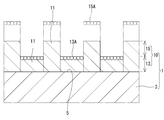
- the biocompatible member 1 of the present embodiment is formed on at least a part of the base material 3 and the surface 5 of the base material 3 and contains a hydroxyapatite crystal (hereinafter, hydroxyapatite). (Also referred to as an apatite layer) 10.
- the biocompatible member 1 is configured such that the base material 3 is directly or indirectly coated with the hydroxyapatite layer 10.
- the indirect coating means a coating having an intermediate layer between the base material 3 and the hydroxyapatite layer 10.
- the intermediate layer can be composed of, for example, CaTIO 3 .
- the surface of the biocompatible member 1 is composed of a hydroxyapatite layer 10.
- the material of the base material 3 is not particularly limited, but is preferably titanium or a titanium alloy from the viewpoint of ensuring high biocompatibility. Titanium is not particularly limited, but pure titanium JIS 1 to 4 types are exemplified.
- the titanium alloy is not particularly limited, but Nb (niobium), Ta (tantal), W (titanium), Zr (zirconium), P (phosphorus), Au (gold), Ca (calcium), Ag (silver), Pt.
- the hydroxyapatite layer 10 is formed by aggregating columnar bodies 11 of hexagonal hydroxyapatite (hydroxyapatite, Ca 10 (PO 4 ) 6 (OH) 2 , HAp).
- the columnar body 11 has, for example, a hexagonal columnar shape. In this case, the end face of the columnar body 11 is the c-plane and the side surface is the a-plane.
- the columnar body 11 has a c-axis in which the growth direction of the columnar crystal is perpendicular to the c-plane.
- Hydroxyapatite is a major constituent of human bones and teeth. Hydroxyapatite has high biocompatibility and is widely used as an implant material for artificial bones, artificial tooth roots, and the like.
- the hydroxyapatite layer 10 includes a base portion 13 having a thickness within a predetermined range, and a plurality of protruding portions 15 in a form in which the columnar body 11 projects from the base portion 13.
- a method of identifying the base portion 13 and the protruding portion 15 in the hydroxyapatite layer 10 will be described with reference to FIG.
- Image analysis is performed on the observed image of the cross section of the hydroxyapatite layer 10 in which the plurality of protruding portions 15 are arranged.
- a line segment L0 having a length of 200 ⁇ m is defined at the boundary line between the base material 3 and the hydroxyapatite layer 10 (the line passing through the center of the intermediate layer if it exists).
- a virtual line segment having a length of 200 ⁇ m parallel to the line segment L0 is moved from the position of the line segment L0 in a direction away from the base material 3, and the length of the region crossing the hydroxyapatite layer 10 in this virtual line segment.
- the position where the total value of the dimensions falls below 160 ⁇ m for the first time is defined as the reference position, and the virtual line segment at the reference position is defined as the line segment L1.
- the region on the base material 3 side with respect to the line segment L1 is designated as the base portion 13
- the region on the side opposite to the base material 3 with respect to the line segment L1 is designated as the protrusion portion 15. ..
- the base portion 13 is composed of, for example, a columnar body 11 having a small height and a root portion (a portion on the base material 3 side) of the columnar body 11 having a large height.
- the protruding portion 15 is composed of, for example, a portion other than the root of the columnar body 11 having a large height.
- the hydroxyapatite layer 10 has a posture in which the height direction intersects the surface 5 of the base material 3, and a plurality of projecting portions 15 project from the base portion 13 by gathering columnar bodies 11 having different heights. It may be.
- the degree of density of the columnar body 11 is not particularly limited, but from the viewpoint of sufficiently increasing the surface area of the hydroxyapatite layer 10 when the surface of the hydroxyapatite layer 10 is observed in a square field of view of 100 ⁇ m ⁇ 100 ⁇ m.
- the number of columnar bodies 11 is preferably 3 or more, more preferably 6 or more, and even more preferably 12 or more.
- the number of columnar bodies 11 in the square field of view of 100 ⁇ m ⁇ 100 ⁇ m is preferably 70 or less, and is preferably 60 or less. It is more preferably less than, and even more preferably 50 or less.
- the number of columnar bodies 11 in the 100 ⁇ m ⁇ 100 ⁇ m square field of view is preferably 3 or more and 70 or less, more preferably 6 or more and 60 or less, and more preferably 12 or more and 50 or less. More preferred.
- the substantially hexagonal end face (c-plane) of the columnar body 11 is counted as a reference, and if more than half of the end face is missing from the field of view, the columnar body 11 is not counted.
- the degree of density of the columnar body 11 is measured by observing the surface of the hydroxyapatite layer 10 at a voltage of 15 kV and a condition of 500 times using a scanning electron microscope (SEM).
- SEM scanning electron microscope
- the thickness of the protruding portion 15 is larger than the thickness of the base portion 13.
- the thickness of the base portion 13 is obtained as the length between the line segment L0 and the line segment L1.
- the thickness of the protruding portion 15 is obtained as an average value obtained by measuring the protruding height from the line segment L1 for the five protruding portions 15 arranged side by side.
- the thickness of the base portion 13 is not particularly limited and may be larger than 0 ⁇ m.
- the thickness range of the base portion 13 is preferably in the range of 0.01 ⁇ m to 100 ⁇ m, more preferably in the range of 0.1 ⁇ m to 90 ⁇ m, and further preferably in the range of 1 ⁇ m to 80 ⁇ m from the viewpoint of the coating property of the base material 3.
- the thickness of the protruding portion 15 is not particularly limited, and may be larger than the upper limit of the thickness of the base portion 13.
- the thickness of the protruding portion 15 is preferably 0.01 ⁇ m or more, more preferably 0.1 ⁇ m or more, still more preferably 1 ⁇ m or more, from the viewpoint of sufficiently increasing the surface area of the hydroxyapatite layer 10.
- the thickness of the protruding portion 15 is usually 200 ⁇ m or less.
- the thickness of the base portion 13 and the thickness of the protruding portion 15 are measured by observing a cross section near the surface of the hydroxyapatite layer 10 at a voltage of 15 kV and a condition of 500 times using a scanning electron microscope (SEM). To.
- SEM scanning electron microscope
- the thickness of the base portion 13 and the thickness of the protruding portion 15 can be controlled by the temperature rise time, reaction time, temperature, etc. when forming hexagonal hydroxyapatite.
- the surface of the hydroxyapatite layer 10 has an uneven structure formed by the base portion 13 and the protruding portion 15. It is preferable that this uneven structure has a substantially rectangular wavy shape in cross-sectional view. According to such a shape, the anchor effect is likely to be exhibited in the bond with the living bone, and the protruding end 15A is less likely to be worn at the time of contact with the hard tissue or the like, and the bone bond property is improved.
- the concave portion of the uneven structure there is a surface exposed portion 13A in which the base portion 13 is exposed on the surface of the hydroxyapatite layer 10.
- the exposed surface portion 13A may include the c-plane of the columnar body 11 having a small height.
- the protruding end 15A of the protruding portion 15 may be composed of the c-plane of the columnar body 11 protruding from the base portion 13.
- the surface exposed portion 13A of the base portion 13 and the protruding end 15A of the protruding portion 15 preferably have an antibacterial effect.
- the surface exposed portion 13A of the base portion 13 and the protruding end 15A of the protruding portion 15 may contain a substance having antibacterial properties such as silver and silver ions.
- a substance having antibacterial properties such as silver and silver ions.
- TOF-SIMS Time-of-Fright Secondary Ion Mass Spectrometry
- the content of the substance having antibacterial properties in the hydroxyapatite layer 10 can be appropriately set according to the substance.
- the substance having antibacterial properties is silver
- the silver content can be 0.05 wt% to 2.5 wt% when the entire hydroxyapatite layer 10 is 100 wt%.
- the content of the substance having antibacterial properties can be measured by ICP (Inductively Coupled Plasma) analysis.
- the biocompatible member 1 may have an antibacterial action not only on the surface exposed portion 13A and the protruding end 15A but also on the side surface of the protruding portion 15.
- the biocompatible member 1 of the present embodiment has excellent bone connectivity.
- the hydroxyapatite layer 10 of the present embodiment is excellent in abrasion resistance and peeling resistance as compared with the sprayed film of hydroxyapatite. This is because the hydroxyapatite layer 10 is formed by aggregating hexagonal hydroxyapatite columnar bodies 11 so that it is not easily worn, and the hydroxyapatite layer 10 is chemically bonded to the base material 3 so that it is peeled off. It is presumed that this is because it is difficult.
- the biocompatible member 1 of the present embodiment can easily maintain the surface structure of the hydroxyapatite layer 10 even when it comes into contact with hard tissue when it is inserted into the living bone. By the way, it is difficult to appropriately set the surface shape of the sprayed film of hydroxyapatite formed by melt-depositing hydroxyapatite powder on a titanium base material.
- the surface of the hydroxyapatite layer 10 of the present embodiment has a concavo-convex structure formed by the base portion 13 and the protruding portion 15, the surface area of the hydroxyapatite layer 10 is increased and the osteobondability is improved.
- the convex portion in the concave-convex structure is worn during insertion into the living bone, as shown in FIG. 2, the convex portion is more convex than before being inserted into the living bone.
- the surface exposed portion 13A of the base portion 13 and the protruding end 15A of the protruding portion 15 have an antibacterial action, a biocompatible member whose antibacterial property is not easily impaired can be obtained. Specifically, as shown in FIG.
- the surface exposed portion 13A located in the concave portion remains, so that the surface exposed portion 13A exhibits an antibacterial action.
- the uneven structure on the surface of the hydroxyapatite layer 10 contributes to both the improvement of the osteobondability and the suppression of wear of the exposed surface portion 13A having an antibacterial action.
- the base material 3 is made of titanium or a titanium alloy, biocompatibility is improved. As described above, according to the biocompatible member 1 of the present embodiment, the effect of preventing infectious diseases due to osteosynthesis and antibacterial properties can be expected.
- the method for manufacturing the biocompatible member 1 is not particularly limited. Here, a preferable example of the method for manufacturing the biocompatible member 1 will be described.
- the method for producing the biocompatible member includes a surface treatment step, a hydrothermal synthesis step, and an antibacterial property imparting step.
- the surface treatment step In the surface treatment step, the surface of the base material is roughened. By roughening the surface of the base material, the adhesion of the hydroxyapatite layer to the base material can be improved. After the surface treatment step, a cleaning treatment step of cleaning the surface of the base material may be further performed.
- the treatment method in the surface treatment step is not particularly limited as long as the surface of the base material can be finally treated so as to have a predetermined surface roughness.
- blasting, etching and the like can be mentioned, and these can be used alone or in combination of two or more. Examples of the blasting treatment include sandblasting treatment and wet blasting treatment. From the viewpoint of simple operation, sandblasting can be mentioned as a preferable example.
- the type and particle size of the abrasive used for the sandblasting treatment are not particularly limited.
- the abrasive for example, alumina, silica sand, Kongo sand, glass, silicon carbide, titanium oxide, zirconia, diamond and the like can be preferably used.
- the type of treatment liquid and treatment conditions are not particularly limited.
- the treatment liquid A having the following composition can be used.
- the preferred treatment procedure is to perform alkaline degreasing, washing with water, etching, washing with water, and drying of the surface of the base material in this order.
- the treatment time is not particularly limited, but is preferably 10 to 30 seconds, more preferably 15 to 25 seconds, and even more preferably 18 to 22 seconds.
- ⁇ Composition of Treatment Solution A> (Note that the composition below is based on weight. The following components may be contained as essential components, and other components may be contained.
- Treatment solution A is an aqueous solution.
- the treatment liquid B having the following composition can be used.
- a preferred treatment procedure is a procedure in which the surface of the base material is degreased, etched, washed with water, pickled, washed with water, and dried in this order.
- the treatment time is not particularly limited, but is preferably 70 to 170 seconds, more preferably 90 to 150 seconds, and further preferably 110 to 130 seconds.
- ⁇ Composition of Treatment Solution B> (Note that the composition below is based on weight. The following components may be contained as essential components, and other components may be contained.
- Treatment solution B is an aqueous solution.
- Hydrogen peroxide 18-22%
- Ammonium dihydrogen difluoride 8-12% Sulfuric acid: less than 5%
- the hydrothermal synthesis step a hydroxyapatite layer is formed on the surface of the base material. At this time, an intermediate layer made of CaTIO 3 may be formed on the surface of the base material.
- the synthetic solution used for hydrothermal synthesis preferably contains calcium ions, hydroxide ions, organic phosphate esters, chelating agents, and water from the viewpoint of producing highly crystalline hexagonal hydroxyapatite.
- the calcium ion source is not particularly limited, but for example, at least one selected from the group consisting of calcium nitrate, calcium hydroxide, calcium carbonate, calcium acetate, calcium halide, calcium oxide, and calcium phosphate is preferably used. Can be done.
- the hydroxide ion source is not particularly limited, but is hydroxideed in, for example, a hydroxide-containing compound such as potassium hydroxide, ammonium hydroxide, calcium hydroxide, or sodium hydroxide, or an aqueous solution such as ammonia or calcium oxide. At least one selected from compounds that generate material ions can be preferably used.
- the organic phosphate ester is not particularly limited, but for example, at least one selected from the group consisting of triethyl phosphate, trimethyl phosphate, tributyl phosphate, and triphenyl phosphate can be preferably used.
- the chelating agent is not particularly limited, but for example, EDTA (ethylenediaminetetraacetic acid) can be preferably used.
- each component is added in the following range.
- the amount of the calcium ion source added is preferably 0.01 mol / kg to 1.0 mol / kg, more preferably 0.05 mol / kg to 0.4 mol / kg, in the case of calcium nitrate as the hydrate. It is more preferably 0.1 mol / kg to 0.3 mol / kg.
- the amount of the chelating agent added is, for example, EDTA, preferably 0.01 mol / kg to 1.0 mol / kg, more preferably 0.05 mol / kg to 0.4 mol / kg, and even more preferably 0. .1 mol / kg to 0.3 mol / kg.
- the amount of the organic phosphoric acid ester added is, for example, triethyl phosphate, preferably 0.01 mol / kg to 1.0 mol / kg, more preferably 0.05 mol / kg to 0.4 mol / kg. More preferably, it is 0.1 mol / kg to 0.3 mol / kg.
- the amount of the hydroxide ion source added is, for example, potassium hydroxide, preferably 0.1 mol / kg to 10 mol / kg, more preferably 0.5 mol / kg to 4 mol / kg, and even more preferably. It is 1 mol / kg to 3 mol / kg.
- a preliminary solution (1) containing hydroxide ions and a preliminary solution (2) containing calcium ions, a chelating agent, and an organic phosphate ester may be prepared in advance, and both may be mixed to prepare a synthetic solution. Moreover, you may prepare a synthetic solution which added all the components from the beginning. From the viewpoint of the homogeneity of the synthetic solution, it is preferable to prepare a preliminary solution (1) and a preliminary solution (2) in advance and mix them to prepare a synthetic solution.
- the heating temperature in the hydrothermal synthesis step is not particularly limited, but is preferably 160 to 250 ° C, more preferably 170 to 230 ° C, and even more preferably 180 to 220 ° C.
- the rate of temperature rise is not particularly limited, but is preferably 5 ° C./h to 20 ° C./h, more preferably 8 ° C./h to 17 ° C./h, from the viewpoint of forming an uneven structure on the surface of the hydroxyapatite layer. It is more preferably 10 ° C./h to 15 ° C./h.
- the reaction time is not particularly limited, but is preferably 8 hours to 120 hours, more preferably 30 hours to 90 hours, and further preferably 50 hours to 50 hours from the viewpoint of forming an uneven structure on the surface of the hydroxyapatite layer. 70 hours.
- antibacterial property imparting step antibacterial property is imparted to the surface exposed portion of the base portion and the protruding end of the protruding portion.
- the antibacterial property imparting step can be performed, for example, by immersing a base material having a hydroxyapatite layer formed in a solution containing a substance having antibacterial properties for a predetermined time.
- the substance having antibacterial activity is not particularly limited, and examples thereof include metals having antibacterial activity, antibiotics, and the like. Among these, a metal having an antibacterial action is preferable.
- the metal having an antibacterial activity is preferably one of silver, gold, platinum, palladium, iridium, zinc, copper, tin, antimony, and bismuth, or a mixture of these metals, and silver, gold, platinum, and palladium. Is more preferable, and silver is even more preferable.
- the antibacterial action of these metals is exerted by the release of metal atoms, ions, molecules or clusters and contact at a concentration sufficient to inhibit the growth of surrounding microorganisms.
- the solution containing the substance having antibacterial properties is preferably a silver salt solution having low solubility of hydroxyapatite crystals, and more preferably an aqueous silver nitrate solution.
- the concentration of the silver nitrate aqueous solution is preferably 1 ⁇ 10 -6 mol / L to 1 mol / L, more preferably 1 ⁇ 10 -5 mol / L to 1 ⁇ 10 -1 mol / L, and 1 ⁇ . It is more preferably 10 -4 mol / L to 1 ⁇ 10 -2 mol / L.
- the soaking time is preferably 6 hours or more, more preferably 12 hours or more, and further preferably 24 hours or more.
- the immersion time is usually 168 hours or less.
- the base material 3 a 15 mm square base material made of a Ti alloy (Ti-6Al-4V) was used.
- the base material 3 was subjected to surface treatment, cleaning treatment, hydrothermal synthesis, and antibacterial application in this order to prepare a sample. Details of surface treatment, cleaning treatment, hydrothermal synthesis, and antibacterial application are as follows.
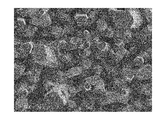
- FIG. 4 shows an observation image of the SEM by observing the surface of the sample.
- FIG. 5 shows an observation image of an SEM in which a cross section near the surface of the sample is observed.
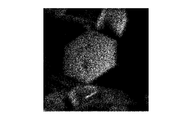
- FIG. 6 shows an observation image of TOF-SIMS by observing the surface of a sample.
Landscapes
- Health & Medical Sciences (AREA)
- Chemical & Material Sciences (AREA)
- Life Sciences & Earth Sciences (AREA)
- Transplantation (AREA)
- Medicinal Chemistry (AREA)
- Oral & Maxillofacial Surgery (AREA)
- Animal Behavior & Ethology (AREA)
- General Health & Medical Sciences (AREA)
- Public Health (AREA)
- Veterinary Medicine (AREA)
- Dermatology (AREA)
- Epidemiology (AREA)
- Inorganic Chemistry (AREA)
- Engineering & Computer Science (AREA)
- Biomedical Technology (AREA)
- Molecular Biology (AREA)
- Composite Materials (AREA)
- Materials Engineering (AREA)
- Orthopedic Medicine & Surgery (AREA)
- Cardiology (AREA)
- Heart & Thoracic Surgery (AREA)
- Vascular Medicine (AREA)
- Materials For Medical Uses (AREA)
- Prostheses (AREA)
Abstract
骨結合性に優れた生体適合部材を提供する。 生体適合部材(1)は、基材(3)と、基材(3)の表面(5)の少なくとも一部に形成され、ハイドロキシアパタイト結晶を含有する層(10)と、を備えた生体適合部材(1)である。層(10)は、六方晶のハイドロキシアパタイトの柱状体(11)が集合して形成されている。層(10)は、所定範囲の厚さを有するベース部(13)と、ベース部(13)から柱状体(11)が突出した形態の複数の突出部(15)を備えている。突出部(15)の厚さは、ベース部(13)の厚さよりも大きい。層(10)の表面はベース部(13)と突出部(15)とによって、凹凸構造が形成されている。
Description
本開示は生体適合部材に関する。
生体に埋入可能な生体適合部材の開発が行われている。
例えば、特許文献1には、次の生体適合部材が開示されている。すなわち、チタン基材の表面に、溶射によりハイドロキシアパタイトをコーティングした生体適合部材が開示されている。
また、特許文献2には、次の生体適合部材が開示されている。すなわち、チタン基材の表面に、溶射により銀を含んだハイドロキシアパタイトをコーティングした生体適合部材が開示されている。この生体適合部材では、ハイドロキシアパタイトの溶射膜と生体骨とが化学的に結合する。また、この生体適合部材では、ハイドロキシアパタイトの溶射膜から溶出する銀イオンにより抗菌作用が奏される。
特許文献3には、次の生体適合部材が開示されている。すなわち、チタン基材の表面に、水熱合成を用いてCaTiO3からなる中間層を形成し、さらにその上にハイドロキシアパタイト結晶を析出した生体適合部材が開示されている。この生体適合部材では、CaTiO3からなる中間層により、チタン基材とハイドロキシアパタイト層は強固に密着している。この生体適合部材は、ハイドロキシアパタイト層によって生体骨と化学的に結合する。
例えば、特許文献1には、次の生体適合部材が開示されている。すなわち、チタン基材の表面に、溶射によりハイドロキシアパタイトをコーティングした生体適合部材が開示されている。
また、特許文献2には、次の生体適合部材が開示されている。すなわち、チタン基材の表面に、溶射により銀を含んだハイドロキシアパタイトをコーティングした生体適合部材が開示されている。この生体適合部材では、ハイドロキシアパタイトの溶射膜と生体骨とが化学的に結合する。また、この生体適合部材では、ハイドロキシアパタイトの溶射膜から溶出する銀イオンにより抗菌作用が奏される。
特許文献3には、次の生体適合部材が開示されている。すなわち、チタン基材の表面に、水熱合成を用いてCaTiO3からなる中間層を形成し、さらにその上にハイドロキシアパタイト結晶を析出した生体適合部材が開示されている。この生体適合部材では、CaTiO3からなる中間層により、チタン基材とハイドロキシアパタイト層は強固に密着している。この生体適合部材は、ハイドロキシアパタイト層によって生体骨と化学的に結合する。
ところで、ハイドロキシアパタイトを含む層の表面積を大きくして、ハイドロキシアパタイトを含む層と生体骨等との結合性を向上するための技術が求められている。
特許文献1及び特許文献2のハイドロキシアパタイトの溶射膜の形成では、数千℃以上の高温でハイドロキシアパタイト粉末をチタン基材上に溶融堆積させている。このようにして得られた溶射膜は表面構造を適宜設定することが困難であり、表面積を大きくして生体骨等との結合性を向上することが難しい。さらに、ハイドロキシアパタイトの溶射膜は、生体骨内等への挿入時に硬組織と接触して摩耗や剥離を生じる虞があり、生体骨等との結合性が悪化することが懸念される。
特許文献3では、水熱合成を用いているため、ハイドロキシアパタイトの溶射膜に比して緻密なハイドロキシアパタイト層が形成され得る。このようなハイドロキシアパタイト層は、ハイドロキシアパタイトの溶射膜より耐摩耗性や耐剥離性に優れるが、特許文献3ではハイドロキシアパタイト層の表面積を大きくすることについては検討されていない。
本開示は、上記実情に鑑みてなされたものであり、骨結合性に優れた生体適合部材を提供することを目的とする。本開示は、以下の形態として実現することが可能である。
特許文献1及び特許文献2のハイドロキシアパタイトの溶射膜の形成では、数千℃以上の高温でハイドロキシアパタイト粉末をチタン基材上に溶融堆積させている。このようにして得られた溶射膜は表面構造を適宜設定することが困難であり、表面積を大きくして生体骨等との結合性を向上することが難しい。さらに、ハイドロキシアパタイトの溶射膜は、生体骨内等への挿入時に硬組織と接触して摩耗や剥離を生じる虞があり、生体骨等との結合性が悪化することが懸念される。
特許文献3では、水熱合成を用いているため、ハイドロキシアパタイトの溶射膜に比して緻密なハイドロキシアパタイト層が形成され得る。このようなハイドロキシアパタイト層は、ハイドロキシアパタイトの溶射膜より耐摩耗性や耐剥離性に優れるが、特許文献3ではハイドロキシアパタイト層の表面積を大きくすることについては検討されていない。
本開示は、上記実情に鑑みてなされたものであり、骨結合性に優れた生体適合部材を提供することを目的とする。本開示は、以下の形態として実現することが可能である。
〔1〕基材と、
前記基材の表面の少なくとも一部に形成され、ハイドロキシアパタイト結晶を含有する層と、を備えた生体適合部材であって、
前記層は、六方晶のハイドロキシアパタイトの柱状体が集合して形成されており、
前記層は、所定範囲の厚さを有するベース部と、前記ベース部から前記柱状体が突出した形態の複数の突出部を備えており、
前記突出部の厚さは、前記ベース部の厚さより大きく、
前記層の表面は、前記ベース部と前記突出部とによって、凹凸構造が形成されている、生体適合部材。
前記基材の表面の少なくとも一部に形成され、ハイドロキシアパタイト結晶を含有する層と、を備えた生体適合部材であって、
前記層は、六方晶のハイドロキシアパタイトの柱状体が集合して形成されており、
前記層は、所定範囲の厚さを有するベース部と、前記ベース部から前記柱状体が突出した形態の複数の突出部を備えており、
前記突出部の厚さは、前記ベース部の厚さより大きく、
前記層の表面は、前記ベース部と前記突出部とによって、凹凸構造が形成されている、生体適合部材。
〔2〕前記ベース部の表面露出部、及び前記突出部の突出端は、抗菌作用を有する、〔1〕に記載の生体適合部材。
〔3〕前記基材が、チタン又はチタン合金からなる、〔1〕又〔2〕に記載の生体適合部材。
本開示の生体適合部材は、骨結合性に優れる。
ベース部の表面露出部及び突出部の突出端が抗菌作用を有する場合には、抗菌性が損なわれにくい生体適合部材が得られる。
基材がチタン又はチタン合金からなる場合には、生体適合性が高くなる。
ベース部の表面露出部及び突出部の突出端が抗菌作用を有する場合には、抗菌性が損なわれにくい生体適合部材が得られる。
基材がチタン又はチタン合金からなる場合には、生体適合性が高くなる。
以下、本開示を詳しく説明する。なお、本明細書において、数値範囲について「~」を用いた記載では、特に断りがない限り、下限値及び上限値を含むものとする。例えば、「10~20」という記載では、下限値である「10」、上限値である「20」のいずれも含むものとする。すなわち、「10~20」は、「10以上20以下」と同じ意味である。
1.生体適合部材
本実施形態の生体適合部材1は、図1に示すように、基材3と、基材3の表面5の少なくとも一部に形成され、ハイドロキシアパタイト結晶を含有する層(以下、ハイドロキシアパタイト層とも称する)10と、を備える。生体適合部材1は、基材3がハイドロキシアパタイト層10によって直接または間接的に被覆された構成とされる。ここで、間接的な被覆とは、基材3とハイドロキシアパタイト層10の間に中間層を備える被覆を意味する。中間層は、例えば、CaTiO3によって構成することができる。この生体適合部材1の表面は、ハイドロキシアパタイト層10によって構成される。
本実施形態の生体適合部材1は、図1に示すように、基材3と、基材3の表面5の少なくとも一部に形成され、ハイドロキシアパタイト結晶を含有する層(以下、ハイドロキシアパタイト層とも称する)10と、を備える。生体適合部材1は、基材3がハイドロキシアパタイト層10によって直接または間接的に被覆された構成とされる。ここで、間接的な被覆とは、基材3とハイドロキシアパタイト層10の間に中間層を備える被覆を意味する。中間層は、例えば、CaTiO3によって構成することができる。この生体適合部材1の表面は、ハイドロキシアパタイト層10によって構成される。
(1)基材
基材3の材質は、特に限定されないが、高い生体適合性を確保するという観点から、チタンまたはチタン合金であることが好ましい。
チタンは、特に限定されないが、純チタンJIS 1~4種が例示される。
チタン合金は、特に限定されないが、Nb(ニオブ)、Ta(タンタル)、W(タングステン)、Zr(ジルコニウム)、P(リン)、Au(金)、Ca(カルシウム)、Ag(銀)、Pt(白金)、Al(アルミニウム)、V(バナジウム)、Si(ケイ素)、B(ホウ素)、N(窒素)、C(炭素)、Pd(パラジウム)、Y(イットリウム)、Hf(ハフニウム)、Ir(イリジウム)、Mo(モリブデン)、Fe(鉄)、Mg(マグネシウム)、Na(ナトリウム)、及びK(カリウム)からなる群より選ばれた1種以上の元素と、残部がTi(チタン)及び不可避不純物であるチタン合金が例示される。
基材3の大きさ、厚さ、形状等は、生体適合部材の用途等により適宜選定される。
基材3の材質は、特に限定されないが、高い生体適合性を確保するという観点から、チタンまたはチタン合金であることが好ましい。
チタンは、特に限定されないが、純チタンJIS 1~4種が例示される。
チタン合金は、特に限定されないが、Nb(ニオブ)、Ta(タンタル)、W(タングステン)、Zr(ジルコニウム)、P(リン)、Au(金)、Ca(カルシウム)、Ag(銀)、Pt(白金)、Al(アルミニウム)、V(バナジウム)、Si(ケイ素)、B(ホウ素)、N(窒素)、C(炭素)、Pd(パラジウム)、Y(イットリウム)、Hf(ハフニウム)、Ir(イリジウム)、Mo(モリブデン)、Fe(鉄)、Mg(マグネシウム)、Na(ナトリウム)、及びK(カリウム)からなる群より選ばれた1種以上の元素と、残部がTi(チタン)及び不可避不純物であるチタン合金が例示される。
基材3の大きさ、厚さ、形状等は、生体適合部材の用途等により適宜選定される。
(2)ハイドロキシアパタイト層
ハイドロキシアパタイト層10は、六方晶のハイドロキシアパタイト(ヒドロキシアパタイト、Ca10(PO4)6(OH)2、HAp)の柱状体11が集合して形成されている。ハイドロキシアパタイト層10が柱状体11の集合体として存在する場合には、生体内ですぐに溶解されず安定である。柱状体11は、例えば六角柱状をなす。この場合、柱状体11の端面がc面であり、側面がa面である。柱状体11は、柱状結晶の成長方向がc面に垂直なc軸とされる。ハイドロキシアパタイトは、人間の骨、歯の主要構成物質である。ハイドロキシアパタイトは、生体親和性が高く、人工骨、人工歯根等のインプラント素材として幅広く用いられている。
ハイドロキシアパタイト層10は、六方晶のハイドロキシアパタイト(ヒドロキシアパタイト、Ca10(PO4)6(OH)2、HAp)の柱状体11が集合して形成されている。ハイドロキシアパタイト層10が柱状体11の集合体として存在する場合には、生体内ですぐに溶解されず安定である。柱状体11は、例えば六角柱状をなす。この場合、柱状体11の端面がc面であり、側面がa面である。柱状体11は、柱状結晶の成長方向がc面に垂直なc軸とされる。ハイドロキシアパタイトは、人間の骨、歯の主要構成物質である。ハイドロキシアパタイトは、生体親和性が高く、人工骨、人工歯根等のインプラント素材として幅広く用いられている。
ハイドロキシアパタイト層10は、所定範囲の厚さを有するベース部13と、ベース部13から柱状体11が突出した形態の複数の突出部15を備えている。図3を参照して、ハイドロキシアパタイト層10においてベース部13と突出部15を特定する方法について説明する。複数の突出部15が並んだハイドロキシアパタイト層10の断面の観察像について画像解析する。観察像において、基材3とハイドロキシアパタイト層10との境界線(中間層が存在する場合にはその中央を通る線)において、長さ200μmの線分L0を規定する。線分L0と平行な長さ200μmの仮想的な線分を線分L0の位置から基材3から離れる方向に移動させていき、この仮想的な線分においてハイドロキシアパタイト層10を横切る領域の長さの合算値が160μmをはじめて下回る位置を基準位置とし、基準位置における仮想的な線分を線分L1と規定する。この場合に、ハイドロキシアパタイト層10において、線分L1に対して基材3側の領域をベース部13とし、線分L1に対して基材3とは反対側の領域を突出部15として特定する。
ベース部13は、例えば、高さが小さい柱状体11や、高さが大きい柱状体11の根元部分(基材3側の部分)によって構成される。突出部15は、例えば、高さが大きい柱状体11の根元以外の部分によって構成される。ハイドロキシアパタイト層10は、高さ方向を基材3の表面5と交わる方向とした姿勢で、高さの異なる柱状体11が集合することにより、複数の突出部15がベース部13から突出した形態となっていてもよい。
柱状体11の密集度合は特に限定するものではないが、ハイドロキシアパタイト層10の表面を100μm×100μmの正方形の視野にて観察した場合に、ハイドロキシアパタイト層10の表面積を十分に大きくするという観点から、柱状体11の数が3以上であることが好ましく、6以上であることがより好ましく、12以上であることがさらに好ましい。また、摩耗後のベース部の表面露出部の抗菌性及び生体骨との結合性という観点から、上記100μm×100μmの正方形の視野における柱状体11の数は、70以下であることが好ましく、60以下であることがより好ましく、50以下であることがさらに好ましい。これらの観点から、上記100μm×100μmの正方形の視野における柱状体11の数は、3以上70以下であることが好ましく、6以上60以下であることがより好ましく、12以上50以下であることがさらに好ましい。なお、柱状体11を数えるにあたって、柱状体11の略六角形状の端面(c面)を基準として数え、端面の半分以上が視野から欠ける場合はその柱状体11については数えない。
柱状体11の密集度合は、走査電子顕微鏡(Scanning Electron Microscope、SEM)を用いて、電圧15kV、500倍の条件で、ハイドロキシアパタイト層10の表面を観察して測定される。
なお、柱状体11の密集度合は、六方晶のハイドロキシアパタイトを形成する際の昇温時間、反応時間、温度等によりコントロールすることができる。
ベース部13は、例えば、高さが小さい柱状体11や、高さが大きい柱状体11の根元部分(基材3側の部分)によって構成される。突出部15は、例えば、高さが大きい柱状体11の根元以外の部分によって構成される。ハイドロキシアパタイト層10は、高さ方向を基材3の表面5と交わる方向とした姿勢で、高さの異なる柱状体11が集合することにより、複数の突出部15がベース部13から突出した形態となっていてもよい。
柱状体11の密集度合は特に限定するものではないが、ハイドロキシアパタイト層10の表面を100μm×100μmの正方形の視野にて観察した場合に、ハイドロキシアパタイト層10の表面積を十分に大きくするという観点から、柱状体11の数が3以上であることが好ましく、6以上であることがより好ましく、12以上であることがさらに好ましい。また、摩耗後のベース部の表面露出部の抗菌性及び生体骨との結合性という観点から、上記100μm×100μmの正方形の視野における柱状体11の数は、70以下であることが好ましく、60以下であることがより好ましく、50以下であることがさらに好ましい。これらの観点から、上記100μm×100μmの正方形の視野における柱状体11の数は、3以上70以下であることが好ましく、6以上60以下であることがより好ましく、12以上50以下であることがさらに好ましい。なお、柱状体11を数えるにあたって、柱状体11の略六角形状の端面(c面)を基準として数え、端面の半分以上が視野から欠ける場合はその柱状体11については数えない。
柱状体11の密集度合は、走査電子顕微鏡(Scanning Electron Microscope、SEM)を用いて、電圧15kV、500倍の条件で、ハイドロキシアパタイト層10の表面を観察して測定される。
なお、柱状体11の密集度合は、六方晶のハイドロキシアパタイトを形成する際の昇温時間、反応時間、温度等によりコントロールすることができる。
突出部15の厚さは、ベース部13の厚さよりも大きい。なお、ベース部13の厚さは、線分L0と線分L1との間の長さとして求める。突出部15の厚さは、並んで配置される5つの突出部15について線分L1からの突出高さを測定し、その平均値として求める。
ベース部13の厚さは、特に限定されず0μmより大きければよい。ベース部13の厚さの範囲は、基材3の被覆性の観点から、0.01μm~100μmの範囲が好ましく、0.1μm~90μmの範囲がより好ましく、1μm~80μmの範囲がさらに好ましい。
突出部15の厚さは、特に限定されず、ベース部13の厚さの上限値より大きければよい。突出部15の厚さは、ハイドロキシアパタイト層10の表面積を十分に大きくするという観点から、0.01μm以上が好ましく、0.1μm以上がより好ましく、1μm以上がさらに好ましい。なお、突出部15の厚さは、通常200μm以下である。
ベース部13の厚さ、及び突出部15の厚さは、走査電子顕微鏡(SEM)を用いて、電圧15kV、500倍の条件で、ハイドロキシアパタイト層10の表面近傍の断面を観察して測定される。
なお、ベース部13の厚さ、及び突出部15の厚さは、六方晶のハイドロキシアパタイトを形成する際の昇温時間、反応時間、温度等によりコントロールすることができる。
ベース部13の厚さは、特に限定されず0μmより大きければよい。ベース部13の厚さの範囲は、基材3の被覆性の観点から、0.01μm~100μmの範囲が好ましく、0.1μm~90μmの範囲がより好ましく、1μm~80μmの範囲がさらに好ましい。
突出部15の厚さは、特に限定されず、ベース部13の厚さの上限値より大きければよい。突出部15の厚さは、ハイドロキシアパタイト層10の表面積を十分に大きくするという観点から、0.01μm以上が好ましく、0.1μm以上がより好ましく、1μm以上がさらに好ましい。なお、突出部15の厚さは、通常200μm以下である。
ベース部13の厚さ、及び突出部15の厚さは、走査電子顕微鏡(SEM)を用いて、電圧15kV、500倍の条件で、ハイドロキシアパタイト層10の表面近傍の断面を観察して測定される。
なお、ベース部13の厚さ、及び突出部15の厚さは、六方晶のハイドロキシアパタイトを形成する際の昇温時間、反応時間、温度等によりコントロールすることができる。
ハイドロキシアパタイト層10の表面は、ベース部13と突出部15とによって、凹凸構造が形成されている。この凹凸構造は、断面視にて略矩形波状をなすことが好ましい。このような形状によれば、生体骨との結合にアンカー効果が発揮されやすく、また、硬組織等との接触時に突出端15Aが摩耗しにくく、骨結合性が良好となる。凹凸構造の凹部内には、ベース部13がハイドロキシアパタイト層10の表面に露出した表面露出部13Aが存在する。表面露出部13Aには、高さが小さい柱状体11のc面が含まれ得る。また、突出部15の突出端15Aは、ベース部13から突出する柱状体11のc面で構成され得る。
ベース部13の表面露出部13A、及び突出部15の突出端15Aは、抗菌作用を有することが好ましい。具体的には、ベース部13の表面露出部13A、及び突出部15の突出端15Aは、銀や銀イオン等の抗菌性を有する物質を含んでいてもよい。この場合に、例えば、TOF-SIMS(Time-of-Flight Secondary Ion Mass Spectrometry)により測定すると、表面露出部13A及び突出端15Aに銀や銀イオン等の抗菌性を有する物質の存在が確認される。図1及び図2においては、抗菌性を有する物質を模式的に丸で描いている。ハイドロキシアパタイト層10における抗菌性を有する物質の含有量は、当該物質に応じて適宜設定できる。抗菌性を有する物質が銀の場合、銀の含有量は、ハイドロキシアパタイト層10全体を100wt%とした場合に0.05wt%~2.5wt%とすることができる。抗菌性を有する物質の含有量は、ICP(Inductively Coupled Plasma)分析により測定することができる。
なお、生体適合部材1は、表面露出部13A及び突出端15Aのみならず、突出部15の側面等も抗菌作用を有していてもよい。
なお、生体適合部材1は、表面露出部13A及び突出端15Aのみならず、突出部15の側面等も抗菌作用を有していてもよい。
2.生体適合部材の作用及び効果
本実施形態の生体適合部材1は、骨結合性に優れる。具体的には、本実施形態のハイドロキシアパタイト層10は、ハイドロキシアパタイトの溶射膜に比して、耐摩耗性及び耐剥離性に優れる。これは、ハイドロキシアパタイト層10が六方晶のハイドロキシアパタイトの柱状体11が集合して形成されるから摩耗しにくく、また、ハイドロキシアパタイト層10が基材3と化学的に結合しているから剥離しにくいためであると推測される。このため、本実施形態の生体適合部材1は、生体骨内への挿入時に硬組織と接触した場合であっても、ハイドロキシアパタイト層10の表面構造が維持されやすい。ところで、ハイドロキシアパタイト粉末をチタン基材上に溶融堆積させて形成するハイドロキシアパタイトの溶射膜は、その表面形状を適宜設定することが困難である。一方、本実施形態のハイドロキシアパタイト層10の表面はベース部13と突出部15とによって凹凸構造が形成されているから、ハイドロキシアパタイト層10の表面積が大きくなり、骨結合性が向上する。さらに、本実施形態のハイドロキシアパタイト層10は、生体骨内への挿入時に凹凸構造における凸部が一部摩耗したとしても、図2に示すように、生体骨内への挿入前より凸部の高さが小さくなった凹凸構造が維持されることにより、骨結合性を向上する効果が期待できる。
また、本実施形態において、ベース部13の表面露出部13A及び突出部15の突出端15Aが抗菌作用を有する場合には、抗菌性が損なわれにくい生体適合部材が得られる。具体的には、図2に示すように、凹凸構造における凸部が一部摩耗したとしても、凹部内に位置する表面露出部13Aが残存することにより、表面露出部13Aにおいて抗菌作用が発揮される。つまり、本実施形態では、ハイドロキシアパタイト層10の表面の凹凸構造が、骨結合性の向上と、抗菌作用を有する表面露出部13Aの摩耗抑制との双方に寄与している。
また、本実施形態において、基材3がチタン又はチタン合金からなる場合には、生体適合性が高くなる。
以上のように、本実施形態の生体適合部材1によれば、骨結合性と抗菌性による感染症予防の効果が期待できる。
本実施形態の生体適合部材1は、骨結合性に優れる。具体的には、本実施形態のハイドロキシアパタイト層10は、ハイドロキシアパタイトの溶射膜に比して、耐摩耗性及び耐剥離性に優れる。これは、ハイドロキシアパタイト層10が六方晶のハイドロキシアパタイトの柱状体11が集合して形成されるから摩耗しにくく、また、ハイドロキシアパタイト層10が基材3と化学的に結合しているから剥離しにくいためであると推測される。このため、本実施形態の生体適合部材1は、生体骨内への挿入時に硬組織と接触した場合であっても、ハイドロキシアパタイト層10の表面構造が維持されやすい。ところで、ハイドロキシアパタイト粉末をチタン基材上に溶融堆積させて形成するハイドロキシアパタイトの溶射膜は、その表面形状を適宜設定することが困難である。一方、本実施形態のハイドロキシアパタイト層10の表面はベース部13と突出部15とによって凹凸構造が形成されているから、ハイドロキシアパタイト層10の表面積が大きくなり、骨結合性が向上する。さらに、本実施形態のハイドロキシアパタイト層10は、生体骨内への挿入時に凹凸構造における凸部が一部摩耗したとしても、図2に示すように、生体骨内への挿入前より凸部の高さが小さくなった凹凸構造が維持されることにより、骨結合性を向上する効果が期待できる。
また、本実施形態において、ベース部13の表面露出部13A及び突出部15の突出端15Aが抗菌作用を有する場合には、抗菌性が損なわれにくい生体適合部材が得られる。具体的には、図2に示すように、凹凸構造における凸部が一部摩耗したとしても、凹部内に位置する表面露出部13Aが残存することにより、表面露出部13Aにおいて抗菌作用が発揮される。つまり、本実施形態では、ハイドロキシアパタイト層10の表面の凹凸構造が、骨結合性の向上と、抗菌作用を有する表面露出部13Aの摩耗抑制との双方に寄与している。
また、本実施形態において、基材3がチタン又はチタン合金からなる場合には、生体適合性が高くなる。
以上のように、本実施形態の生体適合部材1によれば、骨結合性と抗菌性による感染症予防の効果が期待できる。
3.生体適合部材の製造方法
生体適合部材1の製造方法は、特に限定されない。ここでは、生体適合部材1の製造方法の好適な一例を説明する。この生体適合部材の製造方法は、表面処理工程と、水熱合成工程と、抗菌性付与工程と、を備える。
生体適合部材1の製造方法は、特に限定されない。ここでは、生体適合部材1の製造方法の好適な一例を説明する。この生体適合部材の製造方法は、表面処理工程と、水熱合成工程と、抗菌性付与工程と、を備える。
(1)表面処理工程
表面処理工程では、基材の表面を粗面化する。基材の表面を粗面化することにより、基材に対するハイドロキシアパタイト層の密着性を高くすることができる。表面処理工程の後、基材の表面を洗浄する洗浄処理工程を更に行ってもよい。
表面処理工程における処理方法は、最終的に基材の表面が所定の表面粗さとなるように処理することができるのであれば、特に限定されるものではない。例えば、ブラスト処理、エッチング等が挙げられ、これらを単独または2つ以上組み合わせることもできる。
ブラスト処理としては、例えば、サンドブラスト処理、ウエットブラスト処理等が挙げられる。操作が簡便であるという観点からサンドブラスト処理を好適な一例として挙げることができる。サンドブラスト処理に用いる研磨材の種類や粒径は、特に制限されない。
研磨材としては、例えば、アルミナ、硅砂、金剛砂、ガラス、炭化ケイ素、酸化チタン、ジルコニア、ダイヤモンド等を好適に使用できる。
表面処理工程では、基材の表面を粗面化する。基材の表面を粗面化することにより、基材に対するハイドロキシアパタイト層の密着性を高くすることができる。表面処理工程の後、基材の表面を洗浄する洗浄処理工程を更に行ってもよい。
表面処理工程における処理方法は、最終的に基材の表面が所定の表面粗さとなるように処理することができるのであれば、特に限定されるものではない。例えば、ブラスト処理、エッチング等が挙げられ、これらを単独または2つ以上組み合わせることもできる。
ブラスト処理としては、例えば、サンドブラスト処理、ウエットブラスト処理等が挙げられる。操作が簡便であるという観点からサンドブラスト処理を好適な一例として挙げることができる。サンドブラスト処理に用いる研磨材の種類や粒径は、特に制限されない。
研磨材としては、例えば、アルミナ、硅砂、金剛砂、ガラス、炭化ケイ素、酸化チタン、ジルコニア、ダイヤモンド等を好適に使用できる。
エッチングにおいて、処理液の種類、処理条件は特に限定されない。
ここで、エッチングの好適な例を説明する。エッチングの第1態様では、下記組成の処理液Aを用いることができる。基材の表面のアルカリ脱脂、水洗、エッチング、水洗、乾燥を順に行う手順が好適な処理手順である。なお、処理液Aの場合には、処理時間は特に限定されないが、好ましくは10~30秒であり、より好ましくは15~25秒であり、更に好ましくは18~22秒である。
<処理液Aの組成>(なお、下記組成は、重量基準である。下記の成分を必須の成分と含んでいればよく、他の成分を含んでいても構わない。処理液Aは、水溶液である。)
硝酸:55~60%
フッ化水素:13.0~14.0%
一水素二フッ化アンモニウム:1.0~1.4%
エッチングの第2態様では、下記組成の処理液Bを用いることができる。基材の表面の脱脂、エッチング、水洗、酸洗、水洗、乾燥を順に行う手順が好適な処理手順である。なお、処理液Bの場合には、処理時間は特に限定されないが、好ましくは70~170秒であり、より好ましくは90~150秒であり、更に好ましくは110~130秒である。
<処理液Bの組成>(なお、下記組成は、重量基準である。下記の成分を必須の成分と含んでいればよく、他の成分を含んでいても構わない。処理液Bは、水溶液である。)
過酸化水素:18~22%
一水素二フッ化アンモニウム:8~12%
硫酸:5%未満
ここで、エッチングの好適な例を説明する。エッチングの第1態様では、下記組成の処理液Aを用いることができる。基材の表面のアルカリ脱脂、水洗、エッチング、水洗、乾燥を順に行う手順が好適な処理手順である。なお、処理液Aの場合には、処理時間は特に限定されないが、好ましくは10~30秒であり、より好ましくは15~25秒であり、更に好ましくは18~22秒である。
<処理液Aの組成>(なお、下記組成は、重量基準である。下記の成分を必須の成分と含んでいればよく、他の成分を含んでいても構わない。処理液Aは、水溶液である。)
硝酸:55~60%
フッ化水素:13.0~14.0%
一水素二フッ化アンモニウム:1.0~1.4%
エッチングの第2態様では、下記組成の処理液Bを用いることができる。基材の表面の脱脂、エッチング、水洗、酸洗、水洗、乾燥を順に行う手順が好適な処理手順である。なお、処理液Bの場合には、処理時間は特に限定されないが、好ましくは70~170秒であり、より好ましくは90~150秒であり、更に好ましくは110~130秒である。
<処理液Bの組成>(なお、下記組成は、重量基準である。下記の成分を必須の成分と含んでいればよく、他の成分を含んでいても構わない。処理液Bは、水溶液である。)
過酸化水素:18~22%
一水素二フッ化アンモニウム:8~12%
硫酸:5%未満
(2)水熱合成工程
水熱合成工程では、基材の表面にハイドロキシアパタイト層を形成する。この際、基材の表面上にCaTiO3からなる中間層を形成してもよい。
水熱合成に用いる合成溶液は、高結晶性の六方晶ハイドロキシアパタイトを生成するという観点から、カルシウムイオン、水酸化物イオン、有機リン酸エステル、キレート剤、水を含有していることが好ましい。
カルシウムイオン源としては、特には限定されないが、例えば、硝酸カルシウム、水酸化カルシウム、炭酸カルシウム、酢酸カルシウム、ハロゲン化カルシウム、酸化カルシウム、及びリン酸カルシウムからなる群より選ばれる少なくとも1種を好適に用いることができる。
水酸化物イオン源としては、特には限定されないが、例えば、水酸化カリウム、水酸化アンモニウム、水酸化カルシウム、水酸化ナトリウム等の水酸化物含有化合物、アンモニア、酸化カルシウム等の水溶液中で水酸化物イオンを生成させる化合物から選ばれる少なくとも1種を好適に用いることができる。
有機リン酸エステルとしては、特には限定されないが、例えば、リン酸トリエチル、リン酸トリメチル、リン酸トリブチル、及びリン酸トリフェニルからなる群より選ばれる少なくとも1種を好適に用いることができる。
キレート剤は、特には限定されないが、例えば、EDTA(エチレンジアミン四酢酸)を好適に用いることができる。
水熱合成工程では、基材の表面にハイドロキシアパタイト層を形成する。この際、基材の表面上にCaTiO3からなる中間層を形成してもよい。
水熱合成に用いる合成溶液は、高結晶性の六方晶ハイドロキシアパタイトを生成するという観点から、カルシウムイオン、水酸化物イオン、有機リン酸エステル、キレート剤、水を含有していることが好ましい。
カルシウムイオン源としては、特には限定されないが、例えば、硝酸カルシウム、水酸化カルシウム、炭酸カルシウム、酢酸カルシウム、ハロゲン化カルシウム、酸化カルシウム、及びリン酸カルシウムからなる群より選ばれる少なくとも1種を好適に用いることができる。
水酸化物イオン源としては、特には限定されないが、例えば、水酸化カリウム、水酸化アンモニウム、水酸化カルシウム、水酸化ナトリウム等の水酸化物含有化合物、アンモニア、酸化カルシウム等の水溶液中で水酸化物イオンを生成させる化合物から選ばれる少なくとも1種を好適に用いることができる。
有機リン酸エステルとしては、特には限定されないが、例えば、リン酸トリエチル、リン酸トリメチル、リン酸トリブチル、及びリン酸トリフェニルからなる群より選ばれる少なくとも1種を好適に用いることができる。
キレート剤は、特には限定されないが、例えば、EDTA(エチレンジアミン四酢酸)を好適に用いることができる。
ここで、合成溶液における各種成分の好ましい配合割合を説明する。中間層の厚さ、及びハイドロキシアパタイト層の厚さを本発明の所望の値にするという観点から、各成分は次の範囲で添加されていることが好ましい。
カルシウムイオン源の添加量は、水和物として、例えば硝酸カルシウムであれば、好ましくは0.01mol/kg~1.0mol/kgであり、より好ましくは0.05mol/kg~0.4mol/kgであり、更に好ましくは0.1mol/kg~0.3mol/kgである。
キレート剤の添加量は、例えばEDTAであれば、好ましくは0.01mol/kg~1.0mol/kgであり、より好ましくは0.05mol/kg~0.4mol/kgであり、更に好ましくは0.1mol/kg~0.3mol/kgである。
有機リン酸エステルの添加量は、例えばリン酸トリエチルであれば、好ましくは0.01mol/kg~1.0mol/kgであり、より好ましくは0.05mol/kg~0.4mol/kgであり、更に好ましくは0.1mol/kg~0.3mol/kgである。
水酸化物イオン源の添加量は、例えば水酸化カリウムであれば、好ましくは0.1mol/kg~10mol/kgであり、より好ましくは0.5mol/kg~4mol/kgであり、更に好ましくは1mol/kg~3mol/kgである。
カルシウムイオン源の添加量は、水和物として、例えば硝酸カルシウムであれば、好ましくは0.01mol/kg~1.0mol/kgであり、より好ましくは0.05mol/kg~0.4mol/kgであり、更に好ましくは0.1mol/kg~0.3mol/kgである。
キレート剤の添加量は、例えばEDTAであれば、好ましくは0.01mol/kg~1.0mol/kgであり、より好ましくは0.05mol/kg~0.4mol/kgであり、更に好ましくは0.1mol/kg~0.3mol/kgである。
有機リン酸エステルの添加量は、例えばリン酸トリエチルであれば、好ましくは0.01mol/kg~1.0mol/kgであり、より好ましくは0.05mol/kg~0.4mol/kgであり、更に好ましくは0.1mol/kg~0.3mol/kgである。
水酸化物イオン源の添加量は、例えば水酸化カリウムであれば、好ましくは0.1mol/kg~10mol/kgであり、より好ましくは0.5mol/kg~4mol/kgであり、更に好ましくは1mol/kg~3mol/kgである。
なお、水酸化物イオンを含む予備溶液(1)と、カルシウムイオン、キレート剤、及び有機リン酸エステルを含む予備溶液(2)を予め用意し、両者を混合して合成溶液としてもよい。また、初めから全ての成分を添加した合成溶液を用意してもよい。
合成溶液の均質性の観点から、予備溶液(1)と予備溶液(2)を予め用意し、両者を混合して合成溶液とすることが好ましい。
合成溶液の均質性の観点から、予備溶液(1)と予備溶液(2)を予め用意し、両者を混合して合成溶液とすることが好ましい。
水熱合成工程における加熱温度は、特に限定されないが、好ましくは160~250℃であり、より好ましくは170~230℃であり、更に好ましくは180~220℃である。
昇温速度は、特に限定されないが、ハイドロキシアパタイト層の表面に凹凸構造を形成という観点から、好ましくは5℃/h~20℃/hであり、より好ましくは8℃/h~17℃/hであり、更に好ましくは10℃/h~15℃/hである。
また、加熱の際には、大気圧よりも大きな圧力をかけることが好ましい。このために、耐圧反応容器を用いることが好ましい。
反応時間は、特に限定されないが、ハイドロキシアパタイト層の表面に凹凸構造を形成という観点から、好ましくは8時間~120時間であり、より好ましくは30時間~90時間であり、更に好ましくは50時間~70時間である。
昇温速度は、特に限定されないが、ハイドロキシアパタイト層の表面に凹凸構造を形成という観点から、好ましくは5℃/h~20℃/hであり、より好ましくは8℃/h~17℃/hであり、更に好ましくは10℃/h~15℃/hである。
また、加熱の際には、大気圧よりも大きな圧力をかけることが好ましい。このために、耐圧反応容器を用いることが好ましい。
反応時間は、特に限定されないが、ハイドロキシアパタイト層の表面に凹凸構造を形成という観点から、好ましくは8時間~120時間であり、より好ましくは30時間~90時間であり、更に好ましくは50時間~70時間である。
(3)抗菌性付与工程
抗菌性付与工程では、ベース部の表面露出部、及び突出部の突出端に抗菌性を付与する。抗菌性付与工程は、例えば、抗菌性を有する物質を含む溶液中にハイドロキシアパタイト層が形成された基材を、所定時間、浸漬することにより行うことができる。
抗菌性を有する物質は、特に限定するものではないが、抗菌作用を有する金属、抗生剤等を例示することができる。これらの中でも抗菌作用を有する金属であることが好ましい。
抗菌作用を有する金属は、銀、金、白金、パラジウム、イリジウム、亜鉛、銅、スズ、アンチモン、及びビスマスの1種またはこれらの金属の混合物であることが好ましく、銀、金、白金、及びパラジウムであることがより好ましく、銀であることがさらに好ましい。これらの金属による抗菌作用は、金属の原子、イオン、分子またはクラスターが放出され、周囲の微生物の増殖を阻害するのに充分な濃度で接触することにより奏される。
抗菌性を有する物質を含む溶液は、ハイドロキシアパタイト結晶の溶解度が低い銀塩溶液であることが好ましく、硝酸銀水溶液とされることがより好ましい。
硝酸銀水溶液の濃度は、1×10⁻⁶mol/L~1mol/Lであることが好ましく、1×10-5mol/L~1×10-1mol/Lであることがより好ましく、1×10-4mol/L~1×10-2mol/Lであることがさらに好ましい。
浸漬する時間は、抗菌性付与の観点から、好ましくは6時間以上であり、より好ましくは12時間以上であり、さらに好ましくは24時間以上である。浸漬する時間は、通常168時間以下である。
抗菌性付与工程の後、ハイドロキシアパタイト層が形成された基材を洗浄する洗浄処理工程を更に行ってもよい。
抗菌性付与工程では、ベース部の表面露出部、及び突出部の突出端に抗菌性を付与する。抗菌性付与工程は、例えば、抗菌性を有する物質を含む溶液中にハイドロキシアパタイト層が形成された基材を、所定時間、浸漬することにより行うことができる。
抗菌性を有する物質は、特に限定するものではないが、抗菌作用を有する金属、抗生剤等を例示することができる。これらの中でも抗菌作用を有する金属であることが好ましい。
抗菌作用を有する金属は、銀、金、白金、パラジウム、イリジウム、亜鉛、銅、スズ、アンチモン、及びビスマスの1種またはこれらの金属の混合物であることが好ましく、銀、金、白金、及びパラジウムであることがより好ましく、銀であることがさらに好ましい。これらの金属による抗菌作用は、金属の原子、イオン、分子またはクラスターが放出され、周囲の微生物の増殖を阻害するのに充分な濃度で接触することにより奏される。
抗菌性を有する物質を含む溶液は、ハイドロキシアパタイト結晶の溶解度が低い銀塩溶液であることが好ましく、硝酸銀水溶液とされることがより好ましい。
硝酸銀水溶液の濃度は、1×10⁻⁶mol/L~1mol/Lであることが好ましく、1×10-5mol/L~1×10-1mol/Lであることがより好ましく、1×10-4mol/L~1×10-2mol/Lであることがさらに好ましい。
浸漬する時間は、抗菌性付与の観点から、好ましくは6時間以上であり、より好ましくは12時間以上であり、さらに好ましくは24時間以上である。浸漬する時間は、通常168時間以下である。
抗菌性付与工程の後、ハイドロキシアパタイト層が形成された基材を洗浄する洗浄処理工程を更に行ってもよい。
実施例により本開示を更に具体的に説明する。
1.生体適合部材の作製
基材3として、Ti合金(Ti-6Al-4V)からなる15mm角の基材を用いた。
実施例では、基材3に表面処理、洗浄処理、水熱合成、抗菌付与を順に行って、サンプルを作製した。表面処理、洗浄処理、水熱合成、抗菌付与の詳細は以下の通りである。
基材3として、Ti合金(Ti-6Al-4V)からなる15mm角の基材を用いた。
実施例では、基材3に表面処理、洗浄処理、水熱合成、抗菌付与を順に行って、サンプルを作製した。表面処理、洗浄処理、水熱合成、抗菌付与の詳細は以下の通りである。
<表面処理>
以下の装置を用いて以下の条件下で、サンドブラスト処理を行った。
装置:エアーブラスト装置(新東ブレーター株式会社製、MY30B)
研磨剤:材質 アルミナ、粒径 F220(昭和電工株式会社製、ホワイトモエランダム(登録商標)WA)
圧力:2Kg/cm3
距離:基材からノズルまでの距離 10cm
スキャンスピード:約15mm/s
以下の装置を用いて以下の条件下で、サンドブラスト処理を行った。
装置:エアーブラスト装置(新東ブレーター株式会社製、MY30B)
研磨剤:材質 アルミナ、粒径 F220(昭和電工株式会社製、ホワイトモエランダム(登録商標)WA)
圧力:2Kg/cm3
距離:基材からノズルまでの距離 10cm
スキャンスピード:約15mm/s
<洗浄処理>
アセトン、エタノール、純水にて各5分間、常温で超音波洗浄を行った。
アセトン、エタノール、純水にて各5分間、常温で超音波洗浄を行った。
<水熱合成>
硝酸カルシウム、リン酸トリエチル、EDTA、水酸化カリウムを純水に溶解し、硝酸カルシウム 0.232mol/kg、リン酸トリエチル 0.187mol/kg、EDTA 0.232mol/kg、水酸化カリウム 1.852mol/kgの合成液を調製した。
テフロン(登録商標)製の内筒容器を備えた耐圧反応容器に、合成液と基材3を入れて密閉した。耐圧反応容器を密閉後、12時間かけて50℃から200℃まで昇温し、200℃で60時間維持した。
硝酸カルシウム、リン酸トリエチル、EDTA、水酸化カリウムを純水に溶解し、硝酸カルシウム 0.232mol/kg、リン酸トリエチル 0.187mol/kg、EDTA 0.232mol/kg、水酸化カリウム 1.852mol/kgの合成液を調製した。
テフロン(登録商標)製の内筒容器を備えた耐圧反応容器に、合成液と基材3を入れて密閉した。耐圧反応容器を密閉後、12時間かけて50℃から200℃まで昇温し、200℃で60時間維持した。
<抗菌付与>
1×10⁻³mol/Lの硝酸銀水溶液に、常温にて24時間浸漬した。
1×10⁻³mol/Lの硝酸銀水溶液に、常温にて24時間浸漬した。
2.SEMによる生体適合部材の観察
図4に、サンプルの表面を観察したSEMの観察像を示す。図5に、サンプルの表面近傍の断面を観察したSEMの観察像を示す。SEMによる生体適合部材の観察によって、実施例のハイドロキシアパタイト層は、六方晶のハイドロキシアパタイトの柱状体が集合して形成されていることが確認された。また、実施例のハイドロキシアパタイト層は、ベース部と、ベース部から柱状体が突出した形態の複数の突出部を備えており、突出部の厚さがベース部の厚さよりも大きくなっていることが確認された。このハイドロキシアパタイト層の表面はベース部と突出部とによって、凹凸構造が形成されていることが確認された。
このようなハイドロキシアパタイト層は、骨結合性に優れる。
図4に、サンプルの表面を観察したSEMの観察像を示す。図5に、サンプルの表面近傍の断面を観察したSEMの観察像を示す。SEMによる生体適合部材の観察によって、実施例のハイドロキシアパタイト層は、六方晶のハイドロキシアパタイトの柱状体が集合して形成されていることが確認された。また、実施例のハイドロキシアパタイト層は、ベース部と、ベース部から柱状体が突出した形態の複数の突出部を備えており、突出部の厚さがベース部の厚さよりも大きくなっていることが確認された。このハイドロキシアパタイト層の表面はベース部と突出部とによって、凹凸構造が形成されていることが確認された。
このようなハイドロキシアパタイト層は、骨結合性に優れる。
3.TOF-SIMSによる生体適合部材の観察
図6にサンプルの表面を観察したTOF-SIMSの観察像を示す。TOF-SIMSによる生体適合部材の観察によって、実施例のベース部の表面露出部、及び突出部の突出端に銀の元素が存在することが確認された。
このようなベース部の表面露出部及び突出部の突出端は抗菌作用を有する。そして、このような生体適合部材は、抗菌性が損なわれにくい。
図6にサンプルの表面を観察したTOF-SIMSの観察像を示す。TOF-SIMSによる生体適合部材の観察によって、実施例のベース部の表面露出部、及び突出部の突出端に銀の元素が存在することが確認された。
このようなベース部の表面露出部及び突出部の突出端は抗菌作用を有する。そして、このような生体適合部材は、抗菌性が損なわれにくい。
<他の実施形態(変形例)>
なお、この発明は上記の実施例や実施形態に限られるものではなく、その要旨を逸脱しない範囲において種々の態様において実施することが可能である。
なお、この発明は上記の実施例や実施形態に限られるものではなく、その要旨を逸脱しない範囲において種々の態様において実施することが可能である。
1…生体適合部材
3…基材
5…表面
10…ハイドロキシアパタイト層(ハイドロキシアパタイト結晶を含有する層)
11…柱状体
13…ベース部
13A…表面露出部
15…突出部
15A…突出端
3…基材
5…表面
10…ハイドロキシアパタイト層(ハイドロキシアパタイト結晶を含有する層)
11…柱状体
13…ベース部
13A…表面露出部
15…突出部
15A…突出端
Claims (3)
- 基材と、
前記基材の表面の少なくとも一部に形成され、ハイドロキシアパタイト結晶を含有する層と、を備えた生体適合部材であって、
前記層は、六方晶のハイドロキシアパタイトの柱状体が集合して形成されており、
前記層は、所定範囲の厚さを有するベース部と、前記ベース部から前記柱状体が突出した形態の複数の突出部を備えており、
前記突出部の厚さは、前記ベース部の厚さよりも大きく、
前記層の表面は、前記ベース部と前記突出部とによって、凹凸構造が形成されている、生体適合部材。 - 前記ベース部の表面露出部、及び前記突出部の突出端は、抗菌作用を有する、請求項1に記載の生体適合部材。
- 前記基材が、チタン又はチタン合金からなる、請求項1又は請求項2に記載の生体適合部材。
Applications Claiming Priority (2)
| Application Number | Priority Date | Filing Date | Title |
|---|---|---|---|
| JP2019-109631 | 2019-06-12 | ||
| JP2019109631A JP7304213B2 (ja) | 2019-06-12 | 2019-06-12 | 生体適合部材 |
Publications (1)
| Publication Number | Publication Date |
|---|---|
| WO2020250910A1 true WO2020250910A1 (ja) | 2020-12-17 |
Family
ID=73741999
Family Applications (1)
| Application Number | Title | Priority Date | Filing Date |
|---|---|---|---|
| PCT/JP2020/022761 Ceased WO2020250910A1 (ja) | 2019-06-12 | 2020-06-10 | 生体適合部材 |
Country Status (2)
| Country | Link |
|---|---|
| JP (1) | JP7304213B2 (ja) |
| WO (1) | WO2020250910A1 (ja) |
Citations (7)
| Publication number | Priority date | Publication date | Assignee | Title |
|---|---|---|---|---|
| JPH1119205A (ja) * | 1997-07-02 | 1999-01-26 | Brain Beesu:Kk | インプラント及びその製造方法 |
| JP2006131469A (ja) * | 2004-11-08 | 2006-05-25 | National Institute Of Advanced Industrial & Technology | 結晶配向性を有するアパタイトを被覆したアパタイト複合体 |
| WO2008029612A1 (en) * | 2006-09-08 | 2008-03-13 | Japan Medical Materials Corporation | Bioimplant |
| JP2012040194A (ja) * | 2010-08-19 | 2012-03-01 | Saga Univ | 生体インプラント |
| JP2013508262A (ja) * | 2009-10-26 | 2013-03-07 | ラトガース,ザ ステート ユニバーシティ オブ ニュー ジャージー | 制御可能なサイズおよび形態を有するハイドロキシアパタイト |
| JP2016193000A (ja) * | 2015-03-31 | 2016-11-17 | 国立大学法人東北大学 | チタン金属又はチタン合金からなる基体を有する生体インプラントおよびその製造方法 |
| JP2018164734A (ja) * | 2017-03-28 | 2018-10-25 | デピュイ・シンセス・プロダクツ・インコーポレイテッド | 結晶ガリウム含有ヒドロキシアパタイトコーティングを有する整形外科用インプラントとその製造方法 |
-
2019
- 2019-06-12 JP JP2019109631A patent/JP7304213B2/ja active Active
-
2020
- 2020-06-10 WO PCT/JP2020/022761 patent/WO2020250910A1/ja not_active Ceased
Patent Citations (7)
| Publication number | Priority date | Publication date | Assignee | Title |
|---|---|---|---|---|
| JPH1119205A (ja) * | 1997-07-02 | 1999-01-26 | Brain Beesu:Kk | インプラント及びその製造方法 |
| JP2006131469A (ja) * | 2004-11-08 | 2006-05-25 | National Institute Of Advanced Industrial & Technology | 結晶配向性を有するアパタイトを被覆したアパタイト複合体 |
| WO2008029612A1 (en) * | 2006-09-08 | 2008-03-13 | Japan Medical Materials Corporation | Bioimplant |
| JP2013508262A (ja) * | 2009-10-26 | 2013-03-07 | ラトガース,ザ ステート ユニバーシティ オブ ニュー ジャージー | 制御可能なサイズおよび形態を有するハイドロキシアパタイト |
| JP2012040194A (ja) * | 2010-08-19 | 2012-03-01 | Saga Univ | 生体インプラント |
| JP2016193000A (ja) * | 2015-03-31 | 2016-11-17 | 国立大学法人東北大学 | チタン金属又はチタン合金からなる基体を有する生体インプラントおよびその製造方法 |
| JP2018164734A (ja) * | 2017-03-28 | 2018-10-25 | デピュイ・シンセス・プロダクツ・インコーポレイテッド | 結晶ガリウム含有ヒドロキシアパタイトコーティングを有する整形外科用インプラントとその製造方法 |
Also Published As
| Publication number | Publication date |
|---|---|
| JP2020199158A (ja) | 2020-12-17 |
| JP7304213B2 (ja) | 2023-07-06 |
Similar Documents
| Publication | Publication Date | Title |
|---|---|---|
| JP6400753B2 (ja) | コーティングおよびコーティング方法 | |
| CN101820829B (zh) | 制造具有改良表面性质的植入物的方法 | |
| EP0212929A2 (en) | Method for producing endosseous implants | |
| KR20100129181A (ko) | 생체 분해성 스텐트 및 이의 제조 방법 | |
| US4794023A (en) | Process for producing a calcium phosphate compound coated composite material | |
| JPS6234566A (ja) | 骨内インプラントの製造法 | |
| JPH0360502B2 (ja) | ||
| JP2009136632A (ja) | インプラントの製造方法及び人工歯根の製造方法 | |
| KR101283780B1 (ko) | 타이타늄 임플란트 및 그의 제조 방법 | |
| KR101737358B1 (ko) | 플라즈마 전해 산화법을 이용한 치과용 임플란트의 표면처리 방법 | |
| CN104661615B (zh) | 包含覆盖有单分子磷酸盐层的陶瓷主体的牙科植入物或基牙 | |
| US20030157349A1 (en) | Osteoconductive biomaterial and method for its production | |
| WO2020250910A1 (ja) | 生体適合部材 | |
| JP2019154598A (ja) | 生体適合部材 | |
| Park et al. | Bioactive Calcium Phosphate Coating on Sodium Hydroxide‐Pretreated Titanium Substrate by Electrodeposition | |
| JP7288796B2 (ja) | 生体適合部材及び生体適合部材の製造方法 | |
| KR100453289B1 (ko) | 임프란트 표면 처리용 전해질 용액 및 상기 전해질 용액을이용한 임프란트 표면 처리 방법 | |
| KR960010743B1 (ko) | 복합 임플란트재 및 그의 제조방법 | |
| JPS6234558A (ja) | 骨内インプラントの製法 | |
| KR102486628B1 (ko) | 치과 임플란트용 표면처리제 조성물 및 이를 이용한 표면처리 방법 | |
| JPH0747116A (ja) | インプラントの製造方法 | |
| JP7304214B2 (ja) | 生体適合部材 | |
| JPH0139787B2 (ja) | ||
| PL240205B1 (pl) | Sposób modyfikacji powierzchni implantów z tytanu lub stopów tytanu | |
| JPS6234559A (ja) | 骨内インプラントの製造方法 |
Legal Events
| Date | Code | Title | Description |
|---|---|---|---|
| 121 | Ep: the epo has been informed by wipo that ep was designated in this application |
Ref document number: 20823080 Country of ref document: EP Kind code of ref document: A1 |
|
| NENP | Non-entry into the national phase |
Ref country code: DE |
|
| 122 | Ep: pct application non-entry in european phase |
Ref document number: 20823080 Country of ref document: EP Kind code of ref document: A1 |