WO2020226151A1 - 百日咳に対する鎮咳薬および百日咳に対する鎮咳薬のスクリーニング方法 - Google Patents
百日咳に対する鎮咳薬および百日咳に対する鎮咳薬のスクリーニング方法 Download PDFInfo
- Publication number
- WO2020226151A1 WO2020226151A1 PCT/JP2020/018500 JP2020018500W WO2020226151A1 WO 2020226151 A1 WO2020226151 A1 WO 2020226151A1 JP 2020018500 W JP2020018500 W JP 2020018500W WO 2020226151 A1 WO2020226151 A1 WO 2020226151A1
- Authority
- WO
- WIPO (PCT)
- Prior art keywords
- bradykinin
- receptor
- antagonist
- day
- antitussive
- Prior art date
- Legal status (The legal status is an assumption and is not a legal conclusion. Google has not performed a legal analysis and makes no representation as to the accuracy of the status listed.)
- Ceased
Links
Images



Classifications
-
- A—HUMAN NECESSITIES
- A61—MEDICAL OR VETERINARY SCIENCE; HYGIENE
- A61K—PREPARATIONS FOR MEDICAL, DENTAL OR TOILETRY PURPOSES
- A61K31/00—Medicinal preparations containing organic active ingredients
- A61K31/33—Heterocyclic compounds
- A61K31/335—Heterocyclic compounds having oxygen as the only ring hetero atom, e.g. fungichromin
- A61K31/357—Heterocyclic compounds having oxygen as the only ring hetero atom, e.g. fungichromin having two or more oxygen atoms in the same ring, e.g. crown ethers, guanadrel
-
- A—HUMAN NECESSITIES
- A61—MEDICAL OR VETERINARY SCIENCE; HYGIENE
- A61K—PREPARATIONS FOR MEDICAL, DENTAL OR TOILETRY PURPOSES
- A61K31/00—Medicinal preparations containing organic active ingredients
- A61K31/33—Heterocyclic compounds
- A61K31/395—Heterocyclic compounds having nitrogen as a ring hetero atom, e.g. guanethidine or rifamycins
- A61K31/495—Heterocyclic compounds having nitrogen as a ring hetero atom, e.g. guanethidine or rifamycins having six-membered rings with two or more nitrogen atoms as the only ring heteroatoms, e.g. piperazine or tetrazines
- A61K31/496—Non-condensed piperazines containing further heterocyclic rings, e.g. rifampin, thiothixene or sparfloxacin
-
- A—HUMAN NECESSITIES
- A61—MEDICAL OR VETERINARY SCIENCE; HYGIENE
- A61K—PREPARATIONS FOR MEDICAL, DENTAL OR TOILETRY PURPOSES
- A61K31/00—Medicinal preparations containing organic active ingredients
- A61K31/33—Heterocyclic compounds
- A61K31/395—Heterocyclic compounds having nitrogen as a ring hetero atom, e.g. guanethidine or rifamycins
- A61K31/55—Heterocyclic compounds having nitrogen as a ring hetero atom, e.g. guanethidine or rifamycins having seven-membered rings, e.g. azelastine, pentylenetetrazole
-
- A—HUMAN NECESSITIES
- A61—MEDICAL OR VETERINARY SCIENCE; HYGIENE
- A61K—PREPARATIONS FOR MEDICAL, DENTAL OR TOILETRY PURPOSES
- A61K31/00—Medicinal preparations containing organic active ingredients
- A61K31/56—Compounds containing cyclopenta[a]hydrophenanthrene ring systems; Derivatives thereof, e.g. steroids
- A61K31/575—Compounds containing cyclopenta[a]hydrophenanthrene ring systems; Derivatives thereof, e.g. steroids substituted in position 17 beta by a chain of three or more carbon atoms, e.g. cholane, cholestane, ergosterol, sitosterol
-
- A—HUMAN NECESSITIES
- A61—MEDICAL OR VETERINARY SCIENCE; HYGIENE
- A61K—PREPARATIONS FOR MEDICAL, DENTAL OR TOILETRY PURPOSES
- A61K33/00—Medicinal preparations containing inorganic active ingredients
- A61K33/24—Heavy metals; Compounds thereof
-
- A—HUMAN NECESSITIES
- A61—MEDICAL OR VETERINARY SCIENCE; HYGIENE
- A61K—PREPARATIONS FOR MEDICAL, DENTAL OR TOILETRY PURPOSES
- A61K38/00—Medicinal preparations containing peptides
- A61K38/04—Peptides having up to 20 amino acids in a fully defined sequence; Derivatives thereof
- A61K38/08—Peptides having 5 to 11 amino acids
-
- A—HUMAN NECESSITIES
- A61—MEDICAL OR VETERINARY SCIENCE; HYGIENE
- A61K—PREPARATIONS FOR MEDICAL, DENTAL OR TOILETRY PURPOSES
- A61K38/00—Medicinal preparations containing peptides
- A61K38/16—Peptides having more than 20 amino acids; Gastrins; Somatostatins; Melanotropins; Derivatives thereof
-
- A—HUMAN NECESSITIES
- A61—MEDICAL OR VETERINARY SCIENCE; HYGIENE
- A61K—PREPARATIONS FOR MEDICAL, DENTAL OR TOILETRY PURPOSES
- A61K45/00—Medicinal preparations containing active ingredients not provided for in groups A61K31/00 - A61K41/00
-
- A—HUMAN NECESSITIES
- A61—MEDICAL OR VETERINARY SCIENCE; HYGIENE
- A61P—SPECIFIC THERAPEUTIC ACTIVITY OF CHEMICAL COMPOUNDS OR MEDICINAL PREPARATIONS
- A61P11/00—Drugs for disorders of the respiratory system
- A61P11/14—Antitussive agents
-
- A—HUMAN NECESSITIES
- A61—MEDICAL OR VETERINARY SCIENCE; HYGIENE
- A61P—SPECIFIC THERAPEUTIC ACTIVITY OF CHEMICAL COMPOUNDS OR MEDICINAL PREPARATIONS
- A61P43/00—Drugs for specific purposes, not provided for in groups A61P1/00-A61P41/00
-
- C—CHEMISTRY; METALLURGY
- C07—ORGANIC CHEMISTRY
- C07K—PEPTIDES
- C07K14/00—Peptides having more than 20 amino acids; Gastrins; Somatostatins; Melanotropins; Derivatives thereof
- C07K14/435—Peptides having more than 20 amino acids; Gastrins; Somatostatins; Melanotropins; Derivatives thereof from animals; from humans
- C07K14/705—Receptors; Cell surface antigens; Cell surface determinants
-
- C—CHEMISTRY; METALLURGY
- C07—ORGANIC CHEMISTRY
- C07K—PEPTIDES
- C07K16/00—Immunoglobulins [IG], e.g. monoclonal or polyclonal antibodies
- C07K16/18—Immunoglobulins [IG], e.g. monoclonal or polyclonal antibodies against material from animals or humans
- C07K16/28—Immunoglobulins [IG], e.g. monoclonal or polyclonal antibodies against material from animals or humans against receptors, cell surface antigens or cell surface determinants
-
- C—CHEMISTRY; METALLURGY
- C12—BIOCHEMISTRY; BEER; SPIRITS; WINE; VINEGAR; MICROBIOLOGY; ENZYMOLOGY; MUTATION OR GENETIC ENGINEERING
- C12Q—MEASURING OR TESTING PROCESSES INVOLVING ENZYMES, NUCLEIC ACIDS OR MICROORGANISMS; COMPOSITIONS OR TEST PAPERS THEREFOR; PROCESSES OF PREPARING SUCH COMPOSITIONS; CONDITION-RESPONSIVE CONTROL IN MICROBIOLOGICAL OR ENZYMOLOGICAL PROCESSES
- C12Q1/00—Measuring or testing processes involving enzymes, nucleic acids or microorganisms; Compositions therefor; Processes of preparing such compositions
- C12Q1/02—Measuring or testing processes involving enzymes, nucleic acids or microorganisms; Compositions therefor; Processes of preparing such compositions involving viable microorganisms
- C12Q1/04—Determining presence or kind of microorganism; Use of selective media for testing antibiotics or bacteriocides; Compositions containing a chemical indicator therefor
- C12Q1/06—Quantitative determination
-
- G—PHYSICS
- G01—MEASURING; TESTING
- G01N—INVESTIGATING OR ANALYSING MATERIALS BY DETERMINING THEIR CHEMICAL OR PHYSICAL PROPERTIES
- G01N33/00—Investigating or analysing materials by specific methods not covered by groups G01N1/00 - G01N31/00
- G01N33/15—Medicinal preparations ; Physical properties thereof, e.g. dissolubility
-
- G—PHYSICS
- G01—MEASURING; TESTING
- G01N—INVESTIGATING OR ANALYSING MATERIALS BY DETERMINING THEIR CHEMICAL OR PHYSICAL PROPERTIES
- G01N33/00—Investigating or analysing materials by specific methods not covered by groups G01N1/00 - G01N31/00
- G01N33/48—Biological material, e.g. blood, urine; Haemocytometers
- G01N33/50—Chemical analysis of biological material, e.g. blood, urine; Testing involving biospecific ligand binding methods; Immunological testing
-
- G—PHYSICS
- G01—MEASURING; TESTING
- G01N—INVESTIGATING OR ANALYSING MATERIALS BY DETERMINING THEIR CHEMICAL OR PHYSICAL PROPERTIES
- G01N33/00—Investigating or analysing materials by specific methods not covered by groups G01N1/00 - G01N31/00
- G01N33/48—Biological material, e.g. blood, urine; Haemocytometers
- G01N33/50—Chemical analysis of biological material, e.g. blood, urine; Testing involving biospecific ligand binding methods; Immunological testing
- G01N33/68—Chemical analysis of biological material, e.g. blood, urine; Testing involving biospecific ligand binding methods; Immunological testing involving proteins, peptides or amino acids
Definitions
- the present invention relates to a method for screening an antitussive for whooping cough and an antitussive for whooping cough.
- Pertussis is a respiratory infection caused by respiratory tract infection of Bordetella pertussis, and exhibits characteristic symptoms such as continuous coughing attacks, vomiting after coughing, and inspiratory whistle (whoop). Pertussis is the most problematic for infant infections mainly in developing countries, but even in developed countries, infections in adolescents and adults with diminished vaccine efficacy during infancy and antigens with different antigenicity from vaccine components The number of patients is increasing with the advent of mutant strains, and it is listed as one of the so-called re-emerging infectious diseases. In Japan, whooping cough was classified as a pediatric fixed-point grasping disease (aggregated by about 3,000 pediatric fixed-point medical institutions nationwide) until 2017, and 1,500 to 6,500 people were reported annually. From 2018, it has been designated as a 100% grasp disease in consideration of the effects such as an increase in the number of adolescents and adults.
- the incubation period of B. pertussis is 7 to 10 days, and it takes several weeks from the onset to recovery.
- the symptoms of whooping cough are divided into catarrhal stage (cold symptoms, 1 to 2 weeks), spastic cough (paroxysmal cough, 3 to 6 weeks), and convalescent stage (6 weeks or later) according to the stage.
- catarrhal stage cold symptoms, 1 to 2 weeks
- spastic cough paroxysmal cough, 3 to 6 weeks
- convalescent stage (6 weeks or later) according to the stage.
- the coughing attacks peculiar to whooping cough which are seen during the coughing period, place a heavy burden on the patient and are sometimes directly linked to the cause of death.
- the onset mechanism is unknown until now, the current situation is that there is no choice but to treat with symptomatic treatment in clinical practice.
- Macrolide antibiotics such as erythromycin and clarithromycin are usually used to treat whooping cough to eliminate infectious bacteria, but after the coughing period when typical cough attacks are observed, the effect of improving cough is I can't expect it. In many cases, general expectorants, antitussives, and sedatives are not effective for whooping cough. In addition, if the cough attack becomes severe, artificial respiration management is required, so hospitalization is required.
- a common cough attack is a nerve reflex response induced by stimulation of the afferent sensory nerves of the airways by various environmental factors and endogenous compounds.
- This cough reflex is formed by a complex association of a wide variety of stimulus receptors and mediators distributed in nerve fibers.
- bradykinin a type of inflammatory mediator, induces a cough attack via the constitutively expressed B2 receptor (Non-Patent Document 1). It has also been reported that an inflammation-induced B1 receptor is involved in a cough attack caused by bradykinin (Non-Patent Document 2).
- Non-Patent Document 3 It has been reported that coughing attacks caused by bradykinin via these receptors are caused by activation of the ion channel transient receptor potential (TRP) V1 (Non-Patent Document 3), but recent studies have shown that bradykinin It has been pointed out that other TRP channels activated by (TRPV4, TRPA1, etc.) may also be involved in cough attacks (Non-Patent Document 4).
- TRP ion channel transient receptor potential
- Non-Patent Document 5 Other examples include that nitric oxide and anandamide cause cough attacks through activation of TRP channels (Non-Patent Documents 6 and 7), peptides represented by substances P and neurokinins (NK) A and B. It has been reported that tachykinins, which are sex neurotransmitters, induce cough attacks via NK receptors (NK1, NK2, NK3, etc.) (Non-Patent Document 8).
- An object of the present invention is to find a receptor involved in a cough attack in whooping cough and to provide a screening method for an antitussive for whooping cough and an antitussive for whooping cough.
- the present invention includes the following inventions in order to solve the above problems.
- An antitussive for whooping cough containing a bradykinin B2 receptor antagonist or a TRPV1 (transient receptor potential vanilloid 1) antagonist as an active ingredient.
- the antitussive agent according to the above [1] wherein the bradykinin B2 receptor antagonist is squidibant, deltibant or fasitibant.
- bradykinin B2 receptor antagonist is an antibody or peptide that specifically binds to the bradykinin B2 receptor.
- TRPV1 antagonist is capsazepine, iodoresiniferatoxin, ruthenium red or ⁇ -spinasterol.
- TRPV1 antagonist is an antibody or peptide that specifically binds to TRPV1.
- a method for screening an antitussive for whooping cough which comprises a step of selecting a substance that inhibits activation of bradykinin B2 receptor or TRPV1.
- the screening method according to the above [7] which comprises a step of selecting a test substance that lowers the downstream signal as compared with the downstream signal.
- an antitussive for whooping cough can be provided. Since a bradykinin B2 receptor antagonist that has already been clinically used can be used as the active ingredient, a highly safe drug can be provided. Further, by the screening method of the present invention, a substance useful for antitussive of whooping cough can be obtained, and a novel antitussive drug for whooping cough can be provided.
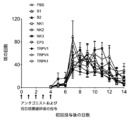
- Intraperitoneal administration of various receptor antagonists and intranasal administration of Bordetella pertussis cell disruption solution to mice (5 animals / group) were performed for 5 consecutive days (Day 0 to Day 4), and daily from Day 4 to Day 14 per mouse per day. It is a figure which shows the result of having measured the number of coughing attacks for 5 minutes.
- Intraperitoneal administration of various receptor antagonists and intranasal administration of B. pertussis cell disruption solution to mice (5 animals / group) were performed for 5 consecutive days (Day 0 to Day 4), and 45 minutes (5 minutes x 9) from Day 6 to Day 14. It is a figure which shows the total number of coughing attacks (day).
- Intraperitoneal administration of various receptor antagonists and intranasal administration of Bordetella pertussis cough inducer to mice (5 animals / group) were performed for 5 consecutive days (Day 0 to Day 4), and 45 minutes (5 minutes x 9 days) from Day 6 to Day 14. It is a figure which shows the total number of coughing attacks of.
- Intraperitoneal administration of various receptor antagonists and intranasal administration of Bordetella pertussis cough inducer to mice (5 animals / group) were performed for 5 consecutive days (Day 0 to Day 4), and 45 minutes (5 minutes x 9 days) from Day 6 to Day 14. It is a figure which shows the total number of coughing attacks of.
- mice were intranasally administered with Bordetella pertussis cough-inducing factor, and the first administration day was set to day 0 (Day 0). The single administration group was on Day 1, the 4-day continuous administration group was on Day 4, and the 5-day continuous administration group.
- the present invention provides an antitussive for whooping cough containing a bradykinin B2 receptor antagonist or a TRPV1 (transient receptor potential vanilloid 1) antagonist as an active ingredient.
- the active ingredient of the antitussive agent of the present invention is not particularly limited as long as it is a bradykinin B2 receptor antagonist or TRPV1 antagonist, and can be appropriately selected from known bradykinin B2 receptor antagonists or TRPV1 antagonists.
- Bradykinin B2 receptor antagonists include, for example, Icatibant, Deltibant, Fasitibant and the like.
- TRPV1 antagonists include Capsazepine, Iodoresiniferatoxin, Ruthenium red, ⁇ -Spinasterol and the like.
- Ikatibant is clinically used as an active ingredient in a therapeutic agent for hereditary angioedema.
- An injection containing squidibant acetate has been approved as a medical drug in Japan and is listed in the NHI price list.
- the squid ibant used in the present invention may be squid ibant acetate.
- Information on squidibant acetate is as follows.
- Delchibant (KEGG DRUG entry: D03677, CAS Registry Number: 140661-97-8) has a composition formula: C 128 H 194 N 40 O 28 S 2 , a molecular weight: 2805.2912.
- Phenylibant (CAS Registry Number: 869939-83-3) has a molecular formula: C 36 H 49 C l2 N 6 O 6 S + , a molecular weight: 764.784, IUPAC Name: [(4S) -4-amino-5- [4- [4-[[2,4-dichloro-3-[(2,4-dimethylquinolin-8-yl) oxymethyl] phenyl] sulfonylamino] oxane-4-carbonyl] piperazin-1-yl] -5-oxopentyl] -trimethylazanium Is.
- Capsazepine is an analog of capsaicin and is known as a TRPV1 antagonist. Information about capsazepine is as follows. Generic name: Capsazepin CAS Registry Number: 138977-28-3 Chemical name: N- [2- (4-Chlorophenyl) ethyl] -1,3,4,5-tetrahydro-7,8-dihydroxy-2H-2-benzazepine-2-carbothioamide Molecular formula: C 19 H 21 ClN 2 O 2 S Molecular weight: 376.9 Structural formula:
- Iodoresiniferatoxin has CAS registration number: 535974-91-5, molecular formula: C 37 H 39 IO 9 , molecular weight: 754.614, IUPAC Name: [(1R, 2R, 6R, 10S, 11R, 13S, 15R, 17R). ) -13-benzyl-6-hydroxy-4,17-dimethyl-5-oxo-15-prop-1-en-2-yl-12,14,18-trioxapentacyclo [11.4.1.01,10.02,6.011,15] octadeca-3,8-dien-8-yl] methyl 2- (4-hydroxy-3-iodo-5-methoxyphenyl) acetate.
- Ruthenium red has a CAS Registry Number: 11103-72-3, a molecular formula: Cl 6 H 46 N 14 O 2 Ru 3 , and a molecular weight: 790.374.
- ⁇ -Spinasterol has CAS Registry Number: 481-18-5, Molecular Formula: C 29 H 48 O, Molecular Weight: 412.702, IUPAC Name: (3S, 5S, 9R, 10S, 13R, 14R, 17R) -17-[ (E, 2R, 5S)-5-ethyl-6-methylhept-3-en-2-yl] -10,13-dimethyl-2,3,4,5,6,9,11,12,14,15 , 16,17-dodecahydro-1H-cyclopenta [a] phenanthren-3-ol.
- the bradykinin B2 receptor antagonist may be an antibody or peptide that specifically binds to the bradykinin B2 receptor. By binding the antibody or peptide to the bradykinin B2 receptor, the binding of the original ligand can be inhibited.
- the TRPV1 antagonist may be an antibody or peptide that specifically binds to TRPV1.
- the antibody may be a polyclonal antibody or a monoclonal antibody. It may also be a complete antibody molecule or an antibody fragment capable of specifically binding to an antigen (eg, Fab, F (ab') 2, Fab', Fv, scFv, etc.).
- the antibody may be a human chimeric antibody or a humanized antibody. Both the antibody and the peptide can be produced by a known method.
- the antitussive drug of the present invention contains a bradykinin B2 receptor antagonist or a TRPV1 antagonist as an active ingredient and can be formulated according to conventional means.
- formulations for oral administration include solid or liquid dosage forms, specifically tablets (including sugar-coated tablets, film-coated tablets), pills, granules, powders, capsules (including soft capsules), Examples include syrups, emulsions and suspensions.
- These formulations are manufactured by known methods and contain carriers, diluents or excipients commonly used in the formulation field. For example, lactose, starch, sucrose, magnesium stearate and the like are used as carriers and excipients for tablets. For example, injections, suppositories, etc.
- injections are used as preparations for parenteral administration, and the injections are intravenous injection, subcutaneous injection, intradermal injection, intramuscular injection, drip injection, intra-articular injection. Including dosage forms such as.
- Such injections are prepared according to known methods, for example, by dissolving, suspending or emulsifying the active ingredient in a sterile aqueous or oily solution usually used for injections.
- aqueous solution for injection for example, physiological saline, an isotonic solution containing glucose and other auxiliary agents are used, and suitable solubilizing agents such as alcohol (for example, ethanol) and polyalcohol (for example) are used.
- Suppositories used for rectal administration are prepared by mixing the active ingredient with a conventional suppository base.
- the formulations thus obtained are safe and low toxicity, and therefore, for example, orally to humans and mammals (eg, rats, mice, rabbits, sheep, pigs, cows, cats, dogs, monkeys, etc.). Alternatively, it can be administered parenterally.
- the active ingredient is a peptide or antibody
- parenteral routes of administration such as intravenous, intramuscular, intradermal, intraperitoneal, subcutaneous or topical. It is preferable to administer to.
- the antitussive agent of the present invention can contain 0.001 to 50% by mass, preferably 0.01 to 10% by mass, and more preferably 0.1 to 1% by mass of the active ingredient.
- the dose of the antitussive drug of the present invention is appropriately set in consideration of the severity of the disease, the age, body weight, sex, medical history, type of active ingredient, and the like of the patient. When an average human having a body weight of about 65 to 70 kg is targeted, about 0.02 mg to 4000 mg per day is preferable, and about 0.1 mg to 200 mg is more preferable.
- the total daily dose may be a single dose or a divided dose.
- the present invention provides a method for screening an antitussive drug or a candidate substance thereof for whooping cough.
- the screening method of the present invention may include a step of selecting a substance that inhibits the activation of bradykinin B2 receptor or TRPV1.
- the bradykinin B2 receptor is a G protein-coupled receptor, and the trimer G proteins Gi / o, Gq / 11 and Gs are conjugated. Therefore, the binding of bradykinin to the bradykinin B2 receptor produces prostaglandins (PGI2, PGE2, etc.) downstream of Gi / o through activation of phospholipase A2.
- Phospholipase C ⁇ PLC ⁇
- PLC ⁇ protein kinase C ⁇
- cAMP Downstream of Gs, cAMP is produced by activation of adenylate cyclase (Liebmann et al, Biochem. J. 313: 109-118, 1996).
- TPRV1 is a cation channel that is opened by binding of ligands such as capsaicin, thermal stimulation, and multiple pain stimuli such as acid, and cations (Na + , Ca 2+, etc.) flow into the cell from the outside. Depolarization is caused. The resulting action potential is transmitted as a signal to the central nervous system, causing the cough reflex and pain.
- ligands such as capsaicin, thermal stimulation, and multiple pain stimuli such as acid, and cations (Na + , Ca 2+, etc.) flow into the cell from the outside. Depolarization is caused. The resulting action potential is transmitted as a signal to the central nervous system, causing the cough reflex and pain.
- test substance used in the screening method of the present invention is not particularly limited, and is limited to nucleic acids, peptides, proteins, non-peptide compounds, synthetic compounds, fermentation products, cell extracts, cell culture supernatants, plant extracts, and mammals.
- the tissue extract, plasma, etc. may be used.
- the test substance may be a novel substance or a known substance. These test substances may form salts.
- a salt with a physiologically acceptable acid or base is preferable.
- the screening method of the present invention may include, for example, the following steps (1) to (3).
- the cells expressing the brazikinin B2 receptor include dorsal root ganglion (DRG) neurons, fibroblasts, P19 cells differentiated into neurons by retinoic acid, and neuroblasts.
- DRG dorsal root ganglion
- fibroblasts a cell line in which bradikinin B2 receptor is forcibly expressed
- TRPV1 include spinal posterior root ganglion (DRG) neurons, fibroblasts, neuroblastoma-glioma hybrid cell line NG108-15, and TRPV1 forced expression lined cells (eg, HEK293, CHO etc.) can be used.
- Examples of the method of bringing the cells into contact with the test substance in the step (1) include a method of adding the test substance to the culture medium for culturing the cells. It is preferable to provide a control group that does not come into contact with the test substance.
- examples of downstream signals of bradykinin B2 receptor include arachidonic acid, prostaglandin, inositol phosphate, diacylglycerol, cAMP, etc., and by measuring these, activation of bradykinin B2 receptor is performed.
- Examples of downstream signals of TRPV1 include the generation of action potentials, an increase in intracellular Ca 2+ concentration, and suppression of release of neuropeptides (for example, neurokinin A, substance P, calcitonin gene-related peptides, etc.). Therefore, the activation of TRPV1 can be evaluated by measuring the action potential, the intracellular Ca 2+ concentration, and the neuropeptide concentration.
- the measurement method of the above evaluation items can be appropriately selected from known measurement methods.
- a test substance that lowers the downstream signal as compared with the downstream signal measured in the cells that are not in contact with the test substance is selected.
- the degree to which the test substance reduces the downstream signal is not particularly limited, but for example, 90% or less, 80% or less, 70% or less, 60% or less, 50% as compared with the downstream signal in cells not in contact with the test substance.
- a test substance that reduces the amount to 40% or less and 30% or less may be selected.
- the screening method of the present invention may include, for example, the following steps (a) to (c).
- (A) A step of contacting a cell expressing a bradykinin B2 receptor with a test substance and bradykinin,
- (B) The step of confirming the binding between bradykinin B2 receptor and bradykinin, and (c) the binding of bradykinin B2 receptor and bradykinin measured in the cells not in contact with the test substance, as compared with the binding of bradykinin B2 receptor.
- the same cell as the cell expressing the bradykinin B2 receptor in the above step (1) can be used.
- the method of bringing the test substance into contact with the cells expressing the bradykinin B2 receptor can also be carried out in the same manner as in the above step (1).
- the method for confirming the binding between the bradykinin B2 receptor and bradykinin is not particularly limited, and a known method capable of confirming the binding level between the bradykinin B2 receptor and bradykinin can be appropriately selected and used. it can. For example, an ELISA method, a fluorescent polarization method, or the like can be preferably used.
- a test substance that inhibits the binding between bradykinin B2 receptor and bradykinin is selected as compared with the binding between bradykinin B2 receptor and bradykinin measured in the cells that are not in contact with the test substance.
- the degree to which the test substance lowers the binding level between the bradykinin B2 receptor and bradykinin is not particularly limited, but for example, 90% or less and 80% or less as compared with the binding level of both when the test substance is not in contact with the test substance. , 70% or less, 60% or less, 50% or less, 40% or less, 30% or less may be selected.
- test substance selected by the screening method of the present invention is useful as an active ingredient of an antitussive for whooping cough.
- the test substance selected by the screening method of the present invention is useful as a candidate substance for an active ingredient of an antitussive drug for whooping cough, and may become an active ingredient of an antitussive drug for whooping cough after further screening.
- Example 1 Examination of suppression of whooping cough attack by an antagonist of a receptor involved in cough attack
- Stainer-Scholte liquid medium Stainer-Scholte liquid medium
- Antagonists The following 9 types were used as antagonists of receptors involved in cough attacks.
- -Bradykinin B1 receptor antagonist Des-Arg9- [Leu8] -Bradykinin (Peptide Institute)
- Bradykinin B2 receptor antagonist Ikatibant (Peptide Institute)
- TRPV1 antagonist Capsazepine (Fuji Film Wako Pure Chemical Industries, Ltd.)
- TRPV4 antagonist HC-067047 (Sigma-Aldrich)
- TRPA1 antagonist HC-030031 (Fuji Film Wako Pure Chemical Industries, Ltd.)
- EP3 antagonist L-798106 (Sigma-Aldrich)
- NK1 receptor antagonist Spunched (Peptide Institute)
- NK2 receptor antagonist GR159897 (R & D Systems)
- NK3 receptor antagonist SB222200 (Sigma-Aldrich)
- Each antagonist was prepared at the time of use using PBS to a concentration of 200 n
- mice were placed in individual observation cages, and the state of the mice in the cages was photographed for 5 minutes per mouse per day using a video camera connected to a microphone.
- the recorded video was played back on Adobe Premiere Pro Cs5.5 (Adobe Systems), and coughing was confirmed by combining the coughing sound, mouse movement, and displayed voice waveform, and the number of coughing was measured.
- Prism8 GraphPad Software
- FIG. 1 is a diagram showing the average number of coughing attacks of mice in each group every day from Day 4 to Day 14. From FIG. 1, cough attacks were induced in all groups of mice on Day 7, peaked by Day 10, and then tended to gradually decrease toward Day 14. Among the antagonist-administered groups, the group administered with the B2 receptor antagonist (squidibant) and the TRPV1 antagonist (capsazepine) tended to have fewer cough attacks at the peak than the other groups.
- Vag8 was produced by Escherichia coli and purified recombinant protein was used.
- the passenger region of Vag8 was amplified by PCR using the genomic DNA of Bordetella pertussis 18323 strain as a template and primer sets (CACAACAAGCTCGAGTTTCTGGGCGATGTC (SEQ ID NO: 1) and AAGCTTGATCCTACCCGATCGAATGCAG (SEQ ID NO: 2)).
- This PCR product was inserted into the XhoI and EcoRI sites of pCold II-HAT (Suzuki et al, Microbiol Immunol, 2017) and introduced into Escherichia coli BL21 (DE3) strain.
- Vag8 After inducing the expression of Vag8 by adding 1 mM isopropyl- ⁇ -D-thiogalactopyranoside and culturing at 15 ° C for 24 hours, the bacteria were cultivated in Buffer A containing 10 mM imidazole (50 mM sodium phosphate, 300 mM NaCl, pH 8. In 0), the bacteria were lysed by sonication. The supernatant after centrifugation was adsorbed on a nickel resin (HIS-Select Nickel Affinity Gel; Sigma-Aldrich), and then Vag8 was extracted using Buffer A containing 300 mM imidazole. The imidazole contained in the Vag8 fraction was removed by dialysis with PBS. The protein concentrations of PT and Vag8 were determined using MicroBCA Protein Assay (Thermo Fisher Scientific).
- Lipooligosaccharide was purified from 18323 strains of Bordetella pertussis using the hot phenol method (Minnick, Infect Immun, 1994). Purification of LOS was confirmed by SDS-PAGE and silver staining. The titer of LOS (endotoxin unit: EU) was determined using Limulus Color KY Test Wako (Fuji Film Wako Pure Chemical Industries, Ltd.).
- Antagonists Among the antagonists used in Example 1, seven types of antagonists were used except HC-067047 (TRPV4 antagonist) and L-798106 (EP3 antagonist). Each antagonist was prepared at the time of use using PBS to a concentration of 67 nmol / ml or 200 nmol / ml.
- mice were placed in individual observation cages and a microphone-connected video camera was used to photograph the mice in the cage for 5 minutes per mouse per day.
- the recorded video was played back on Adobe Premiere Pro Cs5.5 (Adobe Systems), and the number of coughing attacks was measured from the coughing sound and mouse movement. The results are expressed as the total number of cough attacks for 45 minutes (5 minutes x 9 days) from Day 6 to Day 14.
- Prism8 GraphPad Software was used, and a significant difference test was performed by the One-way ANOVA and Tukey methods.
- Example 3 Examination of bradykinin concentration in bronchoalveolar lavage fluid in mice administered with Bordetella pertussis cough inducer
- 3-1 Experimental materials and methods 7-week-old C57BL / 6J male mice (Claire Japan) were anesthetized with isoflurane, and the pertussis cough inducers PT (200 ng), Vag8 (500 ng) and LOS prepared in Example 2 were prepared. 50 ⁇ l of PBS solution containing (4 ⁇ 10 4 EU) was administered intranasally. The following 3 groups were set according to the number of administrations of the cough inducer (5 animals / group).
- Each group was provided with a control group (5 animals / group), and 50 ⁇ l of PBS was administered in the same manner.
- the first administration day is set to day 0 (Day 0), the single administration group is on Day 1, the 4-day continuous administration group is on Day 4, the 5-day continuous administration group is on Day 10, and the bronchial alveoli of each mouse are as follows.
- the cleaning solution was collected.
- a catheter was inserted into the trachea of mice euthanized by intraperitoneal administration of an excessive amount of pentobarbital, and 500 ⁇ l of PBS was injected and aspirated.
- each crRNA targets the sequences of the 5'and 3'regions of the Kng1 gene (5'region: GACCTCAGGAATCTAAATAG (SEQ ID NO: 3), 3'region: ACAGAGGCACGGGTGCCACA (SEQ ID NO: 4)).
- Kng1-check-S1 CAACTCAGGCCGTGTGTTTG (SEQ ID NO: 5)
- Kng1-check-S2 GCAGAGCCATCCTGAGGAAA
- Kng1-check-AS ACTCCCCAGCTGCTATCAGA (SEQ ID NO: 7)
- mice were euthanized by intraperitoneal administration of an excessive amount of pentobarbital, and the trachea and lungs were removed. Each organ is immersed in PBS, homogenized using Biomasher I (Nippi) and Polytron PT1200E (Kinematica), and then an appropriately diluted solution is applied to BG medium, cultured, and CFU is measured to obtain viable bacteria in each organ. The number was calculated. In addition, 50 ⁇ l of B.
- pertussis cell disruption solution adjusted to 1 mg / ml with PBS was applied to wild-type and Kng1-/-mice (6-8 weeks old, male, 5 animals / group) anesthetized with isoflurane for 5 consecutive days.
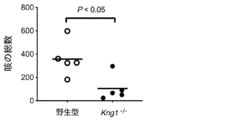
- FIG. 4-2 Results (1) Number of coughing attacks
- Figure 5A shows the results of the number of coughing attacks in mice administered with Bordetella pertussis
- FIG. 5B shows the results of the number of coughing attacks in mice administered with B. pertussis cell disruption solution. .. Both doses significantly reduced the total number of cough attacks in Kng1-/-mice compared to wild-type mice.
- (2) Viable count of Bordetella pertussis The results are shown in FIG. The viable numbers of B. pertussis in the trachea and lungs were not significantly different between wild-type and Kng1-/-mice in either organ.
Landscapes
- Health & Medical Sciences (AREA)
- Life Sciences & Earth Sciences (AREA)
- Chemical & Material Sciences (AREA)
- General Health & Medical Sciences (AREA)
- Medicinal Chemistry (AREA)
- Engineering & Computer Science (AREA)
- Immunology (AREA)
- Pharmacology & Pharmacy (AREA)
- Veterinary Medicine (AREA)
- Public Health (AREA)
- Animal Behavior & Ethology (AREA)
- Organic Chemistry (AREA)
- Epidemiology (AREA)
- Molecular Biology (AREA)
- Proteomics, Peptides & Aminoacids (AREA)
- Bioinformatics & Cheminformatics (AREA)
- Biochemistry (AREA)
- Biomedical Technology (AREA)
- Biophysics (AREA)
- Analytical Chemistry (AREA)
- Physics & Mathematics (AREA)
- Urology & Nephrology (AREA)
- Hematology (AREA)
- Food Science & Technology (AREA)
- Pathology (AREA)
- Cell Biology (AREA)
- Microbiology (AREA)
- Gastroenterology & Hepatology (AREA)
- Zoology (AREA)
- Biotechnology (AREA)
- Genetics & Genomics (AREA)
- General Physics & Mathematics (AREA)
- Toxicology (AREA)
- Chemical Kinetics & Catalysis (AREA)
- General Chemical & Material Sciences (AREA)
- Nuclear Medicine, Radiotherapy & Molecular Imaging (AREA)
- Wood Science & Technology (AREA)
- Inorganic Chemistry (AREA)
- Pulmonology (AREA)
- General Engineering & Computer Science (AREA)
Abstract
ブラジキニンB2受容体アンタゴニストまたはTRPV1(transient receptor potential vanilloid 1)アンタゴニストを有効成分とする百日咳に対する鎮咳薬、および、ブラジキニンB2受容体またはTRPV1の活性を阻害する物質を選択する工程を含む、百日咳に対する鎮咳薬のスクリーニング方法を提供する。
Description
本発明は、百日咳に対する鎮咳薬および百日咳に対する鎮咳薬のスクリーニング方法に関するものである。
百日咳は百日咳菌(Bordetella pertussis)の気道感染によって起こる呼吸器感染症であり、連続性の咳嗽発作や咳嗽後の嘔吐、吸気性の笛声(whoop)などの特徴的な症状を呈する。百日咳は、主に発展途上国での乳幼児感染が最も問題視されているが、先進国においても乳幼児期に接種したワクチン効果の減弱した青年・成人層の感染やワクチン成分と抗原性の異なる抗原変異株の出現で患者数が増加しており、いわゆる再興感染症の一つに挙げられている。日本国内では、百日咳は2017年まで小児科定点把握疾患(全国約3,000ヶ所の小児科定点医療機関で集計)に分類され、年間1,500~6,500人が報告されていた。2018年からは、青年、成人層の患者数の増加などの影響を考慮し、全数把握疾患に指定されている。
百日咳菌の潜伏期間は7~10日であり、発症から回復までに数週間を必要とする。百日咳の症状は病期により、カタル期(感冒症状、1~2週間)、痙咳期(発作性の咳、3~6週間)、回復期(6週間以降)に分けられる。特に、痙咳期に見られる百日咳特有の咳発作は、患者に多大な負荷を強い、ときに死因に直結する。しかし、その発症機構が現在まで不明であるために、臨床現場では対症療法を持って処置せざるを得ないのが現状である。通常、百日咳の治療には、感染菌の排除のためにエリスロマイシン、クラリスロマイシンなどのマクロライド系抗生物質が用いられるが、典型的な咳発作が認められる痙咳期以降では咳に対する改善効果は期待できない。一般的な去痰薬、鎮咳薬、鎮静薬なども百日咳には有効でないケースが多い。また、咳発作が重篤化した場合は、人工呼吸管理が必要となるため、入院加療が必要となる。
これらの背景から、百日咳発症後の咳発作に有効な治療薬が望まれているが、最も効果の期待できる根治治療に繋がる研究は全く進んでいない。この原因として、百日咳菌がヒトのみを宿主とするために、百日咳の咳発作を再現する汎用性の高い動物モデルが確立できていない点が挙げられる。本課題を解決すべく、発明者らは、百日咳菌および菌体破砕液をマウスに経鼻投与し、百日咳の咳発作を再現するマウス百日咳モデルを作製した(特許文献1)。この動物モデルを用いることで、百日咳の治療法を探索するためのスクリーニングが可能となった。
一般的な咳発作は、様々な環境要因や内在性化合物によって気道の求心性感覚神経が刺激されることで誘発される神経反射応答である。この咳反射は、神経繊維に分布する多種多様な刺激受容体およびメディエーターが複雑に関連しあって形成されている。例えば、炎症メディエーターの一種であるブラジキニンは、恒常発現型であるB2受容体を介して咳発作を誘発する(非特許文献1)。ブラジキニンによる咳発作に関しては、炎症誘導型のB1受容体が関与するとの報告もある(非特許文献2)。これらの受容体を介したブラジキニンによる咳発作は、イオンチャネルであるtransient receptor potential(TRP)V1の活性化により引き起こされることが報告されているが(非特許文献3)、近年の研究により、ブラジキニンにより活性化される他のTRPチャネル(TRPV4、TRPA1など)も咳発作に関与する可能性が指摘されている(非特許文献4)。
また、プロスタグランジン(PG)類、特にPGE2は、EP受容体(EP1~4)を介してブラジキニンによるTRPの活性化を増強することで咳発作に関与していることが報告されている(非特許文献5)。この他の例として、一酸化窒素やアナンダミドがTRPチャネルの活性化を介して咳発作を引き起こすこと(非特許文献6、7)、サブスタンスPやニューロキニン(NK)A、Bに代表されるペプチド性神経伝達物質タキキニン類がNK受容体(NK1、NK2、NK3など)を介して咳発作を誘発することなどが報告されている(非特許文献8)。
このように、一般的な咳発作についても、そのメカニズムの全容はいまだ明らかとなっておらず、百日咳における咳発作が、上記の一般的な咳発作に関与する受容体やメディエーターを介して誘発されていることは報告されていない。
Fox et al, Nat Med, 1996
Hirata et al, Eur J Pharmacol, 2003
Undem et al, Pulm Pharmacol Ther, 2002
Choi et al, Biomol Ther, 2018
Mizumura et al, Exp Brain Res, 2009
De Petrocellis et al, J Biol Chem, 2001
Jia et al, Br J Pharmacol, 2002
Widdicombe, Eur Respir J, 1995
本発明は、百日咳における咳発作が関与する受容体を見出し、百日咳に対する鎮咳薬および百日咳に対する鎮咳薬のスクリーニング方法を提供することを課題とする。
本発明は、上記の課題を解決するために、以下の各発明を包含する。
[1]ブラジキニンB2受容体アンタゴニストまたはTRPV1(transient receptor potential vanilloid 1)アンタゴニストを有効成分とする百日咳に対する鎮咳薬。
[2]ブラジキニンB2受容体アンタゴニストがイカチバント、デルチバントまたはファシチバントである前記[1]に記載の鎮咳薬。
[3]ブラジキニンB2受容体アンタゴニストがイカチバントである前記[2]に記載の鎮咳薬。
[4]ブラジキニンB2受容体アンタゴニストがブラジキニンB2受容体と特異的に結合する抗体またはペプチドである前記[1]に記載の鎮咳薬。
[5]TRPV1アンタゴニストがカプサゼピン、ヨードレシニフェラトキシン、ルテニウムレッドまたはα-スピナステロールである前記[1]に記載の鎮咳薬。
[6]TRPV1アンタゴニストがTRPV1と特異的に結合する抗体またはペプチドである前記[1]に記載の鎮咳薬。
[7]ブラジキニンB2受容体またはTRPV1の活性化を阻害する物質を選択する工程を含む、百日咳に対する鎮咳薬のスクリーニング方法。
[8]ブラジキニンB2受容体またはTRPV1を発現する細胞と被験物質とを接触させる工程と、ブラジキニンB2受容体またはTRPV1の下流シグナルを測定する工程と、被験物質と接触していない前記細胞において測定した下流シグナルと比較して下流シグナルを低下させる被験物質を選択する工程とを含む、前記[7]に記載のスクリーニング方法。
[9]ブラジキニンB2受容体を発現する細胞と被験物質とブラジキニンを接触させる工程と、ブラジキニンB2受容体とブラジキニンとの結合を確認する工程と、被験物質と接触していない前記細胞において測定したブラジキニンB2受容体とブラジキニンとの結合と比較して、ブラジキニンB2受容体とブラジキニンとの結合を阻害する被験物質を選択する工程とを含む、前記[7]に記載のスクリーニング方法。
[1]ブラジキニンB2受容体アンタゴニストまたはTRPV1(transient receptor potential vanilloid 1)アンタゴニストを有効成分とする百日咳に対する鎮咳薬。
[2]ブラジキニンB2受容体アンタゴニストがイカチバント、デルチバントまたはファシチバントである前記[1]に記載の鎮咳薬。
[3]ブラジキニンB2受容体アンタゴニストがイカチバントである前記[2]に記載の鎮咳薬。
[4]ブラジキニンB2受容体アンタゴニストがブラジキニンB2受容体と特異的に結合する抗体またはペプチドである前記[1]に記載の鎮咳薬。
[5]TRPV1アンタゴニストがカプサゼピン、ヨードレシニフェラトキシン、ルテニウムレッドまたはα-スピナステロールである前記[1]に記載の鎮咳薬。
[6]TRPV1アンタゴニストがTRPV1と特異的に結合する抗体またはペプチドである前記[1]に記載の鎮咳薬。
[7]ブラジキニンB2受容体またはTRPV1の活性化を阻害する物質を選択する工程を含む、百日咳に対する鎮咳薬のスクリーニング方法。
[8]ブラジキニンB2受容体またはTRPV1を発現する細胞と被験物質とを接触させる工程と、ブラジキニンB2受容体またはTRPV1の下流シグナルを測定する工程と、被験物質と接触していない前記細胞において測定した下流シグナルと比較して下流シグナルを低下させる被験物質を選択する工程とを含む、前記[7]に記載のスクリーニング方法。
[9]ブラジキニンB2受容体を発現する細胞と被験物質とブラジキニンを接触させる工程と、ブラジキニンB2受容体とブラジキニンとの結合を確認する工程と、被験物質と接触していない前記細胞において測定したブラジキニンB2受容体とブラジキニンとの結合と比較して、ブラジキニンB2受容体とブラジキニンとの結合を阻害する被験物質を選択する工程とを含む、前記[7]に記載のスクリーニング方法。
本発明により百日咳に対する鎮咳薬を提供することができる。有効成分として既に臨床使用されているブラジキニンB2受容体アンタゴニストを用いることができるので、安全性の高い医薬を提供することができる。また、本発明のスクリーニング方法により、百日咳の鎮咳に有用な物質を取得することができ、新規な百日咳に対する鎮咳薬を提供することができる。
〔百日咳に対する鎮咳薬〕
本発明は、ブラジキニンB2受容体アンタゴニストまたはTRPV1(transient receptor potential vanilloid 1)アンタゴニストを有効成分とする百日咳に対する鎮咳薬を提供する。本発明の鎮咳薬の有効成分は、ブラジキニンB2受容体アンタゴニストまたはTRPV1アンタゴニストであれば特に限定されず、公知のブラジキニンB2受容体アンタゴニストまたはTRPV1アンタゴニストから適宜選択することができる。ブラジキニンB2受容体アンタゴニストとしては、例えば、イカチバント(Icatibant)、デルチバント(Deltibant)、ファシチバント(Fasitibant)などが挙げられる。TRPV1アンタゴニストとしては、例えば、カプサゼピン(Capsazepine)、ヨードレシニフェラトキシン(Iodoresiniferatoxin)、ルテニウムレッド(Ruthenium red)、α-スピナステロール(α-Spinasterol)などが挙げられる。
本発明は、ブラジキニンB2受容体アンタゴニストまたはTRPV1(transient receptor potential vanilloid 1)アンタゴニストを有効成分とする百日咳に対する鎮咳薬を提供する。本発明の鎮咳薬の有効成分は、ブラジキニンB2受容体アンタゴニストまたはTRPV1アンタゴニストであれば特に限定されず、公知のブラジキニンB2受容体アンタゴニストまたはTRPV1アンタゴニストから適宜選択することができる。ブラジキニンB2受容体アンタゴニストとしては、例えば、イカチバント(Icatibant)、デルチバント(Deltibant)、ファシチバント(Fasitibant)などが挙げられる。TRPV1アンタゴニストとしては、例えば、カプサゼピン(Capsazepine)、ヨードレシニフェラトキシン(Iodoresiniferatoxin)、ルテニウムレッド(Ruthenium red)、α-スピナステロール(α-Spinasterol)などが挙げられる。
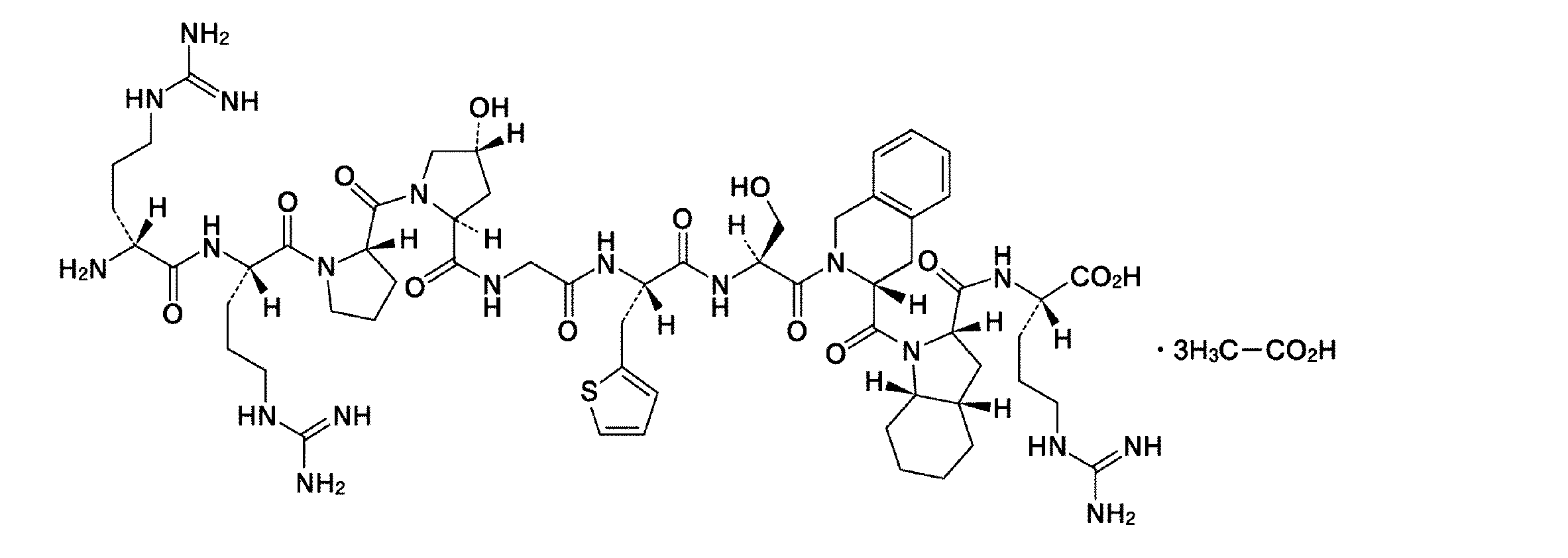
イカチバントは、遺伝性血管性浮腫治療薬の有効成分として臨床使用されている。イカチバント酢酸塩を含む注射剤が日本において医療用医薬品として承認され、薬価収載されている。本発明に使用するイカチバントはイカチバント酢酸塩であってもよい。イカチバント酢酸塩に関する情報は以下のとおりである。
一般名:イカチバント酢酸塩
化学名:D-Arginyl-L-arginyl-L-prolyl-(R)-4-hydroxy-L-prolylglycyl-3-(thiophen-2-yl)-L-alanyl-L-seryl-(R)-[(1,2,3,4-tetrahydroisoquinolin-3-yl)carbonyl]-(2S,3aS,7aS)-[(hexahydroindolin-2-yl)carbonyl]-L-arginine triacetate
分子式:C59H89N19O13S・3C2H4O2
分子量:1,484.68
構造式:
一般名:イカチバント酢酸塩
化学名:D-Arginyl-L-arginyl-L-prolyl-(R)-4-hydroxy-L-prolylglycyl-3-(thiophen-2-yl)-L-alanyl-L-seryl-(R)-[(1,2,3,4-tetrahydroisoquinolin-3-yl)carbonyl]-(2S,3aS,7aS)-[(hexahydroindolin-2-yl)carbonyl]-L-arginine triacetate
分子式:C59H89N19O13S・3C2H4O2
分子量:1,484.68
構造式:
デルチバント(KEGG DRUG エントリ: D03677、CAS登録番号:140661-97-8)は、組成式:C128H194N40O28S2、分子量:2805.2912である。
ファシチバント(CAS登録番号:869939-83-3)は、分子式:C36H49Cl2N6O6S+、分子量:764.784、IUPAC Name:[(4S)-4-amino-5-[4-[4-[[2,4-dichloro-3-[(2,4-dimethylquinolin-8-yl)oxymethyl]phenyl]sulfonylamino]oxane-4-carbonyl]piperazin-1-yl]-5-oxopentyl]-trimethylazaniumである。
カプサゼピンは、カプサイシンのアナログでありTRPV1アンタゴニストとして知られている。カプサゼピンに関する情報は以下のとおりである。
一般名:カプサゼピン
CAS登録番号:138977-28-3
化学名:N-[2-(4-Chlorophenyl)ethyl]-1,3,4,5-tetrahydro-7,8-dihydroxy-2H-2-benzazepine-2-carbothioamide
分子式:C19H21ClN2O2S
分子量:376.9
構造式:
一般名:カプサゼピン
CAS登録番号:138977-28-3
化学名:N-[2-(4-Chlorophenyl)ethyl]-1,3,4,5-tetrahydro-7,8-dihydroxy-2H-2-benzazepine-2-carbothioamide
分子式:C19H21ClN2O2S
分子量:376.9
構造式:

ヨードレシニフェラトキシンは、CAS登録番号:535974-91-5、分子式:C37H39IO9、分子量:754.614、IUPAC Name:[(1R,2R,6R,10S,11R,13S,15R,17R)-13-benzyl-6-hydroxy-4,17-dimethyl-5-oxo-15-prop-1-en-2-yl-12,14,18-trioxapentacyclo[11.4.1.01,10.02,6.011,15]octadeca-3,8-dien-8-yl]methyl 2-(4-hydroxy-3-iodo-5-methoxyphenyl)acetateである。
ルテニウムレッドは、CAS登録番号:11103-72-3、分子式:Cl6H46N14O2Ru3、分子量:790.374である。
α-スピナステロールは、CAS登録番号:481-18-5、分子式:C29H48O、分子量:412.702、IUPAC Name:(3S,5S,9R,10S,13R,14R,17R)-17-[(E,2R,5S)-5-ethyl-6-methylhept-3-en-2-yl]-10,13-dimethyl-2,3,4,5,6,9,11,12,14,15,16,17-dodecahydro-1H-cyclopenta[a]phenanthren-3-olである。
ブラジキニンB2受容体アンタゴニストは、ブラジキニンB2受容体と特異的に結合する抗体またはペプチドであってもよい。抗体またはペプチドがブラジキニンB2受容体と結合することにより、本来のリガンドの結合を阻害することができる。同様に、TRPV1アンタゴニストは、TRPV1と特異的に結合する抗体またはペプチドであってもよい。抗体はポリクローナル抗体でもモノクローナル抗体でもよい。また、完全な抗体分子でもよく、抗原に特異的に結合し得る抗体フラグメント(例えば、Fab、F(ab’)2、Fab’、Fv、scFv等)でもよい。抗体はヒト型キメラ抗体またはヒト化抗体であってもよい。抗体およびペプチドは、いずれも公知の方法により製造することができる。
本発明の鎮咳薬は、ブラジキニンB2受容体アンタゴニストまたはTRPV1アンタゴニストを有効成分とし、常套手段に従って製剤化することができる。例えば、経口投与のための製剤としては、固体または液体の剤形、具体的には錠剤(糖衣錠、フィルムコーティング錠を含む)、丸剤、顆粒剤、散剤、カプセル剤(ソフトカプセル剤を含む)、シロップ剤、乳剤、懸濁剤などが挙げられる。これらの製剤は公知の方法によって製造され、製剤分野において通常用いられる担体、希釈剤もしくは賦形剤を含有するものである。例えば、錠剤用の担体、賦形剤としては、乳糖、でんぷん、蔗糖、ステアリン酸マグネシウムなどが用いられる。非経口投与のための製剤としては、例えば、注射剤、坐剤などが用いられ、注射剤は静脈注射剤、皮下注射剤、皮内注射剤、筋肉注射剤、点滴注射剤、関節内注射剤などの剤形を包含する。このような注射剤は、公知の方法に従って、例えば、上記有効成分を通常注射剤に用いられる無菌の水性もしくは油性液に溶解、懸濁または乳化することによって調製される。注射用の水性液としては、例えば、生理食塩水、ブドウ糖やその他の補助薬を含む等張液などが用いられ、適当な溶解補助剤、例えば、アルコール(例えば、エタノール等)、ポリアルコール(例えば、プロピレングリコール、ポリエチレングリコール等)、非イオン界面活性剤(例えば、ポリソルベート80、HCO-50等)などと併用してもよい。油性液としては、例えば、ゴマ油、大豆油などが用いられ、溶解補助剤として安息香酸ベンジル、ベンジルアルコールなどを併用してもよい。直腸投与に用いられる坐剤は、上記有効成分を通常の坐薬用基剤に混合することによって調製される。
このようにして得られる製剤は安全で低毒性であるので、例えば、ヒトや哺乳動物(例えば、ラット、マウス、ウサギ、ヒツジ、ブタ、ウシ、ネコ、イヌ、サルなど)に対して経口的にまたは非経口的に投与することができる。有効成分がペプチドまたは抗体である場合、薬学的に許容される担体とともに製剤化された注射剤または輸液として、非経口投与経路、例えば、静脈内、筋肉内、皮膚内、腹腔内、皮下または局所に投与することが好ましい。
本発明の鎮咳薬には、有効成分を0.001~50質量%、好ましくは0.01~10質量%、更に好ましくは0.1~1質量%含有することができる。本発明の鎮咳薬の投与量は、疾患の重篤度、患者の年齢、体重、性別、既往歴、有効成分の種類などを考慮して、適宜設定される。約65~70kgの体重を有する平均的なヒトを対象とした場合、1日当たり0.02mg~4000mg程度が好ましく、0.1mg~200mg程度がより好ましい。1日当たりの総投与量は、単一投与量であっても分割投与量であってもよい。
〔スクリーニング方法〕
本発明は、百日咳に対する鎮咳薬またはその候補物質のスクリーニング方法を提供する。本発明のスクリーニング方法は、ブラジキニンB2受容体またはTRPV1の活性化を阻害する物質を選択する工程を含むものであればよい。
本発明は、百日咳に対する鎮咳薬またはその候補物質のスクリーニング方法を提供する。本発明のスクリーニング方法は、ブラジキニンB2受容体またはTRPV1の活性化を阻害する物質を選択する工程を含むものであればよい。
ブラジキニンB2受容体はGタンパク質共役型受容体であり、三量体Gタンパク質のGi/o、Gq/11およびGsが共役している。そのためブラジキニンB2受容体へのブラジキニンの結合により、Gi/oの下流ではホスホリパーゼA2の活性化を通じてプロスタグランジン(PGI2やPGE2など)が生成される。Gq/11を通じてはホスホリパーゼCβ(PLCβ)が活性化され、ホスファチジルイノシトール2リン酸の分解によるジアシルグリセロールとイノシトール3リン酸の生成、それに続いて細胞内カルシウム濃度の上昇とプロテインキナーゼC(PKC)の活性化が起こる(Choi and Hwang, Biomol. Ther. 26:255-267, 2018)。Gsの下流ではアデニル酸サイクラーゼの活性化によりcAMPが生成される(Liebmann et al, Biochem. J. 313:109-118, 1996)。
TPRV1は陽イオンチャネルであり、カプサイシンなどのリガンドの結合、熱刺激、酸などの複数の痛み刺激により開口し、陽イオン(Na+、Ca2+など)が細胞外から細胞内に流入することで脱分極が引き起こされる。その結果として生じた活動電位が信号として中枢へと伝えられ、咳嗽反射や疼痛などを惹起する。
本発明のスクリーニング方法に供される被験物質は特に限定されず、核酸、ペプチド、タンパク、非ペプチド性化合物、合成化合物、発酵生産物、細胞抽出液、細胞培養上清、植物抽出液、哺乳動物の組織抽出液、血漿等であってもよい。被験物質は、新規な物質であってもよいし、公知の物質であってもよい。これらの被験物質は塩を形成していてもよい。被験物質の塩としては、生理学的に許容される酸や塩基との塩が好ましい。
本発明のスクリーニング方法は、例えば以下の工程(1)~(3)を含むものであってもよい。
(1)ブラジキニンB2受容体またはTRPV1を発現する細胞と被験物質とを接触させる工程、
(2)ブラジキニンB2受容体またはTRPV1の下流シグナルを測定する工程、および
(3)被験物質と接触していない前記細胞において測定した下流シグナルと比較して下流シグナルを低下させる被験物質を選択する工程。
(1)ブラジキニンB2受容体またはTRPV1を発現する細胞と被験物質とを接触させる工程、
(2)ブラジキニンB2受容体またはTRPV1の下流シグナルを測定する工程、および
(3)被験物質と接触していない前記細胞において測定した下流シグナルと比較して下流シグナルを低下させる被験物質を選択する工程。
工程(1)において、ブラジキニンB2受容体を発現する細胞としては、脊髄後根神経節(DRG:dorsal root ganglion)ニューロン、線維芽細胞、レチノイン酸により神経細胞に分化させたP19細胞、神経芽細胞腫とグリオーマのハイブリッド細胞株NG108-15、ブラジキニンB2受容体を強制発現させた株化細胞(例えば、HEK293、CHO等)などを使用することができる。TRPV1を発現する細胞としては、脊髄後根神経節(DRG)ニューロン、線維芽細胞、神経芽細胞腫とグリオーマのハイブリッド細胞株NG108-15、TRPV1を強制発現させた株化細胞(例えば、HEK293、CHO等)などを使用することができる。
工程(1)において、細胞と被験物質を接触させる方法は、例えば、細胞を培養するための培養液に被験物質を添加する方法などが挙げられる。なお、被験物質を接触させない対照群を設けることが好ましい。
工程(2)において、ブラジキニンB2受容体の下流シグナルとしては、アラキドン酸、プロスタグランジン、イノシトールリン酸、ジアシルグリセロール、cAMPなどが挙げられ、これらを測定することにより、ブラジキニンB2受容体の活性化を評価することができる。TRPV1の下流シグナルとしては、活動電位の発生、細胞内Ca2+濃度の上昇、神経ペプチド(例えば、ニューロキニンA、サブスタンスP、カルシトニン遺伝子関連ペプチド等)の遊離抑制などが挙げられる。それゆえ、活動電位、細胞内Ca2+濃度、神経ペプチド濃度を測定することにより、TRPV1の活性化を評価することができる。上記評価項目の測定方法は、公知の測定方法から適宜選択することができる。
工程(3)では、被験物質と接触していない前記細胞において測定した下流シグナルと比較して下流シグナルを低下させる被験物質を選択する。被験物質が下流シグナルを低下させる程度は特に限定されないが、例えば、被験物質を接触させていない細胞における下流シグナルと比較して90%以下、80%以下、70%以下、60%以下、50%以下、40%以下、30%以下に減少させる被験物質を選択してもよい。
本発明のスクリーニング方法は、例えば以下の工程(a)~(c)を含むものであってもよい。
(a)ブラジキニンB2受容体を発現する細胞と被験物質とブラジキニンを接触させる工程、
(b)ブラジキニンB2受容体とブラジキニンとの結合を確認する工程、および
(c)被験物質と接触していない前記細胞において測定したブラジキニンB2受容体とブラジキニンとの結合と比較して、ブラジキニンB2受容体とブラジキニンとの結合を阻害する被験物質を選択する工程。
(a)ブラジキニンB2受容体を発現する細胞と被験物質とブラジキニンを接触させる工程、
(b)ブラジキニンB2受容体とブラジキニンとの結合を確認する工程、および
(c)被験物質と接触していない前記細胞において測定したブラジキニンB2受容体とブラジキニンとの結合と比較して、ブラジキニンB2受容体とブラジキニンとの結合を阻害する被験物質を選択する工程。
工程(a)のブラジキニンB2受容体を発現する細胞には、上記工程(1)のブラジキニンB2受容体を発現する細胞と同じ細胞を使用することができる。ブラジキニンB2受容体を発現する細胞と被験物質を接触させる方法も、上記工程(1)と同じように行うことができる。
工程(b)において、ブラジキニンB2受容体とブラジキニンとの結合を確認する方法は特に限定されず、ブラジキニンB2受容体とブラジキニンとの結合レベルを確認できる公知の方法を適宜選択して使用することができる。例えば、ELISA法、蛍光偏光法などを好適に用いることができる。
工程(c)では、被験物質と接触していない前記細胞において測定したブラジキニンB2受容体とブラジキニンとの結合と比較して、ブラジキニンB2受容体とブラジキニンとの結合を阻害する被験物質を選択する。被験物質がブラジキニンB2受容体とブラジキニンとの結合レベルを低下させる程度は特に限定されないが、例えば、被験物質を接触させていない場合の両者の結合レベルと比較して、90%以下、80%以下、70%以下、60%以下、50%以下、40%以下、30%以下に減少させる被験物質を選択してもよい。
本発明のスクリーニング方法により選択された被験物質は、百日咳に対する鎮咳薬の有効成分として有用である。また、本発明のスクリーニング方法により選択された被験物質は、百日咳に対する鎮咳薬の有効成分の候補物質として有用であり、更なるスクリーニングを経て、百日咳に対する鎮咳薬の有効成分となる可能性を有する。
以下、実施例により本発明を詳細に説明するが、本発明はこれらに限定されるものではない。
〔実施例1:咳発作に関与する受容体のアンタゴニストによる百日咳発作抑制の検討〕
1-1 実験材料および方法
(1)百日咳菌の菌体破砕液の調製
百日咳菌18323株を0.8%ハイポリペプトン、1%グリセロール、15%馬脱繊維血液を含むBorder-Gengou寒天培地(Becton Dickinson)に播種し、37℃で3日間培養した。複数のコロニーをStainer-Scholte液体培地(Stainer, J Gen Microbiol, 1970)に懸濁し、OD650=0.2となるように調整した後、37℃で12~14時間振とう培養した。菌液をBioruptor(Cosmo Bio)を用いて超音波破砕した後、遠心し(12,000×g、5分、4℃)、上清を0.22μmフィルター(Millex-GV;Merck Millipore)でろ過することにより菌体を完全に除去した。この溶液を百日咳菌の菌体破砕液とし、Micro BCA Protein Assay(Thermo Fisher Scientific)を用いてタンパク質濃度を決定した後、マウスへの投与に使用するまで-80℃で保存した。
1-1 実験材料および方法
(1)百日咳菌の菌体破砕液の調製
百日咳菌18323株を0.8%ハイポリペプトン、1%グリセロール、15%馬脱繊維血液を含むBorder-Gengou寒天培地(Becton Dickinson)に播種し、37℃で3日間培養した。複数のコロニーをStainer-Scholte液体培地(Stainer, J Gen Microbiol, 1970)に懸濁し、OD650=0.2となるように調整した後、37℃で12~14時間振とう培養した。菌液をBioruptor(Cosmo Bio)を用いて超音波破砕した後、遠心し(12,000×g、5分、4℃)、上清を0.22μmフィルター(Millex-GV;Merck Millipore)でろ過することにより菌体を完全に除去した。この溶液を百日咳菌の菌体破砕液とし、Micro BCA Protein Assay(Thermo Fisher Scientific)を用いてタンパク質濃度を決定した後、マウスへの投与に使用するまで-80℃で保存した。
(2)アンタゴニスト
咳発作に関与する受容体のアンタゴニストとして、以下の9種類を使用した。
・ブラジキニンB1受容体アンタゴニスト:Des-Arg9-[Leu8]-Bradykinin(ペプチド研究所)
・ブラジキニンB2受容体アンタゴニスト:イカチバント(ペプチド研究所)
・TRPV1アンタゴニスト:カプサゼピン(富士フィルム和光純薬工業)
・TRPV4アンタゴニスト:HC-067047(シグマアルドリッチ)
・TRPA1アンタゴニスト:HC-030031(富士フィルム和光純薬工業)
・EP3アンタゴニスト:L-798106(シグマアルドリッチ)
・NK1受容体アンタゴニスト:スパンチド(ペプチド研究所)
・NK2受容体アンタゴニスト:GR159897(R&D Systems)
・NK3受容体アンタゴニスト:SB222200(シグマアルドリッチ)
各アンタゴニストは、濃度が200 nmol/mlとなるようにPBSを用いて用時調製した。
咳発作に関与する受容体のアンタゴニストとして、以下の9種類を使用した。
・ブラジキニンB1受容体アンタゴニスト:Des-Arg9-[Leu8]-Bradykinin(ペプチド研究所)
・ブラジキニンB2受容体アンタゴニスト:イカチバント(ペプチド研究所)
・TRPV1アンタゴニスト:カプサゼピン(富士フィルム和光純薬工業)
・TRPV4アンタゴニスト:HC-067047(シグマアルドリッチ)
・TRPA1アンタゴニスト:HC-030031(富士フィルム和光純薬工業)
・EP3アンタゴニスト:L-798106(シグマアルドリッチ)
・NK1受容体アンタゴニスト:スパンチド(ペプチド研究所)
・NK2受容体アンタゴニスト:GR159897(R&D Systems)
・NK3受容体アンタゴニスト:SB222200(シグマアルドリッチ)
各アンタゴニストは、濃度が200 nmol/mlとなるようにPBSを用いて用時調製した。
(3)実験スケジュール
7週齢のC57BL/6J雄マウス(日本クレア)をイソフルランで麻酔し、アンタゴニスト溶液300μlを腹腔内投与した(5匹/群)。対照群(5匹/群)として、PBS 300μlを同様に投与した。アンタゴニストの投与直後に、PBSで1mg/ml(タンパク質濃度)に希釈した百日咳菌の菌体破砕液50μlをマウスの鼻腔内に投与した。アンタゴニストおよび百日咳菌の菌体破砕液の投与は、5日間連続して行った。1回目の投与日を0日目(Day0)とし、Day4からDay14までのマウスの咳発作を以下の要領で測定した。すなわち、マウスを個別の観察用ケージに入れ、マイクロホン接続ビデオカメラを用いて、ケージ内のマウスの様子を1日1匹当たり5分間撮影した。撮影した動画をAdobe Premiere Pro Cs5.5(Adobe Systems)で再生し、咳音とマウスの動作、および表示される音声波形を併せて発咳を確認し、その回数を計測した。統計学的解析はPrism8(GraphPad Soft ware)を使用し、One-way ANOVAおよびTukey法により有意差検定を実施した。
7週齢のC57BL/6J雄マウス(日本クレア)をイソフルランで麻酔し、アンタゴニスト溶液300μlを腹腔内投与した(5匹/群)。対照群(5匹/群)として、PBS 300μlを同様に投与した。アンタゴニストの投与直後に、PBSで1mg/ml(タンパク質濃度)に希釈した百日咳菌の菌体破砕液50μlをマウスの鼻腔内に投与した。アンタゴニストおよび百日咳菌の菌体破砕液の投与は、5日間連続して行った。1回目の投与日を0日目(Day0)とし、Day4からDay14までのマウスの咳発作を以下の要領で測定した。すなわち、マウスを個別の観察用ケージに入れ、マイクロホン接続ビデオカメラを用いて、ケージ内のマウスの様子を1日1匹当たり5分間撮影した。撮影した動画をAdobe Premiere Pro Cs5.5(Adobe Systems)で再生し、咳音とマウスの動作、および表示される音声波形を併せて発咳を確認し、その回数を計測した。統計学的解析はPrism8(GraphPad Soft ware)を使用し、One-way ANOVAおよびTukey法により有意差検定を実施した。
1-2 結果
結果を図1および図2に示した。図1は、Day4からDay14までの毎日の各群のマウスの咳発作回数の平均値を示した図である。図1から、Day7にはすべての群のマウスに咳発作が誘発され、Day10までにピークに達した後、Day14にかけて徐々に減少する傾向が見られた。アンタゴニスト投与群のうち、B2受容体アンタゴニスト(イカチバント)およびTRPV1アンタゴニスト(カプサゼピン)を投与した群では、他の群と比較し、ピーク時の咳発作回数が少ない傾向を示した。
結果を図1および図2に示した。図1は、Day4からDay14までの毎日の各群のマウスの咳発作回数の平均値を示した図である。図1から、Day7にはすべての群のマウスに咳発作が誘発され、Day10までにピークに達した後、Day14にかけて徐々に減少する傾向が見られた。アンタゴニスト投与群のうち、B2受容体アンタゴニスト(イカチバント)およびTRPV1アンタゴニスト(カプサゼピン)を投与した群では、他の群と比較し、ピーク時の咳発作回数が少ない傾向を示した。
図2は、Day6からDay14における45分間(5分×9日間)の咳発作の総数を示した図である。図1の結果と同様に、B2受容体アンタゴニスト(イカチバント)およびTRPV1アンタゴニスト(カプサゼピン)を投与したマウスでは、対照群であるPBS投与マウス群より咳発作の総数が少ない傾向を示した(P=0.064)。一方、他の7種類のアンタゴニストではこの傾向は見られなかった(P>0.3)。以上の結果から、B2受容体アンタゴニストおよびTRPV1アンタゴニストは百日咳菌による咳発作を抑制できると考えられた。
〔実施例2:咳発作に関与する受容体のアンタゴニストによる百日咳発作抑制の検討〕
2-1 実験材料および方法
(1)百日咳菌咳誘発因子の調製
百日咳菌の咳誘発因子である百日咳毒素(Pertussis toxin;PT)、Virulence-associated gene 8(Vag8)、Lipooligosaccharide(LOS)は以下のように調製した。
PTは、Stainer-Scholte液体培地で培養した百日咳菌18323株の培養上清より精製した(Skelton et al, J Clin Microbiol, 1990)。
2-1 実験材料および方法
(1)百日咳菌咳誘発因子の調製
百日咳菌の咳誘発因子である百日咳毒素(Pertussis toxin;PT)、Virulence-associated gene 8(Vag8)、Lipooligosaccharide(LOS)は以下のように調製した。
PTは、Stainer-Scholte液体培地で培養した百日咳菌18323株の培養上清より精製した(Skelton et al, J Clin Microbiol, 1990)。
Vag8は、大腸菌に産生させ、精製したリコンビナントタンパク質を用いた。Vag8発現ベクターを作製するために、百日咳菌18323株のゲノムDNAを鋳型として、プライマーセット(CACAACAAGCTCGAGTTTCTGGGCGATGTC(配列番号1)およびAAGCTTGAATTCCTACCCGATCGAATGCAG(配列番号2))を用いたPCRによりVag8のパッセンジャー領域を増幅した。このPCR産物をpCold II-HAT(Suzuki et al, Microbiol Immunol, 2017)のXhoIおよびEcoRIサイトに挿入し、大腸菌BL21(DE3)株へ導入した。1 mM isopropyl-β-D-thiogalactopyranosideを添加し、15℃、24時間培養することでVag8の発現を誘導した後、菌を10 mMイミダゾール含有Buffer A(50 mM sodium phosphate、300 mM NaCl、pH8.0)中で超音波処理により溶菌した。遠心後の上清をニッケル樹脂(HIS-Select Nickel Affinity Gel;シグマアルドリッチ)に吸着させた後、300 mMイミダゾール含有Buffer Aを用いて、Vag8を抽出した。Vag8画分に含まれるイミダゾールは、PBSを用いた透析により除去した。PTおよびVag8のタンパク質濃度は、Micro BCA Protein Assay(Thermo Fisher Scientific)を用いて決定した。
Lipooligosaccharide(LOS)は、ホットフェノール法を用いて、百日咳菌18323株より精製した(Minnick, Infect Immun, 1994)。LOSの精製は、SDS-PAGEおよび銀染色により確認した。LOSの力価(エンドトキシンユニット:EU)は、リムルスカラーKYテストワコー(富士フィルム和光純薬)を用いて決定した。
(2)アンタゴニスト
実施例1で使用したアンタゴニストのうち、HC-067047(TRPV4アンタゴニスト)とL-798106(EP3アンタゴニスト)を除く7種類のアンタゴニストを使用した。各アンタゴニストは、濃度が67 nmol/mlまたは200 nmol/mlとなるようにPBSを用いて用時調製した。
実施例1で使用したアンタゴニストのうち、HC-067047(TRPV4アンタゴニスト)とL-798106(EP3アンタゴニスト)を除く7種類のアンタゴニストを使用した。各アンタゴニストは、濃度が67 nmol/mlまたは200 nmol/mlとなるようにPBSを用いて用時調製した。
(3)咳発作回数の測定
7週齢のC57BL/6J雄マウス(日本クレア)をイソフルランで麻酔し、アンタゴニスト溶液300μlを腹腔内投与した(5匹/群)。対照群(5匹/群)として、PBS 300μlを同様に投与した。腹腔内投与の直後に、PT(200 ng)、Vag8(500 ng)、LOS(4×10⁴ EU)を含むPBS溶液50μlをマウスの鼻腔内に投与した。アンタゴニストおよび咳誘発因子の投与は、5日間連続して行った。1回目の投与日を0日目(Day0)とし、Day4からDay14までのマウスの咳発作を以下の要領で測定した。マウスを個別の観察用ケージに入れ、マイクロホン接続ビデオカメラを用いて、ケージ内のマウスの様子を1日1匹当たり5分間撮影した。撮影した動画をAdobe Premiere Pro Cs5.5(Adobe Systems)で再生し、咳音とマウスの動作から咳発作の回数を計測した。結果は、Day 6からDay 14における45分間(5分×9日間)の咳発作の総数で表している。なお、統計学的解析はPrism8(GraphPad Soft ware)を使用し、One-way ANOVAおよびTukey法により有意差検定を実施した。
7週齢のC57BL/6J雄マウス(日本クレア)をイソフルランで麻酔し、アンタゴニスト溶液300μlを腹腔内投与した(5匹/群)。対照群(5匹/群)として、PBS 300μlを同様に投与した。腹腔内投与の直後に、PT(200 ng)、Vag8(500 ng)、LOS(4×10⁴ EU)を含むPBS溶液50μlをマウスの鼻腔内に投与した。アンタゴニストおよび咳誘発因子の投与は、5日間連続して行った。1回目の投与日を0日目(Day0)とし、Day4からDay14までのマウスの咳発作を以下の要領で測定した。マウスを個別の観察用ケージに入れ、マイクロホン接続ビデオカメラを用いて、ケージ内のマウスの様子を1日1匹当たり5分間撮影した。撮影した動画をAdobe Premiere Pro Cs5.5(Adobe Systems)で再生し、咳音とマウスの動作から咳発作の回数を計測した。結果は、Day 6からDay 14における45分間(5分×9日間)の咳発作の総数で表している。なお、統計学的解析はPrism8(GraphPad Soft ware)を使用し、One-way ANOVAおよびTukey法により有意差検定を実施した。
2-2 結果
結果を図3Aおよび図3Bに示した。B2受容体アンタゴニスト(イカチバント)およびTRPV1アンタゴニスト(カプサゼピン)を投与した群では、PBS投与群と比較して咳誘発因子によるマウス咳発作の総数が有意に減少した(P<0.01)。一方、B1受容体、TRPA1、NK1受容体、NK2受容体、NK3受容体の各アンタゴニストでは、咳発作の総数に変化は見られなかった。
結果を図3Aおよび図3Bに示した。B2受容体アンタゴニスト(イカチバント)およびTRPV1アンタゴニスト(カプサゼピン)を投与した群では、PBS投与群と比較して咳誘発因子によるマウス咳発作の総数が有意に減少した(P<0.01)。一方、B1受容体、TRPA1、NK1受容体、NK2受容体、NK3受容体の各アンタゴニストでは、咳発作の総数に変化は見られなかった。
〔実施例3:百日咳菌咳誘発因子を投与したマウスにおける気管支肺胞洗浄液中のブラジキニン濃度の検討〕
3-1 実験材料および方法
7週齢のC57BL/6J雄マウス(日本クレア)をイソフルランで麻酔し、実施例2で調製した百日咳菌咳誘発因子PT(200 ng)、Vag8(500 ng)およびLOS(4×10⁴ EU)を含むPBS溶液50μlを鼻腔内に投与した。咳誘発因子の投与回数により以下の3群を設けた(5匹/群)。各群にそれぞれ対照群(5匹/群)を設け、PBS 50μlを同様に投与した。1回目の投与日を0日目(Day0)とし、1回投与群はDay1に、4日間連続投与群はDay4に、5日間連続投与群はDay10に、以下の要領で各マウスの気管支肺胞洗浄液を回収した。過剰量のペントバルビタールの腹腔内投与により安楽殺したマウスの気管にカテーテルを挿入してPBS 500μlを注入し、吸引した。再度、PBSの注入および吸引を行い、回収した液を遠心後(12,000×g、5分、4℃)、上清を回収して気管支肺胞洗浄液とした。気管支肺胞洗浄液中のブラジキニン濃度および総タンパク濃度は、Mouse Bradykinin ELISA Kit(MyBioSource)およびMicro BCA Protein Assayにより測定した。結果は、ブラジキニン量(pg/mg protein)として表している。なお、有意差検定にはTwo-way ANOVAおよびTukey法を用いた。
3-1 実験材料および方法
7週齢のC57BL/6J雄マウス(日本クレア)をイソフルランで麻酔し、実施例2で調製した百日咳菌咳誘発因子PT(200 ng)、Vag8(500 ng)およびLOS(4×10⁴ EU)を含むPBS溶液50μlを鼻腔内に投与した。咳誘発因子の投与回数により以下の3群を設けた(5匹/群)。各群にそれぞれ対照群(5匹/群)を設け、PBS 50μlを同様に投与した。1回目の投与日を0日目(Day0)とし、1回投与群はDay1に、4日間連続投与群はDay4に、5日間連続投与群はDay10に、以下の要領で各マウスの気管支肺胞洗浄液を回収した。過剰量のペントバルビタールの腹腔内投与により安楽殺したマウスの気管にカテーテルを挿入してPBS 500μlを注入し、吸引した。再度、PBSの注入および吸引を行い、回収した液を遠心後(12,000×g、5分、4℃)、上清を回収して気管支肺胞洗浄液とした。気管支肺胞洗浄液中のブラジキニン濃度および総タンパク濃度は、Mouse Bradykinin ELISA Kit(MyBioSource)およびMicro BCA Protein Assayにより測定した。結果は、ブラジキニン量(pg/mg protein)として表している。なお、有意差検定にはTwo-way ANOVAおよびTukey法を用いた。
3-2 結果
結果を図4に示した。誘発因子4日間連続投与群は、対照群と比較してブラジキニン濃度の上昇が認められた(P<0.01)。
結果を図4に示した。誘発因子4日間連続投与群は、対照群と比較してブラジキニン濃度の上昇が認められた(P<0.01)。
〔実施例4:Kng1遺伝子欠損マウスを用いた百日咳発作の検討〕
4-1 実験材料および方法
(1)Kng1遺伝子欠損マウスの作製
ブラジキニンの前駆体である高分子量キニノーゲンをコードするKng1遺伝子の全長を欠失したKng1-/-マウス(C57BL/6J)を、CRISPR/Cas9システムを用いた以下の方法で作出した(Mashiko et al, Sci Rep, 2013; Abbasi et al, J Cell Sci, 2018)。C57BL/6J間の交配により得られた受精卵にCas9タンパク質(Thermo Fisher Scientific)および2種類の合成crRNAとtracrRNA(シグマアルドリッチ)のアニーリング産物をエレクトロポレーションにより導入し、代理母マウスに移植することでKng1-/-マウスを作出した。各crRNAは、それぞれKng1遺伝子の5’および3’領域の配列(5’領域:GACCTCAGGAATCTAAATAG(配列番号3)、3’領域:ACAGAGGCACGGGTGCCACA(配列番号4))を標的とする。Kng1遺伝子の欠損は、プライマーセット(Kng1-check-S1:CAACTCAGGCCGTGTGTTTG(配列番号5)、Kng1-check-S2:GCAGAGCCATCCTGAGGAAA(配列番号6)、Kng1-check-AS:ACTCCCCAGCTGCTATCAGA(配列番号7))を用いたPCRおよびシークエンス解析により確認した。また、高分子量キニノーゲンの欠損は、抗Kng1抗体(シグマアルドリッチ)を用いたウエスタンブロットにより確認した。
4-1 実験材料および方法
(1)Kng1遺伝子欠損マウスの作製
ブラジキニンの前駆体である高分子量キニノーゲンをコードするKng1遺伝子の全長を欠失したKng1-/-マウス(C57BL/6J)を、CRISPR/Cas9システムを用いた以下の方法で作出した(Mashiko et al, Sci Rep, 2013; Abbasi et al, J Cell Sci, 2018)。C57BL/6J間の交配により得られた受精卵にCas9タンパク質(Thermo Fisher Scientific)および2種類の合成crRNAとtracrRNA(シグマアルドリッチ)のアニーリング産物をエレクトロポレーションにより導入し、代理母マウスに移植することでKng1-/-マウスを作出した。各crRNAは、それぞれKng1遺伝子の5’および3’領域の配列(5’領域:GACCTCAGGAATCTAAATAG(配列番号3)、3’領域:ACAGAGGCACGGGTGCCACA(配列番号4))を標的とする。Kng1遺伝子の欠損は、プライマーセット(Kng1-check-S1:CAACTCAGGCCGTGTGTTTG(配列番号5)、Kng1-check-S2:GCAGAGCCATCCTGAGGAAA(配列番号6)、Kng1-check-AS:ACTCCCCAGCTGCTATCAGA(配列番号7))を用いたPCRおよびシークエンス解析により確認した。また、高分子量キニノーゲンの欠損は、抗Kng1抗体(シグマアルドリッチ)を用いたウエスタンブロットにより確認した。
(2)百日咳菌およびその菌体破砕液によるKng1-/-マウスの咳発作回数の測定
百日咳菌18323株をStainer-Scholte液体培地で培養し、OD650 = 0.03(1×10⁸ CFU/ ml)となるように調整した。本菌液50μlをメデトミジン(0.3 mg/kg、共立製薬)、ミダゾラム(2 mg/kg、武田テバ)、ブトルファノール(5 mg/kg、Meiji Seikaファルマ)で麻酔した野生型およびKng1-/-マウス(6-8週齢、オス、5匹/群)の鼻腔内に投与した。上記実施例2(3)に記載の方法と同じ方法で、咳発作回数を測定した。咳発作解析用の撮影が終了した後(Day 14)、過剰量のペントバルビタールの腹腔内投与によりマウスを安楽殺させ、気管および肺を摘出した。それぞれの臓器をPBSに浸し、バイオマッシャーI(ニッピ)およびポリトロンPT1200E(Kinematica)を用いてホモジナイズした後、適宜希釈した溶液をBG培地に塗布、培養、CFUの計測を行い、各臓器における生菌数を算出した。
また、イソフルランにより麻酔した野生型およびKng1-/-マウス(6-8週齢、オス、5匹/群)にPBSで1 mg/mlに調整した百日咳菌の菌体破砕液50μlを5日間連続で鼻腔内に投与し、同様に咳発作の回数を測定した。
百日咳菌18323株をStainer-Scholte液体培地で培養し、OD650 = 0.03(1×10⁸ CFU/ ml)となるように調整した。本菌液50μlをメデトミジン(0.3 mg/kg、共立製薬)、ミダゾラム(2 mg/kg、武田テバ)、ブトルファノール(5 mg/kg、Meiji Seikaファルマ)で麻酔した野生型およびKng1-/-マウス(6-8週齢、オス、5匹/群)の鼻腔内に投与した。上記実施例2(3)に記載の方法と同じ方法で、咳発作回数を測定した。咳発作解析用の撮影が終了した後(Day 14)、過剰量のペントバルビタールの腹腔内投与によりマウスを安楽殺させ、気管および肺を摘出した。それぞれの臓器をPBSに浸し、バイオマッシャーI(ニッピ)およびポリトロンPT1200E(Kinematica)を用いてホモジナイズした後、適宜希釈した溶液をBG培地に塗布、培養、CFUの計測を行い、各臓器における生菌数を算出した。
また、イソフルランにより麻酔した野生型およびKng1-/-マウス(6-8週齢、オス、5匹/群)にPBSで1 mg/mlに調整した百日咳菌の菌体破砕液50μlを5日間連続で鼻腔内に投与し、同様に咳発作の回数を測定した。
4-2 結果
(1)咳発作回数
百日咳菌を投与したマウスの咳発作回数の結果を図5Aに、百日咳菌の菌体破砕液を投与したマウスの咳発作回数の結果を図5Bに示した。どちらを投与した場合も、Kng1-/-マウスでは、野生型マウスと比較して、咳発作の総数が有意に減少していた。
(2)百日咳菌の生菌数
結果を図6に示した。気管内および肺内の百日咳菌の生菌数は、どちらの臓器でも野生型マウスとKng1-/-マウスの間に有意差は見られなかった。
(1)咳発作回数
百日咳菌を投与したマウスの咳発作回数の結果を図5Aに、百日咳菌の菌体破砕液を投与したマウスの咳発作回数の結果を図5Bに示した。どちらを投与した場合も、Kng1-/-マウスでは、野生型マウスと比較して、咳発作の総数が有意に減少していた。
(2)百日咳菌の生菌数
結果を図6に示した。気管内および肺内の百日咳菌の生菌数は、どちらの臓器でも野生型マウスとKng1-/-マウスの間に有意差は見られなかった。
実施例1~4の結果から、百日咳菌は呼吸器におけるブラジキニン濃度を上昇させ、B2受容体およびTPRV1を介して咳発作を引き起こしていることが示された。したがって、B2受容体アンタゴニストおよびTPRV1アンタゴニストは百日咳に対する鎮咳薬の有効成分として有用であることが明らかとなった。
なお本発明は上述した各実施形態および実施例に限定されるものではなく、請求項に示した範囲で種々の変更が可能であり、異なる実施形態にそれぞれ開示された技術的手段を適宜組み合わせて得られる実施形態についても本発明の技術的範囲に含まれる。また、本明細書中に記載された学術文献および特許文献の全てが、本明細書中において参考として援用される。
Claims (9)
- ブラジキニンB2受容体アンタゴニストまたはTRPV1(transient receptor potential vanilloid 1)アンタゴニストを有効成分とする百日咳に対する鎮咳薬。
- ブラジキニンB2受容体アンタゴニストがイカチバント、デルチバントまたはファシチバントである請求項1に記載の鎮咳薬。
- ブラジキニンB2受容体アンタゴニストがイカチバントである請求項2に記載の鎮咳薬。
- ブラジキニンB2受容体アンタゴニストがブラジキニンB2受容体と特異的に結合する抗体またはペプチドである請求項1に記載の鎮咳薬。
- TRPV1アンタゴニストがカプサゼピン、ヨードレシニフェラトキシン、ルテニウムレッドまたはα-スピナステロールである請求項1に記載の鎮咳薬。
- TRPV1アンタゴニストがTRPV1と特異的に結合する抗体またはペプチドである請求項1に記載の鎮咳薬。
- ブラジキニンB2受容体またはTRPV1の活性化を阻害する物質を選択する工程を含む、百日咳に対する鎮咳薬のスクリーニング方法。
- ブラジキニンB2受容体またはTRPV1を発現する細胞と被験物質とを接触させる工程と、ブラジキニンB2受容体またはTRPV1の下流シグナルを測定する工程と、被験物質と接触していない前記細胞において測定した下流シグナルと比較して下流シグナルを低下させる被験物質を選択する工程とを含む、請求項7に記載のスクリーニング方法。
- ブラジキニンB2受容体を発現する細胞と被験物質とブラジキニンを接触させる工程と、ブラジキニンB2受容体とブラジキニンとの結合を確認する工程と、被験物質と接触していない前記細胞において測定したブラジキニンB2受容体とブラジキニンとの結合と比較して、ブラジキニンB2受容体とブラジキニンとの結合を阻害する被験物質を選択する工程とを含む、請求項7に記載のスクリーニング方法。
Applications Claiming Priority (2)
| Application Number | Priority Date | Filing Date | Title |
|---|---|---|---|
| JP2019087332 | 2019-05-07 | ||
| JP2019-087332 | 2019-05-07 |
Publications (1)
| Publication Number | Publication Date |
|---|---|
| WO2020226151A1 true WO2020226151A1 (ja) | 2020-11-12 |
Family
ID=73050766
Family Applications (1)
| Application Number | Title | Priority Date | Filing Date |
|---|---|---|---|
| PCT/JP2020/018500 Ceased WO2020226151A1 (ja) | 2019-05-07 | 2020-05-07 | 百日咳に対する鎮咳薬および百日咳に対する鎮咳薬のスクリーニング方法 |
Country Status (1)
| Country | Link |
|---|---|
| WO (1) | WO2020226151A1 (ja) |
Citations (2)
| Publication number | Priority date | Publication date | Assignee | Title |
|---|---|---|---|---|
| JPH10503092A (ja) * | 1994-07-27 | 1998-03-24 | メルク エンド カンパニー インコーポレーテッド | ブラジキニンb2受容体が改変されたトランスジェニック非ヒト動物 |
| US20180235931A1 (en) * | 2017-01-17 | 2018-08-23 | Menlo Therapeutics Inc. | Use of neurokinin-1 antagonists as antitussives |
-
2020
- 2020-05-07 WO PCT/JP2020/018500 patent/WO2020226151A1/ja not_active Ceased
Patent Citations (2)
| Publication number | Priority date | Publication date | Assignee | Title |
|---|---|---|---|---|
| JPH10503092A (ja) * | 1994-07-27 | 1998-03-24 | メルク エンド カンパニー インコーポレーテッド | ブラジキニンb2受容体が改変されたトランスジェニック非ヒト動物 |
| US20180235931A1 (en) * | 2017-01-17 | 2018-08-23 | Menlo Therapeutics Inc. | Use of neurokinin-1 antagonists as antitussives |
Non-Patent Citations (4)
| Title |
|---|
| HEWITT, M. M. ET AL.: "Mechanisms of bradykinin evoked cough", AM J RESPIR GRIT CARE MED, vol. 181, no. 1, 1 May 2010 (2010-05-01) * |
| HIRAYAMA, YOSHITAKA ET AL.: "Bradykinin antagonist: current status and perspective", FOLIA PHARMACOLOGICA JAPONICA, vol. 119, 2002, pages 45 - 53, XP055760340 * |
| KAMEI, TATSUYA ET AL.: "Novel therapeutic approach to neuropathic pain: 'Hot' and 'Cool' TRP-channel family", FOLIA PHARMACOLOGICA JAPONICA, vol. 140, 2012, pages 196 - 200, XP055760344 * |
| SHINZAWA, NAOAKI ET AL.: "Whooping cough, Why do you have a very bad cough? -Basic bacteriological approach to clarify the mechanism of a cough attack", CLINICAL VIROLOGY, vol. 43, no. 1, 2015, pages 30 - 36 * |
Similar Documents
| Publication | Publication Date | Title |
|---|---|---|
| JP5658564B2 (ja) | ブドウ球菌肺疾患および状態に対する免疫に関連した方法および組成物 | |
| Habeeb et al. | Paediatric neurobrucellosis: case report and literature review | |
| Hu et al. | Trained Immunity: A Yin‐Yang Balance | |
| JPWO2015147240A1 (ja) | 敗血症の予防治療剤 | |
| CN103998056B (zh) | 用于接种抗金黄色葡萄球菌疫苗的方法和组合物 | |
| JP4467973B2 (ja) | 非機能性p2x7リセプターに対応する抗体、癌及びその他の症状の診断及び治療 | |
| JP2018507249A (ja) | Ras変異と関連するがんの治療方法 | |
| US10894035B2 (en) | Use of indole compounds to stimulate the immune system | |
| JPWO2018155457A1 (ja) | S100a9を標的とする免疫原性組成物 | |
| CN108472372B (zh) | 结合不动杆菌的抗体结合剂及其用途 | |
| JP2018535227A (ja) | 院内肺炎を予防または治療する方法 | |
| US20210290698A1 (en) | Treatment methods and compositions | |
| JP2010501599A (ja) | 脊椎動物の被験体におけるサルモネラ種細菌感染症の治療または予防のためのワクチンおよび方法 | |
| US8852588B2 (en) | Treating allergic airway disorders using anti-IL-20 receptor antibodies | |
| WO2020226151A1 (ja) | 百日咳に対する鎮咳薬および百日咳に対する鎮咳薬のスクリーニング方法 | |
| US9107908B2 (en) | FGF modulation of in vivo antibody production and humoral immunity | |
| US12576118B2 (en) | Bacteriophages for the treatment of tuberculosis | |
| TWI458490B (zh) | 外膜蛋白a於治療/預防/診斷由克雷白氏肺炎桿菌(klebsiella pneumoniae)或其他革蘭氏陰性菌引起之感染之用途 | |
| WO2018121499A1 (zh) | 抗结核分枝杆菌(Mycobacterium tuberculosis)及其感染的药物及其应用 | |
| US9359433B2 (en) | FGF modulation of in vivo antibody production and humoral immunity | |
| WO2006123164A2 (en) | Lps-binding and bactericidal cytokines and interferons | |
| US20250161399A1 (en) | Targeting slc46a2-mediated muropeptide transport to treat psoriasis | |
| TWI430808B (zh) | 外膜蛋白a於治療/預防/診斷中樞神經系統與周邊血液細菌感染之用途 | |
| JPWO2016190310A1 (ja) | タイトジャンクションの緩和剤、該緩和剤を含む薬剤吸収補助剤、及び該緩和剤を含む医薬組成物 | |
| Walker | Characterizing the role of interferons in host-microbe interactions in disseminated murine norovirus infection and steady-state hematopoiesis |
Legal Events
| Date | Code | Title | Description |
|---|---|---|---|
| 121 | Ep: the epo has been informed by wipo that ep was designated in this application |
Ref document number: 20802137 Country of ref document: EP Kind code of ref document: A1 |
|
| NENP | Non-entry into the national phase |
Ref country code: DE |
|
| 122 | Ep: pct application non-entry in european phase |
Ref document number: 20802137 Country of ref document: EP Kind code of ref document: A1 |
|
| NENP | Non-entry into the national phase |
Ref country code: JP |