WO2020203751A1 - 新規酵素を用いた希少脂肪酸の製造法ならびに新規希少脂肪酸 - Google Patents
新規酵素を用いた希少脂肪酸の製造法ならびに新規希少脂肪酸 Download PDFInfo
- Publication number
- WO2020203751A1 WO2020203751A1 PCT/JP2020/013983 JP2020013983W WO2020203751A1 WO 2020203751 A1 WO2020203751 A1 WO 2020203751A1 JP 2020013983 W JP2020013983 W JP 2020013983W WO 2020203751 A1 WO2020203751 A1 WO 2020203751A1
- Authority
- WO
- WIPO (PCT)
- Prior art keywords
- cis
- acid
- fatty acid
- carbon atoms
- oxo
- Prior art date
- Legal status (The legal status is an assumption and is not a legal conclusion. Google has not performed a legal analysis and makes no representation as to the accuracy of the status listed.)
- Ceased
Links
Images
Classifications
-
- C—CHEMISTRY; METALLURGY
- C12—BIOCHEMISTRY; BEER; SPIRITS; WINE; VINEGAR; MICROBIOLOGY; ENZYMOLOGY; MUTATION OR GENETIC ENGINEERING
- C12N—MICROORGANISMS OR ENZYMES; COMPOSITIONS THEREOF; PROPAGATING, PRESERVING, OR MAINTAINING MICROORGANISMS; MUTATION OR GENETIC ENGINEERING; CULTURE MEDIA
- C12N9/00—Enzymes; Proenzymes; Compositions thereof; Processes for preparing, activating, inhibiting, separating or purifying enzymes
- C12N9/88—Lyases (4.)
-
- A—HUMAN NECESSITIES
- A23—FOODS OR FOODSTUFFS; TREATMENT THEREOF, NOT COVERED BY OTHER CLASSES
- A23K—FODDER
- A23K20/00—Accessory food factors for animal feeding-stuffs
- A23K20/10—Organic substances
- A23K20/158—Fatty acids; Fats; Products containing oils or fats
-
- A—HUMAN NECESSITIES
- A61—MEDICAL OR VETERINARY SCIENCE; HYGIENE
- A61K—PREPARATIONS FOR MEDICAL, DENTAL OR TOILETRY PURPOSES
- A61K31/00—Medicinal preparations containing organic active ingredients
- A61K31/185—Acids; Anhydrides, halides or salts thereof, e.g. sulfur acids, imidic, hydrazonic or hydroximic acids
- A61K31/19—Carboxylic acids, e.g. valproic acid
- A61K31/20—Carboxylic acids, e.g. valproic acid having a carboxyl group bound to a chain of seven or more carbon atoms, e.g. stearic, palmitic, arachidic acids
- A61K31/202—Carboxylic acids, e.g. valproic acid having a carboxyl group bound to a chain of seven or more carbon atoms, e.g. stearic, palmitic, arachidic acids having three or more double bonds, e.g. linolenic
-
- A—HUMAN NECESSITIES
- A61—MEDICAL OR VETERINARY SCIENCE; HYGIENE
- A61K—PREPARATIONS FOR MEDICAL, DENTAL OR TOILETRY PURPOSES
- A61K8/00—Cosmetics or similar toiletry preparations
- A61K8/18—Cosmetics or similar toiletry preparations characterised by the composition
- A61K8/30—Cosmetics or similar toiletry preparations characterised by the composition containing organic compounds
- A61K8/33—Cosmetics or similar toiletry preparations characterised by the composition containing organic compounds containing oxygen
- A61K8/36—Carboxylic acids; Salts or anhydrides thereof
- A61K8/365—Hydroxycarboxylic acids; Ketocarboxylic acids
-
- A—HUMAN NECESSITIES
- A61—MEDICAL OR VETERINARY SCIENCE; HYGIENE
- A61Q—SPECIFIC USE OF COSMETICS OR SIMILAR TOILETRY PREPARATIONS
- A61Q19/00—Preparations for care of the skin
-
- C—CHEMISTRY; METALLURGY
- C07—ORGANIC CHEMISTRY
- C07C—ACYCLIC OR CARBOCYCLIC COMPOUNDS
- C07C59/00—Compounds having carboxyl groups bound to acyclic carbon atoms and containing any of the groups OH, O—metal, —CHO, keto, ether, groups, groups, or groups
- C07C59/40—Unsaturated compounds
- C07C59/42—Unsaturated compounds containing hydroxy or O-metal groups
-
- C—CHEMISTRY; METALLURGY
- C07—ORGANIC CHEMISTRY
- C07C—ACYCLIC OR CARBOCYCLIC COMPOUNDS
- C07C59/00—Compounds having carboxyl groups bound to acyclic carbon atoms and containing any of the groups OH, O—metal, —CHO, keto, ether, groups, groups, or groups
- C07C59/40—Unsaturated compounds
- C07C59/76—Unsaturated compounds containing keto groups
-
- C—CHEMISTRY; METALLURGY
- C12—BIOCHEMISTRY; BEER; SPIRITS; WINE; VINEGAR; MICROBIOLOGY; ENZYMOLOGY; MUTATION OR GENETIC ENGINEERING
- C12N—MICROORGANISMS OR ENZYMES; COMPOSITIONS THEREOF; PROPAGATING, PRESERVING, OR MAINTAINING MICROORGANISMS; MUTATION OR GENETIC ENGINEERING; CULTURE MEDIA
- C12N1/00—Microorganisms; Compositions thereof; Processes of propagating, maintaining or preserving microorganisms or compositions thereof; Processes of preparing or isolating a composition containing a microorganism; Culture media therefor
- C12N1/20—Bacteria; Culture media therefor
-
- C—CHEMISTRY; METALLURGY
- C12—BIOCHEMISTRY; BEER; SPIRITS; WINE; VINEGAR; MICROBIOLOGY; ENZYMOLOGY; MUTATION OR GENETIC ENGINEERING
- C12N—MICROORGANISMS OR ENZYMES; COMPOSITIONS THEREOF; PROPAGATING, PRESERVING, OR MAINTAINING MICROORGANISMS; MUTATION OR GENETIC ENGINEERING; CULTURE MEDIA
- C12N15/00—Mutation or genetic engineering; DNA or RNA concerning genetic engineering, vectors, e.g. plasmids, or their isolation, preparation or purification; Use of hosts therefor
- C12N15/09—Recombinant DNA-technology
- C12N15/63—Introduction of foreign genetic material using vectors; Vectors; Use of hosts therefor; Regulation of expression
- C12N15/70—Vectors or expression systems specially adapted for E. coli
-
- C—CHEMISTRY; METALLURGY
- C12—BIOCHEMISTRY; BEER; SPIRITS; WINE; VINEGAR; MICROBIOLOGY; ENZYMOLOGY; MUTATION OR GENETIC ENGINEERING
- C12N—MICROORGANISMS OR ENZYMES; COMPOSITIONS THEREOF; PROPAGATING, PRESERVING, OR MAINTAINING MICROORGANISMS; MUTATION OR GENETIC ENGINEERING; CULTURE MEDIA
- C12N5/00—Undifferentiated human, animal or plant cells, e.g. cell lines; Tissues; Cultivation or maintenance thereof; Culture media therefor
- C12N5/10—Cells modified by introduction of foreign genetic material
-
- C—CHEMISTRY; METALLURGY
- C12—BIOCHEMISTRY; BEER; SPIRITS; WINE; VINEGAR; MICROBIOLOGY; ENZYMOLOGY; MUTATION OR GENETIC ENGINEERING
- C12P—FERMENTATION OR ENZYME-USING PROCESSES TO SYNTHESISE A DESIRED CHEMICAL COMPOUND OR COMPOSITION OR TO SEPARATE OPTICAL ISOMERS FROM A RACEMIC MIXTURE
- C12P7/00—Preparation of oxygen-containing organic compounds
- C12P7/64—Fats; Fatty oils; Ester-type waxes; Higher fatty acids, i.e. having at least seven carbon atoms in an unbroken chain bound to a carboxyl group; Oxidised oils or fats
- C12P7/6409—Fatty acids
- C12P7/6427—Polyunsaturated fatty acids [PUFA], i.e. having two or more double bonds in their backbone
-
- A—HUMAN NECESSITIES
- A61—MEDICAL OR VETERINARY SCIENCE; HYGIENE
- A61K—PREPARATIONS FOR MEDICAL, DENTAL OR TOILETRY PURPOSES
- A61K2800/00—Properties of cosmetic compositions or active ingredients thereof or formulation aids used therein and process related aspects
- A61K2800/10—General cosmetic use
-
- A—HUMAN NECESSITIES
- A61—MEDICAL OR VETERINARY SCIENCE; HYGIENE
- A61K—PREPARATIONS FOR MEDICAL, DENTAL OR TOILETRY PURPOSES
- A61K2800/00—Properties of cosmetic compositions or active ingredients thereof or formulation aids used therein and process related aspects
- A61K2800/80—Process related aspects concerning the preparation of the cosmetic composition or the storage or application thereof
- A61K2800/805—Corresponding aspects not provided for by any of codes A61K2800/81 - A61K2800/95
Definitions
- the present invention relates to a method for producing a fatty acid. More specifically, the present invention relates to the production of a hydroxide fatty acid characterized by a hydration reaction by a novel enzyme using an unsaturated fatty acid as a raw material. Further, the present invention relates to novel rare fatty acids obtained by these production methods.
- Conjugated fatty acids typified by conjugated linoleic acid (CLA) have been reported to have various physiological activities such as lipid metabolism improving action, anti-arteriosclerotic action, and body fat reducing action (non-patent documents). 1-3), functional lipids that are attracting attention for use in various fields such as pharmaceuticals and functional foods (Patent Documents 1 and 2). It is known that CLA is contained in dairy products and meat products because it is produced by microorganisms present in the stomach of ruminants and is slightly present in vegetable oils, but the detailed mechanism of its formation is known. Not.
- the present inventors are essential for the reaction in which the enzymes (CLA-HY, CLA-DC, CLA-DH) present in the cells of Lactobacillus plantarum convert linoleic acid into conjugated linoleic acid. It was reported (Patent Document 1). We have reported the existence of a specific series of reaction mechanisms and intermediates in these enzymatic reactions (Patent Document 4). These enzymatic reactions were effective in producing rare fatty acids having a hydroxyl group and a carbonyl group at the 10-position of unsaturated fatty acids having 18 carbon atoms such as linoleic acid. Furthermore, the existence of an enzyme present in the cells of Lactobacillus acidophilus was reported (Patent Document 5).
- This enzyme is effective for the production of rare fatty acids having a hydroxyl group and a carbonyl group at the 13th position of unsaturated fatty acids having 18 carbon atoms such as linoleic acid, and the 12th and 15th positions of unsaturated fatty acids having 20 carbon atoms.
- Lactobacillus acidophilus hydration enzyme was also effective in hydroxylating the 14th position of docosahexaenoic acid having 22 carbon atoms, but had no effect of imparting a hydroxyl group to the 11th position of docosahexaenoic acid and docosapentaenoic acid. , The method for producing these fatty acids was unknown.
- the enzyme of Lactobacillus acidophilus is not effective in hydroxylating the 12-position of eicosapentaenoic acid, and the technique of hydrating eicosapentaenoic acid to hydroxylate the 12-position has not been known.
- oxo fatty acids such as 9-oxo-octadecadienoic acid and 13-oxo-octadecadienoic acid contained in tomato have been reported to have an activity of improving lifestyle-related diseases such as improvement of lipid metabolism ( Patent Document 3, Non-Patent Document 4, 5). Furthermore, the inventors have added hydroxyl group and oxo fatty acid having 18 carbon atoms having hydroxyl groups and oxo groups at the 10- and 13-positions to improve metabolism, improve lipid metabolism and other lifestyle diseases, and have an intestinal barrier function.
- Patent Documents 6, 7, 8 and 9 It has been reported that it has an activity to improve the above and an anti-inflammatory effect (Patent Documents 6, 7, 8 and 9), and interest in hydroxylated fatty acids and oxo fatty acids is increasing.
- hydroxylated fatty acids and oxo fatty acids it is necessary to identify multiple double bonds existing in the molecule of unsaturated fatty acids and introduce hydroxyl groups and carbonyl groups at specific positions. Therefore, it is necessary to introduce functional water from unsaturated fatty acids. It has become difficult to synthesize oxidized fatty acids and functional oxo fatty acids.
- JP-A-2007-259712 JP-A-2007-252333 Japanese Unexamined Patent Publication No. 2011-184411 WO2013 / 168310 WO2015 / 111699 WO2014 / 069227 WO2014 / 129384 WO2015 / 111700 WO2015 / 111701
- An object of the present invention is to provide a method for producing a hydroxide fatty acid using an unsaturated fatty acid as a raw material and using a novel enzyme without requiring oxygen.
- the present inventors have clarified the reaction in which soil-derived Clostridium microorganisms hydroxylate the 11th position of docosahexaenoic acid, which is an unsaturated fatty acid having 22 carbon atoms, and have introduced a novel enzyme (FA-HYcx1) involved in their production. Identified.
- the present inventors have found a method of converting an unsaturated fatty acid having 20 carbon atoms into a hydroxide fatty acid using a novel enzyme (FA-HYcx1), and further found a method of oxoizing the hydroxyl group of the produced substance by a chemical reaction. ..
- the present inventors have produced hydroxylated fatty acids and oxo fatty acids having previously undiscovered structures by a novel method for producing rare fatty acids using a novel enzyme (FA-HYcx1), and nuclear receptor PPAR ⁇ on them. , PPAR ⁇ and PPAR ⁇ have been found to be active as agonists.
- FA-HYcx1 novel enzyme
- PPAR ⁇ and PPAR ⁇ have been found to be active as agonists.
- the present inventors used a novel enzyme (FA-HYcx1) to convert 11-hydroxy-cis-4, cis-7, cis-13, cis-16, cis- from docosahexaenoic acid (DHA).
- DHA docosahexaenoic acid
- 11-hydroxy-cis-4, cis-7, cis-13, cis-16, cis-19-docosapentaenoic acid with chromium acid It was found that 11-oxo-cis-4, cis-7, cis-13, cis-16, and cis-19-docosapentaenoic acid were produced by introducing a chemical oxidation method.
- the present inventors used a novel enzyme (FA-HYcx1) to convert 11-hydroxy-cis-7, cis-13, cis-16, cis-19- from docosapentaenoic acid (DPA).
- DPA docosapentaenoic acid
- the present inventors used a novel enzyme (FA-HYcx1) to use unsaturated fatty acids with 18 carbon atoms (linoleic acid, ⁇ -linolenic acid, ⁇ -linolenic acid) having a cis-type double bond at the 9-position.
- Oleic acid, etc. using unsaturated fatty acids with 20 carbon atoms (eicosapentaenoic acid, dihomo- ⁇ -linolenic acid, meadic acid, arachidonic acid, etc.) having a cis-type double bond at the 11th position as substrates, respectively, at the 10th position, We found that fatty acids with hydroxylated 12 positions were produced.
- the hydrating enzyme (FA-HY) in Patent Document 5 does not hydrate the cis double bond at position 11 of eicosapentaenoic acid, but the novel enzyme (FA-HYcx1) hydrates the cis double bond at position 11.
- the hydroxide fatty acid of the product obtained by the present invention contains a fatty acid having a structure that has not been found so far, that is, a novel substance.
- these hydroxide fatty acids, including novel fatty acids have activity as agonists of the nuclear receptors PPAR ⁇ , PPAR ⁇ and PPAR ⁇ . Therefore, the hydroxide fatty acid can be used as a metabolism improving agent or the like.
- an oxo fatty acid can be produced by introducing a chemical oxidation method using such a hydroxide fatty acid as a raw material and chromic acid.
- the oxo fatty acids in these products were also novel substances with previously unknown structures. Since these oxo fatty acids including novel fatty acids are also considered to have activity as agonists of the nuclear receptors PPAR ⁇ , PPAR ⁇ and PPAR ⁇ , the oxo fatty acids can also be used as metabolism improving agents and the like. Based on the above findings, the present invention has been completed.
- the present invention is as follows: [1] The enzyme protein according to any one of the following (a) to (c).
- Protein, (C) A protein encoded by a base sequence that hybridizes under stringent conditions with a nucleic acid consisting of a complementary strand sequence of the base sequence shown in SEQ ID NO: 1 and having an enzymatic activity that catalyzes a hydration reaction; [2] A cell or disrupted substance of the genus Clostridium containing the enzyme protein according to [1]; [3] Nucleic acid encoding the enzyme protein according to [1]; [4] Vector containing the nucleic acid according to [3]; [5] Host cells transformed with the vector according to [4]; [6] A method for producing the enzyme, which comprises culturing the host cell according to [5] and recovering the enzyme protein according to [1] from the culture; [7] Hydroxide of 22 carbon atoms having a hydroxyl group at 11 position by hydration reaction using the enzyme protein according to [1] from unsaturated fatty acid having 22 carbon atoms having a cis-type double bond at 10 position
- Unsaturated fatty acids having 20 carbon atoms having a cis-type double bond at the 11-position are eicosapentaenoic acid, dihomo- ⁇ -linolenic acid, mead acid, eicosatetraenoic acid, eicosatrienoic acid or arachidonic acid.
- the present inventors have found a previously unknown fatty acid hydrate enzyme (FA-HYcx1), found a method for converting unsaturated fatty acids having 22, 20, and 18 carbon atoms into hydroxide fatty acids, and further produced substances.
- FA-HYcx1 a previously unknown fatty acid hydrate enzyme
- Rare fatty acids and the like produced by such a method are also extremely useful in that they are used in various fields such as pharmaceutical compositions, foods and cosmetics.
- a novel rare fatty acid can be produced by production with a novel enzyme, and since the novel rare fatty acid also has an activity as an agonist of the nuclear receptors PPAR ⁇ , PPAR ⁇ and PPAR ⁇ , the novel rare fatty acid is a pharmaceutical composition.
- -It is a useful substance in various fields such as food and cosmetics.
- the present invention provides a novel fatty acid hydrate enzyme "FA-HYcx1".
- the novel enzyme "FA-HYcx1" of the present invention is (A) An enzyme protein consisting of the amino acid sequence shown in SEQ ID NO: 2. (B) In the amino acid sequence shown in SEQ ID NO: 2, the amino acid sequence in which one or more amino acids are deleted and / or substituted and / or inserted and / or added, and the amino acid sequence shown in SEQ ID NO: 2 is included.
- Amino acid sequence lacking 1 amino acid (ii) 1 to 20, preferably 1 to 10, and more preferably 1 to number (5, 4, 3 or 2) in the amino acid sequence shown in SEQ ID NO: 2.
- Amino acid sequence to which amino acids are added (iii) 1 to 20, preferably 1 to 10, and more preferably 1 to number (5, 4, 3 or 2) amino acids in the amino acid sequence shown in SEQ ID NO: 2.
- Examples thereof include a protein containing an amino acid sequence in which one of the amino acids is replaced with another amino acid, or (v) an amino acid sequence in which they are combined.
- Substitution of amino acids with similar properties eg, glycine and alanine, valine and leucine and isoleucine, serine and threonine, aspartic acid and glutamine, aspartic acid and glutamine, lysine and arginine, cysteine and methionine, phenylalanine and tyrosine, etc.
- substitution of amino acids with similar properties eg, glycine and alanine, valine and leucine and isoleucine, serine and threonine, aspartic acid and glutamine, aspartic acid and glutamine, lysine and arginine, cysteine and methionine, phenylalanine and tyrosine, etc.
- substitutions and the like there may be a larger number of substitutions and the like.
- the “stringent condition” means that nucleotide sequences having high identity, for example, nucleotide sequences having 70, 80, 90, 95 or 99% or more identity are hybridized and are the same.
- Conditions under which low-quality nucleotide sequences do not hybridize specifically, 60 ° C., 1xSSC, 0.1% SDS, preferably 0.1xSSC, 0.1% SDS, more preferably 68, which are normal Southern hybridization washing conditions.
- Conditions such as washing once, more preferably 2-3 times, at a salt concentration and temperature corresponding to ° C., 0.1xSSC, and 0.1% SDS can be mentioned.
- harsh conditions that are more than the conditions for washing three times at 68 ° C, 0.1xSSC, and 0.1% SDS are also called high-strength conditions.
- the enzymatic activity of the enzyme protein consisting of the amino acid sequence shown in SEQ ID NO: 2 is as follows: (1) Unsaturated fatty acid having 22 carbon atoms having a cis-type double bond at position 10.
- cis-10 unsaturated fatty acid may be abbreviated as a substrate, and a hydroxide fatty acid having 22 carbon atoms having a hydroxyl group at the 11-position (hereinafter, may be abbreviated as "11-hydroxy fatty acid”).
- An unsaturated fatty acid having 18 carbon atoms having a cis-type double bond at the 9-position (hereinafter, may be abbreviated as "cis-9 unsaturated fatty acid”) is used as a substrate, and an unsaturated fatty acid having a hydroxyl group at the 10-position has 18 carbon atoms.
- an unsaturated fatty acid having a hydroxyl group at the 10-position has 18 carbon atoms.
- reaction 3 the enzymatic activity that can be converted into the hydroxylated fatty acid
- cis-10 unsaturated fatty acid is unsaturated fatty acids having 22 carbon atoms having a cis-type double bond at the 10-position, respectively.
- An unsaturated fatty acid having 20 carbon atoms having a cis-type double bond at the 11-position and an unsaturated fatty acid having 18 carbon atoms having a cis-type double bond at the 9-position are not particularly limited.
- a monounsaturated fatty acid Divalent unsaturated fatty acid, trivalent unsaturated fatty acid, tetravalent unsaturated fatty acid, pentavalent unsaturated fatty acid and the like.
- the term "fatty acid” in the present specification includes not only free acids but also esters, salts with basic compounds and the like.
- the FA-HYcx1 of the present invention synthesizes the gene of SEQ ID NO: 1 encoding FA-HYcx1, subclones it into an appropriate vector, introduces it into an appropriate host such as Escherichia coli, cultures it, and cultivates the recombinant protein of SEQ ID NO: 2.
- FA-HYcx1 may be purified or crudely purified. Alternatively, it may be expressed in a bacterial cell such as Escherichia coli, and the bacterial cell itself may be used, or a culture solution may be used.
- the enzyme may be a free form or an enzyme immobilized on various carriers.
- the gene of SEQ ID NO: 1 is obtained by chemically synthesizing a DNA strand or connecting a partially overlapping oligo DNA short strand synthesized by using a PCR method (overlapping PCR method) or a Gibson Assembly method. It is also possible to construct a DNA that encodes its entire length.
- the advantage of constructing full-length DNA in combination with chemical synthesis, PCR method, or Gibson Assembly method is that the codons used can be designed over the entire length of the CDS according to the host into which the DNA is introduced. When expressing a heterologous DNA, the protein expression level can be expected to increase by converting the DNA sequence into codons that are frequently used in the host organism.
- the genetic code usage frequency database http://www.kazusa.or.jp/codon/index.html published on the website of the Kazusa DNA Research Institute.
- the literature describing the frequency of codon usage in each host may be referred to.
- the codons used in the DNA sequence that are not frequently used in the host can be converted into codons that are frequently used by encoding the same amino acid.
- the host cell is E. coli
- a gene encoding FA-HYcx1 optimized for codon use in E. coli and microorganisms in general can be used.
- a vector suitable for the host cell into which the vector is introduced can be appropriately selected and used according to the purpose (for example, protein expression). If it is an expression vector, it comprises a nucleic acid of the invention operably linked to a suitable promoter, preferably containing a transcription termination signal, i.e. a terminator region, downstream of the nucleic acid of the invention. Furthermore, a selectable marker gene for selecting a transformant (drug resistance gene, a gene that complements an auxotrophic mutation, etc.) can also be included. In addition, a sequence encoding a tag sequence useful for separating and purifying the expressed protein may be included.
- the vector may also be integrated into the genome of the target host cell.
- the vector of the present invention can be introduced into a target host cell by a transformation method known per se, such as a competent cell method, a protoplast method, and a calcium phosphate coprecipitation method.
- the "host cell” may be any cell as long as it can express a vector containing the nucleic acid encoding FA-HYcx1 of the present invention, and examples thereof include bacteria, yeast, fungi, and higher eukaryotic cells.
- bacteria include Gram-positive bacteria such as Bacillus or Streptomyces or Gram-negative bacteria such as Escherichia coli.
- Recombinant cells into which a vector containing a nucleic acid encoding FA-HYcx1 has been introduced can be cultured by a method known per se suitable for a host cell.
- the "purification" of FA-HYcx1 of the present invention is performed by a method known per se, for example, cells collected by centrifugation or the like are ground by ultrasonic waves or glass beads, and then cell fragments or the like are separated by centrifugation or the like.
- a crude enzyme solution is prepared by removing solids, and further, a salting-out method using ammonium sulfate, sodium sulfate, etc., a chromatograph method such as ion exchange chromatography, gel filtration chromatography, affinity chromatography, gel electrophoresis, etc. Can be used.
- FA-HYcx1 of the present invention uses cis-10 unsaturated fatty acid, cis-11 unsaturated fatty acid, and cis-9 unsaturated fatty acid as substrates, and each of the above unsaturated fatty acids is used as an 11-hydroxy fatty acid. , 12-hydroxy fatty acid, and 10-hydroxy fatty acid, respectively. Therefore, the present invention also comprises a method for producing an 11-hydroxy fatty acid from [1] cis-10 unsaturated fatty acid by a hydration reaction using FA-HYcx1 of the present invention (Production Method 1), [2] cis-.
- Examples of the "11-hydroxy fatty acid" produced by the production method 1 of the present invention include 11-hydroxy-cis-4, cis-7, cis-13, cis-16, cis-19- derived from docosahexaenoic acid. Examples thereof include docosapentaenoic acid, 11-hydroxy-cis-7, cis-13, cis-16, cis-19-docosatetraenoic acid derived from docosapentaenoic acid.
- Examples of the "cis-11 unsaturated fatty acid" of the production method 2 of the present invention include eicosapentaenoic acid, dihomo- ⁇ -linolenic acid, mead acid, eicosatetraenoic acid, eicosatrienoic acid, arachidonic acid and the like. ..
- Examples of the "12-hydroxy fatty acid” produced by the production method 2 of the present invention include 12-hydroxy-cis-5, cis-8, cis-14, cis-17-eicosatetra derived from eicosapentaenoic acid.
- Examples of the "cis-9 unsaturated fatty acid” according to the production method 3 of the present invention include linoleic acid, ⁇ -linolenic acid, ⁇ -linolenic acid, and oleic acid.
- Examples of the "10-hydroxy fatty acid” produced by the production method 3 of the present invention include 10-hydroxy-cis-12-octadecenoic acid derived from linoleic acid and 10-hydroxy-cis-derived from ⁇ -linolenic acid.
- the hydration reaction can be carried out, for example, by contacting cis-10 unsaturated fatty acid, cis-11 unsaturated fatty acid or cis-9 unsaturated fatty acid with FA-HYcx1 of the present invention, specifically.
- a suitable buffer solution for example, phosphate buffer solution, Tris buffer solution, borate buffer solution, etc.
- the unsaturated fatty acid as a substrate and FA-HYcx1 of the present invention are mixed at an appropriate concentration and incubated.
- the substrate concentration is, for example, 1 to 1000 g / L, preferably 10 to 500 g / L, and more preferably 20 to 250 g / L.
- the amount of FA-HY added is, for example, 0.001 to 10 mg / mL, preferably 0.1 to 5 mg / mL, and more preferably 0.2 to 2 mg / mL.
- a “cofactor” may be used for the hydration reaction (reactions 1 to 3), and for example, FAD or the like can be used.
- the addition concentration may be any concentration at which the hydration reaction proceeds efficiently. It is preferably 0.001 to 20 mM, more preferably 0.01 to 10 mM.
- an “activator” may be used in the hydration reaction, and examples thereof include 1 or 2 compounds selected from the group consisting of NADH and NADPH.
- the addition concentration may be any concentration at which the hydration reaction proceeds efficiently. It is preferably 0.1 to 20 mM, more preferably 1 to 10 mM.
- the hydration reaction be carried out within the range of the preferable temperature and pH of FA-HYcx1 of the present invention.
- the reaction temperature is 5 to 50 ° C, preferably 20 to 45 ° C.
- the pH of the reaction solution is, for example, pH 4 to 10, preferably pH 5 to 9.
- the reaction time is also not particularly limited, but is, for example, 10 minutes to 72 hours, preferably 30 minutes to 36 hours.
- the FA-HYcx1 of the invention is a recombinant cell (eg, Escherichia coli, Bacillus subtilis, yeast, insect cell, animal cell, etc.) into which an expression vector containing a nucleic acid encoding the same has been introduced. ) Is provided to the reaction system.
- a hydration reaction can be carried out by culturing the cells by adding a substrate and, if necessary, a cofactor or an activator to a liquid medium suitable for culturing the cells.
- an oxo fatty acid having 22 carbon atoms having a carbonyl group at the 11-position from the 11-hydroxy fatty acids obtained by the production methods 1 to 3 of the present invention by chemical oxidation using chromium acid hereinafter, "11-oxo fatty acid"
- reaction 4 oxo fatty acid with 20 carbon atoms having a carbonyl group at the 12-position from 12-hydroxy fatty acid (hereinafter, may be abbreviated as "12-oxo fatty acid”) (Reaction 5) , An oxo fatty acid having 18 carbon atoms having a carbonyl group at the 10-position (hereinafter, may be abbreviated as "10-oxo fatty acid”) (reaction 6) is produced from the 10-hydroxy fatty acid.
- the present invention also induces 11-hydroxy fatty acids from [4] cis-10 unsaturated fatty acids by a hydration reaction using FA-HYcx1 of the present invention, and chemically oxidizes the 11-hydroxy fatty acids.
- 12-hydroxy fatty acid was induced from the method for producing 11-oxo fatty acid (Production method 4), [5] cis-11 unsaturated fatty acid by a hydration reaction using FA-HYcx1 of the present invention.
- Method for producing 12-oxo fatty acid from -hydroxy fatty acid by chemical oxidation (Production method 5), [6] From cis-9 unsaturated fatty acid, 10- by hydration reaction using FA-HYcx1 of the present invention.
- the "cis-10 unsaturated fatty acid”, “cis-11 unsaturated fatty acid”, and “cis-9 unsaturated fatty acid” of the production methods 4 to 6 of the present invention are the same as the substrates described in the above production methods 1 to 3. is there.
- Examples of the "11-oxo fatty acid” produced by the production method 4 of the present invention include 11-oxo-cis-4, cis-7, cis-13, cis-16, cis-19- derived from docosahexaenoic acid.
- Examples thereof include docosapentaenoic acid, 11-oxo-cis-7, cis-13, cis-16, cis-19-docosatetraenoic acid derived from docosapentaenoic acid.
- Examples of the "12-oxo fatty acid" produced by the production method 5 of the present invention include 12-oxo-cis-5, cis-8, cis-14, cis-17-eicosatetra derived from eicosapentaenoic acid.
- Examples of the "10-oxo fatty acid" produced by the production method 6 of the present invention include 10-oxo-cis-12-octadecenoic acid derived from linoleic acid and 10-oxo-cis-derived from ⁇ -linolenic acid. 12, cis-15-octadecadienoic acid, 10-oxo-cis-6 derived from ⁇ -linolenic acid, cis-12-octadecadienoic acid, 10-oxooctadecanoic acid derived from oleic acid, etc. ..
- an oxo fatty acid can be chemically obtained by chemical oxidation using chromic acid, for example, oxidation with 11-hydroxy fatty acid, 12-hydroxy fatty acid or 10-hydroxy fatty acid. This can be done by contacting with an agent (eg, chromic acid described below).
- an agent eg, chromic acid described below.
- examples of the chemical oxidation include methods known per se, such as chromium acid oxidation, preferably Jones oxidation and the like.
- chromic acid salts or complexes of compounds such as CrO 3 anhydrous chromic acid, H 2 CrO 4 chromic acid, and H 2 Cr 2 O 7 dichromic acid can be used.
- chromic anhydride 2.3 ml of sulfuric acid and 7.7 ml of water are added, and 90 ml of acetone is added to prepare a chromic acid solution.
- the extract (mixture containing the substrate and the product (oxo fatty acid)) obtained by the oxidation reaction with chromic anhydride is subjected to medium pressure chromatography, and the solution coming out of the column is separated into fractions and recovered. Each recovered fraction is analyzed by LC / MS and gas chromatography, and fractions containing only oxo fatty acids are collected and concentrated on a rotary evaporator. After methyl esterification using a part of the obtained final product, the purity of the oxo fatty acid can be evaluated by gas chromatography to obtain an oxo fatty acid having a purity of 98% or more.
- the oxidation reaction of the production methods 4 to 6 of the present invention may utilize an enzymatic reaction by a dehydrogenase, and 11-hydroxy fatty acid, 12-hydroxy fatty acid, and 10-hydroxy fatty acid are used as substrates, and 11-oxo fatty acid,
- the enzyme is not particularly limited as long as it is an enzyme capable of converting to 12-oxo fatty acid and 10-oxo fatty acid, respectively, but for example, hydroxylated fatty acid dehydrogenase derived from lactic acid bacteria is preferable.
- the dehydrogenase may be purified or crudely purified. Alternatively, it may be expressed in a bacterial cell such as Escherichia coli, and the bacterial cell itself may be used, or a culture solution may be used.
- the enzyme may be a free form or an enzyme immobilized on various carriers.
- the dehydrogenase reaction can be carried out, for example, by contacting an 11-hydroxy fatty acid, a 12-hydroxy fatty acid or a 10-hydroxy fatty acid with the dehydrogenase, and specifically, a suitable buffer solution (for example, for example).
- a suitable buffer solution for example, for example.
- phosphate buffer, Tris buffer, borate buffer, etc. mix the substrates 11-hydroxy fatty acid, 12-hydroxy fatty acid, 10-hydroxy fatty acid and dehydrogenase at appropriate concentrations and incubate.
- the substrate concentration is, for example, 0.01 to 100 g / L, preferably 0.05 to 50 g / L, and more preferably 0.1 to 5 g / L.
- the amount of the dehydrogenase added is, for example, 0.001 to 10 mg / mL, preferably 0.005 to 1 mg / mL, and more preferably 0.05 to 0.2 mg / mL.
- a "cofactor" may be used for the dehydrogenation reaction, for example, NAD or NADP can be used.
- the addition concentration may be any concentration at which the oxidation reaction proceeds efficiently. It is preferably 0.001 to 20 mM, more preferably 0.01 to 10 mM.
- the dehydrogenation reaction be carried out within a range of a suitable temperature and a suitable pH of the dehydrogenase.
- the reaction temperature is 5 to 50 ° C, preferably 20 to 45 ° C.
- the pH of the reaction solution is, for example, pH 4 to 10, preferably pH 5 to 9.
- the reaction time is also not particularly limited, but is, for example, 10 minutes to 72 hours, preferably 30 minutes to 36 hours.
- the dehydrogenase is in the form of recombinant cells (eg, Escherichia coli, Bacillus subtilis, yeast, insect cells, animal cells, etc.) into which an expression vector containing a nucleic acid encoding it has been introduced.
- recombinant cells eg, Escherichia coli, Bacillus subtilis, yeast, insect cells, animal cells, etc.
- an oxidation reaction can be carried out by culturing the cells by adding a substrate and, if necessary, a cofactor or an activator to a liquid medium suitable for culturing the cells.
- hydroxide fatty acids obtained by the production methods 1 to 6 of the present invention are novel fatty acids having a structure unknown so far.
- novel hydroxylated fatty acid obtained by the present invention has activity as an agonist of nuclear receptors PPAR ⁇ , PPAR ⁇ and PPAR ⁇ , and oxo fatty acid is considered to have the same activity, these fatty acids improve metabolism. It can be used as an agent.
- the hydroxide fatty acid and oxo fatty acid obtained in the present invention can be used, for example, by blending them in pharmaceutical compositions, foods, and cosmetics based on conventionally known physiological activities. Therefore, in another aspect of the present invention, a fatty acid-containing material (eg, a fatty acid-containing composition) containing the hydroxide fatty acid and / or oxo fatty acid obtained in the present invention is provided.
- a fatty acid-containing material eg, a fatty acid-containing composition
- the fatty acid-containing substance include the above-mentioned pharmaceutical composition, food, cosmetics, feed, and additives thereof.
- Dosage forms of pharmaceutical compositions containing hydroxylated fatty acids and oxo fatty acids include scattered, granules, pills, soft capsules, hard capsules, tablets, chewable tablets, quick-disintegrating tablets, syrups, liquids, suspensions, suppositories, etc. Examples include ointments, creams, gels, sticky agents, inhalants, injections and the like. If it is sparingly soluble in water, dissolve it in a non-hydrophilic organic solvent such as vegetable oil or animal oil, or use an emulsifier, dispersant, surfactant, etc. in an aqueous solution using a homogenizer (high-pressure homogenizer). Disperse and emulsify before use.
- a non-hydrophilic organic solvent such as vegetable oil or animal oil
- a homogenizer high-pressure homogenizer
- Additives that can be used for formulation include, for example, animal and vegetable oils such as soybean oil, saffler oil, olive oil, germ oil, sunflower oil, beef fat, sardine oil, polyethylene glycol, propylene glycol, glycerin, sorbitol and the like.
- Surfactants such as polyhydric alcohol, sorbitan fatty acid ester, sucrose fatty acid ester, glycerin fatty acid ester, polyglycerin fatty acid ester, purified water, lactose, starch, crystalline cellulose, D-mannitol, lecithin, Arabic gum, sorbitol solution, sugar Excipients such as liquids, sweeteners, colorants, pH adjusters, fragrances and the like can be mentioned.
- the liquid preparation may be dissolved or suspended in water or another suitable medium when taken.
- tablets and granules may be coated by a well-known method.
- Intravenous administration When administered in the form of an injection, it may be administered intravenously, intraperitoneally, intramuscularly, subcutaneously, transdermally, intra-articularly, intrasuccinctically, intravesicularly, intraperiosteally, sublingually, orally. It is preferable, especially intravenous administration or intraperitoneal administration. Intravenous administration may be either drip administration or bolus administration.
- Examples of the form of the "food" containing the hydroxide fatty acid and the oxo fatty acid obtained in the present invention include supplements (scattered, granules, soft capsules, hard capsules, tablets, chewable tablets, quick-disintegrating tablets, syrups, liquid preparations, etc.). Beverages (tea, carbonated beverages, lactic acid beverages, sports beverages, etc.), confectionery (gummies, jellies, gums, chocolates, cookies, candy, etc.), oils, fats and oils foods (mayonnaise, dressings, butter, cream, margarine, etc.), etc. Be done.
- the above foods include various nutrients, various vitamins (vitamin A, vitamin B1, vitamin B2, vitamin B6, vitamin C, vitamin D, vitamin E, vitamin K, etc.) and various minerals (magnesium, zinc, etc.) as needed. (Iron, sodium, potassium, selenium, etc.), dietary fiber, dispersant, stabilizers such as emulsifiers, sweeteners, flavoring ingredients (citrate, malic acid, etc.), flavors, royal jelly, propolis, agarix, etc. may be blended. it can.
- FA-HYcx1 in E. coli A host vector system consisting of the E. coli expression vector pET21b (Novagen) and Rosetta 2 (DE3) strain was used. The FA-HYcx1 gene fragment of SEQ ID NO: 1 was inserted into pET21b to construct an expression vector (pFA-HYcx1). pFA-HYcx1 was transformed into Rosetta 2 (DE3) strain to obtain a transformant Rosetta / pFA-HYcx1 strain.
- the obtained Rosetta / pFA-HYcx1 strain was mixed with 0.1 g ampicillin and 0.034 g chloramphenicol in 1 l LB medium (1% bactotripton (Difco), 0.5% yeast extract, 1% sodium chloride (pH)).
- the cells were aerobically cultured at 37 ° C. and 110 rpm at 7.0)), 500 ⁇ l of 1 M IPTG was added when the OD 600 nm reached 0.5, and the cells were further cultured at 18 ° C. for 21.5 hours. After culturing, the cells were centrifuged at 8,500 rpm for 10 minutes to obtain wet cells of Rosetta / pFA-HYcx1 strain.
- the reaction solution contains fatty acid hydrating enzyme-induced transformed Escherichia coli (wet cell weight 0.3 g / ml), NADH (5 mM), FAD (0.1 mM), unsaturated fatty acid (10 mM), and BSA (0.3 mg). The total volume was adjusted to 1 ml with 100 mM potassium phosphate buffer (pH 6.5). The reaction was carried out anaerobically at 37 ° C.
- the chemical structure of the product was determined using NMR, two-dimensional NMR, GC-MS analysis, and the like.
- 11-hydroxy-cis-4, cis-7, cis-13, cis-16, cis-19-docosapentaenoic acid could be obtained from docosahexaenoic acid with a purity of 98% or more.
- 11-hydroxy-cis-7, cis-13, cis-16, and cis-19-docosatetraenoic acid could be obtained with a purity of 98% or more.
- 12-hydroxy-cis-5, cis-8, cis-14, and cis-17-eicosatetraenoic acid could be obtained with a purity of 98% or more.
- 12-hydroxy-cis-8 and cis-14-eicosadienoic acid could be obtained with a purity of 98% or more.
- mead acid 12-hydroxy-cis-5 and cis-8-eicosadienoic acid could be obtained with a purity of 98% or more.
- 12-hydroxy-cis-8, cis-14, and cis-17-eicosatrienoic acid could be obtained with a purity of 98% or more.
- 12-Hydroxy-cis-14 and cis-17-eicosadienoic acid could be obtained from eikosatrienoic acid with a purity of 98% or more.
- 10-hydroxy-cis-12-octadecenoic acid could be obtained with a purity of 98% or more.
- 10-hydroxy-cis-12 and cis-15-octadecadienoic acid could be obtained with a purity of 98% or more.
- 10-hydroxy-cis-6 and cis-12-octadecadienoic acid could be obtained with a purity of 98% or more.
- 10-hydroxyoctadecane acid could be obtained with a purity of 98% or more.
- arachidonic acid 12-hydroxy-cis-5, cis-8, and cis-14-eicosapentaenoic acid could be obtained with a purity of 98% or more.
- chromic anhydride (CrO 3 ) A chromic acid solution was prepared by adding 2.3 ml of sulfuric acid and 7.7 ml of water to 2.67 g of chromic anhydride and 90 ml of acetone. To an Erlenmeyer flask, 2 g of hydroxylated fatty acid and 40 ml of acetone were added, and the above chromic acid solution was added drop by drop while stirring with a stirrer on ice. When the solution turned from blue to matcha, the dropping of the chromic acid solution was stopped, and the reaction was stopped with isopropyl alcohol.
- the precipitated precipitate was filtered using a filter paper, placed in a separating funnel, 150 ml of diethyl ether and 300 ml of milliQ water were added, and the mixture was shaken well, and the diethyl ether layer was washed with milliQ water several times.
- An appropriate amount of sodium sulfate (anhydrous) was added to the washed diethyl ether layer and stirred to remove residual water.
- the added anhydrous sodium sulfate was filtered through a filter paper, and the obtained diethyl ether layer was concentrated on a rotary evaporator to extract a reaction product (oxo fatty acid) and an unreacted substrate.
- the chemical structure of the product was determined using NMR, two-dimensional NMR, GC-MS analysis, and the like. As a result, 11-oxo-cis-4, cis-7, with a purity of 98% or more from 11-hydroxy-cis-4, cis-7, cis-13, cis-16, cis-19-docosapentaenoic acid Sith-13, cis-16, cis-19-docosapentaenoic acid could be obtained.
- 11-Hydroxy-cis-7, cis-13, cis-16, cis-19-docosatetraenoic acid with a purity of 98% or more 11-oxo-cis-7, cis-13, cis-16, cis-19 -Docosatetraenoic acid could be obtained.
- 12-Hydroxy-cis-5, cis-8, cis-14, cis-17-eicosatetraenoic acid with a purity of 98% or more 12-oxo-cis-5, cis-8, cis-14, cis- 17-Eicosatetraenoic acid could be obtained.
- 12-hydroxy-cis-14 and cis-17-eicosazienoic acid 12-oxo-cis-14 and cis-17-eicosazienoic acid could be obtained with a purity of 98% or more.
- 10-hydroxy-cis-12-octadecenoic acid 10-oxo-cis-12-octadecenoic acid could be obtained with a purity of 98% or more.
- 10-oxo-cis-12 and cis-15-octadecazienoic acid 10-oxo-cis-12 and cis-15-octadecadienoic acid could be obtained with a purity of 98% or more.
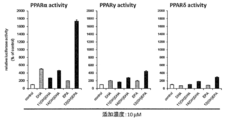
- PPAR ⁇ , ⁇ , and ⁇ ligand activity was measured by a reporter assay that assesses binding of the PPAR ligand binding region to the GAL4 DNA binding region to the fusion protein and target gene activation by luciferase expression.
- a reporter assay that assesses binding of the PPAR ligand binding region to the GAL4 DNA binding region to the fusion protein and target gene activation by luciferase expression.
- a plasmid containing DNA encoding a fusion protein of the PPAR ⁇ , ⁇ , and ⁇ ligand-binding regions and the GAL4 DNA-binding region and a reporter plasmid in which luciferase was linked to the GAL4-binding DNA sequence were introduced into CV-1 cells.
- the ligands described below were added to the cells, and after incubation, the luciferase activity was detected.
- Fatty Acid Hydroxide As a representative of the fatty acid hydroxide of the present invention, 11-hydroxy-cis-4, cis-7, cis-13, cis-16, cis-19-docosapentaenoic acid ("11 (OH) DHA”) ), 12-Hydroxy-cis-5, cis-8, cis-14, cis-17-eicosapentaenoic acid (denoted as "12 (OH) EPA”), and docosahexaeno as a comparison of other fatty acids.
- DHA 14-hydroxy-cis-4, cis-7, cis-10, cis-16, cis-19-docosapentaenoic acid
- 14 (OH) DHA 14-hydroxy-cis-4, cis-7, cis-10, cis-16, cis-19-docosapentaenoic acid
- EPA icosapentaenoic acid
- various hydroxide fatty acids and oxo fatty acids can be produced, so that the hydroxide fatty acids and oxo fatty acids can be applied to various fields such as pharmaceuticals and foods. Further, according to the method of the present invention, it is extremely useful in that a novel rare fatty acid can be produced.
Landscapes
- Chemical & Material Sciences (AREA)
- Health & Medical Sciences (AREA)
- Life Sciences & Earth Sciences (AREA)
- Organic Chemistry (AREA)
- Engineering & Computer Science (AREA)
- Genetics & Genomics (AREA)
- Zoology (AREA)
- Wood Science & Technology (AREA)
- Bioinformatics & Cheminformatics (AREA)
- Biotechnology (AREA)
- General Health & Medical Sciences (AREA)
- General Engineering & Computer Science (AREA)
- Biomedical Technology (AREA)
- Biochemistry (AREA)
- Microbiology (AREA)
- Molecular Biology (AREA)
- Medicinal Chemistry (AREA)
- Public Health (AREA)
- Veterinary Medicine (AREA)
- Animal Behavior & Ethology (AREA)
- Chemical Kinetics & Catalysis (AREA)
- Physics & Mathematics (AREA)
- General Chemical & Material Sciences (AREA)
- Oil, Petroleum & Natural Gas (AREA)
- Plant Pathology (AREA)
- Biophysics (AREA)
- Epidemiology (AREA)
- Polymers & Plastics (AREA)
- Emergency Medicine (AREA)
- Pharmacology & Pharmacy (AREA)
- Dermatology (AREA)
- Cell Biology (AREA)
- Food Science & Technology (AREA)
- Animal Husbandry (AREA)
- Birds (AREA)
- Tropical Medicine & Parasitology (AREA)
- Virology (AREA)
- Preparation Of Compounds By Using Micro-Organisms (AREA)
- Enzymes And Modification Thereof (AREA)
- Micro-Organisms Or Cultivation Processes Thereof (AREA)
Priority Applications (2)
| Application Number | Priority Date | Filing Date | Title |
|---|---|---|---|
| JP2021511986A JP7500079B2 (ja) | 2019-03-29 | 2020-03-27 | 新規酵素を用いた希少脂肪酸の製造法ならびに新規希少脂肪酸 |
| US17/599,847 US12391968B2 (en) | 2019-03-29 | 2020-03-27 | Production method for rare fatty acid using novel enzyme, and novel rare fatty acid |
Applications Claiming Priority (2)
| Application Number | Priority Date | Filing Date | Title |
|---|---|---|---|
| JP2019067966 | 2019-03-29 | ||
| JP2019-067966 | 2019-03-29 |
Publications (1)
| Publication Number | Publication Date |
|---|---|
| WO2020203751A1 true WO2020203751A1 (ja) | 2020-10-08 |
Family
ID=72668139
Family Applications (1)
| Application Number | Title | Priority Date | Filing Date |
|---|---|---|---|
| PCT/JP2020/013983 Ceased WO2020203751A1 (ja) | 2019-03-29 | 2020-03-27 | 新規酵素を用いた希少脂肪酸の製造法ならびに新規希少脂肪酸 |
Country Status (3)
| Country | Link |
|---|---|
| US (1) | US12391968B2 (cg-RX-API-DMAC7.html) |
| JP (1) | JP7500079B2 (cg-RX-API-DMAC7.html) |
| WO (1) | WO2020203751A1 (cg-RX-API-DMAC7.html) |
Cited By (1)
| Publication number | Priority date | Publication date | Assignee | Title |
|---|---|---|---|---|
| WO2025013799A1 (ja) | 2023-07-07 | 2025-01-16 | Noster株式会社 | 整腸剤 |
Citations (2)
| Publication number | Priority date | Publication date | Assignee | Title |
|---|---|---|---|---|
| WO2013168310A1 (ja) * | 2012-05-10 | 2013-11-14 | 国立大学法人京都大学 | オキソ脂肪酸及び希少脂肪酸の製造法 |
| WO2015111699A1 (ja) * | 2014-01-24 | 2015-07-30 | 国立大学法人京都大学 | 新規酵素を用いた希少脂肪酸の製造法ならびに新規希少脂肪酸 |
Family Cites Families (7)
| Publication number | Priority date | Publication date | Assignee | Title |
|---|---|---|---|---|
| JP2007252333A (ja) | 2006-03-24 | 2007-10-04 | Asahi Kasei Pharma Kk | 共役高度不飽和脂肪酸類の製造方法 |
| JP2007259712A (ja) | 2006-03-27 | 2007-10-11 | Asahi Kasei Pharma Kk | 共役脂肪酸の製造方法 |
| JP5728726B2 (ja) | 2010-03-11 | 2015-06-03 | 国立大学法人京都大学 | トマト抽出物を含有する生活習慣病改善剤 |
| EP2913051B1 (en) | 2012-10-29 | 2018-09-19 | Kyoto University | Metabolism-improving agent comprising rare fatty acid |
| DK2959897T3 (da) | 2013-02-21 | 2019-08-12 | Univ Kyoto | Tarmkanal-beskyttelsesmiddel indeholdende hydroxyleret fedtsyre |
| CN106456586A (zh) | 2014-01-24 | 2017-02-22 | 国立大学法人京都大学 | 包含稀有脂肪酸的代谢改善剂 |
| CN106163511A (zh) | 2014-01-24 | 2016-11-23 | 国立大学法人京都大学 | 含有稀有脂肪酸的抗炎剂 |
-
2020
- 2020-03-27 WO PCT/JP2020/013983 patent/WO2020203751A1/ja not_active Ceased
- 2020-03-27 JP JP2021511986A patent/JP7500079B2/ja active Active
- 2020-03-27 US US17/599,847 patent/US12391968B2/en active Active
Patent Citations (2)
| Publication number | Priority date | Publication date | Assignee | Title |
|---|---|---|---|---|
| WO2013168310A1 (ja) * | 2012-05-10 | 2013-11-14 | 国立大学法人京都大学 | オキソ脂肪酸及び希少脂肪酸の製造法 |
| WO2015111699A1 (ja) * | 2014-01-24 | 2015-07-30 | 国立大学法人京都大学 | 新規酵素を用いた希少脂肪酸の製造法ならびに新規希少脂肪酸 |
Non-Patent Citations (2)
| Title |
|---|
| KISHINO, SHIGENOBU ET AL.: "Lipid metabolisms of intestinal bacteria and physiological functions on fatty acid metabolites", FOOD PROCESSINA AND INAREDIENTS, vol. 54, no. 2, 2019, pages 8 - 11 * |
| SAKURAMA, H. ET AL.: "Biohydrogenation of C20 polyunsaturated fatty acids by anaerobic bacteria", J. LIPID RES., vol. 55, September 2014 (2014-09-01), pages 1855 - 1863, XP055746455, DOI: 10.1194/jlr.M045450 * |
Cited By (1)
| Publication number | Priority date | Publication date | Assignee | Title |
|---|---|---|---|---|
| WO2025013799A1 (ja) | 2023-07-07 | 2025-01-16 | Noster株式会社 | 整腸剤 |
Also Published As
| Publication number | Publication date |
|---|---|
| JPWO2020203751A1 (cg-RX-API-DMAC7.html) | 2020-10-08 |
| US12391968B2 (en) | 2025-08-19 |
| US20220042053A1 (en) | 2022-02-10 |
| JP7500079B2 (ja) | 2024-06-17 |
Similar Documents
| Publication | Publication Date | Title |
|---|---|---|
| JP7100324B2 (ja) | オキソ脂肪酸及び希少脂肪酸の製造法 | |
| JP6340523B2 (ja) | 希少脂肪酸を含む代謝改善剤 | |
| JP6940854B2 (ja) | 希少脂肪酸を含む抗炎症剤 | |
| US11046980B2 (en) | Method for producing rare fatty acid using novel enzyme, and novel rare fatty acid | |
| US12491173B2 (en) | Metabolism-improving agent comprising rare fatty acid | |
| JP7500079B2 (ja) | 新規酵素を用いた希少脂肪酸の製造法ならびに新規希少脂肪酸 |
Legal Events
| Date | Code | Title | Description |
|---|---|---|---|
| 121 | Ep: the epo has been informed by wipo that ep was designated in this application |
Ref document number: 20782923 Country of ref document: EP Kind code of ref document: A1 |
|
| ENP | Entry into the national phase |
Ref document number: 2021511986 Country of ref document: JP Kind code of ref document: A |
|
| NENP | Non-entry into the national phase |
Ref country code: DE |
|
| 122 | Ep: pct application non-entry in european phase |
Ref document number: 20782923 Country of ref document: EP Kind code of ref document: A1 |
|
| WWG | Wipo information: grant in national office |
Ref document number: 17599847 Country of ref document: US |