WO2020196463A1 - 顎骨壊死の予防又は治療剤 - Google Patents
顎骨壊死の予防又は治療剤 Download PDFInfo
- Publication number
- WO2020196463A1 WO2020196463A1 PCT/JP2020/012861 JP2020012861W WO2020196463A1 WO 2020196463 A1 WO2020196463 A1 WO 2020196463A1 JP 2020012861 W JP2020012861 W JP 2020012861W WO 2020196463 A1 WO2020196463 A1 WO 2020196463A1
- Authority
- WO
- WIPO (PCT)
- Prior art keywords
- group
- jaw bone
- hmg
- extraction
- jaw
- Prior art date
- Legal status (The legal status is an assumption and is not a legal conclusion. Google has not performed a legal analysis and makes no representation as to the accuracy of the status listed.)
- Ceased
Links
Images






Classifications
-
- A—HUMAN NECESSITIES
- A61—MEDICAL OR VETERINARY SCIENCE; HYGIENE
- A61K—PREPARATIONS FOR MEDICAL, DENTAL OR TOILETRY PURPOSES
- A61K31/00—Medicinal preparations containing organic active ingredients
- A61K31/33—Heterocyclic compounds
- A61K31/395—Heterocyclic compounds having nitrogen as a ring hetero atom, e.g. guanethidine or rifamycins
- A61K31/40—Heterocyclic compounds having nitrogen as a ring hetero atom, e.g. guanethidine or rifamycins having five-membered rings with one nitrogen as the only ring hetero atom, e.g. sulpiride, succinimide, tolmetin, buflomedil
- A61K31/403—Heterocyclic compounds having nitrogen as a ring hetero atom, e.g. guanethidine or rifamycins having five-membered rings with one nitrogen as the only ring hetero atom, e.g. sulpiride, succinimide, tolmetin, buflomedil condensed with carbocyclic rings, e.g. carbazole
- A61K31/404—Indoles, e.g. pindolol
-
- A—HUMAN NECESSITIES
- A61—MEDICAL OR VETERINARY SCIENCE; HYGIENE
- A61K—PREPARATIONS FOR MEDICAL, DENTAL OR TOILETRY PURPOSES
- A61K45/00—Medicinal preparations containing active ingredients not provided for in groups A61K31/00 - A61K41/00
-
- A—HUMAN NECESSITIES
- A61—MEDICAL OR VETERINARY SCIENCE; HYGIENE
- A61P—SPECIFIC THERAPEUTIC ACTIVITY OF CHEMICAL COMPOUNDS OR MEDICINAL PREPARATIONS
- A61P19/00—Drugs for skeletal disorders
-
- A—HUMAN NECESSITIES
- A61—MEDICAL OR VETERINARY SCIENCE; HYGIENE
- A61P—SPECIFIC THERAPEUTIC ACTIVITY OF CHEMICAL COMPOUNDS OR MEDICINAL PREPARATIONS
- A61P43/00—Drugs for specific purposes, not provided for in groups A61P1/00-A61P41/00
Definitions
- the present invention relates to a prophylactic or therapeutic agent for jaw bone necrosis.
- the present application claims priority based on Japanese Patent Application No. 2019-063096 filed in Japan on March 28, 2019, the contents of which are incorporated herein by reference.
- Osteonecrosis of the jaw may occur spontaneously, but after tooth extraction or trauma, or after receiving radiation therapy to the head and neck (in this case, called “radiation osteonecrosis”).
- radiation osteonecrosis is an intractable disease that develops in the oral cavity.
- Typical symptoms of mandibular necrosis include gingival swelling, pain, drainage, tooth mobility, and prolonged exposure of the mandible.
- BP preparations bisphosphonate preparations
- bone resorption inhibitors molecular-targeted therapeutic agents
- jaw bone necrosis develops with the use of denosumab, etc.) and angiogenesis inhibitors (snitinib, etc.) that suppress the growth of cancer cells.
- angiogenesis inhibitors snitinib, etc.
- the incidence of jaw bone necrosis is about 1% or more and 15% or less, and the incidence of jaw bone necrosis in patients taking low-dose BP preparations (osteoporosis patients) is about 0.001% or more and 0.01% or less.
- Mandibular necrosis in patients taking drugs such as BP preparations is thought to be more likely to be caused by treatments that stimulate the mandible, such as tooth extraction, dental implant surgery, and periodontal surgery. ..
- treatments that stimulate the mandible such as tooth extraction, dental implant surgery, and periodontal surgery. ..
- the cause and onset mechanism of jaw bone necrosis are still unknown, and no cure has been established.
- Non-Patent Document 1 topical administration of a glycolic acid / lactic acid copolymer microsphere containing fluvastatin to a rat extraction socket promotes healing of the extraction socket (for example).
- the present invention has been made in view of the above circumstances, and provides a novel preventive or therapeutic agent for jaw bone necrosis.
- the present inventors have conducted an in vivo test system using a rat model of an anti-resorptive agents-related osteonecrosis of the jaw; ARONJ-like disease. Therefore, it was found that the onset of ARONJ can be suppressed by locally administering an inhibitor of hydroxymethylglutaryl coenzyme A (HMG-CoA) coenzyme A (HMG-CoA) reductase around the planned tooth extraction site at the time of tooth extraction, and the present invention is completed. It came to.
- HMG-CoA hydroxymethylglutaryl coenzyme A
- HMG-CoA hydroxymethylglutaryl coenzyme A
- the prophylactic or therapeutic agent for jaw bone necrosis contains an inhibitor of hydroxymethylglutaryl coenzyme A reductase as an active ingredient.
- the inhibitor of the hydroxymethylglutaryl coenzyme A reductase may be a statin compound.
- the inhibitor of the hydroxymethylglutaryl coenzyme A reductase may be fluvastatin.
- the jaw bone necrosis may be drug-related jaw bone necrosis.
- the jaw bone necrosis may be due to administration of a bisphosphonate-based preparation.
- jaw bone necrosis can be effectively prevented or treated.
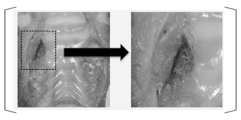
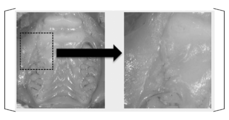
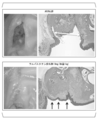
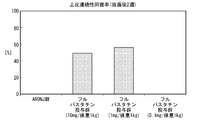
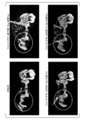
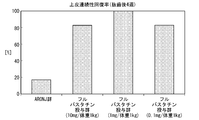
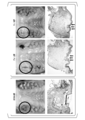
- Example 1 It is an intraoral photograph of the experimental group in Example 1. It is an intraoral photograph of the control group in Example 1. It is a micro Computed Tomography (CT) image of the upper jaw of the experimental group in Example 1. It is a micro CT image of the upper jaw of the control group in Example 1. It is a graph which shows the epithelial continuity recovery rate of each group in Example 1. Intraoral photographs (left) of the ARONJ group and the fluvastatin-administered group (1 mg / body weight 1 kg) 2 weeks after tooth extraction in Example 1 and hematoxylin-Eosin (HE) stained images of tissue specimens (right). is there. It is a graph which shows the epithelial continuity recovery rate of each group 2 weeks after tooth extraction in Example 1.
- CT Computed Tomography
- each group name (n1 / n2) is the number n1 of animals whose epithelial healing rate was 100% relative to the number of animals n2 tested. It is a micro CT image of the upper jaw of each group 4 weeks after tooth extraction in Example 2. It is a graph which shows the bone volume fraction in the extraction socket in the micro CT image of the upper jaw of each group 4 weeks after the tooth extraction in Example 2.
- the present embodiment the preventive or therapeutic agent and pharmaceutical composition for jaw bone necrosis according to one embodiment of the present invention
- HMG-CoA reductase inhibitor an inhibitor of hydroxymethylglutaryl coenzyme A (HMG-CoA) reductase (hereinafter, may be abbreviated as "HMG-CoA reductase inhibitor”) is effective.
- HMG-CoA reductase inhibitor hydroxymethylglutaryl coenzyme A reductase
- Contains as an ingredient as used herein, "containing as an active ingredient” means containing a therapeutically effective amount of an HMG-CoA reductase inhibitor.
- therapeutically effective amount as used herein means a biological or medical amount required by a doctor, clinician, veterinarian, researcher, or other appropriate specialist when administered according to a desired therapeutic measure.
- HMG-CoA reductase inhibitor that induces an effect or response, or the amount of a combination of HMG-CoA reductase inhibitor and one or more activators.
- a preferred therapeutically effective amount is an amount that suppresses jaw bone necrosis.
- the "therapeutically effective amount” includes an amount effective for prevention, that is, an amount suitable for prevention of a disease state.
- jaw bone necrosis The onset mechanism of jaw bone necrosis is still unknown, but it is thought that suppression of bone regeneration, infection with oral bacteria, inflammatory reaction, suppression of epithelial cell proliferation and migration, suppression of angiogenesis, etc. lead to jaw bone necrosis.
- the inventors have found that the onset of jaw bone necrosis due to tooth extraction is due to the delayed healing of the epithelium of the extraction socket, which exposes the mandible for a long period of time in the oral cavity, creating an environment in which bacterial infection is likely to occur. It was hypothesized that by blocking the epithelium of the extraction socket at an early stage, it was possible to suppress bacterial infection of the bone.
- the inventors topically applied an HMG-CoA reductase inhibitor, which has been confirmed to promote healing of the extraction socket, around the extraction socket of a rat model of ARONJ-like disease, as shown in Examples described later. When administered, it was revealed that the onset of ARONJ could be suppressed.
- osteonecrosis of the jaw may occur spontaneously, but after tooth extraction or trauma, or after receiving radiation therapy to the head and neck (in this case, “radiation osteonecrosis” It is an intractable disease that develops in the oral cavity by administration of a specific drug.
- Examples of drugs that cause jaw bone necrosis include bisphosphonate preparations (hereinafter, may be abbreviated as "BP preparations"), bone resorption inhibitors, angiogenesis inhibitors, and the like.
- BP preparations include aminohydroxymethylidene bisphosphonic acid (AMP), 2-amino-1-hydroxyethylidene-1,1-bisphosphonic acid (AEP), and 3-amino-1-hydroxypropyriden-1,1-.
- Bisphosphonic acid (pamidronic acid), 4-amino-1-hydroxybutylidelen-1,1-bisphosphonic acid (alendronic acid), 6-amino-1-hydroxyhexylidene-1,1-bisphosphonic acid (AHP), Amidinomethylene bisphosphonic acid (AIMP), 3-methylpentylamino-1-hydroxypropyriden-1,1-bisphosphonic acid (ibandronic acid), 2- (3-pyridinyl) -1-hydroxyethylidenebisphosphonic acid (lysedronic acid), 1-Hydroxy-2- (imidazol-1-yl) -ethylidene-1,1-bisphosphonic acid (zoredronic acid), cycloheptylaminomethylene bisphosphonic acid (simadronic acid), 4-chlorophenylthiomethylene-1,1-bisphosphonic acid (Tyrdronic acid) and salts thereof and the like, but are not limited thereto.
- Examples of the bone resorption inhibitor include, but are not limited to, denosumab and the like.
- Examples of the angiogenesis inhibitor include, but are not limited to, sunitinib and the like.
- the jaw bone necrosis caused by the administration of these drugs is drug-related osteonecrosis of the jaw (MRONJ), anti-resorptive agents-related ONJ (ARONJ), or bisphosphonate (bisphosphonate). -related ONJ; BRONJ), both of which show the same pathology.
- osteonecrosis In radiation-induced osteonecrosis, when a tooth near the radiation field is extracted, the tooth and the surrounding bone are damaged by radiation irradiation, so the tooth extraction may cause osteonecrosis. Necrosis stops when osteonecrosis spreads to the outside of the radiation field.
- ARONJ which is caused by administration of BP preparation
- the HMG-CoA reductase inhibitor is a compound having an inhibitory activity on HMG-CoA reductase.
- HMG-CoA reductase can be easily produced by using a detection method well known in the art (see, eg, US Pat. No. 4,231,938, US Pat. No. 5,354,772). Can be identified in.
- Specific examples of the HMG-CoA reductase inhibitor include low molecular weight compounds, HMG-CoA reductase expression inhibitors, and HMG-CoA reductase-specific binding substances.
- Examples of low molecular weight compounds that are HMG-CoA reductase inhibitors useful here include statins, and specifically, for example, lovastatin (MEVACOR®; US Pat. No. 4,231,938. (See), simvastatin (ZOCOR®; US Pat. No. 4,444,784, see), pravastatin (PRAVACHOL®; US Pat. No. 4,346,227, see). , Fluvastatin (LESCOL®; US Pat. No. 5,354,772, see), atorvastatin (LIVAstatin®; US Pat. No. 5,273,995). , See), cerivastatin (also known as rivastatin; see US Pat. No.
- statin compounds a fat-soluble statin compound is preferable from the viewpoint of permeability to bone cells.
- examples of the fat-soluble statin compound include lovastatin, simvastatin, fluvastatin, atorvastatin, serivastatin, mevastatin, and pitavastatin, and among these, fluvastatin is preferable.
- low molecular weight compound which is an HMG-CoA reductase inhibitor
- a compound represented by the following general formula (I) (see US Pat. No. 5,650,523) can also be used.
- Z is a group represented by the following general formula (Ia), a group represented by the following general formula (Ib), a group represented by the following formula (Ic), and the following formula (Id). It is a group represented by, a group represented by the following (Ie), or a group represented by the following general formula (If). In the following, the asterisk represents a bond.
- R 1 is an alkyl group having 1 or more carbon atoms and 10 or less carbon atoms.
- R 2 is any group selected from the group consisting of an alkyl group having 1 to 3 carbon atoms, a hydroxy group, an oxo group, and a hydroxy group substituted alkyl group having 1 to 3 carbon atoms.
- R 3 is a hydrogen atom, a hydroxy group, an alkyl group having 1 to 3 carbon atoms, or a hydroxy group substituted alkyl group having 1 to 3 carbon atoms.
- a, b, c, and d are all single bonds, or a and c are double bonds, or b and d are double bonds, or one of a, b, c, and d.
- X is N [CH (CH 3 ) 2 ] or CH (CH 2 ) 3 CH 3 );
- R 4 and R 5 are independently hydrogen atom, fluorine atom, chlorine atom, bromine atom, iodine atom, alkyl group having 1 to 4 carbon atoms, and alkoxy having 1 to 4 carbon atoms.
- Group or trifluoromethyl group R 6 , R 7 , R 8 and R 9 are independently hydrogen atom, fluorine atom, chlorine atom, bromine atom, iodine atom, alkyl group having 1 to 4 carbon atoms, or alkoxy having 1 to 4 carbon atoms. It is the basis. )
- the HMG-CoA reductase inhibitor includes the forms of pharmaceutically acceptable salts, esters and lactones of compounds having inhibitory activity on HMG-CoA reductase.
- pharmaceutically acceptable salt means a non-toxic salt of an HMG-CoA reductase inhibitor, and generally, by reacting the free acid with an appropriate organic or inorganic base. Can be prepared.
- salt form of the HMG-CoA reductase inhibitor include acetate, benzenesulfonate, benzoate, bicarbonate, bicarbonate, heavy tartrate, borate, bromide, calcium, calcium edetate.
- Ester refers to a condensation product of a carboxylic acid and an alcohol. Ester derivatives of HMG-CoA reductase inhibitors can function as prodrugs, and these ester derivatives release the drug from it when administered into the bloodstream of the animal, and the drug is an improved treatment. It is possible to cleave in a manner that provides efficacy.
- “Lactone” refers to a cyclic condensation product of a carboxylic acid and an alcohol, that is, a cyclic ester.
- HMG-CoA reductase expression inhibitor examples include siRNA, shRNA, miRNA, ribozyme, antisense nucleic acid, and low molecular weight compounds.
- SiRNA small interfering RNA
- RISC RNA-induced silencing complex
- sense strand and antisense strand oligonucleotides are synthesized by a DNA / RNA automatic synthesizer, respectively, and denatured in an appropriate annealing buffer at 90 ° C or higher and 95 ° C or lower for about 1 minute, and then 30 It can be prepared by annealing at about 1 ° C. or higher and 70 ° C. or lower for about 1 hour or more and 8 hours or less.
- SiRNAs, shRNAs, miRNAs, ribozymes and antisense nucleic acids may contain various chemical modifications to improve stability and activity.
- the phosphate residue may be replaced with a chemically modified phosphate residue such as phosphorothioate (PS), methylphosphonate, or phosphorodithionate.
- PS phosphorothioate
- methylphosphonate methylphosphonate
- phosphorodithionate phosphorodithionate
- at least a part thereof may be composed of nucleic acid analogs such as peptide nucleic acids (PNA).
- PNA peptide nucleic acids
- HMG-CoA reductase-specific binding substance examples include those that specifically bind to HMG-CoA reductase and inhibit the function of HMG-CoA reductase, and examples thereof include antibodies, antibody fragments, and aptamers. Be done.
- Antibodies can be produced, for example, by immunizing an animal such as a mouse with HMG-CoA reductase or a fragment thereof as an antigen. Alternatively, it can be prepared, for example, by screening a phage library.
- the antibody fragment include Fv, Fab, scFv and the like.
- the above antibody is preferably a monoclonal antibody. Moreover, it may be a commercially available antibody.
- An aptamer is a substance that has a specific binding ability to a target substance.
- examples of the aptamer include nucleic acid aptamers and peptide aptamers.
- Nucleic acid aptamers having a specific binding ability to a target peptide can be selected by, for example, a systematic evolution of ligand by exponential enrichment (SELEX) method.
- a peptide aptamer having a specific binding ability to a target peptide can be selected by, for example, a two-hybrid method using yeast.
- the pharmaceutical composition for the prevention or treatment of jaw bone necrosis of the present embodiment includes the above-mentioned preventive or therapeutic agent for jaw bone necrosis and a pharmaceutically acceptable carrier. By administering the pharmaceutical composition of the present embodiment, jaw bone necrosis can be prevented or treated.
- the pharmaceutical composition of the present embodiment may be a dosage form used orally or a dosage form used parenterally, but a dosage form used parenterally is preferable. ..
- Dosage forms used orally include, for example, tablets, capsules, elixirs, microcapsules and the like.
- Dosage forms used parenterally include, for example, injections, ointments, patches and the like.
- binders such as gelatin, cornstarch, tragant gum, and gum arabic
- excipients such as starch and crystalline cellulose
- swelling agents such as alginic acid
- solvents for injections such as water, ethanol, and glycerin
- adhesives such as rubber-based adhesives and silicone-based adhesives.
- the pharmaceutical composition may contain additives.
- Additives include lubricants such as calcium stearate and magnesium stearate; sweeteners such as sucrose, lactose, saccharin and martitol; flavors such as peppermint and red mono oil; stabilizers such as benzyl alcohol and phenol; phosphoric acid. Buffers such as salts and sodium acetate; solubilizers such as benzyl benzoate and benzyl alcohol; antioxidants; preservatives and the like can be mentioned.
- the pharmaceutical composition is prepared by appropriately combining the above-mentioned preventive or therapeutic agent for jaw bone necrosis with the above-mentioned pharmaceutically acceptable carrier and additive, and mixing them in a unit dose form required for generally accepted pharmaceutical practice. Can be transformed into.
- the pharmaceutical composition may be used in combination with a therapeutic agent for other diseases.
- a therapeutic agent for other diseases for example, by using the above-mentioned preventive or therapeutic agent for jaw bone necrosis in combination with a BP preparation which is an osteoporosis therapeutic agent, osteoporosis can be prevented or treated while effectively suppressing the onset of jaw bone necrosis.
- the above-mentioned preventive or therapeutic agent for jaw bone necrosis and other agents may be the same preparation or may be separate preparations.
- each preparation may be administered by the same administration route or may be administered by different administration routes. Further, each preparation may be administered simultaneously, sequentially, or separately after a certain period of time or period.
- the above-mentioned preventive or therapeutic agent for jaw bone necrosis and other agents may be a kit containing them.
- the subject to be administered includes, but is not limited to, humans, monkeys, dogs, cows, horses, sheep, pigs, rabbits, mice, rats, guinea pigs, hamsters, and cells thereof. Among them, mammals or mammalian cells are preferable, and humans or human cells are particularly preferable.
- the administration route is preferably a parenteral administration route such as subcutaneous administration, transdermal administration (including transmucosal administration), intramuscular administration, and topical administration to the periodontium, and topical administration to the periodontium is particularly preferable.
- the dose of the preventive or therapeutic agent for jaw bone necrosis varies depending on the type of HMG-CoA reductase inhibitor, the symptoms of the administration target, the administration site, the administration method, and the like. Those skilled in the art can appropriately select an appropriate dose, but for example, in the case of topical administration, generally in adults (assuming a body weight of 60 kg), usually about 0.01 mg per day. It is about 3000 mg or less, preferably about 0.05 mg or more and 300 mg or less, and more preferably about 0.1 mg or more and 100 mg or less.
- the prophylaxis or therapeutic agent for jaw bone necrosis may be administered in a single dose or in multiple doses. In the case of multiple doses, for example, it may be administered every day for a period of 2 hours or more and 12 hours or less, or once every two days, one week, several weeks, one month or several months. it can.
- the present invention provides a method for preventing or treating jaw bone necrosis, which comprises administering an effective amount of an HMG-CoA reductase inhibitor to a patient or patient in need of treatment.
- an HMG-CoA reductase inhibitor examples include those similar to those described above.
- jaw bone necrosis examples include those similar to those described above.
- the present invention provides an HMG-CoA reductase inhibitor for the prevention or treatment of jaw bone necrosis.
- HMG-CoA reductase inhibitor examples include those similar to those described above.
- jaw bone necrosis examples include those similar to those described above.
- the present invention provides the use of an HMG-CoA reductase inhibitor to produce a prophylactic or therapeutic agent for jaw bone necrosis.
- HMG-CoA reductase inhibitor examples include those similar to those described above.
- jaw bone necrosis examples include those similar to those described above.
- Example 1 1. Establishment of a rat model for ARONJ-like disease Kaibuchi et al. (Reference 1: "Kaibuchi N et al.,” Multipotent mesenchymal stromal cell sheet therapy for bisphosphonate-related osteonecrosis of the jaw in a rat model. ", Acta Biomaterialia, Vol. A rat model of ARONJ-like disease was prepared with reference to (42, p400-410, 2016.).
- zoledronic acid 0.066 mg / kg, which is a type of BP preparation
- dexamethasone Dex 5 mg / kg, which is an adrenocortical hormone
- the maxillary first premolar tooth was removed 2 weeks after the start of administration, and the maxillary first premolar was euthanized 2 or 4 weeks later to image the maxillary part of the oral cavity (Fig. 1: experimental group, Fig. 2: control group), and further the maxilla.
- the part was observed by micro Computed Tomography (CT) (Fig. 3: Experimental group, Fig. 4: Control group).
- CT micro Computed Tomography
- HE Hematoxylin-Eosin
- the proportion of rats with epithelial continuity in each group 2 weeks after tooth extraction was calculated as the epithelial continuity recovery rate (see FIG. 5).
- the gingiva has a hole (extraction socket) in the shape of the cross section of the tooth, and a blood clot (blood clot) exists in the extraction socket.
- a blood clot blood clot
- the epithelium grows on the blood clot and the continuity of the epithelium is restored, and the formation of new bone occurs in the extraction socket with a delay.
- ARONJ epithelial continuity is not restored and bone infection occurs.
- the infected and necrotic bone is called "sequestrum”.
- new bone is not formed due to the presence of rotten bone.
- topical administration of HMG-CoA reductase inhibitor may promote healing of the extraction socket epithelium and suppress (prevent) the onset of ARONJ.
- Example 2 Therapeutic effect of ARONJ-like disease by administration of fluvastatin
- Euthanasia was performed 2 weeks after the administration of fluvastatin (6 weeks after the start of administration of the ZA and Dex admixture), the maxilla in the oral cavity was imaged (Fig. 12, top), and the maxilla was further micro-CT. Observed (Fig. 14).
- a tissue specimen of the extraction socket was prepared, stained with HE, and then observed (Fig. 12, bottom). Healing of the extraction socket was assessed by macroscopic findings of the extraction socket, recovery rate of epithelial continuity impaired by tooth extraction (FIG. 13), and bone volume ratio at the extraction socket in micro CT images (FIG. 15). For the bone volume fraction, the proportion of new bone in the extraction socket was calculated using a micro CT image.
- topical administration of HMG-CoA reductase inhibitor promotes healing of the extraction socket epithelium and may treat ARONJ.
- the preventive or therapeutic agent for jaw bone necrosis of the present embodiment it is possible to effectively prevent or treat jaw bone necrosis (particularly, drug-related jaw bone necrosis).
Landscapes
- Health & Medical Sciences (AREA)
- Veterinary Medicine (AREA)
- Chemical & Material Sciences (AREA)
- Medicinal Chemistry (AREA)
- Pharmacology & Pharmacy (AREA)
- Life Sciences & Earth Sciences (AREA)
- Animal Behavior & Ethology (AREA)
- General Health & Medical Sciences (AREA)
- Public Health (AREA)
- Epidemiology (AREA)
- Engineering & Computer Science (AREA)
- Bioinformatics & Cheminformatics (AREA)
- Chemical Kinetics & Catalysis (AREA)
- General Chemical & Material Sciences (AREA)
- Nuclear Medicine, Radiotherapy & Molecular Imaging (AREA)
- Organic Chemistry (AREA)
- Physical Education & Sports Medicine (AREA)
- Pharmaceuticals Containing Other Organic And Inorganic Compounds (AREA)
Abstract
顎骨壊死の予防又は治療剤は、ヒドロキシメチルグルタリルコエンザイムA還元酵素の阻害剤を有効成分として含有する。
Description
本発明は、顎骨壊死の予防又は治療剤に関する。
本願は、2019年3月28日に、日本に出願された特願2019-063096号に基づき優先権を主張し、その内容をここに援用する。
本願は、2019年3月28日に、日本に出願された特願2019-063096号に基づき優先権を主張し、その内容をここに援用する。
顎骨壊死(osteonecrosis of the jaw;ONJ)は、自然に発症することもあるが、抜歯や外傷の後や、頭頸部に放射線療法を受けた後(この場合、「放射線性骨壊死」と呼ばれる)に、口腔内に発症する難治性の疾患である。顎骨壊死の典型的な症状としては、歯肉腫脹、疼痛、排膿、歯の動揺、長期にわたる顎骨の露出等がある。近年では、骨粗鬆症の予防及び治療や、固形癌の骨転移抑制を目的として用いられるビスホスホネート系製剤(以下、「BP製剤」と略記する場合がある)や骨吸収抑制剤(分子標的治療薬であるデノスマブ等)、がん細胞の増殖を抑える血管新生阻害薬(スニチニブ等)の使用に伴い、顎骨壊死を発症することが確認されている。本邦において、323施設での患者数は4797名に上り(日本口腔外科学会調べ、「2015年薬剤関連顎骨壊死治療に関する実態調査」より抜粋)、高用量のBP製剤服用患者(がん患者)での顎骨壊死発症率は1%以上15%以下程度、低用量のBP製剤服用患者(骨粗鬆症患者)での顎骨壊死発症率は0.001%以上0.01%以下程度である。BP製剤等の薬剤を服用している患者における顎骨壊死は、抜歯や歯科インプラント手術、歯周外科治療等の顎骨に対して刺激が加わるような治療を行うことで惹起されやすいと考えられている。しかしながら、顎骨壊死の原因や発症メカニズムは未だ不明であり、治療法は確立されていない。
一方、発明者らはこれまで、ラットの抜歯窩にフルバスタチンを含むグリコール酸/乳酸共重合体のミクロスフェアを局所投与することで、抜歯窩の治癒を促進することを明らかにしている(例えば、非特許文献1参照)。
Yasunami N et al., "Acceleration of hard and soft tissue healing in the oral cavity by a single transmucosal injection of fluvastatin-impregnated poly (lactic-co-glycolic acid) microspheres. An in vitro and rodent in vivo study.", Biomedical Materials, Vol. 11, No. 1, 2016, doi:10.1088/1748-6041/11/1/015001.
本発明は、上記事情に鑑みてなされたものであって、新規の顎骨壊死の予防又は治療剤を提供する。
本発明者らは、上記目的を達成すべく鋭意研究を重ねた結果、骨吸収抑制薬関連顎骨壊死(Anti-resorptive agents-related osteonecrosis of the jaw;ARONJ)様疾患ラットモデルを用いたインビボ試験系で、抜歯の際に、抜歯予定部位の周囲に、ヒドロキシメチルグルタリルコエンザイムA(HMG-CoA)還元酵素の阻害剤を局所投与することでARONJの発症を抑制できることを見出し、本発明を完成するに至った。
すなわち、本発明は、以下の態様を含む。
本発明の第1態様に係る顎骨壊死の予防又は治療剤は、ヒドロキシメチルグルタリルコエンザイムA還元酵素の阻害剤を有効成分として含有する。
前記ヒドロキシメチルグルタリルコエンザイムA還元酵素の阻害剤がスタチン化合物であってもよい。
前記ヒドロキシメチルグルタリルコエンザイムA還元酵素の阻害剤がフルバスタチンであってもよい。
前記顎骨壊死が薬剤関連顎骨壊死であってもよい。
前記顎骨壊死がビスホスホネート系製剤の投与によるものであってもよい。
本発明の第1態様に係る顎骨壊死の予防又は治療剤は、ヒドロキシメチルグルタリルコエンザイムA還元酵素の阻害剤を有効成分として含有する。
前記ヒドロキシメチルグルタリルコエンザイムA還元酵素の阻害剤がスタチン化合物であってもよい。
前記ヒドロキシメチルグルタリルコエンザイムA還元酵素の阻害剤がフルバスタチンであってもよい。
前記顎骨壊死が薬剤関連顎骨壊死であってもよい。
前記顎骨壊死がビスホスホネート系製剤の投与によるものであってもよい。
上記態様の顎骨壊死の予防又は治療剤によれば、顎骨壊死を効果的に予防又は治療することができる。
以下、本発明の一実施形態(以下、「本実施形態」という)に係る顎骨壊死の予防又は治療剤及び医薬組成物について、詳細を説明する。
≪顎骨壊死の予防又は治療剤≫
本実施形態の顎骨壊死の予防又は治療剤は、ヒドロキシメチルグルタリルコエンザイムA(HMG-CoA)還元酵素の阻害剤(以下、「HMG-CoA還元酵素阻害剤」と略記する場合がある)を有効成分として含有する。本明細書において、「有効成分として含有する」とは、治療的に有効な量のHMG-CoA還元酵素阻害剤を含有することを意味する。なお、ここでいう「治療的に有効な量」とは、望ましい治療措置に従って投与したときに、医師、臨床医、獣医、研究者、又は他の適切な専門家が求める生物学的、医学的効果若しくは応答を誘発するHMG-CoA還元酵素阻害剤の量、又はHMG-CoA還元酵素阻害剤及び1種類以上の活性剤の組み合わせの量を意味する。好ましい治療的に有効な量は顎骨壊死を抑制する量である。また、「治療的に有効な量」には、予防に有効な量、すなわち、疾患状態の予防に適する量が包含される。
本実施形態の顎骨壊死の予防又は治療剤は、ヒドロキシメチルグルタリルコエンザイムA(HMG-CoA)還元酵素の阻害剤(以下、「HMG-CoA還元酵素阻害剤」と略記する場合がある)を有効成分として含有する。本明細書において、「有効成分として含有する」とは、治療的に有効な量のHMG-CoA還元酵素阻害剤を含有することを意味する。なお、ここでいう「治療的に有効な量」とは、望ましい治療措置に従って投与したときに、医師、臨床医、獣医、研究者、又は他の適切な専門家が求める生物学的、医学的効果若しくは応答を誘発するHMG-CoA還元酵素阻害剤の量、又はHMG-CoA還元酵素阻害剤及び1種類以上の活性剤の組み合わせの量を意味する。好ましい治療的に有効な量は顎骨壊死を抑制する量である。また、「治療的に有効な量」には、予防に有効な量、すなわち、疾患状態の予防に適する量が包含される。
顎骨壊死の発症メカニズムは、未だ不明であるが、骨再生の抑制、口腔細菌の感染、炎症反応、上皮細胞の増殖抑制及び遊走抑制、血管新生の抑制等が顎骨壊死につながるものと考えられている。発明者らは、抜歯による顎骨壊死の発症は、抜歯窩の上皮の治癒が遅延することで、口腔内で長期にわたり顎骨が露出し、骨へ細菌感染が起こりやすい環境となっていることが原因であると仮説を立て、抜歯窩の上皮を早期に封鎖することで、骨への細菌感染を抑制できるものと考えた。発明者らは、これら仮説に基づいて、後述する実施例に示すように、ARONJ様疾患ラットモデルの抜歯窩周囲に抜歯窩の治癒促進作用が確認されているHMG-CoA還元酵素阻害剤を局所投与したところ、ARONJの発症を抑制できることを明らかにした。
なお、「顎骨壊死(osteonecrosis of the jaw;ONJ)」は、自然に発症することもあるが、抜歯や外傷の後や、頭頸部に放射線療法を受けた後(この場合、「放射線性骨壊死」と呼ばれる)、特定の薬剤の投与により、口腔内に発症する難治性の疾患である。
顎骨壊死を引き起こす薬剤としては、ビスホスホネート系製剤(以下、「BP製剤」と略記する場合がある)、骨吸収抑制剤、血管新生阻害薬等が挙げられる。BP製剤としては、例えば、アミノヒドロキシメチリデンビスホスホン酸(AMP)、2-アミノ-1-ヒドロキシエチリデン-1,1-ビスホスホン酸(AEP)、3-アミノ-1-ヒドロキシプロピリデン-1,1-ビスホスホン酸(パミドロン酸)、4-アミノ-1-ヒドロキシブチリデレン-1,1-ビスホスホン酸(アレンドロン酸)、6-アミノ-1-ヒドロキシヘキシリデン-1,1-ビスホスホン酸(AHP)、アミジノメチレンビスホスホン酸(AIMP)、3-メチルペンチルアミノ-1-ヒドロキシプロピリデン-1,1-ビスホスホン酸(イバンドロン酸)、2-(3-ピリジニル)-1-ヒドロキシエチリデンビスホスホン酸(リゼドロン酸)、1-ヒドロキシ-2-(イミダゾール-1-イル)-エチリデン-1,1-ビスホスホン酸(ゾレドロン酸)、シクロヘプチルアミノメチレンビスホスホン酸(シマドロン酸)、4-クロロフェニルチオメチレン-1,1-ビスホスホン酸(チルドロン酸)及びこれらの塩等が挙げられるが、これらに限定されない。骨吸収抑制剤としては、例えば、デノスマブ等が挙げられるが、これらに限定されない。血管新生阻害薬としては、例えば、スニチニブ等が挙げられるが、これらに限定されない。これら薬剤の投与により発症する顎骨壊死は、薬剤関連顎骨壊死(medication-related ONJ;MRONJ)、骨吸収抑制薬関連顎骨壊死(anti-resorptive agents-related ONJ:ARONJ)、又はビスホスホネート関連顎骨壊死(bisphosphonate-related ONJ;BRONJ)と呼ばれ、いずれも同じ病態を示す。
放射線性骨壊死では、放射線照射野付近の歯を抜いた場合に、当該歯やその周囲の骨が放射線照射による損傷を受けているため、抜歯により骨壊死が惹起されることがあるが、放射線照射野の外側まで骨壊死が広がると壊死は止まる。これに対して、BP製剤の投与により発症するARONJでは、全身の骨にBP製剤が蓄積(沈着)しているため、骨壊死の制御に難渋するケースが多い。そのため、BP製剤の投与により発症するARONJに、本実施形態の顎骨壊死の予防又は治療剤を適用することで、骨壊死を効果的に抑制することができる。すなわち、本実施形態の顎骨壊死の予防又は治療剤は、BP製剤の投与により発症するARONJに特に好適に用いることができる。
<HMG-CoA還元酵素阻害剤>
HMG-CoA還元酵素阻害剤は、HMG-CoA還元酵素に対する阻害活性を有する化合物である。HMG-CoA還元酵素は、当該技術分野において周知の検出方法(例えば、米国特許第4,231,938号明細書、米国特許第5,354,772号明細書、参照)を用いることで、容易に同定することができる。
HMG-CoA還元酵素阻害剤として具体的には、例えば、低分子化合物、HMG-CoA還元酵素発現阻害剤、HMG-CoA還元酵素特異的結合物質等が挙げられる。
HMG-CoA還元酵素阻害剤は、HMG-CoA還元酵素に対する阻害活性を有する化合物である。HMG-CoA還元酵素は、当該技術分野において周知の検出方法(例えば、米国特許第4,231,938号明細書、米国特許第5,354,772号明細書、参照)を用いることで、容易に同定することができる。
HMG-CoA還元酵素阻害剤として具体的には、例えば、低分子化合物、HMG-CoA還元酵素発現阻害剤、HMG-CoA還元酵素特異的結合物質等が挙げられる。
[低分子化合物]
ここで有用なHMG-CoA還元酵素阻害剤である低分子化合物としては、スタチン化合物が挙げられ、具体的には、例えば、ロバスタチン(MEVACOR(登録商標);米国特許第4,231,938号明細書、参照)、シンバスタチン(ZOCOR(登録商標);米国特許第4,444,784号明細書、参照)、プラバスタチン(PRAVACHOL(登録商標);米国特許第4,346,227号明細書、参照)、フルバスタチン(fluvastatin)(LESCOL(登録商標);米国特許第5,354,772号明細書、参照)、アトルバスタチン(atorvastatin)(LIPITOR(登録商標);米国特許第5,273,995号明細書、参照)、セリバスタチン(cerivastatin)(別名リバスタチン(rivastatin);米国特許第5,177,080号号明細書、参照)、メバスタチン(mevastatin)(コンパクチン(compactin)、米国特許第3,983,140号明細書、参照)、ロスバスタチン(特開平5-178841号公報(米国特許第5,260,440号明細書)参照)、ピタバスタチン(特開平1-279866号公報(米国特許第5,854,259号明細書及び米国特許第5,856,336号明細書)参照)等が挙げられ、これらに限定されない。これらスタチン化合物の中でも、骨の細胞への浸透性の観点から、脂溶性のスタチン化合物が好ましい。上記のうち脂溶性のスタチン化合物としては、ロバスタチン、シンバスタチン、フルバスタチン、アトルバスタチン、セリバスタチン、メバスタチン、ピタバスタチンが挙げられ、これらの中でも、フルバスタチンが好ましい。
ここで有用なHMG-CoA還元酵素阻害剤である低分子化合物としては、スタチン化合物が挙げられ、具体的には、例えば、ロバスタチン(MEVACOR(登録商標);米国特許第4,231,938号明細書、参照)、シンバスタチン(ZOCOR(登録商標);米国特許第4,444,784号明細書、参照)、プラバスタチン(PRAVACHOL(登録商標);米国特許第4,346,227号明細書、参照)、フルバスタチン(fluvastatin)(LESCOL(登録商標);米国特許第5,354,772号明細書、参照)、アトルバスタチン(atorvastatin)(LIPITOR(登録商標);米国特許第5,273,995号明細書、参照)、セリバスタチン(cerivastatin)(別名リバスタチン(rivastatin);米国特許第5,177,080号号明細書、参照)、メバスタチン(mevastatin)(コンパクチン(compactin)、米国特許第3,983,140号明細書、参照)、ロスバスタチン(特開平5-178841号公報(米国特許第5,260,440号明細書)参照)、ピタバスタチン(特開平1-279866号公報(米国特許第5,854,259号明細書及び米国特許第5,856,336号明細書)参照)等が挙げられ、これらに限定されない。これらスタチン化合物の中でも、骨の細胞への浸透性の観点から、脂溶性のスタチン化合物が好ましい。上記のうち脂溶性のスタチン化合物としては、ロバスタチン、シンバスタチン、フルバスタチン、アトルバスタチン、セリバスタチン、メバスタチン、ピタバスタチンが挙げられ、これらの中でも、フルバスタチンが好ましい。
HMG-CoA還元酵素阻害剤である低分子化合物としては、下記一般式(I)で表わされる化合物(米国特許第第5,650,523号明細書、参照)を用いることもできる。

前記一般式(I)中、Zは下記一般式(Ia)で表される基、下記一般式(Ib)で表される基、下記式(Ic)で表される基、下記式(Id)で表される基、下記(Ie)で表される基、又は下記一般式(If)で表される基である。なお、以下において、アスタリスクは結合手を表す。
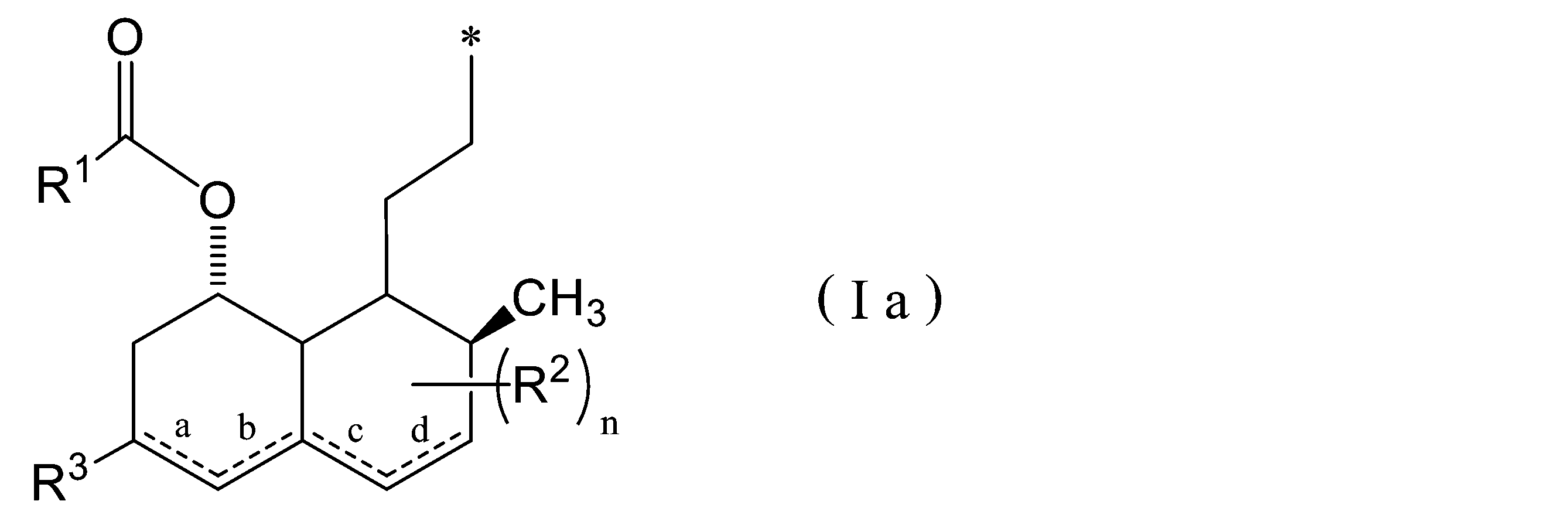
(一般式(Ia)中、R1は炭素数1以上10以下のアルキル基であり、
R2は炭素数1以上3以下のアルキル基、ヒドロキシ基、オキソ基、及び炭素数1以上3以下のヒドロキシ基置換アルキル基からなる群より選択されるいずれかの基であり、
R3は水素原子、ヒドロキシ基、炭素数1以上3以下のアルキル基、又は炭素数1以上3以下のヒドロキシ基置換アルキル基であり、
a、b、c、及びdは全て単結合であり、或いはa及びcは二重結合であり、或いはb及びdは二重結合であり、或いはa、b、c、及びdのうちの1つは二重結合であり、
nは0、1、又は2である。);
R2は炭素数1以上3以下のアルキル基、ヒドロキシ基、オキソ基、及び炭素数1以上3以下のヒドロキシ基置換アルキル基からなる群より選択されるいずれかの基であり、
R3は水素原子、ヒドロキシ基、炭素数1以上3以下のアルキル基、又は炭素数1以上3以下のヒドロキシ基置換アルキル基であり、
a、b、c、及びdは全て単結合であり、或いはa及びcは二重結合であり、或いはb及びdは二重結合であり、或いはa、b、c、及びdのうちの1つは二重結合であり、
nは0、1、又は2である。);

(一般式(Ib)中、XはN[CH(CH3)2]又はCH(CH2)3CH3である。);


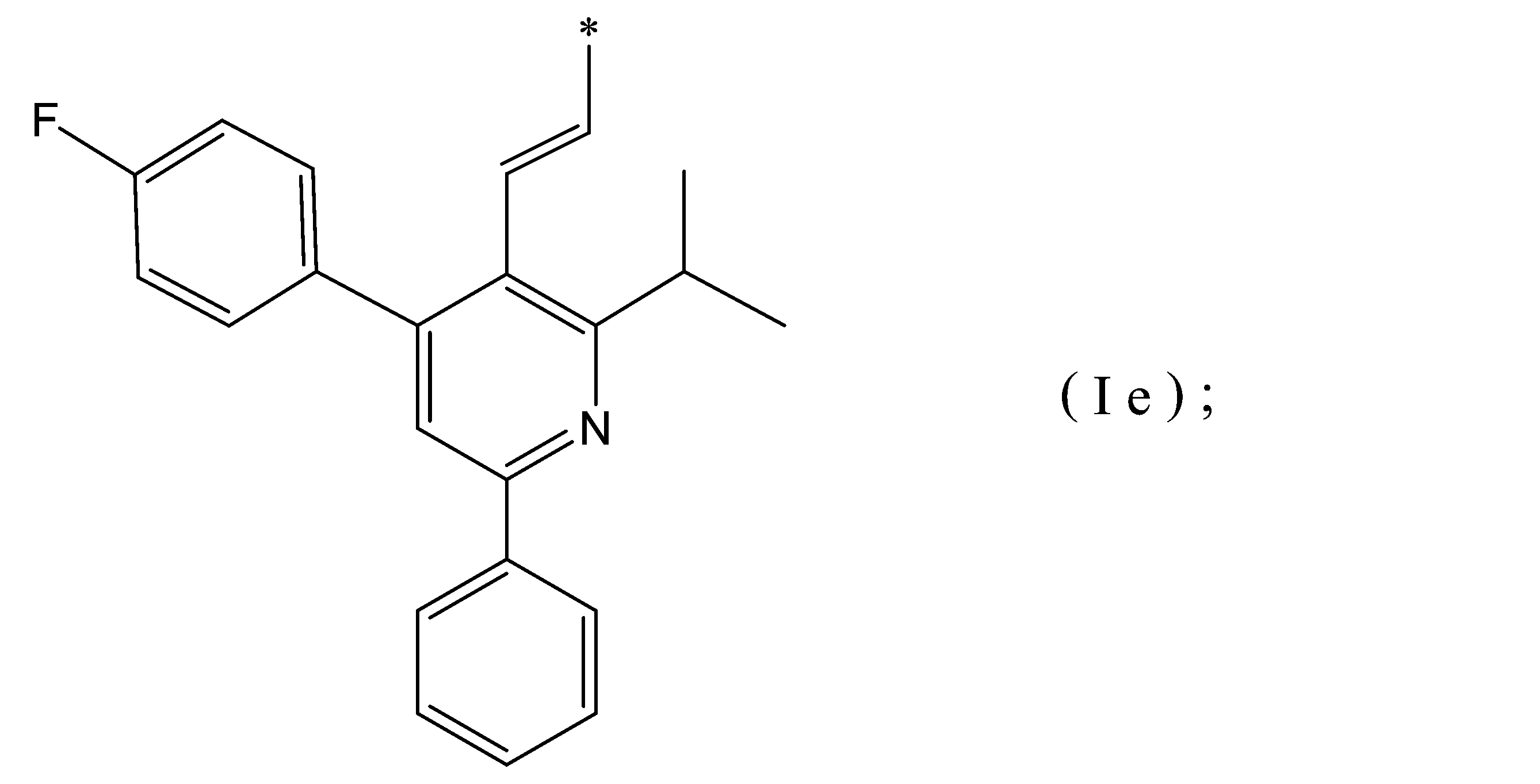

(一般式(If)中、R4及びR5は各々独立に水素原子、フッ素原子、塩素原子、臭素原子、ヨウ素原子、炭素数1以上4以下のアルキル基、炭素数1以上4以下のアルコキシ基、又はトリフルオロメチル基であり、
R6、R7、R8、及びR9は各々独立に水素原子、フッ素原子、塩素原子、臭素原子、ヨウ素原子、炭素数1以上4以下のアルキル基、又は炭素数1以上4以下のアルコキシ基である。)
R6、R7、R8、及びR9は各々独立に水素原子、フッ素原子、塩素原子、臭素原子、ヨウ素原子、炭素数1以上4以下のアルキル基、又は炭素数1以上4以下のアルコキシ基である。)
HMG-CoA還元酵素阻害剤には、HMG-CoA還元酵素に対する阻害活性を有する化合物の薬学的に許容し得る塩、エステル及びラクトンの形態が包含される。
なお、ここでいう「薬学的に許容し得る塩」には、HMG-CoA還元酵素阻害剤の非毒性の塩を意味し、一般に、その遊離酸を適切な有機又は無機塩基と反応させることによって調製することができる。HMG-CoA還元酵素阻害剤の塩形態としては、例えば、酢酸塩、ベンゼンスルホン酸塩、安息香酸塩、重炭酸塩、重硫酸塩、重酒石酸塩、ホウ酸塩、臭化物、カルシウム、エデト酸カルシウム、カムシレート、炭酸塩、塩化物、クラブラネート、クエン酸塩、塩化二水素酸塩、エデト酸塩、エジシレート、エストレート、エシレート、フマル酸塩、グルセプテート、グルコン酸塩、グルタミン酸塩、グリコリルアルサニレート、ヘキシルレゾルシネート、ヒドラバミン、臭化水素酸塩、塩化水素酸塩、ヒドロキシナプトエート、ヨウ化物、イソチオン酸塩、乳酸塩、ラクトビオネート、ラウリン酸塩、リンゴ酸塩、マレイン酸塩、マンデル酸塩、メシレート、メチル臭化物、メチル硝酸塩、メチル硫酸塩、ムケート、ナプシレート、硝酸塩、オレイン酸塩、シュウ酸塩、パモ酸塩、パルミチン酸塩、パントテン酸塩、リン酸塩/二リン酸塩、ポリガラクツロネート、カリウム、サリチル酸塩、ナトリウム、ステアリン酸塩、サバステート、コハク酸塩、タンニン酸塩、酒石酸塩、テオクレート、トシレート、トリエチオダイド、吉草酸塩、及びそれらの混合物等が挙げられるが、これらに限定されない。
「エステル」とは、カルボン酸及びアルコールの縮合生成物を示す。HMG-CoA還元酵素阻害剤のエステル誘導体はプロドラッグとして機能することができ、これらエステル誘導体は、動物の血流中に投与されたとき、そこから薬物を放出し、その薬物が改善された治療効力をもたらすような様式で開裂することが可能である。
「ラクトン」とは、カルボン酸及びアルコールの環状縮合生成物、すなわち環状エステルを示す。
[HMG-CoA還元酵素発現阻害剤]
HMG-CoA還元酵素発現阻害剤としては、例えば、siRNA、shRNA、miRNA、リボザイム、アンチセンス核酸、低分子化合物等が挙げられる。これらのHMG-CoA還元酵素発現阻害剤を投与することにより、HMG-CoA還元酵素の発現量を低下させて、顎骨壊死の進行を抑制することができる。すなわち、これらのHMG-CoA還元酵素発現阻害剤の投与により、顎骨壊死を予防又は治療することができる。
HMG-CoA還元酵素発現阻害剤としては、例えば、siRNA、shRNA、miRNA、リボザイム、アンチセンス核酸、低分子化合物等が挙げられる。これらのHMG-CoA還元酵素発現阻害剤を投与することにより、HMG-CoA還元酵素の発現量を低下させて、顎骨壊死の進行を抑制することができる。すなわち、これらのHMG-CoA還元酵素発現阻害剤の投与により、顎骨壊死を予防又は治療することができる。
siRNA(small interfering RNA)は、RNA干渉による遺伝子サイレンシングのために用いられる21塩基対以上23塩基対以下の低分子2本鎖RNAである。細胞内に導入されたsiRNAは、RNA誘導サイレンシング複合体(RISC)と結合する。この複合体はsiRNAと相補的な配列を持つmRNAに結合し切断する。これにより、配列特異的に遺伝子の発現を抑制する。
siRNAは、センス鎖及びアンチセンス鎖オリゴヌクレオチドをDNA/RNA自動合成機でそれぞれ合成し、例えば、適当なアニーリング緩衝液中、90℃以上95℃以下程度で約1分程度変性させた後、30℃以上70℃以下程度で約1時間以上8時間以下アニーリングさせることにより調製することができる。
siRNA、shRNA、miRNA、リボザイム及びアンチセンス核酸は、安定性や活性を向上させるために、種々の化学修飾を含んでいてもよい。例えば、ヌクレアーゼ等の加水分解酵素による分解を防ぐために、リン酸残基を、例えば、ホスホロチオエート(PS)、メチルホスホネート、ホスホロジチオネート等の化学修飾リン酸残基に置換してもよい。また、少なくとも一部をペプチド核酸(PNA)等の核酸類似体により構成してもよい。
[HMG-CoA還元酵素特異的結合物質]
HMG-CoA還元酵素特異的結合物質としては、HMG-CoA還元酵素に特異的に結合してHMG-CoA還元酵素の機能を阻害するものが挙げられ、例えば、抗体、抗体断片、アプタマー等が挙げられる。抗体は、例えば、マウス等の動物に、HMG-CoA還元酵素又はその断片を抗原として免疫することによって作製することができる。或いは、例えば、ファージライブラリーのスクリーニングにより作製することができる。抗体断片としては、Fv、Fab、scFv等が挙げられる。上記の抗体は、モノクローナル抗体であることが好ましい。また、市販の抗体であってもよい。
HMG-CoA還元酵素特異的結合物質としては、HMG-CoA還元酵素に特異的に結合してHMG-CoA還元酵素の機能を阻害するものが挙げられ、例えば、抗体、抗体断片、アプタマー等が挙げられる。抗体は、例えば、マウス等の動物に、HMG-CoA還元酵素又はその断片を抗原として免疫することによって作製することができる。或いは、例えば、ファージライブラリーのスクリーニングにより作製することができる。抗体断片としては、Fv、Fab、scFv等が挙げられる。上記の抗体は、モノクローナル抗体であることが好ましい。また、市販の抗体であってもよい。
アプタマーとは、標的物質に対する特異的結合能を有する物質である。アプタマーとしては、核酸アプタマー、ペプチドアプタマー等が挙げられる。標的ペプチドに特異的結合能を有する核酸アプタマーは、例えば、systematic evolution of ligand by exponential enrichment(SELEX)法等により選別することができる。また、標的ペプチドに特異的結合能を有するペプチドアプタマーは、例えば酵母を用いたTwo-hybrid法等により選別することができる。
≪顎骨壊死の予防又は治療用医薬組成物≫
本実施形態の顎骨壊死の予防又は治療用医薬組成物は、上記顎骨壊死の予防又は治療剤、及び薬学的に許容可能な担体を含む。本実施形態の医薬組成物を投与することにより、顎骨壊死を予防又は治療することができる。
本実施形態の顎骨壊死の予防又は治療用医薬組成物は、上記顎骨壊死の予防又は治療剤、及び薬学的に許容可能な担体を含む。本実施形態の医薬組成物を投与することにより、顎骨壊死を予防又は治療することができる。
本実施形態の医薬組成物は、経口的に使用される剤型であってもよく、非経口的に使用される剤型であってもよいが、非経口的に使用される剤型が好ましい。経口的に使用される剤型としては、例えば錠剤、カプセル剤、エリキシル剤、マイクロカプセル剤等が挙げられる。非経口的に使用される剤型としては例えば注射剤、軟膏剤、貼付剤等が挙げられる。
薬学的に許容される担体としては、通常医薬組成物の製剤に用いられるものを特に制限なく用いることができる。より具体的には、例えば、ゼラチン、コーンスターチ、トラガントガム、アラビアゴム等の結合剤;デンプン、結晶性セルロース等の賦形剤;アルギン酸等の膨化剤;水、エタノール、グリセリン等の注射剤用溶剤;ゴム系粘着剤、シリコーン系粘着剤等の粘着剤等が挙げられる。
医薬組成物は添加剤を含んでいてもよい。添加剤としては、ステアリン酸カルシウム、ステアリン酸マグネシウム等の潤滑剤;ショ糖、乳糖、サッカリン、マルチトール等の甘味剤;ペパーミント、アカモノ油等の香味剤;ベンジルアルコール、フェノール等の安定剤;リン酸塩、酢酸ナトリウム等の緩衝剤;安息香酸ベンジル、ベンジルアルコール等の溶解補助剤;酸化防止剤;防腐剤等が挙げられる。
医薬組成物は、上記顎骨壊死の予防又は治療剤と、上記薬学的に許容される担体及び添加剤を適宜組み合わせて、一般に認められた製薬実施に要求される単位用量形態で混和することによって製剤化することができる。
医薬組成物は、他の疾患の治療薬と組合せて、使用してもよい。例えば、上記顎骨壊死の予防又は治療剤を、骨粗鬆症治療薬であるBP製剤と組み合わせて使用することで、顎骨壊死の発症を効果的に抑制しながら、骨粗鬆症を予防又は治療することができる。
上記顎骨壊死の予防又は治療剤と他の薬剤とは、同一の製剤にしてもよいし、別々の製剤にしてもよい。また、各製剤は、同一の投与経路で投与してもよいし、別々の投与経路で投与してもよい。更に、各製剤は、同時に投与してもよいし、逐次的に投与してもよいし、一定の時間乃至期間を空けて別々に投与してもよい。
一実施態様において、上記顎骨壊死の予防又は治療剤と他の薬剤とは、これらを包含するキットとしてもよい。
上記顎骨壊死の予防又は治療剤と他の薬剤とは、同一の製剤にしてもよいし、別々の製剤にしてもよい。また、各製剤は、同一の投与経路で投与してもよいし、別々の投与経路で投与してもよい。更に、各製剤は、同時に投与してもよいし、逐次的に投与してもよいし、一定の時間乃至期間を空けて別々に投与してもよい。
一実施態様において、上記顎骨壊死の予防又は治療剤と他の薬剤とは、これらを包含するキットとしてもよい。
<投与方法>
投与する対象としては、限定されるものではないが、例えば、ヒト、サル、イヌ、ウシ、ウマ、ヒツジ、ブタ、ウサギ、マウス、ラット、モルモット、ハムスター、及びそれらの細胞等が挙げられる。中でも、哺乳動物又は哺乳動物細胞が好ましく、ヒト又はヒト細胞が特に好ましい。
投与する対象としては、限定されるものではないが、例えば、ヒト、サル、イヌ、ウシ、ウマ、ヒツジ、ブタ、ウサギ、マウス、ラット、モルモット、ハムスター、及びそれらの細胞等が挙げられる。中でも、哺乳動物又は哺乳動物細胞が好ましく、ヒト又はヒト細胞が特に好ましい。
投与経路は、皮下投与、経皮投与(経粘膜投与を含む)、筋肉内投与、歯周組織への局所投与等の非経口投与経路が好ましく、歯周組織への局所投与が特に好ましい。
顎骨壊死の予防又は治療剤の投与量は、HMG-CoA還元酵素阻害剤の種類、投与対象の症状、投与部位、投与方法等により変動する。当業者であれば適当な投与量を適宜選択することが可能であるが、例えば、局所投与を行う場合は、一般的に成人(体重60kgとして)においては、1日あたり、通常約0.01mg以上3000mg以下程度であり、約0.05mg以上300mg以下程度が好ましく、約0.1mg以上100mg以下程度がより好ましい。顎骨壊死の予防又は治療剤の投与は、単回投与でもよく、複数回投与であってもよい。複数回投与である場合は、例えば、2時間以上12時間以下の期間毎、毎日、又は2日、1週間、数週間、1か月若しくは数か月に1回等の頻度で投与することができる。
≪その他の実施形態≫
一実施形態において、本発明は、HMG-CoA還元酵素阻害剤の有効量を、治療を必要とする患者又は患畜に投与することを含む、顎骨壊死の予防又は治療方法を提供する。ここで、HMG-CoA還元酵素阻害剤としては、上述したものと同様のものが挙げられる。また、顎骨壊死としては、上述したものと同様のものが挙げられる。
一実施形態において、本発明は、HMG-CoA還元酵素阻害剤の有効量を、治療を必要とする患者又は患畜に投与することを含む、顎骨壊死の予防又は治療方法を提供する。ここで、HMG-CoA還元酵素阻害剤としては、上述したものと同様のものが挙げられる。また、顎骨壊死としては、上述したものと同様のものが挙げられる。
一実施形態において、本発明は、顎骨壊死の予防又は治療のための、HMG-CoA還元酵素阻害剤を提供する。ここで、HMG-CoA還元酵素阻害剤としては、上述したものと同様のものが挙げられる。また、顎骨壊死としては、上述したものと同様のものが挙げられる。
一実施形態において、本発明は、顎骨壊死の予防又は治療剤を製造するためのHMG-CoA還元酵素阻害剤の使用を提供する。ここで、HMG-CoA還元酵素阻害剤としては、上述したものと同様のものが挙げられる。また、顎骨壊死としては、上述したものと同様のものが挙げられる。
以下、実施例により本発明を説明するが、本発明は以下の実施例に限定されるものではない。
[実施例1]
1.ARONJ様疾患ラットモデルの確立
Kaibuchiらの方法(参考文献1:「Kaibuchi N et al., “Multipotent mesenchymal stromal cell sheet therapy for bisphosphonate-related osteonecrosis of the jaw in a rat model.”, Acta Biomaterialia, Vol. 42, p400-410, 2016.」参照)を参考に、ARONJ様疾患ラットモデルを作製した。具体的には、まず、4週齢雌性Wistarラットに対し、BP製剤の一種であるゾレドロン酸(Zoledronic acid;ZA)0.066 mg/kg、及び副腎皮質ホルモンであるデキサメタゾン(Dexamethasone;Dex)5 mg/kgを週3回皮下投与した(n=7;以下、これらラット群を「実験群」と称する場合がある)。対照群には、ZA及びDex混和物の代わりに生理食塩水を同回数皮下投与した(n=5)。投与開始から2週間後に上顎第一臼歯を抜去し、さらに2週間又は4週間後に安楽死させて、口腔内の上顎部を撮像し(図1:実験群、図2:対照群)、さらに上顎部をマイクロComputed Tomography(CT)で観察した(図3:実験群、図4:対照群)。また、抜歯窩の組織標本を作製し、ヘマトキシリン-エオジン(Hematoxylin-Eosin:HE)染色した後、観察した。また、抜歯から2週間後において各群の上皮の連続性があるラットの割合を上皮連続性回復率として算出した(図5参照)。
1.ARONJ様疾患ラットモデルの確立
Kaibuchiらの方法(参考文献1:「Kaibuchi N et al., “Multipotent mesenchymal stromal cell sheet therapy for bisphosphonate-related osteonecrosis of the jaw in a rat model.”, Acta Biomaterialia, Vol. 42, p400-410, 2016.」参照)を参考に、ARONJ様疾患ラットモデルを作製した。具体的には、まず、4週齢雌性Wistarラットに対し、BP製剤の一種であるゾレドロン酸(Zoledronic acid;ZA)0.066 mg/kg、及び副腎皮質ホルモンであるデキサメタゾン(Dexamethasone;Dex)5 mg/kgを週3回皮下投与した(n=7;以下、これらラット群を「実験群」と称する場合がある)。対照群には、ZA及びDex混和物の代わりに生理食塩水を同回数皮下投与した(n=5)。投与開始から2週間後に上顎第一臼歯を抜去し、さらに2週間又は4週間後に安楽死させて、口腔内の上顎部を撮像し(図1:実験群、図2:対照群)、さらに上顎部をマイクロComputed Tomography(CT)で観察した(図3:実験群、図4:対照群)。また、抜歯窩の組織標本を作製し、ヘマトキシリン-エオジン(Hematoxylin-Eosin:HE)染色した後、観察した。また、抜歯から2週間後において各群の上皮の連続性があるラットの割合を上皮連続性回復率として算出した(図5参照)。
図1~5及び組織標本のHE染色像から、抜歯から2週間では実験群の全ての抜歯窩において上皮の連続性が回復せず、腐骨を形成し新生骨の形成が認められなかった。これに対し、対照群の全てにおいて上皮の連続性を回復し、新生骨形成が認められた。なお、ここでいう、「上皮の連続性が回復する」とは、歯を抜いた穴(抜歯窩)が歯肉でふさがっている状態を意味する。一方、「上皮の連続性が回復していない」とは、口腔内に骨が露出した状態を意味する。通常、抜歯した直後は、歯肉は歯の断面の形に穴(抜歯窩)が開いており、抜歯窩には血餅(血の塊)が存在する。その後、血餅の上に上皮が増殖して上皮の連続性が回復し、遅れて抜歯窩に新生骨の形成が起こる。しかしながら、ARONJでは上皮の連続性が回復せず、骨に感染を生じる。このとき、感染して壊死した骨を「腐骨」という。ARONJでは、腐骨が存在するため、新生骨は形成されない。
実験群では抜歯から4週間後においても80%以上の抜歯窩の上皮連続性が回復せず腐骨が残存していることを確認し、ARONJ様疾患ラットモデルを確立したと判断した。
2.フルバスタチンの投与によるARONJ様疾患発症の抑制効果
「1.」と同様の方法を用いて、ARONJ様疾患ラットモデルを作製した。ZA及びDex混和物の投与開始から2週間後に上顎第一臼歯を抜去し、抜歯と同時にフルバスタチン(体重1kgあたり0.1 mg、1 mg又は10 mg;各n=5)を抜歯窩周囲に一度だけ注射にて投与した。また、フルバスタチンを投与しない群(n=7;以下、「ARONJ群」と称する場合がある)を陽性対照群とした。抜歯からさらに2週間又は4週間後に安楽死させて、口腔内の上顎部を撮像し(図6左:抜歯から2週間後、図9:抜歯から4週間後)、さらに上顎部をマイクロCTで観察した(図8:抜歯から2週間後、図11:抜歯から4週間後)。また、抜歯窩の組織標本を作製し、HE染色した後、観察した(図6右:抜歯から2週間後)。抜歯窩の治癒は、抜歯窩の肉眼所見、抜歯によって損なわれた上皮の連続性の回復率(図7:抜歯から2週間後、図10:抜歯から4週間後)及びマイクロCT像における抜歯窩の新生骨の形成程度で評価した。
「1.」と同様の方法を用いて、ARONJ様疾患ラットモデルを作製した。ZA及びDex混和物の投与開始から2週間後に上顎第一臼歯を抜去し、抜歯と同時にフルバスタチン(体重1kgあたり0.1 mg、1 mg又は10 mg;各n=5)を抜歯窩周囲に一度だけ注射にて投与した。また、フルバスタチンを投与しない群(n=7;以下、「ARONJ群」と称する場合がある)を陽性対照群とした。抜歯からさらに2週間又は4週間後に安楽死させて、口腔内の上顎部を撮像し(図6左:抜歯から2週間後、図9:抜歯から4週間後)、さらに上顎部をマイクロCTで観察した(図8:抜歯から2週間後、図11:抜歯から4週間後)。また、抜歯窩の組織標本を作製し、HE染色した後、観察した(図6右:抜歯から2週間後)。抜歯窩の治癒は、抜歯窩の肉眼所見、抜歯によって損なわれた上皮の連続性の回復率(図7:抜歯から2週間後、図10:抜歯から4週間後)及びマイクロCT像における抜歯窩の新生骨の形成程度で評価した。
図6~7から、抜歯から2週間後において、ARONJ群及びフルバスタチン投与群(0.1mg/体重1kg)では全ての抜歯窩において上皮の連続性が回復しなかった。フルバスタチン投与群(1mg/体重1kg)では約60%、フルバスタチン投与群(10mg/体重1kg)では約50%の抜歯窩の上皮の連続性が回復していた。図8に示すマイクロCT像から、ARONJ群では抜歯窩に新生骨の形成は認められなかったが、フルバスタチン投与群(体重1kgあたり0.1mg、1mg、10mg)ではいずれも新生骨の形成が認められ、抜歯窩が浅くなっていることが確認された。
図9~10から、抜歯から4週間後において、ARONJ群では全抜歯窩のうち20%弱しか上皮の連続性が回復しなかったのに対し、フルバスタチン投与群(0.1mg/体重1kg、10mg/体重1kg)では80%以上、フルバスタチン投与群(1mg/体重1kg)では100%の抜歯窩の上皮の連続性が回復していた。図11に示すマイクロCT像から、ARONJ群では抜歯から4週間経過しても、新生骨の形成はほとんど認められなかった。一方、フルバスタチン投与群(体重1kgあたり0.1mg、1mg、10mg)では、いずれも大量の新生骨の形成及び骨密度の向上が認められた。
以上のことから、HMG-CoA還元酵素阻害剤を局所投与することで、抜歯窩上皮の治癒が促進され、ARONJの発症を抑制(予防)できる可能性が示唆された。
[実施例2]
1.フルバスタチンの投与によるARONJ様疾患の治療効果
「1.」と同様の方法を用いて、ARONJ様疾患ラットモデルを作製した。ZA及びDex混和物の投与開始から2週間後に上顎第一臼歯を抜去した。抜歯からさらに2週間後(ZA及びDex混和物の投与開始から4週間後)に、ARONJ様の疾患を発症していることを確認し、フルバスタチン(体重1kgあたり1 mg(n=6;以下、「Fs-L群」と称する場合がある)又は10 mg(n=7;以下、「Fs-H群」と称する場合がある))を抜歯窩周囲に一度だけ注射にて投与した。また、フルバスタチンを投与しない群(n=10;以下、「ARONJ群」と称する場合がある)を陽性対照群とした。フルバスタチンの投与からさらに2週間後(ZA及びDex混和物の投与開始から6週間後)に安楽死させて、口腔内の上顎部を撮像し(図12上)、さらに上顎部をマイクロCTで観察した(図14)。また、抜歯窩の組織標本を作製し、HE染色した後、観察した(図12下)。抜歯窩の治癒は、抜歯窩の肉眼所見、抜歯によって損なわれた上皮の連続性の回復率(図13)及びマイクロCT像における抜歯窩での骨体積率(図15)で評価した。なお、骨体積率は、マイクロCT像を用いて抜歯窩内において新生骨が占める割合を算出した。
1.フルバスタチンの投与によるARONJ様疾患の治療効果
「1.」と同様の方法を用いて、ARONJ様疾患ラットモデルを作製した。ZA及びDex混和物の投与開始から2週間後に上顎第一臼歯を抜去した。抜歯からさらに2週間後(ZA及びDex混和物の投与開始から4週間後)に、ARONJ様の疾患を発症していることを確認し、フルバスタチン(体重1kgあたり1 mg(n=6;以下、「Fs-L群」と称する場合がある)又は10 mg(n=7;以下、「Fs-H群」と称する場合がある))を抜歯窩周囲に一度だけ注射にて投与した。また、フルバスタチンを投与しない群(n=10;以下、「ARONJ群」と称する場合がある)を陽性対照群とした。フルバスタチンの投与からさらに2週間後(ZA及びDex混和物の投与開始から6週間後)に安楽死させて、口腔内の上顎部を撮像し(図12上)、さらに上顎部をマイクロCTで観察した(図14)。また、抜歯窩の組織標本を作製し、HE染色した後、観察した(図12下)。抜歯窩の治癒は、抜歯窩の肉眼所見、抜歯によって損なわれた上皮の連続性の回復率(図13)及びマイクロCT像における抜歯窩での骨体積率(図15)で評価した。なお、骨体積率は、マイクロCT像を用いて抜歯窩内において新生骨が占める割合を算出した。
図12~13から、抜歯から4週間後において、ARONJ群では全ての抜歯窩において上皮の連続性が回復しなかった。これに対して、Fs-L群(1mg/体重1kg)では約16.67%、Fs-H群(10mg/体重1kg)では約42.86%の抜歯窩の上皮の連続性が回復していた。
図14~15から、ARONJ群では抜歯から4週間経過しても、新生骨の形成はほとんど認められず、抜歯窩における骨体積率も50%未満しか回復していなかった。一方、Fs-L群(1mg/体重1kg)及びFs-H群(10mg/体重1kg)では、いずれも大量の新生骨の形成及び骨密度の向上が認められ、抜歯窩における骨体積率もいずれも60%超であった。
以上のことから、HMG-CoA還元酵素阻害剤を局所投与することで、抜歯窩上皮の治癒が促進され、ARONJを治療できる可能性が示唆された。
本実施形態の顎骨壊死の予防又は治療剤によれば、顎骨壊死(特に、薬剤関連顎骨壊死)を効果的に予防又は治療することができる。
Claims (5)
- ヒドロキシメチルグルタリルコエンザイムA還元酵素の阻害剤を有効成分として含有する、顎骨壊死の予防又は治療剤。
- 前記ヒドロキシメチルグルタリルコエンザイムA還元酵素の阻害剤がスタチン化合物である、請求項1に記載の顎骨壊死の予防又は治療剤。
- 前記ヒドロキシメチルグルタリルコエンザイムA還元酵素の阻害剤がフルバスタチンである、請求項1又は2に記載の顎骨壊死の予防又は治療剤。
- 前記顎骨壊死が薬剤関連顎骨壊死である、請求項1~3のいずれか一項に記載の顎骨壊死の予防又は治療剤。
- 前記顎骨壊死がビスホスホネート系製剤の投与によるものである、請求項1~4のいずれか一項に記載の顎骨壊死の予防又は治療剤。
Priority Applications (1)
| Application Number | Priority Date | Filing Date | Title |
|---|---|---|---|
| JP2021509423A JPWO2020196463A1 (ja) | 2019-03-28 | 2020-03-24 |
Applications Claiming Priority (2)
| Application Number | Priority Date | Filing Date | Title |
|---|---|---|---|
| JP2019-063096 | 2019-03-28 | ||
| JP2019063096 | 2019-03-28 |
Publications (1)
| Publication Number | Publication Date |
|---|---|
| WO2020196463A1 true WO2020196463A1 (ja) | 2020-10-01 |
Family
ID=72610932
Family Applications (1)
| Application Number | Title | Priority Date | Filing Date |
|---|---|---|---|
| PCT/JP2020/012861 Ceased WO2020196463A1 (ja) | 2019-03-28 | 2020-03-24 | 顎骨壊死の予防又は治療剤 |
Country Status (2)
| Country | Link |
|---|---|
| JP (1) | JPWO2020196463A1 (ja) |
| WO (1) | WO2020196463A1 (ja) |
Citations (1)
| Publication number | Priority date | Publication date | Assignee | Title |
|---|---|---|---|---|
| JP2001506635A (ja) * | 1996-12-13 | 2001-05-22 | ザイモジェネティクス,インコーポレイテッド | 骨の成長を刺激する組成物および方法 |
-
2020
- 2020-03-24 WO PCT/JP2020/012861 patent/WO2020196463A1/ja not_active Ceased
- 2020-03-24 JP JP2021509423A patent/JPWO2020196463A1/ja active Pending
Patent Citations (1)
| Publication number | Priority date | Publication date | Assignee | Title |
|---|---|---|---|---|
| JP2001506635A (ja) * | 1996-12-13 | 2001-05-22 | ザイモジェネティクス,インコーポレイテッド | 骨の成長を刺激する組成物および方法 |
Non-Patent Citations (3)
| Title |
|---|
| CHANG, PC. ET AL.: "PDGF-simvastatin delivery stimulates osteogenesis in heat-induced osteonecrosis", JOURNAL OF DENTAL RESEARCH, vol. 91, no. 6, 2012, pages 618 - 624, XP055743579, DOI: 10.1177/0022034512445194 * |
| GARRETT, IR. ET AL.: "Statins and bone formation", CURR. PHARM. DES., vol. 7, no. 8, 2001, pages 715 - 736, XP008016599, DOI: 10.2174/1381612013397762 * |
| MIYAZAWA, ATSUKO ET AL.: "Development of bone prosthetic material to prevent BRONJ", JAPANESE JOURNAL OF MAXILOFACIAL IMPLANTS, vol. 12, no. 3, 2013, pages 122 * |
Also Published As
| Publication number | Publication date |
|---|---|
| JPWO2020196463A1 (ja) | 2020-10-01 |
Similar Documents
| Publication | Publication Date | Title |
|---|---|---|
| Kim et al. | Removal of pre-existing periodontal inflammatory condition before tooth extraction ameliorates medication-related osteonecrosis of the jaw–like lesion in mice | |
| CN1272013C (zh) | 二膦酸盐在制备用于治疗骨更新异常增加的病症的药物中的应用 | |
| Hoefert et al. | Sunitinib may raise the risk of bisphosphonate-related osteonecrosis of the jaw: presentation of three cases | |
| Yamashita et al. | Effect of zoledronate on oral wound healing in rats | |
| CN1535152A (zh) | 二膦酸类化合物在治疗疼痛方面的应用 | |
| JP2002529490A (ja) | 歯牙吸収性病変の阻害方法 | |
| JP2005516928A (ja) | 骨異常のためのビスホスホネート液体製剤 | |
| IL259939A (en) | A method of treating crater bone depletion by using anti-sclerostin antibodies | |
| Kuritani et al. | Anti-mouse RANKL antibodies inhibit alveolar bone destruction in periodontitis model mice | |
| JP2015535247A5 (ja) | ||
| Buijs et al. | Inhibition of bone resorption and growth of breast cancer in the bone microenvironment | |
| CN1327844C (zh) | 包含双膦酸类化合物和hmg-coa还原酶抑制剂的组合疗法 | |
| WO2018039022A1 (en) | Compositions comprising pikfyve inhibitors and methods related to inhibition of rank signaling | |
| CN1265035A (zh) | 抑制骨吸收的方法 | |
| JP2014530835A5 (ja) | ||
| WO2020150146A1 (en) | Compositions and methods for treating cardiac injury | |
| Yoshimatsu et al. | Effects of anti-mouse RANKL antibody on orthodontic tooth movement in mice | |
| US10463657B2 (en) | Method for treating osteoporosis, osteopenia or low bone mineral density | |
| JP6011982B2 (ja) | 骨形成促進剤及びその用途 | |
| US20250270330A1 (en) | Treatment of headache disorders with nk3 modulators | |
| EP2162129B1 (en) | Use of hdac inhibitors for the treatment of bone destruction | |
| KR20200014880A (ko) | 테세탁셀 및 카페시타빈에 대한 투약 일정 | |
| CN1331598A (zh) | 多发性骨髓瘤的骨病变治疗用医药组合物 | |
| RU2005131723A (ru) | Лечение пролиферативных заболеваний производными эпотилона и излучением | |
| JP2005503434A5 (ja) |
Legal Events
| Date | Code | Title | Description |
|---|---|---|---|
| 121 | Ep: the epo has been informed by wipo that ep was designated in this application |
Ref document number: 20779727 Country of ref document: EP Kind code of ref document: A1 |
|
| ENP | Entry into the national phase |
Ref document number: 2021509423 Country of ref document: JP Kind code of ref document: A |
|
| NENP | Non-entry into the national phase |
Ref country code: DE |
|
| 122 | Ep: pct application non-entry in european phase |
Ref document number: 20779727 Country of ref document: EP Kind code of ref document: A1 |