WO2020195407A1 - 音響シミュレーション装置 - Google Patents
音響シミュレーション装置 Download PDFInfo
- Publication number
- WO2020195407A1 WO2020195407A1 PCT/JP2020/006854 JP2020006854W WO2020195407A1 WO 2020195407 A1 WO2020195407 A1 WO 2020195407A1 JP 2020006854 W JP2020006854 W JP 2020006854W WO 2020195407 A1 WO2020195407 A1 WO 2020195407A1
- Authority
- WO
- WIPO (PCT)
- Prior art keywords
- virtual
- signal
- sound
- output
- acoustic
- Prior art date
- Legal status (The legal status is an assumption and is not a legal conclusion. Google has not performed a legal analysis and makes no representation as to the accuracy of the status listed.)
- Ceased
Links
Images


Classifications
-
- H—ELECTRICITY
- H04—ELECTRIC COMMUNICATION TECHNIQUE
- H04S—STEREOPHONIC SYSTEMS
- H04S5/00—Pseudo-stereo systems, e.g. in which additional channel signals are derived from monophonic signals by means of phase shifting, time delay or reverberation
- H04S5/005—Pseudo-stereo systems, e.g. in which additional channel signals are derived from monophonic signals by means of phase shifting, time delay or reverberation of the pseudo five- or more-channel type, e.g. virtual surround
-
- H—ELECTRICITY
- H04—ELECTRIC COMMUNICATION TECHNIQUE
- H04S—STEREOPHONIC SYSTEMS
- H04S7/00—Indicating arrangements; Control arrangements, e.g. balance control
- H04S7/30—Control circuits for electronic adaptation of the sound field
-
- H—ELECTRICITY
- H04—ELECTRIC COMMUNICATION TECHNIQUE
- H04R—LOUDSPEAKERS, MICROPHONES, GRAMOPHONE PICK-UPS OR LIKE ACOUSTIC ELECTROMECHANICAL TRANSDUCERS; ELECTRIC HEARING AIDS; PUBLIC ADDRESS SYSTEMS
- H04R1/00—Details of transducers, loudspeakers or microphones
- H04R1/02—Casings; Cabinets ; Supports therefor; Mountings therein
-
- H—ELECTRICITY
- H04—ELECTRIC COMMUNICATION TECHNIQUE
- H04R—LOUDSPEAKERS, MICROPHONES, GRAMOPHONE PICK-UPS OR LIKE ACOUSTIC ELECTROMECHANICAL TRANSDUCERS; ELECTRIC HEARING AIDS; PUBLIC ADDRESS SYSTEMS
- H04R2499/00—Aspects covered by H04R or H04S not otherwise provided for in their subgroups
- H04R2499/10—General applications
- H04R2499/13—Acoustic transducers and sound field adaptation in vehicles
-
- H—ELECTRICITY
- H04—ELECTRIC COMMUNICATION TECHNIQUE
- H04S—STEREOPHONIC SYSTEMS
- H04S2420/00—Techniques used stereophonic systems covered by H04S but not provided for in its groups
- H04S2420/11—Application of ambisonics in stereophonic audio systems
-
- H—ELECTRICITY
- H04—ELECTRIC COMMUNICATION TECHNIQUE
- H04S—STEREOPHONIC SYSTEMS
- H04S3/00—Systems employing more than two channels, e.g. quadraphonic
- H04S3/008—Systems employing more than two channels, e.g. quadraphonic in which the audio signals are in digital form, i.e. employing more than two discrete digital channels
Definitions
- the present invention relates to an acoustic simulation device that simulates the acoustics inside a vehicle.
- Japanese Patent Application Laid-Open No. 9-149491 discloses a technique for three-dimensionally reproducing sound. In this technology, recording is performed in four directions by microphones installed at the vertices of the regular tetrahedron, and three-dimensional sound is output from speakers installed at the vertices of the regular tetrahedron.
- the present invention discloses an acoustic simulation device capable of accurately simulating a three-dimensional sound in a vehicle interior.
- the acoustic simulation device of the present invention is an acoustic simulation device that simulates the sound inside a vehicle. Assuming that there are virtual speakers at two or more Np locations of the vehicle, the virtual speakers at the Np locations reproduce the three-dimensional sound based on the sound collection signal of the stereoscopic sound at the listening position in the room.
- a virtual reproduction signal generator that generates a reproduction signal, and Based on the virtual reproduction signal and information representing a change in acoustic characteristics when at least a part of the Np location is changed, the predicted sound predicted at the listening position is output to the virtual speaker at the Np location.
- a virtual prediction signal generator that generates a virtual prediction signal It has an embodiment including an output signal generation unit that generates an output signal that causes a plurality of speakers to output the predicted sound based on the virtual predicted signal.
- an acoustic simulation device capable of accurately simulating a three-dimensional sound in a vehicle interior.
- FIG. 1 is a diagram schematically showing an example of the interior of an automobile in which an ambisonic microphone is installed, with the side surface not shown.
- FIG. 2 is a diagram schematically showing an example of an acoustic simulation device.
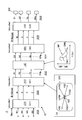
- FIG. 3 is a block diagram schematically showing an example of signal processing of an acoustic simulation device.
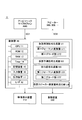
- FIG. 4 is a block diagram schematically showing a configuration example of a control unit of an acoustic simulation device together with a peripheral unit.
- the acoustic simulation device 1 is an acoustic simulation device 1 that simulates the sound of the interior SP0 of a vehicle (for example, an automobile 100), and includes a virtual reproduction signal generation unit U1 and a virtual prediction signal generation unit U2. It also includes an output signal generation unit U3.
- the virtual reproduction signal generation unit U1 is based on the three-dimensional sound pick-up signal SG1 at the listening position 120 of the room SP0, assuming that there are virtual speakers VS0 at two or more Np locations of the vehicle (100). Then, the virtual speaker VS0 at the Np location generates the virtual reproduction signal SG3 that reproduces the stereoscopic sound.
- the virtual prediction signal generation unit U2 is based on the virtual reproduction signal SG3 and information representing a change in acoustic characteristics when at least a part of the Np portion is changed (for example, acoustic characteristic change information IM1).
- a virtual prediction signal SG4 for outputting the predicted sound predicted at the listening position 120 to the virtual speaker VS0 at the Np location is generated.
- the output signal generation unit U3 generates an output signal SG6 that causes the speakers 300 at a plurality of locations to output the predicted sound based on the virtual prediction signal SG4.
- the output signal SG6 for outputting the predicted sound that accurately reflects the change in the acoustic characteristics when at least a part of the Np portion is changed is generated. Therefore, this aspect can provide an acoustic simulation device capable of accurately simulating a three-dimensional sound in a vehicle interior.
- a signal means a change in a physical quantity used to represent data, and is represented by, for example, digital data.
- an A format signal or the like picked up by an ambisonic microphone can be used.
- the virtual reproduction signal means a signal in which the original stereoscopic sound is reproduced at the listening position by the speaker if the speaker is actually located at the position of the virtual speaker at the Np position.
- the virtual prediction signal means a signal such that the predicted sound is output to the listening position by the speaker if the speaker is actually located at the position of the virtual speaker at the Np position.
- the virtual reproduction signal generation unit U1 converts the sound collection signal SG1 into a first encoded signal SG2 having a plurality of sound collection direction characteristics (for example, components W, X, Y, Z).
- the first format conversion unit U11 may be provided, or the first decoding unit U12 that generates the virtual reproduction signal SG3 based on the first encode signal SG2 may be provided.
- the output signal generation unit U3 has a second format conversion unit U31 that converts the virtual prediction signal SG4 into a second encoded signal SG5 having the plurality of sound collection direction characteristics (W, X, Y, Z).
- the second decoding unit U32 may have a second decoding unit U32 that generates the output signal SG6 based on the second encoded signal SG5.
- the plurality of sound collecting directional characteristics (W, X, Y, Z) of the first encoded signal SG2 are the same as the plurality of sound collecting directional characteristics (W, X, Y, Z) of the second encoded signal SG5. Therefore, the conversion process of the first format conversion unit U11 and the conversion process of the second format conversion unit U31 can be simplified. Further, the signal generation process of the first decoding unit U12 and the signal generation processing of the second decoding unit U32 can also be simplified. Therefore, this aspect can provide an acoustic simulation device that simplifies signal processing.
- first and second are terms used to identify each component included in the plurality of similar components when there are a plurality of similar components, and mean an order. do not do.
- Ambisonics B format signals and the like can be used as the first encoded signal and the second encoded signal.
- the number Np of the setting locations of the virtual speaker VS0 may be larger than the number Ns of the installation locations of the speaker 300.
- This aspect can provide an acoustic simulation device that more accurately simulates a three-dimensional sound in a vehicle interior.
- the acoustic simulation device 1 may further include a virtual speaker setting location receiving unit U4 that receives the setting location of the virtual speaker VS0.
- This aspect can provide an acoustic simulation device that can easily simulate a three-dimensional sound in a room according to a vehicle.
- a composite device including the acoustic simulation device, an acoustic simulation method, a control method of the composite device, an acoustic simulation program, a control program of the composite device, a computer reading of the acoustic simulation program and the control program are recorded. It can be applied to possible media, etc.
- the acoustic simulation device and the composite device may be composed of a plurality of dispersed parts.
- FIG. 1 schematically illustrates the interior 110 of an automobile 100 in which the ambisonic microphone AM0 is installed, with the side surface portion omitted.
- the lower part of FIG. 1 shows an enlarged view of the ambisonic microphone AM0, which is a general term for the ambisonic microphones AM1 and AM2.
- FRONT, REAR, UP, and DOWN indicate front, back, top, and bottom, respectively.
- the left-right positional relationship is based on the direction in which the vehicle 100 looks forward.
- the Z direction indicates the front-rear direction of the automobile 100
- the X direction indicates the vertical direction of the automobile 100.
- the explanation of the positional relationship of each part is only an example.
- the automobile 100 shown in FIG. 1 is a road-traveling automobile designed and equipped to be used on a road.
- a metal body panel made of steel plate surrounds the passenger compartment SP1 and the luggage compartment SP2 to surround the vehicle body. Is forming. Vehicles to which this technology can be applied are not limited to vehicles in which the passenger compartment SP1 and luggage compartment SP2 are connected, such as station wagons, but also automobiles in which the passenger compartment SP1 and luggage compartment SP2 are separated, such as sedans. included.
- the passenger compartment SP1 and the luggage compartment SP2 are collectively referred to as the indoor SP0.
- interior materials for example, interior materials 111 to 116, are arranged on the interior SP0 side of the vehicle body panel of the automobile 100.
- a floor carpet 111 facing the passenger compartment SP1 is installed on a floor panel (example of a vehicle body panel) below the passenger compartment SP1.
- a door trim 112 facing the passenger compartment SP1 is installed on a door panel (example of a vehicle body panel) on the side of the passenger compartment SP1.
- a pillar trim 113 facing the passenger compartment SP1 side is installed on a pillar (an example of a vehicle body panel) on the side of the passenger compartment SP1. Pillar trim is also called pillar garnish.
- a roof trim 114 facing the passenger compartment SP1 and the luggage compartment SP2 is installed on the roof panel (example of the vehicle body panel) above the passenger compartment SP1 and the luggage compartment SP2.
- a deck side trim 115 facing the luggage compartment SP2 is installed on a deck side panel (example of a vehicle body panel) on the side of the luggage compartment SP2.
- An instrument panel interior material 116 facing the passenger compartment SP1 is installed on an instrument panel (example of a vehicle body panel) in front of the passenger compartment SP1.
- a front seat 101 which collectively refers to the driver's seat and the passenger seat, and a rear seat 102 arranged behind the front seat 101 are arranged.
- the ambisonic microphone AM1 is arranged at a position aligned with the head of the driver sitting in the driver's seat
- the ambisonic microphone AM2 is arranged at a position aligned with the head of the occupant sitting in the rear seat 102 behind the driver's seat. ..
- the position of the ambisonic microphone AM1 is the listening position 120 of the driver sitting in the driver's seat
- the position of the ambisonic microphone AM2 is the listening position 120 of the occupant sitting in the rear seat 102 behind the driver's seat.
- the ambisonic microphone AM1 may be placed in a position aligned with the head of the occupant sitting in the passenger seat, and the ambisonic microphone AM2 may be positioned in a position aligned with the head of the occupant sitting in the rear seat 102 behind the passenger seat. May be placed in.
- the ambisonic microphone AM0 has four microphone capsules AMc oriented outward with respect to each surface of the regular tetrahedron. Each capsule AMc converts the sound propagating in the air into an electrical signal.
- the ambisonic microphone AM0 converts the electric signal from each capsule AMc into digital individual sound collection signals M1 to M4 (see FIG. 3). As illustrated in FIG. 3, the individual sound collection signals M1 to M4 are collectively referred to as the sound collection signal SG1.
- the sound collection signal SG1 is a digital electric signal obtained by collecting sounds from four directions, and is a sound collection signal of three-dimensional sound at the listening position 120 of the room SP0.
- FIG. 2 schematically illustrates an acoustic simulation device 1 including a simulated automobile 200.
- the simulated automobile 200 includes a front seat 201 corresponding to the front seat 101 of the automobile 100 and a rear seat 202 corresponding to the rear seat 102 of the automobile 100.
- the acoustic simulation device 1 includes 16 speakers 300.
- the 16 speakers 300 include eight speakers 300 for reproducing the three-dimensional sound at the listening position 120 of the front seat 201, and eight speakers 300 for reproducing the three-dimensional sound at the listening position 120 of the rear seat 202. Includes. For convenience of illustration, only four speakers 300 for the front seat 201 are shown, and only four speakers 300 for the rear seat 202 are shown.
- the eight speakers 300 for the front seat 201 are diagonally above the front left, diagonally above the front right, diagonally above the rear left, diagonally above the rear right, diagonally above the front left, and forward right when viewed from the listening position 120 of the front seat 201. It is arranged diagonally below, diagonally below the rear left, and diagonally below the rear right.
- the eight speakers 300 for the rear seat 202 are also diagonally above the front left, diagonally above the front right, diagonally above the rear left, diagonally above the rear right, diagonally below the front left, and front right when viewed from the listening position 120 of the rear seat 202. It is arranged diagonally below, diagonally below the rear left, and diagonally below the rear right.
- the acoustic simulation device 1 further includes an image display device 210 having curved displays 211 arranged from the front to both sides with respect to the front seat 201, a vibration device 220 arranged below the seats 201 and 202, and a control unit. It has 10.
- the image display device 210 displays a virtual traveling image of the automobile on the display 211.
- the vibrating device 220 applies vibration in the Z direction during virtual traveling of the automobile to the seats 201 and 202.
- the control unit 10 outputs a three-dimensional sound during virtual driving of the automobile to a plurality of speakers 300, displays an image during virtual driving of the automobile on the image display device 210, and displays the image during virtual driving of the automobile on the image display device 210.
- Vibration in the Z direction is generated in the vibrating device 220.
- the control unit 10 synchronizes the output of the three-dimensional sound by the speaker 300, the image display by the image display device 210, and the vibration output by the vibration device 220. By reproducing the image and vibration during driving of the vehicle at the same time as the three-dimensional sound, the user of the acoustic simulation device 1 can obtain an excellent sense of presence.
- FIG. 3 schematically illustrates the signal processing of the acoustic simulation device 1.
- This signal processing is independent of the individual sound collecting signals M1 to M4 obtained from the ambisonic microphones AM1 for the front seat 101 and the individual sound collecting signals M1 to M4 obtained from the ambisonic microphones AM2 for the rear seat 102. It is done.
- the number Ns (integer) of the installation locations of the speaker 300 is eight.
- the individual output signals S1 to SNS obtained by signal processing for the front seat 101 are output to the eight speakers 300 for the front seat 201.
- the individual output signals S1 to SNS obtained by signal processing for the rear seat 102 are output to the eight speakers 300 for the rear seat 202.
- the individual output signals S1 to SNS are collectively referred to as the output signal SG6.
- the virtual reproduction signal generation unit U1 includes a first format conversion unit U11 that converts the sound collection signal SG1 into the first encode signal SG2, and a first decoding unit U12 that converts the first encode signal SG2 into the virtual reproduction signal SG3. I'm out.
- the virtual prediction signal generation unit U2 generates a virtual prediction signal SG4 based on the virtual reproduction signal SG3 and the acoustic characteristic change information IM1.
- the output signal generation unit U3 includes a second format conversion unit U31 that converts the virtual prediction signal SG4 into a second encode signal SG5, and a second decoding unit U32 that converts the second encode signal SG5 into an output signal SG6. ..
- the acoustic simulation device 1 shown in FIG. 3 uses Ambisonics, and the format conversion units U11 and U31 convert the A format signal into the B format signal.
- the virtual reproduction signal SG3 assigned to the virtual speaker VS0 at the Np location from the first encoded signal SG2 in B format is converted into the virtual prediction signal SG4 in A format by the virtual prediction signal generation unit U2, so that the stereo sound of the room SP0 is produced. It is simulated accurately.
- the control unit 10 includes a CPU (Central Processing Unit) 11 which is a processor, a ROM (Read Only Memory) 12 which is a semiconductor memory, a RAM (Random Access Memory) 13 which is a semiconductor memory, a timer (Timer) 14, and a storage device 15. It has an input device 16, an output device 17, an I / F (interface) 18, and the like. Each unit 11 to 18 is connected to each other so that information can be input and output.
- CPU Central Processing Unit
- ROM Read Only Memory
- RAM Random Access Memory
- timer Timer
- the storage device 15 stores the operating system, the acoustic simulation program, the sound collection signal SG1, the first encoded signal SG2, the acoustic characteristic change information IM1, and the like.
- the CPU 11 executes the operating system and the acoustic simulation program while using the RAM 13 as the work area, the CPU 11 receives the virtual reproduction signal generation unit U1, the virtual prediction signal generation unit U2, the output signal generation unit U3, and the virtual speaker setting location.
- the computer is made to function as the control unit 10 having the unit U4. As a result, the control unit 10 controls the operation of the acoustic simulation device 1, and the acoustic simulation method is implemented.
- the storage device 15 is a computer-readable recording medium that records an acoustic simulation program that causes the computer to function as the acoustic simulation device 1.
- the input device 16 accepts various inputs such as the input of the setting location of the virtual speaker VS0.
- a pointing device, a keyboard, a touch panel, or the like can be used as the input device 16.
- the output device 17 receives various outputs such as a display of a setting location of the virtual speaker VS0.
- a display device such as a liquid crystal display, an audio output device, a printer, or the like can be used.
- the I / F18 is an input of a sound collection signal SG1 from the ambisonic microphone AM0, an output of an output signal SG6 to a plurality of speakers 300, an output of a video signal to the video display device 210, an output of a drive signal to the vibration device 220, etc. Communicate with peripheral devices. Since the sound collection signal SG1 by the ambisonic microphone AM0 is stored in the storage device 15, it is not necessary that the control unit 10 and the ambisonic microphone AM0 are connected when simulating the sound.
- the signal processing of the acoustic simulation device 1 will be described in detail. As described above, since the signal processing for the front seat 101 and the signal processing for the rear seat 102 are performed independently, the signal processing for the front seat 101 will be described as an example.
- the sound collection signal SG1 is an A format signal obtained by collecting three-dimensional sound at the listening position 120 matched to the head of the occupant sitting in the front seat 101. Since the number Nm of the capsule AMc of the ambisonic microphone AM1 is four, there are four individual sound collection signals Mi constituting the sound collection signal SG1.
- the variable i is a variable that identifies the individual pick-up signal, and can take an integer from 1 to Nm. The number Nm is not limited to 4, and may be 5 or more.
- the first format conversion unit U11 converts the A-format sound collection signal SG1 into the first encoded signal SG2 having a plurality of sound collection direction characteristics (components W, X, Y, Z) and stores it in the storage device 15. As long as the sound pick-up signal SG1 does not change, the process of generating the output signal SG6 from the first encoded signal SG2 may be performed.
- the first encoded signal SG2 is a B format signal including an omnidirectional zero-order component W, a first-order component X in the front-rear direction, a first-order component Y in the left-right direction, and a first-order component Z in the up-down direction.
- the primary component X corresponds to the X direction in FIGS. 1 and 2
- the primary component Z corresponds to the X direction in FIGS. 1 and 2.
- the individual sound collection signal Mi can be converted into the components W, X, Y, Z of the first encoded signal SG2 by a known conversion formula. For example, Ryuichi Nishimura, "Ambisonics", Journal of the Video Information Media Society, Video Information Media Society, August 2014, Vol. 68, No.
- the first decoding unit U12 uses the virtual reproduction signal SG3 that reproduces the stereoscopic sound at the listening position 120 on the virtual speaker VS0 at the Np location as the first encoding signal SG2.
- the setting points of the virtual speaker VS0 are each part of the interior 110 such as the interior materials 111 to 116 shown in FIG. Further, the virtual speaker VS0 may be set at different places in the interior materials 111 to 116, such as the virtual speaker VS0 being set at different places on the floor carpet 111.
- the number of individual virtual reproduction signals Pj constituting the virtual reproduction signal SG3 is Np.
- variable j is a variable that identifies the individual virtual reproduction signals P1 to PNp, and can take an integer from 1 to Np.
- the number Np of the setting points of the virtual speaker VS0 may be 2 or more, but 4 or more is preferable from the viewpoint of accurately simulating the three-dimensional sound of the indoor SP0, and the number Np is larger than the number Nm of the individual sound collection signal Mi. Is more preferable, and more is more preferable than the number Ns of the actual installation locations of the speaker 300. It is preferable that the setting points of Np virtual speakers VS0 are not on the same plane.
- the setting location of the virtual speaker VS0 at the Np location in the simulated automobile 200 can be changed by the virtual speaker setting location reception unit U4.
- the virtual speaker setting location reception unit U4 displays a screen representing a simulated automobile on an output device 17, for example, a display device together with a listening position 120, and accepts an operation by an input device 16, for example, a pointing device from the screen. Accepts the setting location of the virtual speaker VS0. This makes it easy to simulate the three-dimensional sound of the indoor SP0 according to the vehicle.
- the virtual speaker setting location reception unit U4 can accept two or more virtual speaker VS0 setting locations, more preferably four or more locations, and even more preferably Ns locations or more.
- the components W, X, Y, Z of the first encoded signal SG2 can be converted into the individual virtual reproduction signal Pj by a conversion formula according to the vector from the setting position of each virtual speaker VS0 to the listening position 120.
- Pj wj ⁇ W + xj ⁇ X + yj ⁇ Y + zj ⁇ Z (5)
- the coefficients wj, xj, yj, and zj for the components W, X, Y, and Z are values corresponding to the vectors from the setting location of the virtual speaker VS0 corresponding to the variable j to the listening position 120.
- the virtual speaker VS0 is installed at the vertices diagonally lower right, diagonally lower rear left, and diagonally lower rear right.
- the individual virtual reproduction signals assigned to each virtual speaker VS0 are L FU , R FU , L BU , R BU , L FD , R FD , L BD , and R BD , they are shown in the above-mentioned document "Ambisonics". A conversion formula can be applied.
- L FU W + 0.707 (X + Y + Z) (6)
- R FU W + 0.707 (XY + Z) (7)
- L BU W + 0.707 (-X + Y + Z) (8)
- R BU W + 0.707 (-XY + Z) (9)
- L FD W + 0.707 (X + YZ) (10)
- R FD W + 0.707 (XYZ) (11)
- L BD W + 0.707 (-X + Y-Z) (12)
- R BD W + 0.707 (-X -Y-Z) (13)
- the virtual prediction signal generation unit U2 generates a virtual prediction signal SG4 that outputs the predicted sound predicted at the listening position 120 to the virtual speaker VS0 at the Np location based on the virtual reproduction signal SG3 and the acoustic characteristic change information IM1.
- the acoustic characteristic change information IM1 is information representing the change in the acoustic characteristic when at least a part of the Np portion of the automobile 100 is changed, and is obtained by, for example, a computer simulation. As shown in FIG. 3, the acoustic characteristics of each part are data representing the correspondence between the frequency f (unit: Hz) and the SPL (sound pressure level) (unit: dB), for example, for each 1/3 octave band.
- the acoustic characteristic change information IM1 can be said to be information indicating a difference from the reference specification, and can be said to be information indicating how much the sound pressure for each frequency fluctuates from the reference specification from the direction of each part with respect to the occupant's head.
- the virtual prediction signal generation unit U2 can perform analysis when the specifications of the interior material and the like in the automobile are changed by computer simulation, and predicts the difference between the stereoscopic sound and the reference specification.
- the virtual prediction signal generation unit U2 has a vehicle model that represents the structure of the interior SP0, such as the positions of members such as interior materials and seats in an automobile, data representing the shapes of the members, and the like.
- the virtual prediction signal generation unit U2 also has an actual vehicle database representing acoustic characteristics obtained when the vehicle 100 is driven under various conditions.
- the virtual prediction signal generation unit U2 has a member database representing acoustic characteristics such as sound absorption coefficient characteristics, sound reflectance characteristics, flow resistance, loss coefficient, etc. for each member of an automobile.
- the above-mentioned member includes a plurality of types of members applicable to the same portion, such as a plurality of types of members applicable to the floor carpet 111.
- the virtual prediction signal generation unit U2 can obtain the acoustic characteristic change information IM1 by a computer simulation that applies a combination of data stored in the actual vehicle database and the member database according to the user's request to the vehicle model. Is.
- the virtual prediction signal generation unit U2 acquires data representing the acoustic characteristic CH0 for a portion of the Np portion when the automobile 100 is driven under a certain condition, and changes a certain member to another type.
- Data representing the acoustic characteristic CH1 may be acquired for the portion of the Np portion when the automobile 100 is driven, and the acoustic characteristic change information IM1 of the Np portion may be obtained from the difference between the acoustic characteristics CH0 and CH1.
- a lot of acoustic characteristic change information IM1 is obtained by obtaining the acoustic characteristic change information when only the floor carpet 111 is changed, the acoustic characteristic change information when only the door trim 112 is changed, and the like.
- the acoustic characteristic change information IM1 may be obtained only for the portion where the member type has changed, and the acoustic characteristic of the portion where the member type has not changed may be treated as unchanged.
- the virtual prediction signal generation unit U2 can accept changes in the type of each member of the interior 110 such as the interior materials 111 to 116.
- the virtual prediction signal generation unit U2 displays a screen representing a simulated automobile on an output device 17, for example, a display device, and selects a member by accepting an operation by an input device 16, for example, a pointing device from the screen. And accept changes in the type of the member.
- the virtual prediction signal generation unit U2 shows the data showing the acoustic characteristics of the selected member before the change and the acoustic characteristics of the selected member after the change among the data stored in the actual vehicle database and the member database.
- the acoustic characteristic change information IM1 of each part is obtained by computer simulation that applies the data to the vehicle model.
- acoustic simulation is performed in response to various user requests.
- the operation of selecting the floor carpet 111 by the user on the above-mentioned screen is performed by the input device 16, and the floor carpet 111 is changed from the original type (type C0) to another type (type C1). It is assumed that the operation to be performed is performed by the input device 16.
- the virtual prediction signal generation unit U2 represents the difference between the acoustic characteristic CH0 when the floor carpet 111 is of the original type C0 and the acoustic characteristic CH1 when the floor carpet 111 is of another type C1.
- IM1 will be required.
- the number of individual virtual prediction signals Qj constituting the virtual prediction signal SG4 generated based on the virtual reproduction signal SG3 and the acoustic characteristic change information IM1 is also Np. That is, the variable j that can take an integer from 1 to Np is also a variable that identifies the individual virtual prediction signals Q1 to QNp.
- the individual virtual prediction signal Qj is a signal changed from the original individual virtual reproduction signal Pj according to the acoustic characteristic change information IM1.
- the virtual prediction signal generation unit U2 sounds only the individual virtual prediction signal Qj that outputs the prediction sound to the virtual speaker VS0 at the portion where the change of the member type is accepted from the original individual virtual reproduction signal Pj.
- the signal may be changed according to the characteristic change information IM1.
- the individual virtual prediction signal Qj that causes the virtual speaker VS0 in the portion where the type of the member has not changed to output the prediction sound may remain the original individual virtual reproduction signal Pj.
- the virtual prediction signal SG4 that outputs the prediction sound to the Np virtual speakers VS0 can be said to be an A format signal corresponding to the prediction sound at the listening position 120 that matches the head of the occupant sitting in the front seat 101.
- the second format conversion unit U31 converts the A format virtual prediction signal SG4 into the second encoded signal SG5 having a plurality of sound collection direction characteristics (components W, X, Y, Z).
- the second encoded signal SG5 is also a B format signal including an omnidirectional zero-order component W, a first-order component X in the front-rear direction, a first-order component Y in the left-right direction, and a first-order component Z in the up-down direction.
- the individual virtual prediction signals Q1 to QNp can be converted to the components W, X, Y, Z of the second encoded signal SG5 by a conversion formula according to the vector from the setting location of each virtual speaker VS0 to the listening position 120. ..
- the coefficients qxj, qyj, qzj, and qwj with respect to the individual virtual prediction signal Qj are values corresponding to the vectors from the setting location of the virtual speaker VS0 corresponding to the variable j to the listening position 120.
- the second decoding unit U32 generates an output signal SG6 that causes the speaker 300 at the Ns location to output a predicted sound based on the second encoded signal SG5.
- the number of individual output signals Sk constituting the output signal SG6 is Ns.
- the variable k is a variable that identifies the individual output signals S1 to SNs, and can take an integer from 1 to Ns.
- the number Ns of the speaker 300 is preferably 4 or more from the viewpoint of accurately outputting a three-dimensional predicted sound. It is preferable that the Ns speakers 300 are not installed in the same plane.
- the components W, X, Y, Z of the second encoded signal SG5 can be converted into the individual output signals S1 to SNS by a conversion formula according to the vector from the installation location of each speaker 300 to the listening position 120.
- Sk wk ⁇ W + xx ⁇ X + yk ⁇ Y + zk ⁇ Z (18)
- the coefficients wk, xk, yk, and zk for the components W, X, Y, and Z are values corresponding to the vectors from the installation location of the speaker 300 corresponding to the variable k to the listening position 120.
- the signal processing for the front seat 101 has been described above, the signal processing for the rear seat 102 is also performed in the same manner as the signal processing described above.
- individual virtual reproduction signals P1 to PNp that reproduce the stereoscopic sound in the virtual speaker VS0 at the Np location are generated based on the first encoded signal SG2 having the components W, X, Y, Z of the B format. Will be done.
- the individual virtual reproduction signals P1 to PNp constituting the virtual reproduction signal SG3 are individual virtual prediction signals Q1 to QNp based on the acoustic characteristic change information IM1 representing the change in the acoustic characteristics when at least a part of the Np portion is changed. Is converted to.
- the individual virtual prediction signals Q1 to QNp constituting the virtual prediction signal SG4 are individual output signals for outputting the predicted sound to the speaker 300 at the Ns location via the second encoded signal SG5 having the components W, X, Y, Z of the B format. It is converted into S1 to SNs.
- the individual output signals S1 to SNs constituting the output signal SG6 output the predicted sound accurately reflecting the change in the acoustic characteristics when at least a part of the Np portion is changed to the speaker 300 at the Ns location.
- the change in sound from the setting location corresponding to the virtual speaker VS0 at the Np location is predicted by computer simulation or the like, and the three-dimensional predicted sound is output from the speaker 300 at the Ns location.
- the user can experience the prediction result of the computer simulation or the like as a realistic three-dimensional sound at the listening position 120. Therefore, the user can speedily develop the member based on the predicted sound or the output signal SG6 without actually manufacturing the member or rearranging the actual member of the automobile.
- the user can repeatedly listen to the predicted sound, it becomes easy to understand small changes that are difficult to judge by sensory evaluation using an actual automobile.
- Modification example Various modifications of the present invention can be considered.
- two systems of signal processing, signal processing for the front seat and signal processing for the rear seat were performed.
- the signal processing for the driver's seat and the signal processing for the passenger seat are separated. You may go to.
- the acoustic simulation device may include a speaker 300 at the Ns location for the driver's seat and a speaker 300 at the Ns location for the passenger seat.
- the signal processing for the seat behind the driver's seat and the signal processing for the seat behind the passenger seat may be performed separately.
- the acoustic simulation device may perform only signal processing for the front seats or only signal processing for the rear seats.
- the process of generating the virtual reproduction signal SG3 from the sound collection signal SG1 is not limited to the process of generating the virtual reproduction signal SG3 via the first encoded signal SG2 of the B format.
- the process of generating the output signal SG6 from the virtual prediction signal SG4 is not limited to the process of generating the output signal SG6 via the B format second encoded signal SG5.
Landscapes
- Physics & Mathematics (AREA)
- Engineering & Computer Science (AREA)
- Acoustics & Sound (AREA)
- Signal Processing (AREA)
- Stereophonic System (AREA)
- Fittings On The Vehicle Exterior For Carrying Loads, And Devices For Holding Or Mounting Articles (AREA)
Priority Applications (2)
| Application Number | Priority Date | Filing Date | Title |
|---|---|---|---|
| JP2021508809A JP7410127B2 (ja) | 2019-03-25 | 2020-02-20 | 音響シミュレーション装置 |
| US17/469,880 US11736881B2 (en) | 2019-03-25 | 2021-09-09 | Acoustic simulation apparatus |
Applications Claiming Priority (2)
| Application Number | Priority Date | Filing Date | Title |
|---|---|---|---|
| JP2019-056484 | 2019-03-25 | ||
| JP2019056484 | 2019-03-25 |
Related Child Applications (1)
| Application Number | Title | Priority Date | Filing Date |
|---|---|---|---|
| US17/469,880 Continuation US11736881B2 (en) | 2019-03-25 | 2021-09-09 | Acoustic simulation apparatus |
Publications (1)
| Publication Number | Publication Date |
|---|---|
| WO2020195407A1 true WO2020195407A1 (ja) | 2020-10-01 |
Family
ID=72610468
Family Applications (1)
| Application Number | Title | Priority Date | Filing Date |
|---|---|---|---|
| PCT/JP2020/006854 Ceased WO2020195407A1 (ja) | 2019-03-25 | 2020-02-20 | 音響シミュレーション装置 |
Country Status (3)
| Country | Link |
|---|---|
| US (1) | US11736881B2 (https=) |
| JP (1) | JP7410127B2 (https=) |
| WO (1) | WO2020195407A1 (https=) |
Cited By (2)
| Publication number | Priority date | Publication date | Assignee | Title |
|---|---|---|---|---|
| WO2023090042A1 (ja) * | 2021-11-18 | 2023-05-25 | 林テレンプ株式会社 | 音響シミュレーション装置 |
| JP2024541149A (ja) * | 2022-11-04 | 2024-11-08 | エーエーシー アコースティック テクノロジーズ (シャンハイ) カンパニー リミテッド | 触覚効果再生方法、装置、記憶媒体およびコンピュータ装置 |
Families Citing this family (3)
| Publication number | Priority date | Publication date | Assignee | Title |
|---|---|---|---|---|
| JP2023131911A (ja) * | 2022-03-10 | 2023-09-22 | 株式会社ズーム | ソフトウェア及びマイクロホンデバイス |
| JP2025059386A (ja) * | 2023-09-29 | 2025-04-10 | 株式会社Subaru | 車両の立体音像再生システム |
| JP2025059385A (ja) * | 2023-09-29 | 2025-04-10 | 株式会社Subaru | 車両の立体音像再生システム |
Citations (2)
| Publication number | Priority date | Publication date | Assignee | Title |
|---|---|---|---|---|
| JPH1138979A (ja) * | 1997-07-15 | 1999-02-12 | Kenwood Corp | 音場シミュレーション装置 |
| JP2016220032A (ja) * | 2015-05-20 | 2016-12-22 | アルパイン株式会社 | 音場再現システム |
Family Cites Families (3)
| Publication number | Priority date | Publication date | Assignee | Title |
|---|---|---|---|---|
| JPH09149491A (ja) | 1995-11-24 | 1997-06-06 | Nobuaki Mori | 立体音響録音再生構造 |
| DE102016103331A1 (de) * | 2016-02-25 | 2017-08-31 | Visteon Global Technologies, Inc. | Vorrichtung und Verfahren zur Wiedergabe von Audiosignalen in einem Kraftfahrzeug |
| US9497561B1 (en) * | 2016-05-27 | 2016-11-15 | Mass Fidelity Inc. | Wave field synthesis by synthesizing spatial transfer function over listening region |
-
2020
- 2020-02-20 WO PCT/JP2020/006854 patent/WO2020195407A1/ja not_active Ceased
- 2020-02-20 JP JP2021508809A patent/JP7410127B2/ja active Active
-
2021
- 2021-09-09 US US17/469,880 patent/US11736881B2/en active Active
Patent Citations (2)
| Publication number | Priority date | Publication date | Assignee | Title |
|---|---|---|---|---|
| JPH1138979A (ja) * | 1997-07-15 | 1999-02-12 | Kenwood Corp | 音場シミュレーション装置 |
| JP2016220032A (ja) * | 2015-05-20 | 2016-12-22 | アルパイン株式会社 | 音場再現システム |
Cited By (3)
| Publication number | Priority date | Publication date | Assignee | Title |
|---|---|---|---|---|
| WO2023090042A1 (ja) * | 2021-11-18 | 2023-05-25 | 林テレンプ株式会社 | 音響シミュレーション装置 |
| JPWO2023090042A1 (https=) * | 2021-11-18 | 2023-05-25 | ||
| JP2024541149A (ja) * | 2022-11-04 | 2024-11-08 | エーエーシー アコースティック テクノロジーズ (シャンハイ) カンパニー リミテッド | 触覚効果再生方法、装置、記憶媒体およびコンピュータ装置 |
Also Published As
| Publication number | Publication date |
|---|---|
| US11736881B2 (en) | 2023-08-22 |
| JPWO2020195407A1 (https=) | 2020-10-01 |
| US20210409889A1 (en) | 2021-12-30 |
| JP7410127B2 (ja) | 2024-01-09 |
Similar Documents
| Publication | Publication Date | Title |
|---|---|---|
| WO2020195407A1 (ja) | 音響シミュレーション装置 | |
| JP5172665B2 (ja) | 筐体内の音場の録音、合成、及び再現 | |
| US11631304B2 (en) | Apparatus for generating virtual effect for electric vehicle | |
| JP5590951B2 (ja) | 音場制御装置および音場制御方法 | |
| US20220194410A1 (en) | Method of generating virtual effect for electric vehicle | |
| US20230186781A1 (en) | Virtual driving simulation device and method for improving sensation of immersion therefor | |
| CN115303179A (zh) | 车辆的主动式声浪设计调节装置及其方法 | |
| US20200404443A1 (en) | Electronic device, method and computer program | |
| CN108401210A (zh) | 用于立体展示车辆中的虚拟噪声源的方法和装置 | |
| CN107743713A (zh) | 处理用于在汽车中再现的立体声信号以通过前置扬声器实现单独的三维声音的装置和方法 | |
| Genuit et al. | A virtual car: Prediction of sound and vibration in an interactive simulation environment | |
| US12420638B2 (en) | System and method for controlling sound output in vehicle | |
| Sottek et al. | Tools and methods for product sound design of vehicles | |
| US10536795B2 (en) | Vehicle audio system with reverberant content presentation | |
| JPH11318000A (ja) | 車室内の音像定位装置 | |
| Dupré et al. | Spatial integration of dynamic auditory feedback in electric vehicle interior | |
| WO2023090042A1 (ja) | 音響シミュレーション装置 | |
| EP1838135A1 (en) | Method for simulating the sound of a vehicle and device therefore | |
| JP2024043473A (ja) | 音響装置、制御方法 | |
| CN121284445A (zh) | 发声装置、头枕系统、座椅及交通工具 | |
| Alkmim et al. | Car cabin effect for active sound design | |
| CN117082434A (zh) | 车内全景声与双耳直达声的混合渲染方法、系统及车辆 | |
| Dute et al. | of Experiencing the New Age of Prototyping | |
| IT202400000225A1 (it) | Apparato di segnalazione per segnalare contenuto informativo a un utente in un veicolo e corrispondente procedimento di segnalazione | |
| Yang et al. | Acoustic Simulation for a Vehicle Audio System Across the Full Audible Frequency |
Legal Events
| Date | Code | Title | Description |
|---|---|---|---|
| 121 | Ep: the epo has been informed by wipo that ep was designated in this application |
Ref document number: 20777934 Country of ref document: EP Kind code of ref document: A1 |
|
| ENP | Entry into the national phase |
Ref document number: 2021508809 Country of ref document: JP Kind code of ref document: A |
|
| NENP | Non-entry into the national phase |
Ref country code: DE |
|
| 122 | Ep: pct application non-entry in european phase |
Ref document number: 20777934 Country of ref document: EP Kind code of ref document: A1 |