WO2020189301A1 - 運転方針評価装置、運転方針評価方法、およびプログラム - Google Patents
運転方針評価装置、運転方針評価方法、およびプログラム Download PDFInfo
- Publication number
- WO2020189301A1 WO2020189301A1 PCT/JP2020/009384 JP2020009384W WO2020189301A1 WO 2020189301 A1 WO2020189301 A1 WO 2020189301A1 JP 2020009384 W JP2020009384 W JP 2020009384W WO 2020189301 A1 WO2020189301 A1 WO 2020189301A1
- Authority
- WO
- WIPO (PCT)
- Prior art keywords
- importance
- risk items
- risk
- policy
- water system
- Prior art date
- Legal status (The legal status is an assumption and is not a legal conclusion. Google has not performed a legal analysis and makes no representation as to the accuracy of the status listed.)
- Ceased
Links
Images



Classifications
-
- C—CHEMISTRY; METALLURGY
- C02—TREATMENT OF WATER, WASTE WATER, SEWAGE, OR SLUDGE
- C02F—TREATMENT OF WATER, WASTE WATER, SEWAGE, OR SLUDGE
- C02F1/00—Treatment of water, waste water, or sewage
-
- F—MECHANICAL ENGINEERING; LIGHTING; HEATING; WEAPONS; BLASTING
- F22—STEAM GENERATION
- F22D—PREHEATING, OR ACCUMULATING PREHEATED, FEED-WATER FOR STEAM GENERATION; FEED-WATER SUPPLY FOR STEAM GENERATION; CONTROLLING WATER LEVEL FOR STEAM GENERATION; AUXILIARY DEVICES FOR PROMOTING WATER CIRCULATION WITHIN STEAM BOILERS
- F22D11/00—Feed-water supply not provided for in other main groups
-
- F—MECHANICAL ENGINEERING; LIGHTING; HEATING; WEAPONS; BLASTING
- F28—HEAT EXCHANGE IN GENERAL
- F28G—CLEANING OF INTERNAL OR EXTERNAL SURFACES OF HEAT-EXCHANGE OR HEAT-TRANSFER CONDUITS, e.g. WATER TUBES OR BOILERS
- F28G13/00—Appliances or processes not covered by groups F28G1/00 - F28G11/00; Combinations of appliances or processes covered by groups F28G1/00 - F28G11/00
Definitions
- the present invention relates to a driving policy evaluation device, a driving policy evaluation method, and a program.
- the present application claims priority with respect to Japanese Patent Application No. 2019-051726 filed in Japan on March 19, 2019, the contents of which are incorporated herein by reference.
- Patent Document 1 discloses a technique for detecting the water quality of a circulating water system and determining a concentration control amount for suppressing the occurrence of obstacles such as scaling, fouling, and corrosion.
- An object of the present invention is to provide an operation policy evaluation device, an operation policy evaluation method, and a program capable of evaluating an operation policy in view of a plurality of risks.
- the operation policy evaluation device includes an importance determination unit for determining the normalized importance of a plurality of risk items related to the operation of the circulating water system of the plant, and the circulating water system.
- an evaluation value calculation unit for obtaining an evaluation value of the driving policy based on the degree of influence of the driving policy on the plurality of risk items and the importance of the risk items is provided.
- the evaluation value calculation unit has a plurality of risks for each of the plurality of operation policies of the circulating water system.
- the evaluation value of the driving policy is calculated based on the sum of the products of the degree of influence on the item and the importance of the risk item.
- the plurality of risk items include risk items related to water quality
- the importance determination unit is the circulating water.
- the importance of the risk item related to the water quality may be determined based on the measured value of the water quality in the system.
- the plurality of risk items may include items related to the profit and loss of the plant.
- the driving policy evaluation device includes a score specifying unit that specifies a normalized score for each of the plurality of risk items.
- the importance determination unit may determine the importance of each of the plurality of risk items by using the average of the ratios of the scores of the risk items to the scores of other risk items.
- the operation policy evaluation device determines the priority of the plurality of operation policies based on the evaluation values of the plurality of operation policies. It may be provided with a priority specifying unit to be specified.
- the operation policy evaluation method is an operation policy evaluation method using a computer, and the importance of the computer normalized to a plurality of risk items related to the operation of the circulating water system.
- the computer determines the degree of influence of the operation policy on the plurality of risk items and the importance of the risk items for each of the plurality of operation policies of the circulating water system. It includes a step of obtaining an evaluation value.
- the program tells the computer a step of determining the normalized importance of a plurality of risk items relating to the operation of the circulating water system and a plurality of operating policies of the circulating water system. For each, the step of obtaining the evaluation value of the driving policy based on the degree of influence of the driving policy on the plurality of risk items and the importance and sum of the risk items is executed.
- the driving policy evaluation device can evaluate the driving policy in consideration of a plurality of risks.
- FIG. 1 is a schematic view showing the configuration of the cooling water system according to the first embodiment.
- the cooling water system 100 is a circulating water system provided in the power plant and circulates cooling water for cooling the steam discharged in the power plant.
- the cooling water system 100 includes a condenser 110, a wet cooling tower 120, a cooling water circulation line 130, a supply line 140, a drainage line 150, a chemical injection line 160, a wastewater treatment device 170, and an operation policy evaluation device 200.
- the condenser 110 exchanges heat between the steam discharged from the power plant and the cooling water, and returns the steam to water.
- the wet cooling tower 120 cools the cooling water heat-exchanged by the condenser 110.
- the wet cooling tower 120 is provided with a fan 121 for promoting evaporation of the cooling water.
- the cooling water circulation line 130 is a line for circulating cooling water to the condenser 110 and the wet cooling tower 120.
- the cooling water circulation line 130 is provided with a circulation pump 131 and a cooling water quality sensor 132.
- the circulation pump 131 pumps cooling water from the wet cooling tower 120 toward the condenser 110.
- the cooling water quality sensor 132 measures the water quality of the cooling water circulating in the cooling water circulation line 130.
- the cooling water quality sensor 132 measures the chloride ion concentration, the calcium ion concentration, and the ATP (adenosine triphosphate) concentration as water quality index values.
- the cooling water quality sensor 132 has, for example, electrical conductivity, pH value, other salt concentration, other metal concentration, COD (Chemical Oxygen Demand), BOD (Biochemical Oxygen Demand), microbial concentration, and the like. And other water quality indicators such as silica concentration may be measured.
- the cooling water quality sensor 132 outputs the measured values of the chloride ion concentration, the calcium ion concentration, and the ATP concentration to the operation policy evaluation device 200.
- the replenishment line 140 is a line for supplying the raw water taken from the water source to the cooling water circulation line 130 as replenishment water.
- the replenishment line 140 is provided with a water supply pump 141 and a replenishment water flow meter 142.
- the water supply pump 141 pumps make-up water from the water source toward the wet cooling tower 120.
- the make-up water flow meter 142 outputs the detected value of the flow rate to the operation policy evaluation device 200.
- the drainage line 150 is a line for discharging a part of the water circulating in the cooling water circulation line 130 to the wastewater treatment device 170.
- the drainage line 150 is provided with a blow valve 151 and a drainage flow meter 152.
- the blow valve 151 limits the amount of wastewater blown from the cooling water circulation line 130 to the wastewater treatment device 170.
- the drainage flow meter 152 outputs the detected value of the flow rate to the operation policy evaluation device 200.
- the chemical injection line 160 is a line for supplying chemicals to the cooling water circulation line 130.
- the drug injection line 160 includes a drug tank 161 for storing the drug and a drug injection pump 162 for supplying the drug from the drug tank 161 to the cooling water circulation line 130.
- the wastewater treatment device 170 injects an acid, an alkali, a coagulant, or other chemicals into the wastewater discharged from the wastewater line 150.
- the wastewater treatment device 170 discards the wastewater treated by the chemicals.
- the operation policy evaluation device 200 displays the evaluation results of a plurality of operation policies related to the cooling water system 100 based on the measured values of the chloride ion concentration, the calcium ion concentration, and the ATP concentration measured by the cooling water quality sensor 132.
- FIG. 2 is a schematic block diagram showing a configuration of an operation policy evaluation device according to the first embodiment.
- the operation policy evaluation device 200 includes a measurement value acquisition unit 201, an input unit 202, an input value storage unit 203, a score identification unit 204, an importance determination unit 205, an influence degree storage unit 206, an evaluation value calculation unit 207, and a priority order identification unit. It includes 208, a COC calculation unit 209 (COC: Cycle Of Concentration), and a presentation unit 210.
- COC calculation unit 209 COC: Cycle Of Concentration
- the measured value acquisition unit 201 acquires the measured values from the cooling water quality sensor 132, the make-up water flow meter 142, and the drainage flow meter 152. That is, the measured value acquisition unit 201 acquires the measured values of the chloride ion concentration of the cooling water, the calcium ion concentration of the cooling water, the ATP concentration of the cooling water, the flow rate of the make-up water, and the flow rate of the drainage.
- the input unit 202 receives input of design information, constraint conditions, operation information, and risk cost information of the cooling water system 100 from the user of the operation policy evaluation device 200.
- the design information of the cooling water system 100 include the material of the piping of the cooling water circulation line 130, the presence or absence of dwarf parts in the cooling water system 100, and the like.
- the constraint conditions of the cooling water system 100 include strict regulations on drainage and the like, access time to the plant, and the like.
- Examples of the operation information of the cooling water system 100 include the skill level of the operator of the cooling water system 100, the measurement accuracy of the water quality, the frequency of reviewing the operation policy, and the like.
- the risk cost information indicates, for example, the permissible degree of cost for risk hedging.
- the input value storage unit 203 stores the information input to the input unit 202.
- the score specifying unit 204 specifies the score of each of the plurality of risk items based on the measured value acquired by the measured value acquiring unit 201 and the information input to the input unit 202.
- the risk items according to the first embodiment are cost, material, equipment, person, operation, corrosion factor, scale factor, biological pollution factor, regulation, time constraint, and location constraint.
- the score is represented by a numerical value of 0 or more and 100 or less. That is, the score is a dimensionless quantity obtained by normalizing the risk magnitude of each of the plurality of risk items to a value of 0 or more and 100 or less.
- the score specifying unit 204 corresponds to the measured value acquired by the measured value acquisition unit 201 and the input value received by the input unit 202 based on the relationship between the measured value or the input value and the score defined in advance. Identify the score you want to score. The score indicates that the higher the value, the higher the risk or importance. For example, the cost score indicates that the larger the value, the more it is desired to reduce the risk cost, and the larger the value, the more the risk cost is desired to reduce the risk.
- the corrosion factor according to the first embodiment is determined by the measured value of the chloride ion concentration
- the scale factor is determined by the measured value of the calcium ion concentration
- the biological pollution factor is determined by the measured value of the ATP concentration. And.
- the corrosion factor, the scale factor, and the biological pollution factor are not limited to this, and may be determined based on other measured values.
- corrosion and scale factors may be determined by the Langeria index or the Rizner index.
- a TDS (Total Dissolved Solids) meter, a thermometer, an alkalinity meter, or the like is adopted as the cooling water quality sensor 132.
- the biological pollution factor may be determined based on the turbidity of water, the absorbance, the number of cells, and the like.
- a turbidity system, a colorimeter, a device used for flow cytometry, or the like is adopted.
- the type and number of risk items are not limited to this.
- the importance determination unit 205 calculates the importance of each risk item based on the score of each risk item specified by the score identification unit 204.
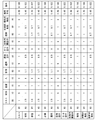
- FIG. 3 is a diagram showing a method of calculating the importance of risk items according to the first embodiment.
- the importance determination unit 205 calculates the relative importance (relative importance) of the risk items based on the scores of the plurality of risk items. Specifically, for each of the risk items of the comparison source (vertical axis in FIG. 3), the score ratio is calculated by dividing the score of the risk item by the score of the risk item of the comparison partner (horizontal axis in FIG. 3). The relative importance is calculated by calculating and rounding the score ratio to any of 9, 7, 5, 3, 1, 1/3, 1/5, 1/7, and 1/9.
- the set of relative importance values is not limited to this.
- the score ratio itself may be the relative importance.
- the importance determination unit 205 obtains the geometric mean of the relative importance of each risk item.
- the importance determination unit 205 determines the importance of each risk item by dividing the geometric mean of each risk item by the sum of the geometric mean. In other words, the total importance of risk items is 1.
- the importance determination unit 205 may determine the importance by using other aggregation methods such as arithmetic mean, sum, norm instead of the geometric mean.
- the influence degree storage unit 206 stores the degree of influence on the risk item by adopting the operation policy in association with the combination of the operation policy and the risk item of the cooling water system 100.
- the operation policy of the cooling water system 100 includes not performing treatment, changing the target value of COC, changing the drug, changing the target value of the drug injection amount, and the like.
- the influence degree storage unit 206 stores the operation policy for each target value as the operation policy for changing the target value.
- the influence degree storage unit 206 has an influence degree for each of the operation policy for changing the COC target value to 8, the operation policy for changing the COC target value to 6, and the operation policy for changing the COC target value to 4.
- the plurality of driving policies may include a combination of two or more driving policies.
- the plurality of operating policies may include an operating policy in which the target value of COC is set to 8 and the injection amount of the drug is set to 3 kiloliters.
- the degree of influence may be, for example, the geometric mean of the relative influence of the driving policy divided by the sum of the geometric mean. That is, the total influence of the driving policy is the same value (1) for each risk item.
- the degree of influence is set by the designer or maintainer of the cooling water system 100.
- the degree of influence associated with the combination of the risk item related to water quality and the operation policy related to the change of the target value of COC may be calculated by the machine learning technique or the like described in Patent Document 1.
- the evaluation value calculation unit 207 calculates an evaluation value for each operation policy based on the importance determined by the importance determination unit 205 and the influence degree stored in the influence degree storage unit 206. The larger the evaluation value of the driving policy, the smaller the overall risk caused by adopting the driving policy. Specifically, the evaluation value calculation unit 207 calculates the product of the importance and the degree of influence for each of a plurality of risk items for the operation policy for which the evaluation value is calculated, and calculates the sum of the products as the operation policy for the calculation target. Calculated as the evaluation value of. That is, when the number of risk items is M and the number of driving policies is N, the evaluation value e i related to the i-th driving policy is obtained by the following equation (1).
- Equation (1) p j indicates the importance of the j-th risk item, and q i and j indicate the degree of influence associated with the i-th driving policy and the j-th risk item.
- the priority order specifying unit 208 specifies the priority order of a plurality of operation policies based on the evaluation value calculated by the evaluation value calculation unit 207.
- the priority order specifying unit 208 sets the priority of the driving policy having a relatively high evaluation value higher than that of the driving policy having a low evaluation value. That is, the priority specifying unit 208 specifies the driving policy having the highest evaluation value as the driving policy having the highest priority.
- the COC calculation unit 209 calculates the COC of the current cooling water system 100 based on the measurement value acquired by the measurement value acquisition unit 201. Specifically, the COC calculation unit 209 calculates the COC by dividing the measured value of the make-up water flow meter 142 by the measured value of the drainage flow meter 152.
- the presentation unit 210 displays a plurality of driving policies side by side on a display or the like in descending order of the priority specified by the priority specifying unit 208. Further, the presentation unit 210 displays the current COC calculated by the COC calculation unit 209 on a display or the like. As a result, the user of the operation policy evaluation device 200 can compare the target value of the COC related to the operation policy having a high priority with the current COC.
- the operation policy evaluation device 200 receives input of design information, constraint conditions, operation information, and risk cost information of the cooling water system 100 from the user before evaluating the operation policy of the cooling water system 100.
- the presentation unit 210 displays an input field for information used for identifying a plurality of risk items on a display or the like, and the input unit 202 acquires an input value in the input field.
- the input value is stored in the input value storage unit 203. The input value is reviewed at a frequency of, for example, about once a year.
- FIG. 4 is a flowchart showing an operation policy evaluation method according to the first embodiment.
- the operation policy evaluation device 200 starts the evaluation process of the operation policy.
- the measured value acquisition unit 201 acquires the measured values from the cooling water quality sensor 132, the make-up water flow meter 142, and the drainage flow meter 152 (step S1).
- the COC calculation unit 209 calculates the current COC of the cooling water system 100 by dividing the measured value of the make-up water flow meter 142 acquired in step S1 by the measured value of the drainage flow meter 152 (step S2).
- the score specifying unit 204 is based on the measured value acquired by the measured value acquisition unit 201 and the input value stored in the input value storage unit 203 based on the relationship between the measured value or the input value defined in advance for each risk item and the score. , Identify the score for each risk item (step S3).
- the importance determination unit 205 calculates the relative importance of the risk items based on the scores of the plurality of risk items specified in step S3 (step S4).
- the importance determination unit 205 obtains the geometric mean of the relative importance calculated in step S4 for each risk item (step S5).
- the importance determination unit 205 determines the importance of each risk item by dividing the geometric mean of each risk item by the sum of the geometric mean (step S6).
- the evaluation value calculation unit 207 calculates the evaluation value for each operation policy by substituting the importance determined in step S6 and the influence degree stored in the influence degree storage unit 206 into the above equation (1). Step S7).
- the priority order specifying unit 208 specifies the priority order of a plurality of operation policies based on the evaluation value calculated in step S7 (step S8).
- the presentation unit 210 displays a display screen including a plurality of operation policies arranged in descending order of priority specified in step S8 and the current COC value calculated in step S2 on a display or the like (step S9).
- the user of the operation policy evaluation device 200 can compare the target value of the COC related to the operation policy with a high priority with the current COC.
- the operation policy evaluation device 200 determines the normalized importance for a plurality of risk items related to the operation of the cooling water system 100, and for each operation policy of the cooling water system 100.
- the evaluation value based on the sum of the products of the degree of influence and the degree of importance of each risk item is obtained.
- the operation policy evaluation device 200 can evaluate the operation policy of the cooling water system 100 in consideration of a plurality of risks.
- the evaluation value may be obtained by a method other than the sum of products (weighted sum).
- the operation policy evaluation device 200 has a sum of the products of the square of the degree of influence and the square of the importance, the sum of the products of the square of the degree of influence and the square of the importance, and the square of the degree of influence and the degree of importance.
- the evaluation value may be calculated by another method such as the sum of products with and the sum of influence and importance.
- the operation policy evaluation device 200 determines the importance of risk items (corrosion factor, scale factor, biological pollution factor) related to water quality based on the measured value of water quality by the cooling water quality sensor 132. As a result, the operation policy evaluation device 200 can qualitatively determine the importance of risk items related to water quality. In other embodiments, the importance may be determined based on the manually derived water quality evaluation value, or the plurality of risk items may not include the risk items related to water quality.
- the plurality of risk items according to the first embodiment include items (costs) related to the profit and loss of the plant.
- the operation policy evaluation device 200 can evaluate the operation policy in consideration of the balance between the risk of failure occurrence in the plant and the profit and loss.
- Other examples of items related to plant profit / loss include the profit of the entire plant and the profit margin of the entire plant.
- the plurality of risk items may not include the risk items related to the profit and loss of the plant.
- the operation policy evaluation device 200 identifies a normalized score for each of the plurality of risk items, and for each of the plurality of risk items, the score of the risk item and the score of the other risk item
- the importance is determined using the average of the ratios of.
- the present embodiment is not limited to this, and for example, a value obtained by dividing the score by the sum of the scores or the score itself may be used as the importance.
- the operation policy evaluation device 200 specifies the priority order of a plurality of operation policies based on the evaluation values of the plurality of operation policies. As a result, the user can recognize a driving policy with a small overall disadvantage for a plurality of risks.
- the operation policy evaluation device 200 according to another embodiment may present only the evaluation value without specifying the priority order.
- the operation policy evaluation device 200 evaluates the operation policy of the cooling water system 100, but is not limited to this.
- the operation policy evaluation device 200 evaluates the operation policy of another circulating water system such as a circulating water system that circulates water and steam between the condenser 110 and the steam turbine. May be good.
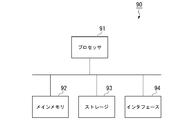
- FIG. 5 is a schematic block diagram showing a configuration of a computer according to at least one embodiment.
- the computer 90 includes a processor 91, a main memory 92, a storage 93, and an interface 94.
- the above-mentioned operation policy evaluation device 200 is mounted on the computer 90.
- the operation of each processing unit described above is stored in the storage 93 in the form of a program.
- the processor 91 reads a program from the storage 93, expands it into the main memory 92, and executes the above processing according to the program. Further, the processor 91 secures a storage area corresponding to each of the above-mentioned storage units in the main memory 92 according to the program.
- the program may be for realizing a part of the functions exerted on the computer 90.
- the program may exert its function in combination with another program already stored in the storage 93, or in combination with another program mounted on another device.
- the computer 90 may be provided with a custom LSI (Large Scale Integrated Circuit) such as a PLD (Programmable Logic Device) in addition to or in place of the above configuration.
- PLDs include PAL (Programmable Array Logic), GAL (Generic Array Logic), CPLD (Complex Programmable Logic Device), and FPGA (Field Programmable Gate Array).
- PLDs Programmable Logic Device
- PAL Programmable Array Logic
- GAL Generic Array Logic
- CPLD Complex Programmable Logic Device
- FPGA Field Programmable Gate Array
- Examples of the storage 93 include magnetic disks, magneto-optical disks, semiconductor memories, and the like.
- the storage 93 may be internal media directly connected to the bus of computer 90, or external media connected to computer 90 via interface 94 or a communication line.
- this program is distributed to the computer 90 via a communication line, the distributed computer 90 may expand the program in the main memory 92 and execute the above processing.
- the storage 93 is a non-temporary tangible storage medium.
- the program may be for realizing a part of the above-mentioned functions. Further, the program may be a so-called difference file (difference program) that realizes the above-mentioned function in combination with another program already stored in the storage 93.
- difference file difference program
- the driving policy evaluation device can evaluate the driving policy in consideration of a plurality of risks.
- Cooling water system 110 Condenser 120 Wet cooling tower 121 Fan 130 Cooling water circulation line 131 Circulation pump 132 Cooling water quality sensor 140 Replenishment line 141 Supply water pump 142 Replenishment water flow meter 150 Drain line 151 Blow valve 152 Drainage flow meter 160 Chemical injection line 161 Chemical tank 162 Chemical injection pump 170 Wastewater treatment device 200 Operation policy evaluation device 201 Measurement value acquisition unit 202 Input unit 203 Input value storage unit 204 Score identification unit 205 Importance determination unit 206 Impact storage unit 207 Evaluation value calculation unit 208 Priority Rank identification unit 209 COC calculation unit 210 Presentation unit
Landscapes
- Engineering & Computer Science (AREA)
- General Engineering & Computer Science (AREA)
- Water Supply & Treatment (AREA)
- Chemical & Material Sciences (AREA)
- Mechanical Engineering (AREA)
- Thermal Sciences (AREA)
- Physics & Mathematics (AREA)
- Combustion & Propulsion (AREA)
- Life Sciences & Earth Sciences (AREA)
- Hydrology & Water Resources (AREA)
- Environmental & Geological Engineering (AREA)
- Organic Chemistry (AREA)
- Testing And Monitoring For Control Systems (AREA)
Abstract
重要度決定部は、プラントの循環水系統の運転に関する複数のリスク項目について、正規化された重要度を決定する。評価値算出部は、循環水系統の複数の運転方針ごとに、影響度と重要度との積の総和に基づいて当該運転方針の評価値を求める。影響度は、運転方針が複数のリスク項目に与える影響を示す。
Description
本発明は、運転方針評価装置、運転方針評価方法、およびプログラムに関する。
本願は、2019年3月19日に日本に出願された特願2019-051726号について優先権を主張し、その内容をここに援用する。
本願は、2019年3月19日に日本に出願された特願2019-051726号について優先権を主張し、その内容をここに援用する。
発電プラントにおいて排出された蒸気は、復水器で冷却水との熱交換によって冷却されることがある。この冷却水は、冷却塔において冷却される。冷却水は、復水器と冷却塔との間を循環する。特許文献1には、循環水系統の水質を検出し、スケーリング、ファウリング、および腐食などの障害の発生を押させるための濃縮制御量を決定する技術が開示されている。
特許文献1に記載の技術によれば、循環水系統の水質に基づいて障害を抑制する運転方針を決定する。他方、発電プラントの運転においては、水質に起因する障害の発生以外にも複数のリスクを有している。
本発明の目的は、複数のリスクに鑑みて運転方針を評価することができる運転方針評価装置、運転方針評価方法、およびプログラムを提供することにある。
本発明の目的は、複数のリスクに鑑みて運転方針を評価することができる運転方針評価装置、運転方針評価方法、およびプログラムを提供することにある。
本発明の第1の態様によれば、運転方針評価装置は、プラントの循環水系統の運転に関する複数のリスク項目について、正規化された重要度を決定する重要度決定部と、前記循環水系統の複数の運転方針ごとに、当該運転方針が前記複数のリスク項目に与える影響度と当該リスク項目の重要度とに基づいて当該運転方針の評価値を求める評価値算出部と、を備える。
本発明の第2の態様によれば、第1の態様に係る運転方針評価装置において、前記評価値算出部は、前記循環水系統の複数の運転方針ごとに、当該運転方針が前記複数のリスク項目に与える影響度と当該リスク項目の重要度との積の総和に基づいて当該運転方針の評価値を求める。
本発明の第3の態様によれば、第1または第2の態様に係る運転方針評価装置において、前記複数のリスク項目は、水質に関するリスク項目を含み、前記重要度決定部は、前記循環水系統における水質の計測値に基づいて、前記水質に関するリスク項目に係る前記重要度を決定するものであってよい。
本発明の第4の態様によれば、第1から第3の何れかの態様に係る運転方針評価装置において、前記複数のリスク項目は、前記プラントの損益に関する項目を含むものであってよい。
本発明の第5の態様によれば、第1から第4の何れかの態様に係る運転方針評価装置が、前記複数のリスク項目それぞれについて正規化されたスコアを特定するスコア特定部を備え、前記重要度決定部は、前記複数のリスク項目のそれぞれについて、当該リスク項目のスコアと他のリスク項目のスコアとの比率の平均を用いて、前記重要度を決定するものであってよい。
本発明の第6の態様によれば、第1から第5の何れかの態様に係る運転方針評価装置が、前記複数の運転方針の評価値に基づいて、前記複数の運転方針の優先順位を特定する優先順位特定部を備えるものであってよい。
本発明の第7の態様によれば、運転方針評価方法は、コンピュータを用いた運転方針評価方法であって、循環水系統の運転に関する複数のリスク項目について、前記コンピュータが正規化された重要度を決定するステップと、前記コンピュータが、前記循環水系統の複数の運転方針ごとに、当該運転方針が前記複数のリスク項目に与える影響度と当該リスク項目の重要度とに基づいて当該運転方針の評価値を求めるステップと、を備える。
本発明の第8の態様によれば、プログラムは、コンピュータに、循環水系統の運転に関する複数のリスク項目について、正規化された重要度を決定するステップと、前記循環水系統の複数の運転方針ごとに、当該運転方針が前記複数のリスク項目に与える影響度と当該リスク項目の重要度と和に基づいて当該運転方針の評価値を求めるステップと、を実行させる。
上記態様のうち少なくとも1つの態様によれば、運転方針評価装置は、複数のリスクに鑑みて運転方針を評価することができる。
〈第1の実施形態〉
以下、図面を参照しながら実施形態について詳しく説明する。
図1は、第1の実施形態に係る冷却水系統の構成を示す概略図である。冷却水系統100は、発電プラントに設けられ、発電プラントにおいて排出された蒸気を冷却するための冷却水を循環させる循環水系統である。
以下、図面を参照しながら実施形態について詳しく説明する。
図1は、第1の実施形態に係る冷却水系統の構成を示す概略図である。冷却水系統100は、発電プラントに設けられ、発電プラントにおいて排出された蒸気を冷却するための冷却水を循環させる循環水系統である。
冷却水系統100は、復水器110、湿式冷却塔120、冷却水循環ライン130、補給ライン140、排水ライン150、薬注ライン160、排水処理装置170、運転方針評価装置200を備える。
復水器110は、発電プラントから排出される蒸気と冷却水とを熱交換させ、蒸気を水に戻す。
湿式冷却塔120は、復水器110で熱交換された冷却水を冷却する。湿式冷却塔120には、冷却水の蒸発を促すためのファン121が設けられる。
湿式冷却塔120は、復水器110で熱交換された冷却水を冷却する。湿式冷却塔120には、冷却水の蒸発を促すためのファン121が設けられる。
冷却水循環ライン130は、復水器110および湿式冷却塔120に冷却水を循環させるラインである。冷却水循環ライン130には、循環ポンプ131、冷却水質センサ132が設けられる。循環ポンプ131は、湿式冷却塔120から復水器110へ向けて冷却水を圧送する。
冷却水質センサ132は、冷却水循環ライン130を循環する冷却水の水質を計測する。冷却水質センサ132は、塩素イオン濃度、カルシウムイオン濃度、ATP(adenosine triphosphate)濃度を水質指標値として計測する。なお、他の実施形態に係る冷却水質センサ132は、例えば、電気伝導率、pH値、他の塩濃度、他の金属濃度、COD(Chemical Oxygen Demand)、BOD(Biochemical Oxygen Demand)、微生物濃度、およびシリカ濃度などの、他の水質指標値を計測してもよい。冷却水質センサ132は、塩素イオン濃度、カルシウムイオン濃度、およびATP濃度の計測値を運転方針評価装置200に出力する。
冷却水質センサ132は、冷却水循環ライン130を循環する冷却水の水質を計測する。冷却水質センサ132は、塩素イオン濃度、カルシウムイオン濃度、ATP(adenosine triphosphate)濃度を水質指標値として計測する。なお、他の実施形態に係る冷却水質センサ132は、例えば、電気伝導率、pH値、他の塩濃度、他の金属濃度、COD(Chemical Oxygen Demand)、BOD(Biochemical Oxygen Demand)、微生物濃度、およびシリカ濃度などの、他の水質指標値を計測してもよい。冷却水質センサ132は、塩素イオン濃度、カルシウムイオン濃度、およびATP濃度の計測値を運転方針評価装置200に出力する。
補給ライン140は、水源から取水される原水を、補給水として冷却水循環ライン130に供給するためのラインである。補給ライン140には、給水ポンプ141および補給水流量計142が設けられる。給水ポンプ141は、水源から湿式冷却塔120へ向けて補給水を圧送する。補給水流量計142は、流量の検出値を運転方針評価装置200に出力する。
排水ライン150は、冷却水循環ライン130を循環する水の一部を排水処理装置170へ排出するためのラインである。排水ライン150には、ブロー弁151および排水流量計152が設けられる。ブロー弁151は、冷却水循環ライン130から排水処理装置170へブローする排水の量を制限する。排水流量計152は、流量の検出値を運転方針評価装置200に出力する。
薬注ライン160は、冷却水循環ライン130に薬剤を供給するためのラインである。薬注ライン160は、薬剤を貯留する薬剤タンク161と、薬剤タンク161から冷却水循環ライン130へ薬剤を供給する薬注ポンプ162とを備える。
排水処理装置170は、排水ライン150から排出された排水に、酸、アルカリ、凝集剤、またはその他の薬剤を注入する。排水処理装置170は、薬剤により処理された排水を廃棄する。
運転方針評価装置200は、冷却水質センサ132が計測した塩素イオン濃度、カルシウムイオン濃度、およびATP濃度の計測値に基づいて、冷却水系統100に係る複数の運転方針の評価結果を表示する。
《運転方針評価装置の構成》
図2は、第1の実施形態に係る運転方針評価装置の構成を示す概略ブロック図である。
運転方針評価装置200は、計測値取得部201、入力部202、入力値記憶部203、スコア特定部204、重要度決定部205、影響度記憶部206、評価値算出部207、優先順位特定部208、COC算出部209(COC:Cycle Of Concentration)、および提示部210を備える。
図2は、第1の実施形態に係る運転方針評価装置の構成を示す概略ブロック図である。
運転方針評価装置200は、計測値取得部201、入力部202、入力値記憶部203、スコア特定部204、重要度決定部205、影響度記憶部206、評価値算出部207、優先順位特定部208、COC算出部209(COC:Cycle Of Concentration)、および提示部210を備える。
計測値取得部201は、冷却水質センサ132、補給水流量計142、および排水流量計152から計測値を取得する。すなわち、計測値取得部201は、冷却水の塩素イオン濃度、冷却水のカルシウムイオン濃度、冷却水のATP濃度、補給水の流量、および排水の流量の計測値を取得する。
入力部202は、運転方針評価装置200の利用者から、冷却水系統100の設計情報、制約条件、運用情報、およびリスクコスト情報の入力を受け付ける。冷却水系統100の設計情報の例としては、冷却水循環ライン130の配管の材質、冷却水系統100における矮小部の有無などが挙げられる。冷却水系統100の制約条件の例としては、例えば排水等に係る規制の厳しさ、プラントへのアクセス時間などが挙げられる。冷却水系統100の運用情報の例としては、冷却水系統100の運転者の熟練度、水質の計測精度、運転方針の見直し頻度などが挙げられる。リスクコスト情報は、例えばリスクヘッジのために掛けるコストの許容程度を示す。
入力値記憶部203は、入力部202に入力された情報を記憶する。
スコア特定部204は、計測値取得部201が取得した計測値、および入力部202に入力された情報に基づいて、複数のリスク項目それぞれのスコアを特定する。第1の実施形態に係るリスク項目は、コスト、材料、装置、人、運用、腐食因子、スケール因子、生物汚損因子、規制、時間的制約、場所的制約である。スコアは、0以上100以下の数値によって表される。すなわちスコアは、複数のリスク項目それぞれのリスクの大きさを0以上100以下の値に正規化した無次元量である。具体的には、スコア特定部204は、予め定義された計測値または入力値とスコアとの関係に基づいて、計測値取得部201が取得した計測値および入力部202が受け付けた入力値に対応するスコアを特定する。スコアは、値が大きいほどリスクまたは重要性が高いことを示す。例えば、コストに係るスコアは、値が大きいほどリスクコストを削減することが望まれていることを示し、値が大きいほどリスクコストをかけてリスクを低減することが望まれていることを示す。なお、第1の実施形態に係る腐食因子は、塩素イオン濃度の計測値によって決定され、スケール因子はカルシウムイオン濃度の計測値によって決定され、生物汚損因子はATP濃度の計測値によって決定されるものとする。ただし、他の実施形態においてはこれに限られず、腐食因子、スケール因子、生物汚損因子は、他の計測値に基づいて決定されてもよい。例えば、腐食因子およびスケール因子は、ランゲリア指数やリズナー指数によって決定されてもよい。この場合、冷却水質センサ132としては、TDS(Total Dissolved Solids)計、温度計、アルカリ度計などが採用される。また例えば、生物汚損因子は、水の濁度、吸光度、細胞数などに基づいて決定されてもよい。この場合、冷却水質センサ132としては、濁度系、比色計、フローサイトメトリーに用いられる装置などが採用される。なお、他の実施形態においてはリスク項目の種類及び数はこれに限られない。
重要度決定部205は、スコア特定部204が特定した各リスク項目のスコアに基づいて、各リスク項目の重要度を算出する。図3は、第1の実施形態に係るリスク項目の重要度の算出方法を示す図である。重要度決定部205は、複数のリスク項目のスコアに基づいて、リスク項目どうしの相対的な重要度(相対重要度)を算出する。具体的には、比較元のリスク項目(図3の縦軸)のそれぞれについて、当該リスク項目のスコアを、比較相手のリスク項目(図3の横軸)のスコアで除算することでスコア比を算出し、当該スコア比を、9、7、5、3、1、1/3、1/5、1/7、1/9の何れかの値に丸めることで、相対重要度を算出する。なお、相対重要度の値の集合はこれに限られない。相対重要度は、大きいほど比較元のリスク項目が比較相手のリスク項目より重要であることを示し、小さいほど比較元のリスク項目が比較相手のリスク項目より重要でないことを示す。なお、他の実施形態においては、スコア比そのものを相対重要度としてもよい。重要度決定部205は、各リスク項目の相対重要度の幾何平均を求める。重要度決定部205は、各リスク項目の幾何平均を、幾何平均の総和で除算することで、各リスク項目の重要度を決定する。つまり、リスク項目の重要度の総和は1となる。なお、他の実施形態においては、重要度決定部205は、幾何平均に代えて算術平均、総和、ノルムなどの他の集計方法を用いて重要度を決定してもよい。
影響度記憶部206は、冷却水系統100の運転方針とリスク項目との組み合わせに関連付けて、当該運転方針の採用によって当該リスク項目に与える影響度を記憶する。冷却水系統100の運転方針は、処置を行わないこと、COCの目標値を変更すること、薬剤を変更すること、薬注量の目標値を変更することなどが挙げられる。影響度記憶部206は、目標値の変更に関する運転方針として、目標値別に運転方針を記憶する。例えば、影響度記憶部206は、COCの目標値を8に変更する運転方針、COCの目標値を6に変更する運転方針、COCの目標値を4に変更する運転方針のそれぞれについて、影響度を記憶する。また、複数の運転方針は、2以上の運転方針の組み合わせを含むものであってもよい。例えば、複数の運転方針は、COCの目標値を8にし、かつ薬剤の注入量を3キロリットルにする運転方針を含むものであってよい。
影響度は、例えば、運転方針の相対影響度の幾何平均を、幾何平均の総和で除算したものであってよい。つまり、リスク項目ごとに、運転方針の影響度の総和は同じ値(1)となる。影響度は、冷却水系統100の設計者または保守者によって設定される。なお、水質に係るリスク項目とCOCの目標値の変更に係る運転方針との組み合わせに関連付けられた影響度は、特許文献1に記載の機械学習技術等によって算出されてもよい。
影響度は、例えば、運転方針の相対影響度の幾何平均を、幾何平均の総和で除算したものであってよい。つまり、リスク項目ごとに、運転方針の影響度の総和は同じ値(1)となる。影響度は、冷却水系統100の設計者または保守者によって設定される。なお、水質に係るリスク項目とCOCの目標値の変更に係る運転方針との組み合わせに関連付けられた影響度は、特許文献1に記載の機械学習技術等によって算出されてもよい。
評価値算出部207は、重要度決定部205が決定した重要度と、影響度記憶部206が記憶する影響度とに基づいて、運転方針ごとの評価値を算出する。運転方針の評価値は、大きいほどその運転方針を採用することによって生じる総合的なリスクが小さいことを示す。具体的には、評価値算出部207は、評価値の算出対象の運転方針について、複数のリスク項目ごとの重要度と影響度の積を算出し、当該積の総和を、算出対象の運転方針の評価値として算出する。すなわち、リスク項目の数がM個、運転方針の数がN個である場合において、i番目の運転方針に係る評価値eiは、以下の式(1)によって求められる。

式(1)において、pjはj番目のリスク項目に係る重要度を示し、qi,jは、i番目の運転方針とj番目のリスク項目とに関連付けられた影響度を示す。
優先順位特定部208は、評価値算出部207が算出した評価値に基づいて、複数の運転方針の優先順位を特定する。優先順位特定部208は、相対的に評価値が高い運転方針の優先順位を、評価値が低い運転方針より高く設定する。つまり、優先順位特定部208は、最も評価値が高い運転方針を、最も優先順位が高い運転方針として特定する。
COC算出部209は、計測値取得部201が取得した計測値に基づいて、現在の冷却水系統100のCOCを算出する。具体的には、COC算出部209は、補給水流量計142の計測値を排水流量計152の計測値で除算することで、COCを算出する。
提示部210は、優先順位特定部208が特定した優先順位の降順に、複数の運転方針を並べてディスプレイ等に表示させる。また提示部210は、COC算出部209が算出した現在のCOCをディスプレイ等に表示させる。これにより、運転方針評価装置200の利用者は、優先順位の高い運転方針に係るCOCの目標値と、現在のCOCとを比較することができる。
《運転方針評価装置の動作》
運転方針評価装置200は、冷却水系統100の運転方針の評価を行う前に、利用者から冷却水系統100の設計情報、制約条件、運用情報、およびリスクコスト情報の入力を受け付ける。例えば、提示部210がディスプレイ等に、複数のリスク項目の特定に用いる情報の入力欄を表示させ、入力部202が当該入力欄への入力値を取得する。当該入力値は、入力値記憶部203に記憶される。当該入力値は、例えば1年に1回程度の頻度で見直される。
運転方針評価装置200は、冷却水系統100の運転方針の評価を行う前に、利用者から冷却水系統100の設計情報、制約条件、運用情報、およびリスクコスト情報の入力を受け付ける。例えば、提示部210がディスプレイ等に、複数のリスク項目の特定に用いる情報の入力欄を表示させ、入力部202が当該入力欄への入力値を取得する。当該入力値は、入力値記憶部203に記憶される。当該入力値は、例えば1年に1回程度の頻度で見直される。
図4は、第1の実施形態に係る運転方針評価方法を示すフローチャートである。
プラントおよび冷却水系統100の運転が開始されると、運転方針評価装置200は、運転方針の評価処理を開始する。まず、計測値取得部201は、冷却水質センサ132、補給水流量計142、および排水流量計152から計測値を取得する(ステップS1)。
COC算出部209は、ステップS1で取得した補給水流量計142の計測値を排水流量計152の計測値で除算することで、冷却水系統100の現在のCOCを算出する(ステップS2)。
プラントおよび冷却水系統100の運転が開始されると、運転方針評価装置200は、運転方針の評価処理を開始する。まず、計測値取得部201は、冷却水質センサ132、補給水流量計142、および排水流量計152から計測値を取得する(ステップS1)。
COC算出部209は、ステップS1で取得した補給水流量計142の計測値を排水流量計152の計測値で除算することで、冷却水系統100の現在のCOCを算出する(ステップS2)。
スコア特定部204は、リスク項目ごとに予め定義された計測値または入力値とスコアとの関係に基づいて、計測値取得部201が取得した計測値および入力値記憶部203が記憶する入力値から、リスク項目ごとのスコアを特定する(ステップS3)。
重要度決定部205は、ステップS3で特定した複数のリスク項目のスコアに基づいて、リスク項目どうしの相対重要度を算出する(ステップS4)。重要度決定部205は、各リスク項目について、ステップS4で算出した相対重要度の幾何平均を求める(ステップS5)。重要度決定部205は、各リスク項目の幾何平均を、幾何平均の総和で除算することで、各リスク項目の重要度を決定する(ステップS6)。
評価値算出部207は、ステップS6で決定した重要度と影響度記憶部206が記憶する影響度とを、上記の式(1)に代入することで、運転方針ごとの評価値を算出する(ステップS7)。優先順位特定部208は、ステップS7で算出した評価値に基づいて、複数の運転方針の優先順位を特定する(ステップS8)。
提示部210は、ステップS8で特定した優先順位の降順に並べた複数の運転方針と、ステップS2で算出した現在のCOCの値とを含む表示画面を、ディスプレイ等に表示させる(ステップS9)。これにより、運転方針評価装置200の利用者は、優先順位の高い運転方針に係るCOCの目標値と、現在のCOCとを比較することができる。
《作用・効果》
このように、第1の実施形態によれば、運転方針評価装置200は、冷却水系統100の運転に関する複数のリスク項目について正規化された重要度を決定し、冷却水系統100の運転方針ごとに、各リスク項目の影響度と重要度との積の総和に基づく評価値を求める。これにより、運転方針評価装置200は、複数のリスクに鑑みて冷却水系統100の運転方針を評価することができる。なお、他の実施形態においては、積の総和(加重和)以外の方法で評価値を求めてもよい。例えば、他の実施形態に係る運転方針評価装置200は、影響度の二乗と重要度の二乗との積の総和、影響度の二乗と重要度との積の総和、影響度と重要度の二乗との積の総和、影響度および重要度の総和など、他の手法で評価値を算出してもよい。
このように、第1の実施形態によれば、運転方針評価装置200は、冷却水系統100の運転に関する複数のリスク項目について正規化された重要度を決定し、冷却水系統100の運転方針ごとに、各リスク項目の影響度と重要度との積の総和に基づく評価値を求める。これにより、運転方針評価装置200は、複数のリスクに鑑みて冷却水系統100の運転方針を評価することができる。なお、他の実施形態においては、積の総和(加重和)以外の方法で評価値を求めてもよい。例えば、他の実施形態に係る運転方針評価装置200は、影響度の二乗と重要度の二乗との積の総和、影響度の二乗と重要度との積の総和、影響度と重要度の二乗との積の総和、影響度および重要度の総和など、他の手法で評価値を算出してもよい。
第1の実施形態に係る運転方針評価装置200は、冷却水質センサ132による水質の計測値に基づいて、水質に関するリスク項目(腐食因子、スケール因子、生物汚損因子)に係る重要度を決定する。これにより、運転方針評価装置200は、定性的に水質に関するリスク項目の重要度を決定することができる。なお、他の実施形態においては、手作業によって導出された水質の評価値に基づいて重要度を決定してもよいし、複数のリスク項目が水質に関するリスク項目を含まなくてもよい。
第1の実施形態に係る複数のリスク項目には、プラントの損益に関する項目(コスト)を含む。これにより、運転方針評価装置200は、プラントにおける障害発生のリスクと損益とのバランスに鑑みて、運転方針を評価することができる。なお、プラントの損益に関する項目の他の例としては、プラント全体の収益や、プラント全体の利益率などが挙げられる。また他の実施形態においては、複数のリスク項目がプラントの損益に関するリスク項目を含まなくてもよい。
第1の実施形態に係る運転方針評価装置200は、複数のリスク項目それぞれについて正規化されたスコアを特定し、複数のリスク項目のそれぞれについて、当該リスク項目のスコアと他のリスク項目のスコアとの比率の平均を用いて重要度を決定する。なお、他の実施形態においてはこれに限られず、例えばスコアをスコアの総和で除算した値や、スコアそのものを重要度としてもよい。
第1の実施形態に係る運転方針評価装置200は、複数の運転方針の評価値に基づいて、複数の運転方針の優先順位を特定する。これにより、利用者は複数のリスクに対する総合的なデメリットが小さい運転方針を認識することができる。なお、他の実施形態に係る運転方針評価装置200は、優先順位を特定せず、評価値のみを提示してもよい。
〈他の実施形態〉
以上、図面を参照して一実施形態について詳しく説明してきたが、具体的な構成は上述のものに限られることはなく、様々な設計変更等をすることが可能である。例えば、他の実施形態においては、上述の処理の順序が適宜変更されてもよい。また、他の実施形態においては、一部の処理が並列に実行されてもよい。また、他の実施形態においては、複数の装置の協働によって上述の処理が実行されてもよい。
以上、図面を参照して一実施形態について詳しく説明してきたが、具体的な構成は上述のものに限られることはなく、様々な設計変更等をすることが可能である。例えば、他の実施形態においては、上述の処理の順序が適宜変更されてもよい。また、他の実施形態においては、一部の処理が並列に実行されてもよい。また、他の実施形態においては、複数の装置の協働によって上述の処理が実行されてもよい。
上述した実施形態に係る運転方針評価装置200は、冷却水系統100の運転方針を評価するが、これに限られない。例えば、他の実施形態に係る運転方針評価装置200は、復水器110と蒸気タービンとの間で水および蒸気を循環させる循環水系統などの、他の循環水系統の運転方針を評価してもよい。
〈コンピュータ構成〉
図5は、少なくとも1つの実施形態に係るコンピュータの構成を示す概略ブロック図である。
コンピュータ90は、プロセッサ91、メインメモリ92、ストレージ93、インタフェース94を備える。
上述の運転方針評価装置200は、コンピュータ90に実装される。そして、上述した各処理部の動作は、プログラムの形式でストレージ93に記憶されている。プロセッサ91は、プログラムをストレージ93から読み出してメインメモリ92に展開し、当該プログラムに従って上記処理を実行する。また、プロセッサ91は、プログラムに従って、上述した各記憶部に対応する記憶領域をメインメモリ92に確保する。
図5は、少なくとも1つの実施形態に係るコンピュータの構成を示す概略ブロック図である。
コンピュータ90は、プロセッサ91、メインメモリ92、ストレージ93、インタフェース94を備える。
上述の運転方針評価装置200は、コンピュータ90に実装される。そして、上述した各処理部の動作は、プログラムの形式でストレージ93に記憶されている。プロセッサ91は、プログラムをストレージ93から読み出してメインメモリ92に展開し、当該プログラムに従って上記処理を実行する。また、プロセッサ91は、プログラムに従って、上述した各記憶部に対応する記憶領域をメインメモリ92に確保する。
プログラムは、コンピュータ90に発揮させる機能の一部を実現するためのものであってもよい。例えば、プログラムは、ストレージ93に既に記憶されている他のプログラムとの組み合わせ、または他の装置に実装された他のプログラムとの組み合わせによって機能を発揮させるものであってもよい。なお、他の実施形態においては、コンピュータ90は、上記構成に加えて、または上記構成に代えてPLD(Programmable Logic Device)などのカスタムLSI(Large Scale Integrated Circuit)を備えてもよい。PLDの例としては、PAL(Programmable Array Logic)、GAL(Generic Array Logic)、CPLD(Complex Programmable Logic Device)、FPGA(Field Programmable Gate Array)が挙げられる。この場合、プロセッサによって実現される機能の一部または全部が当該集積回路によって実現されてよい。
ストレージ93の例としては、磁気ディスク、光磁気ディスク、半導体メモリ等が挙げられる。ストレージ93は、コンピュータ90のバスに直接接続された内部メディアであってもよいし、インタフェース94または通信回線を介してコンピュータ90に接続される外部メディアであってもよい。また、このプログラムが通信回線によってコンピュータ90に配信される場合、配信を受けたコンピュータ90が当該プログラムをメインメモリ92に展開し、上記処理を実行してもよい。少なくとも1つの実施形態において、ストレージ93は、一時的でない有形の記憶媒体である。
また、当該プログラムは、前述した機能の一部を実現するためのものであってもよい。さらに、当該プログラムは、前述した機能をストレージ93に既に記憶されている他のプログラムとの組み合わせで実現するもの、いわゆる差分ファイル(差分プログラム)であってもよい。
上記態様のうち少なくとも1つの態様によれば、運転方針評価装置は、複数のリスクに鑑みて運転方針を評価することができる。
100 冷却水系統
110 復水器
120 湿式冷却塔
121 ファン
130 冷却水循環ライン
131 循環ポンプ
132 冷却水質センサ
140 補給ライン
141 給水ポンプ
142 補給水流量計
150 排水ライン
151 ブロー弁
152 排水流量計
160 薬注ライン
161 薬剤タンク
162 薬注ポンプ
170 排水処理装置
200 運転方針評価装置
201 計測値取得部
202 入力部
203 入力値記憶部
204 スコア特定部
205 重要度決定部
206 影響度記憶部
207 評価値算出部
208 優先順位特定部
209 COC算出部
210 提示部
110 復水器
120 湿式冷却塔
121 ファン
130 冷却水循環ライン
131 循環ポンプ
132 冷却水質センサ
140 補給ライン
141 給水ポンプ
142 補給水流量計
150 排水ライン
151 ブロー弁
152 排水流量計
160 薬注ライン
161 薬剤タンク
162 薬注ポンプ
170 排水処理装置
200 運転方針評価装置
201 計測値取得部
202 入力部
203 入力値記憶部
204 スコア特定部
205 重要度決定部
206 影響度記憶部
207 評価値算出部
208 優先順位特定部
209 COC算出部
210 提示部
Claims (8)
- プラントの循環水系統の運転に関する複数のリスク項目について、正規化された重要度を決定する重要度決定部と、
前記循環水系統の複数の運転方針ごとに、当該運転方針が前記複数のリスク項目に与える影響度と当該リスク項目の重要度とに基づいて当該運転方針の評価値を求める評価値算出部と、
を備える運転方針評価装置。 - 前記評価値算出部は、前記循環水系統の複数の運転方針ごとに、当該運転方針が前記複数のリスク項目に与える影響度と当該リスク項目の重要度との積の総和に基づいて当該運転方針の評価値を求める
請求項1に記載の運転方針評価装置。 - 前記複数のリスク項目は、水質に関するリスク項目を含み、
前記重要度決定部は、前記循環水系統における水質の計測値に基づいて、前記水質に関するリスク項目に係る前記重要度を決定する
請求項1または請求項2に記載の運転方針評価装置。 - 前記複数のリスク項目は、前記プラントの損益に関する項目を含む
請求項1から請求項3の何れか1項に記載の運転方針評価装置。 - 前記複数のリスク項目それぞれについて正規化されたスコアを特定するスコア特定部を備え、
前記重要度決定部は、前記複数のリスク項目のそれぞれについて、当該リスク項目のスコアと他のリスク項目のスコアとの比率の平均を用いて、前記重要度を決定する
請求項1から請求項4の何れか1項に記載の運転方針評価装置。 - 前記複数の運転方針の評価値に基づいて、前記複数の運転方針の優先順位を特定する優先順位特定部
を備える請求項1から請求項5の何れか1項に記載の運転方針評価装置。 - コンピュータを用いた運転方針評価方法であって、
循環水系統の運転に関する複数のリスク項目について、前記コンピュータが正規化された重要度を決定するステップと、
前記コンピュータが、前記循環水系統の複数の運転方針ごとに、当該運転方針が前記複数のリスク項目に与える影響度と当該リスク項目の重要度とに基づいて当該運転方針の評価値を求めるステップと、
を備える運転方針評価方法。 - コンピュータに、
循環水系統の運転に関する複数のリスク項目について、正規化された重要度を決定するステップと、
前記循環水系統の複数の運転方針ごとに、当該運転方針が前記複数のリスク項目に与える影響度と当該リスク項目の重要度とに基づいて当該運転方針の評価値を求めるステップと、
を実行させるためのプログラム。
Applications Claiming Priority (2)
| Application Number | Priority Date | Filing Date | Title |
|---|---|---|---|
| JP2019051726A JP7091275B2 (ja) | 2019-03-19 | 2019-03-19 | 運転方針評価装置、運転方針評価方法、およびプログラム |
| JP2019-051726 | 2019-03-19 |
Publications (1)
| Publication Number | Publication Date |
|---|---|
| WO2020189301A1 true WO2020189301A1 (ja) | 2020-09-24 |
Family
ID=72520863
Family Applications (1)
| Application Number | Title | Priority Date | Filing Date |
|---|---|---|---|
| PCT/JP2020/009384 Ceased WO2020189301A1 (ja) | 2019-03-19 | 2020-03-05 | 運転方針評価装置、運転方針評価方法、およびプログラム |
Country Status (2)
| Country | Link |
|---|---|
| JP (1) | JP7091275B2 (ja) |
| WO (1) | WO2020189301A1 (ja) |
Citations (6)
| Publication number | Priority date | Publication date | Assignee | Title |
|---|---|---|---|---|
| JPS5925371B2 (ja) * | 1980-01-24 | 1984-06-16 | 富士通株式会社 | 電子ビ−ム露光方法 |
| JP2000246235A (ja) * | 1999-02-26 | 2000-09-12 | Toshiba Corp | 処理水質制御装置 |
| JP2001273006A (ja) * | 2000-03-27 | 2001-10-05 | Osaka Gas Co Ltd | エネルギープラントの運用評価システム |
| JP2006260519A (ja) * | 2005-02-15 | 2006-09-28 | Toshiba Corp | 水処理プラントの運転評価システム及び運転評価方法 |
| JP2008059144A (ja) * | 2006-08-30 | 2008-03-13 | Toshiba Corp | 運転評価システム |
| JP2013117755A (ja) * | 2011-12-01 | 2013-06-13 | Ihi Corp | リスク評価装置及びリスク評価プログラム |
-
2019
- 2019-03-19 JP JP2019051726A patent/JP7091275B2/ja not_active Expired - Fee Related
-
2020
- 2020-03-05 WO PCT/JP2020/009384 patent/WO2020189301A1/ja not_active Ceased
Patent Citations (6)
| Publication number | Priority date | Publication date | Assignee | Title |
|---|---|---|---|---|
| JPS5925371B2 (ja) * | 1980-01-24 | 1984-06-16 | 富士通株式会社 | 電子ビ−ム露光方法 |
| JP2000246235A (ja) * | 1999-02-26 | 2000-09-12 | Toshiba Corp | 処理水質制御装置 |
| JP2001273006A (ja) * | 2000-03-27 | 2001-10-05 | Osaka Gas Co Ltd | エネルギープラントの運用評価システム |
| JP2006260519A (ja) * | 2005-02-15 | 2006-09-28 | Toshiba Corp | 水処理プラントの運転評価システム及び運転評価方法 |
| JP2008059144A (ja) * | 2006-08-30 | 2008-03-13 | Toshiba Corp | 運転評価システム |
| JP2013117755A (ja) * | 2011-12-01 | 2013-06-13 | Ihi Corp | リスク評価装置及びリスク評価プログラム |
Also Published As
| Publication number | Publication date |
|---|---|
| JP2020151653A (ja) | 2020-09-24 |
| JP7091275B2 (ja) | 2022-06-27 |
Similar Documents
| Publication | Publication Date | Title |
|---|---|---|
| US10640392B2 (en) | Water quality management device, water treatment system, water quality management method, and program for optimizing water treatment system | |
| Lee et al. | An evaluation of empirically-based models for predicting energy performance of vapor-compression water chillers | |
| WO2022172882A1 (ja) | 推測装置、推測システム、推測プログラム及び推測方法 | |
| CN100545105C (zh) | 臭氧处理冷却循环水系统的自动控制方法 | |
| CN110599020A (zh) | 发电机组的运行状态评价方法、系统及可读存储介质 | |
| US11774196B2 (en) | Heat exchange system having desired anti-scaling performance and an anti-scaling method thereof | |
| CN103307928A (zh) | 敞开式循环水冷却系统的控制方法 | |
| JP2019040430A (ja) | 水質制御装置、水処理システム、熱プラント、発電プラント、および水質制御方法 | |
| JP2019098331A (ja) | 薬注制御装置、薬剤管理装置、水処理システム、薬注制御方法、およびプログラム | |
| JP5722371B2 (ja) | ノウハウ可視化装置及びノウハウ可視化方法 | |
| CN107461881A (zh) | 一种医院空调机房的制冷主机能效诊断方法及其系统 | |
| JP7091275B2 (ja) | 運転方針評価装置、運転方針評価方法、およびプログラム | |
| KR102349052B1 (ko) | 전산유체역학 수치해석을 이용한 수처리 공정 실시간 진단 시스템 | |
| CN120027639B (zh) | 一种中央空调冷却塔出水智能监控系统及方法 | |
| JP2019100662A (ja) | 状態評価装置、状態評価システム、状態評価方法、およびプログラム | |
| JP5541790B2 (ja) | プラント運転監視装置およびシステムならびにプログラム | |
| JP4010514B2 (ja) | 水道水の水質管理方法及び水質管理システム | |
| CN117979667A (zh) | 一种大型机房循环冷却水控制系统、方法、设备及介质 | |
| CN109368711B (zh) | 冷却水加药方法、加药装置、冷却水循环系统和存储介质 | |
| JP7726776B2 (ja) | プラント運転支援システム及びプラント運転支援方法 | |
| CN106765956A (zh) | 基于空调负荷率的供水变温度控制系统 | |
| JP2540386Y2 (ja) | 冷却塔設備 | |
| CN112926253A (zh) | 水质实时监测方法、装置及可读存储介质 | |
| JP7395851B2 (ja) | 診断装置 | |
| JP2022149098A (ja) | プラント運転支援システムおよびプラント運転支援方法 |
Legal Events
| Date | Code | Title | Description |
|---|---|---|---|
| 121 | Ep: the epo has been informed by wipo that ep was designated in this application |
Ref document number: 20774445 Country of ref document: EP Kind code of ref document: A1 |
|
| NENP | Non-entry into the national phase |
Ref country code: DE |
|
| 122 | Ep: pct application non-entry in european phase |
Ref document number: 20774445 Country of ref document: EP Kind code of ref document: A1 |