WO2020137825A1 - シクロブテンの製造方法 - Google Patents
シクロブテンの製造方法 Download PDFInfo
- Publication number
- WO2020137825A1 WO2020137825A1 PCT/JP2019/049900 JP2019049900W WO2020137825A1 WO 2020137825 A1 WO2020137825 A1 WO 2020137825A1 JP 2019049900 W JP2019049900 W JP 2019049900W WO 2020137825 A1 WO2020137825 A1 WO 2020137825A1
- Authority
- WO
- WIPO (PCT)
- Prior art keywords
- halogen atom
- reaction
- mol
- general formula
- cyclobutene
- Prior art date
- Legal status (The legal status is an assumption and is not a legal conclusion. Google has not performed a legal analysis and makes no representation as to the accuracy of the status listed.)
- Ceased
Links
Classifications
-
- C—CHEMISTRY; METALLURGY
- C07—ORGANIC CHEMISTRY
- C07C—ACYCLIC OR CARBOCYCLIC COMPOUNDS
- C07C17/00—Preparation of halogenated hydrocarbons
- C07C17/25—Preparation of halogenated hydrocarbons by splitting-off hydrogen halides from halogenated hydrocarbons
-
- C—CHEMISTRY; METALLURGY
- C07—ORGANIC CHEMISTRY
- C07C—ACYCLIC OR CARBOCYCLIC COMPOUNDS
- C07C17/00—Preparation of halogenated hydrocarbons
- C07C17/35—Preparation of halogenated hydrocarbons by reactions not affecting the number of carbon or of halogen atoms in the reaction
- C07C17/357—Preparation of halogenated hydrocarbons by reactions not affecting the number of carbon or of halogen atoms in the reaction by dehydrogenation
-
- C—CHEMISTRY; METALLURGY
- C07—ORGANIC CHEMISTRY
- C07C—ACYCLIC OR CARBOCYCLIC COMPOUNDS
- C07C23/00—Compounds containing at least one halogen atom bound to a ring other than a six-membered aromatic ring
- C07C23/02—Monocyclic halogenated hydrocarbons
- C07C23/06—Monocyclic halogenated hydrocarbons with a four-membered ring
-
- H—ELECTRICITY
- H10—SEMICONDUCTOR DEVICES; ELECTRIC SOLID-STATE DEVICES NOT OTHERWISE PROVIDED FOR
- H10P—GENERIC PROCESSES OR APPARATUS FOR THE MANUFACTURE OR TREATMENT OF DEVICES COVERED BY CLASS H10
- H10P50/00—Etching of wafers, substrates or parts of devices
- H10P50/20—Dry etching; Plasma etching; Reactive-ion etching
- H10P50/24—Dry etching; Plasma etching; Reactive-ion etching of semiconductor materials
- H10P50/242—Dry etching; Plasma etching; Reactive-ion etching of semiconductor materials of Group IV materials
Definitions
- the present disclosure relates to a method for producing cyclobutene.
- Cyclobutene containing a halogen atom is a compound useful as a dry etching gas for semiconductors, various refrigerants, foaming agents, heat transfer media, and the like.
- 1H-pentafluorocyclobutene is known to be a method for producing 1H-pentafluorocyclobutene from 1H,2H-hexafluorocyclobutane by dehydrofluorination reaction (for example, Non-Patent Documents 1 and 2).
- This technology synthesizes 1H-pentafluorocyclobutene in an open reaction system using glassware.
- the present disclosure aims to produce cyclobutene containing a halogen atom with high selectivity.
- the present disclosure includes the following configurations.
- X 1 , X 2 , X 3 , X 4 and Y are the same as above.
- X 5 and X 6 are the same or different and each represents a hydrogen atom, a halogen atom or a perfluoroalkyl group. .) Including a step of removing cyclobutane represented by A manufacturing method, wherein the step of performing the elimination reaction is performed in a gas phase.
- Item 2 The production method according to Item 1, wherein X 5 is a hydrogen atom, X 6 is a halogen atom, and the elimination reaction is a dehydrohalogenation reaction.
- Item 4 The content of 1H-perfluorocyclobutene (1H-cC 4 F 5 H) is 99 mol% or more, the content of 3H-perfluorocyclobutene (3H-cC 4 F 5 H) is 1 mol% or less, Item 4.
- Item 5. The composition according to Item 3 or 4, which is used as a cleaning gas, an etching gas, a deposit gas, or a building block for organic synthesis.
- cyclobutene containing a halogen atom can be produced with high selectivity.
- the inventors of the present invention performed a step of eliminating a raw material compound in a gas phase to obtain cyclobutene containing a halogen atom represented by the general formula (1) with high selectivity. It was found that it can be manufactured.
- the present disclosure includes the following embodiments.
- X 1 , X 2 , X 3 , X 4 and Y are the same as above.
- X 5 and X 6 are the same or different and each represents a hydrogen atom, a halogen atom or a perfluoroalkyl group. .
- the step of performing the elimination reaction is performed in the gas phase.
- cyclobutene containing a halogen atom can be produced with high selectivity.
- the “selectivity” refers to the target compound (halogen atom is included in the effluent gas with respect to the total molar amount of compounds other than the raw material compound (cyclobutene containing a halogen atom) in the effluent gas from the reactor outlet. (Including cyclobutene) means the ratio (mol %) of the total molar amount.
- the “conversion rate” means a compound other than the raw material compound (halogen atom is included in the outflow gas from the reactor outlet, with respect to the molar amount of the raw material compound (cyclobutane containing a halogen atom) supplied to the reactor. (Including cyclobutene, etc.) means the ratio (mol%) of the total molar amount.
- the method for producing cyclobutene according to the present disclosure has a merit that it is not a batch reaction but a gas phase reaction of a distribution system, and therefore a solvent is not required and industrial waste does not occur.
- Raw material compound In the present disclosure, the raw material compound is represented by the general formula (2):
- X 1 , X 2 , X 3 , X 4 , X 5 and X 6 are the same or different and represent a hydrogen atom, a halogen atom or a perfluoroalkyl group.
- Y represents a halogen atom.
- X 1 , X 2 , X 3 , X 4 , X 5 and X 6 are the same or different and each represents a hydrogen atom, a halogen atom or a perfluoroalkyl group.
- Y represents a halogen atom
- Examples of the halogen atom of X 1 , X 2 , X 3 , X 4 , X 5 , X 6 and Y include a fluorine atom, a chlorine atom, a bromine atom and an iodine atom.
- the perfluoroalkyl group of X 1 , X 2 , X 3 , X 4 , X 5 and X 6 is an alkyl group in which all hydrogen atoms are replaced by fluorine atoms.
- the perfluoroalkyl group is, for example, a perfluoroalkyl group having 1 to 20 carbon atoms, preferably 1 to 12 carbon atoms, more preferably 1 to 6 carbon atoms, further preferably 1 to 4 carbon atoms, particularly preferably 1 to 3 carbon atoms. It is preferably a fluoroalkyl group.
- the perfluoroalkyl group is preferably a linear or branched perfluoroalkyl group.
- the perfluoroalkyl group is preferably a trifluoromethyl group (CF 3 -) and a pentafluoroethyl group (C 2 F 5 -).
- cyclobutane containing a halogen atom represented by the general formula (2) which is a raw material compound
- X 1 , X 2 , X 3 and X 4 are the same or different and each independently represent a hydrogen atom, a halogen atom or a perfluoroalkyl group
- X 5 is a hydrogen atom
- X 6 is a fluorine atom
- Y is more preferably a fluorine atom.
- cyclobutane represented by the general formula (2) which is a raw material compound, include:
- the cyclobutane represented by the general formula (2) can be used alone or in combination of two or more kinds. As such cyclobutane, a commercially available product can be adopted.
- X 1 , X 2 , X 3 , X 4 and X 6 are, in that cyclobutene containing a halogen atom can be produced with high selectivity. More preferably, it is a fluorine atom, X 5 is a hydrogen atom, and Y is a fluorine atom.
- the elimination reaction is performed in a gas phase.
- the step of the desorption reaction in the present disclosure is preferably carried out in a gas phase, particularly preferably in a gas phase continuous flow system using a fixed bed reactor.
- the apparatus, operation, etc. can be simplified, and it is economically advantageous.
- X 5 is a hydrogen atom
- X 6 is a halogen atom
- the elimination reaction is a dehydrohalogenation reaction.
- X 5 is a hydrogen atom
- X 6 is a fluorine atom
- the elimination reaction is a dehydrofluorination reaction.
- X 1 , X 2 , X 3 , X 4 and X 6 are fluorine atoms and X 5 is a hydrogen atom.
- Y is preferably a fluorine atom.
- the elimination reaction is preferably a dehydrofluorination reaction.
- Catalyst In the step of the elimination reaction in the present disclosure, it is preferable to perform the elimination reaction in the gas phase in the presence of a catalyst.
- the catalyst used in this step is preferably activated carbon.
- the catalyst used in this step is preferably a metal catalyst.
- a metal catalyst chromium oxide, chromium fluoride oxide, chromium fluoride, aluminum oxide, aluminum fluoride oxide, aluminum fluoride, iron oxide, iron oxide fluoride, iron fluoride, nickel oxide, nickel fluoride oxide, fluoride It is preferably at least one selected from the group consisting of nickel, magnesium oxide, magnesium fluoride oxide and magnesium fluoride.
- activated carbon, chromium oxide, chromium fluoride oxide, aluminum oxide, and aluminum fluoride oxide are more preferable because the target compound can be obtained with higher selectivity. It is also possible to further improve the conversion rate of the raw material compound.
- the catalyst may be in powder form, but pellet form is preferable for gas phase continuous flow reaction.
- the specific surface area of the catalyst measured by the BET method (hereinafter, also referred to as BET specific surface area) is usually 10 to 3,000 m 2 /g, preferably 10 to 400 m 2 /g, and more preferably 20 to 375 m. 2 /g, more preferably 30 to 350 m 2 /g.
- BET specific surface area of the catalyst is in such a range, the density of the catalyst particles is not too small, and thus the target compound can be obtained with high selectivity. It is also possible to improve the conversion rate of the raw material compound.
- powdered activated carbon such as crushed coal, shaped coal, granulated coal, spherical charcoal.
- powdered activated carbon it is preferable to use powdered activated carbon having a particle size of 4 mesh (4.76 mm) to 100 mesh (0.149 mm) in the JIS test.
- a metal catalyst When a metal catalyst is used as the catalyst, it is preferably supported on a carrier.
- the carrier include carbon, alumina (Al 2 O 3 ), zirconia (ZrO 2 ), silica (SiO 2 ), titania (TiO 2 ), and the like.
- carbon activated carbon, amorphous carbon, graphite, diamond or the like can be used.
- Chromium oxide and fluorinated chromium oxide will be described as an example of the catalyst in the present disclosure.
- chromium oxide for example, when chromium oxide is represented by Cr 2 O 3 .nH 2 O, the value of n is preferably 3 or less, more preferably 1 to 1.5.
- the chromium oxide is preferably one in which m is usually in the range of 1.5 ⁇ m ⁇ 3.
- fluorinated chromium oxide can be prepared by fluorinating chromium oxide. Examples of the fluorination include fluorination with hydrogen fluoride (HF) and fluorination with fluorocarbon and the like.
- Fluorinated chromium oxide as a catalyst can be obtained, for example, according to the method described in Japanese Patent No. 3412165.
- a fluorinated chromium oxide can be obtained by fluorinating chromium oxide with hydrogen fluoride (HF treatment).
- the fluorination temperature is preferably 100 to 460° C., for example.
- the pressure for fluorination is preferably the pressure at which it is subjected to a catalytic reaction.
- the highly fluorinated-chromium oxide catalyst can be obtained by fluorinating chromium oxide at a higher temperature than usual for a long time.
- the highly fluorinated-chromium oxide catalyst preferably has a fluorine content of 30% by mass or more, more preferably 30 to 45% by mass.
- the fluorine content can be measured by a mass change of the catalyst or a general quantitative analysis method of chromium oxide.
- the lower limit of the reaction temperature is such that the elimination reaction proceeds more efficiently and the target compound can be obtained with higher selectivity, and the conversion rate decreases. From the viewpoint of suppressing the above, it is usually 50° C., preferably 200° C., more preferably 250° C., further preferably 300° C., particularly preferably 350° C.
- the upper limit of the reaction temperature in the elimination reaction is selected from the viewpoint that the dehydrofluorination reaction can proceed more efficiently and the target compound can be obtained with higher selectivity, and that the reaction product decomposes or polymerizes. From the viewpoint of suppressing the decrease in the rate, it is usually 500° C., preferably 450° C., and more preferably 400° C.
- the reaction time of the desorption reaction is defined as the contact time of the starting compound with the catalyst (W/F 0 )[W: weight of metal catalyst (g), F 0 : flow rate of starting compound (cc/sec)] If the length is increased, the conversion rate of the raw material compound can be increased, but the amount of the catalyst is increased and the equipment becomes large, which is inefficient.
- the reaction time of the dehydrofluorination reaction is 5 g ⁇ sec for the contact time (W/F 0 ) of the raw material compound with the catalyst from the viewpoint of improving the conversion rate of the raw material compound and suppressing the equipment cost.
- /Cc to 300 g ⁇ sec/cc is preferable, 10 g ⁇ sec/cc to 200 g ⁇ sec/cc is more preferable, 15 g ⁇ sec/cc to 150 g ⁇ sec/cc is further preferable, It is particularly preferable that it is 20 g ⁇ sec/cc to 100 g ⁇ sec/cc.
- the contact time of the raw material compound with the catalyst means the time of contact between the raw material compound and the catalyst.
- the reaction temperature and the reaction time are appropriately adjusted particularly according to the catalyst, so that the target compound can be obtained with higher selectivity. Obtainable.
- the reaction temperature is preferably 300°C or higher, more preferably 350°C or higher.
- the contact time is preferably 10 g ⁇ sec/cc or more, more preferably 20 g ⁇ sec/cc or more, and further preferably 40 g ⁇ sec/cc or more.
- the reaction temperature is preferably 300°C or higher, and the contact time is preferably 5 g ⁇ sec/cc or higher.
- the reaction temperature is preferably 300°C or higher, more preferably 350°C or higher, and further preferably 400°C or higher.
- the contact time is preferably 5 g ⁇ sec/cc to 55 g ⁇ sec/cc, more preferably 5 g ⁇ sec/cc to 50 g ⁇ sec/cc, and more preferably 5 g ⁇ sec/cc to 40 g ⁇ sec/ More preferably cc.
- the reaction pressure of the desorption reaction is preferably -0.05MPa to 2MPa, more preferably -0.01MPa to 1MPa, from the viewpoint of promoting the desorption reaction more efficiently, and at atmospheric pressure. More preferably, the pressure is up to 0.5 MPa. Note that in the present disclosure, the pressure is a gauge pressure unless otherwise noted.
- the reactor for contacting the raw material compound and the catalyst (metal catalyst etc.) to react with each other is not particularly limited in shape and structure as long as it can withstand the above temperature and pressure.
- the reactor include a vertical reactor, a horizontal reactor, a multitubular reactor and the like.
- the material of the reactor include glass, stainless steel, iron, nickel, iron-nickel alloy and the like.
- the desorption reaction can be carried out by any of a flow system and a batch system in which a starting compound is continuously charged into a reactor and the target compound is continuously withdrawn from the reactor. If the target compound remains in the reactor, the elimination reaction can proceed further, so that it is preferably carried out in a flow system.
- the step of the desorption reaction in the present disclosure is preferably carried out in a gas phase, particularly preferably in a gas phase continuous flow system using a fixed bed reactor. When the gas phase continuous flow system is used, the apparatus, operation, etc. can be simplified, and it is economically advantageous.
- the atmosphere during the desorption reaction is preferably in the presence of an inert gas and/or hydrogen fluoride from the viewpoint of suppressing the deterioration of the catalyst (metal catalyst etc.).
- the inert gas is preferably at least one selected from the group consisting of nitrogen, helium, argon and carbon dioxide. Among these inert gases, nitrogen is more preferable from the viewpoint of cost reduction.
- the concentration of the inert gas is preferably 0 to 50 mol% of the gas component introduced into the reactor.
- a cyclobutene containing a halogen atom represented by the general formula (1) can be obtained by performing a purification treatment according to a conventional method as needed.
- Target compound The target compound in the present disclosure has the general formula (1):
- X 1 , X 2 , X 3 and X 4 are the same or different and each represents a hydrogen atom, a halogen atom or a perfluoroalkyl group.
- Y represents a halogen atom.
- It is a cyclobutene containing a halogen atom represented by.
- X 1 , X 2 , X 3 and X 4 , and Y are the same as defined above.
- Cyclobutene represented by the general formula (1) to be produced is, for example,
- X 1 , X 2 , X 3 and X 4 are the same or different and each represents a hydrogen atom, a halogen atom, or a perfluoroalkyl group, and Y is It is preferably a fluorine atom.
- X 1 , X 2 , X 3 and X 4 are more preferably a fluorine atom, and Y is more preferably a fluorine atom.
- the starting compound is a cyclobutane containing a halogen atom represented by the general formula (2), X 1 , X 2 , X 3 , X 4 and X 6 are fluorine. Atoms, X 5 is a hydrogen atom, and Y is a fluorine atom, which is preferably an elimination reaction.
- the elimination reaction is preferably a dehydrofluorination reaction.
- X 1 , X 2 , X 3 and X 4 are fluorine atoms, and Y is a fluorine atom.
- a composition containing a cyclobutene containing a halogen atom As described above, a cyclobutene containing a halogen atom represented by the general formula (1) can be obtained. It may be obtained in the form of a composition containing a cyclobutene containing a halogen atom represented by the formula and a cyclobutane containing a halogen atom represented by the general formula (2).
- X 1 , X 2 , X 3 and X 4 are fluorine atoms and Y is a fluorine atom.
- the content of the cyclobutene containing a halogen atom represented by the general formula (1) with the total amount of the composition being 100 mol %. Is preferably 95 mol% or more, and more preferably 99 mol% or more.
- the content of the cyclobutene containing a halogen atom represented by the general formula (1) with the total amount of the composition being 100 mol %. Is preferably 1 mol% to 99.9 mol%, more preferably 5 mol% to 99.9 mol%, still more preferably 10 mol% to 99.9 mol%.
- the following compounds may be produced as impurities in the above elimination reaction.
- the content of 1H-perfluorocyclobutene (1H-cC 4 F 5 H) is defined as 100 mol% of the total amount of the composition.
- the amount is 99 mol% or more, and the content of 3H-perfluorocyclobutene (3H-cC 4 F 5 H) is preferably 1 mol% or less.
- the halogen atom represented by the general formula (1) is contained.
- Cyclobutene can be obtained with a particularly high selectivity, and as a result, it is possible to reduce the components other than cyclobutene containing the halogen atom represented by the general formula (1) in the composition.
- labor for purification for obtaining a cyclobutene containing a halogen atom represented by the general formula (1) can be reduced.
- a composition containing a cyclobutene containing a halogen atom represented by the general formula (1) of the present disclosure has the same composition as a semiconductor, a liquid crystal, etc., as in the case of cyclobutene containing a halogen atom represented by the general formula (1) alone.
- the etching gas for forming the fine structure of the tip it can be effectively used for various purposes such as a deposit gas, a building block for organic synthesis, and a cleaning gas.
- the deposit gas is a gas that deposits the etching resistant polymer layer.
- the building block for organic synthesis means a substance that can be a precursor of a compound having a highly reactive skeleton.
- a fluorine-containing organosilicon compound such as CF 3 Si(CH 3 ) 3 , CF 3
- a fluoroalkyl group such as a group into a substance that can be a detergent or a fluorine-containing pharmaceutical intermediate.
- the starting compound is a cyclobutane containing a halogen atom represented by the general formula (2), X 1 , X 2 , X 3 , X 4 and X 6 are , A fluorine atom, X 5 was a hydrogen atom, and Y was a fluorine atom.
- the desorption reaction was dehydrofluorination reaction.
- the target compound is a cyclobutene containing a halogen atom represented by the general formula (1), wherein X 1 , X 2 , X 3 and X 4 are fluorine atoms, and Y is a fluorine atom.
- the following compounds may be produced as impurities in the above elimination reaction.
- Examples 1 to 3 (chromium oxide catalyst)
- a SUS pipe (outer diameter: 1/2 inch) was used as a reaction tube, and 10 g of chromium oxide containing Cr 2 O 3 as a main component was filled as a catalyst.
- anhydrous hydrogen fluoride was passed through the reactor, and the fluorination treatment was performed by setting the temperature of the reactor to 200°C to 300°C.
- the fluorinated chromium oxide was taken out and used for the dehydrofluorination reaction.
- the BET specific surface area of the fluorinated chromium oxide was 75 m 2 /g.
- the reaction proceeded in the gas phase continuous flow system.
- the reactor was heated at 250°C or 350°C to start the dehydrofluorination reaction.
- mass spectrometry is performed by gas chromatography/mass spectrometry (GC/MS) using gas chromatography (manufactured by Shimadzu Corporation, product name “GC-2014”), and NMR (manufactured by JEOL, product name “400YH”). ]) was used for structural analysis by NMR spectrum.
- GC/MS gas chromatography/mass spectrometry
- Example 1 the conversion rate from cC 4 F 6 H 2 (raw material compound) was 3.34 mol%, and the selectivity (yield) for cC 4 F 5 H (target compound) was 45.9 mol%.
- Example 2 the conversion was 29.1 mol% and the selectivity was 98.6 mol%.
- Example 3 the conversion was 26.1 mol% and the selectivity was 97.2 mol%.
- Examples 4 and 5 (alumina catalyst) Following the experimental method of Example 1, alumina containing Al 2 O 3 as a main component was used as a catalyst. Following the experimental method of Example 1, the contact time (W/F 0 ) between cC 4 F 6 H 2 (raw material compound) and alumina (catalyst) should be 10 g ⁇ sec/cc or 40 g ⁇ sec/cc. Then, the raw material compound was passed through the reactor. Following the experimental method of Example 1, the reactor was heated at 400° C. to start the dehydrofluorination reaction. Dehydrofluorination reaction, mass spectrometry and structural analysis were carried out in the same manner as in Example 1 except for the above conditions.
- Example 4 From the results of mass spectrometry and structural analysis, it was confirmed that cC 4 F 5 H was produced as the target compound.
- the conversion from cC 4 F 6 H 2 (raw material compound) was 7.92 mol%, and the selectivity of cC 4 F 5 H (target compound) was 45.1 mol%.
- the conversion rate was 4.11 mol% and the selectivity rate was 35.0 mol%.
- Examples 6 to 10 (activated carbon catalyst) Following the experimental method of Example 1, activated carbon was used as a catalyst. Following the experimental method of Example 1, the contact time (W/F 0 ) between cC 4 F 6 H 2 (raw material compound) and activated carbon (catalyst) was 10 g ⁇ sec/cc, 27 g ⁇ sec/cc or 47 g ⁇ sec. The raw material compound was passed through the reactor so as to be sec/cc. Following the experimental method of Example 1, the reactor was heated at 300° C., 350° C. or 400° C. to start the dehydrofluorination reaction. Dehydrofluorination reaction, mass spectrometry and structural analysis were carried out in the same manner as in Example 1 except for the above conditions.
- Example 6 the conversion from cC 4 F 6 H 2 (raw material compound) was 57.6 mol%, and the selectivity of cC 4 F 5 H (target compound) was 95.3 mol%.
- Example 7 the conversion was 97.7 mol% and the selectivity was 68.3 mol%.
- Example 8 the conversion was 84.1 mol% and the selectivity was 83.8 mol%.
- Example 9 the conversion rate was 72.3 mol% and the selectivity was 94.6 mol%.
- Example 10 the conversion was 84.7 mol% and the selectivity was 95.7 mol%.
- the contact time (W/F 0 ) means at what rate the flowing raw material gas is flown, that is, the time during which the catalyst and the raw material gas are in contact with each other.
Landscapes
- Chemical & Material Sciences (AREA)
- Organic Chemistry (AREA)
- Chemical Kinetics & Catalysis (AREA)
- Organic Low-Molecular-Weight Compounds And Preparation Thereof (AREA)
- Low-Molecular Organic Synthesis Reactions Using Catalysts (AREA)
- Physics & Mathematics (AREA)
- Engineering & Computer Science (AREA)
- Plasma & Fusion (AREA)
Abstract
本開示は、ハロゲン原子を含むシクロブテンを高い選択率で製造することを目的とする。 一般式(1):(式中、X1、X2、X3及びX4は、同一又は異なって、水素原子、ハロゲン原子、又はパーフルオロアルキル基を示す。Yは、ハロゲン原子を示す。) で表されるシクロブテンの製造方法であって、 一般式(2):(式中、X1、X2、X3、X4及びYは、前記に同じである。X5及びX6は、同一又は異なって、水素原子、ハロゲン原子、又はパーフルオロアルキル基を示す。) で表されるシクロブタンを脱離反応する工程を含み、 前記脱離反応する工程を、気相で行う、製造方法。
Description
本開示は、シクロブテンの製造方法に関する。
ハロゲン原子を含むシクロブテンは、半導体用ドライエッチングガスの他、各種冷媒、発泡剤、熱移動媒体等として有用な化合物である。
ハロゲン原子を含むシクロブテンのうち、1H-ペンタフルオロシクロブテンについて、1H, 2H-ヘキサフルオロシクロブタンから、脱フッ化水素反応により、1H-ペンタフルオロシクロブテンを製造する方法が知られている(例えば、非特許文献1及び2)。この技術は、ガラス器具を用いた開放反応系で、1H-ペンタフルオロシクロブテンを合成している。
Buxton; Tatlow; Journal of the Chemical Society; (1954); p. 1177 - 1179
Fuller,G.; Tatlow,J.C.; Journal of the Chemical Society; (1961); p. 3198 - 3203
本開示は、ハロゲン原子を含むシクロブテンを高い選択率で製造することを目的とする。
本開示は、以下の構成を包含する。
項1.
一般式(1):
一般式(1):

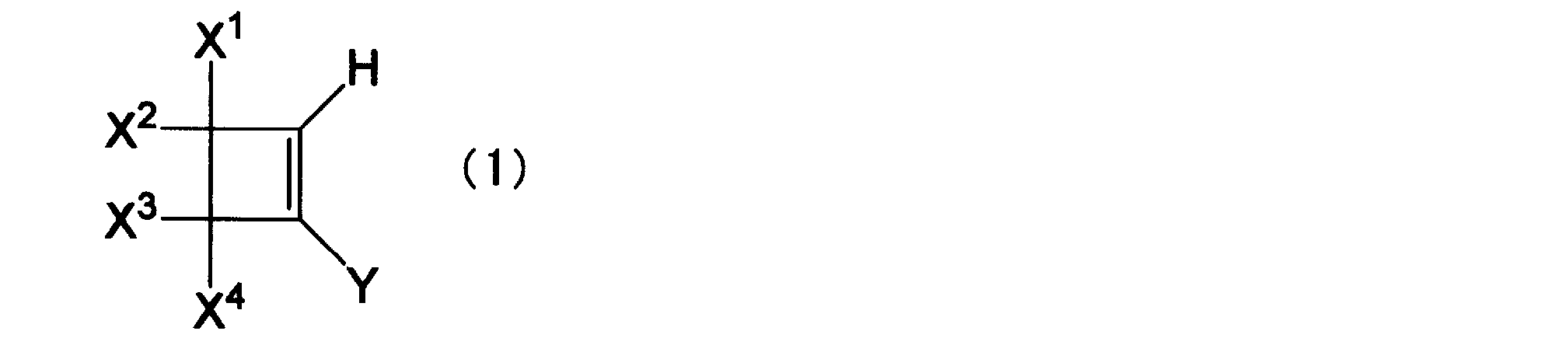
(式中、X1、X2、X3及びX4は、同一又は異なって、水素原子、ハロゲン原子、又はパーフルオロアルキル基を示す。Yは、ハロゲン原子を示す。)
で表されるシクロブテンの製造方法であって、
一般式(2):
で表されるシクロブテンの製造方法であって、
一般式(2):

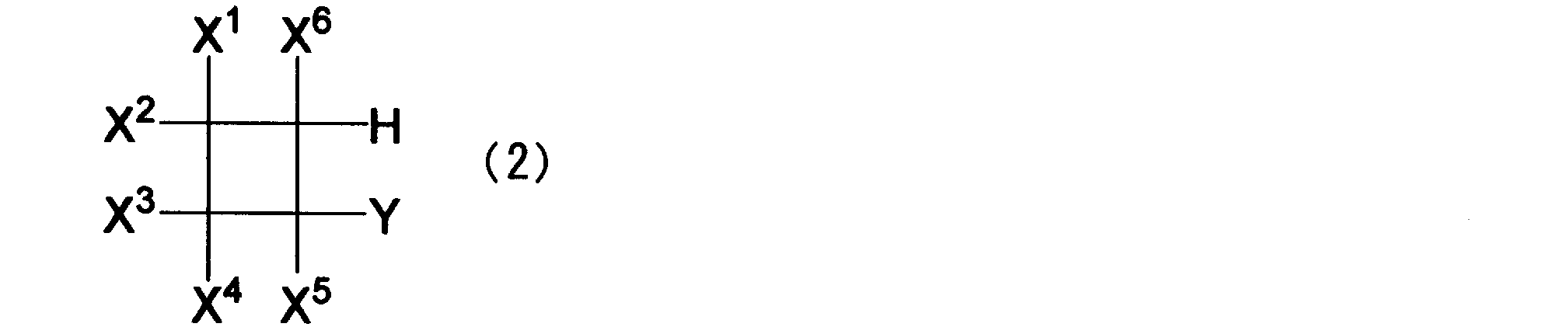
(式中、X1、X2、X3、X4及びYは、前記に同じである。X5及びX6は、同一又は異なって、水素原子、ハロゲン原子、又はパーフルオロアルキル基を示す。)
で表されるシクロブタンを脱離反応する工程を含み、
前記脱離反応する工程を、気相で行う、製造方法。
で表されるシクロブタンを脱離反応する工程を含み、
前記脱離反応する工程を、気相で行う、製造方法。
項2.
前記X5は水素原子であり、前記X6はハロゲン原子であり、前記脱離反応が脱ハロゲン化水素反応である、前記項1に記載の製造方法。
前記X5は水素原子であり、前記X6はハロゲン原子であり、前記脱離反応が脱ハロゲン化水素反応である、前記項1に記載の製造方法。
項3.
一般式(1):
一般式(1):

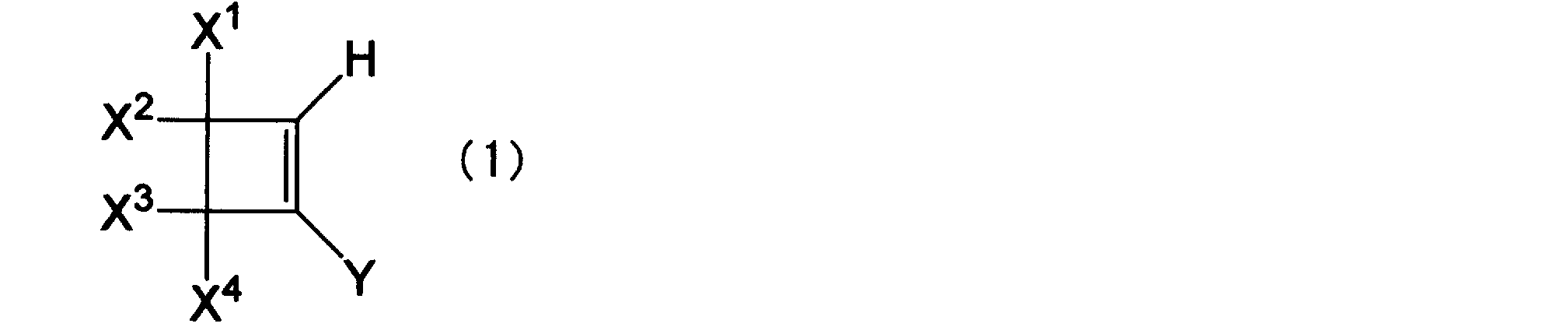
(式中、X1、X2、X3及びX4は、同一又は異なって、水素原子、ハロゲン原子、又はパーフルオロアルキル基を示す。Yは、ハロゲン原子を示す。)
で表されるシクロブテンを含有する組成物であって、
組成物全量を100mol%として、前記一般式(1)で表されるシクロブテンの含有量が95mol%以上である、組成物。
で表されるシクロブテンを含有する組成物であって、
組成物全量を100mol%として、前記一般式(1)で表されるシクロブテンの含有量が95mol%以上である、組成物。
項4.
1H-パーフルオロシクロブテン(1H-cC4F5H)の含有量が99mol%以上であり、3H-パーフルオロシクロブテン(3H-cC4F5H)の含有量が1mol%以下である、前記項3に記載の組成物組成物。
1H-パーフルオロシクロブテン(1H-cC4F5H)の含有量が99mol%以上であり、3H-パーフルオロシクロブテン(3H-cC4F5H)の含有量が1mol%以下である、前記項3に記載の組成物組成物。
項5.
クリーニングガス、エッチングガス、デポジットガス又は有機合成用ビルディングブロックとして用いられる、前記項3又は4に記載の組成物。
クリーニングガス、エッチングガス、デポジットガス又は有機合成用ビルディングブロックとして用いられる、前記項3又は4に記載の組成物。
本開示によれば、ハロゲン原子を含むシクロブテンを高い選択率で製造することができる。
本発明者らは、鋭意研究を行った結果、原料化合物を脱離反応する工程を、気相で行うことによって、上記一般式(1)で表されるハロゲン原子を含むシクロブテンを高い選択率で製造できることを見出した。
本開示は、かかる知見に基づき、更に研究を重ねた結果完成されたものである。
本開示は、以下の実施形態を含む。
本開示の一般式(1):

(式中、X1、X2、X3及びX4は、同一又は異なって、水素原子、ハロゲン原子、又はパーフルオロアルキル基を示す。Yは、ハロゲン原子を示す。)
で表されるシクロブテンの製造方法は、
一般式(2):
で表されるシクロブテンの製造方法は、
一般式(2):

(式中、X1、X2、X3、X4及びYは、前記に同じである。X5及びX6は、同一又は異なって、水素原子、ハロゲン原子、又はパーフルオロアルキル基を示す。)
で表されるシクロブタンを脱離反応する工程を含む。
で表されるシクロブタンを脱離反応する工程を含む。
本開示では、前記脱離反応する工程を、気相で行う。
本開示においては、上記要件を満たすことにより、ハロゲン原子を含むシクロブテンを高い選択率で製造することができる。
本開示において、「選択率」とは、反応器出口からの流出ガスにおける原料化合物以外の化合物(ハロゲン原子を含むシクロブテン等)の合計モル量に対する、当該流出ガスに含まれる目的化合物(ハロゲン原子を含むシクロブテン)の合計モル量の割合(mol%)を意味する。
本開示において、「転化率」とは、反応器に供給される原料化合物(ハロゲン原子を含むシクロブタン)のモル量に対する、反応器出口からの流出ガスに含まれる原料化合物以外の化合物(ハロゲン原子を含むシクロブテン等)の合計モル量の割合(mol%)を意味する。
また、本開示のシクロブテンの製造方法は、バッチ反応ではなく、流通系の気相反応であるから、溶媒を用いる必要がなく産廃が生じないという利点がある。
(1)原料化合物
本開示において、原料化合物は、一般式(2):
本開示において、原料化合物は、一般式(2):

(式中、X1、X2、X3、X4、X5及びX6は、同一又は異なって、水素原子、ハロゲン原子、又はパーフルオロアルキル基を示す。Yは、ハロゲン原子を示す。)
で表されるシクロブタンである。
で表されるシクロブタンである。
X1、X2、X3、X4、X5及びX6は、同一又は異なって、水素原子、ハロゲン原子、又はパーフルオロアルキル基を示す。
Yは、ハロゲン原子を示す。
X1、X2、X3、X4、X5、X6及びYのハロゲン原子は、フッ素原子、塩素原子、臭素原子、及びヨウ素原子が挙げられる。
X1、X2、X3、X4、X5及びX6のパーフルオロアルキル基は、全ての水素原子がフッ素原子で置換されたアルキル基である。パーフルオロアルキル基は、例えば、炭素数1~20、好ましくは炭素数1~12、より好ましくは炭素数1~6、更に好ましくは炭素数1~4、特に好ましくは炭素数1~3のパーフルオロアルキル基であることが好ましい。パーフルオロアルキル基は、直鎖状、又は分枝鎖状のパーフルオロアルキル基であることが好ましい。前記パーフルオロアルキル基として、トリフルオロメチル基(CF3-)、及びペンタフルオロエチル基(C2F5-)であることが好ましい。
原料化合物である一般式(2)で表されるハロゲン原子を含むシクロブタンとしては、ハロゲン原子を含むシクロブテンを高い選択率で製造することができる点で、X1、X2、X3及びX4は、同一又は異なって、水素原子、ハロゲン原子、又はパーフルオロアルキル基を示し、X5は水素原子であり、X6はフッ素原子であり、Yはフッ素原子であることがより好ましい。
原料化合物である一般式(2)で表されるシクロブタンとしては、例えば、

等の化合物が挙げられる。
これらの一般式(2)で表されるシクロブタンは、単独で用いることもでき、2種以上を組合せて用いることもできる。このようなシクロブタンは、市販品を採用することができる。
一般式(2)で表されるハロゲン原子を含むシクロブタンでは、ハロゲン原子を含むシクロブテンを高い選択率で製造することができる点で、X1、X2、X3、X4及びX6は、フッ素原子であり、X5は水素原子であり、Yは、フッ素原子であることがより好ましい。
(2)脱離反応
本開示における脱離反応する工程では、気相下で脱離反応を行う。本開示における脱離反応する工程では、気相で行い、特に固定床反応器を用いた気相連続流通式で行うことが好ましい。気相連続流通式で行う場合は、装置、操作等を簡略化できるとともに、経済的に有利である。
本開示における脱離反応する工程では、気相下で脱離反応を行う。本開示における脱離反応する工程では、気相で行い、特に固定床反応器を用いた気相連続流通式で行うことが好ましい。気相連続流通式で行う場合は、装置、操作等を簡略化できるとともに、経済的に有利である。
本開示における脱離反応する工程では、前記X5は水素原子であり、前記X6はハロゲン原子であり、前記脱離反応が脱ハロゲン化水素反応であることが好ましい。本開示における脱離反応する工程では、前記X5は水素原子であり、前記X6はフッ素原子であり、前記脱離反応が脱フッ化水素反応であることが好ましい。
例えば、原料化合物として、一般式(2)で表されるハロゲン原子を含むシクロブタンでは、X1、X2、X3、X4及びX6は、フッ素原子であり、X5は水素原子であり、Yは、フッ素原子であることが好ましい。
以下の反応式に従い、脱離反応は脱フッ化水素反応であることが好ましい。
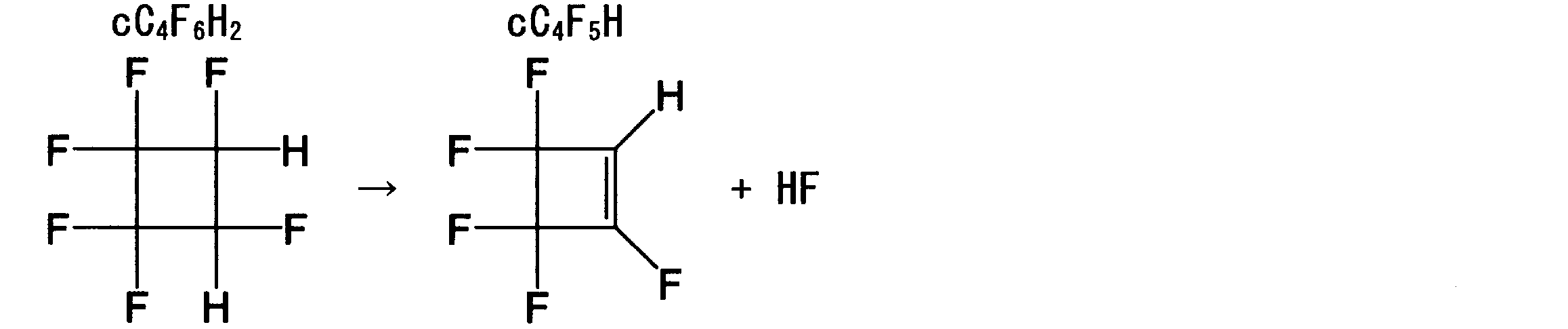
触媒
本開示における脱離反応する工程では、触媒の存在下、気相下で脱離反応を行うことが好ましい。
本開示における脱離反応する工程では、触媒の存在下、気相下で脱離反応を行うことが好ましい。
本工程で用いられる触媒は、活性炭であることが好ましい。本工程で用いられる触媒は、金属触媒であることが好ましい。金属触媒として、酸化クロム、フッ化酸化クロム、フッ化クロム、酸化アルミニウム、フッ化酸化アルミニウム、フッ化アルミニウム、酸化鉄、フッ化酸化鉄、フッ化鉄、酸化ニッケル、フッ化酸化ニッケル、フッ化ニッケル、酸化マグネシウム、フッ化酸化マグネシウム及びフッ化マグネシウムからなる群より選択される少なくとも1種であることが好ましい。
これら触媒のうち、目的化合物をより高い選択率で得ることができる点から、活性炭、酸化クロム、フッ化酸化クロム、酸化アルミニウム、フッ化酸化アルミニウムがより好ましい。また、原料化合物の転化率をより向上させることも可能である。
本工程において、気相で、原料化合物と触媒とを接触させるに当たっては、触媒を固体の状態(固相)で原料化合物と接触させることが好ましい。
本工程において、触媒は、粉末状でもよいが、ペレット状の方が気相連続流通式の反応に好ましい。
前記触媒のBET法により測定した比表面積(以下、BET比表面積とも称する。)は、通常10~3,000m2/gであり、好ましくは10~400m2/gであり、より好ましくは20~375m2/gであり、更に好ましくは30~350m2/gである。触媒のBET比表面積がこのような範囲にある場合、触媒の粒子の密度が小さ過ぎることがない為、高い選択率で目的化合物を得ることができる。また、原料化合物の転化率を向上させることも可能である。
触媒として活性炭を用いる場合、破砕炭、成形炭、顆粒炭、球状炭等の粉末活性炭を用いる事が好ましい。粉末活性炭は、JIS試験で、4メッシュ(4.76mm)~100メッシュ(0.149mm)の粒度を示す粉末活性炭を用いることが好ましい。
触媒として金属触媒を用いる場合、担体に担持されていることが好ましい。担体としては、例えば、炭素、アルミナ(Al2O3)、ジルコニア(ZrO2)、シリカ(SiO2)、チタニア(TiO2)等が挙げられる。炭素としては、活性炭、不定形炭素、グラファイト、ダイヤモンド等を用いることができる。
本開示における触媒の一例として、酸化クロム及びフッ素化された酸化クロムについて、説明する。酸化クロムは、例えば、酸化クロムをCr2O3・nH2Oで表した場合に、nの値が3以下であることが好ましく、1~1.5であることがより好ましい。また、前記酸化クロムは、組成式:CrOmにおいて、mが通常1.5<m<3の範囲にあるものが好ましい。触媒として、フッ素化された酸化クロムは、酸化クロムをフッ素化することにより調製することができる。フッ素化としては、フッ化水素(HF)によるフッ素化、フルオロカーボン等によるフッ素化を挙げることができる。
触媒としてのフッ素化された酸化クロムは、例えば、日本特許第3412165号に記載されている方法に従って得ることができる。酸化クロムをフッ化水素によりフッ素化(HF処理)することによってフッ素化された酸化クロムを得ることができる。フッ素化の温度は、例えば、100~460℃が好ましい。フッ素化の圧力は、触媒反応に供される時の圧力が好ましい。本開示において、フッ素含有量の多い高フッ素化-酸化クロム触媒を用いることが特に好ましい。高フッ素化-酸化クロム触媒は、酸化クロムを通常より高温で、長時間フッ素化することにより得ることができる。
高フッ素化-酸化クロム触媒は、フッ素含有量が30質量%以上であることが好ましく、30~45質量%であることがより好ましい。フッ素含有量は、触媒の質量変化、又は一般的なクロム酸化物の定量分析法によって測定することができる。
脱離反応温度
本開示における脱離反応する工程では、反応温度の下限値は、より効率的に脱離反応を進行させ、目的化合物をより高い選択率で得ることができる観点、転化率の低下を抑制する観点から、通常50℃であり、好ましくは200℃であり、より好ましくは250℃であり、更に好ましくは300℃であり、特に好ましくは350℃である。
本開示における脱離反応する工程では、反応温度の下限値は、より効率的に脱離反応を進行させ、目的化合物をより高い選択率で得ることができる観点、転化率の低下を抑制する観点から、通常50℃であり、好ましくは200℃であり、より好ましくは250℃であり、更に好ましくは300℃であり、特に好ましくは350℃である。
脱離反応における反応温度の上限値は、より効率的に脱フッ化水素反応を進行させ、目的化合物をより高い選択率で得ることができる観点、且つ反応生成物が分解又は重合することによる選択率の低下を抑制する観点から、通常500℃であり、好ましくは450℃であり、より好ましくは400℃である。
脱離反応時間
脱離反応の反応時間は、原料化合物の触媒に対する接触時間(W/F0)[W:金属触媒の重量(g)、F0:原料化合物の流量(cc/sec)]を長くすれば原料化合物の転化率を上げることができるが、触媒の量が多くなって設備が大きくなり、非効率である。
脱離反応の反応時間は、原料化合物の触媒に対する接触時間(W/F0)[W:金属触媒の重量(g)、F0:原料化合物の流量(cc/sec)]を長くすれば原料化合物の転化率を上げることができるが、触媒の量が多くなって設備が大きくなり、非効率である。
その為、脱フッ化水素反応の反応時間は、原料化合物の転化率を向上させる点、及び設備コストを抑制する点から、原料化合物の触媒に対する接触時間(W/F0)が、5g・sec/cc~300g・sec/ccであることが好ましく、10g・sec/cc~200g・sec/ccであることがより好ましく、15g・sec/cc~150g・sec/ccであることが更に好ましく、20g・sec/cc~100g・sec/ccであることが特に好ましい。
上記原料化合物の触媒に対する接触時間とは、原料化合物及び触媒が接触する時間を意味する。
本開示における脱離反応では、触媒の存在下、気相で行う際に、特に触媒に合わせて反応温度と反応時間(接触時間)とを適宜調整することで、目的化合物をより高い選択率で得ることができる。
触媒として、酸化クロムを用いる場合は、反応温度は300℃以上であることが好ましく、350℃以上であることがより好ましい。また、接触時間は10g・sec/cc以上であることが好ましく、20g・sec/cc以上であることがより好ましく、40g・sec/cc以上であることが更に好ましい。
触媒として、アルミナを用いる場合、反応温度は300℃以上であることが好ましく、また、接触時間は5g・sec/cc以上であることが好ましい。
触媒として、活性炭を用いる場合、反応温度は300℃以上であることが好ましく、350℃以上であることがより好ましく、400℃以上であることが更に好ましい。また、接触時間は5g・sec/cc~55g・sec/ccであることが好ましく、5g・sec/cc~50g・sec/ccであることがより好ましく、5g・sec/cc~40g・sec/ccであることが更に好ましい。
脱離反応圧力
脱離反応の反応圧力は、より効率的に脱離反応を進行させる点から、-0.05MPa~2MPaであることが好ましく、-0.01MPa~1MPaであることがより好ましく、常圧~0.5MPaであることが更に好ましい。なお、本開示において、圧力については表記が無い場合はゲージ圧とする。
脱離反応の反応圧力は、より効率的に脱離反応を進行させる点から、-0.05MPa~2MPaであることが好ましく、-0.01MPa~1MPaであることがより好ましく、常圧~0.5MPaであることが更に好ましい。なお、本開示において、圧力については表記が無い場合はゲージ圧とする。
脱離反応において、原料化合物と触媒(金属触媒等)とを接触させて反応させる反応器としては、上記温度及び圧力に耐えうるものであれば、形状及び構造は特に限定されない。反応器としては、例えば、縦型反応器、横型反応器、多管型反応器等が挙げられる。反応器の材質としては、例えば、ガラス、ステンレス、鉄、ニッケル、鉄ニッケル合金等が挙げられる。
脱離反応の例示
脱離反応は、反応器に原料化合物を連続的に仕込み、当該反応器から目的化合物を連続的に抜き出す流通式及びバッチ式のいずれの方式によっても実施することができる。目的化合物が反応器に留まると、更に脱離反応が進行し得ることから、流通式で実施することが好ましい。本開示における脱離反応する工程では、気相で行い、特に固定床反応器を用いた気相連続流通式で行うことが好ましい。気相連続流通式で行う場合は、装置、操作等を簡略化できるとともに、経済的に有利である。
脱離反応は、反応器に原料化合物を連続的に仕込み、当該反応器から目的化合物を連続的に抜き出す流通式及びバッチ式のいずれの方式によっても実施することができる。目的化合物が反応器に留まると、更に脱離反応が進行し得ることから、流通式で実施することが好ましい。本開示における脱離反応する工程では、気相で行い、特に固定床反応器を用いた気相連続流通式で行うことが好ましい。気相連続流通式で行う場合は、装置、操作等を簡略化できるとともに、経済的に有利である。
脱離反応を行う際の雰囲気については、触媒(金属触媒等)の劣化を抑制する点から、不活性ガス存在下及び/又はフッ化水素存在下であることが好ましい。当該不活性ガスは、窒素、ヘリウム、アルゴン及び二酸化炭素からなる群より選択される少なくとも1種であることが好ましい。これらの不活性ガスの中でも、コストを抑える点から、窒素がより好ましい。当該不活性ガスの濃度は、反応器に導入される気体成分の0~50mol%とすることが好ましい。
脱離反応終了後は、必要に応じて常法にしたがって精製処理を行い、一般式(1)で表されるハロゲン原子を含むシクロブテンを得ることができる。
(3)目的化合物
本開示における目的化合物は、一般式(1):
本開示における目的化合物は、一般式(1):

(式中、X1、X2、X3及びX4は、同一又は異なって、水素原子、ハロゲン原子、又はパーフルオロアルキル基を示す。Yは、ハロゲン原子を示す。)
で表されるハロゲン原子を含むシクロブテンである。
で表されるハロゲン原子を含むシクロブテンである。
X1、X2、X3及びX4、並びにYは、前記に同じである。
製造しようとする一般式(1)で表されるシクロブテンは、例えば、次の

等の化合物が挙げられる。
一般式(1)で表されるハロゲン原子を含むシクロブテンでは、X1、X2、X3及びX4は、同一又は異なって、水素原子、ハロゲン原子、又はパーフルオロアルキル基を示し、Yは、フッ素原子であることが好ましい。一般式(1)で表されるハロゲン原子を含むシクロブテンでは、X1、X2、X3及びX4は、フッ素原子であり、Yは、フッ素原子であることがより好ましい。
本開示におけるハロゲン原子を含むシクロブテンの製造方法では、原料化合物は、一般式(2)で表されるハロゲン原子を含むシクロブタンとして、X1、X2、X3、X4及びX6は、フッ素原子であり、X5は水素原子であり、Yは、フッ素原子である場合の脱離反応であることが好ましい。
以下の反応式に従い、脱離反応は脱フッ化水素反応であることが好ましい。
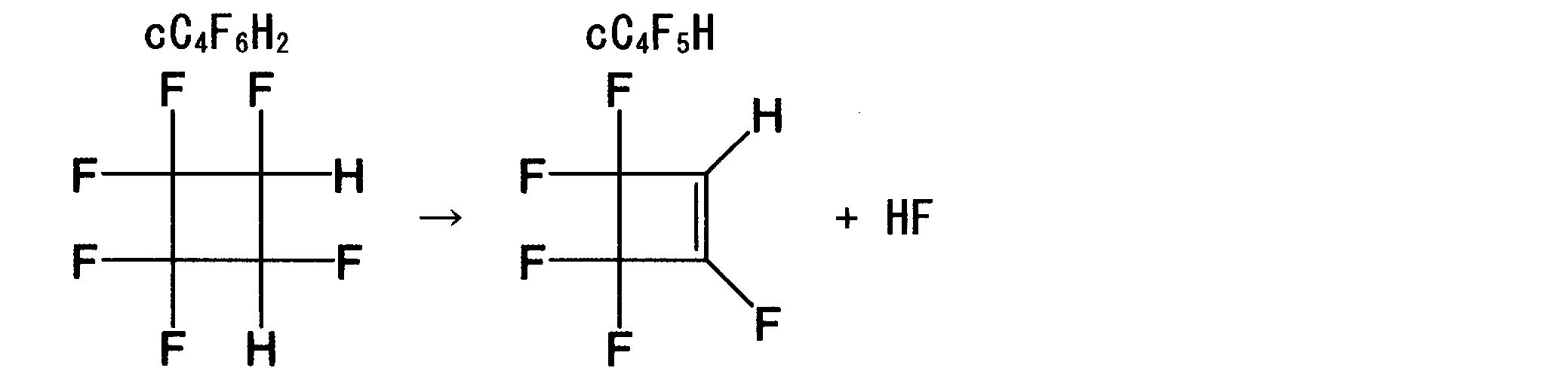
目的化合物は、一般式(1)で表されるハロゲン原子を含むシクロブテンとして、X1、X2、X3及びX4は、フッ素原子であり、Yは、フッ素原子であることが好ましい。
(4)ハロゲン原子を含むシクロブテンを含む組成物
以上のようにして、一般式(1)で表されるハロゲン原子を含むシクロブテンを得ることができるが、上記のように、一般式(1)で表されるハロゲン原子を含むシクロブテンと、一般式(2)で表されるハロゲン原子を含むシクロブタンとを含有する組成物の形で得られることもある。
以上のようにして、一般式(1)で表されるハロゲン原子を含むシクロブテンを得ることができるが、上記のように、一般式(1)で表されるハロゲン原子を含むシクロブテンと、一般式(2)で表されるハロゲン原子を含むシクロブタンとを含有する組成物の形で得られることもある。
組成物に含まれる一般式(1)で表されるハロゲン原子を含むシクロブテンとして、X1、X2、X3及びX4は、フッ素原子であり、Yは、フッ素原子であることが好ましい。
本開示の一般式(1)で表されるハロゲン原子を含むシクロブテンを含む組成物において、前記組成物の総量を100mol%として、一般式(1)で表されるハロゲン原子を含むシクロブテンの含有量は、95mol%以上であることが好ましく、99mol%以上であることがより好ましい。
本開示の一般式(1)で表されるハロゲン原子を含むシクロブテンを含む組成物において、前記組成物の総量を100mol%として、一般式(1)で表されるハロゲン原子を含むシクロブテンの含有量は1mol%~99.9mol%が好ましく、5mol%~99.9mol%がより好ましく、10mol%~99.9mol%更に好ましい。
本開示におけるハロゲン原子を含むシクロブテンの製造方法では、上記脱離反応には、以下の化合物が不純物として生成され得る。

本開示の一般式(1)で表されるハロゲン原子を含むシクロブテンを含む組成物において、前記組成物の総量を100mol%として、1H-パーフルオロシクロブテン(1H-cC4F5H)の含有量は99mol%以上であり、3H-パーフルオロシクロブテン(3H-cC4F5H)の含有量は1mol%以下が好ましい。
本開示の製造方法によれば、一般式(1)で表されるハロゲン原子を含むシクロブテンを含む組成物として得られた場合であっても、一般式(1)で表されるハロゲン原子を含むシクロブテンを特に高い選択率で得ることができ、その結果、前記組成物中の一般式(1)で表されるハロゲン原子を含むシクロブテン以外の成分を少なくすることが可能である。本開示の製造方法によれば、一般式(1)で表されるハロゲン原子を含むシクロブテンを得る為の精製の労力を削減することができる。
本開示の一般式(1)で表されるハロゲン原子を含むシクロブテンを含む組成物は、一般式(1)で表されるハロゲン原子を含むシクロブテン単独の場合と同様に、半導体、液晶等の最先端の微細構造を形成するためのエッチングガスの他、デポジットガス、有機合成用ビルディングブロック、クリーニングガス等の各種用途に有効利用できる。
前記デポジットガスとは、エッチング耐性ポリマー層を堆積させるガスである。
前記有機合成用ビルディングブロックとは、反応性が高い骨格を有する化合物の前駆体となり得る物質を意味する。例えば、本開示の一般式(1)で表されるハロゲン原子を含むシクロブテン、及びこれを含む組成物とCF3Si(CH3)3等の含フッ素有機ケイ素化合物とを反応させると、CF3基等のフルオロアルキル基を導入して洗浄剤や含フッ素医薬中間体となり得る物質に変換することが可能である。
以上、本開示の実施形態を説明したが、特許請求の範囲の趣旨及び範囲から逸脱することなく、形態や詳細の多様な変更が可能である。
以下に実施例を挙げ、本開示を具体的に説明するが、本開示は、これら実施例によって何ら限定されるものではない。
実施例
実施例のハロゲン原子を含むシクロブテンの製造方法では、原料化合物は、一般式(2)で表されるハロゲン原子を含むシクロブタンにおいて、X1、X2、X3、X4及びX6は、フッ素原子であり、X5は水素原子であり、Yは、フッ素原子とした。
実施例のハロゲン原子を含むシクロブテンの製造方法では、原料化合物は、一般式(2)で表されるハロゲン原子を含むシクロブタンにおいて、X1、X2、X3、X4及びX6は、フッ素原子であり、X5は水素原子であり、Yは、フッ素原子とした。
以下の反応式に従、脱離反応は、脱フッ化水素反応とした。
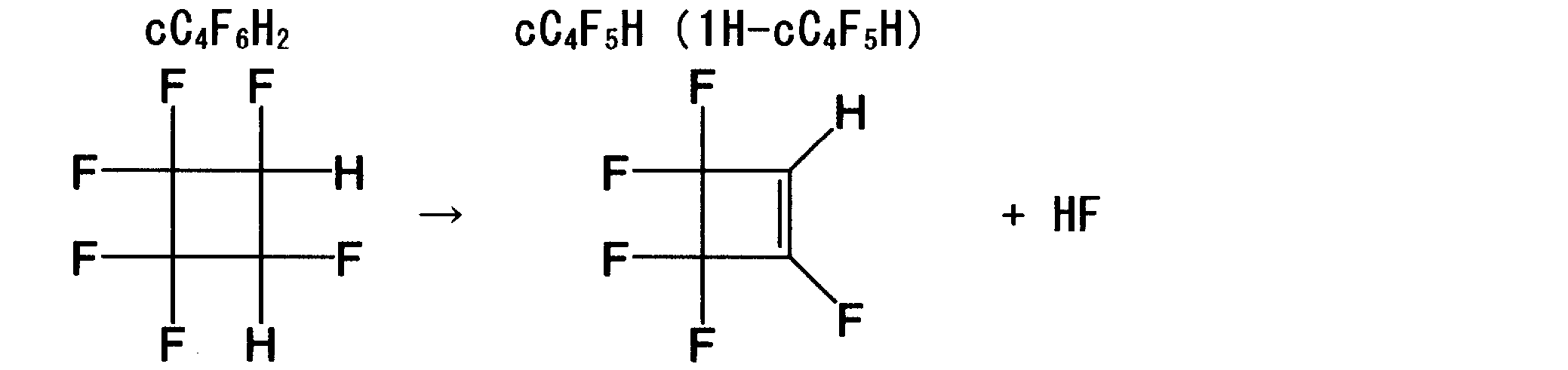
目的化合物は、一般式(1)で表されるハロゲン原子を含むシクロブテンにおいて、X1、X2、X3及びX4は、フッ素原子であり、Yは、フッ素原子とした。
また、上記脱離反応には、以下の化合物が不純物として生成され得る。
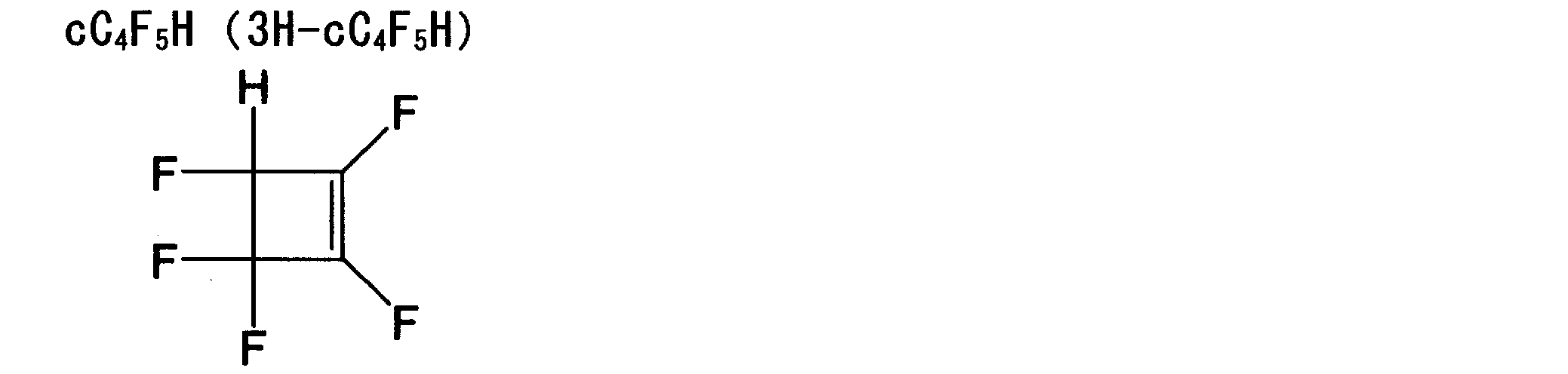
実施例1~3(酸化クロム触媒)
反応管としてSUS配管(外径:1/2インチ)を用い、触媒としてCr2O3を主成分とする酸化クロム10gを充填した。前記触媒を脱離反応(脱フッ化水素反応)に使用する前処理として、反応器に無水フッ化水素を流通させ、反応器の温度を200℃から300℃としてフッ素化処理を行った。フッ素化された酸化クロムを取り出し、脱フッ化水素反応に用いた。フッ素化された酸化クロムのBET比表面積は75m2/gであった。
反応管としてSUS配管(外径:1/2インチ)を用い、触媒としてCr2O3を主成分とする酸化クロム10gを充填した。前記触媒を脱離反応(脱フッ化水素反応)に使用する前処理として、反応器に無水フッ化水素を流通させ、反応器の温度を200℃から300℃としてフッ素化処理を行った。フッ素化された酸化クロムを取り出し、脱フッ化水素反応に用いた。フッ素化された酸化クロムのBET比表面積は75m2/gであった。
反応器であるSUS配管(外径:1/2インチ)に、触媒としてフッ素化した酸化クロム(フッ化酸化クロム)を10g加えた。窒素雰囲気下、200℃で2時間乾燥した後、圧力を常圧、cC4F6H2(原料化合物)とフッ素化した酸化クロム(触媒)との接触時間(W/F0)が20g・sec/cc又は40g・sec/ccとなるように、反応器に原料化合物(cC4F6H2)を流通させた。
気相連続流通式で反応を進行させた。
反応器を250℃又は350℃で加熱して脱フッ化水素反応を開始した。
脱フッ化水素反応を開始してから1時間後に、除害塔を通った留出分を集めた。
その後、ガスクロマトグラフィー(島津製作所社製、商品名「GC-2014」)を用いてガスクロマトグラフィー/質量分析法(GC/MS)により質量分析を行い、NMR(JEOL社製、商品名「400YH」)を用いてNMRスペクトルによる構造解析を行った。
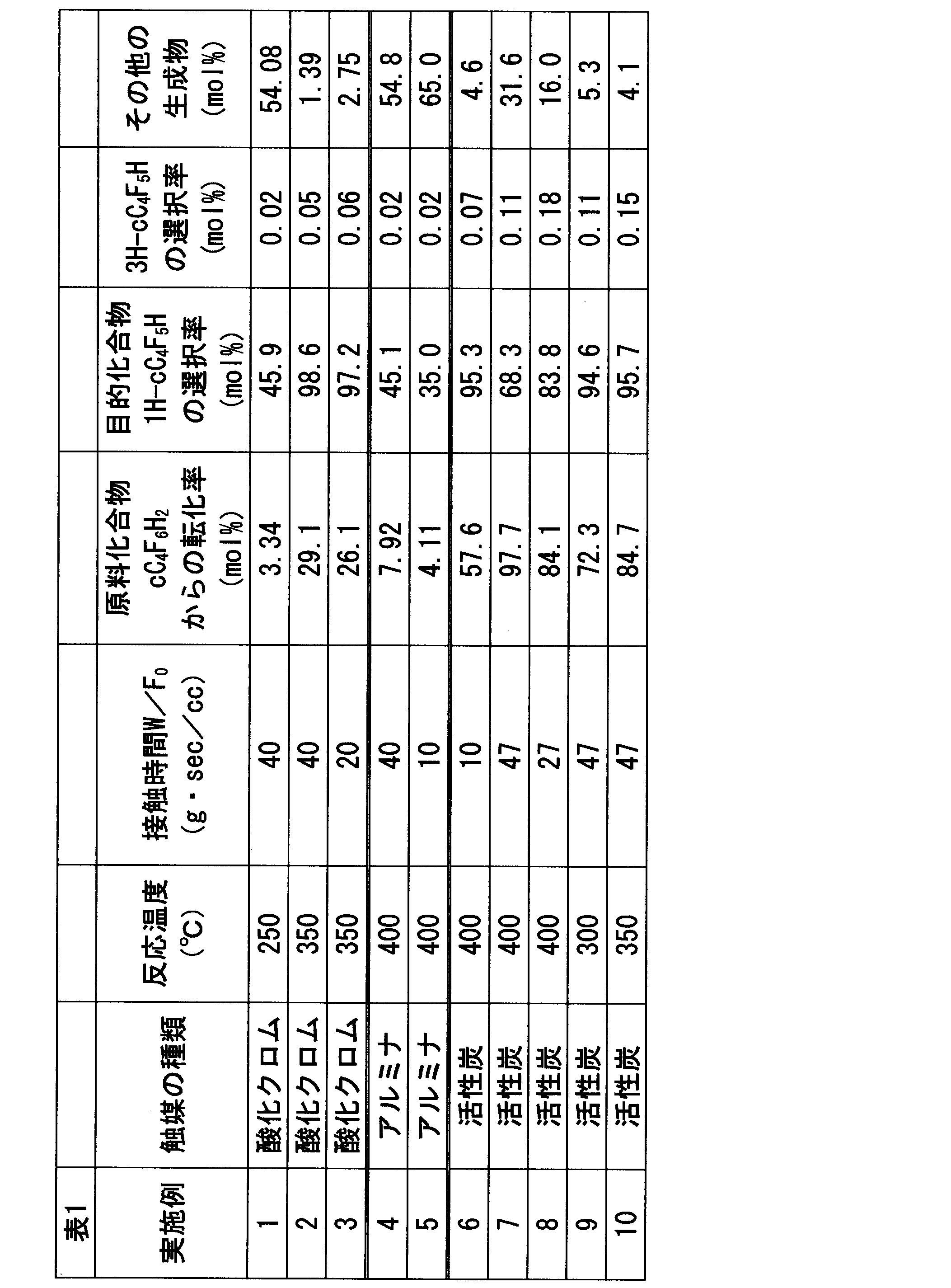
質量分析及び構造解析の結果から、目的化合物としてcC4F5Hが生成したことが確認された。実施例1では、cC4F6H2(原料化合物)からの転化率は3.34mol%であり、cC4F5H(目的化合物)の選択率(収率)は45.9mol%であった。実施例2では、転化率:29.1mol%、選択率:98.6mol%であった。実施例3では、転化率:26.1mol%、選択率:97.2mol%であった。
実施例4及び5(アルミナ触媒)
前記実施例1の実験方法に倣い、触媒としてAl2O3を主成分とするアルミナを用いた。前記実施例1の実験方法に倣い、cC4F6H2(原料化合物)とアルミナ(触媒)との接触時間(W/F0)が10g・sec/cc又は40g・sec/ccとなるように、反応器に原料化合物を流通させた。前記実施例1の実験方法に倣い、反応器を400℃で加熱して脱フッ化水素反応を開始した。前記条件以外は、実施例1と同様にして、脱フッ化水素反応、質量分析及び構造解析を実施した。
前記実施例1の実験方法に倣い、触媒としてAl2O3を主成分とするアルミナを用いた。前記実施例1の実験方法に倣い、cC4F6H2(原料化合物)とアルミナ(触媒)との接触時間(W/F0)が10g・sec/cc又は40g・sec/ccとなるように、反応器に原料化合物を流通させた。前記実施例1の実験方法に倣い、反応器を400℃で加熱して脱フッ化水素反応を開始した。前記条件以外は、実施例1と同様にして、脱フッ化水素反応、質量分析及び構造解析を実施した。
質量分析及び構造解析の結果から、目的化合物としてcC4F5Hが生成したことが確認された。実施例4では、cC4F6H2(原料化合物)からの転化率は7.92mol%であり、cC4F5H(目的化合物)の選択率は45.1mol%であった。実施例5では、転化率:4.11mol%、選択率:35.0mol%であった。
実施例6~10(活性炭触媒)
前記実施例1の実験方法に倣い、触媒として活性炭を用いた。前記実施例1の実験方法に倣い、cC4F6H2(原料化合物)と活性炭(触媒)との接触時間(W/F0)が10g・sec/cc、27g・sec/cc又は47g・sec/ccとなるように、反応器に原料化合物を流通させた。前記実施例1の実験方法に倣い、反応器を300℃、350℃又は400℃で加熱して脱フッ化水素反応を開始した。前記条件以外は、実施例1と同様にして、脱フッ化水素反応、質量分析及び構造解析を実施した。
前記実施例1の実験方法に倣い、触媒として活性炭を用いた。前記実施例1の実験方法に倣い、cC4F6H2(原料化合物)と活性炭(触媒)との接触時間(W/F0)が10g・sec/cc、27g・sec/cc又は47g・sec/ccとなるように、反応器に原料化合物を流通させた。前記実施例1の実験方法に倣い、反応器を300℃、350℃又は400℃で加熱して脱フッ化水素反応を開始した。前記条件以外は、実施例1と同様にして、脱フッ化水素反応、質量分析及び構造解析を実施した。
質量分析及び構造解析の結果から、目的化合物としてcC4F5Hが生成したことが確認された。実施例6では、cC4F6H2(原料化合物)からの転化率は57.6mol%であり、cC4F5H(目的化合物)の選択率は95.3mol%であった。実施例7では、転化率:97.7mol%、選択率:68.3mol%であった。実施例8では、転化率:84.1mol%、選択率:83.8mol%であった。実施例9では、転化率:72.3mol%、選択率:94.6mol%であった。実施例10では、転化率:84.7mol%、選択率:95.7mol%であった。
各実施例の結果を以下の表1に示す。表1において、接触時間(W/F0)とは、流通する原料ガスをどの程度の速度で流すか、即ち、触媒及び原料ガスが接触する時間を意味する。
Claims (5)
- 一般式(1):
で表されるシクロブテンの製造方法であって、
一般式(2):
で表されるシクロブタンを脱離反応する工程を含み、
前記脱離反応する工程を、気相で行う、製造方法。 - 前記X5は水素原子であり、前記X6はハロゲン原子であり、前記脱離反応が脱ハロゲン化水素反応である、請求項1に記載の製造方法。
- 一般式(1):
で表されるシクロブテンを含有する組成物であって、
組成物全量を100mol%として、前記一般式(1)で表されるシクロブテンの含有量が95mol%以上である、組成物。 - 1H-パーフルオロシクロブテン(1H-cC4F5H)の含有量が99mol%以上であり、3H-パーフルオロシクロブテン(3H-cC4F5H)の含有量が1mol%以下である、請求項3に記載の組成物組成物。
- クリーニングガス、エッチングガス、デポジットガス又は有機合成用ビルディングブロックとして用いられる、請求項3又は4に記載の組成物。
Priority Applications (3)
| Application Number | Priority Date | Filing Date | Title |
|---|---|---|---|
| KR1020217023297A KR102566765B1 (ko) | 2018-12-27 | 2019-12-19 | 시클로부텐의 제조 방법 |
| CN201980086441.9A CN113227026A (zh) | 2018-12-27 | 2019-12-19 | 环丁烯的制造方法 |
| SG11202106891PA SG11202106891PA (en) | 2018-12-27 | 2019-12-19 | Method for producing cyclobutene |
Applications Claiming Priority (2)
| Application Number | Priority Date | Filing Date | Title |
|---|---|---|---|
| JP2018245665A JP6835060B2 (ja) | 2018-12-27 | 2018-12-27 | シクロブテンの製造方法 |
| JP2018-245665 | 2018-12-27 |
Publications (1)
| Publication Number | Publication Date |
|---|---|
| WO2020137825A1 true WO2020137825A1 (ja) | 2020-07-02 |
Family
ID=71127736
Family Applications (1)
| Application Number | Title | Priority Date | Filing Date |
|---|---|---|---|
| PCT/JP2019/049900 Ceased WO2020137825A1 (ja) | 2018-12-27 | 2019-12-19 | シクロブテンの製造方法 |
Country Status (6)
| Country | Link |
|---|---|
| JP (1) | JP6835060B2 (ja) |
| KR (1) | KR102566765B1 (ja) |
| CN (1) | CN113227026A (ja) |
| SG (1) | SG11202106891PA (ja) |
| TW (1) | TWI777113B (ja) |
| WO (1) | WO2020137825A1 (ja) |
Families Citing this family (2)
| Publication number | Priority date | Publication date | Assignee | Title |
|---|---|---|---|---|
| CN118139944A (zh) * | 2021-09-27 | 2024-06-04 | 霍尼韦尔国际公司 | 氟取代的环丁烯化合物以及包含其的组合物、方法和用途 |
| WO2023049515A1 (en) * | 2021-09-27 | 2023-03-30 | Honeywell International Inc. | Fluorine substituted cyclobutene compounds, and compositions, methods and uses including same |
Citations (6)
| Publication number | Priority date | Publication date | Assignee | Title |
|---|---|---|---|---|
| US2891968A (en) * | 1955-08-12 | 1959-06-23 | Du Pont | Difluorobutenedioic acids, their alkali metal salts, their alkyl esters and anhydride, and process for preparing them |
| GB844604A (en) * | 1955-09-14 | 1960-08-17 | Robert Neville Haszeldine | Halogenated organic compounds |
| WO2010007968A1 (ja) * | 2008-07-18 | 2010-01-21 | 日本ゼオン株式会社 | 含水素フルオロオレフィン化合物の製造方法 |
| JP2010043034A (ja) * | 2008-08-14 | 2010-02-25 | Nippon Zeon Co Ltd | 含水素フルオロオレフィン化合物の製造方法 |
| JP2010126452A (ja) * | 2008-11-25 | 2010-06-10 | Nippon Zeon Co Ltd | 含水素フルオロオレフィン化合物の製造方法 |
| CN107721810A (zh) * | 2017-11-07 | 2018-02-23 | 中国民航大学 | 一种合成灭火剂八氟环丁烷的方法 |
Family Cites Families (12)
| Publication number | Priority date | Publication date | Assignee | Title |
|---|---|---|---|---|
| JPH07100673B2 (ja) * | 1986-08-19 | 1995-11-01 | 旭化成工業株式会社 | 1−フルオロシクロヘキセンの製造法 |
| KR940002713B1 (ko) * | 1991-12-03 | 1994-03-31 | 주식회사 코오롱 | 디아조타입 감광체 원료의 제조방법 |
| TWI298716B (ja) * | 2001-08-06 | 2008-07-11 | Showa Denko Kk | |
| US7560602B2 (en) * | 2005-11-03 | 2009-07-14 | Honeywell International Inc. | Process for manufacture of fluorinated olefins |
| JP5056963B2 (ja) * | 2010-03-31 | 2012-10-24 | ダイキン工業株式会社 | 含フッ素アルカンの製造方法 |
| US8921622B2 (en) * | 2010-04-02 | 2014-12-30 | Solvay Sa | Process for dehydrofluorinating hydrochlorofluoroalkanes and products obtained thereby |
| EP2569269A4 (en) * | 2010-05-03 | 2014-01-29 | Arkema Inc | DEHYDROFLUORINATION OF PENTAFLUORO CANNES FOR FORMING TETRAFLUOROLEFINS |
| CN102836722B (zh) * | 2012-09-06 | 2014-10-15 | 西安近代化学研究所 | 一种卤氟烷烃脱卤化氢制备含氟烯烃的催化剂及其制备方法 |
| EP3040327B1 (en) * | 2013-08-26 | 2018-02-28 | Asahi Glass Company, Limited | Method for producing fluorinated compound |
| CN105107533B (zh) * | 2015-08-18 | 2019-04-09 | 巨化集团技术中心 | 一种气相脱氟化氢催化剂的制备方法 |
| CN107739294B (zh) * | 2017-10-17 | 2020-08-21 | 北京宇极科技发展有限公司 | 气相脱氟化氢制备氢氟环戊烯的方法 |
| JP7166911B2 (ja) * | 2018-12-25 | 2022-11-08 | ダイキン工業株式会社 | シクロブテンの製造方法 |
-
2018
- 2018-12-27 JP JP2018245665A patent/JP6835060B2/ja active Active
-
2019
- 2019-12-19 WO PCT/JP2019/049900 patent/WO2020137825A1/ja not_active Ceased
- 2019-12-19 KR KR1020217023297A patent/KR102566765B1/ko active Active
- 2019-12-19 CN CN201980086441.9A patent/CN113227026A/zh active Pending
- 2019-12-19 SG SG11202106891PA patent/SG11202106891PA/en unknown
- 2019-12-26 TW TW108147731A patent/TWI777113B/zh active
Patent Citations (6)
| Publication number | Priority date | Publication date | Assignee | Title |
|---|---|---|---|---|
| US2891968A (en) * | 1955-08-12 | 1959-06-23 | Du Pont | Difluorobutenedioic acids, their alkali metal salts, their alkyl esters and anhydride, and process for preparing them |
| GB844604A (en) * | 1955-09-14 | 1960-08-17 | Robert Neville Haszeldine | Halogenated organic compounds |
| WO2010007968A1 (ja) * | 2008-07-18 | 2010-01-21 | 日本ゼオン株式会社 | 含水素フルオロオレフィン化合物の製造方法 |
| JP2010043034A (ja) * | 2008-08-14 | 2010-02-25 | Nippon Zeon Co Ltd | 含水素フルオロオレフィン化合物の製造方法 |
| JP2010126452A (ja) * | 2008-11-25 | 2010-06-10 | Nippon Zeon Co Ltd | 含水素フルオロオレフィン化合物の製造方法 |
| CN107721810A (zh) * | 2017-11-07 | 2018-02-23 | 中国民航大学 | 一种合成灭火剂八氟环丁烷的方法 |
Non-Patent Citations (2)
| Title |
|---|
| BUXTON, M. W. ET AL.: "The reaction of highly fluorinated organic compounds. Part V. 1H: 2H-Hexafluorocyclobutane and 1H- Pentafluorocyclobut-1-ene", JOURNAL OF THE CHEMICAL SOCIETY, 1954, pages 1177 - 1179, XP055721537 * |
| FULLER, G. ET AL.: "Some isomeric Hexafluorocyclobutanes and Pentafluorocyclobutenes", JOURNAL OF THE CHEMICAL SOCIETY, 1961, pages 3198 - 3203, XP055721540 * |
Also Published As
| Publication number | Publication date |
|---|---|
| JP2020105114A (ja) | 2020-07-09 |
| TWI777113B (zh) | 2022-09-11 |
| SG11202106891PA (en) | 2021-07-29 |
| CN113227026A (zh) | 2021-08-06 |
| KR20210108993A (ko) | 2021-09-03 |
| JP6835060B2 (ja) | 2021-02-24 |
| TW202035349A (zh) | 2020-10-01 |
| KR102566765B1 (ko) | 2023-08-16 |
Similar Documents
| Publication | Publication Date | Title |
|---|---|---|
| JP6673413B2 (ja) | フルオロオレフィンの製造方法 | |
| JP6827246B2 (ja) | ハロゲン化ブテン化合物の製造方法 | |
| JP7624144B2 (ja) | フルオロオレフィン化合物の製造方法 | |
| KR102566765B1 (ko) | 시클로부텐의 제조 방법 | |
| JP2022087300A (ja) | フルオロエチレンの製造方法 | |
| JP6874778B2 (ja) | シクロブタンの製造方法 | |
| WO2020075729A1 (ja) | パーフルオロシクロアルケン化合物の製造方法 | |
| CN112209803B (zh) | 乙烯基化合物的制造方法 | |
| CN117597322A (zh) | 烯烃的制造方法 | |
| JP7712582B2 (ja) | フッ化ビニル化合物の製造方法 | |
| RU2784315C1 (ru) | Способ получения циклобутена | |
| KR20220019801A (ko) | 알칸의 제조 방법 | |
| RU2807184C9 (ru) | Способ получения циклобутана | |
| RU2807184C2 (ru) | Способ получения циклобутана |
Legal Events
| Date | Code | Title | Description |
|---|---|---|---|
| 121 | Ep: the epo has been informed by wipo that ep was designated in this application |
Ref document number: 19904214 Country of ref document: EP Kind code of ref document: A1 |
|
| NENP | Non-entry into the national phase |
Ref country code: DE |
|
| ENP | Entry into the national phase |
Ref document number: 20217023297 Country of ref document: KR Kind code of ref document: A |
|
| 122 | Ep: pct application non-entry in european phase |
Ref document number: 19904214 Country of ref document: EP Kind code of ref document: A1 |